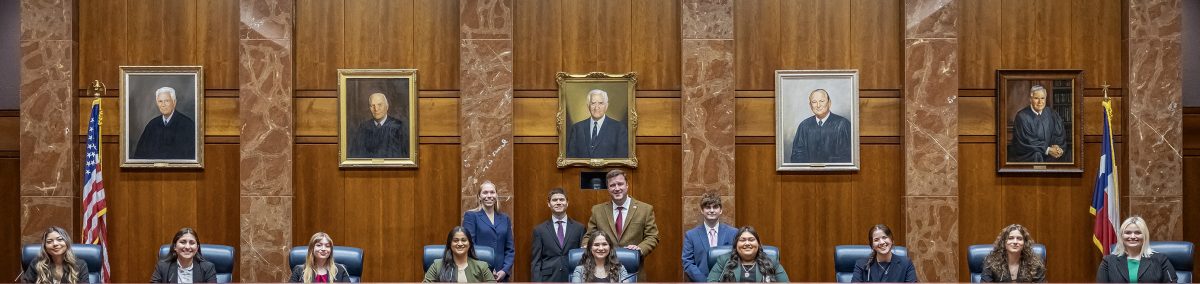
Mike Yawn
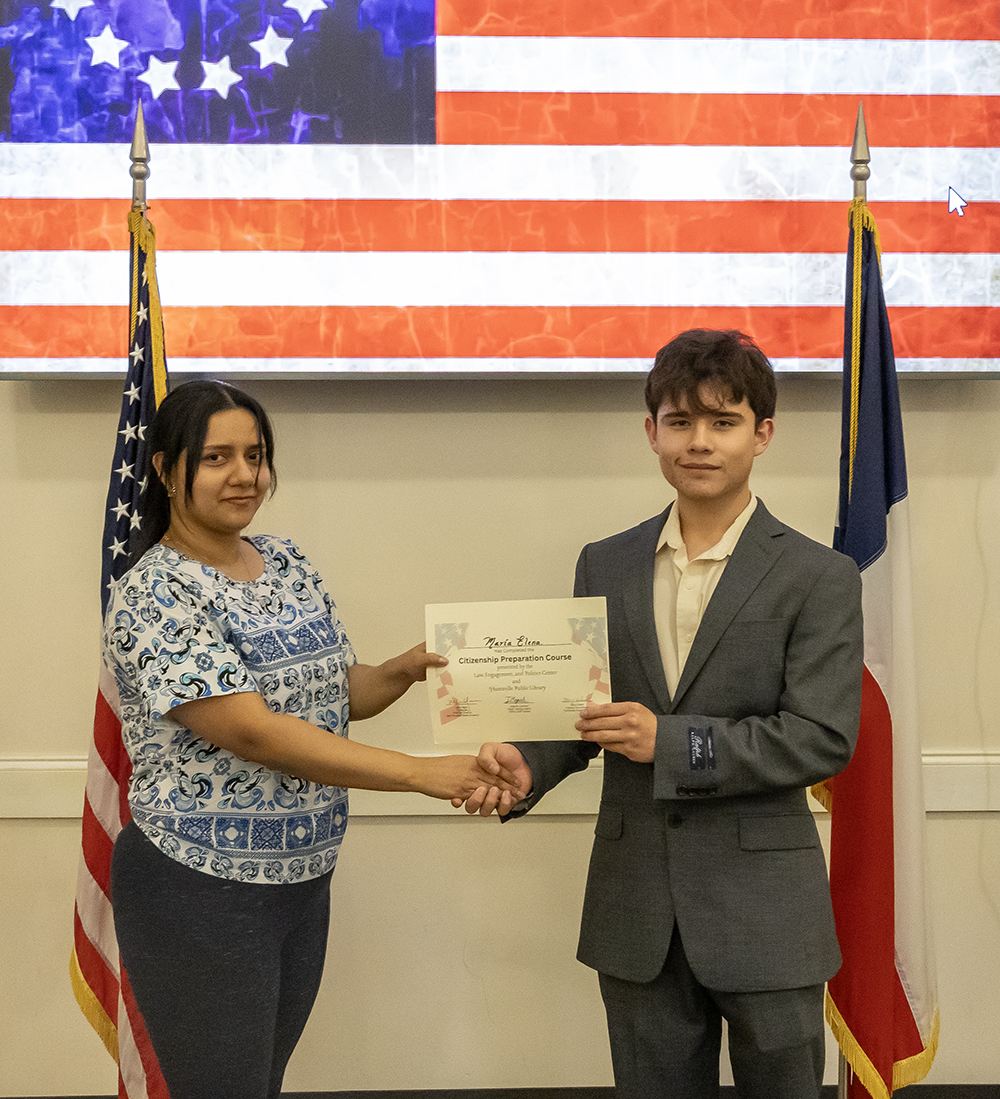
Each year, the Center for Law, Engagement, And Politics partners with the Huntsville Public Library, hosting a five-week “Citizenship Preparatory Course” for local documented immigrants. This year, with the help of intern Jose Carreno, Library Literacy Coordinator Mary Kokot, and three unpaid student volunteers, we were able to assist 13 local immigrants on their journey to citizenship.

Many people–even citizens–don’t know what it takes to naturalize, which is one reason Richard Lane and I established this program in 2008. For most immigrants, they have to pay approximately $1,000 for the paperwork, submit extensive records–including travel records for many years–demonstrate that they can read English, demonstrate they can speak and understand English, and also pass a Civics Quiz.

What are some of the questions on the quiz?
- Name one of the authors of the Federalist Papers.
- There are fifteen cabinet departments. Name two of them.
- What is one power of the federal government?
- What is one right reserved only for citizens?
- There are four amendments to the US Constitution that involve voting. Describe one of them.
- Who was President during World War I?
If the immigrants can show they know this information, while also demonstrating a clean criminal record and good moral character (not, for example, an excessive drinker or a former prostitute), then they earn their citizenship.
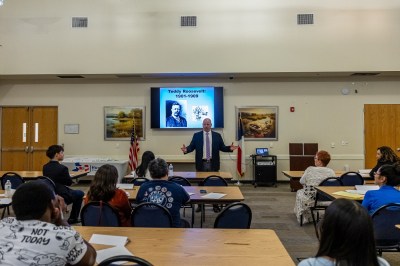
Over the five weeks of the course, we cover these materials, alternating between boring lectures (led by me) and more hands-on help and translation by the volunteers, which this year, included Nataly Elizondo, Michelle Moya, and Yajaira Gutierrez–with a photography assist by Olivia Discon.
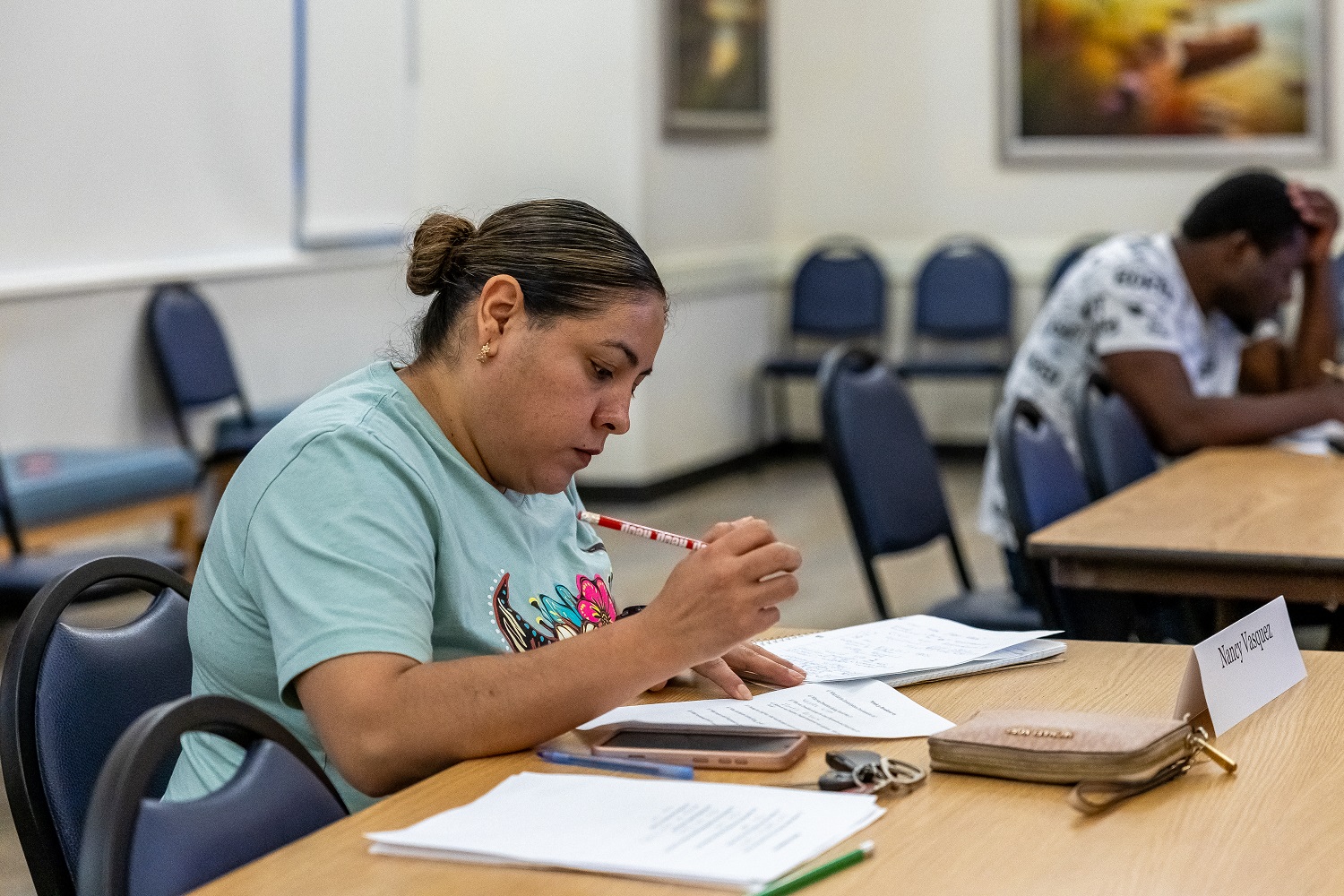


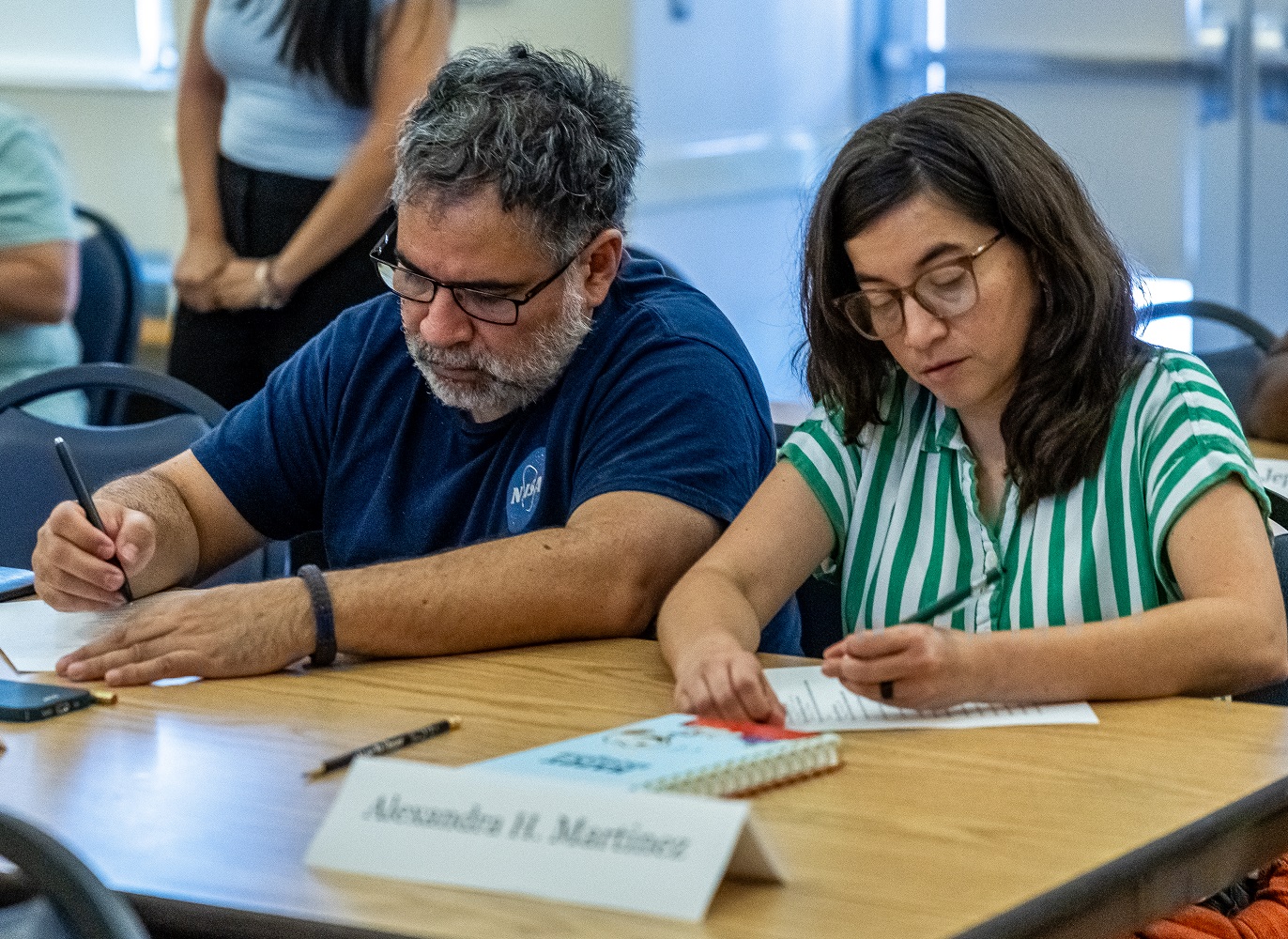


While the volunteers’ bilingual skills are helpful, almost all of the immigrants are required to take the test in English (there is an exception for those who are 55 years old and who have been in the country for 20 years), so we try to avoid extensive communication in Spanish.
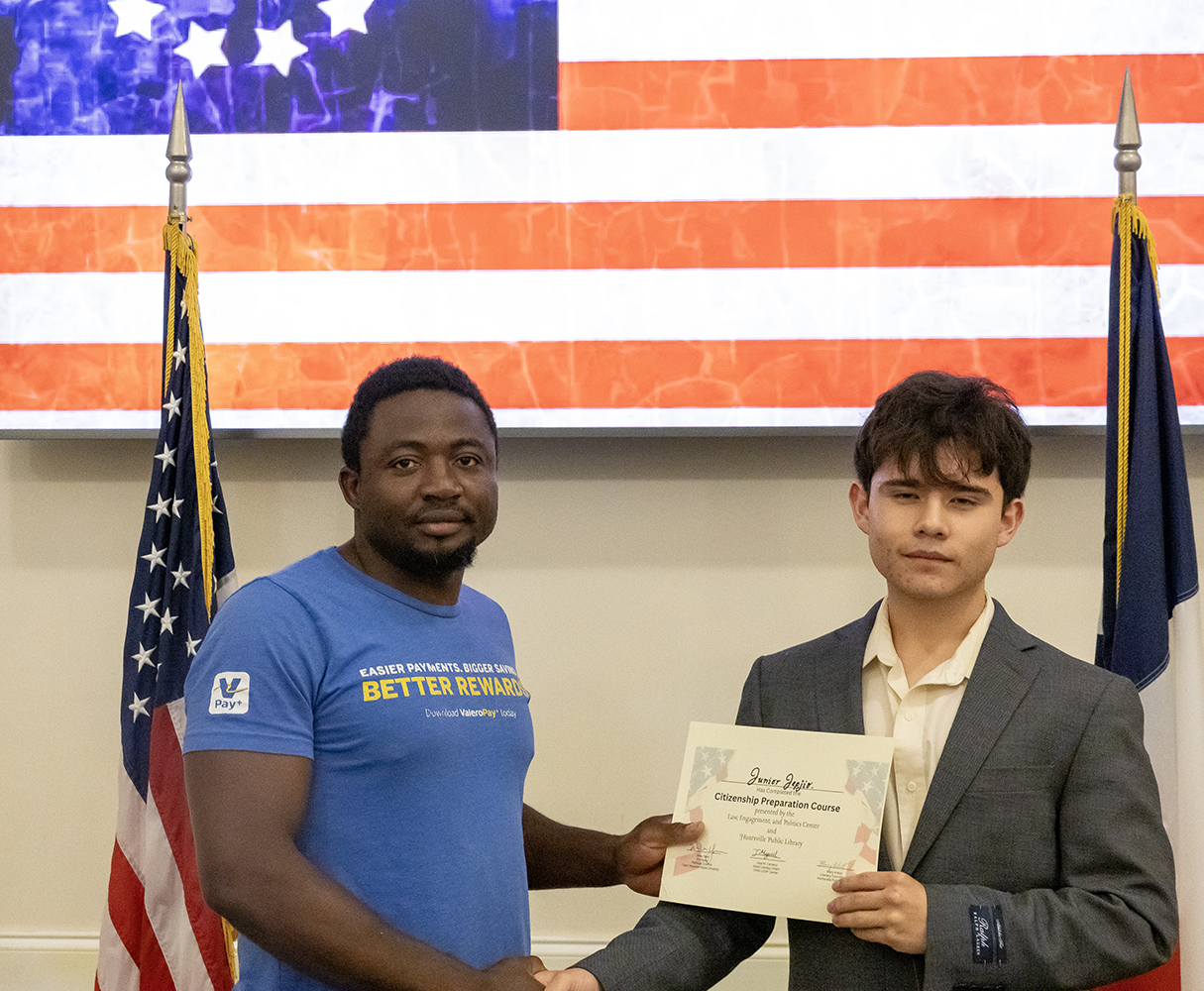
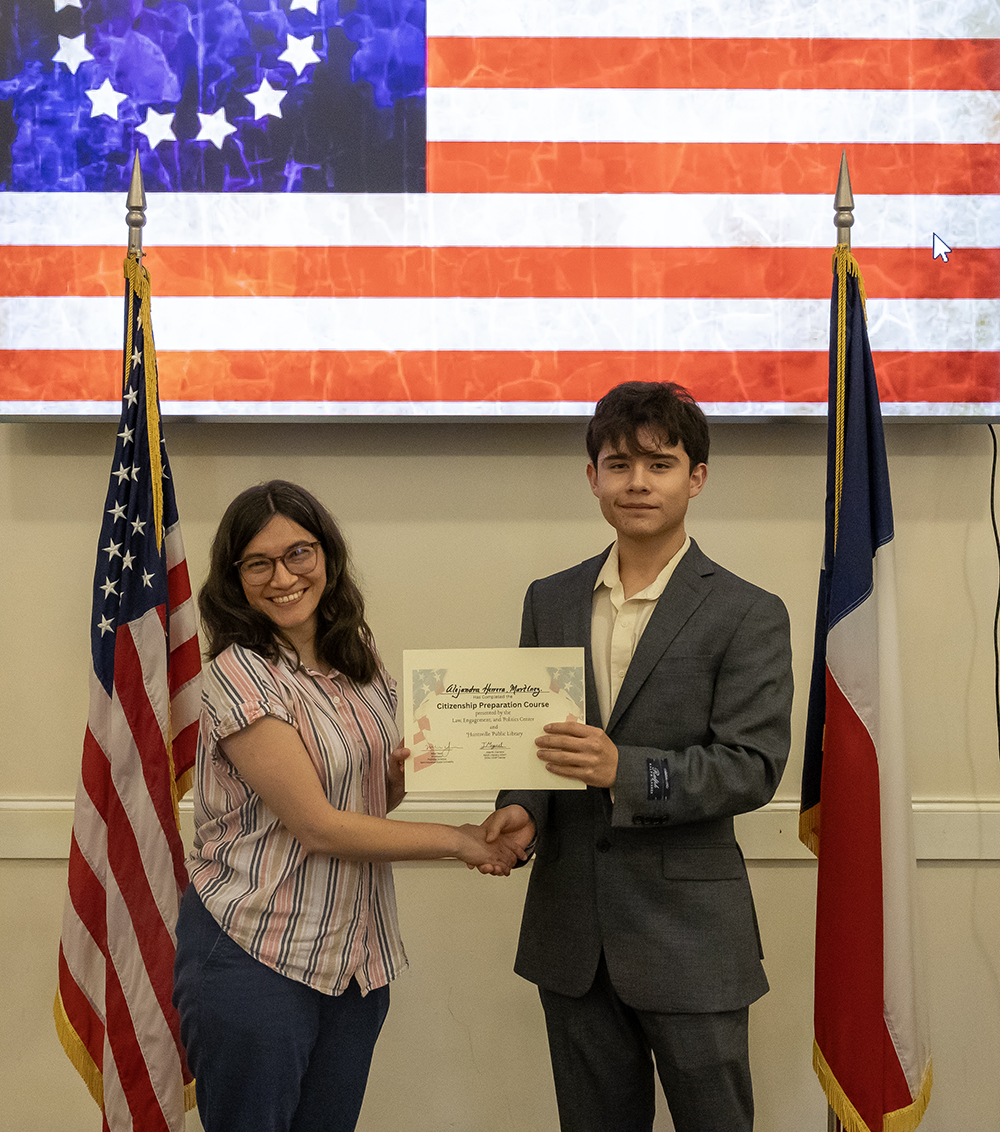
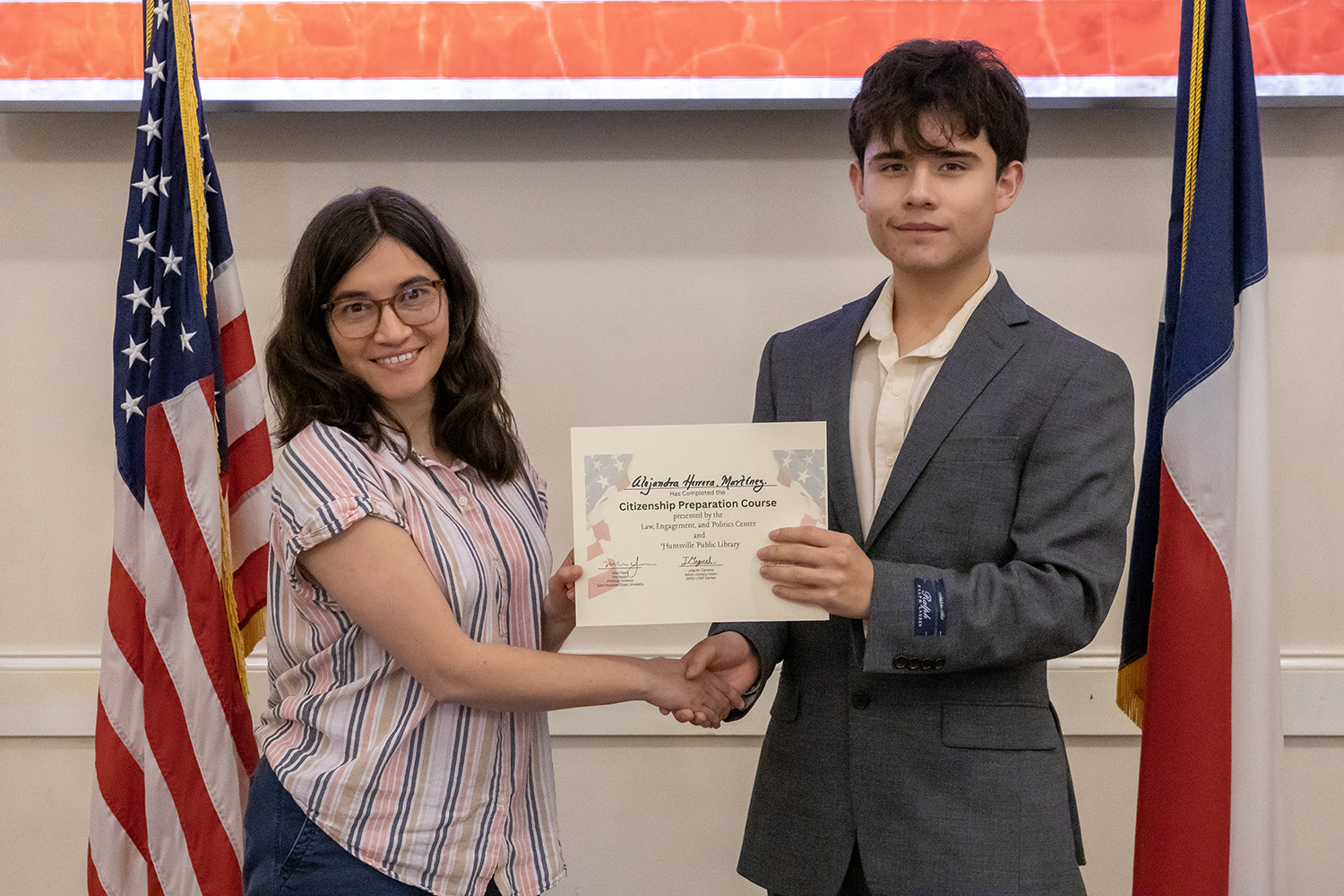
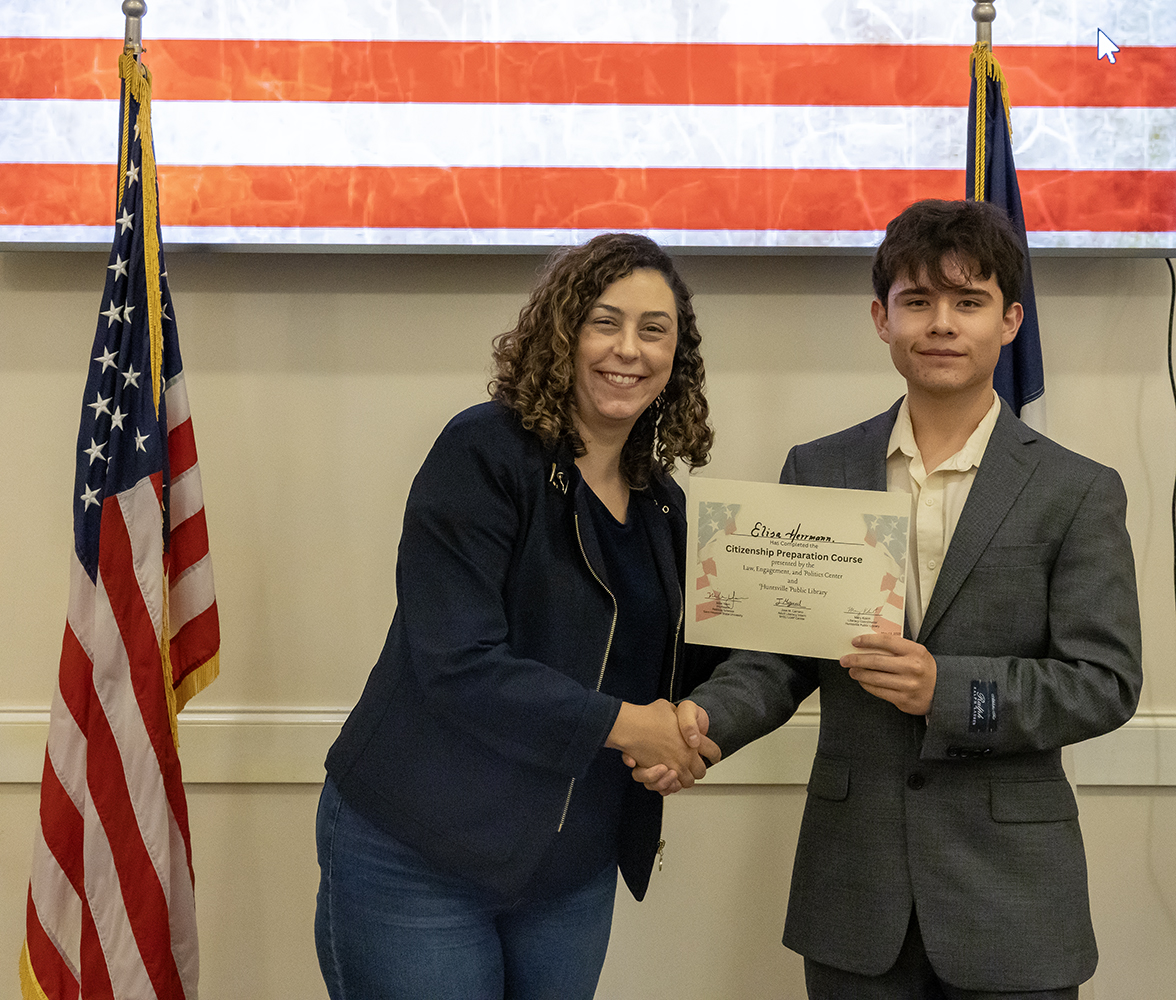
This year’s immigrant roster was impressive, with two professors, professional staff from the College of Osteopathic Medicine, two janitorial staff, and eight other local residents. This list included: Dr. Elisa Herrmann, Jose Arroyo, Maria Elena, Junior Jepjio, Alexandra Herrera, Nancy Vasquez, Iris Santos, Veronica Garcia, Dr. Juan Diego Daza, Nancy Martinez, Marisa Pimental, Carmen Cedeno, and Gregoria McGuire. McGuire passed her citizenship test during the course, and she continued to attend the course to work on her writing and learn more about US history and government.

One of the most appealing aspects of the course is the friendships that develop over the five weeks, despite broad differences in background, occupations, and cultures. Among our 13 classmates, for example, eight different countries were represented–including Cameroon, a first for us in the 16th year of leading the course!

Our final class is a “Thanksgiving,” with immigrants and volunteers bringing dishes from their native countries. With a healthy helping of bar-b-que and desserts and drinks from Mexico, Germany, El Salvador, and Brazil.

This Thanksgiving is not just part of what is taught in the class and on the citizenship test, it also reflects the friendships that have formed.

Thus the smiles you see in our photos are genuine. Indeed, even as the class was over, groups lingered, continuing to talk, exchange phone numbers and the like.







And thus it was with much inner warmth that I exited the building for our final class. This warmth was enhanced when Gregoria walked out with me, noting, “You are a good person, and I am grateful to know you.”

This struck me as very generous, and also coincidental, inasmuch as this is how I think of her. And as we parted for our cars, she added, “I think you must have a Mexican heart.”


 Center for Law, Engagement, and Politics