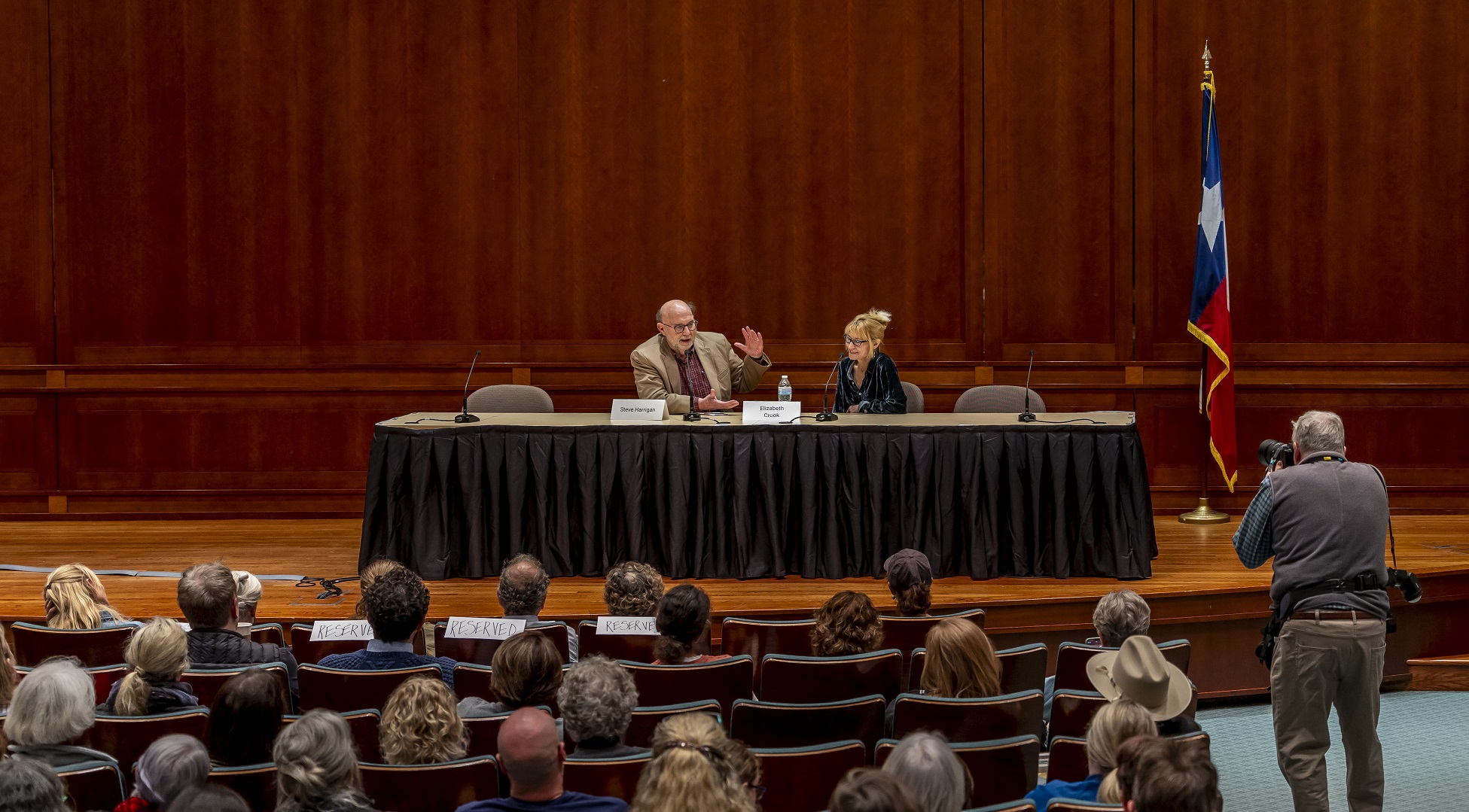
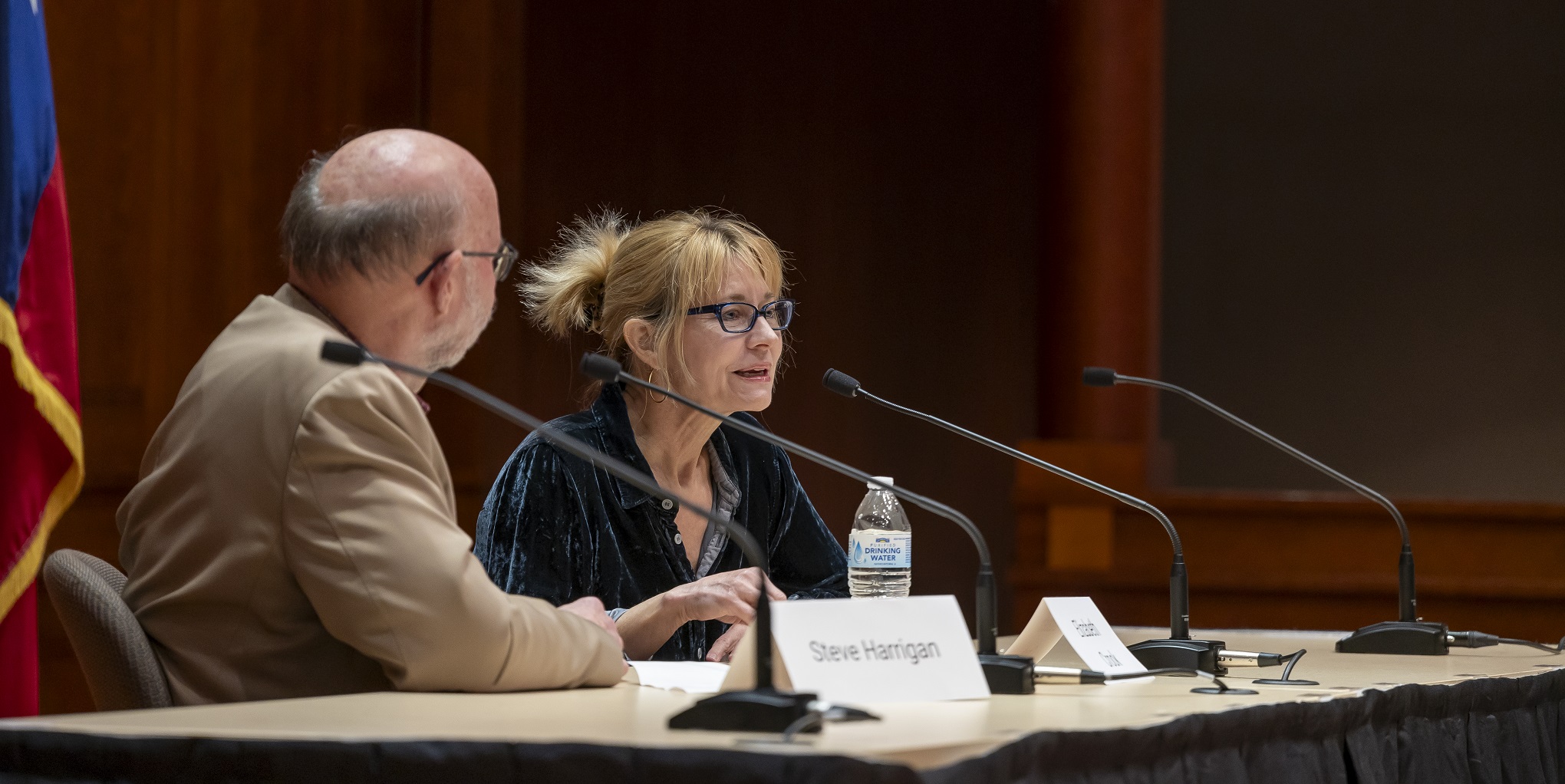
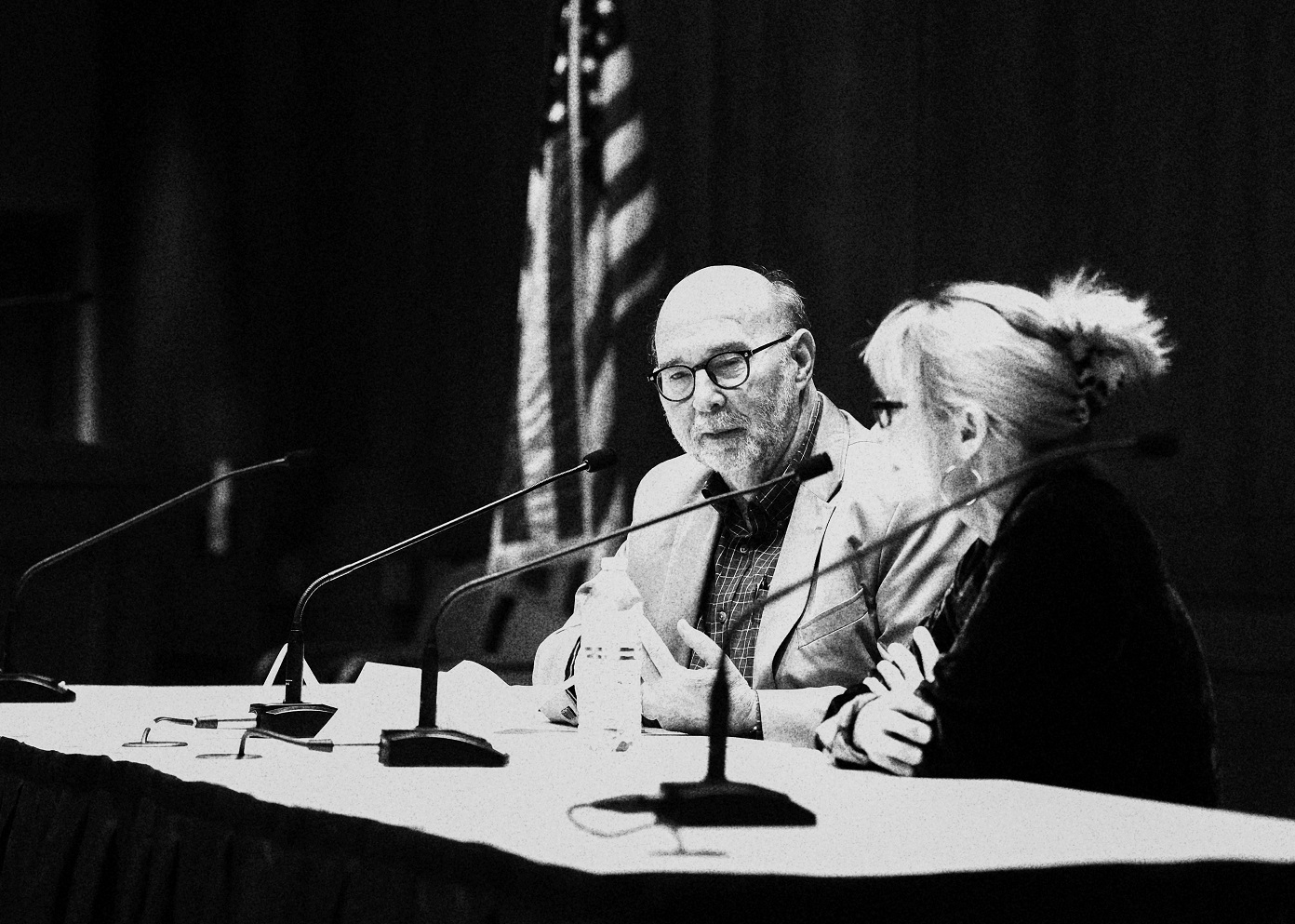
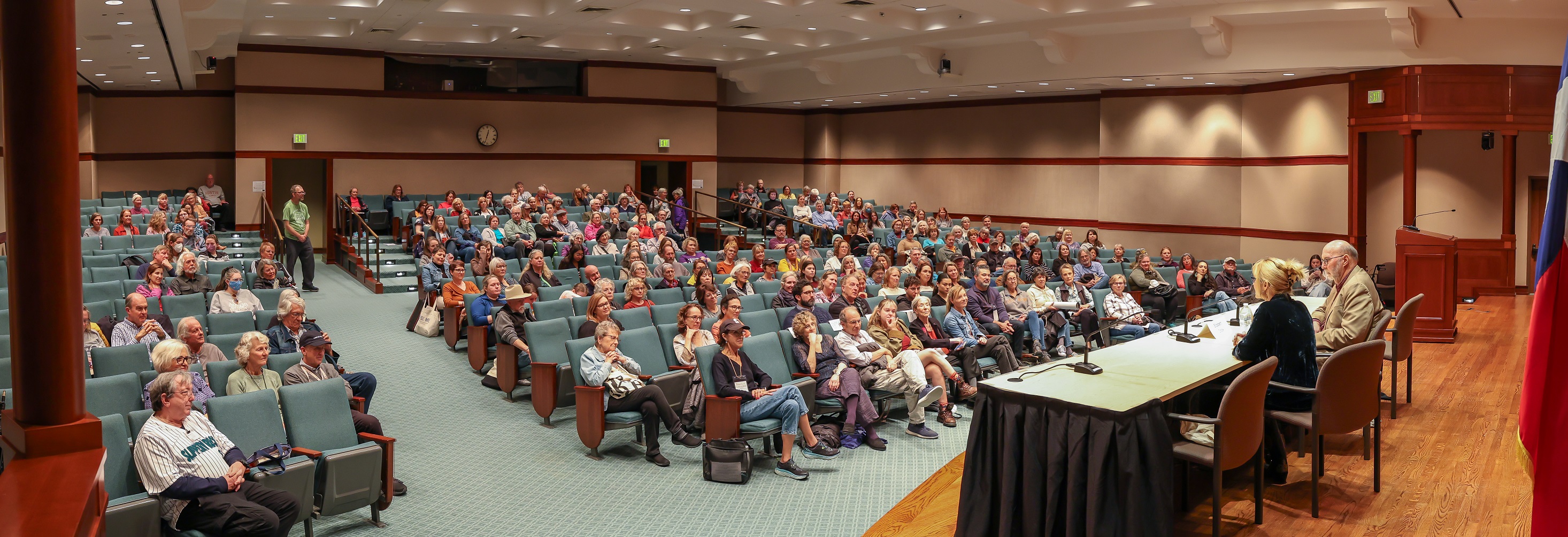
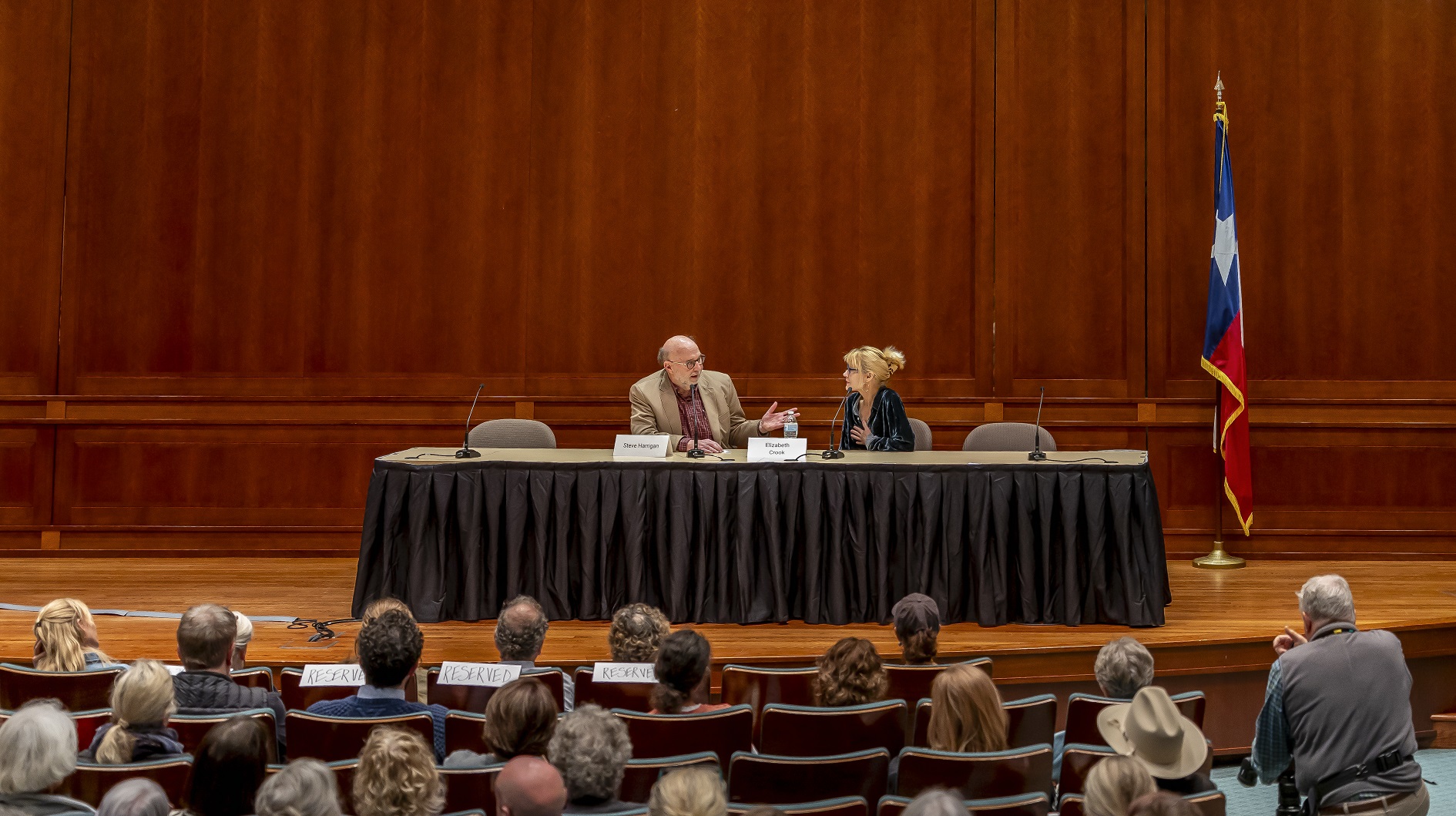
Stephen Harrigan, best-selling novelist and non-fiction author, is a veteran of book-talks. As such, he was able to manage a less-than-smooth moderated discussion of “Sorrowful Mysteries: The Shepherd Children of Fatima and the Fate of the Twentieth Century,” while still providing humor, interesting anecdotes, and his usual graciousness to a full house at First Light Books.

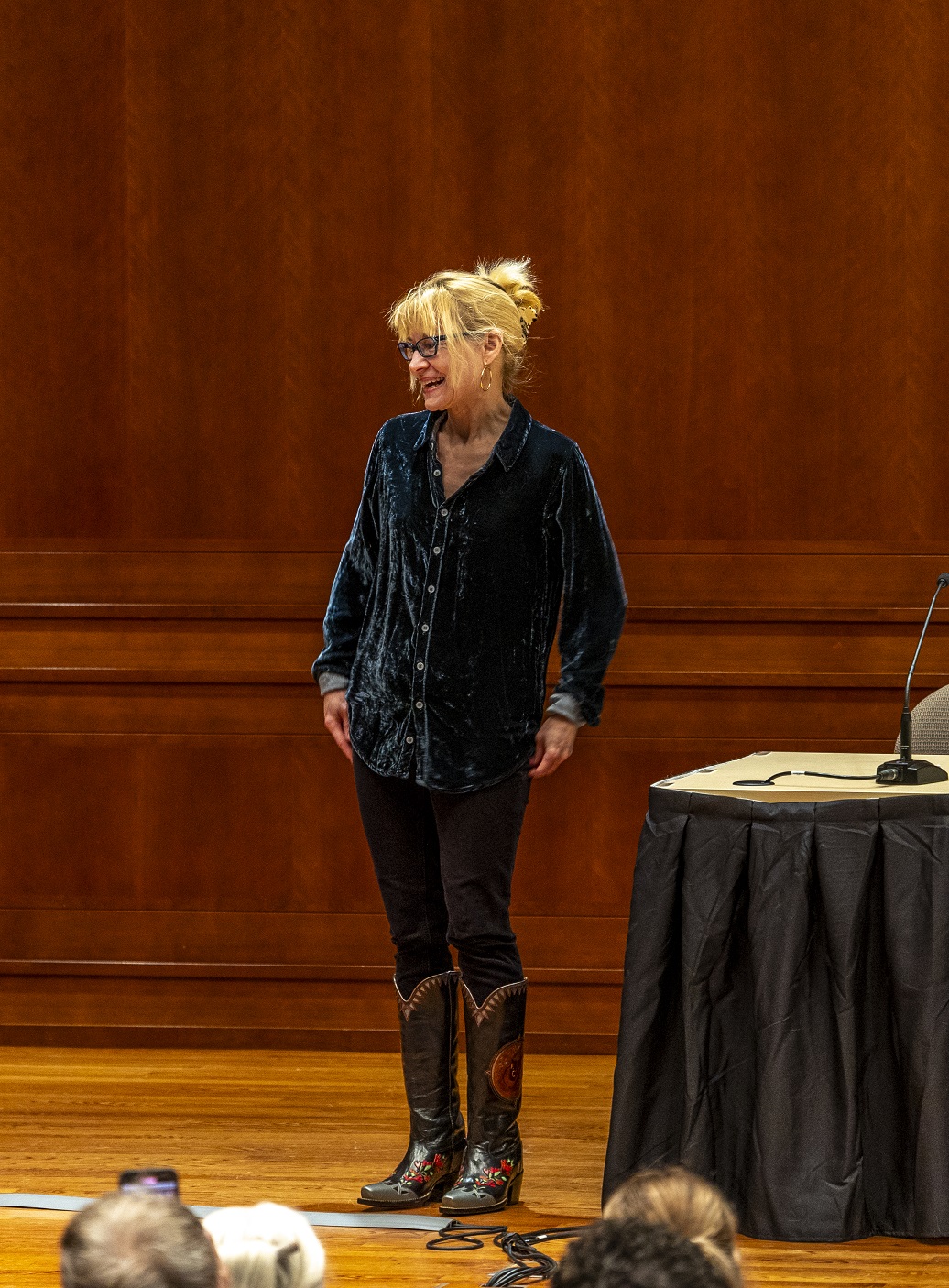
This audience included some impromptu stop-ins by authors Bret Anthony Johnston and Elizabeth Crook, as well as the moderator Sarah Bird, herself a novelist. Following a brief introduction….
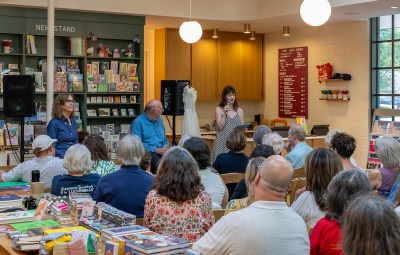
…Bird described Harrigan as a “famously moral person,” before asking “an unfair, unanswerable question: ‘on balance, has Catholicism been good or bad for humanity?'”

Harrigan did an admirable job answering the unanswerable. While noting the good and the bad–emphasizing there was a lot of both–he indicated that asking what things would be without religion is something like asking what life would be without the weather. It’s just a part of humanity, even if a person is, like Harrigan, a non-believer.
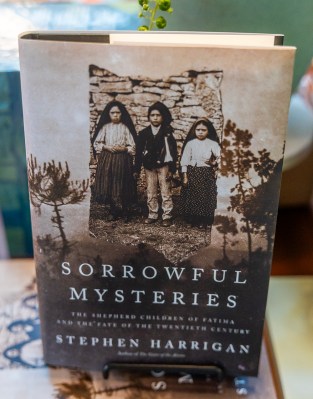
The strongest parts of the discussion involved Harrigan describing his Catholic upbringing, while drawing parallels to the three Portuguese children who believed they saw the Virgin Mary in Fatima in 1917. Harrigan emphasized how young the children were (they were 7, 9, and 10), noting that they were at impressionable ages.

He tied that to his youth, when he was regularly instructed to “duck and cover” underneath desks, armed with the illusion that such actions could save his life in the event of a nuclear war. Of course, this fear of the apocalypse alternated with soothing lessons of the Virgin Mary’s powers and beneficence. It could be, Harrigan implied, a confusing time.


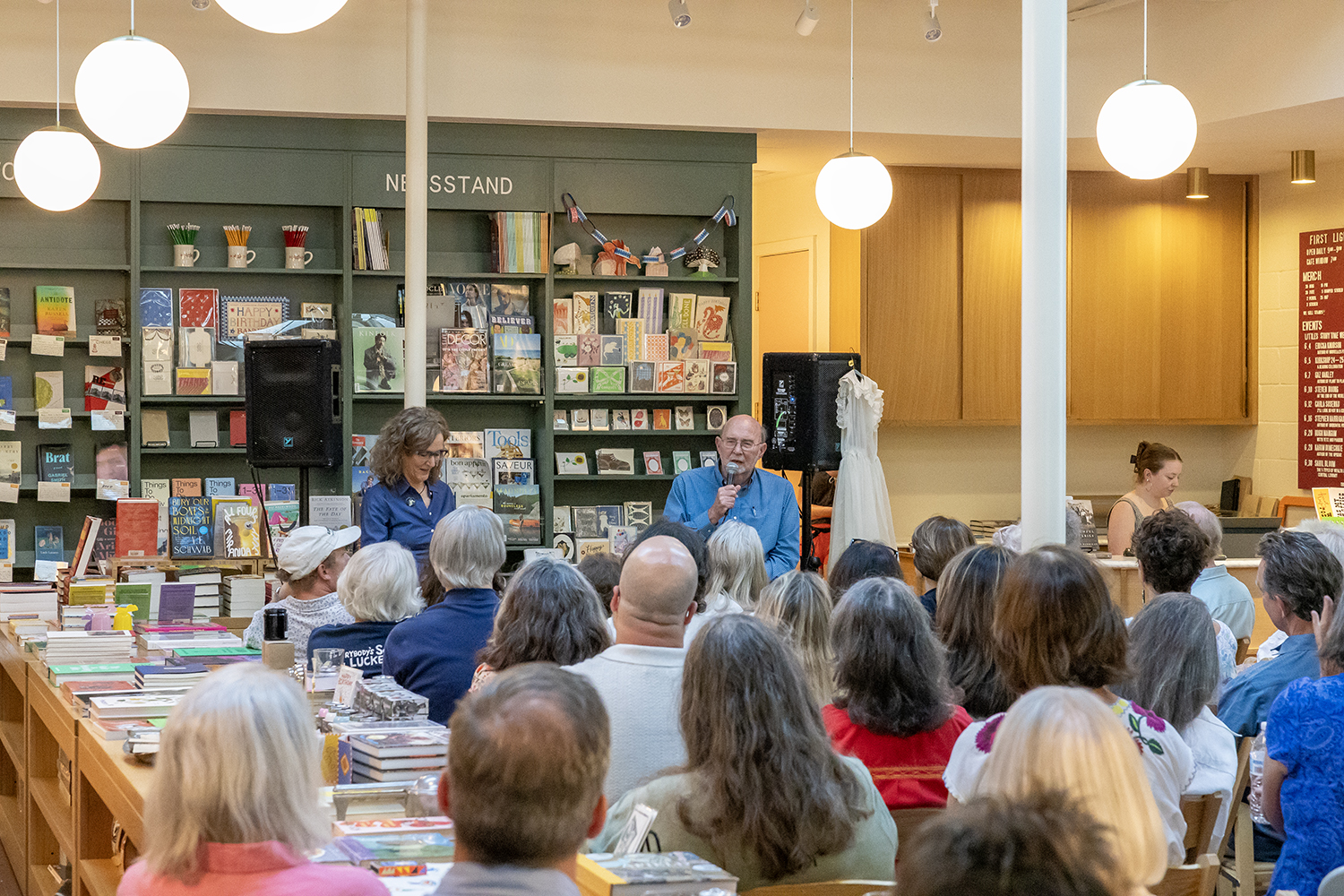
Mixed in were some discussions that were less relevant to the book. Bird asked not once but twice about the Catholic Church’s “shift to the right,” and she brought her confirmation dress to the event, and she hung it from a speaker at the front of the room.

This prompted an audience member to ask, during the Q & A, whether Ms. Bird “wore underwear with her confirmation dress,” surely one of the stranger questions Harrigan has heard at one of his book discussions.

On this question, Harrigan prudently remained silent. On others, he deftly responded by offering interesting anecdotes, exploring big topics, and mixing the personal with the universal in a manner that is as appealing in person as it is in his writing.












 Center for Law, Engagement, and Politics