
SHSU students visited the historic Peabody Library on campus while learning about internship opportunities in Huntsville; Austin, TX; and Washington, DC. The learning came from reliable sources: Professor Mike Yawn and several former interns who had intern and worked everywhere from Huntsville to Capitol Hill.

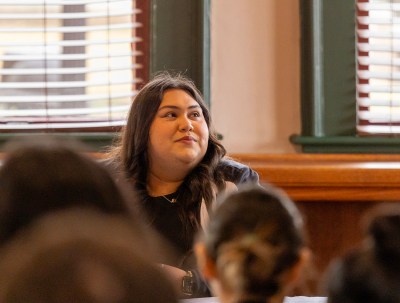
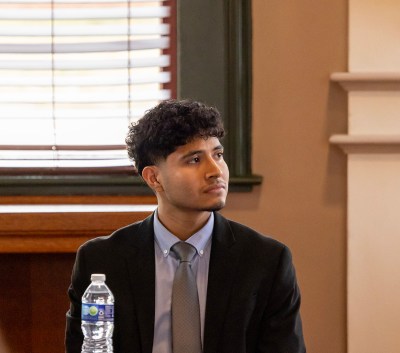
Daniel North worked on Senator Claire McCaskill’s campaign and in her Capitol office before going into law. Ademide Adedokun also interned on Capitol Hill before working as a staff aide, and then moving into the executive branch. Israel Gallegos, a current SHSU student, spent Spring 2025 interning for Congressman Morgan Luttrell. Also on hand were current students Makenna McDaniel and Michelle Cardenas, both of whom completed the SHAIP program in 2025, working for Representative Will Metcalf and Governor Greg Abbott, respectively.
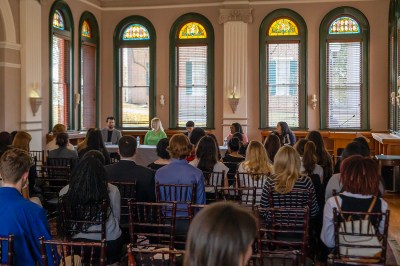
The programs are described below:
City Fellows
The City Fellows program is for students who would like to have a part-time internship while still attending classes in Huntsville. Students earn academic credit while working 15-20 hours per week (paid at $10.00 an hour) on a project for a local government office, non-profit, law office, or business.
These internships are project based, meaning that the agency is seeking an intern who can complete a semester-long activity. This might include offering recruiting instructors and offering programs for activities; conducting a salary survey for various jobs across the state; planning a large event; working on a marketing campaign for a new undertaking; or implementing an audit of government services. The application for summer internships opens April 1, with interviews in late April.
Daniel, Ademide, and Michelle all did City Fellows internships before moving to Austin and/or DC for higher-profile internships.
SHAIP
The Sam Houston Austin Internship Program was created by President Dana Hoyt in 2012, and Professor Yawn began implementation that year.

The timeline for this program is:
- September 1: Applications Open
- October 1: Applications Close
- Early October: Students are selected for interviews
- Mid-October: Panel Interviews
- Early November: Students interview at Austin offices
- January 3-June 1: Students intern in Austin
Selected students gain a scholarship of up to $8,000, earn six hours of academic credit, gain valuable skills, and great networking opportunities. It is a full-time experience, as recalled by Makenna McDaniel: “You begin by working about 40 hours per week, but by the end of session, that can end up being 80 hours a week. But if you are hard-working, it is an invigorating experience.”

The Chancellor’s DC Internship
The Chancellor’s DC Internship program was officially launched just weeks ago, and it involves selecting ten students from across the Texas State University System’s four-year institutions. Each student selected earns six hours of credit and a scholarship of up to $10,000 for the semester, while spending the semester in Washington, DC–a major draw of the experience. “It was a great opportunity to be in DC,” noted Israel Gallegos, “and work in the capitol building while also getting to experience the broader environment.”
The timeline for this program is:
- February 2: Applications Opened
- March 1: Applications Close
- Mid-March: Interviews
- Late-March: Follow-Up Interviews
- Early April: SHSU selects up to five applicants and send their applications to the System Office
- Late April: The System Office Reviews Applications
- May: The System selects ten students
- Fall Semester: Students work in DC
“This opportunity,” noted Ademide Adedokun, “can change lives. It changed mine, and I spent the next 13 years of my life in Washington, DC.”

Concluding Thoughts
Of course, students applying for any of these programs should have good grades, be disciplined, punctual, engaged, professional, and be coachable. For all of the programs, the more activities students participate in, the better chance they will have to demonstrate the qualities cited above. Academically, students will need a 2.8 or better (almost always better) to be competitive in the application process. For the SHAIP and DC programs, competitive applicants will have GPAs in the 3.5 and up range.
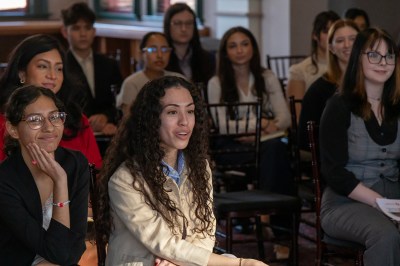
“For almost anything you want to do,” noted Daniel North, “having experiences like this–in the field and around people with amazing skills–will benefit your career, expand your horizons, and enhance your success.”


 Center for Law, Engagement, and Politics