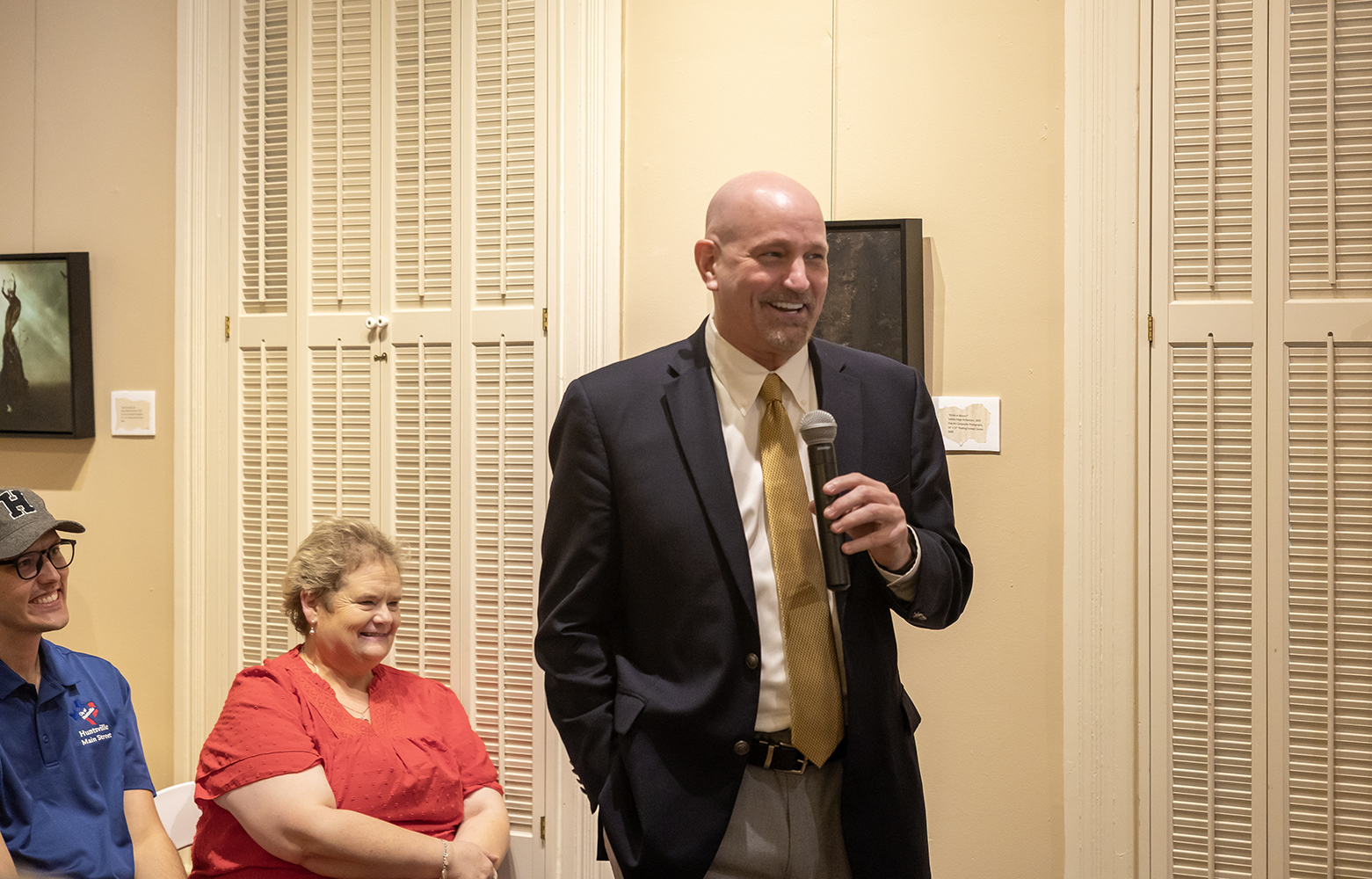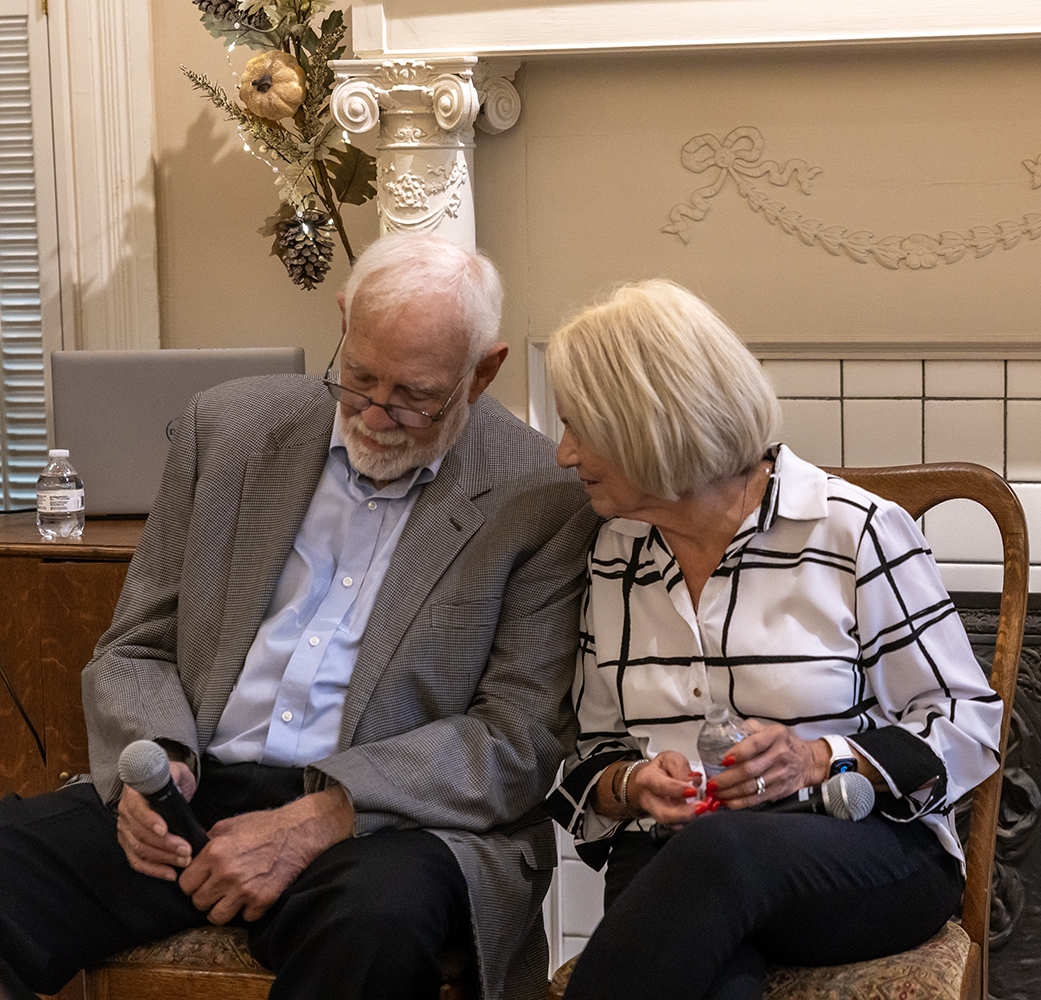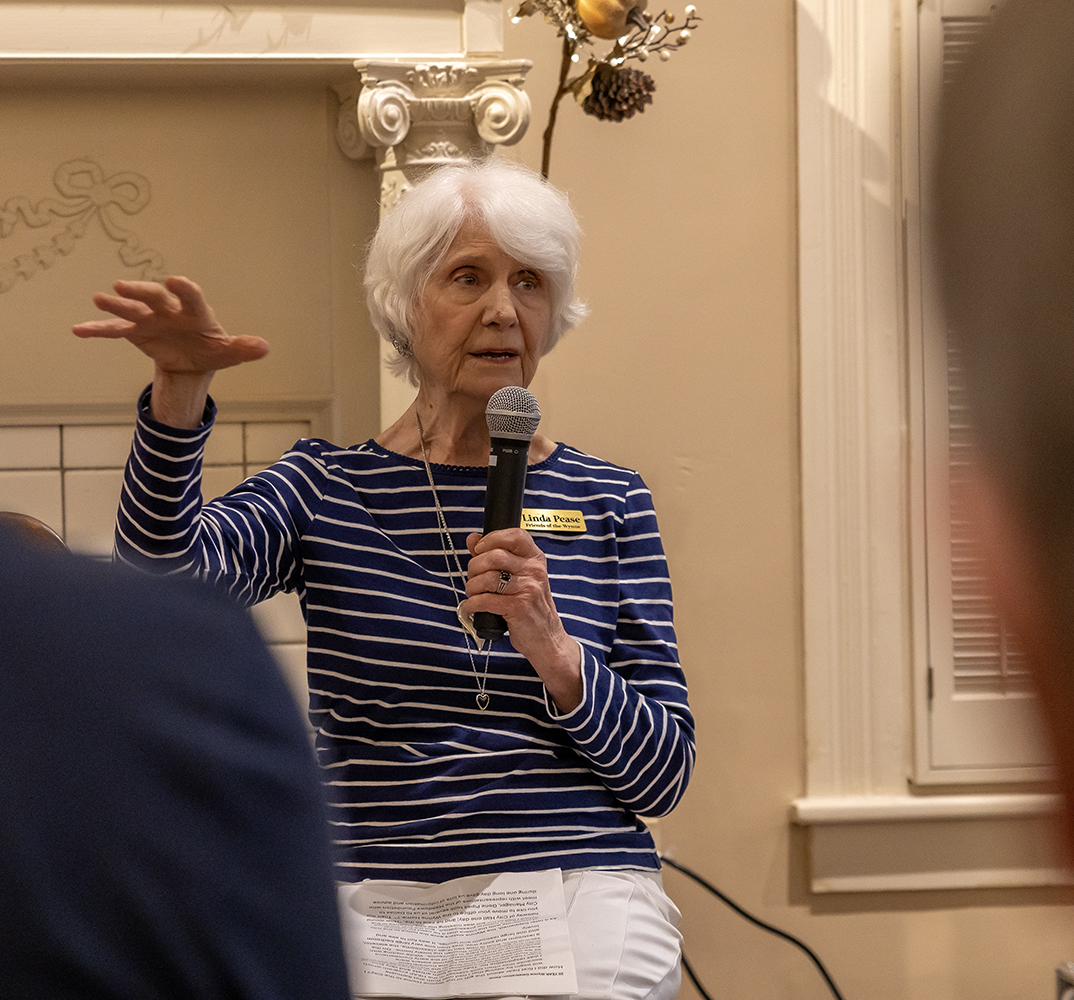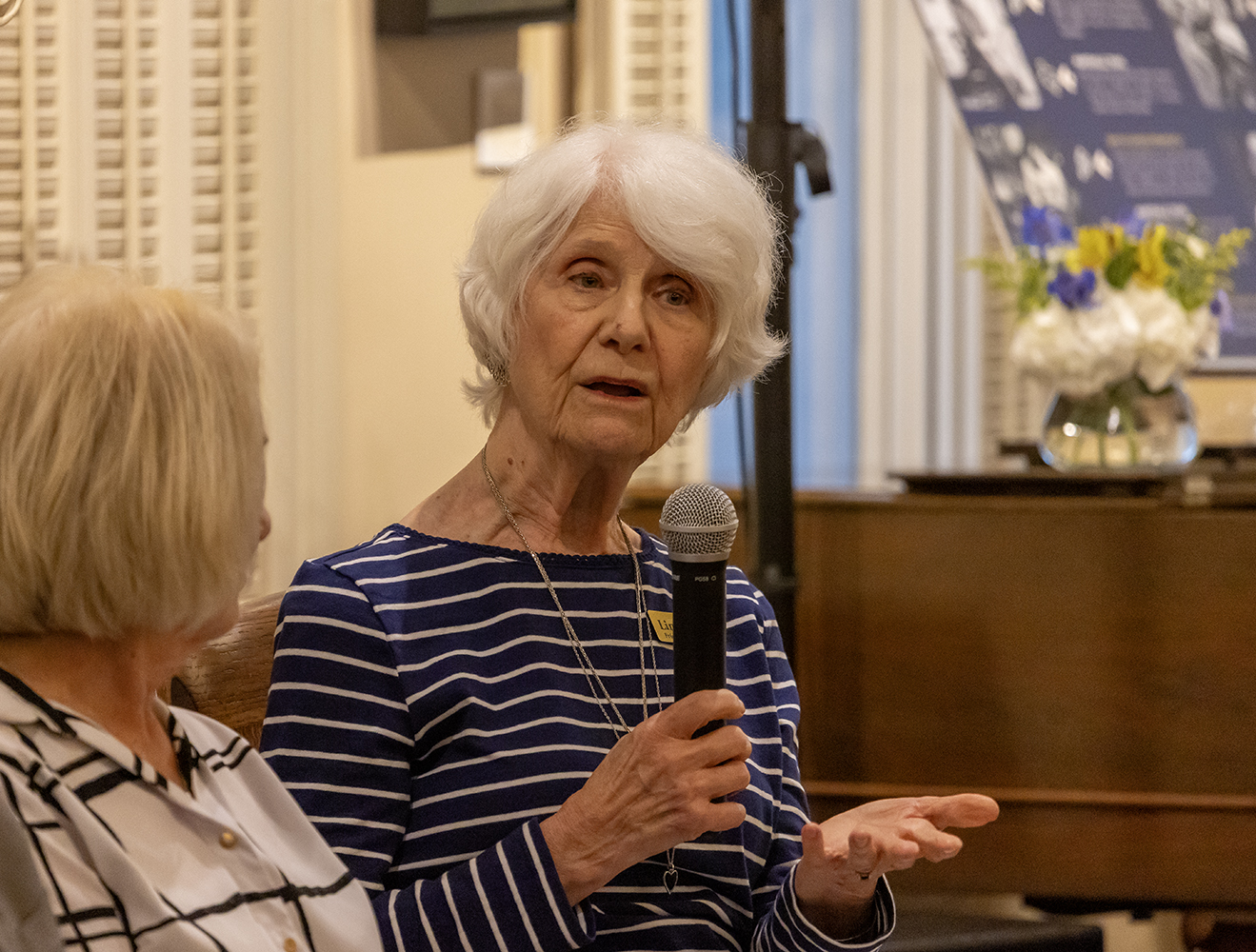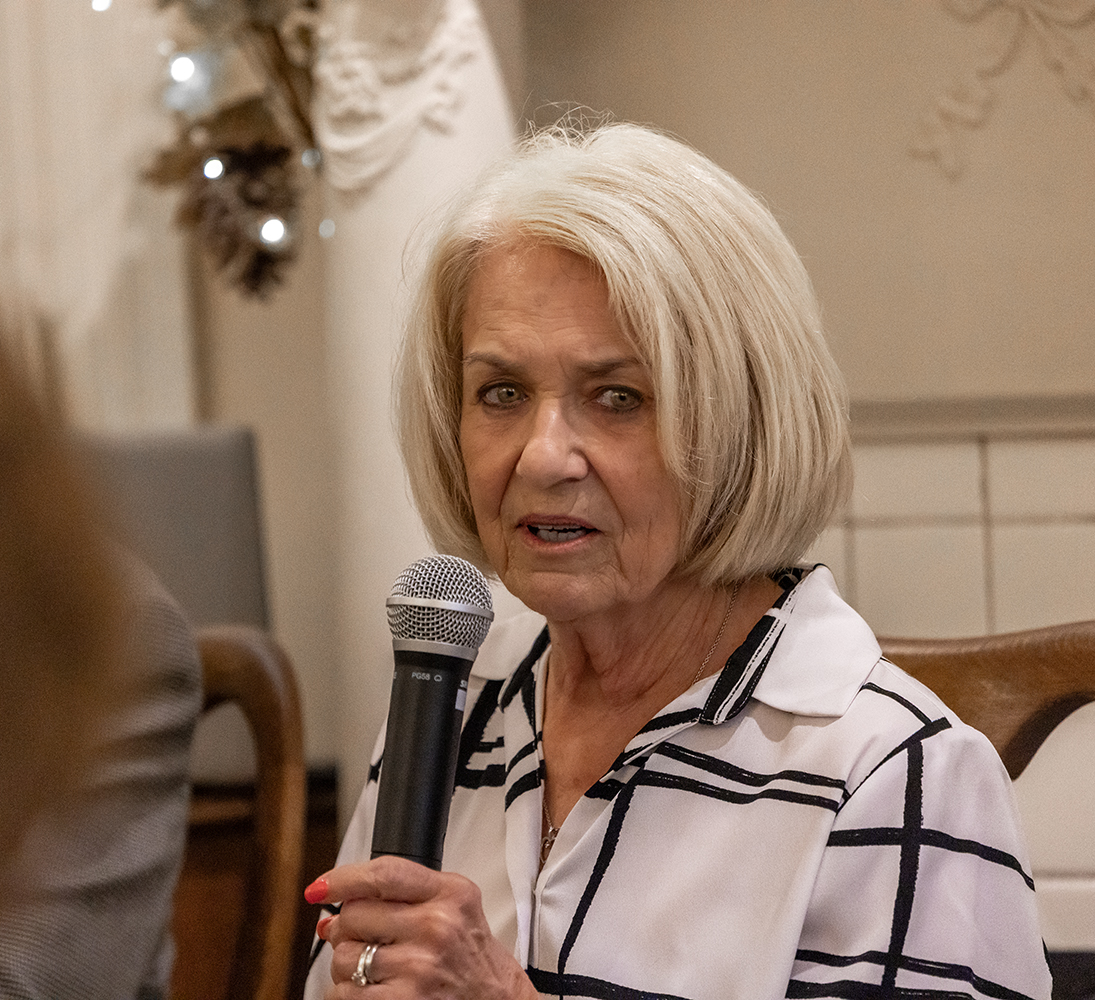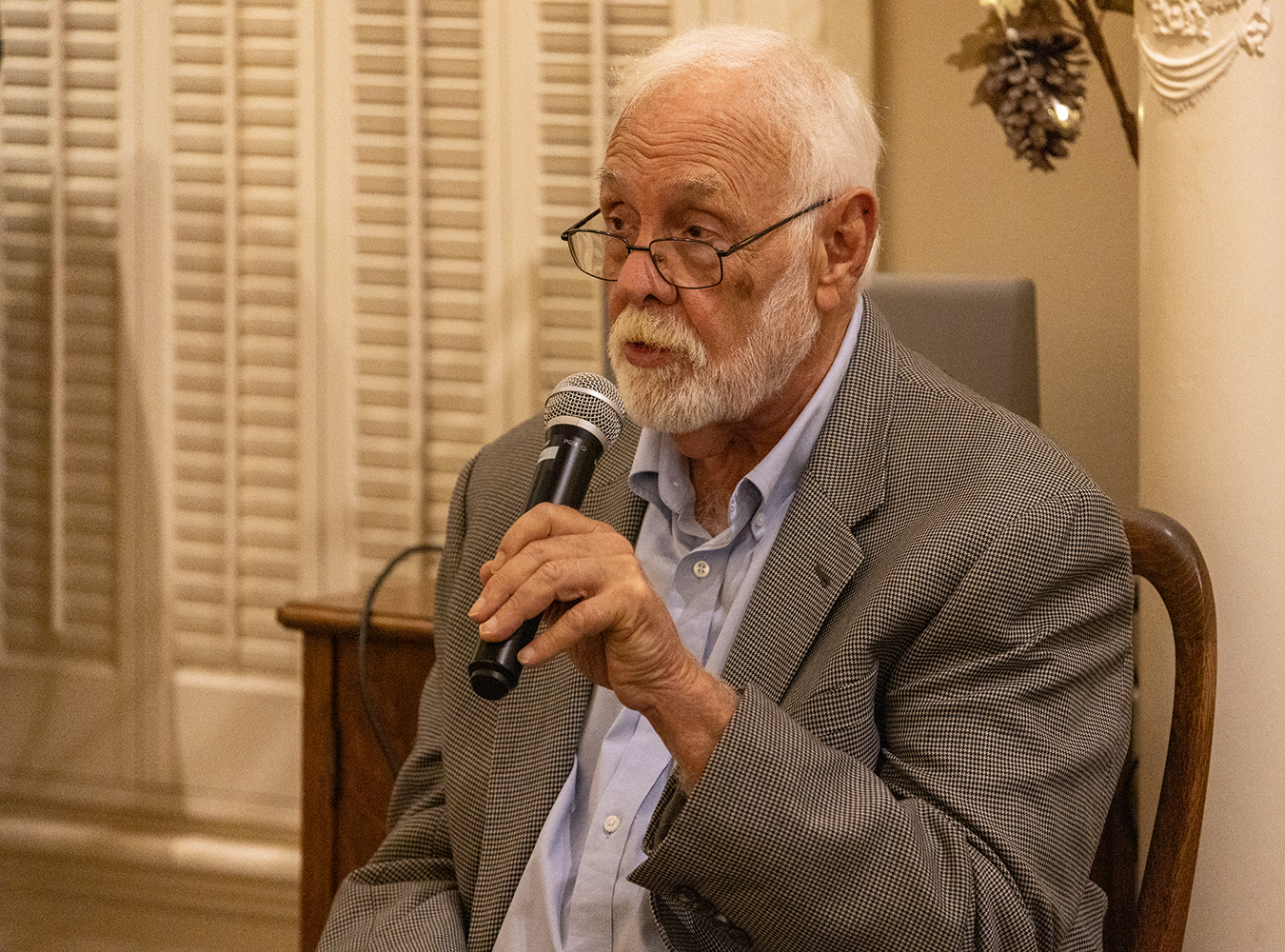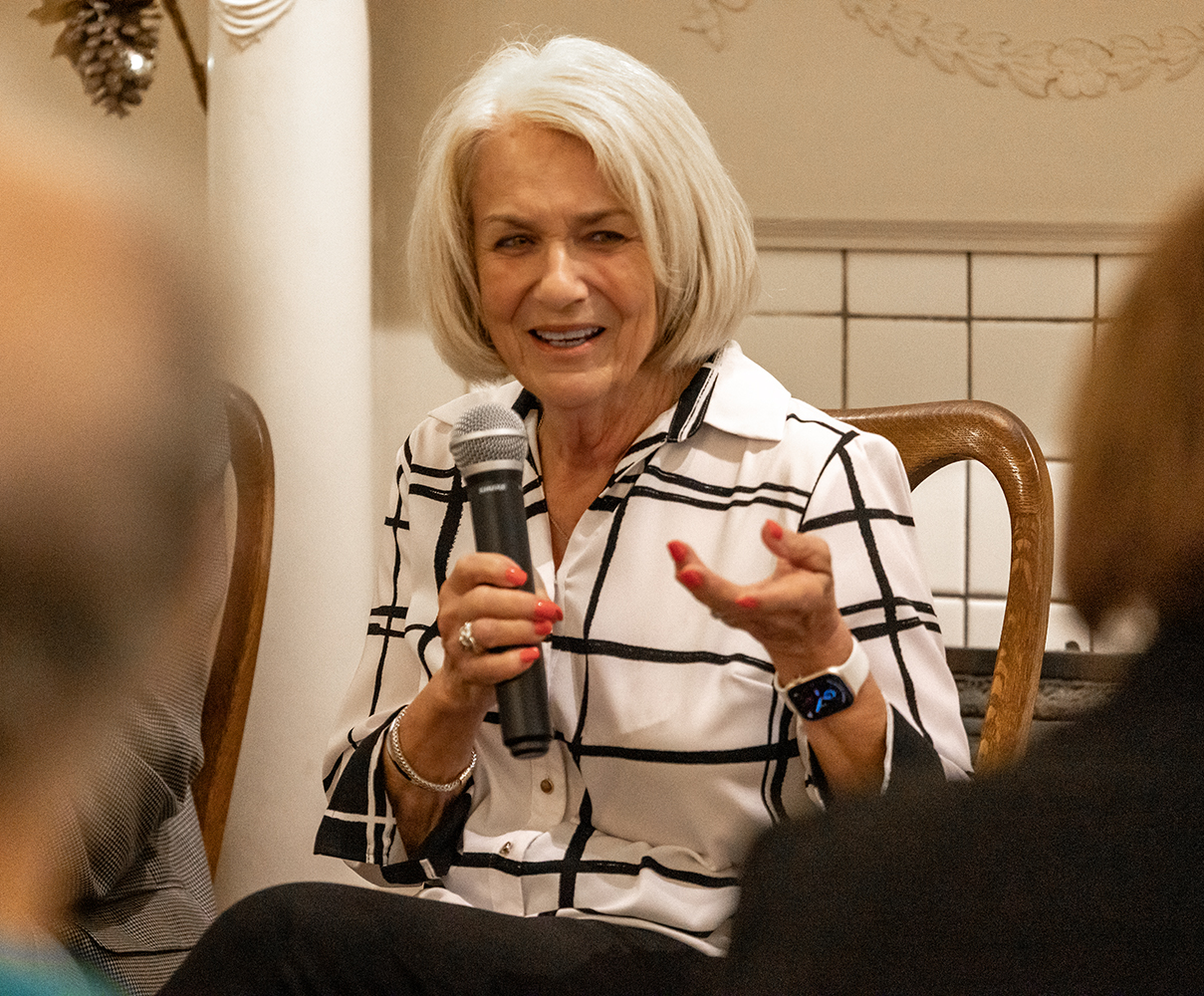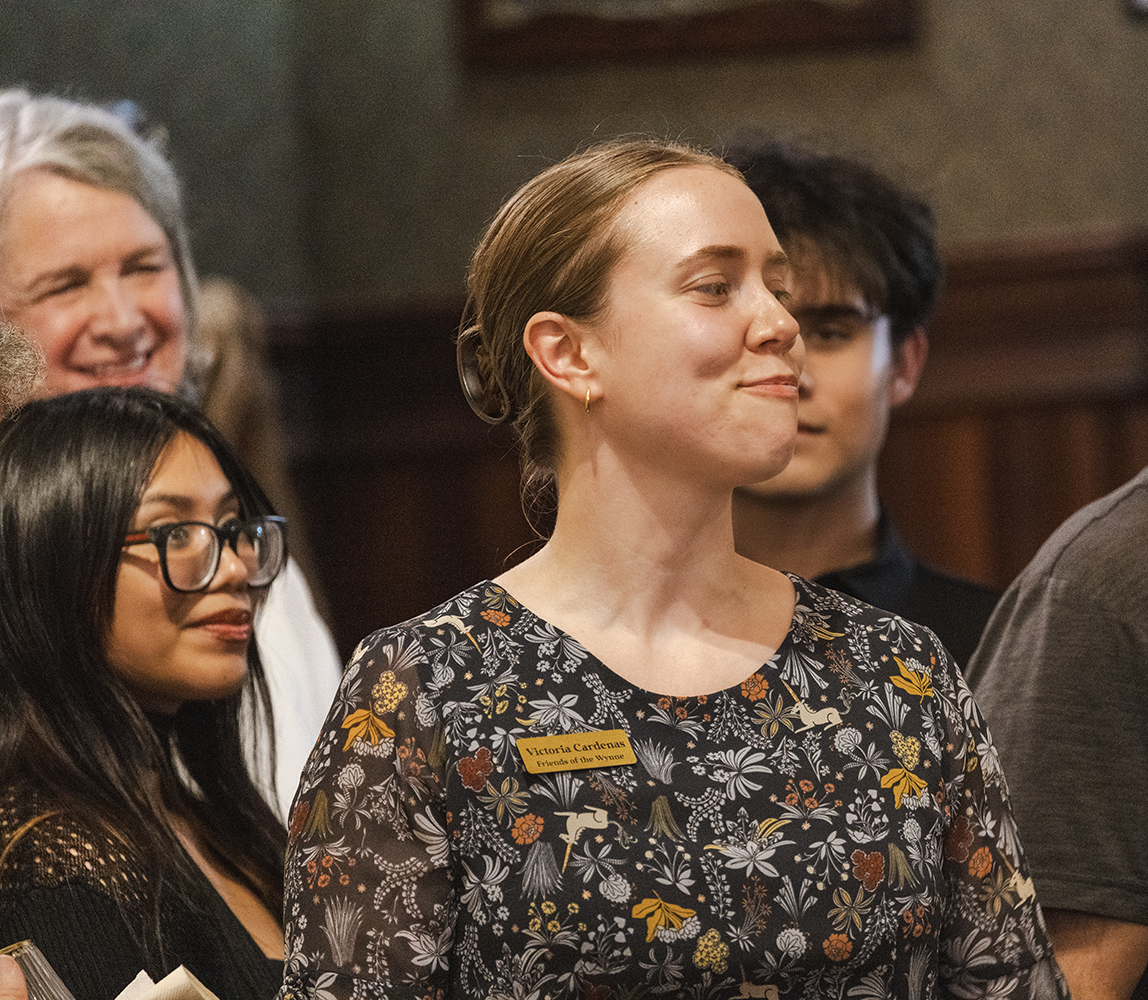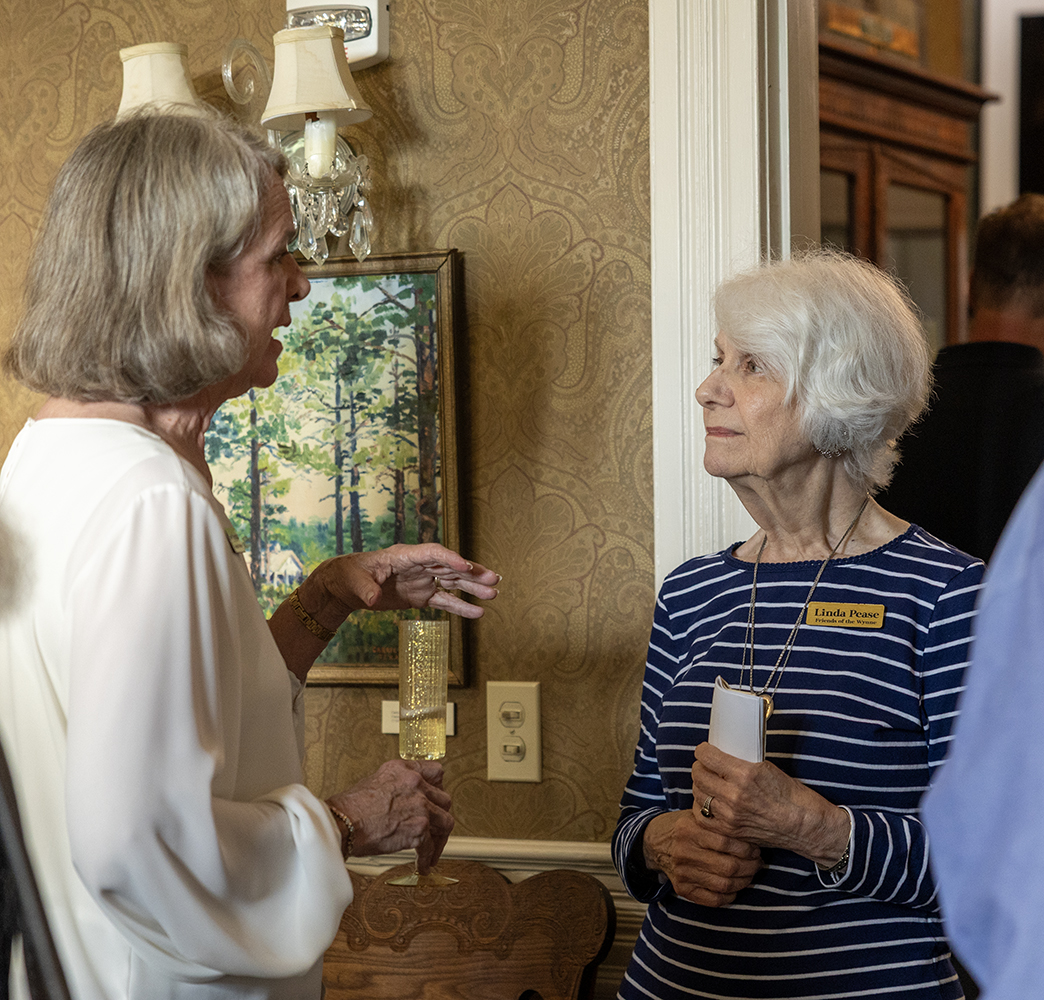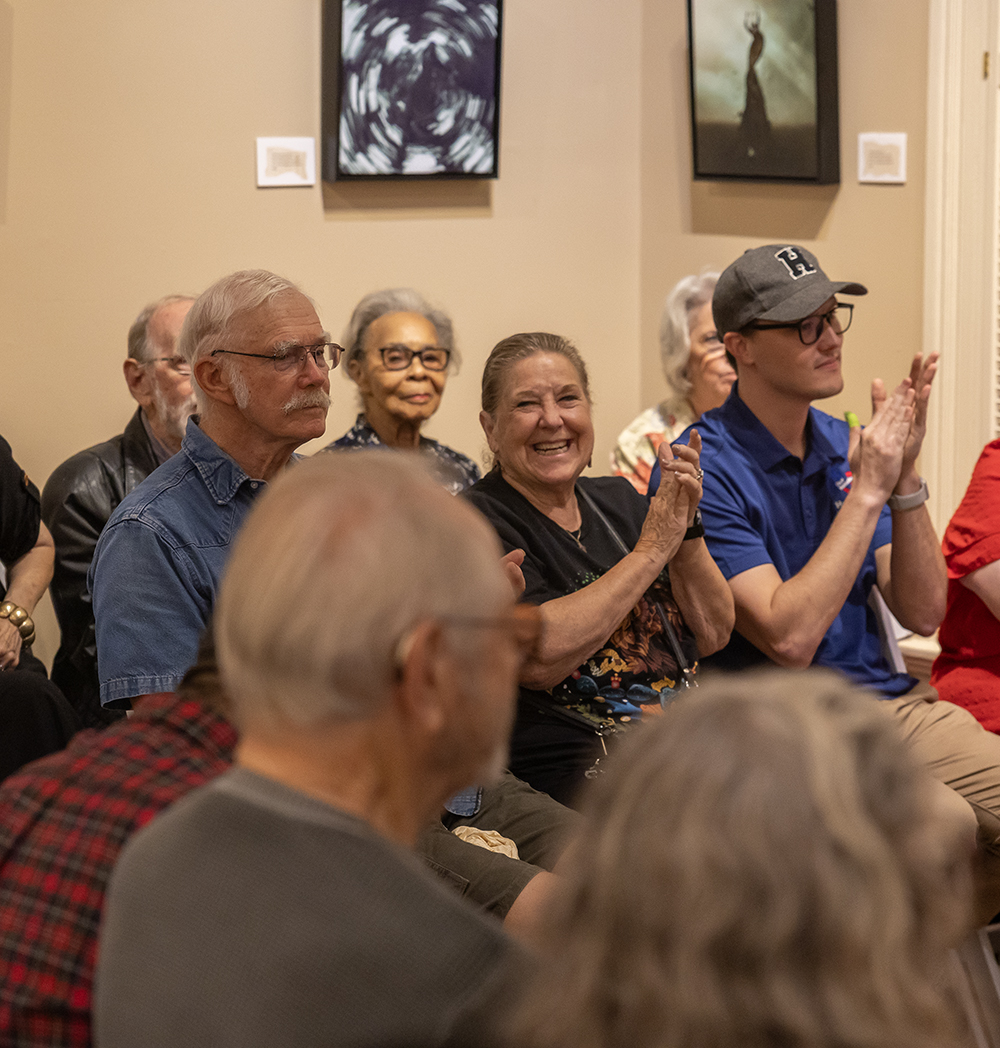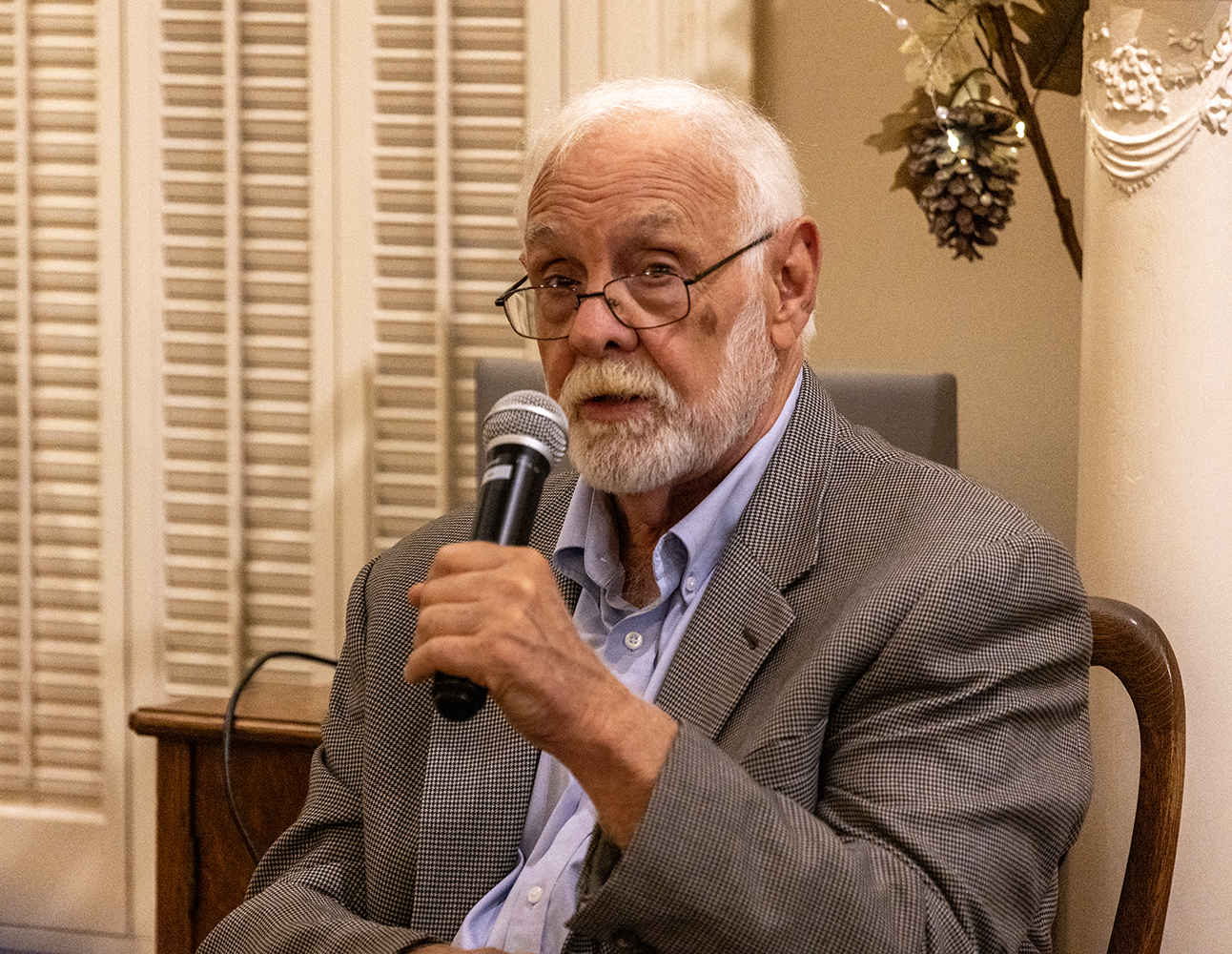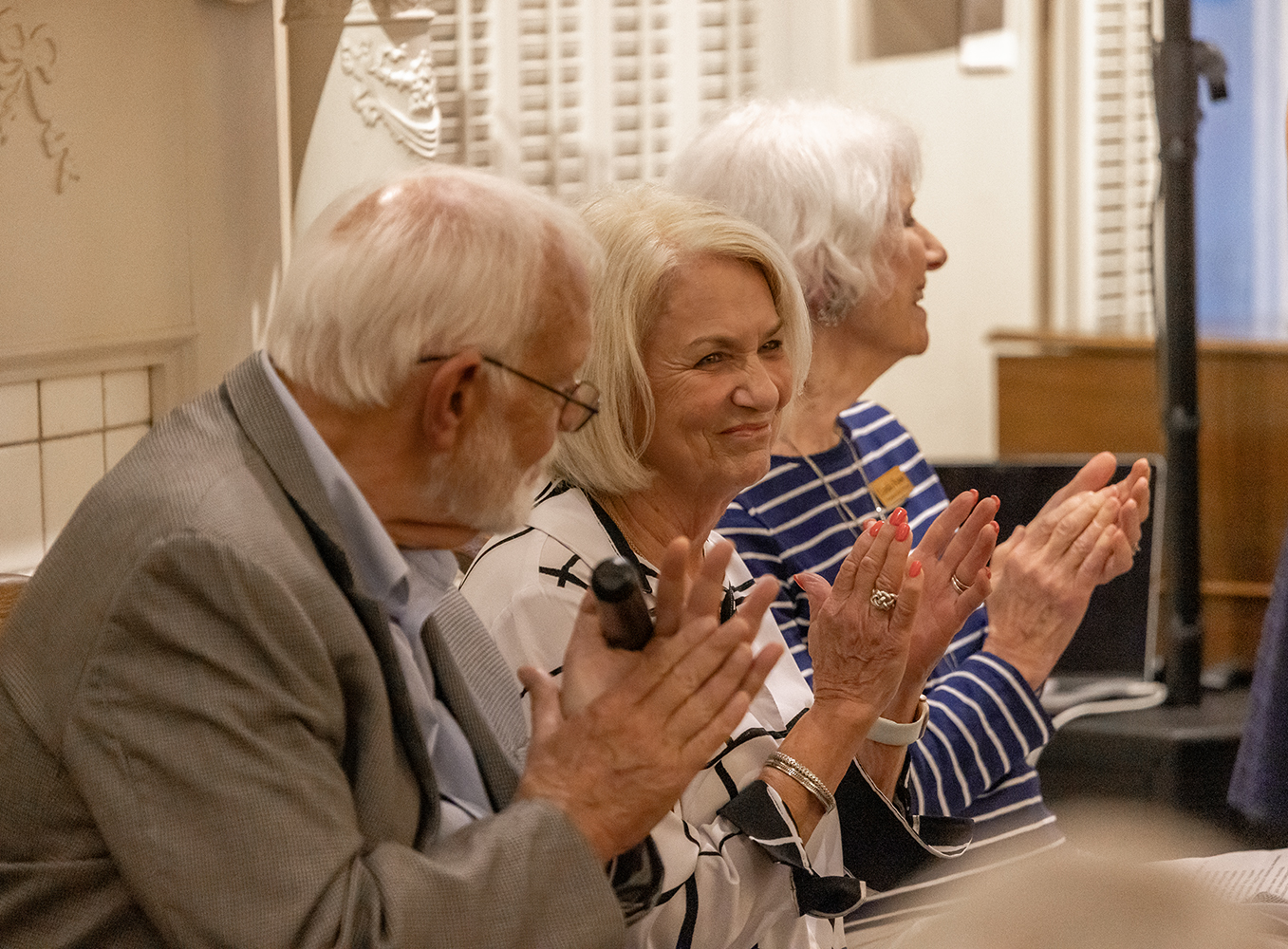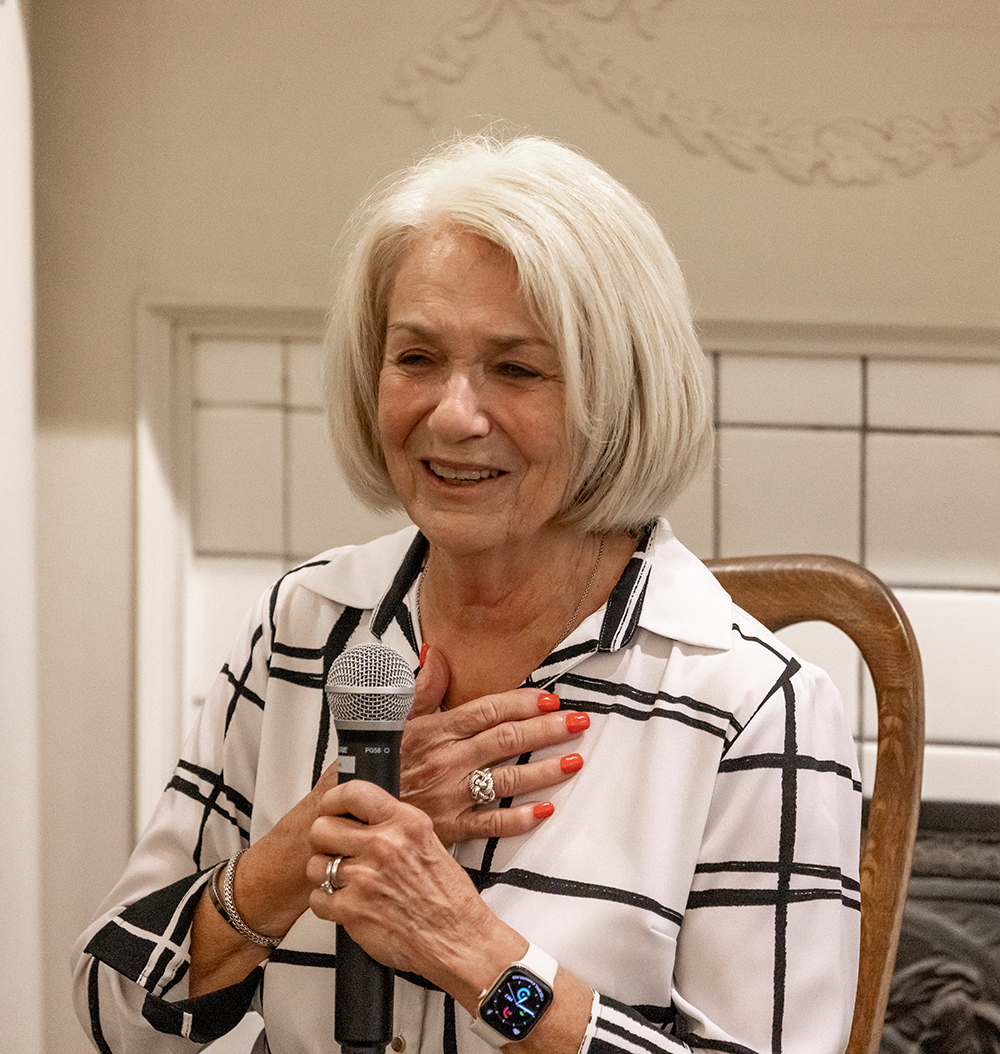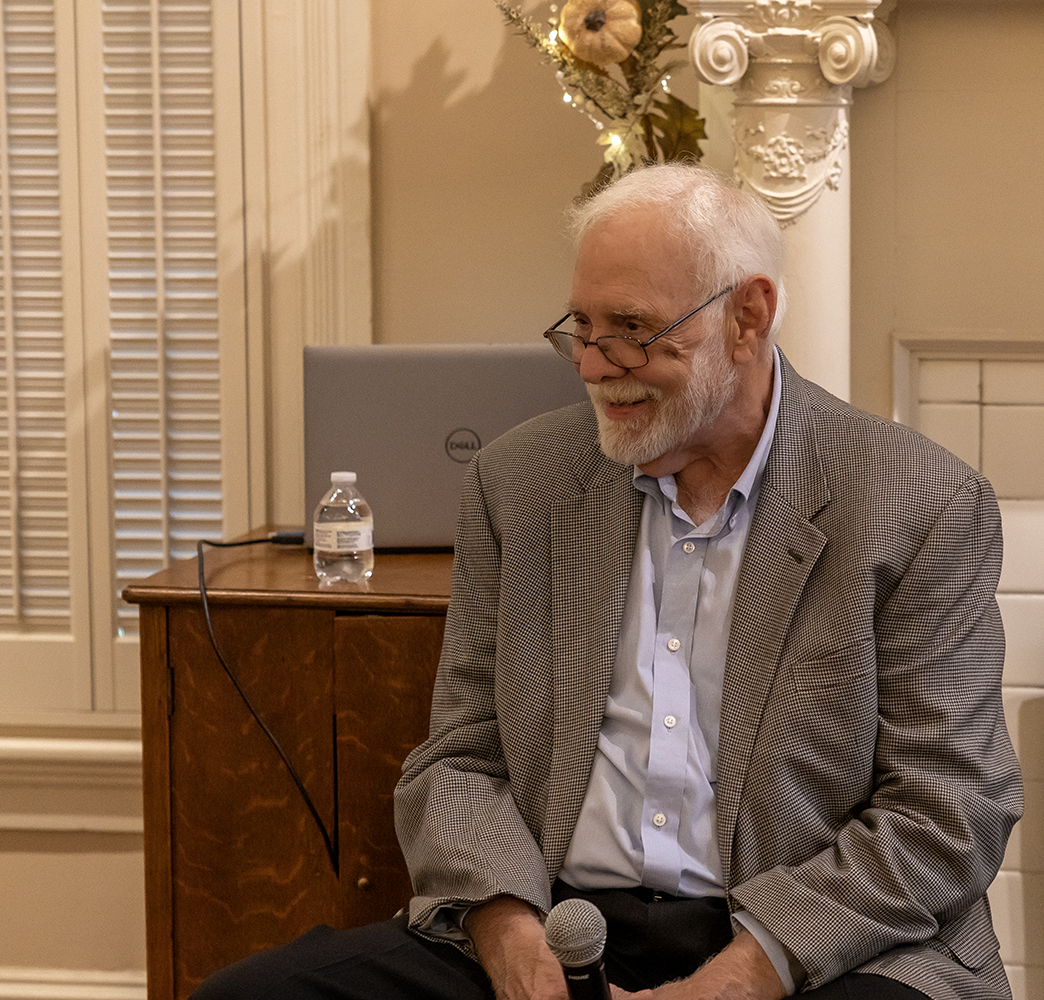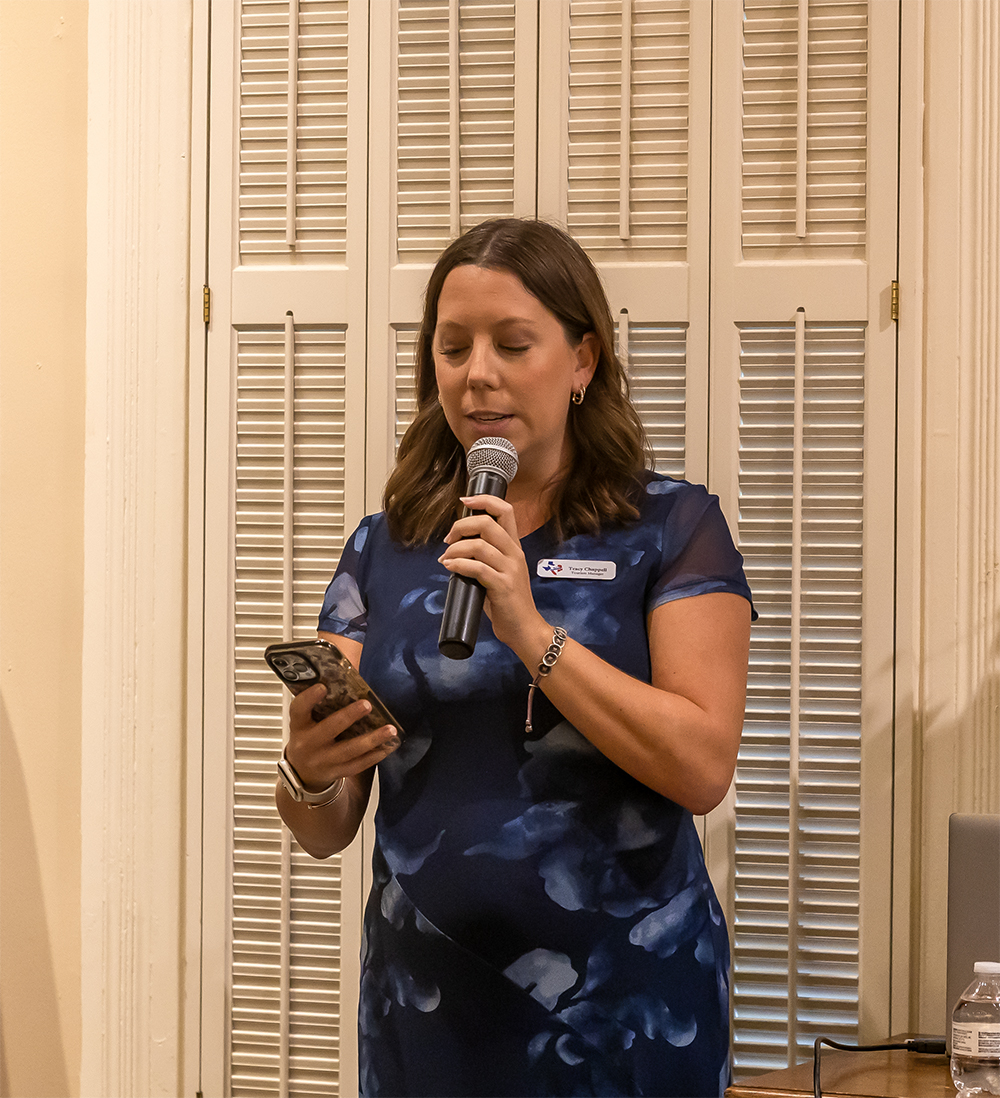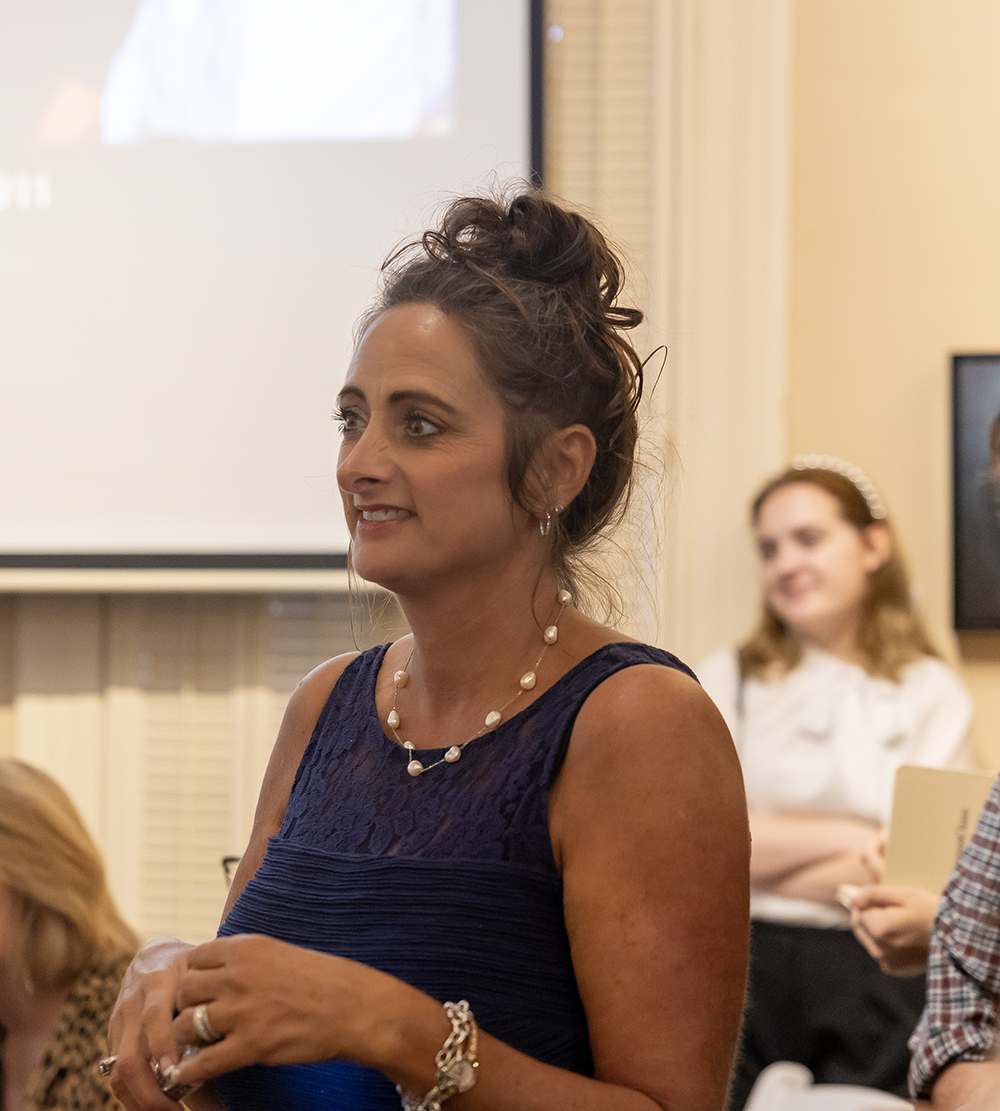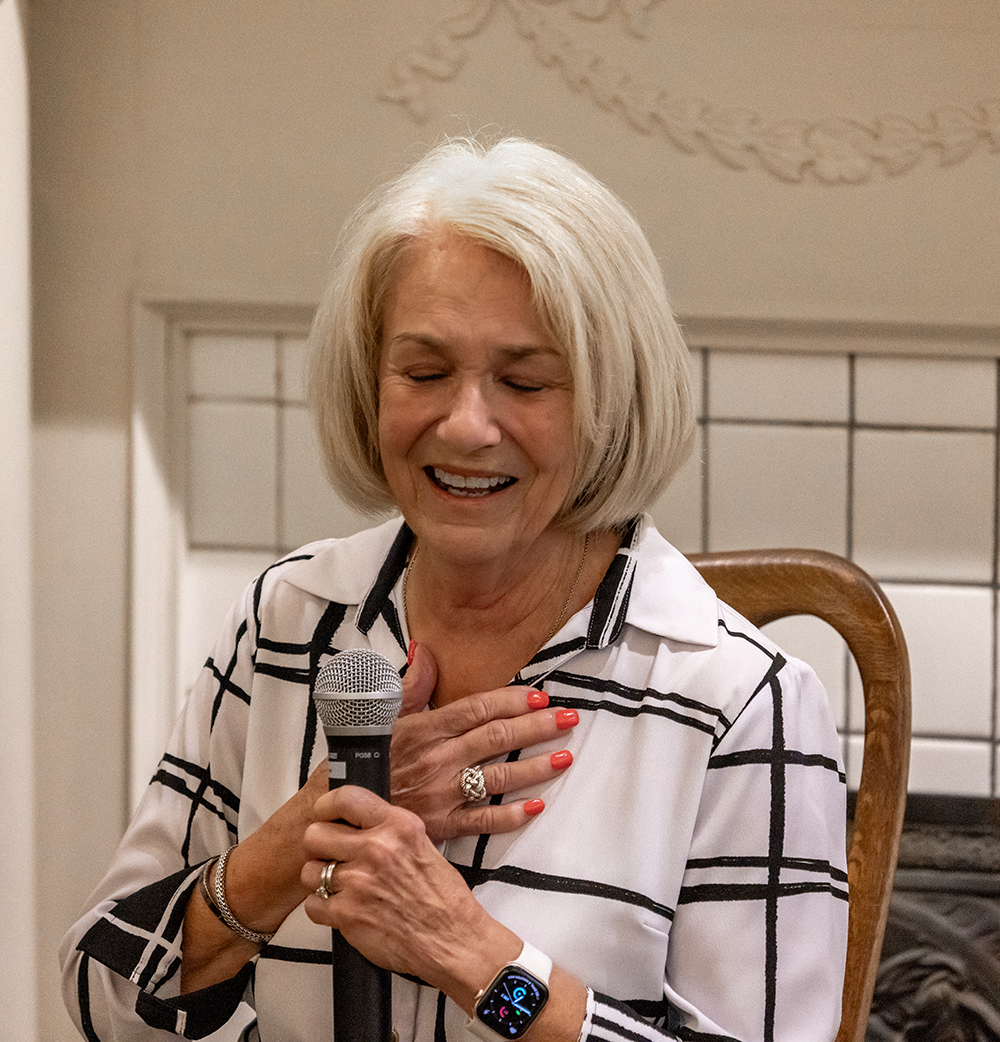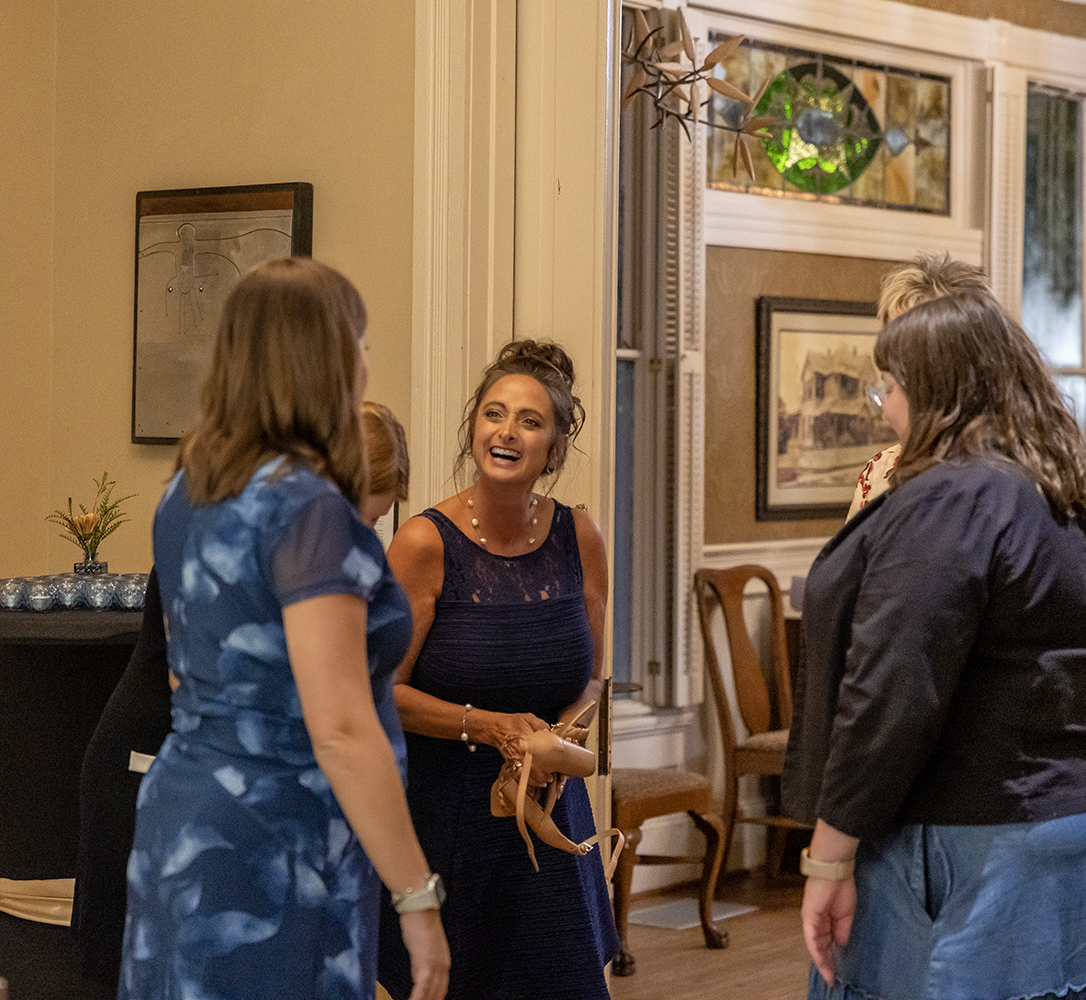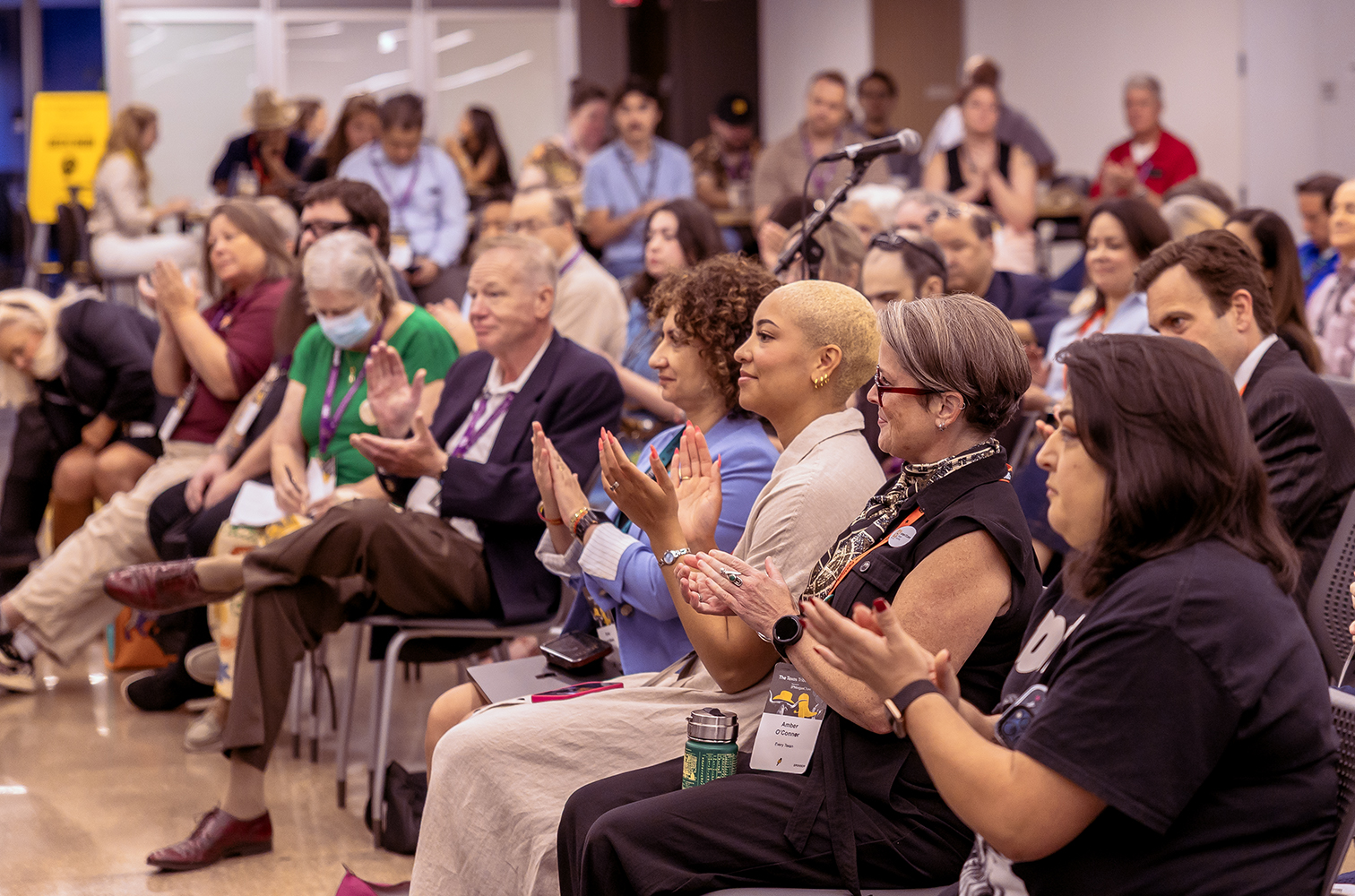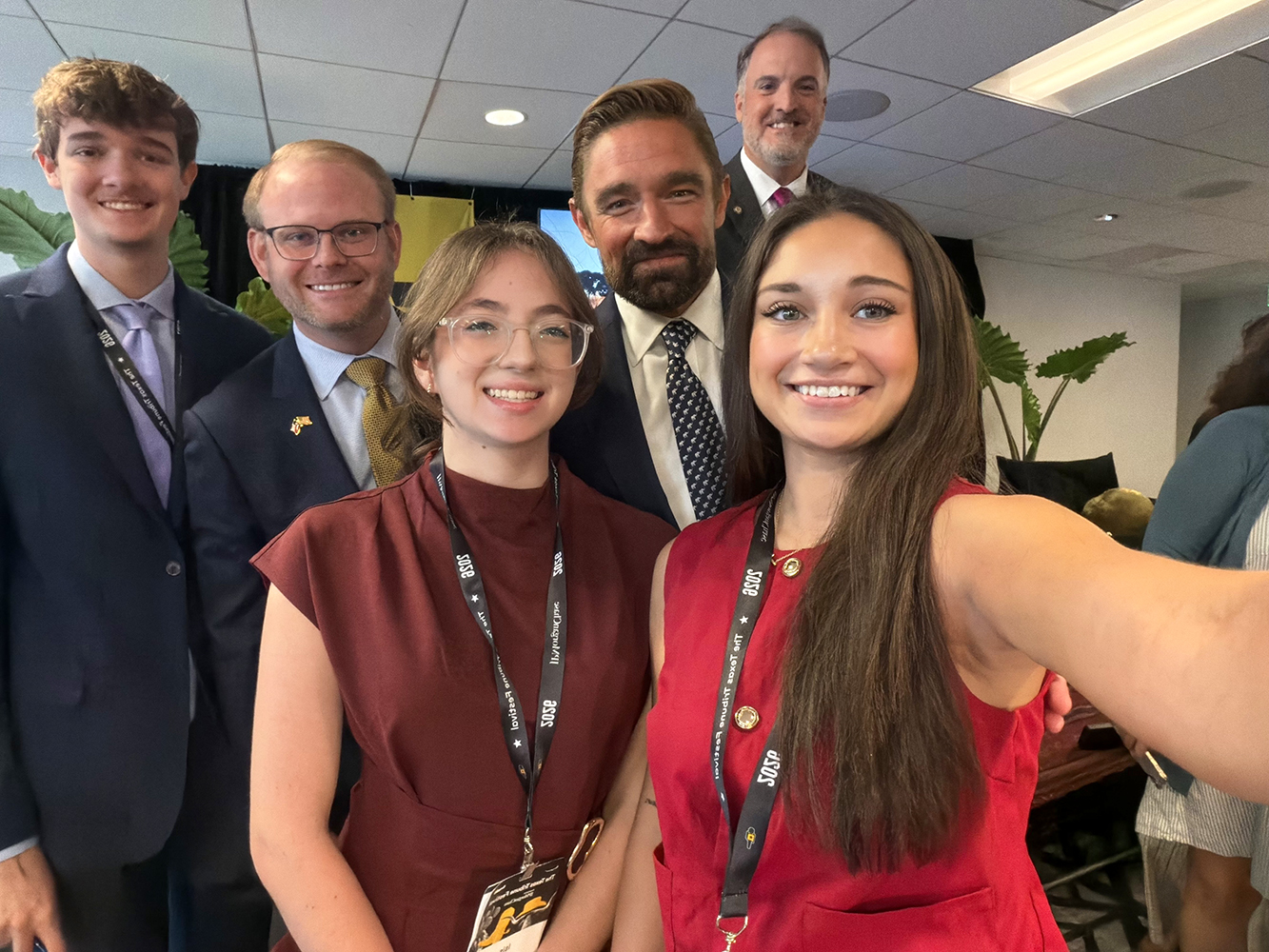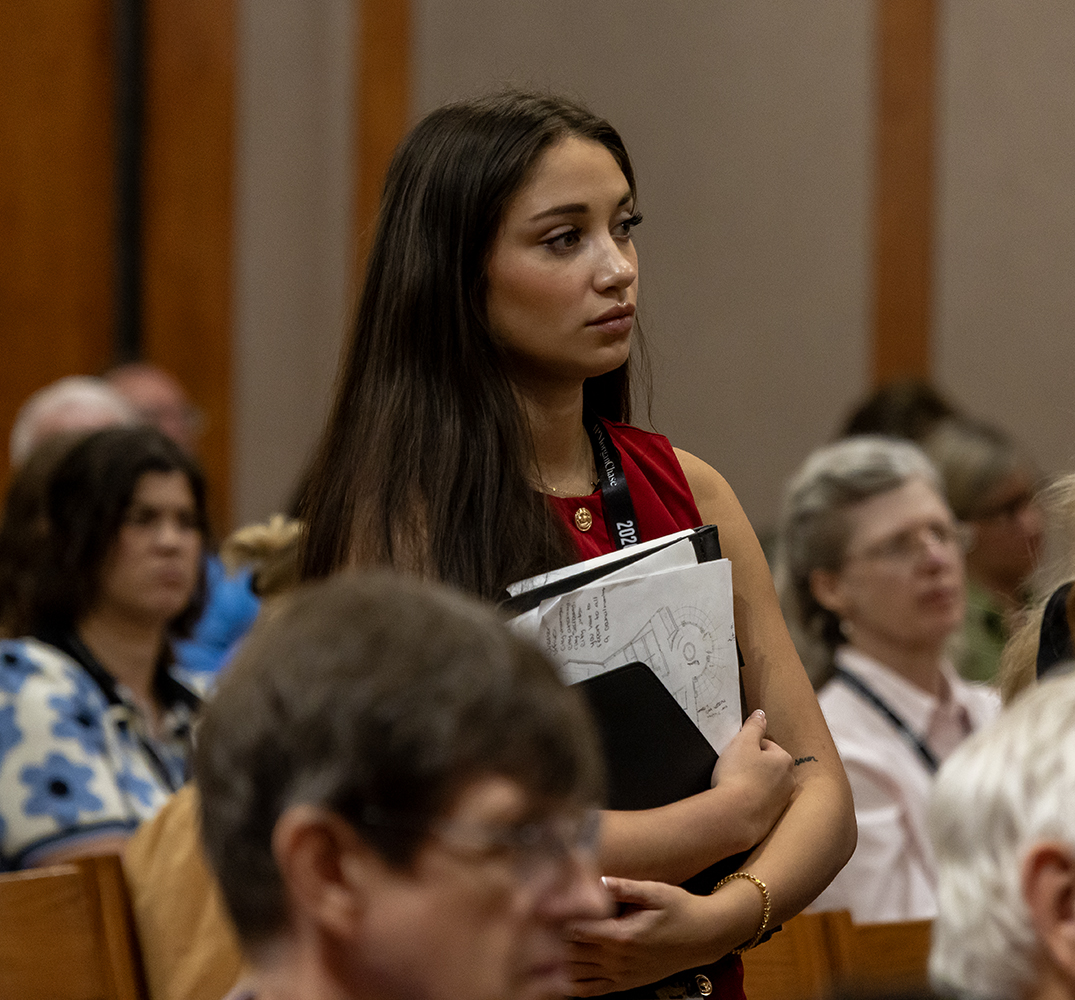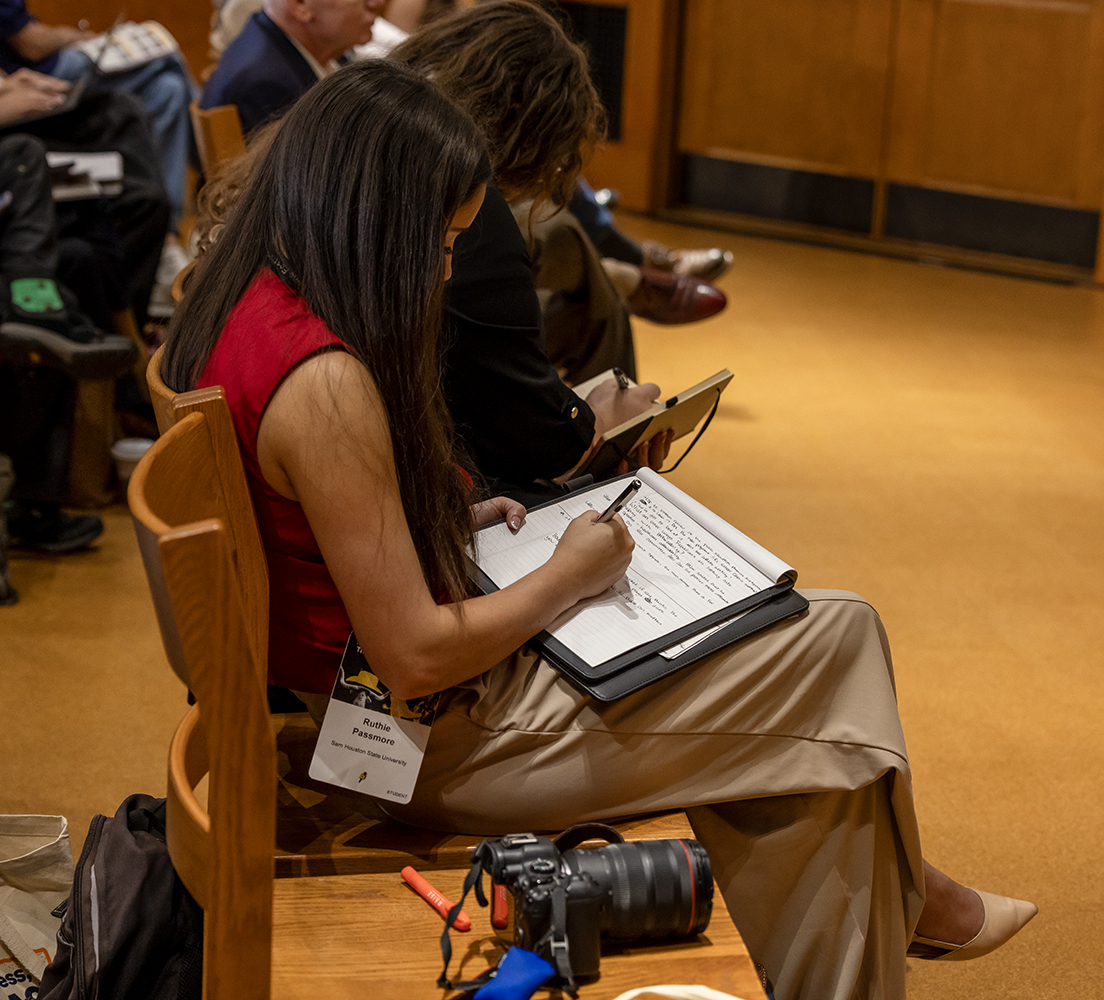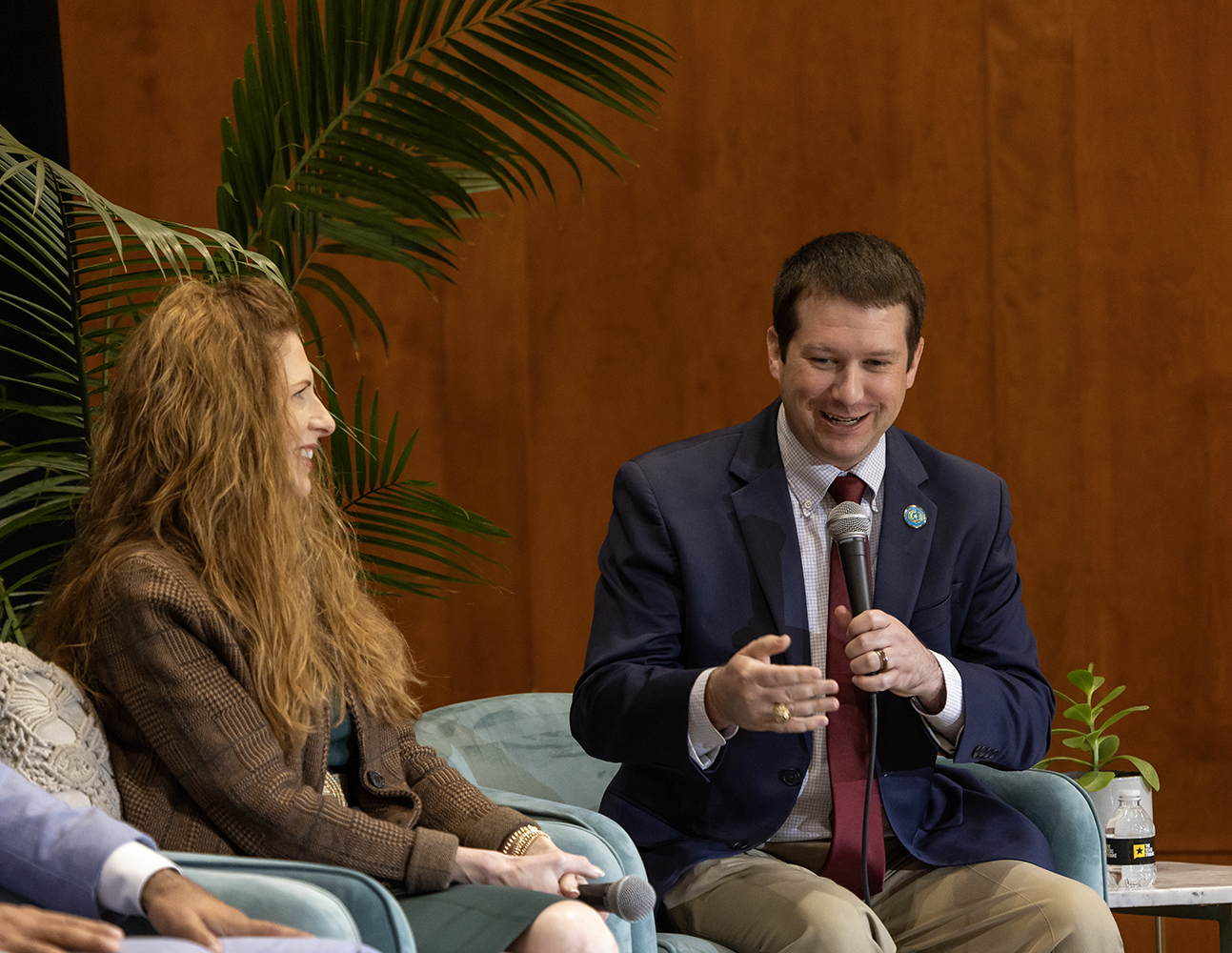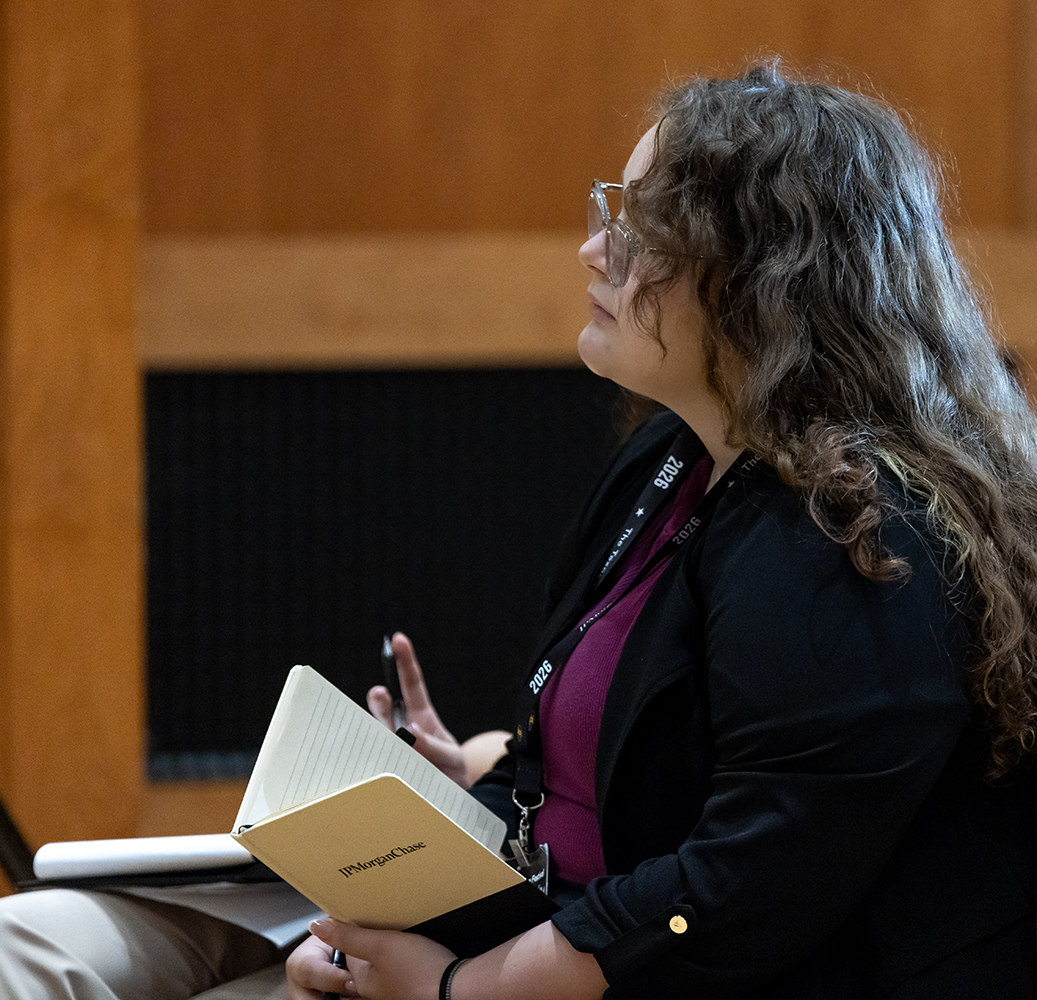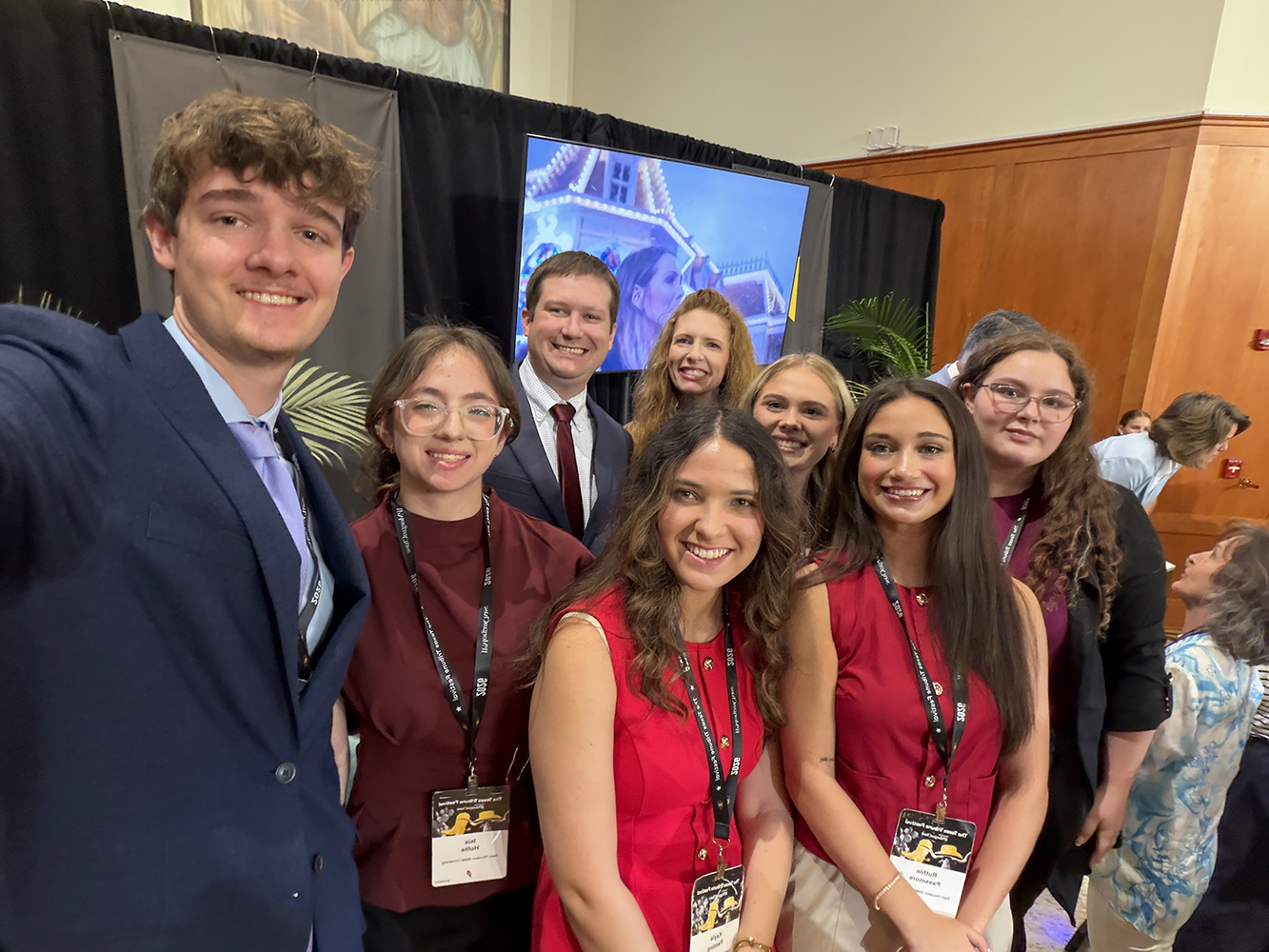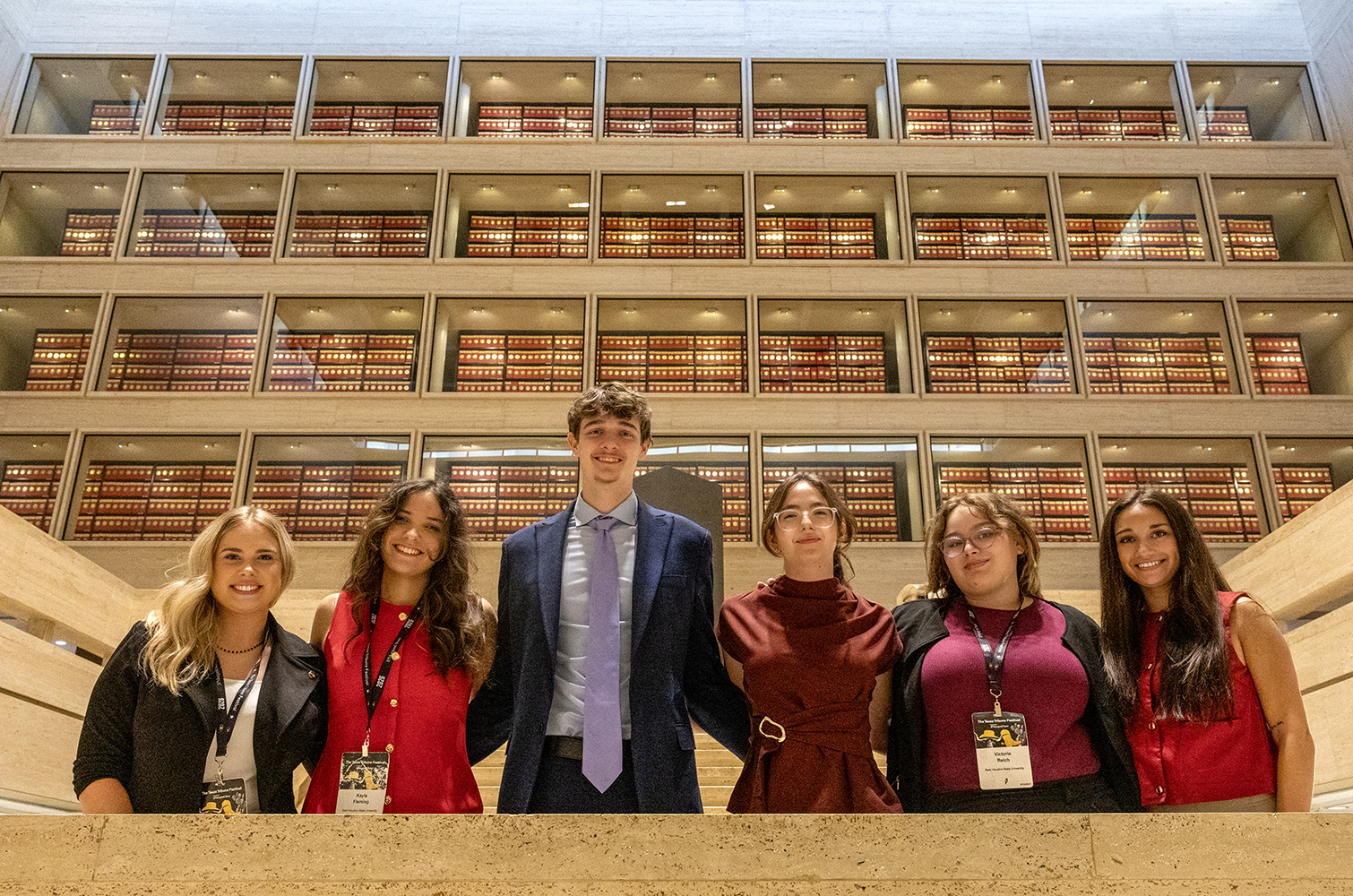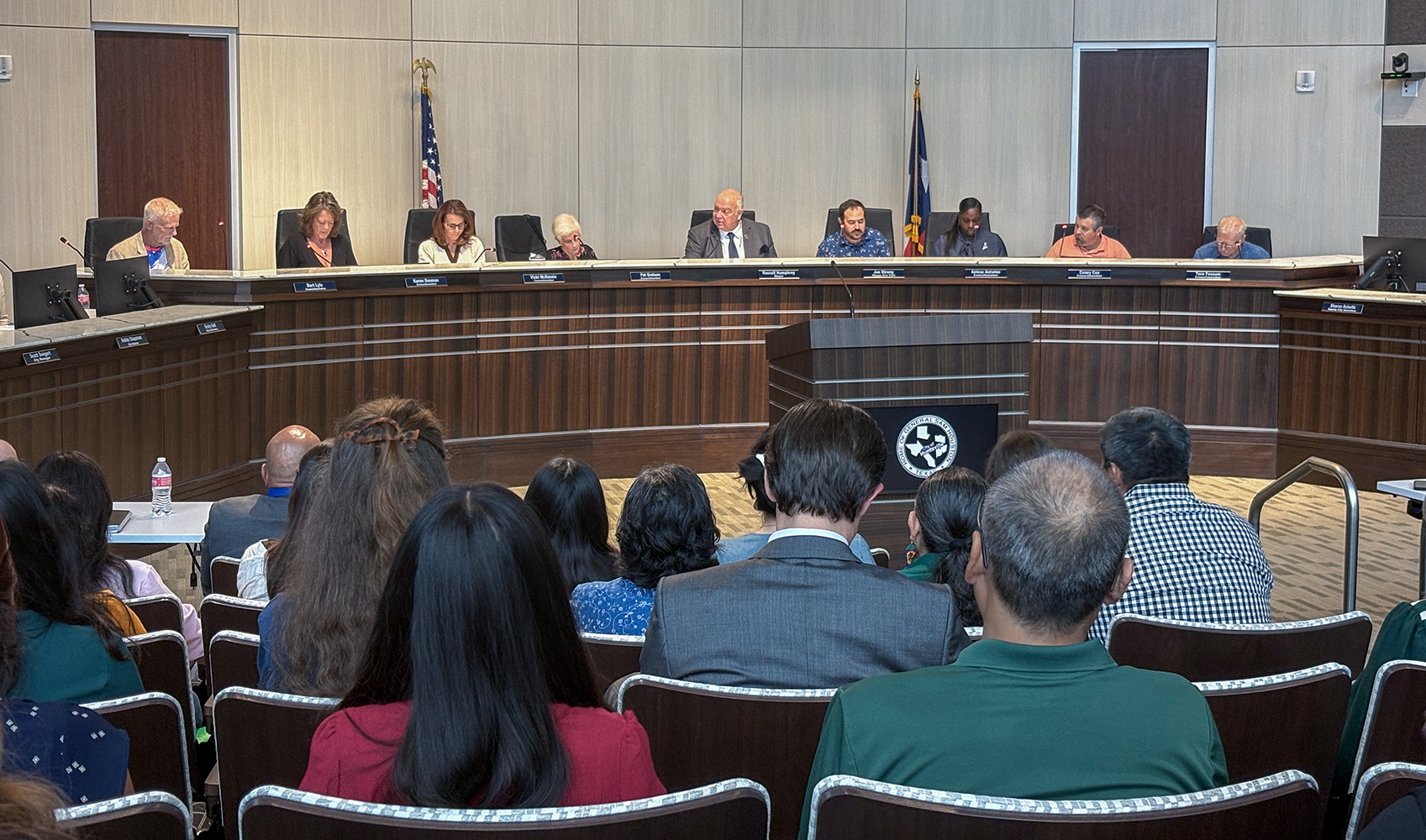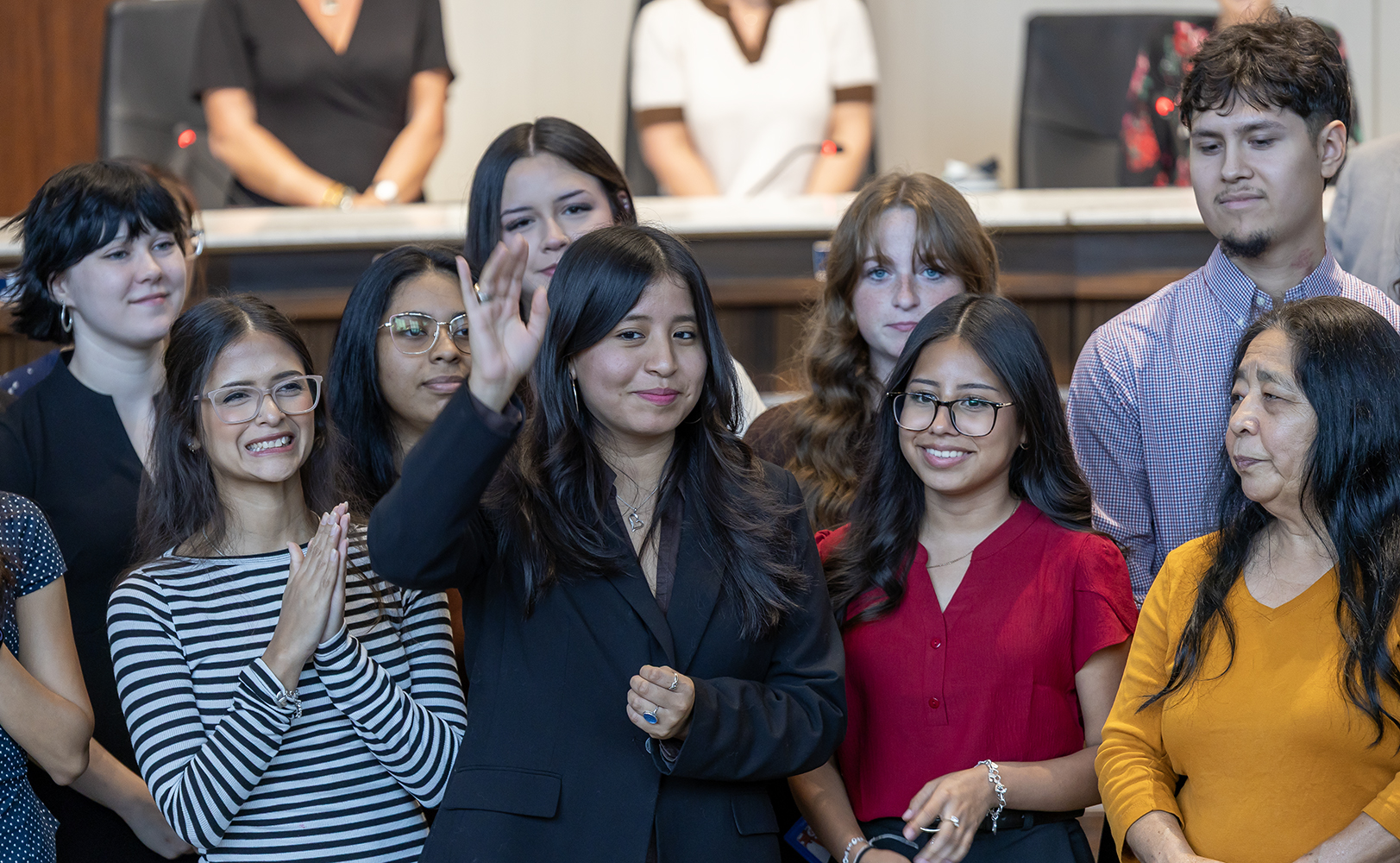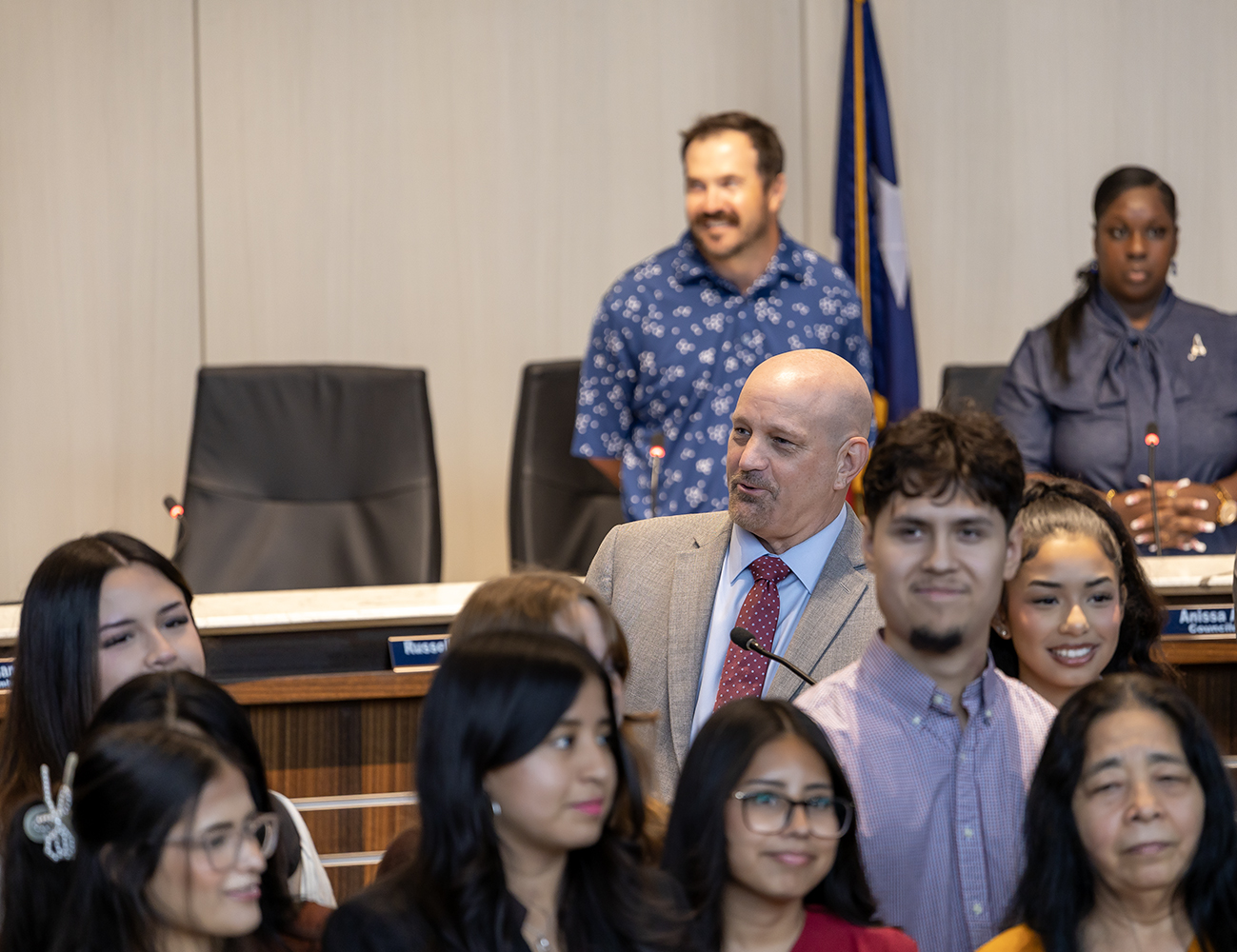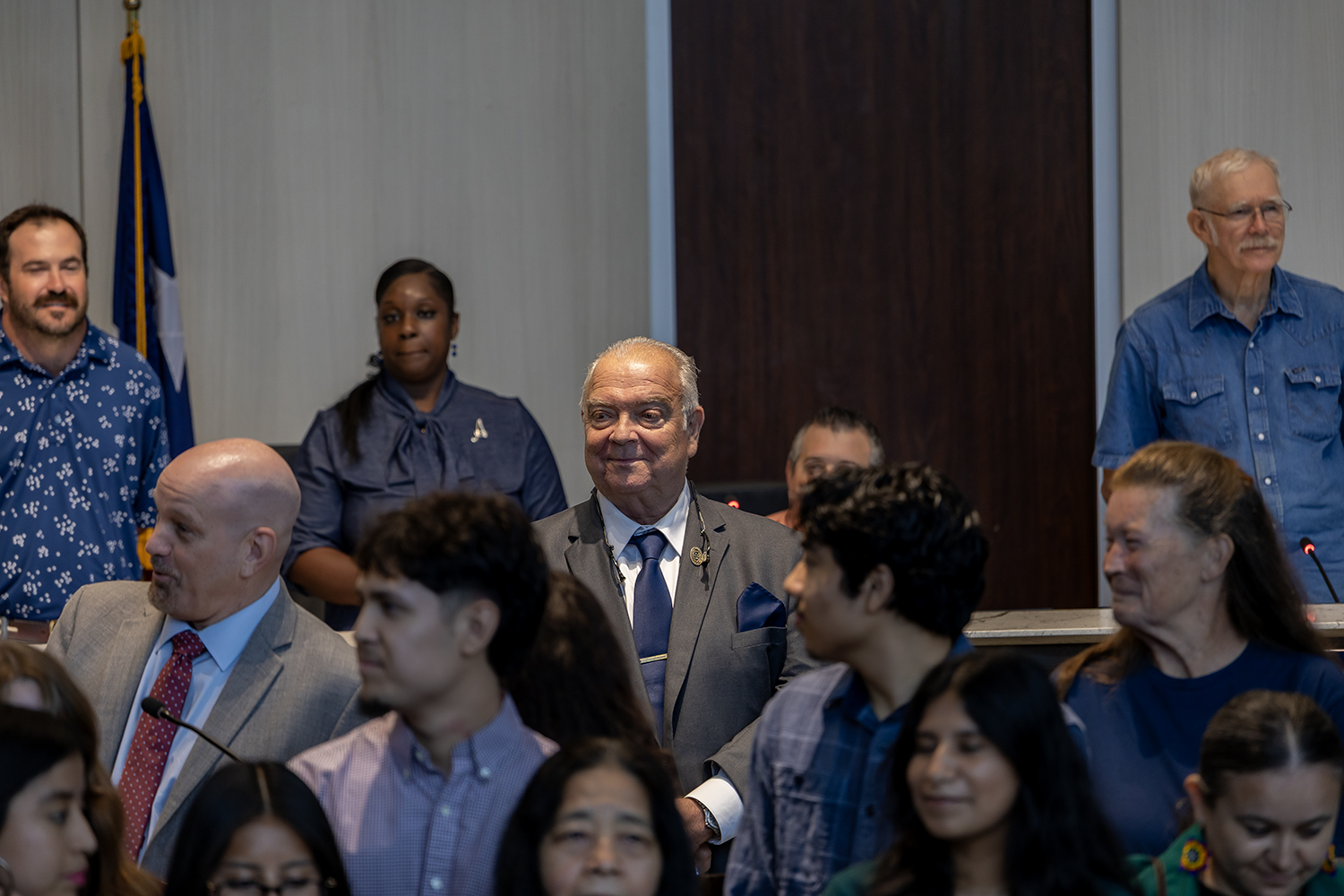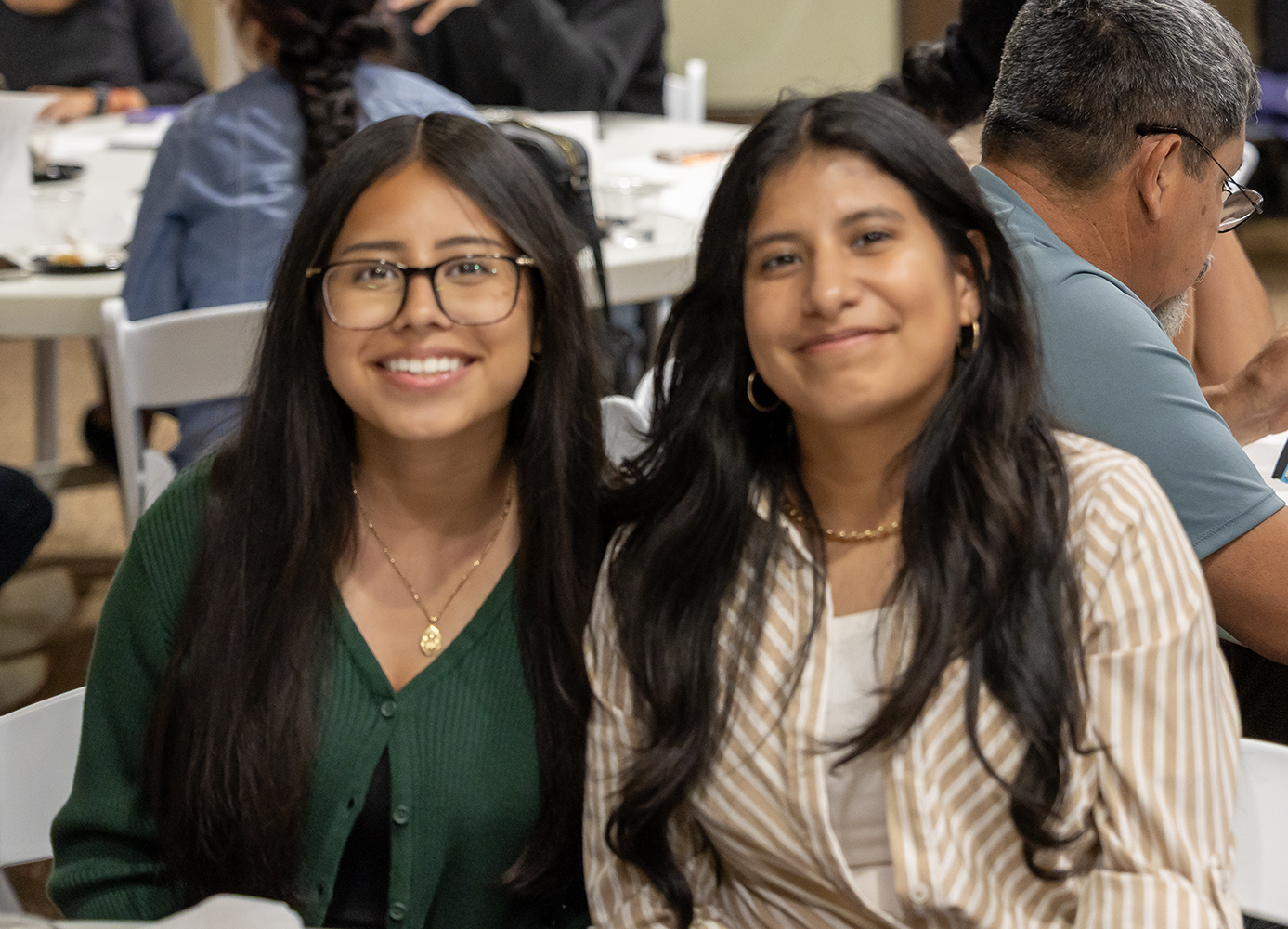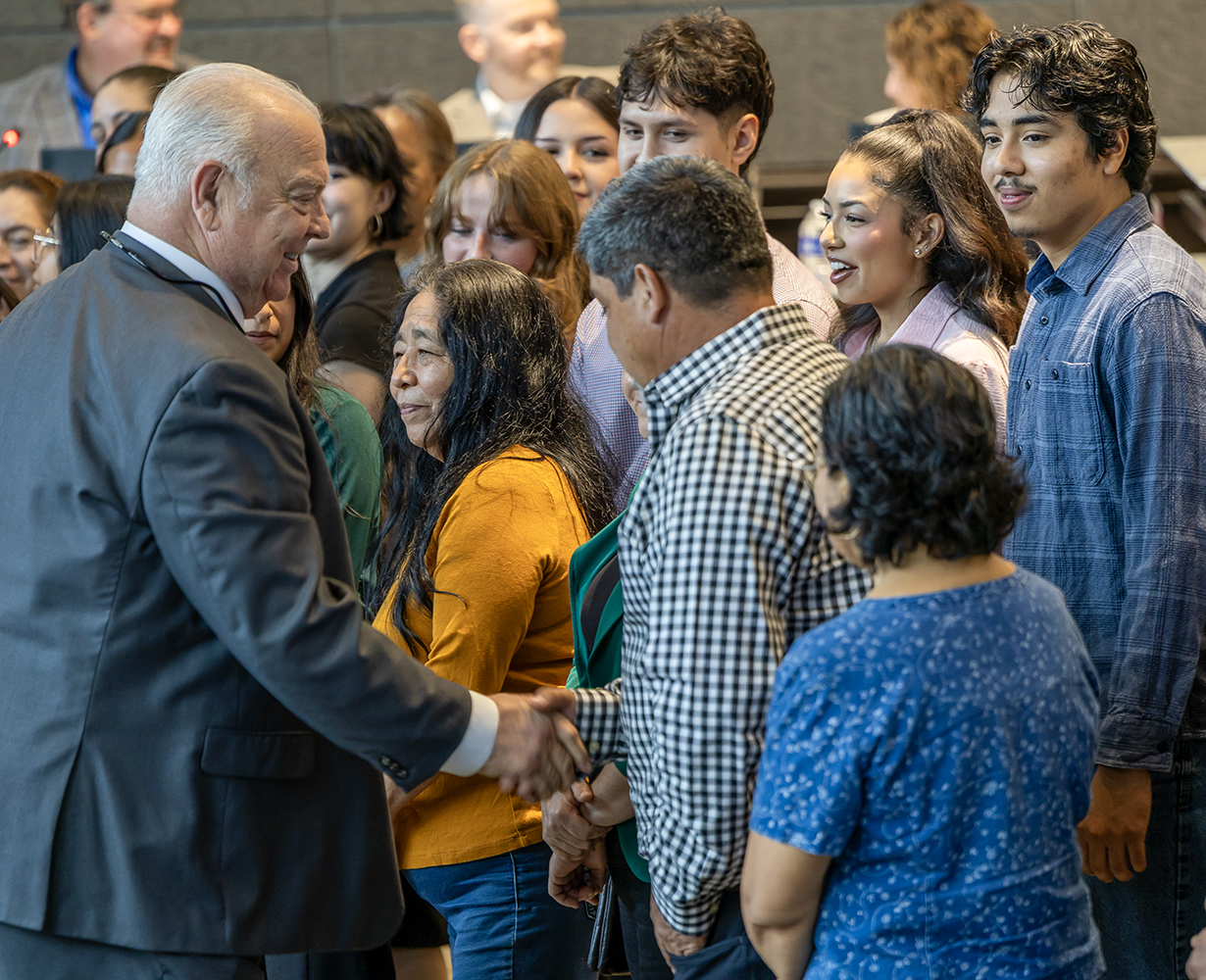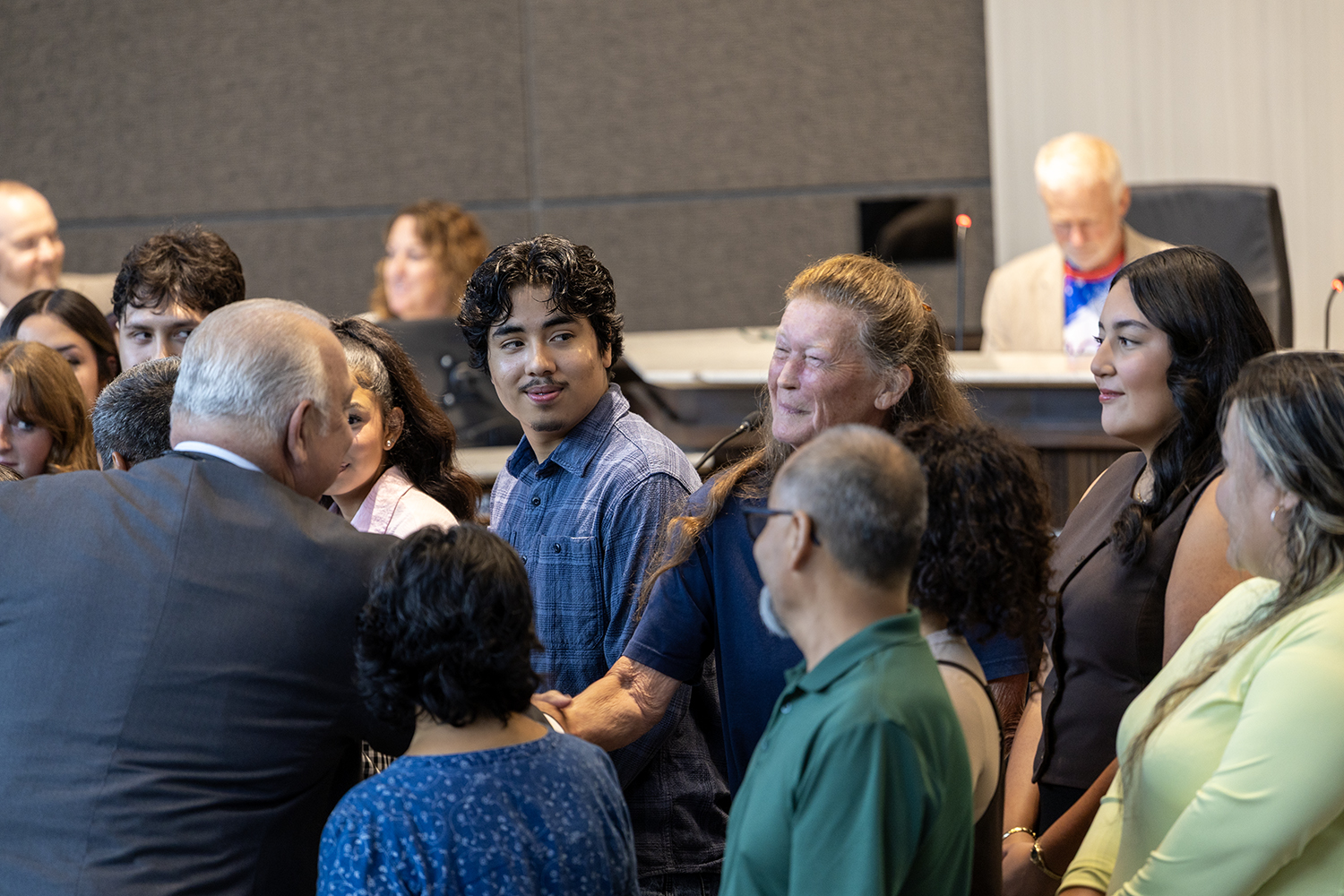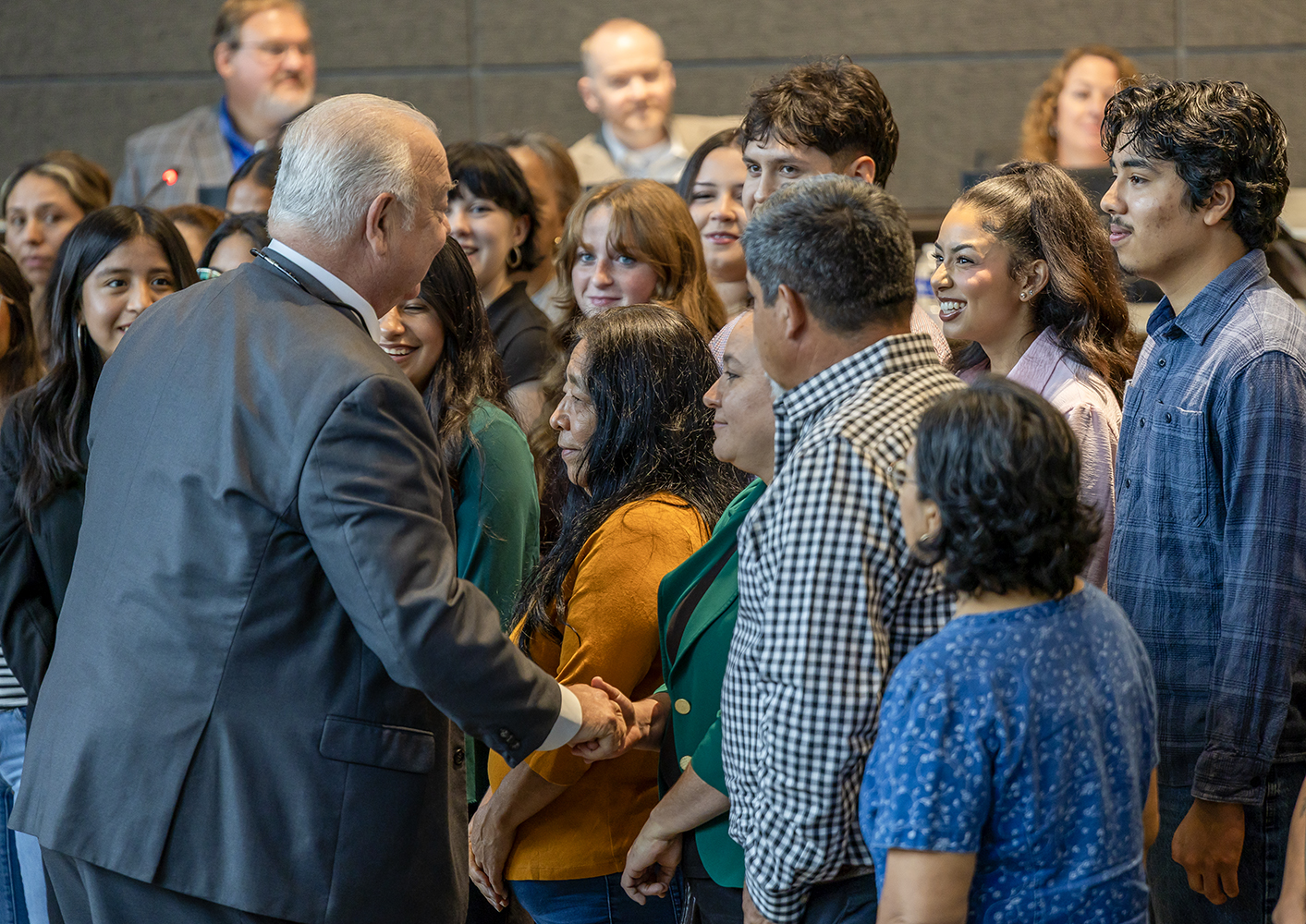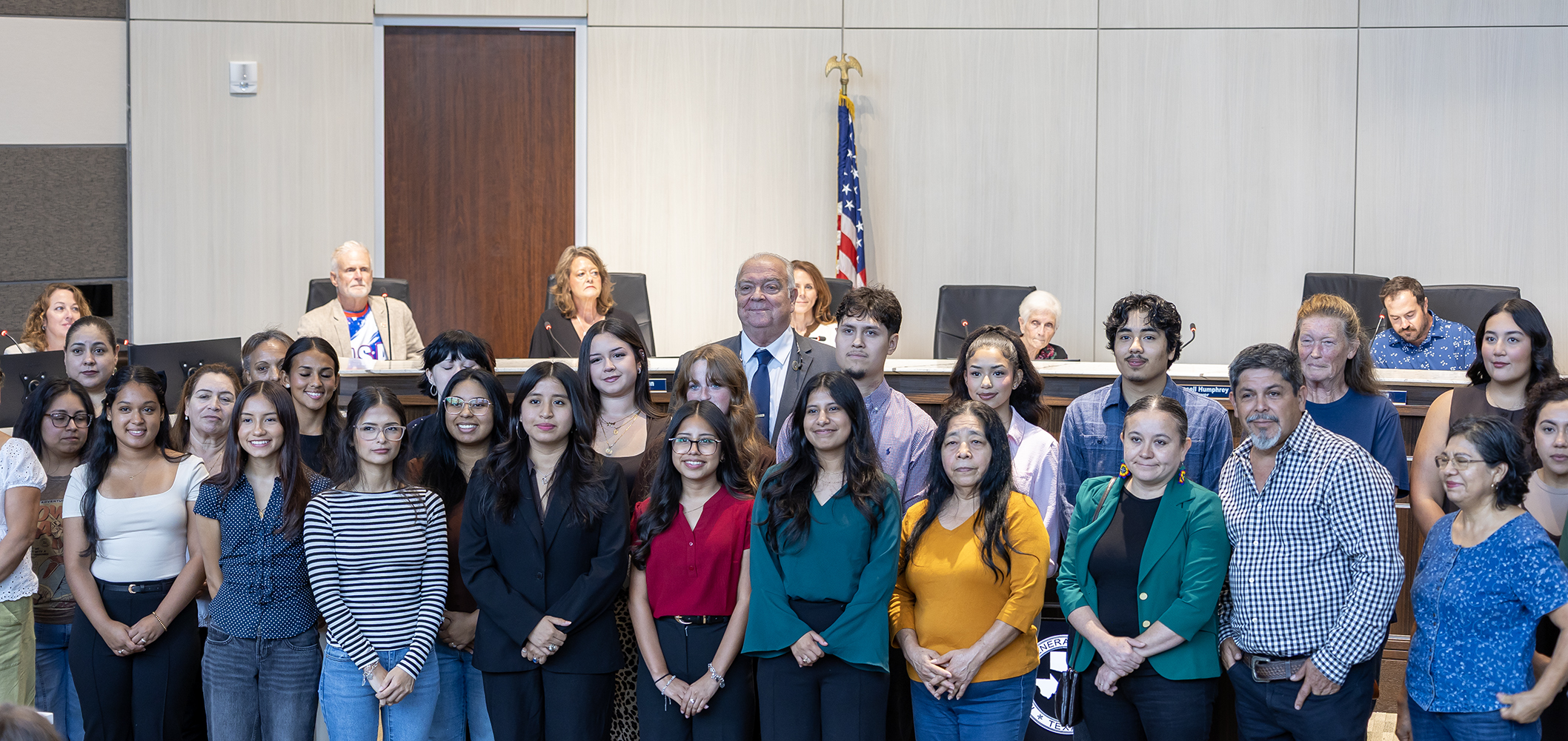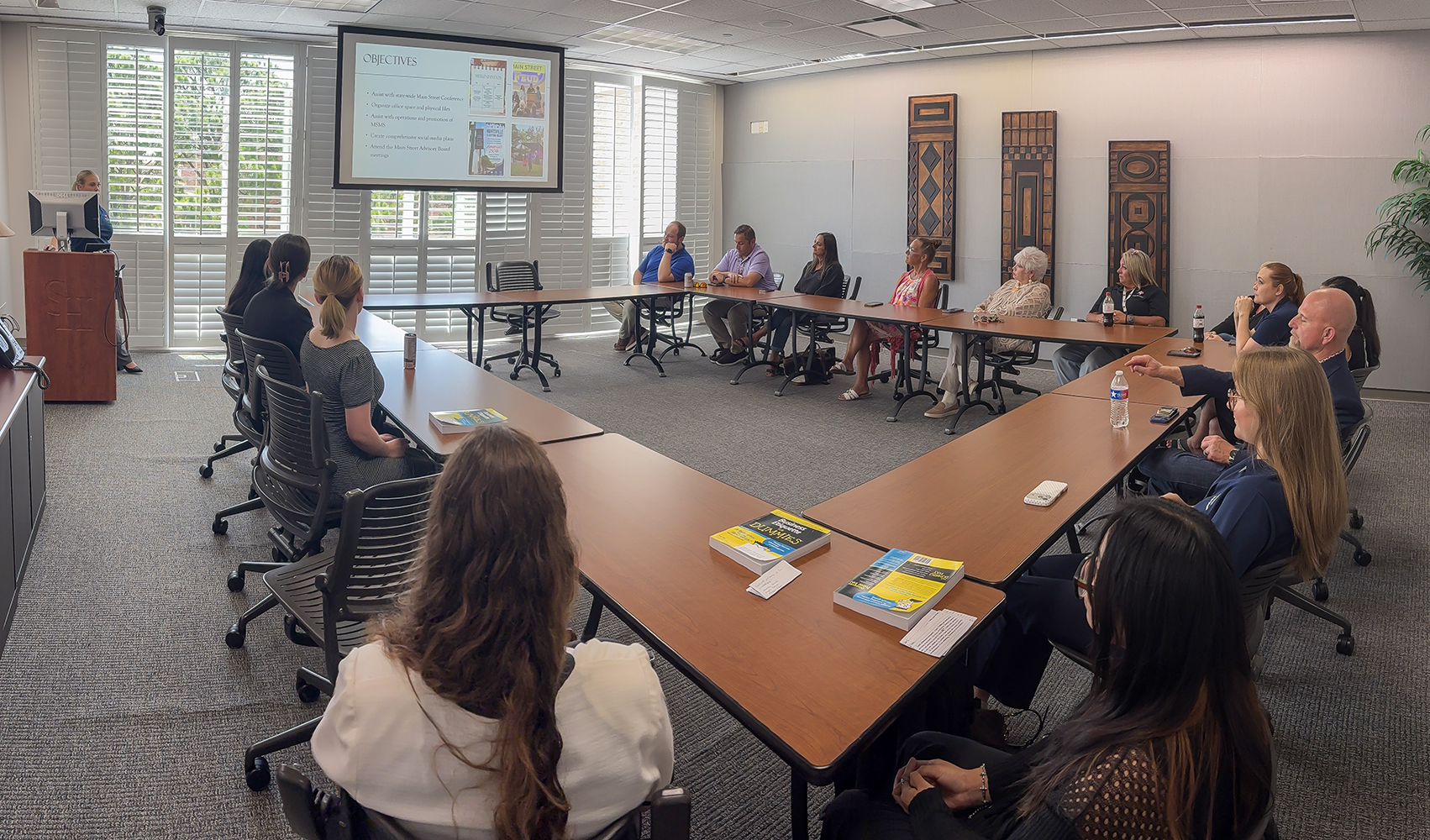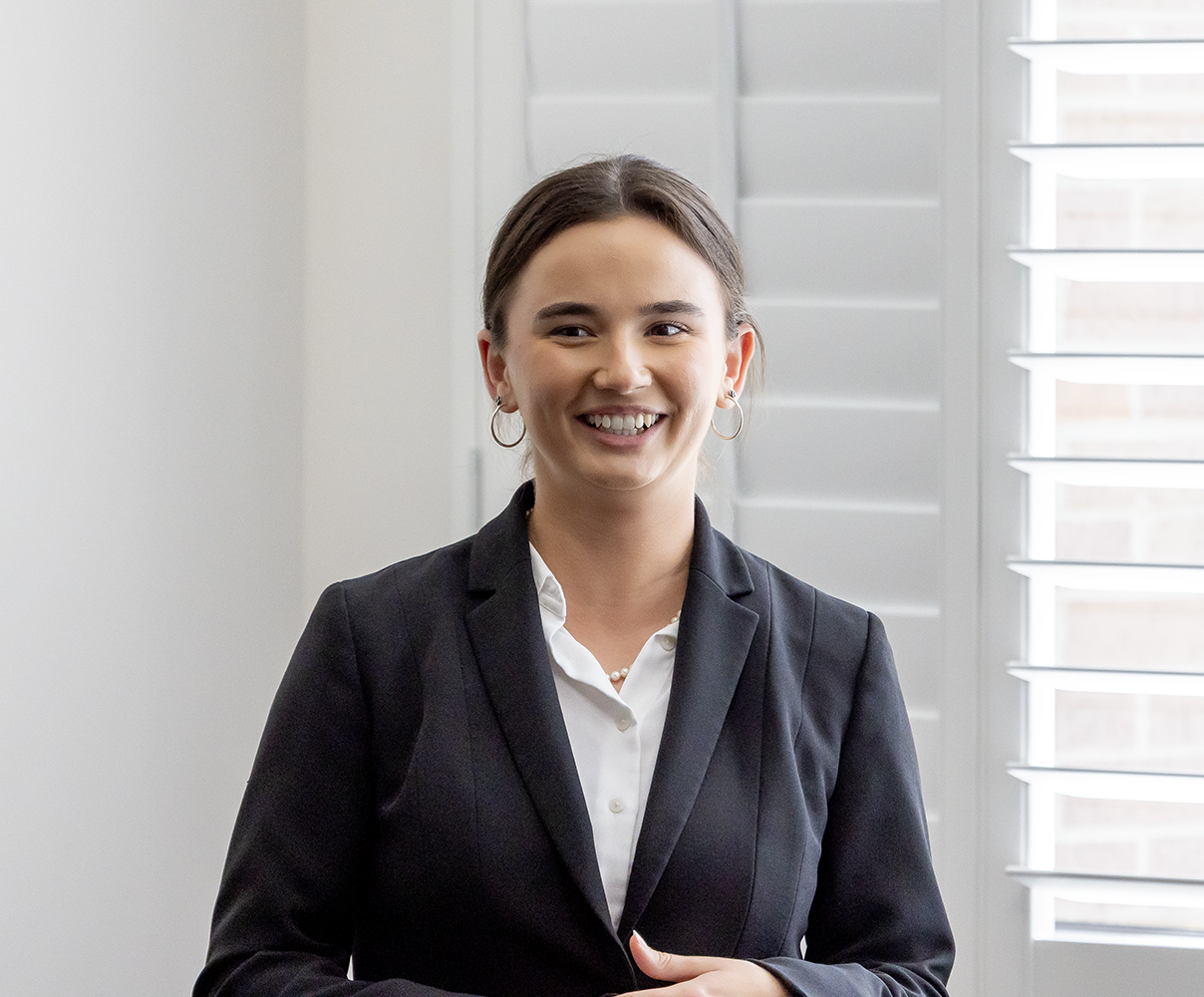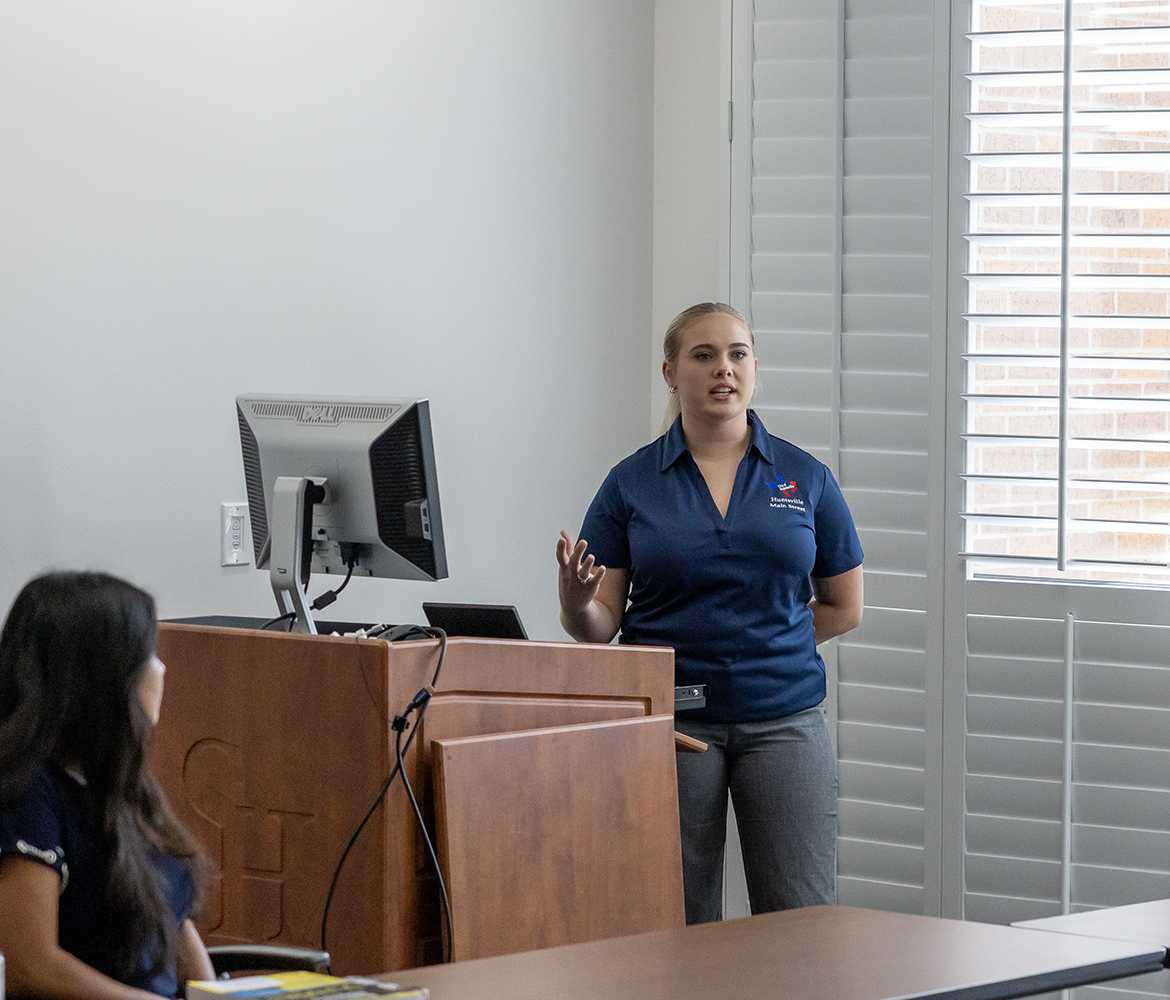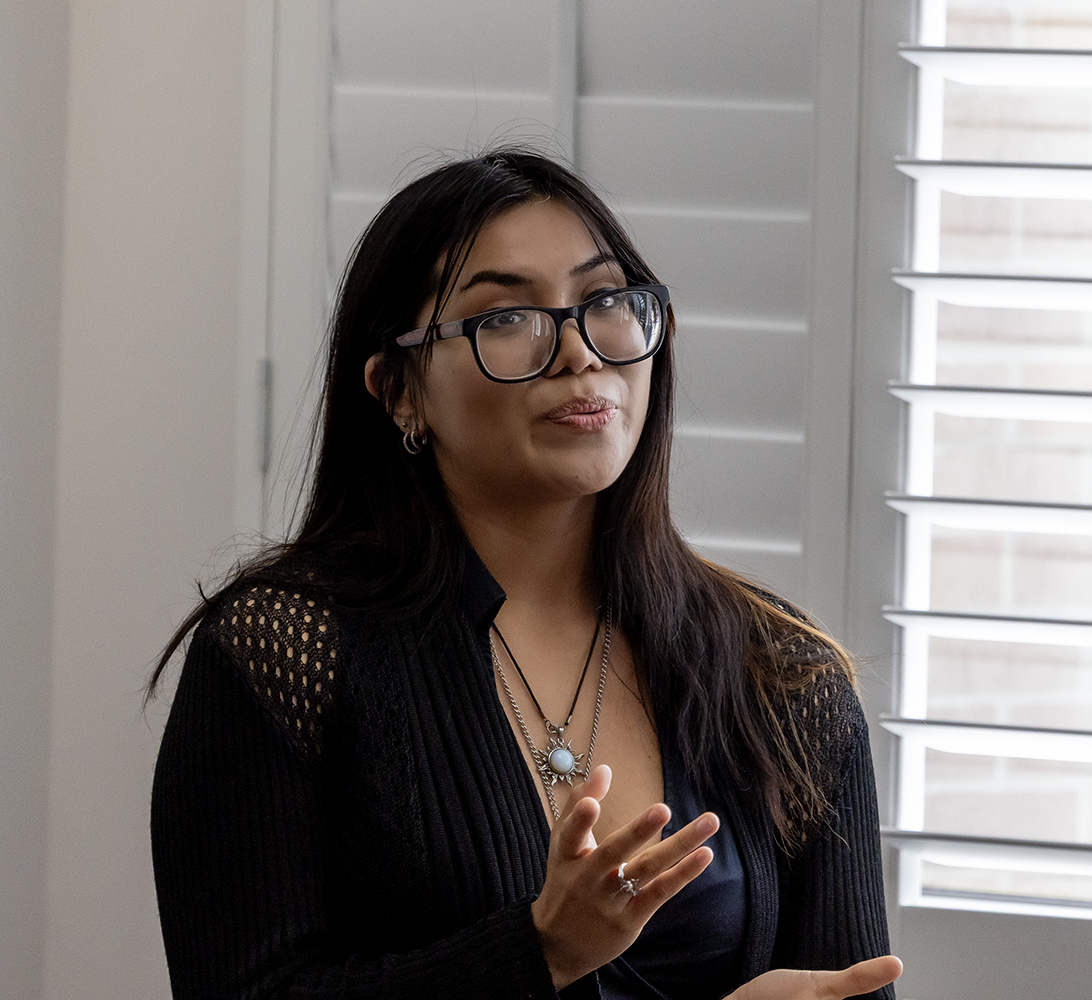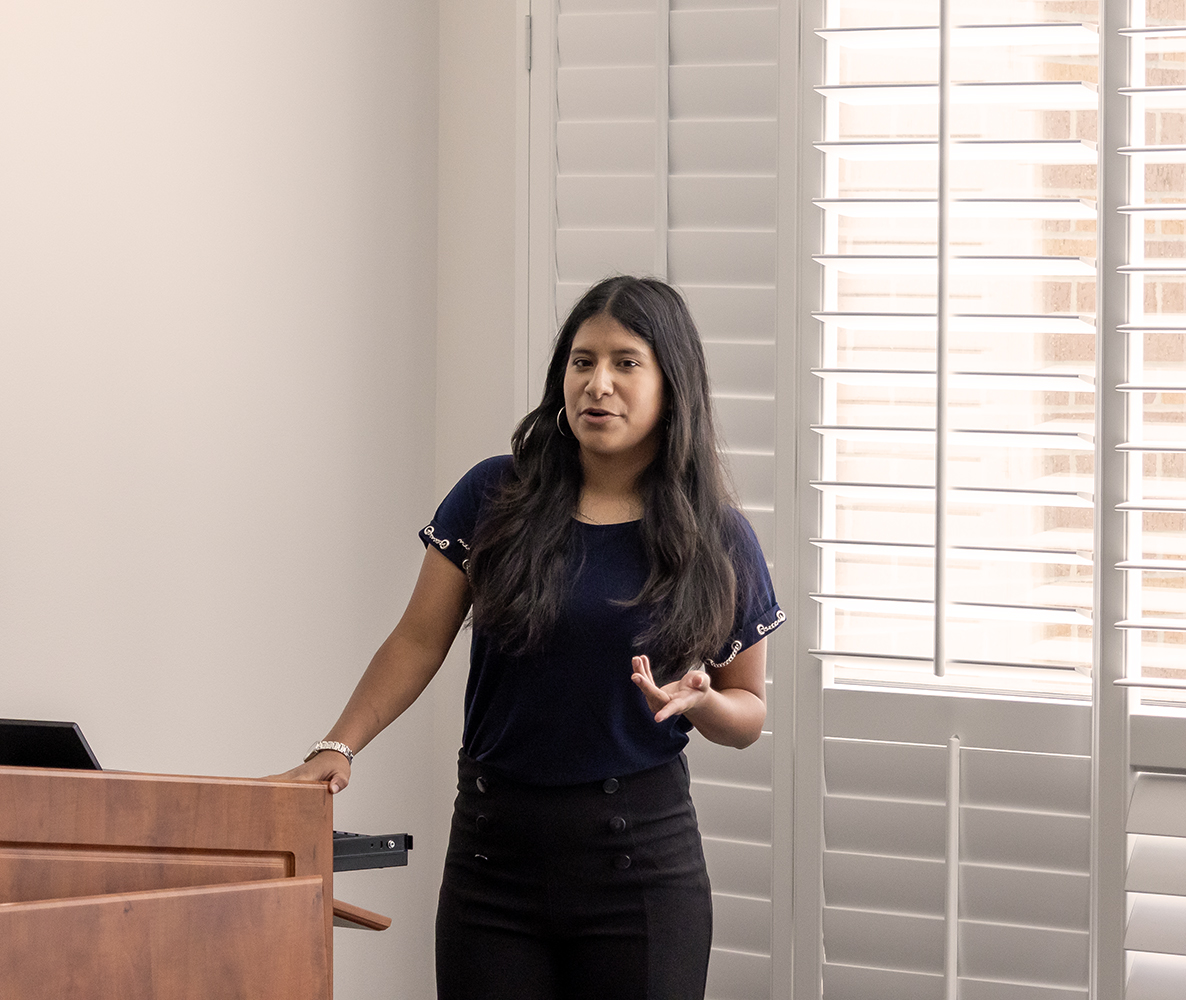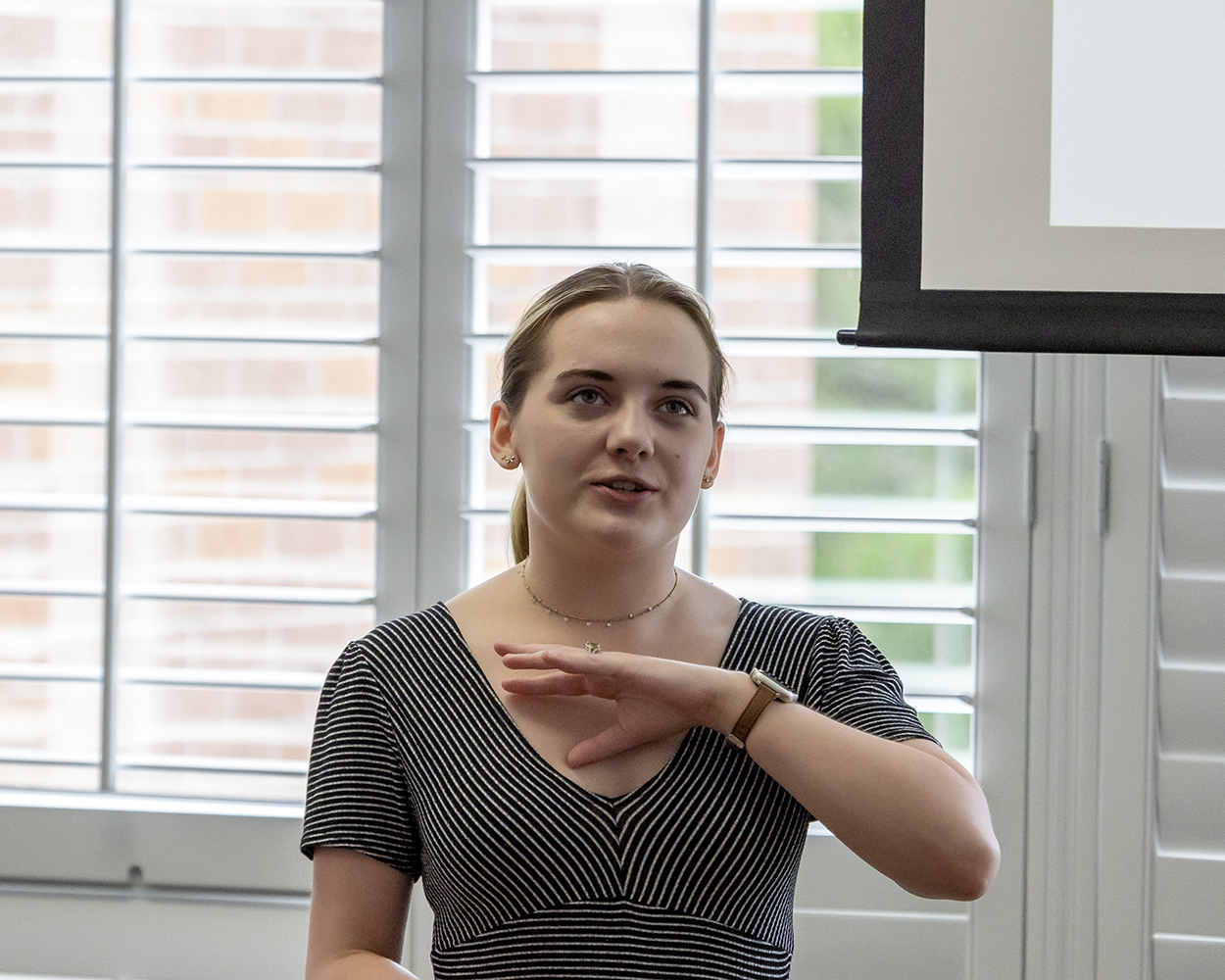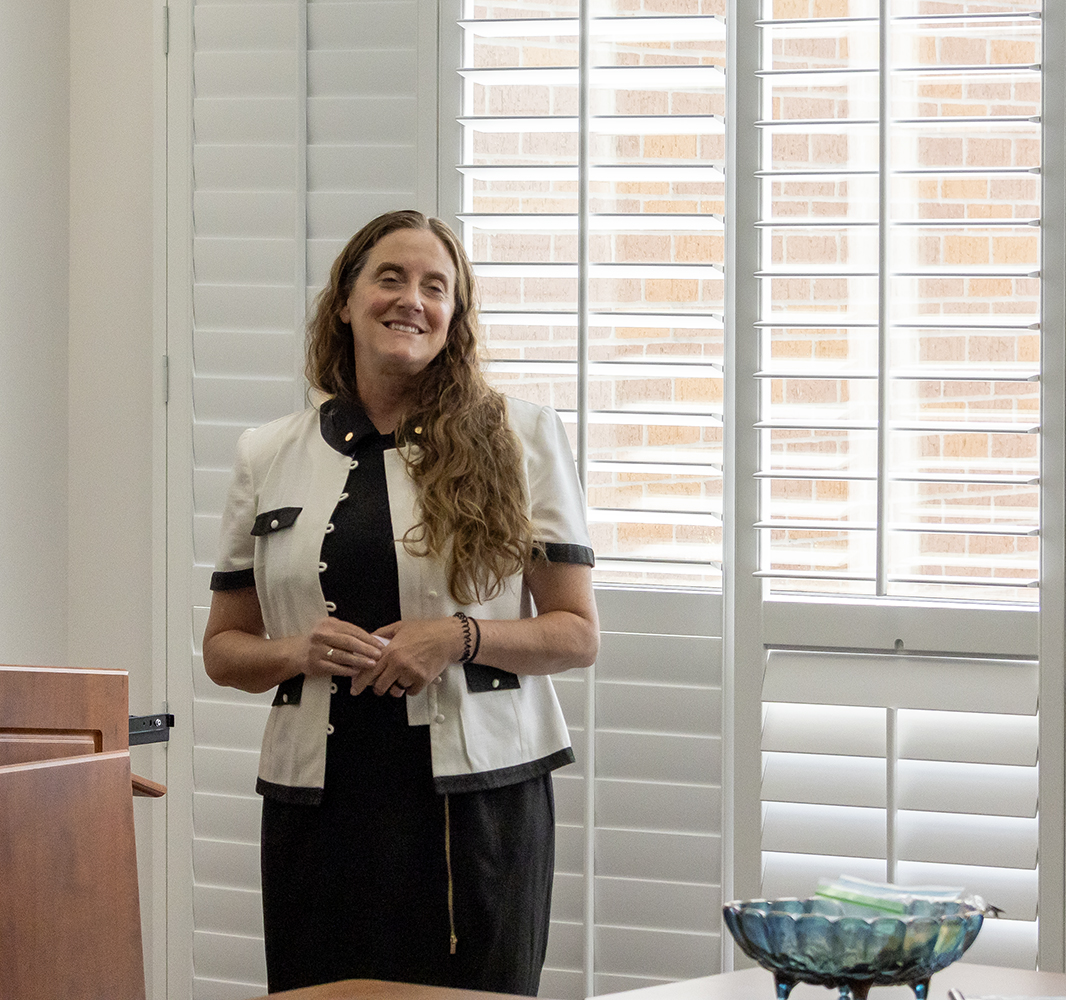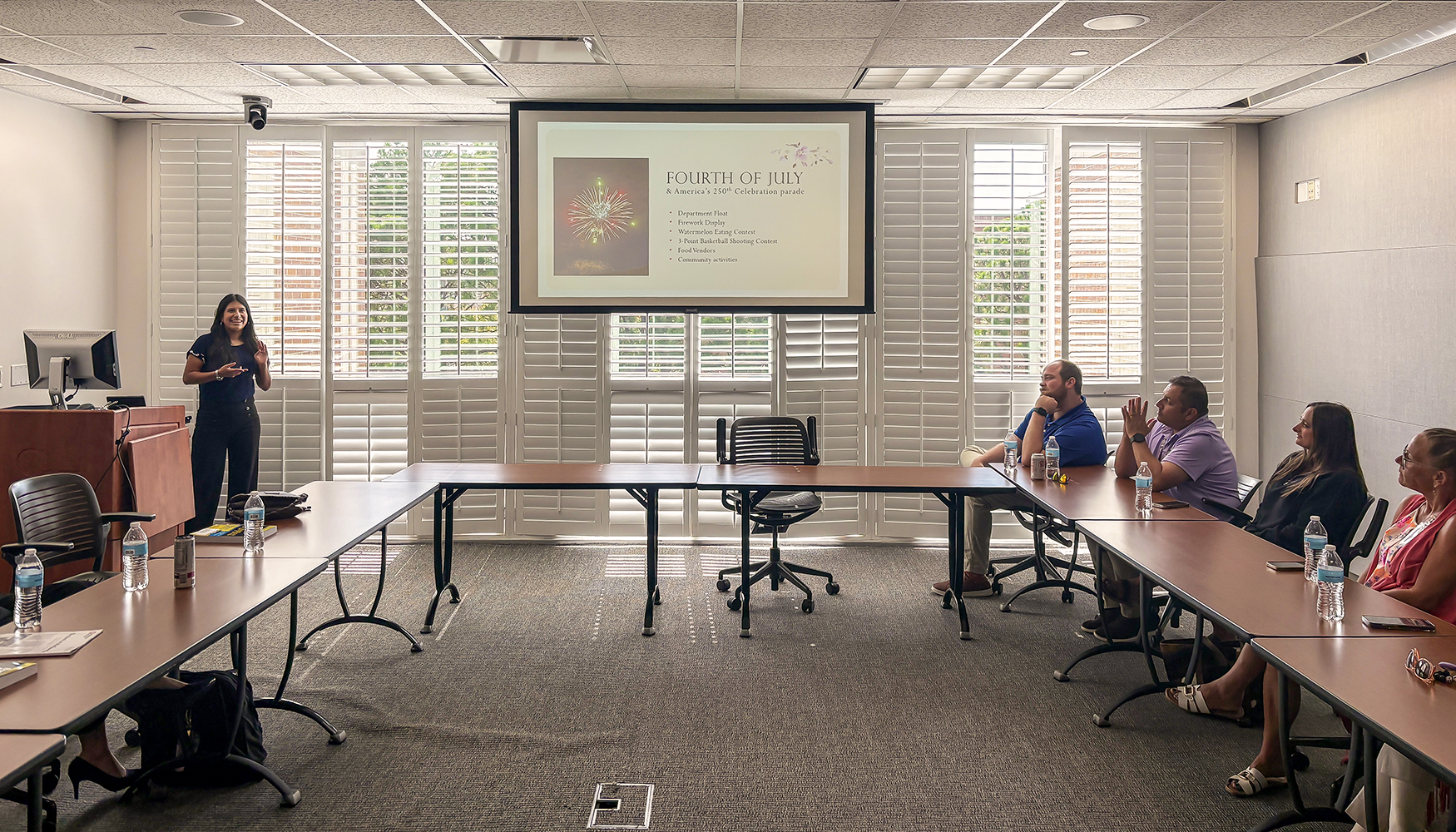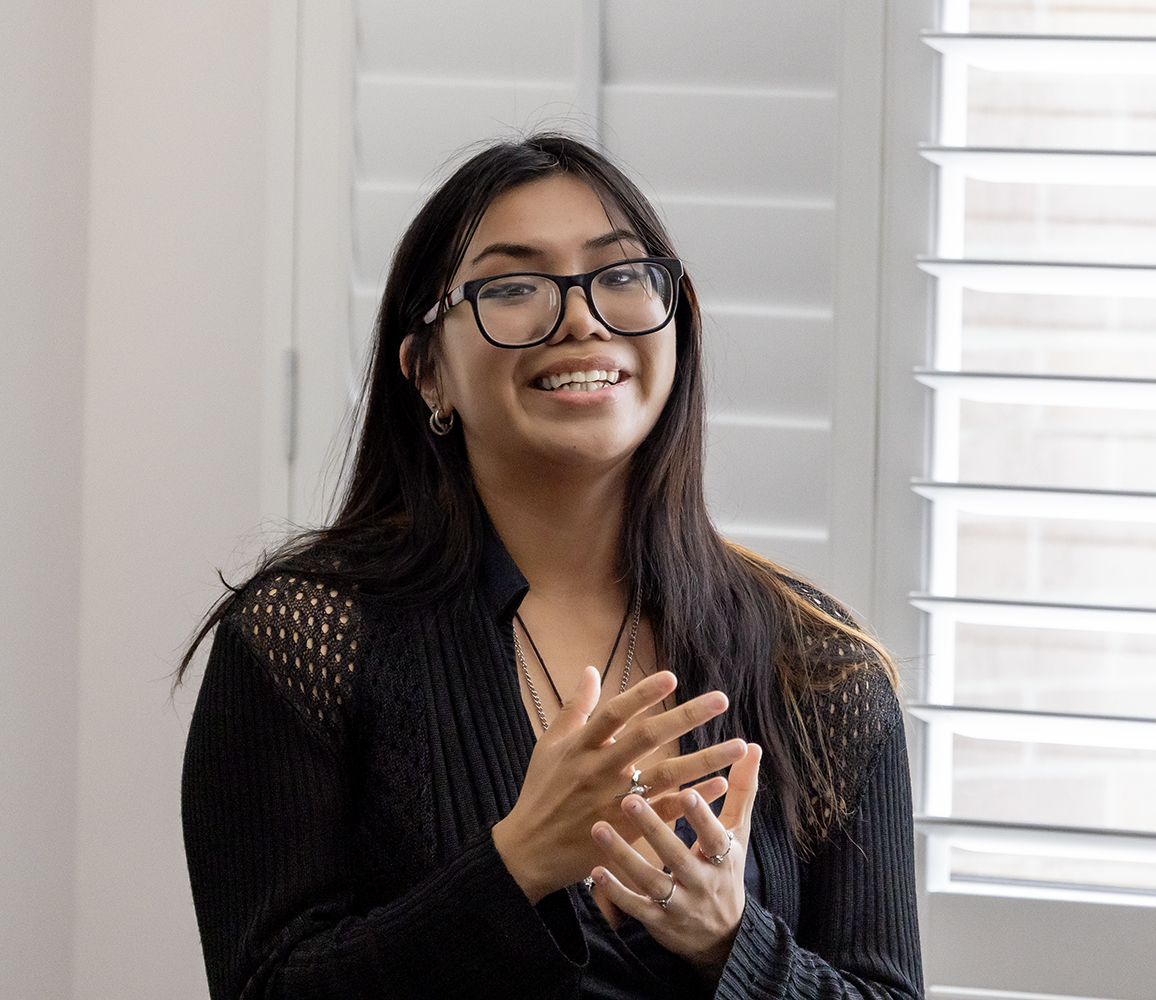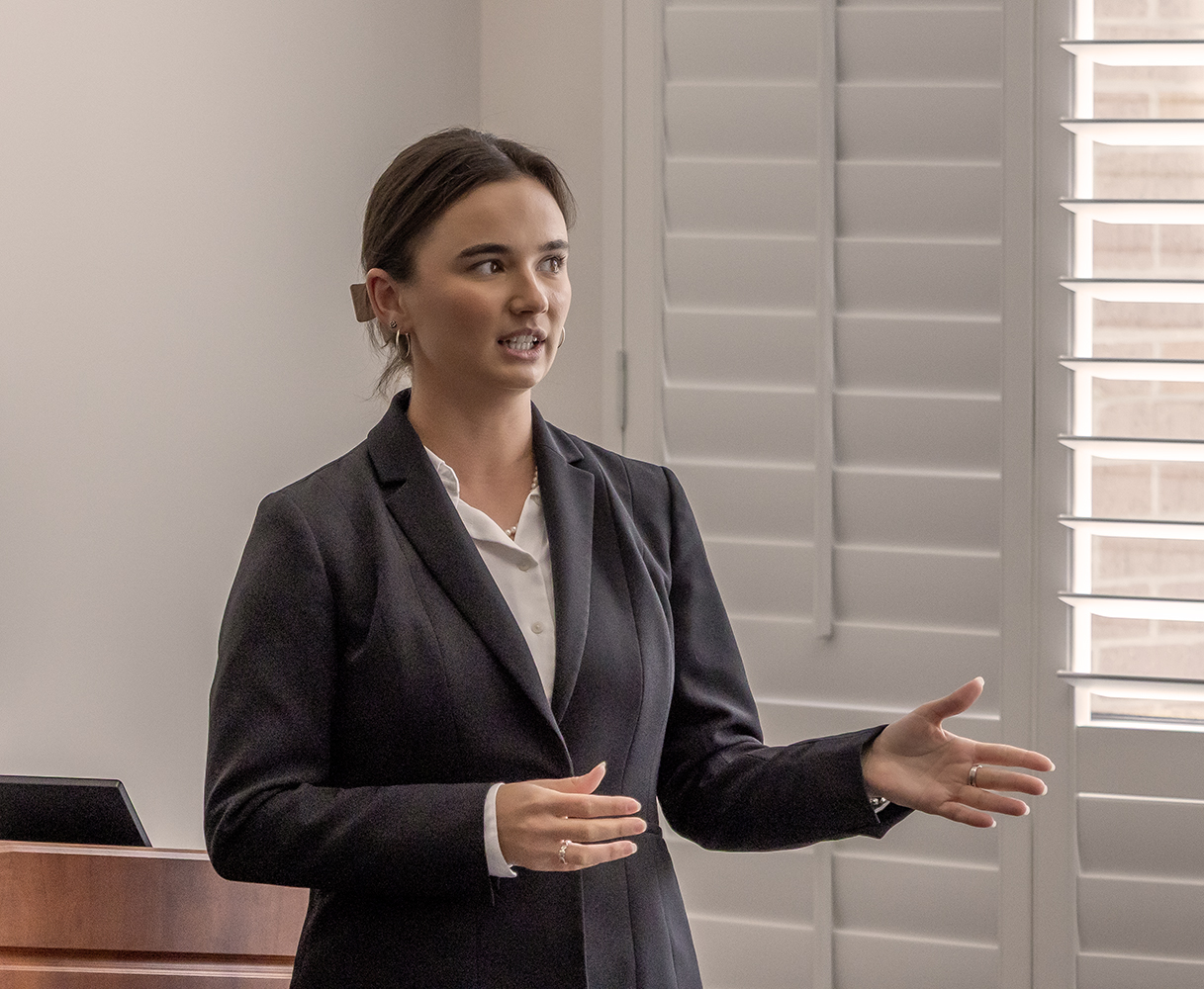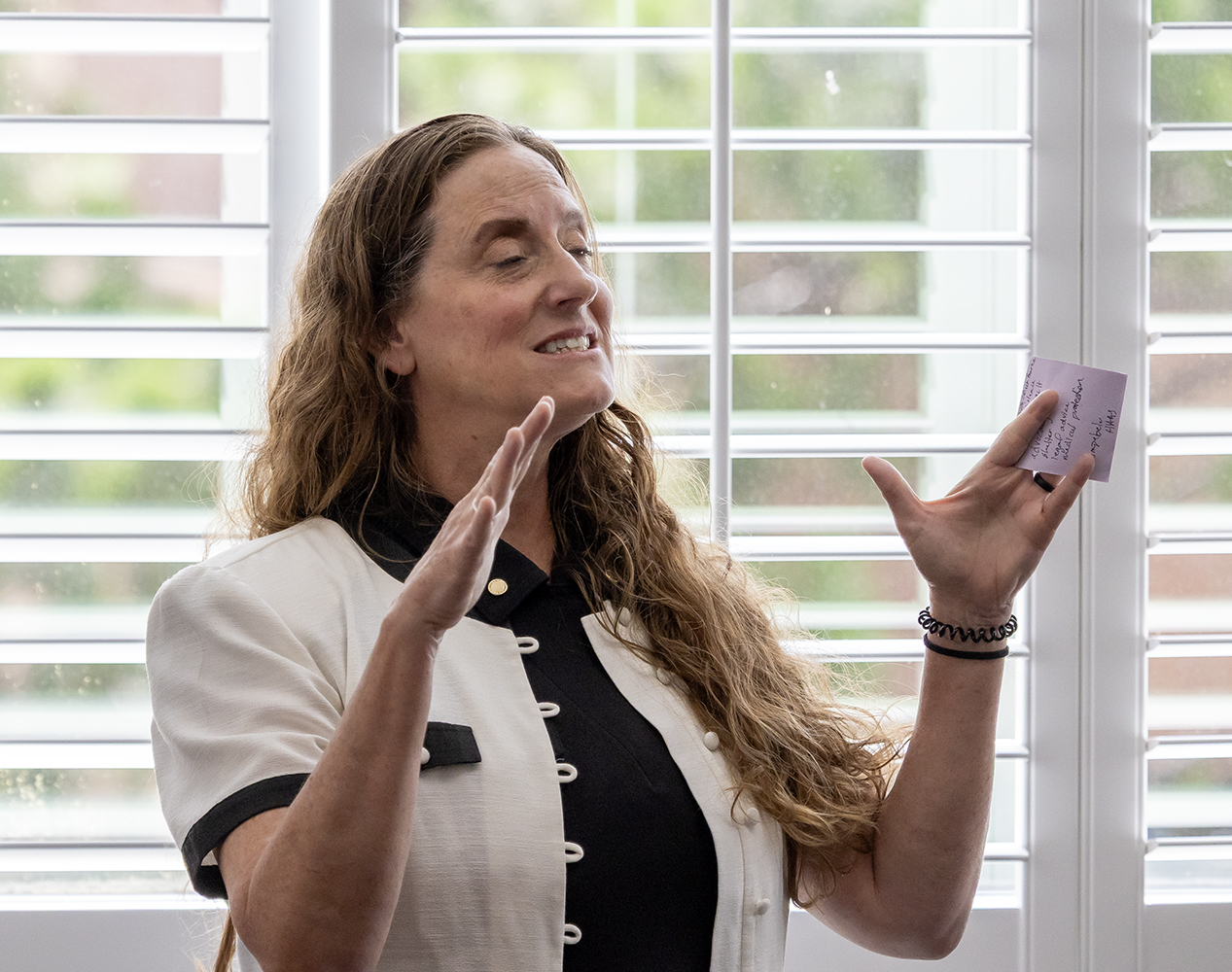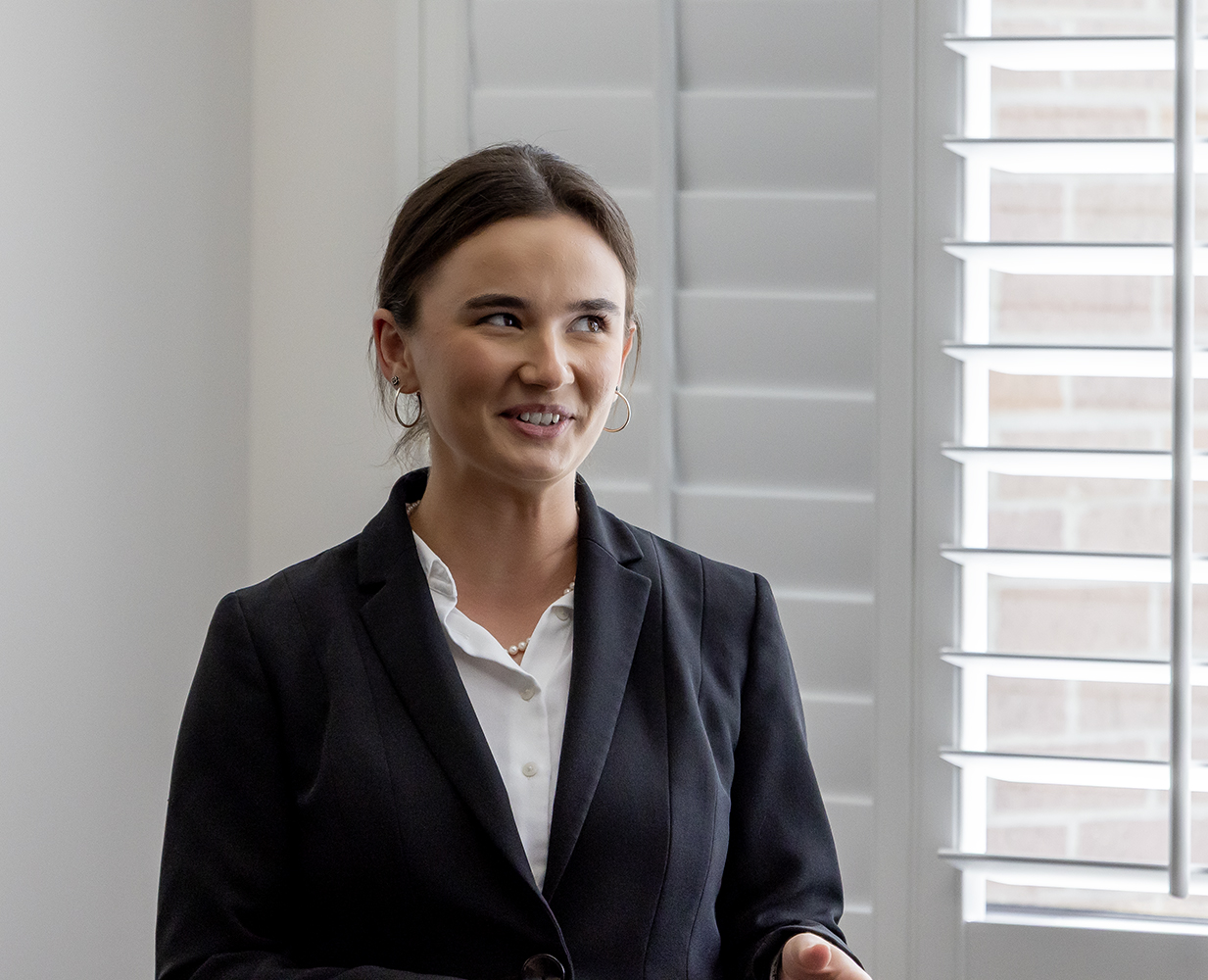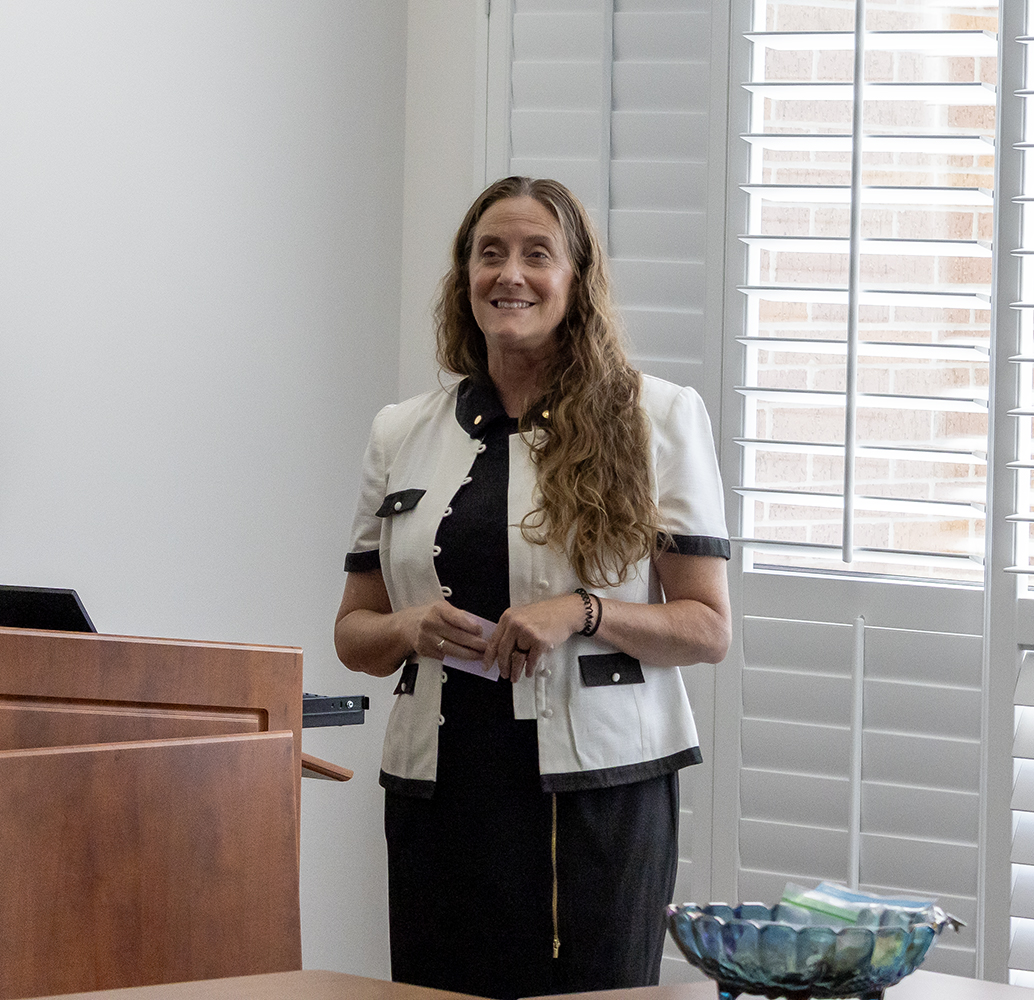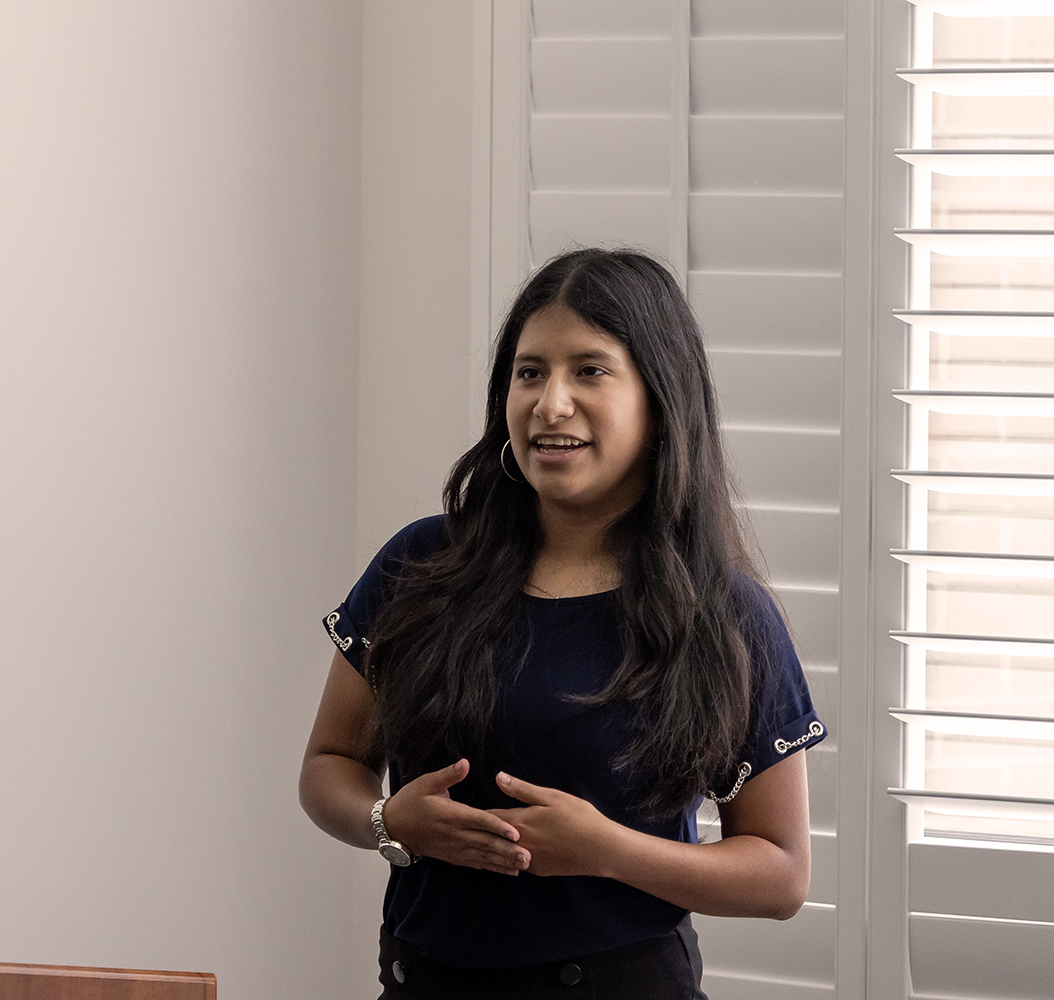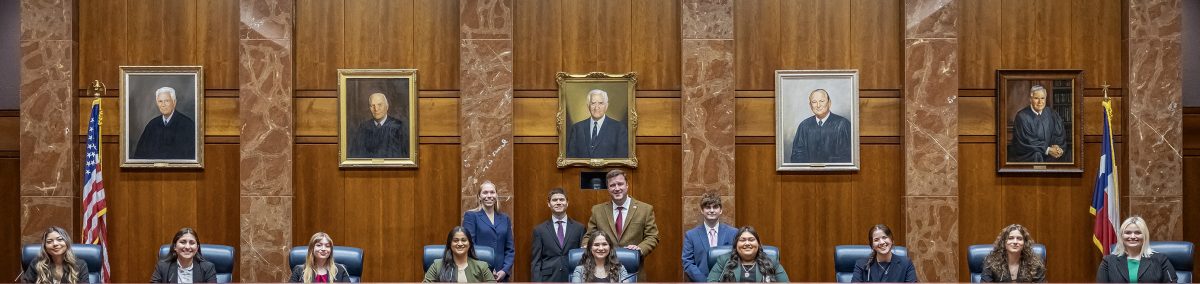
After a summer of serving local government and nonprofit organizations throughout the Huntsville community, interns in the Center for Law, Engagement, and Politics (LEAP) at Sam Houston State University concluded the City Fellows Internship Program by presenting their experiences to supervisors, mentors, and fellow interns.
The presentations highlighted not only the projects each student completed, but also the personal and professional growth that occurred throughout the semester. Participating interns included Elizabeth Werts (Fort Bend District Clerk’s office)…
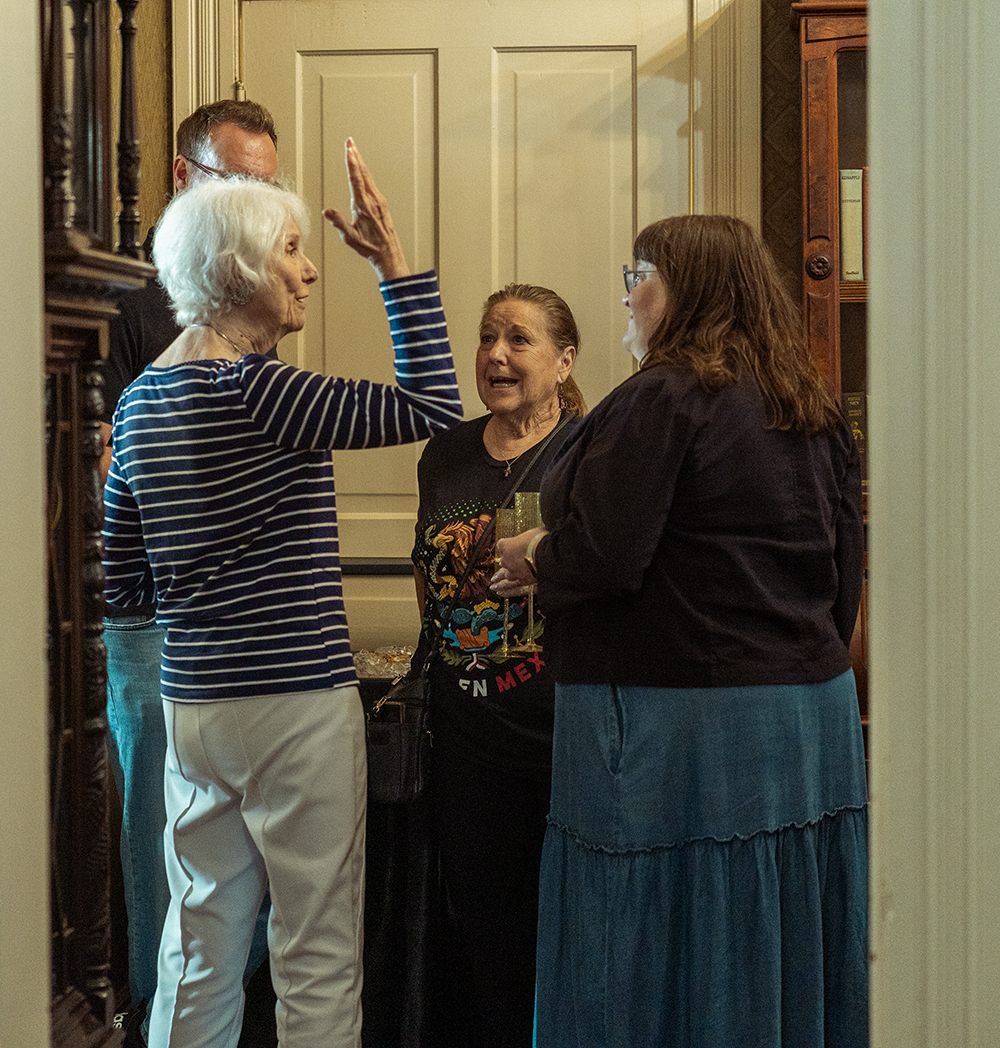
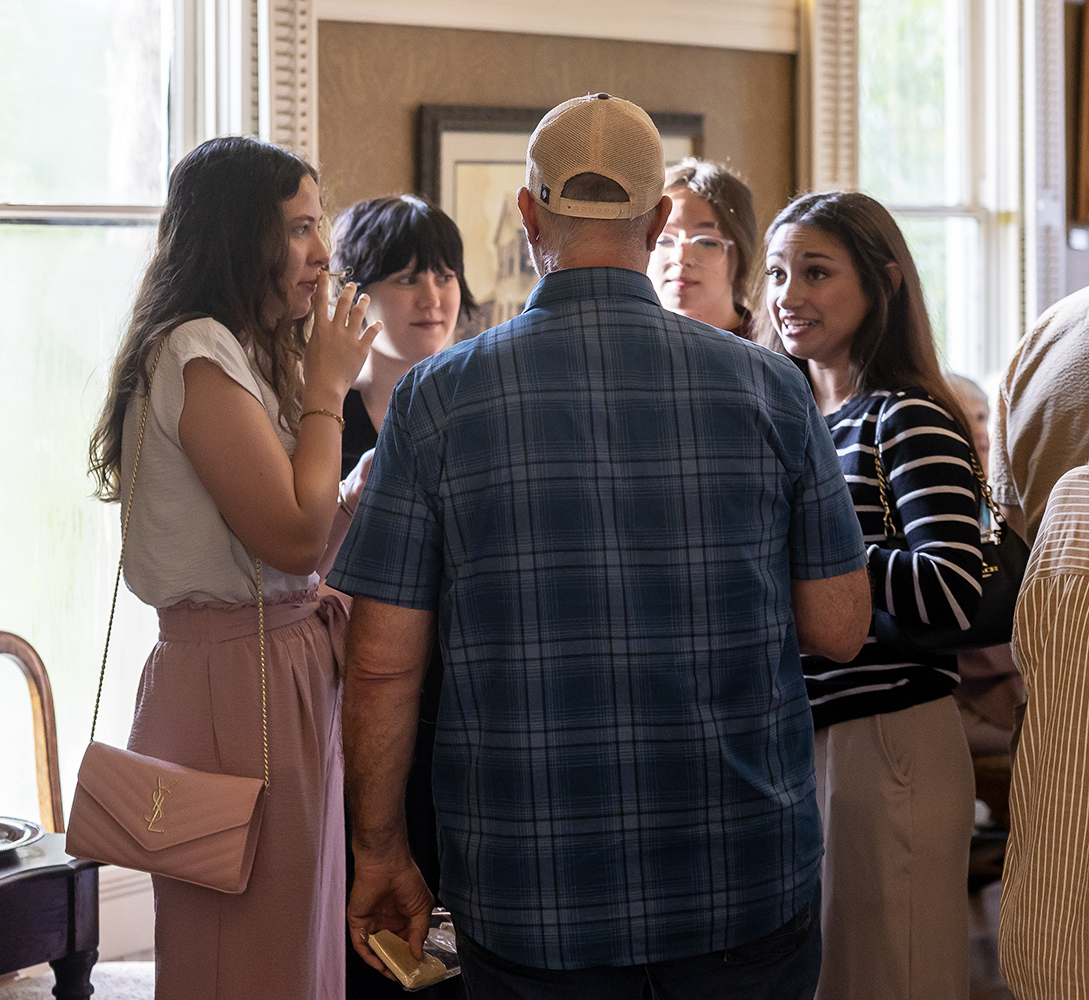
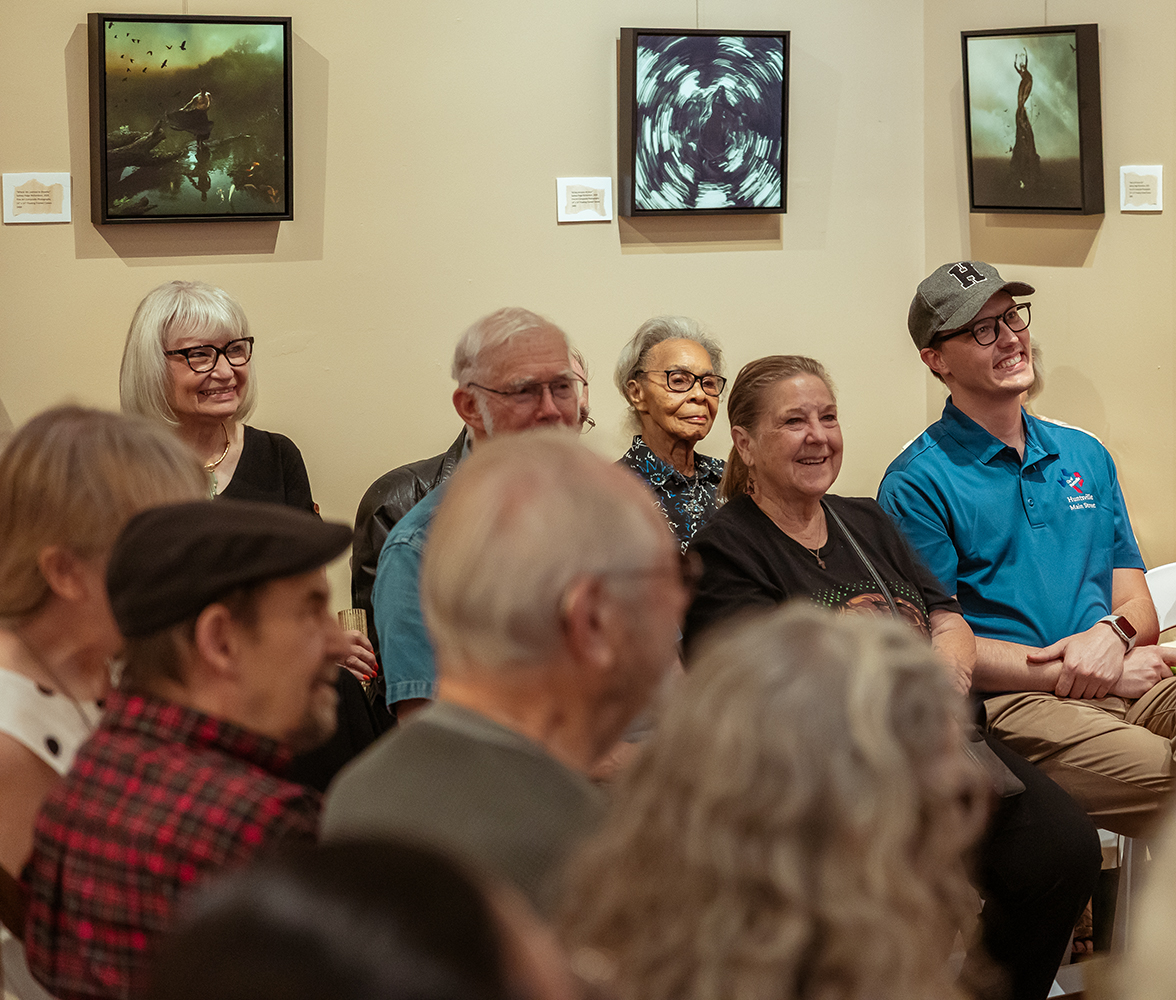
The event was well attended by many of the students’ supervisors and community partners, demonstrating the strong relationships that make the City Fellows program successful. Among those in attendance were Kristy Wheeler and Penny Joiner from Huntsville Parks and Leisure; Amanda Sewell and Olivia McCaughan from Main Street Huntsville; Angela Robinson from the Wynne Home Arts and Visitor Center; Tracy Stoudt and Colleen Garza from SAAFE House; and Marshall Altom of The Altom Group. Also attending were Brian Beasley, Assistant City Manager for the City of Huntsville, and Sandra Rodriguez, Human Resources Coordinator for the City.
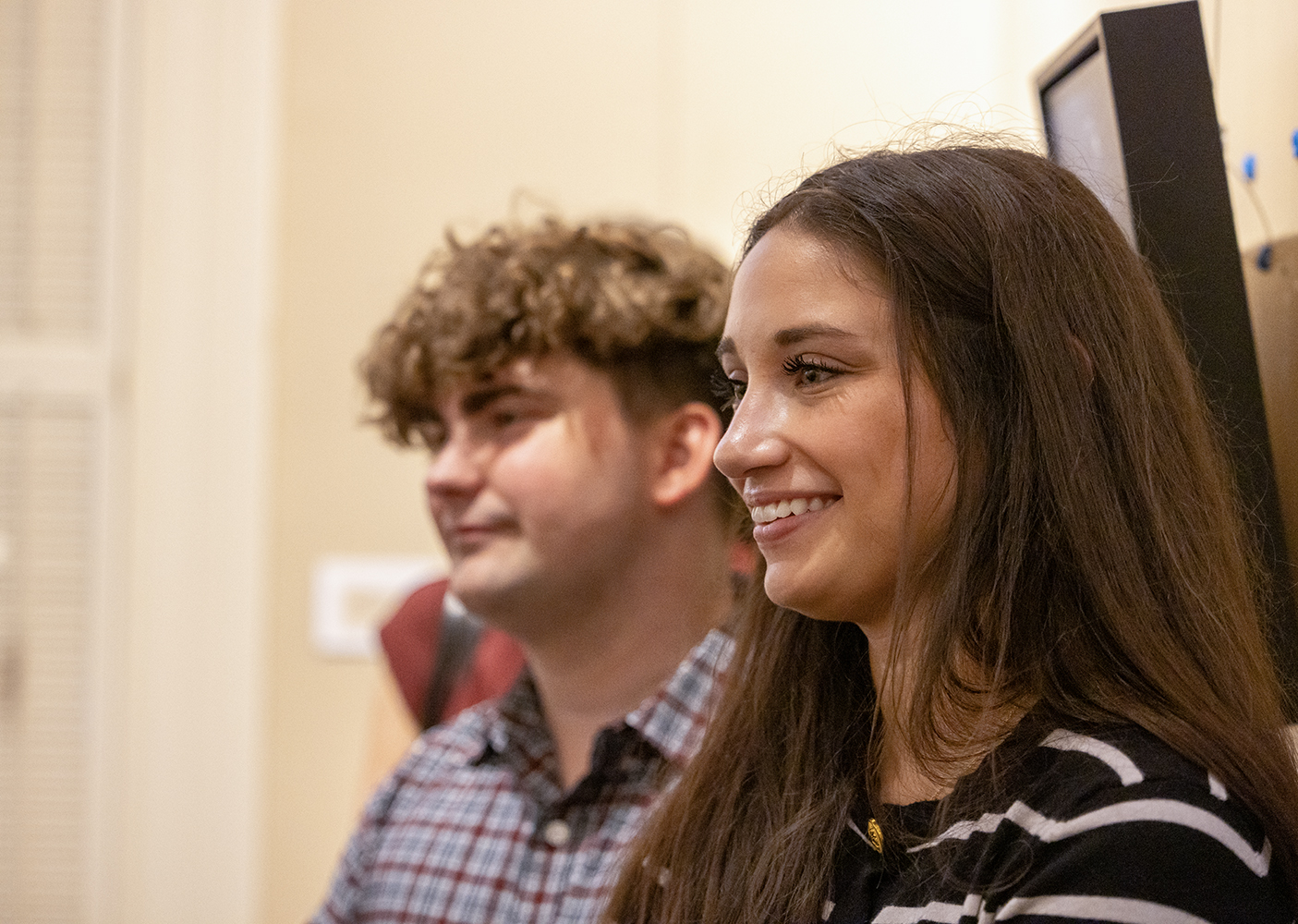
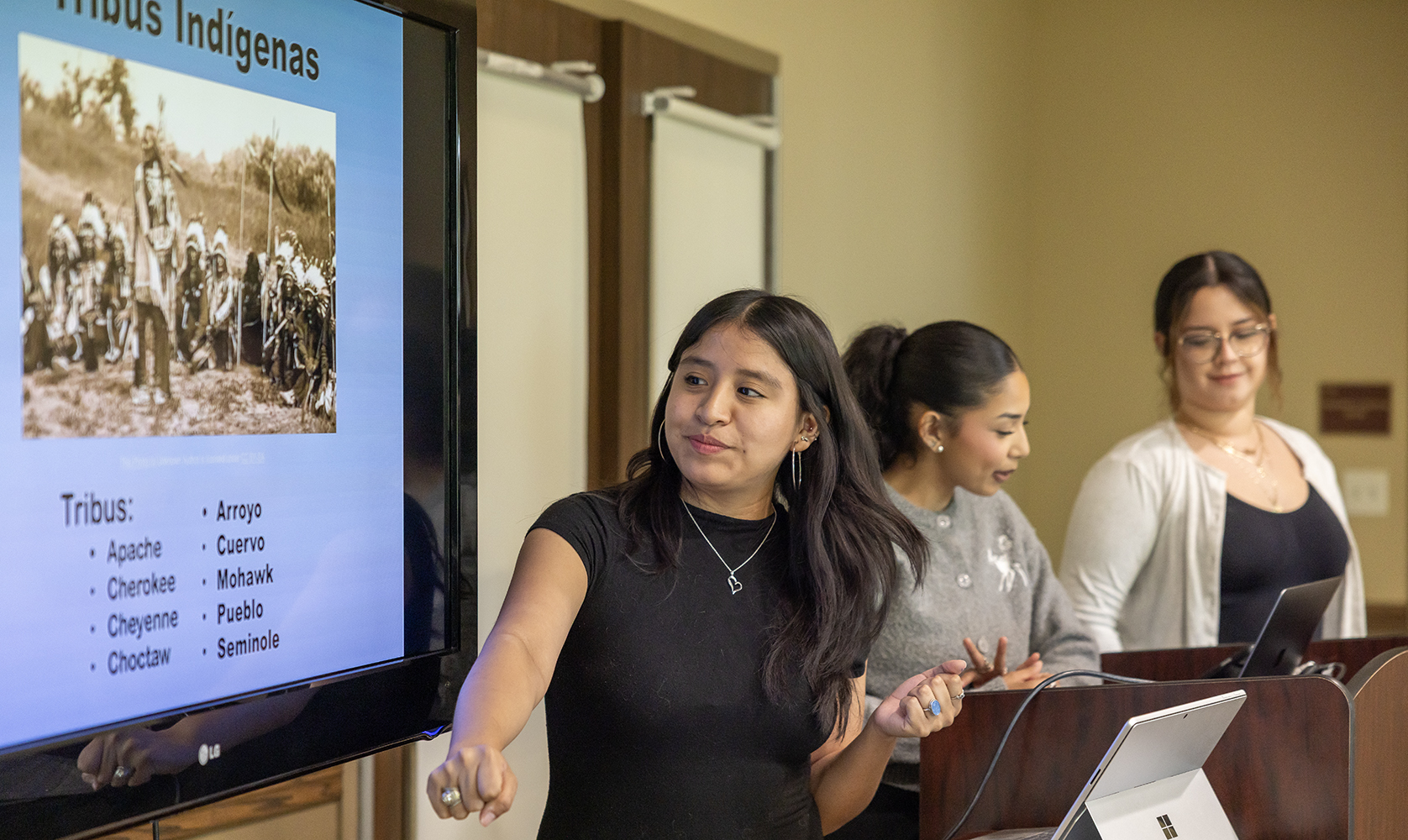
Each presentation focused on a significant project completed during the internship. Indeed, this is one key aspect of the City Fellows program: the internships are project based. For Tania Ramirez in Parks, for example, that included coming up with activities for the City’s July 4th celebration and its accompanying parade (where the Parks department one the Spirit Award). The students also discussed the challenges encountered and the lessons learned along the way. Several students admitted they were initially nervous about speaking before an audience, with nearly half acknowledging that public presentations pushed them well outside their comfort zones. By the end of the program, however, each intern confidently shared the accomplishments of the summer and reflected on the skills they had developed.
Many of the students discussed overcoming personal limitations, whether it was learning unfamiliar office software, adapting to a professional workplace, or building confidence in communicating with coworkers and the public. Their stories illustrated that internships provide far more than workplace experience—they foster resilience, adaptability, and self-confidence.
One theme echoed by every presenter was a newfound appreciation for local government and community organizations. Whether engaging in the day-to-day work of the organization or through one of the City Fellows’ tours, the interns gained a better understanding of how many moving parts exist in local government and how each component has to have dedicated staff behind their mission.
It was, of course, icing on the cake to have many of those dedicated staff in the room while the presentations were being conducted, and the LEAP Center remains grateful to the City of Huntsville, SAAFE House, The Altom Group, the Old Town Theatre, and the Fort Bend County Clerk’s Office for providing students with rich opportunities.
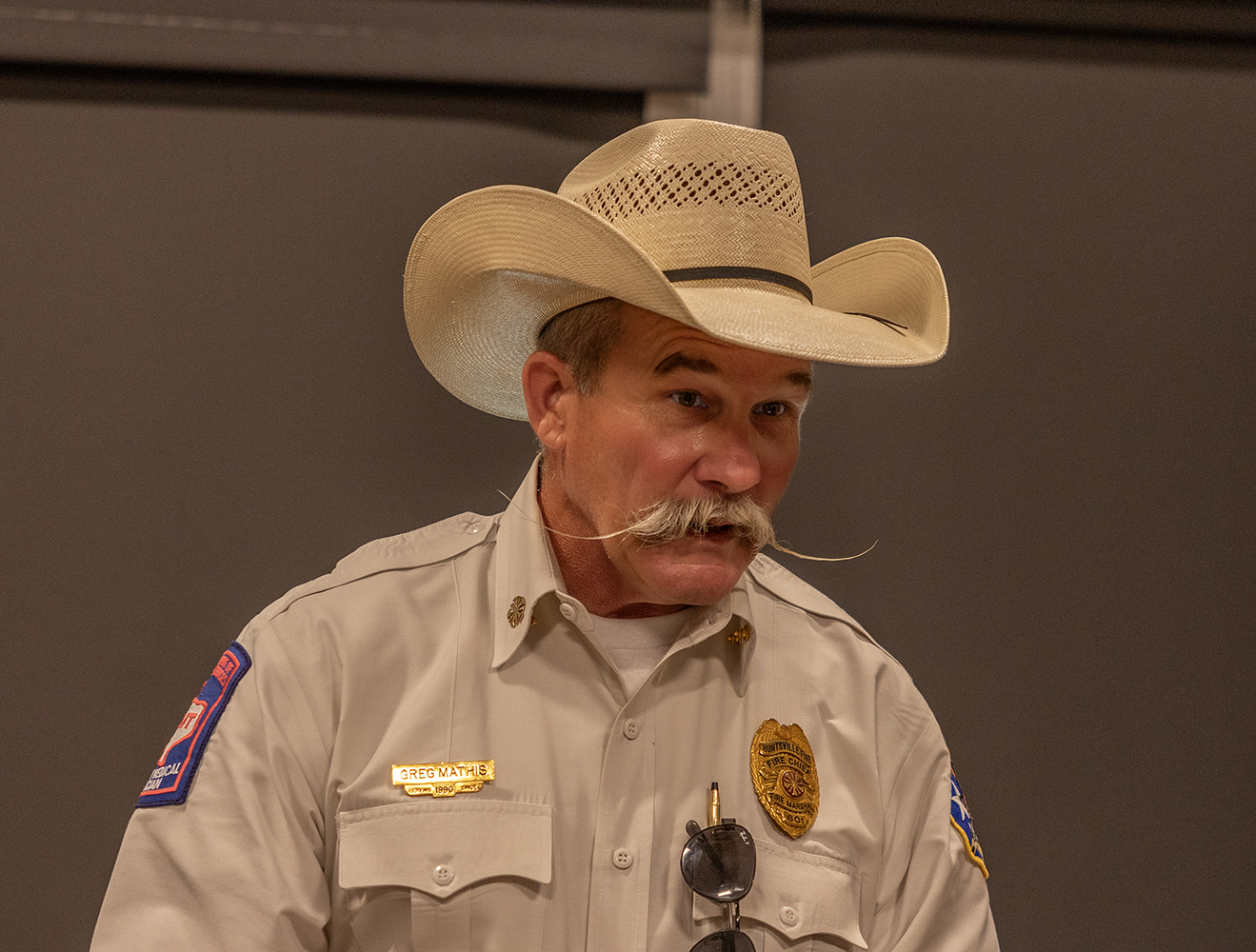
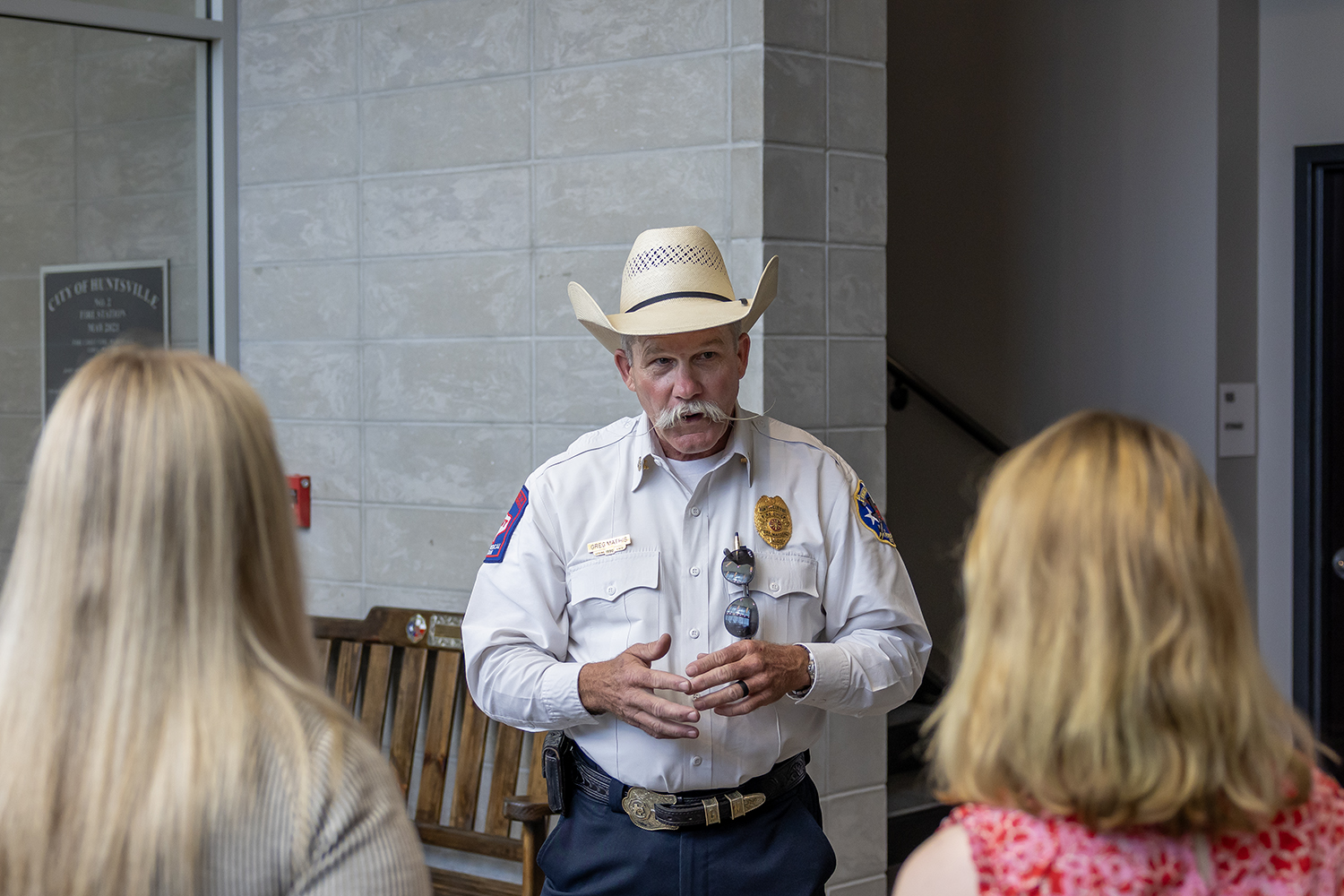
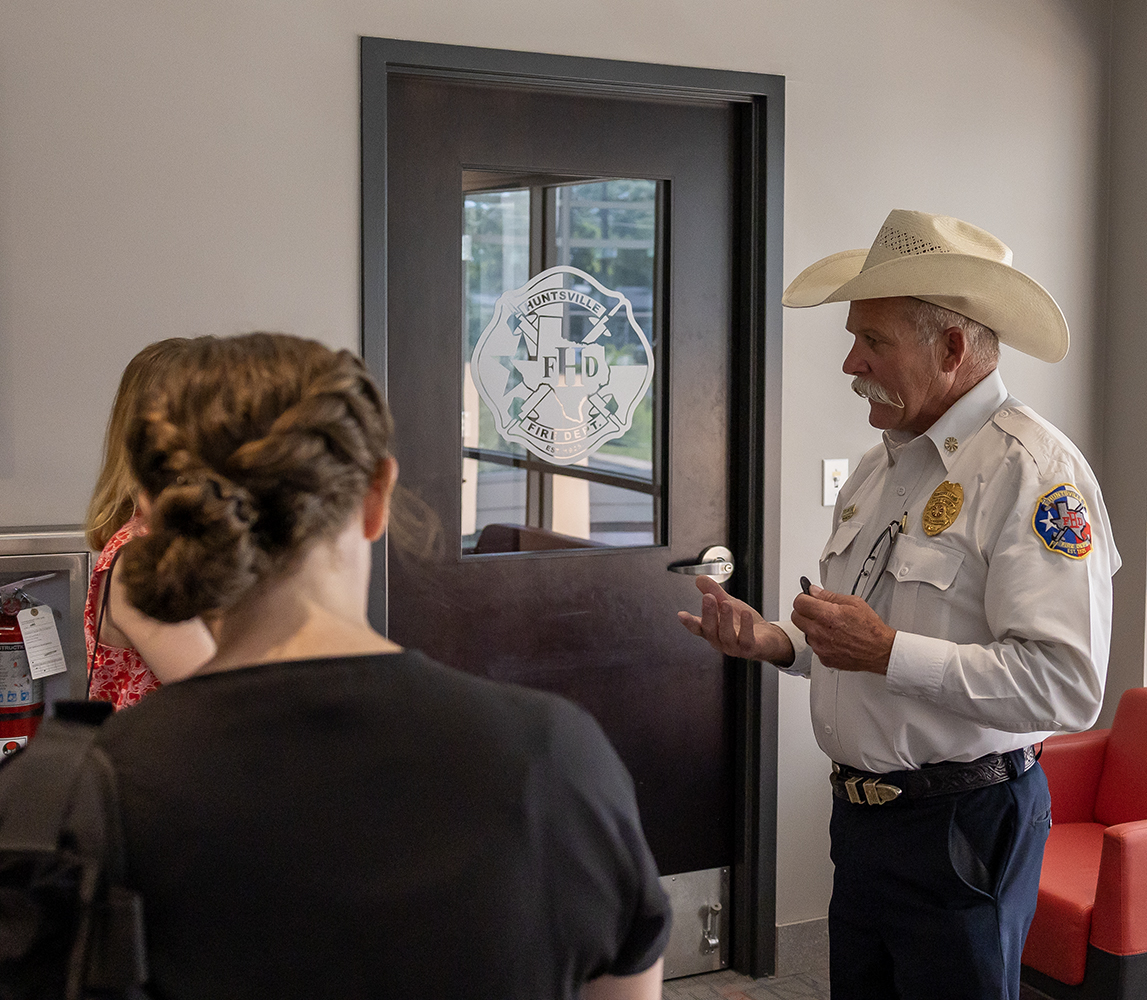
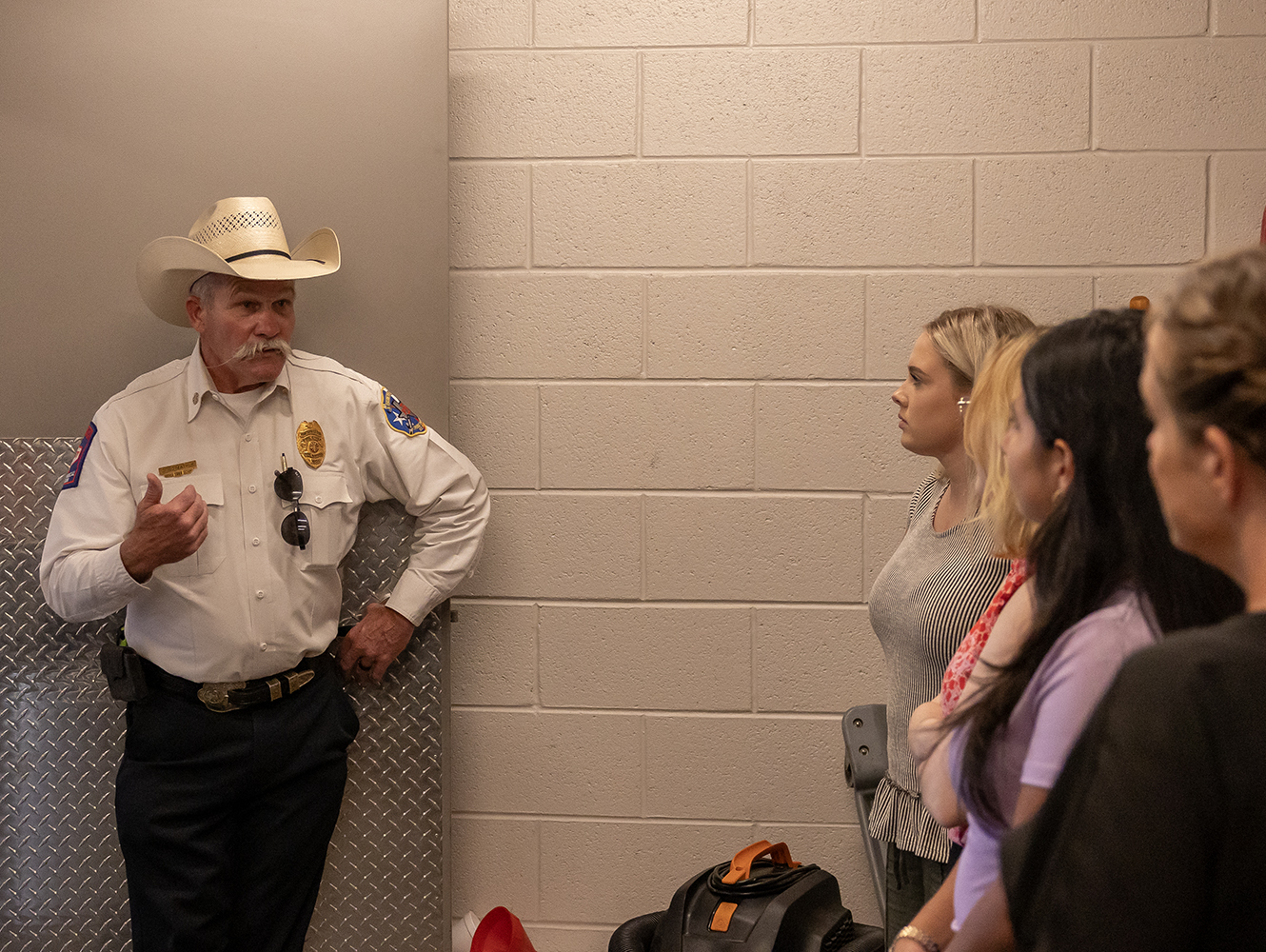
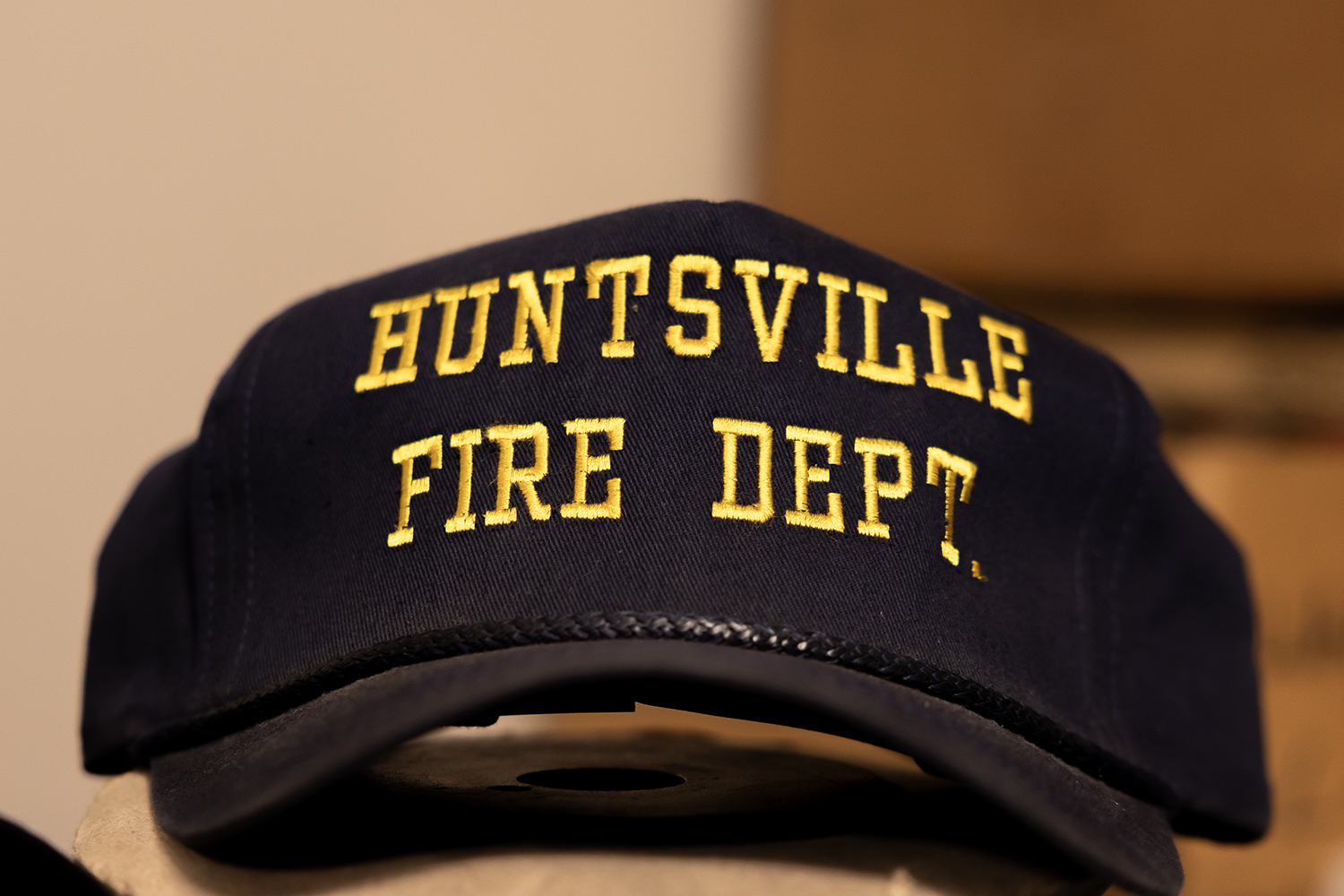
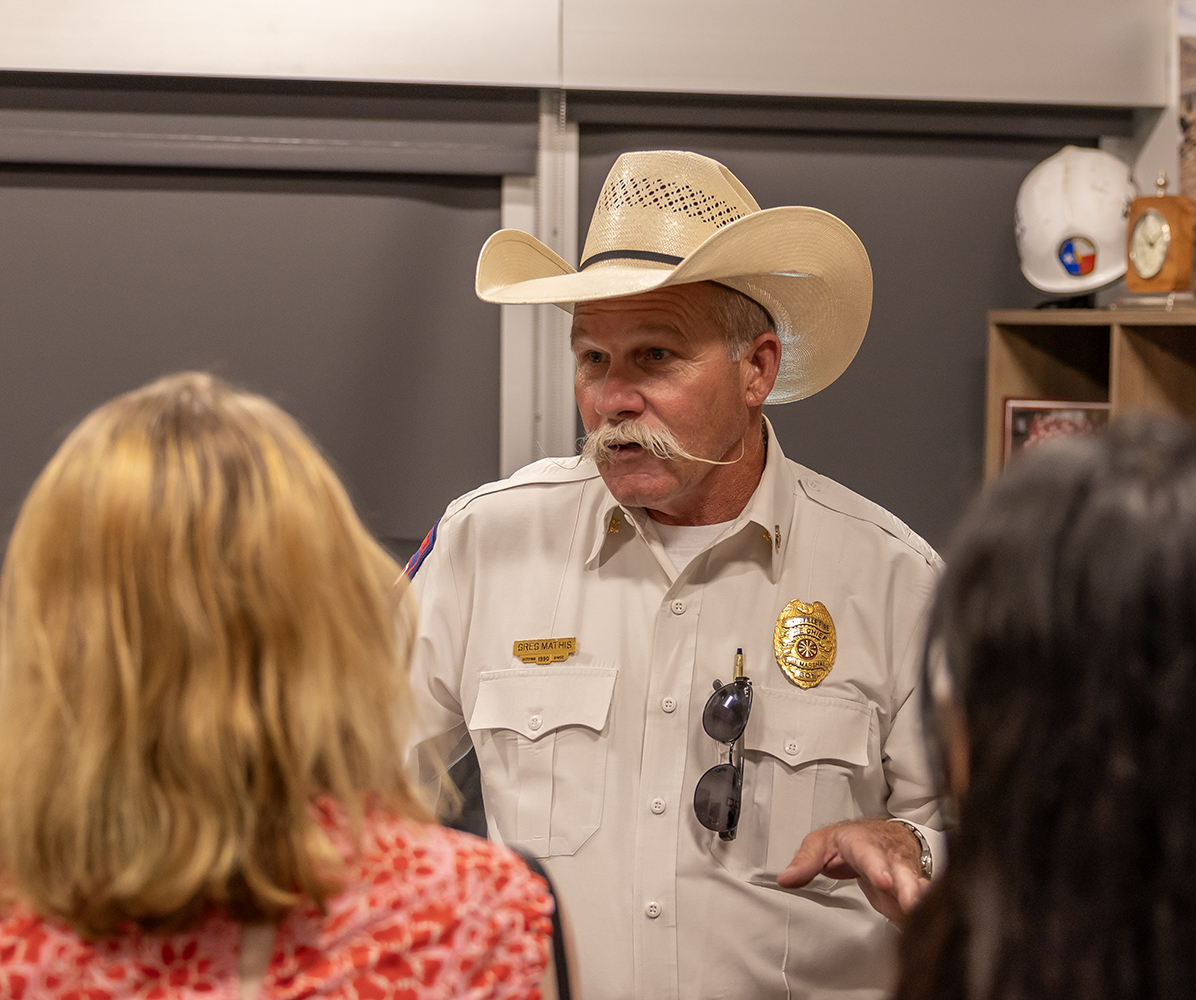
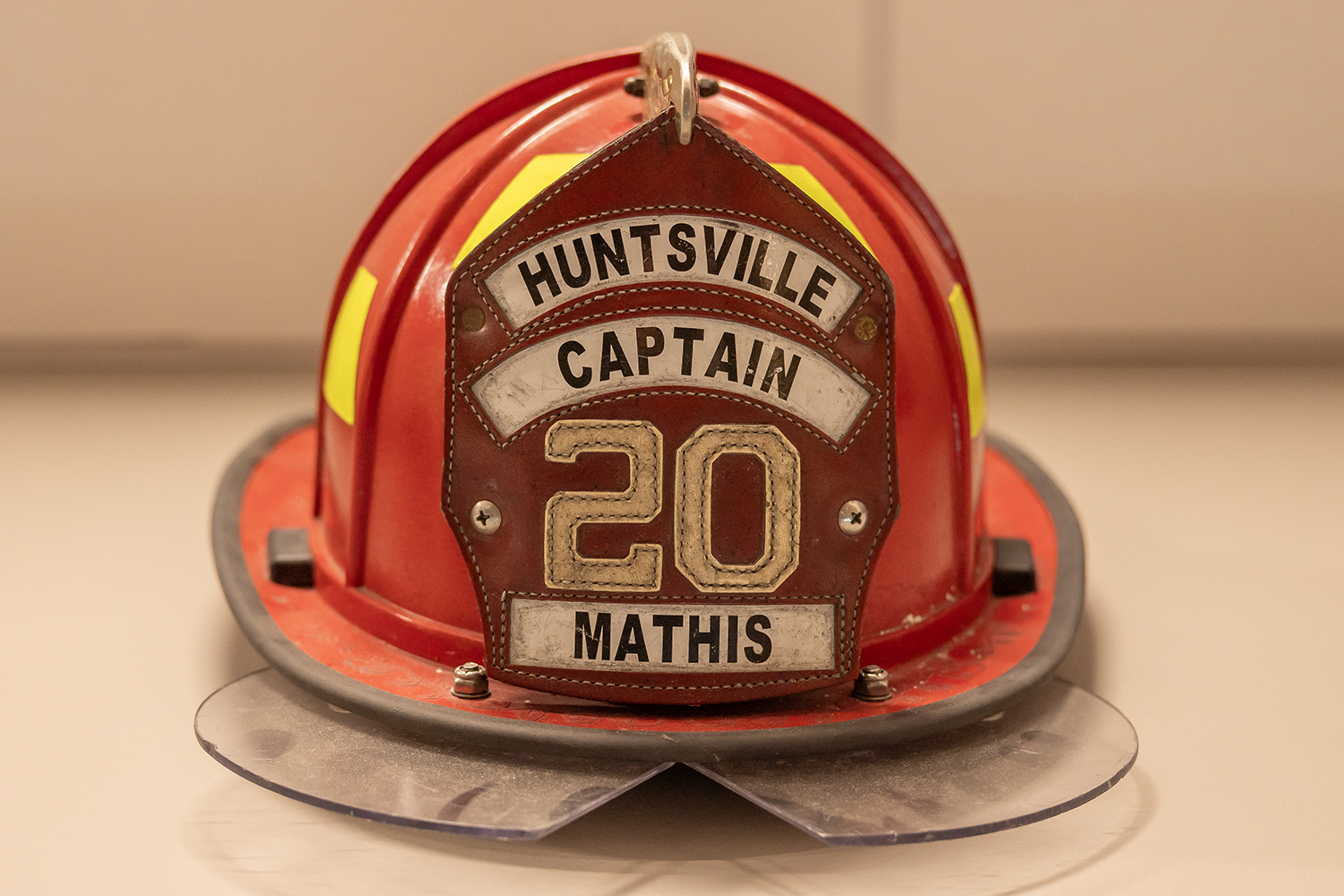
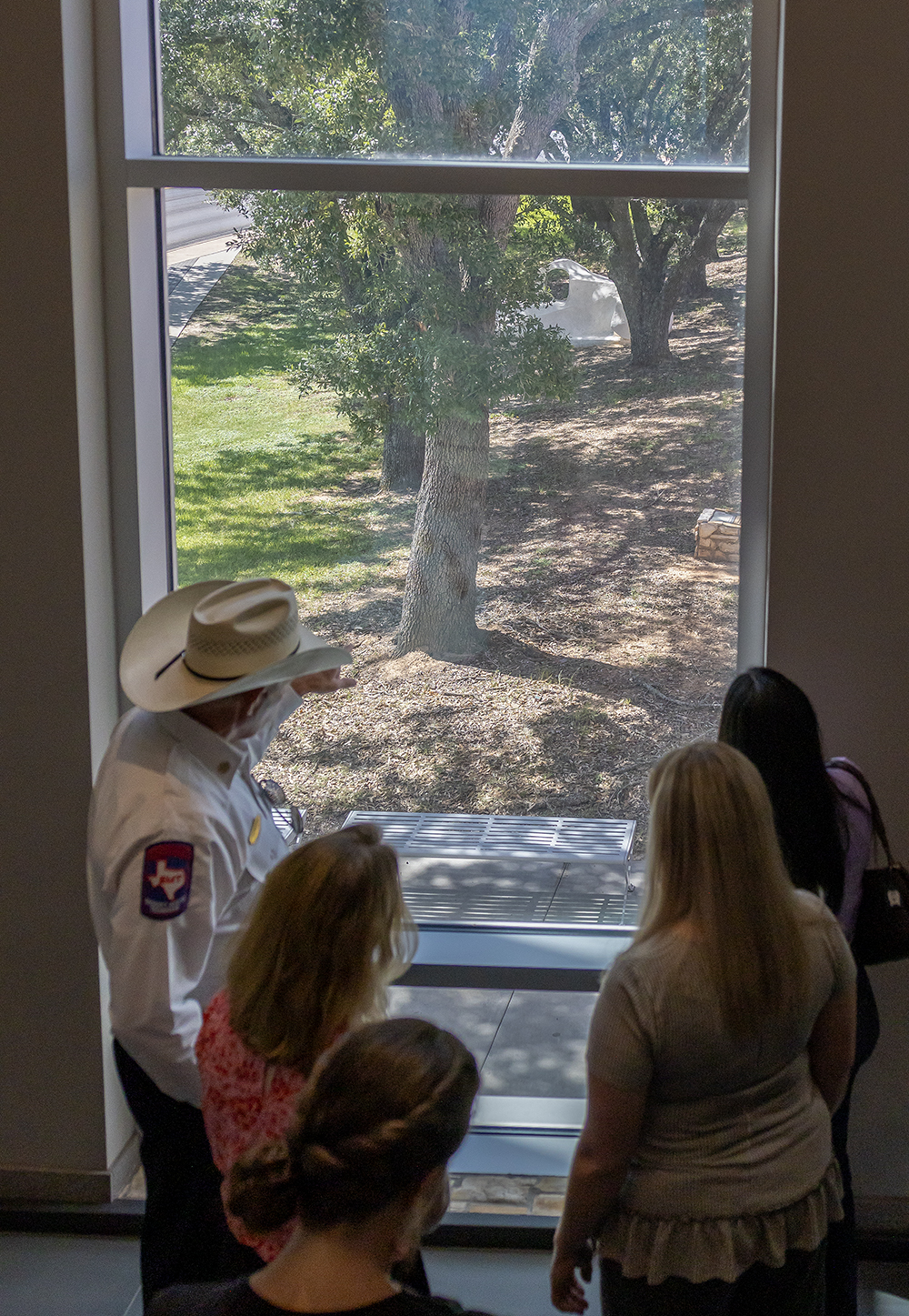
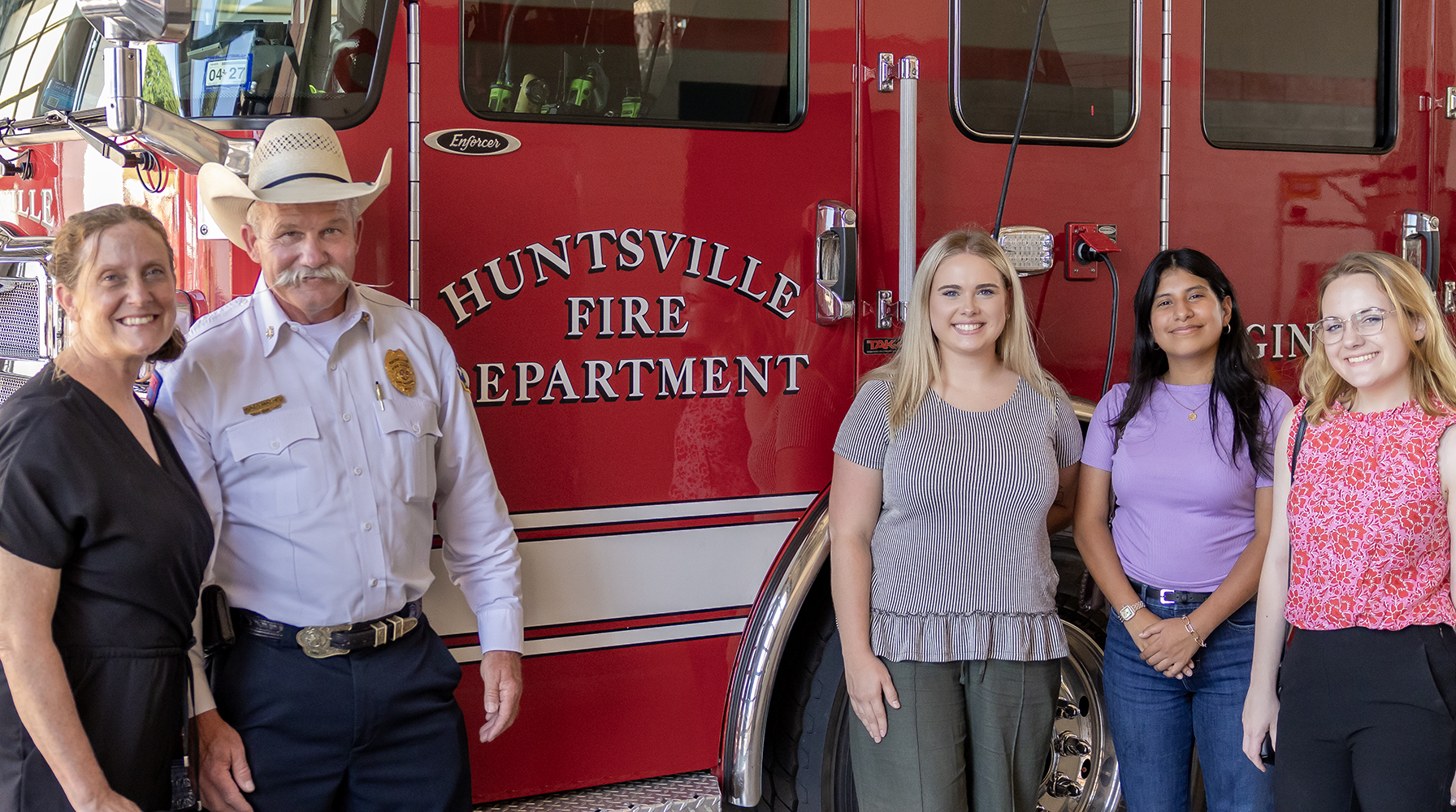
The Huntsville Fire Department does far more than respond to fires, and a group of City Fellows interns recently had the opportunity to see that firsthand during a behind-the-scenes tour led by Fire Chief Greg Mathis.
The City Fellows program, administered through the LEAP Center at Sam Houston State University, places students in internships throughout the Huntsville community while providing professional development experiences that introduce them to the people and organizations serving the city. This summer’s interns include Brittlyn Jackson, who is interning with Huntsville Main Street; Tania Ramirez, with Huntsville Parks and Leisure; Christine James, with SAAFE House; and Allie Plunk, who serves with Old Town Theatre and The Altom Group.
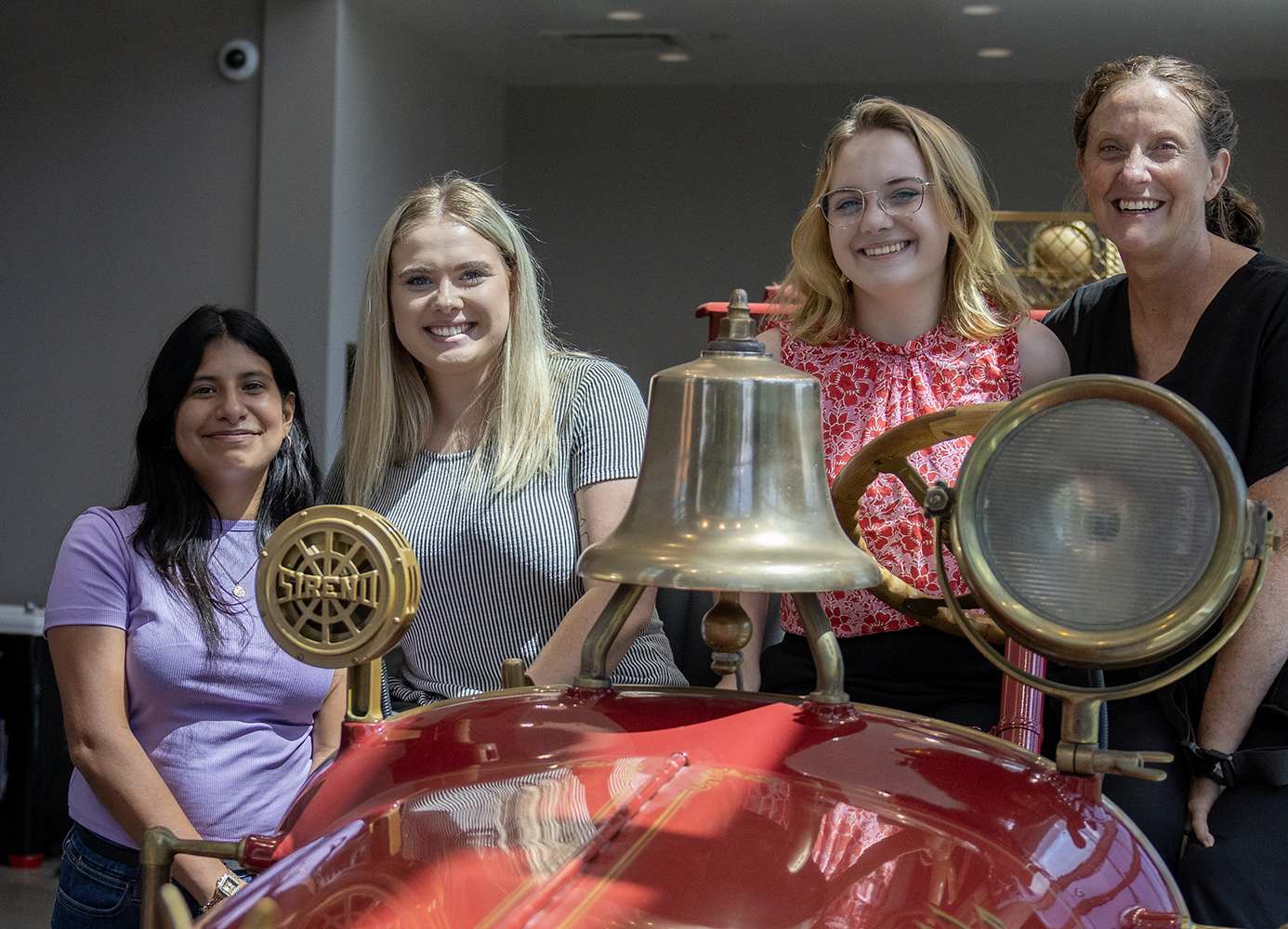
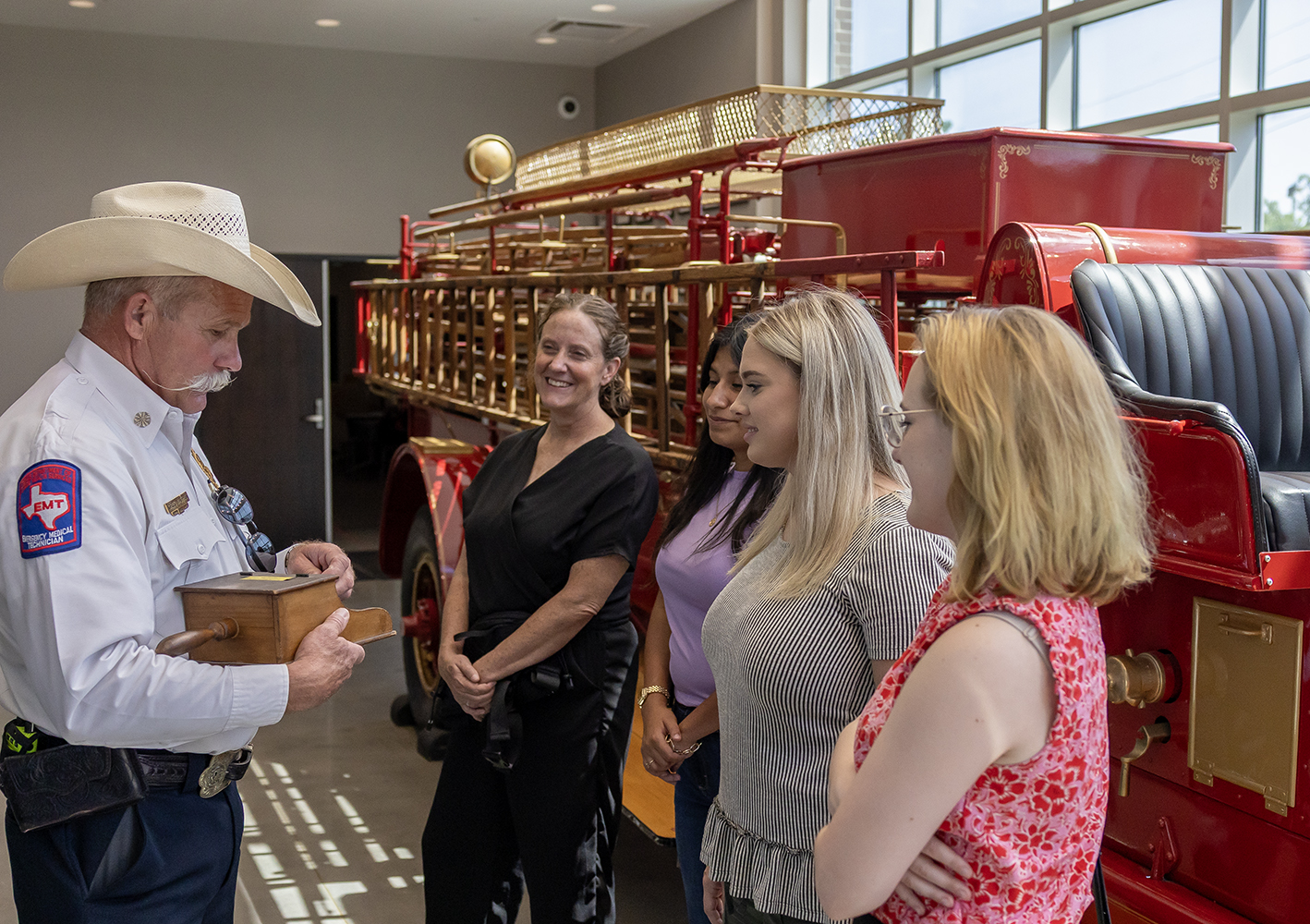
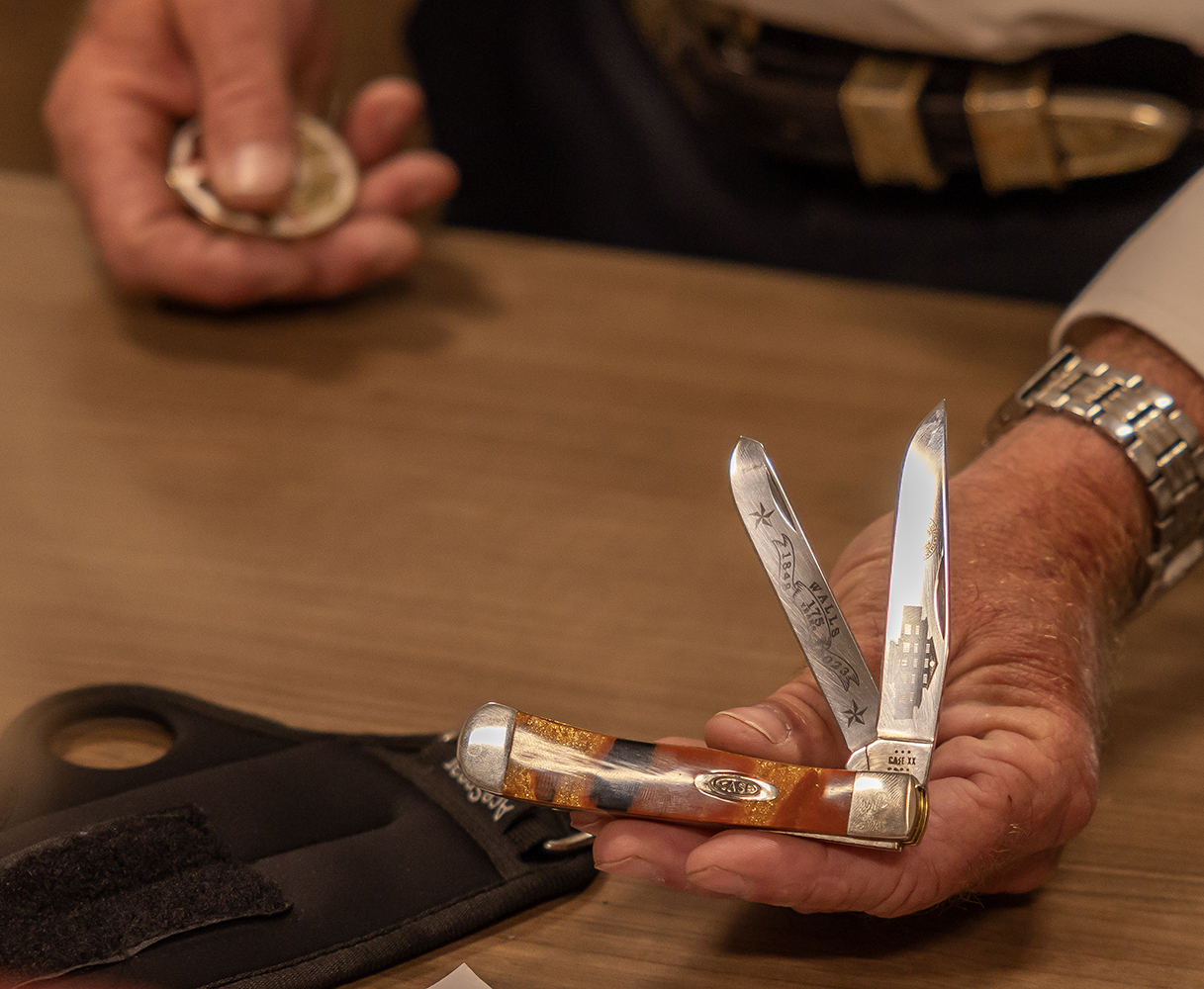
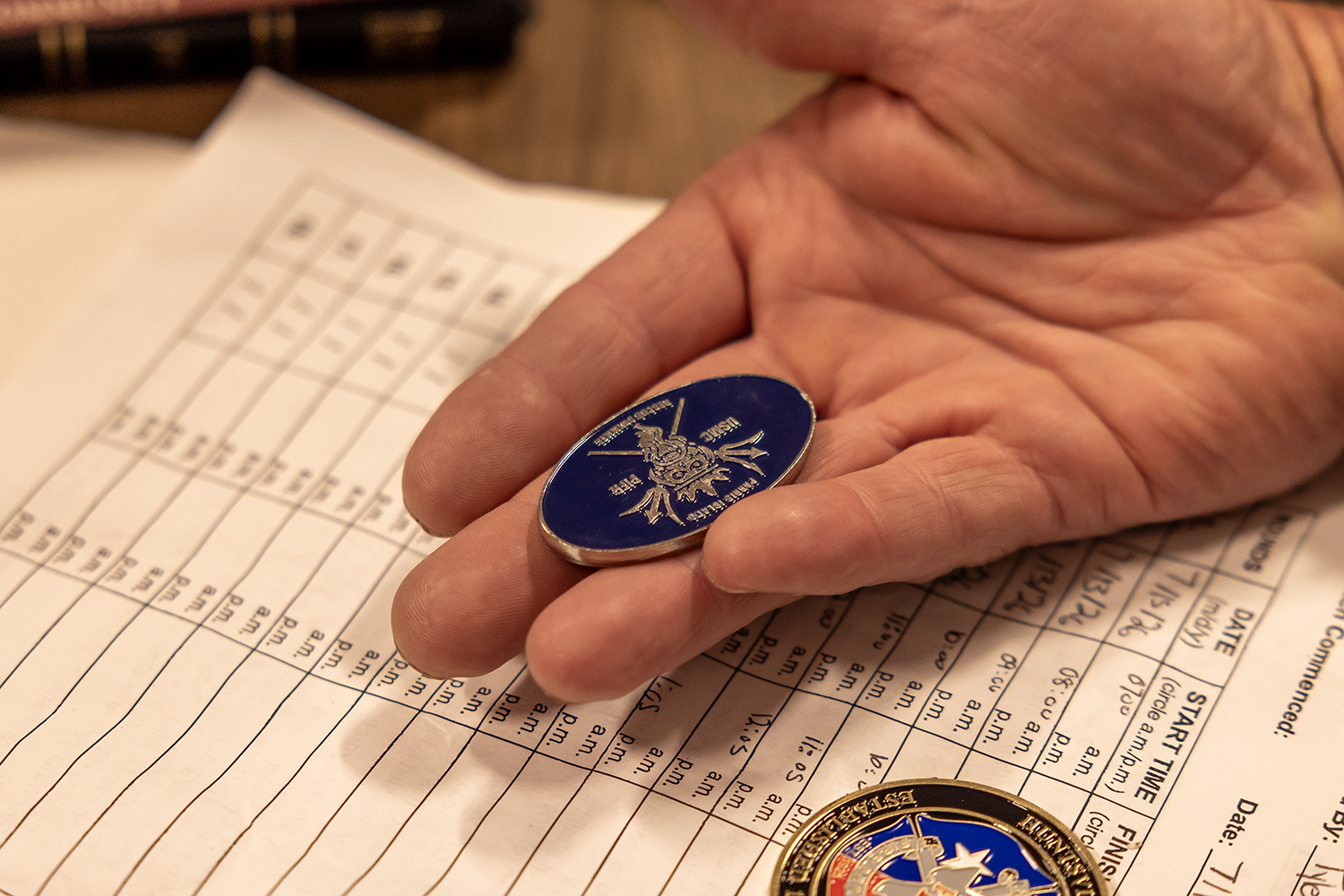
The tour began with a look into the department’s history, including a beautifully restored 1928 Huntsville fire truck and several artifacts that illustrate how firefighting has evolved over the past century.
From there, Chief Mathis explained that today’s fire chief wears many hats. In addition to emergency response, his responsibilities include budgeting, securing grants, overseeing personnel, and ensuring firefighters have the training and equipment necessary to protect the community.
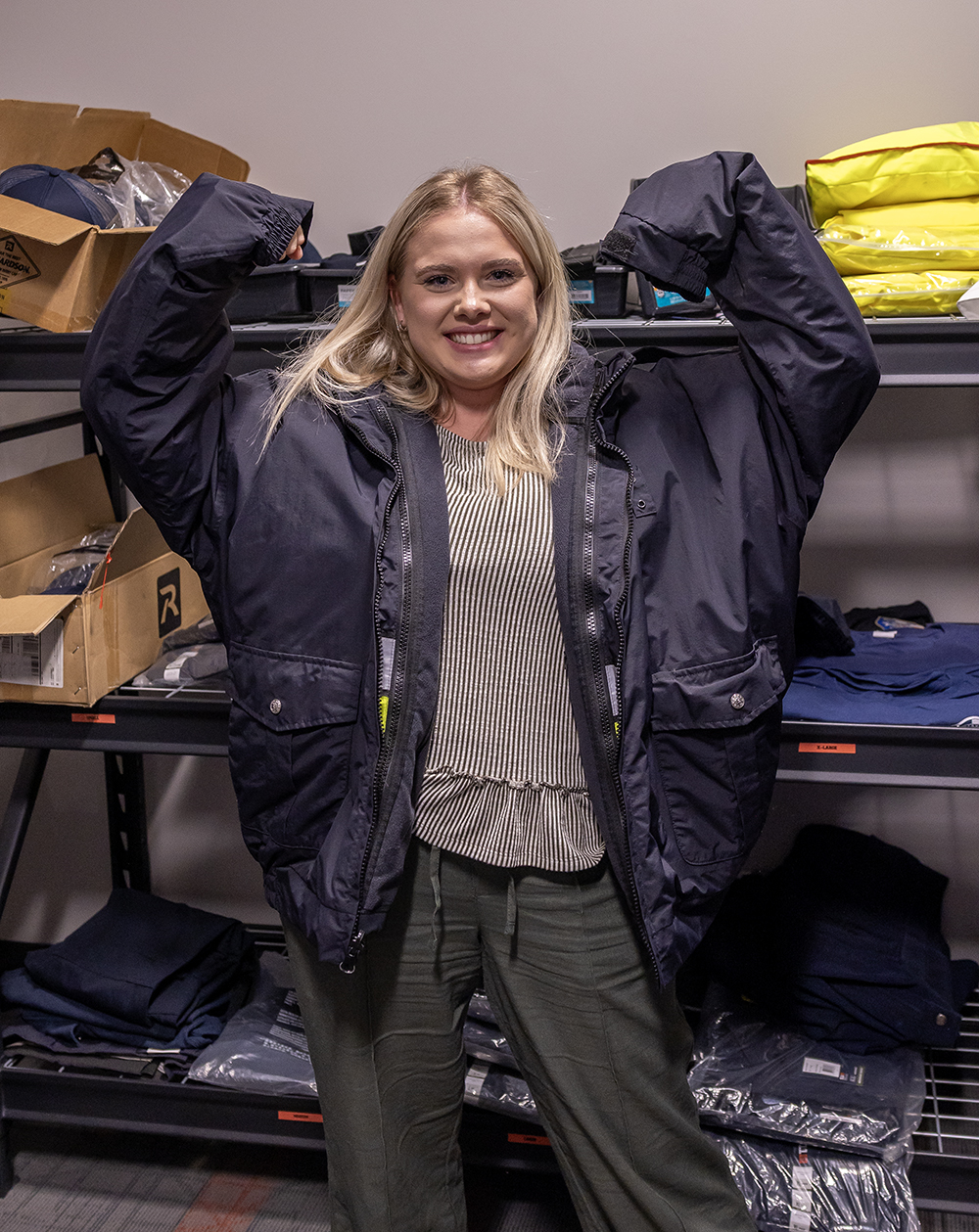
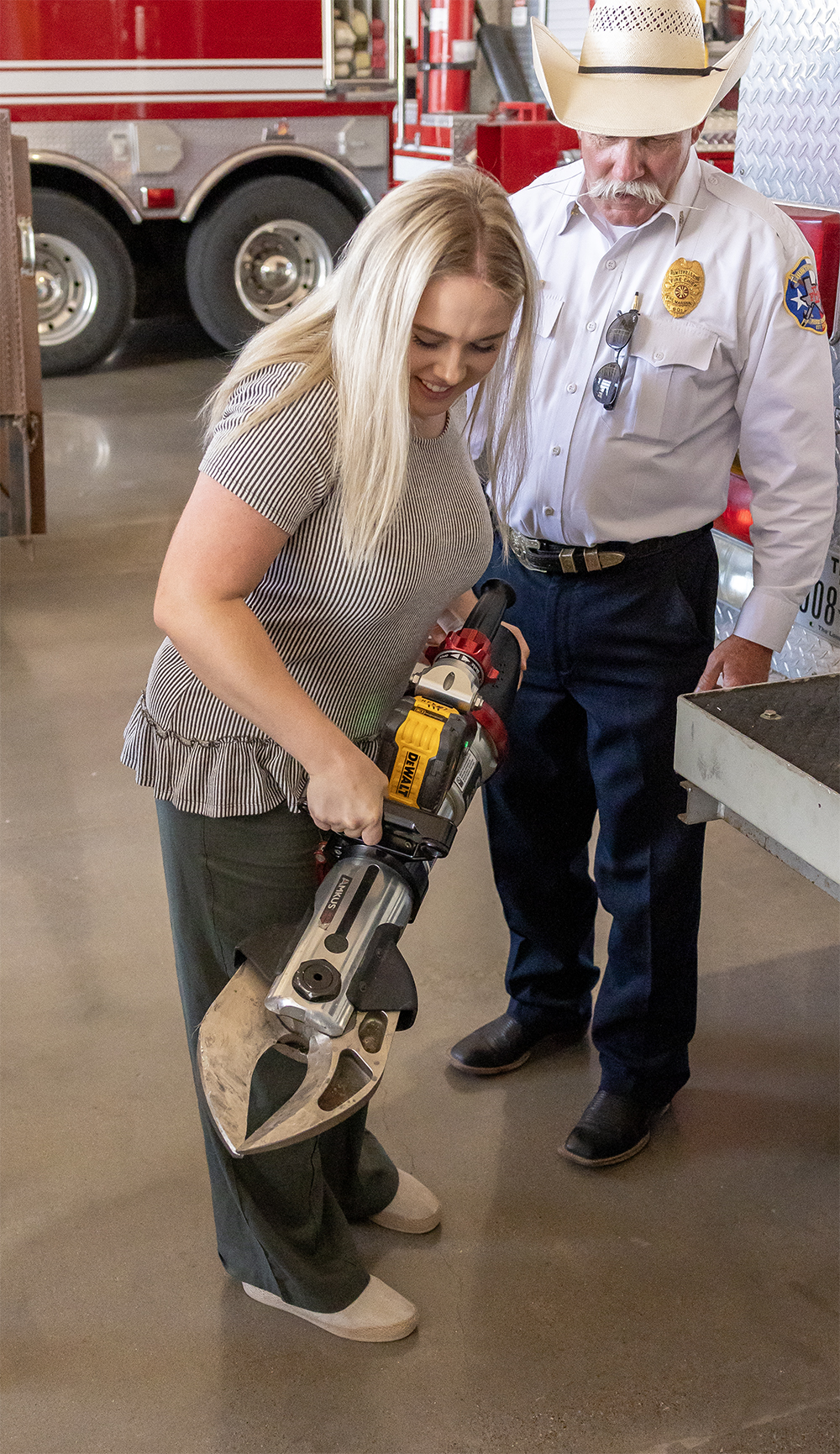
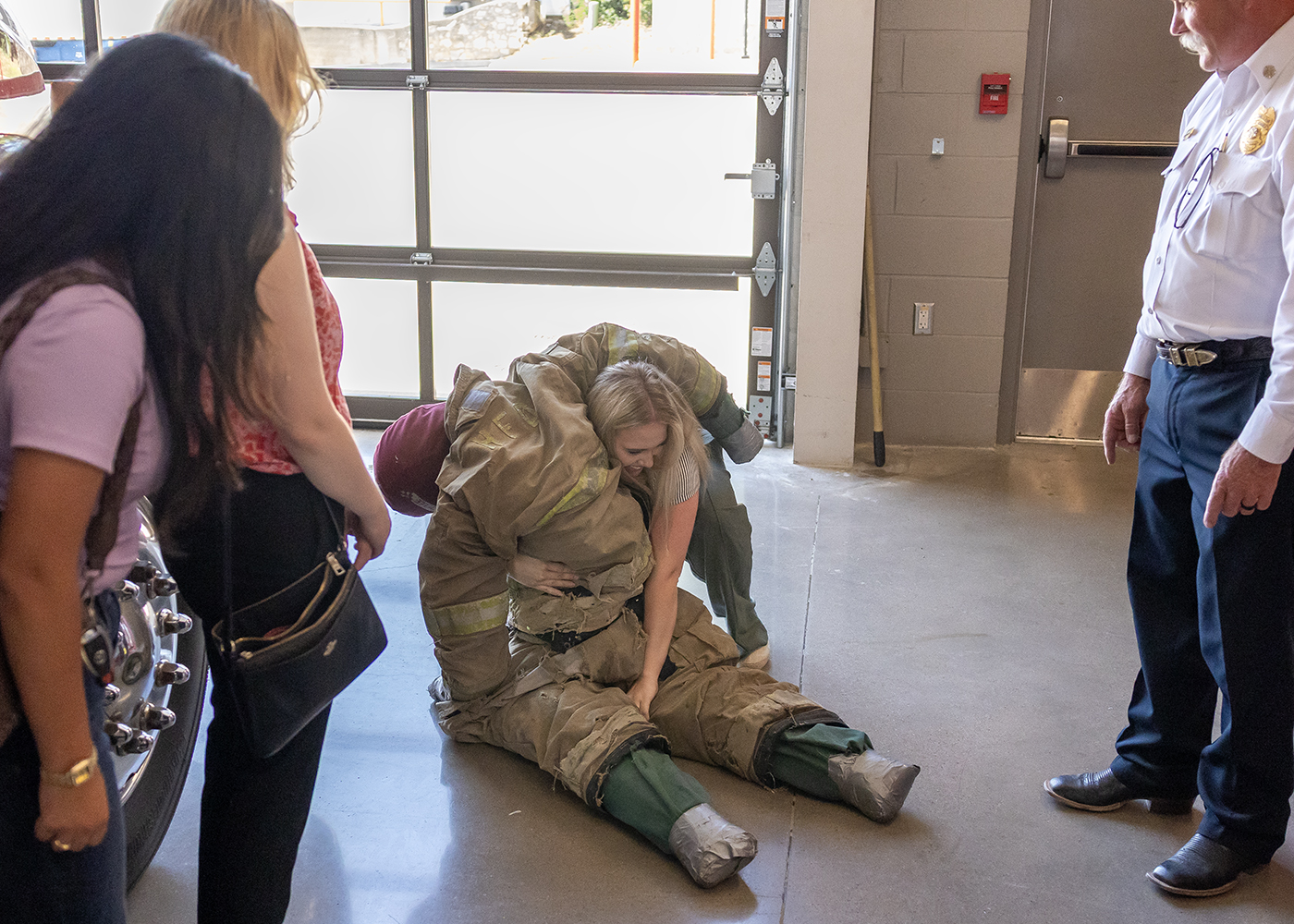
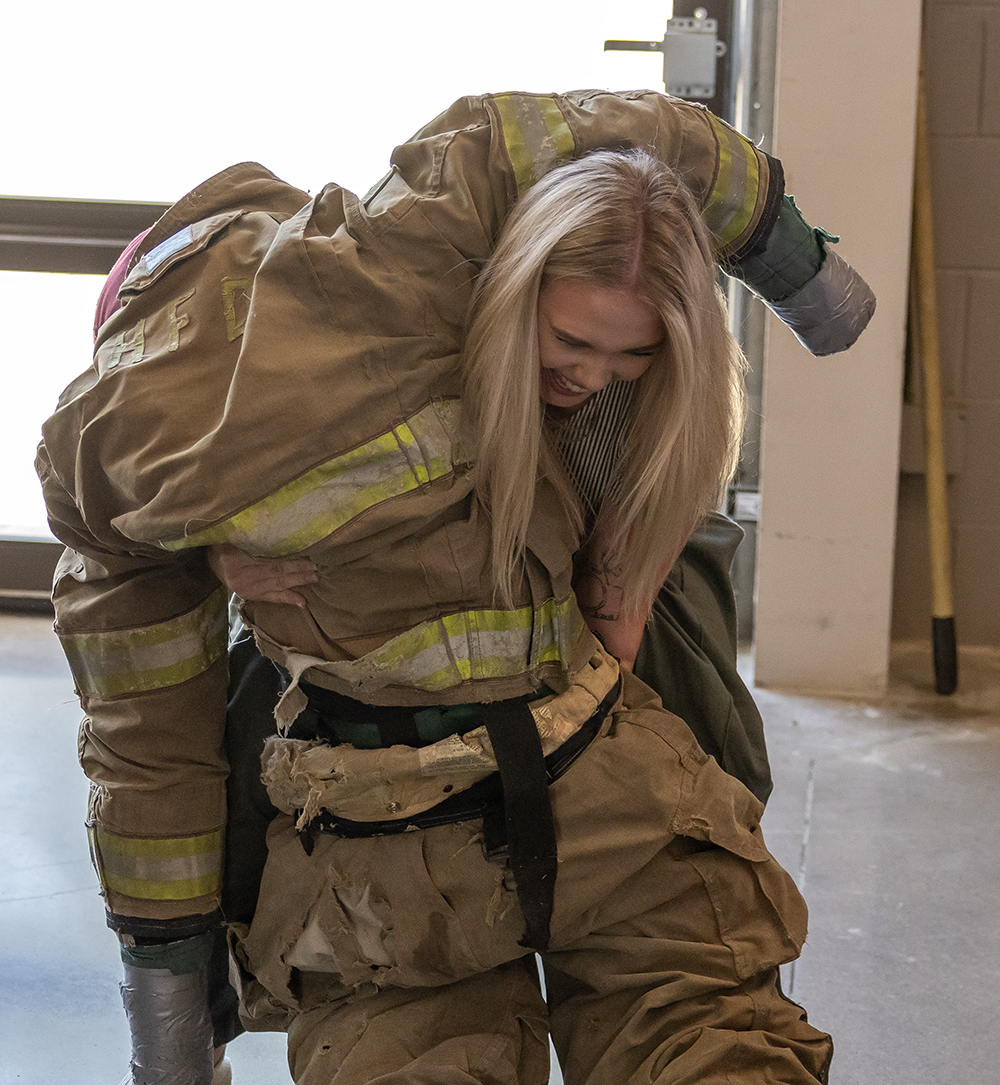
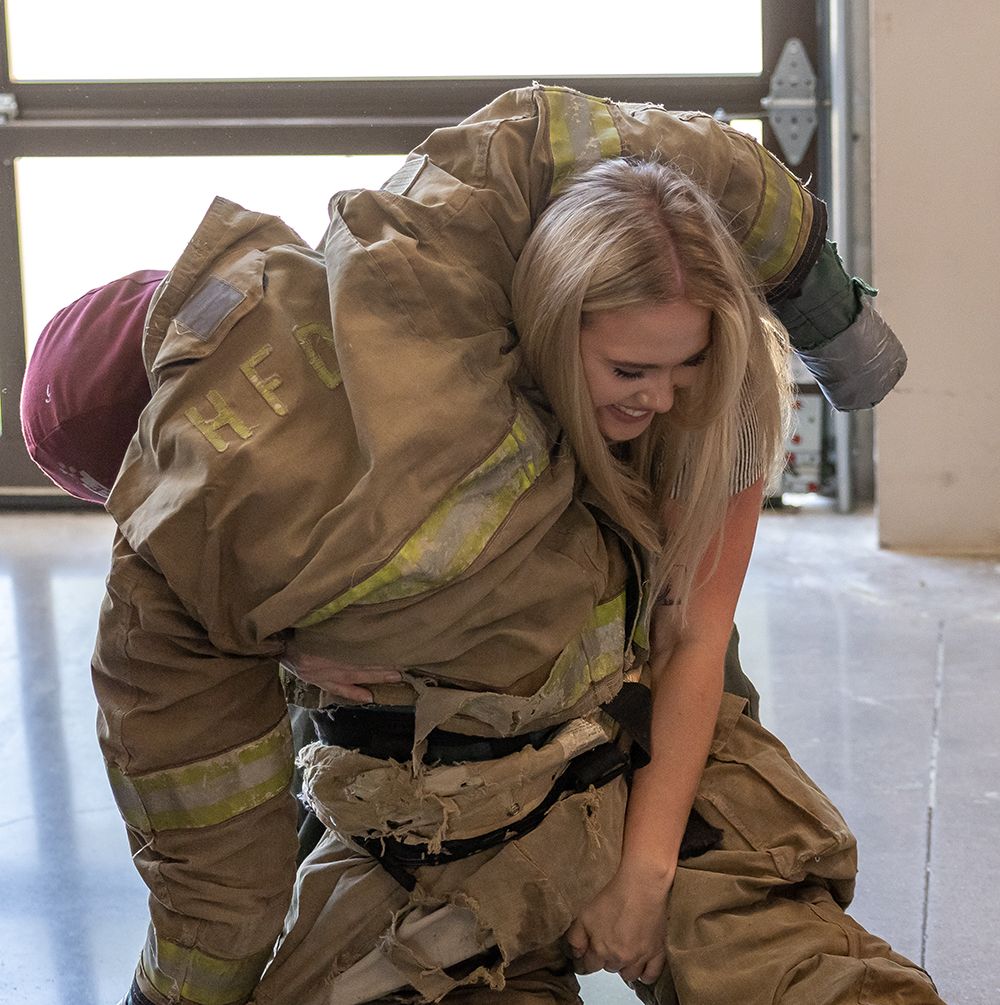
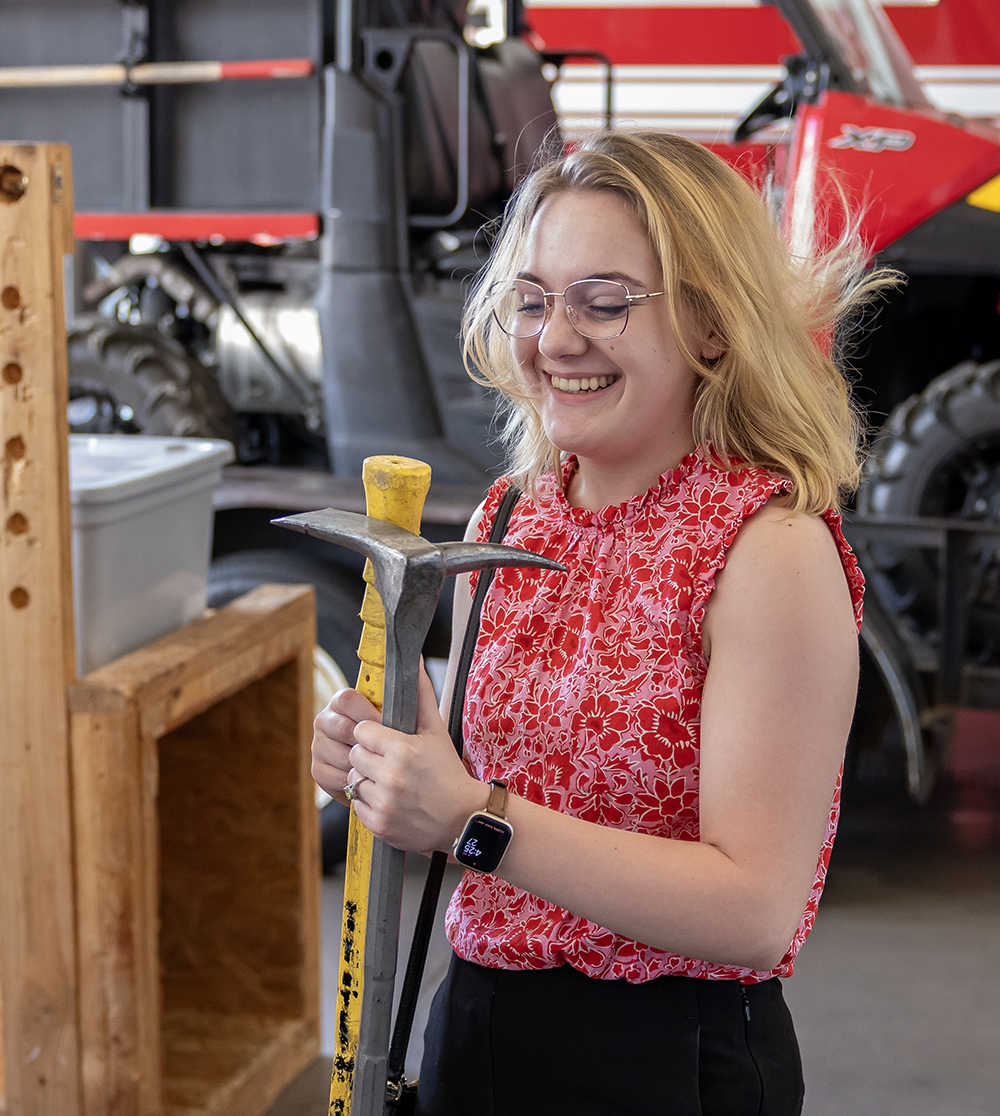
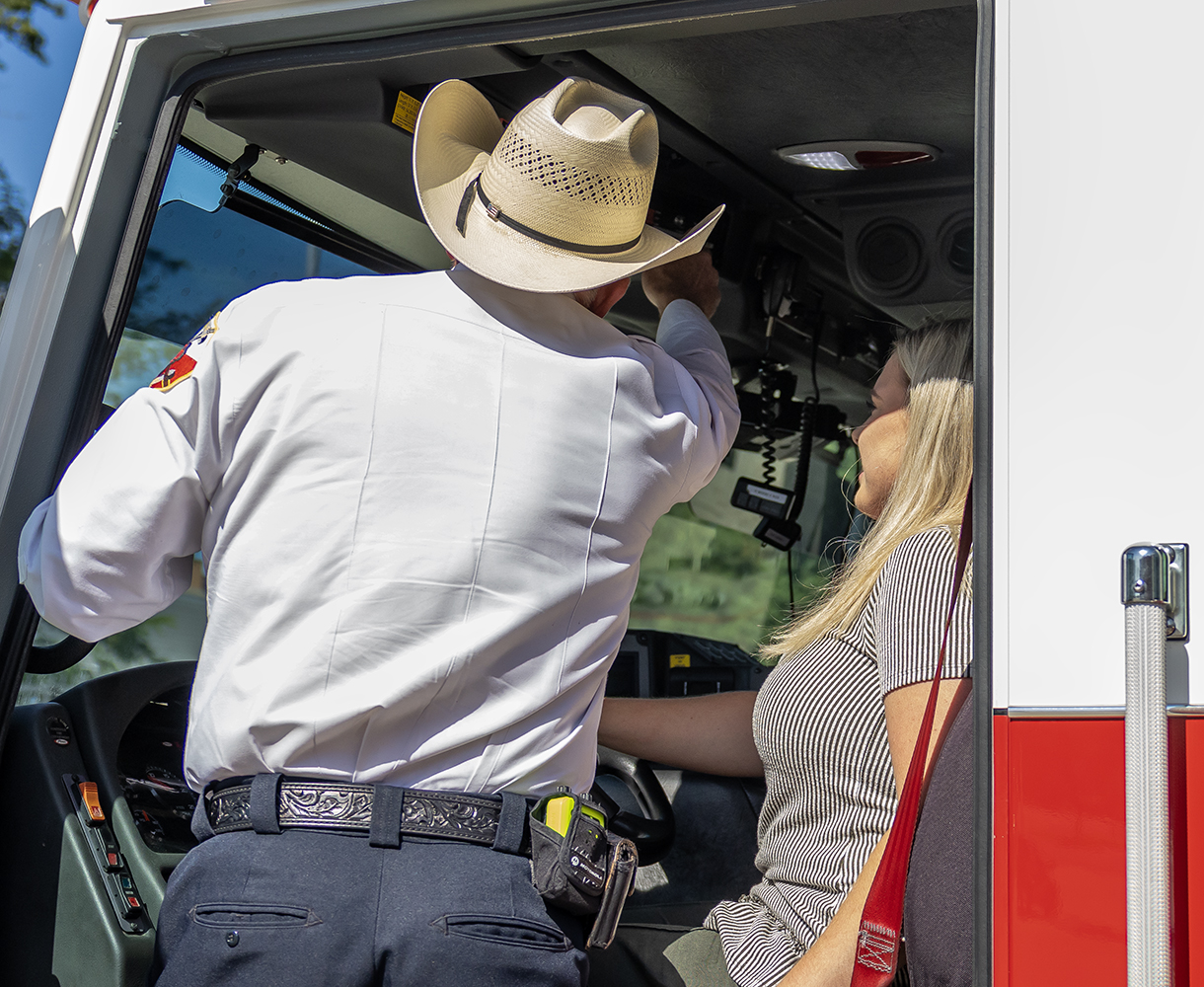
As the group toured the station, they visited the department’s watch room, where emergency calls and alarms are monitored around the clock, and learned about the important role volunteers continue to play alongside career firefighters. They also had an opportunity to get some hands-on experiences with the equipment, including the firetruck.
We learned that Allie shouldn’t be trusted with sharp objects, and that Brittlyn might not be cut out to be a firefighter.
Chief Mathis emphasized that modern fire departments handle far more than structure fires. The Huntsville Fire Department maintains specialized capabilities such as a dive team and rope rescue team, allowing firefighters to respond to water emergencies, technical rescues, and other situations requiring specialized training. Of course, not every call is dramatic—sometimes firefighters are even called upon to rescue stranded cats.
Perhaps the most memorable portion of the visit came as Chief Mathis recounted some of Huntsville’s most significant fires. He described the devastating 1954 First Baptist Church fire and the 1982 blaze that destroyed Old Main at Sam Houston State University, illustrating how these historic events shaped both the department and the community it serves.
It was a fascinating afternoon, one that provided an education on how various aspects of the city were interconnected, the training that goes into emergency services, and the many roles played by the fire department–all of which enriched our internships and our education.
Many thanks to Chief Greg Mathis for the tour, the time, the history, and the education.
The LEAP Center follows a rigorous process in planning trips, ensuring maximum learning, fun, and reward. The trips are scheduled such that the conferences take priority, while supplementary activities enhance learning, knowledge of others’ cultures, and the expansion of professional networks–with fun sprinkled in.
When things go well, the students take ownership of this process, and this was one of the many happy outcomes of this trip. After a year-long moratorium on LEAP travel, the students prepared well for the trip (taking a photography course and watching a documentary on one of the conference’s keynote speakers), maintained a good attitude despite long days and little sleep, and stayed up-to-date with the blogs and photo editing.
In light of the above and with a little reflection, they offered their favorites of the trip:
Conference Sessions:
This had the least consensus, probably because there was much to like and the students attended different sessions.
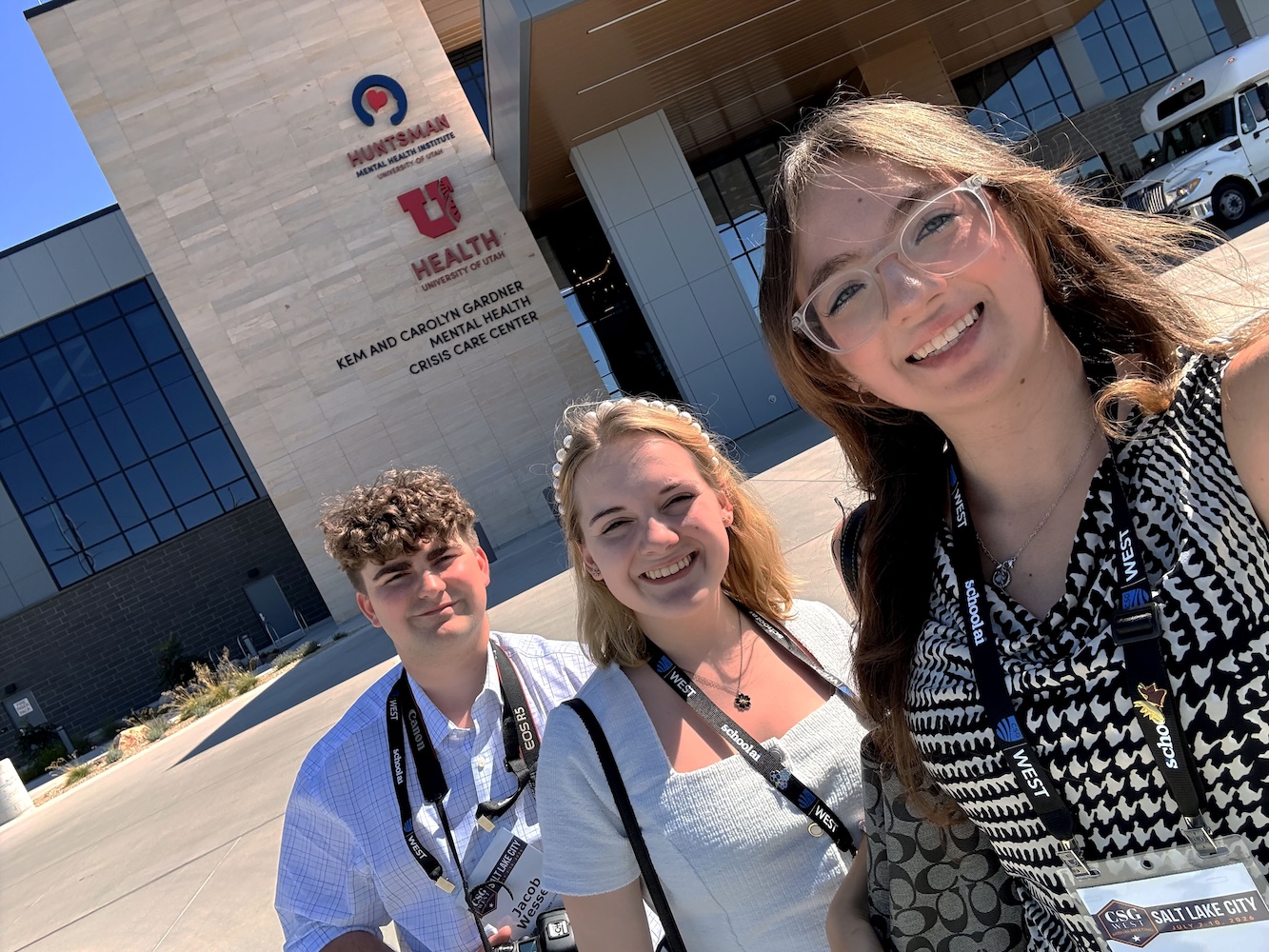
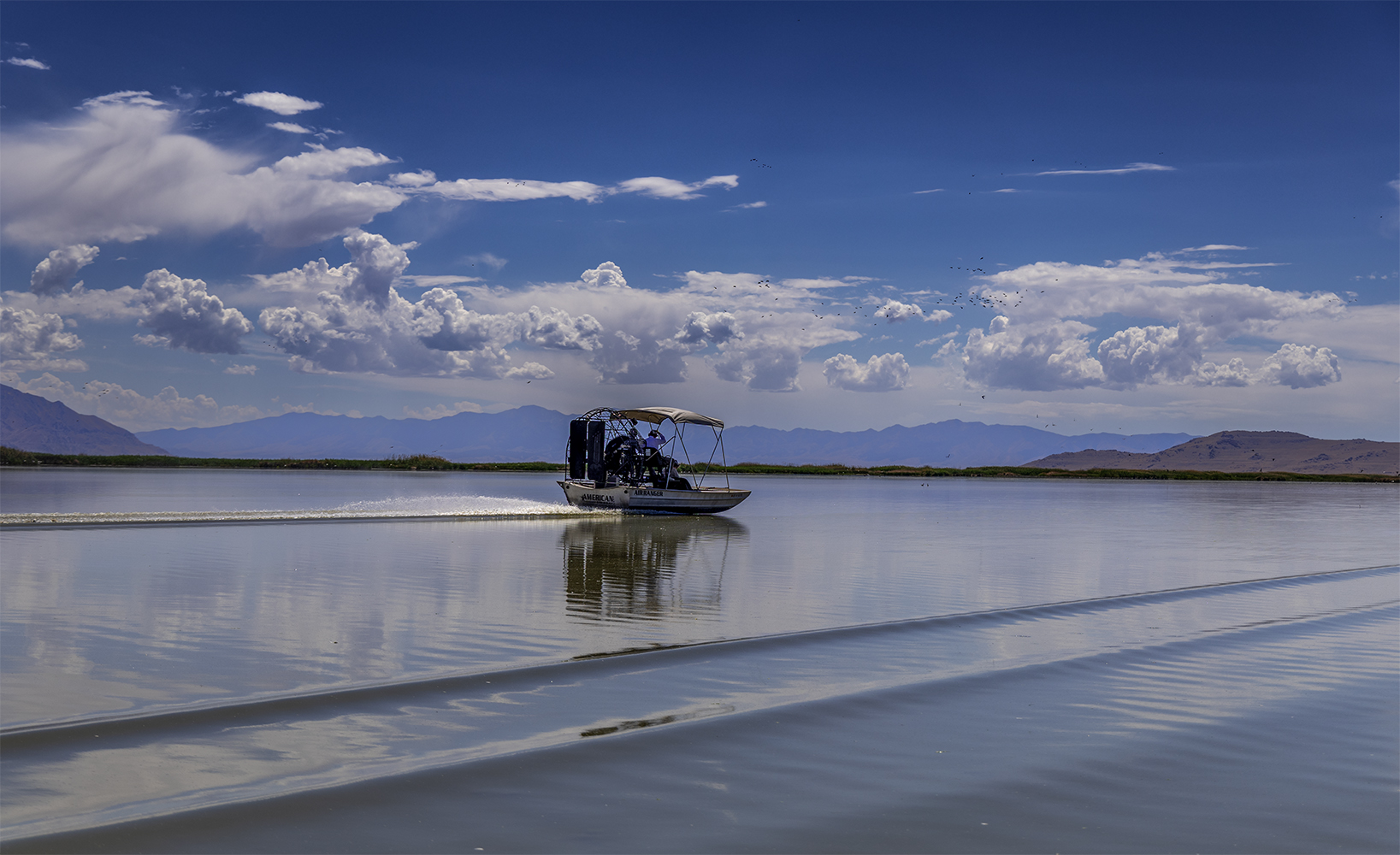
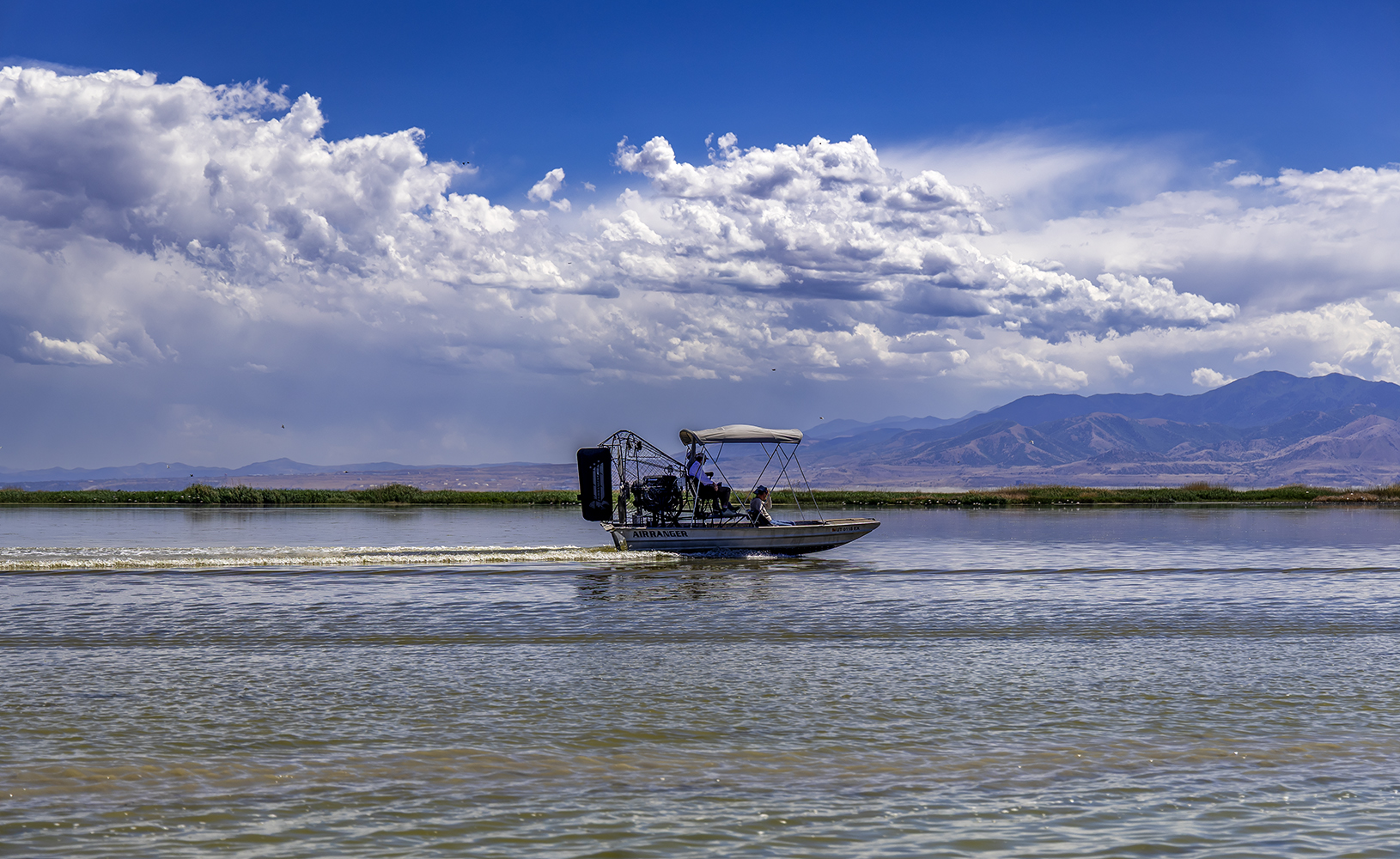
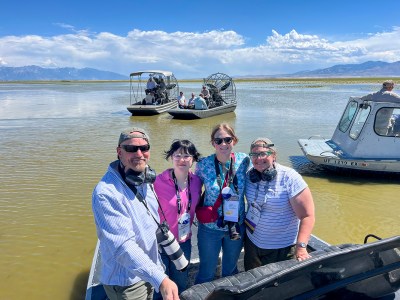
Probably the favorite was the “policy tour,” in which the students had a chance to deep-dive into a policy area–including a tour–led by experts. For Isis, Allie, and Jacob, this was the crisis center, in which the students learned of techniques to allow social workers to take over many of the processes involving low-level criminal conduct by people struggling with mental illness. For Robin and Olivia, the tour explored water issues in the West and one of the things Utah is doing to combat shortages, while also involving a wetlands tour on an airboat.
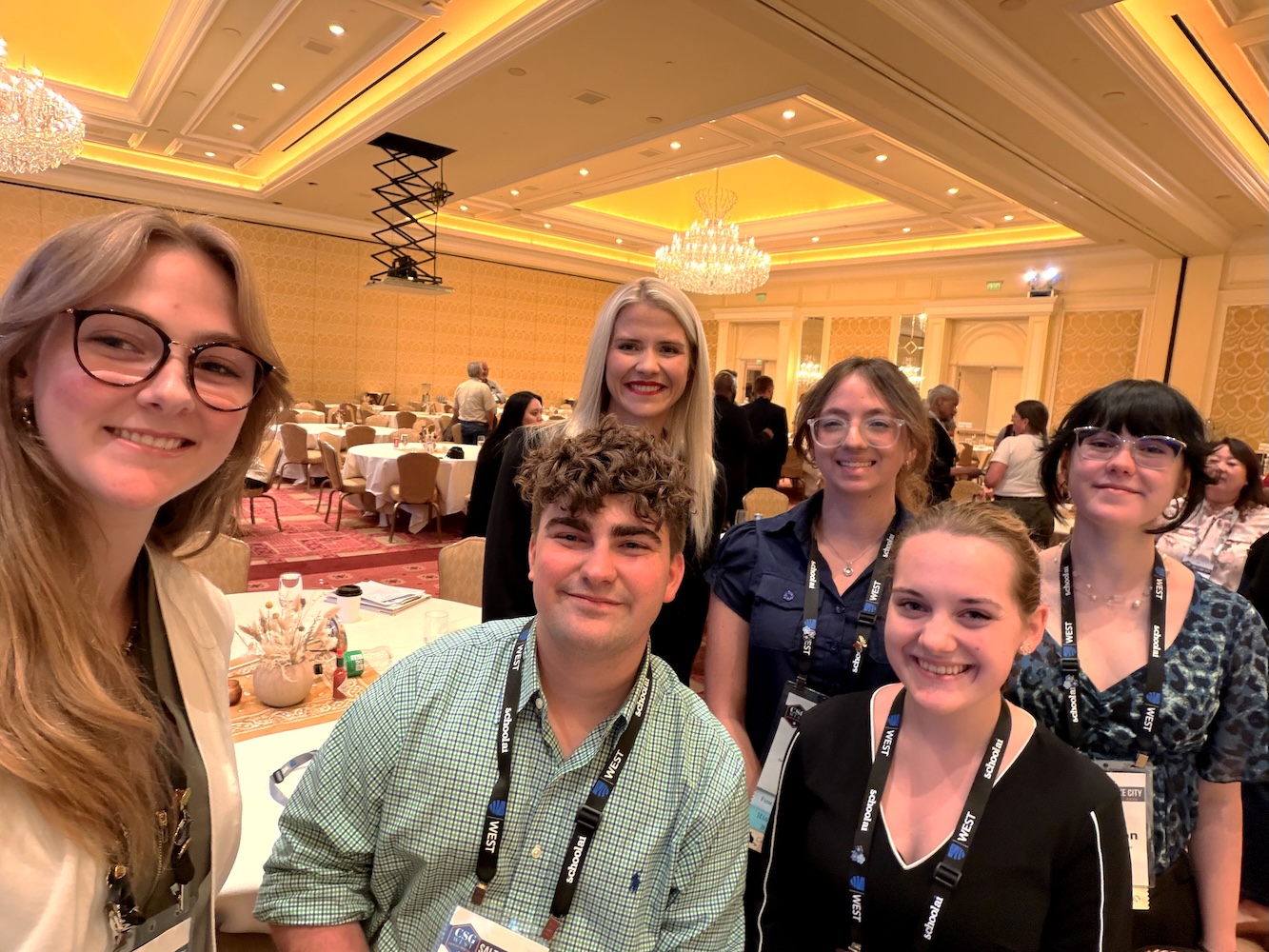
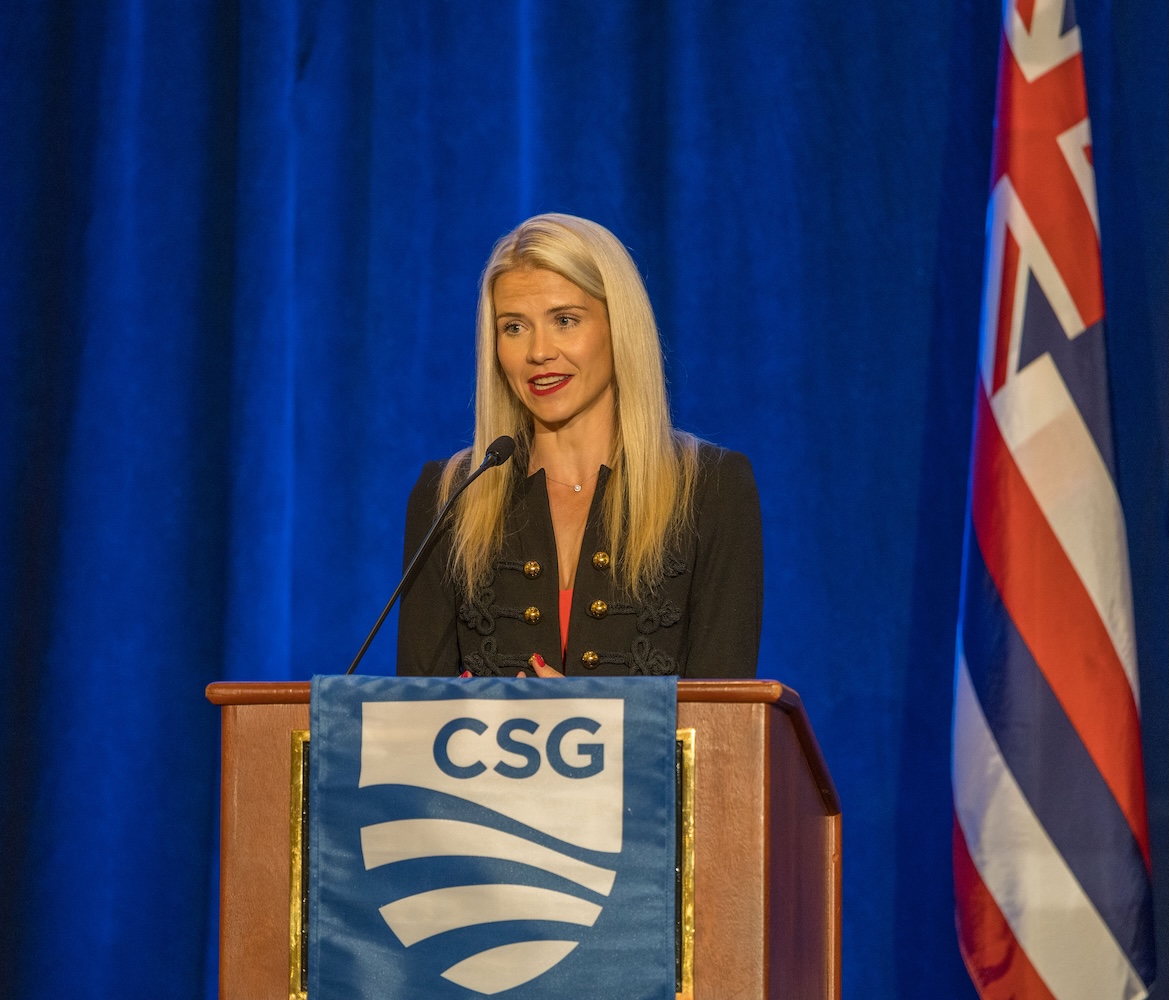
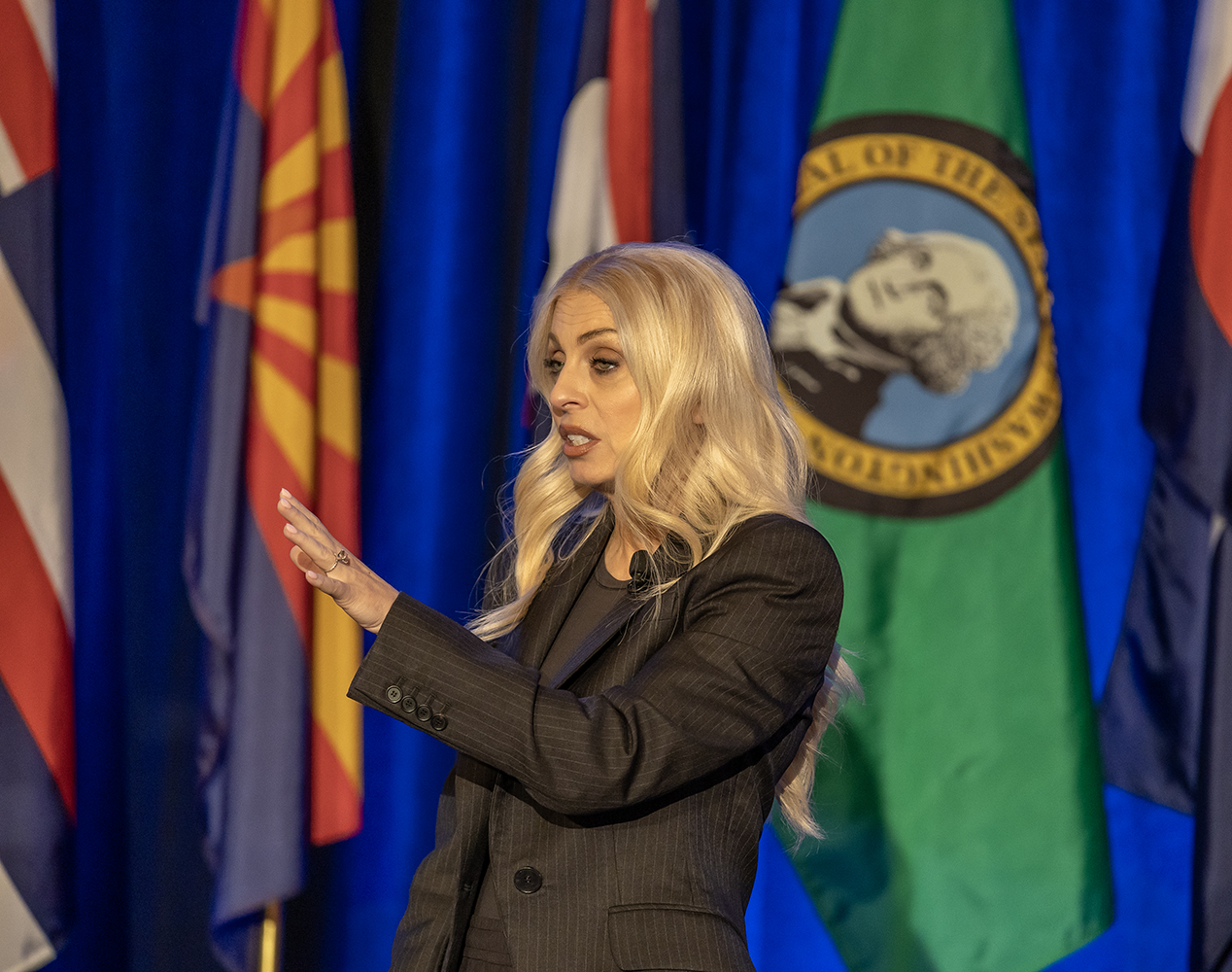
The students also enjoyed “Getting the Right Response,” which also involved crisis response by mental health and law-enforcement personnel. They also enjoyed meeting the keynote speakers, particularly Elizabeth Smart and Evy Poumpouras.
Restaurants:
Central by Saffron Valley was on all five students’ “best-of” lists, and it was the top choice for four of the students.
The food was, in every way, excellent, and amid all the appetizers and entrees, there was not a bad (or even so-so) choice.
Caputo’s was a strong second. appearing on four of the students’ choices. Their sandwiches were impressive–all tasty–and their shop selection was excellent. We wish we could have stayed longer and tried their food classes. Rounding out the top three was Plates and Palates, which had great service and sandwiches in Bountiful, UT.
Coffee:
For coffee, “Ten” ranked first. We had two visits there, and both times, the staff were pleasant, responsive, and helpful, and their coffee was excellent. Also top-notch was the Honeysuckle Coffee Co, which has great service, coffee, and pastries. King’s Peak was perhaps a distant third, while still recommendable. Their coffee is good, while their pastries and service are not up to “Ten’s” standards. On a trip of this nature, coffee shops are much sampled, and we went to the above shops on two occasions. In addition, we went to “The People’s Coffee,” which was adequate, and we also visited “Roots” and “Publik”, although we declined to try their coffee when the baristas indicated that it wasn’t fresh–and didn’t offer to make a fresh cup.
Non-Conference Activities
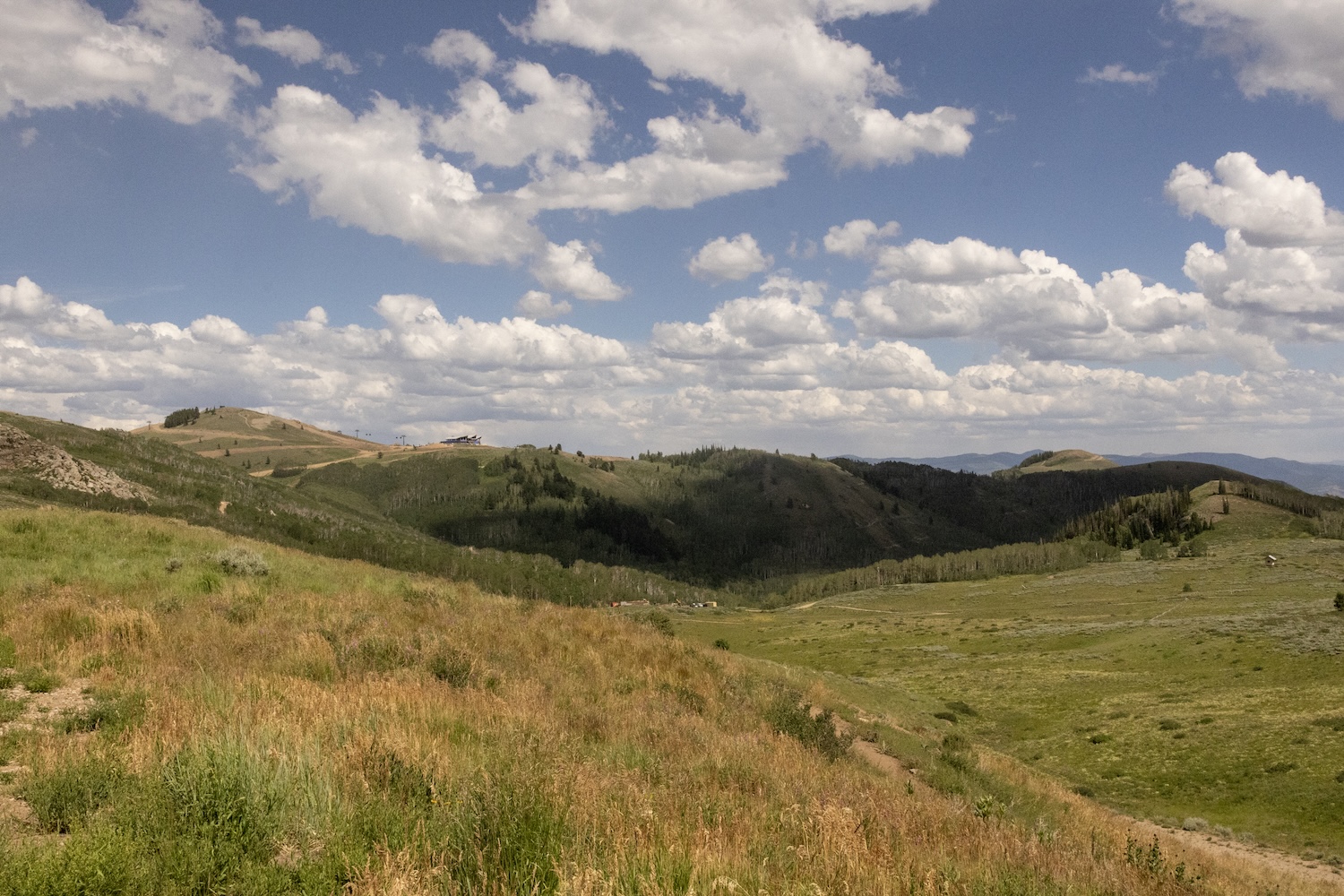
Beyond the conference, there was even less consensus on the most rewarding activities. Some thought Park City was the most interesting…
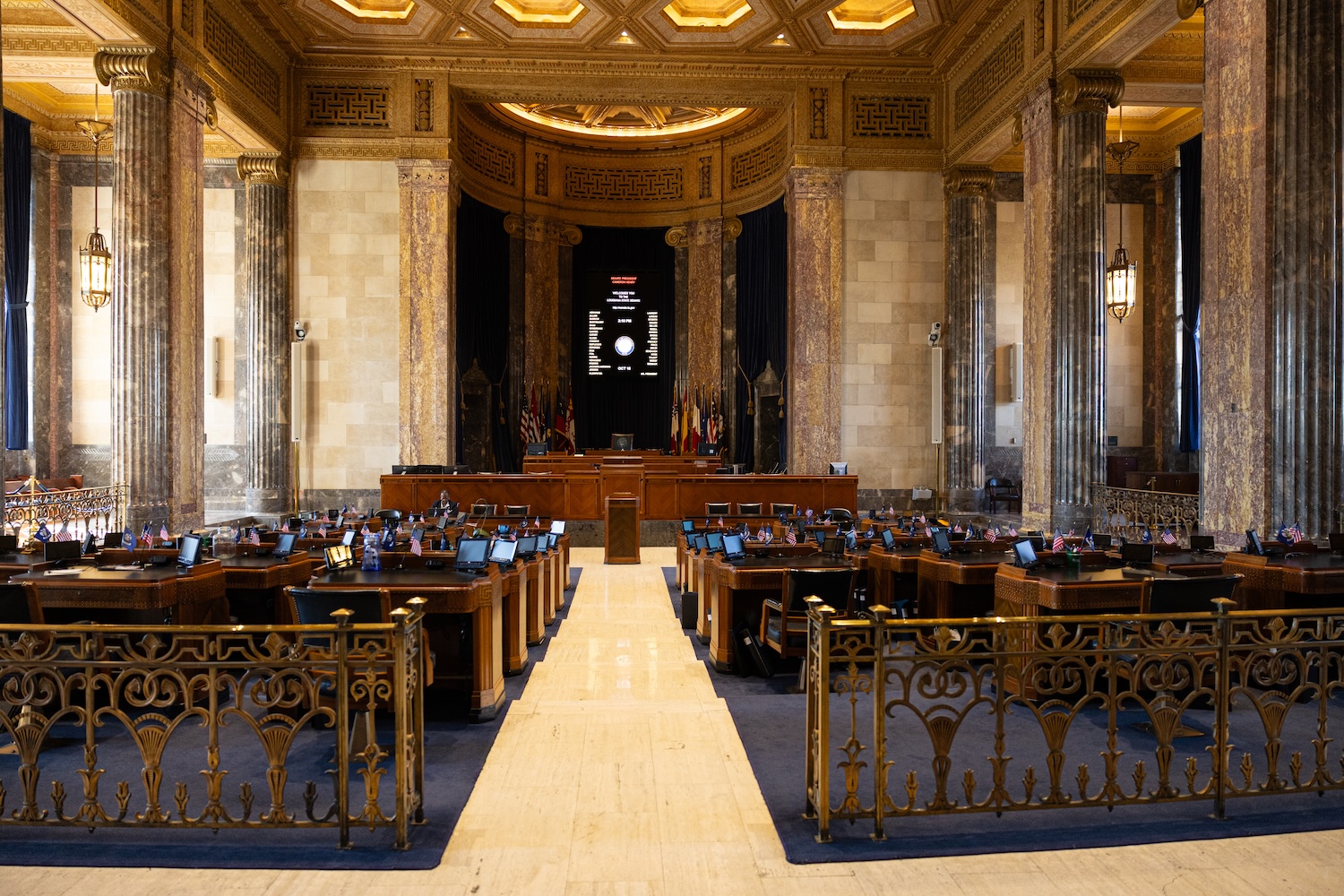
…the Capitol Tour had a lot of support, with a majority of the students believing that Utah’s Capitol was, overall, more polished, cohesive, and interesting than the Texas Capitol.
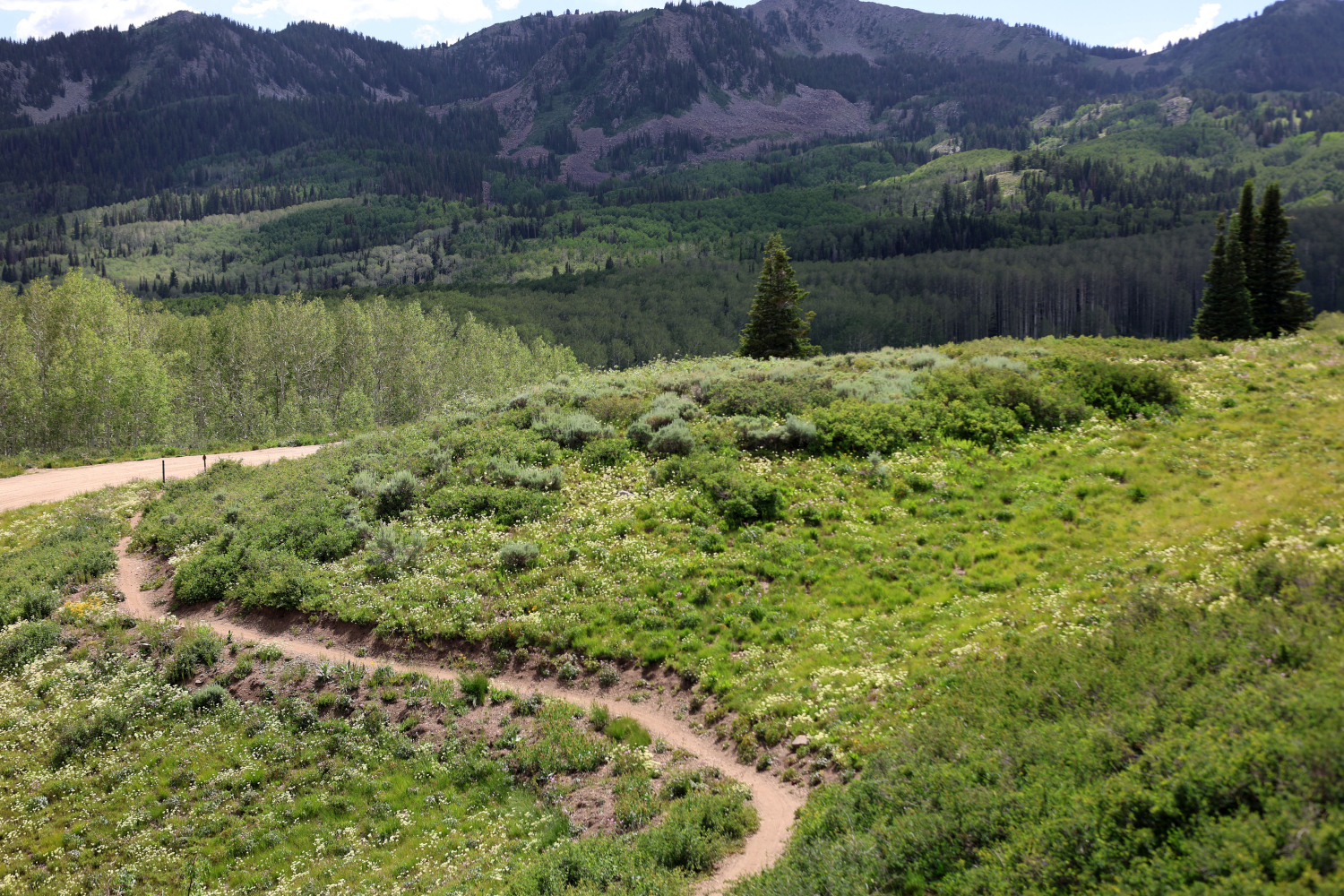
The students also enjoyed the trip through the Big Cottonwood Canyon Scenic Byway, where the temperatures were twenty-five degrees cooler than Salt Lake City, the scenery was beautiful, and there was an adventure around every corner.
Advisor’s Wrapup
This was the first trip where the students managed to organize their time and energy in such a way as to finish their blogs on time, edit all their photos, and post on social media daily. Olivia McCaughan did a great job facilitating the many tasks that go into making the trip work; Allie did a great job editing the blogs; Jacob and Allie took the lead on editing photos, but everyone edited some photos; and Robin and Isis proved versatile, editing photos, writing blogs, compiling lists, asking questions.
The result was a broad-based learning trip, with leadership lessons built in. The students explored other cities’ downtowns, city halls, and libraries; met numerous legislators and policy experts, promoting their leadership and potentially helping to prepare them for the Austin Internship Program; toured two Museums and one educational center; heard the Tabernacle Choir, one of the ten best choirs in the world; sat in on numerous policy sessions; took thousands of photos; saw numerous animal species for the first time; and managed to complete a 2.5 mile round-trip hike–with a 1,000 foot elevation gain–all in six days!
The students’ teamwork was impressive and effective, with student leadership helping to maintain morale, ensure logistical efficiency, and meet all deadlines, which, in turn, helped make this an excellent trip!
Written By: Isis Hollis, Robin Houghton, Allie Plunk, and Jacob Wessels
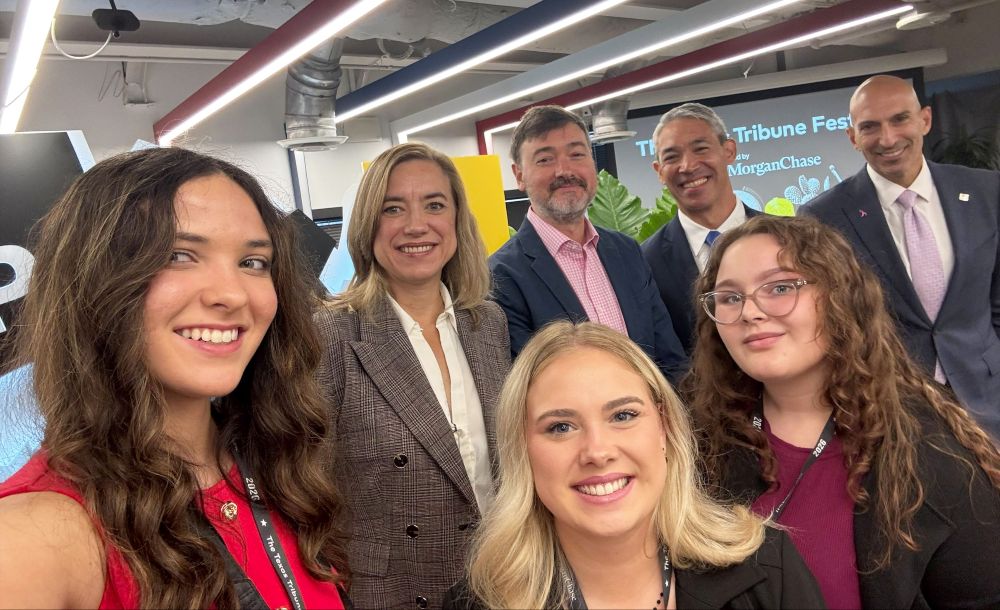
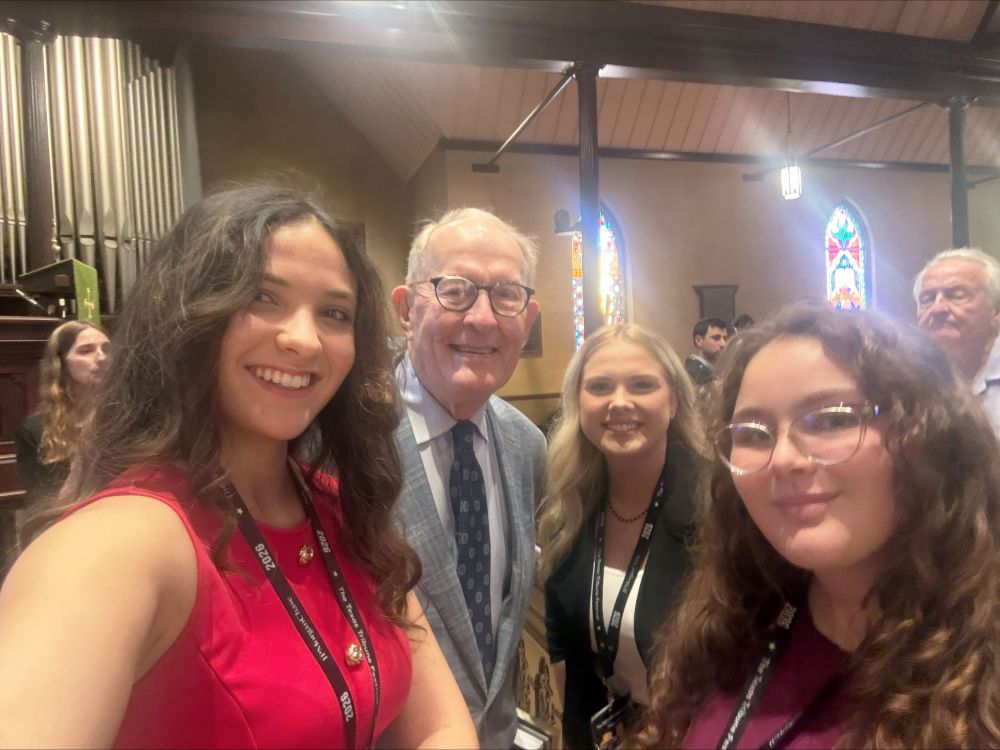
LEAP Ambassadors had a wonderful second day at the Council of State Governments Western Legislative Conference! We enjoyed learning about Quantum Computing, the West’s take on the upcoming Olympics, Policy tours, and a visit to the Church of Jesus Christ of Latter-Day Saints’ Salt Lake City Temple Visitors Center.
Quantum Computing
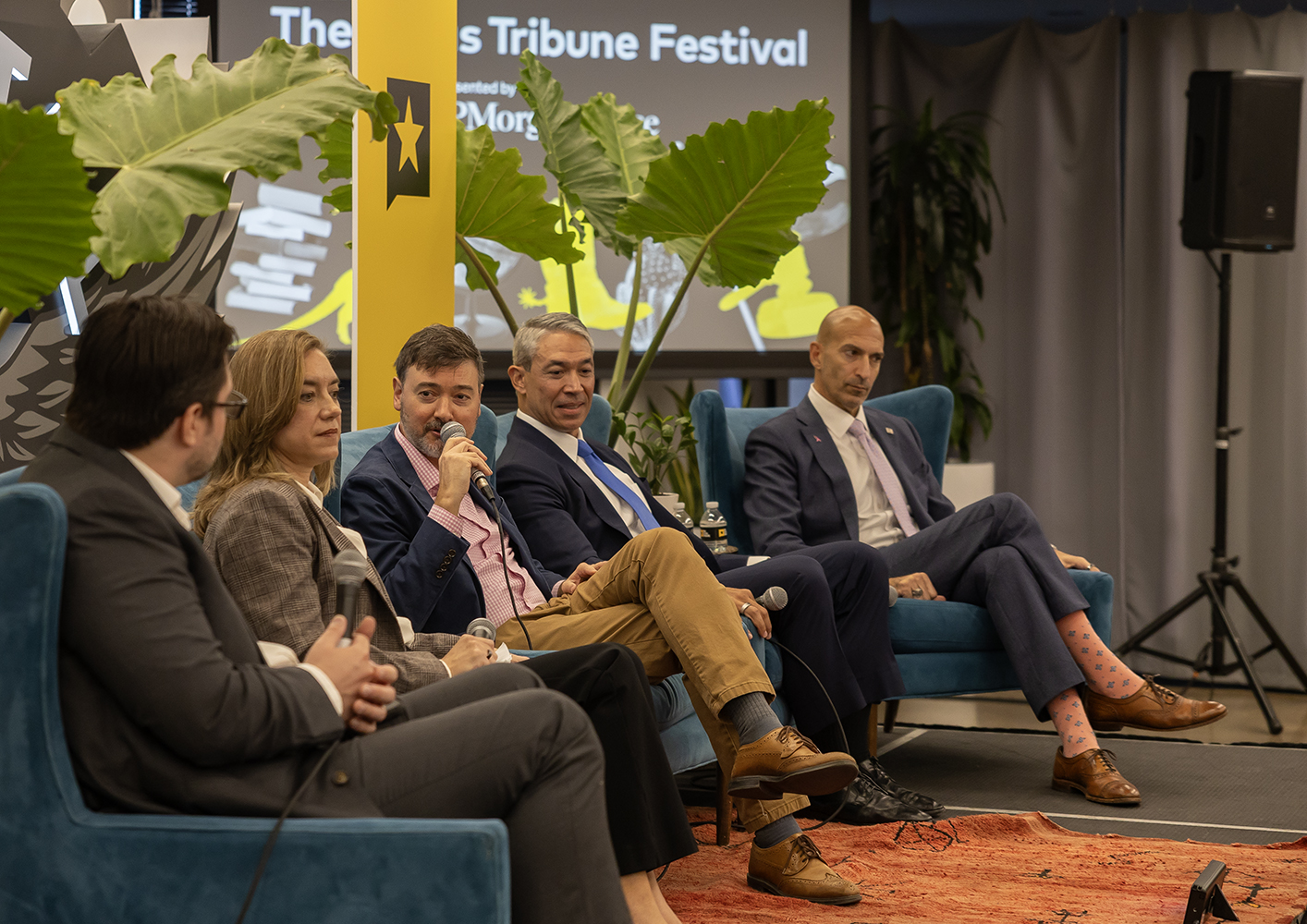
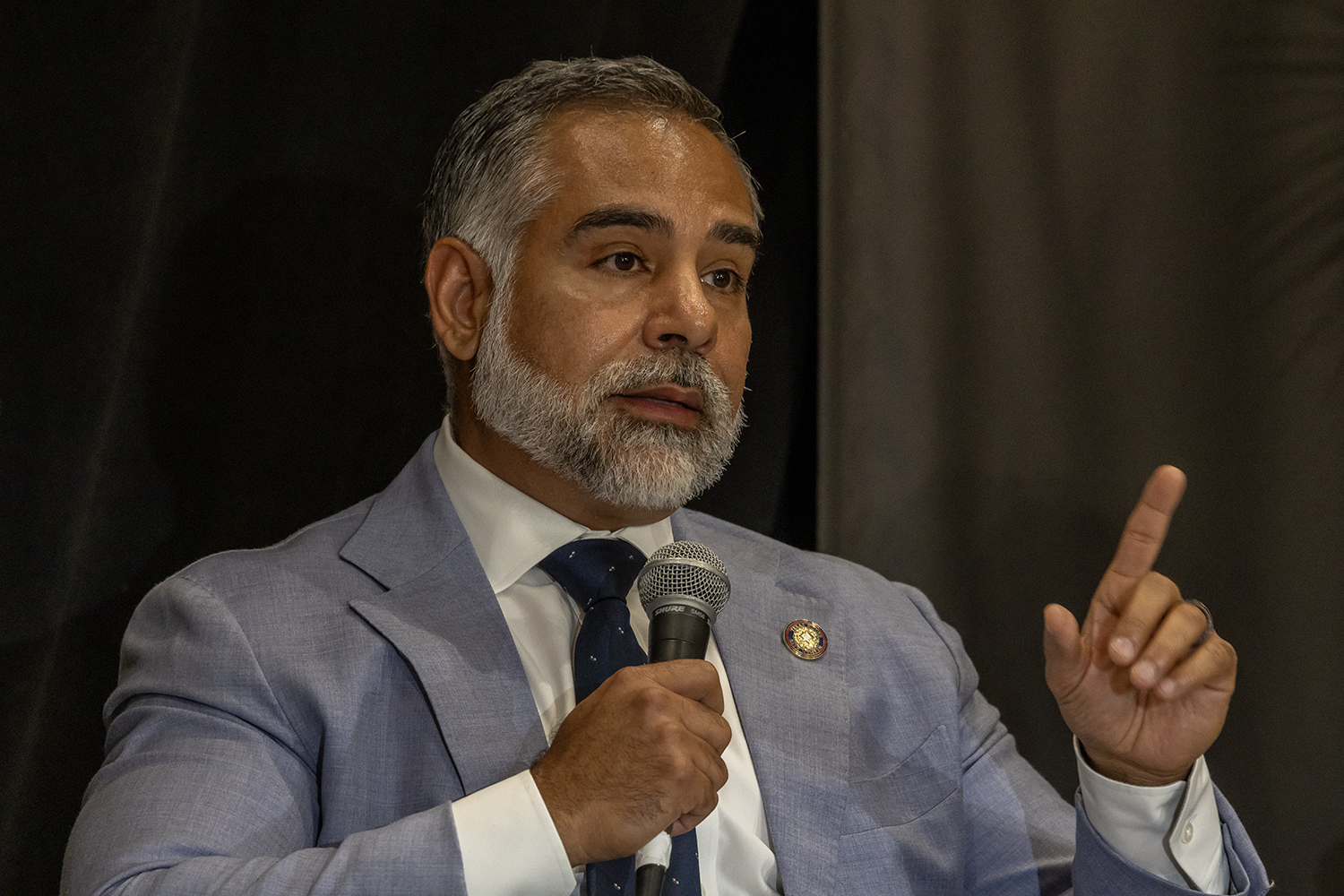
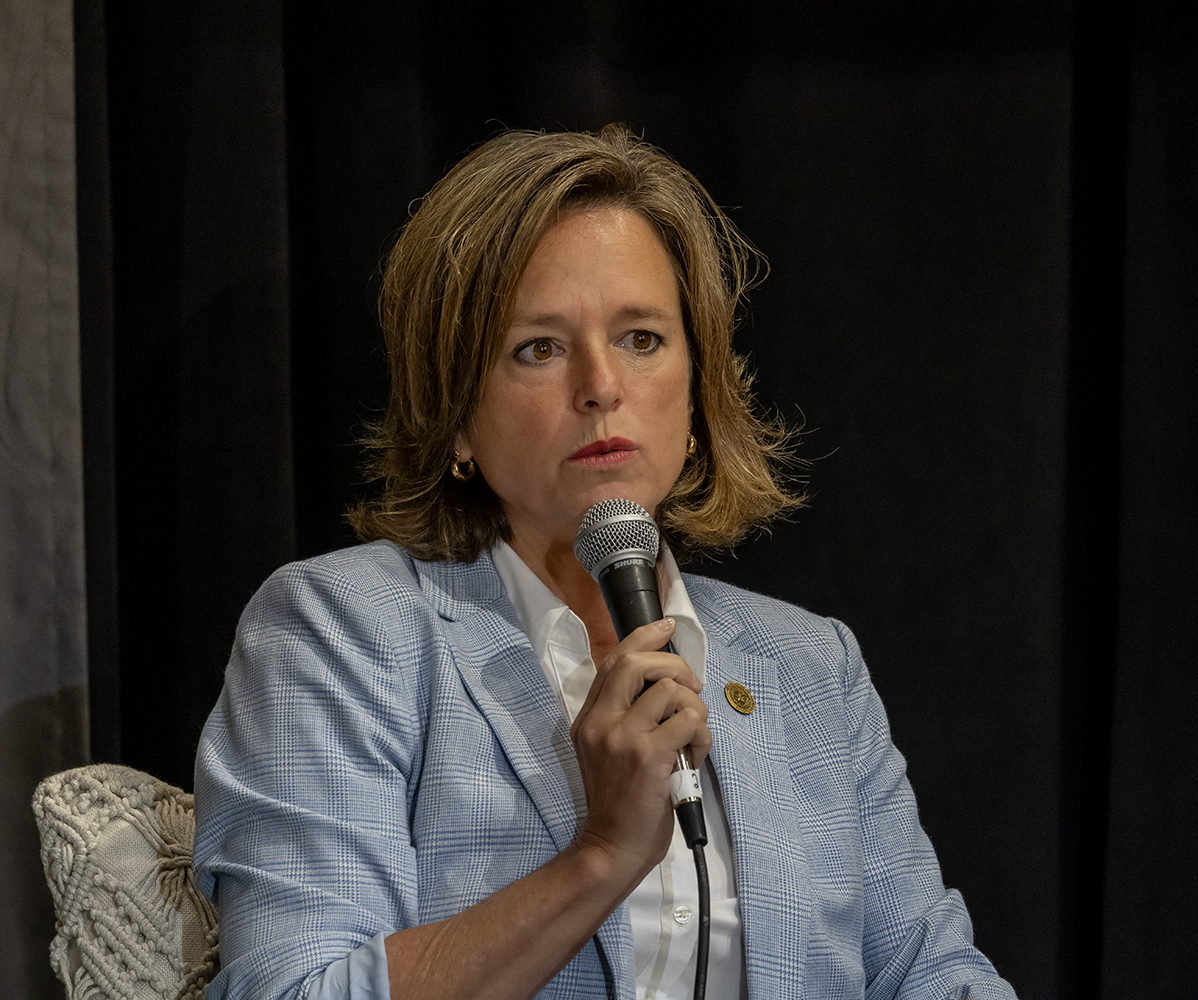
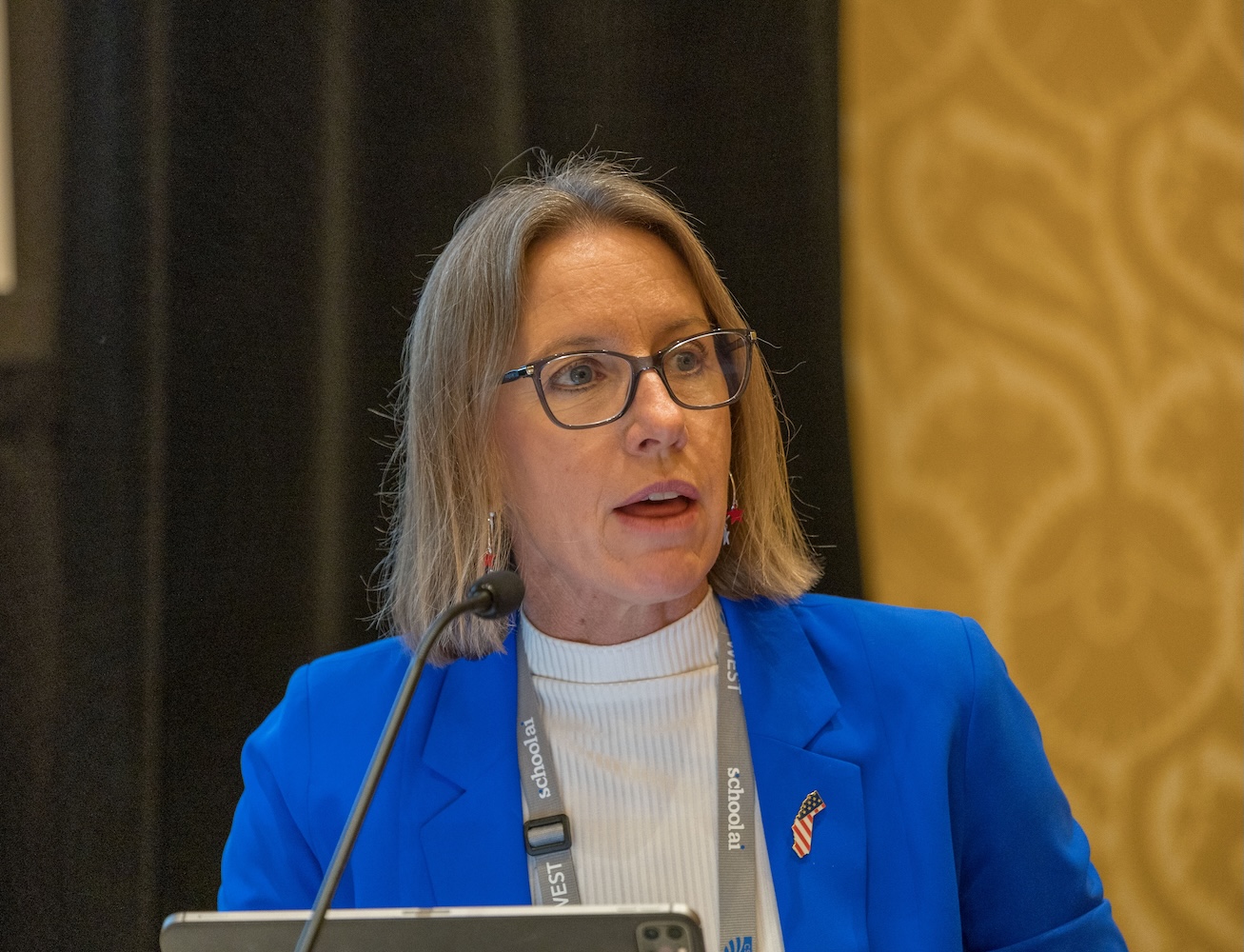
Though a daunting subject, we attended a conference session on the implications and impacts of Quantum Computing, hosted by Senator Catherine Blakespear (CA) and Representative Justin Wilmeth (AZ).
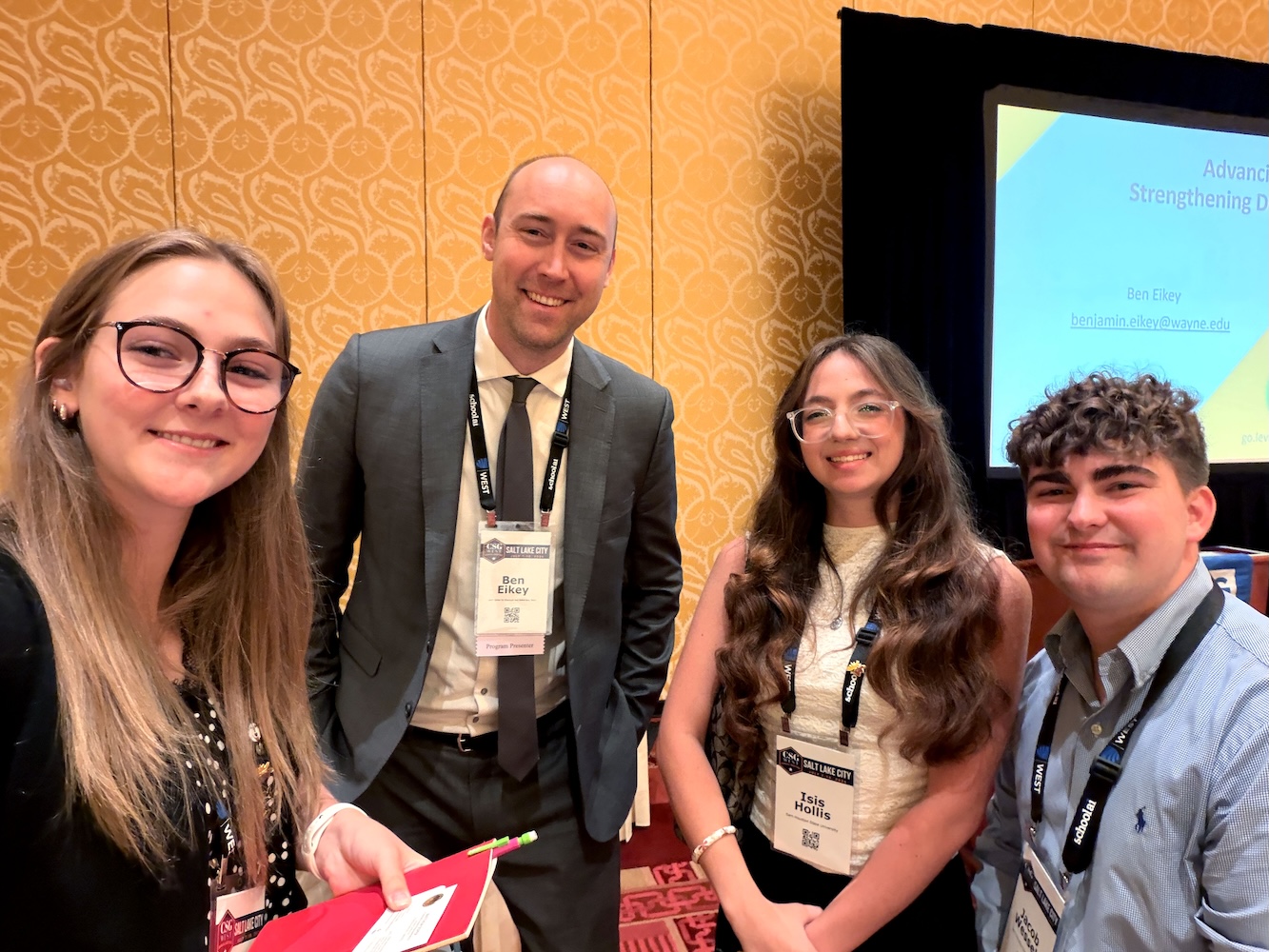
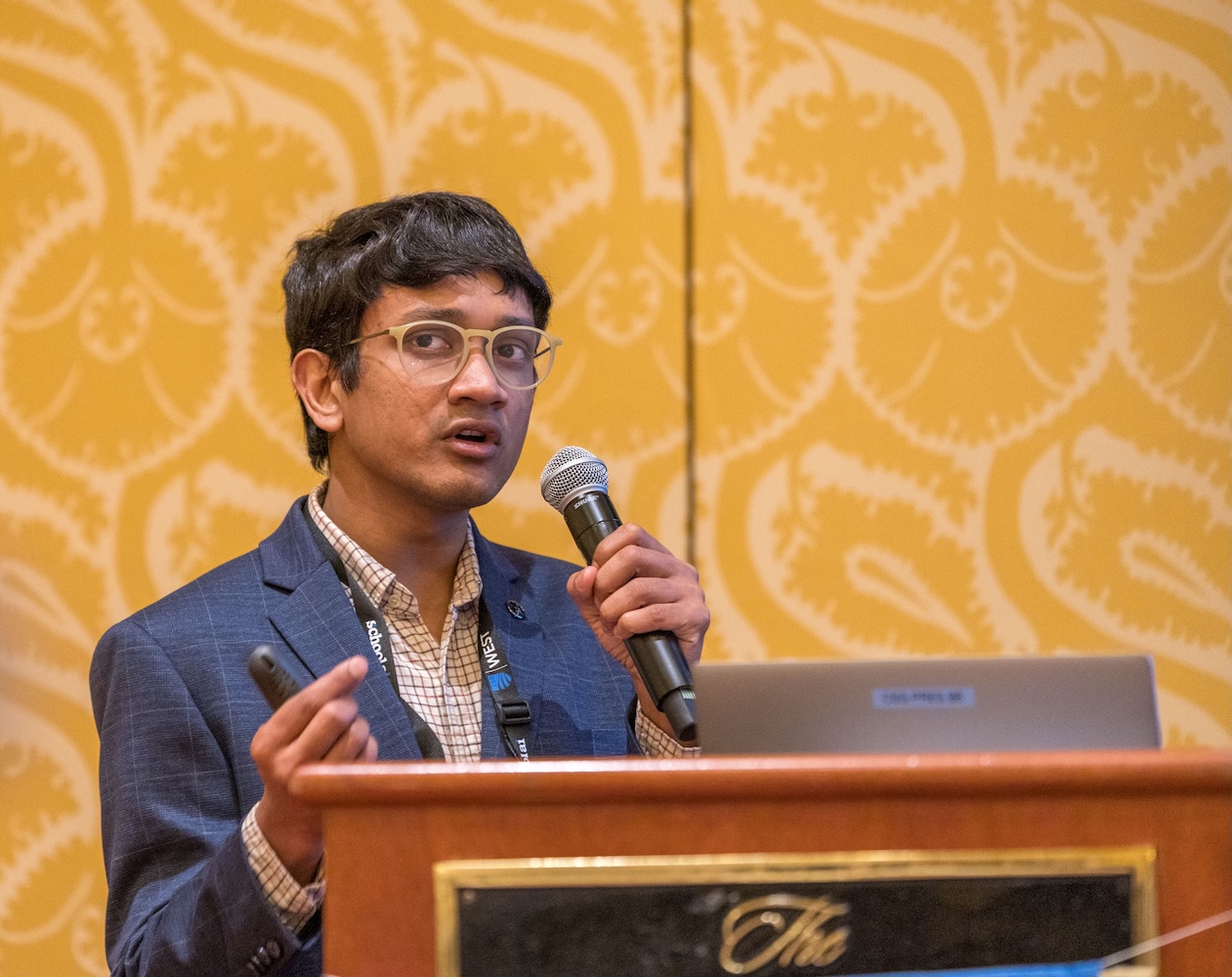
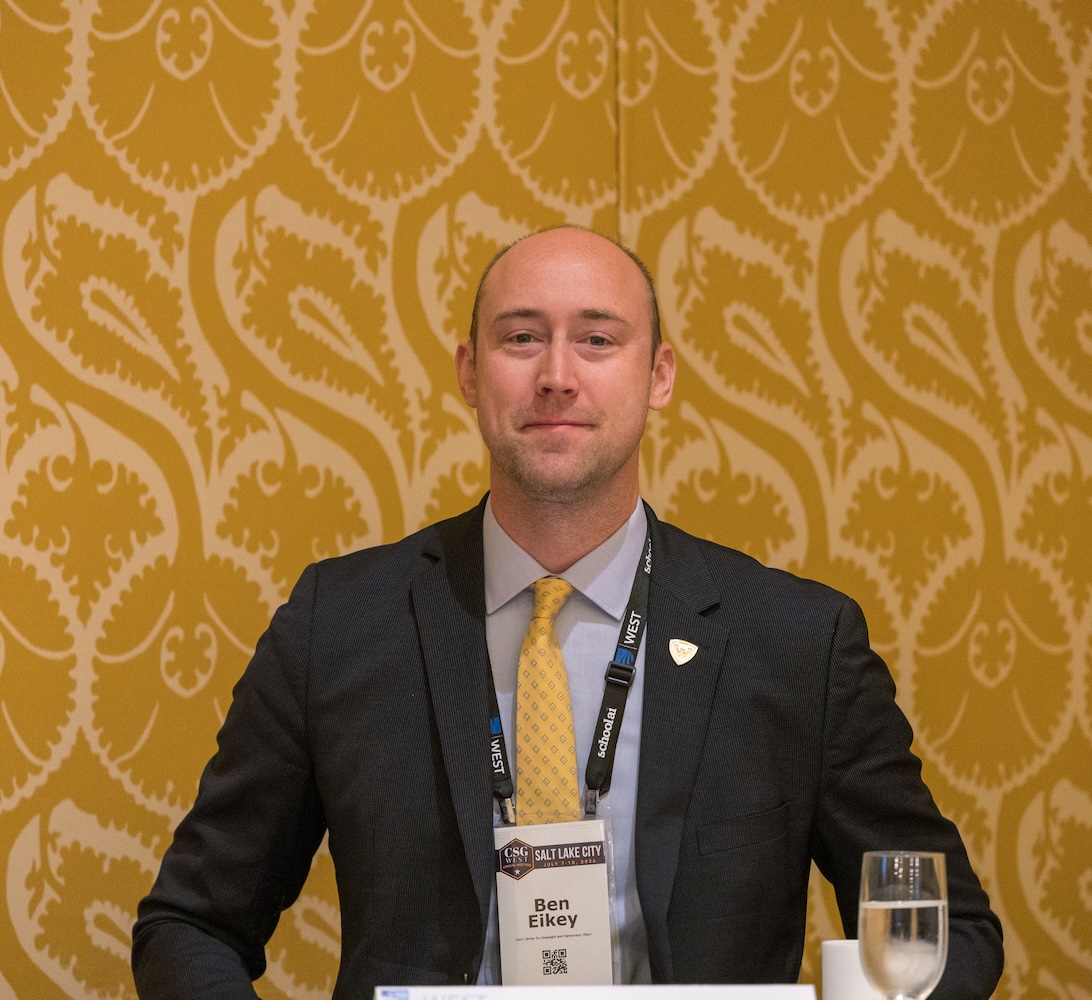
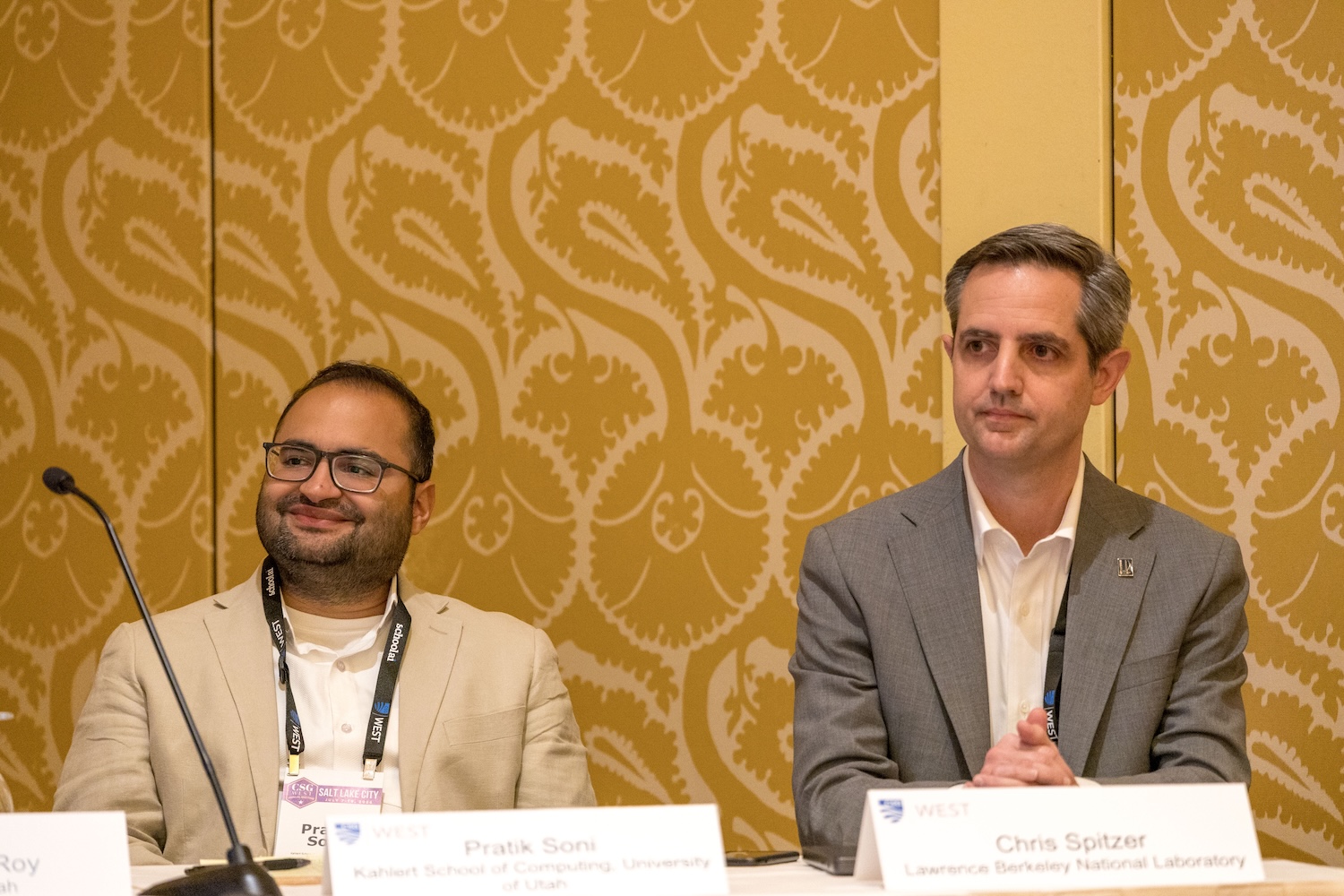
With a series of presentations by Rohan Basu Roy, Professor at the University of Utah; Pratik Soni, Professor at the University of Utah; Chris Spitzer, of Lawrence Berkeley Laboratory; and Ben Eikey, of the Levin Center, we were amazed to learn about the quickly approaching 2030 deadline for the official implementation of Quantum.
This astounding software will significantly cut down the production time for molecule simulators used in drug manufacturing, risk analysis for things like finance, and even enhanced AI. However, as Professor Soni stated, Quantum also comes with significant risk to national security and could potentially widen the employment gap. In order to resolve this conflict, speakers suggested training programs for teachers and students as young as elementary school to introduce Quantum so that we can raise a generation of young people properly equipped to handle the technology.
The tone of the session was one of preparation: Quantum is coming to the West, and it’s up to the legislators to build a safety net to keep things from going downhill. Quantum Computing is a somewhat new concept to the Ambassadors, though one that got us thinking about our own futures and how Quantum might affect our careers in law.
The Power of Sports
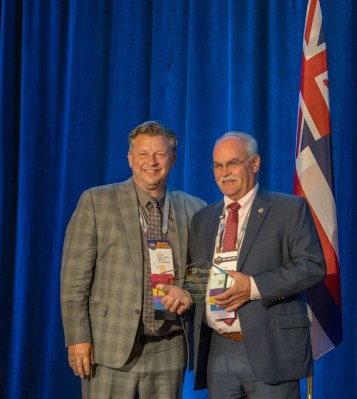
Following our crash course in Quantum, we were off to lunch! Before the keynote speech began, Chair Senator Todd Weiler (UT) presented the Bettye Fahrenkamp Award to Senator Ron Winters (UT) for his outstanding leadership.
After the awards, we learned about the value of sports from Kelsey Berg, who is currently leading government relations for the Utah 2034 Organizing Committee for the Olympic and Paralympic Winter Games…
…and Chris Mazdzer, Olympian and Paralympic activist, and moderator Senator Todd Wieler (UT).
Following the incredible success of the 2002 Winter Olympics hosted in Utah– one of the only Olympic games in which the host country made a profit– the state is thrilled to host the 2034 Winter Games.
However, the benefits of Olympic sports are not only financial. The speakers testified to the incredible cultural unification that happens when people from across the globe unite in the name of sports, citing the overwhelmingly positive reaction from visitors to the World Cup.
Even as someone who has never been particularly athletic, I found this connection inspiring, and I look forward to being a part of the host country for another worldwide sporting event.
Huntsman Crisis Center
The LEAP Ambassadors had the opportunity to attend post-lunch policy tours to witness the effects of legislation in action.
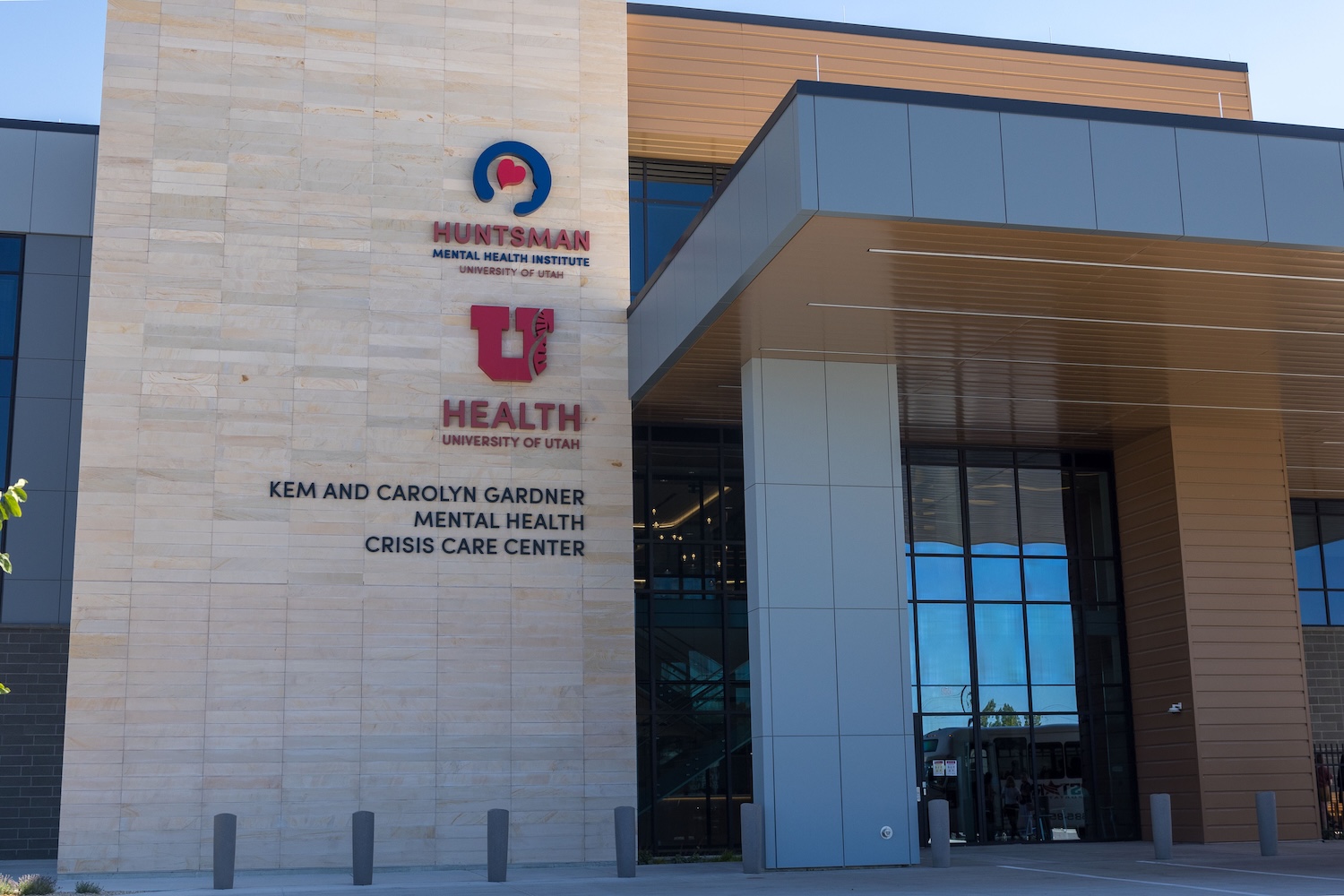
Isis, Allie, and Jacob attended a tour of the Huntsman Mental Health Institute and Crisis Center of Utah. The institute is leading the way for many significant improvements in behavioral health by focusing on creating a welcoming environment for its patients through a variety of methods, including referring to those whom they treat not as patients, but as guests. The architecture of the building helps achieve this as well by being intentional with every aspect, all the way down to the lighting, which is timed to the body’s circadian rhythm!
Representative Steve Eliason and Operations Manager Kevin Curtis shared how they have made an impact through collaborating with local police departments and hospitals to keep those facing mental challenges out of prisons and instead getting the care they need. Their work has helped many people with rehabilitation after facing a crisis while creating a more accepting community for those who may have mental problems. The session informed us on the resources available for nearly every demographic to seek care, along with ways legislators can help push for destigmatizing mental health treatment.
The tour created a lot to think about for the Ambassadors, but it brought along with it a newfound interest in psychology and the treatment of the mentally ill.
The Great Salt Lake
Robin, Olivia, and Professor Yawn chose to attend the policy tour on Water and the Future of the West. On the bus ride there, we learned about water usage in Utah. Utah Water Ways, led by Executive Director Tage Flint, is behind a campaign called “Slow the Flow.”
Their organization is unique: it is set up as a non-profit, but it is funded in part by the Utah Legislature and in part by community/corporate partners, with a goal of reducing per capita water consumption by almost a third in the next twenty-five years.
Part of this goal is to save the Great Salt Lake.
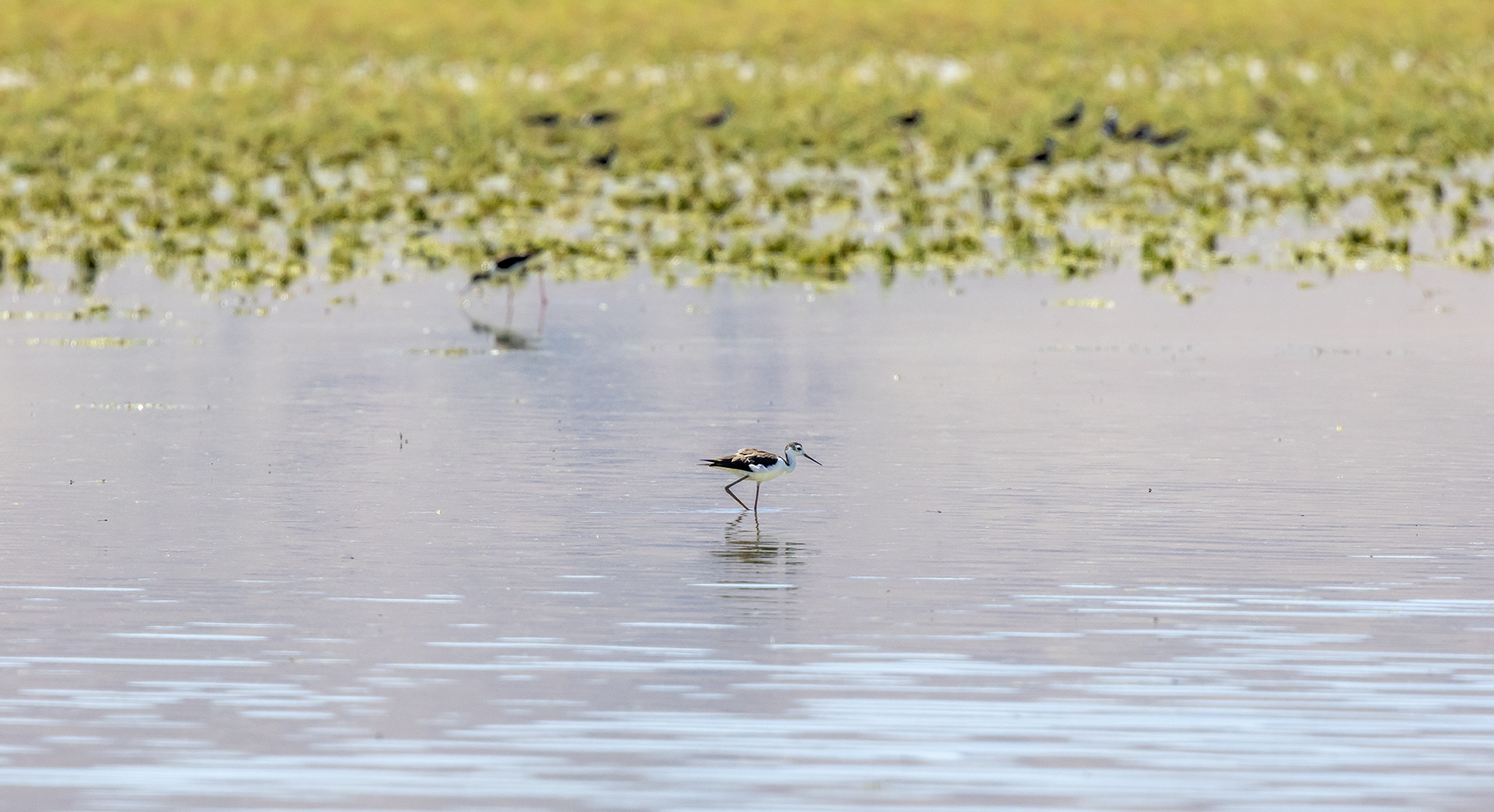
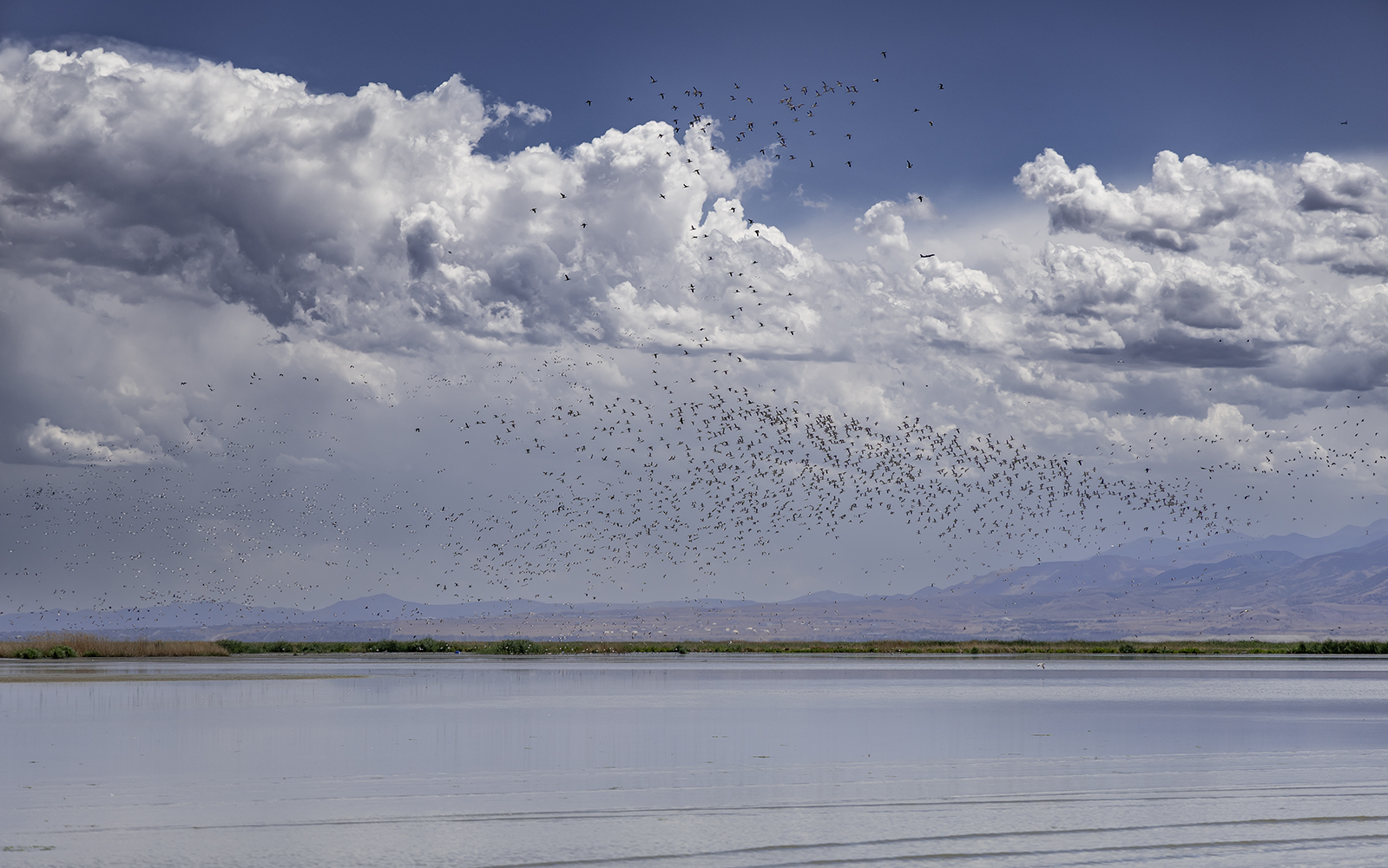
The Lake has been subsiding in the past several decades, a particularly trouble phenomenon because it offers a unique ecosystem, providing a home for hundreds of thousands of migratory birds.
…we spent a wonderful couple of hours exploring the Utah wetlands, seeing birds, insects, and other wildlife critical to the wetland ecosystem.
Seeing the wetlands in person reminded all of us of the importance of water conservation, especially in Utah, the second-driest state in the country.
The Church of Jesus Christ of Latter-day Saints’ Salt Lake City Temple
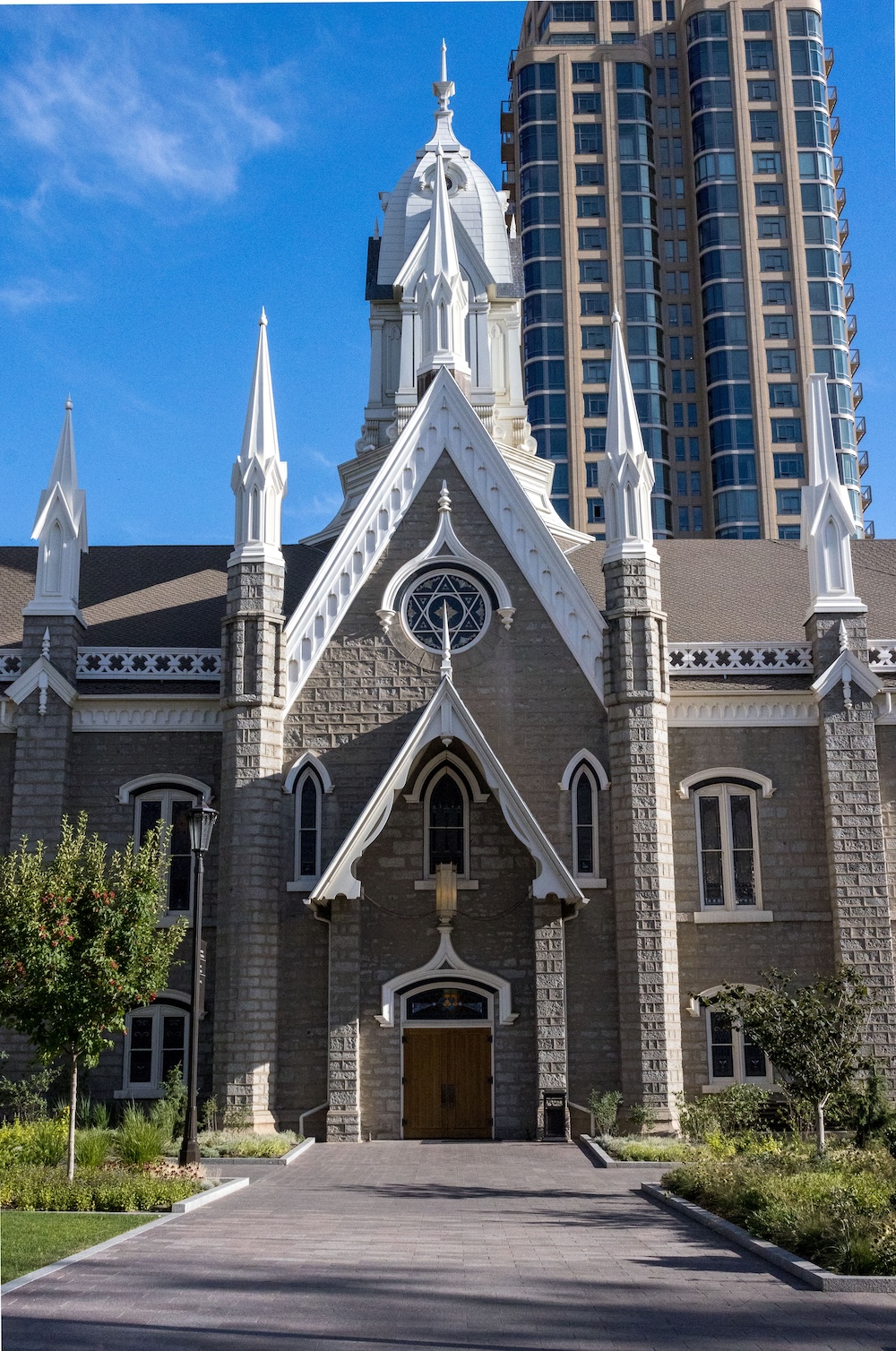
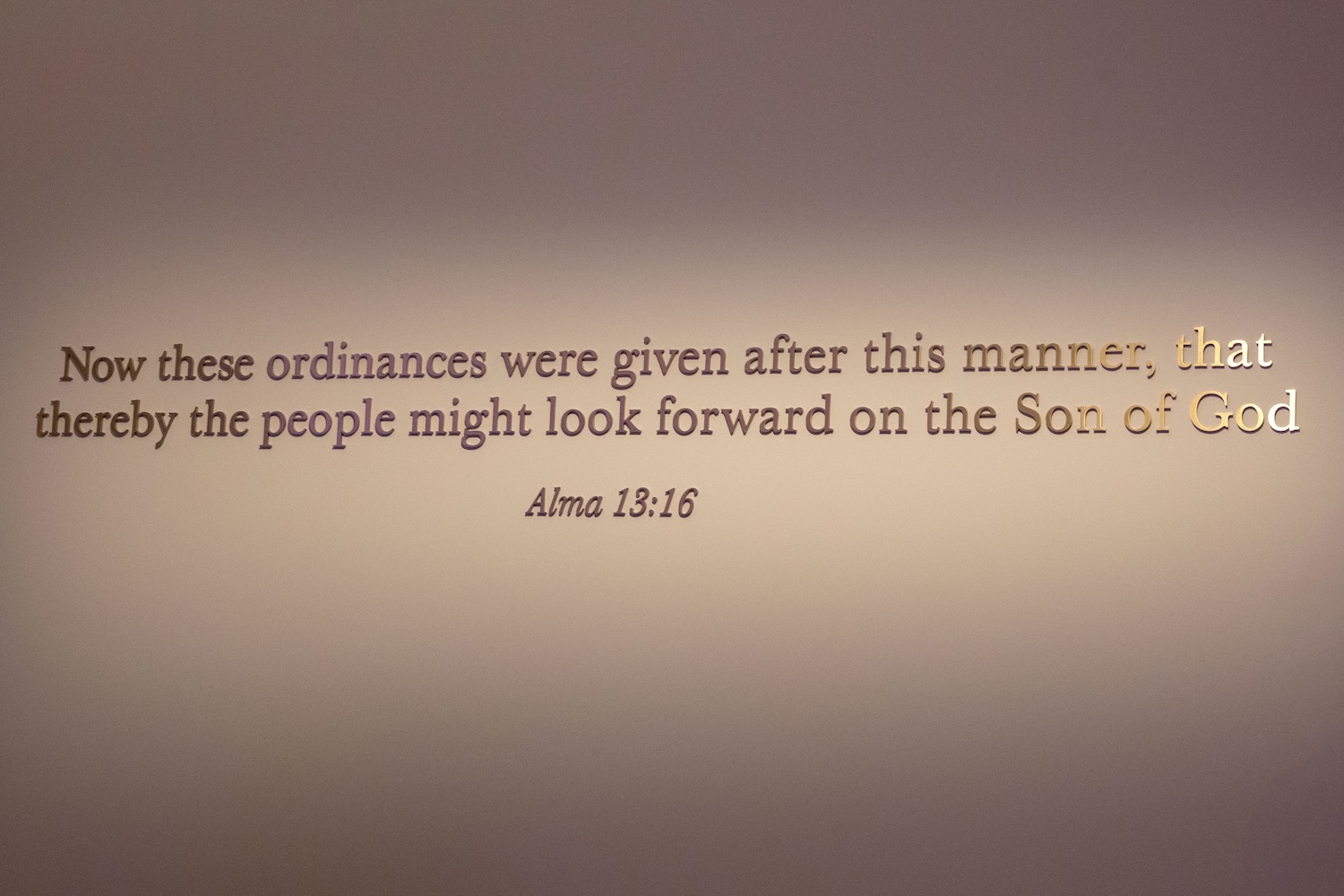
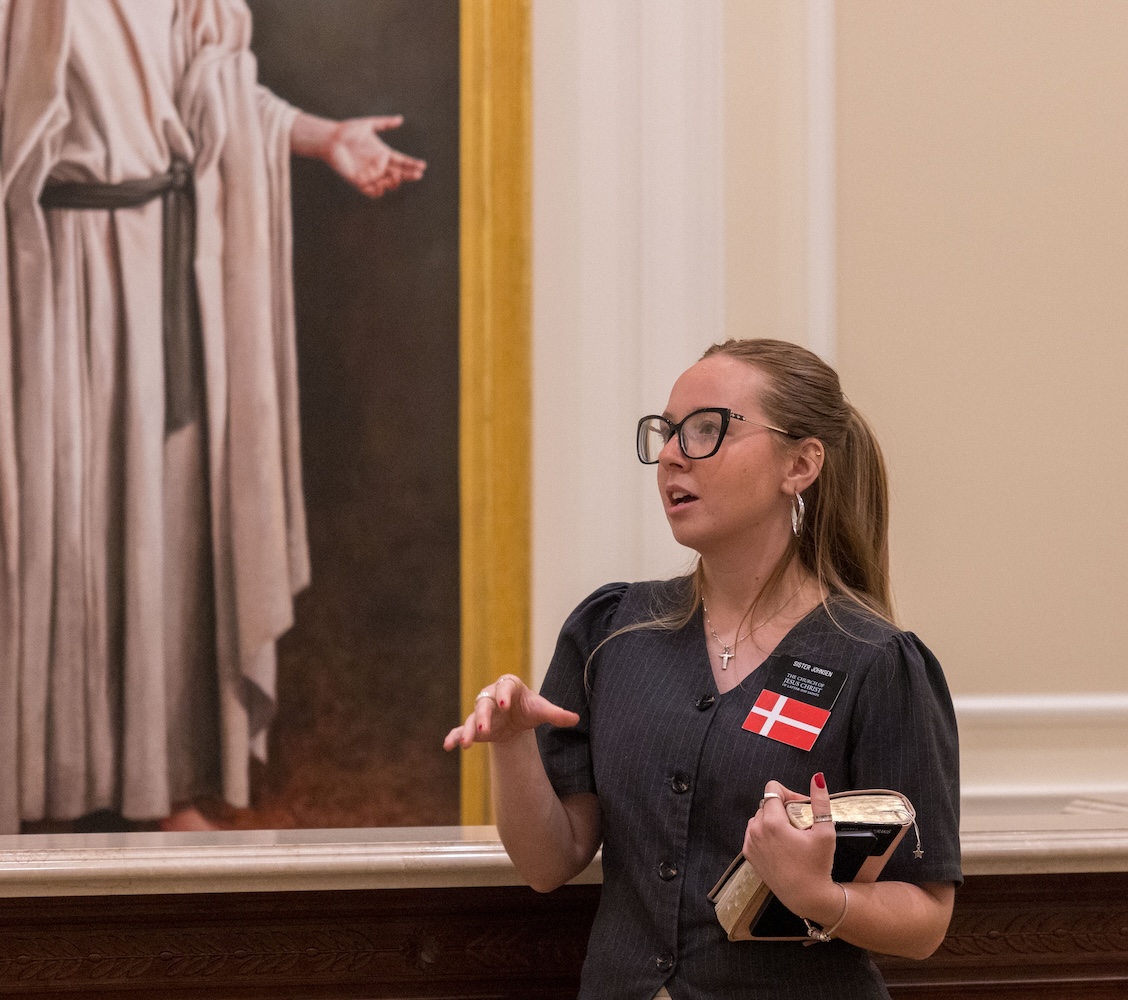
Following the Policy tours, LEAP ambassadors headed out to explore the historic Temple Square for a tour of the Church of Jesus Christ of Latter-Day Saints’ Salt Lake City Temple Visitors Center. Though not allowed in the Temple itself without a Temple Recommend from the LDS Church, we were soon immersed in the history, culture, and beliefs of the Church.
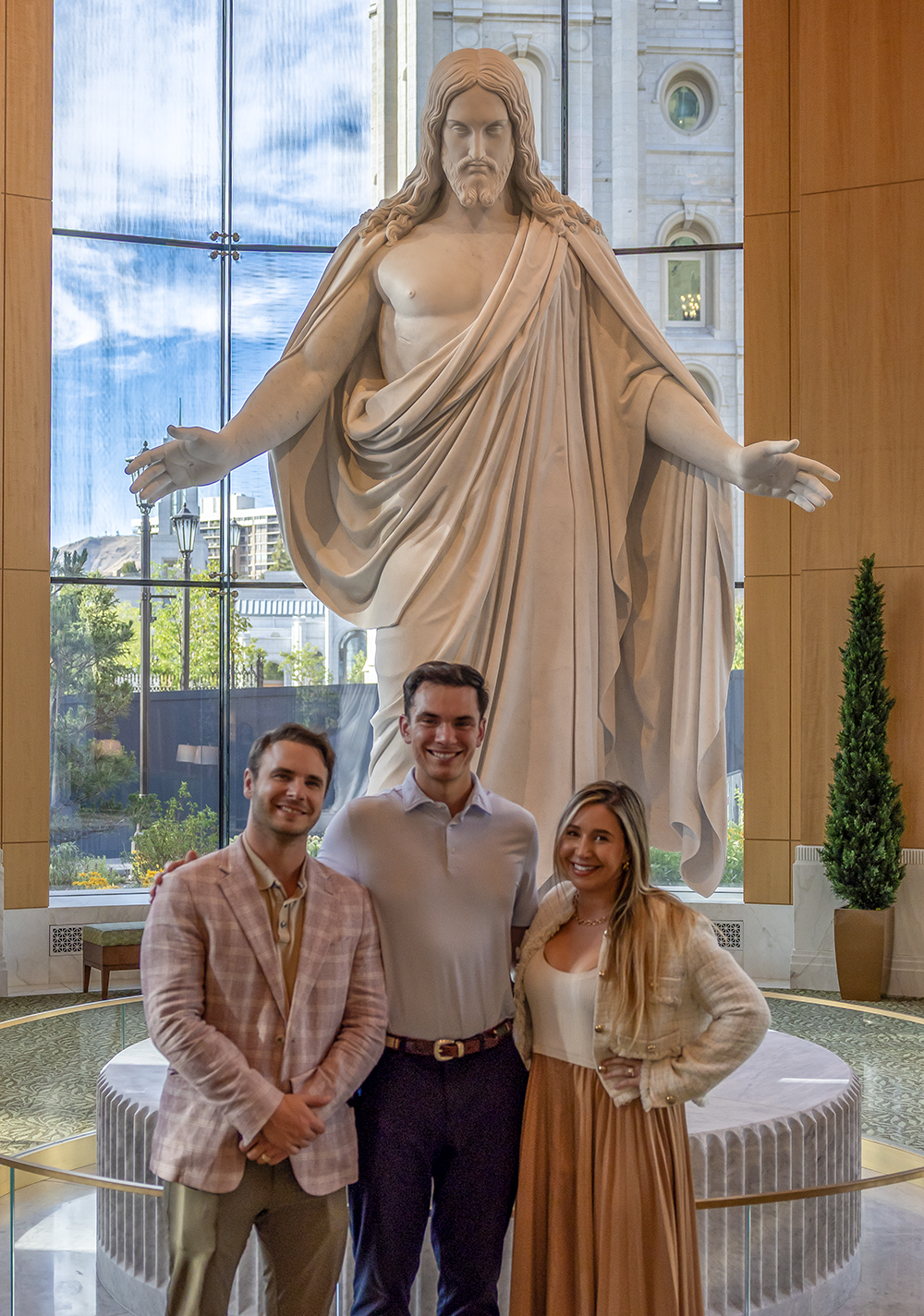
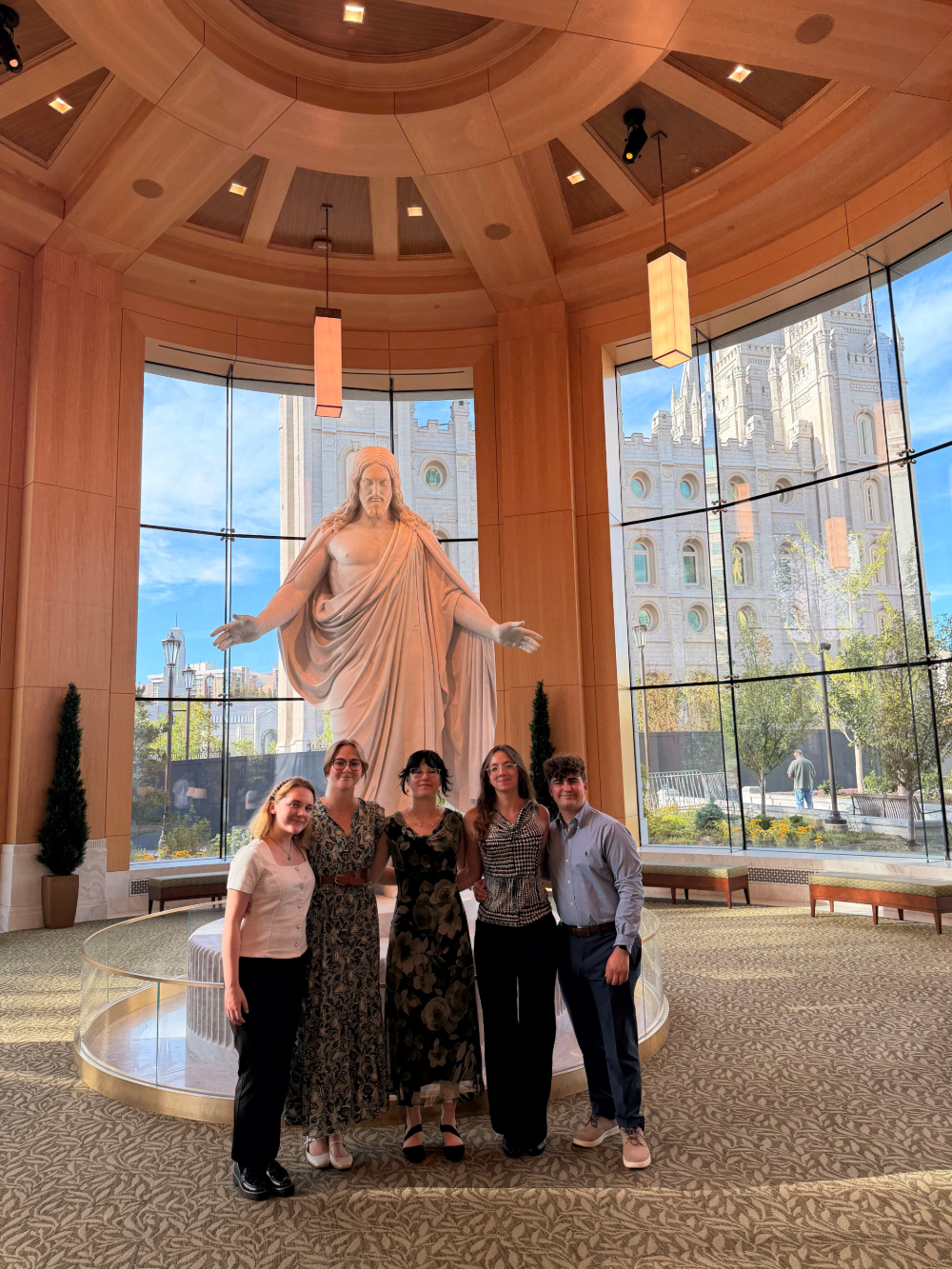
Our first stop was to take a picture with Thorvaldsen’s Christus, an 11-foot-tall statue of Jesus Christ that has a unique connection to Huntsville. Home to a full-scale bronze replica of the same statue (which can be found in historic Oakwood Cemetery), Huntsville possesses the only full-sized replica of Christus in the state of Texas.
We then were led through five rooms of a replica temple: the foyer, the baptistry, the celestial room, the instruction room, and the sealing room, each of which are copies of real temple rooms.
The most interesting room to me was the baptistry, which features a large bath resting on the backs of twelve life-sized oxen that symbolize the Twelve Tribes of Israel. The baptistry is also located on the temple’s lowest level to represent the symbolic burial and resurrection associated with baptism. Members of the Church perform baptisms there on behalf of their deceased ancestors who did not have an opportunity to convert, though their ancestors still must choose to accept the baptism.
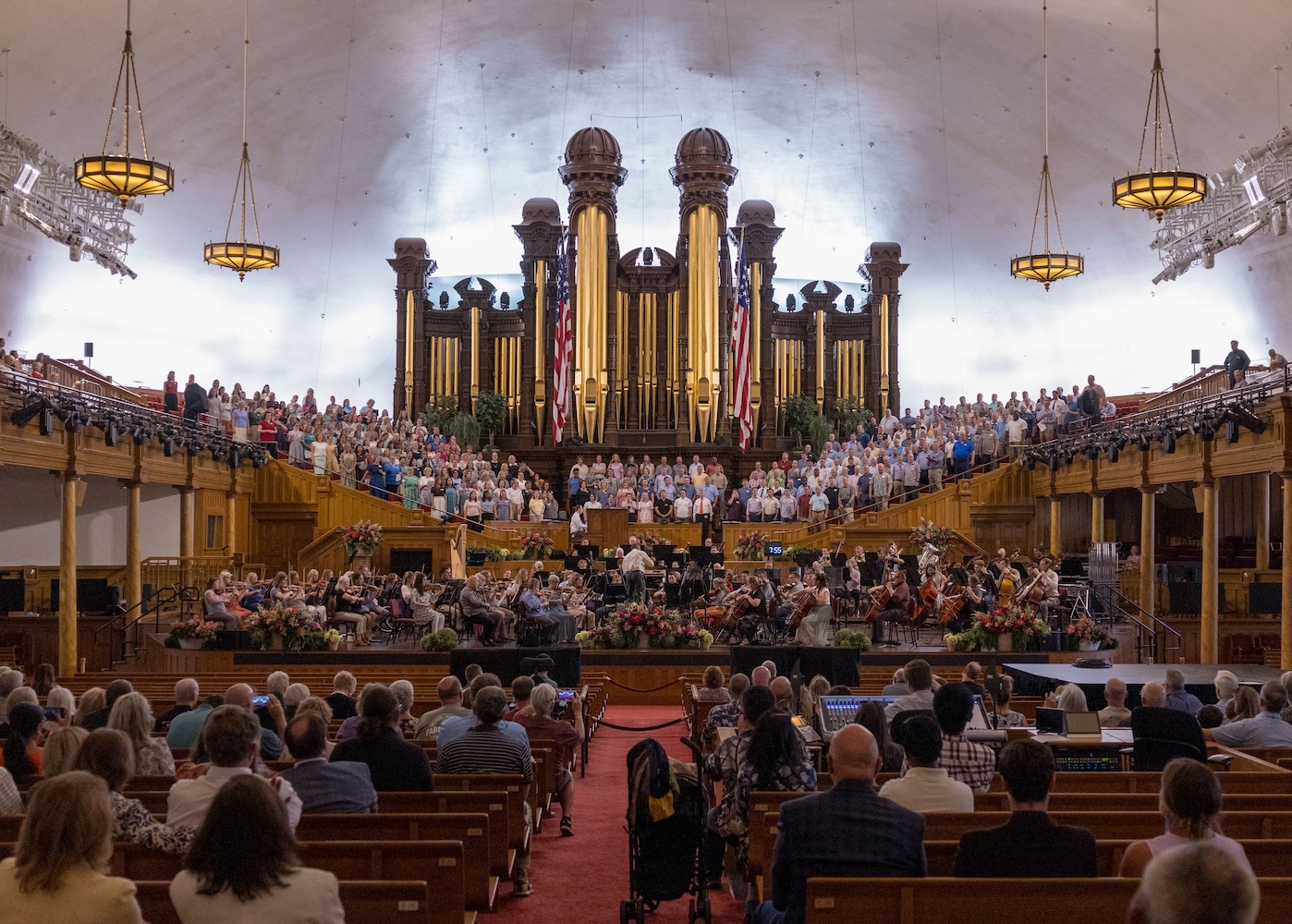
After the tour, we were taken to the Tabernacle to listen to the Grammy, Emmy, Peabody, and Mother Teresa award-winning Tabernacle Choir perform.
Many of the ambassadors were deeply moved by the experience, and we all understood why it is considered one of the ten greatest choirs in the world.
Overall, we enjoyed our visit to The Church of Jesus Christ of Latter-Day Saints. The experience gave us a greater appreciation for the culture, history, and beliefs of many of the people who call Salt Lake City home.
Central by Saffron Valley
Hungry after our longest conference day, we stopped in to Central by Saffron Valley for a meal that would have made the James Beard Foundation proud. Actually, it must have made the Foundation proud, because the chef, Lavanya Mahate, was nominated for a James Beard award in 2024.
The restaurant is an homage to the “golden age of India’s train travel,” and it is themed accordingly. The tables are labeled by platform, there is a “railroad crossing” sign in a corner, there is a faux train compartment wallpaper in parts of the restaurant, and some of the dishes are served in the tins used on Indian train travel.
The theme is appropriate, in that the meals come from different regions of India: curries from across the country; chicken tikka dosa from “southbound parts”; and a dessert menu featuring “sweet departures.”
We opted to eat family style, with some naan, chicken tikka kebabs, samosas, fish and chips (a nod to India’s one-time status as a British colony, and a sop to Olivia), Nawabi lamb biryani; the ever-reliable Old Delhi Butter Chicken (from the ever predictable Jacob Wessels); and for dessert, chai creme brulee, gulab juman cheesecake, and Indian ice cream.
Everything we had was at least good, and several of the dishes being excellent: the chicken tikka and butter chicken standing out as exceptionally tender; the samosas as a spice-filled specialty; the ice cream as tasty and inventive.
Owner Mahate told the Deseret News that she wanted to make “Indian food more accessible,” and she seems to be doing just that, providing excellent food to the Salt Lake City community. The entire meal was delicious, and it was an enjoyable evening with friends while extending the LEAP Center’s ethnic-themed meals during this trip– a nod to Salt Lake City’s history of attracting immigrants who contribute in many ways, not the least of which is adding to the culinary culture of the community.
Conclusion
Each session and policy tour demonstrated that effective leadership requires curiosity, collaboration, and a willingness to understand perspectives different from our own. As we look ahead to our final day at the conference, we are grateful for the opportunity to learn from legislators, policy experts, and community leaders from across the West.
People often ask, “What do LEAP students do?” It’s difficult to answer, because LEAP students do many things, and many of the things they do differ day-to-day–as a recent twenty-four-hour period demonstrates.
Misery can be Fun(if you are a movie goer!)
With finals over and the summer session not quite underway, LEAP students opted for a little fun, with some popular culture and historic knowledge thrown in. Thus, we went to River Oaks Theatre to see “Misery,” a 1990 film directed by Rob Reiner, written by the great William Goldman, and starring Kathy Bates and James Caan and, of course, based on a book by Stephen King.
This trip was motivated in part by the desire for a fun group activity, but it also ties in to our upcoming visit to The Alley Theatre to see “Misery.” As a very pleasant surprise, we ran into the stars of the play at the theatre! Chris Hutchison and Elizabeth Bunch were there to see the film in advance of their play version (begins at the end of this month!) and also to do a post-screening discussion of the movie and play.
It was a nice night-cap to a fun and, at times, frightening movie, which seemed to be universally enjoyed by the students, and a nice tool to amp-up the anticipation of our June 12 attendance at the Alley.
Chris Hutchison, Elizabeth Bunch, Ashley Winstead, and Keaton Patterson Discuss “Misery”
Commissioners CourtCan Also Be Fun (if you aren’t a Commissioner!)
We were able to get back to Huntsville before it was too late, which was a good thing because we had a fairly early morning scheduled. LEAP students regularly volunteer at the Senior Center, and with May being “Older Americans Month,” the Walker County Commissioners Court prepared a proclamation recognizing “Older Americans” and the Walker County Senior Center.
This was a good opportunity to teach the students about local government, the difference between a “consent agenda” and a “statutory agenda”, and why the County Judge–who is not a judge in any traditional sense–is called “Judge.”
The program was brief and pleasant, with LEAP students standing alongside Senior Center Board members and the Executive Director, Stacy Loll, for a photo. For the students, it was a positive introduction to local government, and it was a chance for the students to meet the Commissioners Court, some of them for the first time!
Trials Can Be Interesting (if you aren’t the defendant!)
The Commissioners Court meeting was brief, which was convenient because the students had the opportunity to stop by the District Court and watch the first day of trial in the case of The State of Texas v. Kenneth Eugene Giddens. The defendant was charged with two counts of aggravated assault with a deadly weapon and one count of retaliation/obstruction.
All the students were able to stay for the voir dire, which was fascinating. Malori Martin was at her best, relating with the potential jury, discussing the law, and providing an effective overview of the prosecution’s view of the case. For the defense, Rane Riley was also effective, offering different graphics to explain the defense’s view of “reasonable doubt,” while also reminding the potential jurors that family conflict are common, suggesting perhaps, that not all such conflicts need to lead to criminal justice outcomes.
Mikaela Baires was able to return and watch the trial for the whole day, which provided her with some unique opportunities…
Brittlyn Jackson headed for lunch; Professor Yawn had to get to KBTX to do an interview;
…Nataly Elizondo headed to the Senior Center, where she often volunteers.
LEAP is Fun and Interesting (most of the time!)
In less than a full day, LEAP students made the most of their unique opportunities, engaging with popular culture–literary, cinematic, and theatric–participating in local government and volunteerism, and watching their criminal justice system at work.
In many ways this day will be different from the days to come, which includes participating in the Lions Club’s “Flag Project,” a tour of Huntsville, and a World Affairs Council event. But each of these days will bring new learning opportunities, high-quality civic engagement, and enjoyable community building–all of which form the core of the LEAP experience.
Laughter, bubbles, and a little friendly competition filled the air as LEAP students assisted with the Wynne Home’s annual Easter Egg Hunt, organized and overseen by Angela Robinson!
Several of us arrived early to hide the eggs we had stuffed on earlier in the week…
…set up games, and arrange seating for the day. We even drew two sets of hopscotch to get our chalk art station started!
As visitors began to arrive, we put on our bunny ears and got to work directing the games and handing out prizes for the winners.
The kids got their energy out through numerous games, such as corn hole and ring toss…
…various races, which we felt compelled to participate in…
…darts, jump rope, and musical instruments…
… and they let their creativity flow through crafts and sidewalk chalk…
…and – perhaps most importantly – took pictures with the Easter Bunny!
They also enjoyed handcrafted balloon creations from a balloon artist, ranging from swords to flowers.
And bubbles are always a big hit.
Before the big hunt began, everyone fueled up with a delicious lunch of chips and hot dogs, generously provided by Stephanie.
At 12:40, the main event began: the Easter Egg Hunt. Split into two age-based groups, the kids were buzzing from excitement as they pressed against the edge of the tape…
…that separated them from their targets: the golden eggs, containing special prizes.
As the tape broke in the six-and-over group, a lunge for one of these shiny eggs resulted in a blur…
…heap of fallen children!
Thankfully, they were able to recover without injury and dash to collect the remnants of pillaged eggs. After just five short minutes, both groups were finished, every egg claimed and stowed away in baskets and bags. Inside, they found everything from toys, candies, and stickers, a fun collection of treats to enjoy!
As the excitement settled, we began to pack up, saying goodbye to the eager hunters as they left with prizes in hand and smiles to match – a reminder of how small moments like these bring a community together.
Although Huntsville residents have their share of exposure to the criminal justice system, they rarely have a chance to see an appeals court in action. That changes this Wednesday, April 1, when the Center for Law, Engagement, And Politics hosts the Texas 10th Court of Appeals at Sam Houston State University (Kerper Courtroom), with hearings at 10am, 11am, and 1:30pm. The cases involve possession of a firearm by a felon, charges, sexual abuse of a minor, and possession of a controlled substance.
“The cases are interesting to the local community and students alike,” notes LEAP Ambassador Michelle Cardenas. “It’s a rare chance to see our appeals court in action, and this year’s cases are especially intriguing.”
The 10th Court of Appeals typically meets in Waco, where they hear cases two-three times a year. But the Texas Legislature allows the appellate courts to travel to county seats within their jurisdiction. The 10th Court of Appeals’ jurisdiction extends to some 18 counties, including Walker County, and they have travelled to SHSU every year since 2012 to hear three or, sometimes, four cases.
In addition to changing the venue, the justices also alter the courtroom procedures slightly to suit the educational setting. Attorneys for both the plaintiff and the defendant have three minutes to turn, face the audience, and provide the facts of the case. Although this component of the hearing has no impact on the justices’ decision, it is designed to allow those in attendance to better follow the legal arguments that will be put forth.
This year’s cases involve diverse issues and will take place at the times listed below:
10am: Milton Rederick Miller v. State of TX : This appeal involves possession of a firearm by a felon, with the legal issues addressing, among other things, whether barring guns from non-violent felons violates the 2nd amendment and whether the defendant was competent to represent himself.
11am: Tacoby Davis v. State of TX: this appeal involves charges of sexual assault of a child. The legal issue involves the question of what constitutes a “public trial” and whether barring a testifying witness from the courtroom compromises that constitutional guarantee.
1:30pm: Tyrone Shepard v. State of TX—This appeal involves a conviction for possession of a controlled substance. The legal issues involve the relevance of the defendant’s previous arrest for controlled substance and his right to a speedy trial.
Unlike trial courts, which select juries and are presided over by a single judge; the 10th Court of Appeals is presided over by a three-justice panel: Chief Justice Matt Johnson, Justice Steve Smith and Justice Lee Harris. In appeals hearings, there are no juries, no witnesses, no direct or cross-examinations, and no outcome is decided immediately at the end of the hearing. Rather, each side is given 20 minutes to argue their case, with the justices often interjecting to ask questions, challenge an interpretation, or to seek additional information.
The cases will be heard at the Kerper Courtroom in the CJ Center at Sam Houston State University. Although the courtroom rarely reaches capacity, it has occurred, and seating is provided on a first-come, first-served basis. Local residents are welcome to attend. For more information, contact Mike Yawn at 936-294-1456 (or by email at mike.yawn@shsu.edu).
Please note there is a dress and etiquette code enforced by the court. It is:
Dress Code – All persons attending any portion of the oral argument sessions must wear proper attire. The following is a list of inappropriate attire that includes, but may not be limited to:
T-shirts with any type of inappropriate language or picture
Weapons – Weapons of any type are NOT allowed in the room where the oral arguments are taking place. Electronic Devices –ALL electronic devices must be either turned off or set to silent. Recording– No photos, broadcasting or recording devices are allowed during the oral argument session. Food and/or Drink – No food or drink is allowed during the oral argument session. This also includes tobacco products and chewing gum. Behavior – Any person who disrupts the proceedings by talking, making noise, public display of signs, or similar conduct will be required to leave the courtroom. Entrance and Departure – The Court strongly discourages the entering and departure of the courtroom during hearings. The bailiffs will permit entry at the top of the hour, at the beginning of hearings, and at 50 minutes past the hour.
SHSU students visited the historic Peabody Library on campus while learning about internship opportunities in Huntsville; Austin, TX; and Washington, DC. The learning came from reliable sources: Professor Mike Yawn and several former interns who had intern and worked everywhere from Huntsville to Capitol Hill.
Daniel North worked on Senator Claire McCaskill’s campaign and in her Capitol office before going into law. Ademide Adedokun also interned on Capitol Hill before working as a staff aide, and then moving into the executive branch. Israel Gallegos, a current SHSU student, spent Spring 2025 interning for Congressman Morgan Luttrell. Also on hand were current students Makenna McDaniel and Michelle Cardenas, both of whom completed the SHAIP program in 2025, working for Representative Will Metcalf and Governor Greg Abbott, respectively.
The programs are described below:
City Fellows
The City Fellows program is for students who would like to have a part-time internship while still attending classes in Huntsville. Students earn academic credit while working 15-20 hours per week (paid at $10.00 an hour) on a project for a local government office, non-profit, law office, or business.
These internships are project based, meaning that the agency is seeking an intern who can complete a semester-long activity. This might include offering recruiting instructors and offering programs for activities; conducting a salary survey for various jobs across the state; planning a large event; working on a marketing campaign for a new undertaking; or implementing an audit of government services. The application for summer internships opens April 1, with interviews in late April.
Daniel, Ademide, and Michelle all did City Fellows internships before moving to Austin and/or DC for higher-profile internships.
Early October: Students are selected for interviews
Mid-October: Panel Interviews
Early November: Students interview at Austin offices
January 3-June 1: Students intern in Austin
Selected students gain a scholarship of up to $8,000, earn six hours of academic credit, gain valuable skills, and great networking opportunities. It is a full-time experience, as recalled by Makenna McDaniel: “You begin by working about 40 hours per week, but by the end of session, that can end up being 80 hours a week. But if you are hard-working, it is an invigorating experience.”
The Chancellor’s DC Internship
The Chancellor’s DC Internship program was officially launched just weeks ago, and it involves selecting ten students from across the Texas State University System’s four-year institutions. Each student selected earns six hours of credit and a scholarship of up to $10,000 for the semester, while spending the semester in Washington, DC–a major draw of the experience. “It was a great opportunity to be in DC,” noted Israel Gallegos, “and work in the capitol building while also getting to experience the broader environment.”
The timeline for this program is:
February 2: Applications Opened
March 1: Applications Close
Mid-March: Interviews
Late-March: Follow-Up Interviews
Early April: SHSU selects up to five applicants and send their applications to the System Office
Late April: The System Office Reviews Applications
May: The System selects ten students
Fall Semester: Students work in DC
“This opportunity,” noted Ademide Adedokun, “can change lives. It changed mine, and I spent the next 13 years of my life in Washington, DC.”
Concluding Thoughts
Of course, students applying for any of these programs should have good grades, be disciplined, punctual, engaged, professional, and be coachable. For all of the programs, the more activities students participate in, the better chance they will have to demonstrate the qualities cited above. Academically, students will need a 2.8 or better (almost always better) to be competitive in the application process. For the SHAIP and DC programs, competitive applicants will have GPAs in the 3.5 and up range.
“For almost anything you want to do,” noted Daniel North, “having experiences like this–in the field and around people with amazing skills–will benefit your career, expand your horizons, and enhance your success.”