by Michelle Moya
In today’s competitive job market, the difference between landing a job and missing an opportunity often lies in how well one presents themselves in both formal and social settings. Recognizing this, the Career Success Center at Sam Houston State University hosts an annual Etiquette Dinner every spring, designed to equip students with essential dining and professional etiquette skills.
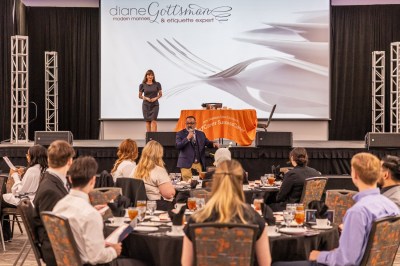
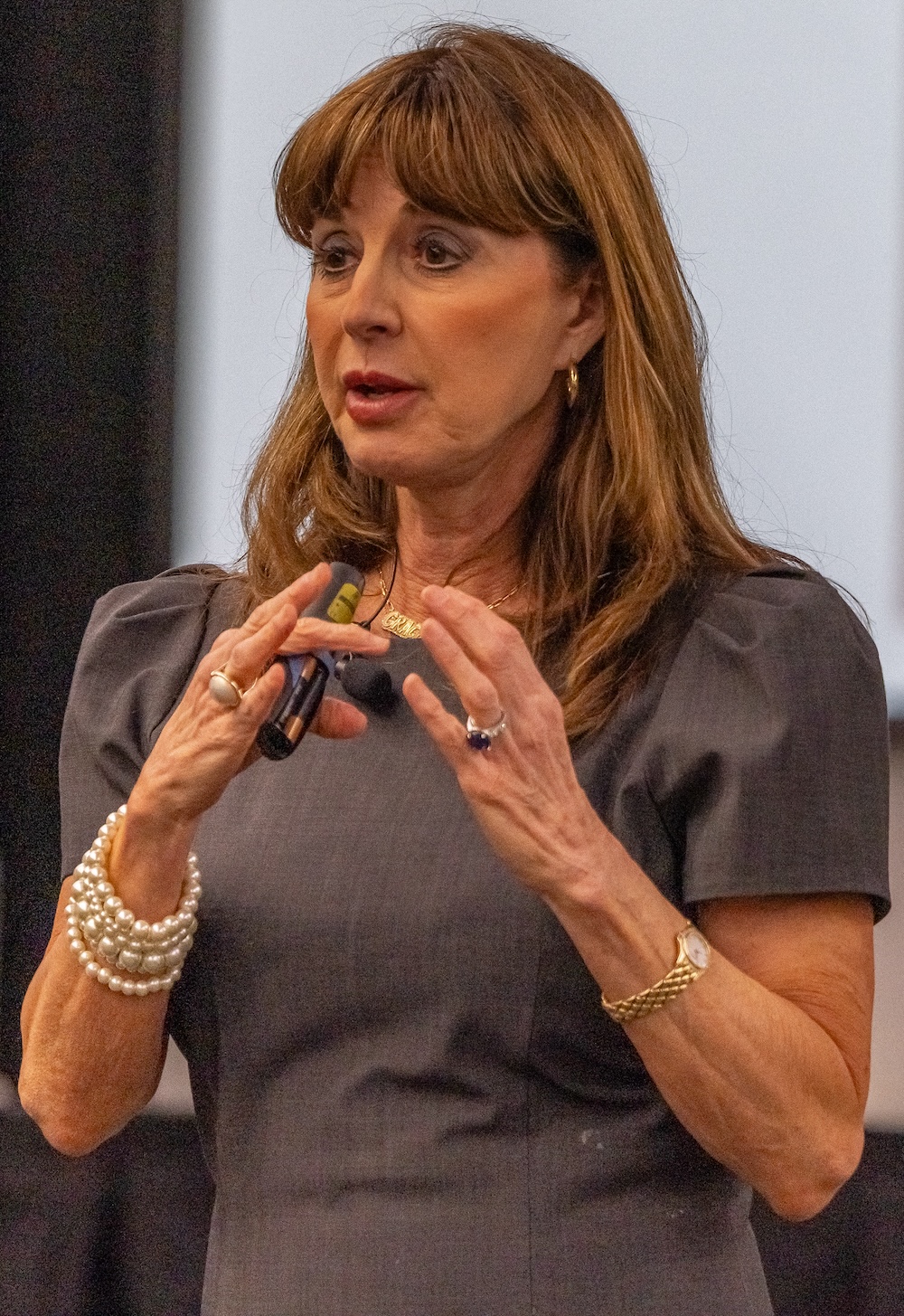
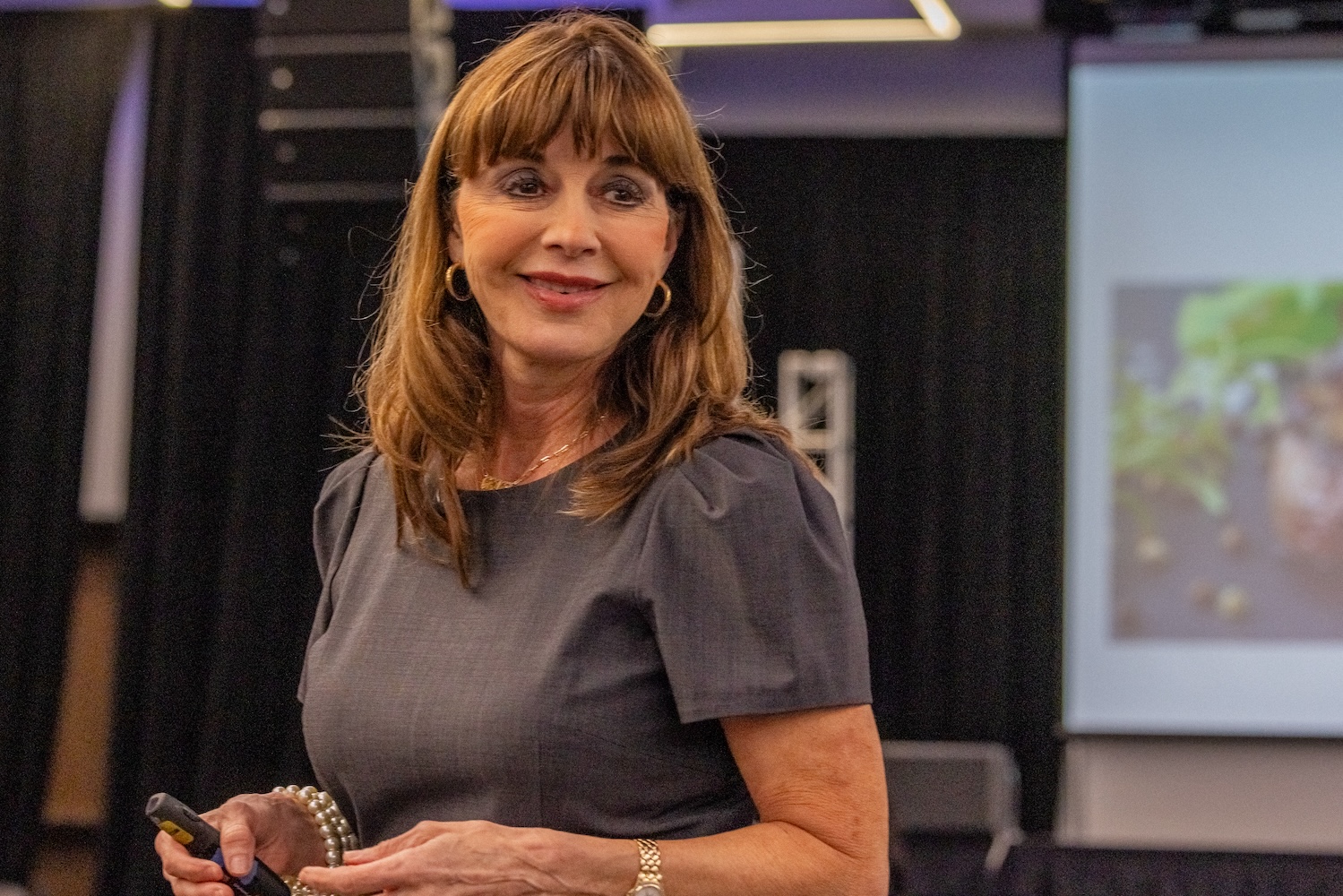
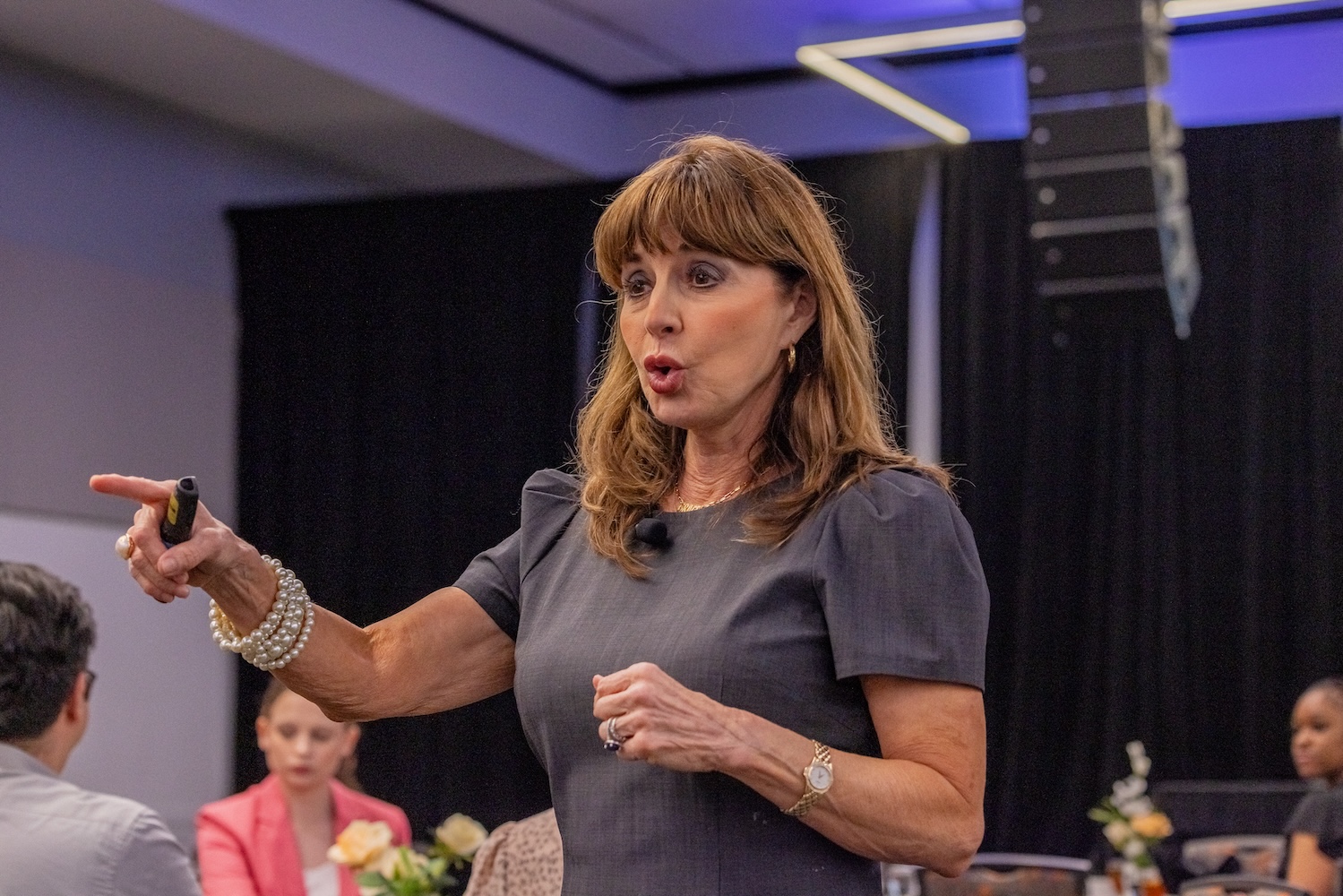
This highly anticipated event is led by Diane Gottsman, an internationally recognized etiquette expert and founder of The Protocol School of Texas. With more than two decades of experience, Gottsman is widely respected for her practical, modern approach to etiquette.
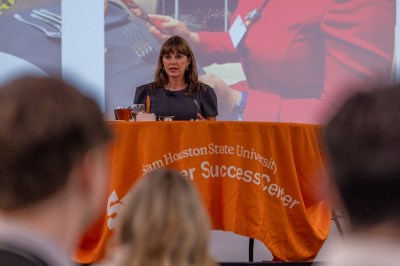
Her philosophy is clear: etiquette isn’t about rigid rules but rather about fostering confidence, showing respect, and making positive impressions.
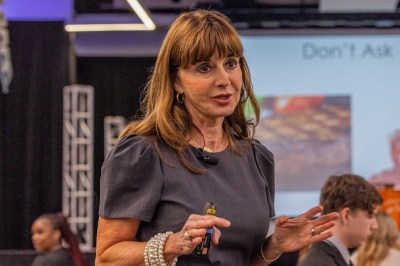
To set the tone for the evening, Ms. Gottsman encouraged engagement from the start, inviting students to ask questions throughout the event. This approach created a welcoming environment—which evidently paid off, as several thoughtful questions came from attendees.
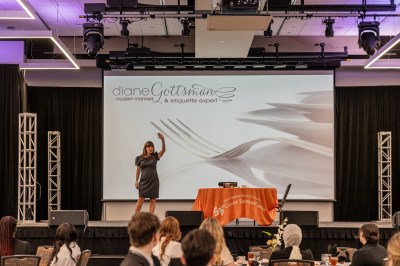
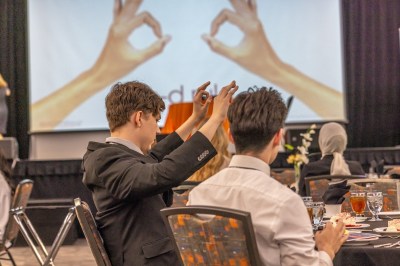
One of the first things we covered was understanding the layout of a formal place setting. Ms. Gottsman introduced the “B and D” hand signal, a simple mnemonic to help guests remember the correct placement of their bread plate (left) and drink (right).
This was followed by a presentation of proper utensil layout, illustrating the rule of “outside-in”: always use the outermost utensils first, moving inward as each course is served.
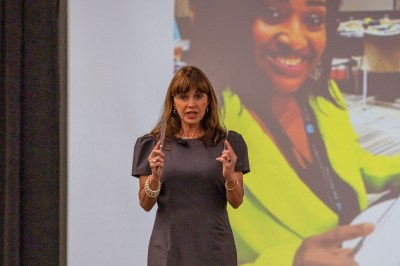
As we prepared for the meal, Ms. Gottsman emphasized napkin etiquette, explaining that the napkin should be placed on the lap with the fold facing toward your waist. If stepping away from the table, the napkin should be placed on the chair, not the table.
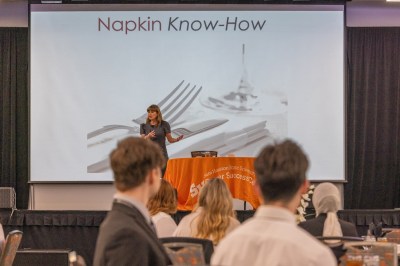
She also advised against placing purses on chairs or using purse hooks at formal events.
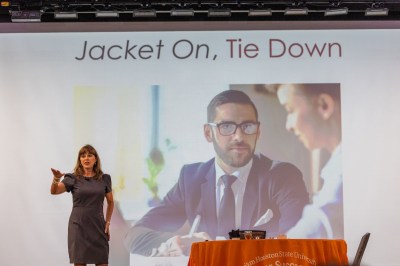
Posture was another key point—encouraging everyone to sit upright by imagining a ball behind their back as a way to maintain poise without seeming stiff.
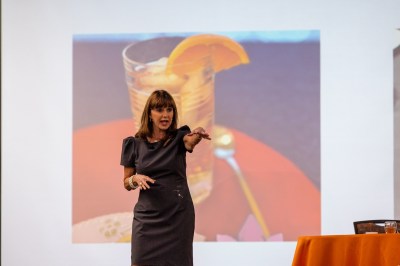
We also learned to “prepare” our iced tea, where Ms. Gottsman explained to stir quietly, avoid clinking the glass, and place the spoon behind the glass once finished.
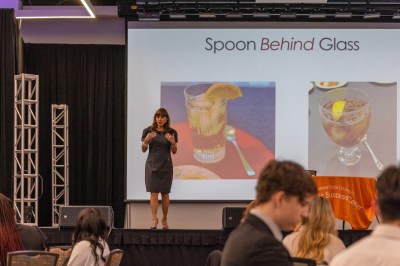
She also touched on the circumstance where if you are given a drink with the lemon on the side, you should place it in the glass or behind it—but do not drink it with it on the rim.
The first course was gazpacho soup…
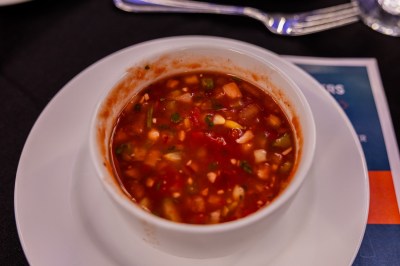
…during which we learned to spoon the soup away from the body to avoid spills and to sip quietly from the side of the spoon—no slurping.
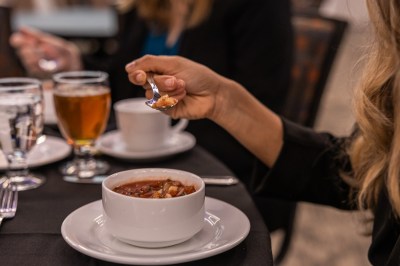
Ms. Gottsman shared a helpful distinction between smooth and chunky soups: while smooth soups should be sipped directly from the side of the spoon with minimal movement, chunkier soups may require small, discreet cutting motions with the spoon to break down larger pieces—always maintaining grace and control.
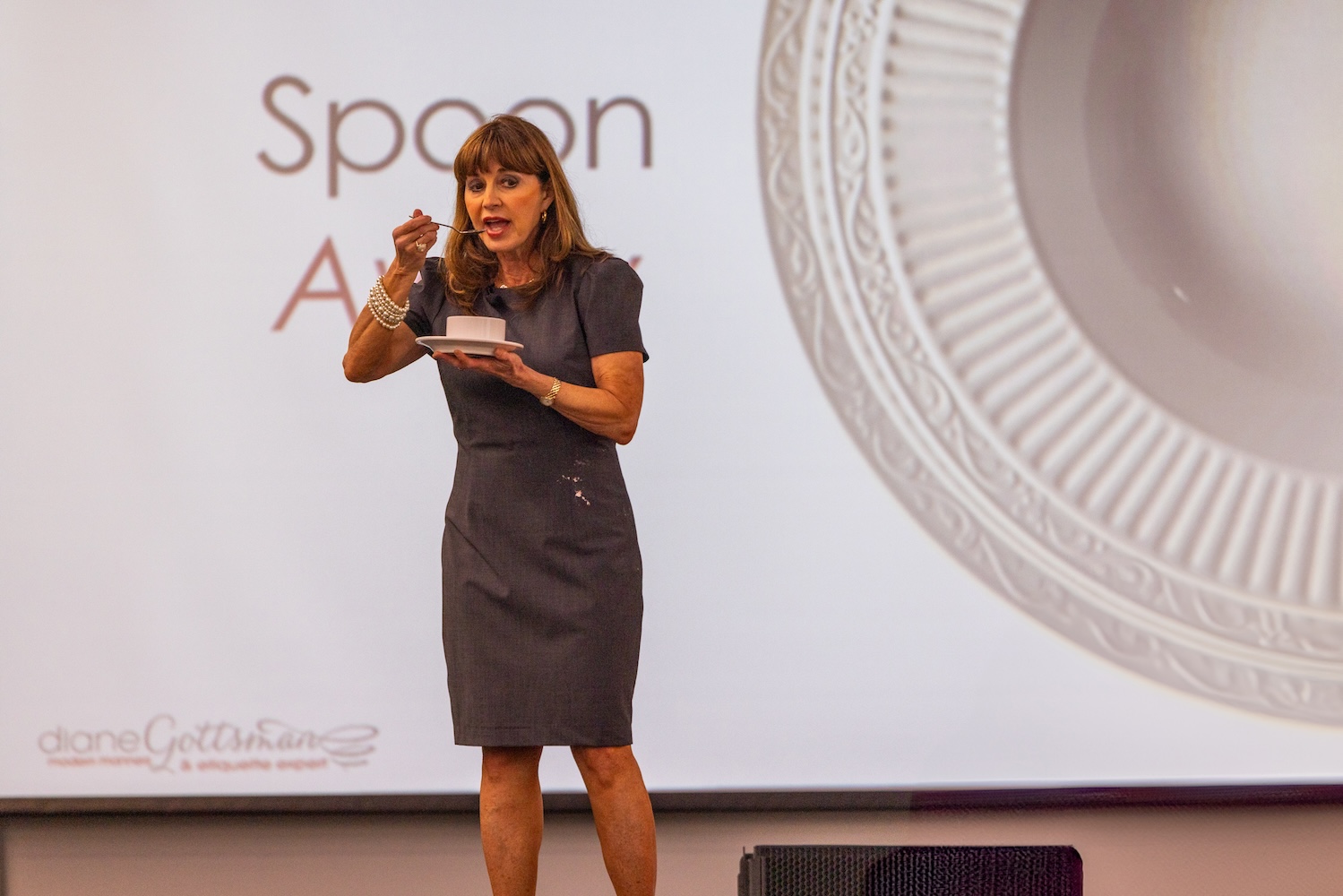

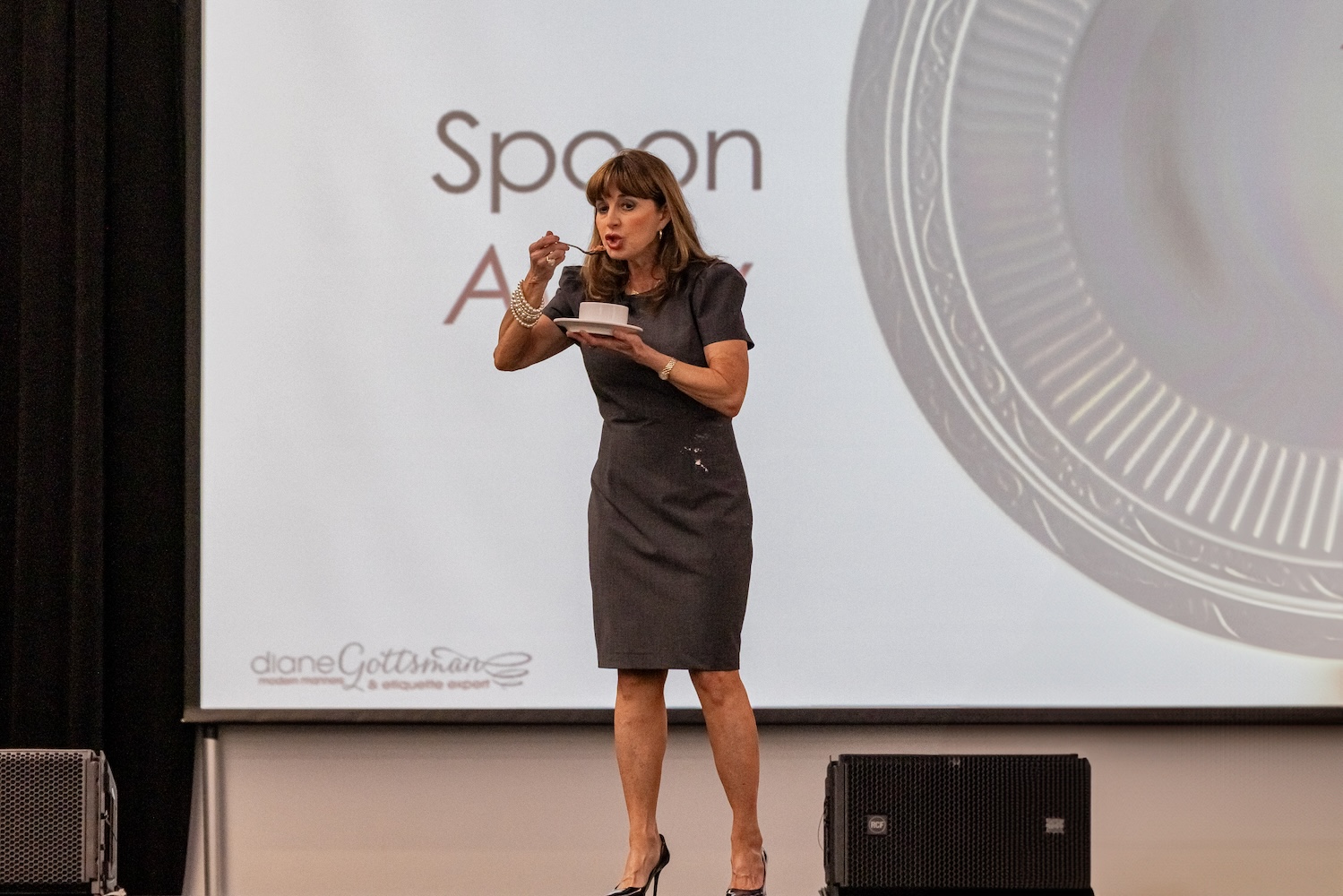
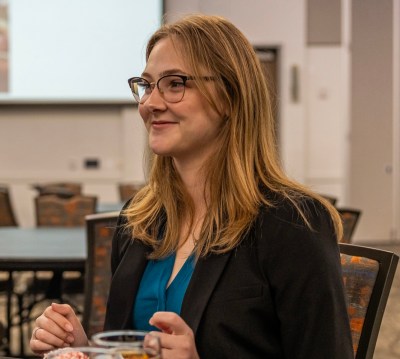
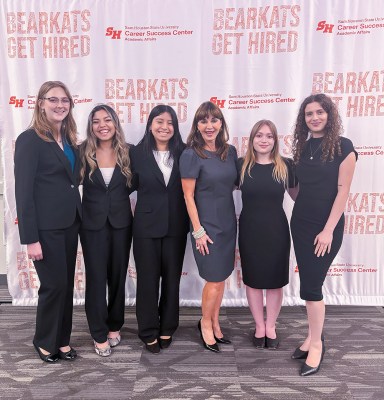
Throughout the evening, students posed thoughtful questions. LEAP Ambassadors Christina Biello and Olivia Discon were among those who contributed. Christina asked about the proper way of wiping your face with a napkin, prompting a detailed explanation from Ms. Gottsman on napkin positioning and handling. Olivia inquired about how to eat a sandwich or burger properly—whether deconstructing was acceptable. Ms. Gottsman emphasized the importance of ordering wisely in formal settings, reinforcing that certain dishes—like salads or spaghetti—are best avoided.
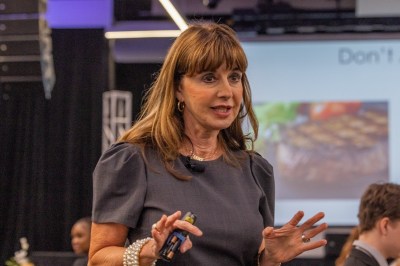
She also mentioned what to ask for and what not to ask for while dining. Unless there are fries on the table, ketchup should not be requested; and ranch dressing should never be ordered. Requests for ranch and ketchup, Ms. Gottsman noted, send a message to the chef and the table that the requester is accustomed to cheap, low-quality food.
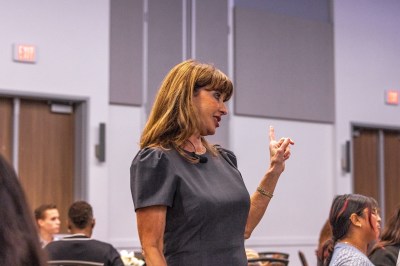
Another thoughtful question involved excusing oneself from the table. Ms. Gottsman advised simply saying, “Excuse me” without offering unnecessary details and always pushing in your chair and placing the napkin on your seat, not back on the table, during the temporary departure.
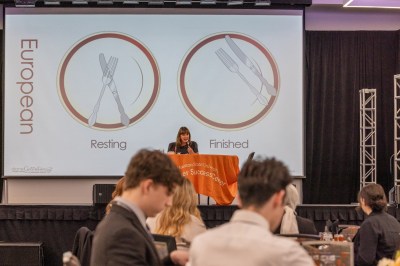
The main course featured chicken, vegetables, and mashed potatoes. During this course, Ms. Gottsman introduced the “resting” and “finished” utensil positions—important non-verbal cues for servers. When pausing between bites, utensils should form an inverted “V” on the plate, with the fork tines face up and the knife stays on the right.
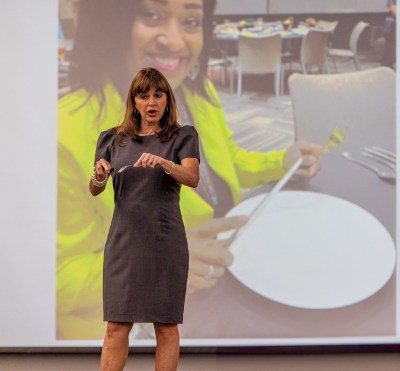
When finished, both utensils should be placed parallel across the plate, with the fork tines up and the knife blade inward. These signals help maintain a seamless dining experience and show respect for the meal and staff. Also adding in the differences between American and European dining styles, encouraging students to become familiar with the European method for a more polished approach.
The evening concluded with a delicious red velvet dessert cake and coffee.
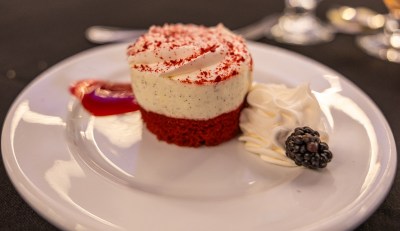
In formal dining settings, coffee is typically served after the main course, often accompanied by dessert. When passing cream or any condiment, always pass it to the left (counterclockwise) of the person sitting next to you.
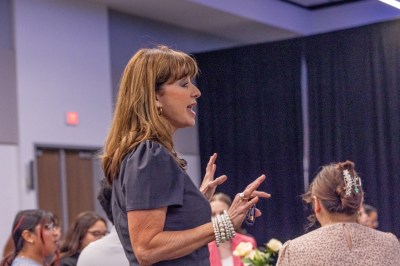
In her closing remarks, Ms. Gottsman spoke of the importance of first impressions—how a teethy smile, confident presence, and genuine attentiveness can leave a lasting impact.
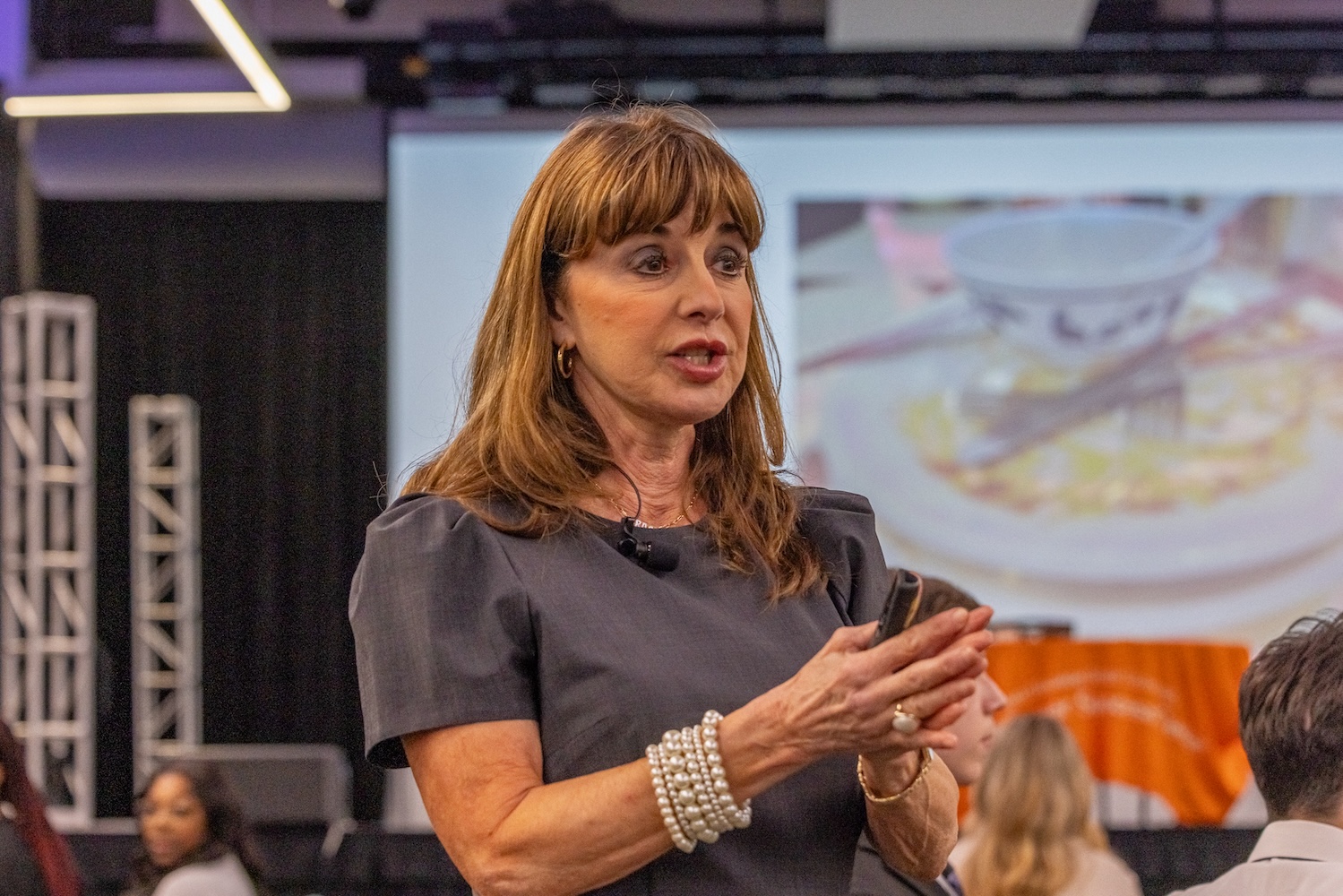
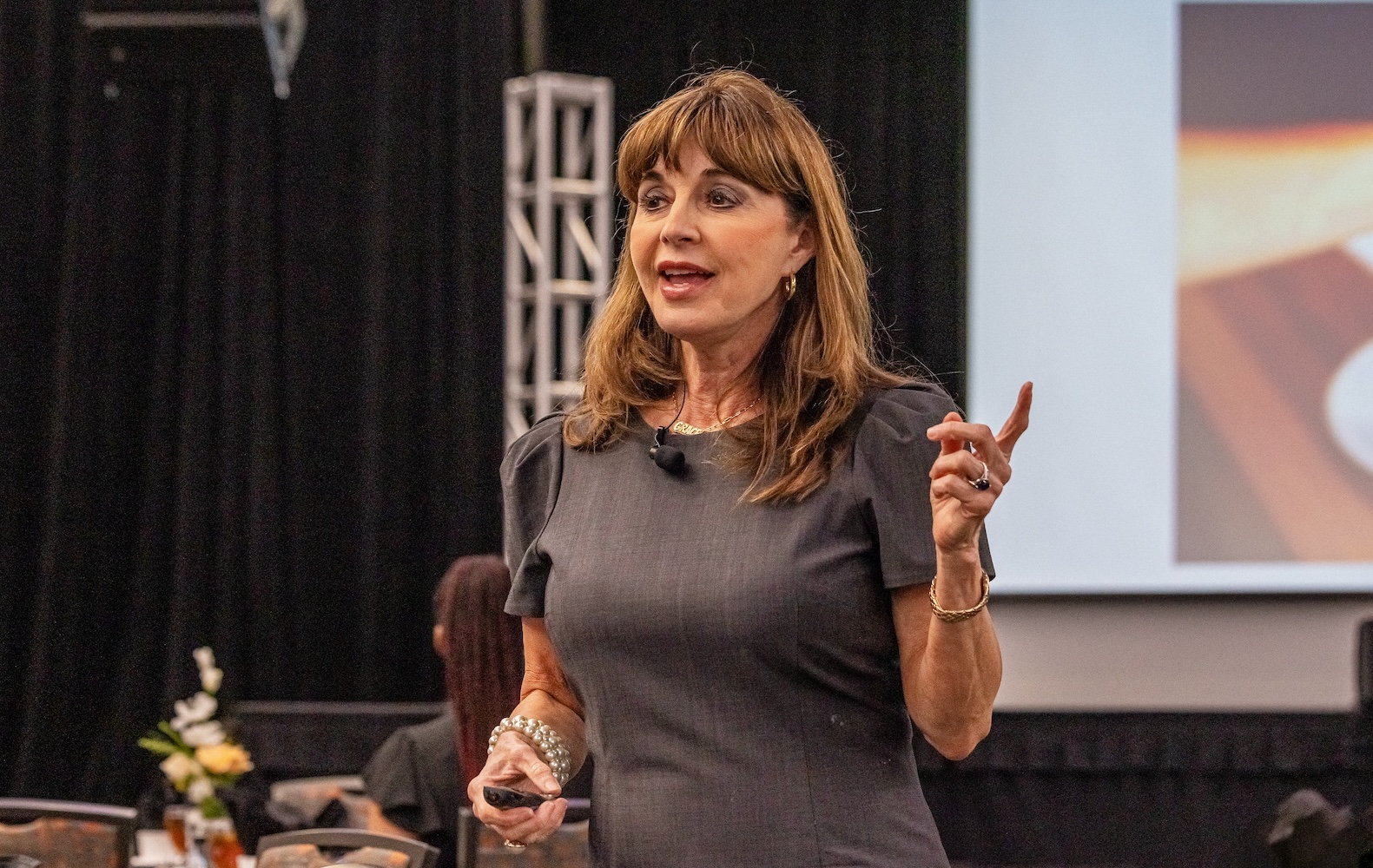
Many attendees, including myself, left the event feeling not only more confident in formal dining settings but also more aware of how small, thoughtful gestures reflect professionalism and poise.
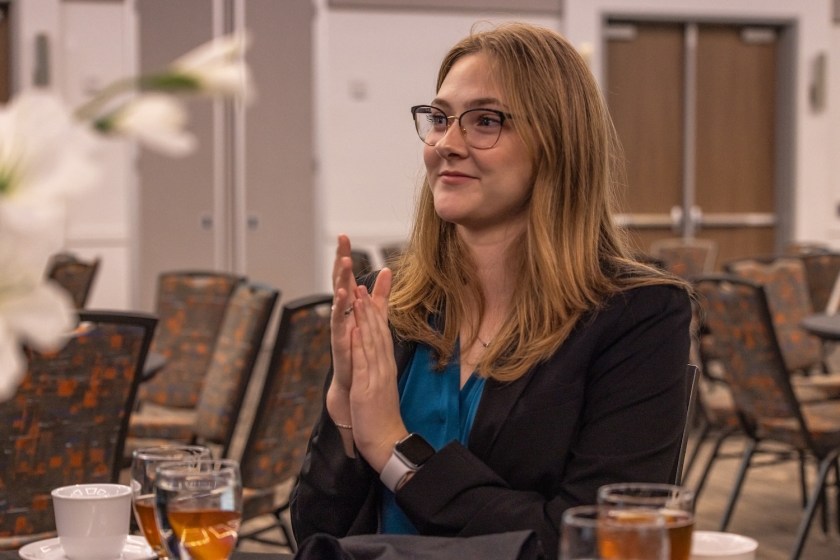
This advice encapsulated the essence of the evening: that etiquette is not about perfection but about presenting oneself with confidence and respect in every interaction, and we can toast to that!
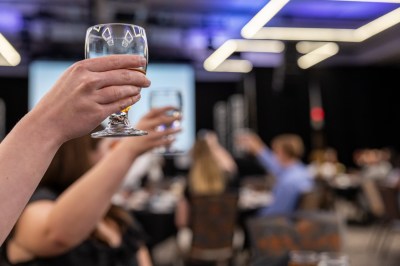
Many thanks to the Career Success Center and Ms. Gottsman for a wonderful program.
 Center for Law, Engagement, and Politics