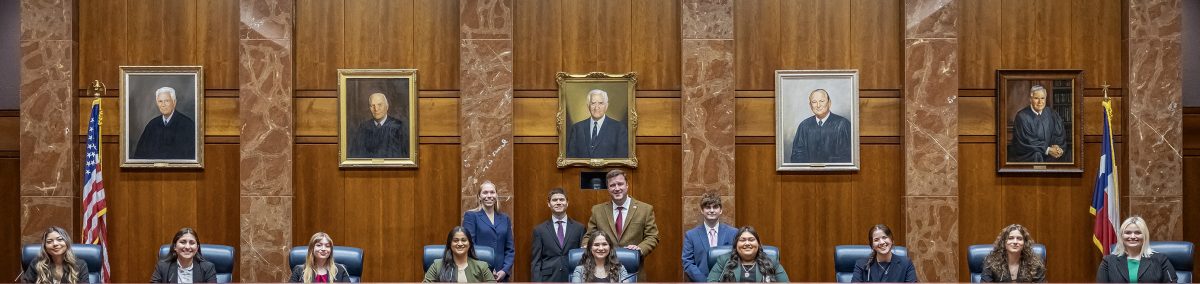
by Cinthia Villarreal
After an insightful day with Megan Henson from the University of Tulsa College of Law, Michelle Cardenas, Christina Biello, Olivia Discon, and I headed to Houston to attend a World Affairs Council event with renowned author David Brooks, the writer of How to Know a Person: The Art of Seeing Others Deeply and Being Deeply Seen.
As we walked into the glamorous Royal Sonesta Hotel, we had the honor of meeting with former LEAP Ambassadors Quinn Korbin, Victoria McClendon, and Megan O’Flaherty.
Following an introduction by Executive Director Maryanne Maldonado…

…the program was officially kicked off by moderator Ronan O’Malley, Chief Program Officer at WAC.

When asked about his intentions behind writing this book, Brooks mentioned this was his attempt to teach people basic social skills. With measures of societal and individual connectedness at a low, with suicides high and climbing, and with disagreements seemingly both common and insurmountable, Brooks stressed the need for skills that will help people have meaningful, empathetic conversations with others.

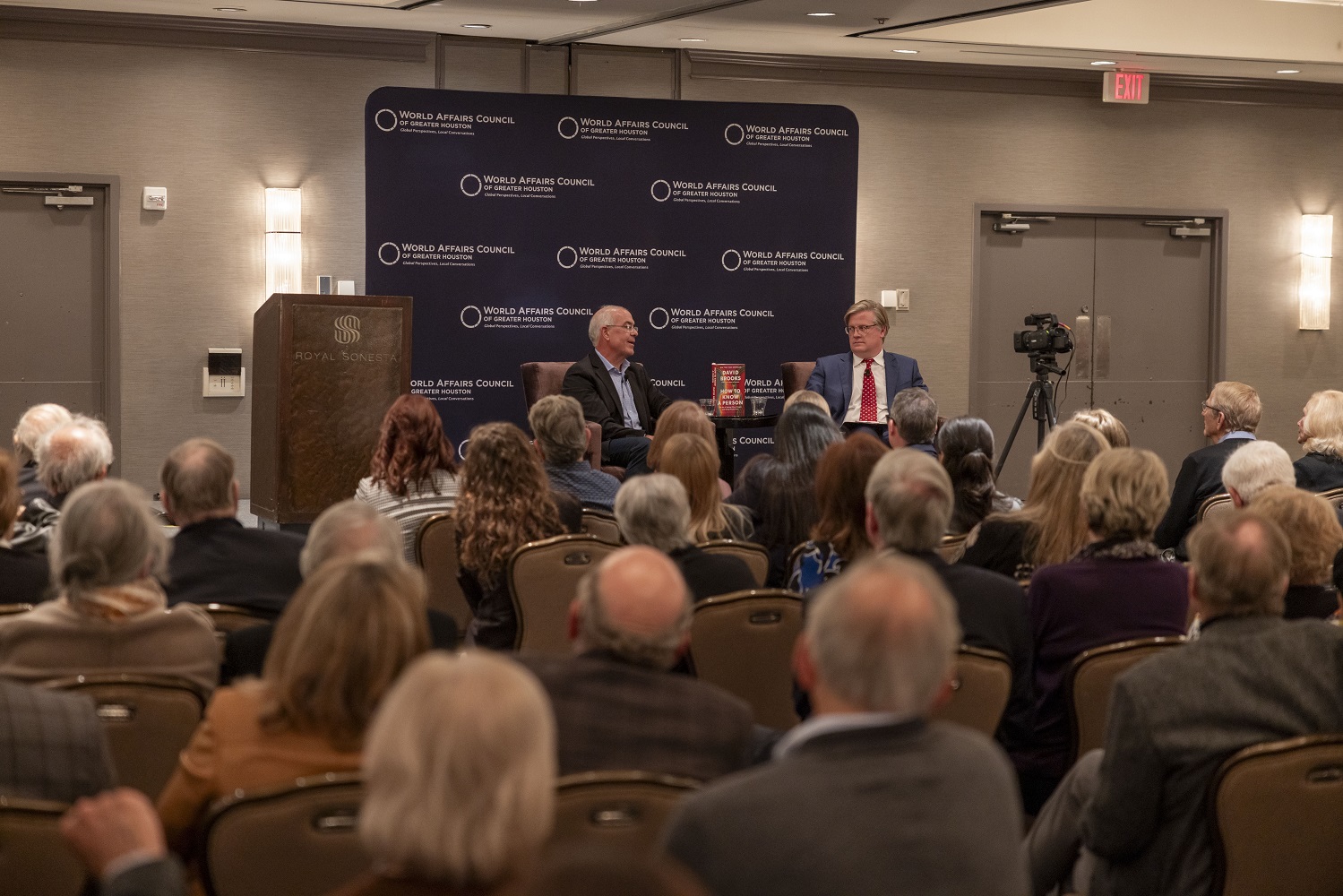

One aspect of this, according to Brooks, is that there is no emphasis put on moral or character development. And while Brooks noted that he didn’t want to go back to the 1950s and “sometimes corny” way this was approached then, he does think there is a role for that in today’s society. Moreover, he notes that his own students describe themselves–in my new favorite phrase–as “morally inarticulate”.

As he notes in his book, he describes two types of people in society, which he calls illuminators, who make you feel heard and ask you questions because they are genuinely interested in your story; and diminishers, who usually stereotype people they talk to and are not interested in knowing other’s stories.


Brooks went on to describe how the same experience can affect each person differently since the act of seeing is not passive but an active, subjective construction of reality. Using another phrase that will stay with us, Brooks described “experience” not as “what happens to you but what you do with it.”

Throughout the event, Brooks proved his remarkable skills at managing the crowd. He truly captivated all of us by his amazing way of narrating and communicating his knowledge. He would have the whole room laughing one minute and tearing up the next.

A question from the audience urged Brooks to talk about what to say to someone living with depression. People usually make mistakes like telling the person what to do to “lift” the depression or reminding them of the good things they do have; however, this will only make them feel worse. Instead, he suggests approaching the person with a genuine heart by acknowledging the situation and asking about what they are feeling.


After the thought-provoking talk, we had the opportunity to meet Brooks and get our books signed and personalized.


We would like to thank the World Affairs Council for hosting yet another incredible event, the staff for their hard work, and David Brooks for such an inspirational talk.


 Center for Law, Engagement, and Politics