
by Michelle Moya
Tucked away in Houston’s vibrant Museum District, the Asia Society Texas Center is a cultural gem that embodies the rich diversity of Asia through architecture, exhibits, and innovative and cultural experiences. Designed by renowned Japanese architect Yoshio Taniguchi, the building is LEED certified, making it a visual delight and a wonder to experience.

As you enter the museum, the North Gallery provides a welcoming space with five touch screens arranged in a circle around a central pillar; each screen contains a globe with the Asian countries shaded in different colors.
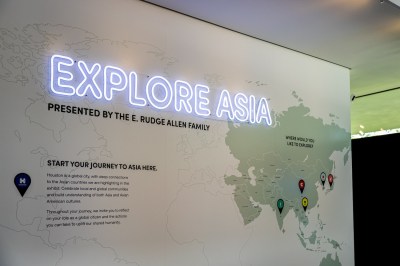
Once a country is touched, the person “travels” to the country through a screen that shows the nation’s capital as well as the local time and how many miles it is from Houston.

Similarly, the most Instagram-worthy spot in the entire center is a wall covered with Asian culture-inspired neon signs. Ranging from a glowing lucky cat sign, a bowl of pho, and even one displaying Bellaire Boulevard. Each experience implements an interactive way to learn about Asia’s culture.

The “Gathering Table” interactive section highlights different foods of Asia and, most importantly, where you can find that food in Houston.


This area also offers a scent station that adds a sensory dimension to the experience.


The central section of the Asia Society is the two-story Grand Hall, lined with Jura limestone and wall paneling with American cherry wood. Each of these elements is used throughout the interiors for warmth and connection to the local landscape.


Also in the building is the Brown Foundation Performing Arts Theatre, featuring perfect acoustics, created through carefully designed architectural elements. The stage is an Appalachian white oak, with the maximum capacity at 273 steel-gray seats and acoustic cherry wood wall panels that ultimately create a sumptuous atmosphere.


We also explored the “LEO Bullet Train,” which is a digital bullet train ride through Asia.
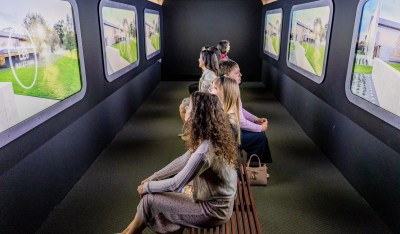
This rectangular room is filled with screens shaped to look like windows on a bullet train.
As the ride takes place, videos of all the countries scroll past on the screens, displaying a little touch of different cultures.


On the second floor, the mood shifts to serenity with the Water Garden Terrace. The display is filled with 12,000 gallons of constantly recirculating water. Large glass windows also connect the space to its natural surroundings while designed to withstand 110 mph winds, meeting Houston’s stringent glass structural codes.

Situated next to the water garden is the Louisa Stude Sarofim Gallery, which is composed of the minimalist installation by artist Lee Ufan, named Relatum. It consists of a raw stone and steel plate, arranged in a way that emphasizes spatial relationships and the quiet tension between man-made and natural forms (we assume). Relatum doesn’t demand attention; rather, it provokes the viewer to think, so the perception is up to the viewer.

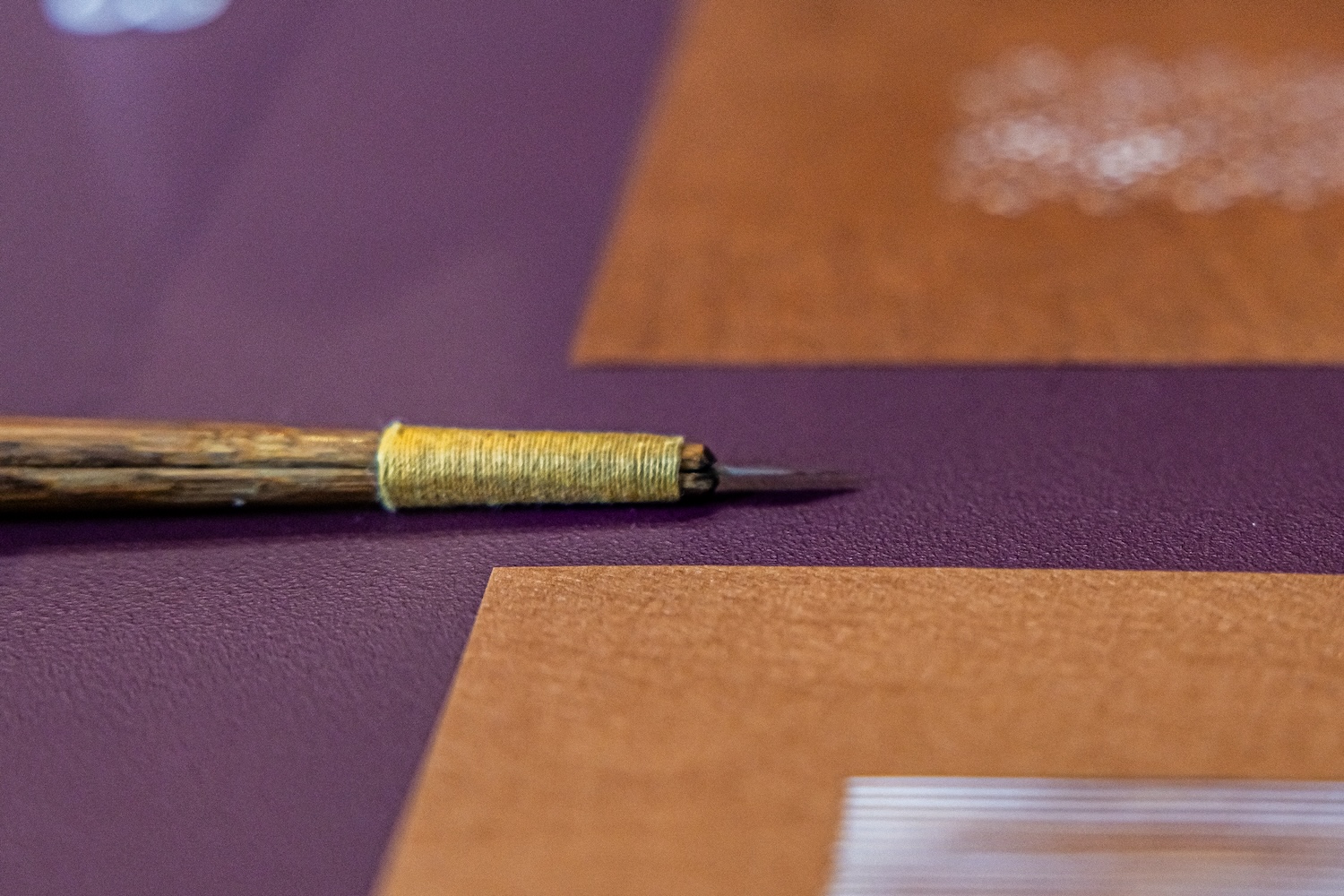
Before leaving, it is hard to miss the Stenciled Elegance exhibit.

The gallery also displayed intricate Japanese art pieces of cutting and using paper stencils to dye textiles. The art combines contemporary international design with an understated elegance that reflects Asian aesthetic principles.


My personal favorite of all Museum pieces was a miniature version of the building.

The exhibition space features rotating shows of traditional and contemporary Asian art, from holograms and push-button lessons on how to say words like “Houston” and “Texas” in Japanese and many other languages.


The Asia Society Texas Center blends both modern design with traditional Asian style. From the exhibitions to the building itself, it combines contemporary international design with modest beauty and calm one may associate with Asia. It’s a special place in Houston where people can learn about and connect with Asian cultures in a meaningful way!


 Center for Law, Engagement, and Politics