
By Allie Plunk
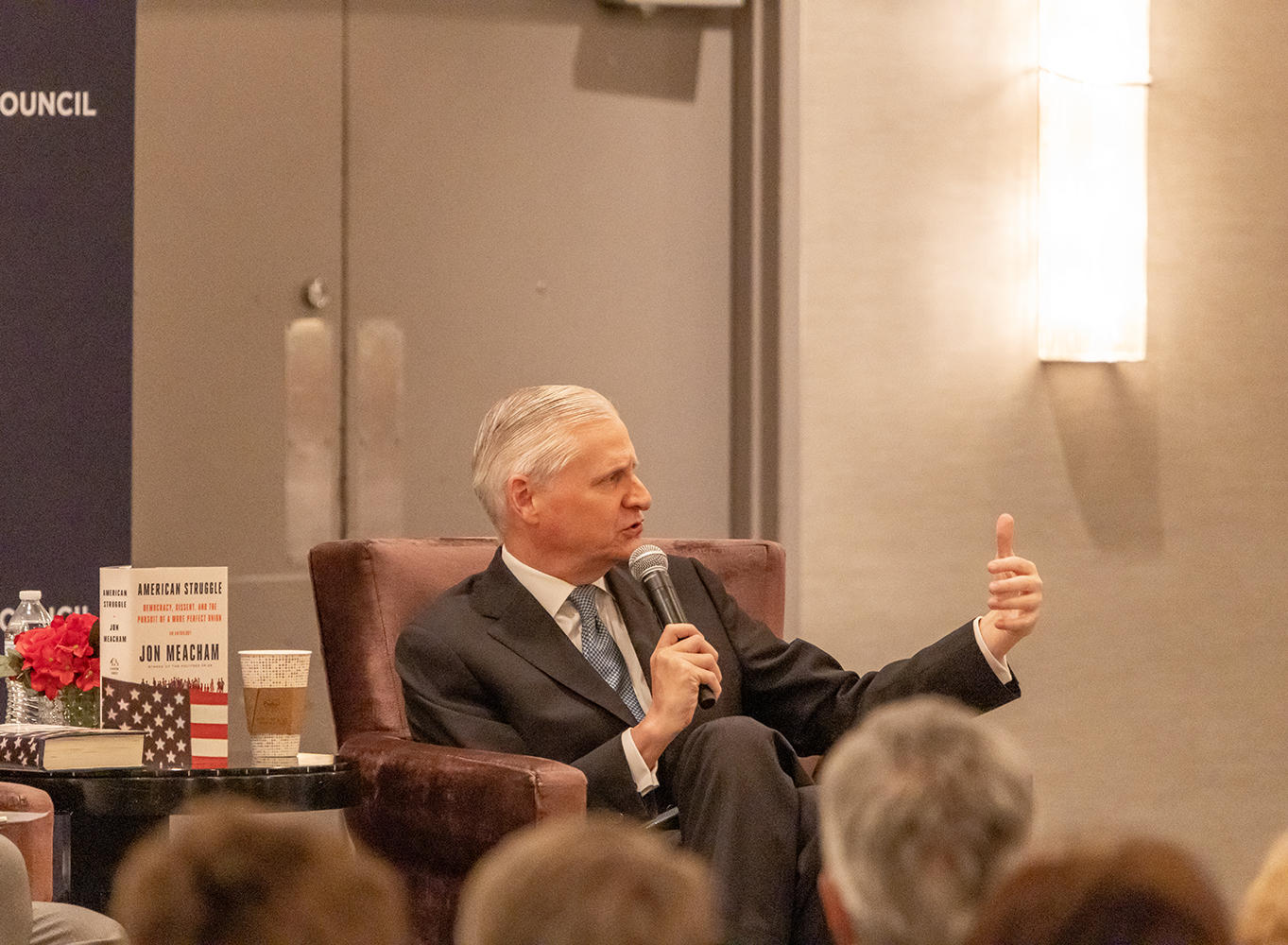
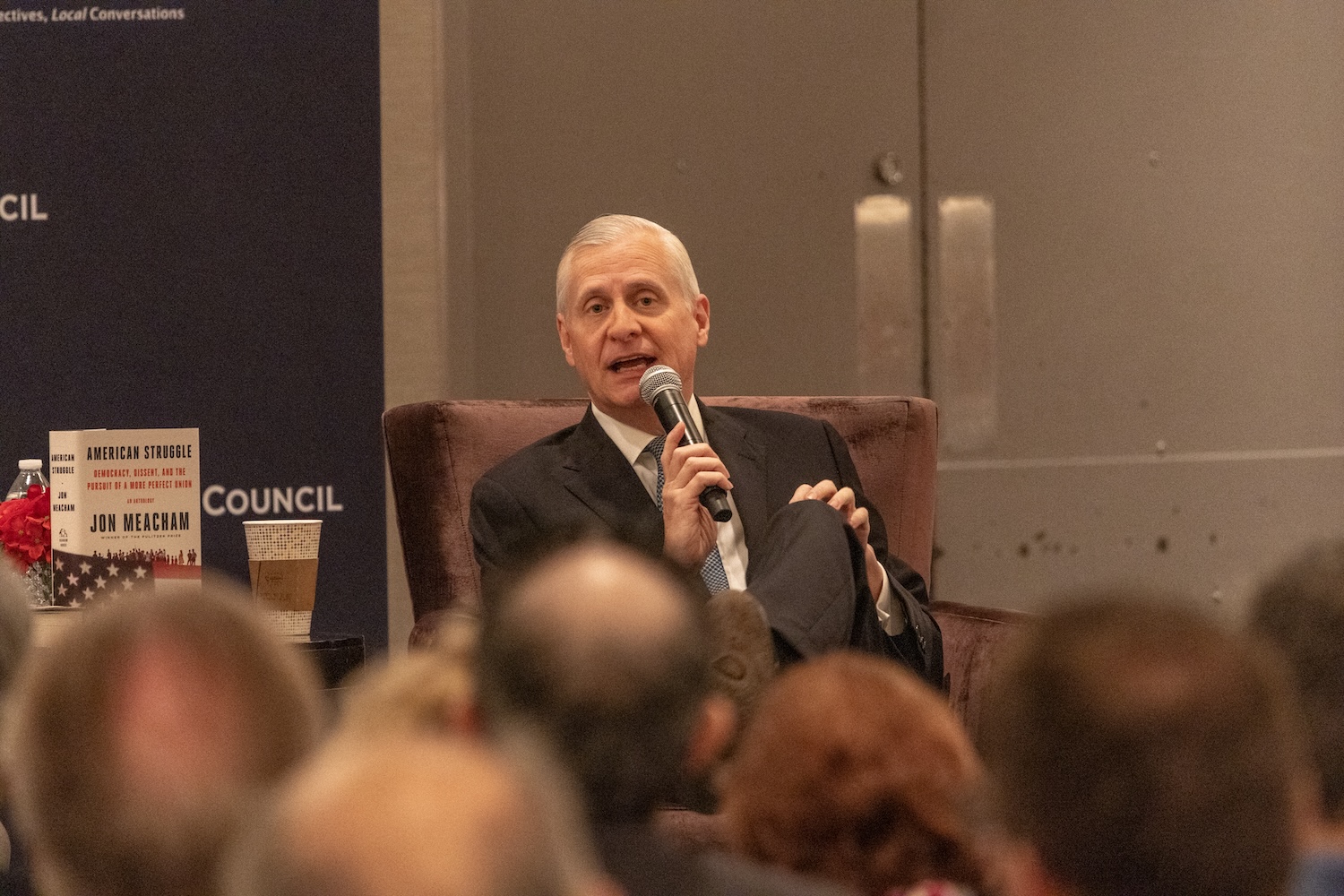
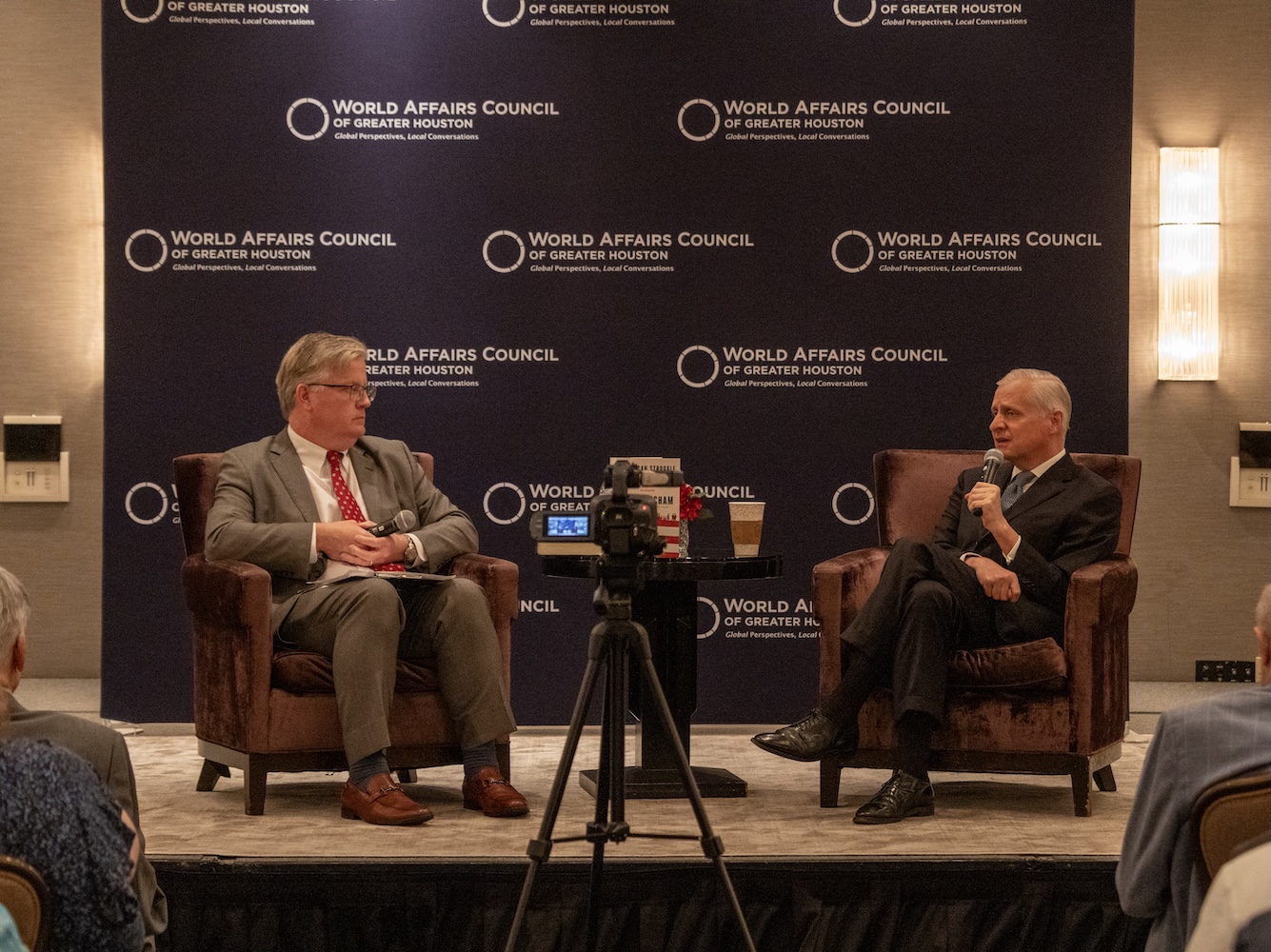
Saturday, February 28th was an eventful day for LEAP students! We travelled to the Royal Sonesta Hotel in Houston for a book talk on Pulitzer Prize Winner Jon Meacham’s new anthology American Struggle, which explores the history of politics.
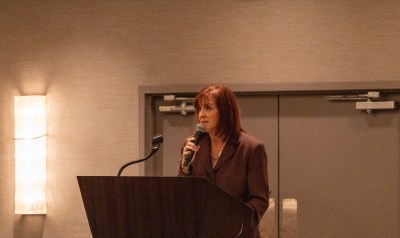
Introduced by World Affairs Council CEO Maryanne Maldonado…
…and moderated by Chief Programs Officer Ronan O’Malley…
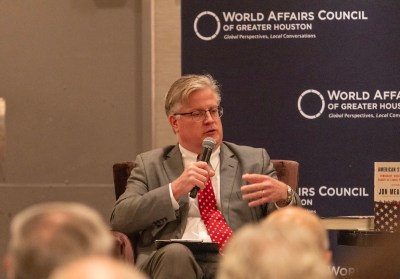
…Meacham discussed American political history, getting into the nitty gritty of the division of party lines with witty humor and anecdotes.
In addition to the United States’ religious roots, he explored the impact of African Americans as far back as the Civil War, such as Frederick Douglass, on the development of political ideology– more specifically, the creation of the Republican party.
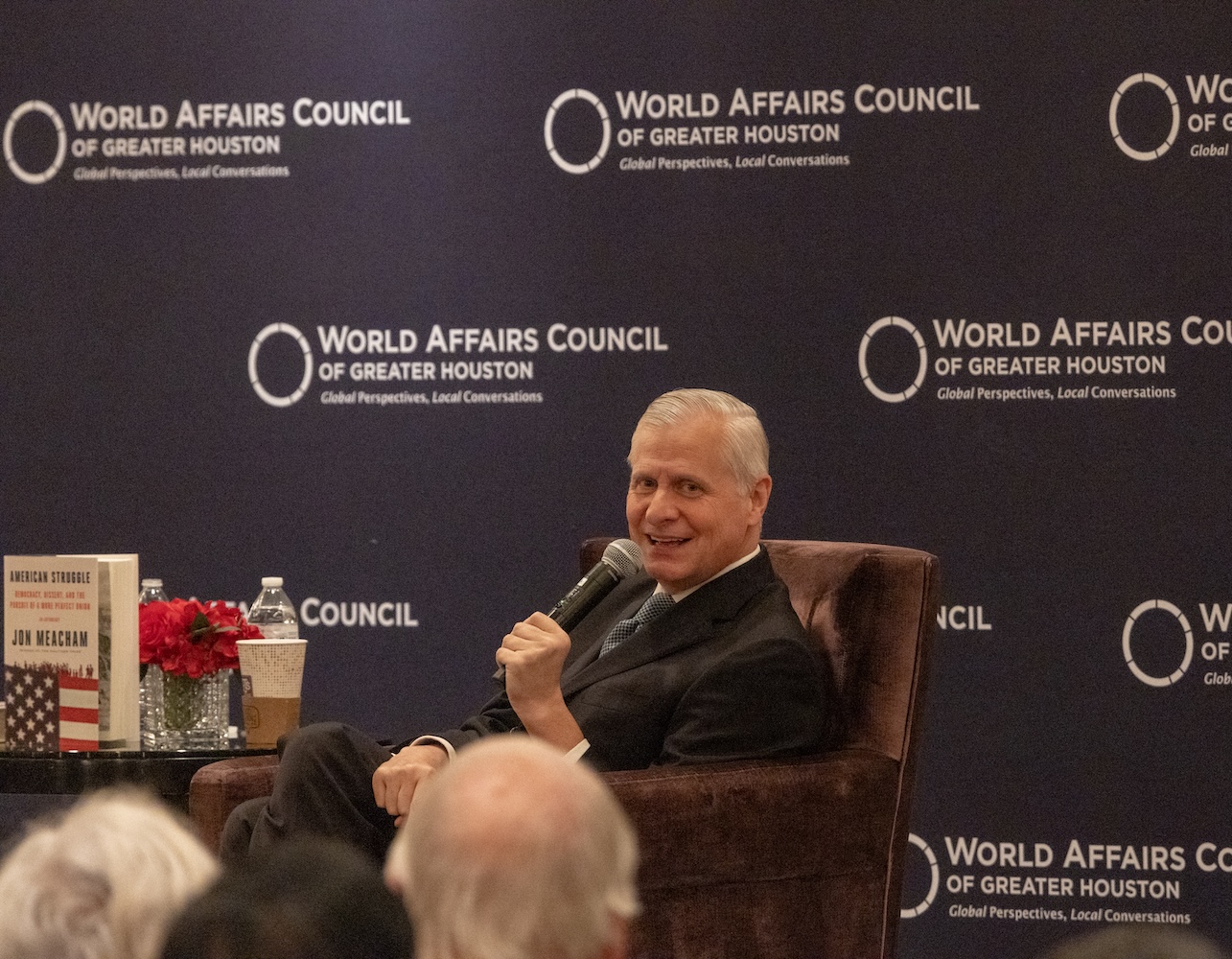
Meacham had several interesting points on the distinction between an “anti-slavery” and “abolitionist” person in the 1800s. These two ideas were once very different, yet today, most Americans would consider them the same thing. This kind of trend is frequent in politics, as ideology and morality evolves. He also unpacked the lasting effect of the World Wars, Great Depression, and Cold War, describing the general idea of modern American politics as “a vigorous debate, from 1932 to 2016, between [the ideas of] FDR and Reagan.”
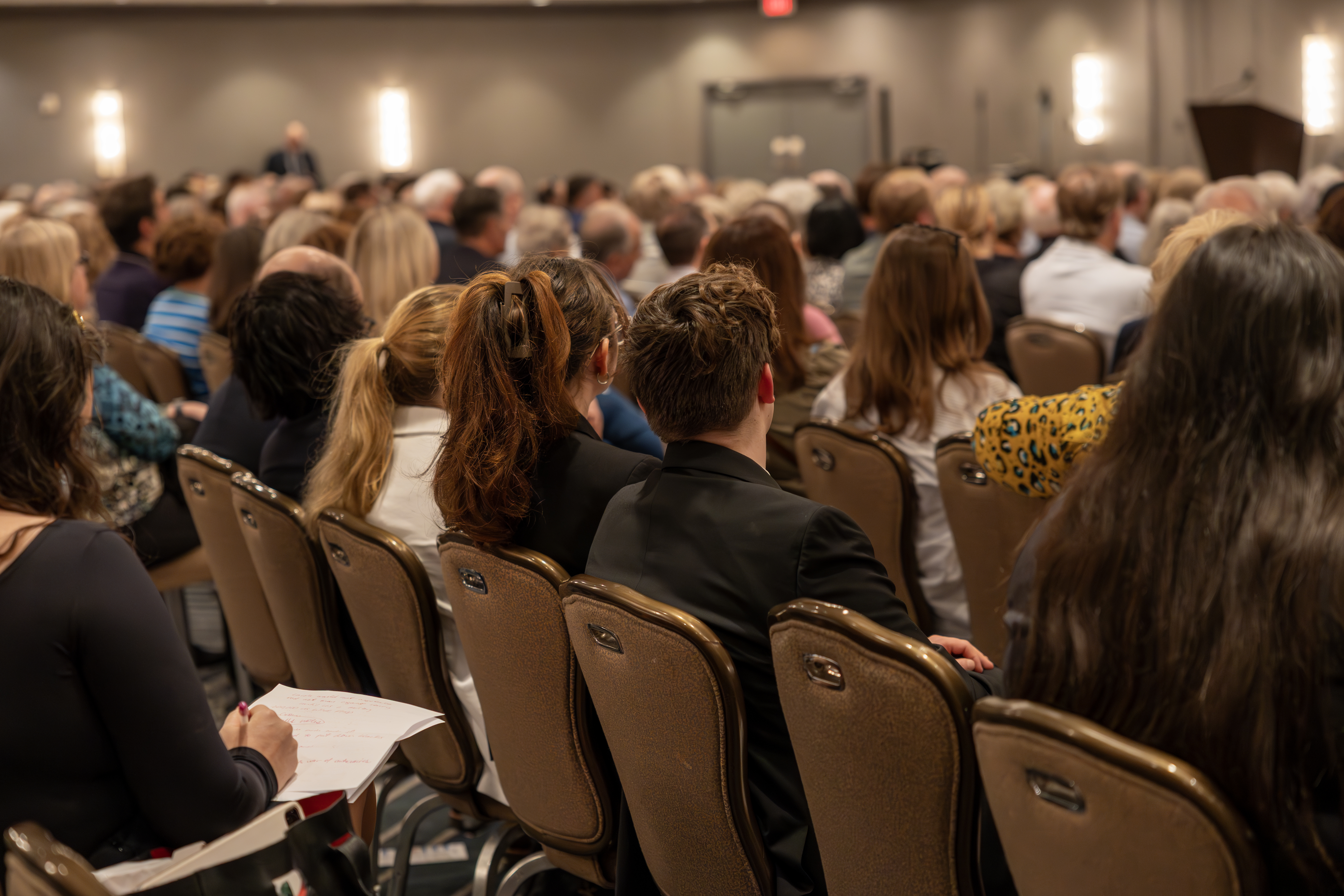
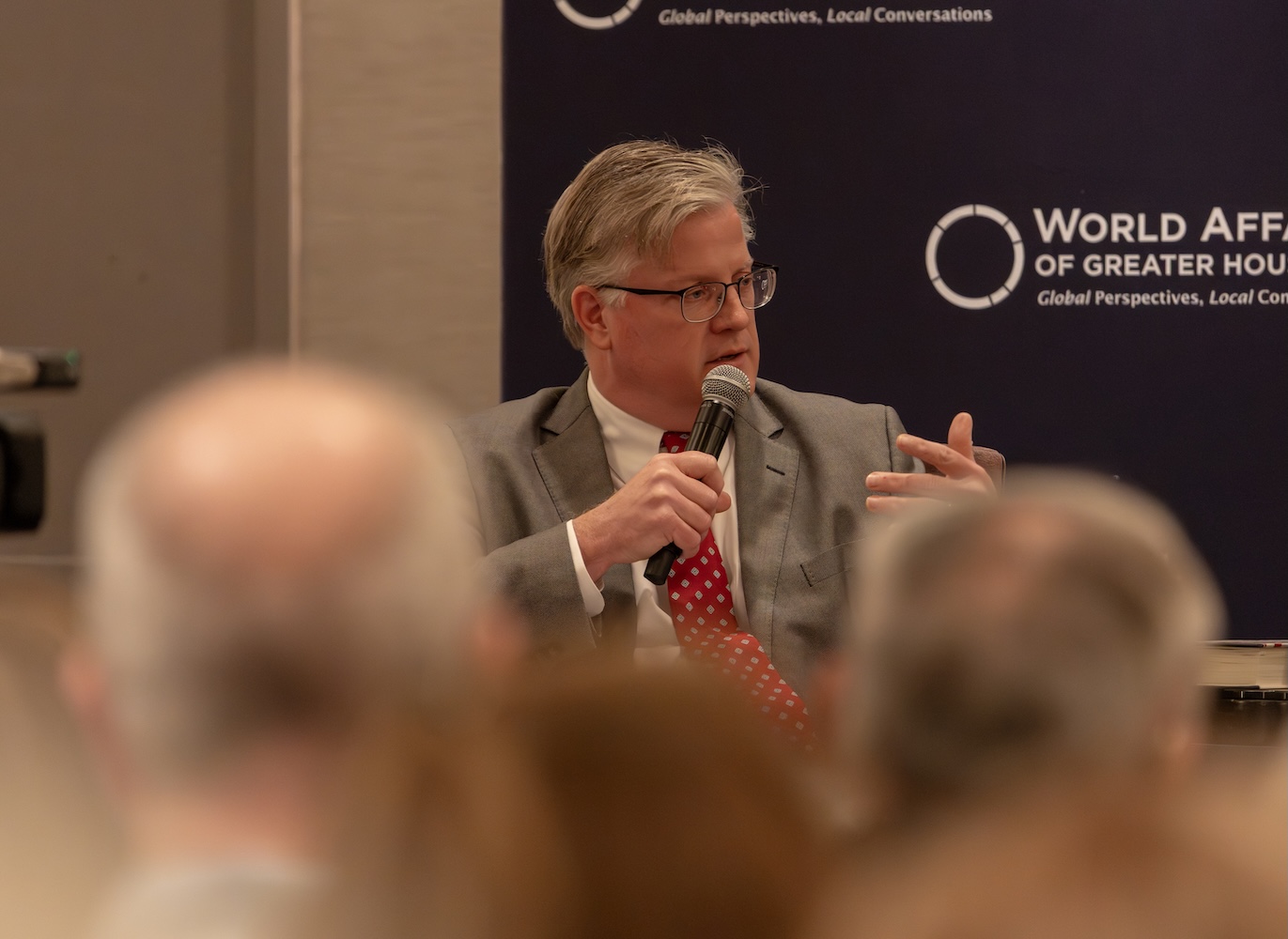
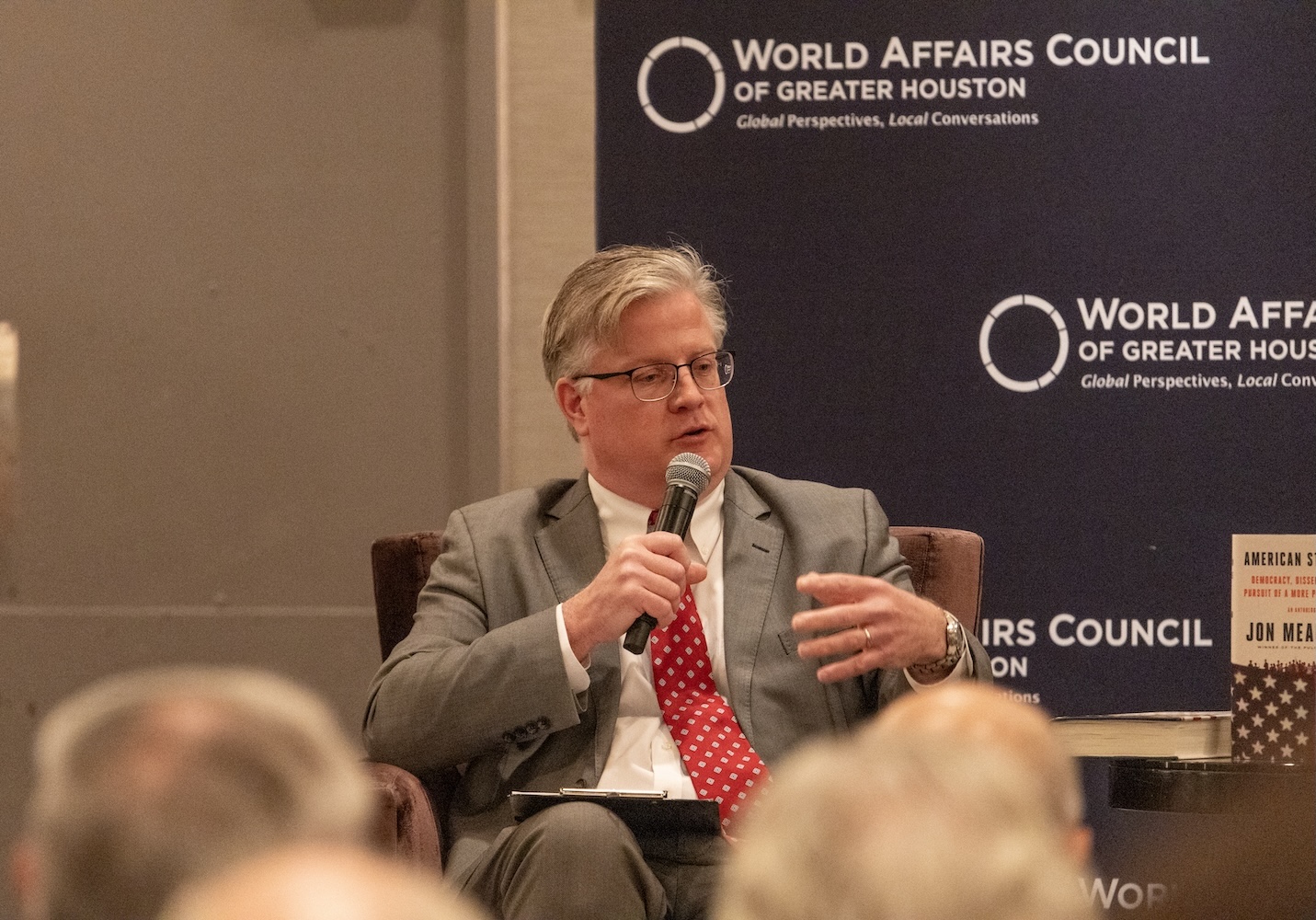
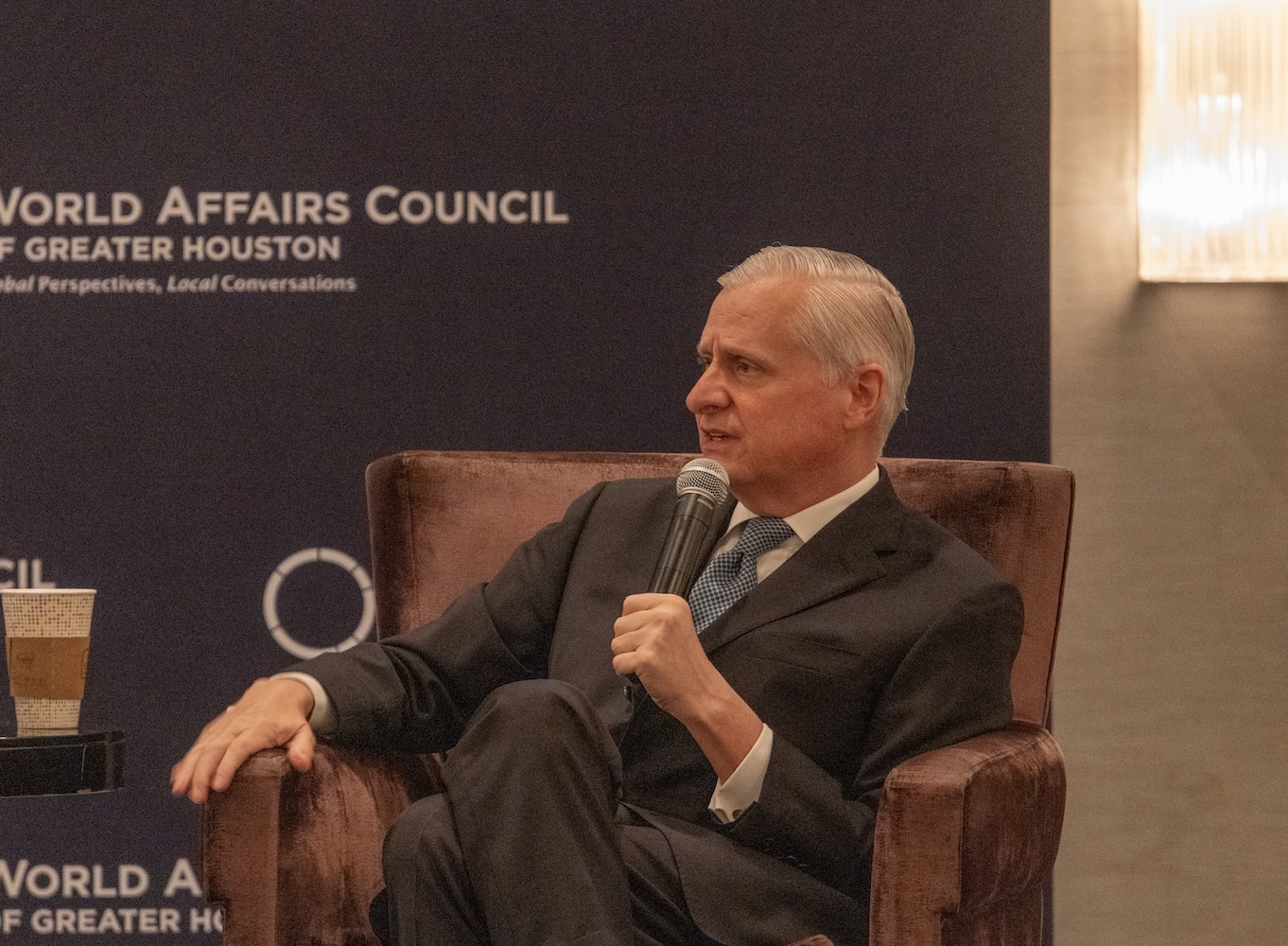
He also reflected on the development of factions within the two major political parties, such as the John Birchers of the 1950s. On today’s politics, he determined that while we do live in a time of political upheaval due to party extremism, this “crisis” is not unprecedented. America’s political history has been littered with events that were perhaps more destabilizing than what we experience today, such as the Great Depression, the rise of the Ku Klux Klan, and the fight for Civil Rights in the 60s. These events shook Americans to their core. While today’s Americans may feel like they exist in a space of political turmoil, the moral and financial roots of a nation were shaken during these events. He suggested that history serves not as a roadmap, but as a diagnostic tool, helping citizens understand how democratic institutions have survived moments of extremism in the past.
Following the talk, we were surprised to see Jean Becker, whose book event we had attended at the Bush School of Government and Public Service just days earlier. After a brief conversation and a quick selfie, we had the opportunity to introduce ourselves to Meacham– a memorable end to a day that brought American political history to life.

 Center for Law, Engagement, and Politics