
Our second day at the Texas Tribune Festival started early, ambitiously, and promisingly. But with an itinerary that included sessions on Criminal Justice, the next legislative session, Dan Crenshaw, the world of philanthropic foundations, local government, and a visit to the TX Capitol, the day was also daunting. But we were beginning with an always popular topic—criminal justice—and that provided just the juice for a good start to a busy day.
CJ and the 89th Legislative Session
by Michelle Moya
Kicking off day two at the Texas Tribune Festival, we started our day at the Criminal Justice and the 89th Legislature panel. The panel featured two prominent Texas State Representatives: Republican Jeff Leach and Democrat Joe Moody. The session started off with a broadcast opening statement from charismatic actor, Glen Powell, explaining the importance of entering the festival with an accepting mind. This opening set the tone for the thought-provoking intersection on criminal justice and its place in the Texas Legislature.

In a time of huge political division, Leach and Moody are proving that bipartisan cooperation is possible and can create a major impact. What makes their partnership so powerful is their commitment to finding common ground, rather than simply occupying entrenched positions. Rep. Leach explained in the discussion that it is not about changing the other’s mind, but finding a way to compromise.

One pressing issue they touched on was the death penalty in Texas and what it involves in the current system. This topic, I am particularly enthusiastic about learning more about, yet it is considerably more intricate than we realize. As seen by national debates over capital punishment, Leach and Moody are leading attempts to have a significant impact in the state of Texas. Their work, aimed at reforming Texas’ death penalty system, reflects a dedication to upholding justice while also acknowledging the system’s fallibility. This case is depicted within the Melissa Lucio case, in which both representatives have worked tirelessly to try and get her off death row. Leach and Moody are helping to ensure that Texas avoids the irreversible tragedy of a wrongful execution. They stated that their biggest desire was to bring Lucio home for Christmas.


Ending this educational and insightful session, one realization I had was as Texans, we are fortunate to have these two dedicated public servants working tirelessly on our behalf. Their collaboration serves as a powerful reminder that, despite our differences, we share a common commitment to justice, fairness, and the well-being of our state.

The Future of Local Control
Most people don’t think about their local government until they need it. Citizens will vote in presidential elections, and maybe for US Congress, but if elections exclusively involve local officials—mayors, county commissioners, and district attorneys—less than a fifth of eligible voters will turn out. It is precisely these officials, however, that control many essential functions: water, emergency services, roads, sewage, and trash, and recently, these officials have been asked to do more with less.

Some of these officials were on hand today to discuss “The Future of Local Control.” Travis County Commissioner Ann Howard; Harris County Attorney Christian Menefee; and Mackenzie Kelly, the only conservative on Austin’s City Council discussed challenges facing local government. Increasingly, these challenges have involved the loss of discretion. The State of Texas has passed a series of laws restricting how cities can set their own policies in areas such as taxes, pandemic response, homelessness, and employment law.
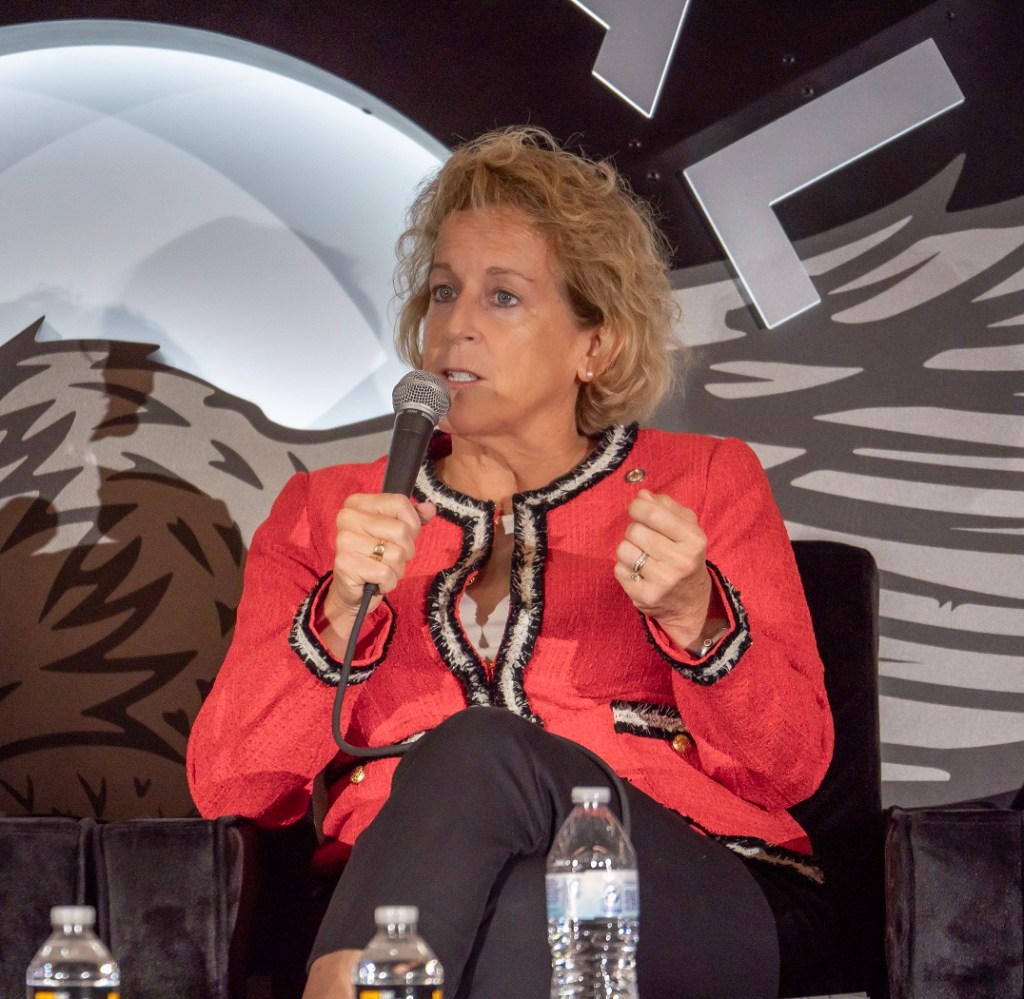

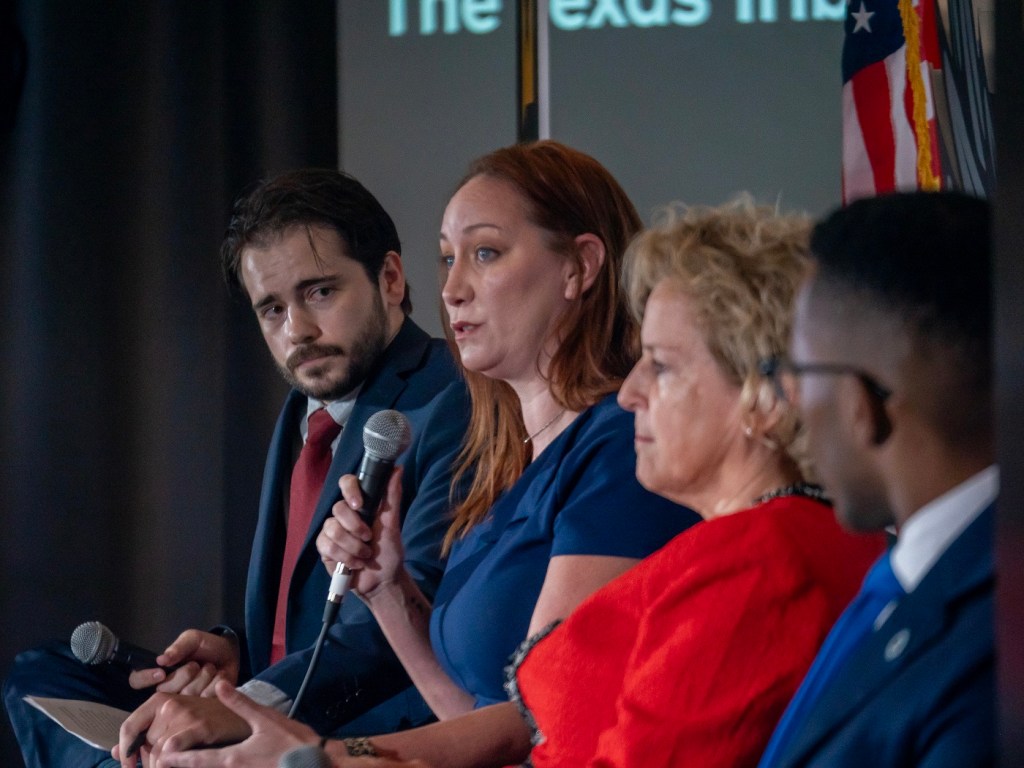
Generally speaking and understandably, local officials don’t look at such restrictions favorably. Indeed, Commissioner Howard and County Attorney Menefee argued that the State of Texas was actually targeting specific local governments—notably Travis and Harris Counties. In the past, cities had almost complete control over their tax rates; today, following the passage of state laws, cities must lower their tax rates if citizens’ property values increase beyond a certain percentage. Homelessness, too, is no longer in the exclusive purview of the cities. After Governor Abbott signed a law banning homeless encampments, however, that is no longer the case. In short, cities must find new and innovative ways to solve problems.

The panelists did not devote their time to such solutions. Harris County Attorney Menefee highlighted many of what he saw as misguided regulations aimed at Harris County and “silly” characterizations of his policy positions. Commissioner Howard delved into some of the structural problems faced by fast-growing regions, shining light on the rural-urban divide, particularly when it comes to issues such as infrastructure, traffic, and development. Councilmember Kelly offered an interesting view of the councilmember’s role, describing her process of learning from her constituents, educating her constituents, and working with residents, businesses, and other governmental entities to ensure the right information is being considered and that saving taxpayers’ money remains a goal.

As if to punctuate the different challenges facing local governments, the questions from the audience covered various topics. One question involved affordable housing; another related question involved the paperwork and seemingly needless bureaucracy of filing for homelessness benefits; still another asked about what cities can do about relieving loneliness in communities.


The particular questions often related to a specific city’s problems, or even a specific resident’s problems. Looked at broadly, however, the questions all related to the essential role of cities in modern life, and whether state governments or the federal government should encroach on local governments’ discretion in solving its own problems. These issues, we found out throughout the day, would be raised repeatedly in different contexts.
Giving Their All
by Caitlin Nortonen
After enjoying the morning session, Saara, Cinthia, Katherine, Maggie, and I decided to spend our afternoon gaining more knowledge on the impacts of philanthropy in the state of Texas.
The panelists included: Allan Golston, U.S. Program President of the Gates Foundation; Peter Miller, CEO and President of the Meadows Foundation; and Maribel Perez Wadsworth, President and CEO of John S. and James C. Knight Foundation. It was evident that their main goal is investing into communities and addressing some of Texas’s most pressing problems.

Mr. Miller’s main focus within the Meadows Foundation is funding grants for those in need pertaining to the environment, education, mental health, and the issues revolving around homelessness in Texas. He shared with us that his foundation alone has practically eliminated homelessness among veterans.
After Mr. Golston educated us on the funding for schools that don’t have significant resources, he stressed to us that our leaders need to give Texas schools more attention. Something quite interesting and saddening was that many educators leave their position after only two years even though they have invested so much money into their teaching careers.

This session was very interesting, and made us all have a better understanding and further respect for our educators!
Higher Aspirations
by Olivia Discon
Higher education is a field of multitudes. A quality education doesn’t just rely on professors and classrooms-it’s shaped by the politics of healthcare, workforce development, the economy, and the state of Texas.
Who better to hear about the current state of Texas higher education than from the experts themselves?

We had the opportunity to hear from the Chancellor of the Texas Tech University System, Tedd Mitchell;

…President of The University of North Texas and former Commissioner to the Texas Higher Education Coordinating Board, Dr. Harrison Keller;

…and President of Northwest Vista College, Amy Bosley.

Each brought their respective experience and insight into what makes a good education and what it takes to build a “Talent-Strong” Texas.
A major point of discussion in the political sphere, and on this panel, is workforce development. A thriving community requires a strong quality of life, which depends on good-paying jobs—and these jobs demand high-quality education. As you could imagine, this can become quite the headache. Fortunately, Texas universities, alongside the state legislature, are working to meet these challenges in real-time. Chancellor Mitchell emphasized the need to pivot our education system to align with industry needs, and all panelists agreed that adopting an “outcomes-based” approach is essential to putting students, and Texas’s future, first.

I found it incredibly interesting to gain a higher-level perspective on the issues Texas universities face while appreciating the resilience and investment that have led to their many successes. The discussion inspired me, as a student, to think about how I can contribute to the growth and service of our great state.
The Senate Next Time
by Katherine Burnett
A Democrat and Republican in the same room, who would’ve thought! Well, for the Texas Senate, this is a common situation. Texas Senators, Carol Alvardo, Nathan Johnson, Kevin Sparks, and Phil King sat down together at the Texas Tribune Festival. Despite party differences, they talked about issues that both Democrats and Republicans can equally agree need to be handled.

The representatives agreed on various topics, such as the misconception that Lieutenant Governor Dan Patrick is “running the building.” Further, the current electricity concern and the need for future alternatives.

It was a unanimous consensus between the representatives that despite arguments over beliefs and personal feelings, both sides need each other, and everything is put aside when it comes to the well-being of the State of Texas. After a discussion about the importance of working together, Nathan Johnson and Phil King filled the room with tension over talk on the school choice bill; though, the kerfuffle did not get far. Nevertheless, it did not stop little slights from being thrown for the remainder of the discussion.


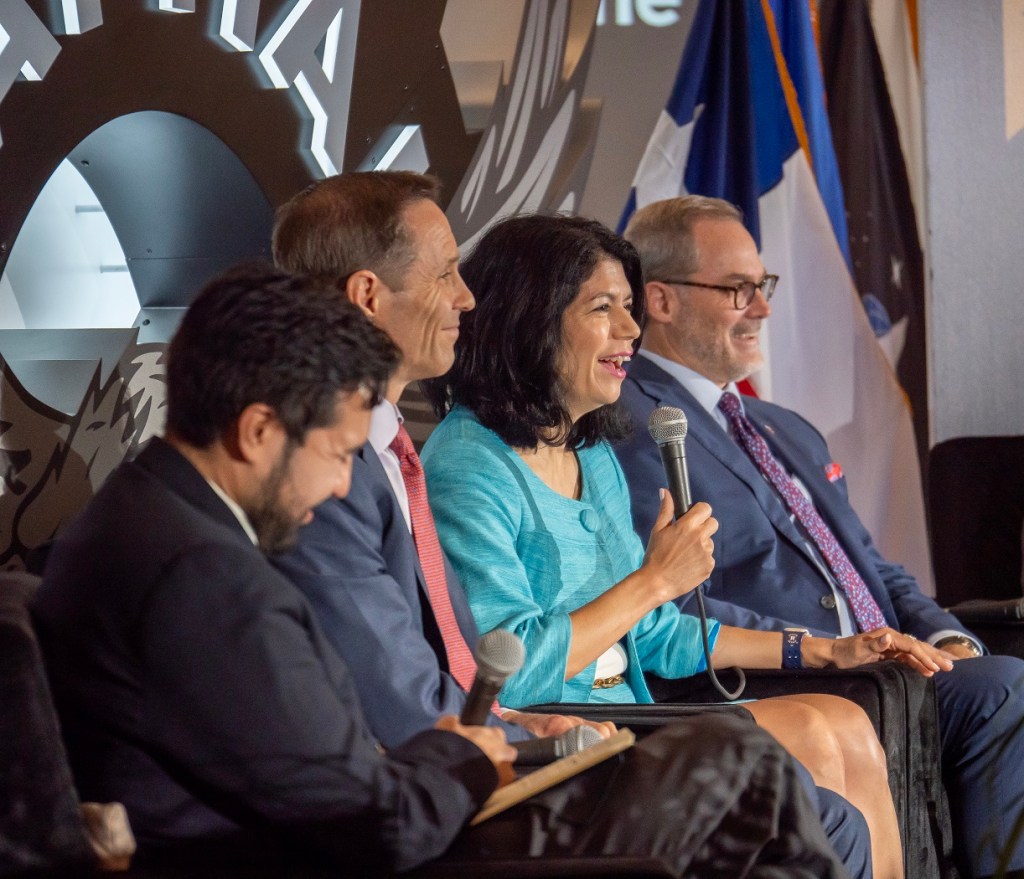
The senators ended on a note of high hopes for the future of housing, electricity, rehabilitation, and various other problems that were brought to their attention during the closing remarks of the session.
One on One with Dan Crenshaw
by Maggie Betancourt
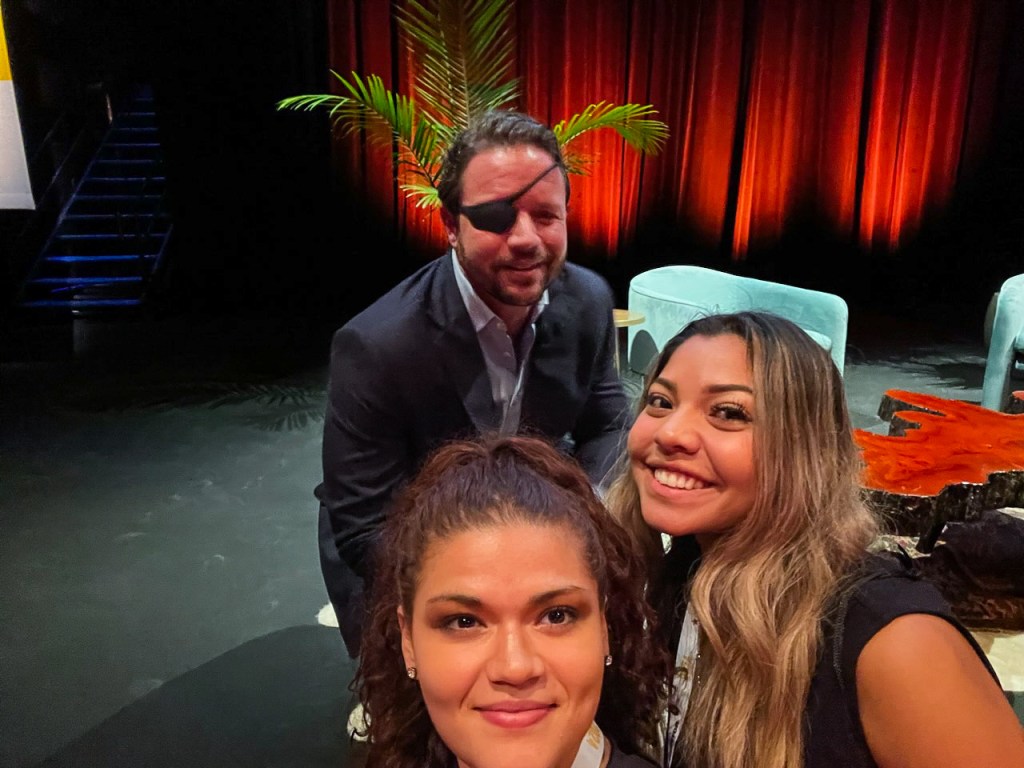
With feelings of anticipation and obscurity filling the theatre as Congressman Dan Crenshaw took the stage, we knew we were in for a contentious discussion. Known for his profound achievements as a former Navy Seal and his work to combat the Mexican drug cartels, Congressman Crenshaw stressed the importance of upholding the values and traditions on which our country was founded. The first question of “who is Dan?” set the tone for the conversation as Congressman Crenshaw defined himself as a “classic Reagan Conservative.” How does that differ from a regular conservative? Well, in the words of Congressman Crenshaw, a classic Reagan conservative believes in trying to conserve the nation’s founding and less on “making people happy.” He emphasized that instead, there is need for “protecting the laws that give people the ability to be happy.”

The crowd began to express strong emotions as Congressman Crenshaw articulated his opinion on how conservatives are viewed in the media. As he explained that people tend to let personal distaste for political figures cloud their judgment over policies, the crowd began to “boo.” The tension subsided as Congressman Crenshaw began to speak about his accomplishments with the FIZA Act, which allows wiretapping to detain the cartel members integral to the organization. He also discussed his works with the “Youth Summit,” which is a non-partisan program that prides itself on educating high school students on how government works along with how to make it a career.


Although Congressman Crenshaw’s beliefs were deemed as controversial, his patriotism and love for the American people and the nation shined brighter. The conversation ended with questions from the audience with one asking what he would be doing for a career if not a politician. Wrapping back around to his introduction, Congressman Crenshaw answered by saying he would have never left the military, as being a Navy Seal was all he dreamed of as a child.

Texas State Representative Salman Bhojani
by Saara Maknojia
The 88th legislative session marked a historic moment when two Muslim Texas State Representatives were sworn into office. To have a deeper understanding of this moment, we headed to the Capitol to meet with Jordan Villarreal, the District Director for Representative Salman Bhojani.

Mr. Villarreal began with giving us a brief overview of Representative Bhojani’s office and explained the role of a District Director, who can be referred to as a “hawk,” as his daily duties comprise of keeping a close eye on all the counties that fall under District 92. While engaging in the conversation with Mr. Villarreal, we learned that Representative Bhojani stresses the importance of allowing local governments to have the freedom with their policies. Mr. Villarreal expressed how Representative Bhojani will continue to fight against the recent controversial topic over the legislation concerning school vouchers. Additionally, that he would continue representing students of different religions by endorsing bills that allow public holidays for respective religions or cultural festivals, without being penalized.


To our surprise, Representative Bhojani just so happened to be in his office before session! We had an incredible opportunity, before the hustle and bustle of the 89th session, to learn a bit more about him as a person. Since I have personally followed his campaign closely throughout the past legislative session, I had the chance of showing my appreciation for all that Representative Bhojani has accomplished. As the first Muslim State Representative of Texas, along with Representative Lalani, Representative Bhojani has diversified our state legislation. For the first time in history, we witnessed two Muslim representatives being sworn into office with a Quran!
Representative Bhojani then showed us the Quran which he had been sworn into office with. We were shocked to hear the 200-year-old Quran was read by John Adams and the other Founding Fathers so that they could better understand the religious texts; this provided an outline for Sharia Law when drafting the United States Constitution.

Our unexpected, yet wonderful meeting with Representative Bhojani was definitely a learning experience, as we embraced the historical impact of his term in office!
 Center for Law, Engagement, and Politics