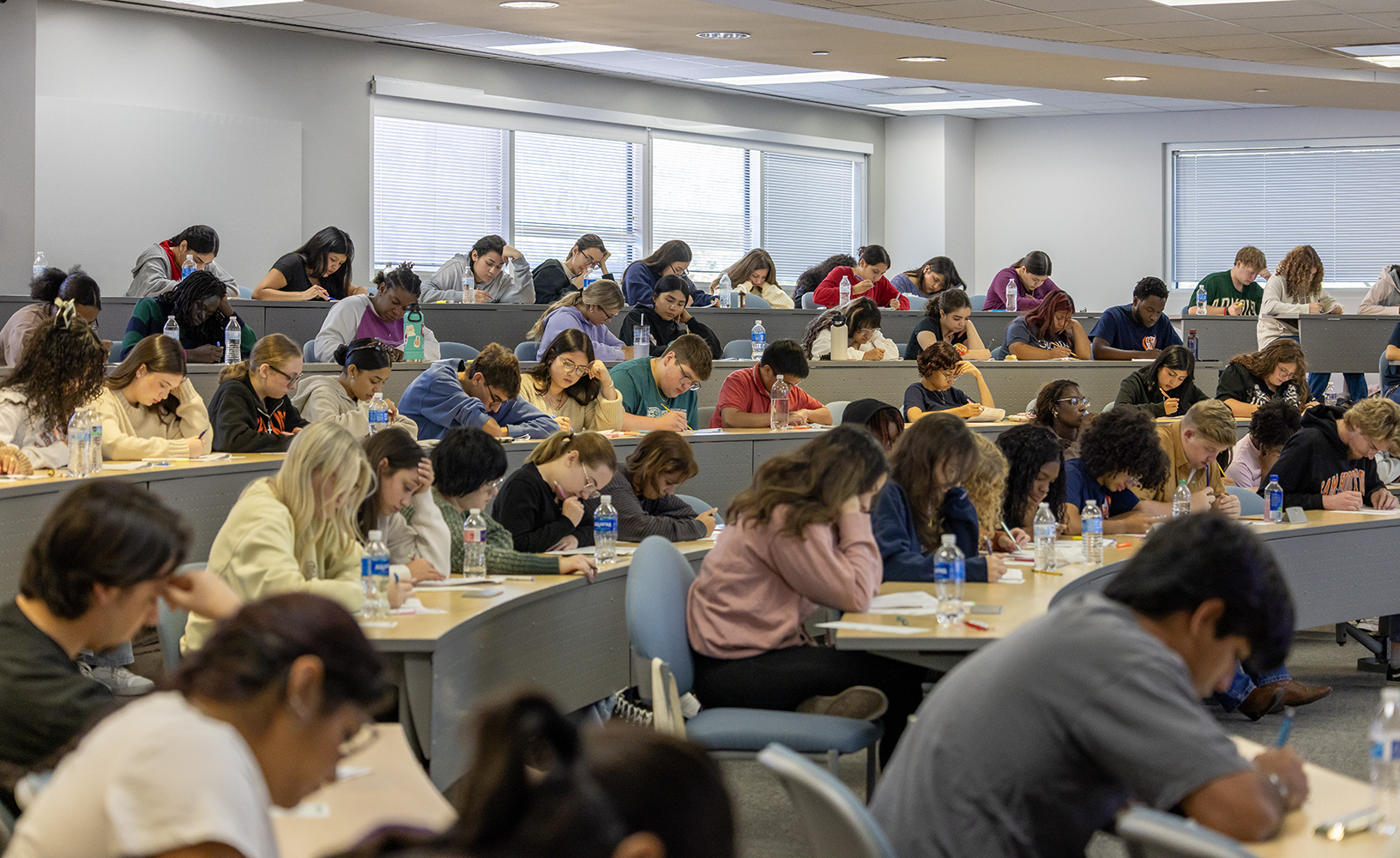
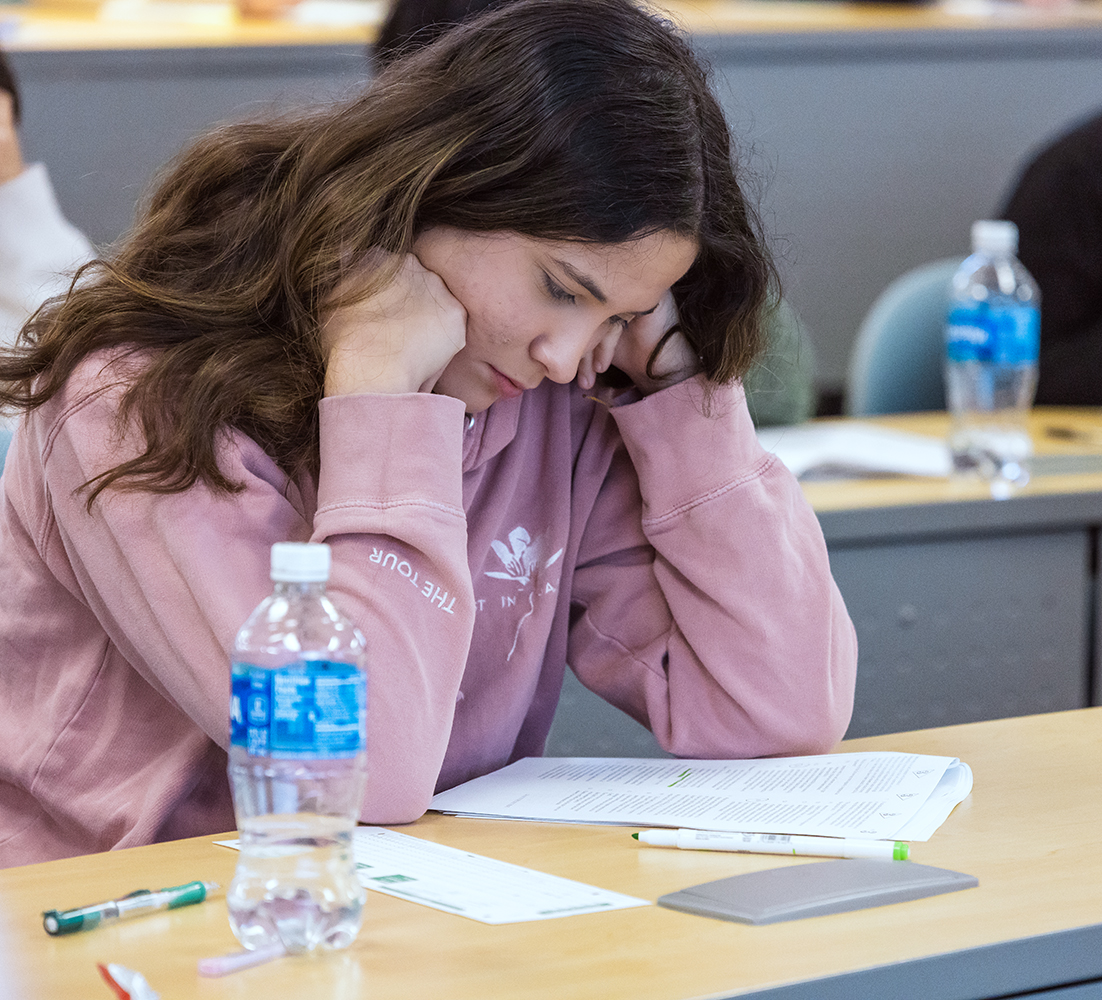
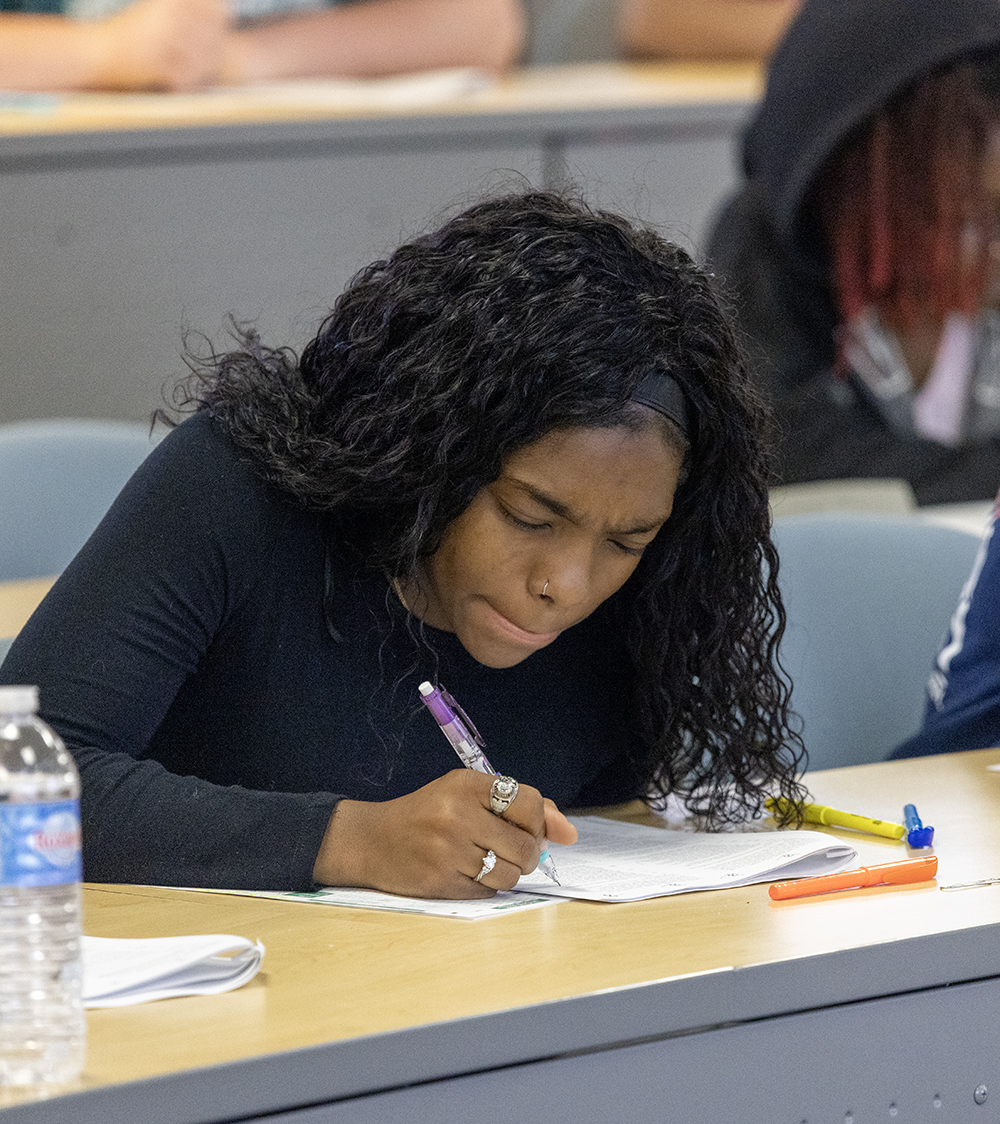
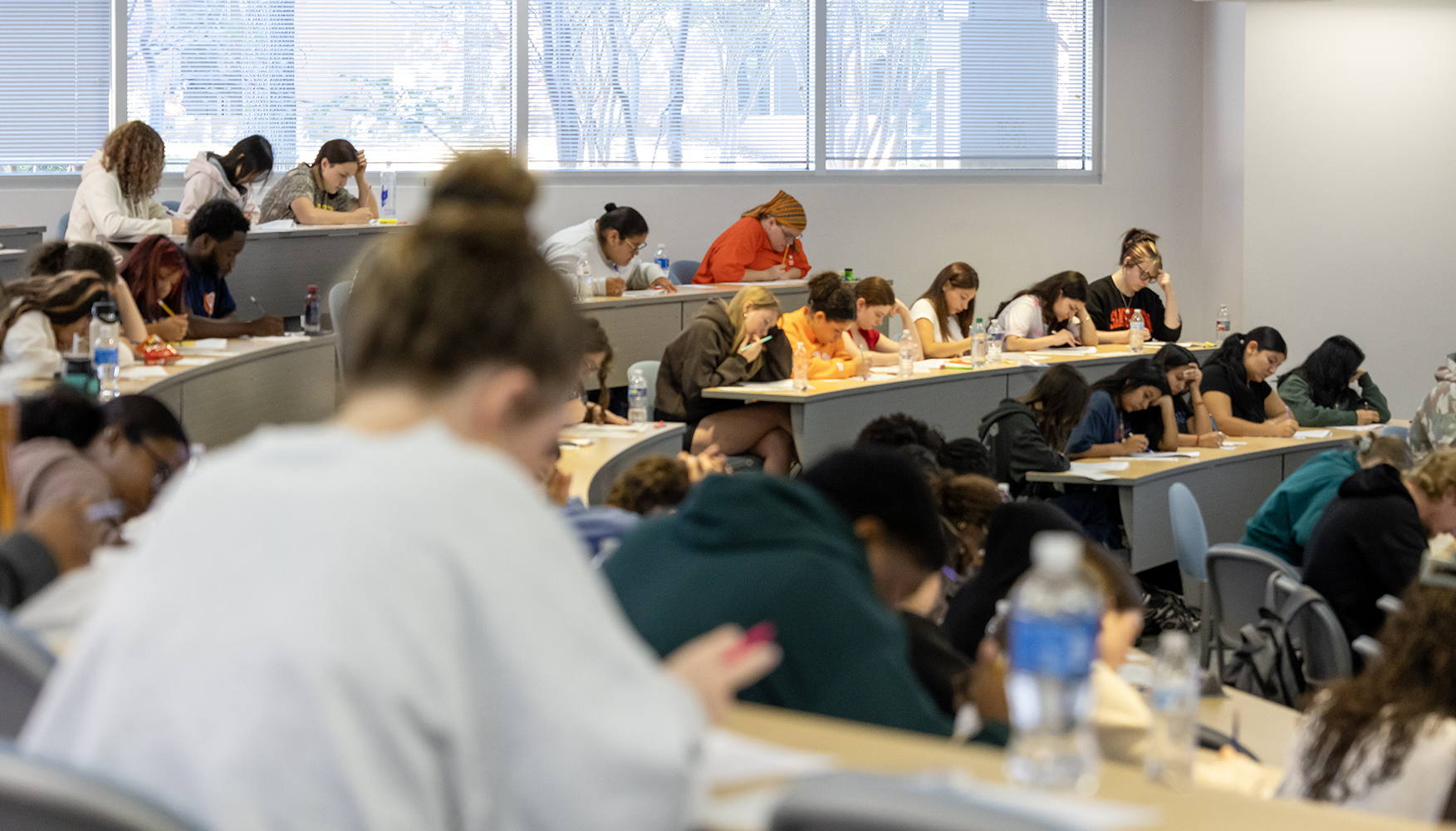
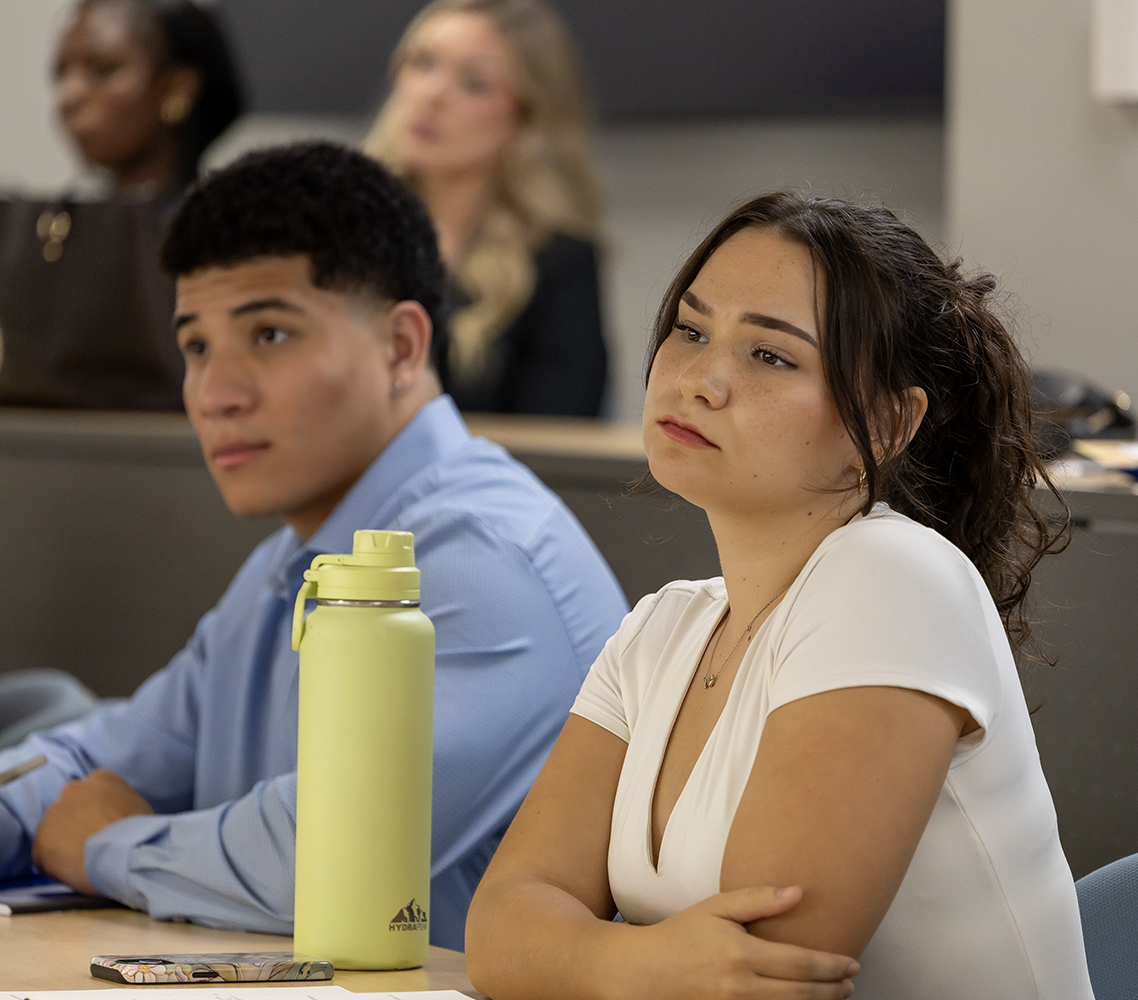
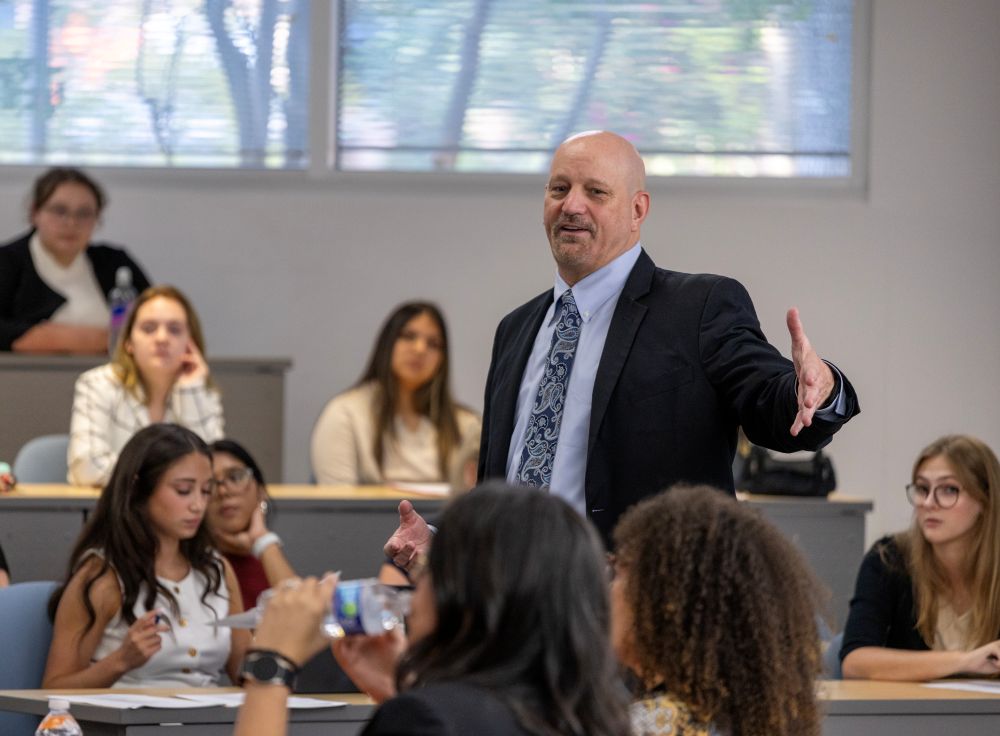
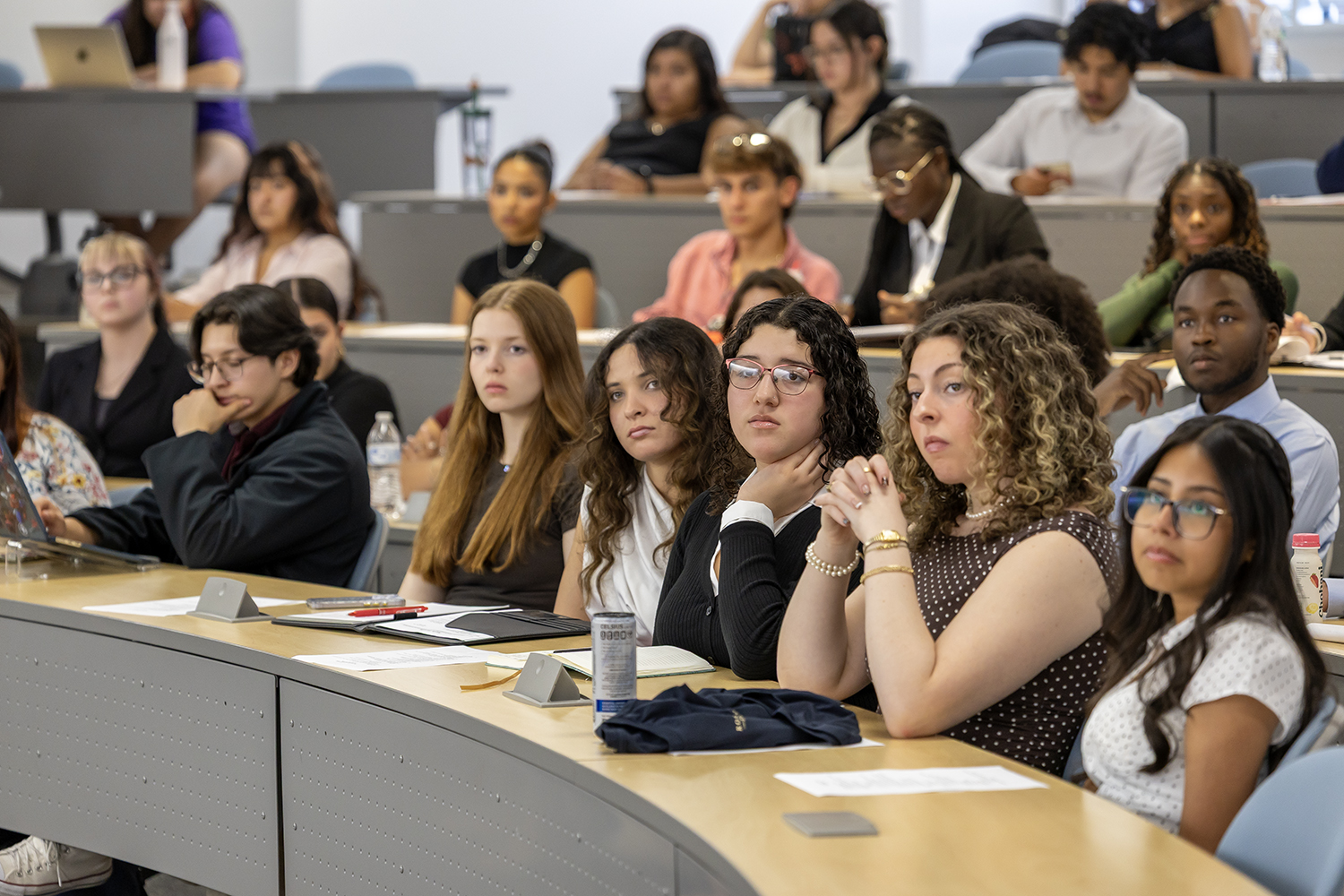
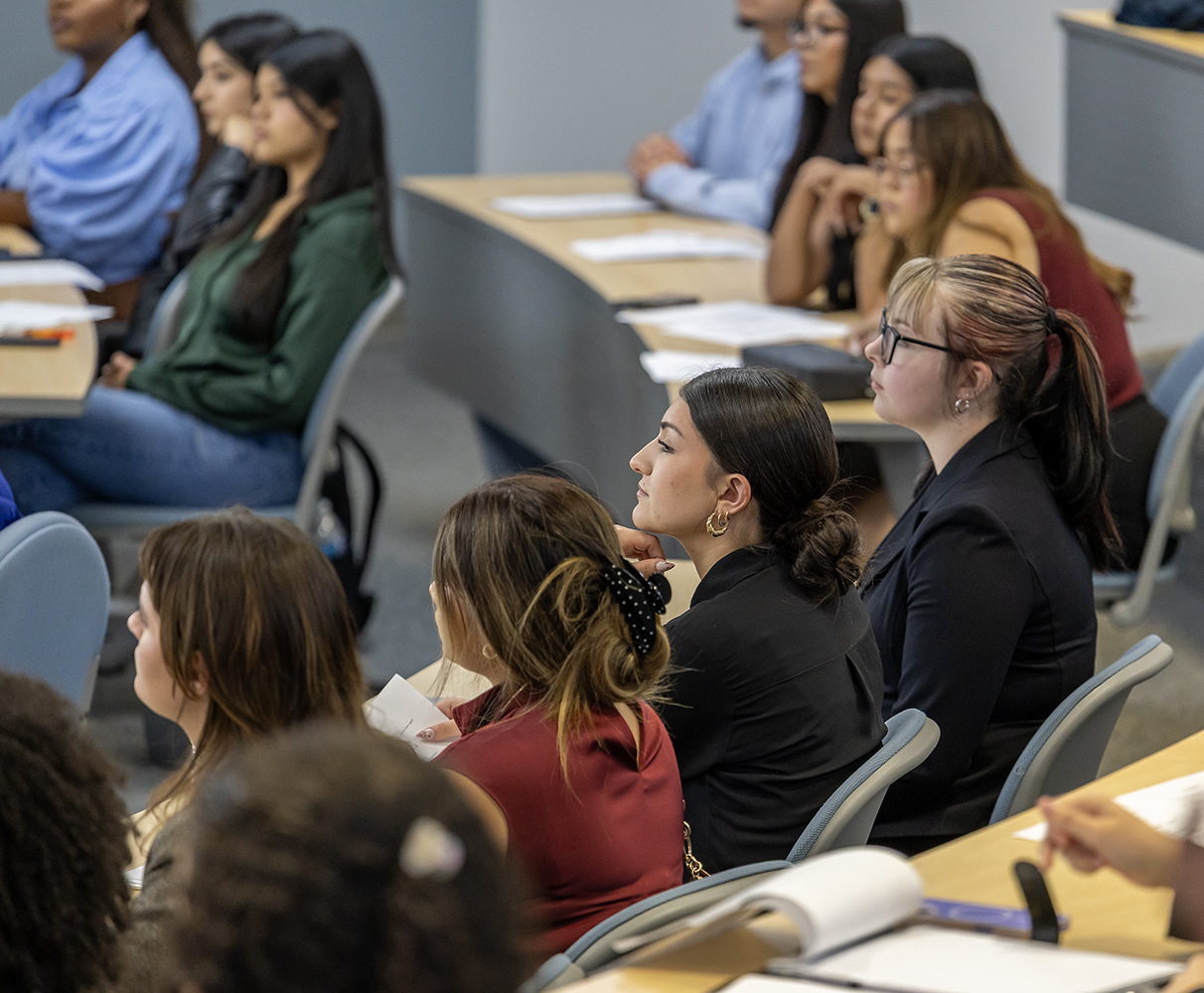
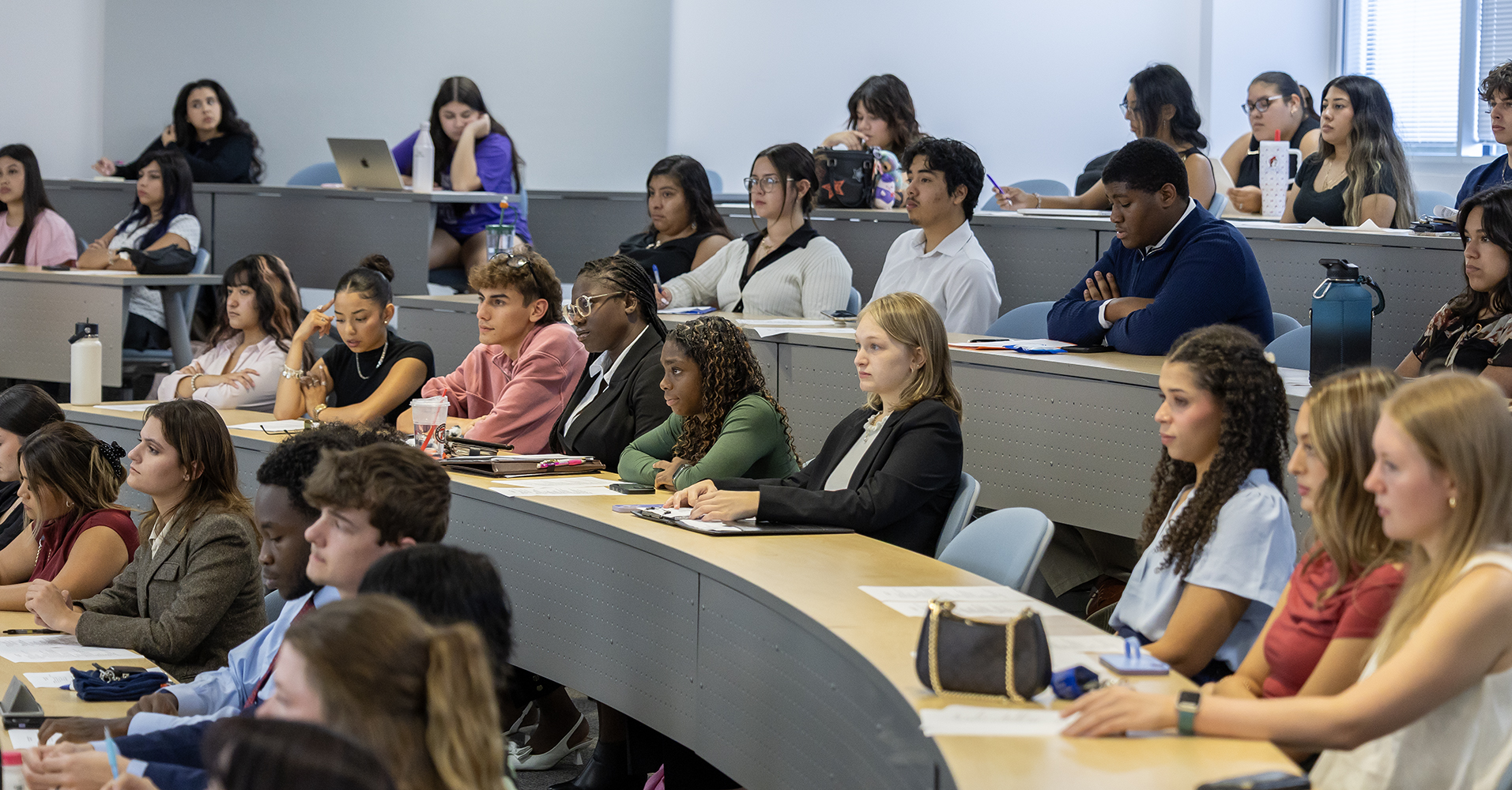
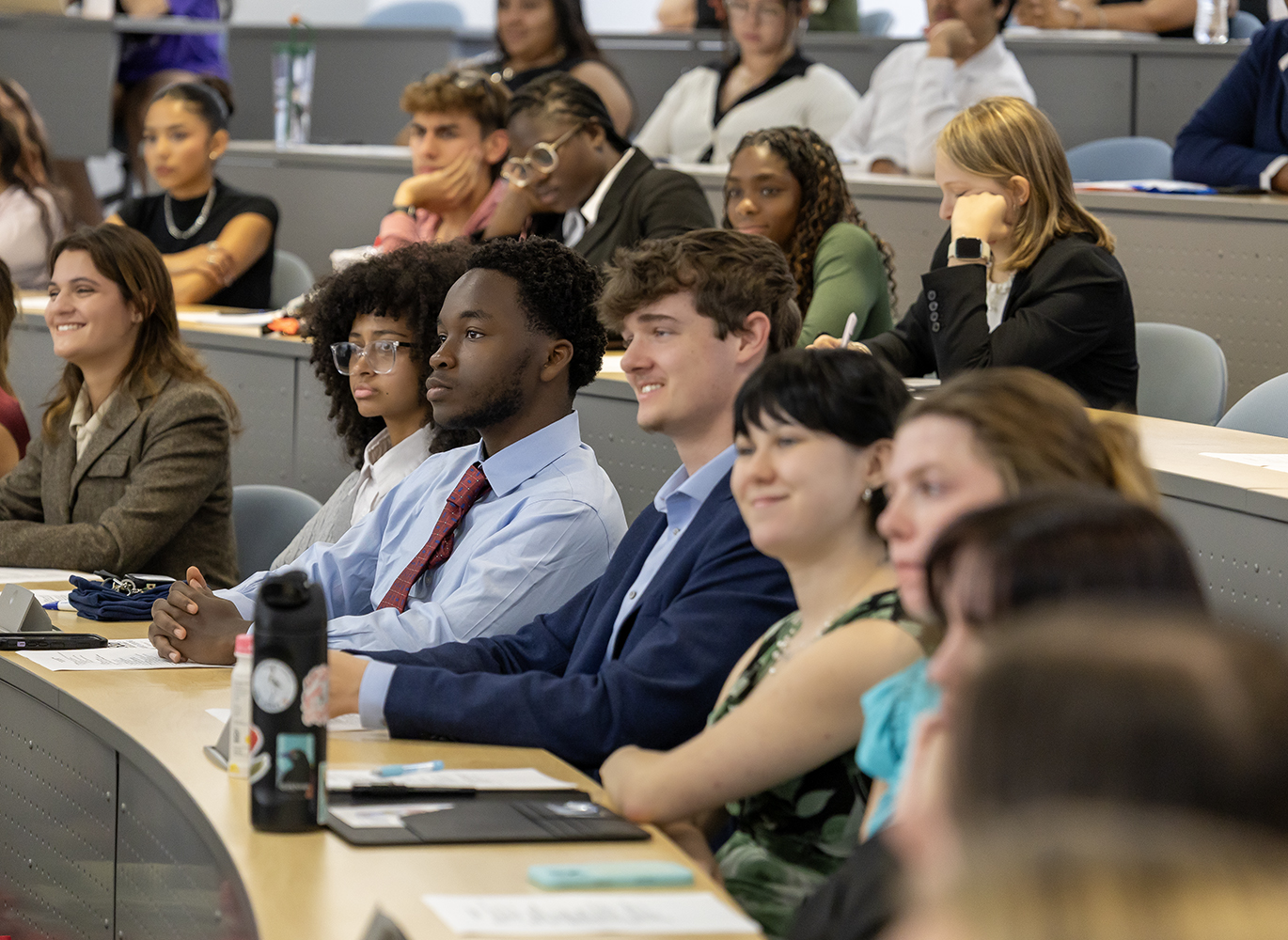
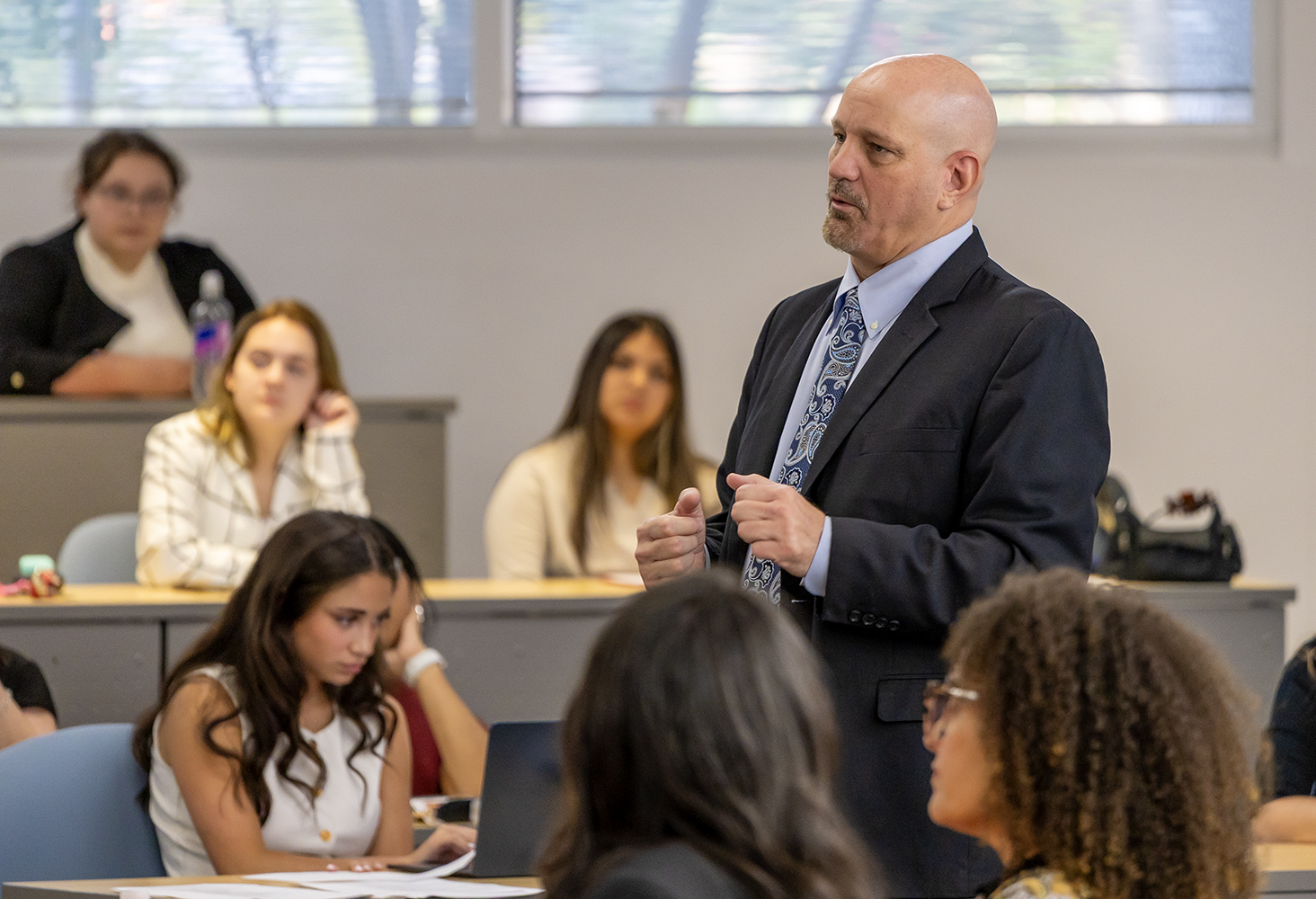
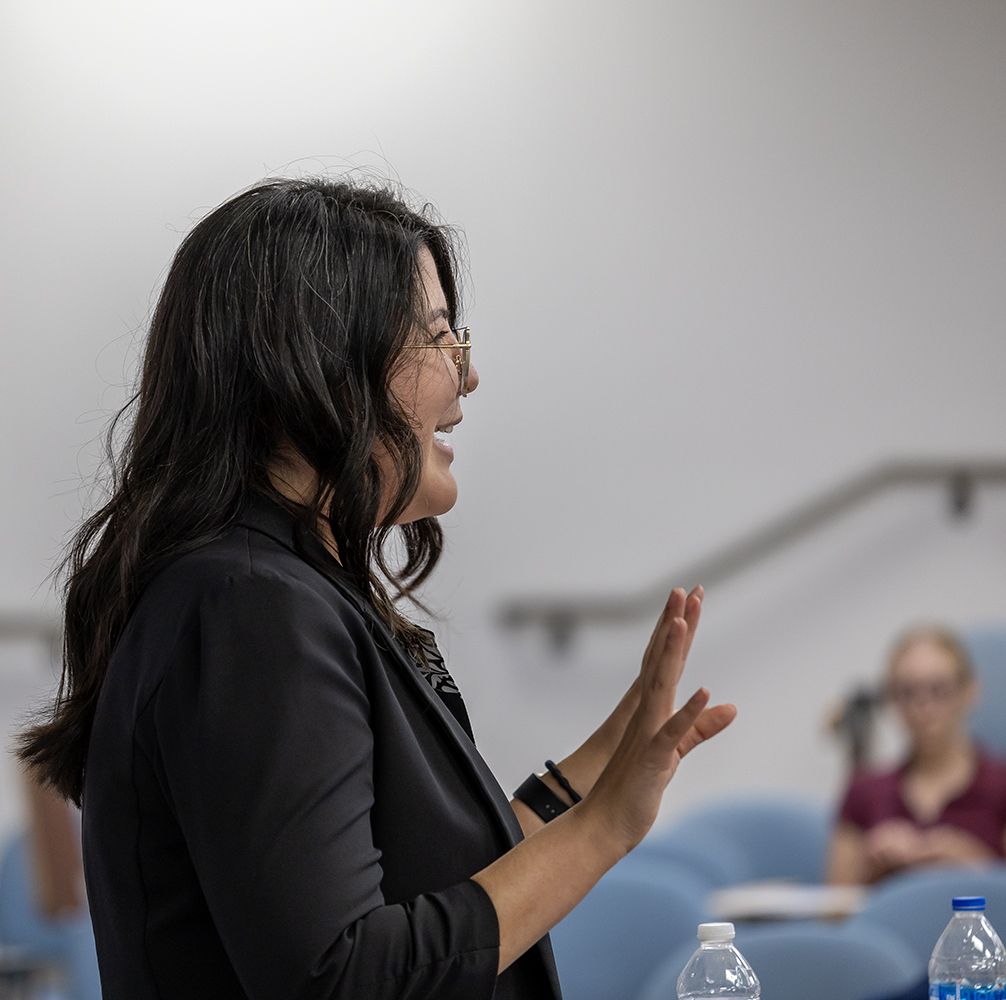
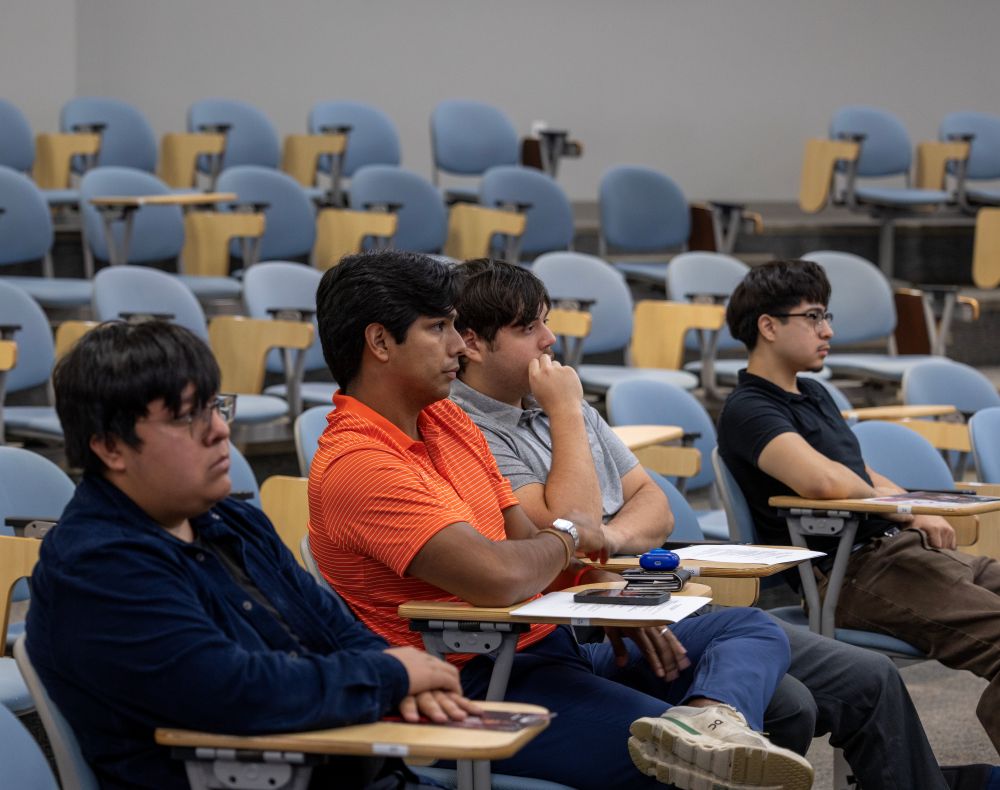
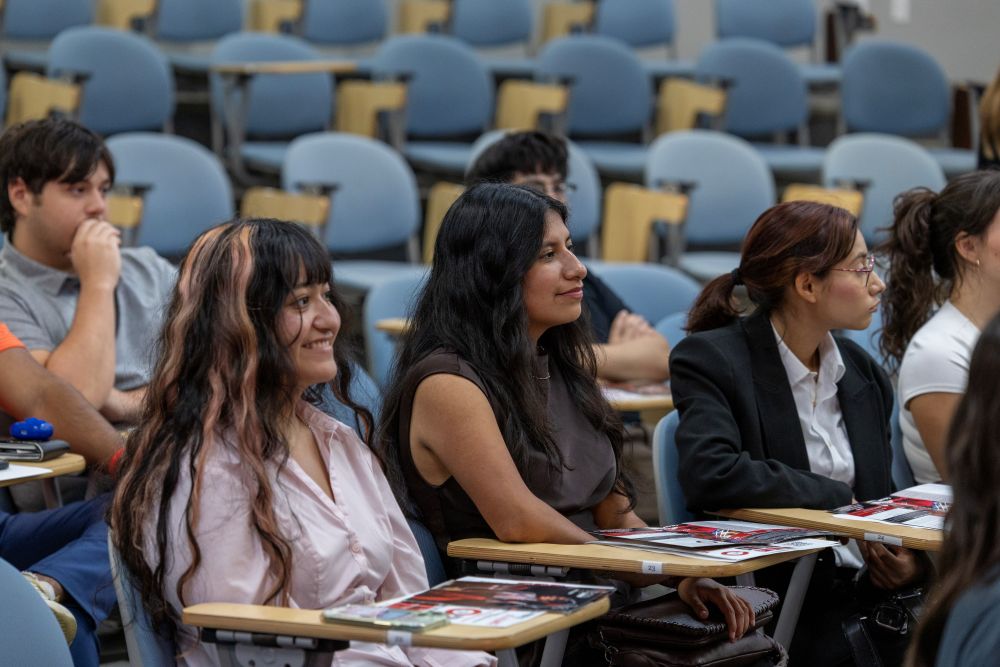
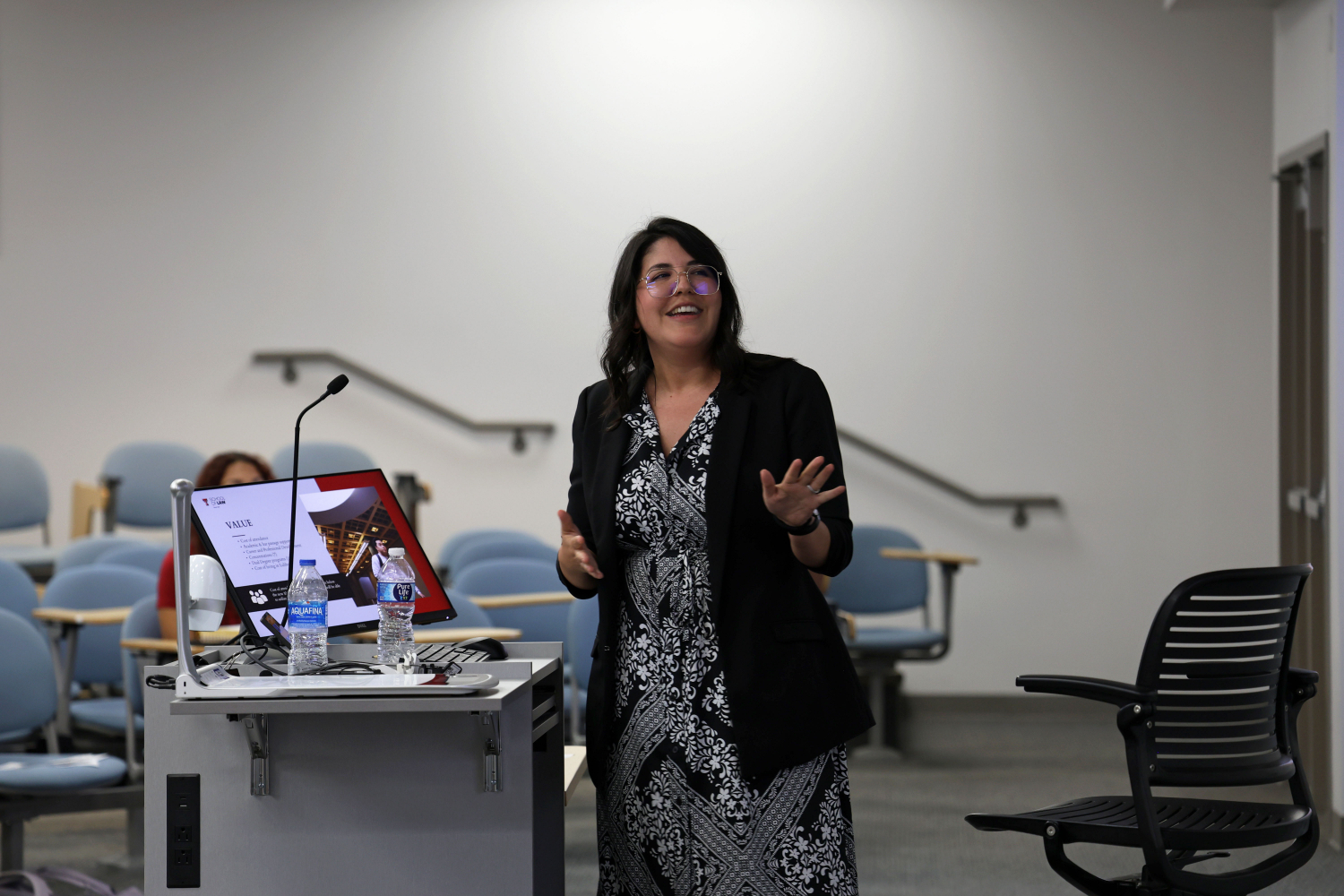
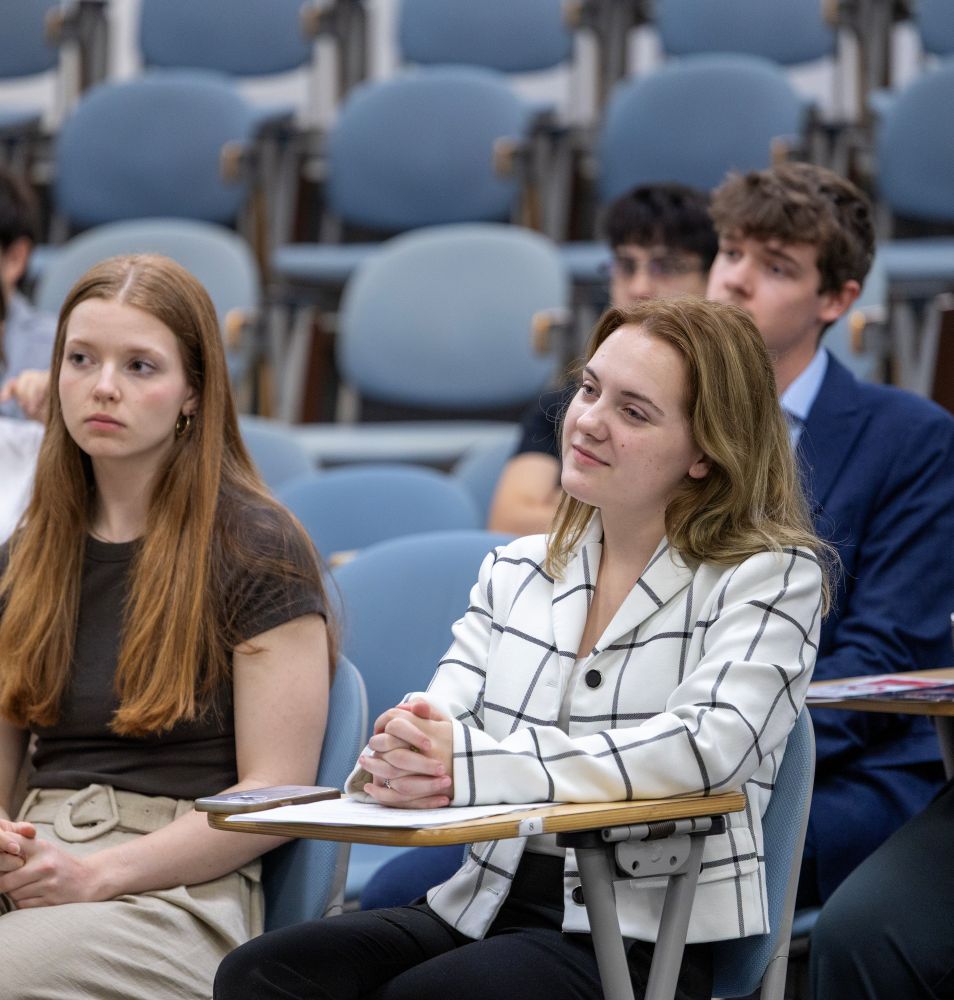
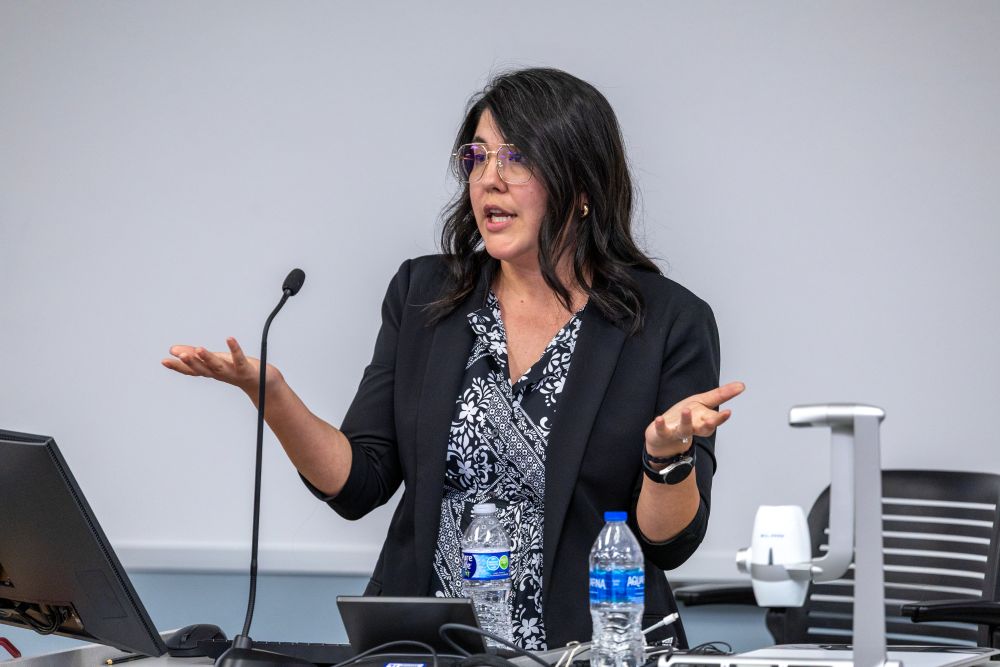
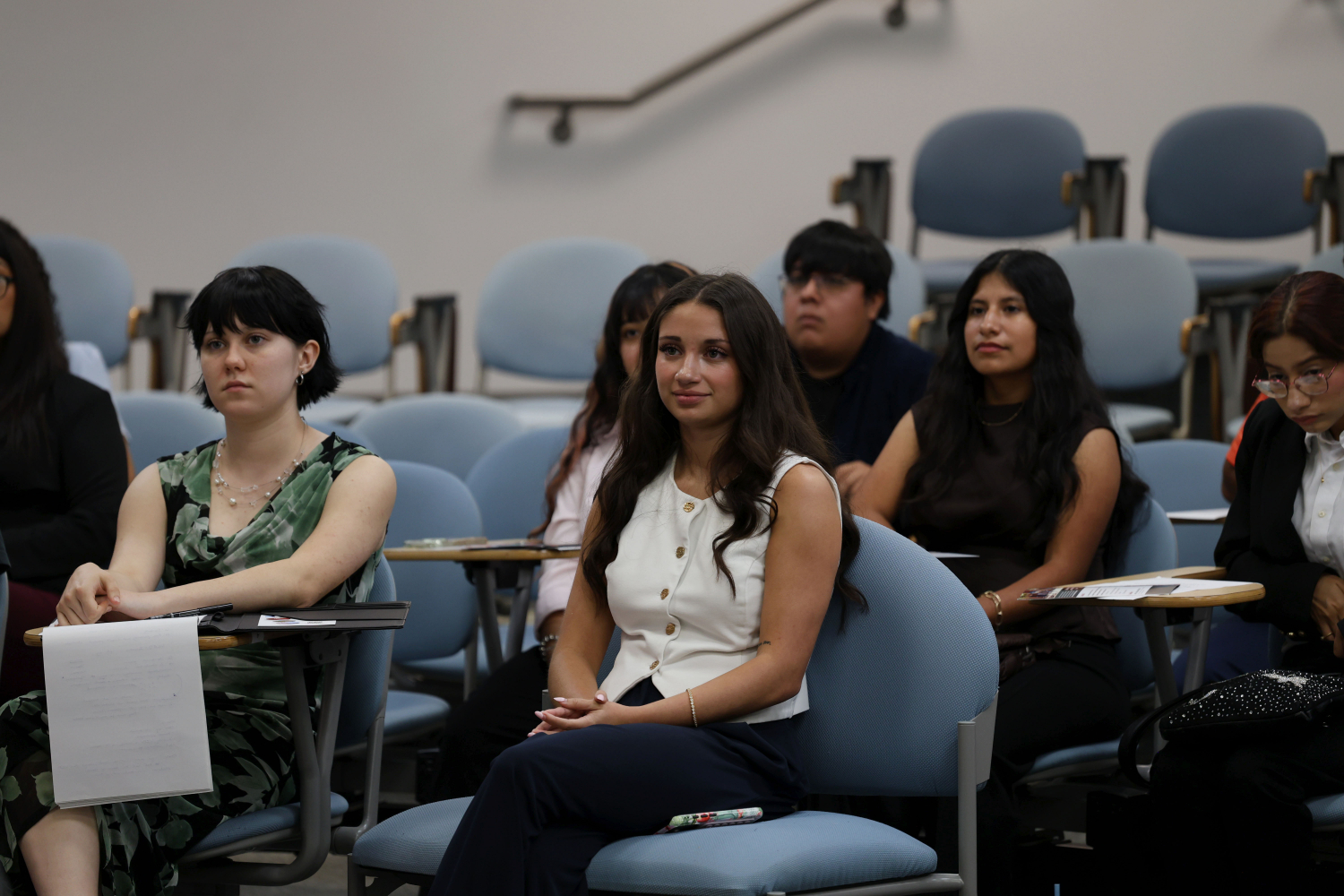
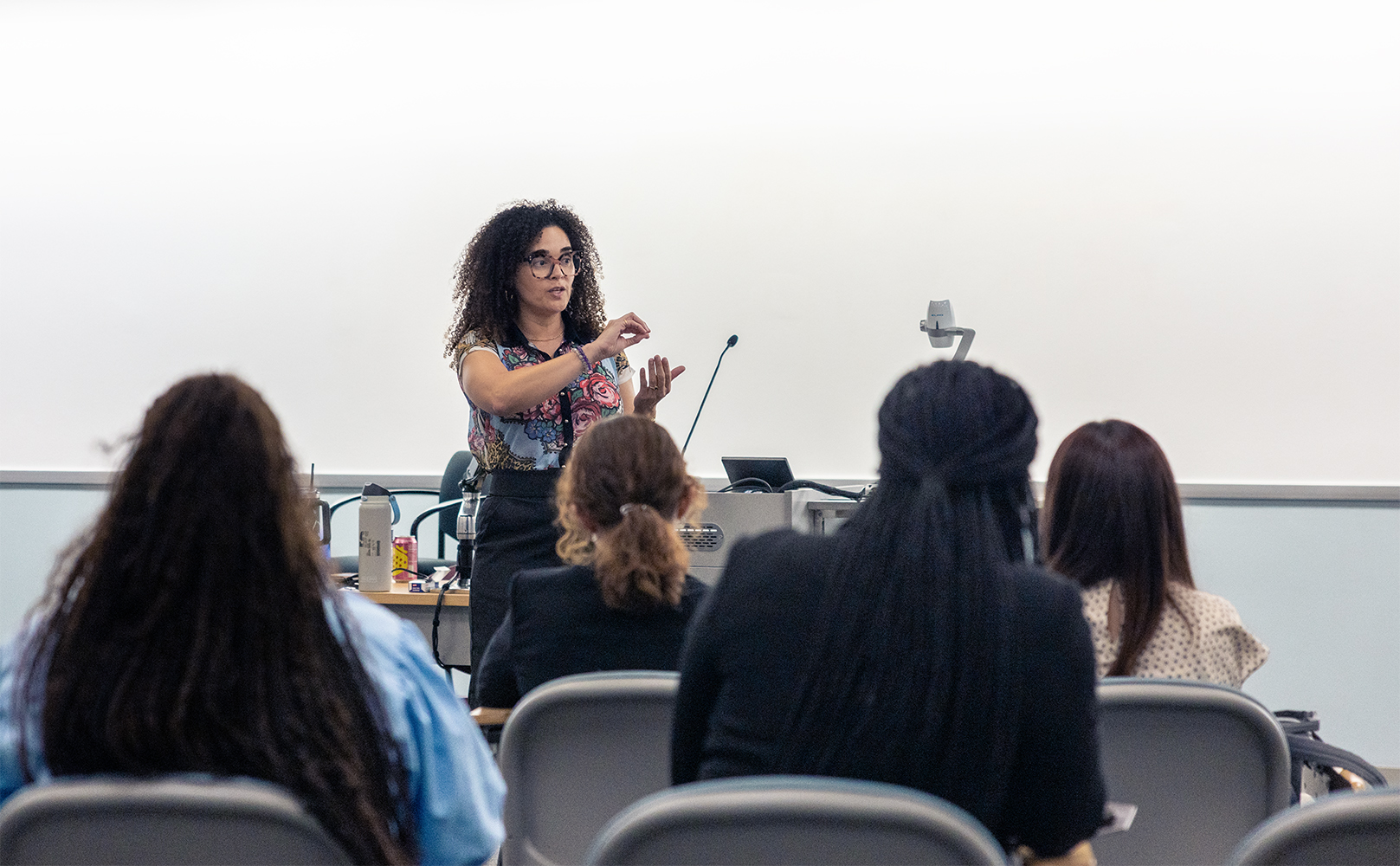
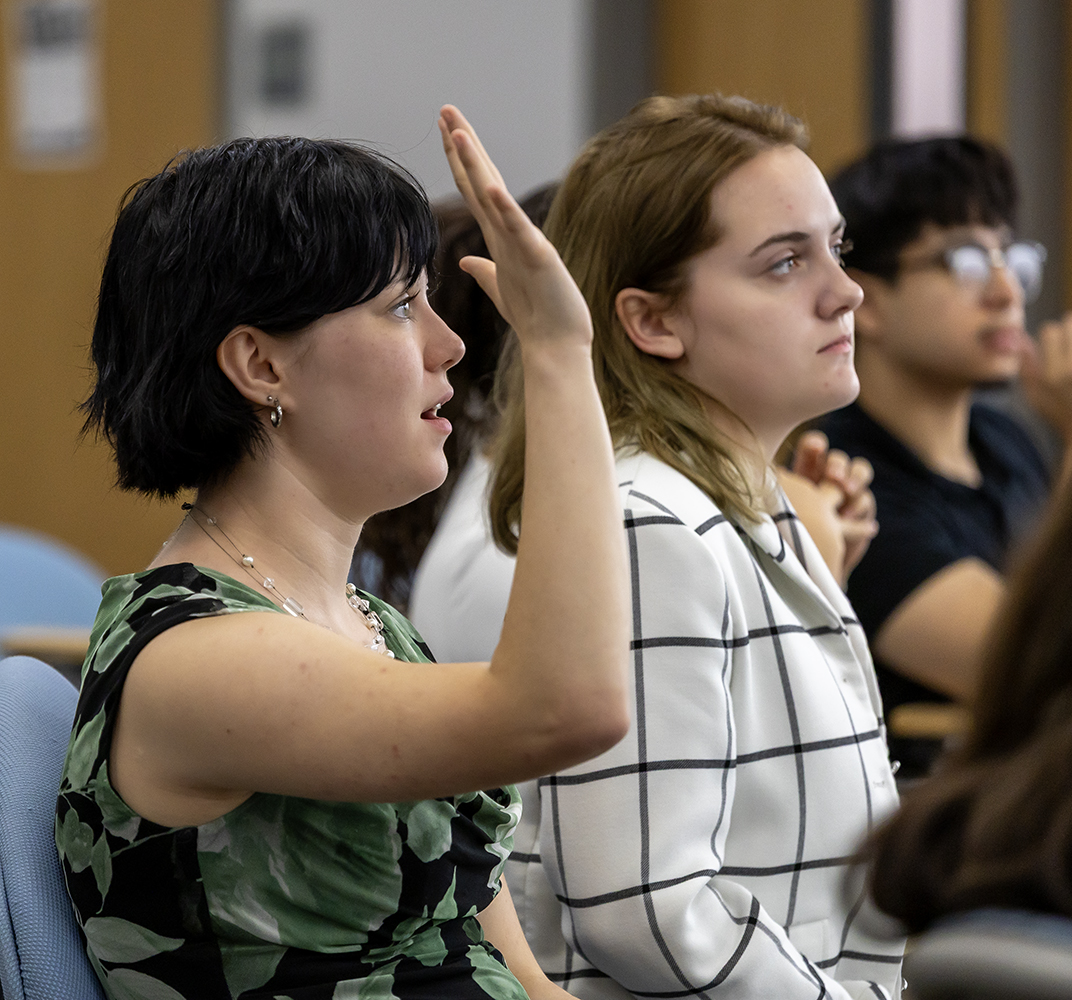
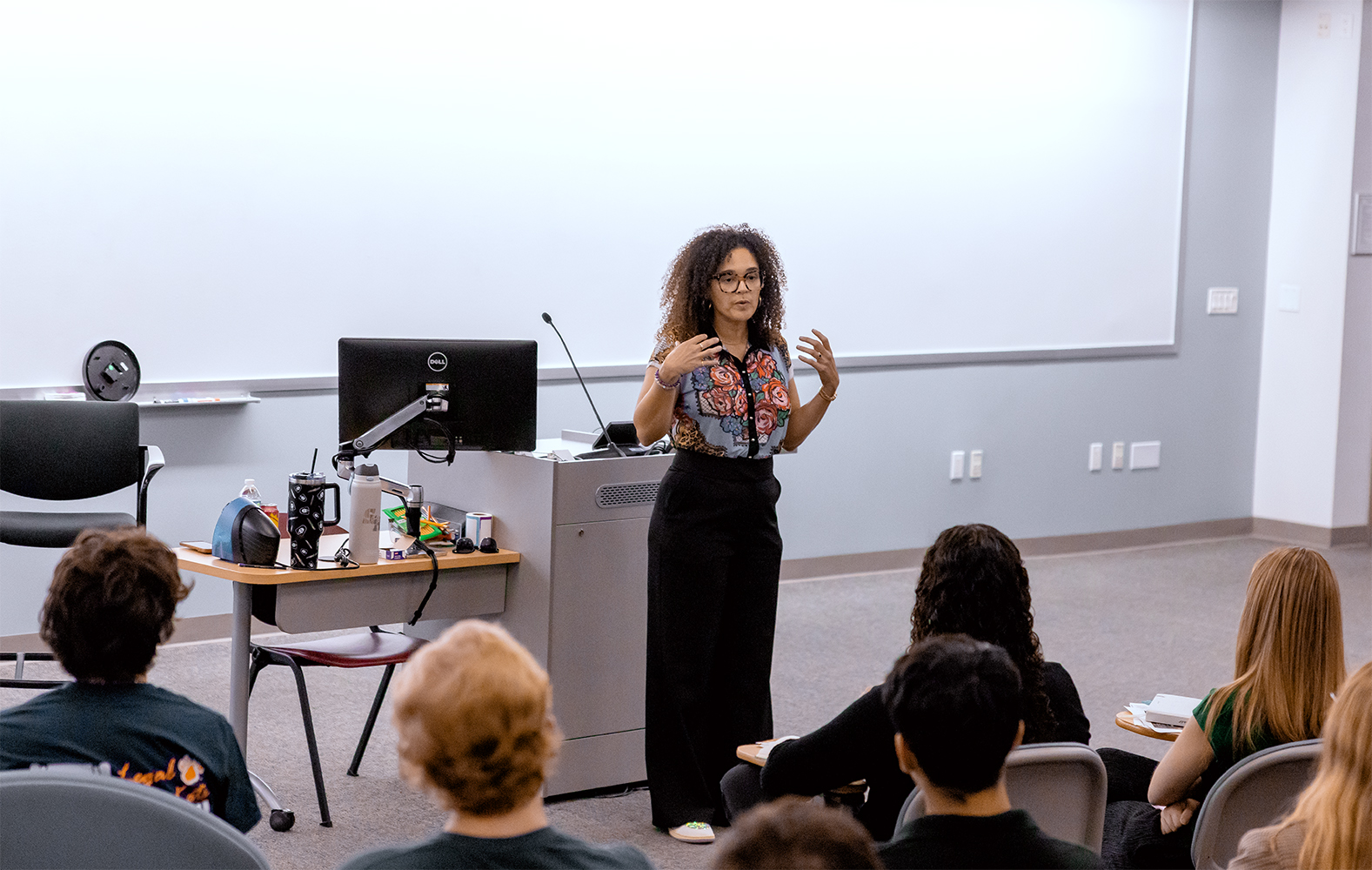
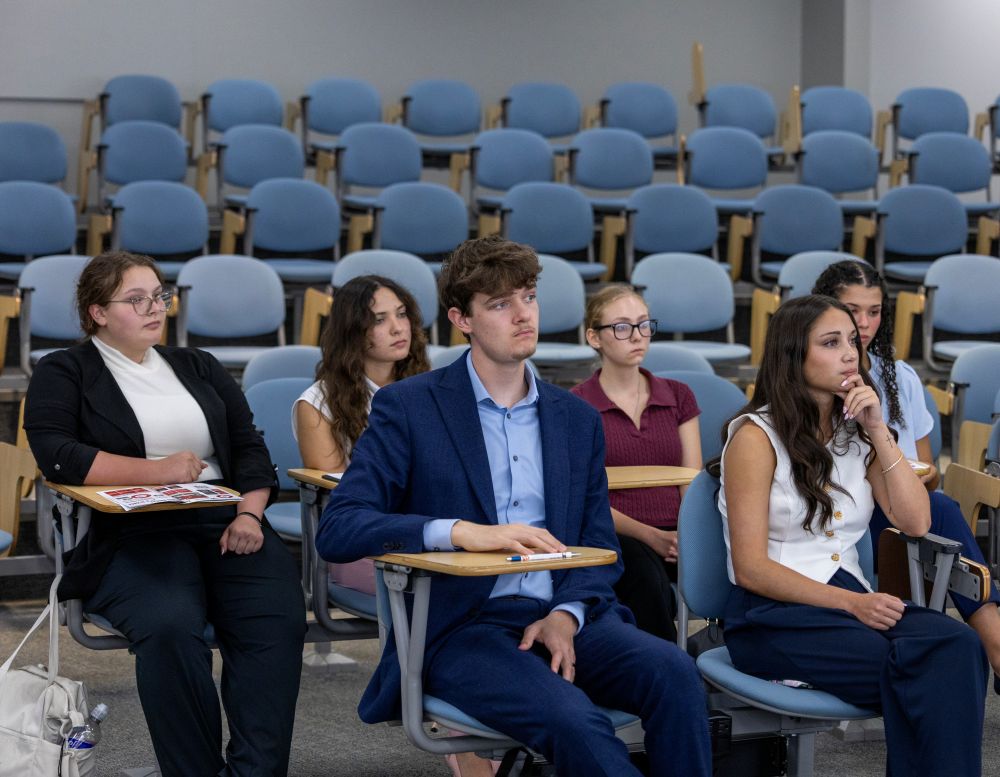
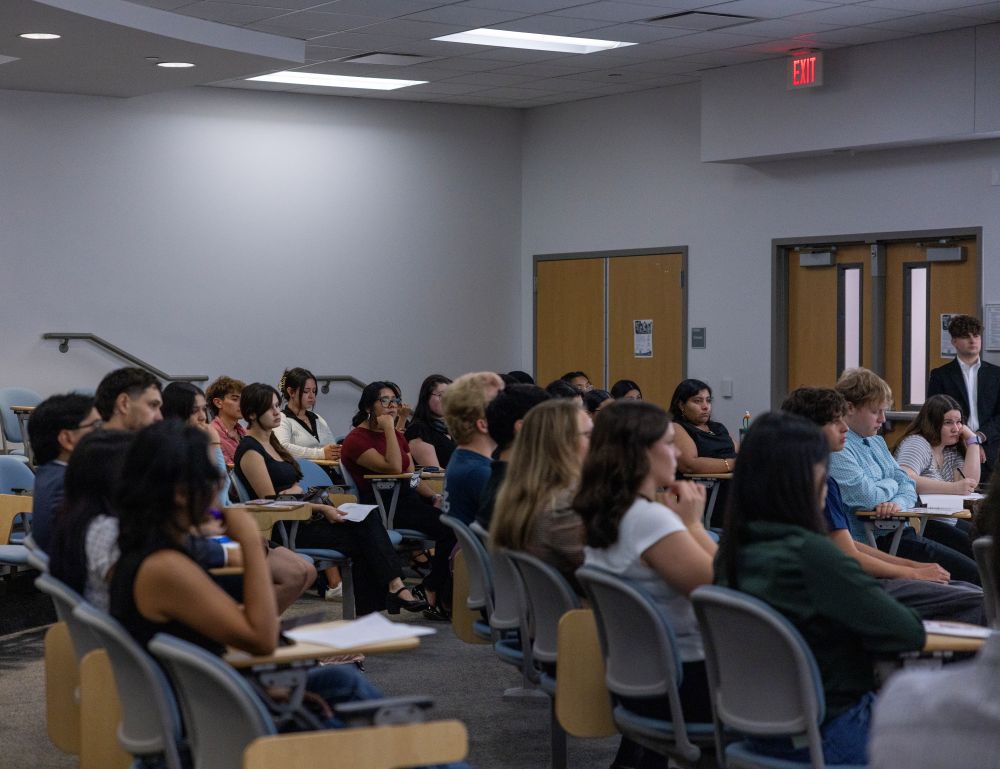
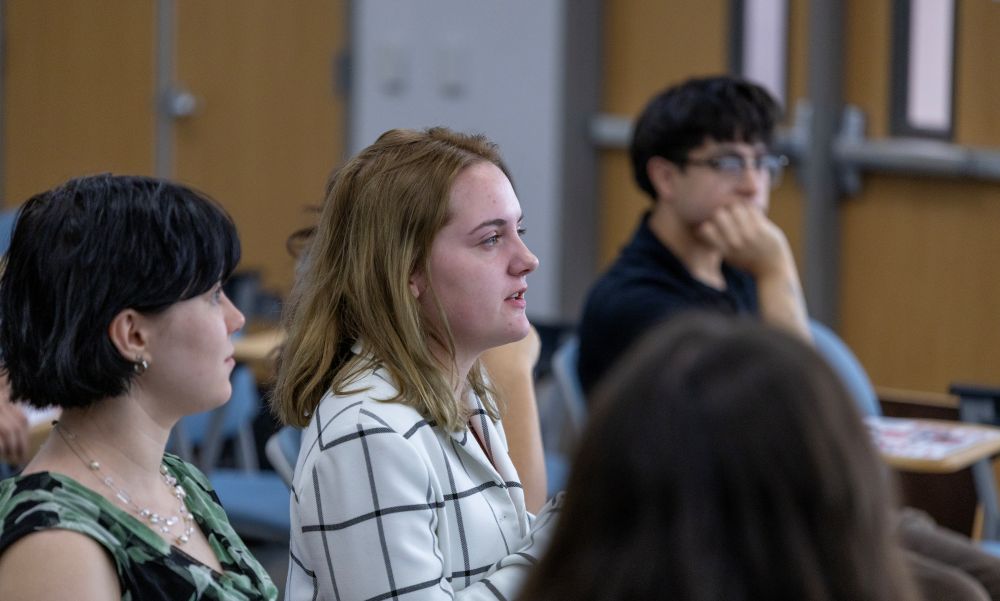
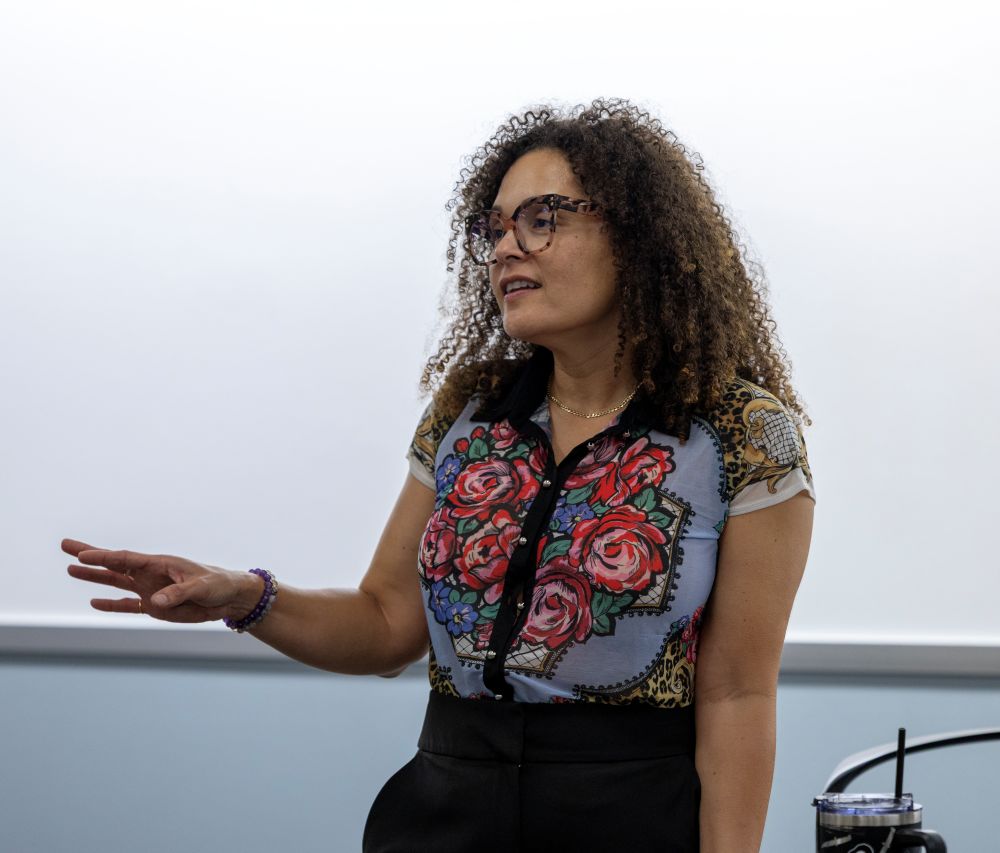
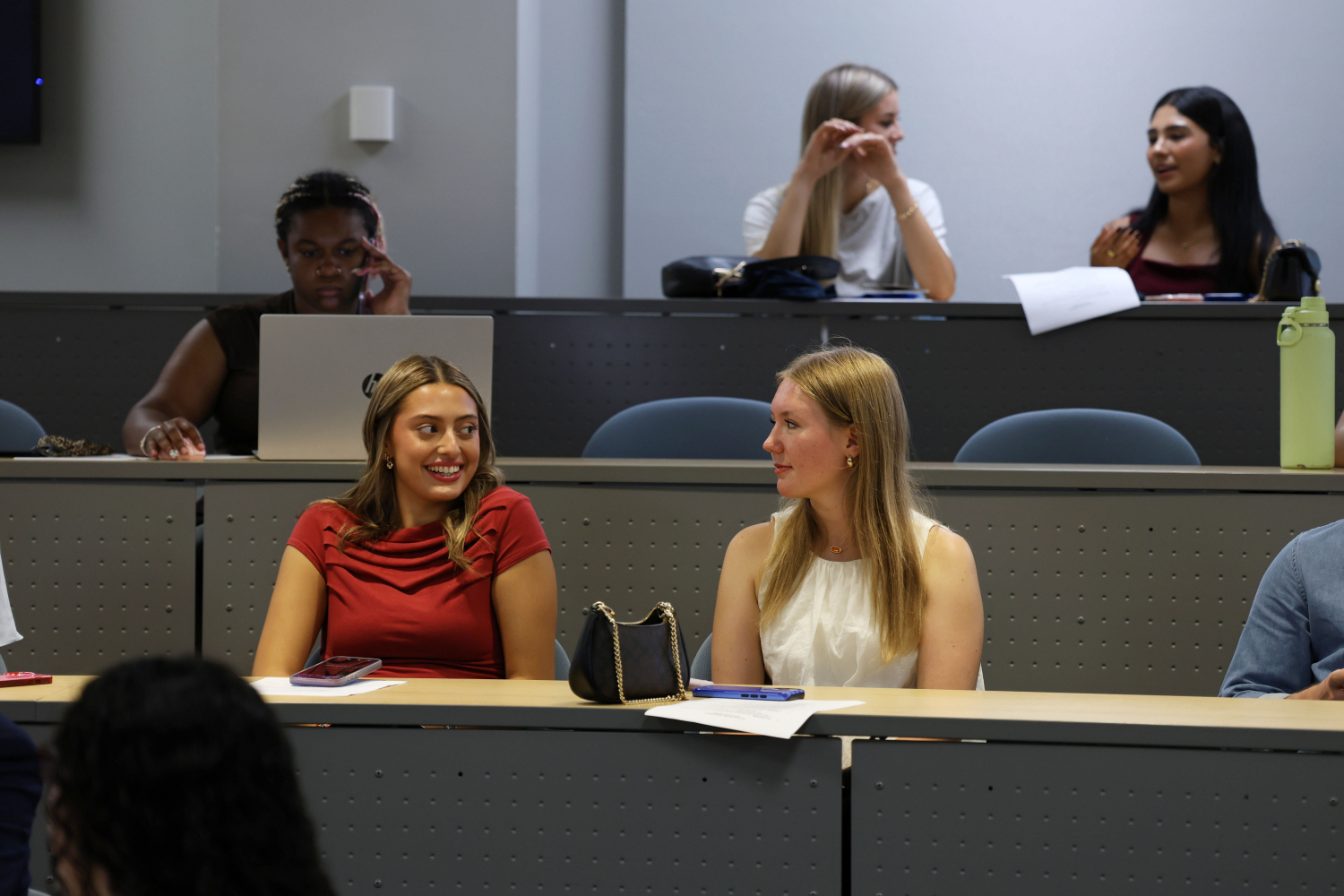
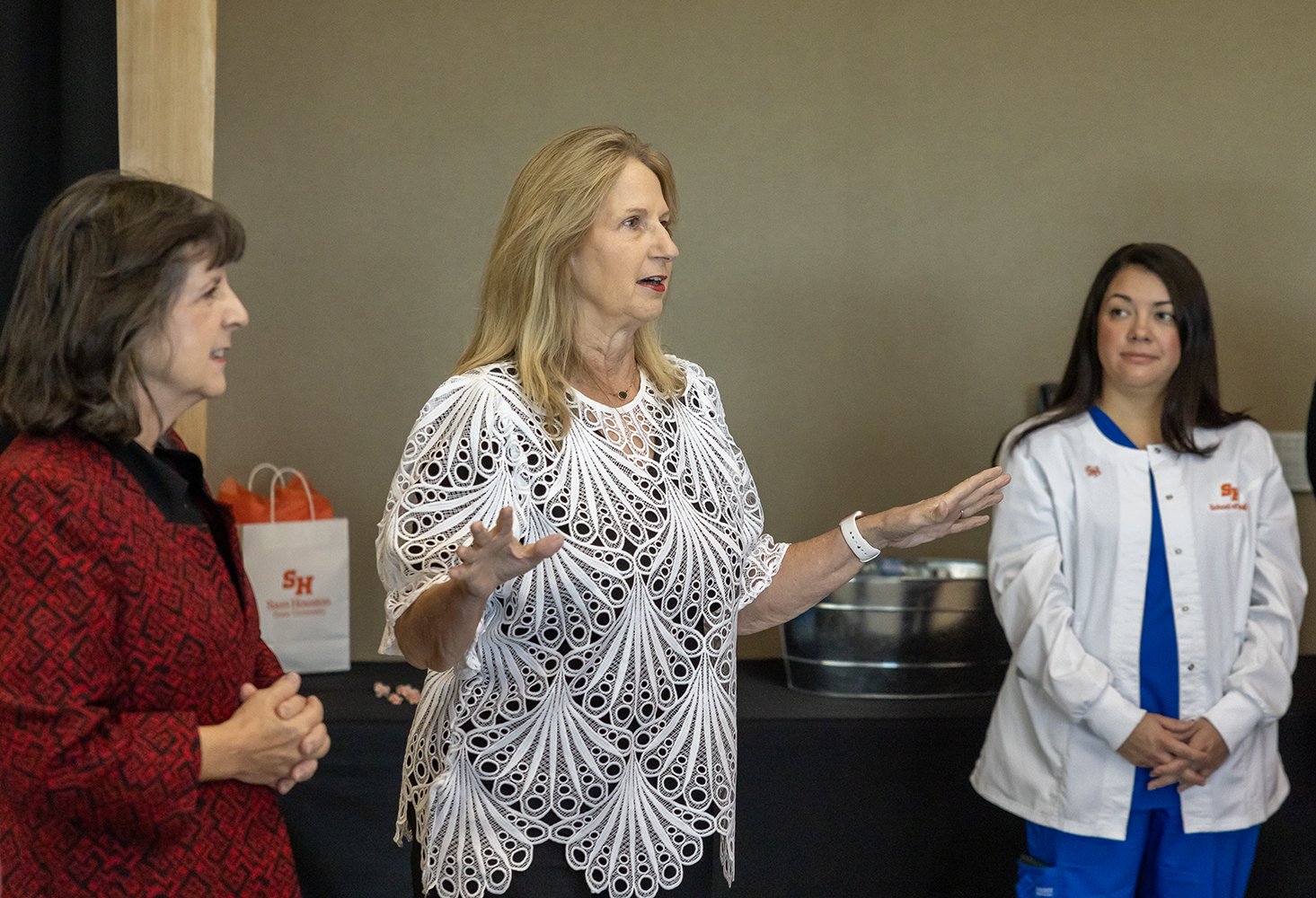
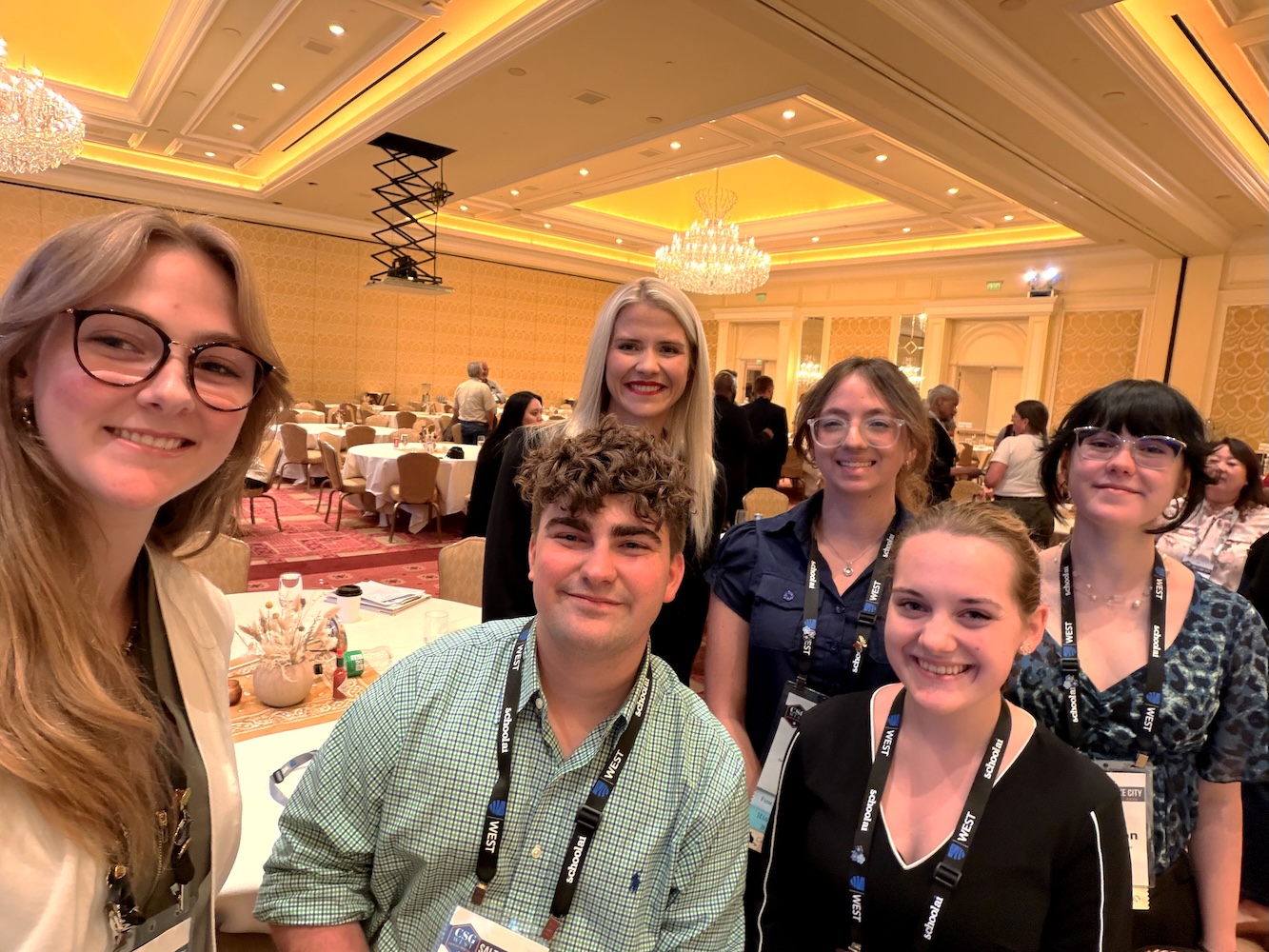
It’s not easy to get more than 100 students to attend school on a Saturday for a three-hour test. But as part of their preparation for law school, 105 pre-law students took a practice LSAT, professionally administered and scored.
Preparing for law school begins long before submitting an application. For undergraduates planning to enter law school immediately after graduation, a four-year plan can make the process more manageable—and help prevent senior-year surprises!
Freshman Year: Establish Your Starting Point. Focus on strong grades, develop good study habits, and take courses that strengthen reading, writing, and analytical skills. If possible, take the Mock LSAT offered by the Center for Law, Engagement, and Politics (LEAP). An early practice test provides a baseline and introduces the exam while there is plenty of time to improve.
Sophomore Year: Get Connected. Join the Pre-Law Society by your sophomore year. Attend meetings, meet legal professionals, explore law schools, and learn from students navigating the application process. Build relationships with professors who may eventually write recommendation letters. Begin to research law schools and identify a target LSAT score.
Junior Year: Measure Your Progress. Aim to score consistently within 5–10 points of that target on timed practice tests by junior year. If a larger gap remains, adjust your preparation now. Continue protecting your GPA while developing a realistic school list.
Summer Before Senior Year: Prepare Intensively. Take a comprehensive LSAT preparation course and treat studying as a serious commitment. Complete timed practice exams, review mistakes carefully, and register for the August LSAT before its registration deadline. Begin drafting your personal statement and requesting recommendation letters.
August of Senior Year: Take the LSAT. Plan to take the official exam in August, entering senior year with a major application component completed. Monitor score-release dates and consider whether another attempt would strengthen your applications.
By November 1: Submit Your Applications. Set November 1 as your goal for submitting complete, polished applications, including transcripts, recommendations, and required essays. This deadline will help you be eligible for early admissions, and it will also allow you to apply when all the scholarship money is still available (fifty percent of scholarship money is allocated by January 1).
Check each school’s requirements and deadlines individually.
Start early, stay consistent, and give yourself options–which begins with taking a Mock LSAT.
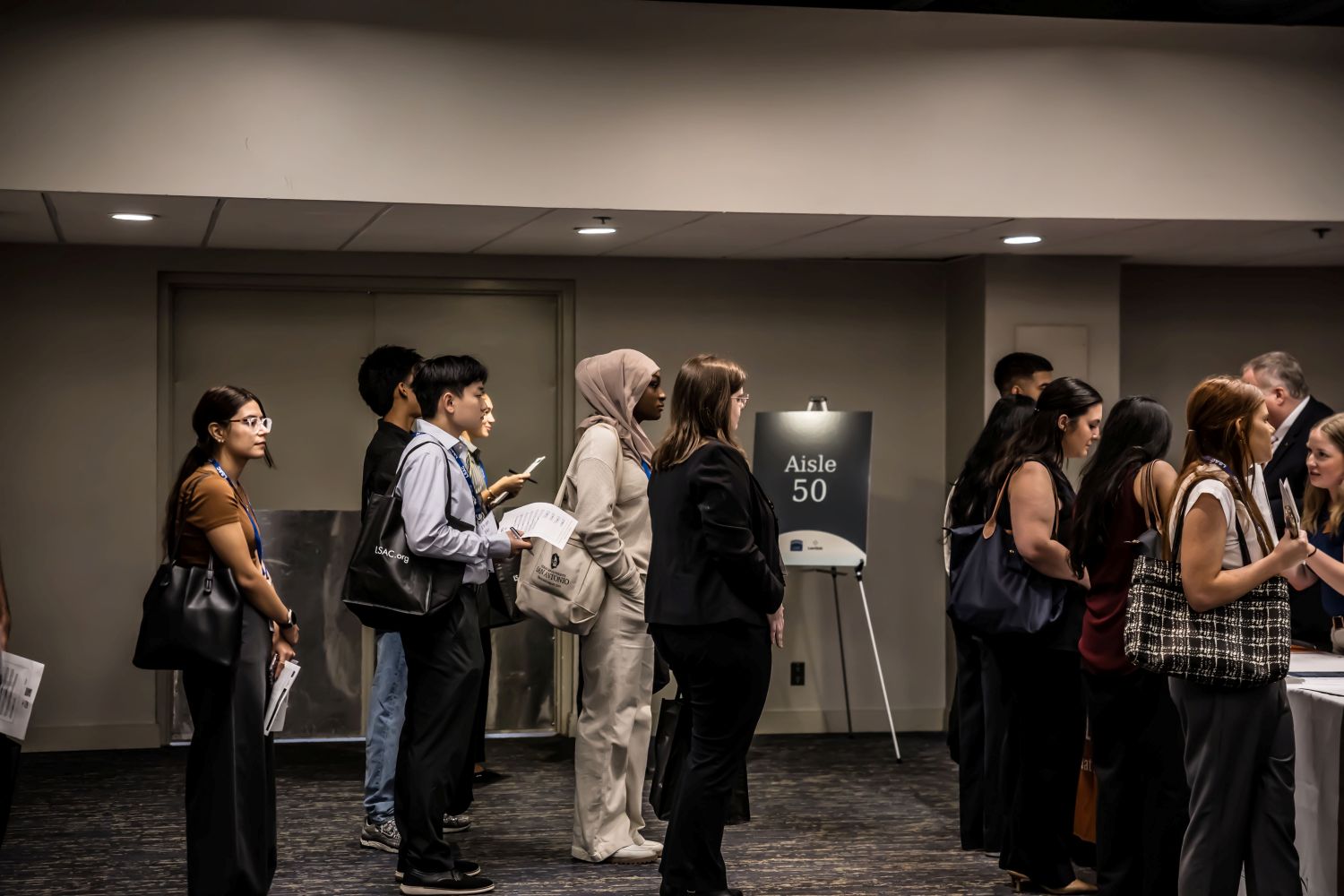
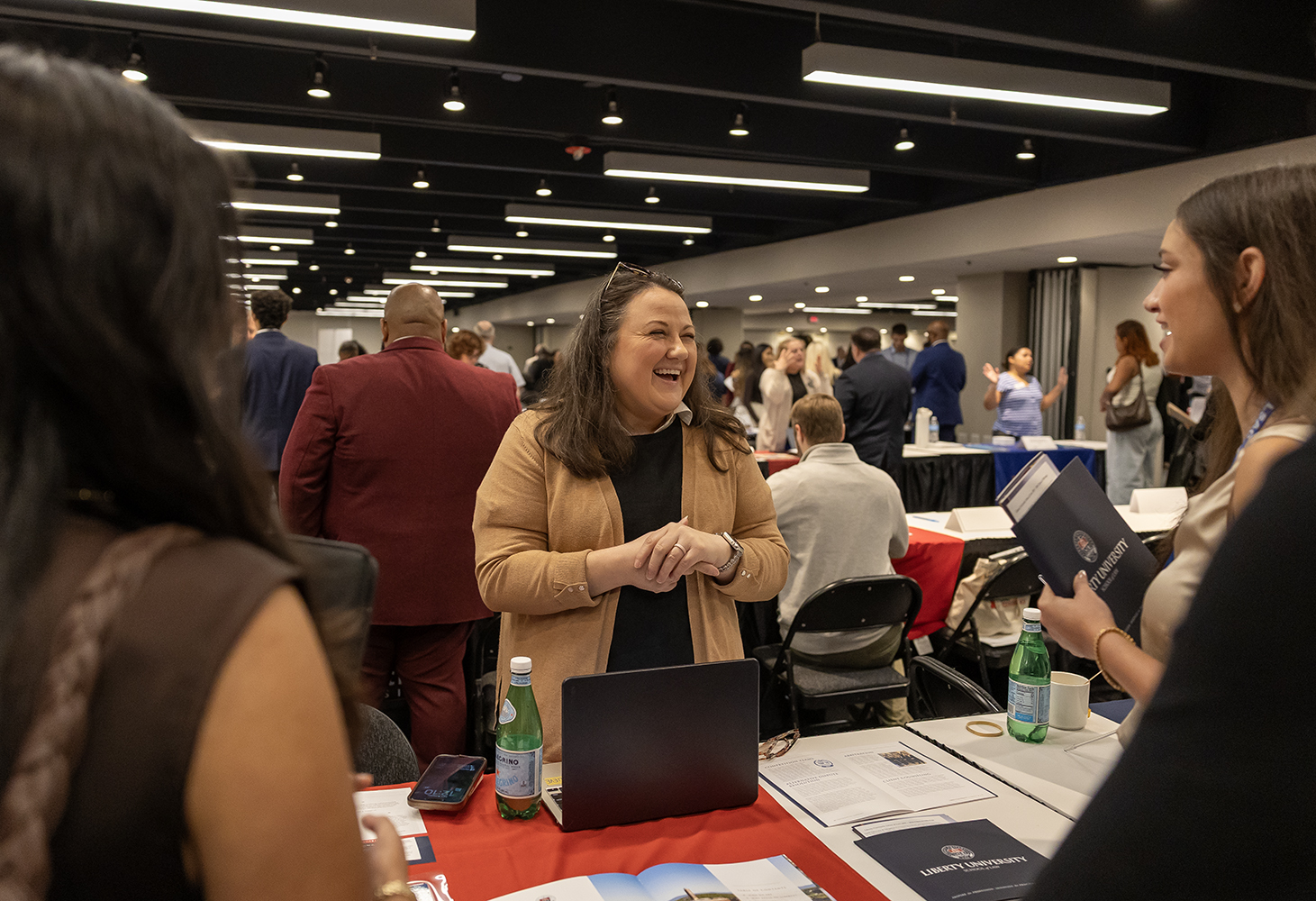
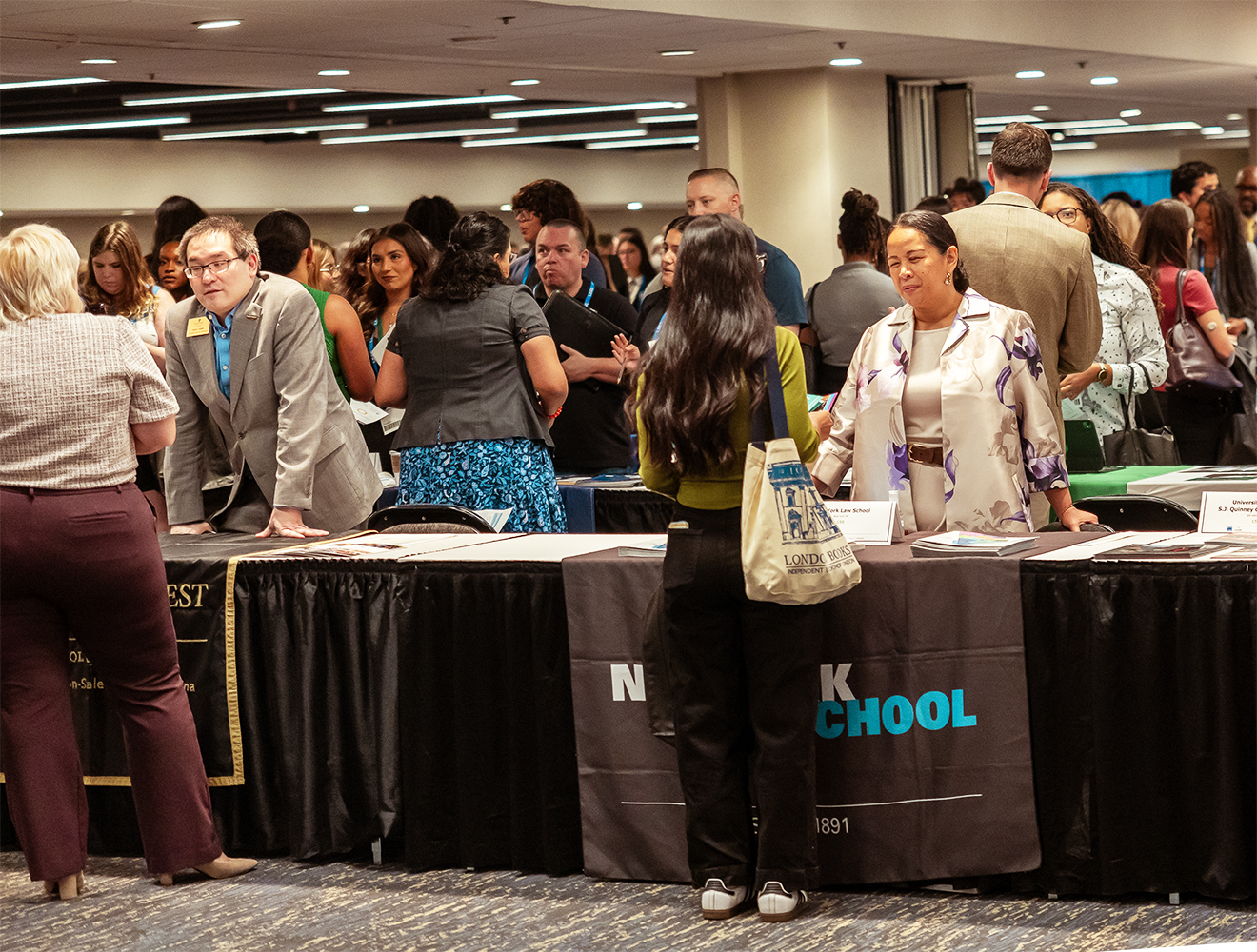
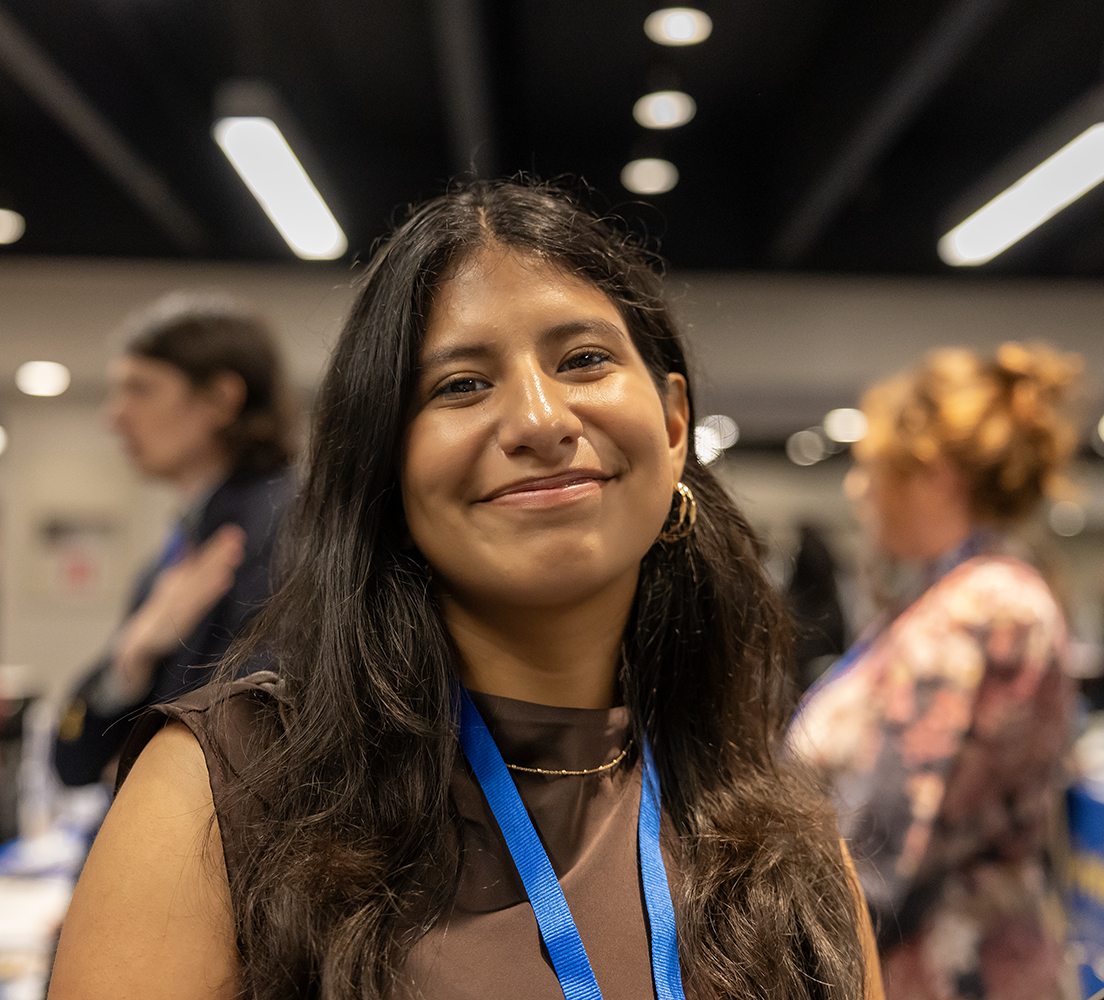
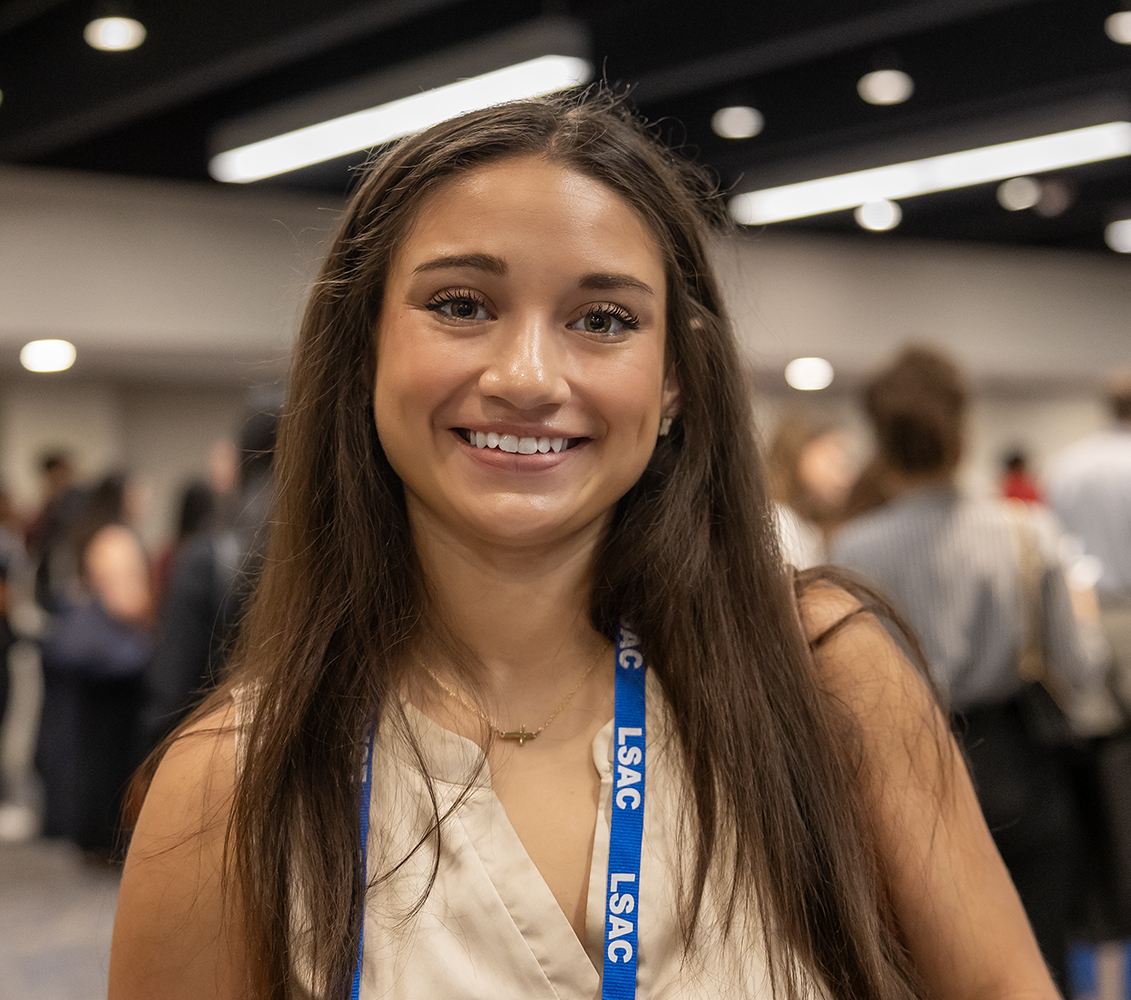
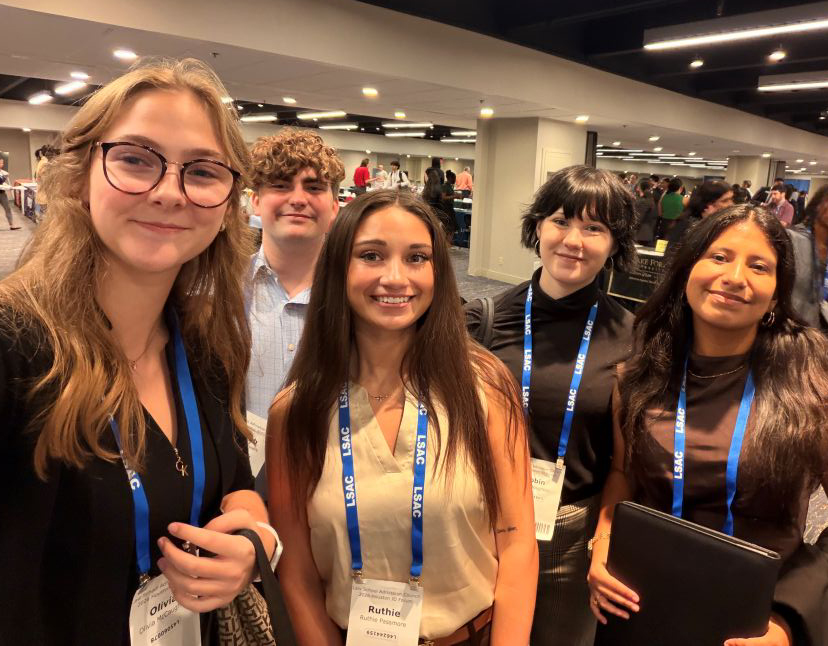
This past weekend, LEAP students drove into Houston to attend the Law School Admission Council’s Houston Law School Forum. This event brings together representatives from over a hundred law schools across the United States, allowing prospective law students to speak directly with them about the law school experience. Even though some of us are only sophomores, we all arrived eager to learn more about law schools across the country.
The purpose of the law-school fair is to educate pre-law students about law school in general and about specific law schools in particular. For the general aspects of law school, the fairs have workshops on topics such as “paying for law school” or “applying to law school.” Law school representatives are there to answer specifics, with LSAC also suggesting specific questions for each school (see, for example: Law School Forums and Fairs Near Me | LSAC).
With so many schools to choose from, we ended up at the South Texas College of Law, a law school that frequently visits SHSU to present to our Pre-Law Society. We were excited to reconnect with a familiar name and ask more personal questions about their law school and the admissions process.
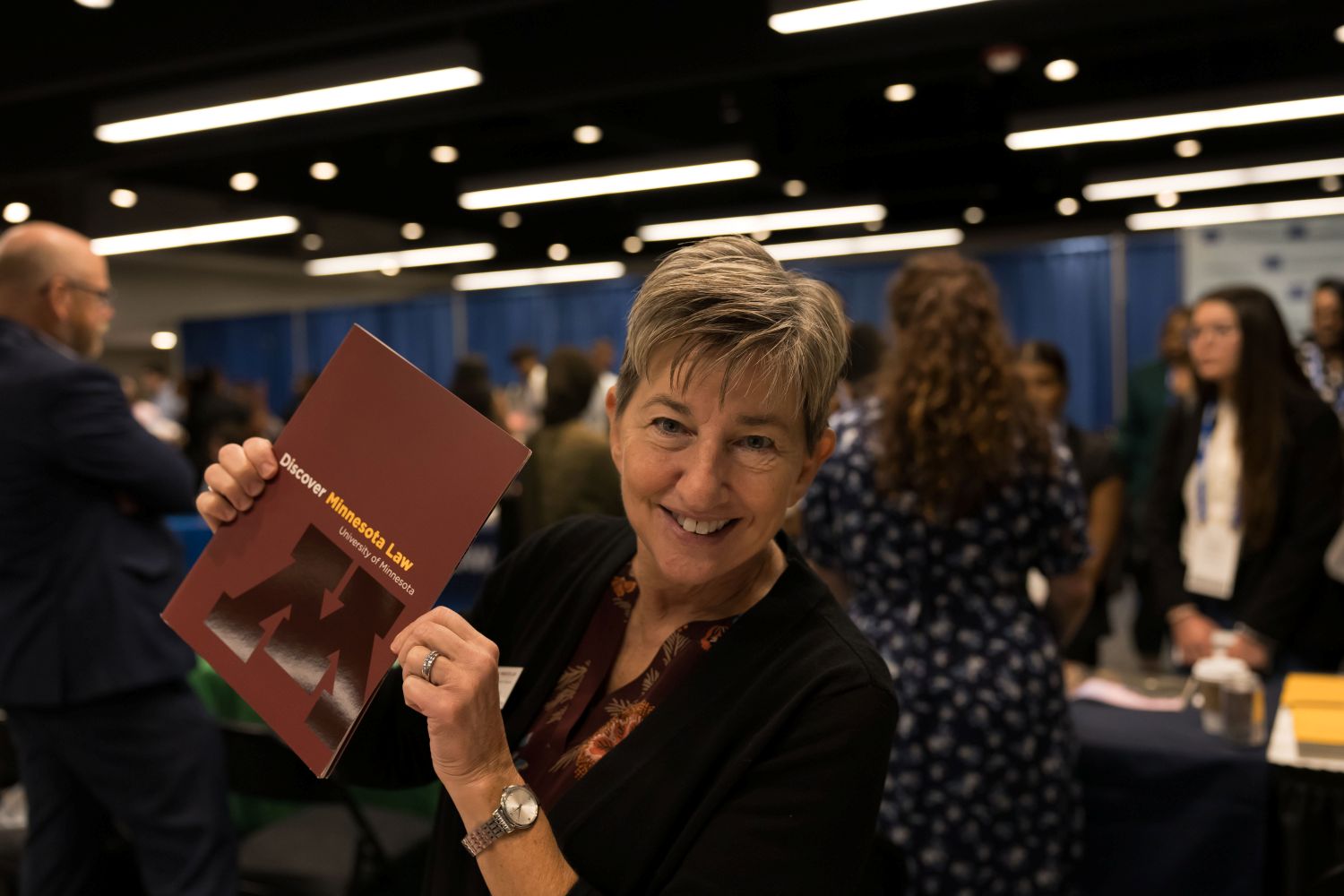
One of the most memorable moments came from visiting the table for the University of Minnesota Law, a school I have been interested in for a while.
Speaking with Robin Ingli about the university’s concentrations and focus on Human Rights advocacy made my many options in law schools clearer. Their emphasis on public service and practical training was a highlight for me, and I left knowing more about a school I thought I already knew a lot about.
Overall, the experience is much like a career fair, with lots of booths to pick up literature and the like.
Much of the information can be found on the schools’ websites. But, as a sophomore pre-law student, the event allows you to see all the opportunities that exist, which is perhaps more than people come into college realizing.
And, for the upper-classmen among us, the experience allows the opportunity to obtain more specific information and narrow down options. It’s a worthy event.
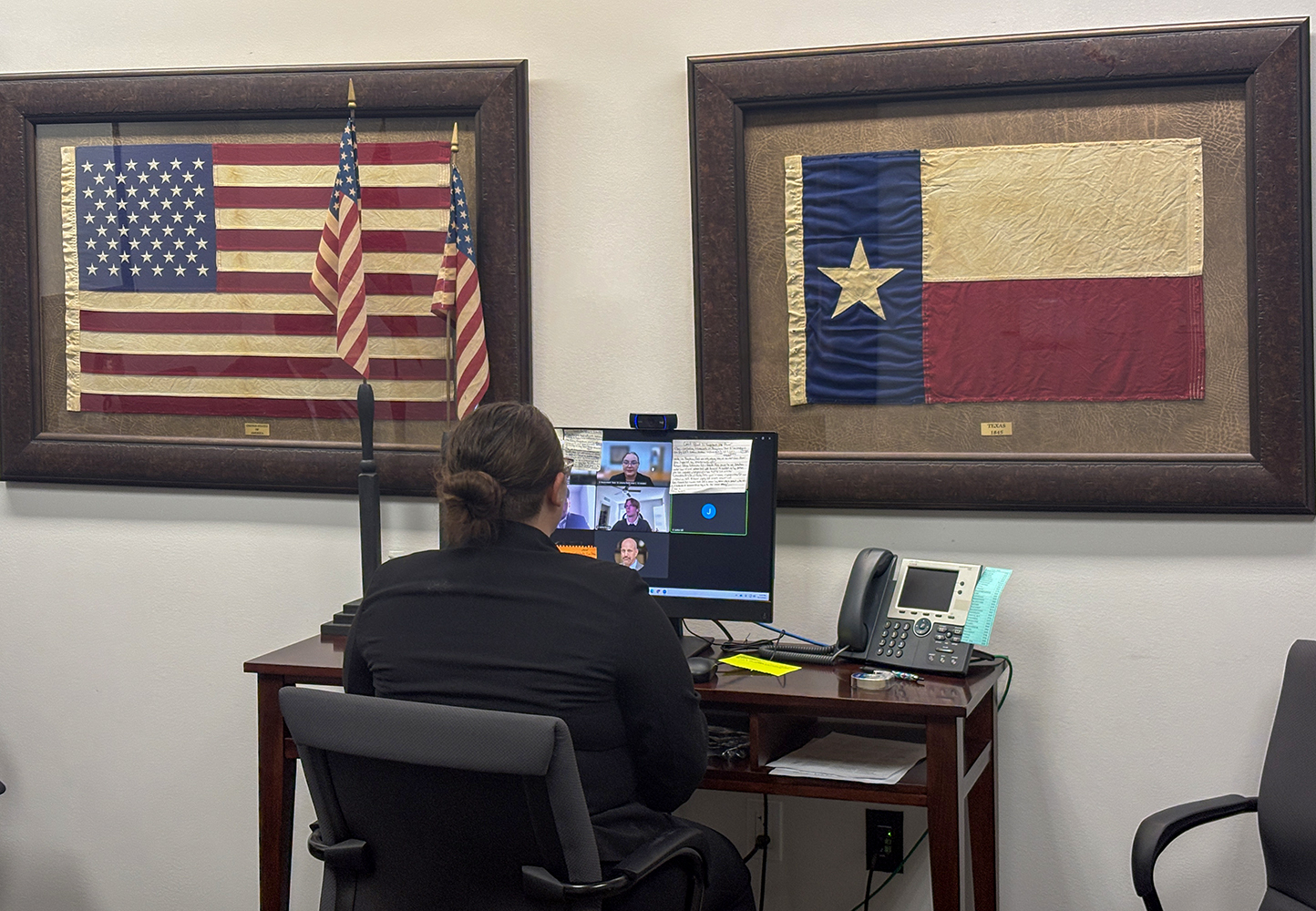
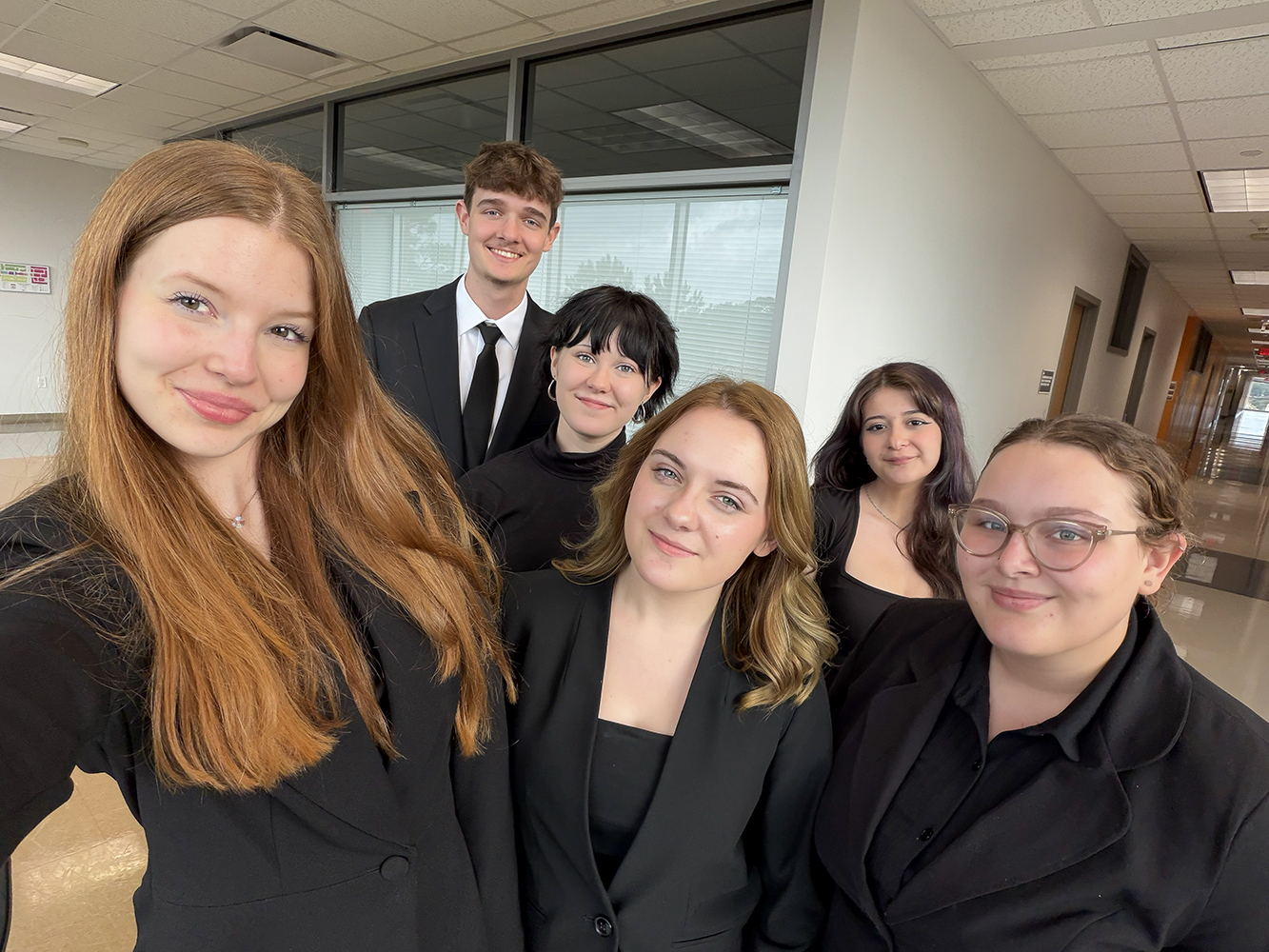
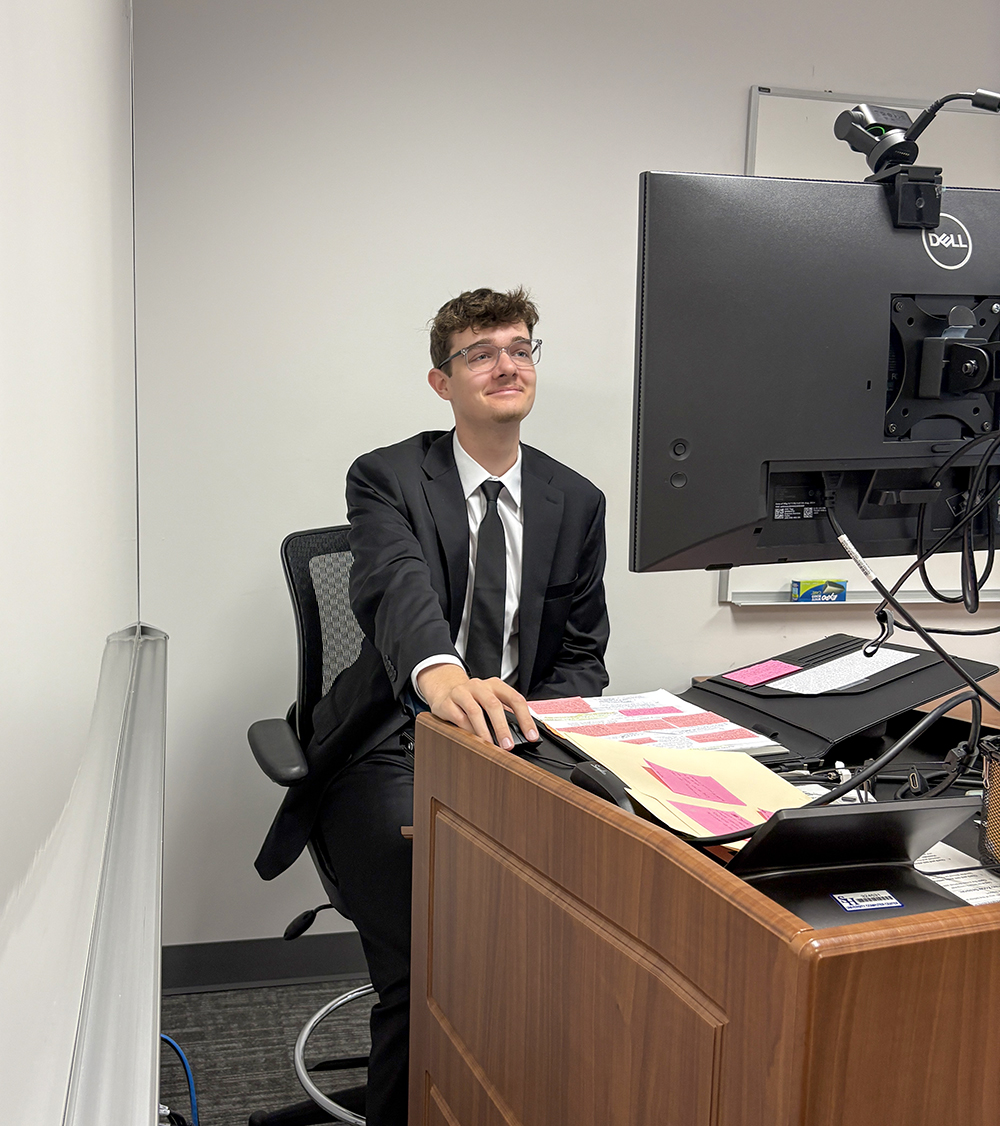
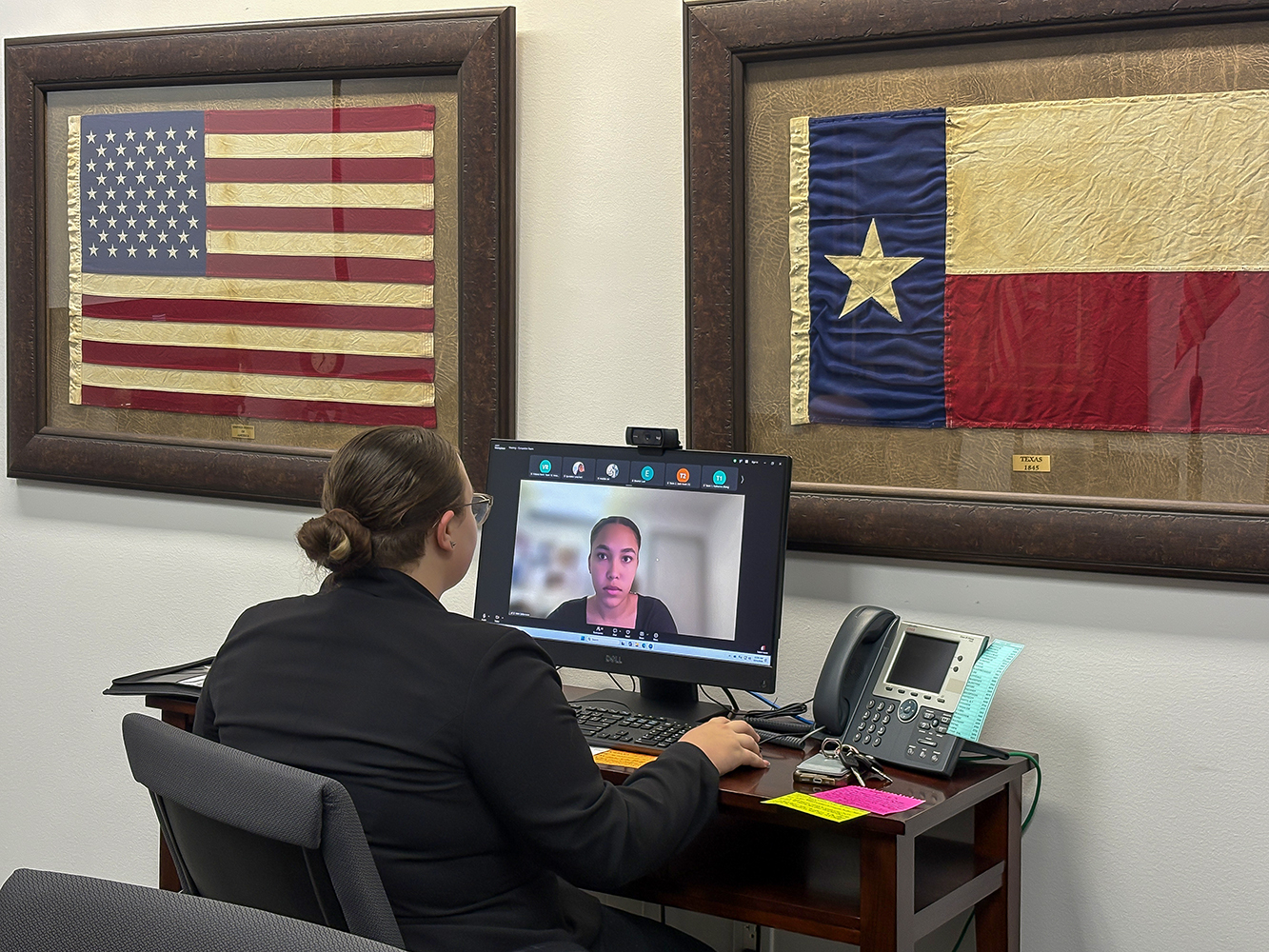
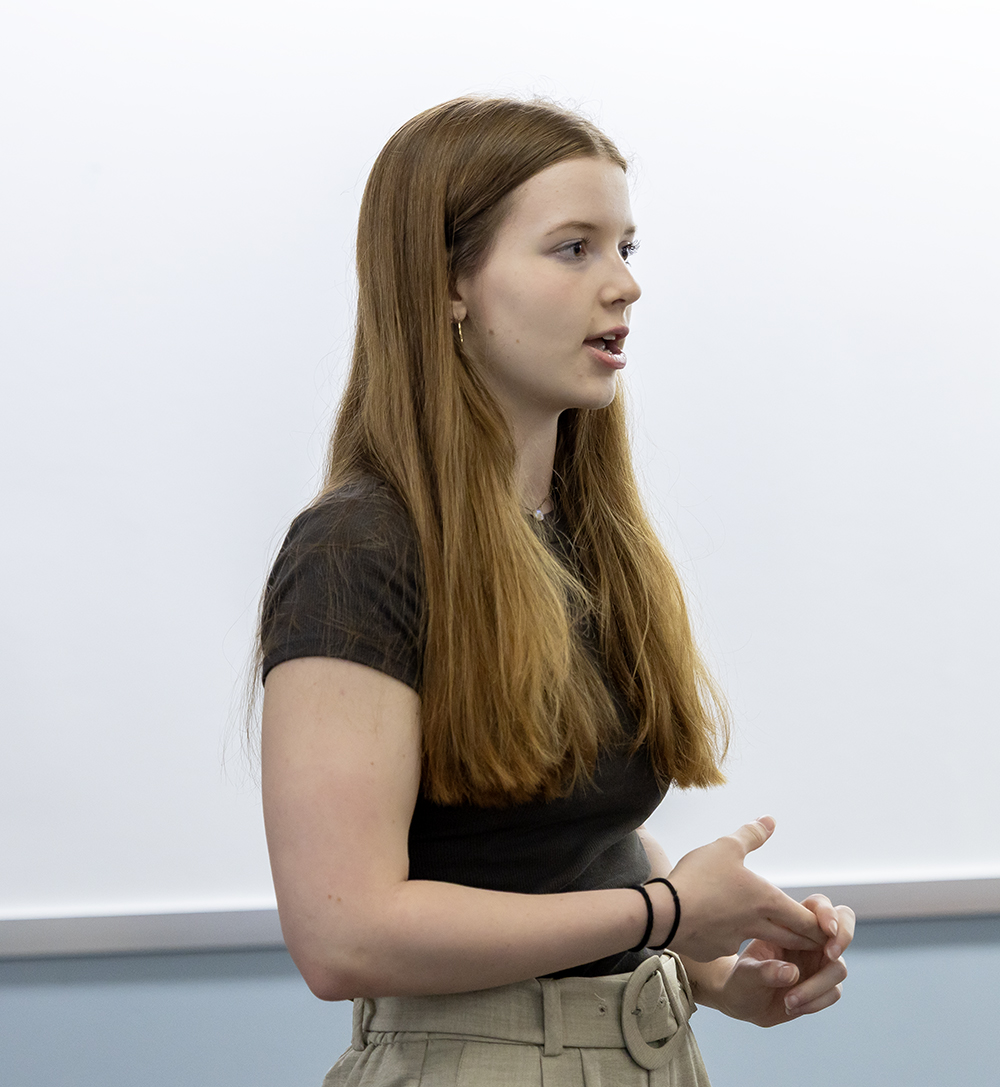
On October 3rd and 4th, Sam Houston State University’s Moot Court Team had the incredible opportunity to compete in the Triton Tidal Invitational, hosted by the University of California–San Diego.
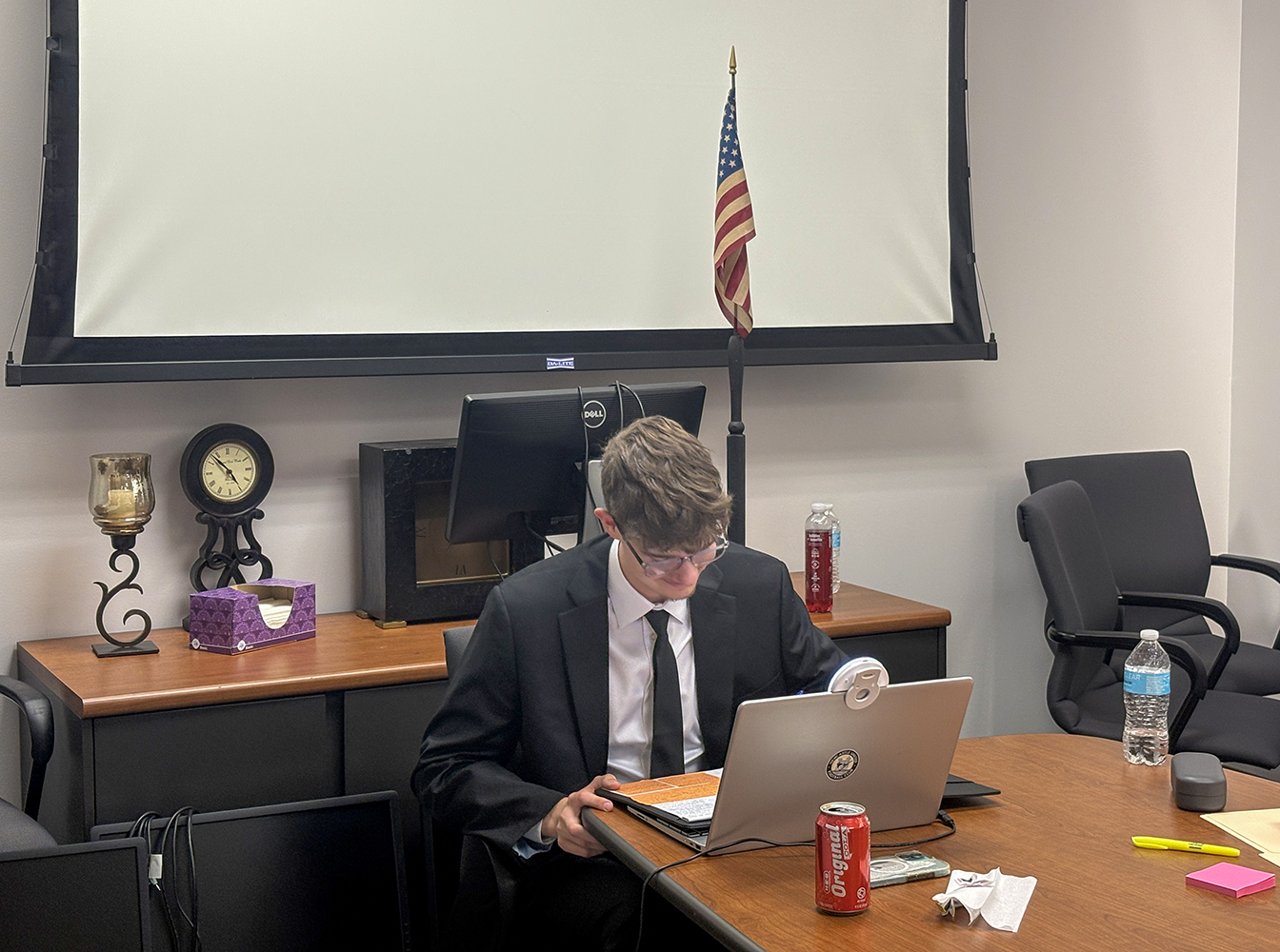
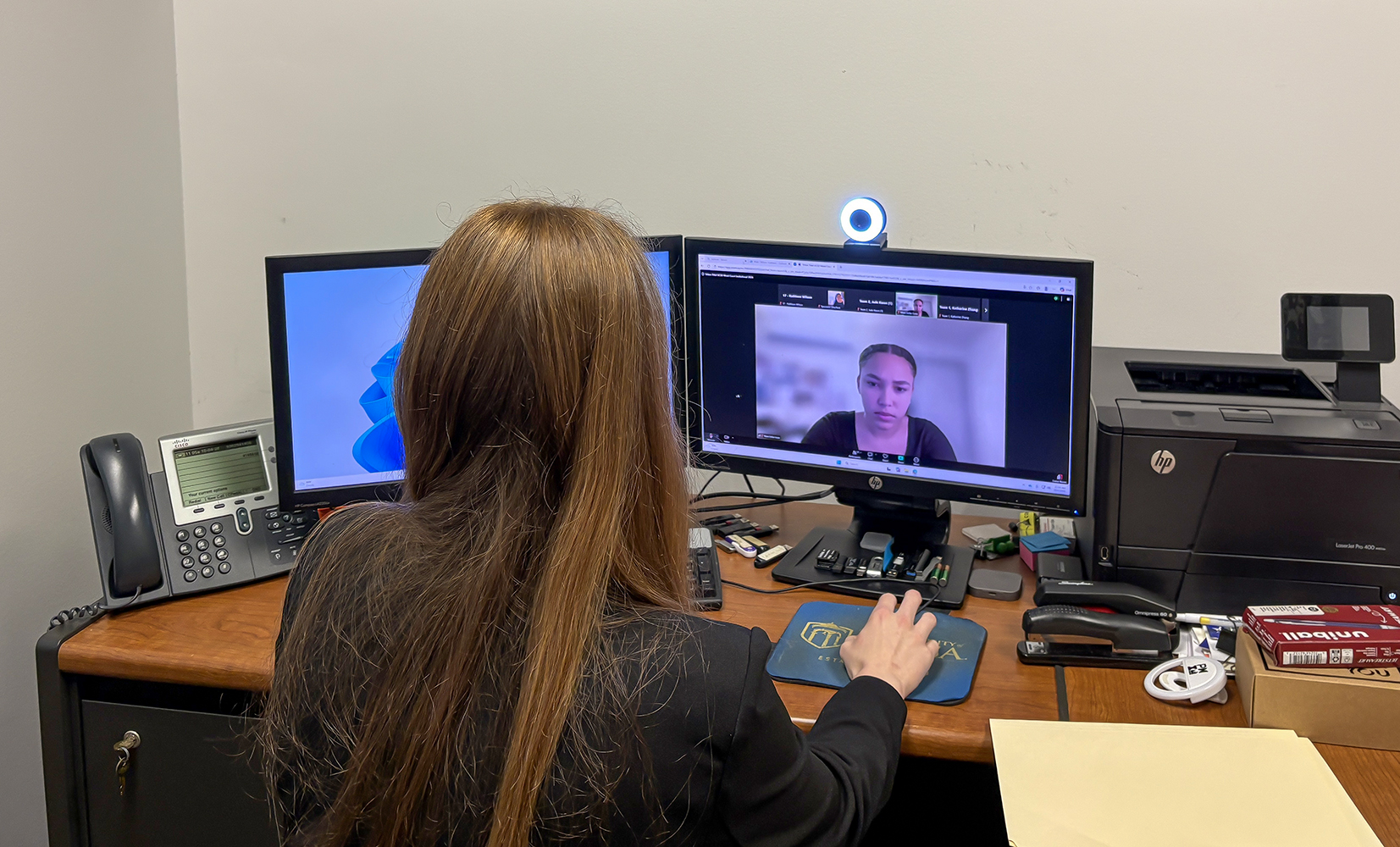
The first day consisted of three preliminary rounds, each with pre-assigned competitors and arguments. Interestingly, both of SHSU’s teams had one round arguing as Petitioner and two rounds arguing as Respondent, allowing each team to practice both sides of the case and adapt their arguments to different perspectives.
After each round, the teams had the chance to regroup, discuss feedback, and prepare for the next argument. Between rounds, we were also grateful to have snacks graciously provided by Stephanie Fors, which kept everyone fueled and ready to take on the next challenge!
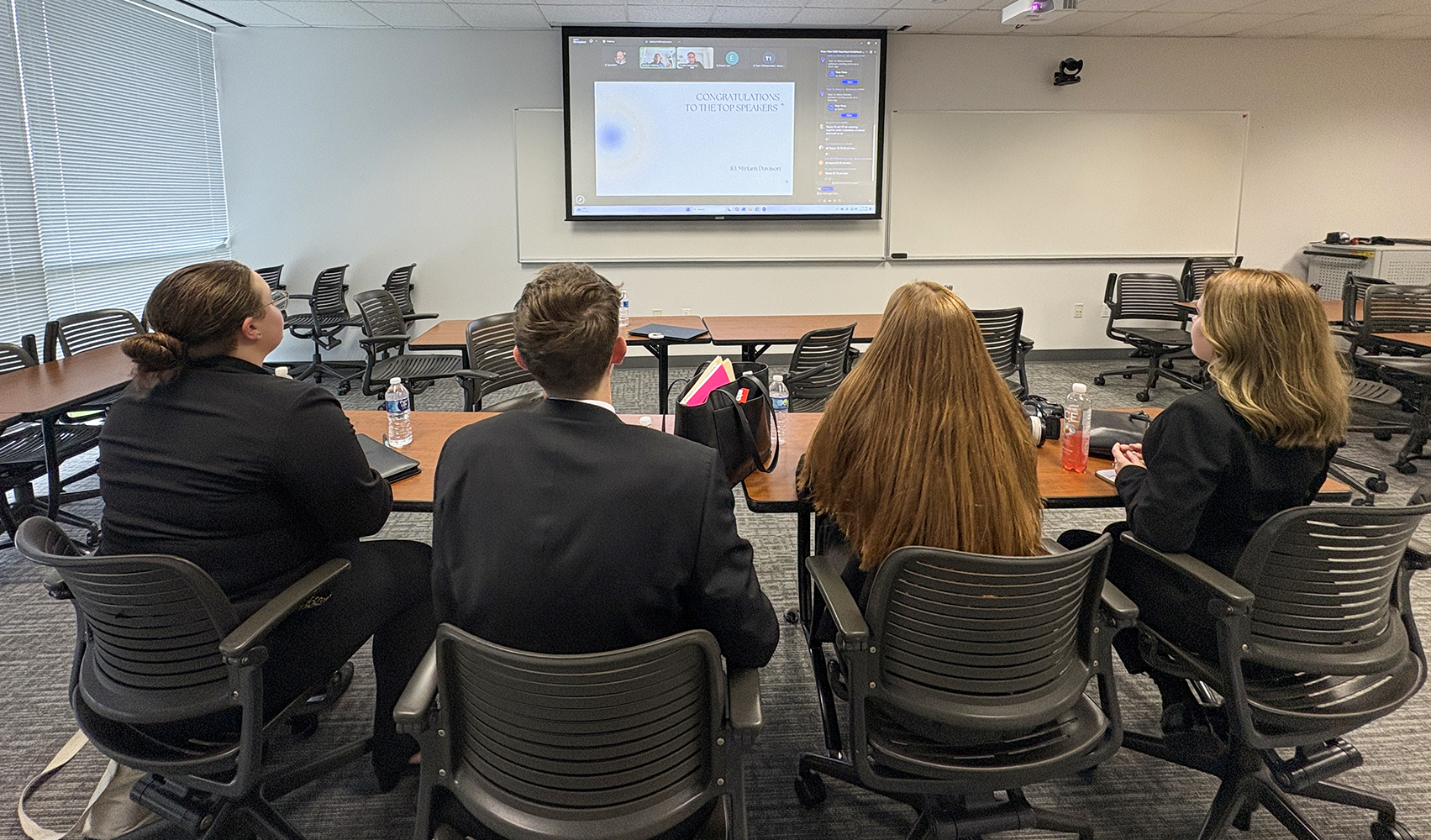
Once the preliminary rounds concluded, we anxiously waited for the results. The standings would determine which teams would advance to the “Sweet Sixteen” and return on Sunday for another day of competition. Despite some skepticism about our chances (editor’s note: deserved skepticism), both of SHSU’s teams made it into the “Sweet Sixteen”! We were thrilled to have the opportunity to compete again and prove ourselves against some incredibly talented teams.
On Sunday, both teams returned to the courtroom ready to give it their all. Although neither team ultimately advanced to the quarter-finals, making it to the “Sweet Sixteen” was an accomplishment we were extremely proud of.
Beyond the results, the scrimmage gave our Moot Court teams something even more valuable: experience. Throughout the weekend, we were able to test our arguments in a competitive setting, identify some of our strongest points, uncover weaknesses in our cases, and come away with new ideas for strengthening our arguments. Every round gave us something to learn from, and we made it out with a much better understanding of what we can do to prepare for our next competition.
We are incredibly grateful to UC San Diego for hosting such a valuable and exciting scrimmage. We are proud of how far both teams made it and are looking forward to putting what we learned into practice. We are all excited for competition at Texas A&M on October 30th, and we can’t wait to see what the team accomplishes next!
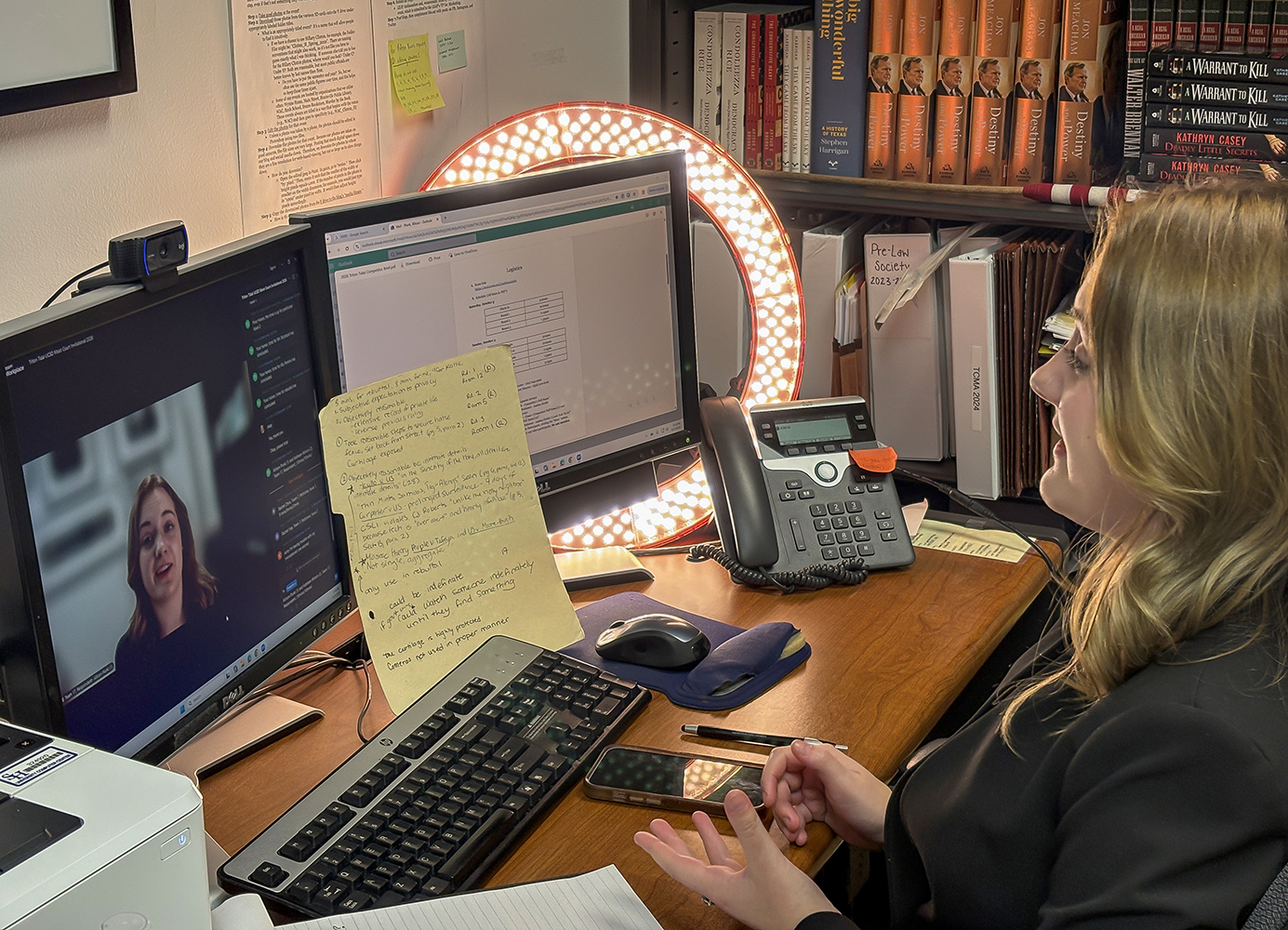
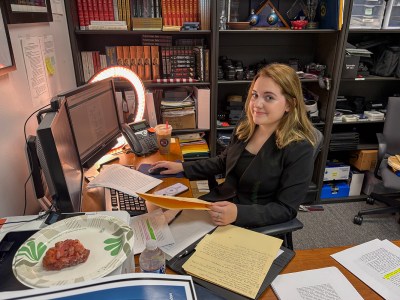
Allie and the Tools of Success: Cherry Fritter, Notes, Ring Light, Notes, Coffee-Flavored Sugar from Seven Bros., Half-Hearted Smile, and More Notes
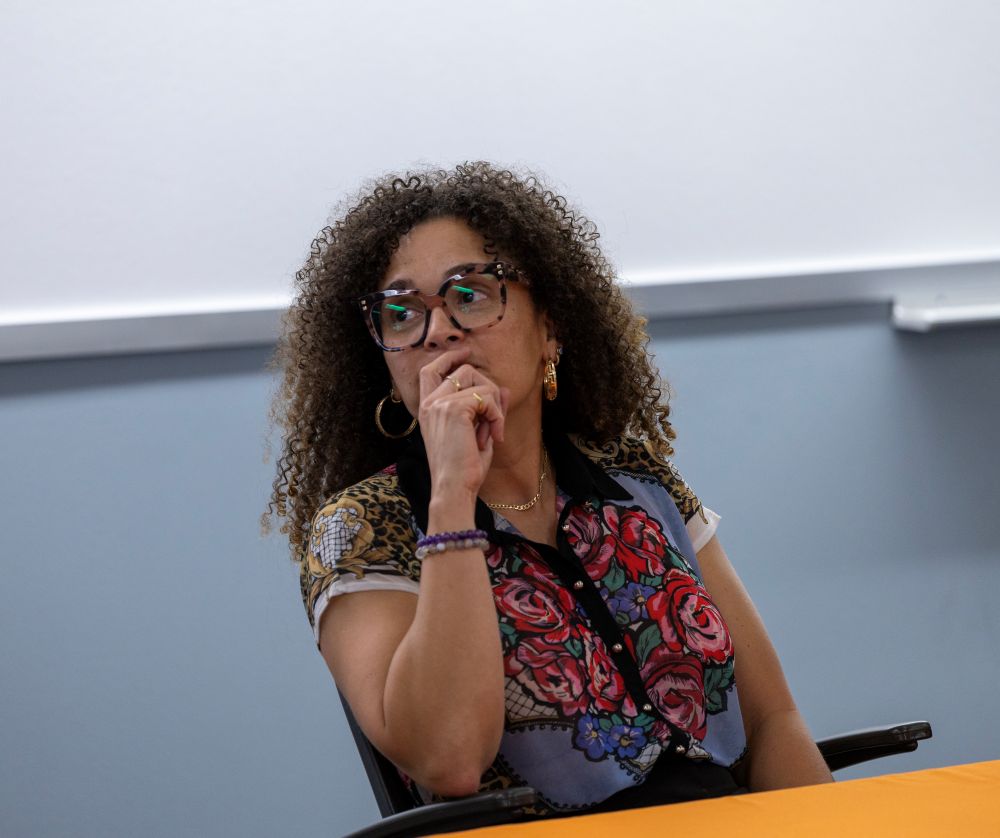
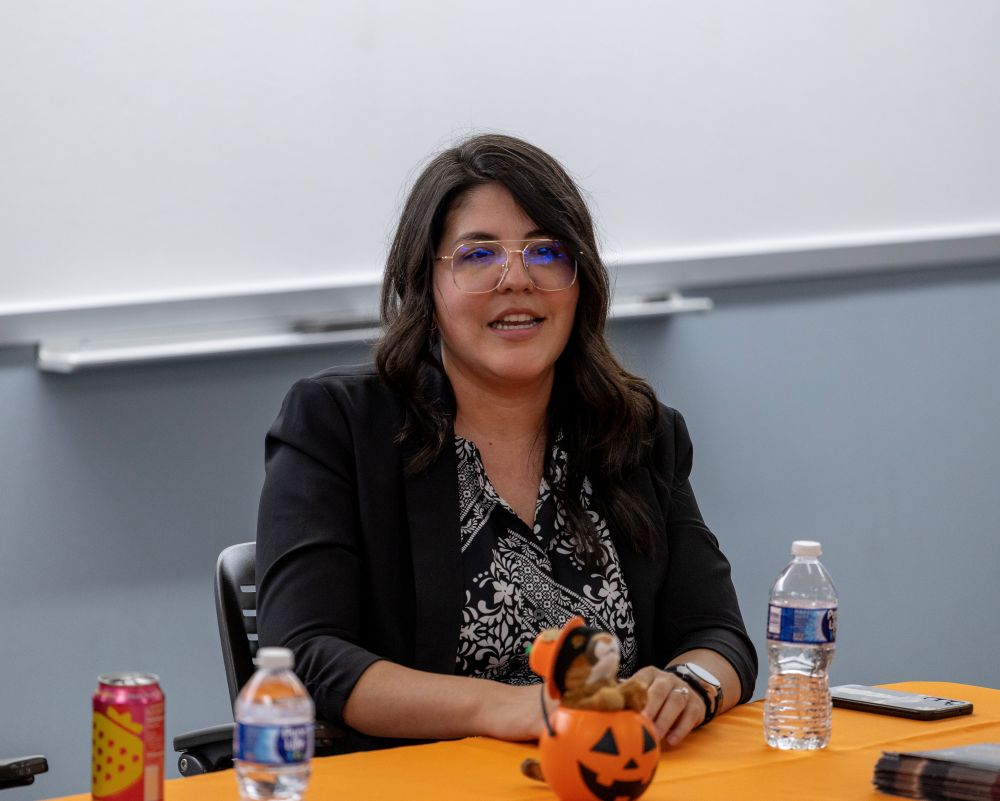
The first Pre-Law Society meeting of the semester gave students an evening packed with opportunities to learn, ask questions, and connect with members of the legal community. From regular business to a Law School Admissions Panel to school-specific informational sessions, the evening offered a firsthand look at several different steps along the path to a legal career.
The first event of the evening was a Law School Admissions Panel featuring Dean Pilar Mensah of University of Houston Law and Dean Danielle Saavedra of Texas Tech Law. Professor Yawn led the discussion, covering some of the most common questions students have about applying to law schools, including median LSAT scores, personal statements, and how each part of a prospective student’s application is considered and weighed.
Then, we split into two groups and were able to discuss with both Dean Mensah and Dean Saavedra the specifics of each of their schools’ admissions processes and program offerings. Dean Saavedra took a more traditional approach, giving a presentation on Texas Tech’s statistics, rankings, and programs, including the unusual ability for 1L students to participate in organizations such as Moot Court and Mock Trial that are typically reserved for 2L and 3L students only. The presentation was followed by the opportunity to ask questions, one of which was about where most TTU Law graduates end up. Much to my surprise, many of them end up in Dallas!
Dean Mensah, on the other hand, treated her session as a Q&A, allowing students to ask whatever questions they had about University of Houston’s Law program. This allowed students to ask questions that were a lot more personal and addressed specific concerns that they had about the law school experience both in general and at U of H. This meant covering a wide range of topics, from financial aid to study habits!
Between the admissions panel and the individual law school sessions, students left with a clearer picture of what the road to law school can look like. Hearing directly from representatives of University of Houston Law and Texas Tech Law allowed students to move beyond statistics and application requirements and gain insight into the experiences and opportunities offered by each program. With practical advice, personal perspectives, and plenty of questions answered, the evening gave Pre-Law Society members a stronger foundation as they begin considering where and how they want to pursue their legal education.
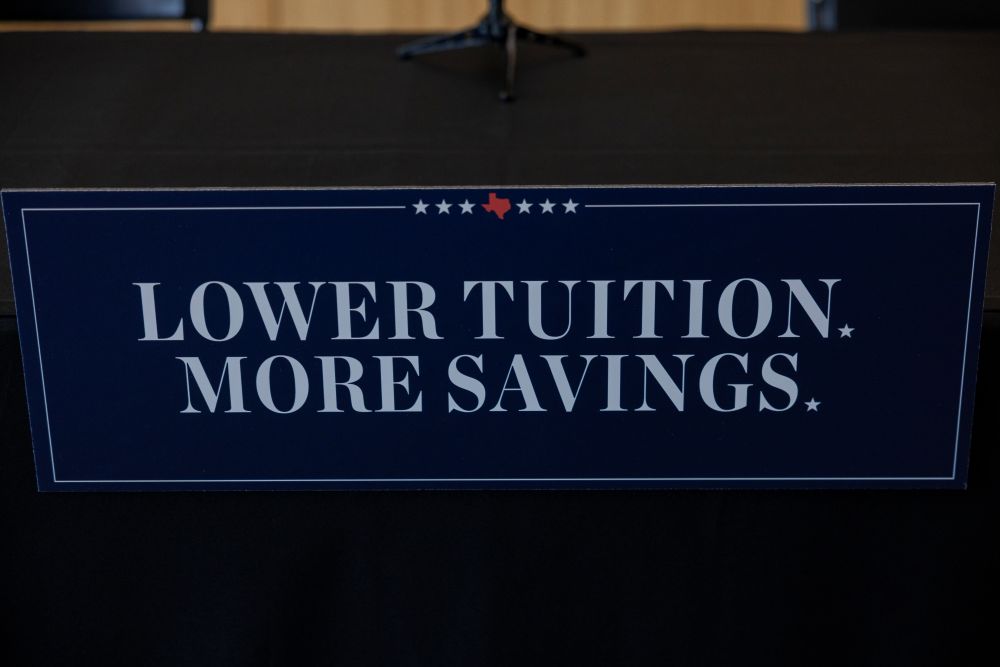
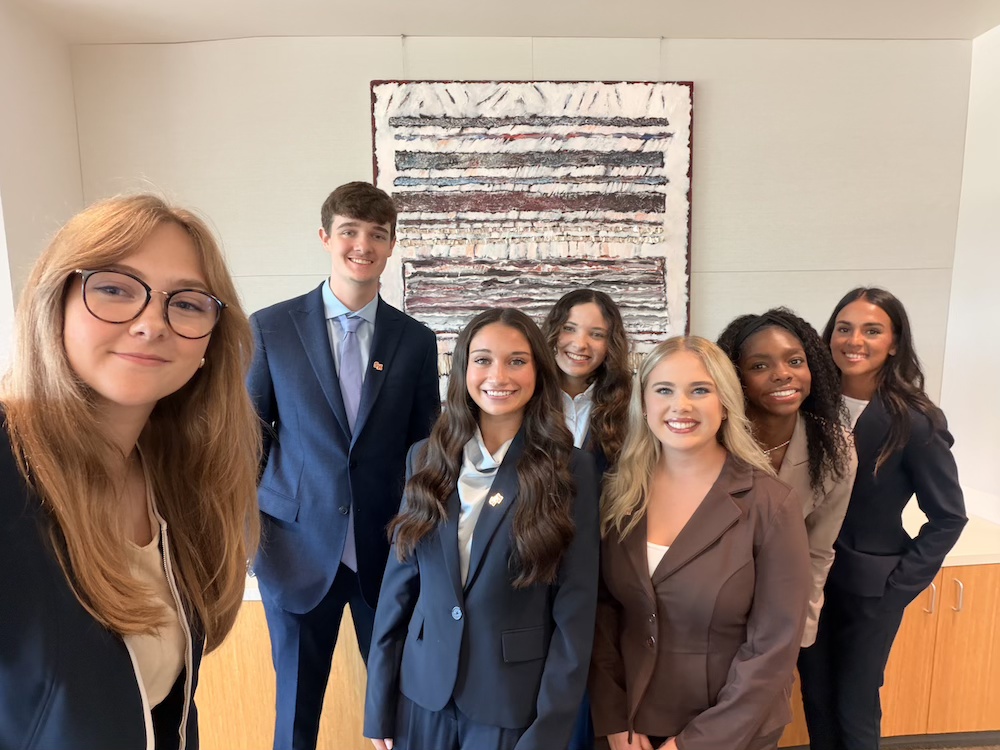
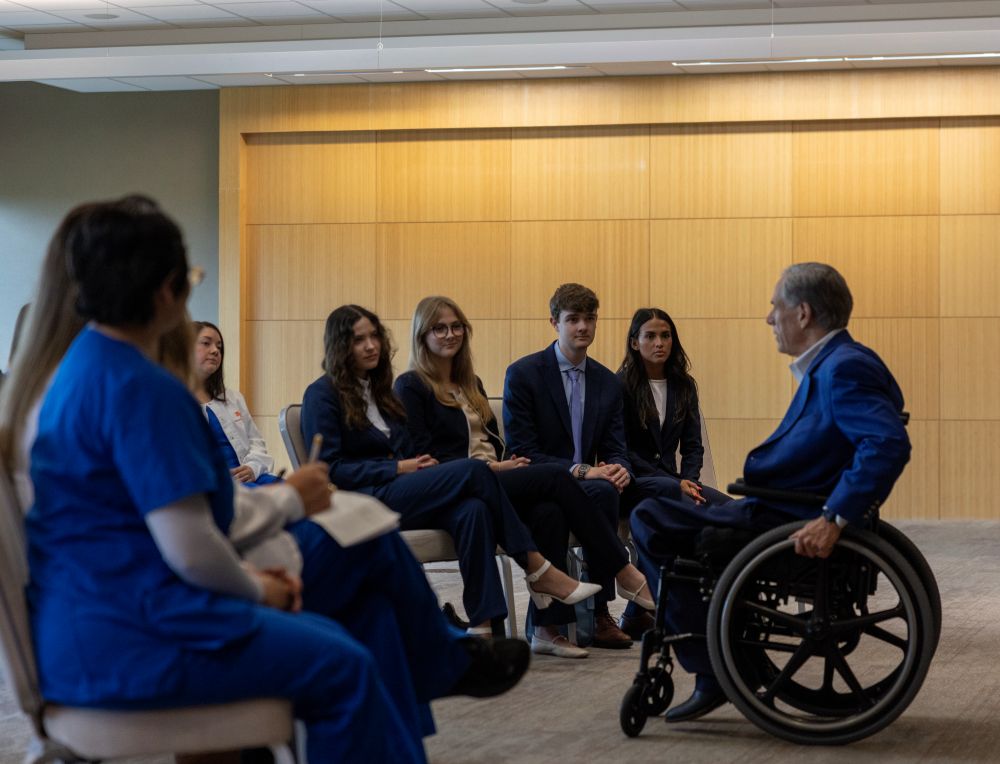
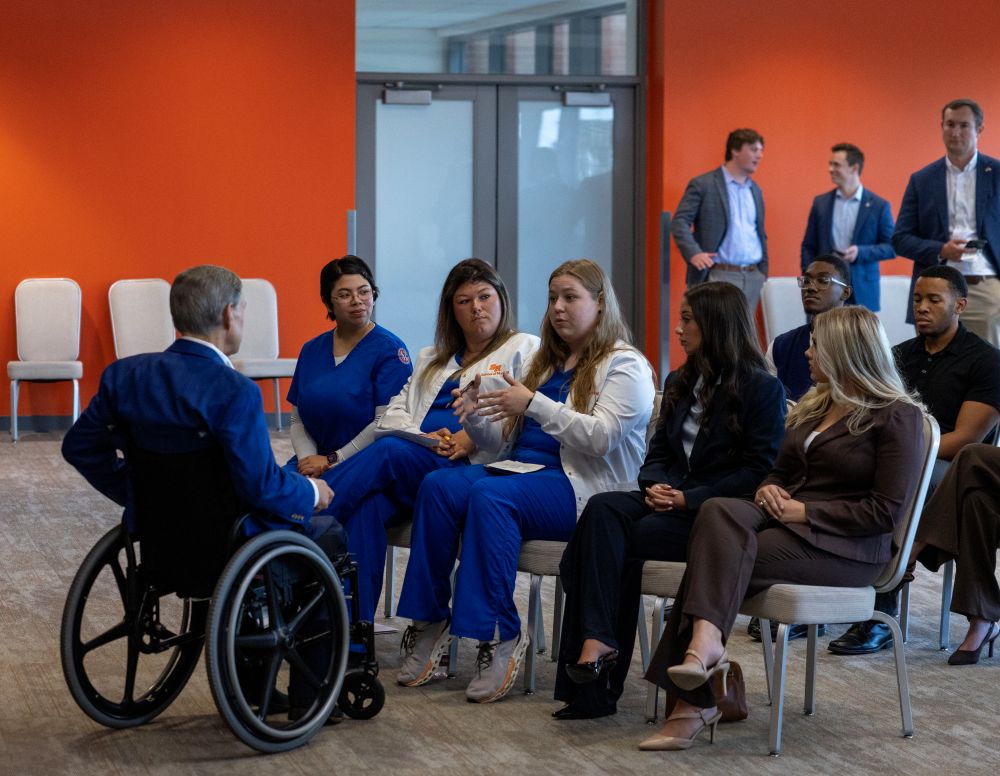
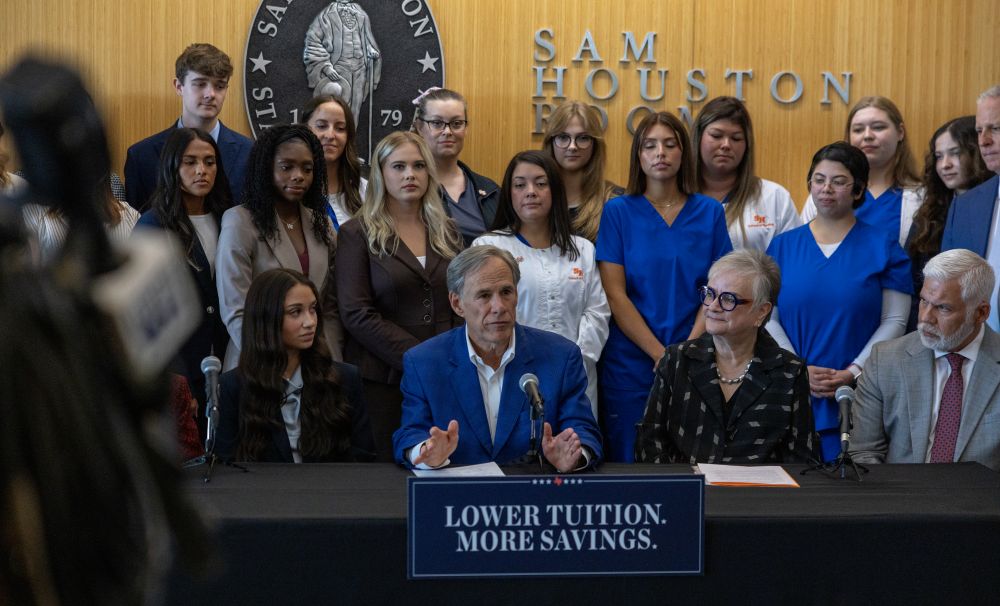
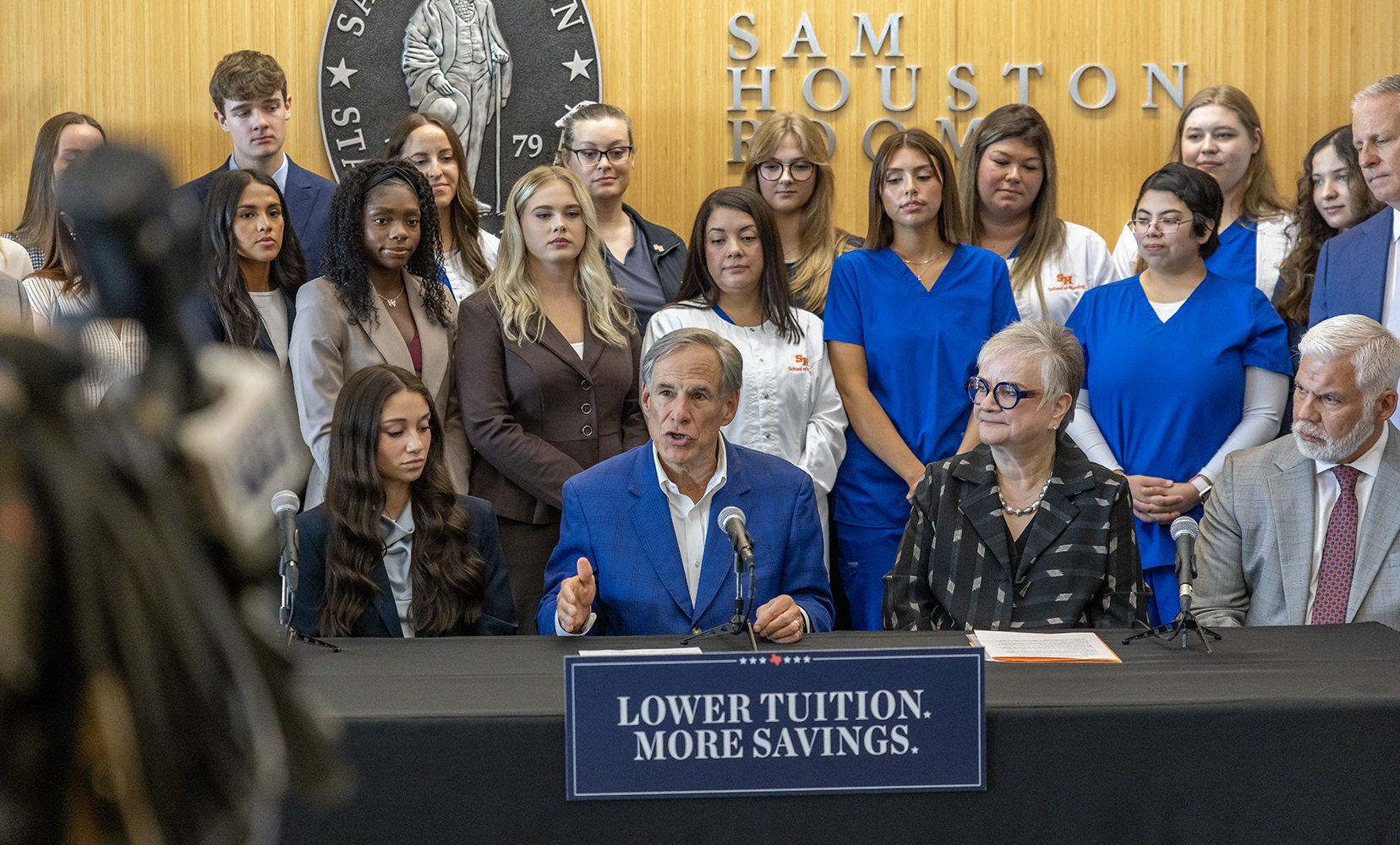
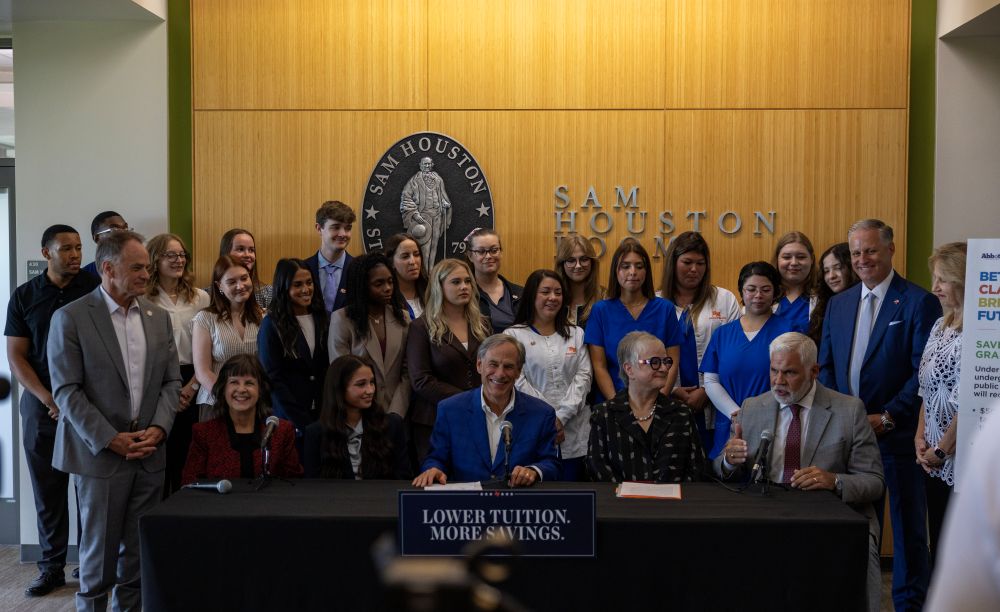
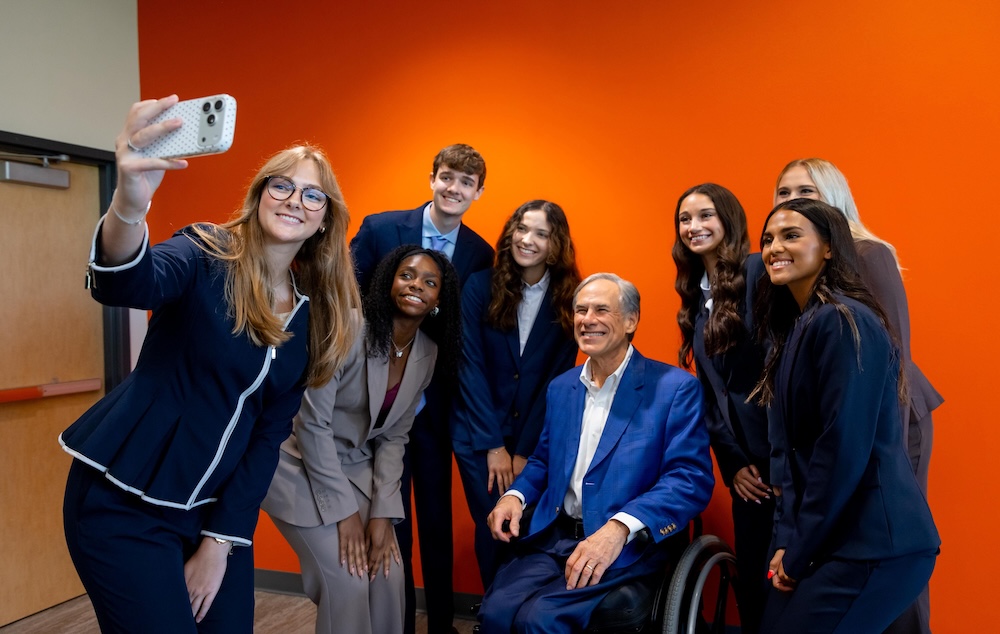
On August 25, 2026, LEAP students had the opportunity to speak with Governor Greg Abbott regarding a new policy for higher education. At the SHSU Woodlands Center, Governor Abbott met with several Sam Houston State University students, including LEAP students, Orange Keys, and select nursing students, before holding a press conference to announce the Texas Summer Course Tuition Discount Program. Thanks to the effort and generosity of President White, the President’s Office, and the Governor’s team, the event went off without a hitch.
When we arrived at the Woodlands Center, we received a warm greeting from President White. Likely sensing our nerves, President White, Dr. Johnson, and Ms. Alexander were friendly and encouraging, helping us prepare and relax before the event officially began. After being directed upstairs, we had the opportunity to chat about upcoming LEAP events with Emily Binetti, SHSU Director of Content Communications, while we waited for the Orange Keys and nursing students to arrive.
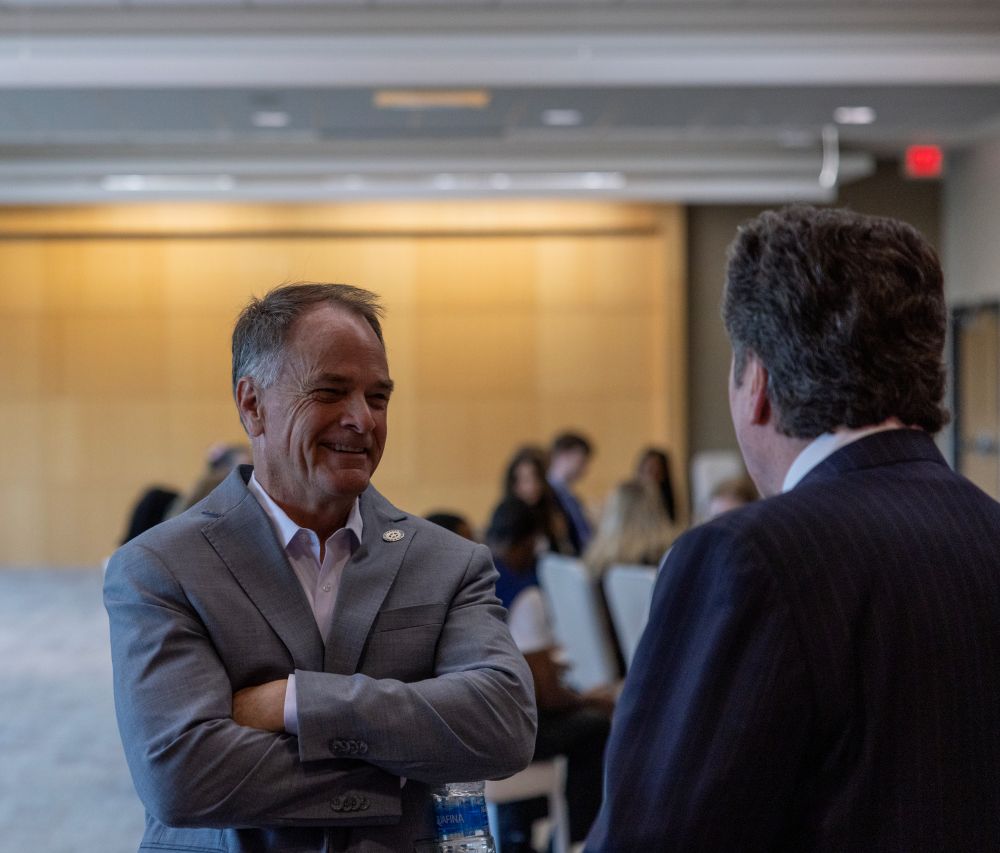
During the first half hour, LEAP students had the chance to speak with Representatives Swanson, Toth, and Holt. At President White’s request, the representatives shared advice about preparing for our futures. They emphasized the importance of gaining real-world experience, as well as developing strong reading and writing skills. Their advice offered a valuable perspective on the skills students can develop now to prepare for their future careers.
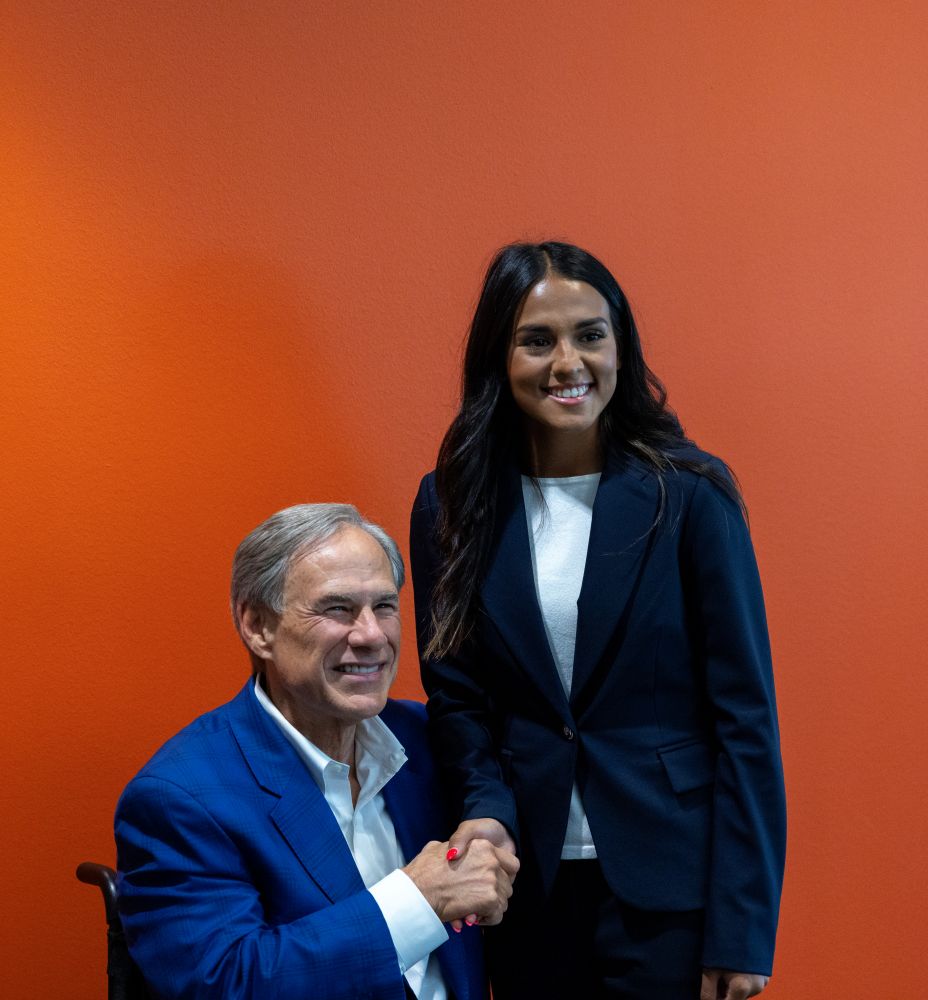
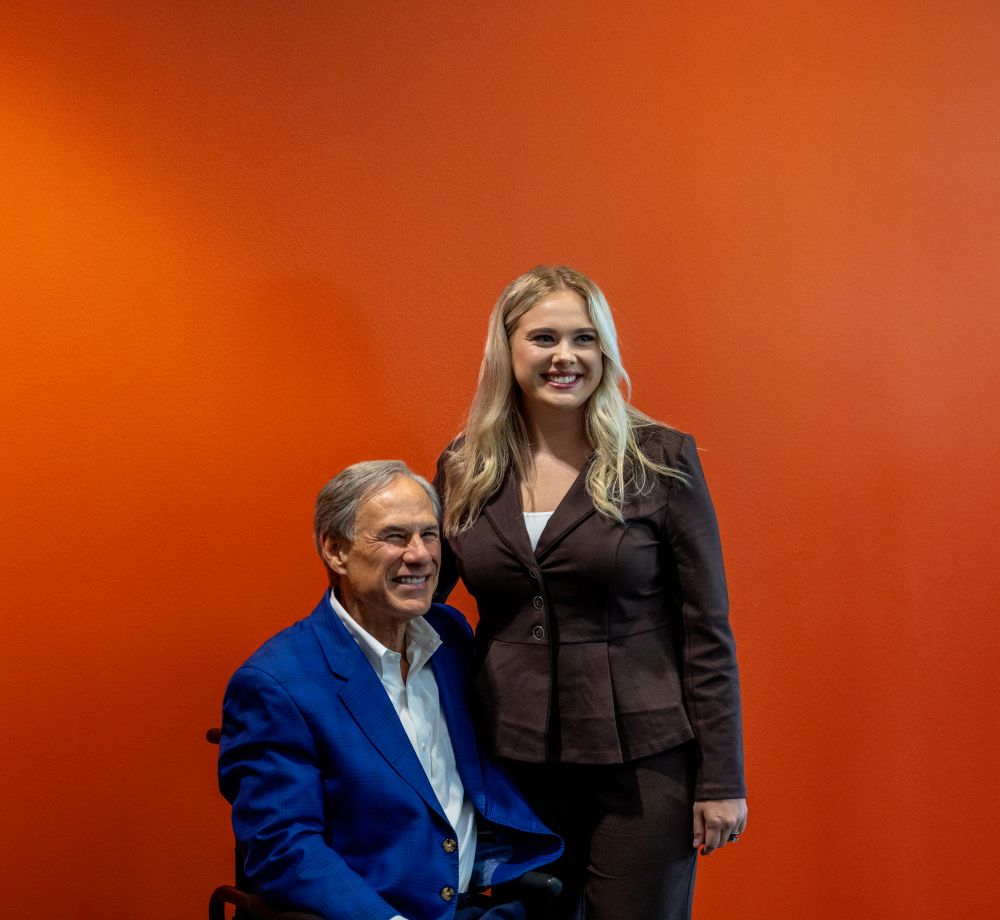
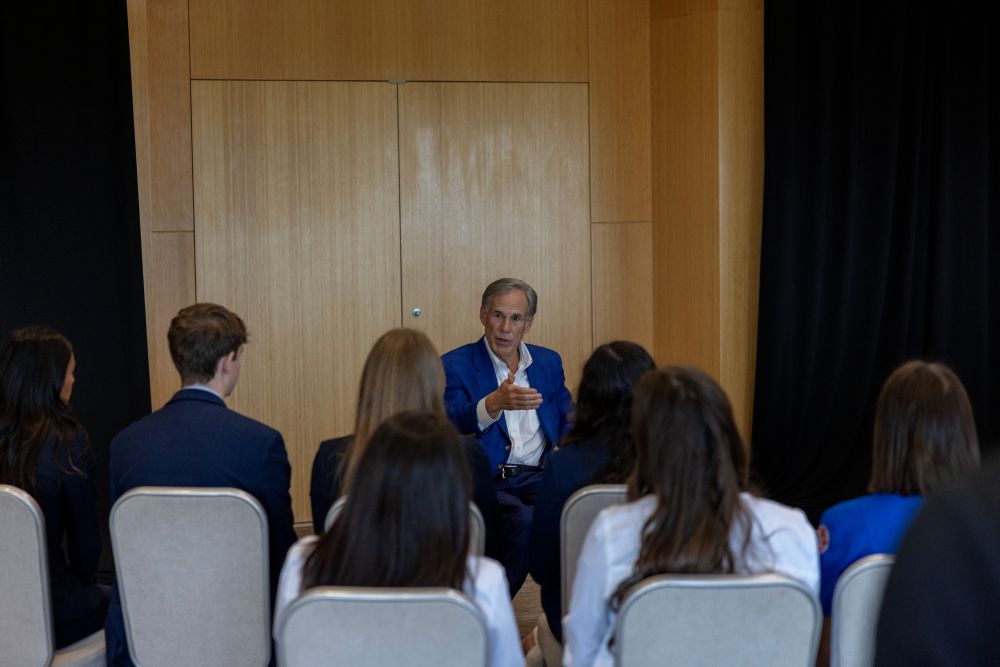
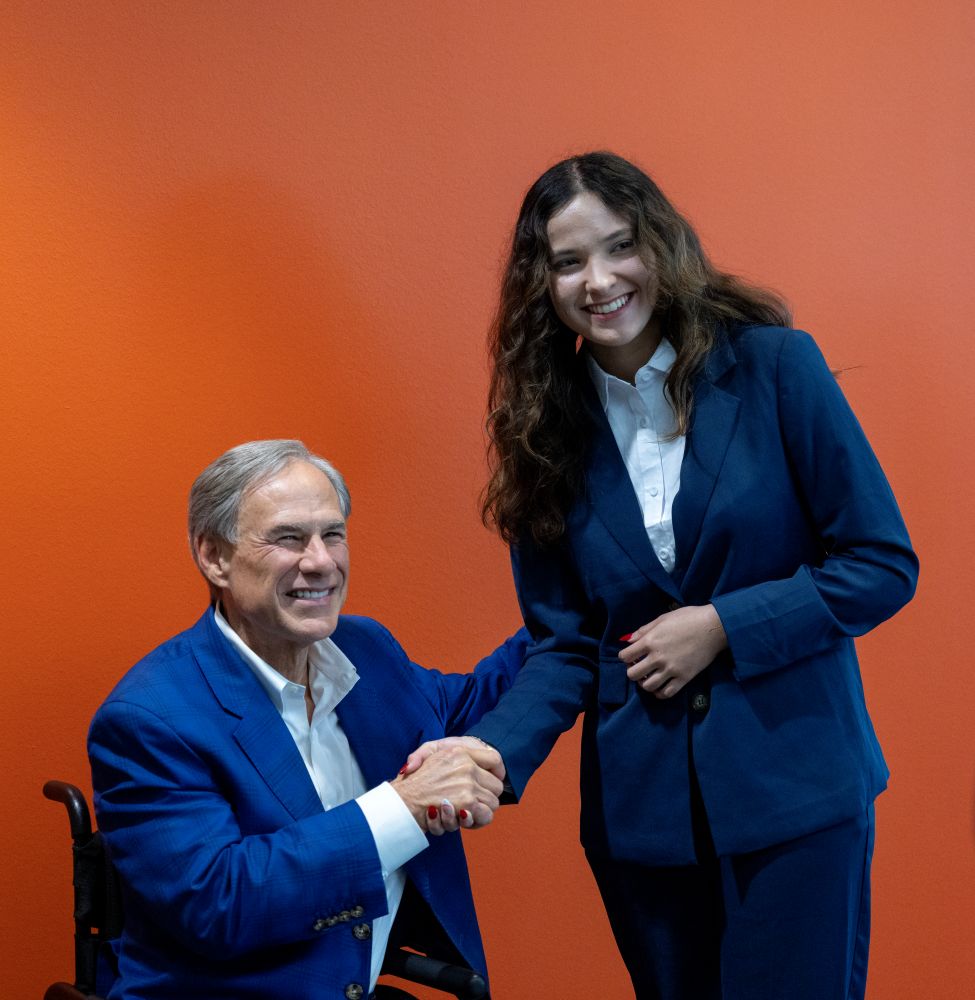
When Governor Abbott entered, he was nothing less than kind and well-spoken. He informed us about his new policy, which provides discounts for students taking summer courses. The plan will offer a $500 discount for students taking one to five credit hours and a $1,000 discount for students taking six or more credit hours. He responded to our questions with genuine interest and explained the ideas behind the policy in clear, accessible terms, which we all appreciated. After approximately 30 minutes of conversation with the Governor, we had the opportunity to take pictures with him before the press conference began.
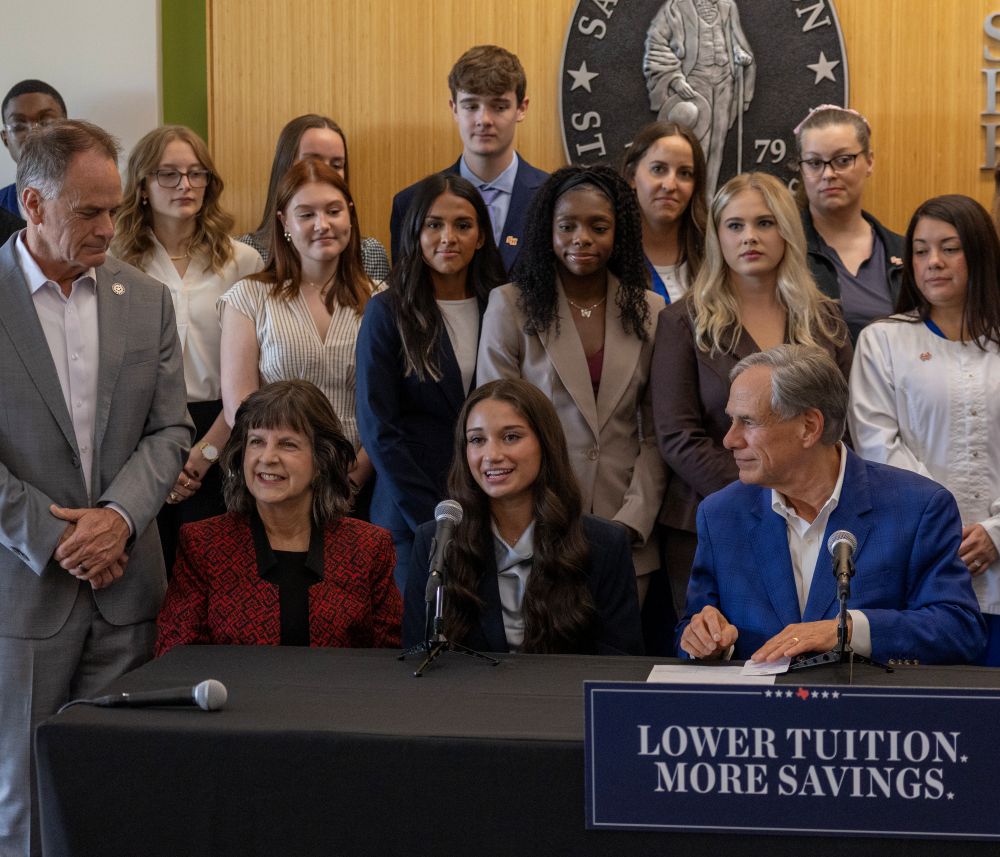
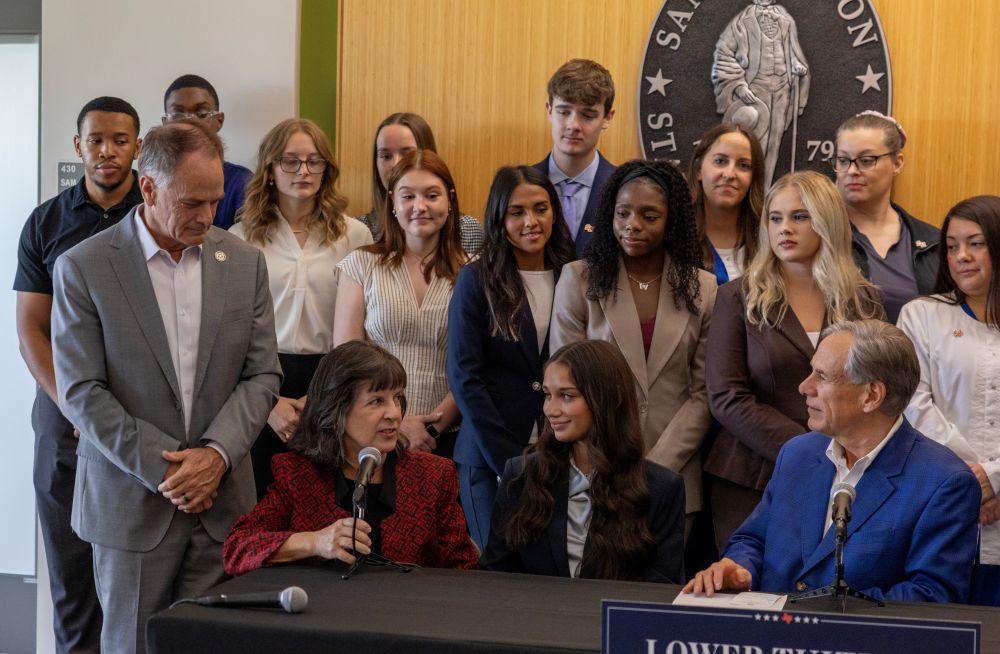
President White opened the press conference by thanking Governor Abbott and highlighting Sam Houston State University’s achievements. Governor Abbott then thanked the university, the students, and the Representatives in attendance before officially announcing the policy. Several Representatives also spoke during the conference, but one particular speaker was especially close to our hearts: our very own Ruthie Passmore.
Though her remarks were brief, Ruthie’s words were impactful and insightful. She discussed the challenges tuition can pose for students, drawing from her own experience. As a student responsible for financing her education, Ruthie explained that the cost of tuition has required her to work three jobs. Her perspective provided a personal reminder of why policies aimed at making higher education more affordable can have a meaningful impact on students.
Although our time with Governor Abbott was short, the experience was worthwhile. We were given a behind-the-scenes look at the Governor’s schedule and an opportunity to see politics in action. More importantly, we were able to speak directly with elected officials, ask questions, and hear advice that we can carry with us as we continue our education and prepare for our futures.
The advice we received from the Representatives, along with the opportunity to meet Governor Abbott face-to-face, made the experience one that each LEAP student will carry with them long after the event concluded.
Written By: Isis Hollis, Robin Houghton, and Allie Plunk
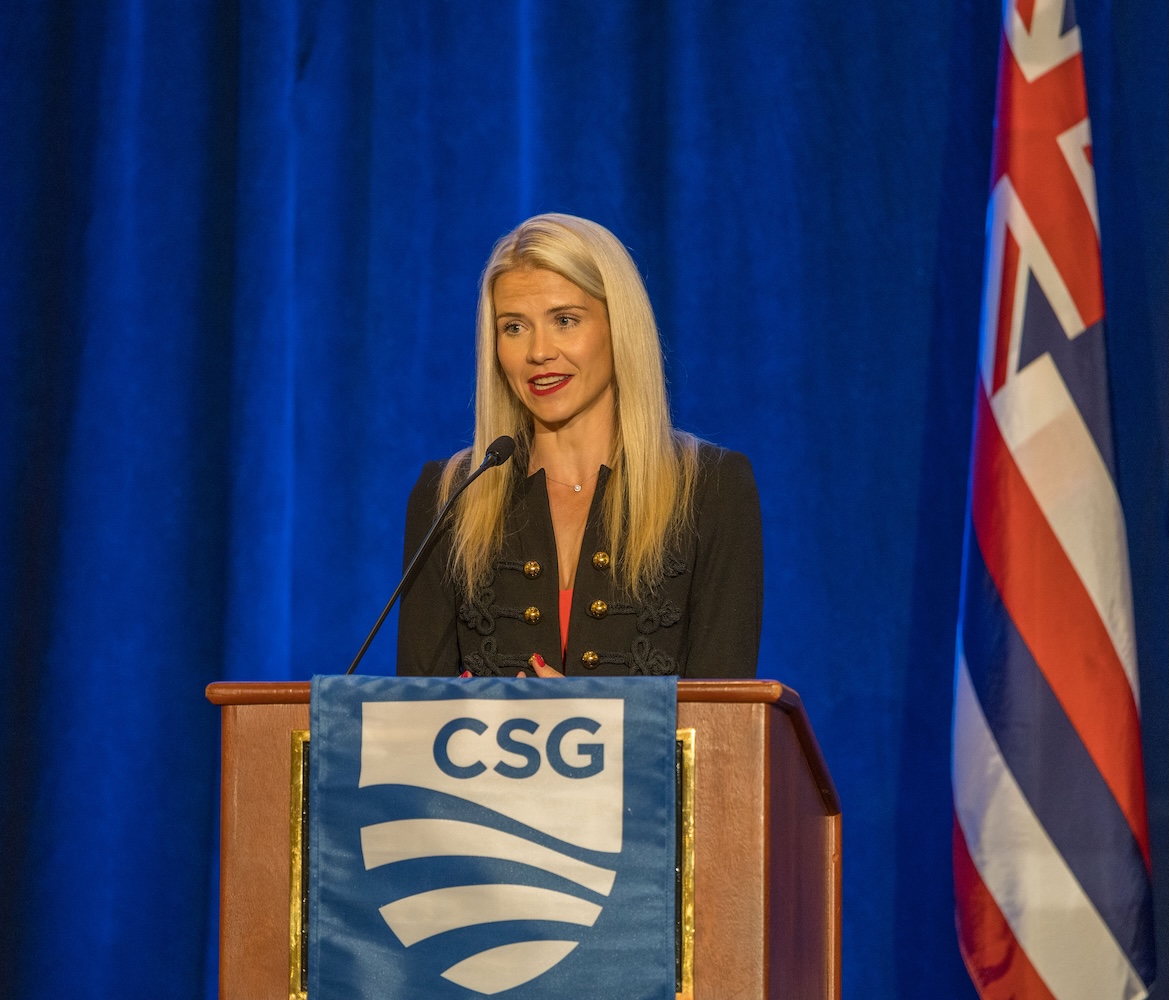
Throughout the conference, LEAP Ambassadors have had the opportunity to learn about policy from esteemed legislators and guest speakers, but on our last day, we got to experience a much more personal session, hearing from activist Elizabeth Smart, the CSG Justice Center on mental health, and attending the closing dinner.
Elizabeth Smart
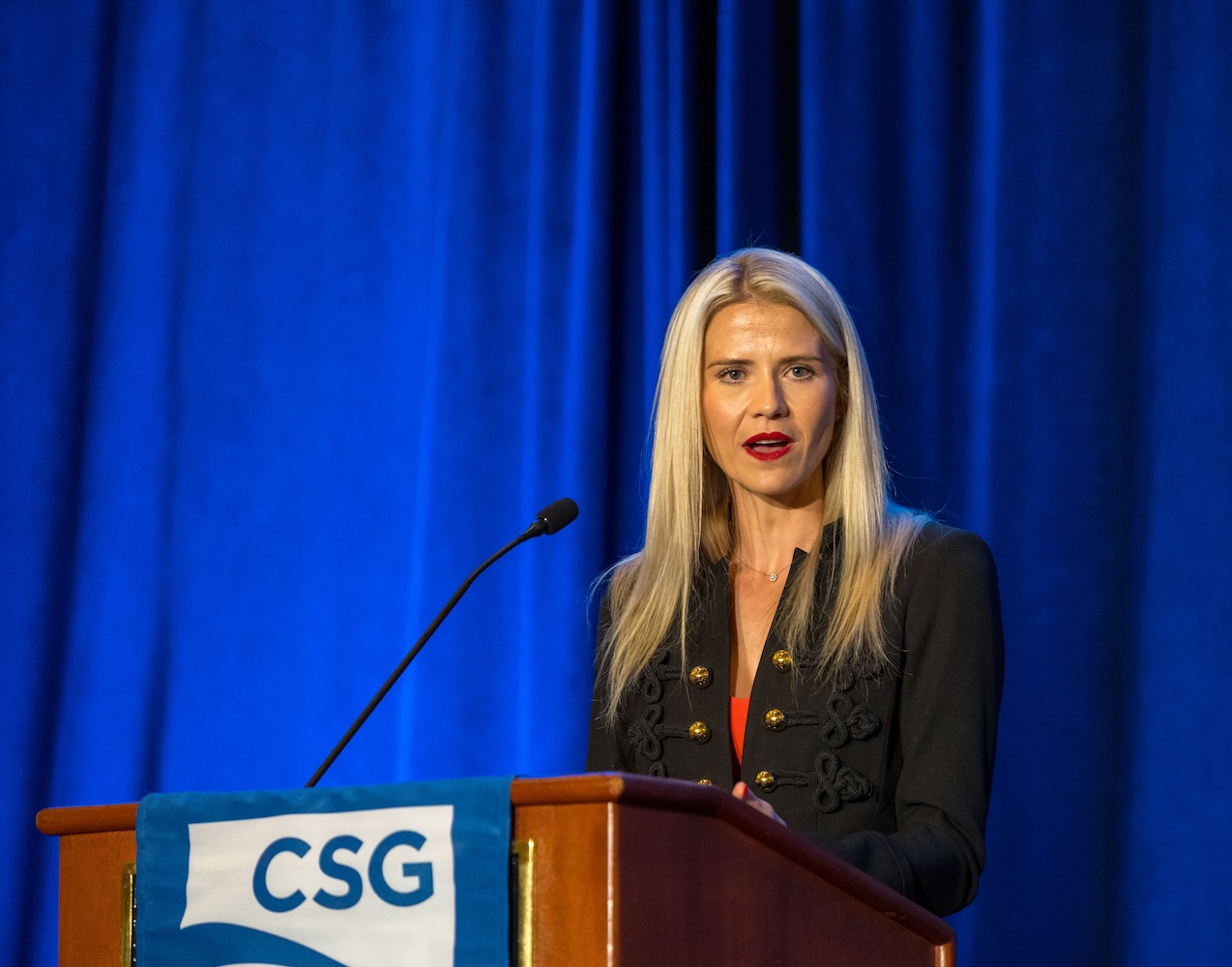
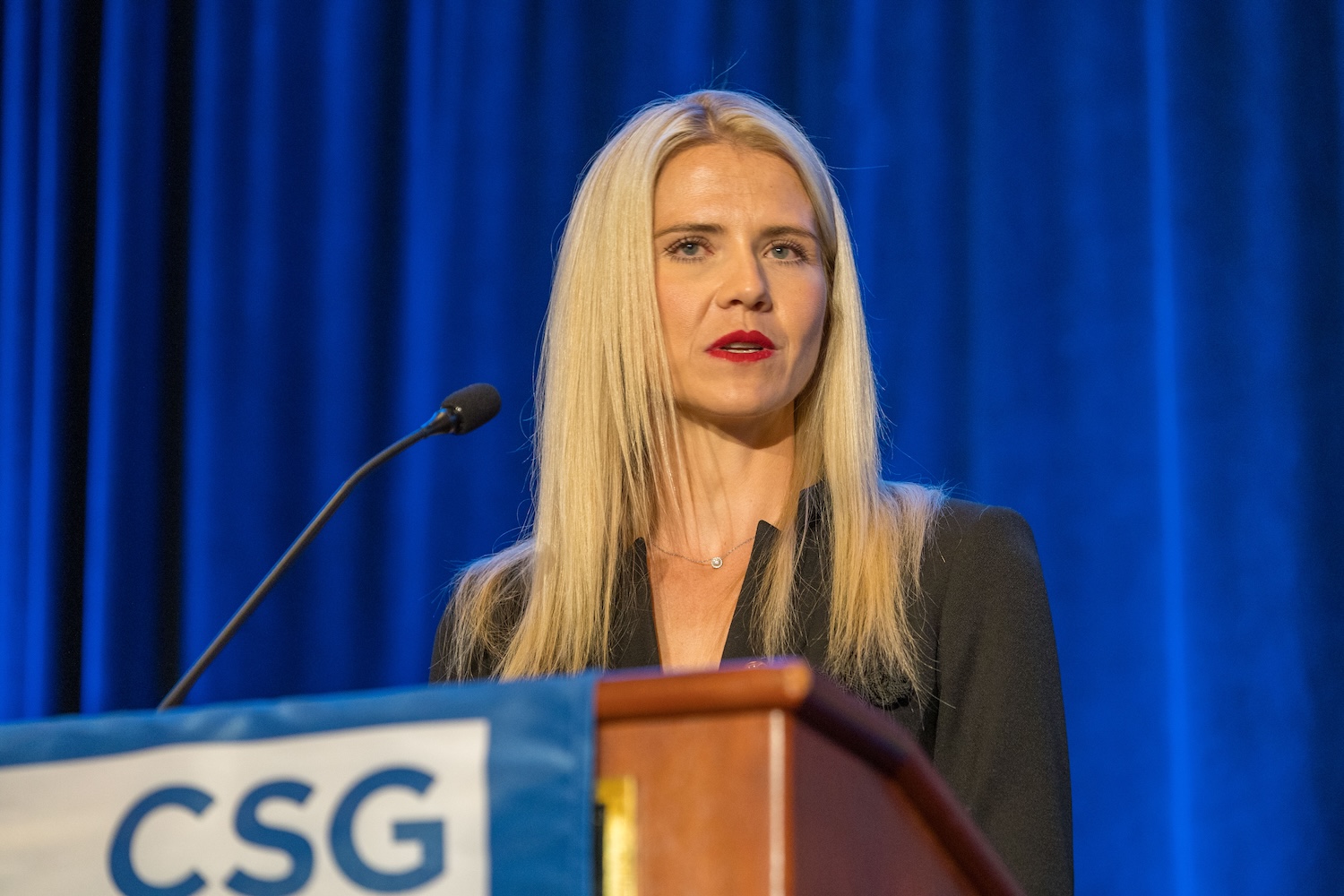
Before we heard from today’s remarkable keynote speaker, there were a few mentions and introductions from Chair Senator Todd Weiler (UT) and Chair-Prospect Senator Löki Tobin (AK). Together, they previewed next year’s CSG West meeting, which will be taking place in Alaska! Following a short “sizzle reel” for the state, Chair Senator Todd Weiler (UT) introduced Elizabeth Smart.
Smart was abducted from her bedroom at the age of 14 and survived nine months in captivity before being rescued. Though it was law enforcement that put her captors behind bars, there would be no story to tell had it not been for her resilience. It was incredibly inspiring to hear her story, and how she pushed through the darkness around her by focusing on positivity. Even though terrible things were happening to her, she reminded herself constantly throughout her abduction that things could always be worse. It was this strategy, as well as remembering the unconditional love of her family, that kept her going.
Smart also touched on the incredible difficulty she had finding value within herself during and following her captivity. Because she hadn’t been taught the difference between consensual sex and rape, she felt like she had done something horrible. It took her a long time to be able to rationalize that she hadn’t been the one to do anything wrong. I appreciated her candor and that she made it clear that recovery after something so terrifying was a long process.
Now an advocate for safety and sexual assault victims, Smart has used what happened to her for as much good as she can. This resilience and compassion is something we all admired. She was an incredible speaker, and we felt honored to have been able to listen to her.
CSG Justice Center
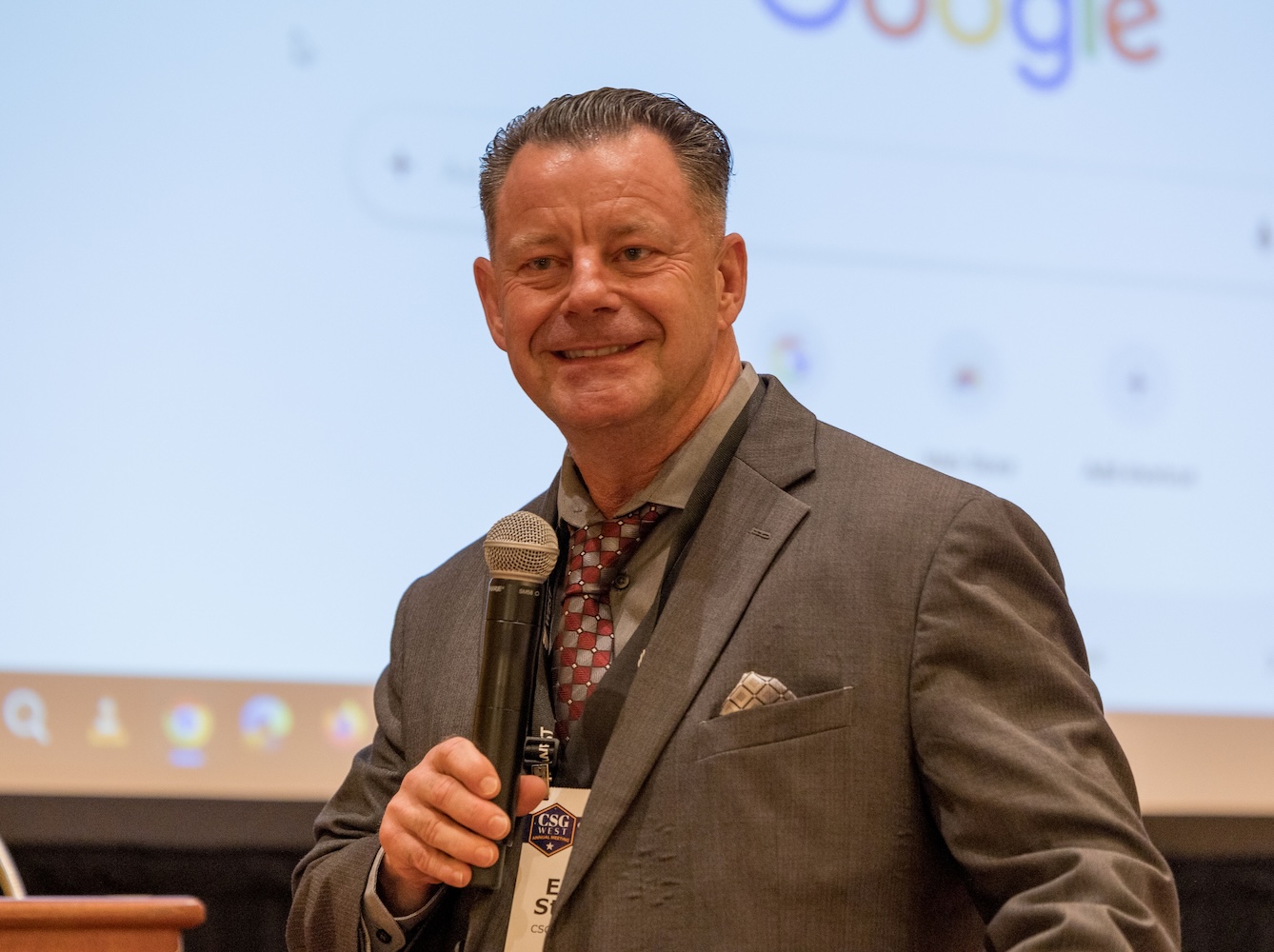
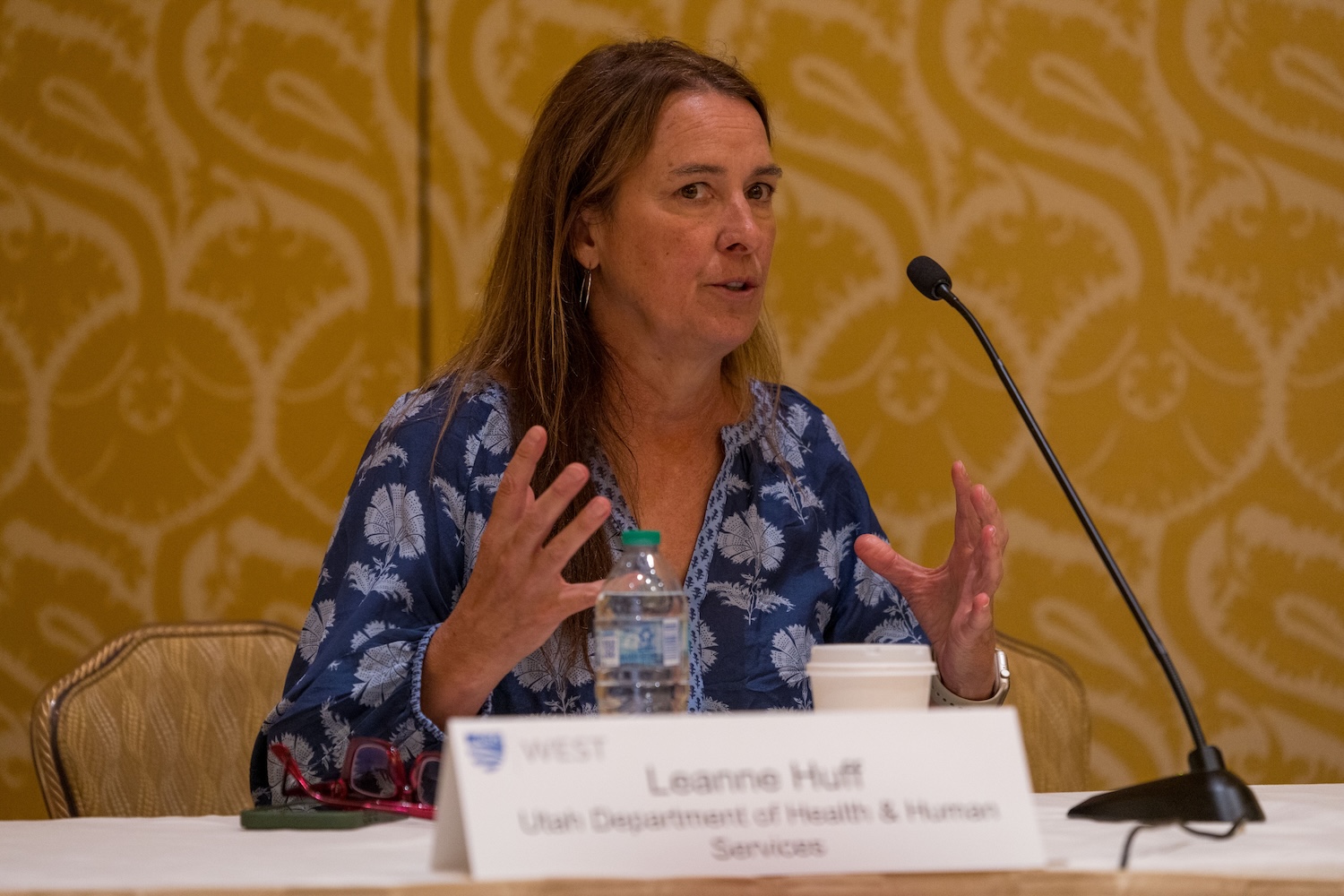
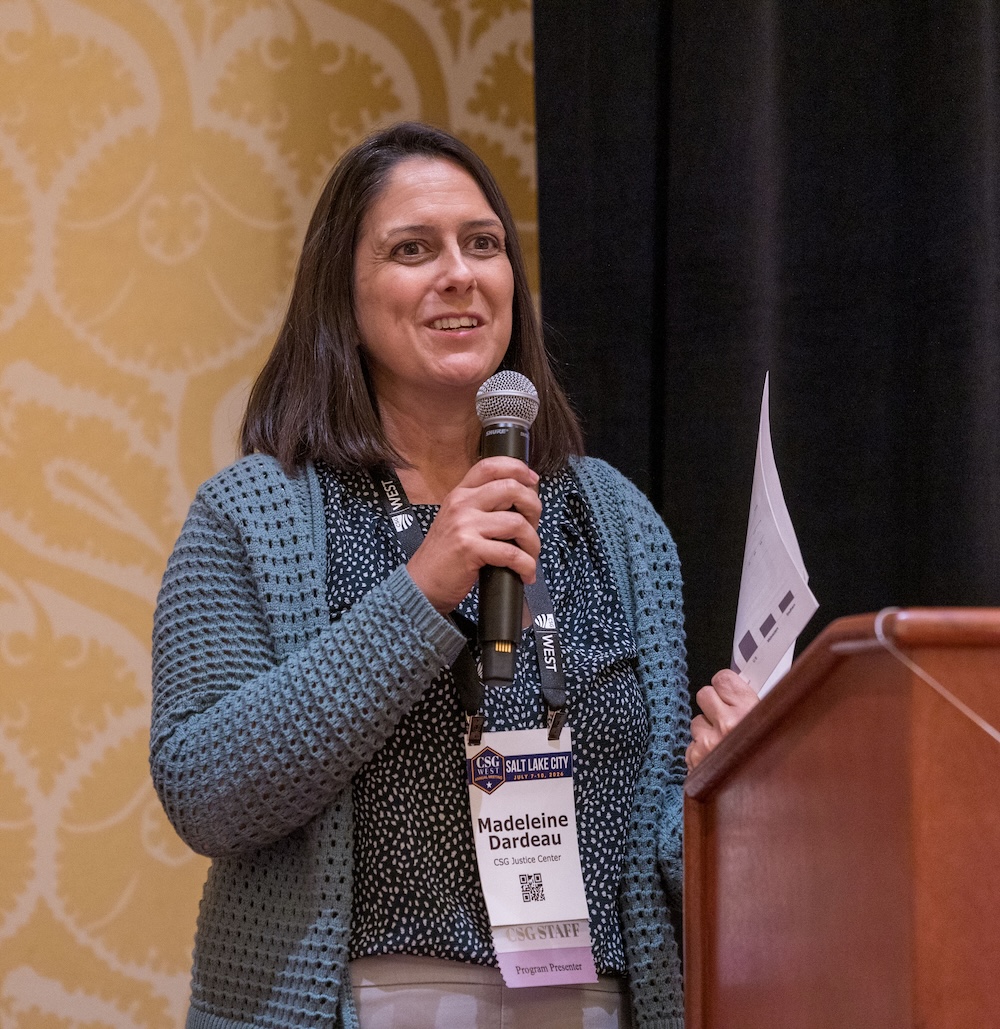
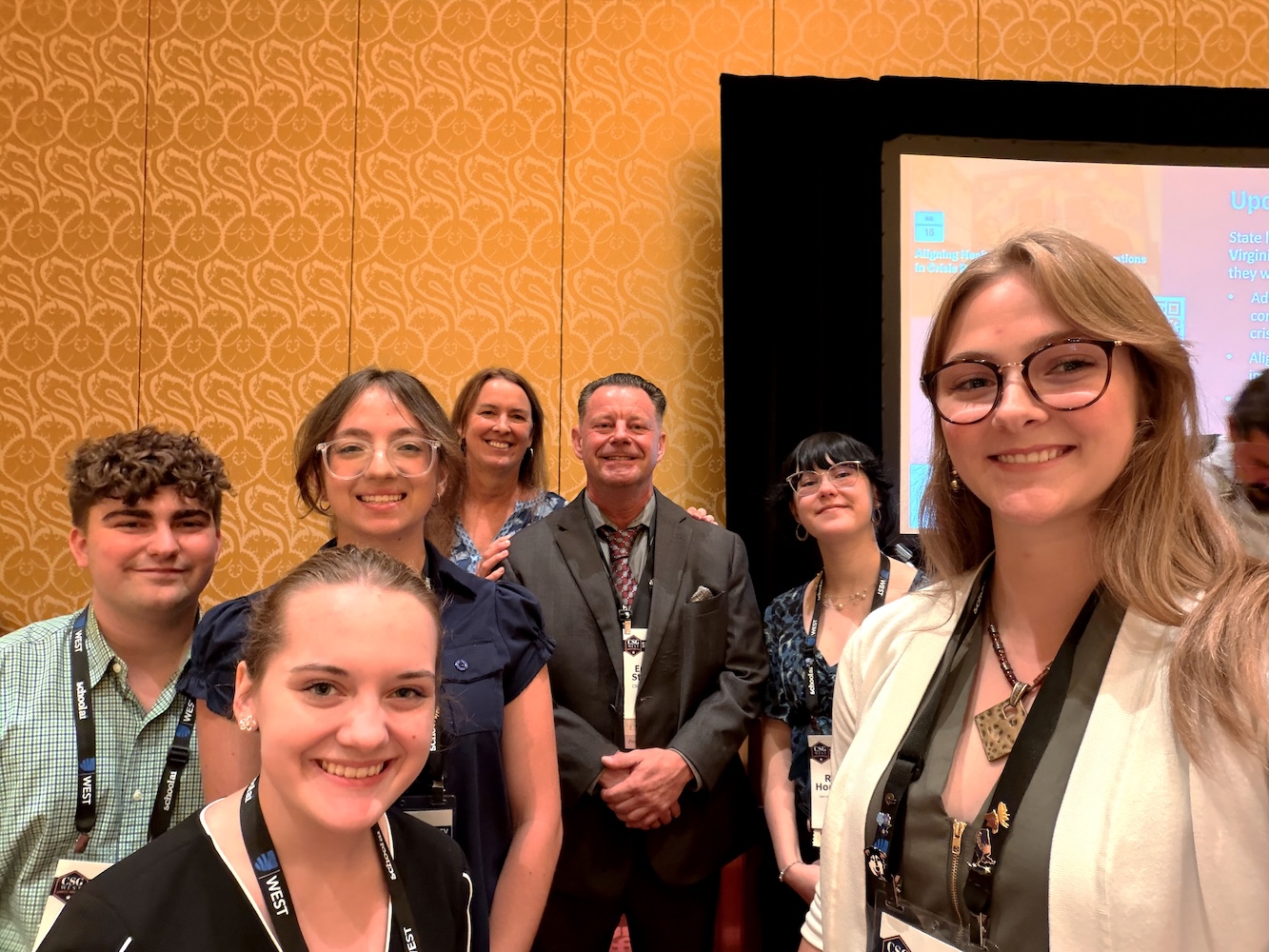
Following Elizabeth Smart’s moving speech, we attended a session on the CSG Justice Center, and their approach to mental health advocacy. Ernest Stevens, former San Antonio police officer and Crisis Intervention Team (CIT) member, current Managing Director of Behavioral Health at the CSG Justice Center, Madeleine Dardeau, CSG Justice Center State Initiatives Program Director, and Leanne Huff, Mobile Crisis Outreach Team (MCOT) Act specialist, had a panel discussion about the implementation and development of MCOTs, as well as CIT Trainings and help line 988.
The key point was the pressing need for more CIT trained teams to go out and address people with mental health problems. Stevens stated that if you send an untrained officer to deal with mental health crises “there will always be a gun.” Many people struggling with mental health have been shot or killed by officers unable to deal with their problems, and this is exactly what the CSG Criminal Justice center is trying to stop. At the core of this session was a statistic: officers spend only 8 hours learning about mediation techniques, which is something they are supposed to use every day, as opposed to a whopping 20 hours learning to use a gun, which many officers only discharge a few times.
Another factor in this issue is the stigmatization of mental health problems. If we can make people unafraid to get the help they need, then we won’t have as many suicides or overdoses. This issue is becoming something that is particularly close to a few of our hearts, and we hope that in the future we can be a part of the solution.
Dinner
We ended the conference with fun in a closing dinner hosted at the Natural History Museum of Utah, which was just as beautiful of a venue as it was informative. After ascending the stairs, we were greeted with a wall of fossils, crystals, flora, and taxidermy that stretched from floor to ceiling, immediately captivating several Ambassadors.
The dinner also featured a local band, by the name of The Bombshell Flowers. A high-energy indie rock group, their layered harmonies added a relaxed, yet tasteful atmosphere.
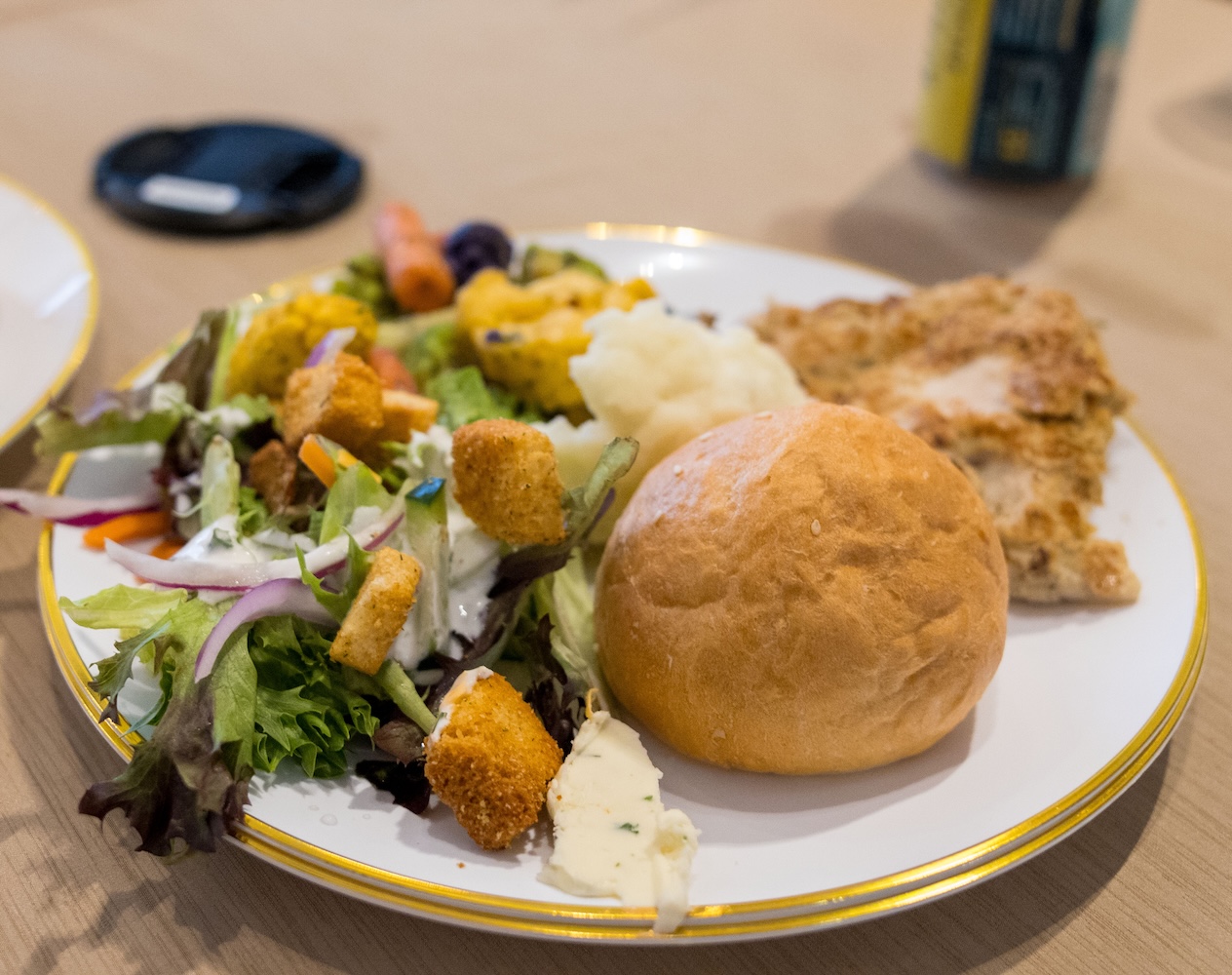
For dinner, we had tri-tip steak, cauliflower, asparagus, mashed potatoes, and salad, followed by desserts of fruit tarts and banana pudding.
While the dinner was good, it was the museum that was truly memorable. We spent a lot of time exploring the exhibits, each highlighting an important aspect of Utah’s natural history. We even discovered that Allie is likely descended from the Allosaurus, which is where she gets her t-rex nature!
As we left, we managed to grab a shot of the breathtaking views from the museum terrace.
From dinosaurs to rock formations to earthquakes, Utah’s Natural History Museum was a wonderful place to close out the conference.
Conclusion
Our final conference day left us with a lot to think about, looking at the world through new eyes. We all admired the incredible work people like Elizabeth Smart and the CSG Criminal Justice Center are doing for those struggling with mental health and sexual assault.
Written By: Isis Hollis, Robin Houghton, Allie Plunk, and Jacob Wessels
LEAP Ambassadors had a wonderful second day at the Council of State Governments Western Legislative Conference! We enjoyed learning about Quantum Computing, the West’s take on the upcoming Olympics, Policy tours, and a visit to the Church of Jesus Christ of Latter-Day Saints’ Salt Lake City Temple Visitors Center.
Quantum Computing
Though a daunting subject, we attended a conference session on the implications and impacts of Quantum Computing, hosted by Senator Catherine Blakespear (CA) and Representative Justin Wilmeth (AZ).
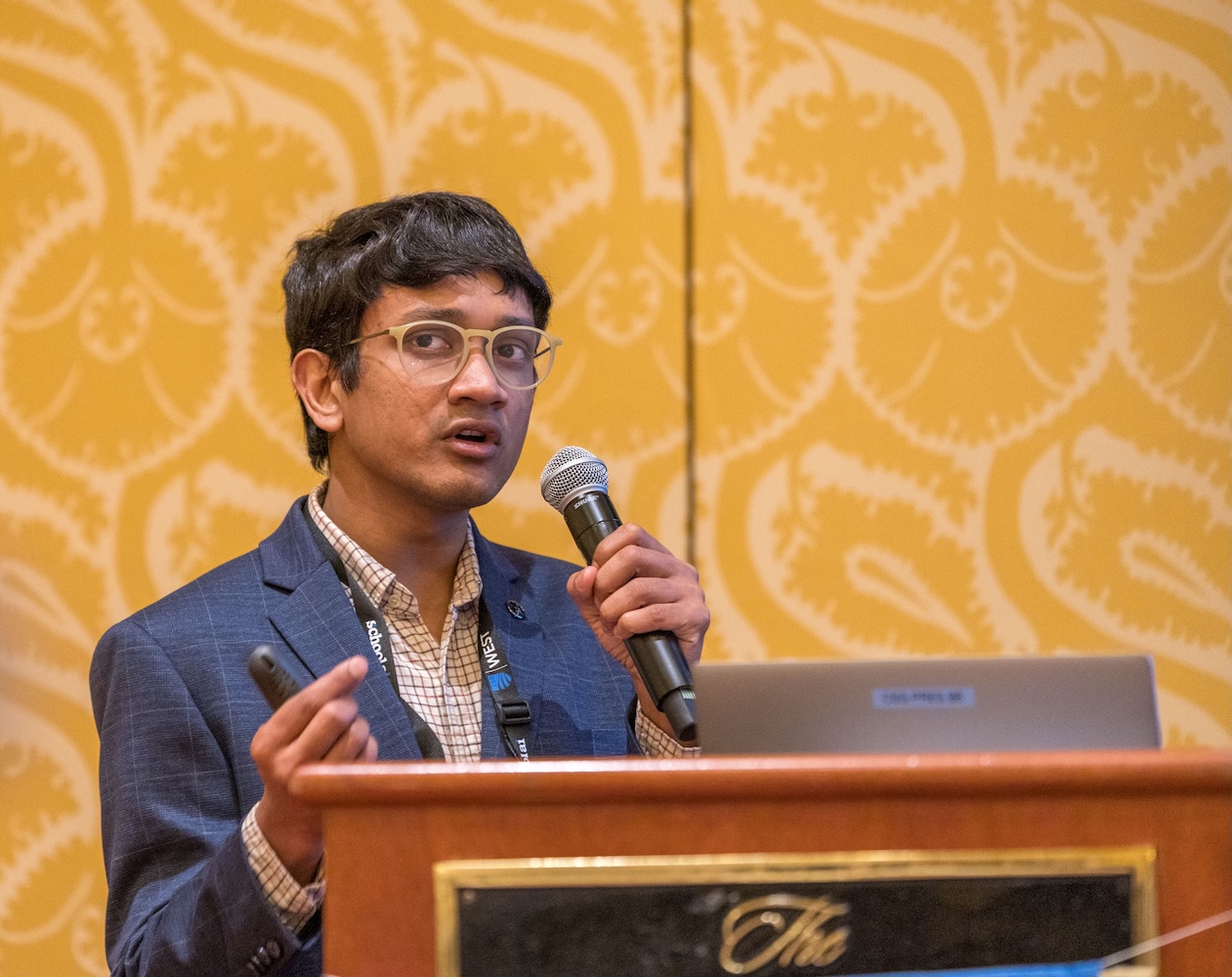
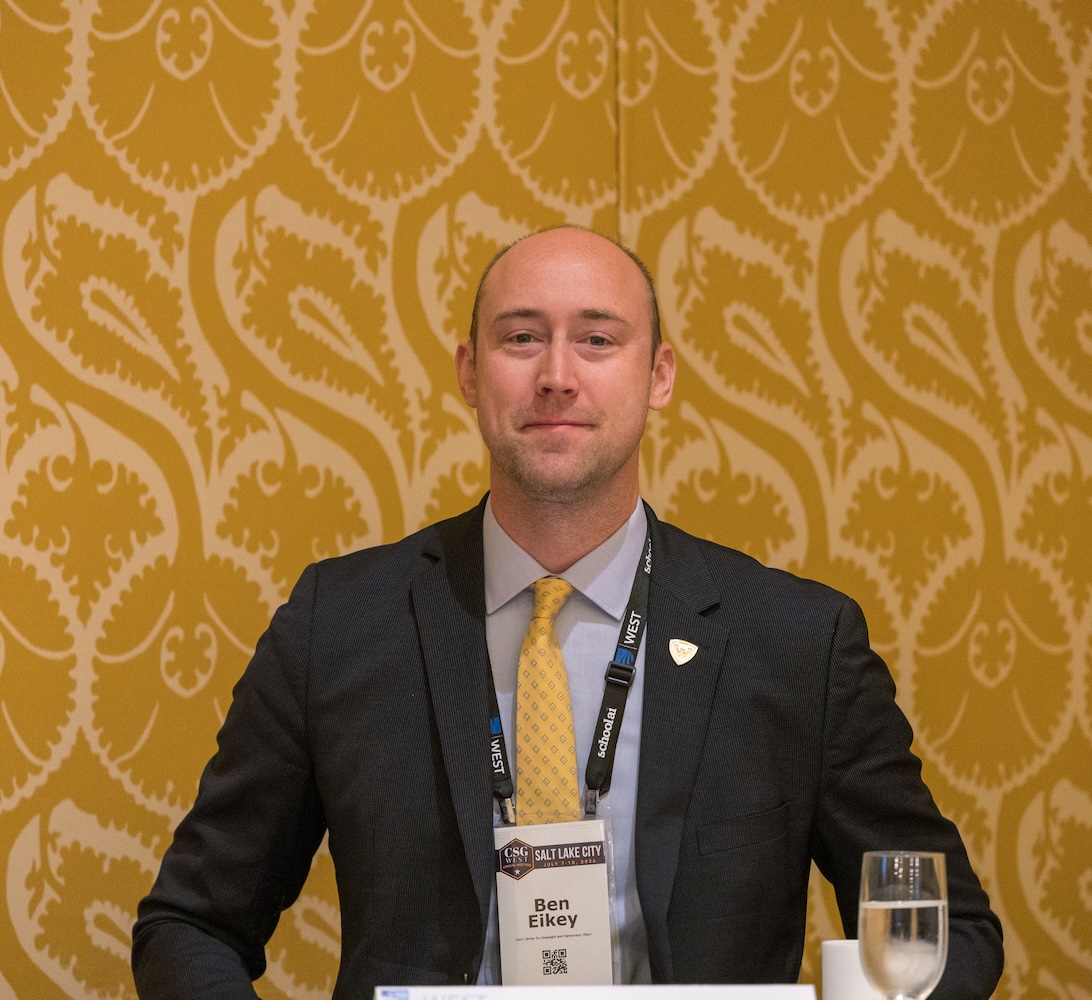
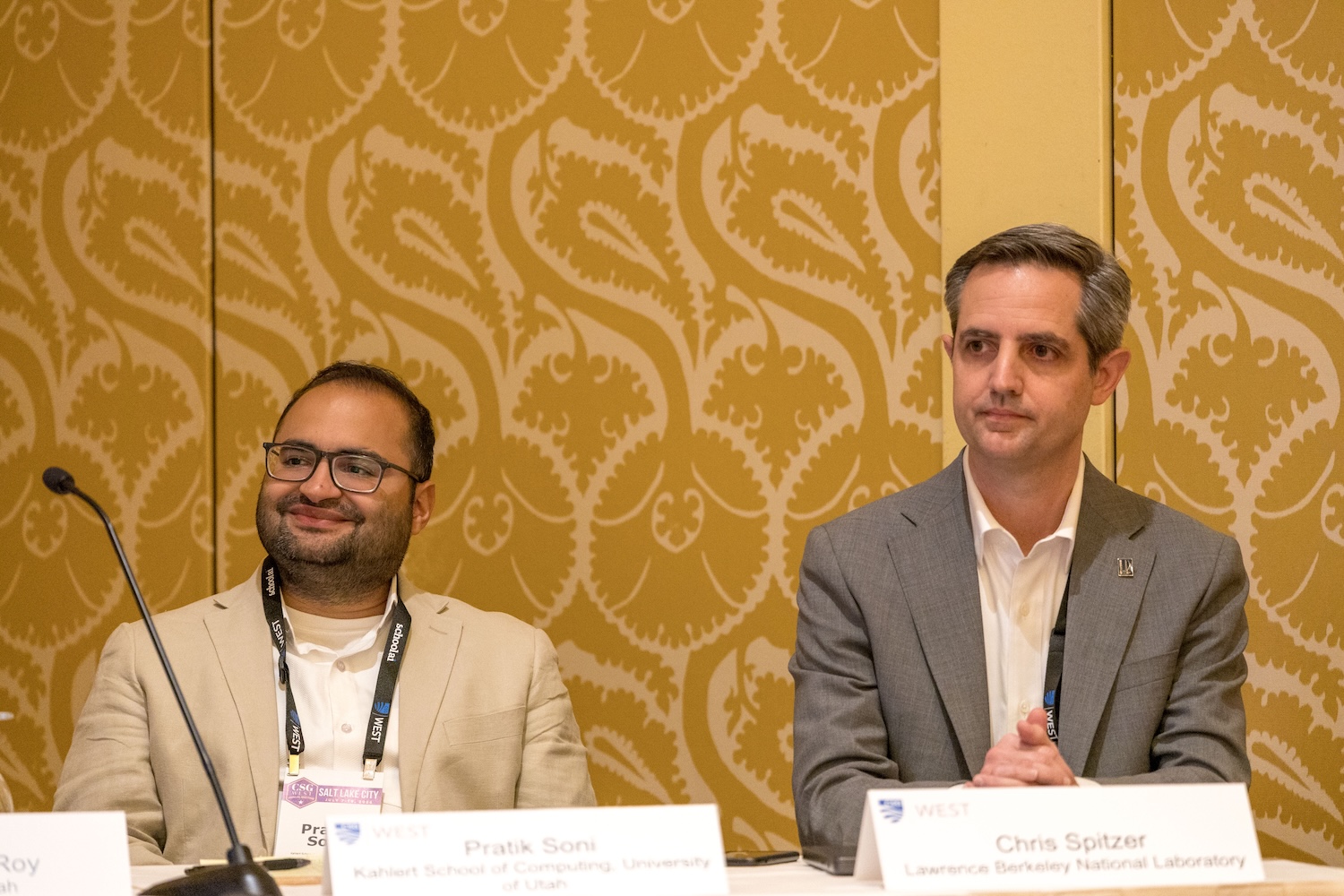
With a series of presentations by Rohan Basu Roy, Professor at the University of Utah; Pratik Soni, Professor at the University of Utah; Chris Spitzer, of Lawrence Berkeley Laboratory; and Ben Eikey, of the Levin Center, we were amazed to learn about the quickly approaching 2030 deadline for the official implementation of Quantum.
This astounding software will significantly cut down the production time for molecule simulators used in drug manufacturing, risk analysis for things like finance, and even enhanced AI. However, as Professor Soni stated, Quantum also comes with significant risk to national security and could potentially widen the employment gap. In order to resolve this conflict, speakers suggested training programs for teachers and students as young as elementary school to introduce Quantum so that we can raise a generation of young people properly equipped to handle the technology.
The tone of the session was one of preparation: Quantum is coming to the West, and it’s up to the legislators to build a safety net to keep things from going downhill. Quantum Computing is a somewhat new concept to the Ambassadors, though one that got us thinking about our own futures and how Quantum might affect our careers in law.
The Power of Sports
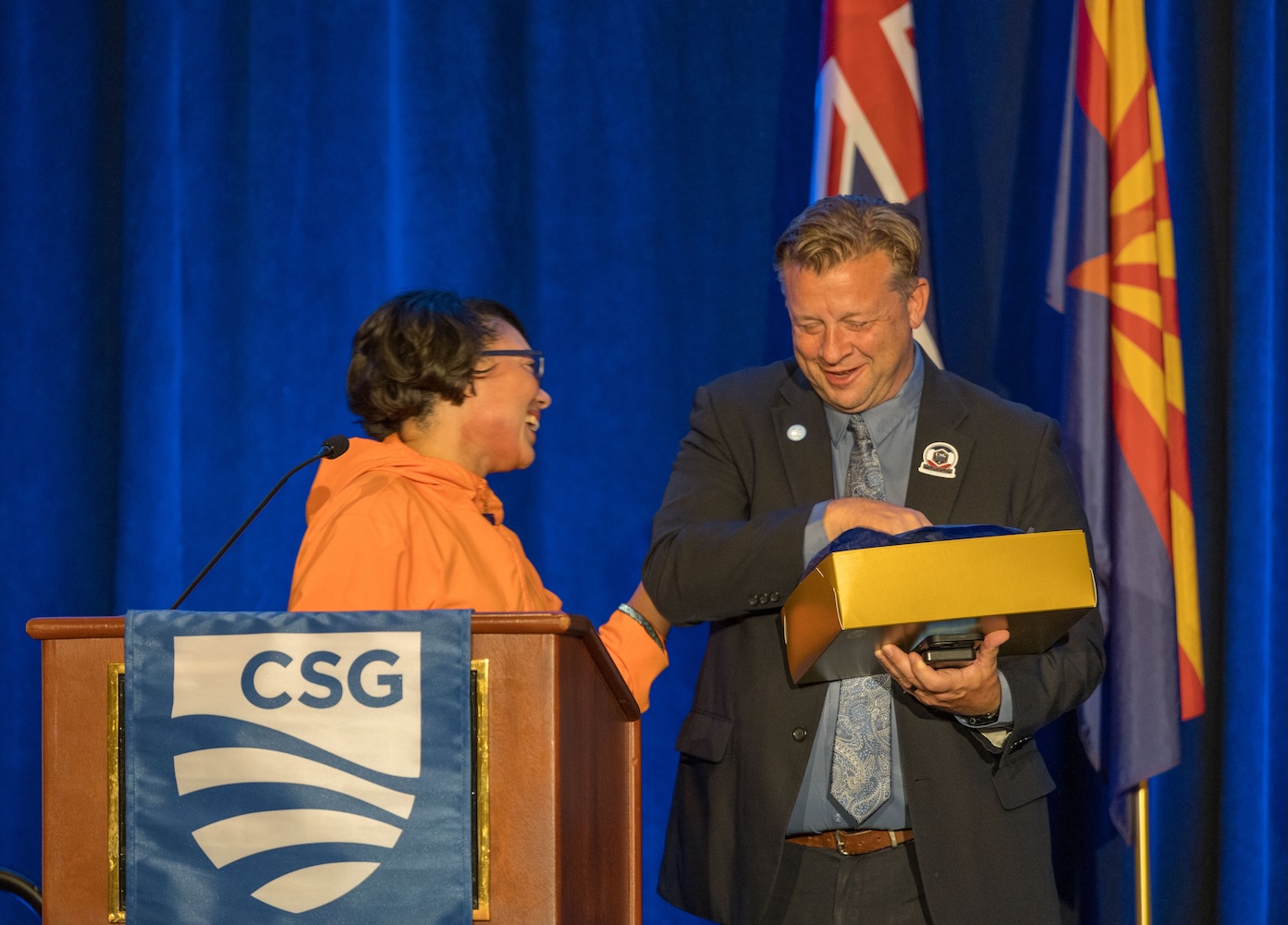
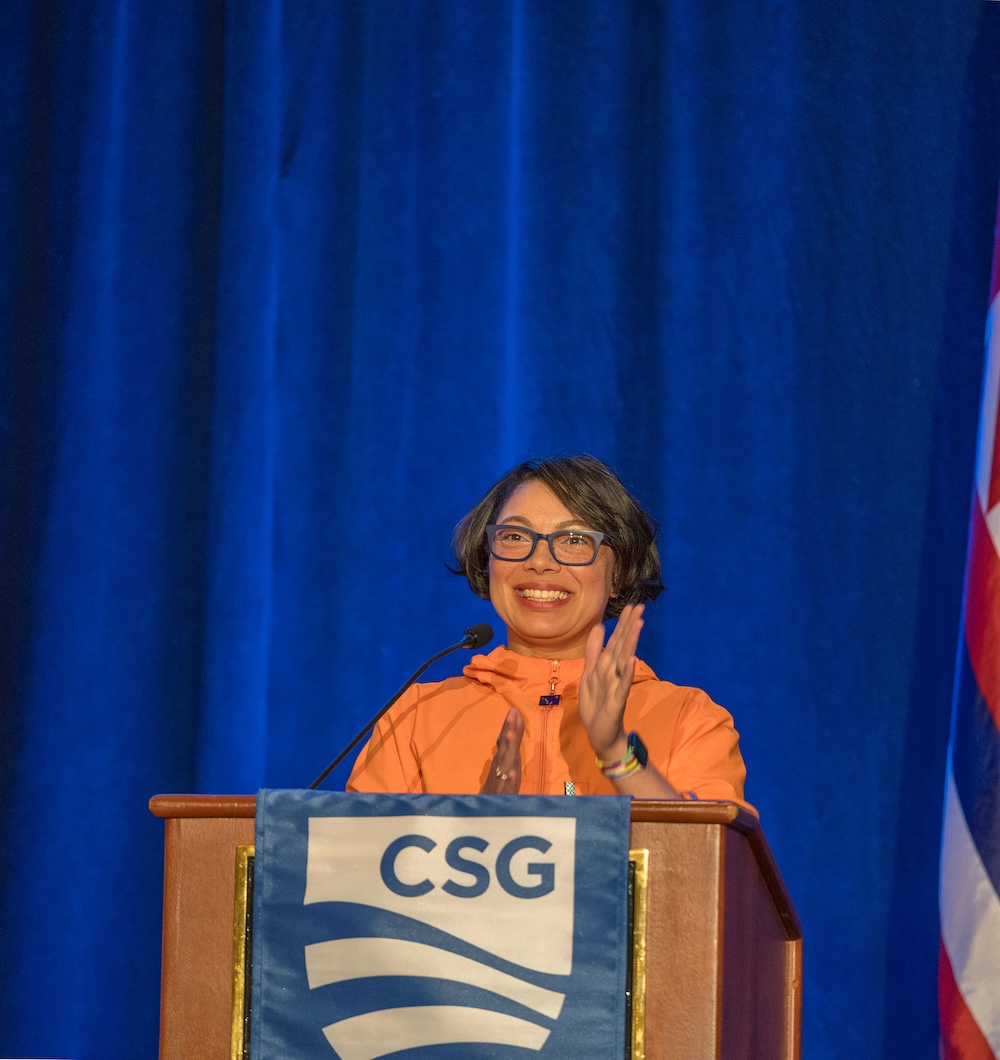
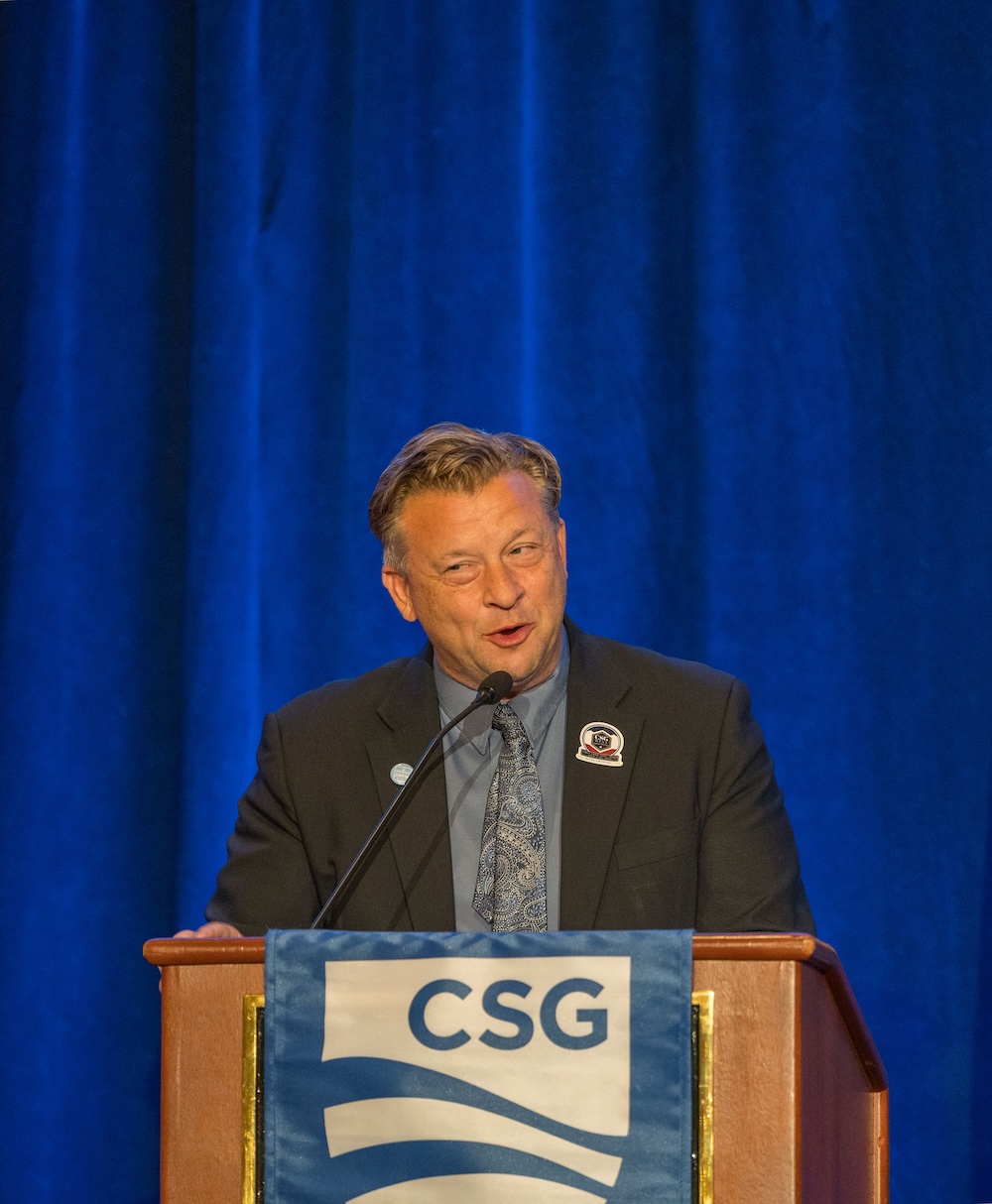
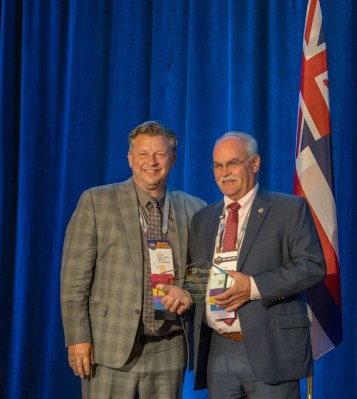
Following our crash course in Quantum, we were off to lunch! Before the keynote speech began, Chair Senator Todd Weiler (UT) presented the Bettye Fahrenkamp Award to Senator Ron Winters (UT) for his outstanding leadership.
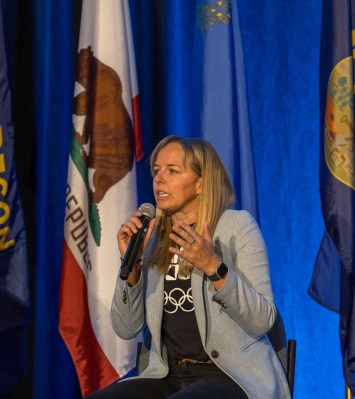
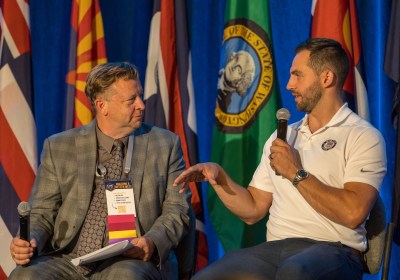
After the awards, we learned about the value of sports from Kelsey Berg, who is currently leading government relations for the Utah 2034 Organizing Committee for the Olympic and Paralympic Winter Games…
…and Chris Mazdzer, Olympian and Paralympic activist, and moderator Senator Todd Wieler (UT).
Following the incredible success of the 2002 Winter Olympics hosted in Utah– one of the only Olympic games in which the host country made a profit– the state is thrilled to host the 2034 Winter Games.
However, the benefits of Olympic sports are not only financial. The speakers testified to the incredible cultural unification that happens when people from across the globe unite in the name of sports, citing the overwhelmingly positive reaction from visitors to the World Cup.
Even as someone who has never been particularly athletic, I found this connection inspiring, and I look forward to being a part of the host country for another worldwide sporting event.
Huntsman Crisis Center
The LEAP Ambassadors had the opportunity to attend post-lunch policy tours to witness the effects of legislation in action.
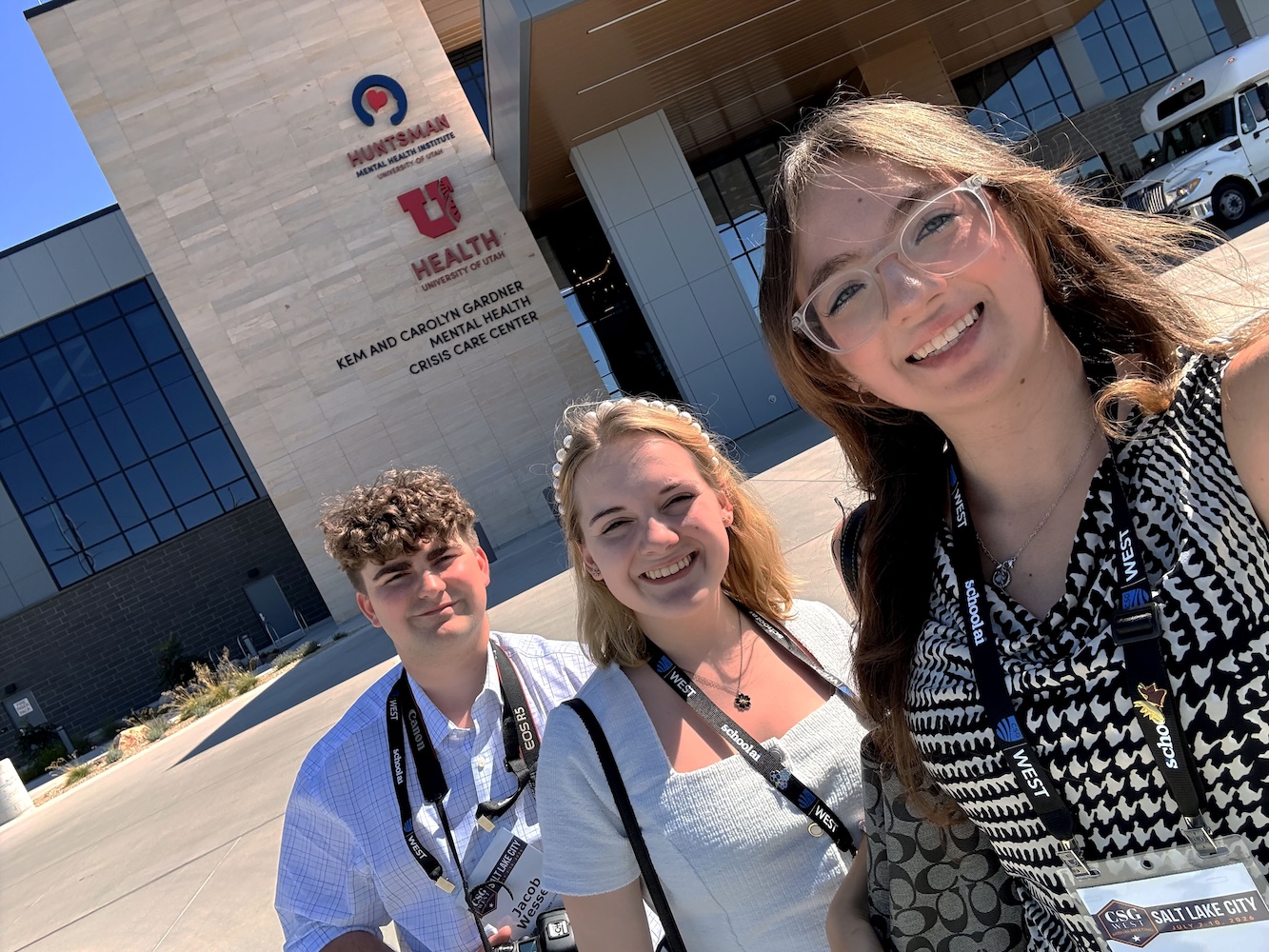
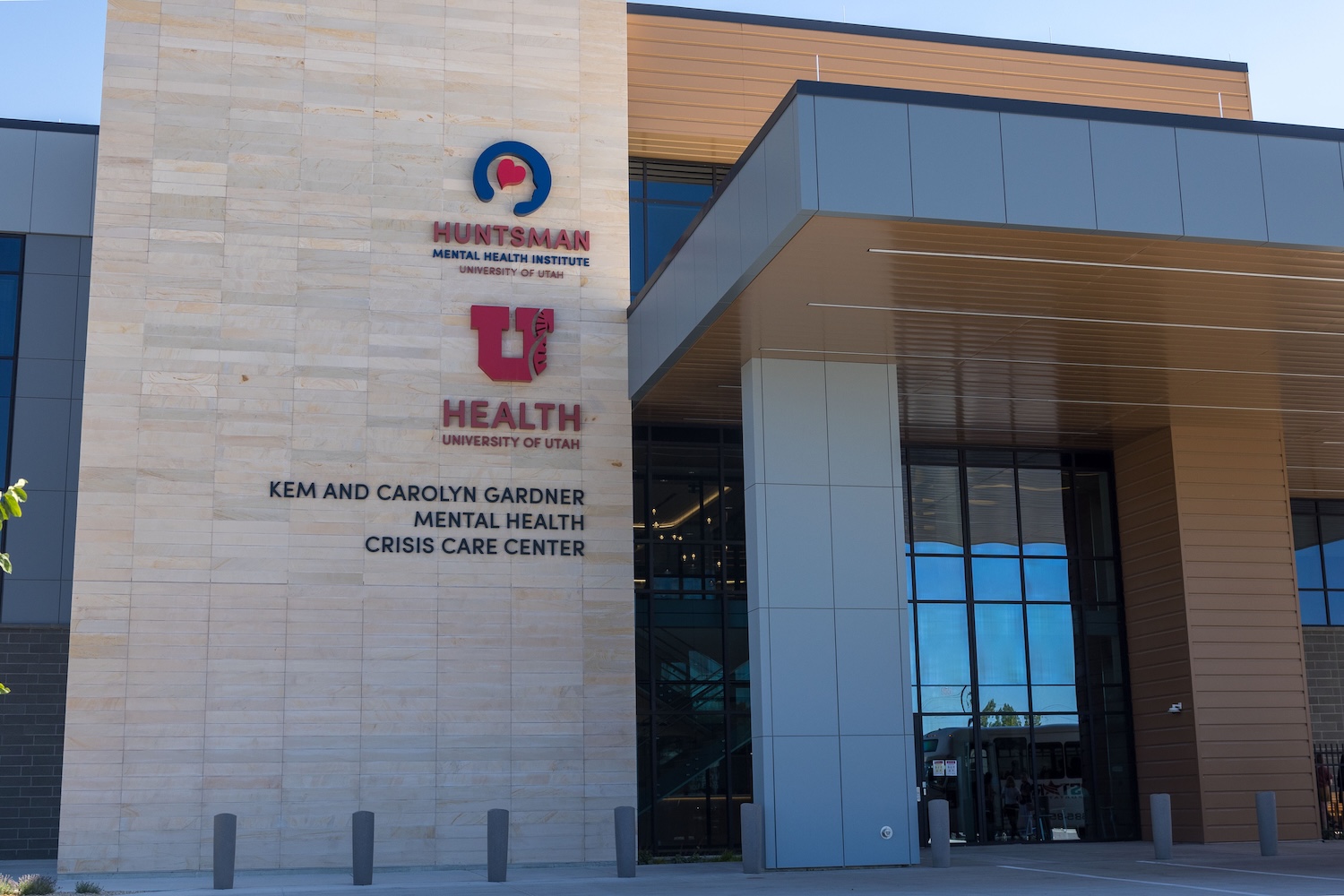
Isis, Allie, and Jacob attended a tour of the Huntsman Mental Health Institute and Crisis Center of Utah. The institute is leading the way for many significant improvements in behavioral health by focusing on creating a welcoming environment for its patients through a variety of methods, including referring to those whom they treat not as patients, but as guests. The architecture of the building helps achieve this as well by being intentional with every aspect, all the way down to the lighting, which is timed to the body’s circadian rhythm!
Representative Steve Eliason and Operations Manager Kevin Curtis shared how they have made an impact through collaborating with local police departments and hospitals to keep those facing mental challenges out of prisons and instead getting the care they need. Their work has helped many people with rehabilitation after facing a crisis while creating a more accepting community for those who may have mental problems. The session informed us on the resources available for nearly every demographic to seek care, along with ways legislators can help push for destigmatizing mental health treatment.
The tour created a lot to think about for the Ambassadors, but it brought along with it a newfound interest in psychology and the treatment of the mentally ill.
The Great Salt Lake
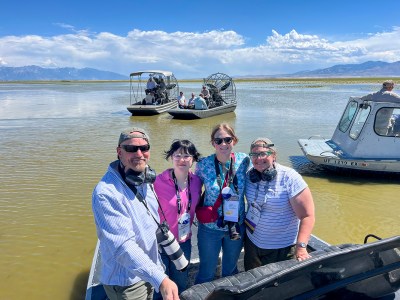
Robin, Olivia, and Professor Yawn chose to attend the policy tour on Water and the Future of the West. On the bus ride there, we learned about water usage in Utah. Utah Water Ways, led by Executive Director Tage Flint, is behind a campaign called “Slow the Flow.”
Their organization is unique: it is set up as a non-profit, but it is funded in part by the Utah Legislature and in part by community/corporate partners, with a goal of reducing per capita water consumption by almost a third in the next twenty-five years.
Part of this goal is to save the Great Salt Lake.
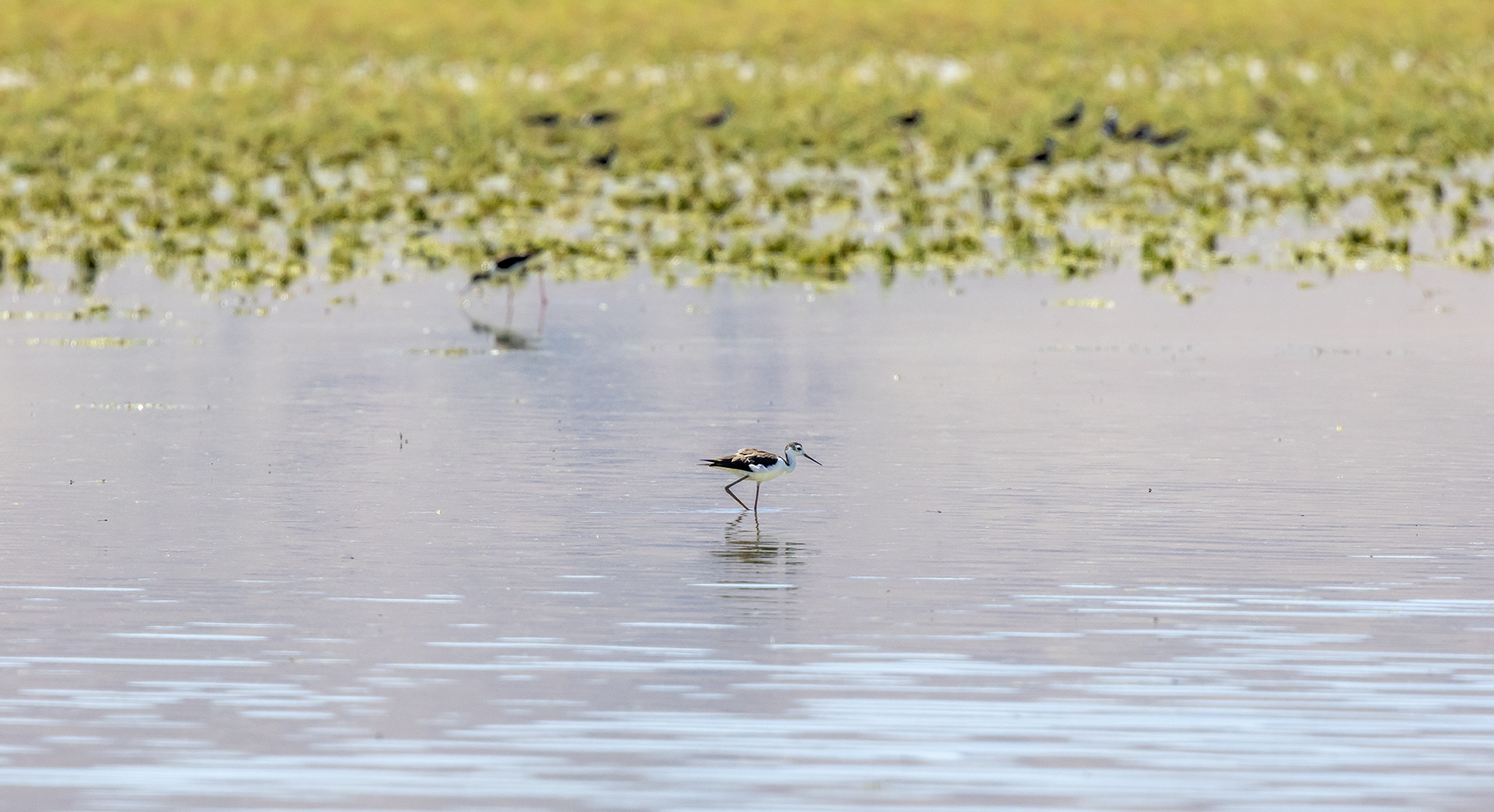
The Lake has been subsiding in the past several decades, a particularly trouble phenomenon because it offers a unique ecosystem, providing a home for hundreds of thousands of migratory birds.
…we spent a wonderful couple of hours exploring the Utah wetlands, seeing birds, insects, and other wildlife critical to the wetland ecosystem.
Seeing the wetlands in person reminded all of us of the importance of water conservation, especially in Utah, the second-driest state in the country.
The Church of Jesus Christ of Latter-day Saints’ Salt Lake City Temple
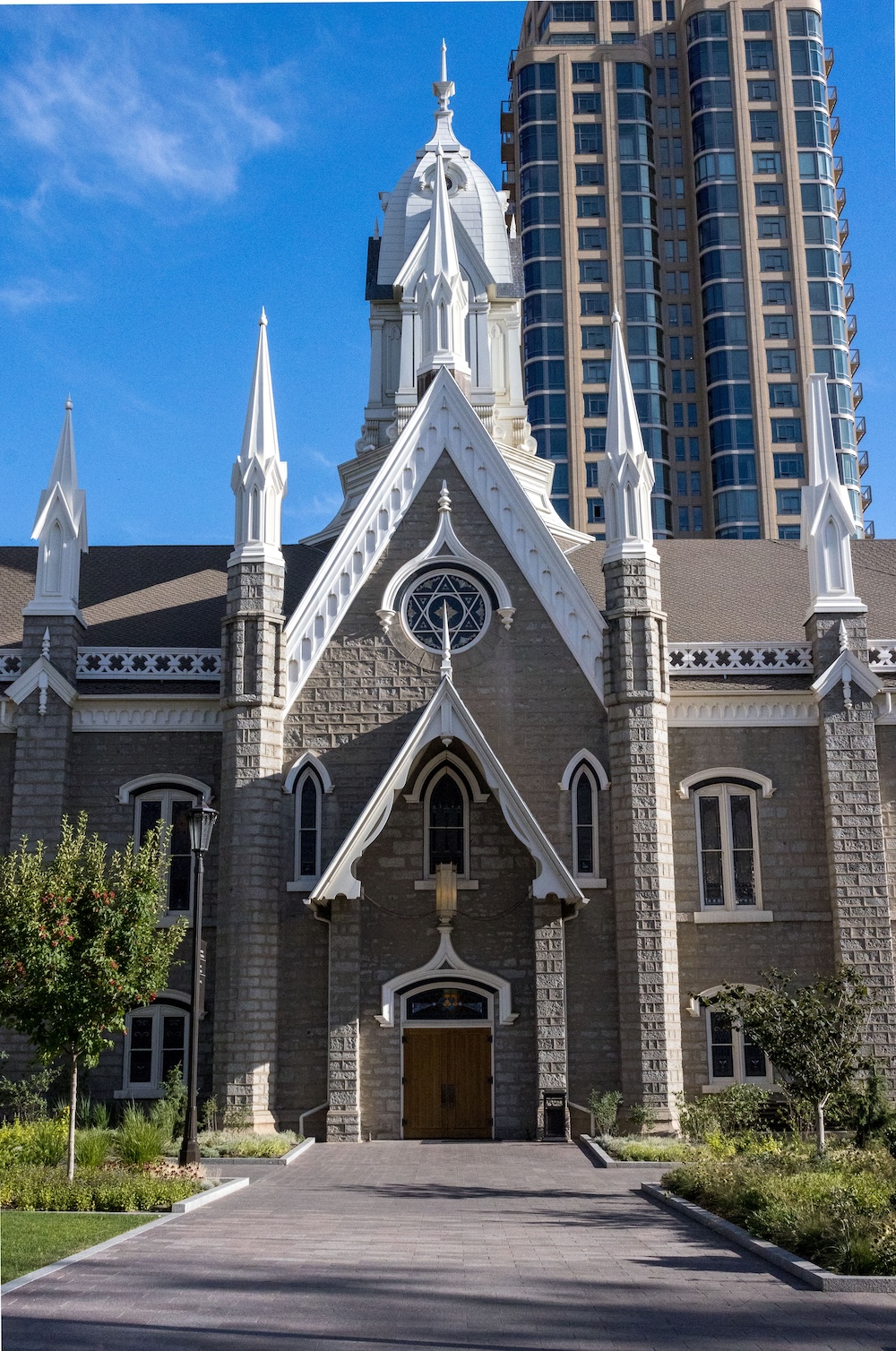
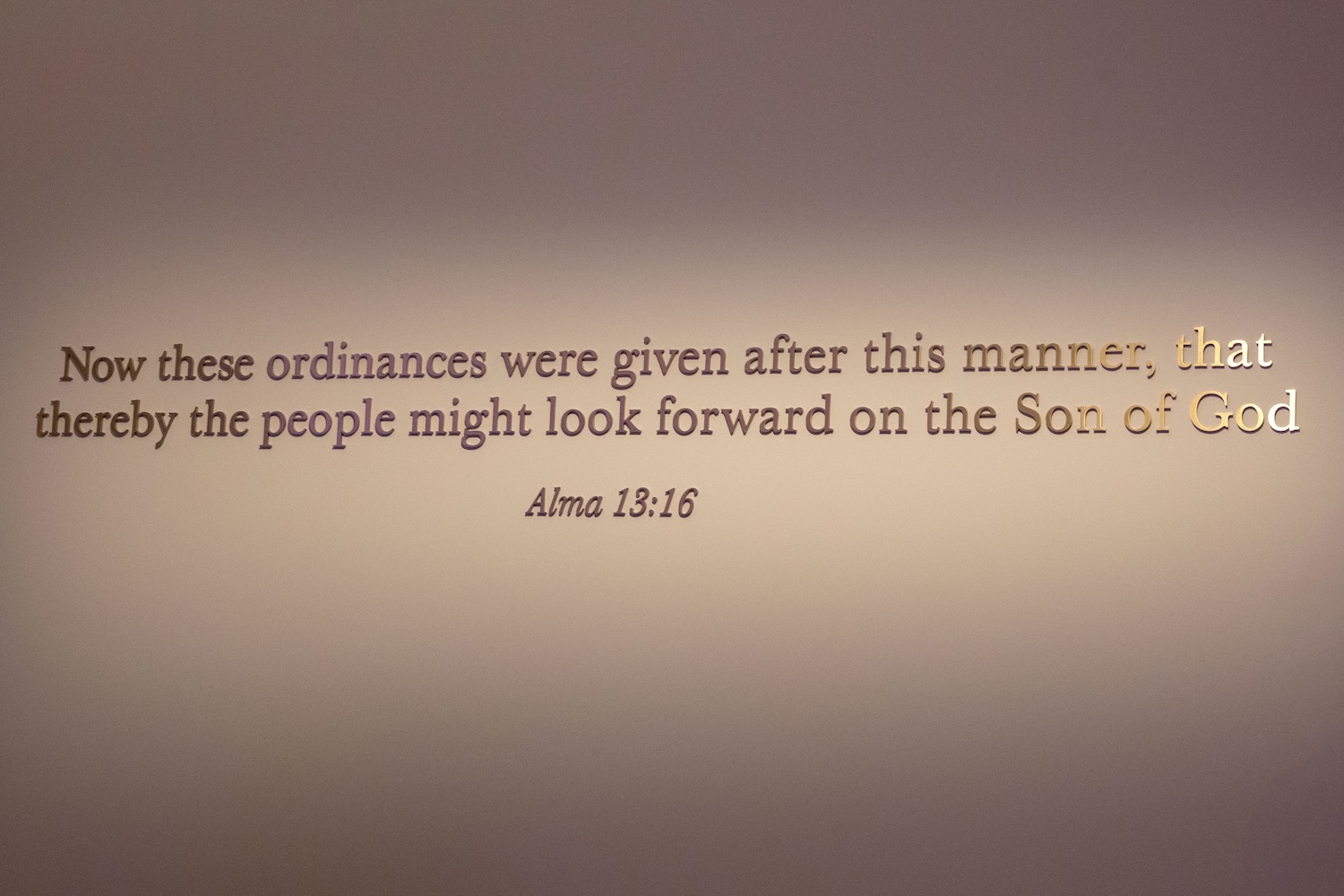
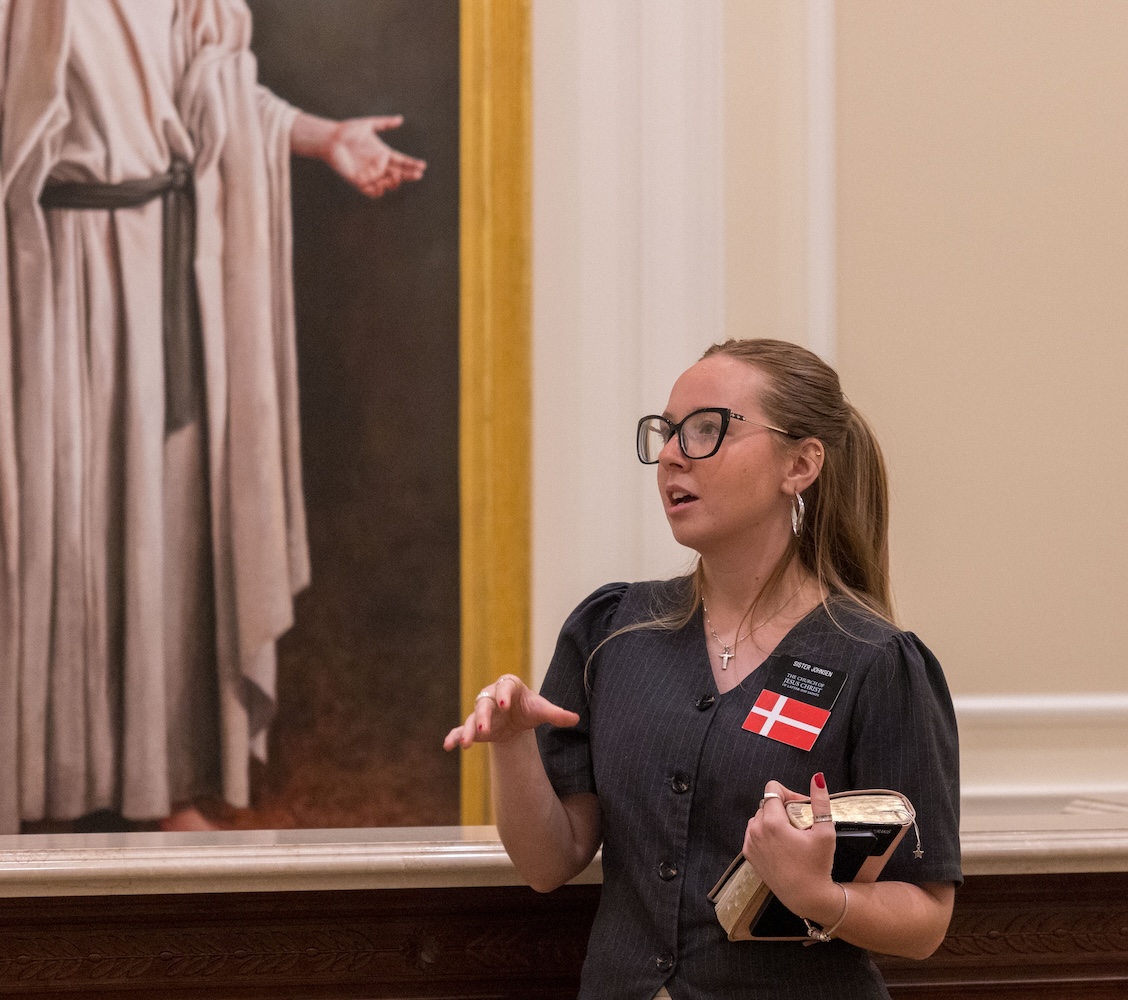
Following the Policy tours, LEAP ambassadors headed out to explore the historic Temple Square for a tour of the Church of Jesus Christ of Latter-Day Saints’ Salt Lake City Temple Visitors Center. Though not allowed in the Temple itself without a Temple Recommend from the LDS Church, we were soon immersed in the history, culture, and beliefs of the Church.
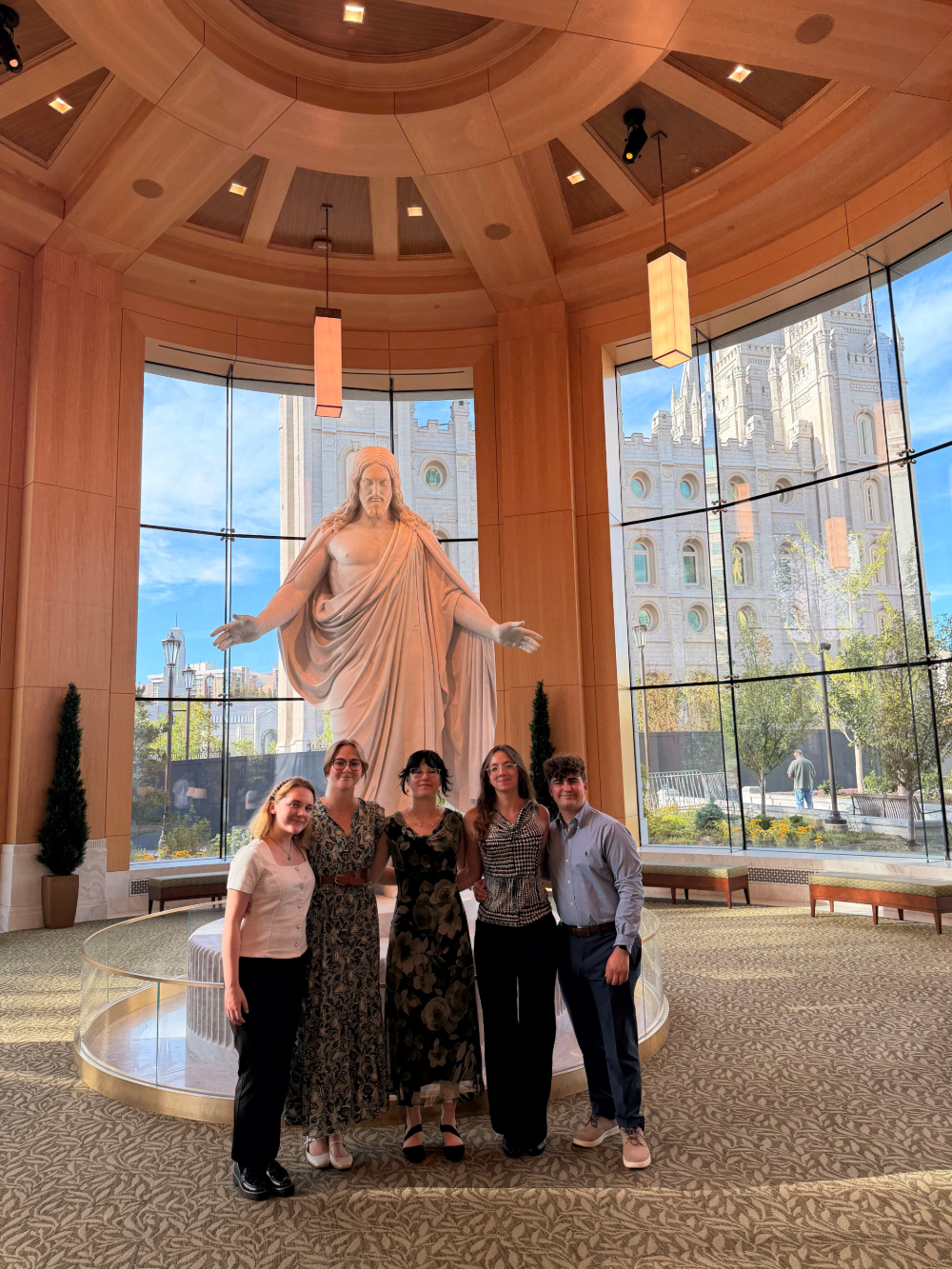
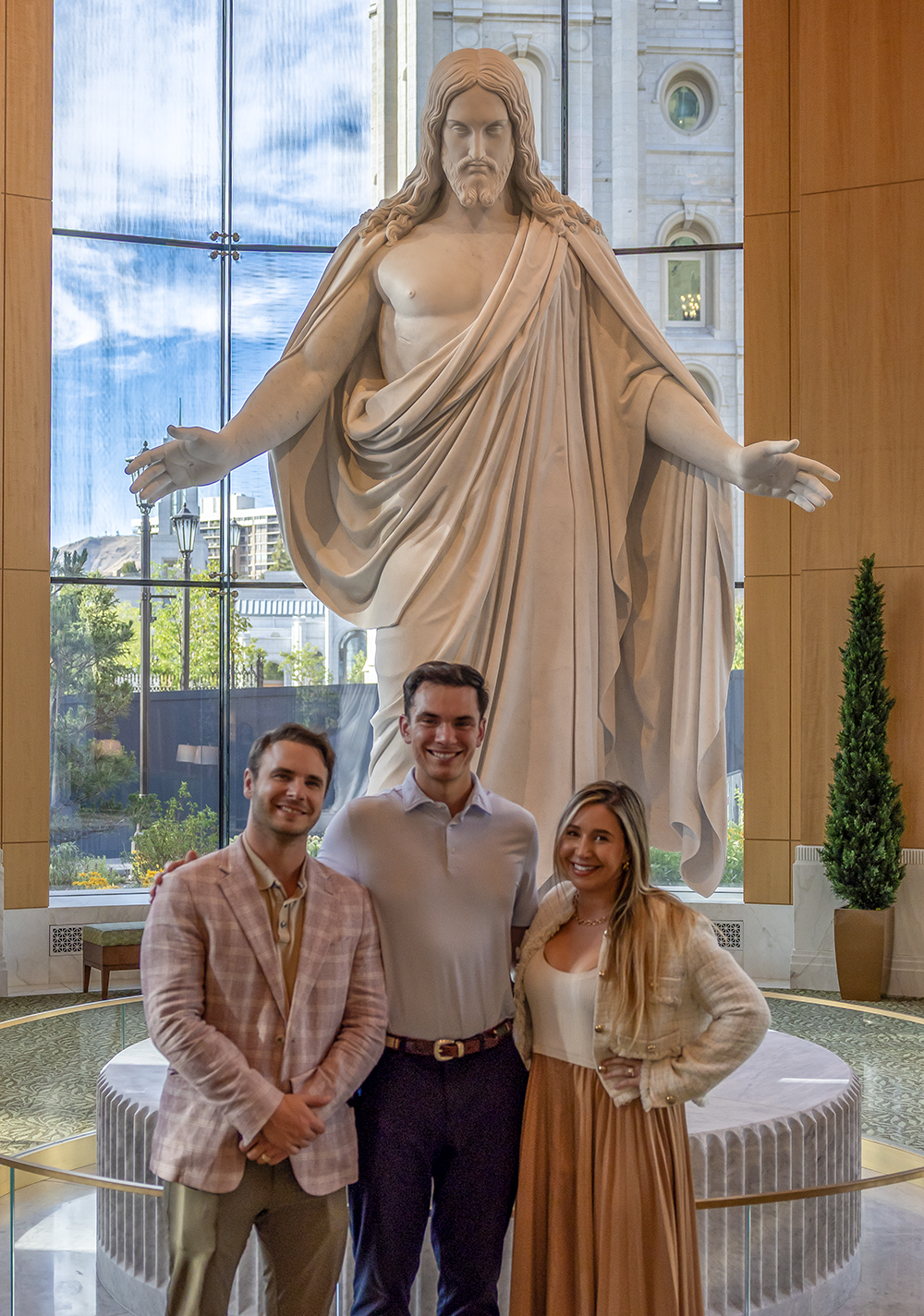
Our first stop was to take a picture with Thorvaldsen’s Christus, an 11-foot-tall statue of Jesus Christ that has a unique connection to Huntsville. Home to a full-scale bronze replica of the same statue (which can be found in historic Oakwood Cemetery), Huntsville possesses the only full-sized replica of Christus in the state of Texas.
We then were led through five rooms of a replica temple: the foyer, the baptistry, the celestial room, the instruction room, and the sealing room, each of which are copies of real temple rooms.
The most interesting room to me was the baptistry, which features a large bath resting on the backs of twelve life-sized oxen that symbolize the Twelve Tribes of Israel. The baptistry is also located on the temple’s lowest level to represent the symbolic burial and resurrection associated with baptism. Members of the Church perform baptisms there on behalf of their deceased ancestors who did not have an opportunity to convert, though their ancestors still must choose to accept the baptism.
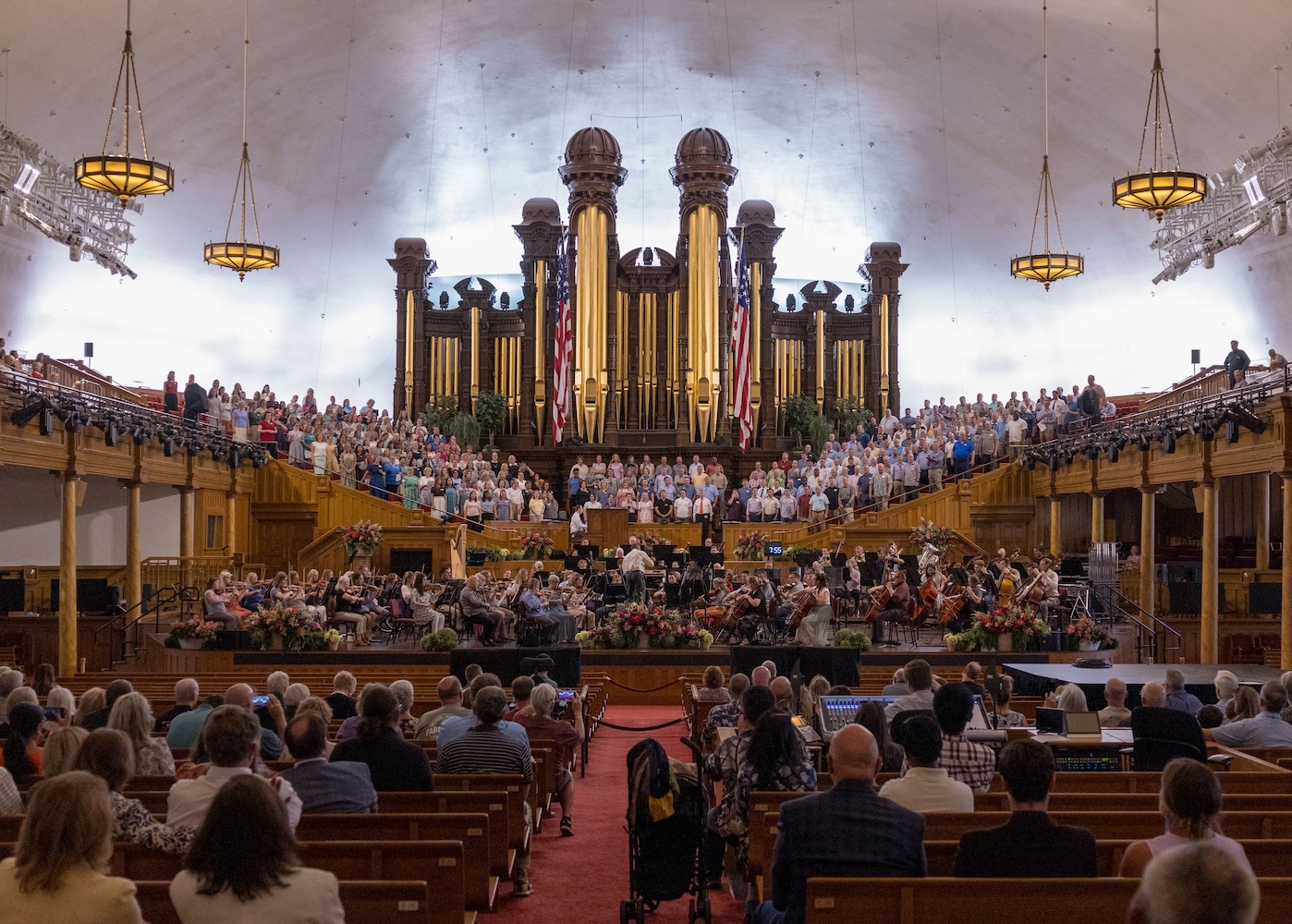
After the tour, we were taken to the Tabernacle to listen to the Grammy, Emmy, Peabody, and Mother Teresa award-winning Tabernacle Choir perform.
Many of the ambassadors were deeply moved by the experience, and we all understood why it is considered one of the ten greatest choirs in the world.
Overall, we enjoyed our visit to The Church of Jesus Christ of Latter-Day Saints. The experience gave us a greater appreciation for the culture, history, and beliefs of many of the people who call Salt Lake City home.
Central by Saffron Valley
Hungry after our longest conference day, we stopped in to Central by Saffron Valley for a meal that would have made the James Beard Foundation proud. Actually, it must have made the Foundation proud, because the chef, Lavanya Mahate, was nominated for a James Beard award in 2024.
The restaurant is an homage to the “golden age of India’s train travel,” and it is themed accordingly. The tables are labeled by platform, there is a “railroad crossing” sign in a corner, there is a faux train compartment wallpaper in parts of the restaurant, and some of the dishes are served in the tins used on Indian train travel.
The theme is appropriate, in that the meals come from different regions of India: curries from across the country; chicken tikka dosa from “southbound parts”; and a dessert menu featuring “sweet departures.”
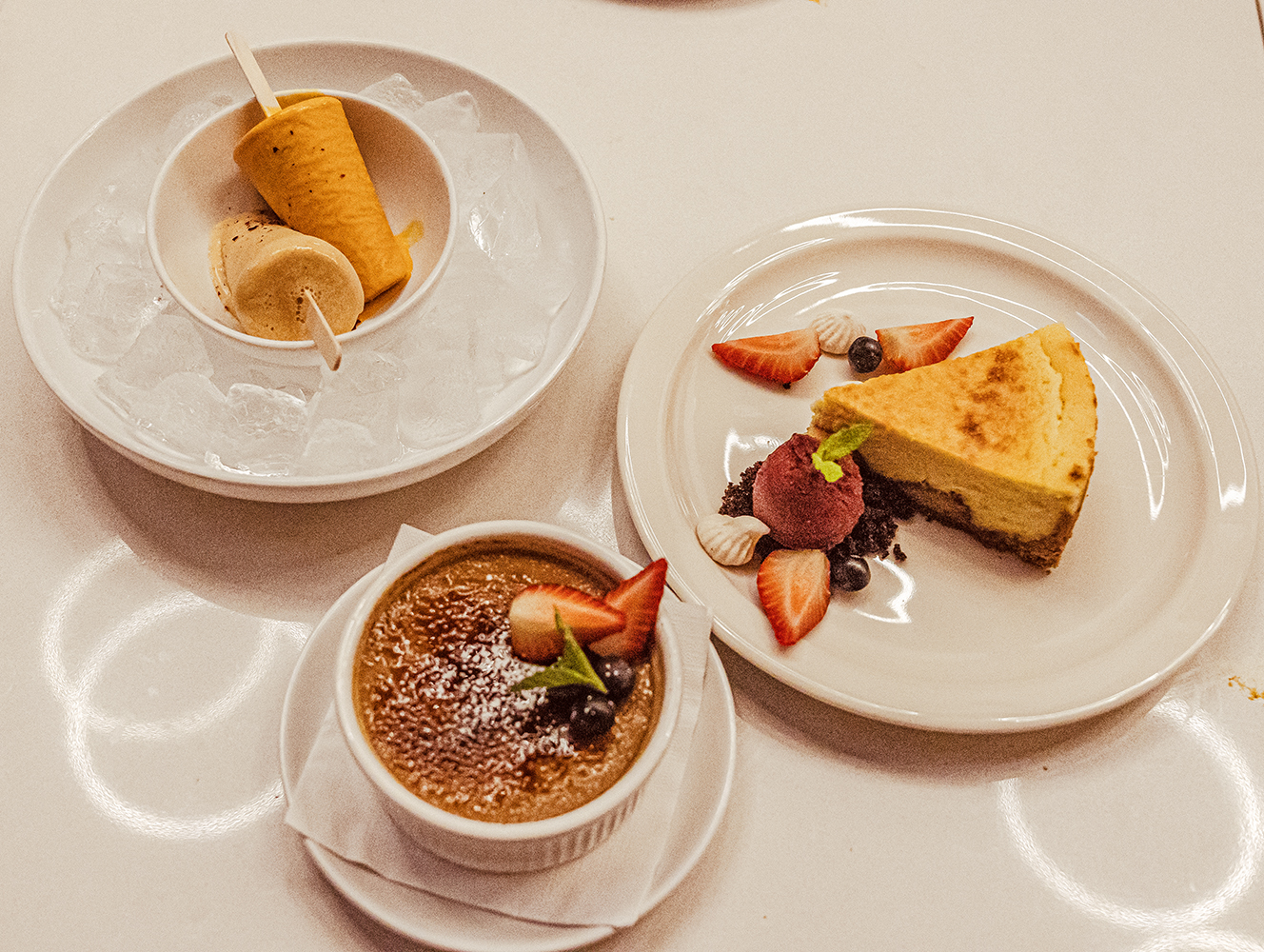
We opted to eat family style, with some naan, chicken tikka kebabs, samosas, fish and chips (a nod to India’s one-time status as a British colony, and a sop to Olivia), Nawabi lamb biryani; the ever-reliable Old Delhi Butter Chicken (from the ever predictable Jacob Wessels); and for dessert, chai creme brulee, gulab juman cheesecake, and Indian ice cream.
Everything we had was at least good, and several of the dishes being excellent: the chicken tikka and butter chicken standing out as exceptionally tender; the samosas as a spice-filled specialty; the ice cream as tasty and inventive.
Owner Mahate told the Deseret News that she wanted to make “Indian food more accessible,” and she seems to be doing just that, providing excellent food to the Salt Lake City community. The entire meal was delicious, and it was an enjoyable evening with friends while extending the LEAP Center’s ethnic-themed meals during this trip– a nod to Salt Lake City’s history of attracting immigrants who contribute in many ways, not the least of which is adding to the culinary culture of the community.
Conclusion
Each session and policy tour demonstrated that effective leadership requires curiosity, collaboration, and a willingness to understand perspectives different from our own. As we look ahead to our final day at the conference, we are grateful for the opportunity to learn from legislators, policy experts, and community leaders from across the West.
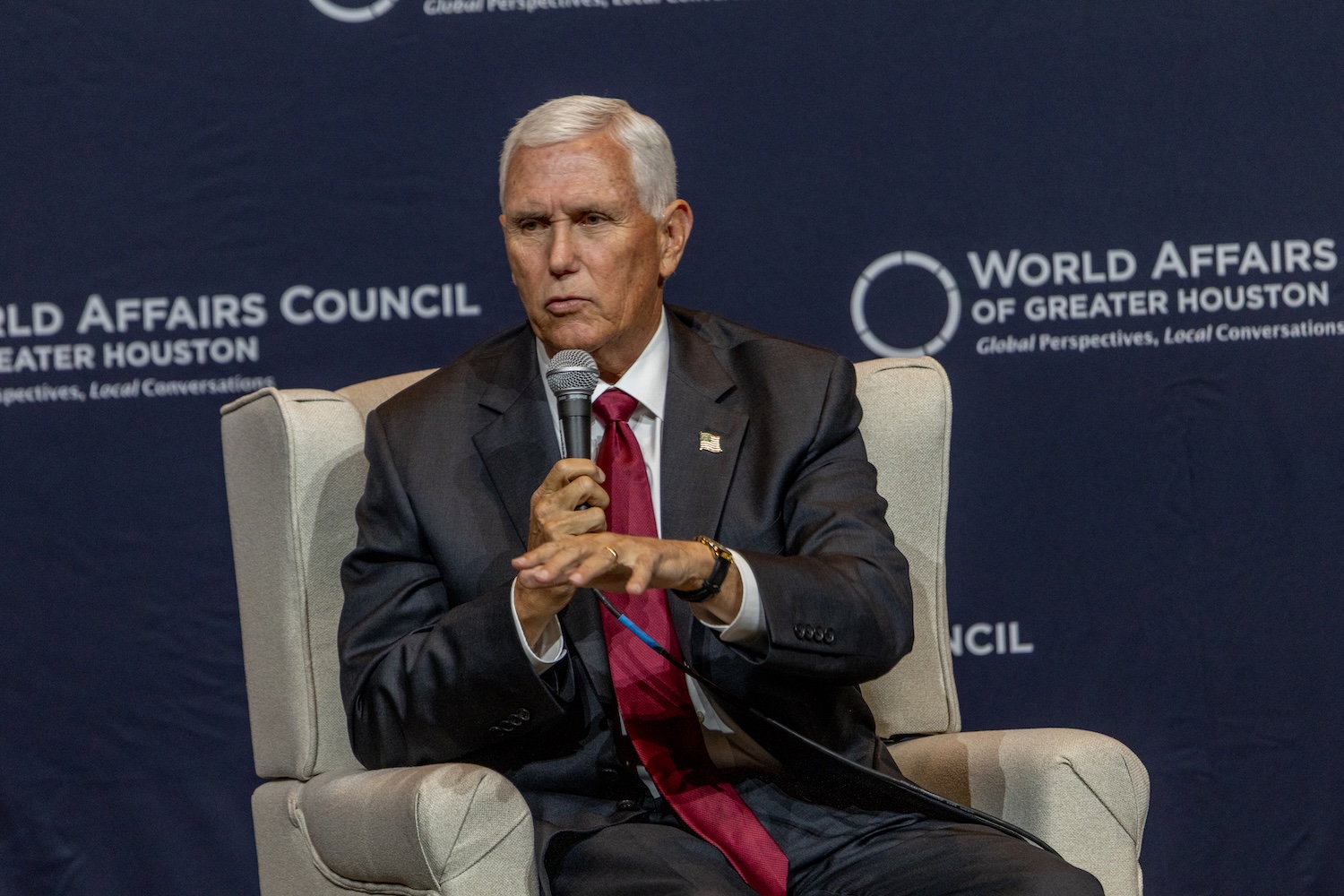
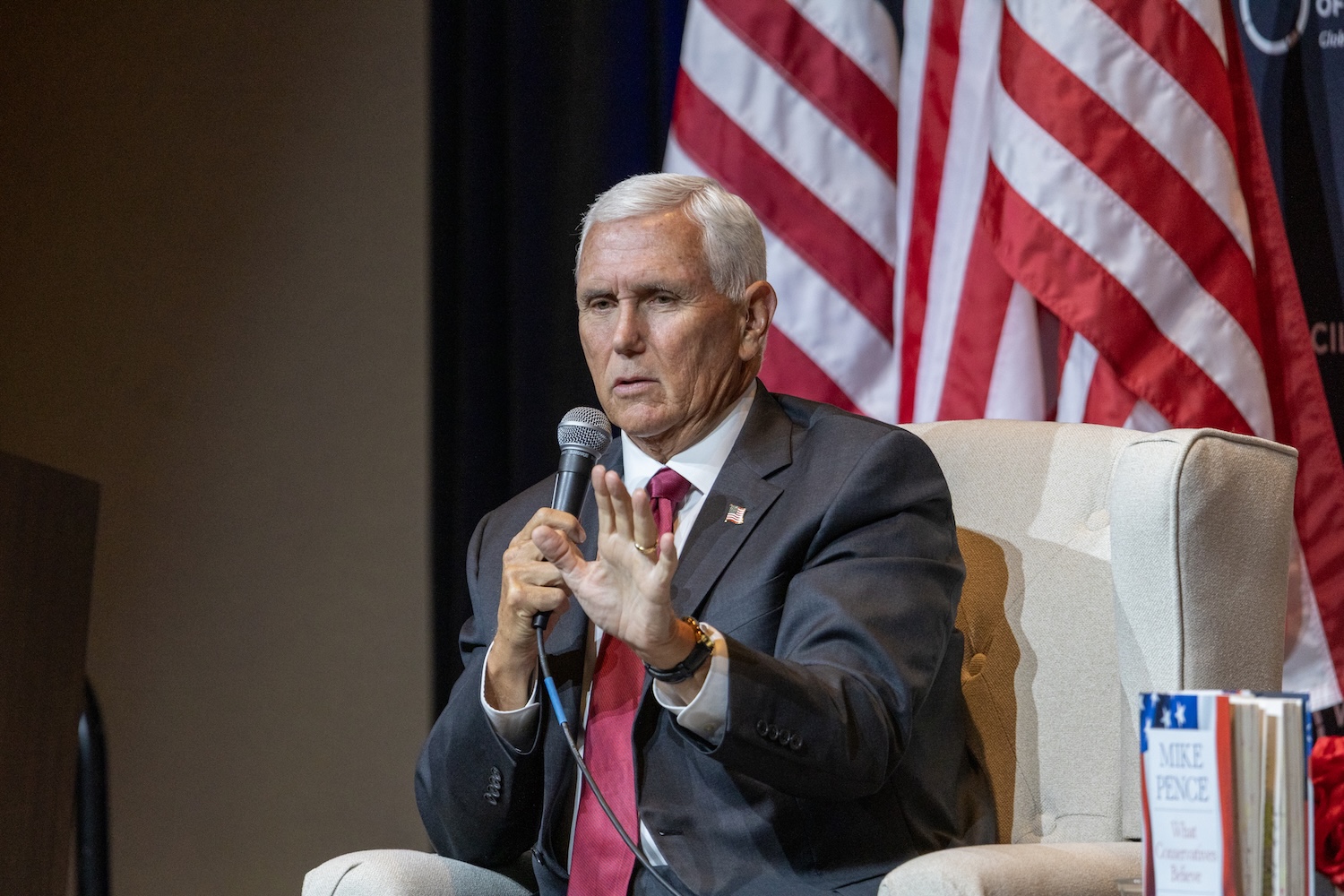
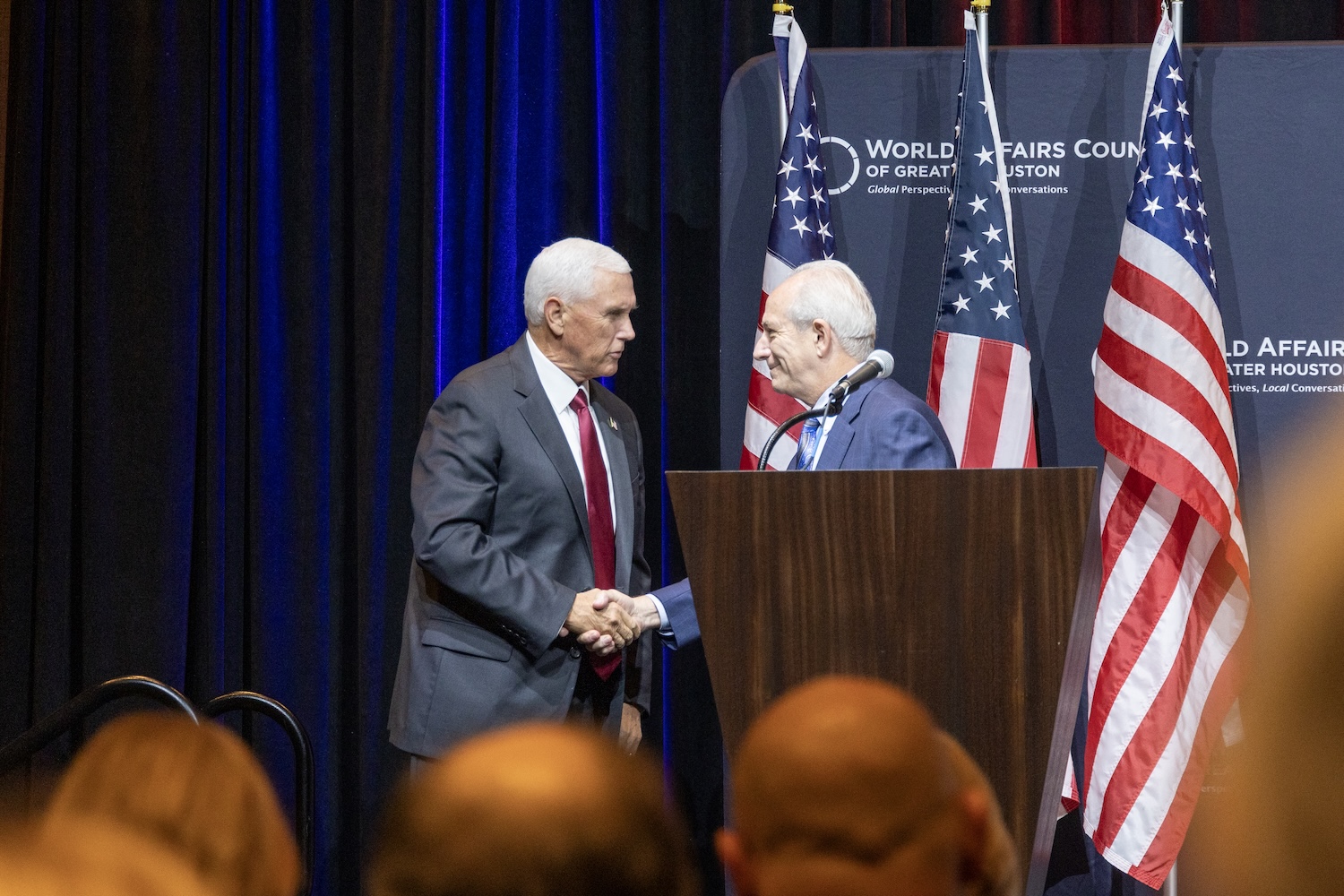
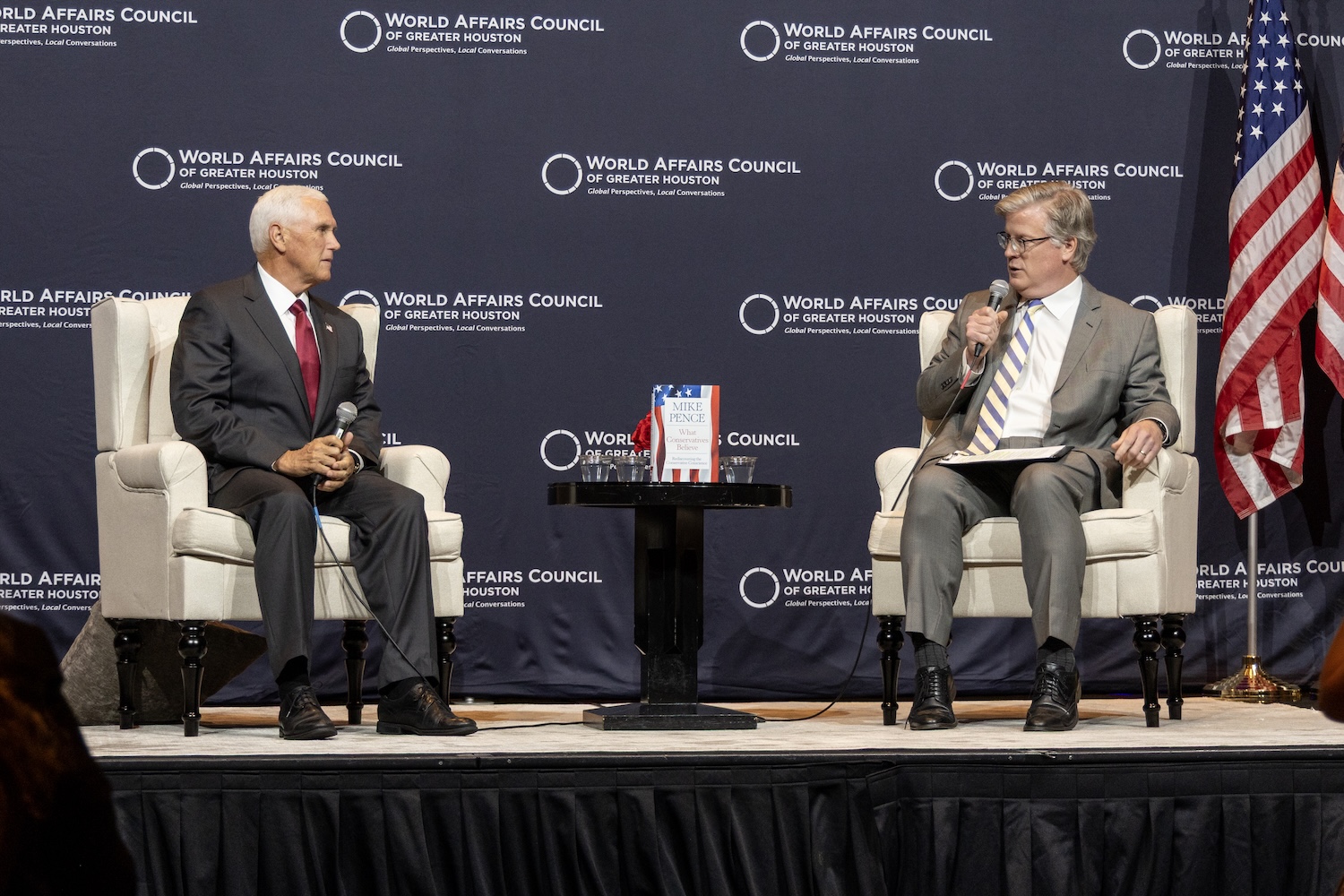
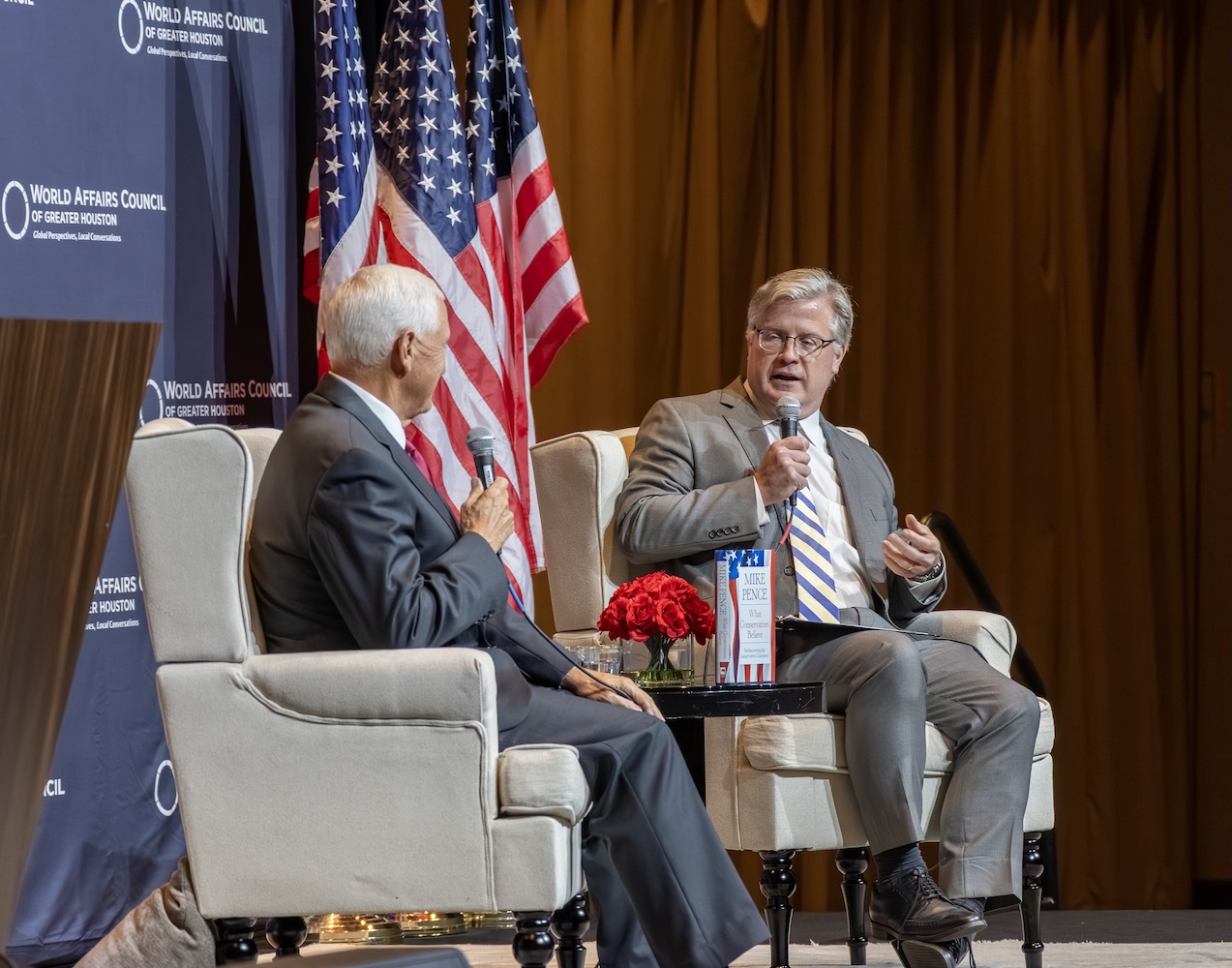
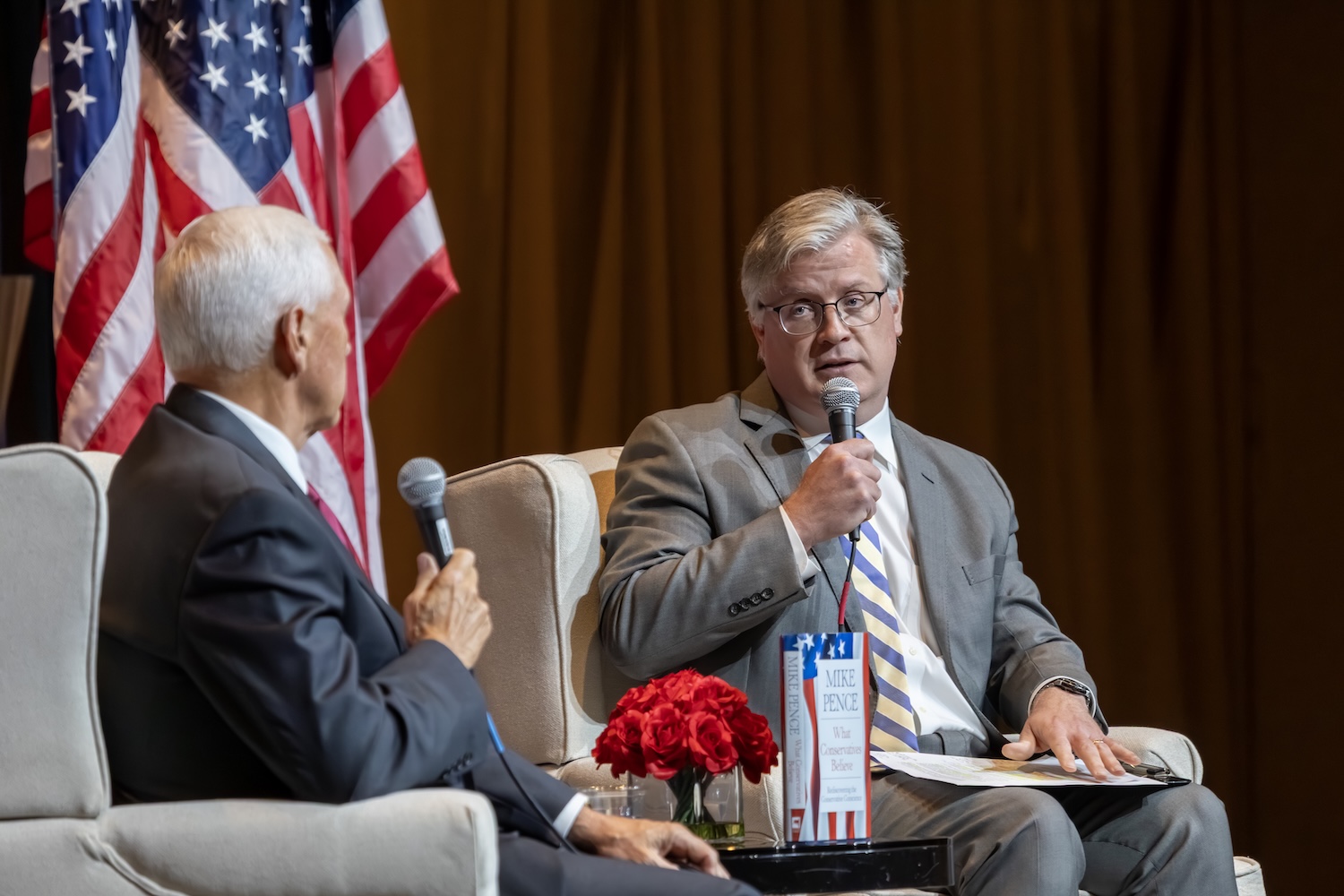
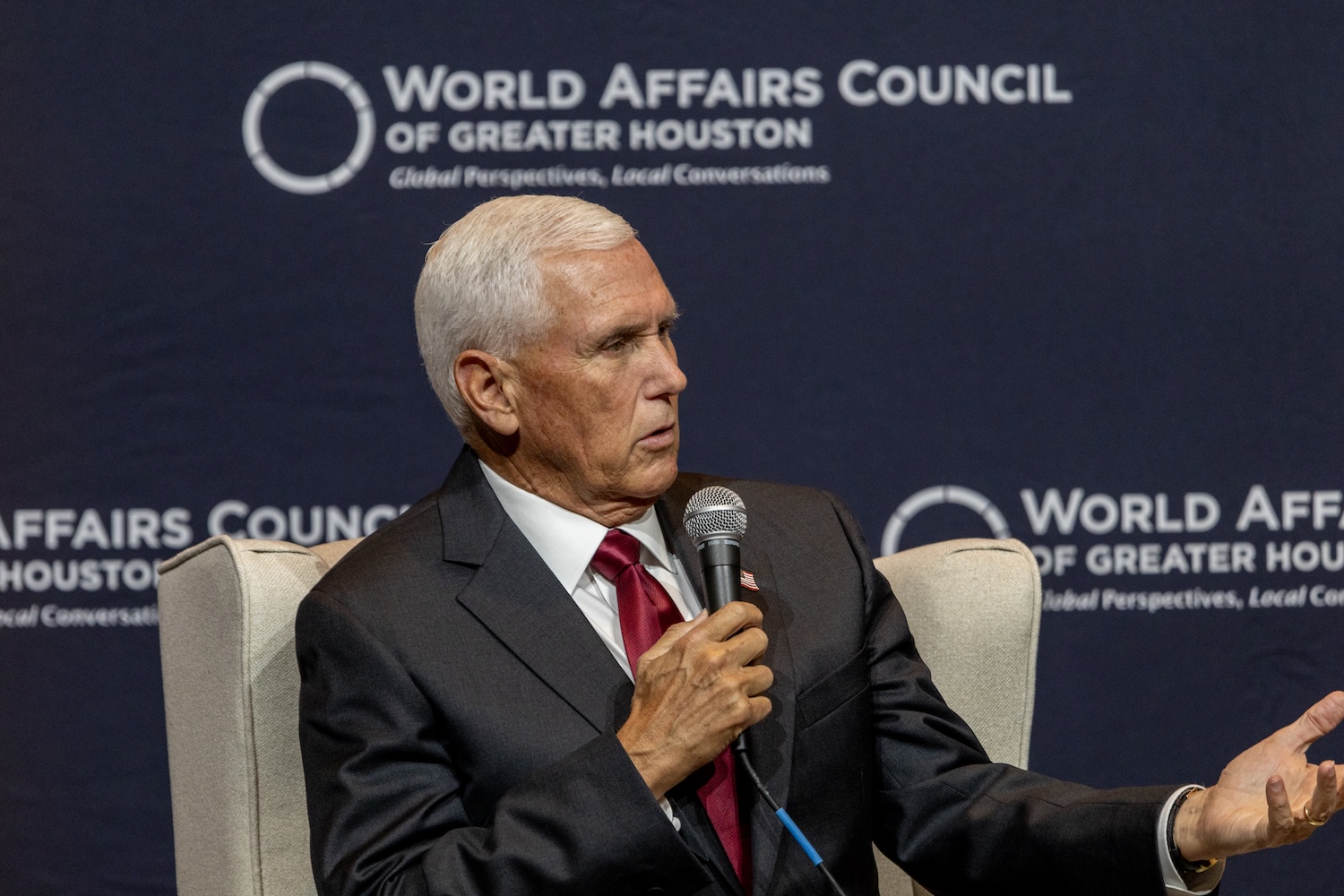
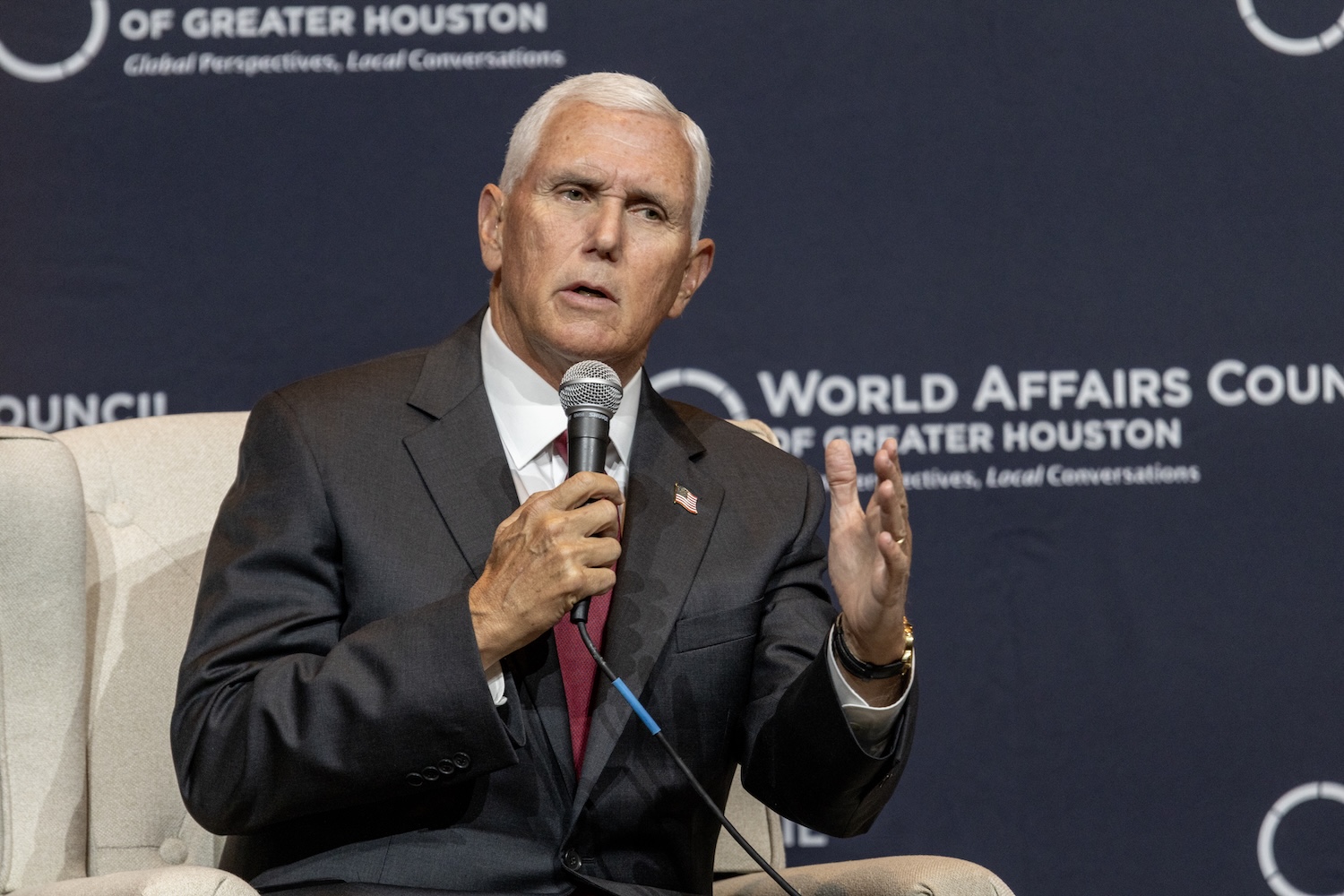
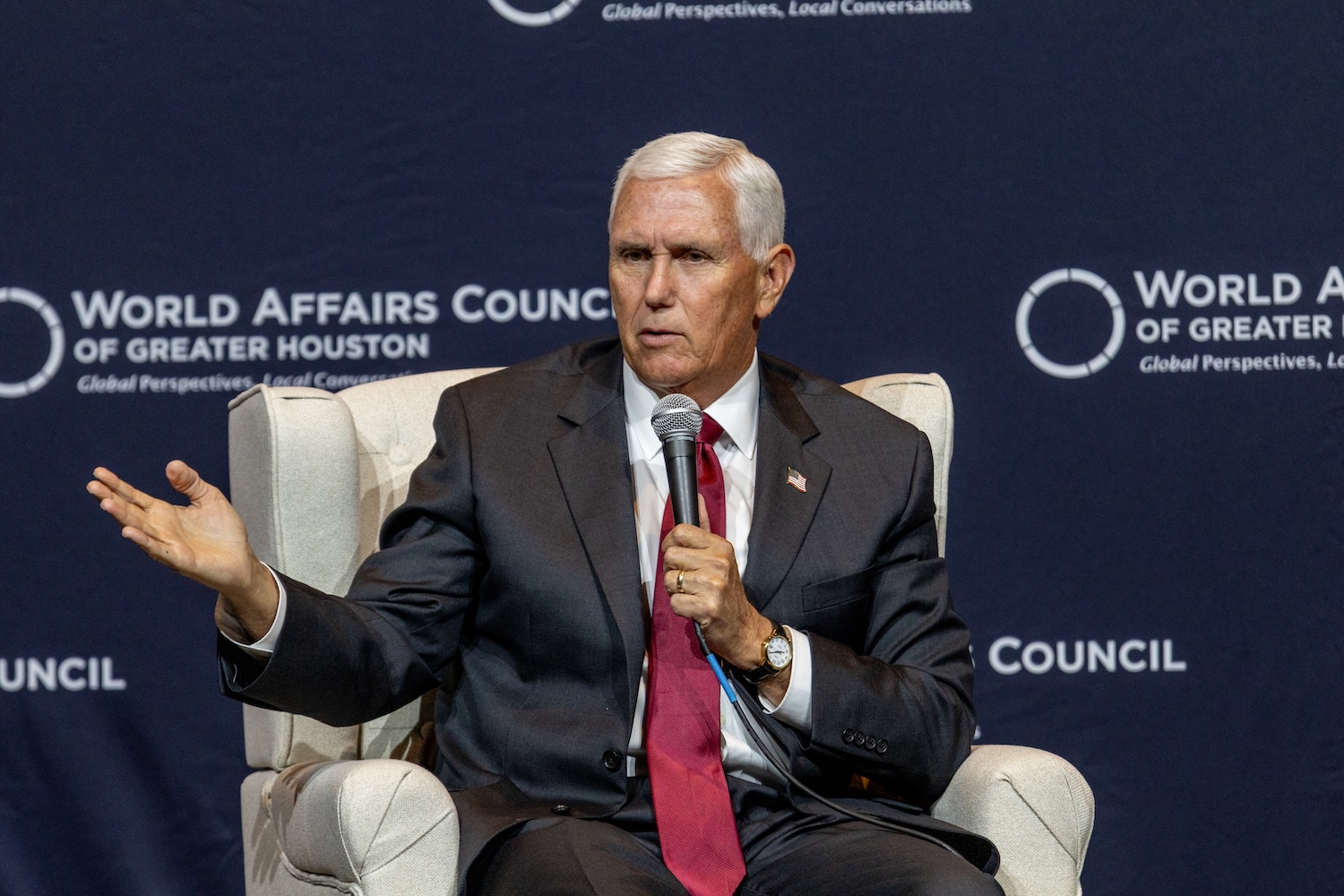
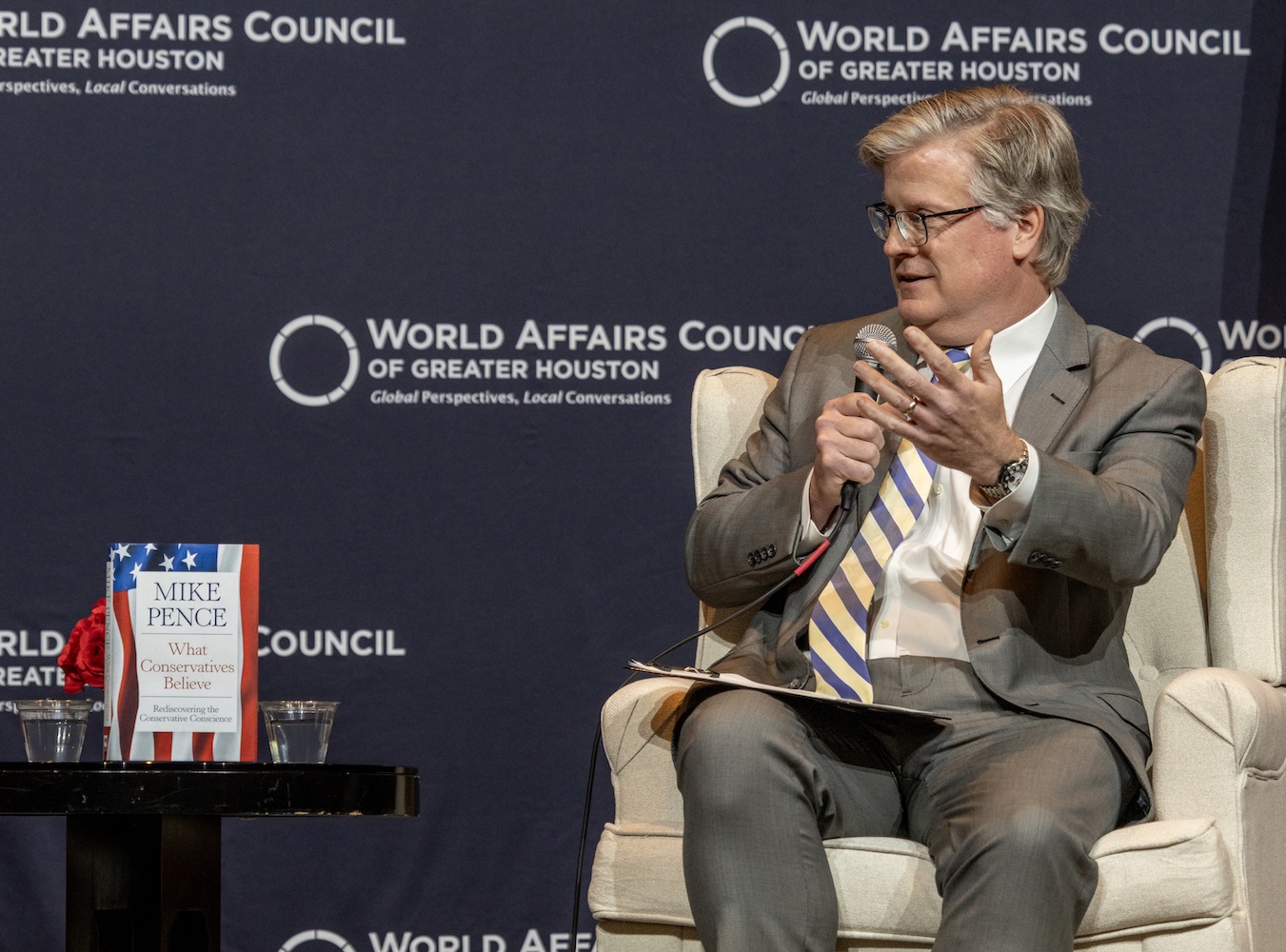
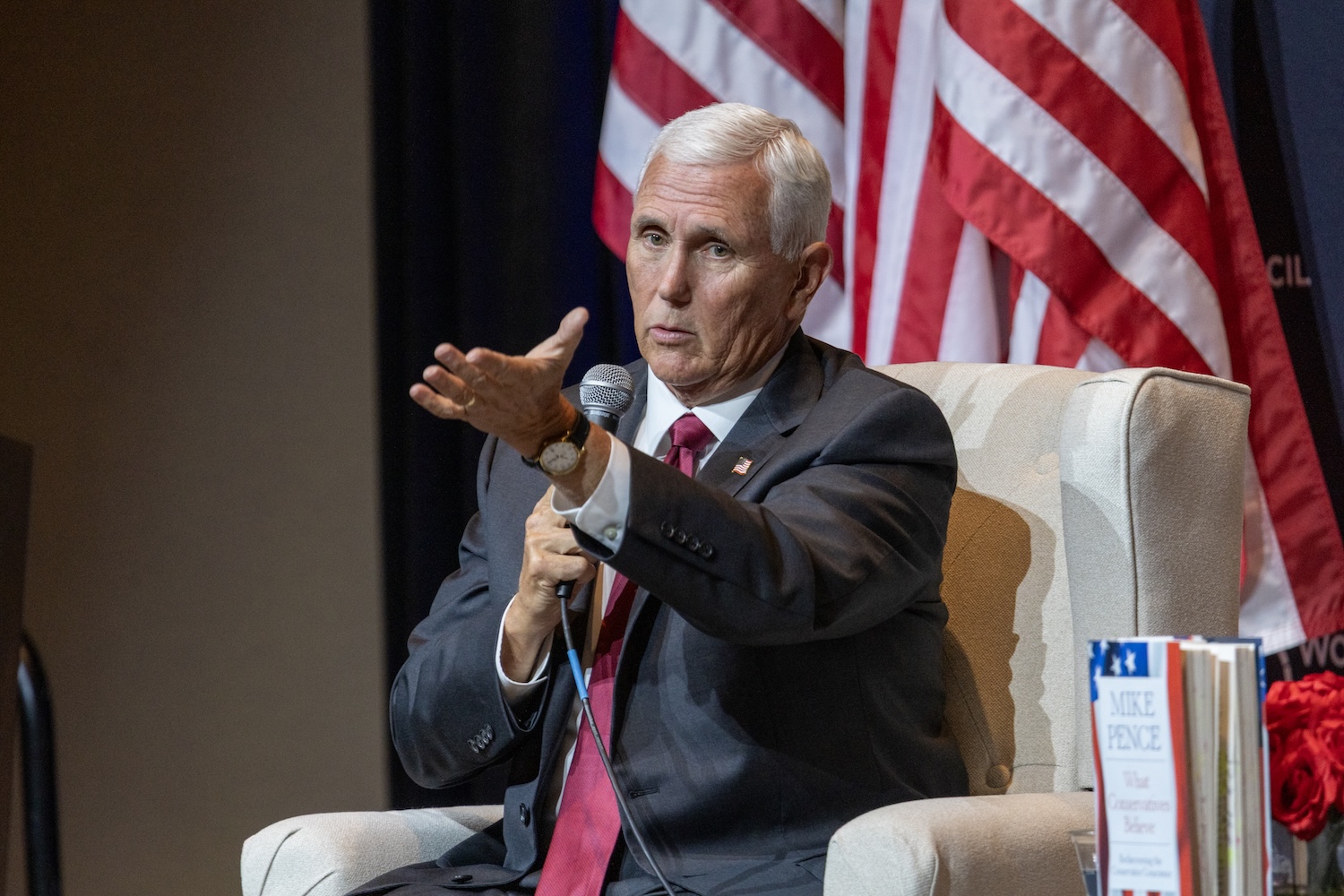
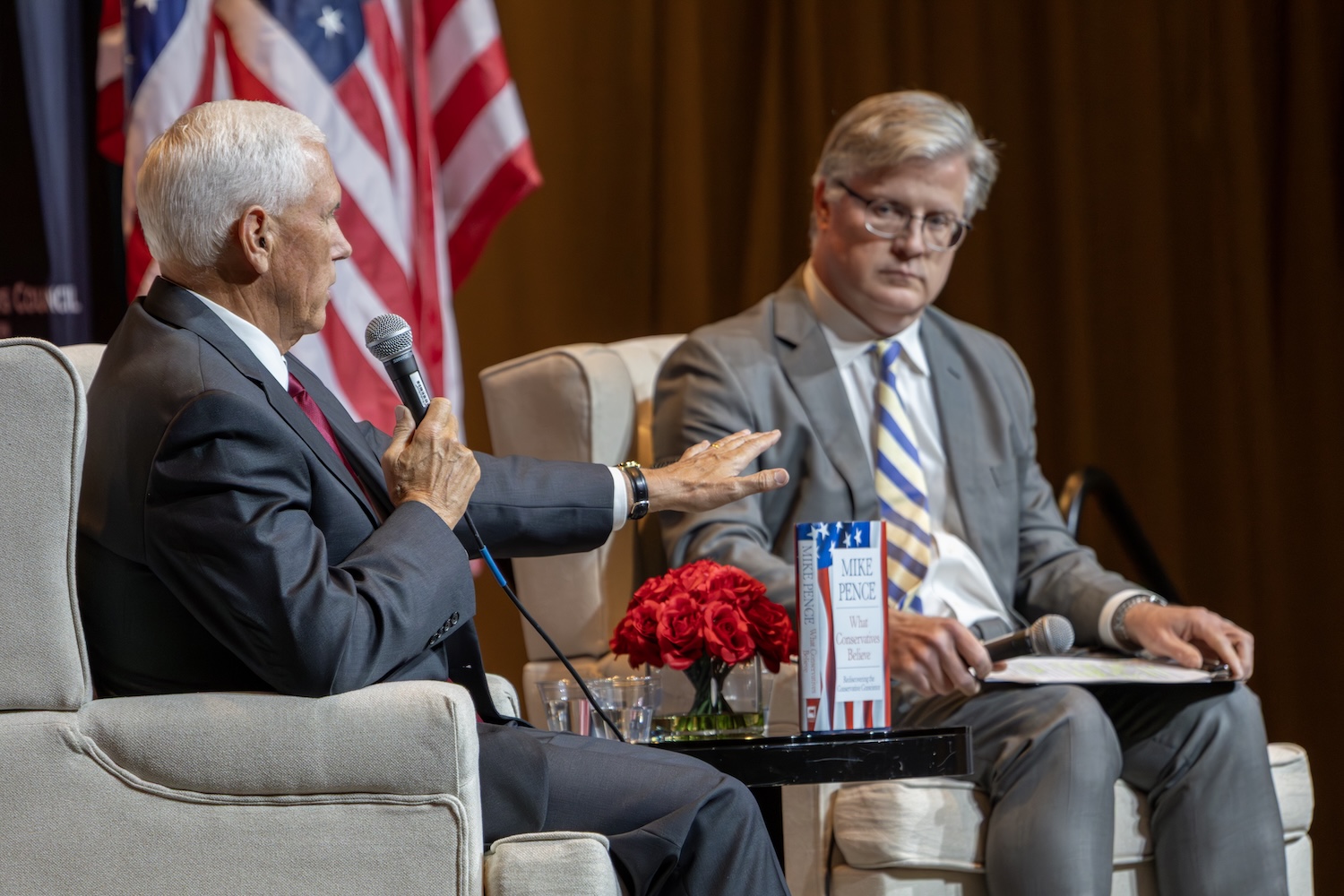
Even with summer kicking into gear, LEAP students have managed to stay active in furthering their understanding of public affairs! Recently, we were honored to hear former Vice President Mike Pence speak on his new book, What Conservatives Believe: Rediscovering the Conservative Conscience at an event hosted by The World Affairs Council of Greater Houston.
In his book, Pence advocates for enduring conservative principles over the appeal of big-government populism within the Republican Party, and we were all thrilled to receive signed copies at the start of the event.
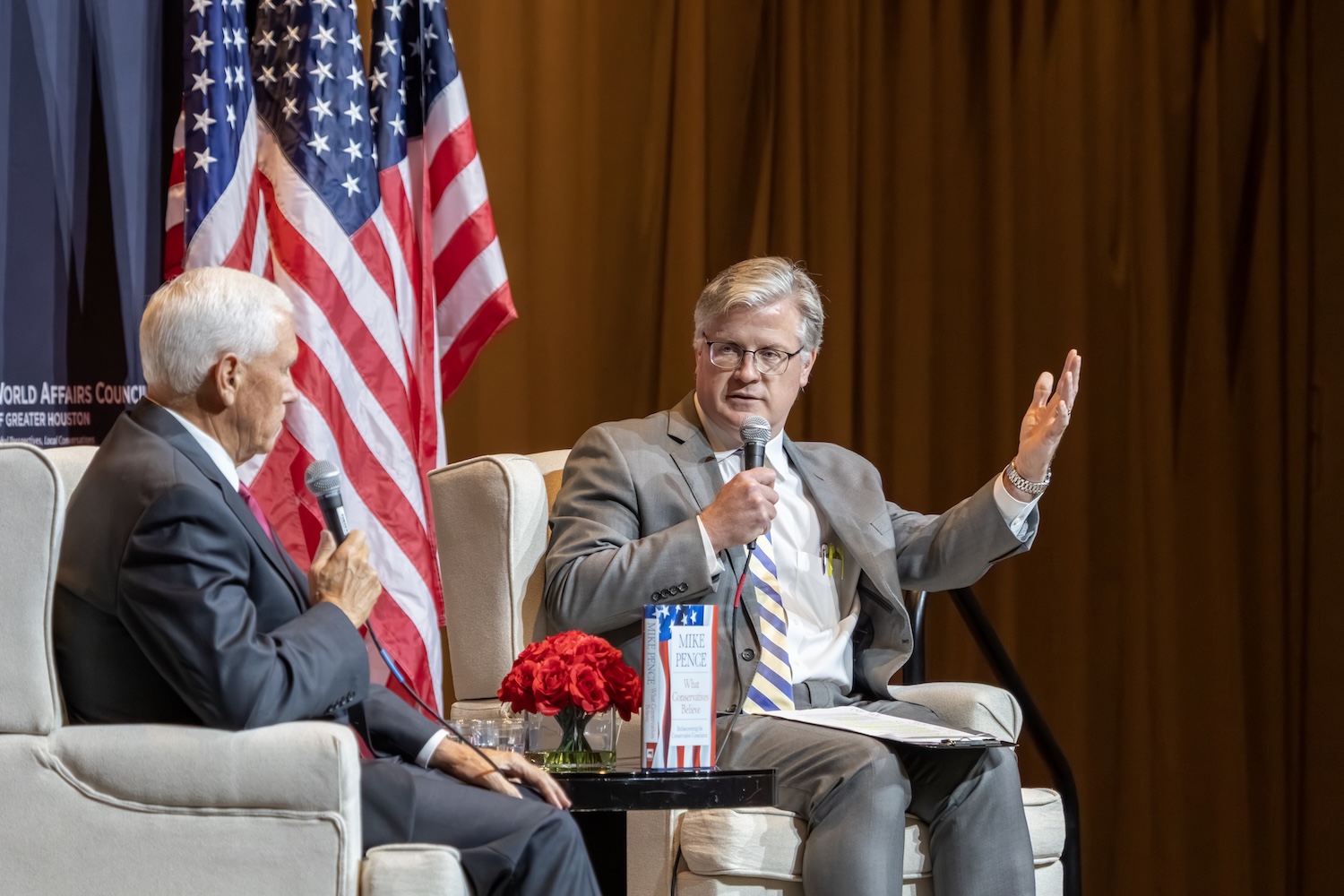
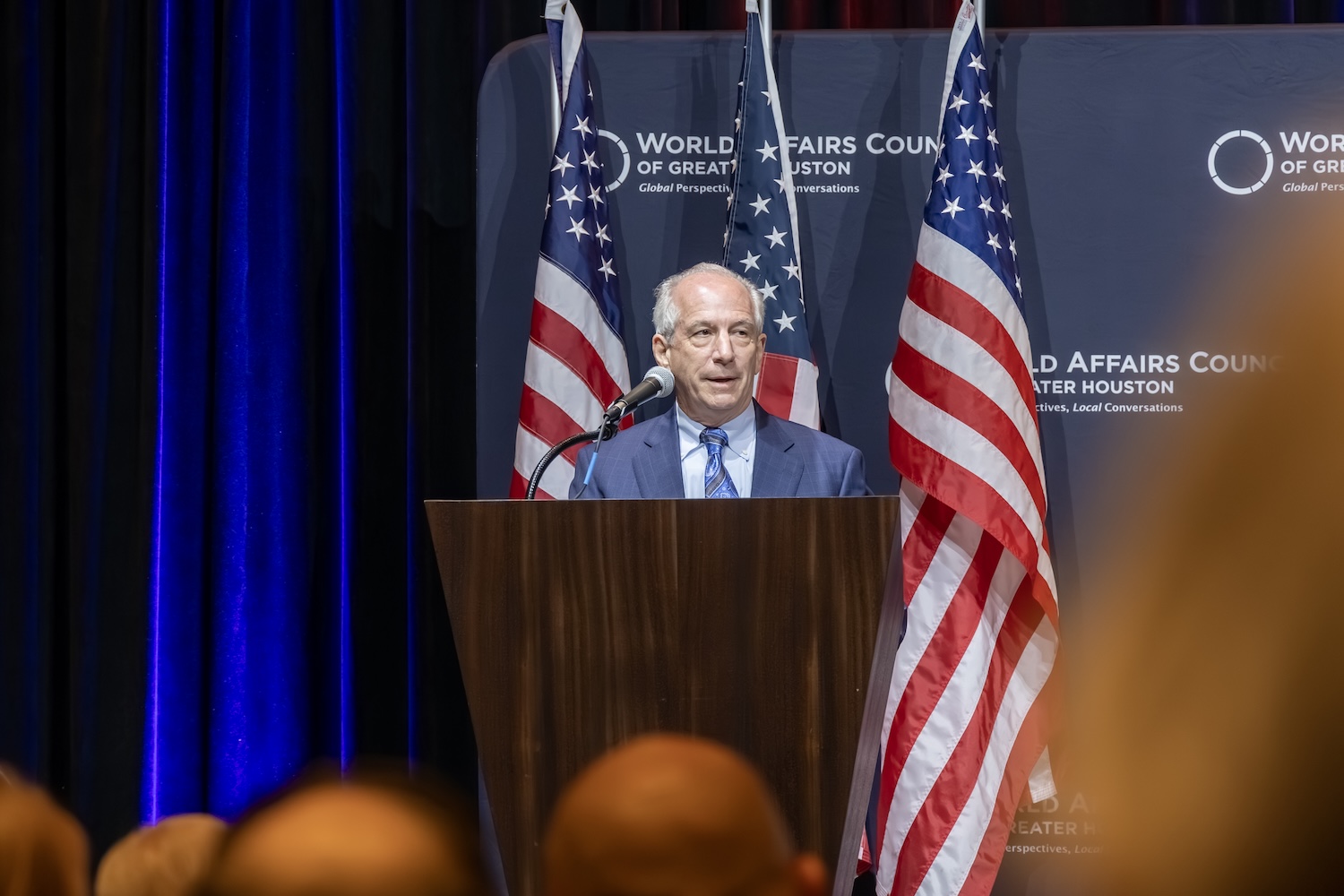
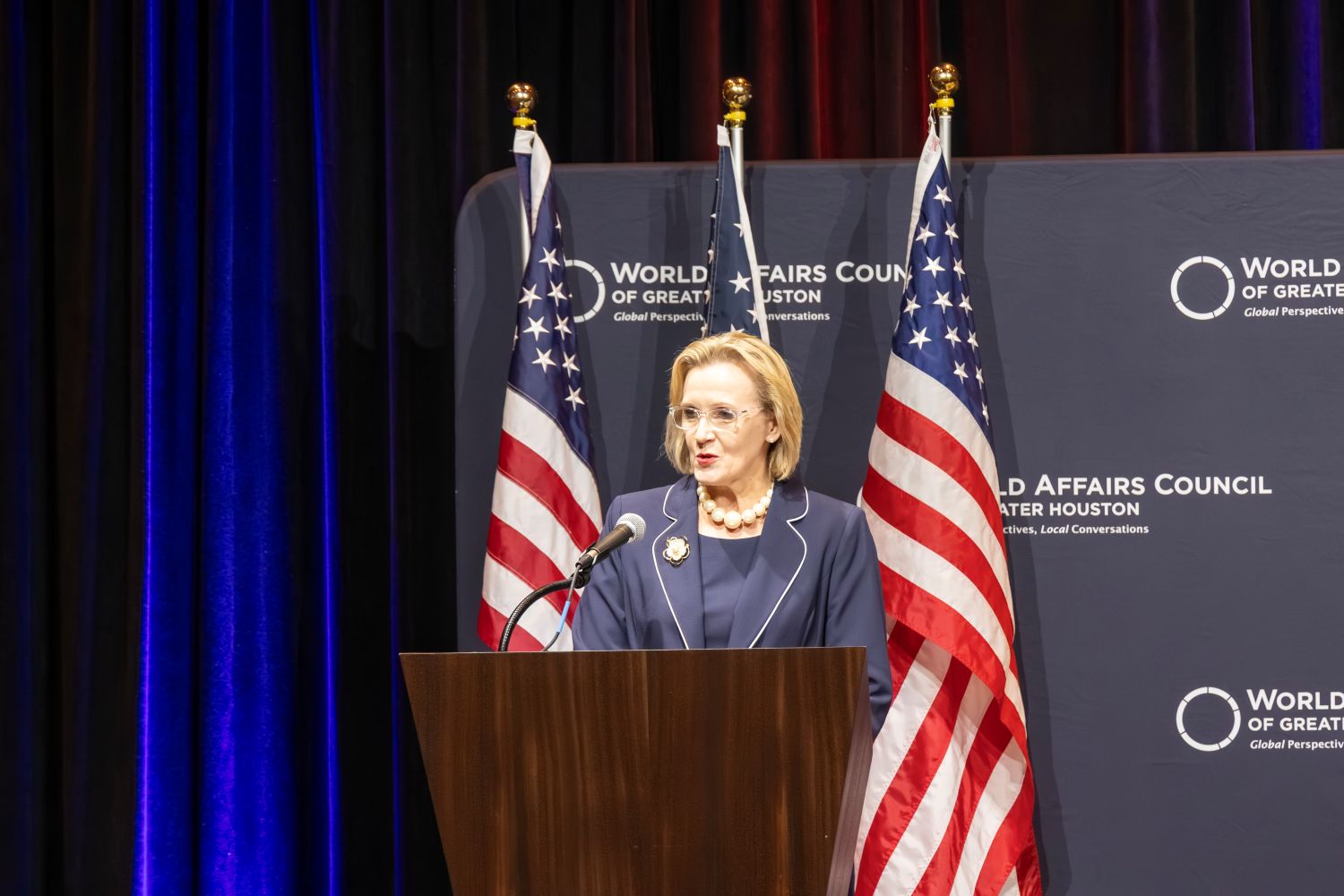
The night began with Sandija Bayot, the Chief Development Officer of the World Affairs Council of Greater Houston, introducing Kenneth Tubman, the Chairman and President of PPA Resources, who offered a glimpse into Mike Pence’s “multifaceted” career. Pence took the stage alongside exceptional Ronan O’Malley, Chief Programs Officer, who served as the moderator for this event.
Pence opened by highlighting the foundation 1960 Conservative text, The Conscience of a Conservative, by Barry Goldwater, which inspired his decision to write his new book. He discussed how politics in America are going through a dramatic change, and brought up modern marginalization of traditional values.
Pence reflected on his role as a member of the Republican Party, discussing how he went from being a Democrat to a Conservative after realizing that he wanted the values he grew up learning from his grandparents for himself. Pence also spoke about the importance of economic freedom and how he thinks that it is “morally wrong” to look at his children and grandchildren and say to them, “the debt is your problem, not mine.”
As the audience portion of the discussion began, Pence was asked what advice he would give to young people interested in politics. His answer was both simple and impactful, especially as students with an interest in the law: “Show up, don’t wait to get asked.”
Wrapping up, Pence reminded us that the American people are some of the most caring and innovative people, stating that America deserves to have a government just as good as its citizens.
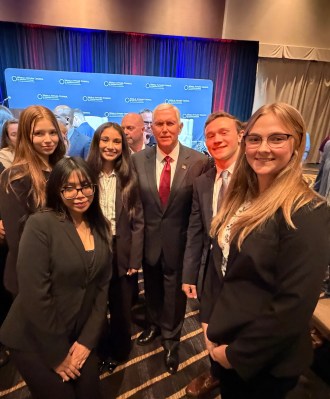
The event ended on a memorable note as we were able to meet and take a photo with Mike Pence, who expressed his confidence in our generation by calling us the “future of politics.”
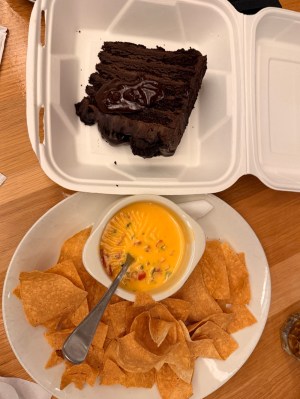
We concluded the evening with a delicious dinner and dessert from Katz’s Never Kloses, where we shared our thoughts and reflections from the event, a wonderful end to a fantastic and informative evening.