Exploring the Art in the City of Philadelphia
by Saara Maknojia
With a full day in Philadelphia ahead of us, LEAP students ventured into town this morning to explore the beautiful public art around the city. Our first stop, of course, had to begin with Philadelphia City Hall, the largest in the nation! Afterall, this eye-catching building is grounded in one of the most historical states. The building itself is noticeable from many miles away, with a statue of William Penn, founder of Pennsylvania. The statue, sculpted by Alexander Milne Calder (Not to be confused with contemporary abstract artist Alexander “Sandy” Calder), brings not only the state’s historical aspect to the City Hall, but also connects other notable pieces of artwork to the artist.

Just a short stroll down Logan Square, we encountered Three Discs, One Lacking by Sandy Calder, grandson of Milne. Further down the Benjamin Franklin Parkway, the Calder legacy continues with the Swann Memorial Fountain, which was created by Alexander Stirling Calder, the father of Sandy Calder. These pieces not only highlight the artistic legacy of the Calder family but also illustrate how thoughtful city planning can weave art into the very fabric of a community. The alignment of these sculptures offered us a unique opportunity to reflect on how art connects generations and transforms public spaces.

As we continued exploring Logan Square, a lovely red caught the eye of many. Surely enough, we were met with yet another LOVE sculpture by Robert Indiana!

By the end of the day, we’d spotted three of Indiana’s works, including the AMOR sculpture, which added a multilingual flair to the city’s celebration of brotherly love.

One artist that I was unfamiliar of during this tour was Zenos Frudakis. His sculpture Freedom, however, quickly became my favorite. The theatrical movement of the statues and the intricate details within each sculpture made every piece a part of a larger narrative, expressing an individual’s desire to abandon a life of comfort in pursuit of freedom.

We also encountered a mural by Richard Haas, another artist familiar to LEAP students. Keeping his famous trompe l’oeil style, the piece depicted Benjamin Franklin and William Penn and spans an entire wall to capture the essence of Philadelphia’s historical and cultural heritage.

Haas even drew inspiration from the Benjamin Franklin Statue by John Boyle, located on the University of Pennsylvania campus.

Philadelphia’s public art left us with a deeper appreciation for the city’s vibrant cultural identity. From the Calder family’s generational influence to the iconic works by Indiana, Frudakis, and Haas, each piece added a layer of history, creativity, and connection to our journey. By the end of the day, we realized that the city itself is a canvas, where every corner invites reflection and inspiration.

Lunch at Casa Mexico and South Philly Barbacoa
by Israel Gallegos
For our much-needed lunch break, we went to Casa Mexico and South Philly Barbacoa, a joint restaurant heading towards the southern part of Philadelphia. The restaurant’s head chef, Cristina Martinez, is a James Beard Award recipient for Best Chef in the Mid-Atlantic region in 2022. So, we took this as a great sign to cross this off our trip list!
We ordered an array of dishes to get the full Mexican experience with a twist of Philadelphian culture. Accompanying our dishes, the group ordered horchata and jamaica, which passed Cinthia’s freshness test, and the guacamole, which was excellent.

The course started with half a kilo of barbacoa for the group, followed by chiles rellenos, a staple Mexican dish. The group also enjoyed enchiladas verdes. Personally, having tried enchiladas verdes many times, I can attest to the quality of the enchiladas at Casa Mexico.


To top off the main course, we had mole, which was my personal favorite as it tasted like home.

To end the meal, we of course had to indulge in our sweet craving and try both the tres leches cake and flan!


Somehow, we still found a bit of space in our stomachs, so we walked down the street in the freezing temperatures to get warm cups of coffee. The establishment, Rim Café, an Italian American café, was decorated as if they were collectors of timepieces depicting the true Italian American culture. Our Italian in the group, Olivia, was the judge, and she said the place reminded her of her uncle’s garage. I take that as the place doing a good job embodying a part of the culture.
Sticking to the classics, we ordered the original and chocolate cannoli (both of which were devoured in seconds).

Nevertheless, my favorite sight at Rim Café was an affogato that Saara got, it consisted of tiramisu gelato on the outside and hot espresso in the middle of it, providing a perfect mixture of hot and cold. Although I got the after-lunch dip, we kept moving to our next stop, the Barnes Foundation.
Experiencing the Philadelphia Barnes Collection
by Cinthia Villarreal
Dr. Barnes started his ambitious collection of art in 1912 and during four decades went on to collect what is now known as a highly regarded assemblage of art. With over 170 paintings of Renoir, and multiple works of Picasso, Van Gogh, Degas, Modigliani, and Seurat, we were all looking forward to visiting the Barnes Foundation in Philadelphia.


After a brief delay caused by an over-zealous security guard (take your jackets off!”). we entered the main room, and we could see the beautiful pieces decorating the four walls. Impressionism, characterized by short, broken brushstrokes and unmixed colors, is one of my favorite styles of art, so I was absolutely delighted as I saw Renoir’s name repeat itself throughout the walls.

As we moved through the exhibit, we started recognizing names from past museum visits, including Olivia’s favorite piece from Goya.
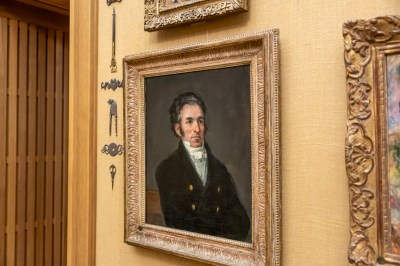
A unique feature of Barnes Foundation is that they do not use the common labels with the title and artist next to each of the pieces. Instead, they have brass plaques fixated with the artist’s name on each of the ornate frames.

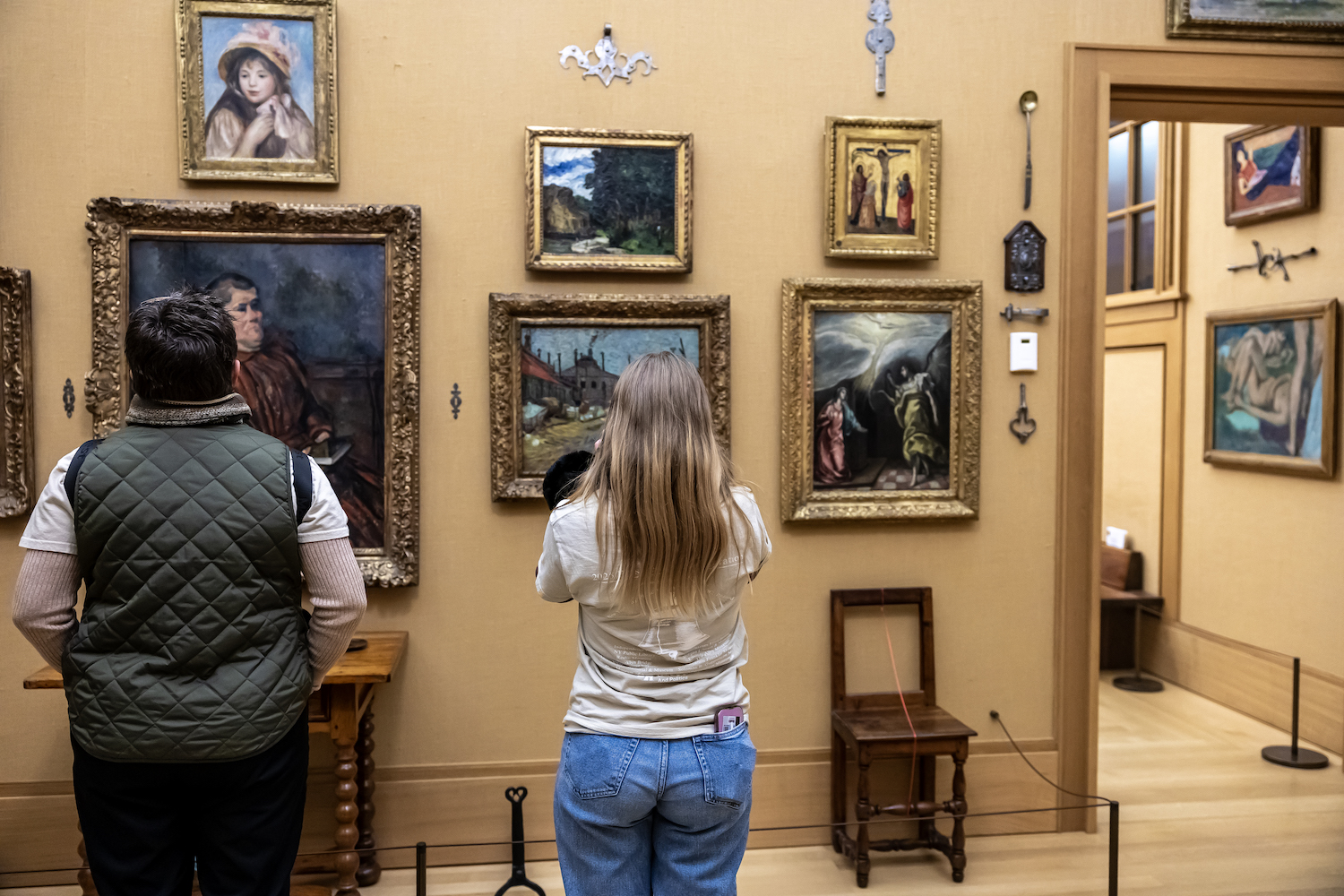
To assist those who would like to understand a piece further, the Foundation allows one to scan the paintings with a phone to learn more about the composition and history of the piece.
Isreal, who’s less exposed to the art scene, found a particular liking for the European art, as well as Michelle, who’s favorite was El Greco’s.

In all, we greatly appreciate expanding our understanding of the humanities, especially when it highlights the contrast between where we started and how much we’ve grown. The Barnes Foundation in Philadelphia was a great end to our day, filled with experiencing the city and all that it has to offer!


 Center for Law, Engagement, and Politics