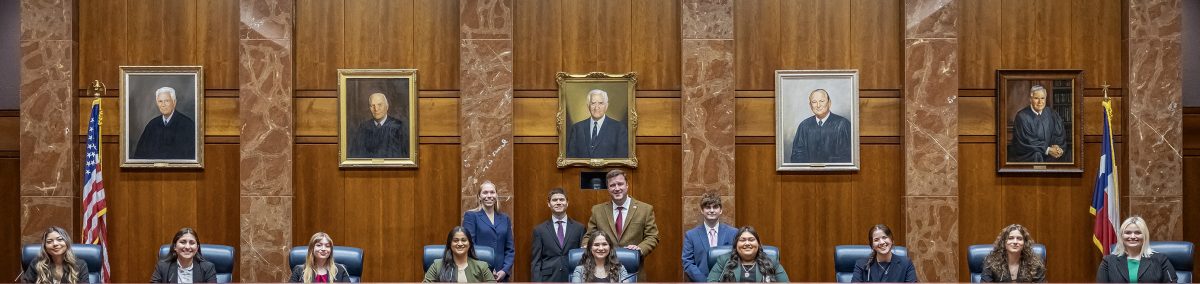
After arriving in Boston early Friday morning, LEAP officially kicked off our visit to New England! We’re here for the Council of State Governments East conference, but like any LEAP trip, we make time to absorb the cultural and intellectual atmosphere of the region.

Massachusetts State House
by Olivia Discon
Even as we approached the building, we noticed the gold dome, and we used that as a guidepost for directions to the structure. The dome, as we would later learn, was originally covered with wood shingles, but as they deteriorated, the government opted for a sturdier material. They chose Paul Revere to plate the dome, but as it weathered and turned green, another element was sought. They settled on 23-karat gold, which is, of course, distinctly different. Interestingly, the original gilding cost $3,000 (in 1872); but they expect to cost approximately 3,000,000 dollars to refurbish it today.

We learned all this from Luke, our tour guide, who gave us a great overview of the building, which was designed by Charles Bullfinch, who also designed the Maine Statehouse, University Hall at Harvard, and the updating of the US Capitol.

A highlight was the beautiful rotunda, which featured stained-glass windows and murals depicting scenes from the founding of the country. The room was built with imported Italian stone and craftsmanship, reflecting the influence of Massachusetts’ large Italian immigrant population.

From there, we entered the Great Hall of Flags, which displays 351 flags, one from each municipality in Massachusetts. The design wasn’t just symbolic, though; the flags also help improve the room’s acoustics, making it suitable for ceremonies and events.

Having seen 12 state capitol buildings, I’ve learned that the legislative chambers are often the most interesting aspects of the statehouses. In Massachusetts, the House of Representatives has 160 members, each serving two-year terms. In and of itself, this is not unusual. What is unusual is this one features a fish: a cod. The cod is such a central symbol of Massachusetts’ maritime roots that the chamber refuses to conduct business without it, although that didn’t stop Harvard students from stealing it in 1933, stopping legislative business for three days, before it miraculously returned. The sculpture is today so valued, it is known as the “Sacred Cod.”


Across the building, the State Senate chamber is home to 40 senators, also elected for two-year terms and representing roughly 175,000 people each. Their chamber is arranged in a round-table style, designed to encourage equal discussion, which is of course different from the tiered seating most state legislatures use. Indeed, Massachusetts takes this to great lengths. To ensure full equality, they actually change the heights of each chair around the table in a manner designed to ensure that each member is of equal stature while literally and figuratively occupying a Senate seat.

And because the House wouldn’t share the Sacred Cod, the Senate decided they would have their own divine creature: the “Holy Mackerel.”

In all, this visit to the Old State House was a great way to kick off the trip. It was the perfect precursor to the rest of the day and almost certainly to our time in New England.
Freedom Trail
by Michelle Moya
While the Massachusetts’ State House can serve as a standalone site, it is also part of Boston’s official Freedom Trail, a 2.5-mile path (fully paved with red bricks) that winds through downtown and connects 16 historically significant sites. The trail proved to be the perfect introduction to the city–part history lesson, part sightseeing tour–allowing us to stand where many of the pivotal moments in America’s fight for independence unfolded.
In most states, a capitol built in 1798 would be the old state house but not in Massachusetts. The Bay State’s “Old State House” was built in 1713 and is Boston’s oldest surviving public building. Its Georgian architecture stands in stark contrast to the towering skyscrapers surrounding it. For decades, it served as the seat of the Massachusetts General Court and a symbol of royal power in the colony. But it also became a birthplace of revolution: on July 18, 1776, the Declaration of Independence was read aloud from its balcony for the first time to the citizens of Boston, transforming this seat of British authority into a herald of American freedom.
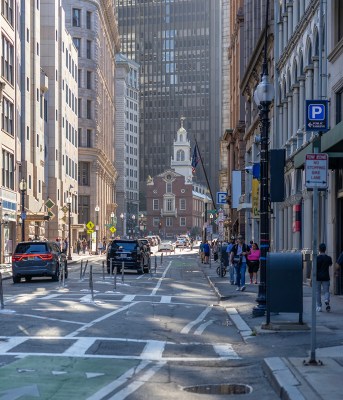
Just steps away lies the Boston Massacre Site, marked today by a simple ring of cobblestones. Modest as the marker may be, this spot witnessed a tragedy that would galvanize the colonies. On March 5, 1770, angry Bostonians clashed with British troops stationed in the city. What began with snowballs, sticks, and insults escalated when confusion gave way to gunfire. Private Hugh Montgomery, knocked down by the crowd, fired his musket, and others followed suit. Amid escalating tension, five colonists were killed: Crispus Attucks, Samuel Gray, James Caldwell, Samuel Maverick, and Patrick Carr.

The consequences of that night are poignantly reflected at the Granary Burying Ground, established in 1660 and one of Boston’s three-oldest cemeteries.
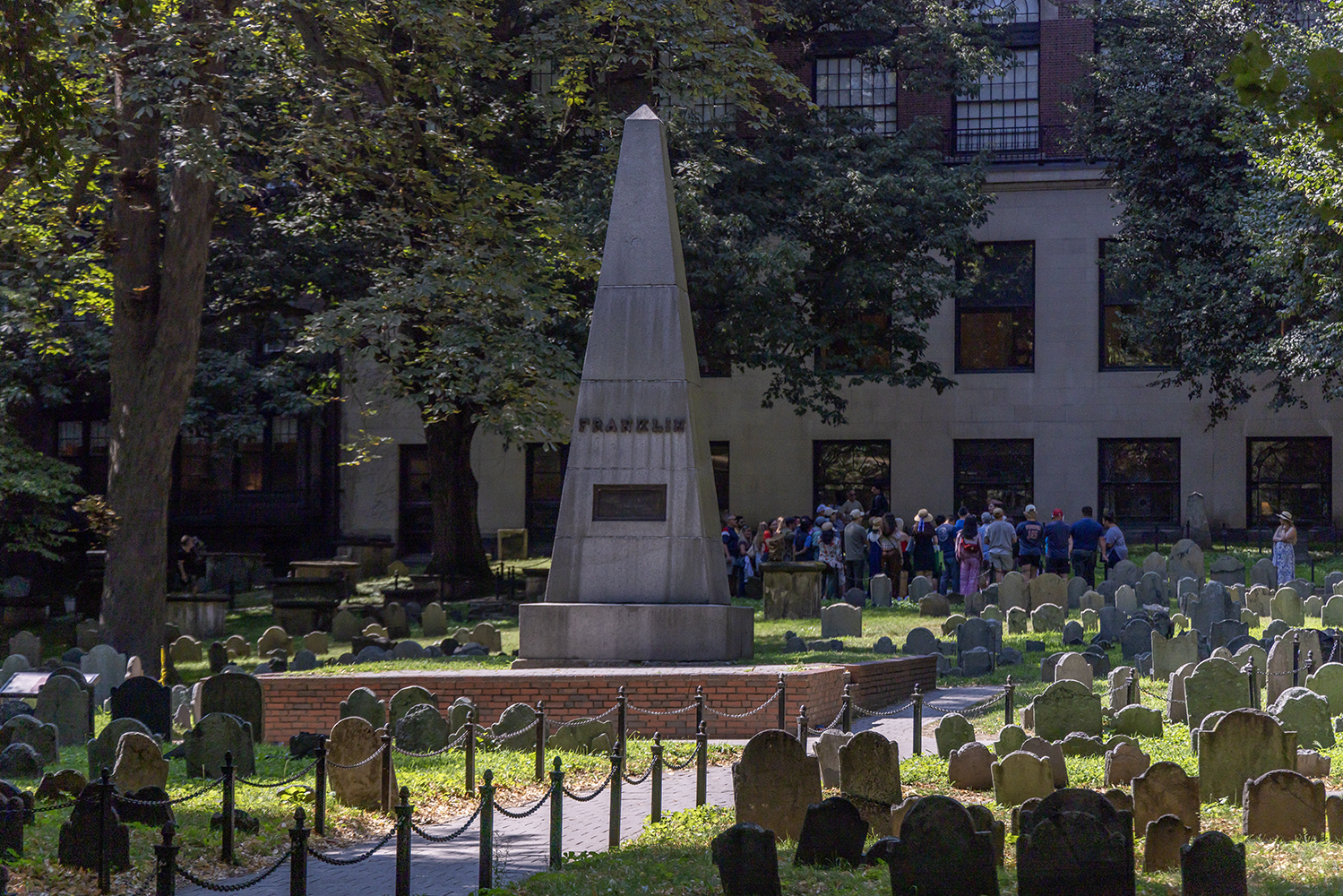


Though only about 2,300 headstones remain visible, nearly 5,000 people are believed to be buried in this hallowed ground, including some of the Revolution’s most illustrious figures such as Paul Revere, Samuel Adams and John Hancock, and among these is one of the five victims of the Boston Massacre, Crispus Attucks. Of African and Native American descent, Attucks was a sailor and dockworker who stood at the front of the crowd that evening. His death marked not just the beginning of America’s struggle for independence but also highlighted the diverse coalition of people who would sacrifice for that cause.


A few blocks away, the trail leads us to the Paul Revere House, built around 1680 and now the oldest surviving home in downtown Boston. Modest in size and structure, the weathered wooden dwelling still fits in among the varied architectural buildings of modern-day Boston. Revere lived here from 1770 to 1800, balancing his work as a silversmith with his pivotal role in the Patriot cause, including his famous midnight ride that would become the stuff of legend.

The Freedom Trail offered a concise, firsthand look at Boston’s role in the nation’s founding. The trail provides both residents and visitors a clear window into the events and figures that shaped early America, making it a must-see for anyone looking to understand Boston’s historical significance and, for us, a great start to exploring a new city.
Lunch and Larks
Befitting our historic tour, we had lunch at the Union Oyster House, which opened in 1826, making it the United States’ oldest restaurant. The building in which it is housed dates back even further–at least 250 years, although no firm date has been established. In addition to some Boston staples (New England Clam Chowder, oysters, Boston Cream Pie)–which we enjoyed–the restaurant has also hosted many notable public figures. Daniel Webster was a regular customer as was John F. Kennedy. Indeed, Kennedy had the Oyster House’s Clam Chowder shipped in for his inauguration.

We also plotted out paths to some sites we wanted to see that didn’t fit a themed route. This included the remnants of a partially obscured Richard Haas mural at 31 Milk Street, which someone, inexplicably, decided should be covered up by a parking garage. For a city that cares about its history–or for any city–it was an unfortunate decision.

Also of interest to us was Ten Post Office Square, which was originally home to the Boston Latin School (1635), the oldest public school in the United States. Luminaries such as John Hancock, Samuel Adams, Cotton Mather, and Benjamin Franklin attended here. Franklin, however, dropped out, a fact which partially prompted city fathers to erect a statue of him on the site in 1865, the first such public statue in the city of Boston. The site was also been home to the Suffolk County Courthouse and, in 1865, the City built a new Town Hall on the site. It is the structure that occupies the location today, a building that provided office space for 38 separate mayors, including John Fitzgerald–the future President’s grandfather.
Boston Museum of Art
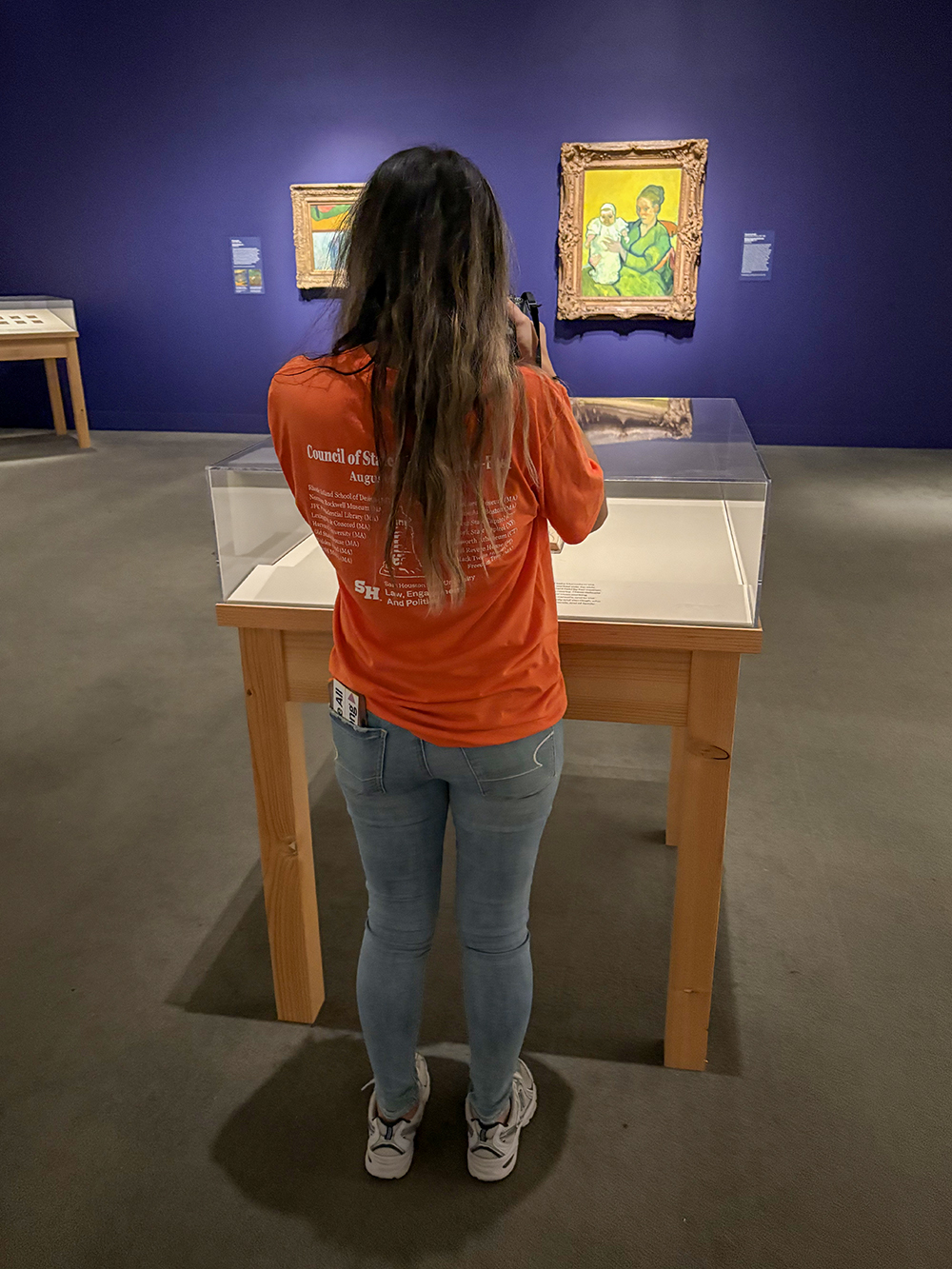
After a packed first day in Boston, we headed to the Museum of Fine Arts to see “Van Gogh: The Roulin Family Portraits”- the MFA’s first Van Gogh exhibition in 25 years. With 23 works on display, many borrowed from all over the country, this represents the largest collection of Van Gogh’s work currently showing in the United States.


The exhibition focuses on Van Gogh’s 26 portraits of the Roulin family-his neighbors in Arles, France. Fourteen of these paintings are displayed together here, something that rarely happens given how scattered they are across museums worldwide.
Joseph Roulin, a local postman, appears in several portraits wearing his postal uniform…


His wife Augustine dominates the “La Berceuse” series, where Van Gogh painted her as a maternal figure meant to comfort sailors and working people.

Their three children each get distinct personalities: Armand with his serious expression,

young Camille caught between childhood and adolescence,

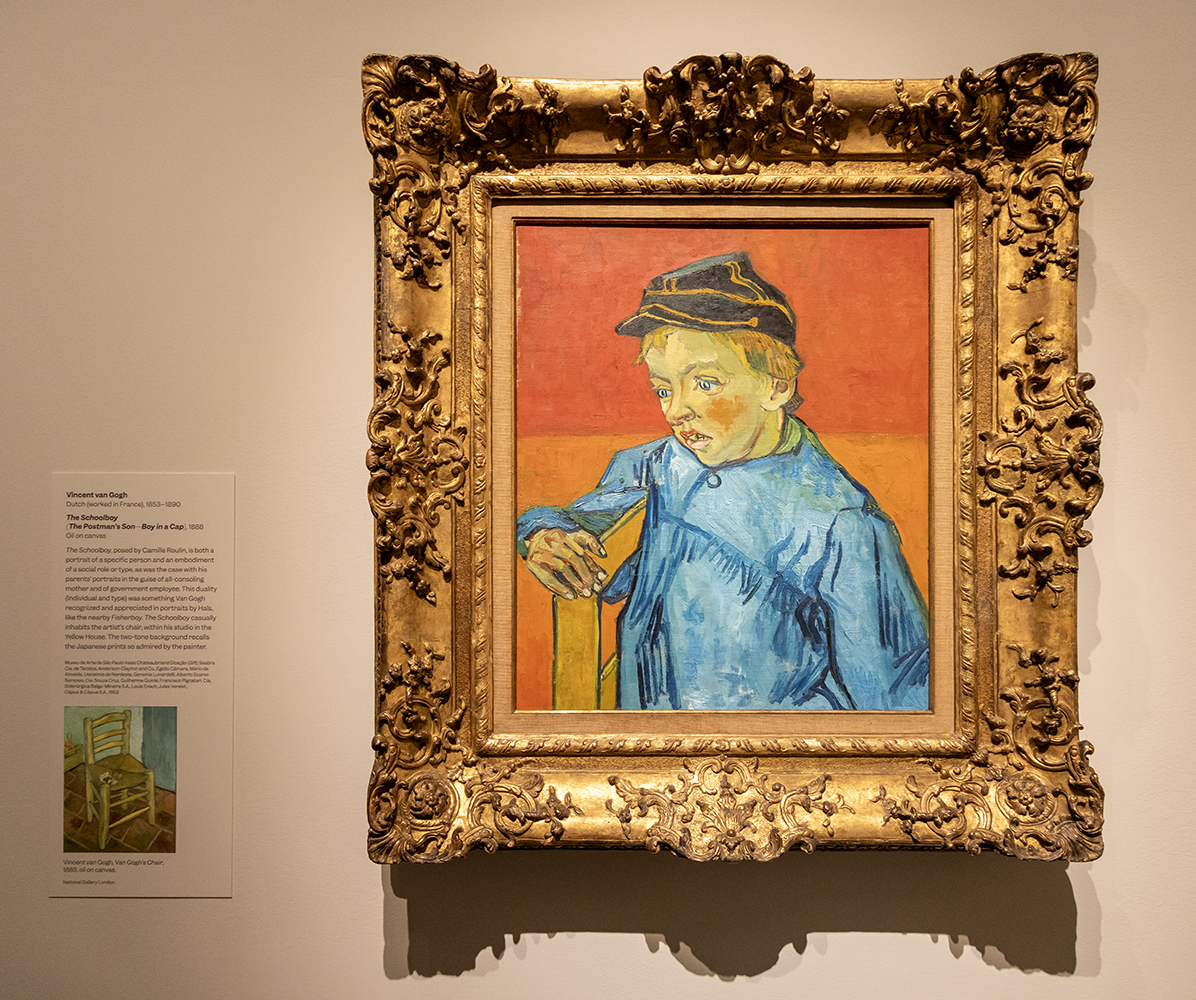
and baby Marcelle with tender vulnerability.

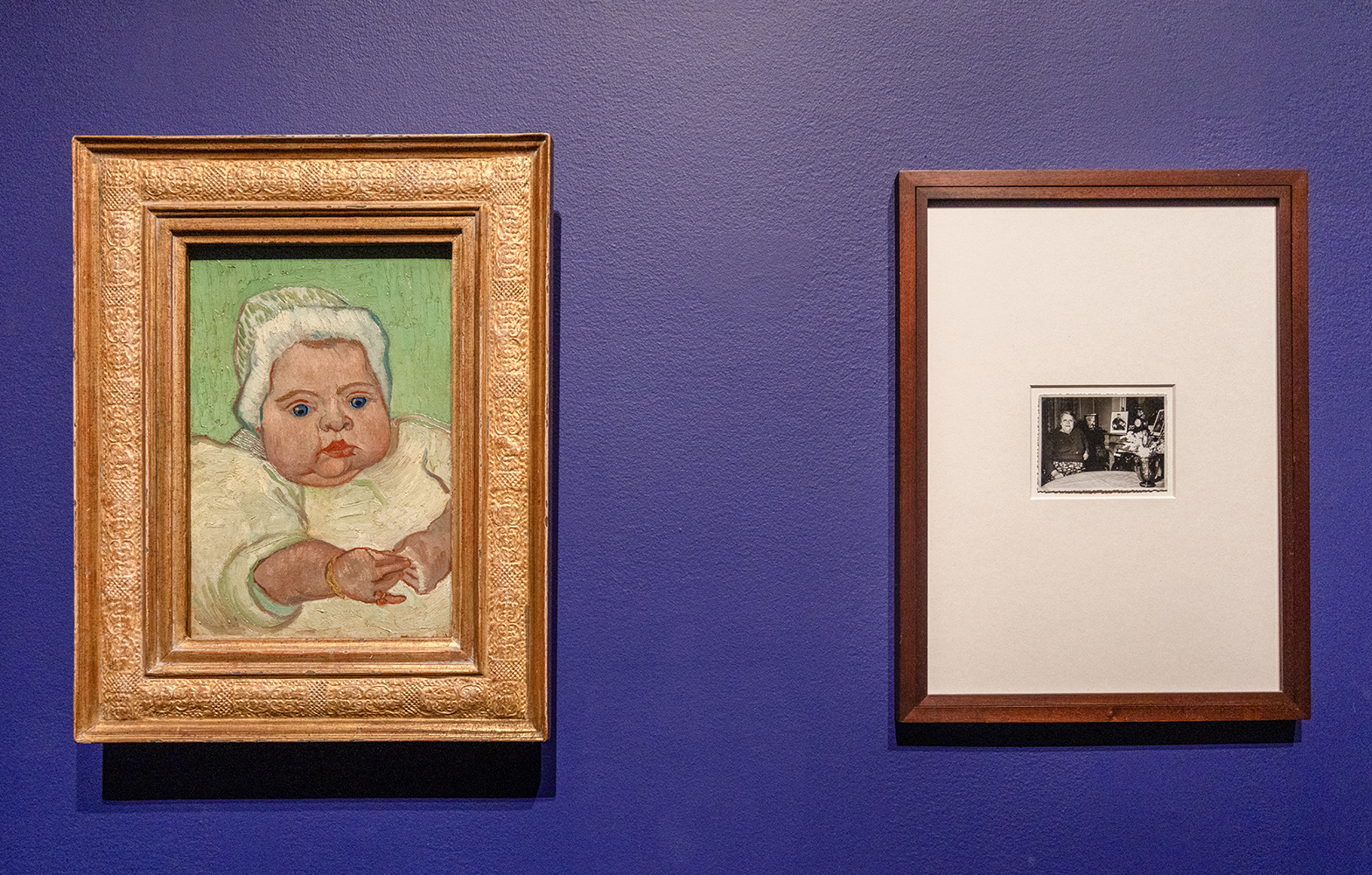

The exhibition also includes other works from Van Gogh’s productive Arles period. The Bedroom immediately caught my attention, given its bold, simplified colors.

Alongside these, Van Gogh’s Self-Portrait from this period shows the artist at his most direct, painted just months after his breakdown in Arles…

The curators also included works by artists who influenced Van Gogh, including pieces by Rembrandt, creating a clear artistic lineage that shaped his approach to portraiture.

The exhibition ends with Van Gogh’s actual letters, written during his mental health struggles in Arles.

Continuing On!
By Olivia Discon
From there, we wandered through the rest of the museum, trying to take in as much as we could before the end of day one.

Michelle is still figuring out her taste in art, so this visit was a great chance to see a wide range of styles and time periods all in one place.
In the American Art collection, we started in a way that mirrored the country’s own development. Early American painters leaned heavily on European influences, but as we moved forward, you could see the work gradually step into a style of its own.

Moya has grown fond of the transcendentalist crowd—Heade, Thomas Cole, and Bierstadt especially.

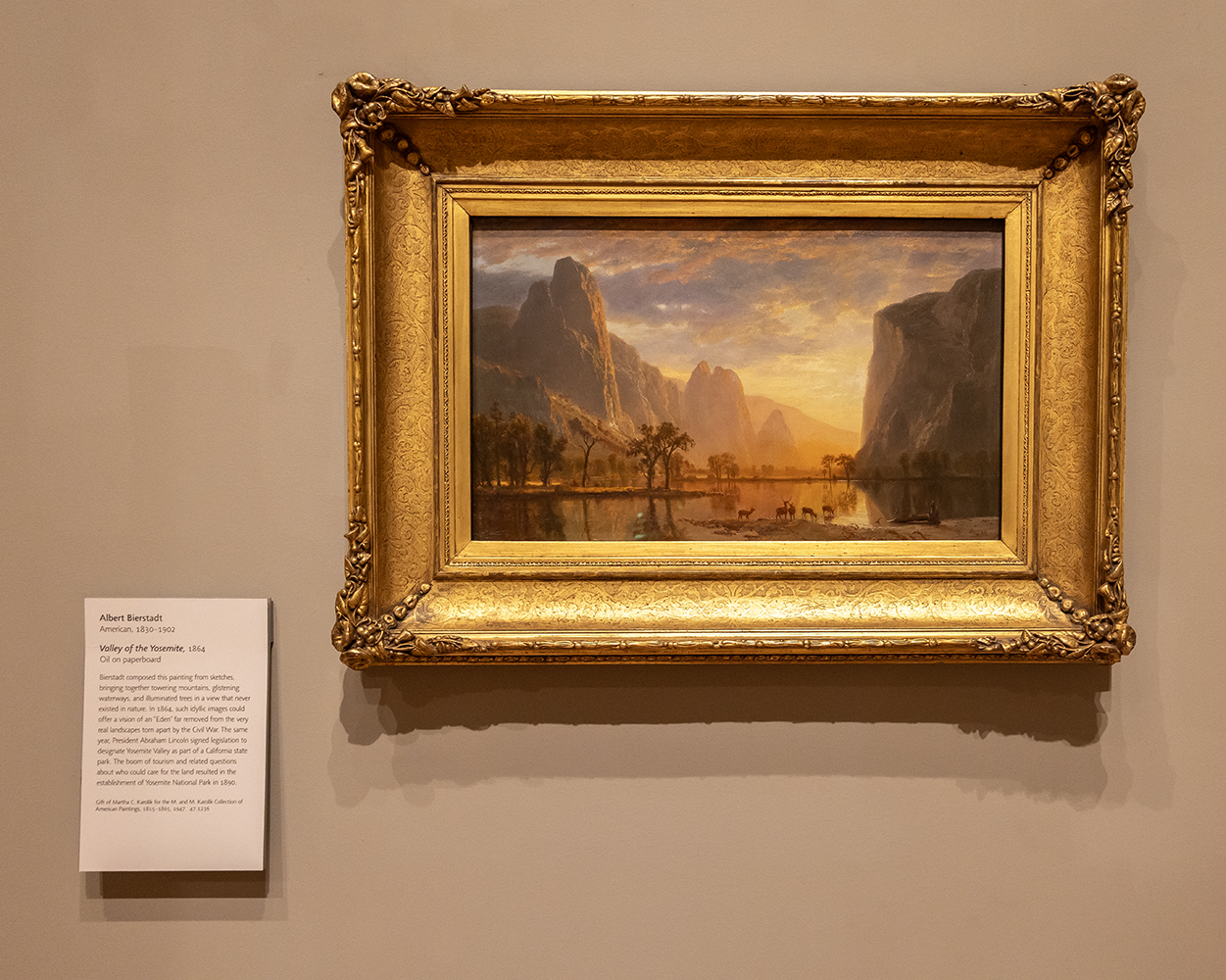

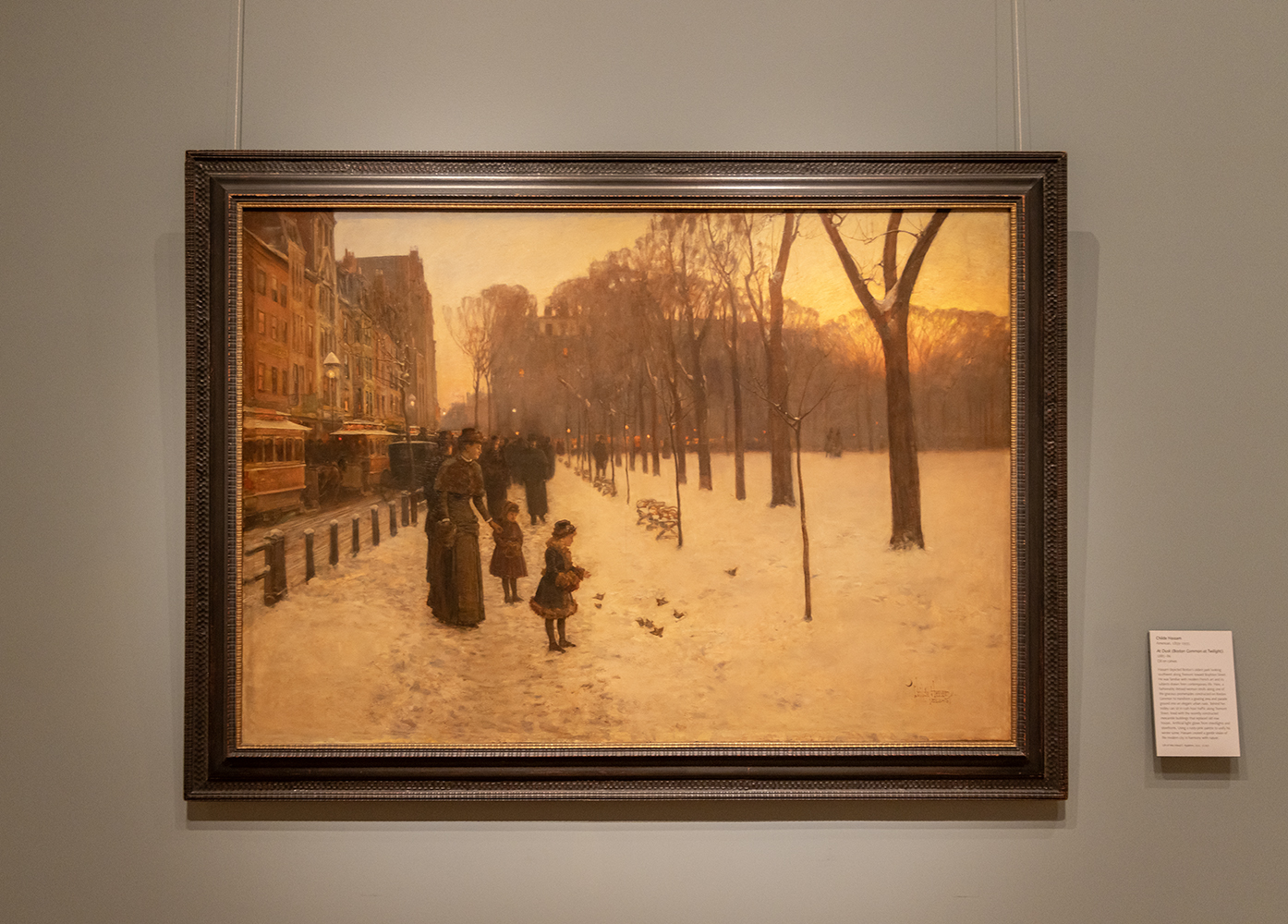
For me, highlights included John Singer Sargent, Childe Hassam, and Rodin.


We also stumbled on an Andy Warhol that needed a little context. After I explained the, let’s say, “golden phase” of his work, Michelle was no closer to being a Warhol fan.

There was also an impressive lineup of Monets, including one from his cathedral series. That 33-painting project captures the same cathedral at different times of day. This is pivotal to art history, and I was pleased to have seen one of them in person.


And then came Degas’ Little Dancer. One of the 28 bronze casts, it’s indeed an incredible piece. However, if you’d rather not become disillusioned with another art piece in this blog, you probably shouldn’t ask me the backstory on this one.

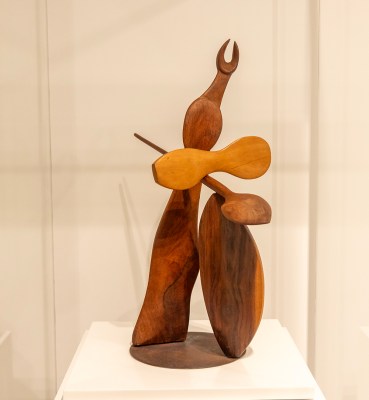
On our way out, we caught sight of some Alexander Calder pieces! The wooden sculpture was particularly striking to me, and an excellent find on our way out of the museum.
Concluding Thoughts
It was such a busy day, it was easy to forget that we woke up in Houston, Texas, and spent only a partial day in Boston, MA. Nonetheless, we managed to spend a full twelve hours seeing sites, exploring a part of the country that is new to us, and reflecting anew on our nation’s history and the meaning of freedom.

 Center for Law, Engagement, and Politics