One of the most valuable aspects of the LEAP experience is the chance to learn from leaders who have dedicated their lives to public service. The World Affairs Council regularly provides such opportunities, and at the Royal Sonesta in Houston, we had the privilege of hearing from Admiral John Kirby.

Admiral Kirby began his career in the United States Navy as a Public Affairs Officer, which eventually led him to serve as Press Secretary for the Pentagon and later as Coordinator for Strategic Communications at the National Security Council. Having worked under both the Obama and Biden administrations, Admiral Kirby has long been at the center of national security, communications, and public affairs.

The evening’s conversation, emceed by Sandiya Bayot…

…and introduced by WAC Board Chair Ken Tubman (President of PPA Resources)…
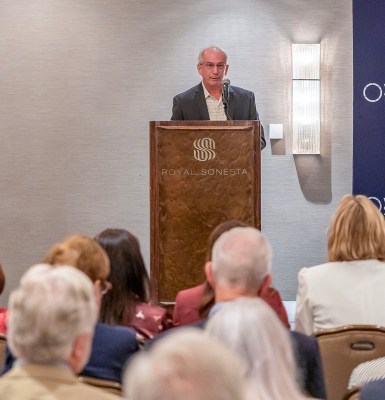
…and moderated by our good friend Ronan O’Malley, touched on a wide range of issues: foreign affairs with superpower nations, military missions and operations, the role of the media, and the importance of sharing information responsibly.

One of Admiral Kirby’s first reflections was on the difficulty of his role: explaining tough decisions to the American people. He emphasized that while he could not alter the facts or decisions already made, his responsibility was to provide clarity about why those decisions were in the nation’s best interest and how different choices might have carried heavier consequences.

On military matters, Admiral Kirby spoke about the Russia-Ukraine conflict, Afghanistan, and broader concerns about military culture. Regarding Russia, he explained how U.S. intelligence delayed some of Vladimir Putin’s plans and stressed the importance of declassifying information when possible. By making certain intelligence public, the U.S. can share insights with allies and citizens without compromising sources.

Reflecting on Afghanistan, he noted how the Vietnam War left a strained relationship between the press and the military. Later, steps were taken to rebuild trust, such as embedding reporters with platoons during the Bush administration. This gave journalists firsthand experience and allowed them to write more accurate, informed accounts for the American people.

Even with these improvements, Admiral Kirby expressed concern that military service is increasingly becoming “a family business,” passed down through generations. While traditions of service are admirable, he worries this could widen the divide between those who serve and the broader public. For him, bridging that gap remains essential.

A recurring theme throughout the evening was the power of stories and information. Admiral Kirby explained that every story matters, and sharing them connects the military to the people it serves. Stories, he said, keep the world turning.

The conversation then turned toward media and technology. Admiral Kirby noted that while the rapid spread of information makes misinformation difficult to contain, it also provides powerful opportunities when used correctly. He drew comparisons across history: President Kennedy mastering live television, Roosevelt using photography, and Lincoln embracing the telegraph. For today’s leaders, the revolutionizing force is technology and social media, and Admiral Kirby stressed the importance of adapting to it.

One of his most powerful points was that, regardless of political party, Americans ultimately want “information, not confirmation.” Rational decision-making, he reminded us, depends on honest, clear information.

On a personal note, I had the chance to meet Admiral Kirby before the event. As we arranged for a group photo, he asked me about my studies and future goals. When I shared that I wanted to become an attorney and later involve myself in politics, he responded with a smile: “You’ve got it, go get ’em!”

That moment reflected what made the entire evening so meaningful. Admiral Kirby has a rare ability to connect with people, whether addressing an audience of hundreds or speaking one-on-one. His insights were powerful, but it was his ability to inspire and make each person feel included in the conversation that left a lasting impression.

This event will remain one of my favorites from the World Affairs Council.


 Center for Law, Engagement, and Politics