Mike Yawn teaches at Sam Houston State University. In the past few years, he has taught courses on Politics & Film, Public Policy, the Presidency, Media & Politics, Congress, Statistics, Research & Writing, Field Research, and Public Opinion.
He has published academic papers in the Journal of Politics, Political Behavior, Social Security Quarterly, Film & History, American Politics Review, and contributed a chapter to the textbook Politics and Film.
He also contributes columns, news analysis, and news stories to newspapers such as the Houston Chronicle, San Antonio Express News, Seattle Post-Intelligencer, Stamford Advocate, Greenwich Time, Huron Daily Tribune, Laredo Morning Times, Beaumont Enterprise, Connecticut Post, and Midland Reporter Telegram.
Yawn is also active in his local community, serving on the board of directors of the local YMCA and Friends of the Wynne. Previously, he served on the Huntsville's Promise and Stan Musial World Series Boards of Directors.
In 2007-2008, Yawn was one of eight scholars across the nation named as a Carnegie Civic Engagement Scholar by the Carnegie Foundation.
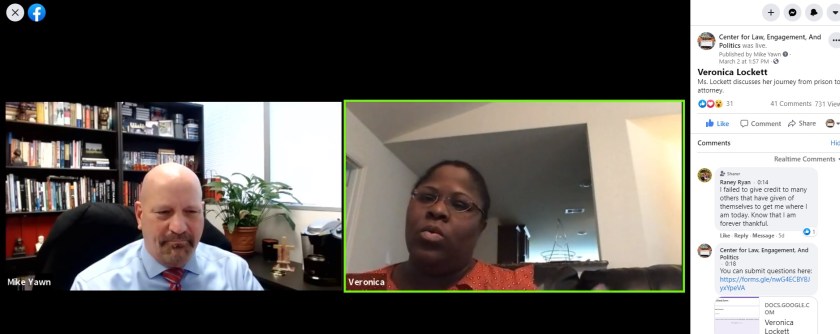
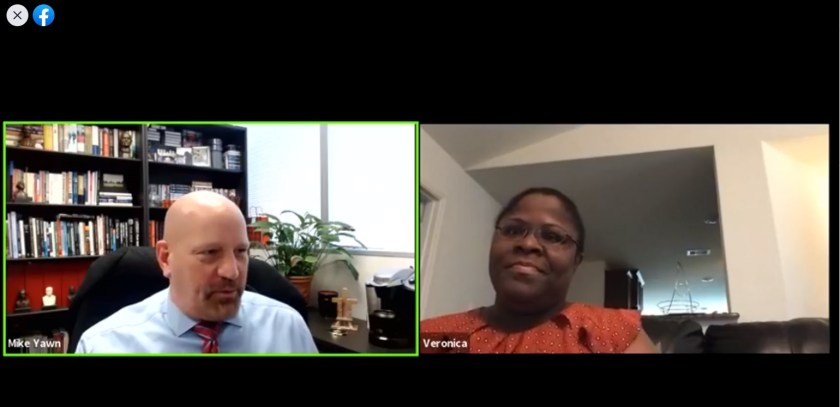
This February, we had our first LEAP LIVE of the semester with Veronica Lockett, whose compelling story was an inspiration to all of us.
One of 13 children, Lockett spent most of her childhood in the foster care system, eventually went to prison, and has since graduated from college, earned an M.A. in Social Work, and recently graduated from law school and passed the bar exam.
Ms. Lockett’s mother suffered from mental health issues, having ended up in foster care and been the victim of a number of assaults while in the system, and found solace in drugs and abusive relationships, and therefore struggled to raise her children.
Lockett recalled for us a tense and scary moment from her childhood. She told us that she once watched her mother’s boyfriend at the time hold her mother in the air and threaten to throw her off of the balcony. She said that she and her siblings slept in the bathroom that night in fear of him.
After years of falling behind in school, living off of food stamps, and being hungry to the point of malnourishment, Lockett entered the foster care system at the age of 9, where she would live in a number of foster care families and group homes.
She explained that she learned about college from one foster care family, and decided she definitely wanted to go to college while with another family. When she started college, she found she struggled to find a place to live.
After transitioning through a number of poor living situations, she ended up in an abusive relationship. While dating this individual, Lockett picked up several charges, and was frequently in trouble with the law. She described an instance when the man held her down in the bathtub and told her he had a gun to her head. There was another time that he choked her until she was unconscious.
A few times, Lockett retaliated, cutting her abuser with a knife and burning him with an iron. Eventually, she had had enough. When she was tired of fighting, she ended up calling the police. Knowing she had a warrant out for her arrest for previous charges, she turned herself in to get away from him. Lockett wound up in prison for two years.
She then described her prison experience, which was tough for us to hear. We learned that the facility she was originally kept in was called the “dog pound,” which was where she was held until the prison assigned her to a specific unit. Once she was placed in a unit, she was placed on the “hoe squad,” where she and other inmates were required to do manual labor.
In spite of the challenges prison presented, including violence from guards and stints in solitary confinement, she was eventually able to get to know her mother, who was moved to her unit, and in the cell next to her.
Lockett told us that they finally reconnected, and she asked her mother all the questions she’d had over the years, about why her drugs and alcohol was more important than her children. Her mother explained that she was trying to cope with the pain of her mental health issues through drugs and alcohol.
After she got out of prison, Lockett went on to finish college, earn her M.A., and would eventually apply to law school at University of North Texas, which was the only school in Texas that would admit her in spite of her criminal record.
She then gave us some advice regarding law school, reminding us that it can definitely be a challenge, and we might not all get the best grades, but that does not mean we should give up. She told us to figure out a system of studying, get to know people who have similar priorities as us, and get as much experience as we can.
Lockett now works at Texas Appleseed, a nonprofit which strives to change unjust laws and policies that prevent Texans from realizing their full potential.
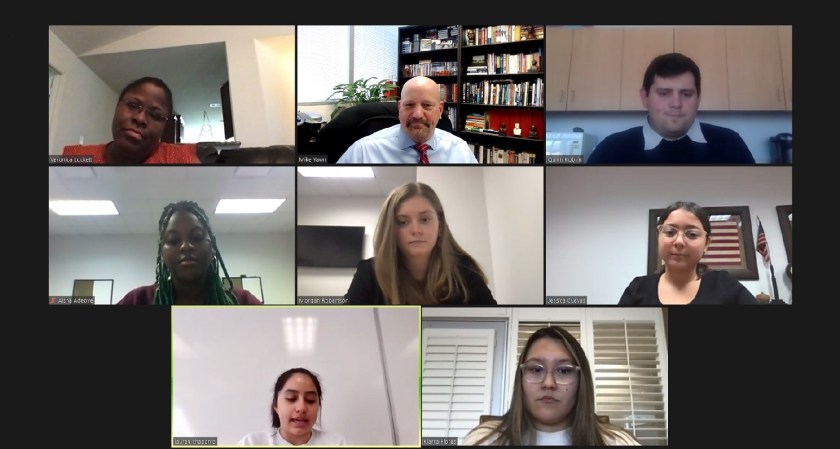
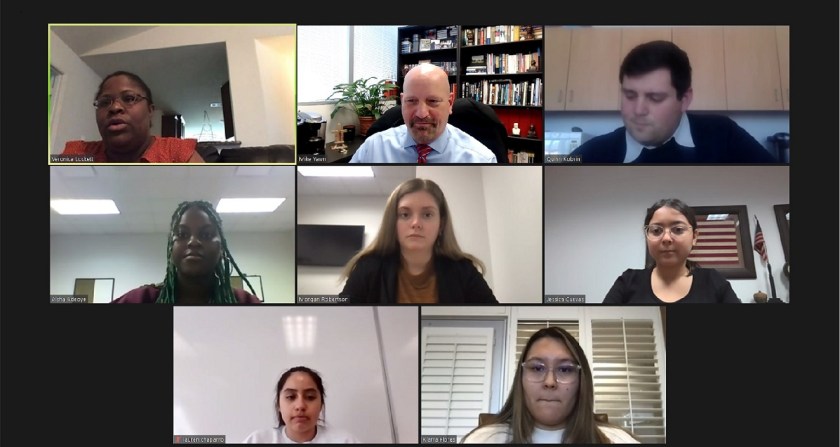
After the LEAP LIVE, a few of us were fortunate to have a one-on-one with Ms. Lockett, where she answered our more specific questions. We want to sincerely thank Ms. Lockett for sharing her time and honesty with us as we learned about her inspiring story of overcoming obstacles.
I think it best to close with a quote from Veronica Lockett which I found very moving:
“I think that the legal profession is all about helping people, it’s just how we choose to help people.
After the winter storm delayed our first meeting of the Spring 2021 semester, we were at last able to meet. We had an excellent turnout, with 20 new members joining, bringing us to a total of 50 PLS members this semester!
President Quinn Kobrin introduced the officers to the new members and kicked off the meeting.
After a brief overview of how the Texas court system works, we were introduced to our guest speaker of the evening. We were fortunate enough to have Marcy Greer, an appellate attorney currently employed at Alexander, Dubose, & Jefferson. Greer joined our meeting to share with us some insight about her career and what it takes to be an attorney.
We learned that she studied History and French at Emory University where she graduated with her B.A. After starting law school at the same university, she decided to uproot and move with her fiancé to study law at the University of Houston Law Center.
Next, we learned exactly what being an appellate attorney entails. Mrs. Greer’s job is to find potential errors from trials which could warrant an appeal, such as inadmissible evidence being presented to the jury or improper jury selection being practiced. Greer will work with a client’s team during trials to guide them and tell them what might be grounds for an appeal, which she said is one of the best parts of her job.
She explained that a large portion of her job is also to persuade, by a written brief and possibly oral arguments, an appellate court to evaluate the trial court decision and to reverse or affirm that lower court decision. Mrs. Greer informed us that we can watch these arguments via Zoom and YouTube to see how the cases work and how the decisions are made.
Toward the end of her interview, she gave us some tips about law school. She said it might be in the best interest of a student who feels unprepared for law school to take a gap year and work, which can give the student the chance to mature and experience a professional environment. She told us to try our best in law school; to find a great study group with the same mentality and goals as you, go to class prepared and to treat law school as a job, because you will likely succeed and have better options when it comes to job opportunities if you do.
Once her speaking portion was complete, she did a Q&A with Pre-Law Society members:
Q: When did your daughter take her gap year?
A: She took it after she graduated from undergrad and before her first year of law school. During the break, she decided to start her own baking business which has taught her a bit about responsibility. She loves it.
Q: What can you tell us about your experience working in a clerkship?
A: Clerking for a judge is a lot of hard work, but it can also be incredibly rewarding. Greer explained that the judge she clerked for would not tell her what she expected, nor did she want to be told what people thought she wanted to hear. Greer was given complete autonomy to research cases and present her honest answer to whatever case was at hand.
Q: When is the best time to seek out Clerkships?
A: Try to find and apply during your 2L year.
After the Q&A, we thanked her for her information and advice. To finish off the meeting, President Quinn discussed upcoming events, including a Mock Trial that is expected to occur at the end of the Spring semester. The PLS members were stoked to sign up. This gives us all a great opportunity to study our roles and put them into action, all the while learning about the legal process! Our next meeting will be on March 24th, 2021.
Inauguration Day: The Peaceful Transfer of Power (Kiara Williams)
This inauguration day involved a figurative transfer of power inasmuch as President Trump was not on hand to officially “hand over” the reigns of power. Nonetheless, Joe Biden assumed the Presidency at noon on January 20th, giving an inaugural speech calling on the nation to unify. Biden emphasized the difficulties in our history, particularly regarding equity, but equally emphasized the barriers that have been broken.
As he touched on these topics, President Biden also referred to Vice President, Kamala Harris, highlighting the advances made by women, and to Martin Luther King to highlight progress made in racial equality.
In doing so he indicated how things can change, how the nation has progressed, and how the Vice President of the United States- the first black, South Asian, and female VP in American history- is a living testament to that progression. This momentous event, regardless which side of the aisle one claims, is a statement to women and people of color everywhere that there is power in our voices and we are capable of exceeding our ancestors’ wildest dreams.
In the President’s speech he addresses the societal issues that recently arose: such as the pandemic and its effects on the American people as well…
…as the economy; the attack on the Capitol 14 days prior, and the racial tensions that have plagued this country from its inception. As he addressed these problems, he promised to work to resolve these concerns and advance the nation in his tenure. Biden’s speech continuously emphasized unity and progression of the nation, and with his Vice President, he intends to repair the country for all Americans.
Unfortunately, we weren’t able to be there in person, but we made the most of it by watching it in a collective group.
It just wasn’t quite the same as the last time we were there!
Melrose Plantation—Ilexus Williams
After nine days on the road, the LEAP students have come to our final destination: The Melrose Plantation. The Melrose Plantation is located in Natchitoches Parish in north central Louisiana, which is the largest parish in Louisiana. The Melrose Plantation history began in 1742 when Marie Thérèse Coincoin was born a slave into the plantation of Louis Juchereau De St. Denis, who is the founder of the city of Natchitoches. When Marie was approximately 26 years old, St. Denise leased Marie to a French merchant by the name of Claude Thomas Pierre Metoyer. Marie and Pierre Metoyer formed a relationship, which resulted in 10 children. Marie never returned to St. Denise. Instead, Pierre Metoyer purchased Marie and their children and granted them their freedom.
After gaining her freedom, Marie began harvesting tobacco, bear grease, and raising cattle. With the help of land grants and the purchasing of slaves, Marie and her sons became known as the most prominent free people of color plantation and slave owners. In 1796, Marie’s son, Louis Metoyer was granted 911 acres of land, with this Melrose Plantation was born.
However, the Metoyer family had financial debts that resulted in losing the prized Melrose Plantation in 1847.
The most notable time period of Melrose Plantation was under the ownership of John Hampton Henry and Cammie Garret Henry. More specifically, Cammie Garret Henry took the Melrose Plantation to new heights by making renovations to buildings on their property and allowing artist and writers to live on her property for free as long as they did their work.
The first structure that we visited on the plantation was the Yucca House, which is a large white home with teal-colored doors and walls made from bousillage, which is a mixture of mud, Spanish moss, and horsehair.
The Yucca House was used as residency for artists and writers while they worked on their books and paintings. The first most significant resident in the Yucca Home was Lyle Saxton, who wrote the book Children of Strangers, which is a novel centered on the lives of the Cain River People of color, Creoles. Additionally, Francis Mignon was a Frenchman, who is well known for his book Plantation Memo: Plantation Life in Louisiana. More importantly, he is the best friend of Clementine Hunter. Clementine Hunter was a self-taught folk artist, whose art depicted life on the plantation.
She created her first piece in 1939 on a lamp shade. Her long-time friend, Francis Mignon, encouraged her to continue painting, which she did until her death in 1988. Because of her persistence in her craft, Clementine Hunter became one of the most two-or-three noteworthy folk artists of the 20th century.
Clementine Hunter’s work is displayed in the most remarkable structure on the plantation, the African House.
This hut-like building is the only one of its kind in the United States. The building is made of African bricks and cypress beams, and its main use was to store tobacco and other lucrative crops. Now the building is home to beautiful murals by Clementine Hunter. The murals cover the walls of the African Houses second story. Although we were not permitted to take photos, we did find some online.
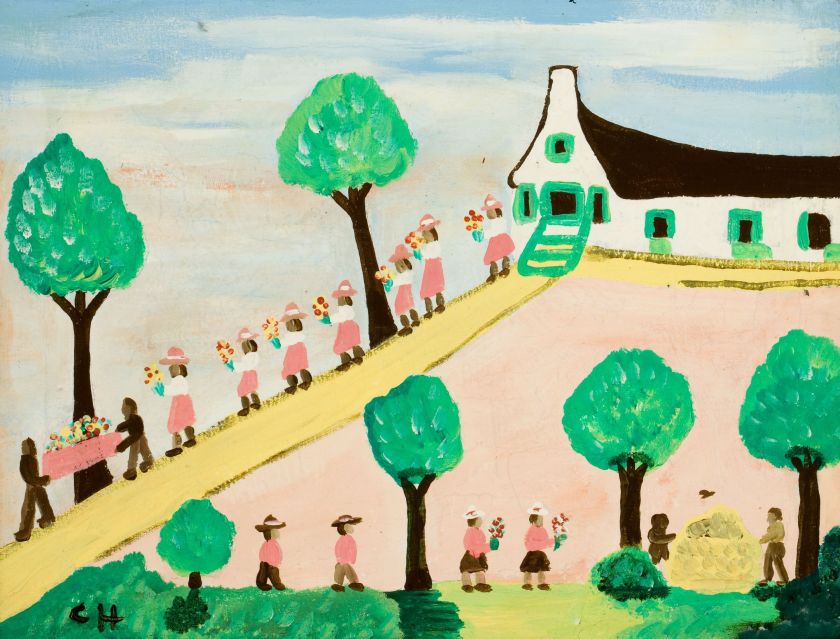
These murals show images of cotton picking, which was an activity that Hunter loved. Also, we recognized that religion was a consistent theme in Clementine Hunter’s work. Through her art, Hunter portrayed church revivals; with people catching the holy spirit, plantation baptisms, and funerals, which showed the importance of religion to the African American community.
Interestingly, Clementine Hunter’s art mostly used women as the subjects in her art because she was not very fond of men. Women were often depicted as hardworking in the field, while the men were depicted enjoying idle tasks such as fishing or drinking.
Next, we viewed the Big House where we saw the living quarters of Cammie Henry and her family. The building also included a library with writings from many of the authors who complete residencies at the Melrose Plantation. Also, the Big House dedicated a room to Clementine Hunter’s art and her Honorary PhD from Northwestern State University.
Lastly, to conclude our tour, we visited Clementine Hunter’s home, where she produced most of her work from 1954-1977. On the front porch, was a sign that read “50 Cents to Look,” which Hunter used to entice people to view and purchase her art.
Hunter never became wealthy from her work, and she never quiet understood the impact of her art. However, she is considered “the most celebrated of all Southern contemporary painters.”
Clementine Hunter’s continuous dedication to her craft is inspiring and is an attribute that LEAP students can use a model and inspiration in their future occupations.
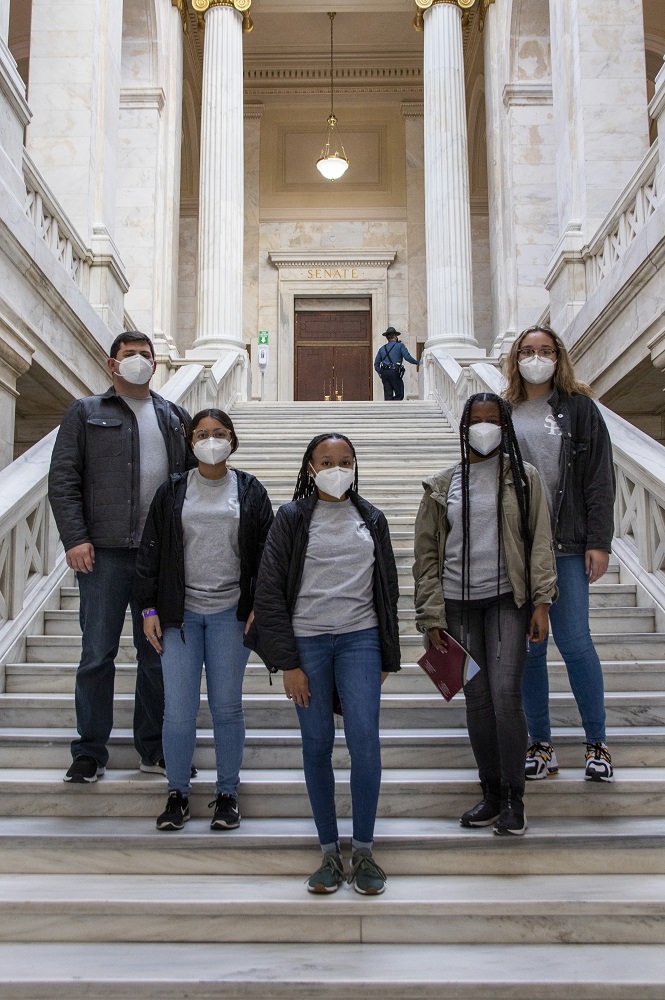
As we entered the grounds of our third state capitol building of this trip, we were instantly taken aback by its impressive stature. Just like the Mississippi capitol, the Arkansas capitol stood tall, with a golden crown-like statue at the top.
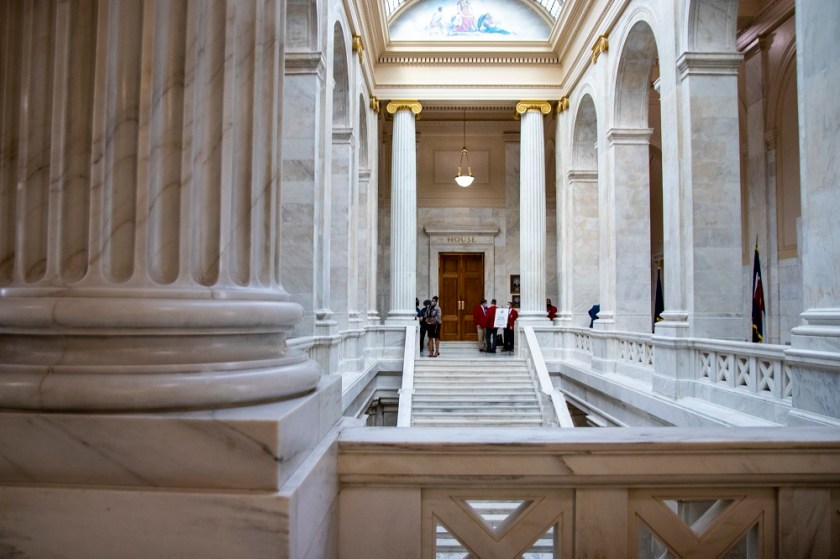
Of course, like the other two capitols we visited, the Greek and Roman influence on the architecture was noticeable immediately from the large pillars and pediment at the entrance. The Arkansas capitol building’s construction began in 1899 and finished in 1914, making the capitol over 100 years old.
After making it through security, we made our way to the rotunda, where we were greeted by Ms. Cheryl Augustine, who was so kind to give us a quick rundown of where all the rooms were located, and we also got a glance at Governor Asa Hutchinson, who walked right by us.
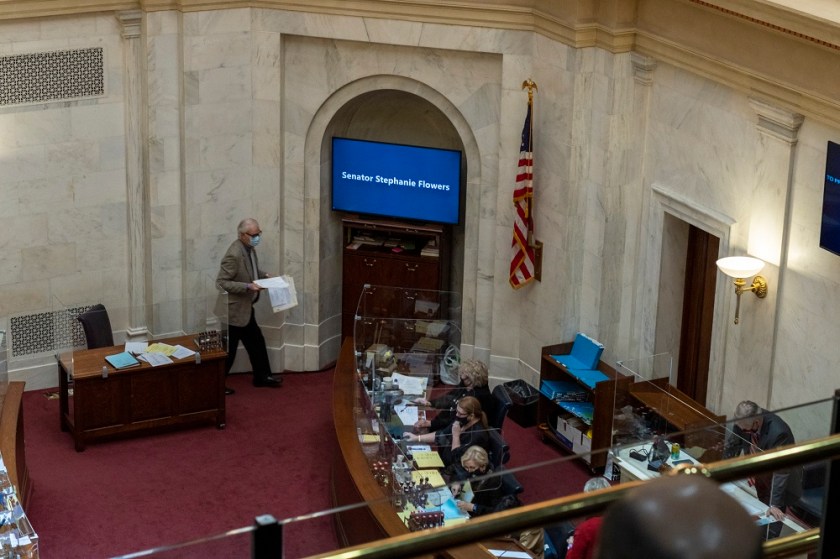
Cheryl then led us to the fourth floor, where we entered the “Senate” gallery to watch the Senate convene. Getting to see the Senate in action was a fun experience because we had a closer look at what was happening, and we even watched as the State Senators voted on a bill.
So, we would like to extend a huge thank you to Cheryl for getting us in!
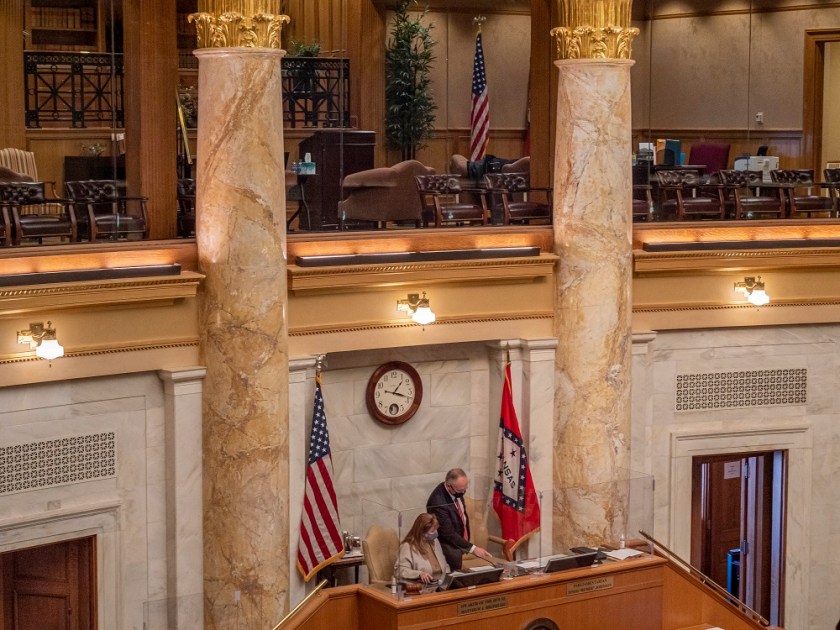
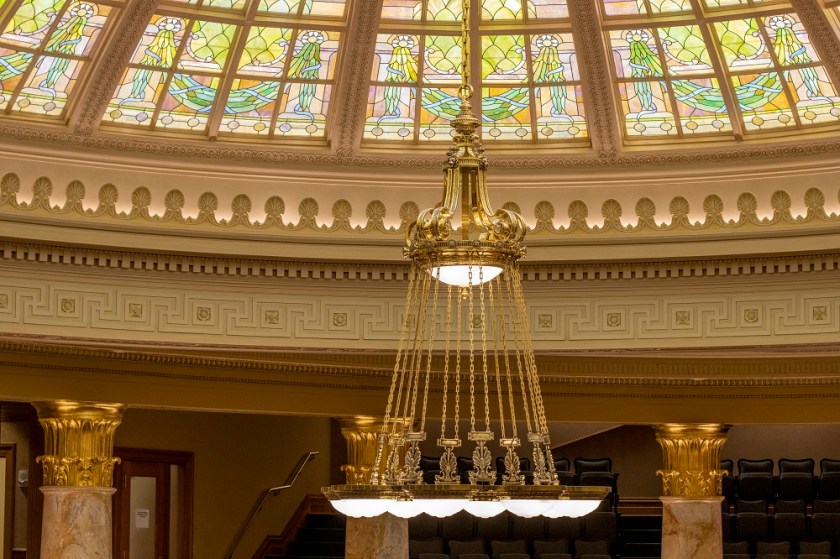
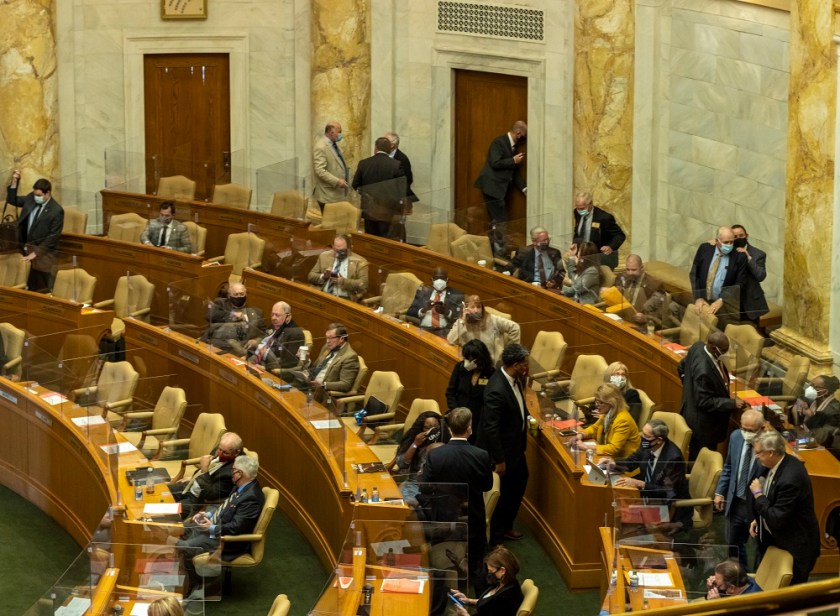
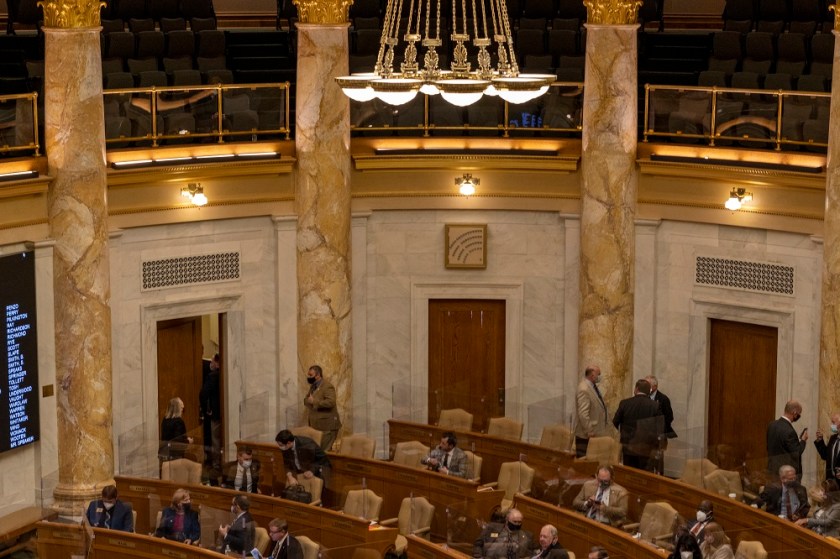
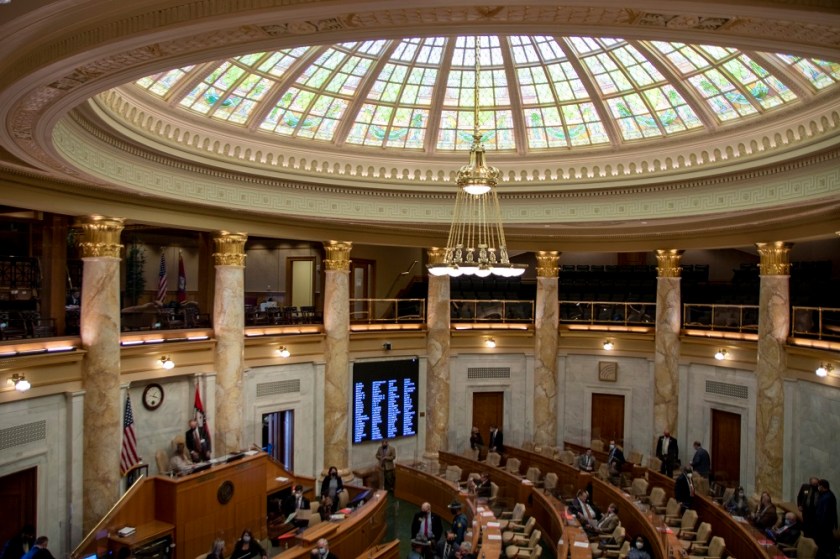
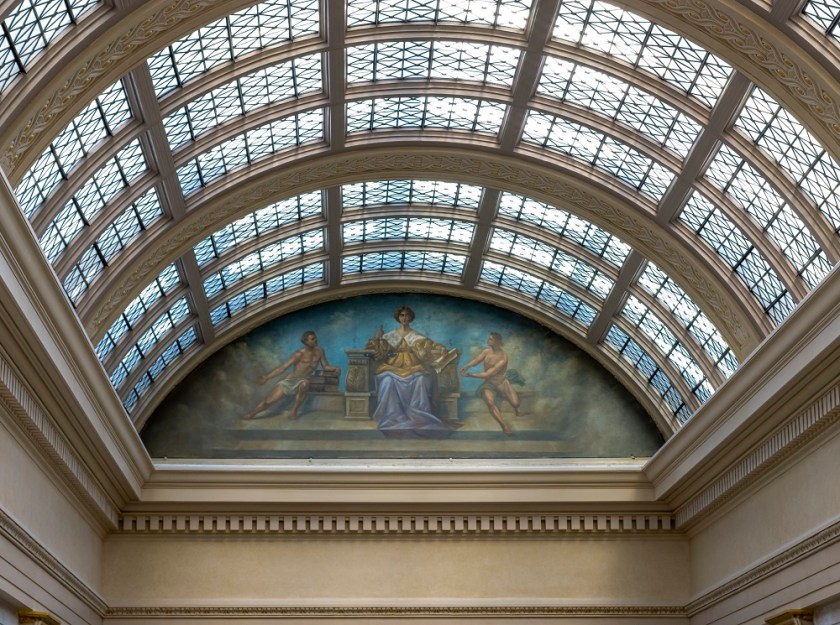
After seeing the senate proceedings, we thought we would take our chances and head over to the “House of Representatives” gallery to see if we would be able to go in there as well. Luckily, we were able watch the House in action too. The gallery of the House of Representatives is a beautiful large room with a tall gold chandelier hanging in the middle of the rotunda. The rotunda was also nicely crafted, with stained glass at the top that let in the light and brightened up the whole room, not to mention a pretty impressive VIP room.
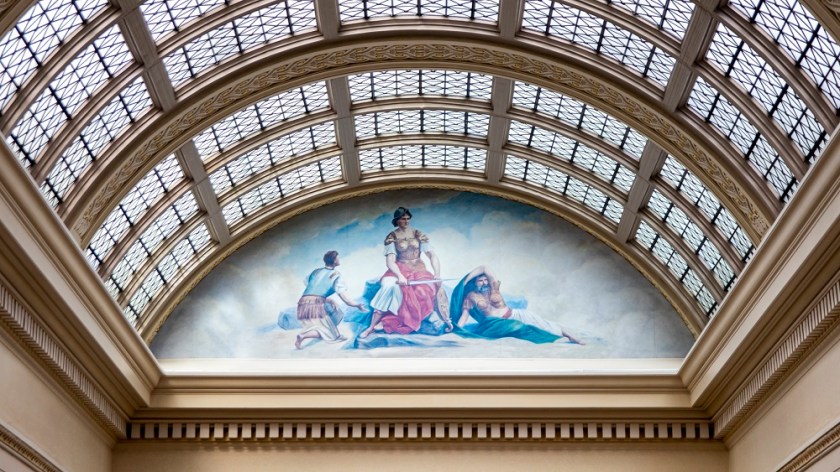
Outside, in the capitol rotunda, the 4,000-pound chandelier hangs suspended from the ceiling, incorporating over 2,000 brass, copper, zinc, iron, and glass parts. On the third floor of the building, right above the grand staircases that led us to the House and the Senate, were four murals that each had a different theme. Over the south – which is where the Senate is – the “Education” and “Justice” murals stood. Over the north – where the House is – the “War” and “Religion” murals were.
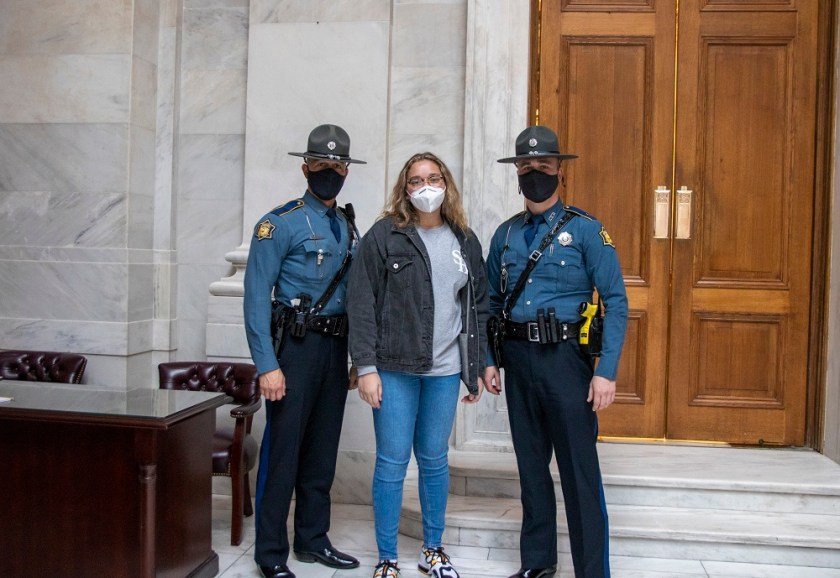
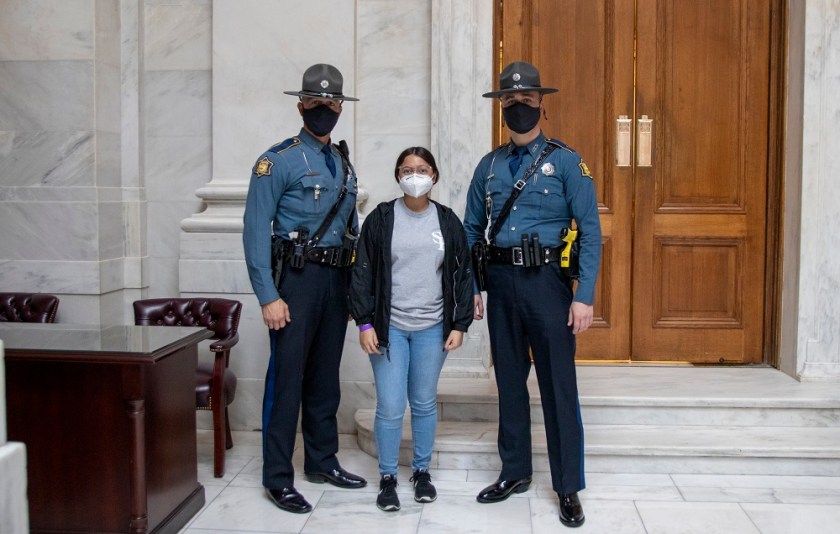
Across the archway, we spotted two capitol officers that I just had to get a photo with, and lucky for me, they were nice enough to do so, which pretty much made my whole day.
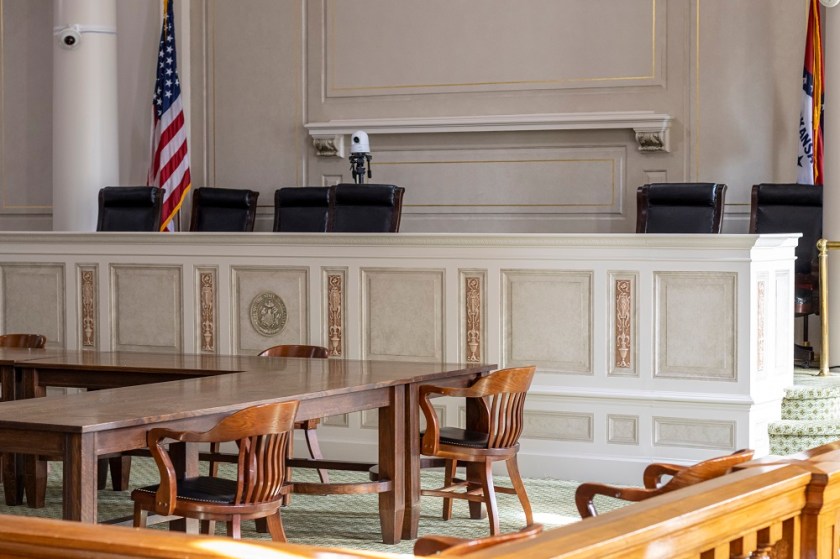
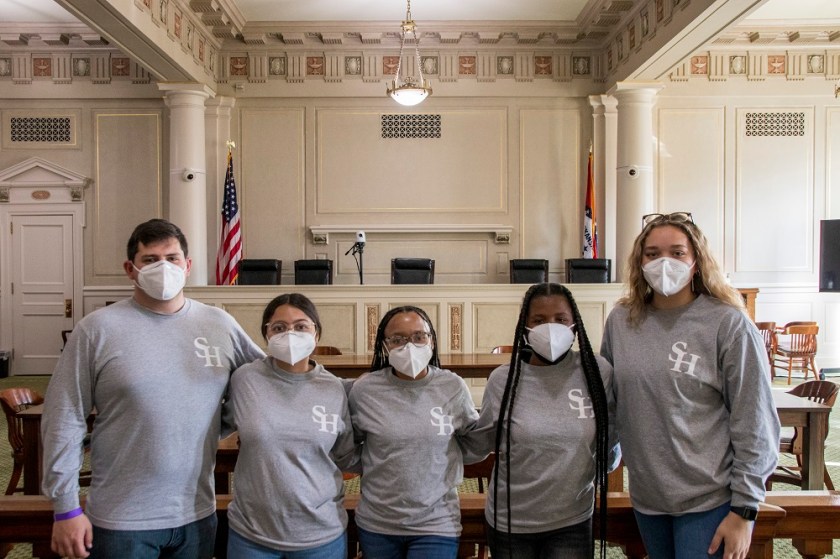
After that, we headed to the old Arkansas Supreme Court room, which also embodied a lot of the Greek architecture that is visible throughout the rest of the Capitol, such as the pediments over the doors and the large pillars surrounding them.
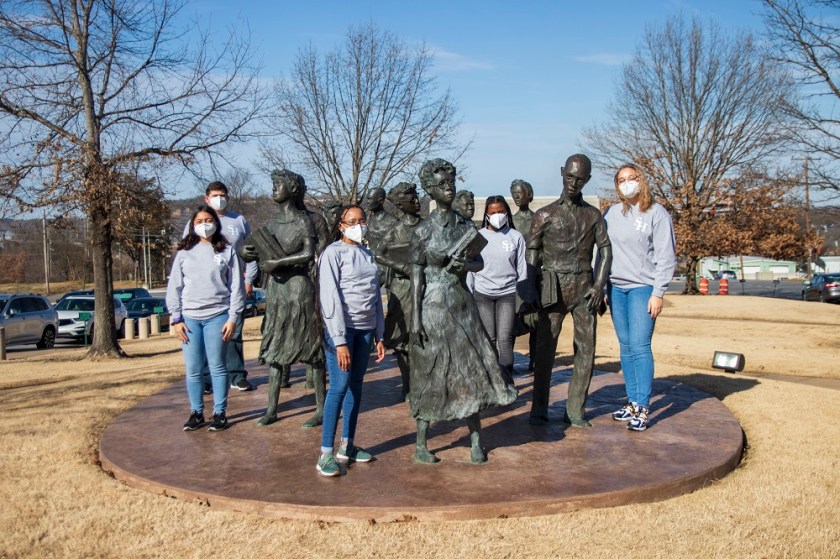
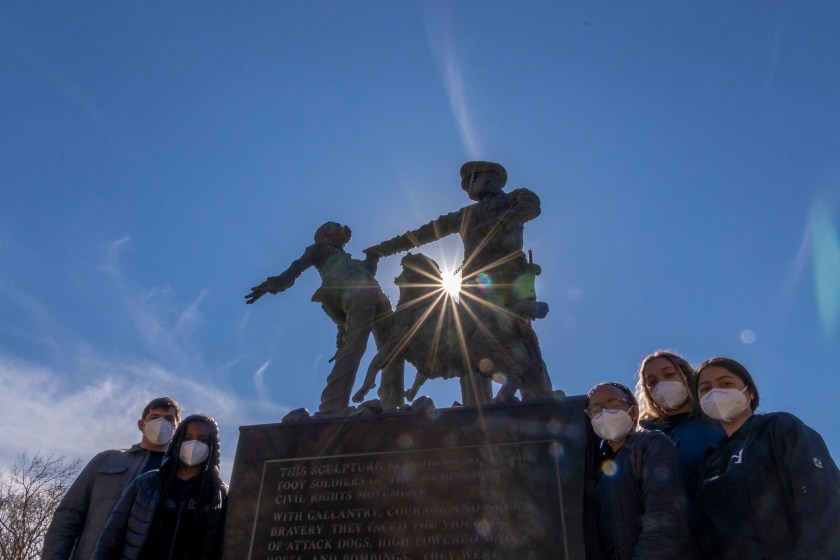
As a final stop, we toured the grounds of the Capitol to see “Testament,” by John and Cathy Deering. This a monument to the Little Rock Nine, and it features statues of each of these civil rights’ heroes.
Compared to the other three capitols that I’ve been to, Arkansas has made its way to the top of my list, and I’m happy to say that I am now 4 out of 50 of the state capitols down!
The Little Rock Nine
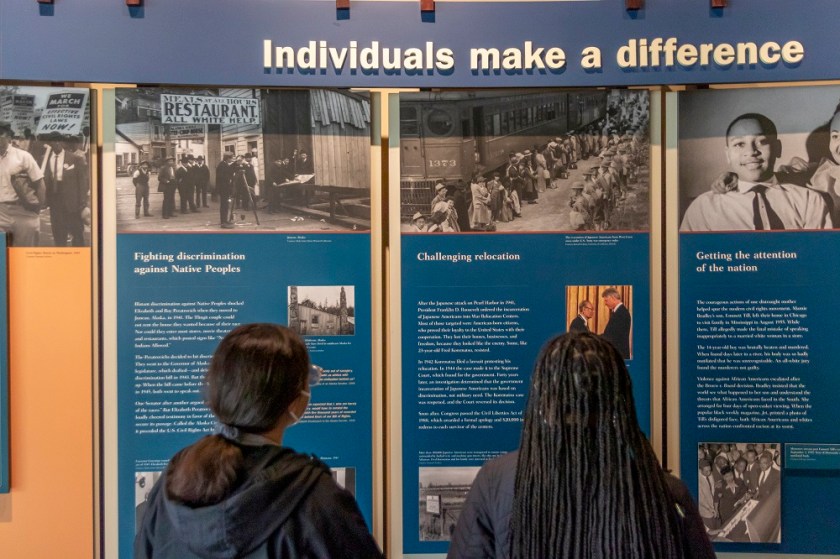
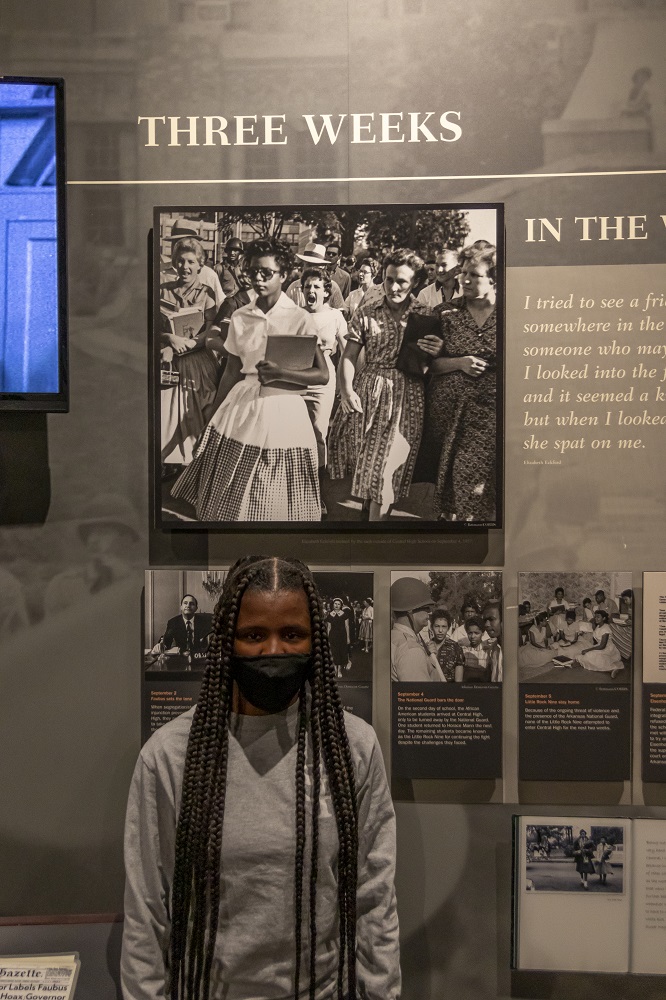
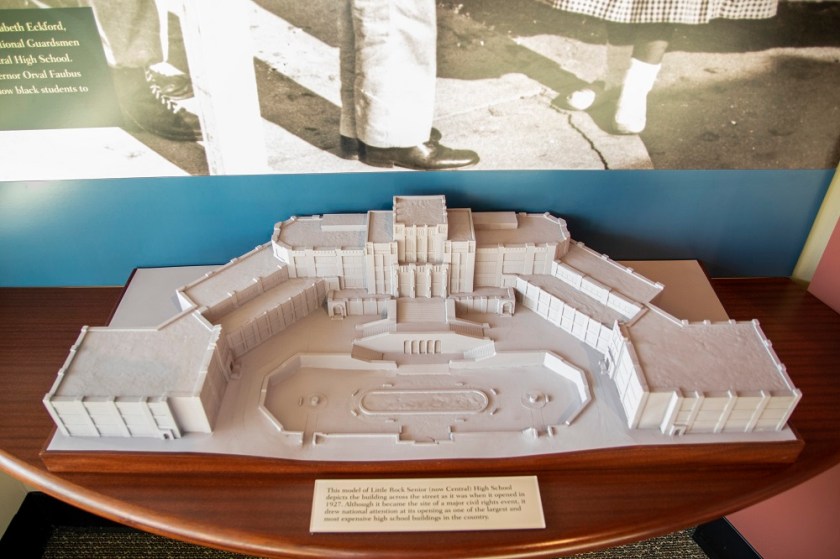
Following the Brown v. Board of Education decision in 1954, not all states were eager to begin the desegregation of public schools. Little Rock, AR was notably reluctant, and with the support and “leadership” of Governor Orval Faubus, this reluctance turned to outright rebellion. So it was in 1957 that Dwight Eisenhower sent in federal troops to force integration at Little Rock Central High, bringing international attention to the civil rights movement in the United States.
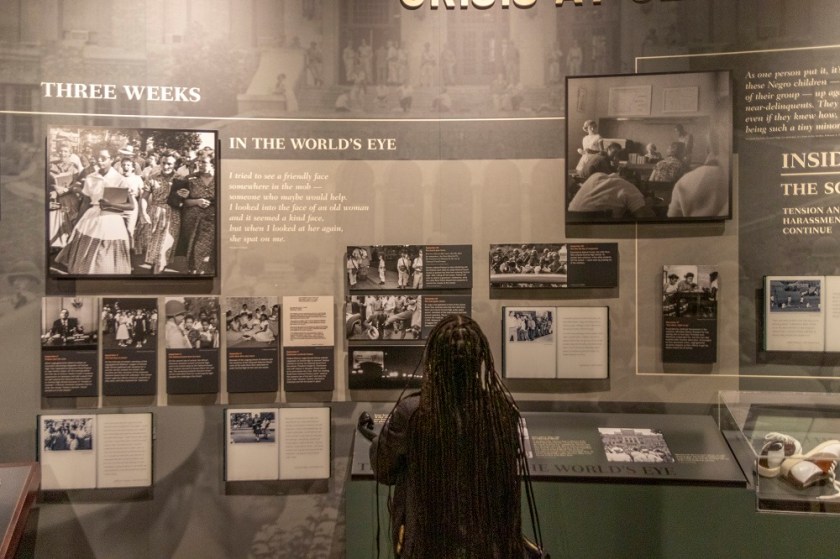
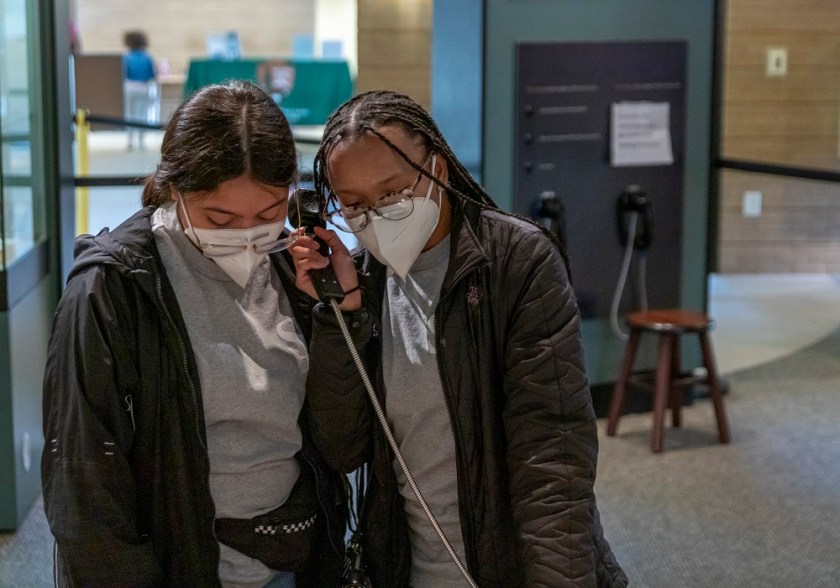
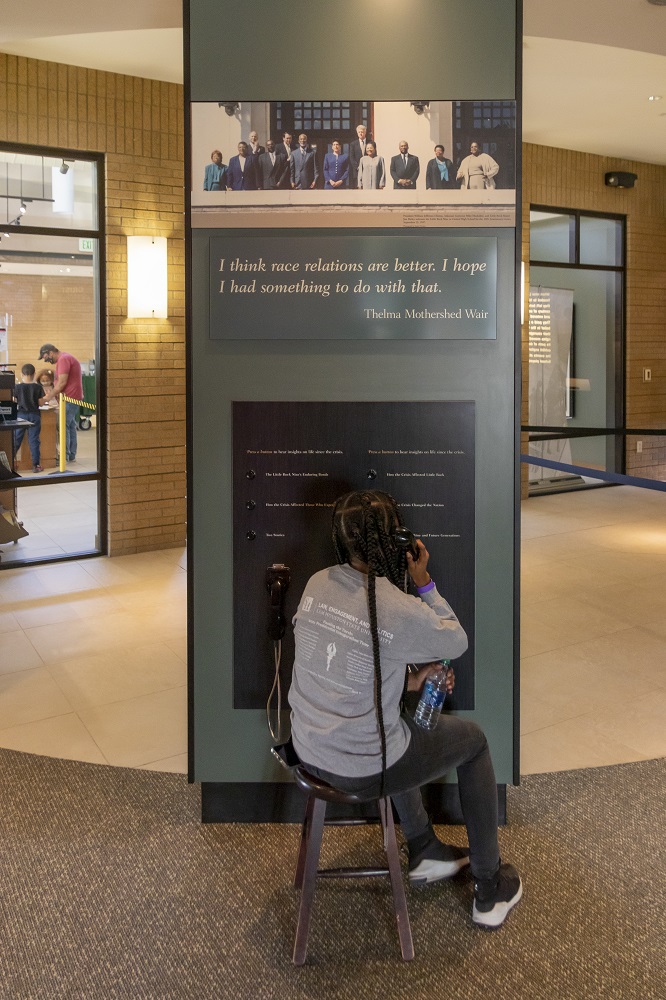
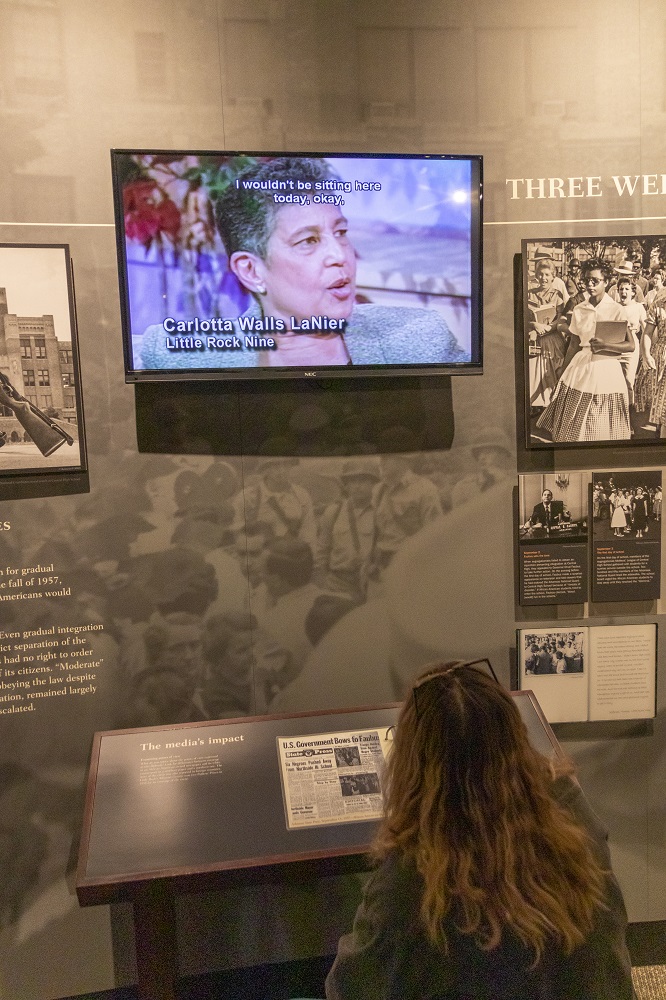
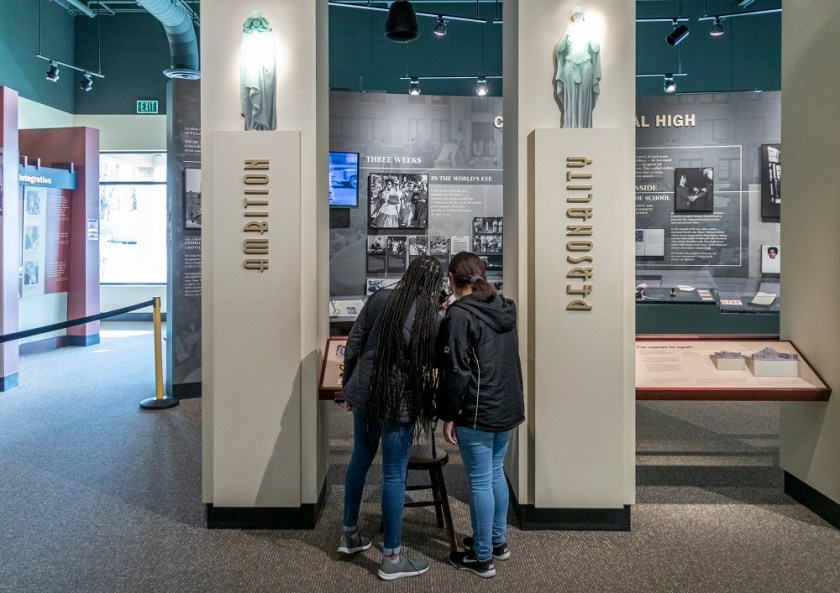
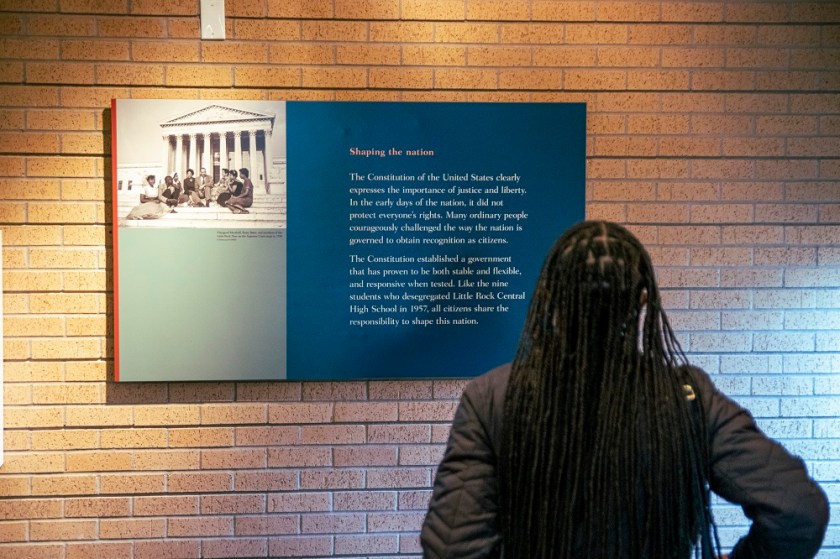
When inside the Little Rock museum, we quickly realized how fearless the nine African Americans had to be to make it through the obstacles they faced. Although only a small minority of the community, and clearly not enjoying the support of most of Little Rock’s citizens, they remained steadfast.
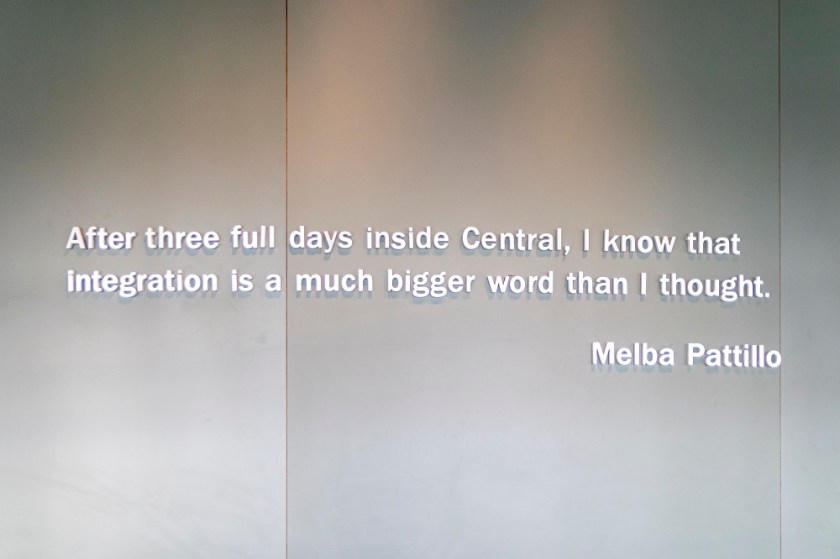
Of the many inspirational quotes populating the museum…
…the one that most resonated was a paraphrase from the spiritual “I Don’t Feel No Ways Tired.” The concept of continuing to move forward despite exhaustion has a significant meaning within the African-American community, and it made me think where we would be if Rosa Parks, Martin Luther King, and the Little Rock Nine hadn’t battled on.
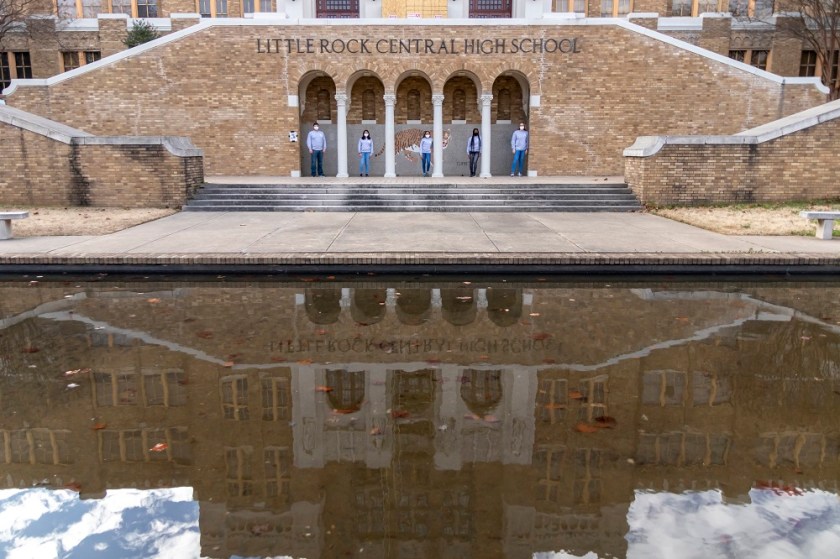
Making this even more poignant was visiting the high school grounds. The campus is beautiful, and very large! Although under construction, we were able to get some photos of us at the structure where civil rights history was made.
This visit was a good reminder of how far we’ve come, while still being cognizant of how far we have to go. But, of course, we will not get tired!
Pinnacle Mountain State Park
Ilexus Williams
After visiting the Little Rock High School Historical Site, the LEAP students embarked on what seemed like our toughest adventure yet: hiking. Just outside of Little Rock, Arkansas sits Pinnacle Mountain State Park. The state park covers 2,356 acres and the mountain has an elevation of 1,011 feet. Additionally, the park encompasses both biking and hiking trails.
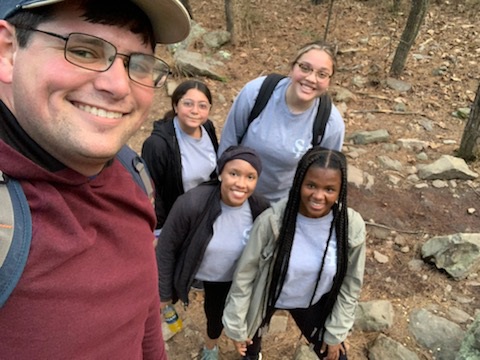
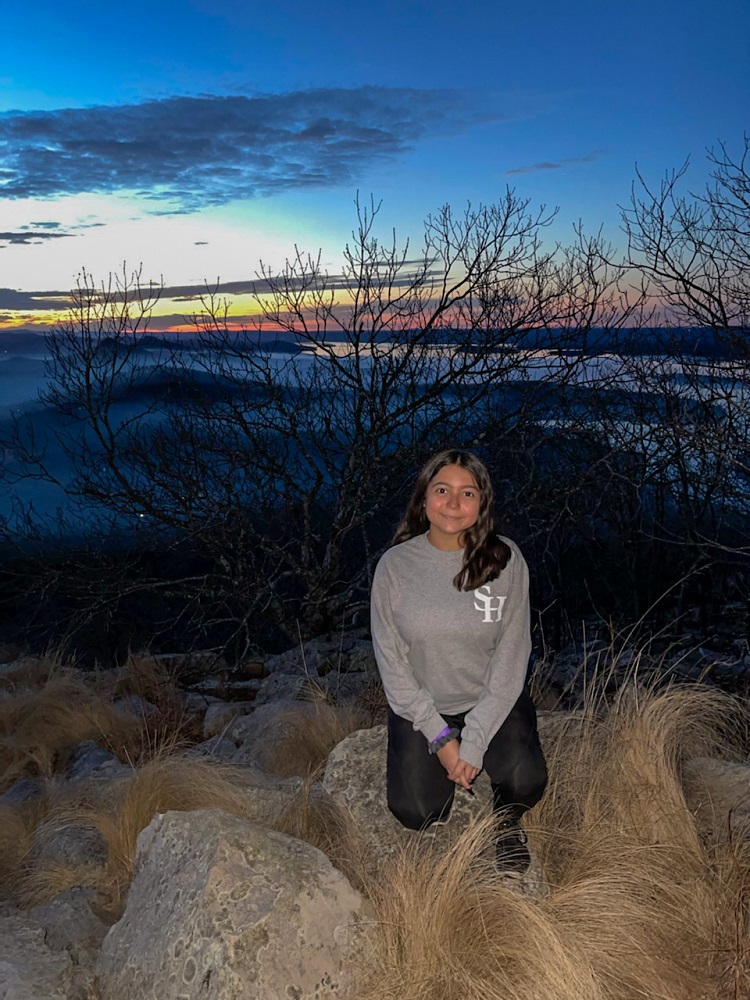
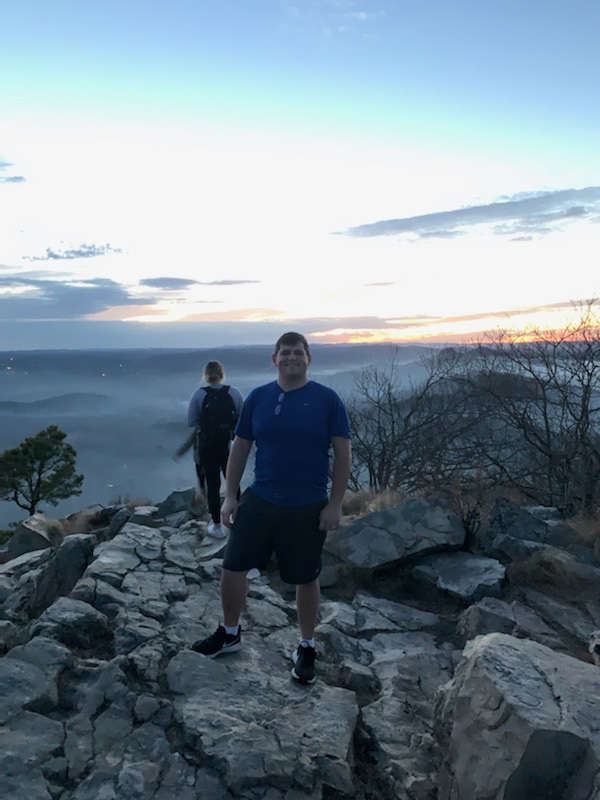
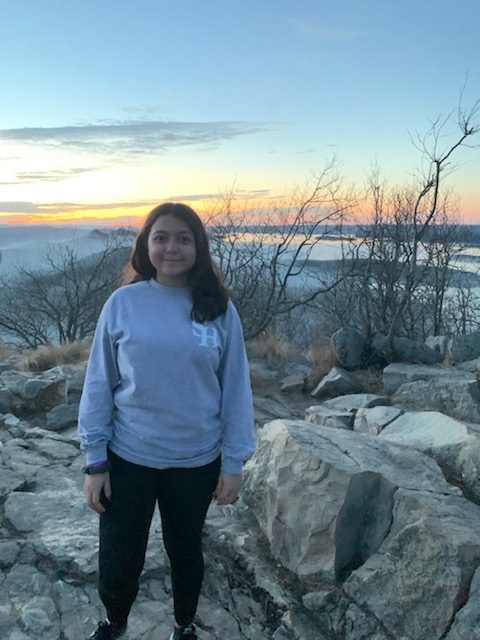
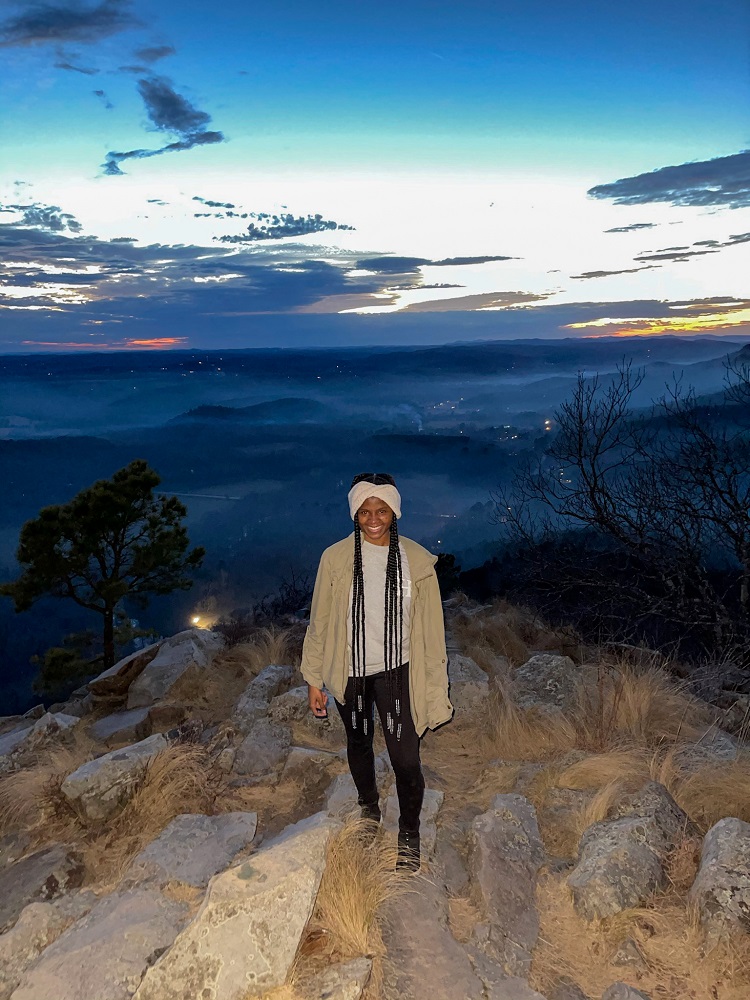
Our hiking trail of choice was the East Summit Trail! With strong will and determination, we started our 1.5 mile trek up East Summit Trail in a race to watch the sun set!
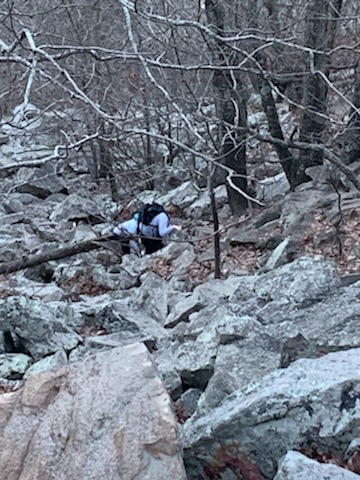
The beginning of our trail was a breeze, walking up a staircase of rocks. However, we came to the base of the mountain and faced what seemed like a sea of massive boulders. After digesting the overwhelming view, we started our ascent. Maneuvering our way through the rocks was very strenuous, so we took well-deserved breaks, which gave us a chance to enjoy the beautiful rolling plains behind us.
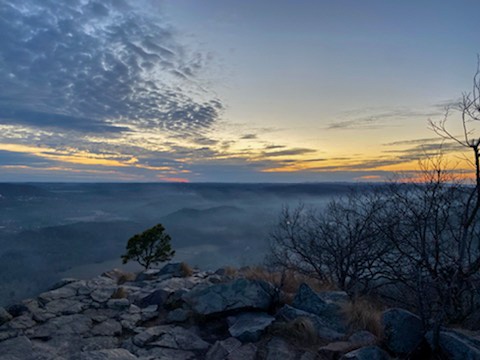
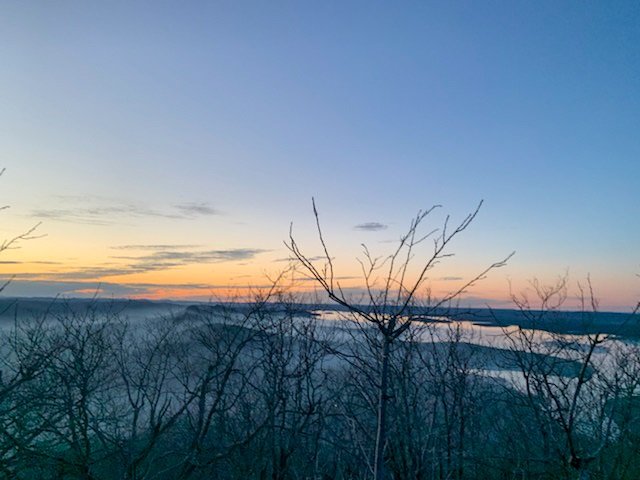
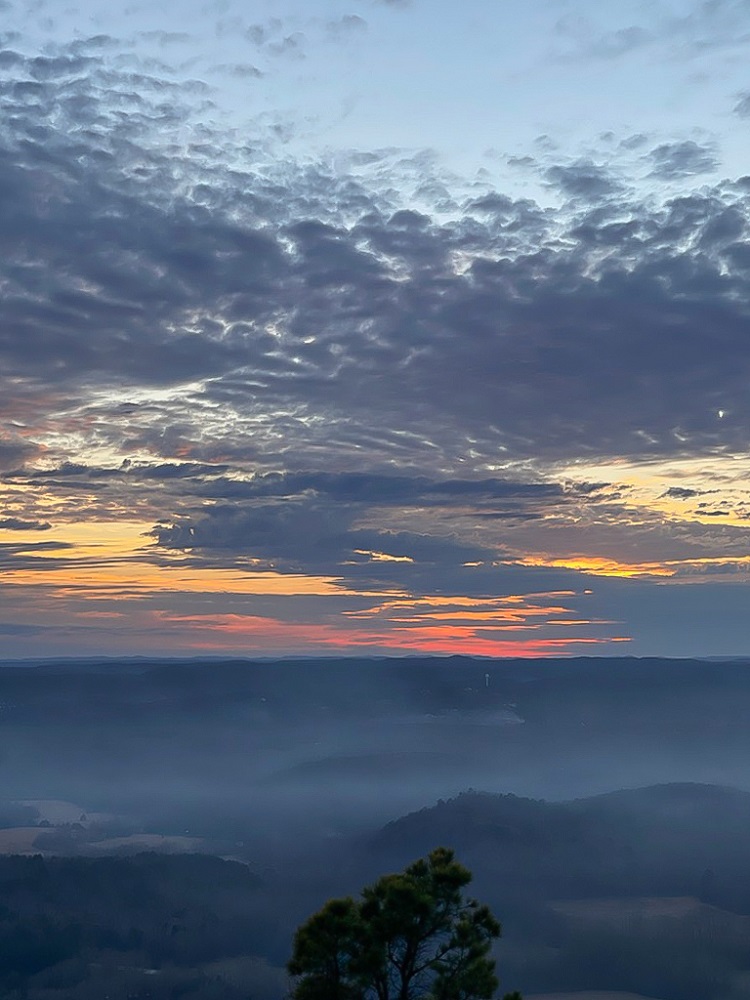
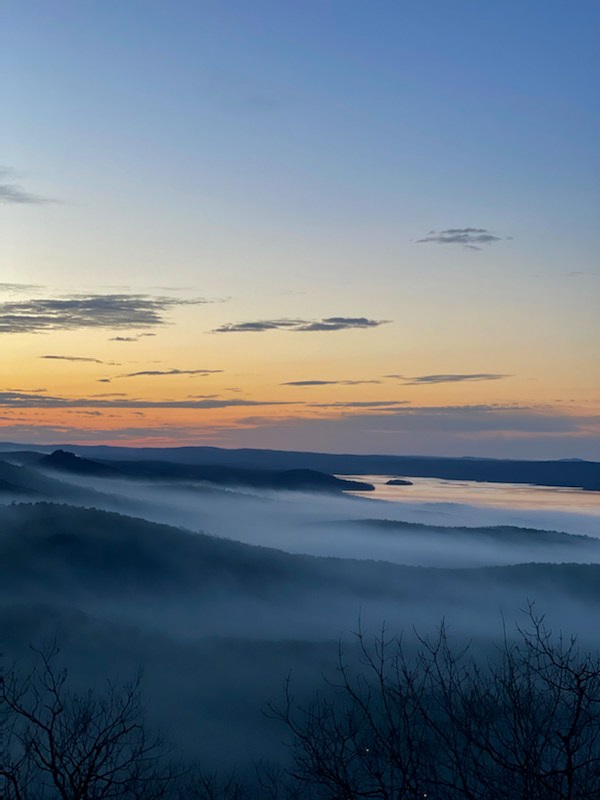
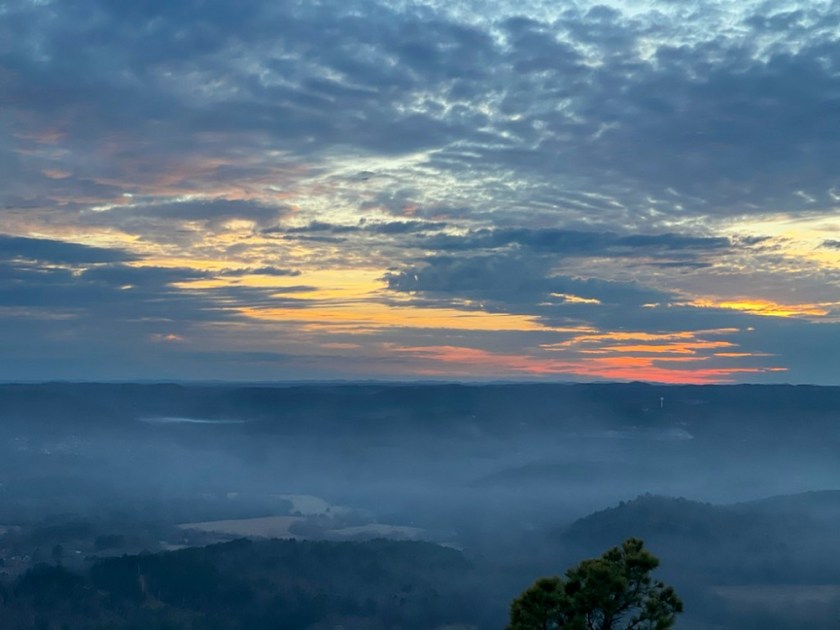
Finally, we reached the pinnacle, and it was breathtaking! The hard work that we put in to reach the top was fulfilling and well worth it. Being able to look out at the orange and pink hued sky and the expansive rolling hills gave us the opportunity to reflect on everything that we have experienced and allowed us to acknowledge how fortunate we are to take part on this trip. To paraphrase MLK, “we have been to the mountaintop,” and our experience was indescribable.
Jessica Cuevas, Ilexus Williams, and Quinn Kobrin shared their reactions to being at the Lorraine Motel on MLK Day, 2021.
Jessica Cuevas
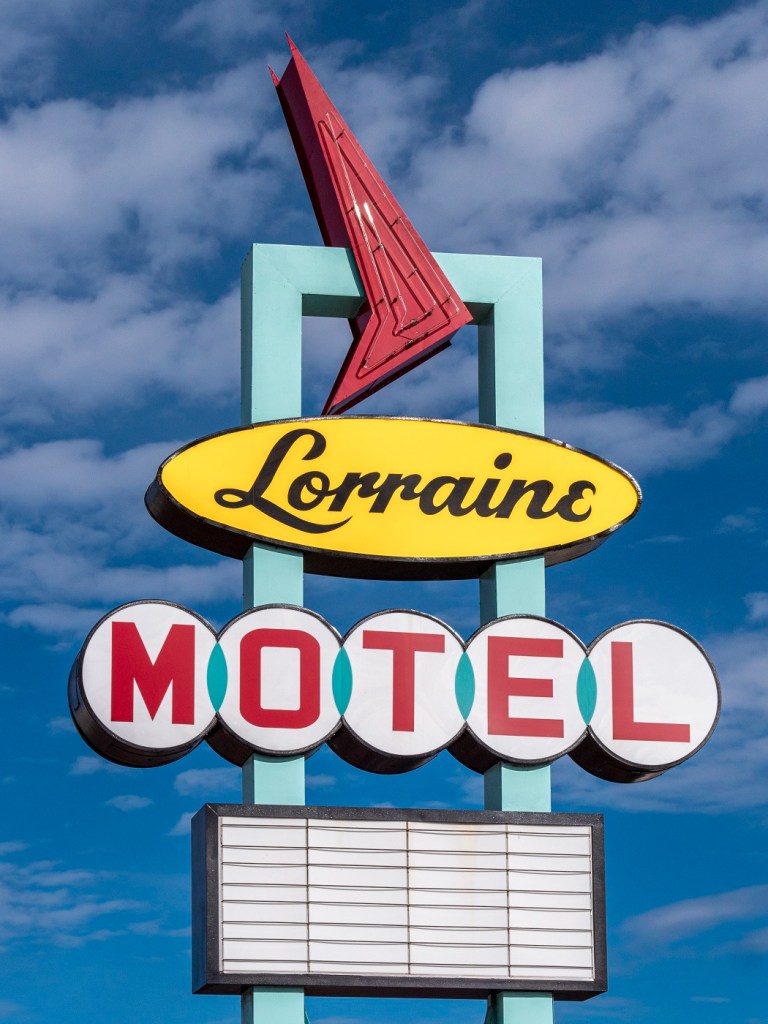
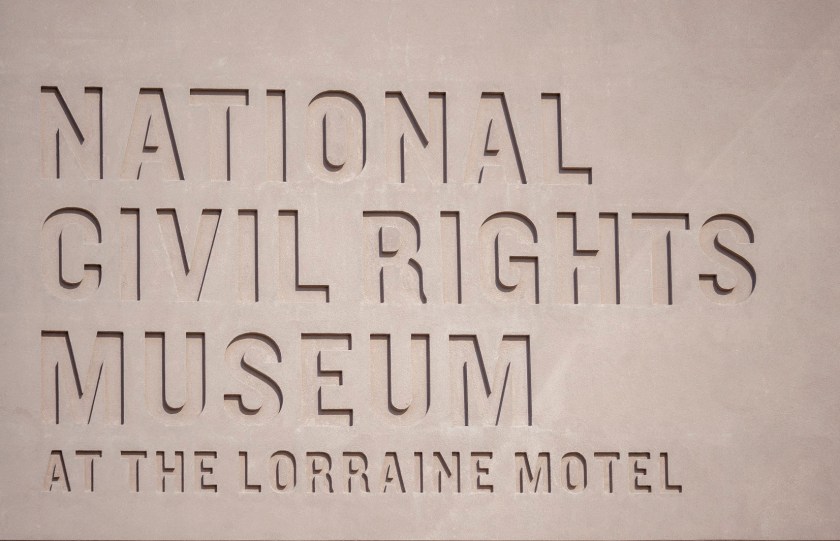
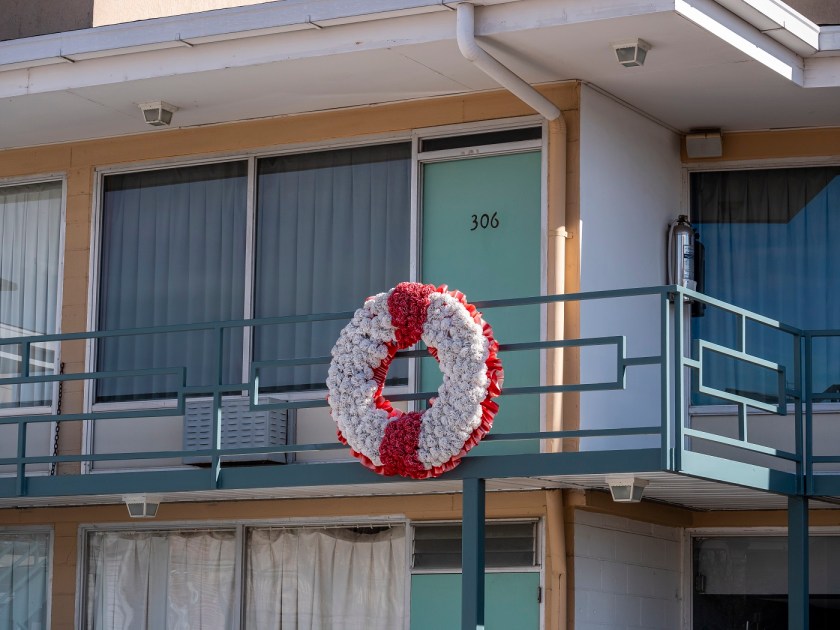
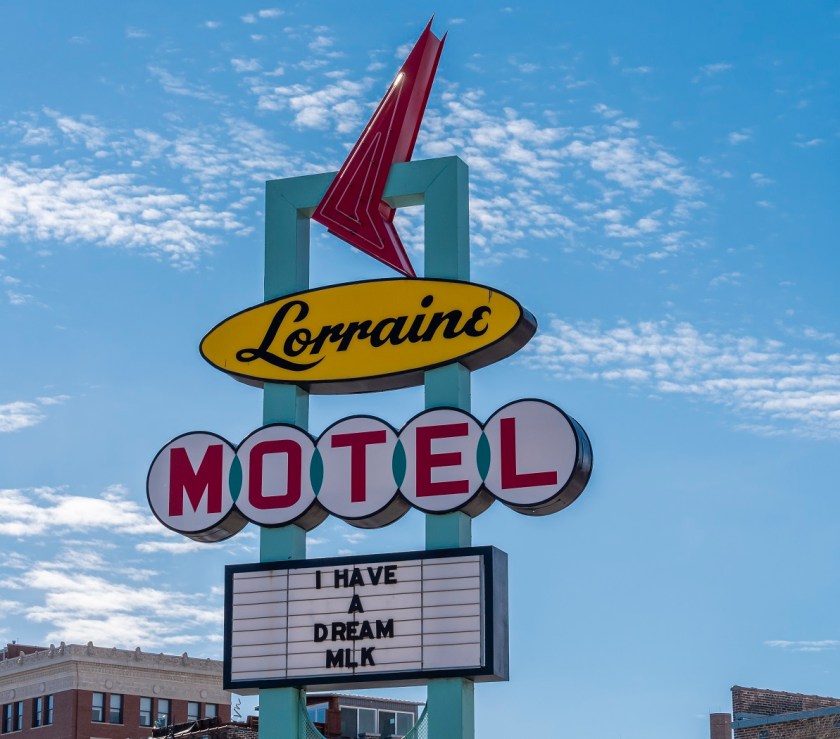
On Martin Luther King Jr. Day, we visited the grounds of the Lorraine Motel,
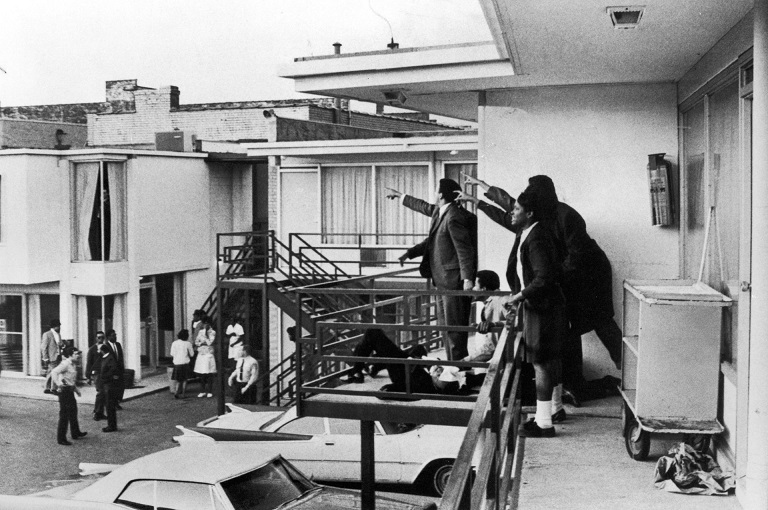
…now a National Civil Rights Museum, where MLK was assassinated.
For me, this was such a surreal experience because I never would have dreamed to be in Memphis, Tennessee, at the exact location where MLK was assassinated, especially on this day.
This is something that we simply learn about in our history classes, but we never stop to think that one day we will get the chance to see the motel and stand in such a historical spot, which is very much still standing after all these years.
I am very thankful for having been extended the opportunity to come on this trip and being able to experience and take in the historical significance of these sites. Being where I was today was a lot to take in; it was so very memorable and bittersweet, so much so that I am still wrapping my head around the fact that I was actually there. I, a girl who had never been outside of Texas before the 12th of January, had traveled through five states, tried new foods, and now, was standing in this place.
It pains me that despite our having come a long way since MLK’s famous “I Have A Dream” speech, some people to this day are still judged by their skin color instead of their character, as we have witnessed in recent times.
Martin Luther King, Jr. is truly a beacon for equality and an idol who has encouraged and motivated others such as Cesar Chavez to fight for fair and decent treatment, and to do so in a peaceful manner.
Ilexus Williams
In 1963, just 58 years ago, Dr. Martin Luther King gave his “I have a Dream” speech on the steps of the Lincoln Memorial. “We have come to this hallowed spot to remind America of the fierce urgency of Now!” This statement by Dr. King still rings true for our society today, especially in light of standing up against police brutality and racial inequality.
In this portion of the “I have a Dream” speech, Dr. King is strongly encouraging us not to become accustomed to taking idle or leisure plans of action to achieve social equality in our society. Instead, we must confront issues in our society with tact, focus, and vision. Dr. King set a prime example of the expectations of a servant leader.
King was purpose-driven, devoted to the growth of people, and focused on forming unity. The bar is set high, and I will strive to follow the path of perseverance and courage that Martin Luther King Jr. has paved for so many. It was an honor to give reverence to his life and fight for democracy on a day that is forever dedicated to MLK.
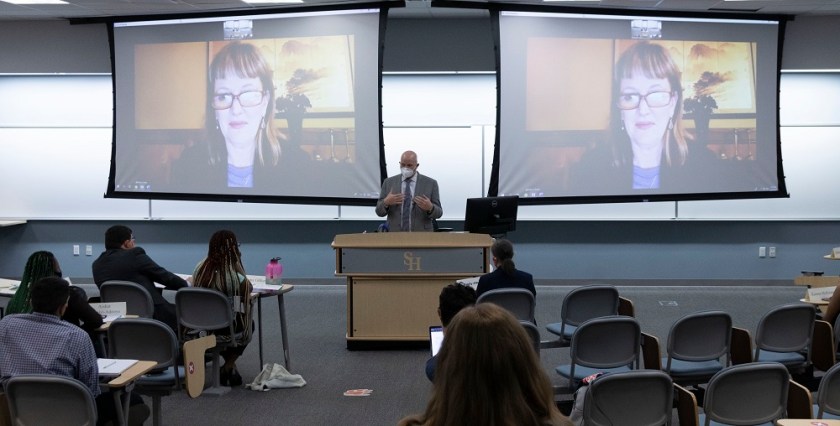
Prof. Yawn holds up a Laptop for Ilexus Williams, so she can meet by Zoom and share her experiences
Quinn Kobrin
Visiting the spot of MLK’s assassination on the day we celebrate his life was a powerful experience for us all. This is true, I would argue, due both to the awesome nature of King’s contribution to the fight for equality and due to the horrific reality of how he died.
As my peers and classmates have noted, there is a massive difference between reading about a historical figure in class and truly taking the time to understand who that leader was and what they stood for, which is precisely what this trip is all about.
I have not known what it is like to be judged for the color of my skin, to be ostracized simply for my appearance or heritage. For this reason, I have often felt as though I were a tourist in the fight for civil rights and social equality.
However, this trip, like Dr. King’s well-known speech, reminds me that the fight for equality is not solely the fight of the oppressors versus the oppressed. “We cannot walk alone,” said King. “And as we walk, we must make the pledge that we shall always march ahead. We cannot turn back.” It takes each and every member of society to stand up and unify against hatred and ignorance. It is not the fight of one people but of all people. For, as George Bernard Shaw once wrote, “The worst sin toward our fellow creatures is not to hate them, but to be indifferent to them: that’s the essence of inhumanity.”
Traveling to each of these historic sites in our tour of the south has taught me a great deal, but if nothing else, it has reminded me that standing for justice and equality is not just an option; it is a responsibility. And I know there is nothing more I can do than continue to learn, and battle hatred and ignorance with compassion and education. Equipped with these tools, and the fraternity of all who believe that all people are created equal, we will not turn back; we can only march ahead.
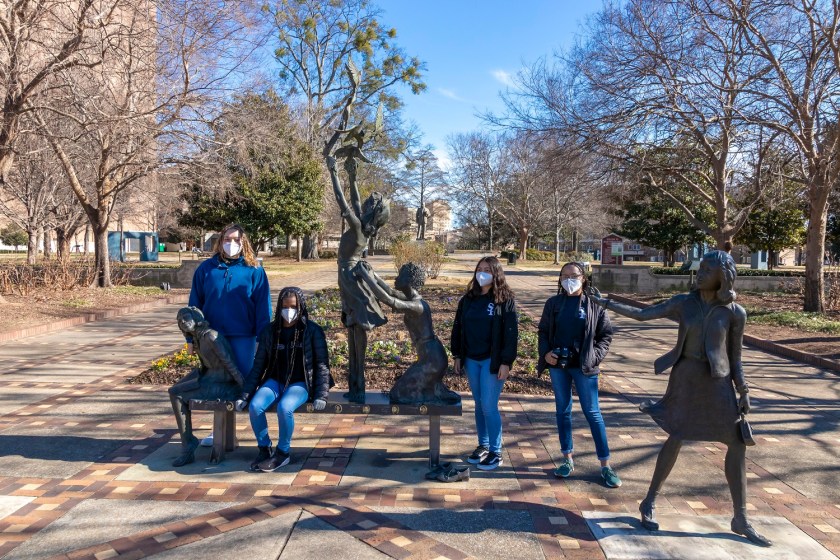
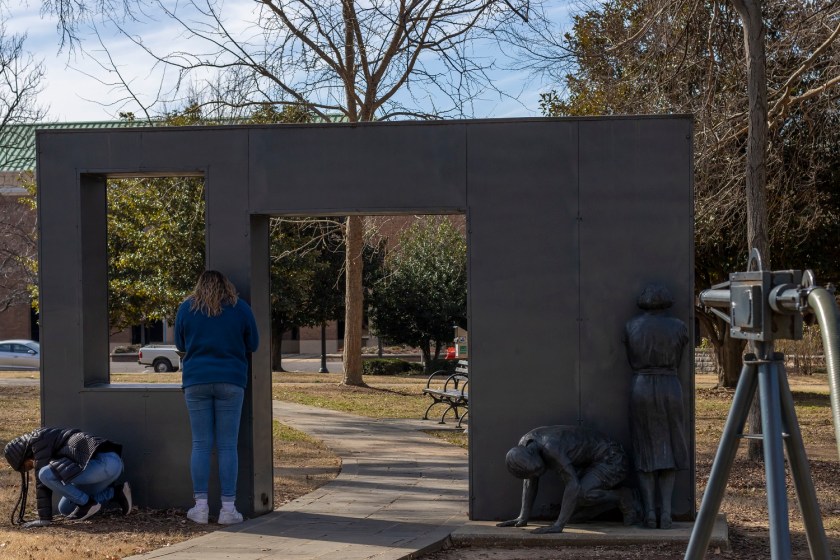
This morning, the LEAP students started the day with a visit to Kelly Ingram Park in Birmingham, Alabama. This memorial park, which holds a lot of history and tells many stories from the Civil Rights Movement, is named after Kelly Ingram, a firefighter and the first Birmingham service member (U.S. Navy) killed during World War I.
The Kelly Ingram Park was historically a meeting place for student-led protests. These protests were sparked after the bombing of the 16th Street Baptist Church that killed four African American girls. There is a sculpture in the park dedicated to the four girls.
During the time of the bombing, Theophilus Eugene “Bull” Connor was Commissioner of Public Safety in Birmingham. Bull Connor was not in favor of the Civil Rights Movement and during one protest, ordered that fire hoses and police attack dogs be used against protestors. Both of these actions are depicted through emotion-invoking, interactive sculptures that force visitors to walk through them to emulate the experience the protestors endured.
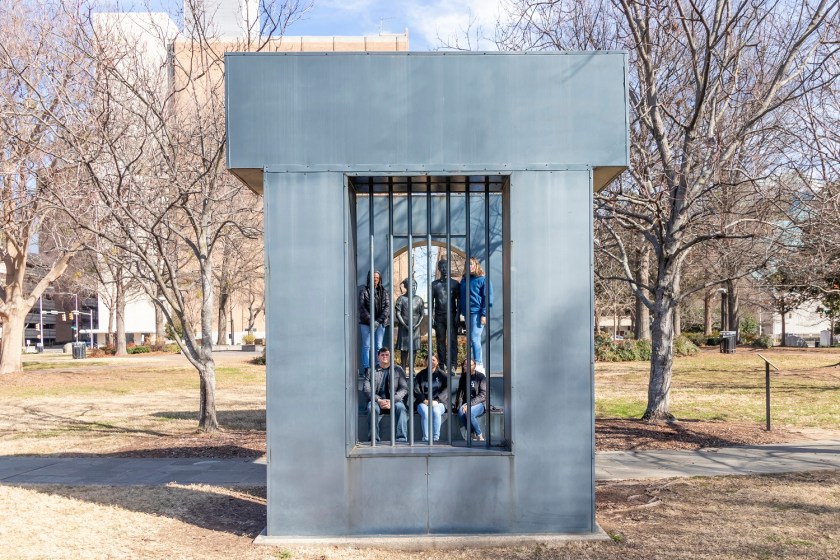
Many sculptures in the park replicate the momentous moments of the protests of the time. One that really stood out to me was that of jailed children with the inscription, “I ain’t afraid of your jail.” These words, referring to Bull Connor’s jailing of many children after a protest, seemed so powerful to me. The opposite side of the sculpture is an upside-down jail inscribed, “Segregation is a Sin.”
The meaning behind this sculpture is so strong to me because it depicts the courage these children had and conveys how they refused to back down. I believe the upside-down part of the sculpture represents a world upside-down, showing that it is wrong; directly across is the “perfect” world where things are done fairly. This sculpture, and others throughout this park, capture in time the powerful impact of the Civil Rights Movement.
Birmingham Museum of Art
Ilexus Williams
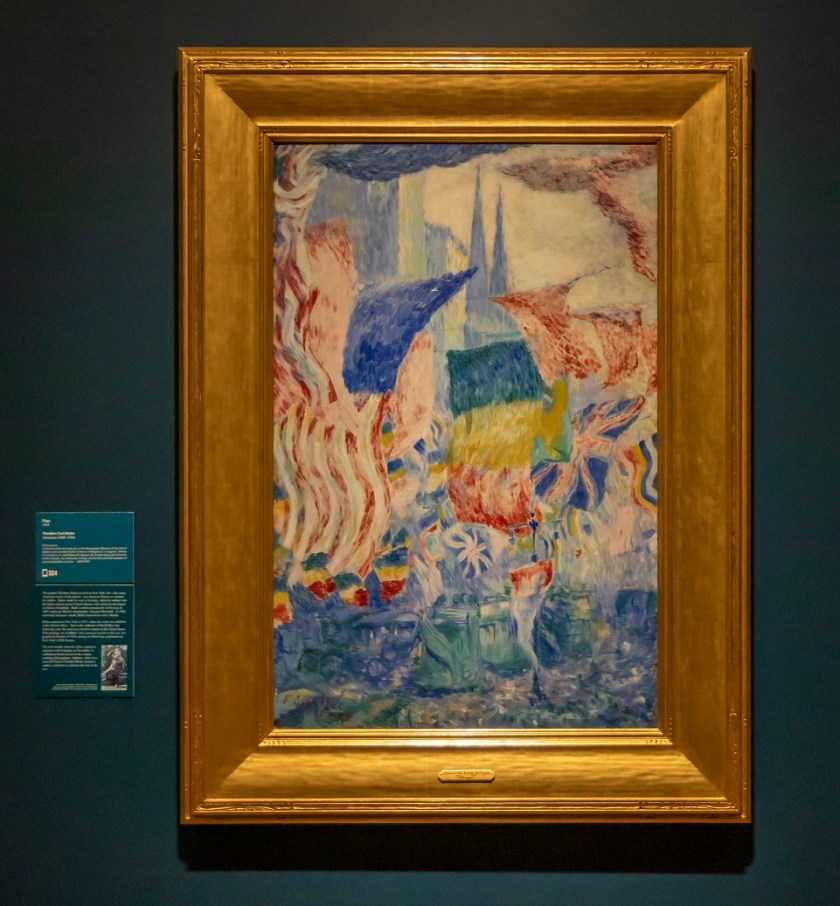
After concluding our stroll around Kelly Ingram Park, the LEAP students headed to their next destination: Birmingham Museum of Art. Birmingham Museum of Art was founded in 1951 and is considered one of the best regional museums in the United States. It is home to a collection of approximately 27,000 pieces of art from a diverse set of cultures, and includes Asian, American, European, African, Pre-Colombian, and Native American art.
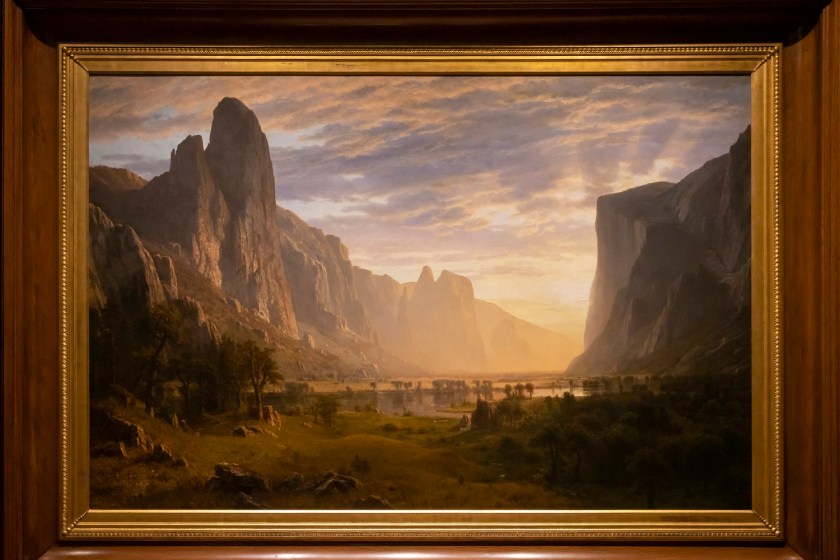
For our first stop, we began our exploration in the American Art gallery. Unlike other countries, America only has a few art forms that are unique to the region, like jazz music and western movies. However, American painters were inspired by landscapes, especially Western American landscapes. This is best represented by Albert Bierstadt’s “Looking Down Yosemite Valley,” which gives a breathtaking view of sunrays beaming through Yosemite Valley, California.
Additionally, “Grand Canyon, Yellowstone River” by William Louis Sonntag shows a beautiful illustration of the Grand Canyon of Yellowstone National Park, which one of our LEAP students has visited!
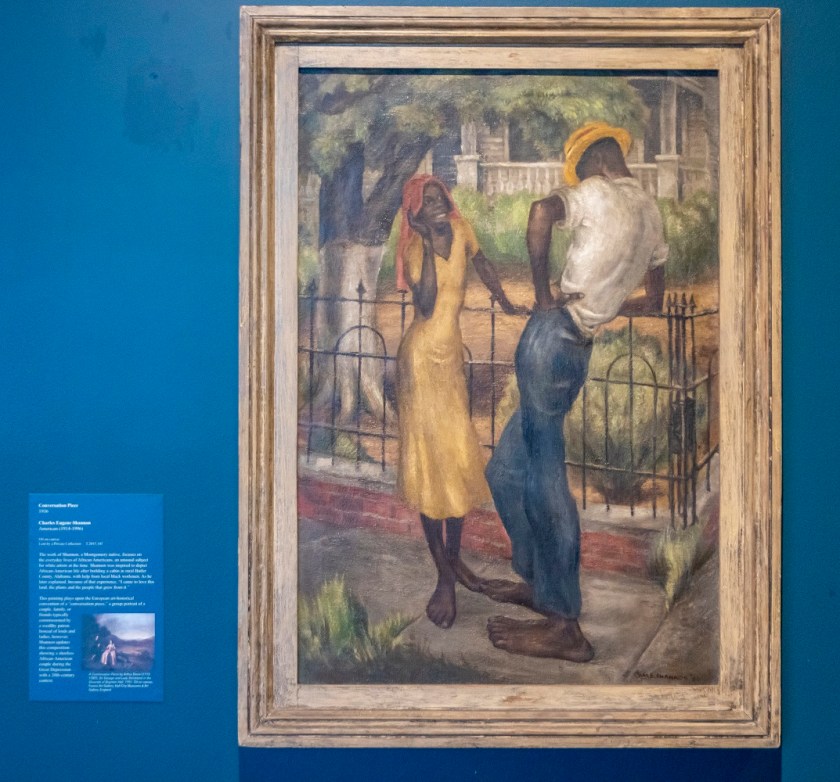
Another notable artist in the American Art Gallery is Charles Eugene Shannon. Although uncommon during the 1930s, Shannon liked to capture the everyday life of African Americans. His work entitled “Conversation Piece” depicts a shoeless African American couple drawn into conversation during the 1930s. Shannon took his inspiration from European style “conversation pieces,” which involved a group portrait of 17th century couples, family, and friends engaged in casual conversation.
Next, we moved to the most gratifying exhibit of the day: Jacob Lawrence: The American Struggle. This exhibit includes a series of 30 panels that illustrate a narrative of people of color struggling to fight for social equity from 1775-1817 in America.
The Paintings which I propose to do will depict the struggles of a people to create a nationand their attempt to build a democracy. – Jacob Lawrence, 1954
Among the 30 panels, Panel 5 stuck out to me. This panel portrays an enslaved African American man who looks disheartened after requesting the liberation of all enslaved people in the Province of Massachusetts Bay. This panel highlights the use of nonviolence, which alludes to Dr. Martin Luther King, Jr.’s philosophy and means to fight against injustice.
In Panel 8, Jacob Lawrence shows the image of a Native American family reuniting with each other. Sacagawea, who is depicted in red with a long, unraveling braid, is reconnecting with her brother, Shoshone Chief Cameahwait, after having been separated during their childhood. This image that Jacob Lawrence has created juxtaposes the images of the reunification of brother and sister with the horrific tragedies that would unfold against Native Americans, which included forced relocation, separation, and assimilation.
In this series, Jacob Lawrence also wanted to emphasize and honor the role that women played in American history. Panel 18 presents a woman at battle, who has a pistol strapped to her waist. She stands tall, although to the side, taking over her slain husband’s post, exuding courage and strength.
Jacob Lawrence’s exhibit gave a clear visual account of the struggles many Americans faced. This exhibit allowed us to revisit our nation’s past and recognize how far we have come, all while looking forward to our future.
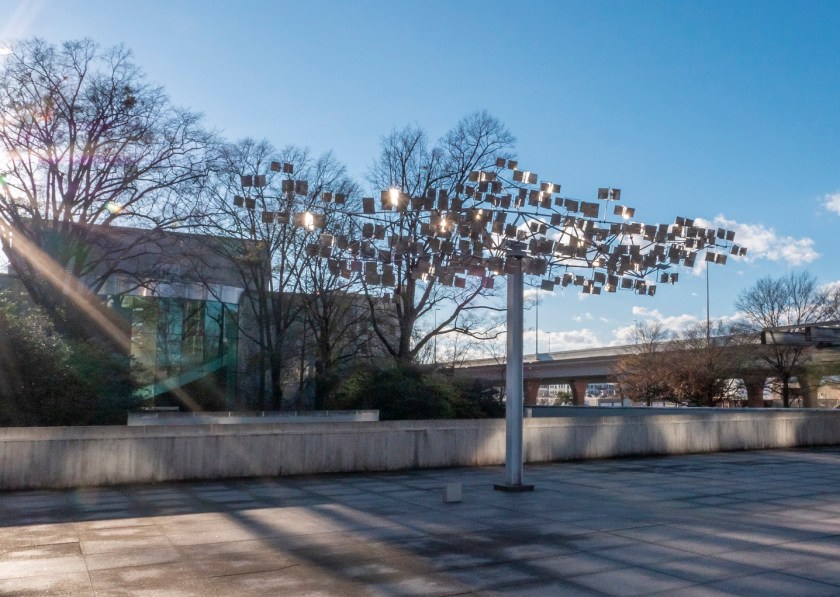
We didn’t have much time, but we did get to walk through the sculpture garden where we saw a kinetic sculpture by George Rickey, a sculptor whose work we’ve seen before, and on this trip (Besthoff Sculpture Garden, NOLA). After concluding our time at BMA, we headed outside for a bit of a nature walk!
Birmingham Botanical Gardens
Ava Garrett
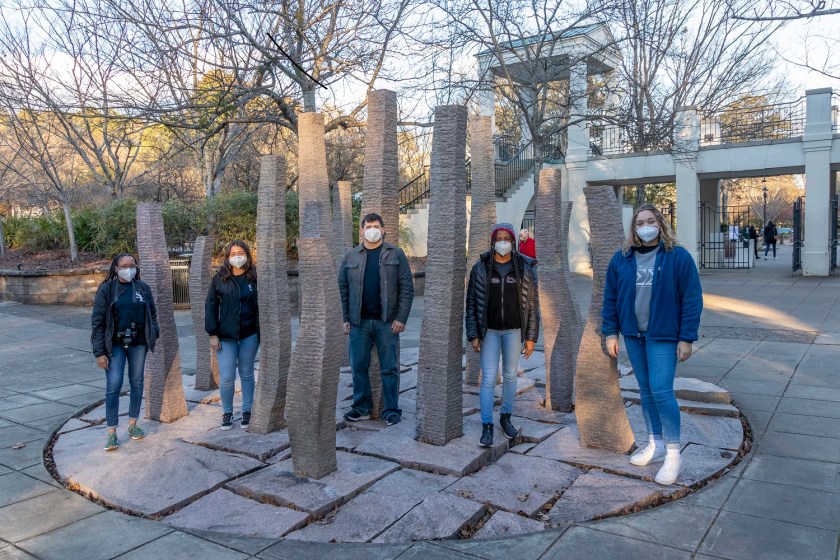
The Birmingham Botanical Gardens spans 67.5 acres and is made up of more than 30 thematic gardens. As we entered the white gates that led us into the gardens, we were met by yet another Jesús Moroles granite art sculpture. This one was called “Granite Garden,” which I thought was very fitting for the site. (Interestingly, we learned that the Japanese Garden was donated by the Japanese Ambassador to the Birmingham Botanical Gardens.)
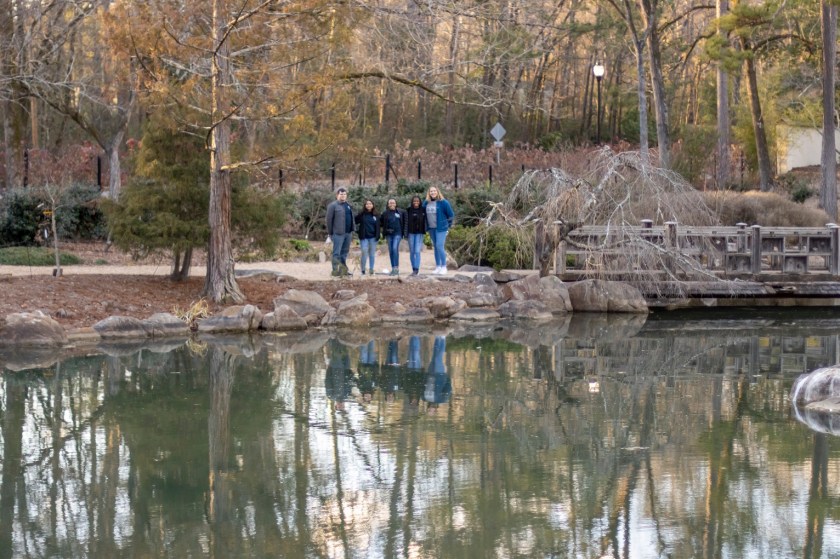
As we made our way to the Japanese Garden, we took in the garden’s stunning scenery along the long, spacious, winding path that leads to the various gardens. We knew we had arrived when we made our way onto the graveled path that took us under and through a beautiful red torii, a traditional Japanese gate commonly found at the entrance of a shrine. Symbolically, the torii marks the transition from mundane to sacred. The path led us through some breathtaking places, but our first stop was at a tea house, originally called a chashitsu. This house perfectly reflects the traditional Japanese architectural space that was used for tea ceremonies.
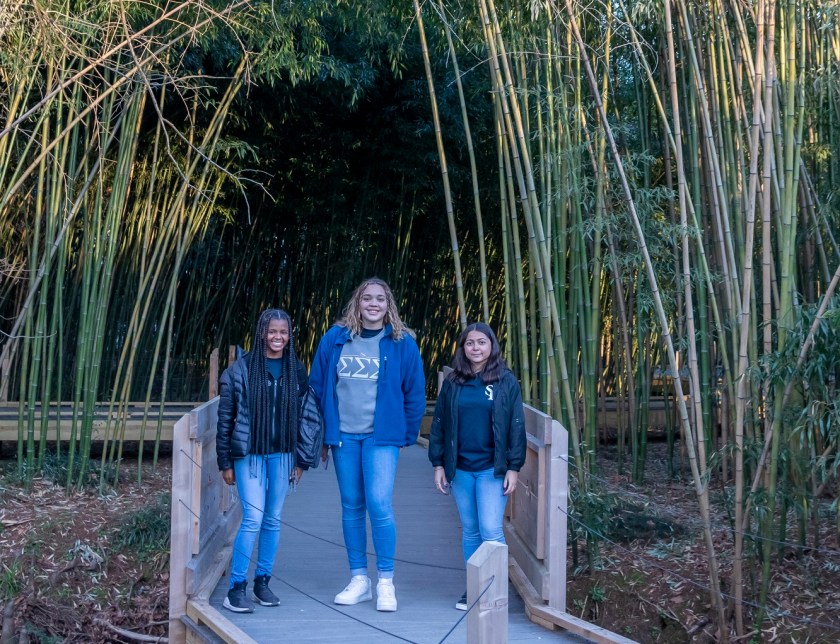
After marveling at the koi pond, our time in the gardens – and sunlight – began to run low, so we quickly made our way through a bamboo path (which was my favorite part of this garden).
It was a quaint trail loop and a great place for a photo op. The bamboo stood tall over the pathway, casting shadows, and when you looked up, the sun sparkled in between the branches, making the view even more enthralling.
Our final stop in the Birmingham Botanical Gardens was the Dunn Formal Rose Garden, which was aesthetically paved with red brick. We came to look at the Moon Tree, which was grown from a seed that once orbited the moon. The Moon Tree is an American Sycamore Platanus occidentalis tree and its seed came from a part of a space study that examined the effects of weightlessness on seed germination and growth. Of the 450 “moon seeds” planted, 420 of the trees were successful in growing. This Moon Tree was dedicated and planted in the Birmingham Botanical Gardens on February 25, 1976.
Although our visit was short, it was nice to get a breath of fresh air while walking through the garden.
Vulcan Park & Museum
Jessica Cuevas
To wrap things up on this sixth day, we ventured to the Vulcan Park & Museum. If you are wondering why there is a statue of Vulcan in Birmingham, it is because Vulcan is the Roman god of fire and forge, which is symbolic of the steel and iron industrial origins of the city of Birmingham.
The Vulcan Statue was built seven months before the 1904 St. Louis World’s Fair to “represent” Birmingham, which puts it at well over a century old. Due to its massive scale, the Vulcan had to be constructed and built in two different cities. The statue is 56 feet tall and was designed by Giuseppe Moretti – a Tuscany sculptor who moved to Alabama in 1903 – as an indoor display, but when it was moved back to Birmingham, a pedestal and tower were built for it to stand on.
After seeing the tower from below, we were pumped to rise to the challenge of taking the stairs to the top of this tower – which is roughly 160 feet high – but to our disappointment, the staircase was closed. Instead, we took the beautiful glass elevator, which allowed us to see just how high we were going. Toping off the elevator trip was a see-through (metal grate) bridge that also allowed us to see the ground walking from the elevator to the tower’s observation area. I found this cool; others thought it scary.
The sight from the top of the tower was very beautiful and a sight worth seeing, especially since it ties back to the origins of the city of Birmingham. A very fitting end, I believe, to our day in this historic city.
On Day Five of our learning experiences with LEAP, we visited the Montgomery Riverfront Park in Alabama which runs along the bank of the Alabama River, which turned out to be a great start to our day!
We toured a few of their major attractions such as the Harriott II Riverboat, the Amphitheatre, and the Union Station Train Shed. The Harriott II Riverboat has a 19th century structural design and was originally named the Alabama Star.
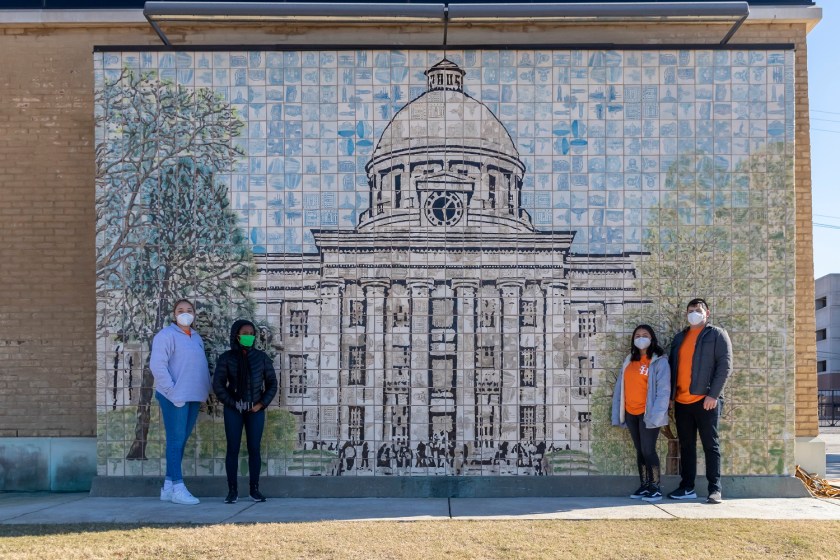
Within walking distance from the docked riverboat is the Riverwalk Amphitheater, built in 2003, with an intentionally unique design that allows it to sustain flooding from the nearby river. In that same area was a small mural of Alabama’s State Capitol Building designed using tile blueprints of the Capitol, which I thought was very creative and neat.
At the pavilion, we had our picnic lunch from a local restaurant, Cahawba House, and were treated with a train traveling past. (Interestingly, the Union Station Train Shed, built in 1898, once housed six different train tracks from six different railroads up until it stopped operating in the 1970s.)
The pavilion is located right across and uphill from the amphitheater. It was too enticing, after lunch, so, in the area in front of the amphitheater, Jayelynn and Quinn had a race downhill. This race did not result in a winner; it was a two-way tie!
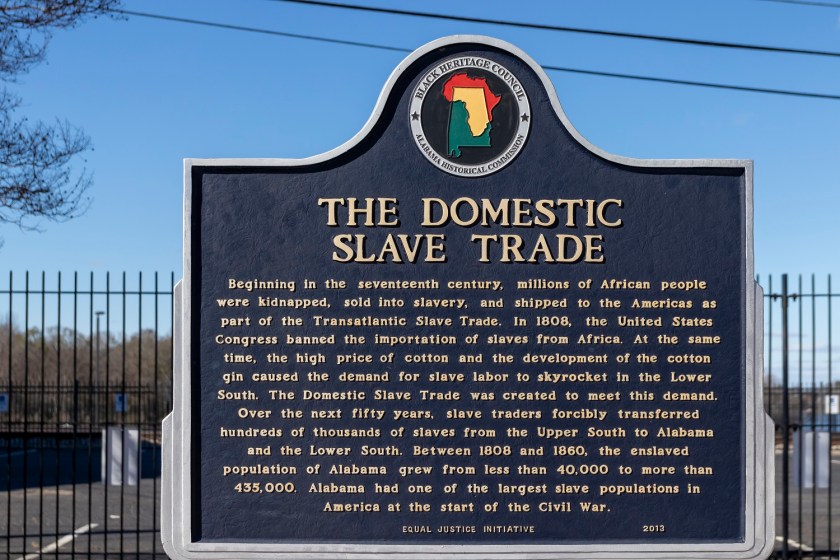
Montgomery Riverfront Park was also filled with storyboards telling the history of domestic slave trade. In 1808, Congress banned the importation of slaves. Although importing slaves was no longer legal, the demand for labor in the South increased because of the fluctuating price of cotton and the creation of the cotton gin. For fifty years, the slave traders transferred slaves from the upper south to Alabama. From 1808 to 1860 the slave population started at approximately 40,000 and increased to more than 435,000.
Rosa Parks Monument
Jayelynn Bordeaux
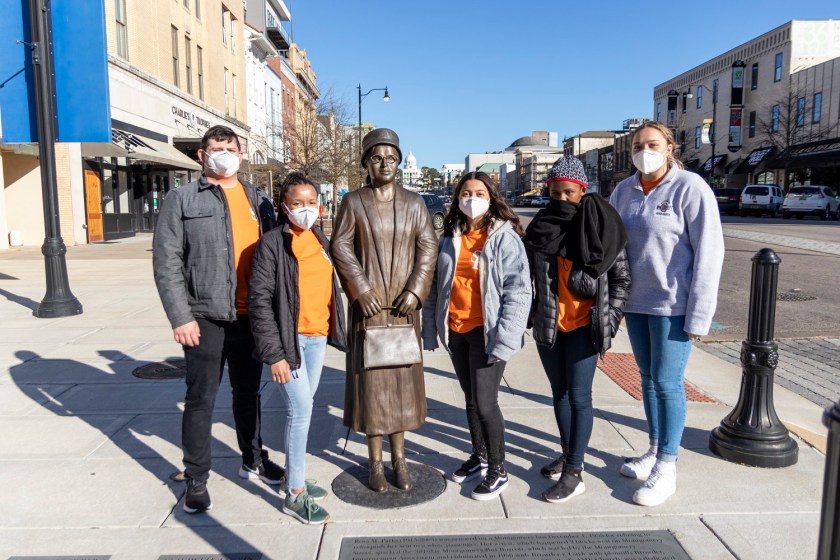
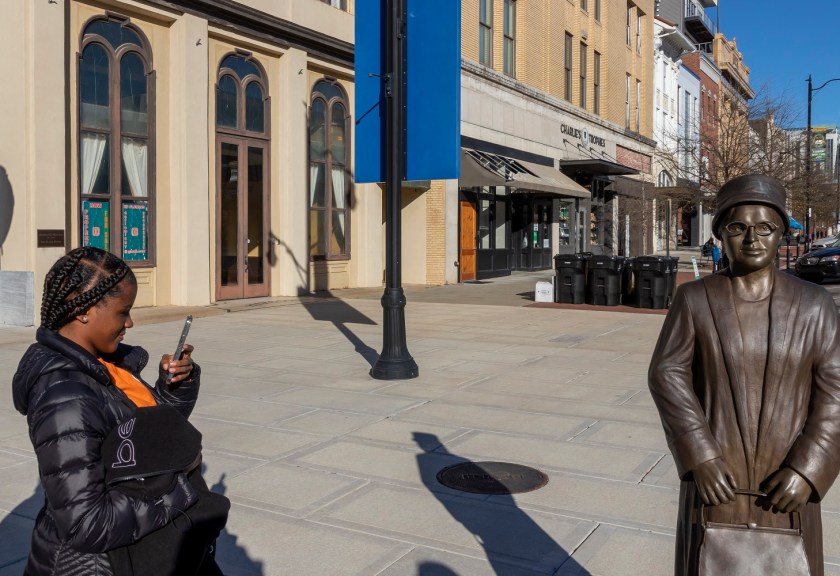
After concluding our time at the Montgomery Riverfront Park, we strolled to Court Square to honor a leading figure who helped spark the Civil Rights Movement in the United States: Rosa Parks.
The statue of Rosa Parks was revealed to the public on December 1, 2019 and is located near the bus stop where she refused to give up her seat on a segregated bus in 1955. Parks sparked the motivation for the Montgomery Bus Boycott, which was led by Martin Luther King, Jr. The Boycott asked all African American residents in Montgomery, Alabama to refuse to use public transportation. The Bus Boycott put a strain on the public transportation’s finances until the Supreme Court, in Browder v. Gayle, ruled that it is unconstitutional to have segregated busing, which forced the City of Montgomery to repeal its segregation law. On December 21, 1965, one victory of many had been won for the Civil Rights Movement due to Rosa Parks’ strength to stand firm for what she believed in.
Rosa Parks’ statue represents an enormous amount of strength: I found it inspiring and I’m sure it inspires many others.
I believe that this was a great step in history for African Americans that will never be forgotten, and it still resonates within society today. Rosa Parks left us with a lifelong lesson that is best captured in her words, “To bring about change, you must not be afraid to take the first step. We will fail when we fail to try.”
Montgomery Museum of Fine Arts
Ava Garrett
After visiting the Rosa Parks statue, we LEAPed to our third art museum on our trip. The Montgomery Museum of Fine Arts (MMFA) had an array of exhibits for us to see. The “Blow Up II” exhibit was filled with inflatable contemporary art, the Caddell Sculpture Garden was a beautifully front entrance designed to walk through before entering the actual museum, and a “Fact or Fiction” exhibit offered pieces designed to create a narrative and tell a story. Along with these exhibits, there were many permanent works on display as well, although the second-floor galleries were closed.
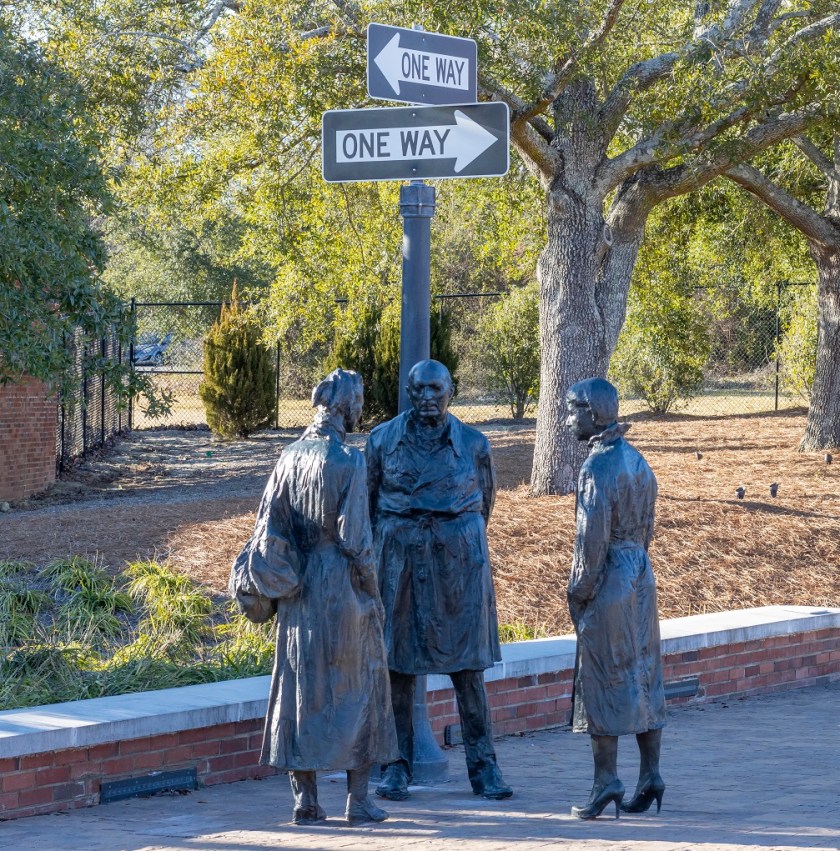
As we entered the Caddell Sculpture Garden, we immediately noticed a sculpture by an artist whose works we had seen before. (As a fun little twist, Professor Yawn offered a $10 gift card to whoever could guess the artist first. Sadly, I could not think of the artists’ name fast enough, but Ilexus did, so she will enjoy some free coffee soon!) The sculpture for the win was “Chance Meeting” by George Segal.
Next, we wandered on to the “Rough n’ Tumble” sculpture by Patrick Dougherty, which was made from cherry laurel, Ligustrum, and sweet gum. for a quick photo op.
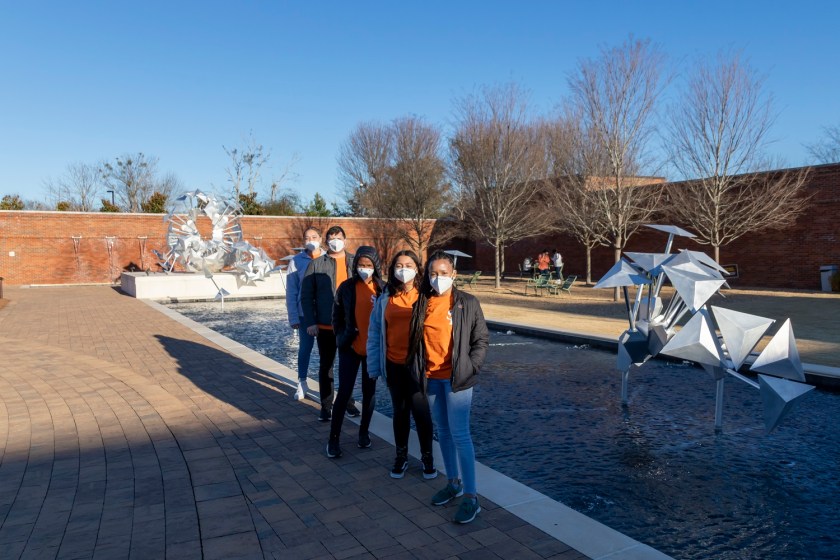
We then stopped for a closer look at James Grimes’ sculpture of a dandelion that seemed to be blowing over the glistening water beneath it.
Once inside MMFA, the first exhibit we viewed was “Fact or Fiction,” which was filled with many interesting pieces. My favorite piece from that exhibit was one by Albrecht Durer titled “The Beast with Two Horns Like a Lamb.” This piece was made in 1511 by woodcut on heavy laid paper; with its ominous vibe and lamblike creatures, the artwork seemed to jump right off the wall.
The next room we made our way into was very spacious with abstract art pieces hanging from wall to wall, but the most breathtaking part of this room was the painted murals on the glass windows that shined as the sun beamed brightly through.
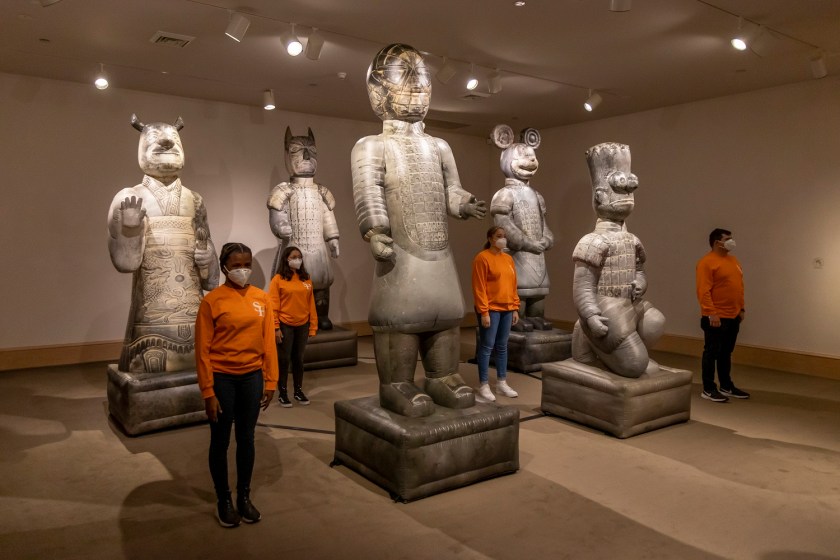
The most exciting exhibit for me came next, “Blow Up II.” This exhibit was filled with different kinds of inflatable artwork. The coolest inflatables were the movie or TV show characters dressed as noble knights! There was an inflatable Batman, Shrek, Spiderman, Mickey Mouse, and Bart Simpson. The inflatables were so well detailed; I could hardly tell they were inflatables and thought they were made from stone.
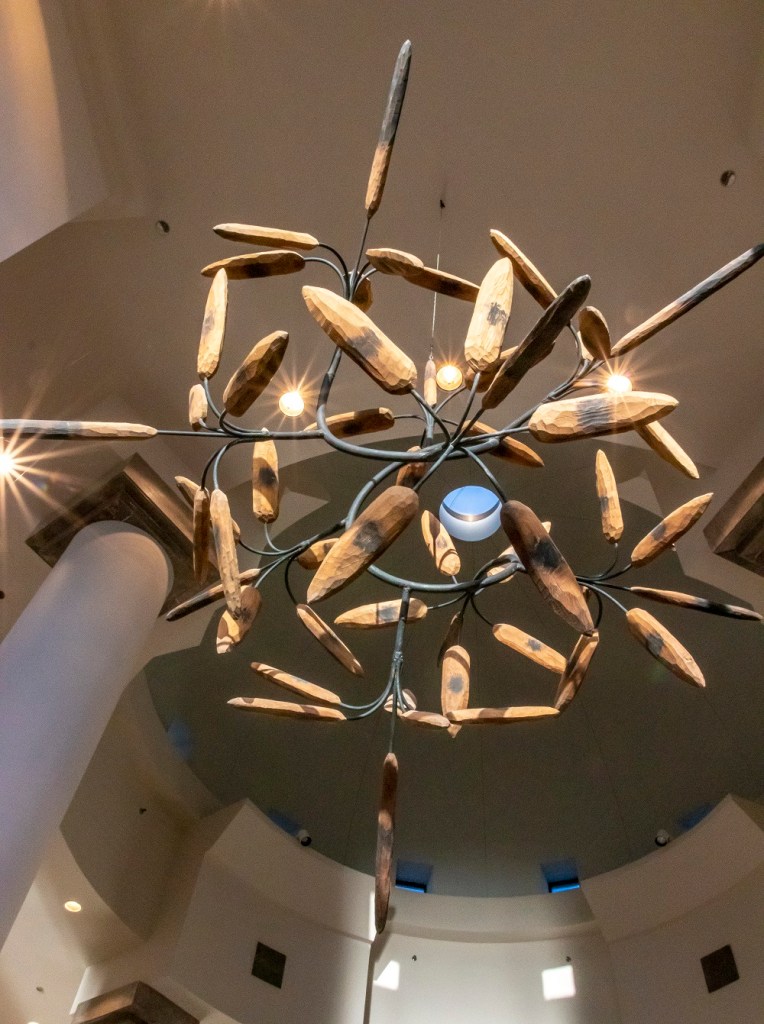
As we got further into the museum, we started seeing more and more pieces from artists we recognize. We saw a piece from James Surls, Sam Houston State graduate.
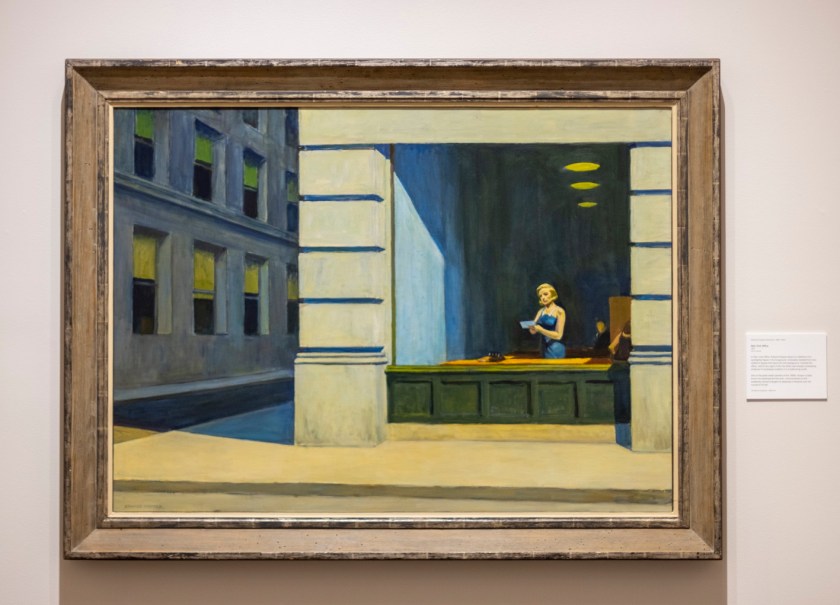
Also, “New York Office”…
…by Edward Hopper who is most famous for his painting called “Night Hawks,” one of the most recognizable paintings in American art. And, we all knew we had seen the Gilbert Stuart “unfinished” painting of George Washington, but no one had a $1 bill with which to compare!
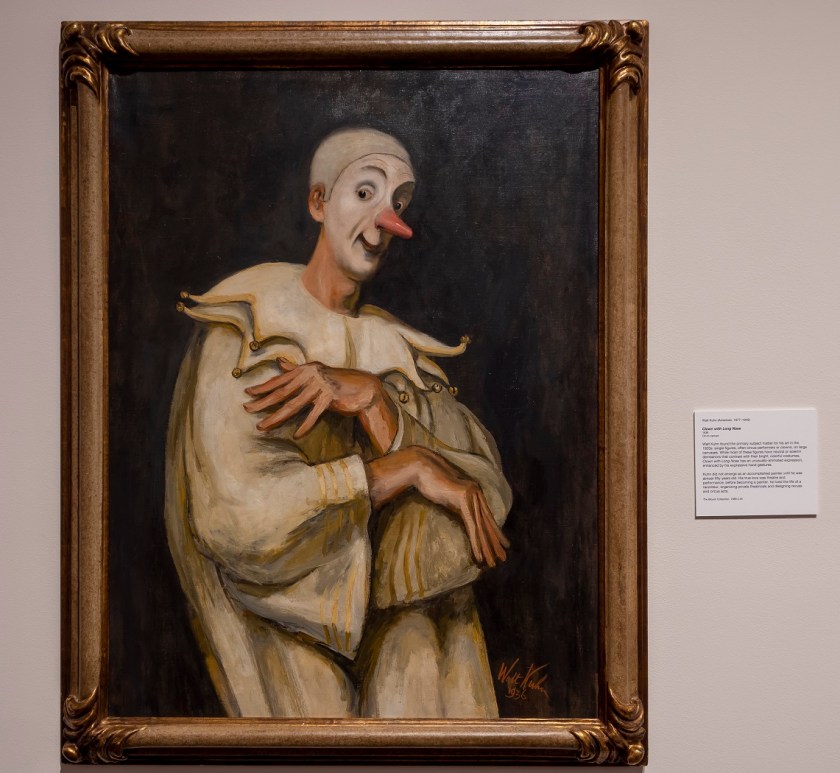
I personally made a huge connection today between one of my favorite paintings in the Dallas Museum of Art and my favorite in the Montgomery Museum of Fine Arts. My favorite painting at MMFA was the “Clown with Long Nose” by Walt Khan; when I saw it, I thought I had seen that style of painting before. Sure enough, it was the same artist as my favorite painting in the Dallas Museum of Art.
As we explore more and more museums, looking at art begins to feel a lot more meaningful and educational. Making even small connections between a painting and the artist makes me realize how much I am actually learning.
Dexter Avenue King Memorial Baptist Church
Jayelynn Bordeaux
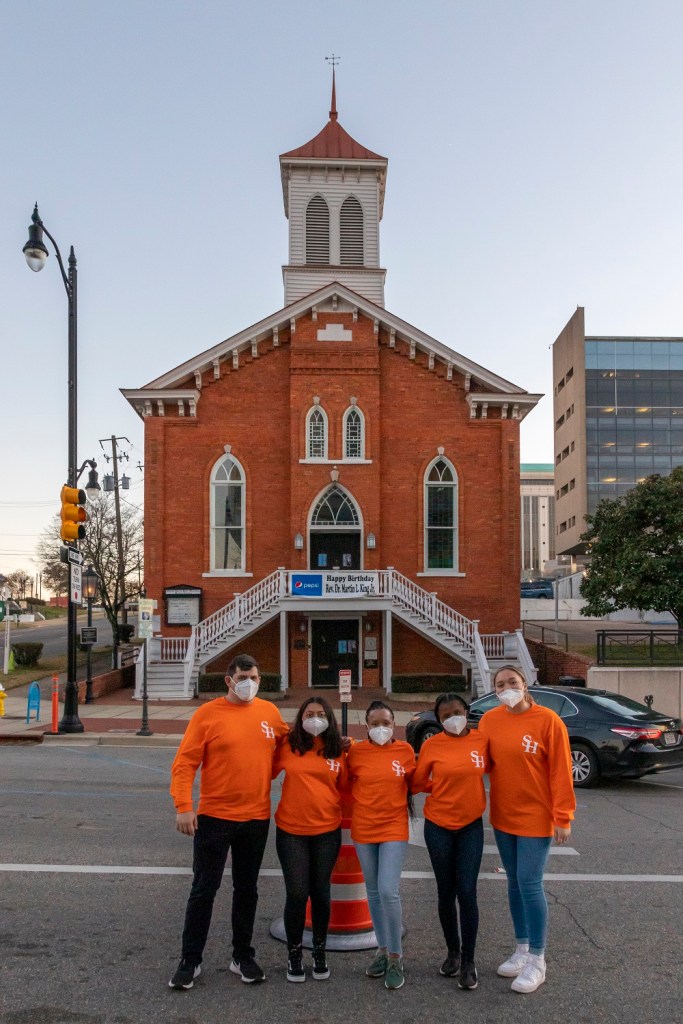
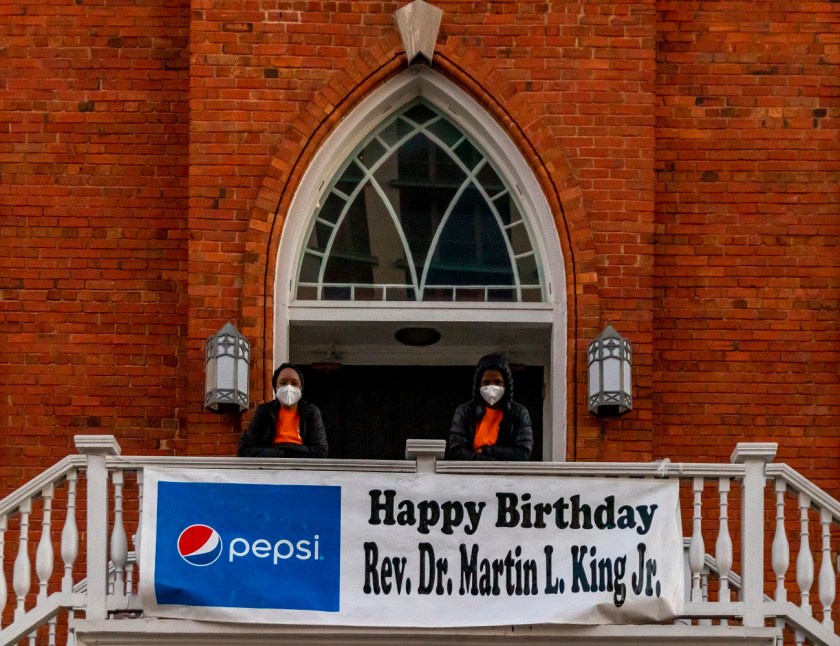
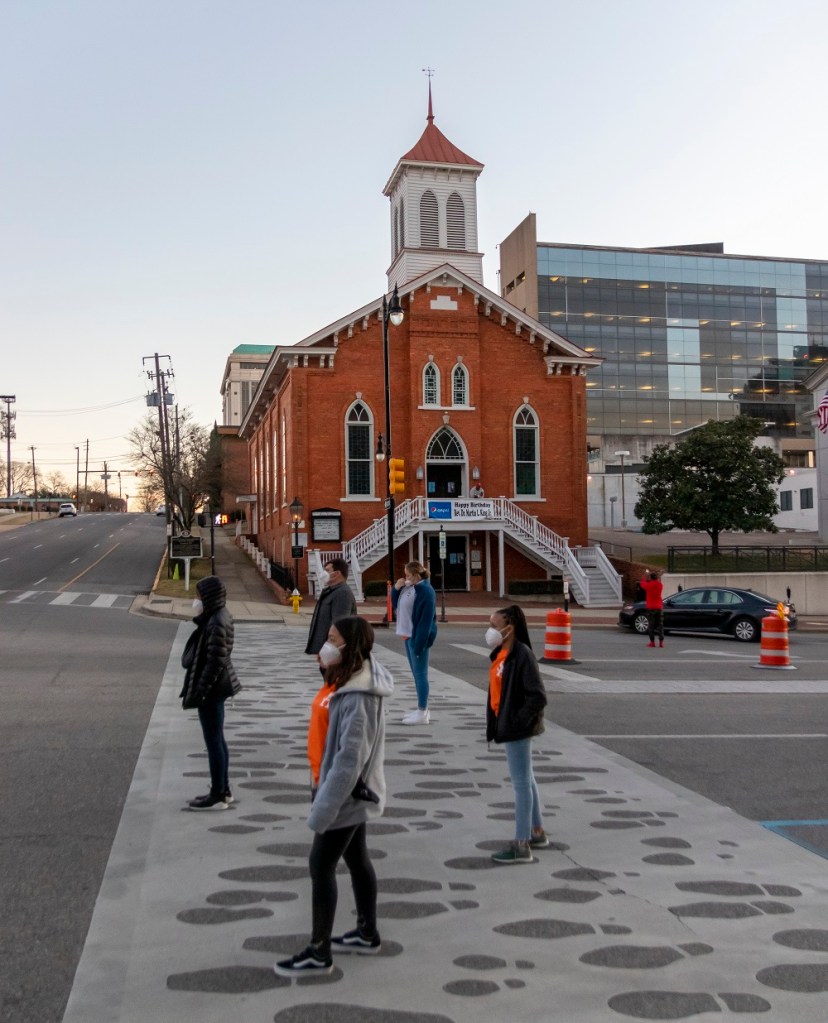
As the sun was closing down on us, we left MMFA for downtown Montgomery again. Just a couple of blocks from the Rosa Parks statue we stopped at earlier in the day is a National Historic Landmark, the Dexter Avenue King Memorial Baptist Church.
The church opened in 1877 and is particularly famous for being the first location where Martin Luther King, Jr. preached. The church is a National Historic Landmark because of significance during the Civil Rights Movement. It was a center point during the Montgomery Bus Boycott, which was led by Dr. King. The church has held up for many decades and is normally open to the public for tours (well, before COVID-19).
All I could think about during the time we were standing out on the front sidewalk was how accurate it is when people say, “gone, but not forgotten.” That statement is so true for Dr. King.
He left a prodigious legacy behind and will permanently be relevant to our history because he paved the way for so many lives, for so much change. His drive is admirable in so many ways—it is not easy to find people so willing to boldly stand up for what they believe in. That realization stuck with me and inspired me to want to become the best version of myself.
Alabama State Capitol
Jayelynn Bordeaux
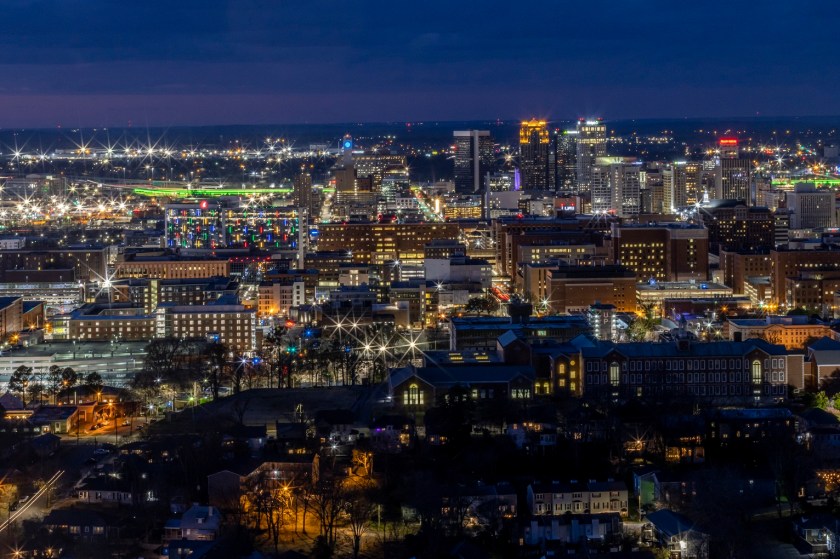
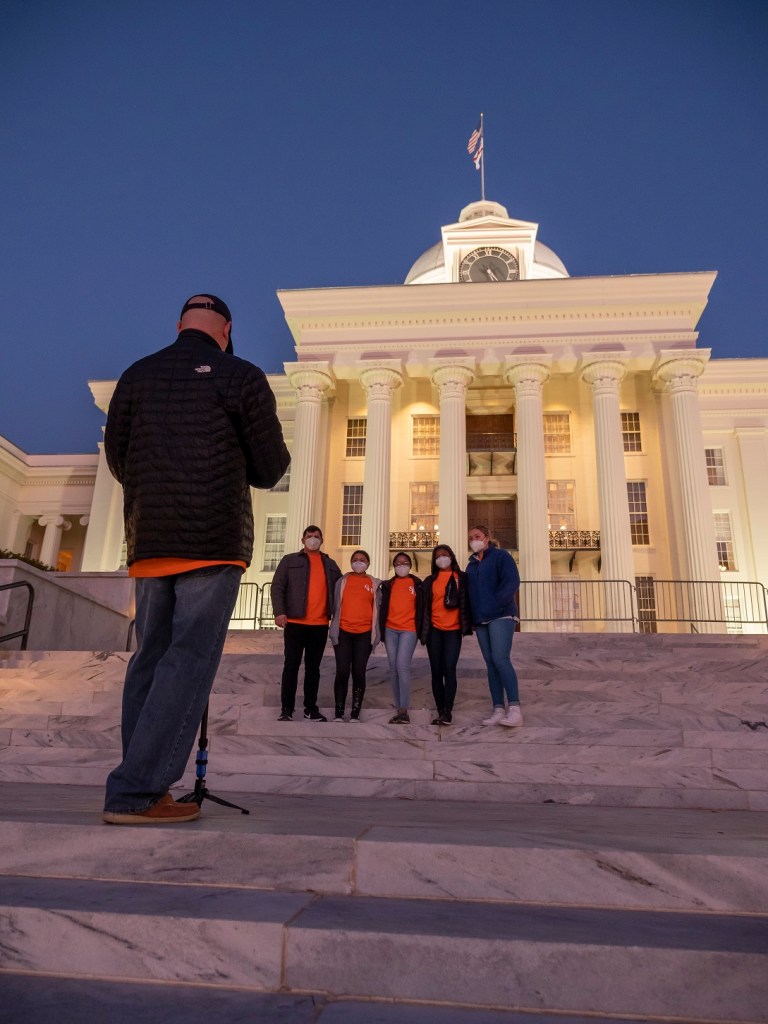
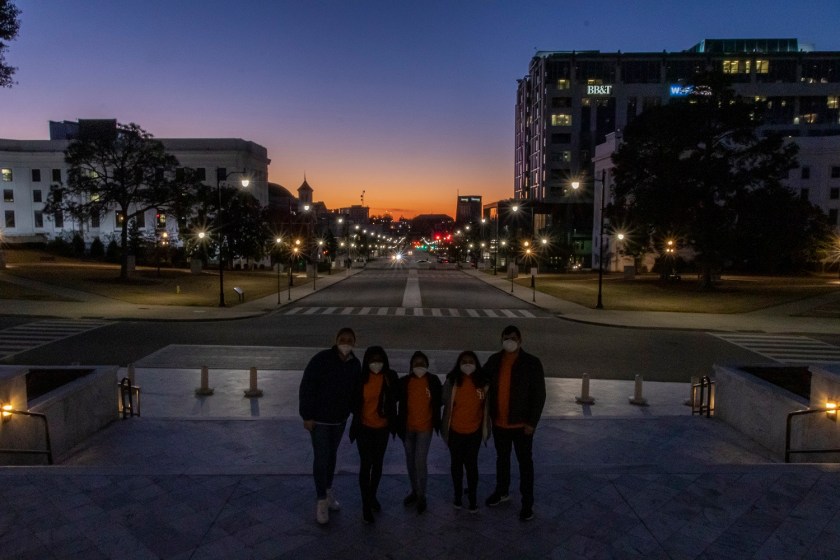
After taking in the history of the Dexter Avenue King Memorial Baptist Church, we walked the last short stretch of the 54-mile path that Dr. King originally led from Selma, AL to Montgomery, AL to reach the Alabama State Capitol.
I fell in love with the Greek Revival architecture style of the Capitol. The view is striking, especially at sunset, overlooking downtown Montgomery. The Alabama marble stairs leading up to the Capitol adds a special look to the building.
We did not get past the stairs leading to the Capitol, though—it was blocked due to worries arising about potential protests. However, I (we all) still enjoyed viewing this site.
Day Five has been filled with incredible opportunities to immerse ourselves in civil rights history, as we recognize that we still stand in the long shadows of Dr. King and Rosa Parks.
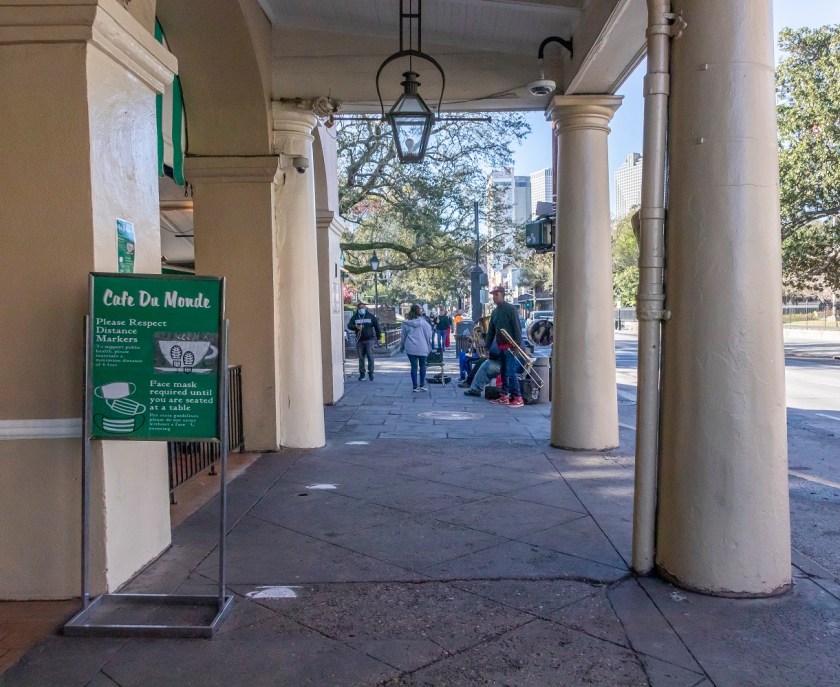
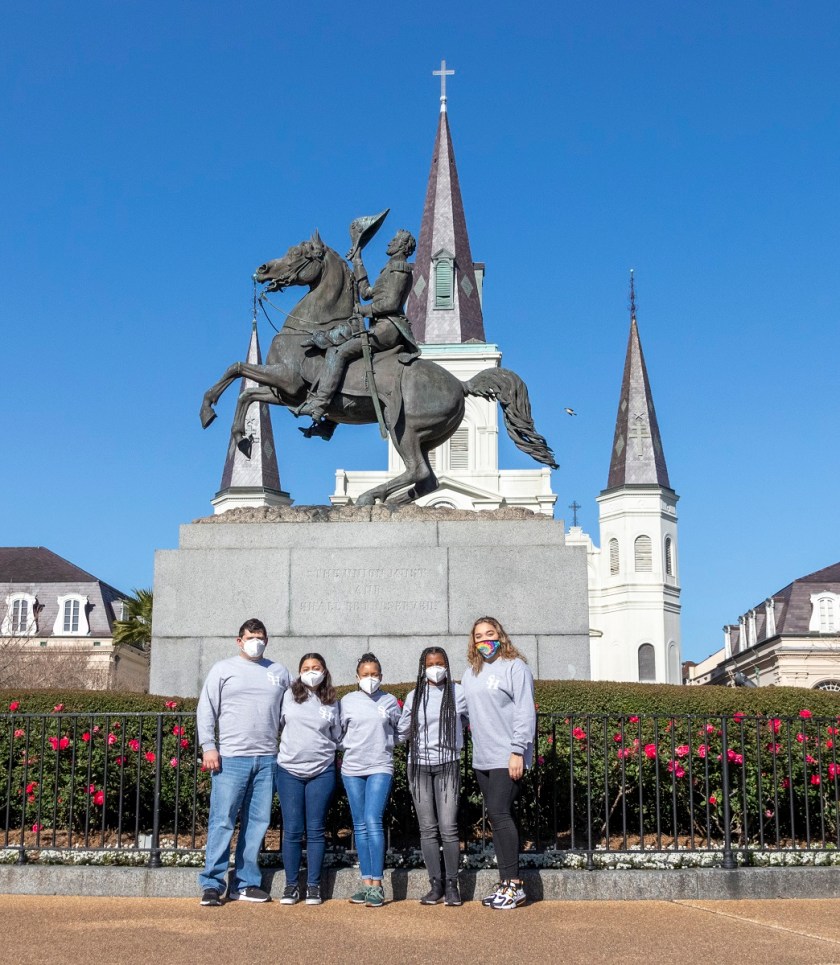
You can’t visit New Orleans with stopping by Café du Monde, so the LEAP students did just that. This morning, we made our way to Café du Monde for breakfast and got some beignets. Beignets are essentially fried dough with powdered sugar on top, and they reminded me of a funnel cake.
Café du Monde is located near the French Market and Jackson Square. The cafe has been open since 1862 and has become the most famous shop serving beignets in New Orleans.
I personally am not a huge fan of sweets so I also got some breakfast at Monty’s on the Square, which is right across the street. We enjoyed our breakfast and the music performed outside Cafe du Monde, after which we explored Jackson Square.
After breakfast, we walked to the French Market, which is a really nice spot for souvenirs. All three of these spots are popular areas for tourists.
An Afternoon in Biloxi
Jessica Cuevas
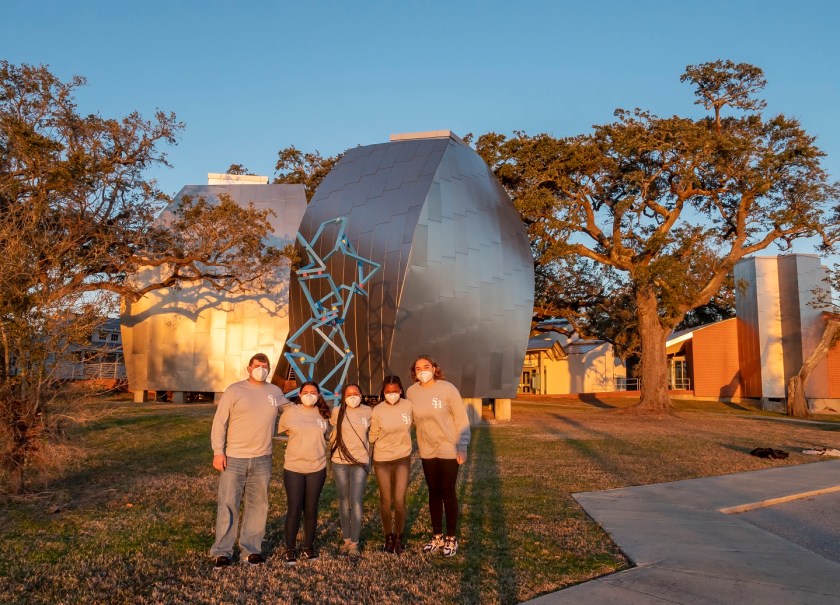
After spending two days learning about and experiencing the historical significance of several sites within the city of New Orleans, Louisiana, we visited the Ohr-O’Keefe’s Museum of Art in Biloxi, Mississippi.
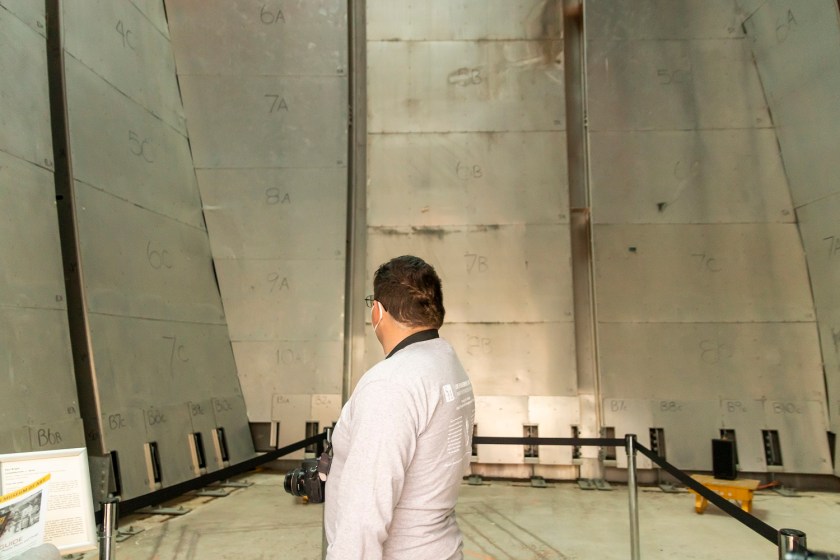
In many ways, it was unlike any other museum that I have seen before. Not only was it smaller, but it was not the typical modern building I am used to. In fact, it has its own unique and very beautiful architectural structure and style. It was designed by the well-known American Canadian modern architect Frank Gehry, who despite designing a modern expressionist structure, incorporated and tied in the history and culture of Mississippi into the design in such a way that it would not awkwardly stand out. He did this by utilizing local materials and historical local vernacular.
Interestingly, Frank Gehry worked around the live oak trees at this site to preserve and minimize any damage to them. What makes Gehry’s work unique is the fact that his structural design would not have been possible without computer programs to create renderings of it.
This museum is named after both Jeremiah O’Keefe, who helped turn the vision of this museum a reality, and George Ohr, known as the “Mad Potter of Biloxi.” Ohr is famous for his modern art and ceramic work, which defied the 19th century convention through its aestheticism which is highly admired by artists today.
In the main building, there was a bust of Booker T. Washington, an African American leader who emphasized education orally and through written text, by Richmond Barthé, a sculptor known for his connection to the Harlem Renaissance.
Booker T. Washington contributed to the civil rights movement in one way by being the first African American to eat at the White House, having been invited Teddy Roosevelt was the President of the United States.
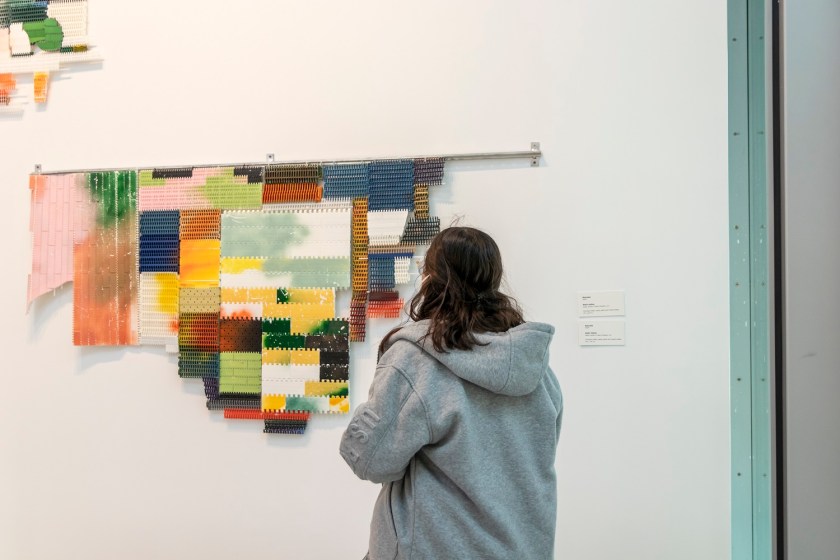
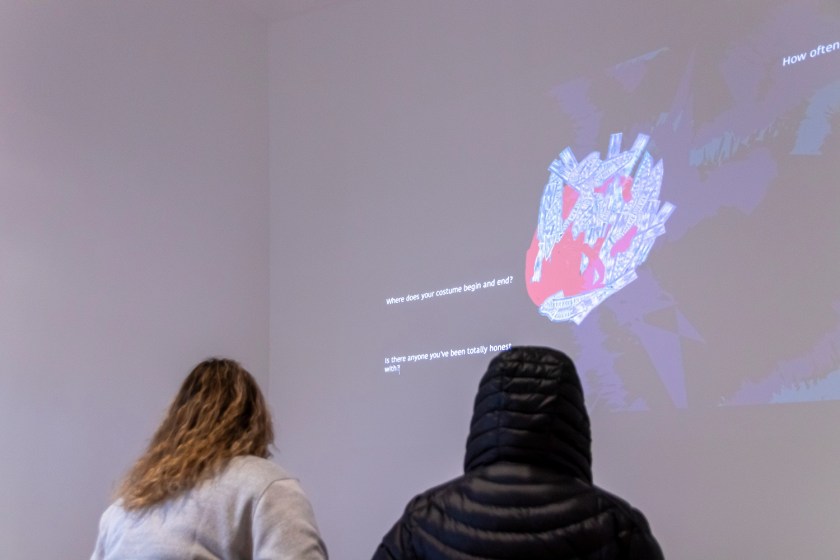
The first exhibit we saw at this museum featured a New Orleans artist by the name of Sally Heller, a multi-media creator whose art pieces may be openly interpreted.
The exhibit was titled “I can see all obstacles in my way.” It is composed of fabric, clothing, fishing net, plastic objects, and conveyor belts.
My interpretation of this exhibit was bitter-sweet, since I was impressed by the local art pieces since they were abstract, but the web like shape along with the length of it led me to wonder if it represented the barriers she faced and conquered.
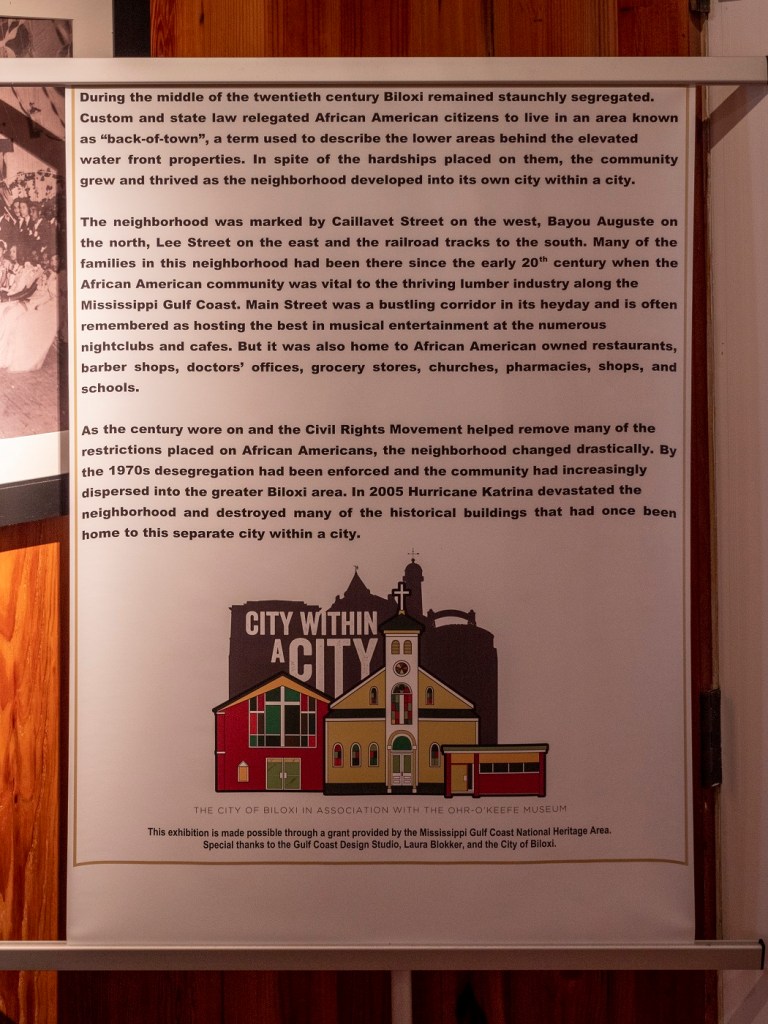
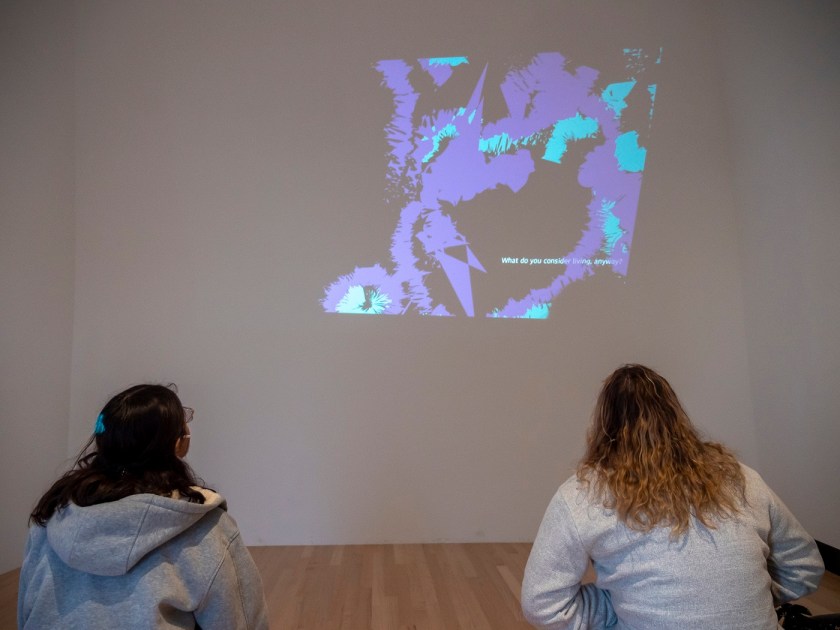
The second exhibition was titled a city within a city. Within this exhibit there were photographs and a timeline related to the civil rights movement, and specifically its impact on Biloxi.
The city was heavily impacted by hurricane Katrina in 2005, and many historical buildings were highlighted within the photographs in this exhibit.
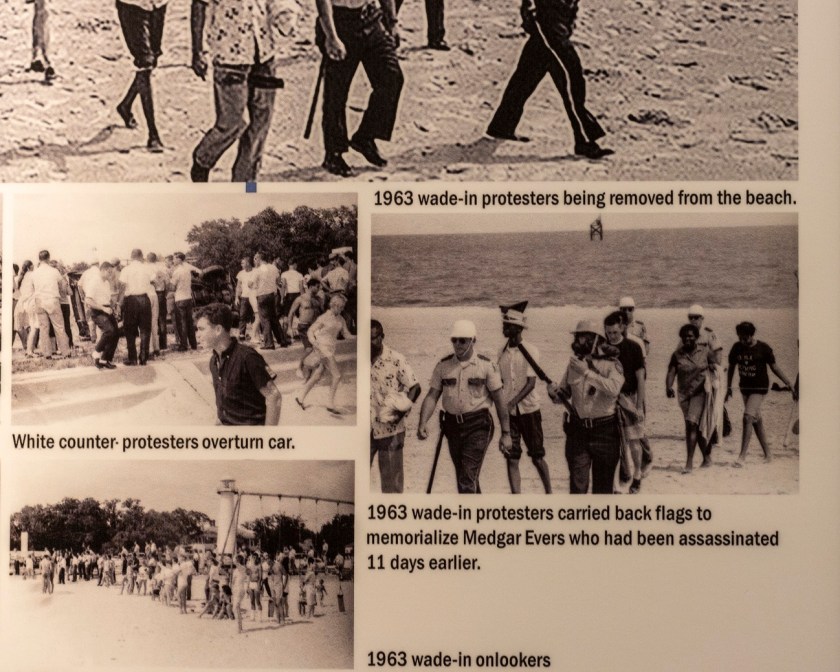
It is also in this exhibit that we learned about how Medgar Evers participated in “wade-ins” to attempt to desegregate the beaches – a fact which many of us were not aware of.
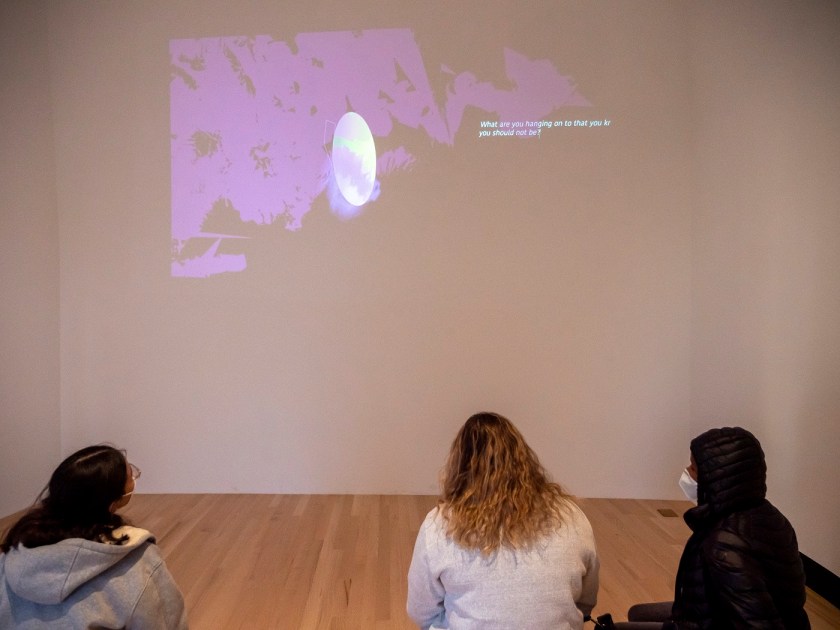
The final exhibition was a set of buildings referred to as “the pods,” which held visual and audio artwork that was heightened or emphasized by the acoustics within the building because of its dome-like figure.
While we have visited many museums on this trip, this museum has been a completely different experience, and exposed us not just to the city’s historical significance, but gave us an insight into the cultural and architectural significance.
A Ray of Hope
Jayelynn Bordeaux
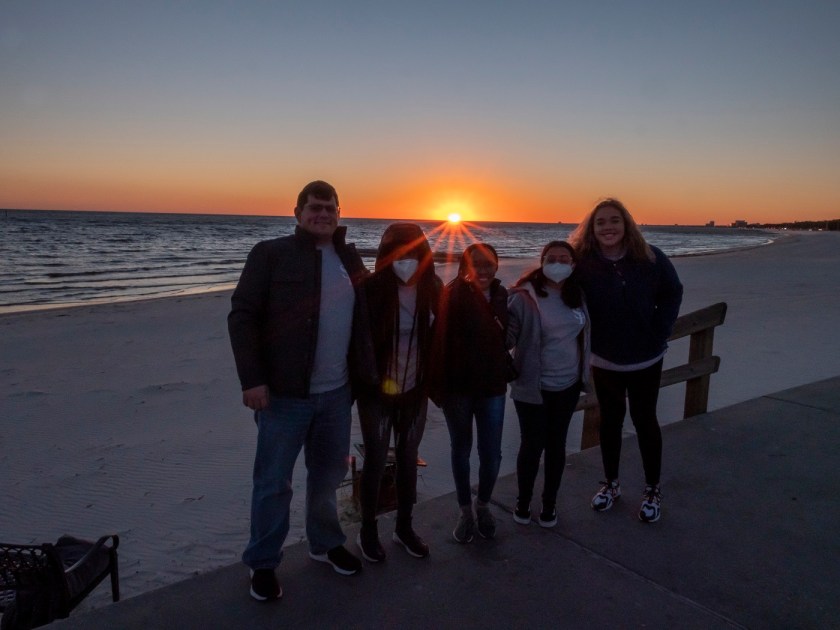
Later in the day, we visited the beach in Biloxi, Mississippi, and attempted to feed bread to the seagulls, however the seagulls either were not hungry or it was too chilly for them to come out and socialize. I never realized there was a beach in Mississippi, but I was more distracted by how cold I was.
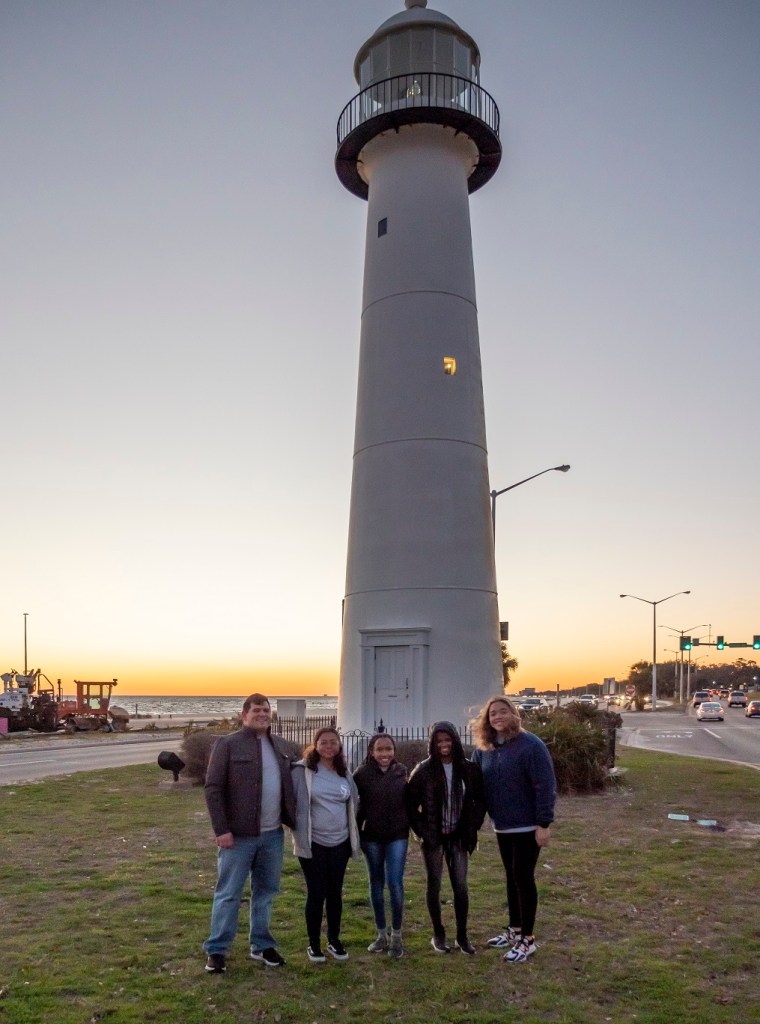
To end the day off, we took a picture in front of Biloxi lighthouse. The lighthouse was established in 1848 and has become a well-known feature of the city, symbolizing both hope and resilience.
I felt this was an appropriate end to our day on the eve of the weekend before Martin Luther King Day.





































 Center for Law, Engagement, and Politics