The spring session hasn’t yet begun, but LEAP students are learning–thanks to the dedication of Professor Lauren Clay.
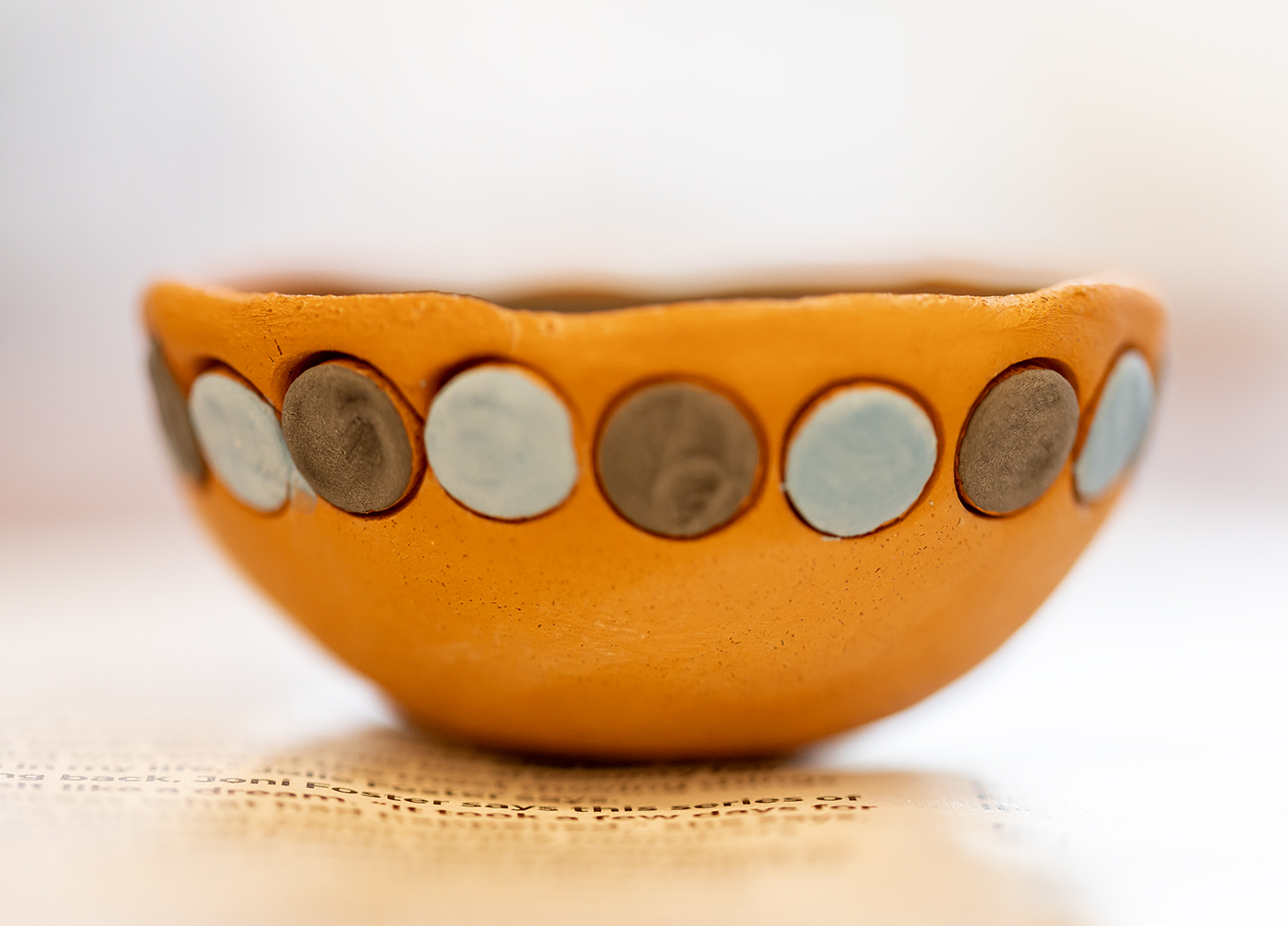
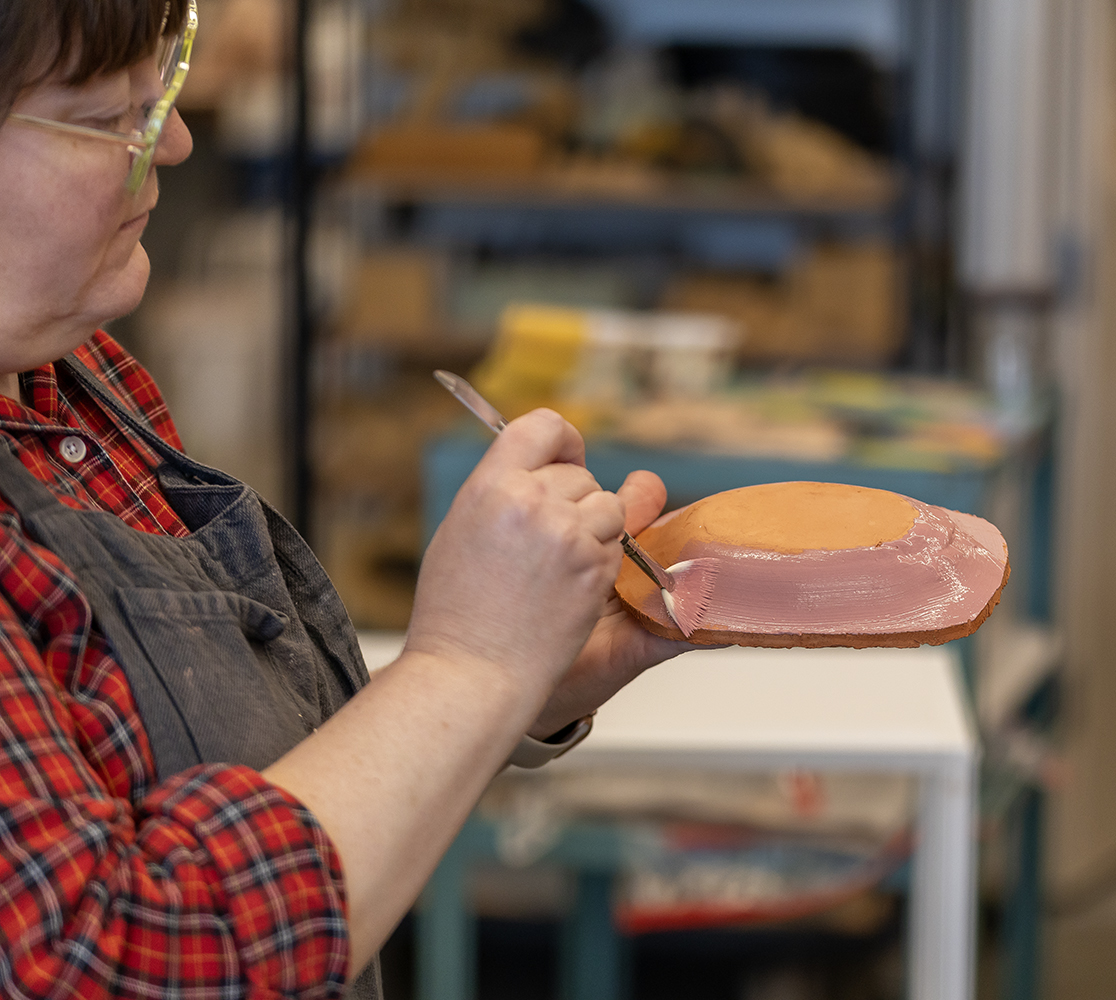
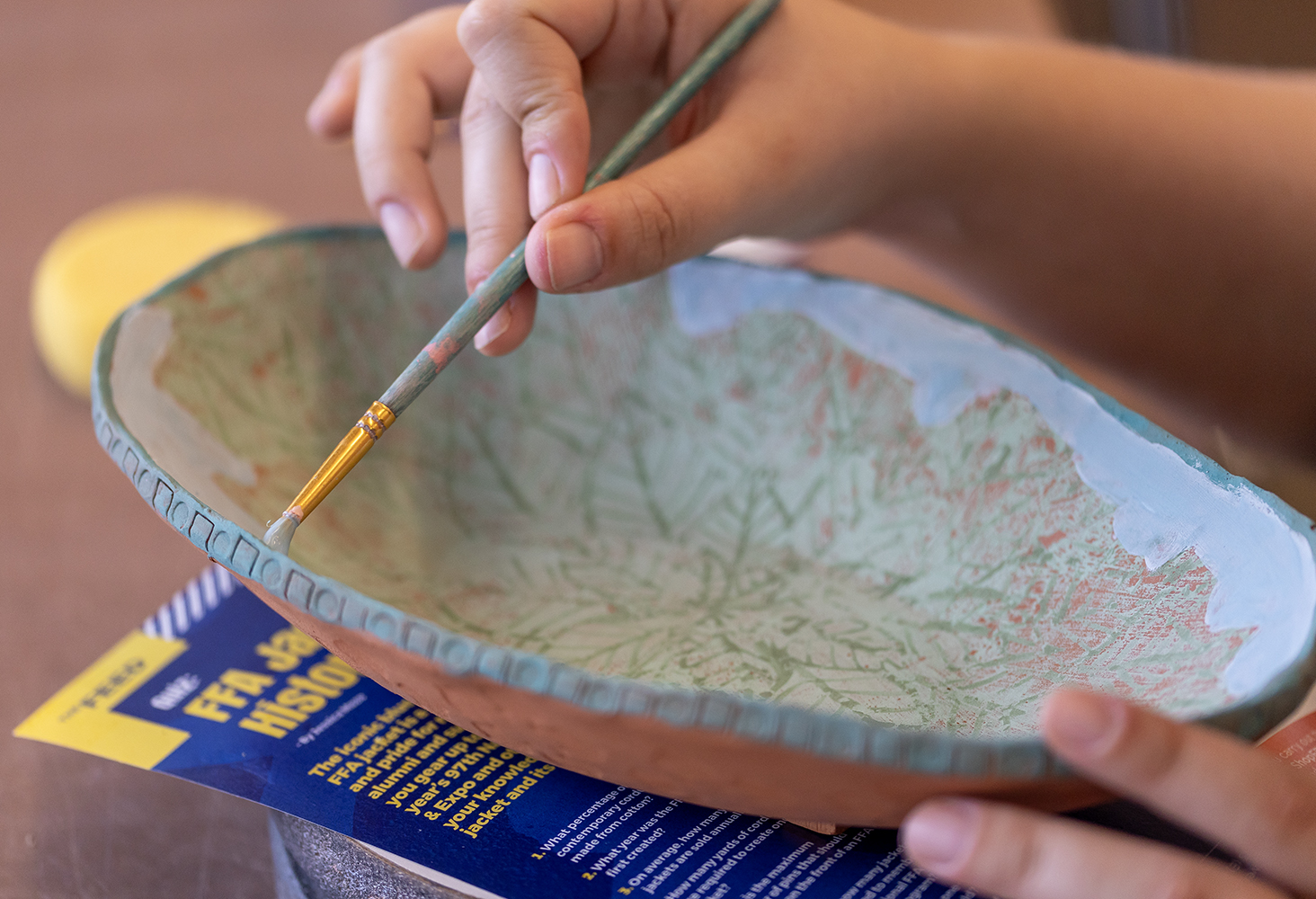
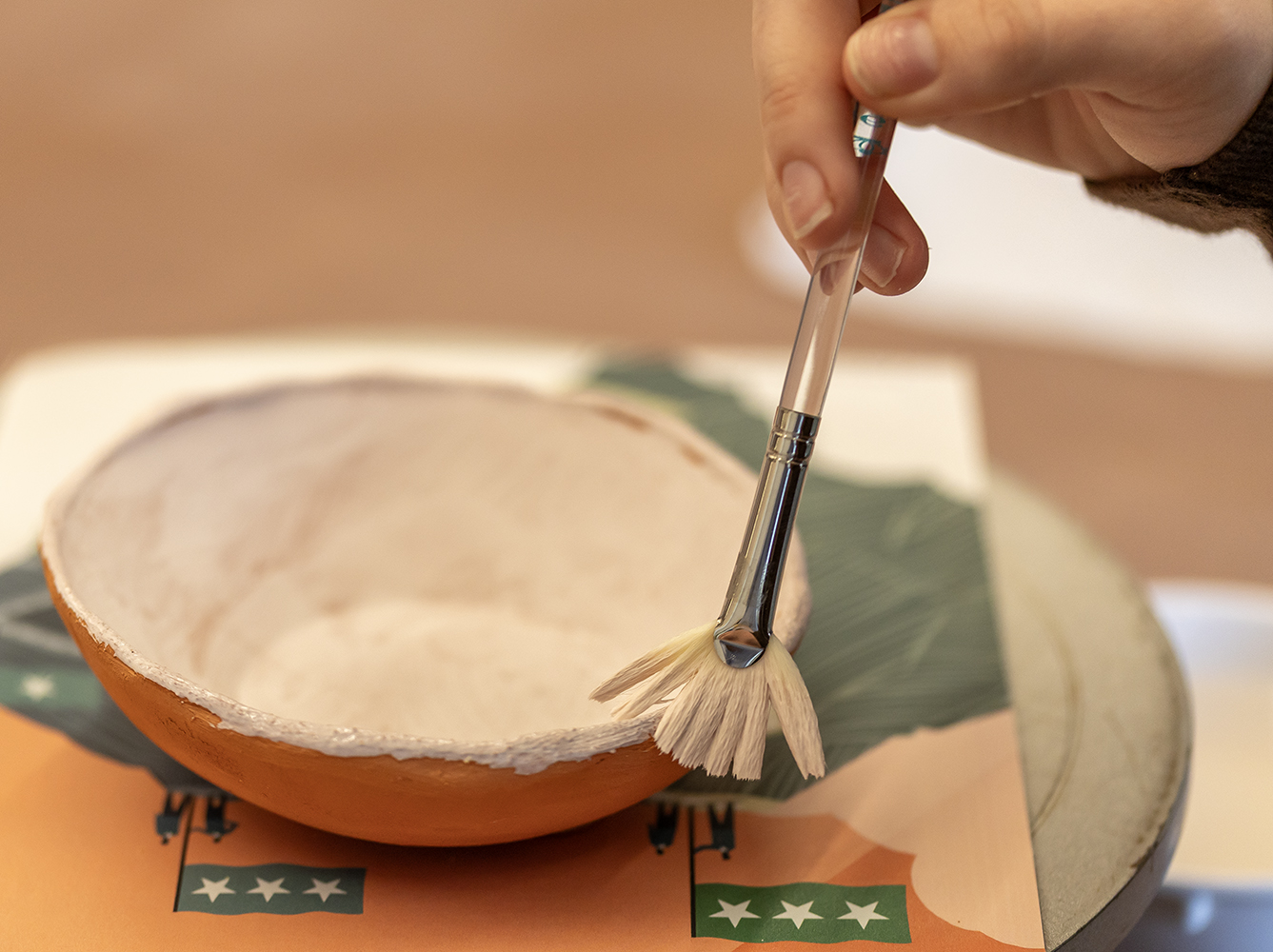
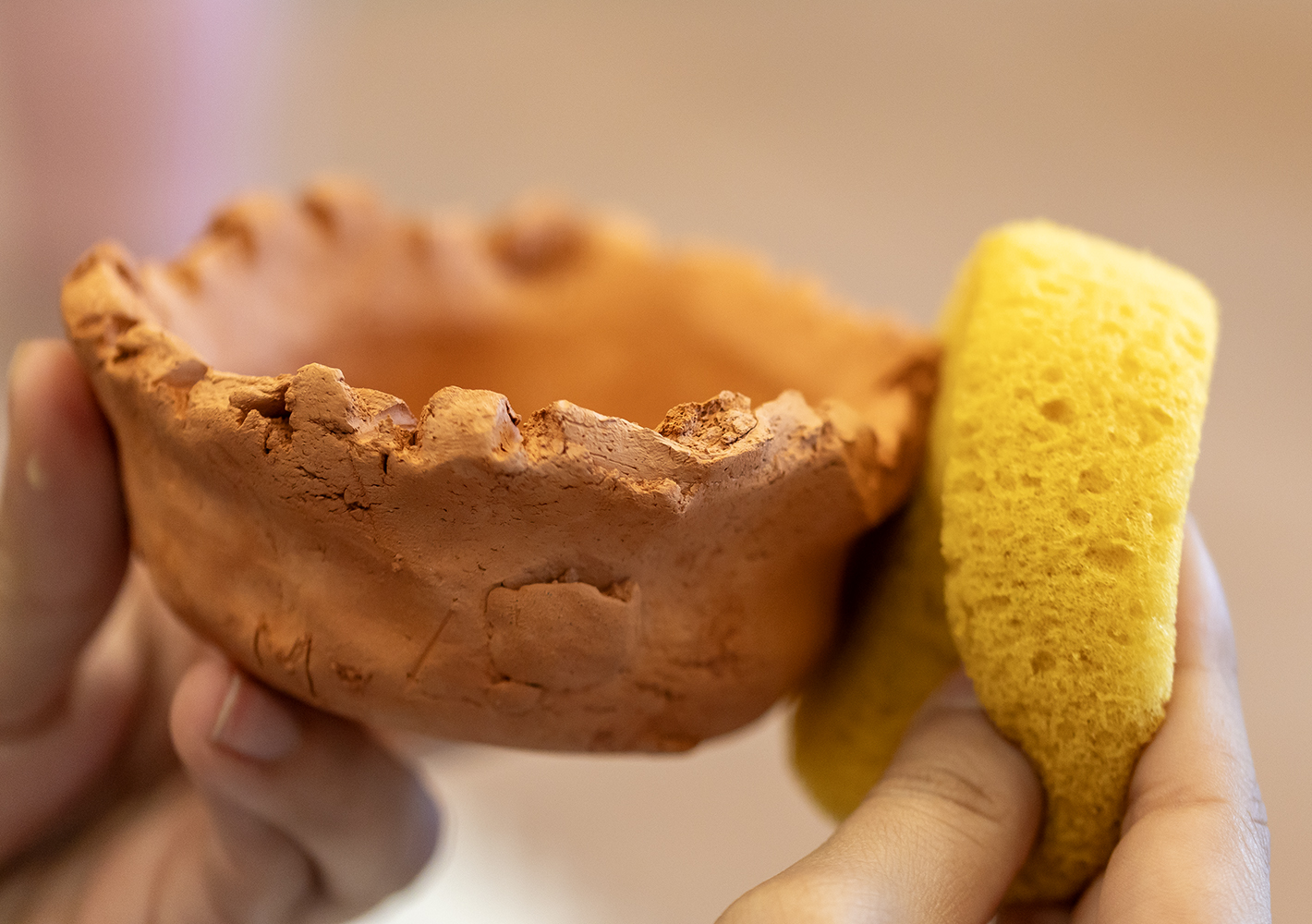
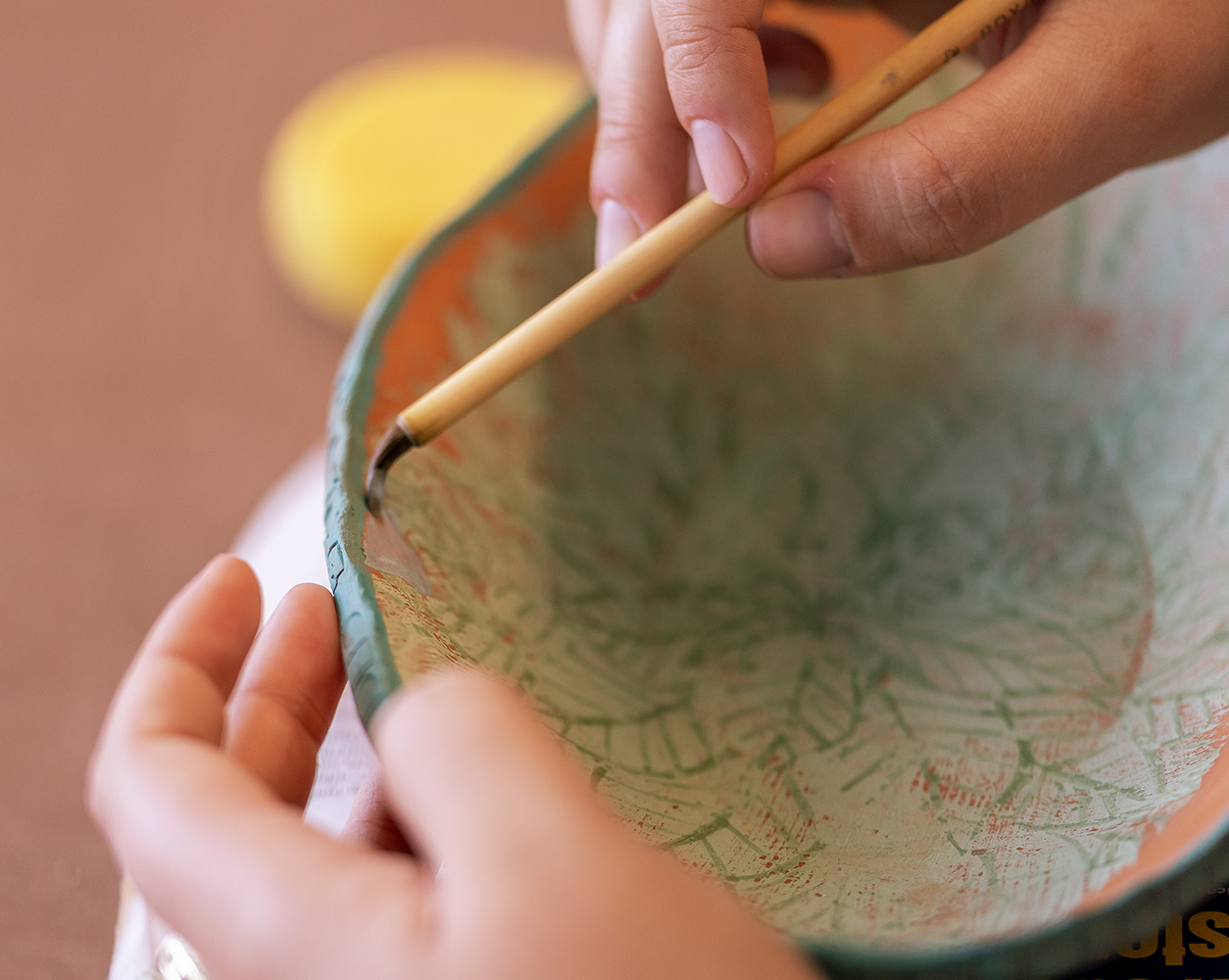
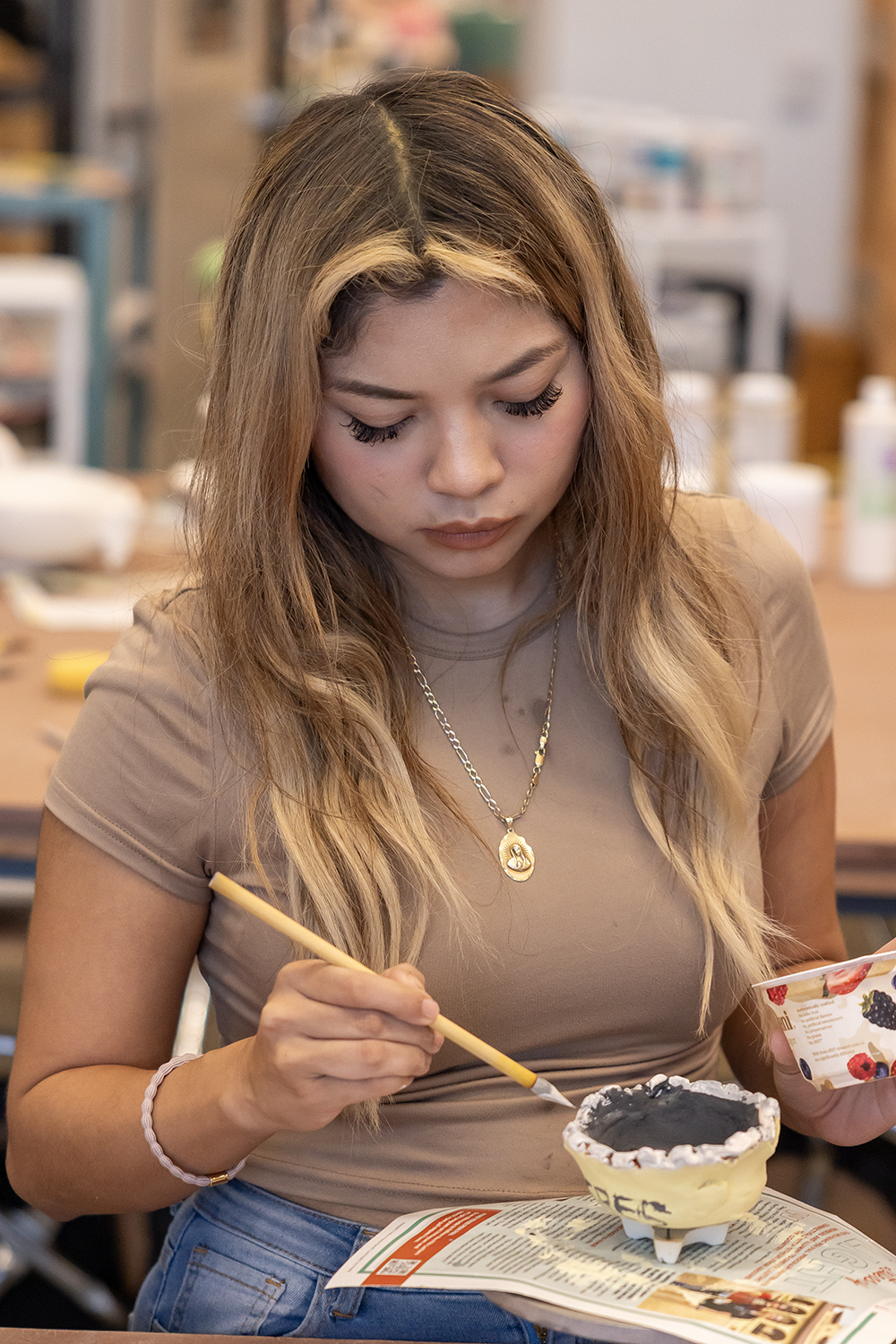
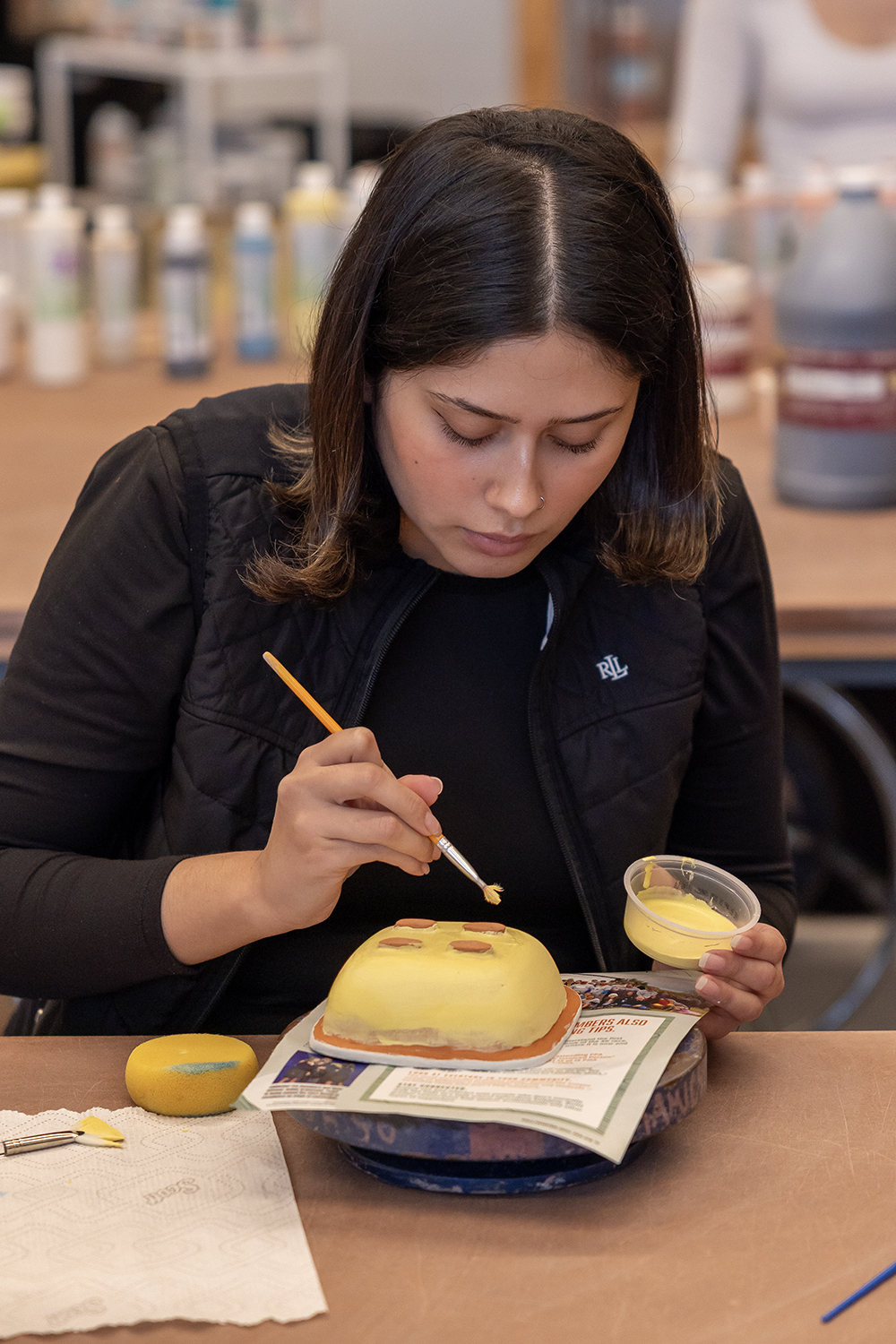
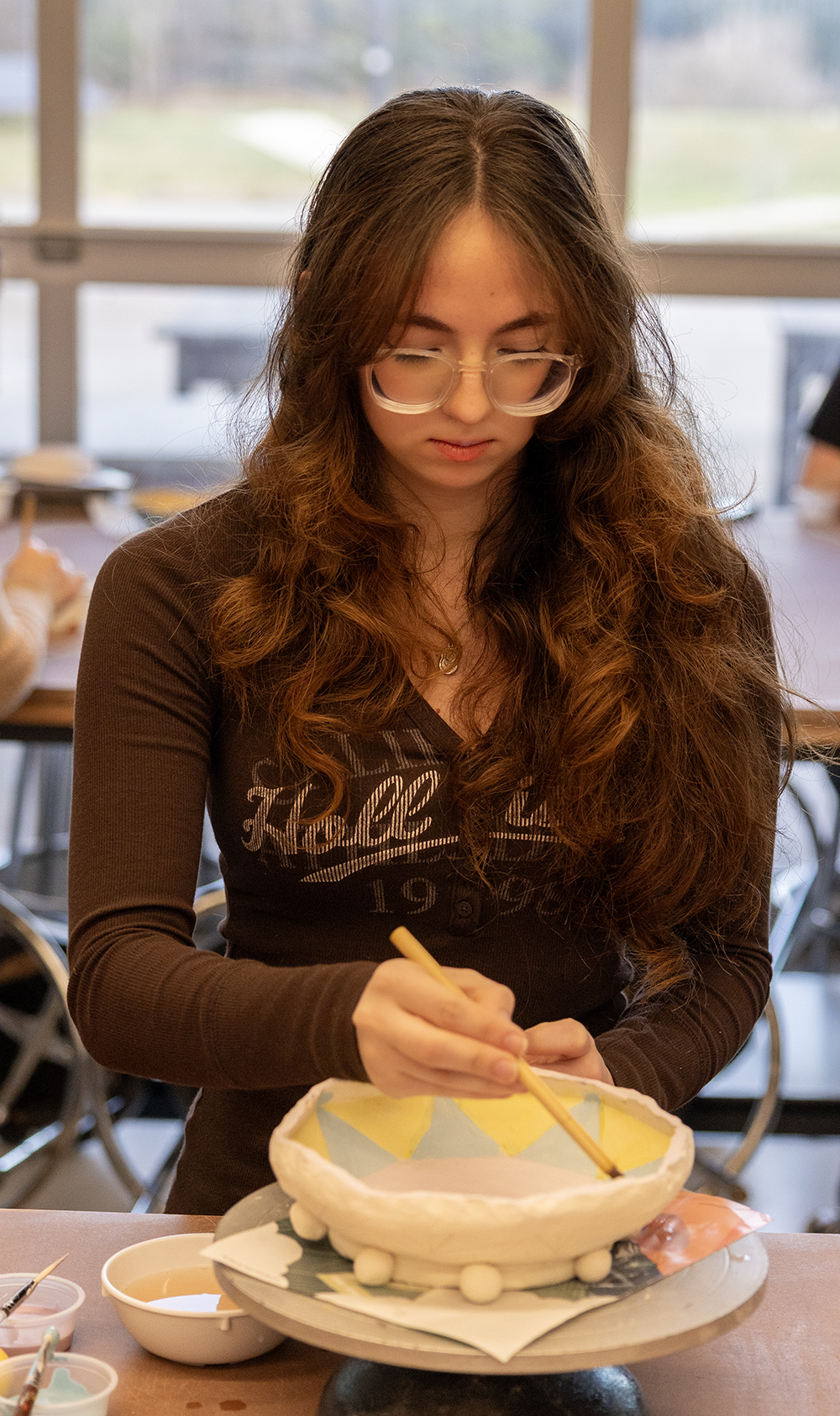
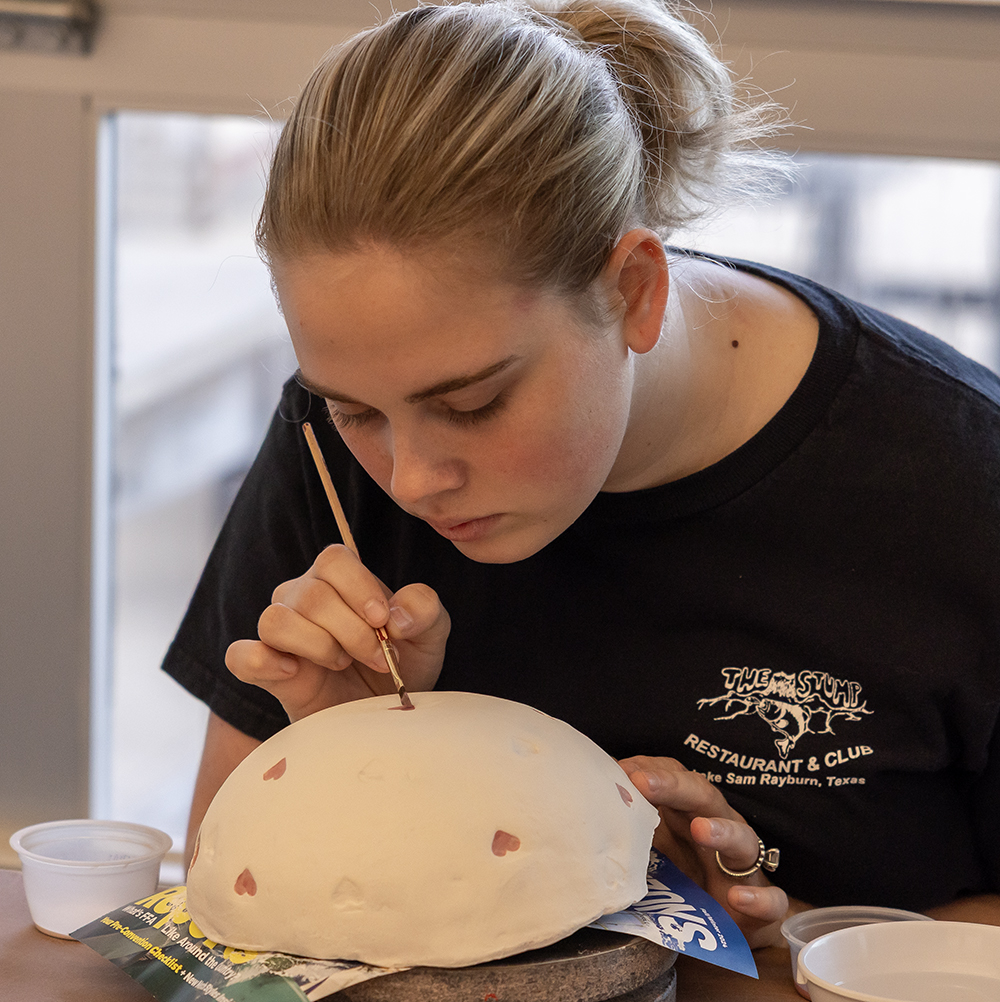
Following a December session of bowl-making–all in preparation of Empty Bowls–LEAP students gathered again to “Glaze a Bowl.”
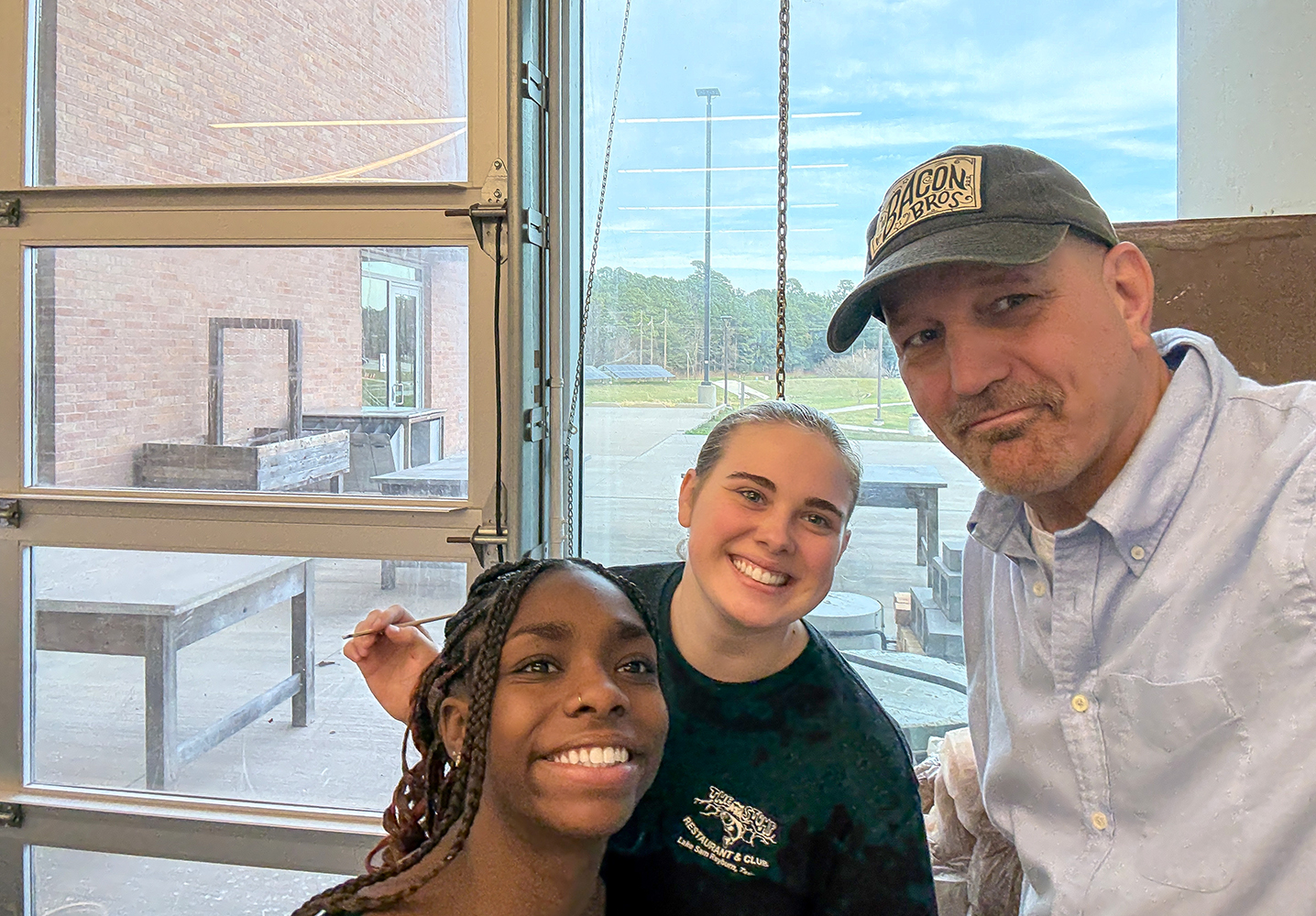
Under the tutelage of Professor Clay, our advanced students did excellent work and our slow students (Yawn) made acceptable work.
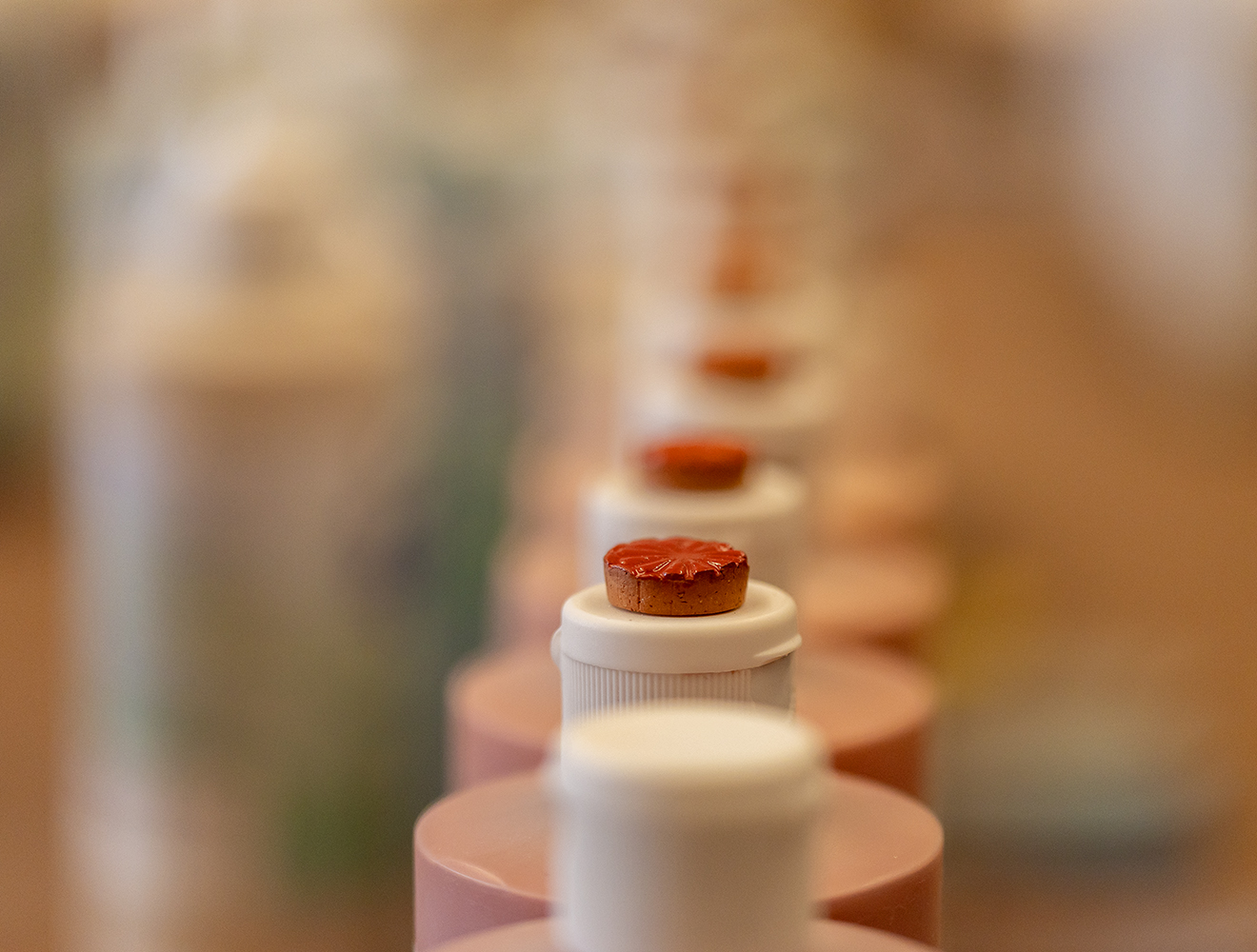
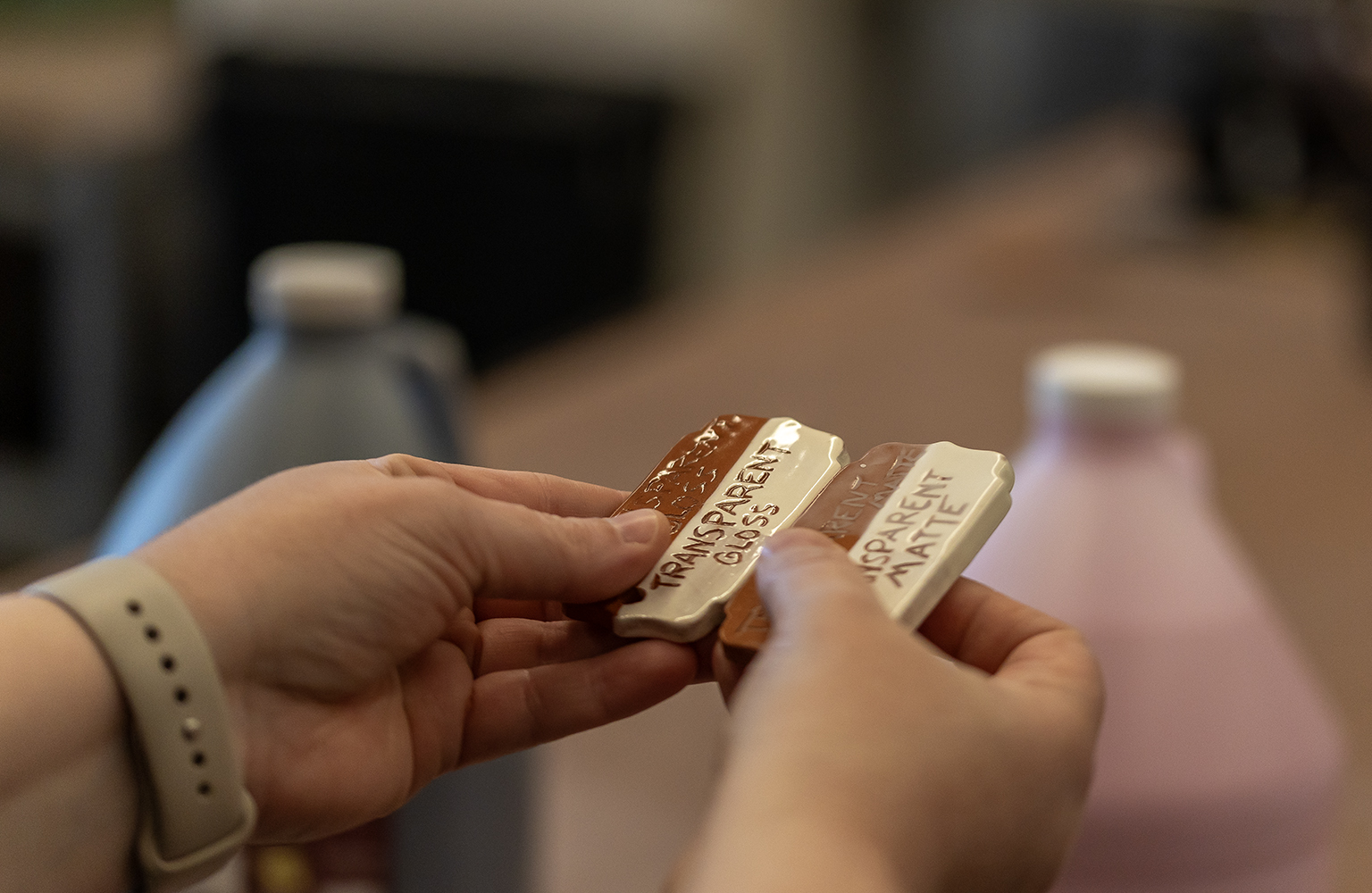
Over the course of a couple of hours, we learned how to anticipate the “look” of a color on a ceramic bowl, the number of layers to add, and where to paint and where not to paint.
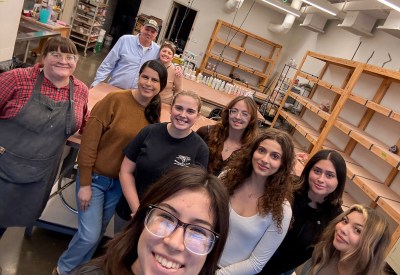
In addition to learning how art works, we also enjoyed the benefits of building social capital. While many of us are SHSU students, we also had professor, and we also had friends–Roxana Alvarado Martinez and her daughter, Gabriella, we met during our citizenship preparatory course, and we have stayed in touch! It is bridging social capital at its best.
Following the glazing, the bowls will go into a kiln (again) and they will be available to their creators on March 4, when the “Empty Bowls Fundraiser” takes place at the Wynne Home Arts and Visitors Center. Between 11am-2pm, the Wynne Home will be offering lunch and a hand-made bowl, available to all comers for a suggested $15.00 donation. Additional bows of the highest quality (not Yawn’s) will be available through silent auction. And what’s best, all of the funds will go to the Senior Center’s “Meals on Wheels.”
We hope everyone will join us in the fun and promote a good cause this March 4!
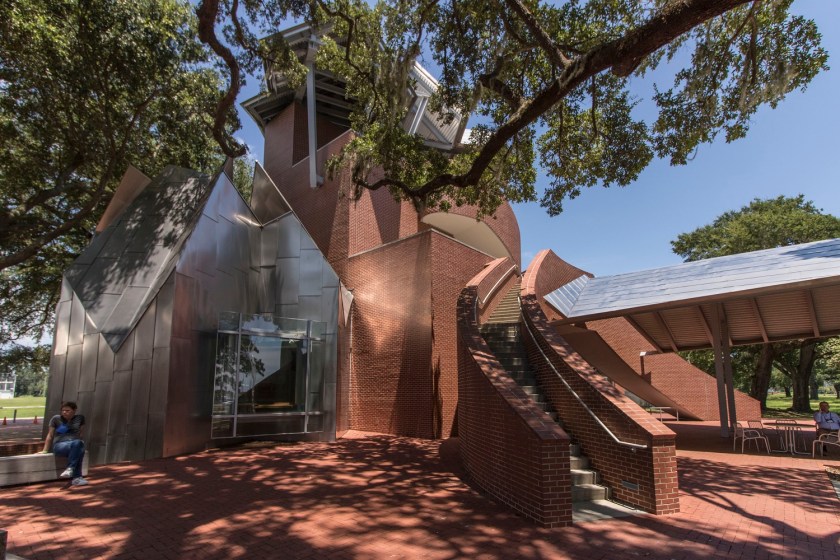
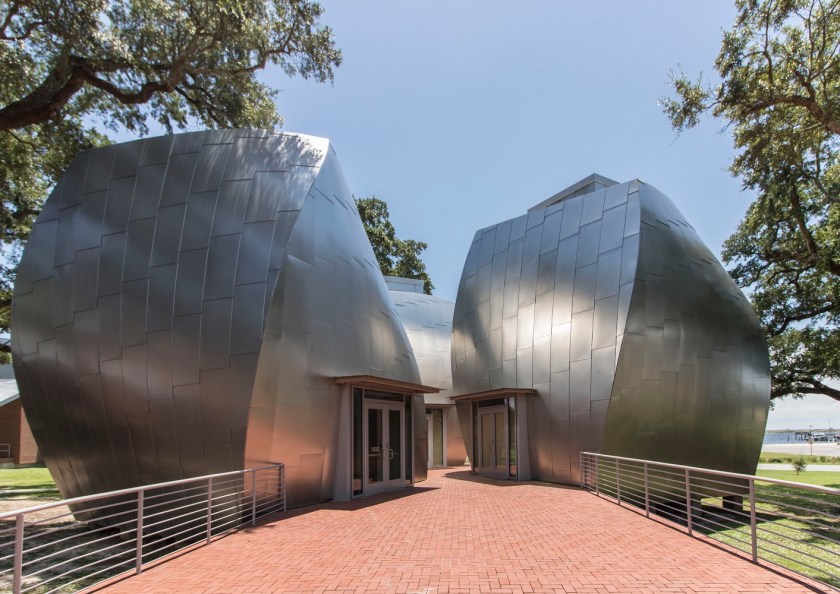
…today was perfect for going out on a Day at the Museums. And our first stop was the Ohr-O’Keefe Museum, which was first planned in the early 2000s. owever, when the actual construction started Hurricane Katrina hit Biloxi, washing away most of the construction. Undaunted, the city began construction again, employing the renowned Frank Gehry as architect.
The buildings have Gehry’s trademark curves and steel, making for an aesthetically stunning Museum (albeit difficult to photograph).
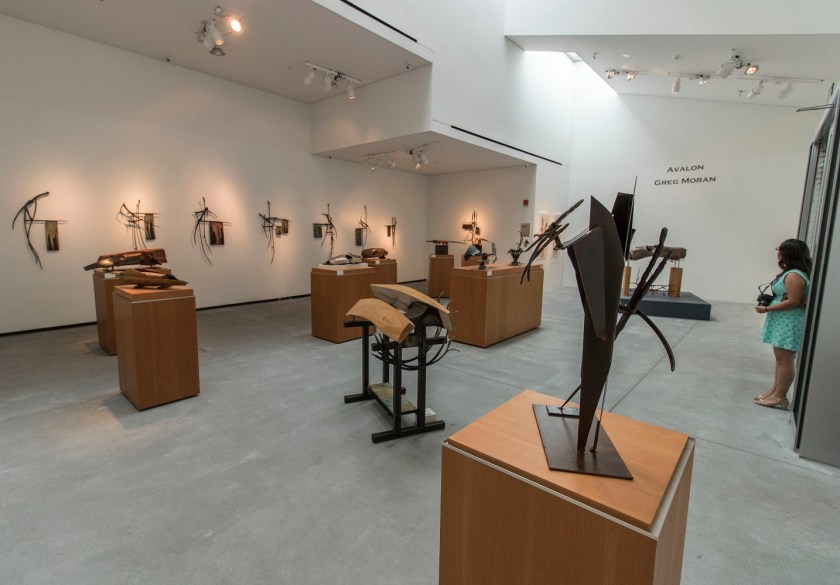
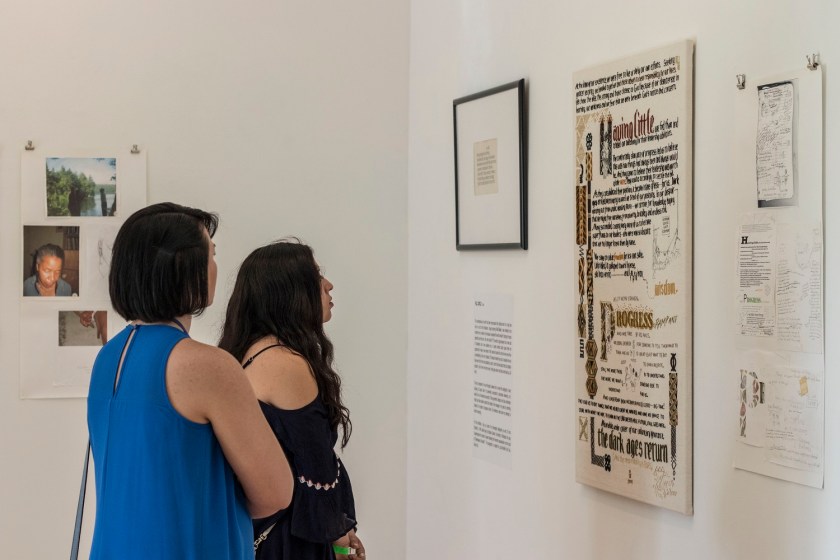
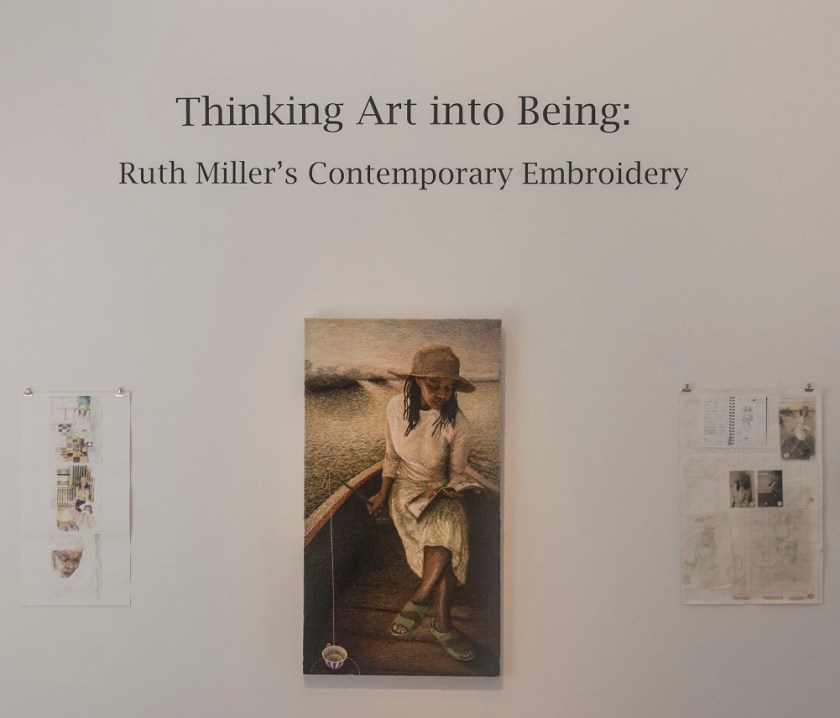
There were two guest artists being showcased at the Ohr-O’Keefe Museum: Ruth Miller and Greg Moran.
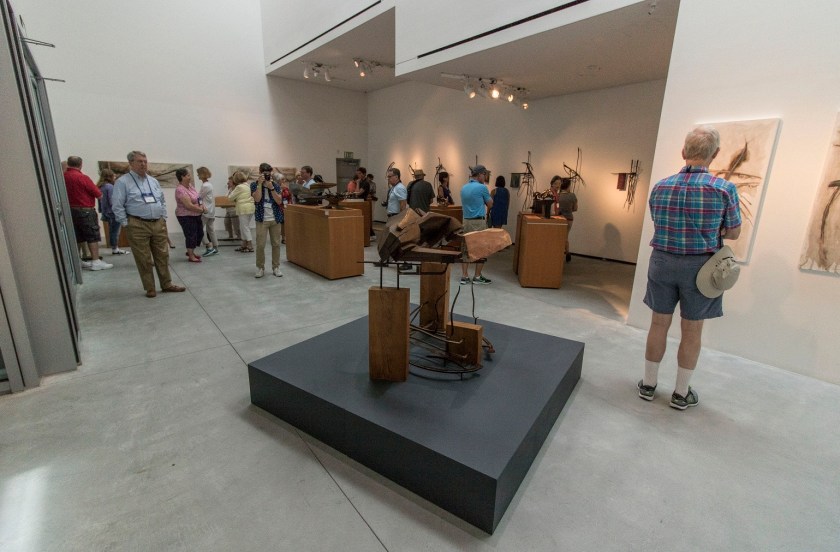
First, we saw the pieces of Mr. Moran.
He mainly deals with different types of metals, wood, and stone to create sculptures and he also designs paintings.
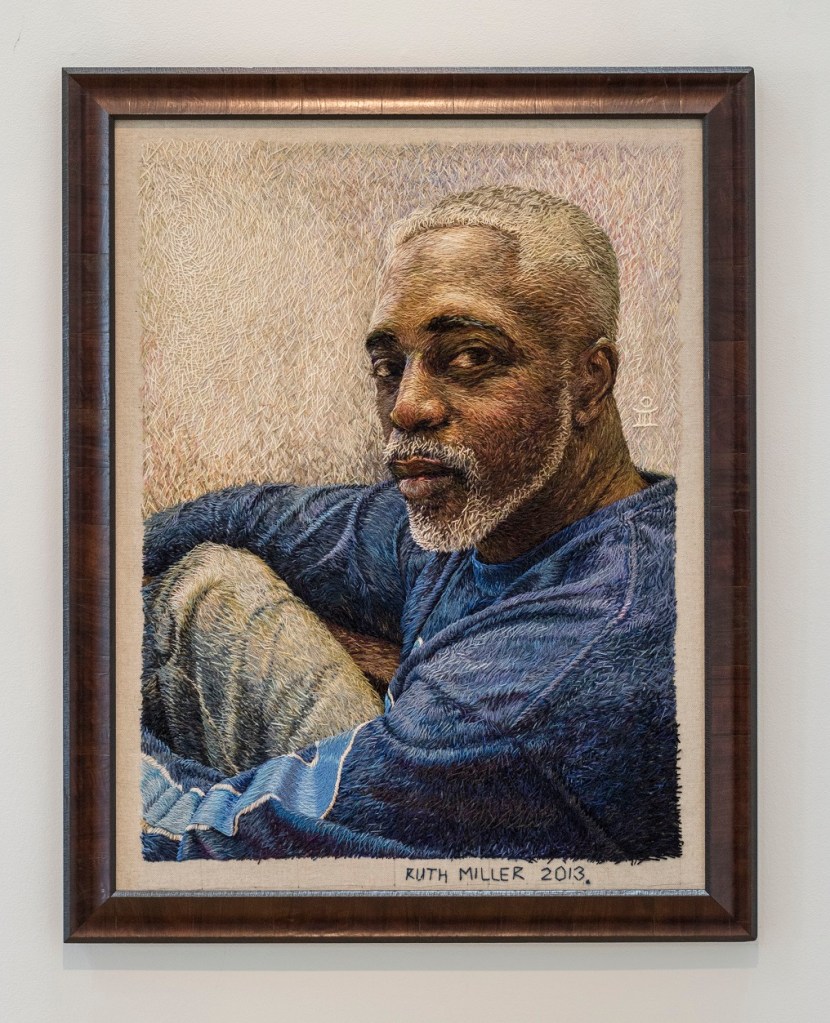
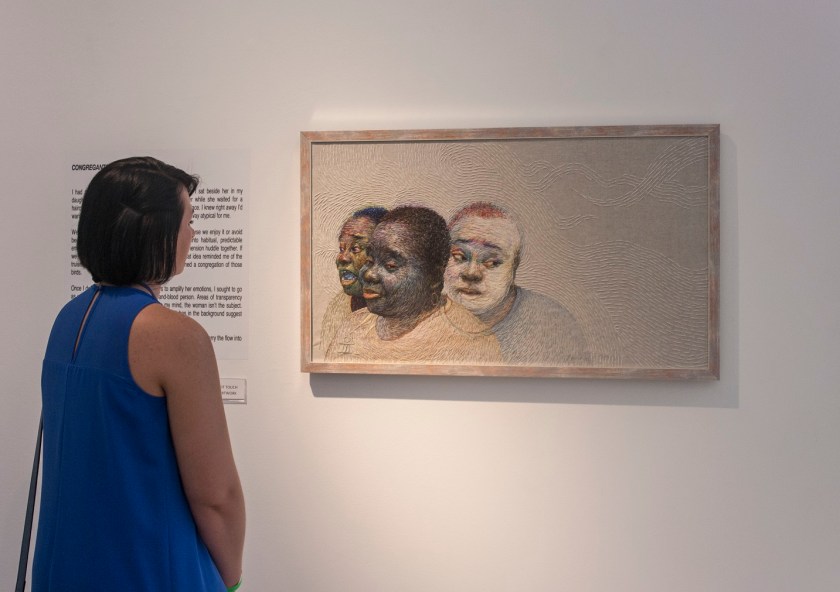
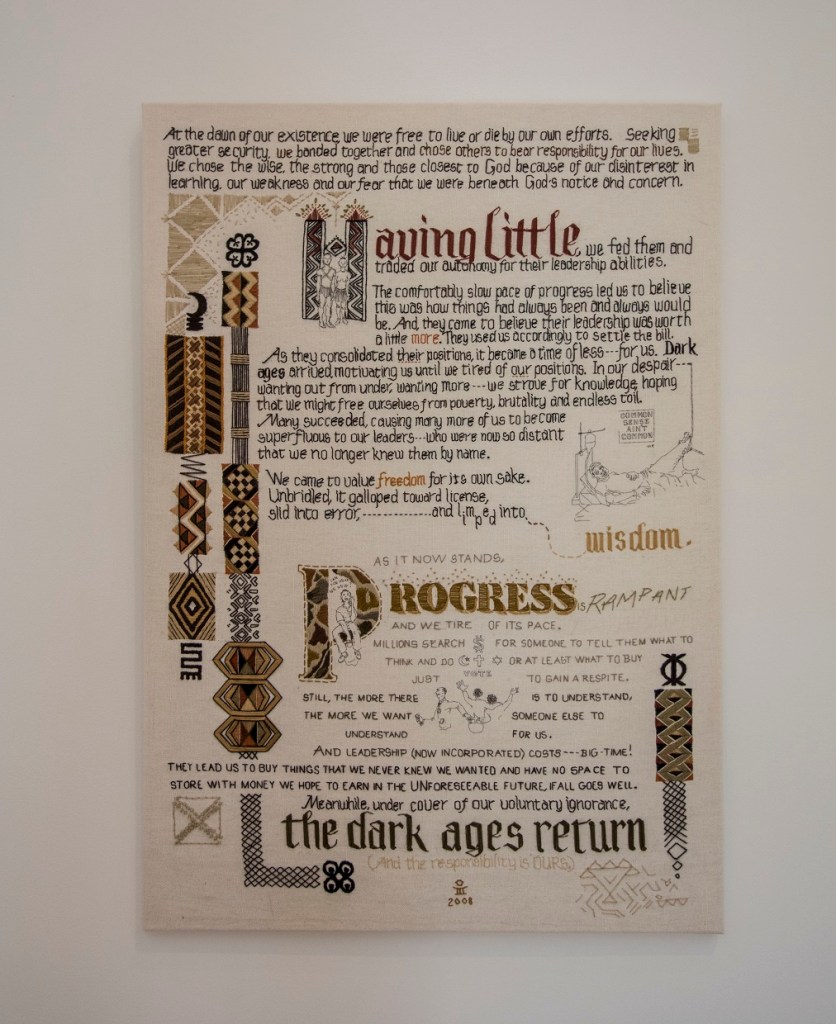
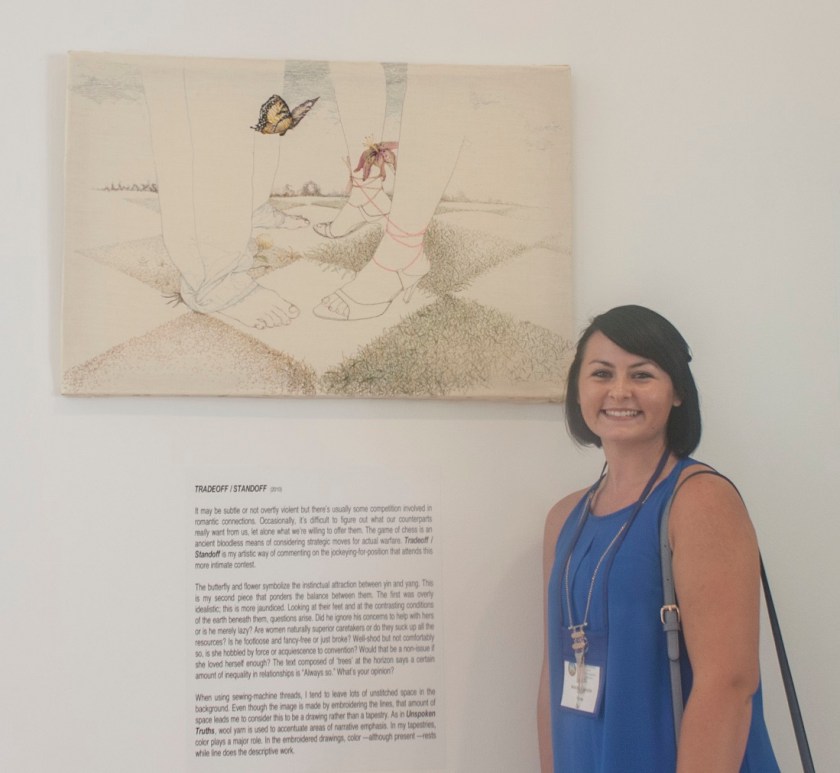
Mrs. Miller also has an interesting method of creating her own type of art.
She uses stitches to bring to life tapestries.
She accomplishes these masterpieces by first taking a picture, then tracing it onto a series of lined paper, and finally towards becoming a stitched artwork.
We had never seen her work, and we were blown away by her skill and technique.
…and we enjoyed going through the entire exhibit.
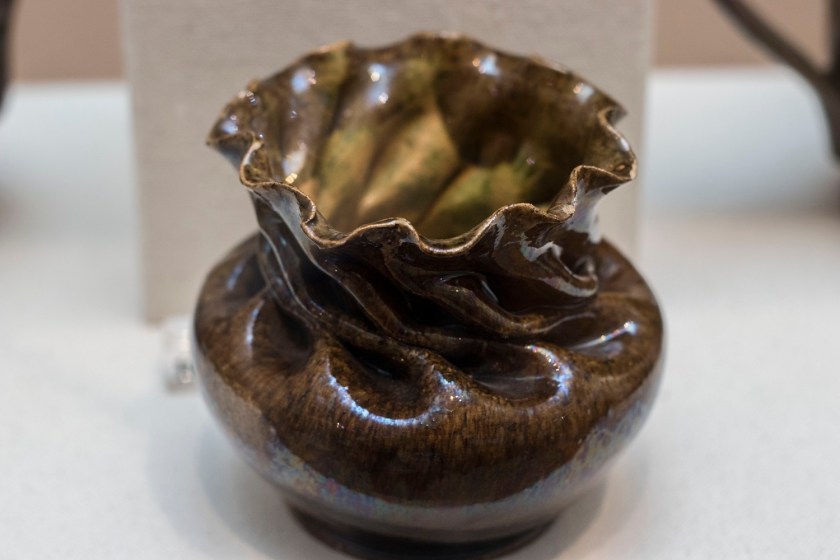
Next, we saw the George Ohr exhibit. There are three defining features of an Ohr piece: 1) having many twists and turns 2) thin walls 3) and lastly naturalistic images.
Ohr had many qualities and charms. He became and eccentric man in order to become more successful. He would stand on his hands in front of his gallery to draw the crowd in, gel his mustache to look like it was being blown in the wind, and he verbalized various quotes that added to his art, such as “This Pot is here, and I am the Potter who was”.
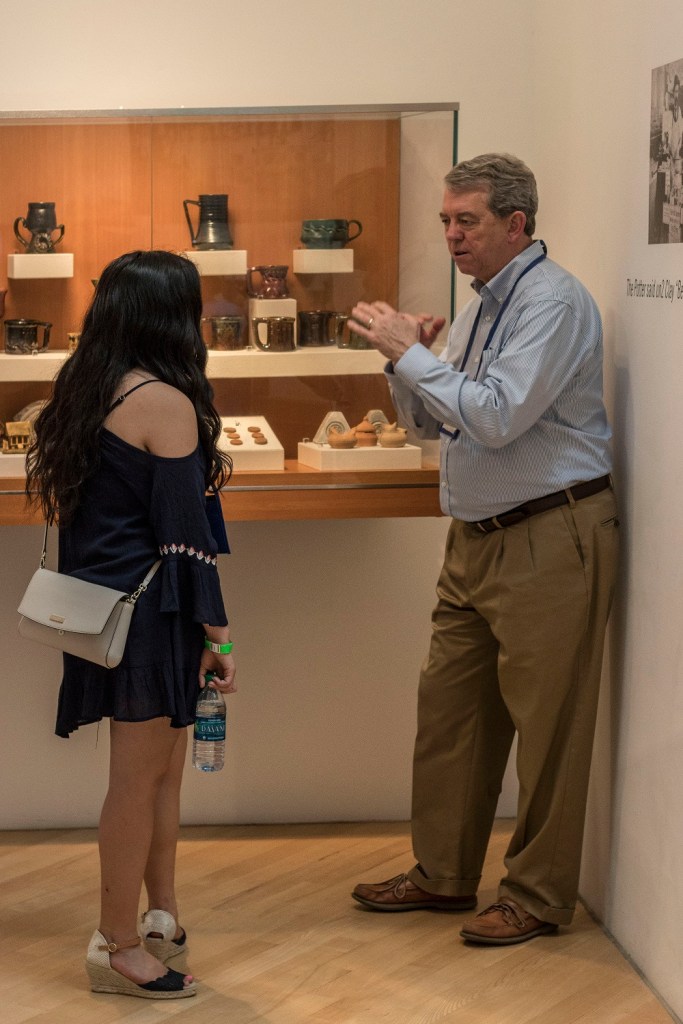
Christina Discusses Ohr Pottery with Kentucky Senator Dorsey Ridley
After these exhibits we took a short break for lunch and then headed to a ceramic workshop.
After a brief tutorial, we each designed–with varying levels of skill–tiles…
As part of our conference participation, the tiles will be glazed and mailed to us. It was fun to learn and, pending the outcome of the tiles, we might even have something to keep!
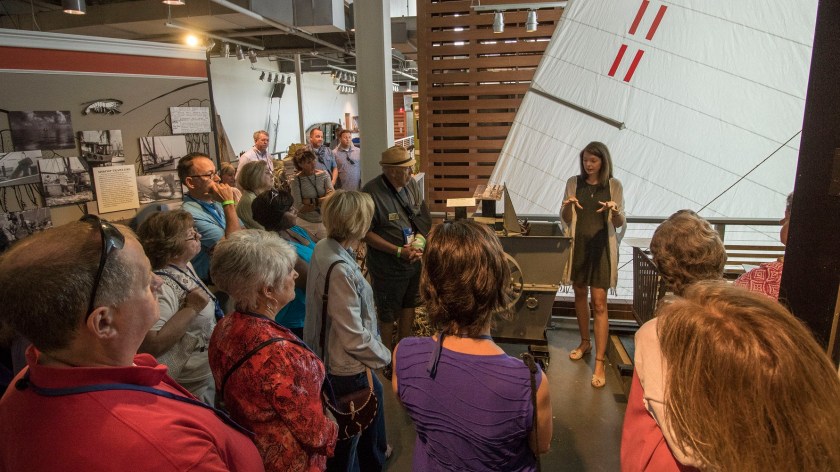
At the next stop, we visited the Maritime and Seafood Museum. Biloxi was once known as the Seafood Capitol of the world, but after Hurricane Camille hit, they lost that title–although they still have a thriving seafood industry. Throughout the entire museum, we learned about the history of the seafood industry in Biloxi.
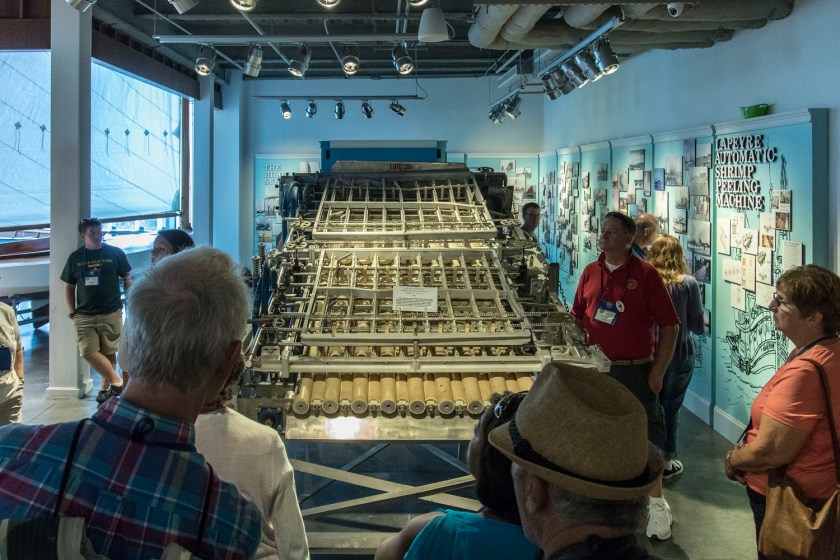
This included poignant stories of specific sea vessels to technological innovations, such as this shrimp-peeling device.
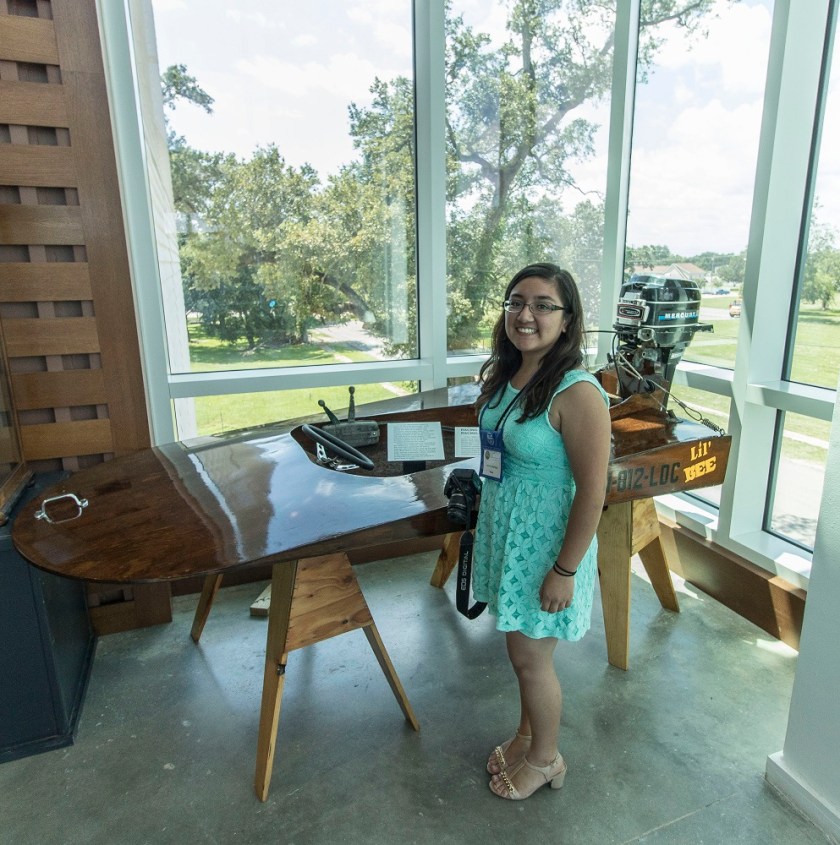
We even found a boat called “Little Bee,” our nickname for Beatriz.
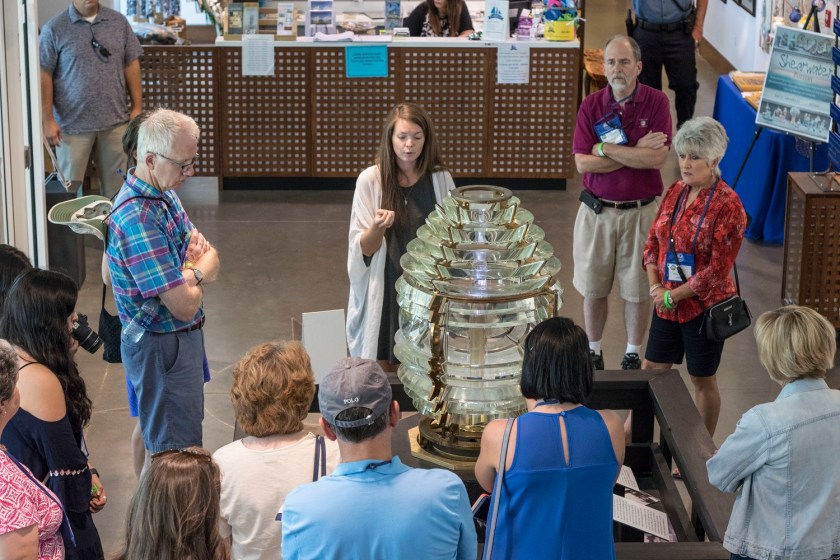
One of the most interesting stories was about the lens from the Ship-Island lighthouse. During the Civil War, Ship-Island was the site of a brief battle, and although the confederates declared victory, they retreated from the island, taking the lens with them. Although it was returned and used again, the lighthouse became obsolete during the 20th century, and the Museum gained control of the Fresnel Lens. During Hurricane Katrine, however, the lens was washed away, breaking into many pieces. Originally crafted in France in 1820, the lens was believed lost forever.
The curator described that restoration as a metaphor for the Gulf Coast, a hardy and durable area that, through teamwork, has managed to come back together after Katrina.
It was an educational day, full of networking and learning. Little did we know what the evening had in store!




 Center for Law, Engagement, and Politics