LEAP Ambassadors Make it to Carnegie Hall!

Carnegie Hall

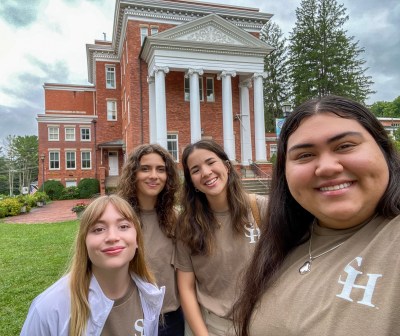
Not everyone can say they made it to Carnegie Hall–but, following a recent trip to the Southern Legislative Conference, the LEAP Ambassadors can! While in the charming historic town of Lewisburg, West Virginia, Ambassadors toured the downtown and its curtilage, coming across Lewisburg’s own Carnegie Hall, one of four continuously used Carnegie performance halls in the world.

While the Hall was actually closed, the organization’s Box Office Manager, Sheila Hutchinson, cheerfully offered us a tour, allowing us to see the building and learn about its operation. The Hall was originally constructed in 1902, with almost $27,000 coming from Andrew Carnegie, and another $10,000 coming from the local community.

For the past 35 years, the Carnegie Hall Inc, a non-profit organization, has operated the building.

The repurposed building now serves as a performance venue, gallery space, and arts education programming open to the community–and passersby, including ourselves! 

As we entered the 400-seat auditorium, we were had the pleasure of meeting Cathy Rennard, the president of the non-profit; and Mary Leb Foster, the Performance Director. They were extremely kind to share their experiences from working at Carnegie Hall, including their preparation for their upcoming musical, The Hunchback of Notre Dame.
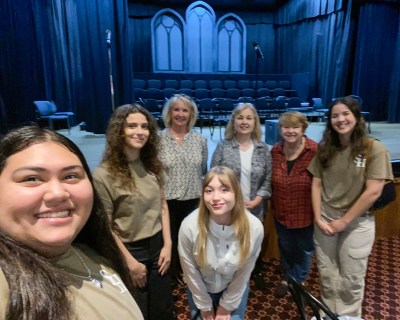
Their work involves not only the things you typically think about when running a theatre (sets, sales, casting), but also community building, something close to our heart. The staff work hard to earn community buy-in, to collaborate with community stakeholders, and to offer a point of pride for West Virginia.

Thank you for the tour and your commitment to the Lewisburg community! 
Caving In: Discovering the Wonders Beneath West Virginia

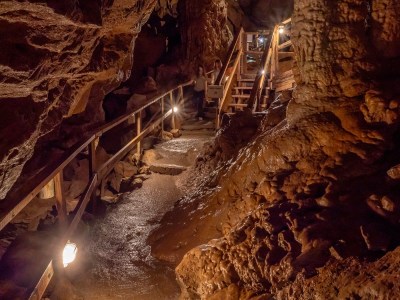
Whenever LEAP Ambassadors have the opportunity to travel, we make the most of it. So it was that on an off morning of conference sessions, we stepped foot into the Lost World Caverns which, for many of us, was the first time stepping foot into a cave.

Discovered in 1942, these caverns have become a popular destination, offering a fascinating glimpse into the subterranean world carved out over millions of years by the relentless force of water.

Originally, the only way into the cave was through a hole in the ground, and “visitors” had to be lowered in by rope, and then hauled out in reverse.

For us, it was much easier. We entered through a man-made opening, we were immediately struck by the chill in the air, a stark contrast to the surface temperatures. The sound of dripping water echoed (literally!) around us, setting the stage for the natural wonders we were about to witness.

Inside, the caverns revealed spectacular dripstone speleothems, including stalactites and stalagmites.

These formations, created by the slow deposition of minerals from dripping water, were breathtaking. We were particularly fascinated by the columns referred to as “soda straws” or “pencil stalactites,” delicate formations that looked as though they could be easily snapped. 

The formations themselves, with whimsical names like the “Pig Tail,” and “The Veil” left us in awe. Each turn in the path revealed a new and stunning sight, and it was hard not to be overwhelmed by the beauty and intricacy of the cave’s interior.

I didn’t really know what to expect, but from the beginning, it was clear that this was a unique and special place.

The views were unlike anything I had ever seen before, with each rock formation appearing both immense and intricately detailed.

It’s amazing to know that the Earth presents its beauty not only on the surface but also beneath it. Most importantly we all had fun caving in to our sense of adventure!