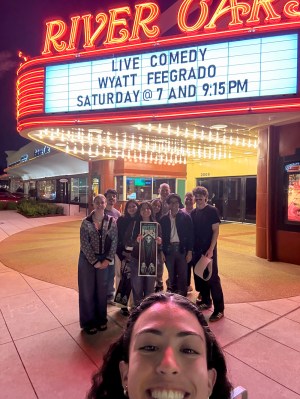
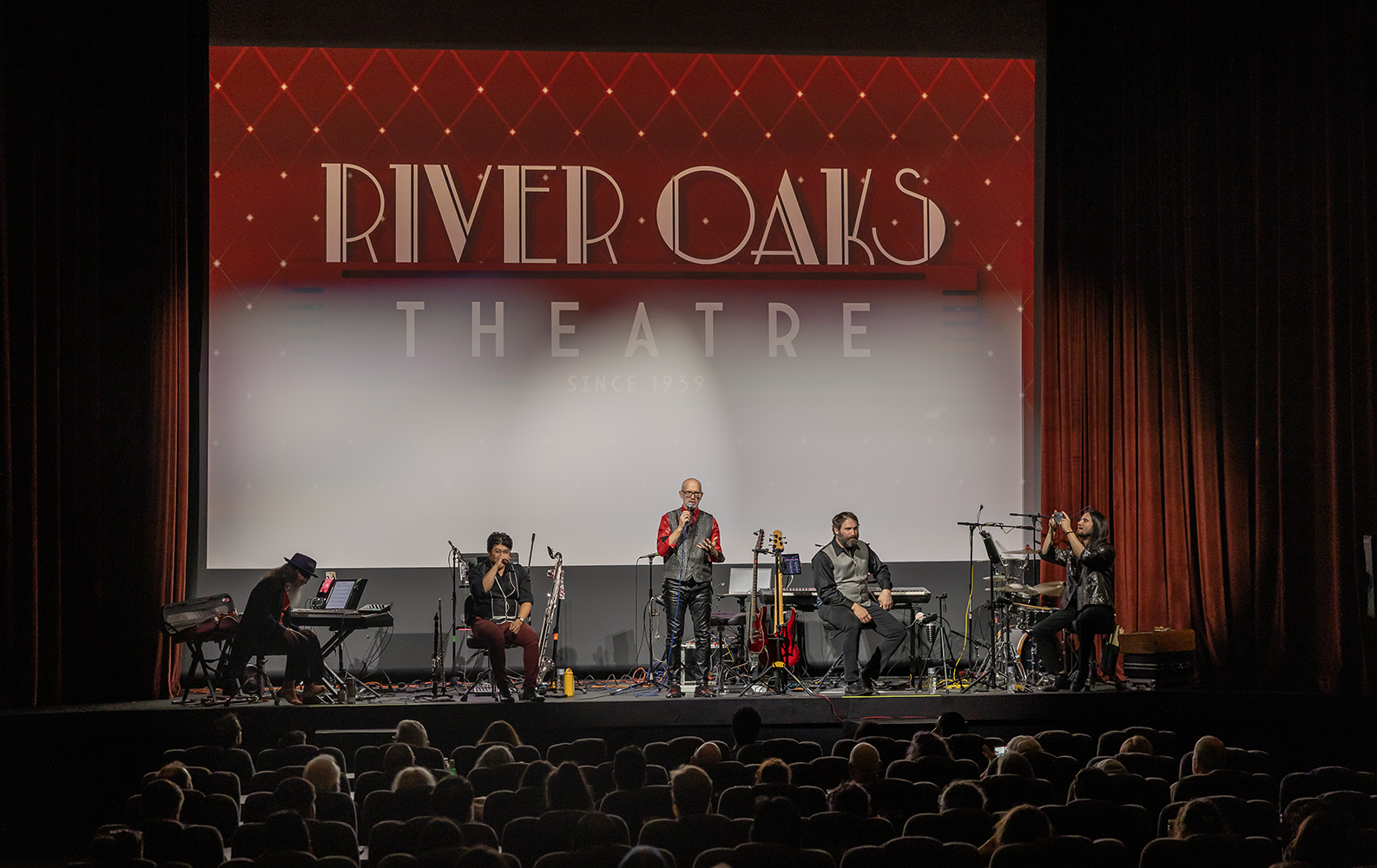
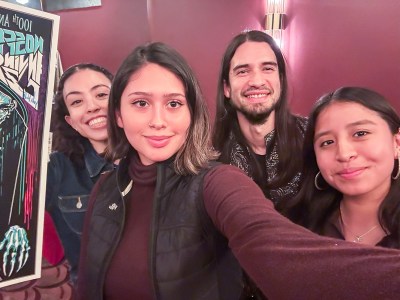
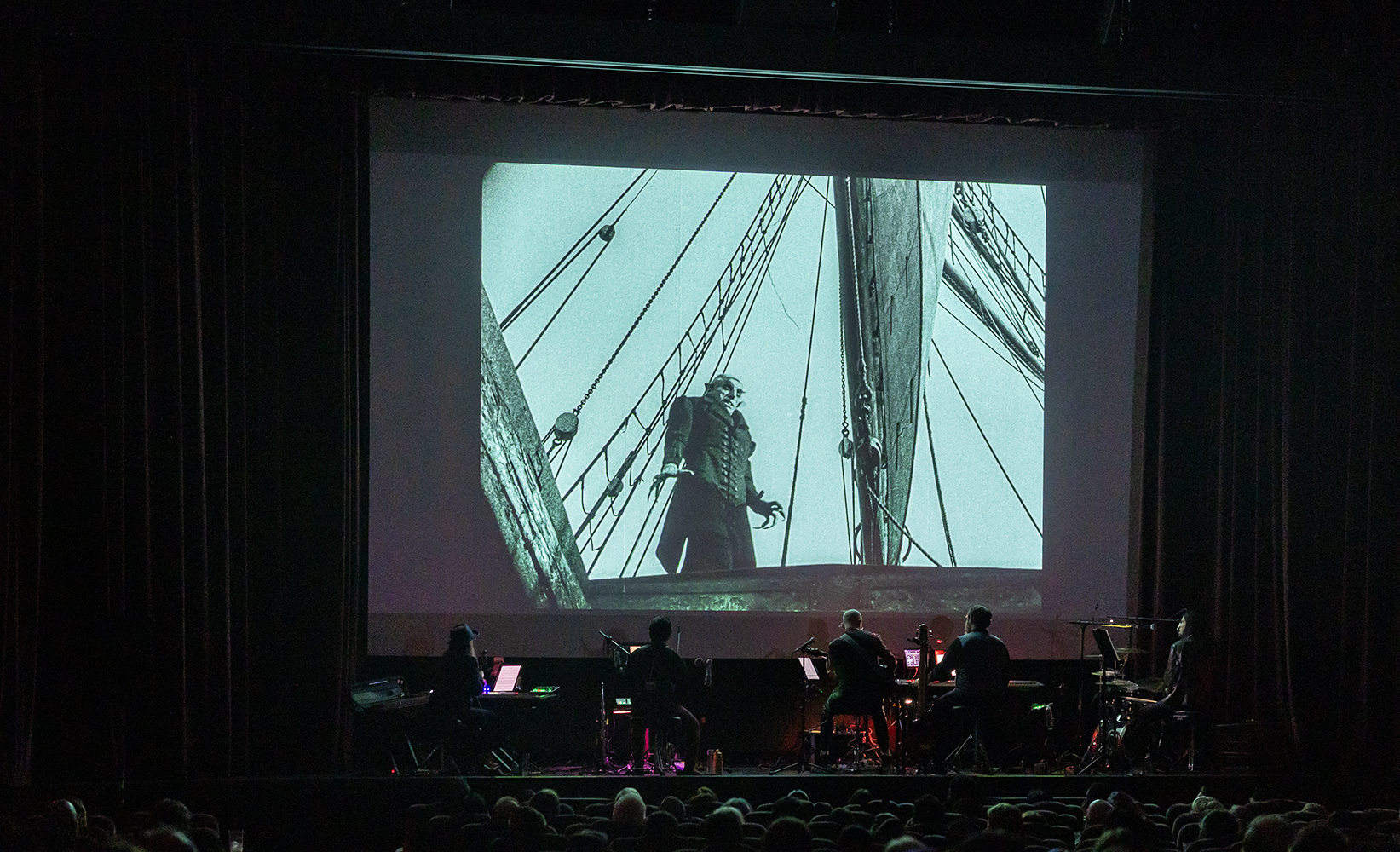
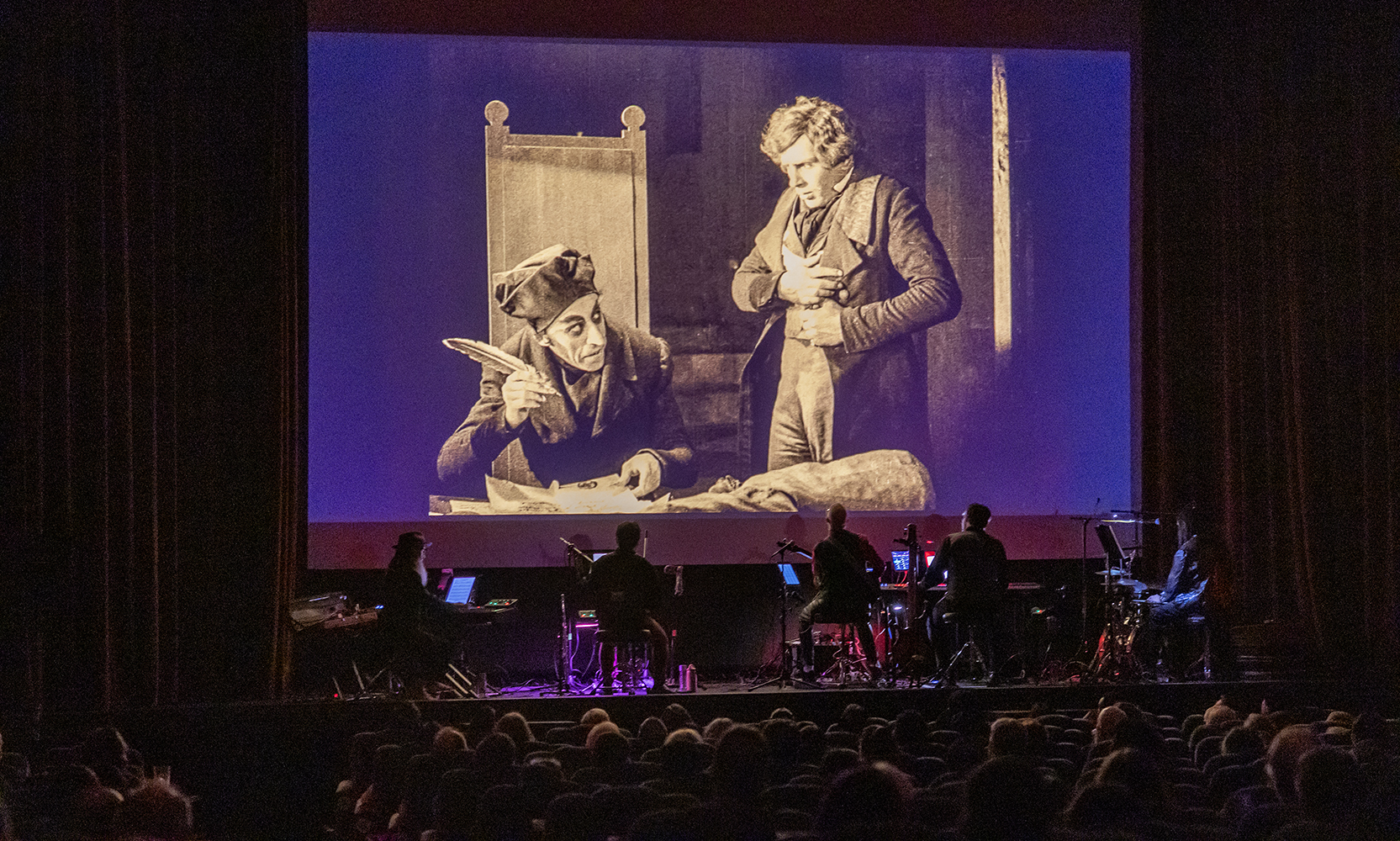
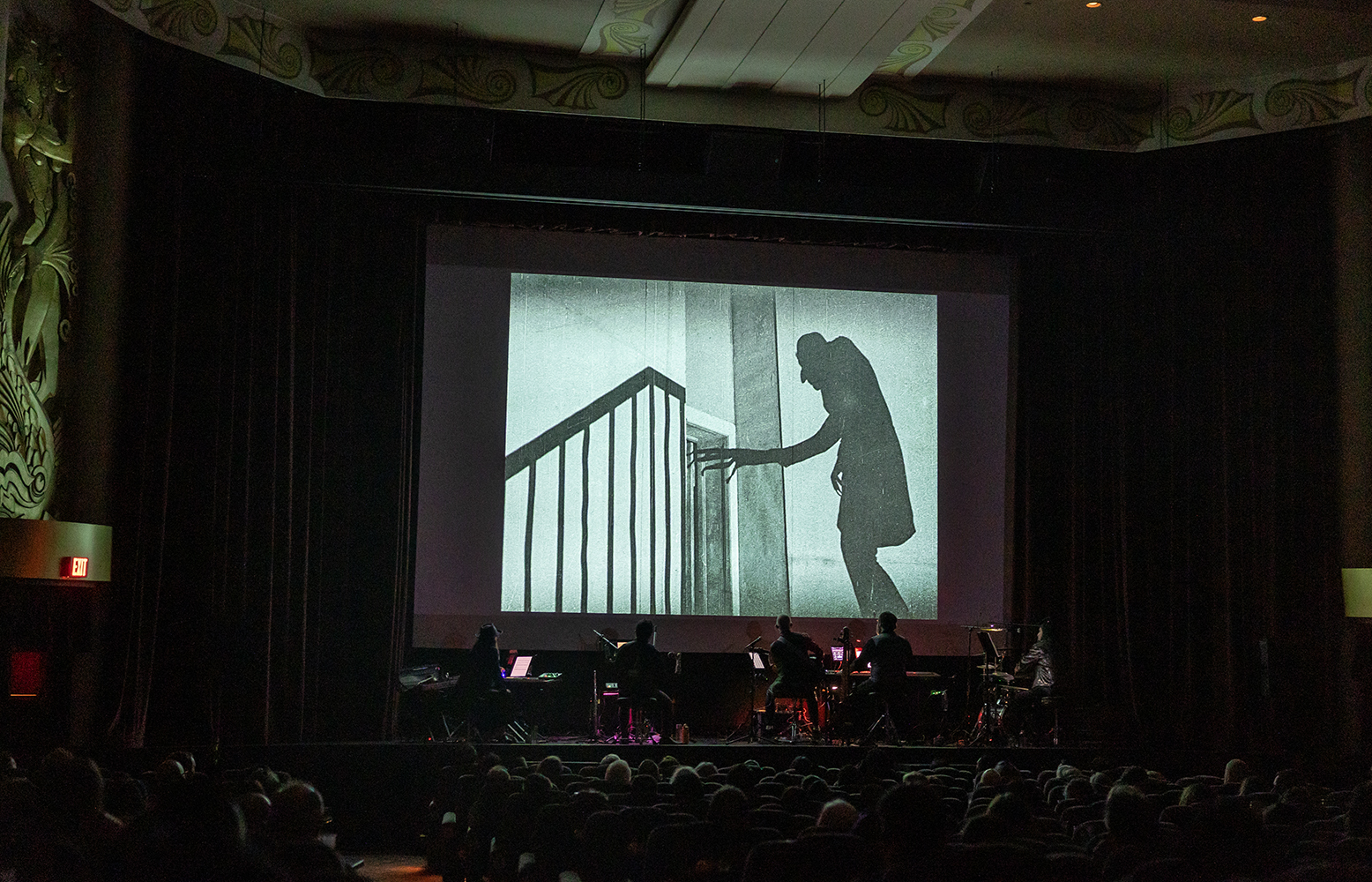
Nine students and former students with The Center for Law, Engagement, and Politics (LEAP) attended a screening of the 1922 silent horror film Nosferatu at the historic River Oaks Theatre in Houston, Texas. While this outing certainly carried the spirit of the post-Halloween season and the eerie charm associated with early cinematic horror, it also reflected the Center’s continued effort to expand students’ engagement with the humanities, exposure to diverse forms of storytelling, and expanded cultural horizons.
The River Oaks Theatre itself provided a fitting environment. Its historic charm and architecture evoke a theatrical experience that captures some of the magic of silent and golden-age cinema.
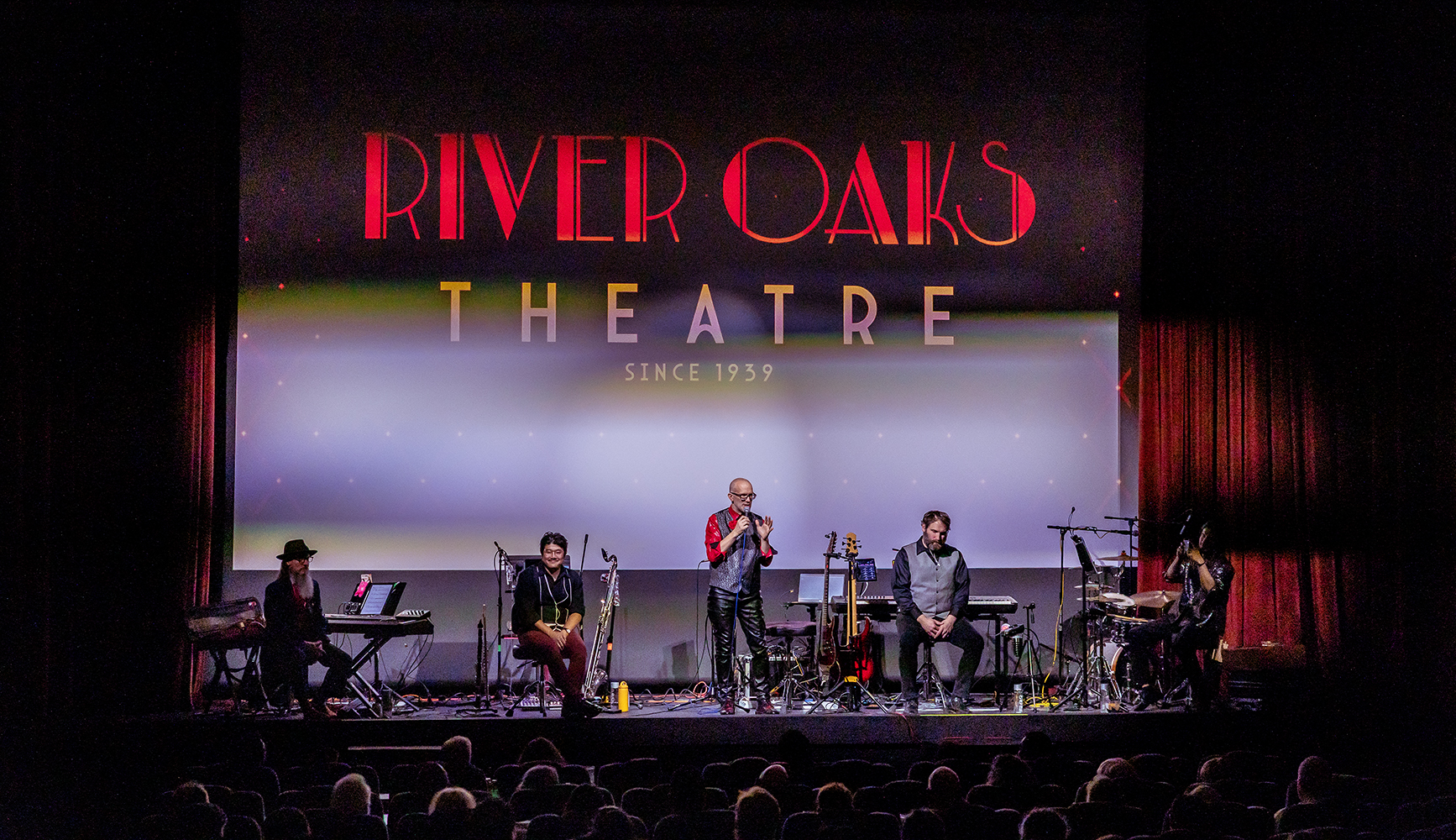
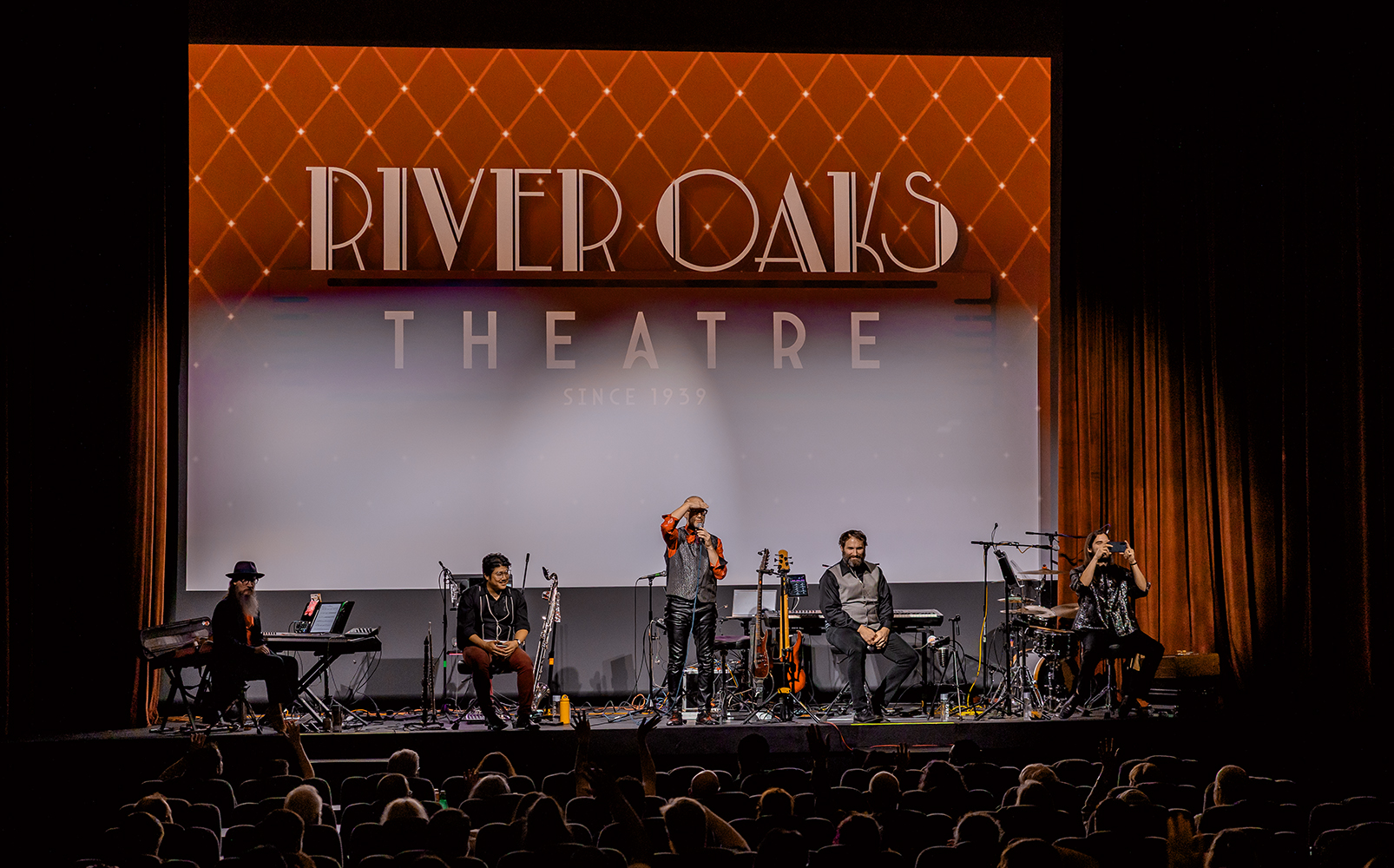
Enhancing the screening was a live musical performance by The Invincible Czars, who created the film’s soundtrack live on stage with instrumentation ranging from classical to experimental. Their approach complemented the film with sounds that provided humor, subtle tension, and dramatic intensity.
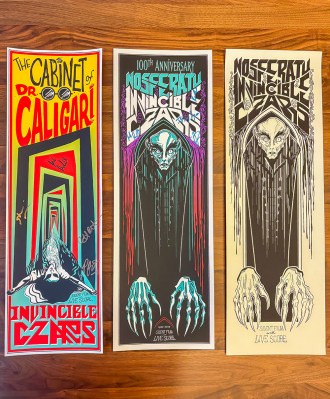
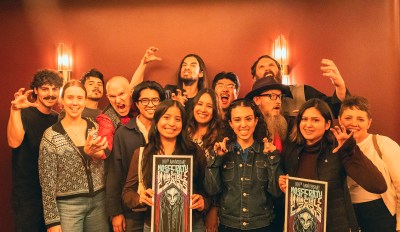
After the screening, the LEAP students were able to meet the band members and take photographs with the band, while also purchasing movie posters.
While the subject matter — a vampire narrative involving shadows, dread, and ancient evil — is unquestionably spooky, the evening itself reinforced a central purpose of LEAP: experiential learning that blends the artistic, the cultural, and the civic.
Movies like Nosferatu do not just entertain; they help illuminate how societies imagine danger, power, and the supernatural.
This outing offered students a unique opportunity to experience history, art, and performance simultaneously — in a way that was appropriately seasonal, academically rich, and wonderfully haunting.
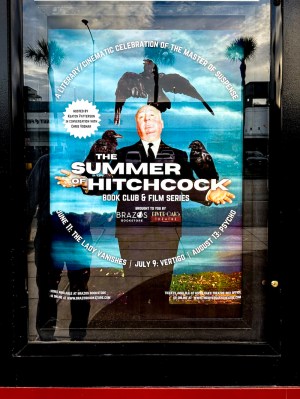
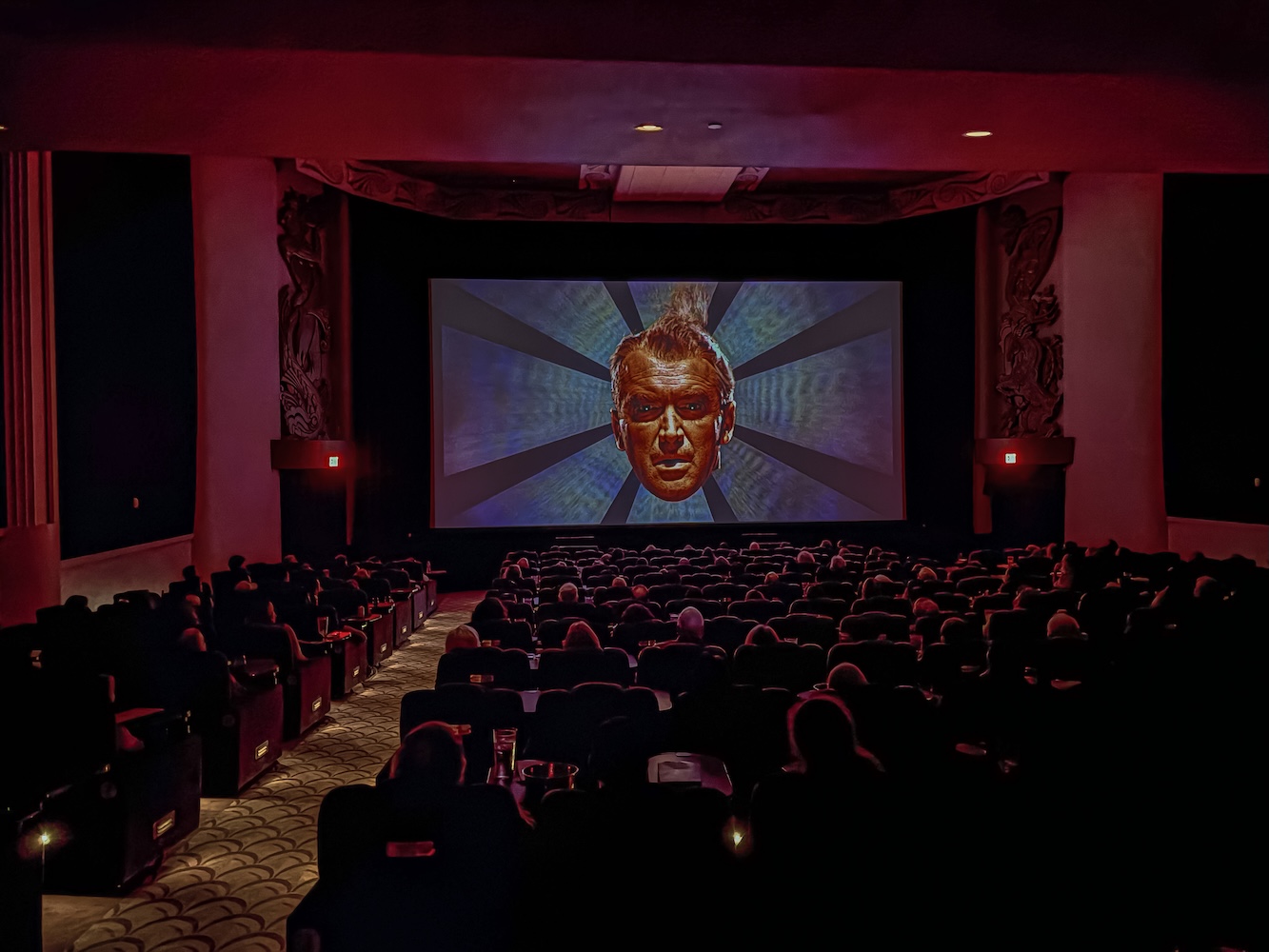
In classic LEAP fashion current students and LEAP alumni joined forces in Houston for a viewing of one of Hollywood’s most celebrated films, Alfred Hitchcock’s Vertigo. The screening is part of The Summer of Hitchcock, a joint literary venture between Brazos Bookstore and River Oaks Theatre.
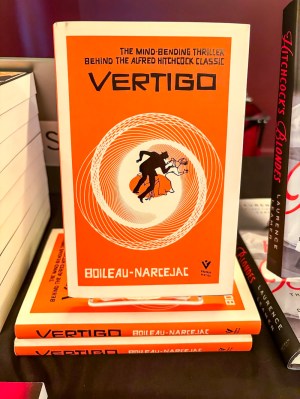
As part of this summer project, Houston-area Hitchcock fans are invited to read “The Lady Vanishes,” “Vertigo,” and “Psycho,” and watch the film adaptations directed by the Master of Suspense at the newly re-opened River Oaks Theatre.
With its glistening art deco marquee, this 1939 theatre is nestled on West Grey St. in one of the most emblematic Houston neighborhoods, for which the theatre is named. Following a post-pandemic closure of the theatre, which many Houston area cinephiles feared would be permanent (this writer included), the theater finally re-opened last October. While it retained its screening of classic, contemporary, and independent movies, the interior has been renovated to adapt to the new movie-goer expectations, while also offering seat-side meal service.
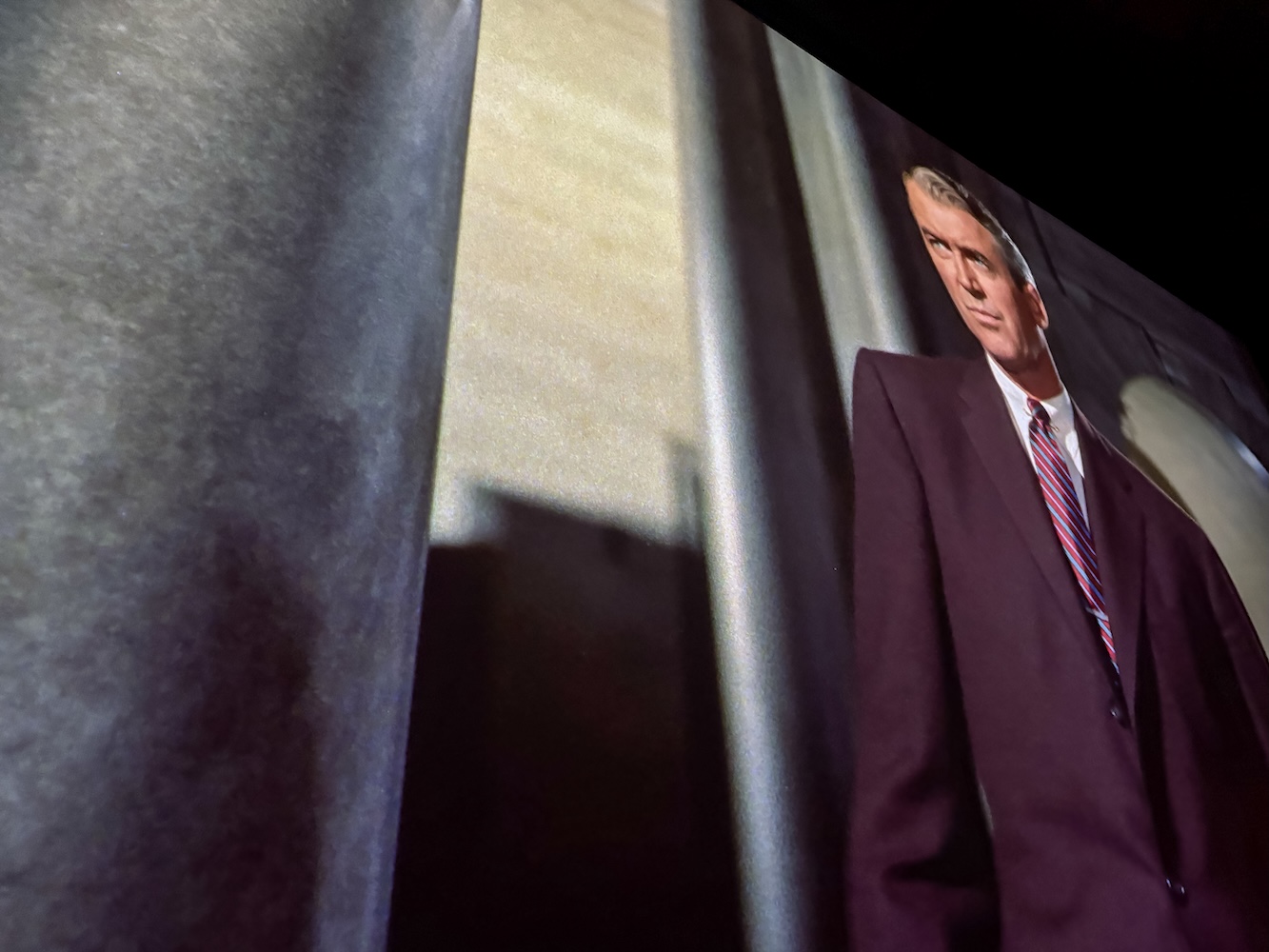
For most of the group members that joined us at the showing, it was our first time watching this adaptation of Pierre Boileau and Thomas Narcejac’s French novel “D’entre les morts” (“Among the Dead”). Released in 1958, Vertigo follows a mysterious investigation led by a recently retired San Francisco detective. Tasked by an old college friend to follow his wife who is feared to be obsessively replicating the actions of a mysterious ancestor, the former detective, played by Jimmy Stewart, along with the equally intrigued audience, tour the city of San Francisco while trailing the college friend’s wife, played by Kim Novak.
The film has been widely praised, and in fact, was ranked as the greatest film of all time in a 2012 poll of international film critics (it “slipped” to #2 in 2022). Nonetheless, the craftsmanship managed to impress and surprise. In Hitchcockian fashion, the narrative is told through expertly orchestrated POV and over-the-shoulder shots, evoking a sense of voyeurism of which the movie’s protagonist extensively takes part in throughout his investigation.
The film showcases the costume design of Hollywood legend Edith Head, which complements the equally impressive cinematography of Robert Burkes, whose striking use of color film stock (and color theory), impressive panoramas of San Francisco and San Francisco Bay, and a subjective camera contribute to the film’s beauty and psychological themes.
Such cinematic feats are perhaps most famously illustrated by the “Vertigo Zoom,” engineered by second-unit cameraman Irmin Roberts. Ask by Hitchcock to create a visual metaphor for the protagonist’s vertigo, Roberts used a subjective camera (from Stewart’s perspective) and dollied the camera toward the ground level of a staircase while simultaneously zooming the lens out (or away) from the ground level.
This effect has since been used in countless films, most famously in “Jaws,” “Goodfellas,” and “The Lord of the Rings.”
Vertigo, as with many of Hitchcock’s works, is a testament to the range of emotions that can be transmitted to an audience through stellar acting, a vivid imagination, and plethoric cinematic techniques implemented by an auteur director with a clear vision.
The whole experience reminds the viewer that this piece of cinematic literature deserves contemplation in a proper movie theatre. In the Houston of 2025, Star-Cinema-Grill owned or not, it’s difficult to think of a better site than River Oaks Theatre, and even more difficult to think of a better group of people with whom to see it.






 Center for Law, Engagement, and Politics