Here’s Looking at You, LEAP: A Night with Casablanca

Written by Allie Plunk

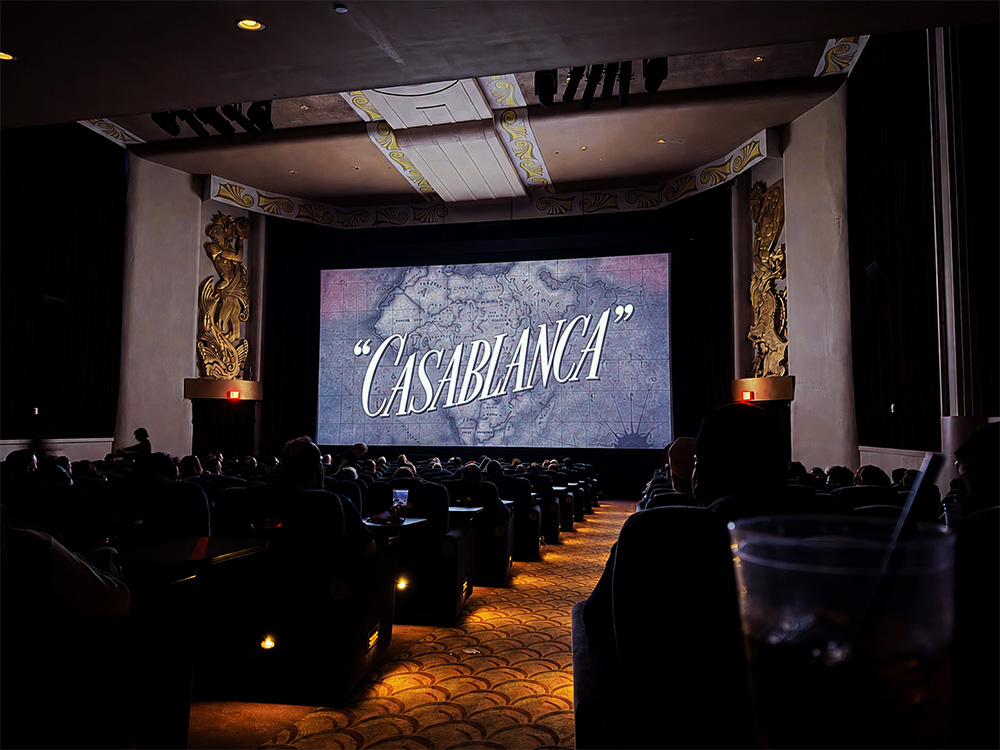
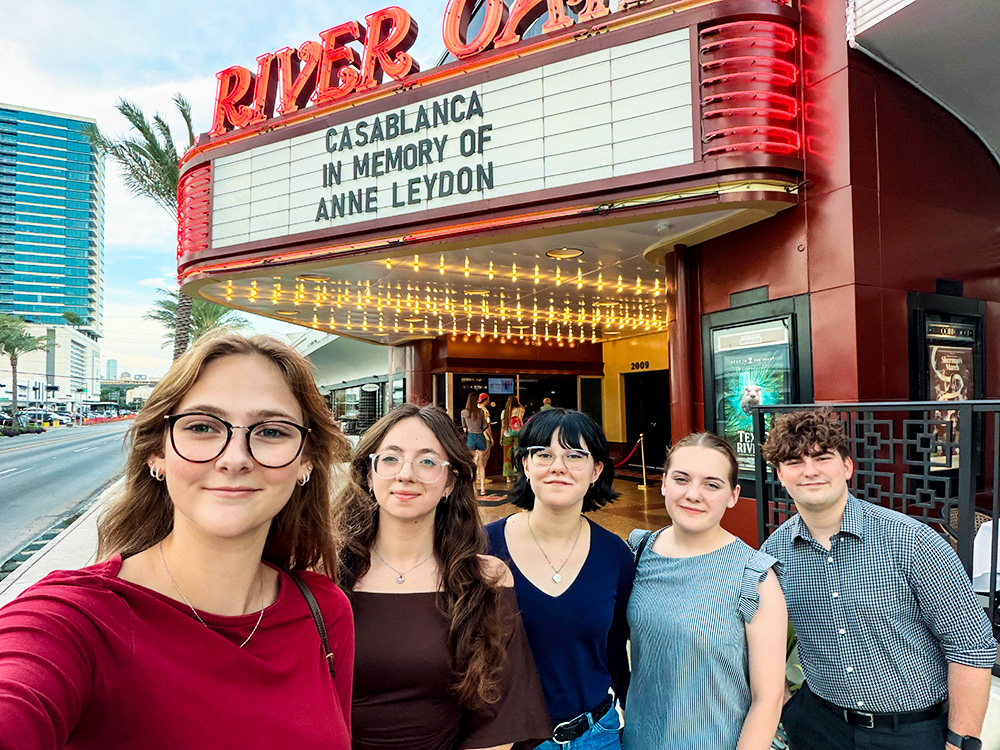
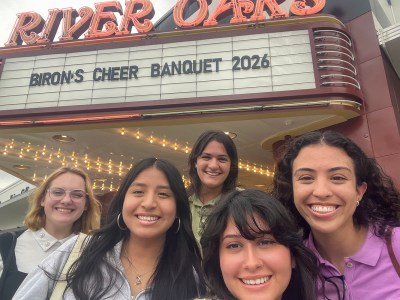
Last Thursday, LEAP Ambassadors got the chance to step back in time and experience the classic film Casablanca at River Oaks Theatre!

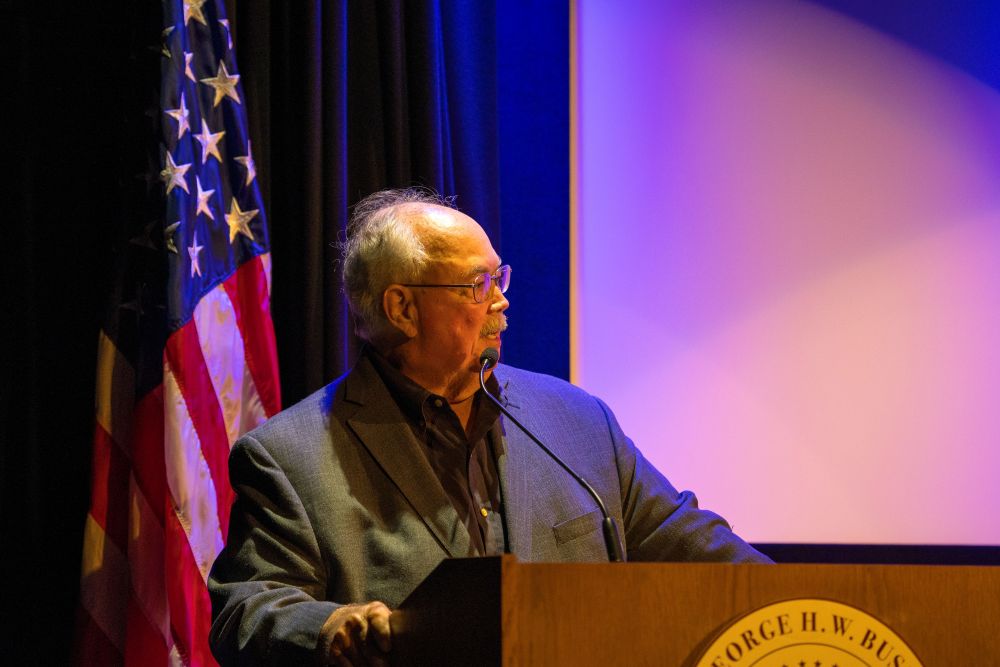
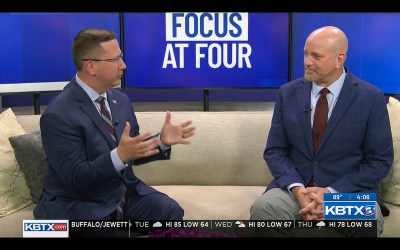
Once we arrived, we quickly found our seats and settled in for the show. Before the film began, Robert Saucedo, River Oaks Theatre’s Artistic Manager, shared a few brief remarks before introducing film critic Joe Leydon. Leydon dedicated the screening to his late wife, Anne Leydon, and shared a touching message about how people live on through the things they love. For Anne, that was Casablanca.

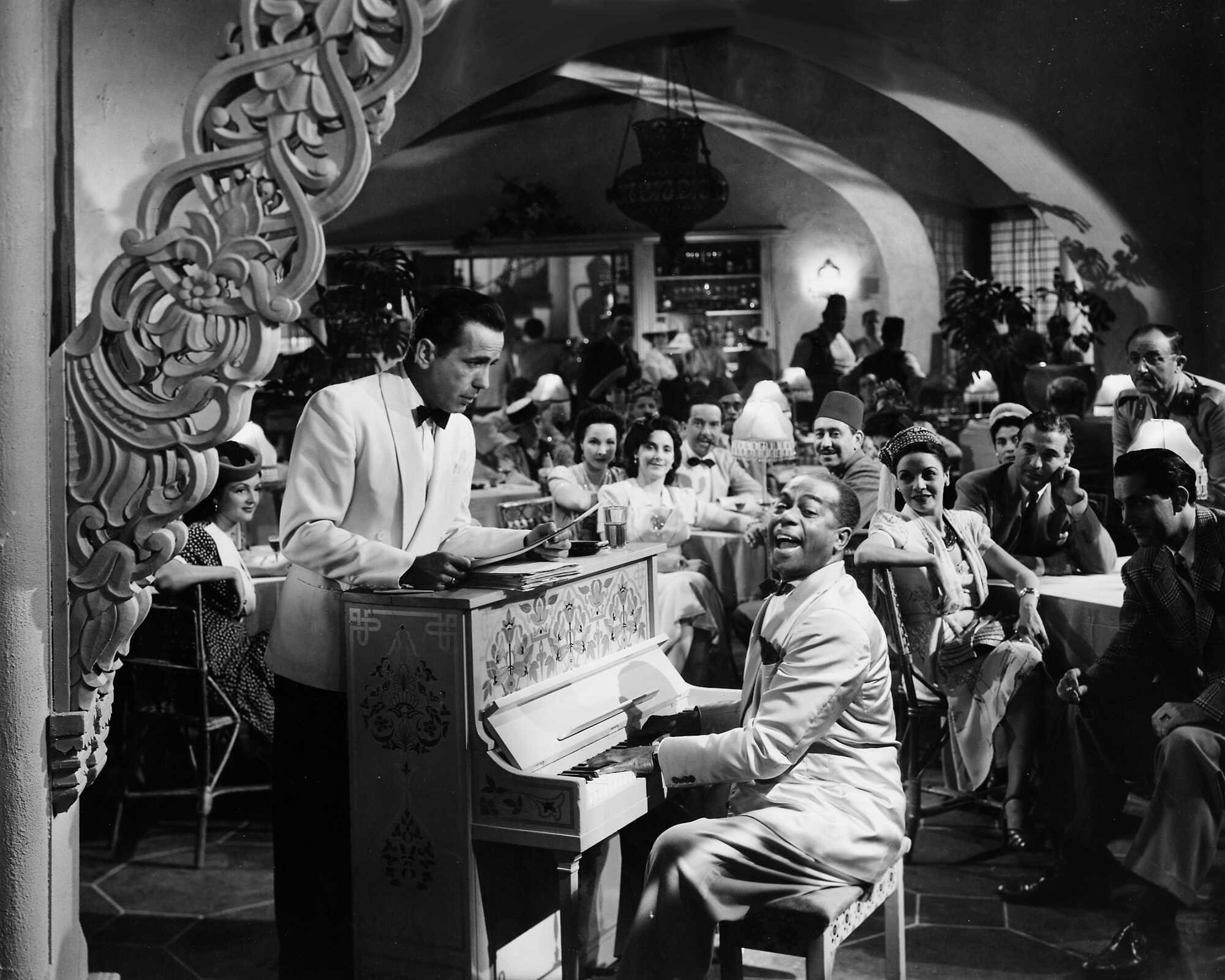
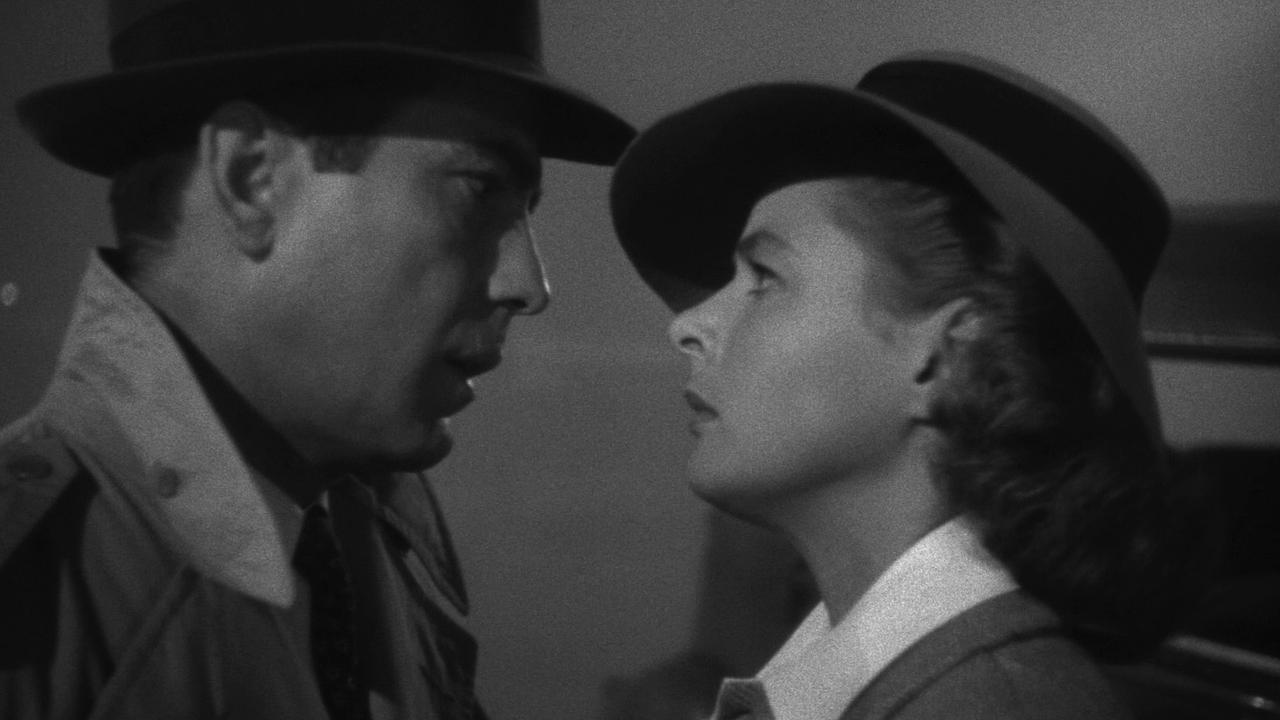
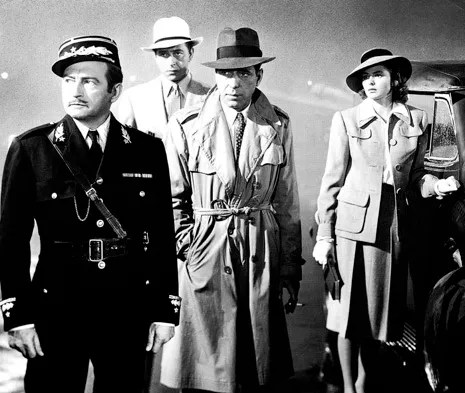
Released in 1942, the romantic drama follows American expatriate Rick Blaine (Humphrey Bogart), the owner of a nightclub and gambling den in Casablanca, a city in French Morocco that has become an important stopping point for refugees fleeing the German occupation. For many refugees, Casablanca is a necessary stop on the journey to Lisbon and, eventually, freedom in America.

Rick, however, has no interest in leaving. Content to remain neutral in the war, he seems determined to look out for himself and avoid getting involved in anyone else’s problems. That changes when Ilsa Lund (Ingrid Bergman) unexpectedly walks back into his life.
Rick and Ilsa had once shared a passionate romance in Paris before the German occupation, but their relationship ended abruptly when Ilsa left Rick without explanation just as they were supposed to escape the city together. Now, Ilsa is married to Victor Laszlo (Paul Henreid), a resistance leader being pursued by the Third Reich. With Ilsa back in his life, Rick is forced to confront the conflict between his desire to remain neutral and the love he still has for her. The result is a story full of romance, tension, and unexpected twists that kept all of us guessing until the very end.

On the car ride home, we had plenty to discuss. One of the biggest topics was Rick himself. We talked about how he is an objectively morally gray character—especially for a protagonist from a film of that era—and compared him to the morally complicated characters we see so often in modern movies.

All in all, Casablanca gave us plenty to think about, and it was a fun opportunity to experience one of Hollywood’s most iconic films together!

The PVIL: Celebrating Athletic Legacy and Civil Rights

On August 19, the LEAP Center had a strong presence at the George H. W. Bush Presidential Library and Museum for a screening of photographer—and now filmmaker—Mark Burns’ The PVIL Story: Separate… But Equal?

Burns, best known for his acclaimed photography, makes his filmmaking debut with a documentary examining the Prairie View Interscholastic League (PVIL), which provided athletic competition for Black Texas high schools during segregation. Operating from 1920-1970, the PVIL produced remarkable athletes while serving as an important source of community pride. The film, however, goes well beyond athletics, placing the PVIL within the larger history of segregation, integration, and the Civil Rights Movement.

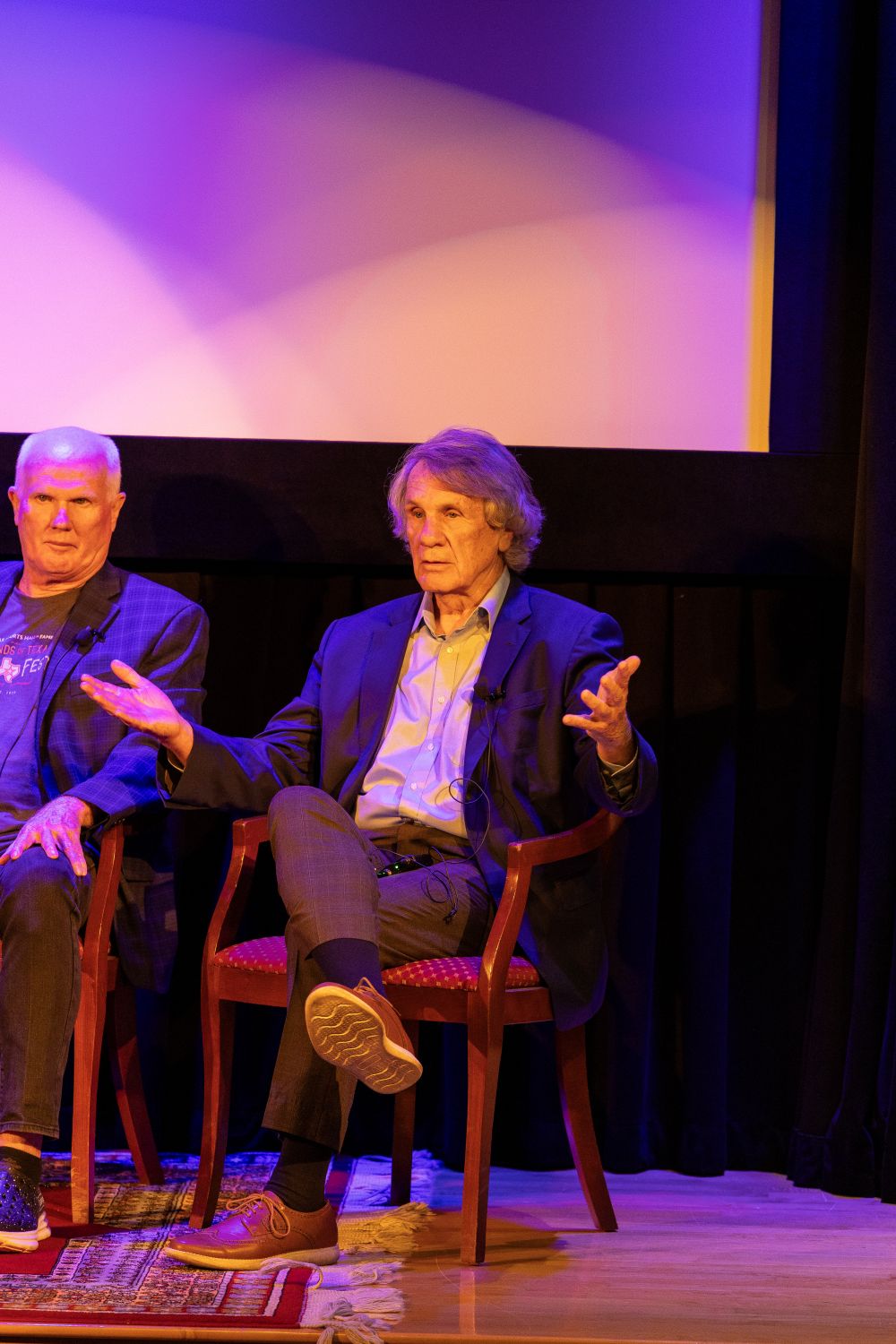
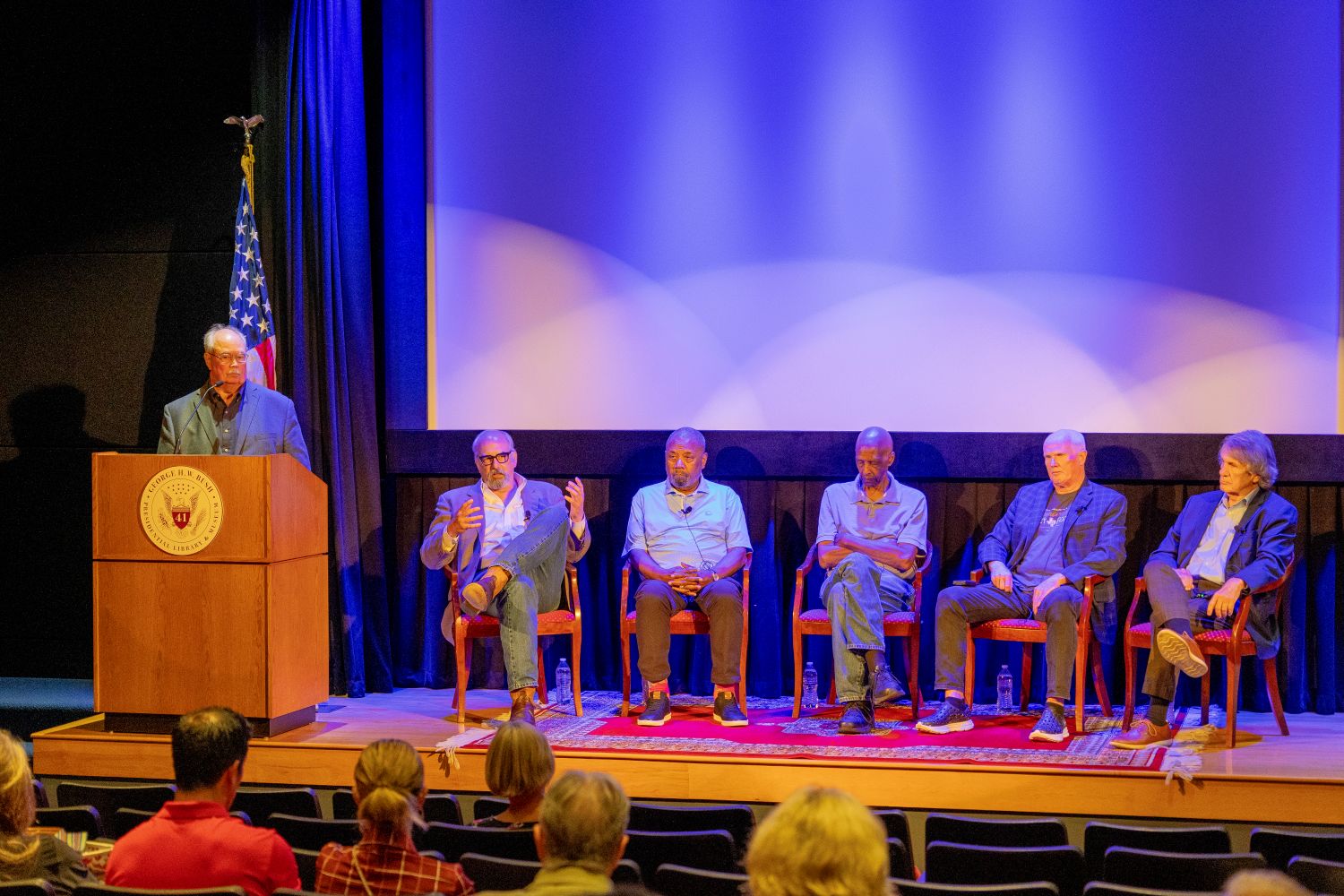
The evening began with a reception before attendees moved into the theater for the film. Following the screening, former Houston Chronicle sportswriter John McClain moderated a panel featuring Burns; Michael Hurd, author of Thursday Night Lights; narrator Fred McClure; producer Rob Lynch; and Pulitzer Prize-winning journalist Joe Holley, who wrote the documentary. The discussion offered additional insight into the research and work involved in recovering a history for which archival materials were sometimes difficult to find.

Also attending were individuals featured in the documentary, including Mark Updegrove and Ramon Gonzales, adding another personal connection to the evening.

For LEAP, however, the screening had special significance. LEAP Ambassadors have known Burns for years, having opportunities to assist him during portions of his National Parks photography project. During those experiences, Burns was generous with his time, sharing his expertise and serving as both a mentor and friend to the organization.

Seeing Burns move from still photography to filmmaking—and use a new medium to preserve an often-overlooked piece of Texas history—made the evening particularly rewarding. The PVIL Story ties into Texas history, US history, delves into America’s favorite sport, and also tackles questions of constitutional law–a perfect combination of LEAP elements.

LEAP Fall Retreat: The Girl on the Train

Written by: Isis Hollis

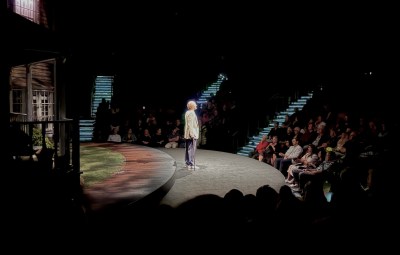
During our retreat in Houston, LEAP students and alums visited the Alley  Theatre once again to watch a performance of The Girl on the Train! Based on the bestselling novel by Paula Hawkins and the Dreamworks film adaptation, the play proved to be another memorable addition to LEAP’s theatrical experiences.

The Girl on the Train follows Rachel Watson (Elizabeth Bunch), an alcoholic whose life has begun to unravel following her divorce. One morning, Rachel receives a visit from Detective Gaskill (David Rainey), who informs her that a woman named Megan Hipwell (Emily Neves) has gone missing. Rachel immediately becomes invested in finding her. Although she has never met Megan, Rachel used to see her and her husband from the train each morning and imagine that they lived a perfect, happy life. With Megan now missing, that illusion is shattered, and Rachel becomes determined to uncover what really happened. The list of suspects is long: from a therapist, Dr. Kamal Abdic (Christopher Salazar), to Rachel’s ex-husband Tom Watson (Chris Hutchison) and his new wife, Anna (Michelle Elaine), to Megan’s husband, Scott (Dylan Godwin–an SHSU Alum), to even Rachel herself.

The story takes us through an exciting series of twists and turns, leaving many of us surprised when the mystery finally came to a close. Kayla and Tania were particularly surprised by the ending, while others, like Britlynn, managed to figure out the twist early. Afterward, we had a great discussion about our reactions to the play, and many of us agreed that it had earned a place among our favorite Alley Theatre productions.

The British accents of the characters also caught some of us off guard, especially those who had previously watched Misery at the Alley. Elizabeth Bunch and Chris Hutchison, who played Annie Wilkes and Paul Sheldon in that production, returned as Rachel and Tom. Many of us find the husband-and-wife duo particularly fascinating to watch because they seem to have a knack for playing characters who either despise each other or are completely obsessed with one another—and sometimes both! Their dynamic creates an interesting on-stage chemistry that made their performances especially memorable.

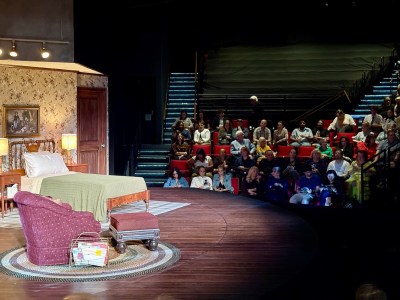
My favorite aspect of the play was the set. I really enjoyed the way that the stage had been designed to move; parts of the stage raising and lowering to reveal or conceal furniture that changed the scenery. They also utilized a catwalk-like structure above the stage to demonstrate the terrace of Megan’s home, which allowed Rachel’s memories to be displayed over the action of scene below. One of Olivia’s favorite parts was how they portrayed the moving train, through lights and set. Towards the end of the play, the technical team even utilized projection to create train tracks that ran across the stage.

Overall, the combination of story, acting, and creative set design made The Girl on the Train a great watch. We are all looking forward to our next opportunity to experience another Alley Theatre production together!

Many thanks to alums who joined us: Ademide Adedokun, Justin and Chelsea Beiser, and Quinn Kobrin–and to Ademide’s friend, Andrea Alexander.

Number One Fans: Misery at the Alley Theatre

Written by: Allie Plunk

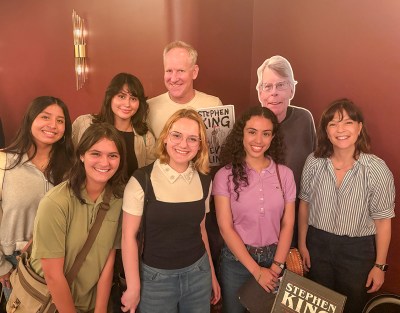
On the first day of our LEAP Retreat, LEAP students travelled to the Alley Theatre for a performance of Stephen King’s Misery. To make this event even more memorable, we were joined by several alumni which gave us a group of 19 people!

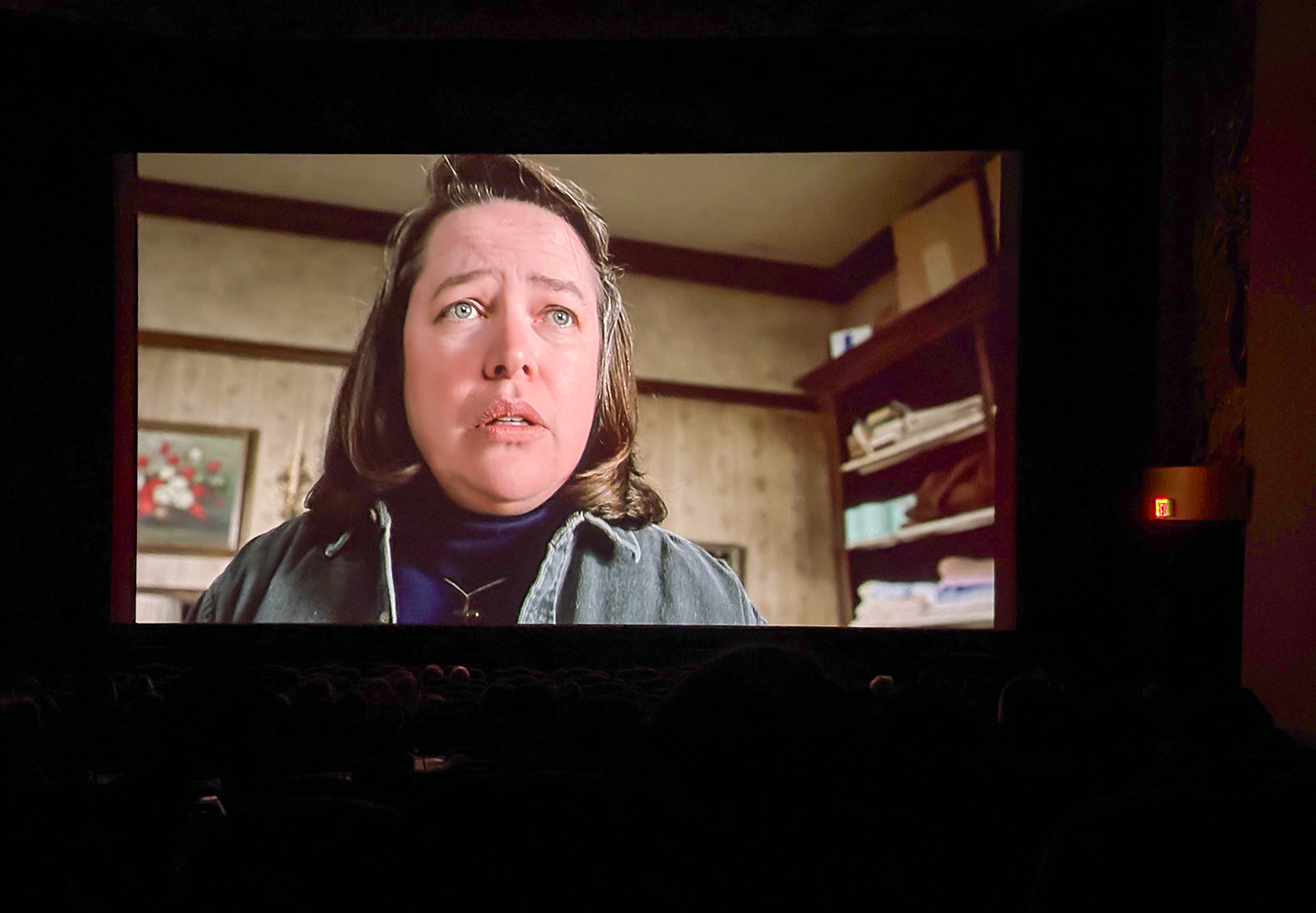
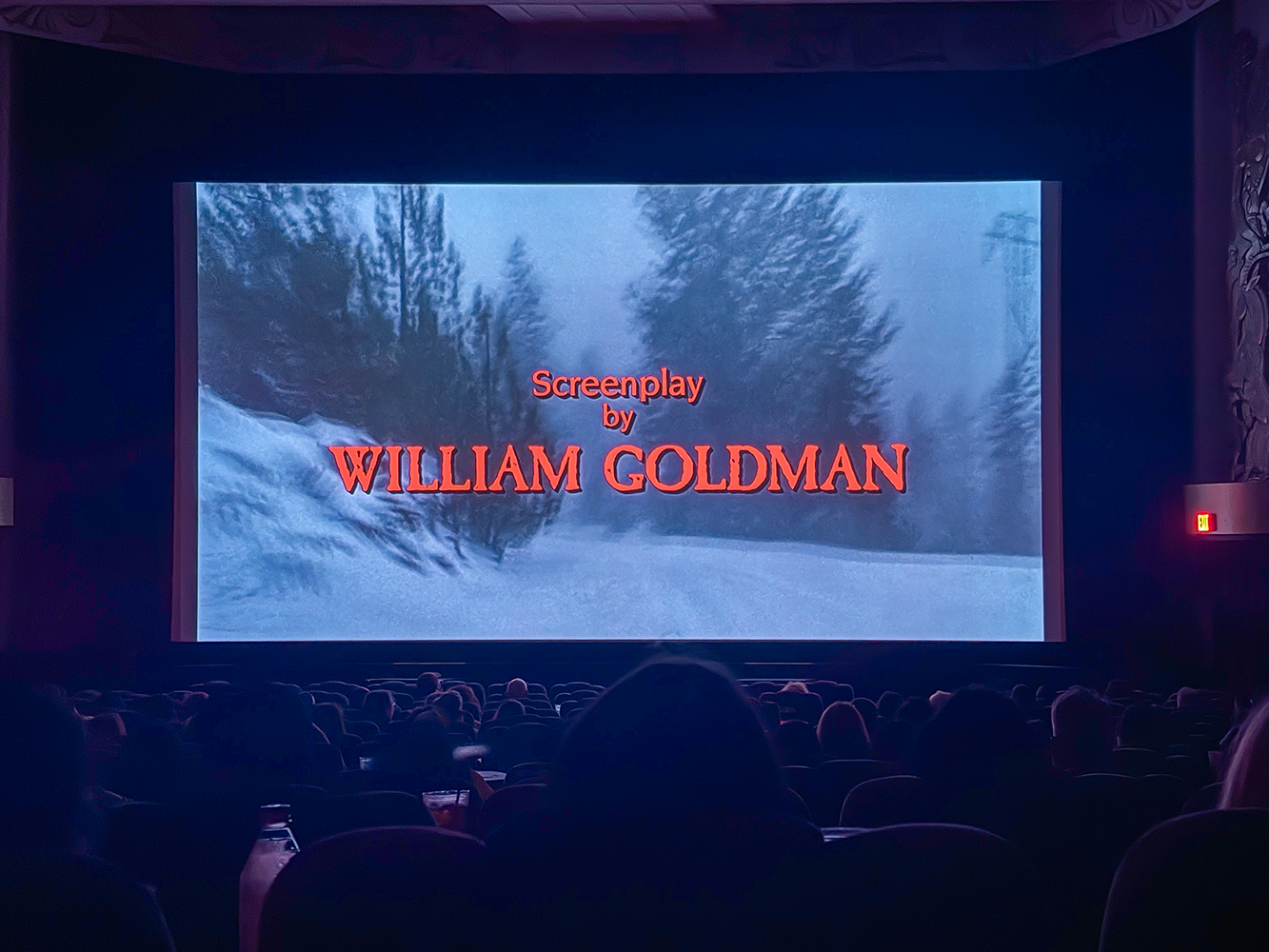
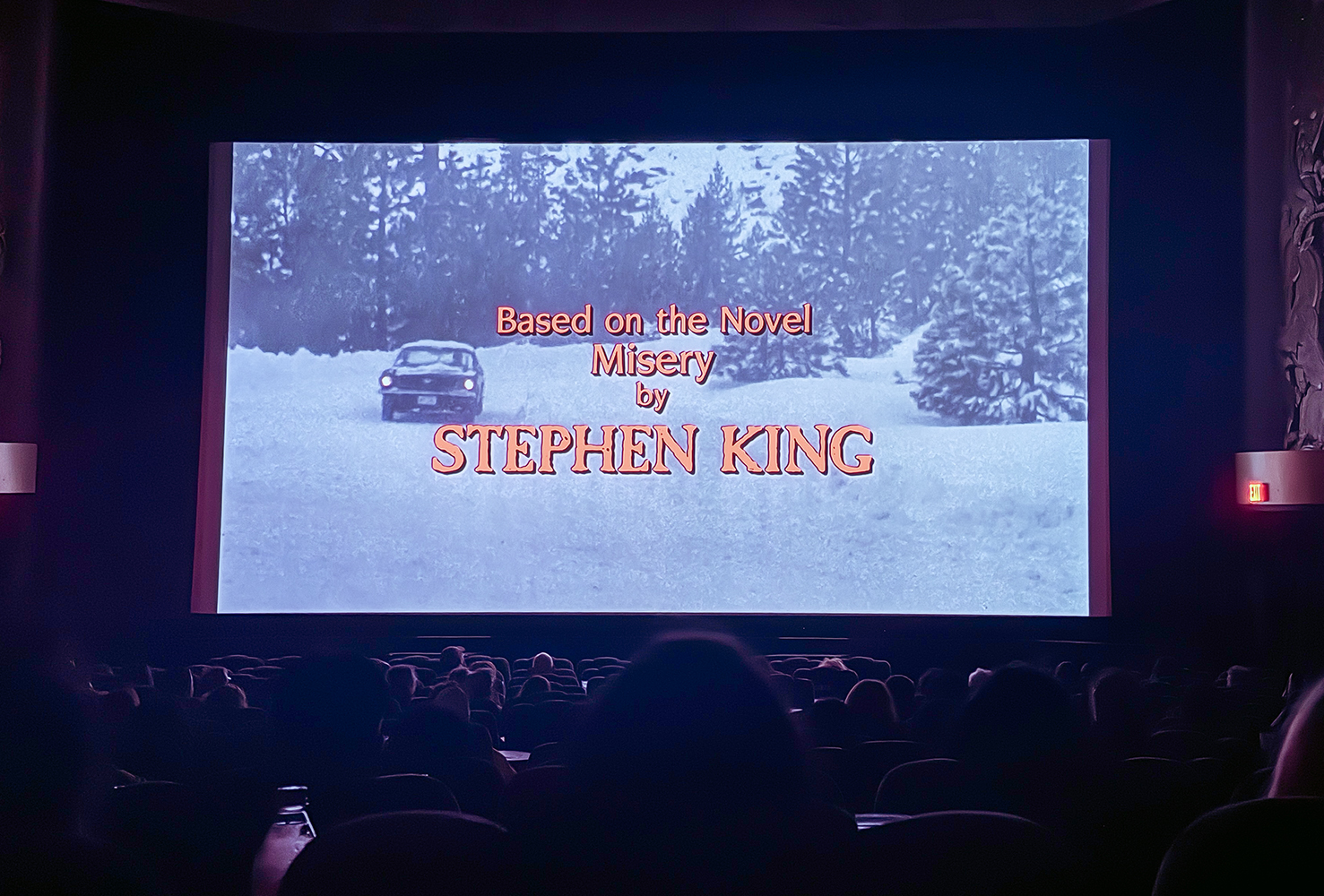
​The story follows author Paul Sheldon (Chris Hutchinson), who has finally written what he thinks will be his masterpiece when he gets into a car accident that shatters his legs. He is rescued by his self-professed “number one fan,” a woman by the name of Annie Wilkes (Elizabeth Bunch). At first, she acts normal enough, but things very quickly take a turn for the worst. Married in real life, the actors gave a wonderful performance, leaving us wondering how they manage to create such believable characters while still going home together each night. Having just seen the movie a few weeks before, it was very interesting to see the difference in the details and presentation of the story as it was adapted for the stage.

​One of the most striking elements of the play was the set. Split into three distinct parts, the set rotated on a turntable to create a seamless transition between the room where Paul is held captive, the rest of the house, and outside. We were all astonished by the level of detail that went into the set, from the numerous images of Paul Sheldon, to the inclusion of a working staircase. Another practical piece of the performance that we enjoyed were the special effects. We had a good time figuring out how they incorporated stage blood and prosthetics to enhance the gorier elements of the story.

​Having finally finished the Misery trifecta– the novel, movie, and play– I found the differences between the three mediums incredibly striking. The novel contained much more prosaic passages, as well as backstory and lengthened character development, especially for Annie Wilkes, than either the movie or play. The movie, however, shifted and condensed elements of the novel, such as the addiction that Paul develops to the pain medication Annie provides him and his reliance on imagination to endure his captivity, while adding in the perspective of the town Sheriff that is investigating his disappearance. The play retains many of these elements, several lines of dialogue taken directly from the movie, though Annie’s characterization relies on much more of the actor’s discretion, removing much of her backstory entirely. Despite these differences, each preserves the core of the story: the dangerous, disruptive nature of obsession.

​Overall, Misery proved to be a fascinating example of how a story can evolve across different mediums while retaining its central themes. Both entertaining and thought-provoking, it was a memorable highlight of our retreat and gave us a deeper appreciation for the art of adaptation.

Have the Lambs Stopped Screaming?: The Silence of the Lambs

Written by Allie Plunk

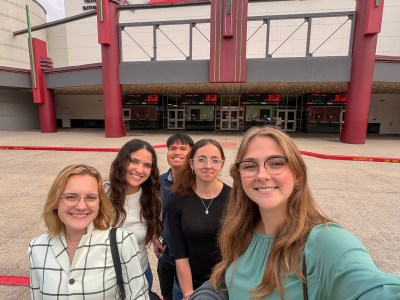
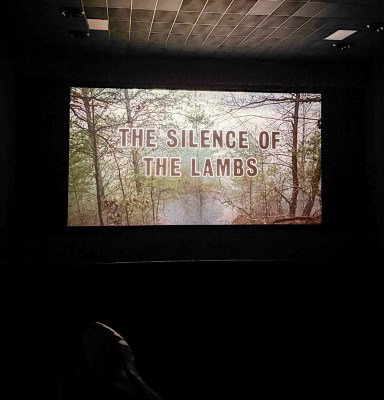
LEAP students took a Wednesday night trip to Cinemark in the Woodlands for the 35th anniversary screening of The Silence of the Lambs! Arriving around thirty minutes early, we had more than enough time to load up on popcorn, candy, and sodas before heading into the theater.

Once we were seated, the film began with an opening from legendary film critic and historian, Leonard Maltin, who explained some of the historical and cultural significance of the film, including its status as one of three films to win the “Big Five” Academy Awards: Best Picture, Best Director, Best Actor, Best Actress, and Best Adapted Screenplay. Based on Thomas Harris’ 1988 novel of the same name, The Silence of the Lambs is a staple in American film that inspired an infatuation with the character of a dignified serial cannibal named Hannibal Lector, resulting in numerous spinoff series and prequel films.

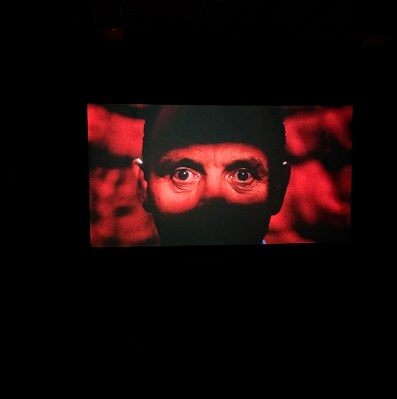
The film follows young FBI trainee Clarisse Starling (Jodie Foster) as she interviews Hannibal Lector (Anthony Hopkins) with the hopes that he might provide insight into the mind of a serial killer. On the rise is a man by the name of Buffalo Bill (Ted Levine), who skins his victims after he kidnaps and kills them, mysteriously keeping them alive for three days. Starling has the sinking feeling that Hannibal Lector knows more about the killings than he is letting on, and must navigate his psychological manipulations and lies to get to the truth.

Though a clear psychological thriller/horror, we were all able to find humor in some of our favorite parts, especially in Hannibal’s witty dialogue. Several of us had never seen the film before, though it is one of my favorite movies of all time! On the way home, we all agreed that it was an evening well spent.

A Roman Holiday During a Working Retreat

Written by Robin Houghton

One part of LEAP’s mission is to expand cultural horizons, and this includes exposing students to classic films. Thus it was on the Sunday of our retreat in Houston, we attended a showing of “Roman Holiday” at the historic River Oaks Theatre.

Directed by William Wyler, “Roman Holiday” tells the story of Princess Anne (Audrey Hepburn), who, overwhelmed by the tedium and responsibilities of her title, escapes the embassy for a night in Rome. She stumbles across reporter Joe Bradley (Gregory Peck), who, upon learning her identity, realizes he has a chance at a scoop of a lifetime.

Of the seven students attending, five of us had never seen the film, and it was a treat to find it witty, charming, and romantic, with Audrey Hepburn stealing the show.

Her on-screen chemistry with Gregory Peck was palpable, and it was a surprise to learn this was her first starring role!

Roman Holiday both subverted and helped shape the modern romcom genre. It includes the classic “meet-cute,” montages of Anne and Bradley falling for each other, and many comical and romantic touches throughout.

It does not (spoiler alert), however, include the happy ending that some viewers expect (talking to you Michelle Cardenas) from their films. Princess Anne chooses to resume her duties as a princess; Joe foregoes the story he could have sold. Both do their duty and both willingly take on the personal cost of doing so, making the ending even more romantic.

As a side-note, this was one of the first American films to shoot on location overseas. The entire film was shot in Rome, displaying iconic landmarks (including the “mouth of truth,” one of our favorite scenes) and the charm of post-war Italy.

After the film’s release, Rome transformed into a top tourist destination, in part due to the unique filmmaking choice made by William Wyler.

The ending was, in many ways, the perfect end to our retreat–a flavorful and light scoop of gelato, following a weekend of substantive progress and hearty fare. It was the treat of the retreat.

Exploring The Shining: A Kubrickian Journey

As part of the LEAP Center’s ongoing work to expose students to the broader culture, a group of alumni and current students gathered in Houston to see Stanley Kubrick’s “The Shining.” Originally released in 1980, the film is being re-released on IMAX theatres across the country as part of its 45th anniversary.

For about half those attending, it was a first exposure to a Stanley Kubrick film. Accordingly, we began with a brief background of Kubrick and his films. Of all the great directors, Kubrick produced the fewest films (13 over a 45-year career), a fact that has not deterred scholars from giving as much thought and ink to Kubrick’s work as that of Hitchcock, Welles, Spielberg, or Martin Scorsese.

Of Kubrick’s films, “The Shining” has received perhaps the most attention. The film is based on Stephen King’s novel of the same title, and it was met with a mixed critical reception on its release, although its stature has grown, and it is now considered a horror classic.

It embodies several cinematic traits of the Kubrick oeuvre: a longish running time, attention-grabbing visuals, riffs on various literary themes, and an enigmatic approach to storytelling that occasionally leaves viewers unsure what they just watched. All of these were on display in “The Shining.”

In this viewing, the visuals were most prominent, perhaps because we were watching this on an IMAX screen. The opening scenes, shot from a helicopter, including a scene where we (perceiving things through the camera) seem to pass the Torrance family on the “sidewinder” road…

…on the way to the Overlook Hotel.

Kubrick also made full use of the Steadi-Cam, which had been introduced on film in 1976. Kubrick used it throughout “The Shining,” and he innovated with it, devising an apparatus that could shoot from about 18 inches above the ground–most notably used in the film to follow Danny on his tricycle, as he traversed the maze-like corridors of The Overlook.

Kubrick’s films are often sprawling affairs and they are deeply studied by scholars and enthusiasts, so it’s no surprise that all manner of symbols and themes have been “discovered” in the director’s body of work. This is probably most true in “The Shining,” as reflected in the interesting and bizarre theories expressed in the documentary Room 237.

Professor Robert Kolker, an author of several Kubrick books and an expert on cinema, suggests that the film can be seen through an Oedipal lens (spoiler alert). Danny’s “shining” is a type of oracular vision not unlike that of the prophecies offered at Delphi, including the one offered to Oedipus. And while Danny wasn’t as close to his mother as was Oedipus, she serves as his caretaker and protector; in the end, she carries him to safety, saving his life.

Danny doesn’t proactively kill his father at a crossroads as does Oedipus, he does leave his lame father to die of exposure in a labyrinth. Of note: Jack Torrance suffers from a foot/ankle injury following a fall down stairs; he literally embodies the term “Oedipus,” which means “swollen foot.”

Whether such messages were intentional or not (it’s worth noting that Kubrick mentioned he read a lot of Freud prior to filming “The Shining”), the film is replete with sufficient ambiguities to provide fodder for the active imagination.

There are some imponderables in the film; it does, after all, involve the supernatural. But even in the logic of the supernatural, what is the purpose of the bathroom scene…

…in which Nicholson embraces a young, naked and beautiful woman, only to find her decay into a rotting but living corpse? Why is there a parlor full of fully-dressed corpses in the hotel? And what about the scene involving a man in a bare-backed bear costume and a man in a tuxedo?

This latter question was posed by many in our group (answered by none), and such questions may reflect Kubrick’s very approach to filmmaking: “if you can get people to the point where they have to think a moment what it is you’re getting at, and then discover it, the thrill of discovery goes right through the heart.”

While we probably didn’t reach “discovery” on many of the scenes, we did “think a moment” or more on the film and its many scenes. The experience offered an accessible and exciting introduction to Stanley Kubrick and his work, gave us all an excuse to get together during the holiday break, and provided us endless material for reflection (and, for some of us, concern…)!