
In LEAP’s ongoing quest for experiential learning, Ambassadors set out for Little Rock, AR, where opportunities for education about Civil Rights, politics, history, cinema, art, and literature abound. And our first day was a big one…
A Visit to the Arkansas State Capitol
by Olivia Discon
Our first stop in Little Rock, Arkansas set the tone for an incredible trip filled with history, learning, and a deeper appreciation for the Natural State.

Naturally, we couldn’t visit without stopping at the Arkansas State Capitol…

…where Cheryl Augustine, who had guided LEAP students three years ago, once again took time out of her day to give us a tour that was both engaging and one to remember.

We began in the Governor’s Reception room, where we learned about the history of Arkansas, institutional traditions, and the current Governor (Sarah Huckabee-Sanders) and soaked in the beautiful room.

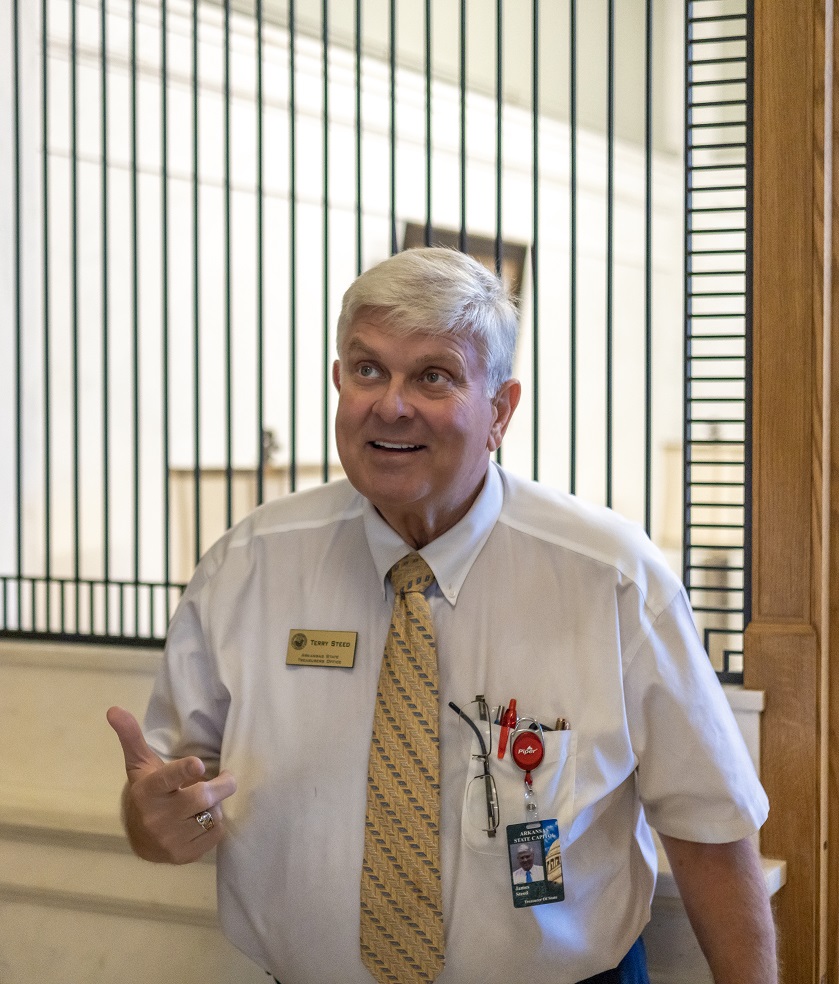
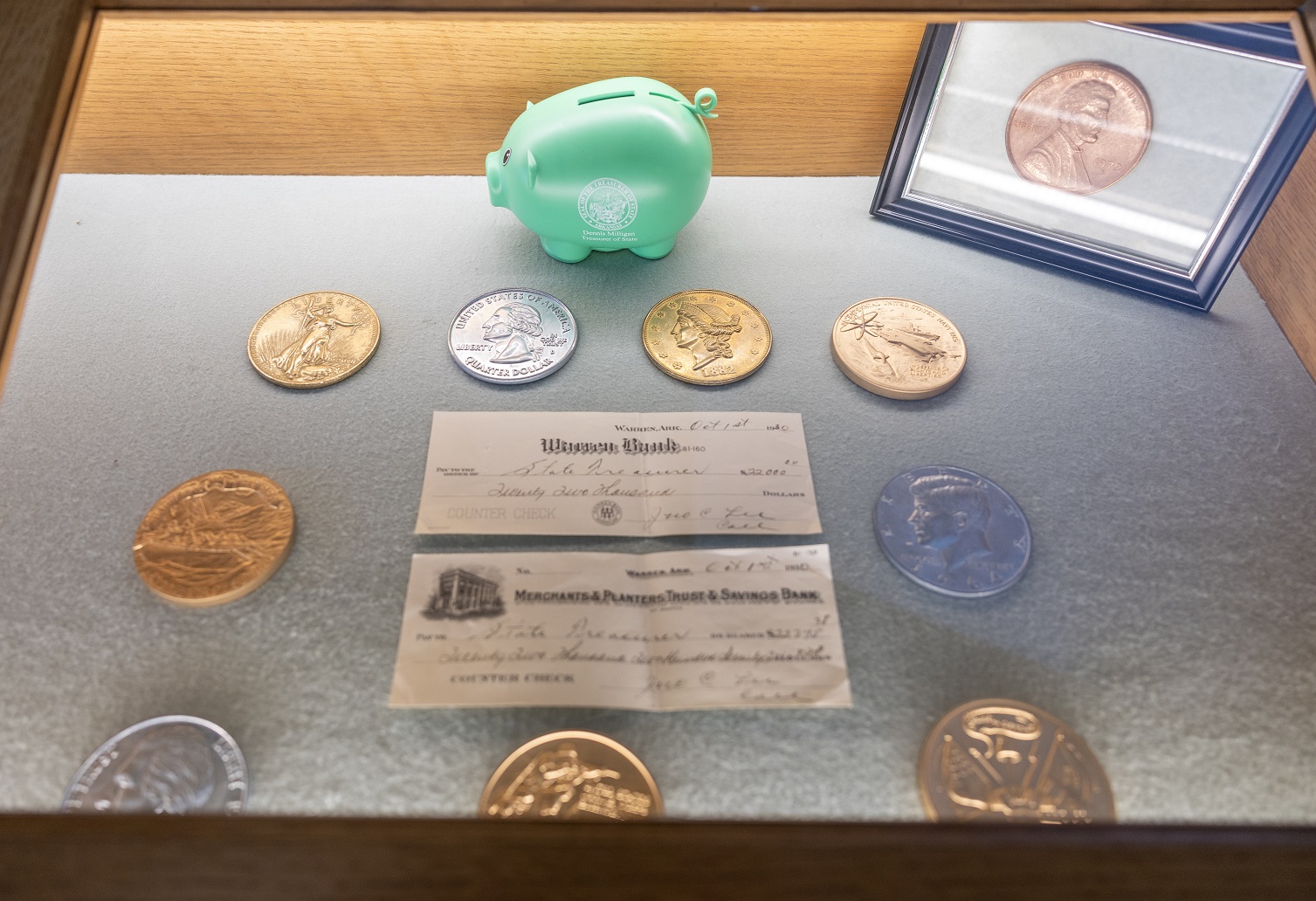
This was followed by one of the highlights of the tour, the Treasury Room, a space rich in history and, quite literally, in cash. With the help of Cheryl and Terry Steed…

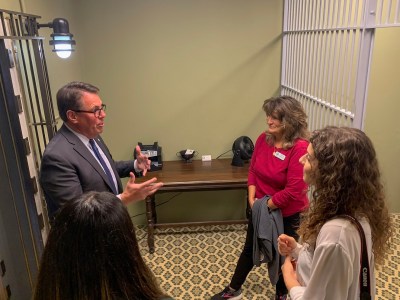
…we had the chance to walk past the 12-ton vault door and even hold $600,000 in cold, hard cash.

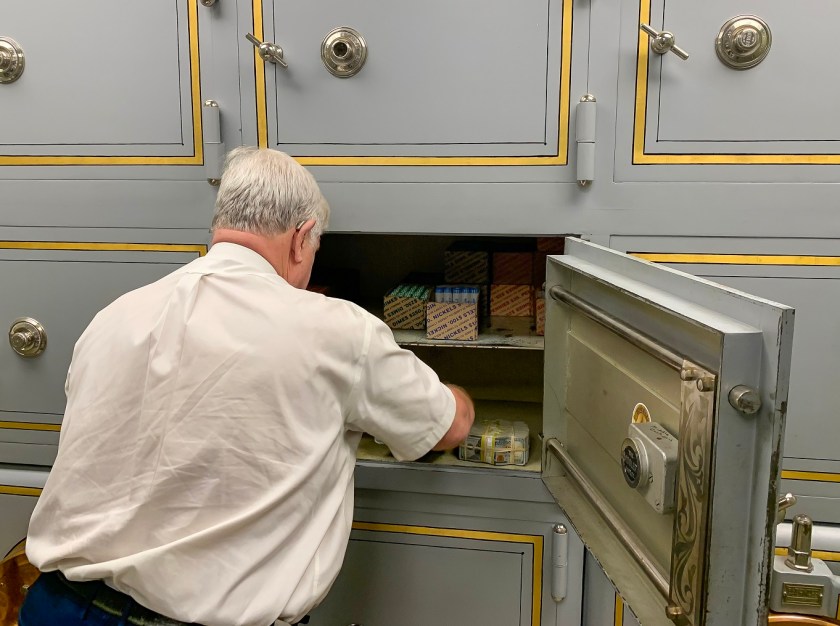
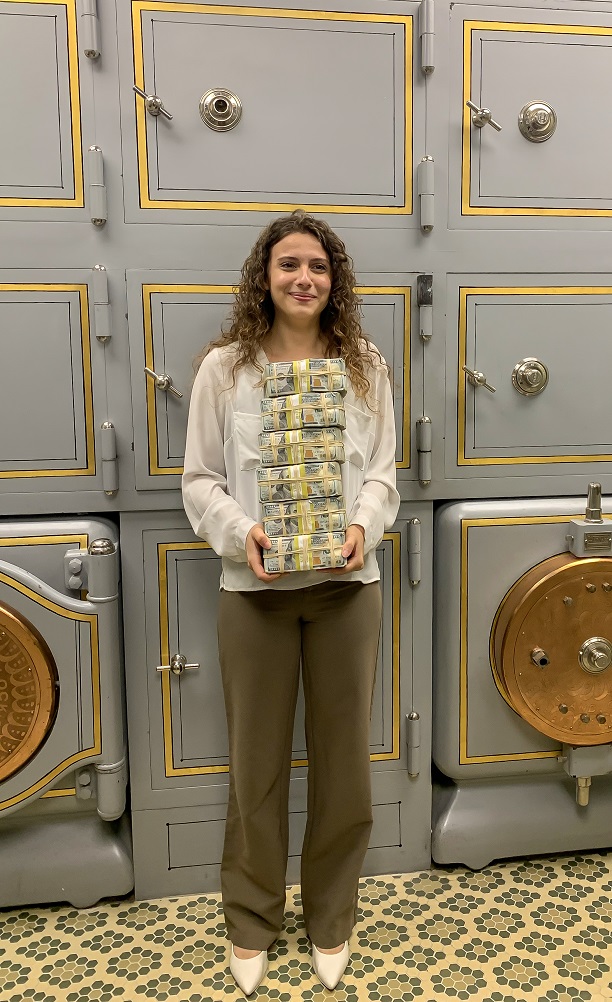

While it was exciting to hold such a large sum, we learned the more practical side: the state loses $38,000 annually by displaying the cash instead of investing it. But this tradition connects Arkansans to their government in a tangible way.
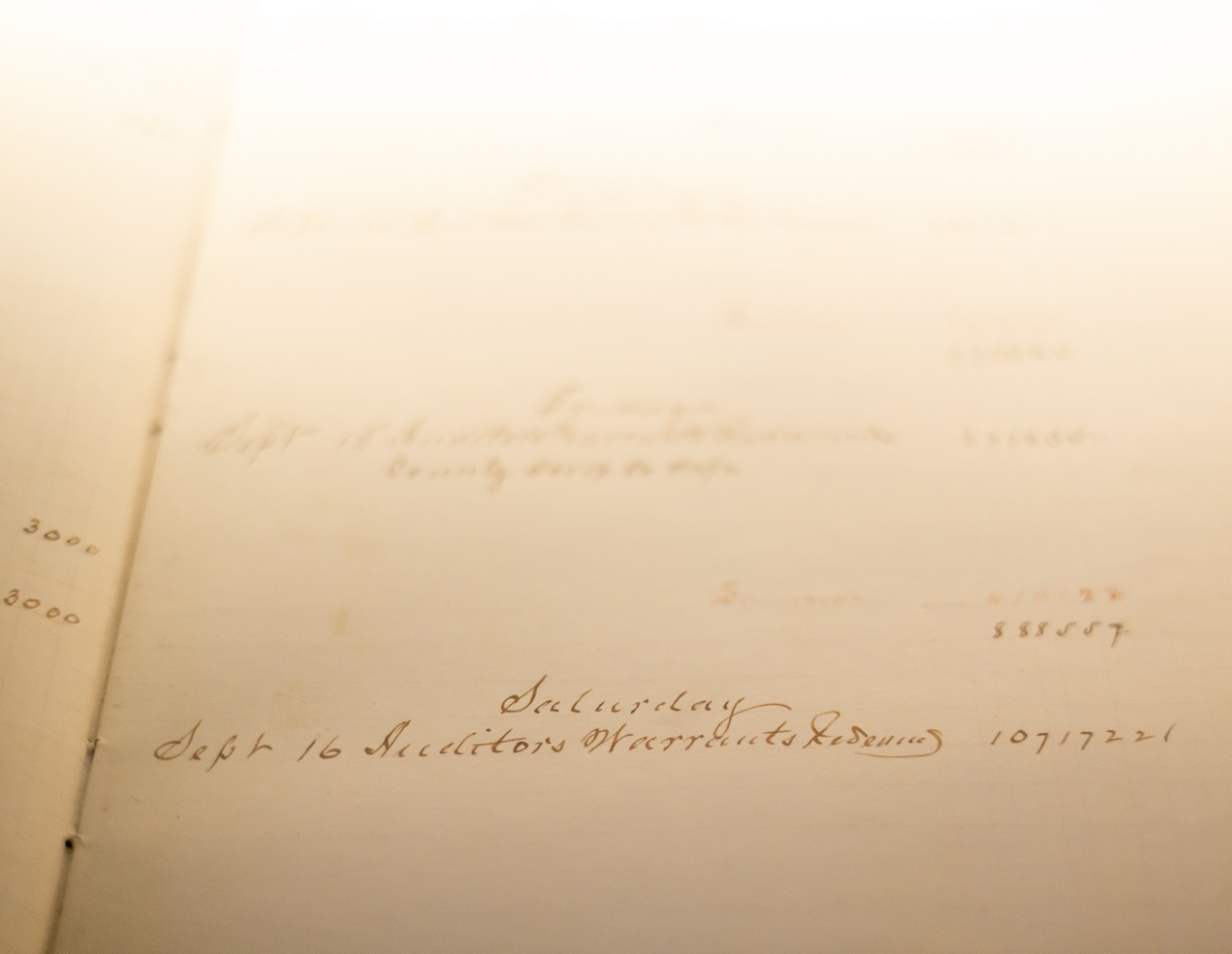
The Treasury Room itself is stunning. Its ornate ceiling, restored with 17 different shades of green, is as much a part of the Capitol’s history as the vault itself. Adding to the room’s charm, they displayed calculator machines from over 100 years ago…

…and everything down to the floors has been carefully preserved since its inception…

…with numerous artifacts on hand for viewing pleasure.



While in the vault, we also had the chance to meet Stephen Bright, Chief of Staff to State Treasurer Mark Lowery.

He shared insights into the Arkansas legislature and gifted us two challenge coins, one from Treasurer Lowery and another in memory of the late Larry Walther. These coins, rooted in military tradition, are exchanged as symbols of respect and accomplishment, which we were very grateful to receive.
The Arkansas State Capitol is an impressive building, with its original design by George R. Mann and later finished with the help of Cass Gilbert, the same architect behind the U.S. Supreme Court.

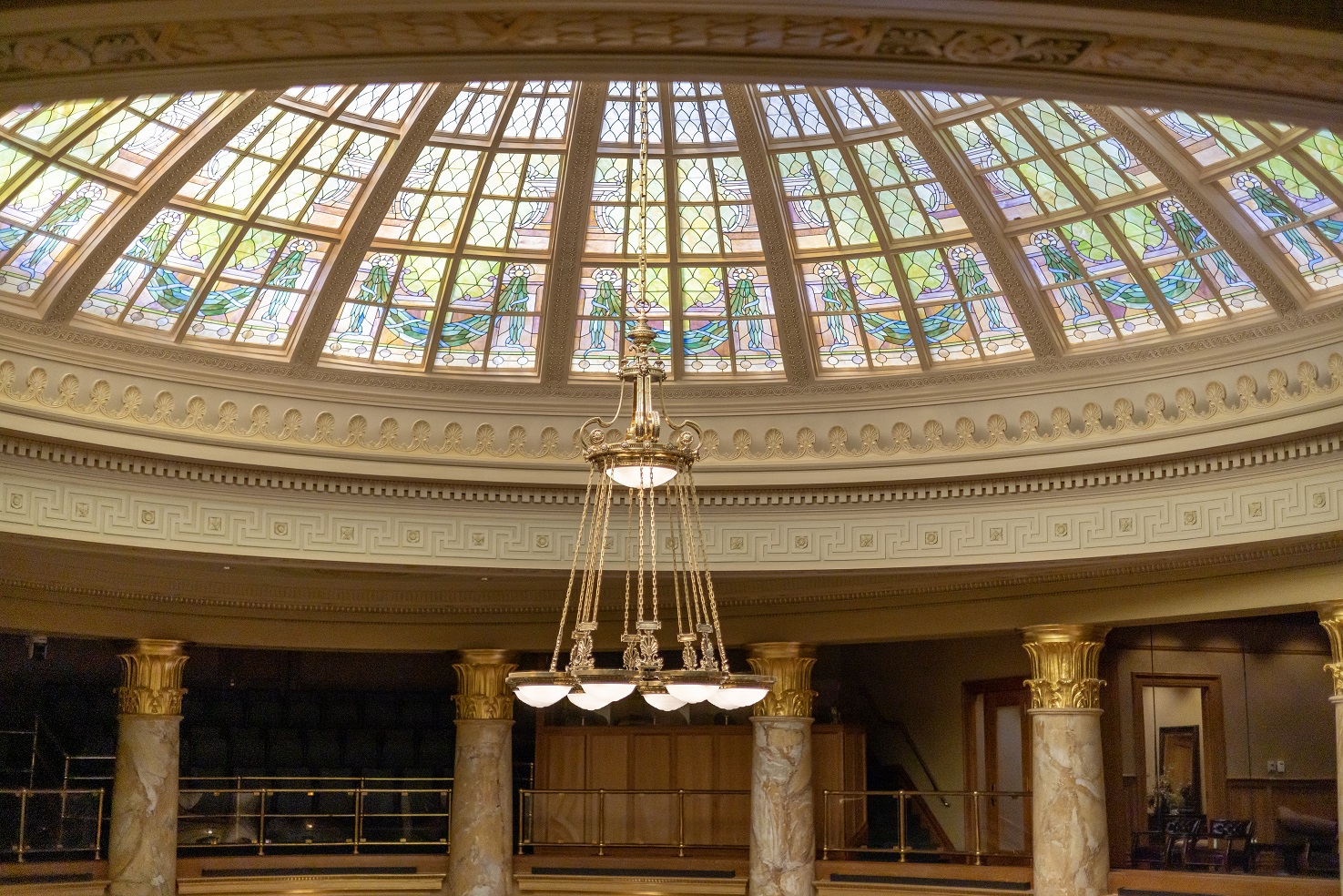
It took from 1899 to 1915 to complete, and you can really see the effort that went into every detail. The exterior is made from Limestone (from Batesville, AR), the floors and walls are made from Vermont marble, the grand staircases are Alabama marble, and the columns are from Colorado marble, all of which were beautiful!

We explored both the House and Senate chambers, each equally impressive. Arkansas has 100 representatives…

…and 35 senators, with legislative sessions lasting 60 days. The grandeur of the Capitol is undeniable, but it’s the details—the stained glass ceilings, the drapery, and even the pigskin door—that really make the building stand out.


Our tour, which lasted an impressive 2.5 hours, flew by thanks to Cheryl’s knowledge and enthusiasm.
We ended our tour with a story that was reminiscent of our experiences on this trip: the tale of the Arkansas Traveler. As Cheryl recounted, the story follows a lost traveler in search of directions, who, after a brief misunderstanding, receives not only help but also hospitality from a local man.

Much like the traveler, we arrived at the Capitol curious and eager to learn…
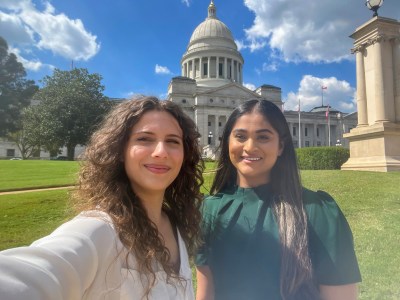
…and we left having found guidance, warmth, and generosity from everyone we met–and we, in turn, have become ambassadors for the state!

A Reflection on the Past: Little Rock Central High
by Saara Maknojia
The students at Little Rock Central High School were dismissed from class at 4:00 p.m., giving Olivia and me a few moments to reflect on the diversity of the present-day student body. Standing outside the iconic school, we couldn’t help but consider how far the nation has come since its rocky process of desegregation.
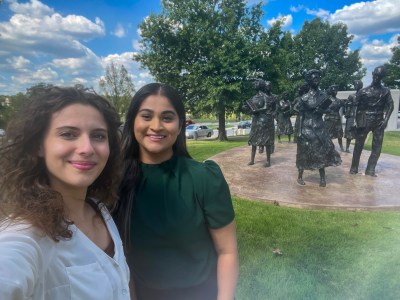
Just moments earlier, we toured the Little Rock Central High School National Historic Site, where we were both struck by the profound realization that the opening words of our Constitution, “We the people,” were not necessarily intended to include everyone.

The exhibit exposed us to deeply reflect on how for a long period of our nation’s history, the phrase excluded diverse groups of the population, including African Americans, who were denied the same rights and freedoms as Whites.
The historical significance of Brown v. Board of Education and the grit of the Little Rock Nine are beyond question. Their resilience in the face of extreme adversity not only provided momentum leading to the desegregation of schools but also reshaped the course of American civil rights. The historic site offered a powerful overview of this pivotal moment in U.S. history, immersing us in the experience of those nine brave students who, despite intense opposition, stood firm in their pursuit of equality.

As we walked through the exhibits, photographs capturing the tense moments, media coverage showing the nation’s divided response, and phone recordings of the threats and insults said at the students, we were reminded that the struggle for civil rights was definitive.
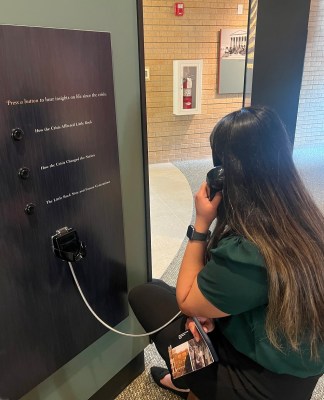
It was lived and deeply felt by those who dared to stand against injustice. The visit provided us with a deeper understanding of the personal sacrifices made, and the bravery required, to break down societal barriers. This experience left a lasting impression on us, particularly as we observed the diverse faces of today’s student body, a living testament to the progress that has come into existence from the courage of those who came before.

Little Rock Central High School, once the center of racial strife, now serves as a symbol of the journey taken by the Little Rock Nine toward inclusivity and equality for the progression for the United States.

Pinnacle State Park
One moment you are in the state capital, enjoying nice restaurants, relishing a visit to the state capitol building, and touring museums; and then about 20 minutes later, you are at Pinnacle Mountain State Park, climbing a mile-long incline to get a view of the beautiful Arkansas country-side.
It takes a bit of planning. There is much to do in the Park—it sports an Arboretum, Ranger-led activities, and two rivers. But the attraction to us were the hiking trails, specifically east and west summit hikes. Our plan, in theory, was simple. Olivia and Saara would ascend the East Summit Trail, a demanding hike that requires rock scrambling, a 1.5 total distance and, most important, an ascent of 1,000 feet.
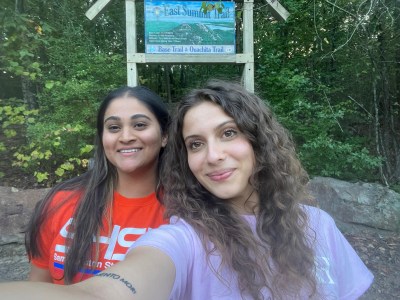
Mike and Stephanie would ascend from the West side, which involves a similar distance and ascent, but less rock scrambling.
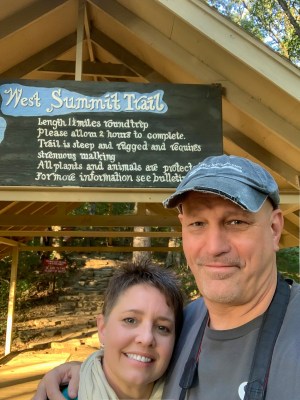
For Mike and Stephanie, things worked as planned, and although their advanced age prompted several breathers along the way…

…they enjoyed unparalleled views of the valley…

…distant hills…

…and the Big and Little Maumelle Rivers.

Things also worked as planned for Saara and Olivia, for about the first 1/20 of a mile…

…when they accidentally followed the base trail rather than the East Summit trail. This is a great way to see the perimeter of the mountain, without ever actually ascending, and with literally no chance of reaching the summit of the mountain. After an hour or so of this, a passerby noticed the dazed and bewildered look on the girls’ faces, and he kindly directed them to go up the mountain if they wanted to get to the top.
Other than this hiccup, though, things did go generally as planned. We hoped to see some wildlife, and we did, albeit in the form of a tarantula.

When urged to take a closer look, Olivia responded directly, “Oh, hell no.” True to her word, she refused to proceed on the trail—possibly even reversing—until the tarantula hustled off the trail. We planned to get a good workout, and we did. The East Summit trail is especially challenging, with several areas most often referred to as “boulder fields.” Indeed, “Alltrails.com” admonishes hikers to “proceed cautiously,” noting it is a “highly challenging route” to be tackled by only “experienced adventurers.”
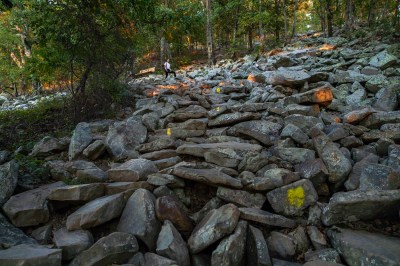
And the payoff is worth the climb, with some beautiful views from almost any angle.

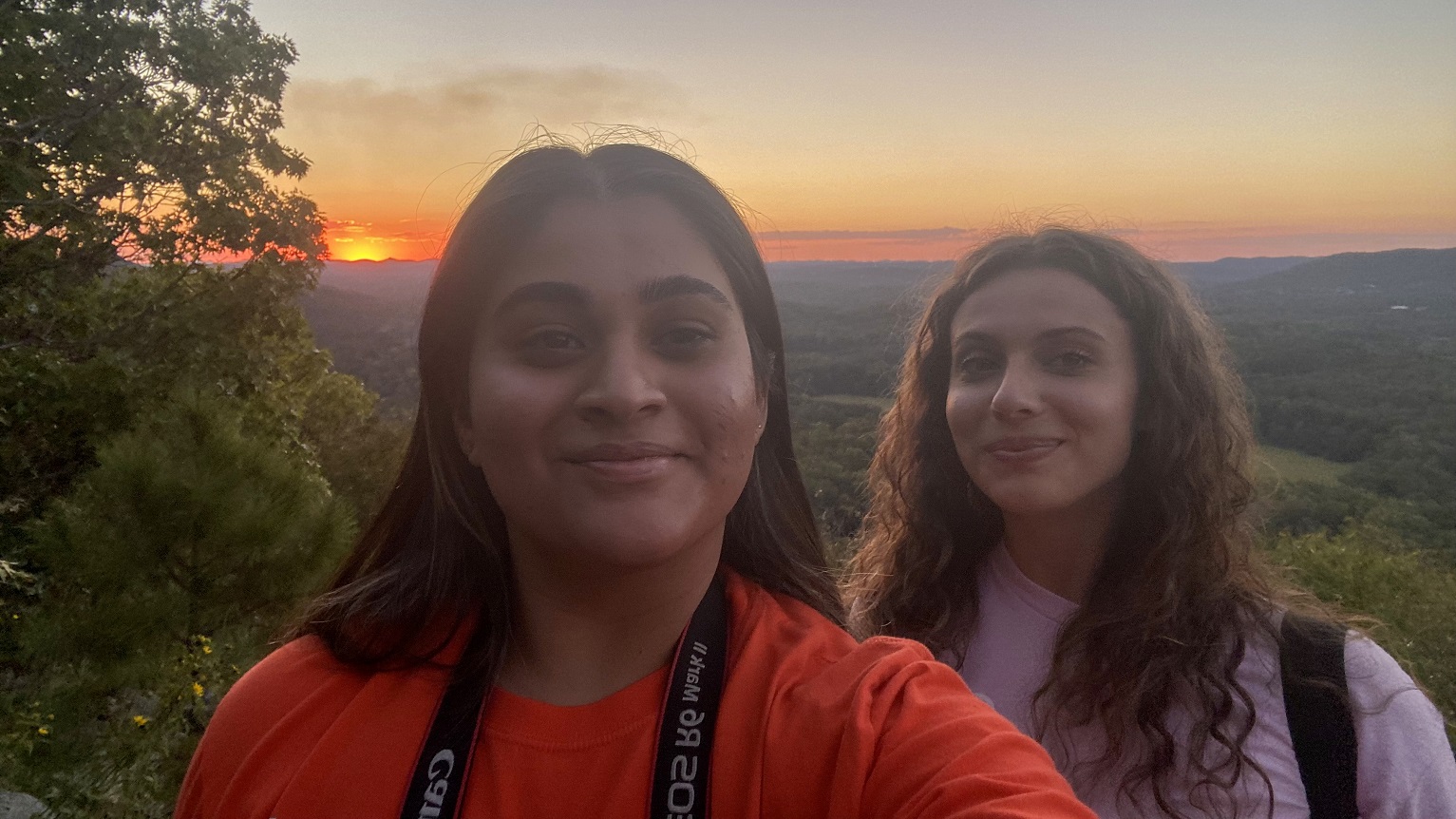
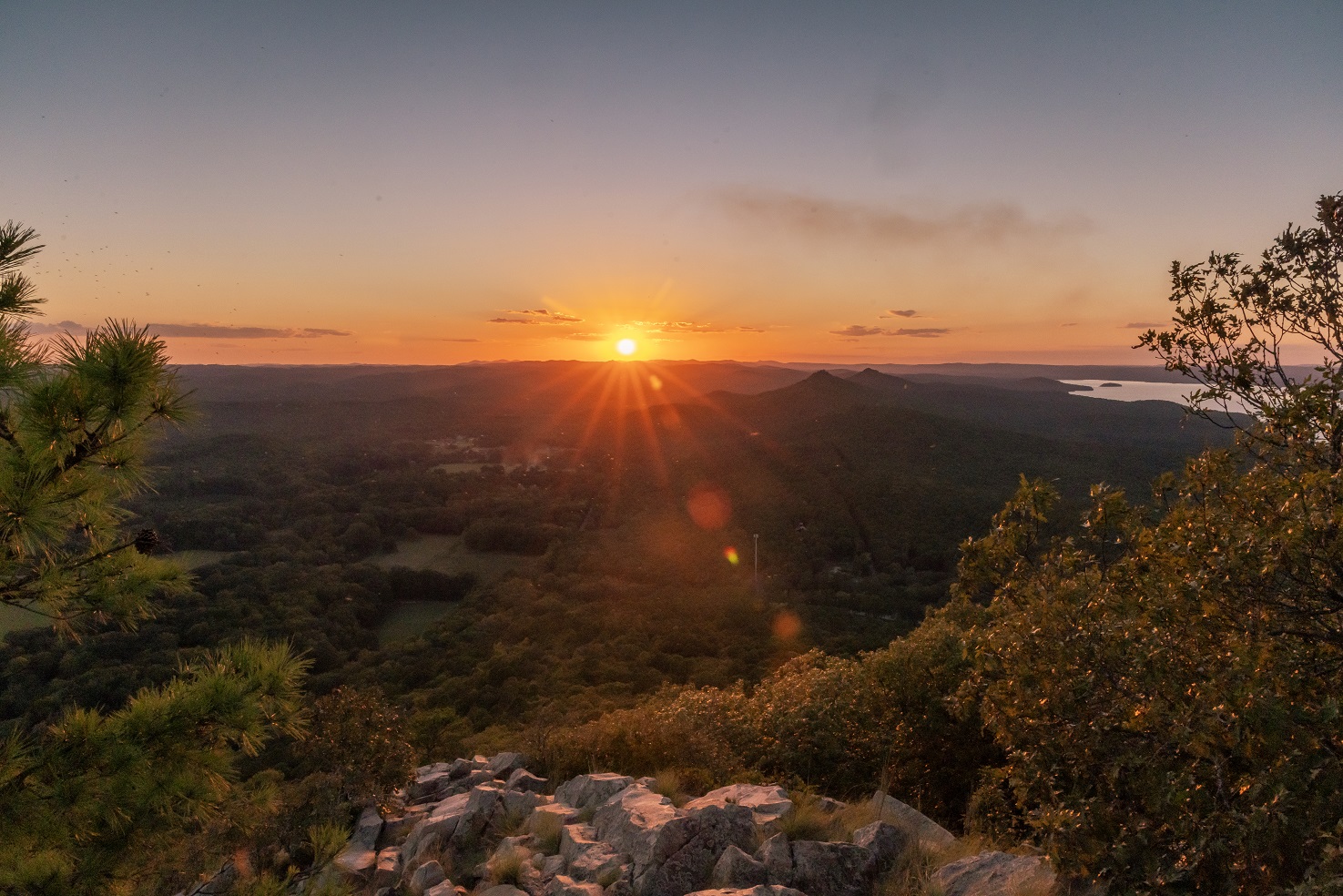

It was a wonderful time..

And it was a fitting end to a rewarding first day in Little Rock. We mixed some outdoor fun with a healthy mix of history, civil rights, politics, architecture, finance, and friendship, all within twenty minutes or so from one another. It is a mix we hope to repeat tomorrow, striving to reach another pinnacle in our educational adventure.
Note: We would like to say “thank you” again for all the great people we met today. Cheryl Augustine was a wonderful tour guide and person; Terry Steed is, as Cheryl notes, “a treasure to the Capitol,” and a very nice person; and Stephen Bright, who generously spent time with us and gave us some terrific advice.

 Center for Law, Engagement, and Politics