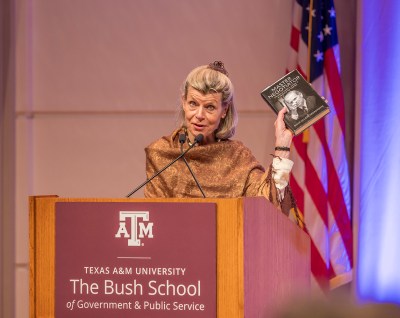
There are few people who know the world better than Diana Negroponte–who has a law degree from American University, a PhD in International Affairs from Georgetown University, has written two books, and who is married to John Negroponte, former US Deputy Secretary of State, Director of National Intelligence, and Ambassador to the UN. We got a glimpse of Negroponte’s wisdom, intelligence, and knowledge at the Bush School last week.

The author’s subject was James Baker, whom she refers to as a “Master Negotiator” (which is also the name of her book on Baker), while highlighting four of Baker’s major accomplishments and how his work offers insights into today’s problems.
To take just one of these issues, Dr. Negroponte brought up the issue of Germany’s reunification as the USSR was crumbling. In the United States, there were hardliners who wanted Premier Gorbachev to fail, and many of these believed that working too closely with him would be a form of capitulation. On the other hand, a complete failure by Gorbachev would give Soviet hardliners a chance to retrench and exert a more powerful control over the Soviet Union.

Baker suggested a step-by-step approach, one that would allow for continued progress but not provoke retrenchment among what President Reagan called “The Evil Empire.” There were also Europeans who were not crazy about the idea of a German reunification–remembering that a unified Germany had once wreaked havoc across the continent.
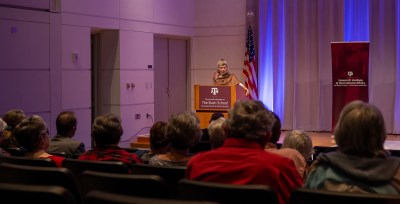
Baker provided a steady hand. As the Berlin Wall began to crumble–metaphorically and then literally–Baker proposed four principles by which reunification should be considered:
- Self-determination should be pursued;
- Reunification, should it occur, should take place within the context of NATO and the larger European community;
- The process should be peaceful, gradual, and in steps;
- The “inviolability of existing borders should be respected (meaning the existing Polish-German border).”
Baker’s approach held sway, and while the US refused to “dance on the rubble” of the Wall, they did become increasingly adamant that reunification proceed. In part, this reflected the Bush Administration’s belief that they had to get ahead of the process to help guide it and ensure that it unfolded properly.

This approach, which proved successful, was marriage “between idealism and realism.” While idealists sometimes sacrificed lives and treasure for unobtainable ideals, and while realists sometimes sacrificed American ideals in the name of order, Baker sought to use a realistic approach in pursuit of gradual policies that would ultimately secure human rights.
Negroponte communicated these complex thoughts in an impeccable English–something much commented on–with a vaguely European or Ivy League accent.
She also took questions, with the help of moderator Andrew Natsios–who was the former Director of USAID (which came up in the discussion), a former state legislator (MA), US Special Envoy to Sudan, a Professor, and an author.

Afterward, Ms. Negroponte kindly signed our books, took a photo with us, and shared a few more stories.

We also had the opportunity to meet Andy Card…
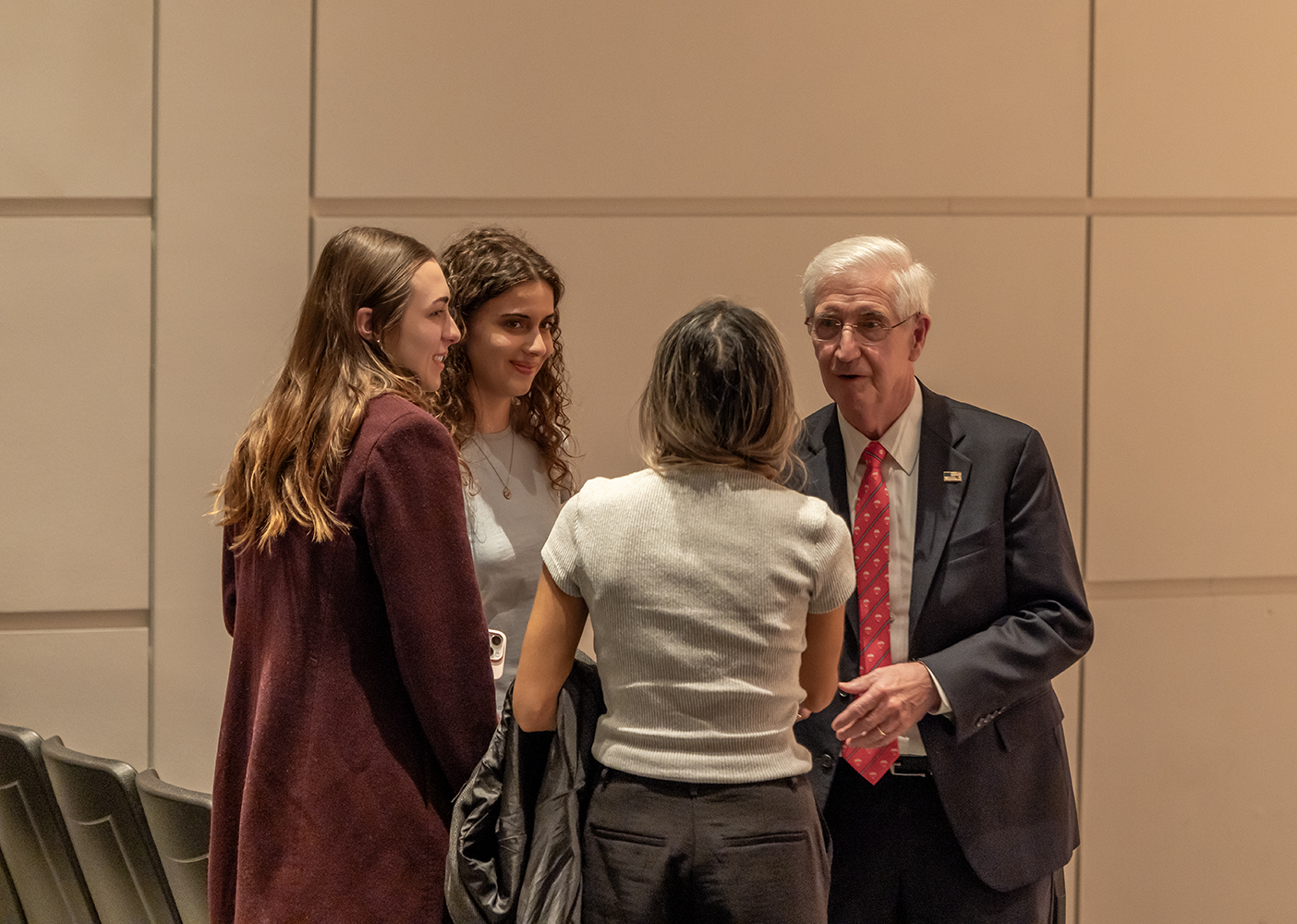


…who, after serving in the Massachusetts Legislature, served in three presidential administrations: (1) Deputy Assistant to the President during the Reagan Administration; (2) Secretary of Transportation for President G.W.H. Bush; and (3) Chief of Staff for President G.W. Bush. He is perhaps best known for informing President Bush of the attack on the World Trade Center on September 11, 2001.

It was a perfect cap to an event that took us across centuries of political history, around the world, and a hand-shake away from some of the people who helped shape that history.


 Center for Law, Engagement, and Politics