
Each year, the American Moot Court Association fields national competition for pre-law students. The competition consists of regional tournaments, preliminary nationals, and then nationals. For those into writing, there is a separate brief writing contest.
The Moot Court experience simulates that of an appeals court, an appropriate match for SHSU, inasmuch as we are one of the few institutions to bring in an appeals court annually to hear cases.

This Year’s Moot Court Case & “How to Win in the Courtroom”
Each summer, Professor Yawn teaches “How to Win in the Courtroom,” which uses the Moot Court case as the class curriculum. Students who sign up for this course will not only receive academic credit, but also have a head start in learning the material. The course unfolds as follows:
- Introduction to Courts and the Judicial System
- How to Brief a Case / Moot Court Rules
- Bronner v. US
- Con Law Cases (8 involving the 4th Amendment and search and seizure; 9 involving Article II of the US Constitution and Presidential Powers)
- Oral Arguments
This year’s case involves the detention of Bobby Bronner following a 93-day period of visual surveillance, posing questions of (1) the extent to which the government can use surveillance techniques (in this case, “Ring” cameras installed on telephone poles) and (2) the legality of detaining non-citizens under presidential order.
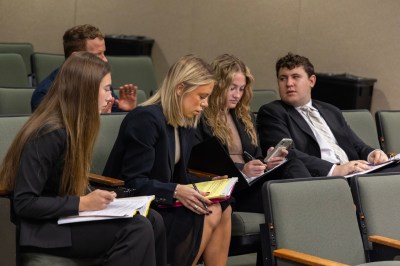
Students interested in Moot Court are thus encouraged to take the class, allowing them earn credit while gaining low-pressure exposure to Moot Court. Students who do well in the course and otherwise show desirable characteristics of a moot court participant are invited to meet with the coach and team lead.
Depending on the number of participants and the budget, additional students may be able to try out for the team.
How Moot Court Works
“Mooters,” as participants are called, compete in teams of two. One individual handles the first legal issue (in this year’s case, it is the fourth amendment); the second member of the team handles the second legal issue (Article II powers of the President, in this year’s case). with one of the team handling rebuttal, when called for.
To prepare for the Oral Arguments, the team members have to thoroughly know their own issue, and have some knowledge of their teammate’s issue. This involves reading and re-reading the hypothetical scenario posed by AMCA (i.e., Bronner v. US) and the cases that form the backbone of their issue. For the Fourth Amendment issue, as previously mentioned, this involves eight cases, including landmark USSC cases such as Katz v. US. For the Article II issue, this involves reading nine cases, including landmark USSC cases such as Youngstown Sheet & Tube Co v. Sawyer.

Even after taking the class “How to Win in the Courtroom,” students will need to engage in weekly meetings (approximately two hours long) in preparation of the regional tournament, which typically takes place in late October or early November. Because registration for the tournaments takes place September 1, teams have to be established by then.
The Competition
There are approximately 15 regional tournaments each year, and in the last two years, SHSU has attended tournaments in Fort Worth (TAMU Law) and Fort Lauderdale (Shepard Broad College of Law).
For the first round, teams are assigned their role: either petitioner or respondent, with the petitioner having the opportunity for rebuttal. Three judges (actual attorneys) hear the cases, interrupting as they see fit, and scoring each participant following the round.
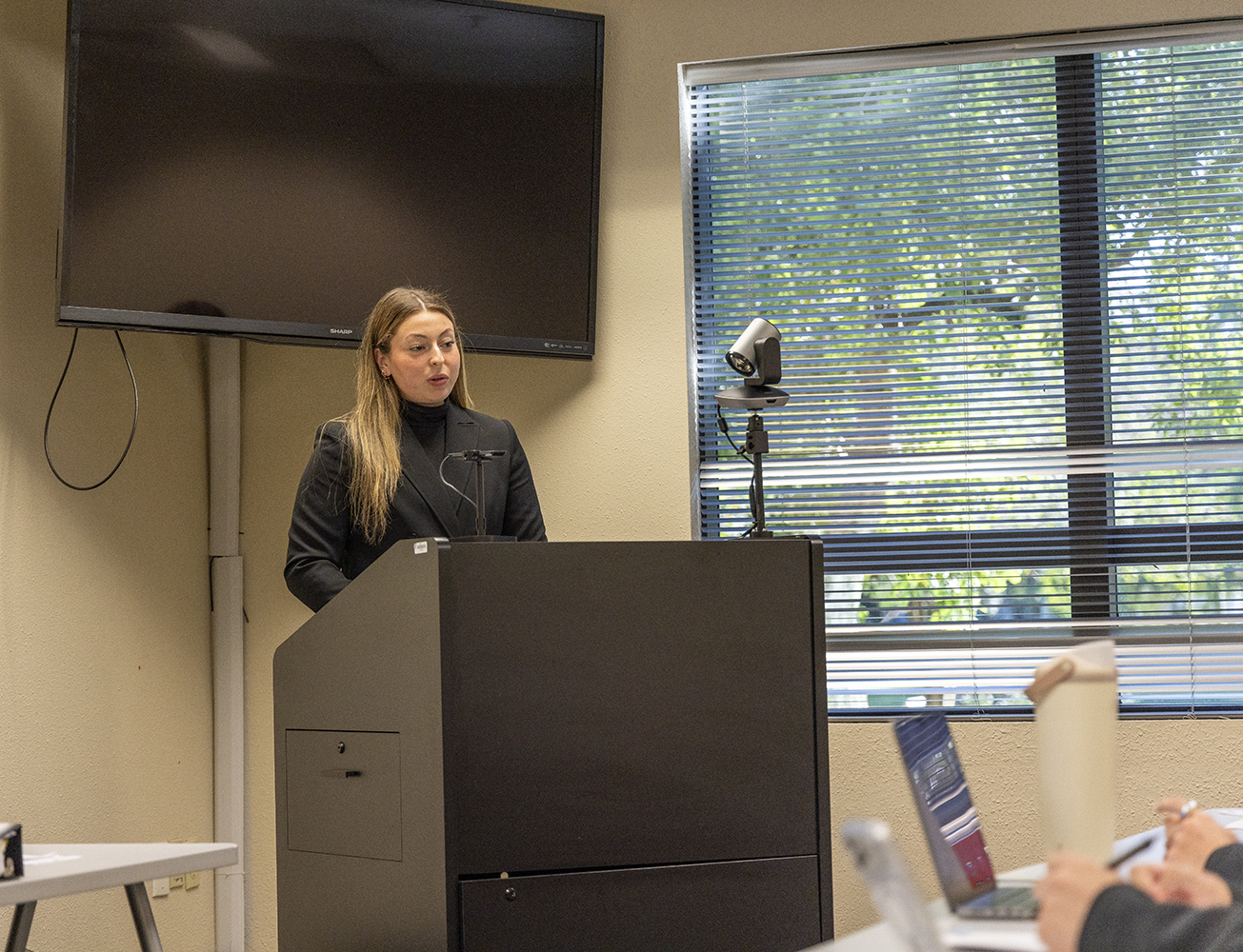
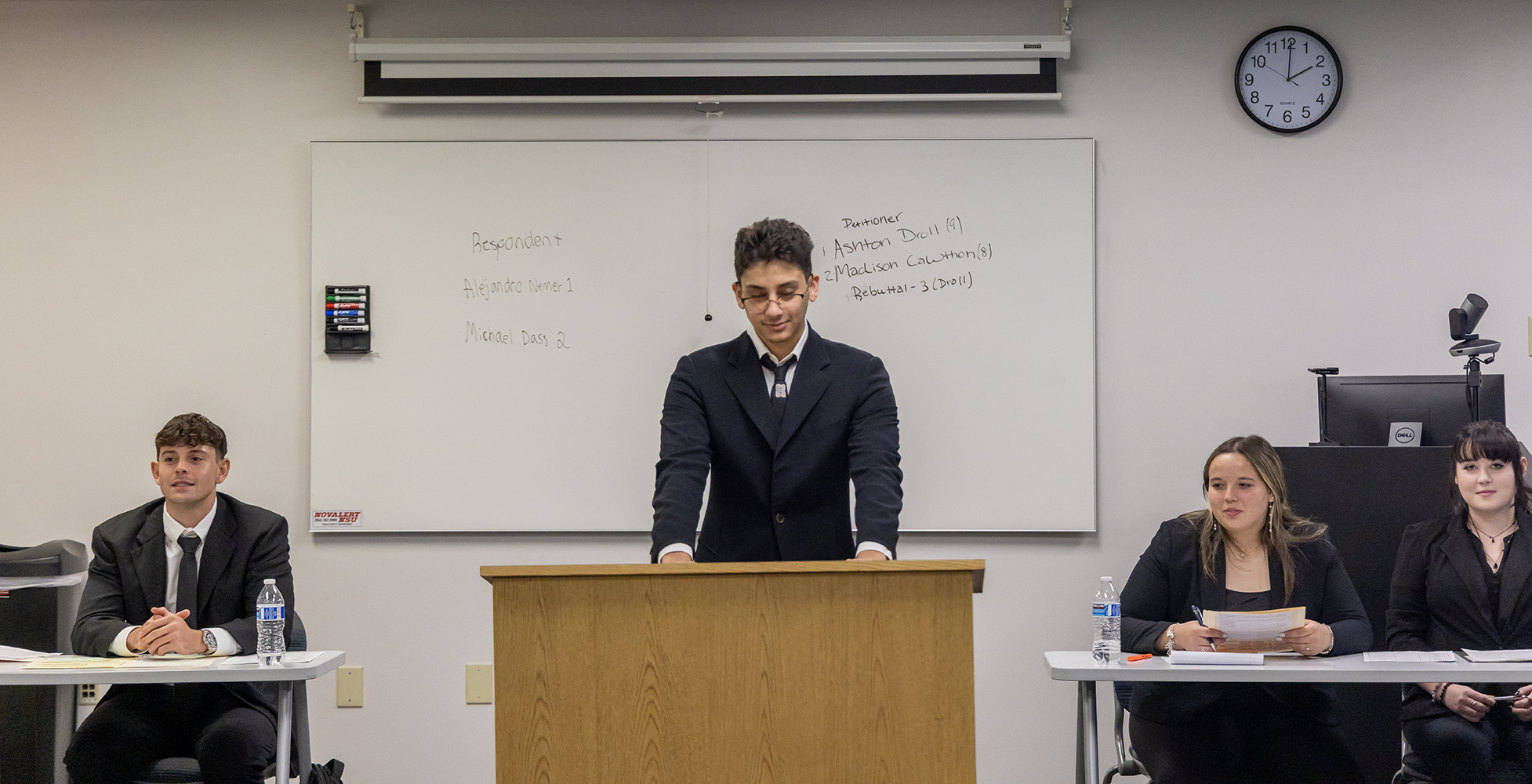
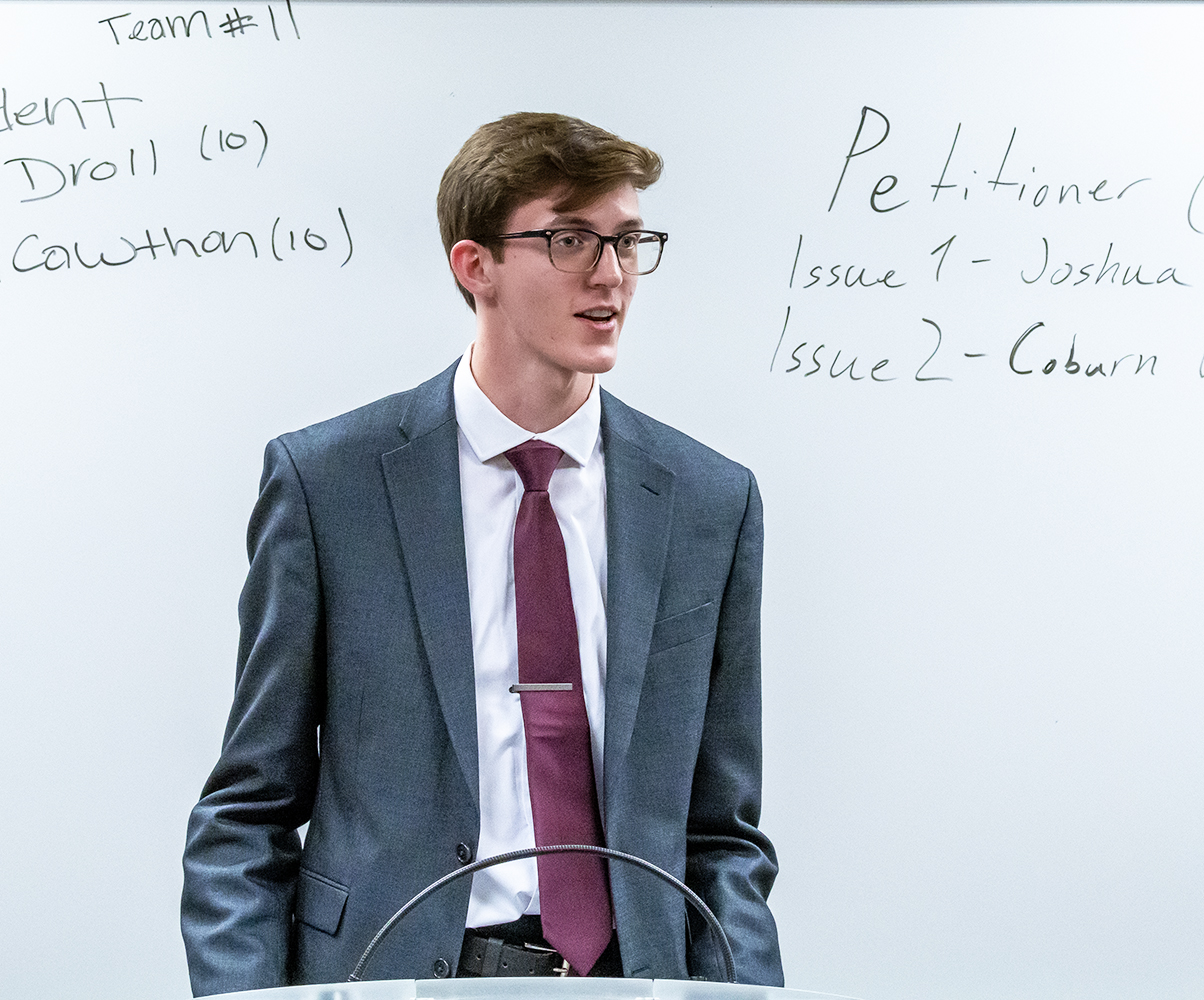


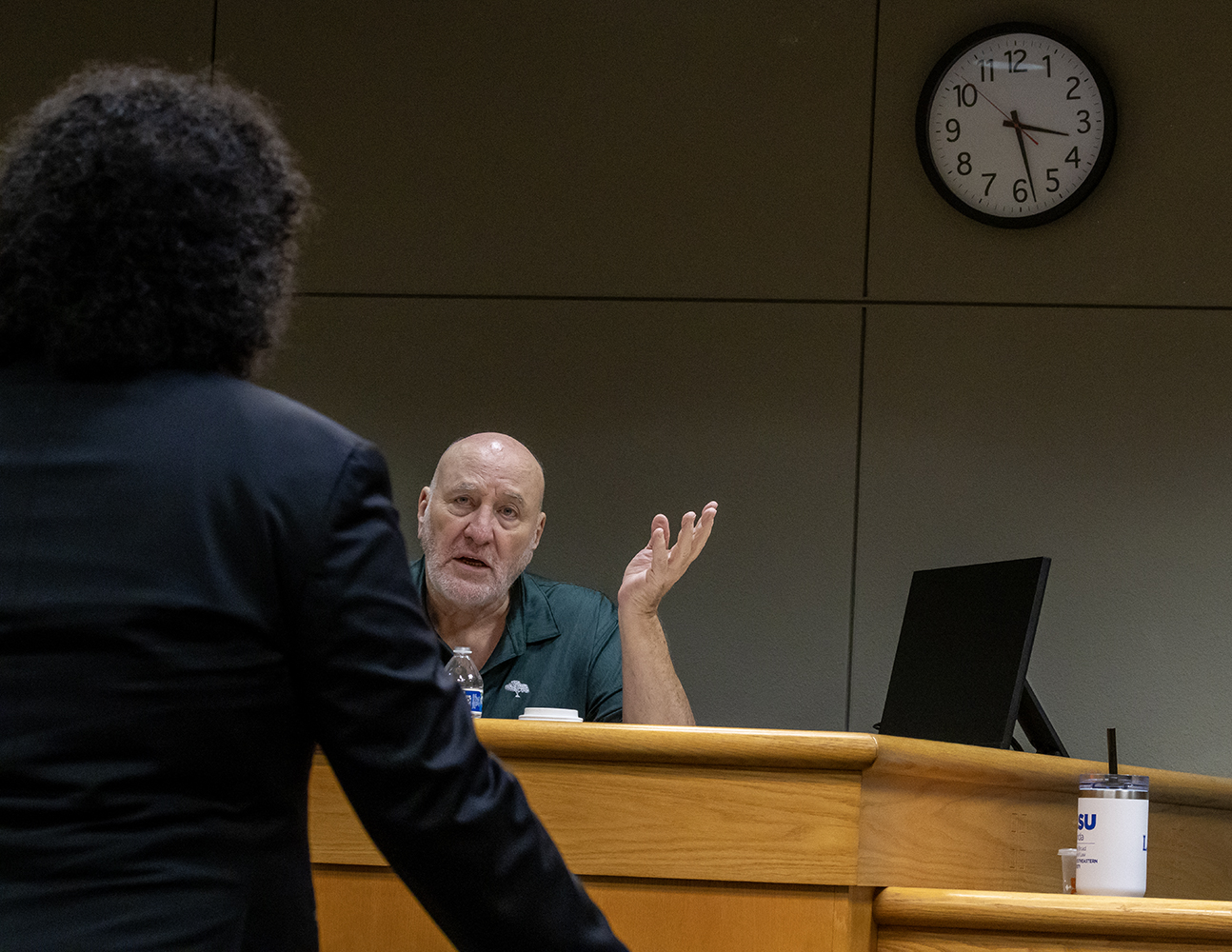
Participants are scored on (1) knowledge, (2) response to questions, (3) forensic skill/courtroom demeanor, and (4) organization, logic, and clarity of argument.
For the second round, teams take the side opposite they argued in the first round, and for round three, a coin toss determines the team’s side.
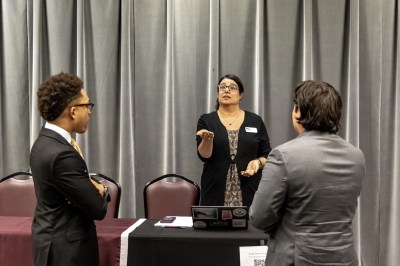
Depending on the size of the tournament, a quarter to half the teams will advance to the tournament’s second day, where the competition will proceed much like the first day.
Benefits of Moot Court
Moot Court sharpens the mind, pushing students to develop reading comprehension skills, sharpen their persuasive skills, enhance their public speaking, refine their use of logic, and expand their legal network.
Almost all law schools offer a Moot Court team, and law students have the option to choose among Moot Court, Mock Law, Negotiations, or all three. Participating as an undergraduate can give students a head start on this decision, while also providing skills and exposure that helps in law school.
Students who would like to learn more about Moot Court can go the American Moot Court Association’s website.


