Mike Yawn teaches at Sam Houston State University. In the past few years, he has taught courses on Politics & Film, Public Policy, the Presidency, Media & Politics, Congress, Statistics, Research & Writing, Field Research, and Public Opinion.
He has published academic papers in the Journal of Politics, Political Behavior, Social Security Quarterly, Film & History, American Politics Review, and contributed a chapter to the textbook Politics and Film.
He also contributes columns, news analysis, and news stories to newspapers such as the Houston Chronicle, San Antonio Express News, Seattle Post-Intelligencer, Stamford Advocate, Greenwich Time, Huron Daily Tribune, Laredo Morning Times, Beaumont Enterprise, Connecticut Post, and Midland Reporter Telegram.
Yawn is also active in his local community, serving on the board of directors of the local YMCA and Friends of the Wynne. Previously, he served on the Huntsville's Promise and Stan Musial World Series Boards of Directors.
In 2007-2008, Yawn was one of eight scholars across the nation named as a Carnegie Civic Engagement Scholar by the Carnegie Foundation.
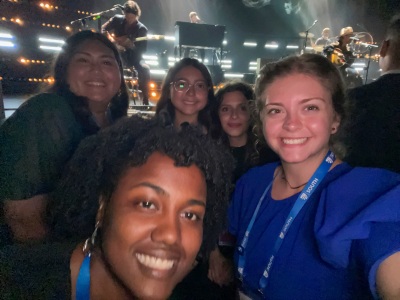
Just 36 hours before our summer retreat, Michelle Cardenas, Olivia Discon, Ingrid Cuero, and I made our way to Houston to see award-winning author, Megan Abbott, discuss her new book: Beware the Woman. Abbott’s seventh stop on her book tour was hosted at one of our favorite local bookstores, Murder By The Book. Like its name suggests, Murder By The Book is certainly a place for true crime enthusiasts, mystery fanatics, and of course avid readers!
In most crime novels, and in real cases, the perpetrator is often male. However, Abbott flips the narrative in her works by diving into the motives and emotions that drive women to act in malicious ways. Beware the Woman follows a newlywed and expecting couple Jacy and Jed, as they venture to Jed’s fathers’ cabin in the woods. Without giving too much away, Abbott managed to offer some teasers about the book, while also answering questions from the audience and successfully hooked us on reading the book!
Abbott chose to spend her time answering questions from the audience. In past interviews and articles, Abbott indicated that she has been heavily influenced by film noir. Professor Yawn asked Abbott if she pictures certain actors from film noir as her characters while she writes. Abbott answered of course and listed some of her childhood favorites including Robert Mitchum, Humphrey Bogard, and Gloria Grahame! However, she also mentioned how she tries to leave enough ambiguity so that readers may fill in the blanks and invasion their own protagonist or villain.
Another question from the audience, prompted Abbott to choose her favorite of her works. After pondering on her answer
Abbott chose Dare Me (2012) which details the true nature of a high school cheer squad with a dark twist. This question led Abbott to describe part of her researching process. In her example, Abbott chose The Turnout (2021) and explained that YouTube and message boards were a few of her greatest tools to uncover what the world of competitive ballet looks like. Although she interviewed countless ballet dancers and instructors, online sources also provided details needed for her thriller. Abbott noted how in preparation for a book, she will do extensive research at the beginning so that she doesn’t have to fact check every small detail as she begins to write.


Olivia most enjoyed how Abbott contemplated each question and gave genuine answers about her process and her own opinions on her work. Olivia purchased The Song is You (2007) after talking with Stephanie who enjoyed the book for its noir themes and “female fatale” character.
Abbott was kind enough to pose for a picture with our group and chat with us for a few minutes!
The LEAP Ambassadors would like to thank Megan Abbott for her lively and engaging book talk, as well as Murder By The Book for hosting such a great event!
You may know the Wynne Home for its beautiful architecture; or, you may know it for its regular art exhibits; others know it because of the great programs it offers, such as Empty Bowls or its annual Easter Egg Hunt. But the Wynne Home also offers a speaker series, and last week, Dr. Michael Strutt, the Director of Cultural Resources for the Texas Parks and Wildlife Department, discussed how our State Park system–just like the Wynne Home–is multi-dimensional.
Before the event began, I had the opportunity to look at the newest exhibit being shown at the Wynne Home. Under a Texas Sky by Derrick Birdsall was a beautiful back drop to the conversation about past Texans and the natural landscape the Texas Parks and Wildlife has worked so hard to protect.
I was also able to enjoy refreshments provided by the Friends of the Wynne and mingle with Miranda Estrada, a former LEAP Ambassador who–two degrees later–is working as the City’s Economic Development Specialist.
I also introduced myself to Dr. Strutt before the event began to discuss career opportunities within the Texas Parks and Wildlife, the powers held by the Texas Game Wardens and Park Police, and living in Austin.
Sarah Faulkner, the Cultural Services Manager for the Wynne Home, began the night by introducing Dr. Strutt. Ms. Faulkner actually met Dr. Strutt when she was working for the Texas Parks and Wildlife Department at the Battleship Texas State Historic Site. Dr. Strutt, originally from Virgina, has held his position for the Texas Parks and Wildlife for 21 years and received degrees in Anthropology, Earth Sciences, and Archeology.
Dr. Strutt started the presentation by explaining of the organizational structure of the Cultural Department. The department is divided into five smaller departments: archeology, archeology collection, preservation, cultural services, and the regional cultural services. All of the departments, except for the regional services, work out of the headquarters in Austin. The department does a lot of various tasks to ensure the preservation of our past such as fixing, cataloging, and restoring historic buildings, furniture, and other historic objects, as well as cleaning and waxing statues. With over 60,000 historical objects catalogued in Portfolio and a web application that TPWD employees use to reference historical objects that are all over the state, Dr. Strutt and his team stay very busy.
He went into depth about specific projects the Cultural Resources department has worked on, projects that are currently in the works, and the next steps for the Texas Parks and Wildlife. One of the projects I found the most fascinating was the restoration of adobe buildings at a fort in West Texas. The Cultural Resources department not only found a specialist to ensure that the building was restored, but they taught the Rangers, Interpreters, and other Park employees how to restore the building.
Dr. Strutt emphasized that every employee must know the history their park and how to care for it to ensure that the employees could answer questions from the public and, more importantly, take pride in their parks. Another recent project that took place was very close to home, as the Cultural Resources office helped Huntsville State Park redo the siding on the boathouse build by the Civilian Conservation Corps over 80 years ago.
In the field, the Cultural Resources team is also working hard. At Seminole State Park, archeologists have just recently discovered a fire pit that was last used over 2000 years ago. The site was discovered during an archeological survey before a pump station was built. At Caprock Canyon State Park, after years of erosion along the cliffs, archeologists apart of Dr. Stutts team have discovered a large deposit of Bison remains. They believe the location was a site for meat processing for a Native American tribe at one time. Dr. Strutt informed us that once more research had been included, both of these sites would be a part of the interpretation of their respective parks.
Being that is it that centennial year of the Texas Parks and Wildlife Department, Dr. Strutt and his team have been working on various projects about the history of the department itself. He told us all about the first female superintendent of a Texas State Park, Carrie May Ferrell. Ferrell was the Superintendent of Stephen F Austin State Park during the early 1930s, but she was not the only female trailblazer in the Parks Department. Ethel Harris was the Superintendent of Mission San Jose for 22 years, before her retirement in 1963, while also running her own art business. Learning about the conservation efforts of women before women were widely accepted into the workplace was more than inspiring.
While we spend a lot of time discussing Texas’ past, we also discussed the future, that is the future of State Parks. Texas Parks and Wildlife Department recently announced that they will be opening two new natural areas and three new state parks soon. Before any construction can begin, archeological studies must be conducted, interpretations of any objects must be researched, and much more will be done by the Cultural Resources office. There are also new technologies being introduced to parks to make them more accessible such as free interpretation apps for individuals who are visually impaired. These apps are alert individuals of trail signs and actually read those signs, whether directions or interpretations, aloud. The technology is actively used at Palmetto State Park currently.
At one point during the presentation, Dr. Strutt was talking about why he likes his job. There were a lot of different reasons, but the one that stood out to me was when he said, “I get to see your parks.” A sentence as simple of that was enough to remind me that the parks, historical sites, and everything in them are parts of what Texas was and is. It was a beautiful remembrance of how connected we are to those who came before us.
The night concluded with the Friends of the Wynne presenting Dr. Strutt with a book reflecting art made out of interpretation for the state parks. Dr. Strutt was kind enough to stick around for a while to chat with attendees.
When I went to thank him for the riveting presentation, he commented on the number of State Parks I had visited. Whenever he would discuss a project, he would ask who had been to that park and most times I would raise my hand. We discussed the state parks we had both been to and which were our favorite, neither one of us could pick just one park but we both had an appreciation for Lost Maples. He suggested I go to Palo Duro Canyon, a state park I have always wanted to visit, and informed me that there was no sunset like the sunset on the canyon.
LEAP is all about new adventures and experiences and although it took me a bit to adjust to a new and bigger city (editor’s note: the girl is from Houston, but she was a homebody), I was more than happy to explore what Austin has to offer, and that made for an artful weekend!
For many, breakfast is the most important meal of the day, and I don’t steer away from that. Missing home and my parents cooking, I decided to check out the La Yaquesita food truck. With many options to choose from. . . gorditas, tacos, tortas, sopes, and much more, I opted for what my heart most desired . . . chicharron prensado tacos made with freshly made maize tortillas. These delicious and flavorful tacos did not disappoint and were definitely a great start to my morning.
Austin has many historic homes you can visit, but I chose to visit one of the oldest – the Neill-Cochran House Museum – located in the heart of the city. This beautiful structure resembles Greek Architecture visible through the symmetry and use of Doric columns. The home was designed in 1855 by Abner Cook, who was commissioned by a young couple, Washington and Mary Hill , to construct a nice Greek revival home. [Cook is also the architect who designed the Governor’s Mansion and if you have seen them both you can easily see the similarities.]
After becoming the capital of Texas, the City of Austin rapidly expanded, and its economy rose as many wealthy and prominent individuals moved to the city. Before they knew it, the young couple’s dream home was no longer within their means. And despite their attempts to finance the home, they were not able to finish the construction.
Consequently, this home passed to different owners and for different purposes: it was a school for the blind, a hospital during the civil war for soldiers who were recovering from yellow fever and cholera, and a home that was privately owned.
And although it was built as a private home, it didn’t actually become one until 1892, when the Neil family, Colonel Andrew and Jennie, moved to Austin from Galveston and purchased this home for its majestic appearance. During their time in the home, they threw elegant parties, were known for their wine cellar (which is not open to tour), and entertained politicians.
The home was later purchased by Thomas Cochran, and he and his wife, three children, mother, and father-in-law lived in there. Although a large home, I suspect those living arrangements were cramped. The home is furnished with some of their original furnishings and other pieces from the same period.
The first floor consisted of a double parlor (where weddings took place throughout the history of the home), a French parlor, kitchen, and a dining room. The second floor consisted of all the bedrooms and a balcony, although safety concerns precluded public access.
My favorite part of the the house was the double parlor. Upon walking into the room you are welcomed by a grand space and a portrait of Mary Cochran Bohls. The room had a beautiful chandelier hanging from the ceiling, dainty lace curtains, fancy sofas, a kids trojan horse, and an absolutely beautiful melodeon (organ like piano). I was blessed to be able to hear a tune out of this piano as the staffer there showed us how it worked. As you made your way around the house you could see portraits of family members, the floral themed carpets that would have been installed during Thomas Cochran’s time, as well as servants’ entries. As I explored the bedrooms, I was amazed to learn about their stories, the similarity in toys/ dolls that they grew up with and the ones that I did, and to see the tiny shoes they used to wear.
On my way out of the home, I was also able to see the structure originally built for slaves, but which mostly served as servants’ quarters.
I then ventured off to the Umlauf Sculpture Garden where I not only admired the sculptures but also attempted to reenact some of them. Charles Umlauf is an American sculptor born to French and German immigrants. His work varied from expressionism to abstraction, while also utilizing different materials: wood, terra cotta, cast stone, rich bronzes, luminous marbles. Within the garden there was a mix of his work: sculptures of animals, religious and mythological figures, family groupings, etc. Although it is small, it is quite intimate and allows you to have fun with friends and family.
It was a nice follow up to the Neill-Cochran House Museum and a nice segue to Zilker Park, where I played frisbee and enjoyed the nice weather.
Although I had many other interesting adventures throughout my Austin internship, this occurred early in the semester, when it was still possible to relax a bit and learn as much as possible in the process.
Of course, just working the session in Austin is an adventure, and although my opportunities for relaxation declined over the course of the 140 days, the adventure and the learning never did!
Derrick Birdsall, the current director of the Sam Houston Memorial Museum, is a photographer who seeks to capture remote landscapes with the vivacity of the context behind them. Birdsall’s “Under the Texas Sky” exhibition is now on display at the Wynne Home, and I had the privilege to both assist and attend the opening reception on May 23, 2023.
Despite the severe weather, there were several people in attendance. Those who arrived early had the opportunity to mingle and treat themselves to some refreshments provided by the Friends of the Wynne.
Beginning with a brief opening statement, Cultural Services Manager Sarah Faulkner spoke about a few upcoming events that the Wynne Home is hosting, as well as introduced the man of the hour.
Derrick encouraged the attendees to take photos of what interests them in line with the moment, without influences of technology or trends. Many of the pictures that are on display are the result of exploring what was “just around the corner”, with incredible scenic landscapes as a result.
Throughout the reception, we were able to ask Derrick questions about any particular work and the story behind it. One discussion that particularly fascinated me was “Scratch That Itch”: a charming picture of a herd of bison at Caprock Canyons State Park. At first glance, I wouldn’t have assumed the significance of the herd outside of its ideal placement in front of the canyons. However, with the guidance of the photographer himself, I was able to grasp how remarkable it was! The Goodnight Herd is one of the oldest-living domesticated bison, who were restored from near-extinction and returned to their native land. The perspective of a photographer with great historical knowledge captivates the viewers to not only gain the insight of the photo itself, but also the historical context.
The gallery was a wonderful way to incite conversations in the community surrounding the art of photography and the natural world. Many thanks to Derrick Birdsall for sharing his stories and photographs, and to the Wynne Home for hosting this exhibition!
As Sine Die 88th Texas Legislative Session comes to close, SHAIP interns began to reflect on the end of their internships. Interns from Sam Houston State University have enjoyed the past five months in Austin working for legislators around the state. To commemorate their great work, SHAIP students were recognized on the House of Representatives and Senate floors by the Texas Legislature.
There was a bit of waiting around at the beginning…
…as the House appeared slow to rouse. But this gave us time for important conversations and work…
Rep. Armando “Mando” Martinez began the proceedings by introducing the House Resolution highlighting SHSU students’ “outstanding service to the Texas Legislature during this 88th legislative session.”
On a personal note, Rep. Martinez highlighted SHSU student Jayelynn Bordeaux as the intern working in his office.
The other representatives that attended were able to thank their interns personally as well. Rep. Will Metcalf took the opportunity to thank Yvette Mendoza for her hard work and following his support, offered an exultant “Go Bearkats.” (He is an SHSU alum!) Rep. Rafael Anchia…
…thanked Amor Sheffield and expressed how “proud [he is] of her service to our office and the state of Texas” while also noting how excited he was for her bright future.
Rep. Martinez finished the resolution by bringing to attention the work that Ashlyn Parker and Morgan Dawson are doing for Rep. J.M. Lozano and Rep. Senfronia Thompson, respectively.
With all the students enjoying some recognition in the end.
Afterward, students hustled to the Senate Gallery, where Senator Schwertner and Senator Hughes presented a resolution to recognize the Sam Houston Austin Internship Program.
Sen. Schwertner began the resolution by providing background on the SHAIP program and stating that “[e]ach of these students should be commended for their hard work and service to the State of Texas.”
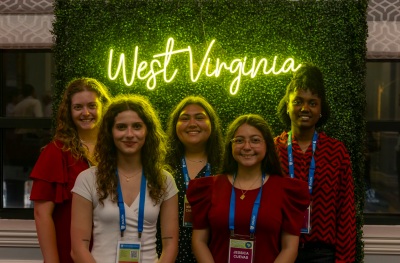
He informed the Senate that three of the nine students had been working in Senator’s offices, five have been working in the House, and one student, Breanna Demyers, has been working for the Texas Association of Counties. Jesicca Cuevas and Morgan Robertson were highlighted by the Senator, as they have been working in his office during the session.
Sen. Schwertner emphasized their hard work and professionalism, thanking them profusely.
Senator Hughes then took the floor to extol the virtues of Ingrid Cuero. After noting that Ingrid was his “first SHSU intern,” he emphatically noted, “We want more!” He praised her for her kindness, work-ethic, and smile.
This summer, Ingrid will be continuing her education in politics working with US Congressman Sessions.
The recognition process can be lengthy, and it cuts into the work that the legislators can do, so we are very grateful to the House and Senate for taking time to recognize the hard work of SHSU students and the merits of the SHAIP Program.
We are also very grateful for our students, who are putting late hours for 140 days, about six weeks longer than a regular semester!
The LEAP Center would like to thank Scott Jenkines, Chief of Staff for Armando “Mando” Martinez. Mr. Jenkines has been a great mentor to dozens of interns, and he has helped place SHSU interns since the program’s inception.
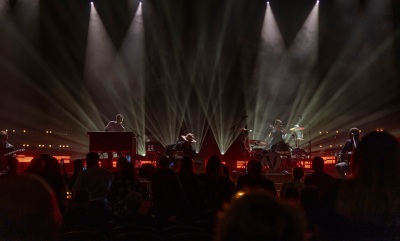
In any given semester, LEAP Ambassadors do volunteer service, attend presentation by leading public figures, tour art museums, explore civil rights and history, and, when possible, attend performing arts events. This semester was no different and, in fact, the Ambassadors began the semester with Chicago and they ended it with a performance of Noises Off at the Owen Theatre in Conroe, TX.
This was a rare treat for us, in that none of us had ever been to the Owen Theatre before, although several of our party had seen Noises Off. Indeed, Victoria McClendon was attending tonight as an alum, but her very first LEAP event was a production of this play at SHSU in 2016!
This time, in addition to Victoria, we had Olivia Discon, Professor Yawn and Ms. Stephanie, and Dr. Hyman and Carol Hyman–the latter of whom generously treated us to dinner!
Noises Off is a full-on farce, a play within a play about putting on a play.
It is a crowd pleaser, but with all its moving parts, and it’s abrupt changes in persona from each character, and its frantic pace, it’s also a difficult play to put on, especially for a community theatre. But the Owen actors did a fine job, with Jillian Linton (as Brooke Ashton), Robert Faber (as Lloyd Dallas), Jeff Linton (as Sheldon Mowbray), and Allen Dorris (as Frederick Fellowes) standing out.
The first act of the play shows a rehearsal, one that is not going well, much to the chagrin of the director, “Lloyd Dallas.”
The second act depicts the opening, albeit from “behind the stage.” The real audience (us) is not seeing what the imaginary audience sees; rather, we are seeing the drama, spectacle, and chaos going on behind the scenes.
The third act, which is the most madcap, puts the real audience (us) in the perspective of the imaginary audience, allowing us to see how much of an impact the behind-the-scenes drama is having on stage.
Apparently, it’s not easy to put on a play in general, and especially when there are two separate love triangles (and maybe a love quadrangle) occurring, along with a cast that includes a drunk, a dimwit (or two), and a gossip. But those difficulties make for a fun time for the audience, and helped produce much laughter and enjoyment for the LEAP Ambassadors to cap off a long and rewarding semester.
We can think of no better way for the Sam Houston State University interns to conclude the 88th legislative session–with a delightful lunch hosted by the Chancellor of the Texas State University System, Brian McCall. The event provided a wonderful opportunity for the SHAIP interns to connect with other legislative interns in the System and reflect on how TSUS played a significant role in our internship experience.
The O. Henry Hall, located in the heart of downtown Austin is where TSUS is located. Although it is not the first time we had visited this historic building, we were again impressed by its stunning architecture and historic halls. The warm welcome from TSUS Chancellor McCall and Vice-Chancellor Sean Cunningham further added to the fantastic experience.
Lunch was flawlessly organized, allowing us to enjoy our meal while connecting with the Texas State University legislative interest. Learning about how TSU runs its legislative internship program and hearing about the future plans after the session ends was an enlightening experience. It was interesting to note that a majority of the interns were either graduating this semester from Texas State or Sam Houston, with many planning to pursue a master’s degree at the Lyndon B Johson School of Public Affairs or attending law school.
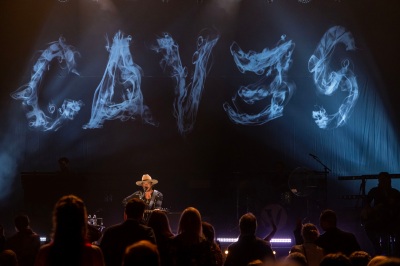
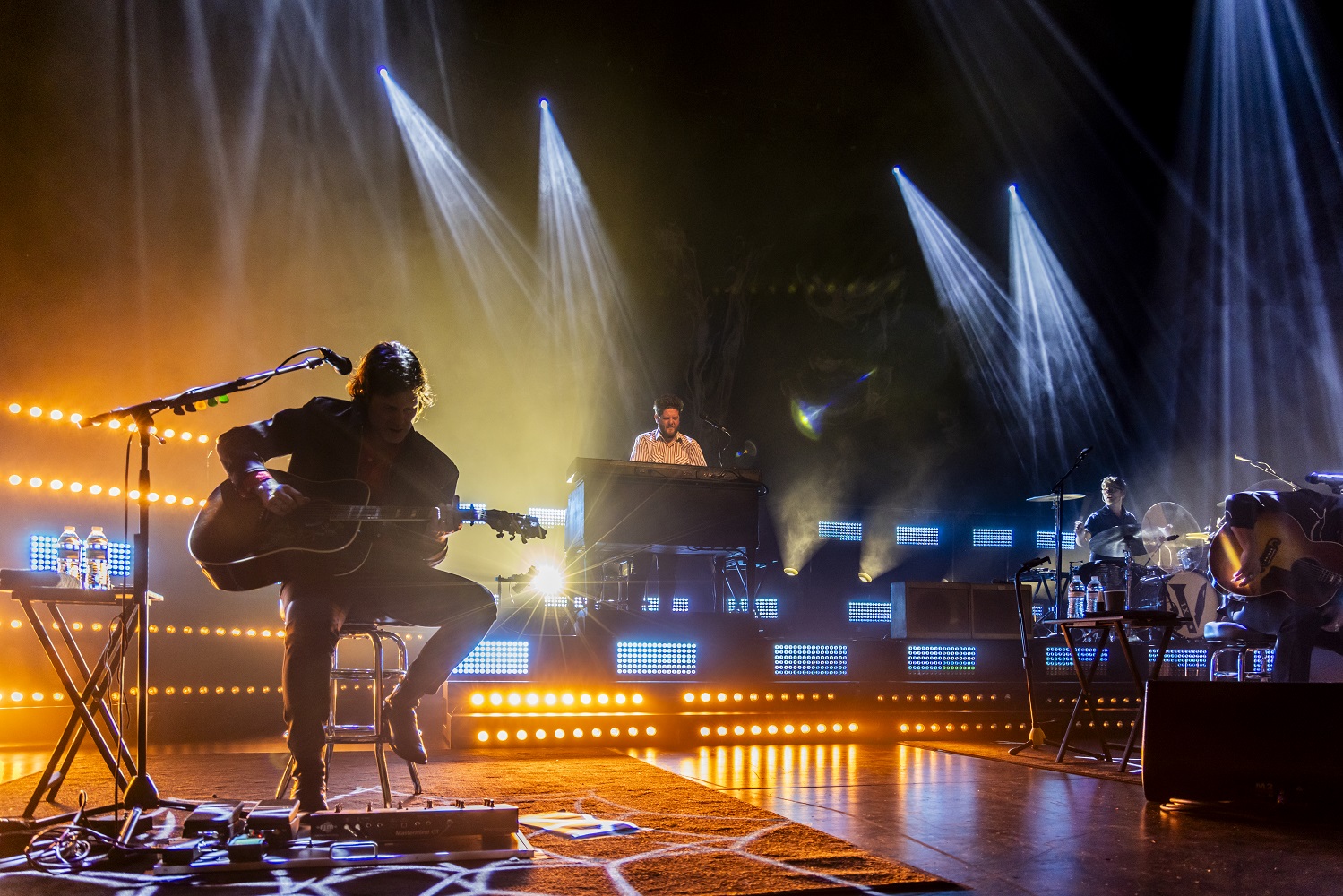
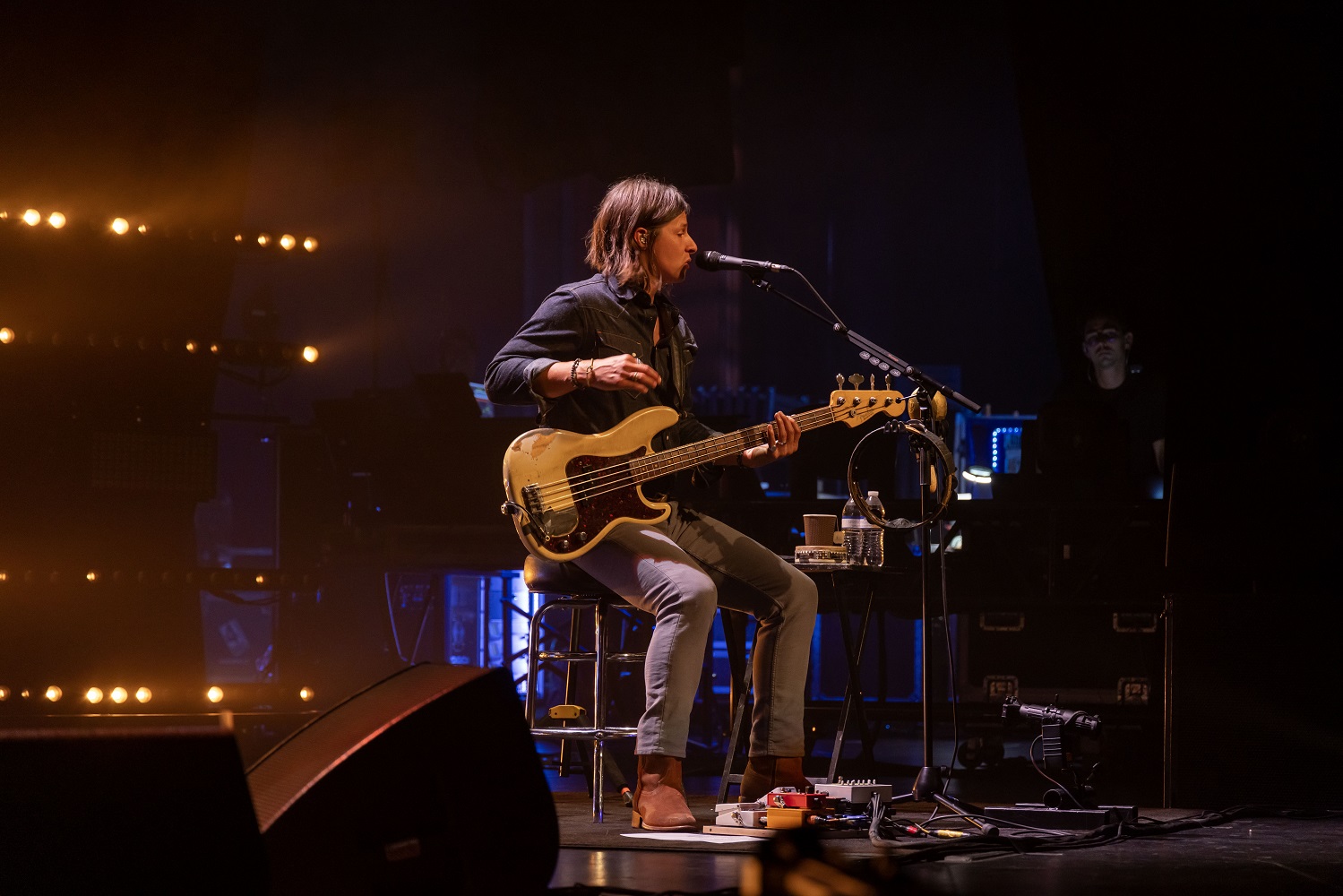
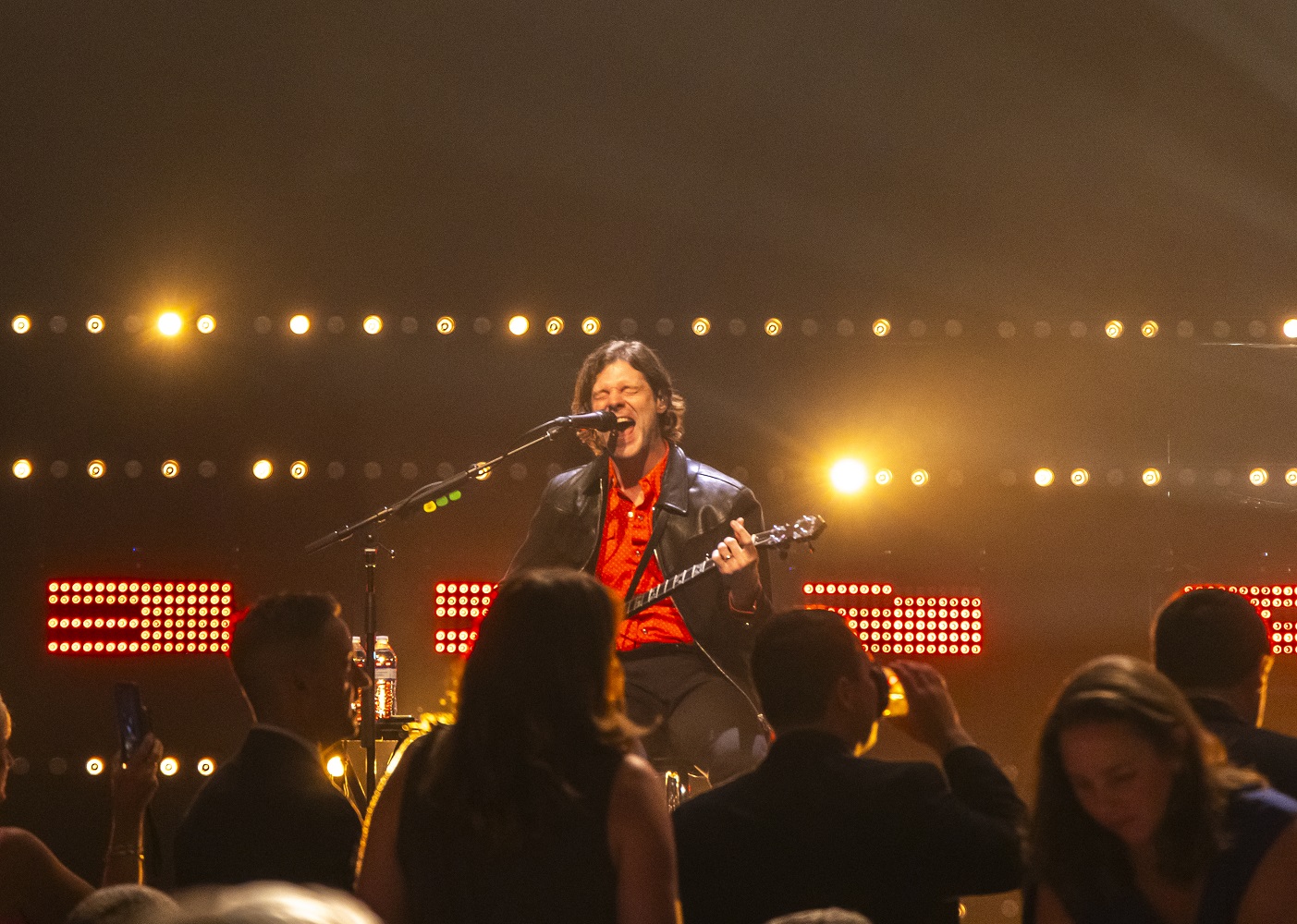
The lunch provided an excellent opportunity to reflect on the entirety of the session and how TSUS played a crucial role in making it a memorable experience. Looking back on the various event that TSUS hosted, such as the unforgettable performance of Dwight Yoakam that featured a special tribute to the Texas House Speaker Dade Phelan.
In addition, we realized how much we have grown and learned since the first lunch we had with the TSUS team.
The lunch concluded with all of the interns expressing our gratitude and appreciation for TSUS’s consistent support. We felt honored to represent TSUS at the Texas State Capitol, and the internship would not have been as successful without the support of TSUS.
On behalf of the LEAP Ambassadors and SHAIP, we would like to extend our heartfelt thanks for TSUS’s unwavering support and assistance in our growth as students who are part of the magnificent Texas State University System.
When exploring the hidden gems of Austin, Texas, one may be led downtown to the home, which happens to double as a museum, of William Sydney Porter, otherwise known as O. Henry- a prominent author famously known for his short stories such as “The Gift of Magi.”
Mr. Porter’s home is a Queen Anne-style cottage built in the mid-1890s. Amazingly, much of the original furniture is still preserved there for the public to see! The house is covered in vintage wallpaper, giving each room a different feel than the next, contrasting with most modern homes today. Interestingly, when the home was donated to the city for historic preservation, it was moved from its original location in a middle-class neighborhood to its prime location today.
Although this was Mr. Porter’s home, it was not where he constructed his famous short stories. He did most of his writing in prison for a felony of embezzlement, which he committed while working at the First National Bank. During his three years in prison, Mr. Porter wrote around 380 short stories that were published after his release, which launched his writing career, established him as an author, and later led to him becoming the famous author we regard him as today. Due to negative connotations attached to convicted felons, Mr. Porter began using his pen name, O. Henry, to prevent people disregarding his work due to serving time in prison.
The story of Mr. Porter’s past and aspiring short story author was fascinating to learn about while visiting the museum! However, the museum touched not just on Mr. Porter’s most talked about life, such as his ascent as an author; it also touched on more intimate parts that the average fan might not know. For example, Mr. Porter had a passion for music. The museum had a handwritten sheet of music titled “Main Street,” with the original notes and lyrics that he wrote on display. During his time in Austin, one could find him writing sheet music for piano, acting in the Austin Musical Union, or playing in a string instrument band, the Hill City Quartette.
I always find a little memento of Sam Houston in every museum I visit. For instance, this museum’s connection to Sam Houston was an old desk that Mr. Porter used during his time in Austin. The desk belonged to his great uncle, Adolphus Sterne, who was good friends with Sam Houston. This is one reason Mr. Porter valued this desk so much was because of the rich history behind it.
During his life, Mr. Porter was a man of many trades as he was an aspiring writer to support his family. He worked as a pharmacist, a bookkeeper, and a drafter to make ends meet. When he worked at a local drugstore, he was found to be excellent at sketching his customers. This led him to work at the Texas General Land Office for about four years, where he was tasked with drawing maps of Texas counties. He started working at the First National Bank to provide more financial support for his family, which led to his embezzlement and, ultimately, to his arrest.
One inspirational thing you can take from the legacy of the life of Sydney Porter is that every event in his life led to the next, and in the end, that is what got him to where he needed to be successful. This helps give me some perspective that not every bump in the road must be bad; it can be all about what you make of it.