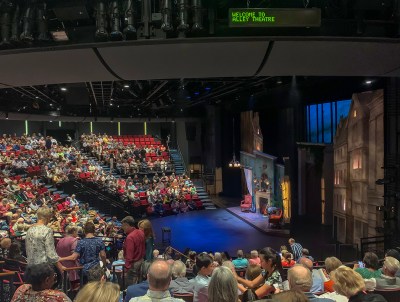
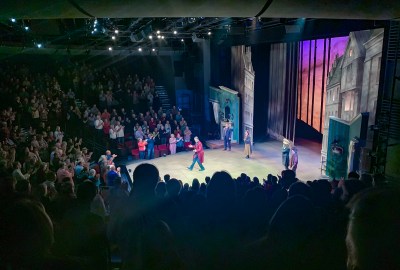
A mysterious death. A howling hound. A suspiciously Texan heir. What do all these things have in common? Chaos, comedy, and the incredible Todd Waite in his final bow as Sherlock Holmes at the Alley Theatre.
With only five actors and 36 characters flying in and out of scenes, The Hound of the Baskervilles was a theatrical juggling act, with a few wig, costume, and accent changes. Which is to say: it was impressive, ridiculous, and a lot of fun.
Before diving into the fun, we primed ourselves with a little chaos of our own: lunch at Post Market. In the spirit of the show’s variety, we went for food from all corners: noodles, rice, sushi, and African inspired power bowls— none of which appeared to be from the same restaurant.
Our group included LEAP friends Bill and Carol Hyman and Wayne and Andrea Scott, along with students Macey Schank, Jacob Wessels, Chrissy Biello, Michelle Moya, Mikaela Baires, and Austin intern Cinthia Villarreal. We showed up full and ready for whatever the Alley threw at us.
The Hound of the Baskervilles follows Sherlock Holmes and Dr. Watson as they investigate the mysterious death of Sir Charles Baskerville and the legend of a supernatural hound that haunts his family’s estate. In this version, five actors take on dozens of characters, adding a fast-paced, comedic twist to the story.
When we saw Todd Waite last month at Murder by the Book, he mentioned how Sherlock Holmes is, frankly, a smart aleck, but one you can’t really get mad at, because he’s always right on the nose. Having heard him talk about the role made seeing him perform it even better. His timing, his wordplay, and even his smallest asides all landed with precision. He clearly knows Sherlock inside and out.
Dylan Godwin was another fan favorite in this show among our group. As the Texan heir to the Baskerville estate (among a dozen other characters), he was constantly shifting personalities and finding ways to distinguish the hilarious traits for both a grumpy street cop and a simple minded Texan—even when they are both in the same scene!
In all, this was a great experience for the LEAP Center to share with some amazing community friends.
As part of the City Fellows Internship Program, we are continually exploring the inner workings of Huntsville. Our latest adventure took us to the heart of the city’s safety net: the Huntsville Fire Department, where we got an exclusive tour of the facility, led by Chief Greg Mathis.
The tour began in the lobby, where we were greeted by an impressive piece of history—a restored 1927 Huntsville fire truck. Chief Mathis regaled us with tales of the truck’s features and its rich history.
Macey and I even took a picture on the fire truck, joking that we were “officially” part of the fire department now.
Among the artifacts on display, Chief Mathis highlighted a particularly interesting item—a black-ball lottery device. This relic from the past determined whether someone would last as a volunteer firefighter. The process was simple yet harsh: firefighters would vote by placing either a white ball (yes) or black ball (no) in the container.
We then headed to Chief Mathis’ office, a treasure trove of knowledge where we learned the most about the department’s operations. Among his office testaments of pride, we got to see his impressive coin collection, which includes challenge coins from various of his experiences. These coins recognize achievements and build team spirit in the fire department.
He also emphasized that his job extends beyond fighting fires; it also involves securing grants, managing budgets, and ensuring his team can serve the community while staying safe.
We also noted the three hats from his career journey (including one that showed just how dirty the job gets).
Then we explored the residential area of the department, noting a unique feature—the “petrified wood” used in the television design is the same as the fireplace in the Josey Boy Scout Lodge. We also saw the “watch room,” which serves as the department’s nerve center, monitoring all alarms and operations.
As we learned more about the watch room, Chief Mathis emphasized the crucial role that volunteers play in the Huntsville Fire Department. Volunteers undergo rigorous training and are equipped to respond to emergencies alongside career firefighters.
The living quarters were equally impressive, with bunk rooms featuring sliding barn doors and four closets each. They also have access to a private gym with equipment like a rowing machine, treadmill, and Jacobs Ladder.
Finally, we arrived at the apparatus bay, where the fire trucks are stored—representing the traditional perception of a fire department.
Chief Mathis pointed out the physical fitness test equipment outside for the Candidate Physical Ability Test firemen have to pass. Our very strong Macey even tried her hand at the test, successfully lifting to an extent, while Jacob also gave it a go with full strength and managed to lift it off the ground!
Now, my favorite part of the tour. The multi-force wood door device they have been experimenting with lately. It’s designed to simulate various door types and jamb materials, allowing firefighters to practice different breaching techniques. Attempting it once more with Macey! After a lot of effort, she managed to get the door open!
The day showed us not just how a fire department operates but also how city services, budgeting, and management all work together. Not to mention, Macey learned just how hard it is to be a firefighter!
We are grateful to Chief Mathis and the entire Huntsville Fire Department for sharing their time and knowledge with us! We deeply appreciate all they do.
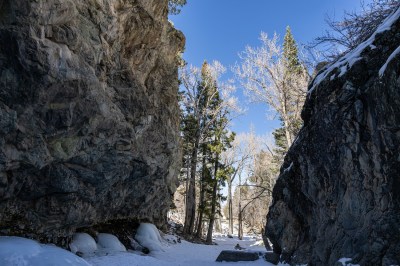
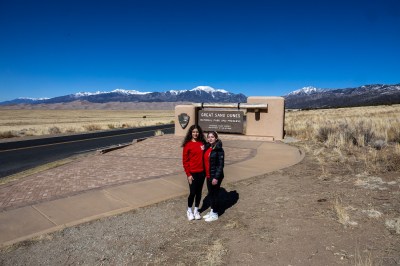
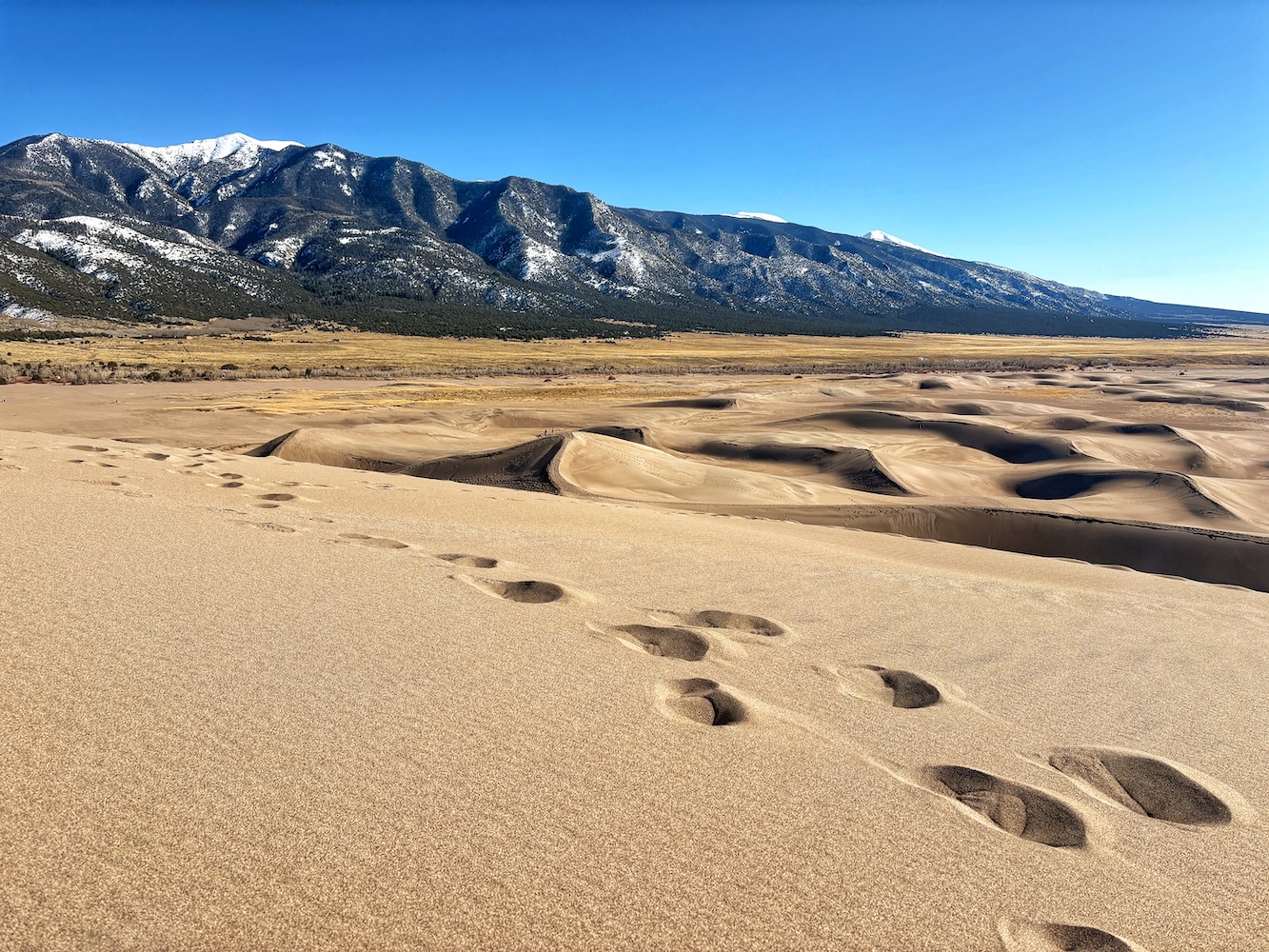
Located in the Sangre de Cristo Mountains, the Zapata Falls is a scenic waterfall that many can see by completing a short hike. The trail, frequented by countless year-round, offers not only a glimpse of the Great Sand Dunes National Park, but also allows you to see the surrounding mountain landscape as you make your way to the enclosed cave.
During the winter, when the trail becomes icier, it becomes evident that one would need crampons for the rest of the way. Unless, however, they wanted to trust their personal balance to not slip down while others stood camera ready nearby.
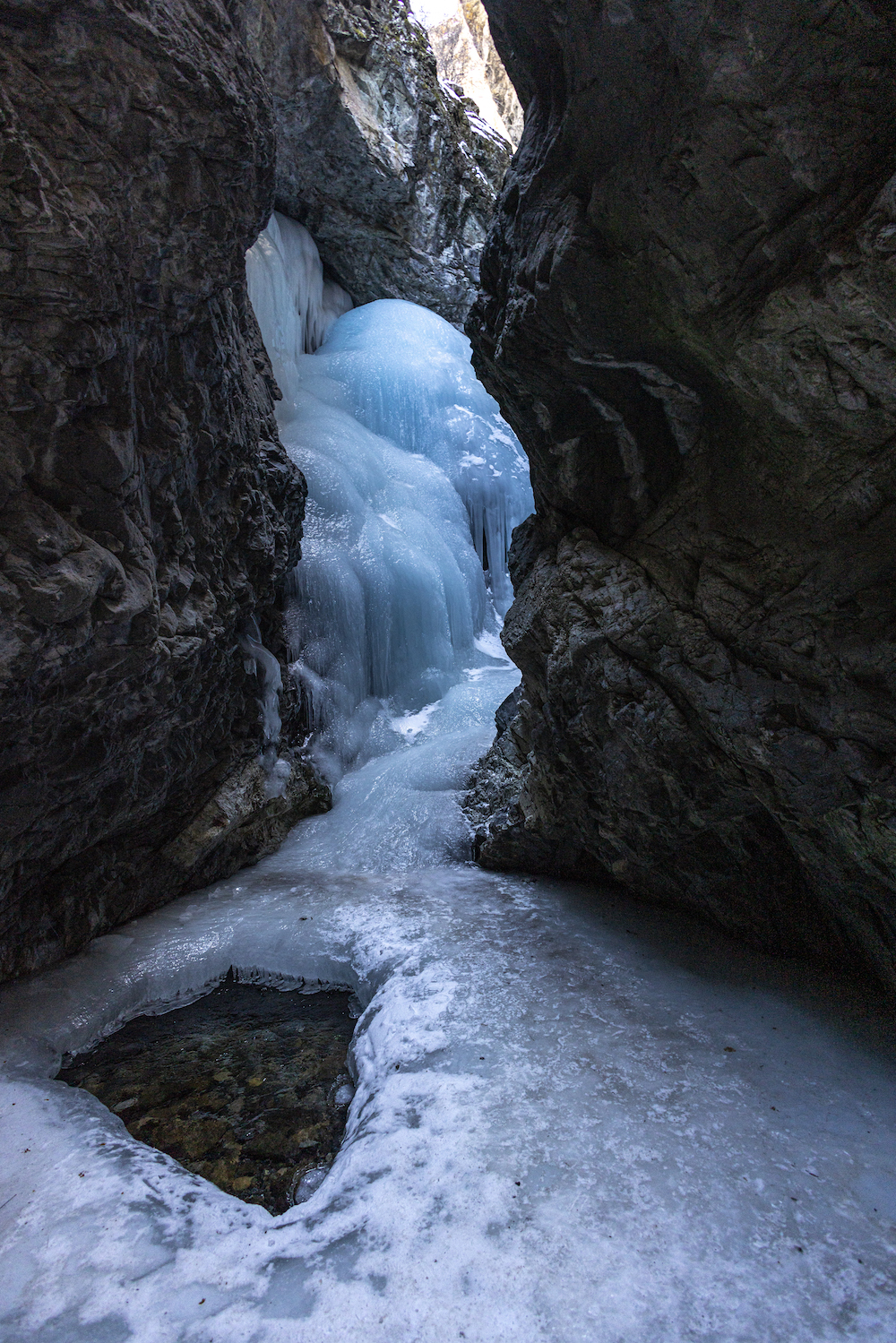
As you reach the cave, you can hear the stream flowing beneath your feet, moving from within the frozen waterfall. Where sunlight reaches inside, a large section of ice has melted, revealing frigid water. This is an inviting yet risky opportunity for anyone willing to test their tolerance for the cold.
Eager to explore further, I started climbing the icy edge to reach a higher vantage point, hoping to get a closer look at the formations. However, as I began, Professor Yawn cautioned me that if I slipped, I would likely take a plunge into the creek. What was once a cascading waterfall had become what appeared to be an icy waterslide.
Keeping that warning in mind, I proceeded with extra caution and, thankfully, made it to the top safely.
Strangely enough, it did not feel cold up there, though that might have been due to the nerves that had initially distracted me from noticing the temperature. After carefully making my way down with Olivia’s help, we set off toward the Great Sand Dunes National Park….
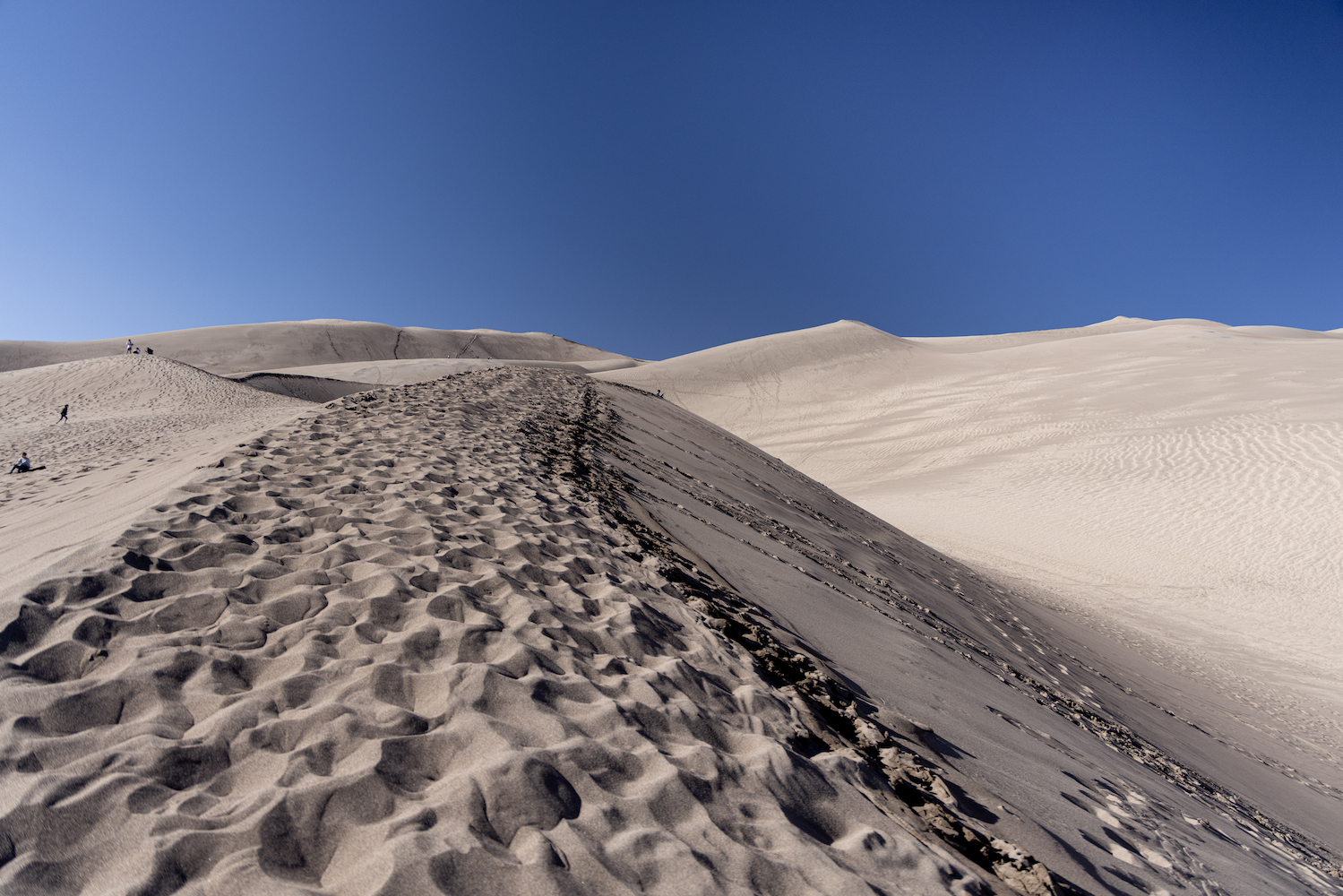
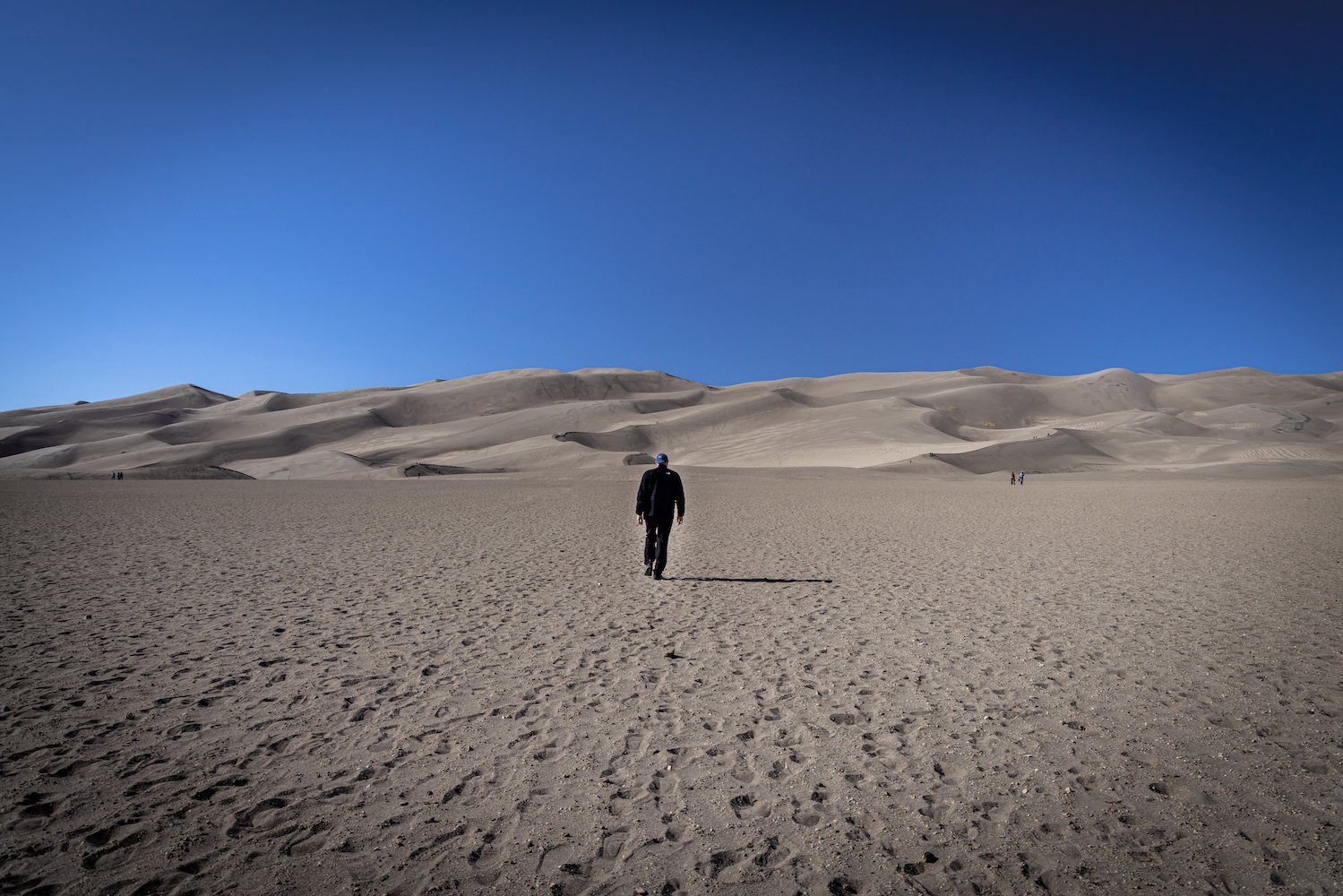
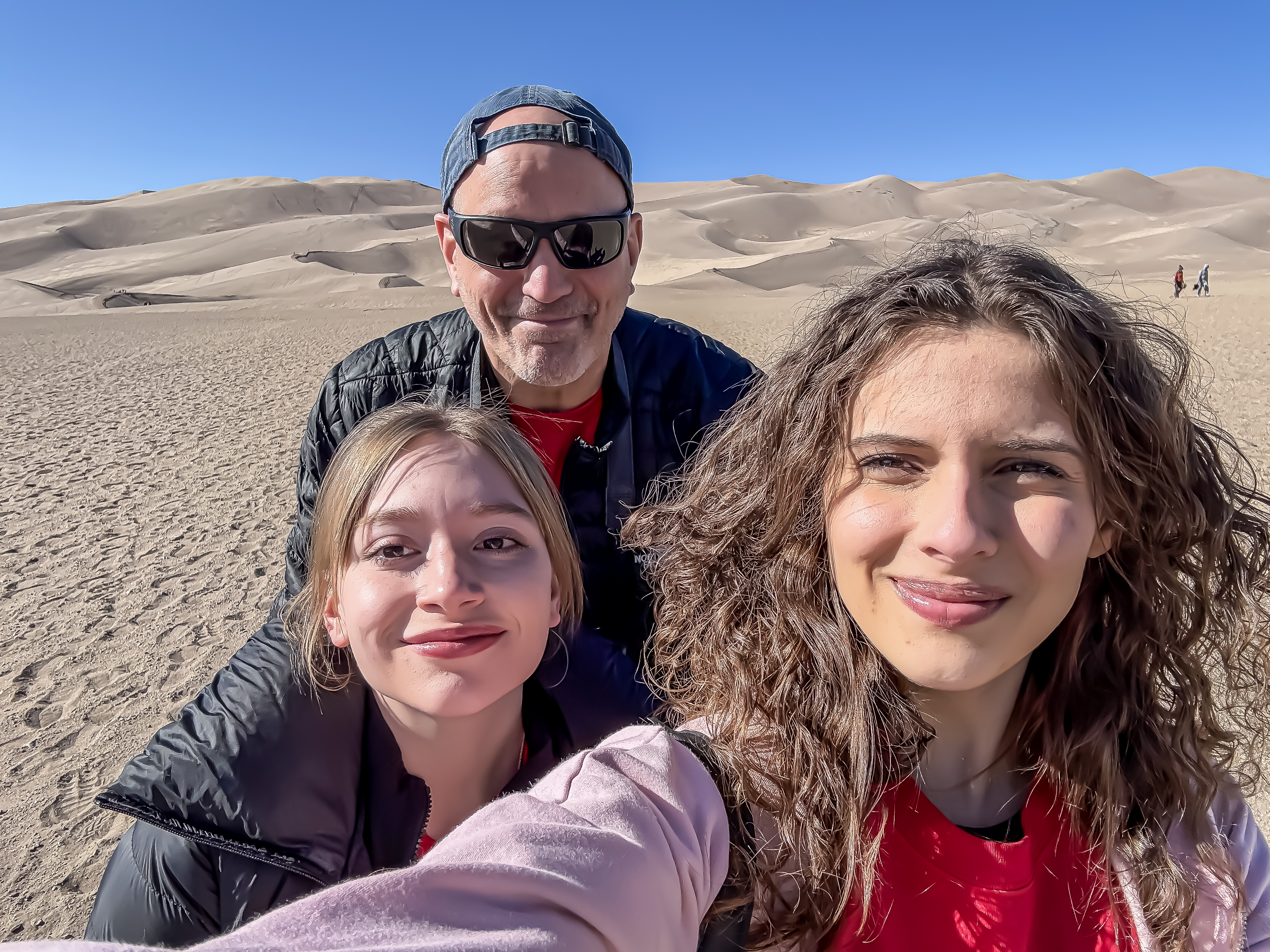
Given the title of a national park in 2004, the Great Sand Dunes National Park and Preserve is an experience that will leave you both satisfied and extremely tired. With their striking optical illusion, sand dunes have inspired countless art pieces over the years. Seeing them in person, it is easy to understand why. While they showcase fascinating geological formations, they also flow together naturally, creating a stunning yet diverse landscape with plenty to take in.
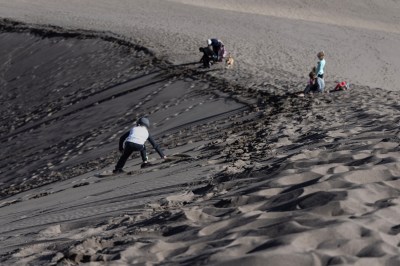
As your feet sink deeper into the sand and your breathing grows heavier, the sounds of others enjoying the park begin to surround you. Families sled down the dunes, while others sit quietly, taking in the view of the mountains. Seeing it all firsthand, it is clear that national parks serve as a sanctuary for many.
And when having the chance to catch our breath, Olivia was able to try a few tricks on the sand….
While she was incredibly graceful, I am sure many still felt a tad uneasy. Walking across the dunes is challenging enough, but performing gymnastics there demands a level of confidence that can apparently outshine the fear of tumbling down.
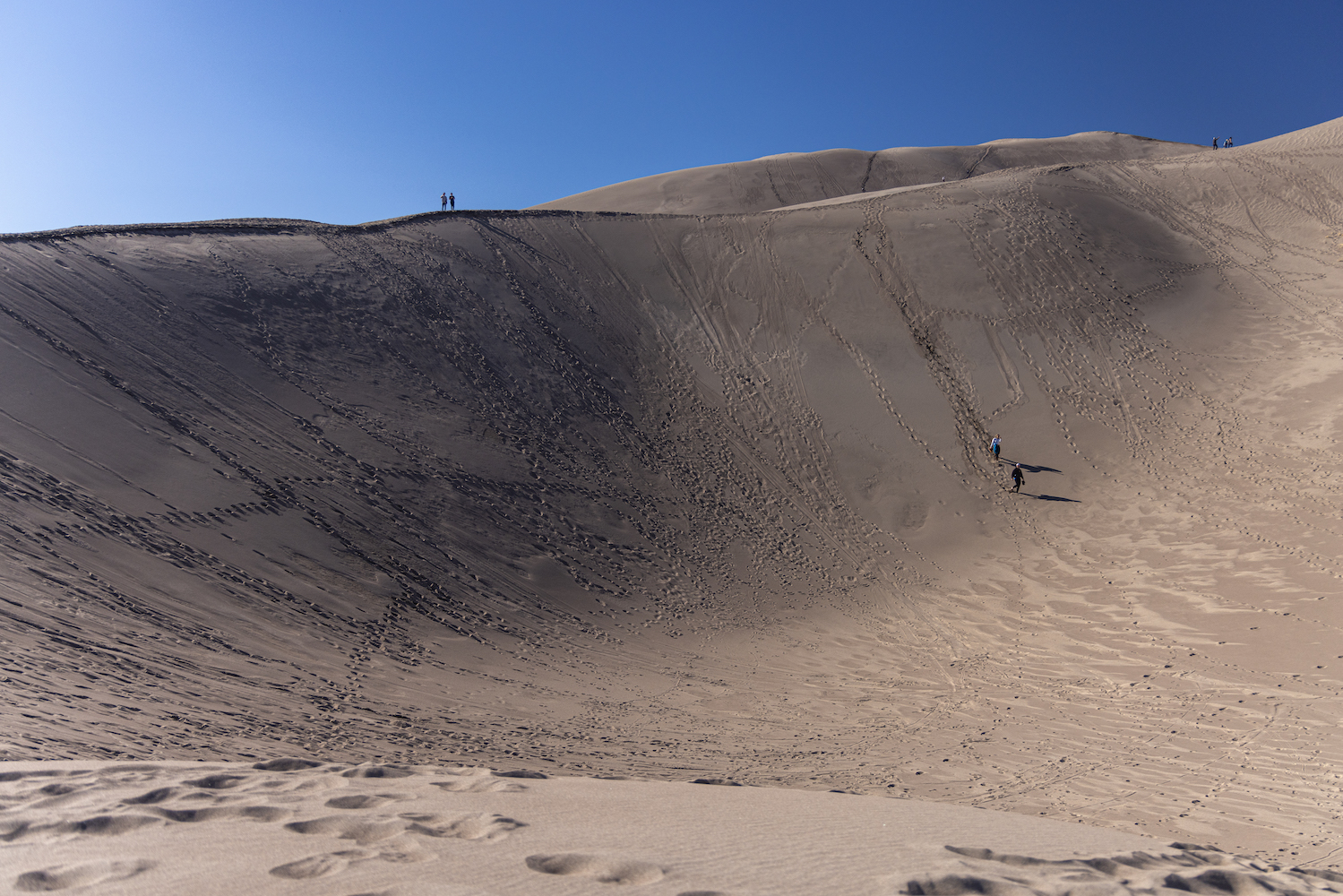
When you finally decide you have had enough, you will soon realize you are not in the clear yet as you now have to make your way down. This, however, was less daunting because you could almost glide down each sand dune.
In all, the Great Sand Dunes National Park is an eventful opportunity to test your leg strength and connect with not only nature but those around you. It is a unique environment that will leave you with great memories and maybe a little too much sand in your shoes.
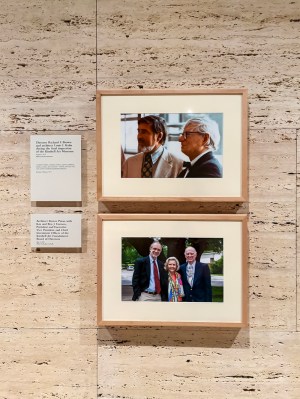
Designed by Louis I. Kahn and opened in 1972, the Kimbell Art Museum in Fort Worth, Texas, impresses visitors with its art, architecture, and surrounding landscape. The Piano Pavilion, designed by Renzo Piano, brings the outdoors in, with large windows framing the elm and oak trees that surround it, allowing visitors to experience nature as an extension of the architectural space.
Walking through the gallery, many pieces stand out, but one in particular is the Virgin and Child (The Borromeo Madonna), which is attributed to Donatello! This sculpture was especially surprising to find, as one would not expect to casually come across a sculpture that is suspected to be from Donatello himself.
Not far from the Donatello sculpture, another famous Italian Renaissance artist is represented…
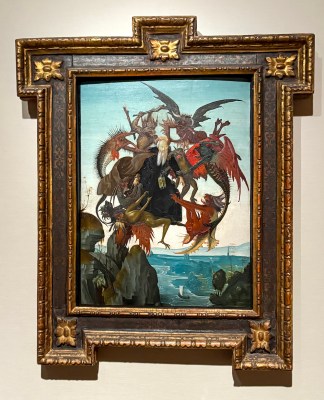
While Michelangelo is often remembered as a sculptor, his first known painting, The Torment of Saint Anthony, was on display. The piece shows Saint Anthony being attacked by demons, and it is believed Michelangelo was only twelve or thirteen when he painted it.
One that is particularly interesting for those interested in Greek and Roman mythology is the Judgment of Paris by Lucas Cranach the Elder. To summarize, it is said the Goddess of Discord tossed an apple to Paris, forcing him to choose among three nearly identical goddesses offering different bribes, a decision that ultimately triggered the Trojan War. Interestingly, a similar moment of unexpected judgment occurred in 1976, when a blind wine tasting saw French judges unknowingly favor Californian wines over their own, an event later dubbed the Judgment of Paris.
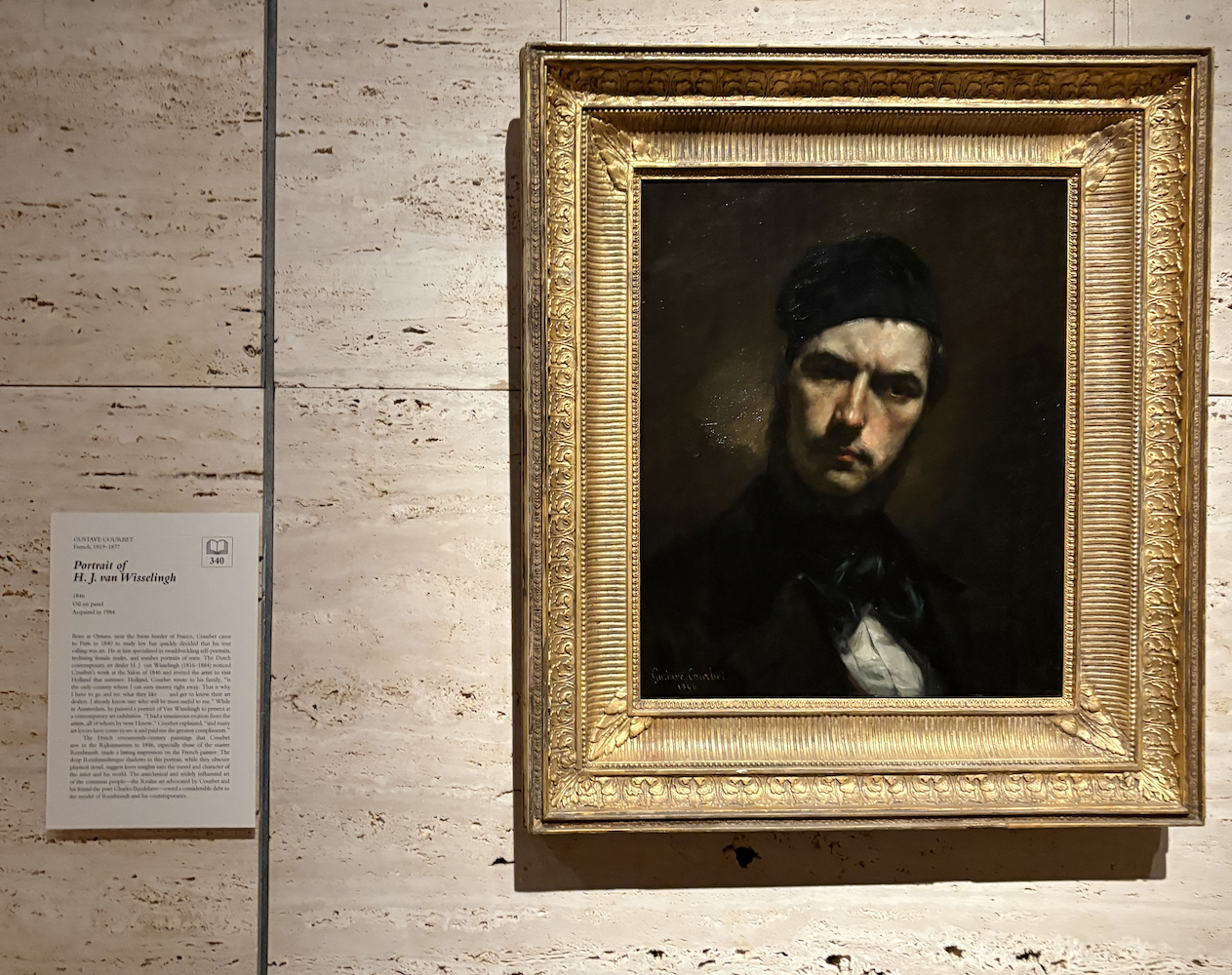
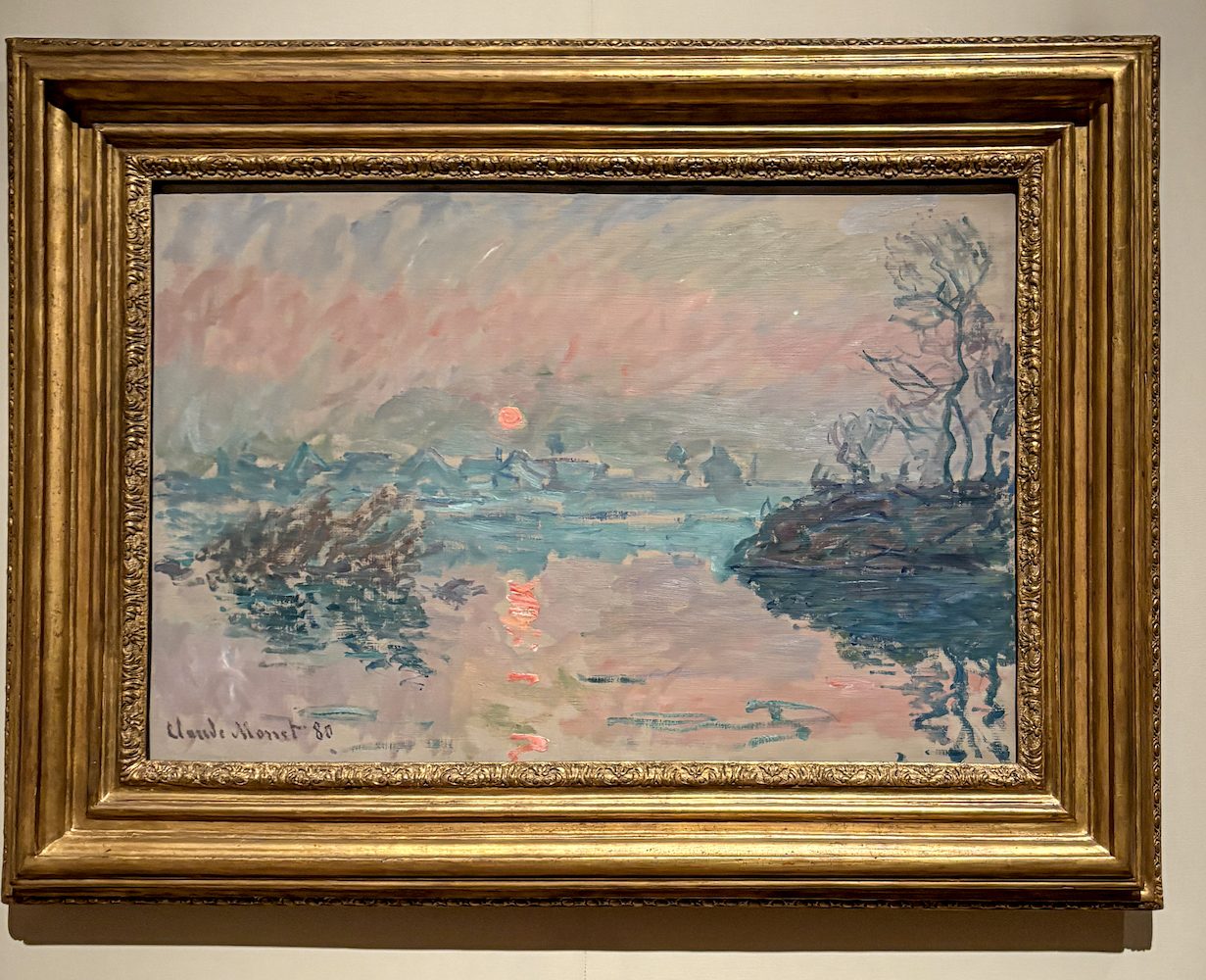
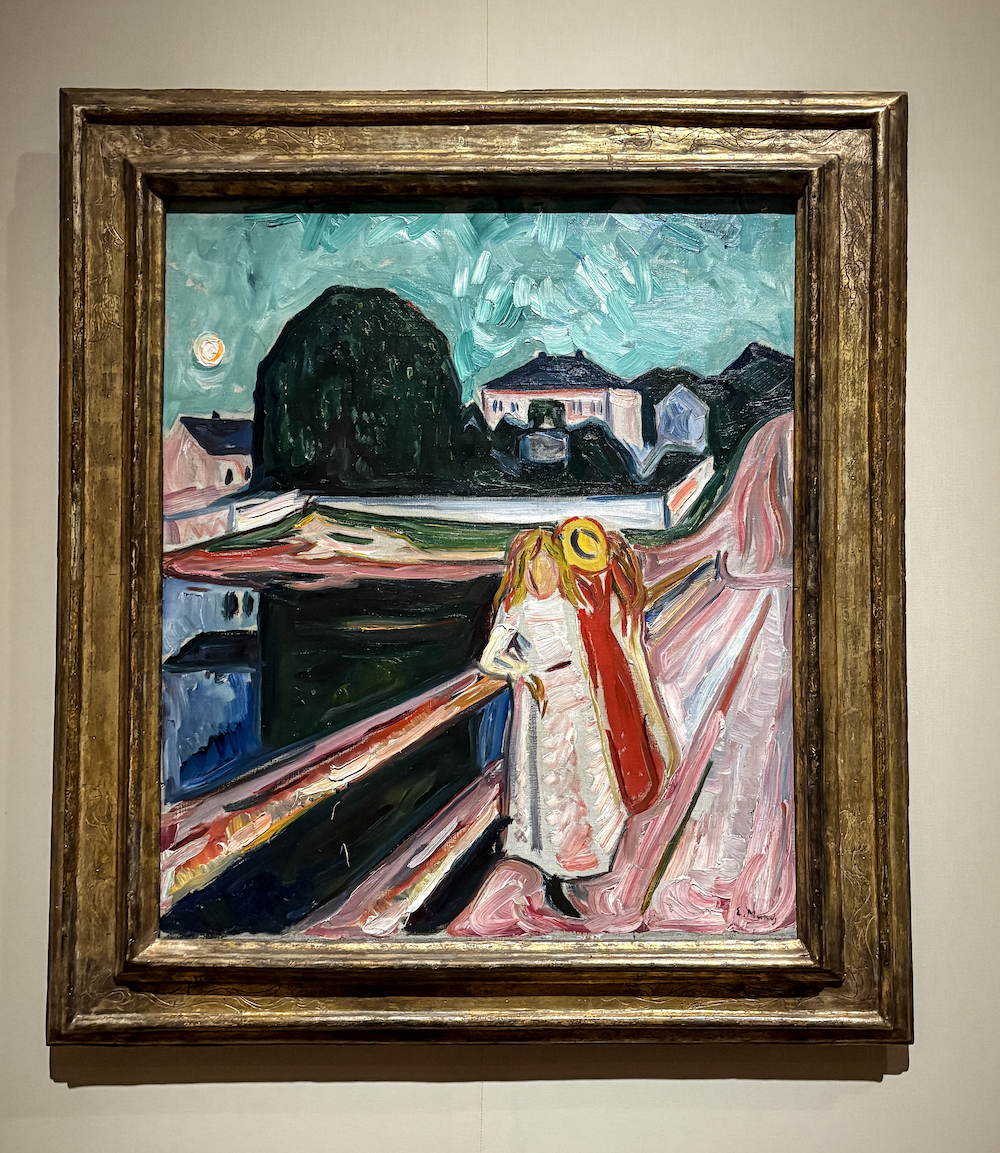
The museum had several incredibly famous artists in its galleries. Matisse, Picasso, Gaugin, El Greco, Edward Munch, and many more! Each turn lead to another pleasant surprise, all encompassed in a beautiful structure which remains a piece in and of itself!
The Kimbell Art Museum is the perfect place for anyone who enjoys architecture, art, landscapes, and more. Whether you prefer one aspect over the others, it is hard not to appreciate the thought and care put into the entire museum. Overall, the Kimbell Art Museum is a true treasure in the Fort Worth community, both architecturally and artistically significant.
Exploring Downtown Fort Worth
by Olivia Discon
Beyond the Kimbell Art Museum, Sundance Square offers another side of Fort Worth’s artistic and architectural landscape. The area, once quieter in past decades, has become a lively center for shopping, dining, and events. Designed as a pedestrian-friendly space, it encourages people to gather.
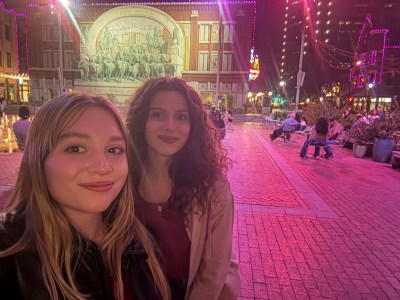
Of course, in the heart of the plaza lies the Richard Haas mural, a large-scale trompe-l’œil piece that plays with perception, giving the illusion of depth and architectural detail on a flat surface. This piece, among many others of Haas’, has revitalized what was once a plain, visually unappealing building, into a cultural hub. If you know LEAP, you know this was a “must-do” selfie stop!
On our walk, we had the chance to see a sculpture by Jesus Morales…
…Alex Katz…
… and though it was through a window, we saw a James Surls!
I am always intrigued by the philosophy of gathering spaces and downtowns such as these, and we took the time to engage with the space as it was intended: exploring and engaging.
Every semester, the Pre-Law Society hosts an Ice Cream Social and Informational to reconnect with returning members, welcome prospective students, and provide an opportunity to learn more about the organization before paying dues and attending the first official meeting on February 19, 2025. This event was open to all Sam Houston students and provided a great chance to relax before the start of exams while discovering the unique opportunities within the organization, including exclusive events, career insights, and support for law school preparation.
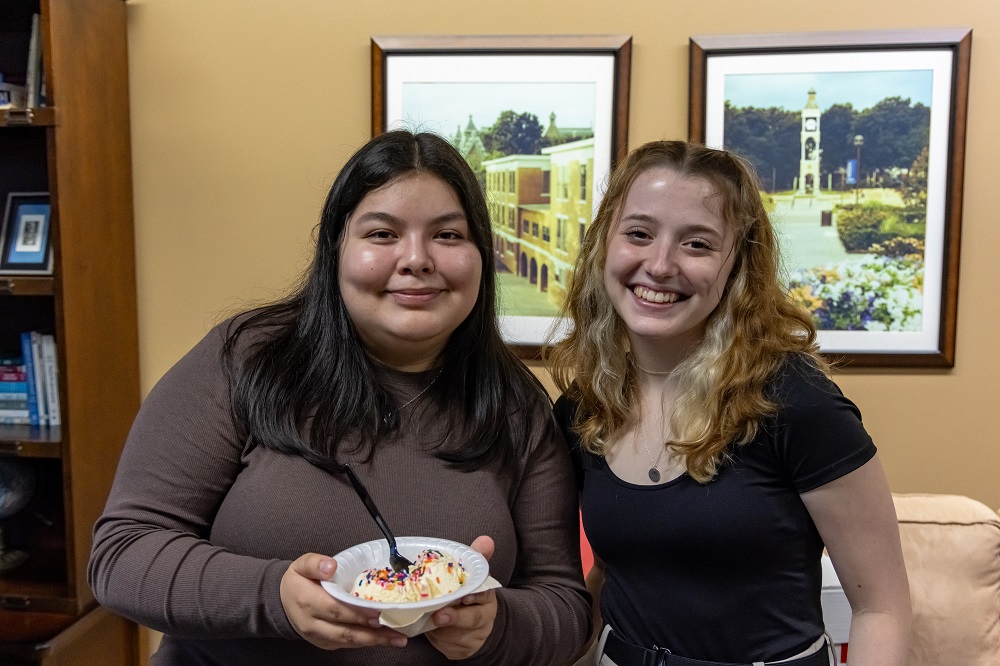
As members and potential members walked into the Holcombe Room, they were greeted with sweet treats, a prize wheel, and the chance to connect with like-minded students.
The prizes ranged from bronze to silver to gold. Before the meeting, Ms. Loveall and Olivia searched for prizes that they believed the members would enjoy. And….
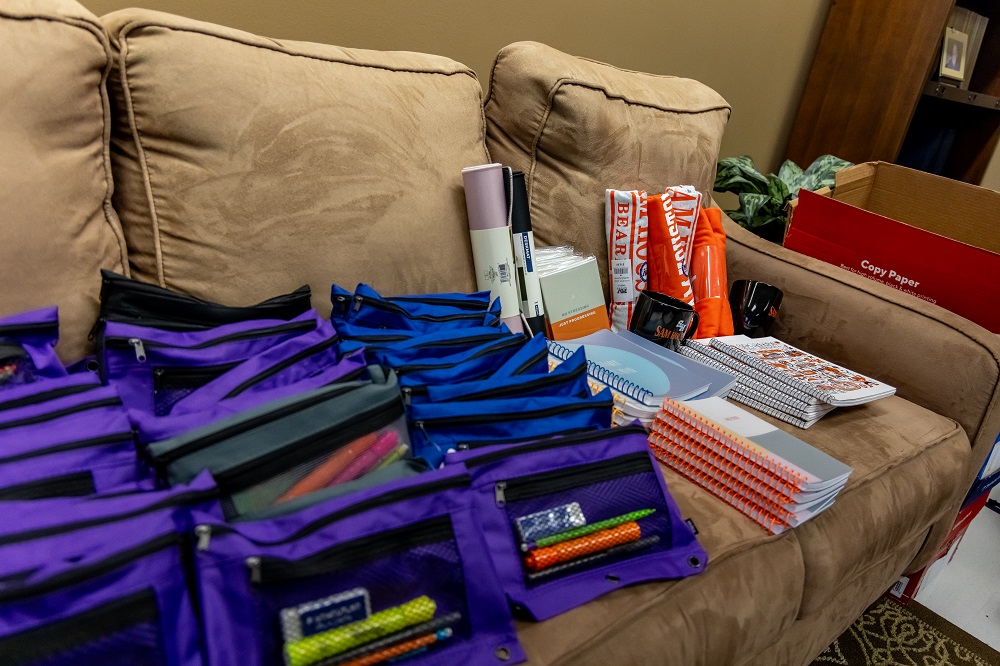
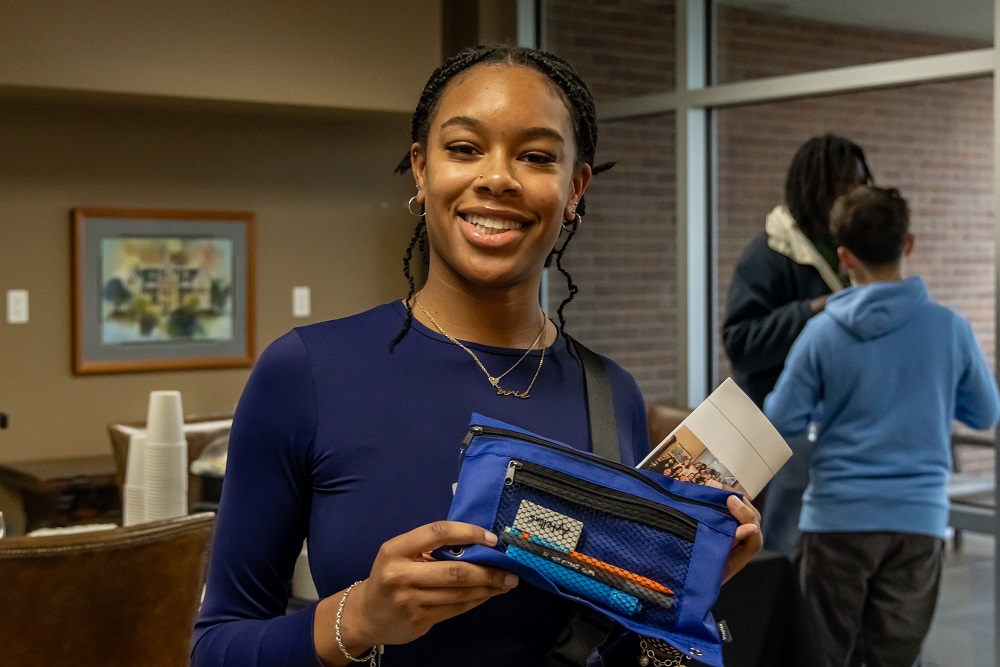
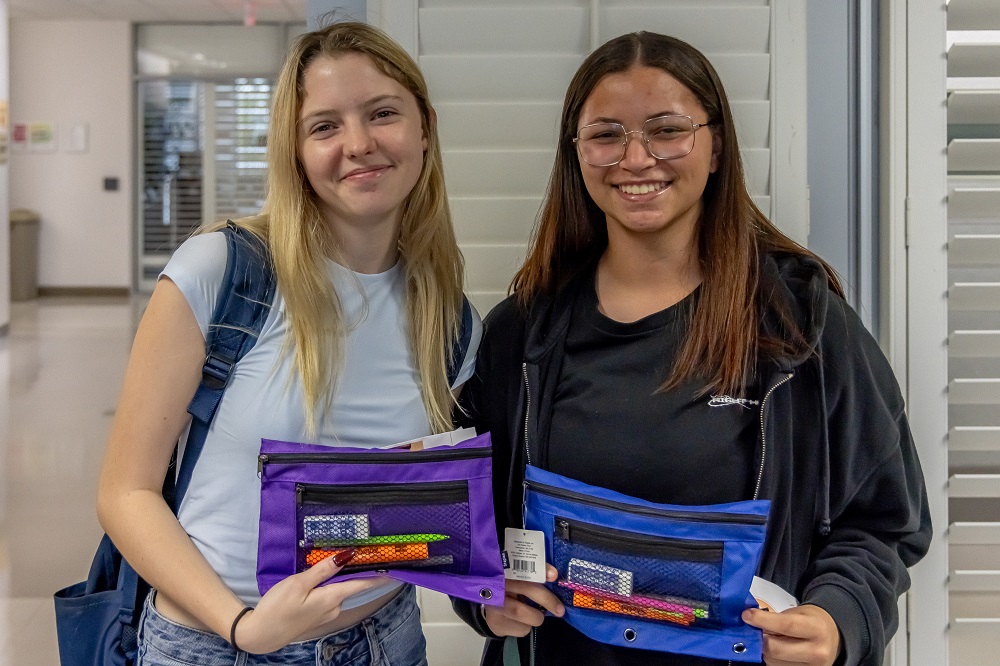
They did not disappoint! Prizes spanned from colorful pencil pouches, small books with sticky notes (which is good for book lovers), and SHSU merch!
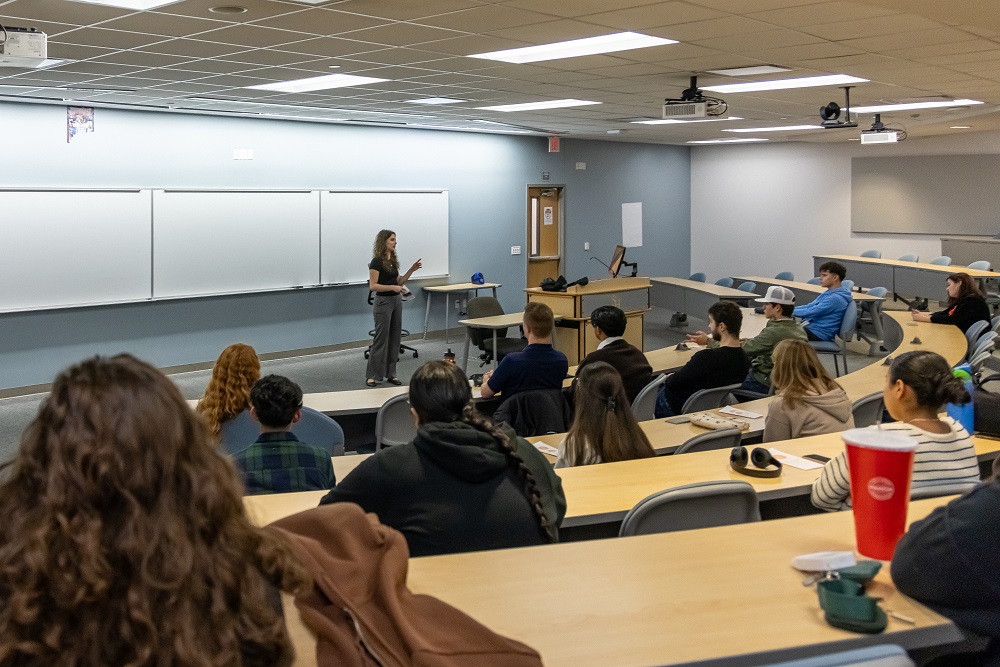
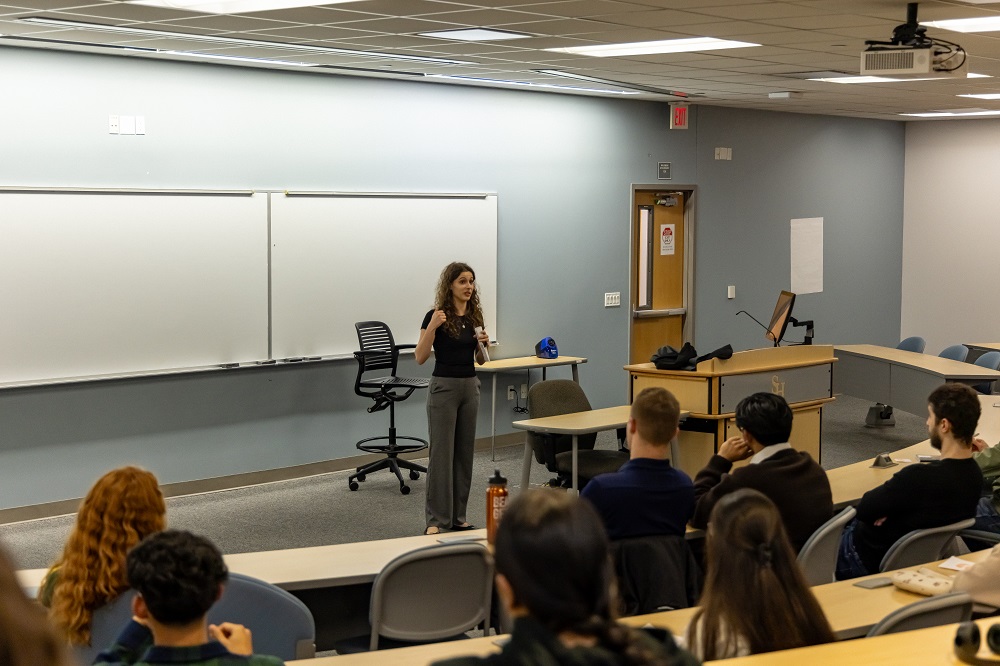
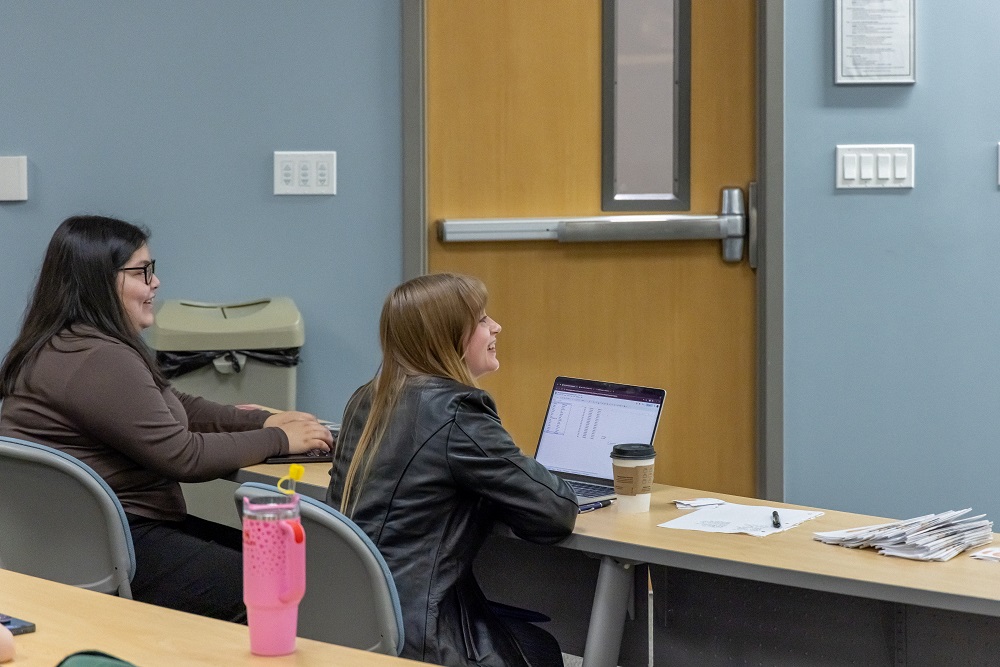
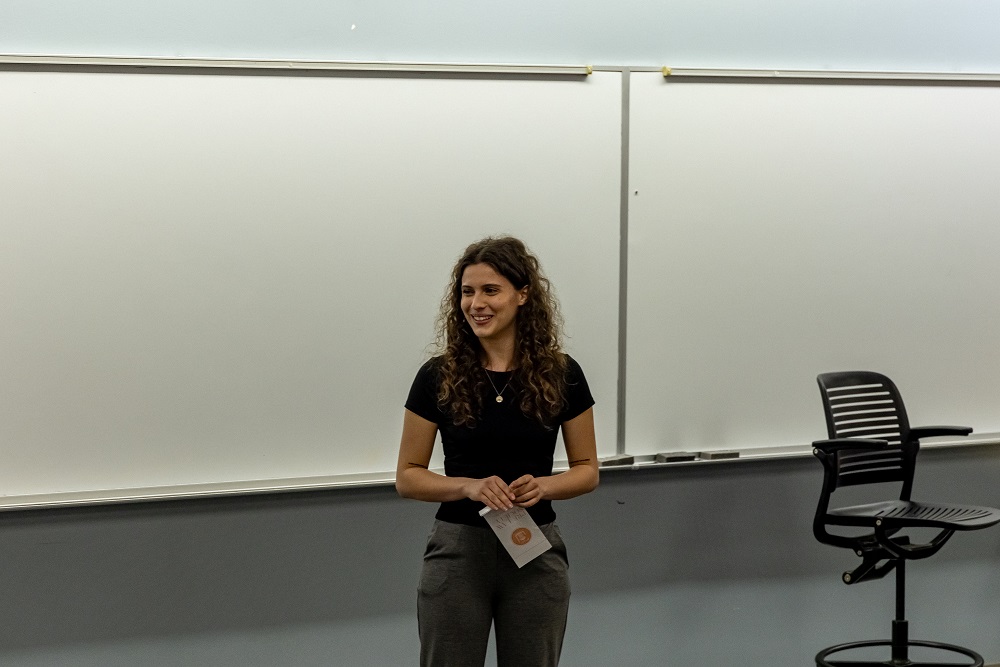
Once it hit 6 o’clock, the group moved the party down to CHSS 140 for the informational meeting. President Olivia Discon spoke to the students about the benefits of joining Pre-Law Society. She highlighted exclusive opportunities for members, such as networking with professionals who have extensive knowledge in the legal field. Additionally, members can take a free Mock LSAT, and by doing so, they will have the chance to be chosen for a scholarship to cover the cost of an LSAT prep course.
Before wrapping up, we also discussed dues for the Spring 2025 semester. New member dues are $55, which includes a Pre-Law Society t-shirt, and returning member dues are $25. Payments can be taken by cash, check, or money order. Dues can be paid anytime before our first official meeting on February 19, 2025, at 6 P.M. For those that wish to pay prior to the meeting, our Vice President of Treasury, Chrissy Biello, will be available Monday, Wednesday, and Friday from 9:30 a.m. to 2:30 p.m. in CHSS 480 until February 19!
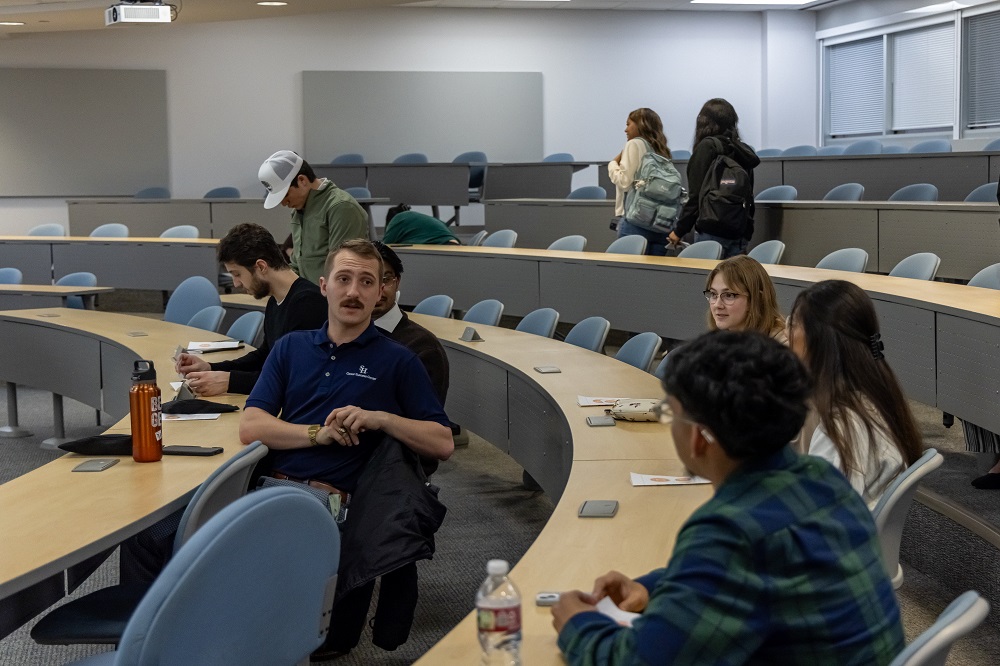
After the meeting, students interested in joining had the chance to chat with the Pre-Law Society Officers and members about their experiences in the organization. The semester is off to a great start, and we can’t wait to see you all at our first official meeting on February 19 at 6pm (or one hour before in CHSS 140 to pay dues)!
Though we weren’t able to watch the Inauguration in D.C., the LEAP ambassadors made the most out of January 20, 2025 in order to learn and expand our understanding of democracy. Through exploring the arts and historic artifacts, we are happy to say that the day was not unspent!
The Liberty Bell and Independence Hall
by Michelle Cardenas
On Inauguration Day, as the nation welcomed a new president, the LEAP Ambassadors continued their Democratic Tour with a visit to two of America’s most iconic landmarks: the Liberty Bell and Independence Hall.
Our first stop was the Liberty Bell, a powerful symbol of freedom and resilience. Standing before this historic artifact, we couldn’t help but reflect on its significance—once rung to mark the signing of the Declaration of Independence and later embraced by the abolitionist movement as a symbol of liberty for all. Of course, no visit would be complete without a photo of the famous crack, a reminder that even imperfections can carry deep meaning.
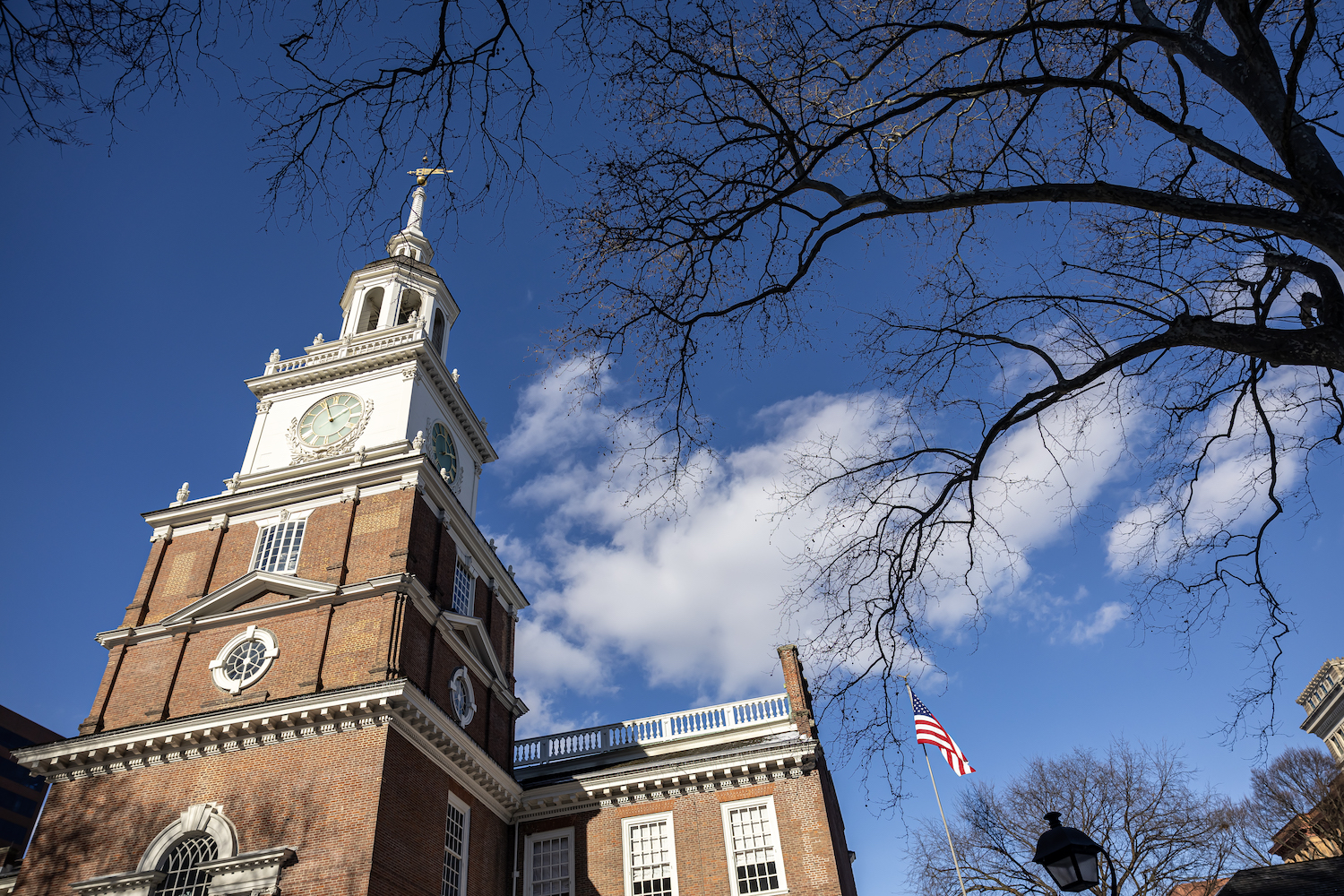
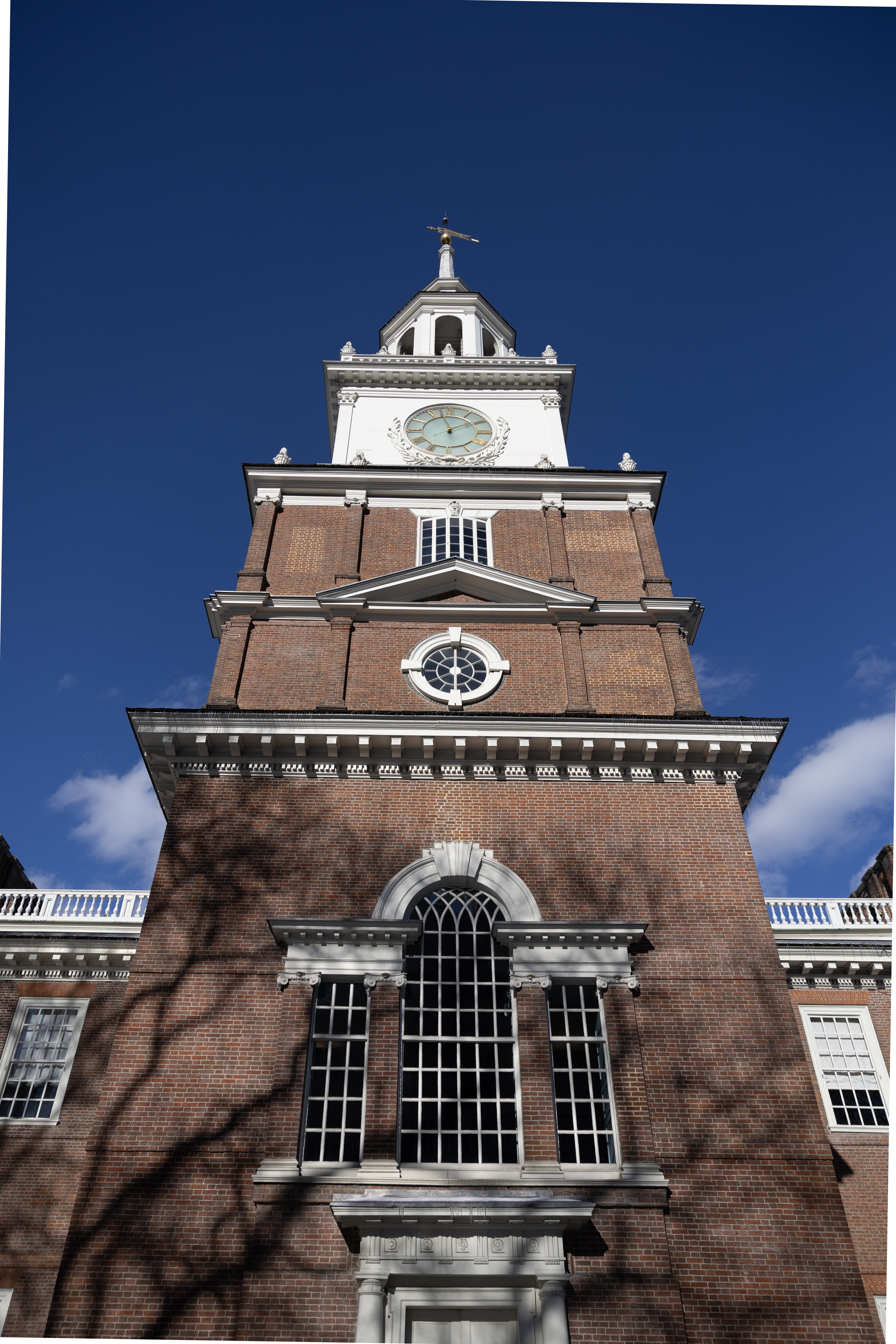
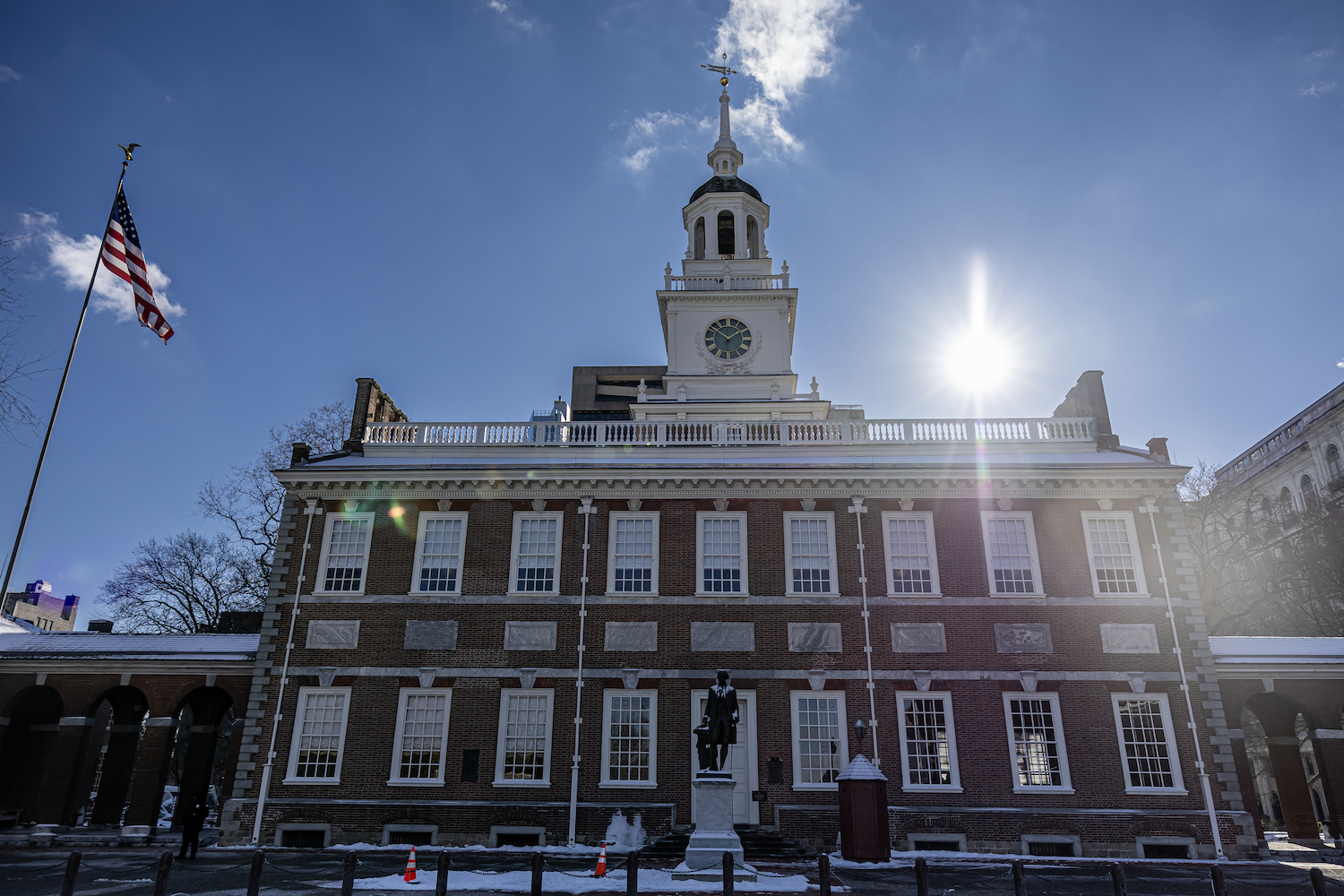
After capturing the moment, we made our way across the street to Independence Hall, where the Founding Fathers debated and signed the Declaration of Independence and later drafted the U.S. Constitution. While we didn’t go inside, standing in front of the hall offered a sense of connection to the past.
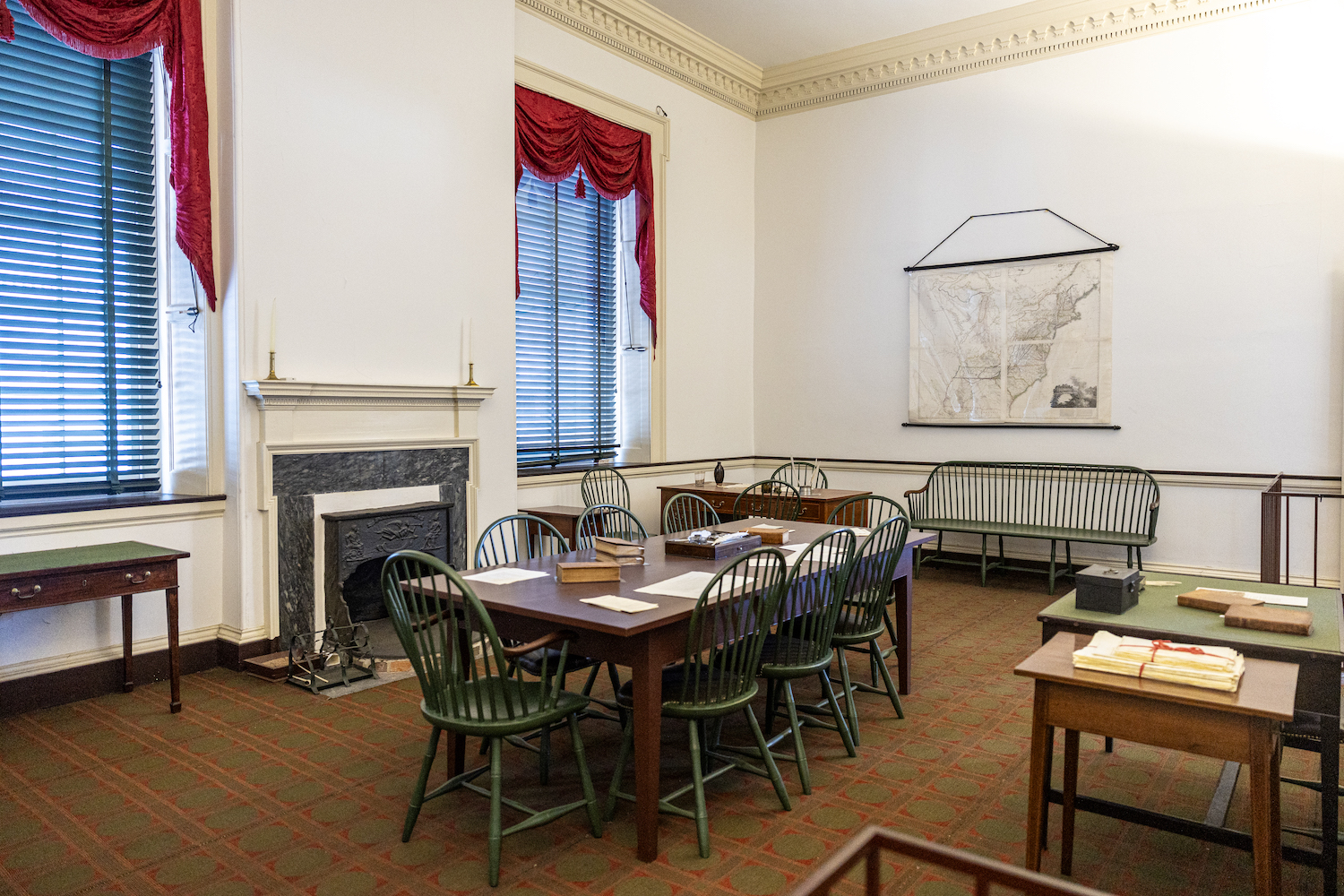
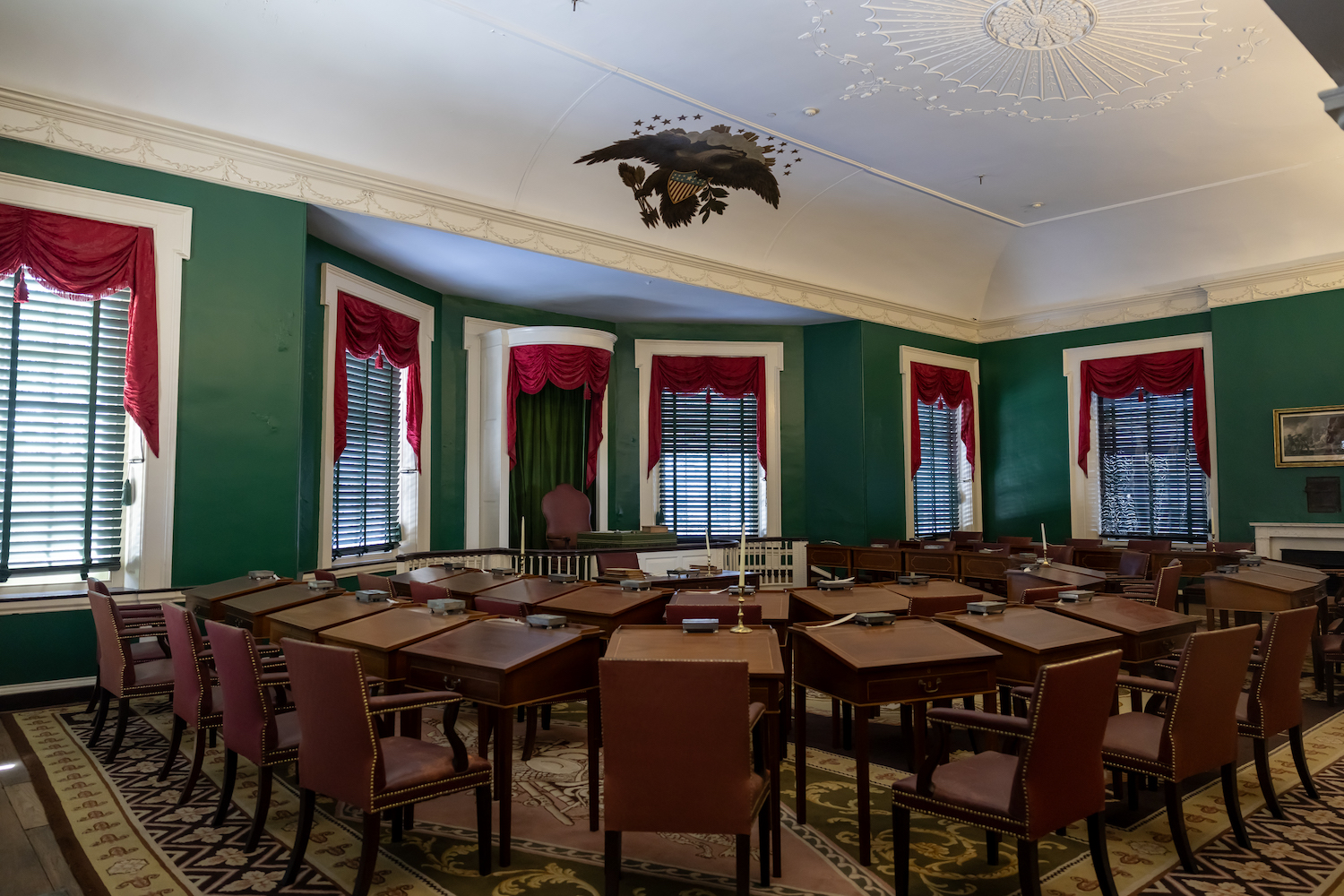
However, we had the opportunity to visit the nearby Senate and House chambers, where pivotal moments in American history unfolded. In the House chamber, we stood in the very place where the first peaceful transition of power took place—when George Washington stepped down from the presidency and John Adams was sworn in. Standing in that historic room on Inauguration Day made the experience even more meaningful, serving as a reminder of the enduring legacy of democratic leadership.
As we continued our tour, we left with a greater appreciation for the moments and monuments that have shaped our nation’s history, and a little extra gratitude for warmer climates.
Philadelphia Museum of Art (PMOA)
Saara Maknojia
Art plays a significant role in incapsulating the historical evolution of cultures across the world. To learn more about art in different parts of the world during the different time periods, LEAP students paid a visit to the Philadelphia Museum of Art.
Gravitating towards the third floor of the museum, we split into groups to take on the two exhibits. Michelle, Israel, and I began our time strolling through the European and Asian art exhibits. The European side of the exhibit began with painting and artifacts from the Medieval time period. Immediately Michelle found, what happened to be her favorite from the exhibit, a piece by Joos Van Cleve titled Descent from the Cross.
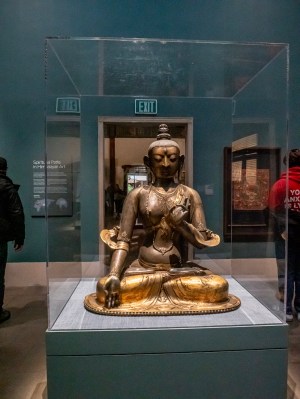
Passing through the European and Oriental artwork from Chinese, Japanese, and Korean artists, I approached a room filled with art best aligned with my heritage. The Southeast Asian collection contained a variety of “murti’s”, or idol sculptures often found in South Indian temples. From the columns with engravings of mythological characters depicted in Indian folklore stories, to the brass and golden murti’s, this surely became my favorite in the exhibit.
Making Our Way to the Next Floor at PMOA
Cinthia Villarreal
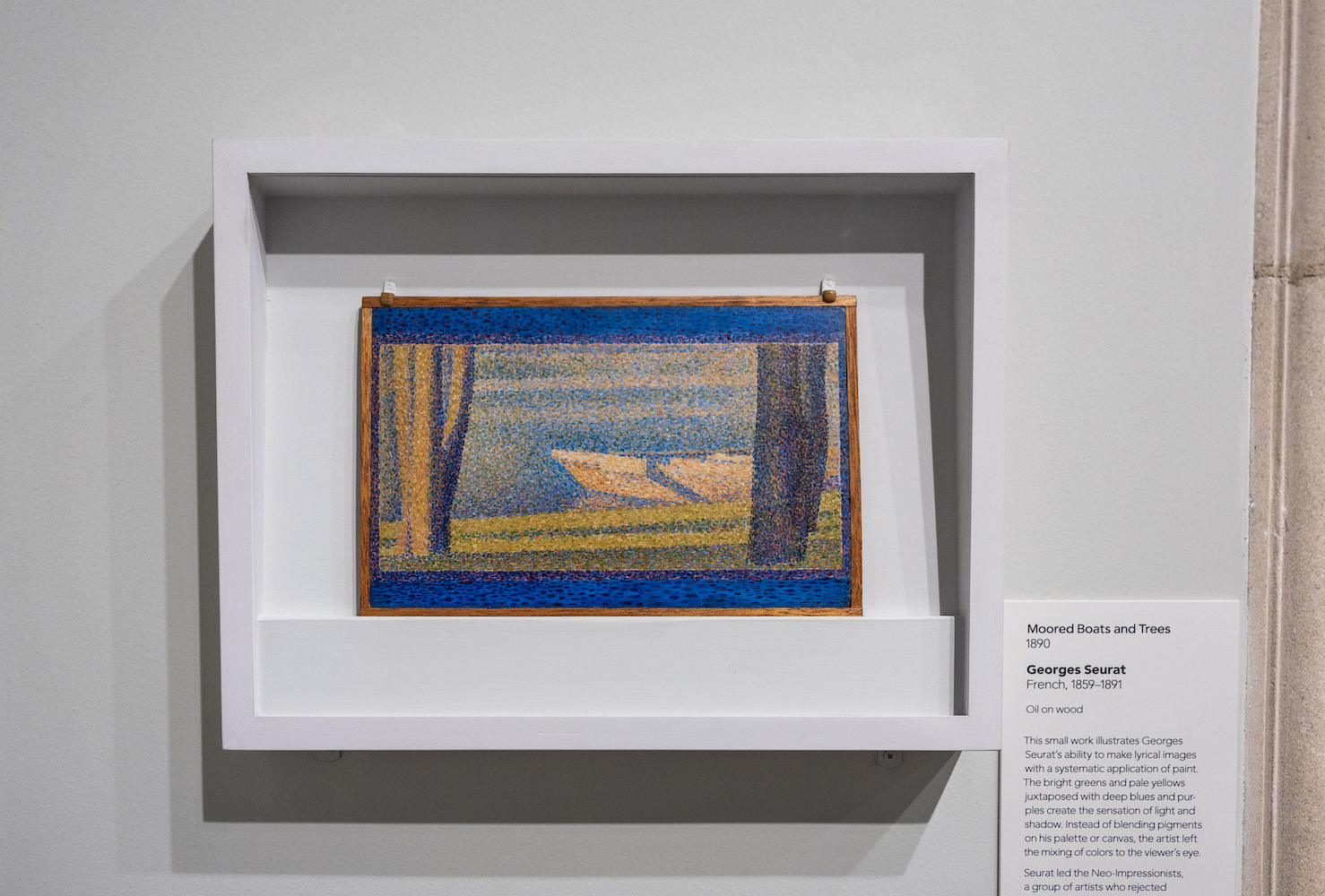
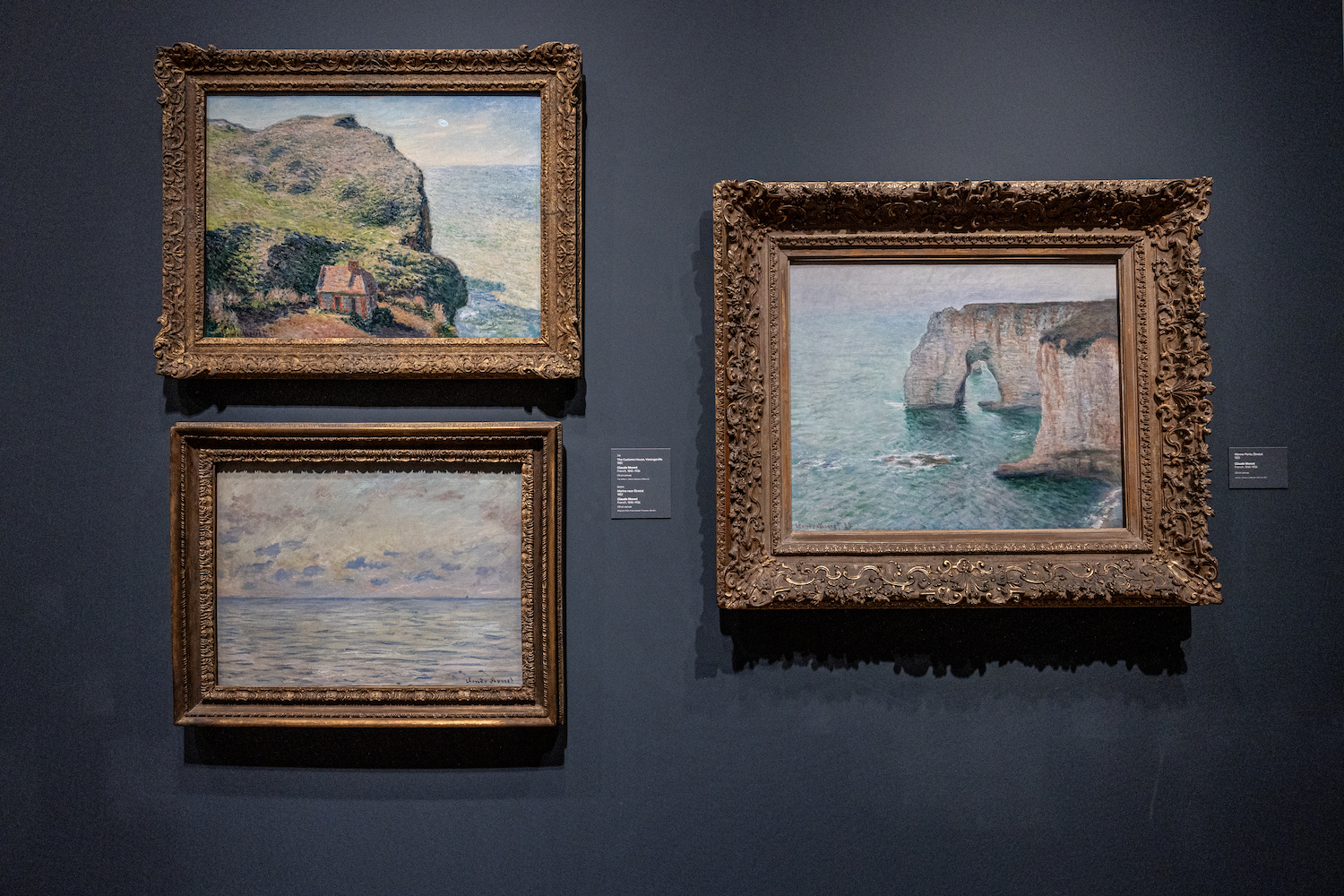
After wrapping up the third floor, we headed to see my personal favorite section of the museum, the Impressionism and Post-Impressionism exhibits. With renowned artists such as Van Gogh, Cezanne, Claude Monet, and Mary Cassatt along the walls, we were thrilled to be exposed to more of the work during this artistic revolutionary era. As always, I gravitated toward Monet’s work. However, I was quite taken aback from one of his works from the later stages in his career, characterized by a dark colored shadows and bright colored background, giving the viewer just enough detail to get his idea across. Camille Pissarro’s Summer Landscape caught Israel’s attention.
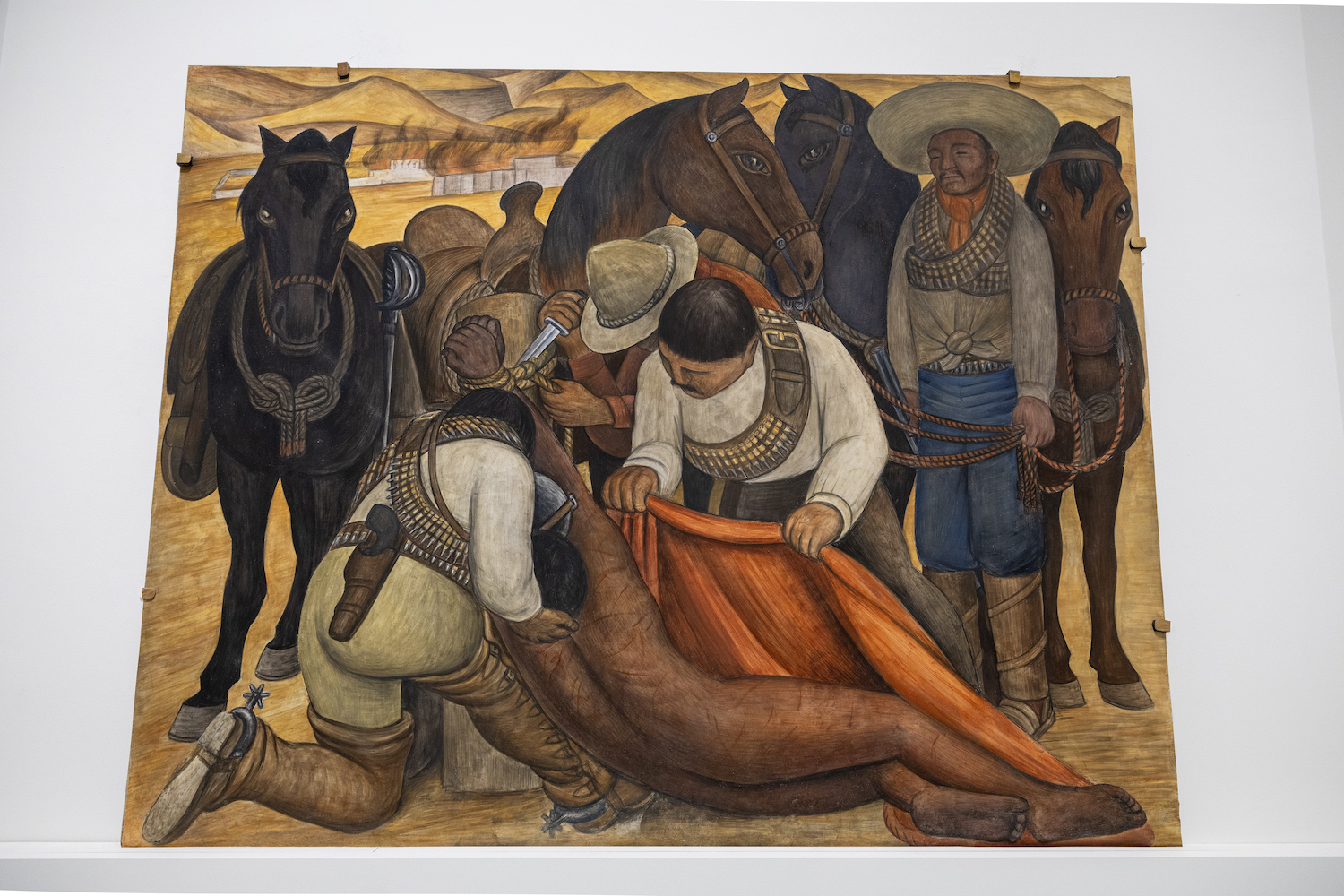
As we explored the other exhibits, we surprisingly walked past not one, but two huge Diego Rivera art pieces. We were incredibly surprised by having a Mexican American artist present so far north.
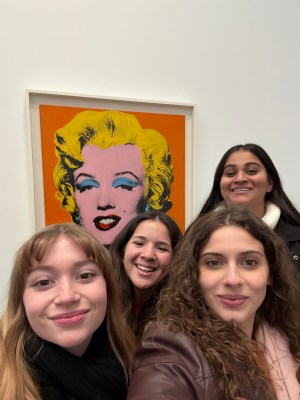
The Modern and Contemporary art exhibit was our last stop in the museum. Chrissy, who found an interesting newfound appreciation for modern art last year, became visibly excited when we approached a couple of Andy Warhol signature pieces…
Though I find myself questioning this style of art extensively and is most definitely far from being my favorite, I can appreciate people’s feelings and appreciation towards the unique styles which they may gravitate towards and try to understand the intention of an artist when trying to provoke the viewer. We are always grateful to be exposed to a variety of ideas and fields that expand our knowledge and understanding not only of the arts, but of other people’s viewpoints that might differ from ours.
A Little Fun in the Snow
By Olivia Discon
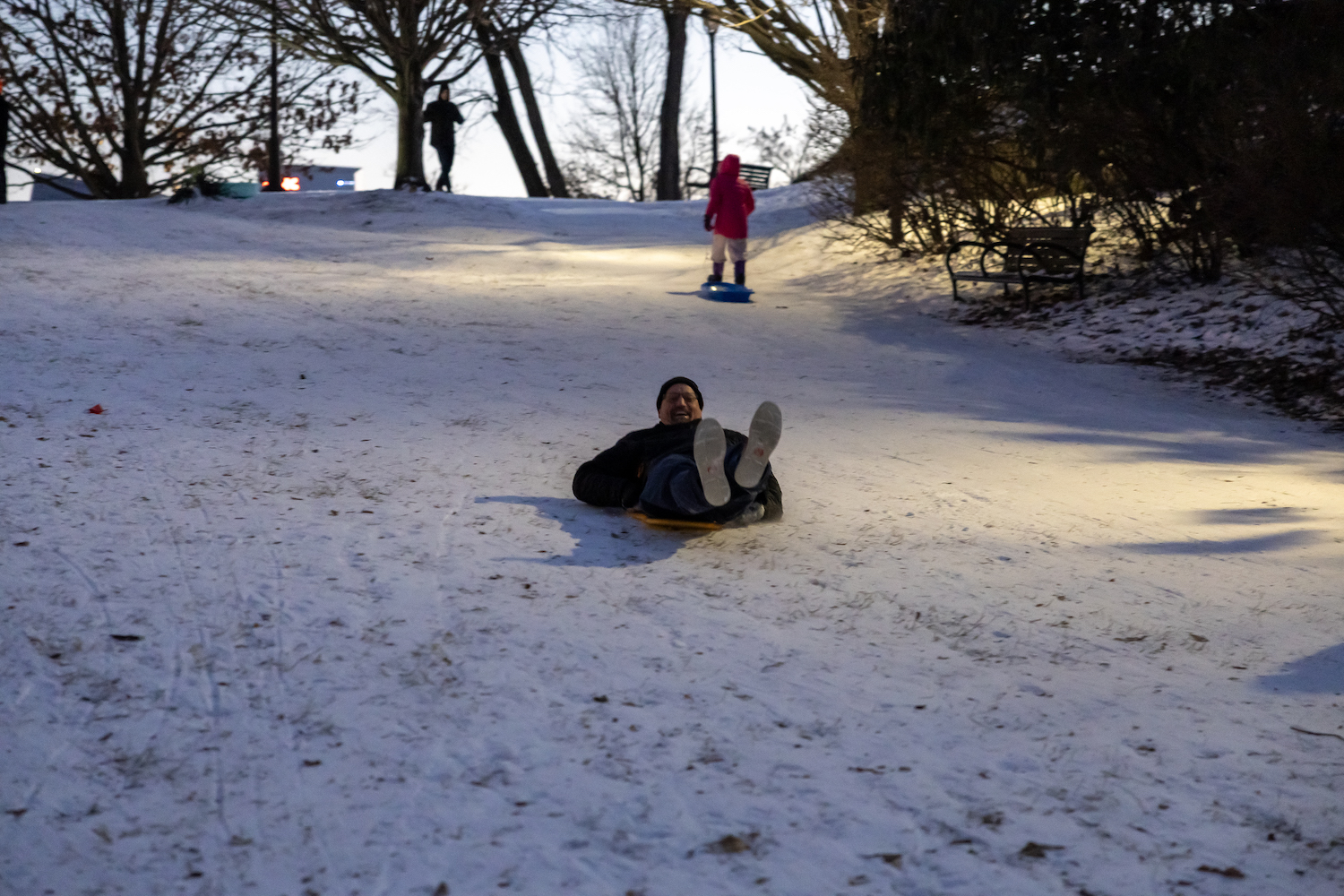
You would think that after 5 days in extremely cold weather that us Texans would immediately retreat indoors when presented the opportunity. However, we decided to hit the hills just outside the museum and go sledding!
This group had fun letting physics decide their fate, with some going down fairly smoother than others…
Cinthia, who is our ice queen, swiftly and enthusiastically rode down the hill several times and with different techniques.
Saara and Israel, who had a bit of a competitive edge, decided to race down the hill. That was soon squashed by a handful of icy collisions.
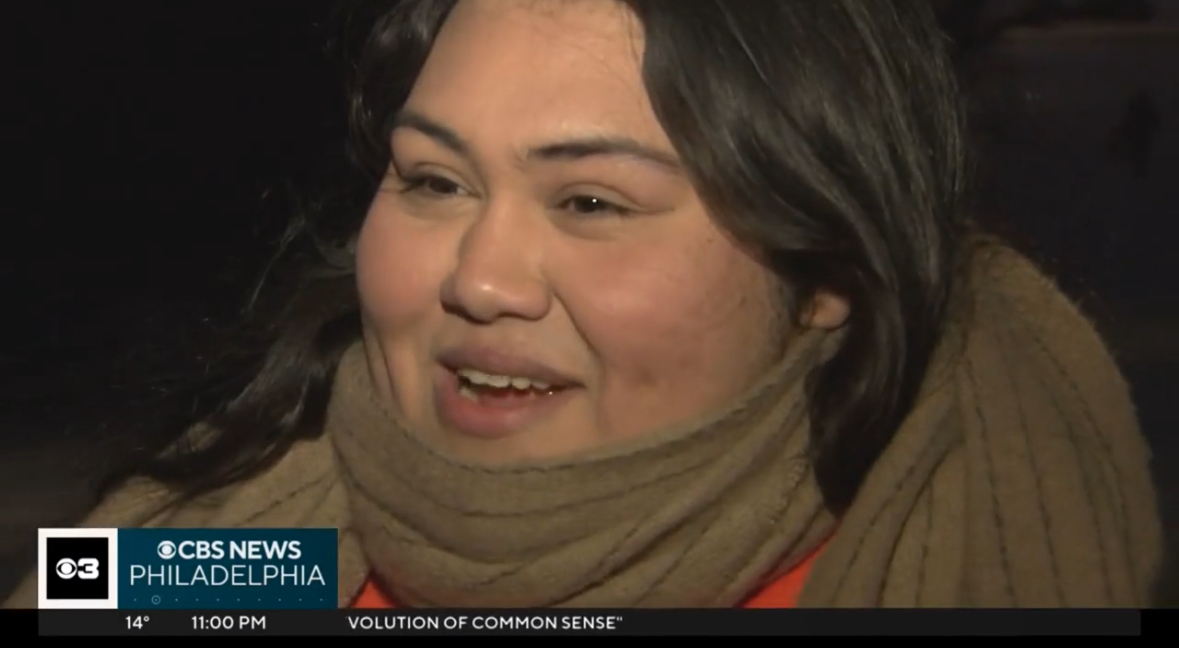
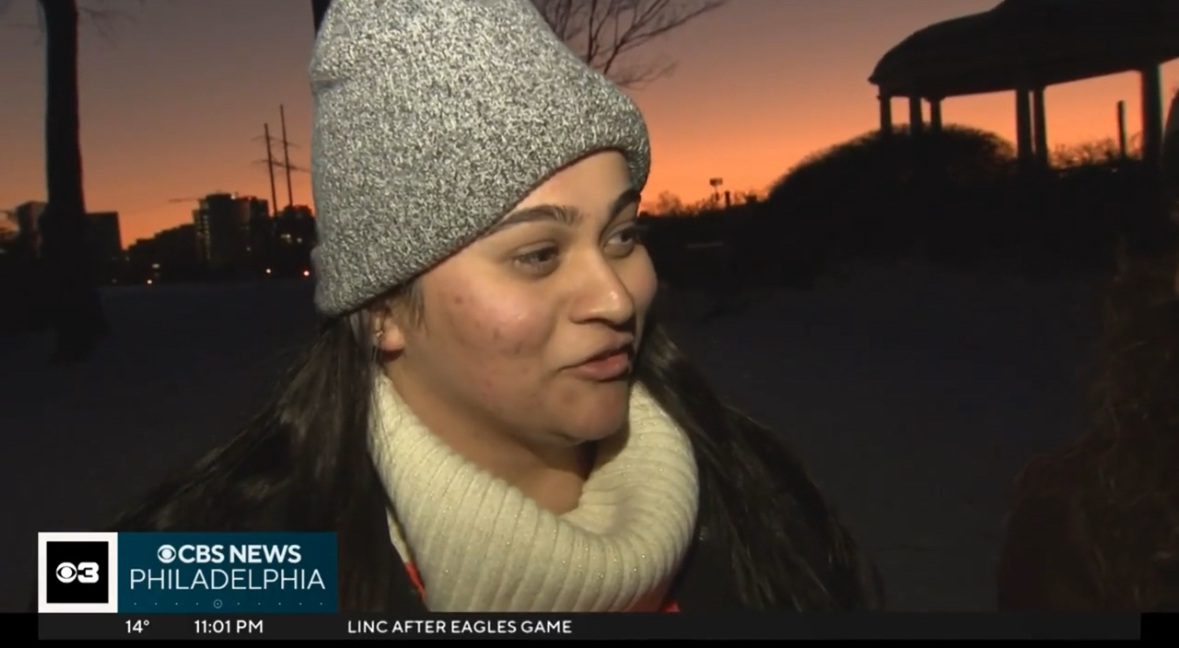
As for Chrissy, well, it was complicated. For starters, she unintentionally began backwards, and in true Chrissy fashion, did a couple of spins down the hill. She tried her best to regain control, and to that extent she did. However, it was too late for the immense fits of laughter achieved by the peanut gallery (us). So much so, that we gained the attention of CBS Philadelphia!
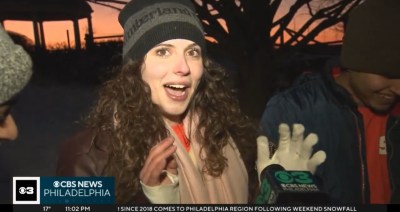
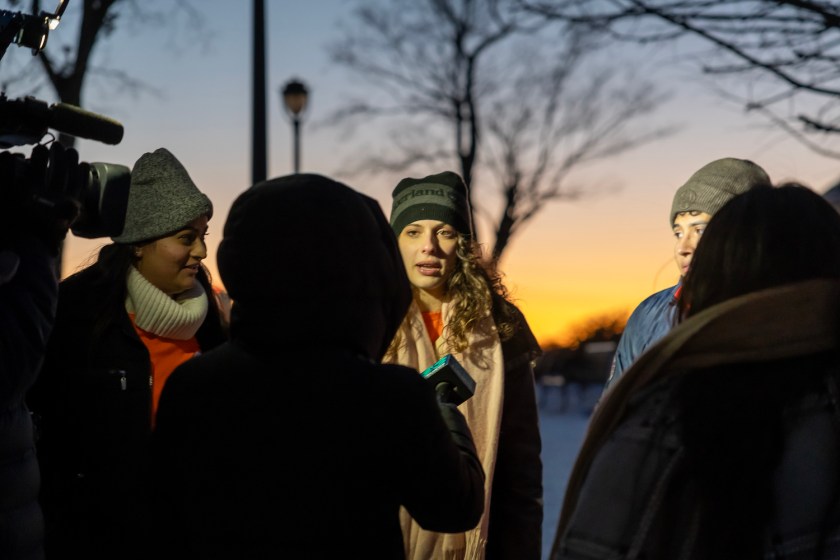
During an “on-the-street” interview, correspondent Kerri Corrado, was inquiring about how citizens brave the cold weather and how it may impact them.
While you can watch it here, here’s a short recap.
Michelle suggested layering up to the viewers, while Saara indicated our short-lived, childlike wonder out in the elements.
Chrissy, who made her way back up the hill from her wipeout, was covered in ice, as noted by Corrado.
Israel made it clear that he absolutely hated the cold weather and was quote “over it”.
I, myself, was not qualified to give anyone in Philly tips to brave the snow, as I had mysteriously lost one of my gloves.
While this was not the interview we were expecting, we were grateful for the opportunity to share our travels with the Philadelphian people!
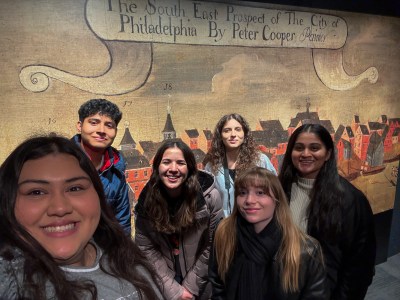
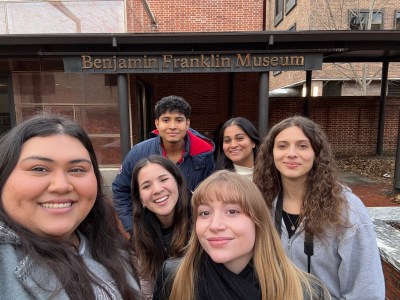
As the United States Presidential Inauguration approaches, one is reminded of the principles that we were founded upon. Virtue can be identified in many of our founding fathers, but one that infamously possesses 13 of them was an excellent choice to start the Philadelphia leg of our democracy tour. In addition, the Benjamin Franklin Museum was a fun experience to share alongside the SHAIP interns, who are getting their first crack at what it means to impact others through policy and the democratic process.
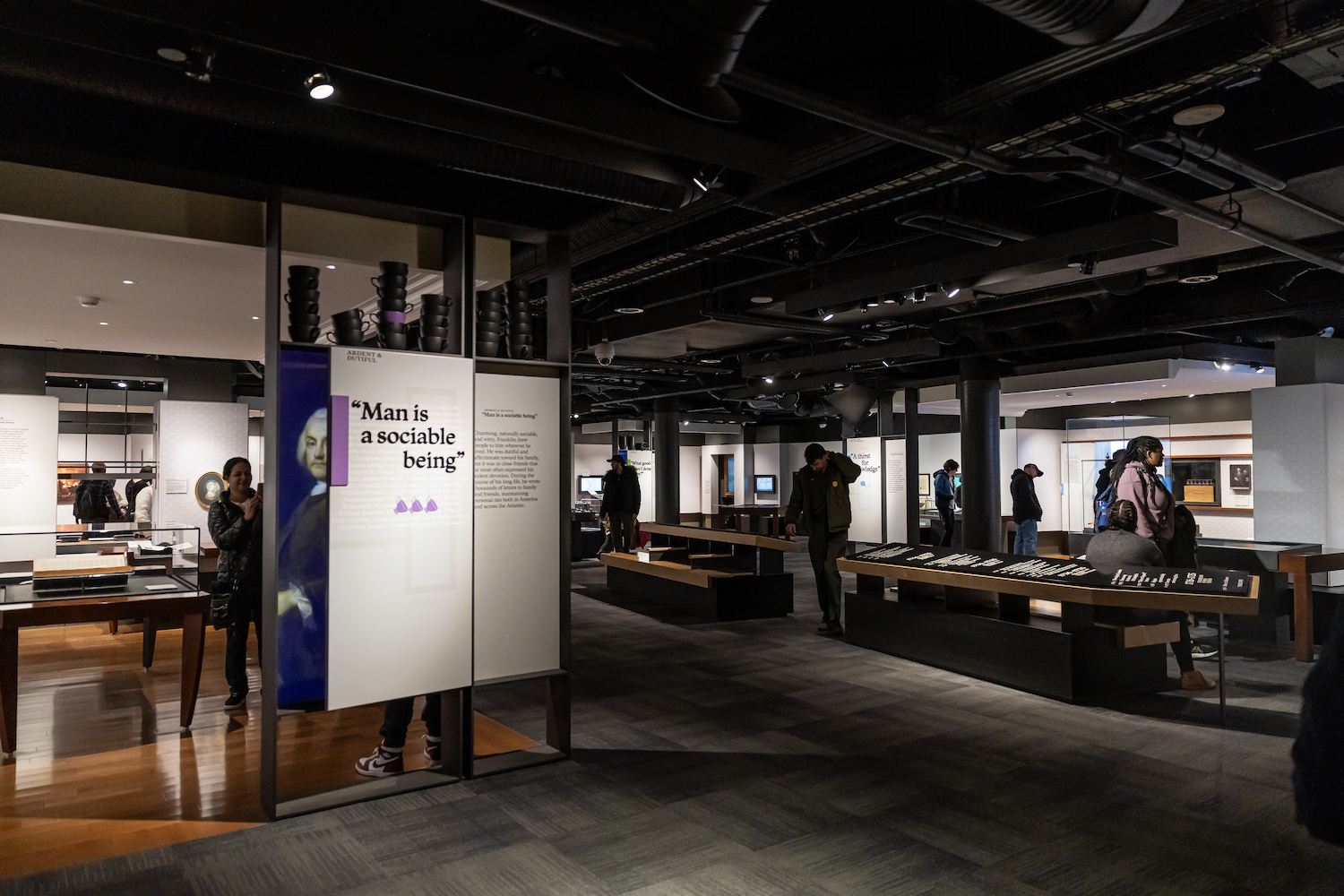
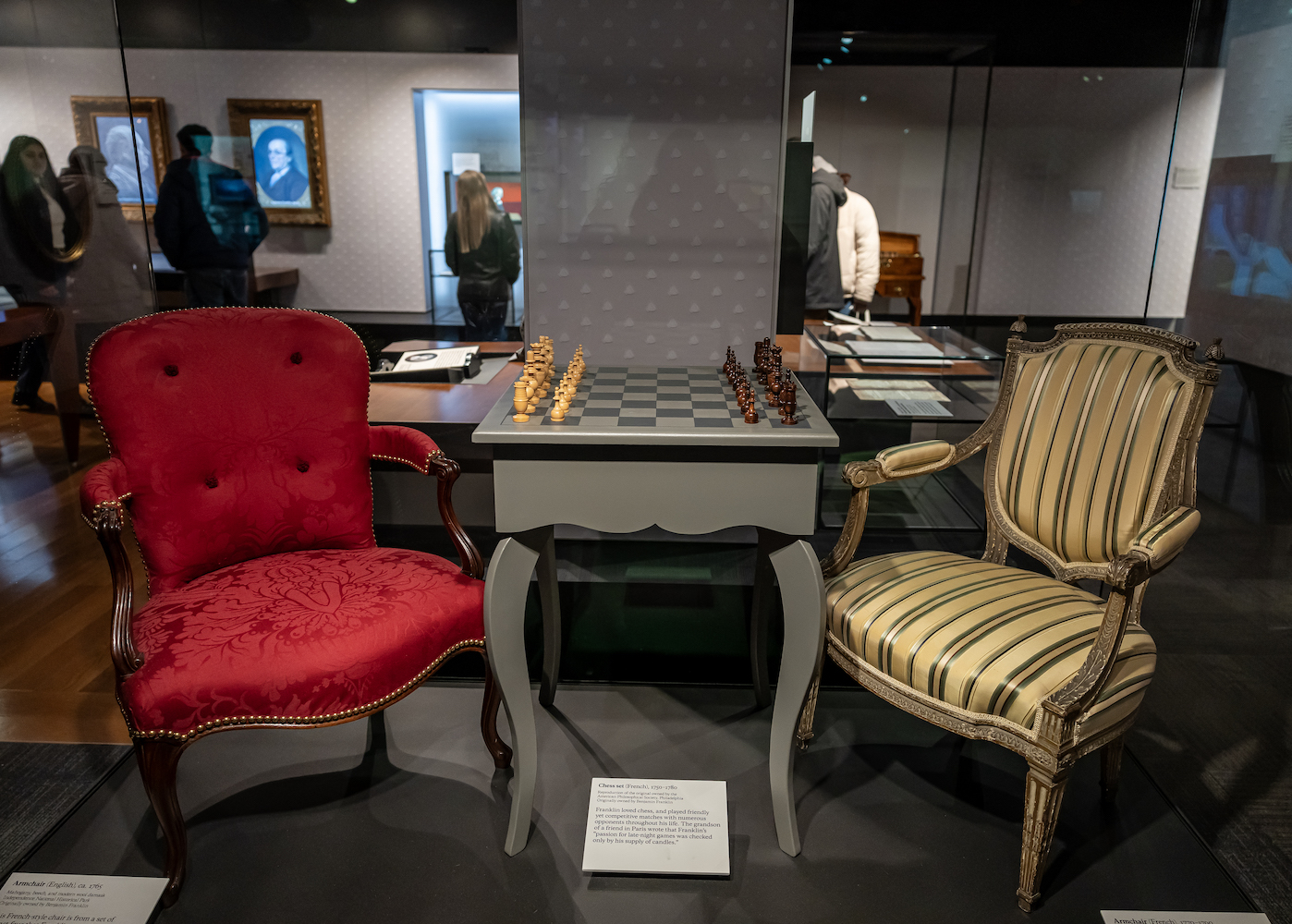
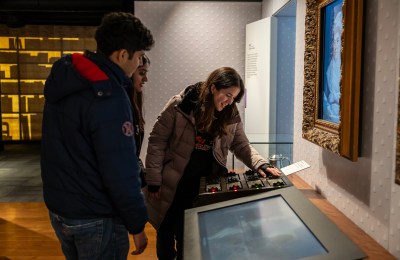
Beyond that, Benjamin Franklin is simply a fascinating individual. An inventor, postmaster, writer, scientist, diplomat, and a ladies man, his life was filled with innovation and service. The museum gave us a closer look at his achievements and his role in shaping early America.
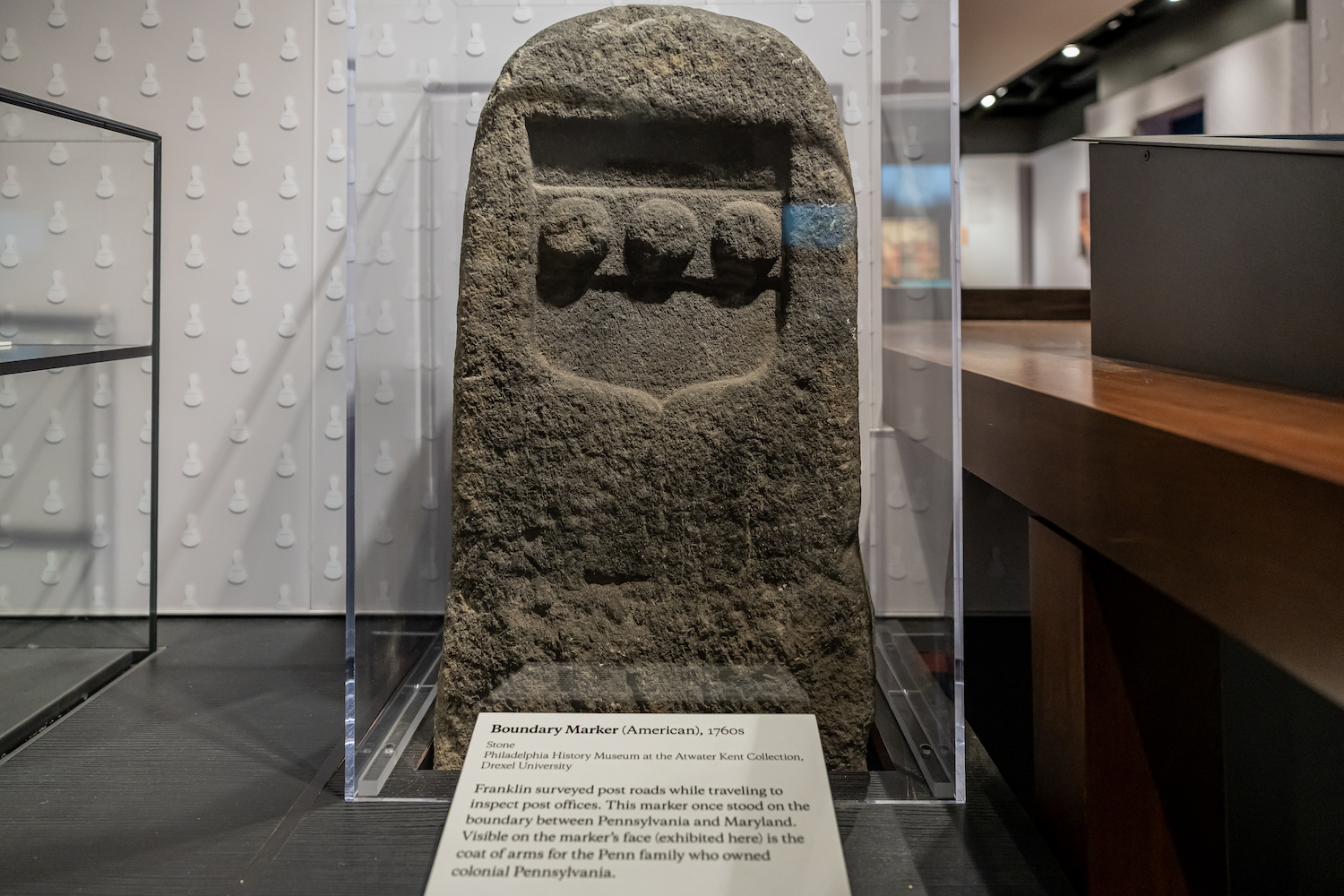
One of my favorite artifacts was a mile marker Franklin introduced as postmaster to help standardize postal routes. Made of concrete, it would be difficult to (for me, at least) read compared to today’s clearly printed green signs, but it felt meaningful to see how he worked to modernize communication systems. We also saw ink balls from his printing press, along with other instruments used at the time.
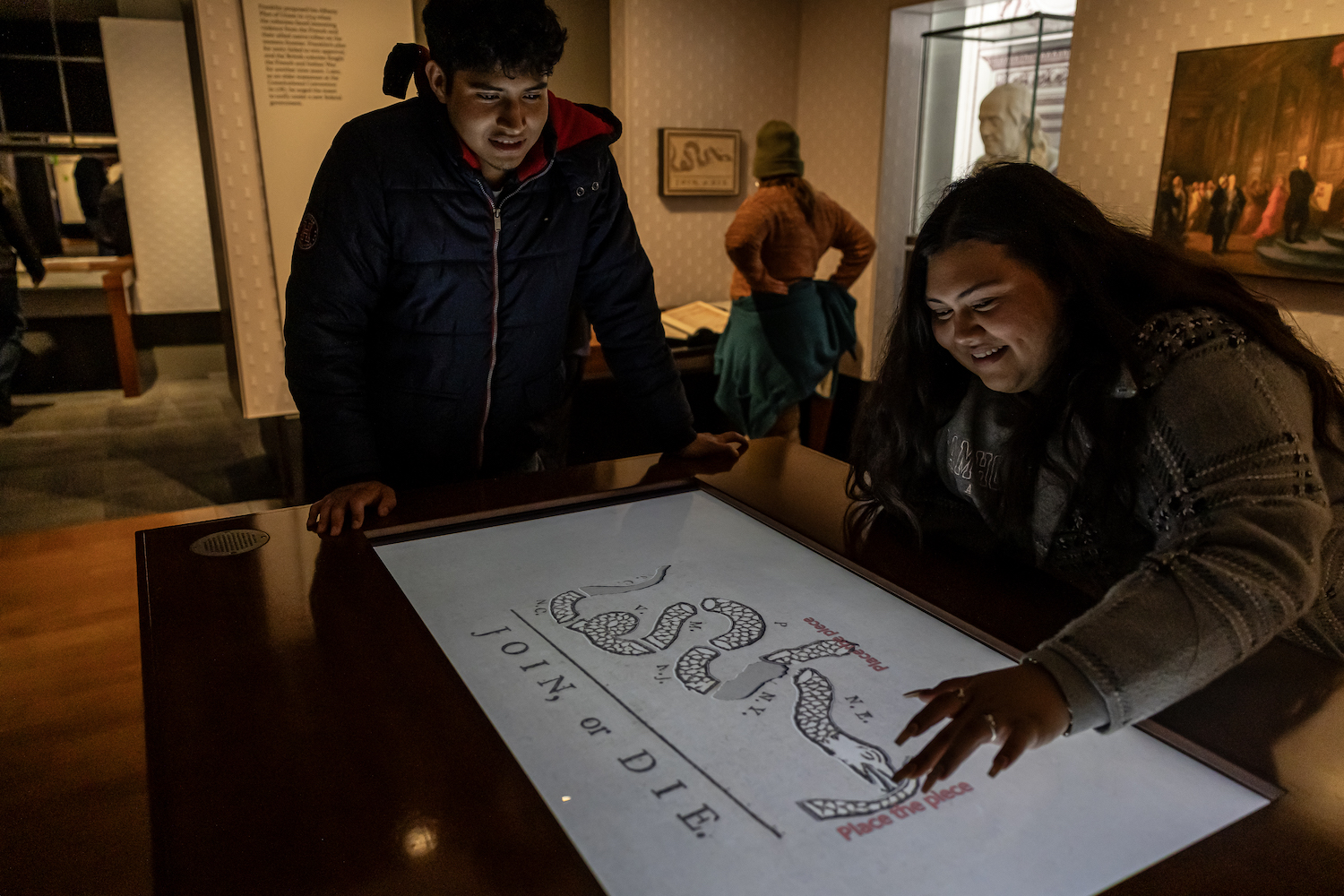
Israel and Michelle especially appreciated the “Join, or Die” mementos, inspired by Franklin’s iconic segmented snake cartoon. The message of fragmentation is relevant now more than ever!
Another awesome feature was the Lion’s Mouth—a slot where citizens could anonymously submit letters, including grievances or suggestions for improvement. It served as an early mechanism for public participation, and I appreciated the practical approach to governance, as well as his recognition of the importance of engaging with the broader community.
In many ways, LEAP and SHAIP strive to embody the spirit of civic engagement and the principles Benjamin Franklin instilled in our nation. As he once said, ‘Nothing so likely to make a man’s fortune as virtue.’ Through experiences like these, we continue to cultivate our understanding of the world to then contribute meaningfully to our communities.
On the third day of our New Orleans trip, we had an exciting itinerary lined up to continue our learning! After grabbing some coffee to start the day, we set off on a 20-minute walk to St. Louis Cemetery.
St. Louis Cemetery Tour
by Chrissy Biello
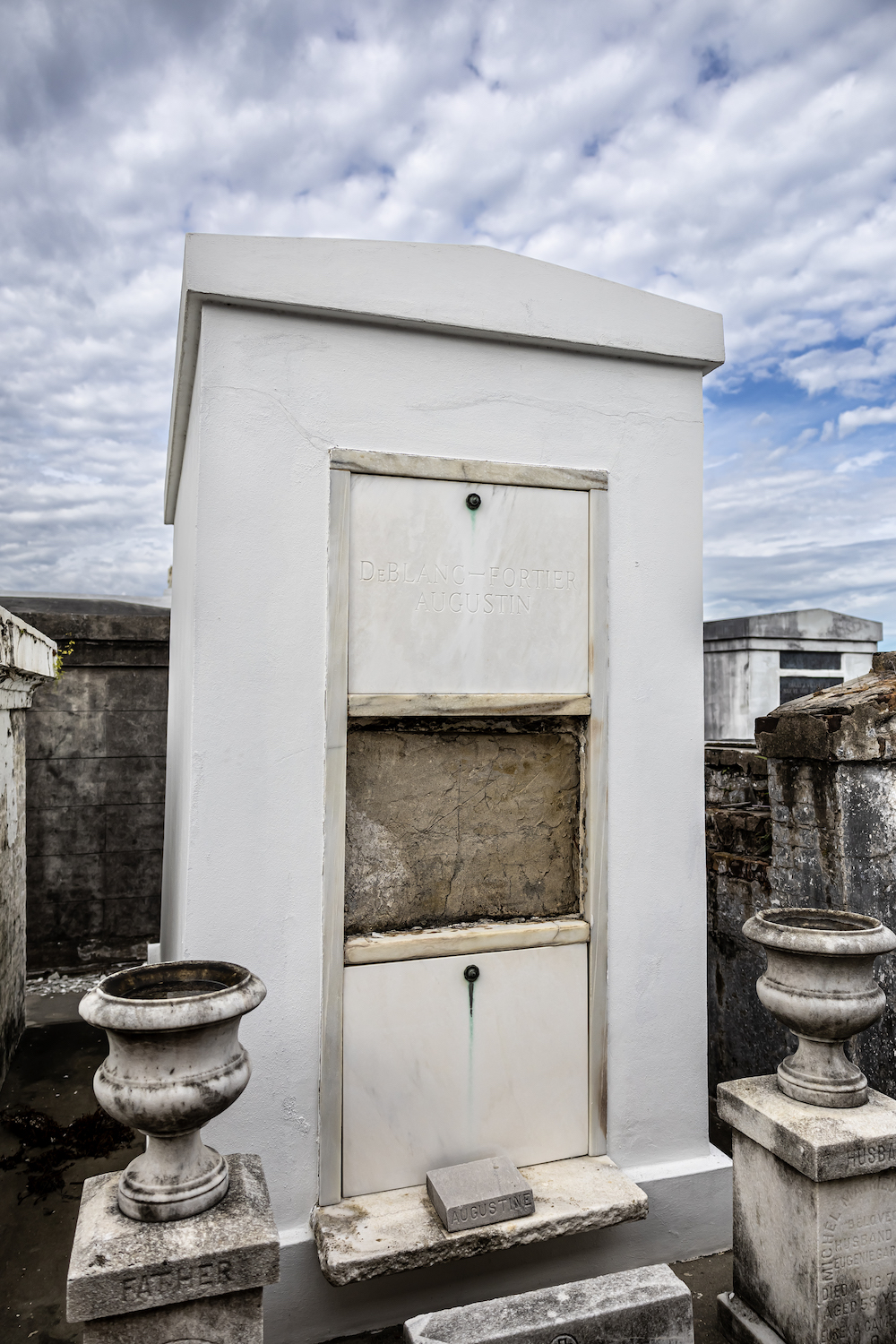
Traveling through New Orleans, one might notice the cemeteries and how distinct they are from other cities. With approximately forty-two historic burial grounds, our curiosity led us to explore the oldest existing cemetery in the city, St. Louis Cemetery. Thankfully, we had a knowledgeable and humorous tour guide named Denise who could explain things along the way.
Denise discussed the origin of St. Louis Cemetery, which emerged from a pressing need for space. On August 14, 1789, the cemetery opened because the neighboring St. Peter Street Cemetery had become severely overcrowded. During this time, Spanish colonists persuaded the residents of New Orleans to adopt an innovative solution: above-ground tombs that would maximize limited burial space.
Interestingly, there are strict protocols for burial. A new interment cannot occur until two years have passed since the previous burial, allowing for proper decomposition. When a new burial takes place, the remains of previous occupants are carefully collected, placed in a bag, and pushed to the back of the tomb using a long pole; a practice that reportedly inspired the popular phrase, “I would not touch them with a ten-foot pole.”
Turning around, we examined the oven tombs. Denise illustrated that they have this name because they have a wide opening, continuing to say that “they resemble a baker’s oven; can’t you imagine a pizza sliding in there?!”
Moreover, one could not help but notice the striking nine-foot-tall pyramid tomb for Nicolas Cage when he passes away. Notably, it is inscribed with the Latin phrase “Omnia Ab Uno” meaning “Everything From One.”
Continuing on the tour, Denise took us to the Orleans Battalion of Artillery tomb, which holds those that fought, but did not die, in the Battle of New Orleans in 1815.
Further, the New Orleans Italian Mutual Benevolent Society’s marble tomb. Denise explained that many Italian immigrants, facing financial difficulties, could not afford individual burial plots. To address this, they pooled their resources to collectively purchase and share a communal burial site.
Additionally, the “the Faux Laveau” grave, often mistaken for the famous Voodoo Queen, Marie Laveau, was adorned with symbolic crosses. In sets of three, they represent the Holy Trinity positioned sideways to signify the completion of crucifixion and resurrection.
Nonetheless, we ended the tour at the authentic Marie Laveau’s grave. Here, Denise explained that while Marie practiced Voodoo, she was a devout Catholic that would attend Mass daily. In her whimsical voice, Denise noted that the over emphasis of the voodoo aspect of Marie Laveau is “all a part of the loooreeee!”
As we exited the cemetery, we felt we had gained a deeper understanding of New Orleans’ unique culture. We would like to thank Denise for a great tour; her captivating storytelling and deep knowledge of the cemetery’s history made the experience both educational and memorable!
3rd Annual Children’s Hospital New Orleans Holiday Parade
by Chrissy Biello
Following the cemetery tour, we began the walk to return to our hotel before heading out to get lunch. To our surprise, a holiday parade was taking place! We learned that this parade is organized by the New Orleans Children’s Hospital and began in 2022.
Starting at the French Market, the parade winds through Downtown. As we watched the floats go by, we saw the Grinch dressed as Santa Claus and the Children’s Hospital float featuring their very own Mrs. Claus.
The best part of the parade was the cheerleaders and dancers. Their performances were fun and festive, bringing energy and excitement to the crowd. They also threw beads to the audience, which many were trying to catch!
St. James Cheese Company – Lunch
by Chrissy Biello
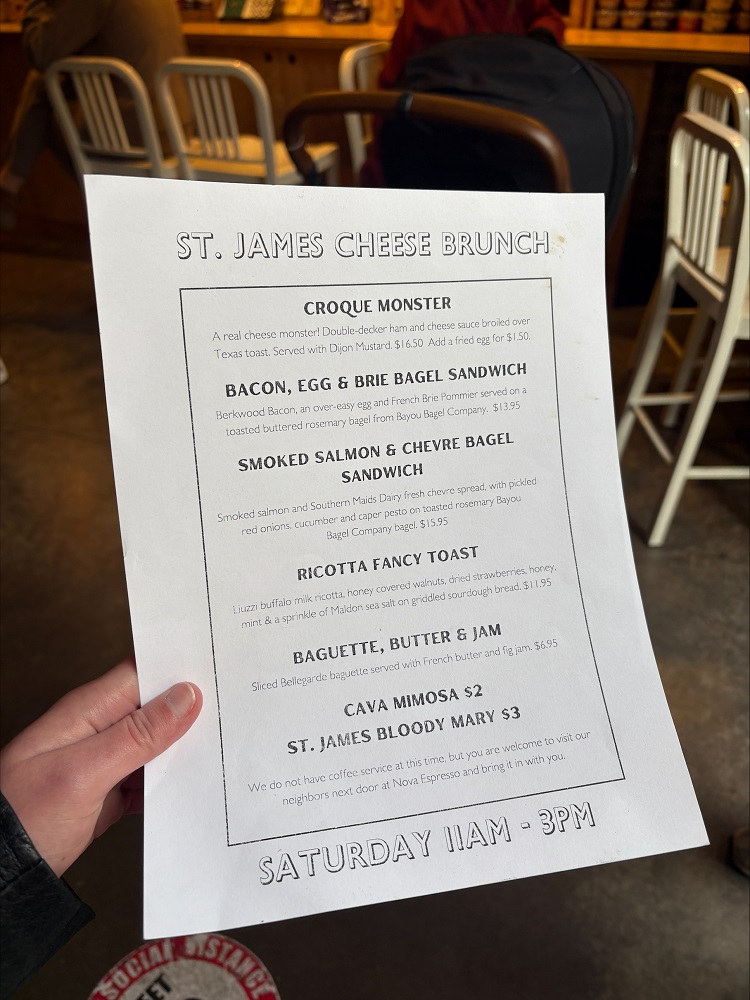
While walking the streets of New Orleans, we came across the St. James Cheese Company. Having passed this establishment before, we had assumed that they only sold cheese. To our surprise and delight, they offer a wide selection of sandwiches, bagels, fondue, and festive drinks.
Since we all greatly enjoy cheese, we decided to order the sharable fondue. Although I may appear quite serious in this photo, I assure you that my expression does not reflect how I truly felt at the time.
The sandwiches also looked especially appealing. Olivia chose the Gruyere Sandwich, while I opted for the Hot Mozzarella Sandwich. Michelle, who tends to make healthier choices, ordered the Soup of the Day, which turned out to be Creamy Garlic and Mushroom Soup!
After finishing our meal, we continued on to our next destination, the National World War II Museum.
National World War II Museum
by Michelle Moya
Following the parade and our meal at the St. James Cheese Company, we headed to the National World War II Museum. As it was National Pearl Harbor Remembrance Day, we felt very reflective and thankful for the soldiers that fought for us. Nevertheless, as a self-proclaimed American History hater, I went to the museum with not much knowledge. However, this tour definitely changed that!
One fascinating feature of this museum was the “dog tag experience.” We grabbed our “dog tags,” each of which was linked to a real soldier’s experience and role in the conflict that you had to find throughout the museum. I got Mike Colalillo!
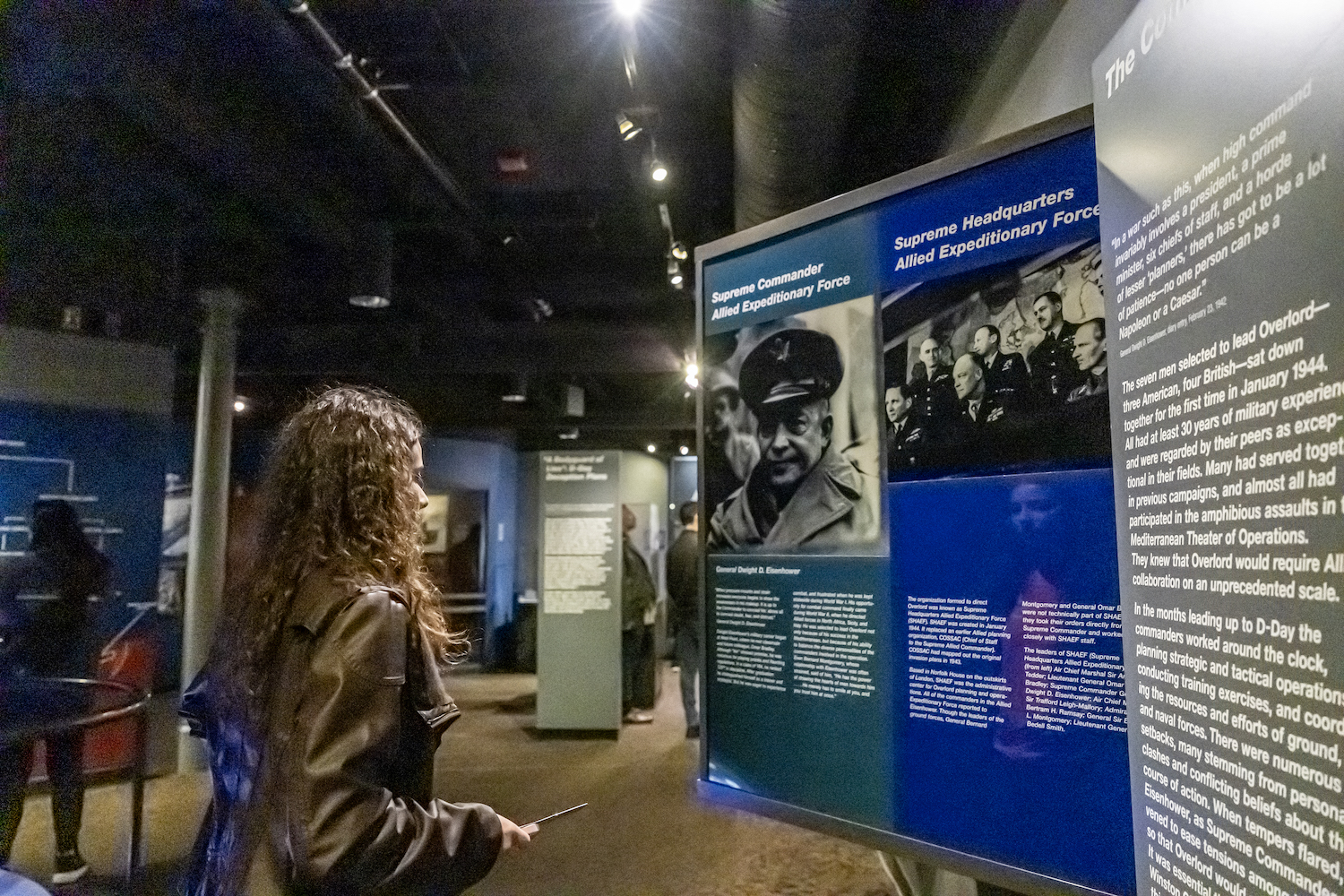
To begin our walk-through, we started at “the Arsenal of Democracy” on the second level. The museum was a labyrinth of fascinating displays. This section demonstrated all of the great inventions that helped America win the war. Essentially, the “Arsenal of Democracy” was made possible by these tools!
Then, we dove into the heart of the Normandy invasion. My favorite there was the mass of hanging planes, a reminder of the airborne operations that preceded the beach landings that depict the Normandy morning crash.
Noteworthy, the “Personal Accounts” booths that have two-minute oral history programs with soldiers. Olivia walked into the “Night Drop into Normandy” booth and ended up hearing a horrible story about a soldier that got shot in his jaw but proceeded to fight. This goes to show the atrocities that these troops had to endure during this battle.
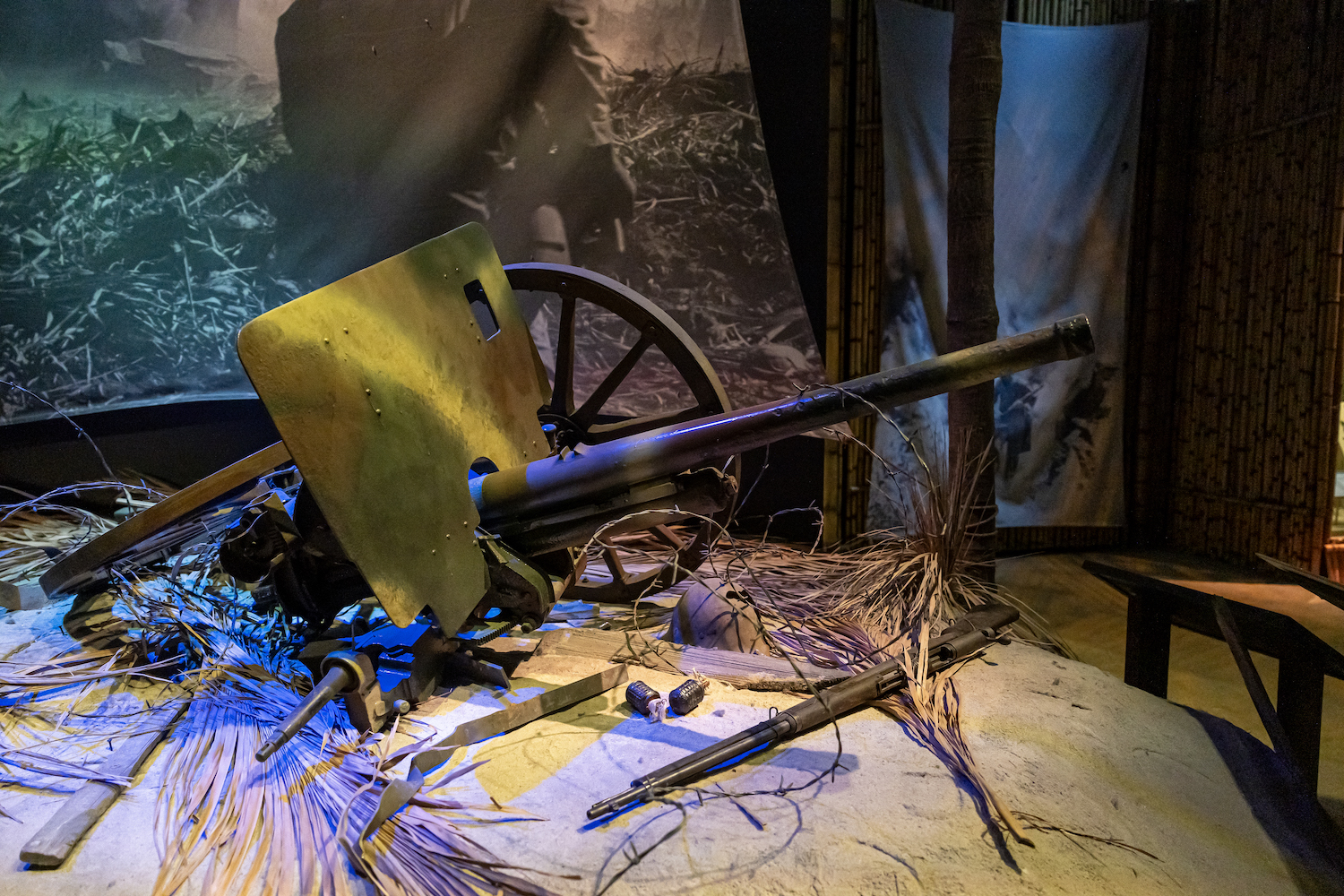
We then made our way to my personal favorite exhibition, the “Road to Tokyo” exhibit. The museum’s immersive displays, including a recreated jungle environment, provided a glimpse into the challenges faced by American soldiers fighting in the Pacific. The setting was super captivating, and the stories of the soldiers fighting in the Pacific were both inspiring and heartbreaking to hear.
To finish off our tour, we went to the museum store to look at the goodies they had. Olivia ended up purchasing a chocolate bar and Stephen E. Ambrose’s book Eisenhower: Soldier and President. Ultimately, the National WWII Museum not only taught me about a pivotal era in history, but it also inspired me to implement more history knowledge into my life.
I left the exhibition with a deeper appreciation for those who fought for our freedom, which was the overall goal!

















































 Center for Law, Engagement, and Politics