A Merry Marathon of Christmas Cheer with the City of Huntsville!

Olivia Discon

Many of us Sam Houston students have heard the phrase “There is nothing to do in Huntsville”. Well, after this past Saturday, December 2, even the naysayers were left in awe of the sheer amount of holiday festivities hosted by the city.

Bright and early, LEAP students volunteered at Main Street’s Christmas Fair, ran by our very own, Jessica Cuevas. The event was bustling with activities at every corner, with the opportunity to get a head start on some holiday shopping, spend time with family, and most exciting to Texans, the rare chance to frolic in snow!

Santa Claus happened to make a surprise appearance this year, and to say the children were excited to share their Christmas lists with him was an understatement. For those who were not as thrilled, Madison Cawthon gave her best shot at trying to get children to smile for a quick photo-op with the man in red.

Just a few steps away, Huntsville’s Parks and Leisure Department hosted Winter in the Park at Rather Park. The children (ourselves included) were able to enjoy several craft making stations, bounce houses, and face-painting to the tune of some wonderful live holiday music. This was a project that fellow LEAP Ambassador Cinthia Villarreal worked on, and it was great to see her in action!

These community-centered events are a testament to the importance of togetherness. What was most enjoyable, in my experience, was the look of pure joy amongst the passerby. The event allowed for families to have fun and reinvigorate their sense of Christmas spirit, and through them, the volunteers felt the gratification of what it is to serve their community. Though these acts of volunteerism don’t lessen the chances of our stockings being filled with coal this year, we were happy to do it anyway. In my first jingle through the Huntsville holidays, I can joyfully declare that when it comes to celebrating Christmas, Huntsville’s definitely ‘sleighs’ it!

Having Faith in the Human Factor: Former Venezuelan President Juan Guaidó

By Olivia Discon

In a world riddled with corruption, inequity, and violence, it can be difficult to discern a sense of hope. Dictatorships, in particular, have continued to be a looming threat to international peace. Venezuela, a nation who is on the heels of communist countries such as Russia and China in its tyranny, is not as equally accredited on the world’s stage.

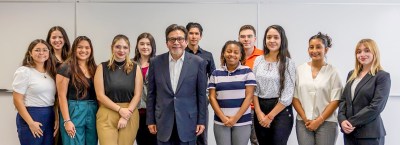
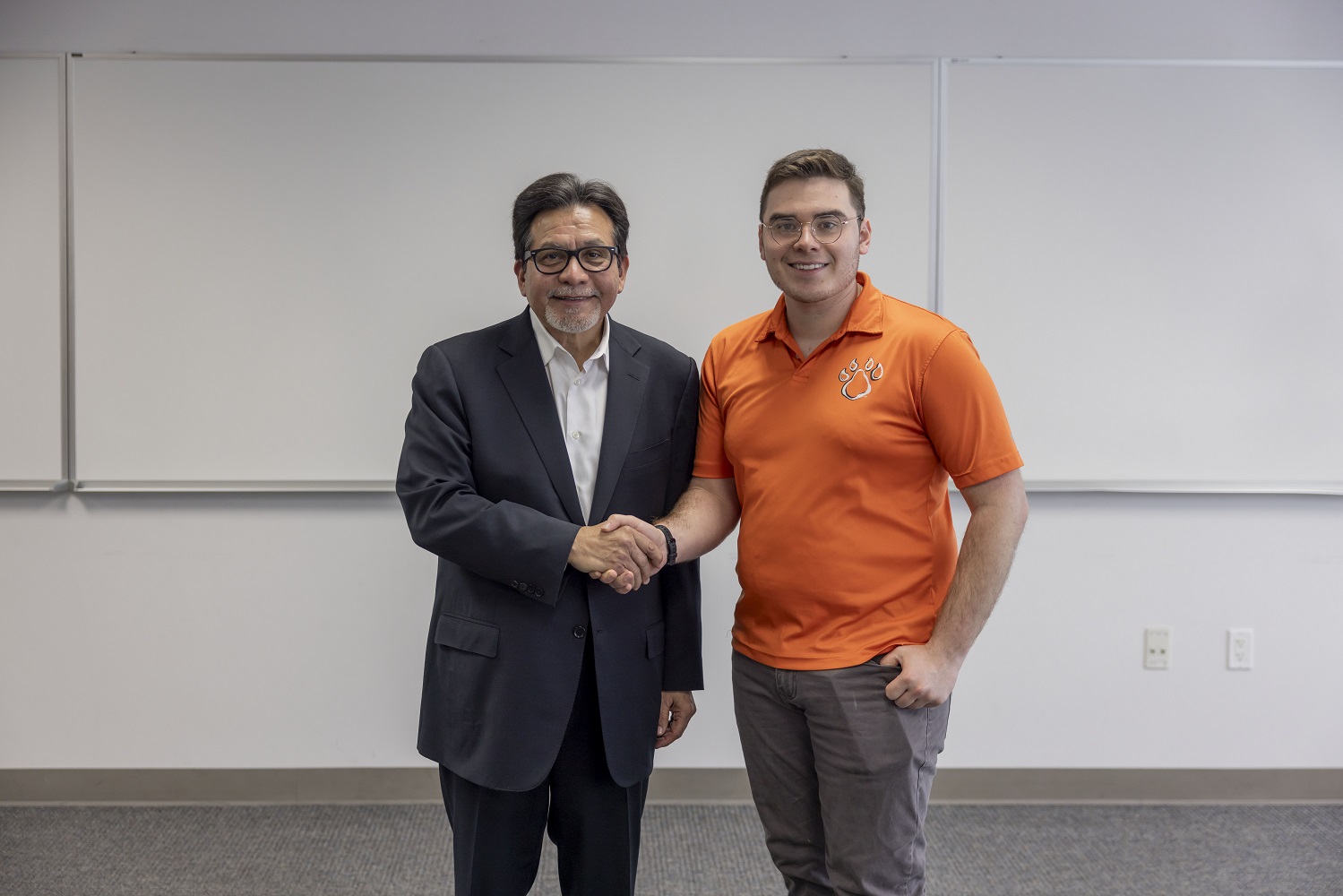
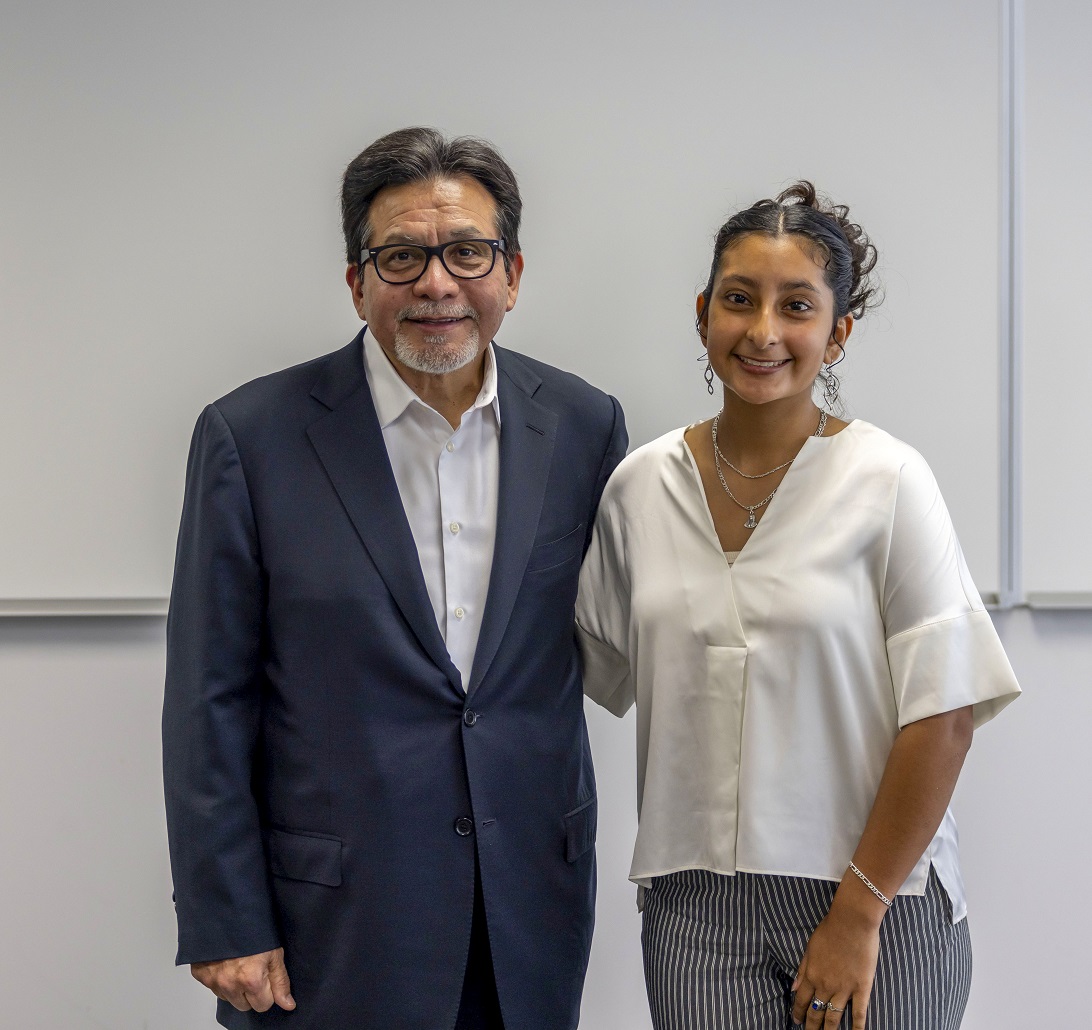
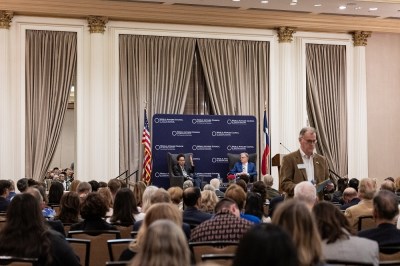
To learn the current state of Venezuelan affairs from the perspective of the former Venezuelan President could not have been a more informative and sobering account. With that, we drove to Houston to hear from President Juan Guaidó.

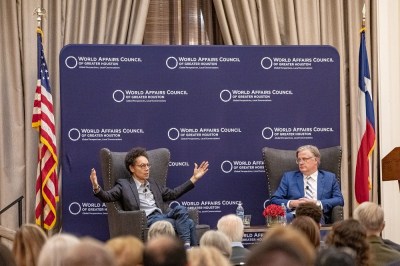
Maryanne Maldonado, the CEO of the World Affairs Council (WAC), started off the evening by emphasizing the importance of gatherings such as these. Through this, she gave LEAP a shoutout, saying;”Making the drive from Huntsville to Houston is a true commitment to education.”

A touching narrative of the President’s upbringing ensued, shared by Jose Valera. President Guaidó’s inspiration to tackle the tyranny in Venezuela began with a tragedy in his own life. After a natural disaster destroyed his childhood home, resulting in the deaths of many of his neighbors, he had come to realize the utter incompetency of the leadership in his country. In his early adulthood, Guaidó went on to join the 2007 Venezuelan Protests and founded his own political party, otherwise known as the Popular Will party.

In a conversation moderated by Ronan O’Malley, President Guaidó explained the conflict in Venezuela through the lens of his own experiences and the hopes he carries for his nation’s future.

President Guaidó reverberated with a resounding call for democracy, underlining the pressing need for transparent elections in Venezuela to authentically represent its people. Furthermore, it stressed the critical plea for international support and investment to facilitate the nation’s economic resurgence and stability.

Even now, amidst his tireless efforts for democracy, President Guaidó continues to grapple with the pervasive corruption that has plagued Venezuela. Just a week ago, the Venezuelan Public Ministry sought his arrest for misusing 19 billion dollars in state funds. This allegation is considered by the President as propaganda, a desperate attempt by those in power to undermine his legitimacy to those around the world that can’t distinguish nuances within the headlines. “We do not want to win a game if we have not participated…”, Guaidó remarked. “You can ask everyone (in Venezuela) if they desire peace or war, and 99% will answer peace… never forget the human factor!”

In a world overshadowed by oppression, gatherings like these offer a glimmer of hope and the belief that positive change is possible, even in the face of seemingly insurmountable odds.

Gusto Gourmet

After the event, we sought to savor the flavors of Venezuela by visiting Gusto Gourmet. The group indulged in tequeños, or Venezuelan cheese sticks, for our appetizer while we revisited the World Affairs Council meeting. For the main dishes, we had the opportunity to try Reina Pepiada, Arepa Pelua, and Pabellon Cachapa. This was a first for most of the students that evening, but was considered by Morgan as one of her favorite restaurants. The meal was not only satisfying but also gave us a valuable perspective, as we realized that the cost of just one of our dishes equals the monthly earnings of a Venezuelan citizen, which amounts to $15. With that, our night came to an end, not without hope, but with an understanding of the real-world obstacles and dynamics at play. As President Guaidó said himself “Is it easy? No. Is it possible? Of course.”

Texas Tribune Festival: Big Ideas in Action

Olivia Discon

After a successful first day of immersing ourselves into the various subdisciplines within politics, LEAP students continued in their educational pursuits at The Texas Tribune Festival.

The Paxton Trial has been a hot-button topic recently; and who better to provide insight into the verdict than the lead prosecutors on the case? Dick DeGuerin, Erin Epley, Rusty Hardin, and Harriet O’Neill provided the crowd with the many dynamics at play during the trial. We didn’t know it yet, but this panel was the favorite of the day among the group.

Continuing the conversations, we were able to hear from Emergent 25, a pharmaceutical manufacturer (Amanda Becker), a U.S. Representative (Henry Cuellar), Texas Senator (Royce West), and the Attorney General of Oregon (Ellen Rosenblum) in the context of the Opioid Crisis and how the epidemic is being addressed. Ariza and I were able to speak with Representative Cuellar shortly after the panel and we were able to get a photo!

We took a brief break for lunch to meet with SHSU Alumni and former SHAIP intern Spencer Copeland, where we were able to talk about our educational goals and interests over Kerbey Lane, an Austin staple. 

Trying a new method of tackling the ‘Tribune, we split into two groups corresponding to our shared interests. Ariza and Ashlyn attended “El Paso Matters Presents: Texas and the Border,” covering the realities of border towns and upcoming legislation that could address immigration issues. 

Ashlyn noted; “I thought the legislation from Rep. Morales was innovative in the approach of documenting immigrants and providing a new citizenship process for a bipartisan effort.”

Ariza added; “As someone who was born and raised in a border town, all you see are problems. Rep Morales’ idea, which would alter how immigration is conducted and boost Texas’ economy, caught my attention.”

Morgan and I, who have a shared interest in collective community growth, were particularly interested in the future implications of the skill gap in children’s education on their surrounding communities. A one-on-one with Houston Independent School District Superintendent, Mike Miles, to cover innovative methods in maintaining equity, closing the skill gap, and “changing the culture” of education over time was a great way to understand how those issues will be addressed going forward. 

Many people find politics to be a frightening subject, so to continue with the theme, we headed to the Alamo Drafthouse Theatre to experience a supernatural murder mystery titled A Haunting in Venice.

Inspired by Agatha Christie’s 1969 novel Hallowe’en Party, the deceitful group, featuring our favorite retired French detective, Hercule Poirot, was left on All Hallows Eve in a haunted palazzo to reveal the true cause of Alicia Drake’s death. 

True to many of Christie’s works, the truth was impossible to anticipate. With elements of the other-worldly occurrences and hidden secrets, this film left the group anxious of what might transpire next.

Before leaving, we couldn’t help ourselves but to recreate the film poster just outside the theatre. Similar to the movie, it was impossible to distinguish the guilt and mischief from our demeanor. 

This two day adventure at The Texas Tribune Festival was a true delight, and allowed all of us to distinguish the aspects of politics and government that interested us. Our political immersion at the state capital complimented the excellent education we have in the classroom at SHSU. 

Around the Town with KSAM

Ashlyn Parker

Once a semester, KSAM’s Larry Crippen hosts the LEAP Center for a discussion that airs on “Around Town.” The program focuses on one person or organization, but since LEAP is an engagement organization, the program inevitably covers many aspects of the University and the community.

And so it was the LEAP Ambassadors, along with their advisor Mike Yawn, that met with Larry Crippen at the KSAM radio station for a short discussion of the upcoming fall semester. For example visits from Jeff Guinn to discuss his book Waco: David Koresh, the Branch Davidians, and a Legacy of Rage and Chris Tritico to discuss his successful law career .

Along with annual community service projects LEAP always enjoys being a part of such as M*A*S*H, Scare on the Square, and Christmas on the Square.

We also shouted out our past, recent, and current internships we have got the opportunity to do over the last year such as the Sam Houston Austin Internship Program, my summer internship with The Normandy group in DC, and the City of Huntsville Internship Program.

It was one of several collaborations with the media this year–undertaken by us and our advisor. And while we may never get accustomed to speaking into a microphone or camera, it was an enjoyable event, in part because we also work with KSAM every fall on their Make A Smile Happen gift drive

From Sullivan’s Island to West Virginia

Based on the weather in the morning…

…we did not expect a full day of outdoor activities.

But with a little help from the weather, and with some weather forbearance on our part, we were able to partake in a full day, which would include a morning of kayaking (see here), an afternoon of exploring Sullivan’s Island, and an evening mixer with legislators, lobbyists, and legislative staff. Quite a day for college students!

Fort Moultrie

We arrived at Sullivan’s Island ready to explore, despite some rain, and we learned that the name of the island comes from Florence O’Sullivan, who was among the first European to settle and did much to develop the colony of South Carolina in the 17th century.

We began by visiting the “Edgar Allan Poe” library, fittingly named not only because it is a library, but also because Poe lived on this island when stationed at Fort Moultrie. It’s even possible Poe stepped foot in the structure that now houses a library; it was a garrison long before it was a library.

Interestingly, Poe wrote “The Gold Bug” here, and he used the island setting in the short story.

Poe was stationed at Fort Moultrie, which played a key role in the American Revolutionary War.

Entering the Fort’s visitor center, we were able to browse the varying artifacts that were preserved from the days the fort was active, such as a 300-pound cannonball, manillas (a form of currency to purchase slaves), and an actual map with the route of the slave trade.

The original fort on this site was defended by South Carolina colonist Col. William Moultrie–for whom the fort is named–and was made of Palmetto wood. When the British attacked, the fort, and Moultrie’s men, withstood the bombardment. Moultrie became a hero, and the Palmetto became the State Tree of South Carolina.

We took the time to go through the many structures by the fort, making sure to get up close to some rare cannons from the Civil War lining the exterior. The cannons included several Rodmans, Brooke Rifles, Parrott Rifles, and Columbiads, reflecting the technological innovation that occurred over the years in battle.

There was also a Sally port, which was a highlight for the group. The bomb-proof structure was used to store gunpowder, keeping their supply dry and ready for use. Morgan, in particular, couldn’t fathom how soldiers could run back and forth through the narrow passageways in a battle.

In one of the structures, we discovered a small “passageway” where soldiers or those based in the fort could receive mail – magazines. Jessica and I decided to test this out by having me hand her an umbrella.

The visit to Fort Moultrie was captivating, educational, and exciting to see! And, perhaps best of all, it was on the beach, allowing us a quick transition to some senseless fun!

Sullivan’s Island Beach

The beach offers not only fun in the sun (or clouds), but also a nice view of The Arthur Ravenel, Jr. Bridge.

For most of us, this was only the second beach we had really been to (Galveston was our common experience), and we were able to swim, share stories, laugh, and even engage in some competitive behavior.

Even after a couple of hours spent at the beach we could have stayed longer, but we needed to eat and get back for our evening with at the Southern Legislative Conference.

Mex 1 Coastal Cantina

Feeling a bit exhausted and famished after a long day of outdoor activities, we searched for a place where we could enjoy a nice meal that would satisfy our craving for Mexican food. Sullivan’s Island had the perfect restaurant a couple of blocks away from the beach: Mex 1 Coastal Cantina

We were greeted by a welcoming staff and presented with traditional tortilla chips and tomato salsa, not long after we were seated. Our entrees included Street Taco Platters: Carne Asada Tacos with Roasted Corn and a mixed plate with a Carne Asada and Pork with Pineapple taco, Chicken Quesadillas, Braised Chicken Baja Bowl, and the Mexi-Cali Burrito. This restaurant’s menu included some of the traditional Mexican delicacies, but it also had many unique entrees that were inspired by different cultures. An example of this would be the Mexi-Cali Burrito, a twist on a Mexican burrito with the addition of French Fries and queso on top. 

The food was savory – full of flavor – and delectable; it was the perfect way to end our adventure on Sullivan’s Island. With tans, happy hearts, big smiles, and most importantly, full stomachs, we headed back to the hotel to prepare for an evening of fun hosted by the West Virginia Legislature.

Almost Heaven, West Virginia–2024 Conference Preview

By Ingrid Cuero

Who could turn down a night that includes great music, not-so rhythmically inclined dancing, and vibrant conversations? Not us! 

In 2024, West Virginia will be hosting the Southern Legislative Conference. As a preview, the State Legislature hosted an evening of jazz, dancing, a few remarks by legislators, and a lot of fun–all with a 1920s theme.

The Rivercity Dixieland Jazz Band set the stage with their jazz standards, including their rendition of “The Charleston,” which we attempted to learn! The song fit both our location, and also the 1920s’ theme of the evening.

We enjoyed the food provided by the sponsors, the music, and we even danced a bit! Morgan, Olivia, and I danced early in the night, and by the end of the night, Jessica and Michelle joined us!

With the evening being sponsored by the West Virginia delegation, Roger Hanshaw, Speaker of the WV House…

…invited everyone to attend next year, emphasizing that the conference would be held at the beautiful Greenbrier Hotel. We were sold!

To sweeten the deal, he and the WV Director of Tourism did some giveaways (which we competed for but lost)…

…and then he led a rendition of John Denver’s, Take Me Home, Country Roads.

Not many speakers could take on the role of musical guest, and it was an absolute delight. Afterward, we took a photo with him, and it was Michelle and Olivia’s first time to meet a Speaker of the House!

And we also enjoyed the music, people watching, and conversations.

Our long day ended in style-and in air conditioning, away from the threatening weather elements of the morning and afternoon. We called it a night, got in the car, and let city roads take us back to the place where we belong.

FBI Director Christopher Wray: Fighting Crime in the 21st Century

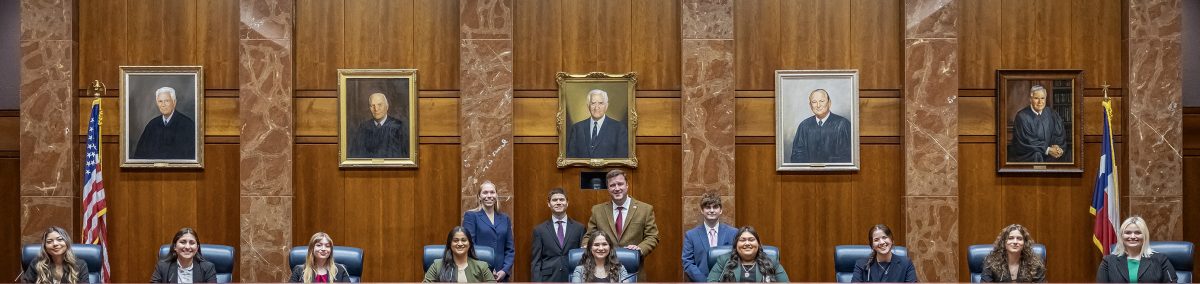
Following a full day of hearing court cases on SHSU’s campus, LEAP students moved their roving classroom to TAMU’s Bush School, where they attended a presentation by FBI Director Chris Wray, a program sponsored jointly by the World Affairs Council and the Bush School at TAMU.

Director Wray offered an interesting tour of the foremost threats to United States safety. According to Wray, the top threats to the United States are China, Iran, Russia, and terrorism, both foreign and domestic. Notably, Wray highlighted the fact that a key to all of these threats is understanding the potential for cybercrime.

This is a double-edged sword, because just as technology allows the “bad guys” more opportunities to hide money (primarily through cryptocurrency), it also offers “more ways to fight the crime.” In short, much of the FBI’s job is trying to maintain technological superiority over people with malignant intentions.

Another focus of the FBI, according to the Director, is the spike in crime in large US cities, as well as the key role that Fentanyl plays in 21st-century crime. Such discussions support the LEAP Center’s mission to show the interconnectedness of things, inasmuch as students will be seeing journalist Ioan Grillo discuss crime and Fentanyl in a World Affairs Council event in a couple of weeks.

Following the event, students had a chance to meet former Director of Counterintelligence for the CIA, Jim Olson, who has been a good friend to LEAP students over the years.

It was a long day, in a busy string of weeks, but it is the type of activity that shows the scaffolding approach to education taken by the LEAP Center. In an eight-day period, LEAP students got to see–and experience–the world, including (1) assisting immigrants with passing the Naturalization Exam in their “Citizenship Preparatory Course,” (2) hearing from the FBI Director, (3) learning from the CIA Director, and (4) attending the 10th Court of Appeals hearings.

Seeing the world through the eyes of others, is a great way to learn, and LEAP students are learning much!

College of Criminal Justice Honors Academic Standouts

More than 200 people attended the College of Criminal Justice’s (COCJ) Honor’s Convocation Ceremony, where the College recognized their best and brightest. Adding poignancy to the event were the many alumni on hand, many of whom had endowed scholarships in memory of loved ones.

Dean Lyons led the proceedings, highlight the many accomplishments of the College and its storied history…

…before turning it over to Associate Dean Danielle Boisvert.

Dean Boisvert then introduced dozens of scholarships and more than 100 students who earned those scholarships, with faculty, staff, and alumni on hand to provide students with plaques and recognition.

The scholarships included numerous undergraduates, one of whom was President of LEAP Ambassadors, Jessica Cuevas.

Ms. Cuevas, in addition to being a Smith-Hutson Scholar, was awarded the O.B. Ellis-J.P. Gibbs Scholarship.

This was an apt scholarship, in that Cuevas occasionally volunteers at the J. Phillips Gibbs “Old Town Theatre,” providing a connection to the scholarship.

Graduate students were also recognized, including many in the Ph.D. program. Students such as Meghan Royle, Jazmin Polacios, and Cristal Hernandez-Avalos were recognized for the had work and accomplishments they have made while in graduate school.

Ed Owens, an SHSU alum and former Deputy Executive Director of TDCJ…

…was also on hand to congratulate Joaquin Padron, who was given the “Edward Glenn Owens” Scholarship.

Owens graduated from SHSU with a Criminal Justice degree, as did his wife, Rissie, who also teaches in the Criminal Justice Department, drawing on her expertise in pardons and paroles to instruct students.

It was a wonderful event, packed with students benefitting from the generosity of alumni, donors, faculty, and staff, and highlighting the best of Sam Houston State University.

ChatGPT: PACE gets the conversation going

The higher-education community is reacting to ChatGPT with a mixture of consternation, trepidation, excitement, and a lot of anxiety. Inasmuch as it is the wave of the future, however, higher education needs to react, which is why the Professional and Academic Center for Excellence (PACE), led by the capable hands of Dr. Kevin Randall and Tiffany Terry, hosted a panel on the topic.

The panel kicked off (through Zoom) with a discussion by Dr. Xing Liu, who discussed the nuts and bolts of ChatGPT–focusing on how the software works. Dr. Mitchell-Yellin discussed the recent change in the University’s policy on plagiarism, highlighting the fact that while the policy used to prohibit using “another’s work;” it now prohibits using “work other than your own.”

(Ed. note: Mitchell-Yellin wasn’t sure if the policy change had officially occurred yet, but it is in process of occurring).

Dr. Nardone and Dr. Primm, from English and Biological Sciences, respectively, discussed the dos and don’ts of writing assignments “in the age of AI.” One factor the professors stressed is that ChatGPT has limitations, specifically: the inability to speak in a distinct “voice” and limited abilities to distinguish facts from anti-factual claims.

Apart from these limitations, of course, there is also the concern that students may become overly dependent on these technologies and become even weaker writers.

Accordingly, Nardone encouraged professors to consider: (1) using required sources; (2) pushing students to develop “point of view;” (3) asking students to explain other process; (4) having students reflect on their unique course experiences; and (5) developing a “reverse research process” approach, where students begin with a conclusion and have to reverse engineer the support and references for the conclusion.

Dr. Randall then highlighted some services and support (courtesy of Erin Owens) offered by the Library…

…before turning it over to Dr. Strubberg and Dr. Bennett, who discussed preliminary research they have completed regarding student use of ChatGPT and their (the students’) views of the ethics of ChatGPT use.

Dr. Ryan Zapalac anchored the panel, with a strong final presentation on the University structures and processes in place to consider the software and other matters of academic integrity.

The University, Zapalac noted, has recognized that academic integrity is an issue, and a committee has been in place since 2019 exploring these issues. Moreover, this committee is now a “standing committee,” and it is aware of ChatGPT and some of the challenges it will pose.

Because ChatGPT software is fluid and advancing rapidly, some proposed solutions to detecting or incorporating the software may be temporary. Accordingly, Zapalac encourages faculty to focus on the “motivation and writing process itself” and to refer to “Writing in the Disciplines.”

As noted by Zapalac, ChatGPT is less than a year old, and our speculations and current understandings may not hold up for long. Accordingly, Conversations with Administrators is currently planning a fall session that will continue this very conversation.

Many thanks to the PACE Center for bringing together talented people to start this conversation.