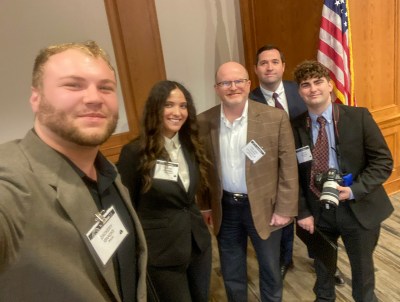
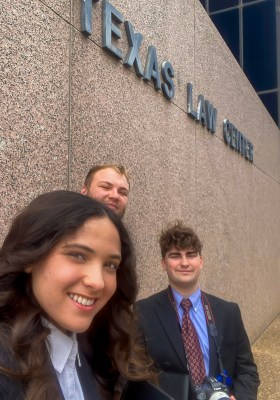
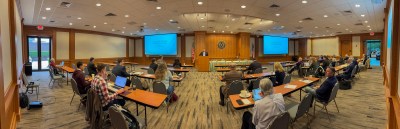
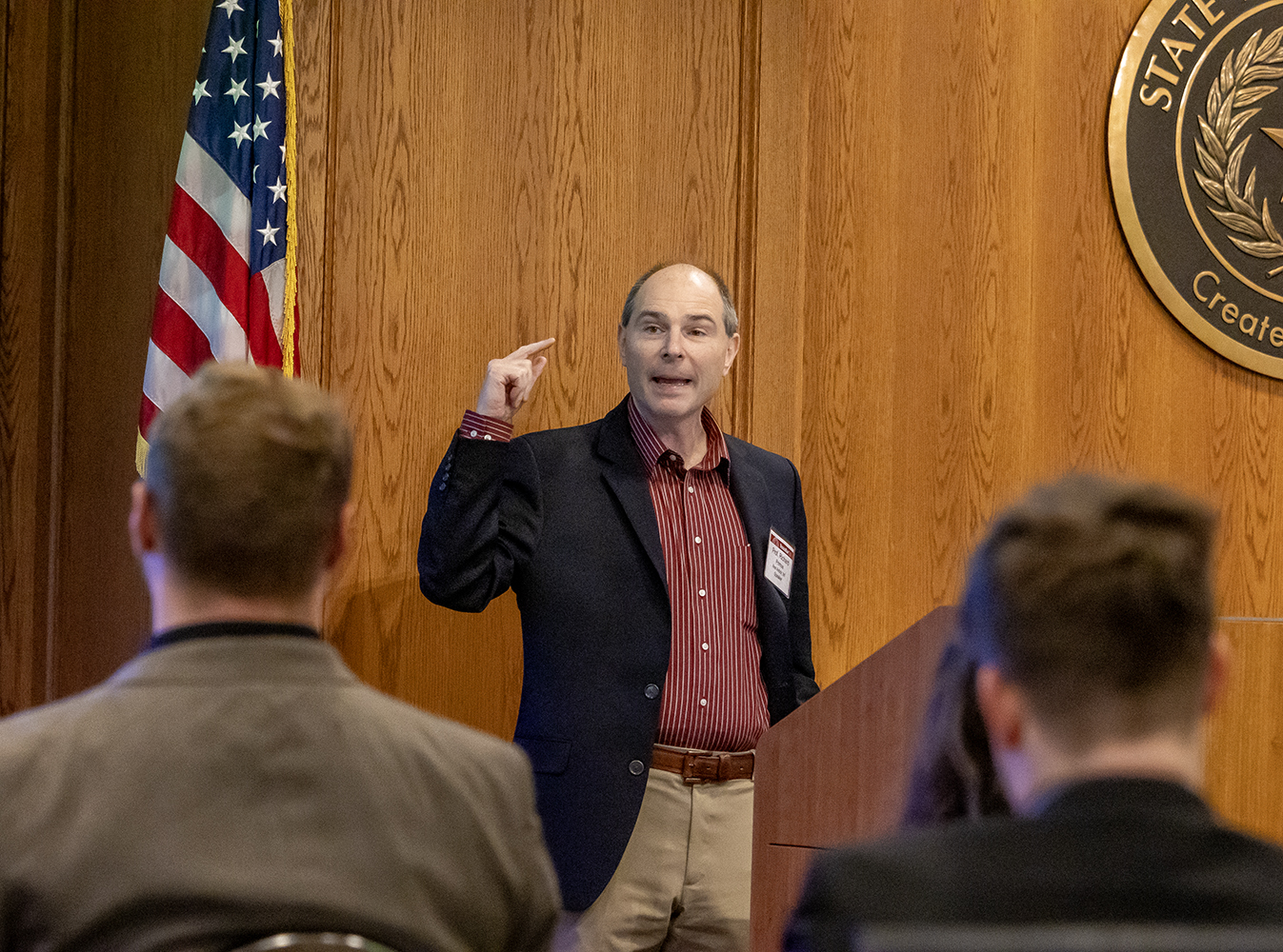
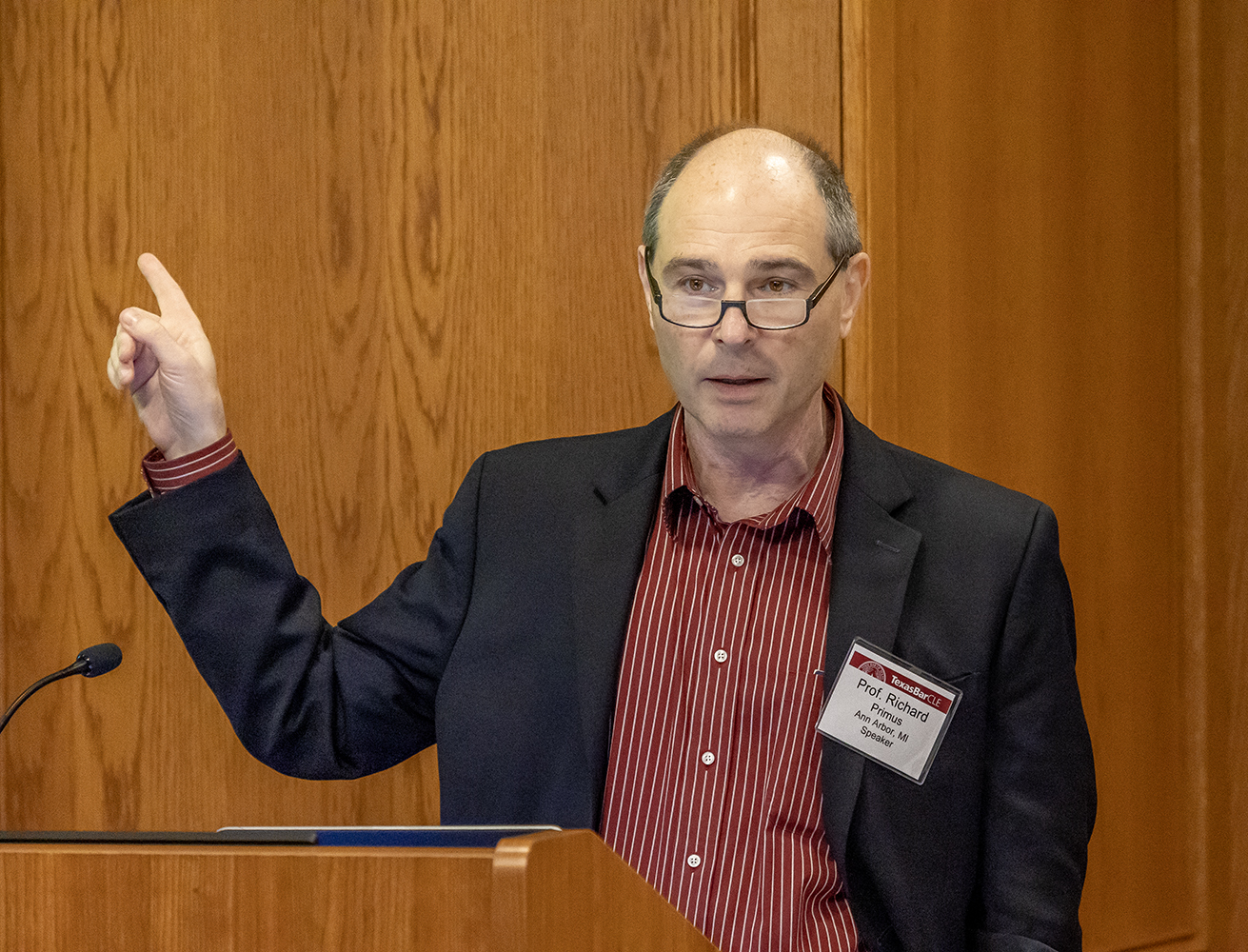
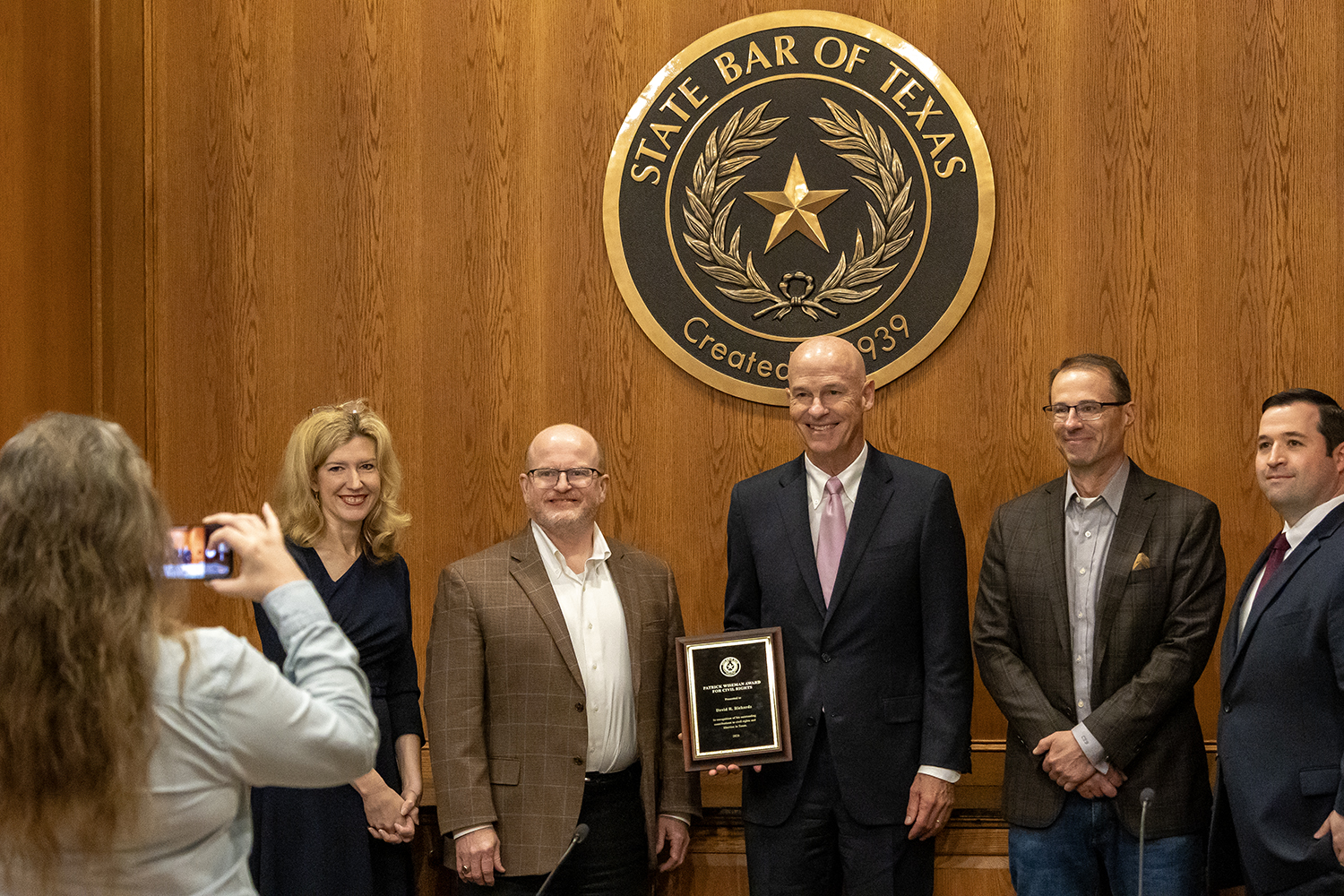
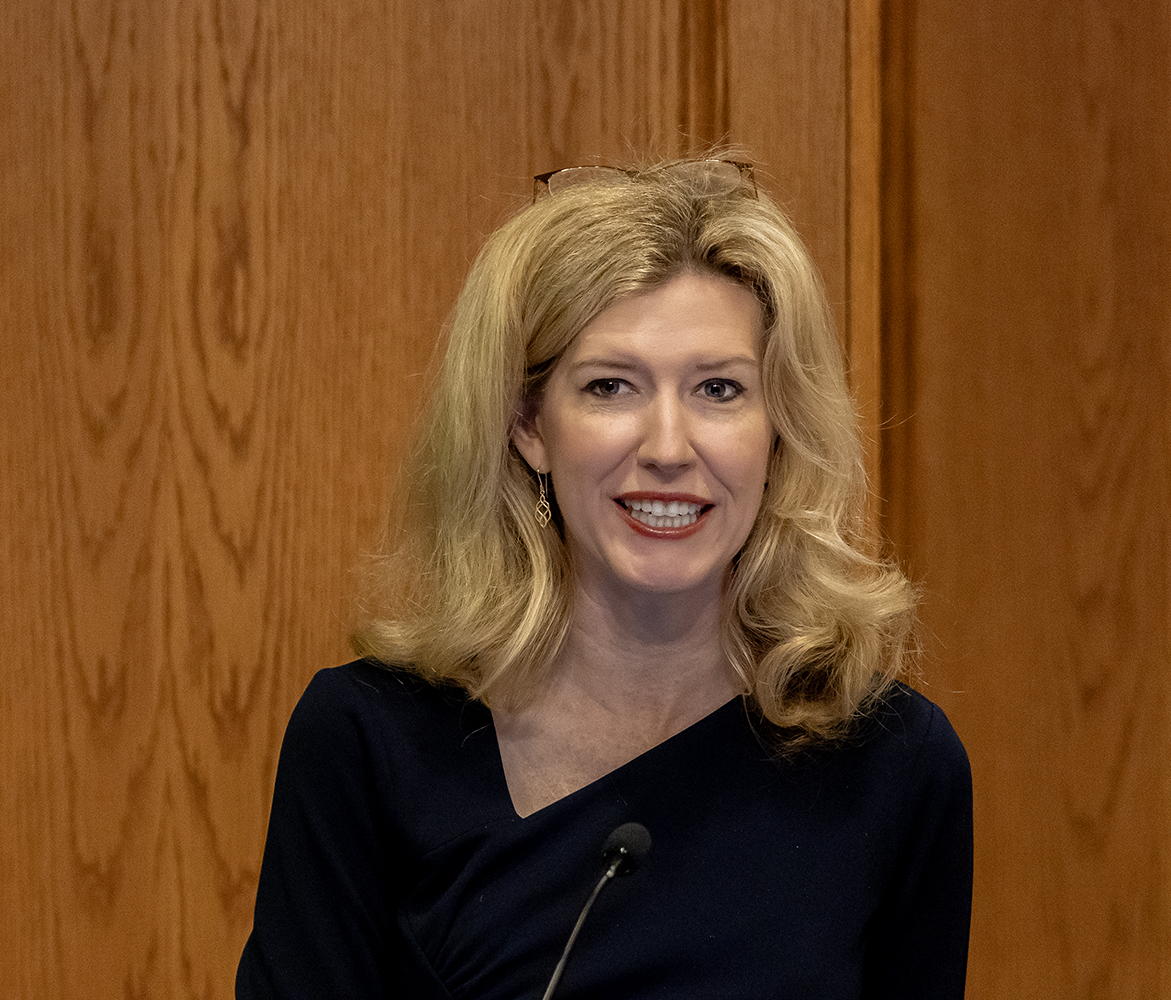
One of the virtues of attending SHSU is its pre-law program, which offers a robust pre-law society, a legal studies minor, many law-related courses, and numerous extra-curricular activities. And so it was that on the last day of finals, three pre-law society members attended the Texas Bar Association’s training on “Litigating the Constitution” at the Texas Law Center near the Texas capitol building.
20 Years of Changes in Constitutional Law
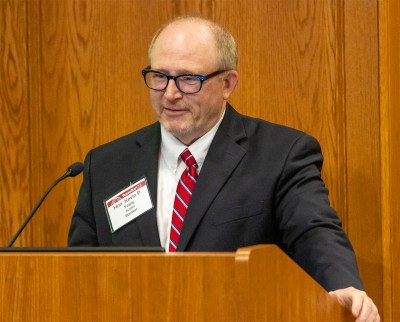
The first session was appropriate for the early morning inasmuch as it was led by the energetic Chad Baruch. In 30 minutes, Baruch covered gun control, religious freedoms, the takings clause, student speech, abortion, judicial deference, affirmative action, and more–and he managed to do this while addressing major changes across all these topics.
The changes loomed larger because it was telescoped into a thirty-minute format, and while all the changes in the diverse policy areas were interesting, two areas stood out. In discussing religious freedom and, specifically, Lemon, Baruch made a comment that could have applied to the whole session:
If you are roughly my age, about 60, having taken constitutional law in college was a serious impediment to your legal education, because almost everything you learned has been overturned.
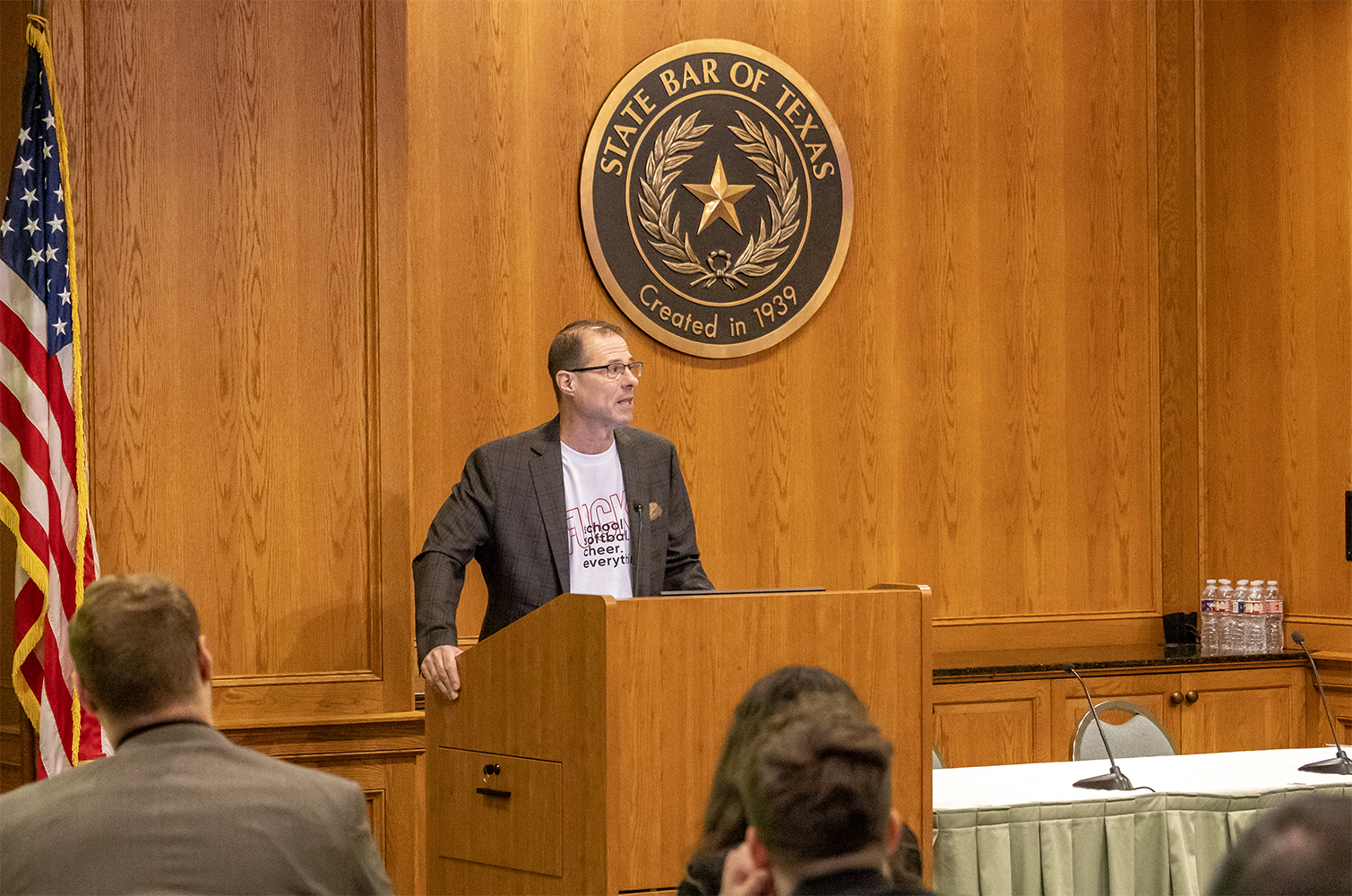
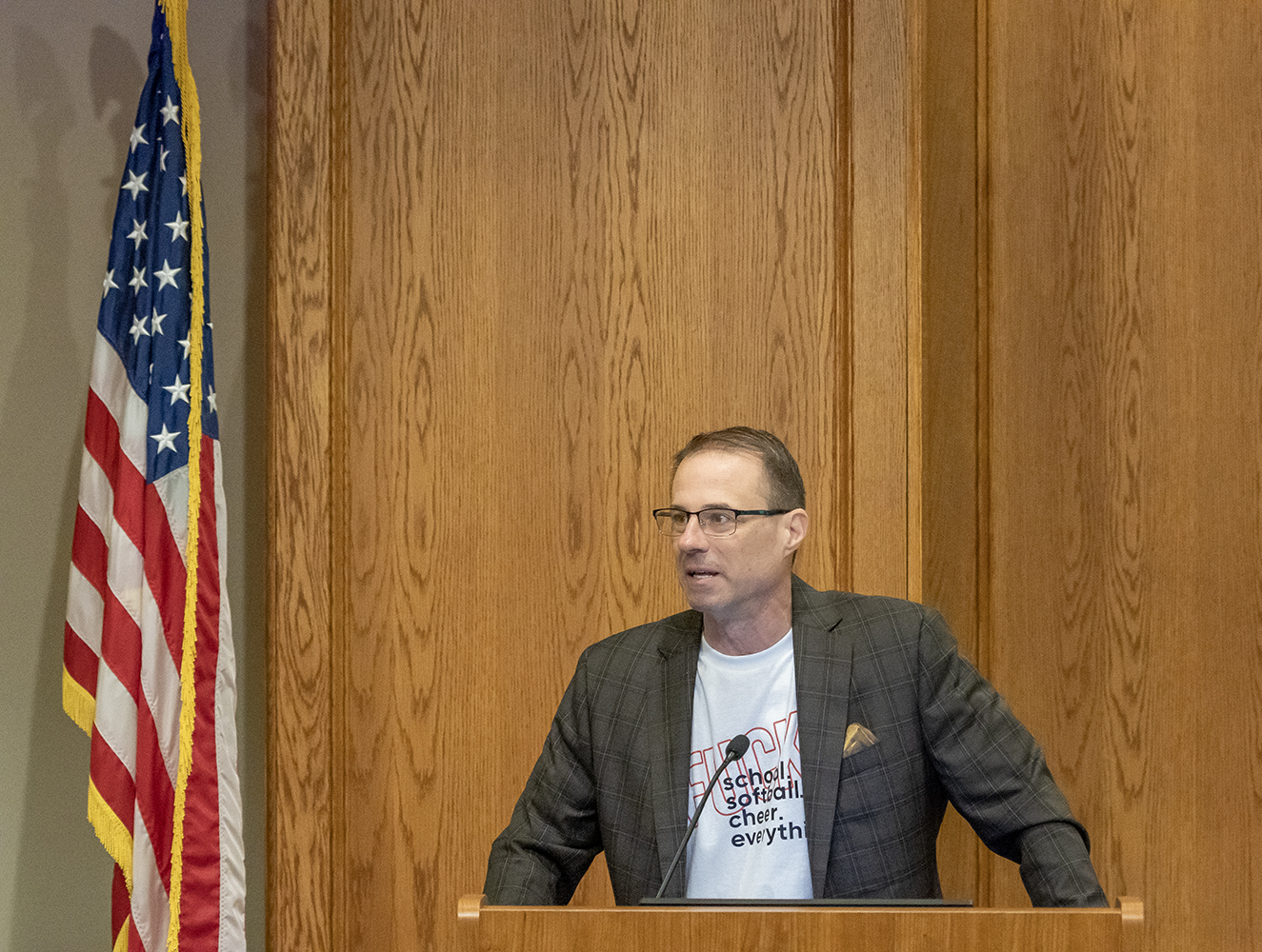
Also noteworthy were Baruch’s comments on student speech, not only because he was a high-school principal, but also because, as students, this is a topic that naturally interests us. In particular, Baruch discussed the Mahanoy Area School District v. B.L. (2021), in which a student who did not make the cheerleading team posted on social media something like the following: “Fuck school fuck softball fuck cheer fuck everything.”
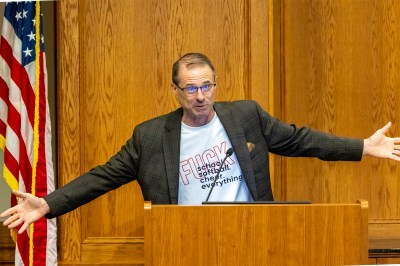
Notably, Baruch was wearing a t-shirt with exactly those words, an homage to the case.
He made clear his stance on this, observing that the “Court got it right,” paraphrasing the opinion as noting that, for a 17-year old student, social media was her town hall–the place in which ideas, no matter how offensive, shallow or foolish, should be offered, challenged, and debated.
The 4th Amendment, Technology, and Privacy
One of the highlights of the day was the presentation by Texas Court of Criminal Appeals Justice Kevin Yeary, who discussed how technology and the amenities of modern society have intruded on the 4th Amendment.
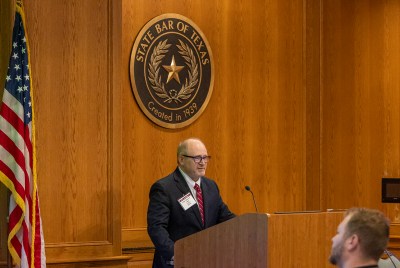
Justice Yeary hit on many historically key cases, including Katz v. US (1967), before highlighting big changes in the last ten years. In Riley (2014), for example, law enforcement agencies prohibited the search of cell phones without a search warrant and in Carpenter (2018) the Court held that location data from cell phone towers also requires a search warrant, limiting the third-party doctrine.
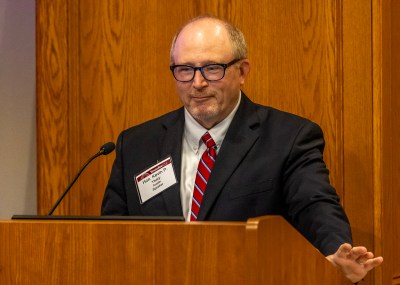
But with Moore’s Law in full effect, technology continues to advance, and the courts are struggling to keep up. Justice Yeary mentioned that one case before the Court, Chatrie v. US, will also affect how law enforcement do their jobs, as well as, of course, how lower courts rule on similar cases. And speaking of lower Courts, Justice Yeary mentioned that the Texas Court of Criminal Appeals found it difficult to weigh in on these topics without clear guidance from the USSC.
A Broader View
Other valuable sessions included topics such as executive privilege, in which the Youngstown case–which we covered in Professor Yawn’s Con Law class extensively–was discussed at length.
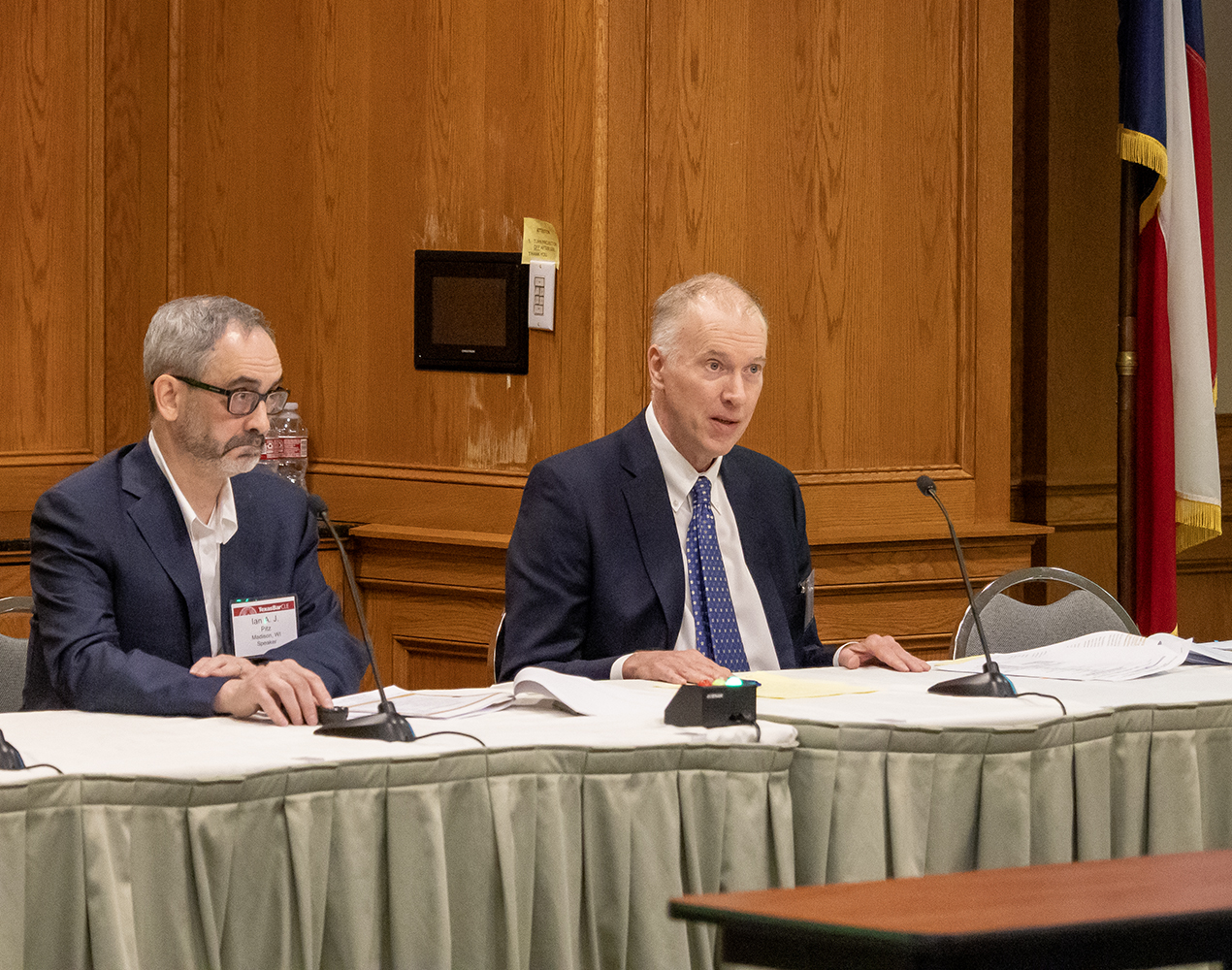
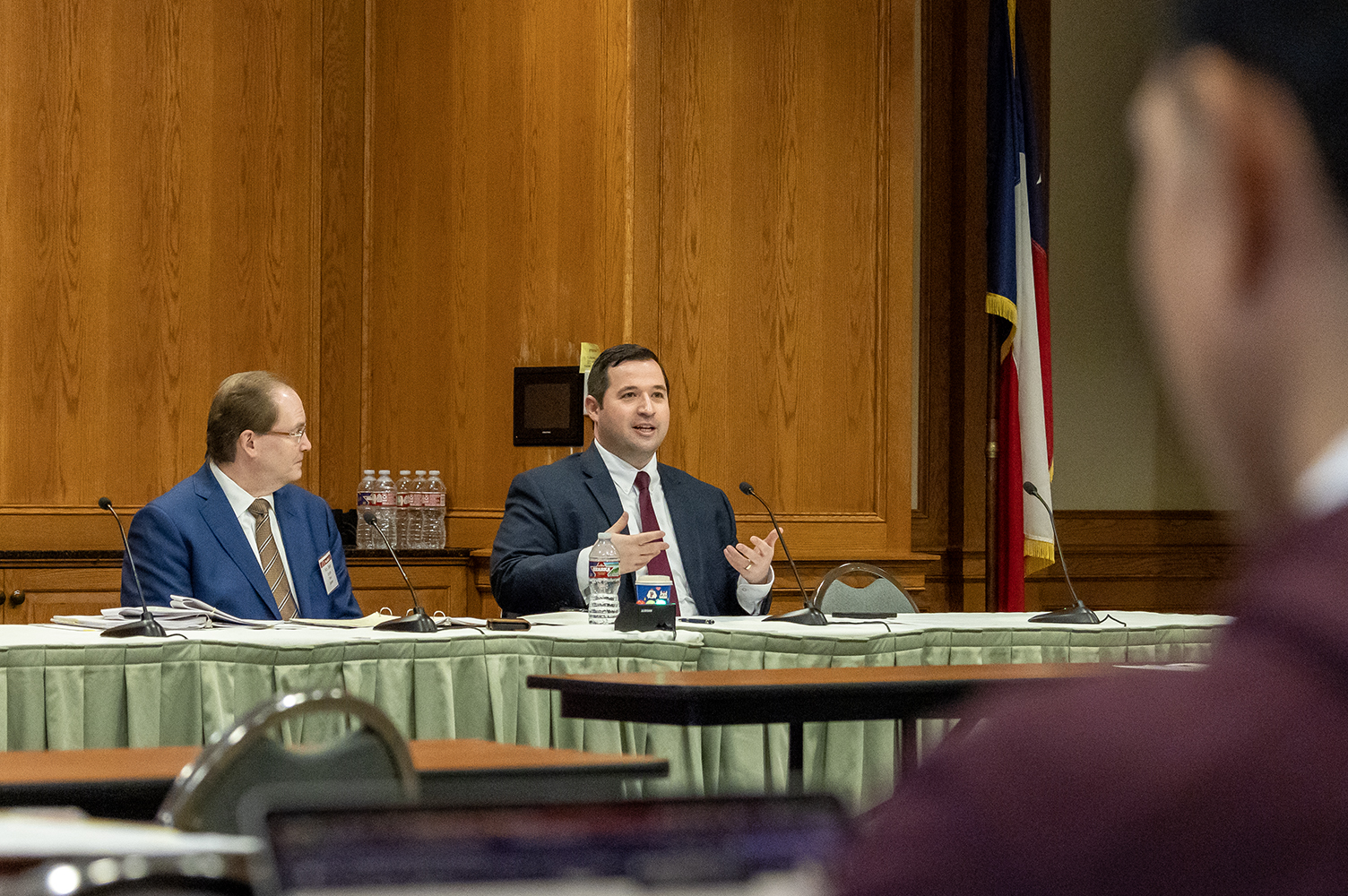
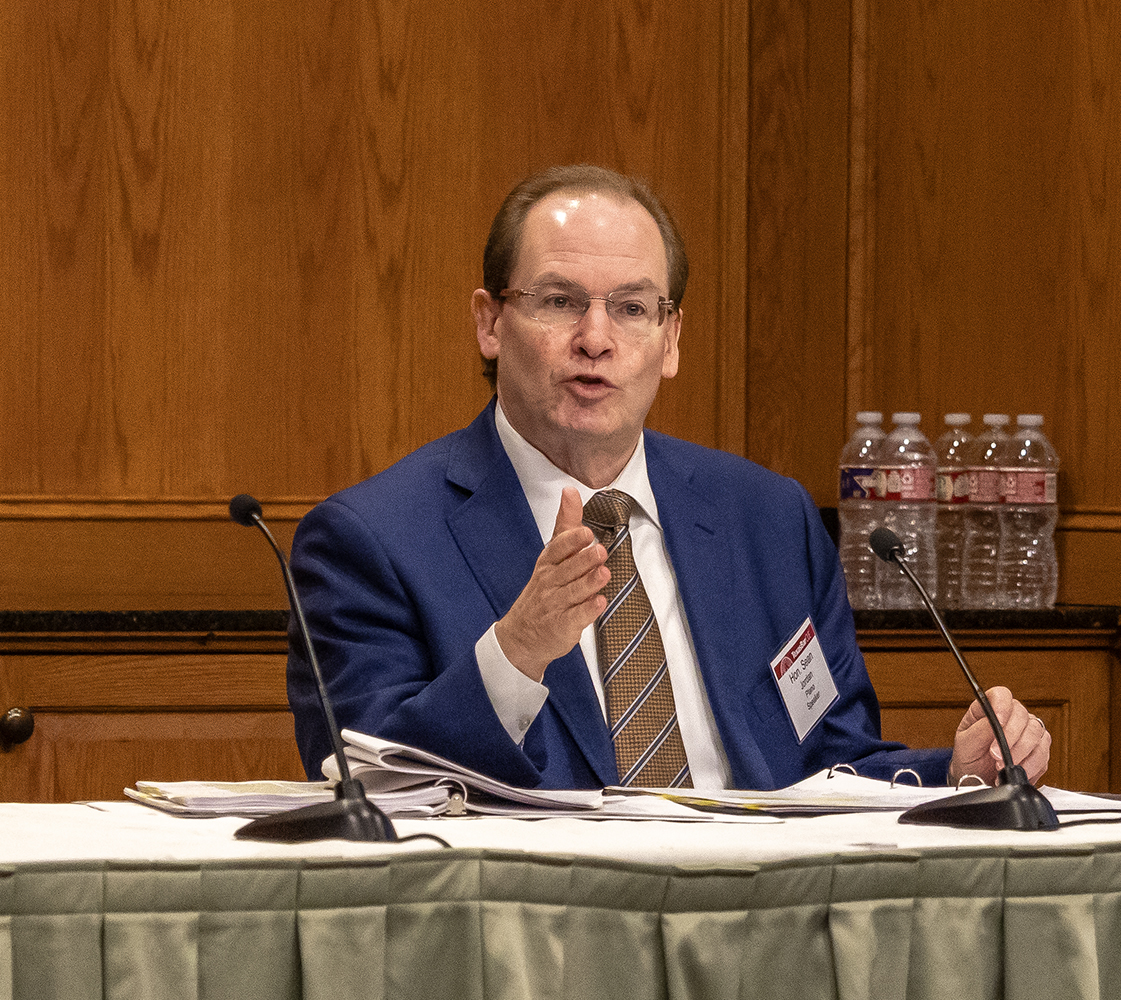
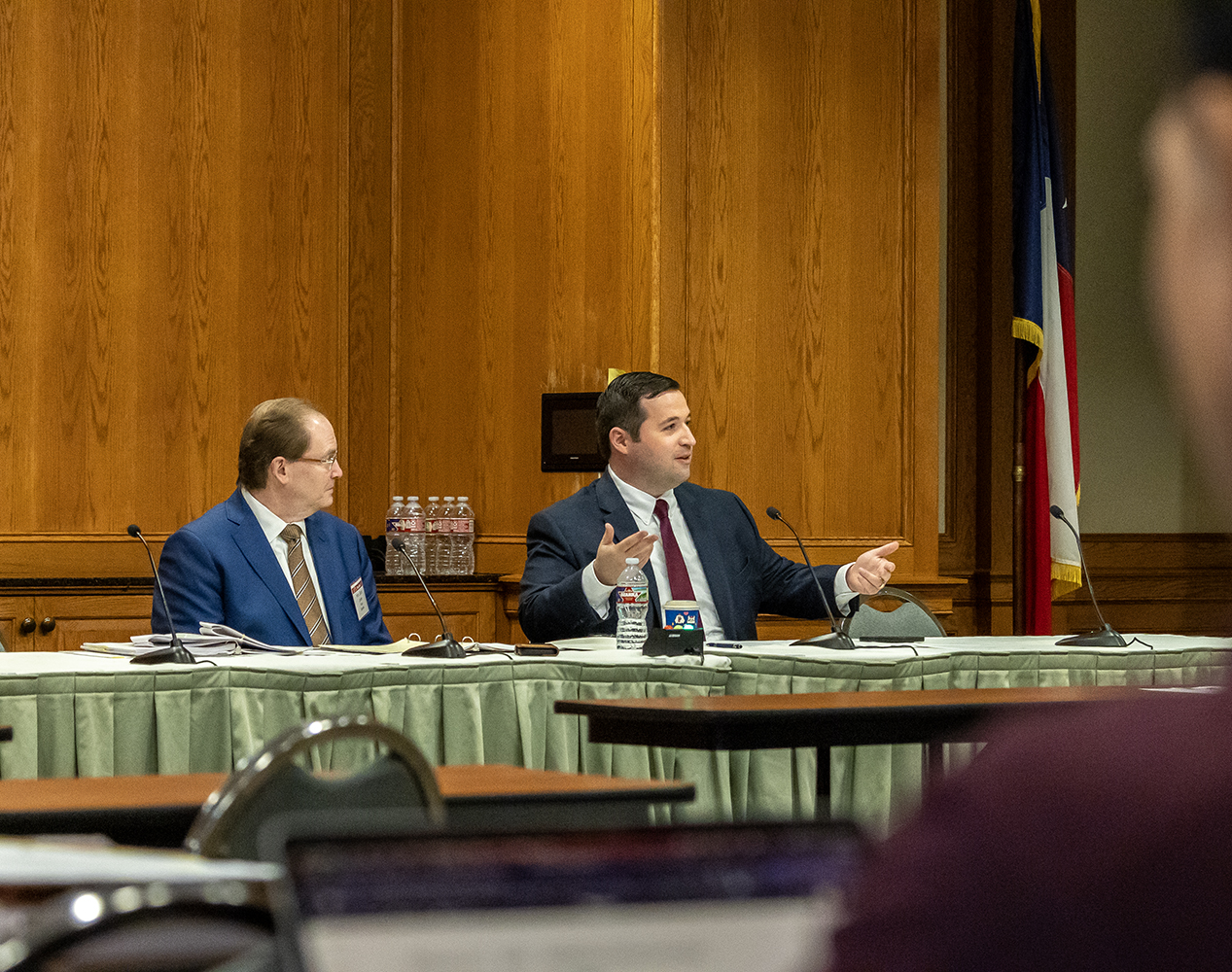
In an interesting session on the USSC and precedent, Judge Jordan and Matthew Kolodoski, the panelists noted that, despite the headlines, the Roberts court has overturned fewer precedents than the last five courts, on average.
And while all the sessions were timely, Eric Opelia’s presentation on recent cases on voting rights was perhaps the most timely. Indeed, he mentioned that he thought that the Louisiana v. Callais (2026) case would be his late-breaking news for this presentation, given that it was decided by the Court fewer than ten days ago. The Virginia Supreme Court, however, decided in the last 24 hours that Virginia’s recent redistricting election (which passed, to the Democratic Party’s favor) was unconstitutional. This may head to the USSC, but either way, it adds uncertainty to the districts up for grabs in the 2026 mid-term elections.
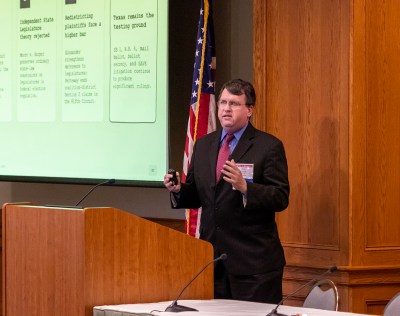
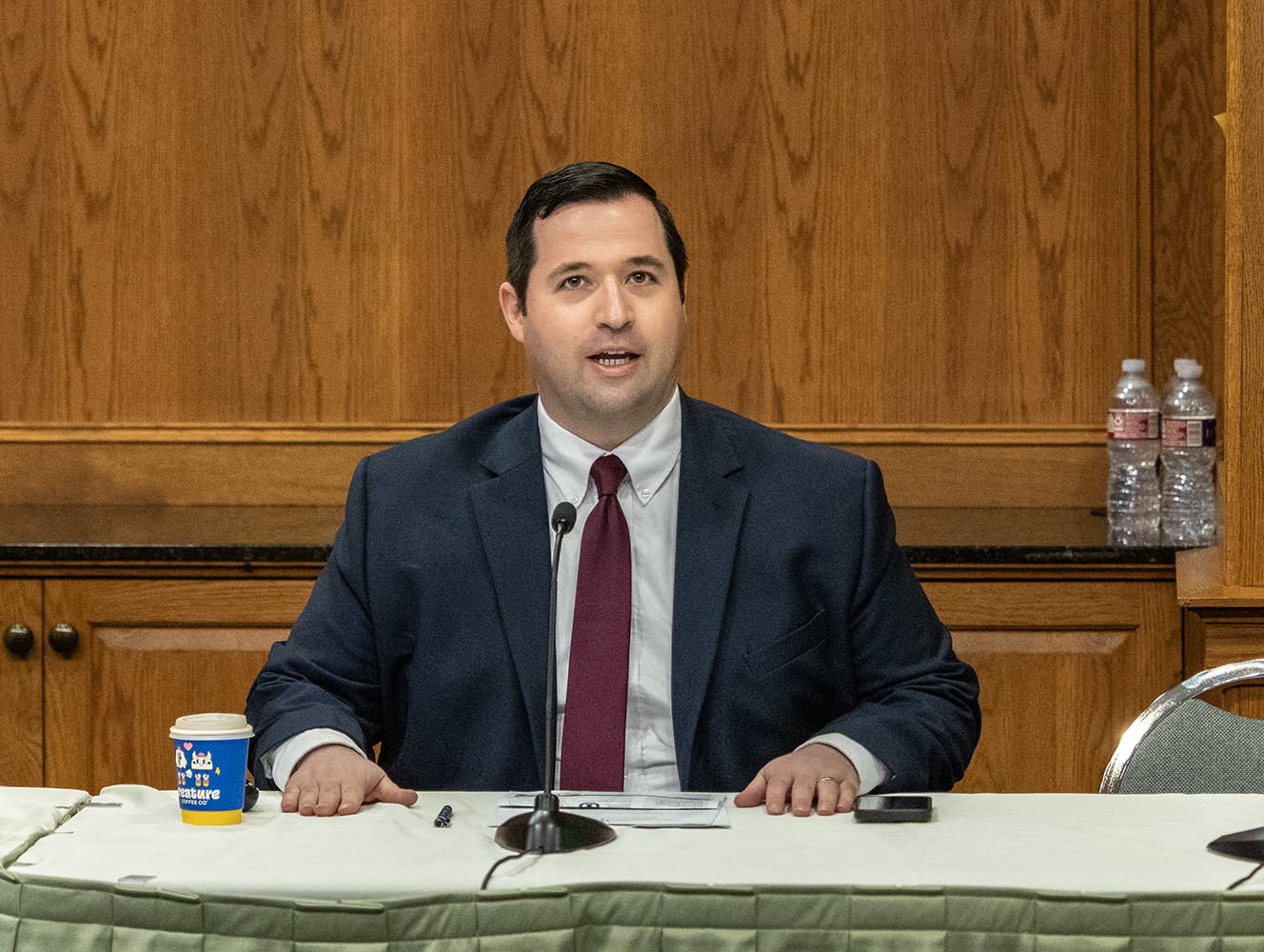
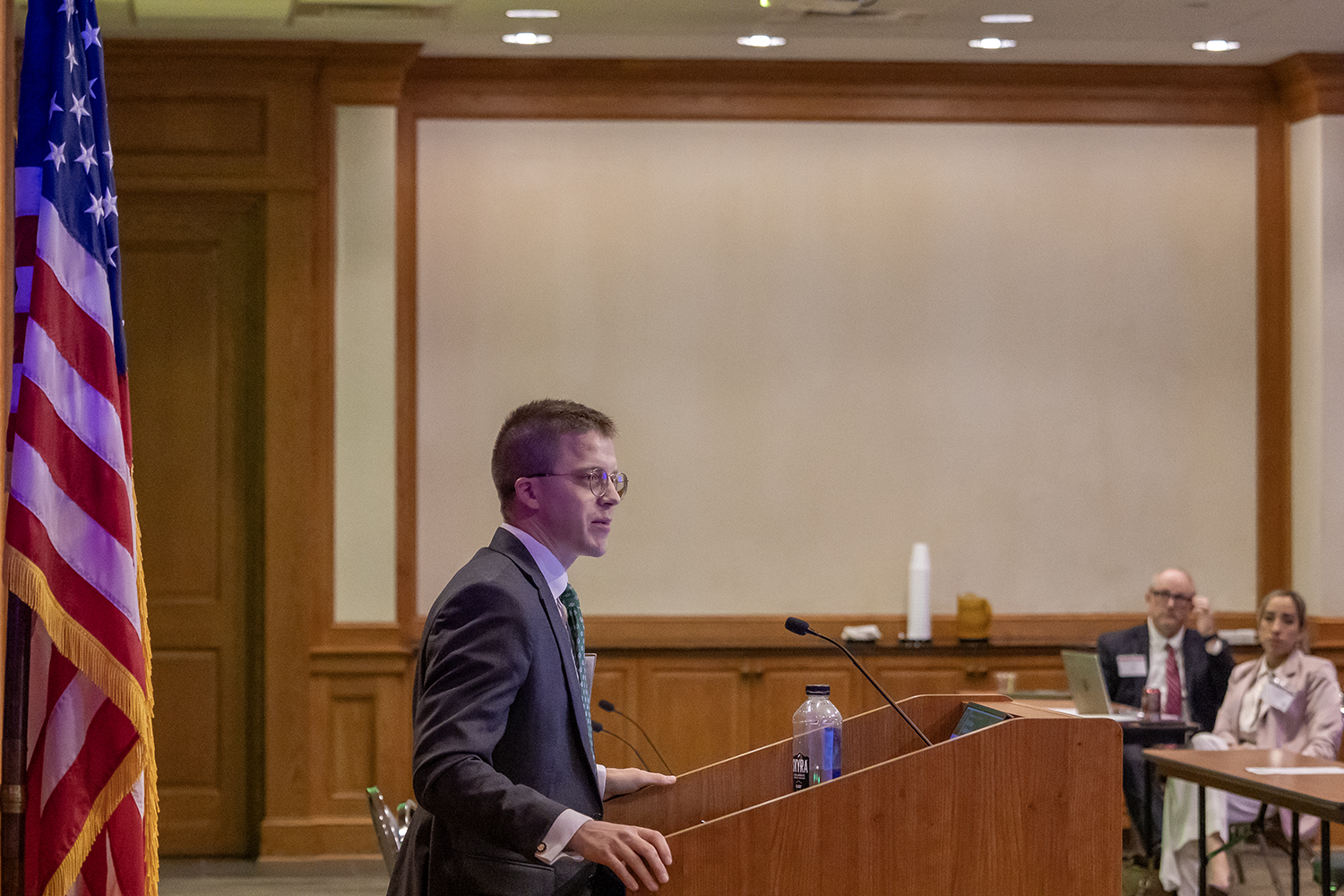
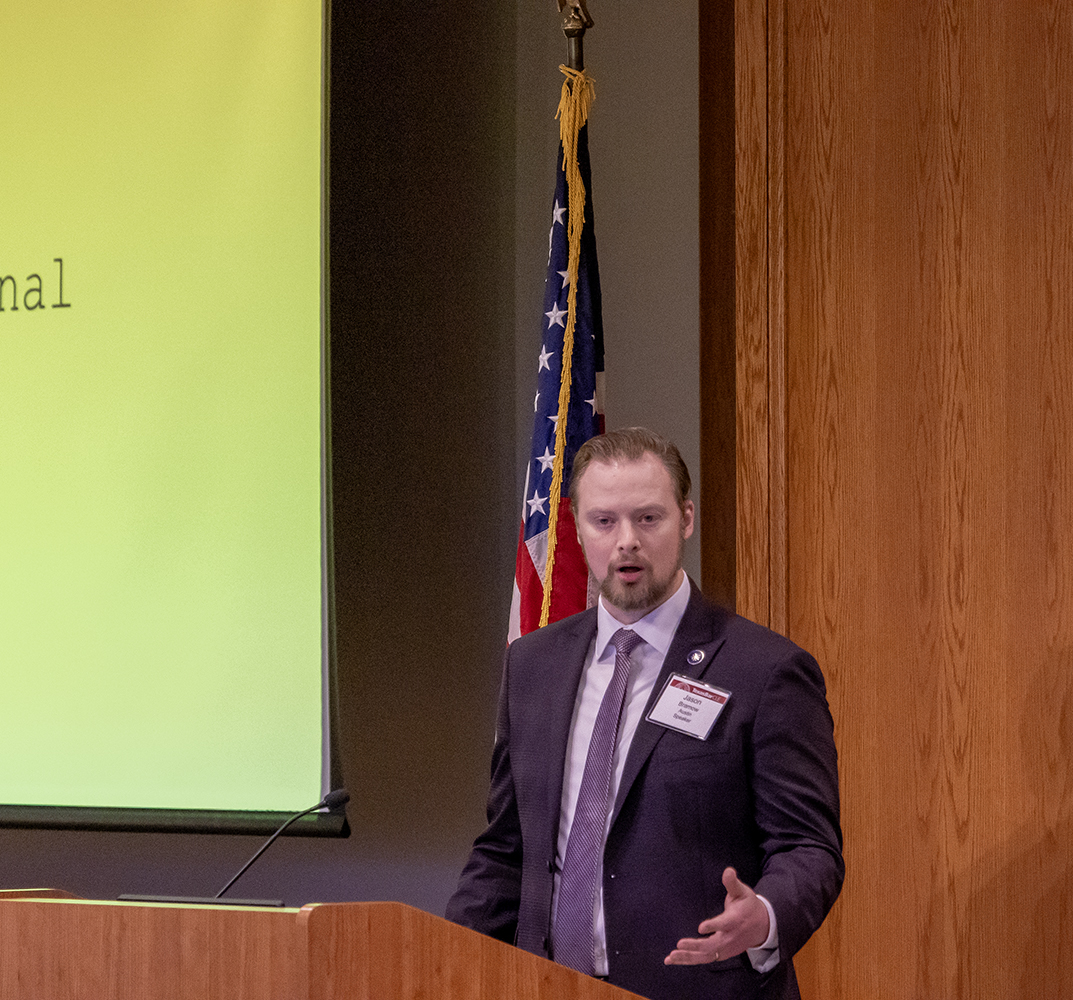
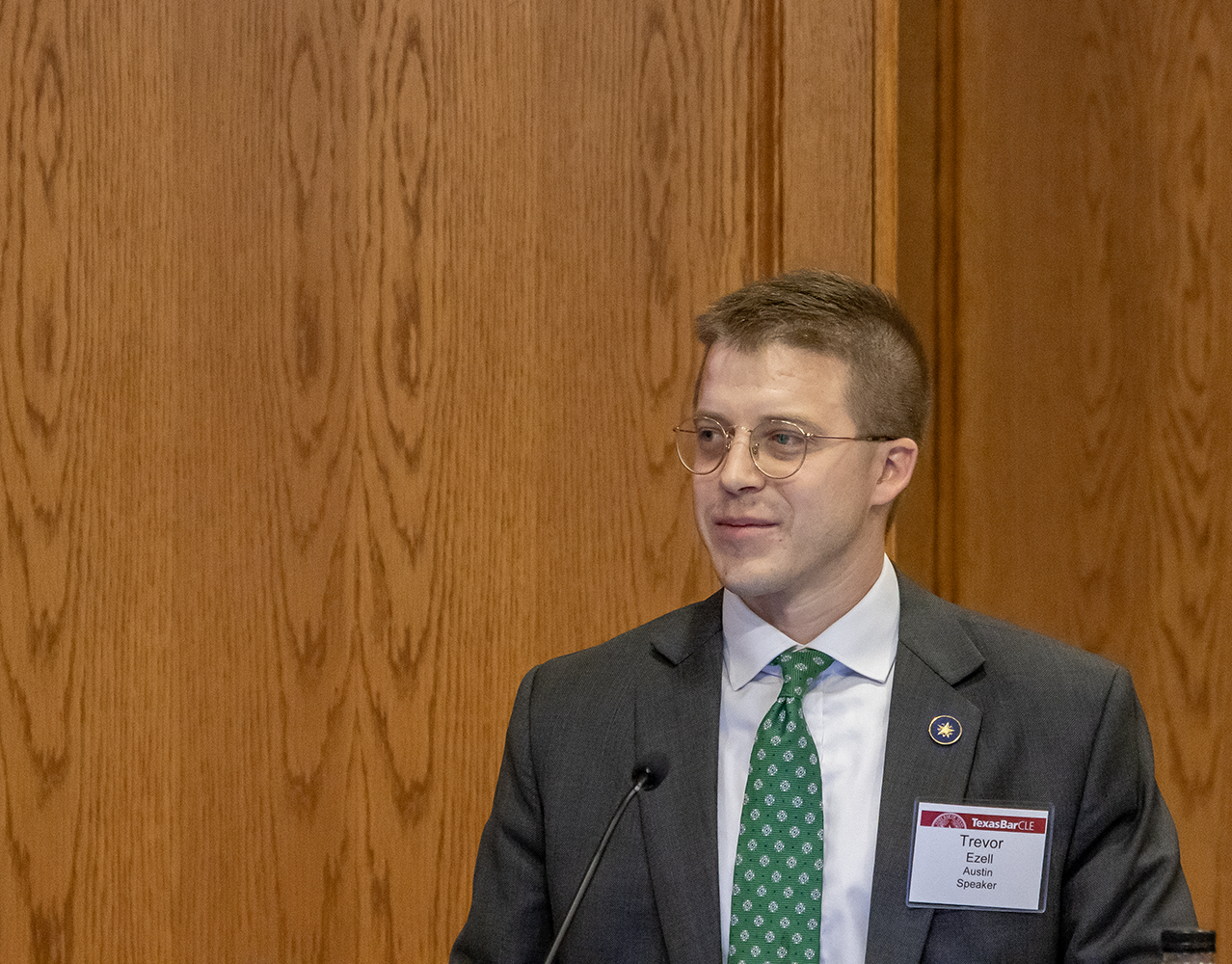
We were also privileged to hear from two members of the Governor’s Staff, including Jason Bramow and Trevor Ezell, the latter of whom gave the Gregory Coleman Federalism lecture.
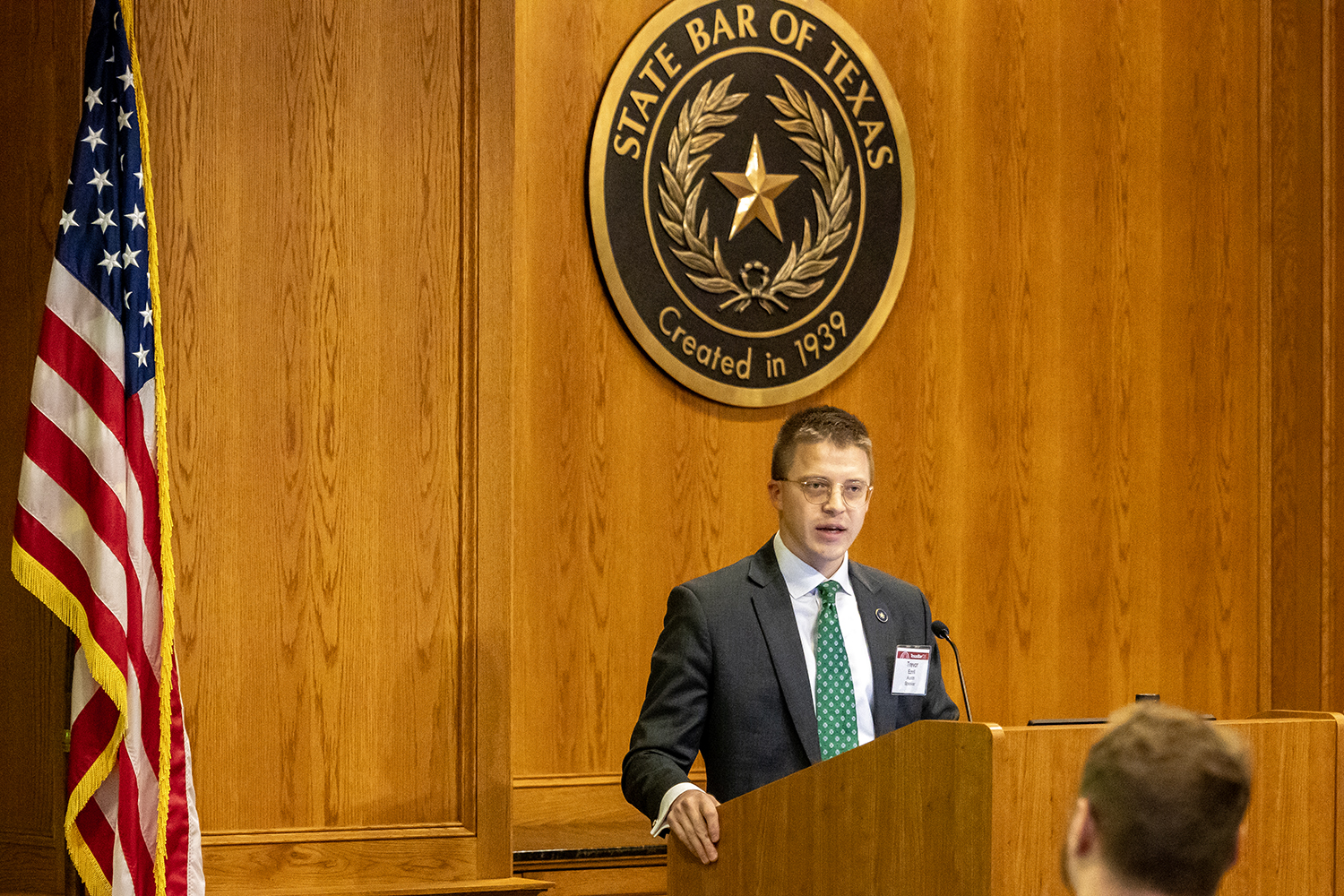
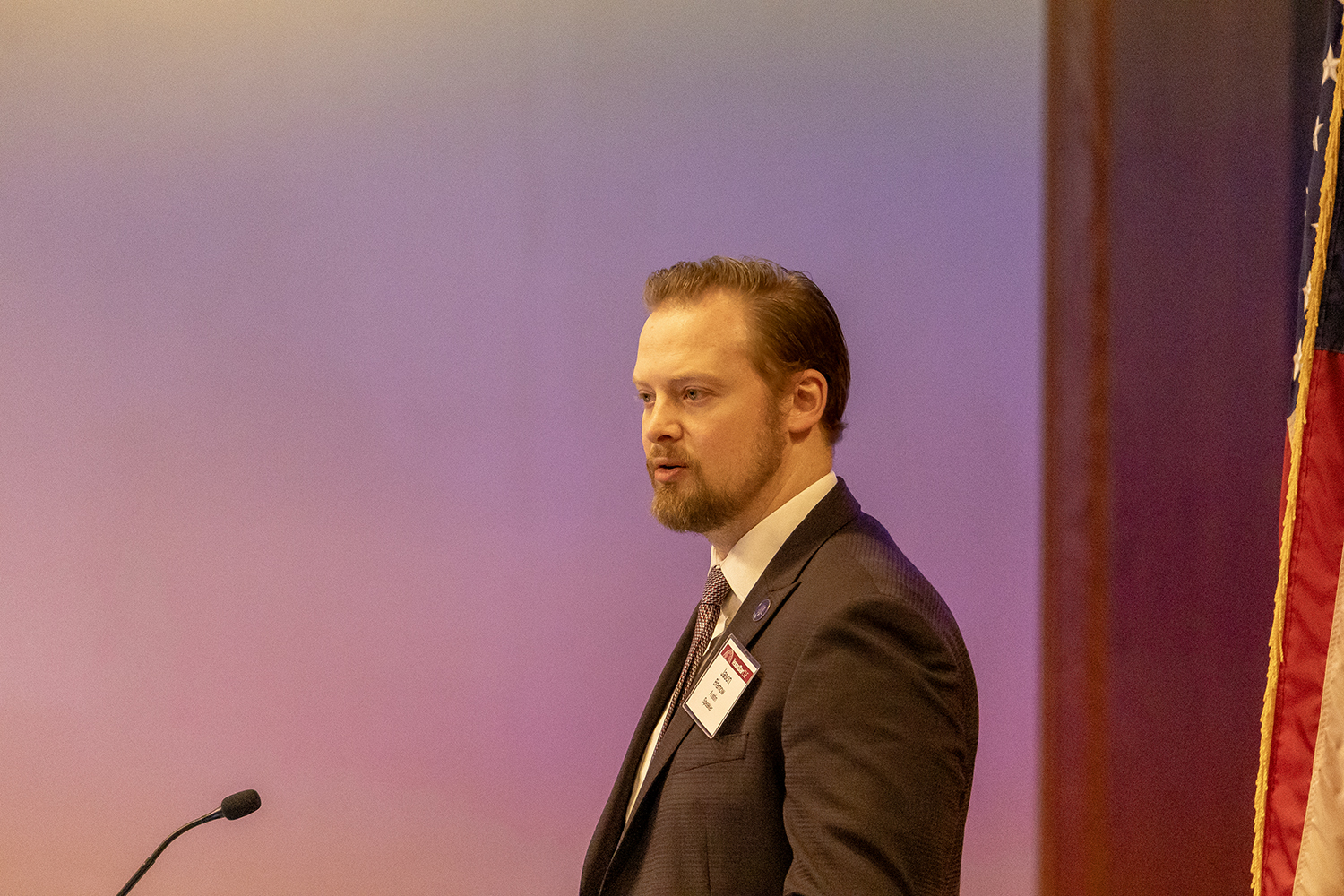
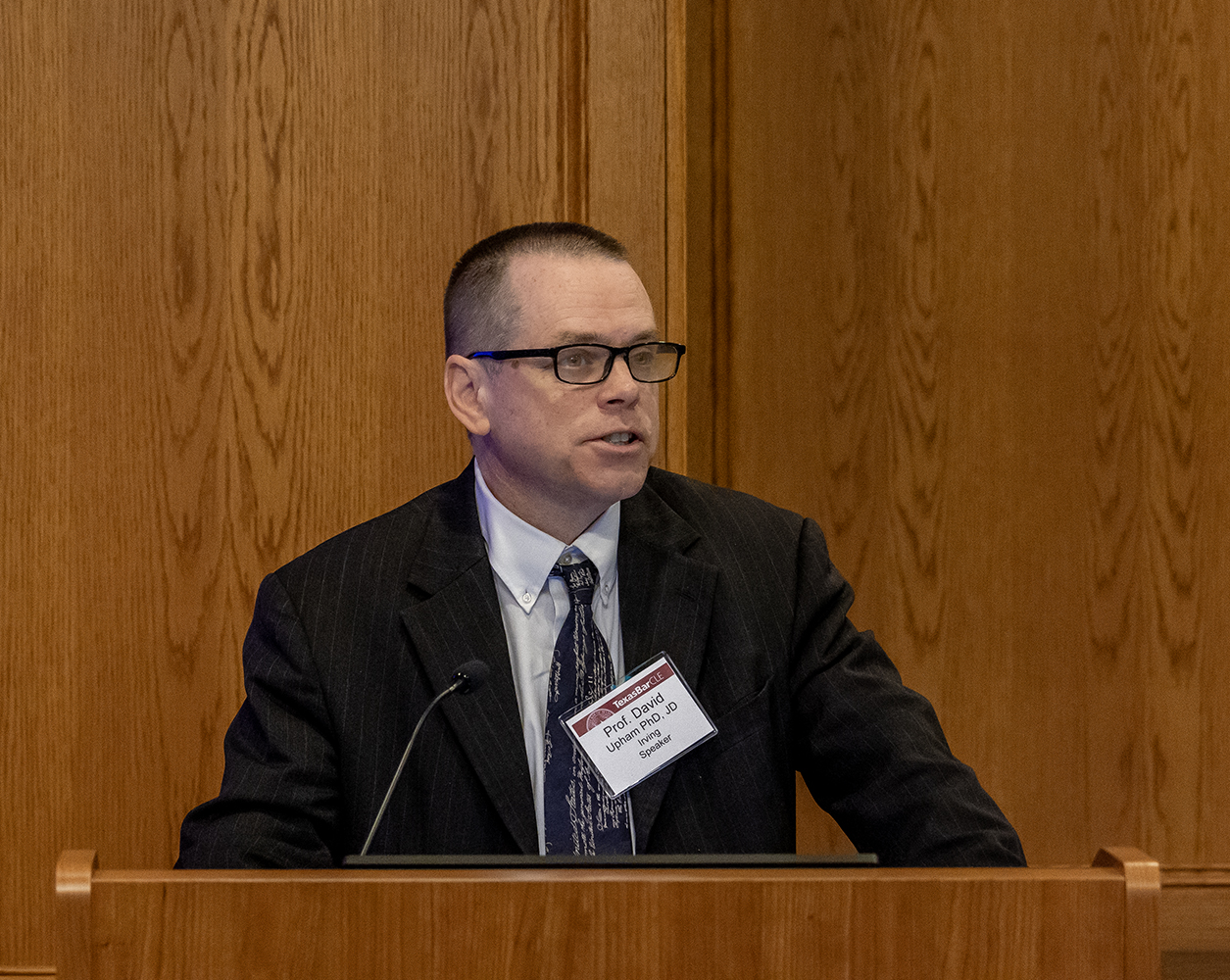
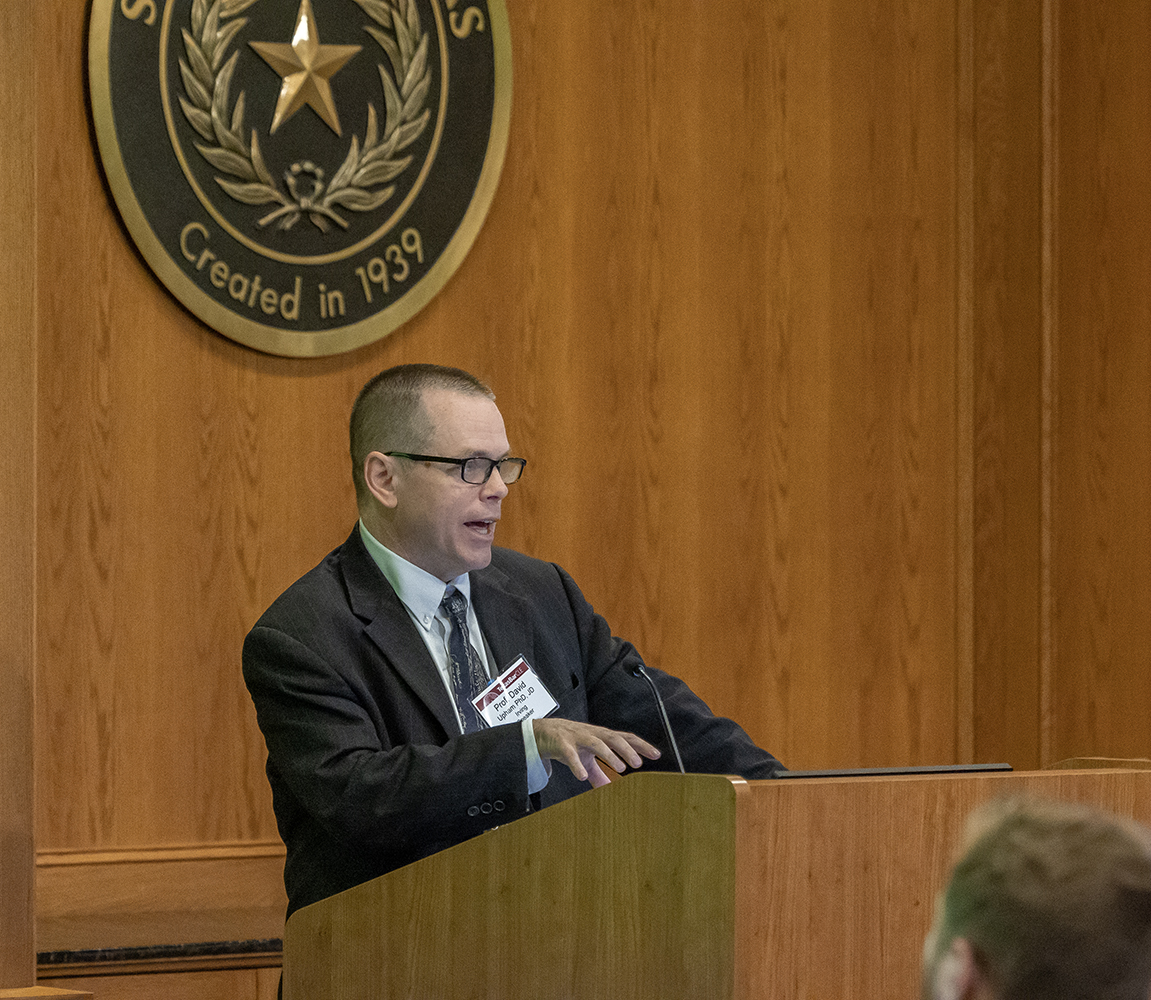
We also heard from Judge Farris, as well as two scholarly presentations by law professors on constitutional enumeration and originalism.
Concluding Thoughts
This was a unique way for us to supplement our constitutional law classroom experience, with presentations by practicing attorneys. That we were able to glean so much information in only one day speaks well of the presenters and organizers.
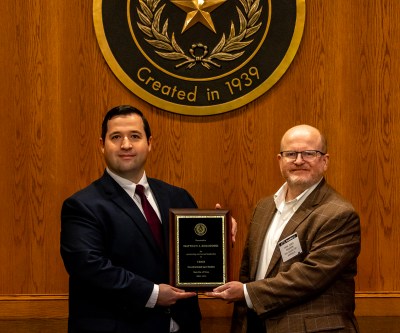
We were very grateful to attend this event, and the outgoing and incoming Presidents (Matthew Kolodoski and Judge Rossini, respectively) were very welcoming, even when they learned we were undergraduates.