Skip to content

Center for Law, Engagement, and Politics

Leap At SHSU!

  • About LEAP
  • LEAP Ambassadors
Center for Law, Engagement, and Politics

Tag: The Greenbrier

A Roaring State Dinner

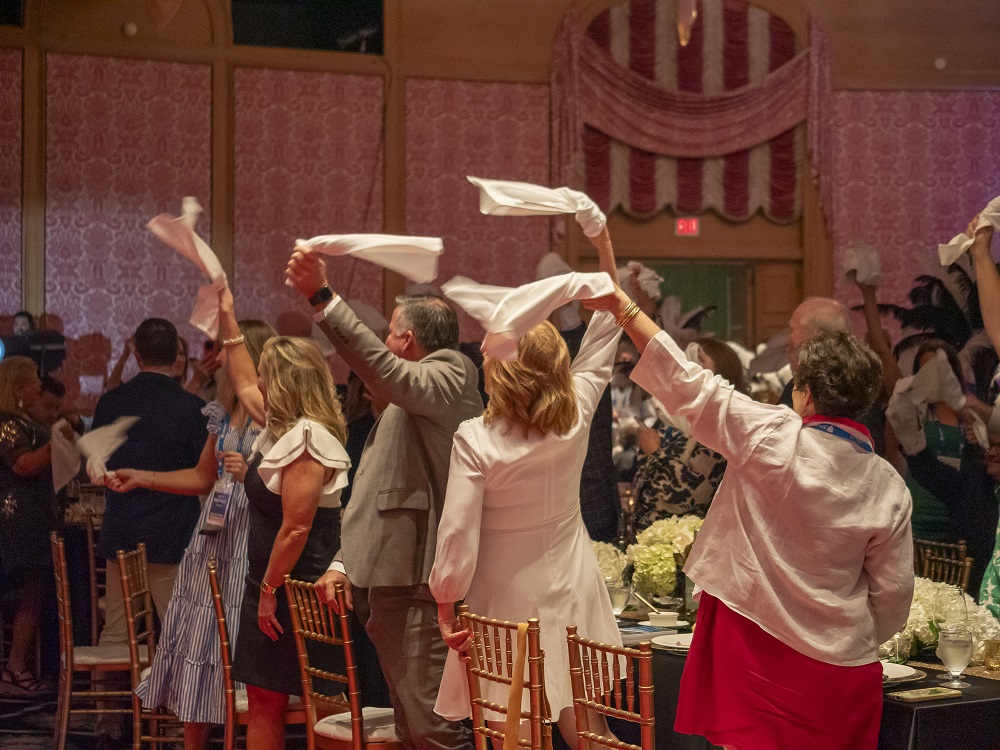
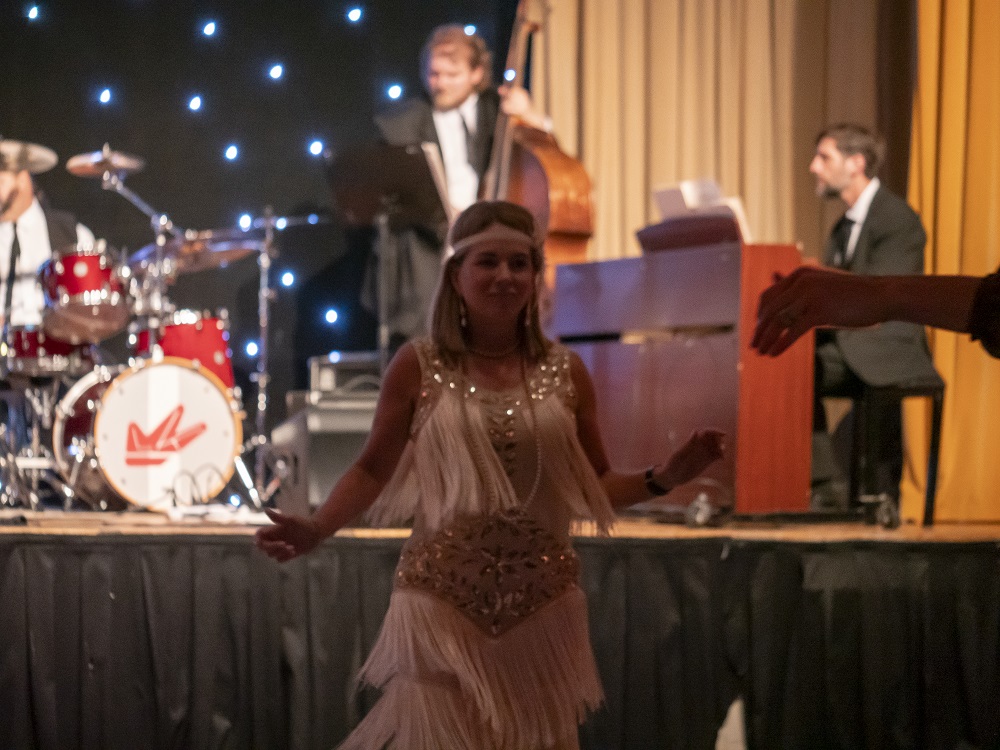
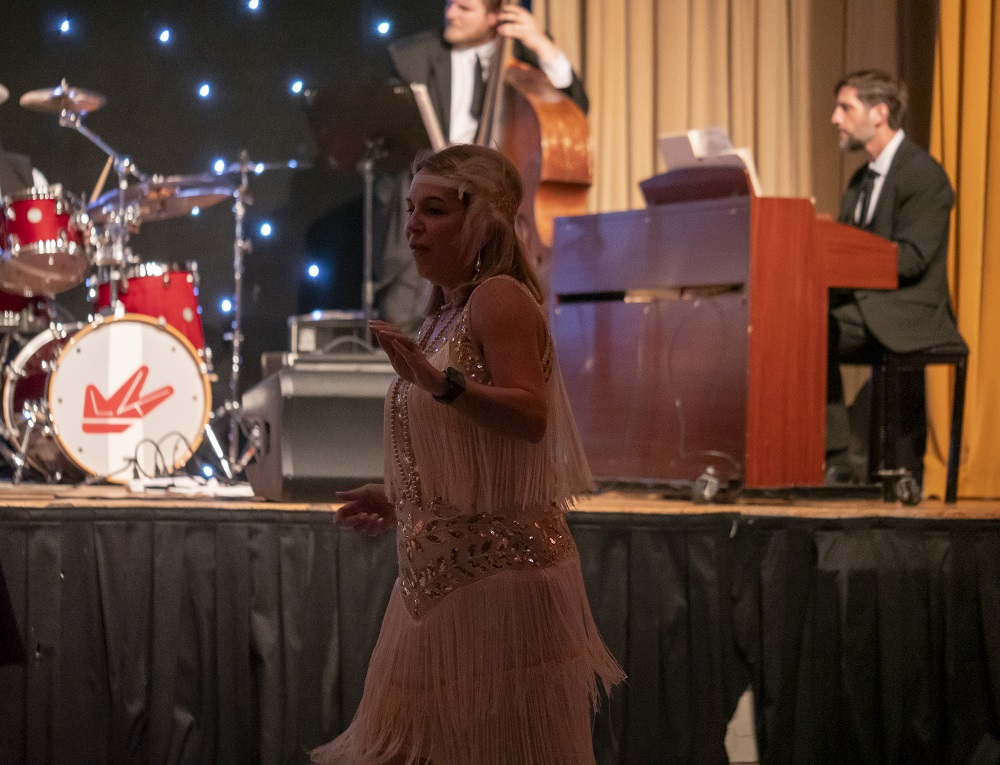
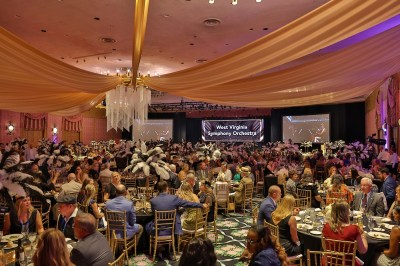
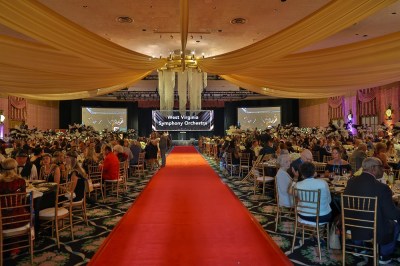
For our last night at the Greenbrier, we stepped back in time to the roaring 1920s for an unforgettable State Dinner. From the moment we walked in, the atmosphere transported us straight into the vibrant spirit of the Jazz Age. Most guests embraced the theme wholeheartedly, arriving in flapper dresses, tailored suits, and dapper accessories. We, of course, could not let this opportunity pass and decided to go all out.

The venue itself was transformed into a scene straight out of a classic 1920s party. At the heart of the room hung a dazzling disco ball that casted playful reflections across the venue. The tables were adorned with centerpieces featuring cascading feathers, capturing the essence of the era. We were all highly impressed of the attention to detail in the decorations as it was nothing short of spectacular.
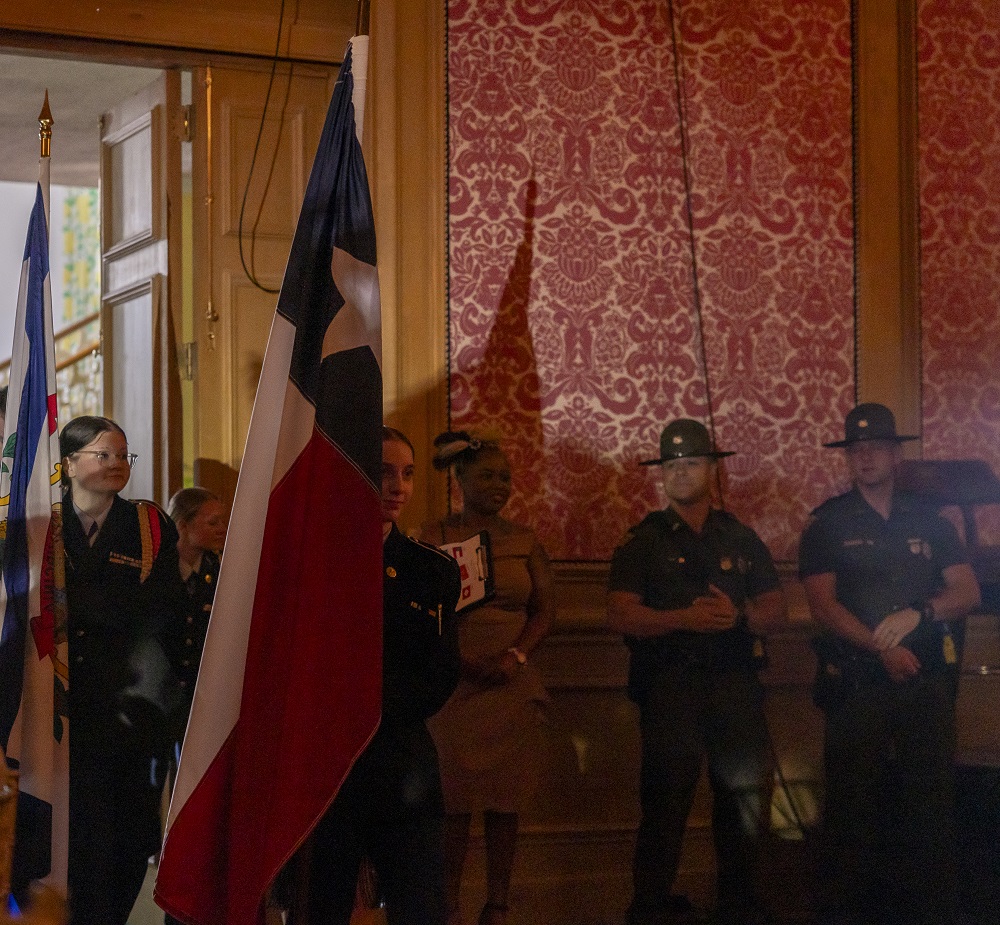
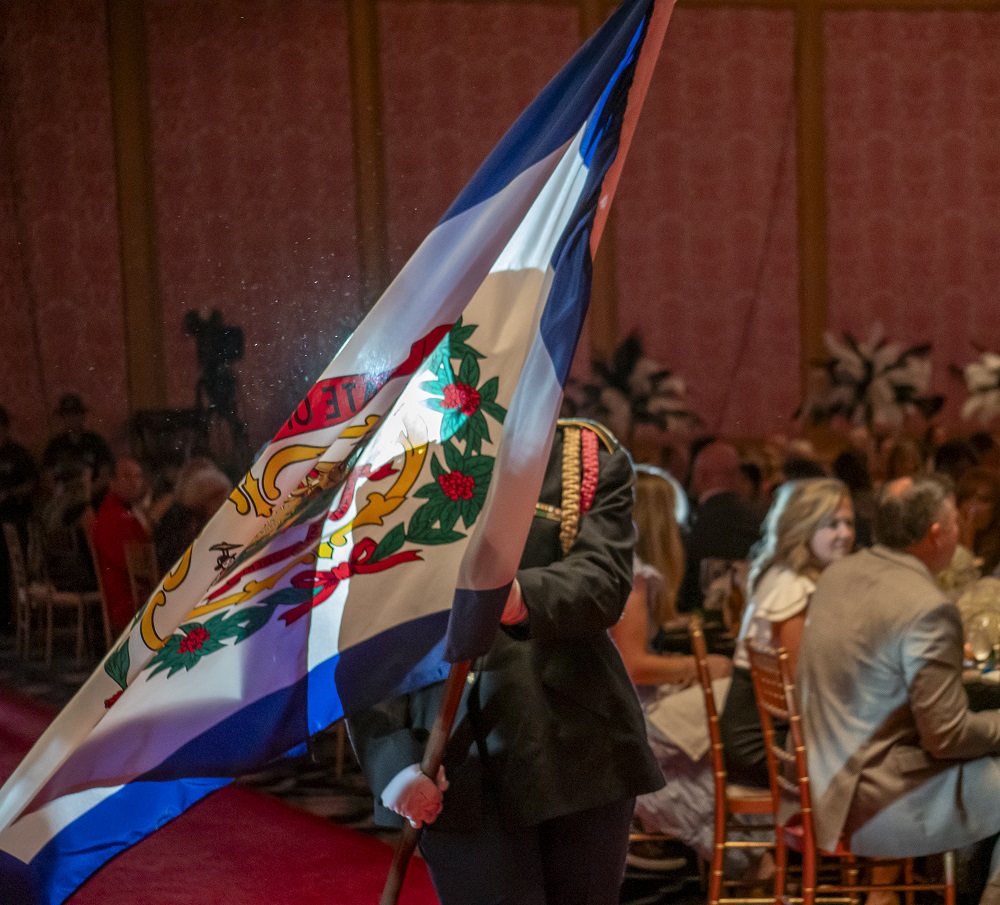
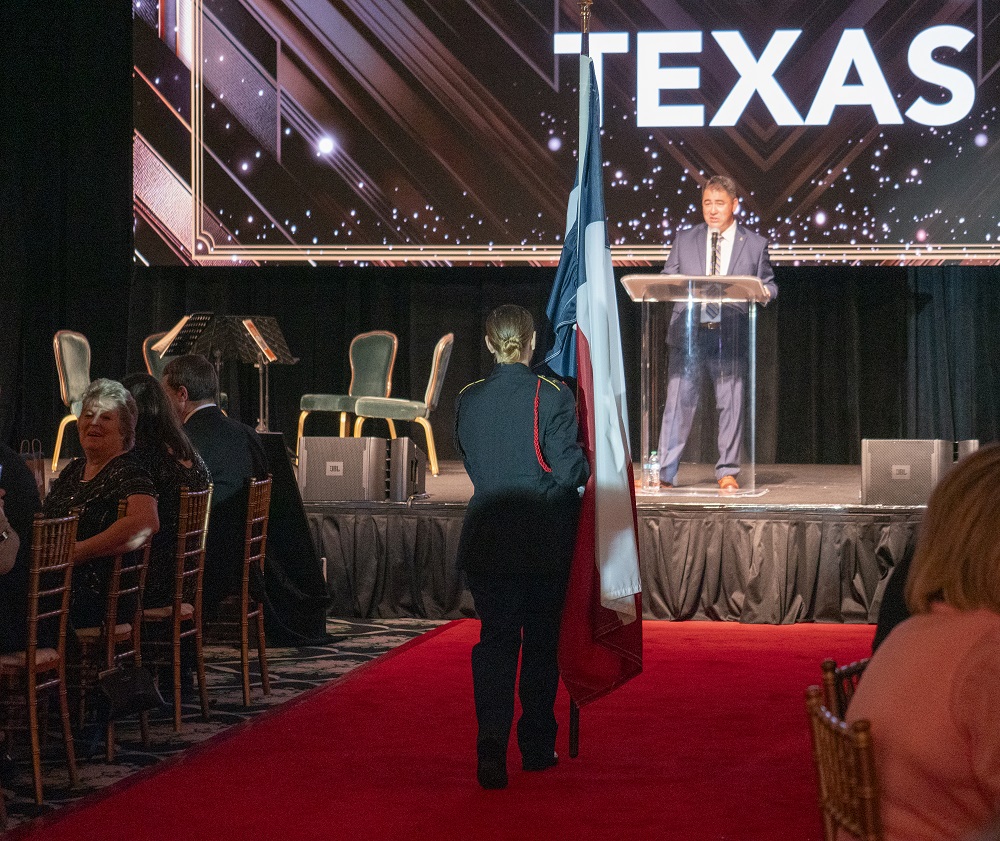
One of the evening’s standout moments was the grand presentation of the state flags, representing each southern state. The Greenbrier High School ROTC marched each of the 15 flags to the stage, accompanied by their respective songs.

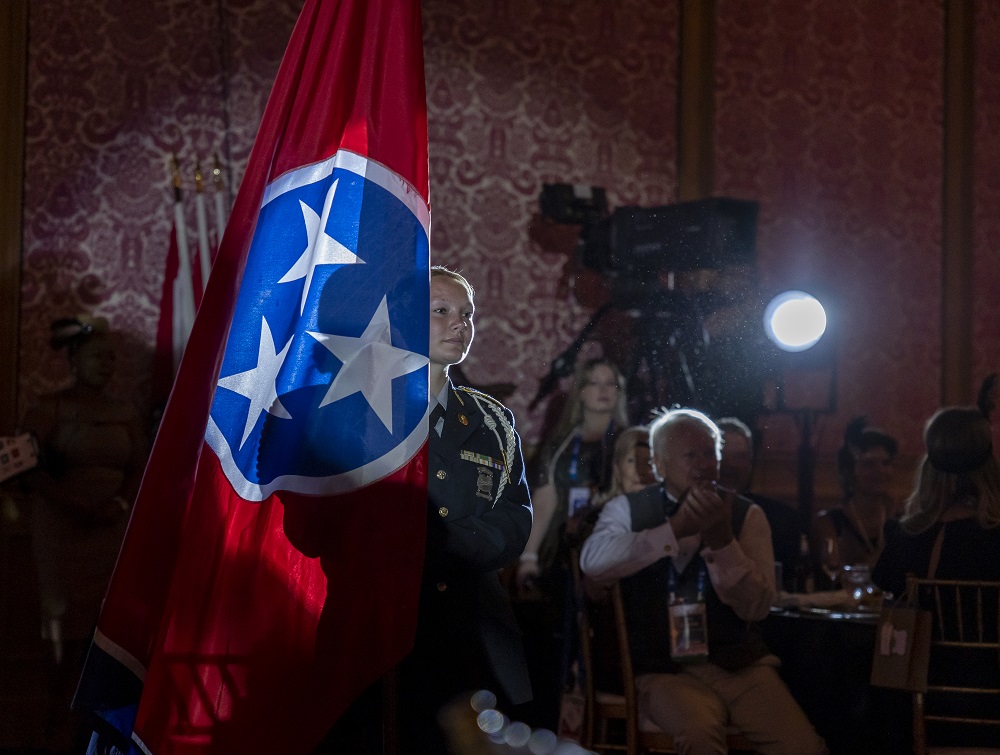
The crowd’s enthusiasm was palpable, with cheers and applause resonating throughout the room as each flag made its way across the room.
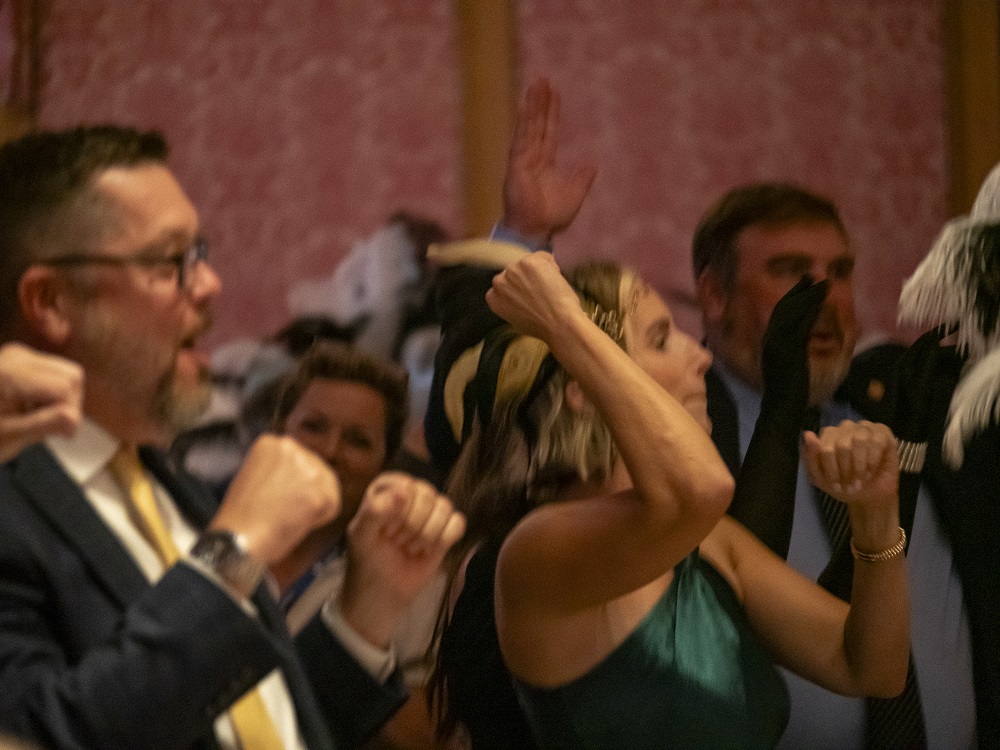
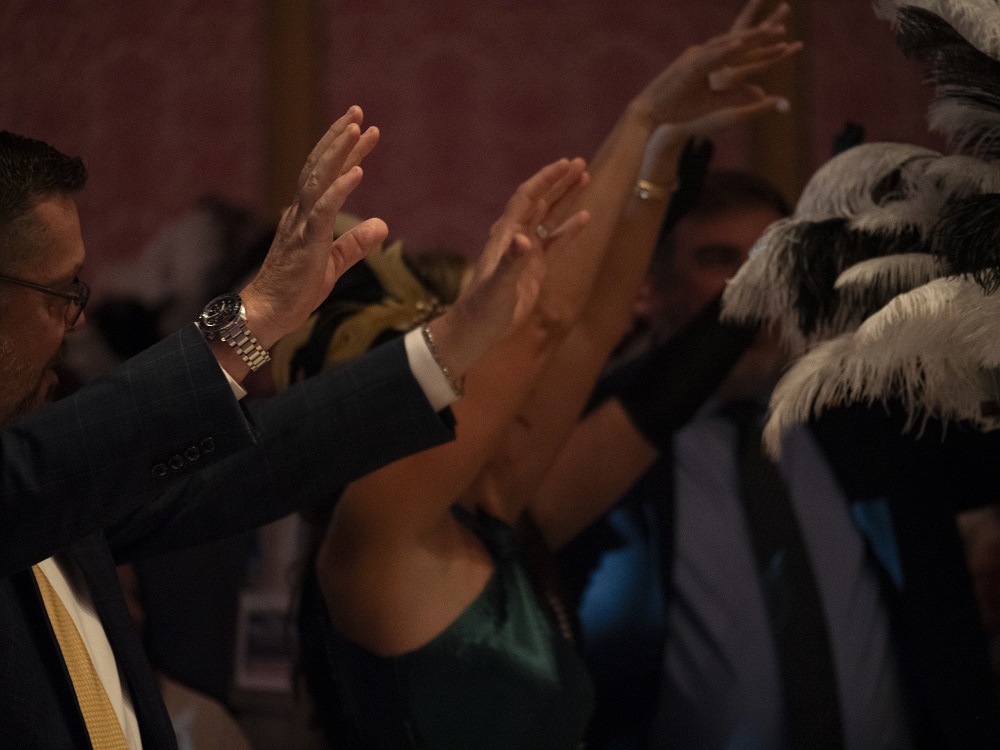
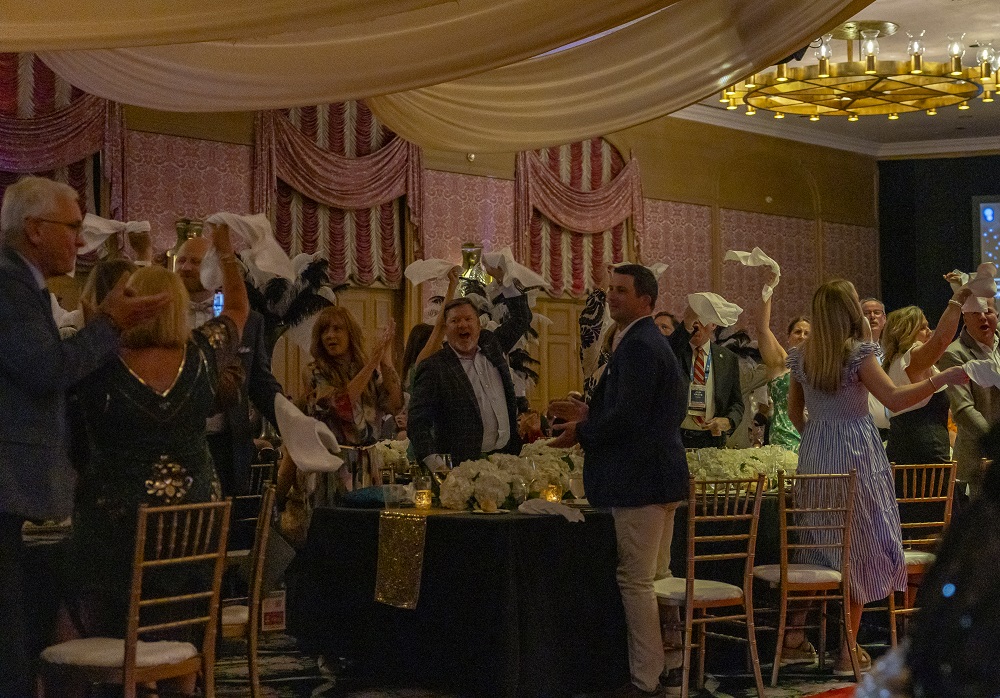
As dinner was served, we were presented with a mix of greens with feta cheese and a slice of pear. As for our entrees, meticulously place mashed potatoes adorned the plate next to a sirloin cooked to perfection on top of a handful of asparagus. While we ate, the West Virginia Symphony serenaded the guests with the sounds of beautiful music…
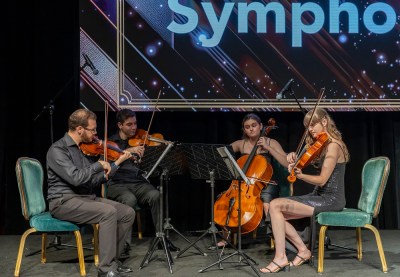
…before giving way to an awards ceremony emceed by West Virginia’s very own Senate President, Craig Blair.

The Carter Hellard Award, which recognizes dedicated staff members across the southern states, was awarded to Thomas L. Tyler, Sr, who has devoted decades of his life to serve the Louisiana Senate.

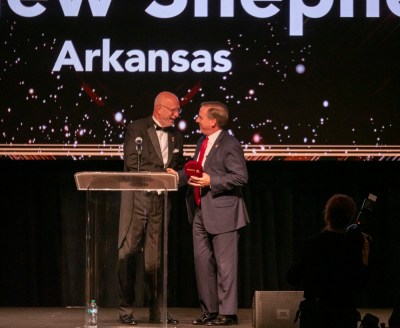
Arkansas’s Speaker of the House, Matthew J. Shepherd was also recognized as he received the Thomas B. Murphy Legacy Award, which is presented to a Southern state legislator who has dutifully served their people throughout the year.
The State Transformation in Action Recognition (STAR) celebrates innovation and creativity by recognizing programs that offer transferable solutions to state governments. The North Carolina Department of Public Instruction won the award by presenting its Elementary and Secondary Schools Emergency Relief (ESSER) Funding Cliff Toolkit.

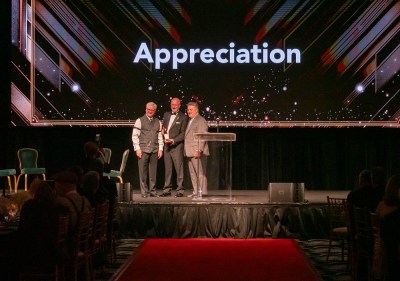
President Blair ended the night by thanking the Council of State Governments Southern team, specifically Director Lindsey Gray. He acknowledged their exceptional dedication and tireless efforts throughout the conference and noted how their commitment played a crucial role in the conference’s success. And, of course, Senator Blair was given an award for his leadership over the past year.

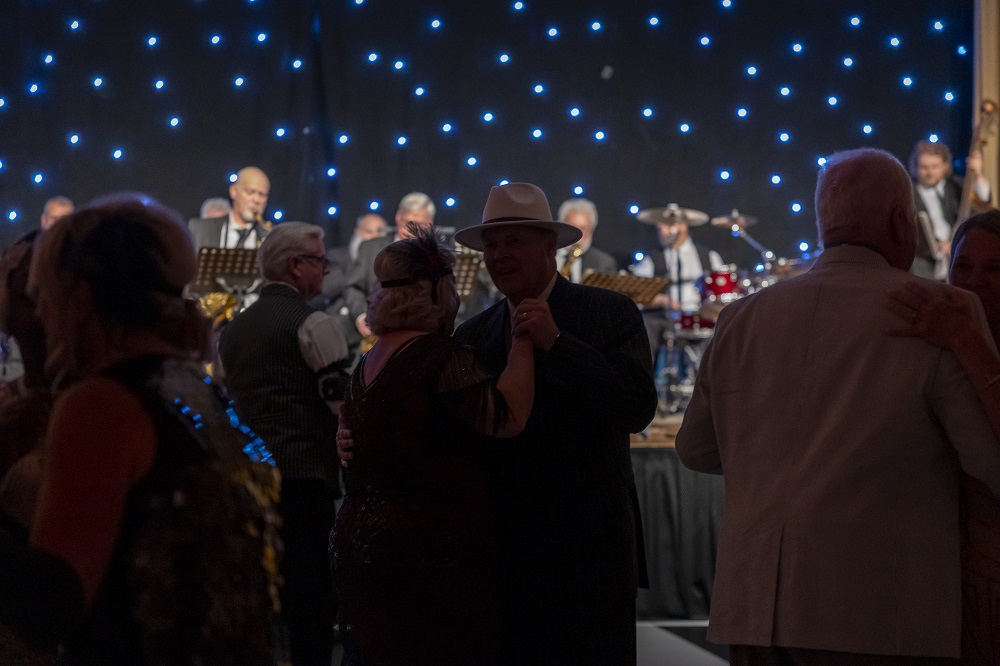
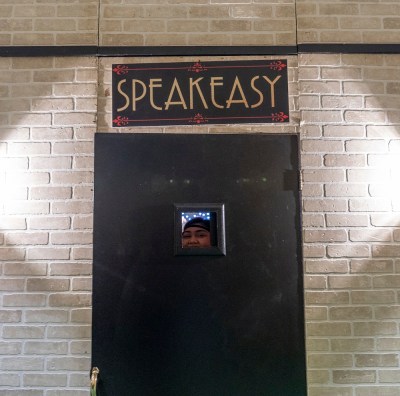
After the awards, the evening continued at the “speakeasy,” where the atmosphere shifted to an intimate jazz lounge.
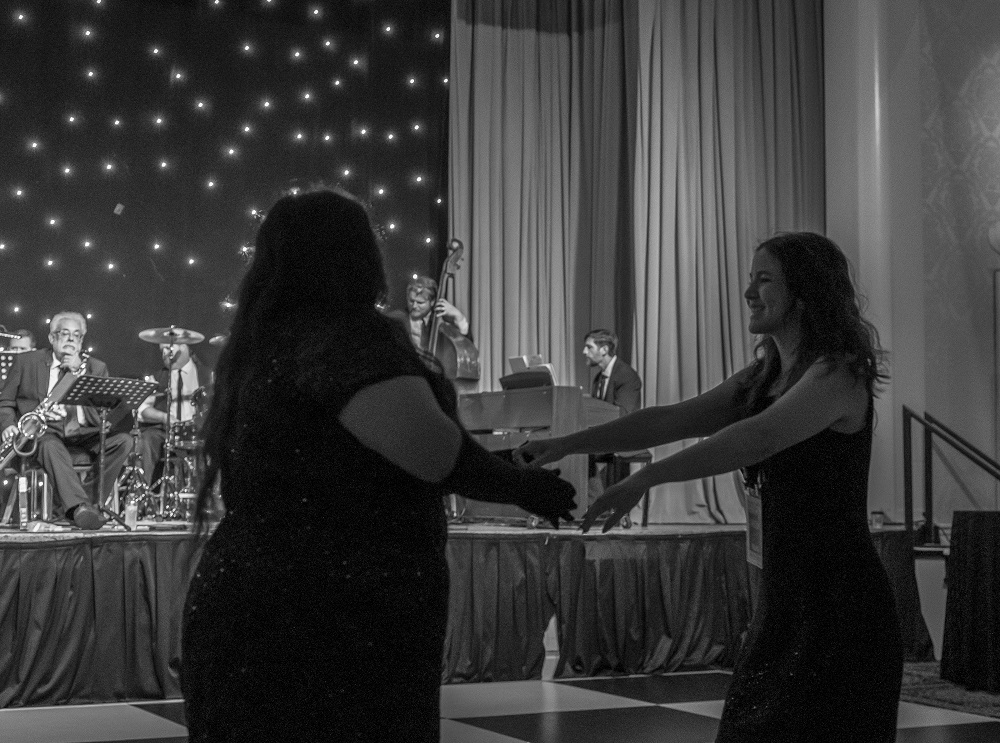
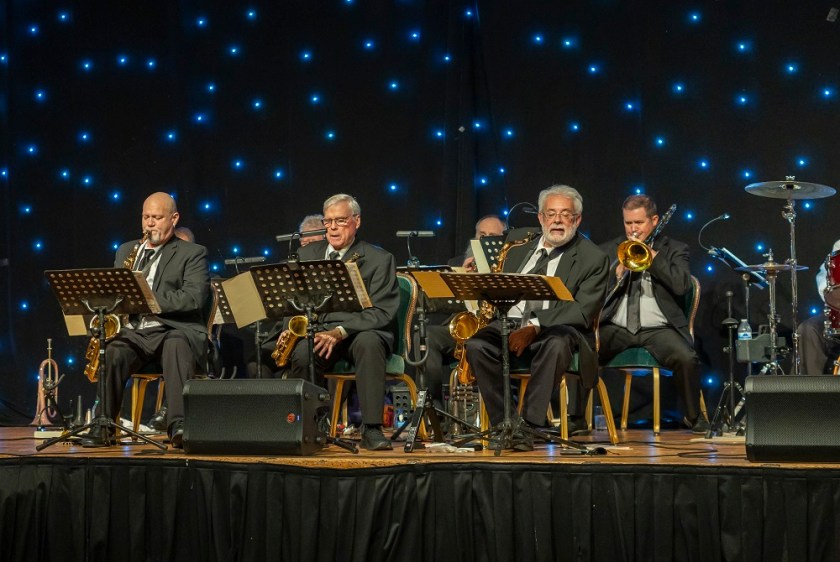
A live jazz band performed, their smooth melodies filling the room with the soulful sounds of the 1920s.
Couples took to the dance floor, gracefully moving to the rhythms of the era, creating an enchanting and entertaining atmosphere.
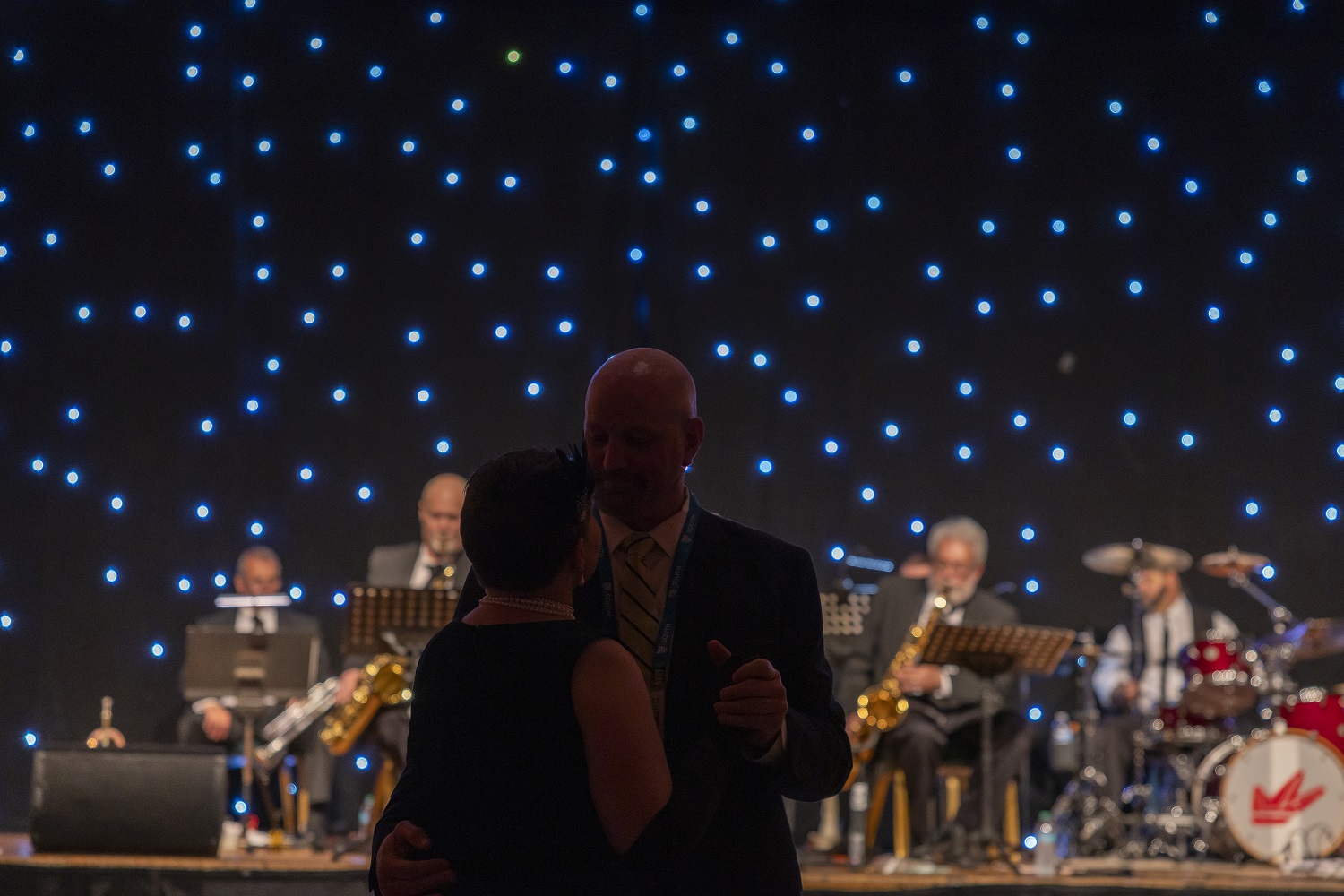
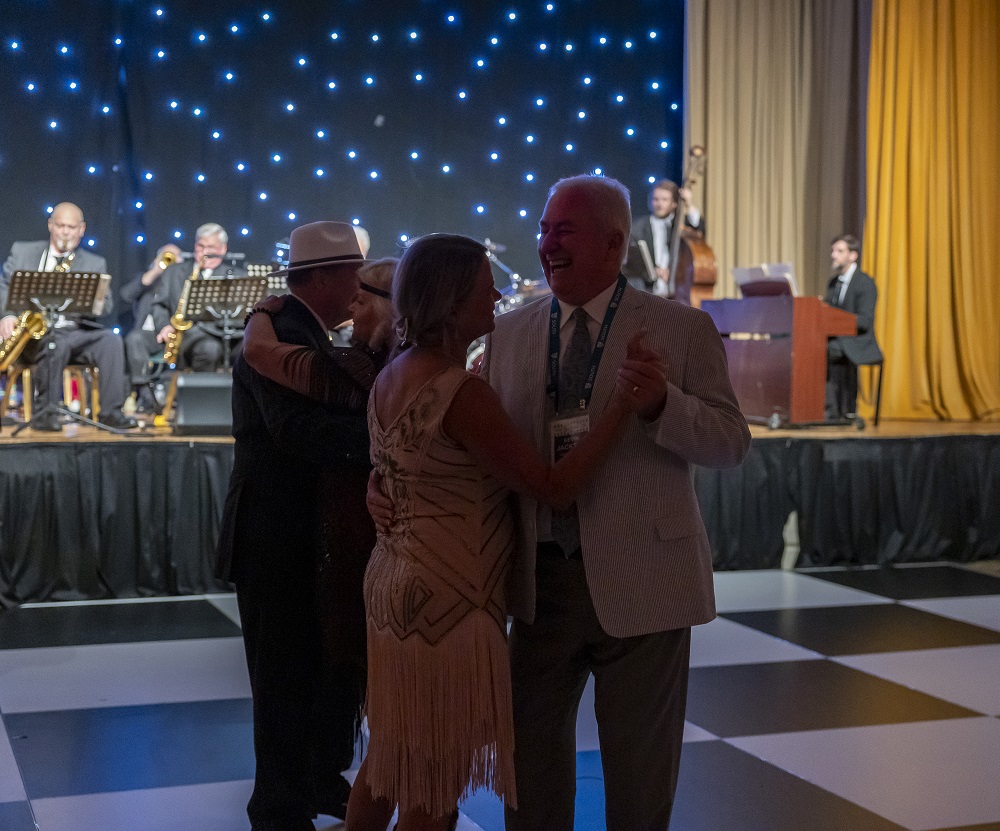
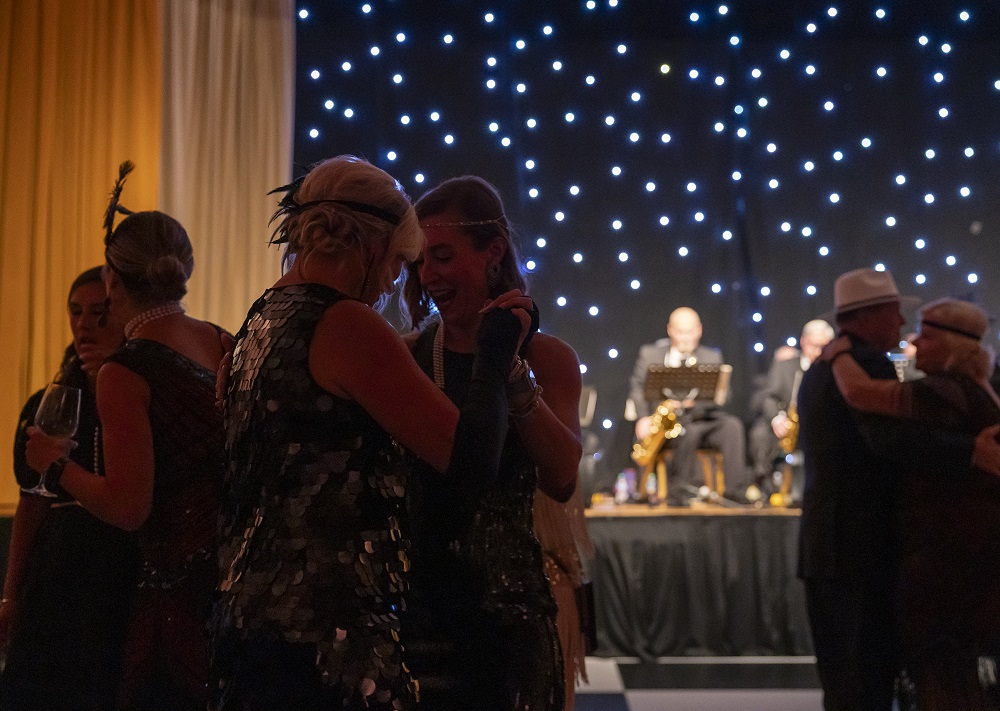
Michelle and I joined in, stepping onto the captivating jazz tunes. It was a delightful way to end the night and our visit to the Greenbrier.

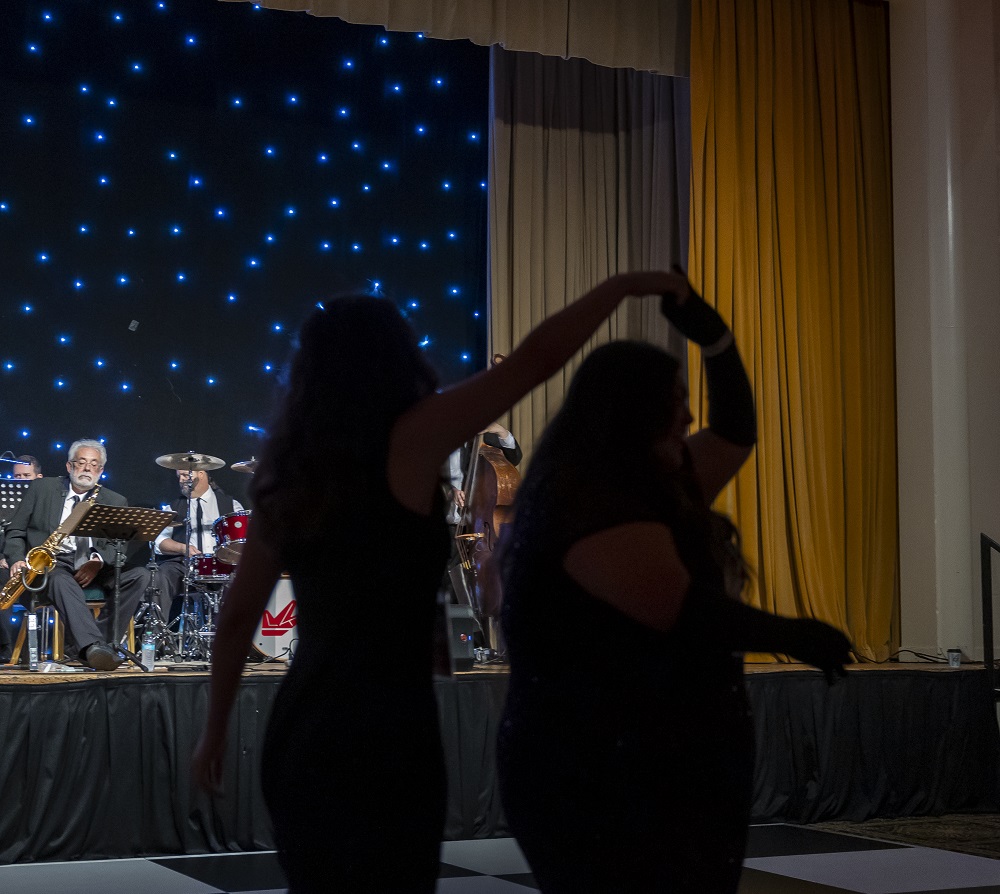
The fantastic blend of retro charm and joyous celebration gave an experience that made us feel like we were truly living in the Roaring Twenties.
Unknown's avatarAuthor mikeyawnPosted on August 12, 2024Format AsideCategories Art, Civic Engagement, PoliticsTags Center for Law Engagement And Politics, LEAP Ambassadors, Sam Houston State University, Southern Legislative Conference, The Greenbrier, West Virginia SymphonyLeave a comment on A Roaring State Dinner

Family Night at The Greenbrier: Interactive Activities and Local Experiences

Following an exploration of historic Lewisburg, WV, where we visited stores, investigated historic sites, and met with the Visitors Bureau staff…

…we changed into our conference clothes, readied ourselves for the beautiful Greenbrier, and prepared ourselves for a different type of learning.

The Rest is History: Historic Preservation Tax Credits and Economic Development

by Chrissy Biello

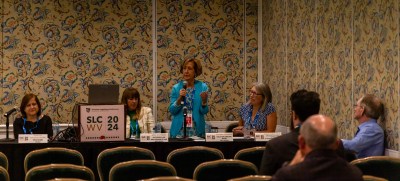
Our favorite session was titled Historic Preservation Tax Credits and Economic Development, an appropriate topic inasmuch as three of us had completed internships with the Economic Development Department for the City of Huntsville. For this session, The speakers included Eric Nelson, a West Virginia State Senator; Danielle Waltz, Partner at Dinsmore & Shol LLP; and Shaw Sprague, VP of Government Relations at the National Trust for Historic Preservation.

The speakers provided a comprehensive overview of the federal Historic Tax Credit (HTC) program. Initiated in 1978 with a 10% credit and made permanent in 1986, the program now offers a 20% credit based on qualified expenditures. This federal credit is available only for commercial properties and is distributed over five years at a rate of 4% annually. This detailed explanation was enlightening, as it clarified how federal policies are structured to support long-term preservation efforts.

They further discussed how transferable credits can significantly impact financing for preservation projects. Transferable credits are valuable because they allow property owners with limited tax liability to sell their credits to other taxpayers, thereby facilitating the financing of historic renovations. This concept is crucial for cities seeking to revitalize older areas without relying solely on their own financial resources.

The speakers also covered how states can optimize various tax sources to support these programs. For instance, Texas, which lacks an income tax, leverages business or insurance taxes to fund preservation efforts. This strategy was particularly interesting to me because it showcases how states can creatively utilize available resources to achieve their preservation goals.

An illustrative example from West Virginia was the Wesbanco Building, a 17-story office building built in 1972. Despite its initial drawbacks, such as not having a sprinkler system and being abandoned, a developer acquired it for only $5 million and utilized HTCs to renovate the property! This truly demonstrates how historic tax credits can transform underperforming assets into valuable community resources.

Another example shared was from Fayetteville, West Virginia, where old schools are being repurposed into community assets. Ms. Waltz explained how an elementary school is being converted into a 20-24 unit apartment building, with additional townhomes planned. This project, supported by HTCs, has created 30 construction jobs and will provide 25 permanent jobs upon completion. 

The speakers effectively offered a new perspective (to us) on the complexities and benefits of preserving historic buildings and towns, making it another great session at the Southern Legislative Conference.

To make the experience even better, we had the opportunity to speak with Senator Nelson and Mr. Sprague following the event. Senator Nelson, showing the kind of constituent service that has helped him win reelection since 2010 in West Virginia, helped us with our plans in Charleston, WV for the following day.

Many thanks to all the speakers and, especially, Senator Eric Nelson.

Family Night for the LEAP Family

Following a day full of learning, we had an evening full of activities–some for everyone. We began by taking the scenic route to The Greenbrier, which involved going to the Herns Mill Covered Bridge, one of many such historic structures in West Virginia.

To divert ourselves for a bit, we sent Chrissy into the one-lane bridge. We figured if a car came from the other direction, we could see how fast Chrissy was capable of running in high heels. Just our luck, though, no car came through.

Consequently, we had to take her to The Greenbrier, where the SLC, in creating Family Night, had something on tap for everyone.

For Chrissy, we had smores.

Cinthia, meanwhile, summoned her inner Lizzie Borden, and she ventured into axe-throwing for the first time.

This proved to be a popular sport among the group, and Professor Yawn noted, with some concern, that we could be pretty accurate when motivated.

Olivia proved to be the marksman with a bow and arrow. She managed kill shots in two of the three targets, earning her the moniker, “Killer in High Heels.”

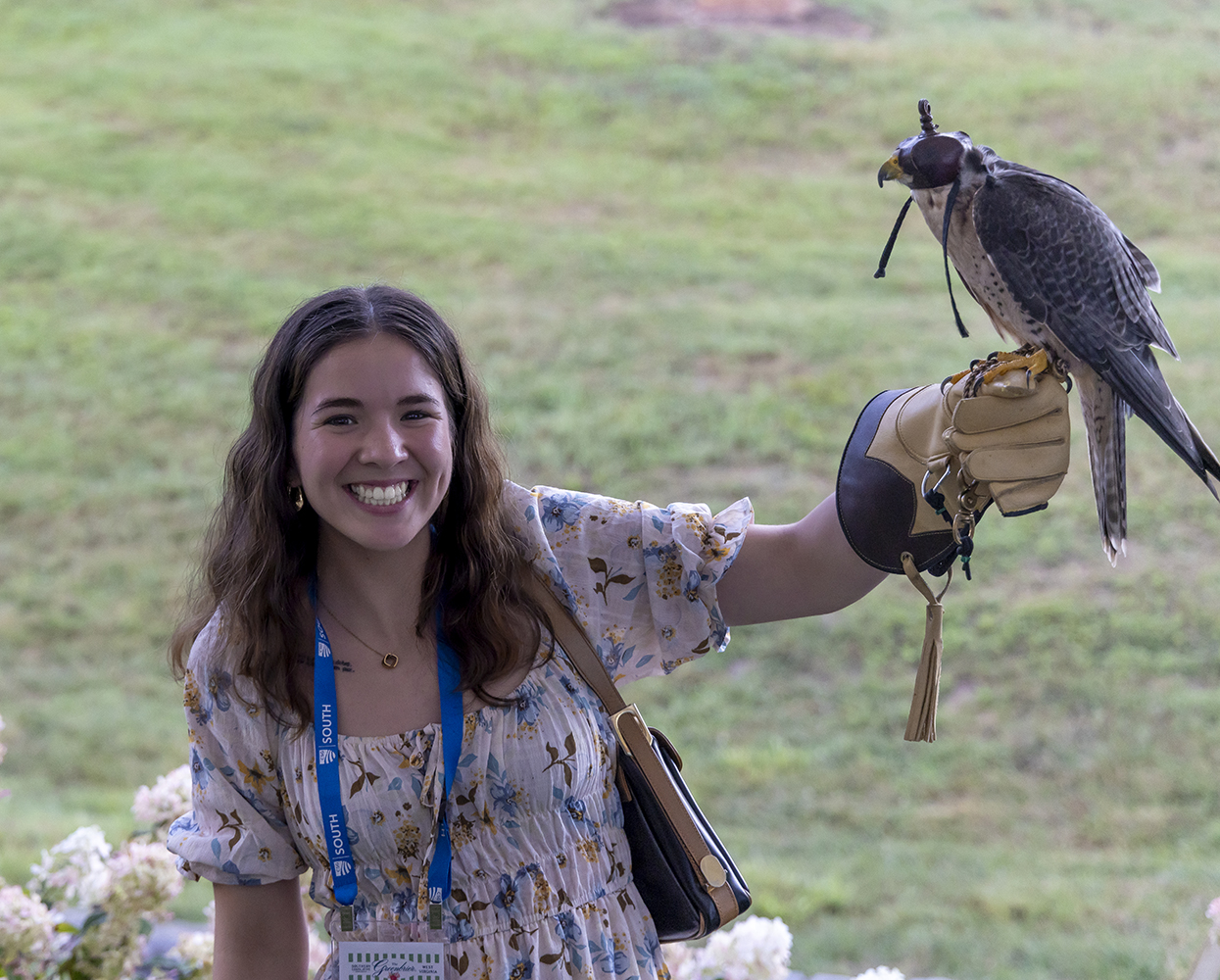
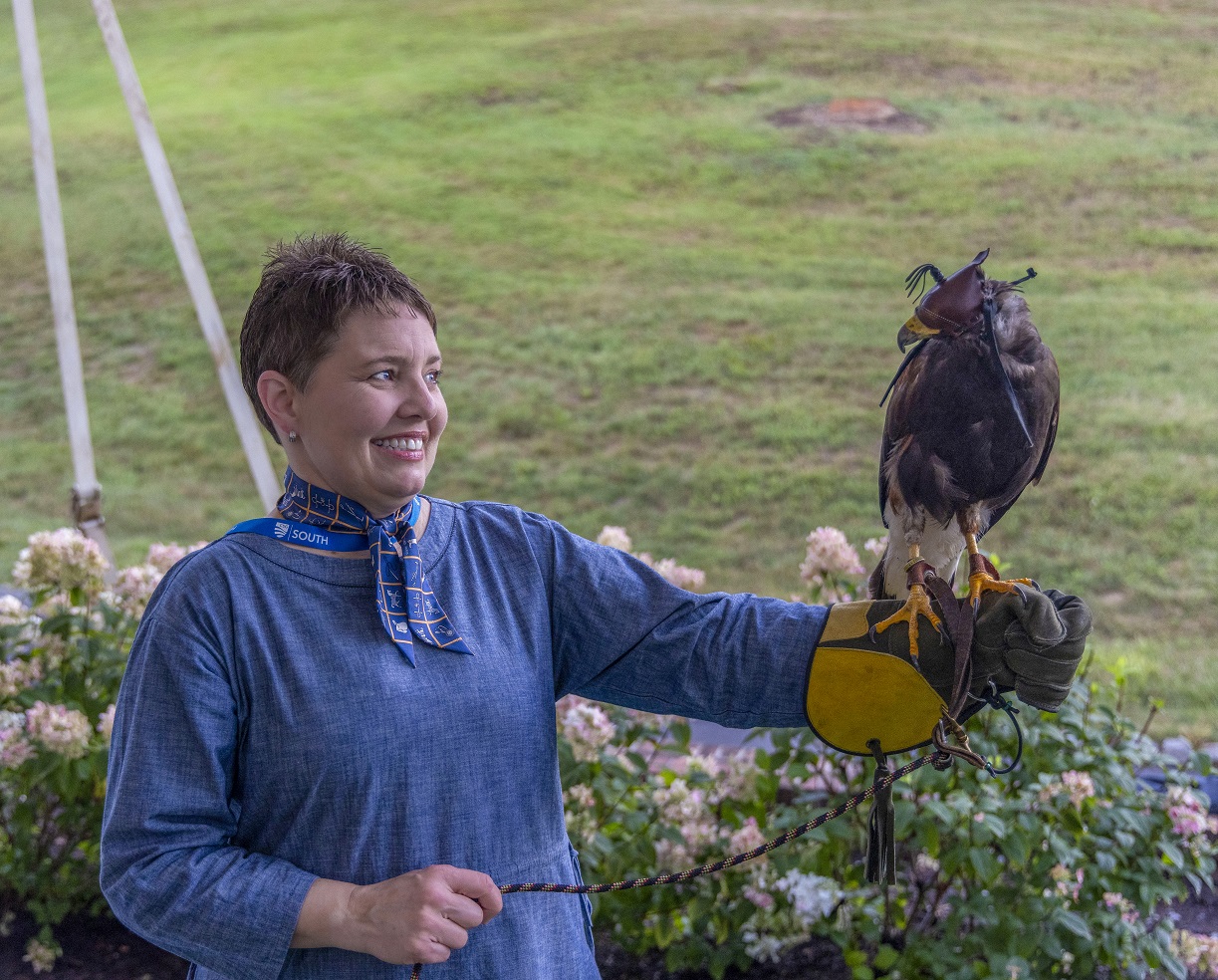
She displayed greater fear, however, when confronted with a live animal.

Michelle, on the other hand, was the Dr. Doolittle of the group…

…and the falconry proved popular, being the only activity every member of the group engaged in.

Cinthia, however, seemed to have the most fun with it.

When we weren’t fiddling around with animals or weapons, we took advantage of the opportunity to see expert fiddler and West Virginia native Philip Bowen, who has earned praise from NPR and other national media for his authentic sound and bow virtuosity.

And what would a Southern Legislative Conference be without hearing from a legislator? This year, we again heard from West Virginia Speaker Roger Hanshaw…

…who welcomed everyone to the conference, spoke of things to come, and helped us feel at home–in a very nice home.

And, reflecting on a day that saw us go to Carnegie Hall, rub shoulders with legislators, throw axes, serve as a perch to a falcon, shoot arrows, and enjoy smores, we headed back to our hotel (a Holiday Inn) to find some rest before another busy day.

Unknown's avatarAuthor mikeyawnPosted on August 4, 2024August 4, 2024Format AsideCategories Architecture, Civic Engagement, Fun, Outdoors, Photography, Politics, TravelTags Center for Law Engagement And Politics, LEAP Ambassadors, Philip Bowen, Sam Houston State University, Senator Eric Nelson, Speaker Roger Hanshaw, The GreenbrierLeave a comment on Family Night at The Greenbrier: Interactive Activities and Local Experiences

A Grand Welcome to West Virginia

After two days of learning on the road, we had another full day planned. Following our regular Sunday LSAT Prep Course class, we were returning to a more formal educational setting for our learning–and what a setting! Much of our activity today took place at The Greenbrier Resort, a home-away-from-home for celebrities, presidents, legislators, and….us!

The Greenbrier Resort

by Christina Biello

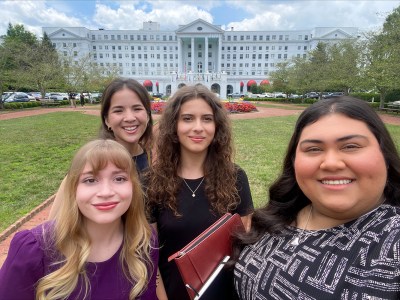
As with all our adventures, I did a little pre-experiential preparation, learning about the hotel’s rich history. The Greenbrier, which opened in 1778, served as a hospital for 24,000 soldiers needing surgery and rehabilitation during the Second World War. After the war, it underwent extensive renovations, resulting in the look it has today, one that has attracted the wealthy and powerful.

As we strolled along the pathways, the beauty of the property was evident in the flowers and greenery. Upon turning the corner, the sight of the expansive and luxurious resort took our breath away. While I had seen numerous photos beforehand and was tremendously excited, nothing could have prepared me for it in person.

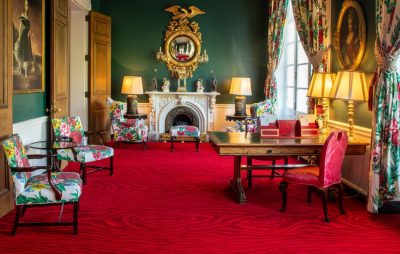
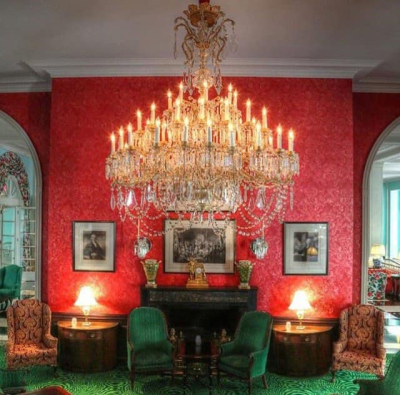
Upon entering the building, the first thing that caught my eye was the abundant and colorful (some might say “busy”) designs. From grand drapes to elaborate wallpaper and opulent chandeliers…

…the Greenbrier showcased meticulous attention to detail in its design.

Photo from The Greenbrier

Walking through the many rooms, we encountered works by artists such as Thomas Sully, Gilbert Stuart, and James Stuart. Cinthia and Olivia delighted in recognizing these artists whose works they admired.

We also stumbled upon a chandelier that was featured in Gone with the Wind. As a movie enthusiast, it was a thrill to see it up close and imagine stepping into Ashley Wilkes’ home.

Photo from The Greenbrier

Next, we proceeded to Drapers Restaurant for lunch, named after Dorothy Draper, whose distinctive decor transformed the Greenbrier in 1948 after the resort reopened. This style, which one website referred to as “anti-minimalist,” is known as “Hollywood Regency.”

Photo from The Greenbrier

Personally, I admire her style and could envision drawing inspiration from it for my own home one day.

The restaurant exuded her signature taste, with glamorous touches of pink that prompted us to point out various details to each other. A portrait of Ms. Draper was even on one of the walls.

Photo from The Greenbrier

During lunch, Olivia and I tried grits for the first time, and everyone savored the cherry vanilla milkshake. When my meal arrived, I was momentarily taken aback by its generous portion size and the elaborate dinnerware.

We did our best to finish our meals, but we were also cognizant of not overdoing it, not wanting to be in a food coma when our afternoon conference sessions took place.

Conference Session: Adapt and Survive: Artificial Intelligence in the Classroom

by Olivia Discon

Our first session of the conference offered a compelling exploration of how Artificial Intelligence (AI) and educational technology are shaping modern learning environments. As students directly impacted by the ever-changing world of AI, we were very intrigued to hear from those addressing these issues head-on.

The discussion highlighted a significant finding: studies show people are more likely to believe misinformation generated by AI compared to that created by humans. This requires ethical and responsible use of AI tools in education. The panelists emphasized that while AI can be a powerful educational resource, it should be utilized as a tool and not as a replacement for traditional teaching methods.

Amy Cyphert, Director of the ASPIRE Office at West Virginia University; Donna Hoylman Peduto, Executive Director of the West Virginia Public Education Collaborative; and Erika Klose, Ed.D., Director of PK-12 Academic Support at the West Virginia Department of Education, all contributed valuable insights on this topic.

A key focus of the session was the promotion of critical thinking in the classroom. The panelists stressed the importance of using AI as a “thought partner” to enhance students’ cognitive skills rather than to replace critical thinking. They advocated for fostering an environment where students are encouraged to question and analyze information, ensuring that technology serves as an aid rather than a crutch (this was a focus of a book recently recommended to me, Academically Adrift).

Equitable access to AI tools was another major point of discussion. The panelists noted that for many students, particularly in rural or economically disadvantaged areas, schools may be the primary source of access to advanced technology. Ensuring that all students have the opportunity to benefit from these tools is essential for creating a level playing field in education.

The session also included a visual comparison of generative AI outputs from 2022 and 2023, highlighting the rapid advancements and potential of these technologies. The panelists pointed out that while these changes may seem dramatic, they are part of a continuous evolution in technology. Just as we adapted to the advent of the internet, we need to find ways to integrate AI responsibly into education.

Overall, the session emphasized that while the landscape of technology in the classroom is rapidly changing, it is crucial to balance innovation with critical thought and ethical considerations.

Welcome Night

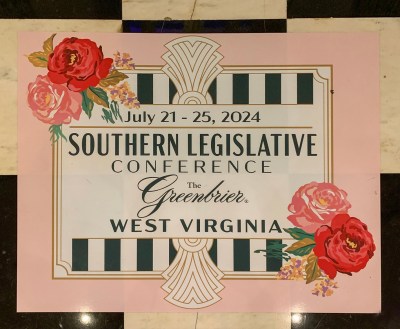
The Southern Legislative Conference began with an outstanding welcome evening that truly set the tone for the event. Held in the stunning Colonial Room, we marveled at its elegance and opulent pink design.

The buffet-style dinner was a mix of local ingredients and favorites, all with a healthy helping of sides.
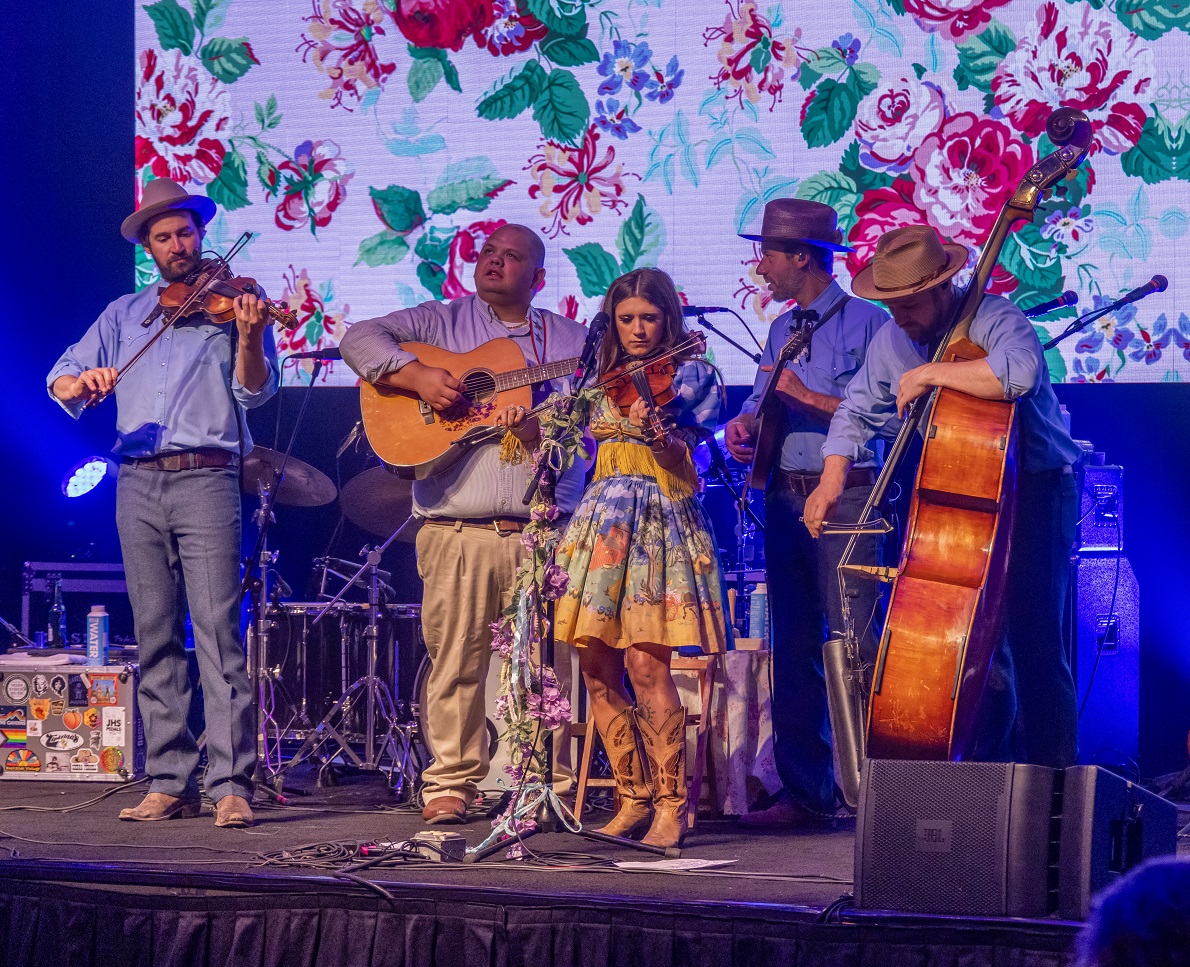
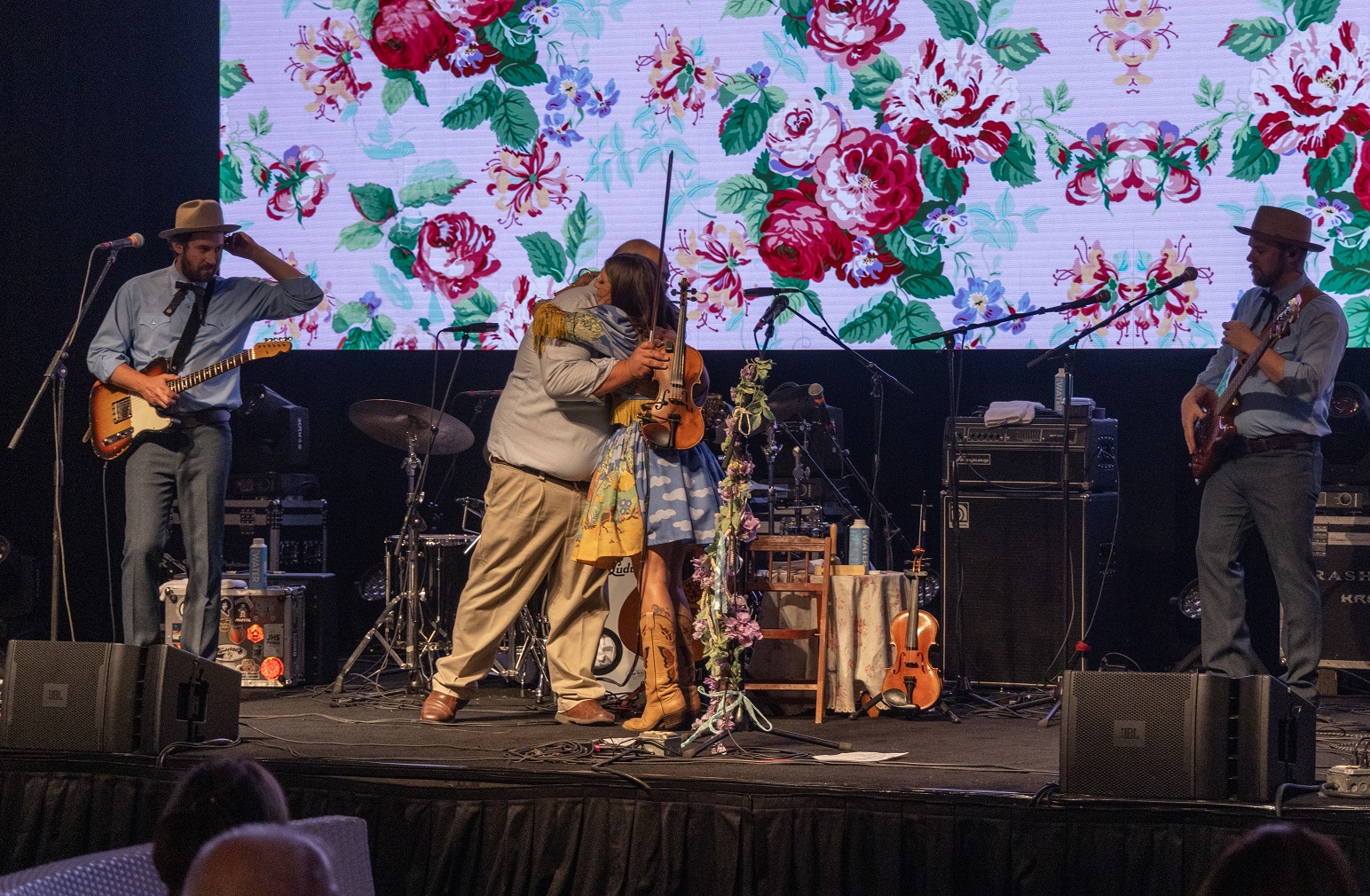
Sierra Ferrell, a West Virginia native, took the stage for the evening, delivering an impressive, two-hour performance.

Her folk and country music, tinged with jazz, pop, and even calypso influences, captivated everyone.

In between songs, she offered opinions on everything from the water supply to elite control of the country to love, hate, and authenticity.

And, as many national magazines have noted, Ms. Ferrell’s music is, indeed, authentic.

America’s Got Talent finalist, Phillip Bowen, made a surprise appearance with his fiddle, making a striking and lively performance!

All in all, it was a memorable start to our experience, filled with music, grandeur, and the charm of a truly magnificent setting.

Unknown's avatarAuthor mikeyawnPosted on July 29, 2024Format AsideCategories Architecture, Art, Civic Engagement, Politics, TravelTags Center for Law Engagement And Politics, LEAP Ambassadors, Sam Houston State University, Southern Legislative Conference, The GreenbrierLeave a comment on A Grand Welcome to West Virginia

LEAP Ambassadors Are Involved!

This slideshow requires JavaScript.

Follow Us On Facebook!

Follow Us On Facebook!

Catch Up With Us

  • A M*A*S*H* Wrapup December 24, 2025
  • Understanding Globalization: Lessons from a Leading Journalist December 22, 2025
  • Crafting for a Cause December 18, 2025
  • Exploring The Shining: A Kubrickian Journey December 15, 2025
  • Interactive Experiences at Asia Society Texas: A Student’s Perspective December 14, 2025

Join The Conversation!

The Civic Leadership… on Foundational Activities of the…
The Civic Leadership… on The Philosophical Foundations…
LEAPing Into Action… on The Philosophical Foundations…
Jada Cook's avatarJada Cook on SHSU Students LEAP Across Five…
Reflections from the… on Kicking off the Semester Right…

Find Previous Posts

Today is National Law Enforcement Appreciation Day, and the LEAP Center does that year-round, not only by studying law enforcement, but also by meeting with law-enforcement officials and frequent visits to the Jesus Moroles Police Memorial in Houston.

We also have Twitter!

My Tweets

LEAPing Into LEARNing

This slideshow requires JavaScript.

  • About LEAP
  • LEAP Ambassadors
Center for Law, Engagement, and Politics Blog at WordPress.com.
  • Subscribe Subscribed
    • Center for Law, Engagement, and Politics
    • Join 487 other subscribers
    • Already have a WordPress.com account? Log in now.
    • Center for Law, Engagement, and Politics
    • Subscribe Subscribed
    • Sign up
    • Log in
    • Report this content
    • View site in Reader
    • Manage subscriptions
    • Collapse this bar
 

Loading Comments...