Skip to content

Center for Law, Engagement, and Politics

Leap At SHSU!

  • About LEAP
  • LEAP Ambassadors
Center for Law, Engagement, and Politics

Category: Civil Rights

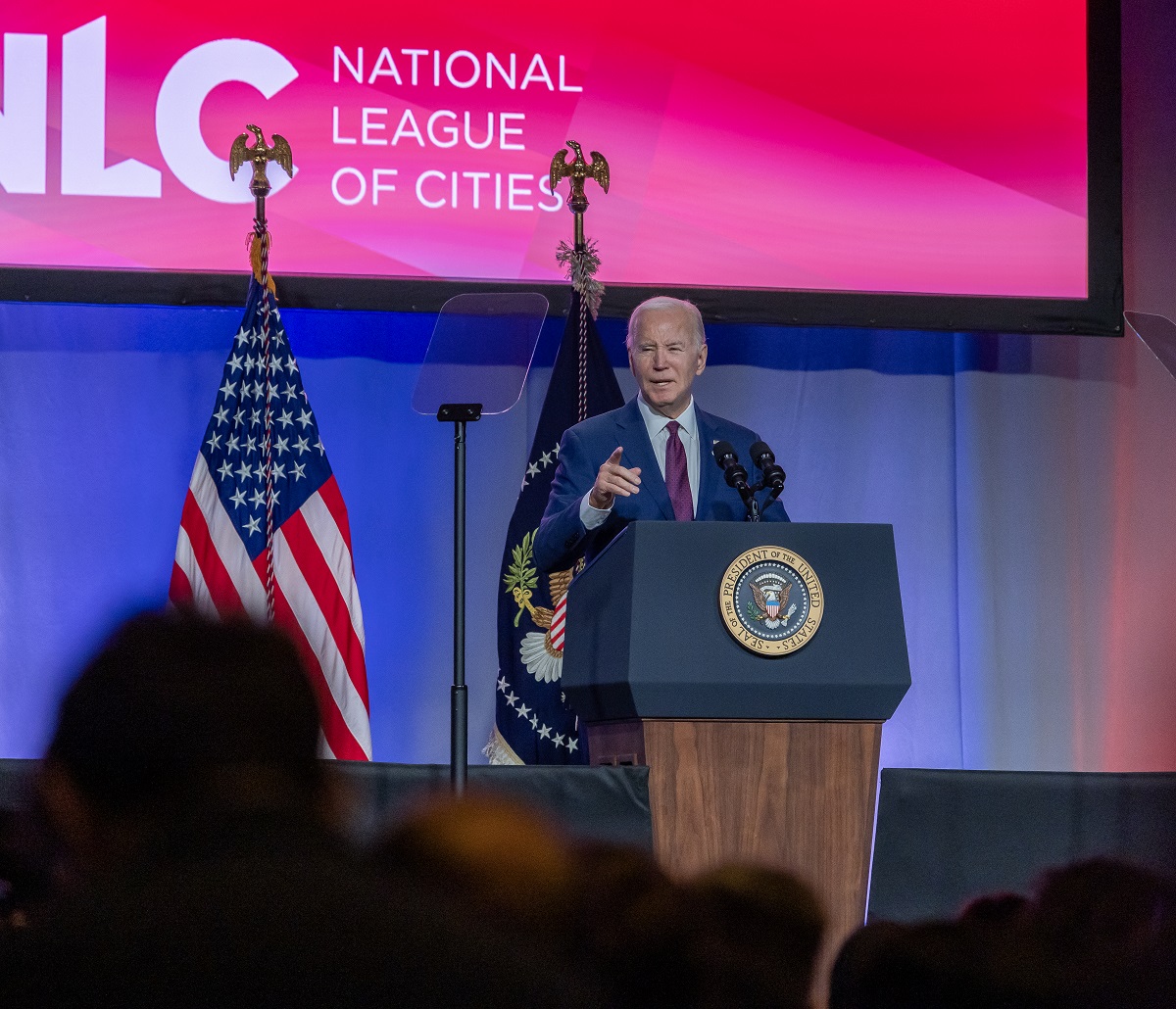
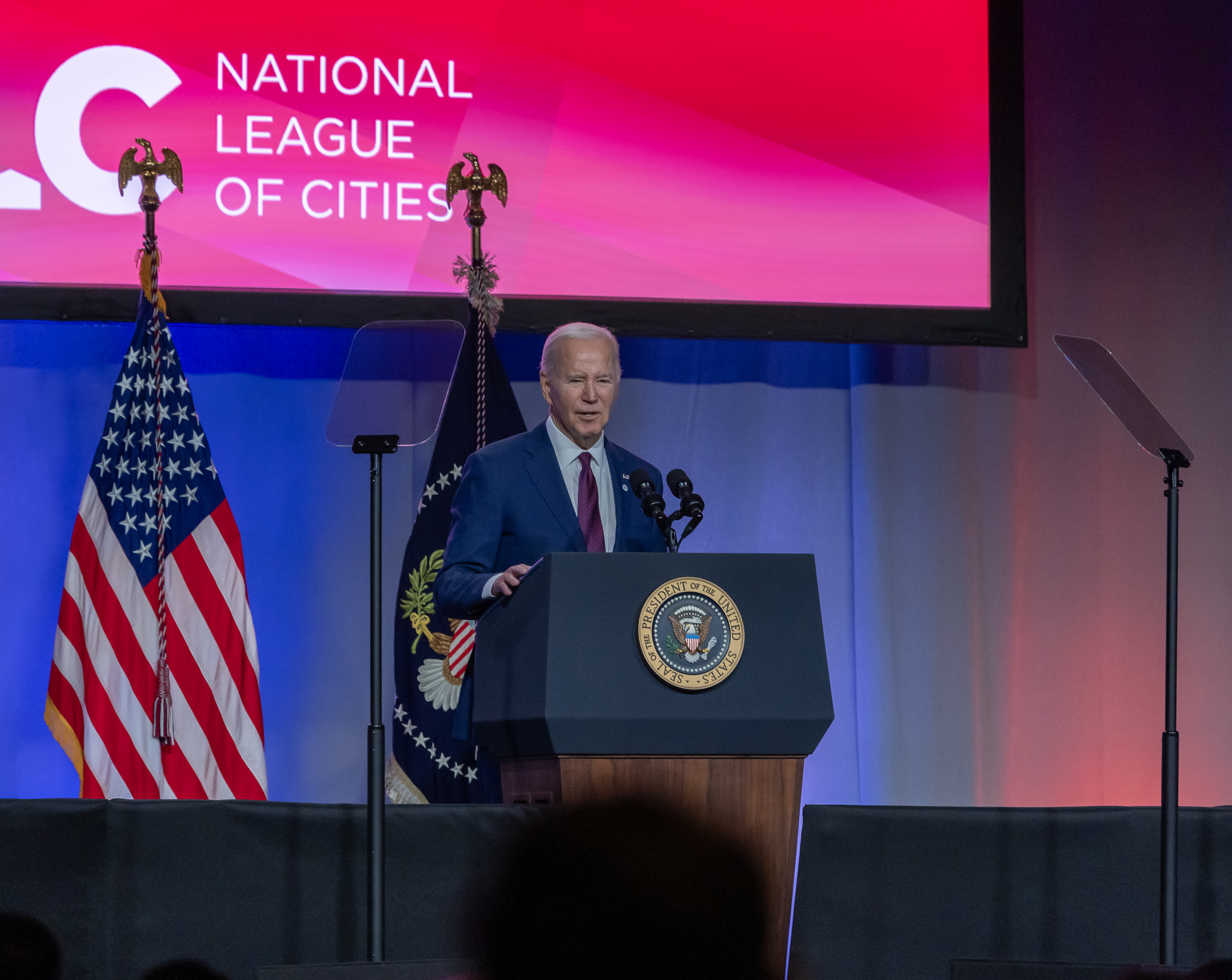
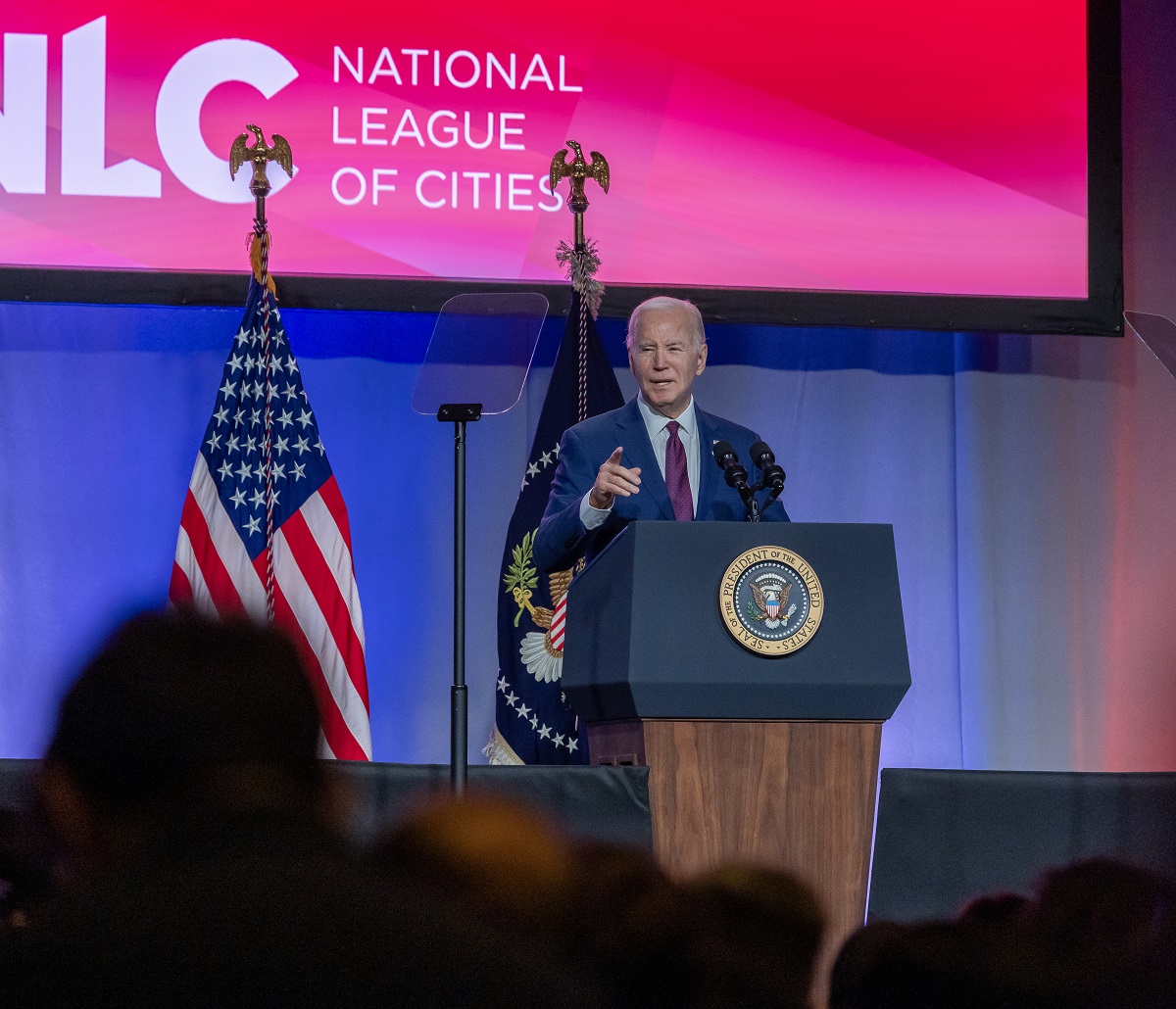
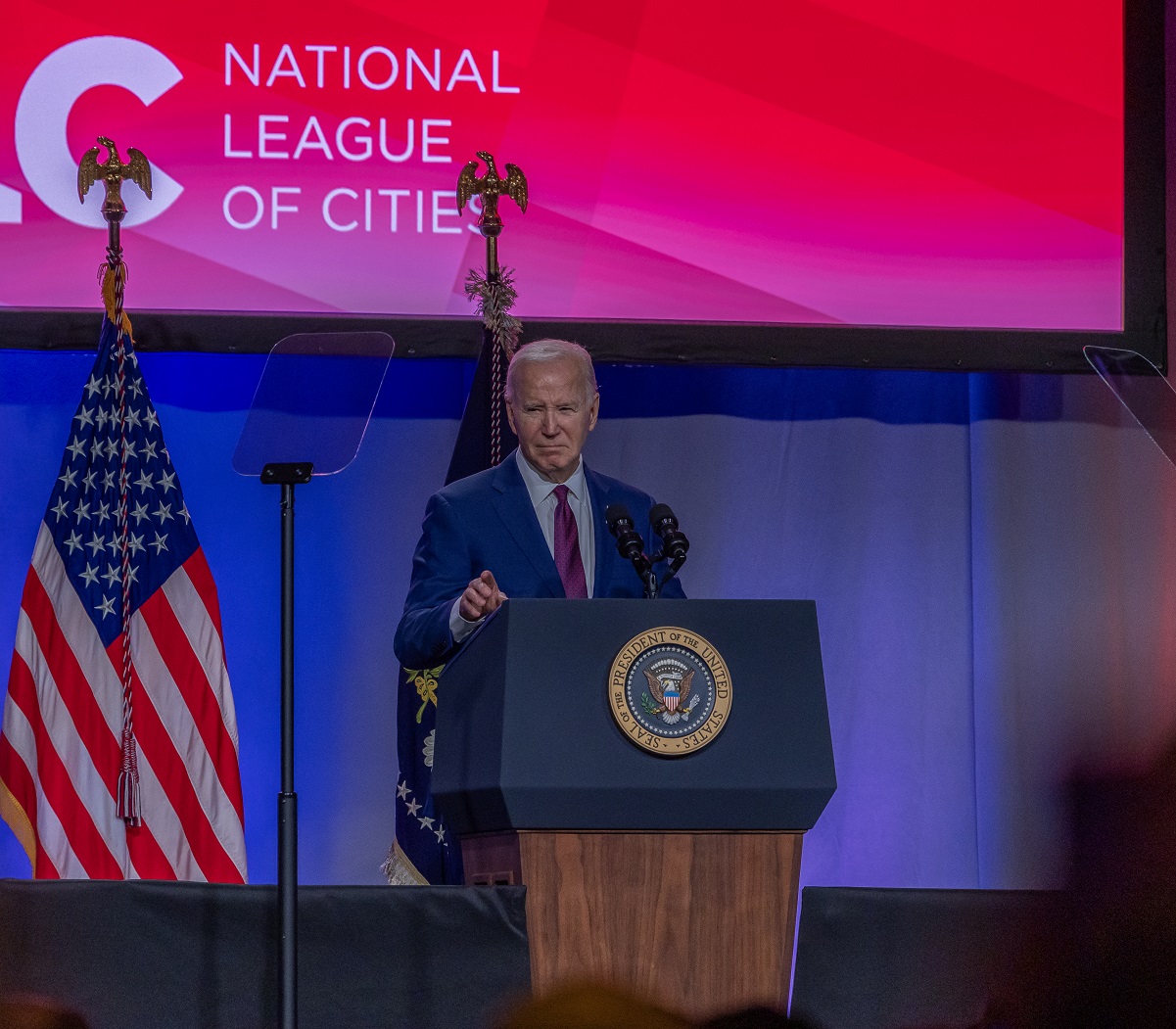
A Surprise Appearance by Joe Biden

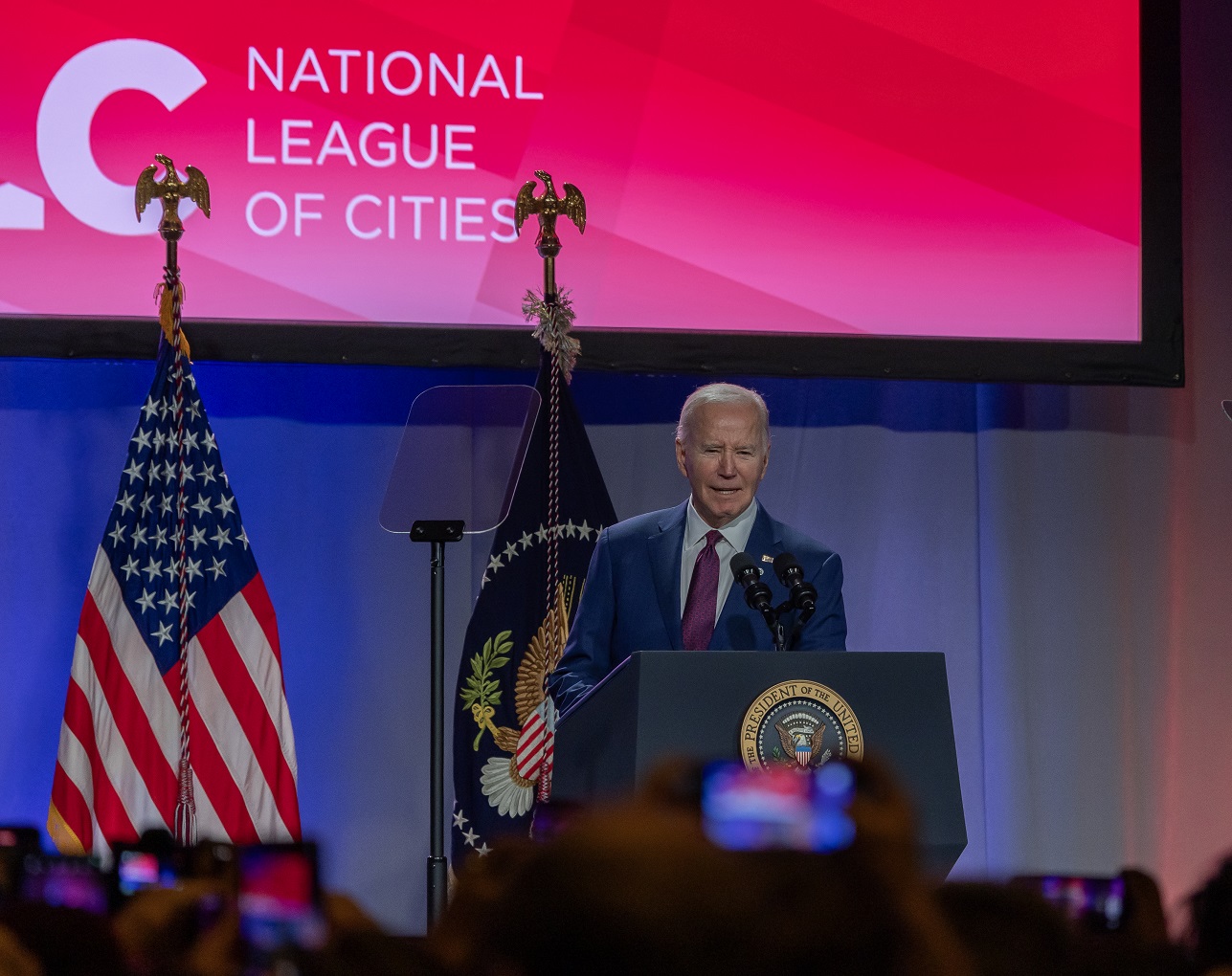
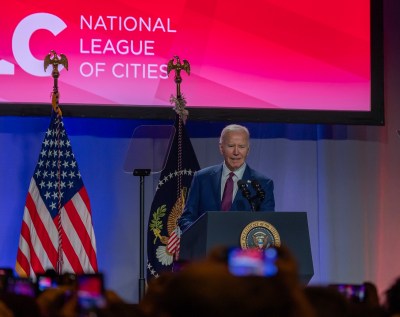
Three of us, Michelle, Cinthia, and I, were in our own hotel room, sleeping as everyone should be at 5am, when our phone rang. It was Professor Yawn. “Can you wake everyone up and put me on speaker phone,” he asked, in a way that suggested it really wasn’t a question. “There’s been a change of plans,” he noted. “President Biden will be speaking at our morning session, so we’ll need to get up and get to the conference early.

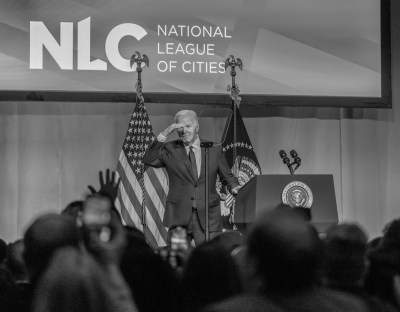
And that is how, four hours later, we were seated about 15 rows from where the President would be speaking. We hadn’t brought our telephoto lens, and the Secret Service made sure everyone stayed in their seats. So, we had to wiggle and reach a bit to get the shots we wanted.

We were pretty excited by this opportunity, and we found it someone difficult to toggle the camera work while we also tried to get photos and video on our phones.

We also found it difficult to get a clear shot of Biden as security and the press changed positions, sometimes obscuring our vantage points. We accommodated this by passing the camera to different LEAP Ambassadors, an advantage of all us being trained.

And, fortuitously, my sight lines cleared when I had the camera, when Biden moved from beyond the podium, and when he made photogenic salute to the audience, and I got my shot–and the experience of a lifetime.

Unknown's avatarAuthor mikeyawnPosted on March 25, 2024Format AsideCategories Civic Engagement, Civil Rights, Politics, TravelTags Center for Law Engagement And Politics, Congressional City congress, LEAP Ambassadors, Sam Houston State UniversityLeave a comment on A Surprise Appearance by Joe Biden

DC Institutions: A Capitol, A Court, and a Library

For three pre-law students who are considering legislative internships in Austin, and who (mostly) enjoy reading, you couldn’t ask for a better afternoon than seeing the US Supreme Court, the Library of Congress, and the US Capitol building. All three were amazing.

Supreme Court

Cinthia Villarreal

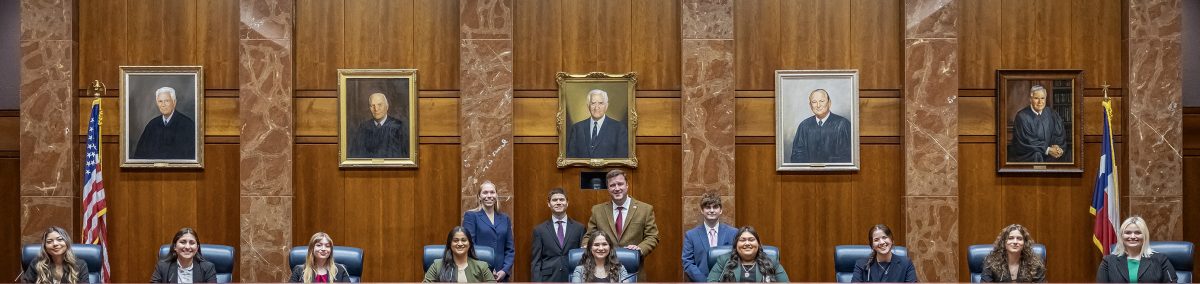
As we walked to the Supreme Court, we absolutely marveled at the building’s architecture, which was designed by Cass Gilbert. The building greeted us with a long hallway which had panels describing the judicial branch’s history and responsibilities.

This is a great introduction for anyone who is not familiar with the functionality of the Supreme Court, since it went into detail from the Court’s jurisdiction to landmark cases that we rely on to this day.

Personally, I was able to identify various cases I have read and briefed for my Constitutional Law course with Dr. Domino. This feeling of excitement overtook me as I was able to put my studies into practice and make connections from the textbooks to real life.

The end of the entry way included a statue of the Chief Justice John Marshall, the fourth and longest serving Chief Justice of the Unites States.

Chief Justice Marshall is known for his famous decisions that established not only key legal precedents, but also precedents for how the court would operate.

The main hall intersections with another hall that held some of the former Justices’ portraits. Including, of course, well-known Justices such as William Rehnquist, William Howard Taft (the only Justice to also be a President!), and Sandra Day O’Connor, the first female to be a Justice.

At the other side of the hallway, we were greeted with the special exhibition: “The Rise of Women Attorneys and the Supreme Court.” For aspiring women attorneys like ourselves, it was truly significant to learn about the women that began this movement. Reading their stories helped us put into perspective achievements and the work they undertook to be taken seriously in the field of law. They are the reason we are able to even imagine being attorneys.

We were also able to witness the Court’s spiral staircase, which is an architectural marvel, a mysteriously self-supporting elliptical five-story staircase. Moreover, the staircase’s railing were adorned with a series of rich symbols highlighting the care that builders put into their work, the classical influences on our government, and the beauty of the building.

We exited the building with more knowledge and respect for the Judicial Branch, excitement for our future as women in law, and further admiration for the beauty of the American government.

Library of Congress

Olivia Discon

Walking through the grand halls of the Library of Congress is like stepping into a literary treasure trove. As the world’s largest library, it houses millions of books, manuscripts, maps, photographs, and recordings, making it a pilgrimage for scholars, researchers, and book lovers alike.

Entering the Thomas Jefferson Building, the primary building of the Library of Congress, felt like walking into a palace. The grandeur of the Great Hall, with its marble columns, ornate decorations, and stunning dome, left us completely in awe. Some of the world’s greatest minds are featured along the walls, such as Shakespeare, Aristotle, Francis Bacon, Homer, and Petrarch.

One of the most fantastic sights was the Gutenberg Bible, the first printed books in the world. To see this meticulously crafted book was a profound moment.

Jefferson’s initial donation to the Library of Congress included his personal collection of over 6,000 books, which he had spent years acquiring.

This collection covered a wide range of subjects, reflecting Jefferson’s diverse interests in philosophy, science, literature, and history. Among the books were rare and valuable editions, some of which were the only copies in North America at the time. Notable works included Shakespeare’s plays, Sophocles’ tragedies, Plato’s “The Republic,” and many other classical and contemporary works. I couldn’t help but comb through the titles and geek over Jefferson’s vast collection!

The Library of Congress is not just a repository of books, it is also a beautiful exhibit space. In fact, we were able to revisit some of our previously studied Dorothea Lange in one of their exhibits on photography.

it is also a place of artistic beauty. The stunning architecture, intricate mosaics, and colorful murals that adorn the walls and ceilings of the building are a testament to the contribution of art and culture to our society.

Visiting the Library of Congress is an experience like no other. It is a journey through time and space, a chance to immerse oneself in the richness of human creativity and ingenuity. This was, by far, my favorite experience of the trip thus far!

US Capitol

One of the benefits of visiting DC during Spring Break is that we don’t miss any classes. One of the drawbacks is that we are in DC at approximately the same time as 1,000,000 eighth graders. Despite this deterrent, we trudged to the US Capitol for a bit of much-needed lunch (the Cafe was much better than the one at the Holocaust Museum) and to do a short tour.

The tours are not extensive. It involves watching a well-done film that lasts about twenty minutes, followed by visits to Statuary Hall and the Rotunda. Both of these are magnificent, if crowded.

Statuary Hall has an eclectic display of statues. Each state is allowed to choose two statues to be in the Hall, and we such interesting figures as Amelia Earhart (KS), Senator Barry Goldwater (AZ), astronaut Jake Swigert (CO), Robert Fulton (PA), and, of course, Sam Houston!

At the risk of delaying the tour, we rushed to the statue and took our photo. The statue was designed by Elizabet Ney, and we’ve seen it before; it is also in the Texas Capitol.

We also had a chance to see the beautiful rotunda, which is highlighted by the “Apotheosis of Washington,” by Constantino Brumidi. It is 4,664 square feet, and it’s a good thing, because it has to be seen from about 180 feet away.

The mural took almost a year to complete, and it was completed when–like now–the nation needed a unifying figure: 1865, the end of the Civil War.

Concluding Thoughts

Our afternoon tour ended with the Capitol Building, and it is appropriate. Washington, DC is divided into quadrants, a feature of Pierre L’Enfant’s design. And in the middle of those quadrants is the people’s branch: the US Congress.

Today, with changed voting laws and immediate communications, we may take interaction with elected officials for granted. But when the government was established in 1789, US Representatives were the only federal officials elected directly by the people. Today, of course, this would also apply to the US Senate and, aside from pro forma technicalities, the President as well. So, it was an appropriate place for us to end our tour. But as aspiring attorneys and newly-formed fans of architecture, it is really tough to beat the awe-inspiring majesty of the Supreme Court and the beauty of the Library of Congress.
Unknown's avatarAuthor mikeyawnPosted on March 24, 2024Format AsideCategories Architecture, Art, Civic Engagement, Civil Rights, Law, Politics, TravelTags Center for Law Engagement And Politics, LEAP Ambassadors, Library of Congress, Sam Houston State University, US Capitol, US Supreme Court, Washington DCLeave a comment on DC Institutions: A Capitol, A Court, and a Library

Exploring the Nation’s Capital: A Day in DC

It was, for all of us (students), our first time in Washington, DC. So, despite the rain, wind, and cold, it was an exciting morning, promising adventure and wonder.

That sense was deepened on our very first stop of the morning: the White House. We did not know it, but our brief stop on Saturday morning was a foreshadowing of things to come!

And as we made our way to the Holocaust Museum, which would be our first official stop of the morning, we also passed the Smithsonian American Art Museum, where we saw one of our favorites: Luis Jimenez!

United States Holocaust Memorial Museum

by Michelle Cardenas

As we continued our journey through Washington DC, we made a stop at one of the most significant historical institutions, the United States Holocaust Memorial Museum. Of all of the historic landmarks, the Holocaust Museum stands as a testament to the resilience of humanity and a reminder of some of the darkest chapters of human history.

As soon as you step foot in the museum the solemn atmosphere instantly engulfs you. The building itself is designed to make you feel like you’re a part of the industrial 1930s, everything from the elevators to the layout of the museum transports you to the times of World War 2 and Nazi Germany.

The museum is displayed in chronological order, effectively tying in personal stories of survivors, artifacts, and video presentations. The different kinds of media provided a new, deeply moving understanding of the Holocaust. The museum began with information about Adolf Hitler and the formation of his ideology and vendetta against Jews…

…moving swiftly into the discrimination Jews faced during 1933 due to their patriotism. Jews were being singled out since the beginning of the German regime and by 1939 most of them had already been prosecuted and taken to concentration camps where they would be either killed or worked to death.

There were many interesting and sobering artifacts on display at the museum. One that particularly caught my attention was the train cart where Jews were stuffed in and transported to concentration camps and gas chambers. It is one thing to read about these atrocious events but it’s completely different to see the items in real life and grasp the full concept of how awful this genocide was.

As we made our way through the museum we found something new that we had never really heard of. The Night of Glass was repeated throughout the museum and it referred to the day that Nazis burned down and destroyed all of the Jewish homes, businesses, and synagogues that remained. On a display, they had rolls and half-burned remainders of the Torah that had survived the Night of Glass. Along with this was a door frame that belonged to a Jewish synagogue; the frame was cut up and the Nazis made sure to carve out any writing that was on them. This was incredibly interesting and peculiar to see because you could sense the feeling of hatred the Nazis had towards these people, that they went to the extent of destroying something so holy and pure to them.

The museum concluded with America’s response to the genocide and killings of all the Jews. In this part, there were many exhibits of all of the findings and evidence that these concentration camps were indeed real. There were piles of hair, dentures, jewelry, and other personal belongings that were stripped away from Jews.

Interestingly, art by Ellsworth Kelly, Richard Serra, Joel Shapiro, and Sol LeWitt is incorporated into the museum, adding to the sense of the sublime, while also suggesting a sense of hope. And this was made more vivid by the fact that the Jewish prisoners also sensed this, often creating art in the form of paintings, sketches, literature, or poetry as a way to alleviate or express the horrors of their experiences.

One of the more interesting finds for us was the photography of Roman Vishniac, who captured many scenes of Jewish culture from before the Holocaust. Because photography is a theme of sorts of this trip, this was particularly captivating for us.

It was very sad to see how much the Jewish community lost and the pain they suffered through. But this also underscored the importance of museums such as these, highlighting past atrocities and, we hope, making them less likely in the future.

Indeed, Dwight Eisenhower–whose forces liberated Europe–seemed to suggest this when he ordered his troops to film the horrors of the concentration camps, so that the tragedy would be preserved in history.

Union Station

by Cinthia Villarreal

After walking through Washington D.C.’s beautiful streets and admiring its impressive collection of art, we headed into Union Station D.C. Before going inside the building, we were able to marvel at the striking architectural design of the building. The towering columns and the Roman-inspired arches gave the station an intimidating yet alluring character. Nonetheless, when we walked inside the building, we became completely speechless.

Washington’s Union Station, which was opened in 1907, is a restored train station and shopping center and during its most thriving moments, it would transport up to 42,000 passengers daily. Even though it deteriorated over time because of high usage and low budget, the awe-striking creation by the architect Daniel Burnham was designated an historical landmark in 1969. Several rehabilitation programs throughout the years have worked on the station in order to keep attracting both alike tourists and locals.

The ceiling, which is what captured most of our attention, has been recently renewed and beautified. The contrast of the white and the 23-karat gold leaf of the design is extremely intricate. From the second floor, life-size statues overlooked the lobby we were standing in and the windows throughout the building truly amplified the space, even though not necessary.

After walking around the station and seeing the variety of stores they had, we settled down to have a great dinner to finish our eventful first night at the national capital.

Unknown's avatarAuthor mikeyawnPosted on March 12, 2024March 12, 2024Format AsideCategories Architecture, Art, Civic Engagement, Civil Rights, Law, Politics, TravelTags Center for Law Engagement And Politics, Holocaust Museum, LEAP Ambassadors, Sam Houston State University, Washington DCLeave a comment on Exploring the Nation’s Capital: A Day in DC

Covering the Ukraine War with Yaroslav Trofimov

By Olivia Discon

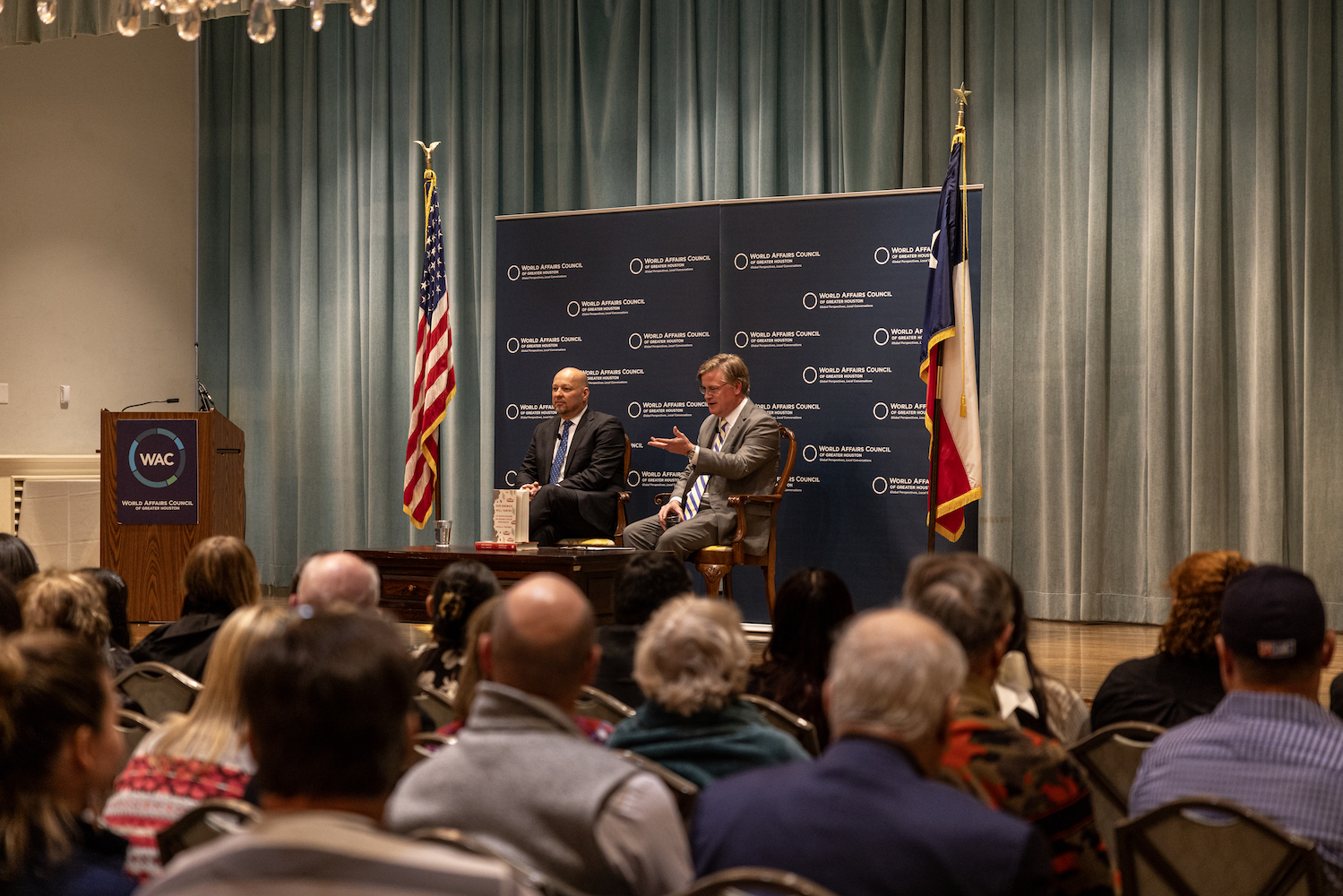
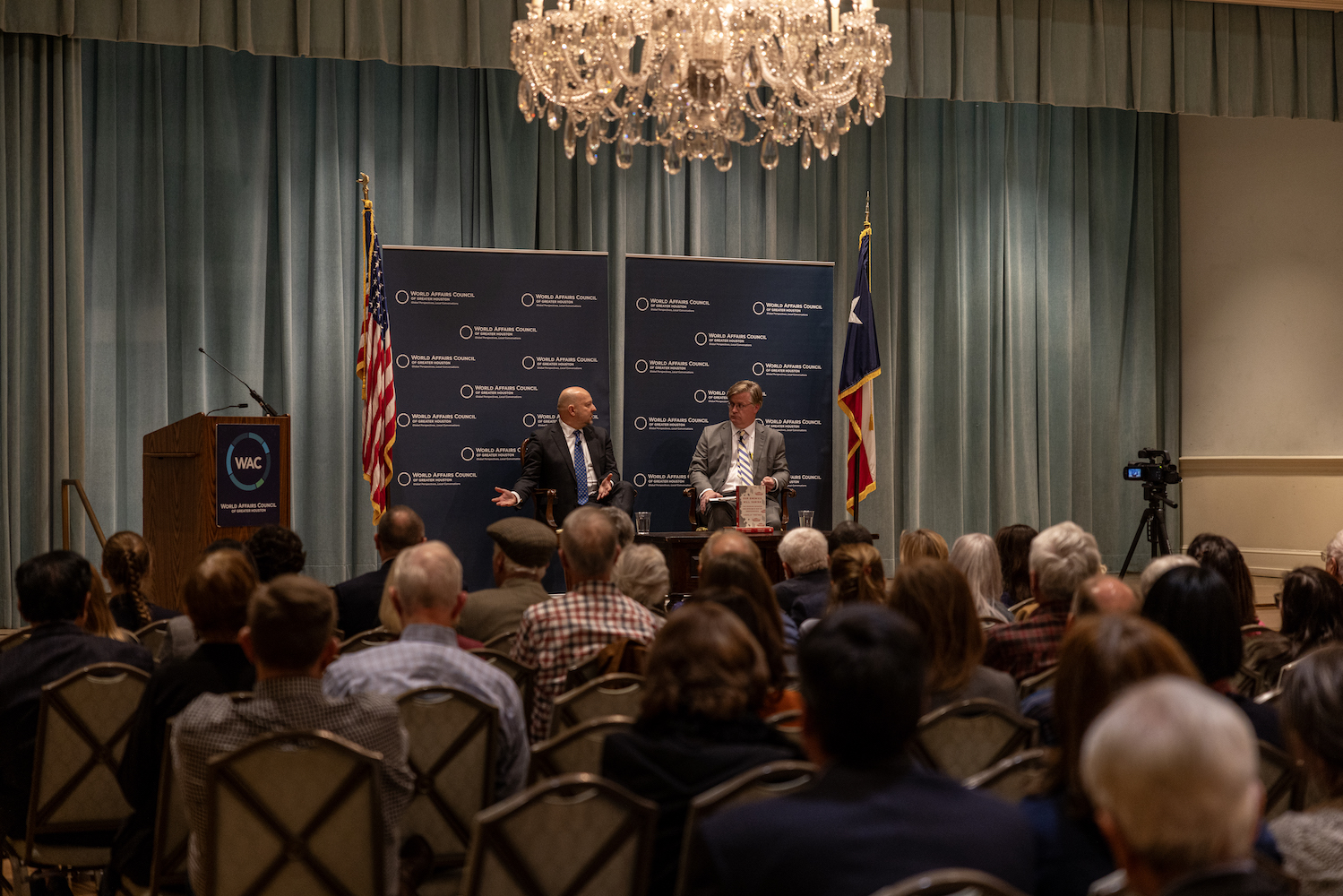
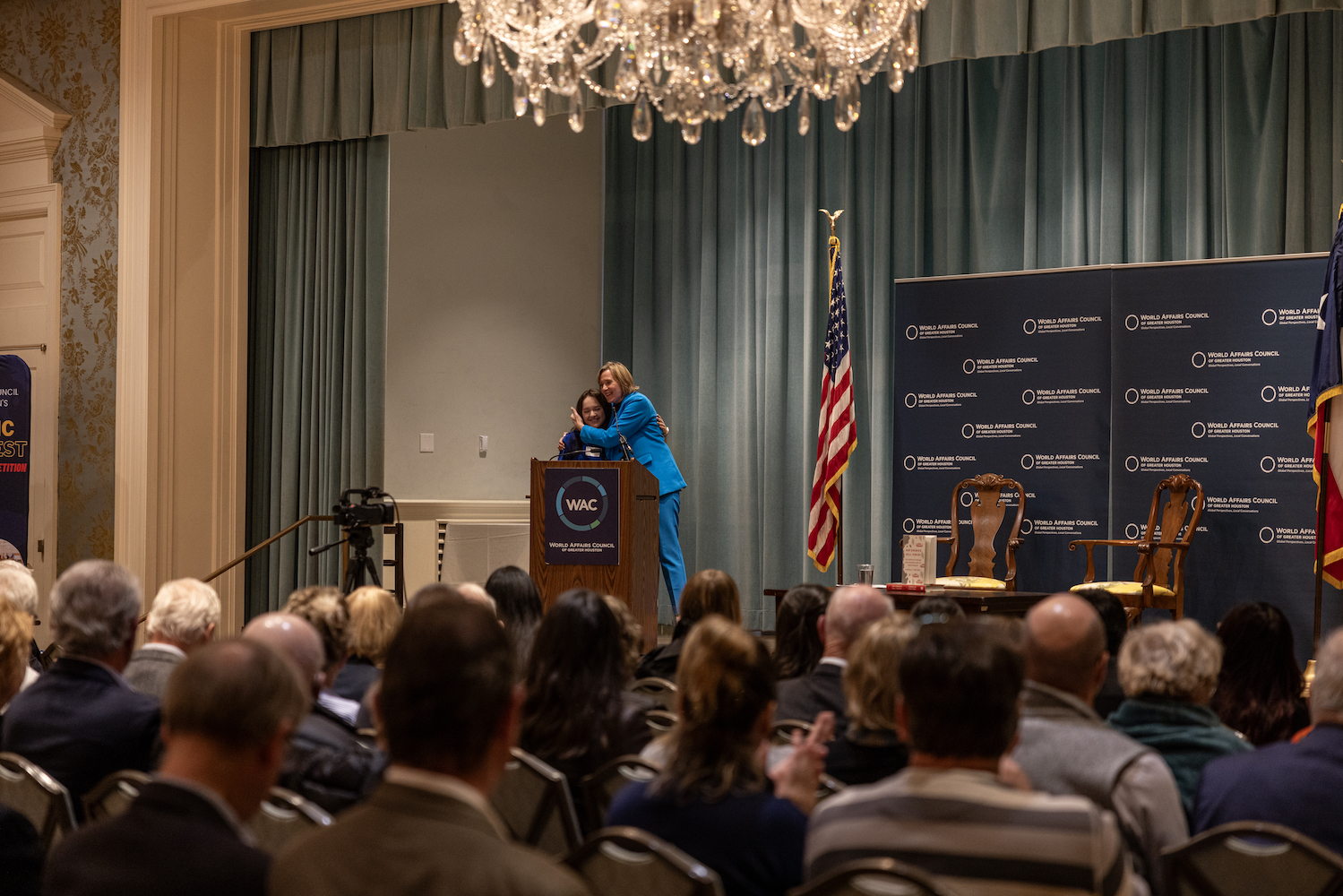
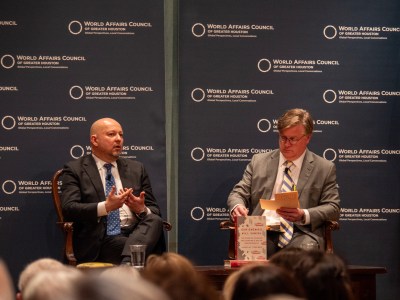
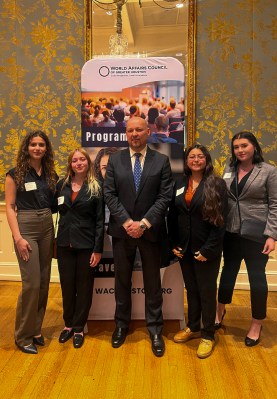
In our first week back in class, we felt compelled to start the Spring semester off with our favorite way to learn about the state of global politics, the World Affairs Council of Greater Houston. This evening, we had the pleasure of hearing from Yaroslov Trofimov, a chief foreign affairs correspondent at the Wall Street Journal. Born in Ukraine, Trofimov not only has a seasoned perspective as a journalist, but a personal understanding as a Ukrainian.

Moderated by Ronan O’Malley, the discussion began with this complex duality of Trofimov’s insights on the Ukraine War. As a correspondent on world affairs, Trofimov’s position requires an objective, multifaceted perspective when educating the public. As a Ukrainian, however, he must consider how his family and culture is to survive the present.

The Ukraine War has been a hot-button topic in United States’ politics, mostly concerning whether the U.S. should financially support Ukraine in their efforts to fight off Russia or not. Trofimov’s key argument, shared by the Americans who support Ukraine in their efforts against the Putin regime, is that this war does not exist alone, but is in fact completely representative of democracy everywhere. He closed his response with a quote that deeply resonated with us: “We are fighting this war so you (Americans) don’t have to”.

Though this war has resulted in numerous casualties, Ukrainians still hold onto a fierce hope that they will persist against what appears to be insurmountable odds. “Russia’s propaganda is stronger than Russia’s army”, Trofimov remarked.

While Jessica has just started her last semester at Sam Houston, this was her first time at the Junior League of Houston. This building’s interior design is reminiscent of the Victorian era, and its elegance and vibrancy is mesmerizing to both newcomers and those who have visited previously. We left Houston as we do after most WAC events; with new perspective, great discussion, and a diversified understanding of the world around us.

Unknown's avatarAuthor mikeyawnPosted on January 19, 2024Format AsideCategories Civic Engagement, Civil Rights, Law, PoliticsTags Center for Law Engagement And Politics, Global Affairs, LEAP Ambassadors, russia, Sam Houston State University, ukraine, Wall Street Journal, World Affairs Council Houston, Yaroslav TrofimovLeave a comment on Covering the Ukraine War with Yaroslav Trofimov

A Capitol Day in Santa Fe

Although it was our last day in Santa Fe, it was a day packed full of eclectic adventures and learning. On tap: A tour of the New Mexico Capitol building; a tour of Allan Houser’s art studio; and a hike up Sun Mountain.

After some coffee at CrashMurderBusiness, we headed to the Capitol, where Marylynn Collins was waiting to educate us on the workings of the New Mexico government. 

As aspiring participants in Sam Houston State University’s SHAIP program (where students are placed in legislative offices in the TX Capitol), this was of particular importance to us. Cinthia and I have been to 5 Capitol buildings between the two of us, so this visit allowed us to compare how the New Mexico Capitol compares to other states.

Mrs. Collins started the tour by taking us to the center of the capitol’s rotunda. In contrast to most other state capitol buildings, the New Mexican capitol is shaped in a circular manner and has no dome. The reason, Mrs. Collins explained,  is to signify the circle of life portrayed in the Zia symbol. The roof of the rotunda is intricately done with stained glass, the shape of which signifies a pueblo basket and the orange and blue colors signify the earth and sky. 

The Zia symbol was adapted by the New Mexican people from the Zia Pueblo tribe and, as mentioned above, it portrays a circle in the middle with four sets of four lines coming out of the circle in four different directions. Each of the sets are symbolic in four different capacities: the four seasons of the year (Spring, Summer, Fall, and Winter), the four stages of life (infancy, youth, adulthood, and old age), four times of the day (dawn, daylight, dusk, and dark), and the four cardinal directions (north, south, east, and west). The symbol is also portrayed in the state flag is seen and used throughout the state.  

Something that also sets this state apart is their official state question, “Red or Green?”. This was strange to us before the trip, but New Mexico is very fond and proud of being the home of the green and red chile, which is deeply engraved in their state’s culture and which we have had the opportunity to try in a variety of dishes and restaurants along the trip. Mrs. Collins also mentioned that this is the only state with an official scent; an aroma of roasting green pepper in the air.  

We then stepped into the second floor of the “Round House” where we were able to admire the huge permanent collection that filled the walls. Consisting of work from regional artists with different styles and techniques, the paintings, even though completely contrasted one to another, represent the state’s cultures throughout the centuries. While admiring the art work, we were able to see some new artists and also recognize some of the artists we have been learning about, our favorite being Anderson’s “Canyon Segundo”… 

Unfortunately, we had to rush from our capitol tour to get to our next stop: Allan Houser’s studio. Even more unfortunately, we learned that because of the massive amounts of snow that had fallen, the Houser Studio was cancelling the tour. But, ever resourceful, we switched gears and visited Houser’s downtown gallery, where we saw 30-40 of the Native American artist’s works. 

We had previously seen his works at the Albuquerque Museum, at the New Mexico Capitol building..

…and, in fact, at Professor Yawn’s house, so it wasn’t entirely new to us. But we appreciated seeing the diversity of his art, and the gallery generously gave us–or, rather, SHSU–a very nice book of all of Houser’s works.

With more time on our hands, we ventured over to the Loretto Chapel, where we were able to see another church and another architectural marvel.

Known around the world as the Miraculous Staircase, this winding spiral staircase has left architects in awe of the pure physics of its composition.

Taking two 360 degree turns, its impossible to say how it has managed to sustain itself with neither support beams nor nails.

As we took a moment to marvel at the beautiful chapel ourselves, we also took the time to look around the many gift shops that are connected to the chapel and picked up a few souvenirs for ourselves and our loved ones.

Santa Fe is a charming town that we have come to cherish over a mere two and a half days.

Unknown's avatarAuthor mikeyawnPosted on January 16, 2024Format AsideCategories Art, Civic Engagement, Civil Rights, Law, Politics, TravelTags Allan Houser, Center for Law Engagement And Politics, LEAP Ambassadors, Loretto Chapel, New Mexico State Capitol, Sam Houston State UniversityLeave a comment on A Capitol Day in Santa Fe

Lawyers and other Wildlife in the Southwest

Bosque del Apache, by Olivia Discon 

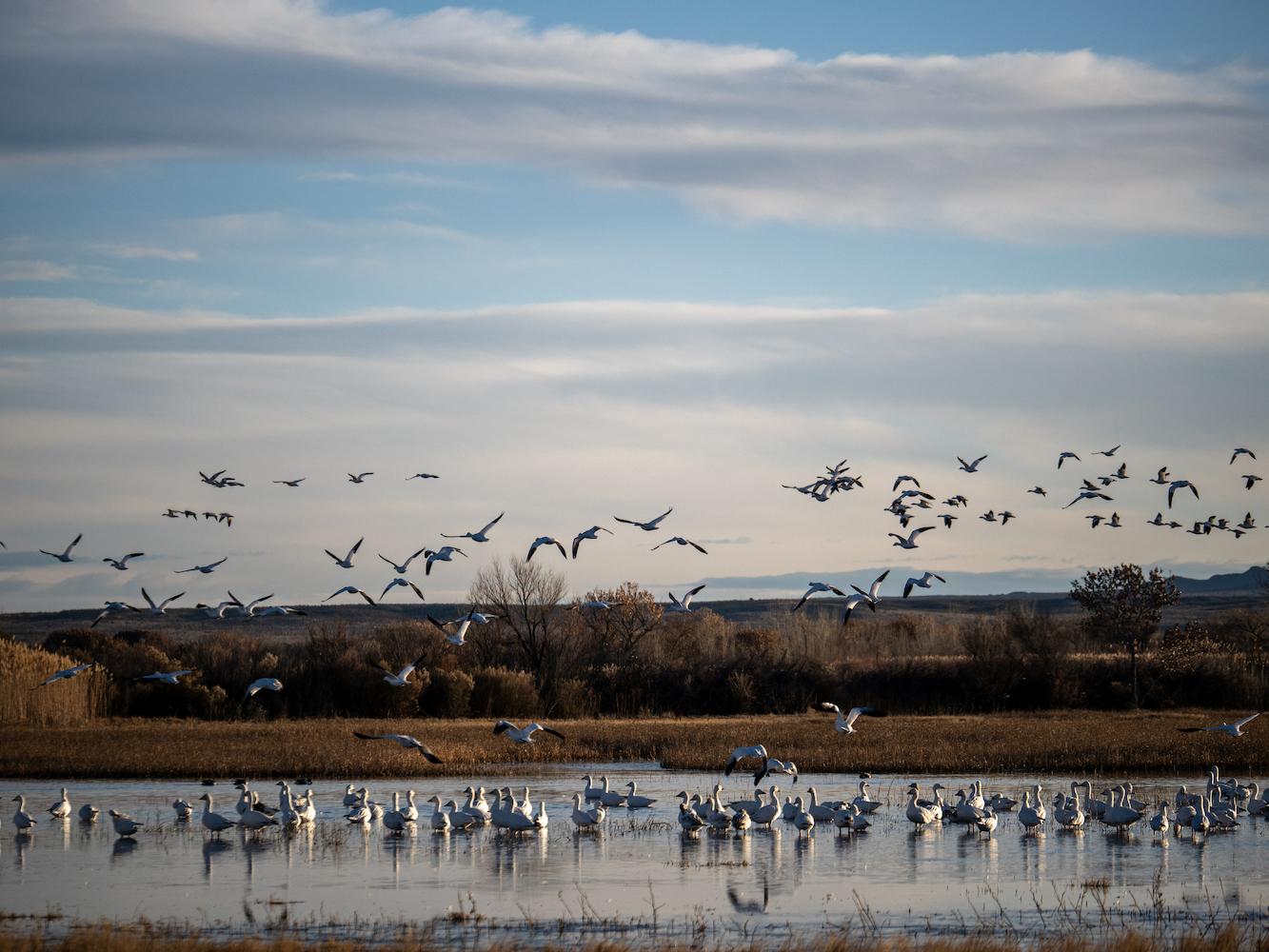
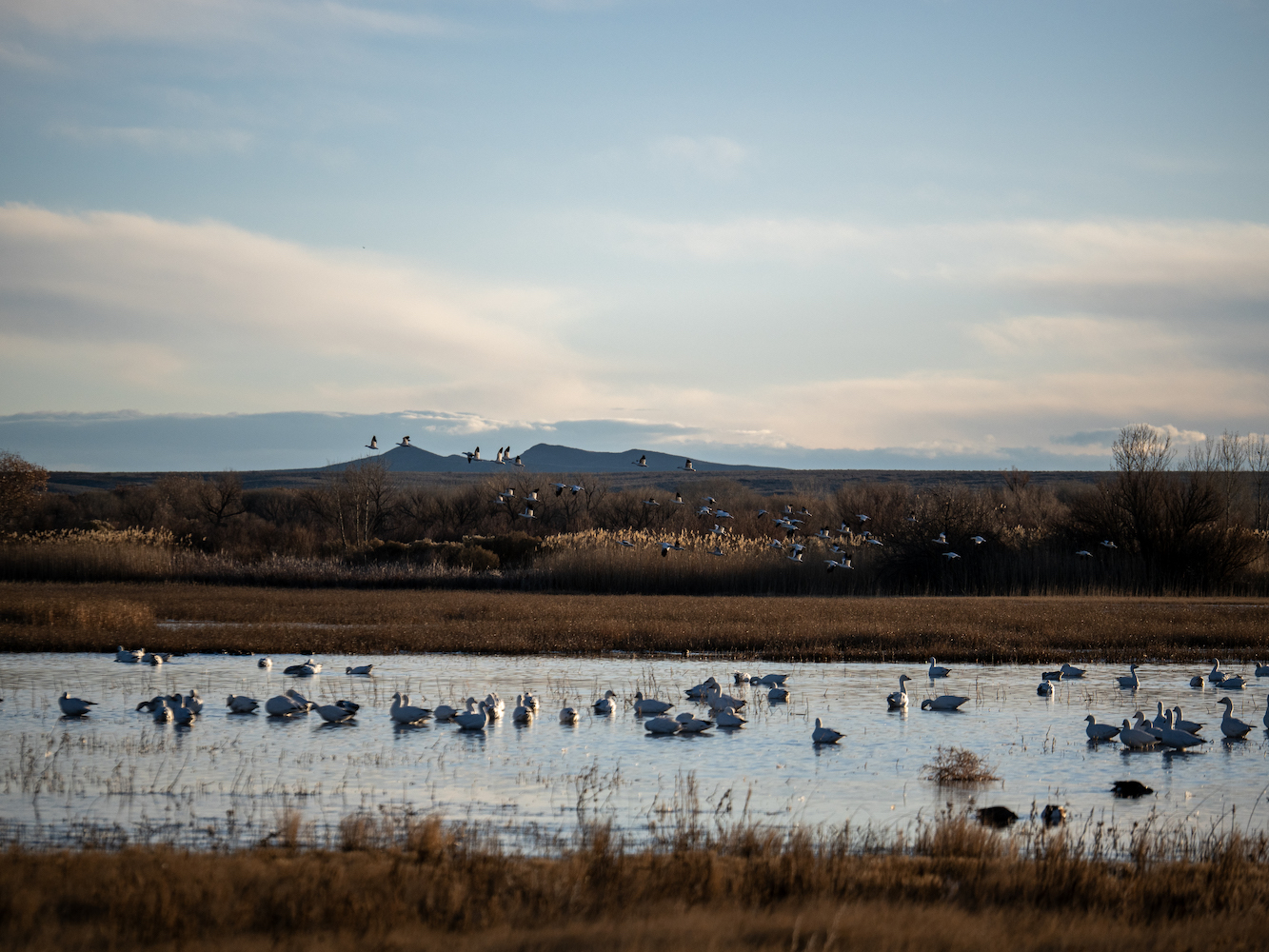
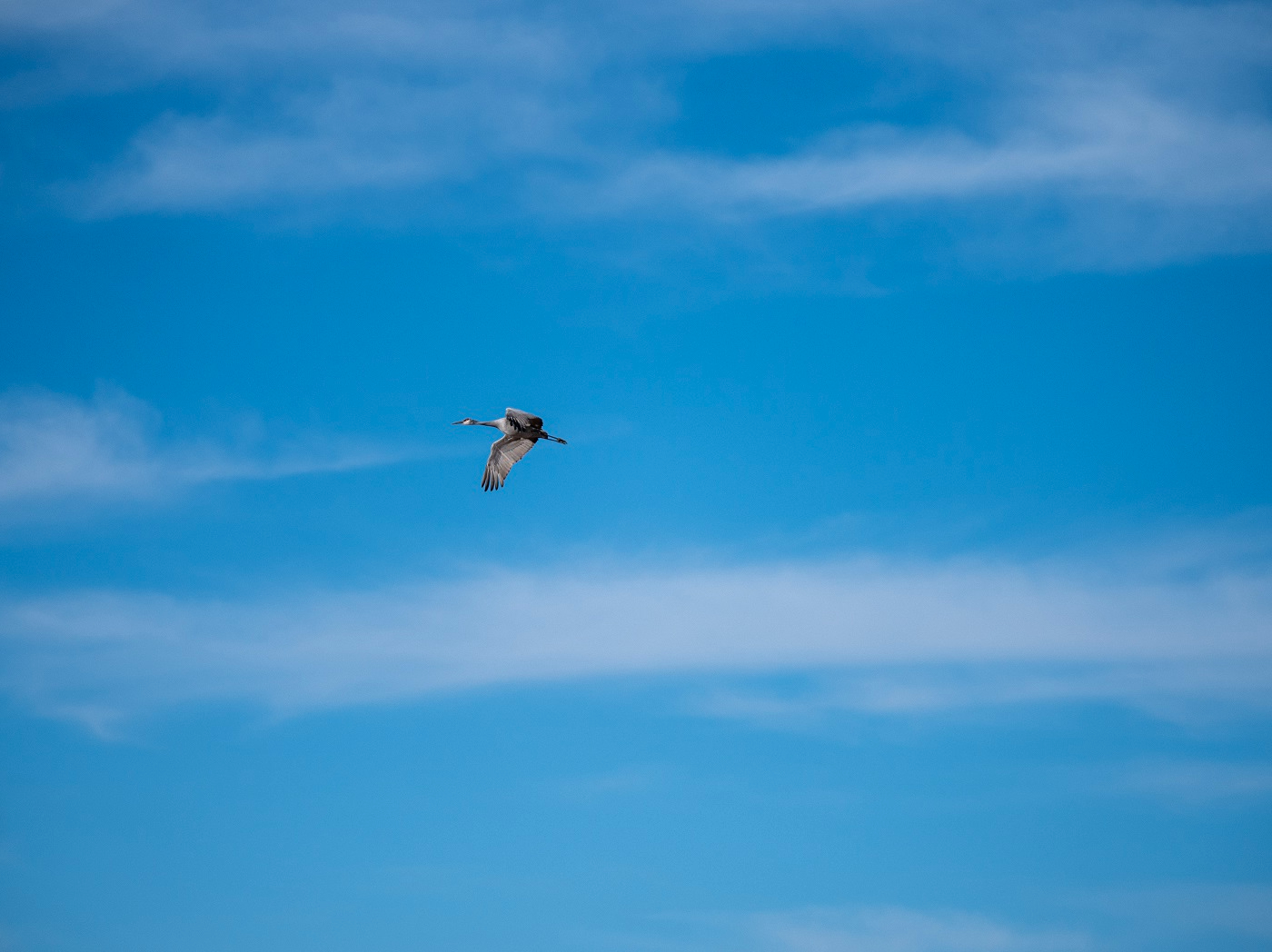
As college students, waking up before sunrise is not a typical morning for us. However, we were excited to see the Snow Geese start their day and take flight across the beautiful New Mexico sky at Bosque del Apache National Wildlife Refuge!

Photo by Olivia Discon

Bosque del Apache

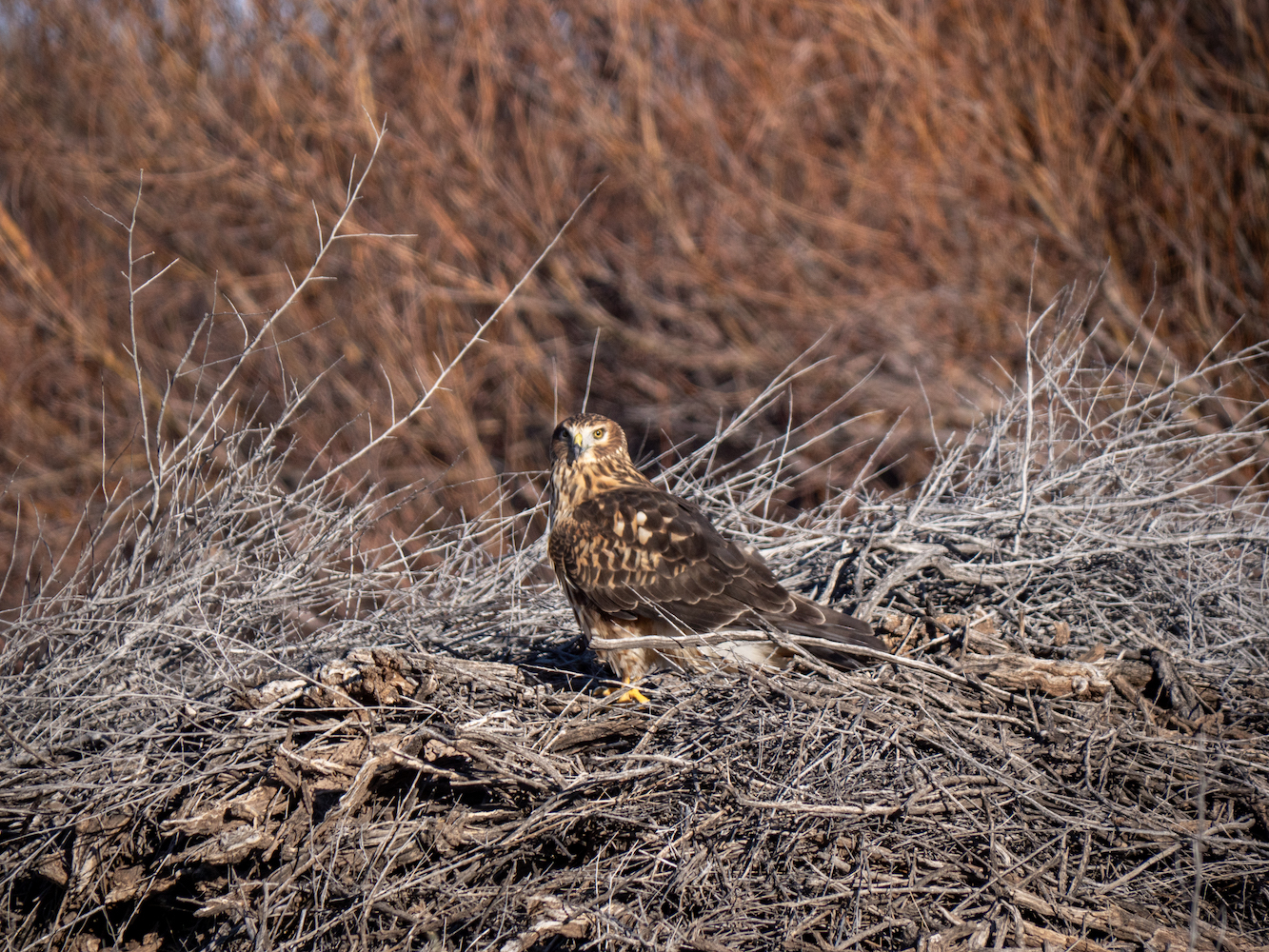
On our tour of the southwest, one of our key objectives is to expand on our basic understanding of photography and apply it to the sites we visit along the way. Wildlife photography, as we’ve come to learn, is its own beast. While there are some habitual patterns of particular creatures, it is impossible to truly know what they might do next. However, we were up for the challenge! 

Photo by Stephanie Fors

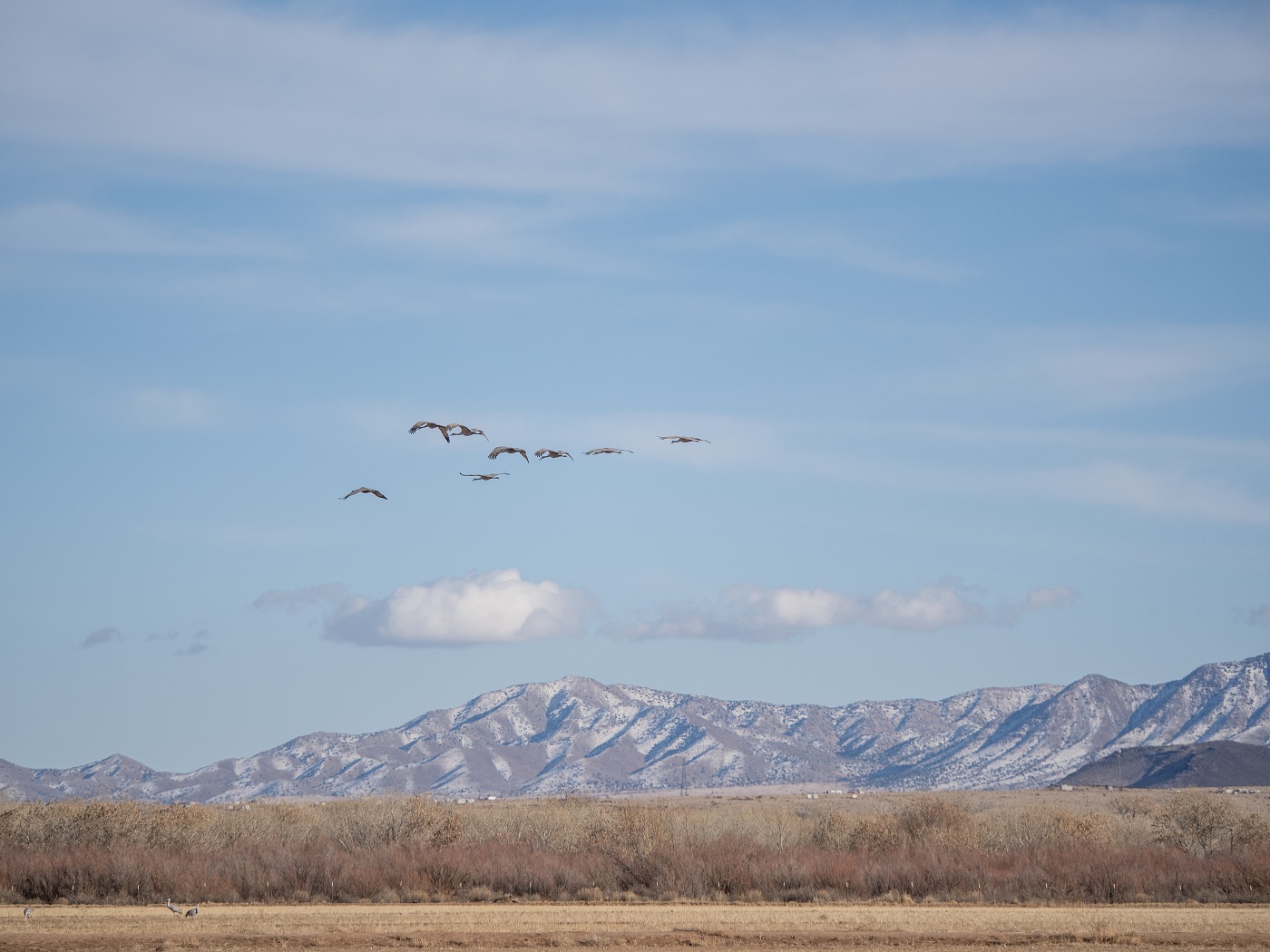
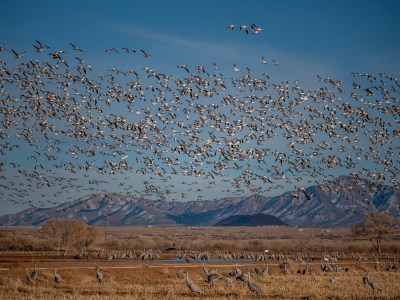
Of course, the Snow Geese were the feature of this visit, as the sheer number of them joining in their morning flight could not be missed. They must have enjoyed having their photos taken, because they took flight two separate times, making for some variation in photos on our part. 

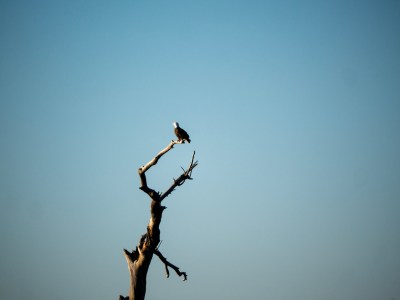
What was most rewarding to capture was a lone Bald Eagle perched atop a tree trunk, scanning the horizon for its next meal.

Photo by Olivia Discon

Funnily enough, Cinthia and I almost missed this exciting catch, as we had just left the area to get a different angle. In the end, we were able to get some photos that we were proud of, along with the satisfaction that comes with experiencing nature.

We left Bosque del Apache with some additional photography experience under our belts and great anticipation to look back on our photos!

Lunch at Indian Pueblo Cultural Center

By Cinthia Villarreal

Taking a break from the great outdoors, we made a stop at Indian Pueblo Cultural Center to have lunch with former LEAP Ambassador, Karla Bush; her husband, Cameron Bush; and their friend, Richard Cravens. Karla and Cameron attended Texas Tech School of Law and are now successful practicing attorneys. It was great meeting these two, and it was inspiring, particularly since we are following in Karla’s LEAP footsteps.
Mr. Cravens, who is also an attorney, attended New Mexico School of Law and has recently published a book, Self Help: A Novel, which we had the chance to read in advance of our trip. Over lunch, Olivia and I received quality advice regarding law school and work ethic. Both Cameron and Mr. Craven made it clear that law school is a difficult journey, but a rewarding one. They noted that we might not be able to outsmart all our fellow law students, but we can outwork them. It’s not every day that we have the chance to speak to three attorneys over lunch–let alone such highly successful and candid attorneys! We were very grateful to have their perspective as former law students, and we would like to thank Karla, Cameron, and Mr. Craven for taking the time to visit with us.

Bernardo Wildlife Area

By Olivia Discon

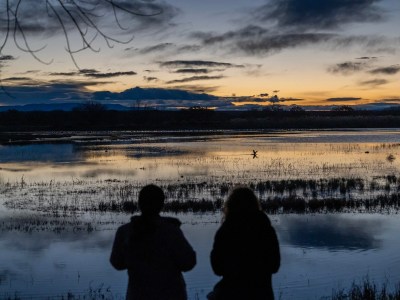
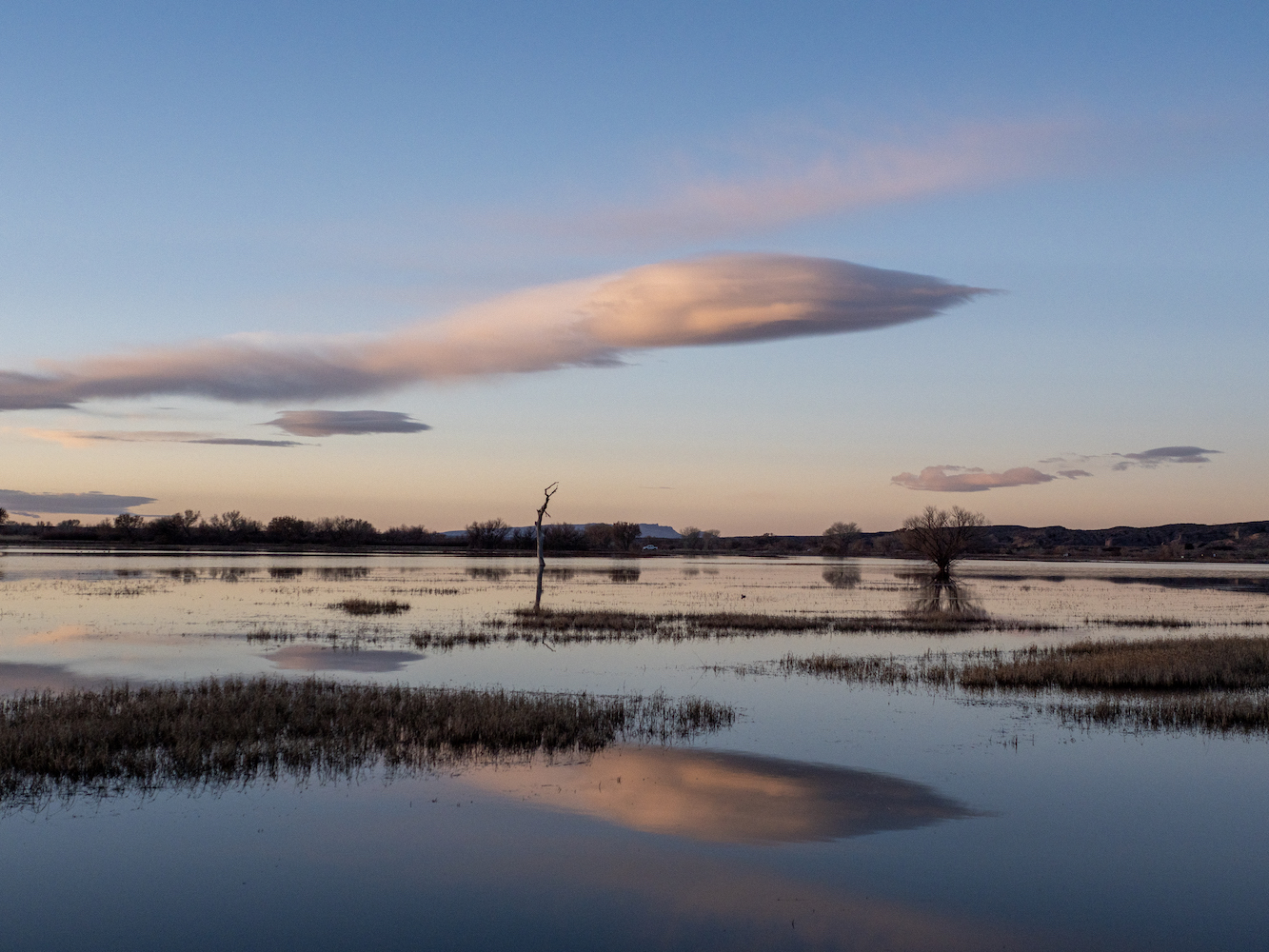
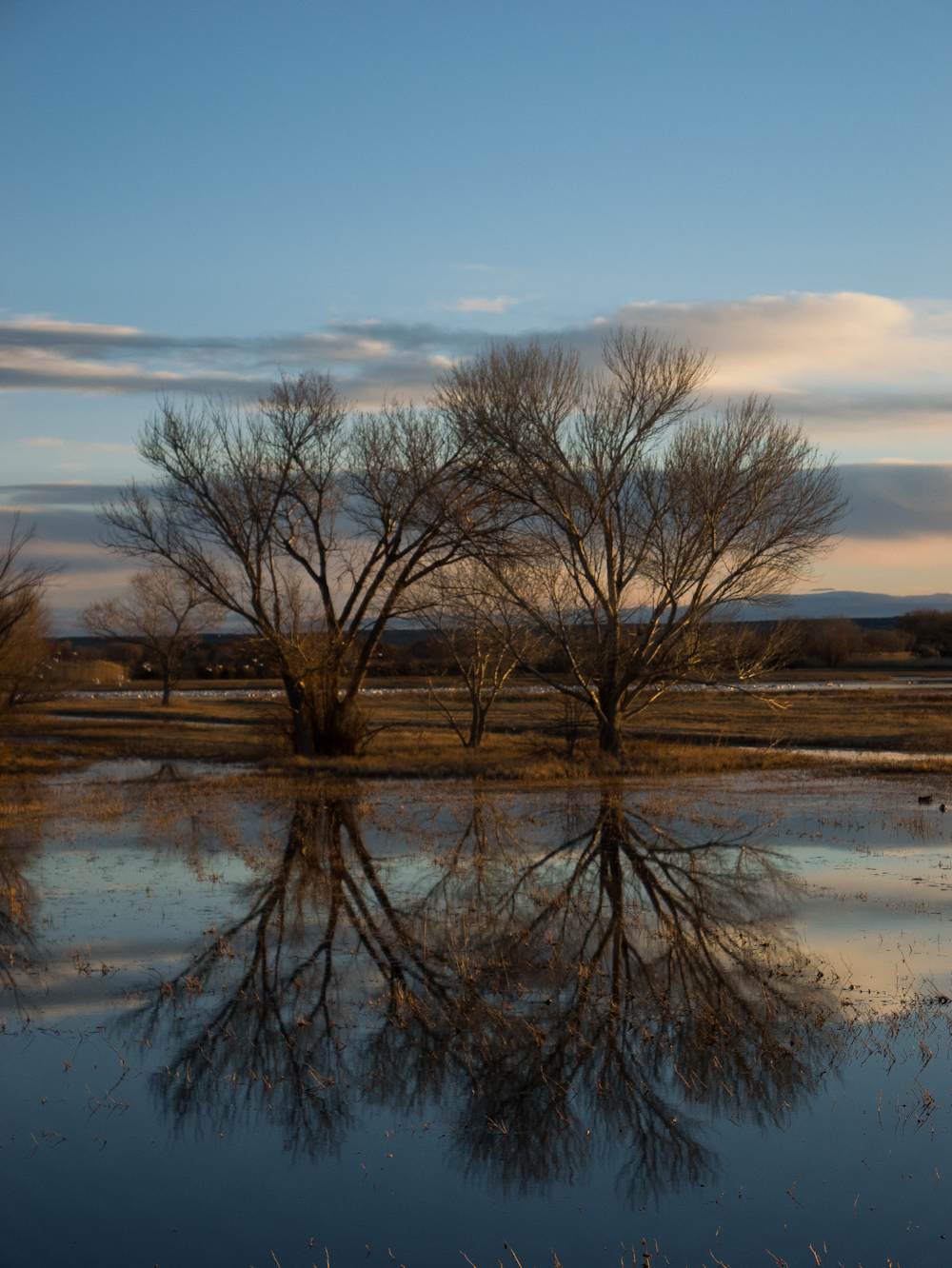
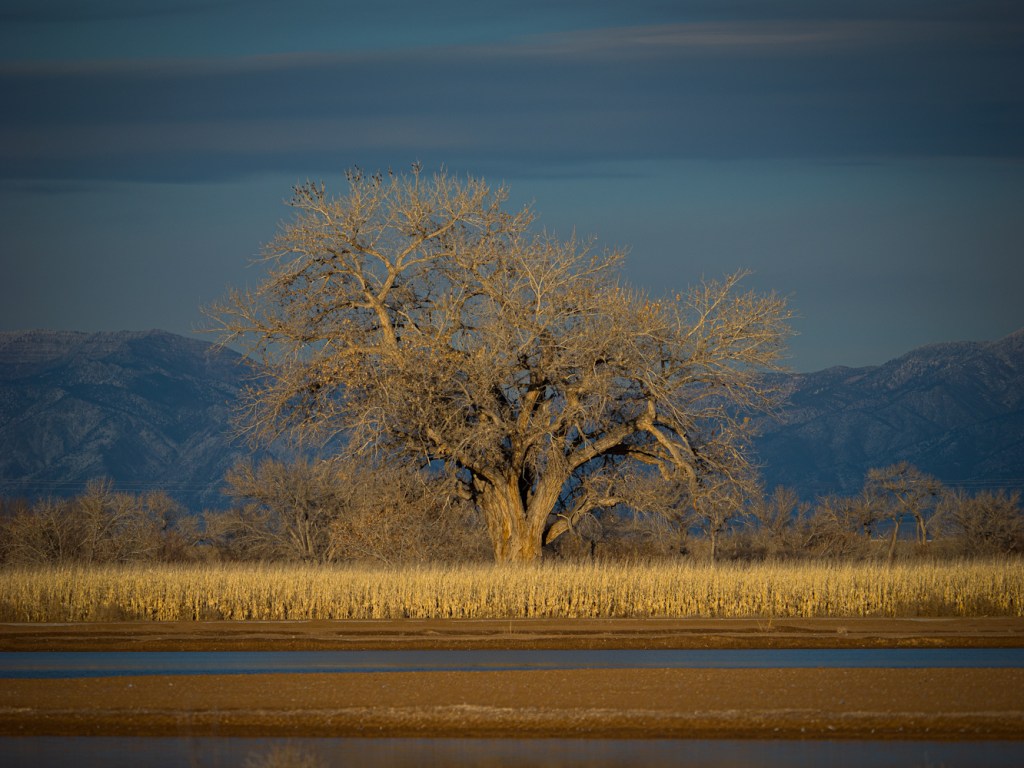
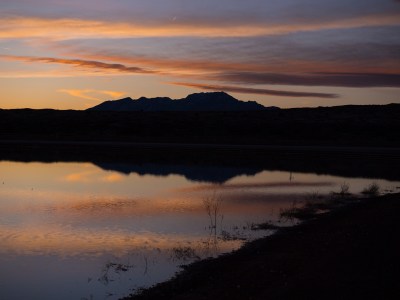
To close our day filled with new experiences, great conversations, and learning opportunities, we decided to end our day as we started it; by watching the New Mexican landscape. This time, however, we set up in Bernardo Wildlife Area to catch the large flock of birds before nightfall and also just see nature’s beauty.

Photo by Cinthia Villarreal

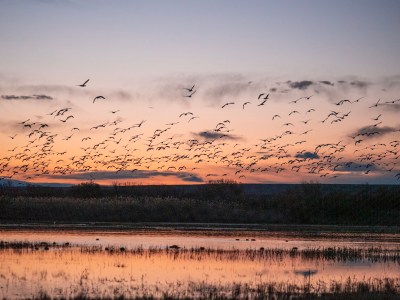
This go around was truly a sight to be seen. There were thousands of Sandhill Cranes and Snow Geese awaiting their final flight for the day before getting some sleep, which we watched with both awe and envy.

Photo by Olivia Discon

These birds have not been in their typical sleeping spot as of late, so we had no idea what to expect as to their location or their destination. Accordingly, we split up and went to different locations to maximize our coverage.

Eventually, after some squabbling and feeding, it was time for liftoff!

Photo by Olivia Discon

The birds swarmed the orange sky in such a way that kept you glued to their elegant movements. The mountainous and open landscape made for some photos that were a good faith attempt at capturing the beauty of the scene.

Photo by Cinthia Villarreal

We could not have ended our day with a more rewarding and serene experience. Just like the Snow Geese and Sandhill Cranes, it was time for us to make our way towards a place to rest.

Unknown's avatarAuthor mikeyawnPosted on January 11, 2024January 11, 2024Format AsideCategories Civic Engagement, Civil Rights, Law, TravelTags Bernardo Wildlife Area, Bosque del Apache, Center for Law Engagement And Politics, Karla Bush, LEAP Ambassadors, Sam Houston State UniversityLeave a comment on Lawyers and other Wildlife in the Southwest

Another Day: A lot more books. The TX Book Festival

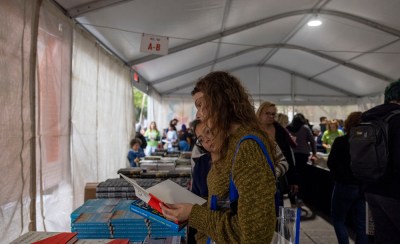
We were eager to begin our second day of the Texas Book Festival. Having attended the first day, we were no longer rookies, and we had a better idea of how to navigate the lines, accommodate the back-to-back schedule, and, in short, what to expect.

Poking Around the TX Book Festival

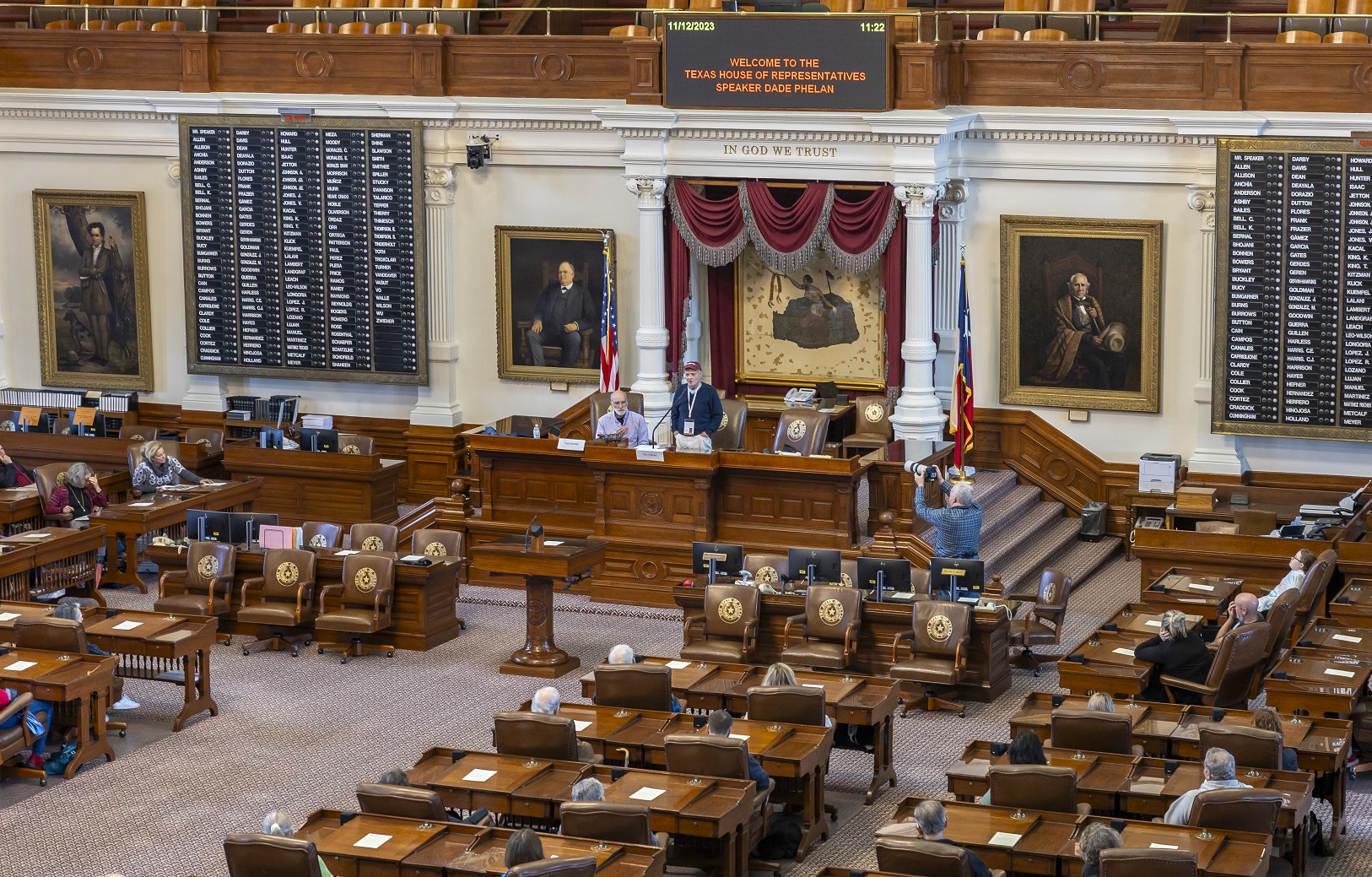
Much of what we learned at the festival came from just breathing in the book culture. We peaked in on some panels just to see if the author could capture our attention. We were exposed to books, ideas, and authors we would not have sought out, but then found they had something interesting to say and something to teach us. We had a chance to see some of the most respected authors in the nation, and in two cases, we had a chance to see hear them discuss their work for the floor of the House of Representatives!

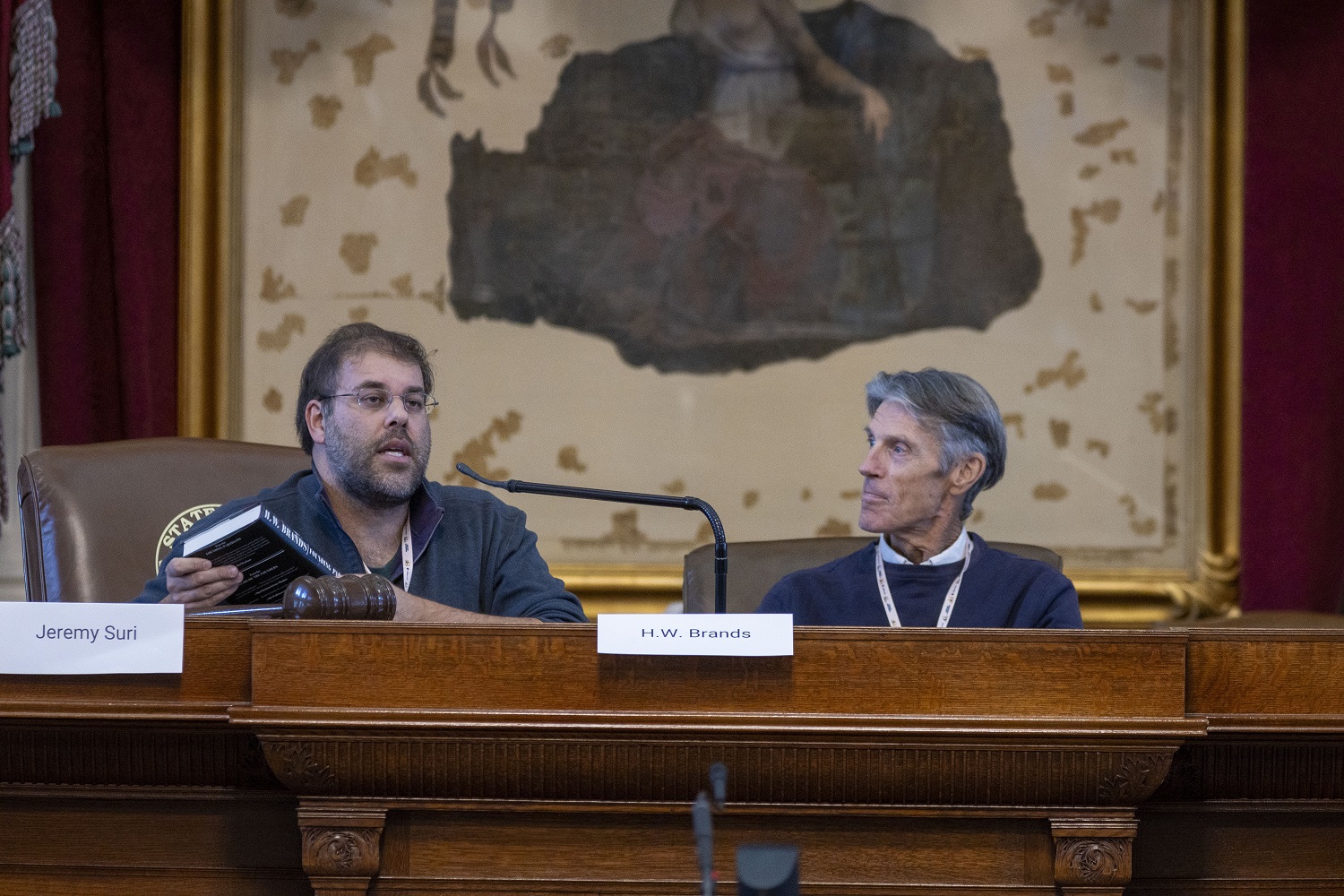
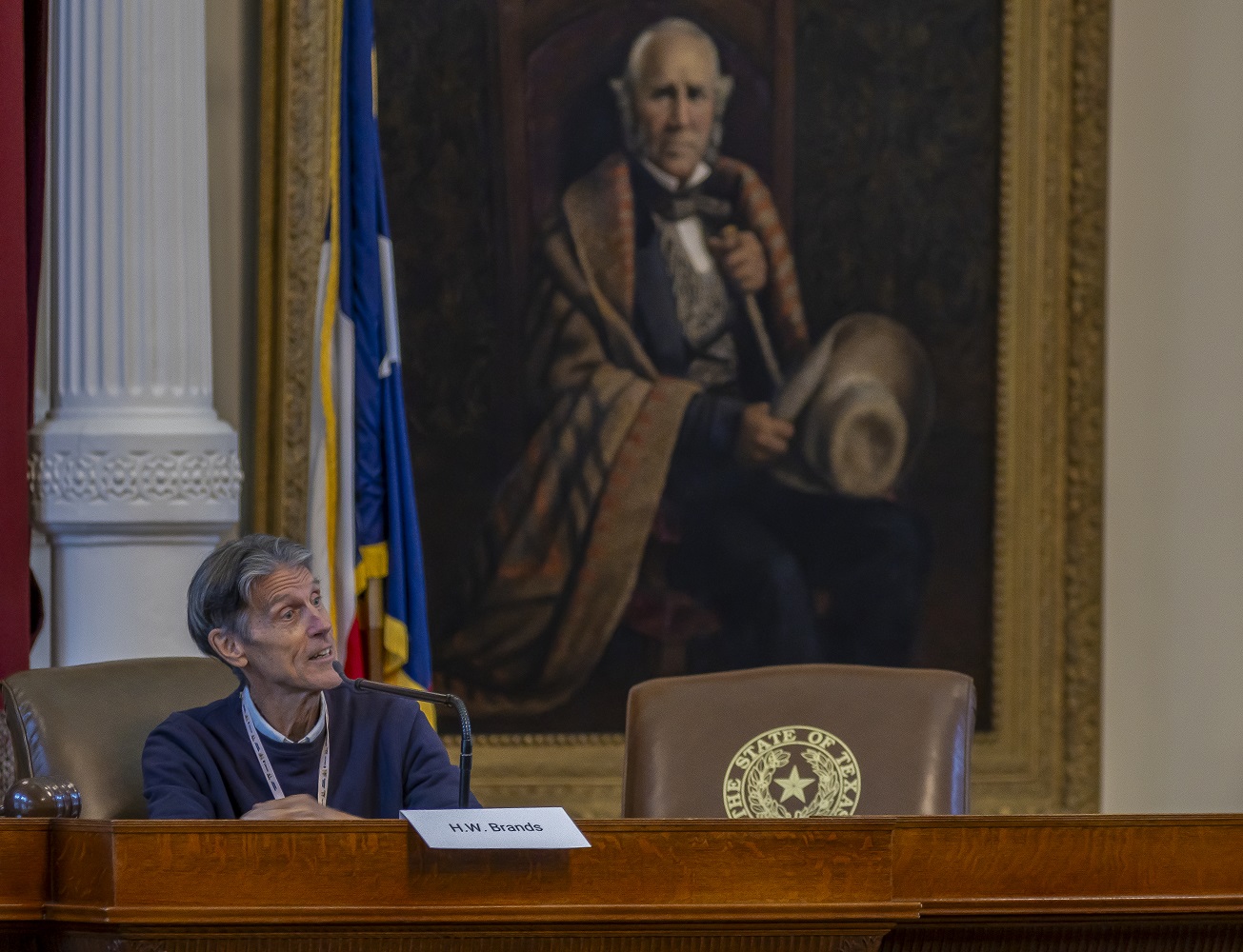
One of these was H.W. Brand, the UT Historian and best-selling author of numerous books.

Sam Houston Assessing H.W. Brands

He discussed his latest book, Founding Partisans, and he revealed the founding father he thought most interesting (James Madison).

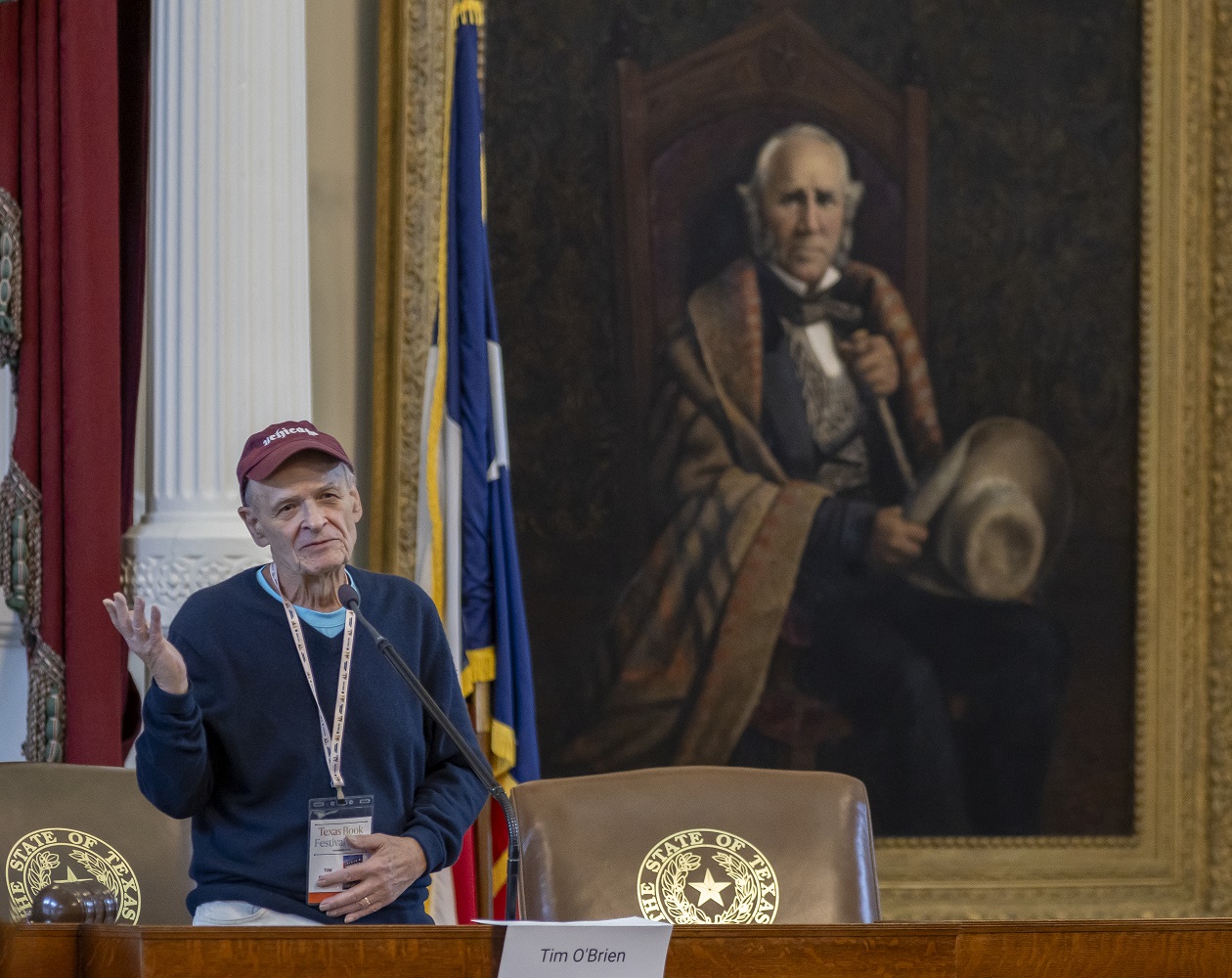
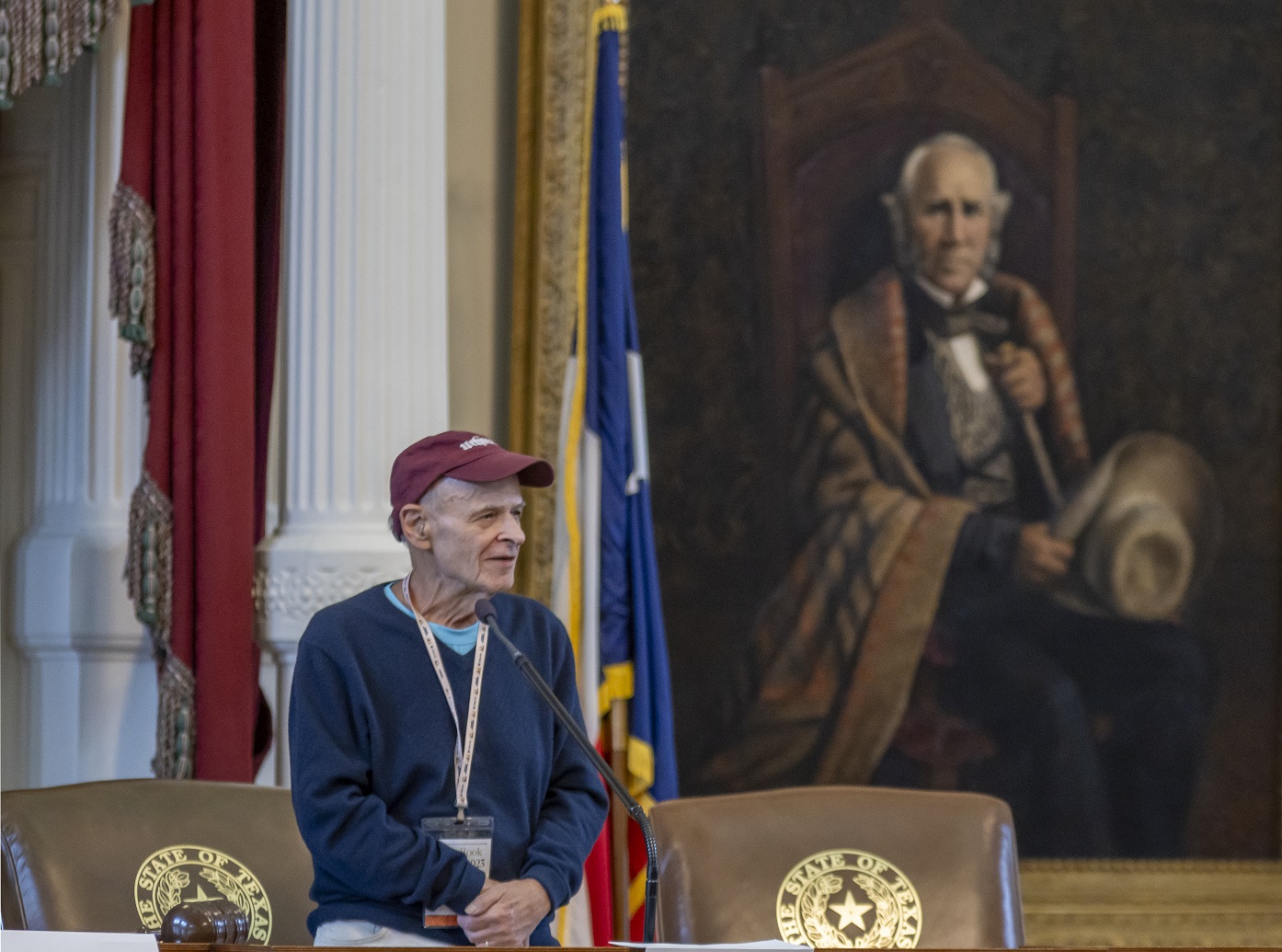
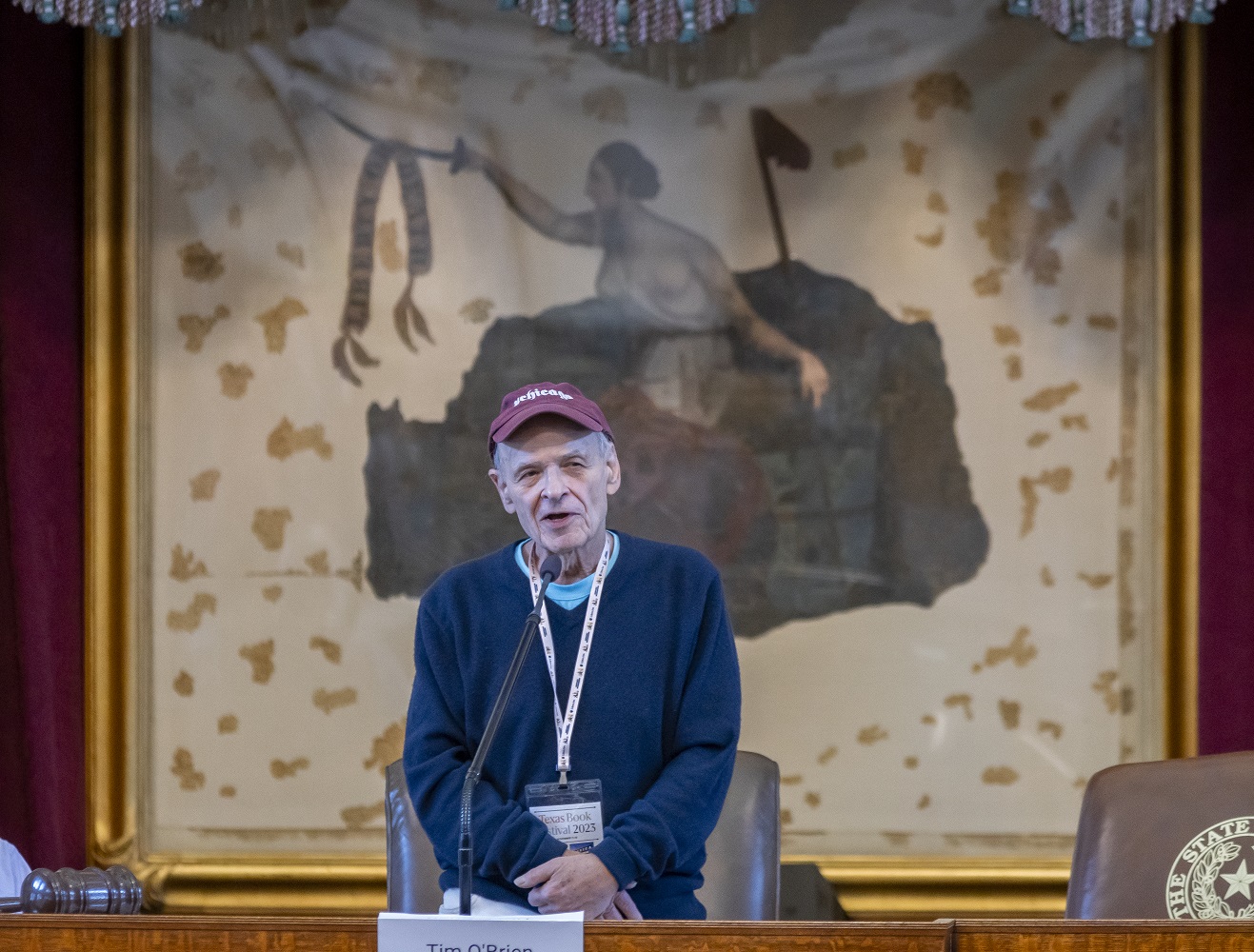
Tim O’Brien, the celebrated author of The Things They Carried and the National Book Award winning Going After Cacciato, also spoke from the House floor–standing at the Speaker’s dais!

Although O’Brien was born in Austin, it was Austin, MN, not Austin, TX. Nonetheless, he lives in central Texas and is considered a “Texas author.”

In fact, for many years, he taught at Texas State University, and he donated his papers to the Harry Ransom Center.

Beyond these unique experiences, we each wrote about a panel that stood out to us, which you can find below.

Fighting to Survive: Rebellions in Epic Fantasy

Madison Cawthon

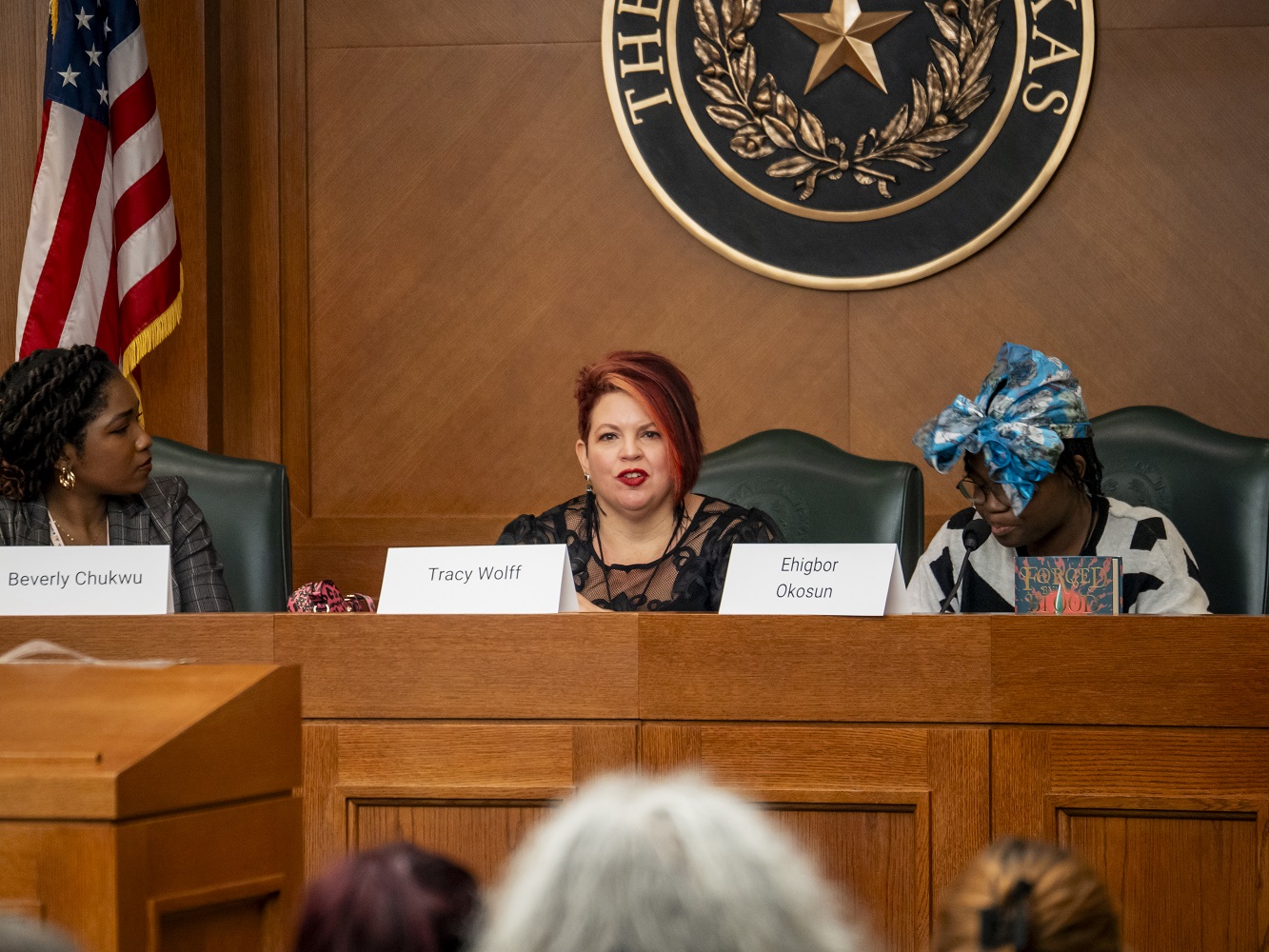
Our first panel was an interesting exploration of fantasy books, featuring Tracy Wolff and Ehigbor Okosun. Their discussion unveiled the intricate process of world-building, emphasizing how their characters acted as architects of the realms within their books.

Both authors revealed that their characters organically guided the storytelling process. Okosun notably delved into the incorporation of Nigerian culture, shedding light on how its appreciation often relies on readers’ familiarity with its nuances. It was interesting to hear about all the planning and behind-the-scenes work that went into writing their novels. Ultimately, this panel was one of my favorite panels of the festival.

A Night of Screams: Latino Horror Stories

by Jessica Cuevas

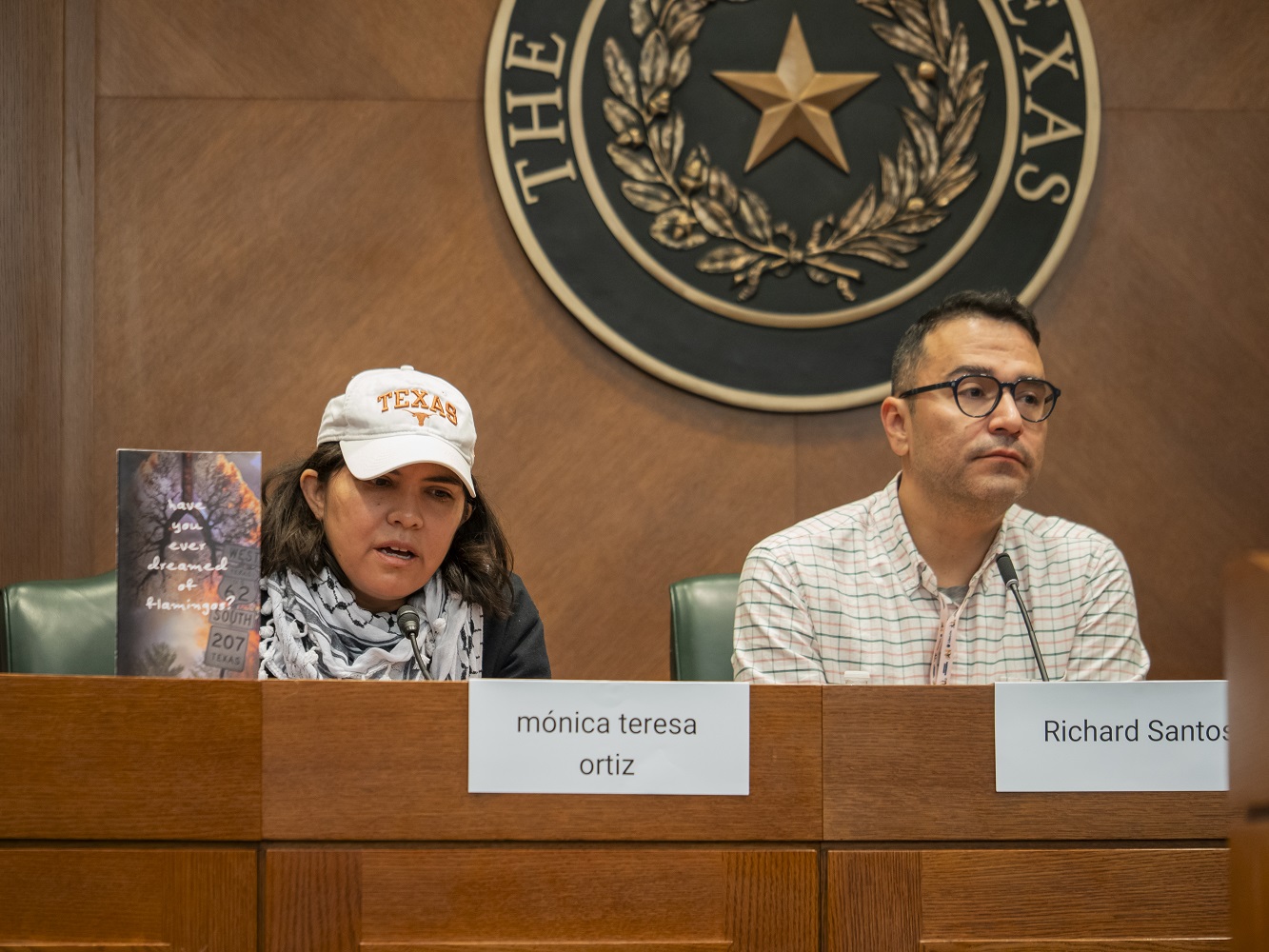
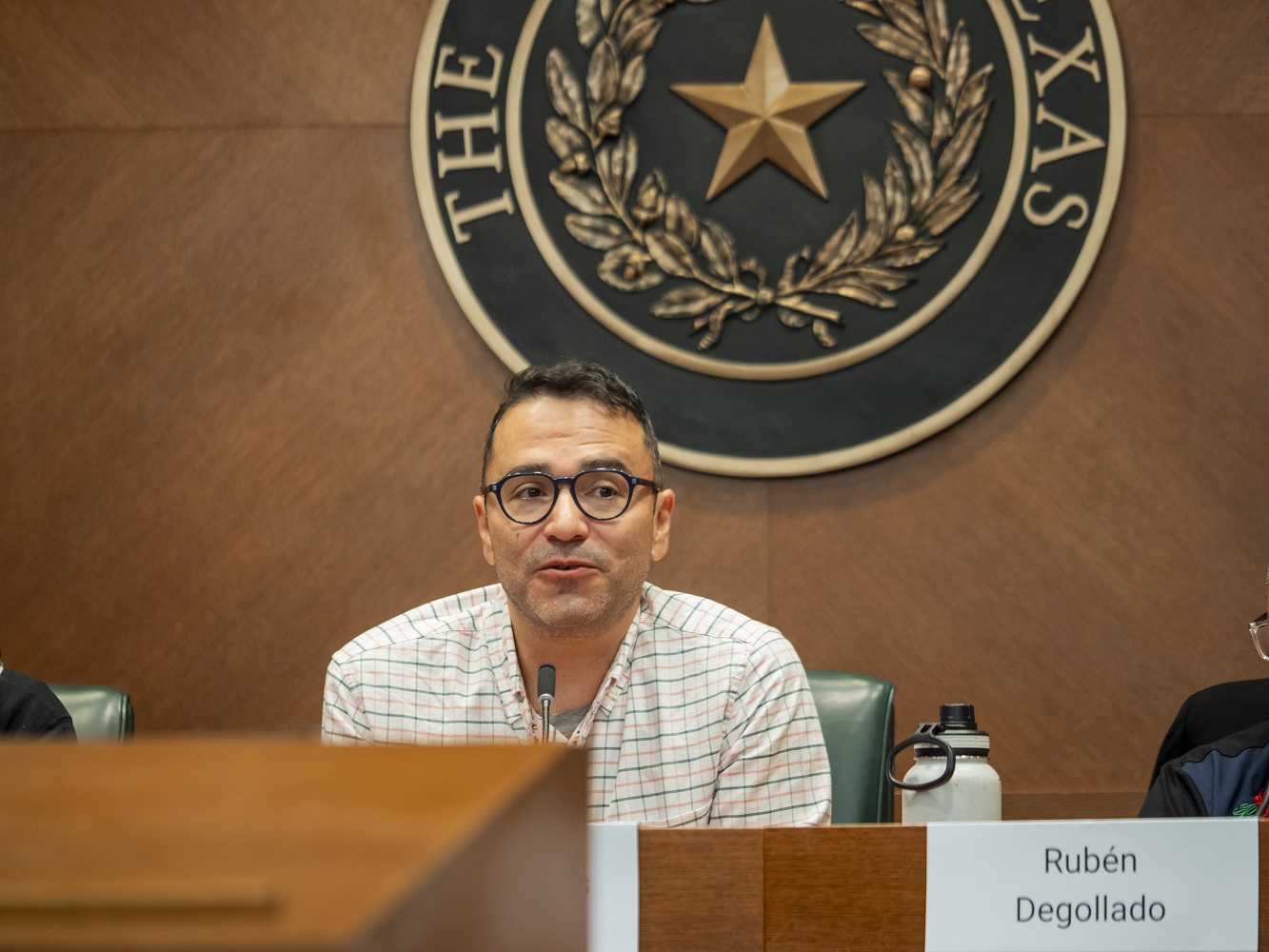
Growing up, I heard different versions of Latin American lore, such as La Llorona (the weeping woman), El Cucuy (the Boogeyman), and La Chupacabra (a goat sucker).  All of these stories, perhaps not coincidentally, reminded us to behave and listen to our parents. When I was a child, these stories instilled a fear in me, and if my parents or siblings just mentioned these names, I knew I was in trouble. With a large Hispanic membership in LEAP, this background influenced our decision to attend the session, “A Night of Screams: Latino Horror Stories.” Richard Santos, himself a novelist, moderated the event, in conversation with Leticia Ortiz, Ruben Degollado, and Monica Teresa Ortiz.

When asked to gather Latino artists to create the First Anthology of Latin Horror Stories, Richard Santos jumped at the opportunity. Although unsure of who he would ask at first, he knew it was something he could get done, and he was right! Together, they put together an anthology of some of the most common and traditional horror stories, but they took some liberty in writing their own version and creating other stories.  Mónica shared an anecdote about her grandfather and father in a near encounter with La Chupacabra, while Rubén took this opportunity to create a story about zombies down at the US-Mexico Border, and Leticia wrote about body horror and generational trauma in her book, “Las Criaturas”. Together they filled the room with laughter as many Hispanics in the room related to the authors’ experiences that influenced their stories.

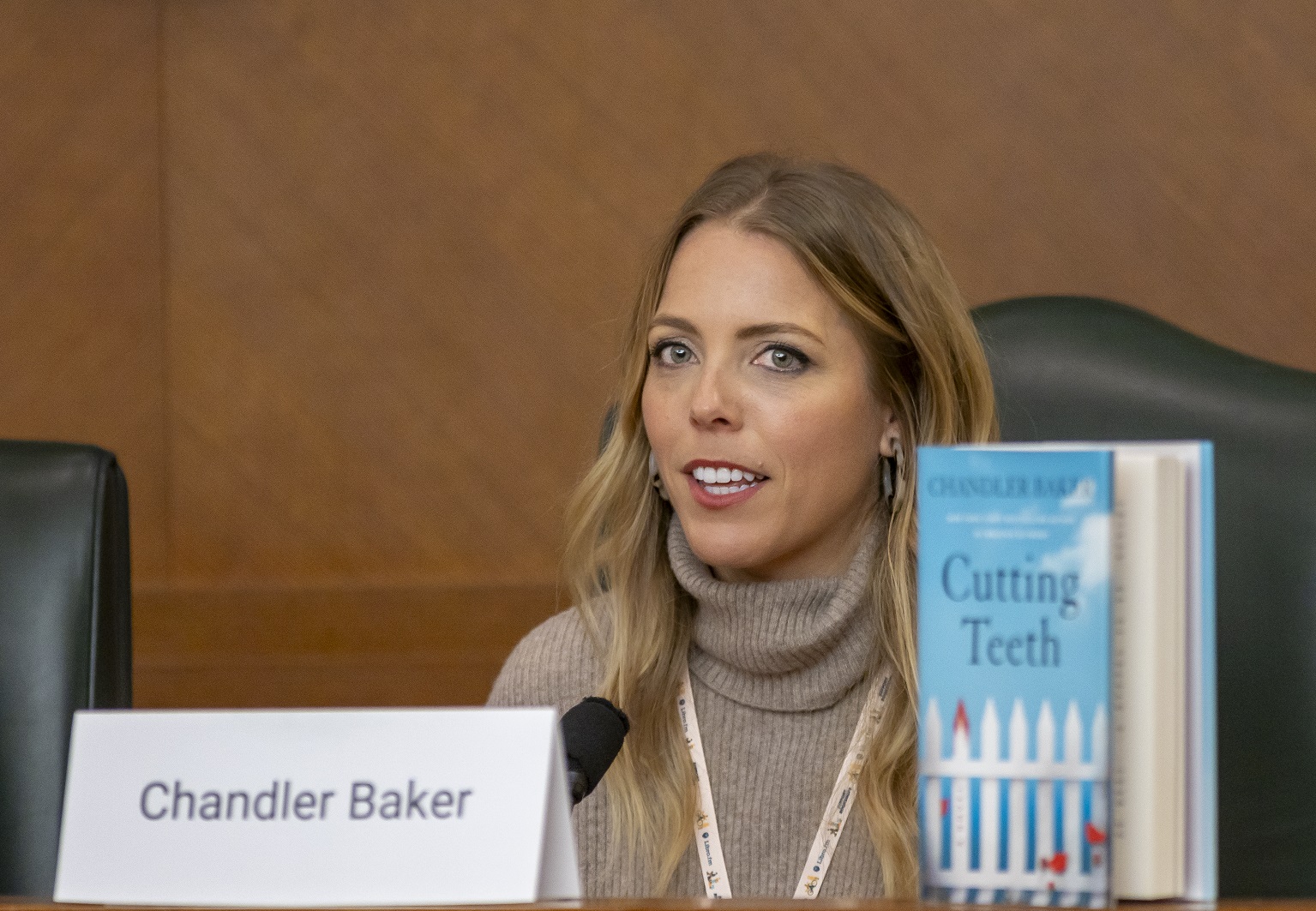
Fortunately for the panelists, their book sold out at the event. Unfortunately for the LEAP Ambassadors, the books sold out before they could get copies! 

The Security of a Free State & The Distortion of the Second Amendment

by Michelle Cardenas

One of the timeliest panels of the day was The Security of a Free State & The Distortion of the Second Amendment. This panel featured Cameron McWhirter, author of American Gun: The True Story of the AR15, and Jeff Sharlet, author of The Undertow: Scenes from a Slow Civil War. Both authors shared a bit about their books and tackled the topic of the origin of guns and how much change they have brought to society over time. 

Cameron McWhirter focused on explaining the creation of the AR15 and how its original purpose has been distorted over time. McWhirter explained that the AR15 was designed to provide military troops with a more accessible and easy weapon in combat. Despite its original intent, the AR15 is the most common gun used in mass shootings and other high-profile criminal cases. One of the most shocking details he gave during the talk was his very own experience purchasing an AR15. According to Cameron McWhirter, it only took him 38 minutes to buy such a deadly weapon; it was that quick! 

Jeff Sharlet took a different approach to the conversation and asked the crowd to reflect on how we accept guns in our everyday lives. He explained how over the years guns have become a huge part of our social norm. Owning a gun is no longer uncommon or odd, instead, it is deemed a necessity to protect oneself. He shared with us a staggering statistic; the United States is the country with the most civilian-owned guns with a ratio of 120 guns to every 100 civilians.

Both authors acknowledged the issues the United States is currently having with firearms ending up in the hands of the wrong people. They did a phenomenal job educating the public on the real purpose of firearms and the reality of the world we live in today. They embraced the topic and encouraged us to enjoy and protect the freedom that we have been blessed with. 

Wrapping Up the Book Festival

These were far from the only sessions we experienced. We also learned about the State Parks, which just this week received a windfall from voters, who voted to create a Conservation Fund for State Parks. This 1 billion is sorely needed, a fact elaborated on by George Bristol and Andrew Sansom, both of whom have written books on the State Parks.

Intriguingly, Andrew Sansom’s book, on the Art in Texas State Parks, features the work of one of our favorites: Lee Jamison.

We also had a chance to see a cooking demonstration by Judd Servidio, whose book, Salt & Vanilla, offers both recipes and some stories about cooking for the rich and famous.

And where besides the TX Book Festival can you go from a cooking demonstration to a panel on “family thrillers…”

…and then go to a panel about women in law enforcement?

In the latter case, we had a chance to see author–and former CIA agent–Jana Monroe, whom we saw last month at Murder By the Book.

In short, it was a weekend full of learning and enrichment, and we look forward to next year’s Book Festival, which we hope is the beginning of a LEAP Tradition.

Unknown's avatarAuthor mikeyawnPosted on November 18, 2023November 19, 2023Format AsideCategories Civic Engagement, Civil Rights, LiteratureTags Center for Law Engagement And Politics, LEAP Ambassadors, Sam Houston State University, Texas Book FestivalLeave a comment on Another Day: A lot more books. The TX Book Festival

Around the World with Former Prime Minister Sir John Major

by Michelle Cardenas 

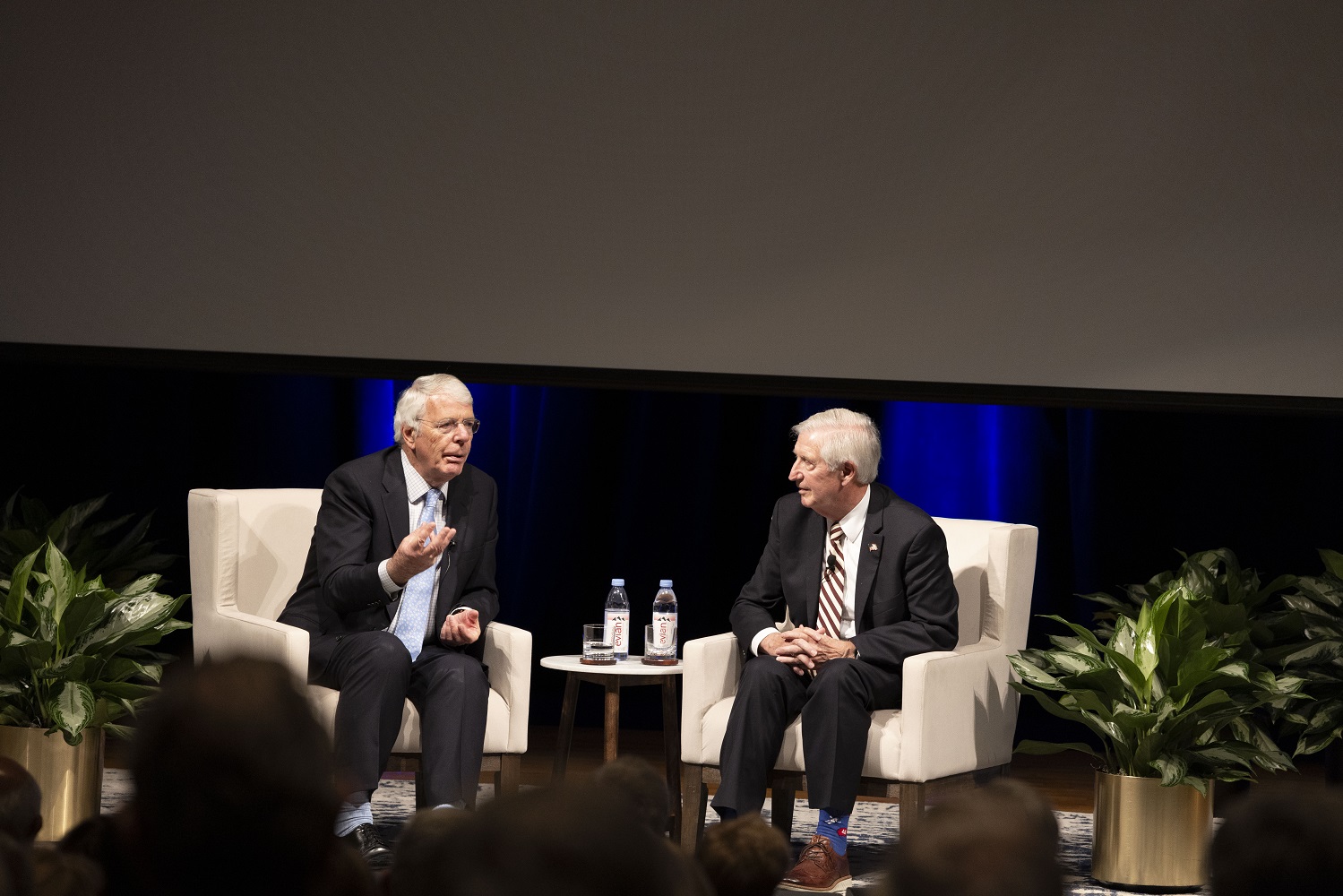
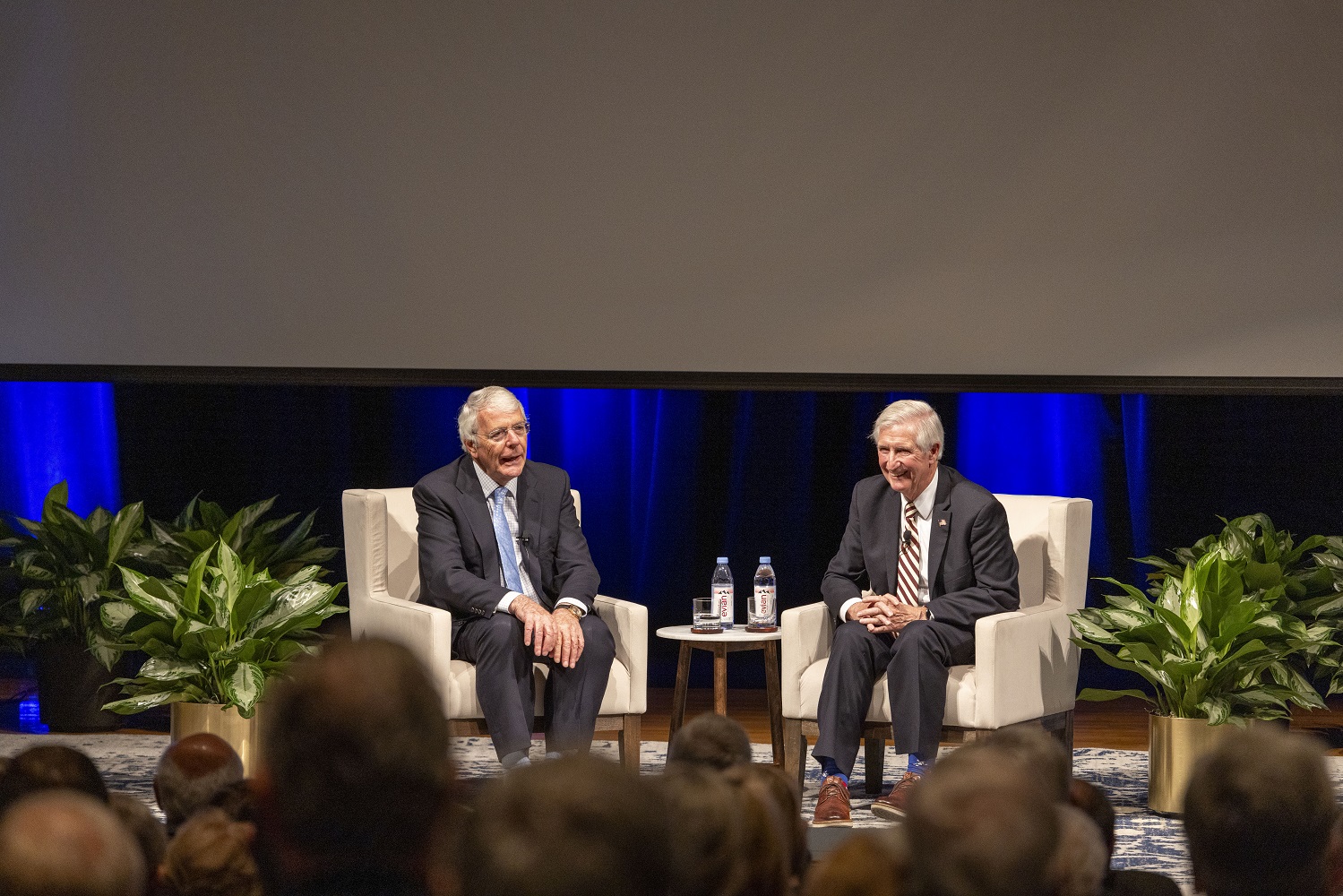
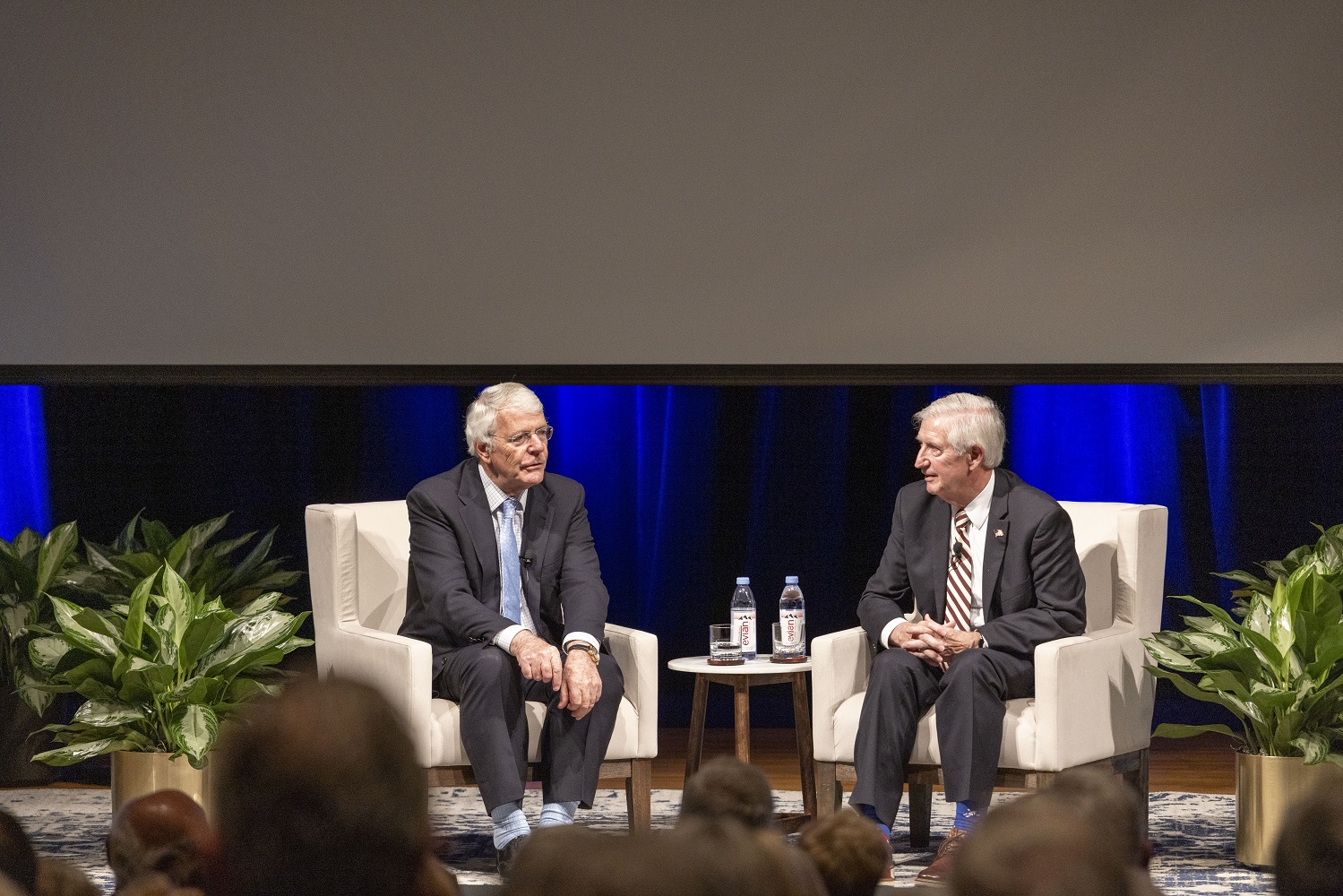
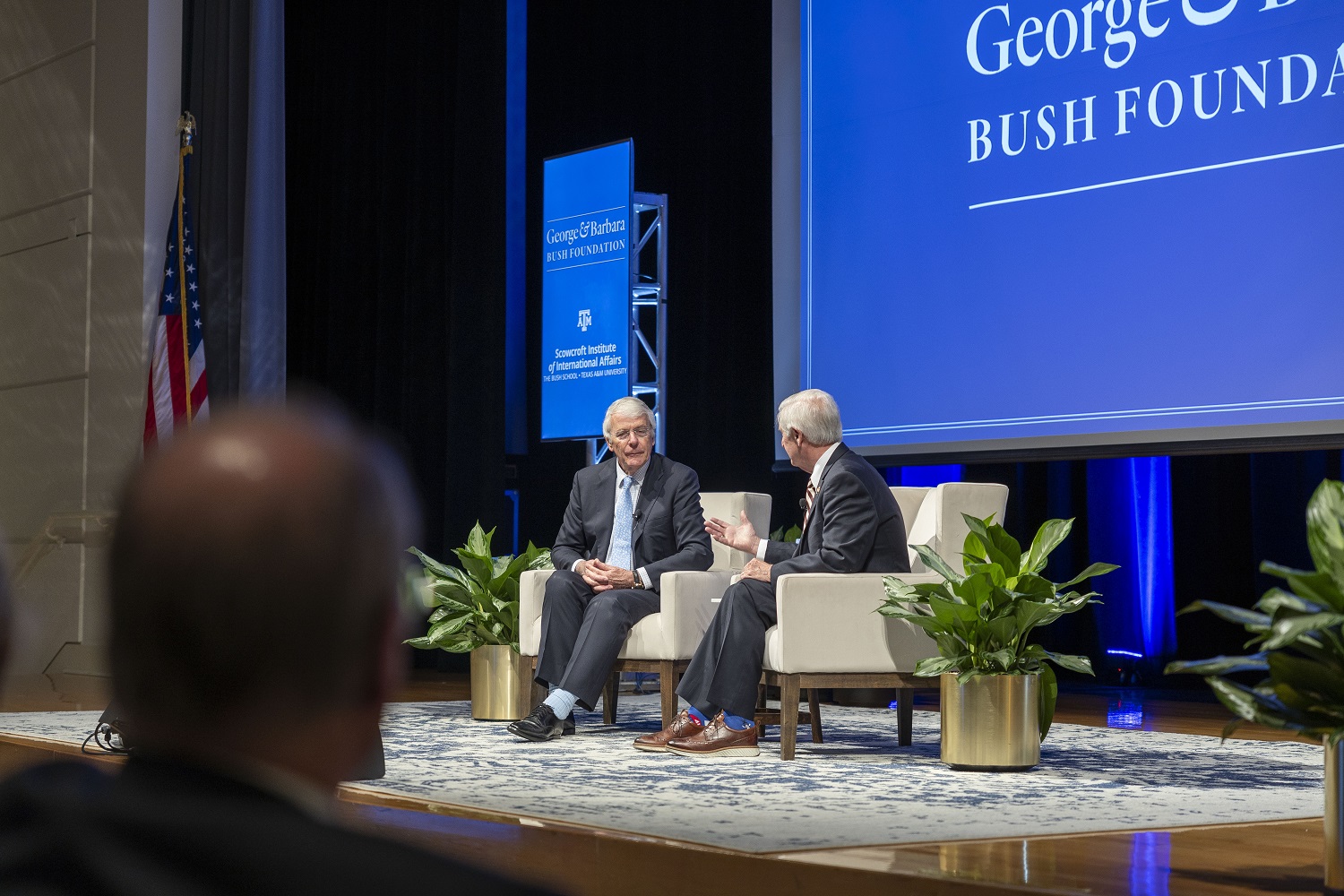
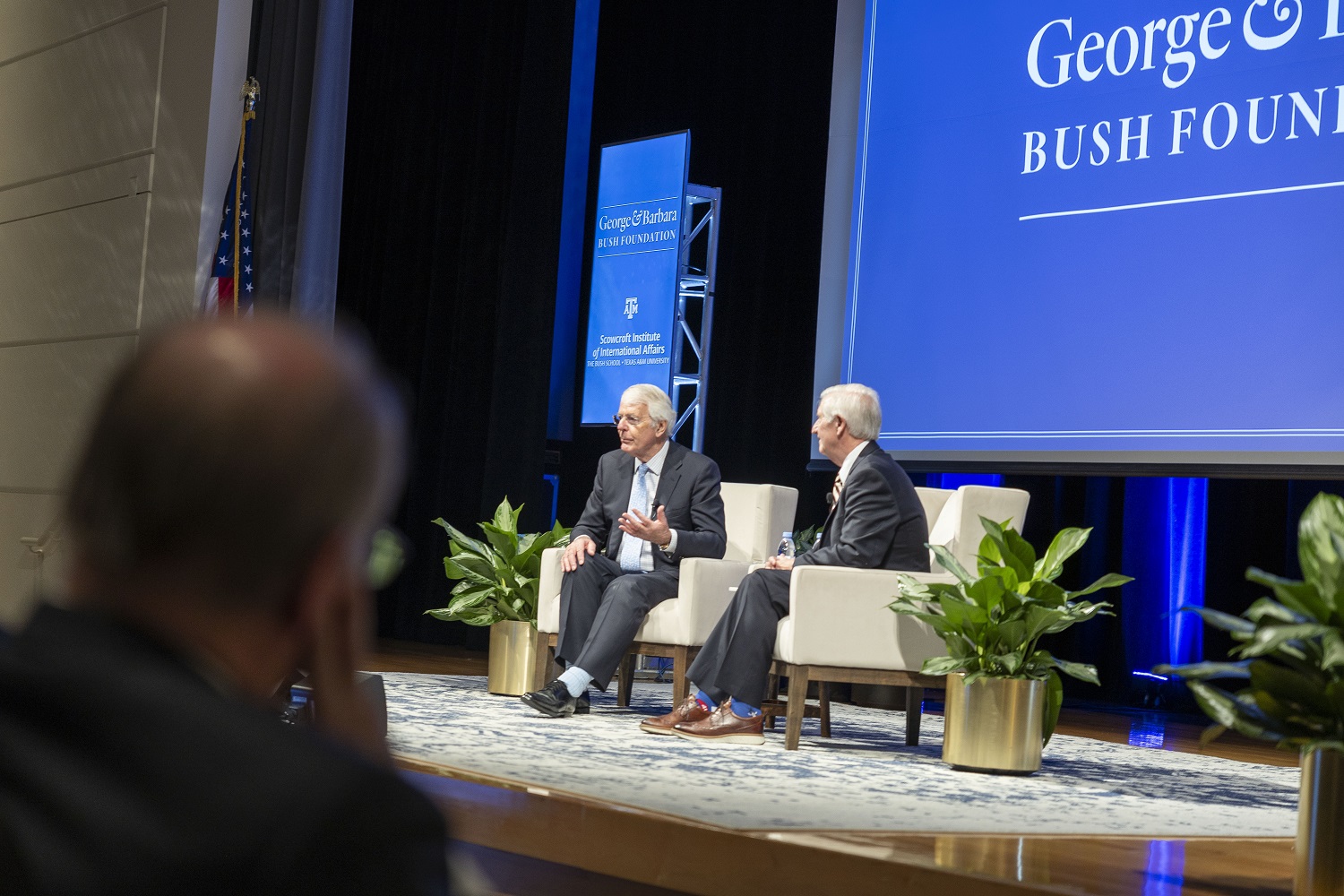
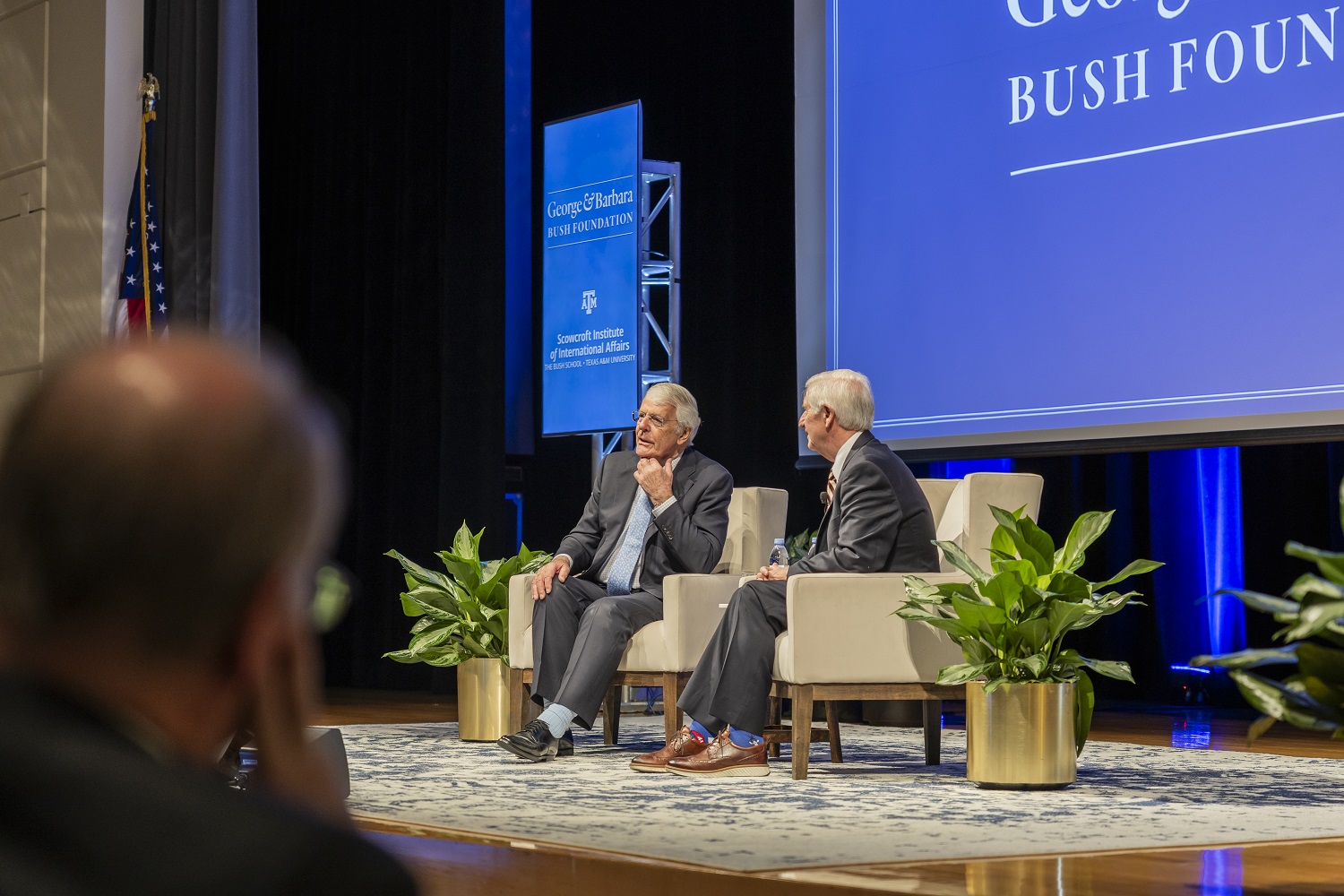
Morgan, Olivia, Cinthia, and I headed to the Texas A&M Bush School in College Station to hear from former Prime Minister of the United Kingdom, Sir John Major. Attending with us was Marybeth Rayburn, a friend of LEAP who attends TAMU. We quickly divided up and found our seats as we prepared to be enlightened on foreign policy and government. 

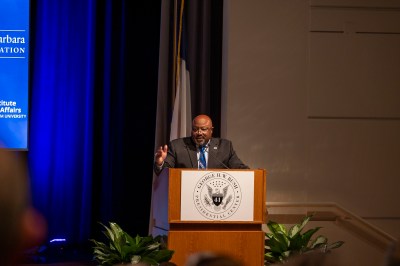
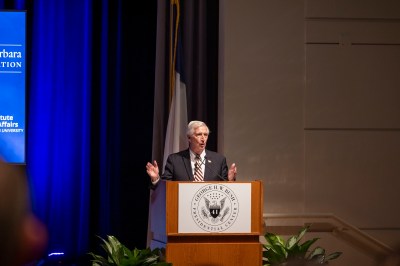
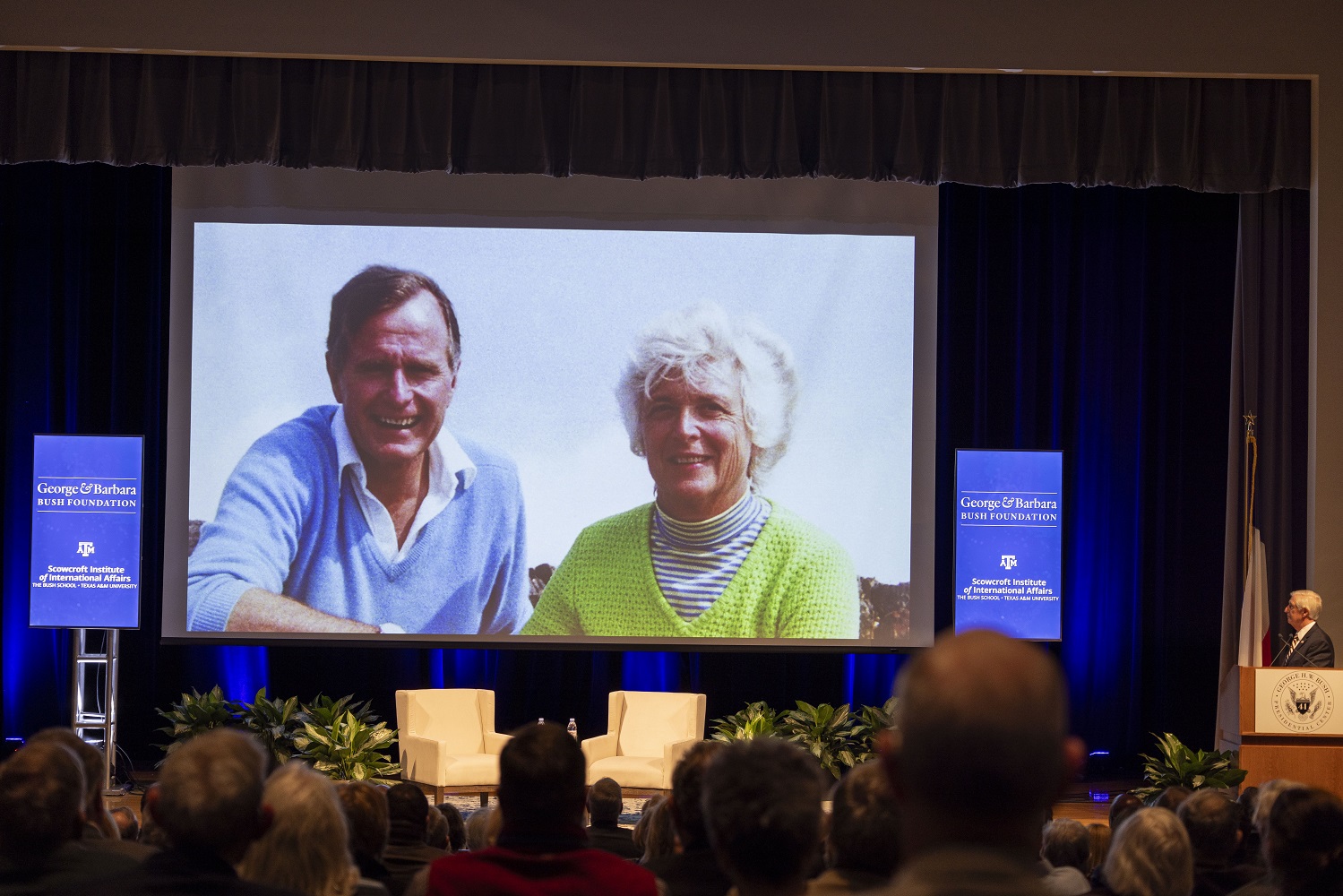
To begin, the Dean of the Bush School, Frank B. Ashley III, delivered some opening remarks thanking the crowd for attending the event and welcoming donors of the George and Barbara Foundation.

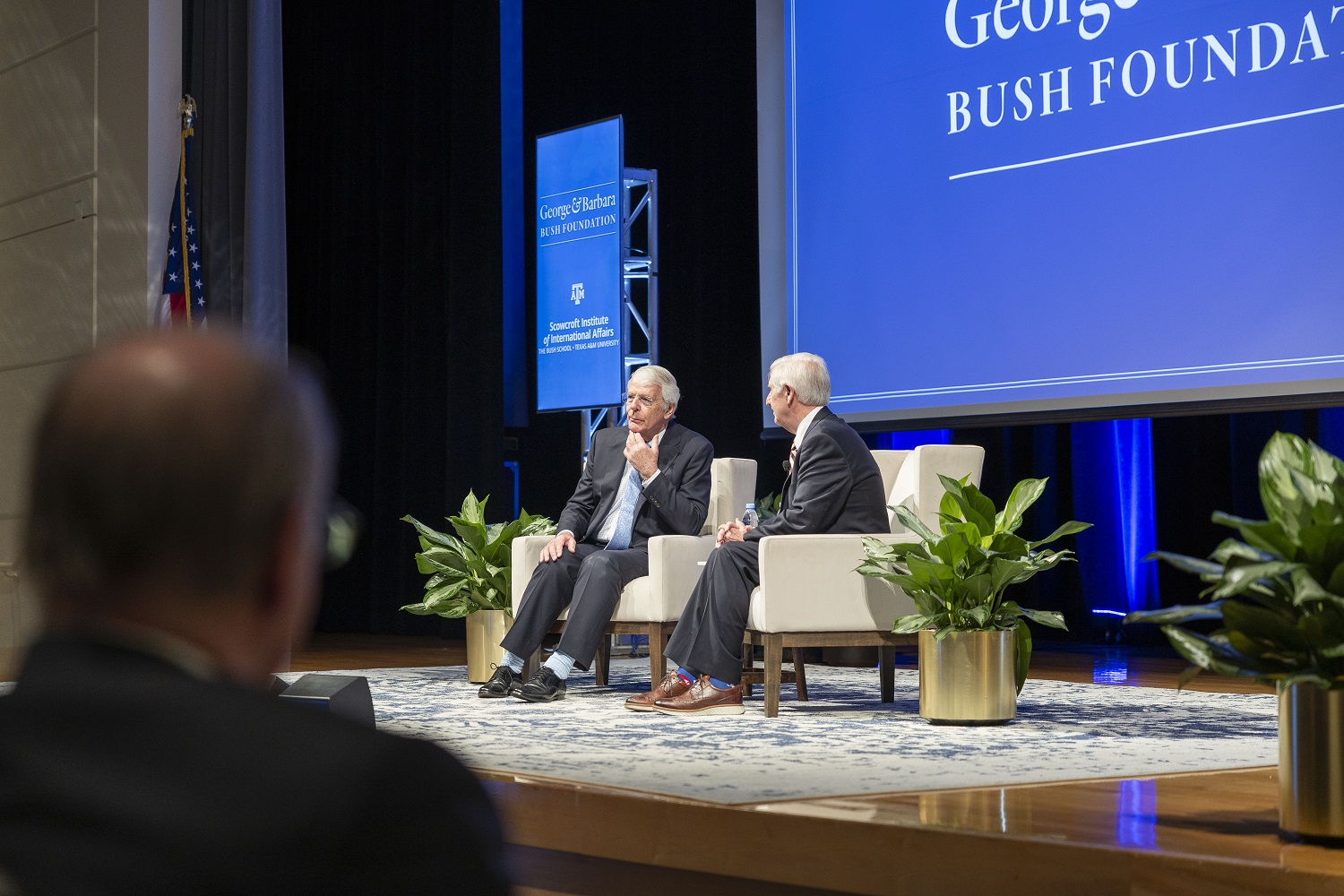
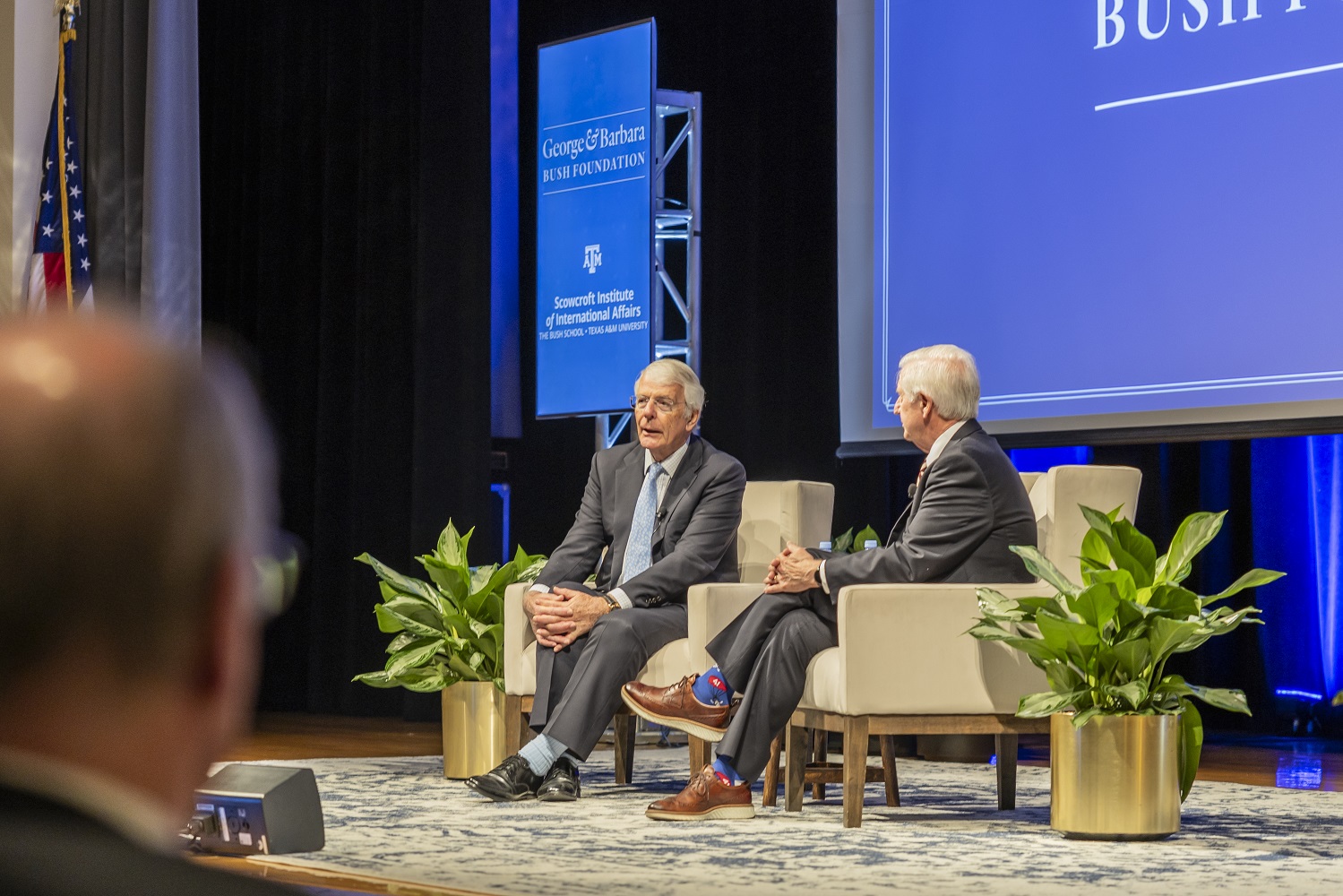
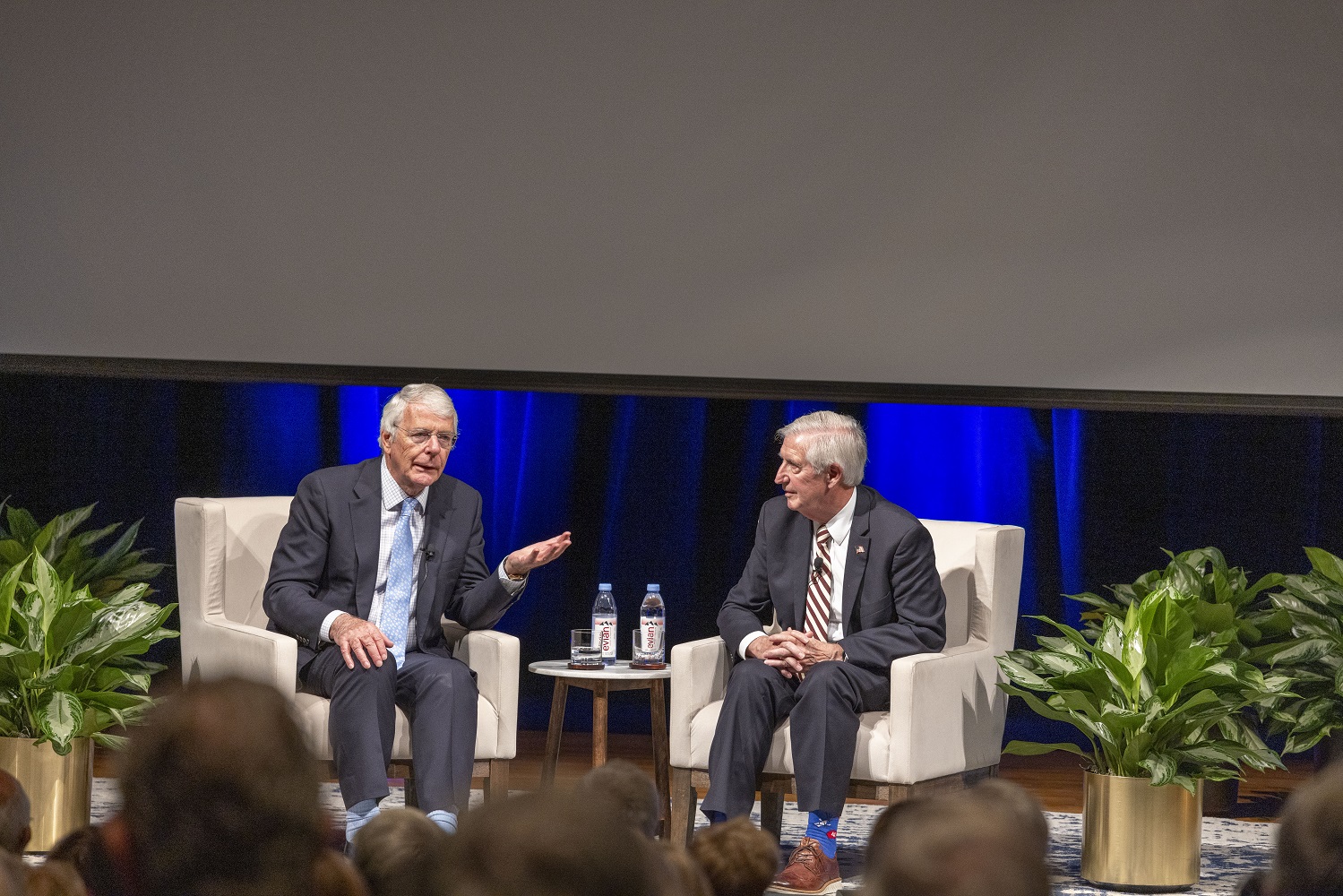
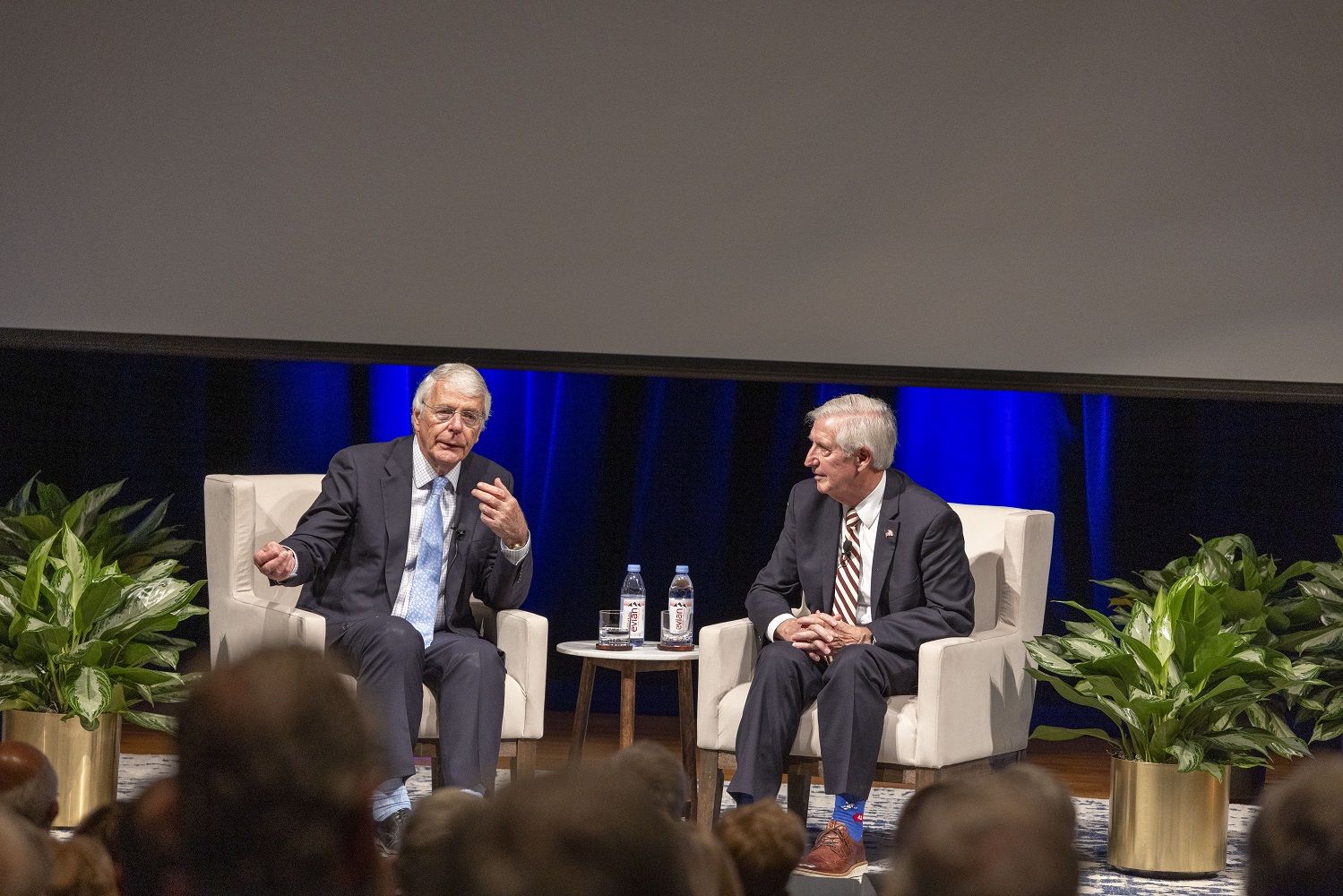
He introduced the moderator for the event, Andrew H. Card, who served as President H.W. Bush’s Secretary of Transportation and President G. W. Bush’s Chief of Staff. Card was the perfect moderator for this event, considering his past experiences in government, and his relationship with Sir John Major. 

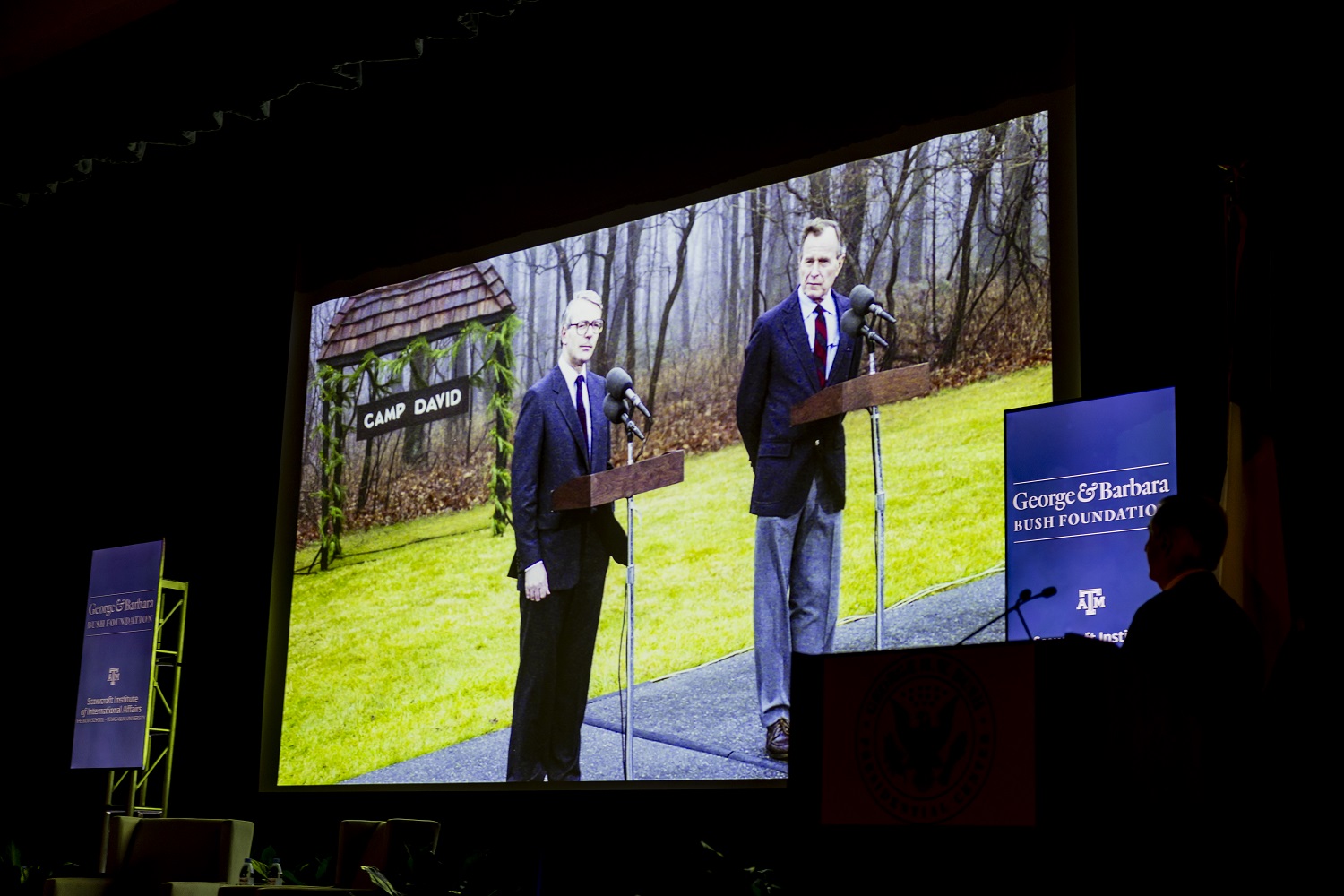
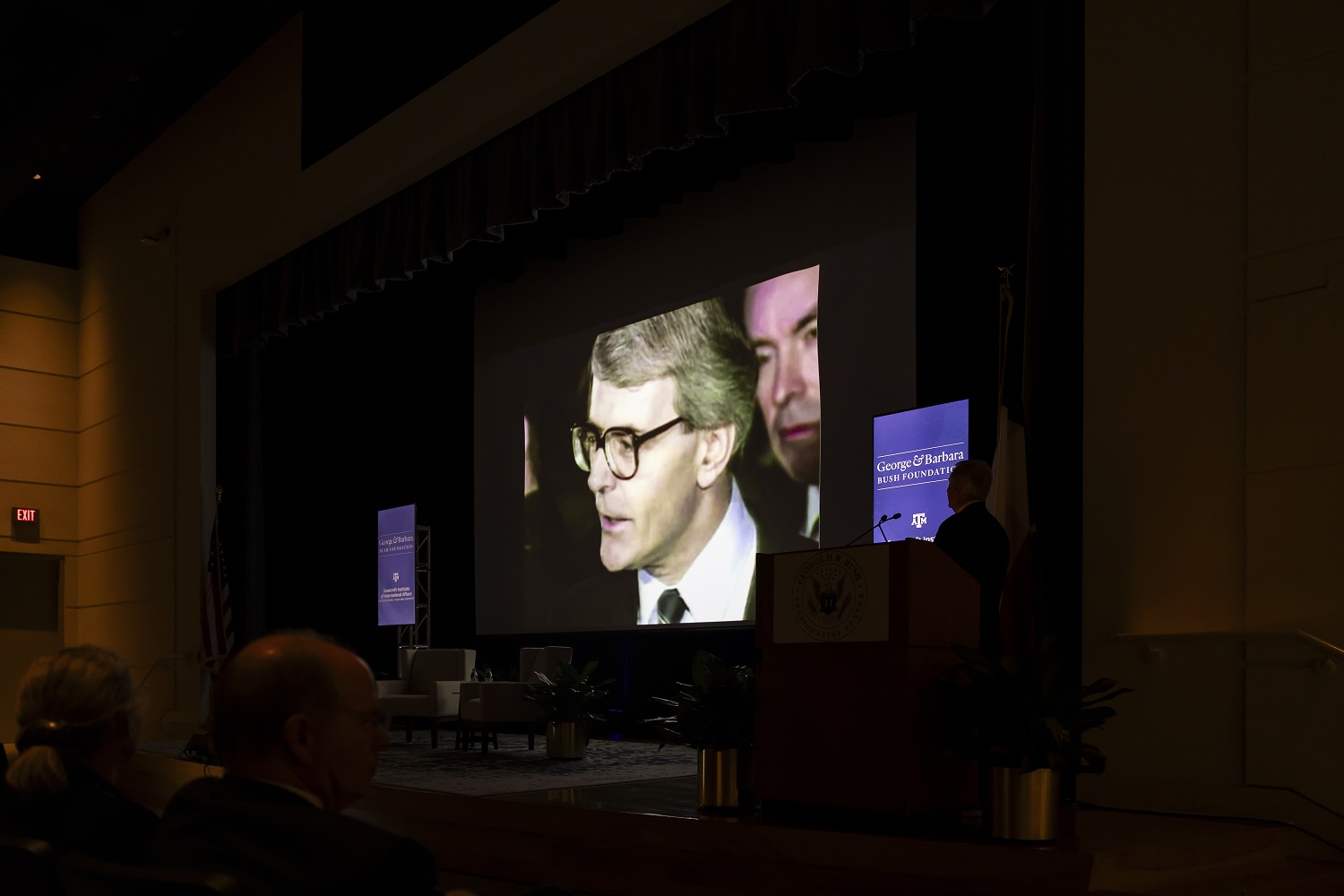
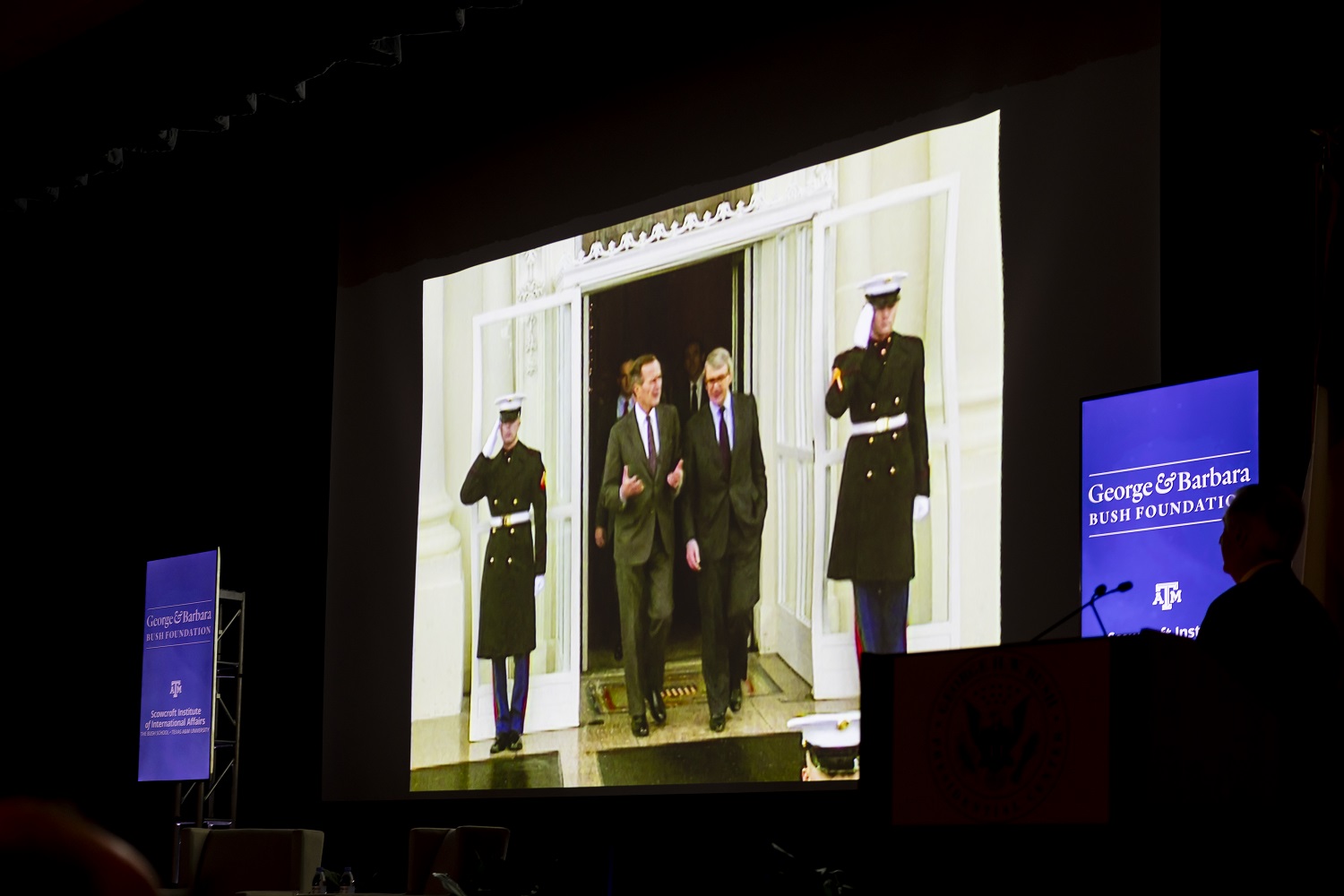
A brief video ensued, which highlighted some of the pivotal moments shared between President H.W. Bush and Sir John Major, before introducing the former Prime Minister to the stage.

After reminiscing about his good experiences with the president, Sir John Major went straight into his love for politics. 

At just 14 years old, Sir John Major found his calling for government. Major reminisced on how as a young teenager, he visited the House of Commons and decided in those few short moments that he would dedicate his life to becoming a part of one of the oldest representative assemblies in the world. Major would go on to give speeches from a soapbox (literally) to anyone who would listen.

But he didn’t stay on soapboxes in small towns for long. By the 1990s, he was meeting with world-wide leaders as Prime Minister of the United Kingdom, succeeding Prime Minister Thatcher, the country’s first female executive. He discussed his meetings with Boris Yeltsin, and the Russian leader’s love of Vodka (even at 8am); his time as leader of the G7; and some of his meetings with President Bush.

During one of these meetings, he came to the US, where he met with President Bush at “Camp David.” This, he noted, sounded as if he would be roasting marshmallows with scouts around a campfire, but he soon learned the destination was elegant and equipped with technology befitting a President.

The presentation highlighted Sir John Major’s perspective on crucial and controversial topics, including immigration and foreign alliances. He underscored the shared positions of the UK and the US in politics and foreign affairs, addressing common challenges like asylum, foreign aid, and alliances. His core message emphasized that global order relies on hope, humanity, and goodwill, noting, “If the United Kingdom and the United States stick together, then the world is in order.”

 Card asked Sir John Major if there was any advice he would give to those who might wish to go into public service. To this, he answered that our democracy is valuable and should be protected, urging the audience to look past the parties of politicians and instead to focus on how representatives are serving the needs of the country and its people.

Sir John Major’s words were inspirational, and he repeatedly emphasized the importance of imparting hope. When “people have hope for a better future,” he noted, “they can withstand the travails of the day.” The key for leaders is to ensure that that hope and hard work can pay off, through justice, mobility, and the rule of law.

Unknown's avatarAuthor mikeyawnPosted on November 3, 2023November 3, 2023Format AsideCategories Civic Engagement, Civil Rights, Law, PoliticsTags Center for Law Engagement And Politics, LEAP Ambassadors, Sam Houston State University, Sir John Major, TAMU Bush SchoolLeave a comment on Around the World with Former Prime Minister Sir John Major

Posts pagination

Previous page Page 1 Page 2 Page 3 Page 4 … Page 15 Next page

LEAP Ambassadors Are Involved!

This slideshow requires JavaScript.

Follow Us On Facebook!

Follow Us On Facebook!

Catch Up With Us

  • Internship Informational: City Fellows, Sam Houston Austin Internship Program, and Washington, DC February 17, 2026
  • Contracts, Promissory Estoppel, & Chess: Simulated Law Class with Professor Val Ricks February 10, 2026
  • Fun, Games, and Education: Volunteering at the Senior Center February 9, 2026
  • Multi-Platform Media Exposure with LEAP February 8, 2026
  • The Rise of Africa’s Youth: Insights from Ambassador Michelle Gavin February 5, 2026

Join The Conversation!

Highlights from the… on Glazing-A-Trail with Lauren…
The Civic Leadership… on Foundational Activities of the…
The Civic Leadership… on The Philosophical Foundations…
LEAPing Into Action… on The Philosophical Foundations…
Jada Cook's avatarJada Cook on SHSU Students LEAP Across Five…

Find Previous Posts

We also have Twitter!

My Tweets

LEAPing Into LEARNing

This slideshow requires JavaScript.

  • About LEAP
  • LEAP Ambassadors
Center for Law, Engagement, and Politics Blog at WordPress.com.
  • Subscribe Subscribed
    • Center for Law, Engagement, and Politics
    • Join 491 other subscribers
    • Already have a WordPress.com account? Log in now.
    • Center for Law, Engagement, and Politics
    • Subscribe Subscribed
    • Sign up
    • Log in
    • Report this content
    • View site in Reader
    • Manage subscriptions
    • Collapse this bar
 

Loading Comments...