Attending a World Affairs Council meeting is always an enriching experience, but the recent event featuring Jen Psaki was particularly enlightening. As a key figure in modern American politics, Psaki’s perspective was a refreshing and exciting one to hear , and her book, Say More: Lessons from Work, the White House, and the World, provides a deeper understanding of the intricate world of political communication.
Jen Psaki’s tenure as the White House Press Secretary under two administrations has cemented her reputation as a master communicator. During her talk–which also featured our favorite moderator, Ronan O’Malley– she delved into the essential skills required for the role.
Psaki discussed the importance of knowing your audience, which she made sure to clarify was not “everyone”, as well as connecting emotionally with the audience.
Whether it’s addressing the nation during a crisis or discussing policy changes, evoking empathy and understanding is crucial. This emotional connection can often be the difference between a message being heard or ignored, exacerbated or undermined. To emphasize her point, she quoted Maya Angelou’s famous line “people will forget what you said, people will forget what you did, but people will never forget how you made them feel.” The ability to convey complex information clearly and succinctly is vital. Psaki shared anecdotes about how meticulous preparation and anticipating questions helped her deliver concise and effective responses.
Jen Psaki’s unique experience of working under both President Obama and President Biden offered intriguing insights into the differences between their administrations. She described President Obama as an introverted yet incredible communicator, whose well-spoken nature and thoughtful deliberation were key assets. In contrast, President Biden is extroverted, bringing a different dynamic to the administration. Psaki emphasized that working with these presidents required recognizing their “superpowers” and leveraging those strengths in various situations. For Obama, this meant utilizing his eloquence and calm demeanor to inspire and reassure. For Biden, it involved harnessing his relational skills and accessibility to connect with the public and foreign leaders.
Psaki also noted that listening skills are often undervalued, but crucial for effective communication and leadership. Another significant difference she highlighted was in handling times of conflict. Obama tended to communicate passively to the public regarding diplomatic matters, whereas Biden has been more proactive in declassifying information, especially to counter misinformation and call out Russian falsehoods.
Psaki’s discussion on the current polarizing political climate was particularly relevant. She reflected on how the rise of misinformation and the fragmentation of media have contributed to increasing division. Within this discussion, she stressed the importance of transparency and consistent reporting in rebuilding public trust. In an era where clear and empathetic communication is more crucial than ever, Psaki’s lessons resonate.
The ability to connect, listen, and convey messages with integrity and clarity remains a cornerstone of effective leadership and public service.
With the semester drawing to a close, the Pre-Law Society hosted its Spring Social, a fun-filled evening with a lot of snacks. What’s better, we held it at the Wynne Home, where we surrounded by its beautiful art!
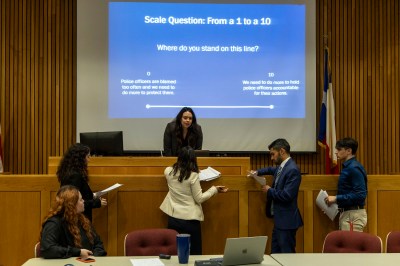
Although the evening was designed with fun in mind, the activities we all law-themed. Thus, we have a debate tournament based on childhood cartoons such as Scooby-Doo and Sponge-Bob SquarePants, the latter of whom was charged with a DUI in our retelling.
Then the jury groups switched with prosecution and defense for the next case: the murder of Scooby-Doo (spoiler alert: Velma did it with poisoned Scooby-Doo snacks in the kitchen). All groups reviewed their charges….
…and were given a four-minute time frame to explain key points of their positions and a one-minute rebuttal. The jury from both cases decided on the best arguments for both cases choosing the two teams to go head-to-head for the final debate: Texas v. Bradley.
Both teams argued very well, and the jury decided Emily Albright, Lillie Bourgeois, Katherine Burnett, Nicole Erazo, and Natalie Mujica won the debate, with good sportsmanship shown all around.
Next after a long break of Italian soda and snacks…
…our members played a game of Jeopardy. If our debate game did not bring out our members’ competitive sides, our game Jeopardy game certainly did! The question consisted of information about past Pre-Law Society Meetings, “Is it legal”, Sam Houston University, The Wynne Home, and Spring. After lots of debating, yelling, and cheering…
…Neehal Ahmed, Chrisi Biello, Olivia Discon, Mark Harkrider, and Isaac Mokrane won by a landslide!
Our members finished out the night with chips, cookies, and Scooby-Doo snacks (not poisoned of course) and shared funny stories from home and or work.
This social brought out the competitive sides of all our members who attended, forged new bonds, and created new friendships. Thank you to the Wynne Home Arts and Visitor Center for providing us with a space to host our social; and thank you to our Spring 2024 Semester Planning Committee for creating these activities and a fun-filled night.
With the end of the semester approaching, we had a busy Pre-Law Society meeting in order. Not only did we have a terrific guest speaker, we also had our semesterly cording-ceremony for our graduating seniors.
So, after a bit of preliminary business…
…we had the honor of having Judge Tracy Sorensen of Walker County Court of Law present. Judge Sorensen is a graduate of Sam Houston State and South Texas College of Law at Houston. Before her time as County Court at Law Judge, Sorensen started her law career as a family court attorney and, later, criminal defense attorney.
She practiced law for almost a decade before assuming office in 2015; she has been reelected twice since then. Sorensen described her somewhat non-traditional path through college and law school, while also describing her career as a practicing attorney and as judge.
It was a great opportunity to hear about two different occupations involving law, both of which are of interest to pre-law students.
With this being the last meeting of the semester, we celebrated our 23 graduating seniors, three of which were Pre-Law Society officers!
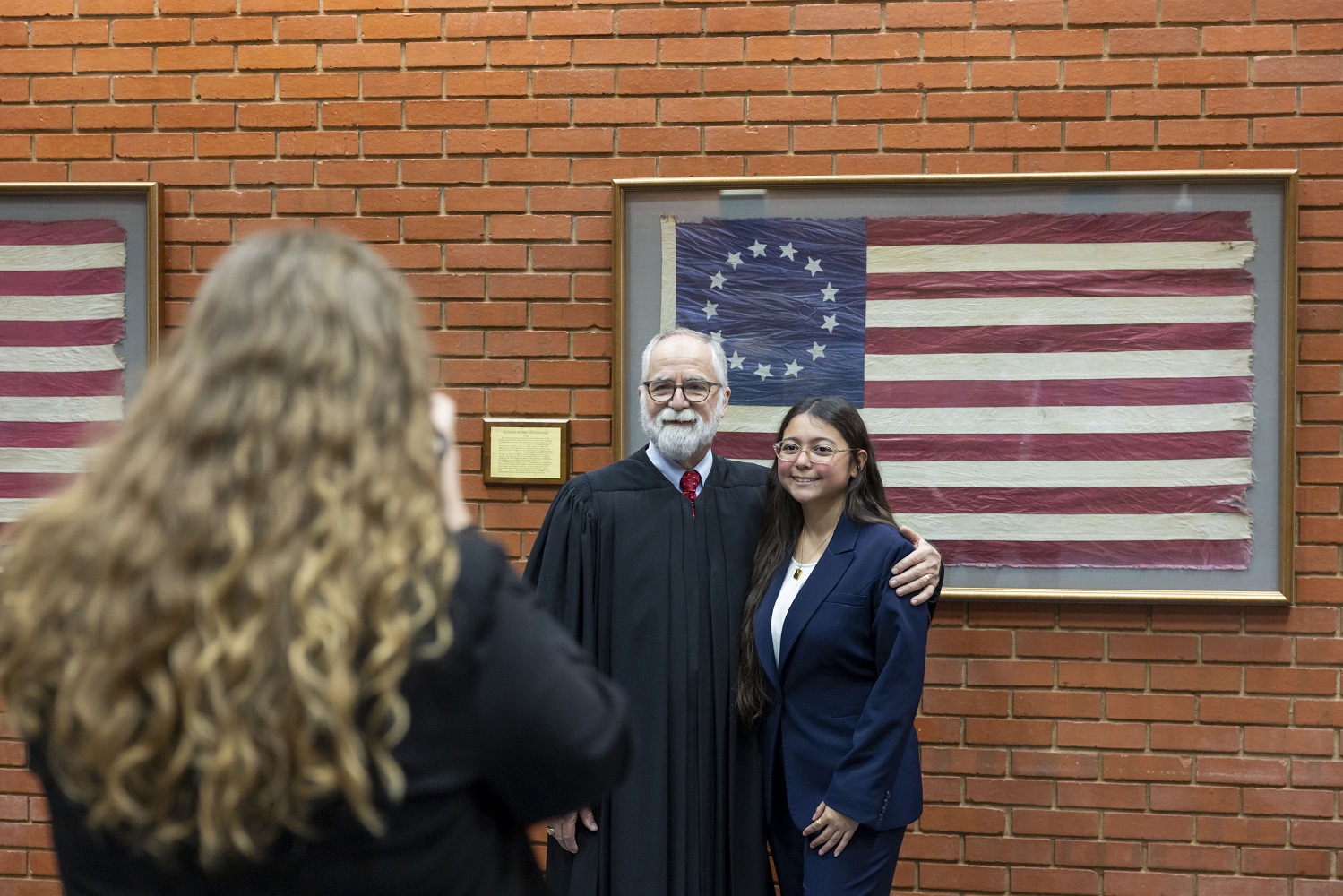
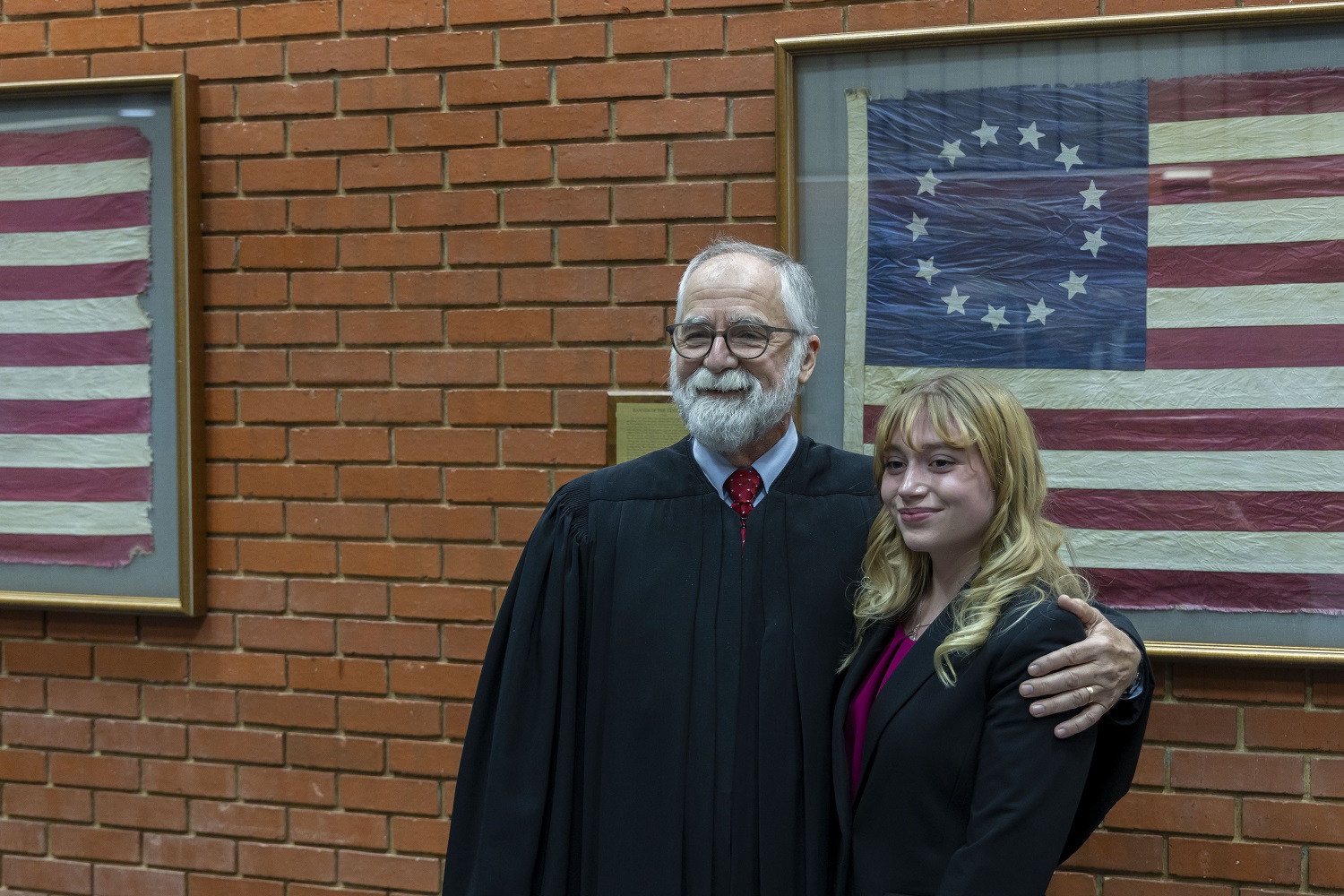
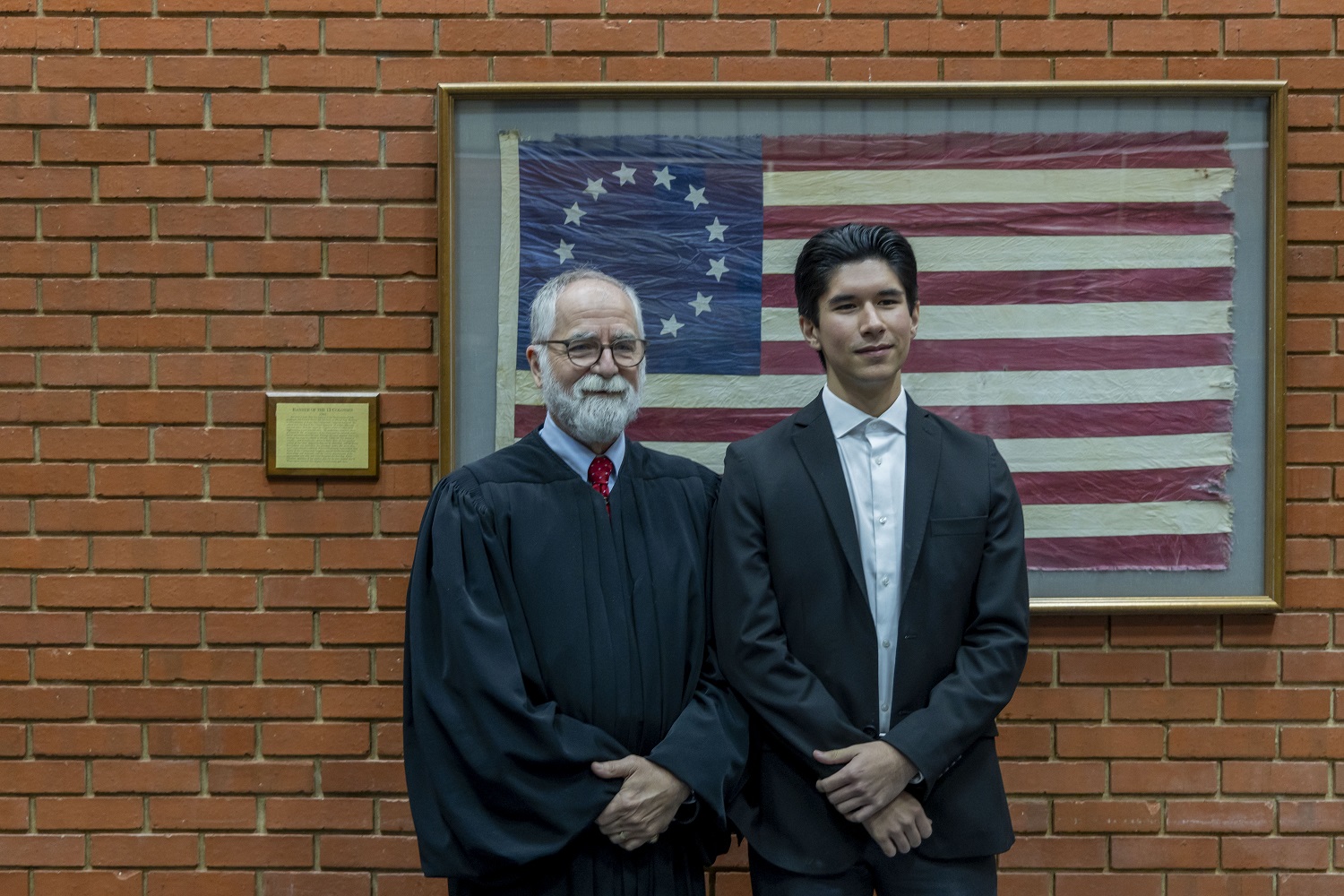
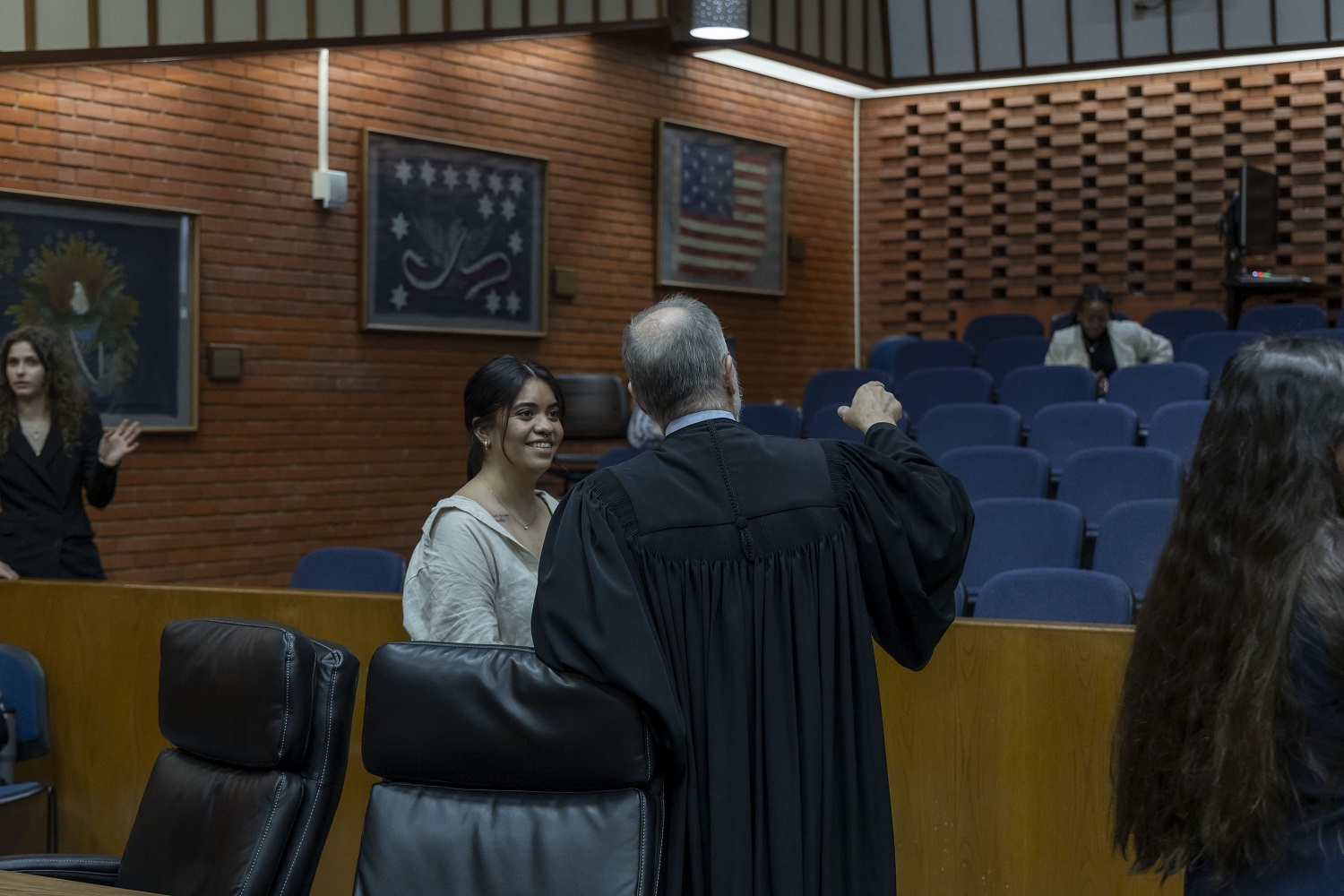
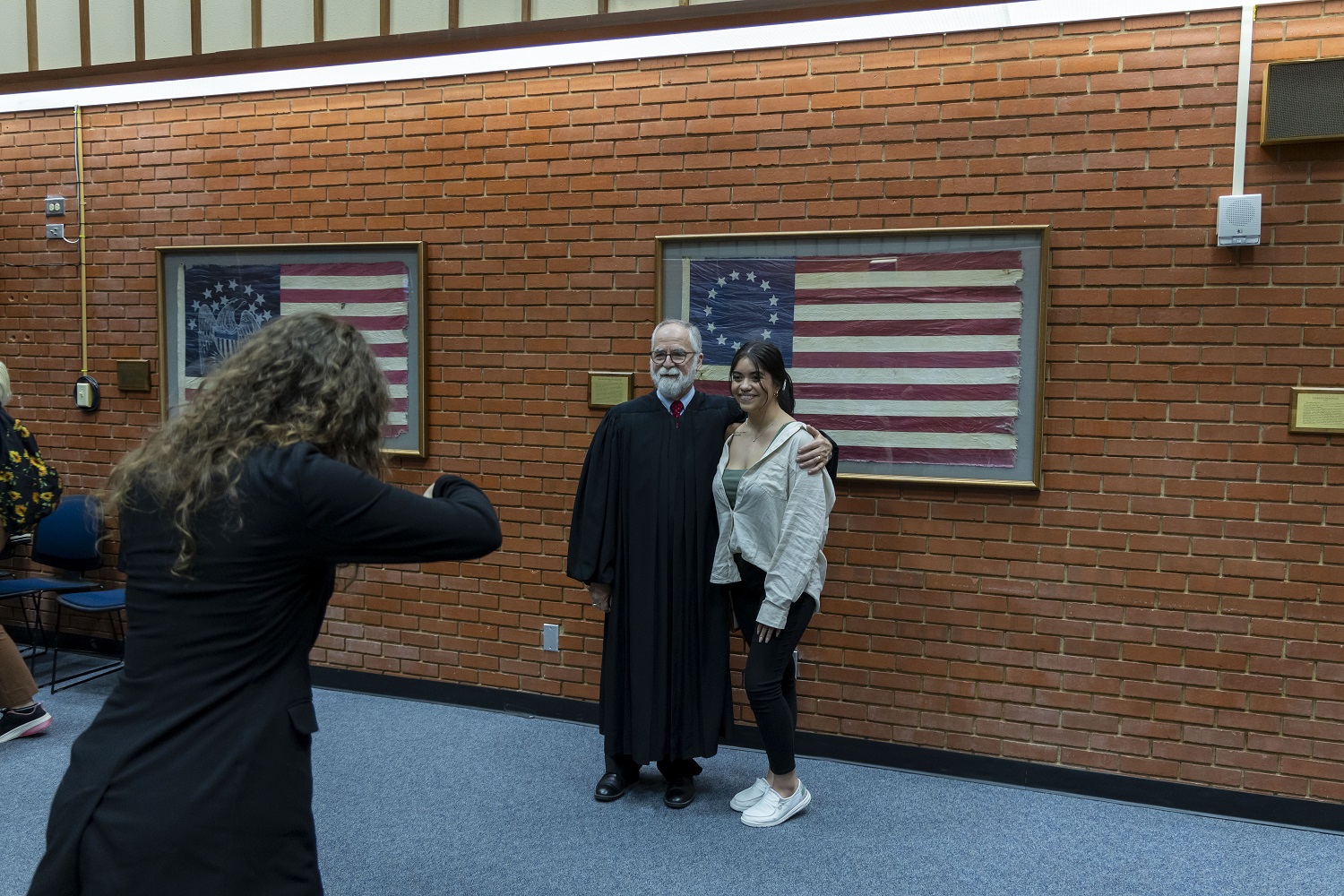
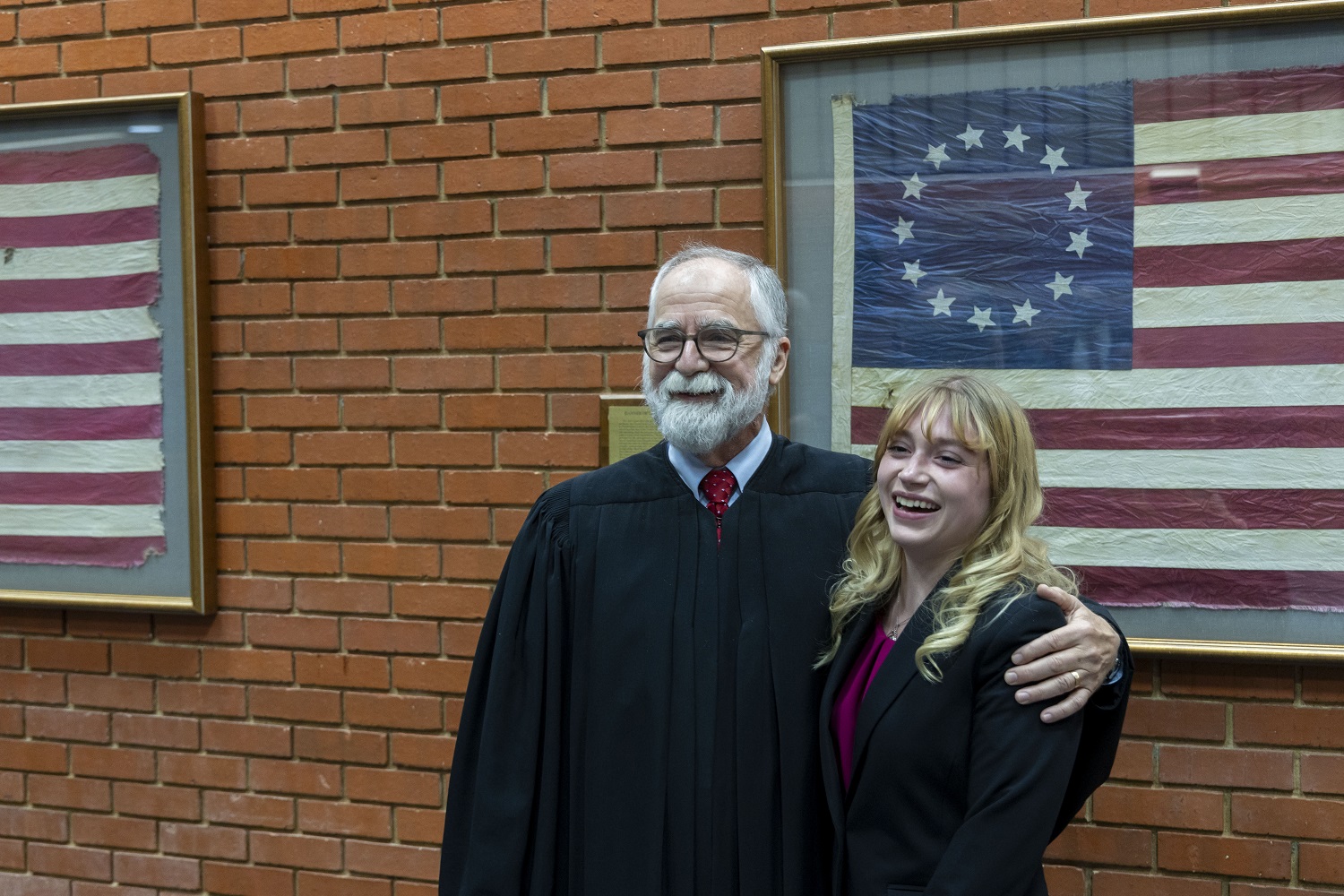
At the end of the meeting, we created a small photo booth for seniors to show off their new regalia and take pictures with their pre-law friends. We are truly sad to see them go, but we wish them luck on their future prospects, and in law school!
Thank you to Judge Tracy Sorensen for taking the time to come and speak with us, and thank you to our seniors for their time and dedication to the Pre-Law Society. See you next time at our social on April 24 at the Wynn Home Arts and Visitor Center! please follow our Instagram @prelawsocietyshsu for more information and future events. We wish all students luck on their finals and have a good summer!
Bright and early on April 26, LEAP students traveled to Houston to attend the First-Generation Legal Regional Summit, hosted by the South Texas College of Law…
…sponsored by the American Bar Association’s Young Lawyer’s Division, Houston Young Lawyers Association, and the Texas Young Lawyers (among others). First, we started the day with a simulated Voir Dire activity. The attorneys were Armin Salek, prosecution, and Thuy Le, defense.
Salek began by informing us of his first-generation attorney background and his journey to establishing the country’s first high-school legal-aid clinic. Continuing his presentation, he meticulously explained the charges in this case, ensuring that every audience member comprehended the intricate legal jargon.
He then began a captivating analogy, unveiling fragments of the Mona Lisa painting. His analogy illuminated the concept of “beyond a reasonable doubt,” likening it to recognizing the iconic masterpiece even from incomplete glimpses, noting that it is a “high bar, but not an impossible bar.”
As we started to kick into gear with the selection questions, Salek began asking the audience about any personal convictions that might hinder their ability to judge others. He proceeded to have each person respond to questions aloud, one by one, rating their feelings towards law enforcement on a numerical scale. Additionally, he inquired about any connections individuals might have to law enforcement through friends, family, or other associations, prompting further explanation from those who answered in the affirmative. It was fascinating to observe his thought process as he skillfully formulated questions designed to gain insight into individual’s perspectives and beliefs. This approach enabled us to gradually piece together clues about the nature of the case.
Next, Thuy Le, who began her career as a prosecutor in the Galveston and Harris County District Attorney’s Office before opening her criminal defense practice, had her chance to question the potential jurors. She began by presenting a visual representation of the “level of proof staircase,” aiming to illustrate the high threshold of “beyond a reasonable doubt” and the gravity of decisions affecting another’s life. Using relatable scenarios, such as someone insulting her three-year-old niece, she prompted the audience to consider the difference in response between verbal insults and potential threats like kidnapping. This exercise highlighted the nuanced nature of legal reasoning and the significance of discerning justifiable actions in diverse circumstances.
After a short break, both attorneys called select jurors up to the stand for further questioning. Le clarified that there would typically be background noise during such proceedings, but in this simulated scenario, the audience could listen in to understand the jurors’ views. They then outlined the process, explaining that each attorney had six peremptory challenges.
Following deliberation, the chosen jury members were announced, with Olivia and me, unexpectedly, among them. The attorneys shared with the audience that quieter individuals with more neutral responses often made the final cut, removing the short-lived mystery of us being selected.
Trailblazers on the Bench: Judges Panel
by Michelle Cardenas
In a session titled “Trail Blazers on the Bench,” a panel of multiple judges shared insights into their career paths and experiences. Among them were Judge Alfred Bennett and Judge Charles Eskridge, serving on the U.S. District Court for the Southern District of Texas, alongside Judge Diana Song Quiroga, a respected U.S. Magistrate Judge, and Judge Sarah Beth Landau of the Texas Court of Appeals. Moderated by Brandi Pikes, an Associate Attorney at Winston & Strawn LLP, the discussion explored the diverse backgrounds of these legal figures.
Throughout the conversation, the judges recounted personal stories of overcoming challenges and seizing opportunities. Despite the occasional setback, their journeys were marked by perseverance and a commitment to making a difference. What struck a chord with many listeners was the shared experience of being first-generation pioneers in their respective field, a testament to their determination in breaking barriers.
A particularly striking instance occurred when Judge Song Quiroga shared how her dedication to the law originated from advocating for her parents amid language barriers and cultural disparities. Her story deeply resonated with me, as my own passion for the legal field was ignited by a similar experience.In the stories of these judges lies a reminder of the transformative power of resilience and Grit that comes from being a First-Generation Student who is trying to navigate their way through life without a model or guide.
Your Next Dream Job: Legal Career Transitions Panel
By Cinthia Villarreal
For the next session, “Your Next Dream Job: Legal Career Transitions Panel,” Armin Salek, Founder and CEO of Youth Justice Alliance; Tamara Nash, Director of Experiential Learning at the University of South Dakota Knudson School of Law; Lacy Durham, Assistant General Counsel at Benefits & Compensation Constellation Energy Generation, LLC; and Cecelia Mitchell, Associate Corporate Counsel at Amazon, came together to talk about their experiences with their broad career transitions.
Each of the speakers went on to narrate their personal stories, describing their reasons for switching career paths, some leaving decade-long jobs for something they truly felt passionate about. Among the reasons, burnout resonated with several of the speakers. Tamara Nash, for example, served as a Special Assistant United States Attorney where her practice focused on felony narcotics and firearms prosecution in the state and federal courts. She described that after eight long years of working file after file, she was mentally and physically exhausted.
Prompted by the moderator, Lacey Durham emphasized the importance of networking and making connections with other professionals, “the worst thing they can do is say no” she said. Tamara affirmed this by encouraging us to reach out to people and ask them to have lunch or coffee with us to learn more about them and their profession.
Concluding Thoughts
Following the main event, the Houston Young Lawyers Association asked us how the event went, and they filmed us trying to articulate our thoughts.
For us, it was a transformative experience. We had a chance to visit South Texas College of Law, benefit from the experience and advice of bright minds, learn about career options, and we were taught skills we can take with us where ever we go.
On Friday, the City Fellows traveled to the new Huntsville Police Department Headquarters, which opened in 2021. Senior Officer Craig and Corporal Sanders were kind enough to escort us through the building and inform us about the typical day-to-day life of a Huntsville Police officer and everything they do in the community.
First, they showed us some of the artifacts they have in the foyer. They had incredible pieces of history, such as old polygraph machines, uniforms, and radios. It was interesting to glimpse the past and learn of the methods and technologies compared to today’s equipment.
As we started to go inside, I was amazed by how beautiful the building was; it was very open, allowing much light to shine through the glass. As we went downstairs, we were taken to the training room, where we learned that each table was equipped with WiFi. We were also surprised to discover that this room serves as the primary location for city officials during emergencies.
Next, Senior Officer Craig and Corporal Sanders led us to the board of the active incidents. They explained how the board worked, describing that it allows each officer to track their patrol colleagues and request backup when needed. Witnessing these “behind-the-scenes” aspects of the police department was genuinely fascinating.
We were even taken to their gym, where we ran into the Assistant Chief, James Barnes. He helped give Cinthia tips as she tried to punch the punching bag. She did a great job; personally, I don’t think I would have done so well….
Senior Officer Craig then guided us through the women’s locker room. She pointed out the spacious lockers and showers designated for each female officer’s use.
Additionally, she showed us a back room filled with a resting area designed for officers with demanding schedules who couldn’t return home overnight. This experience offered a deeper perspective on officers’ sacrifices to ensure our safety. Their willingness to work extended hours and remain on-site, foregoing the comfort of home, highlights their selfless dedication to prioritizing the community’s well-being above personal convenience.
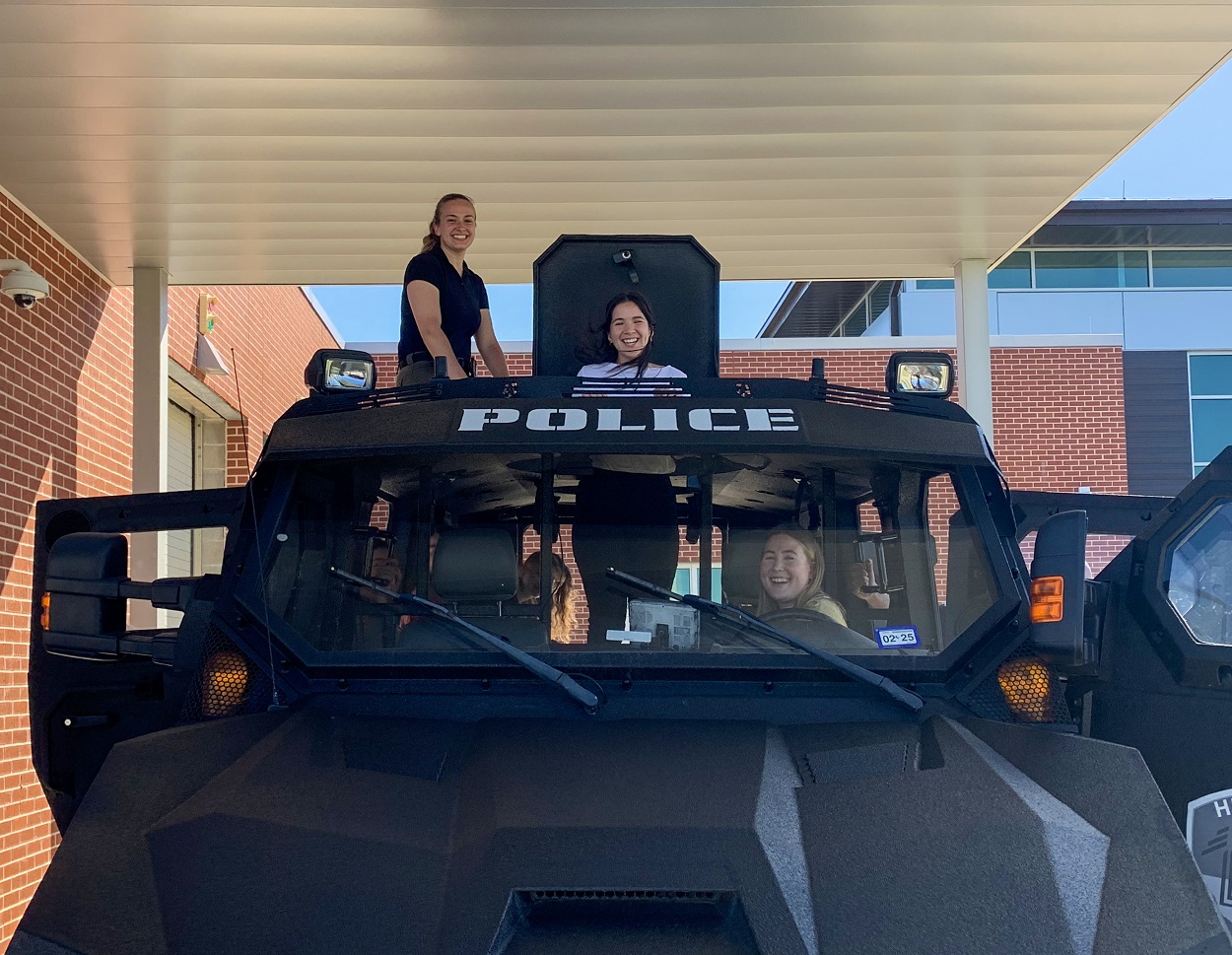
As our tour continued, we headed outside to see the SWAT tank “Pitbull.” Senior Officer Craig began to pull out the medieval-looking contraptions they use during operations, including my favorite, a battering ram labeled “knock knock.”
Each of us got a chance to hold it, and I was surprised that it weighed around 20-25 lbs. Even more surprising was when they shared that kindergarteners had also held it without trouble!
After showing us the cool gadgets, they allowed us to climb inside the Pitbull.
It was particularly thrilling for Macey and Cinthia as they ventured into the “lookout hole.” They were both shocked by how fast it ascended and how high it elevated them.
Additionally, Corporal Sanders gave Emily the run-down on starting the truck and even selecting the different sirens to play. This was eye-opening because we had been unaware of the variety of sirens officers could choose from.
Senior Officer Craig and Corporal Sanders gave City Fellows interns a fantastic tour, offering us a peek into their daily lives and duties. I’m confident we all have a better perspective and insight into what the officers do to keep us in the community safe. We extend our sincere thanks to them both and the entire Huntsville, Texas, Police Department.
The LEAP Center (Law, Engagement And Politics) recently hosted an event that left attendees intrigued by tales of espionage, moral dilemmas, and the weight of keeping national secrets. The guest speaker for the afternoon was James M. Olson, a distinguished former chief of CIA counterintelligence, whose career has been a fascinating journey through the shadows of international threats.
Mr. Olson shared his story with two groups: Rotary Club of Huntsville and a large group of SHSU students.
James M. Olson is an expert on the clandestine world; Olson’s career spans more than three decades in the Central Intelligence Agency. Rising through the ranks, he eventually became the chief of CIA counterintelligence, tasked with safeguarding the nation’s secrets from foreign adversaries. His level of expertise in espionage, national security and counterintelligence is unmatched.
However, what sets James M. Olson apart is not just his professional achievements but the personal sacrifices he made to serve his country. As he shared during the events, Olson had to keep his work secret from his own family and children to ensure their safety. The burden of secrecy weighed heavily on him, presenting numerous moral dilemmas. Yet, with the support of his wife, Meredith Olson (also a CIA Agent), he navigated these challenges with resilience and dedication.
During the program, Mr. Olson recounted how he eventually revealed his secret life to his children. Contrary to his fears, they reacted with pride upon learning about their father’s role in protecting the nation. He took the time to highlight the complexities of balancing duty with family obligations.
Throughout the day, one theme resonated deeply with Mr. Olson: his unwavering passion for the United States. He spoke extensively about the honor he felt in being entrusted with some of the nation’s most important secrets. His commitment to upholding the ideals and values of the country underscored his dedication to service.
However, alongside his admiration for his country, Mr. Olson touched a more sensitive subject; those who betray their nation. He had harsh words to express his resentment toward individuals who commit treason, labeling them as the worst kind of individuals in the world.
The day with James M. Olson was truly captivating and eye opening. The topics of espionage, patriotism, and moral integrity truly make you reflect on the future of America and all the individuals who put their lives on the line for our safety. I was definitely left with a newfound appreciation for the sacrifices made by individuals like Mr. Olson in safeguarding the nation’s security.
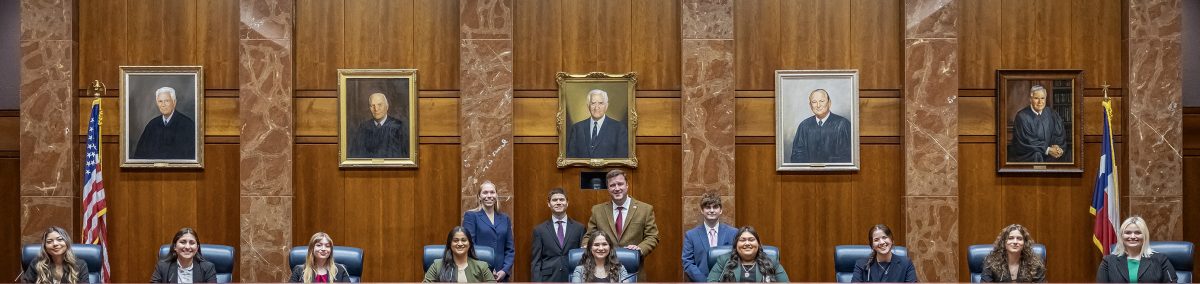
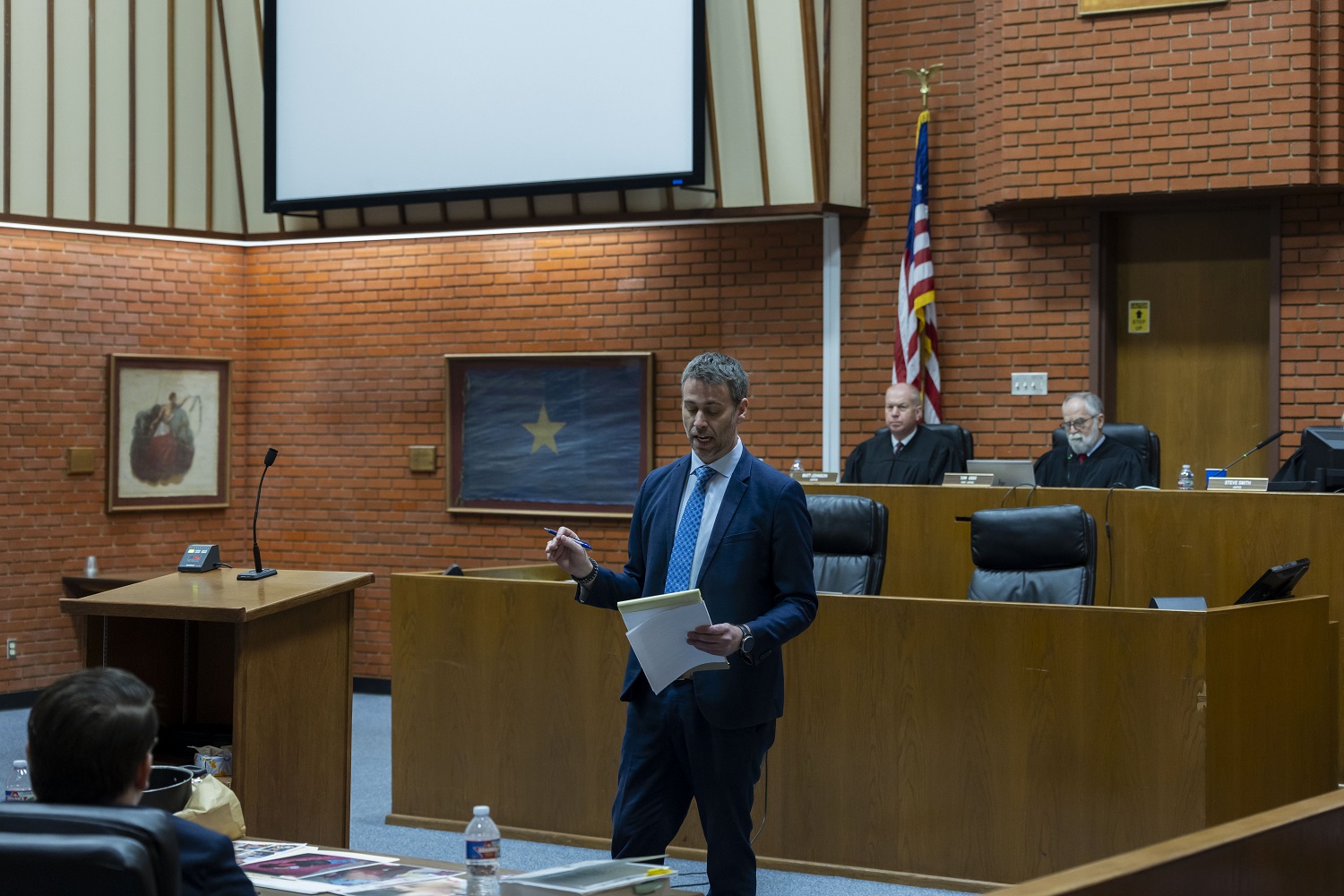
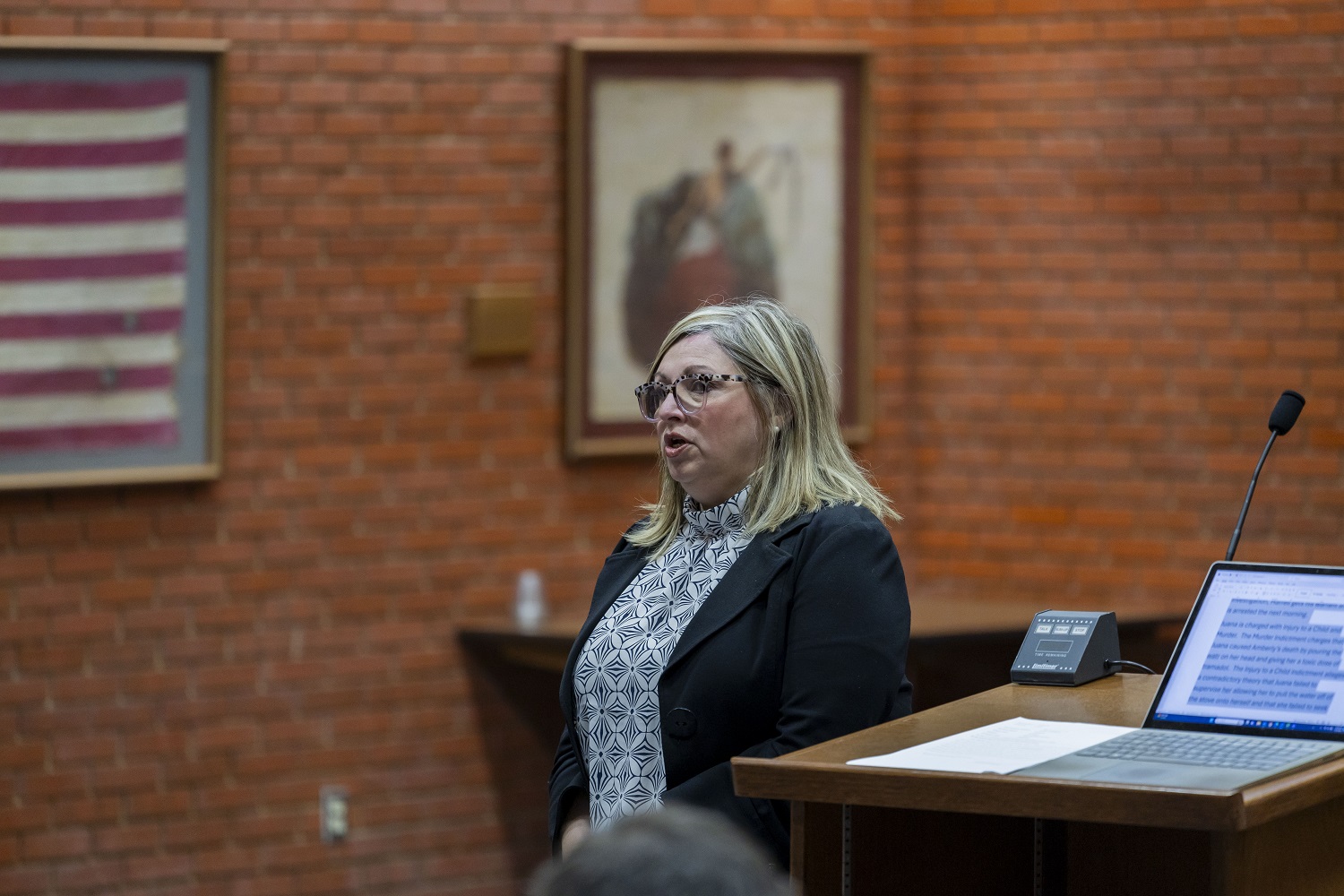
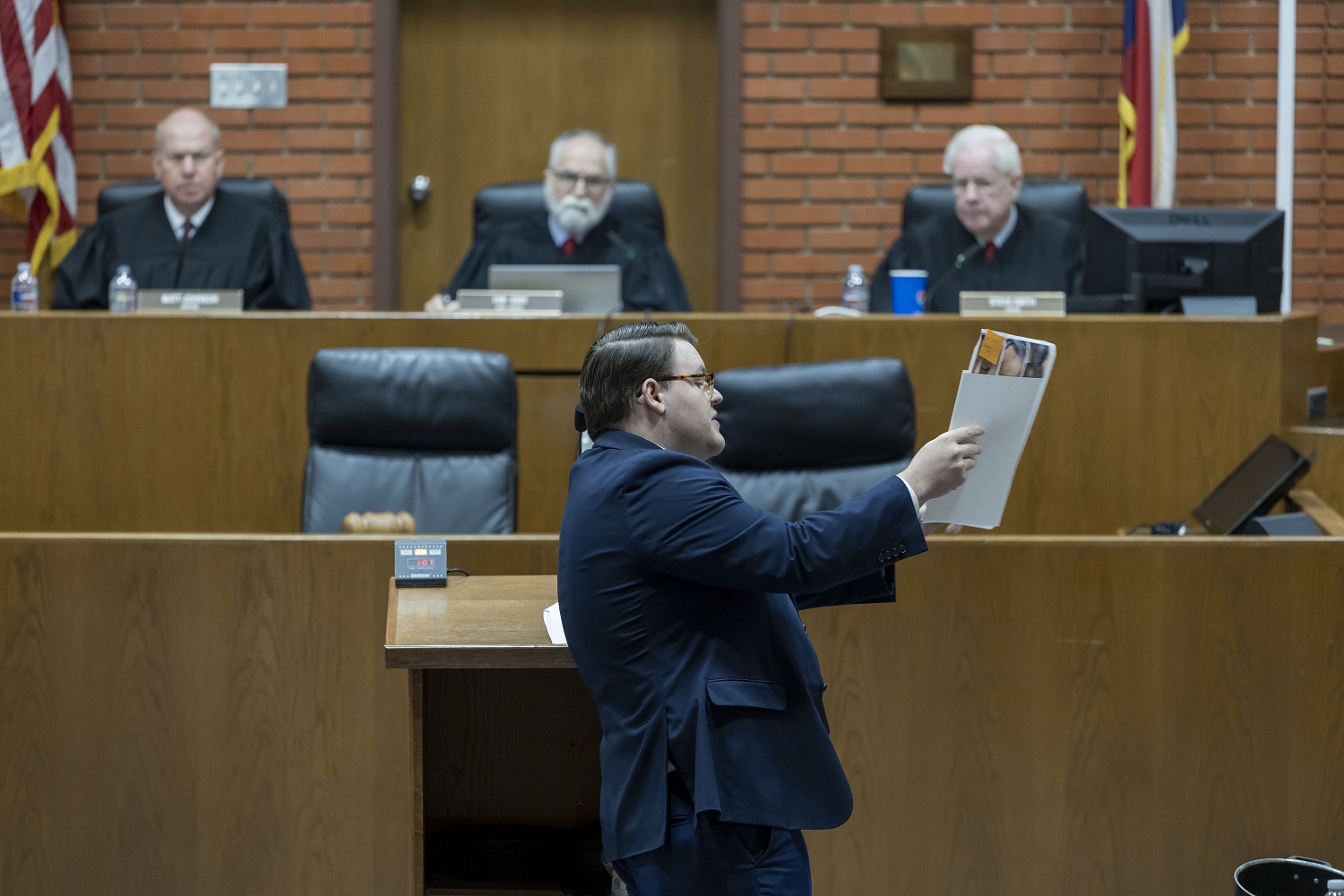
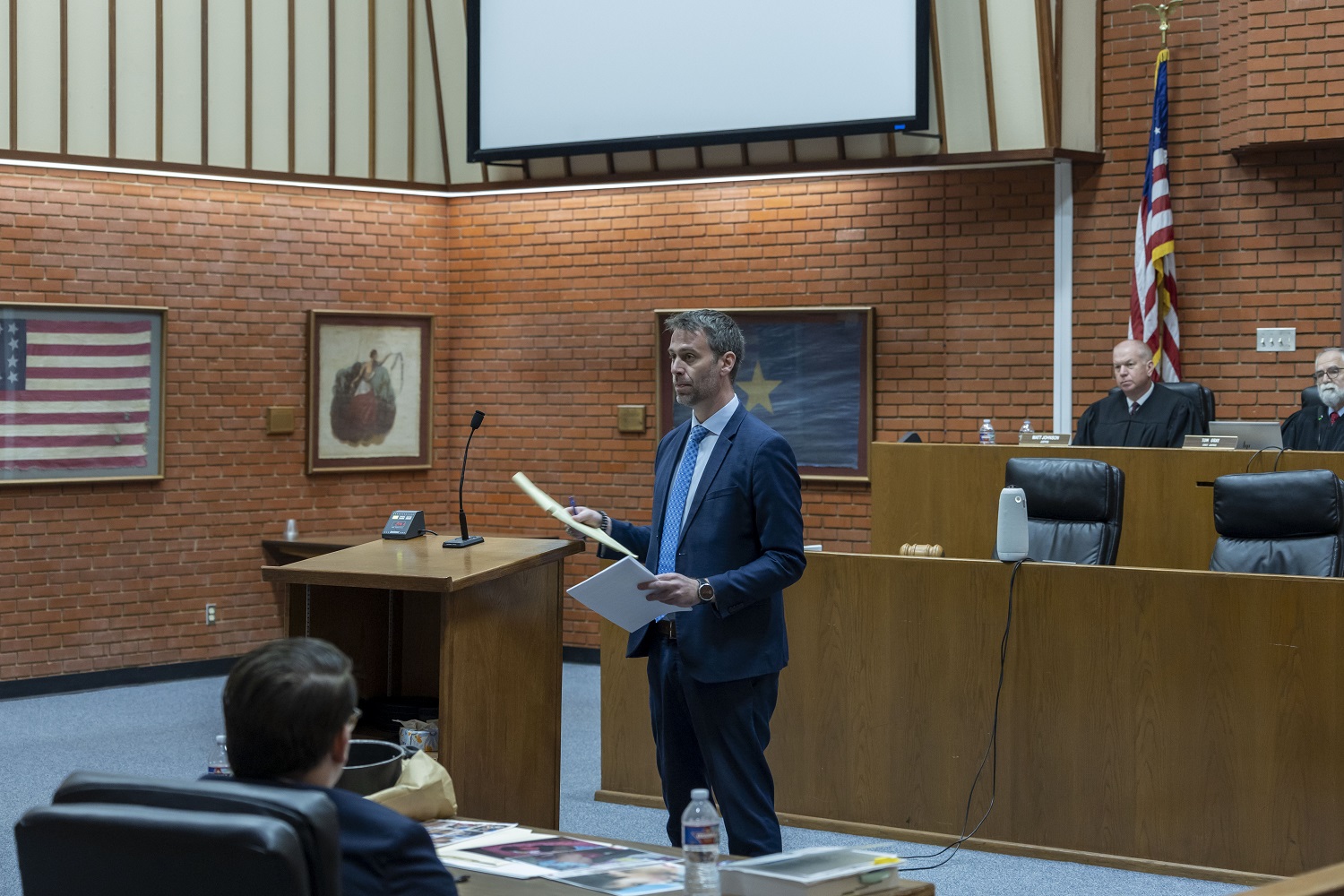
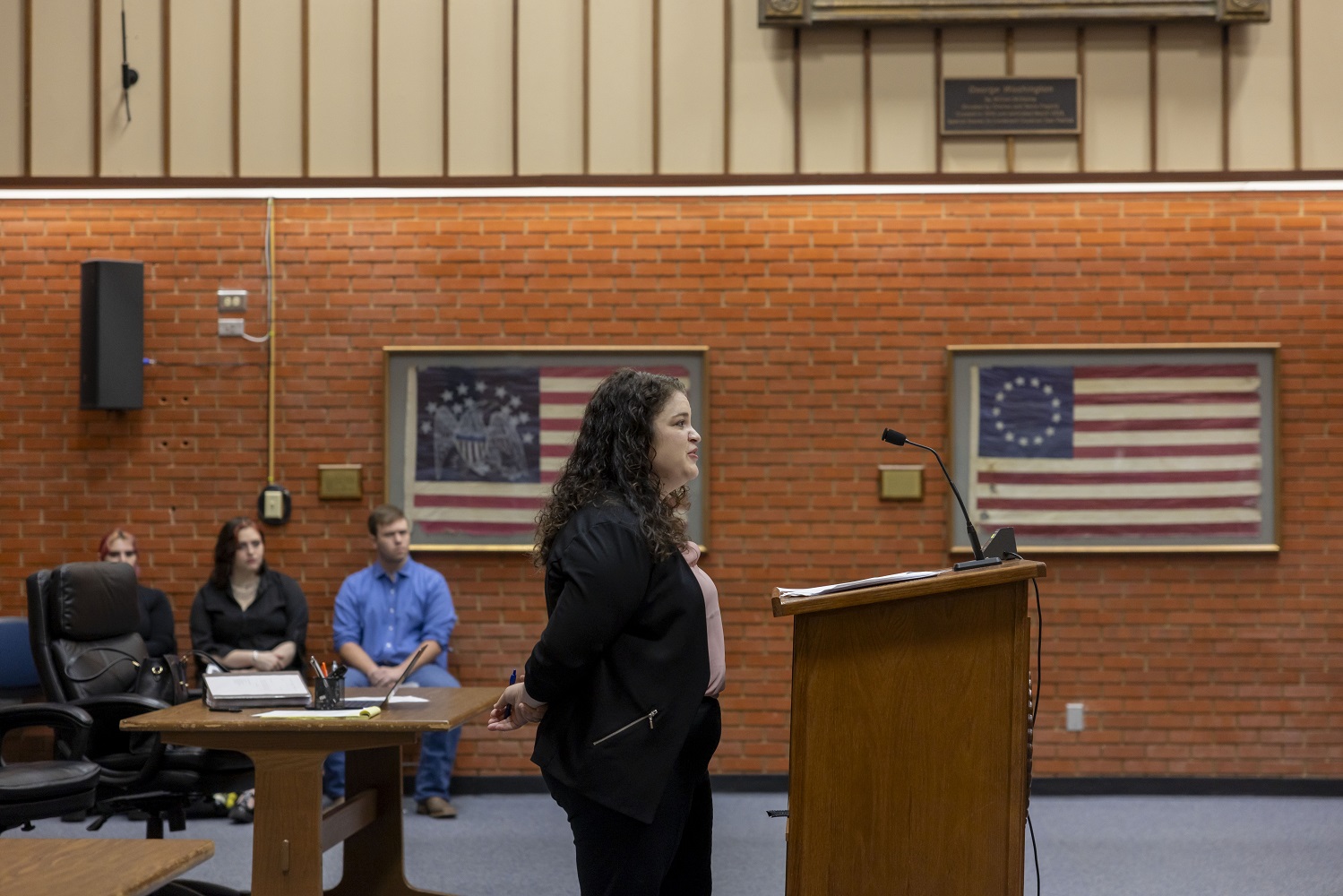
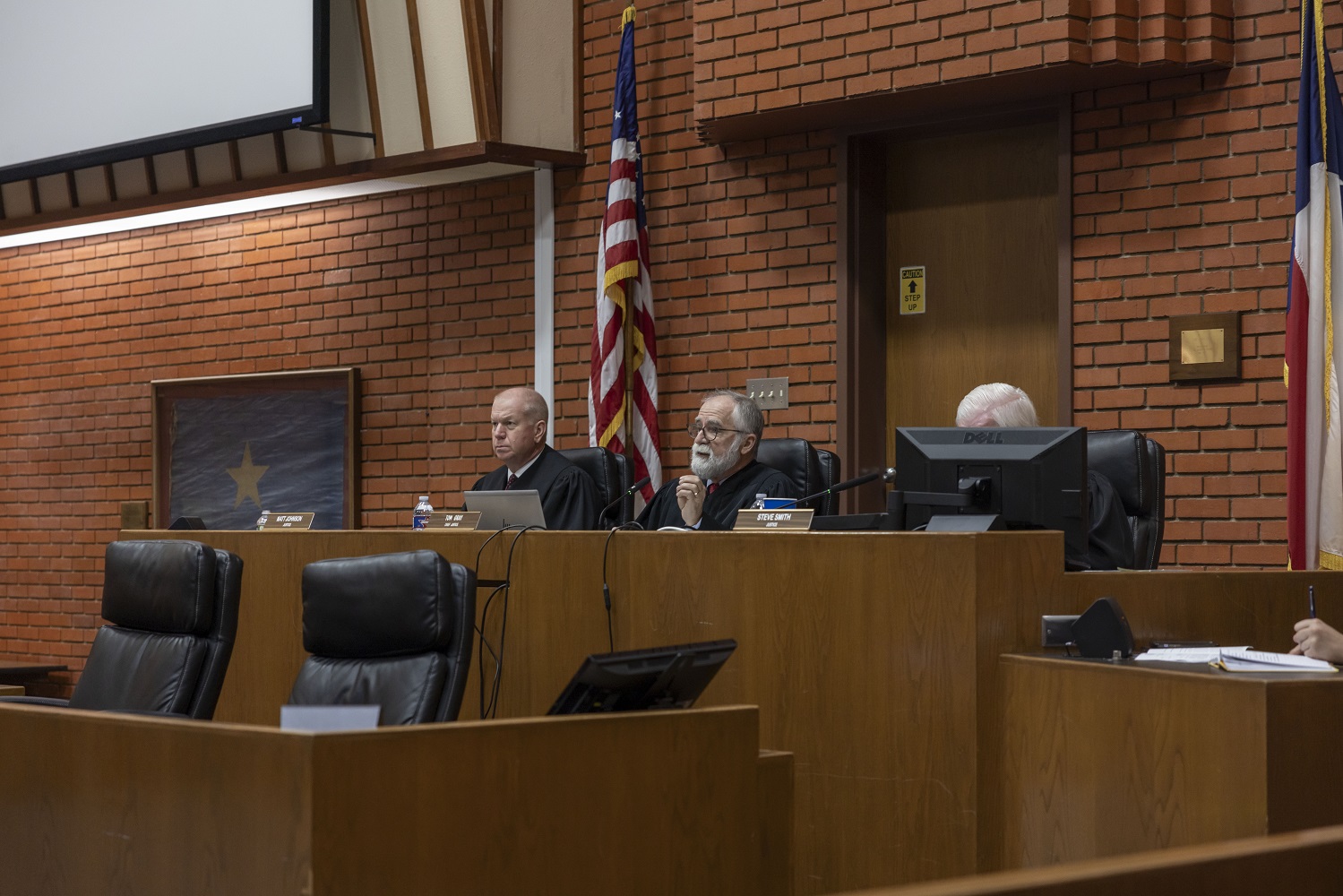
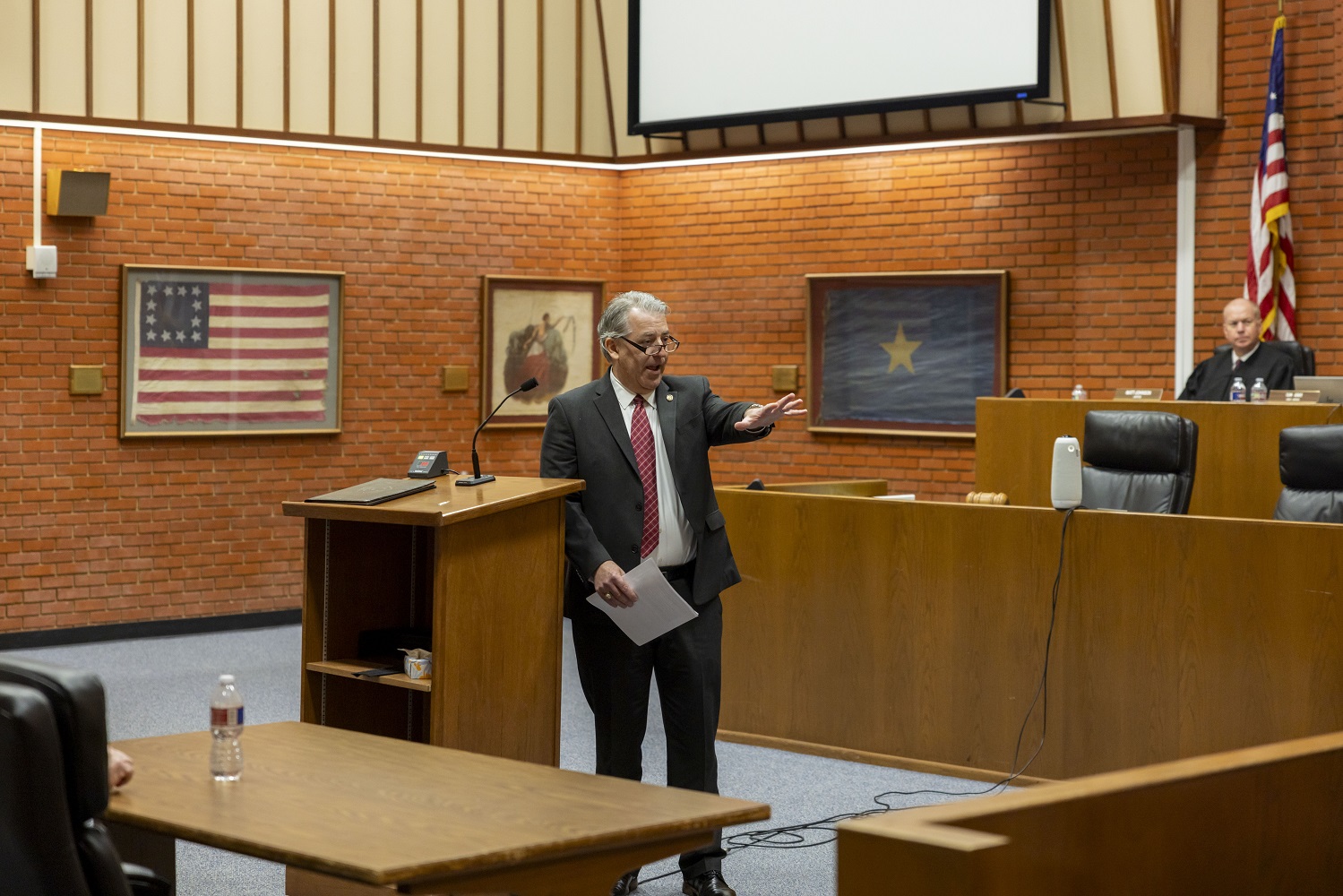
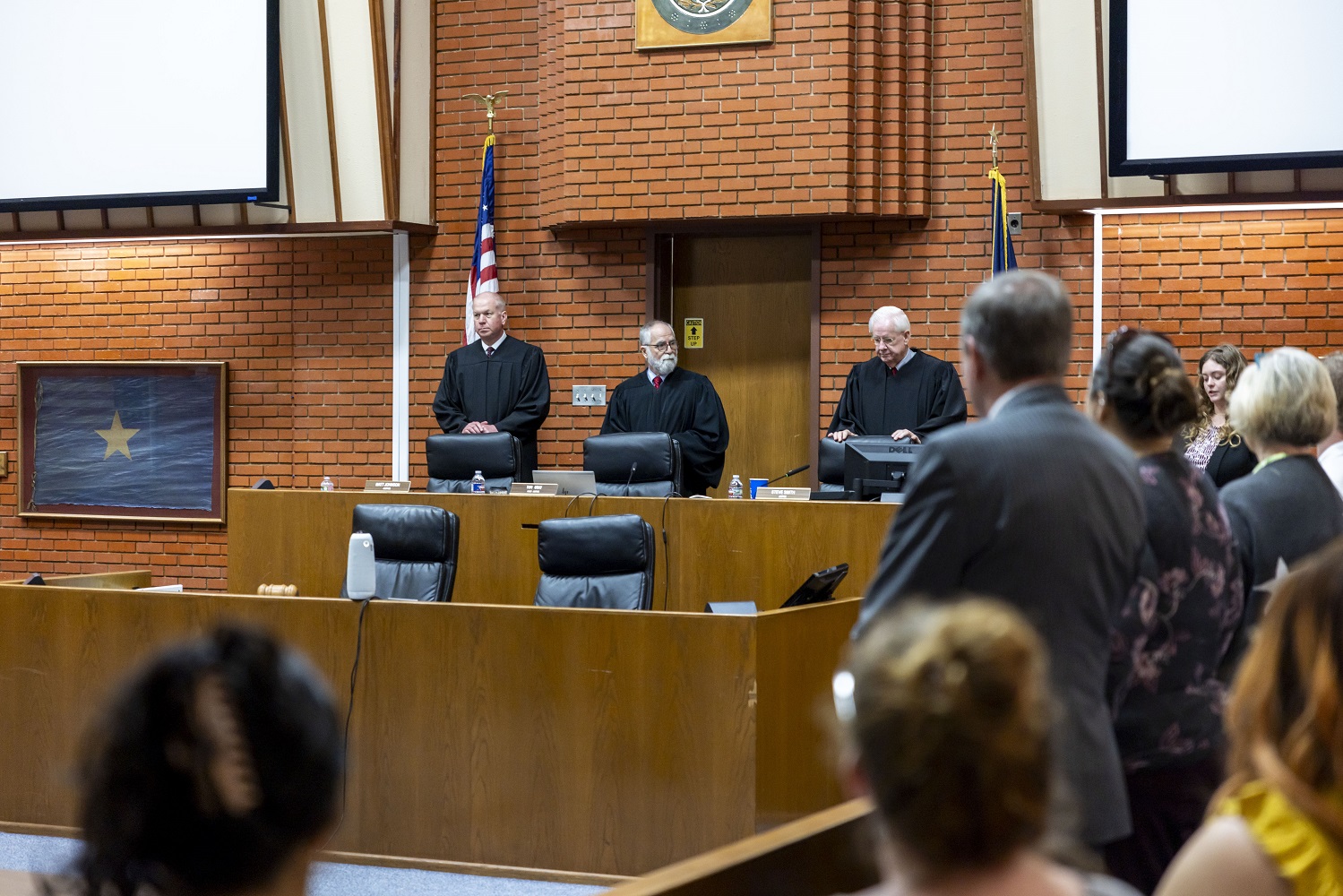
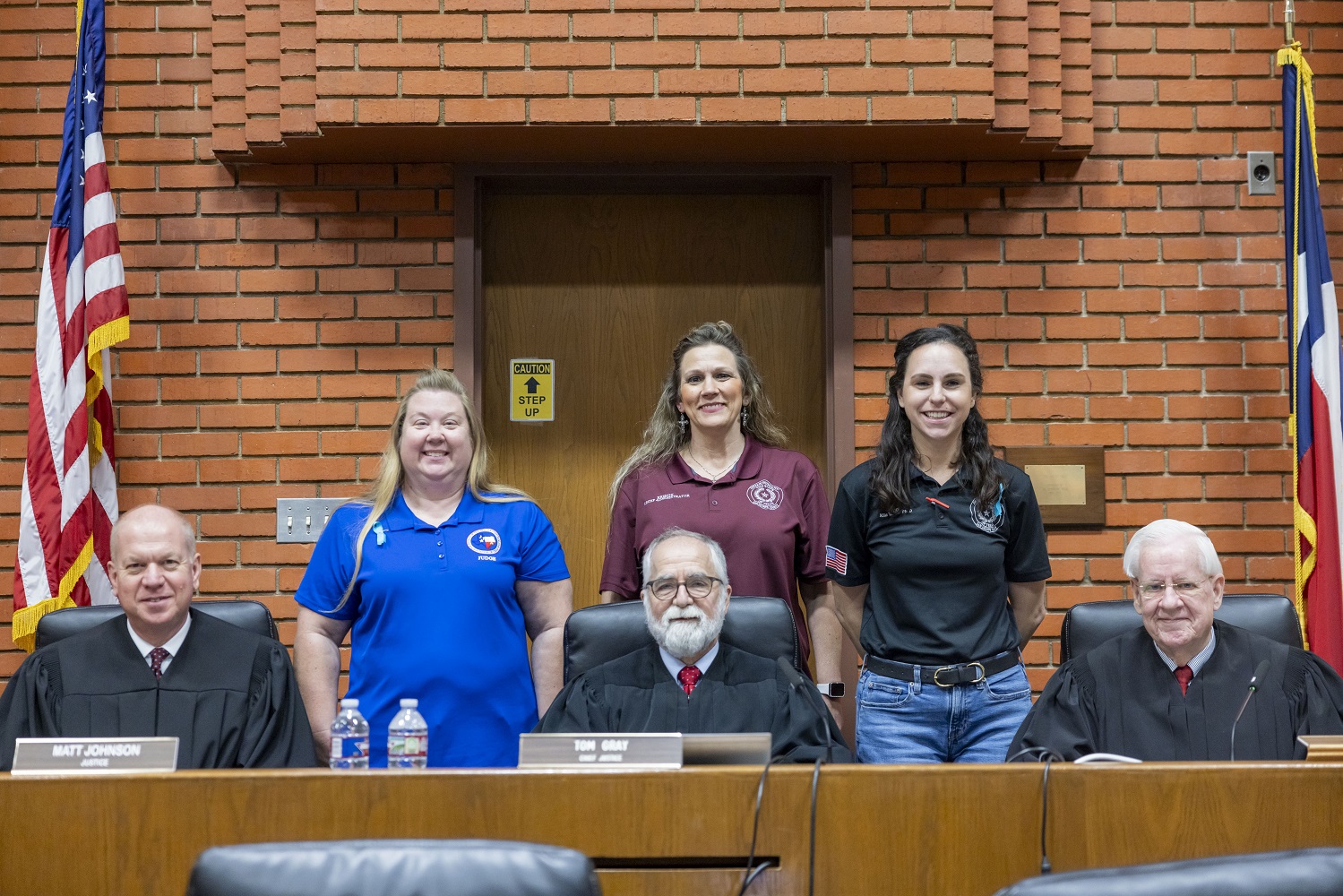
For 13 years, the LEAP Center has hosted the 10th Court of Appeals, allowing Sam Houston State University students and Huntsville residents to hear three appellate court cases in the courtroom of the George Beto Criminal Justice Building. The 10th Court of Appeals, out of Waco, TX, serves 18 counties in Texas including Walker County. The court, which currently consists of Chief Justice Gray, Justice Johnson, and Justice Smith, is able to travel and try cases in any county seat in their jurisdiction.
We had a full house for every case today and a line out the door, waiting to see if a seat would be available. In the first case this morning we were happy to have District Attorney Will Durham watch the case, checking things out in advance of his turn in the courtroom at 1:30pm.
The unique thing about the hearings held at SHSU is that the lawyer for each party is allotted three minutes to relay the facts of the case to the audience.
After those three minutes the attorneys turn to the Justices and begin their 20-minute formal arguments. The Justices can interrupt for questions at any point during the arguments and after each attorney has spoken, the appellant attorney then gets a 5-minute rebuttal to the defense.
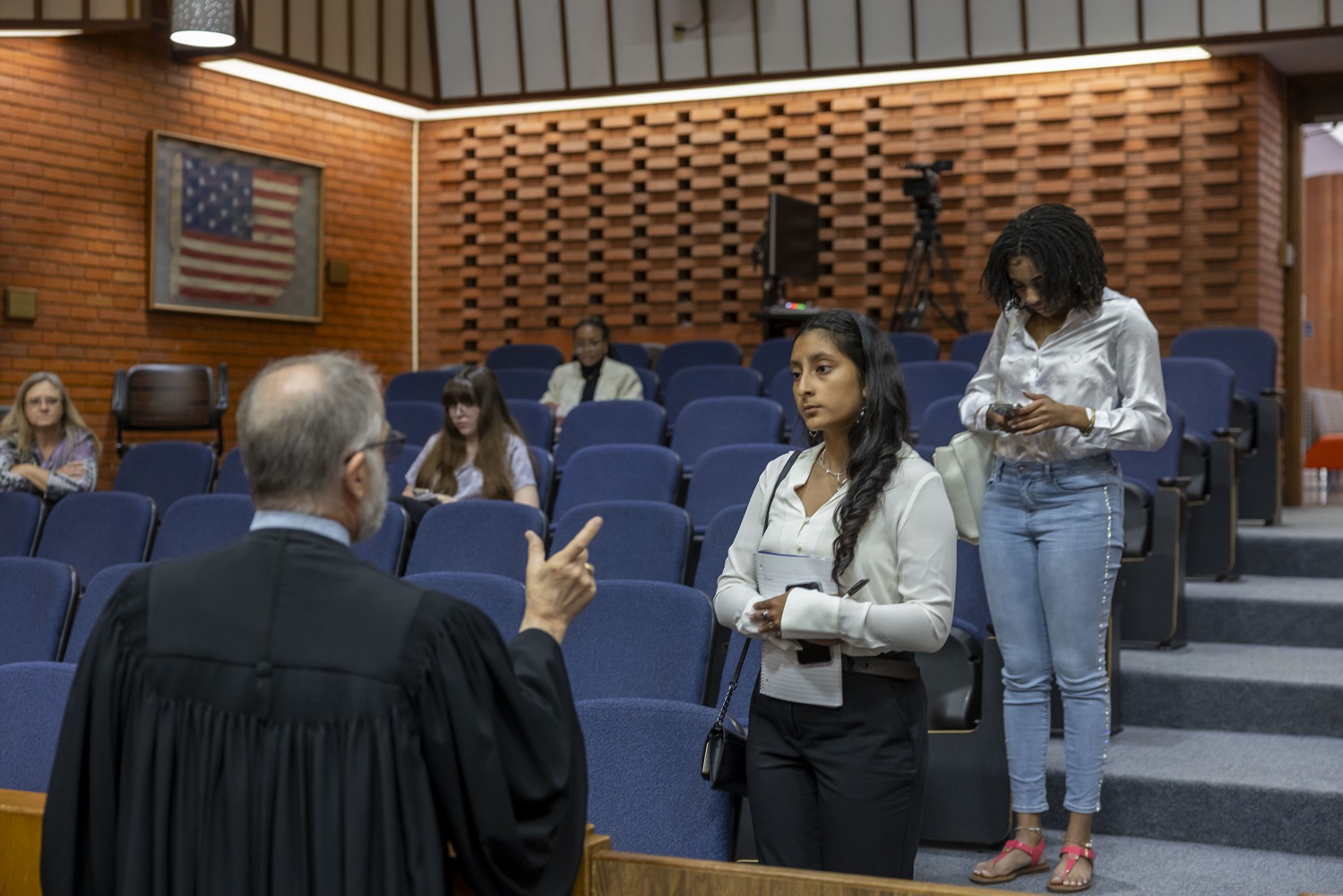
Another special treat, at least for us, is that during these hearings, LEAP Ambassadors were asked to fill in for the Clerk, who is responsible for, among other things, asking the visitors to “All Rise” and then asking for a blessing on the court.
During the first case today, the appellant attorney’s main issue with the previous court ruling was that there was insufficient evidence to charge the appellant with manslaughter. The attorney argued that a manslaughter charge includes knowledge about the substantial risk of death, of which the appellant did not have. The attorney for The State of Texas actually brought props and photos that were used during the original trial to argue against the appellant party.
The second hearing was a real treat because President White was able to sit in on the arguments. It was the first time in 10th Court history that a University President attended at SHSU!
The second hearing broke down the importance of understanding Miranda Warnings and how language barriers can affect criminal proceedings.
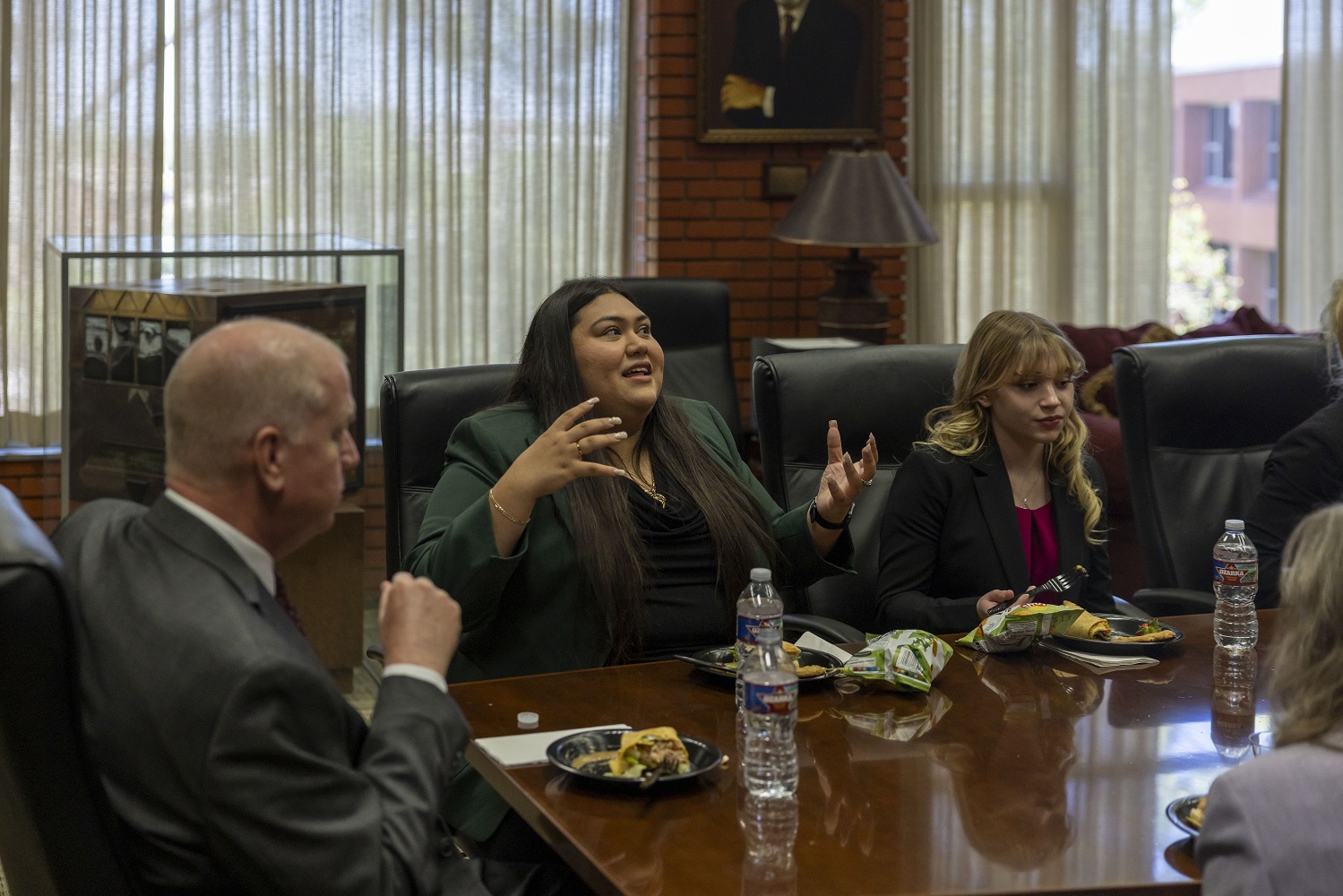
After the 11 am hearing, the court was adjourned for lunch where LEAP students were able to talk with the justices, President White, and court staff. I was lucky enough to be sitting with Justice Smith and Justice Johnson, who discussed their careers as attorneys and how they fell into the position of judge, and eventually to justice.
LEAP Ambassadors also provided Justice Gray with a gift basket and a heartfelt thank you as this is his last year doing the 10th Court of Appeals at Sam Houston State University, his alma mater.
Court readjourned at 1:30 pm with the final hearing of the day. The court room was attended by County Clerk Leslie Woolley and Judge Tracy Sorensen. This case was really interesting as the main arguments pertained to the use of cell-phone data. In 2008 police obtained records from a man’s cellphone that linked him to a murder, but 10 years later the U.S. Supreme Court ruled that police must get a search warrant for that information; essentially, the question was should the data then be used in trial.
Thank you to everyone who came out to watch the cases today, especially President White. Thank you to Chief Justice Gray, Justice Johnson, and Justice Smith for allowing students to have this opportunity and for being so welcoming and helpful to future law students. Chief Justice Gray, we wish you well in your retirement and we want to thank you for continuously showing support for the LEAP Center and the Pre-Law Program at SHSU.
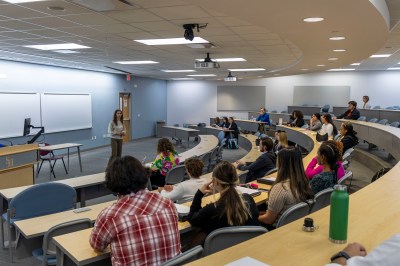
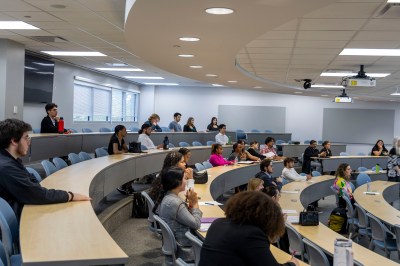
What is a personal statement and why are they important? Personal statements are what law schools use to understand what an applicant is like in personality, determination, and in writing skill. This section on a law-school application can make an applicant stand out from the pile and become a deciding acceptance factor.
This week the Pre-Law Society wanted to help their members create a strong thesis on their personal statements by asking two questions, “Why do you want to go to law school?” and “What do you want law schools to know about you?”.
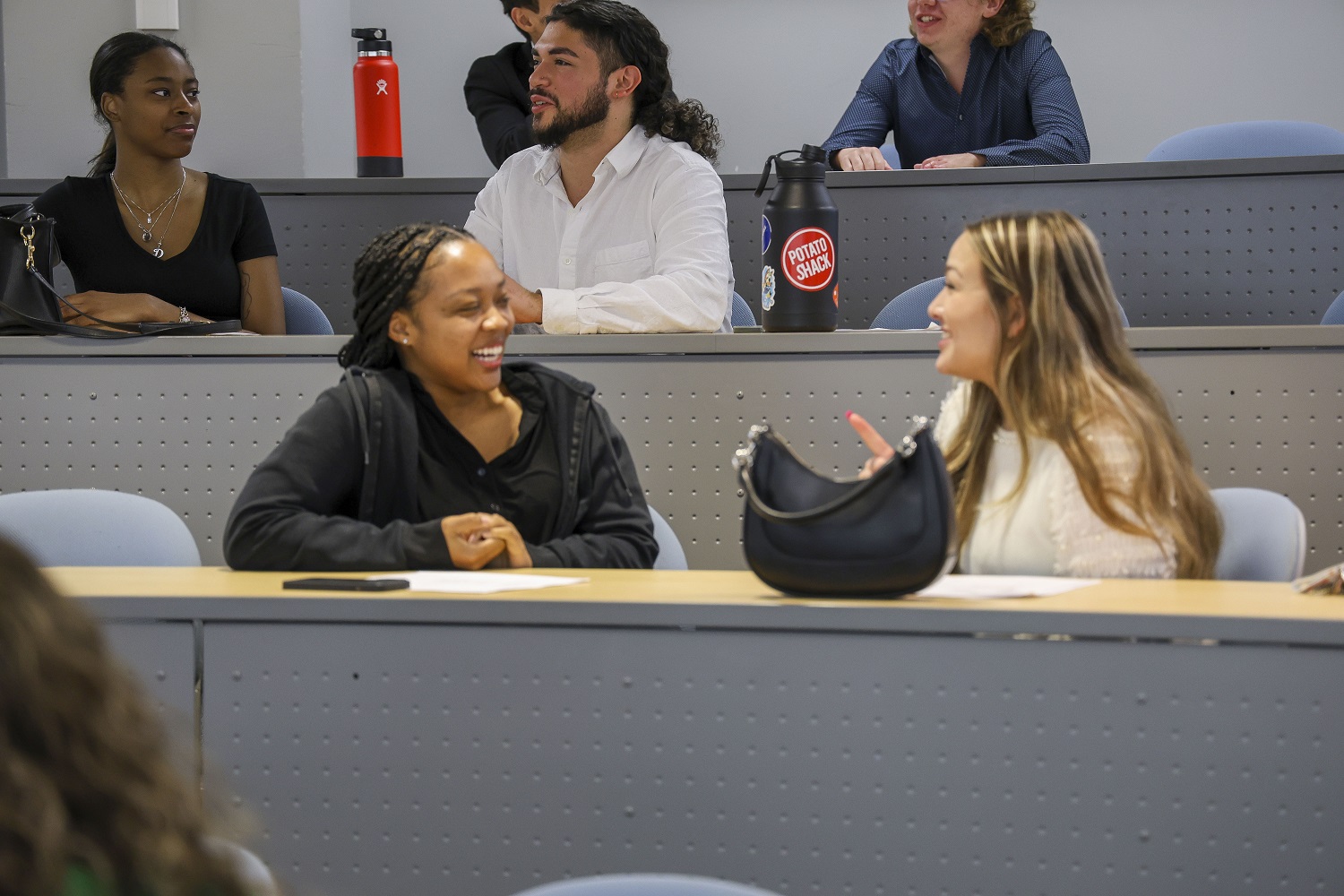
To begin, we broke off our members into groups of two to discuss their answers.
In thinking about these questions and developing their answers, the students come a little closer to a personal statement.
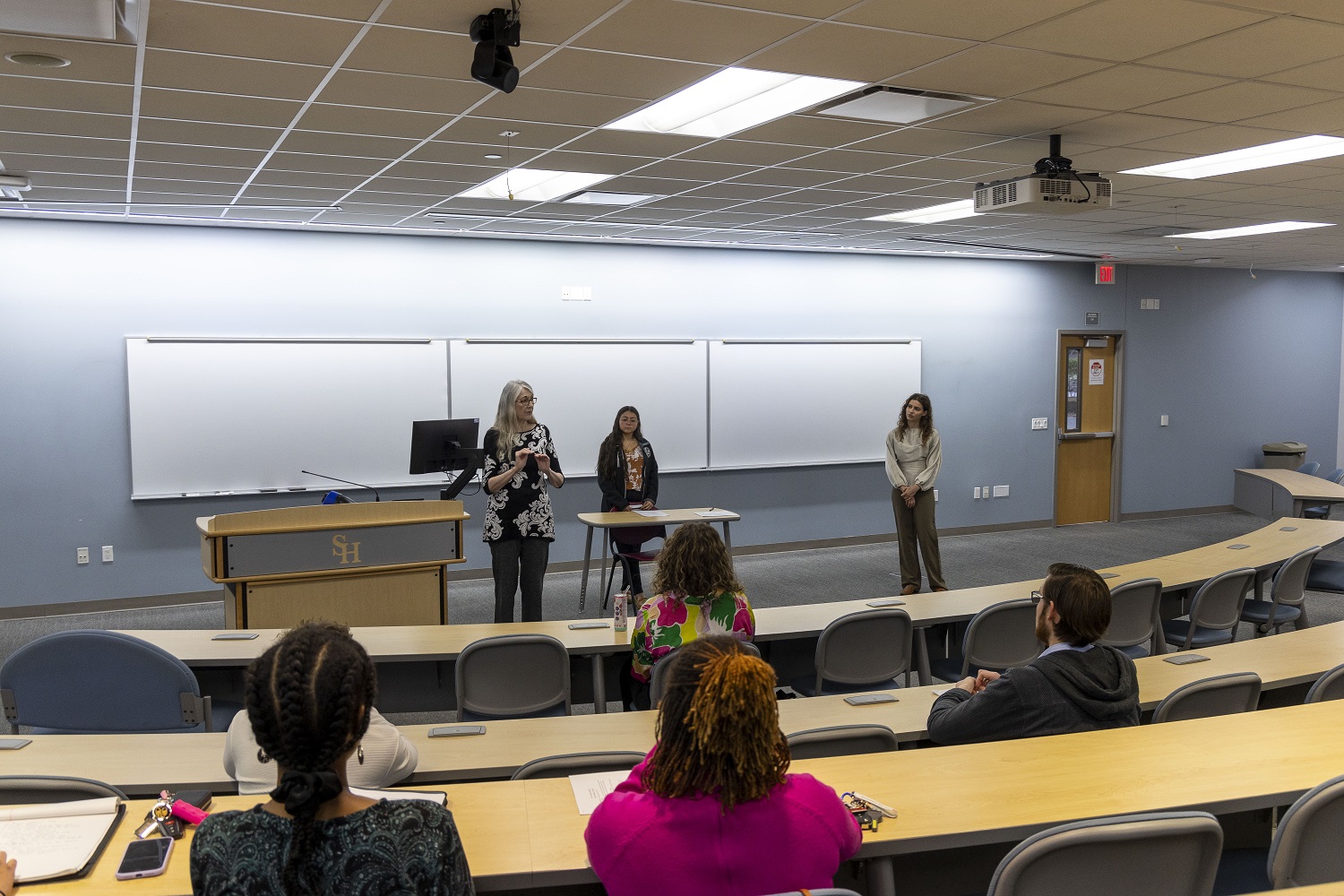
After our discussions, our Secretary Jessica Cuevas, and one of our Legal Studies Advisors, Ms. Jean Loveall, explained how to make your personal statement stand out.
Advice included (1) think about what influenced you to choose law as a profession; (2) don’t duplicate your resume; and (3) explain why you would fit at the law schools to which you are applying. And–have multiple people look at your statement!
Of course, workshops and regular meetings aren’t the only things the PLS does. In the next month, we’ll be doing a Mock LSAT, bringing the 10th COA to campus, and bringing guest speakers to campus.
Follow our Instagram for future events and information @prelawsocietyshsu. See you at our last meeting of the semester on April 17!




























 Center for Law, Engagement, and Politics