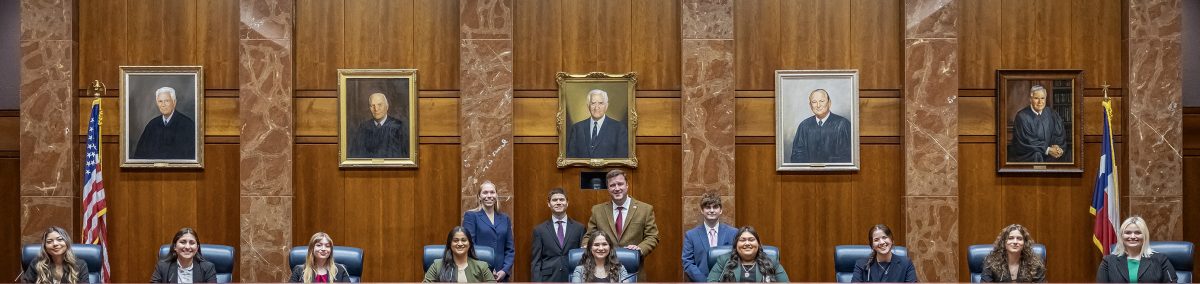
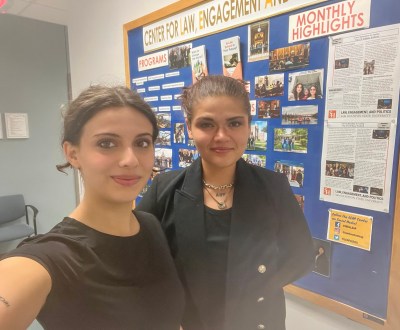
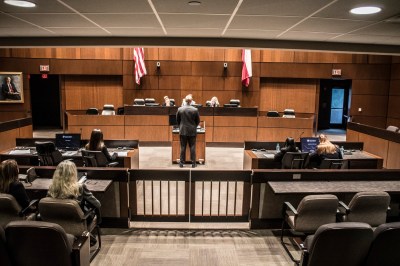
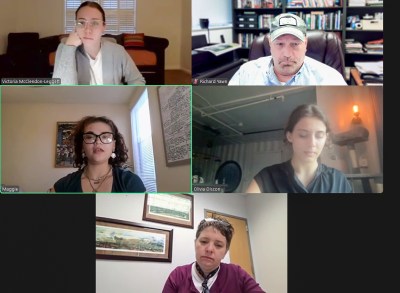
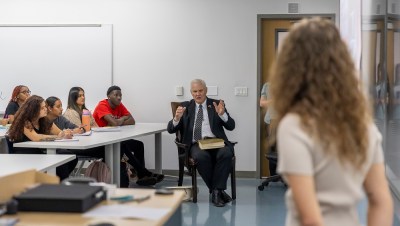
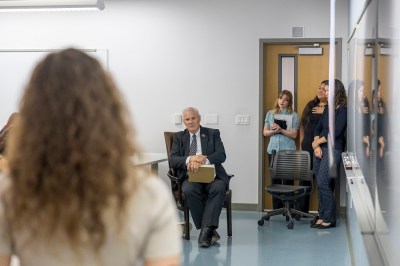
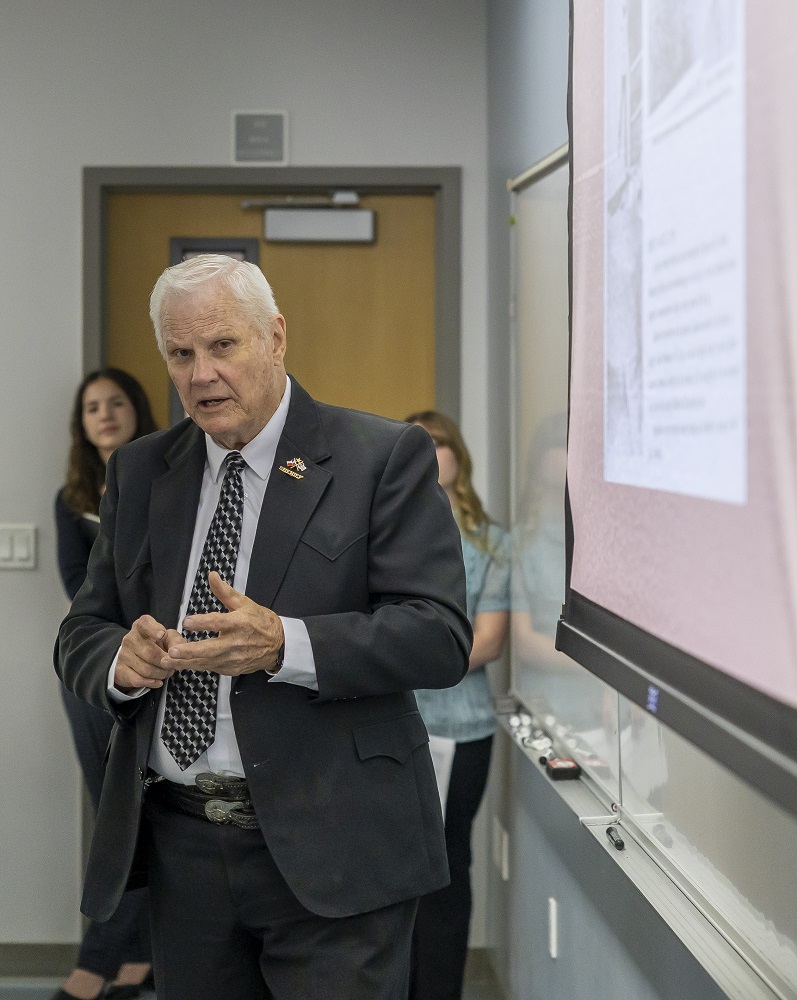
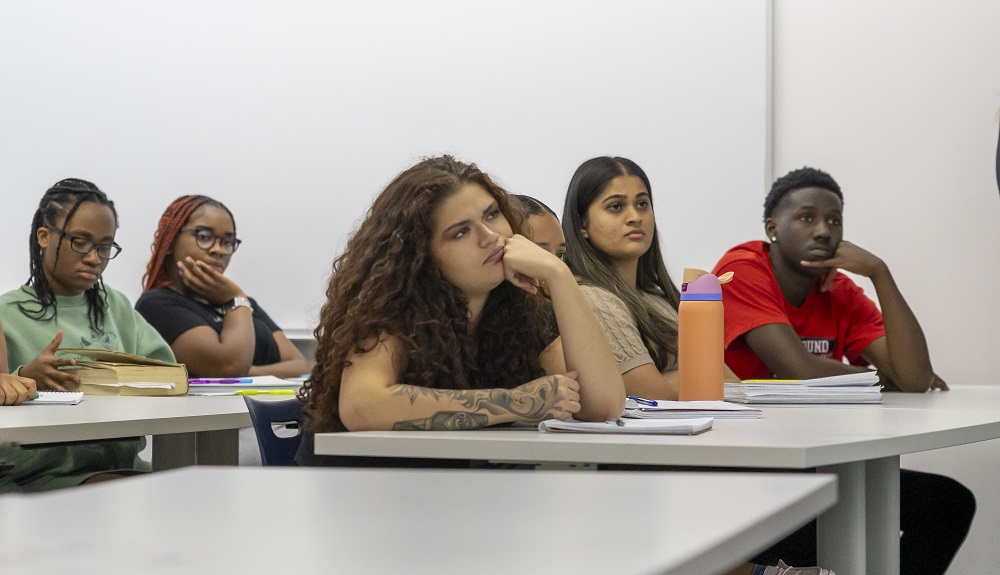
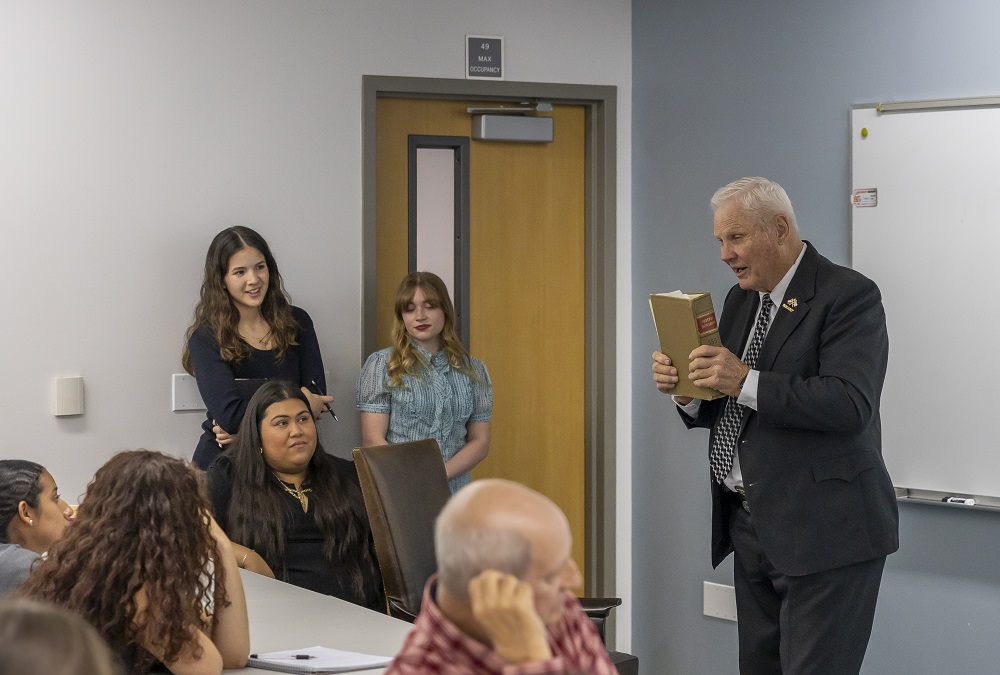
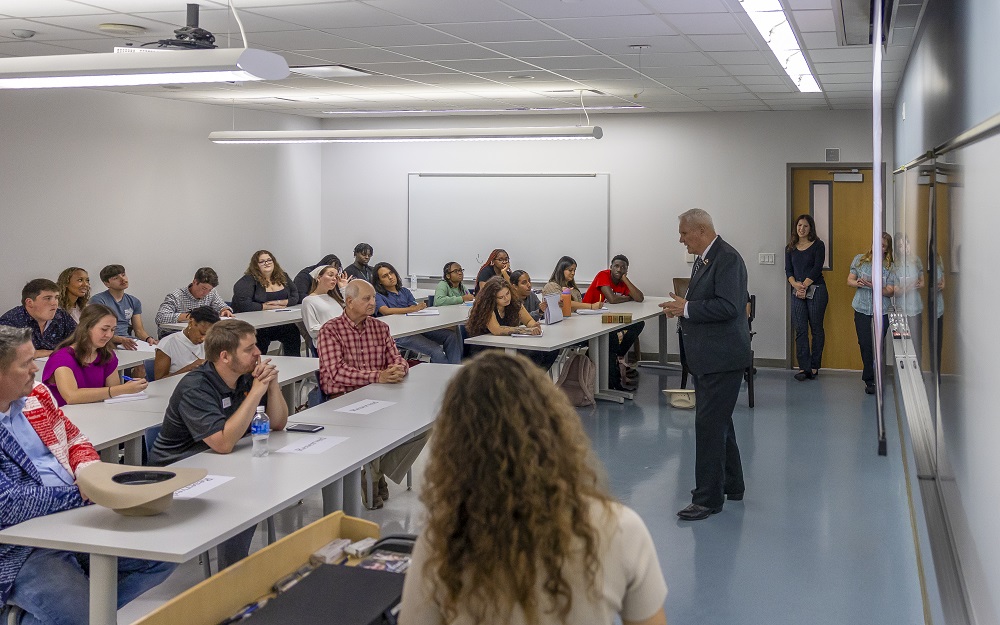
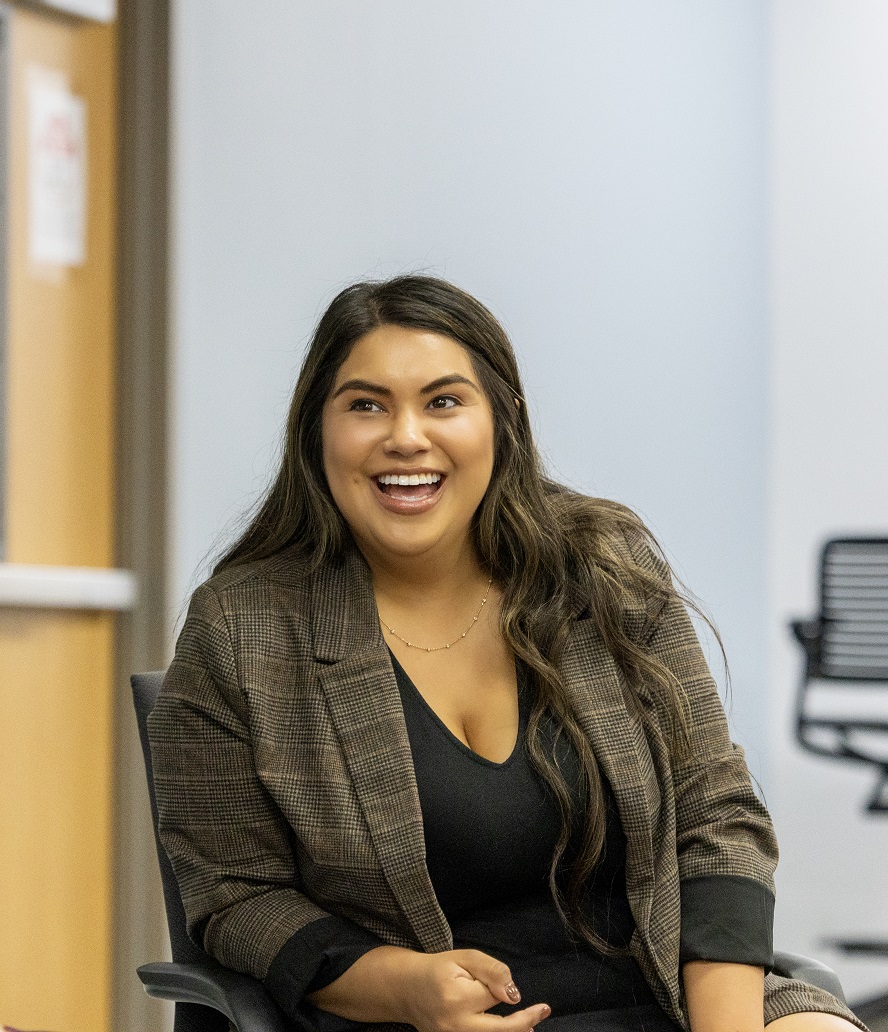
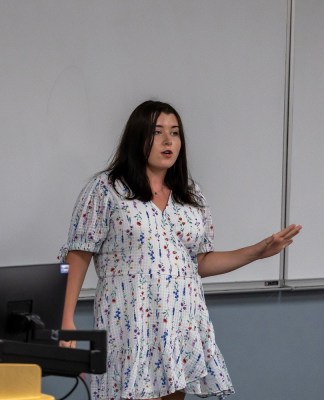
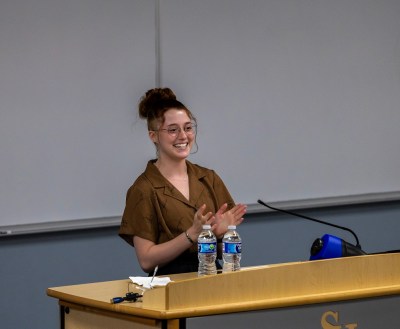
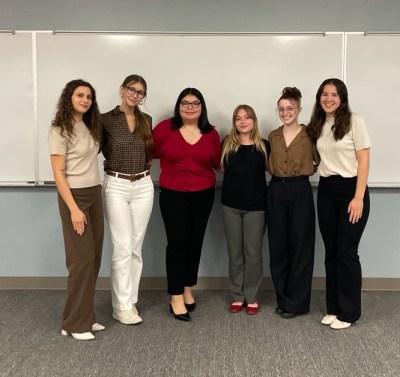
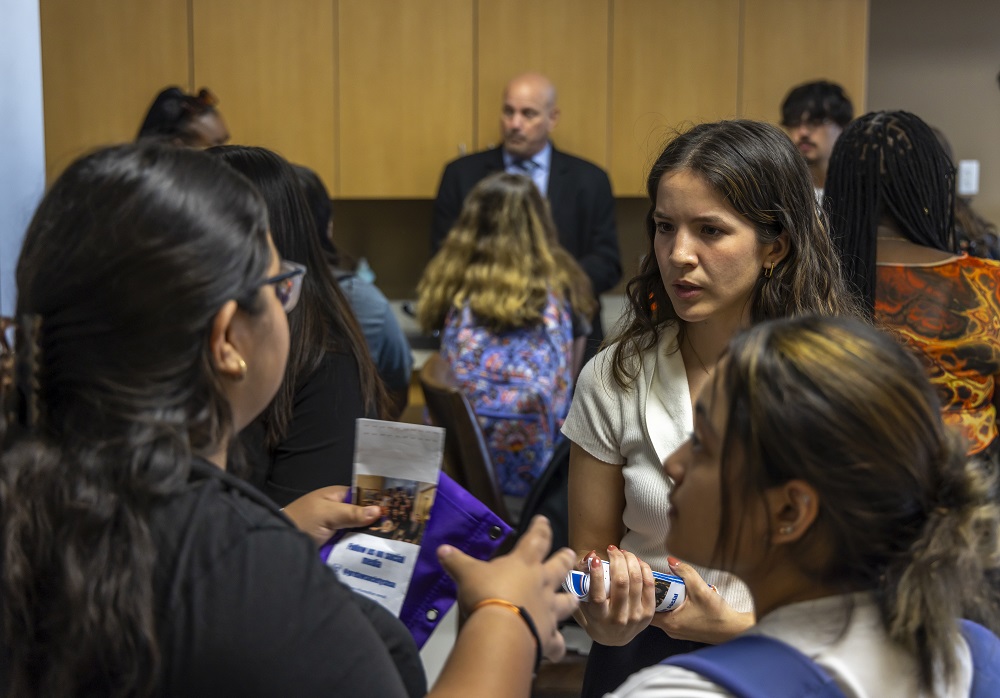
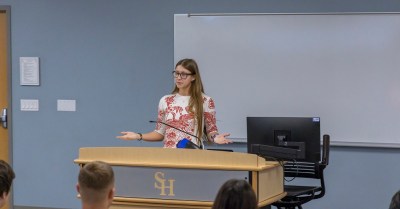
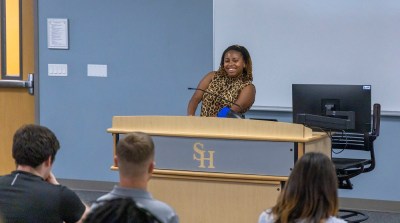
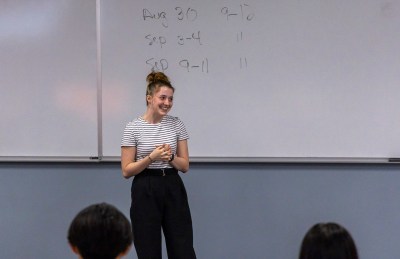
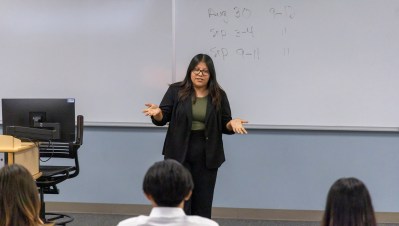
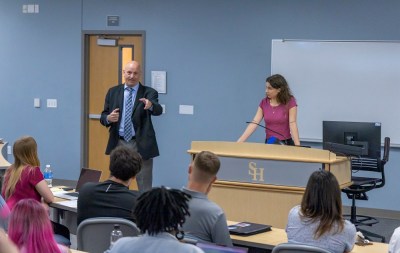
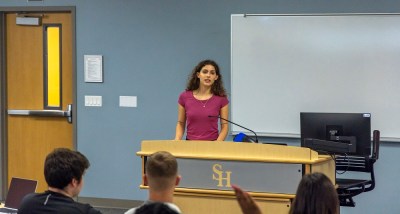
After a multi-year hiatus, the LEAP Center has revived its Moot Court Team, and SHSU Students Olivia Discon (Team Captain) and Maggie Betancourt will be competing at the Texas A&M Law School Regional Tournament on November 16-17.
What is Moot Court, Anyway?
Moot Court replicates the appellate process. Most people are familiar with the trial courts, where (typically) a jury judges the guilt of a defendant; witnesses are called to testify, are involved in direct and cross examination; and a single judge presides over the proceedings. But in an Appellate Court, attorneys compile documents, provide a written brief, and offer oral arguments, making the case that the lower court erred (petitioner) or didn’t (respondent) in the proceedings.
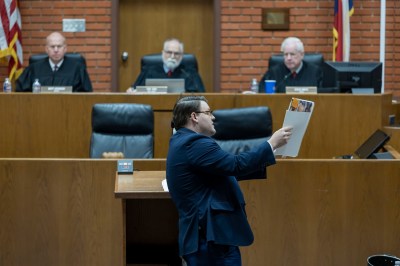
This fits right in with the LEAP Center’s activities, which already many law-school related activities, including inviting the 10th Court of Appeals to campus once a year to hear cases.
Without knowing it, then, the LEAP Ambassadors have had a mini-preparation for the Moot Court experience.
Moot Court Preparation
Although we may change formats in future years, the Moot Court experience works like this:
May 1: AMCA Releases Case;
August: Students read case and take “Foundations Quiz” to participate;
September: Weekly practices begin;
October: Practices continue and students may scrimmage other teams;
November: Regional Tournament
January: National Tournament
For the students, this means reading the cases (there are 21 cases in all) thoroughly, and developing arguments, modified over weekly practices, that can be used for their “courtroom” appearance.
Moot Court Benefits
In following this regimen, students gain many benefits. They…
Learn how to read and understand court opinions;
Learn how to write appellate briefs;
Sharpen their critical thinking, writing, and communications;
Gain substantive knowledge in the field of law;
Gain exposure to law schools to which they may be applying.
Rules of Moot Court
After familiarizing themselves with the main case and associated cases, the competitors decide which of two issues they will be arguing before the court. This year’s case, which is based on the Michelle Carter encouraging suicide through text-messaging case, involves both the 5th Amendment (self-incrimination, tackled by Maggie) and 1st Amendment (free speech, addressed by Olivia).
The students also (more or less) split the 20-minute time limit, with each student making their case before the judges for about ten minutes.
SHSU Competing in 2016 Moot Court Competition
This can be tricky, because judges can interrupt as often as they want, and the time spent being interrupted counts against the time allotted. (See full rules below).
Although teams may compete in scrimmages that are self-arranged, their first (and probably only) appearance is at one of 15-16 regional tournaments across the United States, which host, collectively, approximately 120 Universities, many of which field multiple teams. The top 25-percent of these teams then compete in nationals in January.
SHSU Moving Forward
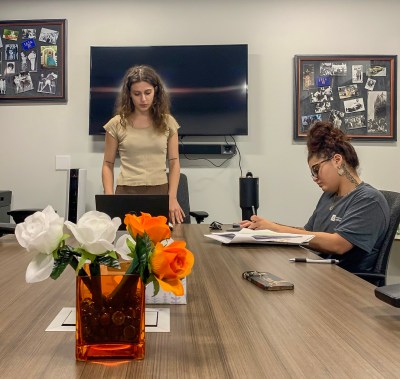
With help from Dean Gene Roberts, Stephanie Fors, and Victoria McClendon-Leggett, the students have gone through increasingly rigorous practices…
…culminating with a scrimmage on October 19, 2024.
This scrimmage, which took place on Zoom in three different states, involved 12 teams. Organized by Blacin Godfrey from the University of Louisiana at Lafayette, the students competed in three rounds, twice representing the petitioner and once representing the respondent.
Although the results have not yet been delivered to the teams, the SHSU team was able to enhance its practice in more realistic conditions, hear perspectives from more people, and commiserate with other moot court participants across the country.
Importantly, the scrimmage identified weaknesses in the team’s arguments; highlighted applications of other cases that should be considered for incorporation; and spotlighted weaknesses in delivery and presentation.
The team will continue its practice through November 16-7, when they will be one of 24 teams competing at TAMU Law School.
Getting Involved
For students who would like to be considered for SHSU’s Moot Court team next year, please contact Olivia Discon at oliviadiscon@shsu.edu or Professor Mike Yawn at mike.yawn@shsu.edu.
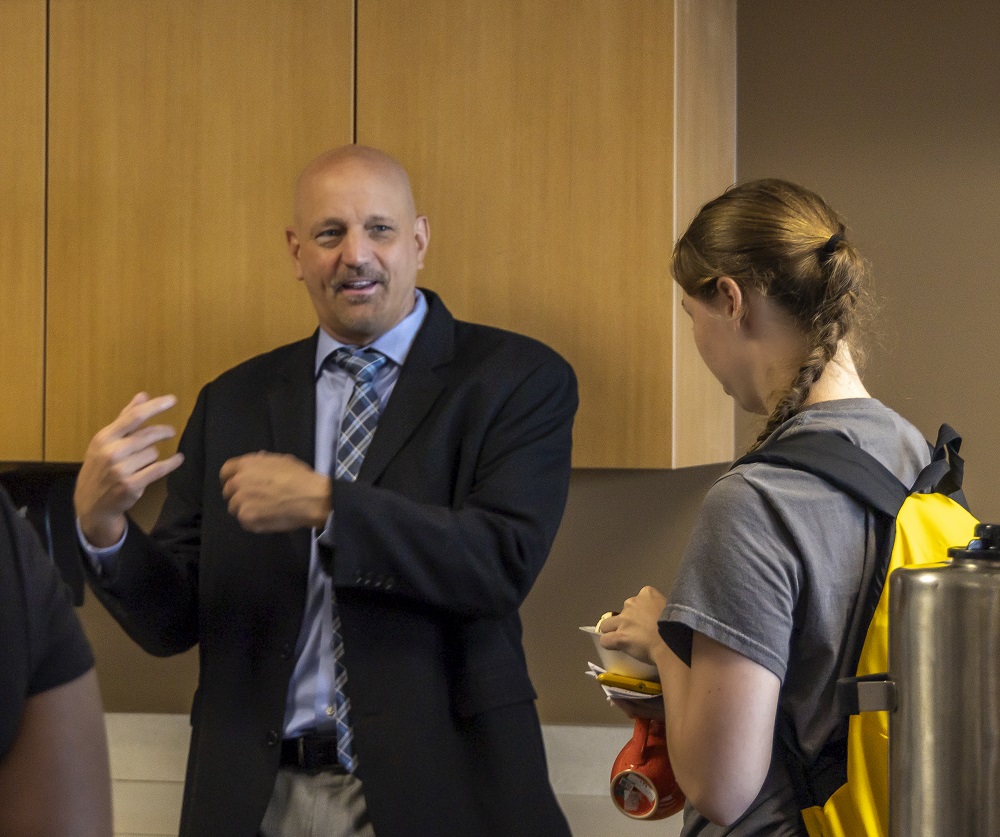
The LEAP Ambassadors kicked off the Conflict Resolution Month with an exciting virtual session hosted by Student Legal and Mediation Services- and what other way to enjoy an exciting session than with pizza?! The event was led by none other than Dr. Gene Roberts, Associate Dean and Director of Student Legal Mediation Services…
Dean Roberts set the stage with a warm welcome to all attendees, introducing Kiser and giving a shoutout to the Pre-Law Society students in attendance. Kiser wasted no time diving into the core of his expertise, offering valuable advice to pre-law students who are eager to begin their legal journeys.
Kiser’s discussion centered on his book Professional Judgment for Lawyers, in which Dean Roberts jokingly remarked could easily be titled Professional Judgment for Everyone… perhaps a title Kiser will use for the second addition of his book! The book offers insights into how our personal judgment shapes not only the legal field by society as a whole. Kiser walked us through the essential elements of decision-making in law, critiqued past and current law school structures, and shed light on how lawyers can use their experiences in the legal field to better serve their clients.
When asked what inspired his transition from being a partner at a big law firm to becoming a researcher and author, Kiser cited the influence of modern management theories from Peter Drucker and Mihaly Csikszentmihalyi’s flow theory. These concepts motivated his passion for exploring how lawyers and successful law firms make decisions.
One of the most interesting parts of Kiser’s discussion was his research on decision-making within the legal field. He emphasized the importance of professional judgment and highlighted how mediation training can significantly boost the success of a lawyer. According to Kiser, mediation fosters higher social awareness and sharper decision-making skills- both of which are qualities that make a strong attorney.
As the session wrapped up, the LEAP Ambassadors had a chance to ask Kiser a few final questions, and we all left with a deeper understanding of the critical role judgment plays within the legal field. A huge thank you to Gene Roberts for making this inspiring session possible and accessible to the pre-law students and to Randall Kiser for sharing his wisdom and advice with us!
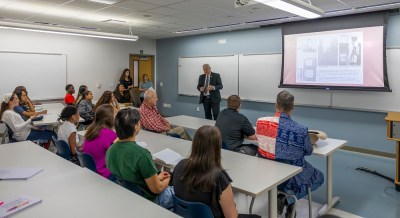
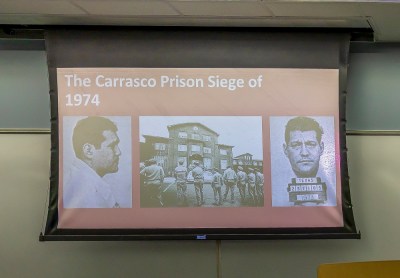
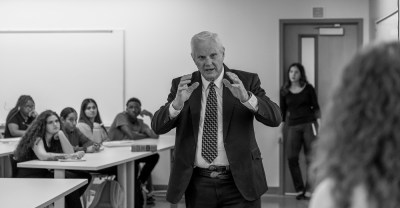
On Tuesday, September 24, Texas Ranger Maurice Cook visited students at Sam Houston State University to offer a special presentation about the 1974 Huntsville Prison Siege and different aspects of his career—which involves service in Vietnam, being a police officer, working as a State Trooper, going to law school and passing the bar (at the age of 60), teaching at a community college, and, for the past four years, holding the office of Sheriff (Bastrop County).
But it was his time as a Ranger that occupied most of our time with him, particularly his experience in the 1974 Huntsville Prison Siege, which at that time, was the longest prison siege in history.
He began by noting that he had only been a Ranger for less than a year…
…and he got the call to come to the Huntsville Unit, with his bulletproof vest.
He offered vivid and sometimes humorous descriptions of a Carrasco associate, a trustee inmate, who was able to work with Carrasco’s wife to smuggle in guns and ammunition—in peach cans!
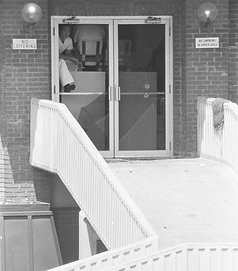
Ranger Cook also did a good job of describing the Carrasco “fortress,” which was the prison library, fortified with tables, books, and other impediments—while also “imprisoning” eleven hostages.
While law-enforcement had the building surrounded, there was only way in and one way out, so it would have been very difficult to mount a full-frontal offensive.
They did set up dynamite on the rear wall, and planned to use it if Carrasco began torturing or killing hostages.
Carrasco was concerned about this, and he would assign his compadres to crawl in the rafters and look through the vents—but in doing so, the lookouts would scare away pigeons, who roosted on the building’s eaves. This allowed law-enforcement to know a little about what was happening inside the “fortress.”
Carrasco also insisted on using his (Hispanic) lawyer as a mediator, because he did not trust the non-Hispanic law-enforcement officials. While law-enforcement officials did negotiate, they did so strategically, not providing anything that could be too damaging.
They did provide helmets, but they had weakened the metal in the temple area so that bullets could pass through the steel; and they provided a getaway car, but they messed with the gas gauge such that it appeared full, while being nearly empty. One of the more interesting show-and-tell items was a book that stopped a bullet during the siege, which Ranger Cook had on hand.
Ranger Cook also noted, during the Q&A period, that the siege brought about changes in law enforcement procedures, particularly with securing the crime scene. The lack of protocol led to extensive court battles. The siege also led to a dedicated SWAT team, in place for future encounters of this type.
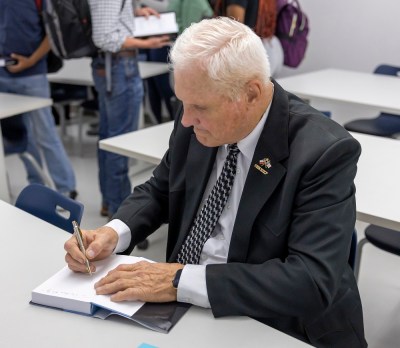
Toward the end of the discussion, he shared valuable insights about life and success, highlighting my favorite quote: “Shoot for as high as you can.,” and he ended the event with a book-signing.
We would like to extend a special thank you to Ranger Maurice Cook and Marcus Cook for taking the time to meet and enlighten us about the 1974 Huntsville Prison Siege, as well as sharing a bit of history about Ranger Cook’s life and law enforcement career!
In LEAP’s ongoing quest for experiential learning, Ambassadors set out for Little Rock, AR, where opportunities for education about Civil Rights, politics, history, cinema, art, and literature abound. And our first day was a big one…
A Visit to the Arkansas State Capitol
by Olivia Discon
Our first stop in Little Rock, Arkansas set the tone for an incredible trip filled with history, learning, and a deeper appreciation for the Natural State.
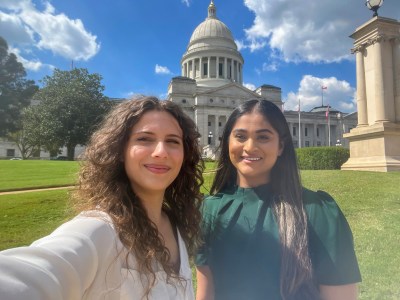
Naturally, we couldn’t visit without stopping at the Arkansas State Capitol…
…where Cheryl Augustine, who had guided LEAP students three years ago, once again took time out of her day to give us a tour that was both engaging and one to remember.
We began in the Governor’s Reception room, where we learned about the history of Arkansas, institutional traditions, and the current Governor (Sarah Huckabee-Sanders) and soaked in the beautiful room.
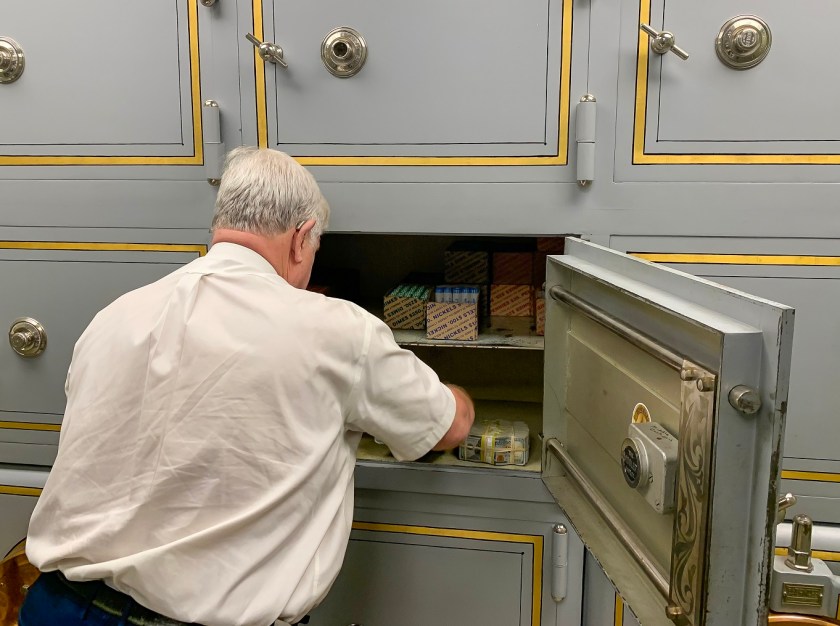
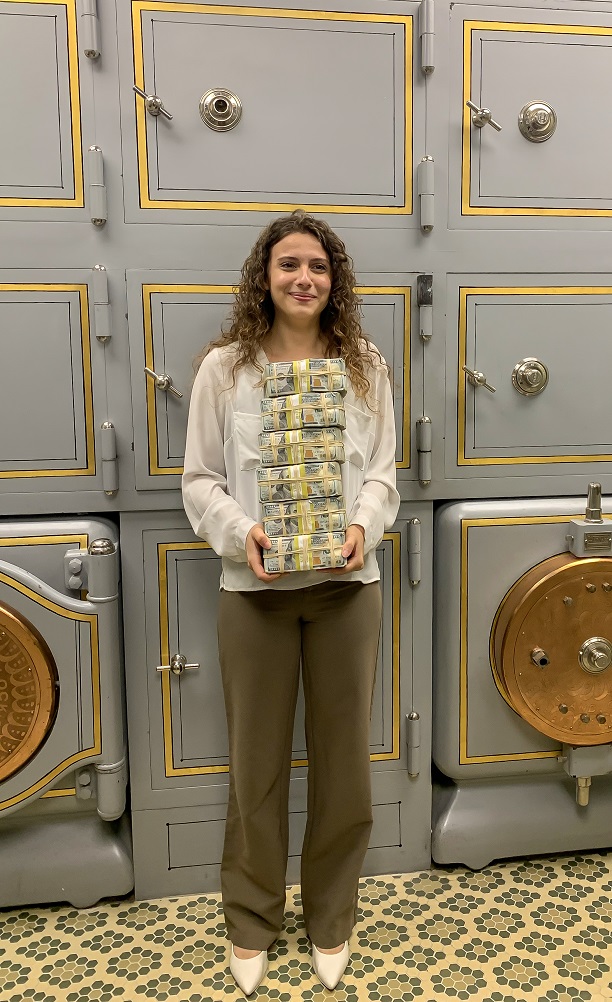
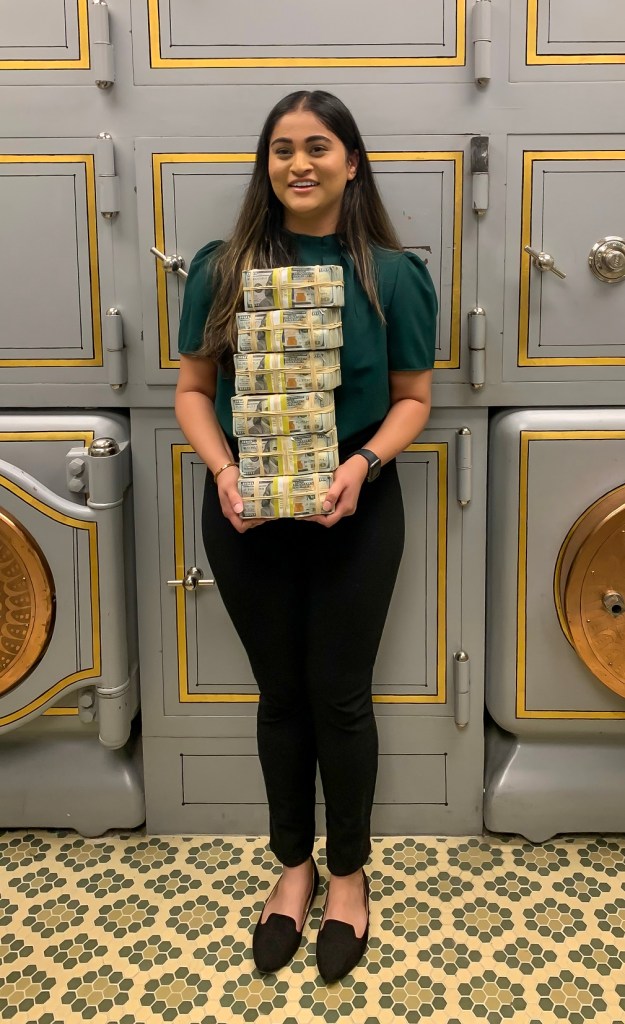
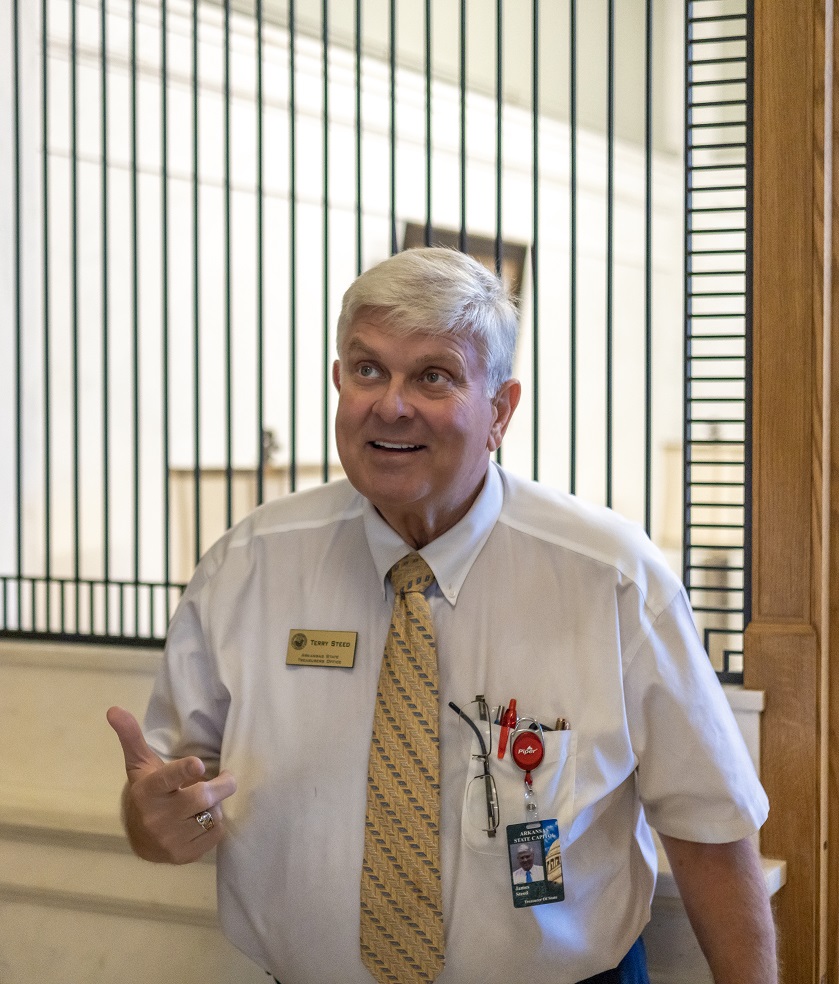
This was followed by one of the highlights of the tour, the Treasury Room, a space rich in history and, quite literally, in cash. With the help of Cheryl and Terry Steed…
…we had the chance to walk past the 12-ton vault door and even hold $600,000 in cold, hard cash.
While it was exciting to hold such a large sum, we learned the more practical side: the state loses $38,000 annually by displaying the cash instead of investing it. But this tradition connects Arkansans to their government in a tangible way.
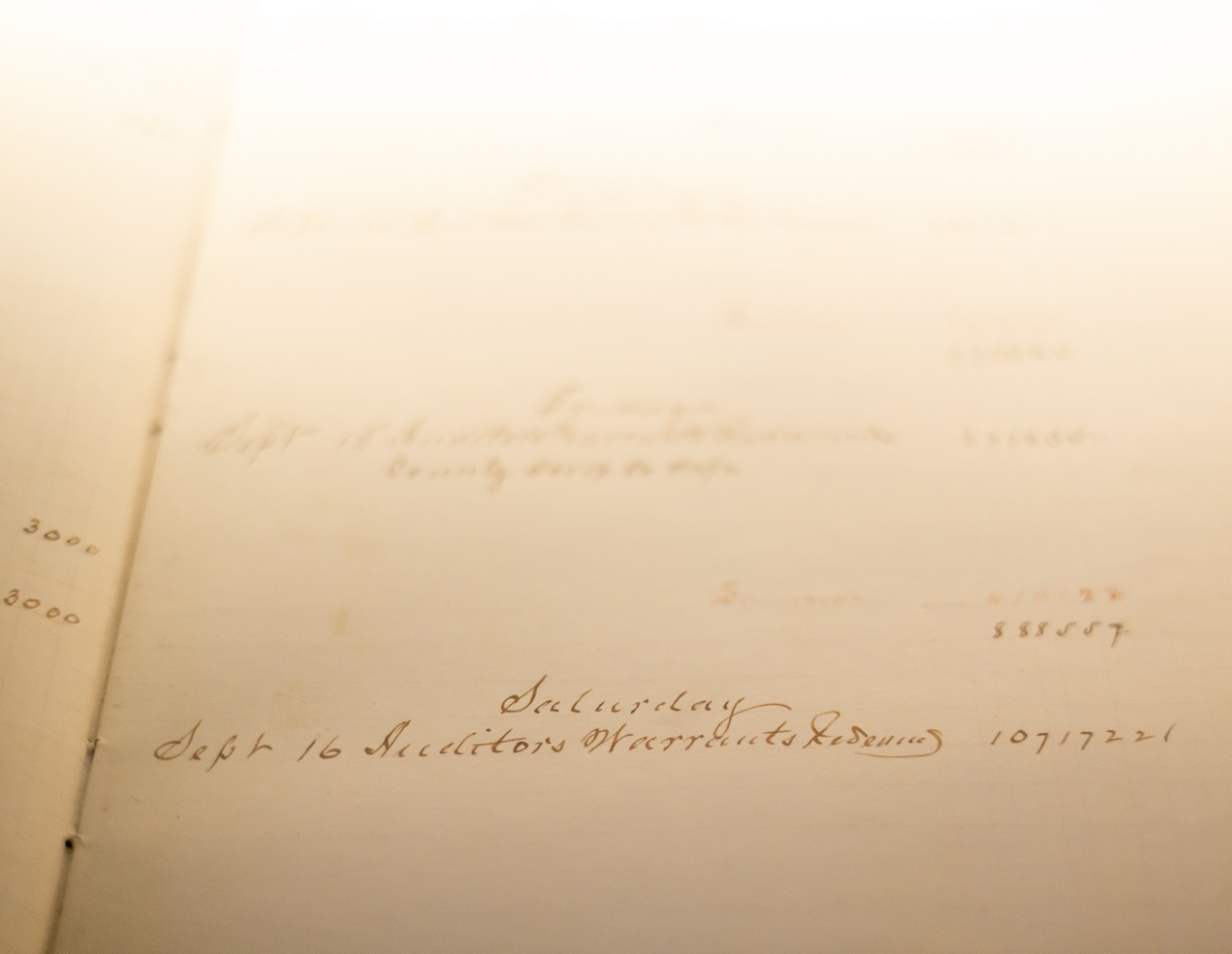
The Treasury Room itself is stunning. Its ornate ceiling, restored with 17 different shades of green, is as much a part of the Capitol’s history as the vault itself. Adding to the room’s charm, they displayed calculator machines from over 100 years ago…
…and everything down to the floors has been carefully preserved since its inception…
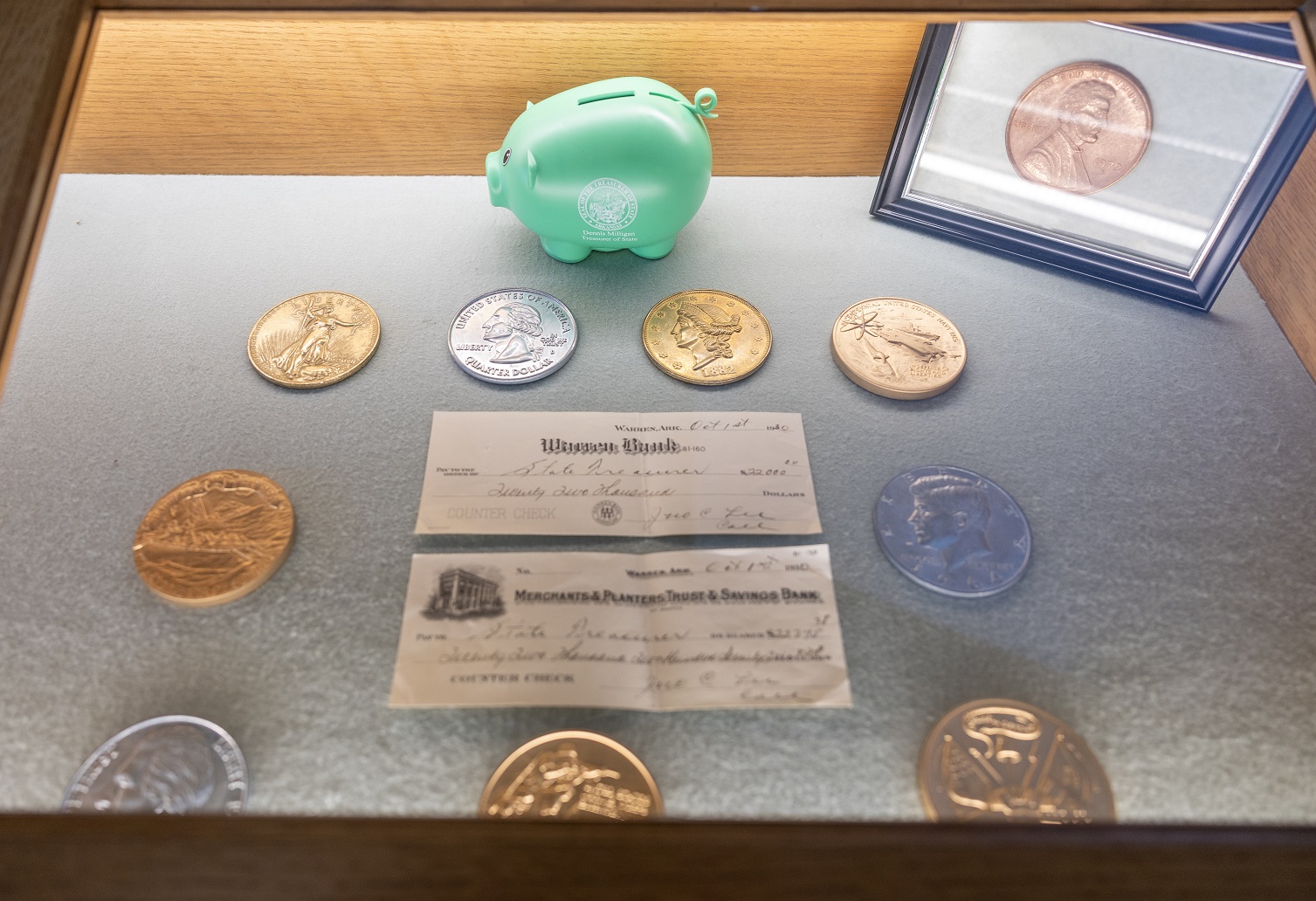
…with numerous artifacts on hand for viewing pleasure.
While in the vault, we also had the chance to meet Stephen Bright, Chief of Staff to State Treasurer Mark Lowery.
He shared insights into the Arkansas legislature and gifted us two challenge coins, one from Treasurer Lowery and another in memory of the late Larry Walther. These coins, rooted in military tradition, are exchanged as symbols of respect and accomplishment, which we were very grateful to receive.
The Arkansas State Capitol is an impressive building, with its original design by George R. Mann and later finished with the help of Cass Gilbert, the same architect behind the U.S. Supreme Court.
It took from 1899 to 1915 to complete, and you can really see the effort that went into every detail. The exterior is made from Limestone (from Batesville, AR), the floors and walls are made from Vermont marble, the grand staircases are Alabama marble, and the columns are from Colorado marble, all of which were beautiful!
We explored both the House and Senate chambers, each equally impressive. Arkansas has 100 representatives…
…and 35 senators, with legislative sessions lasting 60 days. The grandeur of the Capitol is undeniable, but it’s the details—the stained glass ceilings, the drapery, and even the pigskin door—that really make the building stand out.
Our tour, which lasted an impressive 2.5 hours, flew by thanks to Cheryl’s knowledge and enthusiasm.
We ended our tour with a story that was reminiscent of our experiences on this trip: the tale of the Arkansas Traveler. As Cheryl recounted, the story follows a lost traveler in search of directions, who, after a brief misunderstanding, receives not only help but also hospitality from a local man.
Much like the traveler, we arrived at the Capitol curious and eager to learn…
…and we left having found guidance, warmth, and generosity from everyone we met–and we, in turn, have become ambassadors for the state!
A Reflection on the Past: Little Rock Central High
by Saara Maknojia
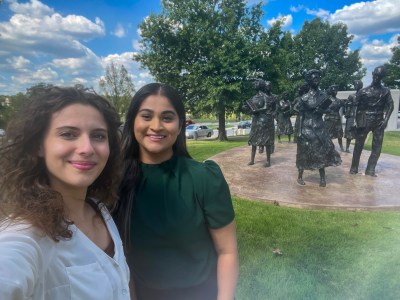
The students at Little Rock Central High School were dismissed from class at 4:00 p.m., giving Olivia and me a few moments to reflect on the diversity of the present-day student body. Standing outside the iconic school, we couldn’t help but consider how far the nation has come since its rocky process of desegregation.
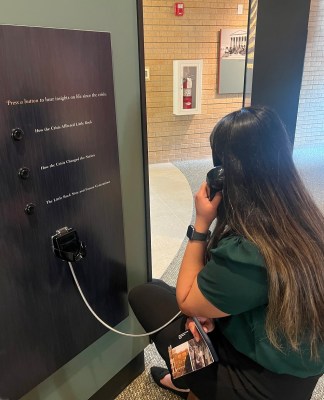
Just moments earlier, we toured the Little Rock Central High School National Historic Site, where we were both struck by the profound realization that the opening words of our Constitution, “We the people,” were not necessarily intended to include everyone.
The exhibit exposed us to deeply reflect on how for a long period of our nation’s history, the phrase excluded diverse groups of the population, including African Americans, who were denied the same rights and freedoms as Whites.
The historical significance of Brown v. Board of Education and the grit of the Little Rock Nine are beyond question. Their resilience in the face of extreme adversity not only provided momentum leading to the desegregation of schools but also reshaped the course of American civil rights. The historic site offered a powerful overview of this pivotal moment in U.S. history, immersing us in the experience of those nine brave students who, despite intense opposition, stood firm in their pursuit of equality.
As we walked through the exhibits, photographs capturing the tense moments, media coverage showing the nation’s divided response, and phone recordings of the threats and insults said at the students, we were reminded that the struggle for civil rights was definitive.
It was lived and deeply felt by those who dared to stand against injustice. The visit provided us with a deeper understanding of the personal sacrifices made, and the bravery required, to break down societal barriers. This experience left a lasting impression on us, particularly as we observed the diverse faces of today’s student body, a living testament to the progress that has come into existence from the courage of those who came before.
Little Rock Central High School, once the center of racial strife, now serves as a symbol of the journey taken by the Little Rock Nine toward inclusivity and equality for the progression for the United States.
Pinnacle State Park
One moment you are in the state capital, enjoying nice restaurants, relishing a visit to the state capitol building, and touring museums; and then about 20 minutes later, you are at Pinnacle Mountain State Park, climbing a mile-long incline to get a view of the beautiful Arkansas country-side.
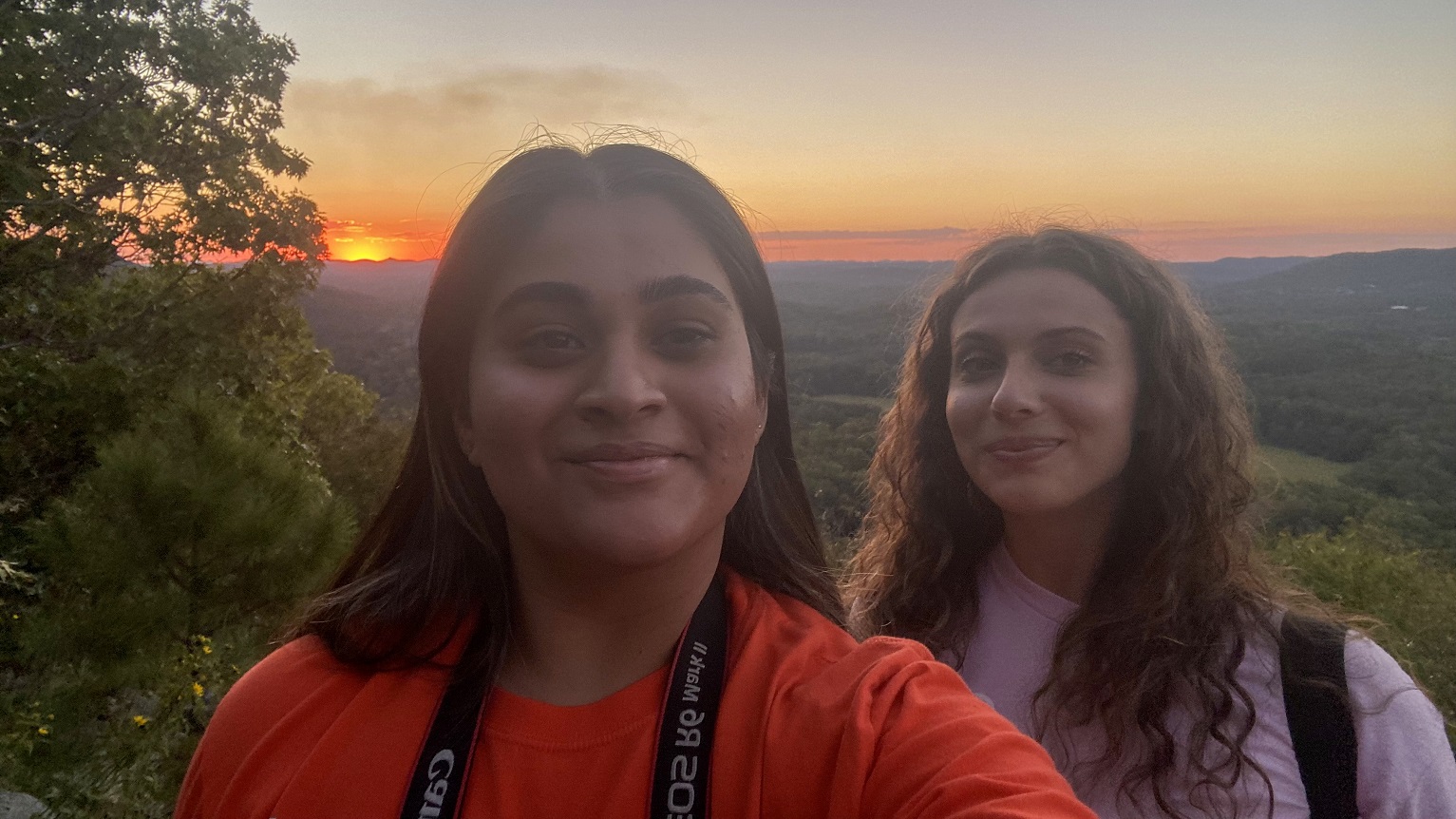
It takes a bit of planning. There is much to do in the Park—it sports an Arboretum, Ranger-led activities, and two rivers. But the attraction to us were the hiking trails, specifically east and west summit hikes. Our plan, in theory, was simple. Olivia and Saara would ascend the East Summit Trail, a demanding hike that requires rock scrambling, a 1.5 total distance and, most important, an ascent of 1,000 feet.
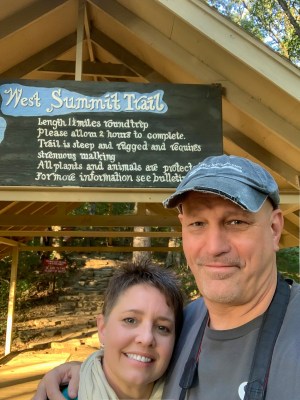
Mike and Stephanie would ascend from the West side, which involves a similar distance and ascent, but less rock scrambling.
For Mike and Stephanie, things worked as planned, and although their advanced age prompted several breathers along the way…
…they enjoyed unparalleled views of the valley…
…distant hills…
…and the Big and Little Maumelle Rivers.
Things also worked as planned for Saara and Olivia, for about the first 1/20 of a mile…
…when they accidentally followed the base trail rather than the East Summit trail. This is a great way to see the perimeter of the mountain, without ever actually ascending, and with literally no chance of reaching the summit of the mountain. After an hour or so of this, a passerby noticed the dazed and bewildered look on the girls’ faces, and he kindly directed them to go up the mountain if they wanted to get to the top.
Other than this hiccup, though, things did go generally as planned. We hoped to see some wildlife, and we did, albeit in the form of a tarantula.
When urged to take a closer look, Olivia responded directly, “Oh, hell no.” True to her word, she refused to proceed on the trail—possibly even reversing—until the tarantula hustled off the trail. We planned to get a good workout, and we did. The East Summit trail is especially challenging, with several areas most often referred to as “boulder fields.” Indeed, “Alltrails.com” admonishes hikers to “proceed cautiously,” noting it is a “highly challenging route” to be tackled by only “experienced adventurers.”
And the payoff is worth the climb, with some beautiful views from almost any angle.
It was a wonderful time..
And it was a fitting end to a rewarding first day in Little Rock. We mixed some outdoor fun with a healthy mix of history, civil rights, politics, architecture, finance, and friendship, all within twenty minutes or so from one another. It is a mix we hope to repeat tomorrow, striving to reach another pinnacle in our educational adventure.
Note: We would like to say “thank you” again for all the great people we met today. Cheryl Augustine was a wonderful tour guide and person; Terry Steed is, as Cheryl notes, “a treasure to the Capitol,” and a very nice person; and Stephen Bright, who generously spent time with us and gave us some terrific advice.
This week marked the first Pre-Law Society meeting of the fall 2024 year, and what better way to start the first meeting than by setting a membership record? For the first-time ever, we topped 100 members, totaling 107, an indication of the strong lure of students to pre-law at SHSU.
Moreover, we were fortunate to mark this special occasion by having the first ever Pre-Law Society President as one of this month’s speakers! MacKenzie Smith and past Pre-Law Society president, Megan Chapa, spoke to members about their lives as prosecutors and what that entails.
The two shared their unique experiences from their time at Sam Houston State University, their law school journeys, and their work in the counties in which they currently reside. Both gave great advice to future law students, encouraging them to work hard and have drive, as law school requires hard work and ambition. The presentation was highly informational and useful for pre-law students considering entering the field of prosecution.
After a great presentation, next on the agenda was the elections! The students, who had plenty of time to build up their nerves were finally able to give their three-minute speeches explaining why they would be a good fit for their selected positions.
For the role of Historian, runners were Katherine Burnett and Lillie Bourgeois; for Vice President of Treasury were Maggie Betancourt and Christina Biello; for Secretary were Emily Alfaro and Madison Cawthon; and for Vice President of Membership were McKenna Nonnenmann and Jacqueline Santos-Romano.
After a long suspenseful wait while the votes were being counted, it was time to read the results!
The historian role was filled by Katherine Burnett (as I am writing this blog now). The winner for the role of Vice President of Treasury was Christina Biello. The new secretary is Emily Alfaro. Lastly, the role of Vice President of Membership was given to McKenna Nonnenmann, the former historian! As the positions of Olivia Discon and Cinthia Villareal went uncontested, they will continue to do an amazing job in their respective roles. After the outcome of the election was delivered, the meeting was adjourned. Overall, the meeting was a great success and we thank everyone who came to the meeting, especially Megan Chapa and MacKenzie Smith for taking the time to come and speak with us!
Our second day at the Texas Tribune Festival started early, ambitiously, and promisingly. But with an itinerary that included sessions on Criminal Justice, the next legislative session, Dan Crenshaw, the world of philanthropic foundations, local government, and a visit to the TX Capitol, the day was also daunting. But we were beginning with an always popular topic—criminal justice—and that provided just the juice for a good start to a busy day.
CJ and the 89th Legislative Session
by Michelle Moya
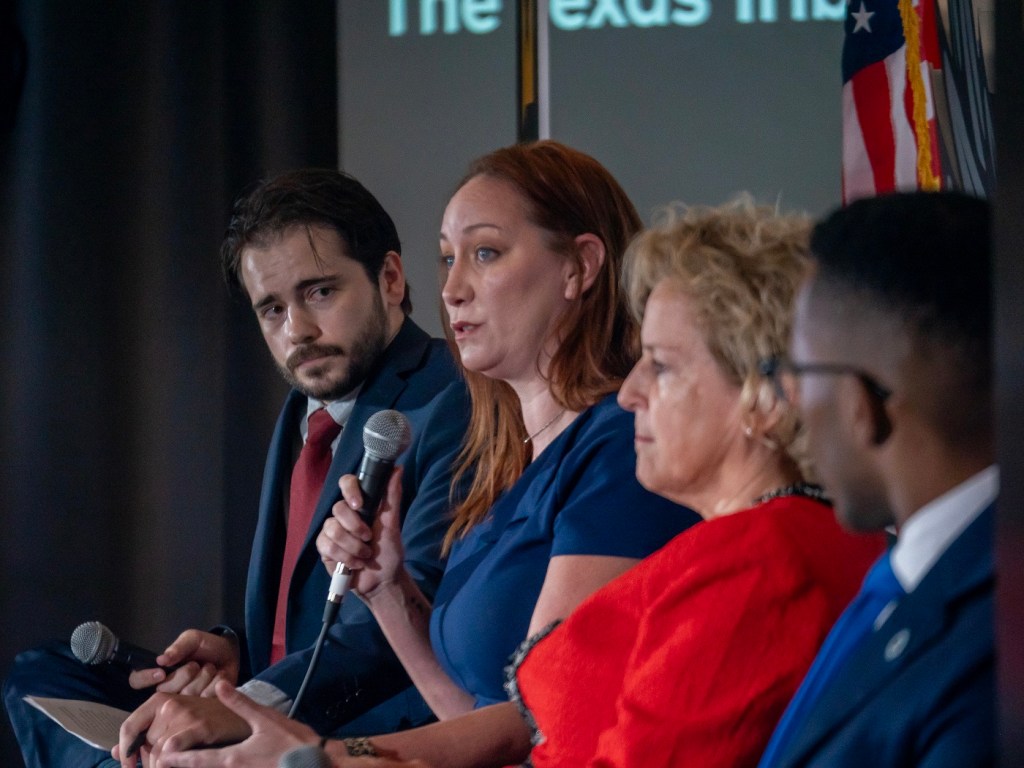
Kicking off day two at the Texas Tribune Festival, we started our day at the Criminal Justice and the 89th Legislature panel. The panel featured two prominent Texas State Representatives: Republican Jeff Leach and Democrat Joe Moody. The session started off with a broadcast opening statement from charismatic actor, Glen Powell, explaining the importance of entering the festival with an accepting mind. This opening set the tone for the thought-provoking intersection on criminal justice and its place in the Texas Legislature.
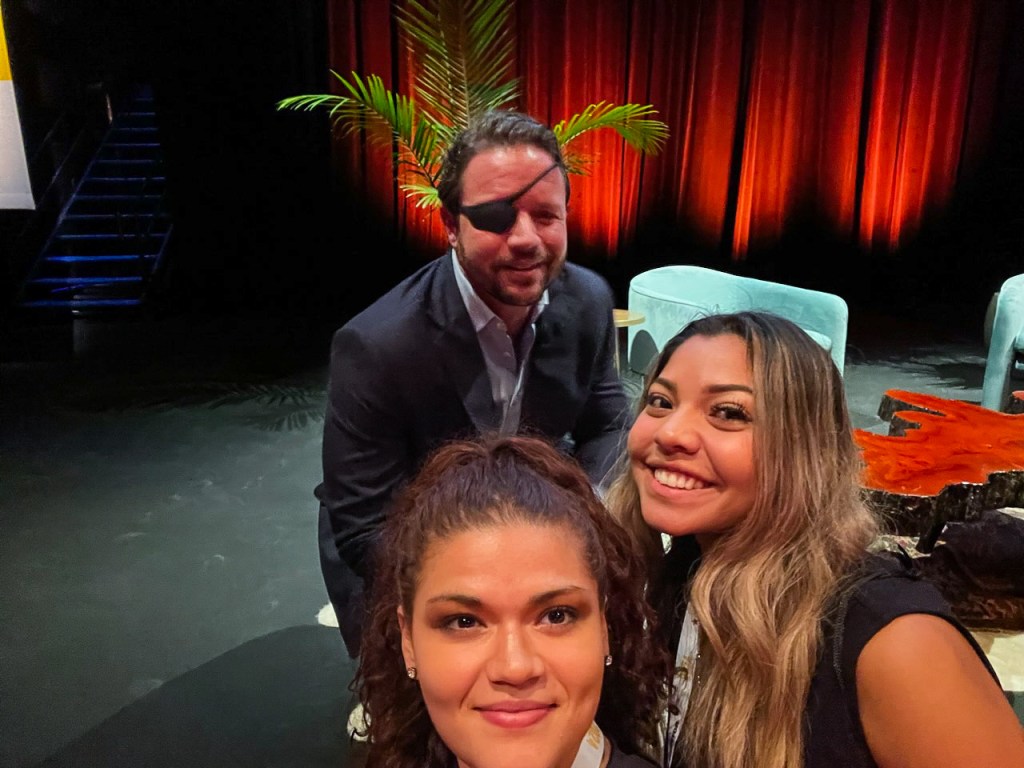
Rep. Jeff Leach takes a “selfie” with Glen Powell
In a time of huge political division, Leach and Moody are proving that bipartisan cooperation is possible and can create a major impact. What makes their partnership so powerful is their commitment to finding common ground, rather than simply occupying entrenched positions. Rep. Leach explained in the discussion that it is not about changing the other’s mind, but finding a way to compromise.
One pressing issue they touched on was the death penalty in Texas and what it involves in the current system. This topic, I am particularly enthusiastic about learning more about, yet it is considerably more intricate than we realize. As seen by national debates over capital punishment, Leach and Moody are leading attempts to have a significant impact in the state of Texas. Their work, aimed at reforming Texas’ death penalty system, reflects a dedication to upholding justice while also acknowledging the system’s fallibility. This case is depicted within the Melissa Lucio case, in which both representatives have worked tirelessly to try and get her off death row. Leach and Moody are helping to ensure that Texas avoids the irreversible tragedy of a wrongful execution. They stated that their biggest desire was to bring Lucio home for Christmas.
Ending this educational and insightful session, one realization I had was as Texans, we are fortunate to have these two dedicated public servants working tirelessly on our behalf. Their collaboration serves as a powerful reminder that, despite our differences, we share a common commitment to justice, fairness, and the well-being of our state.
The Future of Local Control
Most people don’t think about their local government until they need it. Citizens will vote in presidential elections, and maybe for US Congress, but if elections exclusively involve local officials—mayors, county commissioners, and district attorneys—less than a fifth of eligible voters will turn out. It is precisely these officials, however, that control many essential functions: water, emergency services, roads, sewage, and trash, and recently, these officials have been asked to do more with less.
Some of these officials were on hand today to discuss “The Future of Local Control.” Travis County Commissioner Ann Howard; Harris County Attorney Christian Menefee; and Mackenzie Kelly, the only conservative on Austin’s City Council discussed challenges facing local government. Increasingly, these challenges have involved the loss of discretion. The State of Texas has passed a series of laws restricting how cities can set their own policies in areas such as taxes, pandemic response, homelessness, and employment law.
Generally speaking and understandably, local officials don’t look at such restrictions favorably. Indeed, Commissioner Howard and County Attorney Menefee argued that the State of Texas was actually targeting specific local governments—notably Travis and Harris Counties. In the past, cities had almost complete control over their tax rates; today, following the passage of state laws, cities must lower their tax rates if citizens’ property values increase beyond a certain percentage. Homelessness, too, is no longer in the exclusive purview of the cities. After Governor Abbott signed a law banning homeless encampments, however, that is no longer the case. In short, cities must find new and innovative ways to solve problems.
The panelists did not devote their time to such solutions. Harris County Attorney Menefee highlighted many of what he saw as misguided regulations aimed at Harris County and “silly” characterizations of his policy positions. Commissioner Howard delved into some of the structural problems faced by fast-growing regions, shining light on the rural-urban divide, particularly when it comes to issues such as infrastructure, traffic, and development. Councilmember Kelly offered an interesting view of the councilmember’s role, describing her process of learning from her constituents, educating her constituents, and working with residents, businesses, and other governmental entities to ensure the right information is being considered and that saving taxpayers’ money remains a goal.
As if to punctuate the different challenges facing local governments, the questions from the audience covered various topics. One question involved affordable housing; another related question involved the paperwork and seemingly needless bureaucracy of filing for homelessness benefits; still another asked about what cities can do about relieving loneliness in communities.
The particular questions often related to a specific city’s problems, or even a specific resident’s problems. Looked at broadly, however, the questions all related to the essential role of cities in modern life, and whether state governments or the federal government should encroach on local governments’ discretion in solving its own problems. These issues, we found out throughout the day, would be raised repeatedly in different contexts.
Giving Their All
by Caitlin Nortonen
After enjoying the morning session, Saara, Cinthia, Katherine, Maggie, and I decided to spend our afternoon gaining more knowledge on the impacts of philanthropy in the state of Texas.
The panelists included: Allan Golston, U.S. Program President of the Gates Foundation; Peter Miller, CEO and President of the Meadows Foundation; and Maribel Perez Wadsworth, President and CEO of John S. and James C. Knight Foundation. It was evident that their main goal is investing into communities and addressing some of Texas’s most pressing problems.
Mr. Miller’s main focus within the Meadows Foundation is funding grants for those in need pertaining to the environment, education, mental health, and the issues revolving around homelessness in Texas. He shared with us that his foundation alone has practically eliminated homelessness among veterans.
After Mr. Golston educated us on the funding for schools that don’t have significant resources, he stressed to us that our leaders need to give Texas schools more attention. Something quite interesting and saddening was that many educators leave their position after only two years even though they have invested so much money into their teaching careers.
This session was very interesting, and made us all have a better understanding and further respect for our educators!
Higher Aspirations
by Olivia Discon
Higher education is a field of multitudes. A quality education doesn’t just rely on professors and classrooms-it’s shaped by the politics of healthcare, workforce development, the economy, and the state of Texas.
Who better to hear about the current state of Texas higher education than from the experts themselves?
We had the opportunity to hear from the Chancellor of the Texas Tech University System, Tedd Mitchell;
…President of The University of North Texas and former Commissioner to the Texas Higher Education Coordinating Board, Dr. Harrison Keller;
…and President of Northwest Vista College, Amy Bosley.
Each brought their respective experience and insight into what makes a good education and what it takes to build a “Talent-Strong” Texas.
A major point of discussion in the political sphere, and on this panel, is workforce development. A thriving community requires a strong quality of life, which depends on good-paying jobs—and these jobs demand high-quality education. As you could imagine, this can become quite the headache. Fortunately, Texas universities, alongside the state legislature, are working to meet these challenges in real-time. Chancellor Mitchell emphasized the need to pivot our education system to align with industry needs, and all panelists agreed that adopting an “outcomes-based” approach is essential to putting students, and Texas’s future, first.
I found it incredibly interesting to gain a higher-level perspective on the issues Texas universities face while appreciating the resilience and investment that have led to their many successes. The discussion inspired me, as a student, to think about how I can contribute to the growth and service of our great state.
The Senate Next Time
by Katherine Burnett
A Democrat and Republican in the same room, who would’ve thought! Well, for the Texas Senate, this is a common situation. Texas Senators, Carol Alvardo, Nathan Johnson, Kevin Sparks, and Phil King sat down together at the Texas Tribune Festival. Despite party differences, they talked about issues that both Democrats and Republicans can equally agree need to be handled.
The representatives agreed on various topics, such as the misconception that Lieutenant Governor Dan Patrick is “running the building.” Further, the current electricity concern and the need for future alternatives.
It was a unanimous consensus between the representatives that despite arguments over beliefs and personal feelings, both sides need each other, and everything is put aside when it comes to the well-being of the State of Texas. After a discussion about the importance of working together, Nathan Johnson and Phil King filled the room with tension over talk on the school choice bill; though, the kerfuffle did not get far. Nevertheless, it did not stop little slights from being thrown for the remainder of the discussion.
The senators ended on a note of high hopes for the future of housing, electricity, rehabilitation, and various other problems that were brought to their attention during the closing remarks of the session.
One on One with Dan Crenshaw
by Maggie Betancourt
With feelings of anticipation and obscurity filling the theatre as Congressman Dan Crenshaw took the stage, we knew we were in for a contentious discussion. Known for his profound achievements as a former Navy Seal and his work to combat the Mexican drug cartels, Congressman Crenshaw stressed the importance of upholding the values and traditions on which our country was founded. The first question of “who is Dan?” set the tone for the conversation as Congressman Crenshaw defined himself as a “classic Reagan Conservative.” How does that differ from a regular conservative? Well, in the words of Congressman Crenshaw, a classic Reagan conservative believes in trying to conserve the nation’s founding and less on “making people happy.” He emphasized that instead, there is need for “protecting the laws that give people the ability to be happy.”
The crowd began to express strong emotions as Congressman Crenshaw articulated his opinion on how conservatives are viewed in the media. As he explained that people tend to let personal distaste for political figures cloud their judgment over policies, the crowd began to “boo.” The tension subsided as Congressman Crenshaw began to speak about his accomplishments with the FIZA Act, which allows wiretapping to detain the cartel members integral to the organization. He also discussed his works with the “Youth Summit,” which is a non-partisan program that prides itself on educating high school students on how government works along with how to make it a career.
Although Congressman Crenshaw’s beliefs were deemed as controversial, his patriotism and love for the American people and the nation shined brighter. The conversation ended with questions from the audience with one asking what he would be doing for a career if not a politician. Wrapping back around to his introduction, Congressman Crenshaw answered by saying he would have never left the military, as being a Navy Seal was all he dreamed of as a child.
Texas State Representative Salman Bhojani by Saara Maknojia
The 88th legislative session marked a historic moment when two Muslim Texas State Representatives were sworn into office. To have a deeper understanding of this moment, we headed to the Capitol to meet with Jordan Villarreal, the District Director for Representative Salman Bhojani.
Mr. Villarreal began with giving us a brief overview of Representative Bhojani’s office and explained the role of a District Director, who can be referred to as a “hawk,” as his daily duties comprise of keeping a close eye on all the counties that fall under District 92. While engaging in the conversation with Mr. Villarreal, we learned that Representative Bhojani stresses the importance of allowing local governments to have the freedom with their policies. Mr. Villarreal expressed how Representative Bhojani will continue to fight against the recent controversial topic over the legislation concerning school vouchers. Additionally, that he would continue representing students of different religions by endorsing bills that allow public holidays for respective religions or cultural festivals, without being penalized.
To our surprise, Representative Bhojani just so happened to be in his office before session! We had an incredible opportunity, before the hustle and bustle of the 89th session, to learn a bit more about him as a person. Since I have personally followed his campaign closely throughout the past legislative session, I had the chance of showing my appreciation for all that Representative Bhojani has accomplished. As the first Muslim State Representative of Texas, along with Representative Lalani, Representative Bhojani has diversified our state legislation. For the first time in history, we witnessed two Muslim representatives being sworn into office with a Quran!
Representative Bhojani then showed us the Quran which he had been sworn into office with. We were shocked to hear the 200-year-old Quran was read by John Adams and the other Founding Fathers so that they could better understand the religious texts; this provided an outline for Sharia Law when drafting the United States Constitution.
Our unexpected, yet wonderful meeting with Representative Bhojani was definitely a learning experience, as we embraced the historical impact of his term in office!
To start our fall 2024 semester with a sweet treat, the Pre-Law Society (PLS) held an ice cream social, sponsored in part by Student Legal and Mediation Services (SLMS) and the LEAP Center.
LEAP Ambassadors, current PLS Officers, and a few prospective PLS Officers (Lillie Bourgeois, Chrissy Biello, and Maggie Betancourt–thank you!) helped out, hosting an ice-cream social for all the opportunities and services offered by LEAP, SLMS, and PLS.
The ice cream social was an amazing way to meet people of all majors and classifications and it was exciting to see our returning members again after the long summer break.
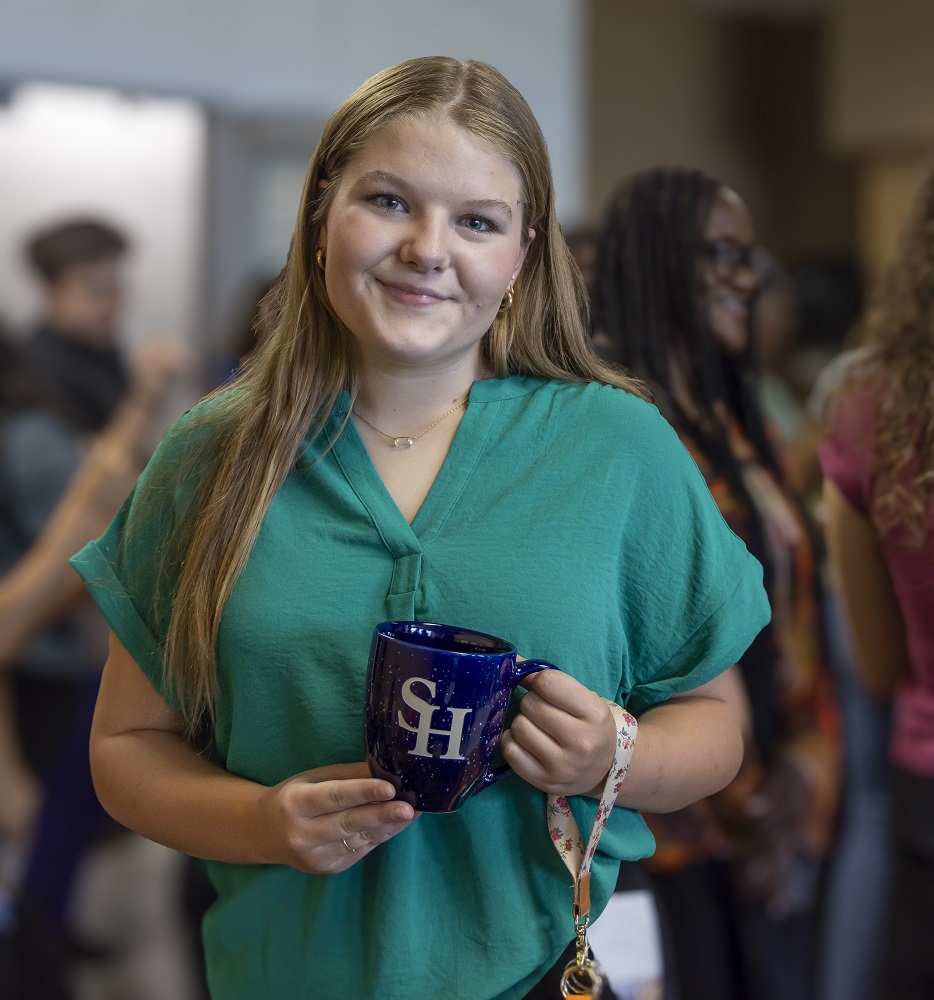
Apart from the ice cream and the multitude of its toppings, we had a spin-the-wheel game featuring prizes made up of school supplies and for some extra lucky members, a Sam Houston State University mug!
Personally, I got a pencil case with some sticky notes, pencils, and a very nice highlighter. I can’t wait to use them! Others were similarly happy with their wins.
We also had a chance to meet some prospective new members, people we hope will get more involved with LEAP, PLS, or the University at large. In all, more than 100 people attended!
Following our ice cream social, we held an informational meeting to show our prospective members what to expect during our monthly meetings. The Pre-Law Society President, Olivia Discon discussed our future events such as the first official body meeting on September 11, LSAT seminars, the Mock LSAT, and guest speakers throughout the semester.
Since this is a new semester, we are once again holding elections for all positions. This year the President and the Vice President of Marketing are uncontested resulting in the automatic election of Olivia Discon and Cinthia Villarreal. This year running for Historian are Katherine Burnett…
…and Lillie Bourgeois;
…for Vice President of Treasury: Maggie Betancourt…
…and Christina Biello;
…for Secretary: Emily Alfaro has announced she is running for this position…
…as is Madison Cawthon;
…and for Vice President of Membership, McKenna Nonnenmann has announced her intention to run…
…as has Jacqueline Santos-Romano.
Although elections were not held at this meeting, all office runners were given a chance to speak about their qualifications for their respective positions.
Each candidate will be given a chance to speak again at our next meeting when the elections will be held. I look forward to seeing how each person grows into their role as a member and/or officer.
I’m excited to see what the Pre-Law Society has to hold this semester, and to all the future memories our members are going to make. This meeting was a great way to start the new Fall 2024 semester, and another addition to the book of memories.
After a morning devoted to taking our LSAT Prep Course, we headed out to Charleston, the capital of West Virginia. This was a chance to build on some of the relationships we had built at the Southern Legislative Conference, and also to learn about the workings of other state capitals–the latter being of particular interest to those of us interested in the Austin Internship Program.
West Virginia State Capitol Building
by Michelle Cardenas
The West Virginia State Capitol Building, designed by the renowned architect Cass Gilbert, is a testament to the state’s resilience and rich heritage. Gilbert, who also designed the nation’s Capitol in Washington, D.C., which we visited during our spring break, was commissioned to construct the West Virginia Capitol in 1921. His style is unique, and you can see the similarities with many of his works.
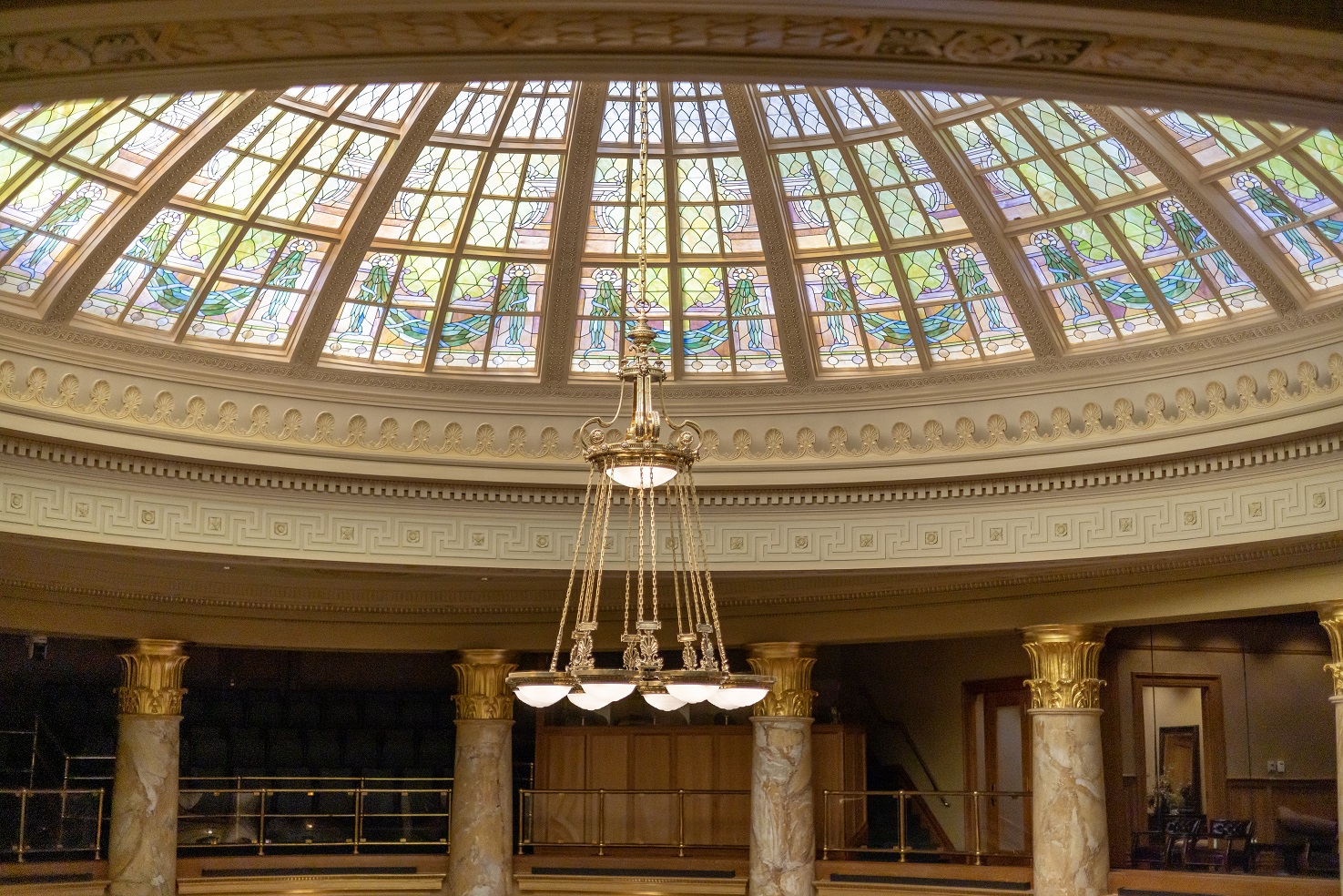
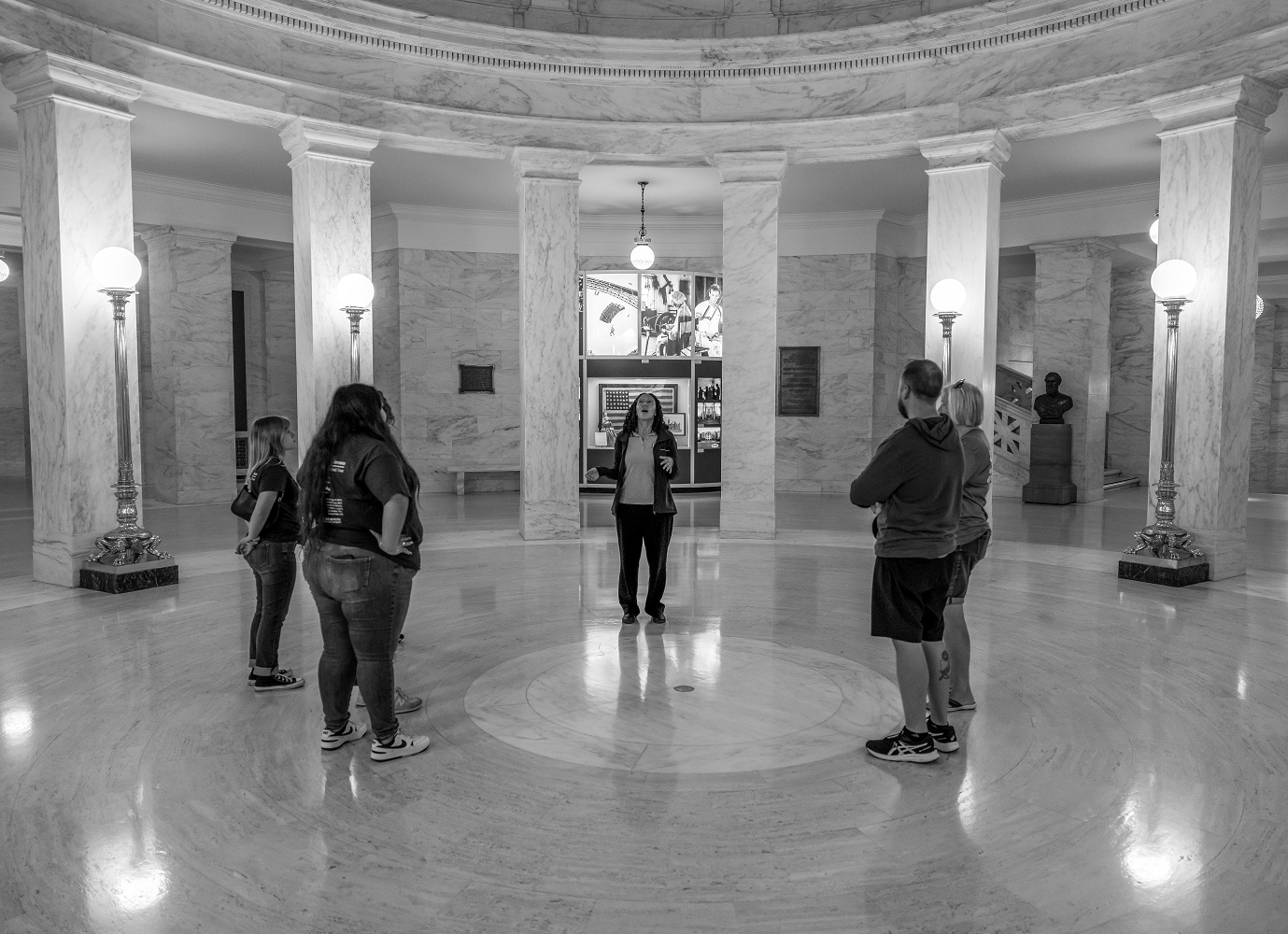
Upon entering the Capitol, we were immediately struck by the grandeur of the dome. The murals here vividly depict various significant stages in West Virginia’s timeline, including the Civil War…
…the scenic beauty of Seneca Rocks, the historical significance of Harpers Ferry, and even the contemporary state of West Virginia.
The intricate design elements throughout the Capitol reflect West Virginia’s unique character. Gold leaf is a recurring theme in the chandelier and lamps inside, mirroring the golden dome on the exterior.
Some of the ceilings are adorned with floral motifs resembling the magnolia, oak, and sugar maple trees, symbolizing the state’s natural beauty.
Our visit even included a House of Representatives and Senate tour. In the House, the room is divided by party lines and organized by committee memberships, leadership, and seniority.
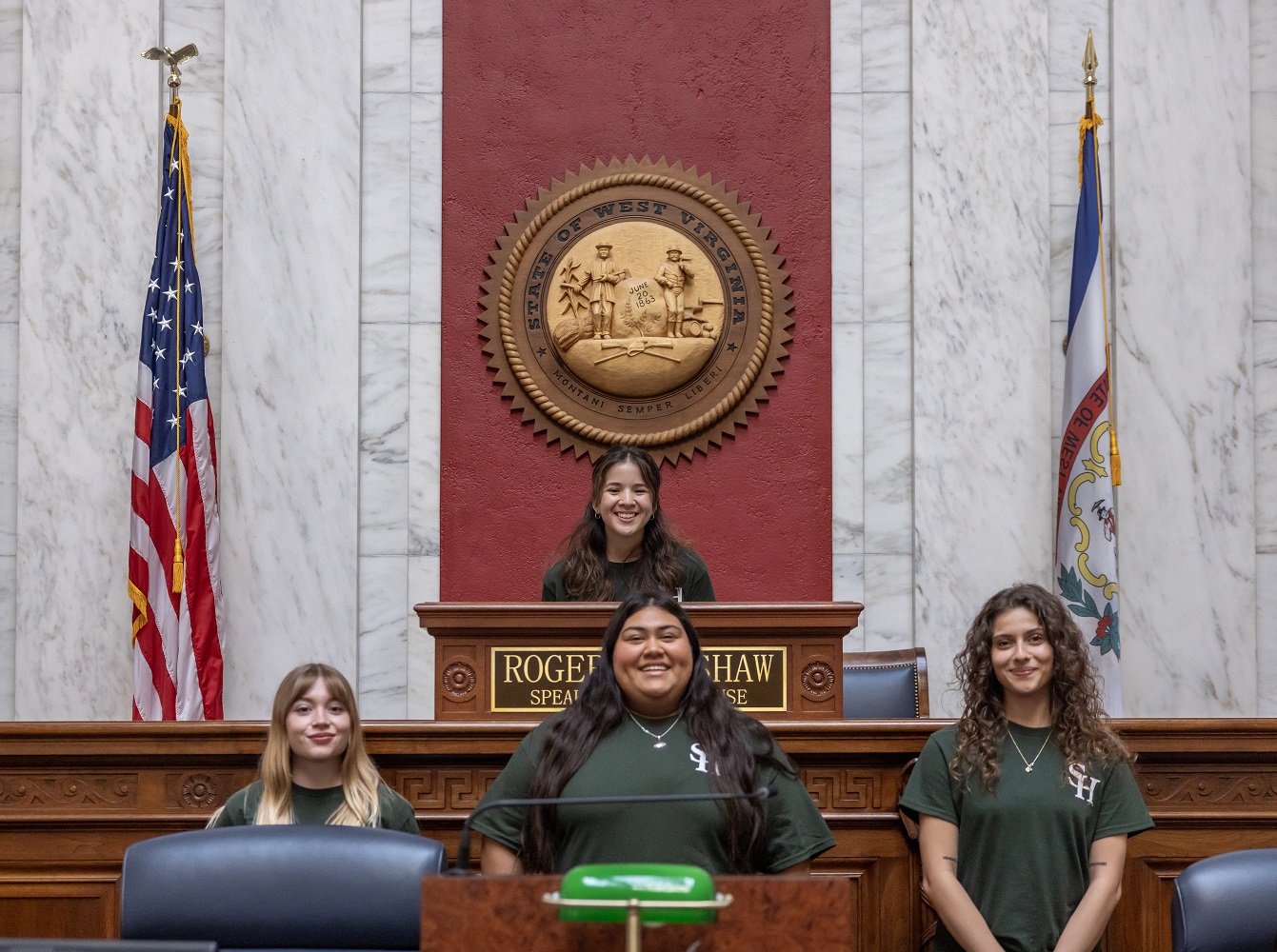
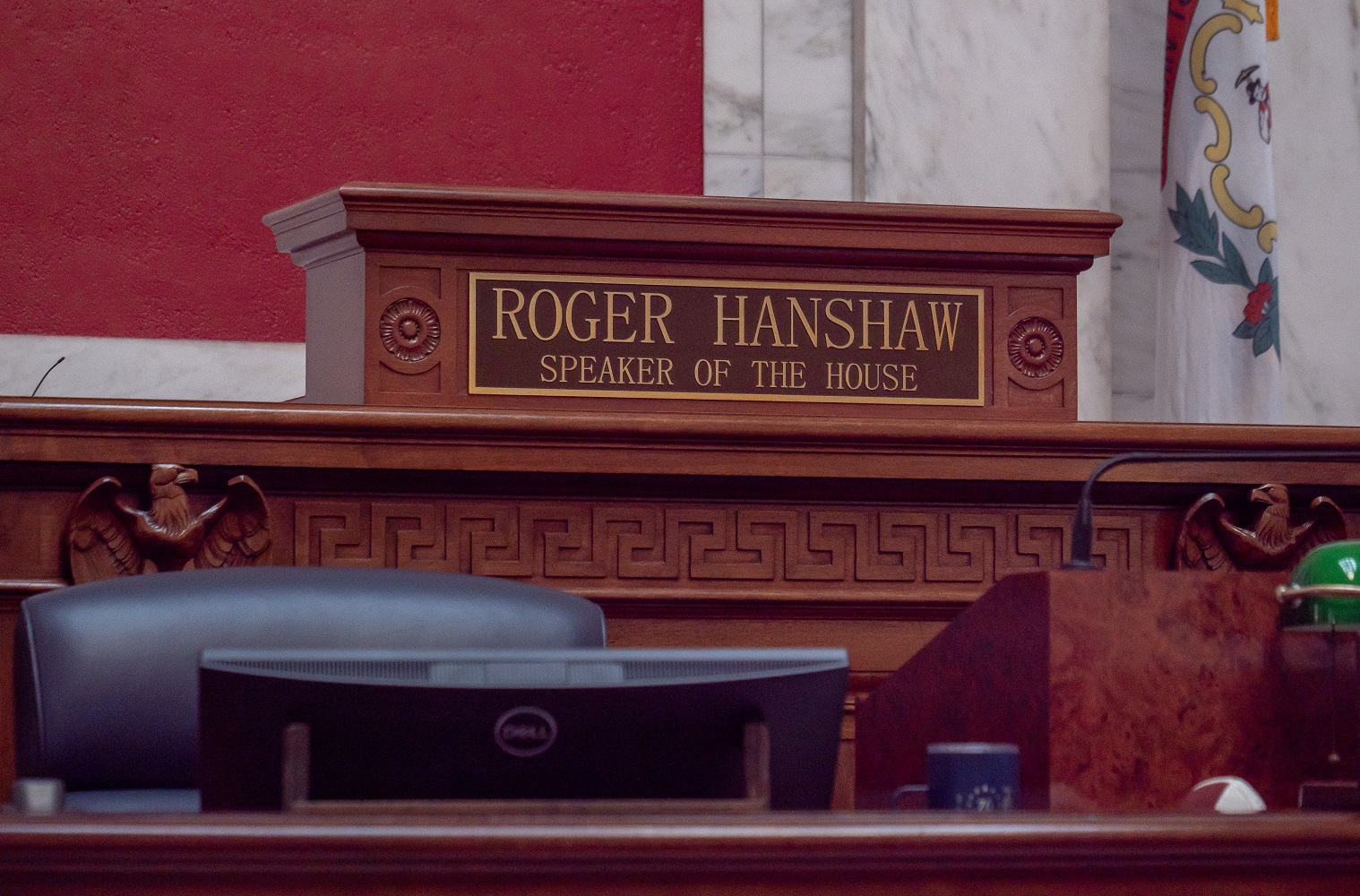
The layout and décor, including more gold leaf accents, highlight the importance and formality of the legislative process. We also had a chance to stand where Speaker Hanshaw presides over the House Chamber, a point that had special meaning since we have met Speaker Hanshaw.
The Senate chamber was equally impressive, seating a total of 34 senators.
We observed intricate decorations outside the chamber with a border on the ceiling representing various disciplines central to West Virginia’s identity: the bull symbolizes agriculture, the eagle with books represents education and art, the shield stands for coal and mining, and the scales of justice denote the legal system. We also admired their state seal, which has two figures representing agriculture and industry; the date that West Virginia was admitted to the Union; and their motto, “Mountaineers are always free.”
Adding to our understanding of West Virginia’s history, we learned that it became the 35th state due to its decision to remain loyal to the Union during the Civil War, primarily influenced by President Lincoln. Due to Lincoln’s role in the formation of the state, there is a large monument depicting the former president in front of the Capitol.
The West Virginia State Capitol has a fascinating yet tumultuous history; six buildings have served as the state’s government seat over time, and these buildings have experienced various expansions, relocations, and even two tragic fires. Each element of the Capitol, from its design to its décor, tells a part of West Virginia’s story, seamlessly connecting its storied past with its vibrant present. This rich history adds to the significance of our visit, making our exploration of the current Capitol a deeply enriching experience.
West Virginia State Museum
by Cinthia Villarreal
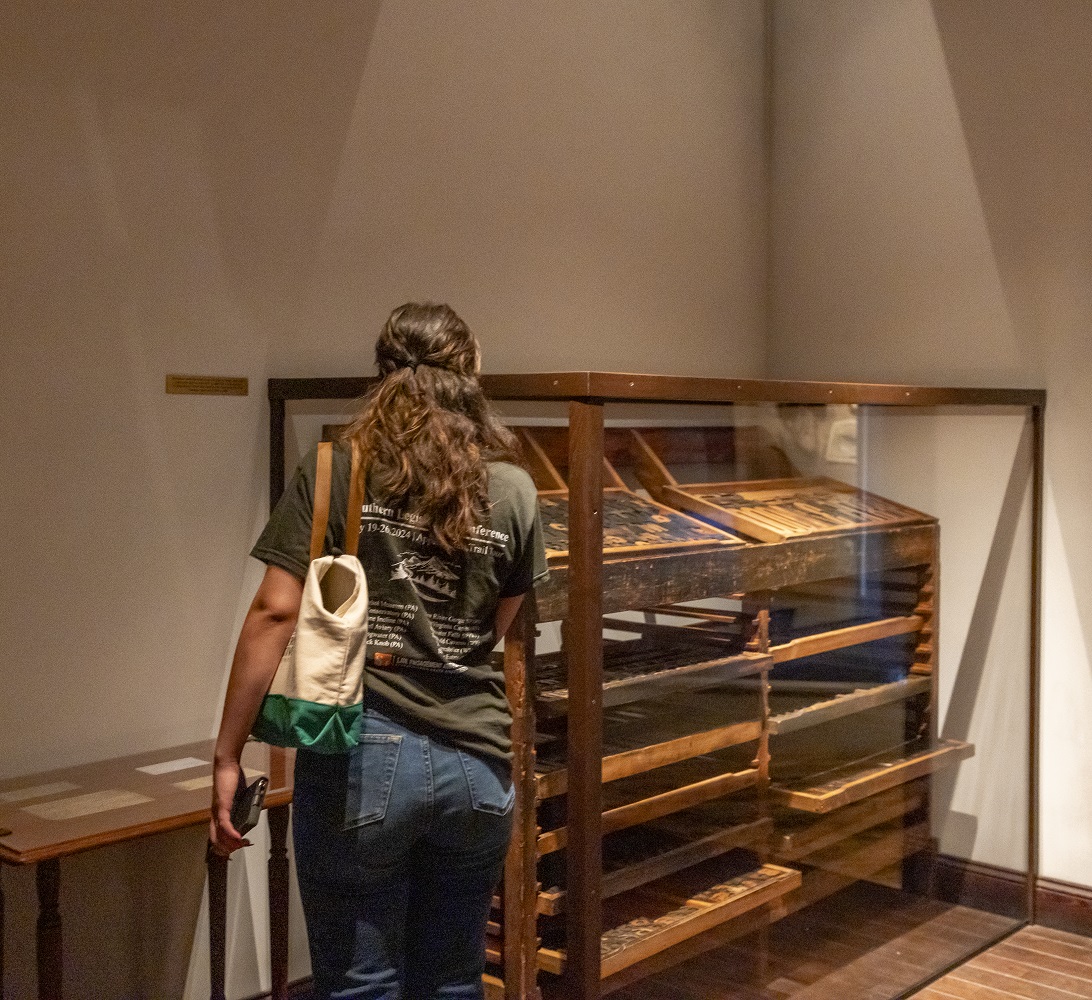
After visiting the beautiful West Virginia State Capitol Building, we stopped by the West Virginia State Museum. After driving through the state for the past few days, we looked forward to learning more about West Virginia’s rich and varied history.
As we entered the front doors, the museum greeted us with a magnificent exhibit of colorful quilts.
Founded in 1892, West Virginia has a storied past that reflects its resilience and unique cultural heritage.
The museum meticulously chronicles this narrative, from the Native American tribes who first inhabited the land to European settlers’ arrival and the state’s eventual formation during the Civil War.
One of the museum’s exhibits pays homage to John Brown, a pivotal figure in American history and a passionate abolitionist whose raid on Harpers Ferry in 1859 marked a significant turning point in the fight against slavery. Brown’s legacy is intricately woven into West Virginia’s history, showcasing his commitment to justice and equality.
No aspect of West Virginia’s identity resonates more deeply than its connection to coal mining. From the early 19th century to today, coal has been vital to the state’s economy, fueling industrial growth and shaping communities.
The museum’s section on coal mining explores the industry’s evolution, labor struggles, technological advancements, and environmental impact, providing a nuanced perspective on its complex legacy.
A highlight is the 4,000-pound piece of coal, once enclosed in glass and used as a reception desk.
West Virginia’s blown glass industry is cherished in its cultural tapestry. The museum celebrates this tradition with a dedicated exhibit showcasing beautiful glassworks crafted by skilled artisans.
Whether you’re a history enthusiast, a nature lover, or simply curious about West Virginia’s rich past, the West Virginia State Museum highlights pivotal moments and key figures that shaped the state’s identity.
Cathedral Falls
On our return to Lewisburg, WV, we stopped at Cathedral Falls. Despite literally being a road-side stop about a mile from Gauley Bridge, it offered a great view.
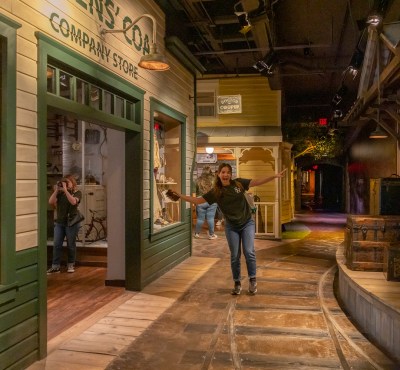
The falls are approximately 60 feet, and they descend from a concave area in bluffs–likely the reason for the name “Cathedral.” We stopped for about 20 minutes, savoring the beautiful site that capped an activity-filled day.