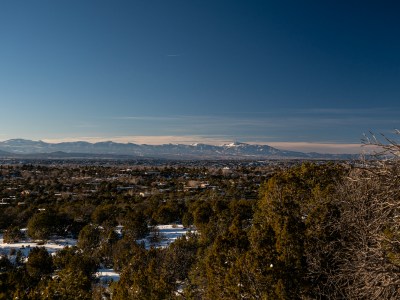
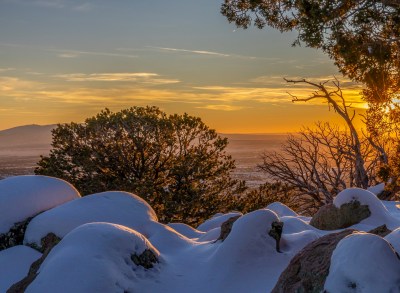
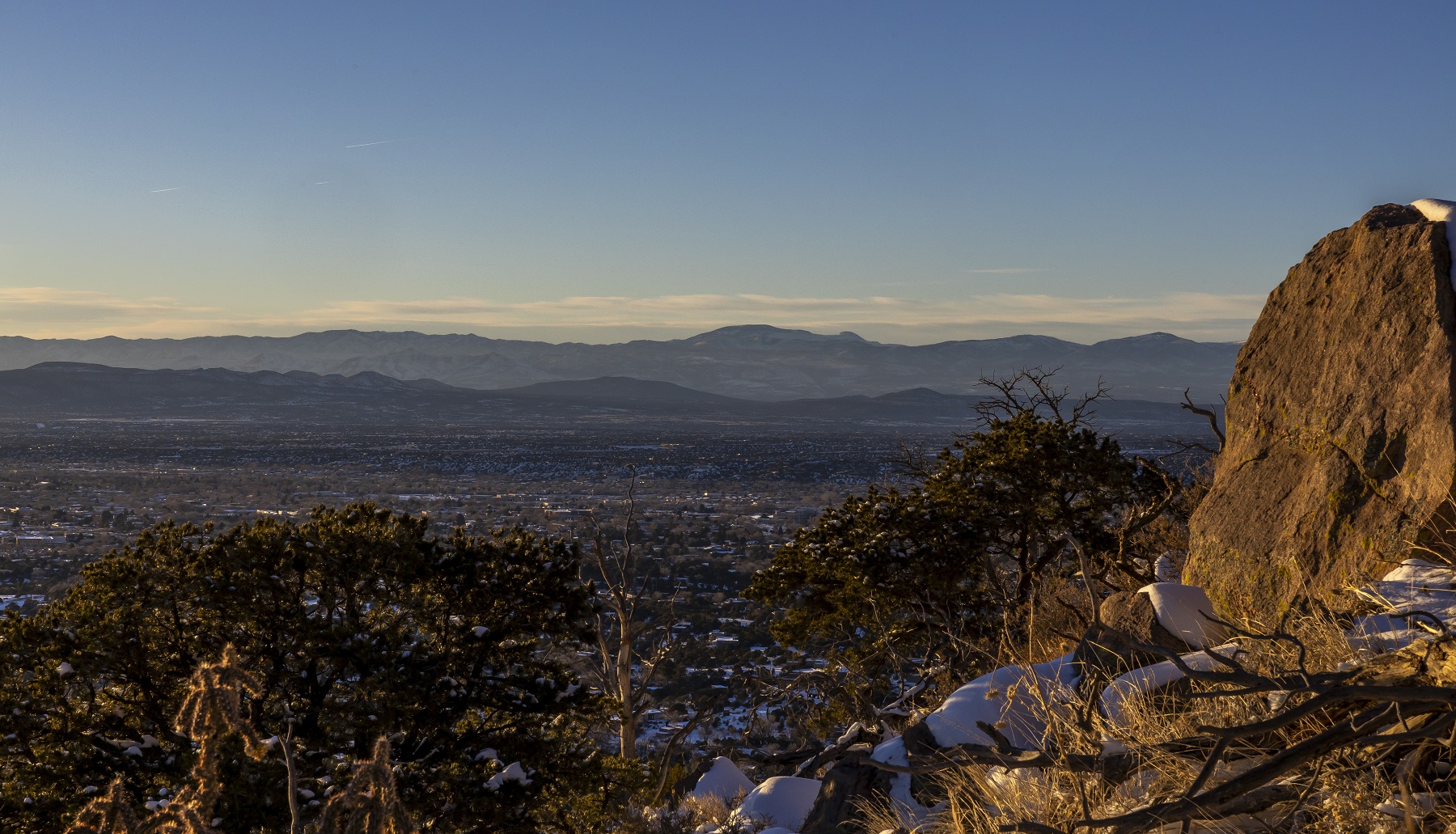
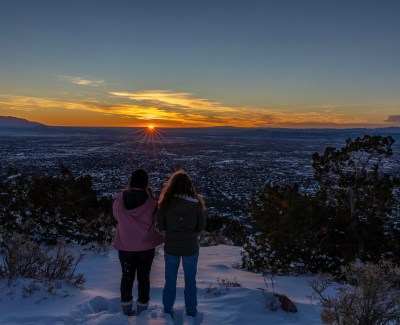
Established as a national park in 2020, New River Gorge is one of the newest additions to the national park system, and it provided us with some memorable firsts. The park is renowned for its rugged beauty, rich history, and the New River, which is one of the oldest rivers on the continent. Spanning over 70,000 acres, the park boasts over 100 miles of trails, offering a variety of experiences from strenuous hikes to scenic walks–although on the rainy, overcast morning we visited, the view was somewhat obstructed until later in the day.
We began our journey by taking a quick look around the Visitor Center, where we familiarized ourselves with the park’s history and features. The park ranger provided valuable information about safe exploration routes, ensuring our hike would be both enjoyable and secure. From the Visitor Center, we headed to the section of the New River Gorge that houses the Castle Rock Trail and the Grandview Rim Trail. These trails, totaling about 3.2 miles out and back, promised a mix of strenuous and scenic experiences.
Our group split up to tackle the different trails. Professor Yawn, Cinthia, Olivia, and Chrissy set out on the Castle Rock Trail, navigating its more strenuous, rocky terrain.
Meanwhile, Stephanie and I took the Grandview Rim Trail, which led us through a beautiful tunnel of luscious vegetation.
The trails eventually converged, and we all continued together toward our final destination, the Turkey Spur Overlook. When we arrived at the “overlook,” we were mostly looking over clouds.
But the sky slowly cleared, and we were able to see some of the river and train tracks in the gorge.
There were also stairs (150, to be exact) to a lookout that gave us an additional perspective.
But with the rain returning, we took shelter briefly under an overhang….
…and then returned to the car….
…while making the most of nature views along the way…
We even gave Flat Sammy a chance to explore!
…Although he didn’t much appreciate the rain.
New River Gorge is a National Park with multiple units, consisting of not only the “Grandview” area, but also Sandstone Falls and the Bridge. We were unable to visit the Falls, but we did make sure to see the Bridge, which was pretty magnificent.
It is the longest (3,030 feet) steel span bridge in the United States, and the third highest (876 feet), and it is really an architectural marvel and beauty from multiple perspectives.
Looking away from the bridge, visitors are graced with beautiful views of the gorge and a distant bridge.
The smaller bridge in the photo above was the former means of traversing the gorge, a route that takes some 45 minutes to drive. With the New River Gorge Bridge, that trip is now less than a minute.
The natural beauty of the area shone through, even in less-than-ideal conditions. Most importantly, this trip allowed me to check off another first with LEAP, creating lasting memories with a wonderful team and making my first national park visit an unforgettable experience.
Following an exploration of historic Lewisburg, WV, where we visited stores, investigated historic sites, and met with the Visitors Bureau staff…
…we changed into our conference clothes, readied ourselves for the beautiful Greenbrier, and prepared ourselves for a different type of learning.
The Rest is History: Historic Preservation Tax Credits and Economic Development
by Chrissy Biello
Our favorite session was titled Historic Preservation Tax Credits and Economic Development, an appropriate topic inasmuch as three of us had completed internships with the Economic Development Department for the City of Huntsville. For this session, The speakers included Eric Nelson, a West Virginia State Senator; Danielle Waltz, Partner at Dinsmore & Shol LLP; and Shaw Sprague, VP of Government Relations at the National Trust for Historic Preservation.
The speakers provided a comprehensive overview of the federal Historic Tax Credit (HTC) program. Initiated in 1978 with a 10% credit and made permanent in 1986, the program now offers a 20% credit based on qualified expenditures. This federal credit is available only for commercial properties and is distributed over five years at a rate of 4% annually. This detailed explanation was enlightening, as it clarified how federal policies are structured to support long-term preservation efforts.
They further discussed how transferable credits can significantly impact financing for preservation projects. Transferable credits are valuable because they allow property owners with limited tax liability to sell their credits to other taxpayers, thereby facilitating the financing of historic renovations. This concept is crucial for cities seeking to revitalize older areas without relying solely on their own financial resources.
The speakers also covered how states can optimize various tax sources to support these programs. For instance, Texas, which lacks an income tax, leverages business or insurance taxes to fund preservation efforts. This strategy was particularly interesting to me because it showcases how states can creatively utilize available resources to achieve their preservation goals.
An illustrative example from West Virginia was the Wesbanco Building, a 17-story office building built in 1972. Despite its initial drawbacks, such as not having a sprinkler system and being abandoned, a developer acquired it for only $5 million and utilized HTCs to renovate the property! This truly demonstrates how historic tax credits can transform underperforming assets into valuable community resources.
Another example shared was from Fayetteville, West Virginia, where old schools are being repurposed into community assets. Ms. Waltz explained how an elementary school is being converted into a 20-24 unit apartment building, with additional townhomes planned. This project, supported by HTCs, has created 30 construction jobs and will provide 25 permanent jobs upon completion.
The speakers effectively offered a new perspective (to us) on the complexities and benefits of preserving historic buildings and towns, making it another great session at the Southern Legislative Conference.
To make the experience even better, we had the opportunity to speak with Senator Nelson and Mr. Sprague following the event. Senator Nelson, showing the kind of constituent service that has helped him win reelection since 2010 in West Virginia, helped us with our plans in Charleston, WV for the following day.
Following a day full of learning, we had an evening full of activities–some for everyone. We began by taking the scenic route to The Greenbrier, which involved going to the Herns Mill Covered Bridge, one of many such historic structures in West Virginia.
To divert ourselves for a bit, we sent Chrissy into the one-lane bridge. We figured if a car came from the other direction, we could see how fast Chrissy was capable of running in high heels. Just our luck, though, no car came through.
Consequently, we had to take her to The Greenbrier, where the SLC, in creating Family Night, had something on tap for everyone.
For Chrissy, we had smores.
Cinthia, meanwhile, summoned her inner Lizzie Borden, and she ventured into axe-throwing for the first time.
This proved to be a popular sport among the group, and Professor Yawn noted, with some concern, that we could be pretty accurate when motivated.
Olivia proved to be the marksman with a bow and arrow. She managed kill shots in two of the three targets, earning her the moniker, “Killer in High Heels.”
She displayed greater fear, however, when confronted with a live animal.
Michelle, on the other hand, was the Dr. Doolittle of the group…
…and the falconry proved popular, being the only activity every member of the group engaged in.
Cinthia, however, seemed to have the most fun with it.
When we weren’t fiddling around with animals or weapons, we took advantage of the opportunity to see expert fiddler and West Virginia native Philip Bowen, who has earned praise from NPR and other national media for his authentic sound and bow virtuosity.
And what would a Southern Legislative Conference be without hearing from a legislator? This year, we again heard from West Virginia Speaker Roger Hanshaw…
…who welcomed everyone to the conference, spoke of things to come, and helped us feel at home–in a very nice home.
And, reflecting on a day that saw us go to Carnegie Hall, rub shoulders with legislators, throw axes, serve as a perch to a falcon, shoot arrows, and enjoy smores, we headed back to our hotel (a Holiday Inn) to find some rest before another busy day.
Our group’s arrival in Pittsburgh for the Southern Legislative Conference marked the beginning of an enriching journey through art, culture, and history. Eager to delve into the city’s offerings, we kicked off our exploration at the renowned Carnegie Museum of Art.
Our visit to the Carnegie Museum of Art was a journey through time and artistic expression, a tapestry woven with modern marvels and timeless classics. As we entered the galleries, we were greeted by a vibrant array of contemporary artworks that challenged our perceptions and sparked our imaginations.
With familiar artists such as Mark Rothko, Jackson Pollock, Vincent Van Gogh, and Isamu Noguchi, our group was fully immersed in the Museum’s collection.
Cinthia and I found a familiar touchstone in Georgia O’Keeffe’s painting of an adobe church. Having recently visited New Mexico, where these structures dot the landscape, we were transported back to the sun-drenched vistas and rugged beauty of the Southwest. O’Keeffe’s ability to capture the essence of these structures resonated deeply with us, bridging our past experiences with the present moment.
In contrast to the contemporary pieces, the hall of Greek sculptures offered a glimpse into ancient mythology and classical beauty. Among the serene depictions of gods and goddesses, one sculpture stood out—a modern twist on antiquity. An oversized figure sat casually, engrossed in a smartphone, a stark commentary on contemporary culture.
The contrast between the timeless marble and the modern device held a mirror to our society’s evolving relationship with technology.
As we explored further, we encountered the dynamic works of Stanton MacDonald-Wright, whose vibrant compositions danced with color and rhythm. His mastery of synchromism, a style he co-founded, brought a sense of harmony and movement to the canvas, captivating us with its energy and vitality.
However, it was in the surreal and unexpected that we found our deepest connections. René Magritte’s “The Spirit of Family” challenged us to confront the discomfort of recognizing the familiar in the unfamiliar, echoing themes of surrealism that provoke and intrigue. For me, surrealism isn’t just about aesthetics—it’s about delving into the subconscious, where dreams and reality merge in unexpected ways.
Not far behind, Michelle, with her unwavering love for Impressionism, led us straight to the Monet Lilies, where she stood in awe of their ethereal beauty. Her eyes gleamed with admiration as she traced the delicate brushstrokes that brought Monet’s gardens to life.
Cinthia, on the other hand, found herself captivated by Renoir’s “The Garden in the Rue Cortot, Montmartre.” The painting’s vibrant hues and tranquil atmosphere transported us to a serene Parisian afternoon, where we could almost feel the warmth of the sun and smell the fragrant flowers.
Our journey took an unexpected turn when I almost missed Francis Bacon’s haunting painting. Titled simply but evocatively, Bacon’s work captured the raw intensity of human emotion in a way that both unsettled and captivated us. It was a poignant reminder of the power art holds to provoke and stir our innermost thoughts.
As we wandered through the museum’s corridors, each artwork seemed to tell a story, inviting us to unravel its mysteries and absorb its messages. From Degas’ delicate sculptures to the bold strokes of Francis Bacon, every piece sparked conversations that ranged from artistic techniques to philosophical musings on life and existence.
Our visit wasn’t just about admiring famous names on canvas—it was a journey of discovery, where we uncovered new passions and deepened our appreciation for the artists who shaped the course of art history. The Carnegie Museum of Art became more than a collection of paintings; it became a sanctuary of inspiration and contemplation.
As we bid farewell to the museum, our hearts and minds brimmed with newfound insights and shared experiences. The day had been a celebration of friendship, curiosity, and the enduring power of art to provoke thought and stir emotions. It was a reminder that amidst our hectic lives, moments of cultural exploration with friends are not just enriching but essential for nurturing our souls.
The Carnegie Museum of Art had not only expanded our artistic horizons but had also reinforced the bonds of friendship that drew us together. It had ignited a passion for creativity and a hunger for knowledge, leaving us eagerly anticipating our next adventure in the world of art and culture.
Ambassadors enjoy a Warhol Self-Portrait at Carnegie, in anticipation of the Warhol Museum
Next, we ventured to the Cathedral of Learning, an architectural marvel at the University of Pittsburgh.
Its Gothic spires soared above us as we explored the intricately designed commons area.
It was a beautiful building, one that reminded us that the architecture can play a large role in education and receptivity to learning.
Exploring Art and Nature at the Phipps Conservatory and Botanical Garden
Our recent visit to the Phipps Conservatory and Botanical Garden was a delightful blend of art, nature, and learning.
As we stepped into the conservatory, we were immediately greeted by the mesmerizing Goldenrod, Teal, and Citron Chandelier, which hung magnificently from the dome of the welcome center. This stunning piece by Dale Chihuly set the tone for the rest of our visit, showcasing his extraordinary talent in manipulating glass into captivating forms and colors.
Wandering through the various rooms and pathways, we encountered several other Chihuly installations that added vibrant and artistic touches to the already beautiful garden setting. The delicate Cattails and the bold, colorful Paint Brushes were among the many pieces that stood out, each one enhancing the lush greenery and floral displays around them. Chihuly’s art, with its intricate designs and brilliant hues, created a magical atmosphere that enriched our visit.
Beyond the captivating glasswork, the conservatory was a botanical wonderland teeming with life. We found ourselves surrounded by hundreds of different plants and flowers, each adding to the garden’s rich tapestry of colors and scents.
One of the most thrilling parts of our visit was exploring the Butterfly Forest. This enchanting area allowed us to witness a variety of butterfly species fluttering around, creating a truly magical ambiance. The Monarch and Zebra Longwing butterflies were particularly memorable, their vibrant colors and delicate wings adding a sense of whimsy and wonder to the experience.
Adding to the enchantment, we encountered many beautiful flowing fountains, fish, and other creatures crafted entirely out of flowers and plants.
As we continued our journey, we discovered the Orchid Room, a space dedicated to the stunning diversity of orchid species. This room was a feast for the senses, with an array of beautiful orchids in every imaginable color and shape adorning the space. Some of our favorite species were the Vanda Orchid and the Lady Slipper Orchids.
Overall, our visit to the Phipps Conservatory and Botanical Garden was both fun and educational.
We thoroughly enjoyed exploring the beautiful gardens, marveling at Chihuly’s art, and learning more about the diverse plant species.
Max’s Allegheny Tavern
Energized by our cultural immersion, we savored traditional German-inspired cuisine at Max’s Allegheny Tavern. The quaint charm of the restaurant was evident from the moment we walked in, with its cozy ambiance accentuated by adorable lamp shades casting a warm glow.
As a newbie to German food, Michelle and Cinthia were eager to try some of the region’s specialties. The potato pancakes were a revelation, crispy on the outside and fluffy inside, served with applesauce for a perfect blend of flavors. The bratwurst was hearty and satisfying, accompanied by tangy sauerkraut that complemented its savory goodness. And who could forget the schnitzel? Tender and perfectly breaded, it melted in my mouth with every bite.
Overall, Max’s Allegheny Tavern surpassed my expectations, not just with its delicious dishes but also with its inviting atmosphere. It’s definitely a place we hope to return to for more culinary adventures
Duquesne Incline
Visiting Pittsburgh for the first time was an unforgettable experience, made even more magical by a ride on the Duquesne Incline. As the sun set, we boarded the historic cable car that ascended Mount Washington. The city’s skyline, illuminated against the darkening sky, unfolded before me in a breathtaking display of lights and architecture. It was a view that truly encapsulated Pittsburgh’s charm and beauty.
The incline itself, with its rich history dating back to the late 19th century, added a sense of nostalgia to the journey. Originally built to transport workers up and down the steep hillside, today it serves as both a historic landmark and a beloved tourist attraction.
The weather that evening was perfect—a cool breeze complemented by a clear sky—making the experience even more enjoyable. Arriving at the summit, I found myself surrounded by panoramic views of Pittsburgh’s twinkling lights and shimmering rivers. It was the perfect end to a day filled with exploration and discovery in a city that had already captured my heart.
The Duquesne Incline not only provided a literal and metaphorical high point of my Pittsburgh visit but also set the stage for a day filled with new experiences and cherished memories.
Andy Warhol Museum
Being in Pittsburgh for the first time has been a fantastic experience; from the weather to the beautiful architecture, it has all been breathtaking. The variety of new foods from Max’s Tavern was an adventure, preparing us for the sensory feast at the museum. Our latest adventure took us to the Andy Warhol Museum, blending art, history, and personal discovery. Having recently watched a documentary on Warhol, I was particularly excited to see his artistic evolution across the museum’s seven floors.
The Andy Warhol Museum takes visitors on a chronological journey through Warhol’s life and work, from his early years on the top floor to the final years of his prolific career on the ground floor. This layout allowed us to see the progression of his style and the expansion of his artistic repertoire in a way that felt like stepping through a living biography.
On the top floor, we were introduced to Warhol’s early life, trying to identify him in old-school photos. This personal touch made the experience more intimate. Warhol’s early commercial art, including his advertisements and product illustrations, hinted at his future as a leading figure in pop art.
Descending the floors, we encountered various works, from his famous Campbell’s Soup Cans to his iconic Brillo Boxes.
We marveled at his silkscreen technique, which he used to create the vibrant Marilyn Monroe series and the striking Elvis Presley prints. Seeing these pieces up close highlighted the bold colors and repetitive patterns that defined his style.
One of the most playful parts was the Silver Clouds room, filled with giant, reflective silver balloons. We could not resist gently pushing them around, feeling the air lift them up.
Before leaving, Cinthia, Olivia, and I took pictures on the museum’s famous red couch, a nod to Warhol’s studio. Connecting the documentary insights with the exhibits added depth to our visit, making it a memorable chapter in our Pittsburgh adventure.
Reflecting on our enriching day, Pittsburgh emerged not only as a city of steel and industry but also as a vibrant cultural hub. Each visit—from the Carnegie Museum’s artistic splendors to the Cathedral of Learning’s educational marvels, Max’s Allegheny Tavern’s culinary delights, the Duquesne Incline’s panoramic views, and the Andy Warhol Museum’s artistic legacy—contributed to a deeper appreciation of Pittsburgh’s diverse and dynamic character. As our journey with the Southern Legislative Conference continues, Pittsburgh remains an inspiring destination where art, culture, and history converge to create lasting memories for all who visit.
As we prepare for the next leg of our Southern Legislative Conference trip, Pittsburgh a highlight of our trip—a city where art, history, and culture converge to create an unforgettable experience for all who visit.
Following a grueling morning of competition and a light afternoon of sessions…
…we headed out to tour the Rio Grande Valley. Accordingly, we traveled through Brownsville, to Harlingen, into McAllen, and to Edinburg, TX. Of course, with some hikes and adventures before us, we felt it necessary to arm up with coffee and ice cream…
After a challenging competition, we sought solace in the natural beauty of the Rio Grande Valley’s parks. Our first destination, Hugh Ramsey Nature Park, introduced me to this vibrant region and marked my second hike with LEAP since last spring’s memorable time with the City Fellows at Eastham Thomason Park. It was a journey filled with delightful encounters with unfamiliar bird species, lizards, and butterflies, each adding to the day’s sense of discovery.
As we ventured along the trails, Yajaira’s keen eye caught sight of a Texas Spiny Lizard—a master of disguise amidst the flora. Its small size and effective camouflage made it difficult for us to spot even with her guidance.
Throughout our walk, the vibrant Green Jays stole the show with their emerald-green body and striking blue facial features. I found myself captivated by their beauty and unique behaviors.
Among the most memorable moments was our encounter with a Chachalaca, a large, completely brown bird that confidently strutted along the pathway, affording us a rare close-up view.
Later, another of its kind revealed itself nestled discreetly among the trees!
Our wildlife observations extended beyond bird species, including bunnies hopping along the path.
Additionally, the trails were filled with numerous butterflies…
…fluttering alongside impressively large dragonflies….
…and we saw the occasional water bird, including Black Bellied Whistling Ducks.
We also took shots of the Valley’s interesting flora, including a triangle cactus…
…an aloe plant of some sort (suggestions welcome!)…
…and a sulphur butterfly on a white flower…
Perhaps the best shot of the day came from Cinthia, who captured a Buff Bellied Hummingbird “eating” at a Turk’s Cap flower.
Estero Llano Grande State Park
Excited to explore another park, we made our way to Estero Llano Grande State Park. We spotted two park rangers gathered around a table with a container on it as we approached the entrance. Upon closer inspection, we realized it contained a tarantula! The rangers explained that they found it in the parking lot and placed it in the container to ensure its safety. Personally, not being a fan of spiders, I opted to keep my distance…
As we began walking into the trails, one of the first sights that caught our attention was a multi-family bird dwelling! I discovered that the species, the Purple Martin, often inhabits these man-made houses to build their nests. The structure was vibrant and quite charming. Stephanie elaborated on how these birds prefer such homes, which are frequently provided for them.
A House Sparrow “Squatting” in a Purple Martin Home
The prospect of encountering alligators along the Alligator Trail, mentioned by Professor Yawn, filled Olivia, Cinthia, and me with a mix of excitement and apprehension.
Walking cautiously by the river, we kept a respectful distance from the water’s edge. Despite our concerns, we were delighted to spot a baby alligator lurking in the water!
Naturally, our next question was about the whereabouts of its mother…
As we reached the expansive deck overlooking Ibis Pond, we settled in for a moment to take it all in. It was a serene conclusion to our time in South Padre, blending relaxation with learning. I cherished the opportunity to reflect quietly with the group, surrounded by the soothing sounds of nature.
Palo Duro Canyon is sometimes boastfully referred to as the “Grand Canyon of Texas,” and that’s not really fair to the Grand Canyon. But taken on its own, it is in fact a grand and beautiful adventure.
LEAP Ambassadors on the Lighthouse Trail, 2018
The LEAP Ambassadors have traveled to Palo Duro twice, once in 2018, and again in January of this year. It was my first trip to a State Park!
It was beautiful, and I enjoyed the activity, the beauty, and the idea that the State is preserving these areas for the use of all.
The best shot I was able to get was when we were returning from the CCC Trail, just before sunset. It was a beautiful short hike, one where I also learned about the Civilian Conservation Corps–part of FDR’s Works Progress Administration.
What struck me most, though, was the beauty. And as we were heading back, I saw this beautiful view, with Professor Yawn and Stephanie hiking and providing a sense of scale, and I got the image!
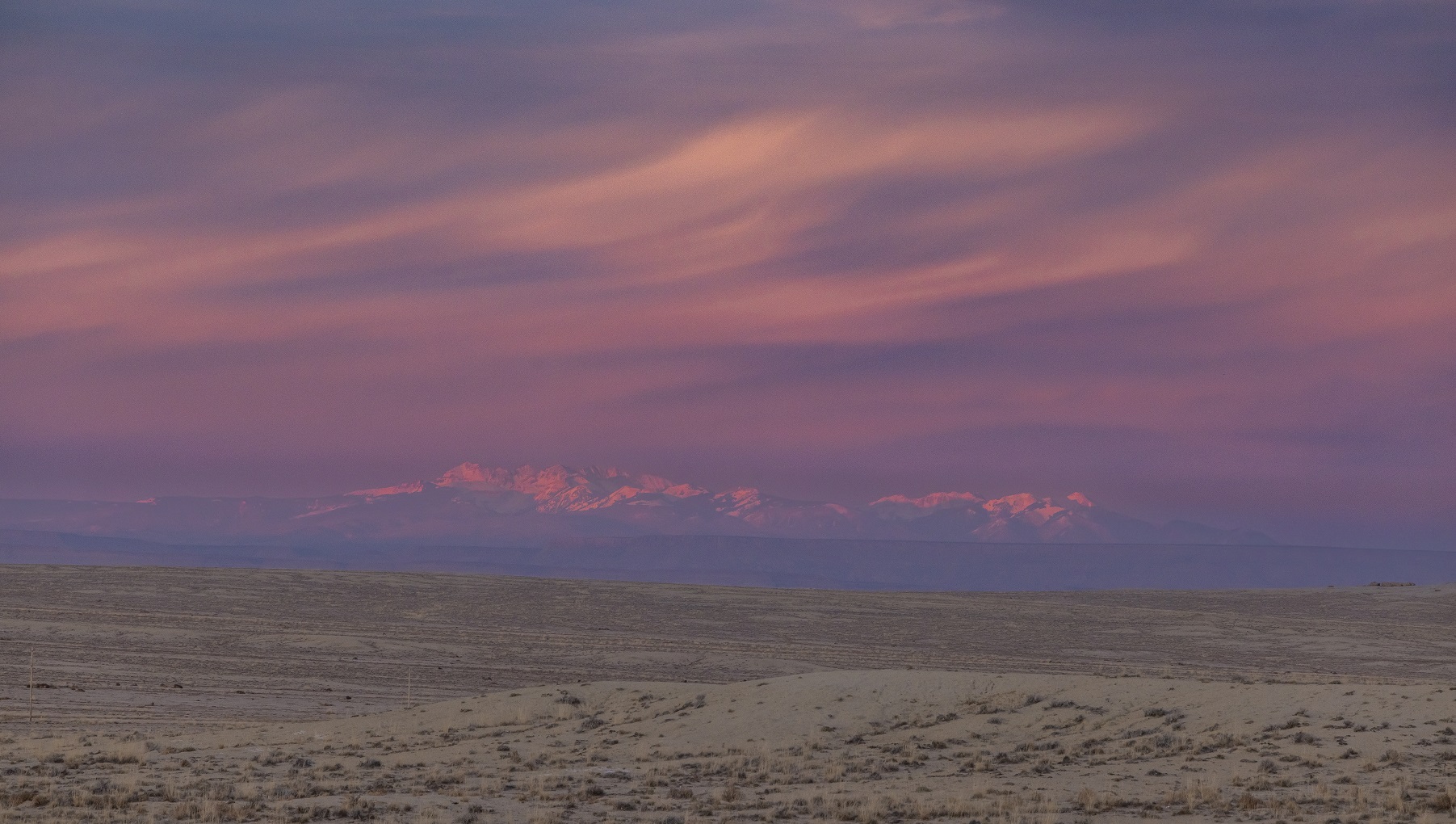
New Mexico has a surprising diversity of landscape, and it has swaths of beauty all over the state. As part of a winter (working) vacation, I was driving through northwestern New Mexico just before sunset, hoping that the backroads to Shiprock would get me to the giant rock formation before the sun actually set.
Shiprock is frequently photographed, but it’s not that easy to get to, and there aren’t a lot of nearby lodging options. As I approached, I was struck by the beauty in every direction.
But I was there to photograph Shiprock, and over the course of about 45 minutes and climbing hills that were steeper and higher than they looked, I got about 30 photographs of the formation Native Americans referred to as “rock with wings” or Tse Bit’a’i. I am not sure which was the best, but I settled on this one for the show.
Following our adventure at Great Sand Dunes National Park, we made it back to the tip of the Texas Panhandle: Dalhart, TX. Our goal for today, was to get to Amarillo, then to Canyon, TX, and make our way to Oklahoma City. It was–both literally and figuratively–a whirlwind visit. We literally saw our first-ever tumbleweeds.
Cadillac Ranch
As we approached Amarillo well before noon, we stopped at Cadillac Ranch, a unique art installation. We had never seen it before, and what a sight!
Some nice people visiting loaned us some spray paint, and we left our mark!
It was a nice stop amidst the flat Amarillo landscape, made much more colorful by art.
Panhandle Plains Museum
Located on Texas A&M’s West Texas campus, the Panhandle-Plains Historical Musuem. Within the largest history museum in Texas, we had the ability to outline Texas history from indigenous settlement and conquistadors to where we are today.
A collection that served as a great conversation starter was ‘High Fashion to the High Plains’. Here we found an extensive wardrobe from high fashion designers such as Chanel and Emilio Pucci that are representative of the fashions of West Texas over time.
While this is a West Texas museum, we were most enthused with the East Texas representation in their ‘Art of Texas State Parks’ collection!
We saw artist and friend Lee Jamison’s work in the museum’s collection. While we are huge fans of all of Mr. Jamison’s paintings, our favorite one from the museum was of the Grave of Hubris, San Jacinto Battleground State Historic Site.
I thoroughly enjoy the vibrancy of the landscapes Mr. Jamison creates, whether or not the scene itself is particularly bright. His paintings serve as a reminder to appreciate even the most simple of your surroundings, as there is an innate intricacy to each of them.
Palo Duro State Canyon Park
On such a fitting note, we ventured to the Palo Duro State Canyon Park to capture the scenic views on our last outdoors trek of the trip.
It may be sheer coincidence, but we truly saved the best hike for last! There was truly so much to see while on this short trail, with a different vista under a beautiful sky at almost every turn.
Maybe it was the fact that we had previously been immersed in scenes covered in pillowy white snow, but there was something awe-inspiring about looking over the cliff to see the red-casted landscape.
Photo by Olivia Discon
We explored far more than we anticipated we would, walking out to every outcrop…
Cinthia Villarreal Enjoys the View (not so much the wind); Photo by Olivia Discon
…looking over ledges…
Photo by Cinthia Villarreal Carrillo
…and climbing as many hills as possible.
We did our best to soak it in…
Photo by Olivia Discon
…and explore the area they call “The Grand Canyon of Texas.”
In fact, we didn’t really want to leave, but we wanted to get one more hike in, so we returned to the car.
Our last hike was the “Hole in the Wall Trail,” so named for obvious reasons!
This short hike involved a walk up to a cave. Although short, it was a somewhat rugged walk, and it was also filled with colors and different types of rocks.
The area immediately outside the cave offered interesting views of the landscape.
Photo by Olivia Discon
In the cave were three different holes in the top, and these looked intriguing to us–so much so that we found a way up to the to the top of the hill.
Olivia: “I don’t think I like this.”
We made it to the top after much climbing and scrambling, and climbed a way into the hole.
We also got interesting photos through the hole, from our vantage point!
Photo by Cinthia Villarreal Carrillo
I may have been a bit apprehensive to make the climb, but Cinthia was a voice of encouragement (or perhaps she was just more confident than I), and we made it to safety.
While we already live and learn in the great state of Texas, this was a completely new and refreshing day for everyone. However, it was not time to turn back home just yet! We packed our bags and headed towards the last state of our Southwest tour, Oklahoma.
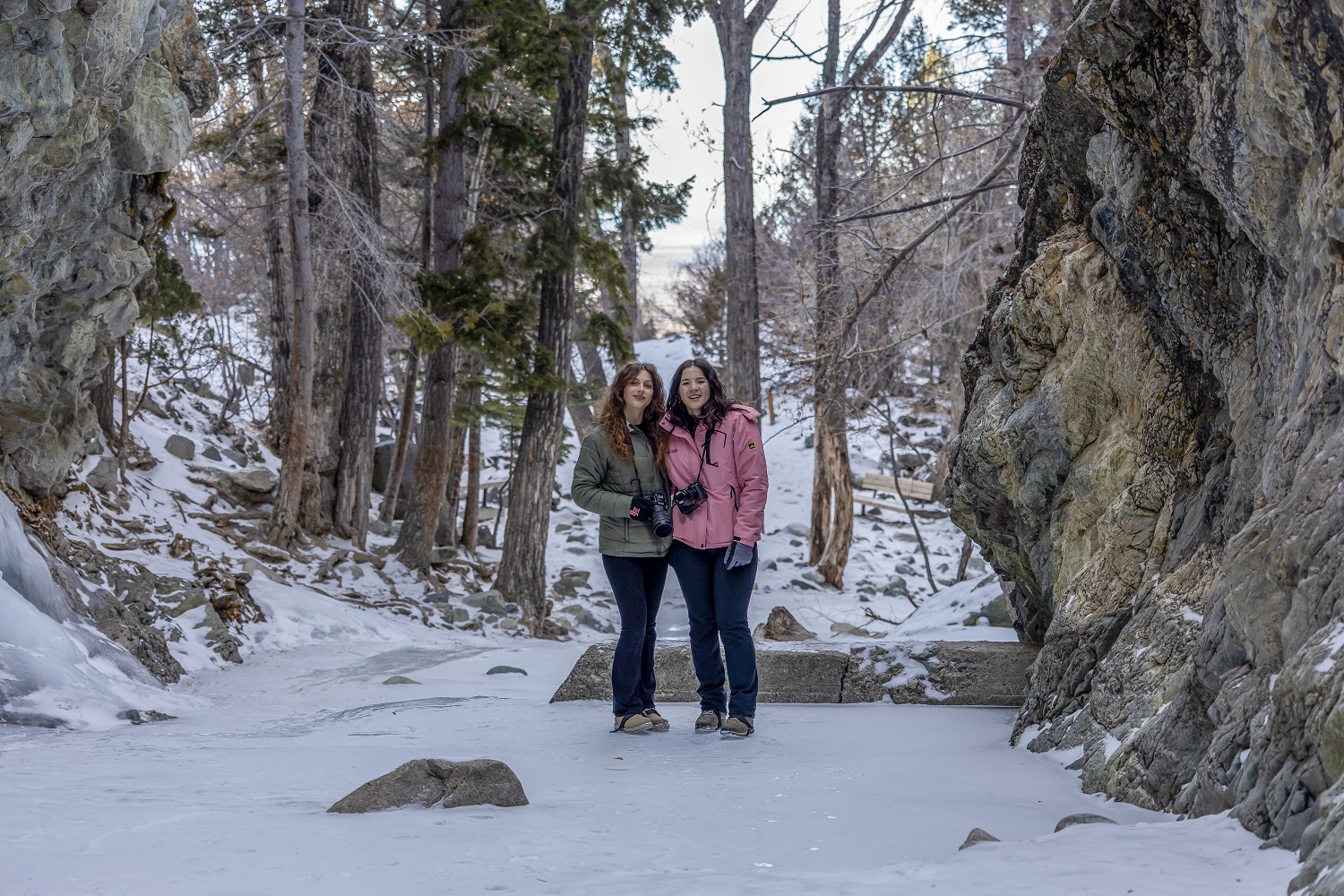
Heading into the third state of our Southwest road trip, we knew exactly how to spend our time, starting with a hike at Zapata Falls! After our short hike at Sun Mountain, we now consider ourselves hiking aficionados.
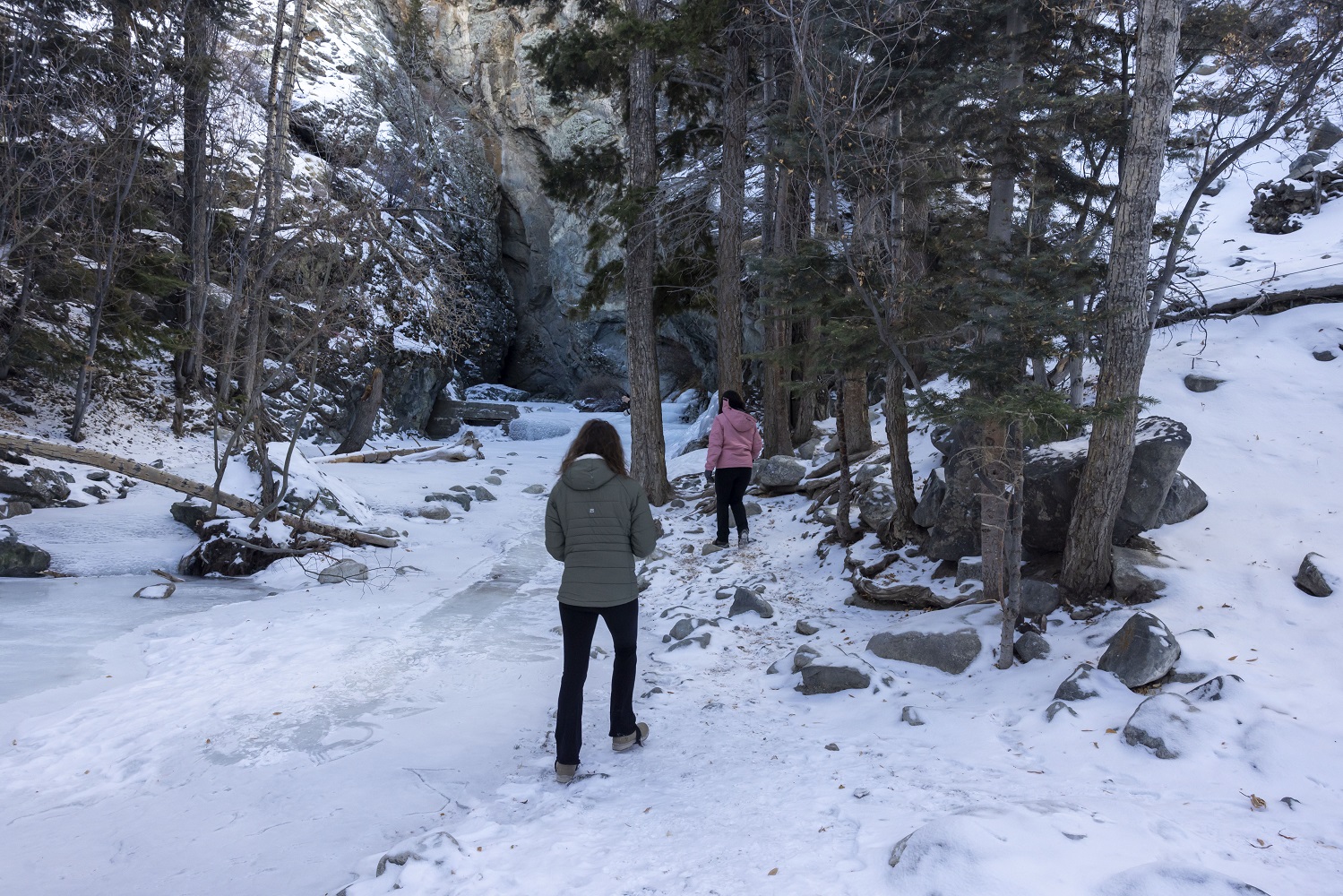
As we embarked on our short but rewarding hike, Colorado’s natural landscapes rewarded us every step of the way by providing beautiful views of snow, forests, and mountains.
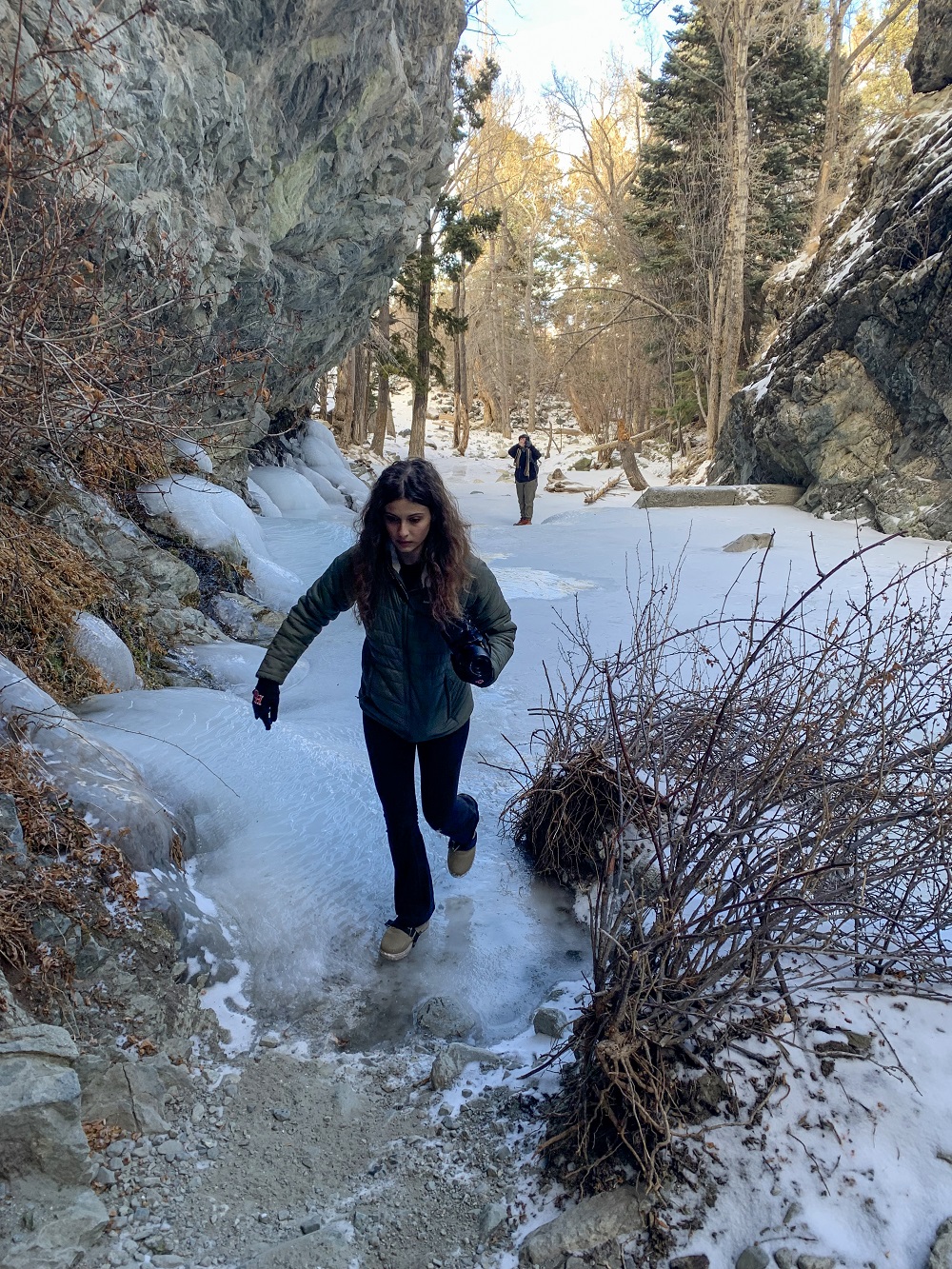
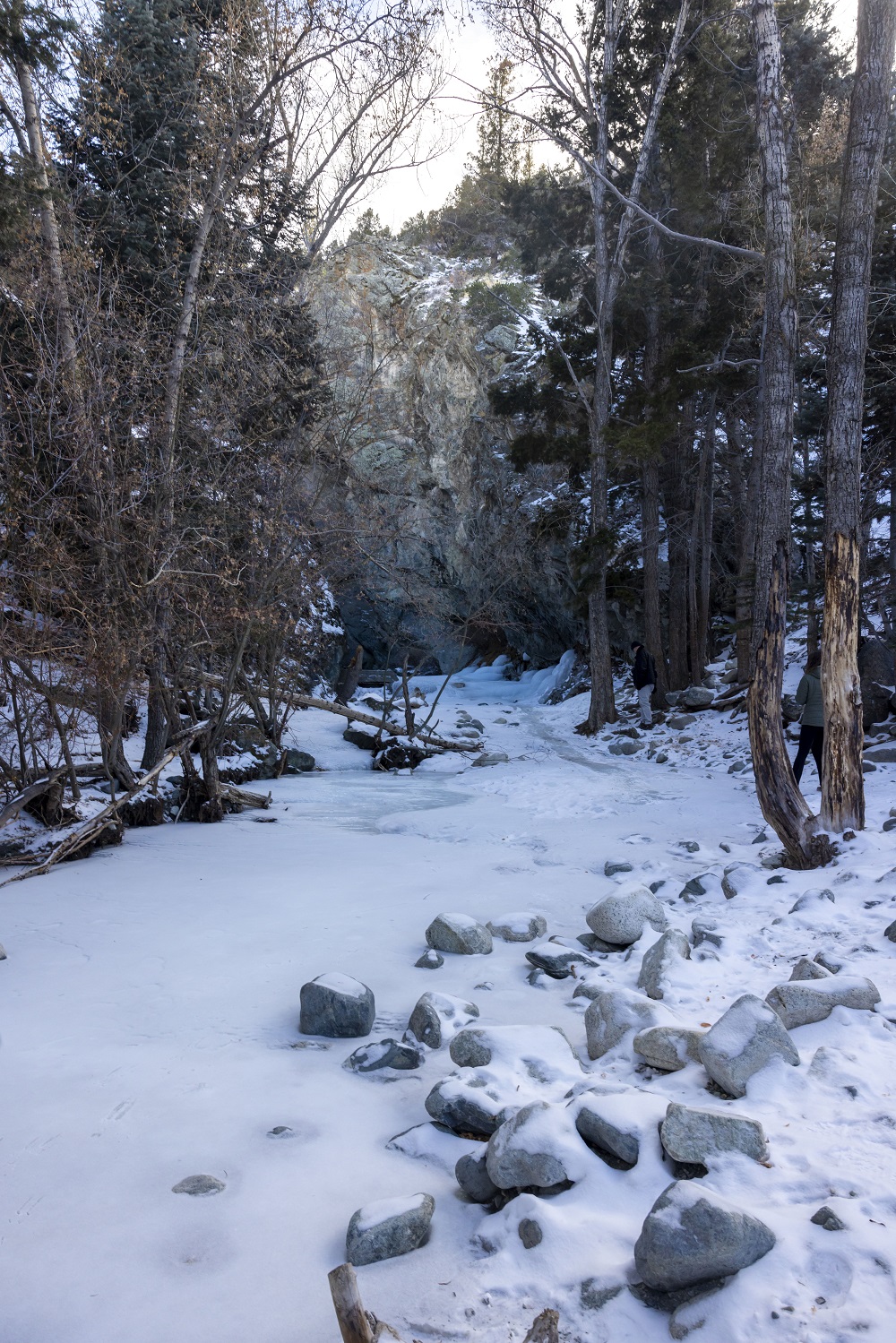
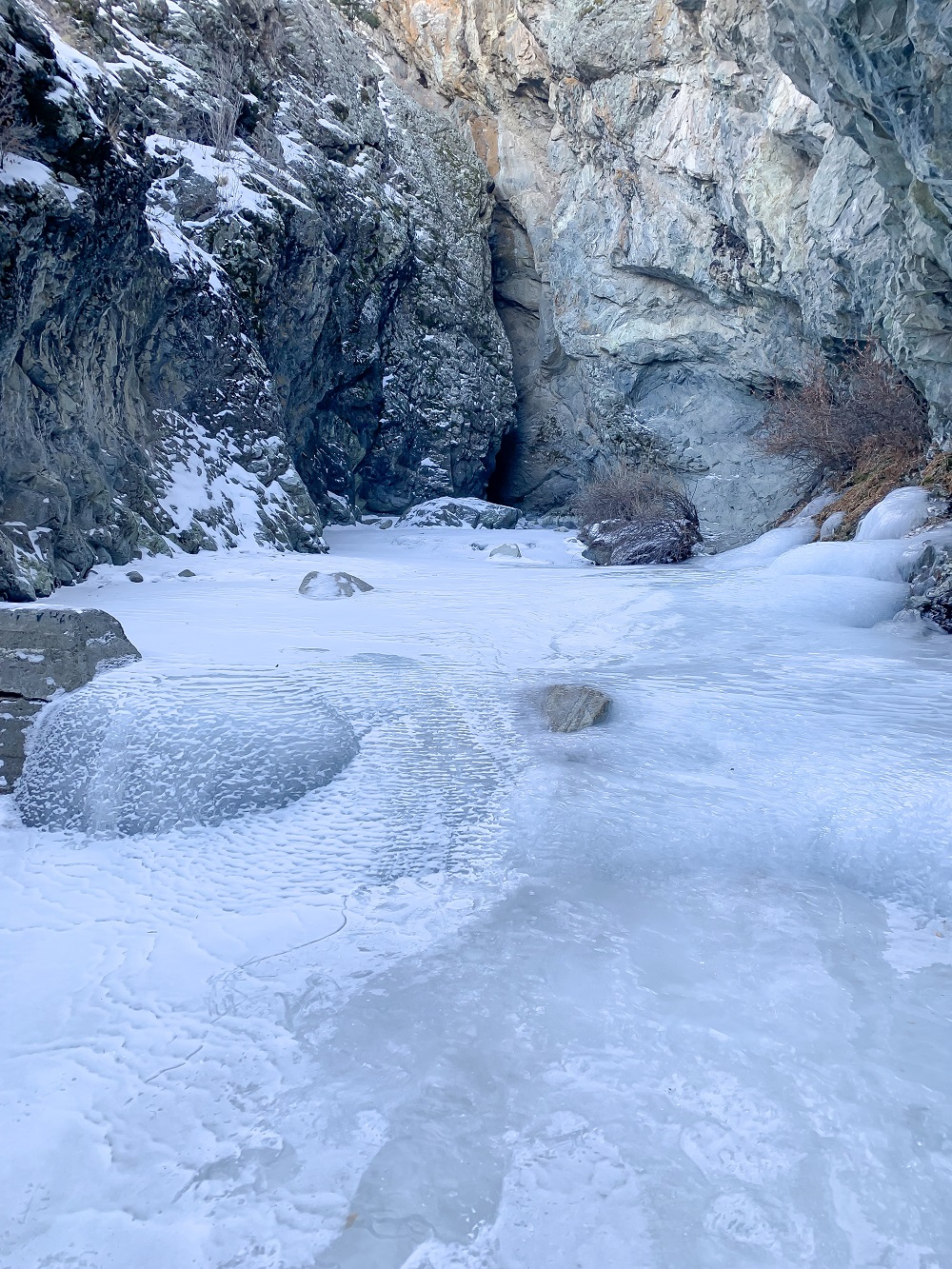
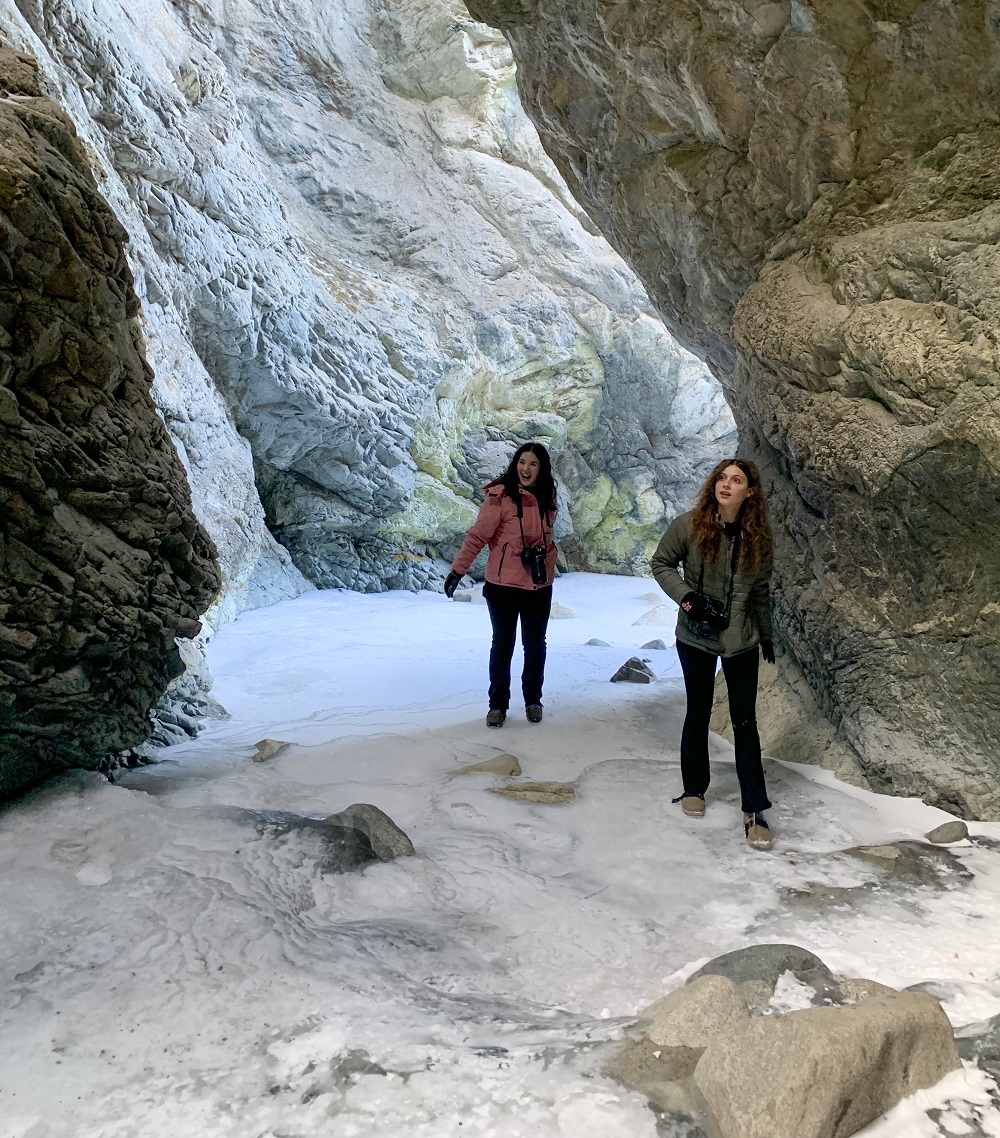
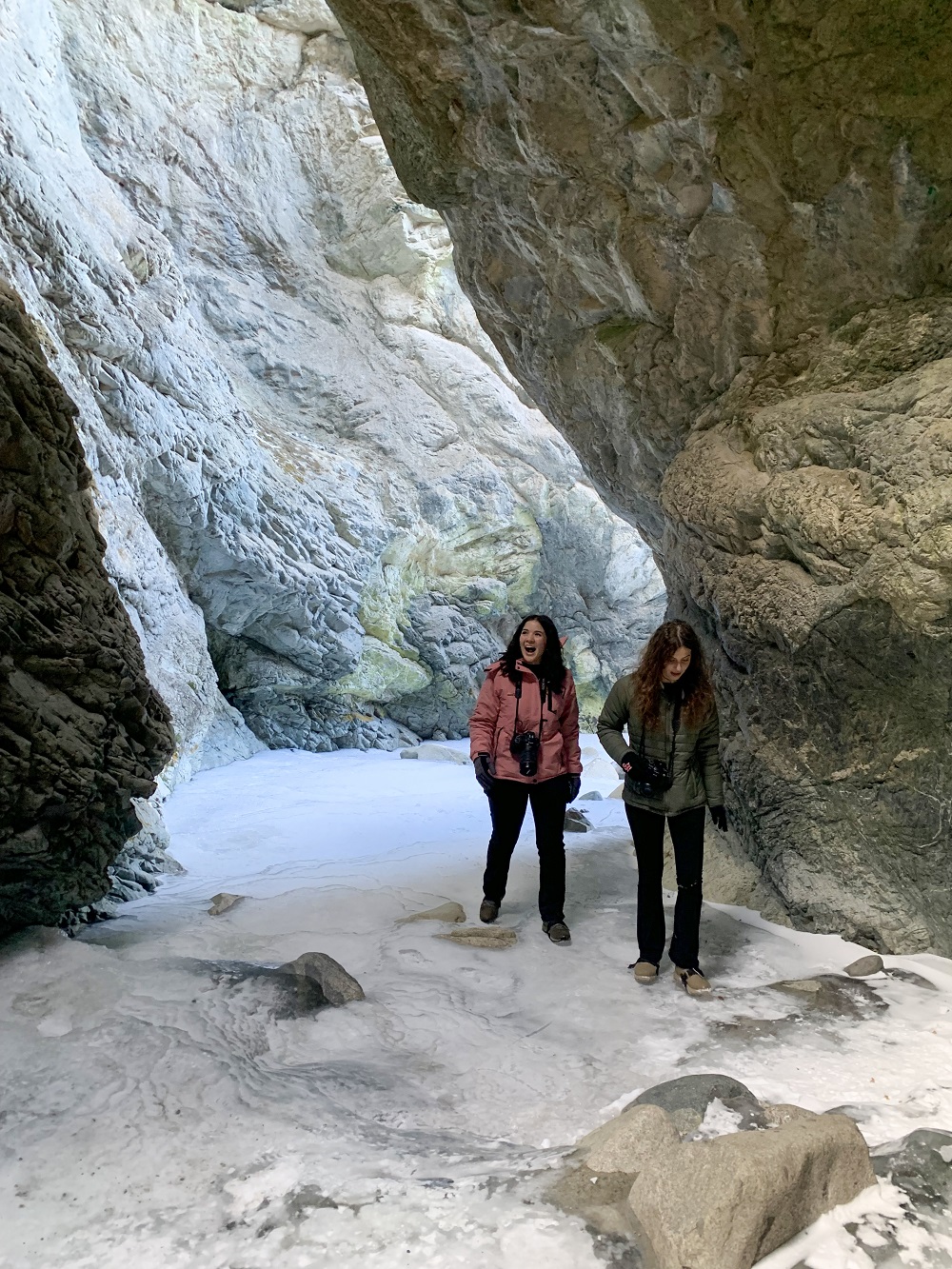
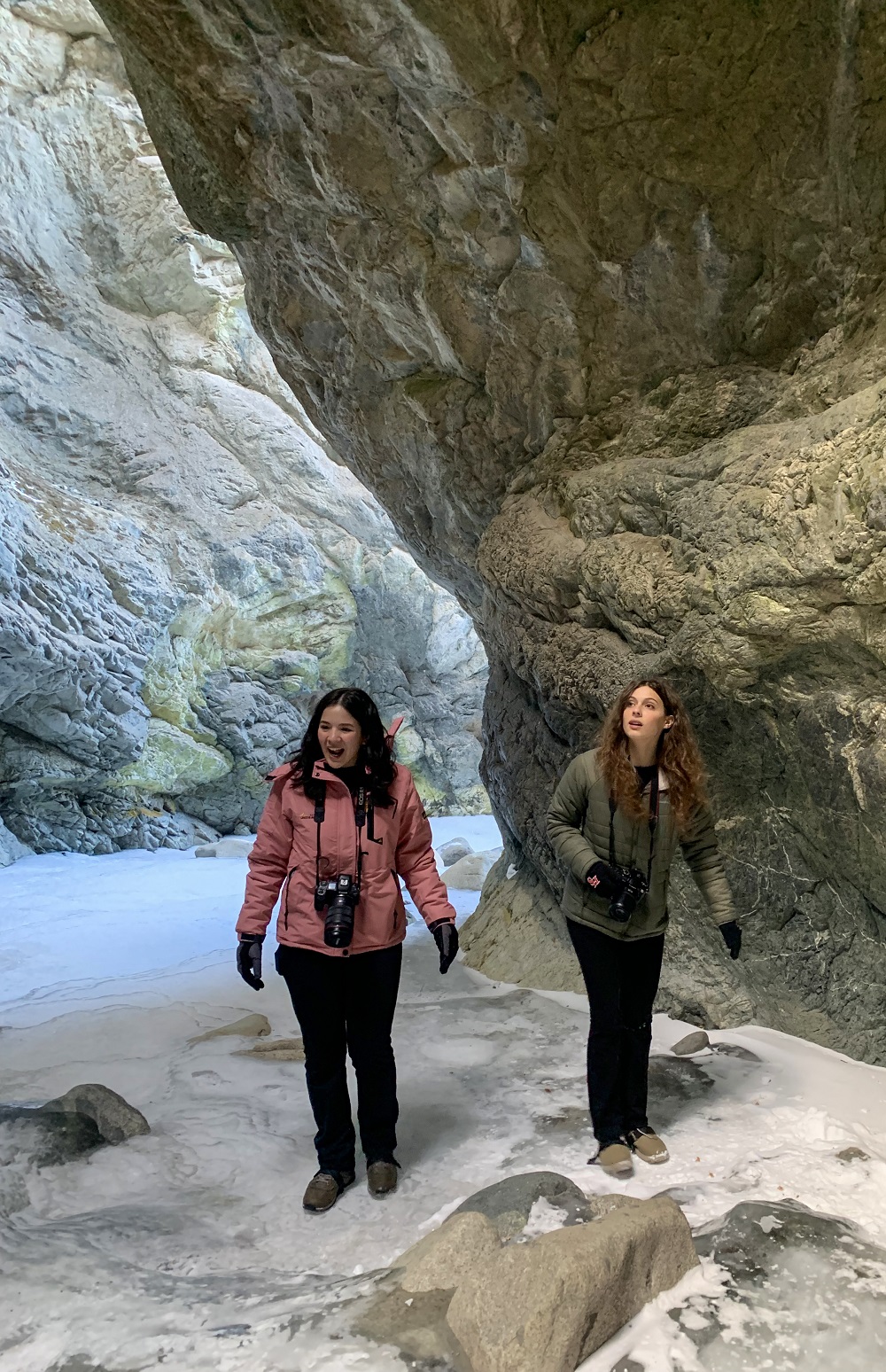
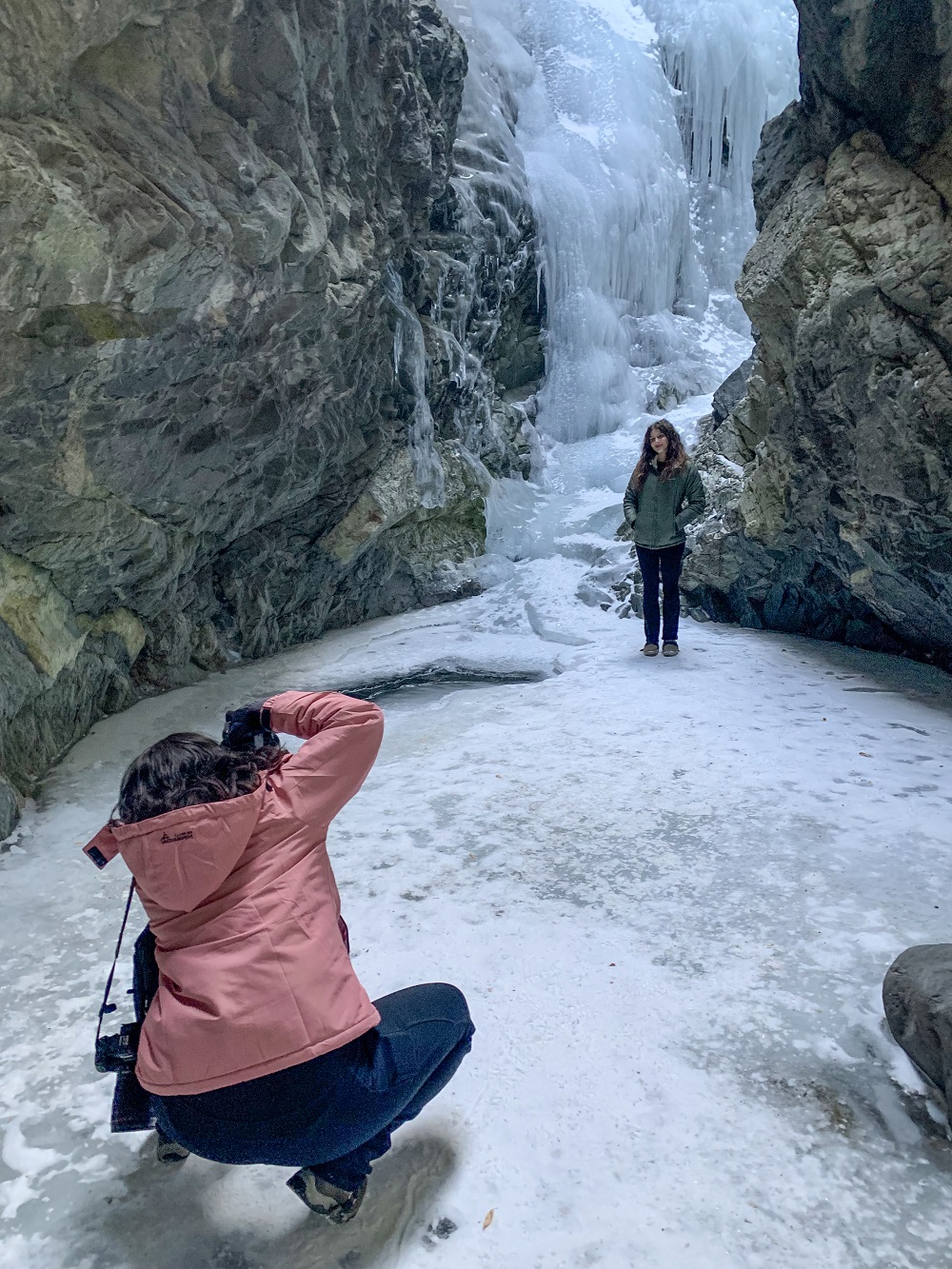
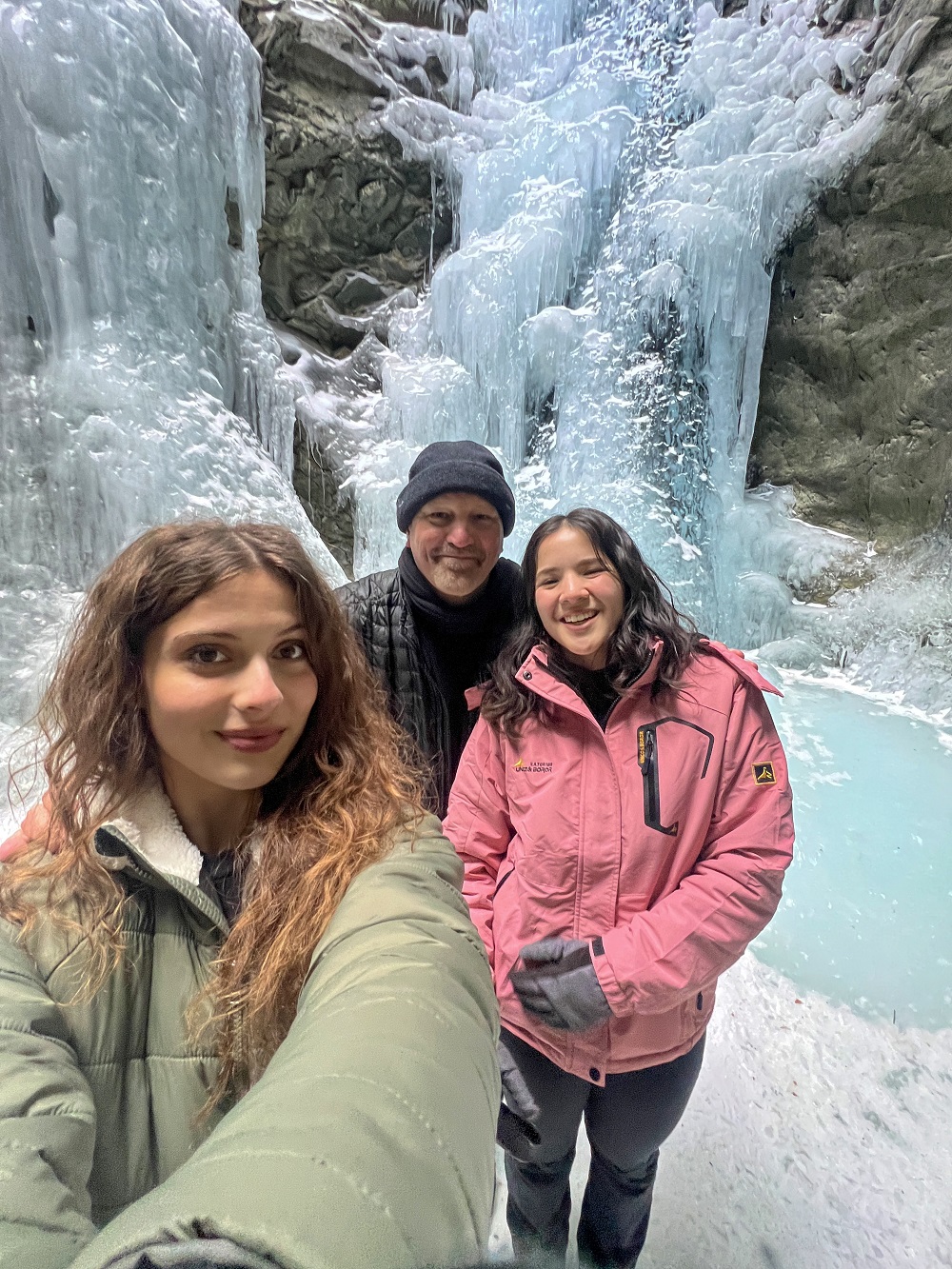
The hike consisted of roughly one mile covered in snow and ice. For our final approach to the waterfall, we made our way along a frozen river, which we traversed gingerly.
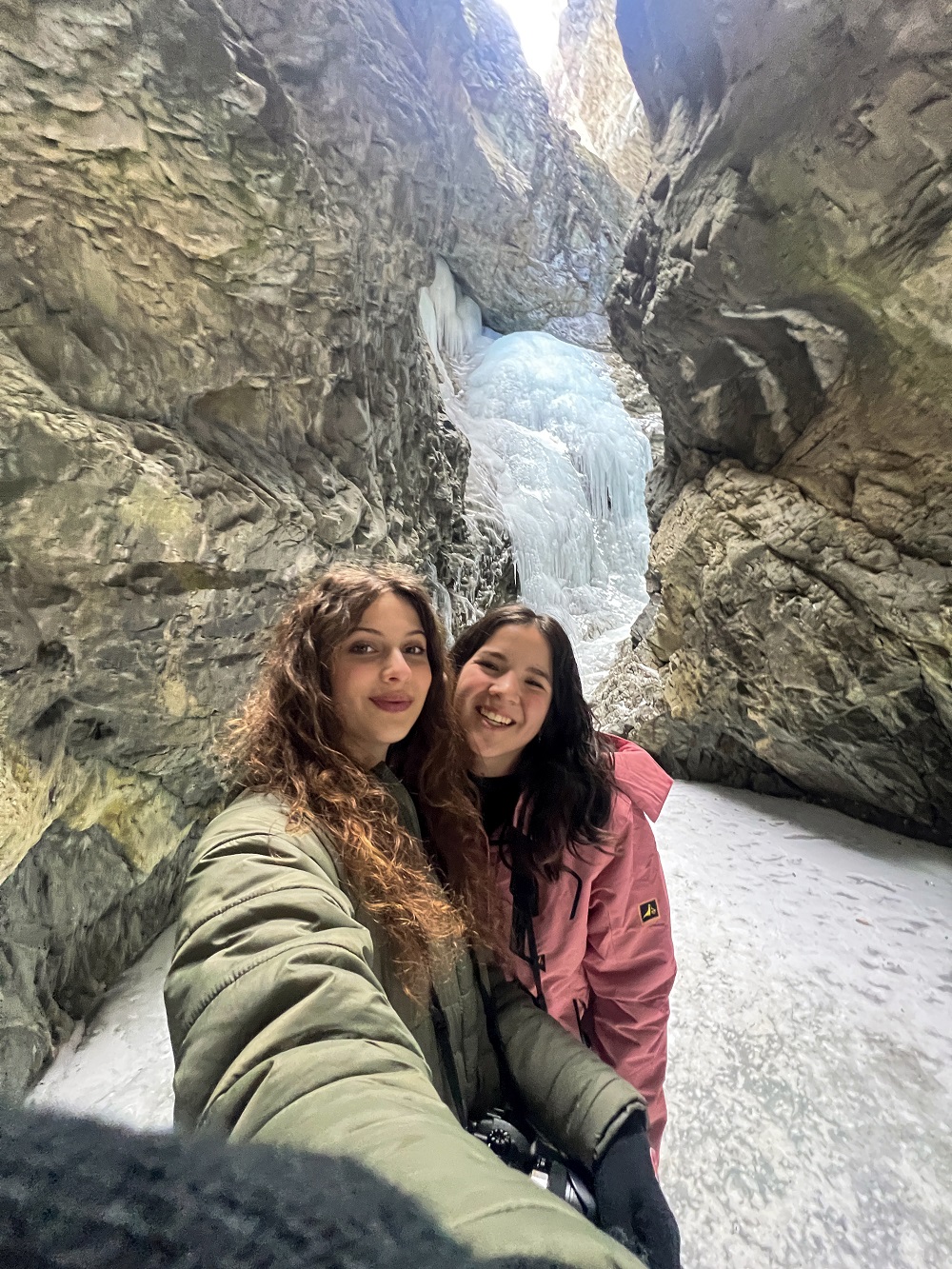
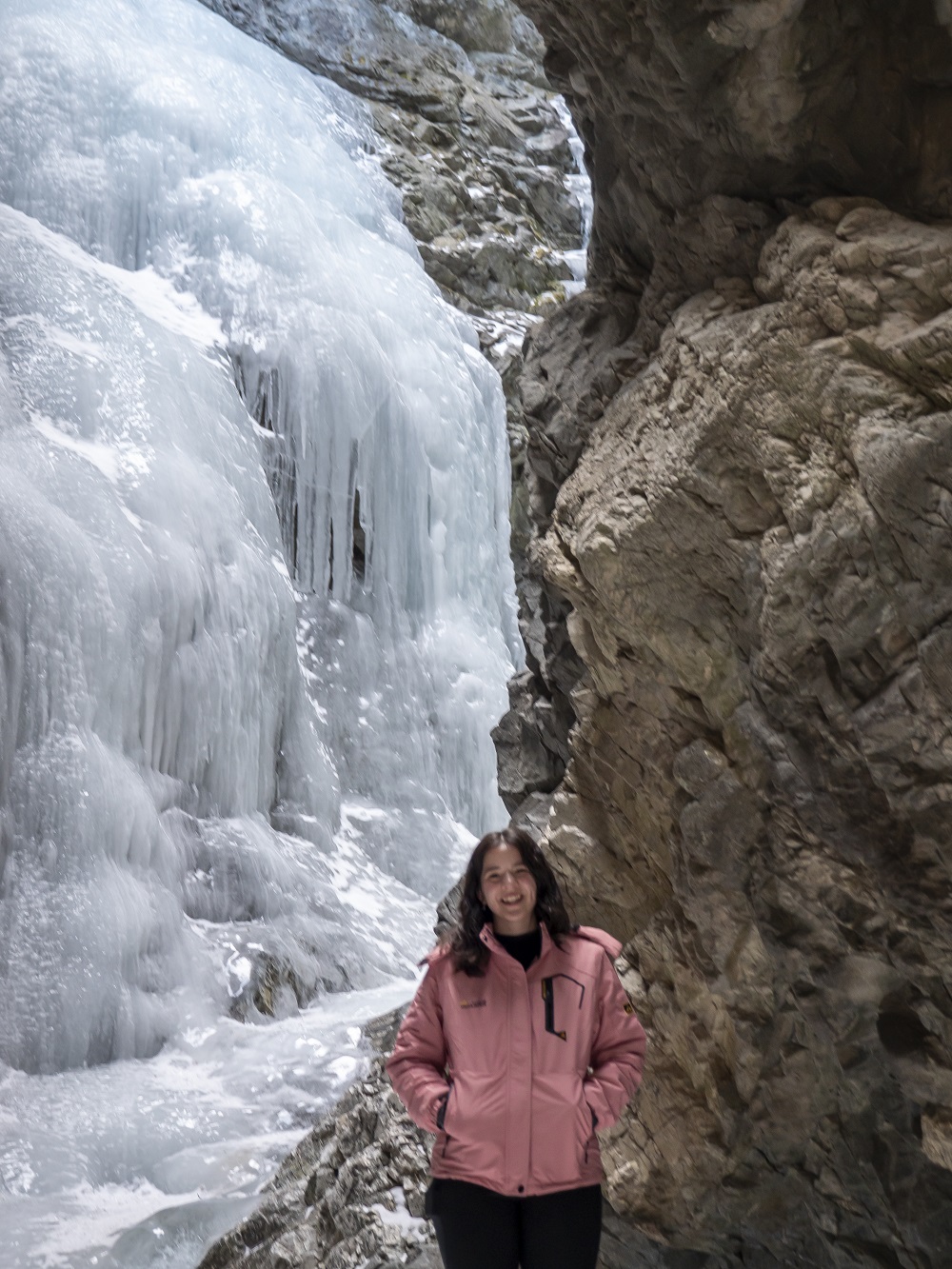
Walking deeper into the creek and on top of a few rocks, we were able to witness the power of nature. The delicate, yet forceful-looking waterfall captivated all of us, leaving us with no words. In fact, both Olivia and I audibly gasped at the sight of it.
Being even more adventurous, we decided to carefully climb a step of the river into a magnificent cave where we could see the whole waterfall. Witnessing the power and beauty of nature startled us. The waterfall, once loud and unstoppable, stood still and completely frozen in time.
Great Sand Dunes National Park
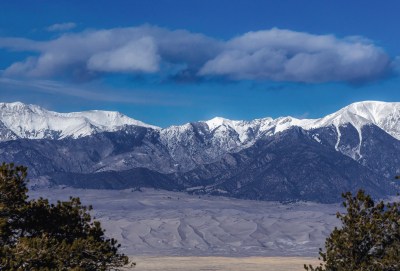
After the one-of-a-kind adventure, we headed to the Great Sand Dunes National Park. This was first time Olivia or I had ever visited a national park; to say we were excited would be an understatement.
We had to stop at the Visitor Center to buy souvenirs–and even our own National Parks Passport, which we stamped with a seal provided by the center.
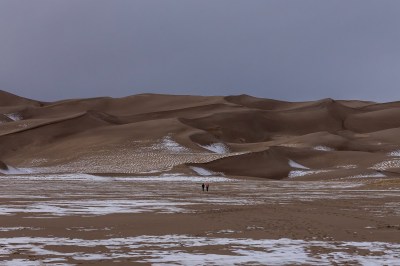
As we walked over to the dunes, we realized that the small-looking hills we saw on our way were misleading. The dunes were hundreds of feet high, and they towered over us.
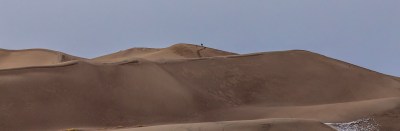
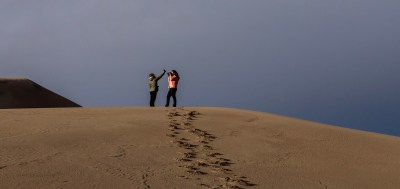
With some determination, lots of doubts, and a huge amount of persuasion from Professor Yawn, Olivia and I walked one dune after another, getting higher and higher each time.
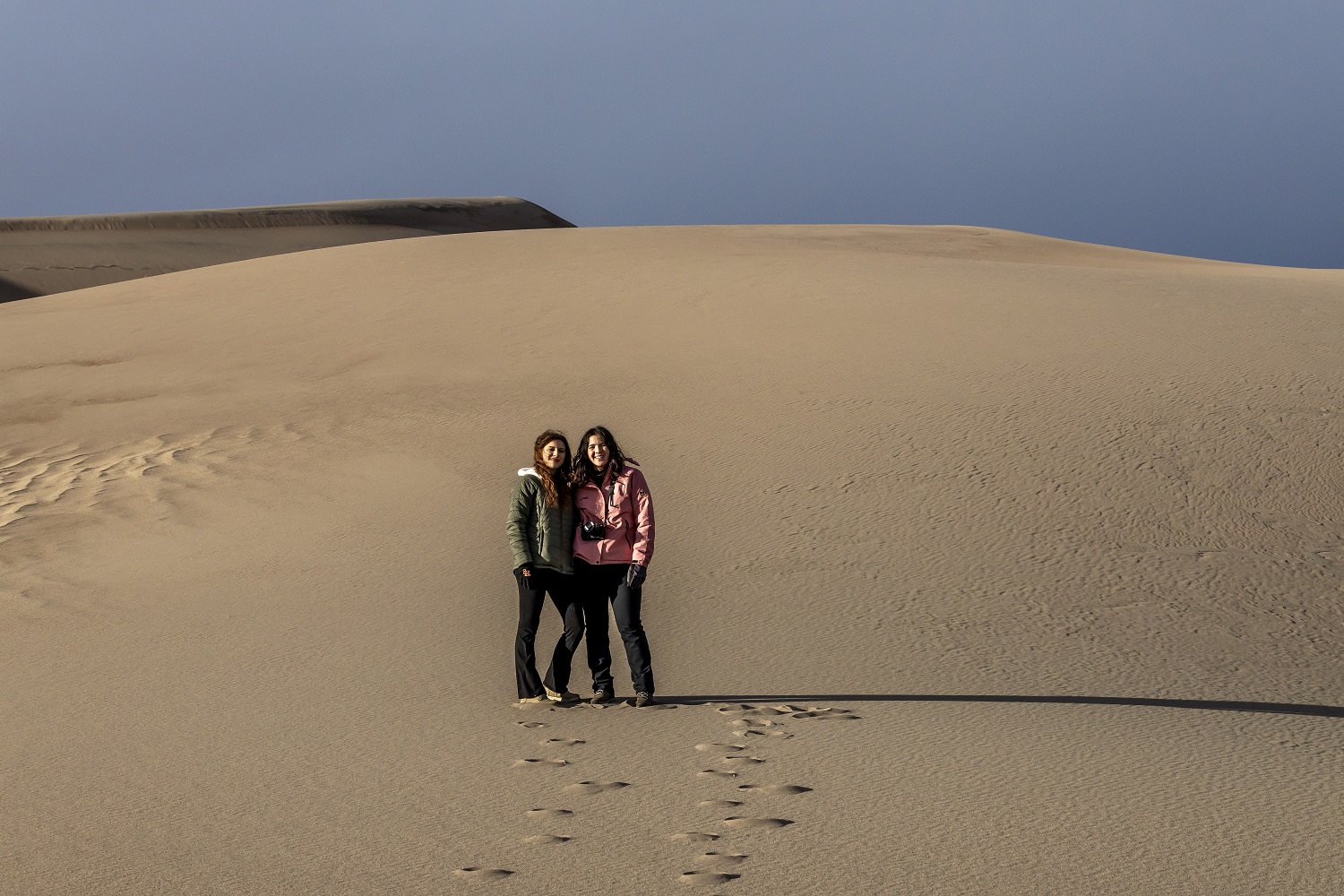
This was a true test of our endurance since our feet kept digging into the sand…
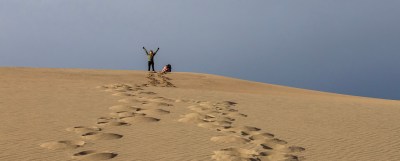
….with each step we took which would make us take even more steps and consequently tire us even more. But getting to the top also made us feel something like champions!
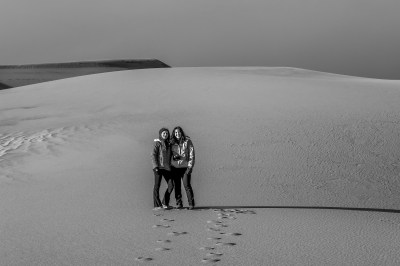
We made sure to capture the moment.
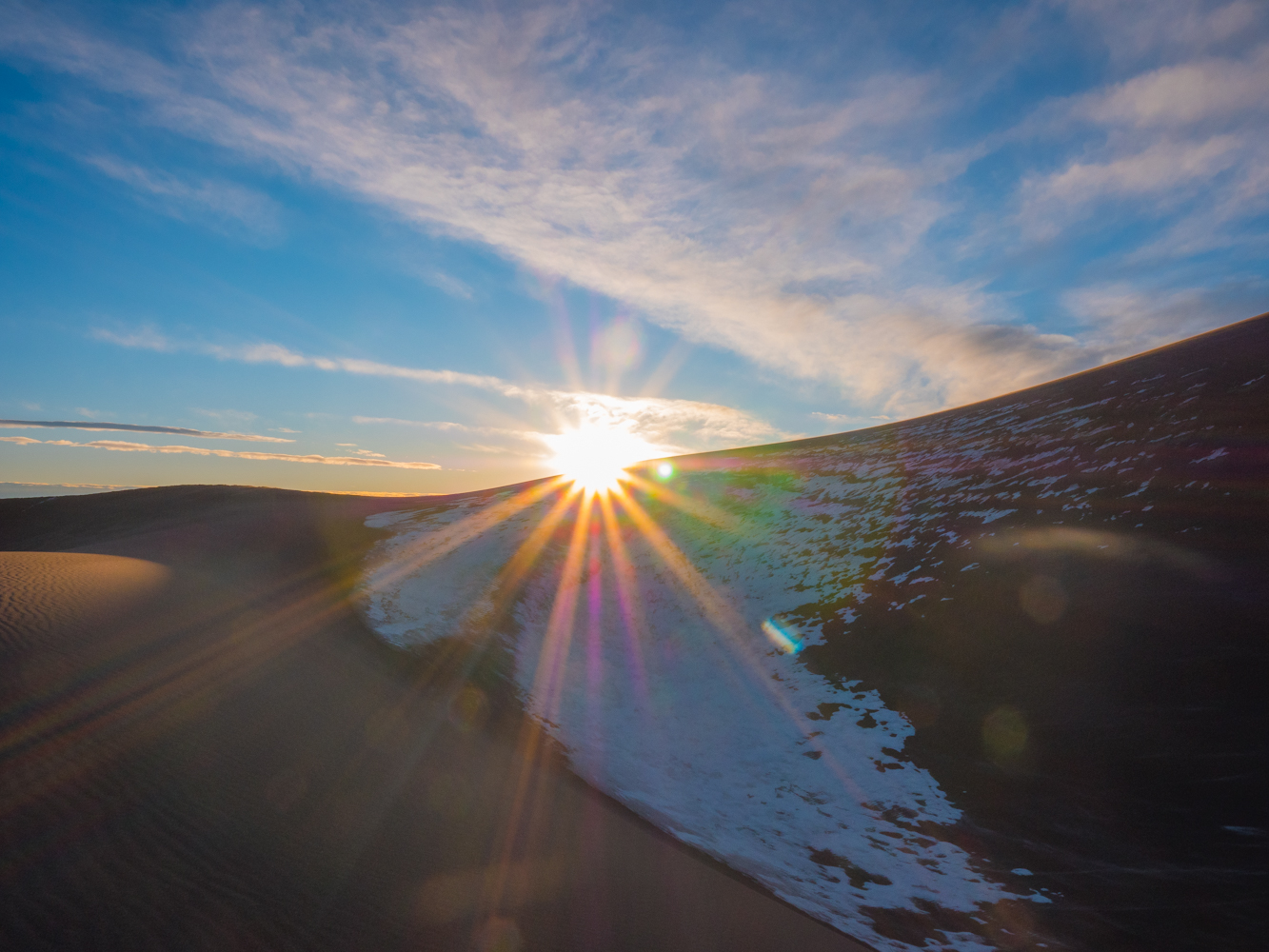
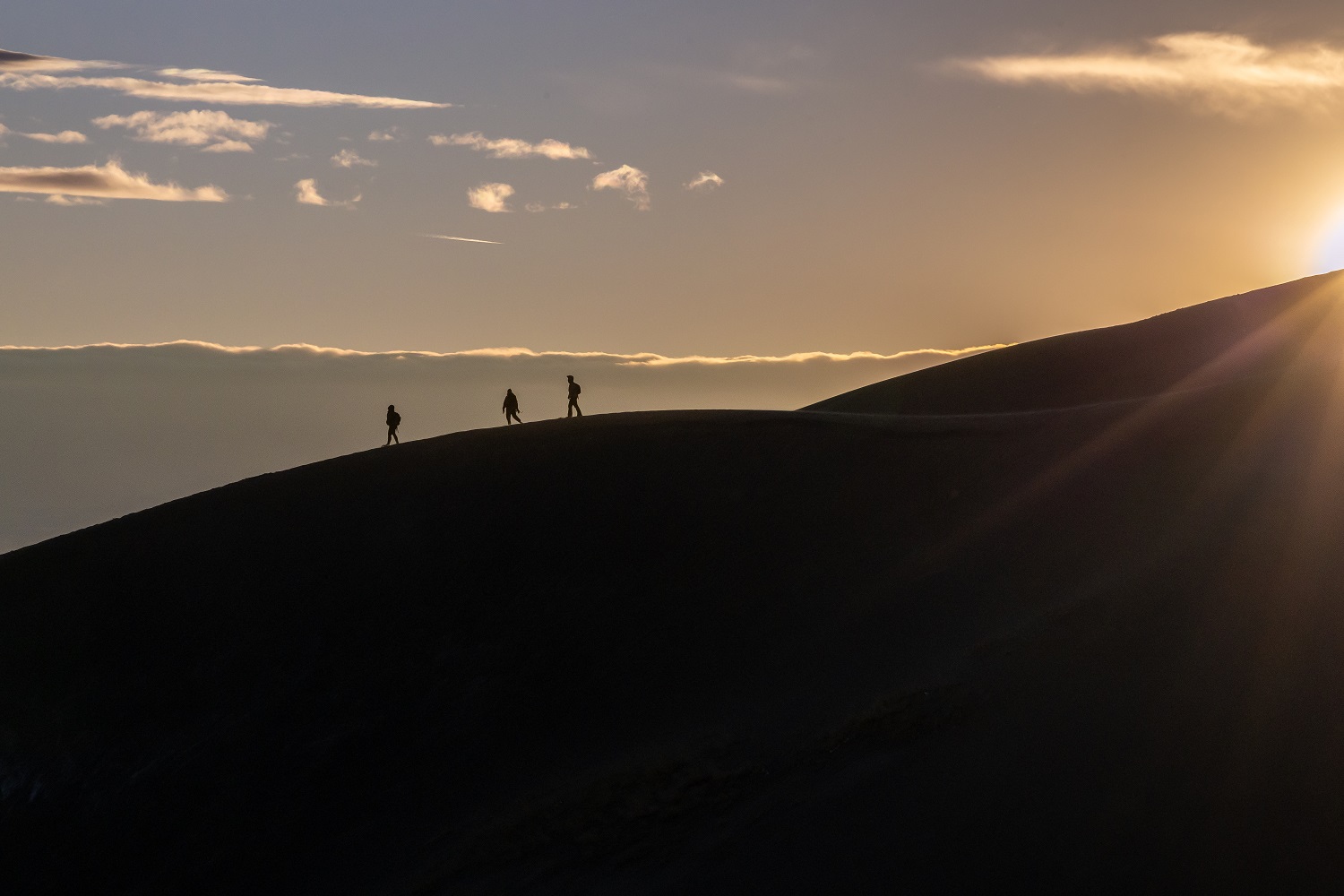
Despite the unanticipated workout, we were overwhelmed by the magnificent features the dunes possessed, how thin coats of snow would rest them, and the golden, transcendental-like appearance the light of the sun would give it.
As we started the long walk back to the car, the wind picked up to about 40 miles per hour, and, even though we were as cold as we had ever been, we were mesmerized by the way the snow would dance with the breeze on top of the sand, making patterns and moving through waves like it knows exactly what it is doing.
With sand in our shoes and frostbite on our faces, we were able to close out another successful day of firsts for us.