Skip to content

Center for Law, Engagement, and Politics

Leap At SHSU!

  • About LEAP
  • LEAP Ambassadors
Center for Law, Engagement, and Politics

Category: Science

The Future of Law Enforcement

By Michelle Cardenas

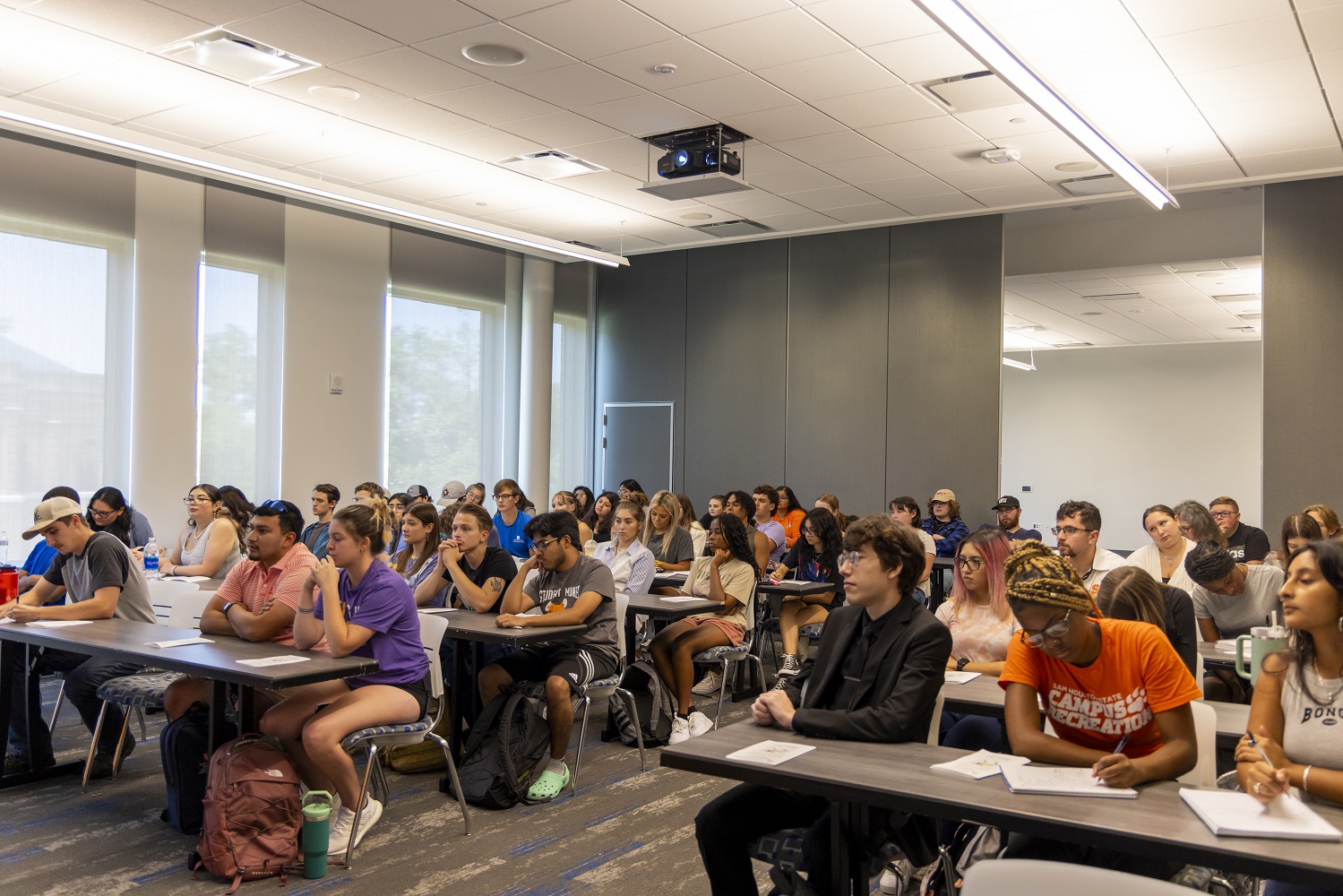
Putting a stop to crime can be an extremely difficult task, but keeping up with the advancements in technology with crime can be even harder; that’s why we invited experts in the field of policing to discuss the future of technology and crime.

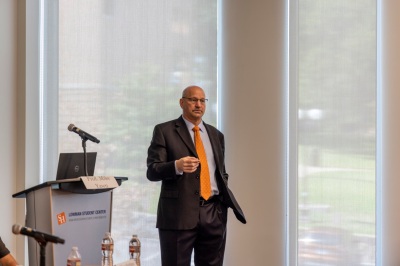
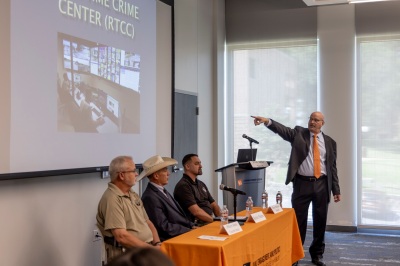
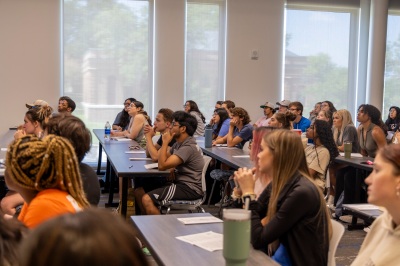
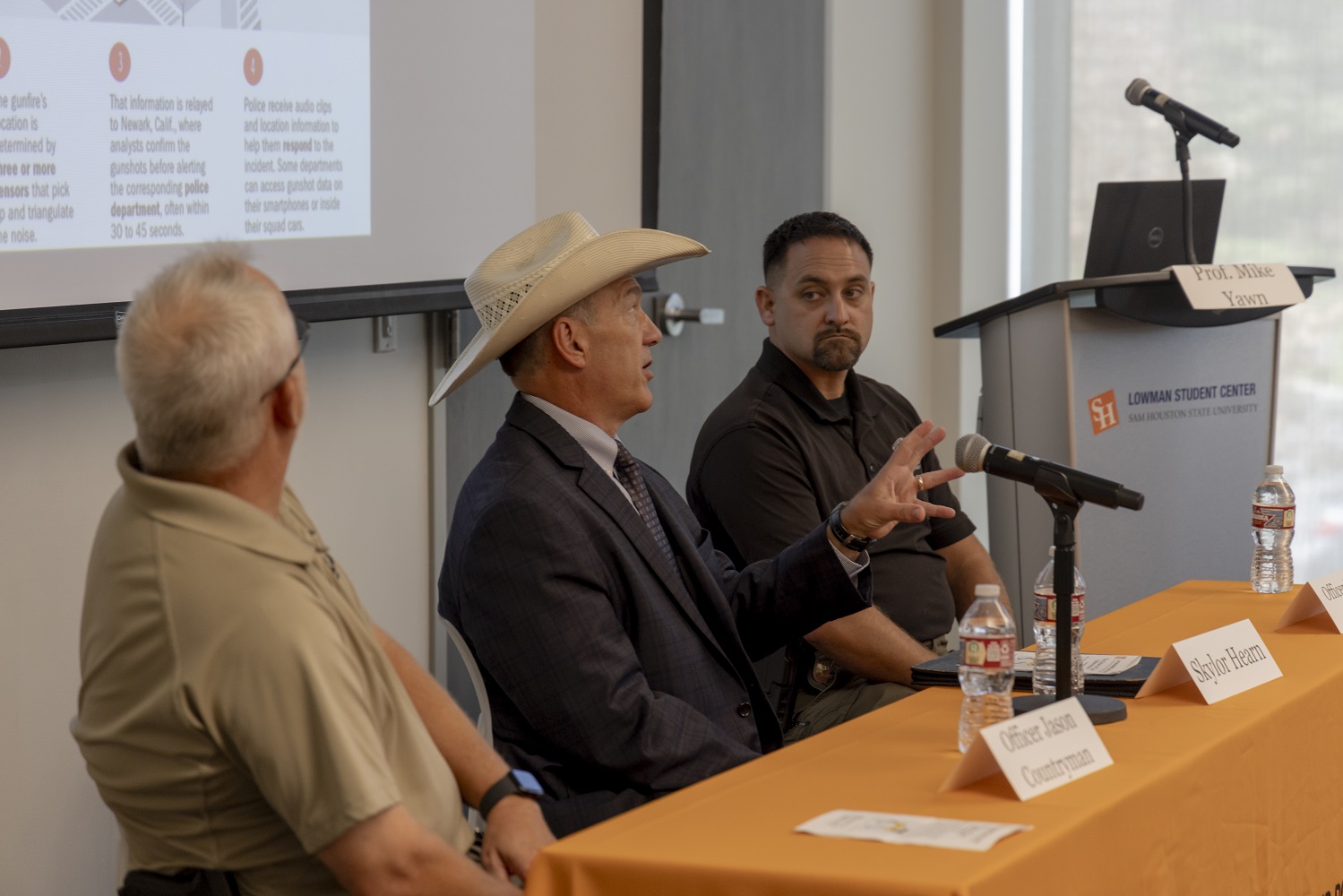
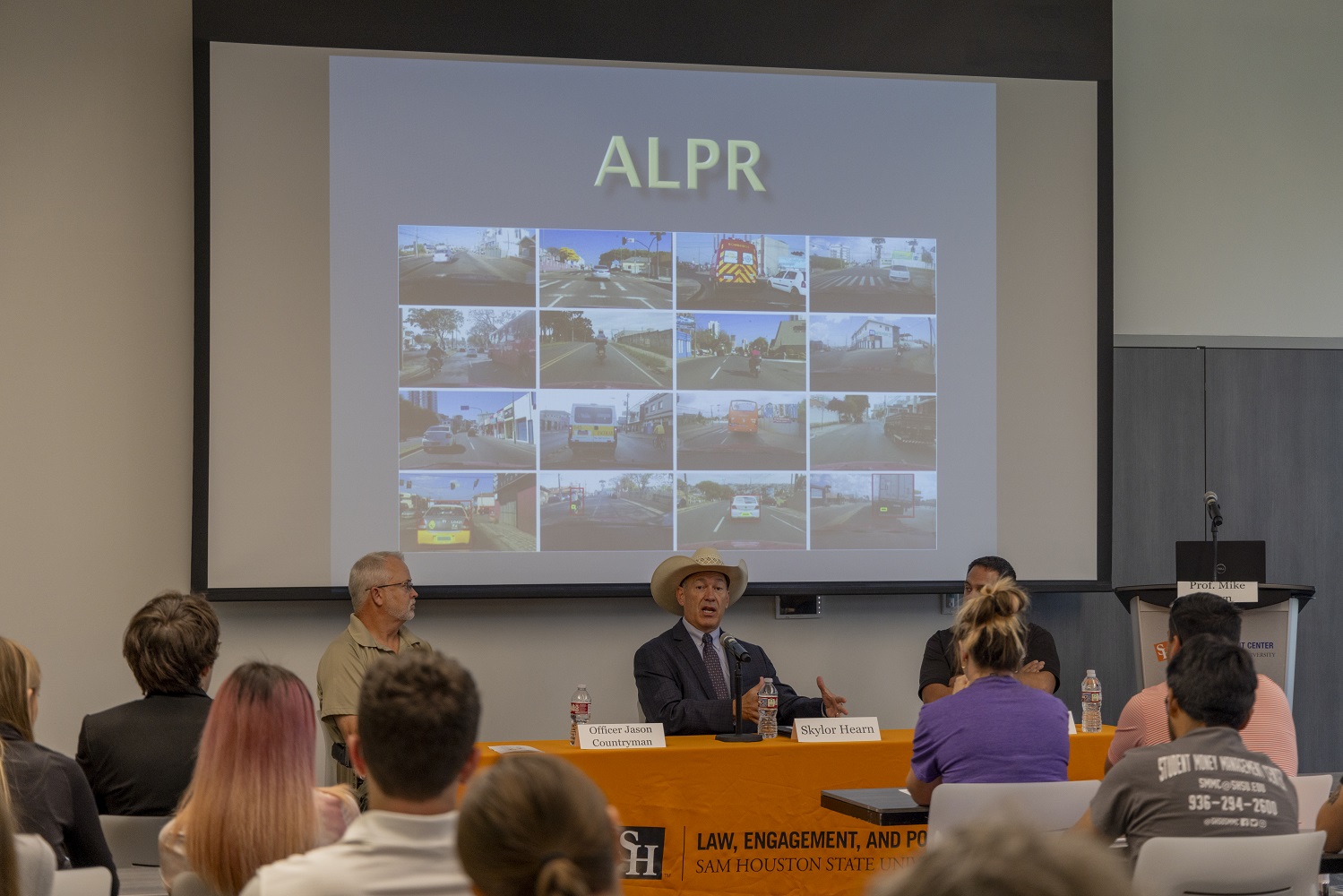
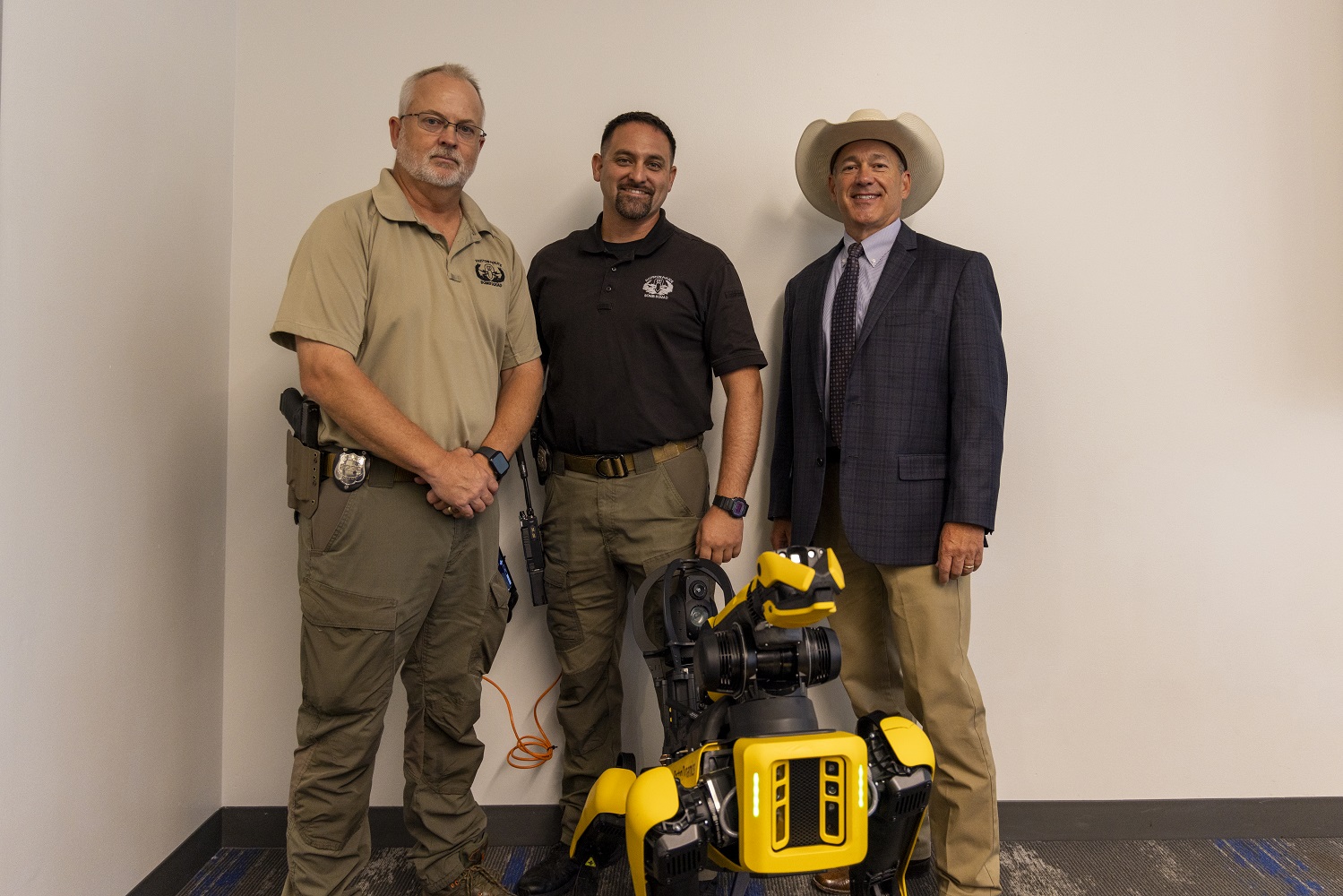
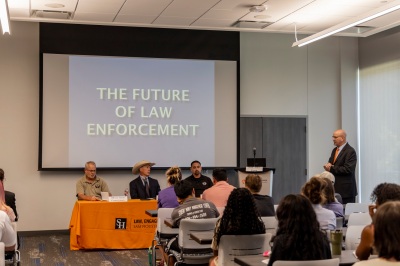
The LEAP Center hosted a special panel that consisted of Houston Bomb Squad Officers Jason Countryman, Matthew Muskiet, and Former Deputy Director of the Department of Public Safety Skylor Hearn to address some hot topics regarding the use of technology in the field. Professor Yawn, the director of the Law, Engagement and Politics Center, moderated this event and led the intriguing conversation. 

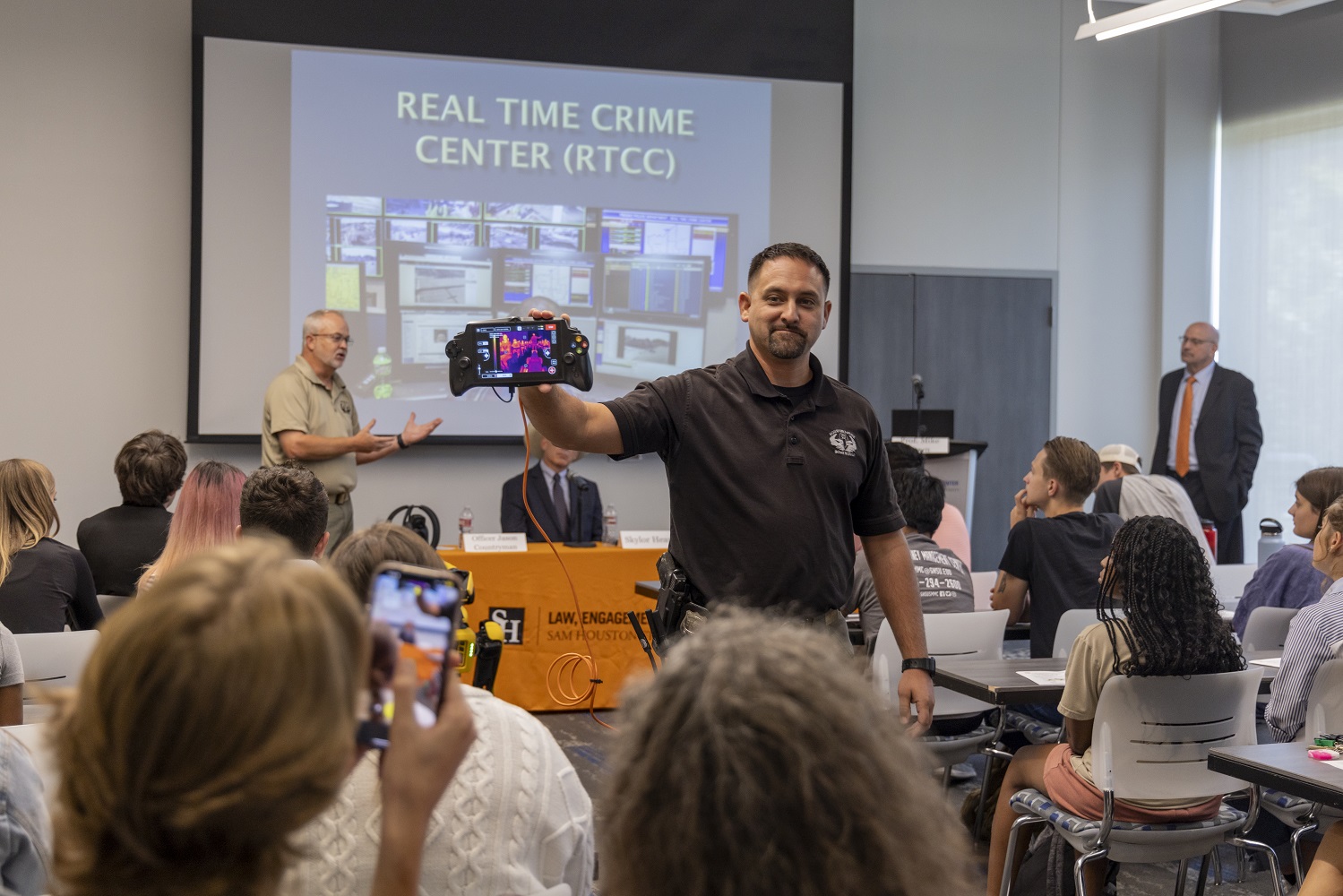
The first subject of conversation was the use of Real Time Crime Centers (RTCC) and the advantages it poses to officers when responding to an emergency call.

Sometimes eyewitnesses can provide inaccurate or unclear information to officers; however, the technology that the Real Time Crime Centers utilizes reduces the confusion and most importantly danger to responding officers. Former Deputy Hearn informed the audience that Real Time Crime Centers use tools such as security cameras and Automated License Plate Readers (ALPR) to better protect officers and citizens during crimes. What is particularly interesting about Real Time Crime centers is the ability to merge all of the tools and display them all on one screen.

This allows for multiple people to simultaneously receive alerts and inform officers what is happening in real time. Professor Yawn went into detail about Fusus, which is the software that allows Real Time Crime Centers to achieve such accurate descriptions of suspects and the trails they leave behind. The panelists also gave their opinion on new technologies such as the Shotspotter, ALPRs, and Starchase. Former Deputy Hearn is very fond of the Shotspotter because of its accuracy to detect gunshots, their direction, and the time they were fired. 

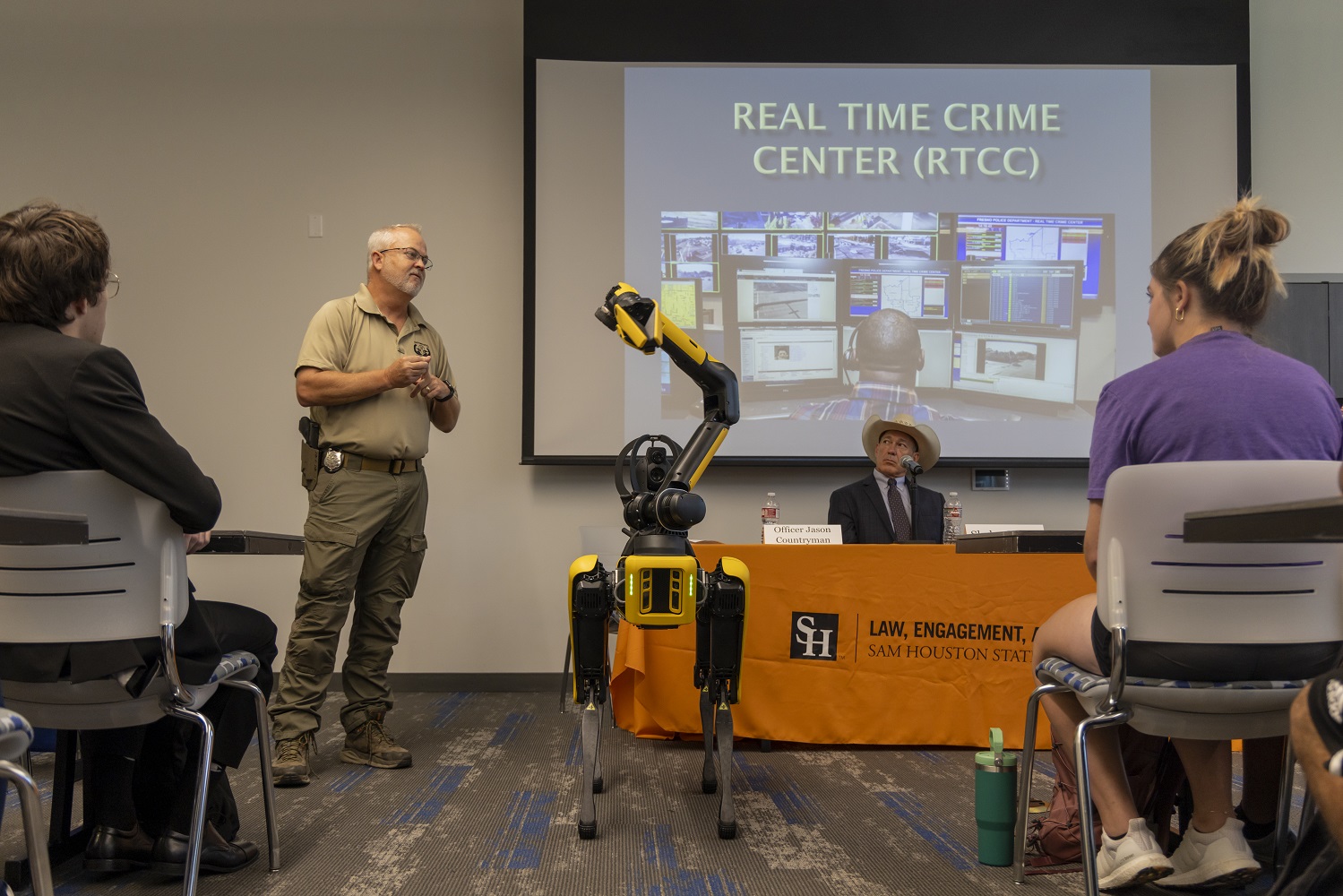
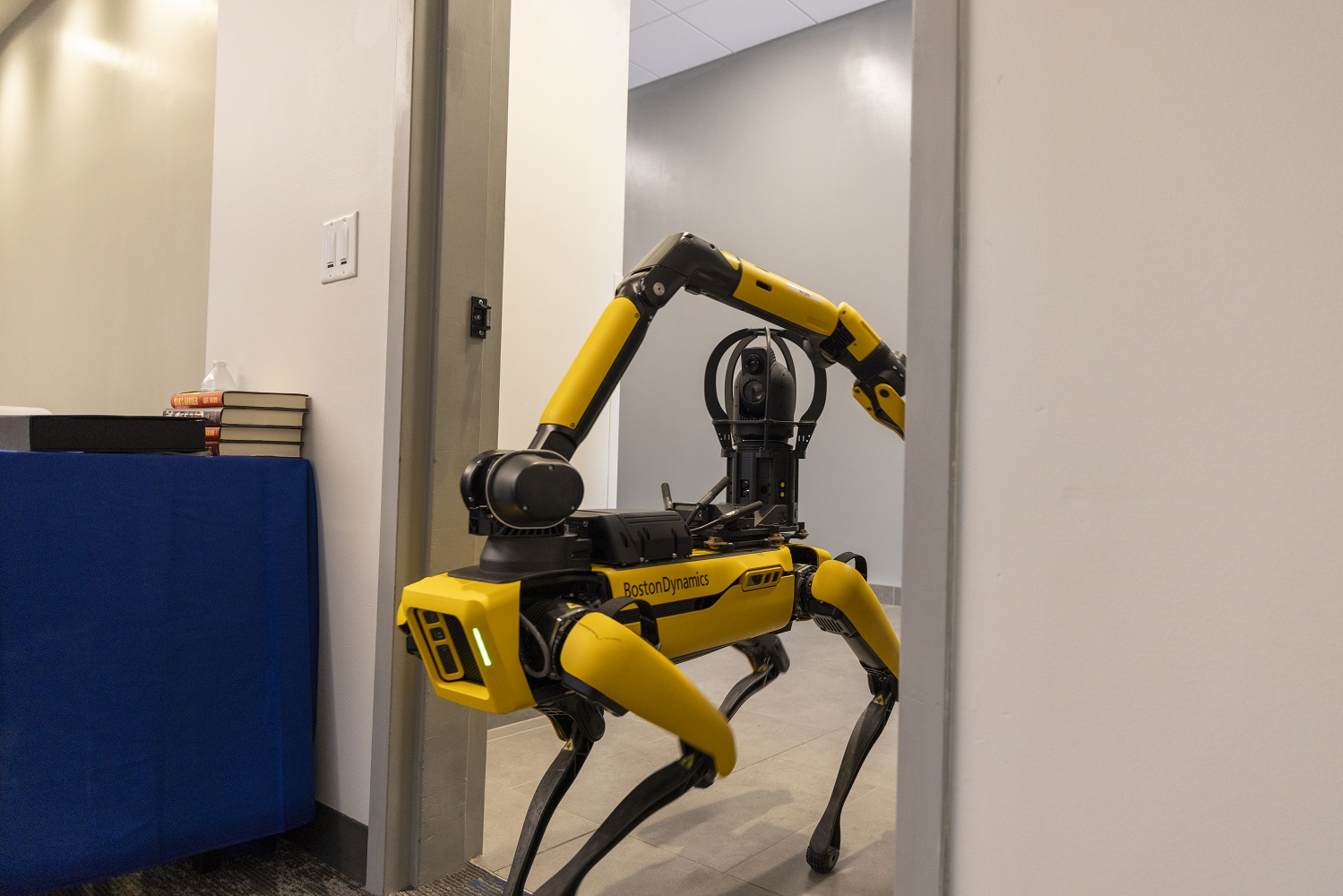
More controversial topics such as facial recognition and the use of robots to stop crime were also addressed by our panel. Officers Jason Countryman and Matthew Muskiet were our experts on robots considering their work with Spot, the robotic dog.

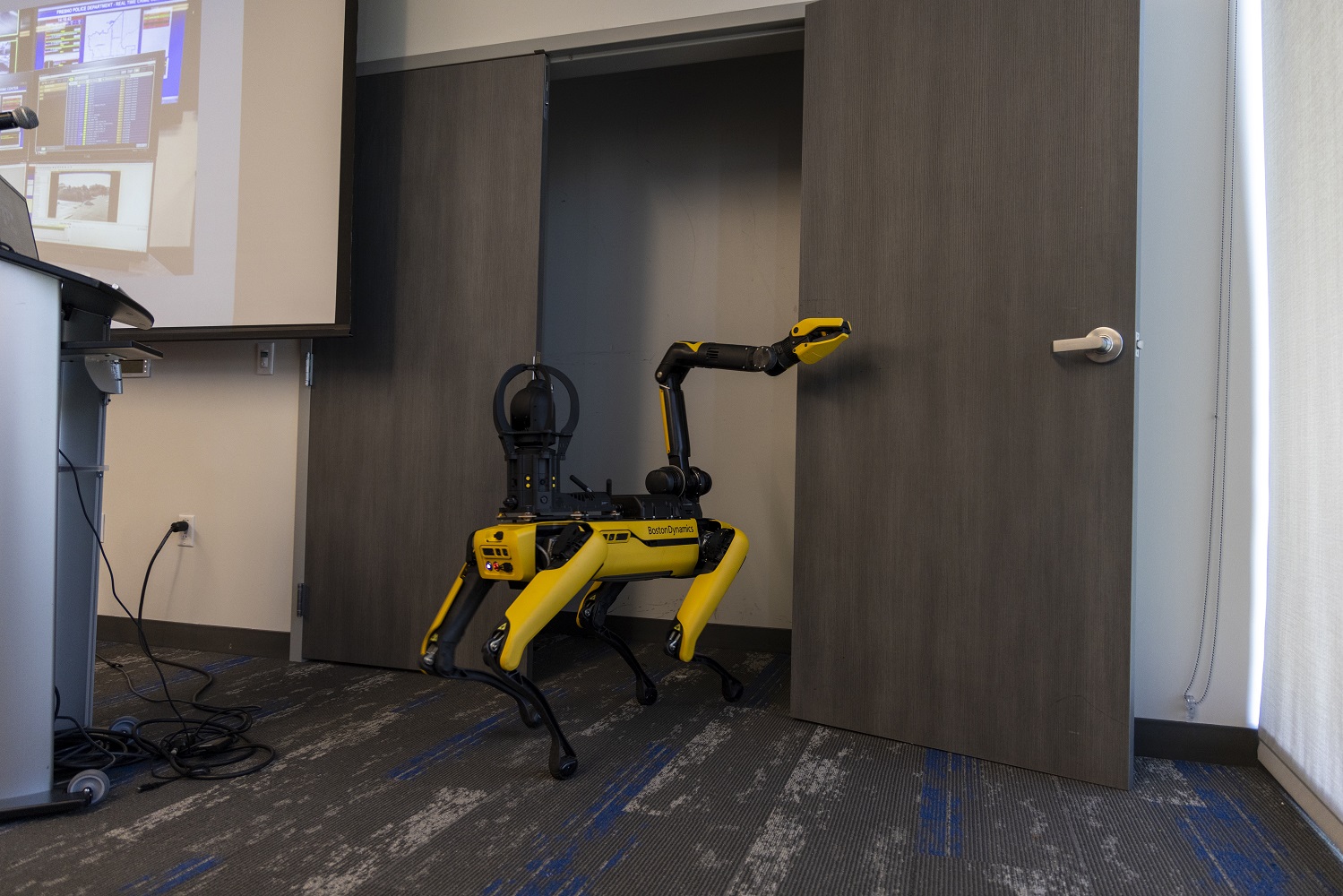
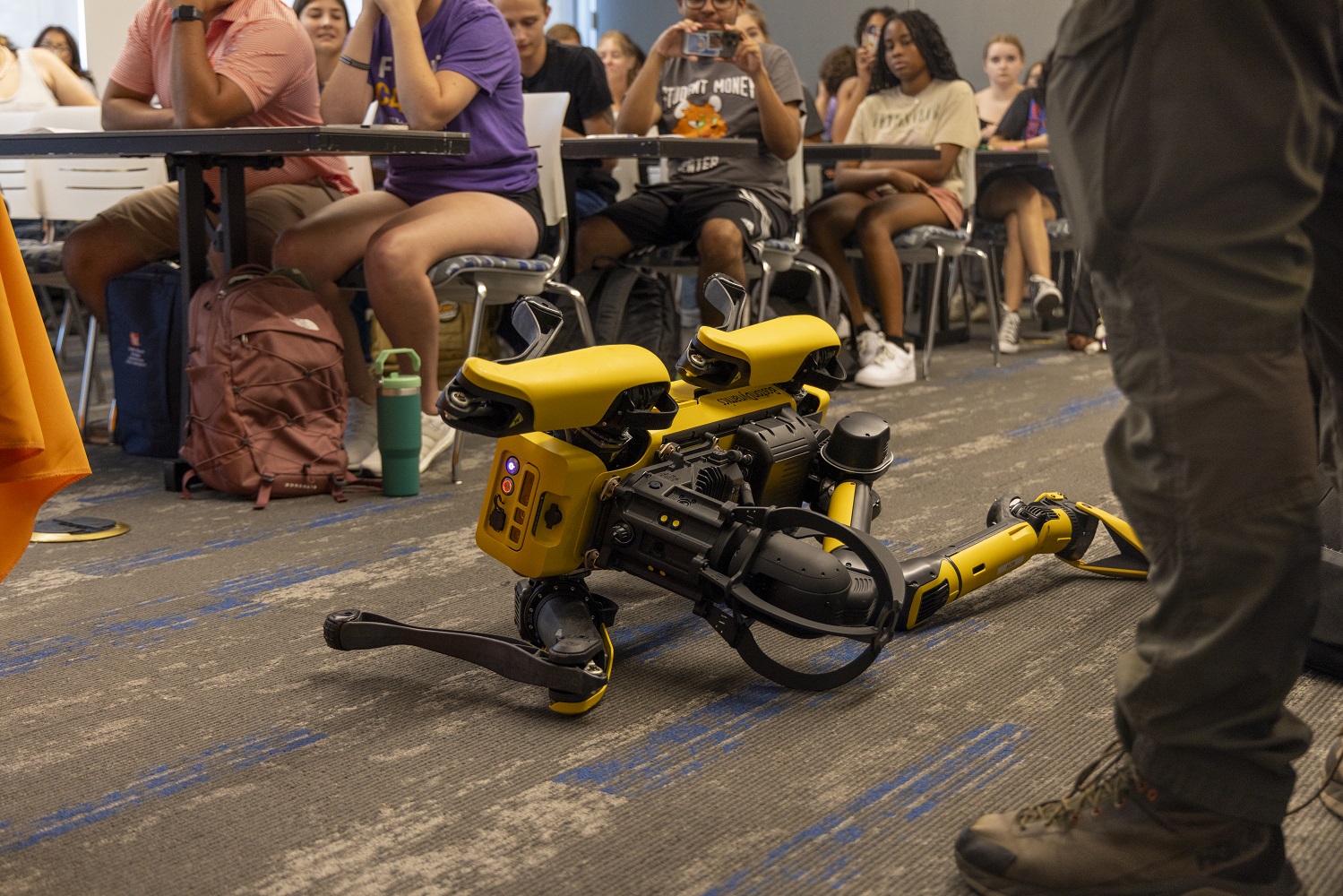
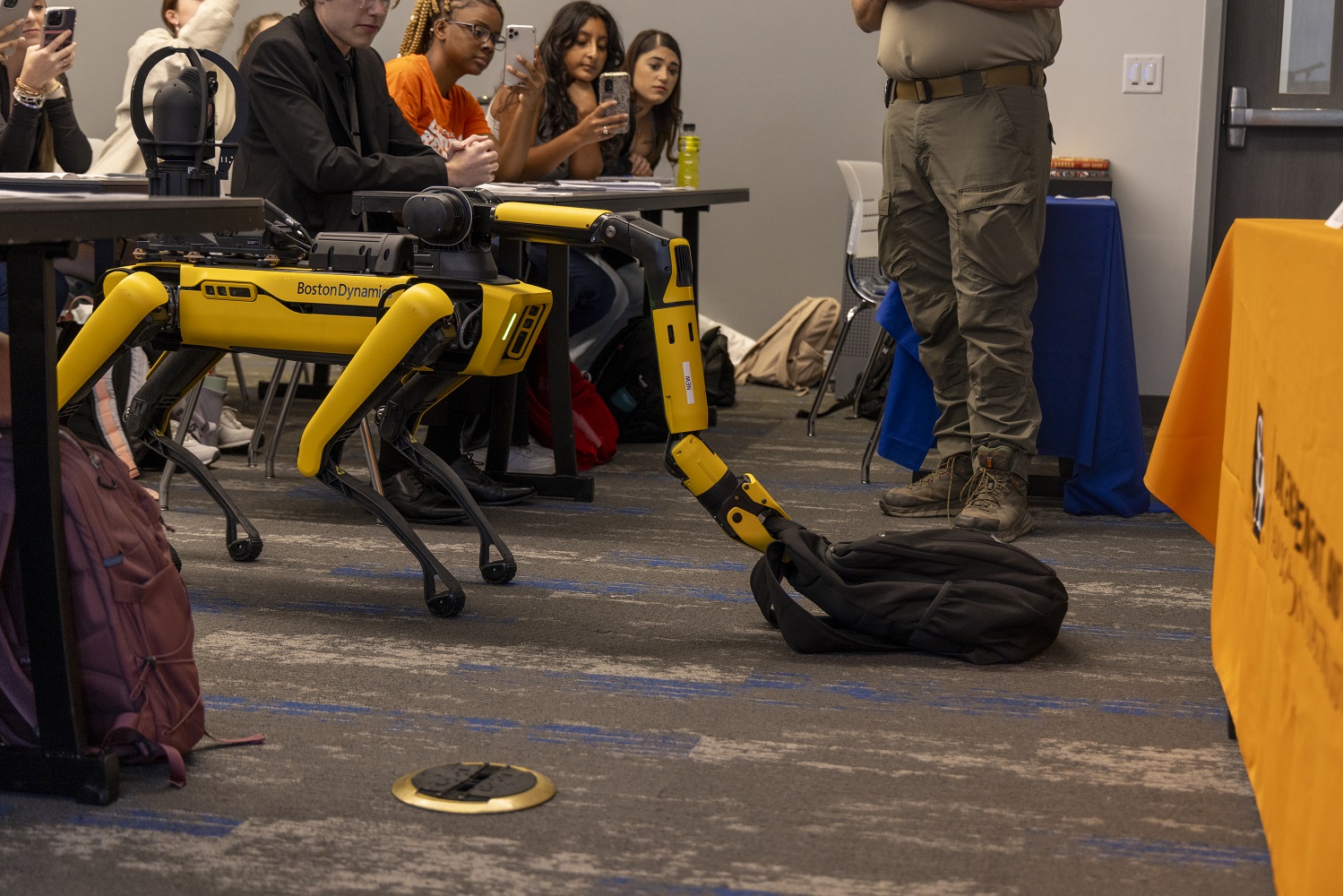
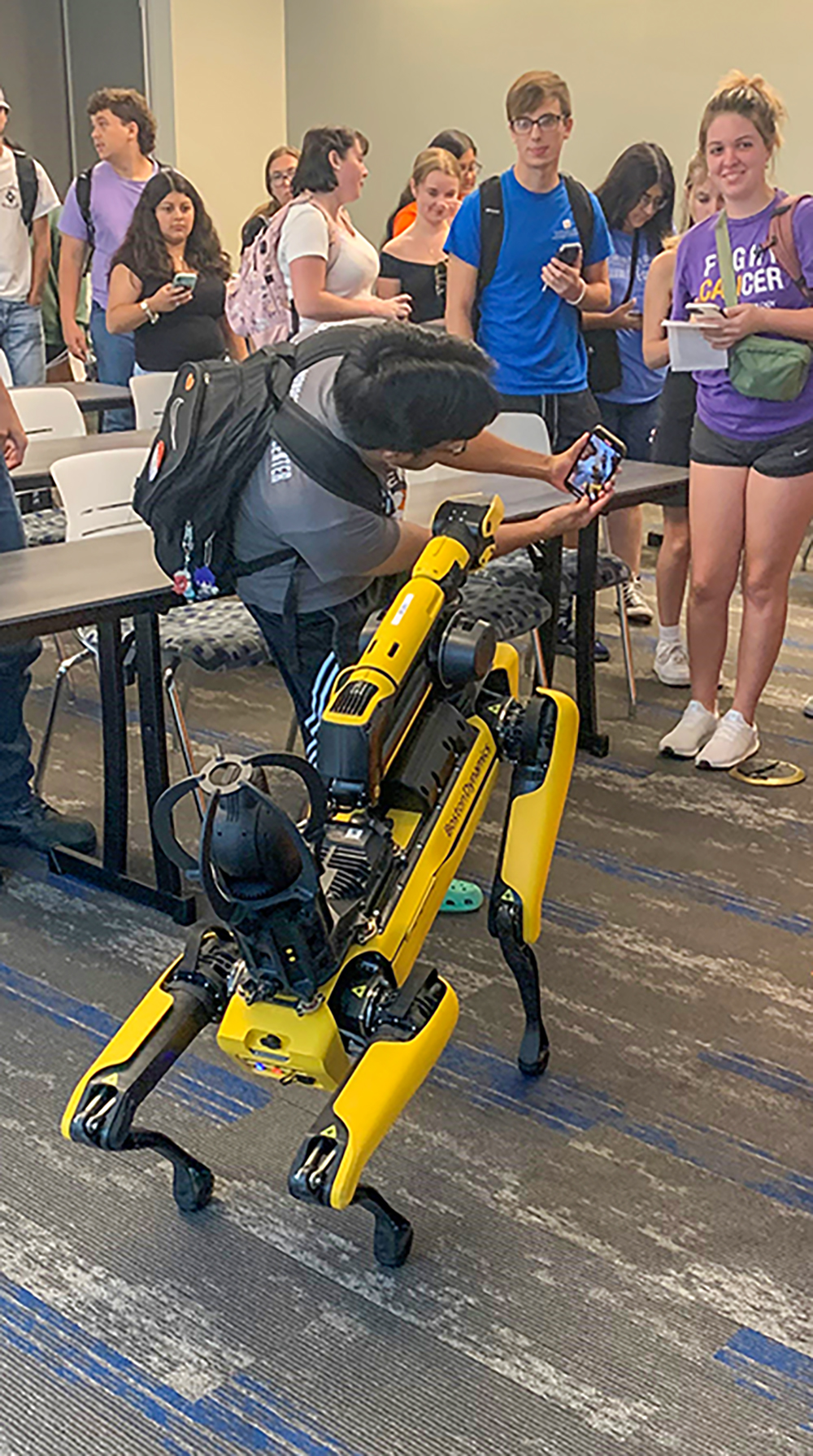
Spot is a robot designed by Boston Dynamics to enter any barricade situation and assist SWAT by providing them with eyes on the inside. Spot relieves officers from dangerous situations by searching the area and clearing the perimeter. Spot has many different features that allow him to navigate and be controlled by an officer on the outside. Some of these features include a 360-degree camera that allows full range of vision inside any room. Unlike most robots, Spot has a great perception of field that allows him to travel all kinds of terrain. He has the ability to stay on his legs and has excellent balance despite our efforts to knock him down. Spot can walk, crawl, open doors, drag anywhere from 40-50 pounds and prance!

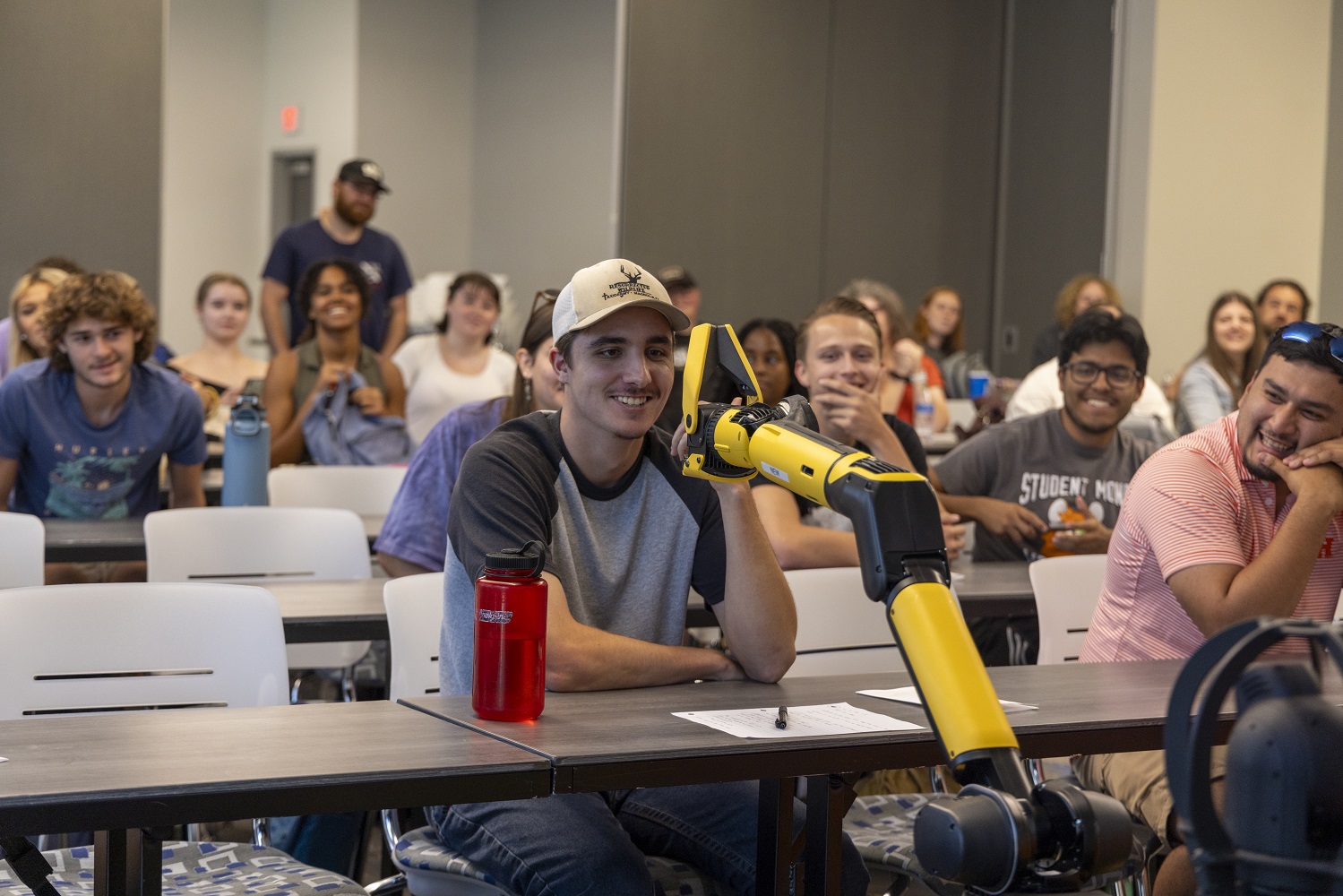
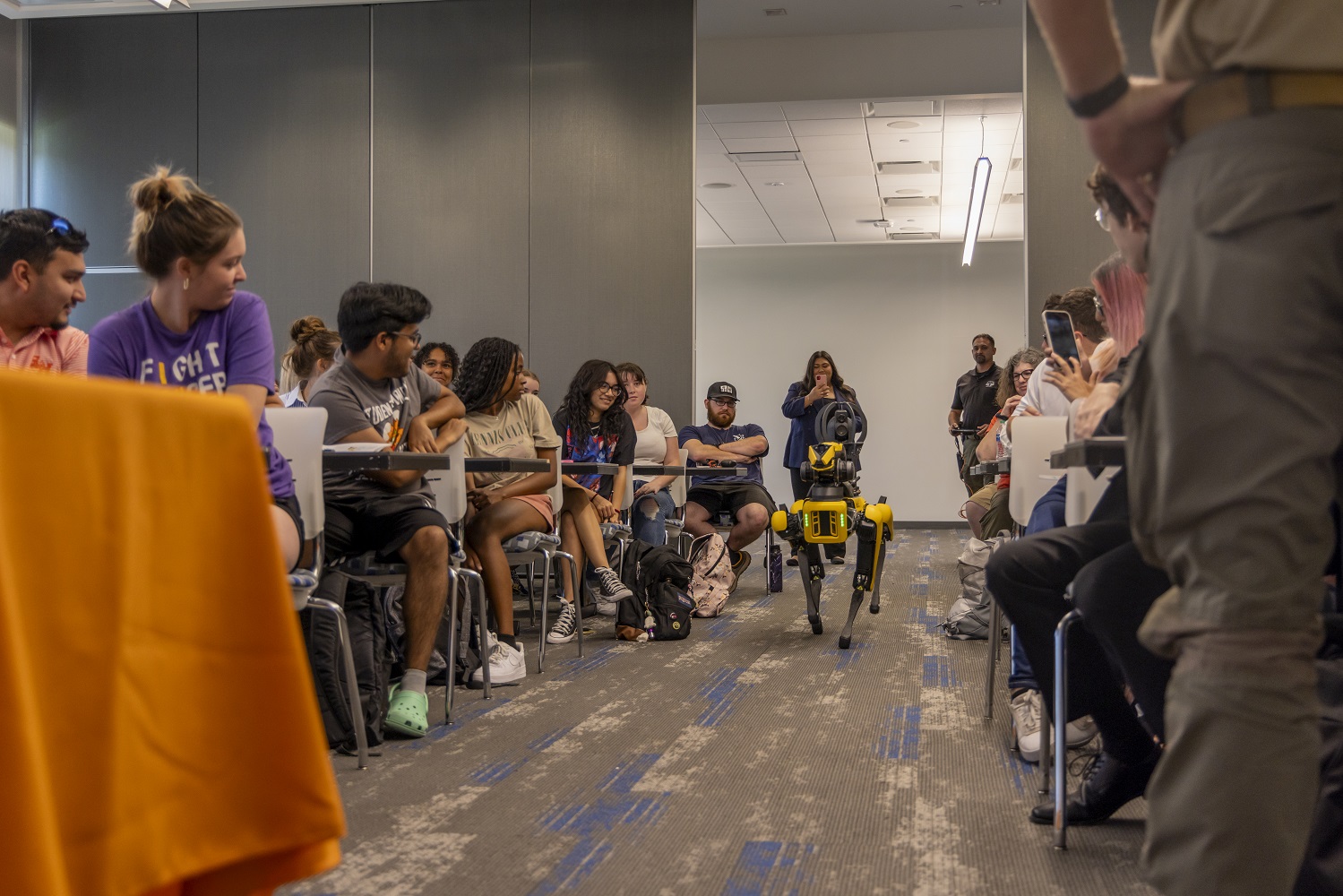
Students watched in awe as Spot showed off his skills and pranced around for us! 

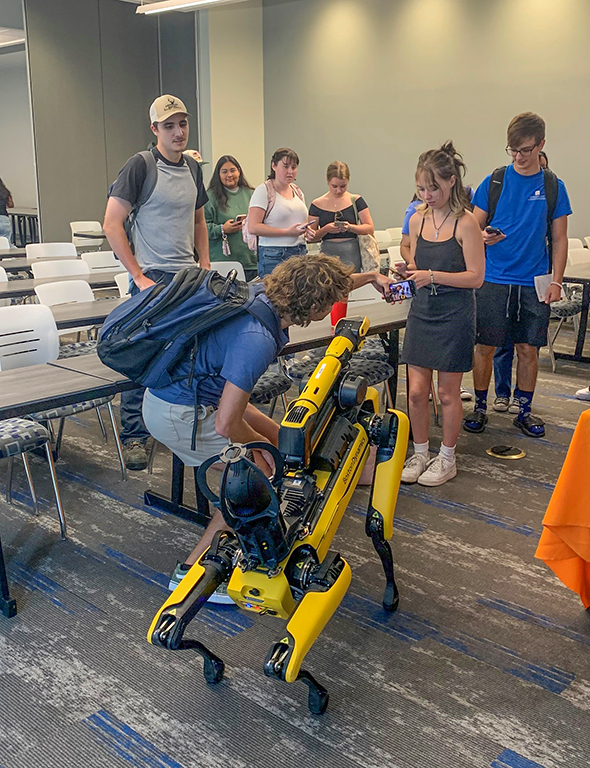
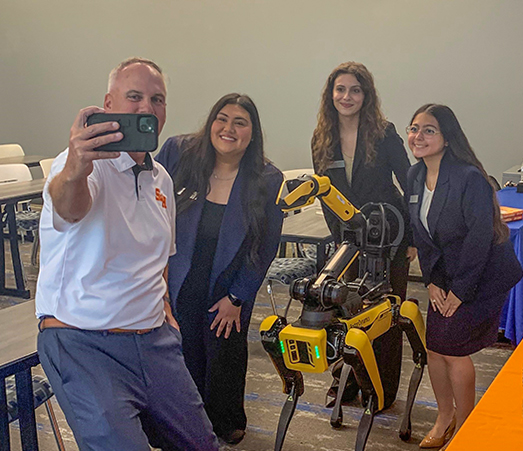
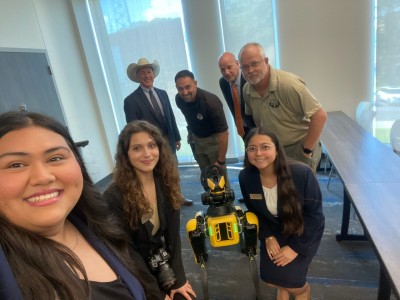
Sam Houston’s Chief Strategy Officer, General David Glaser also stopped by and engaged in conversation with the officers and asked a couple questions about possibly arming Spot. Because of the manufacturer’s contractual requirements, Spot cannot be armed in any way. However, in order to protect him from criminal attacks there have been many suggestions on arming him with non-lethal weaponry. After the presentation Officers Countryman and Muskiet were generous enough to allow students to take selfies with Spot and touch him.

 It was truly amazing to discuss and witness some of the technological advancements in the field of policing. Many thanks to Former Deputy Skylor Hearn, Officer Countryman, Officer Muskiet, General David Glaiser and Spot for joining us! 

Unknown's avatarAuthor mikeyawnPosted on September 21, 2023Format AsideCategories Civic Engagement, Politics, ScienceTags Center for Law Engagement And Politics, Law Enforcement, LEAP Ambassadors, Sam Houston State UniversityLeave a comment on The Future of Law Enforcement

Riding High in the Low Country

With a lighter day on the Southern Legislative Conference’s Docket, we did a bit of exploring and learning on our own. With us passing the official half-way mark of our trip, we felt a bit of pressure to ensure we are getting the most out of this opportunity, while still having fun.

Kayaking the Low Country

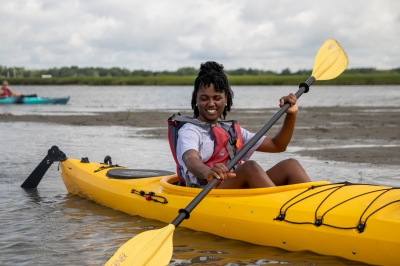
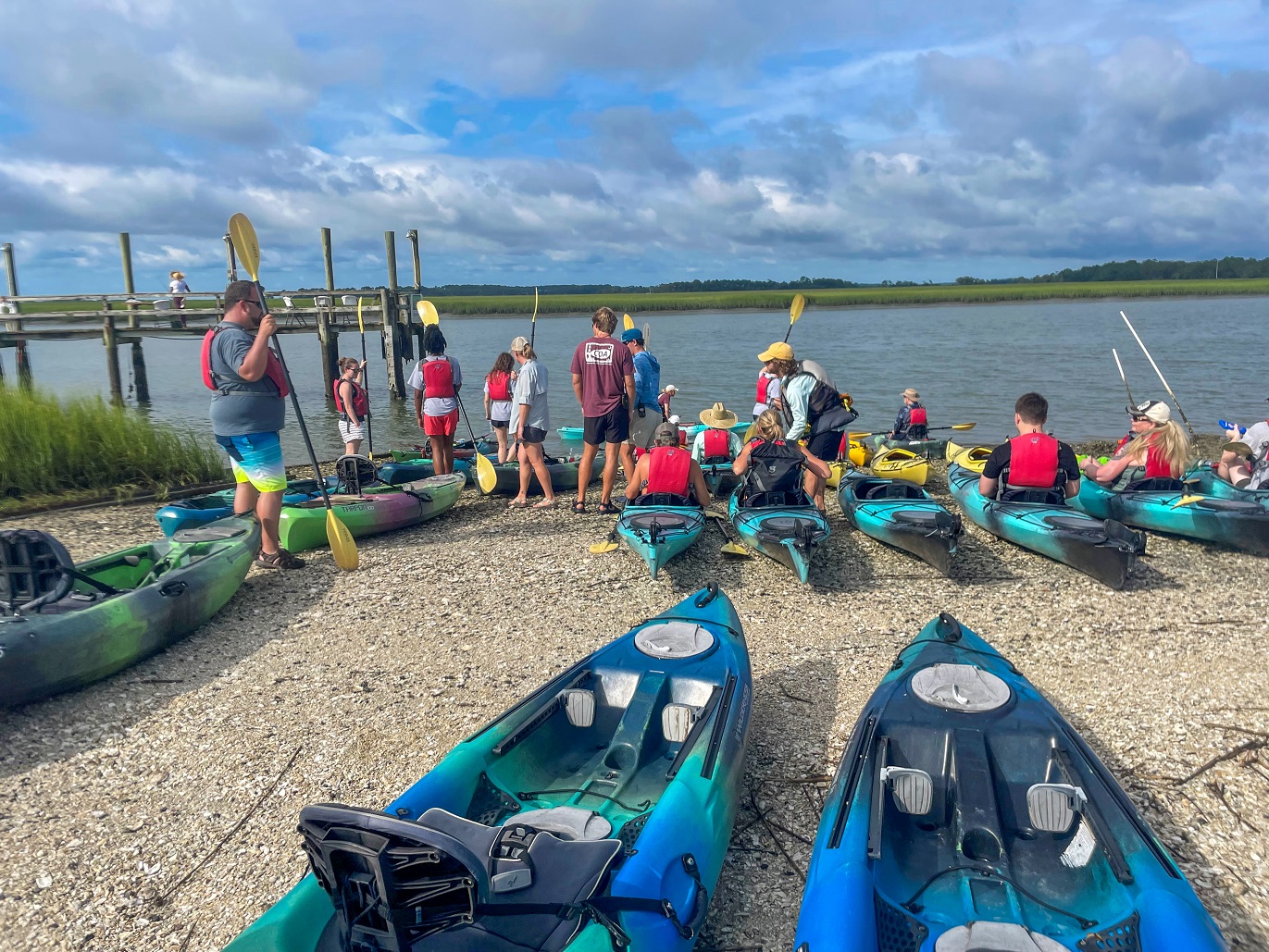
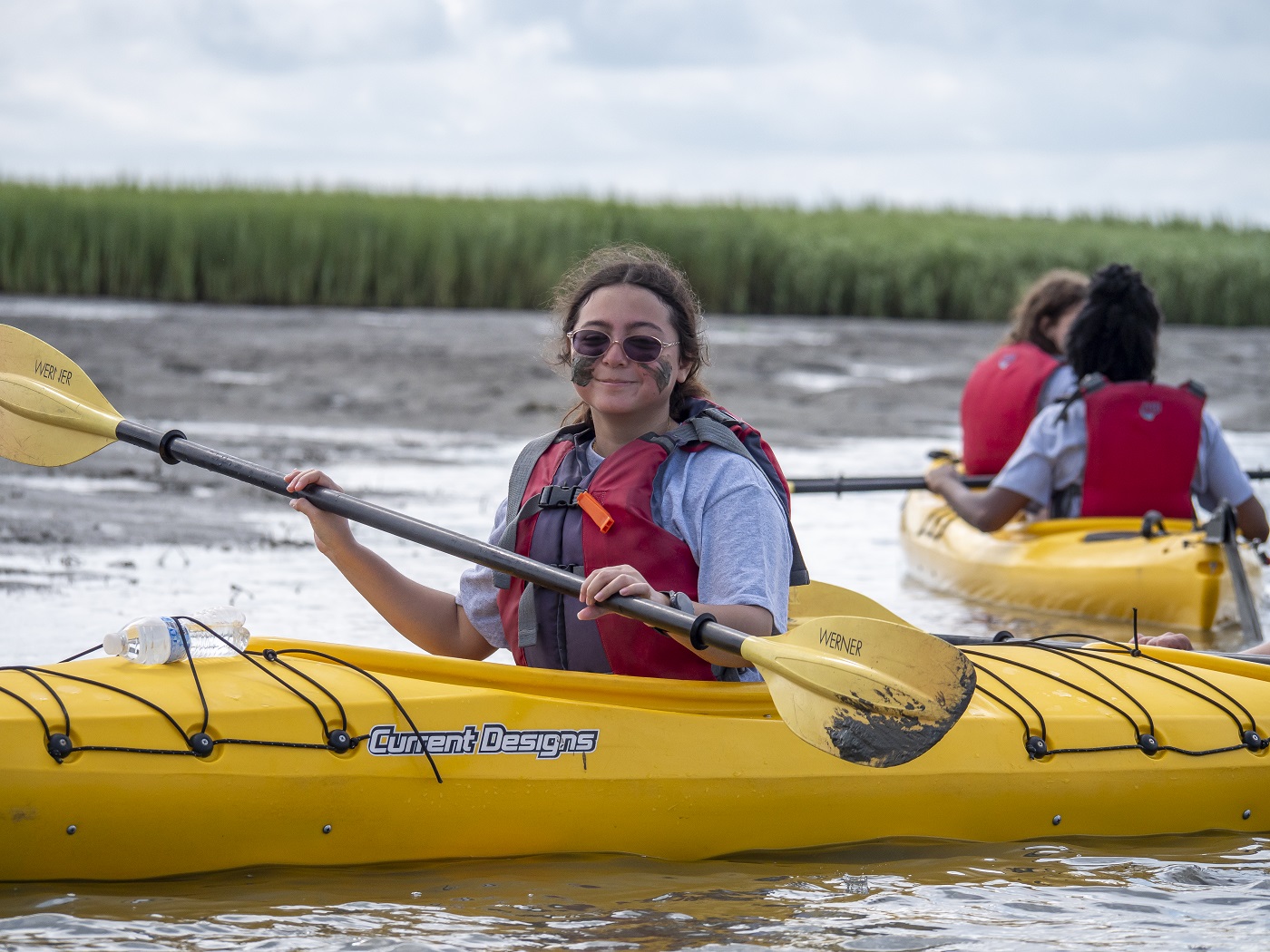
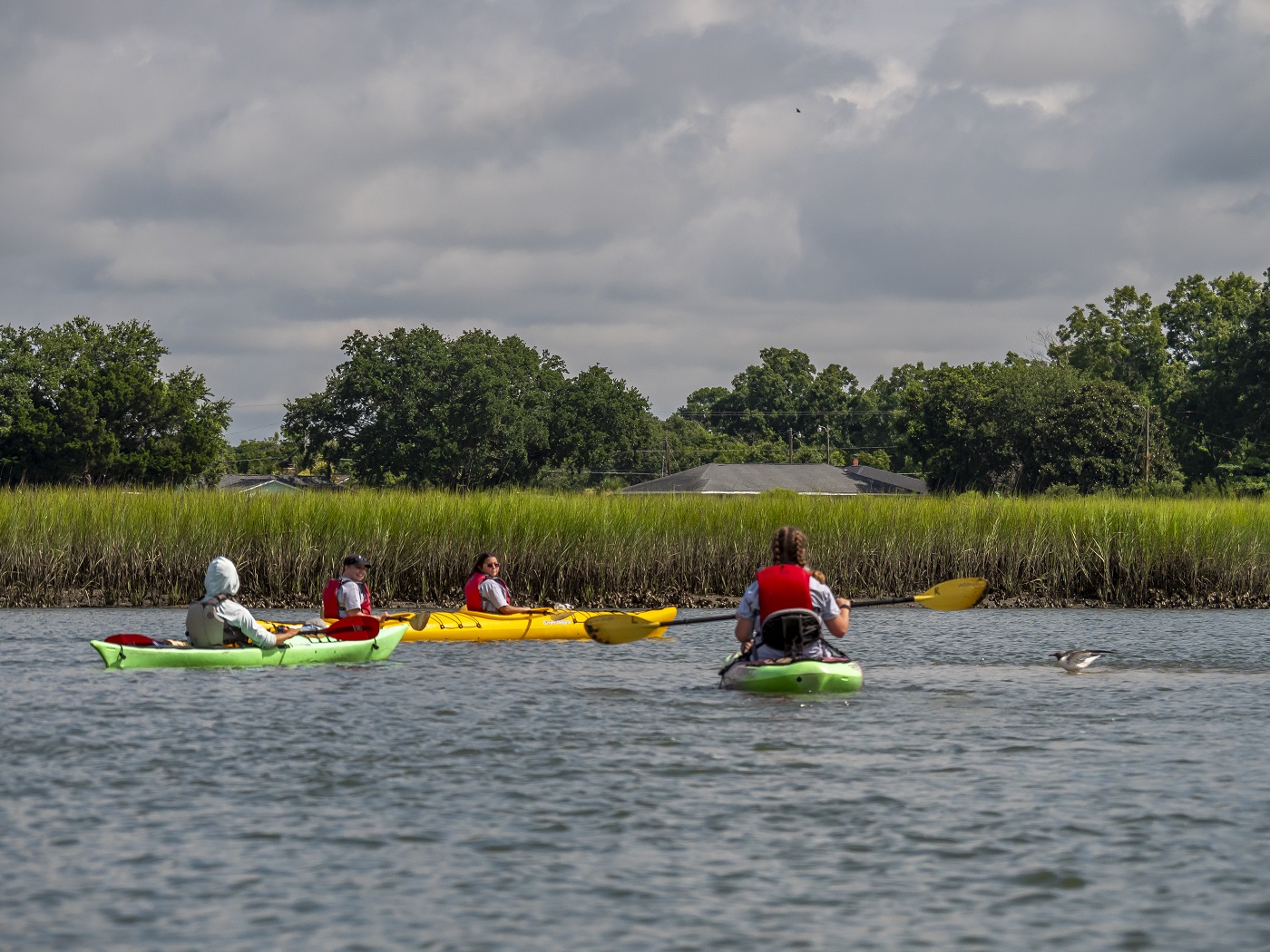
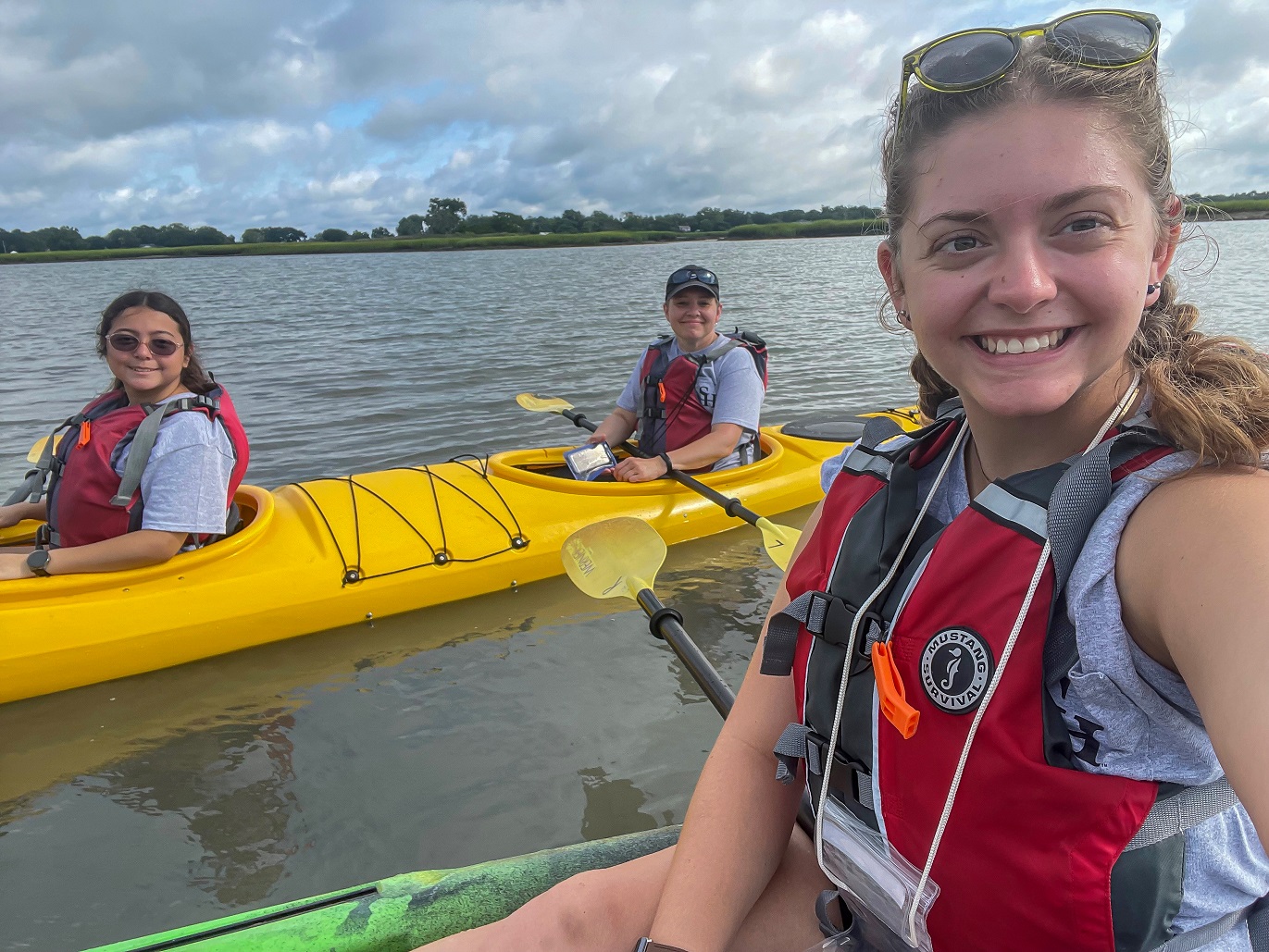
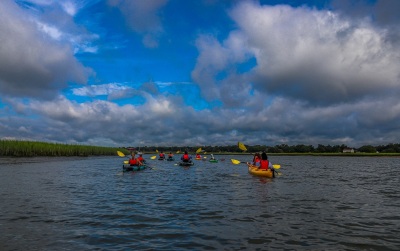
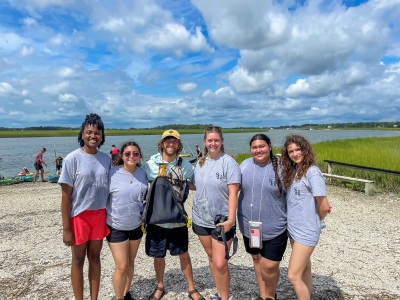
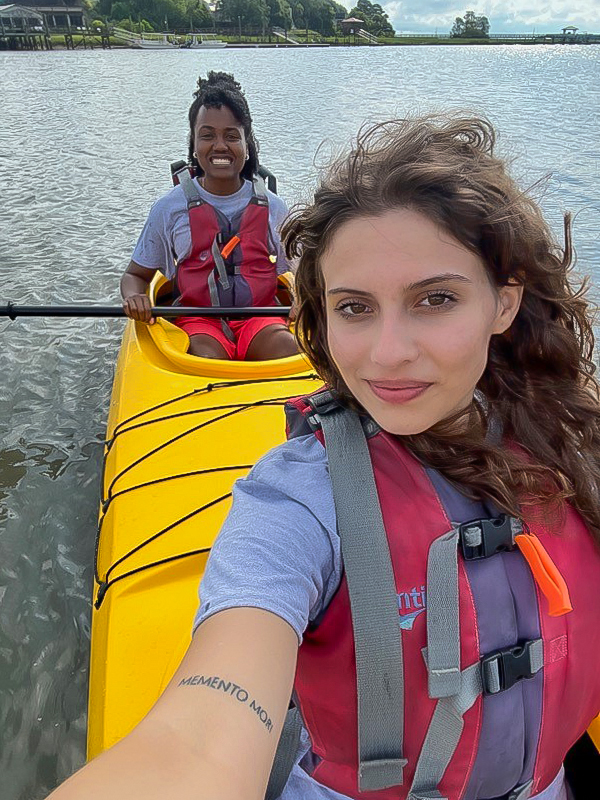
With a day more or less free to explore and spending time on our own dime, we decided to kayak. Feeling empowered, we asserted our independence, noting, “We are women, hear us oar!”

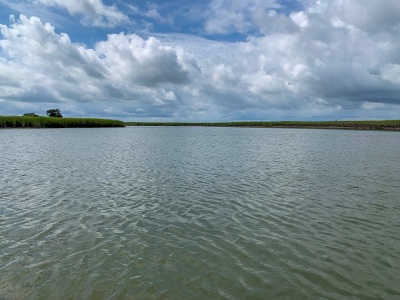
At first, however, the only roar we heard was thunder. Indeed, this was the scene ten minutes prior to our arrival:

Fortunately, it soon cleared up–almost miraculously. Within twenty minutes, the weather cleared, producing a pleasant looking morning.

Although this “eco-tour,” as it is described, is educational, it is mostly a fun excursion, designed to get us exercise, learn about the outdoors, and relieve some advisor-induced stress.

But it was educational. Charleston is one of the South’s key cities in terms of culture and economics. Its barrier islands gave it a protective harbor of sorts, and that, in turn, made it an attractive base for sea-travelers early on in US history. And, today, we felt as though we were continuing in that tradition, navigating these barrier (or, as our guide Daniel referred to them, “hammock”) islands.

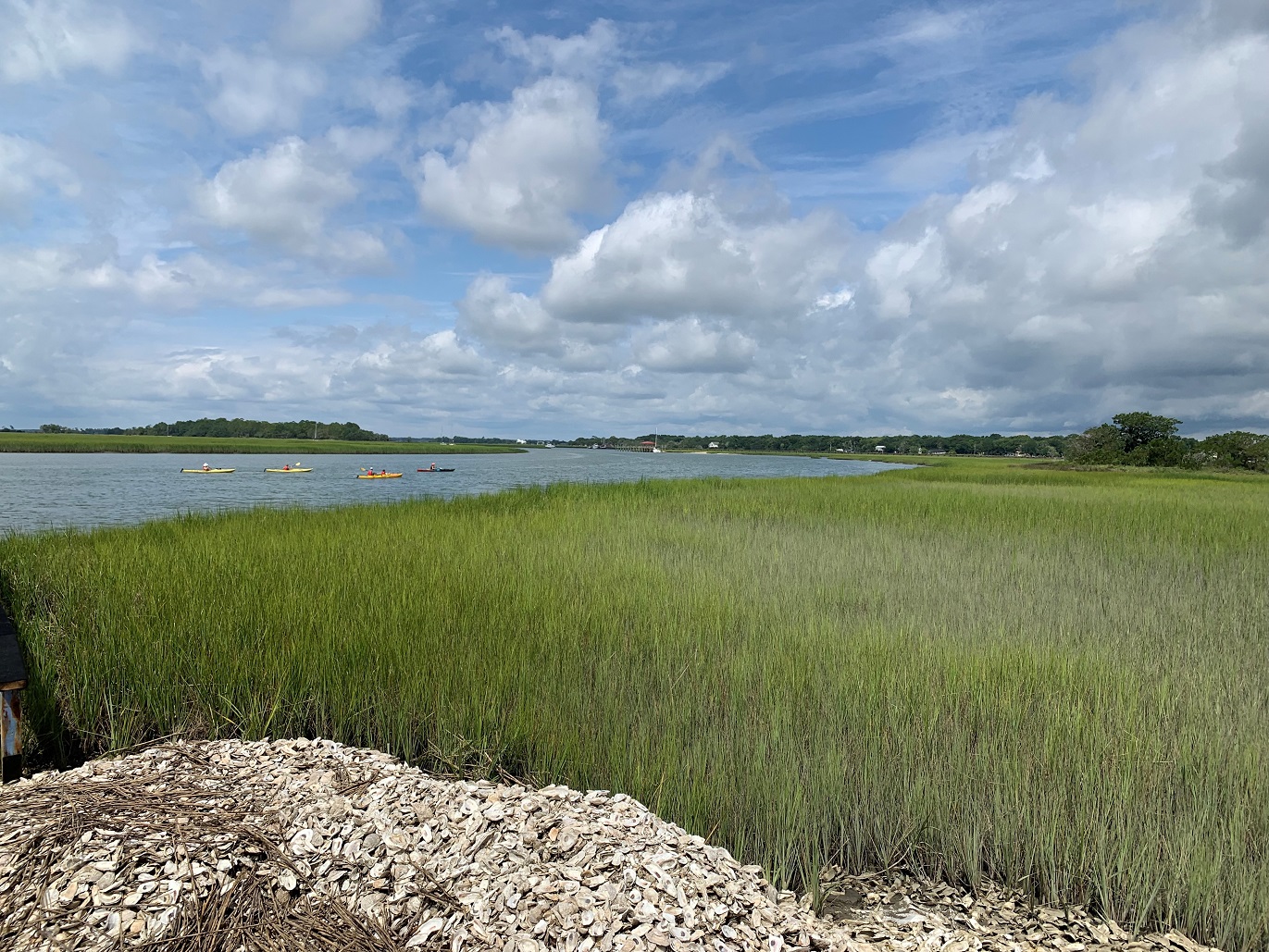
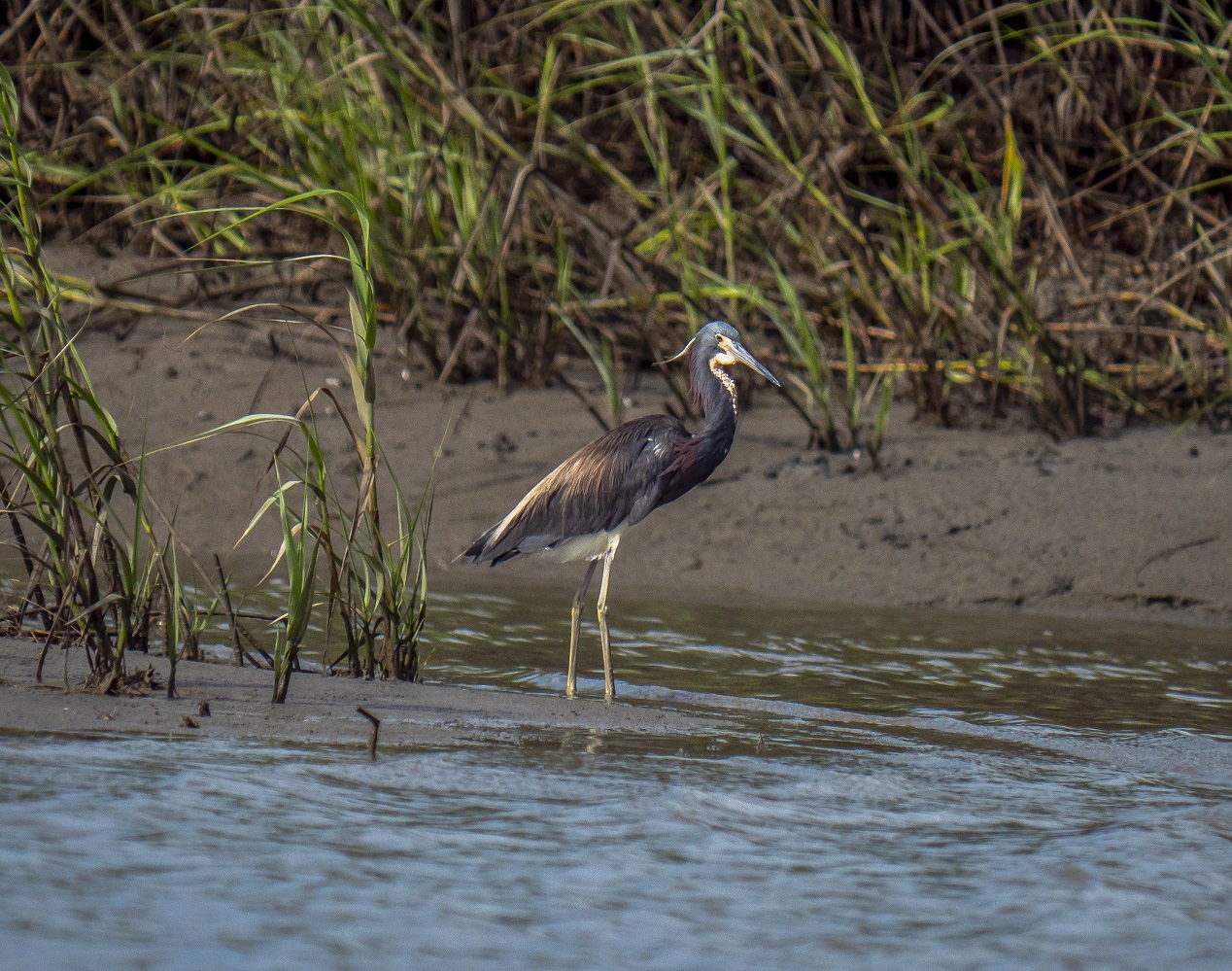
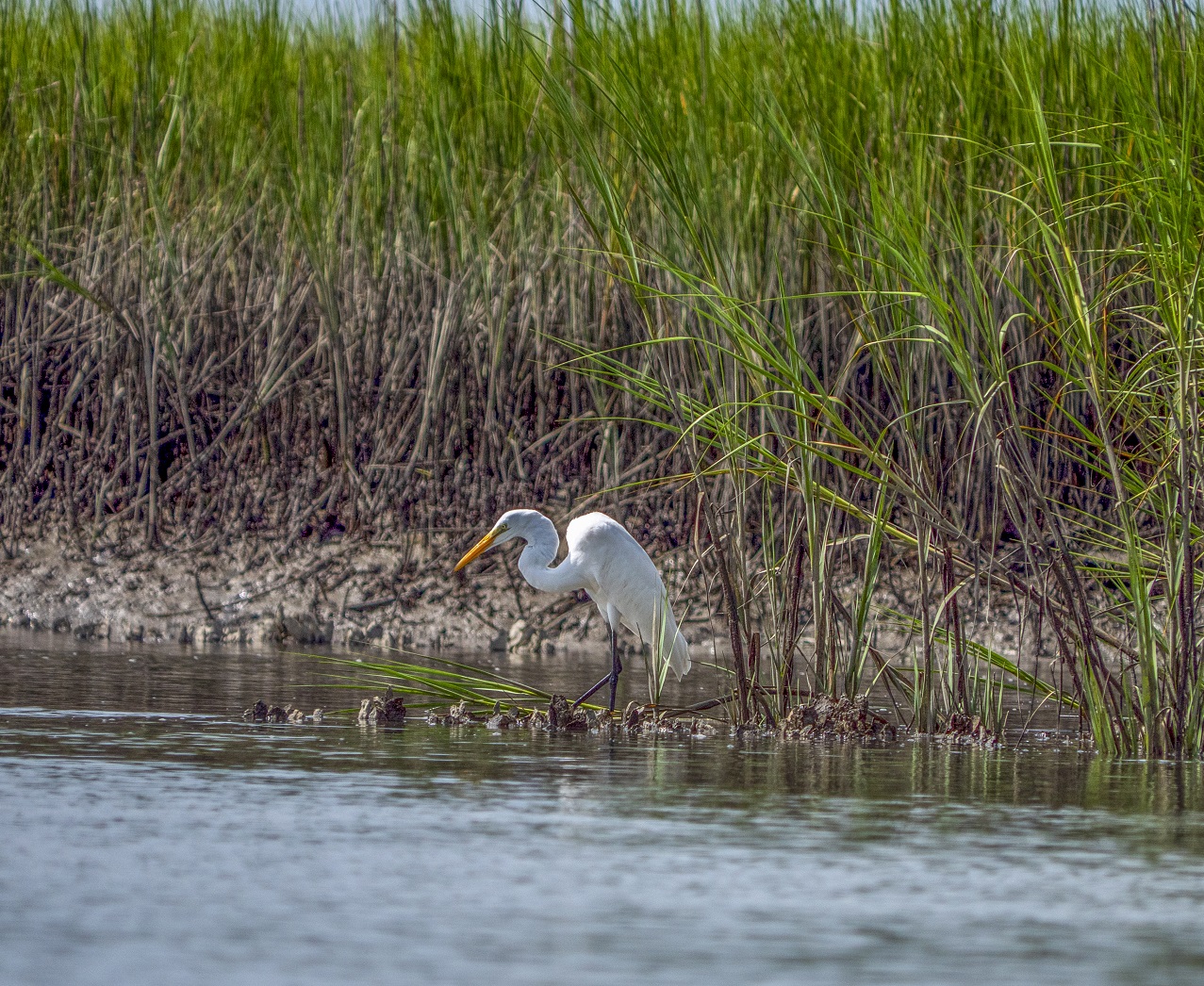
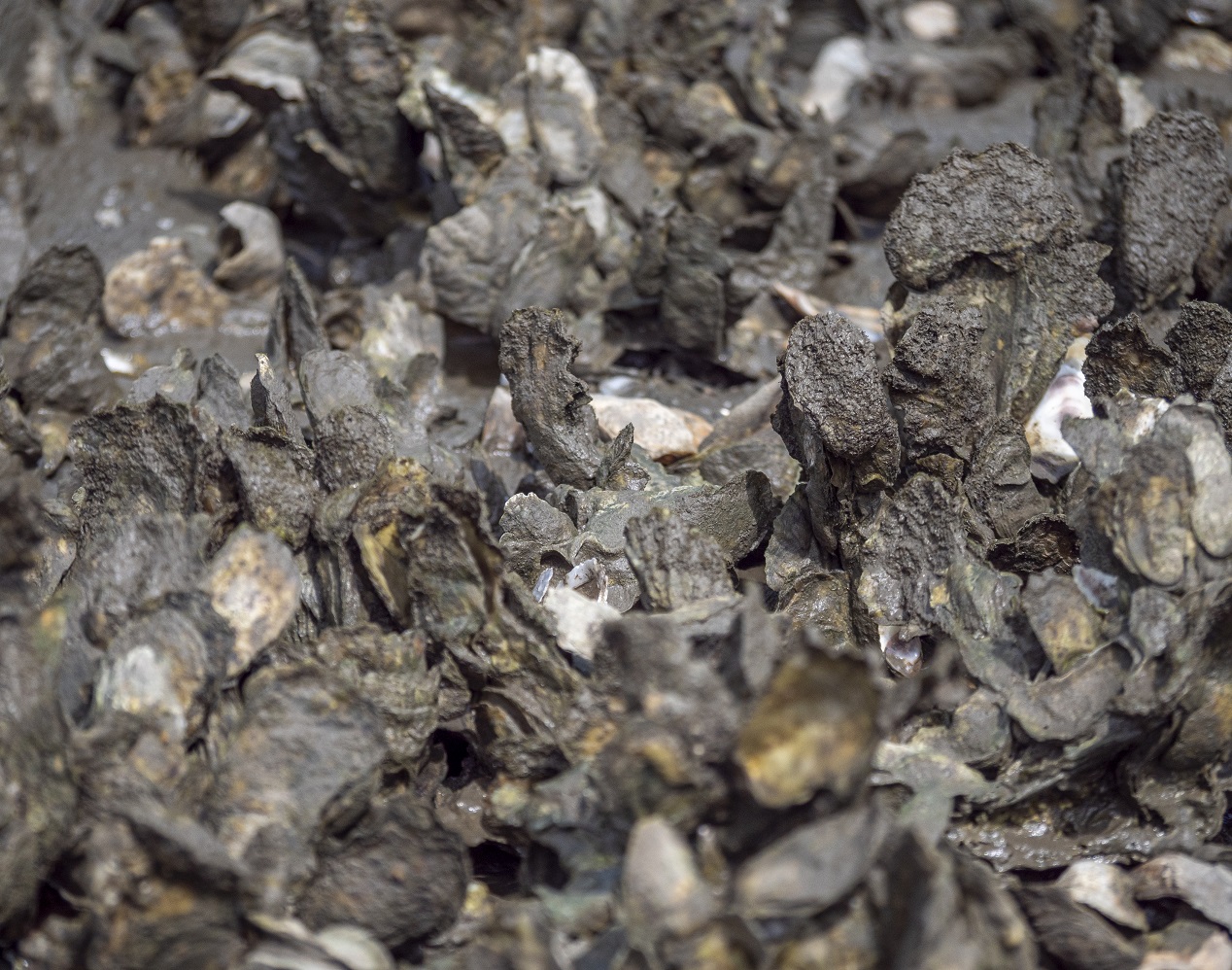
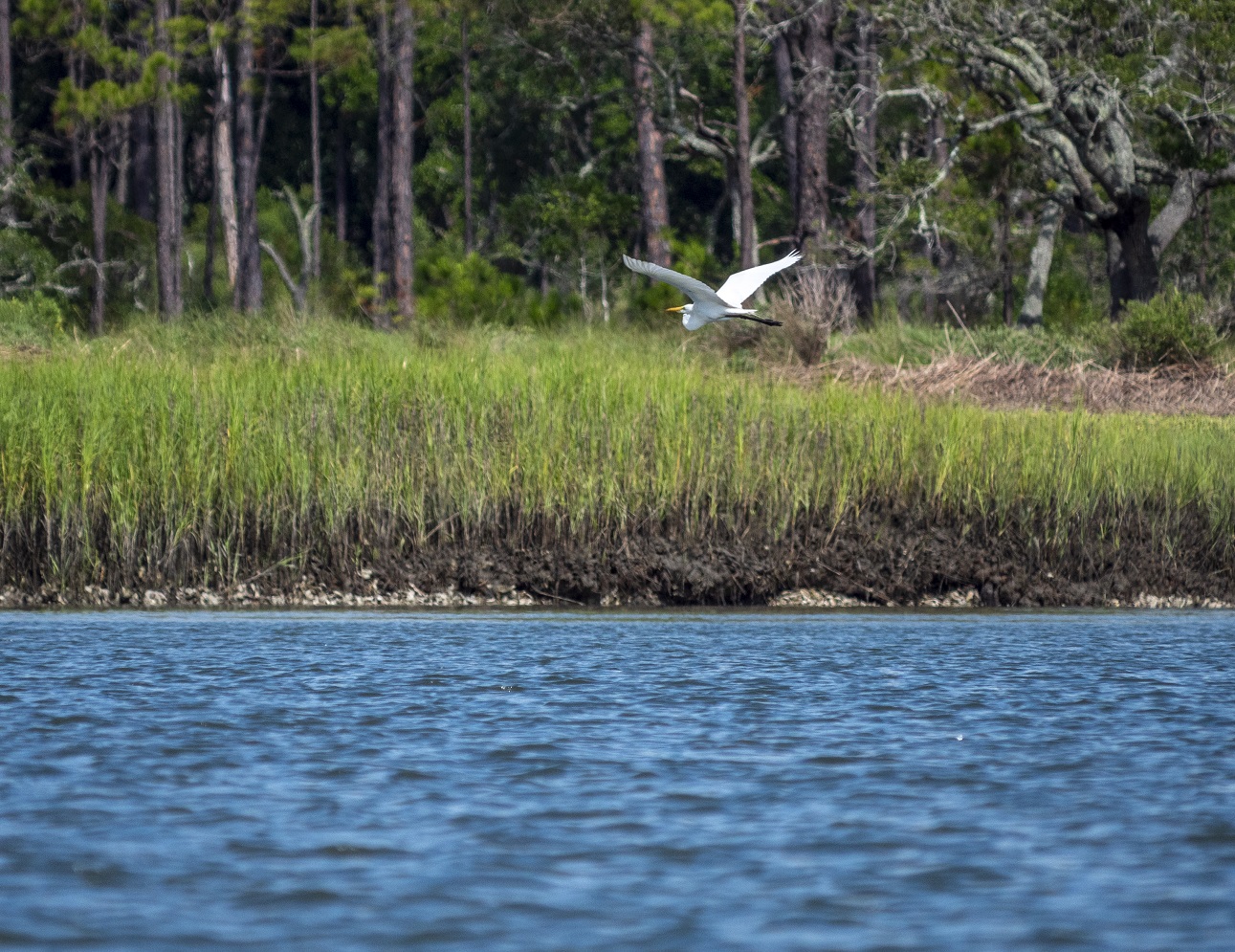
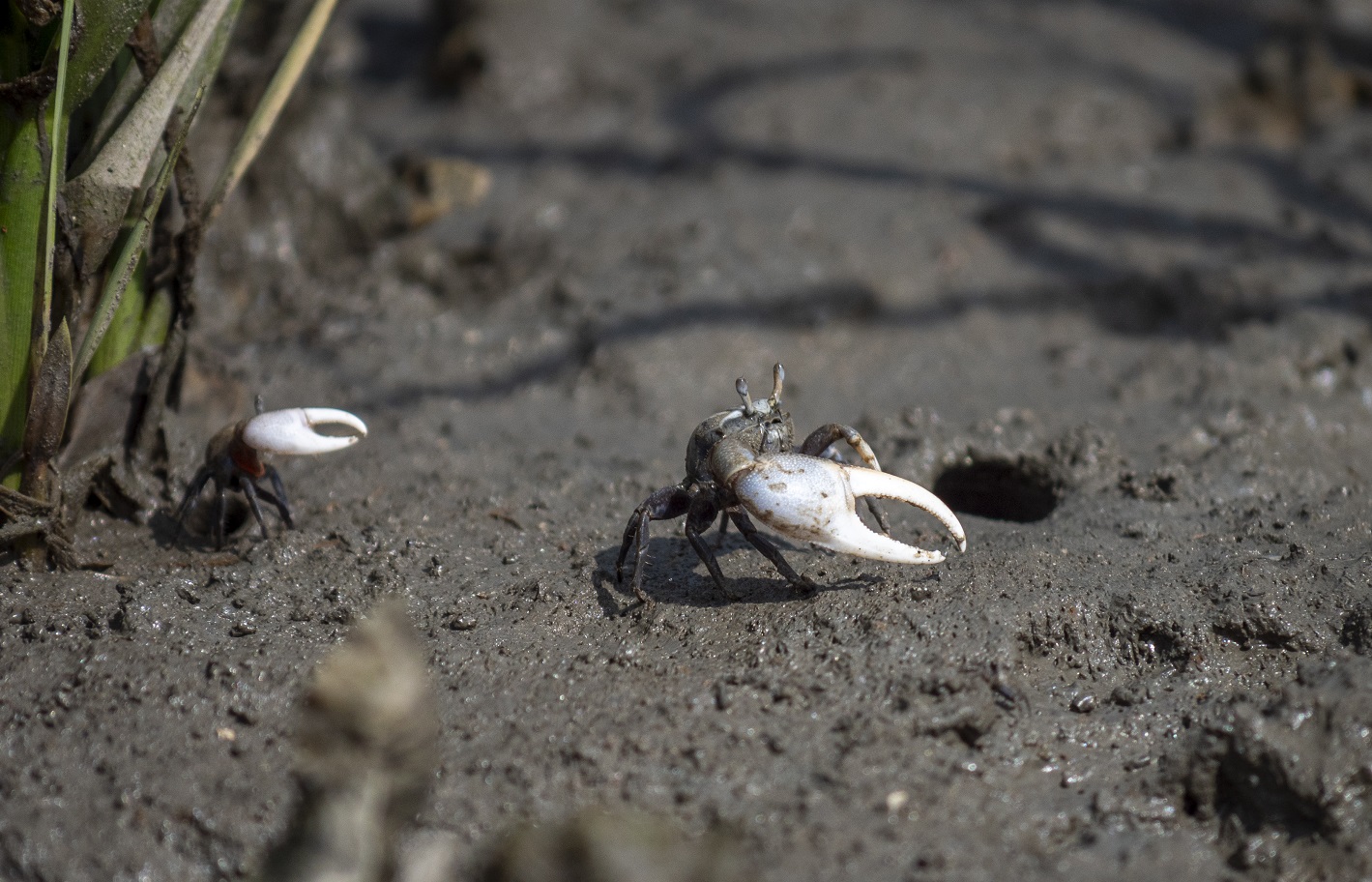
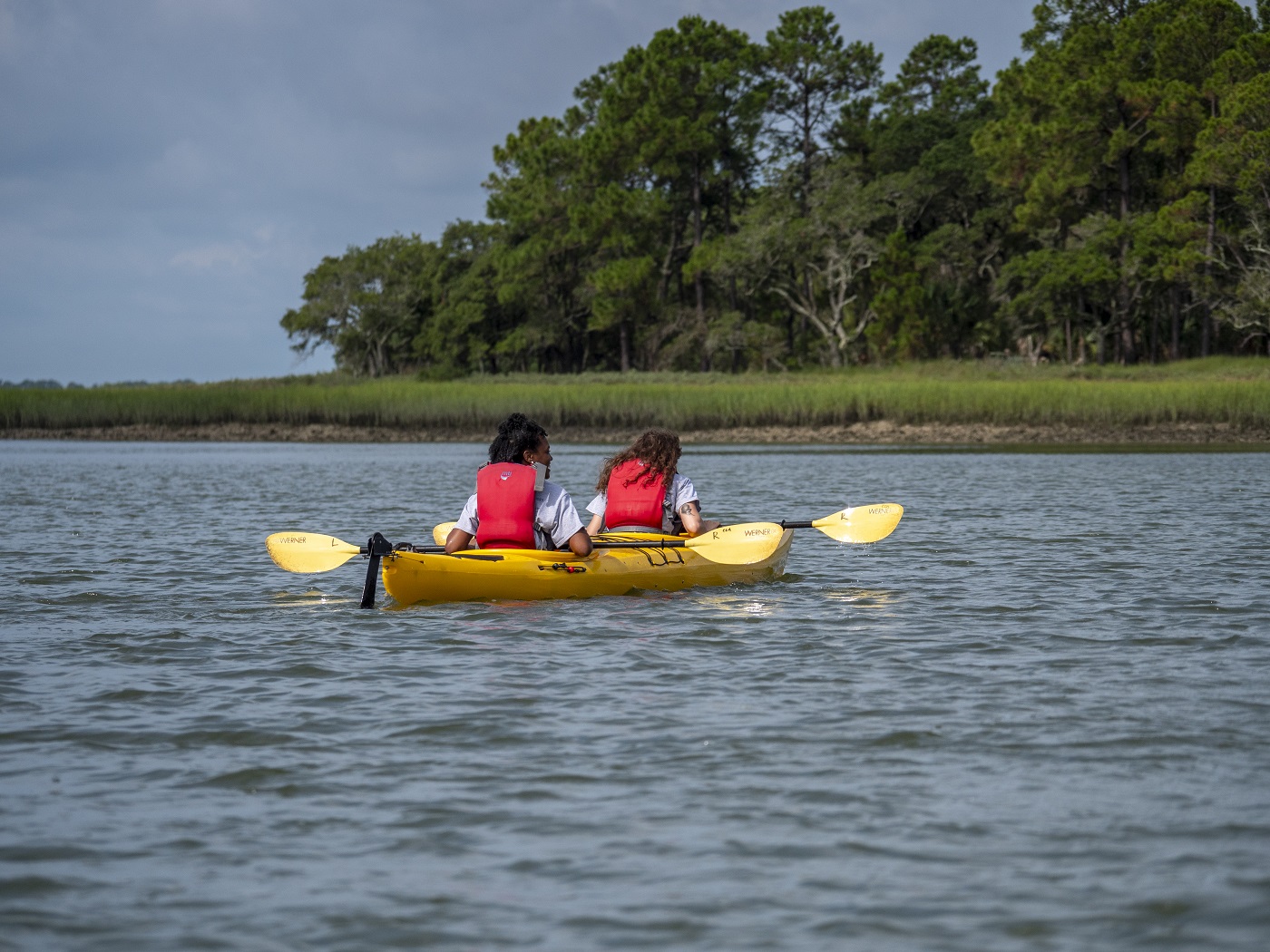
Our paths took us through estuaries, which are waterways mixed with salt and freshwater. The mix, however, is heavy on the salty-side, which on the plus side, means there are no (or at least very few) alligators. (This story had us a bit worried, but we reminded ourselves that it occurred in a freshwater environment). There are, however, many other animals, and we saw herons, egrets, pelicans, blue crabs, many types of gulls, a marsh wren, a woodstork, oyster beds, and the curious fiddler crabs (everywhere).

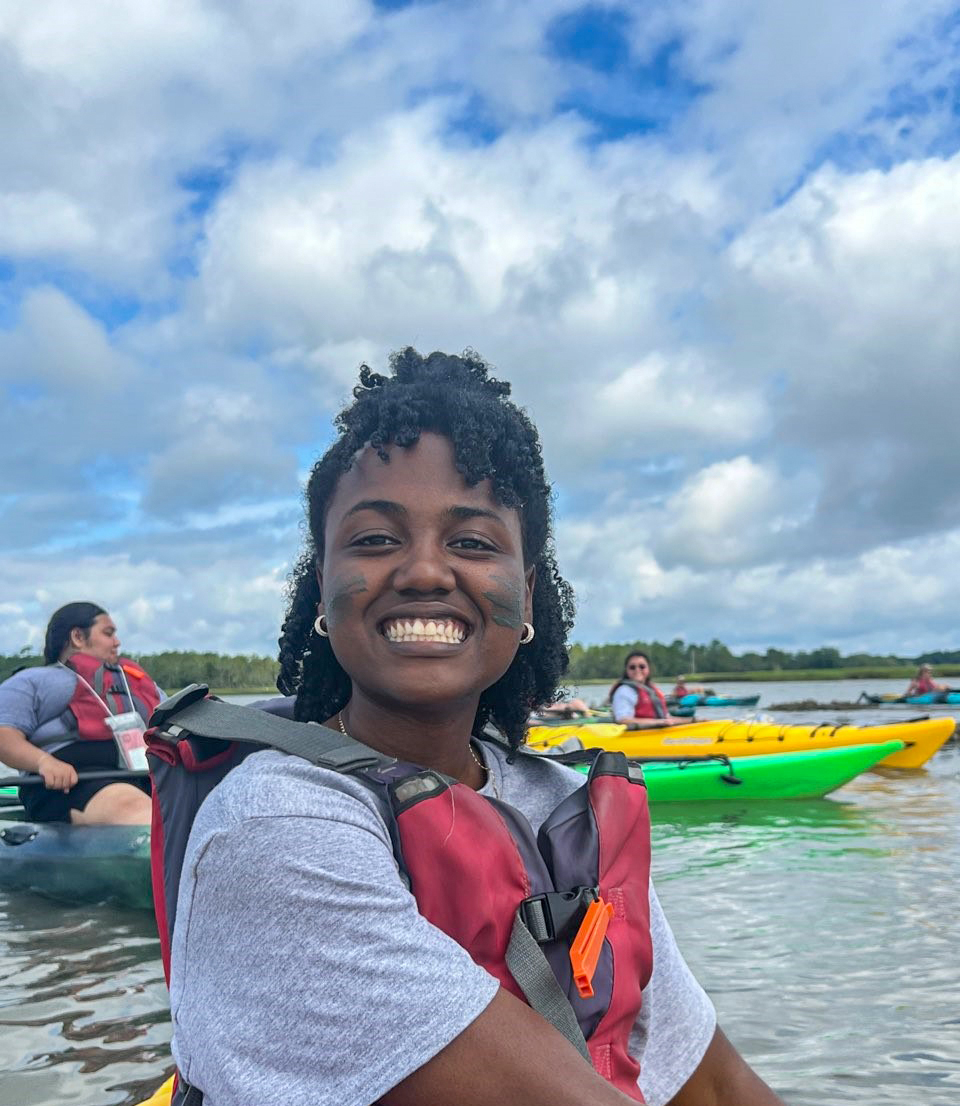
We also learned about the Charleston “pluff mud,” which is a nutrient rich mud that lacks oxygen. It has been plundered in the past by farmers, so it is now federally protected, and according to our tour guide, if you take any with you, you are subject to a $500 fine. He did not mention the charge, but it would be something along the lines of “mud smuggling.”

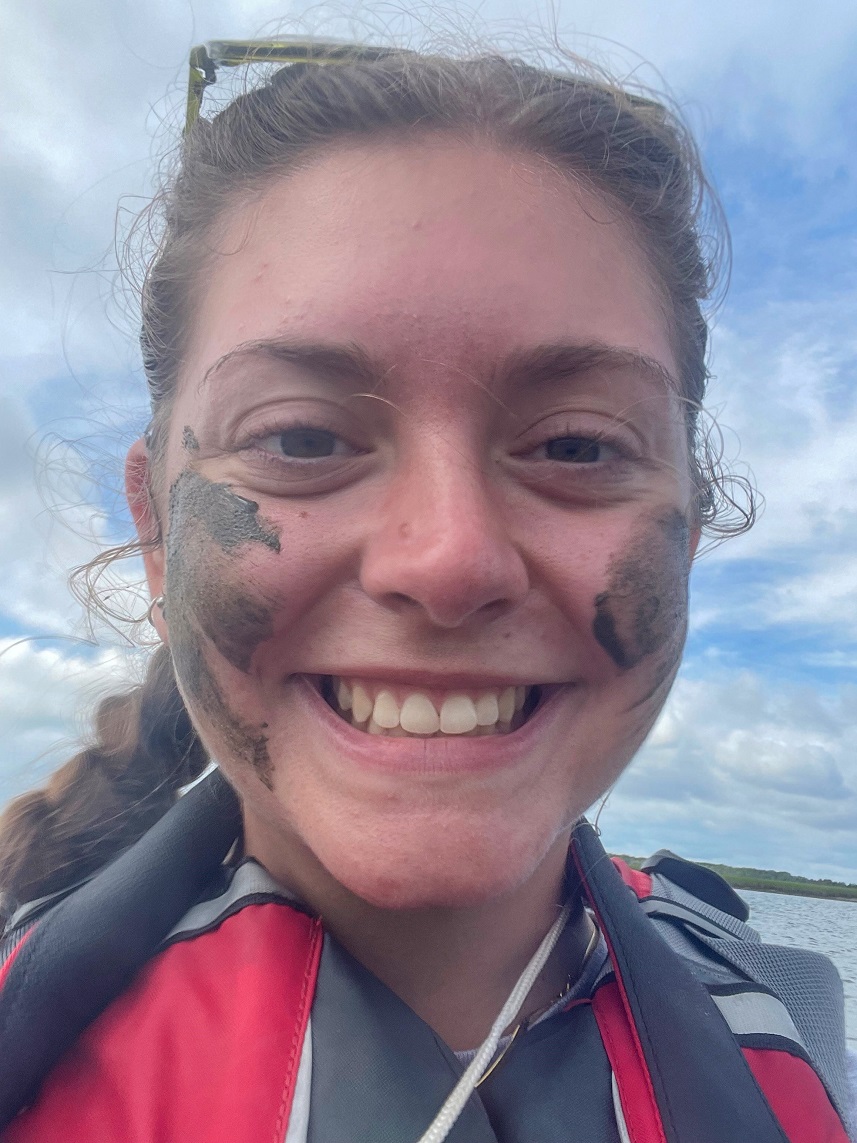
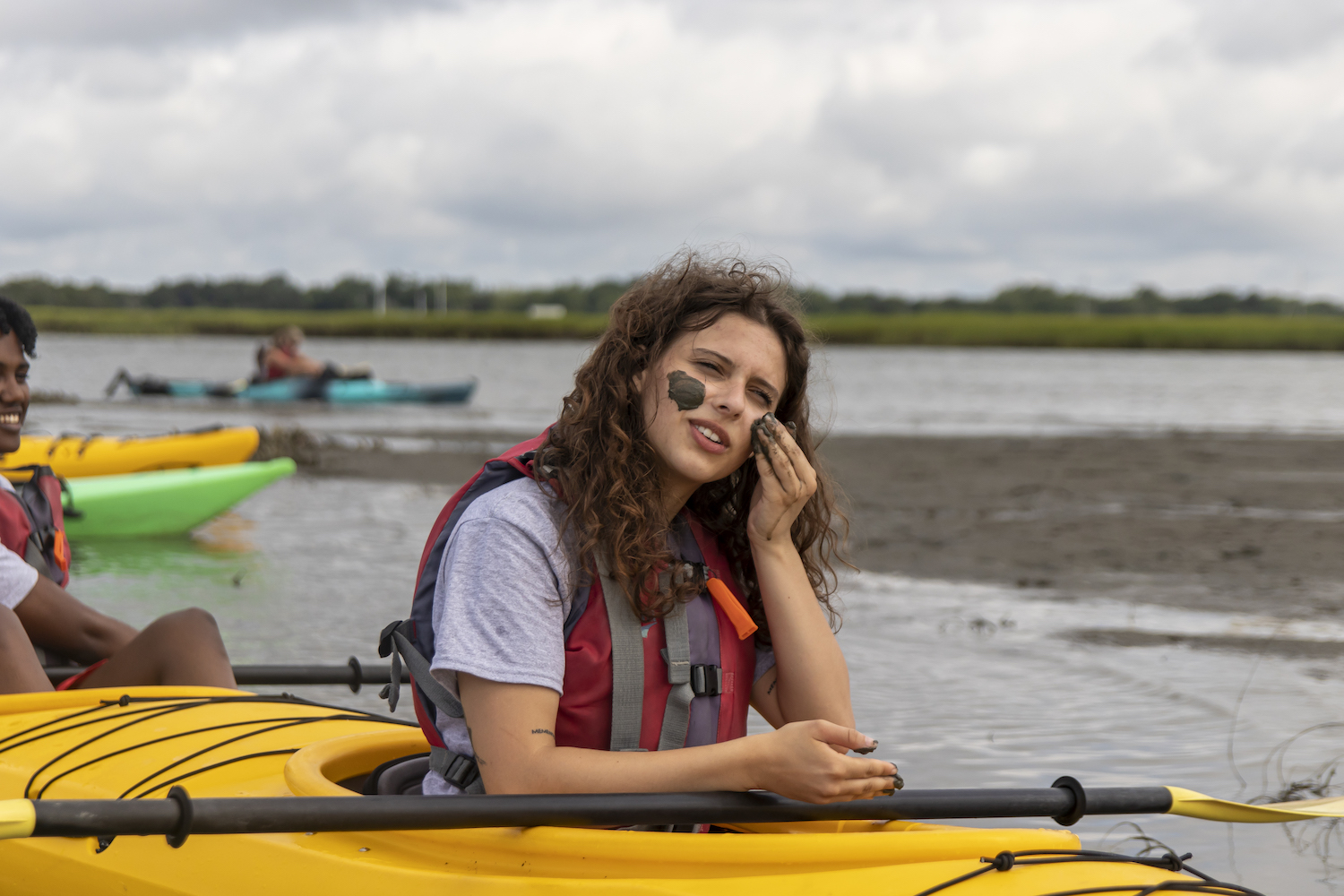
Somehow, Daniel convinced the college students to put this mud on their faces. They did this, even after they learned that much of its nutritional richness comes from “decaying matter” and “crab waste.”

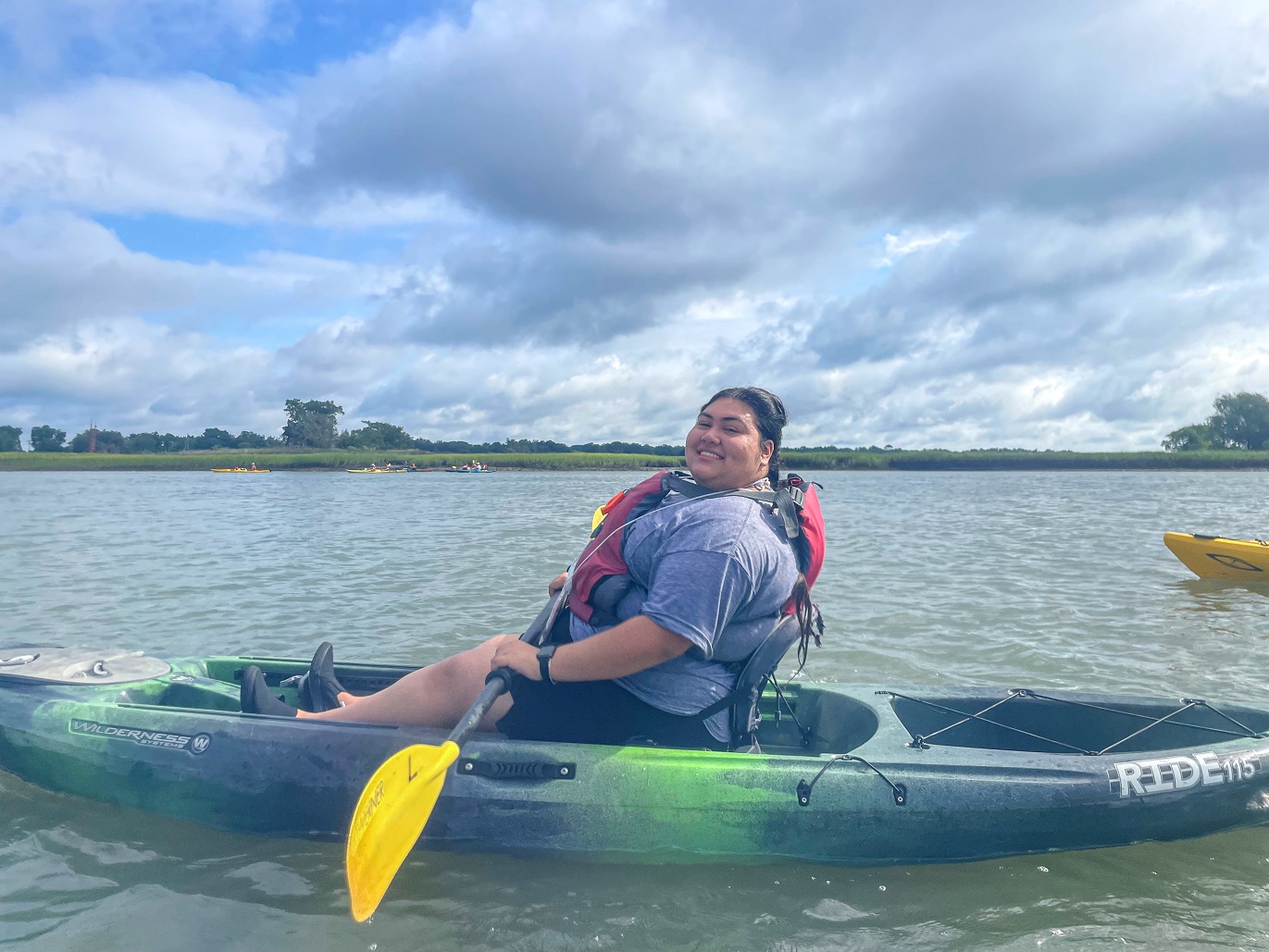
Most of the morning, however, was devoted to paddling and having fun, although Michelle did have a minor mishap, when, instead of saying, “I am woman, he me oar,” she said, “I am woman, hear me go overboard.” But she bounced back nicely, and ultimately made her second-ever kayaking trip a success.

So we were a little sad when we had to turn back.

And as we prepared to depart, we looked upon blue skies, satisfied with a morning well spent.

We soon learned, however, that more rain was coming, but that is a story for the next blog.

Unknown's avatarAuthor mikeyawnPosted on July 11, 2023July 11, 2023Format AsideCategories Civic Engagement, Fun, Science, TravelTags Center for Law Engagement And Politics, Charleston Outdoor Adventures, Charleston SC, Kayaking, LEAP Ambassadors, Sam Houston State UniversityLeave a comment on Riding High in the Low Country

Exploring the “Holy City:” A Day in Charleston, South Carolina

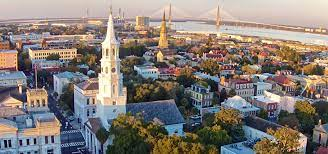
All agree that Charleston is most commonly known as the “Holy City,” but explanations differ as to why. Some say it is because people of many religions settled here, motivated partially by its religious tolerance. The more prevalent explanation is that the skyline is punctuated by churches. We are agnostic on the origin of the name, but we are more knowledgeable today about the city thanks to…

Bulldog Historic Walking Tour

By Ingrid Cuero

The Southern Legislative Conference sponsored a “Bulldog Walking History Tour” for us today, and for two hours on a (hot) Sunday morning, we learned about the past and present of The Holy City.

As a way of warning, we learned that Charleston has “tourism police,” whose primary job is to keep tourists from obstructing the city’s transportation. Who knew?

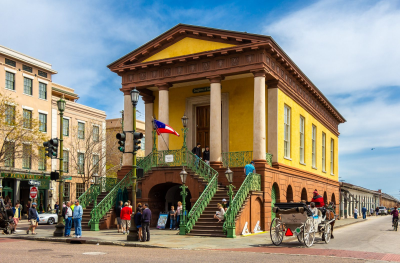
Our first stop was the Charleston City Market, which was built on land donated by Charles C. Pinckney and other landowners . Interestingly, Pinckney was a founding father, was nominated once for VP, and twice for President (under the Federalist Party). He had conditions on the donation of this land, one of which was that it must be used as a City Market–and it has been for the past 235 years!

Many people confuse the City Market with the Old Slave Mart in Charleston, but these are not the same buildings and, in fact, the City Market has never been used for the sale, transport, or storage of slaves.

Charleston is architecturally intriguing. It is not blessed with an abundance of stone, so the “stone buildings” you see are probably brick that has been scored to appear to be stone. On the other hand, stones were imported from England to make the cobblestone streets. “Imported” may be a bit pretentious, in that they were actually used for ballast on the ships and then discarded in Charleston Bay when cargo was loaded. The discarded stones were then used for the roads.

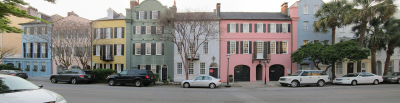
Perhaps the most famous of Charleston’s homes are on “Rainbow Row,” 13 homes marked by pastel colors. Many myths exist to explain the origin of this colorful street, but the most likely account is that the original preservationists wanted a Caribbean look, and subsequent buyers/restorers followed suit.

Interestingly, a tour guide told me that Oprah Winfrey owned one of the homes, although I was not able to verify that. I did find, however, that she stayed at Charleston Place, which is the site of our conference.

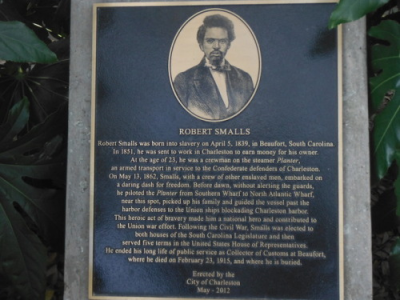
We also passed the Robert Smalls historical marker…

…which was especially interesting to us because, on the way to Charleston, Professor Yawn drove us to Robert Small’s house in Beaufort, SC and told us a bit about him.

Smalls is best known for leading one of the Civil War’s greatest intelligence victories, while also securing his freedom and the freedom of fellow slaves (and their enslaved families). Following the war, he returned to South Carolina, and he purchased the home of his former “master.” He lived there for the remainder of his life with his wife and children, and he let his former master’s widow, Margaret Johnson-McKee continue to live there. According to our tour guide, Smalls actually never told Johnson-McKee that she no longer owned the house, sparing her embarrassment. Smalls was one of the founders of the Republican Party in South Carolina and was elected to both the SC state legislature and the US Congress.

In reading more about Smalls, I was particularly moved by one of his speeches, in which he asserted, “My race needs no special defense, for the past history of them in this country proves them to be the equal of any people anywhere. All they need is an equal chance in the battle of life.”


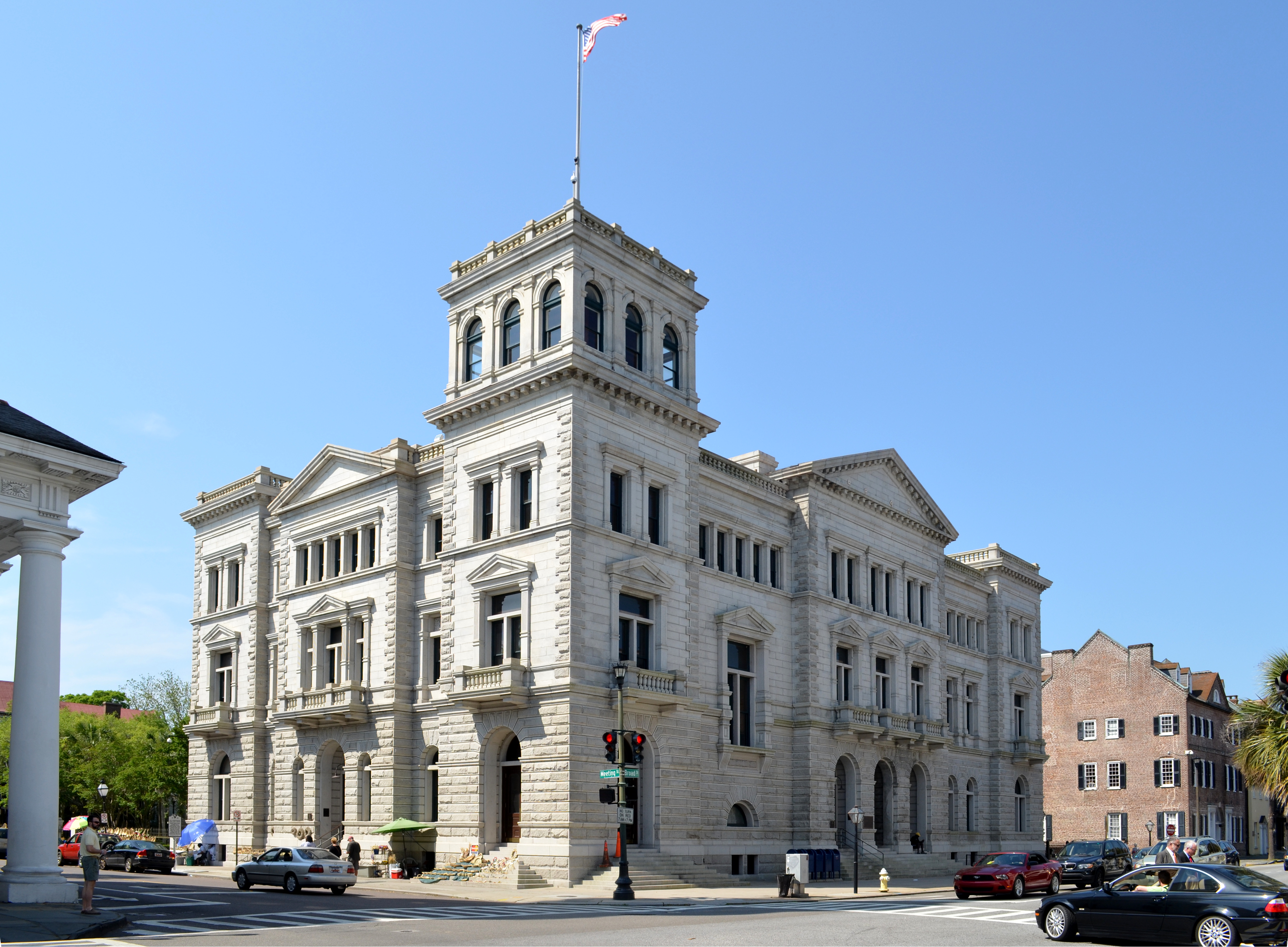
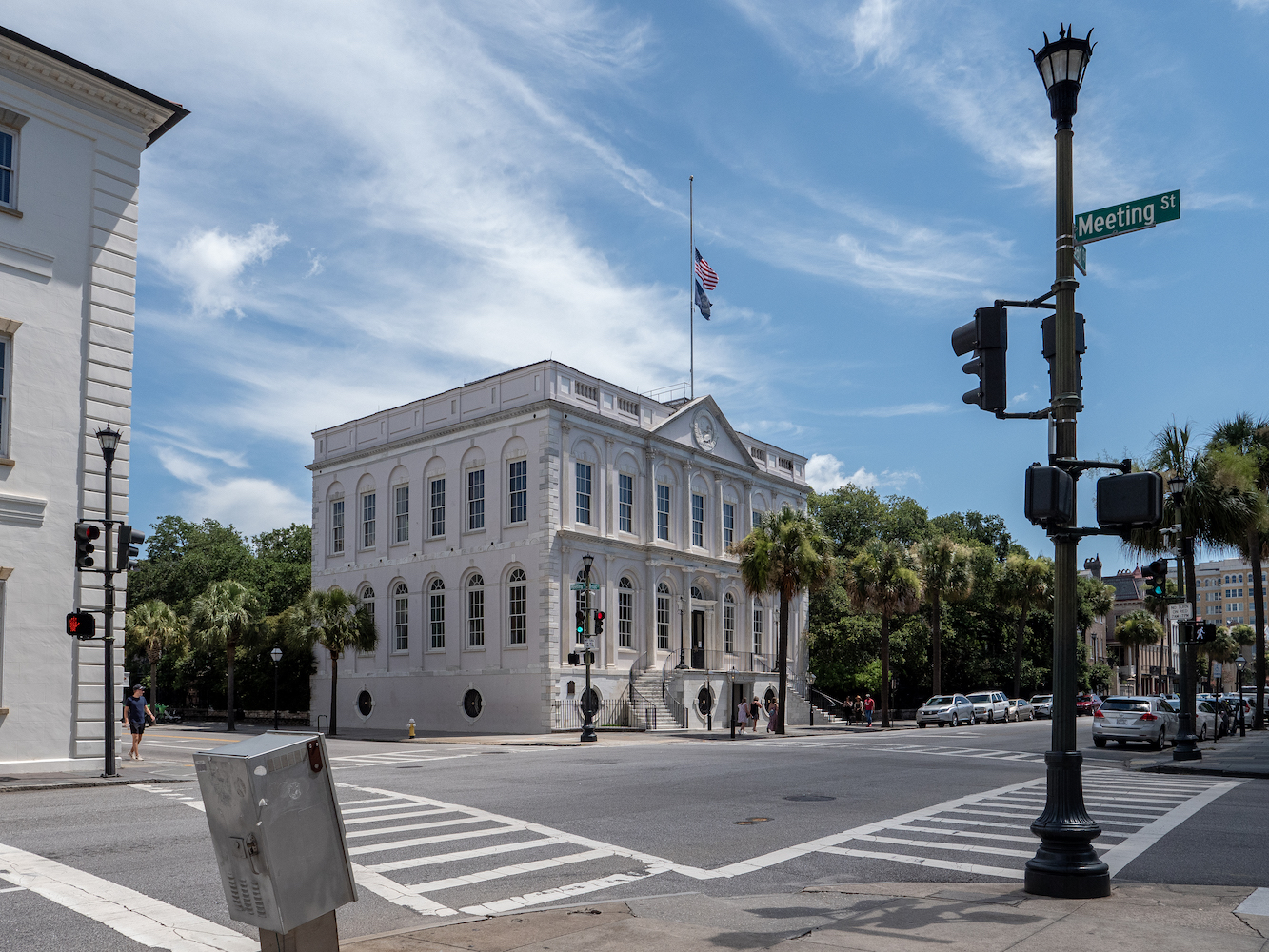
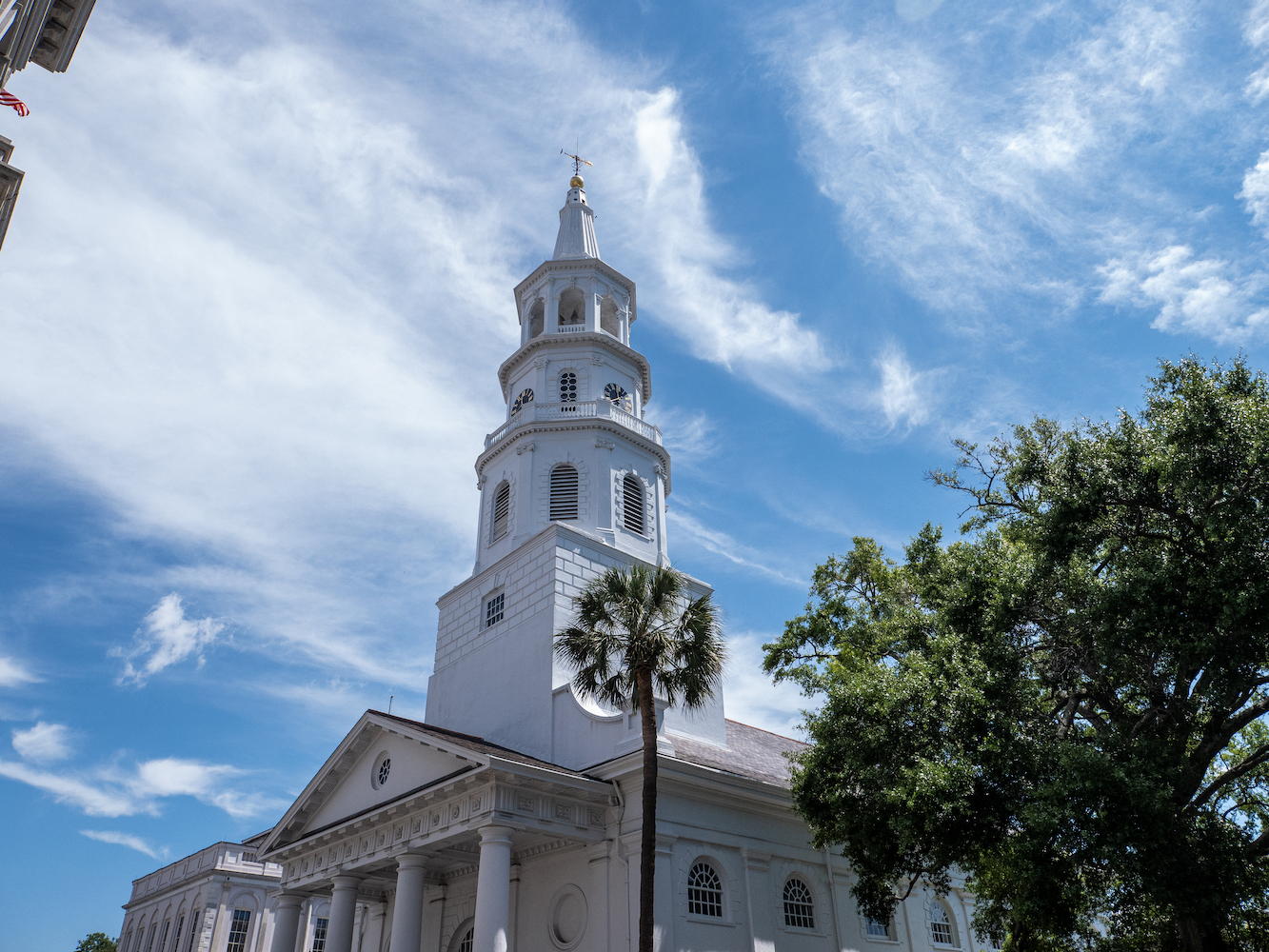
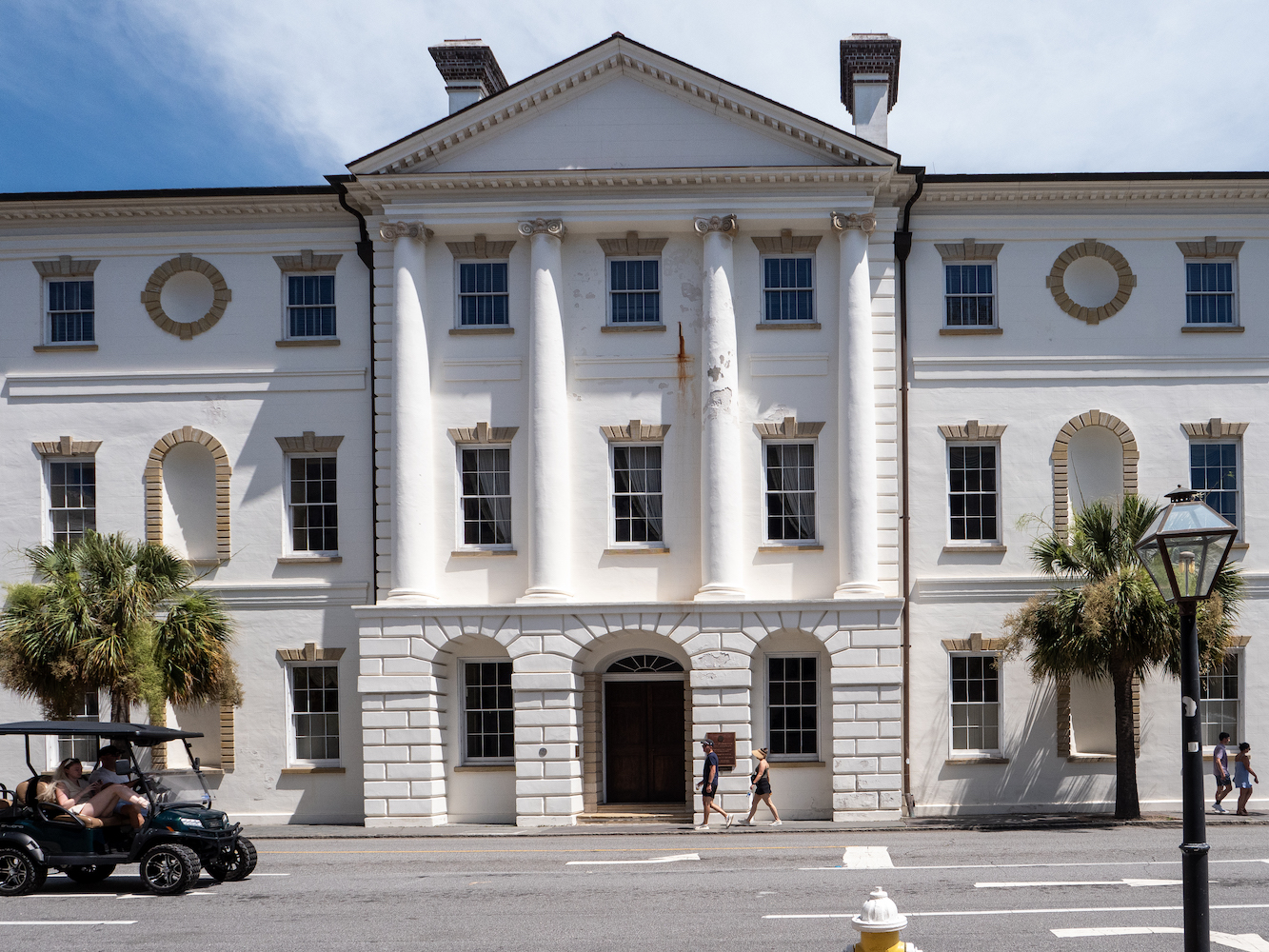
Also of interest was the Charleston intersection known as the “Four Corners of Law.” Each of the street corners hosts a legal institution of sorts: (1) Charleston City Hall (municipal law), (2) the County Courthouse and former provincial capital (state/county law), (3) the Post Office and Courthouse (federal law), and St. Michael’s Episcopal Church (God’s law).

This lesson illuminated both the literal and figurative intersections of government and social institutions, as well as the importance of working together to achieve results–which, also, incidentally, is the theme of the Southern Legislative Conference!

LEAP Makes a SPLASH at Family Night!

Jessica Cuevas

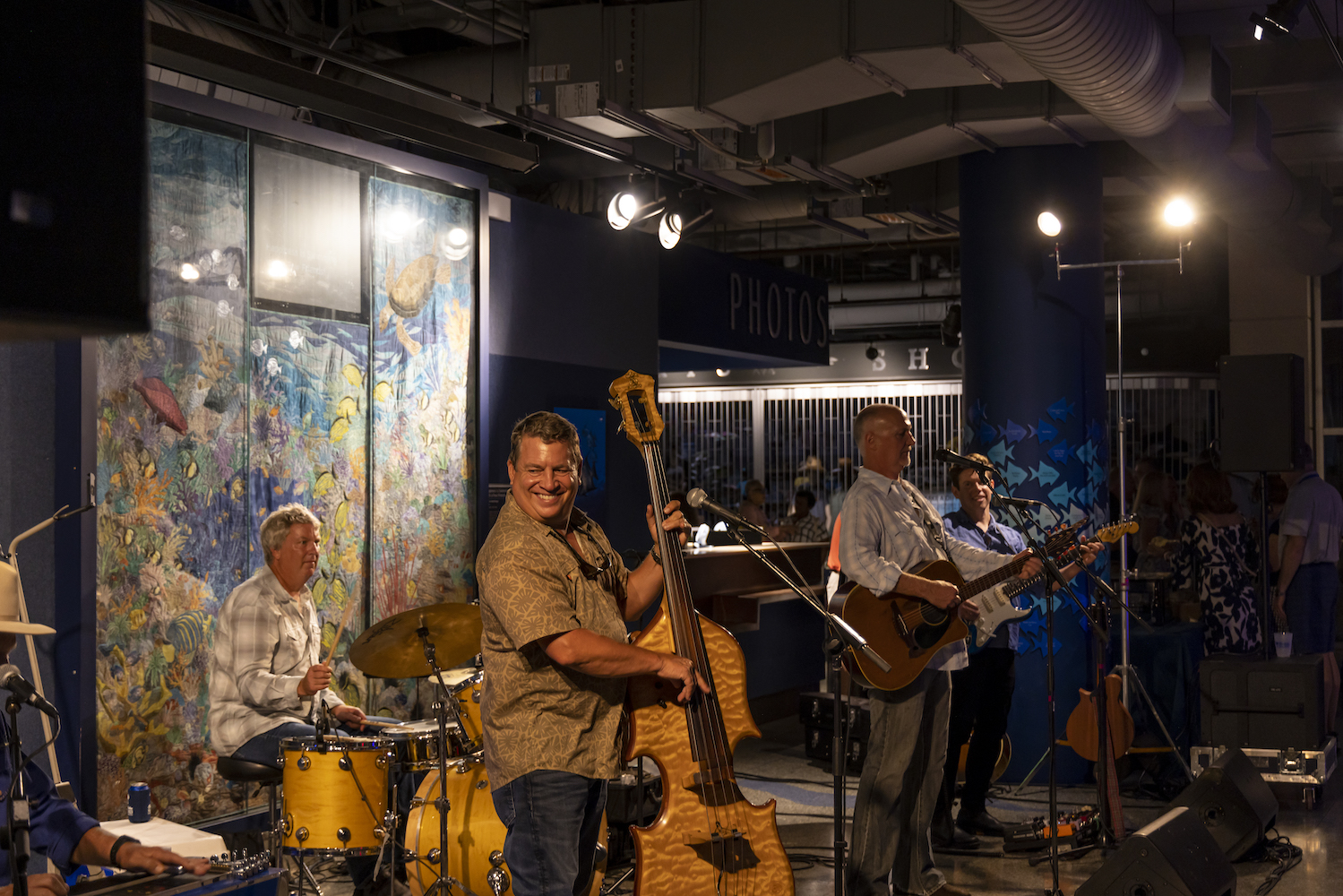
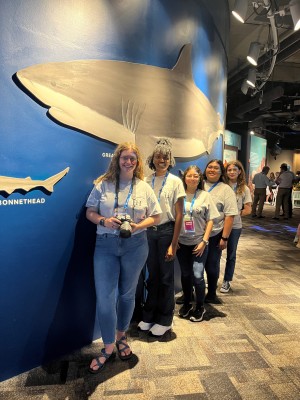
LEAP Ambassadors have attended many SLCs over the years, and they always enjoy “family night.” This year, the host city, Charleston, selected South Carolina Aquarium as the venue for this evening, and the results were FUNtastic!

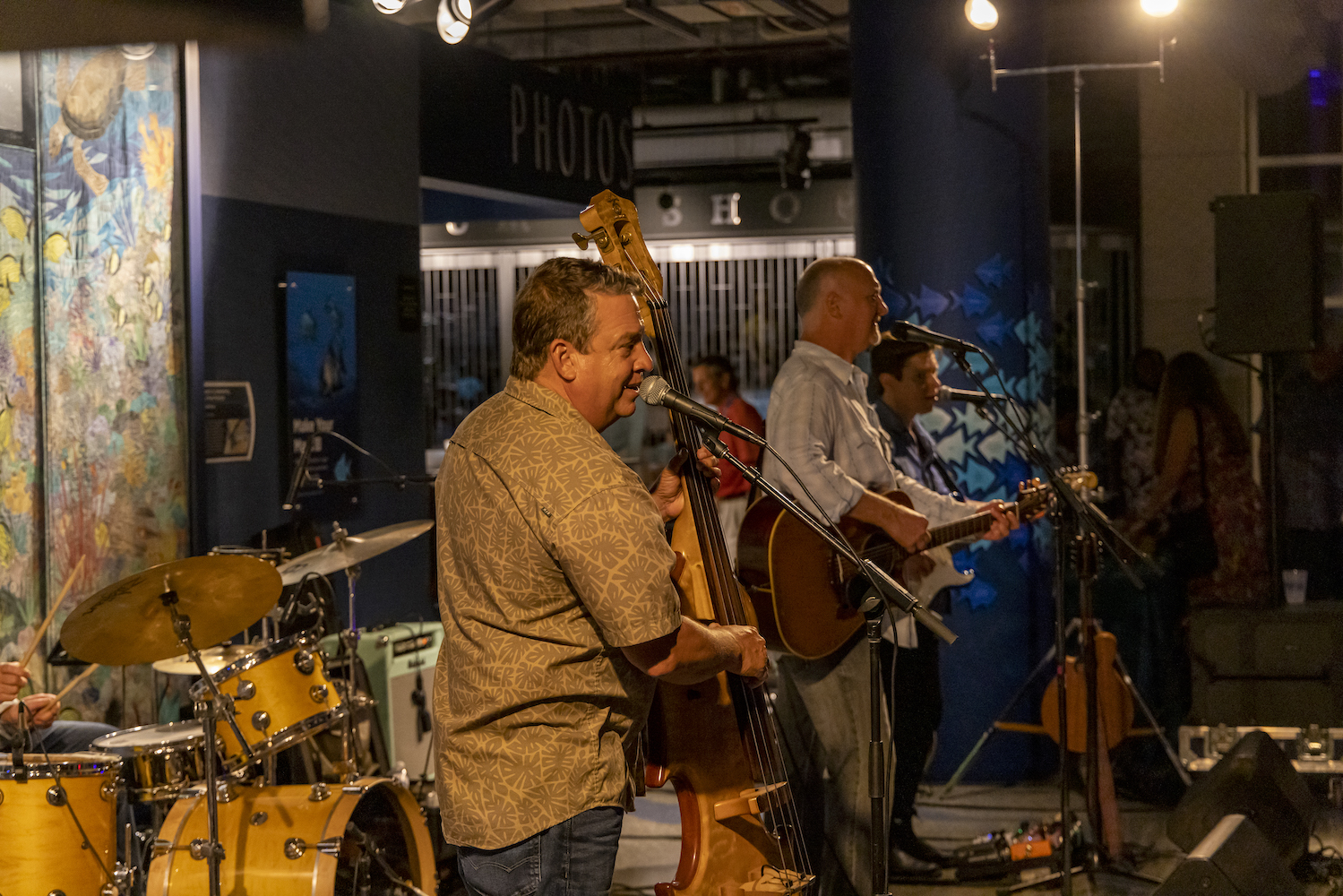
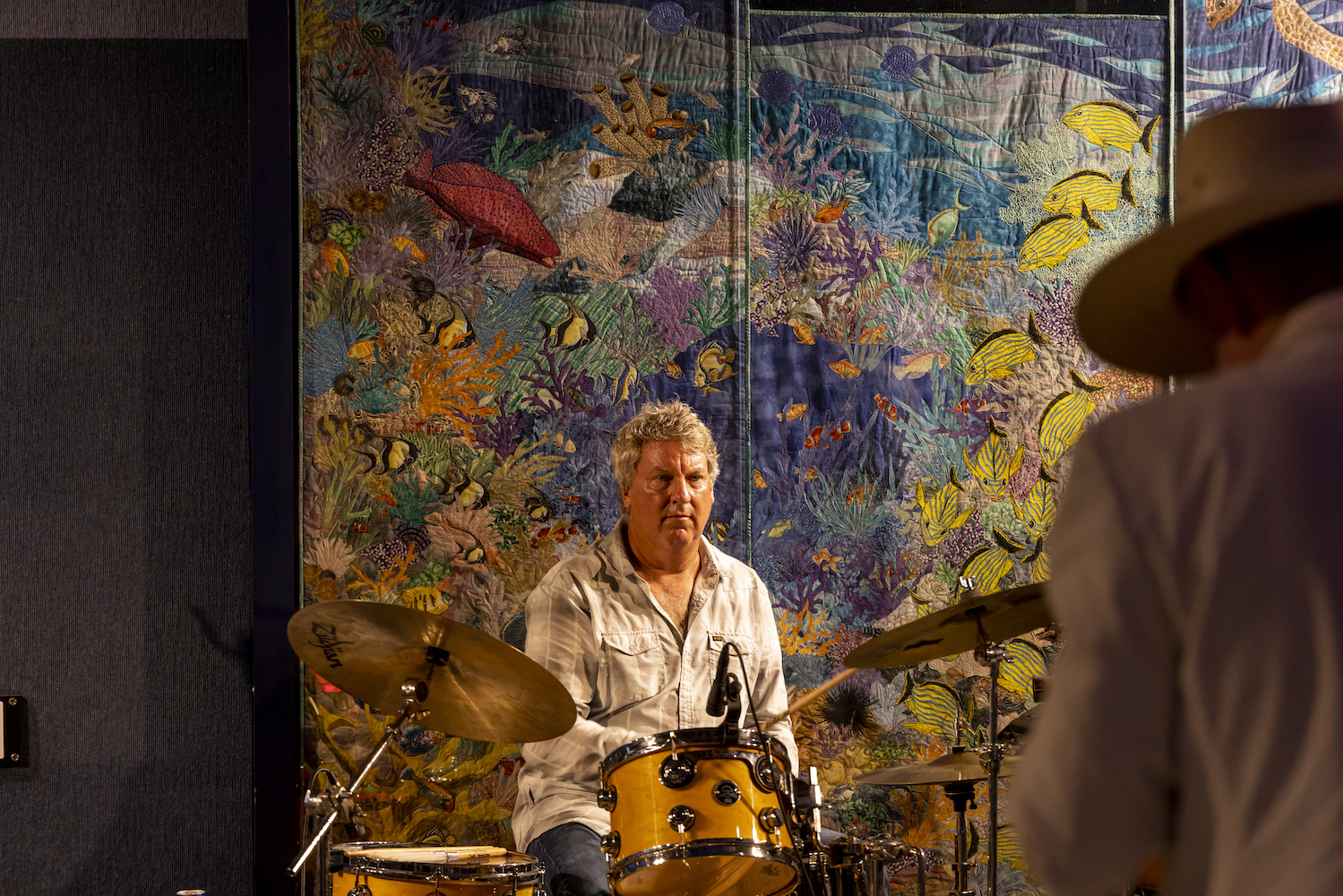
Welcoming us was the Blue Dogs Band…

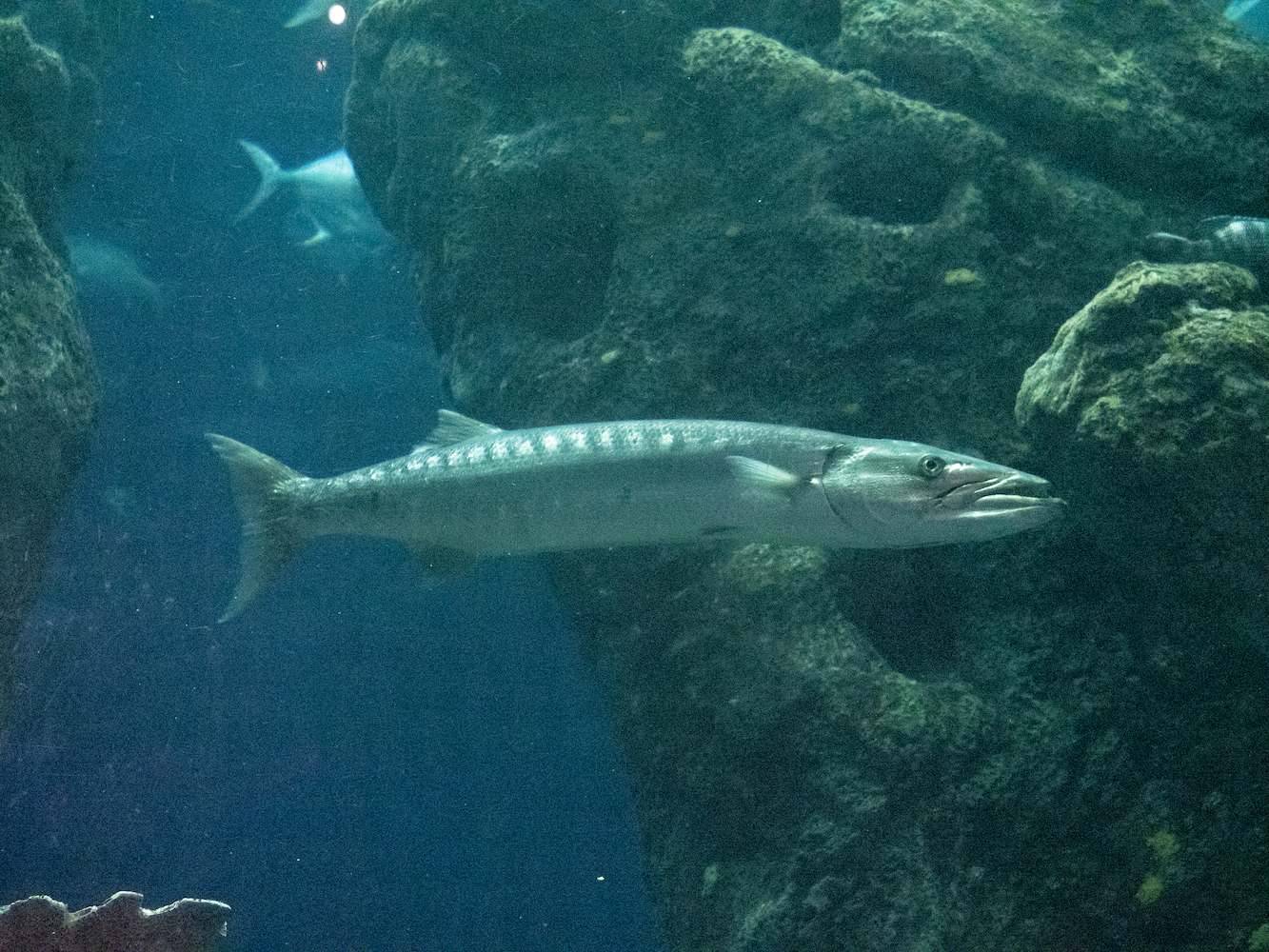
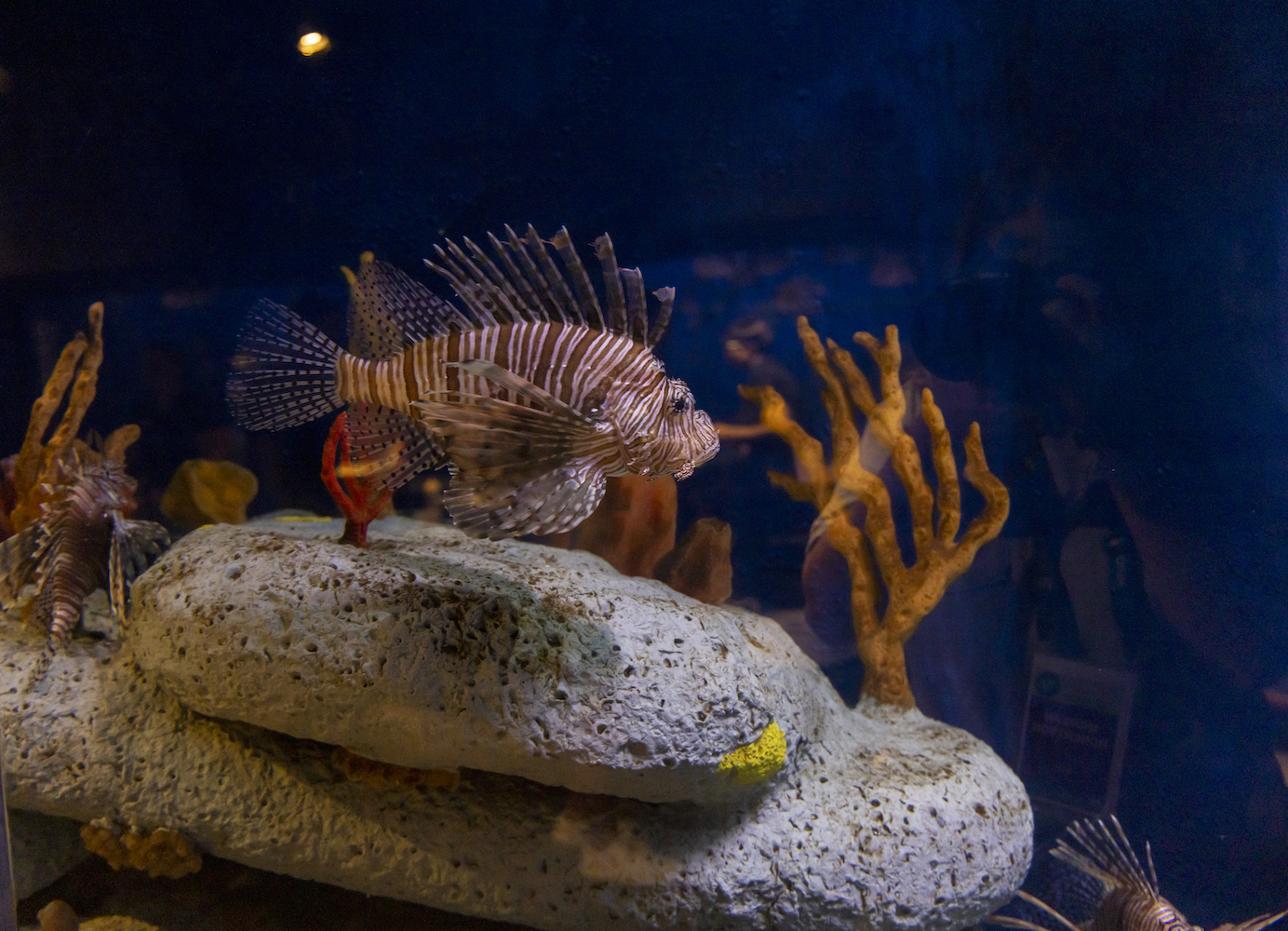
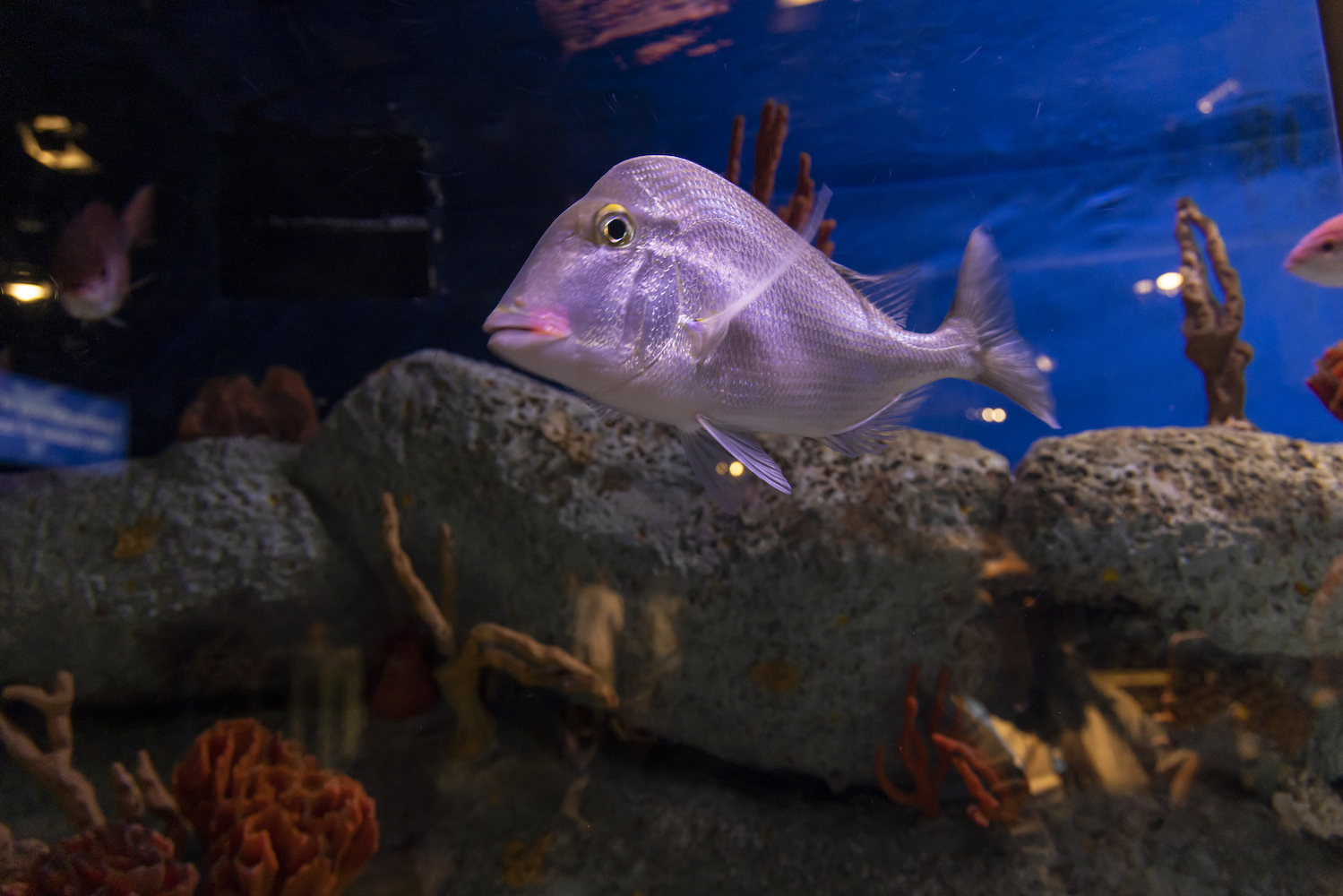
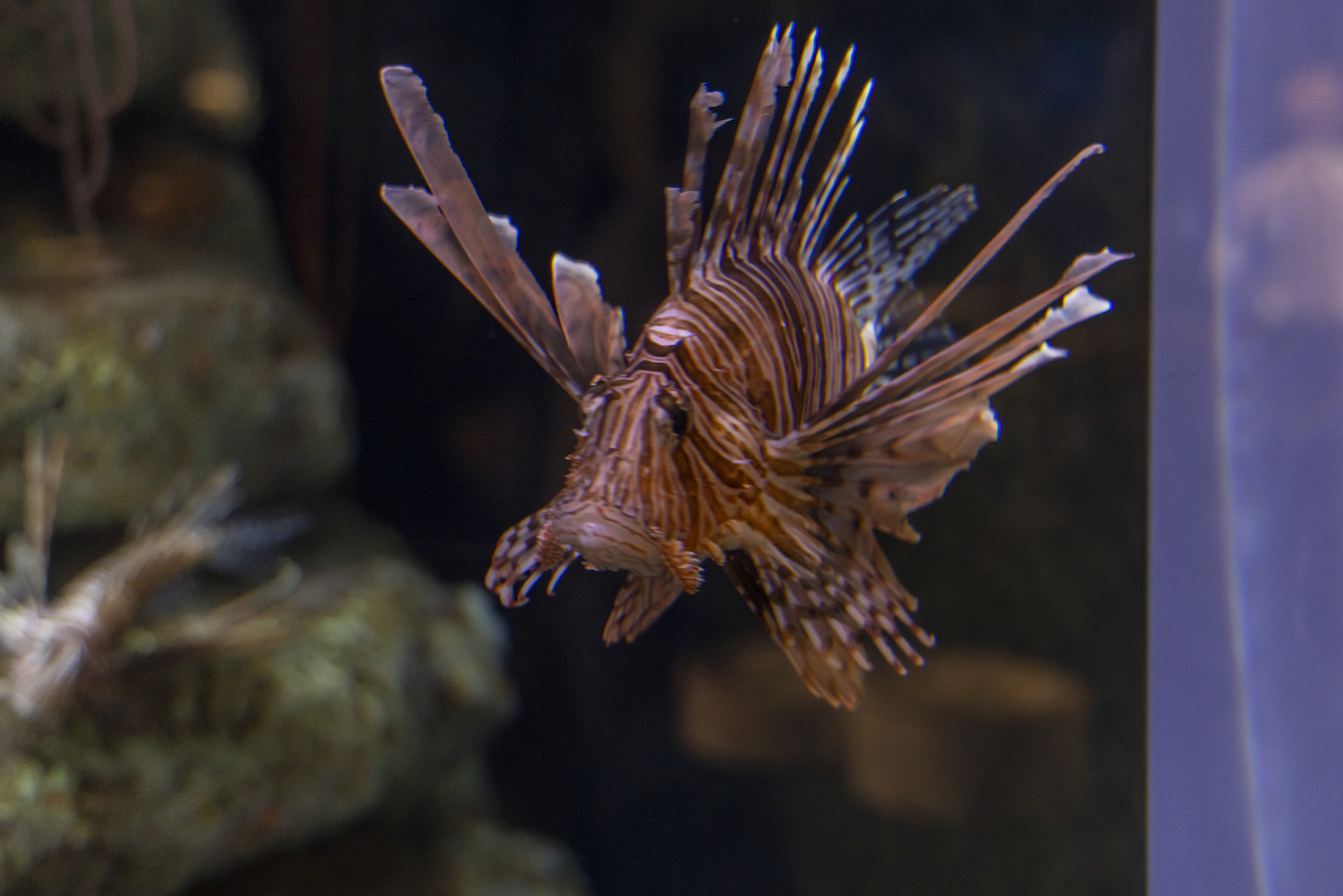
…and the aroma of great food. The songs were good, and the menu featured pulled pork, chicken, beans, house salad, bread rolls, poppy-seed cole slaw, various sauces, and gouda mac ‘n cheese. Amazingly, while we ate we had a chance to gaze at the “Great Ocean Tank,” the deepest tank in North America at 42 feet. We were all grateful no seafood was on the menu.

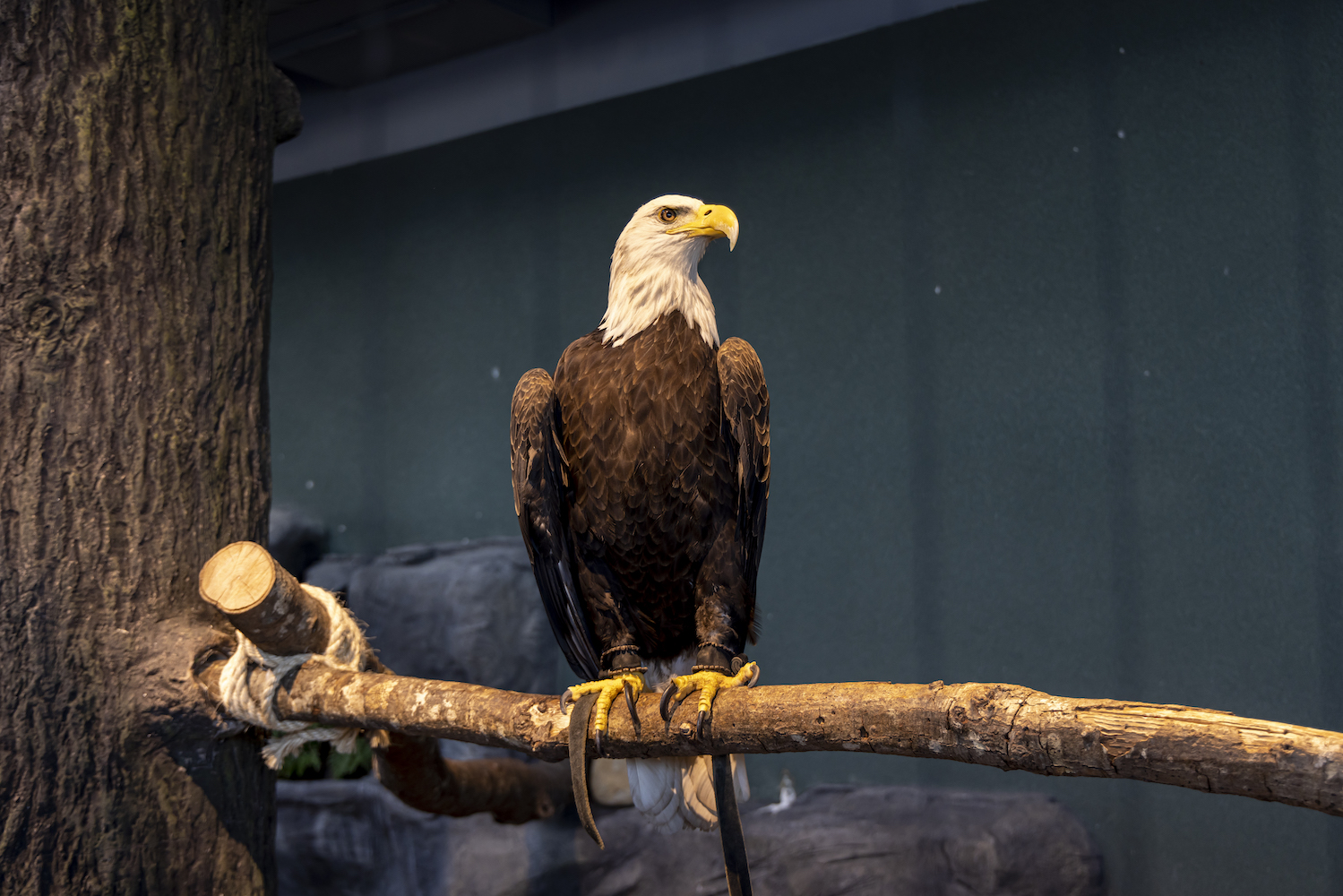
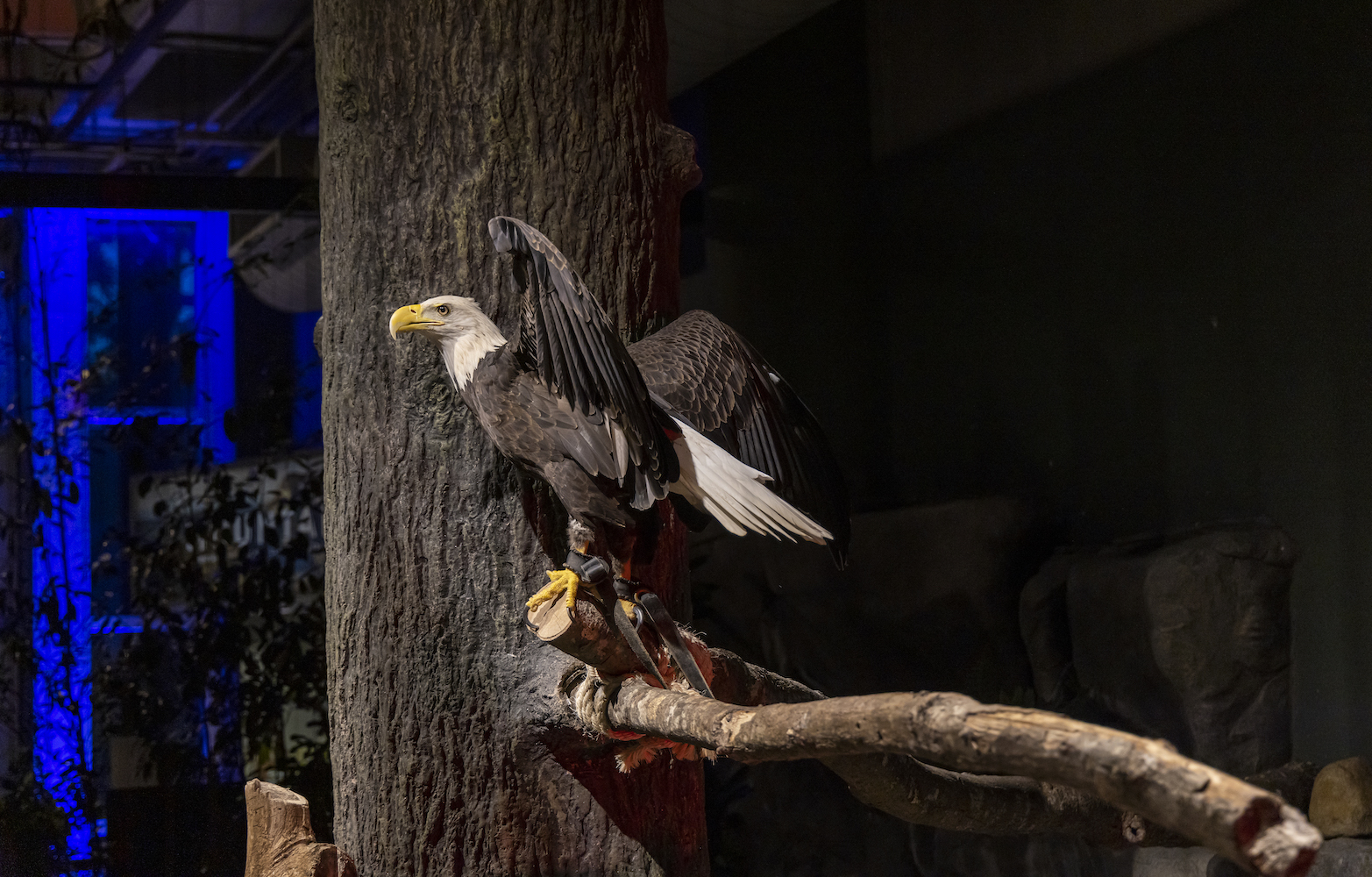
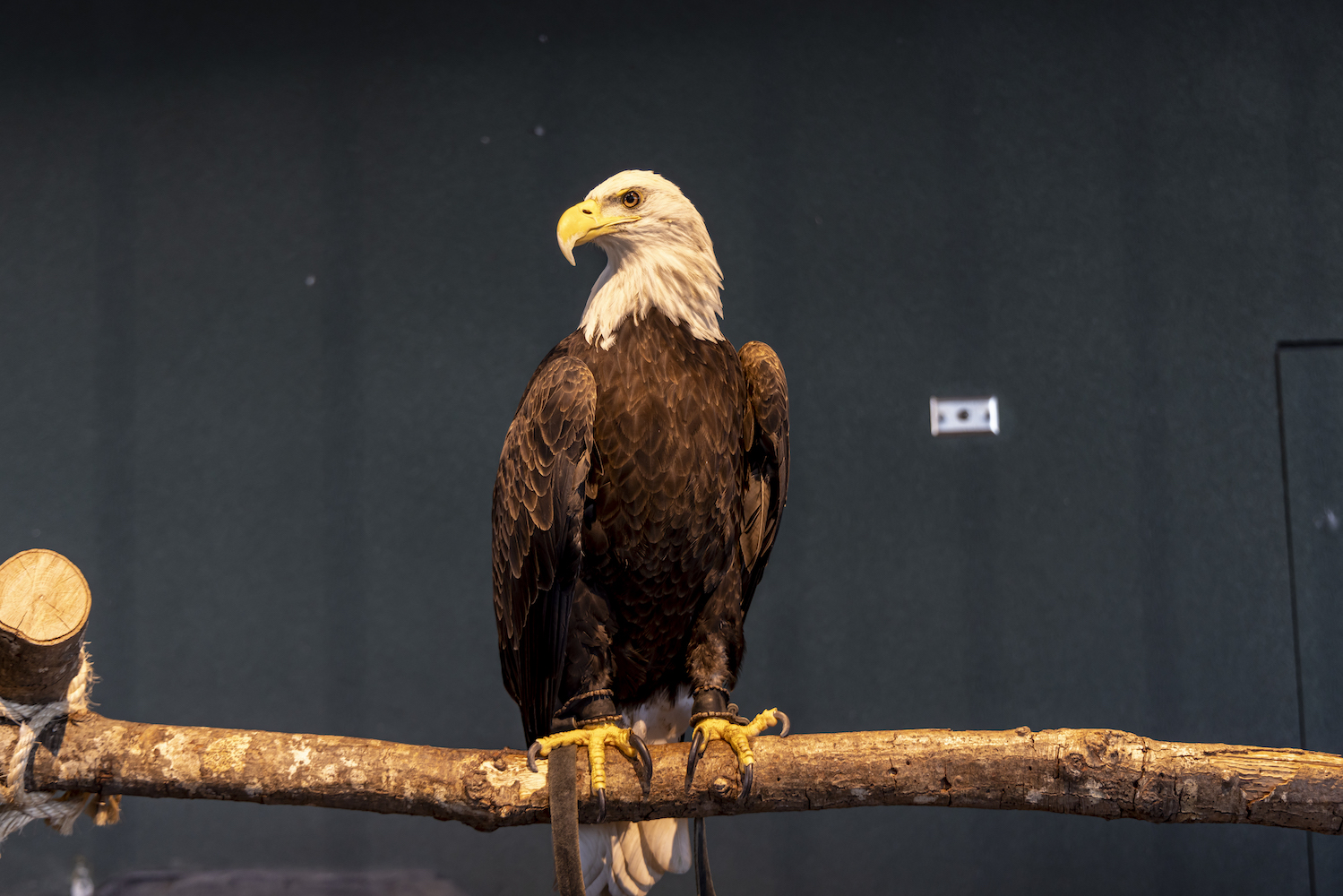
Nearby was the Bald Eagle exhibit, and we had a chance to see–and pose with–a bald eagle.

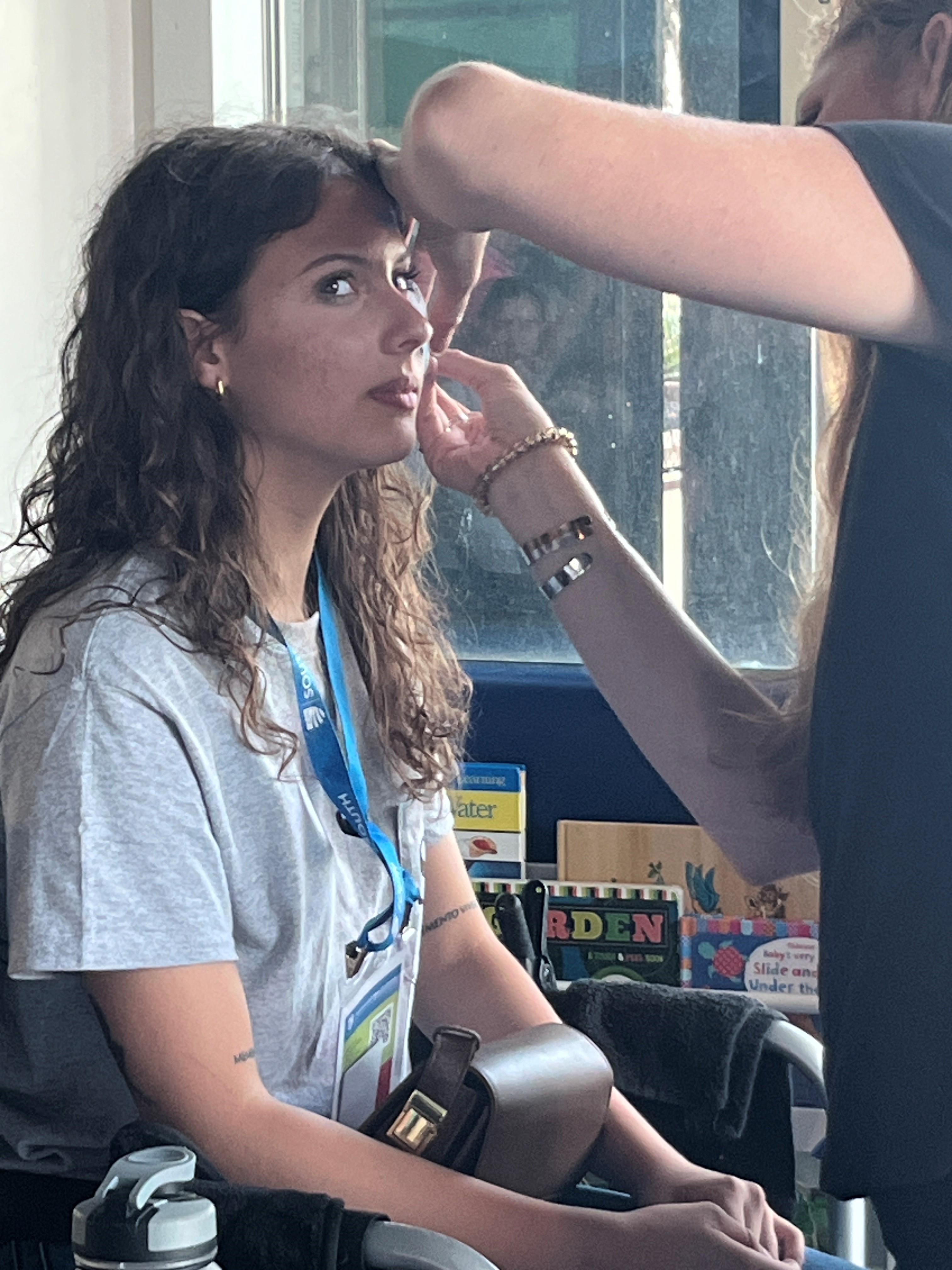
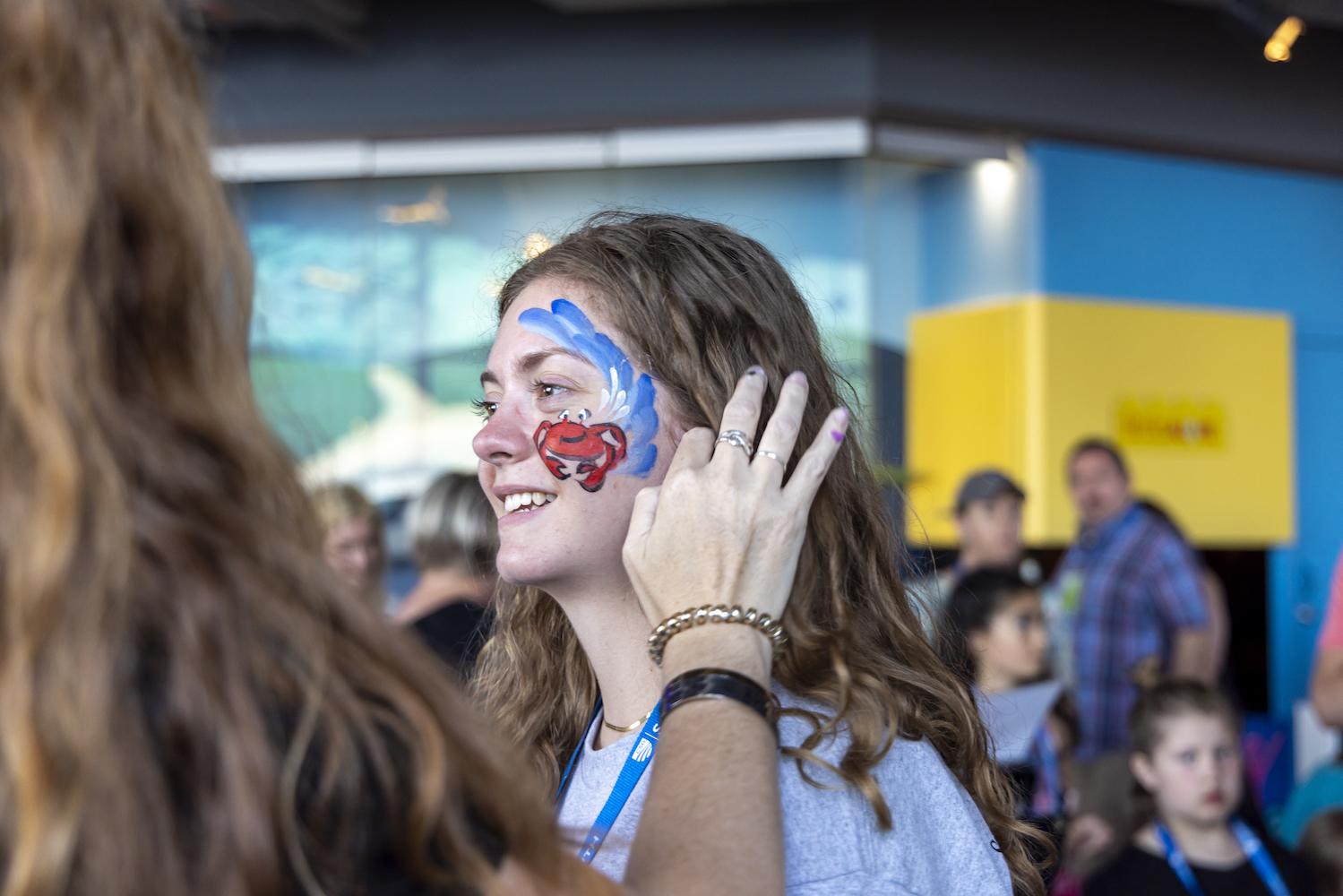
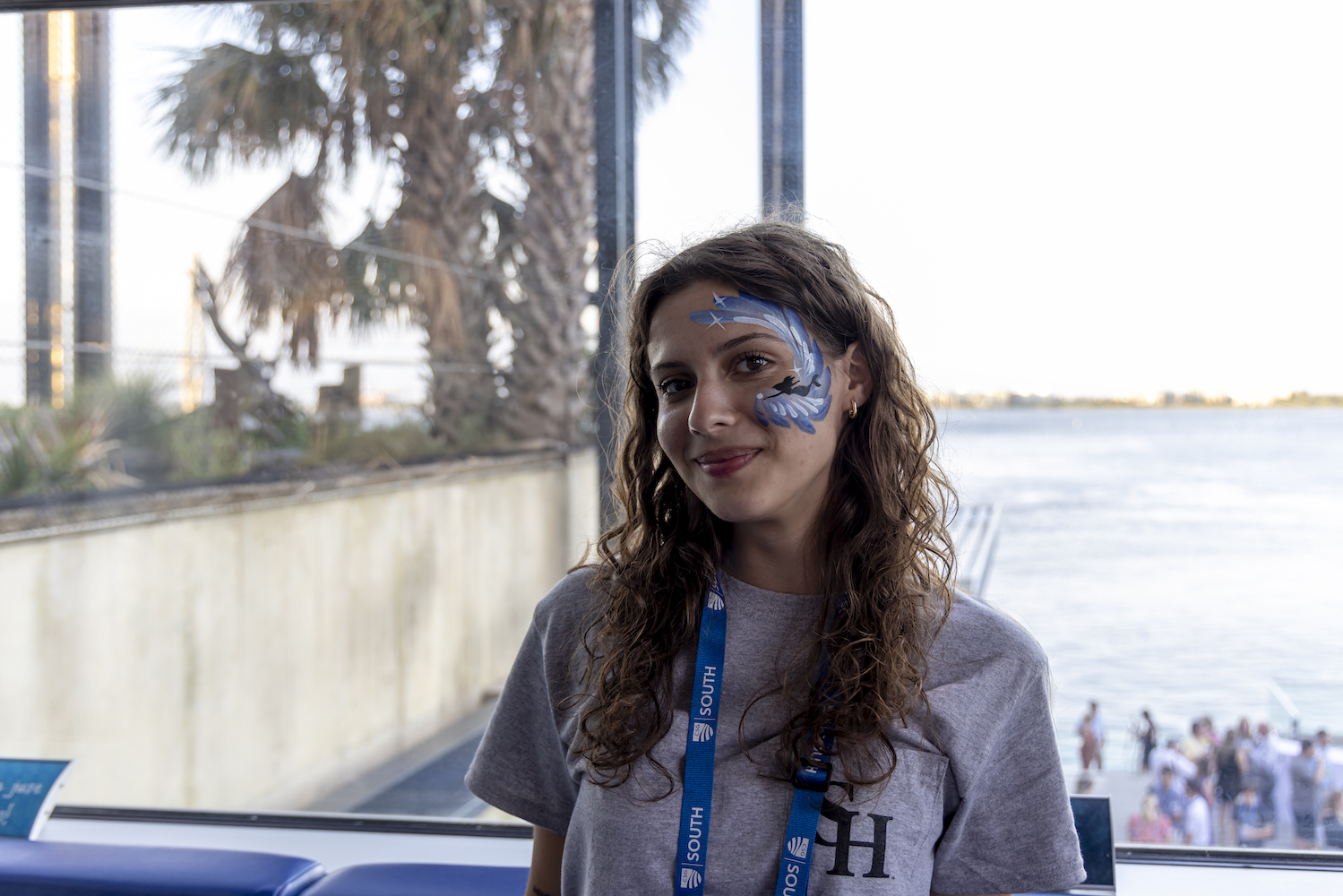
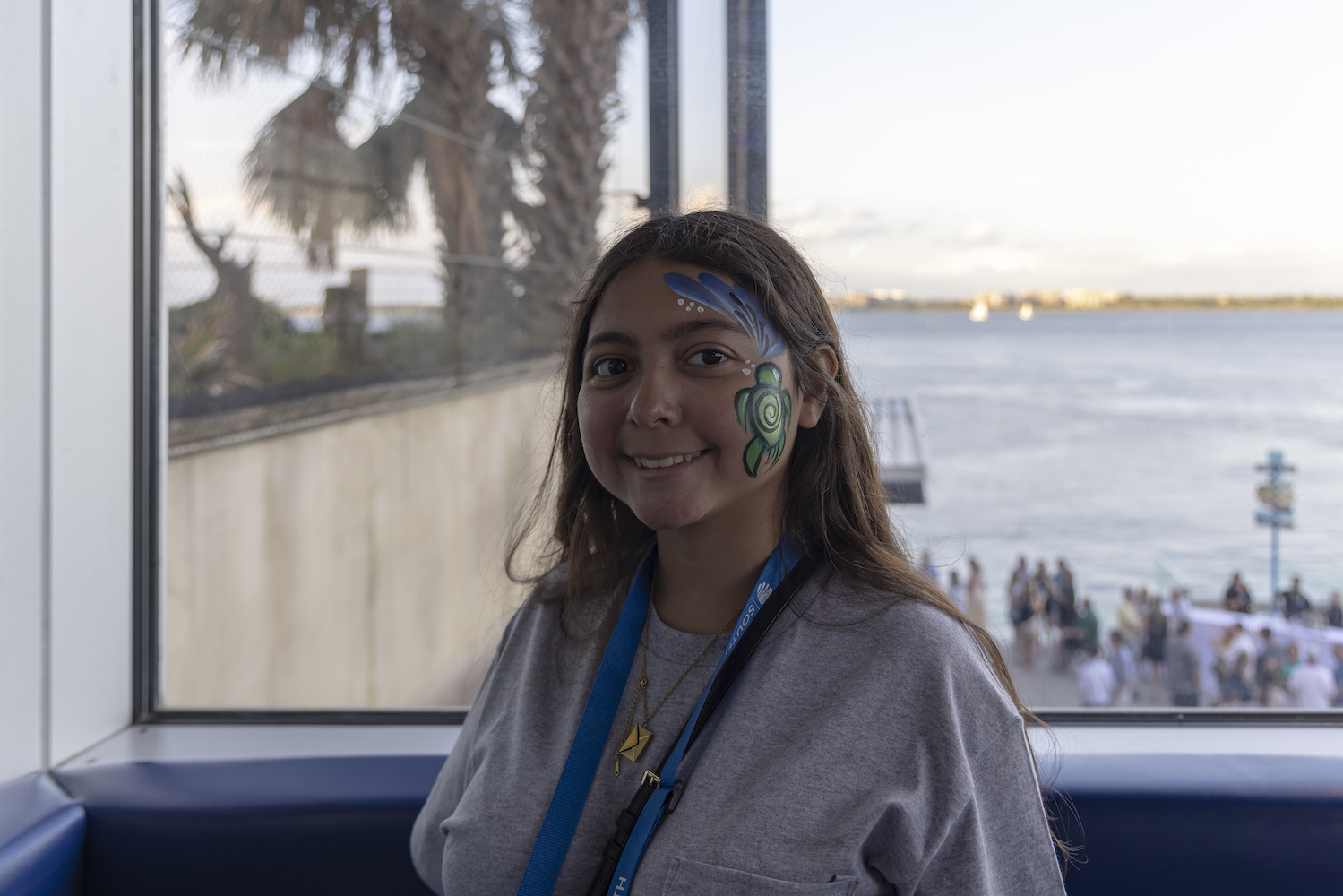
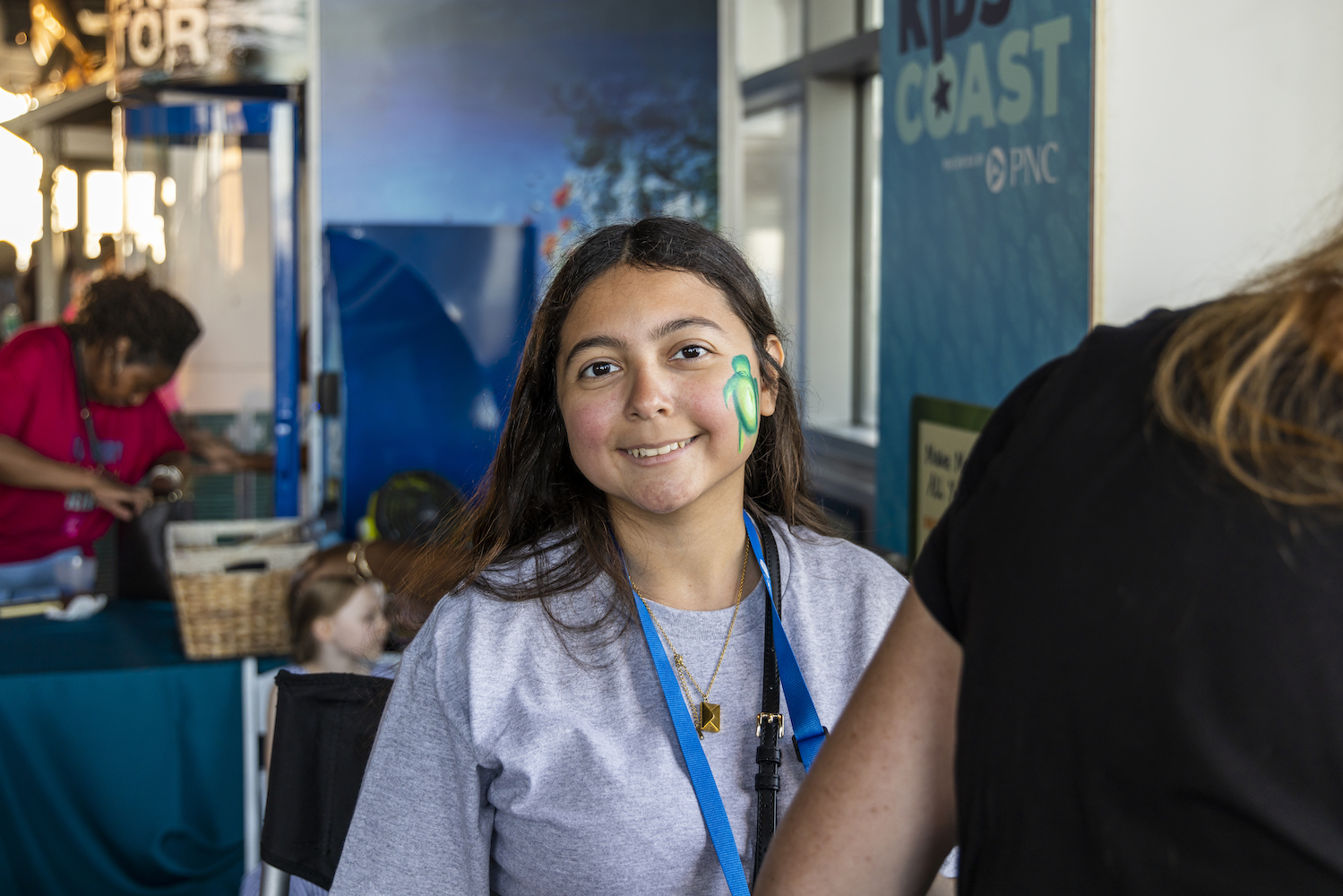
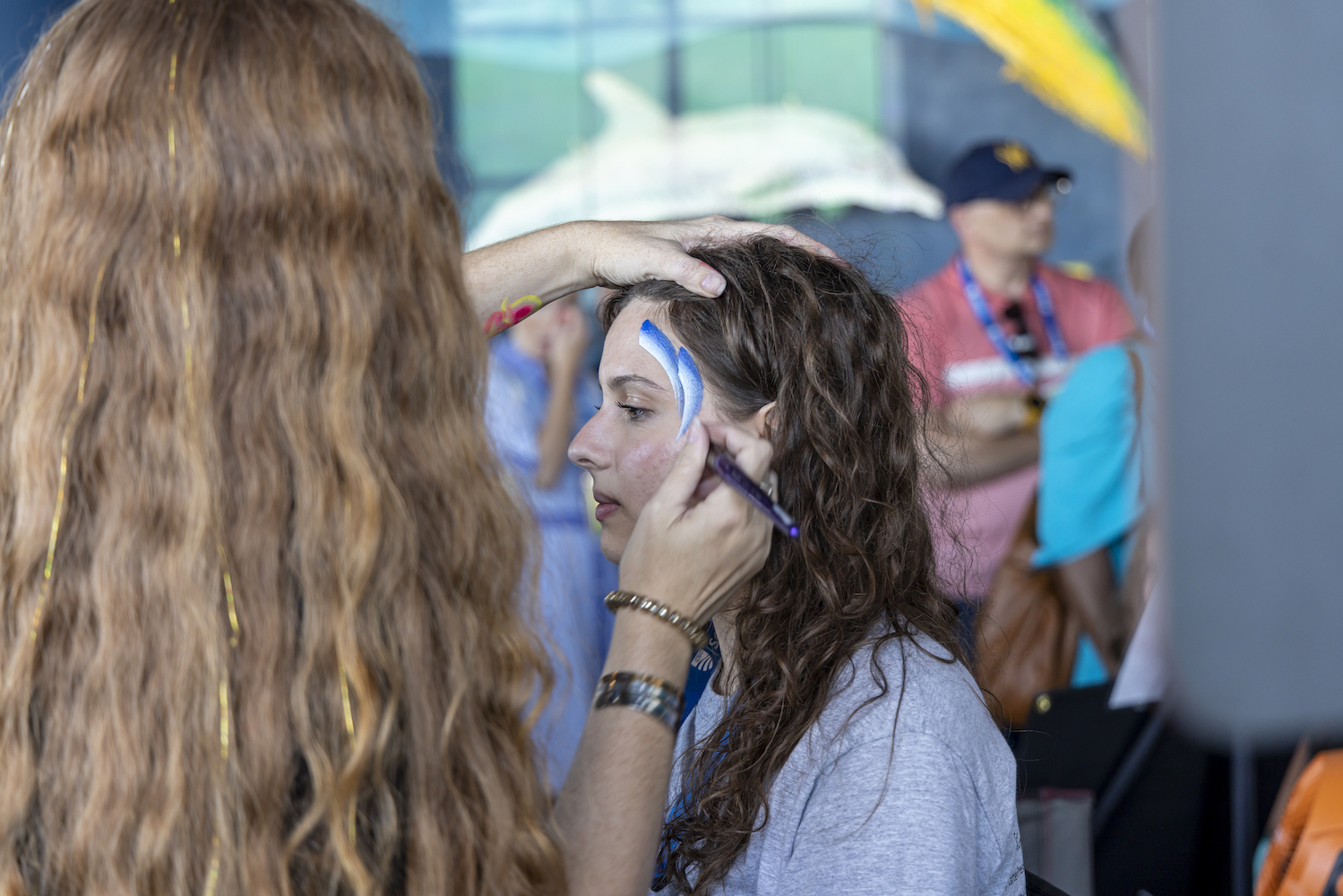
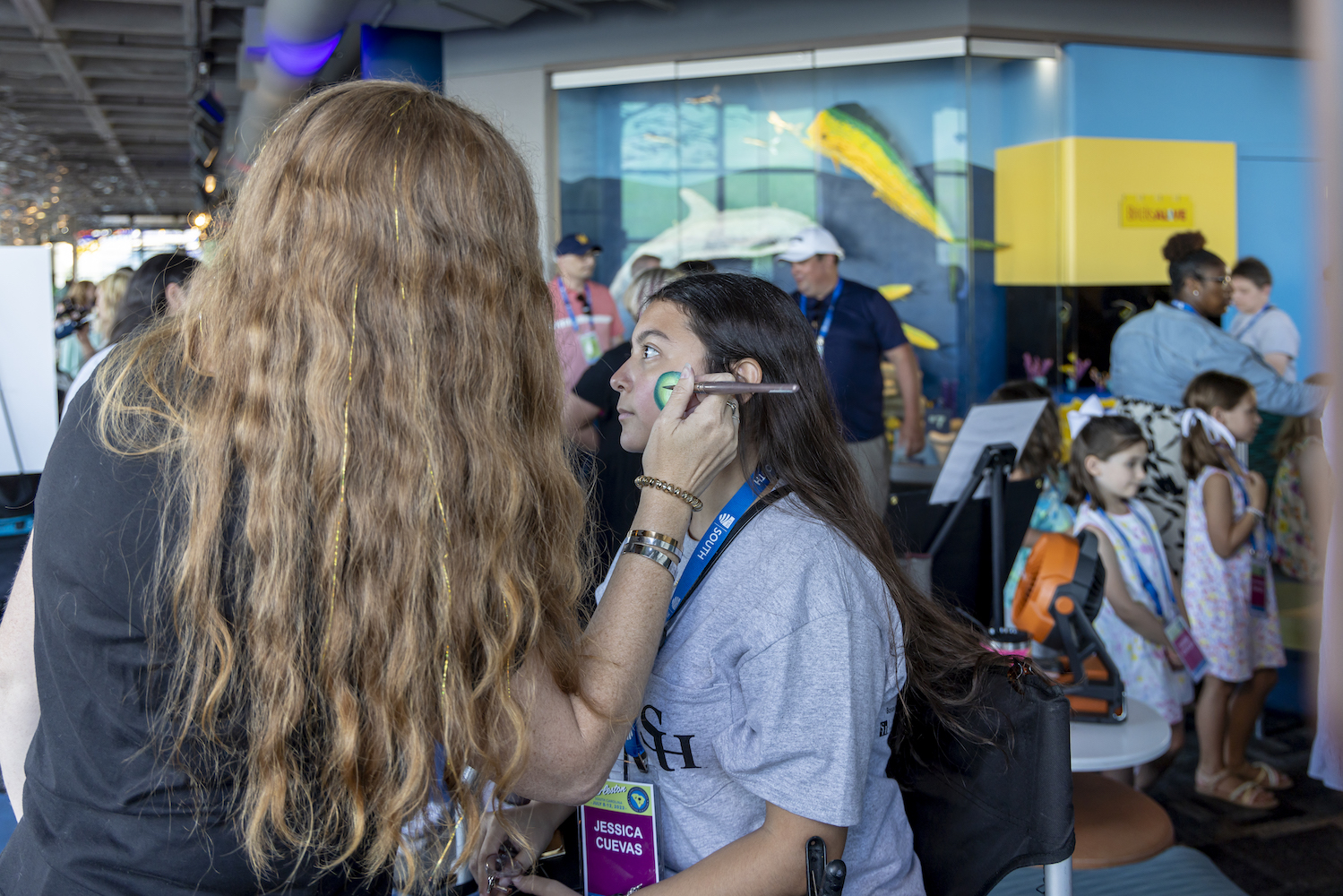
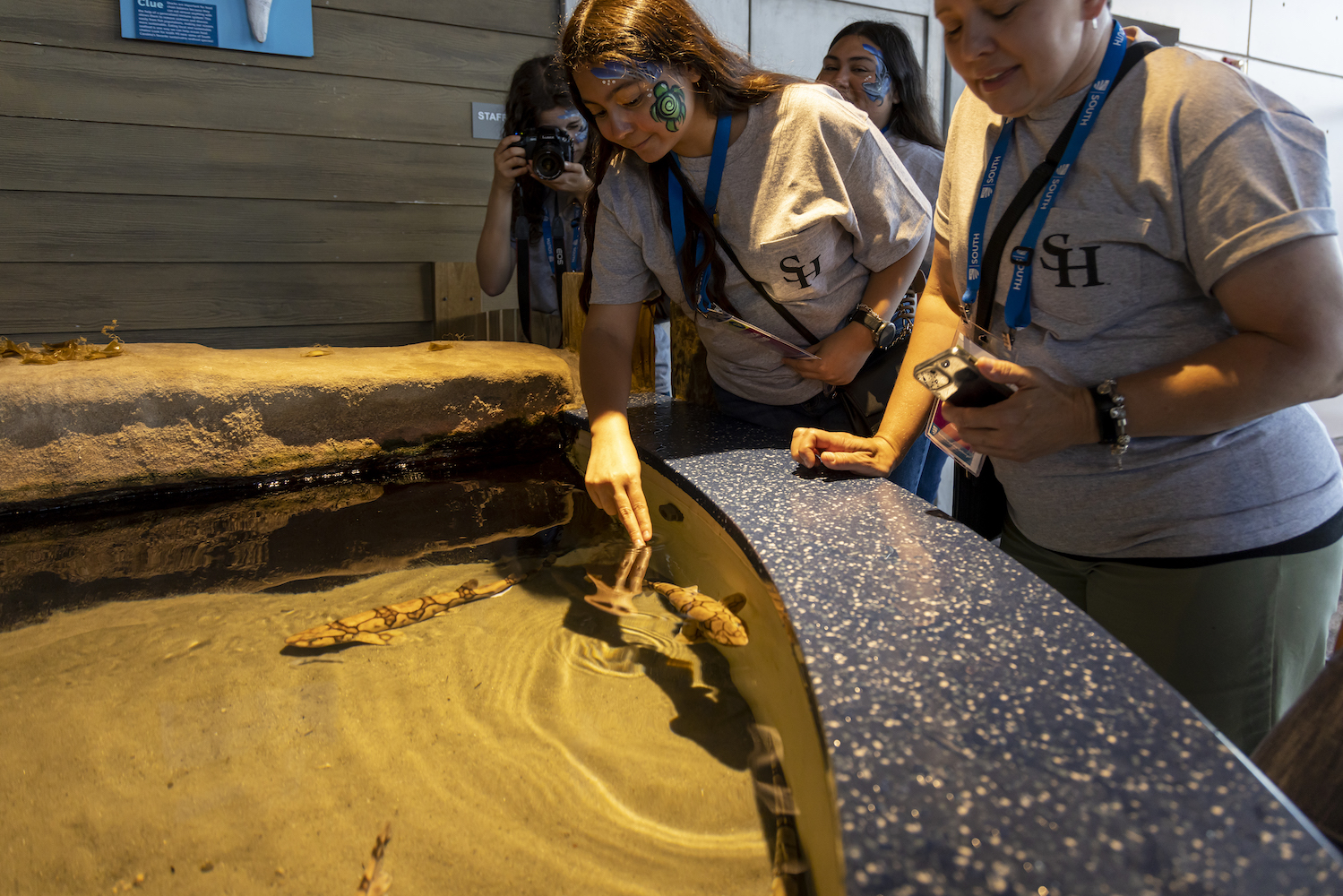
But when we heard there was face painting on the second floor, we joined other five-year olds in line. Continuing with our theme of the aquarium, Olivia adorned her face with mermaid; Michelle, a shark; Morgan, an (oddly) smiling crab; and I got a sea turtle.

Ingrid, not getting the gist of the evening, got a flower, making her a flower child.

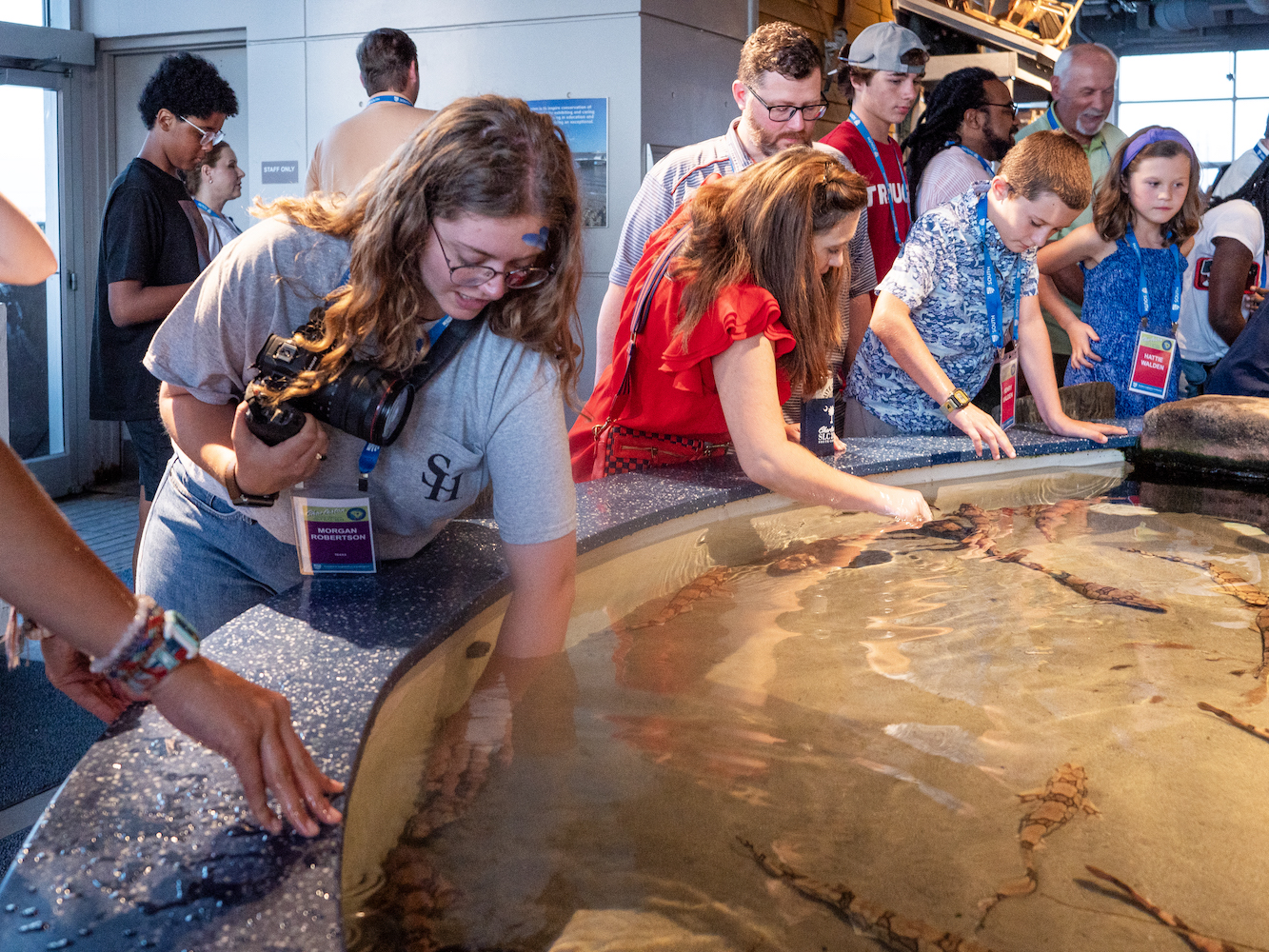
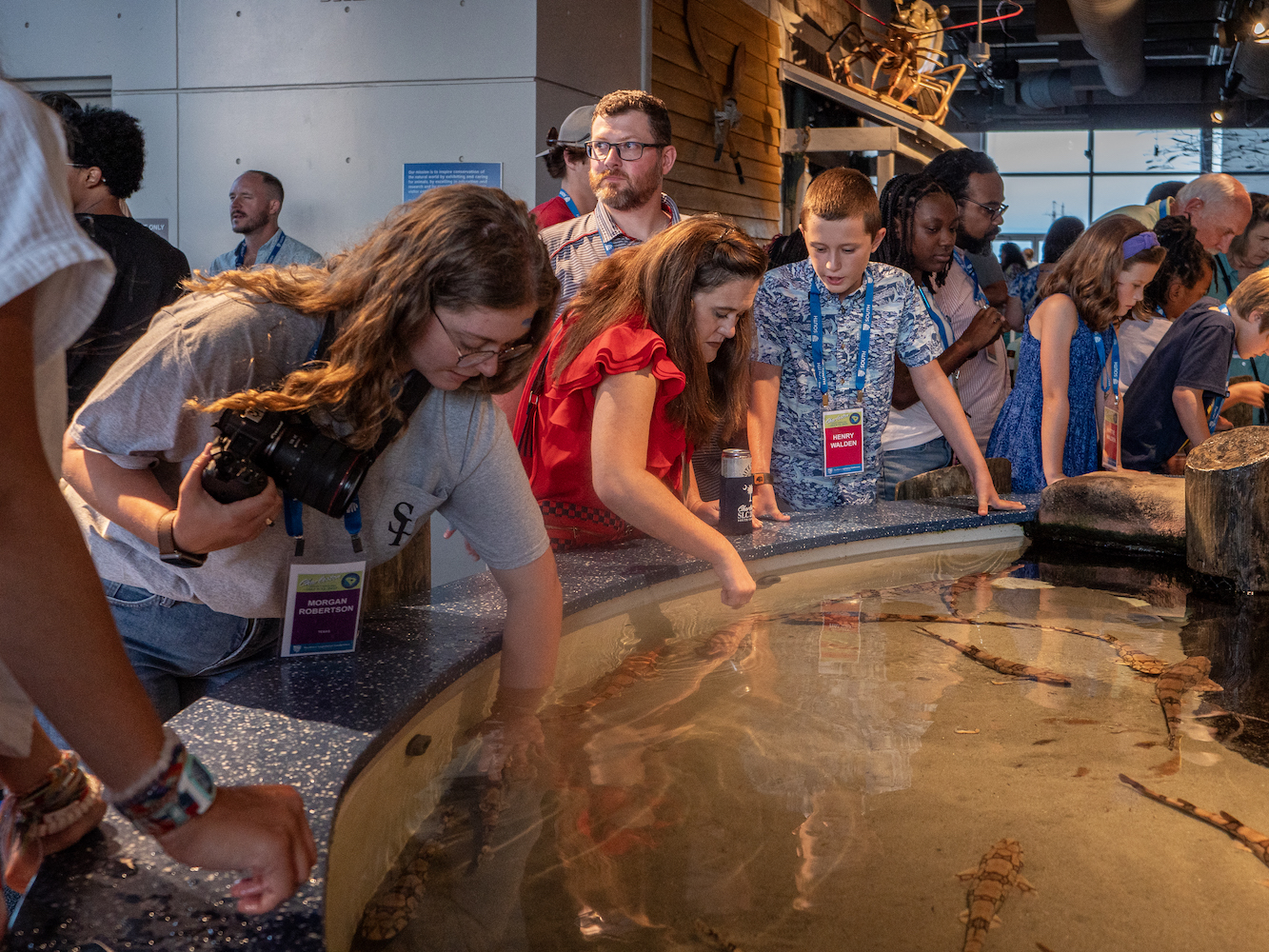
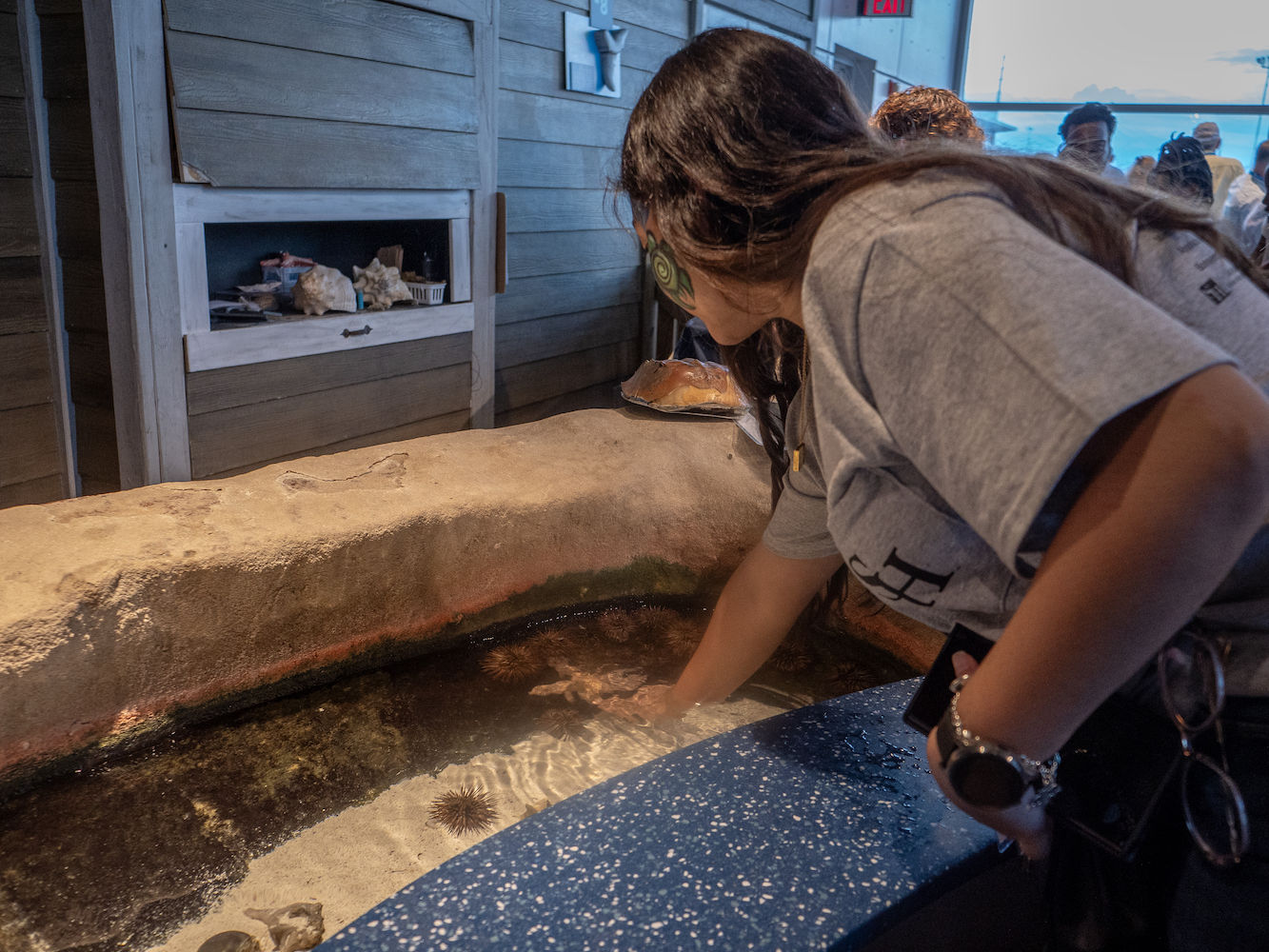
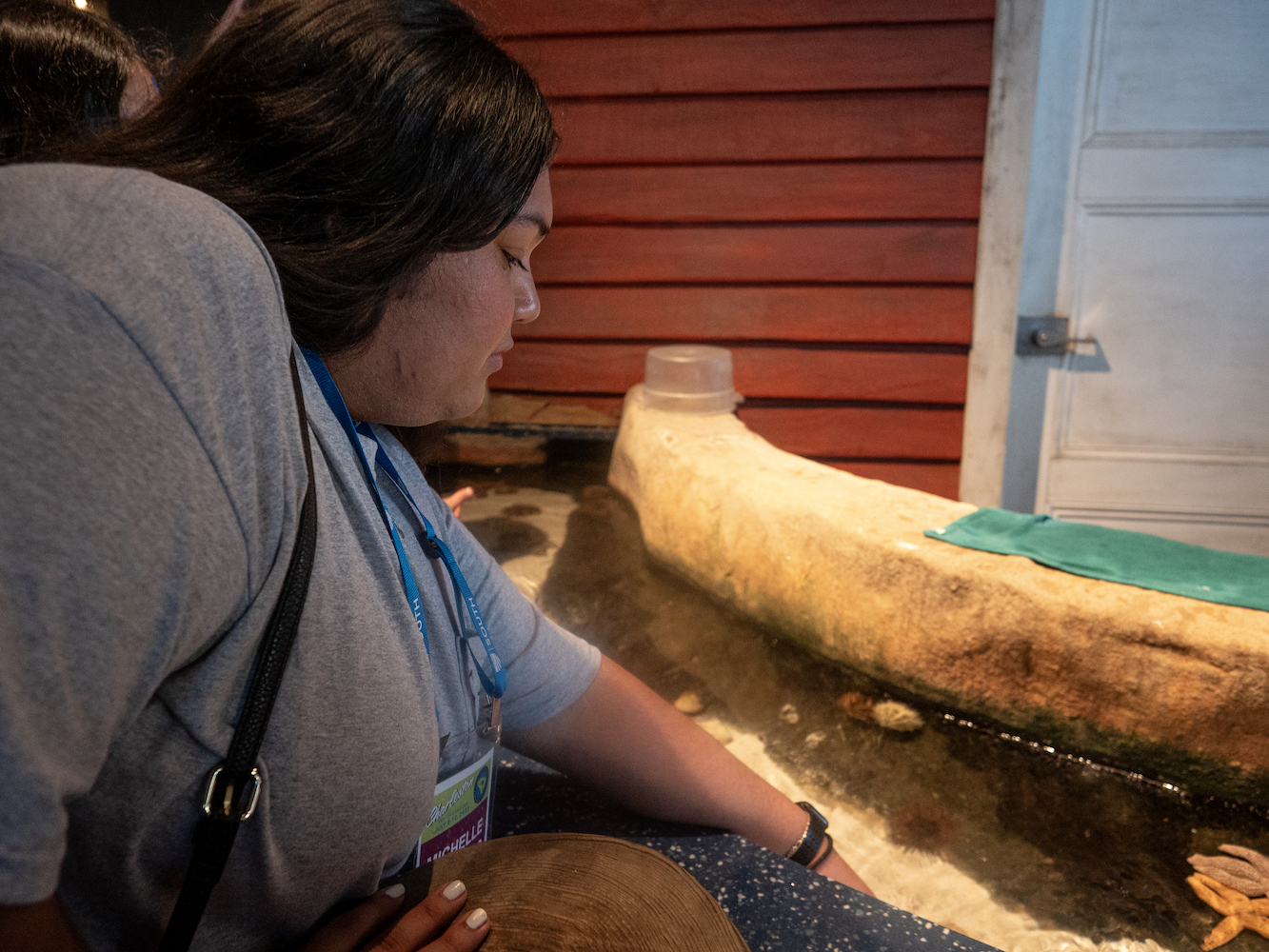
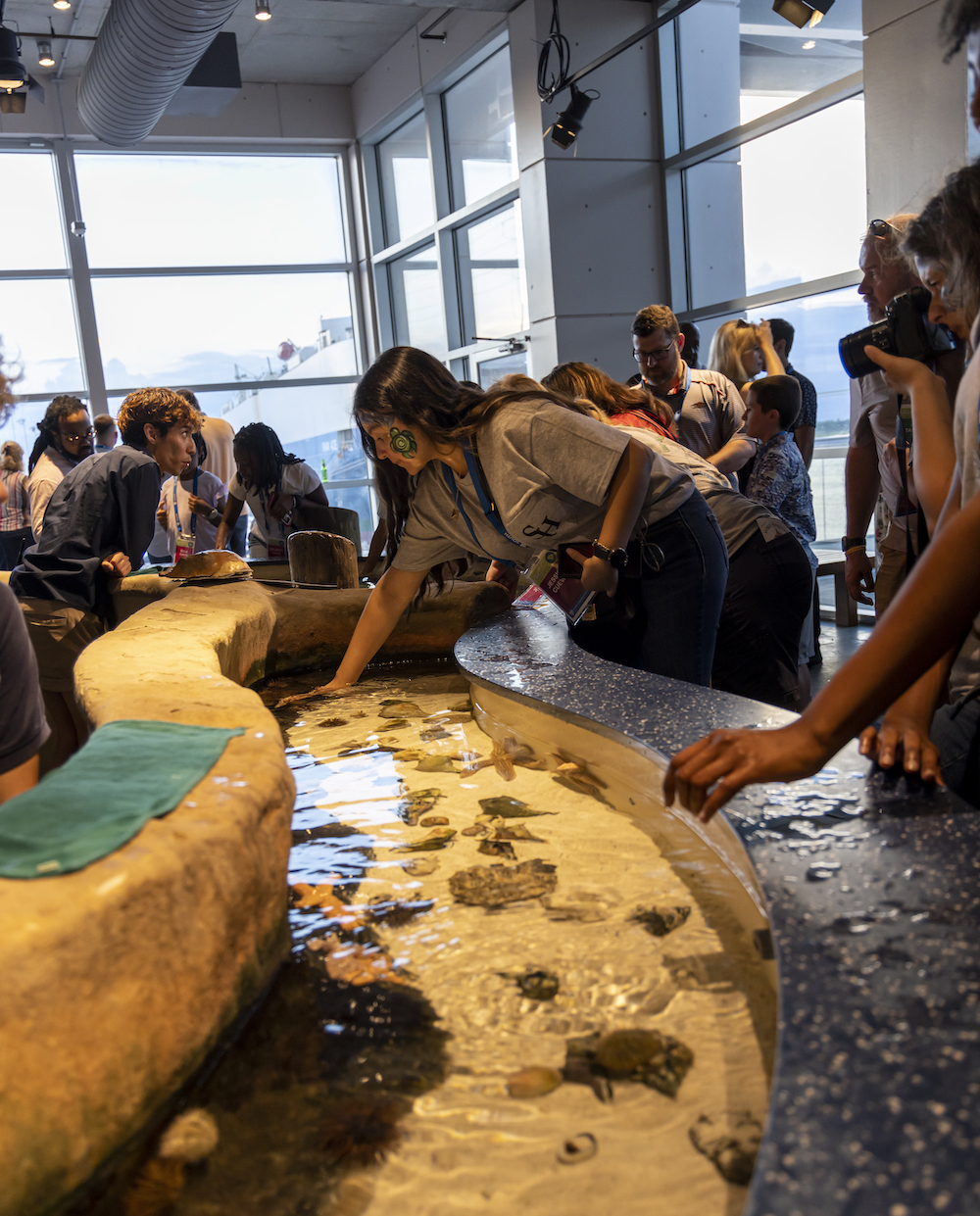
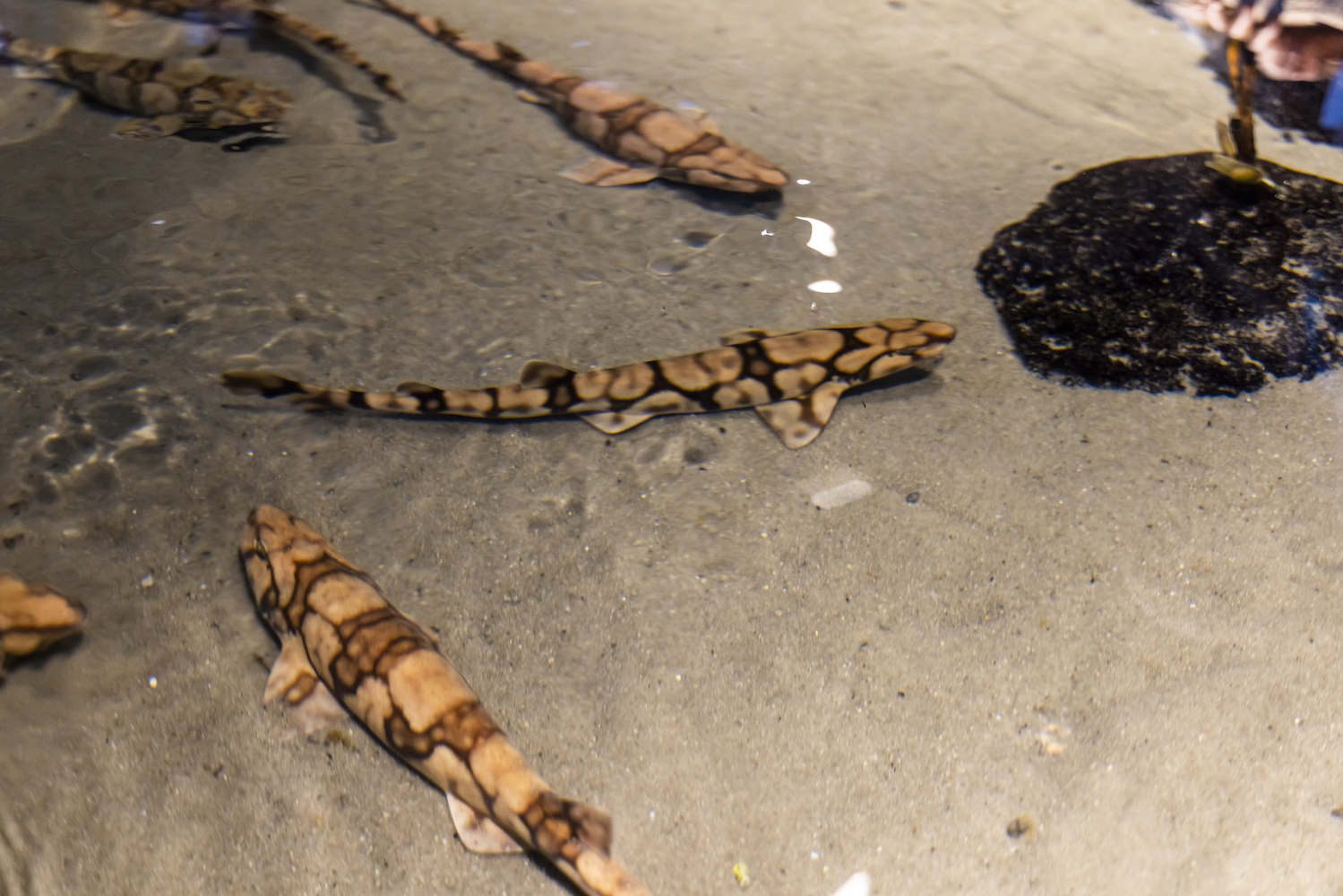
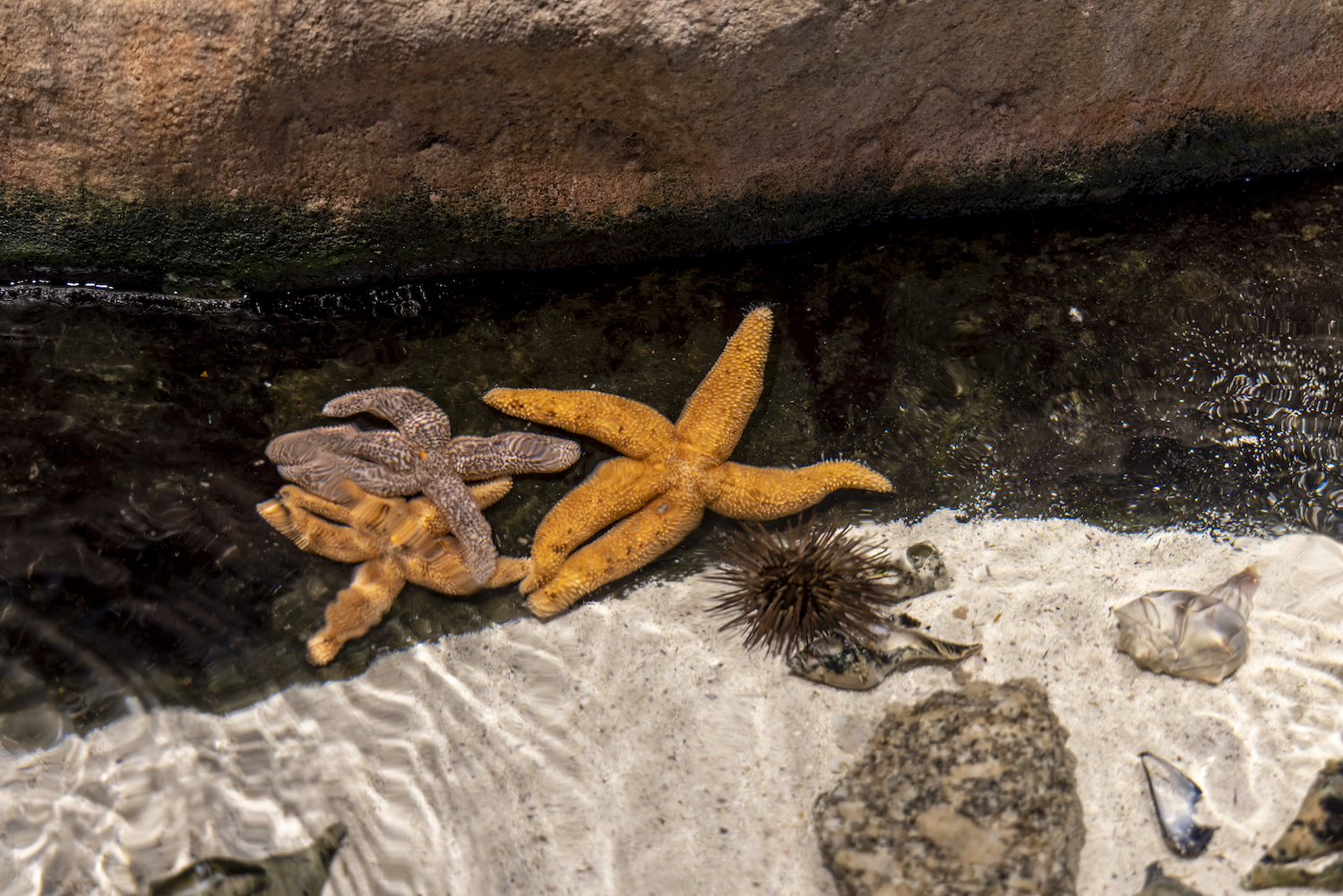
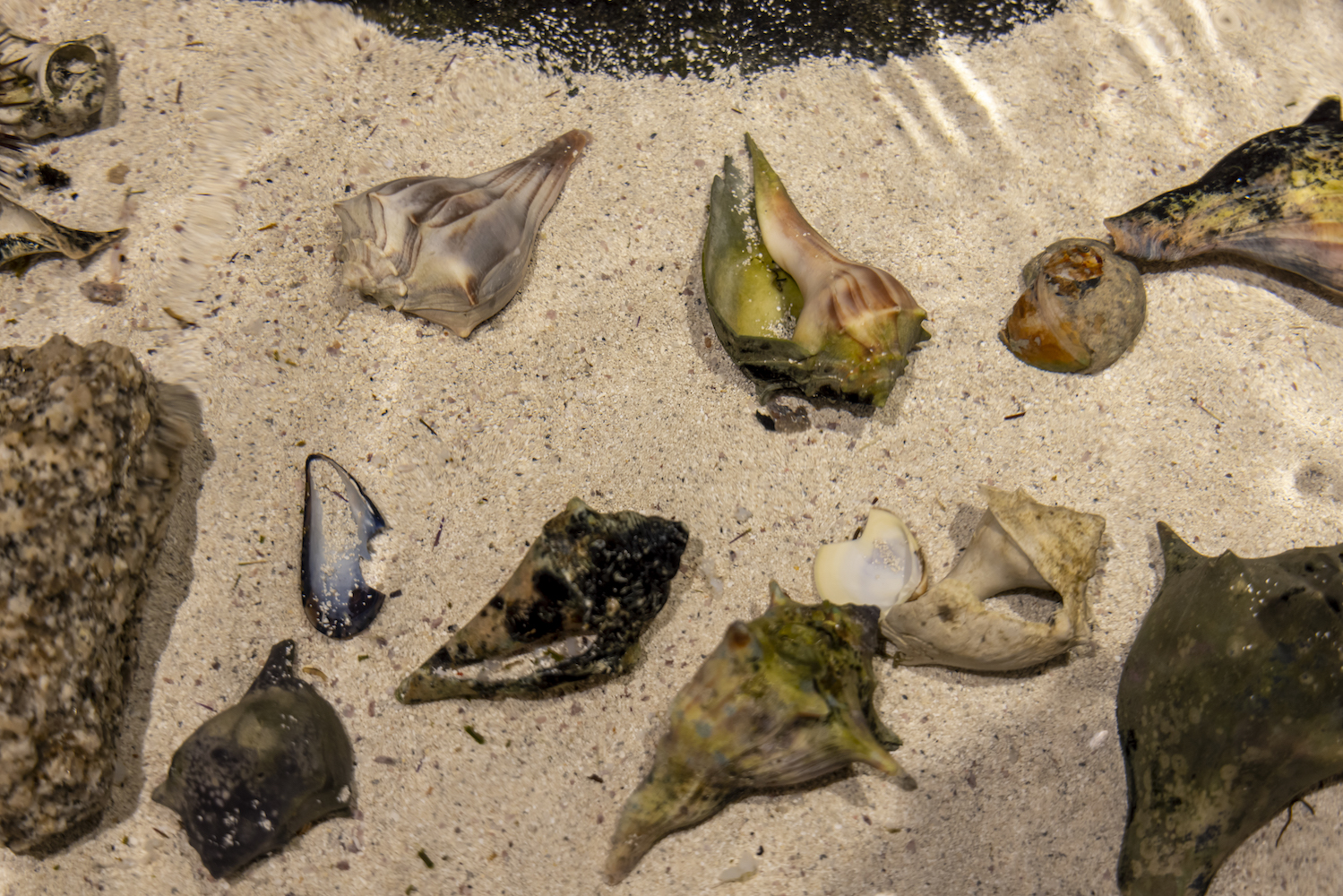
With the attention span of goldfish (2 seconds), and being naturally drawn to interactive museum features that do not require literacy, we saw the “touch and feed center” and immediately raced to it. We were able to touch starfish, sea urchins, hermit crabs, baby sand-tiger sharks, and sting rays!

At least one LEAP Ambassador was too frightened to touch the animals. The LEAP Code of Discretion prevents us from identifying this individual, but we would just like to apologize for Olivia’s absence from the preceding gallery.

We learned that Charleston is home to three different turtles: (1) Green Sea Turtle, (2) Kemp’s Ridley, and (3) the Loggerhead Turtle (South Carolina State Turtle). They vary in color and size, and there was a couple in the Recovery Theater. The Recovery Theater – Sea Turtle Care Center is a portion of the aquarium that features an x-ray room, surgical rooms, many turtles, and interactive exhibits about the 13 patients in residence: 2 Loggerheads, 5 Green Sea Turtles, and 6 Kemp’s Ridleys.

The turtles often get hurt due to the pollution in the oceans from humans. In fact, it is estimated that by “2050, oceans are projected to contain more plastic than fish!” The most common reasons for ill or injured turtles are due to (1) fishhooks, (2) fishing lines, (3) broken bones, (4) pneumonia, and (5) osteomyelitis (bone infection). 

Although it was disheartening to read about the stories of the different turtles, most of which were named after cheese (Mozzarella, Parmesan, etc.), I was glad to see they were recovering. Soon they might be able to swim among the other 385 sea turtles that have been released from this center. 

Caretta, a loggerhead sea turtle, is the only turtle that will always call the aquarium home, due to her high dependency on humans impeding her from surviving in the ocean.

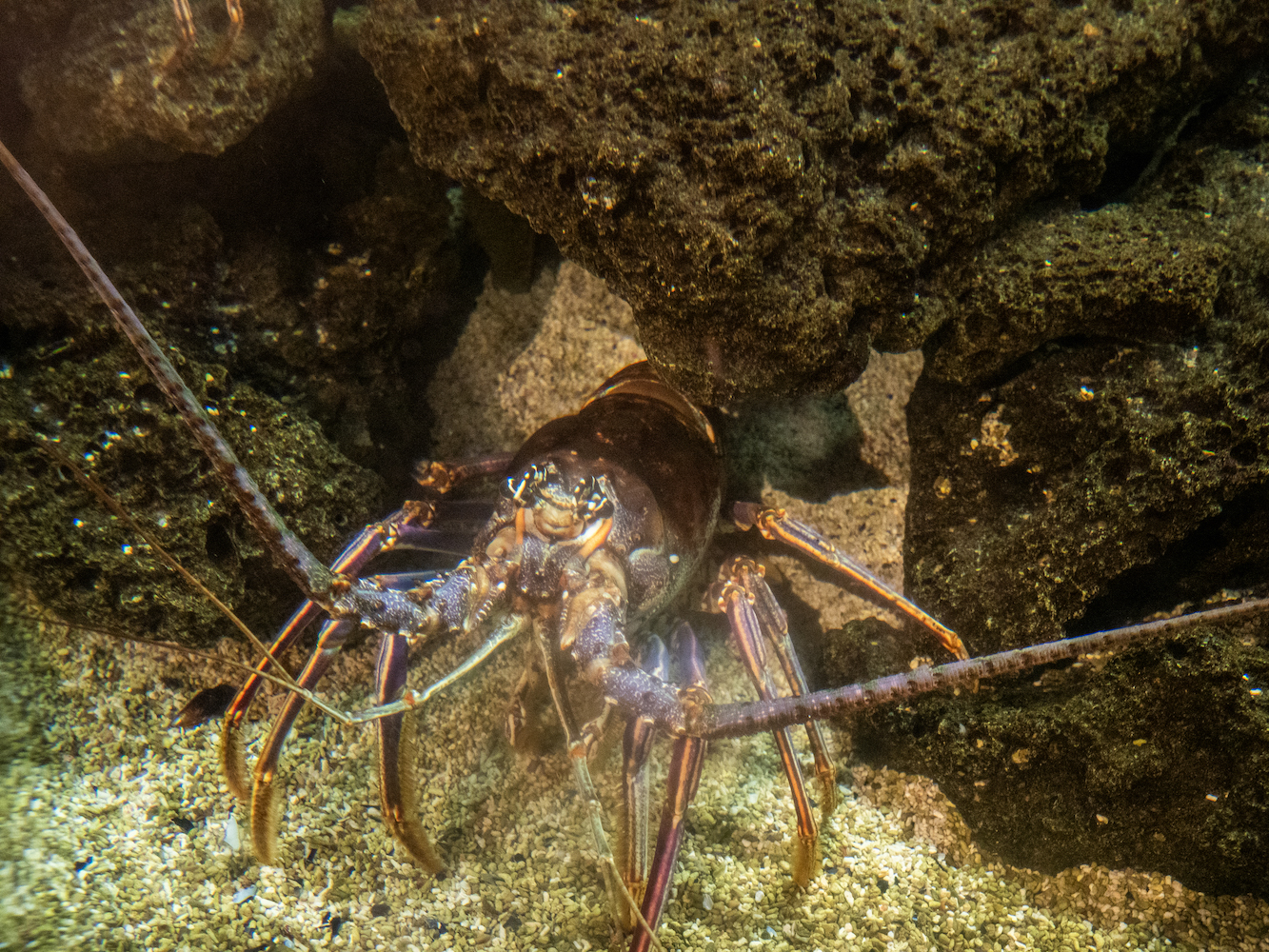
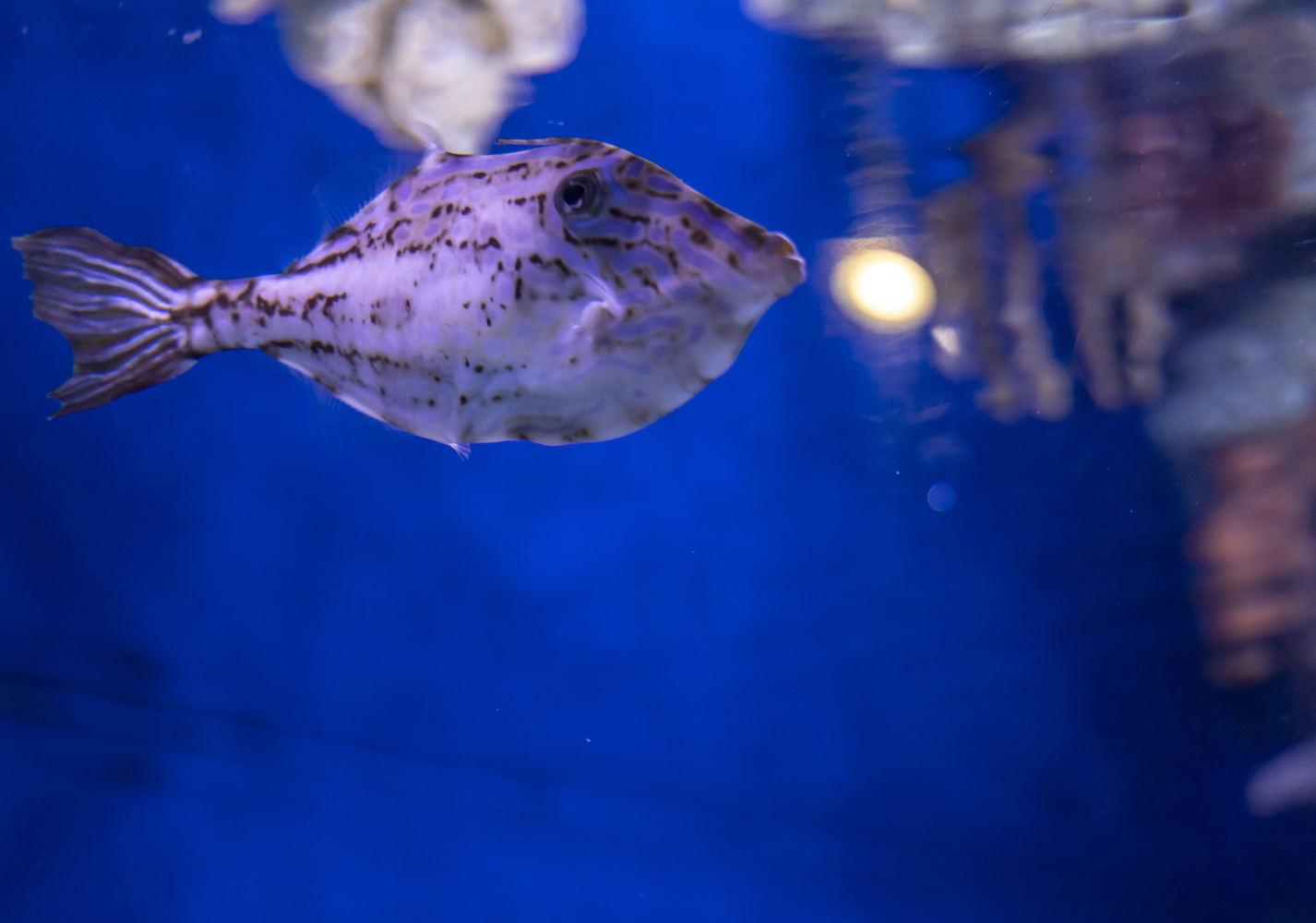
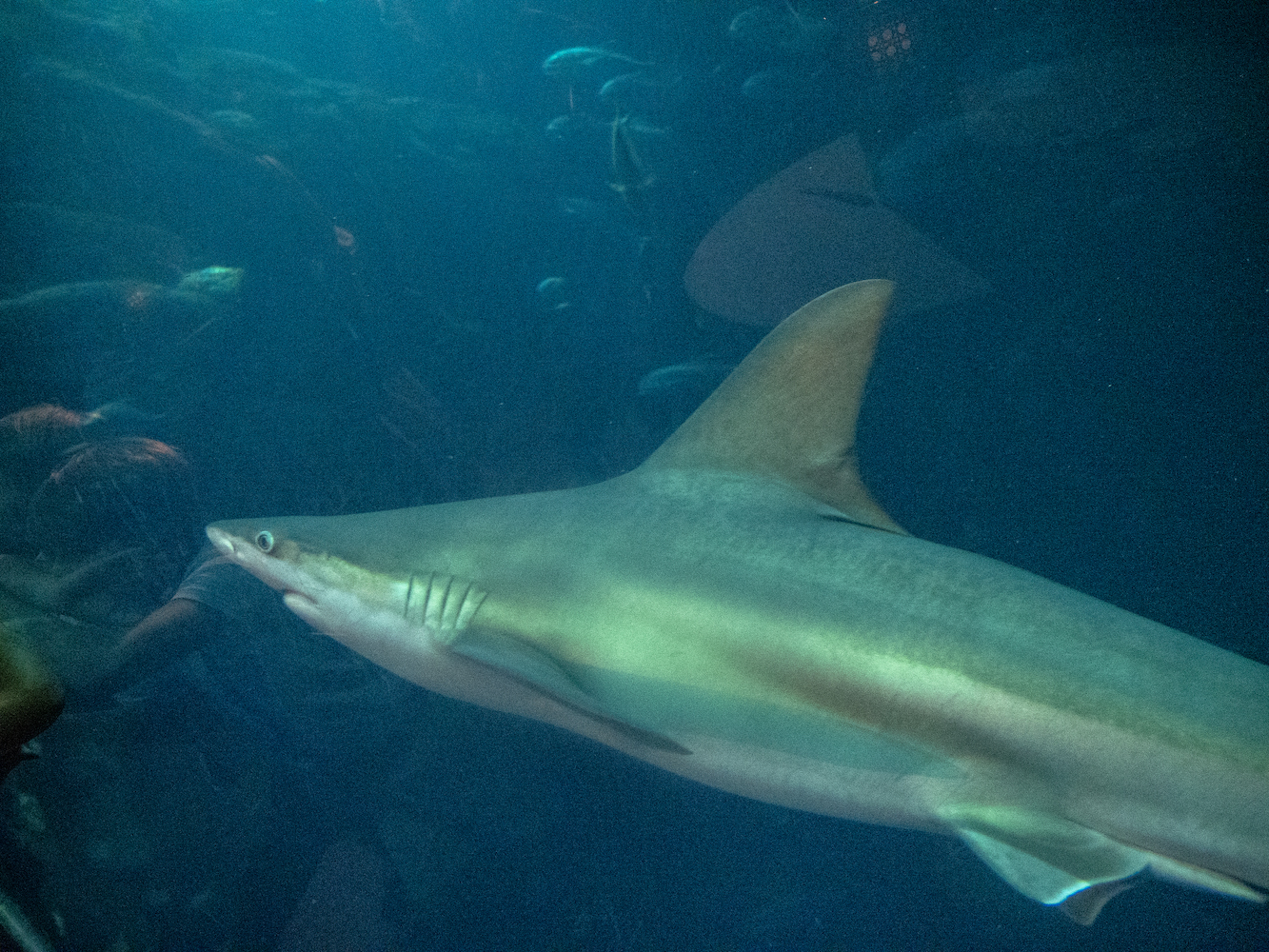
To nobody’s surprise, turtles were the highlight of my evening. However, this aquarium had many types of sea creatures to enjoy and learn about, such as; fish, jellyfish, sharks, lobsters, shrimp, and much more.

As Take Me Home, Country Road was echoing throughout the aquarium, and with children and adults dancing, we “o-fish-ally” called this turtle-tastic evening a night.
Unknown's avatarAuthor mikeyawnPosted on July 10, 2023Format AsideCategories Civic Engagement, Civil Rights, Fun, Politics, Science, TravelTags Center for Law Engagement And Politics, LEAP Ambassadors, Robert Smalls, Sam Houston State University, South Carolina Aquarium, Southern Legislative ConferenceLeave a comment on Exploring the “Holy City:” A Day in Charleston, South Carolina

Texas Parks and Wildlife–and the Wynne Home!

By Sarah-Hope Carter

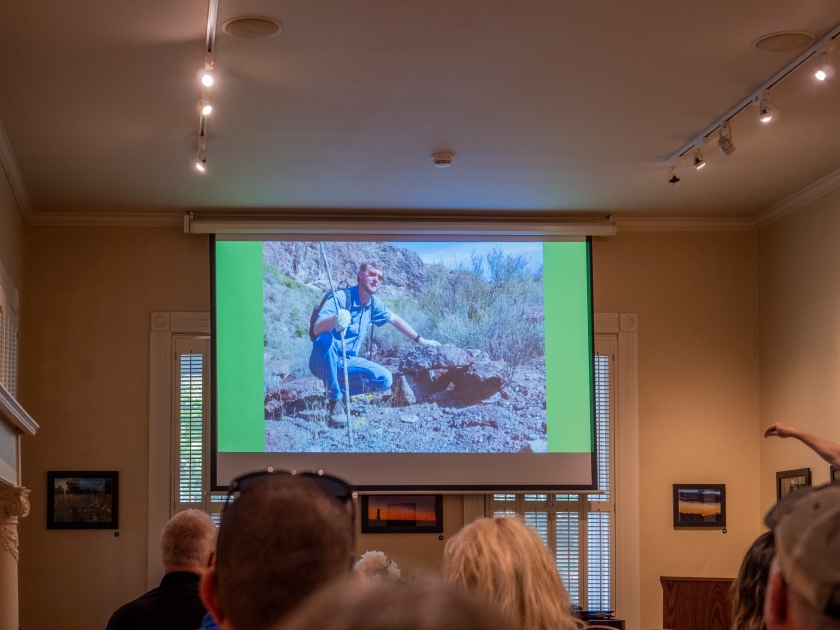
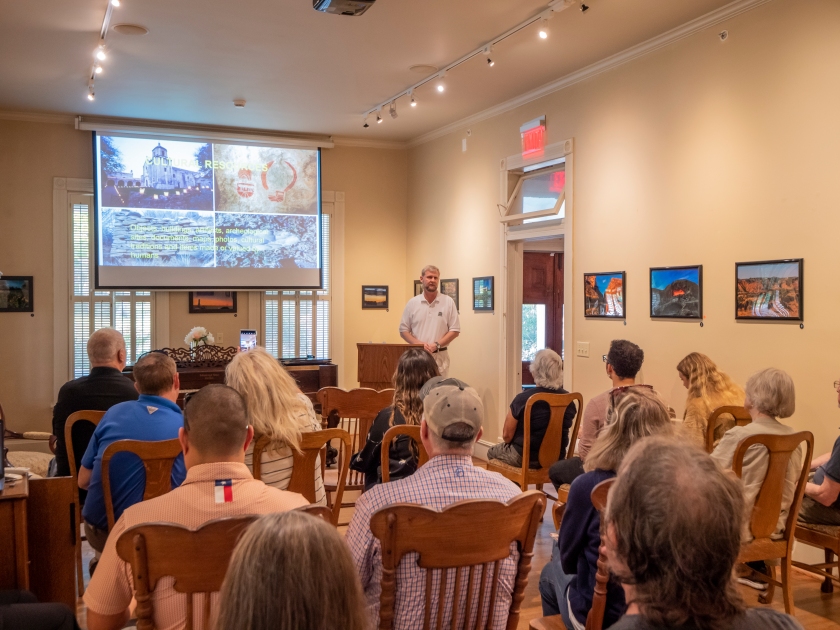
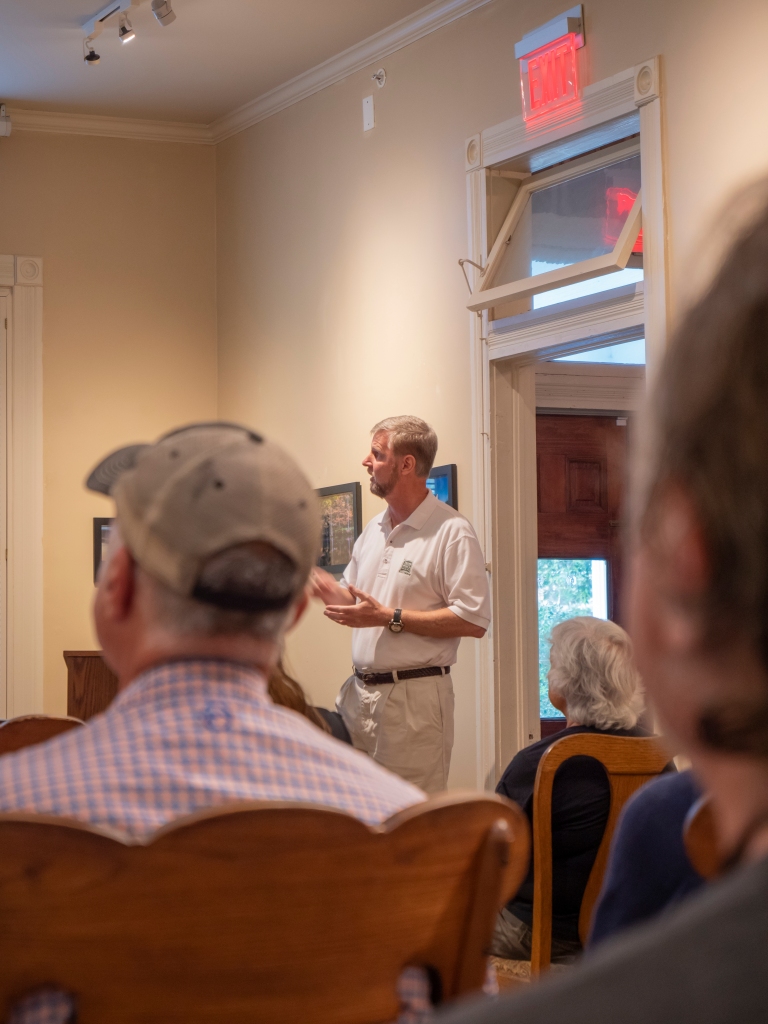
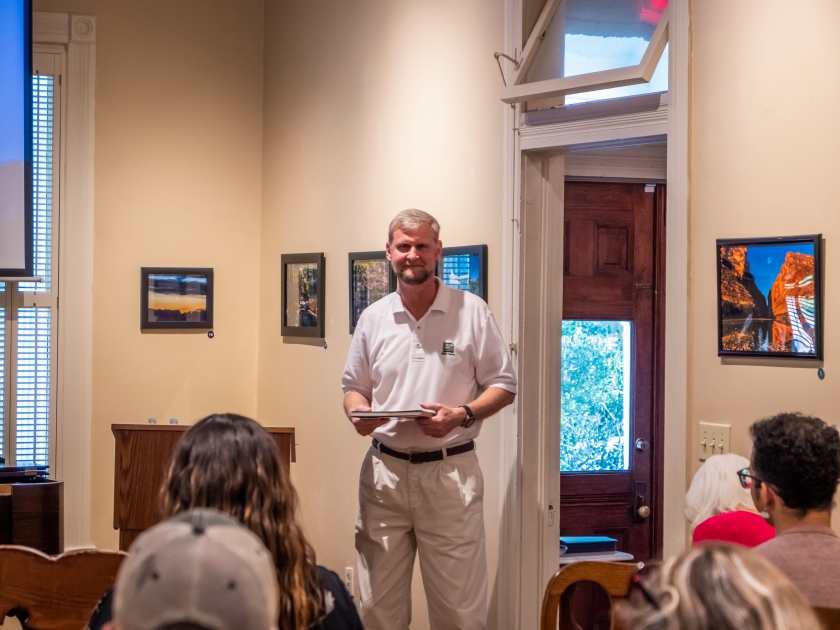
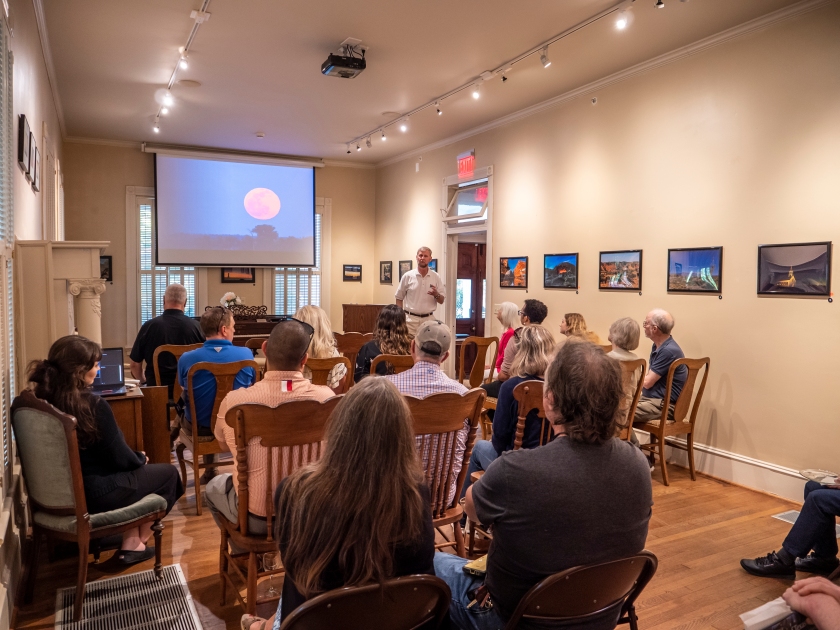
You may know the Wynne Home for its beautiful architecture; or, you may know it for its regular art exhibits; others know it because of the great programs it offers, such as Empty Bowls or its annual Easter Egg Hunt. But the Wynne Home also offers a speaker series, and last week, Dr. Michael Strutt, the Director of Cultural Resources for the Texas Parks and Wildlife Department, discussed how our State Park system–just like the Wynne Home–is multi-dimensional.
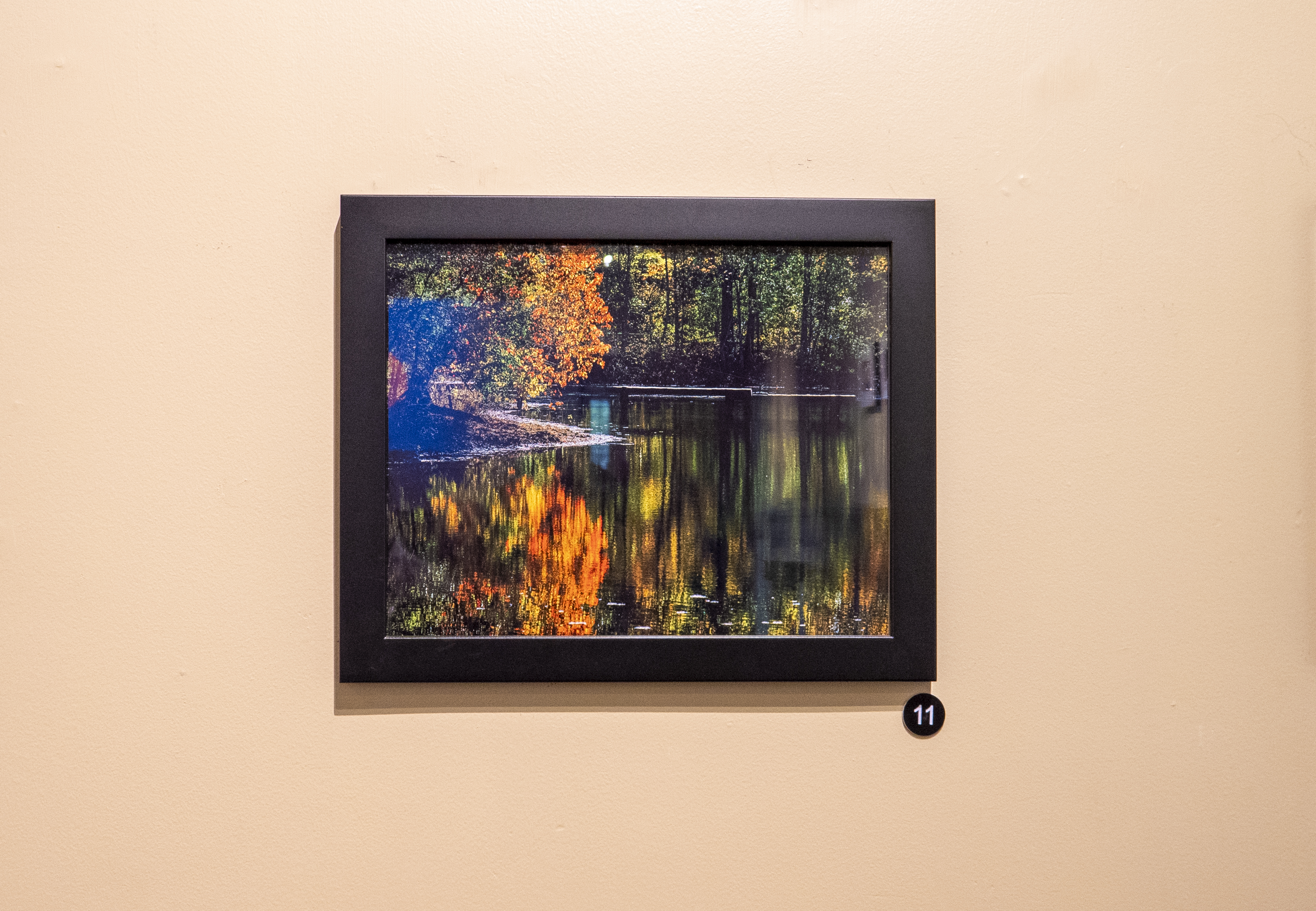
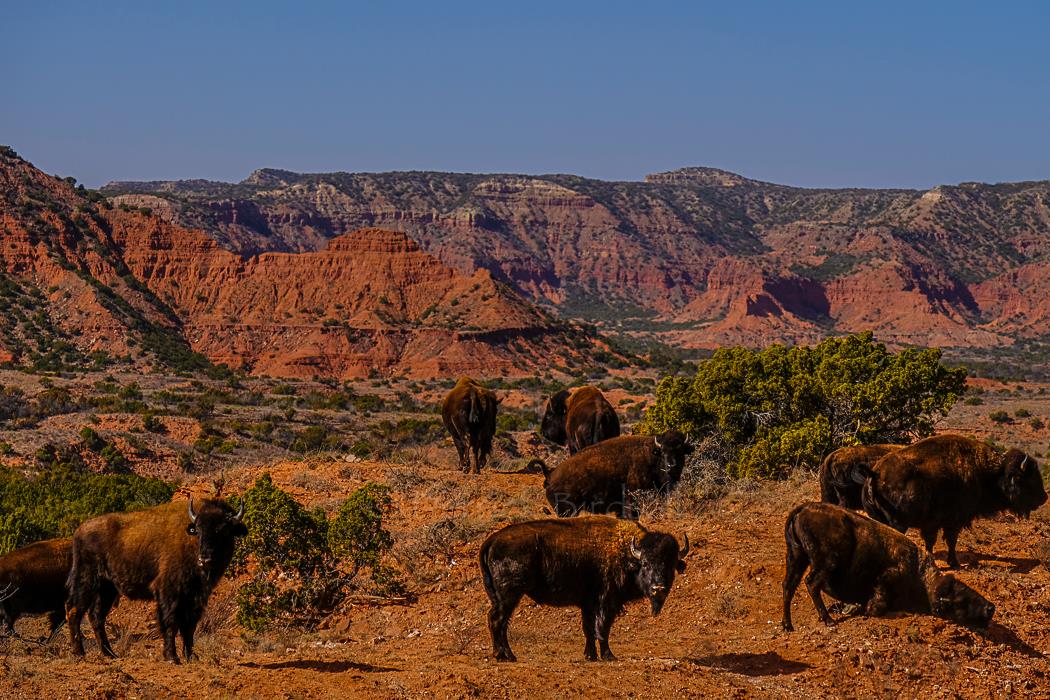
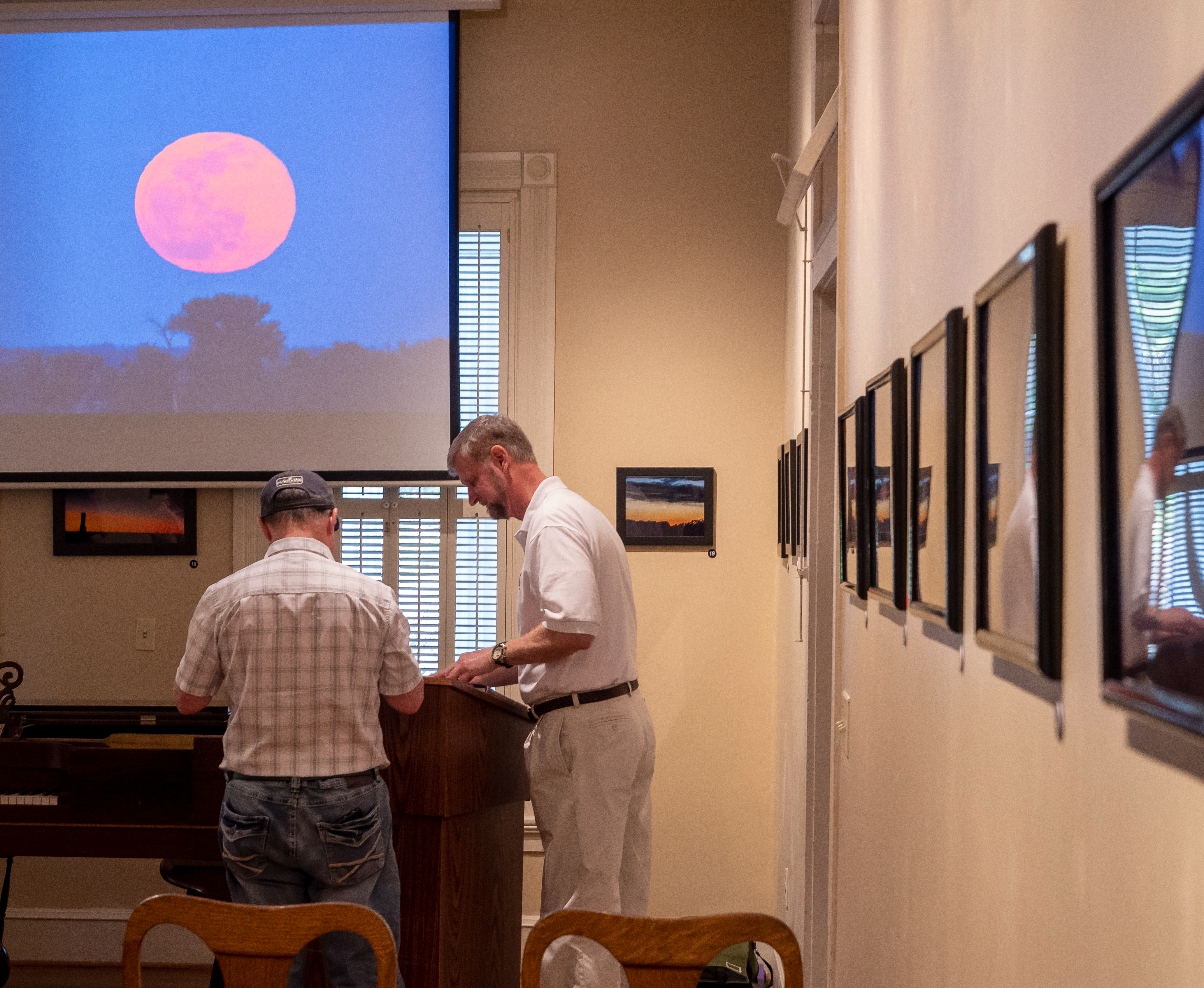
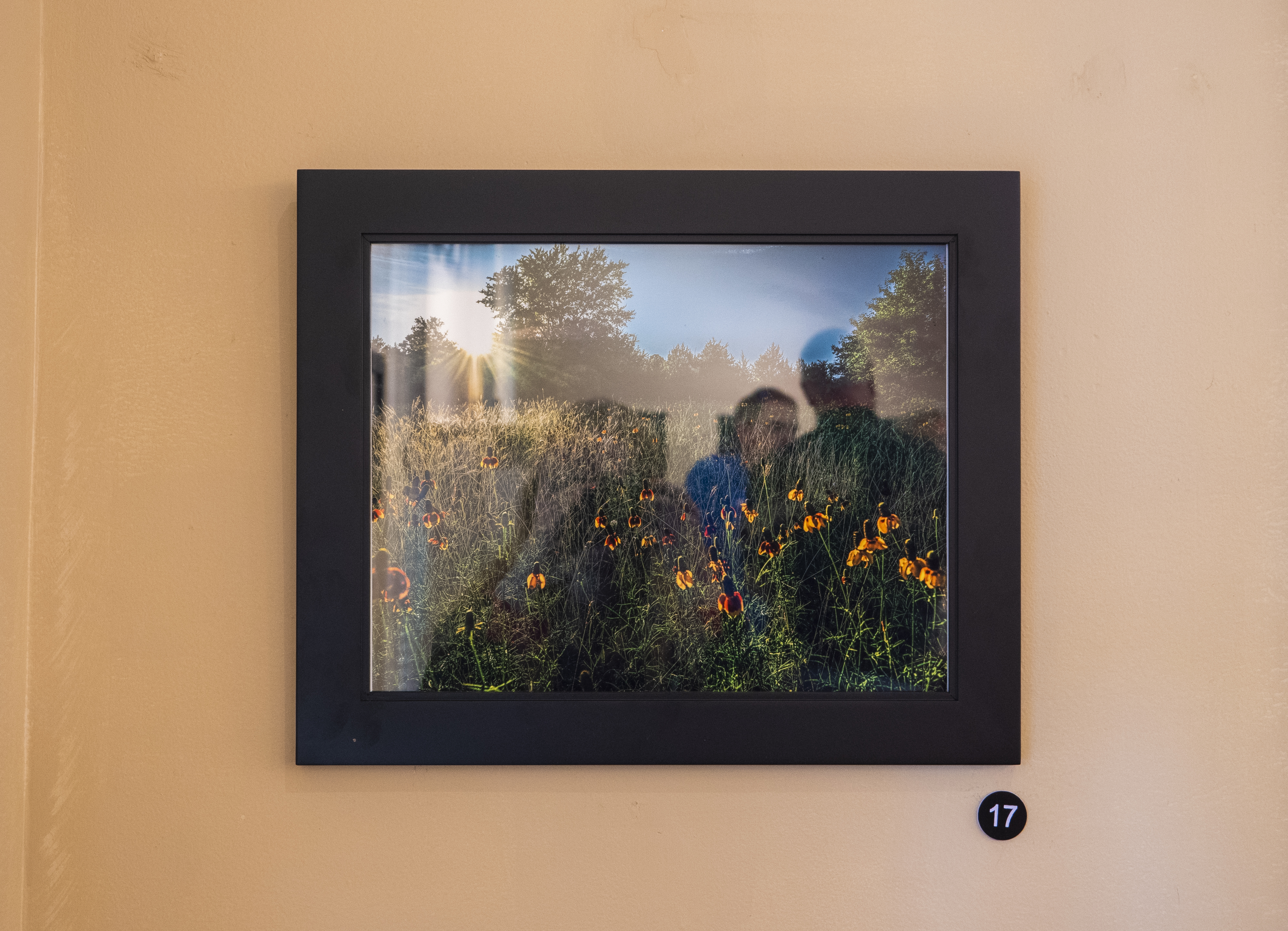
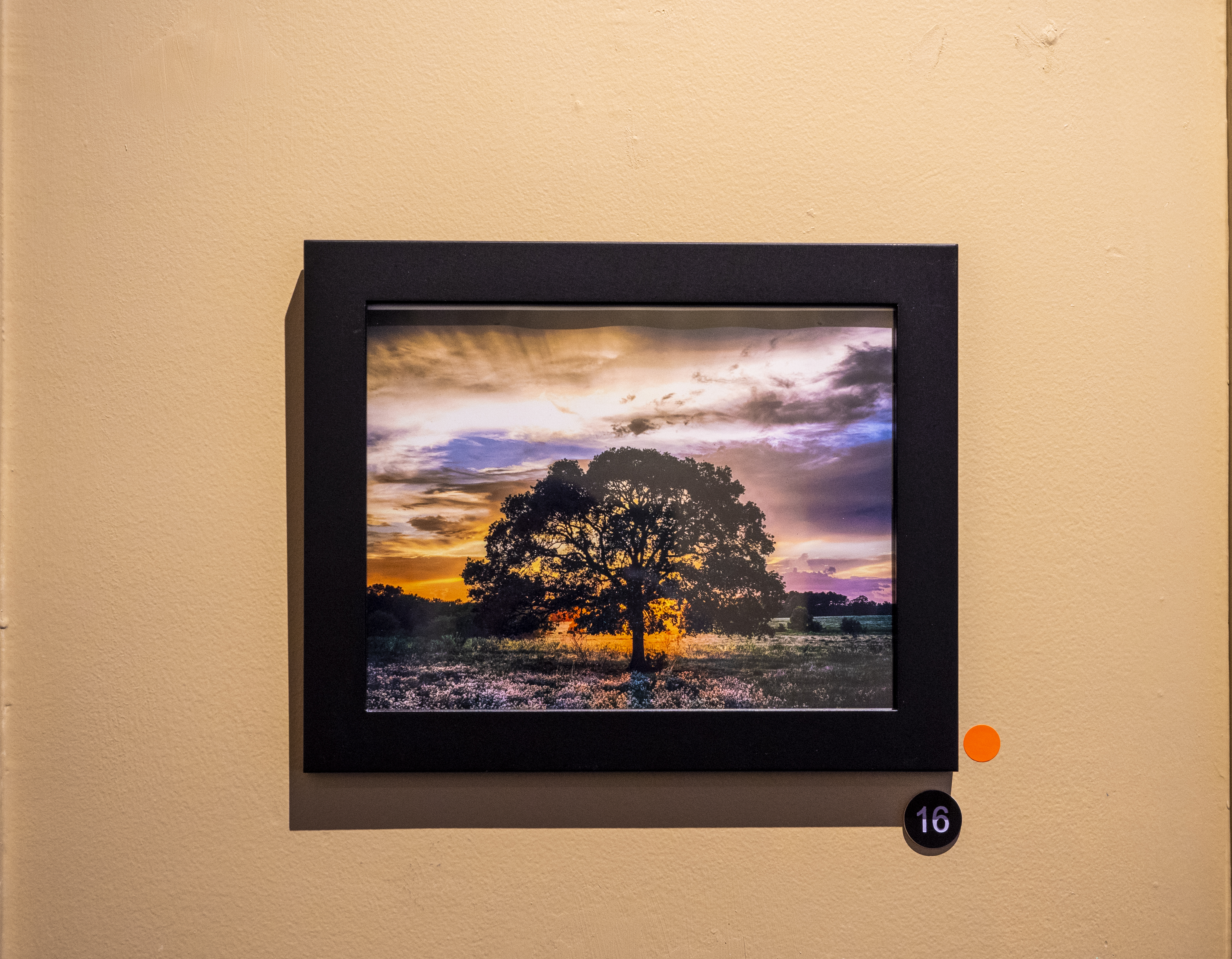
Before the event began, I had the opportunity to look at the newest exhibit being shown at the Wynne Home. Under a Texas Sky by Derrick Birdsall was a beautiful back drop to the conversation about past Texans and the natural landscape the Texas Parks and Wildlife has worked so hard to protect.
I was also able to enjoy refreshments provided by the Friends of the Wynne and mingle with Miranda Estrada, a former LEAP Ambassador who–two degrees later–is working as the City’s Economic Development Specialist.
I also introduced myself to Dr. Strutt before the event began to discuss career opportunities within the Texas Parks and Wildlife, the powers held by the Texas Game Wardens and Park Police, and living in Austin.

Sarah Faulkner, the Cultural Services Manager for the Wynne Home, began the night by introducing Dr. Strutt. Ms. Faulkner actually met Dr. Strutt when she was working for the Texas Parks and Wildlife Department at the Battleship Texas State Historic Site. Dr. Strutt, originally from Virgina, has held his position for the Texas Parks and Wildlife for 21 years and received degrees in Anthropology, Earth Sciences, and Archeology.

Dr. Strutt started the presentation by explaining of the organizational structure of the Cultural Department. The department is divided into five smaller departments: archeology, archeology collection, preservation, cultural services, and the regional cultural services. All of the departments, except for the regional services, work out of the headquarters in Austin. The department does a lot of various tasks to ensure the preservation of our past such as fixing, cataloging, and restoring historic buildings, furniture, and other historic objects, as well as cleaning and waxing statues. With over 60,000 historical objects catalogued in Portfolio and a web application that TPWD employees use to reference historical objects that are all over the state, Dr. Strutt and his team stay very busy.

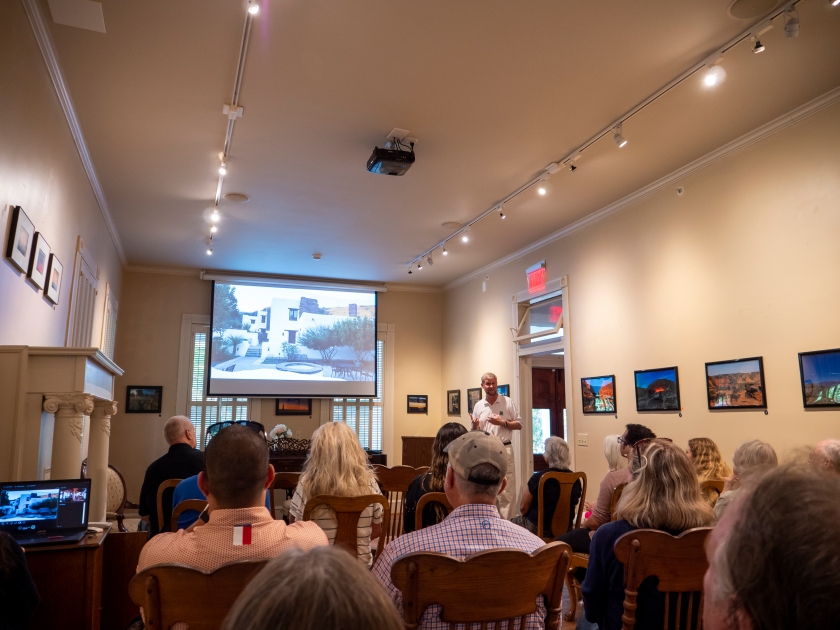
He went into depth about specific projects the Cultural Resources department has worked on, projects that are currently in the works, and the next steps for the Texas Parks and Wildlife. One of the projects I found the most fascinating was the restoration of adobe buildings at a fort in West Texas. The Cultural Resources department not only found a specialist to ensure that the building was restored, but they taught the Rangers, Interpreters, and other Park employees how to restore the building.

Dr. Strutt emphasized that every employee must know the history their park and how to care for it to ensure that the employees could answer questions from the public and, more importantly, take pride in their parks. Another recent project that took place was very close to home, as the Cultural Resources office helped Huntsville State Park redo the siding on the boathouse build by the Civilian Conservation Corps over 80 years ago.

In the field, the Cultural Resources team is also working hard. At Seminole State Park, archeologists have just recently discovered a fire pit that was last used over 2000 years ago. The site was discovered during an archeological survey before a pump station was built. At Caprock Canyon State Park, after years of erosion along the cliffs, archeologists apart of Dr. Stutts team have discovered a large deposit of Bison remains. They believe the location was a site for meat processing for a Native American tribe at one time. Dr. Strutt informed us that once more research had been included, both of these sites would be a part of the interpretation of their respective parks.

Being that is it that centennial year of the Texas Parks and Wildlife Department, Dr. Strutt and his team have been working on various projects about the history of the department itself. He told us all about the first female superintendent of a Texas State Park, Carrie May Ferrell. Ferrell was the Superintendent of Stephen F Austin State Park during the early 1930s, but she was not the only female trailblazer in the Parks Department. Ethel Harris was the Superintendent of Mission San Jose for 22 years, before her retirement in 1963, while also running her own art business. Learning about the conservation efforts of women before women were widely accepted into the workplace was more than inspiring.

While we spend a lot of time discussing Texas’ past, we also discussed the future, that is the future of State Parks. Texas Parks and Wildlife Department recently announced that they will be opening two new natural areas and three new state parks soon. Before any construction can begin, archeological studies must be conducted, interpretations of any objects must be researched, and much more will be done by the Cultural Resources office. There are also new technologies being introduced to parks to make them more accessible such as free interpretation apps for individuals who are visually impaired. These apps are alert individuals of trail signs and actually read those signs, whether directions or interpretations, aloud. The technology is actively used at Palmetto State Park currently.

At one point during the presentation, Dr. Strutt was talking about why he likes his job. There were a lot of different reasons, but the one that stood out to me was when he said, “I get to see your parks.” A sentence as simple of that was enough to remind me that the parks, historical sites, and everything in them are parts of what Texas was and is. It was a beautiful remembrance of how connected we are to those who came before us.

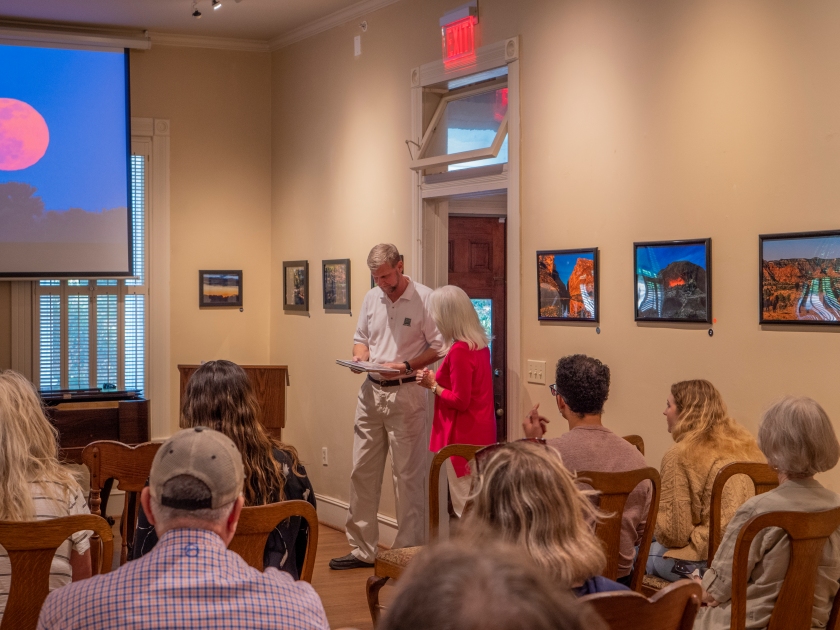
The night concluded with the Friends of the Wynne presenting Dr. Strutt with a book reflecting art made out of interpretation for the state parks. Dr. Strutt was kind enough to stick around for a while to chat with attendees.

When I went to thank him for the riveting presentation, he commented on the number of State Parks I had visited. Whenever he would discuss a project, he would ask who had been to that park and most times I would raise my hand. We discussed the state parks we had both been to and which were our favorite, neither one of us could pick just one park but we both had an appreciation for Lost Maples. He suggested I go to Palo Duro Canyon, a state park I have always wanted to visit, and informed me that there was no sunset like the sunset on the canyon.

Unknown's avatarAuthor mikeyawnPosted on June 2, 2023June 2, 2023Format AsideCategories Art, Civic Engagement, Jobs, ScienceTags Center for Law Engagement And Politics, Sam Houston State University, Texas Parks and Wildlife, Wynne Home Arts and Visitors Center1 Comment on Texas Parks and Wildlife–and the Wynne Home!

Rewiring Our Brains with David Eagleman

Saara Maknojia

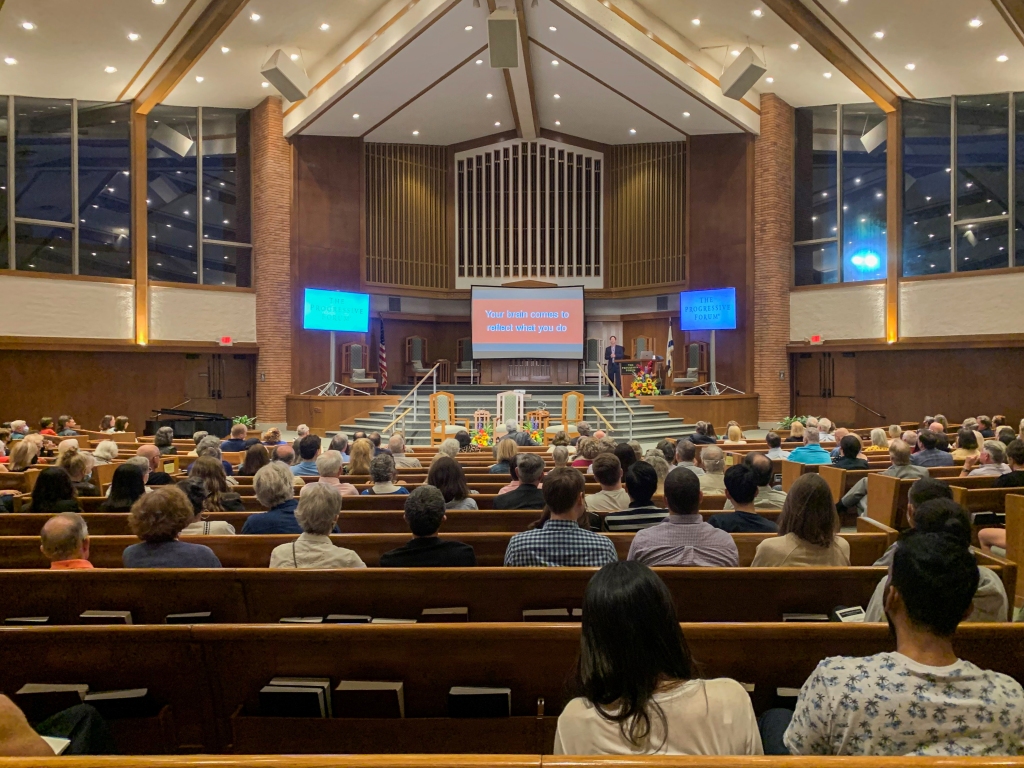
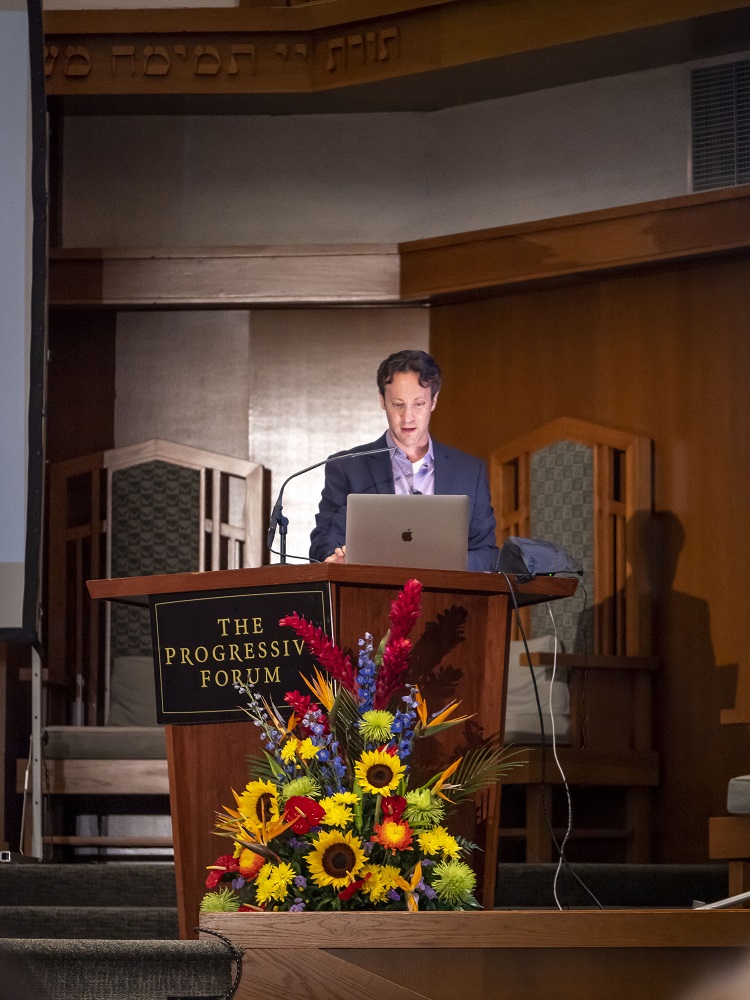
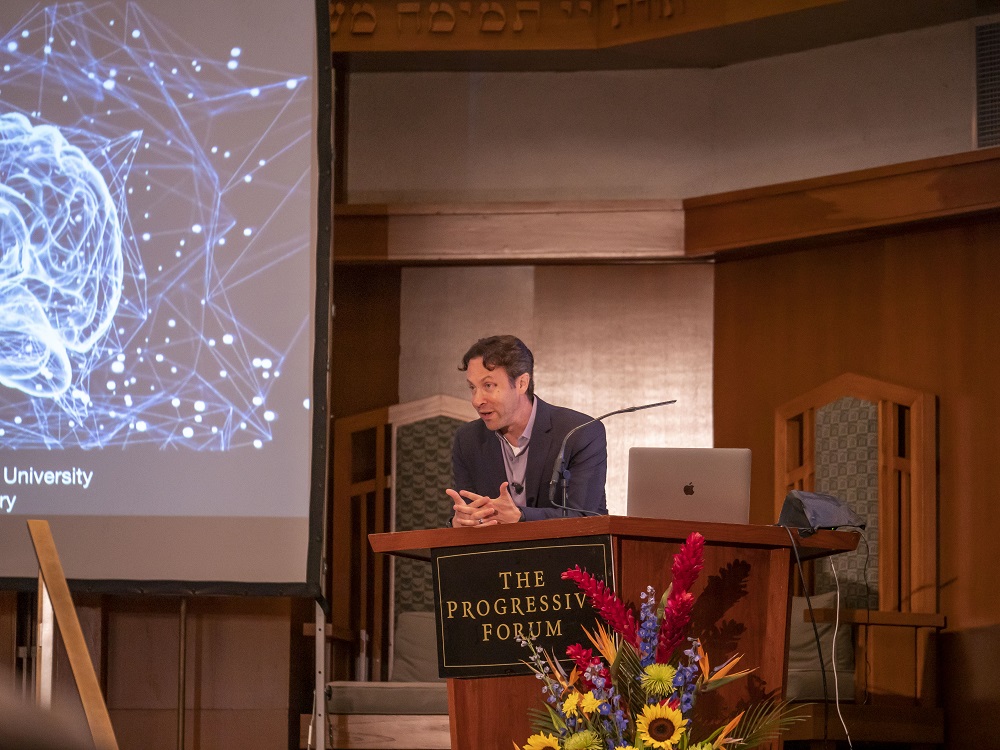
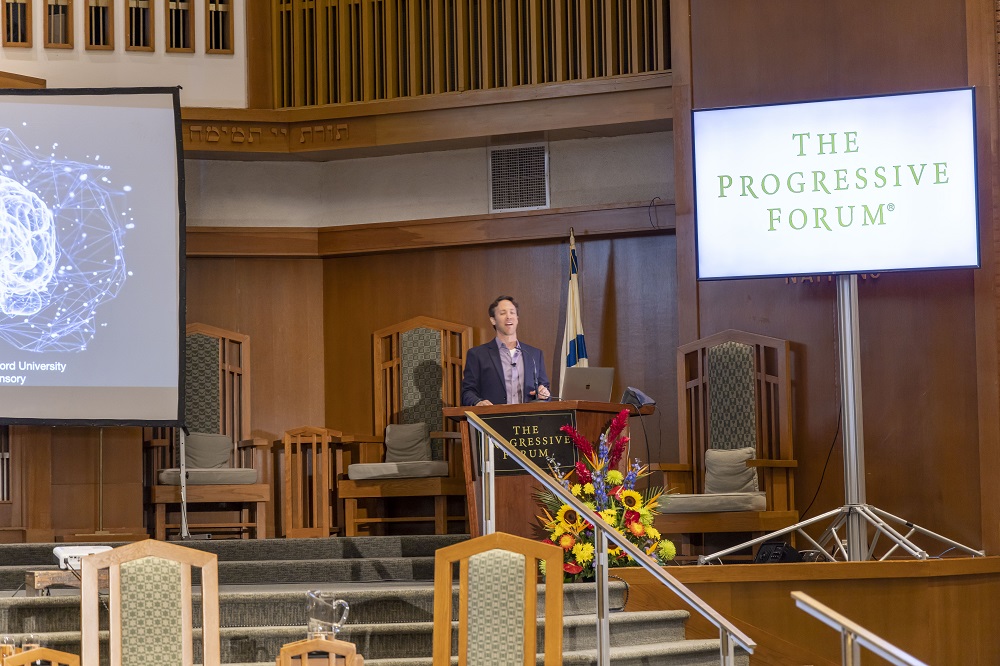
With 86 billion neurons and 500 trillion connections passing through our brain, it is the most complex organ in our body! Dr. David Eagleman is a renowned Neuroscientist who teaches at Stanford University, author, and CEO of Neosensory, so he was the perfect person to help us learn more about the brain. Thus, we travelled to Congregation Emanu El, a Synagogue in Houston, which was a new setting and experience for all of us.

Entering the beautiful synagogue, the LEAP Ambassadors were introduced to Randall Morton, the President and founder of The Progressive Forum, who then began the introduction of Dr. Aziz Shabani, a Clinical Professor at Baylor College of Medicine. Dr. Shabani provided the program attendees with medical sciences and its revolutionary take on modern-day society.

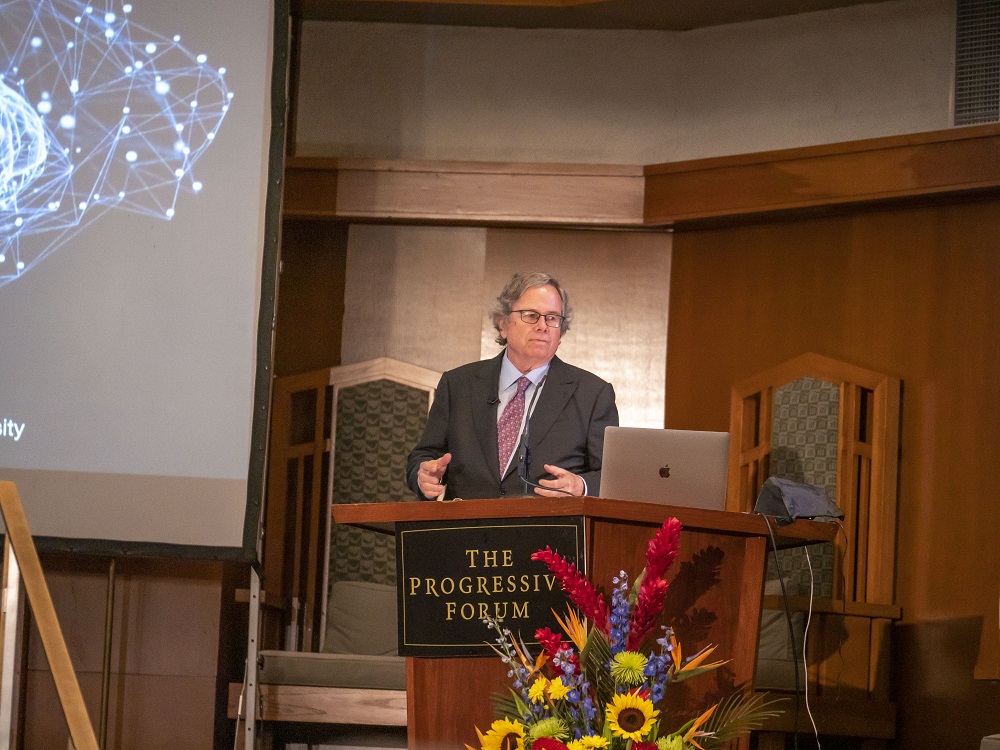
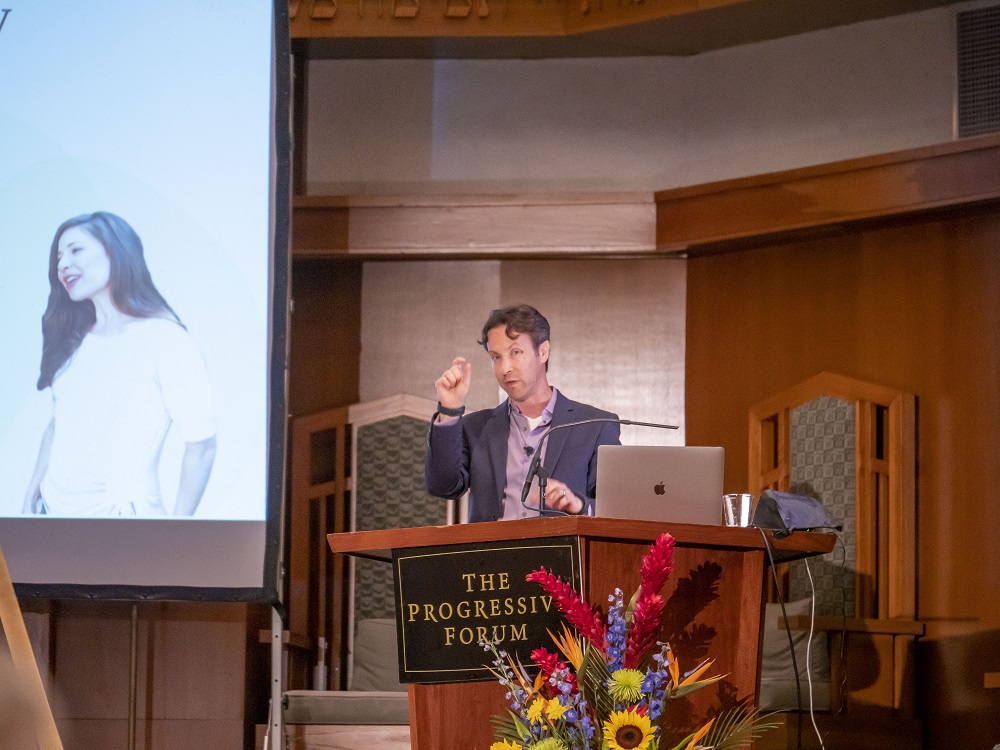
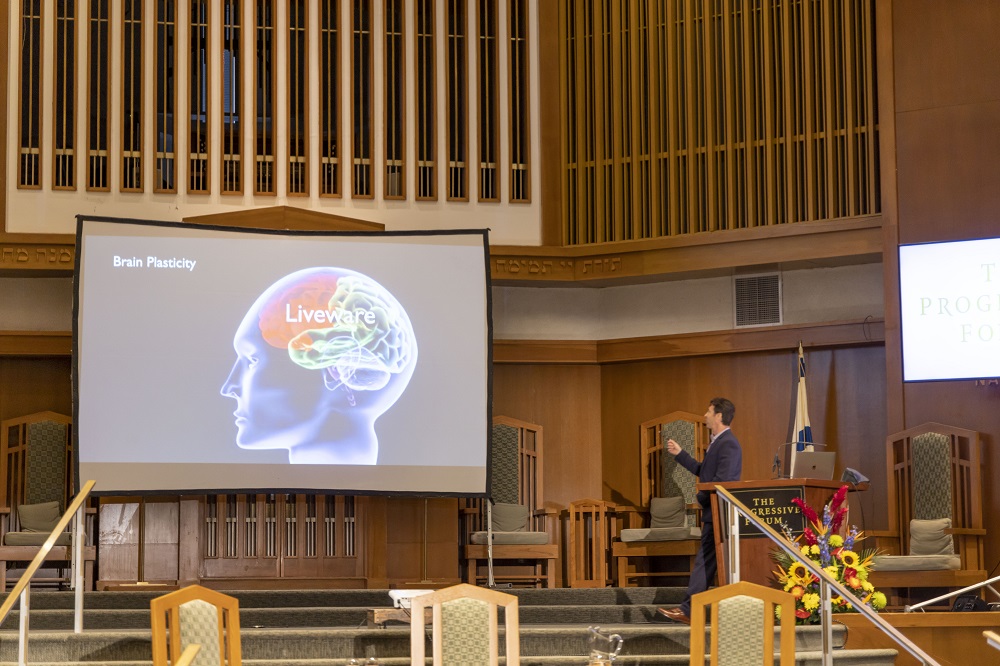
Aziz Shabani energetically and proudly introduced the man of the evening, Dr. David Eagleman! In his presentation, Eagleman explained the functions of a normal brain and gave us a short lesson on each part of the brain cortexes. In addition, he explained that, “brain plasticity” is a term used to describe the expansion of the cortexes, although he prefers the term “liveware.”

The LEAP Ambassadors were fascinated by the study and research conducted by Dr. Eagleman and his team. Their studies specifically focused on people who have sensory loss, such as loss of hearing, blindness, and people with underdeveloped limbs. As a result, Dr. Eagleman expanded greatly on his brand Neosensory, promoting an affordable replacement of cochlear ear plants and a wristband that provides senses to those who have difficulty hearing, seeing, and even touching.

After Dr. Eagleman shared his insight on the human brain and its wonders, Randall Morton, Dr. Aziz Shabani, and Dr. Eagleman gathered for a short Q&A session. The questions exchanged between the three were, “What advice do you have for self-discovery?” Dr. Eagleman answered beautifully and said, “Always go with your gut feeling, and whatever makes you get up in the morning filled with excitement, do it.” Dr. Shabani corresponded with another question asking about how our own brains expand. He answered with, “to serve your brain, we must change our routine,” implying that daily challenges will only make our brain smarter and help our longevity. He began with simple suggestions, such as changing the hand you wear your watch on, and moved to more complex routine alterations.

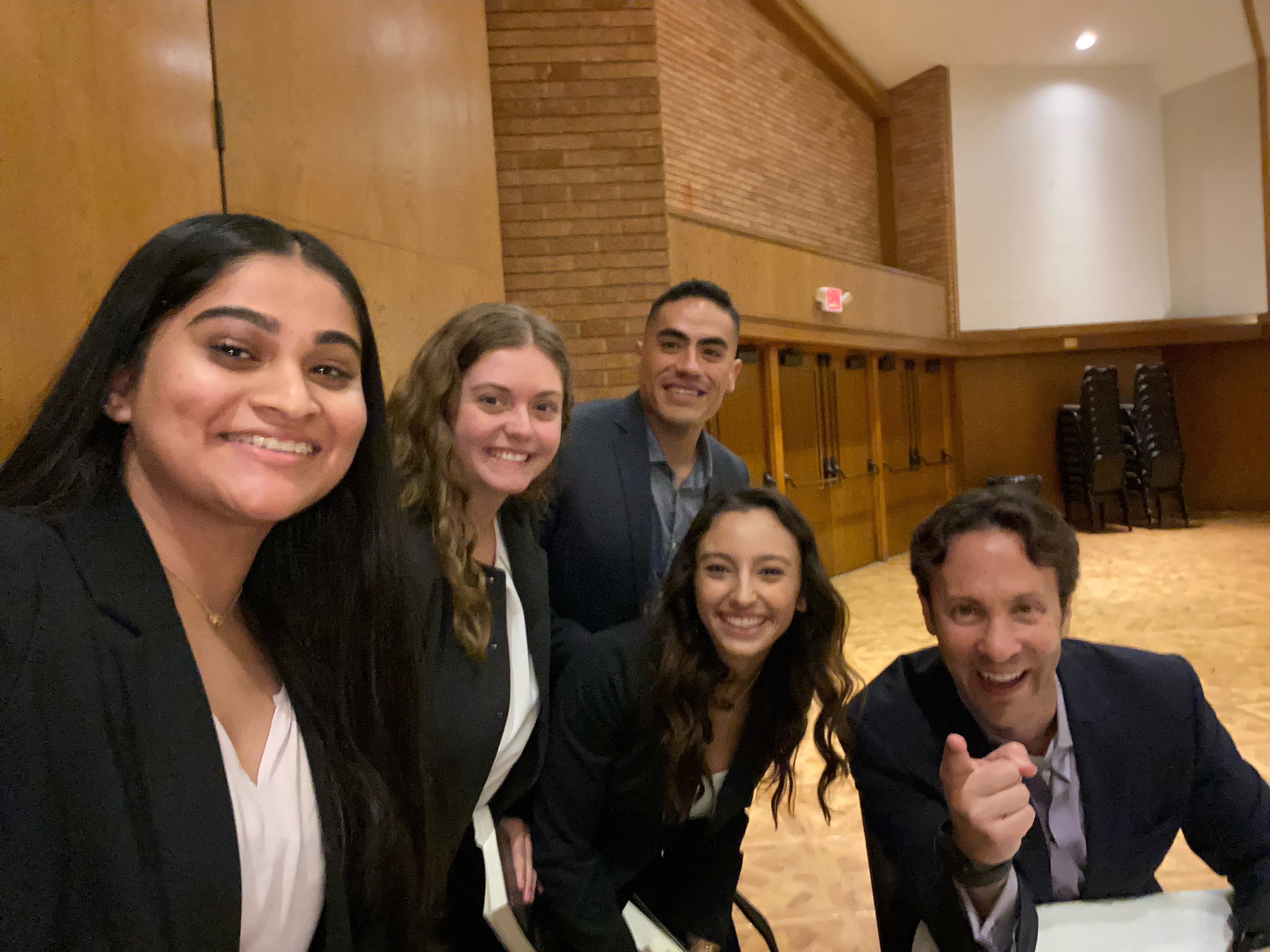
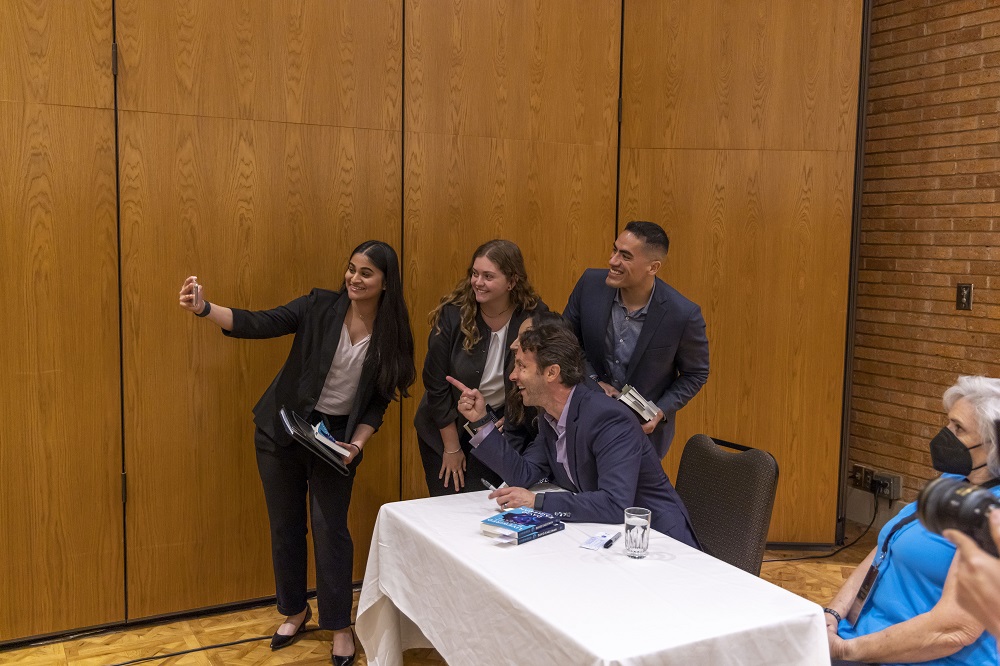
After the event, the LEAP Ambassadors were able to meet Dr. Eagleman. He even signed our copies of his book, Livewire! Dr. Eagleman then spent a few moments with us, asking where we are in our story. We were also able to take a picture with Eagleman after our conversation!

Star Pizza

Yvette Mendoza

We grew our neural plasticity by seeking new settings such as a synagogue and afterwards, an excellent restaurant called Star Pizza; a pizzeria in the heart of Houston that serves both Chicago deep-pan pizza and New York-style pizza.

Before we dove into the delicious assortments of pizzas, we had to start off with shareable appetizers. As we dug into the baked goat cheese served with olive oil, sun-dried tomatoes, and French bread, we kept wanting more. The appetizers kept coming, and our eyes widened as the waiter brought garlic bread with cheese. Everything was perfectly cooked. Even the cheese had a golden-brown tint that you could feel oozing in your mouth.

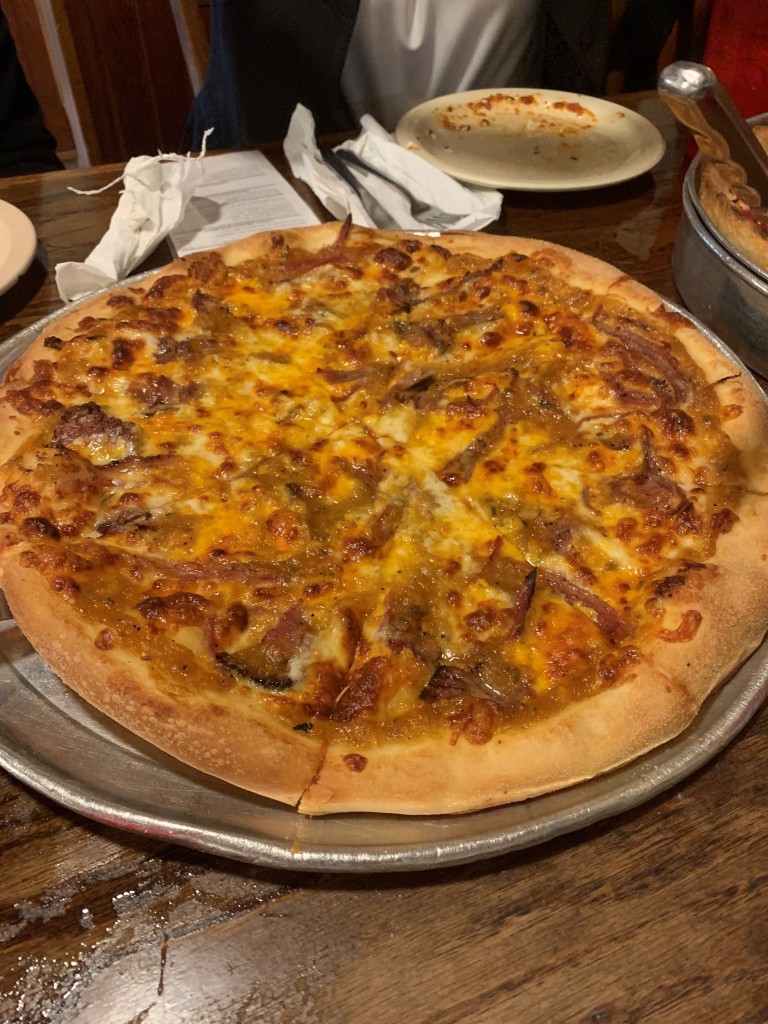
At last, we ordered the Cowbell deep dish with slow-smoked BBQ beef brisket, topped with BBQ Sauce and cheddar, provolone, and mozzarella cheese. As well as the New York-style Margherita with pineapple. Having both pizzas to try provided the perfect combination of sweet and savory. The crust was toasty, and the heart of the pizza was warm with all the BBQ flavors coming together with the cheese and the Roma tomatoes, creating an excellent combination.

We not only left with a full stomach but were also able to develop our minds by trying new things and not consuming the chain food every college student eats.

Unknown's avatarAuthor mikeyawnPosted on May 9, 2022Format AsideCategories Civic Engagement, Science, VolunteerTags Center for Law Engagement And Politics, LEAP Ambassadors, LEAP Center, Progressive Forum, Sam Houston State University, SHSULeave a comment on Rewiring Our Brains with David Eagleman

LEAP Ambassadors Are Involved!

This slideshow requires JavaScript.

Follow Us On Facebook!

Follow Us On Facebook!

Catch Up With Us

  • Crafting for a Cause December 18, 2025
  • Exploring The Shining: A Kubrickian Journey December 15, 2025
  • Interactive Experiences at Asia Society Texas: A Student’s Perspective December 14, 2025
  • A Culinary and Artistic Journey Through Houston December 13, 2025
  • Alumni Insights: Jessica Rodriguez-Wahlquist Returns to LEAP December 11, 2025

Join The Conversation!

The Civic Leadership… on Foundational Activities of the…
The Civic Leadership… on The Philosophical Foundations…
LEAPing Into Action… on The Philosophical Foundations…
Jada Cook's avatarJada Cook on SHSU Students LEAP Across Five…
Reflections from the… on Kicking off the Semester Right…

Find Previous Posts

Throwing it all the way back to the days when LEAP suited up for the Sammys — and even took home a few! Over 10 years later and these trophies still make our alumni smile. Who else has their Sammy?!

We also have Twitter!

My Tweets

LEAPing Into LEARNing

This slideshow requires JavaScript.

  • About LEAP
  • LEAP Ambassadors
Center for Law, Engagement, and Politics Blog at WordPress.com.
  • Subscribe Subscribed
    • Center for Law, Engagement, and Politics
    • Join 486 other subscribers
    • Already have a WordPress.com account? Log in now.
    • Center for Law, Engagement, and Politics
    • Subscribe Subscribed
    • Sign up
    • Log in
    • Report this content
    • View site in Reader
    • Manage subscriptions
    • Collapse this bar
 

Loading Comments...