With a lighter day on the Southern Legislative Conference’s Docket, we did a bit of exploring and learning on our own. With us passing the official half-way mark of our trip, we felt a bit of pressure to ensure we are getting the most out of this opportunity, while still having fun.
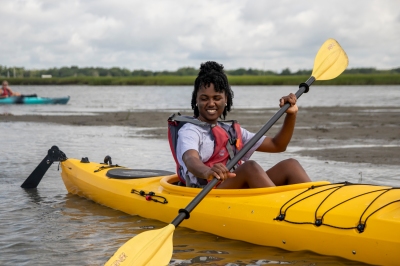
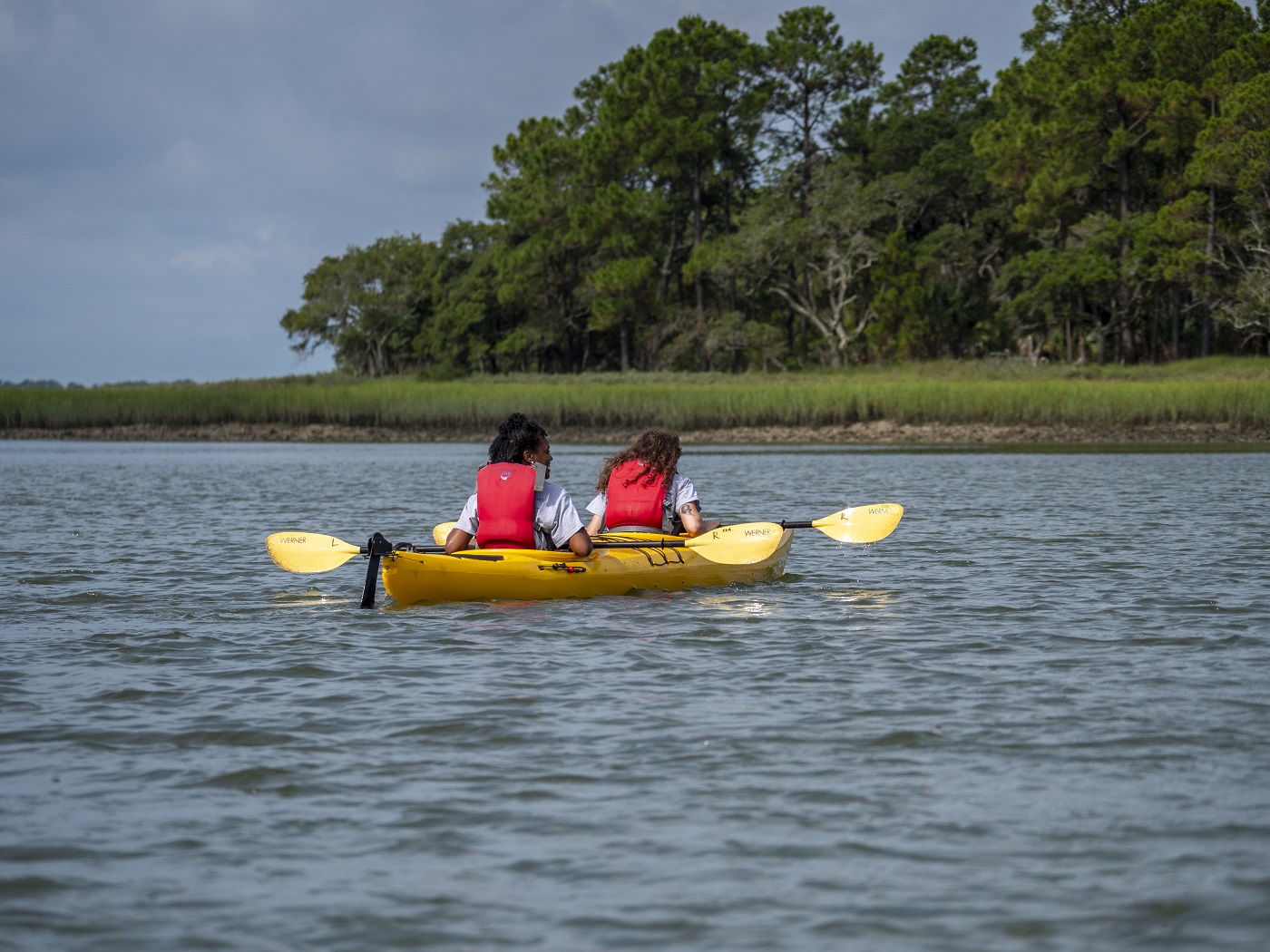
Kayaking the Low Country
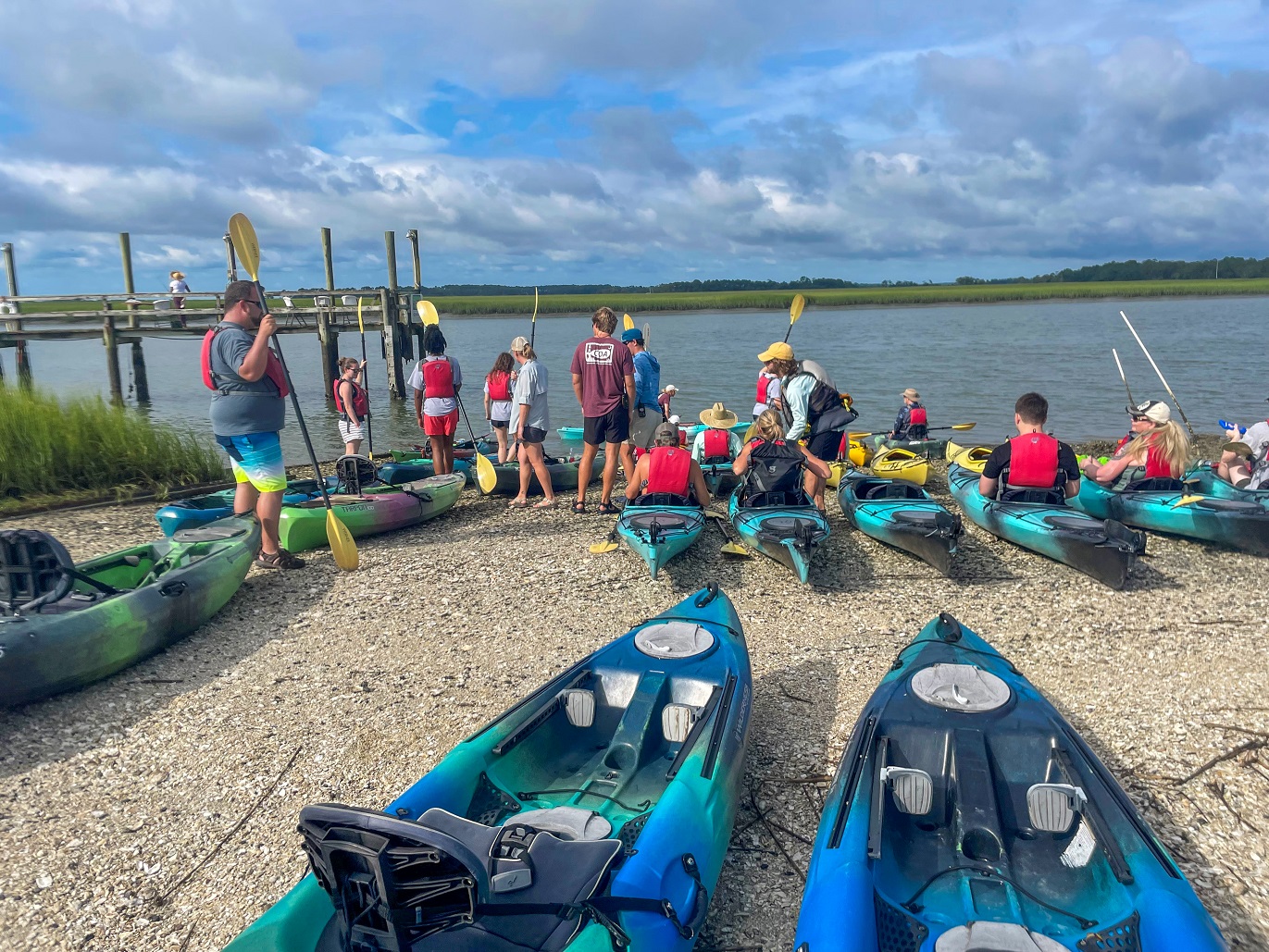
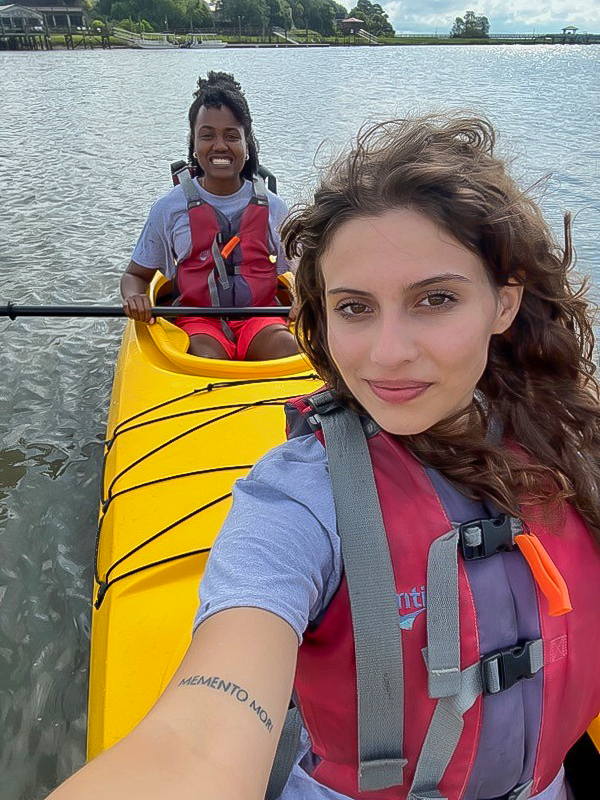
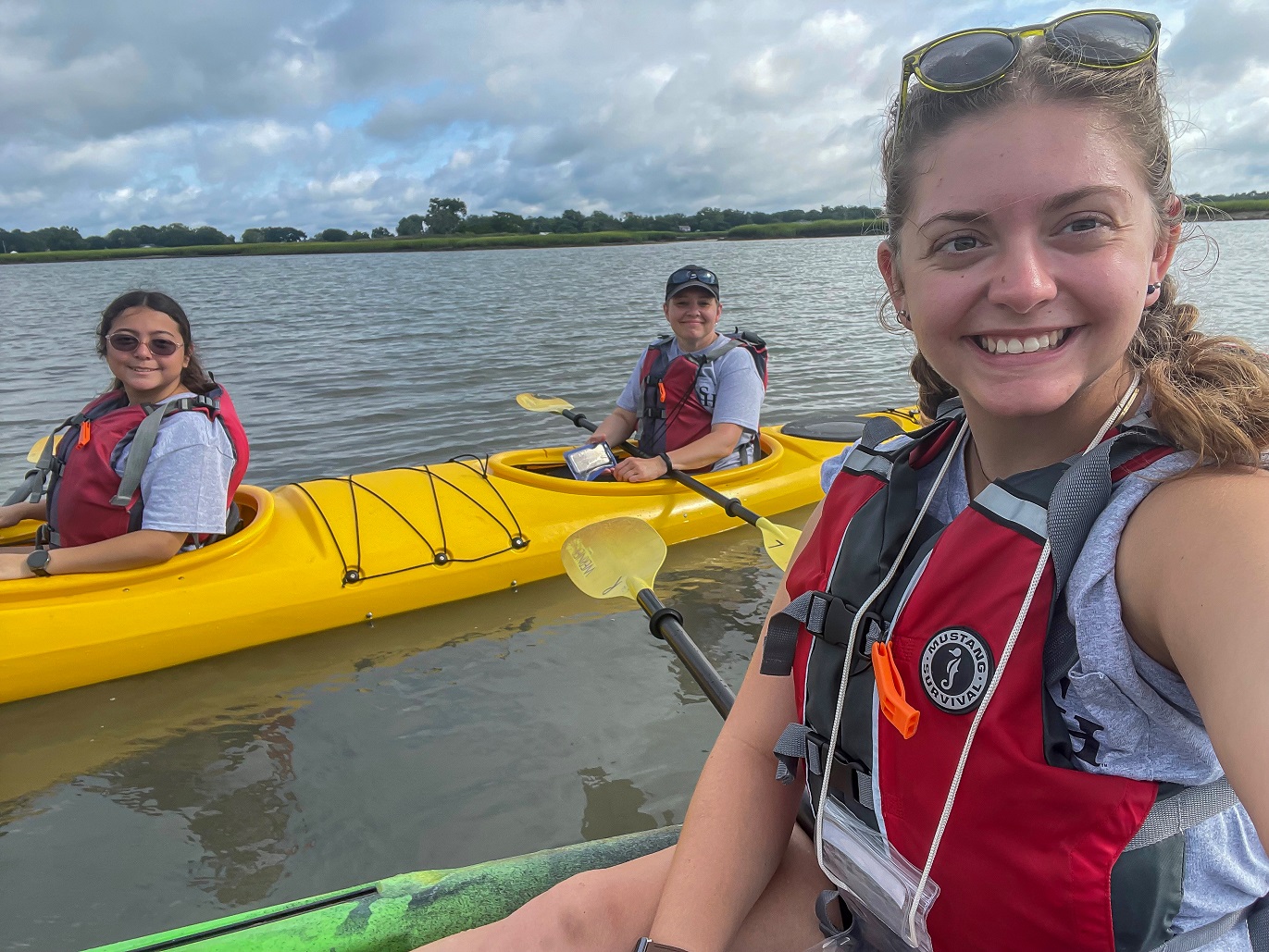
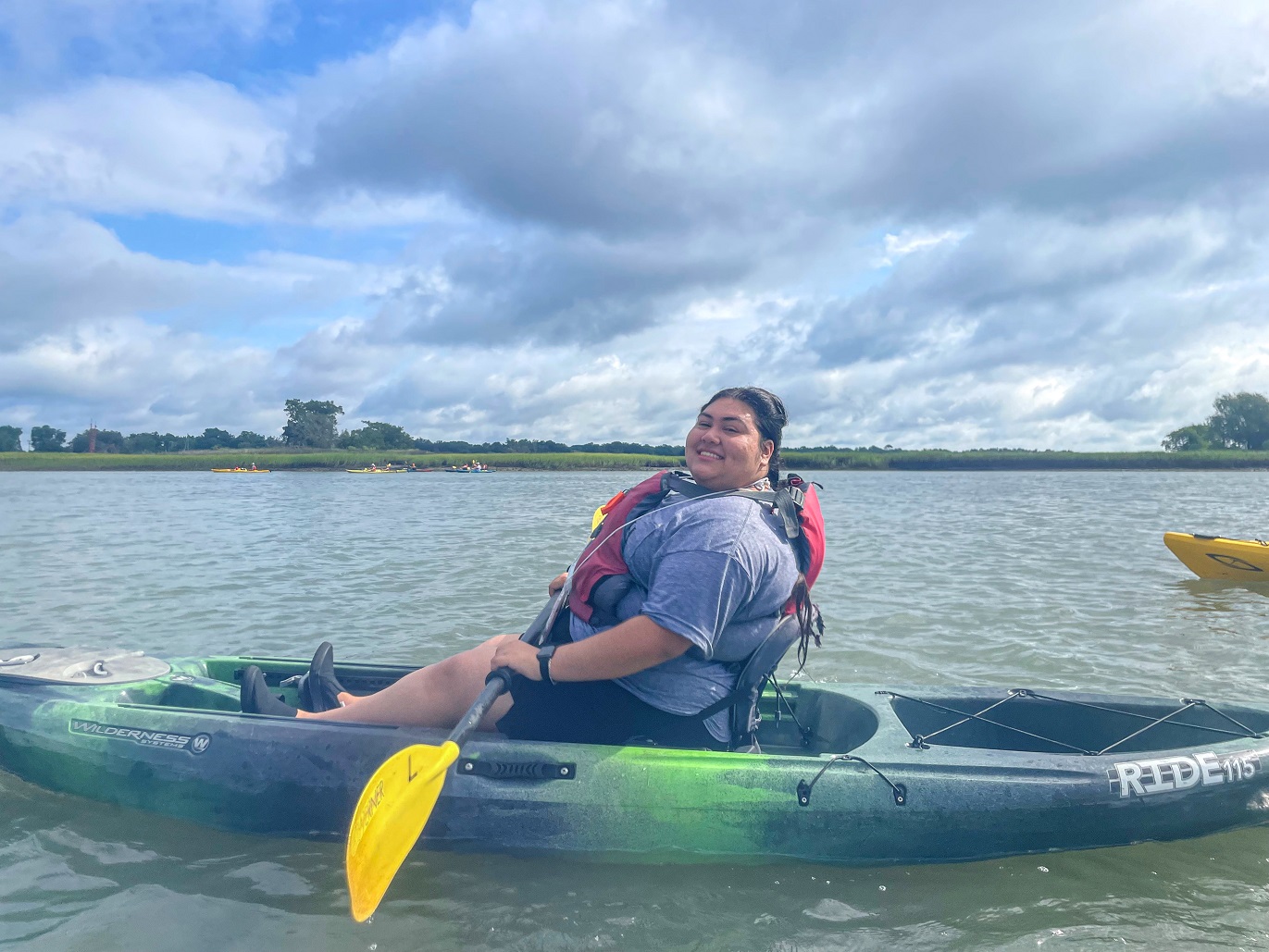
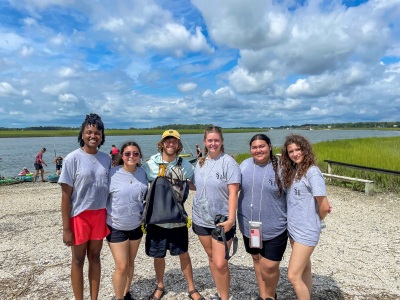
With a day more or less free to explore and spending time on our own dime, we decided to kayak. Feeling empowered, we asserted our independence, noting, “We are women, hear us oar!”
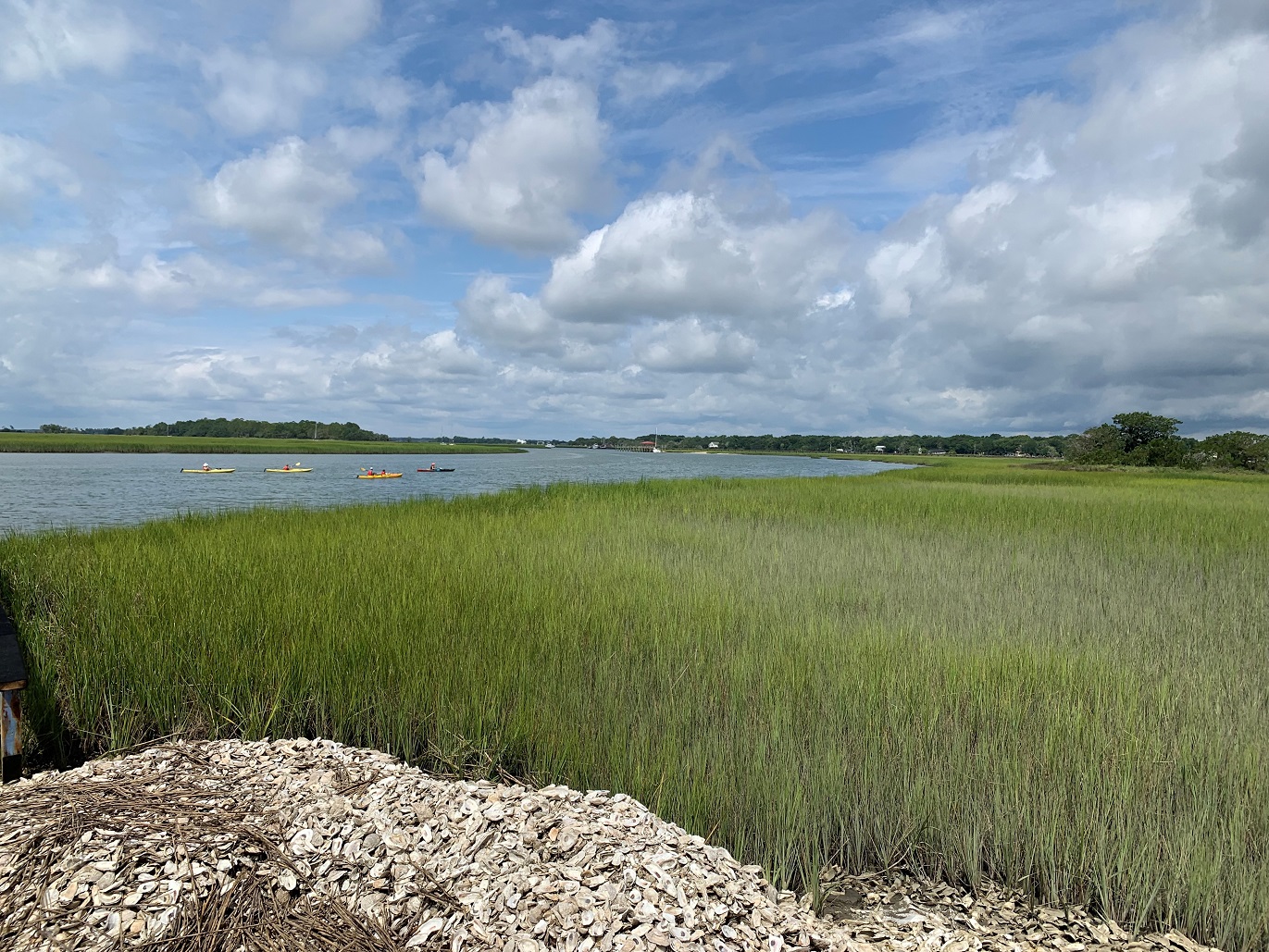
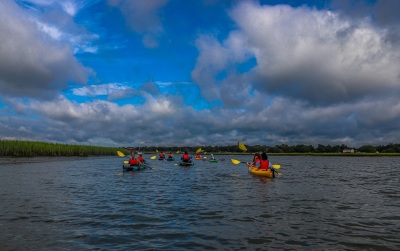
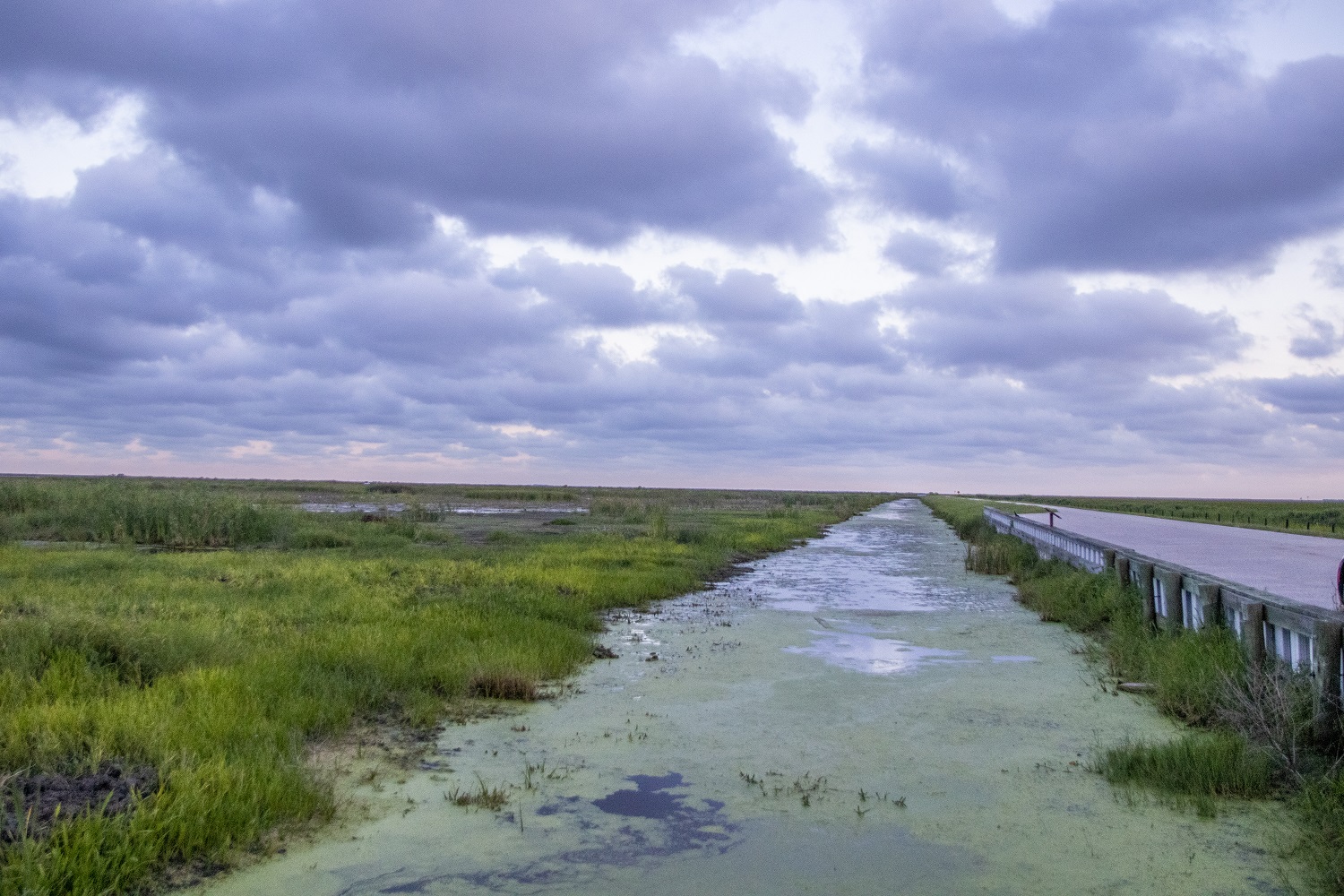
At first, however, the only roar we heard was thunder. Indeed, this was the scene ten minutes prior to our arrival:
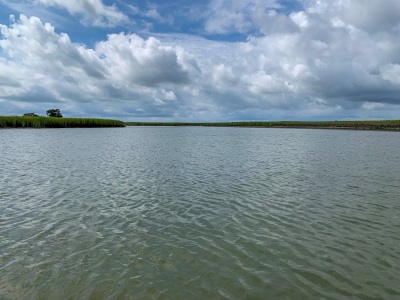
Fortunately, it soon cleared up–almost miraculously. Within twenty minutes, the weather cleared, producing a pleasant looking morning.
Although this “eco-tour,” as it is described, is educational, it is mostly a fun excursion, designed to get us exercise, learn about the outdoors, and relieve some advisor-induced stress.
But it was educational. Charleston is one of the South’s key cities in terms of culture and economics. Its barrier islands gave it a protective harbor of sorts, and that, in turn, made it an attractive base for sea-travelers early on in US history. And, today, we felt as though we were continuing in that tradition, navigating these barrier (or, as our guide Daniel referred to them, “hammock”) islands.
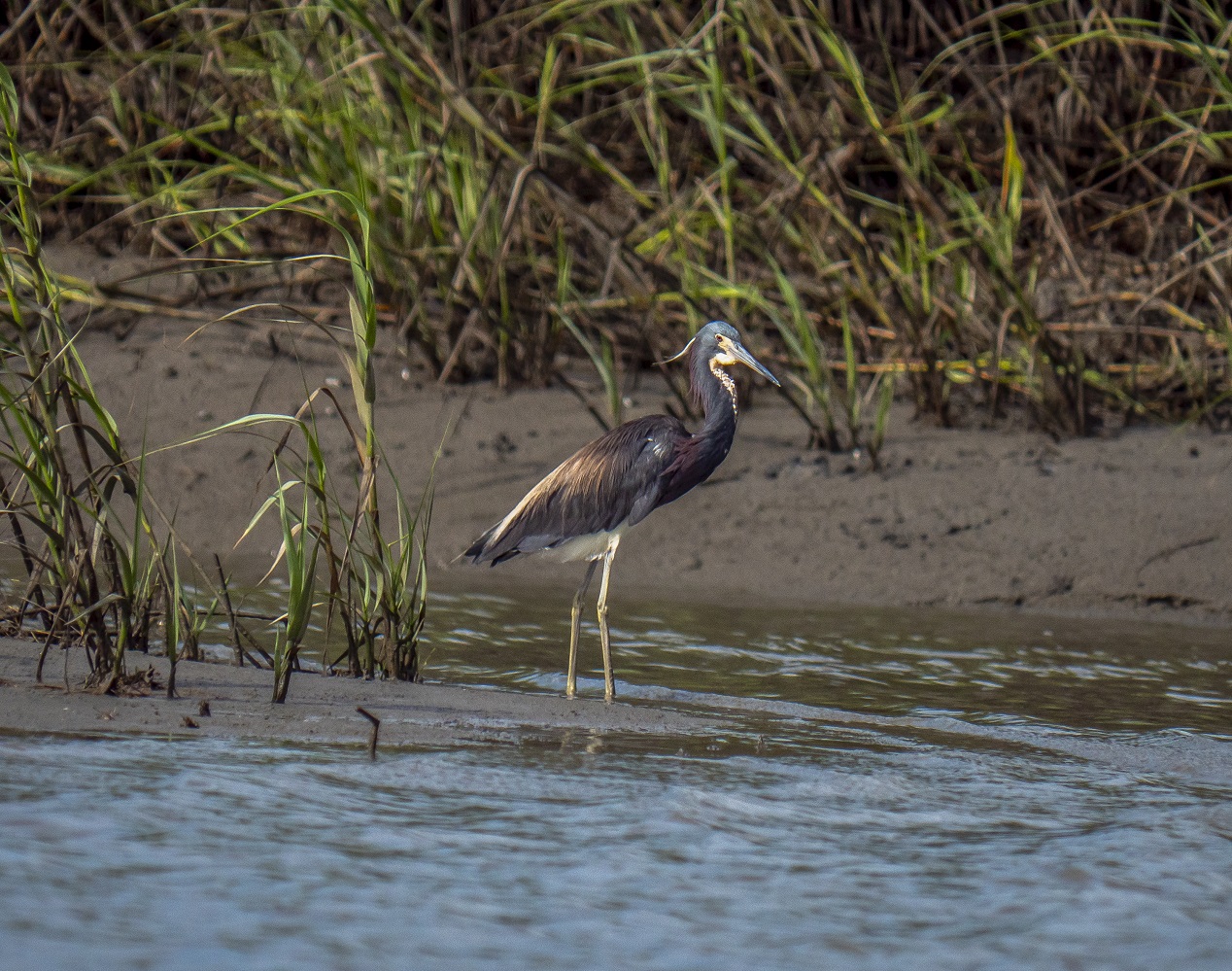
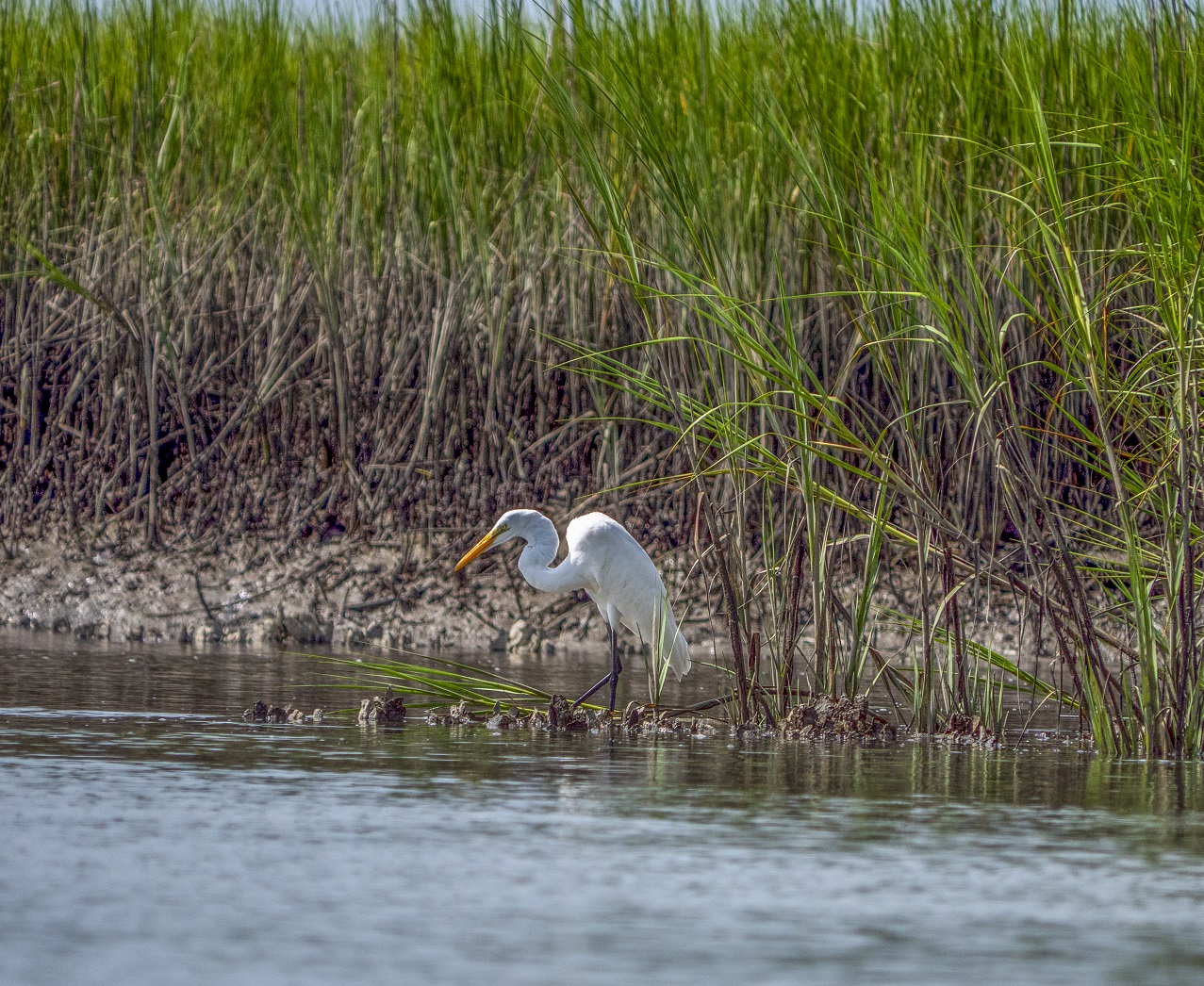
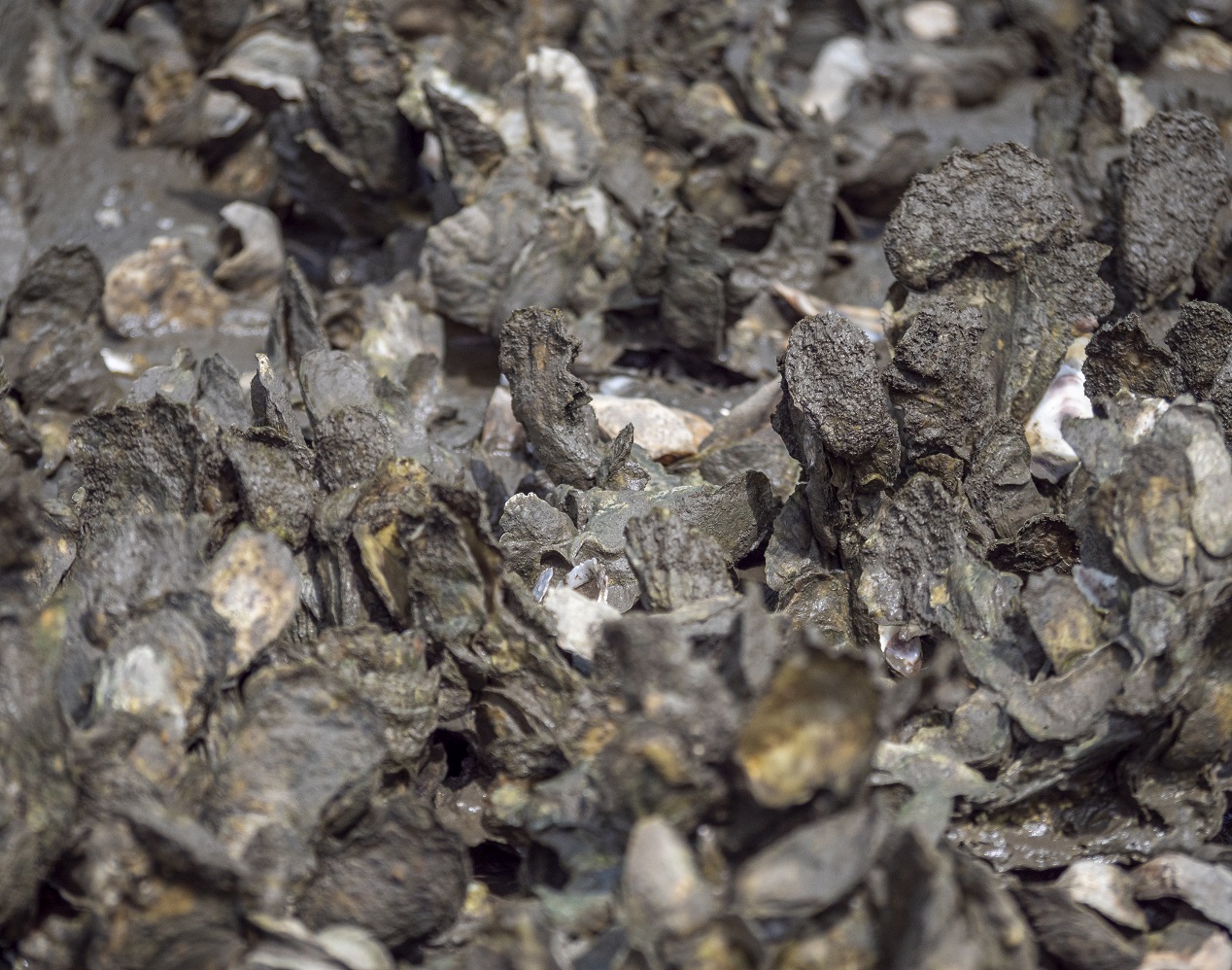
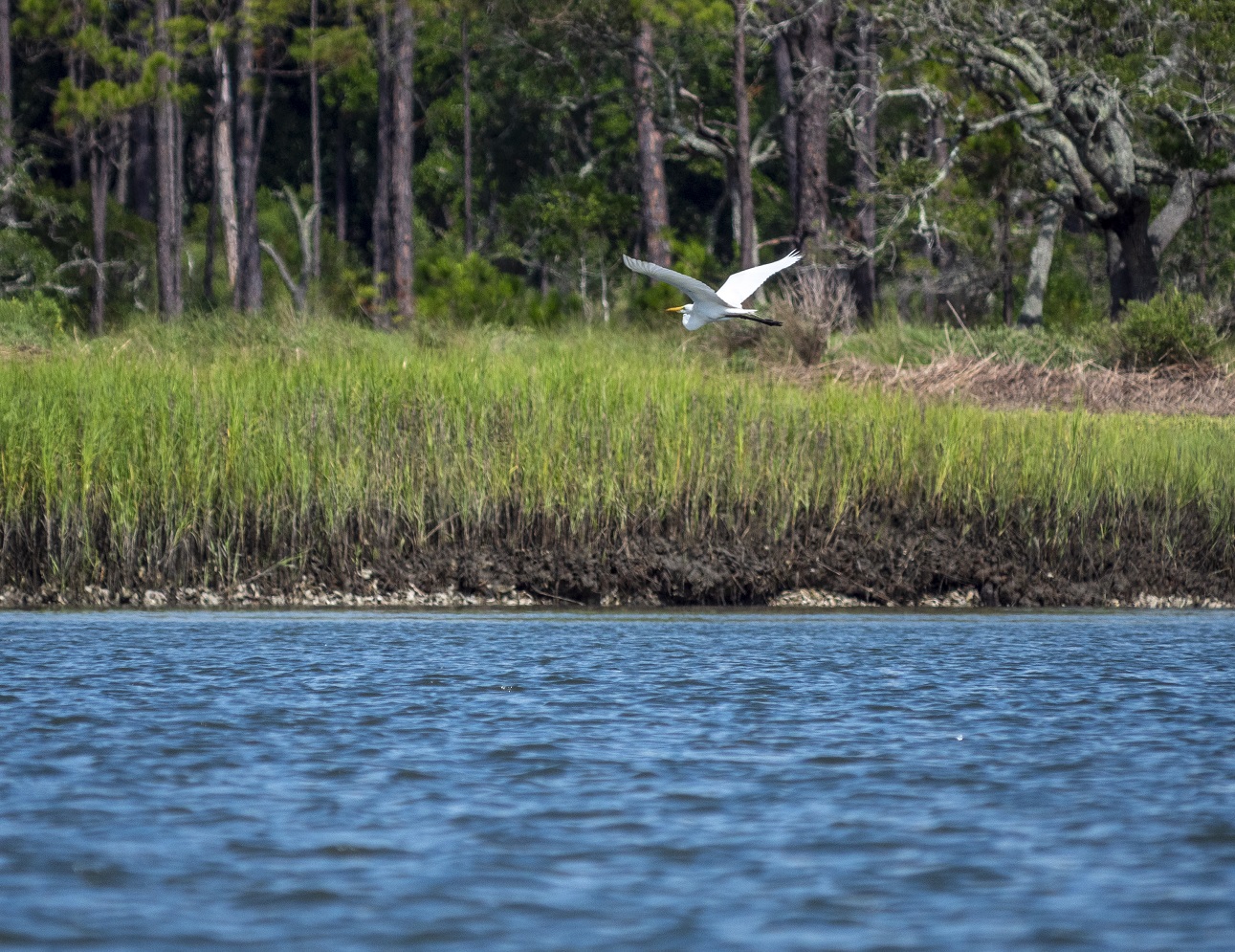
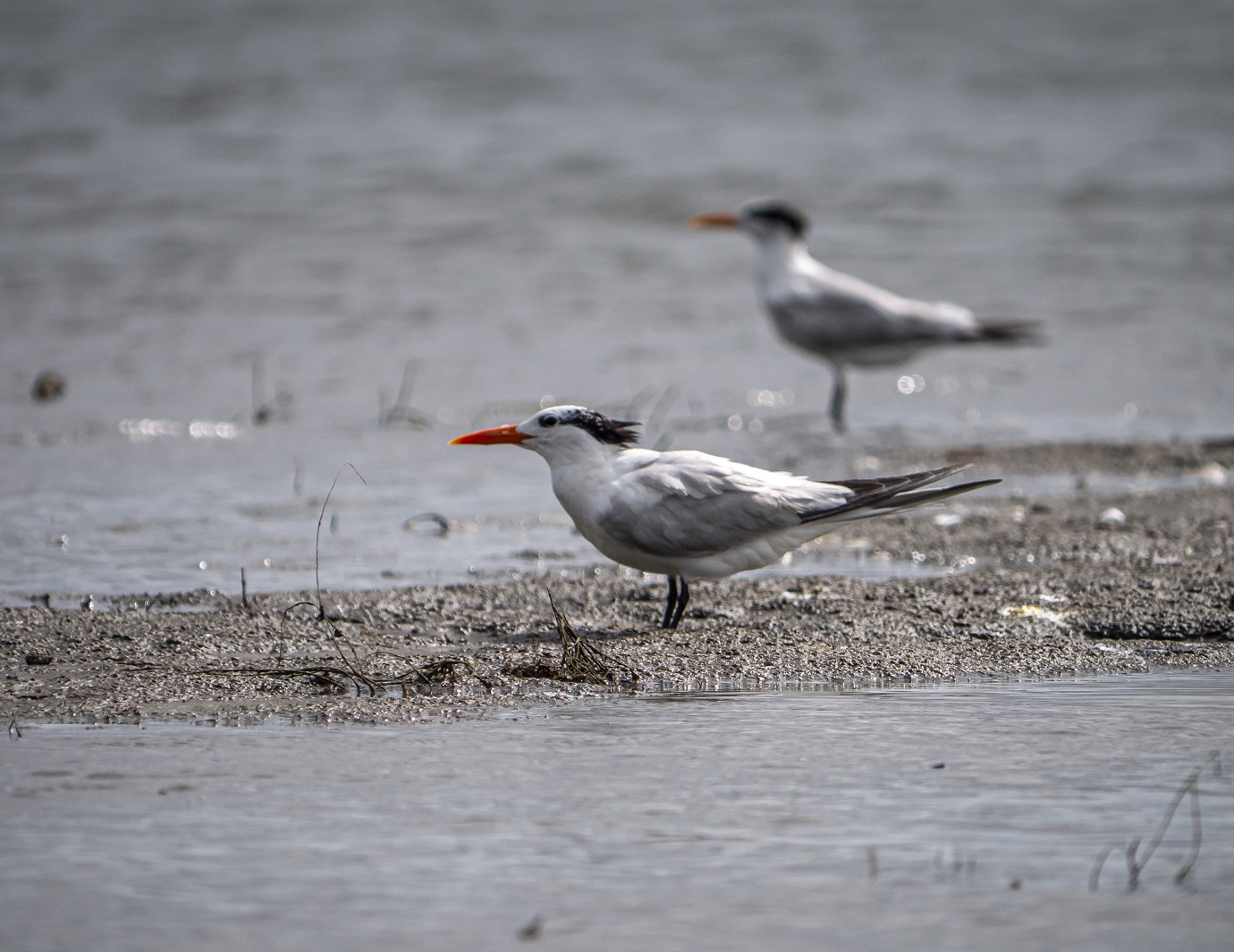
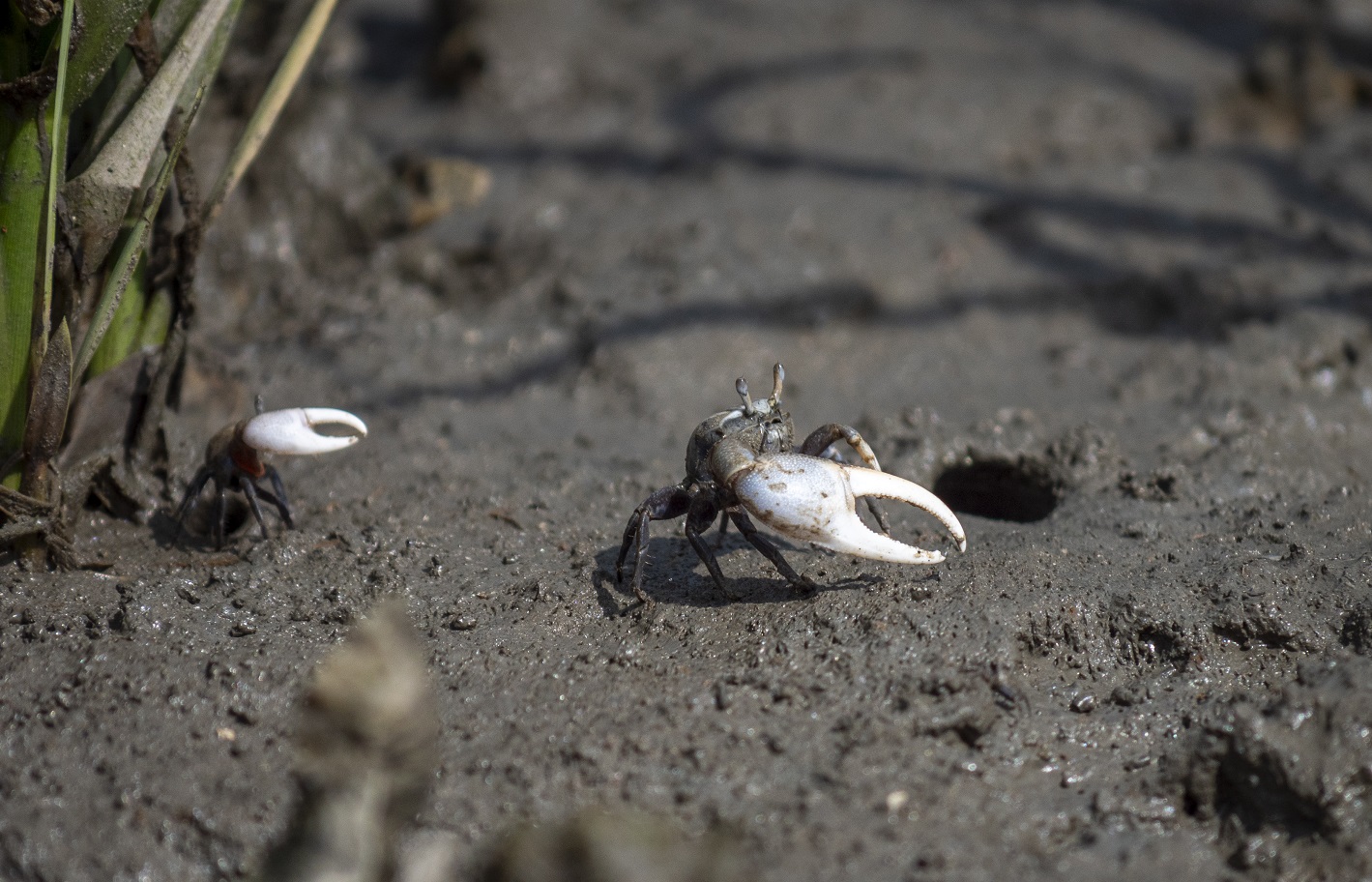
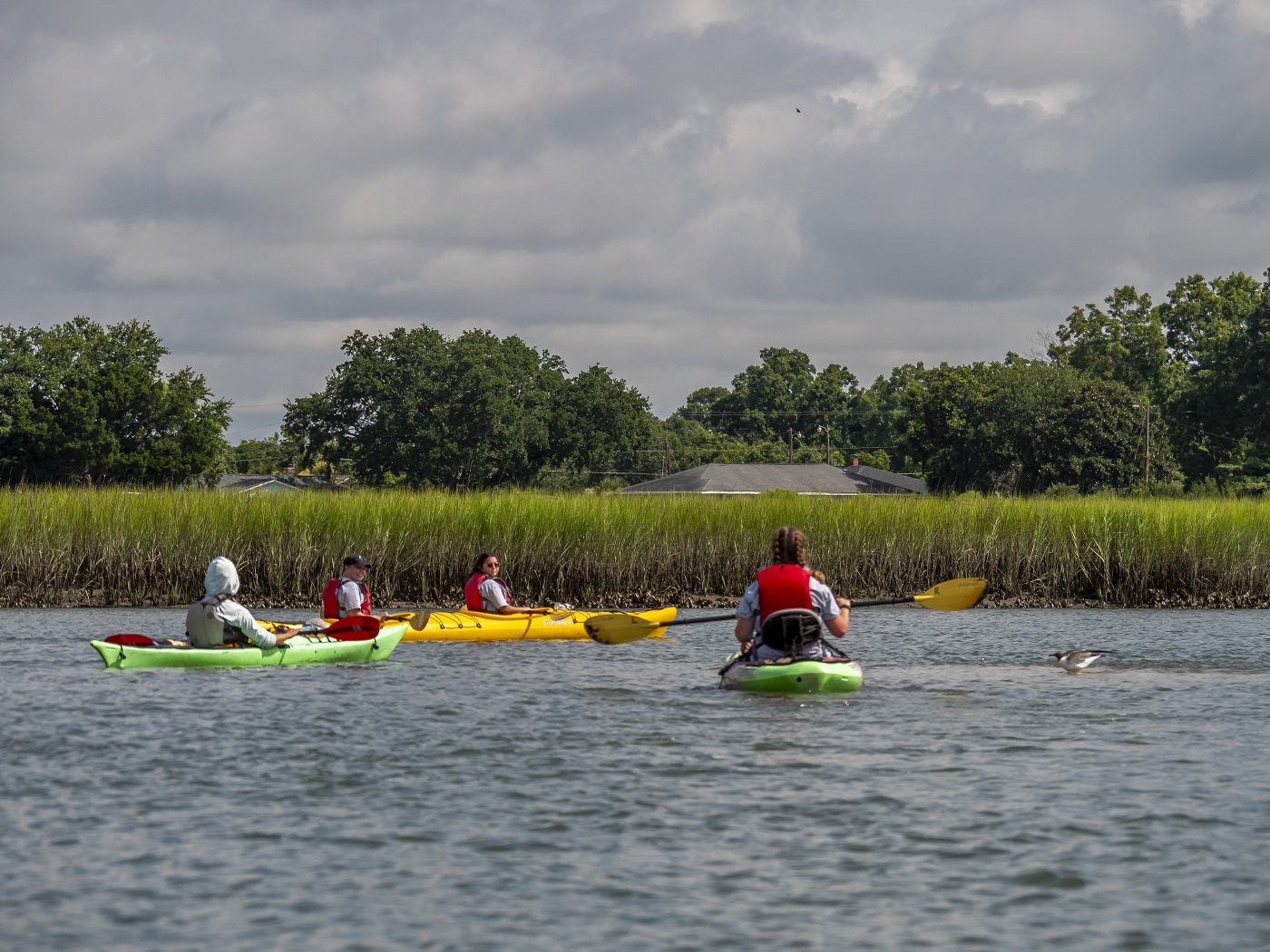
Our paths took us through estuaries, which are waterways mixed with salt and freshwater. The mix, however, is heavy on the salty-side, which on the plus side, means there are no (or at least very few) alligators. (This story had us a bit worried, but we reminded ourselves that it occurred in a freshwater environment). There are, however, many other animals, and we saw herons, egrets, pelicans, blue crabs, many types of gulls, a marsh wren, a woodstork, oyster beds, and the curious fiddler crabs (everywhere).
We also learned about the Charleston “pluff mud,” which is a nutrient rich mud that lacks oxygen. It has been plundered in the past by farmers, so it is now federally protected, and according to our tour guide, if you take any with you, you are subject to a $500 fine. He did not mention the charge, but it would be something along the lines of “mud smuggling.”
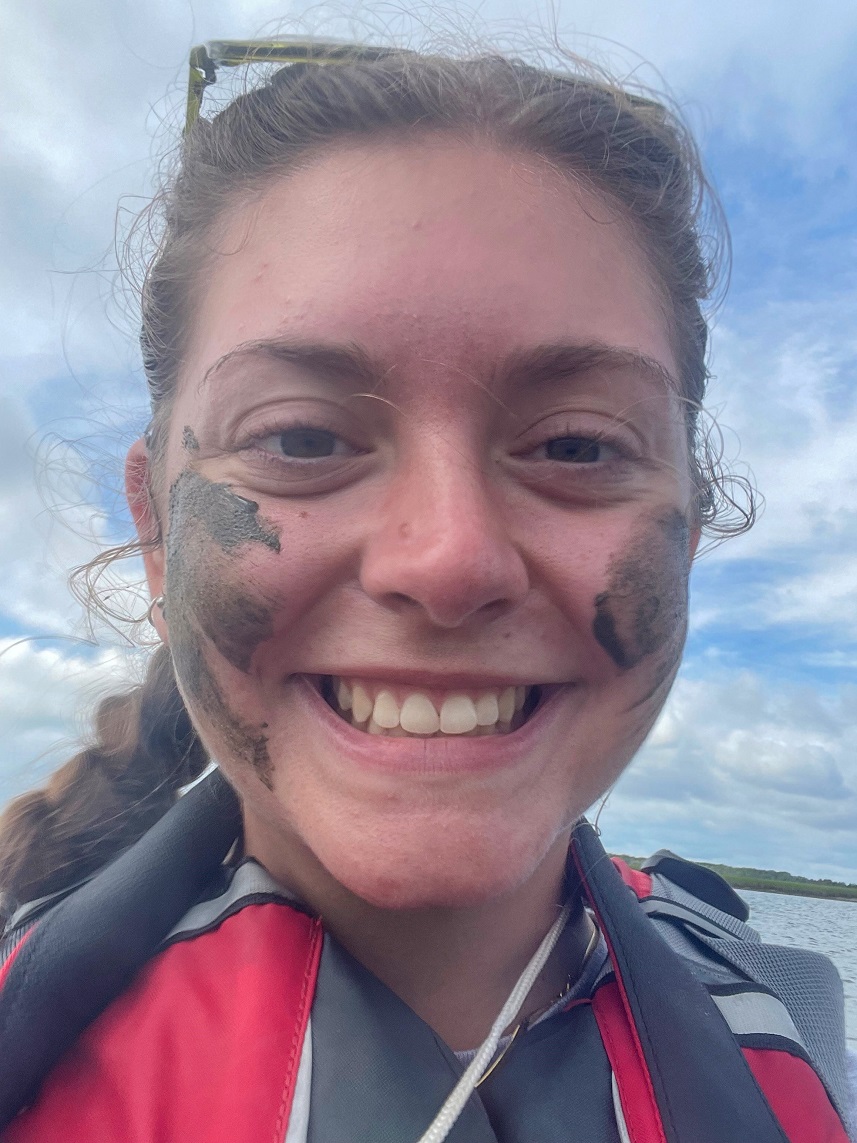
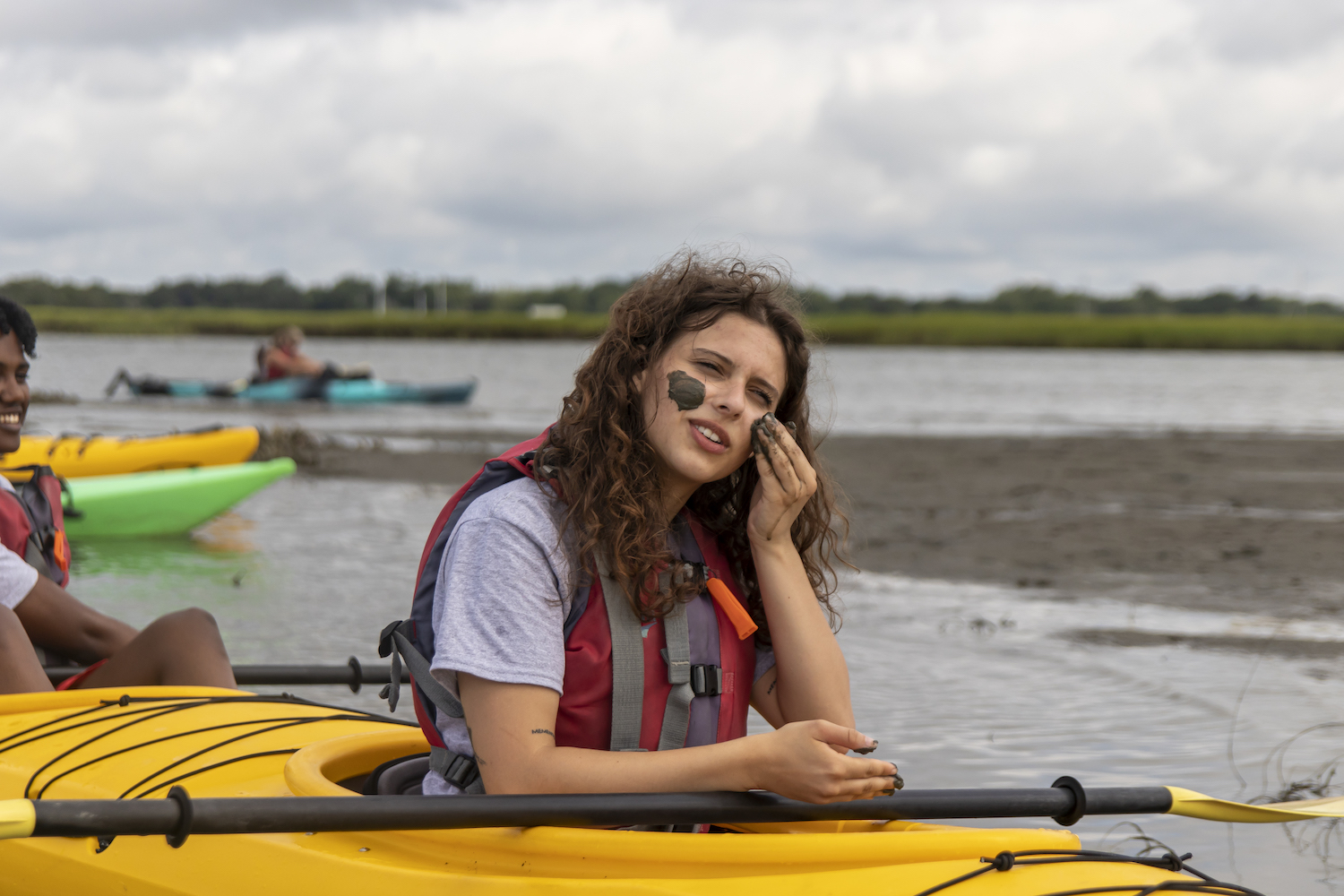
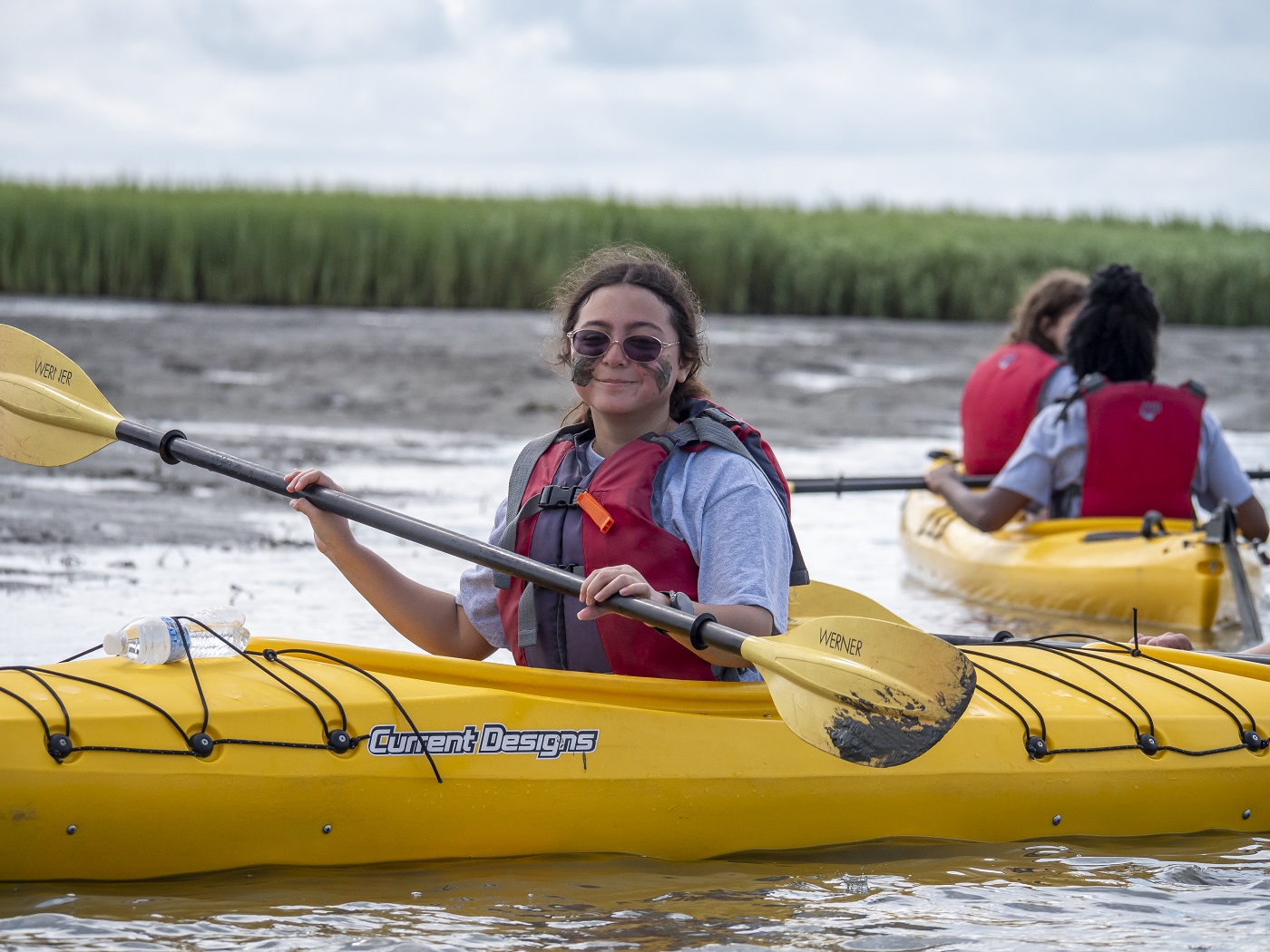
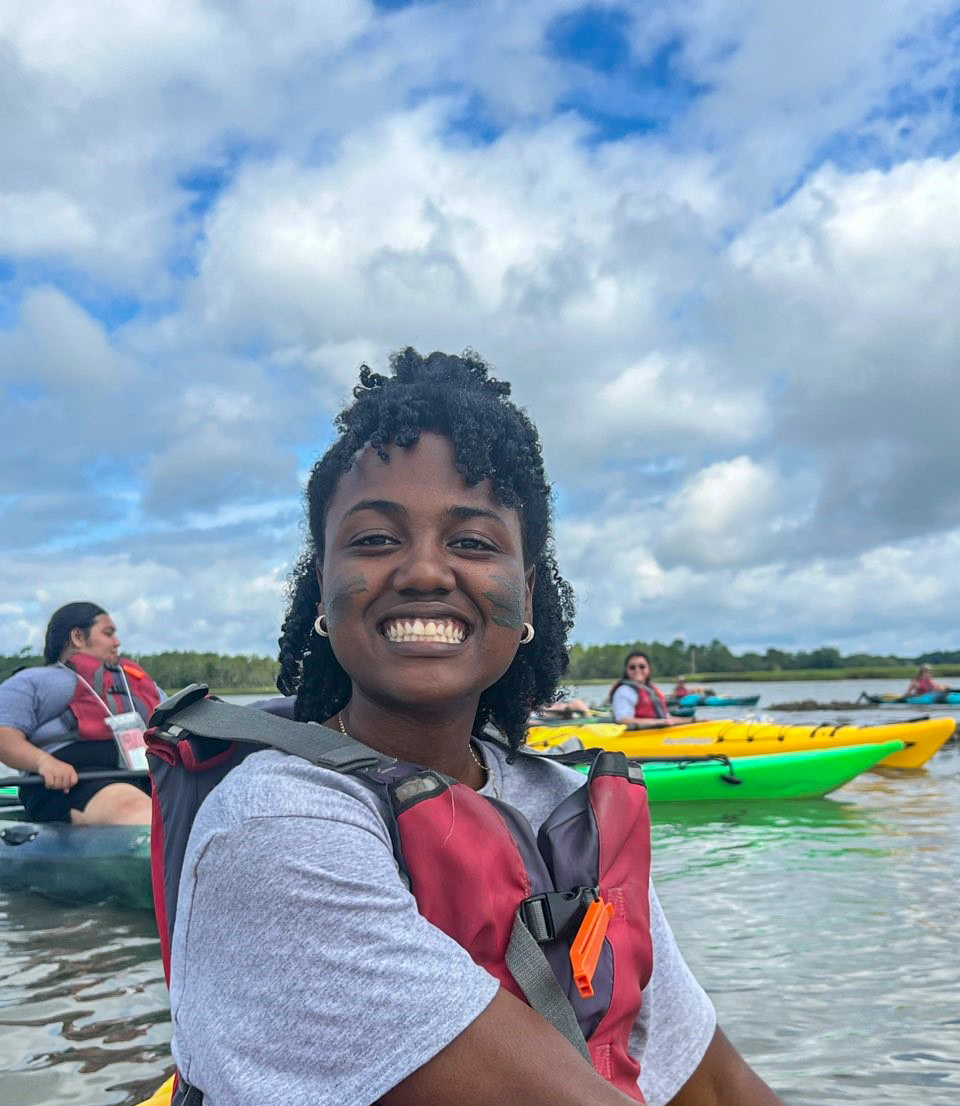
Somehow, Daniel convinced the college students to put this mud on their faces. They did this, even after they learned that much of its nutritional richness comes from “decaying matter” and “crab waste.”
Most of the morning, however, was devoted to paddling and having fun, although Michelle did have a minor mishap, when, instead of saying, “I am woman, he me oar,” she said, “I am woman, hear me go overboard.” But she bounced back nicely, and ultimately made her second-ever kayaking trip a success.
So we were a little sad when we had to turn back.
And as we prepared to depart, we looked upon blue skies, satisfied with a morning well spent.
We soon learned, however, that more rain was coming, but that is a story for the next blog.
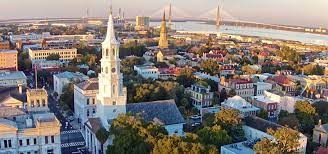
All agree that Charleston is most commonly known as the “Holy City,” but explanations differ as to why. Some say it is because people of many religions settled here, motivated partially by its religious tolerance. The more prevalent explanation is that the skyline is punctuated by churches. We are agnostic on the origin of the name, but we are more knowledgeable today about the city thanks to…
Bulldog Historic Walking Tour
By Ingrid Cuero
The Southern Legislative Conference sponsored a “Bulldog Walking History Tour” for us today, and for two hours on a (hot) Sunday morning, we learned about the past and present of The Holy City.
As a way of warning, we learned that Charleston has “tourism police,” whose primary job is to keep tourists from obstructing the city’s transportation. Who knew?
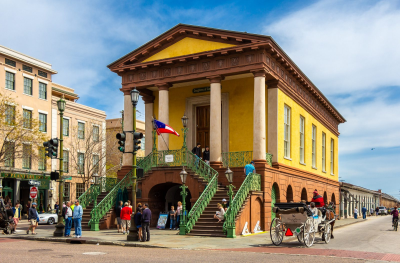
Our first stop was the Charleston City Market, which was built on land donated by Charles C. Pinckney and other landowners . Interestingly, Pinckney was a founding father, was nominated once for VP, and twice for President (under the Federalist Party). He had conditions on the donation of this land, one of which was that it must be used as a City Market–and it has been for the past 235 years!
Many people confuse the City Market with the Old Slave Mart in Charleston, but these are not the same buildings and, in fact, the City Market has never been used for the sale, transport, or storage of slaves.
Charleston is architecturally intriguing. It is not blessed with an abundance of stone, so the “stone buildings” you see are probably brick that has been scored to appear to be stone. On the other hand, stones were imported from England to make the cobblestone streets. “Imported” may be a bit pretentious, in that they were actually used for ballast on the ships and then discarded in Charleston Bay when cargo was loaded. The discarded stones were then used for the roads.
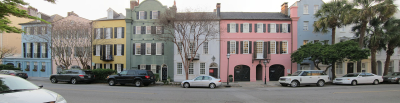
Perhaps the most famous of Charleston’s homes are on “Rainbow Row,” 13 homes marked by pastel colors. Many myths exist to explain the origin of this colorful street, but the most likely account is that the original preservationists wanted a Caribbean look, and subsequent buyers/restorers followed suit.
Interestingly, a tour guide told me that Oprah Winfrey owned one of the homes, although I was not able to verify that. I did find, however, that she stayed at Charleston Place, which is the site of our conference.
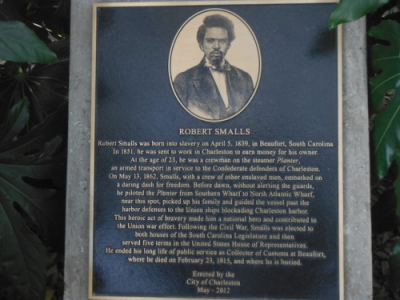
We also passed the Robert Smalls historical marker…
…which was especially interesting to us because, on the way to Charleston, Professor Yawn drove us to Robert Small’s house in Beaufort, SC and told us a bit about him.
Smalls is best known for leading one of the Civil War’s greatest intelligence victories, while also securing his freedom and the freedom of fellow slaves (and their enslaved families). Following the war, he returned to South Carolina, and he purchased the home of his former “master.” He lived there for the remainder of his life with his wife and children, and he let his former master’s widow, Margaret Johnson-McKee continue to live there. According to our tour guide, Smalls actually never told Johnson-McKee that she no longer owned the house, sparing her embarrassment. Smalls was one of the founders of the Republican Party in South Carolina and was elected to both the SC state legislature and the US Congress.
In reading more about Smalls, I was particularly moved by one of his speeches, in which he asserted, “My race needs no special defense, for the past history of them in this country proves them to be the equal of any people anywhere. All they need is an equal chance in the battle of life.”
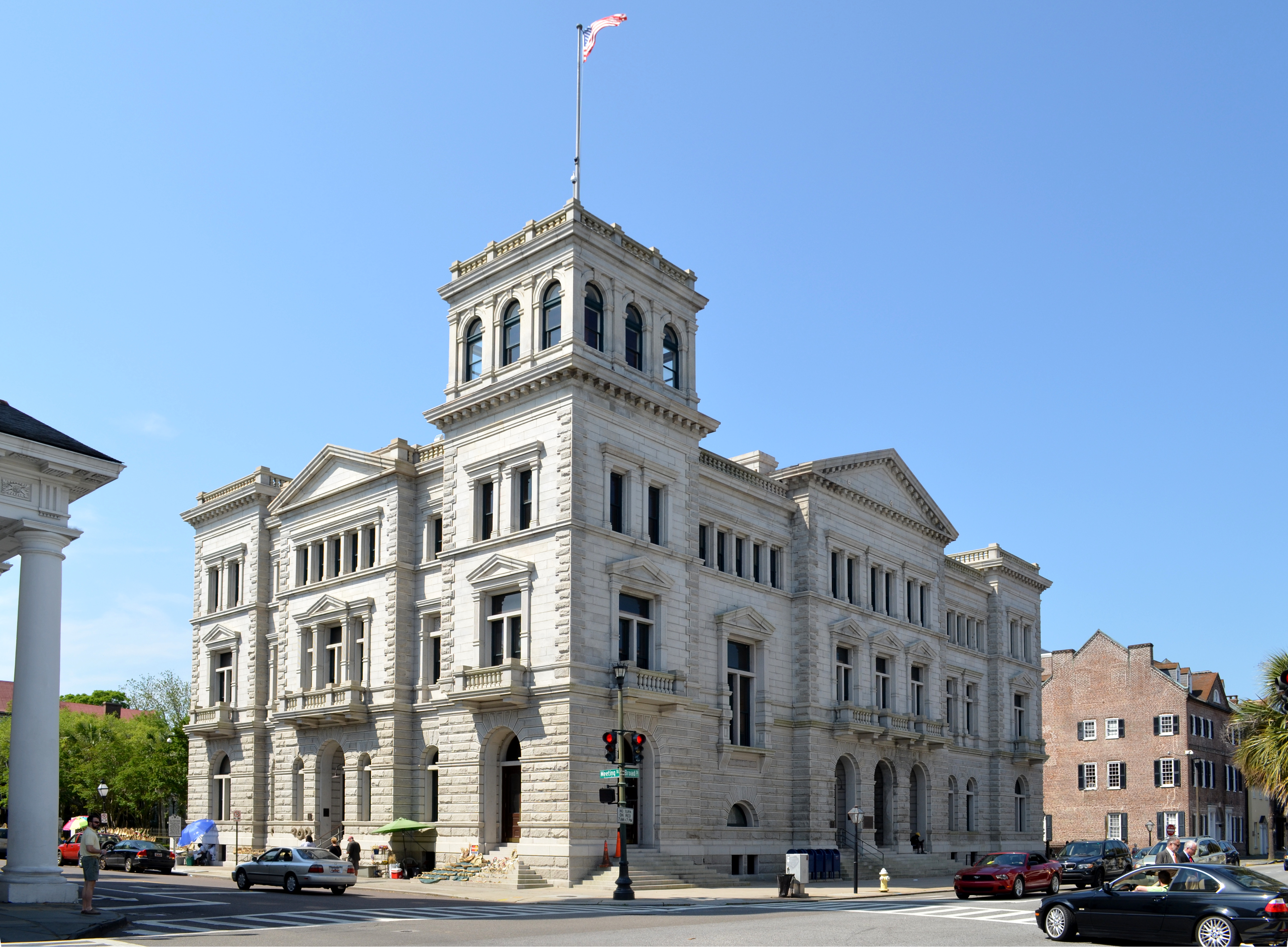
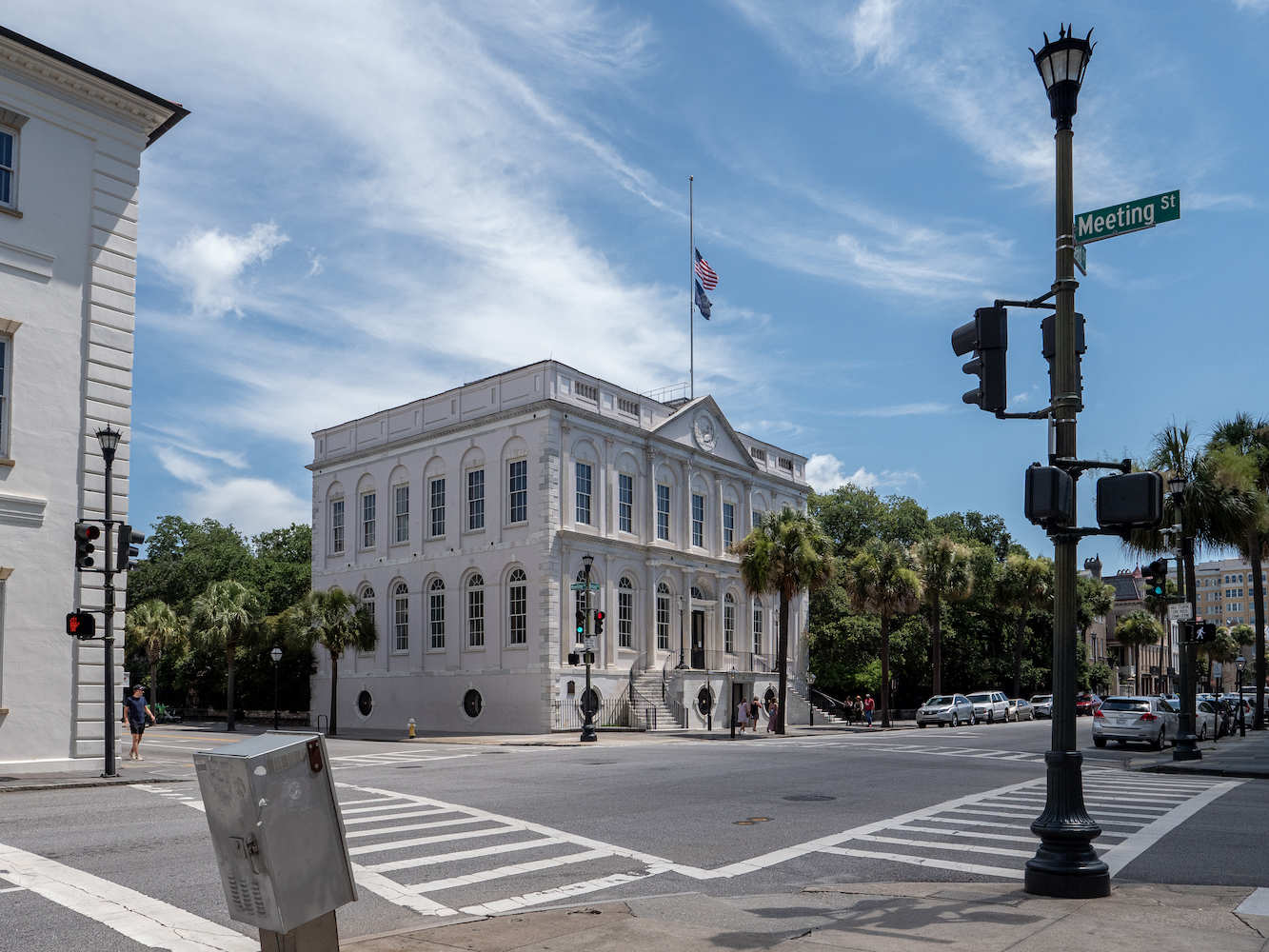
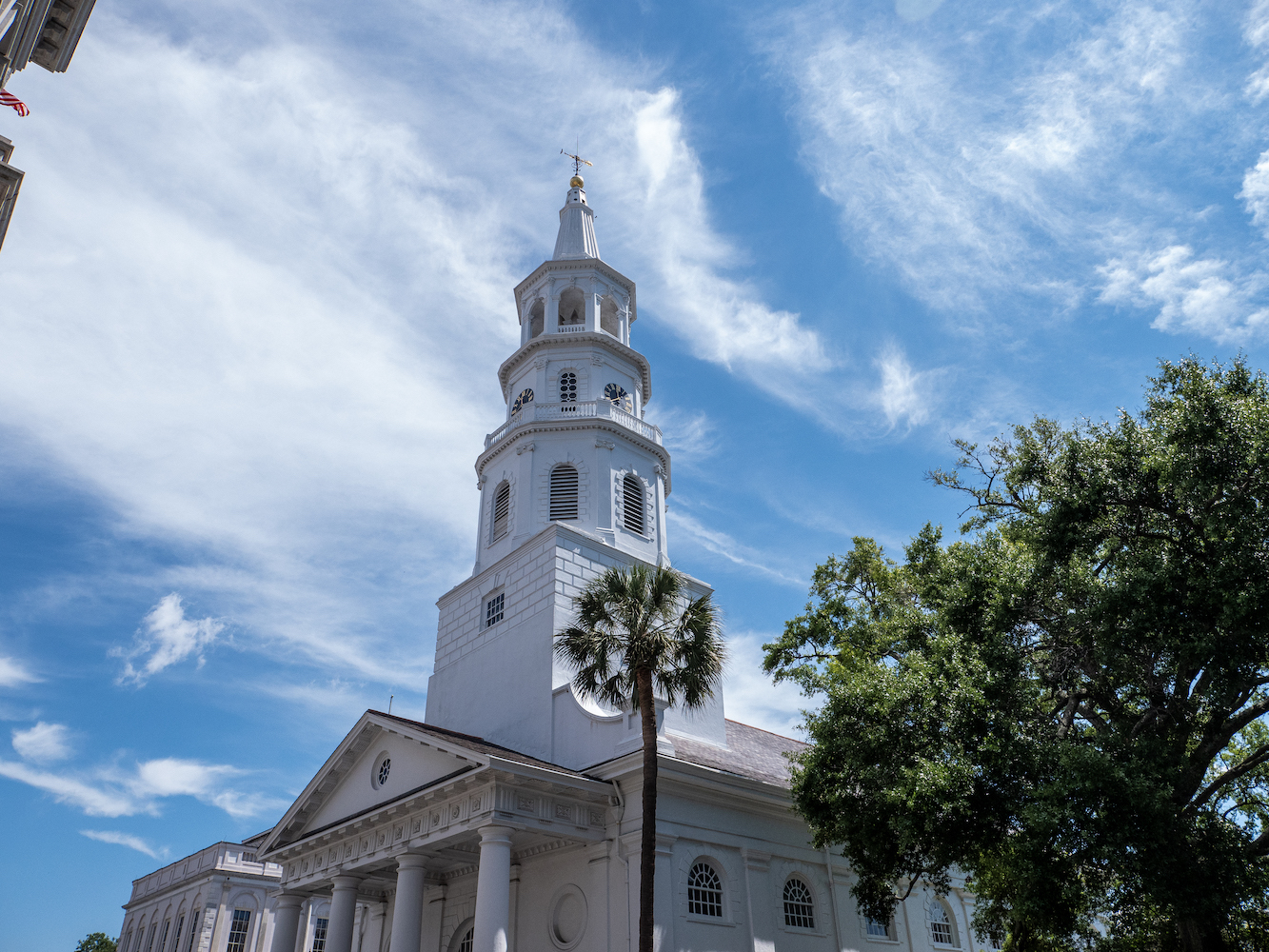
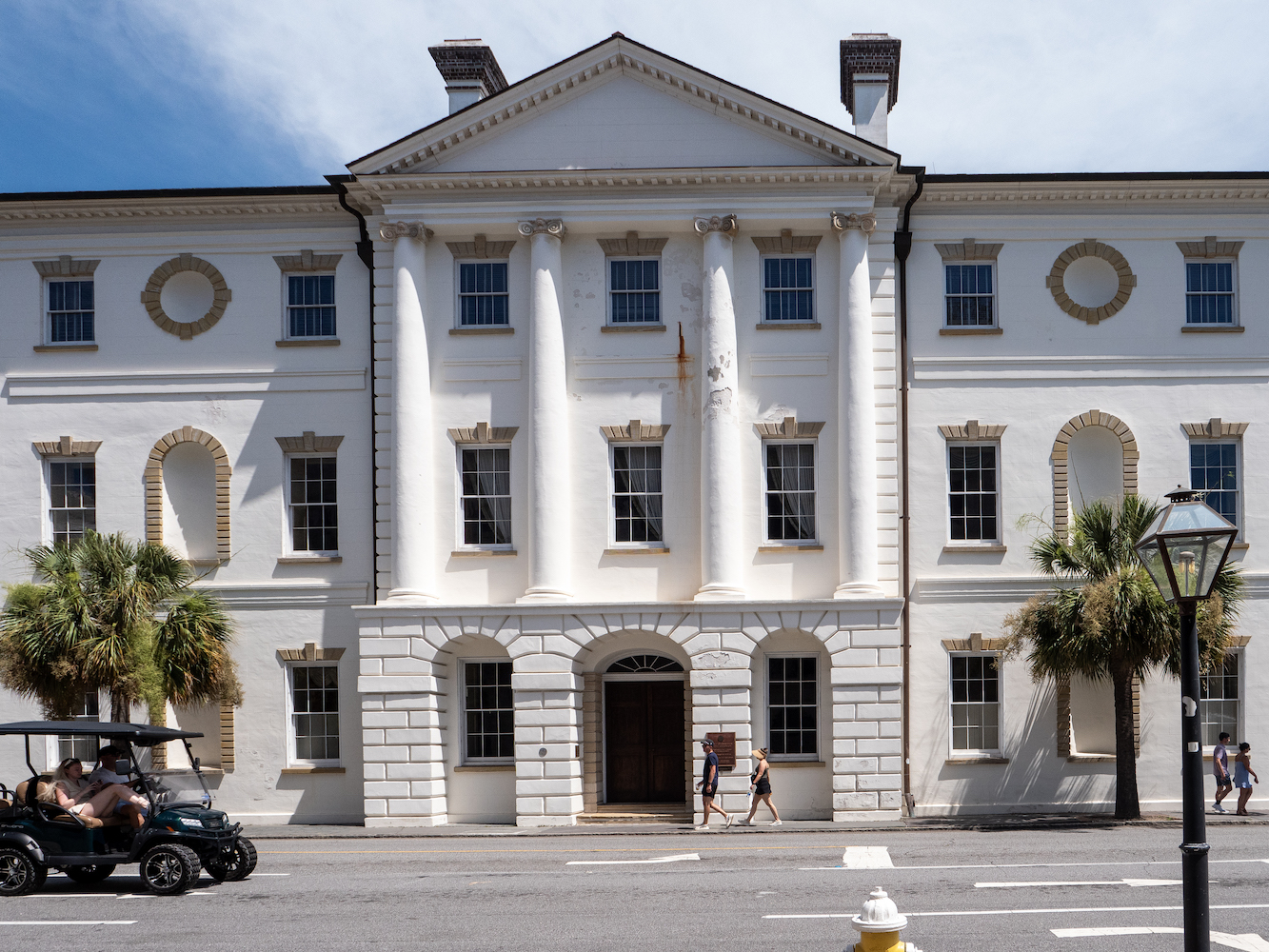
Also of interest was the Charleston intersection known as the “Four Corners of Law.” Each of the street corners hosts a legal institution of sorts: (1) Charleston City Hall (municipal law), (2) the County Courthouse and former provincial capital (state/county law), (3) the Post Office and Courthouse (federal law), and St. Michael’s Episcopal Church (God’s law).
This lesson illuminated both the literal and figurative intersections of government and social institutions, as well as the importance of working together to achieve results–which, also, incidentally, is the theme of the Southern Legislative Conference!
LEAP Makes a SPLASH at Family Night!
Jessica Cuevas
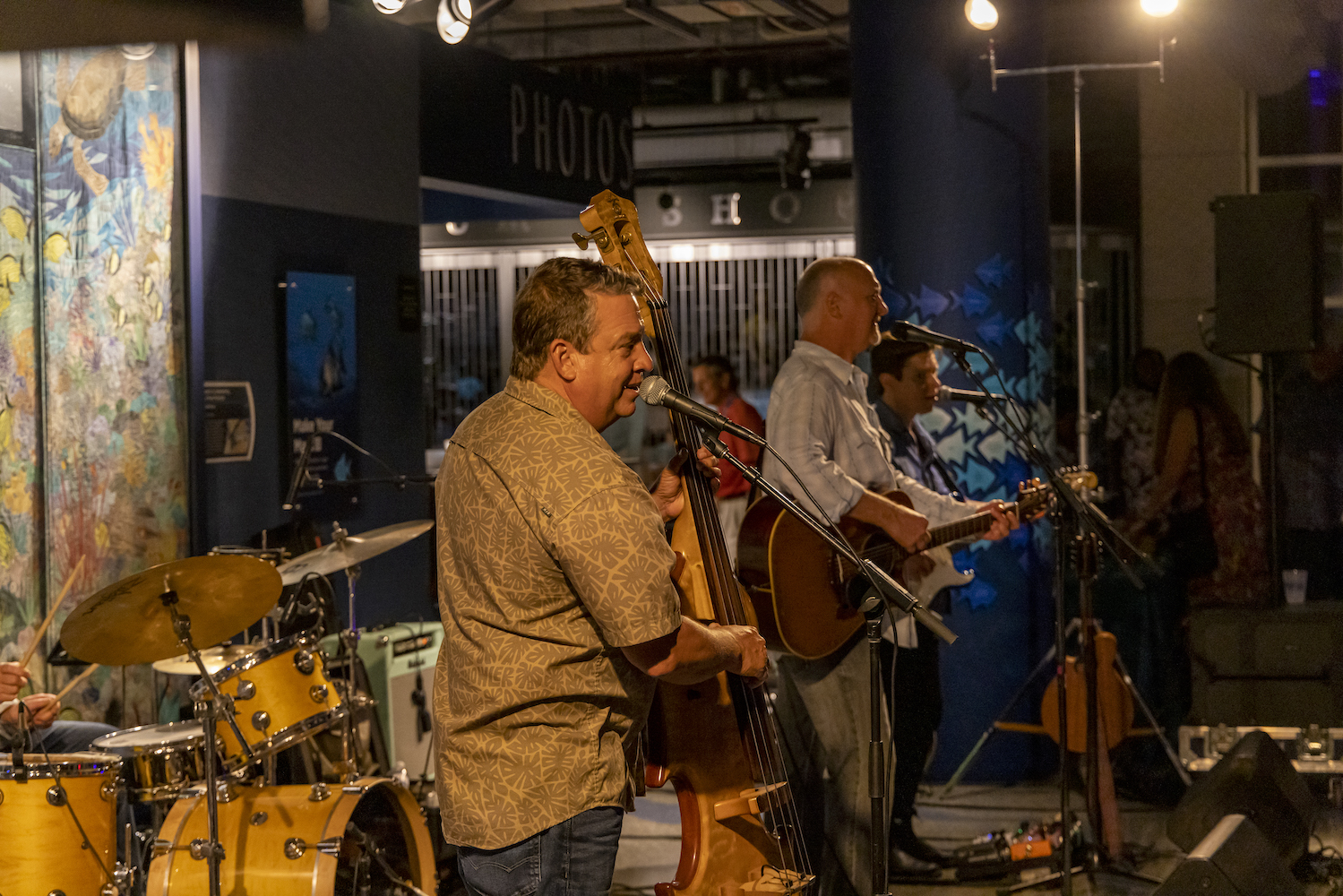
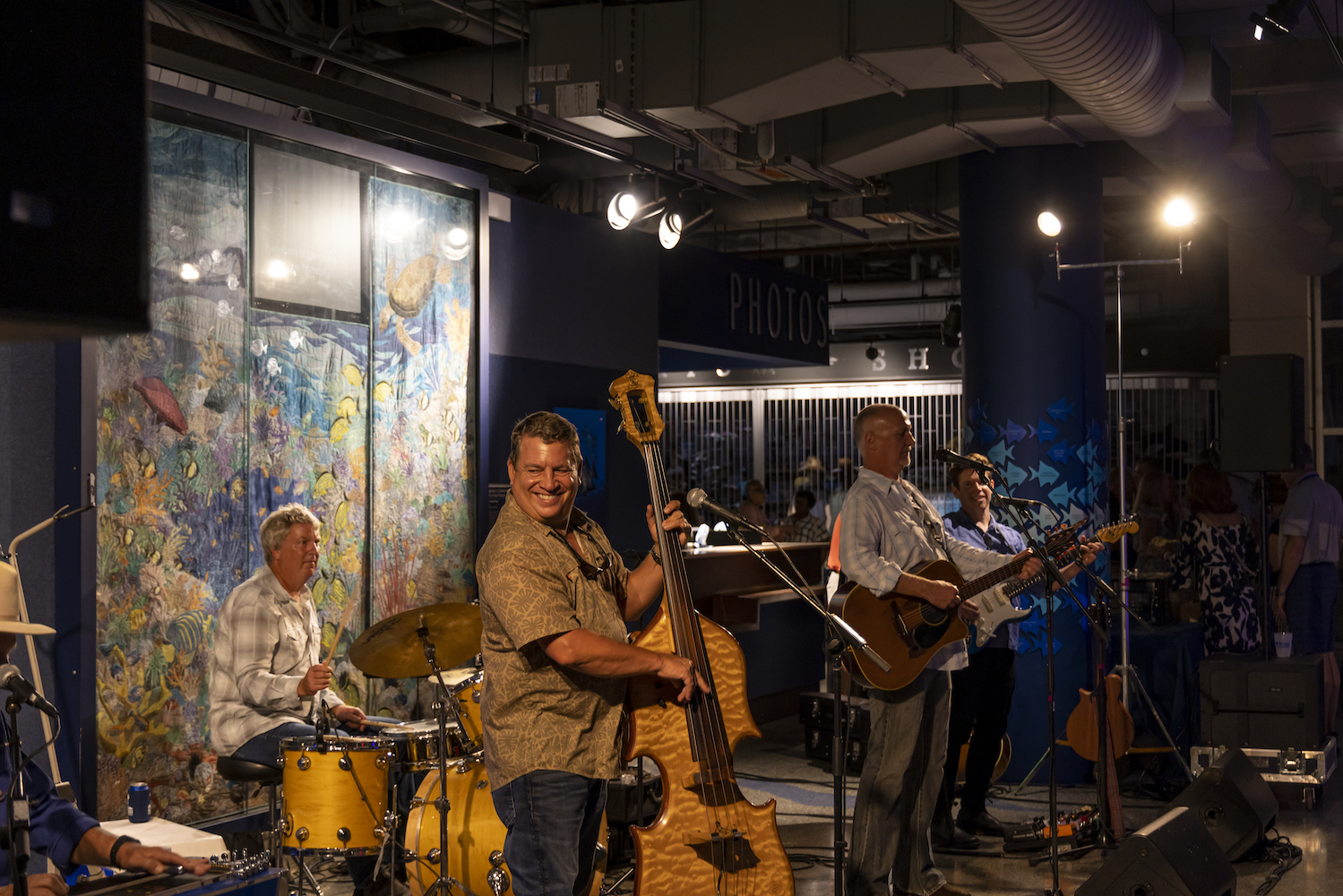
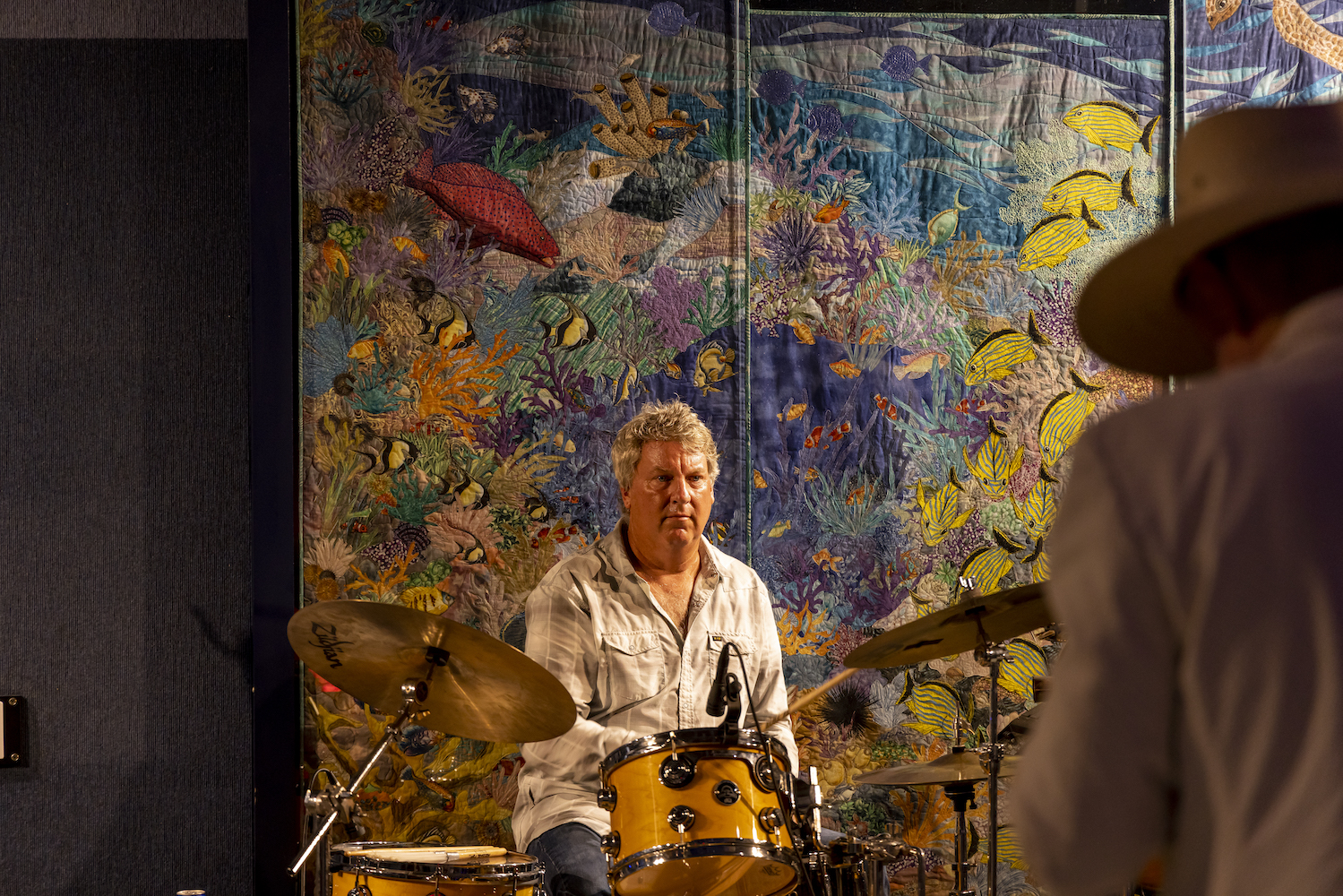
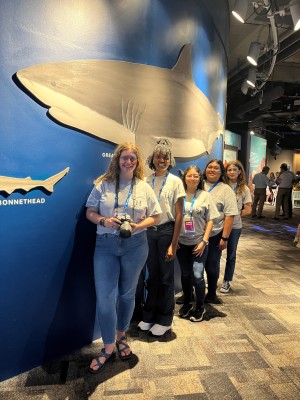
LEAP Ambassadors have attended many SLCs over the years, and they always enjoy “family night.” This year, the host city, Charleston, selected South Carolina Aquarium as the venue for this evening, and the results were FUNtastic!
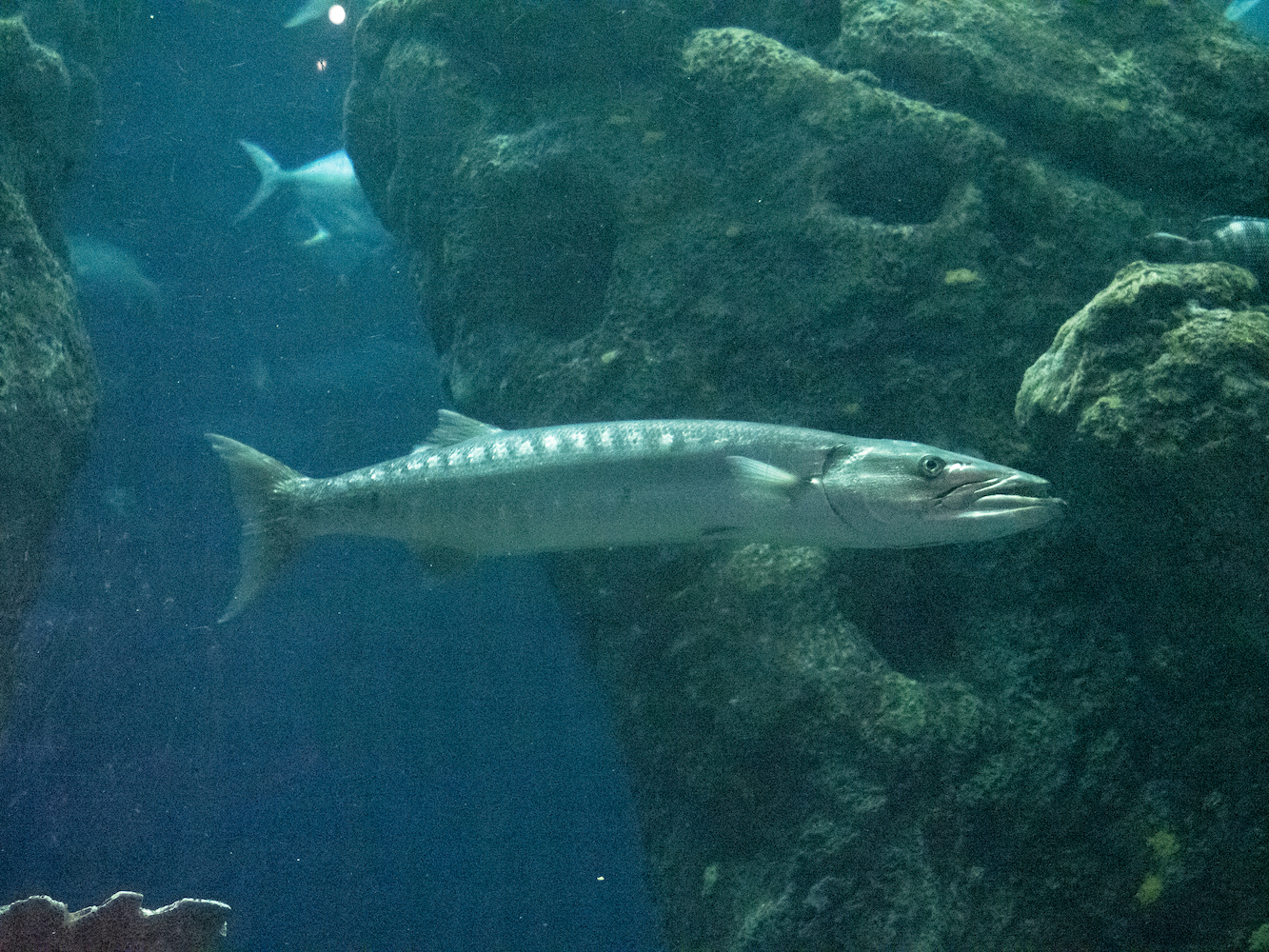
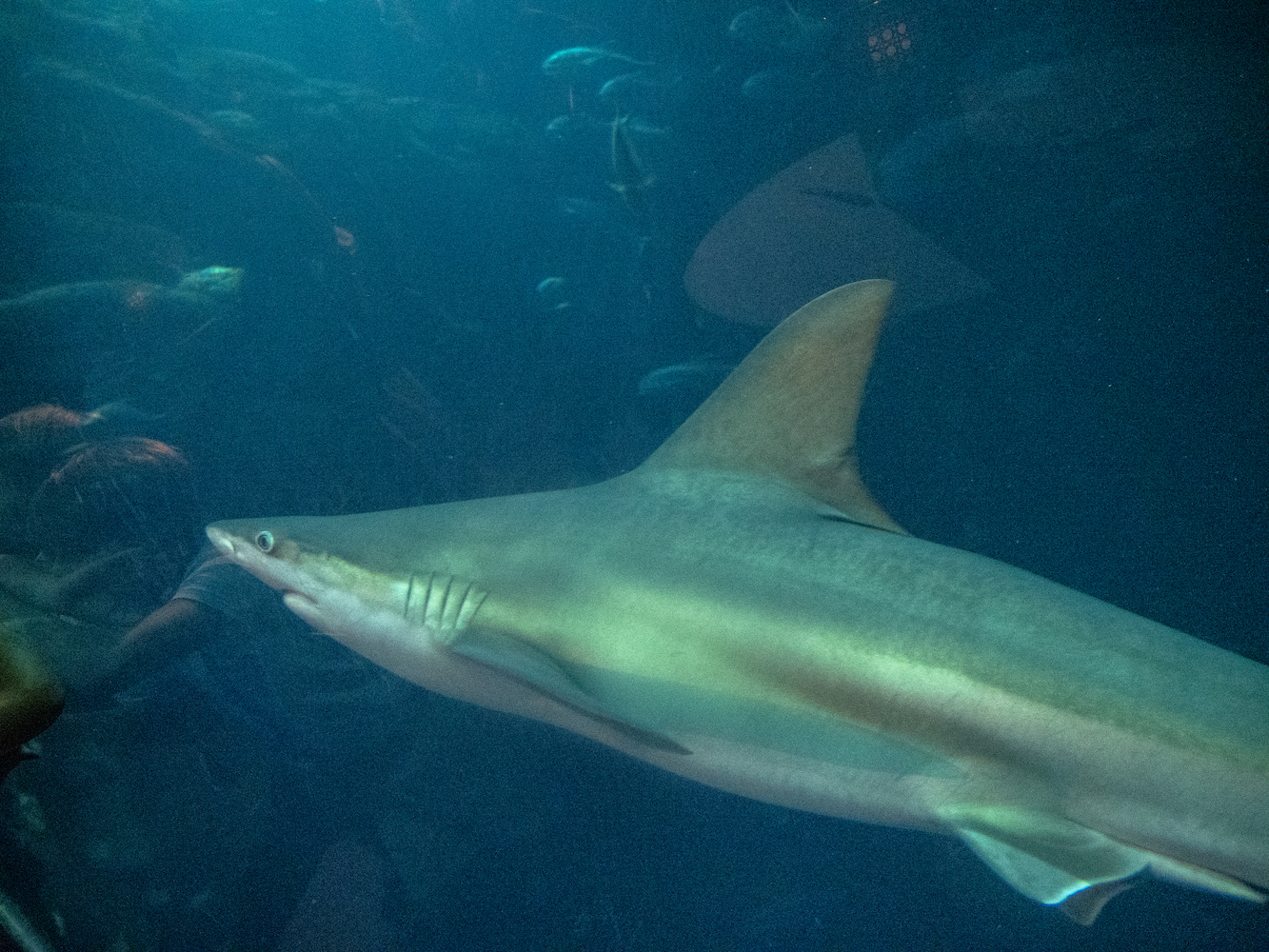
…and the aroma of great food. The songs were good, and the menu featured pulled pork, chicken, beans, house salad, bread rolls, poppy-seed cole slaw, various sauces, and gouda mac ‘n cheese. Amazingly, while we ate we had a chance to gaze at the “Great Ocean Tank,” the deepest tank in North America at 42 feet. We were all grateful no seafood was on the menu.
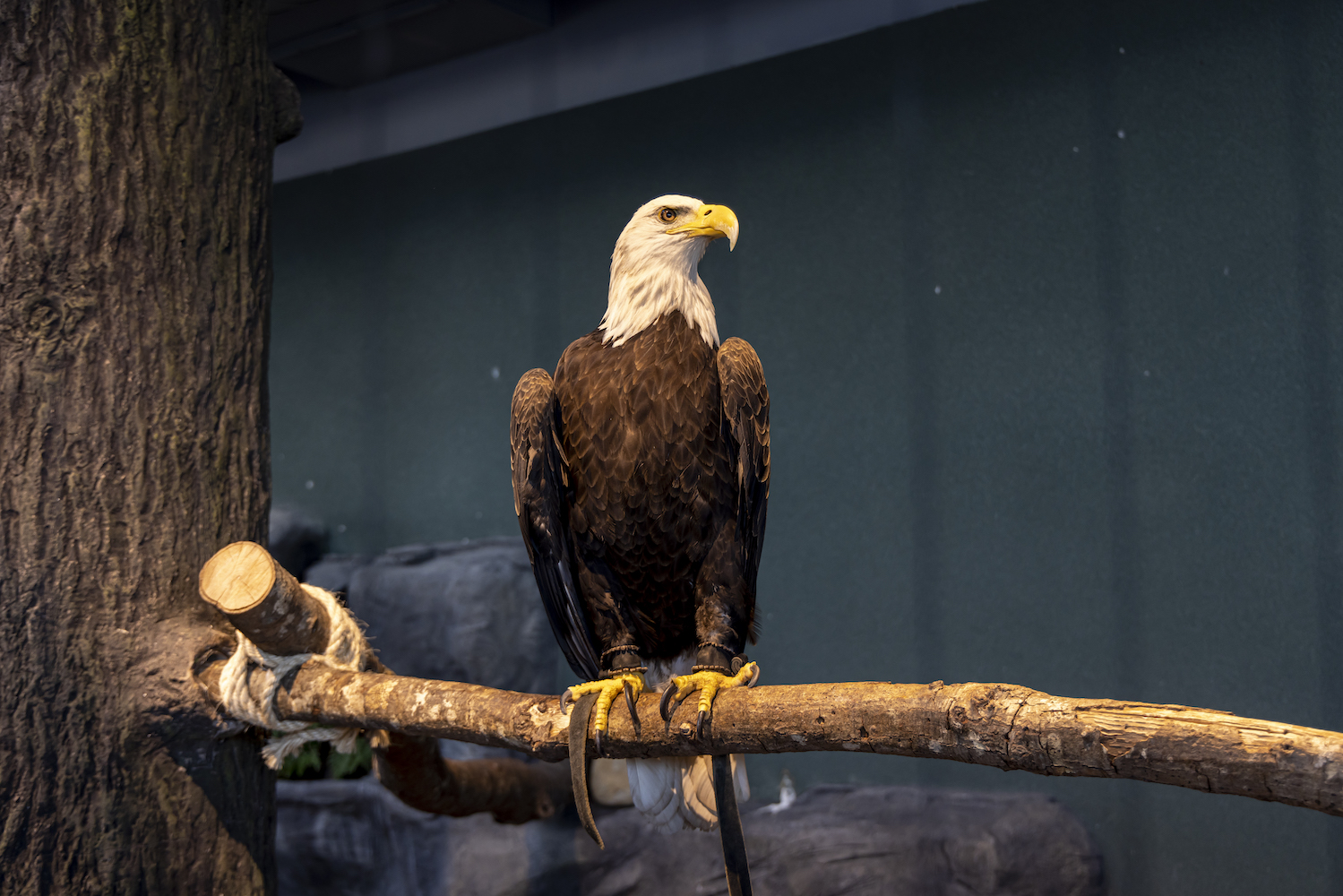
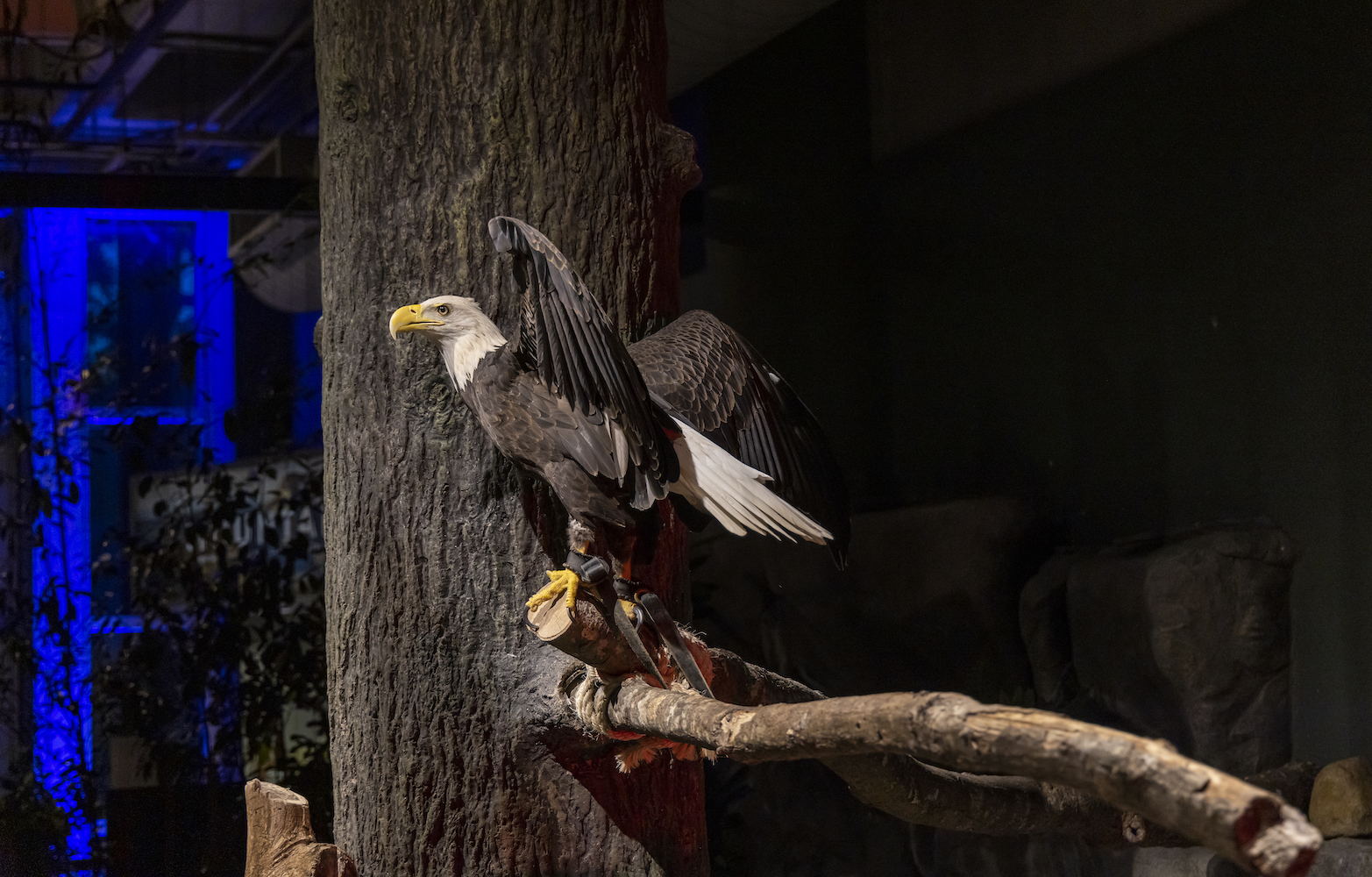
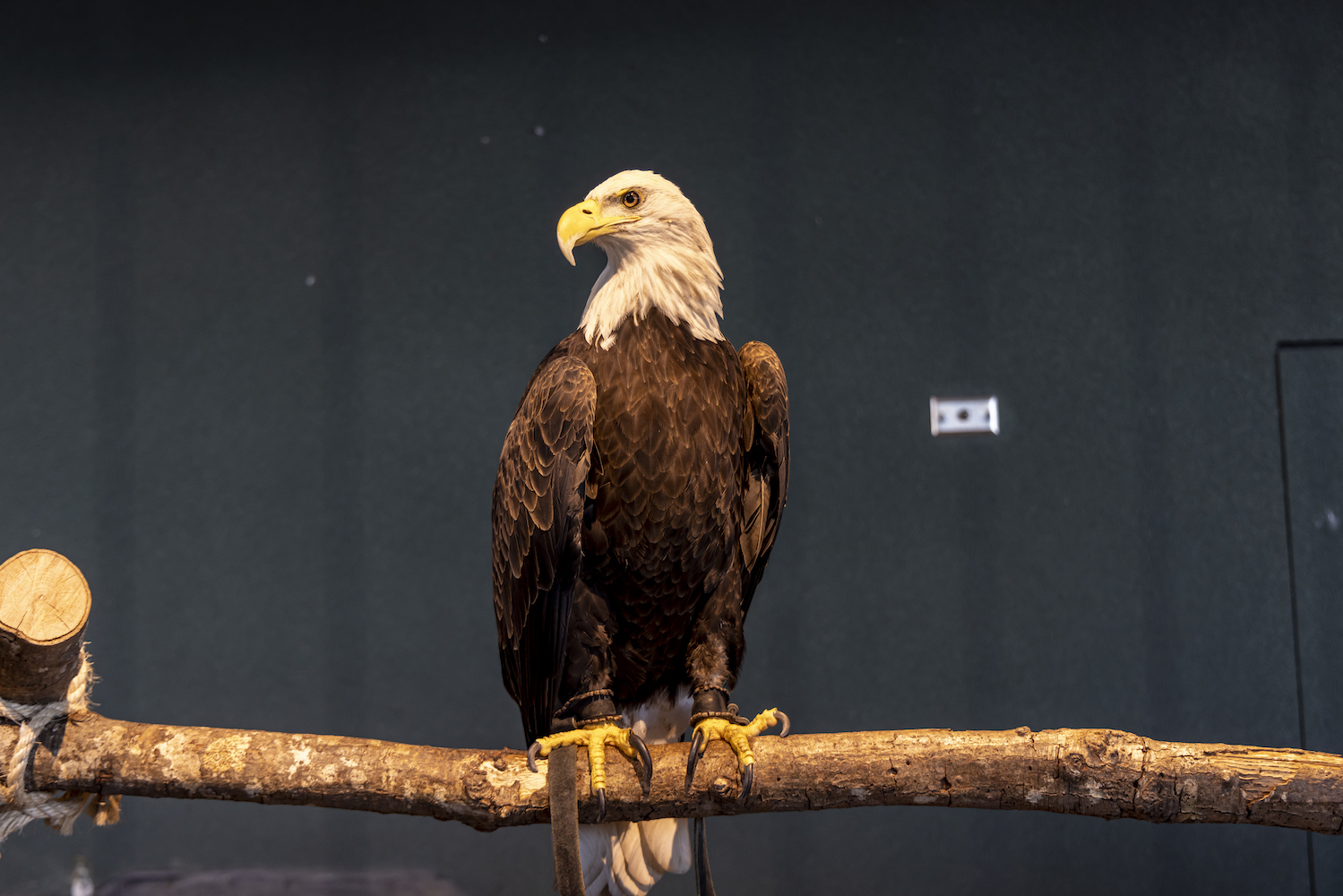
Nearby was the Bald Eagle exhibit, and we had a chance to see–and pose with–a bald eagle.
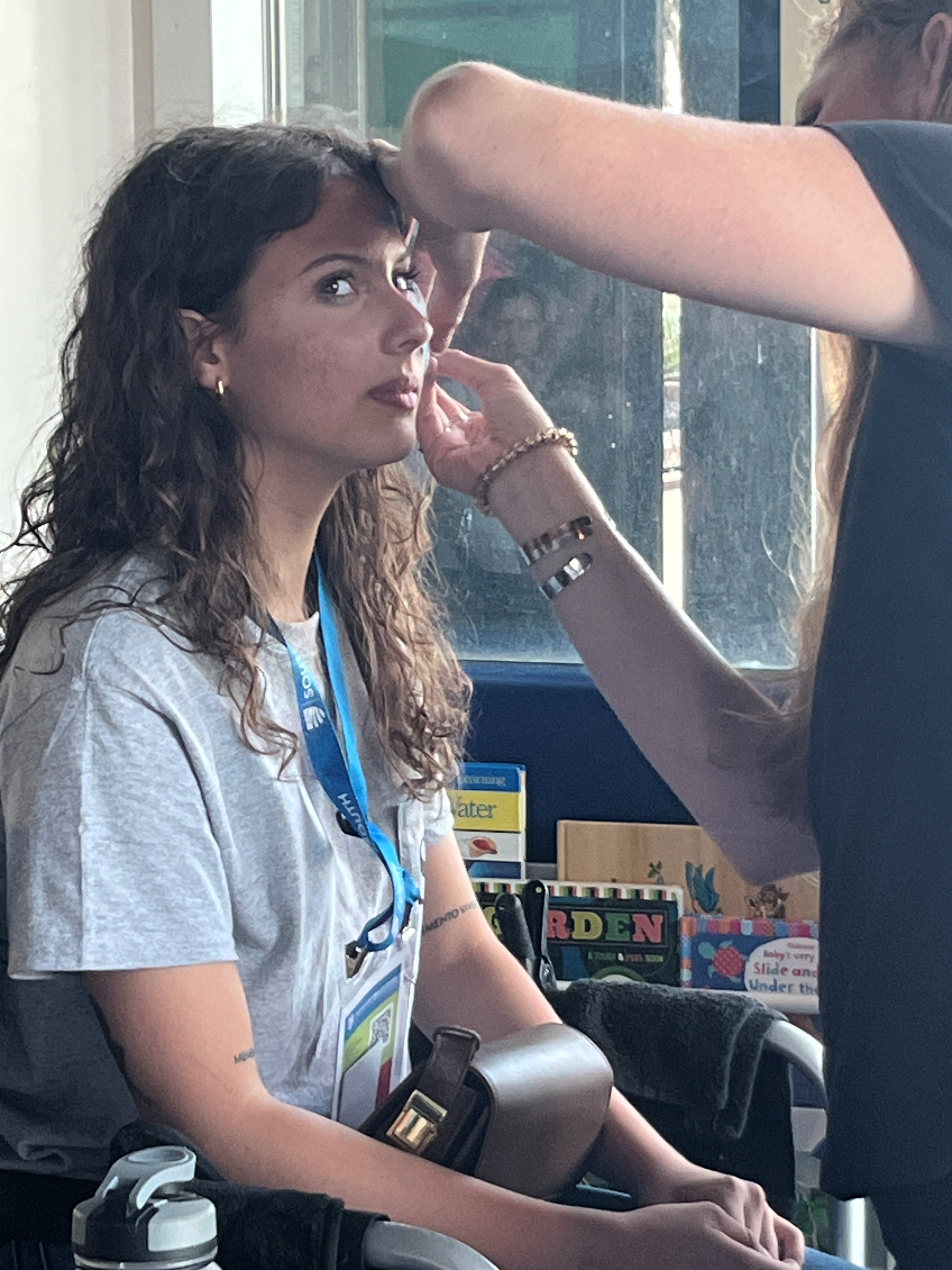
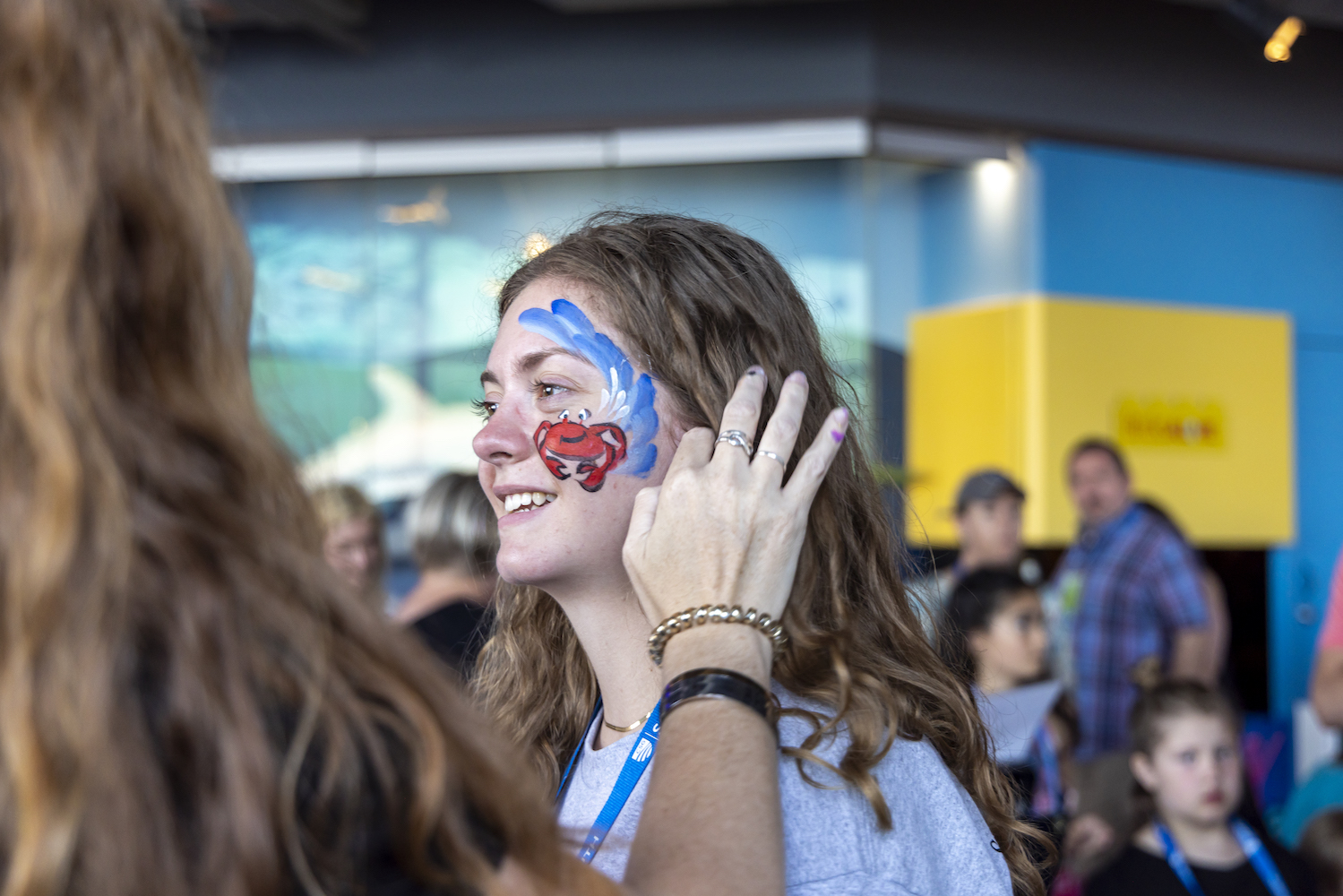
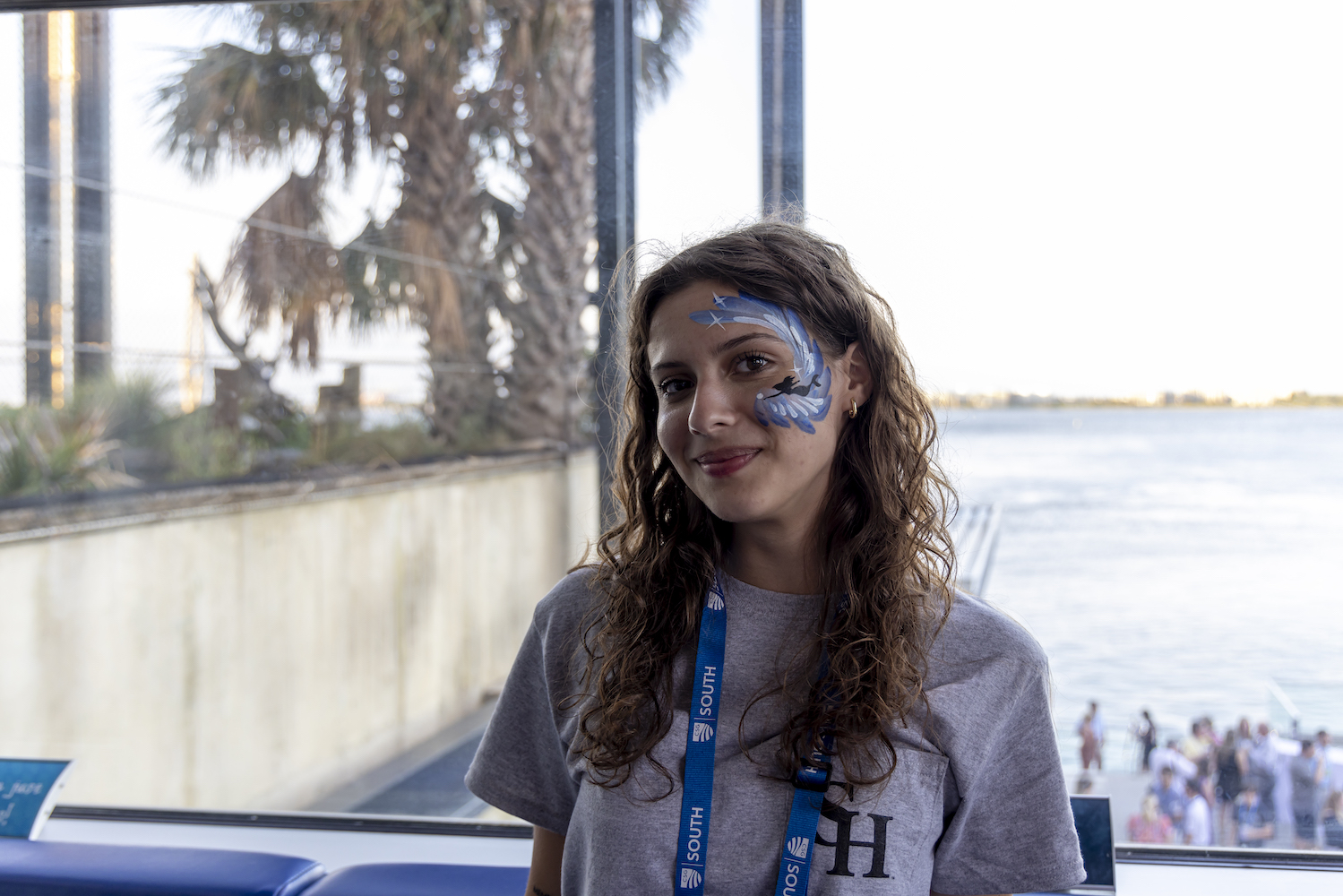
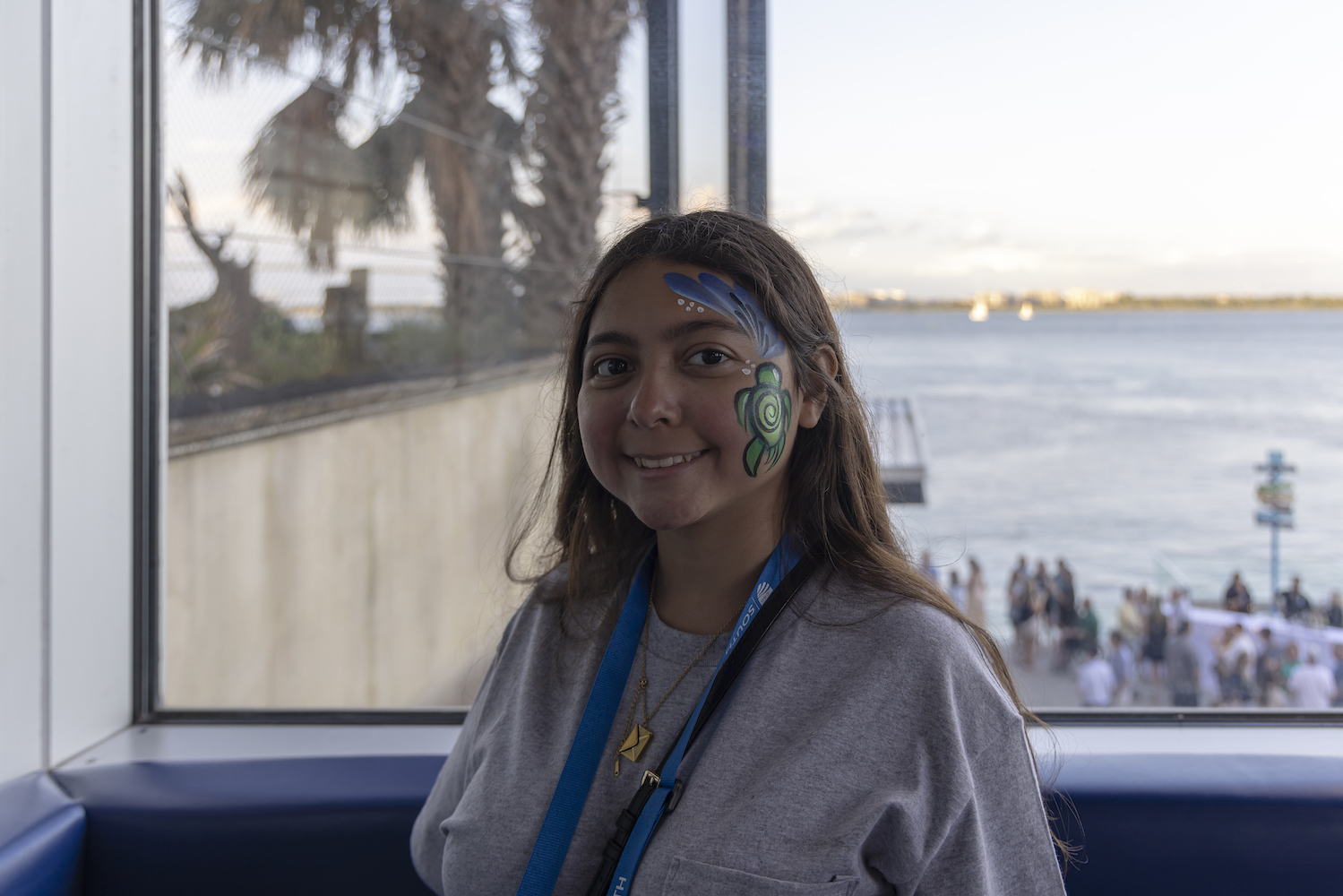
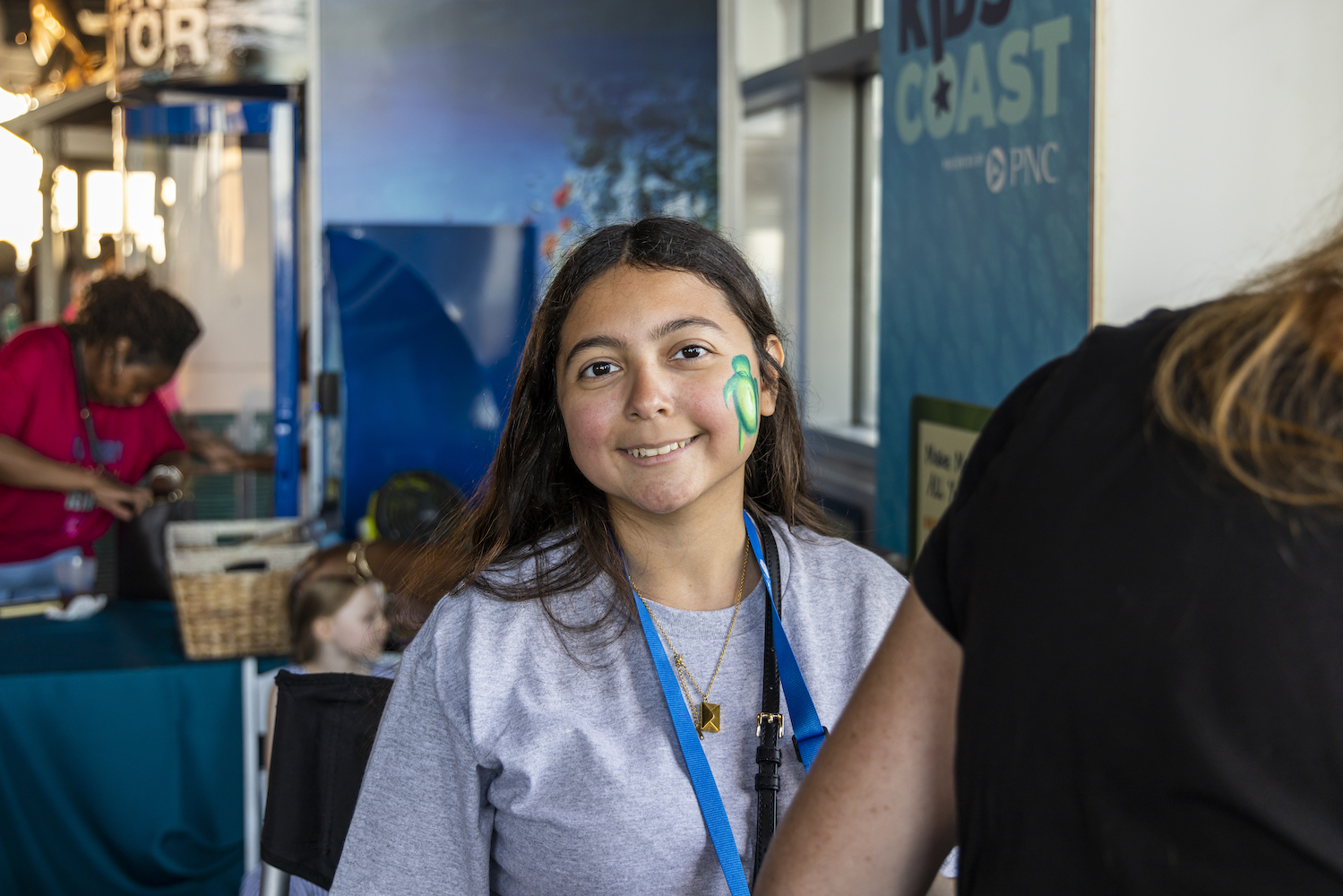
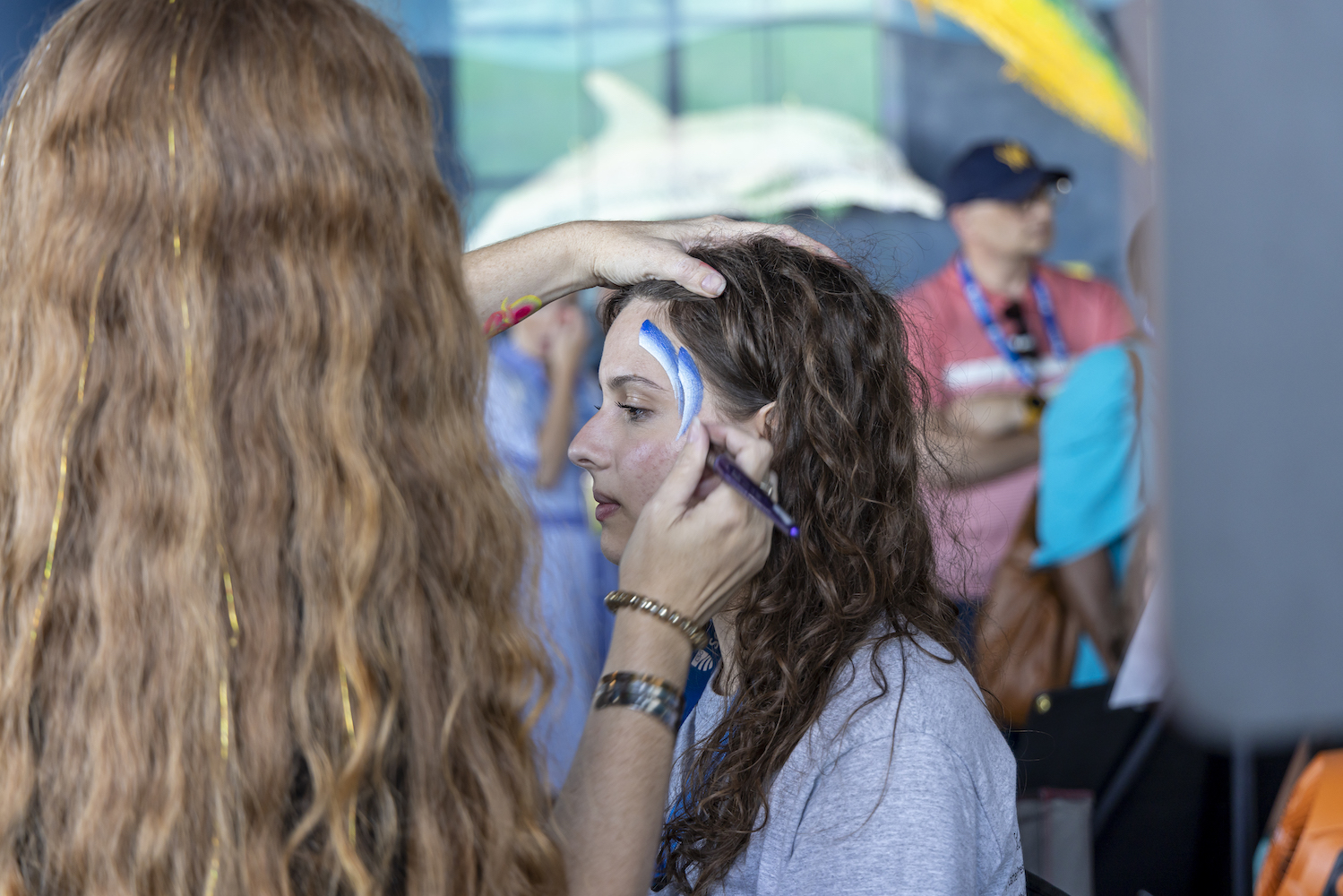
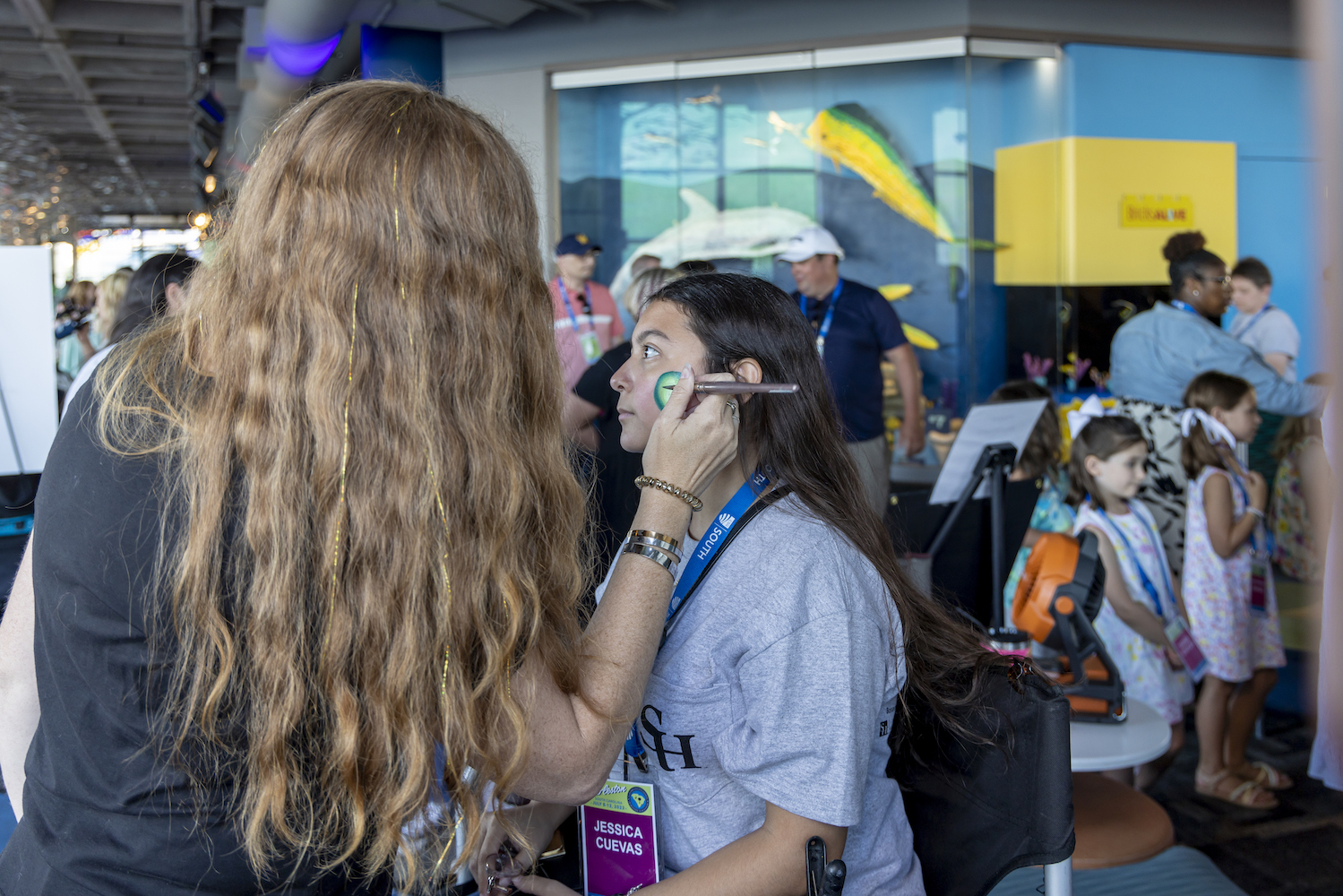
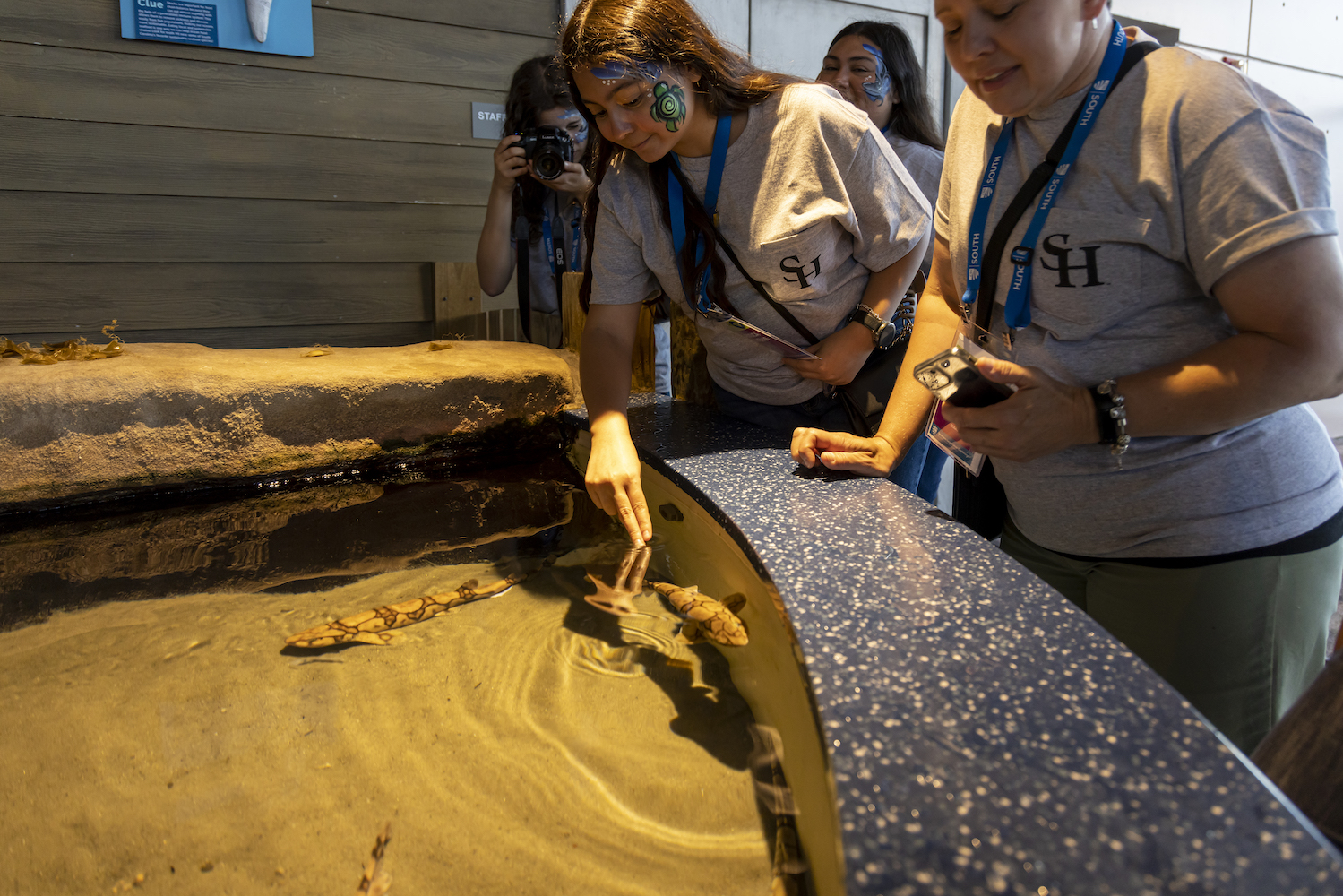
But when we heard there was face painting on the second floor, we joined other five-year olds in line. Continuing with our theme of the aquarium, Olivia adorned her face with mermaid; Michelle, a shark; Morgan, an (oddly) smiling crab; and I got a sea turtle.
Ingrid, not getting the gist of the evening, got a flower, making her a flower child.
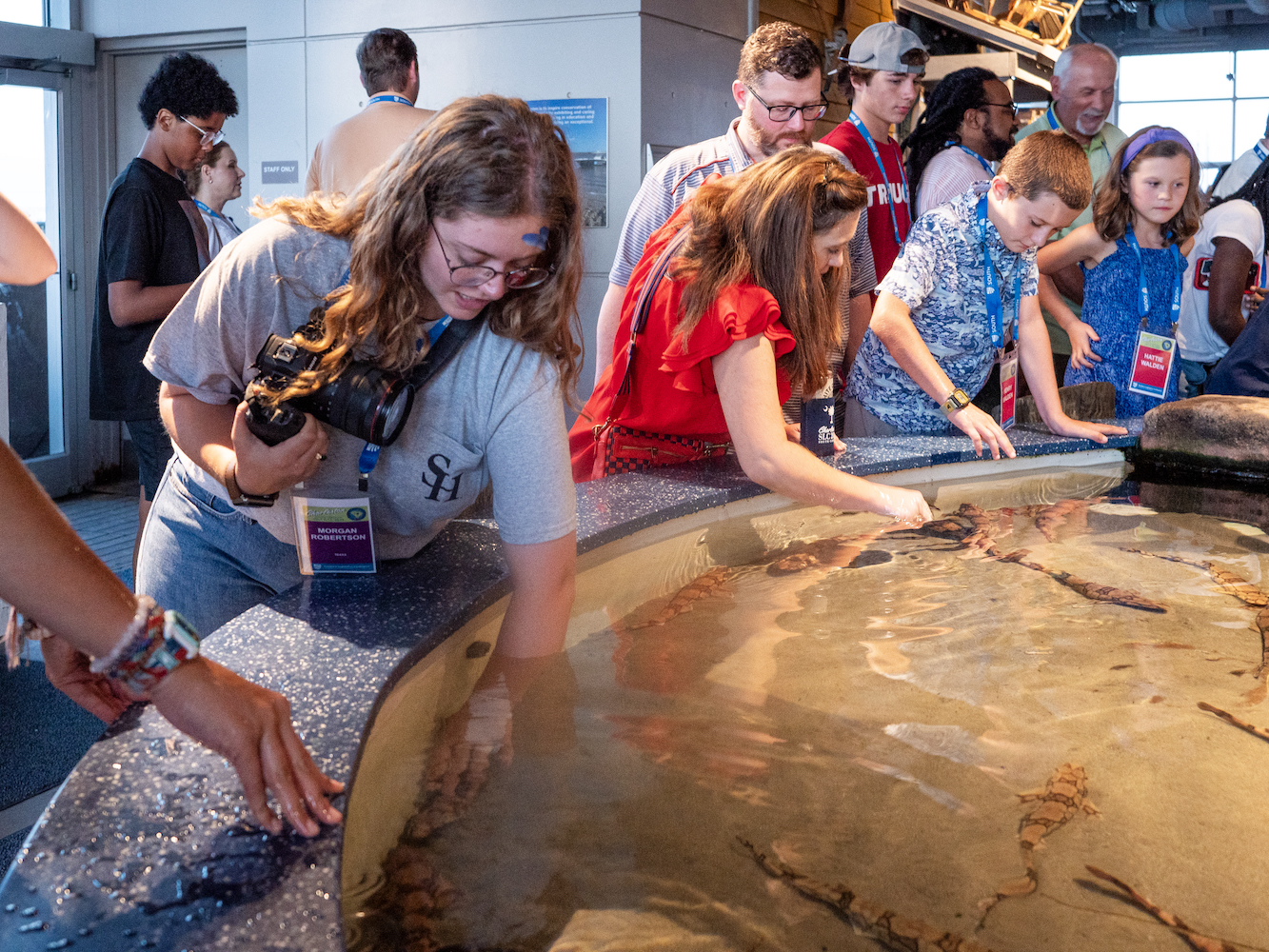
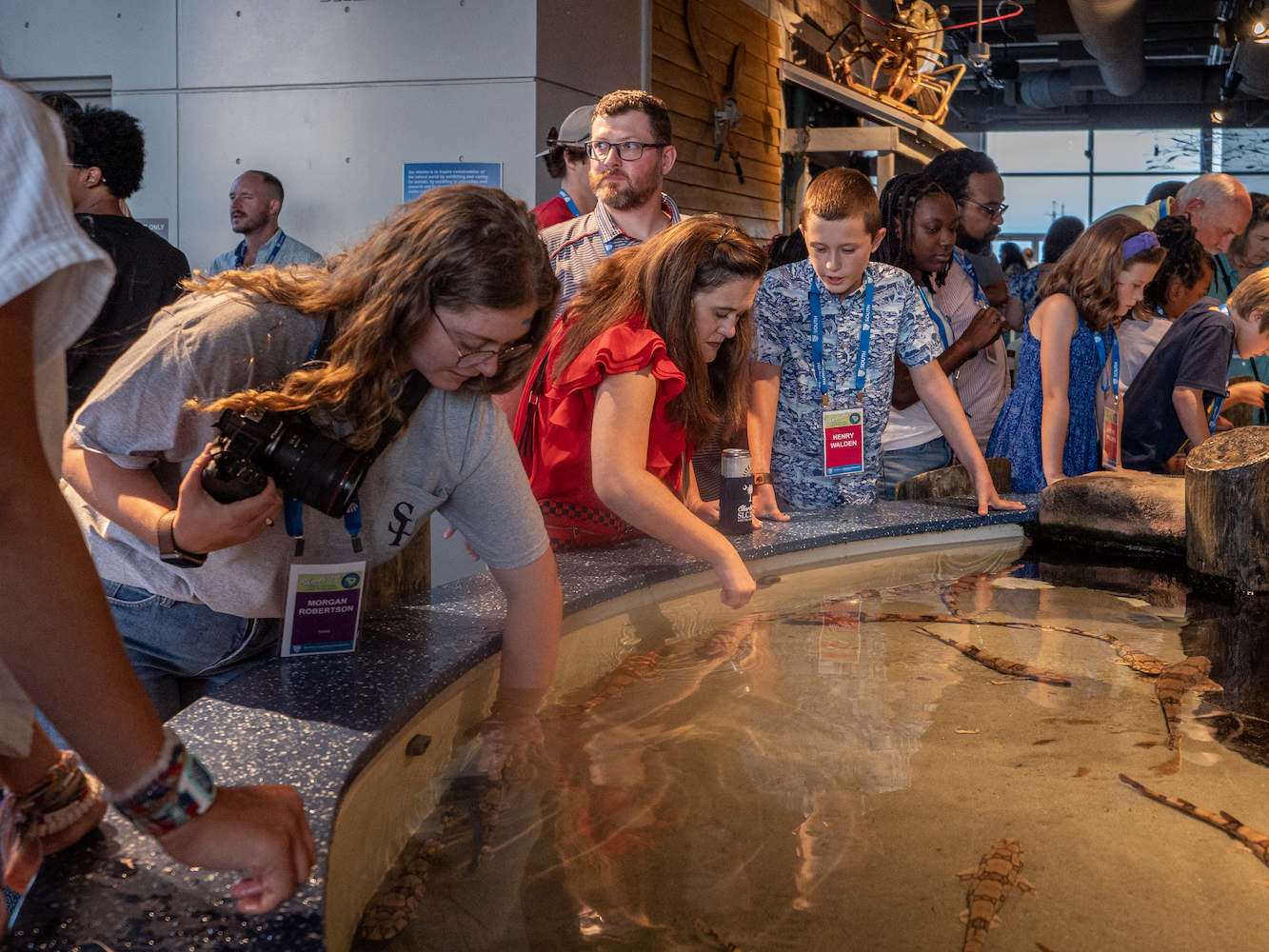
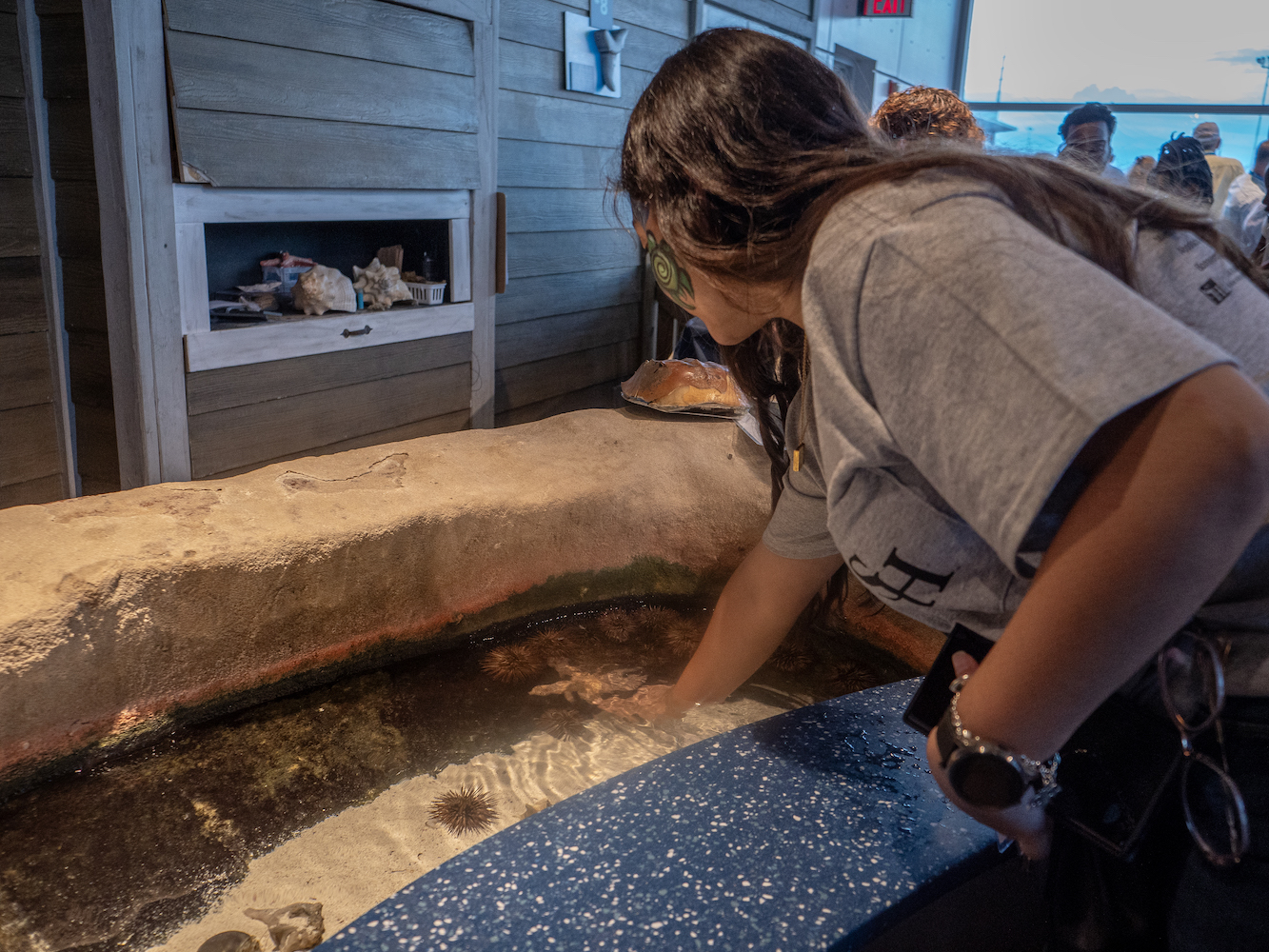
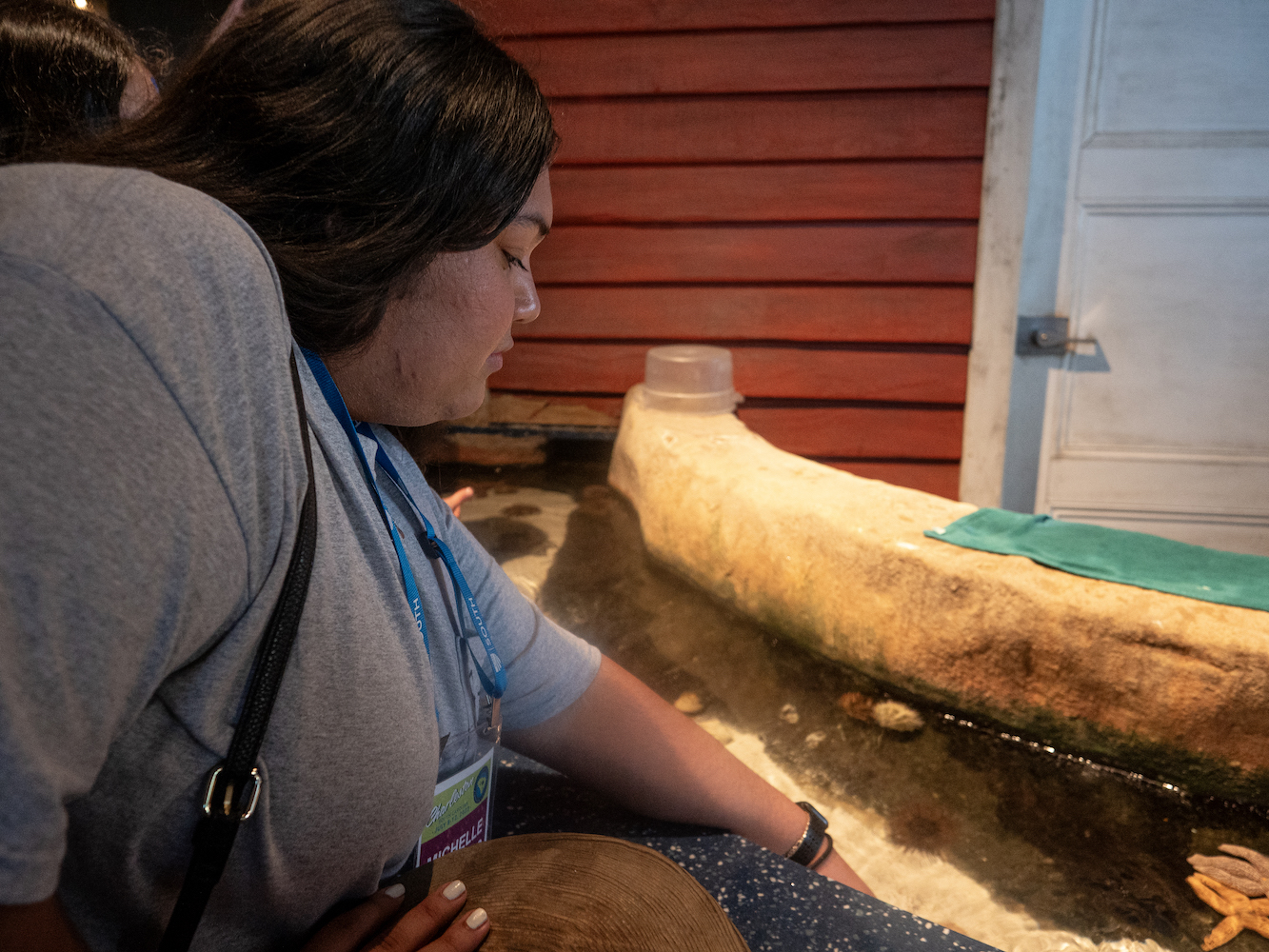
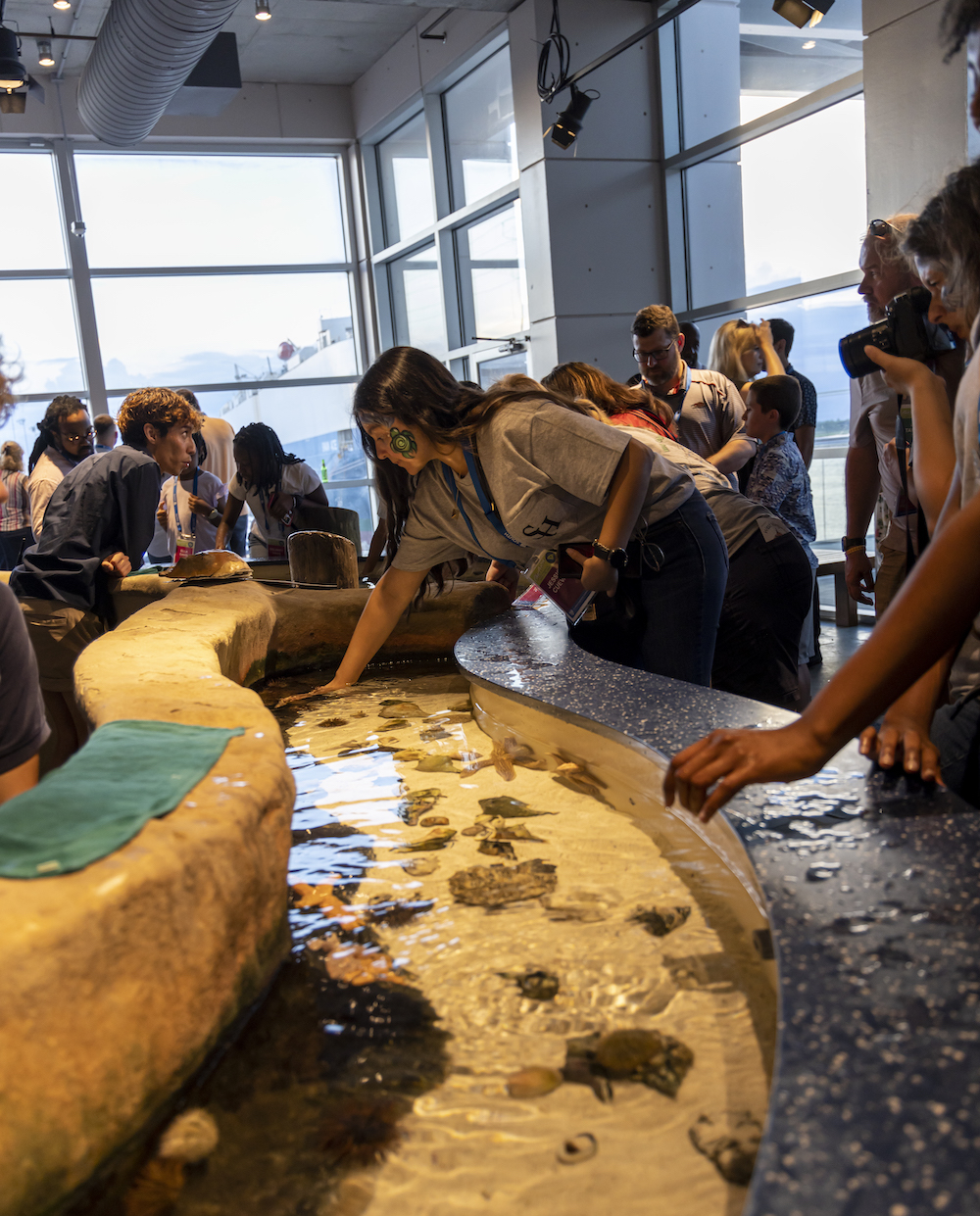
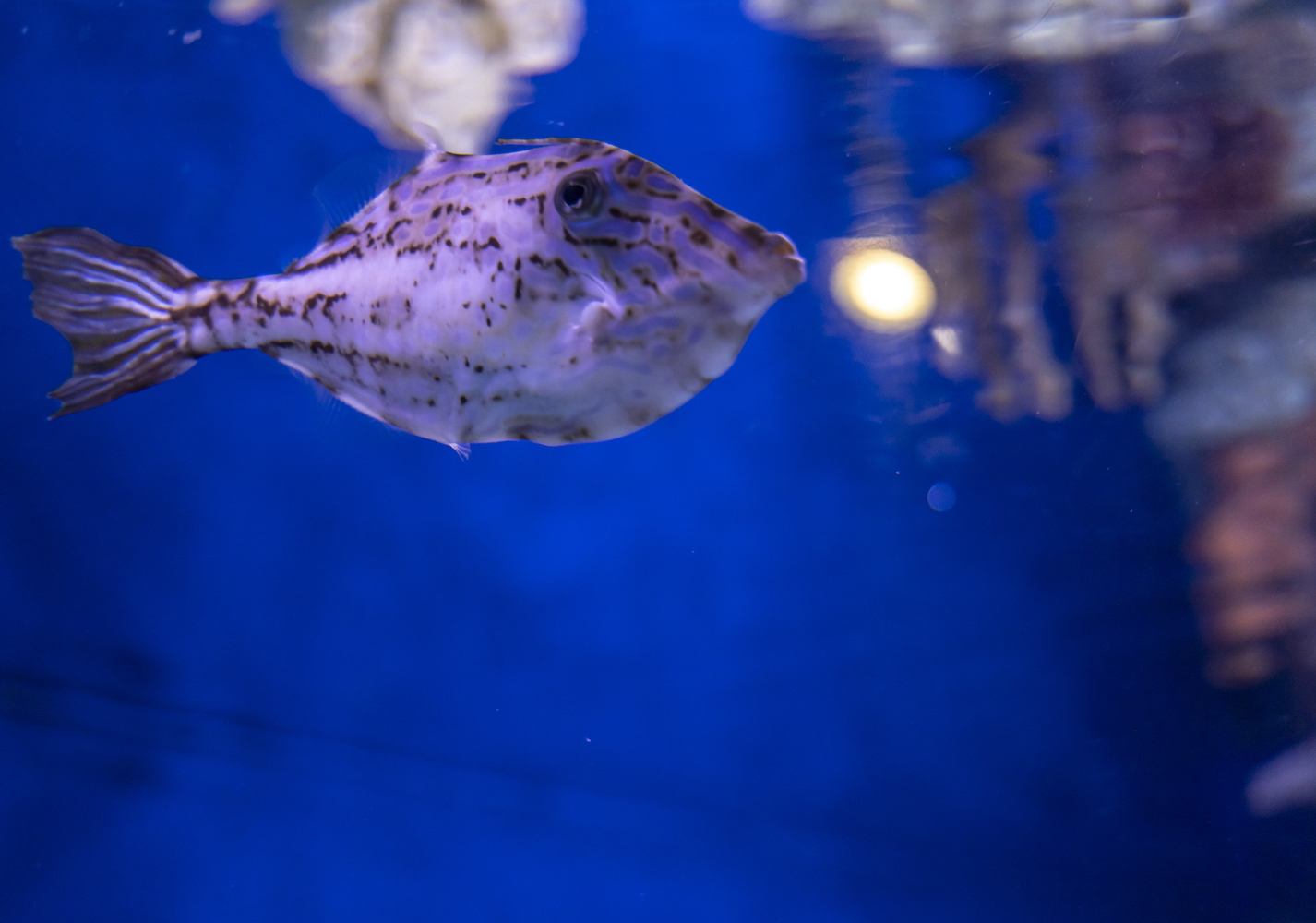
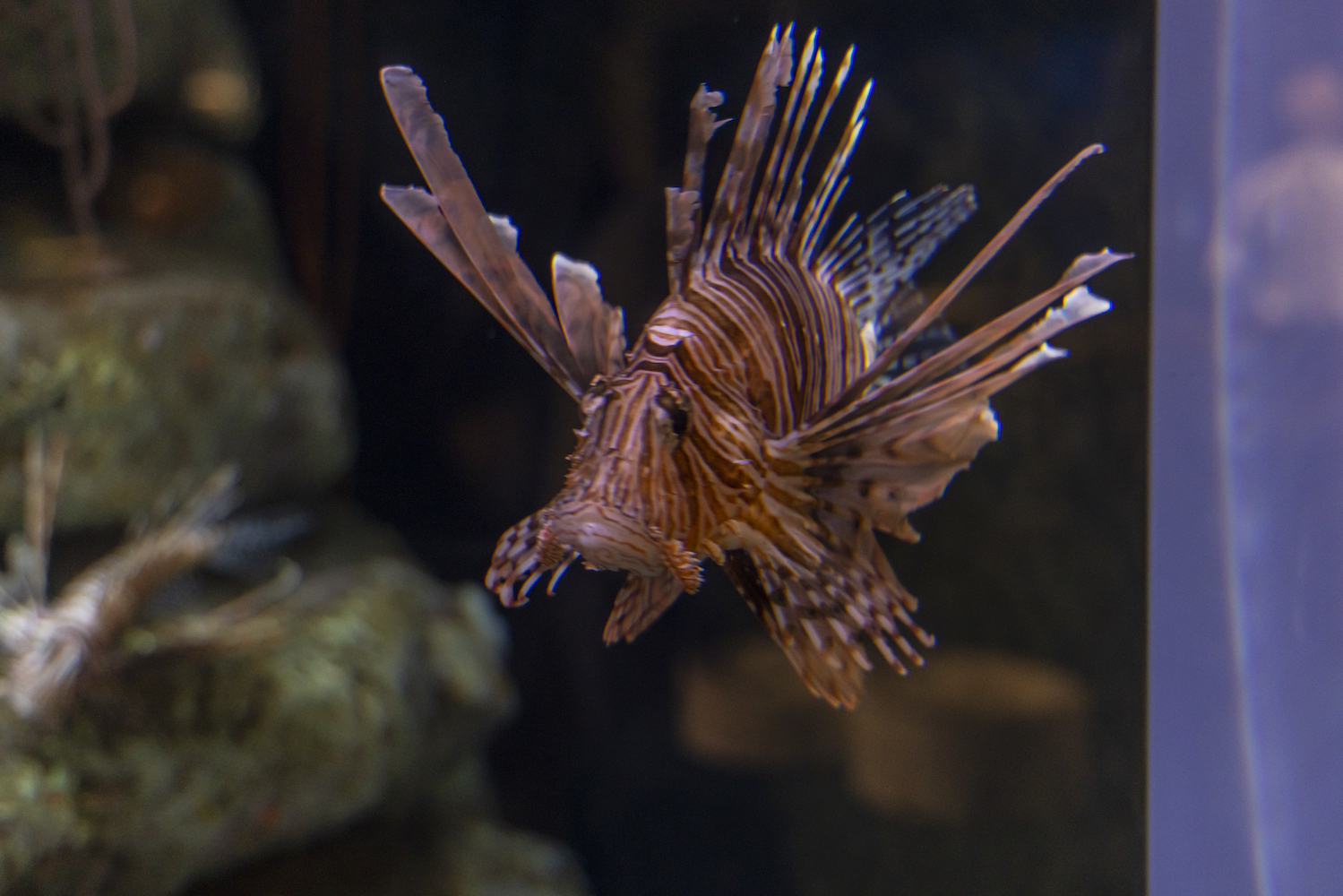
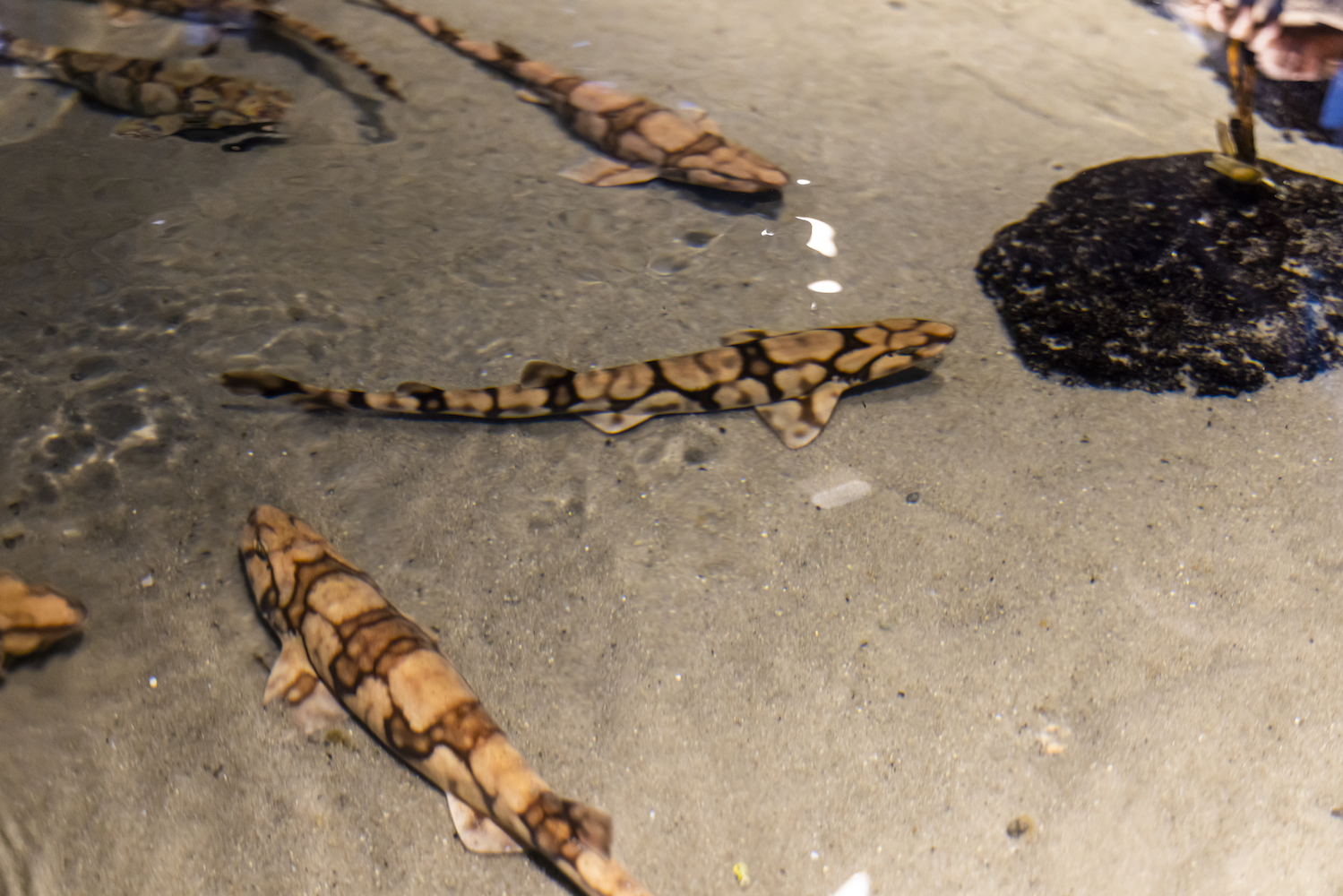
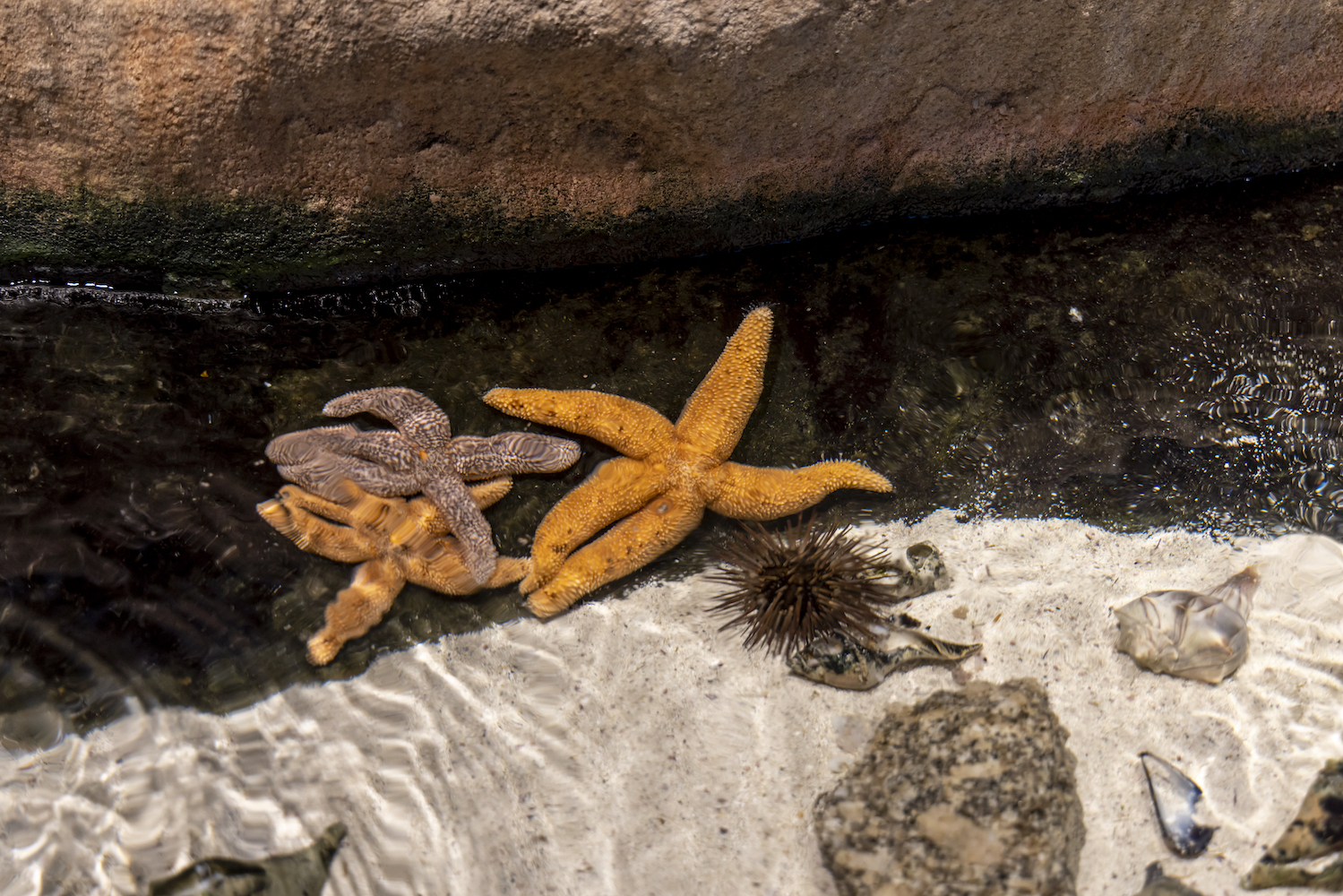
With the attention span of goldfish (2 seconds), and being naturally drawn to interactive museum features that do not require literacy, we saw the “touch and feed center” and immediately raced to it. We were able to touch starfish, sea urchins, hermit crabs, baby sand-tiger sharks, and sting rays!
At least one LEAP Ambassador was too frightened to touch the animals. The LEAP Code of Discretion prevents us from identifying this individual, but we would just like to apologize for Olivia’s absence from the preceding gallery.
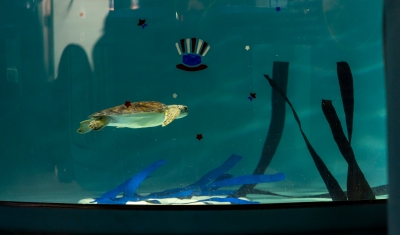
We learned that Charleston is home to three different turtles: (1) Green Sea Turtle, (2) Kemp’s Ridley, and (3) the Loggerhead Turtle (South Carolina State Turtle). They vary in color and size, and there was a couple in the Recovery Theater. The Recovery Theater – Sea Turtle Care Center is a portion of the aquarium that features an x-ray room, surgical rooms, many turtles, and interactive exhibits about the 13 patients in residence: 2 Loggerheads, 5 Green Sea Turtles, and 6 Kemp’s Ridleys.
The turtles often get hurt due to the pollution in the oceans from humans. In fact, it is estimated that by “2050, oceans are projected to contain more plastic than fish!” The most common reasons for ill or injured turtles are due to (1) fishhooks, (2) fishing lines, (3) broken bones, (4) pneumonia, and (5) osteomyelitis (bone infection).
Although it was disheartening to read about the stories of the different turtles, most of which were named after cheese (Mozzarella, Parmesan, etc.), I was glad to see they were recovering. Soon they might be able to swim among the other 385 sea turtles that have been released from this center.
Caretta, a loggerhead sea turtle, is the only turtle that will always call the aquarium home, due to her high dependency on humans impeding her from surviving in the ocean.
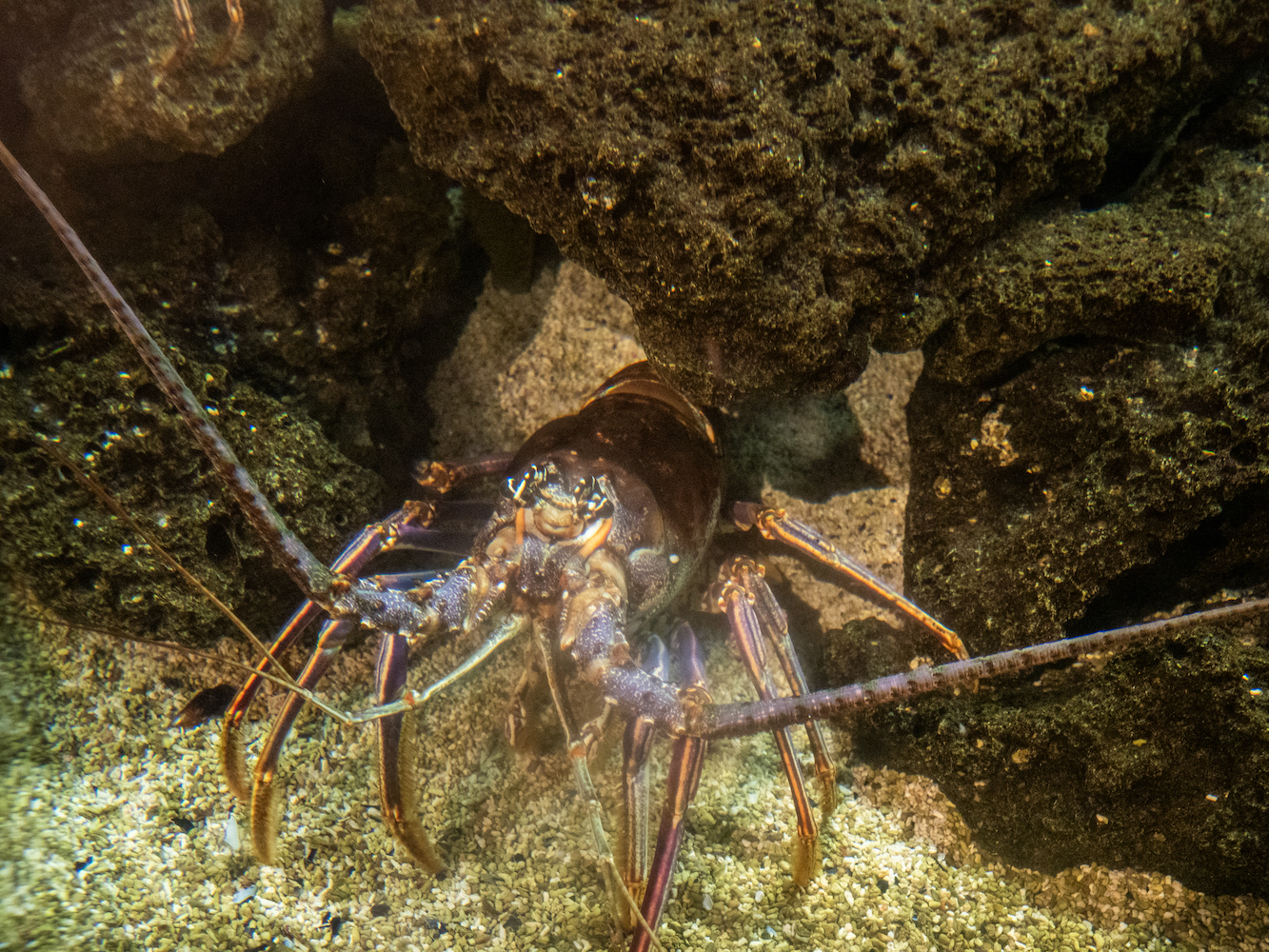
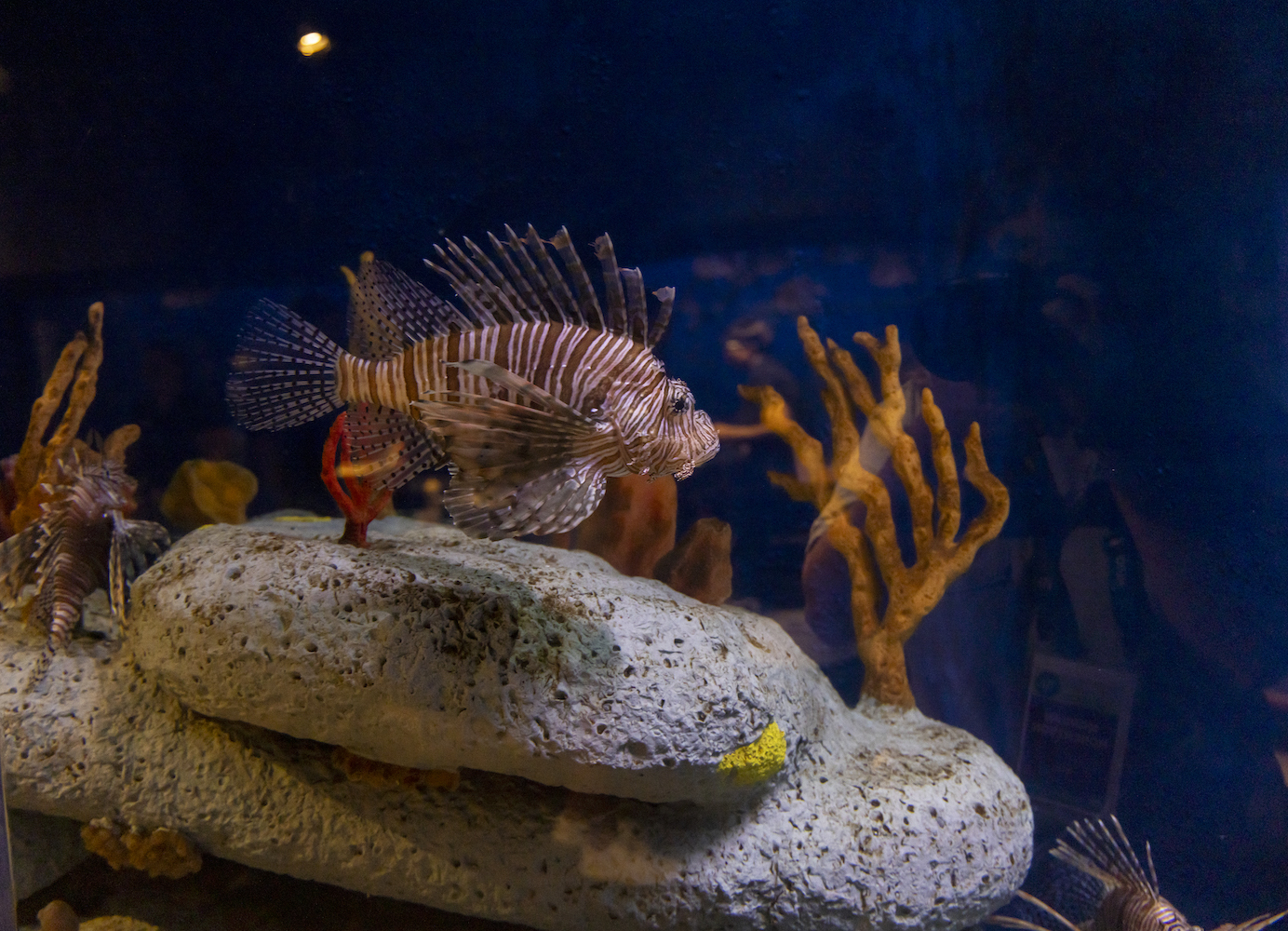
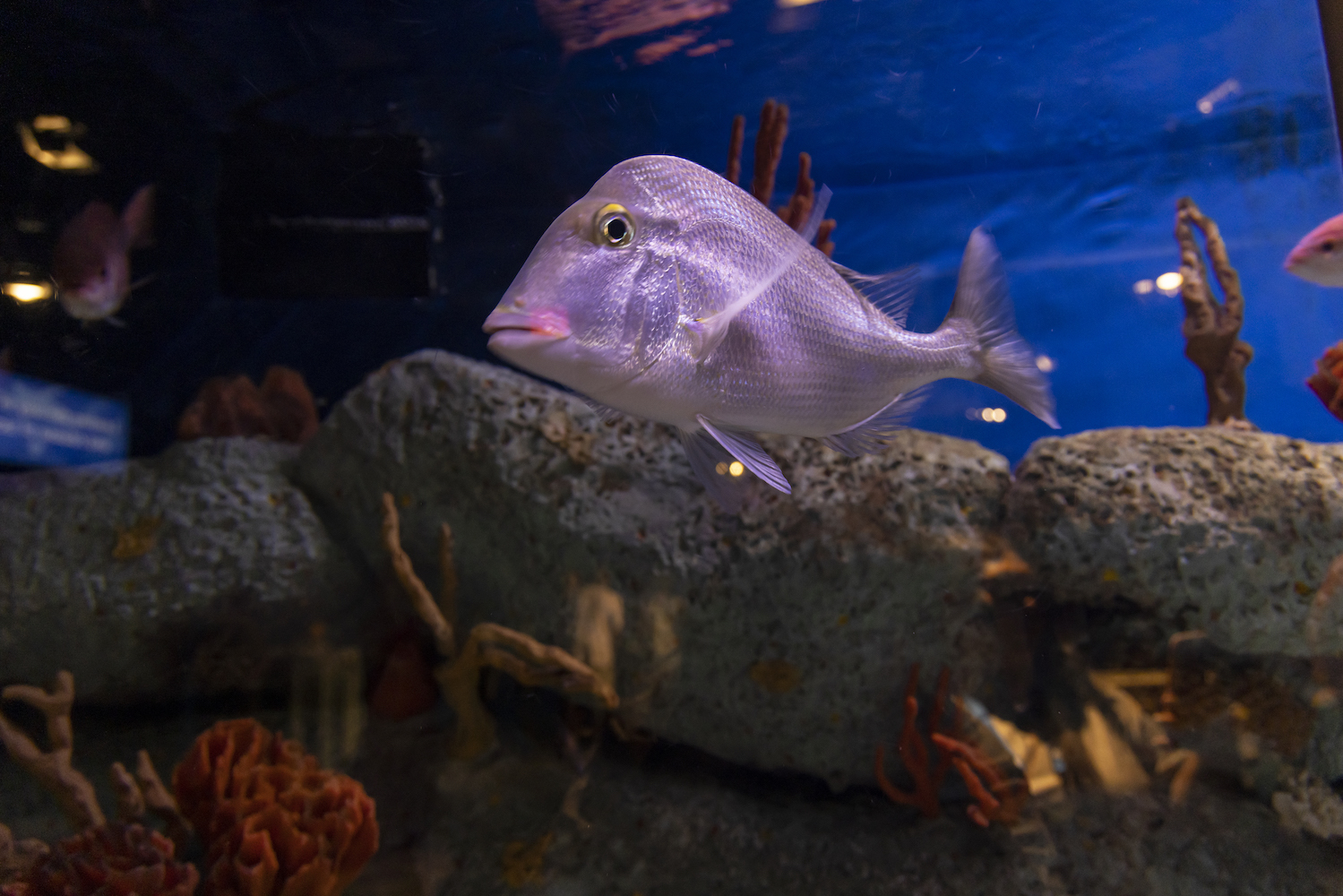
To nobody’s surprise, turtles were the highlight of my evening. However, this aquarium had many types of sea creatures to enjoy and learn about, such as; fish, jellyfish, sharks, lobsters, shrimp, and much more.
As Take Me Home, Country Road was echoing throughout the aquarium, and with children and adults dancing, we “o-fish-ally” called this turtle-tastic evening a night.
With today being the opening of the 2023 Southern Legislative Conference in Charleston, SC, we (sadly) were forced to depart from the beautiful city of Savannah, Georgia. Before we left, however, there were a few spots we wanted to explore.
Bonaventure Cemetery
By Olivia Discon
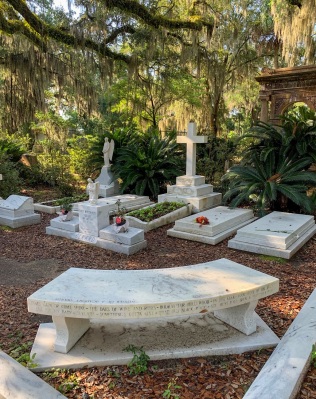
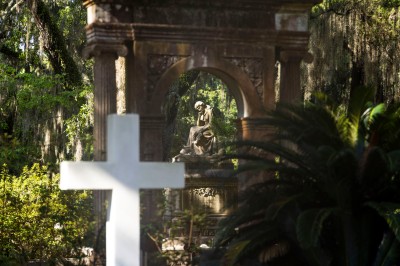
We wanted to see Bonaventure Cemetery for a couple of reasons: (1) it was featured prominently in the book (and movie) of Midnight in the Garden of Good and Evil…
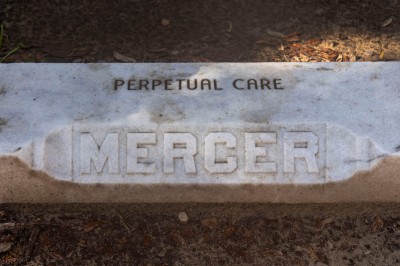
…and (2) the great singer-songwriter Johnny Mercer is buried there.
Mercer was a prominent singer-songwriter from the 20th century, writing more than 1,500 songs in his lifetime. Some of his most notable songs include Moon River, Somethings Gotta Give, Too Marvelous for Words, and Come Rain or Come Shine. Mercer’s talent for crafting clever and evocative lyrics, combined with his smooth vocal style, made him a beloved figure in the music industry. He received numerous accolades throughout his career, including four Academy Awards for the Best Original Song. Johnny Mercer’s contributions to American music continue to resonate today, cementing his legacy as one of the most celebrated lyricists of all time.
And Savannah, Georgia is both the birthplace and resting place of Johnny Mercer, who lies alongside his family in the same cemetery section.
Many headstones were engraved with some of Mercer’s lyrics. For instance, inscribed on his mother’s grave is the line “My mama done tol’ me” from Blues in the Night.
Though this visit was certainly somber, the morning sun cast across the greenery and marble tombstones was a lovely way to start our day and commemorate our time spent in Savannah.
Tybee Island
Morgan Robertson
Continuing on our morning adventure, we went on to visit the beautiful barrier island: Tybee. The island proved both fun and educational, a great way to energize us despite an early start.
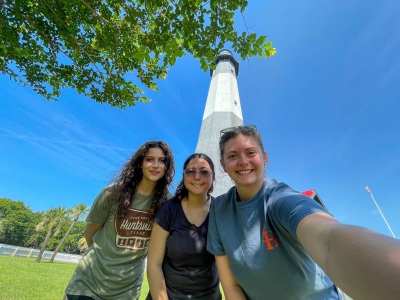
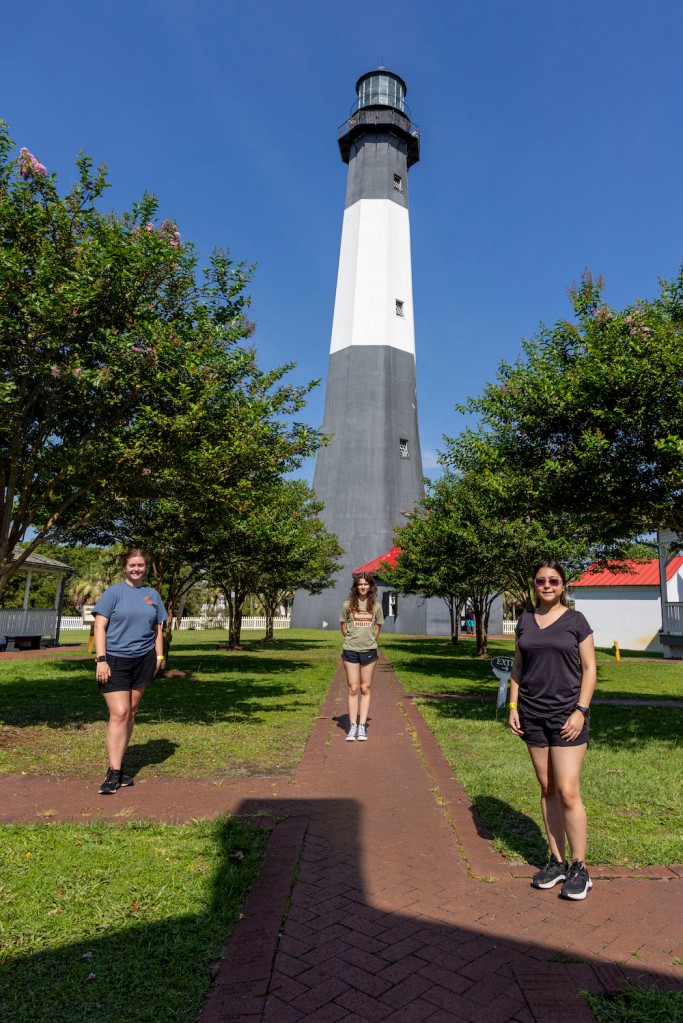
The Tybee Island Lighthouse has existed since 1733, albeit in different iterations. The first structure was 90 feet tall, but it succumbed to its proximity to the beach. Unfortunately, the lighthouse builders didn’t learn from this fate, and they again built too close to water that often encroaches upon hitherto dry land. The third structure was more fortunate, in that no acts of God befell it; but it did suffer from the onslaught of the Civil War and the destruction it brought.
Fortunately, the base of the lighthouse was salvageable and a fourth structure was built upon the base of the third. At 154 feet, this structure narrowly misses being one of the ten tallest lighthouses in the United States.
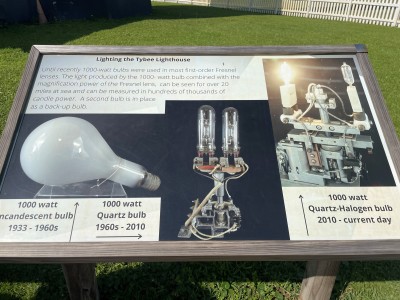
This being our first visit to a lighthouse, it shone light on the advance of technology. In 1791, for example, 15 lanterns were used to signal ships. Between the 1930s-1960s, 1,000-watt incandescent bulbs were standard practice. One-thousand-watt quartz bulbs were used until 2010, which were followed by the use of the 1,000-watt quartz-halogen bulb.
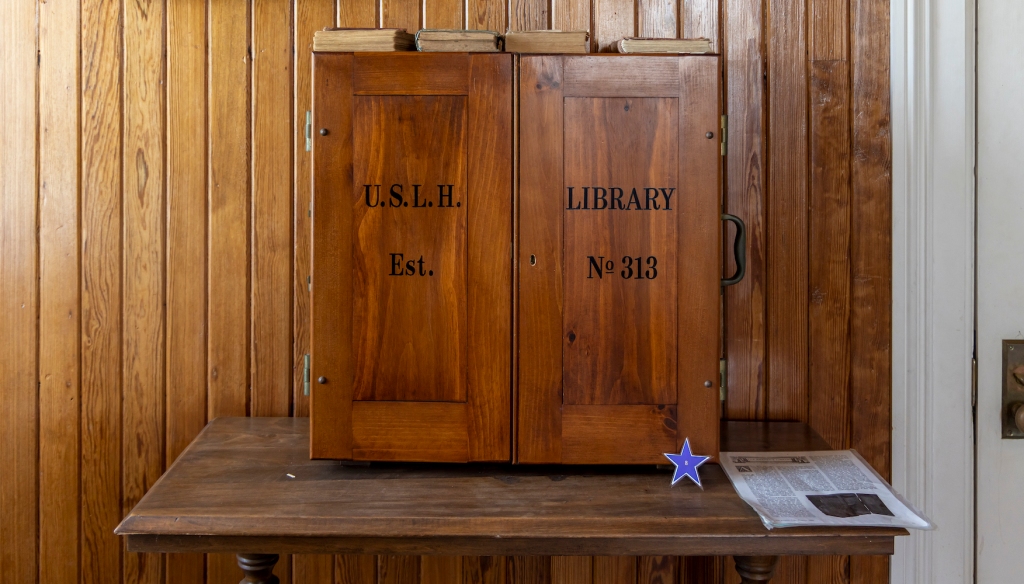
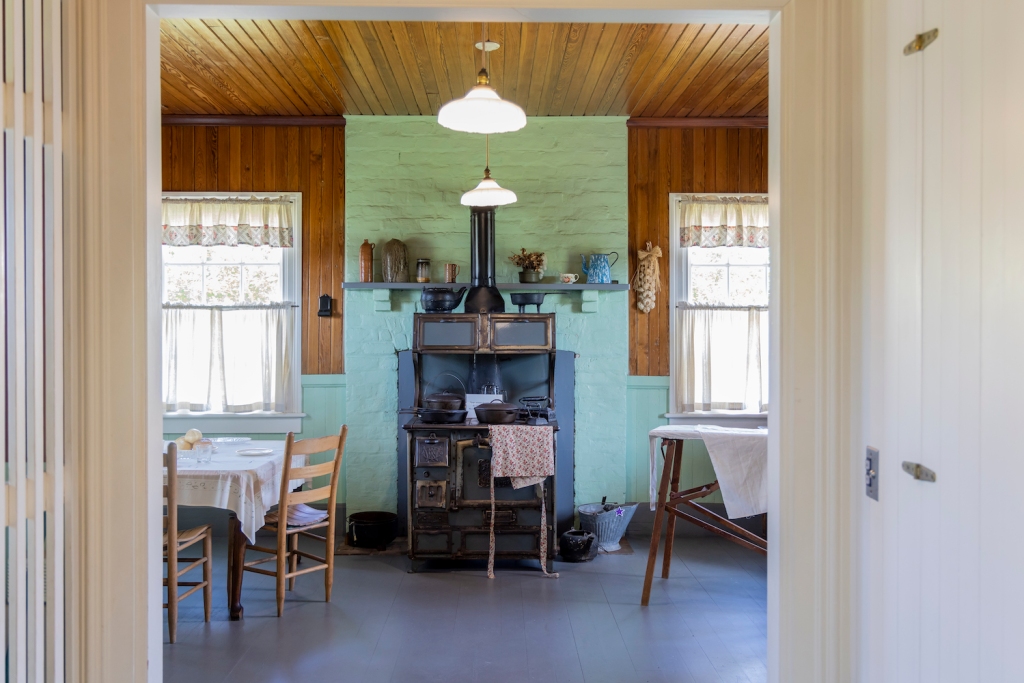
Lighthouse wasn’t an easy job and, in fact, a lighthouse might have up to three keepers, plus support staff. We were able to tour the houses for these staff, and, as part of the much-maligned “Gen-Z,” we saw many unfamiliar objects!
Despite the nice accommodations, comfortable amenities, and short commute, lighthouse-keepers definitely had a long climb to work. In the case of the Tybee Island Lighthouse, the climb consisted of 178 steps.
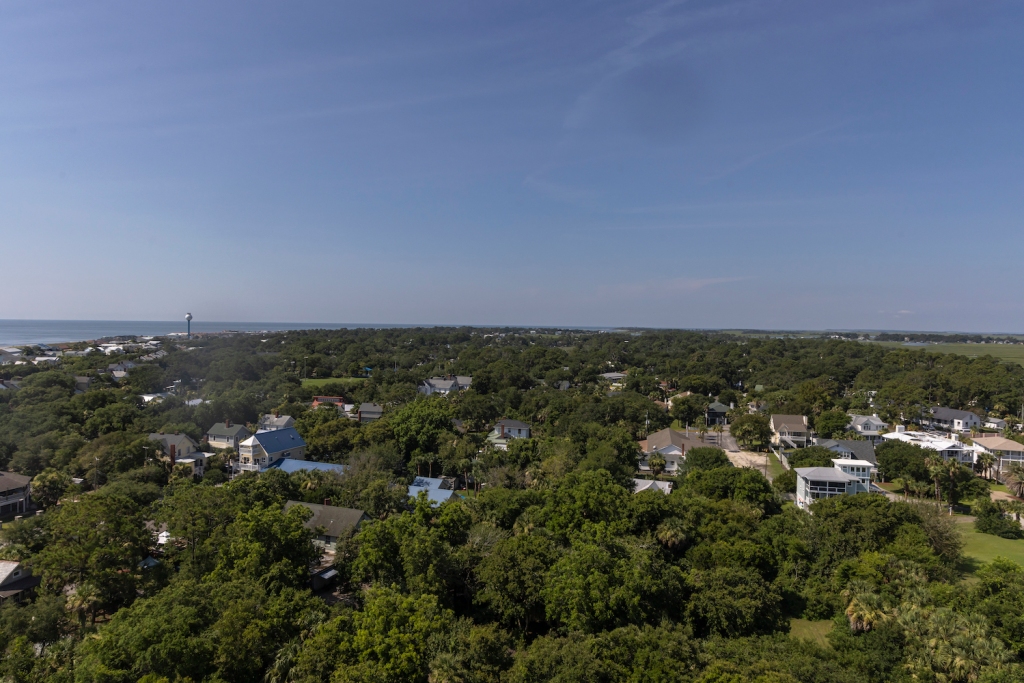
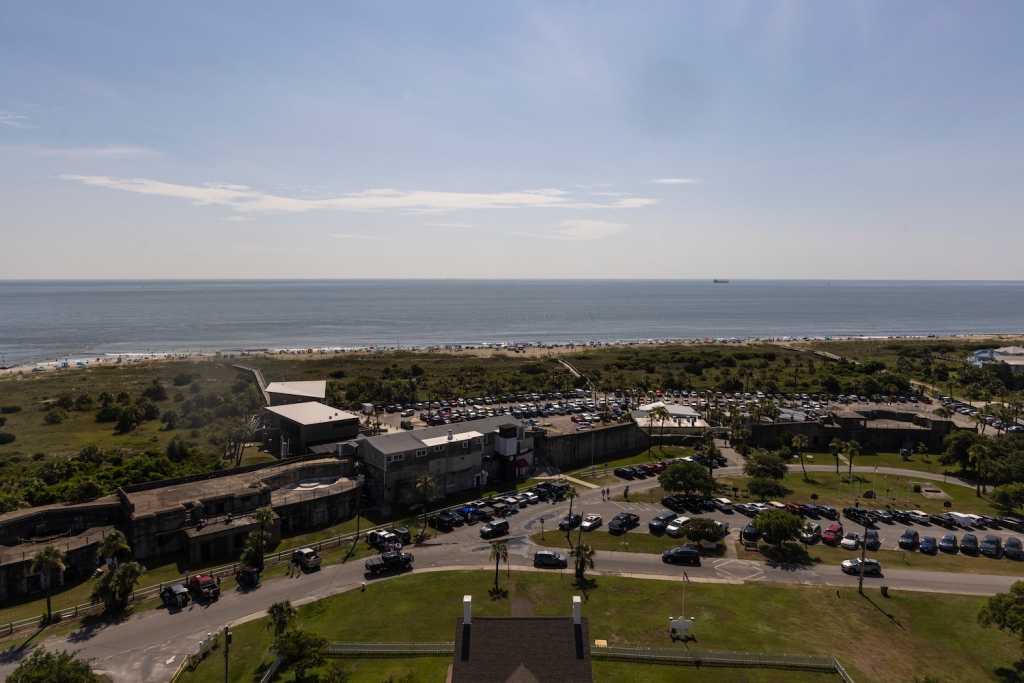
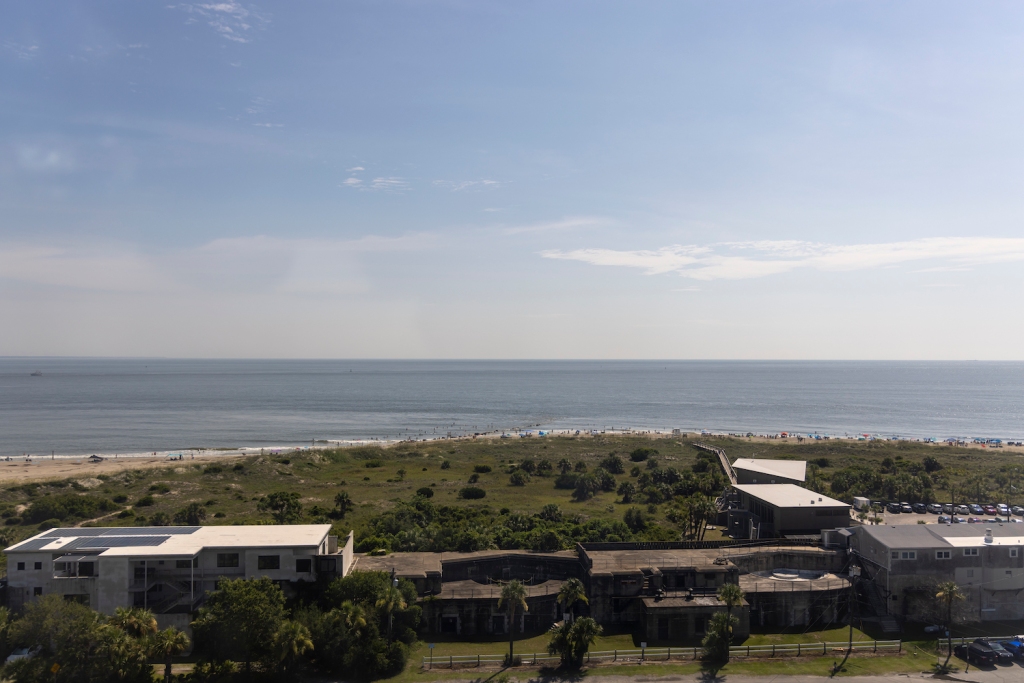
On the other hand, the occupation offers some beautiful views!
It was a great start to the day, bringing the past to life, offering great views, and getting our blood pumping.
The Tybee Island Lighthouse is 30.29 times taller than Jessica Cuevas–and, despite being obsolete, is also twice as technologically advanced as Ms. Cuevas, who single-handledly destroys group communications by using Android.
Zunzi’s
Michelle Cardenas
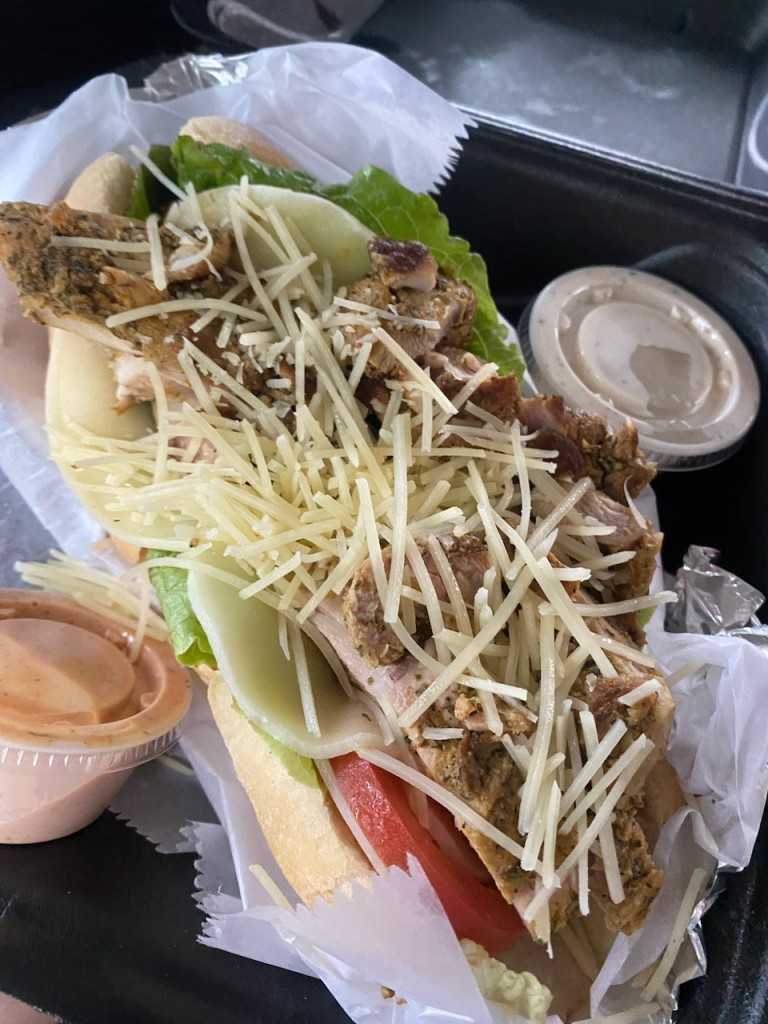
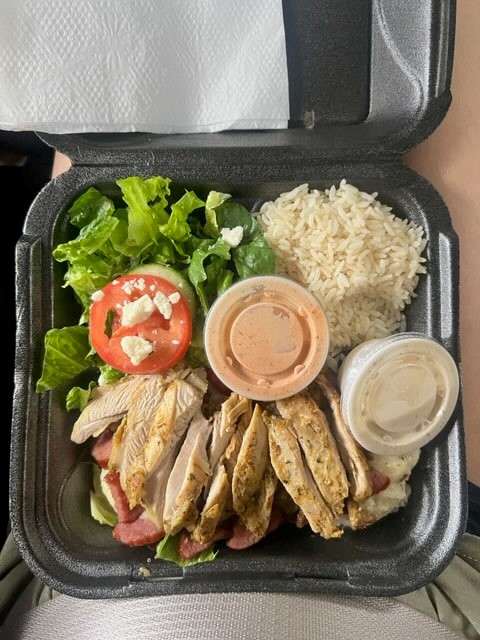
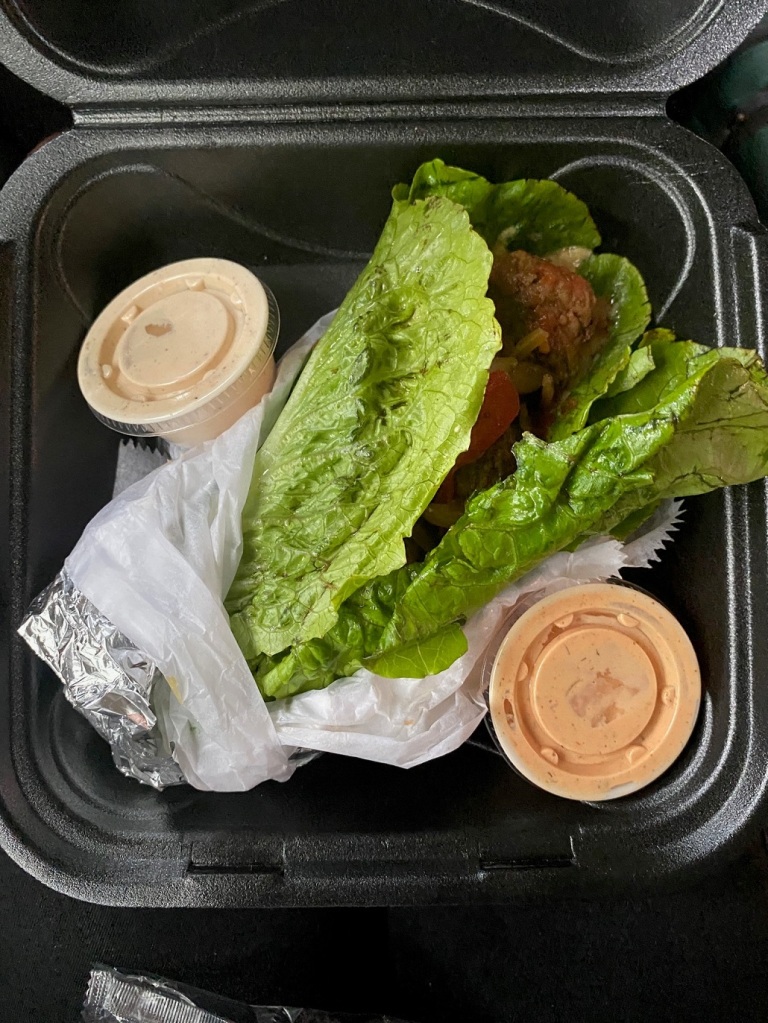
After a beautiful morning of exploring Tybee Island we headed to Zunzi’s, one of Georgia’s most famous restaurants. Their menu included a variety of platters, salads, and sandwiches that did not disappoint. Our entrees included the Oliver’s Lunch Bowl, the Johnny Roll, and The Conquistador.
The Conquistador placed Zunzi’s on the map when it was named one of the best chicken sandwiches in America by the Travel Channel. I decided to put this to the test and indulge in one, and I must say it had very distinct flavors that made it overall delectable. This was the best way to say goodbye to Savannah and begin our South Carolina oddyssey.
Southern Legislative Conference
Ingrid Cuero and Michelle Cardenas
Fittingly, the first event of the Southern Legislative Conference was the “welcome evening.” And what a welcome! What an evening!
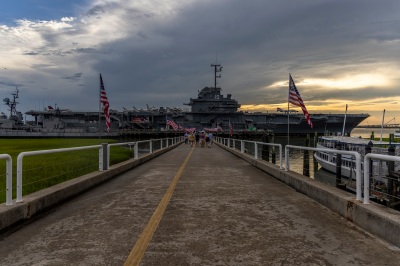
The event was held upon the deck of an aircraft carrier, the USS Yorktown.
We soon enjoyed southern hospitality, from the greetings of the staff to the conversation with other guests.
Arkansas Senator Clint Penzo, and his wife, Allison, generously shared time and dinner with us. Senator Penzo discussed his varied career path into politics, and how each of his careers has helped him in the political world.
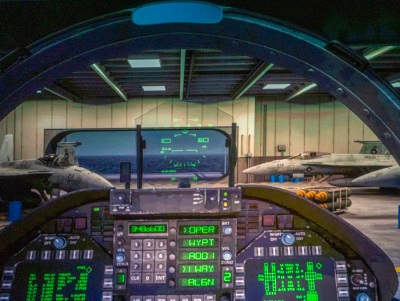
Our education, however, wasn’t only vicarious. We also learned about the art and science of flying when we boarded a flight simulator.
Mimicking the experience of a pilot flying a military aircraft (or a passenger in a vehicle driven by our advisor, Professor Yawn)…
…the simulation included radio conversations, target strikes, and even an air stop for refueling.
It was a rather unique experience that we were not fully prepared for–clenching on to our seats and trying not to fall. Beyond the intensity of the simulator, it was a rather gratifying and educational experience
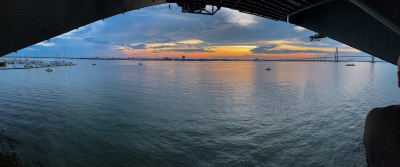
We proceeded to make our way through the aircraft carrier stopping by a couple landings to take pictures of the gorgeous view. The Arthur Ravenel Jr. Bridge paired up perfectly with the multi-colored sky allowing us to take some spectacular photos!
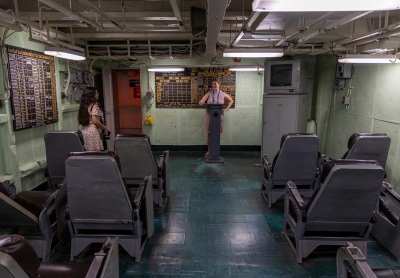
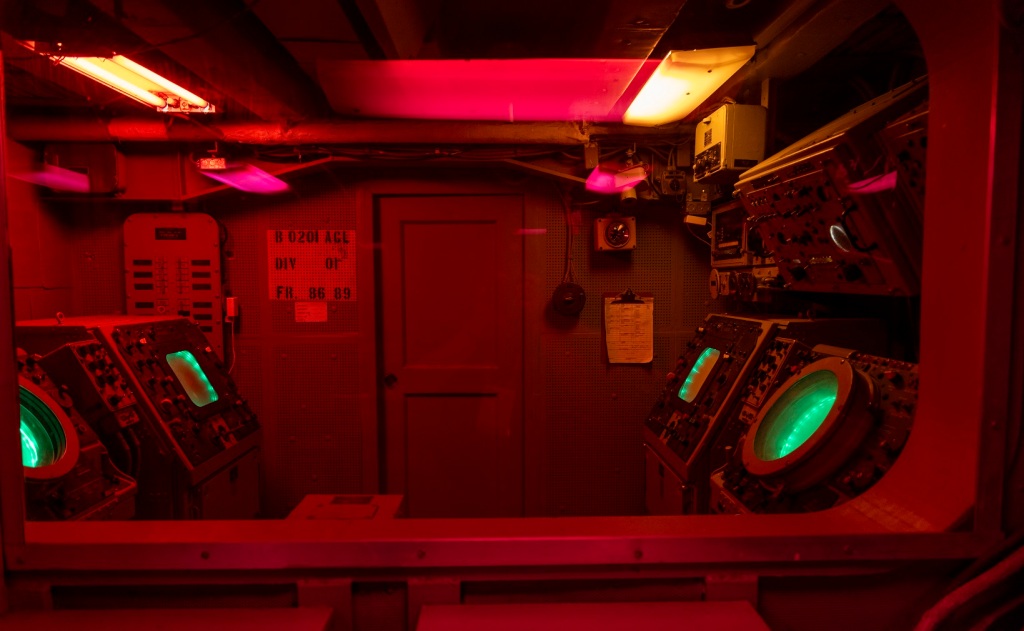
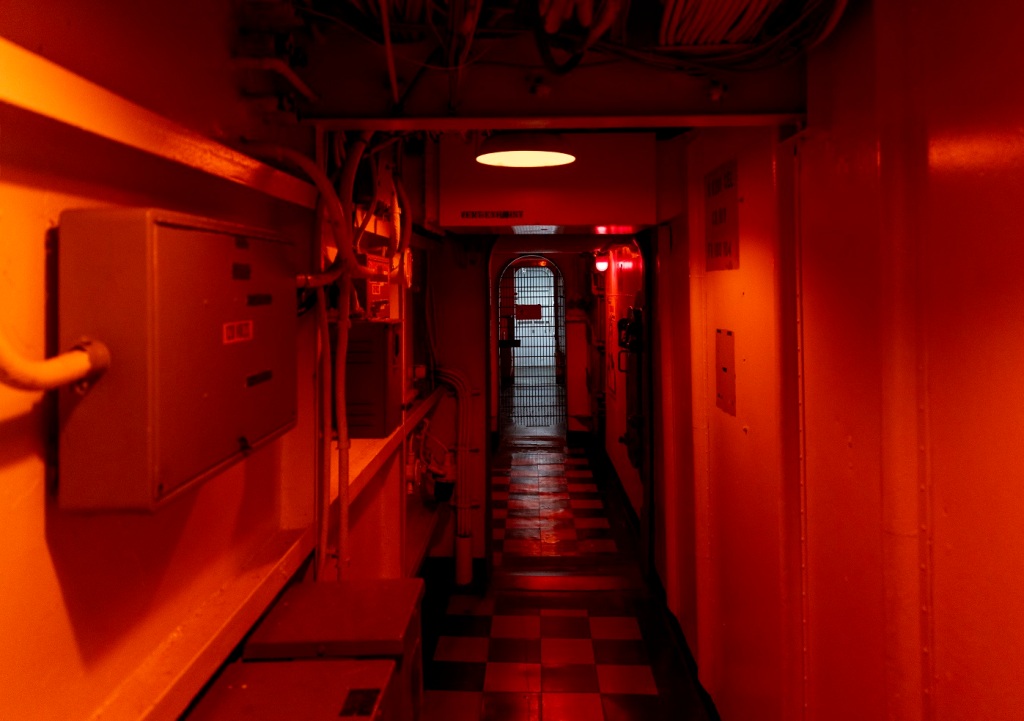
Our last stop on the Aircraft carrier was the flight deck, but just getting to the deck was an experience. We saw long corridors, war rooms, elaborate equipment, and steep stairs.
Morgan and Jessica Contemplating Waging War (on each other)
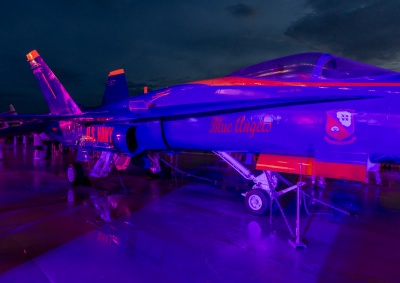
The deck featured stunning lights, military aircrafts, and a band.
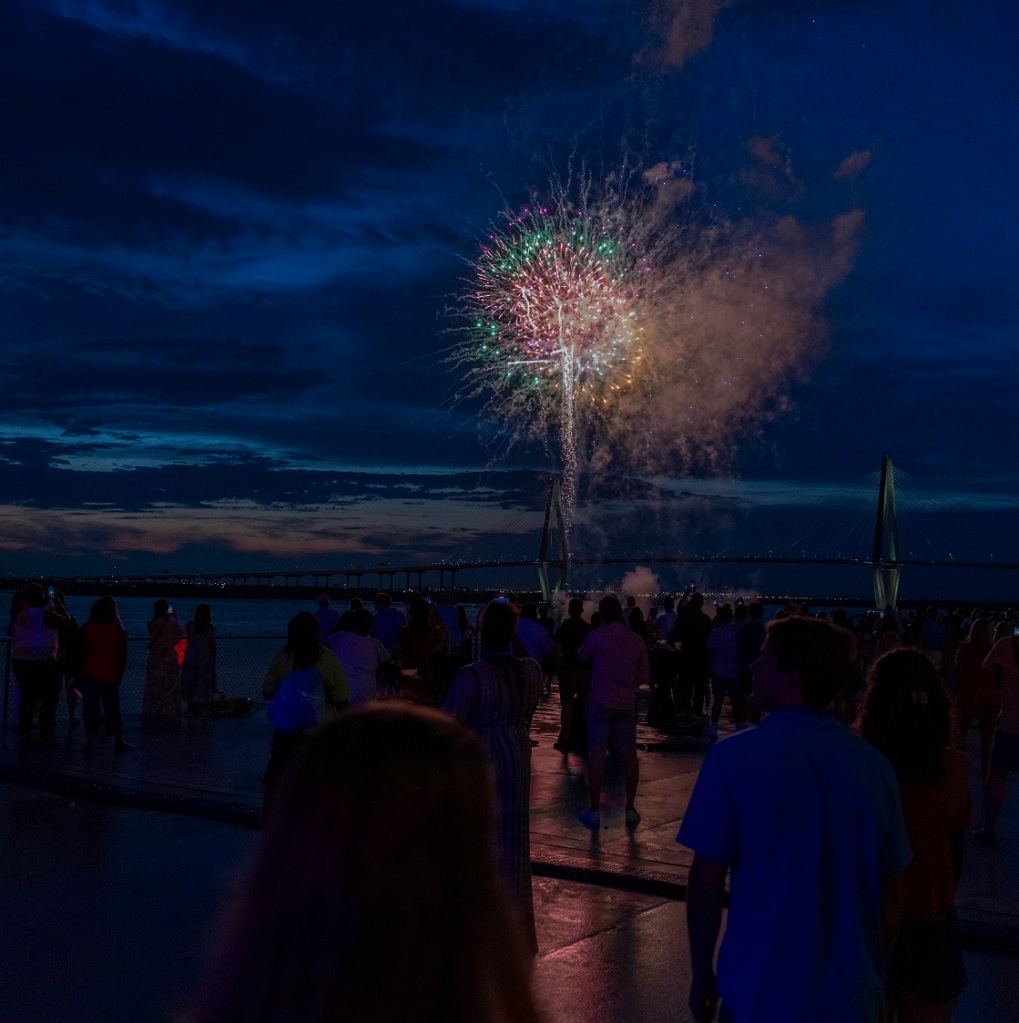
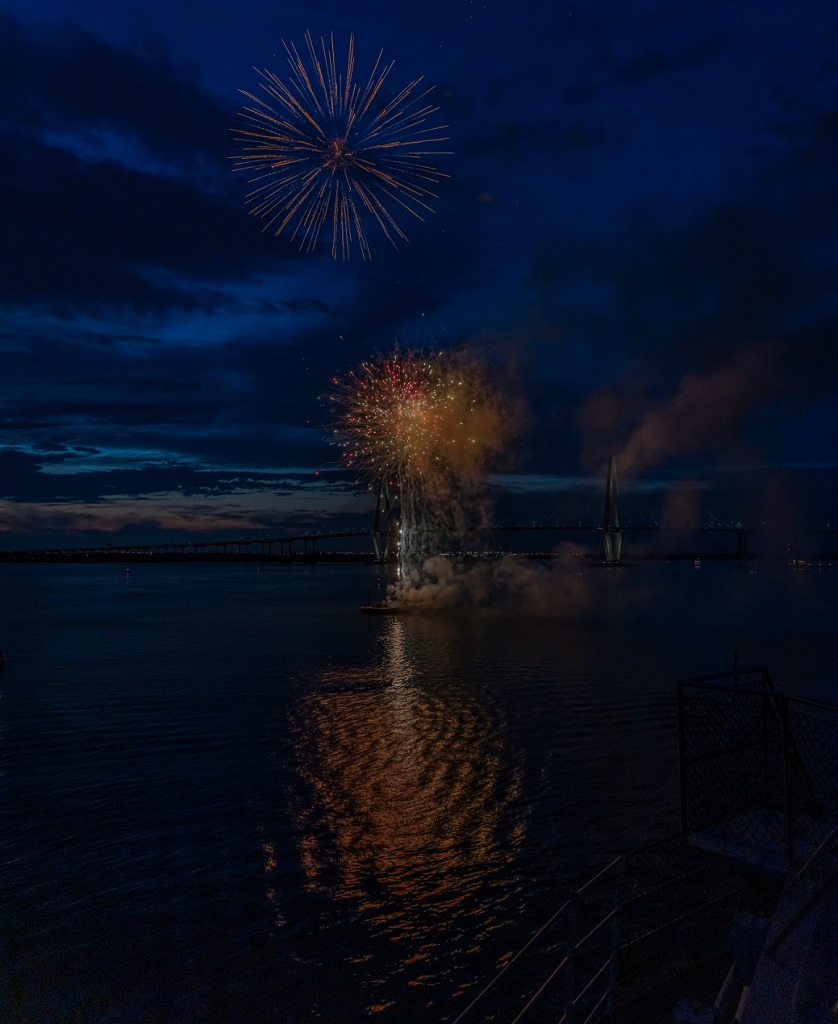
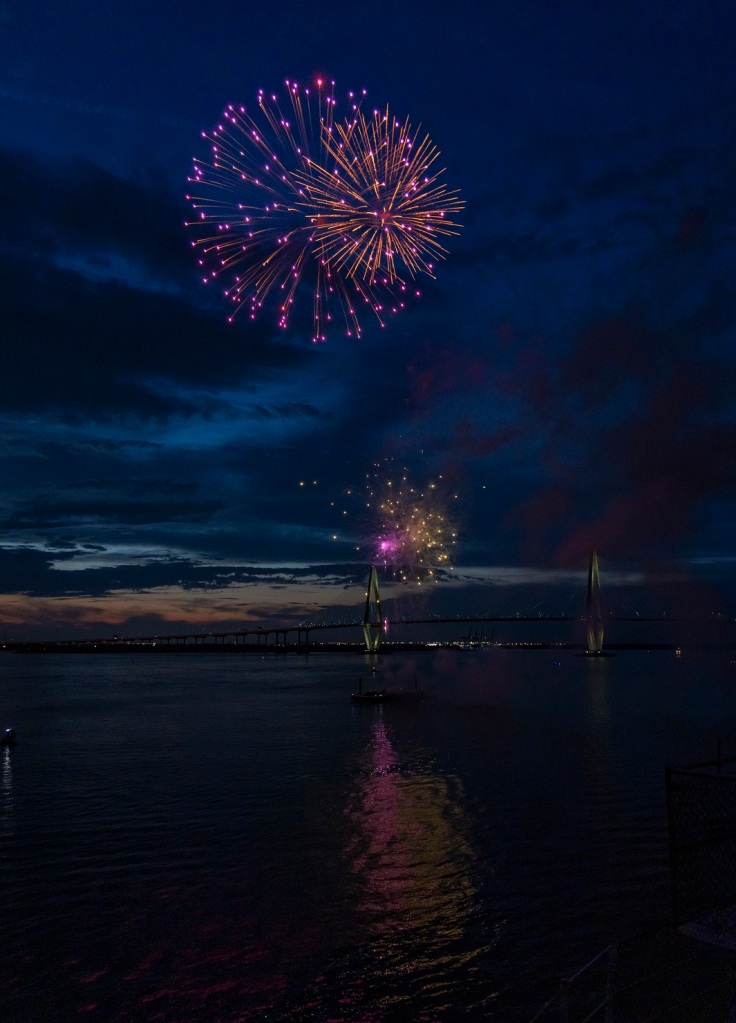
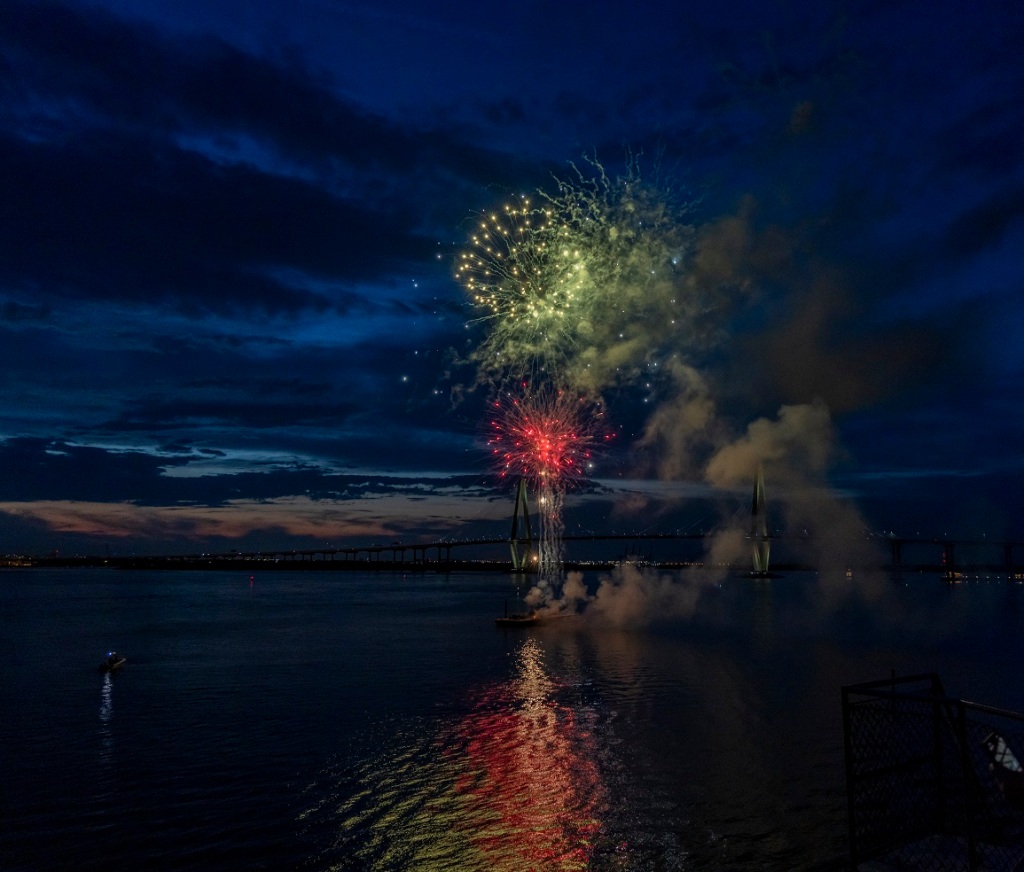
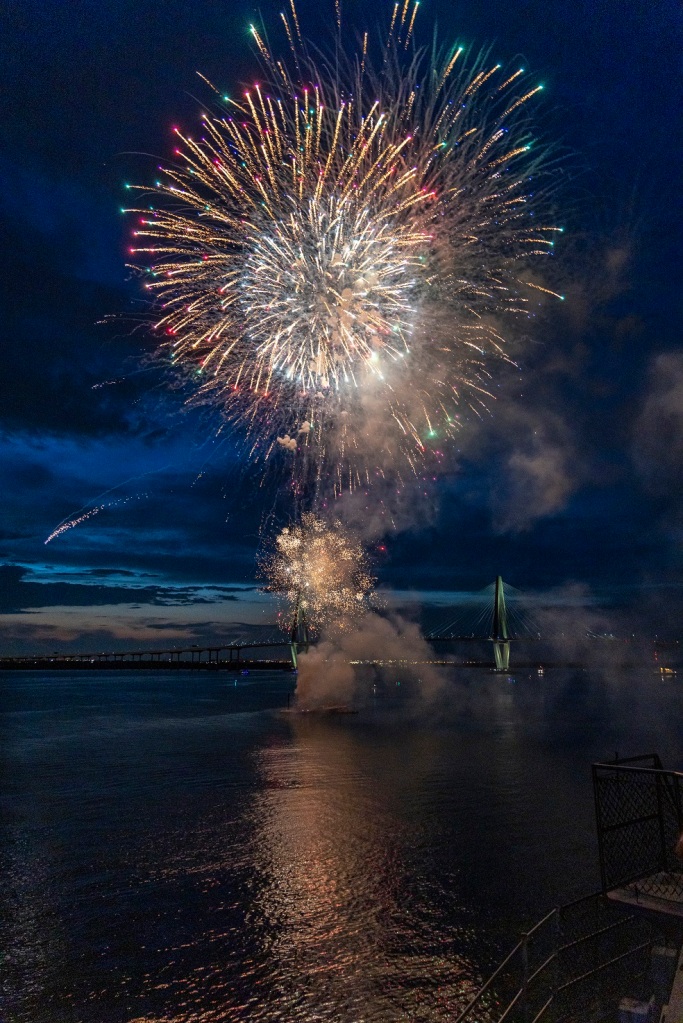
Jazz bands filled the air as the sun set, and then the sounds of fireworks were accompanied by strings of colors decorating the Charleston skyline.
The band began playing patriotic songs, and as we looked over the harbor, which was harbor surrounded by forts (Fort Sumter, Fort Moultrie, Fort Johnson), we had a small sense of what Francis Scott Key might have felt when writing “the bombs bursting in air.”
For us, it was a day of new experiences, of looking back and forward, capped with a truly welcoming reception.
The charm and southern hospitality of South Carolina were made very evident as we ended our magical evening.
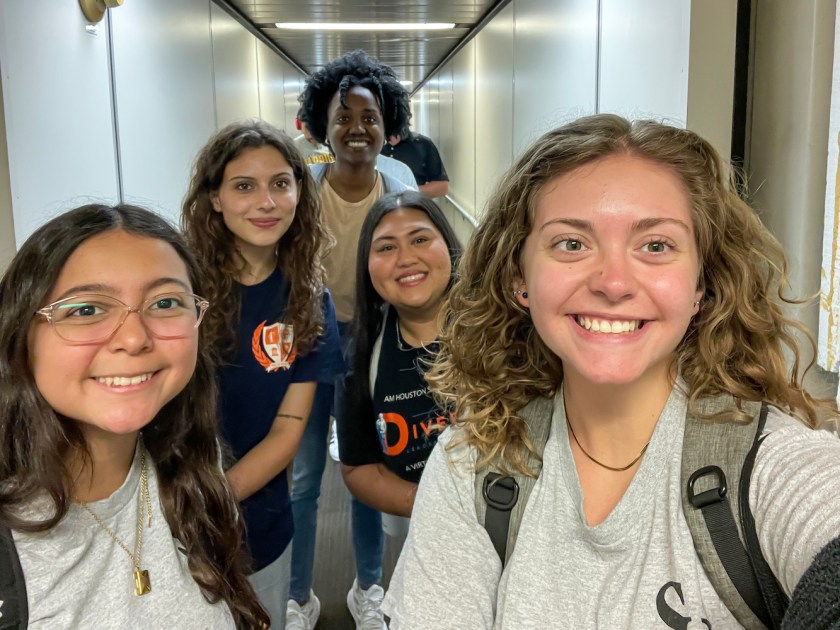
For LEAP Ambassadors, July means not only higher temperatures, but also the opportunity to attend the Southern Legislative Conference! And although this year’s program is in Charleston, South Carolina, we flew into Atlanta, with the idea of seeing a bit more of the deep south along the way. And while a few of us may be considered ‘seasoned’ travelers, traveling is a new experience for others. In fact, this was Michelle’s first time on an airplane!
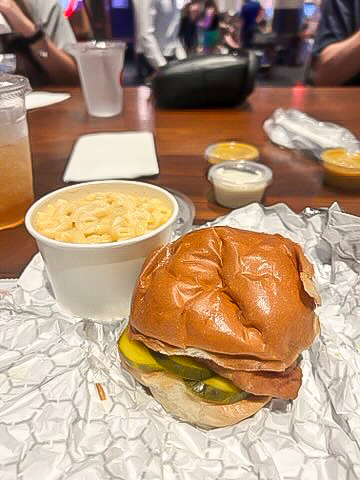
We were all very hungry after our two hour flight, so we made our first stop at the Ponce City Market, which is in a 20th century mixed-use building with a intriguing industrial interior. It consists of two floors, with the restaurants on the first and some retail shops on the first and second floors. There are a variety of cuisines from all over the world that we could have had for lunch, but instead most Ambassadors opted to pursue the deep south theme and order from Hop’s Chicken, with orders of fried chicken sandwiches, mac & cheese sides, and, of course, sweet tea.
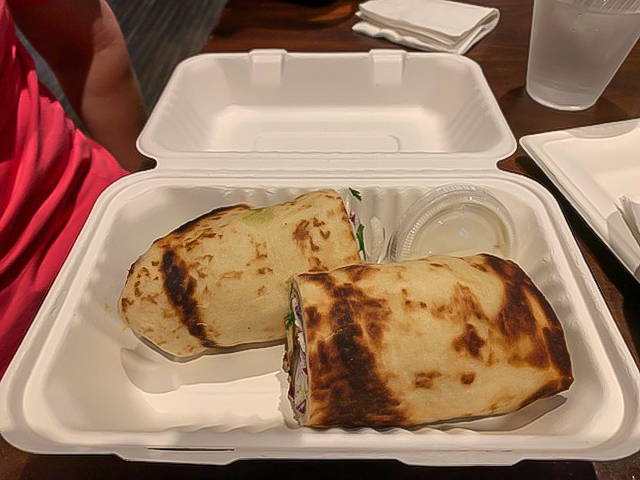
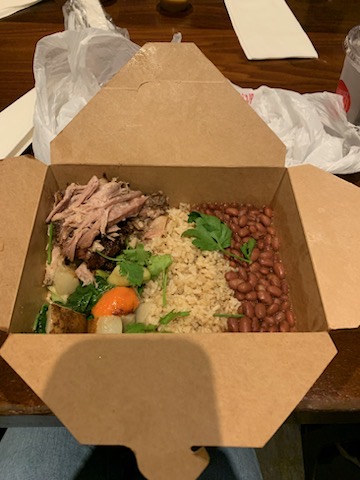
Feeling a bit more “experimental,” Professor Yawn and Stephanie ate a wrap from Botiwalla along with SPDP, which are flour crisps with yogurt and two kinds of chutneys. Ingrid chose to get a plate of pork, rice, and beans from El Super Pan.
With full stomachs, we were ready to take on the rest of our day, starting with The Martin Luther King Jr. National Historic Park.
Martin Luther King Jr. National Historic Park
By Michelle Cardenas
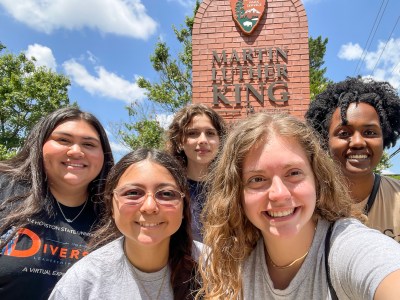
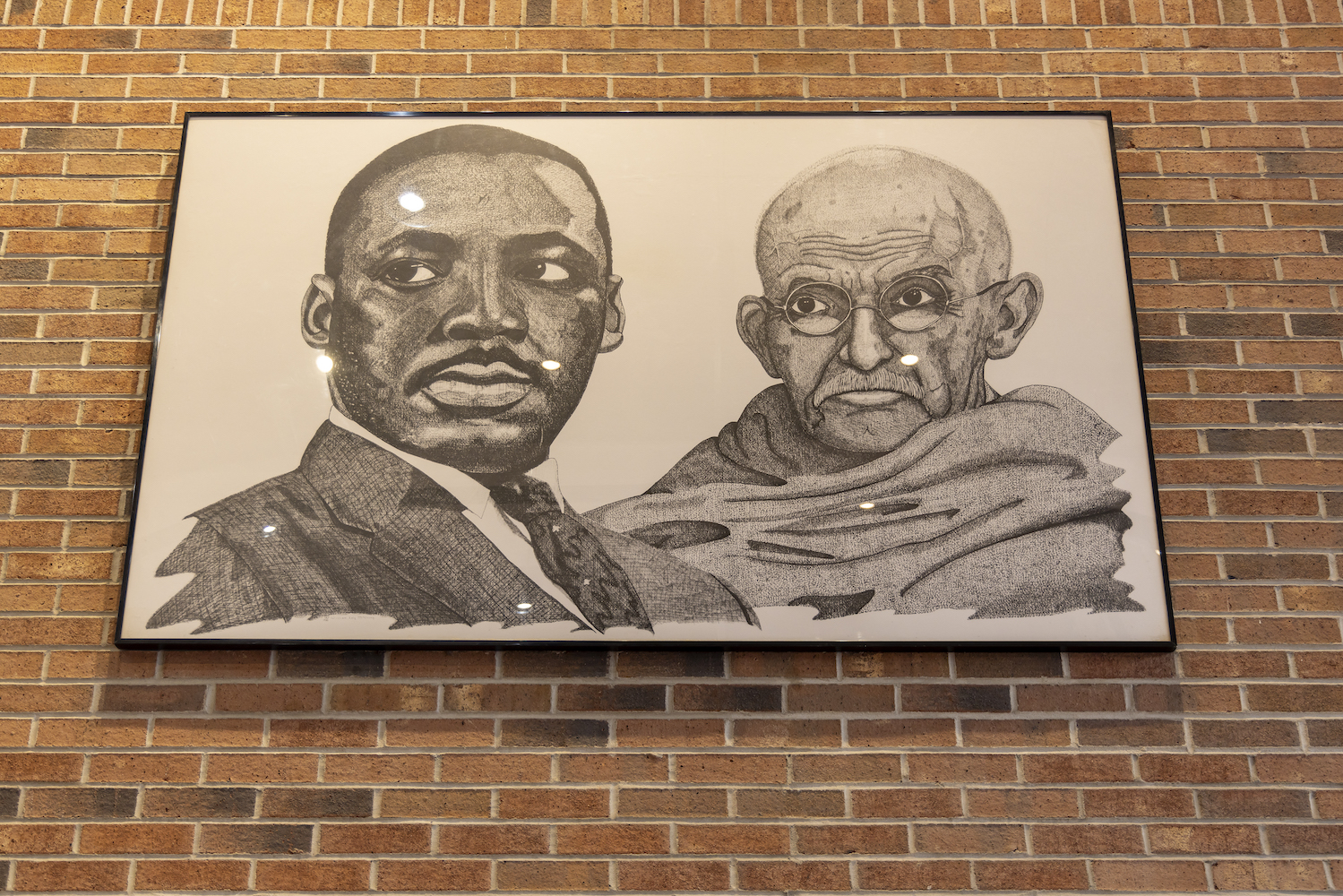
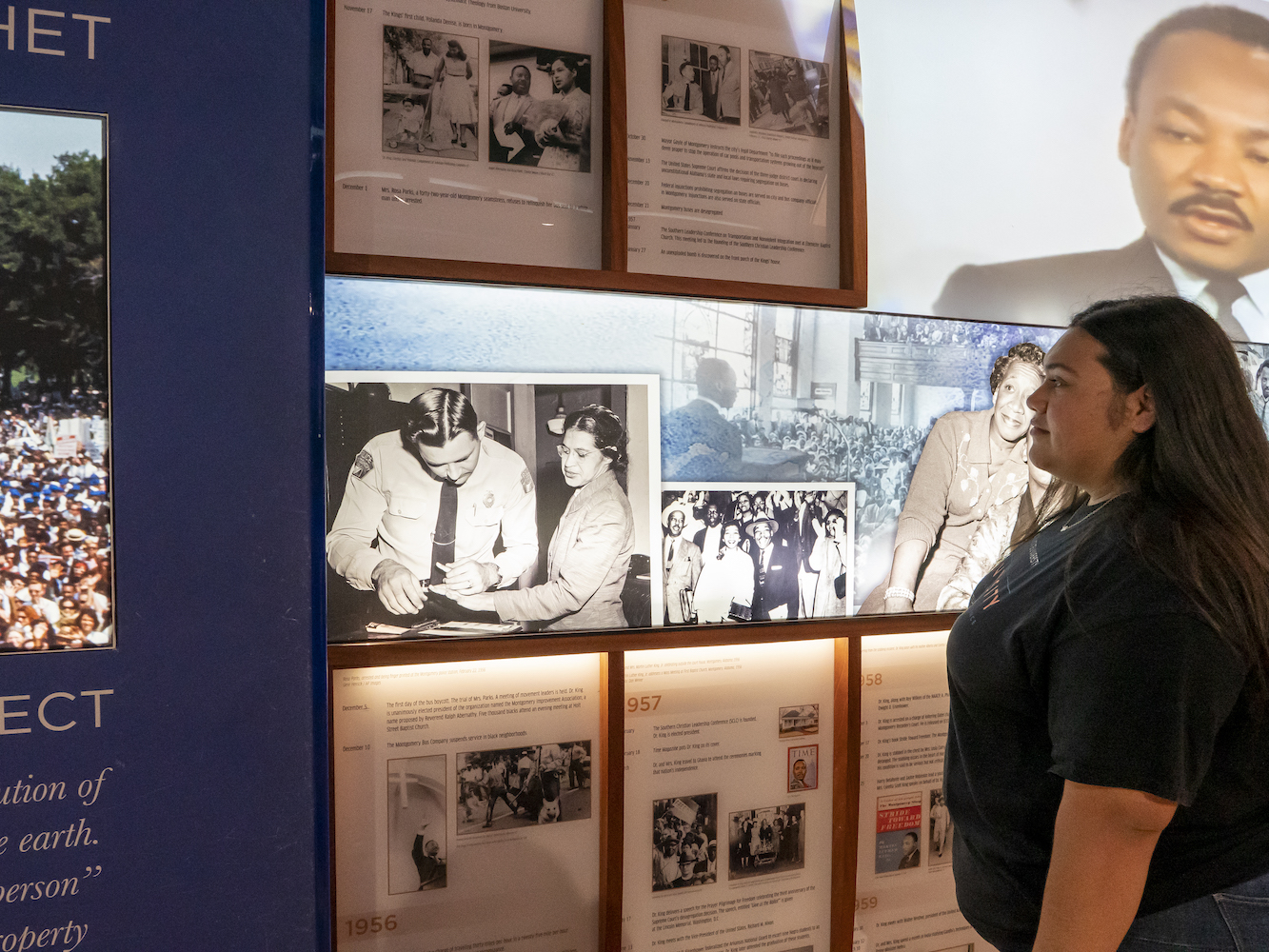
Upon arriving at Dr. Martin Luther King’s gravesite and museum, we were met with a recording of Dr. King’s powerful words echoing across the surrounding area. We were instantly drawn to the Civil Rights Walk of Fame, where many highly influential figures in the civil rights movement, such as Rosa Parks, Gandhi, and Judge Thurgood Marshall, were featured.
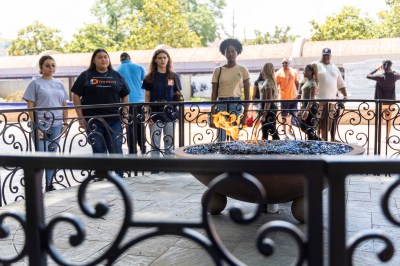
The park was decorated with inspiring quotes which encapsulates the hopes MLK had for future America. We were enthralled by the powerful messaging and representative structures. The eternal flame had to have been one of my favorite pieces in the park. The flame’s symbolism was incredibly profound; its persistence emulating Dr. King’s fight against racism and segregation.
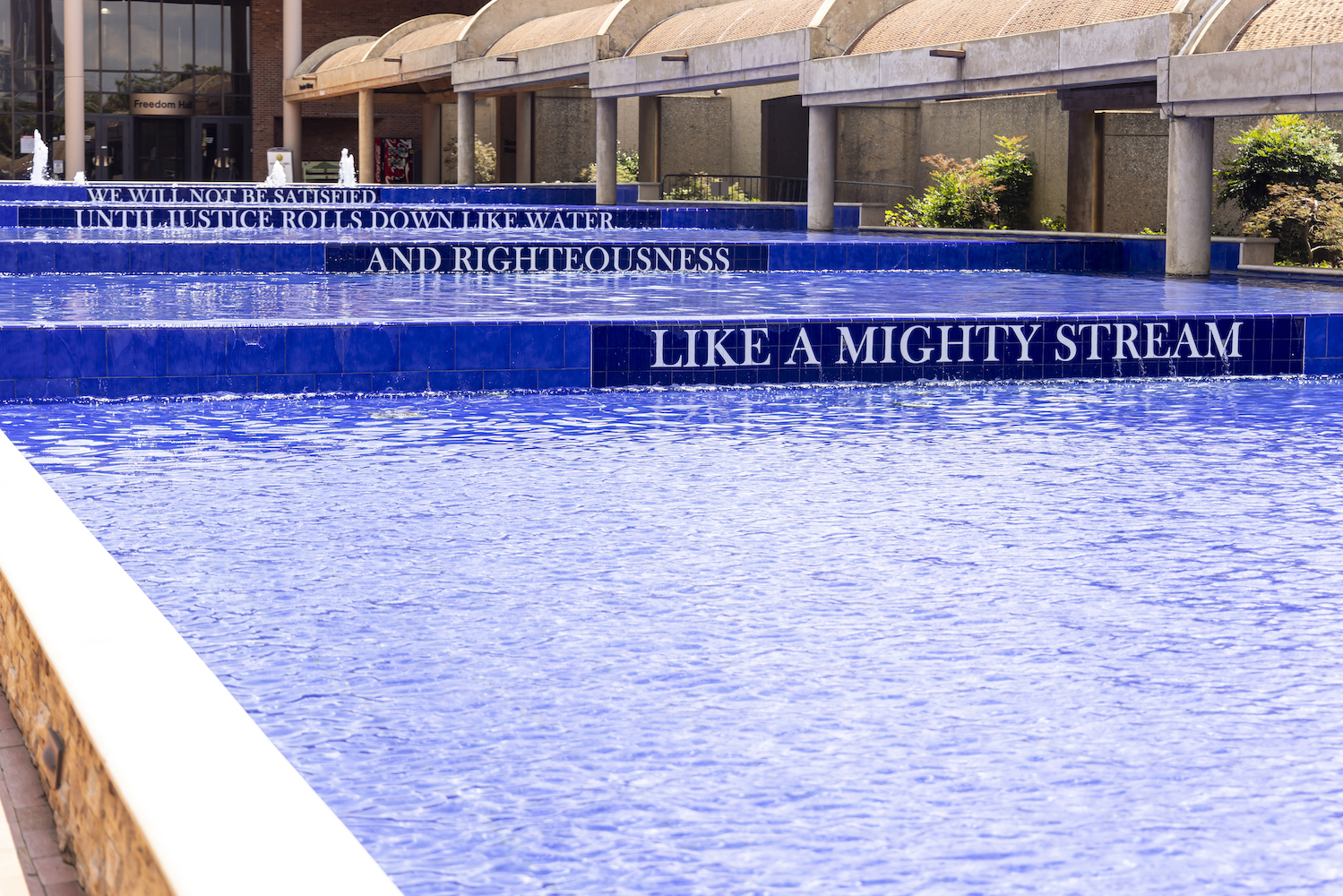
The real showstopper was definitely Dr. Martin Luther King, Jr. and wife Coretta Scott King’s grave and memorial. The memorial has a vibrant pool and fountain surrounding the graves, which displayed a quote from Dr.King: “We will not be satisfied until justice rolls down like water and righteousness like a mighty stream.” The words, placed on what looks like a shallow staircase, have a serene stream of water pouring down, which resonated heavily with the group.
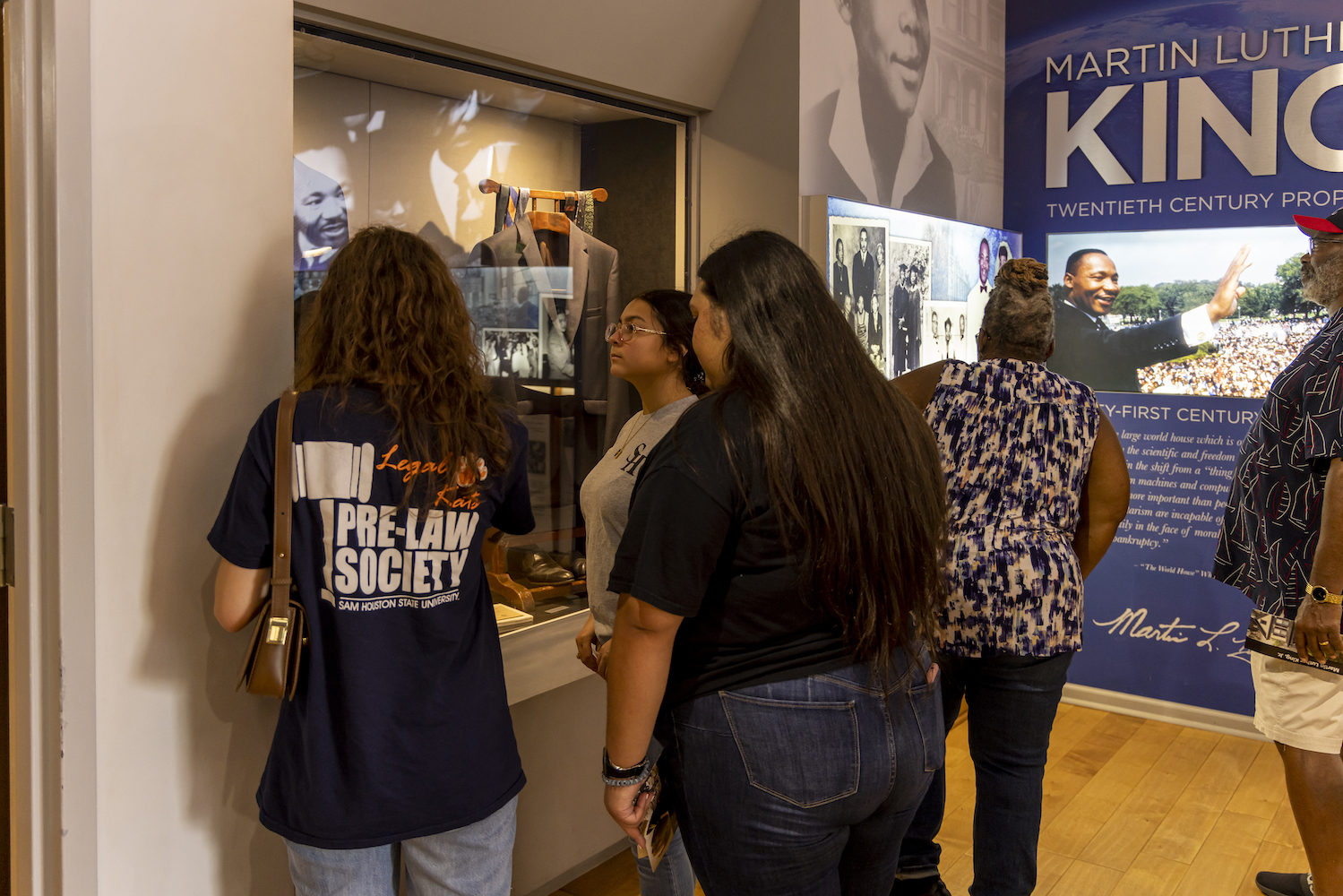
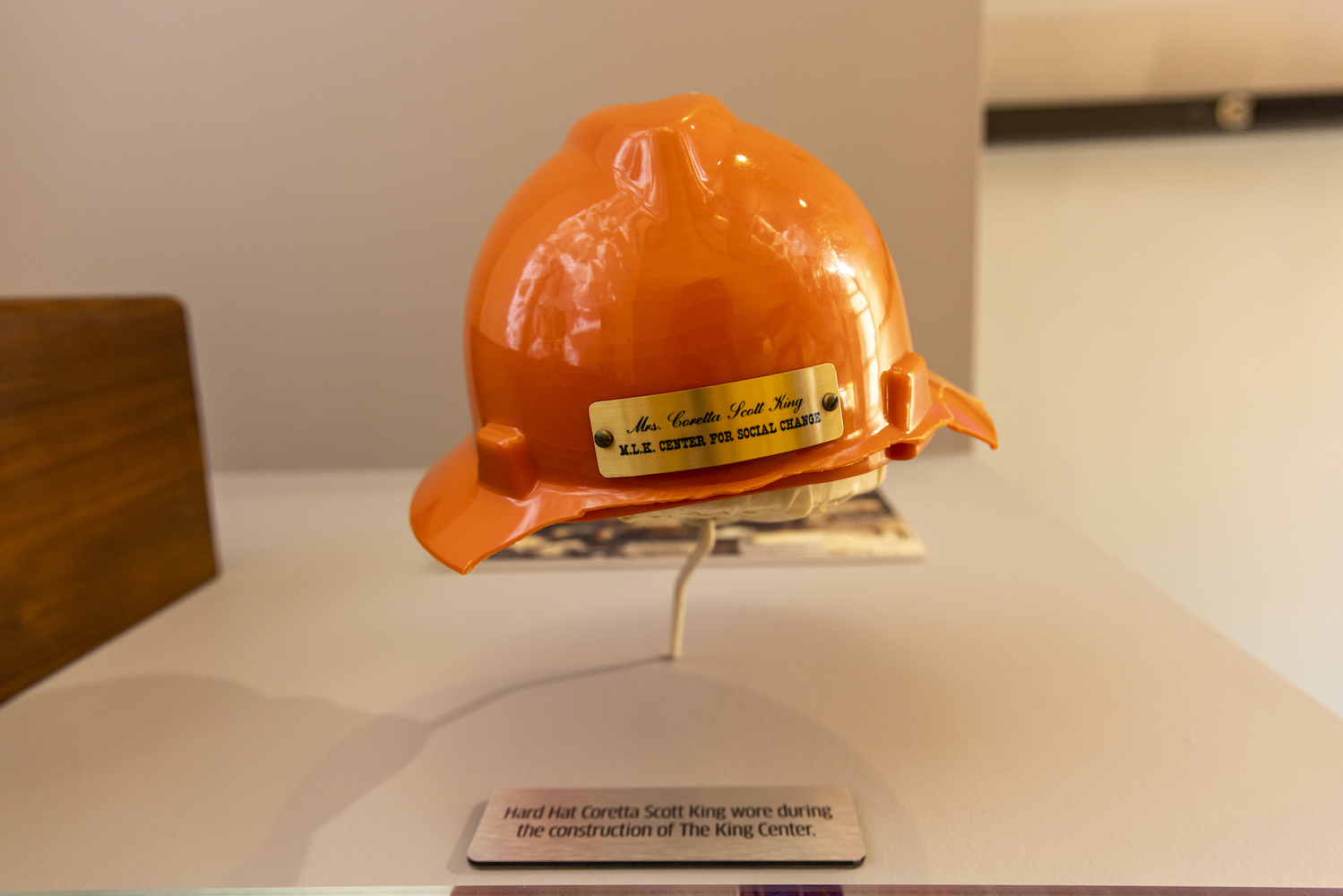
We eventually made our way to the Martin Luther King Jr. Museum located on the grounds of the National Historic Park. There were many of Dr. King’s personal items on display, such as his suits, shoes, robes, wallet and my personal favorite; his cufflinks and tie clips.
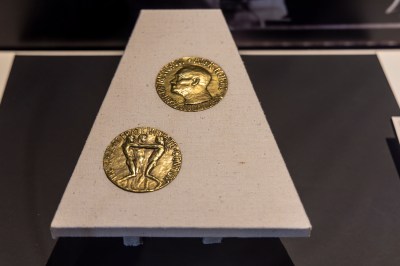
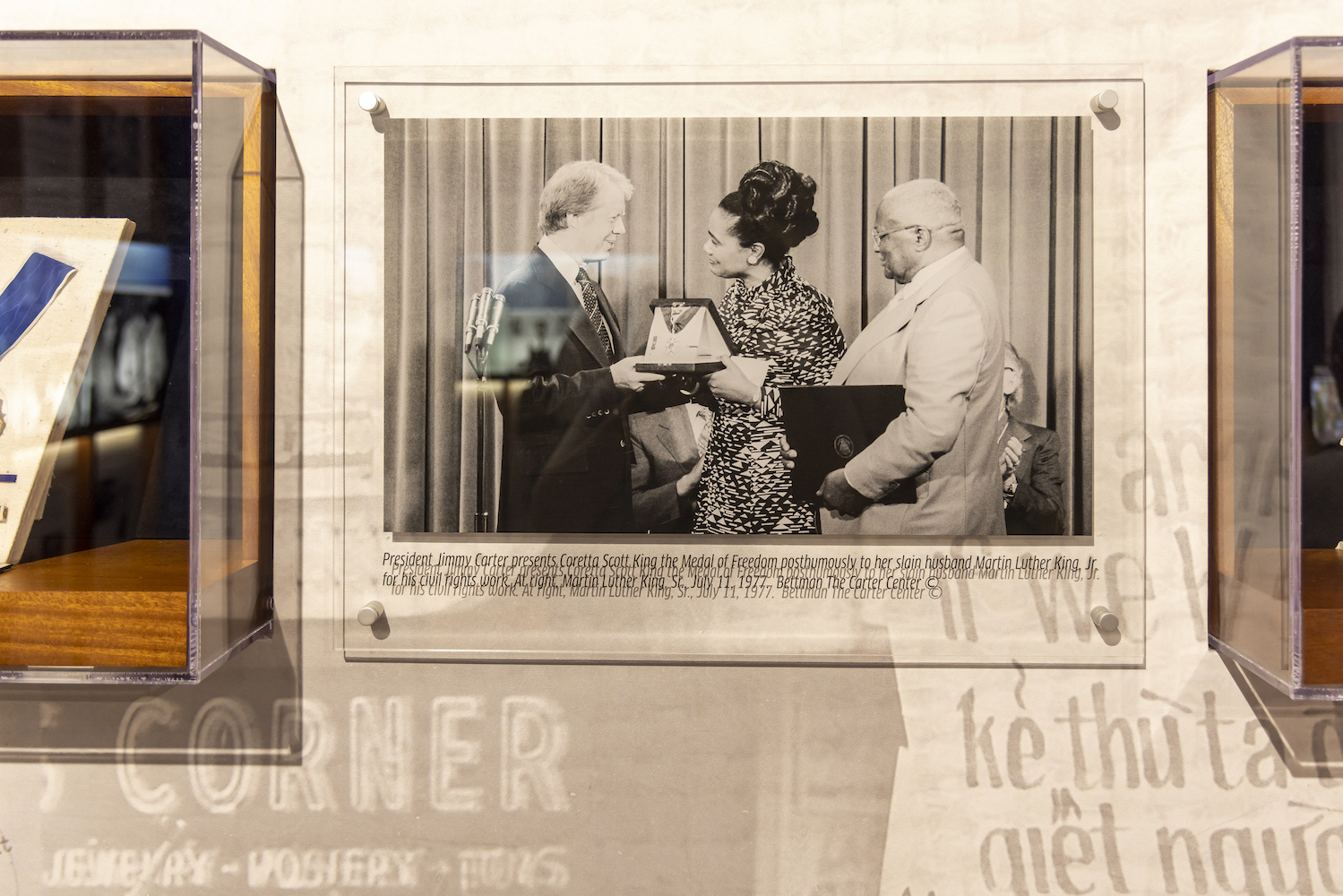
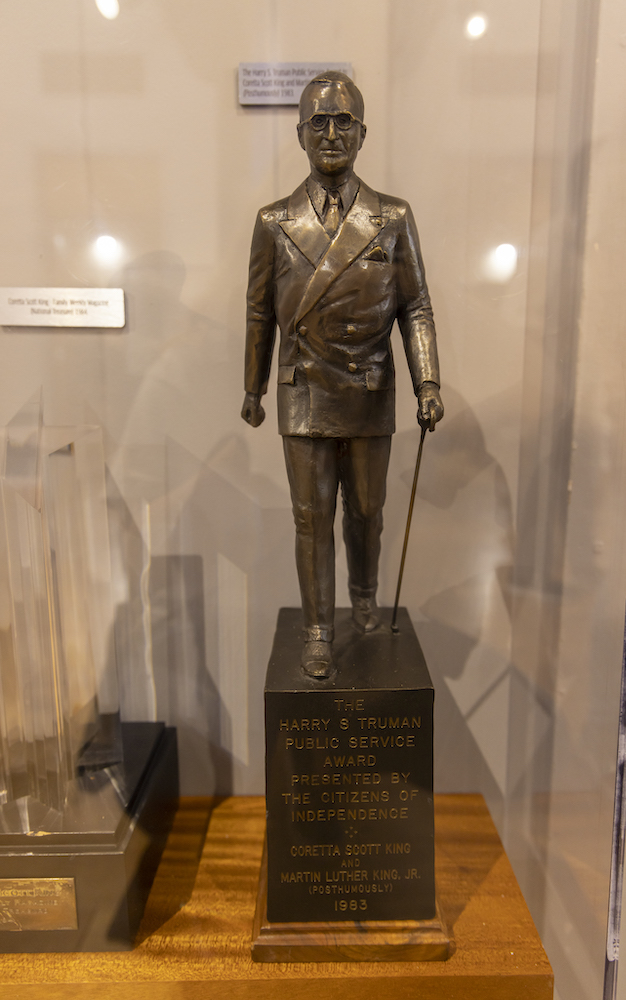
Some of Martin Luther King’s biggest accomplishments were also on display including his Presidential Medal of Freedom Award, presented to him by President Jimmy Carter and his Grammy, which he won for his speech “I Have a Dream”.
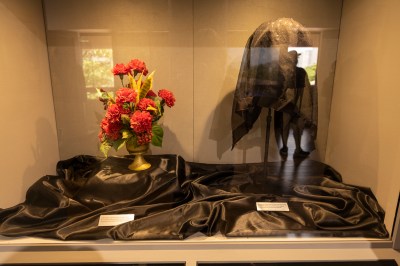
Dr. Martin Luther King’s wife, Coretta Scott King, had many pieces featured in the museum. A piece that stood out from her collection included the veil she wore for her husband’s funeral; some lipstick and tear stains still remained on the garment.
After seeing so many remarkable pieces and mementos of history, we headed to the gift shop! We made sure to pick up some mementos of our own to commemorate the visit.
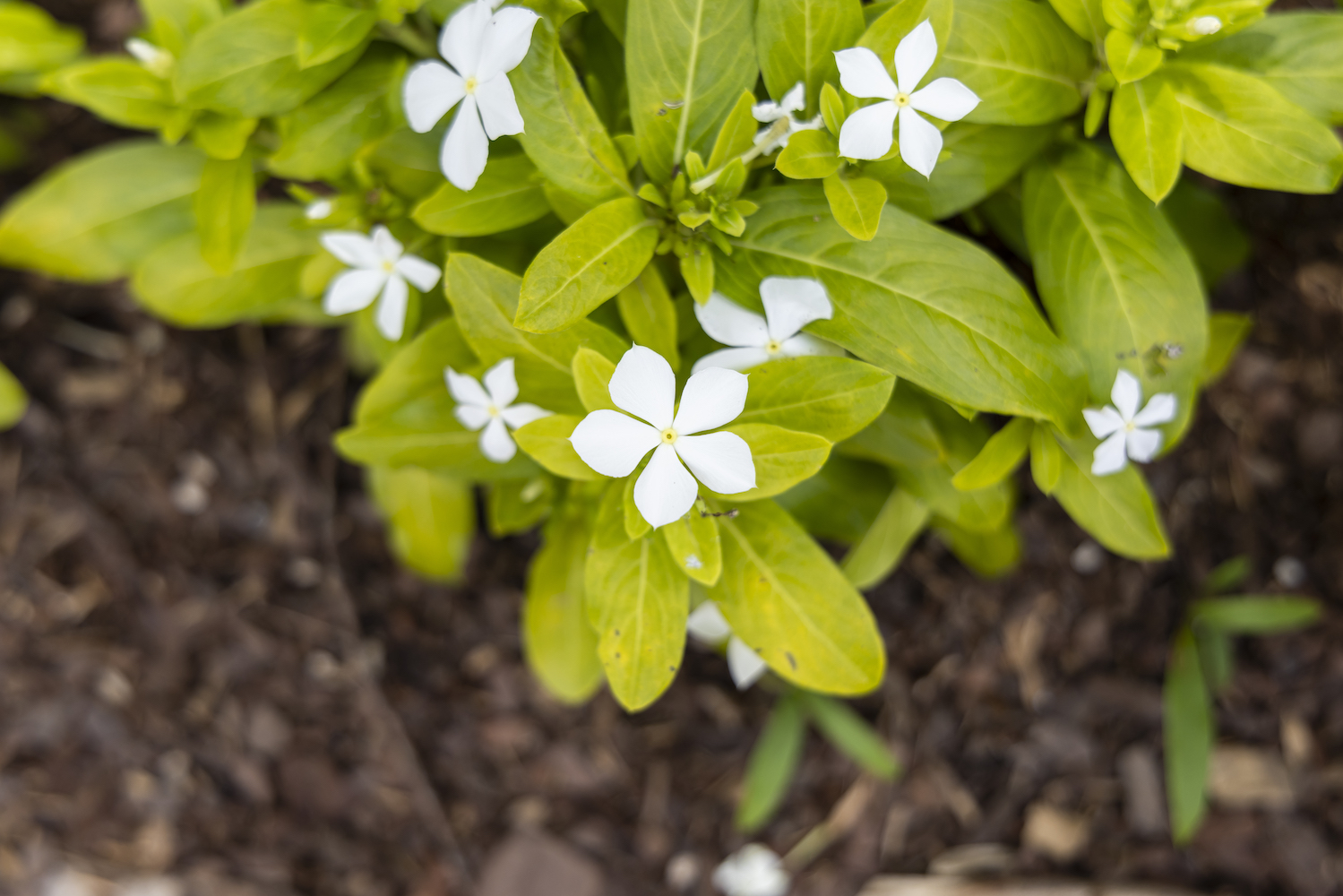
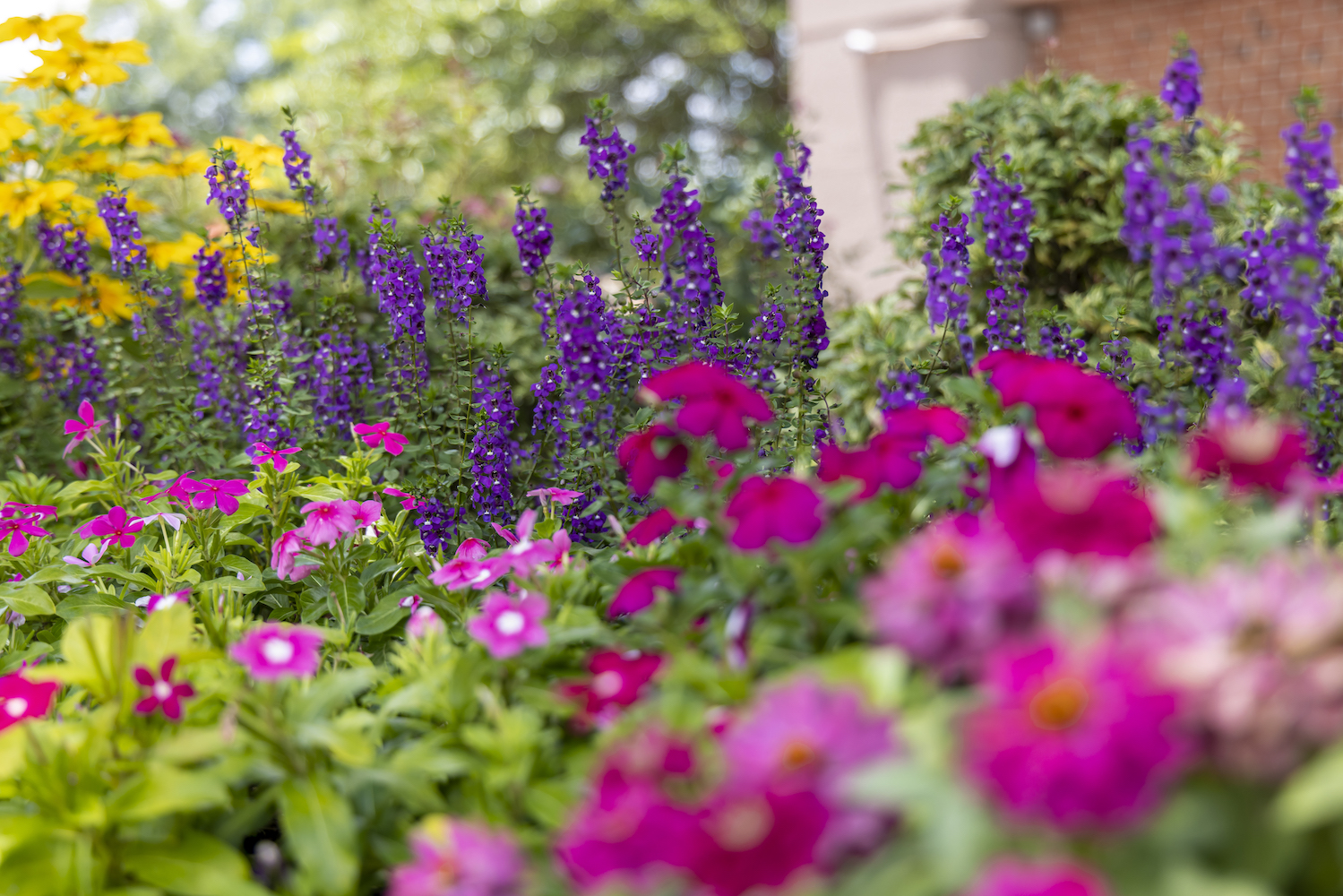
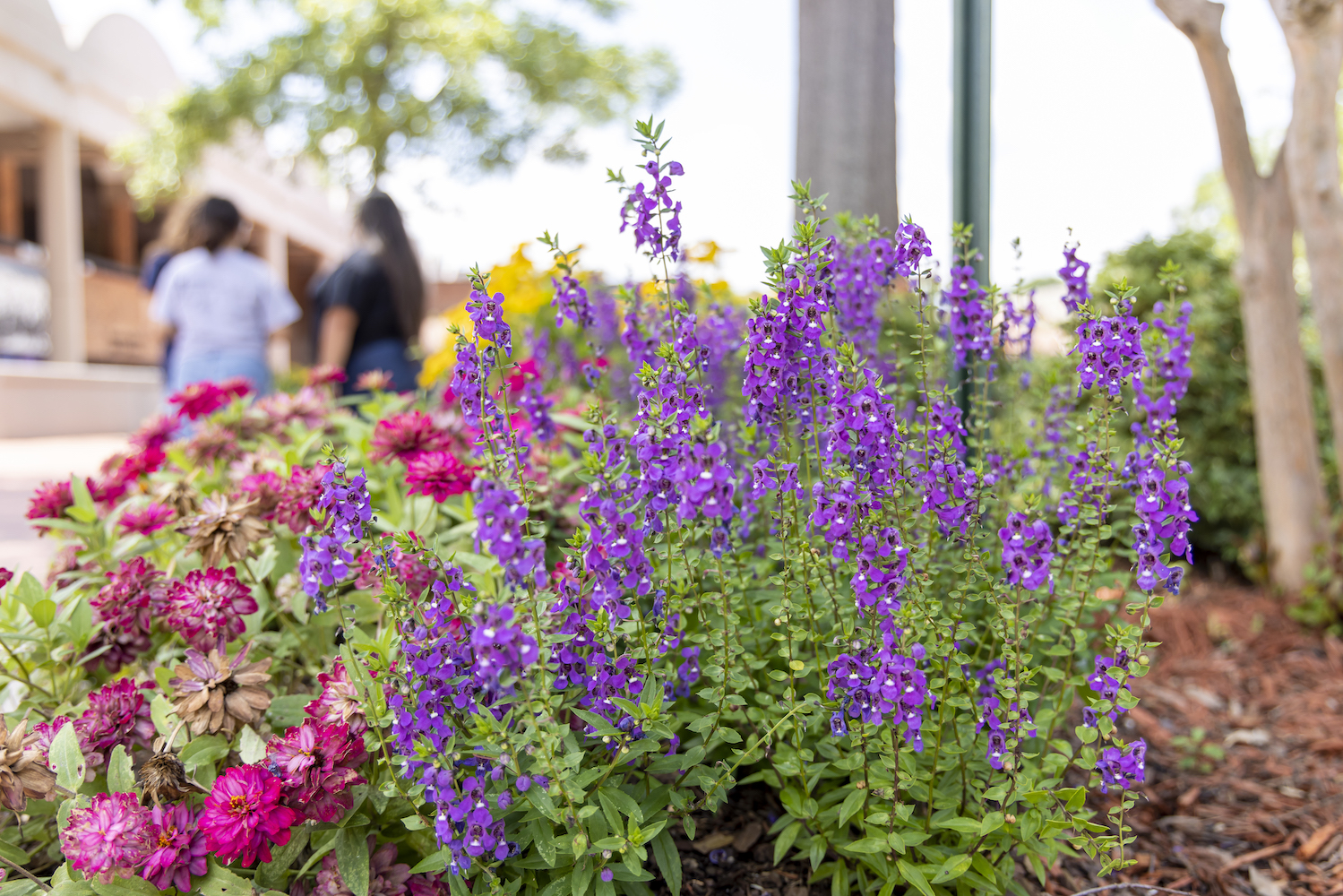
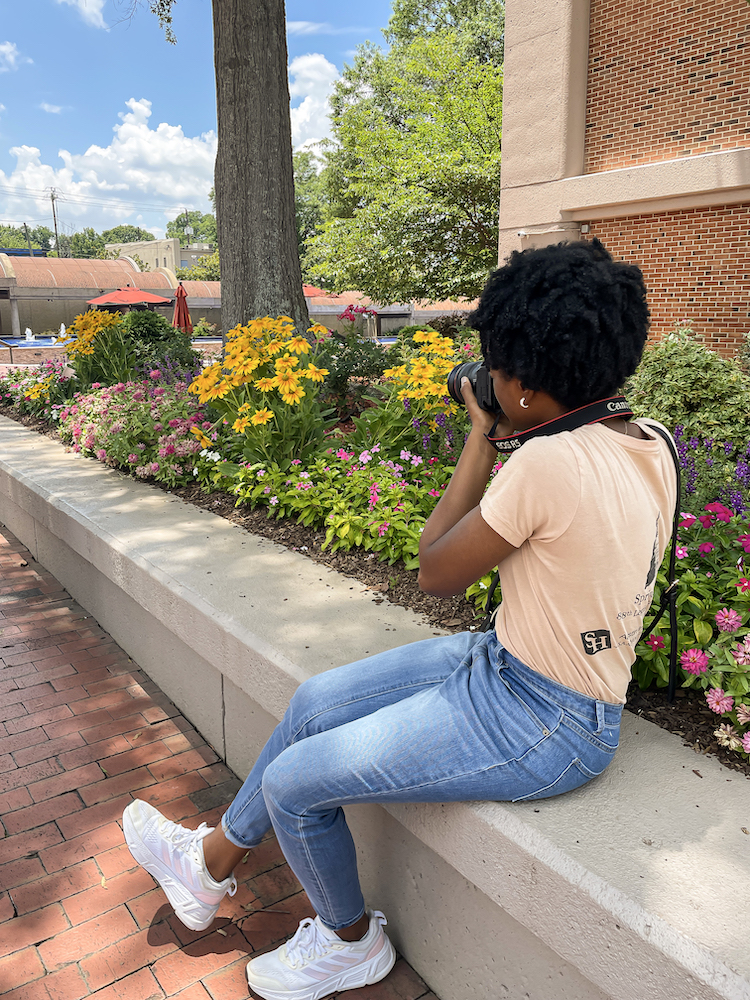
Before leaving, we took the time to let the beautiful exterior truly sink in. In this time, Ingrid was able to capture the vivacity of the area with some excellent photos of the flowers.
It was a beautiful and moving experience, and it was both an inspirational and educational way to start the trip.
Jimmy Carter Presidential Museum
By Ingrid Cuero
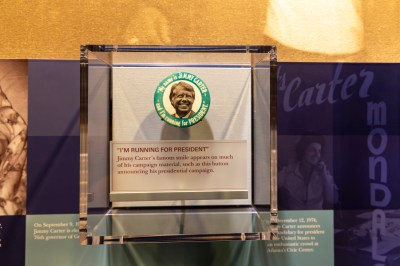
We then headed to the Jimmy Carter Presidential Library, which was fitting following the MLK museum. Dr. Martin Luther King, Jr. actually endorsed President Carter during one of his early campaigns! Upon entry, we encountered a beautiful display with international flags surrounding a patch of vibrant flowers, signifying the 39th President’s commitment to a connection with other countries.
We began with a film providing an overview of the Carter Presidency, which was a great way to set the tone for our visit. Carter grew up on a farm in Plains, Georgia, and had a rich background. He was the first in his family to leave Georgia to pursue higher education, served in the military, and had a career as a nuclear engineer. President Carter was portrayed as a President who led with his conscience before his politics, passing key civil rights legislation in his time in office. Something that stood out to me was that he decided to leave the Navy to take over his father’s farmland. He was not necessarily invested in politics at first, but when a previous Senator vocalized a few issues that went against his beliefs of an equal society, President Carter decided to run for state senator. This marked the beginning of a career surrounding Carter’s passion for equality, civic engagement, and ethics.
President Carter’s election into office can be described as a fluke of fate. After experiencing the presidencies of two career politicians, Johnson and Nixon and the misfortunes of The Vietnam War and Watergate, voters were looking for something other than a “traditional” politician. Carter came across as an everyday American, earning trust with voters.
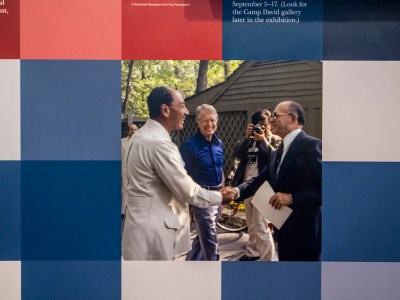
One of the highlights of the Carter Presidency was the peace negotiations with Egyptian President Anwar Sadat and Israeli Prime Minister Menachem. We were able to view some pictures and videos of the monumental achievement of restoring peace among the two countries.
One of my favorite pieces in the museum was a portrait of President Carter by Octavio Ocampo, a mosaic. If you look closely, President Carter is made up of painted buildings, boats, flags, and 18-wheelers.
We viewed a model of Carter’s Oval Office, which had a collection of art curated by the President himself. To note a few, there was a sculpture from an early American sculptor we were familiar with, Frederic Remington; a portrait of a young George Washington; and a bust of Benjamin Franklin.
We thoroughly enjoyed our experience in President Carter’s Museum!
Erica Davis Lowcountry
By Jessica Cuevas
Following a long day–one in which we woke up in Houston–we made our way from Atlanta to Savannah, a 3.5 hour drive. In Savannah, we headed to Erica Davis Lowcountry for dinner. For our appetizers, we had fried green tomatoes and oysters rockefeller, all-time classic dishes of the South.
The fried green tomatoes were highly popular amongst all of us, but Ingrid’s favorite was, by far, the oysters rockefeller.
With great starters, we were eager to indulge in our main entrees.
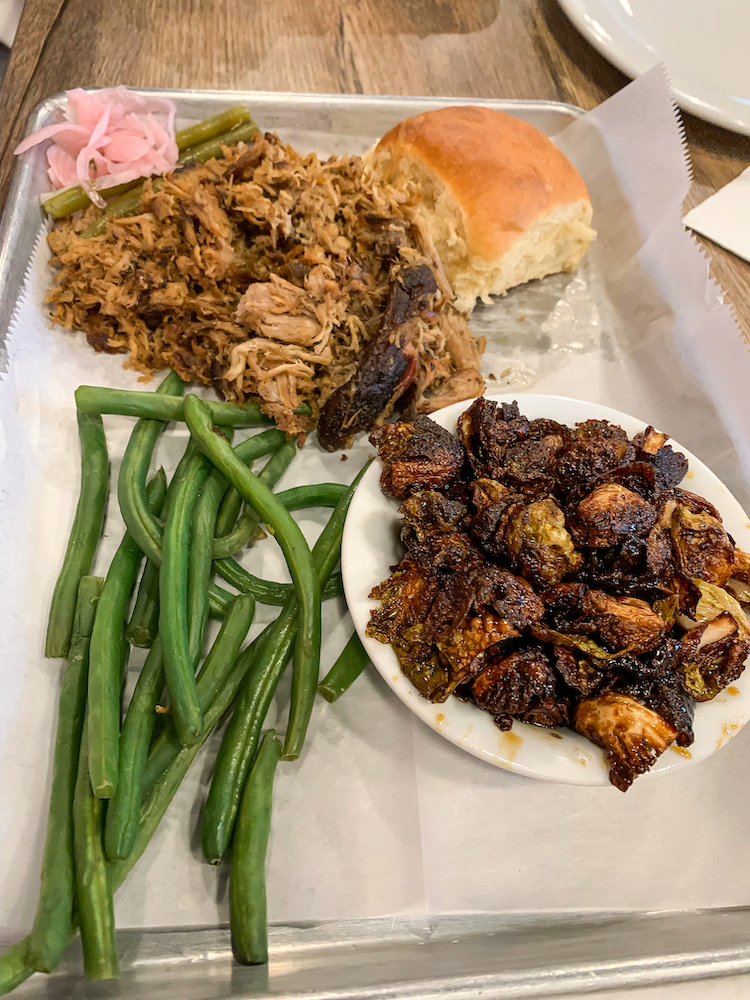
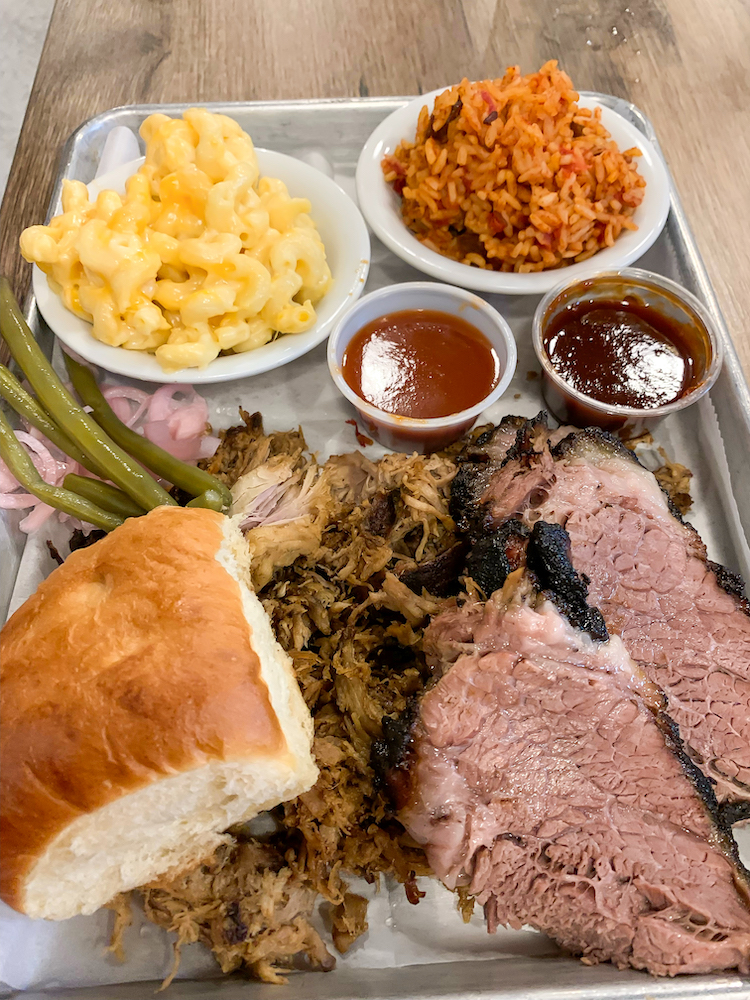
Morgan ordered the best thing on the menu, which, according to the person who took our order, was the Wassaw Redfish; Ingrid had the Crab Stuffed Flounder; Michelle had a Flounder Po’Boy; Professor Yawn and Stephanie shared the low country boil and a pulled pork plate; meanwhile, Olivia and I shared a BBQ combo of smoked brisket, pulled pork with mac n cheese and savannah red rice.
We were intrigued to know that all the barbeque sauces at this restaurant are made there and that they had experimented with and created a sweet and delicious *peach* barbeque sauce–and it was our favorite!
Although some of us were full, others could not leave without having dessert. Following our entrees we treated ourselves to a banana pudding, key lime cup, and a slice of carrot cake. They were all delightful!
With full stomachs, we headed back to the hotel, ready to write about our experiences, edit photos, and prepare for an even more action-packed day tomorrow.
After a long night of planning and work, the LEAP Ambassadors began their second day of the retreat. Our plan was to go to the Stark House in Orange, but an event they were hosting precluded tours, so audibled and went to….
Tyrrell Park
By Ingrid Cuero
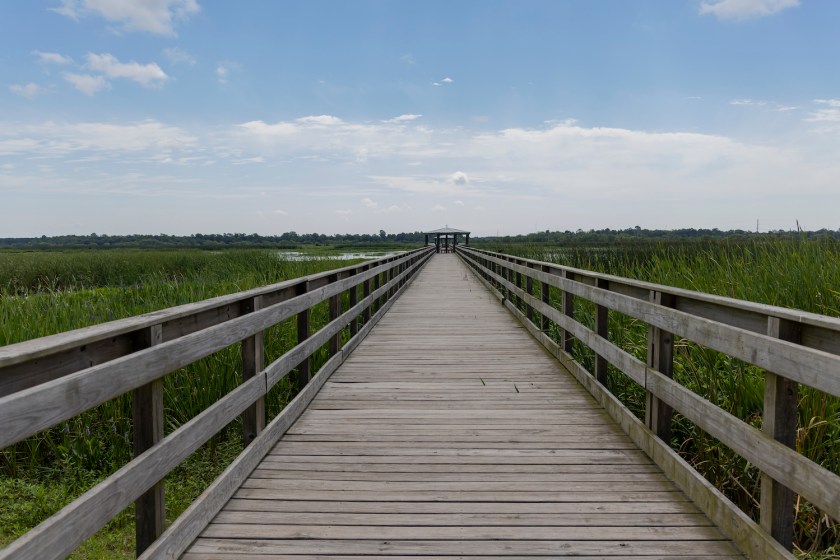
Starting off our second day strong, we headed to Tyrrell Park in Beaumont, Texas to reinforce our technical skills in outdoor photography. After familiarizing ourselves with a few of the photography basics, such as the exposure triangle, we had the ability to focus on the subjects of our photos as opposed to how to capture them.
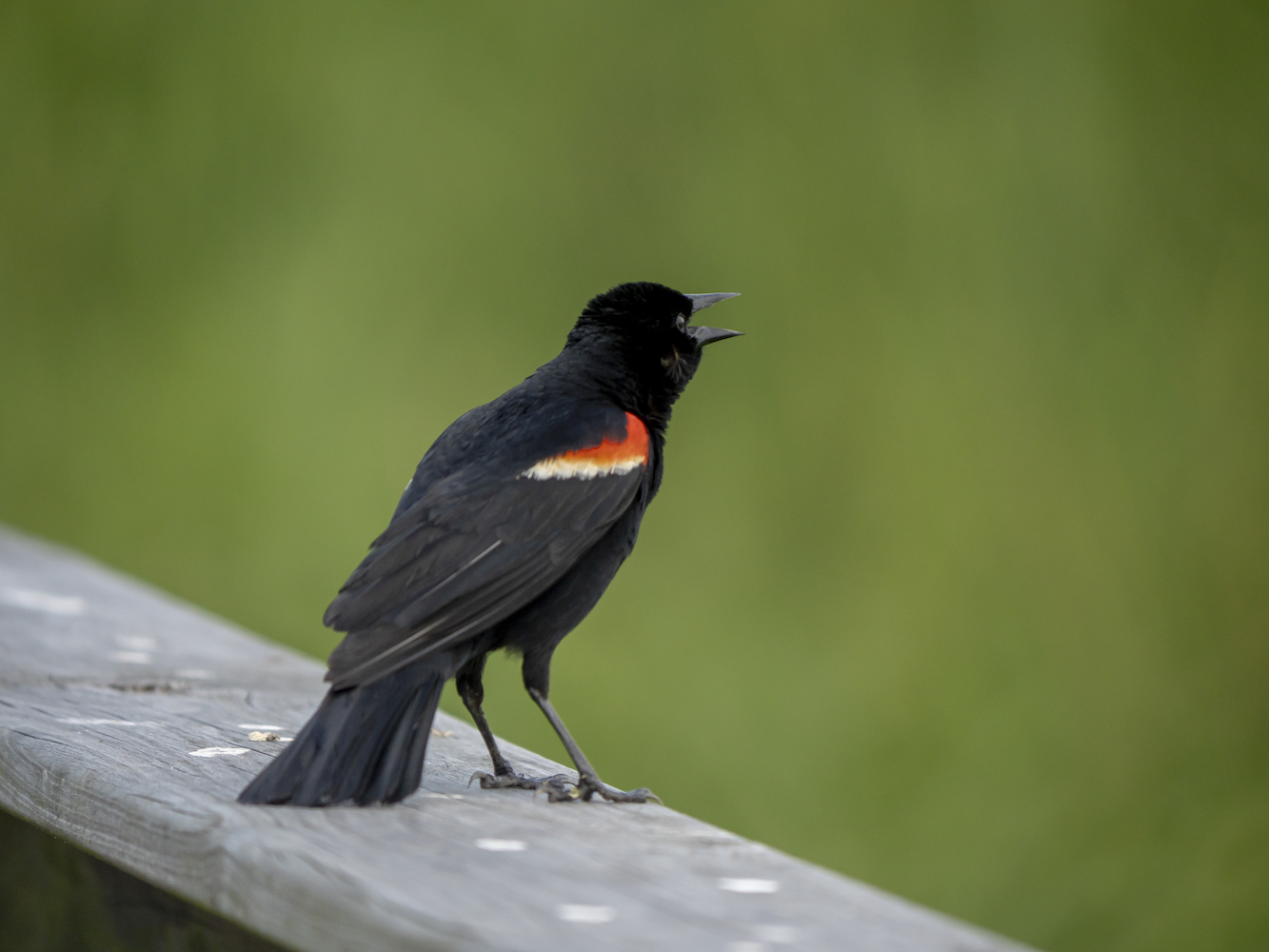
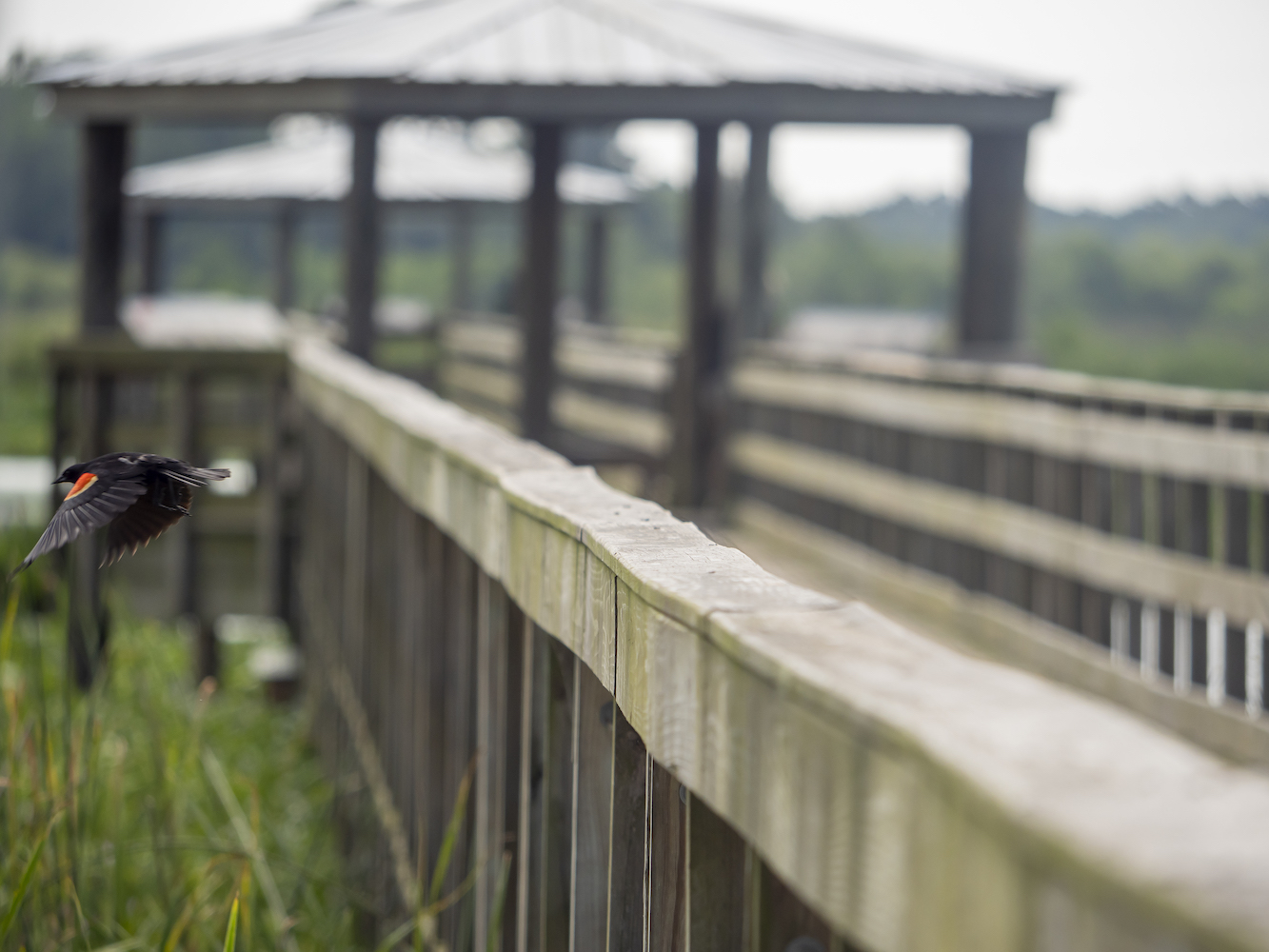
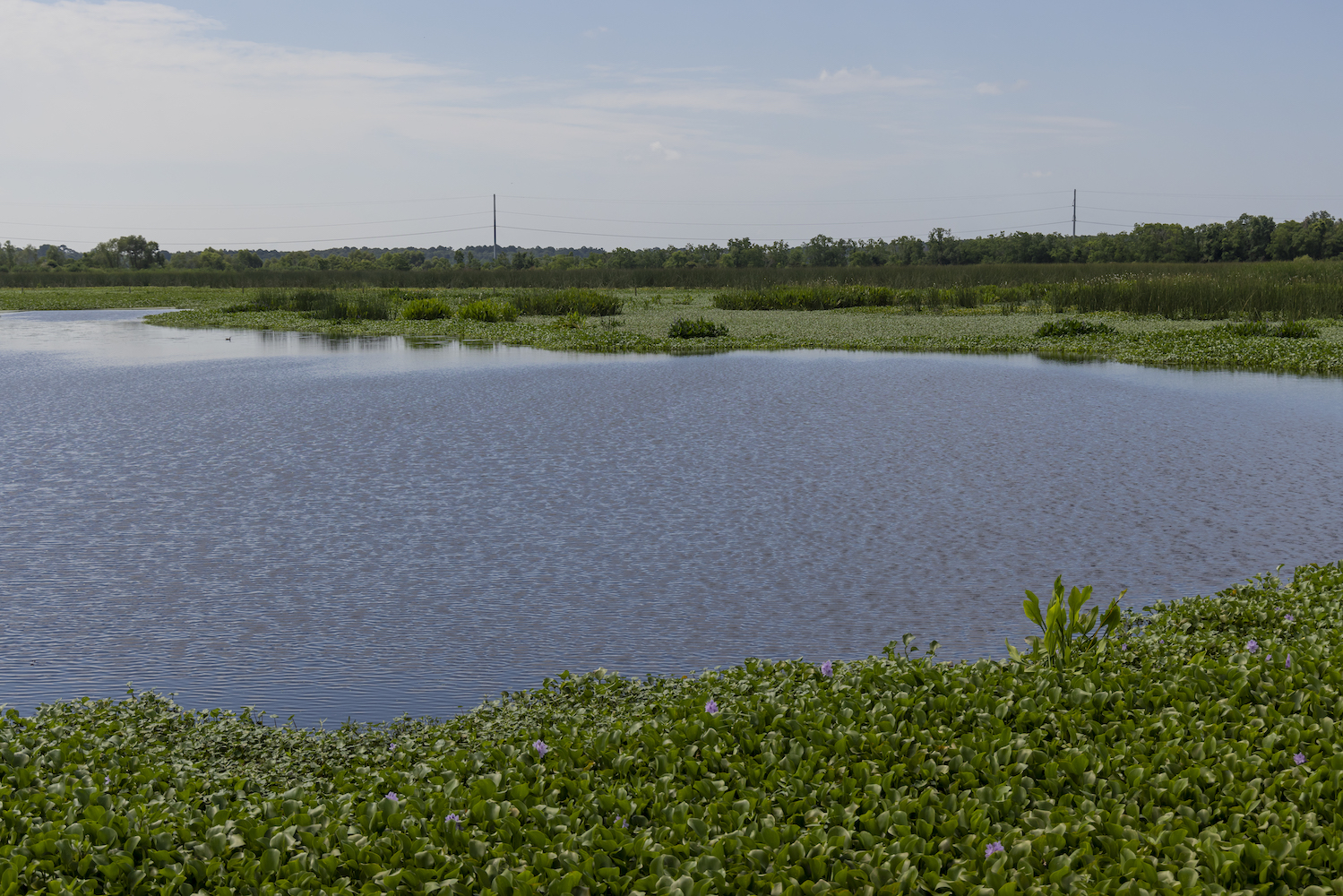
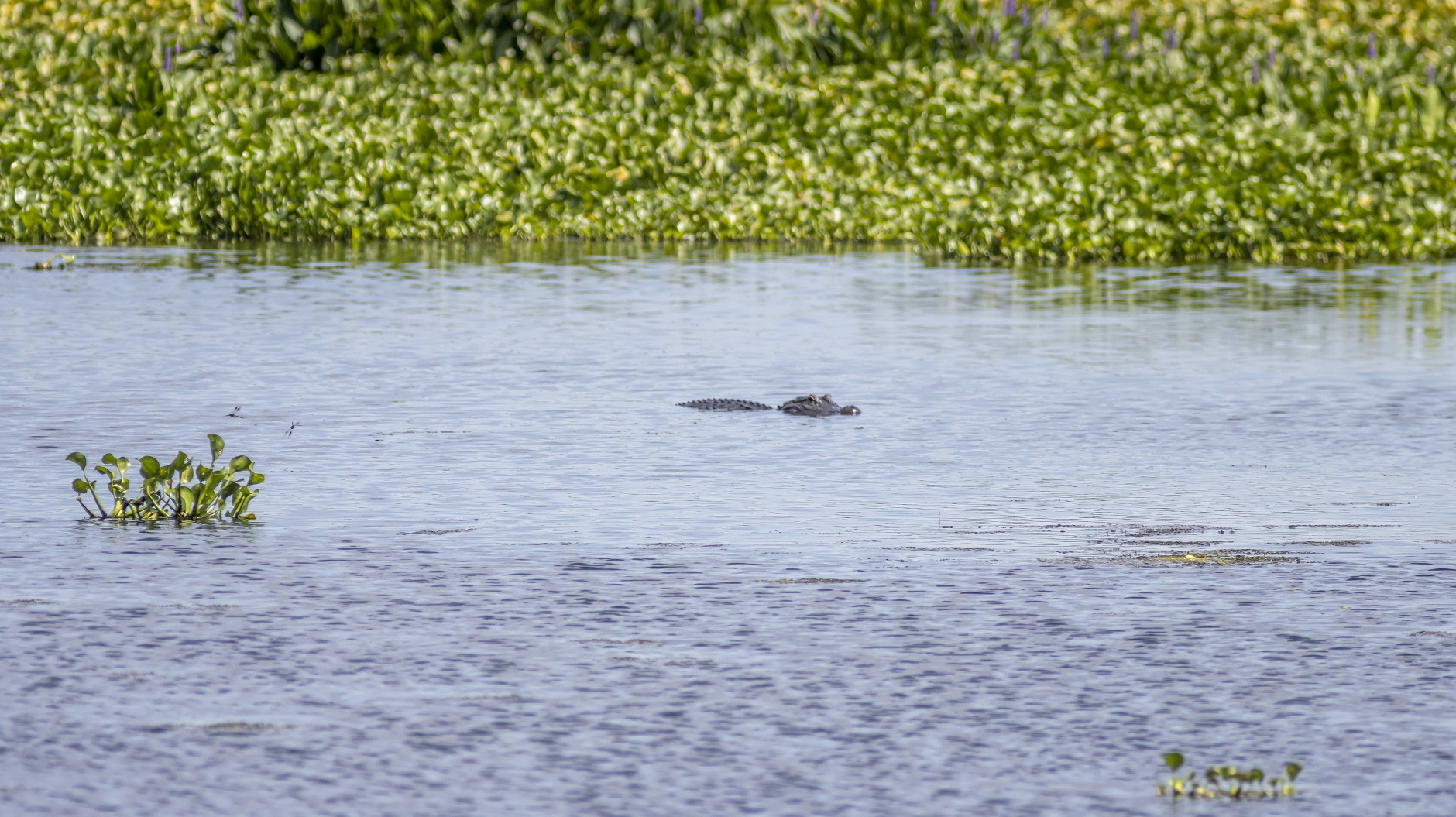
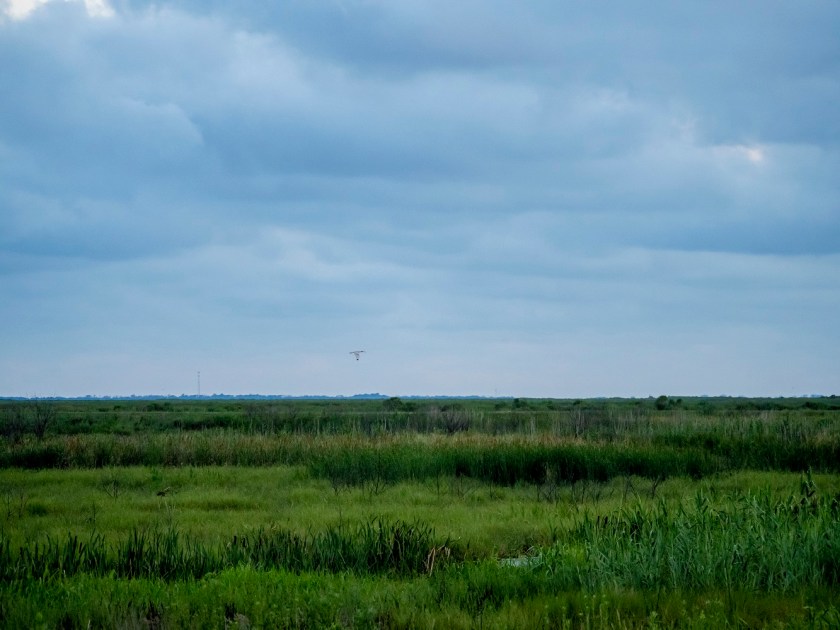
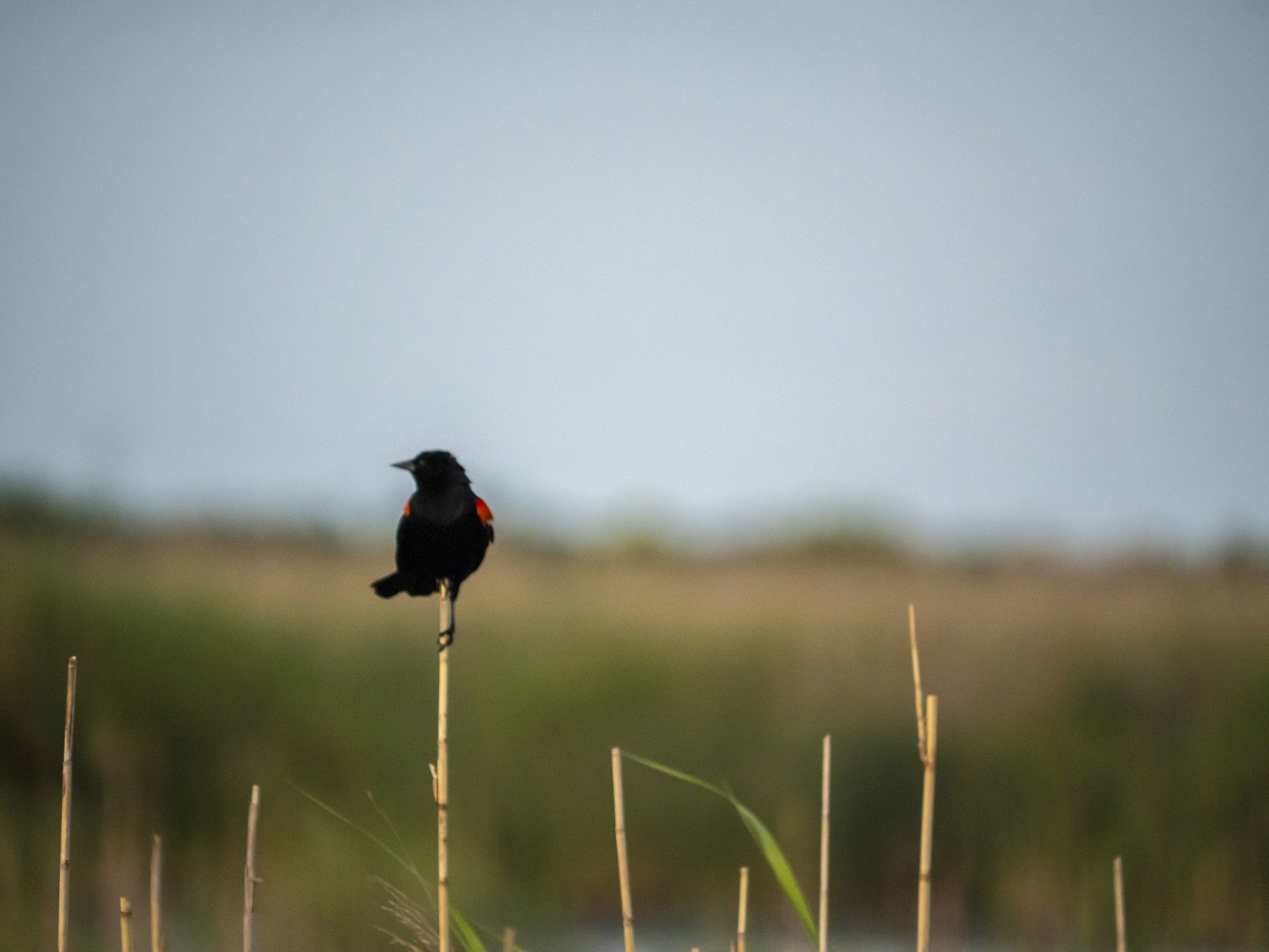
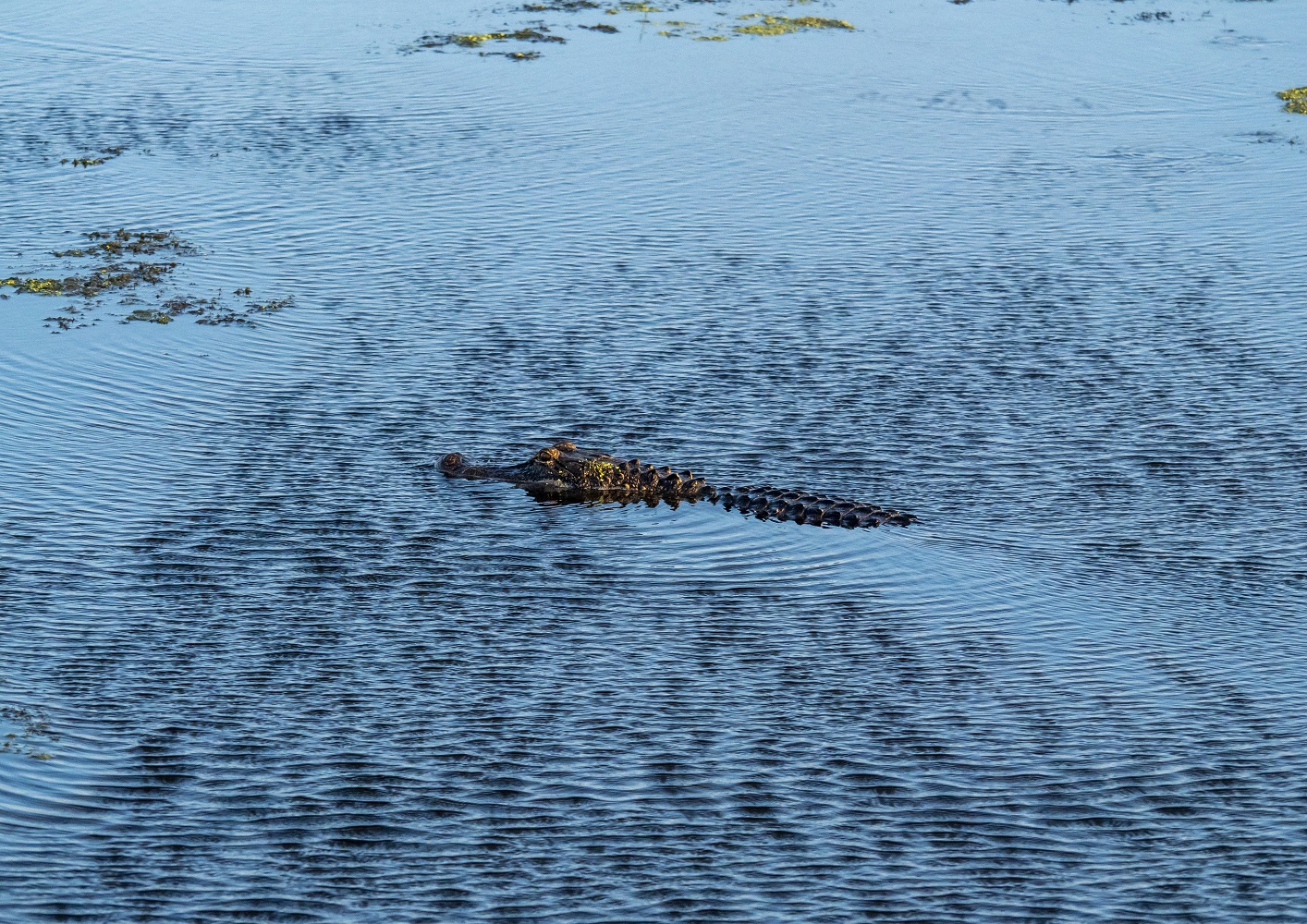
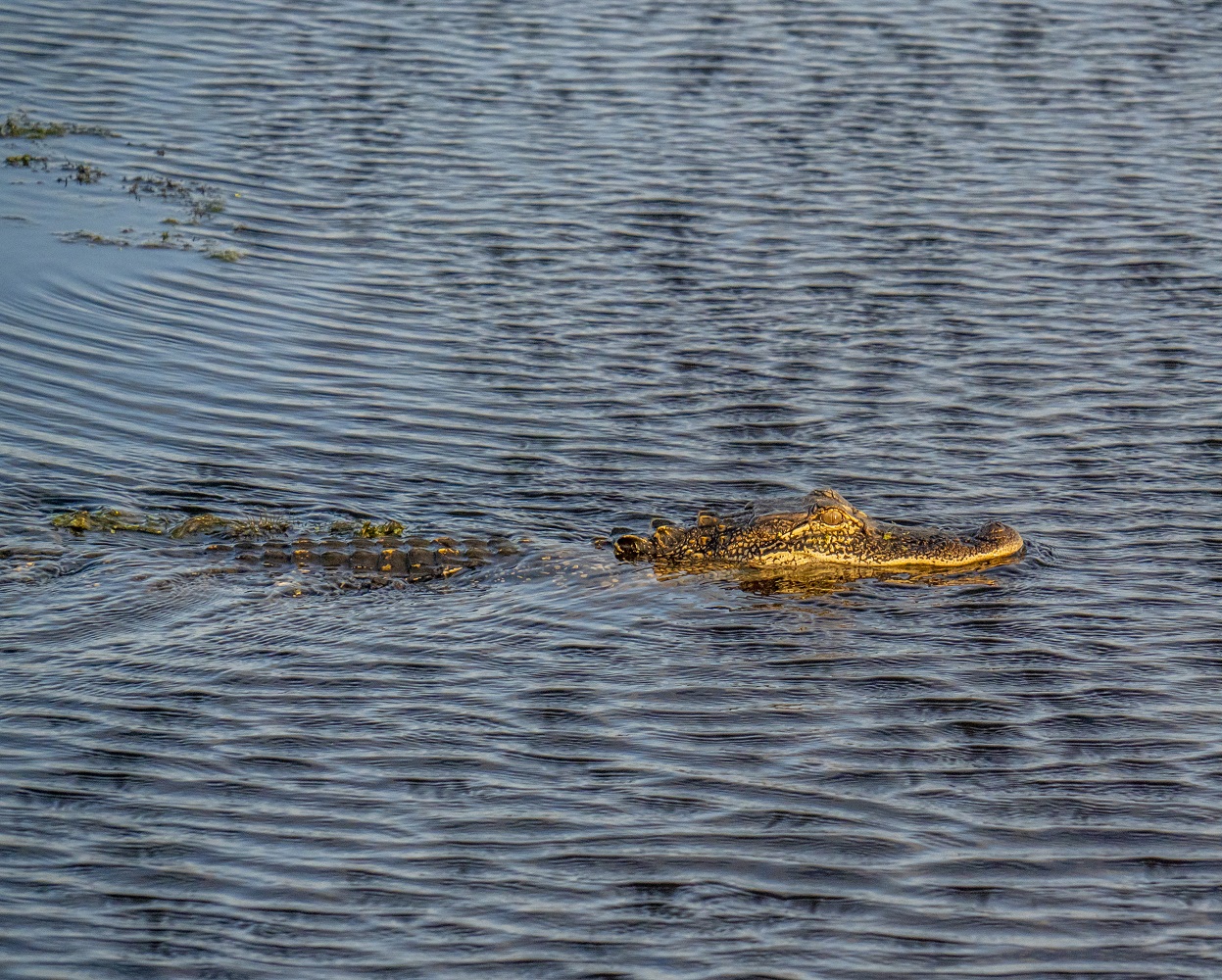
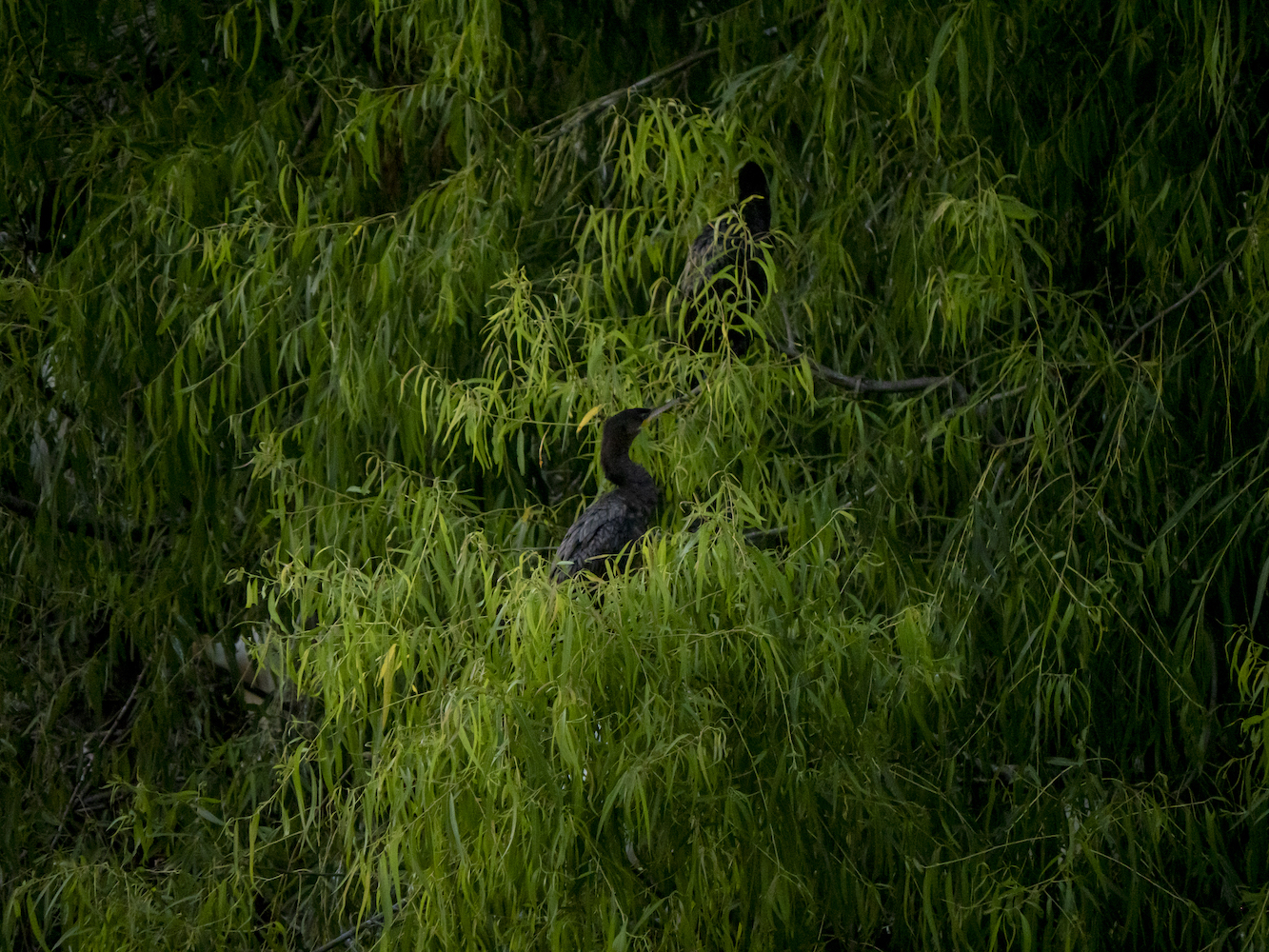
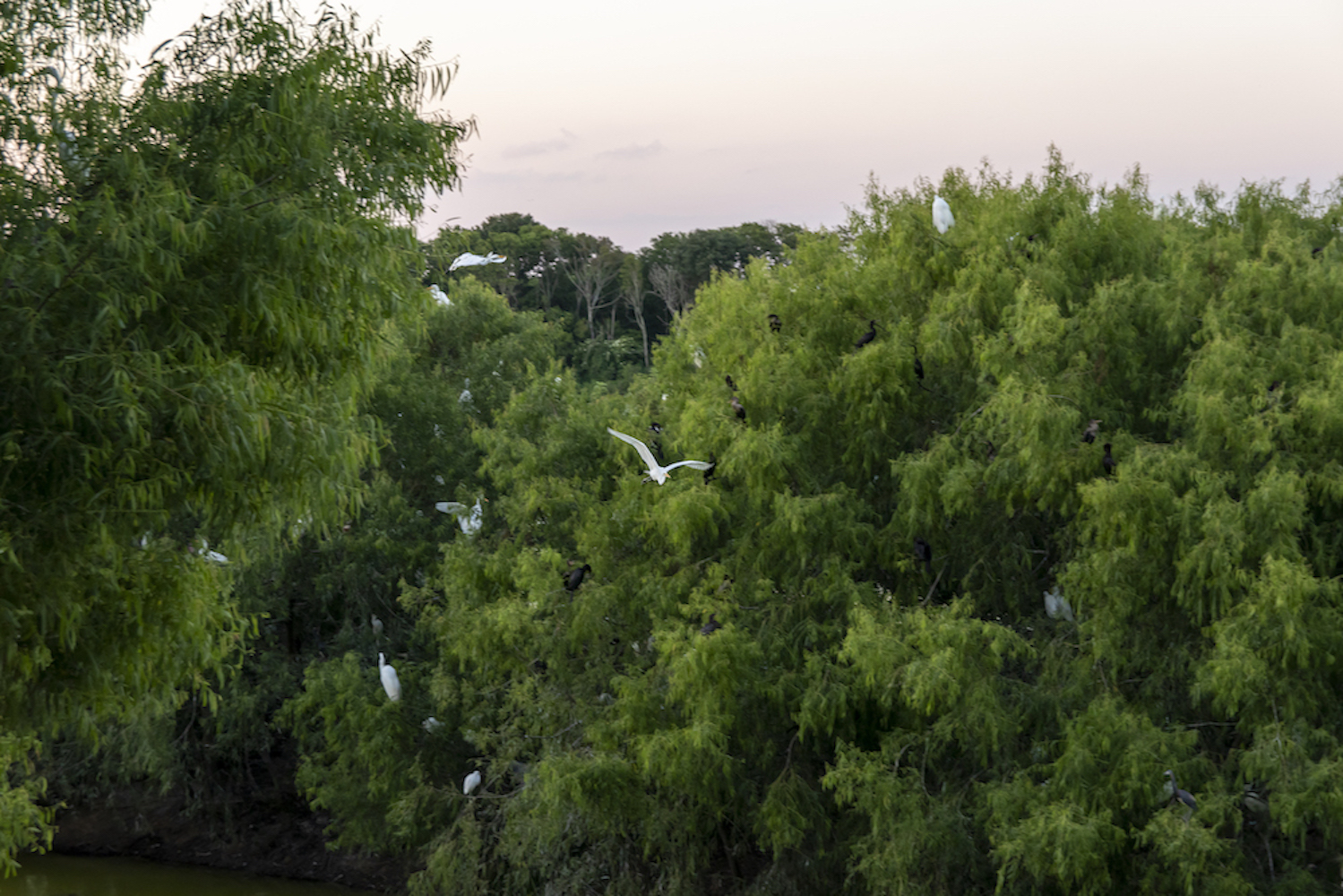
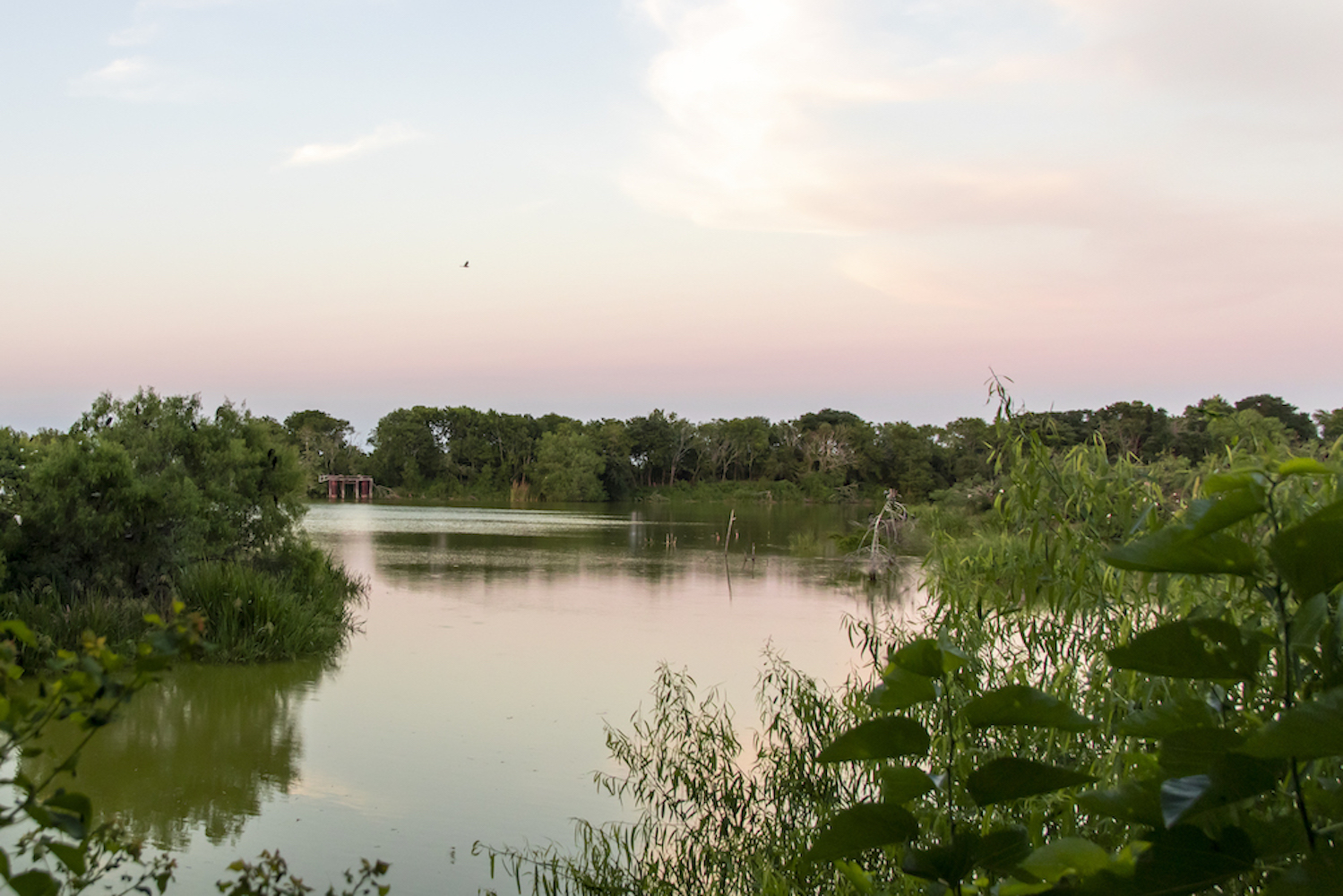
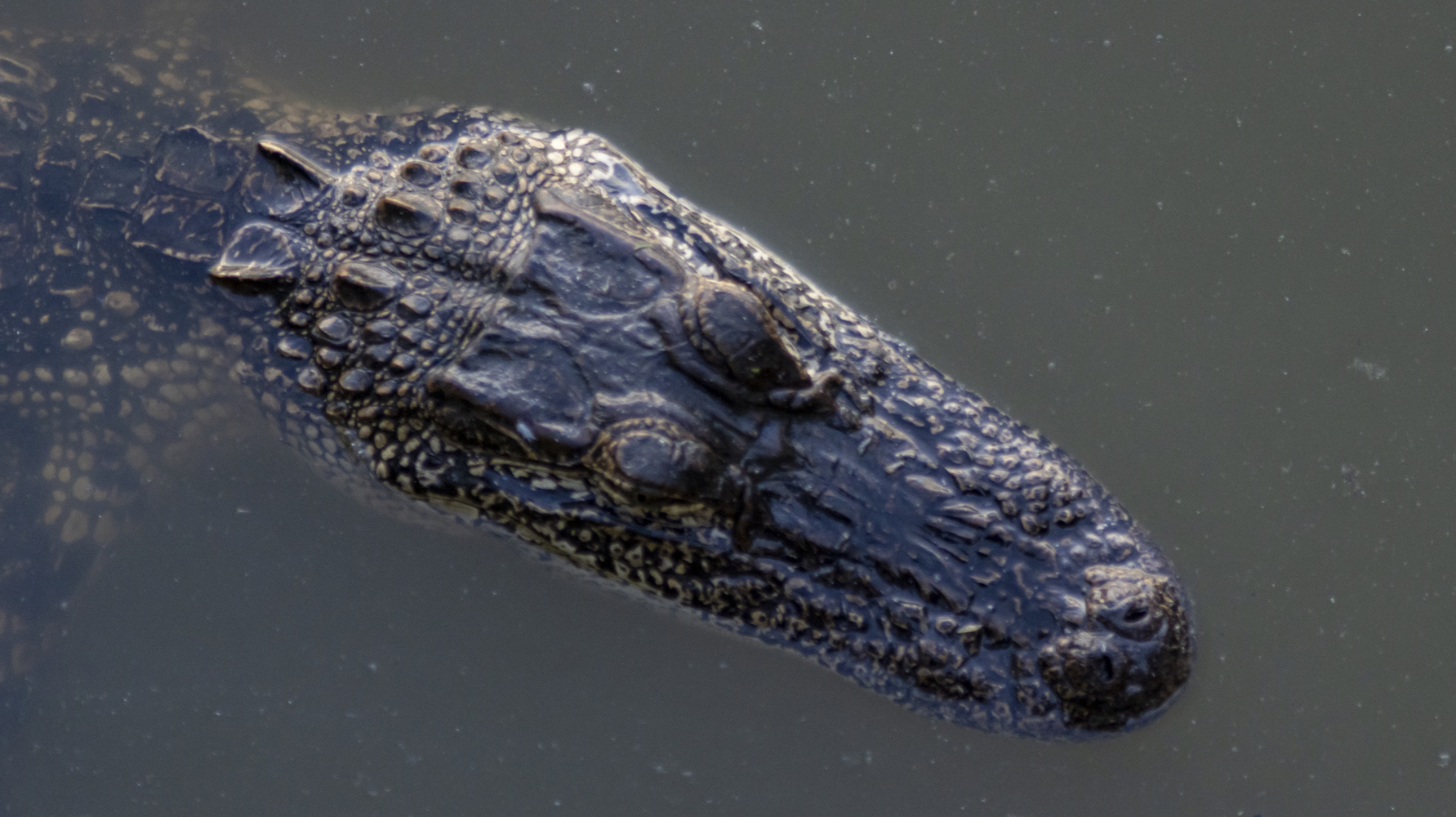
Delving deeper into our understanding of photography, we realized the importance of patience when working with wildlife and its unpredictable nature. Although the park featured a large marsh, it turned into a beautiful scene of illuminated waters with alligators, interesting landscapes, and stationary, singing red-winged black birds.
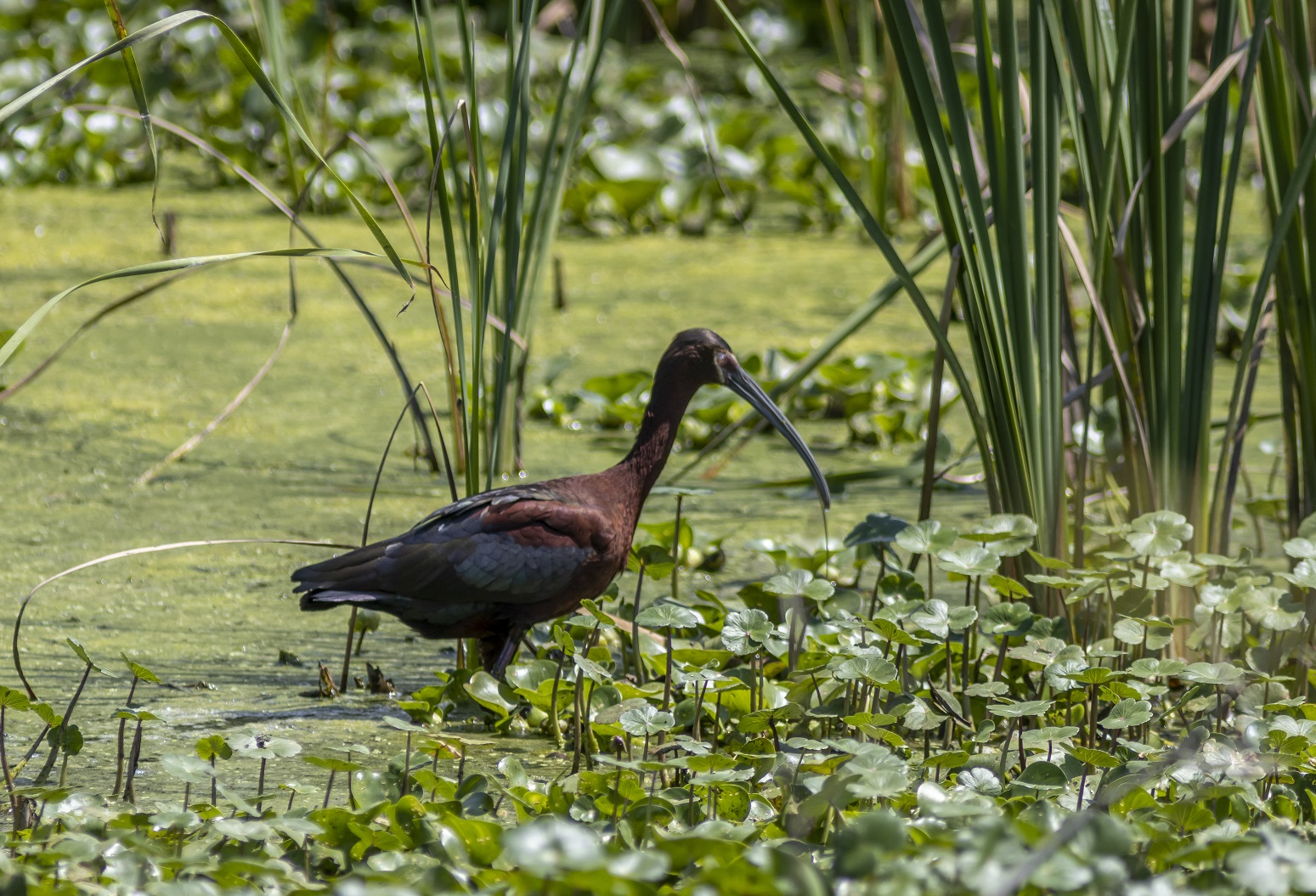
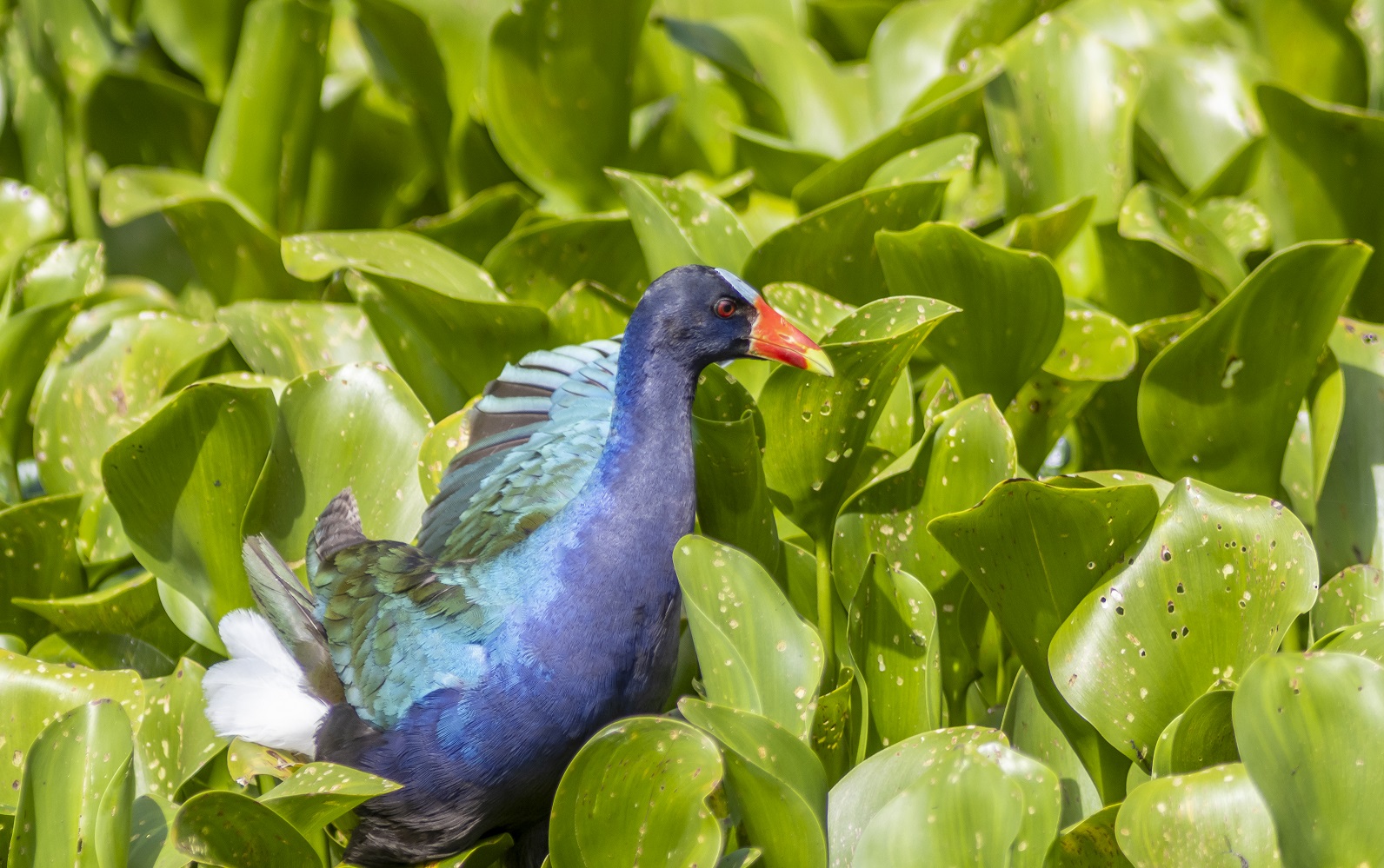
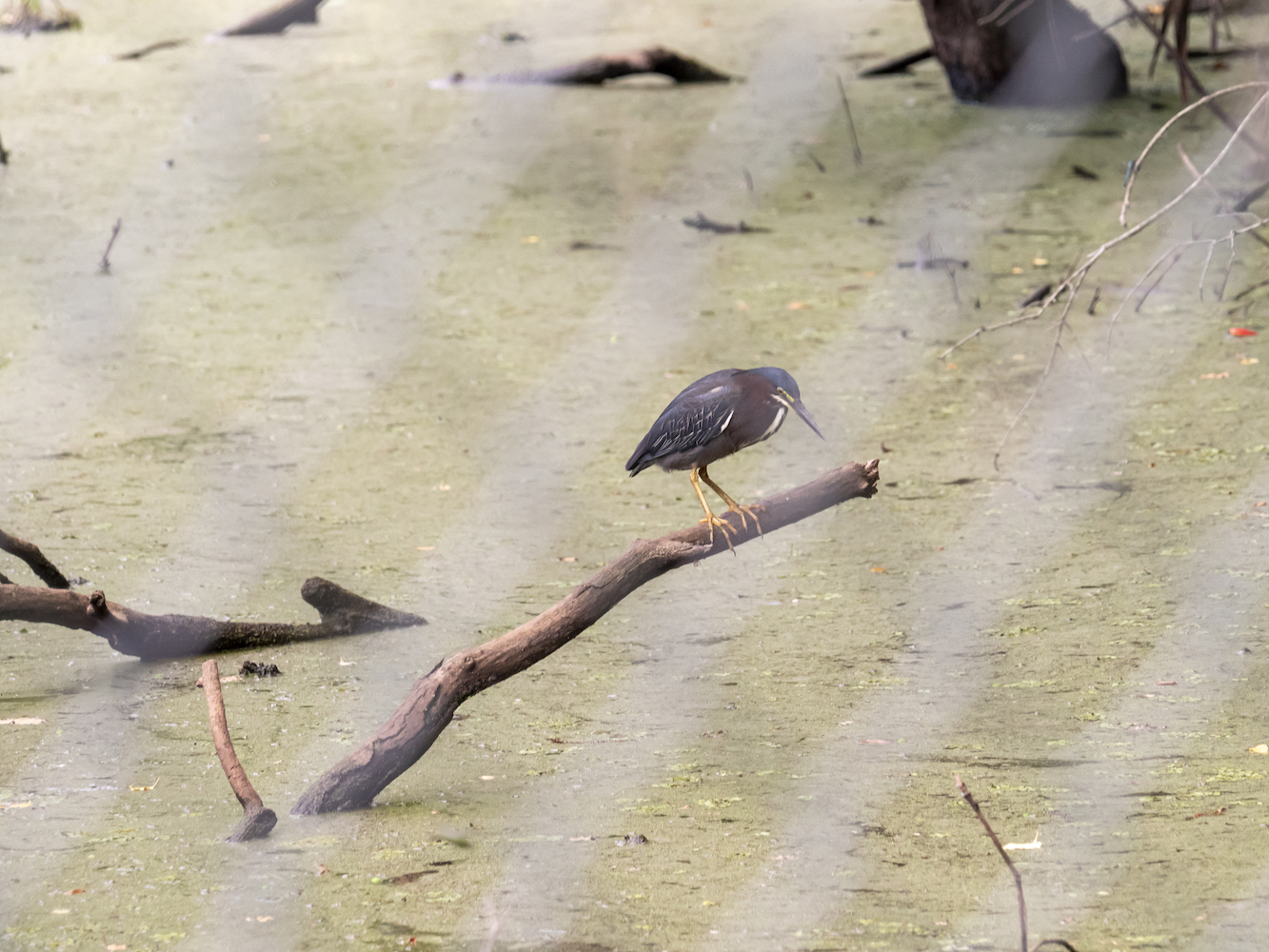
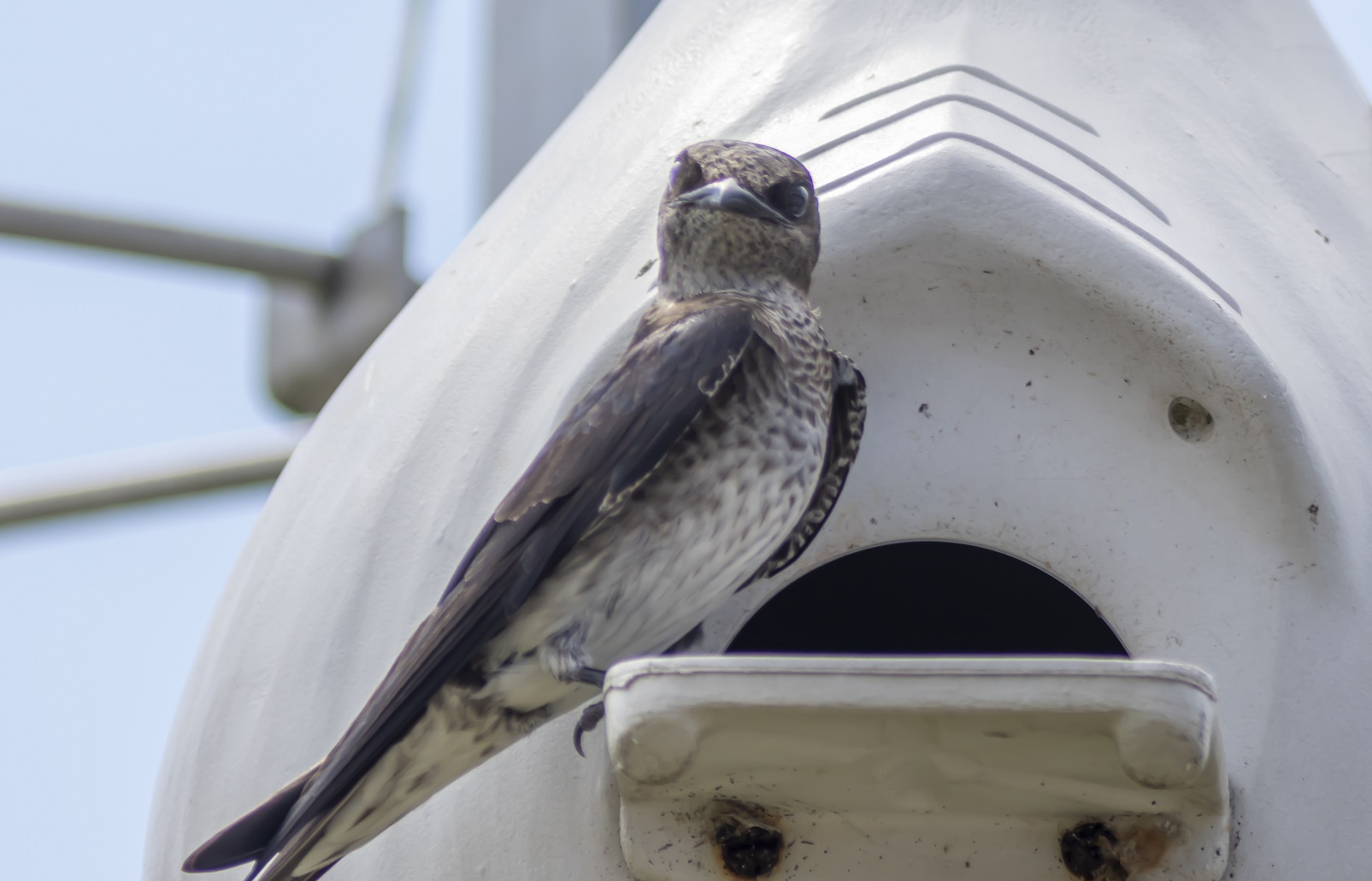
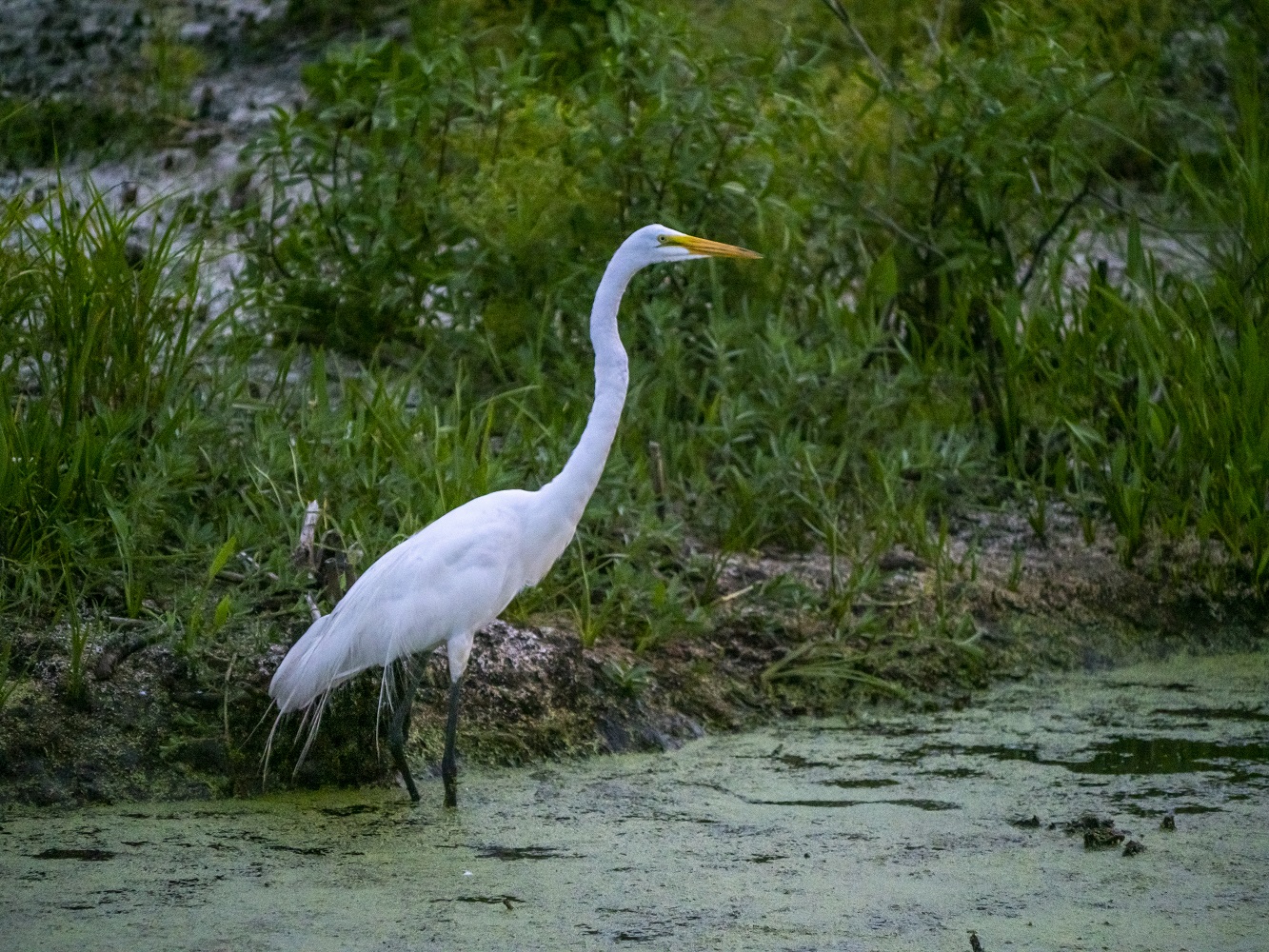
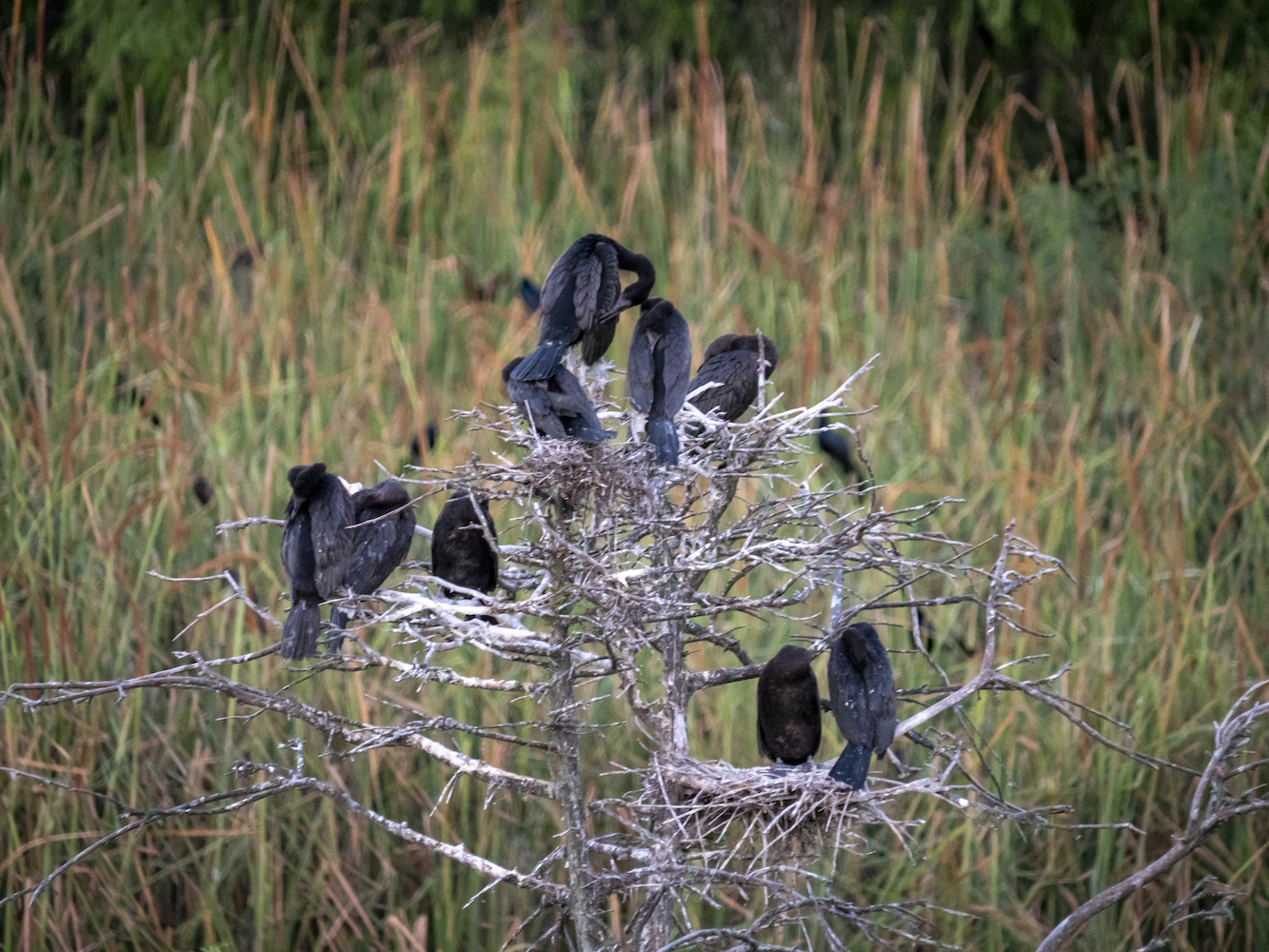
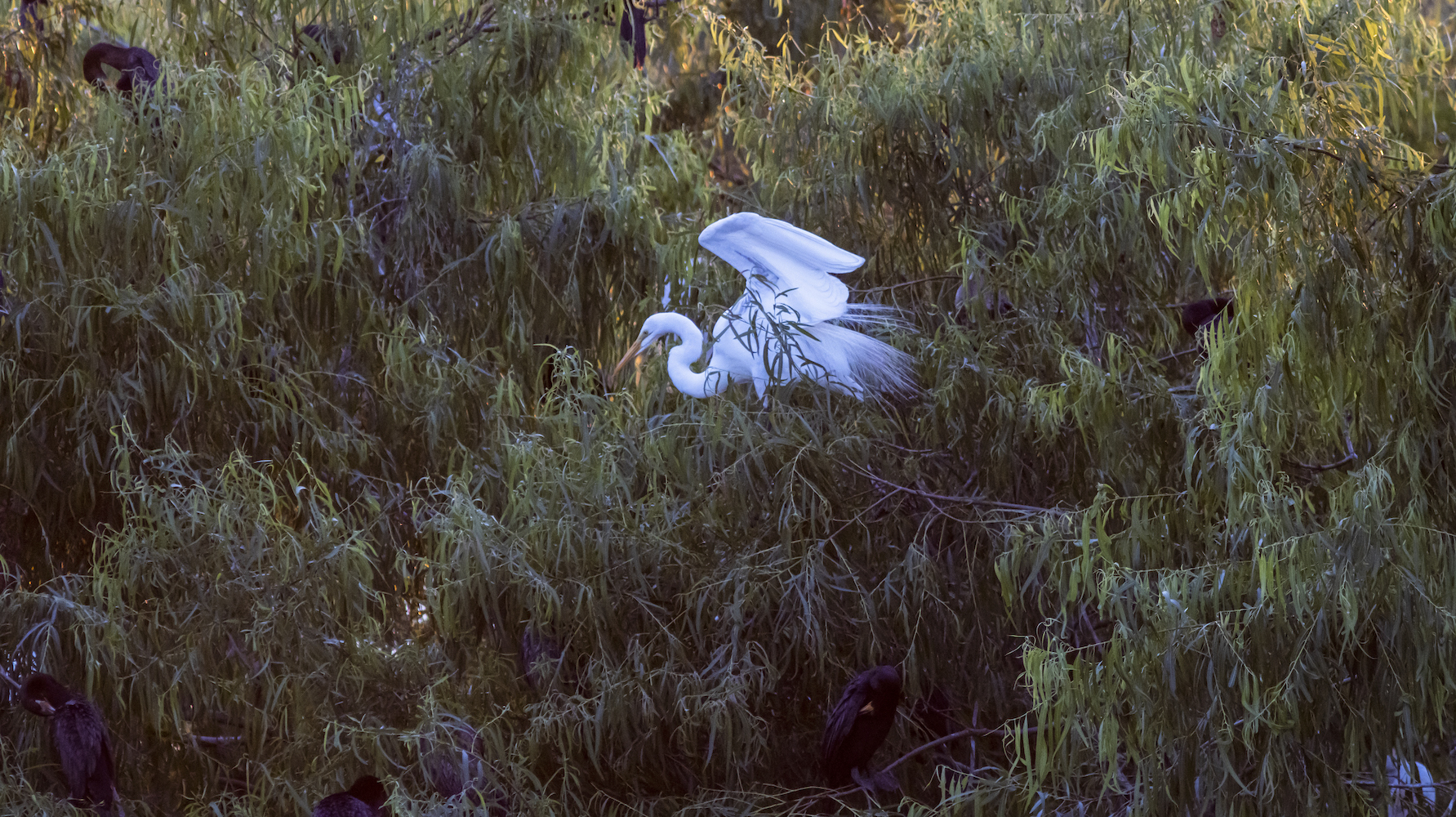
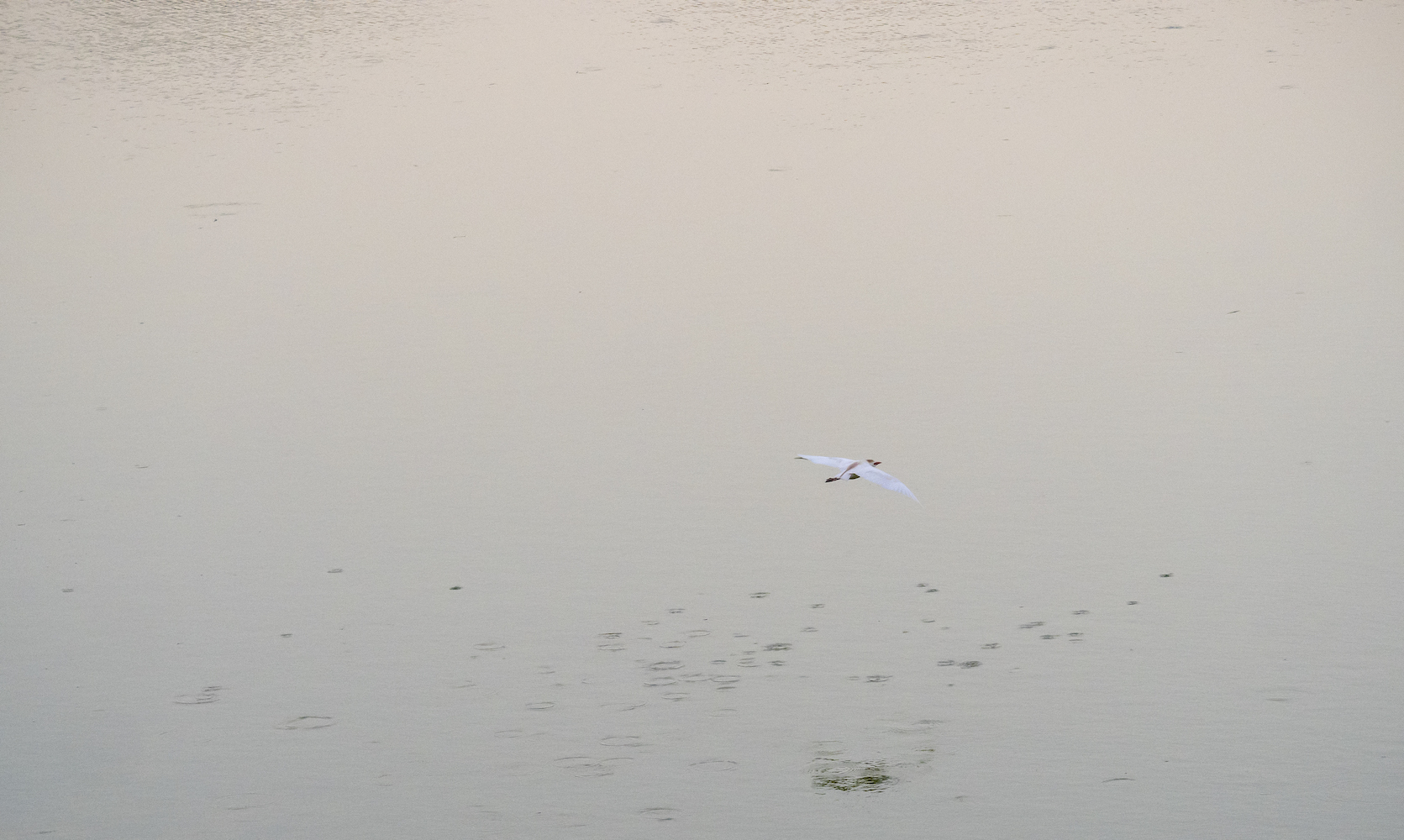
With the adjusting of our camera settings, we were able to capture some beautiful pictures of Purple Gallinules, Egrets, Ibises and Swallows.
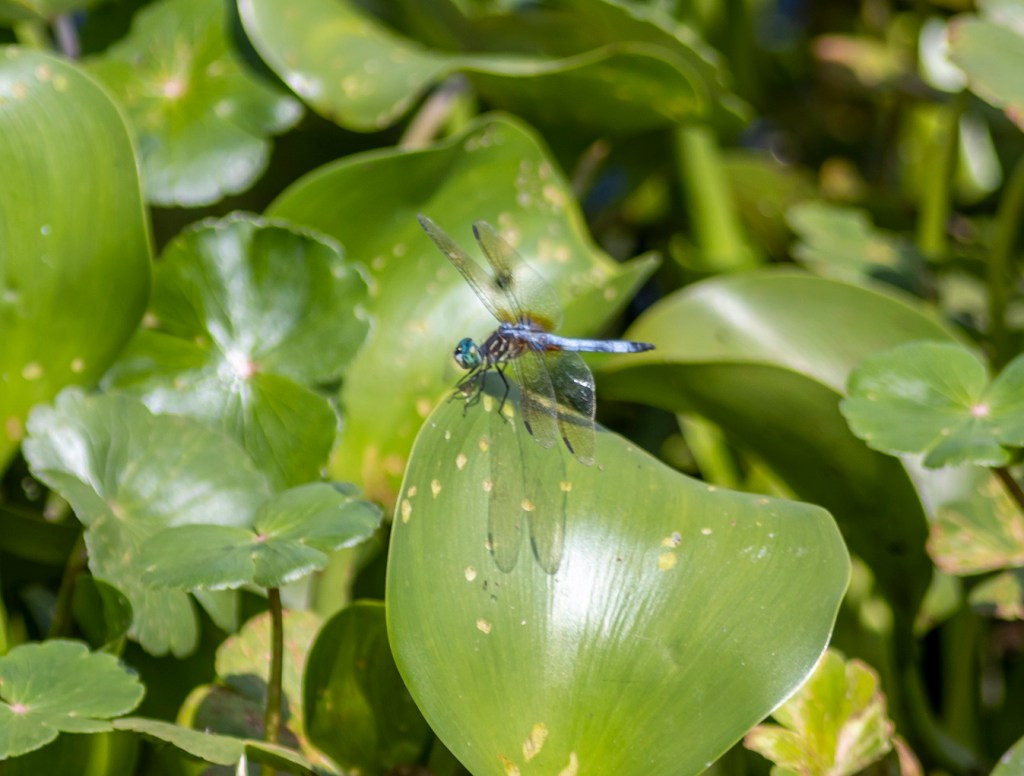
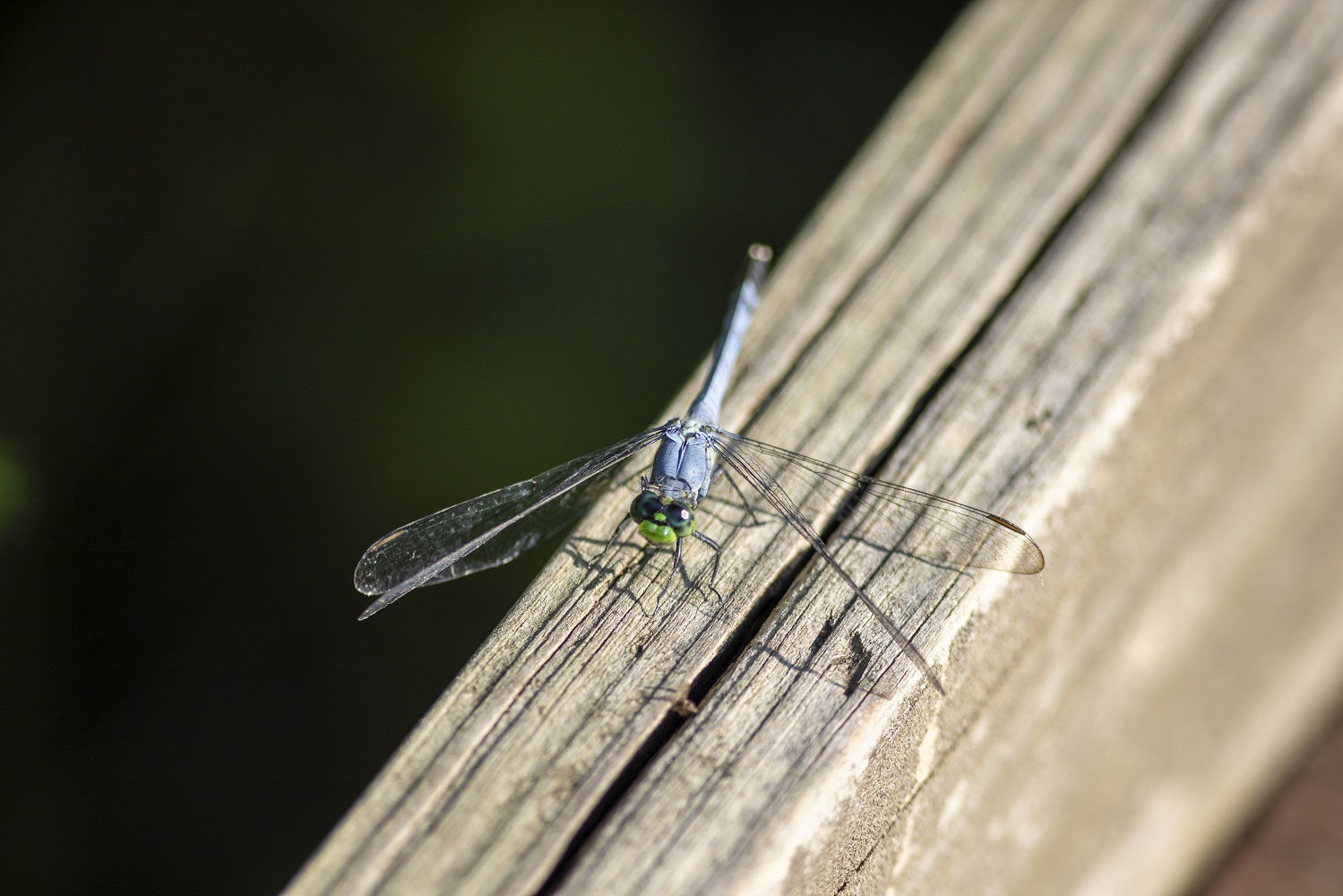
I was able to get a great shot of a Great Blue Skimmer, its translucent wings appearing ever-so-slightly against the lily pads.
Many, if not all LEAP Ambassadors walked away with pictures they were proud of, becoming acclimated to the qualities of a good photo. We thoroughly enjoyed the chance to work at different points of the day with various creatures to truly improve our skills.
The Stark Museum
By Olivia Discon
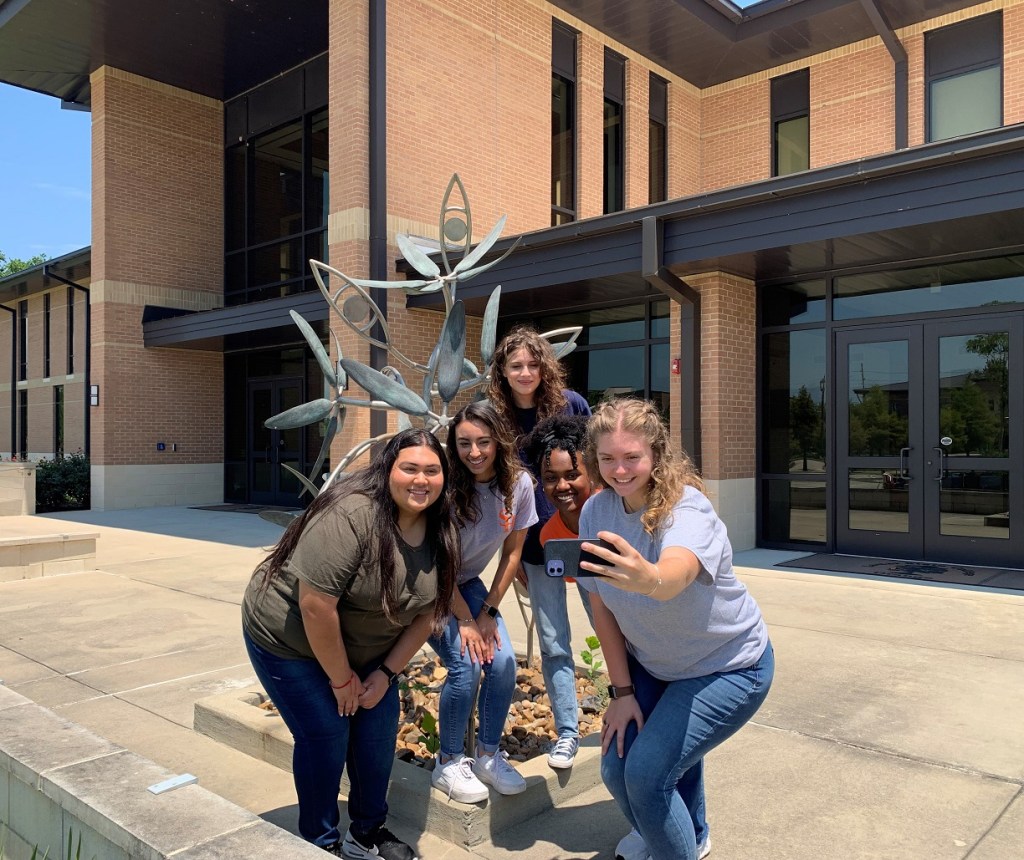
After a trip to Tyrrell Park, where we took photographs of a new frontier (for us, that is), we traveled to the Stark Museum to gain deeper knowledge of early Western art. Upon arriving in Orange, Texas, we spotted, by chance, a James Surls piece on Lamar-Orange’s campus! We took advantage of this unique opportunity and snapped a couple selfies and photographs in front of the piece.
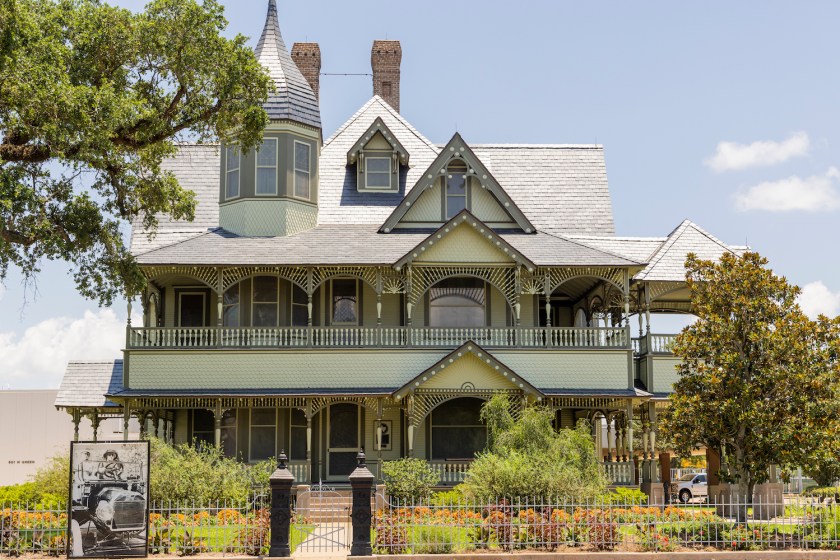
It didn’t take long to realize the prominence of the Stark name in this town, as we passed by the Lutcher (Stark) Theater and the massive, historically preserved Victorian family home. The Stark Home gave the group a sense of great anticipation for the museum!
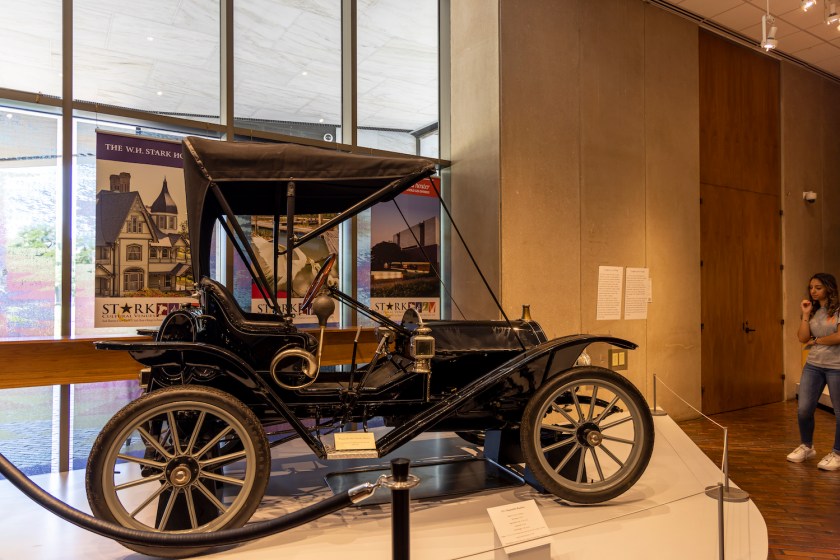
We were able to see the lavish, custom Ford Model-Ts that William Henry Stark drove almost immediately after entering; giving us the impression that this museum would have an extensive and captivating collection. However, we hadn’t anticipated how true that was!
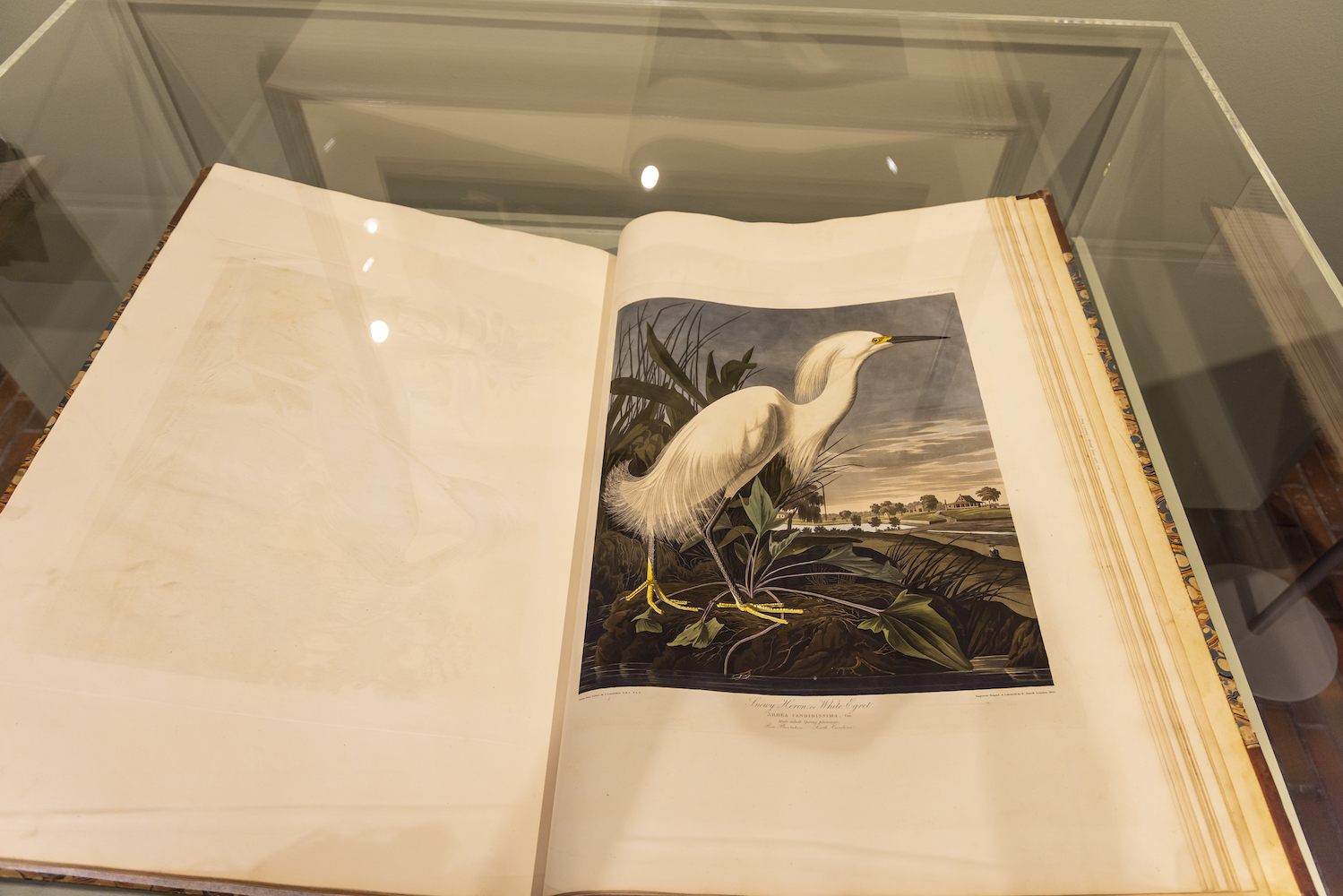
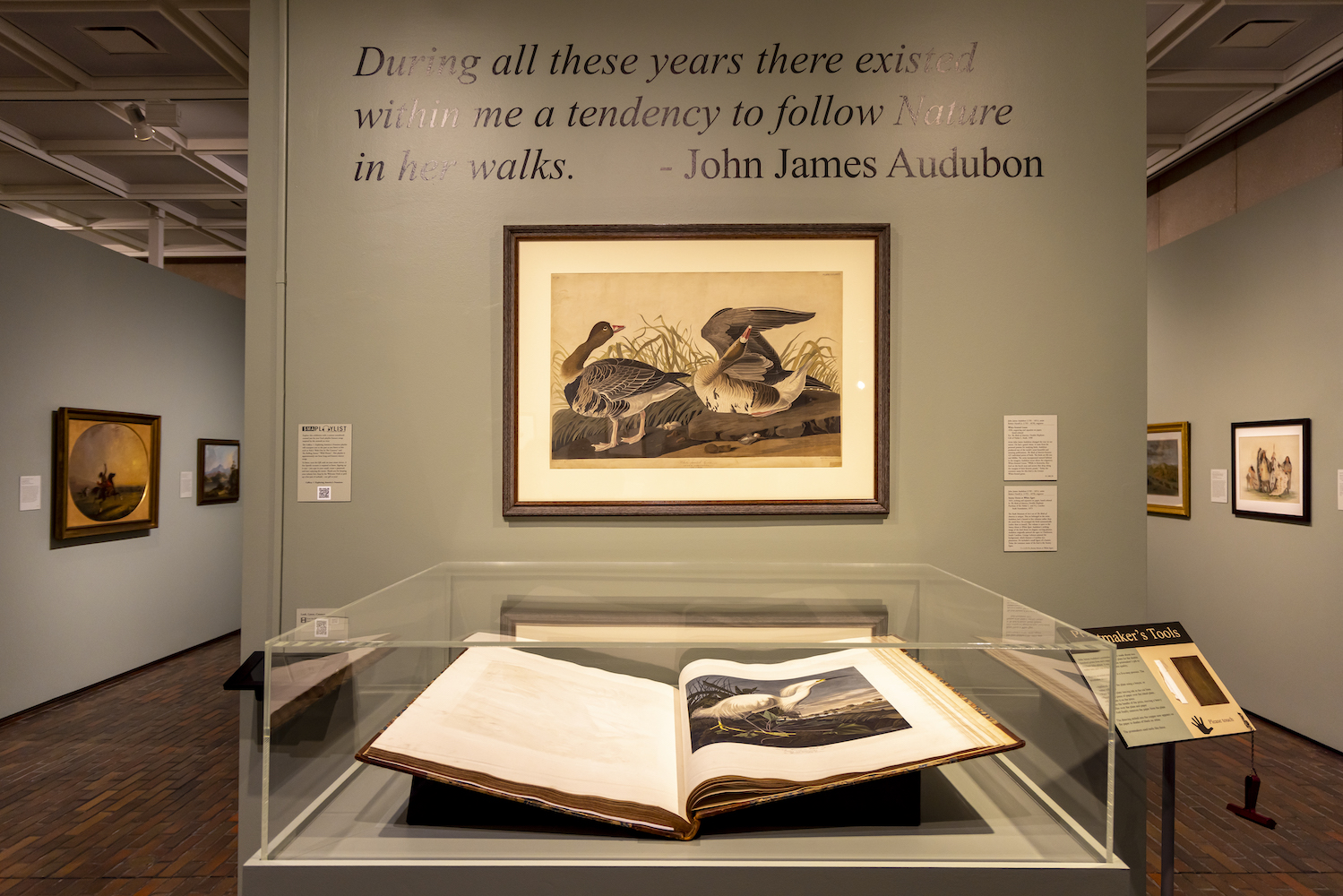
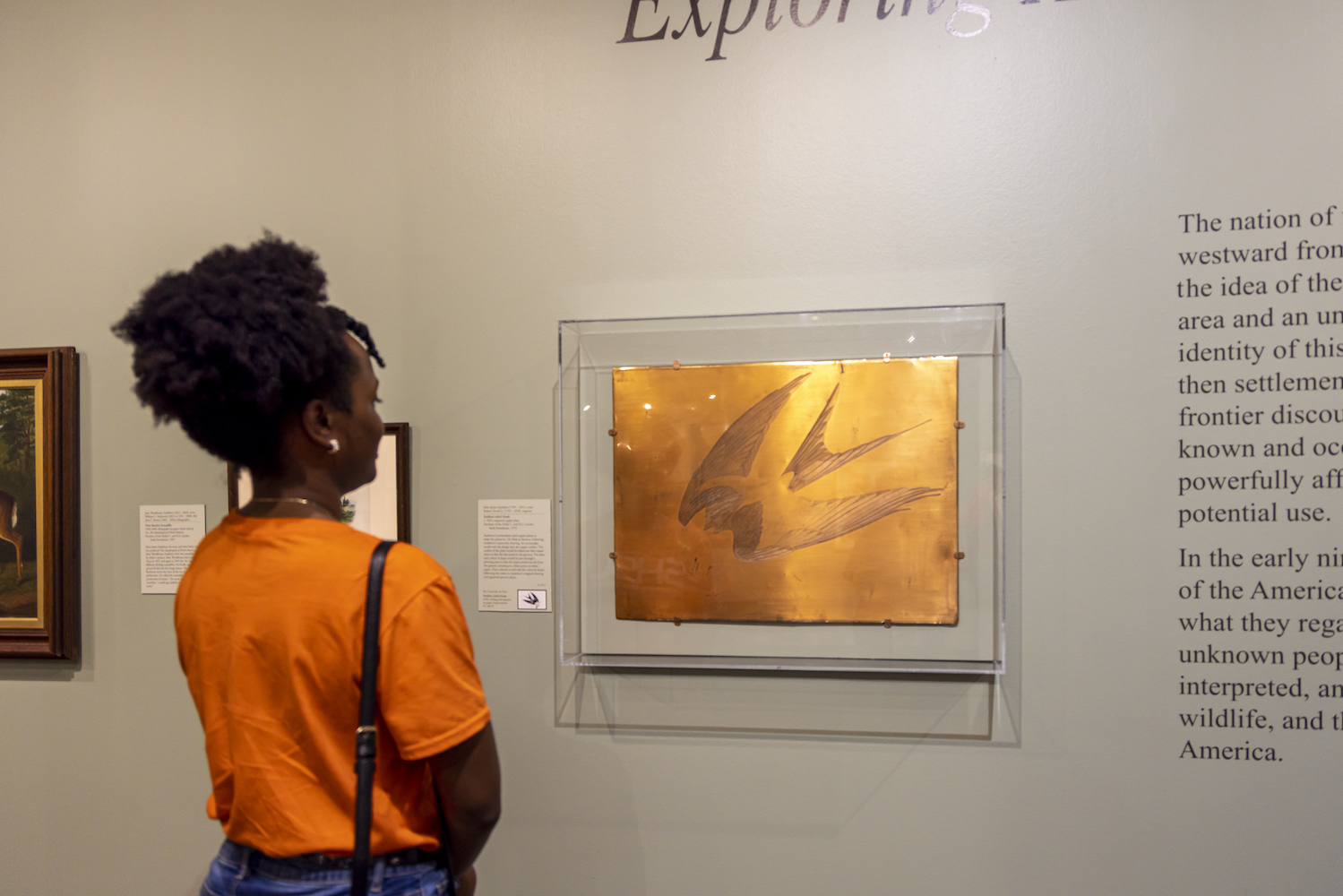
To our surprise, some of the first works we looked at in the Western Art gallery were of the same birds we took pictures of at Tyrrell Park, all done by John James Audubon!
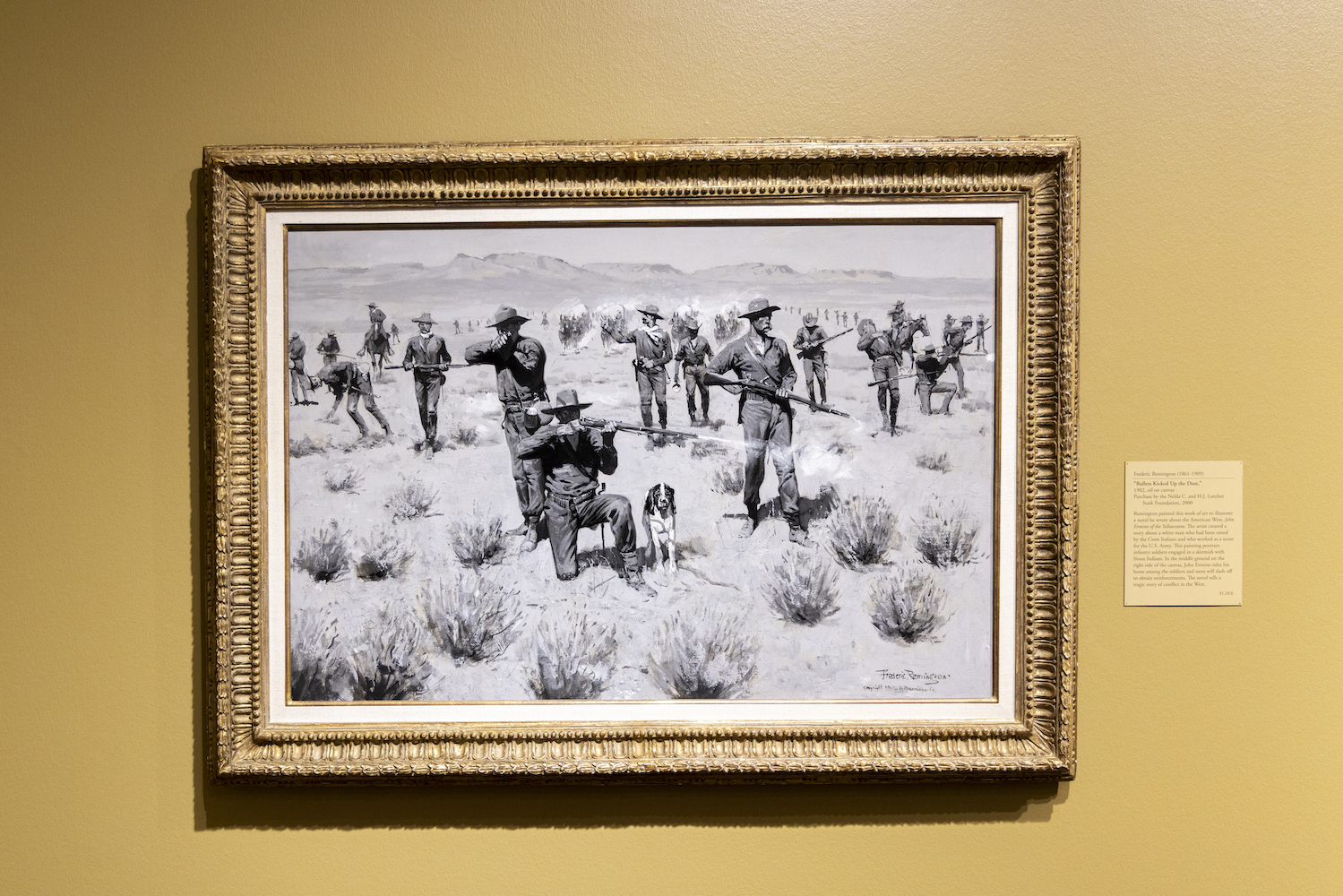
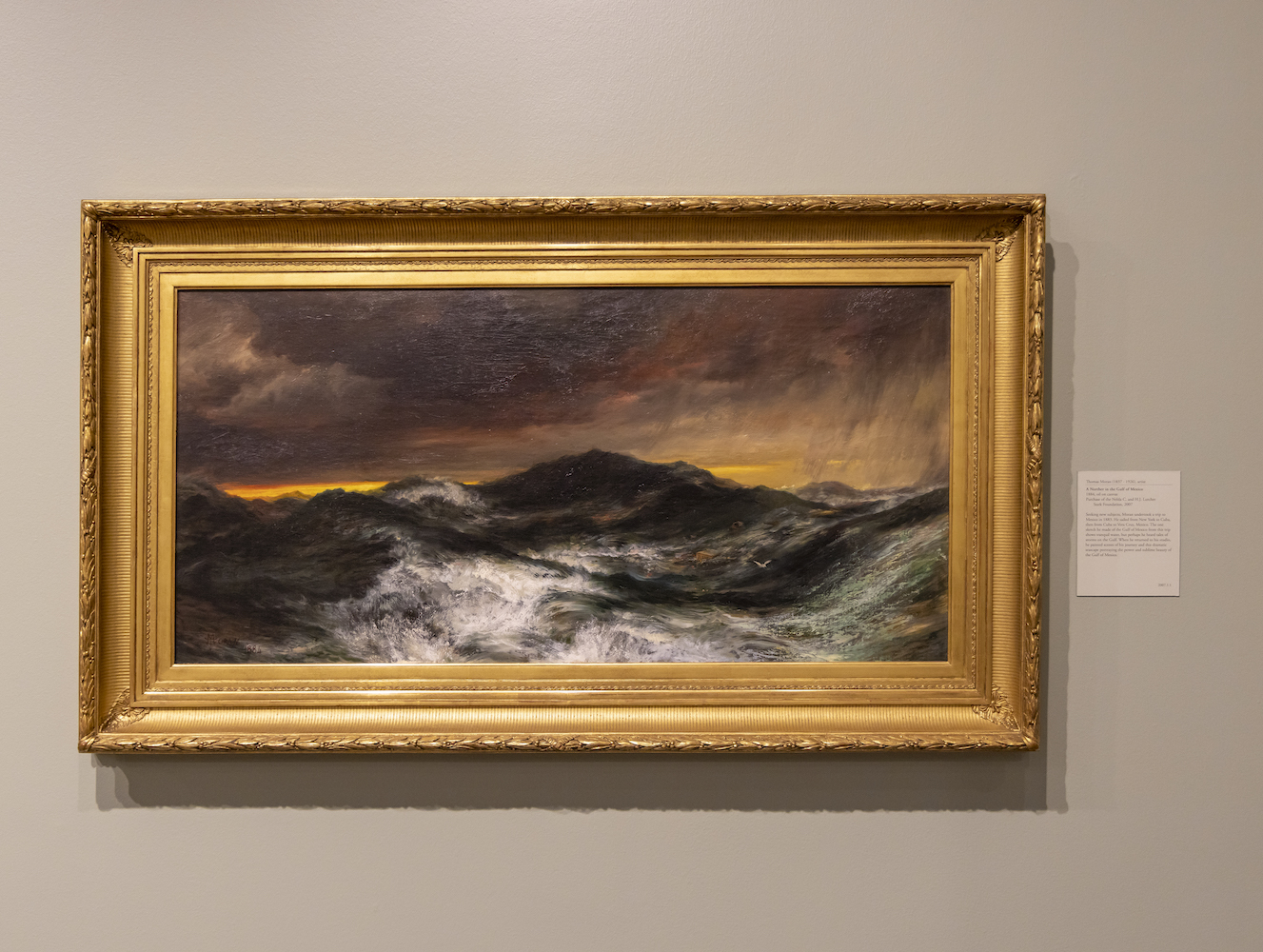
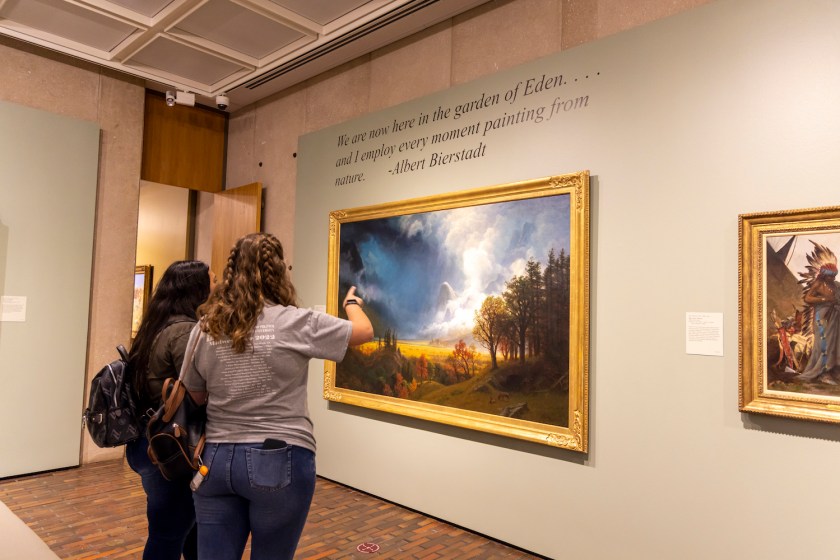
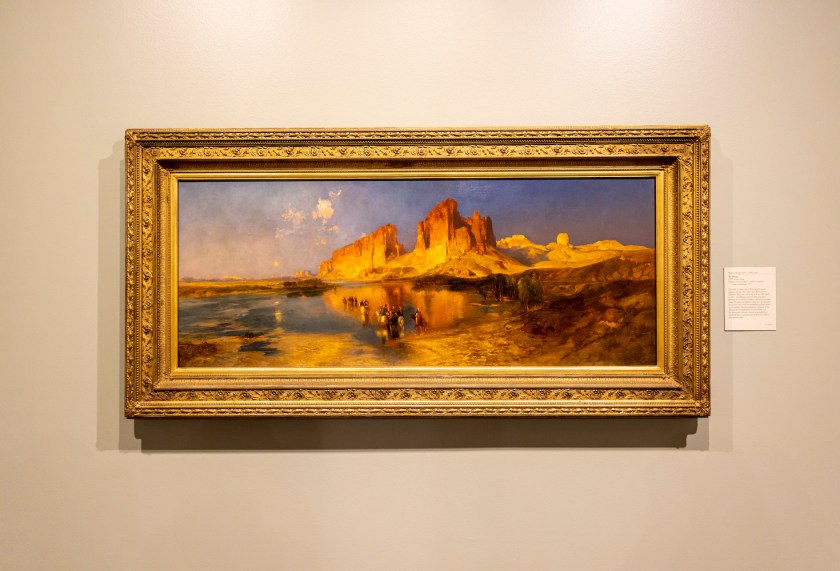
Some key figures of the Western art movement are Frederic Remington, Albert Bierstadt, and Thomas Moran, all of which were featured in the American Western gallery.
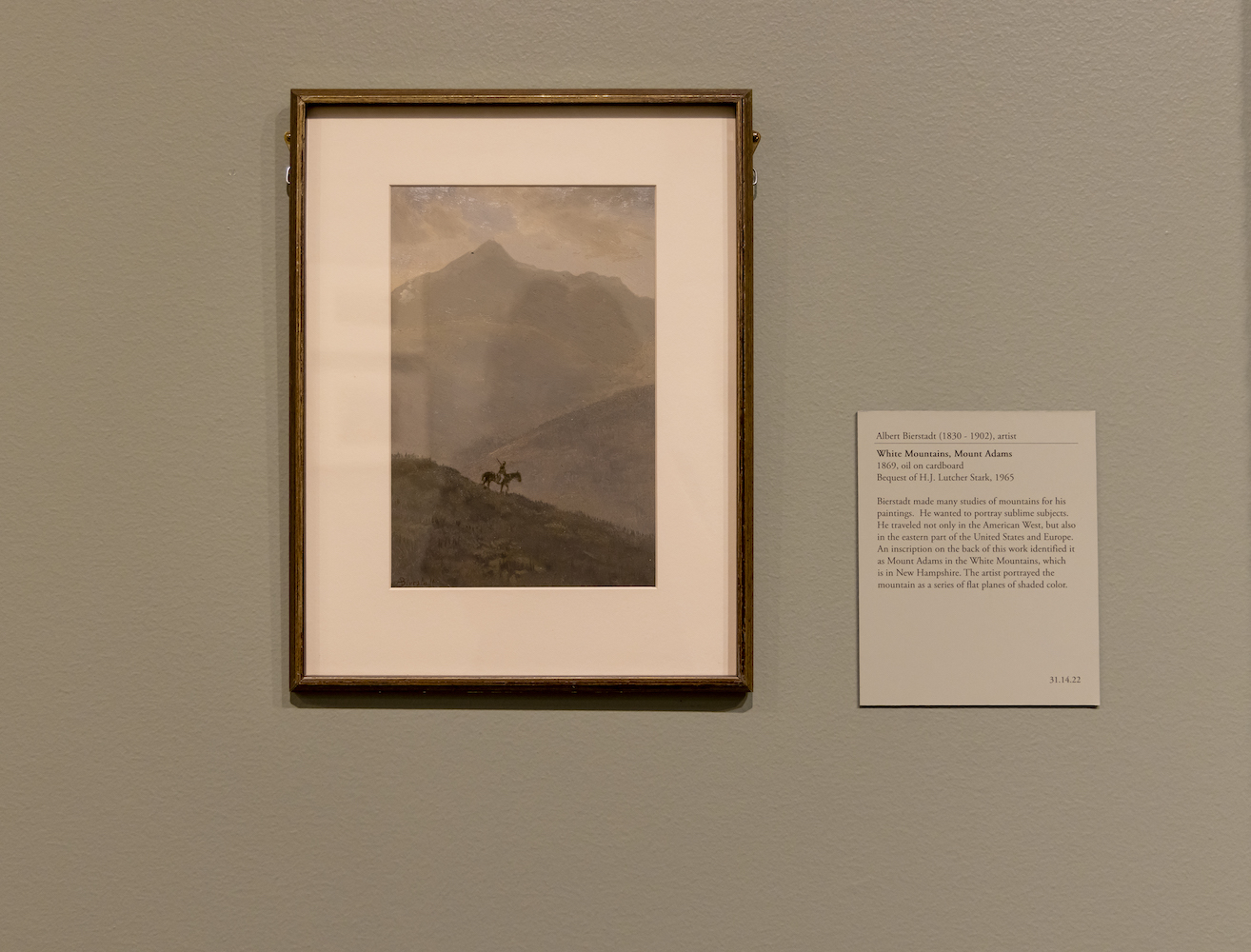
We were able to experience some introductory Bierstadt pieces yesterday at the MFAH, but the opportunity to immerse ourselves in a specific niche of art history was incredible. Morgan especially enjoyed “White Mountains, Mount Adams”…
…a study of mountains done with oil paint on cardboard, as well as John James Audubon’s personal copy of “The Birds of America” prints.
A work that resonated with Ingrid was “Indian Women Playing Ball on the Prairie” by Seth Eastman, providing an undertone of unfounded commentary for the time period. The painting depicts a swap of gender norms, depicting the women playing lacrosse, and the men idly chatting and spectating the game. The gallery had several amazing pieces that highlighted the allure of the unknown, further romanticizing the idea of westward expansion.
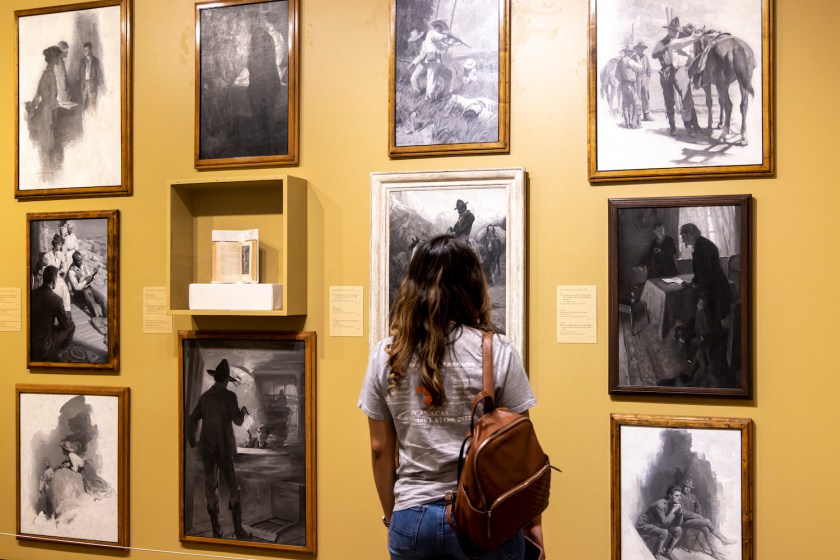
An artist we enjoyed thoroughly without encountering his work before was William Herbert Dunton; a Western artist with several black and white paintings on display. Yvette preferred “The Landing of the American Troops Near Guanica”, and I enjoyed “My Son–My Only Son–is a Coward”. Both pieces had incredible depth and shadowing, which enhanced the emotional and imaginative value of the paintings within the gray-scale.
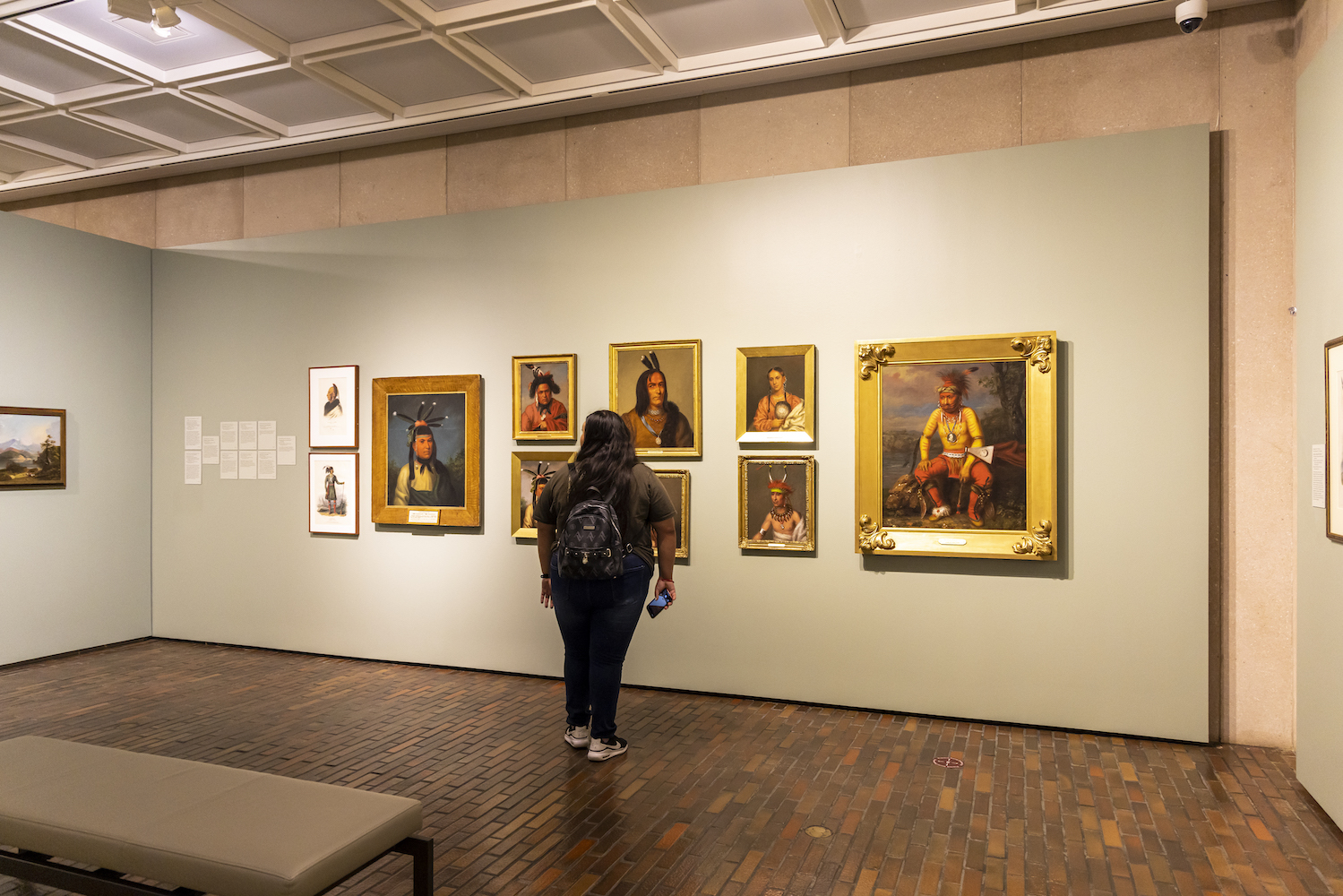
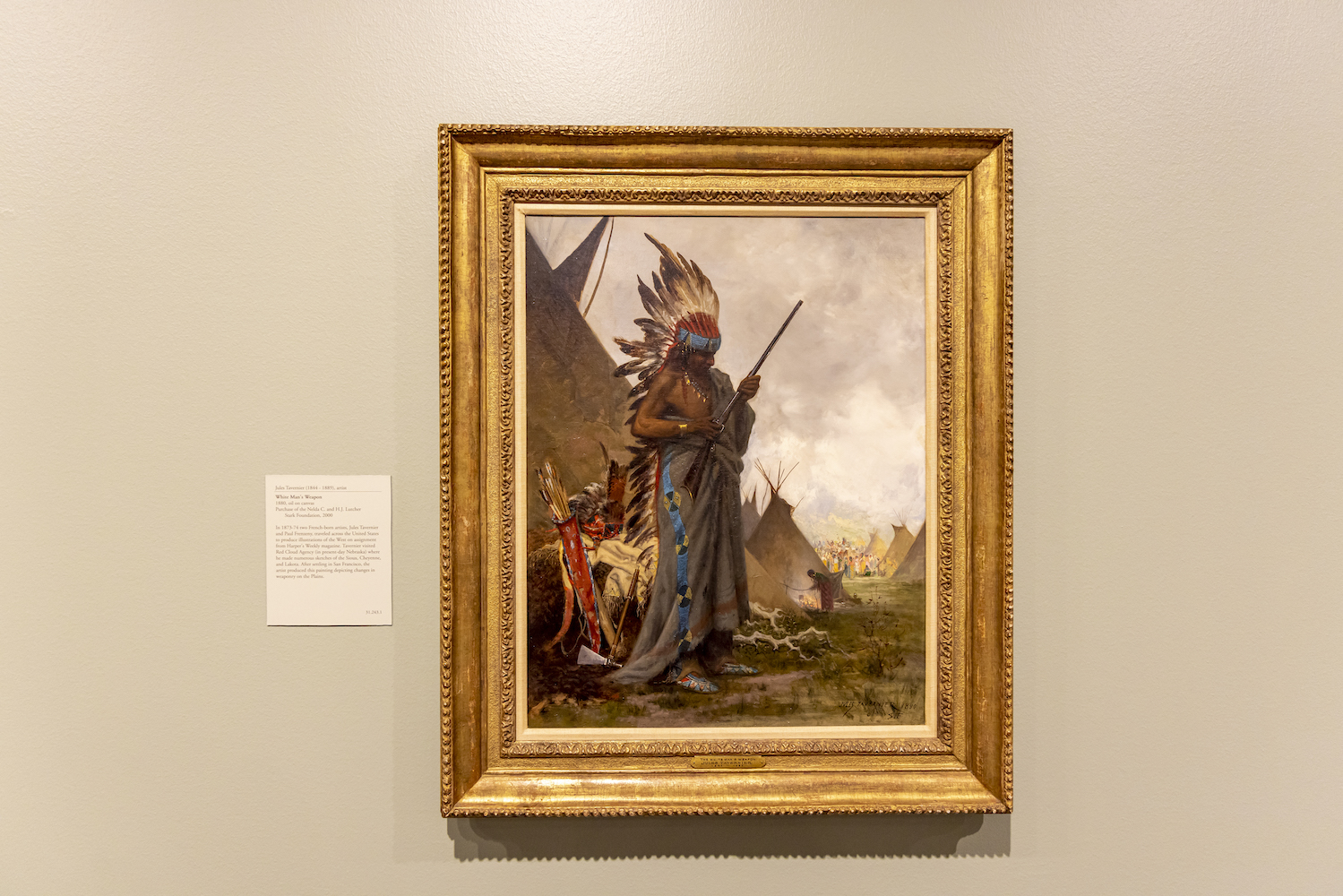
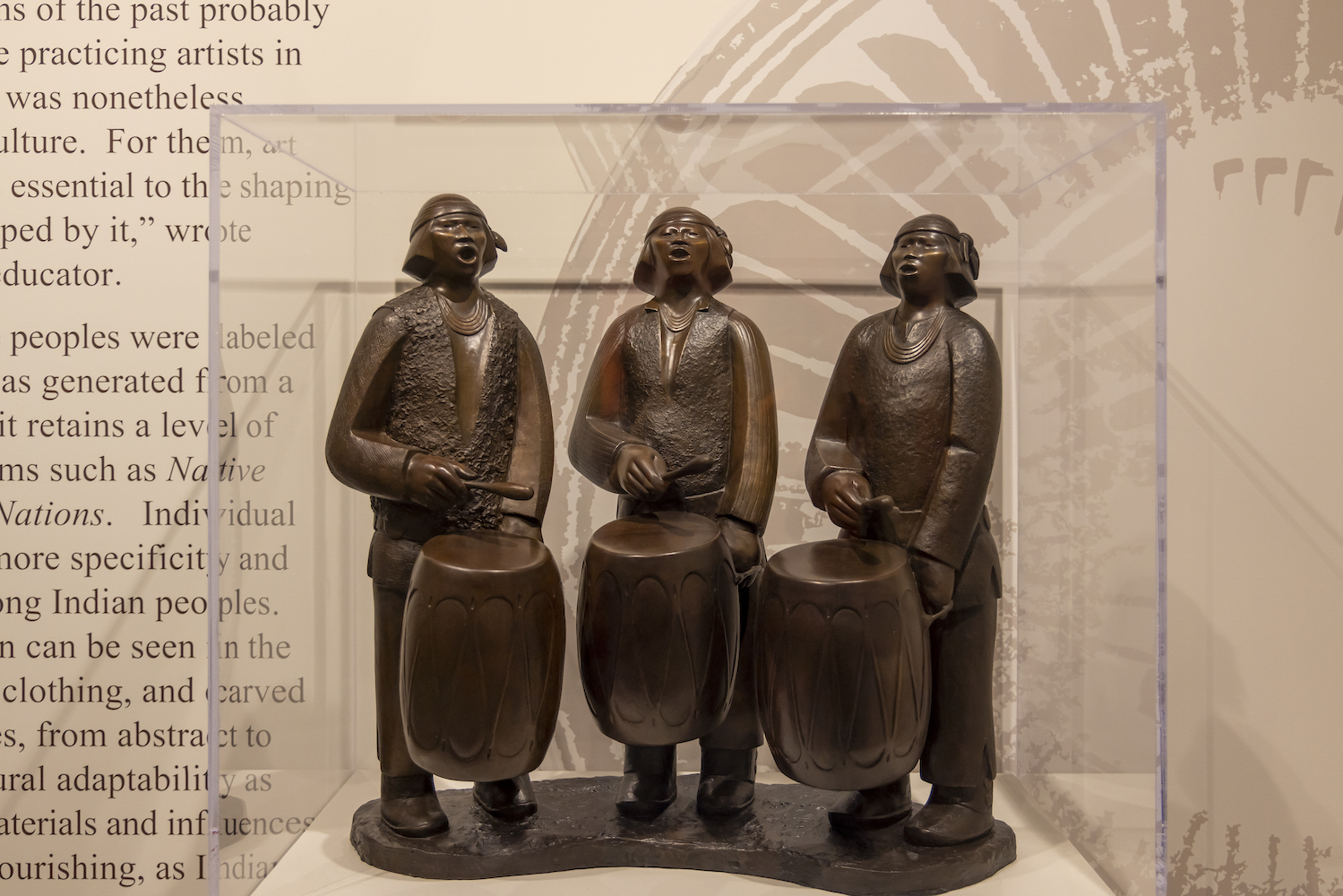
The Indian American exhibit was another favorite of the LEAP Ambassadors, which was of great interest to Western artists in their own exhibition. However, the innate diversity of Native American art was mesmerizing in its own right. The oil paintings, textiles, and sculptures had an enthralling vibrancy about them, which provided a great contrast to the black and white gallery wall of the Western Art exhibition.
While we weren’t able to take a picture of the painting, we were able to see a Georgia O’Keeffe “Gerald’s Tree”! Consisting of a dying cedar tree on a Western landscape in New Mexico, the highly notable appearance pleasantly surprised us.
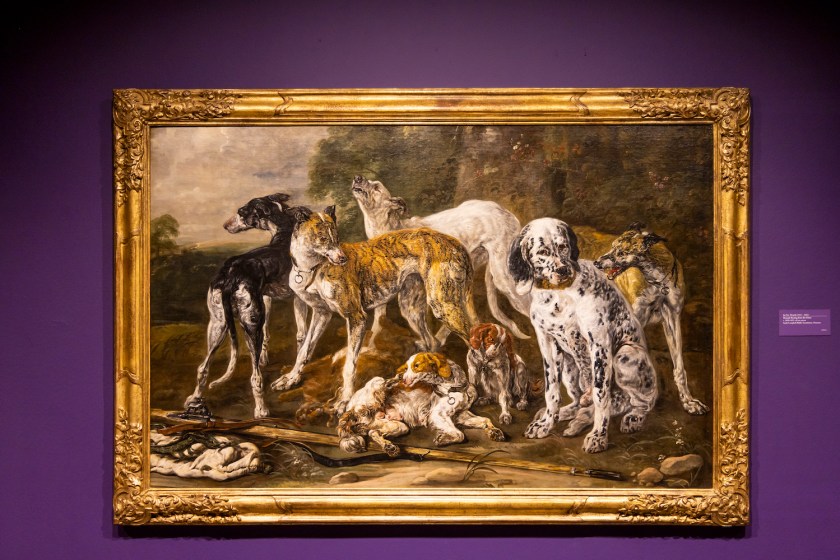
What stood out to me the most was a traveling exhibition on display: “Hunting Pictures from the Collection of the Sarah Campbell Blaffer Foundation”. Game hunting was considered a sport of nobility for upper class citizens to indulge in during the 1700’s, as prohibition laws surrounding hunting were relenting over time. This is reflected in the portraiture of the elites of society, as several paintings included hunting dogs and hunted game alongside the subject.
This museum, as Professor Yawn noted during the visit, has an impressive collection relative to the size of the town. The subject matter allowed us to gain insight into the historical perspective of some early explorers and indigenous people who essentially founded one of America’s first art movements, leaving us with a newfound appreciation for the era and its artists.
Anahuac National Wildlife Refuge
By Yvette Mendoza
Continuing our adventure through the coastal wetlands of East Texas, we embarked on our next voyage to Anahuac National Wildlife Refuge. It was a treat to observe how our knowledge of the animals expanded, connecting the ones we saw in Tyrrell Park with those that soar high above the marsh and lurk in the swamps of Anahuac, Texas.
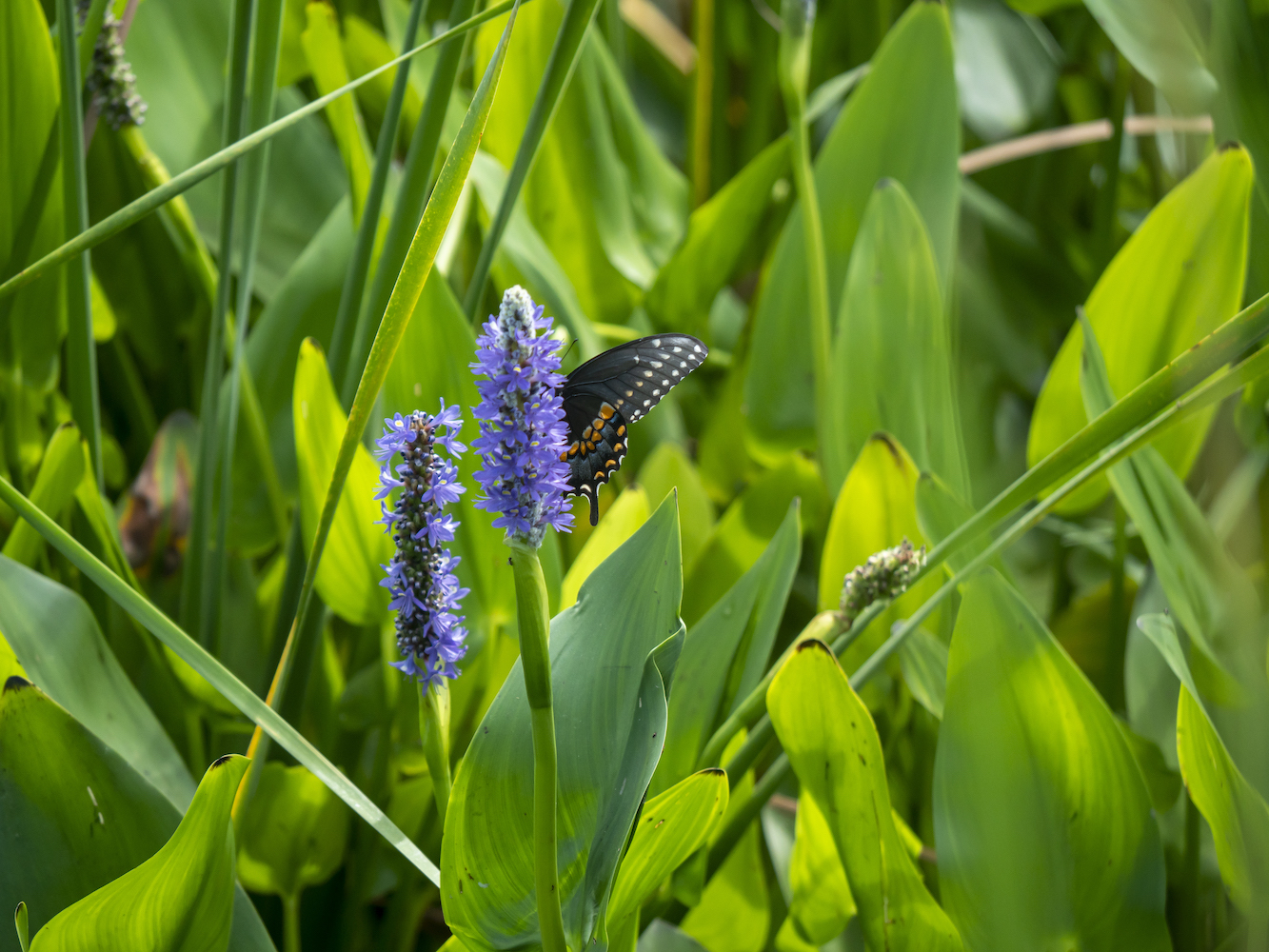
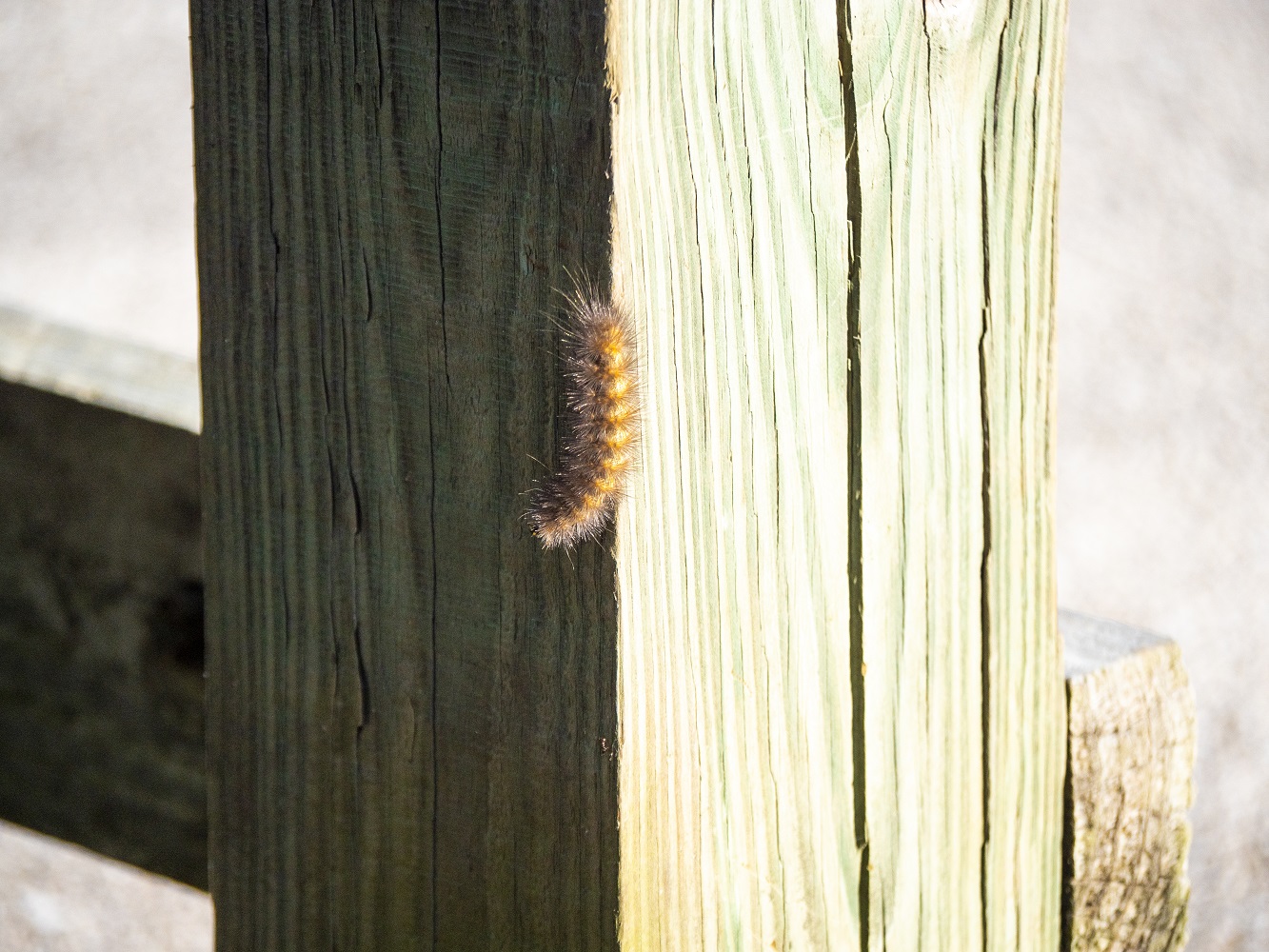
While swatting away insects that seemed particularly drawn to the LEAP group, we took care not to disturb the stunning butterflies we came across. We also encountered numerous Blue Skimmer Dragonflies and Green Dragonflies, which gracefully posed for our photographs, showcasing their vibrant colors and crystal-clear wings.
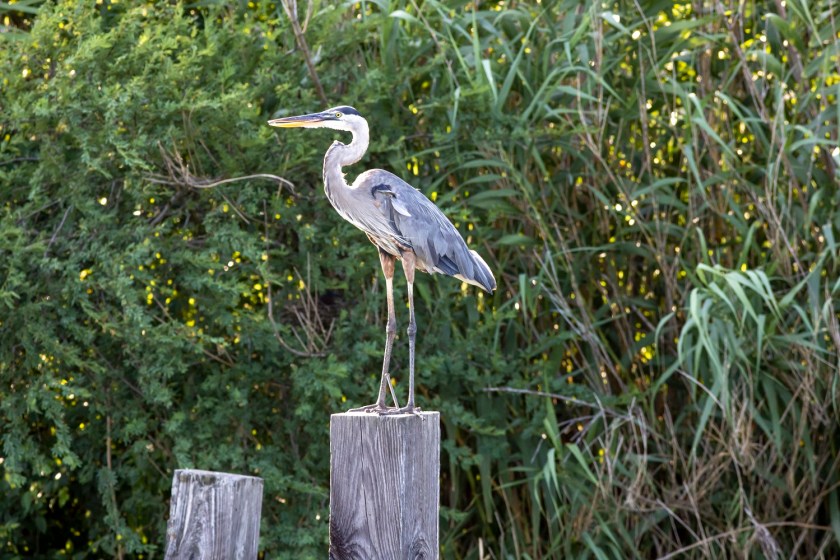
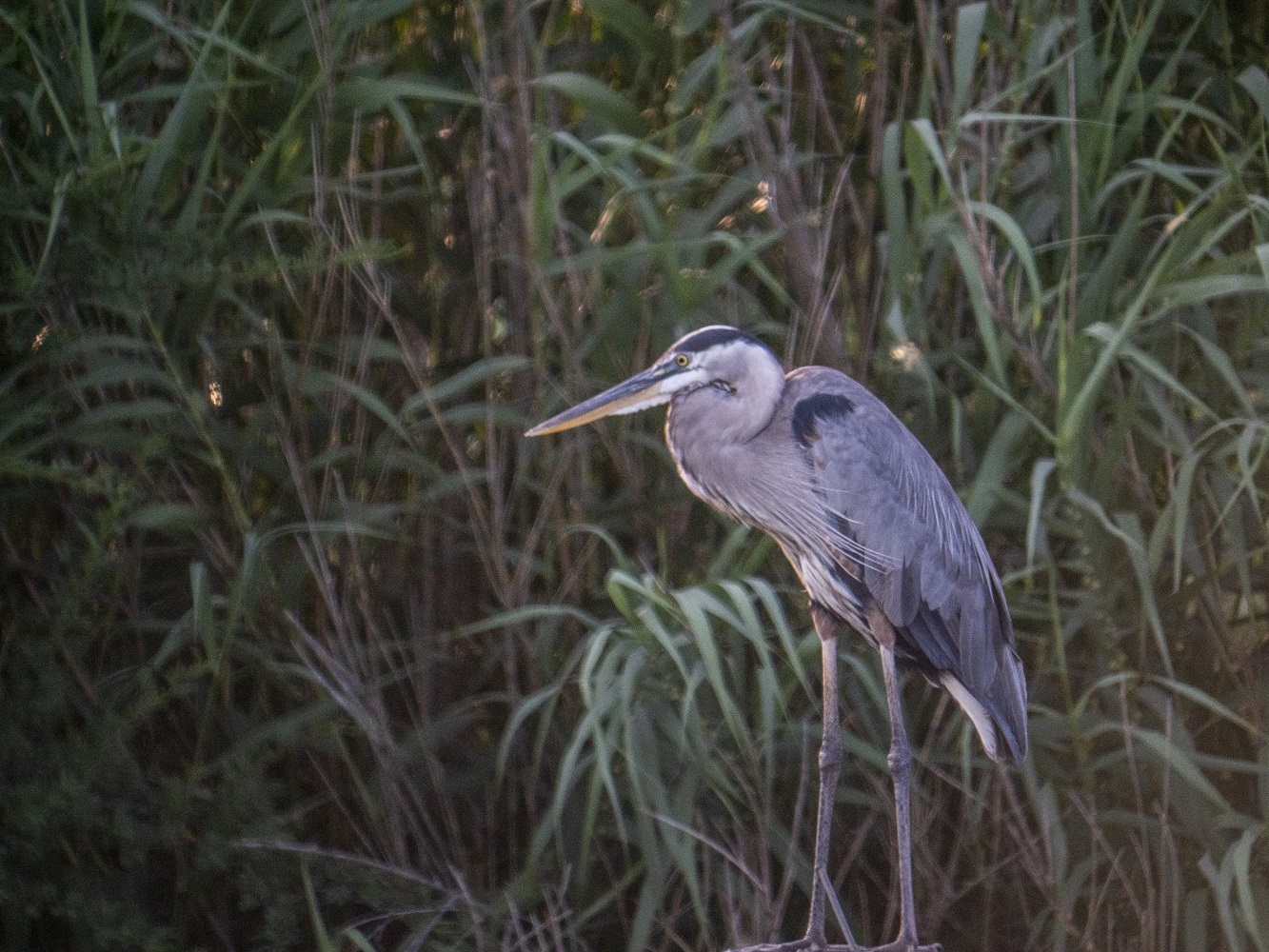
Apart from these airborne creatures, we also marveled at the birds. The sheer number of Snowy Egrets flying overhead, searching for food and shelter in the coastal region of Texas, left us mesmerized. Similar to the egrets, we had the opportunity to capture the beauty of the Great Blue Heron.
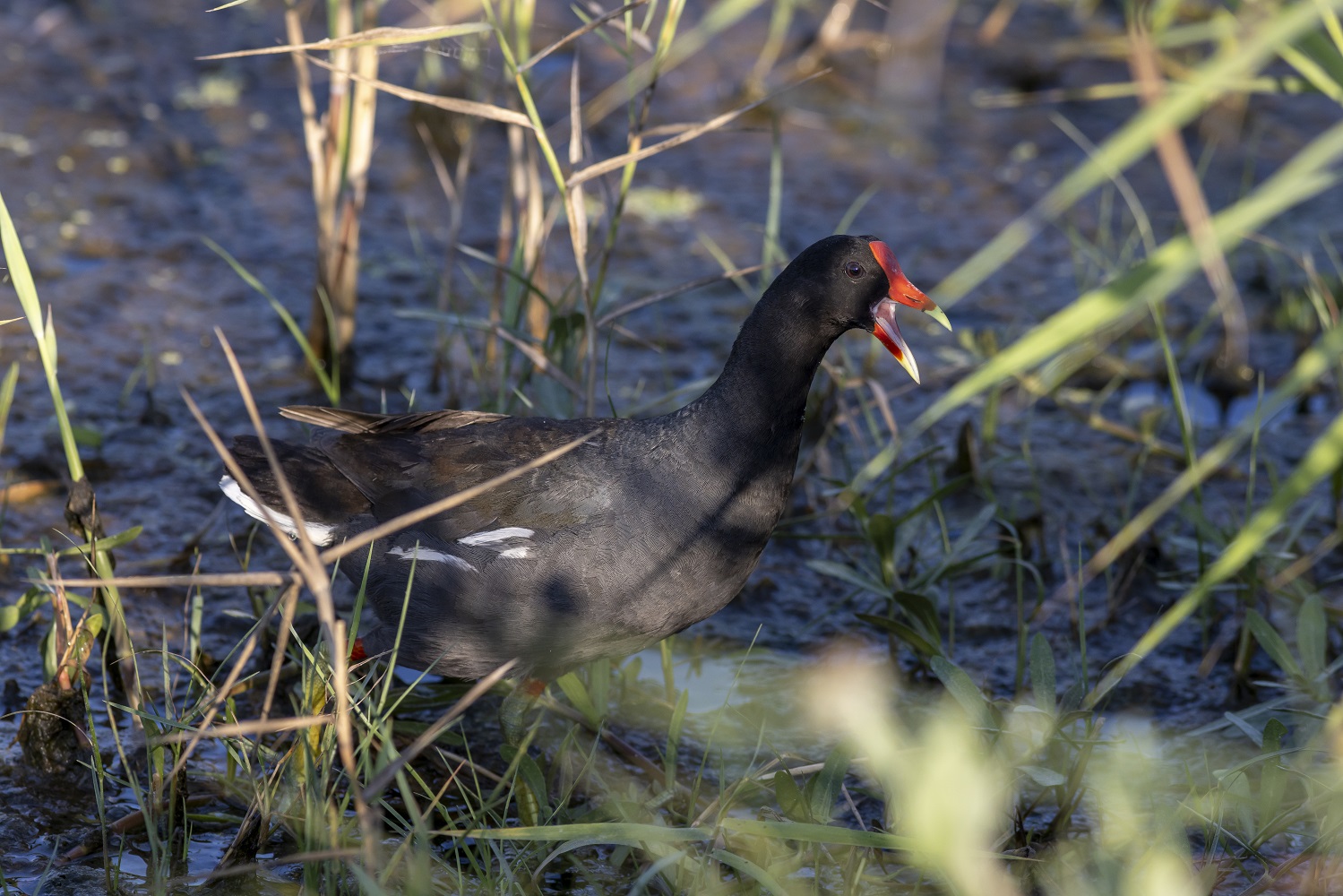
This Heron stood out from the rest, as it confidently stood up at the post, and was ready for its close-up and unafraid of our cameras. We were fortunate to observe the Red-Winged Black Bird frequently, with its vibrant red dots on each wing, as well as the Common Gallinule. We even witnessed a mother Gallinule walking alongside her young in the swamp.
After encountering many of the local birds and some of their key characteristics such as beak type and coloring, we began to build our repertoire of identifiable birds.
We quickly learned to distinguish the White Ibis from other soaring birds due to their curved beaks and bright red faces. For instance, their beak shape is specialized for catching fish or breaking nuts.
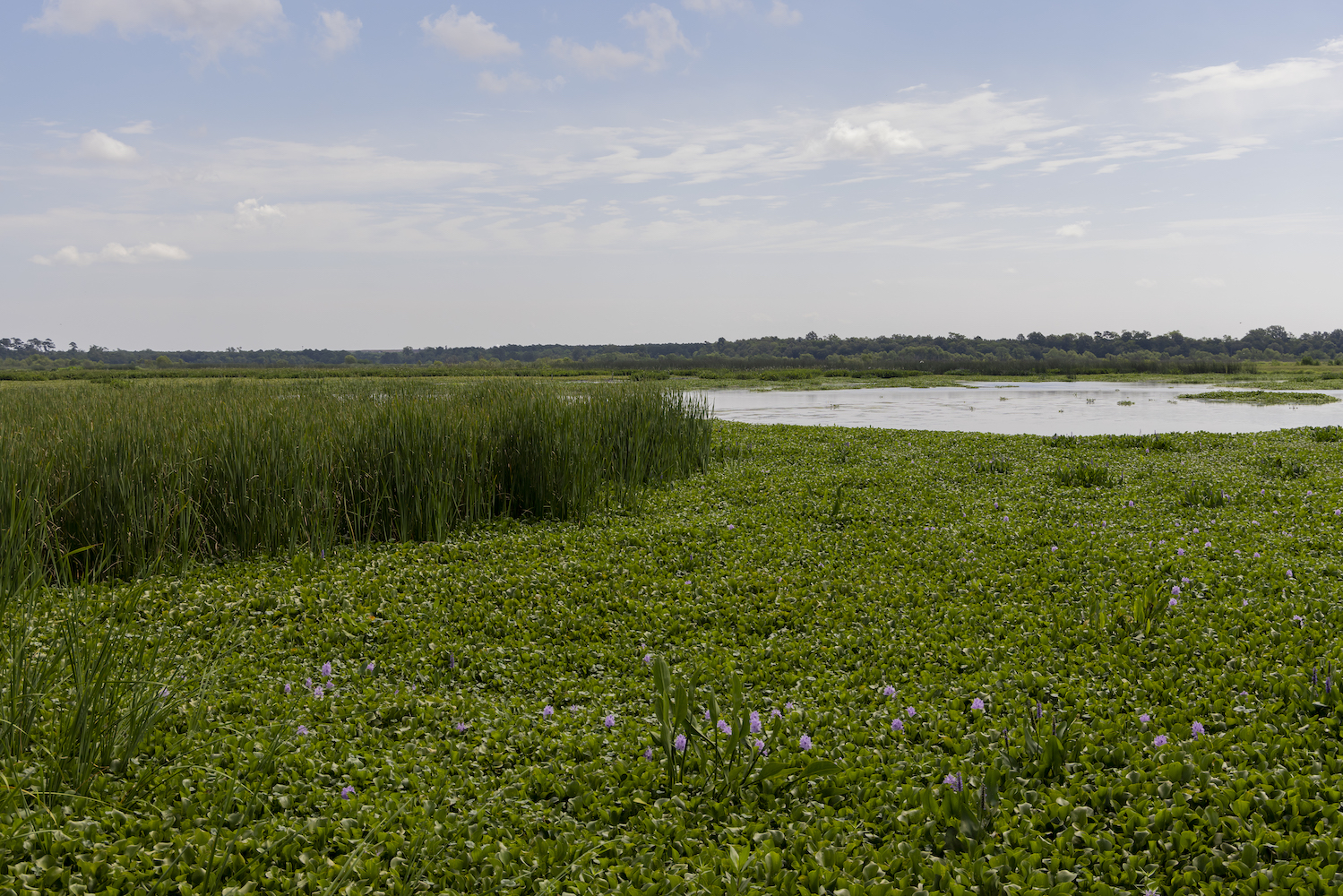
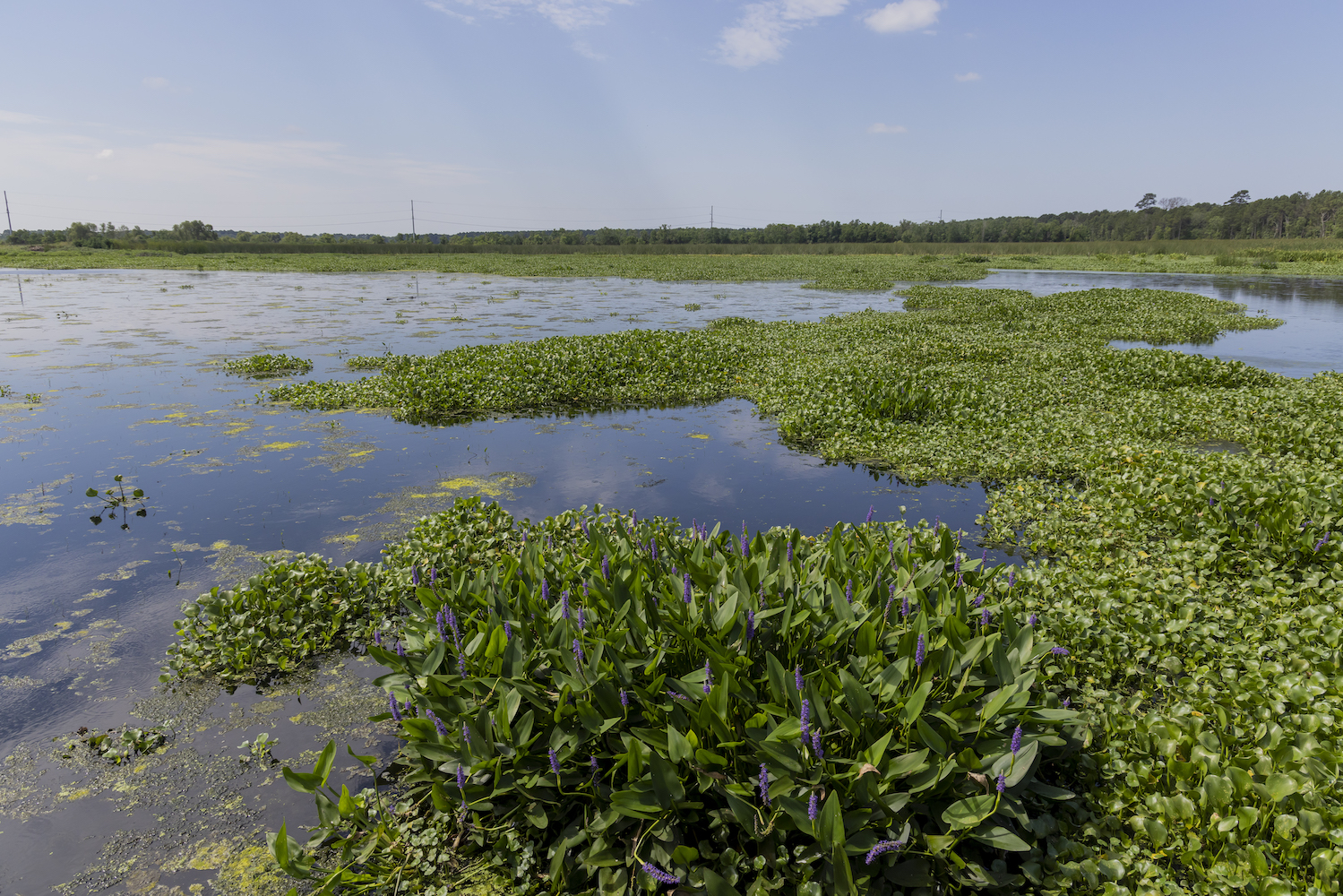
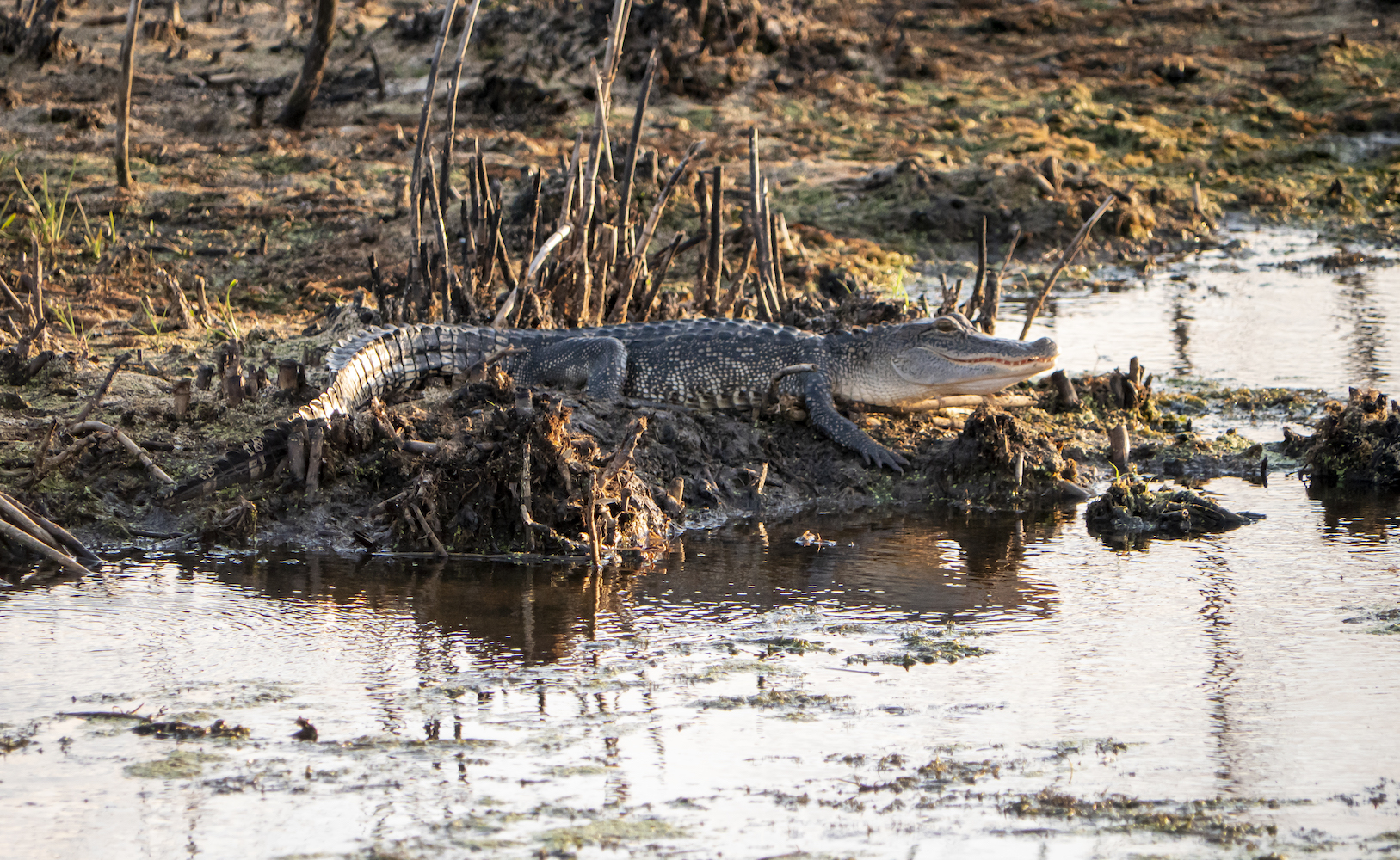
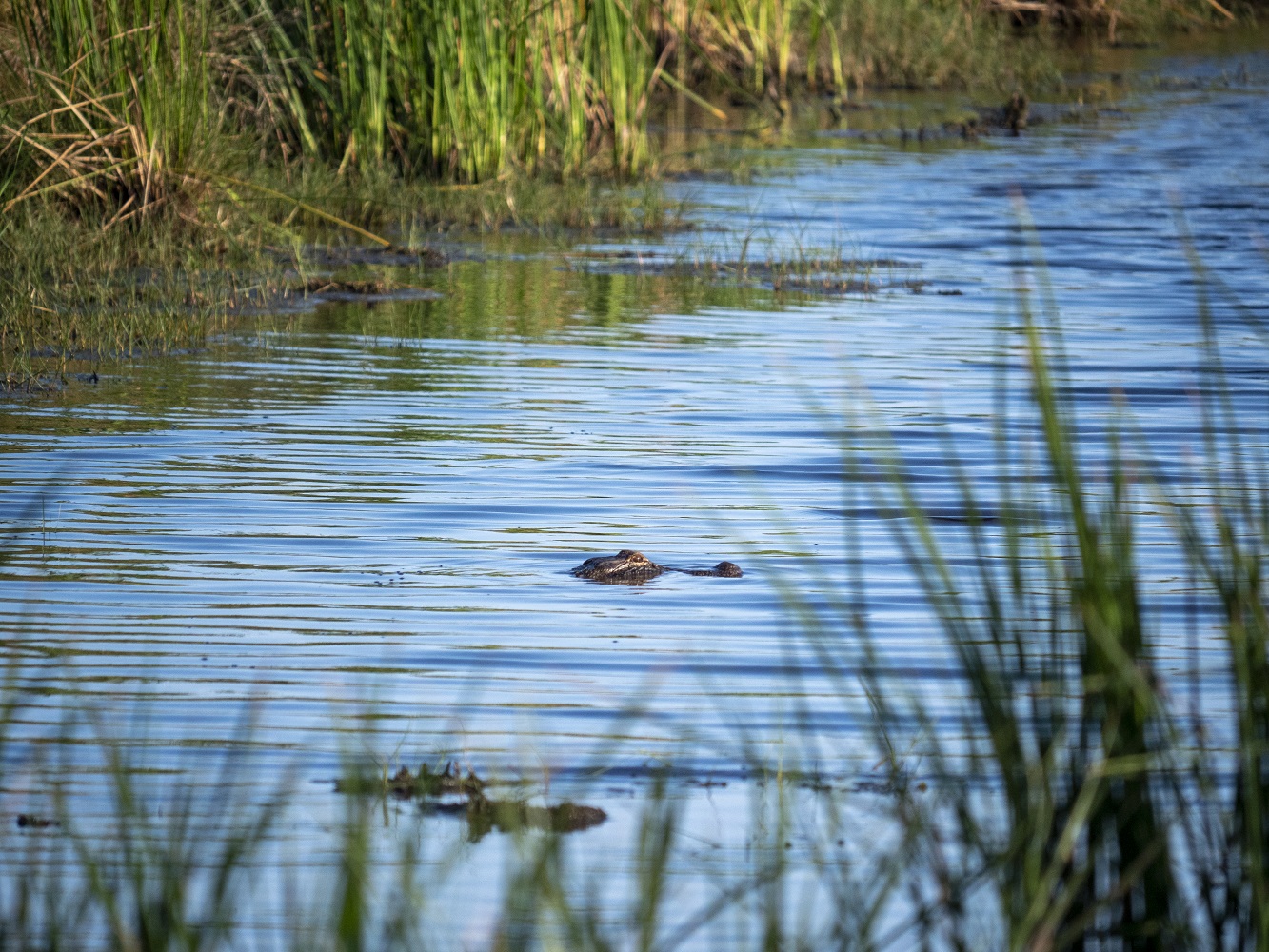
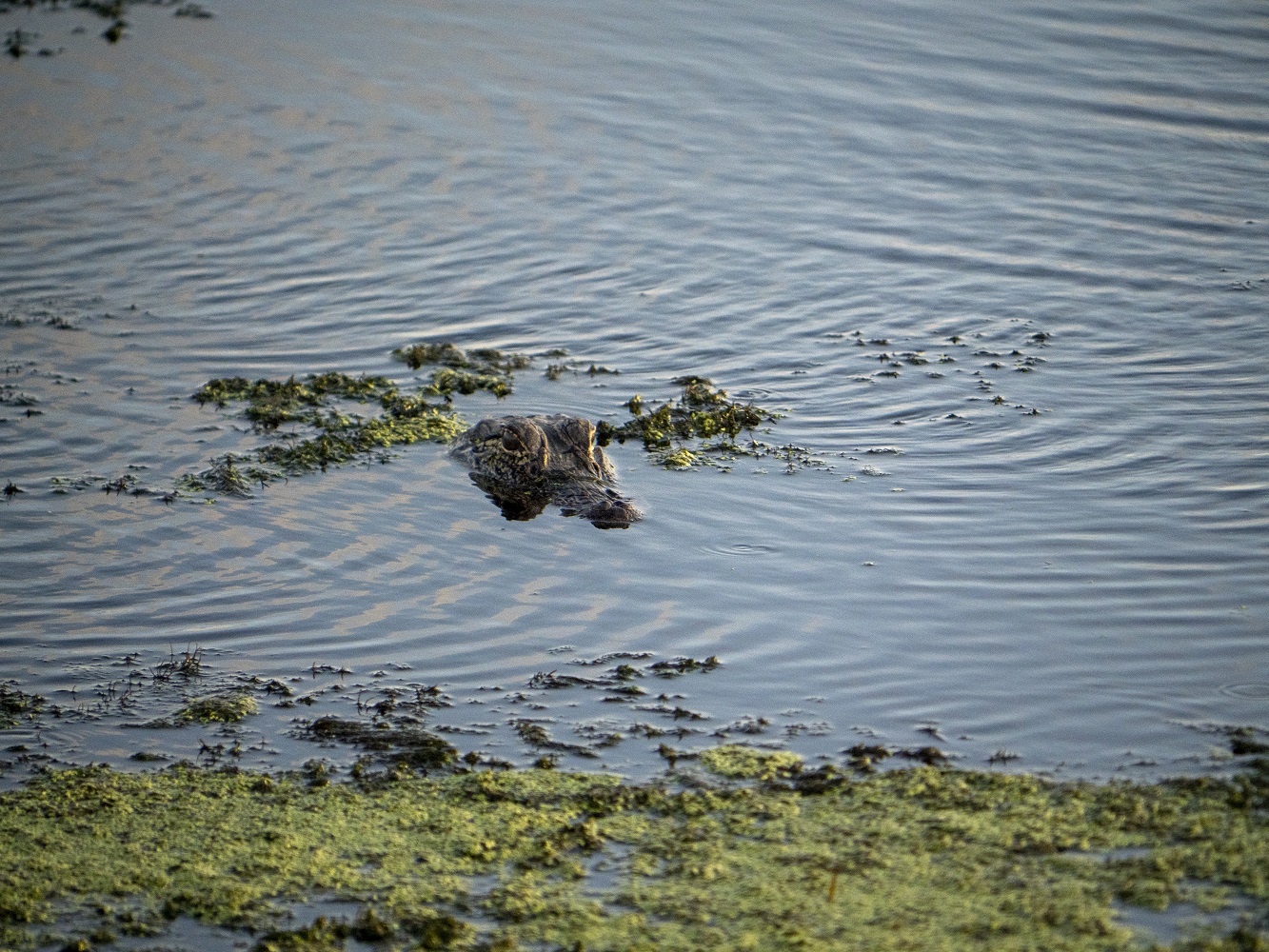
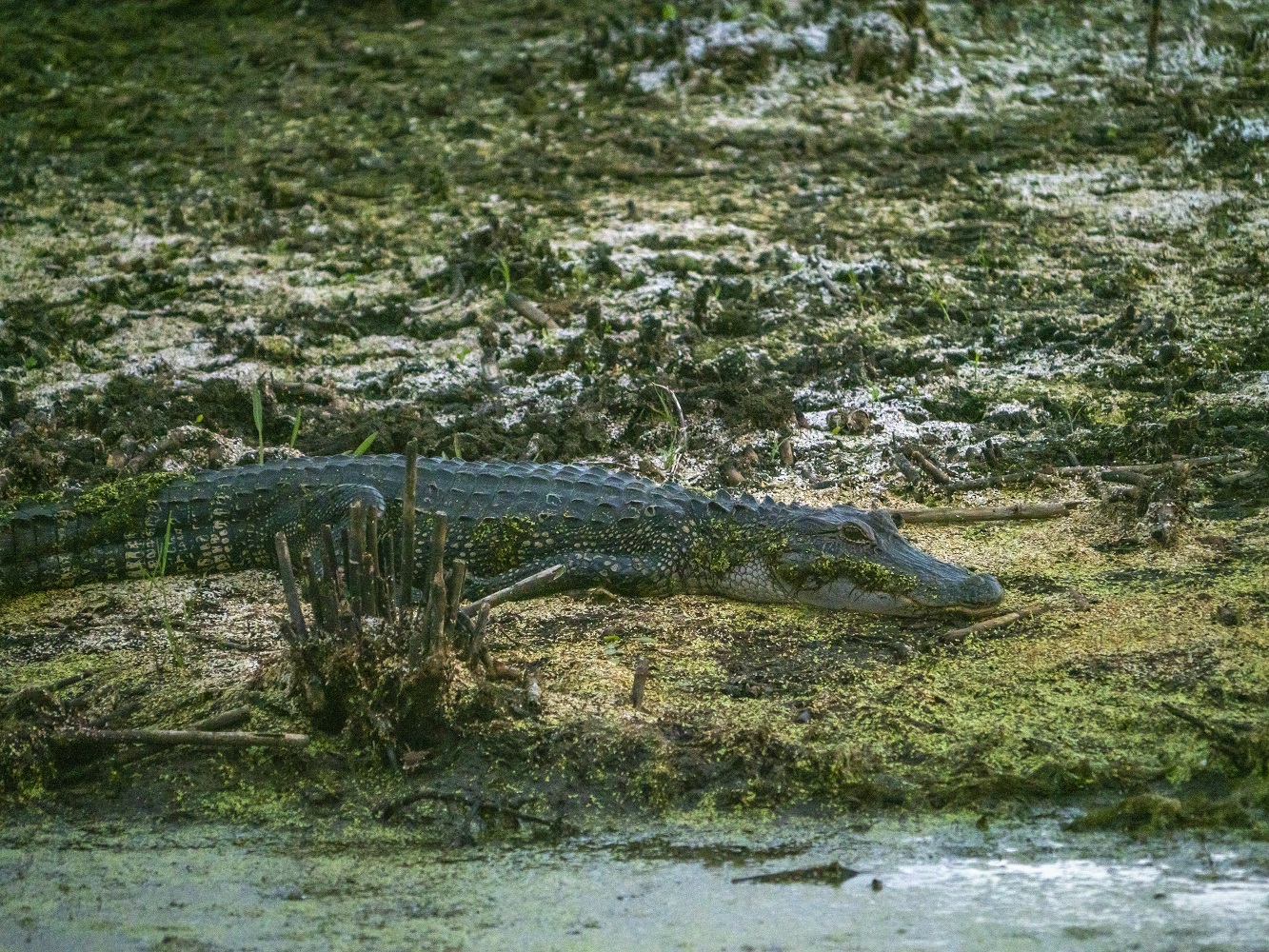
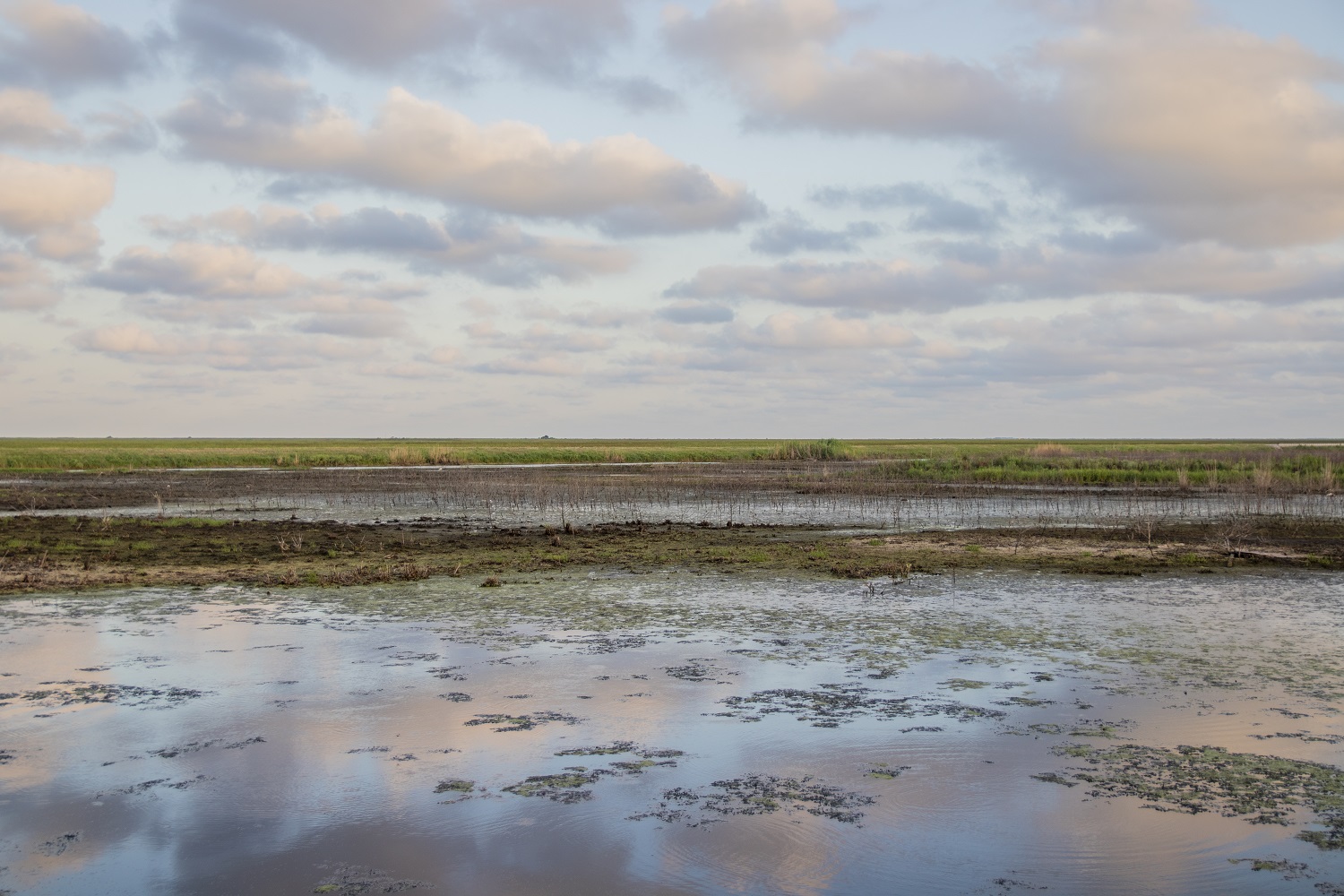
Transitioning from birdwatching, we took a drive around the park, marveling at the reflection of cattails in the swampy green water. Our eyes were keen not only on the flying animals, but also on the most fearsome residents of the water – the famous alligators. Witnessing over 15 alligators at Anahuac Wildlife Refuge was truly astonishing. Additionally, we spotted turtles and ducks leisurely living their lives in the water, unaware that they could become the alligators’ next meal.
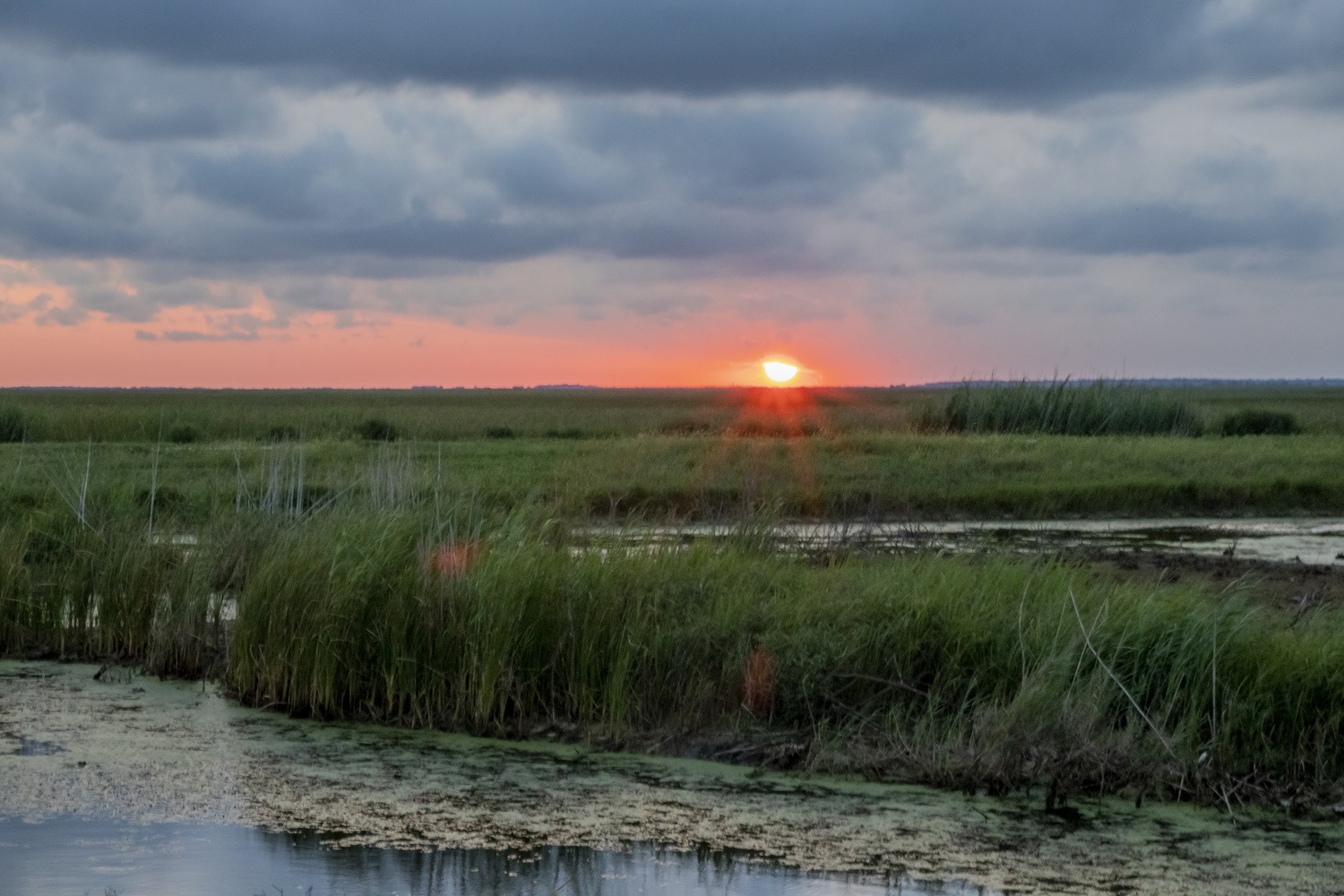
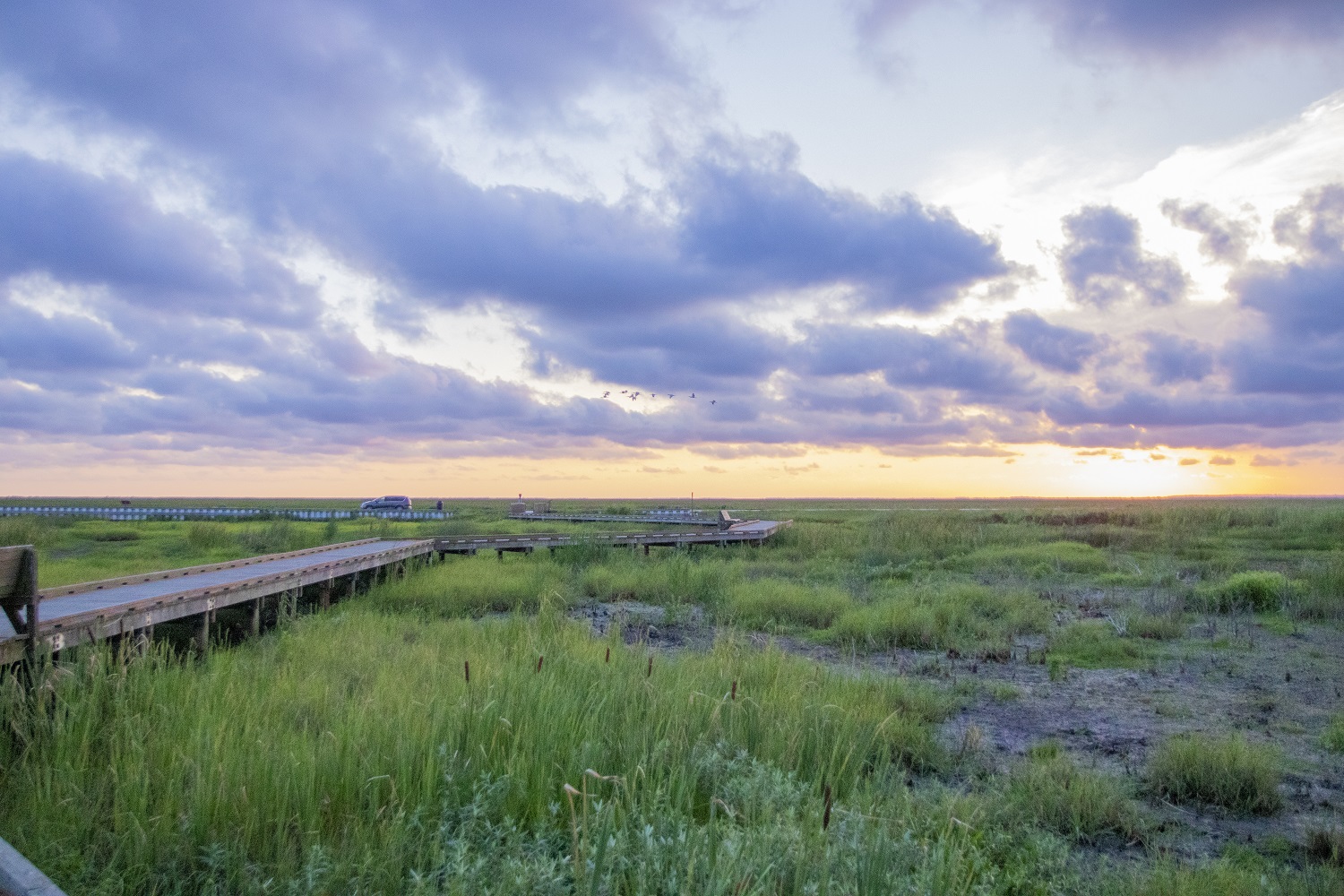
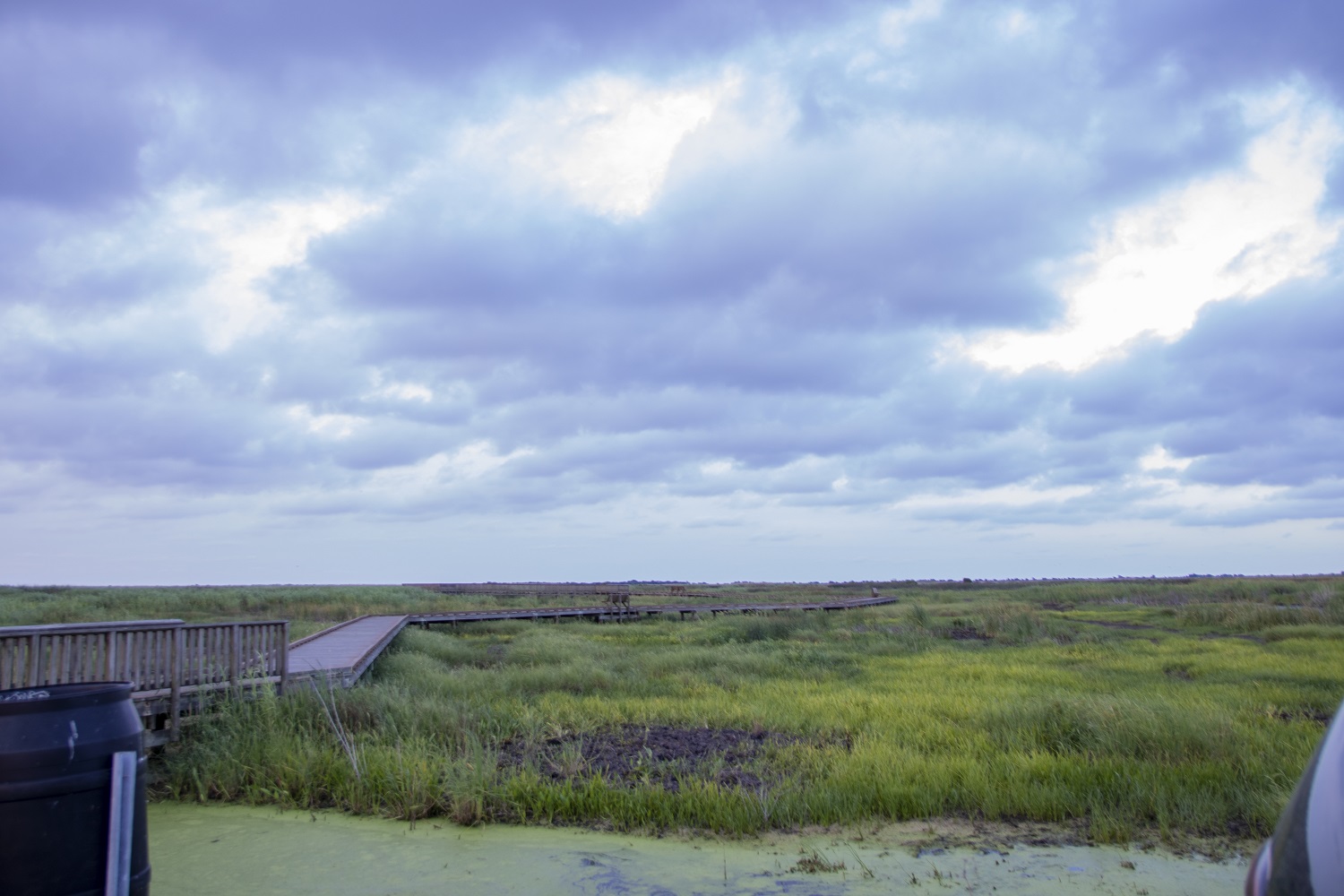
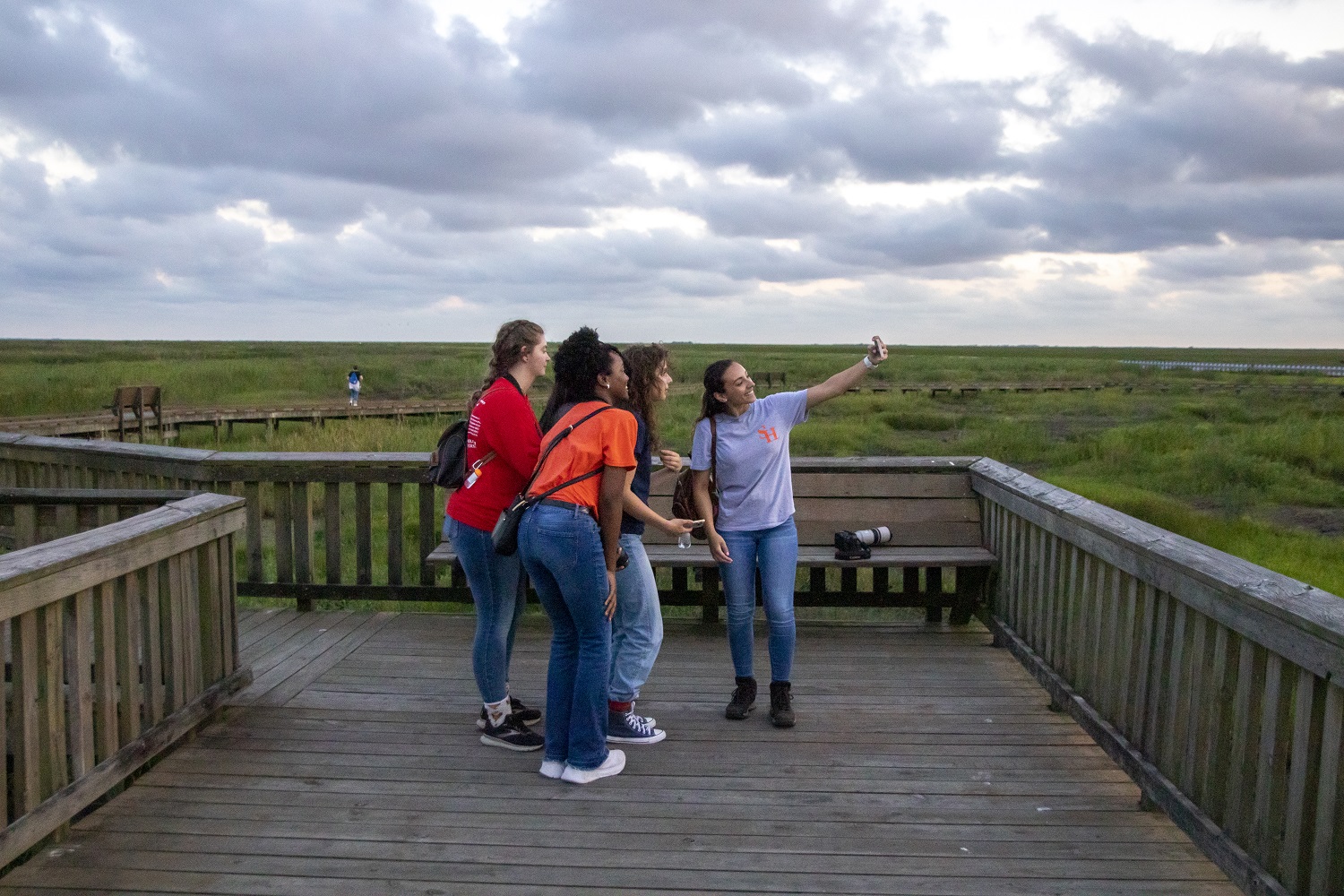
To conclude our nature walk, we strolled along a boardwalk that rose above what used to be a marsh filled with water. Now, it lay as an enormous dried-out muddy pool beneath us. Though unexpected, the view was undeniably stunning and too captivating to miss to finish off our adventure with the perfect sunset selfie of the LEAP Ambassadors!
The time has come for the LEAP Ambassador’s summer retreat! The organization prides itself in its forward-thinking nature, which is done to maximize our education and serve our community with intent and efficiency. This retreat was also something of a microcosm of our larger efforts, stressing broad-based and experiential learning.
Phoenicia’s Speciality Foods
By Ingrid Cuero
With a long day ahead, Professor Yawn, Stephanie Fors, Olivia Discon, Michelle Cardenas, Yvette Mendoza, Morgan Robertson, and I met for lunch to fuel ourselves at Phoenicia Specialty Foods: A Mediterranean market that houses many delicacies, including deli, cheeses, and desserts. It is more of a grab-and-go eatery, so there were many people coming in-and-out as we looked and picked out our choice of foods. This was many of the group’s first time visiting the market, and for some members, it was the first time having middle-eastern food!
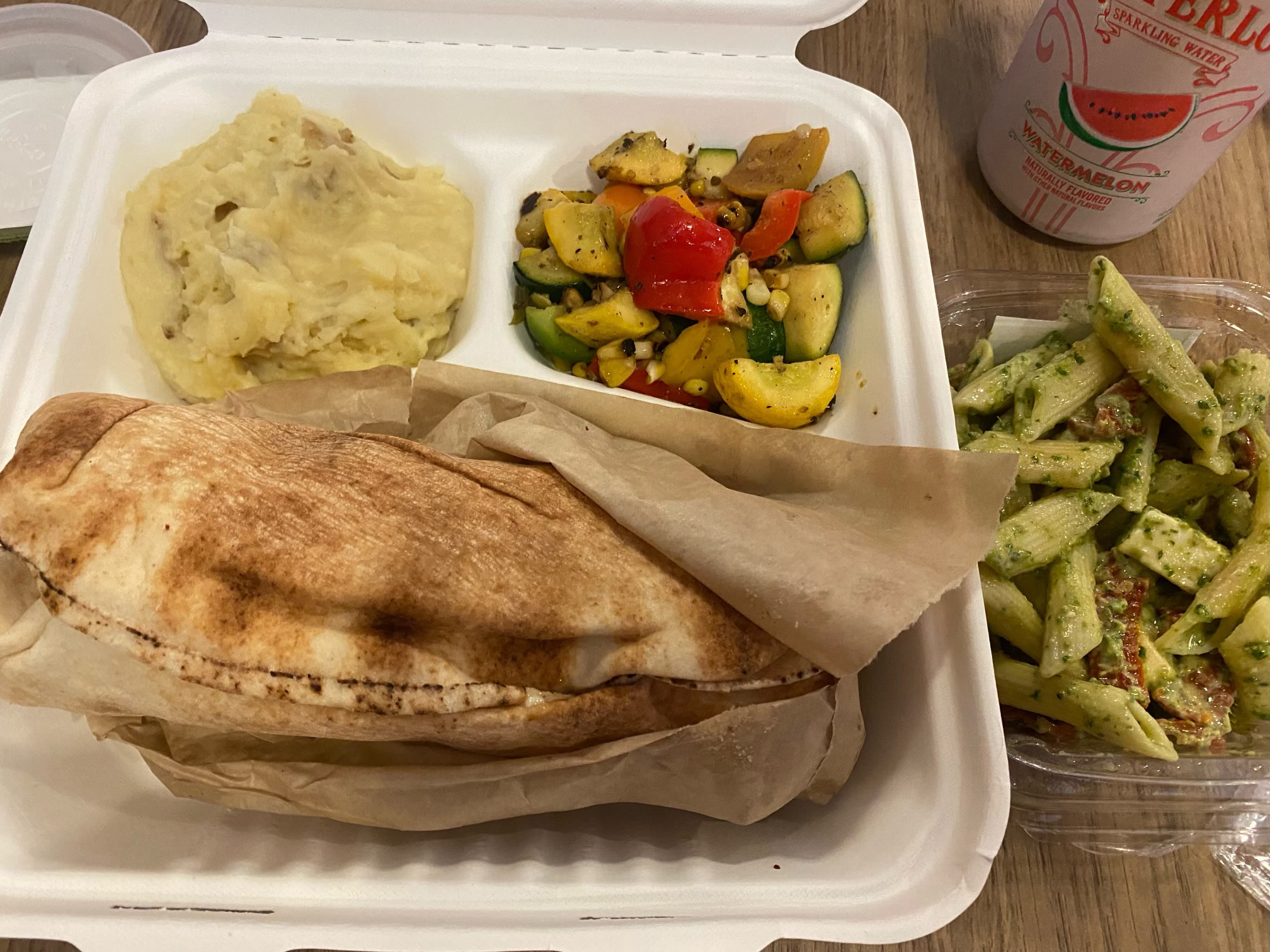
Olivia decided to eat a Lemon Chicken Soup with Pasta Pesto Salad.
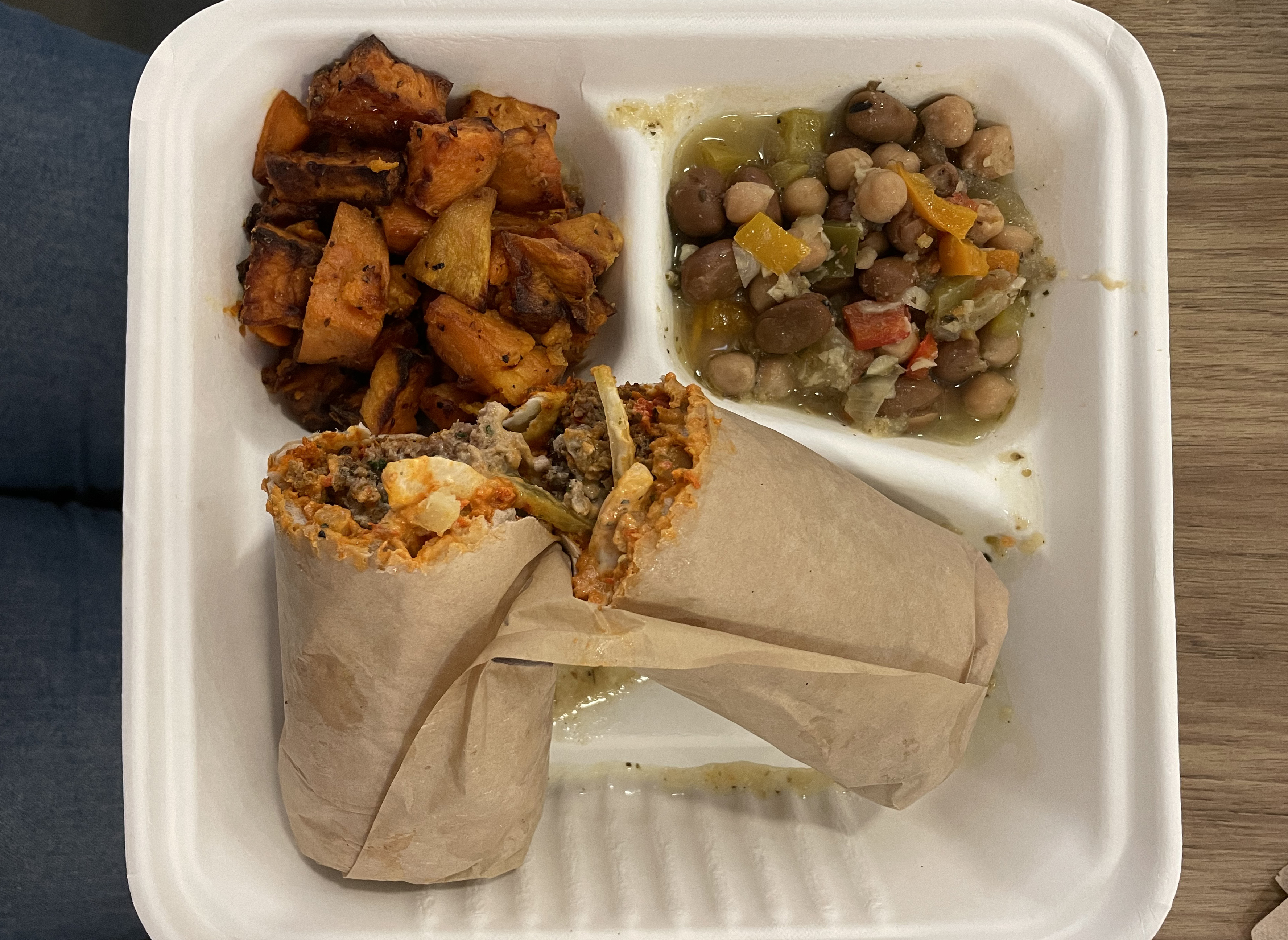
Both Michelle and Morgan decided to get the Specialty Shawarma Wrap, Michelle having chicken and Morgan having lamb.
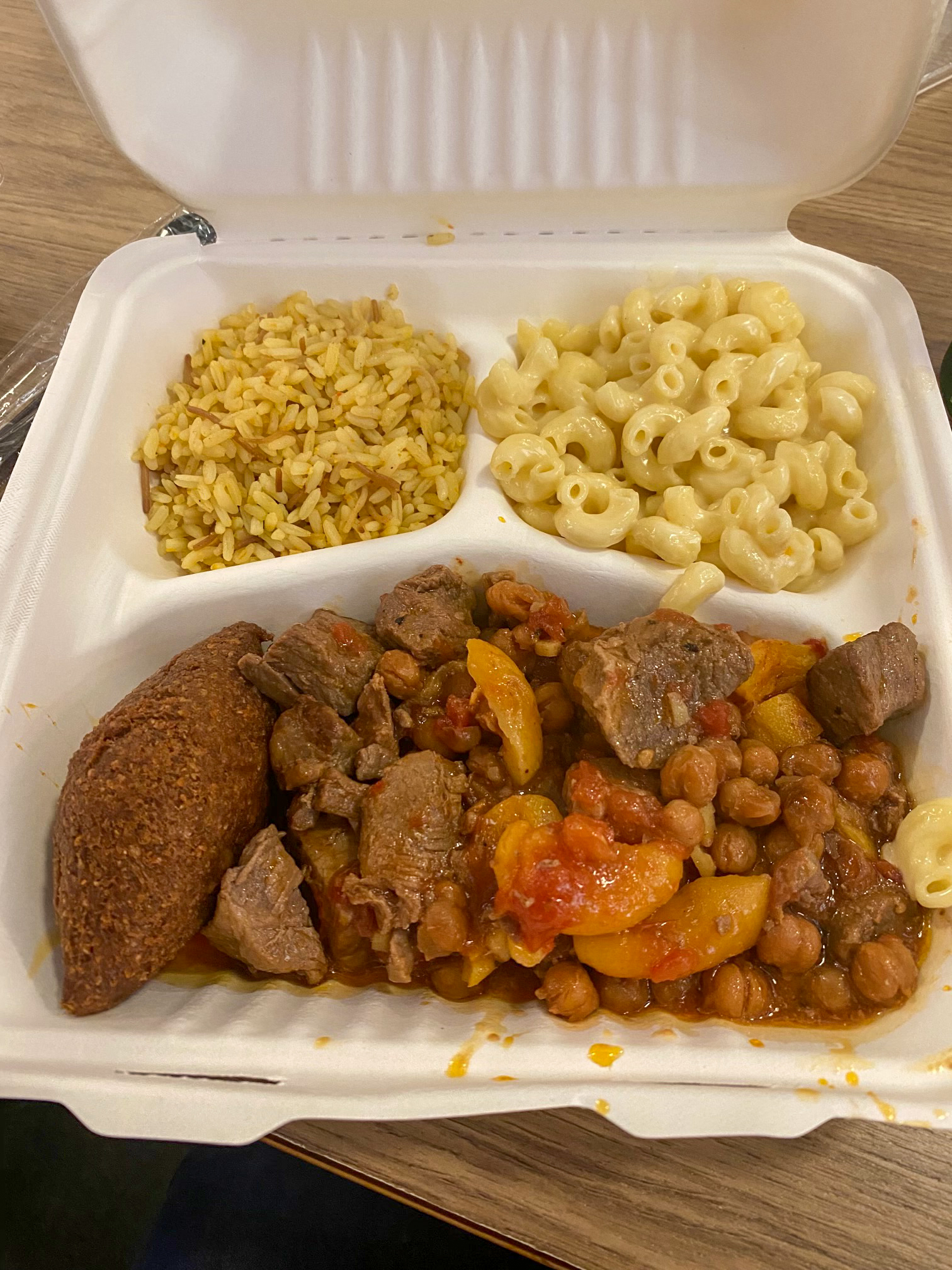
Yvette decided to get the regular Lamb Shawarma dish with veggie grape leaves as her side. I stayed with the classic rice, beans, and grilled veggies as my side, with an additional zucchini soup to top things off.
We took the time to catch up after a few weeks of summer break between us, sharing our summer activities and some laughs throughout.
After sharing some pastries, which consisted of baklava, lemon custard, and cookies, planned out the day in a bit more detail, and we were ready to take on our day!
Betty Moody Art Gallery
By Yvette Mendoza
After indulging in Phoenicia’s, our bodies fueled and ready, we set off for our first destination: the Betty Moody Art Gallery. The moment we stepped inside, we were captivated by the awe-inspiring artwork on display…
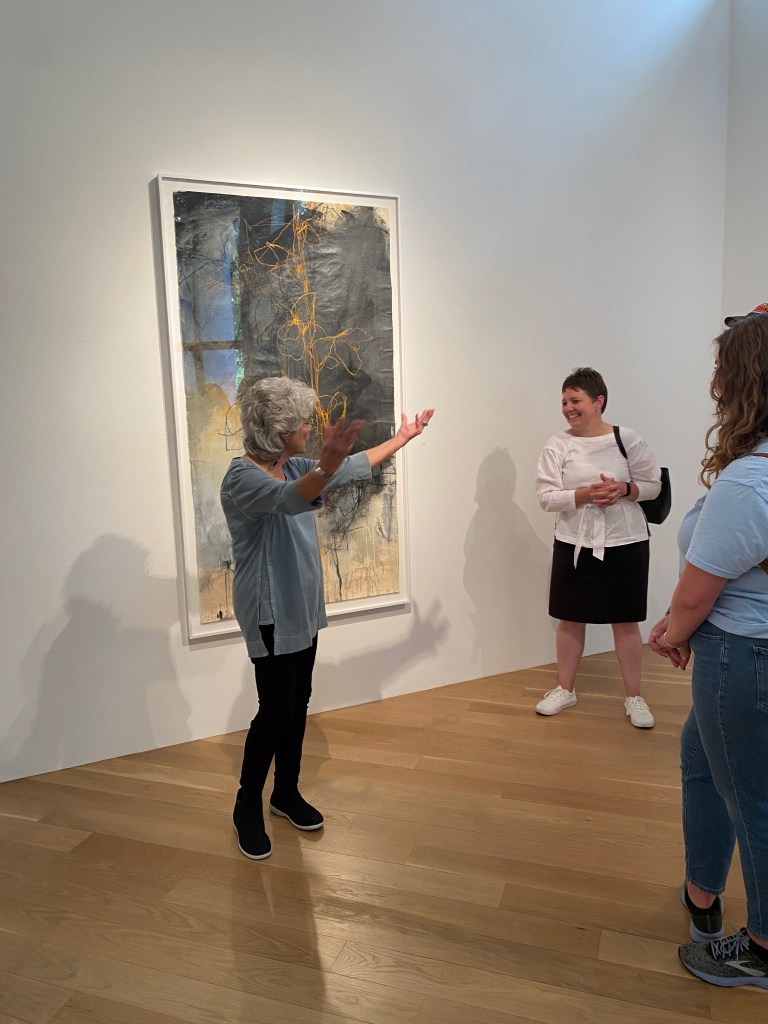
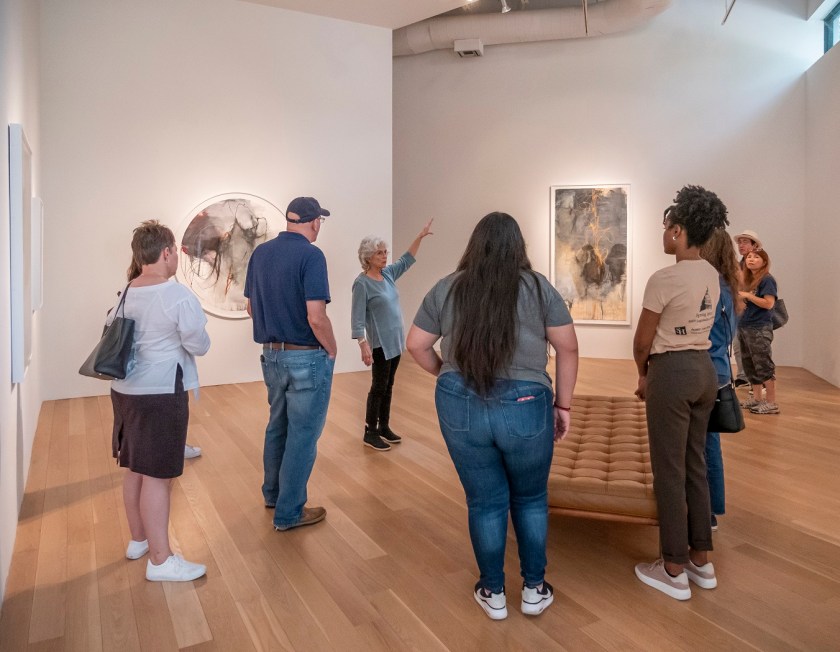
…and to our delight Ms. Betty Moody was there, and she graciously offered to give us a personal tour.
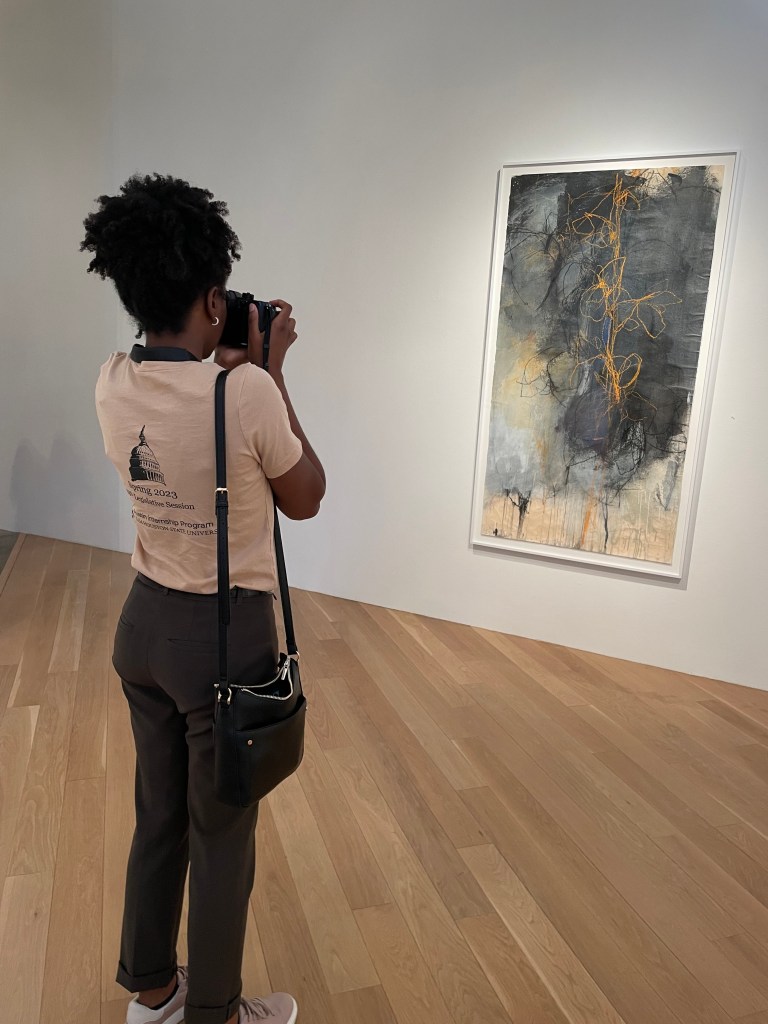
Each art piece came alive as Ms. Moody passionately explained the work’s intricacies. As we entered through the main entrance, our attention was drawn to the collection by Andrea Rosenberg. Ms. Moody skillfully unraveled the hidden depths and artistic techniques behind Rosenberg’s floral paintings, revealing the significance of every brushstroke. From the choice of Japanese rice paper to the spontaneity and simplicity that belied years of experience, it fascinated us to discover the immense skill required to create such seemingly effortless abstract flowers.
We witnessed this contrast in two paintings placed on opposite sides of the faller – an exquisitely delicate blossom alongside a vibrant explosion of colors behind a boldly outlined orange flower.
We have learned of Rosenberg’s painting method, using thumbtacks to hang her canvases on the wall at a height convenient for her stature, and then getting to work. Often working quickly, Ms. Rosenberg can fill even large canvasses quickly.
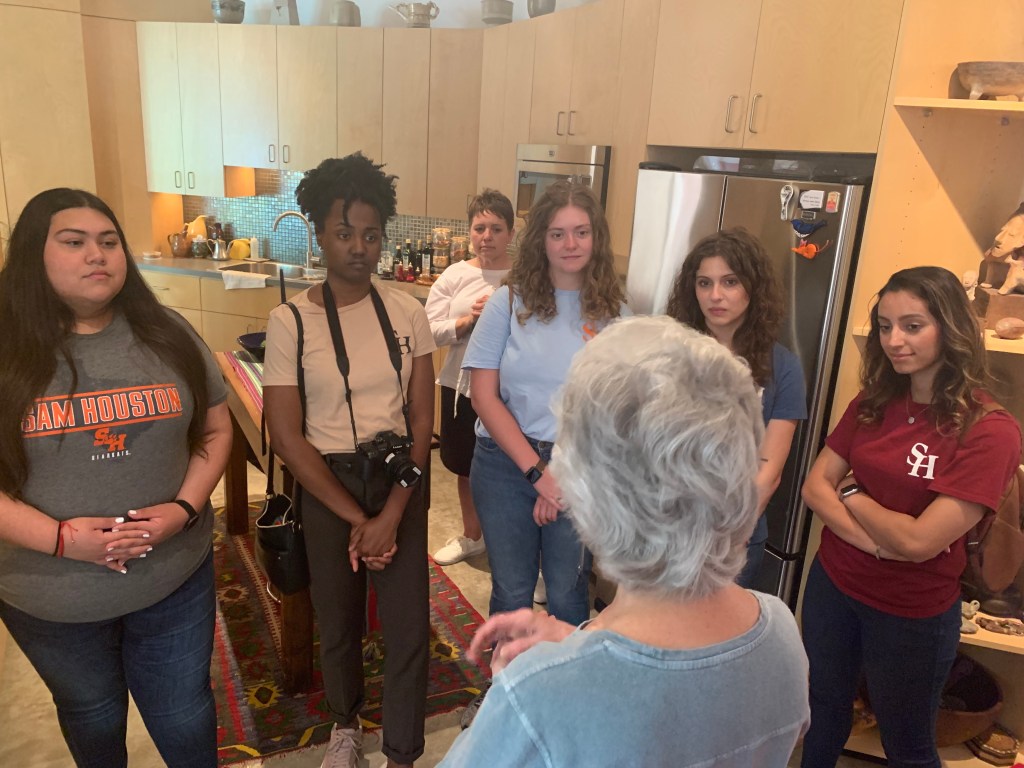
Ms. Moody’s generosity extended beyond technical explanations; she also shared the rich histories behind many of the pieces, some of which she had in her own kitchen and bedroom adjacent to the gallery! Each piece held a profound connection to the past, including sculptures and artwork spanning thousands of years from Roman culture to the present.
Among the treasures was a calamari serving platter crafted from walrus tusk, artfully shaped into adorable seals, each possessing its own unique value.
As we delved deeper into her collection, we encountered various art styles, from a signed Campbell’s soup can symbolizing the Pop Art style by Andy Warhol, to sketches by her dear friend and talented artist Luis Jimenez, known for his remarkable sculptures of mustangs and his skill in sketching classic cars.
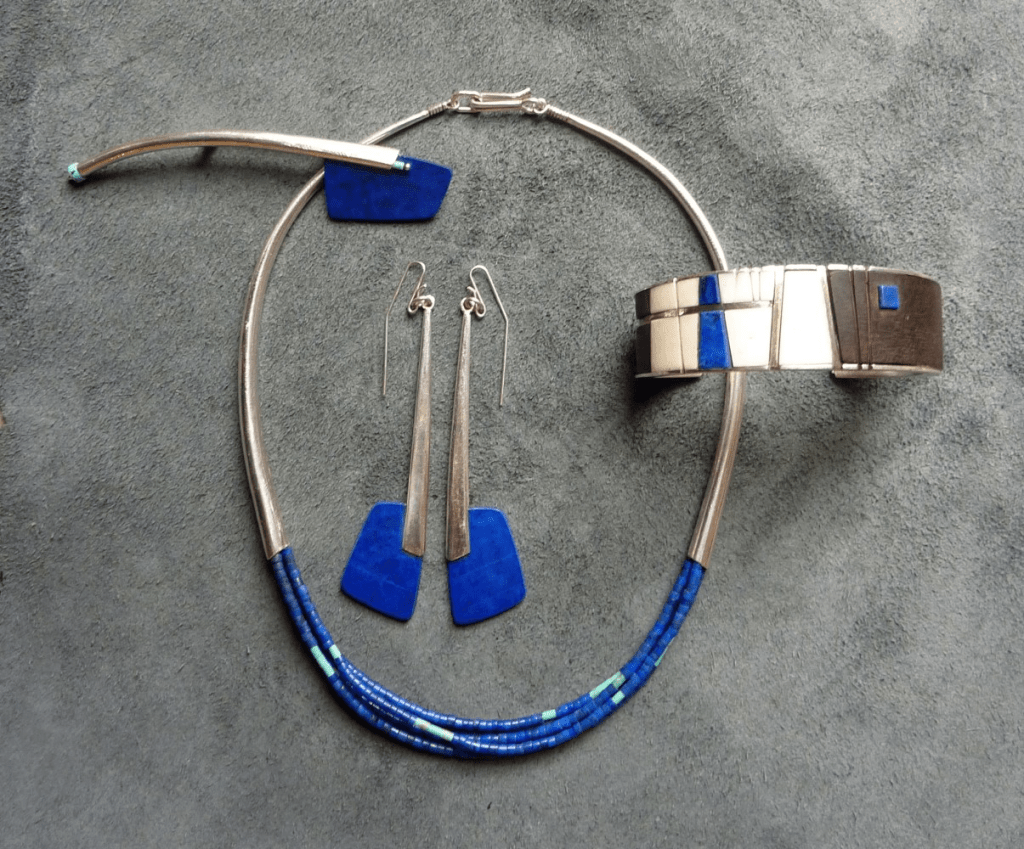
Lastly, Ms. Moody showcased the remarkable silver jewelry crafted by her beloved husband, Bill Steffy, which, while distinct from pop art or drawing, exuded its own allure, featuring beautifully designed metal skulls and silver jewelry that she was wearing.
Our gratitude to Ms. Moody is such a great amount. Every item she owned or curated in her art gallery possessed a profound meaning, and she concluded our visit by emphasizing that she doesn’t think of art as an investment, but rather simply thinks of it as a way of life.
Museum of Fine Arts, Houston
By Michelle Cardenas
Our third stop was the Museum of Fine Arts, Houston, which was my first ever visit to a museum! We entered through Olafur Eliasson’s yellow-casted walkway, “Sometimes an underground movement is an illuminated bridge” to begin the experience.
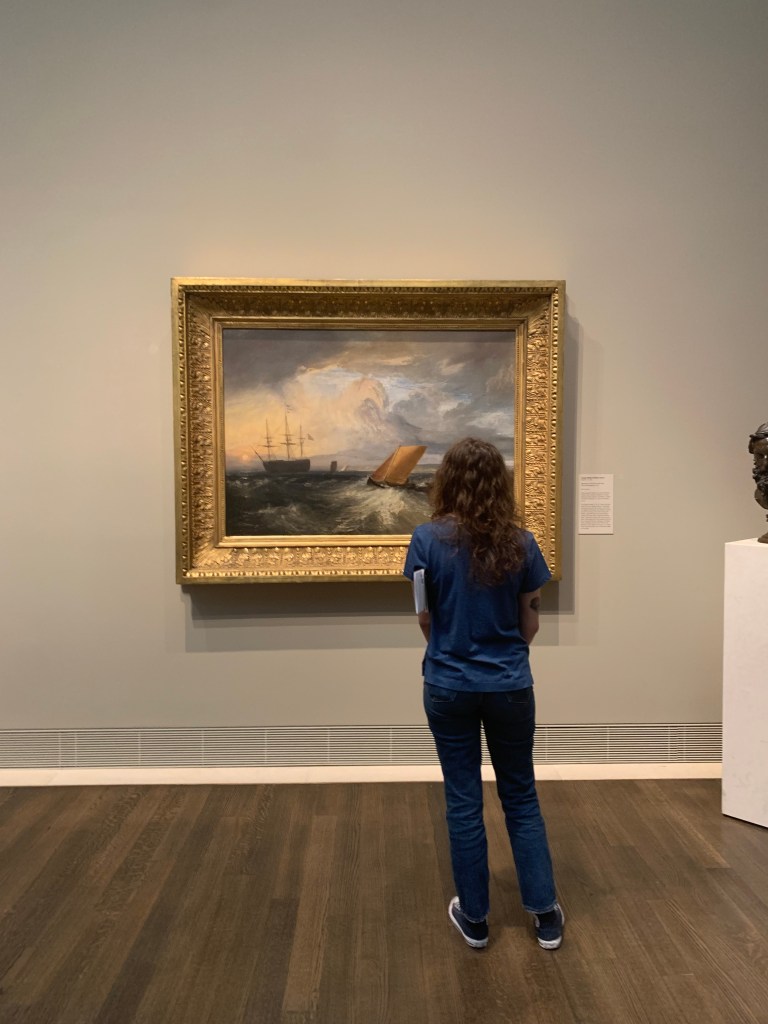
Professor Yawn took Olivia, Ingrid and I on a tour through the museum, highlighting the various art periods, their historical significance, and key artists of each era. Starting with the Realism art movement, we had the opportunity to view a gallery that encapsulated the art world before the invention of the camera; resulting in a desire to capture life in extreme detail and realism. Olivia particularly enjoyed “Sheerness as seen from the Nore” by Joseph Mallard William Turner.
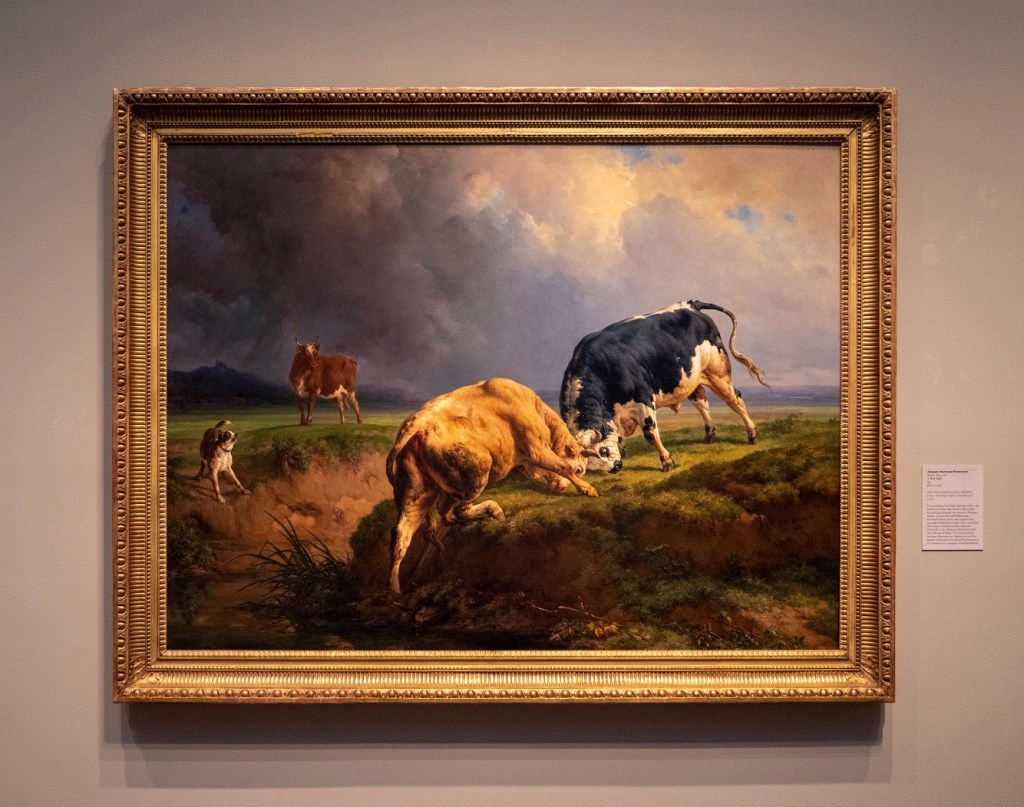
Personally, I was attracted to a Jacques Raymond Brasscassat piece titled “A Bull Fight”.
We progressed through time and expanded on the influence of technology on art.
The introduction of photography brought a sense of liberty to artists; allowing them to create works that were a reflection of their personal perspective as opposed to objective relativity.
Many artists like Claude Monet began to develop new techniques, particularly impressionism.
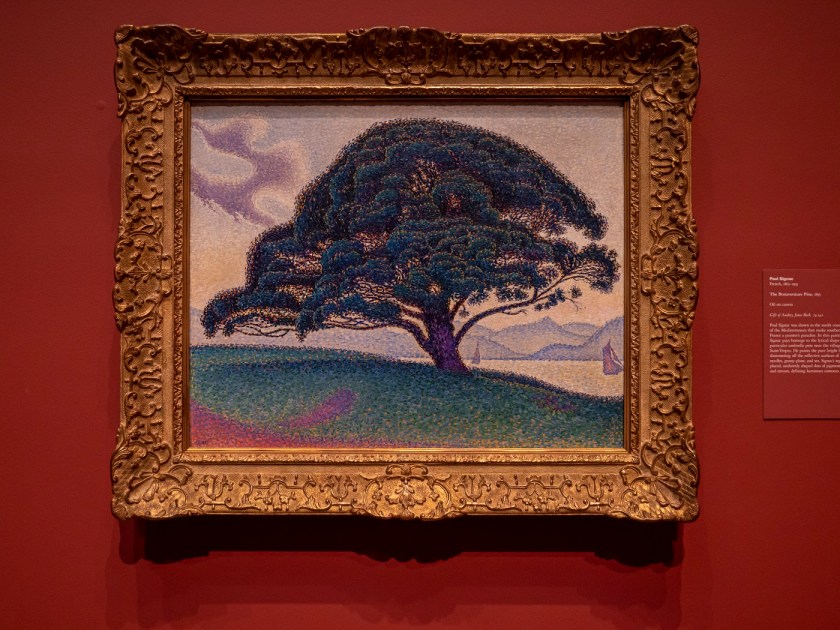
The Impressionist era was followed by even more new techniques and styles, suggesting that ideas really do beget ideas. And we learned about pointillism and fauvism, which redefined what society considers a masterpiece. A piece that Ingrid enjoyed was “The Bonaventure Pine” by Paul Signac, which features the technique. When you look closer, you are able to see color theory at play!
We then got to the early 20th century, where I got to see my first Picasso painting, “Le Rameur” or “The Rower“.
Both Pablo Picasso and George Braque are accredited for inventing a technique called Cubism, a movement utilizing geometric shapes to create a painting that can be seen from several angles.
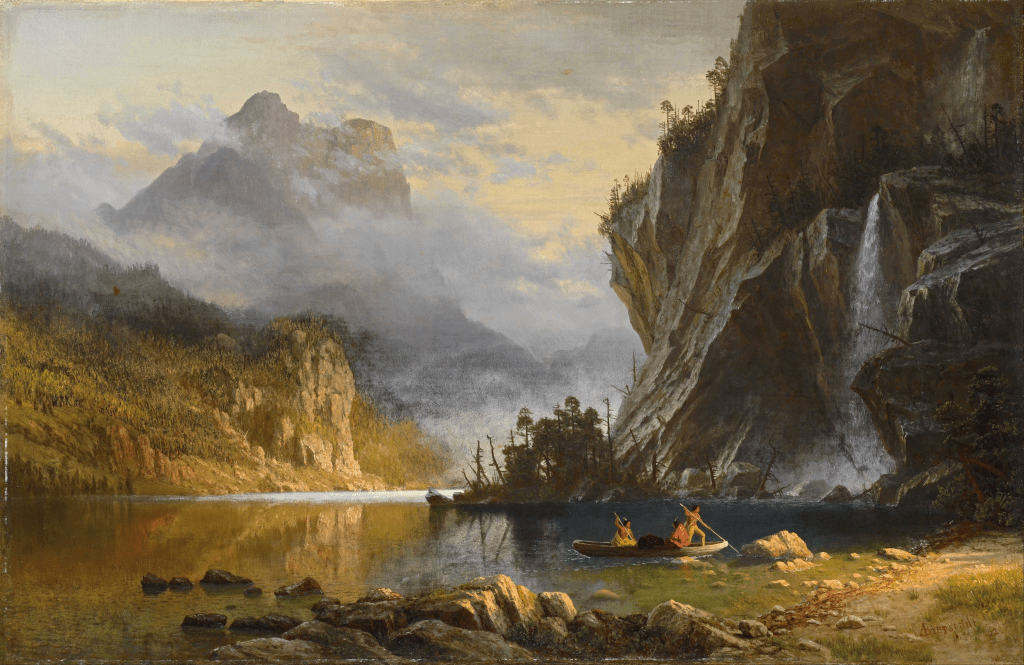
We ended our tour with some American art pieces, many of which focused on the American dreams of westward expansion, highlighted through dreamy landscapes and featuring Native Americans. Here I discovered one of my favorite artists of the museum; Albert Bierstadt. The early American landscapes were breathtaking and captured the allure of the unknown frontier.
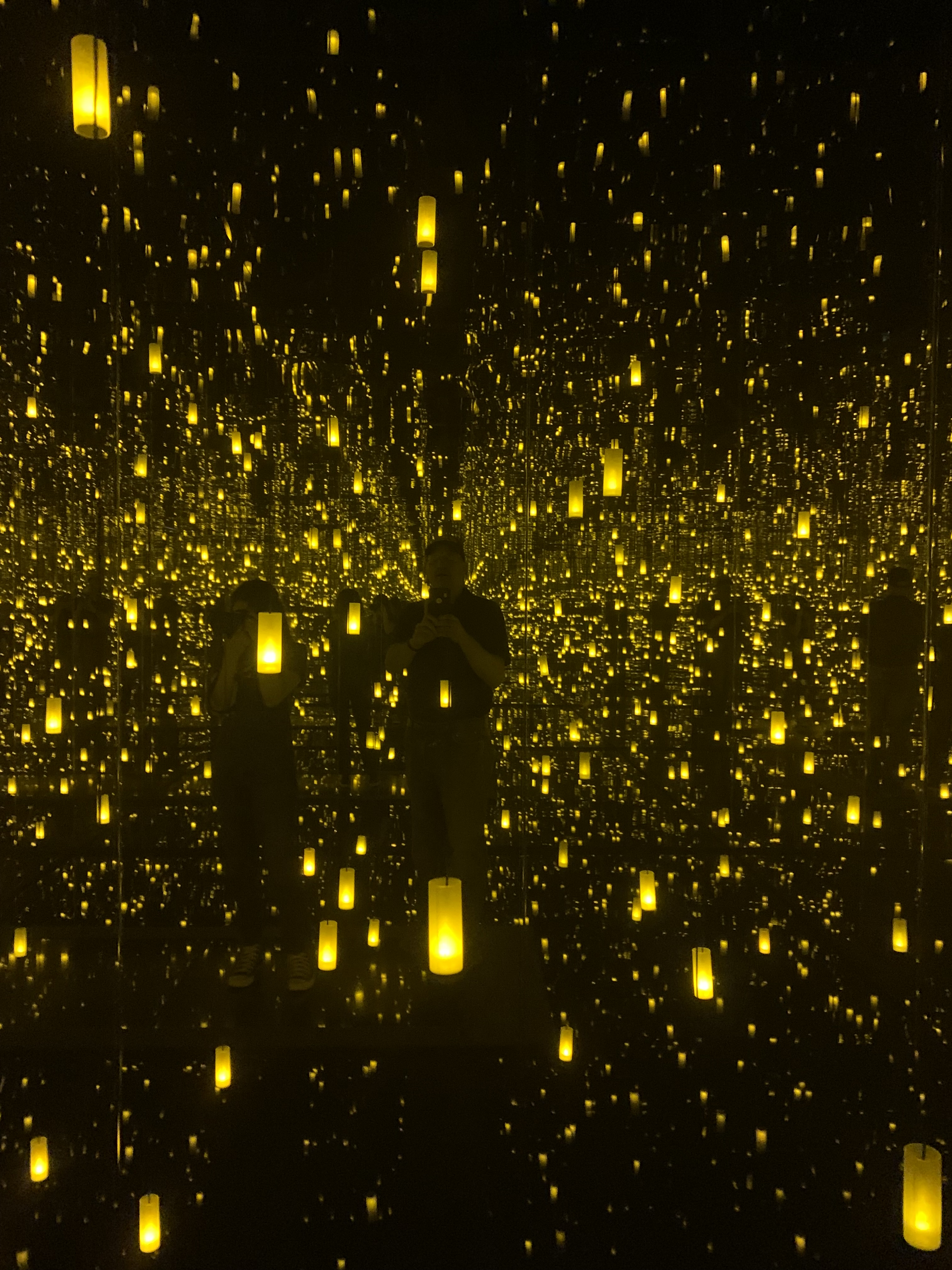
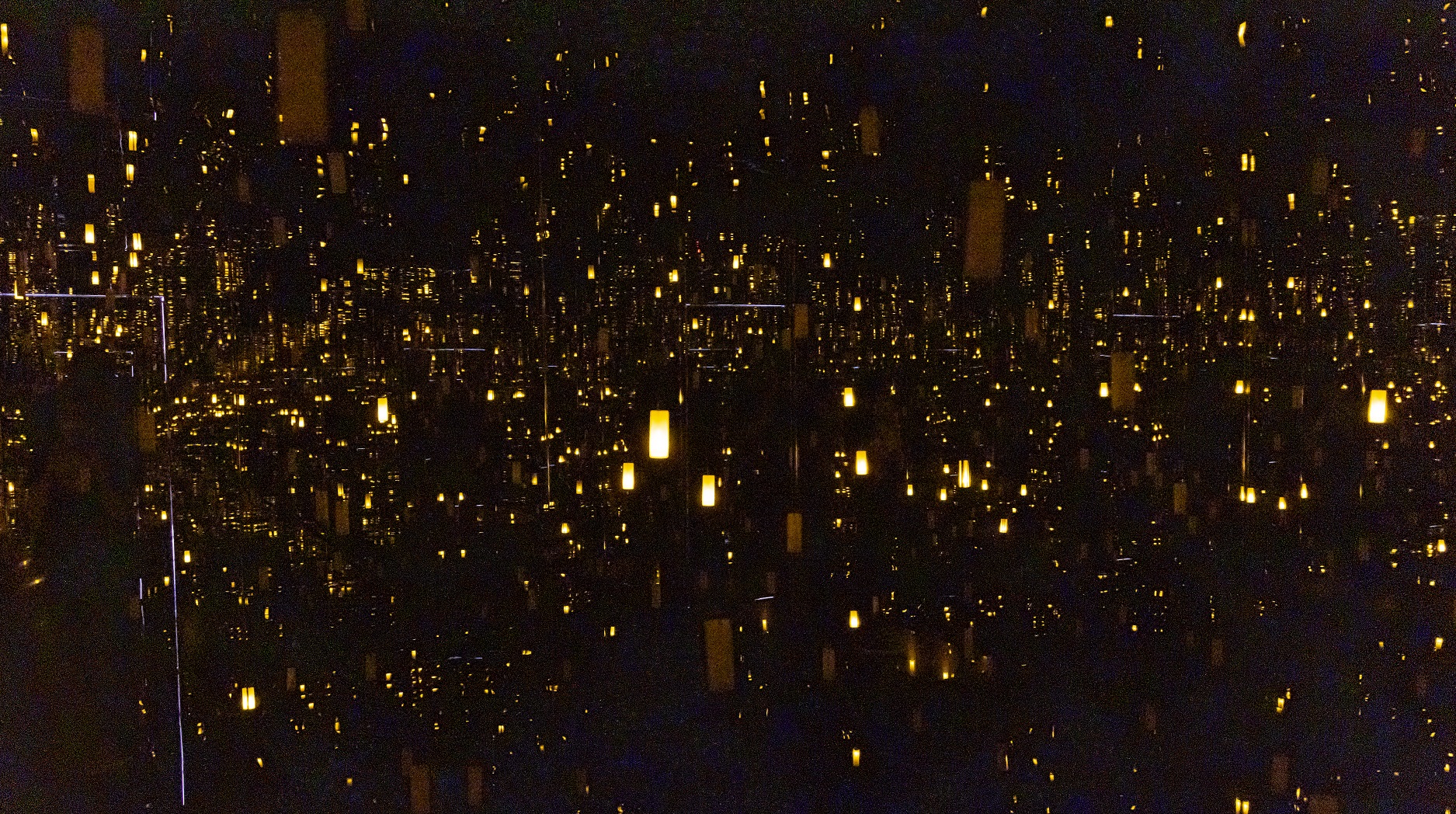
Before we left, we had the pleasure to visit Yayoi Kusama’s “Aftermath of Obliteration of Eternity“, an immersive experience in which a subtle, fleeting burst of light comes and goes. Kusama, who is known for her work with polka dots, uses a similar assortment of lit lamps that are infinitely mirrored. The experience was both beautiful and incredibly thought provoking.
Special Exhibits: Impressionism and Post-Impressionism, Pixel Forest and Worry Will Vanish
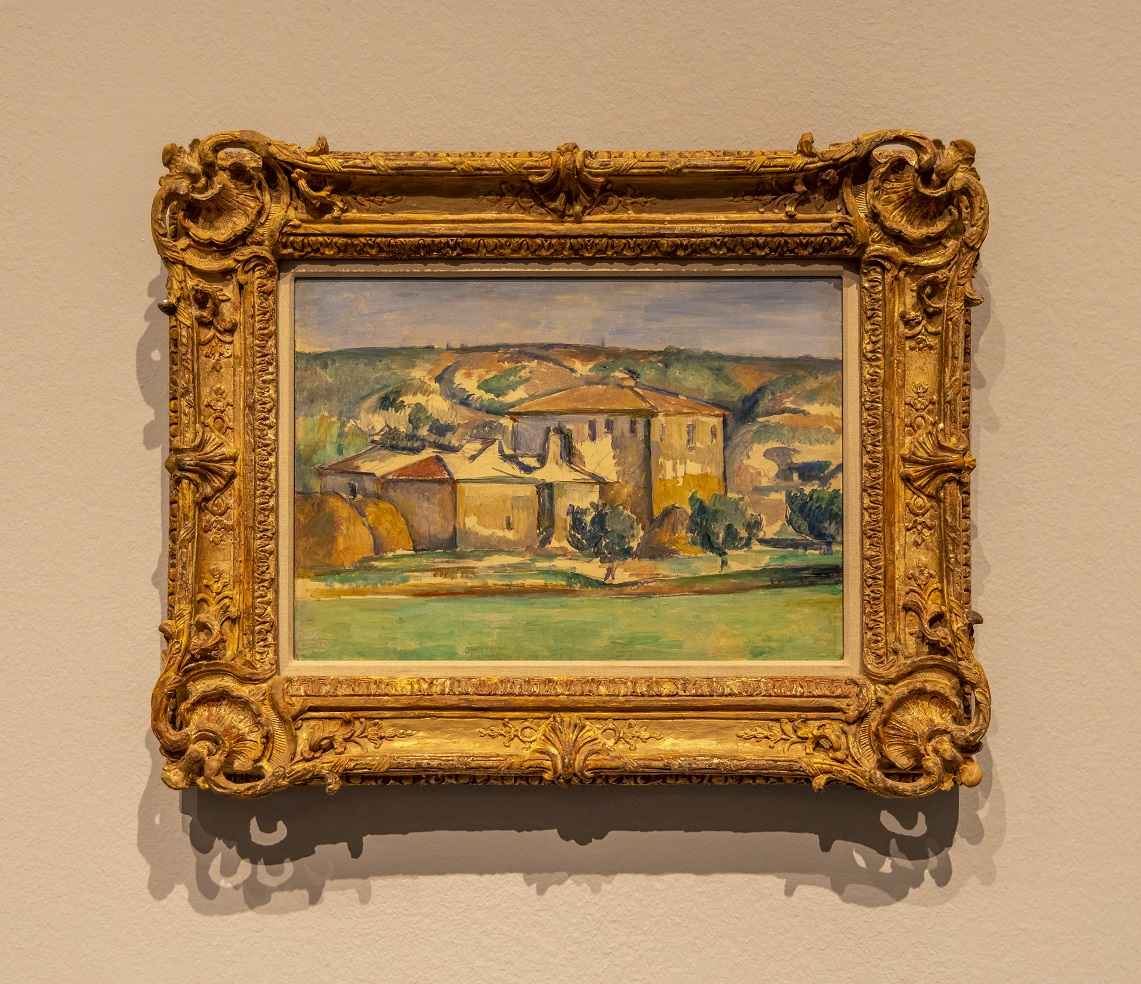
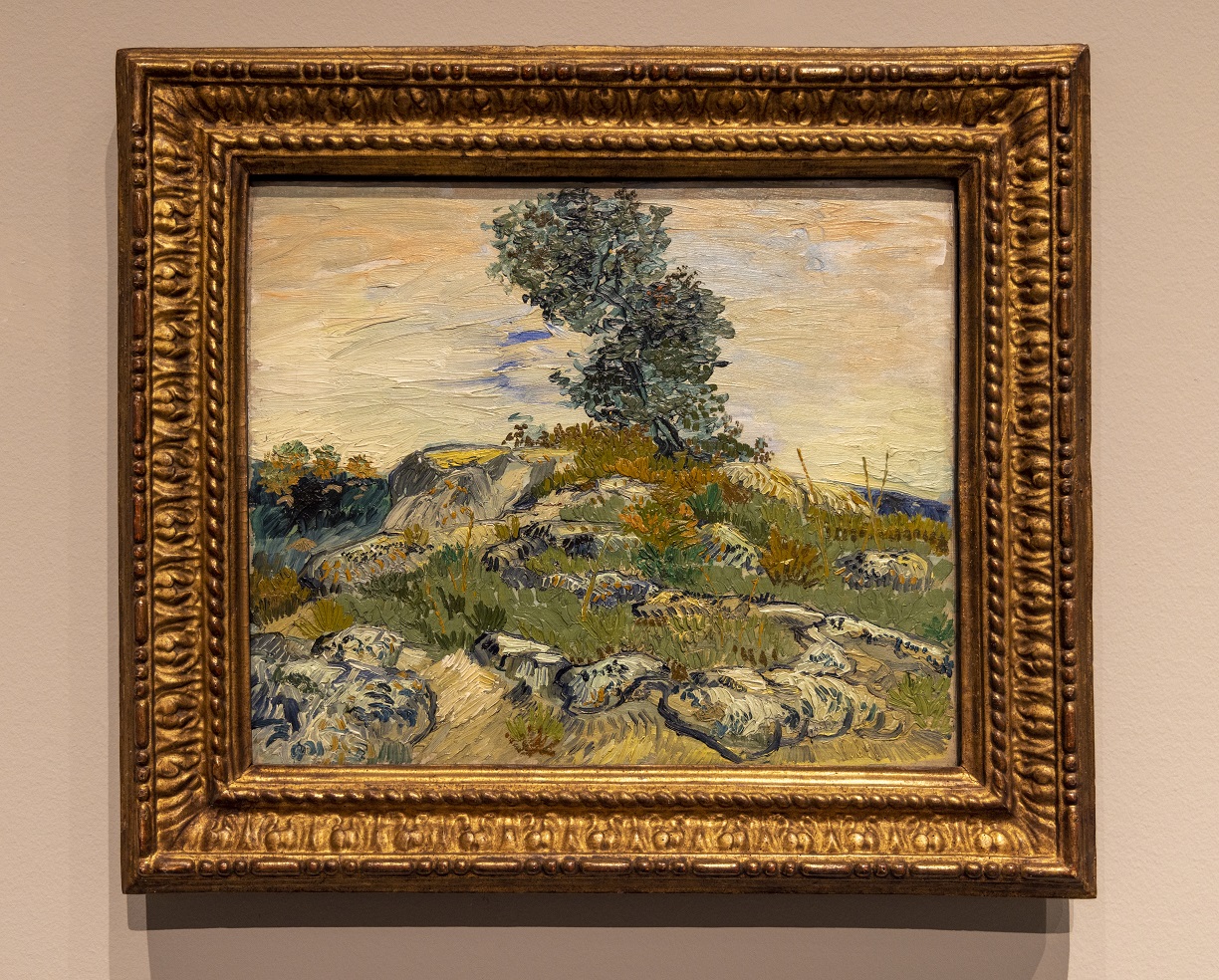
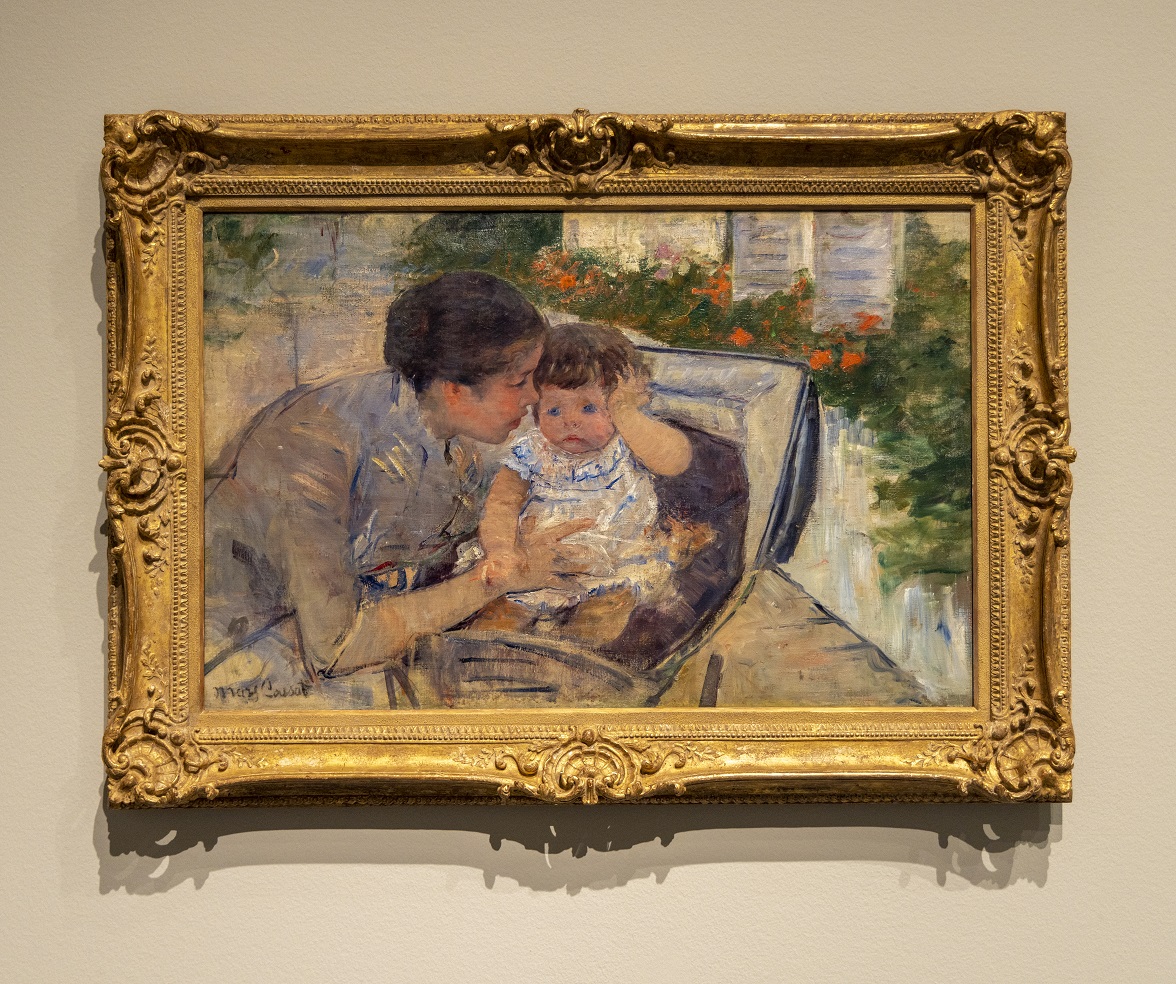
With the MFAH possessing some beautiful Impressionist-era pieces in their general gallery, Morgan and I were treated with a special exhibit that had both Impressionist and Post Impressionist works on display! We were able to see works by Cezanne, Renoir, Cassatt, and even a Van Gogh, called “The Rocks”. We were both delighted to have experienced such renowned pieces in person.
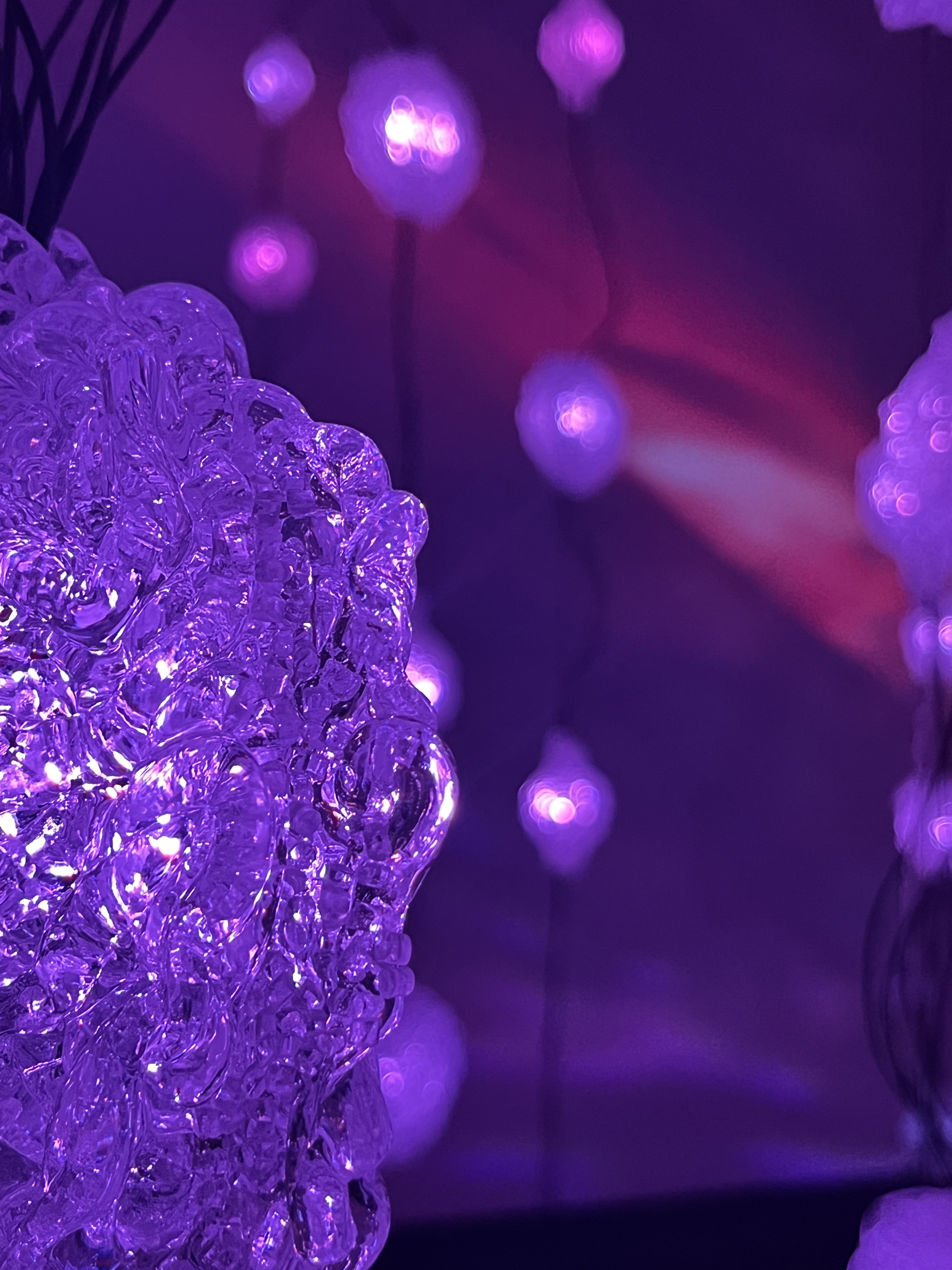
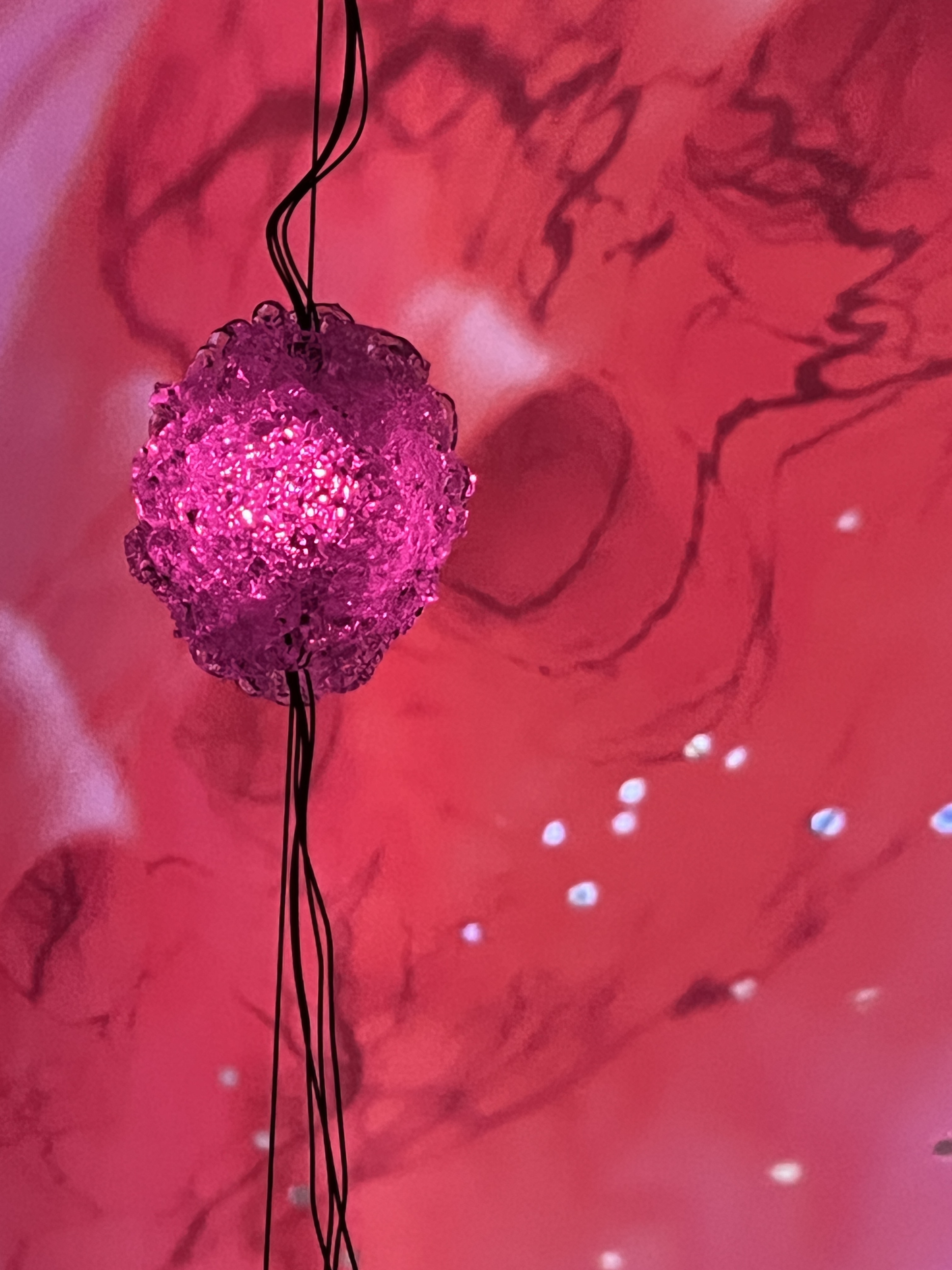
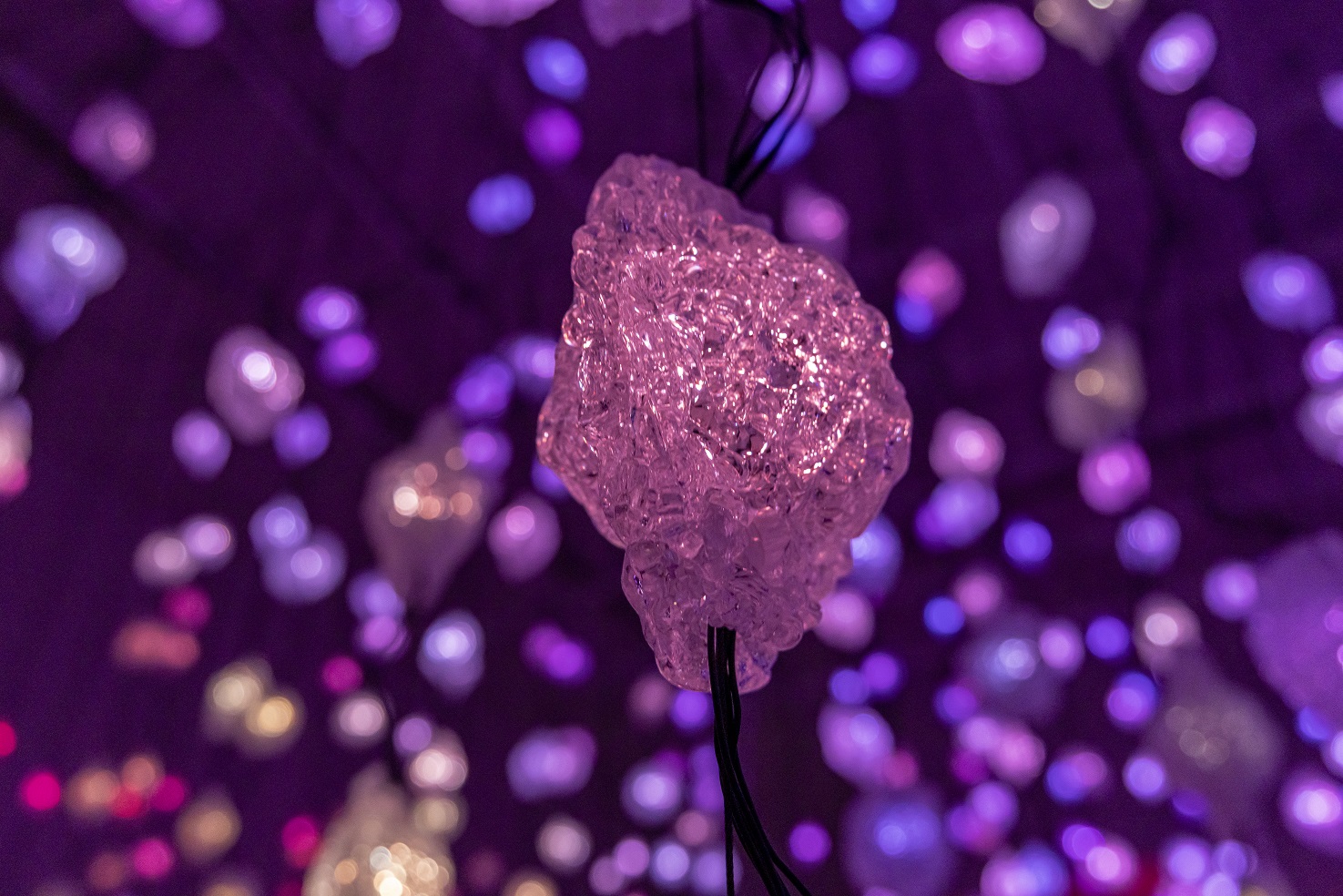
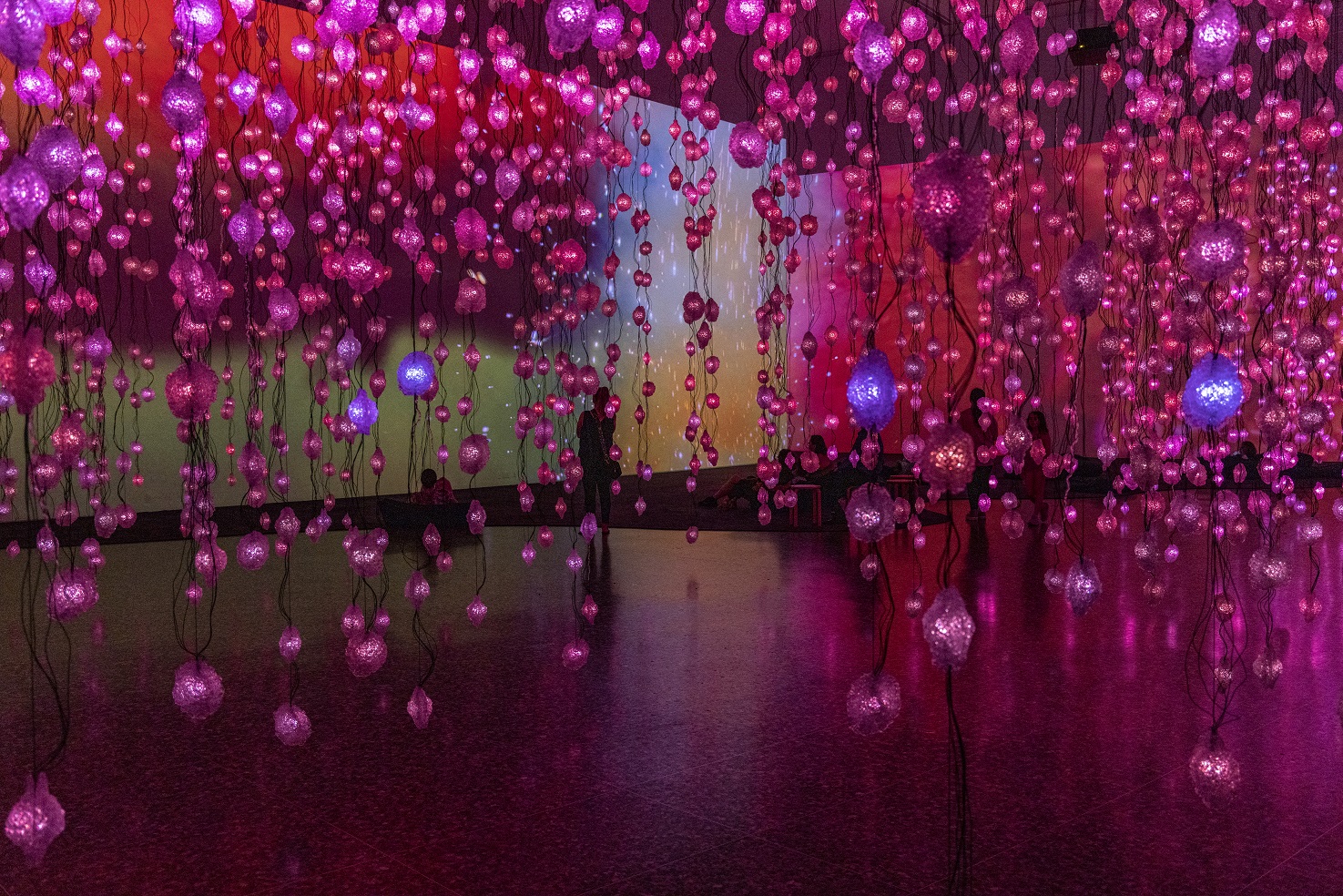
We also had the privilege to attend a truly immersive experience: Pixel Forest and Worry Will Vanish by Pipilotti Rist. This captivating installation consisted of crystal-like neon balls hanging from the ceiling, creating a breathtaking visual spectacle through a stunning light show. Stepping into this immersive environment felt like traversing the threshold into an enchanting and surreal realm, where reality blended seamlessly with imagination.
Thanks to the many opportunities the LEAP Center provides to expand one’s cultural awareness, I was exposed to new concepts and artists I was otherwise unfamiliar with. If a trip to the Museum of Fine Arts, Houston taught me one thing, it was that art is extremely reflective of the world events occurring within that time period. It was an excellent opportunity for us to familiarize ourselves with these classic masterpieces!
High Island
By Ingrid Cuero
After experiencing a day filled with remarkable works of art, it was time to hone in on our own craft: photography! A major focal point of our retreat is to ensure that each ambassador has the opportunity to develop a well-rounded knowledge of the world around them, which includes nature. With that, we traveled to High Island in Galveston just before sunset to practice our photography and, we hoped, to spot some wildlife–which we did, almost immediately!
Upon arrival, I saw three bunnies having dinner on the far side of the park. Taking slow steps into their direction, I went to them and captured a few photos before they took notice and fled the scene. Michelle was able to get an even closer photo!
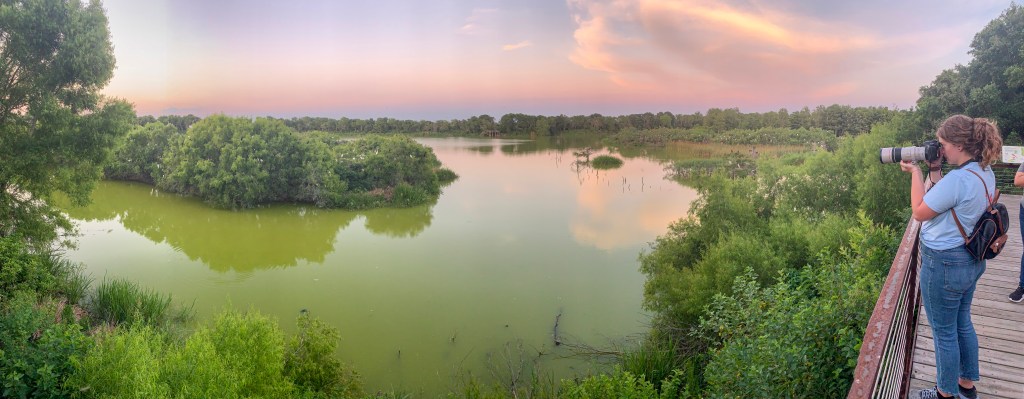
We then walked onto the trail to the lake, where we spent most of our time. Some would say outdoor photography is its own beast, as you must adapt to the unpredictable conditions of nature to get a perfect shot. As many of us on the trip are familiarizing ourselves with the inner-workings of photography, this was a perfect way to apply what we have learned so far.
We had plenty of opportunities, as the landscape was filled with birds, turtles, and alligators, along with a beautiful sunset before us.
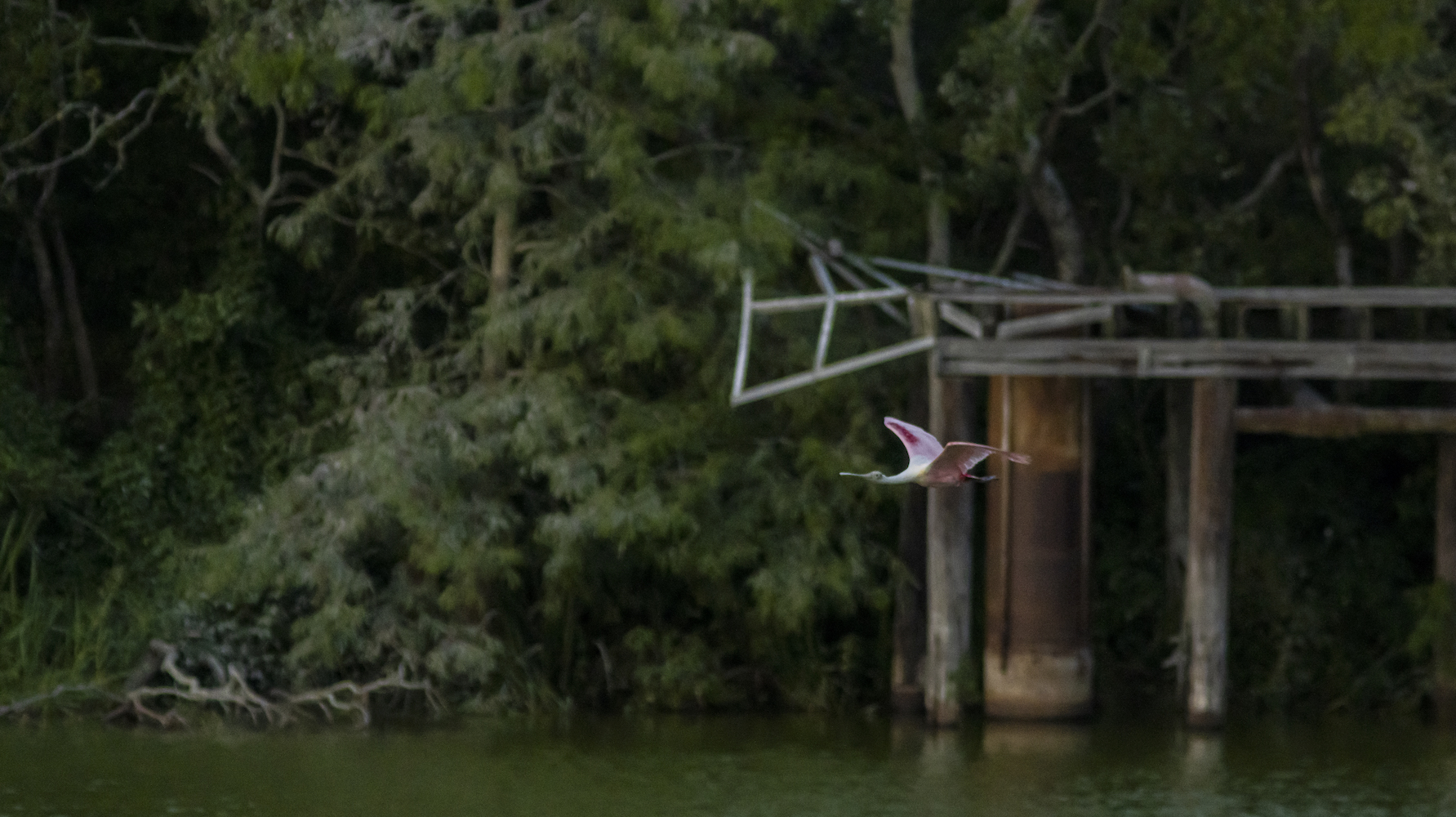
During this time, we tried to educate ourselves about the many species of birds we captured (by camera, of course). A few breeds of birds that we saw included the Roseate Spoonbill, the Great Egret, and the Little Blue Heron. Mating season for these birds is between April and May, so we saw many nests with baby birds secured in them.
Professor Yawn explained to the group some interesting information about male birds in real time! Male birds, we learned, can be very territorial, leading to physical fights against other birds, and we saw many such examples of this type of behavior.
And with that, the LEAP Ambassadors ended a successful first day on their summer retreat! We had a fun-filled day focused on challenging ourselves to take initiative on the concepts we can improve on.
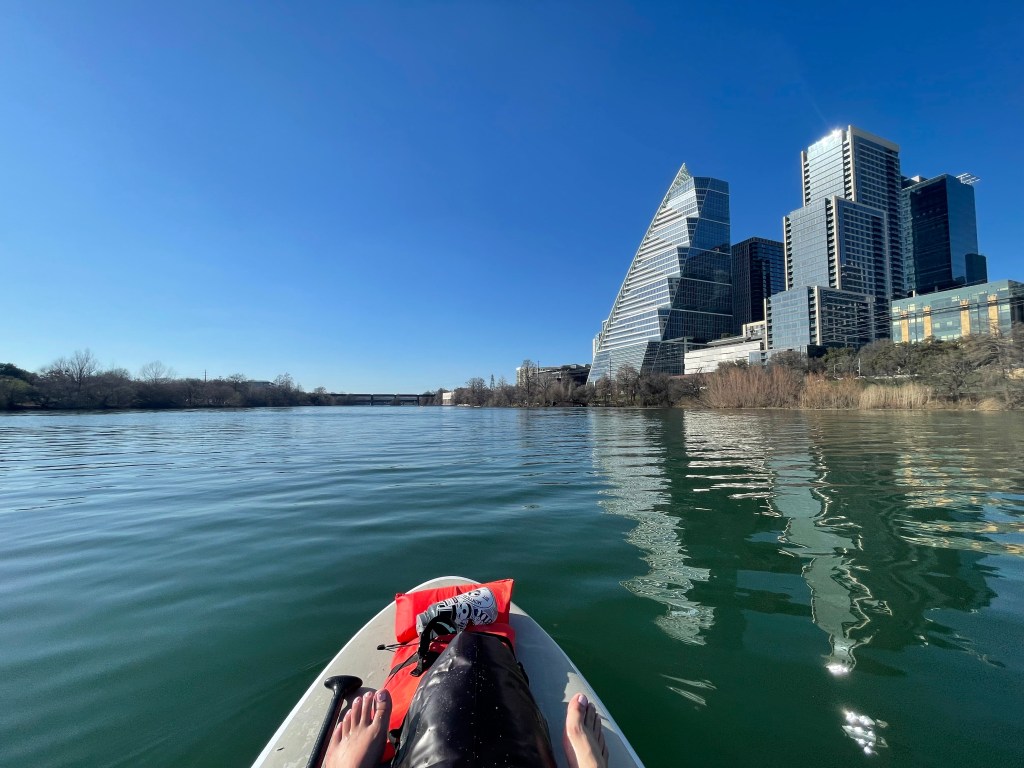
My first month and a half in Austin has been filled with learning and trying new things-but not all of my new experiences have happened in the beautiful state Capitol. In an effort to take advantage of the great outdoor spaces that Austin has, I learned to paddle board on The Colorado River! With LEAP, and on my own, I have enjoyed kayaking and exploring different waterways, but new environments called for new experiences.
Located near the boardwalk at Lady Bird Lake, EpicSUP is known as Austin’s go-to paddle dock with what seems like a whole fleet of paddle boards and kayaks. Daniel, who has worked with EpicSup for several years, knew that the best way to introduce a novice was to encourage her to simply get on the board and paddle.
I would (and I’m sure many others would as well) classify myself as the least coordinated Ambassador–a thought that I couldn’t quite shake, with no help from the wobbling paddle board beneath me. After a few minutes of getting a feel for the new activity and observing other paddlers on the water I eventually fell into a rhythm and was off!
Even after my first venture on a paddle board, I would argue that it’s easier to balance than a kayak. As with any new activity, each time I’ve paddle boarded it has gotten easier, and I’ve been able to cover more distance. On just my second time out on the river, I paddled about 8 miles in three and a half hours–which included breaks to take photos of the city around me.
My starting (and ending) point is the circle on the bottom right corner of the map and I made it up to Mopac!
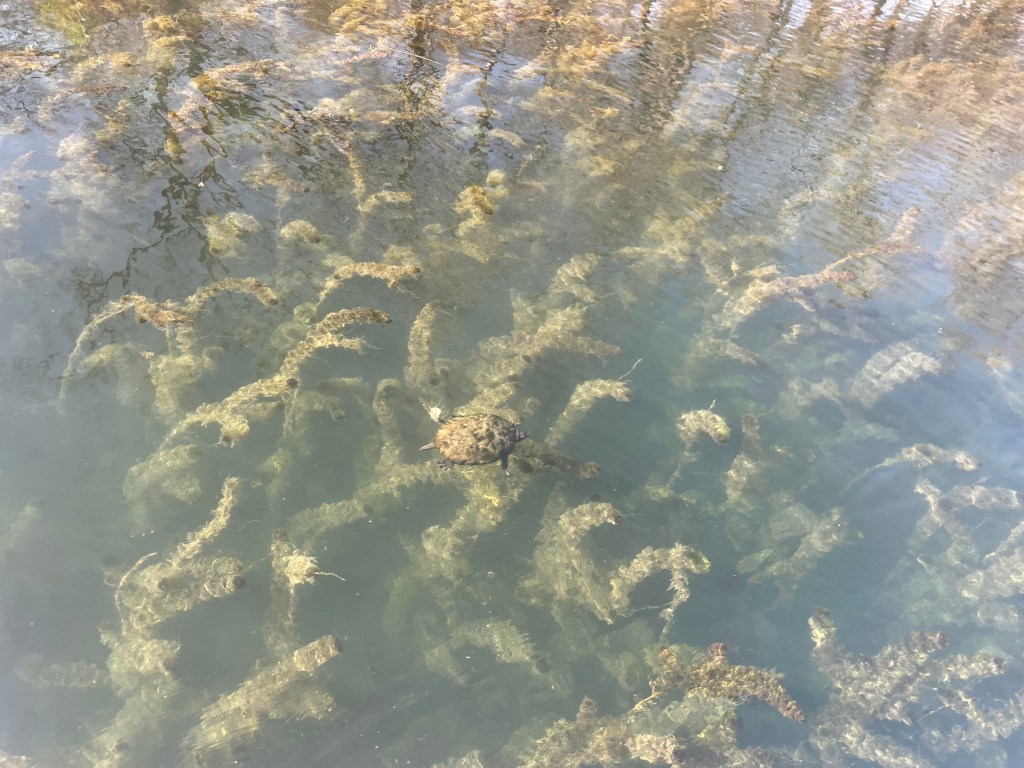
On my most recent voyage on the Colorado, I took a detour on Barton Creek which ended up being well worth it! Because of the shallowness of the creek, the clear water showcased flowing plants and even a turtle just beneath the surface.
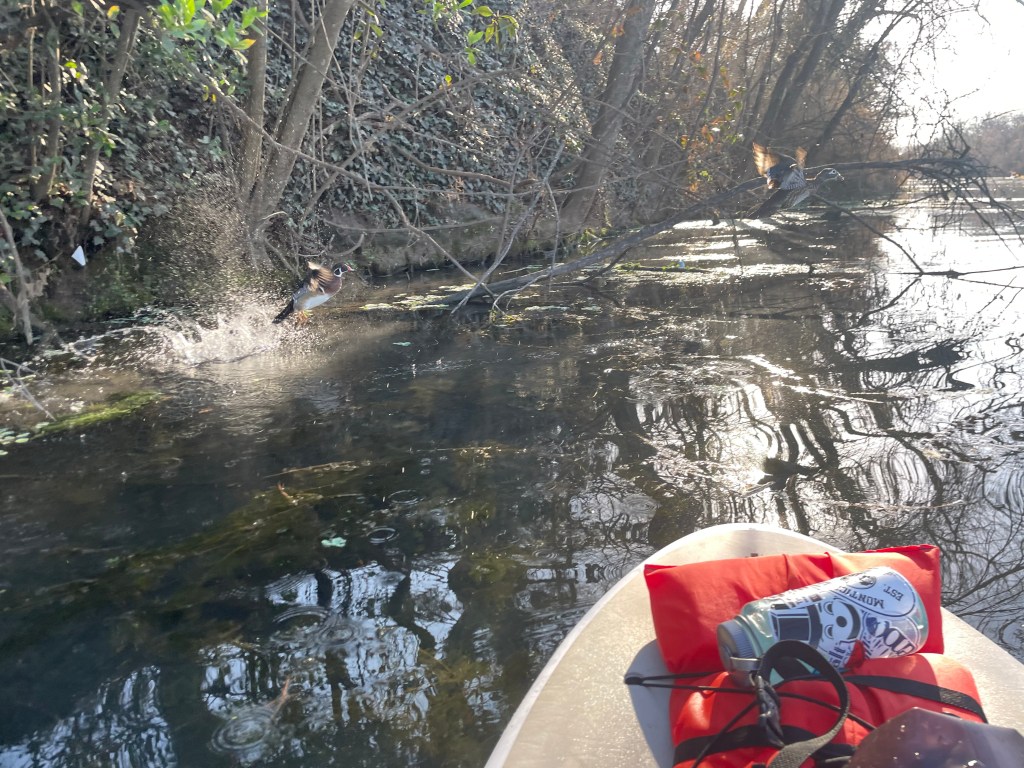
The Creek seemed to be a great spot for all the local wildlife and Austinites to enjoy the weather. One lesson I have learned from LEAP is that wildlife photography is no easy feat. However, it is even more difficult trying to maneuver and maintain stealth on an 11ft paddle board toward skittish creek dwellers! I was lucky enough to have snapped a few shots of some basking turtles, hunting herons, and even ducks taking flight (despite being the reason for their immediate departure).
The wildlife, expanse of the river, and the beautiful views of the city all amplified my paddle boarding experience, which has, in turn, expanded my Austin experiences as well.
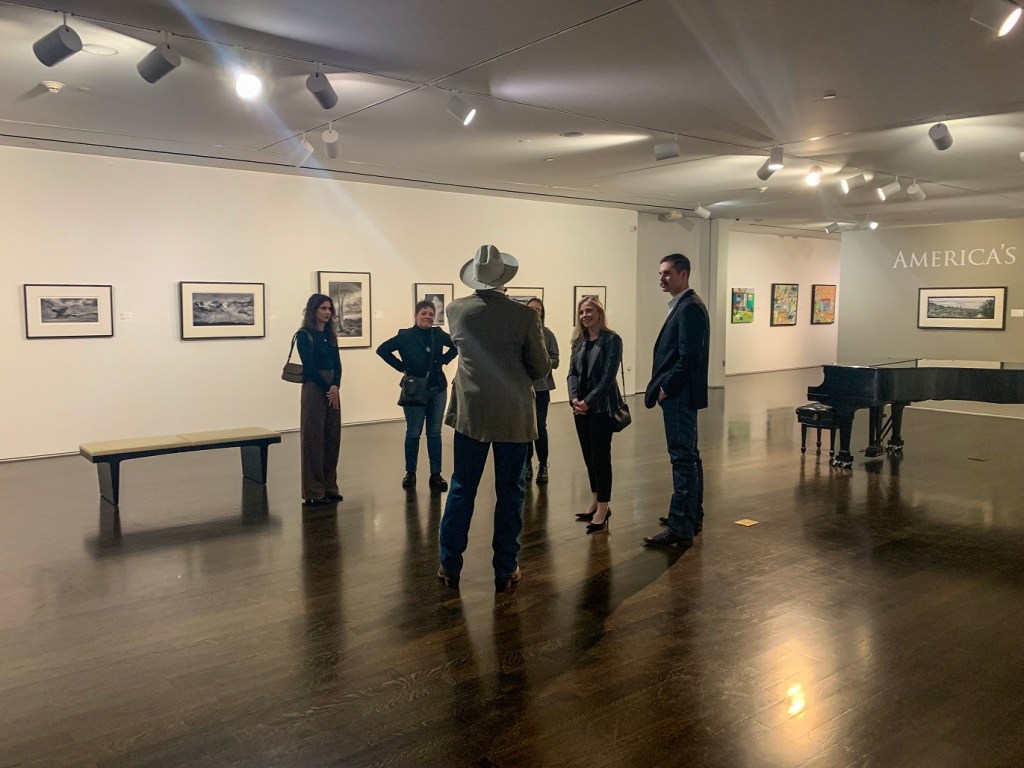
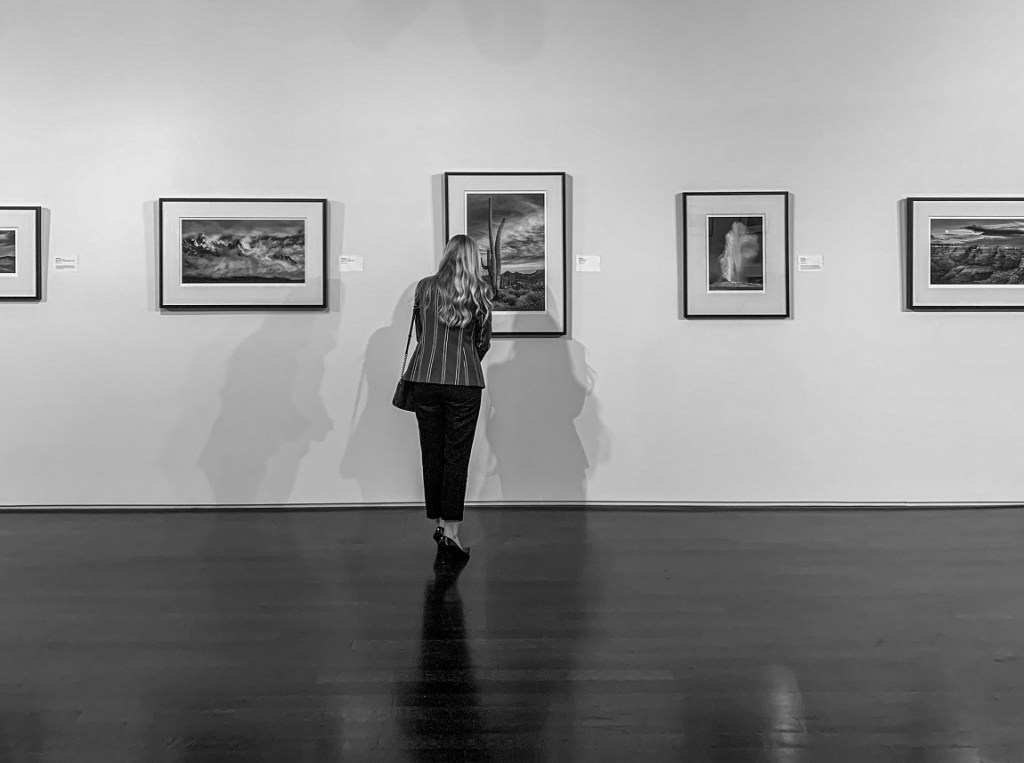
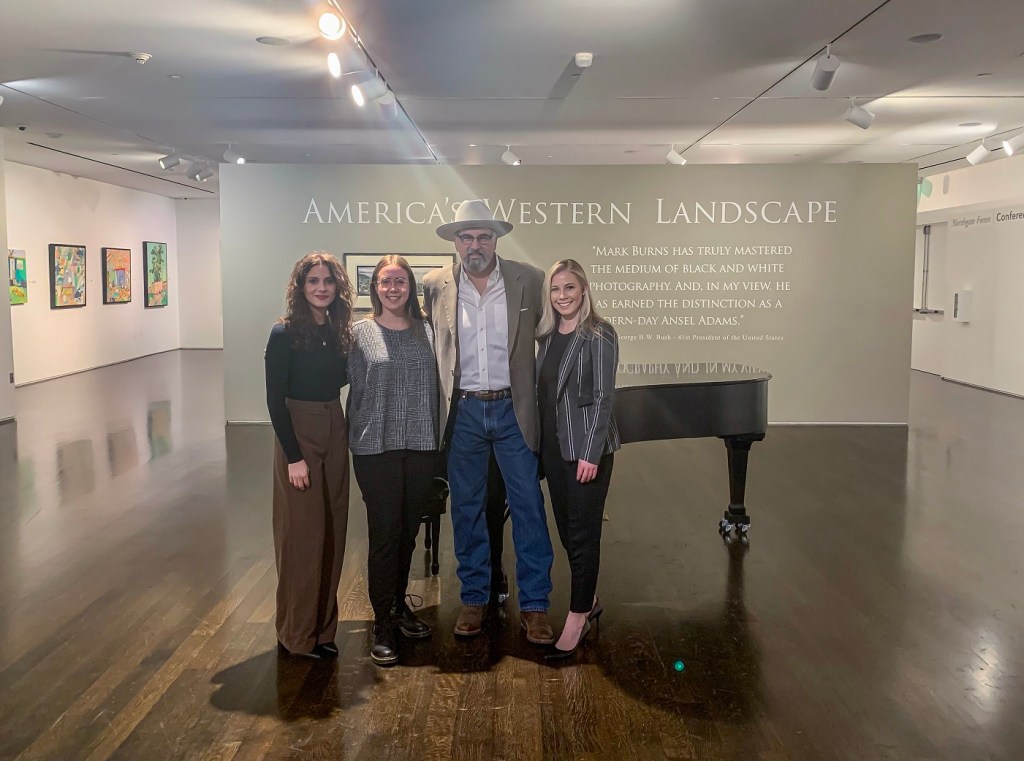
LEAP students, past and present, headed to the Pearl Fincher Museum of Fine Arts to see “American Landscapes” by Mark Burns. Featuring more than 50 photographs by a photographer deemed a “modern-day Ansel Adams,” the exhibit captured the beauty and the mystery of The West.
More than 100 people showed up for the opening reception, and Burns was also on hand to greet people and discuss his work. With Burns, that is always a treat, with stories of each shot reflecting more of the West and its mystique.
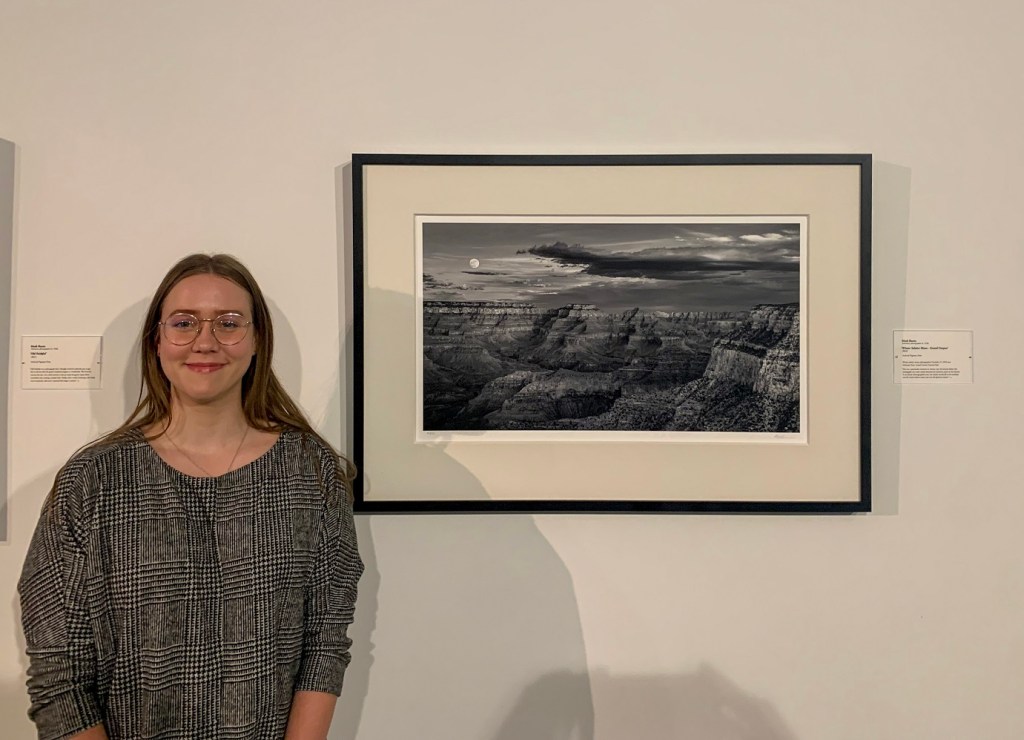
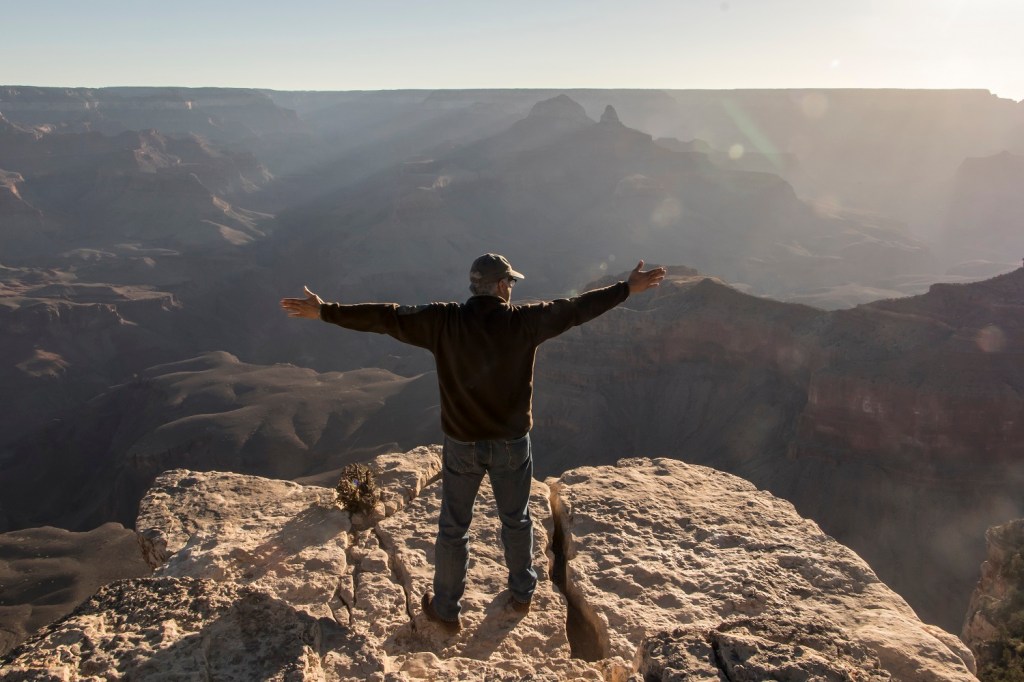
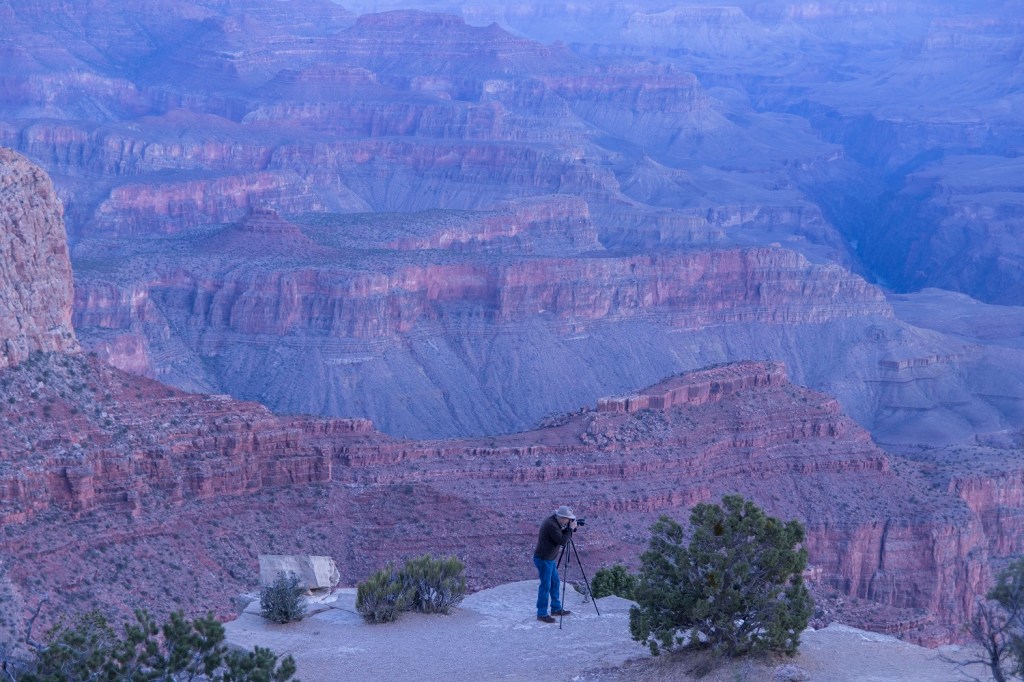
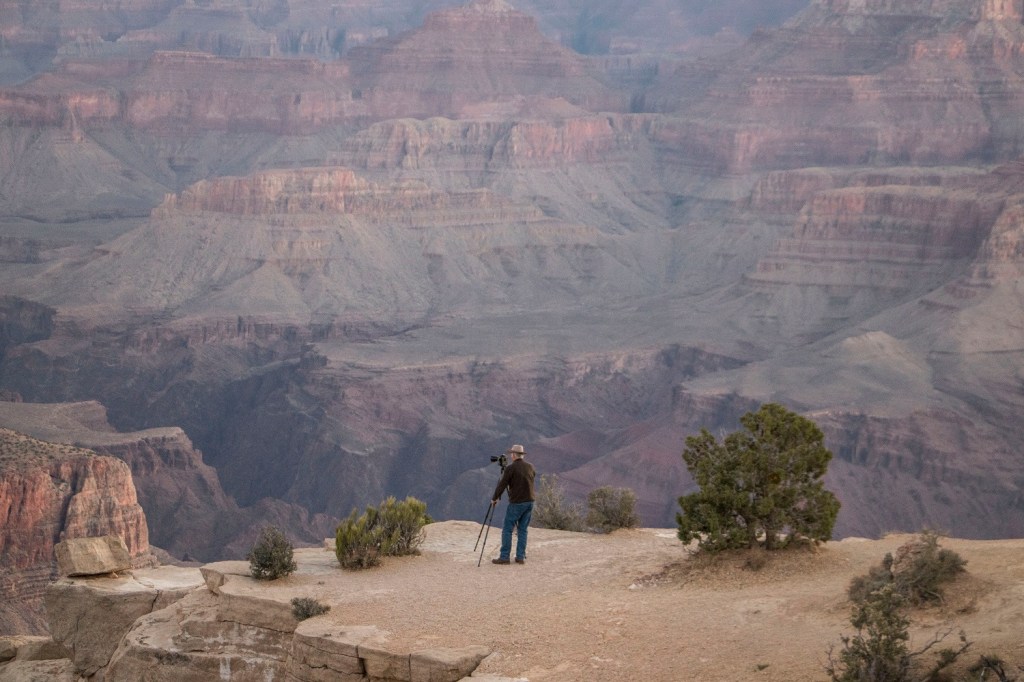
For Victoria, the best in show was from The Grand Canyon, a shot taken on the Winter Solstice (and LEAP was there!).
Olivia’s favorite was from Yellowstone, a shot of Old Faithful.
All were interesting.
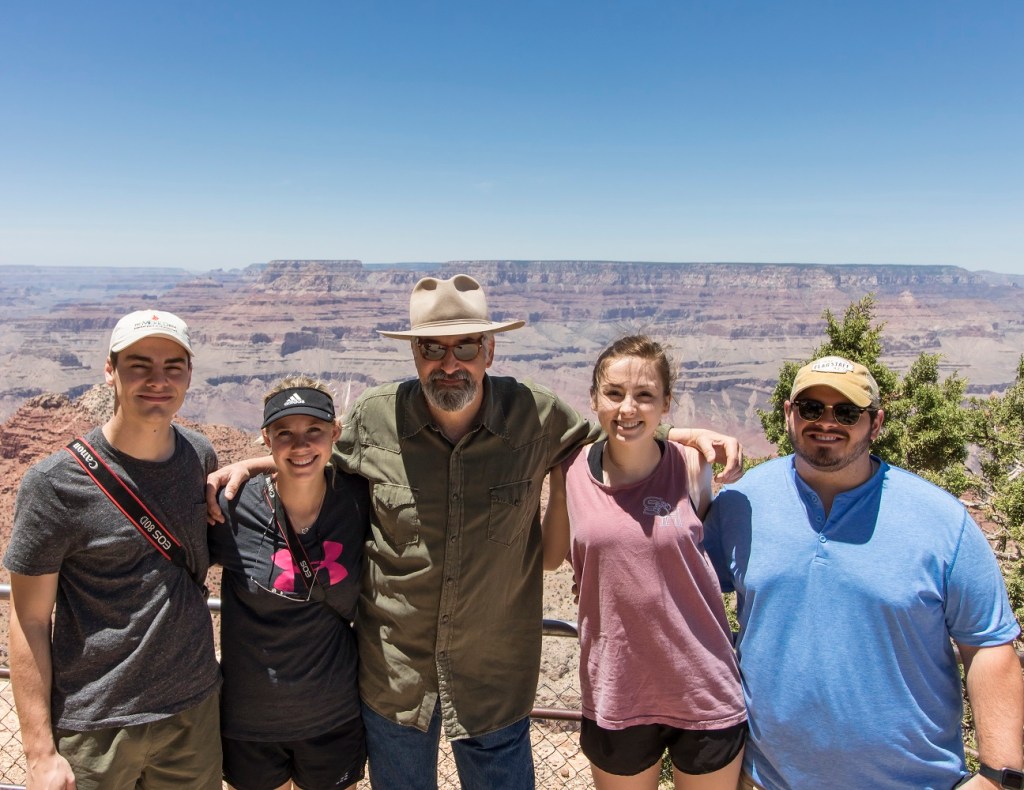
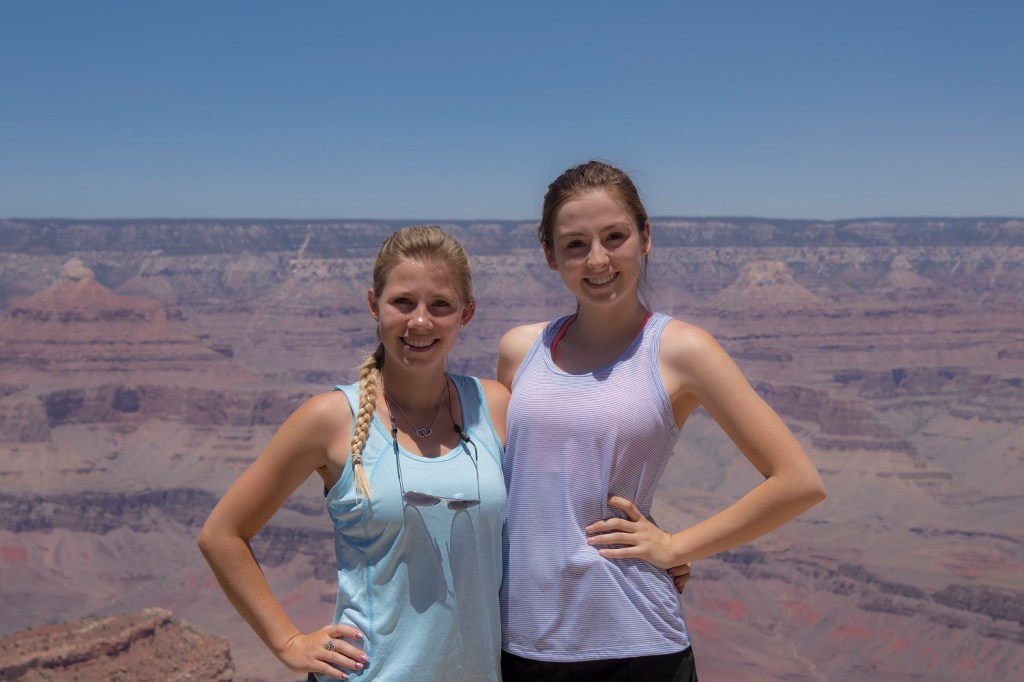
Of course, one of the special aspects of the show is that LEAP students have been to several of the locations photographed by Burns, and, in fact, LEAP students were with Burns on locations for some of the photographs in the show.
So, it was a reunion of sorts, and a great chance for three generations of LEAP students to get to one another and continue their lifelong learning.