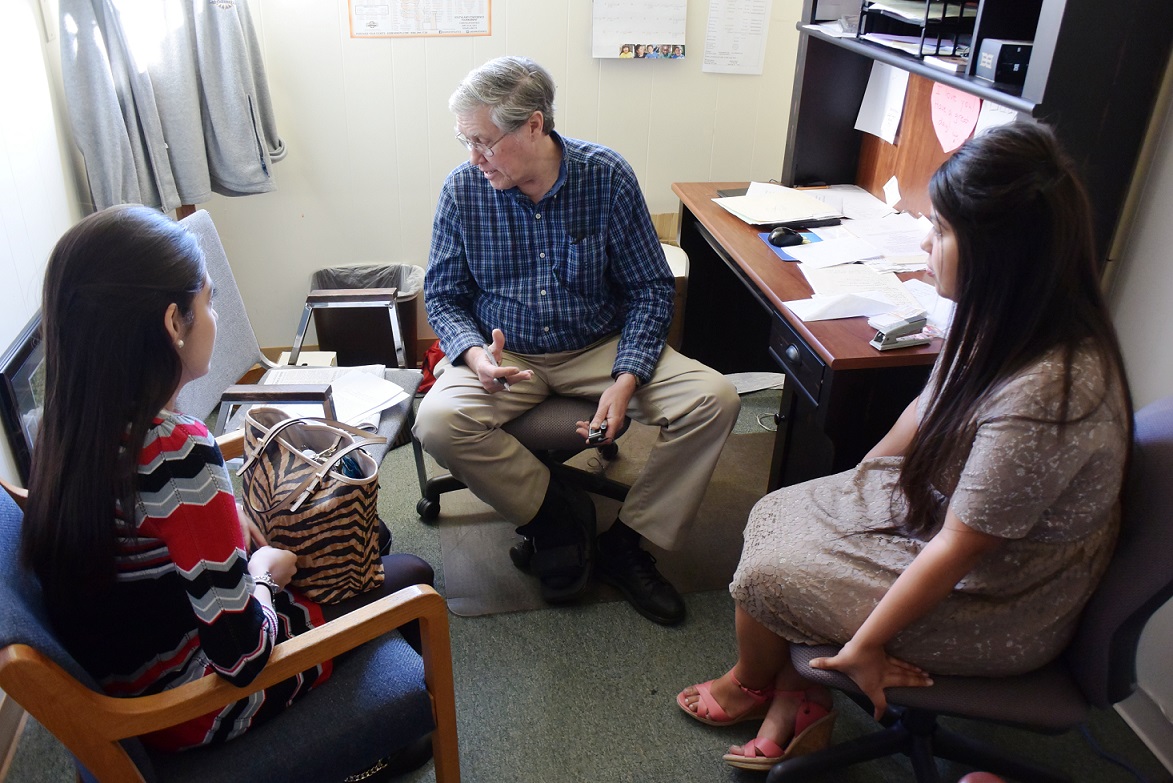
LEAP Center Ambassadors Karla Rosales and Megan Chapa met with KSAM‘s Larry Crippen for an “Around Town” session. This is the seventh time the Junior Fellows/LEAP Center have been featured on Around Town, a six-minute radio program that highlights local happenings on 101.7 and 104.9 FM.
The program, which covers their recent experiences at the Texas Governor’s Inauguration, as well as upcoming events such as the Michael Morton appearance, Nancy Bocskor’s appearance, and the Citizenship Program, aired Saturday (March 14) and Sunday (March 15).
Sam Houston State University’s Austin Internship Program, run by the LEAP Center, is off to a rollicking start.
After undergoing orientation training from the crack staff in HR and Career Services, the eight Austin Interns–Oscar Aguilar, Jessica Rodriguez, Lexi Gonzales, Sadie McLaughlin, Ariel Traub, Lupe Cuellar, Shelby O’brien, and Sarah Landsman–underwent an orientation in Austin, Texas. The event was to start with a Segway tour of Austin, but with freezing rain in the forecast, we switched quickly to an iFLY tour. It wasn’t a tour so much, but it was a fun way to start the day.
The day began with an orientation on iFLY’s unique flight system, which evoked some anxiety while also bringing smiles.
But it was the flights that brought the big smiles. iFLY doesn’t provide a long time in the air, but it’s a lot of fun. Some of us were better than others, but all had a good time, or at least were glad they tried.
This slideshow requires JavaScript.
The flights also provide that wind-blown look that is so flattering, perfectly complementing the smart flight suits.
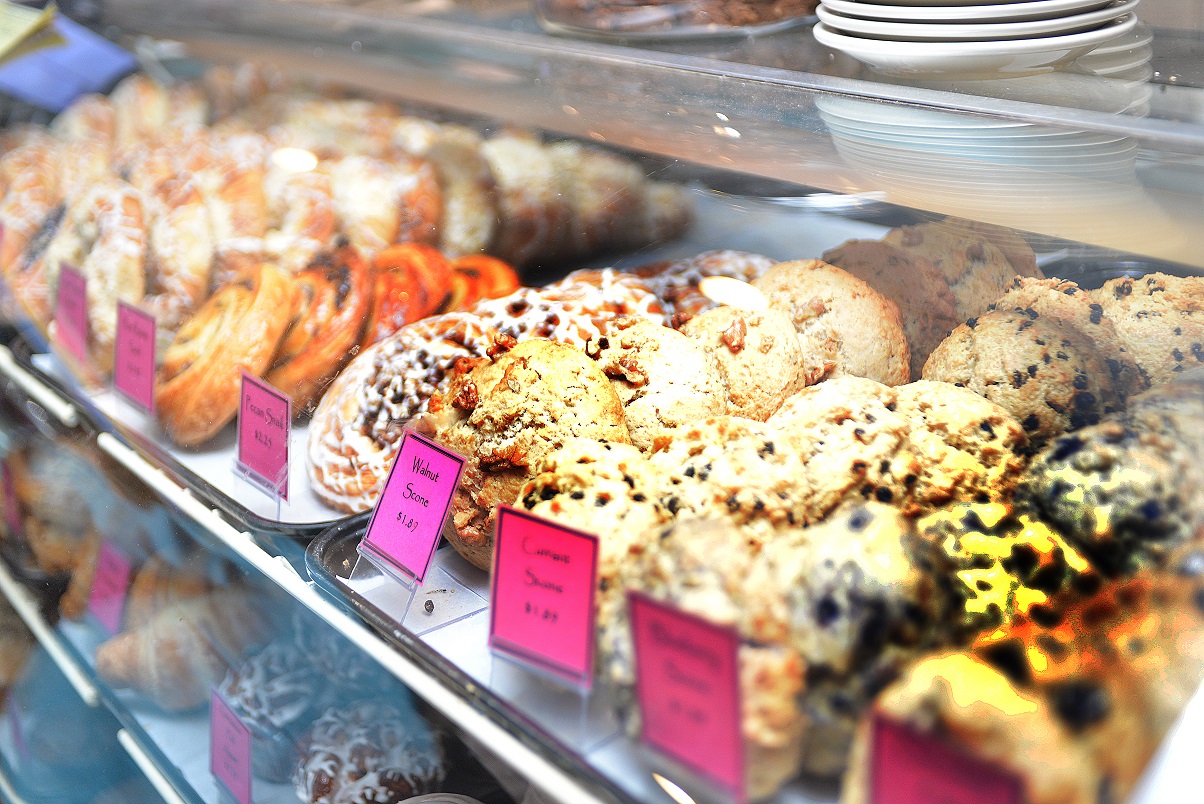
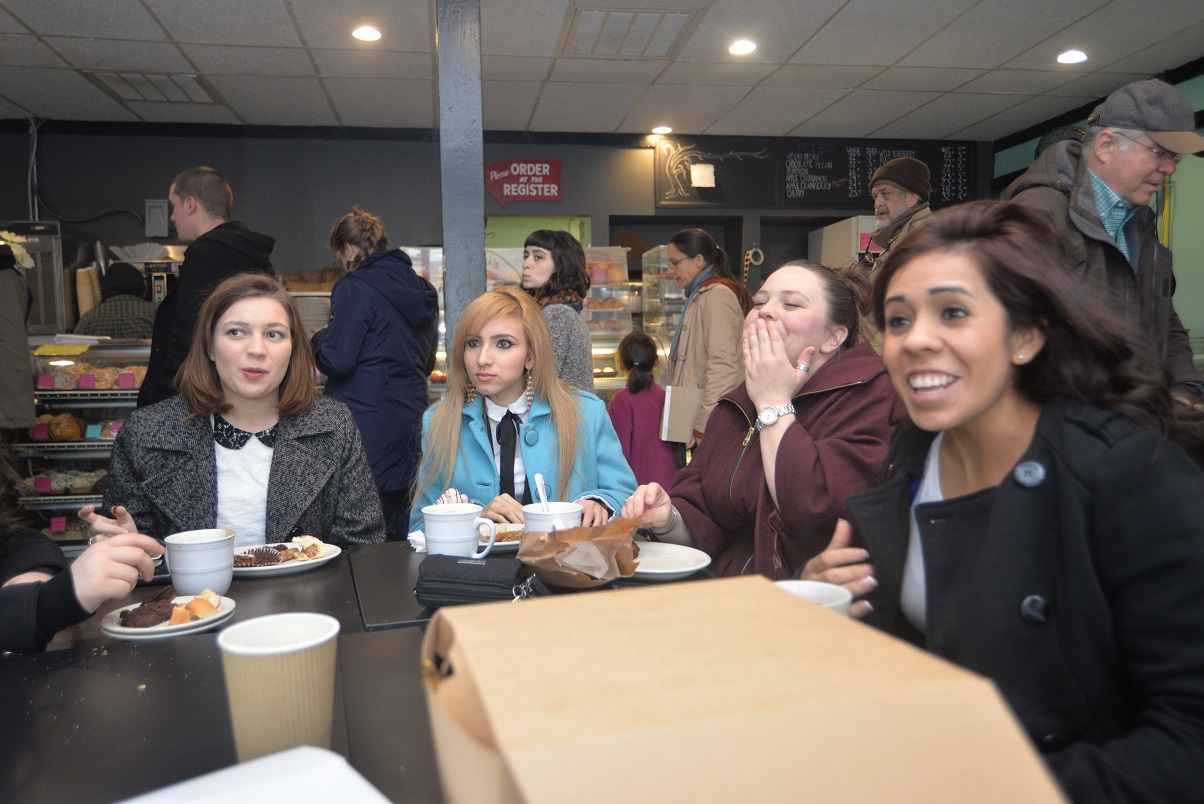
Following the adrenaline rush of iFly, we moved to Quack’s Bakery on 43rd for a caffeine rush and some pastries. For those who haven’t tried this mid-town delight, it’s definitely worth it. Try the ginger crinkle cookies or the chocolate ginger; you can’t go wrong.
There was also some good conversation, with equal measure astonishment, disbelief, and delight.
But, mostly, it was about the cupcakes.
Armed with coffee and sugar, we embarked to the 2nd Bar + Kitchen, where we met Blake Roach, Emily Johnson, President Hoyt, and her husband John Hoyt.
It was an enjoyable time for everyone, and we were very impressed and honored that Mr. Hoyt and President Hoyt drove in to spend time with us. It’s a reflection of the support we’ve received since we started this 140 day Austin odyssey.
This slideshow requires JavaScript.
It was a great group outing, which we ended with a great group photo!
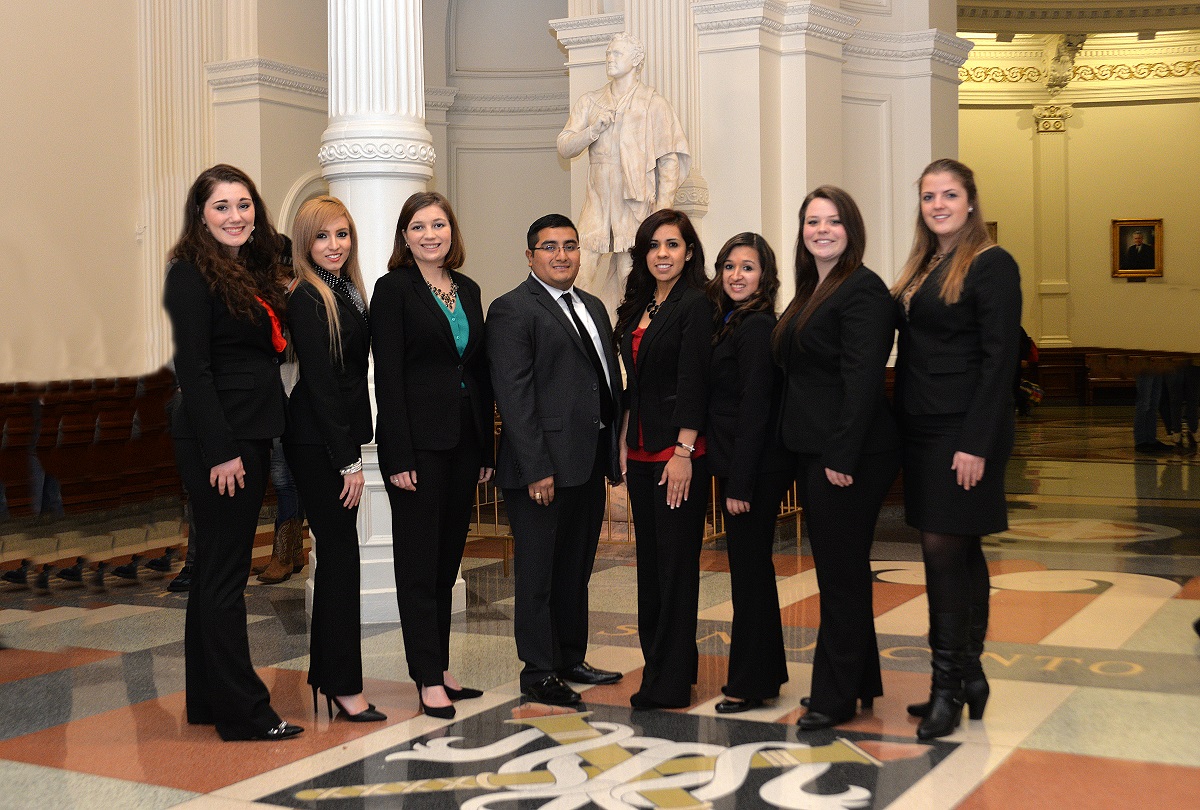
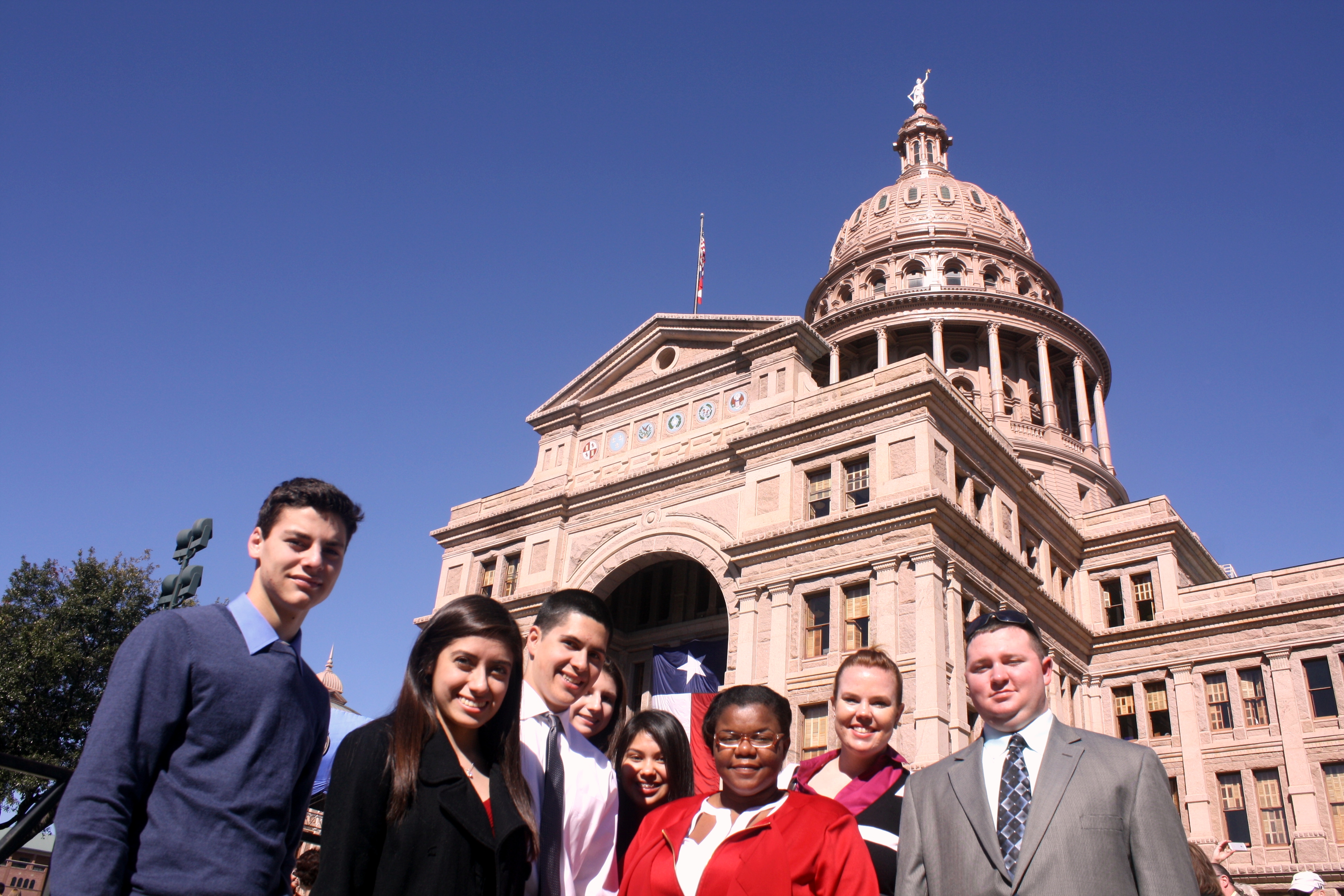
With the fun over, we prepared for our professional photographs in the capitol building. Of course, we couldn’t go to the Capitol without getting a photo alongside Elizabet Ney’s statue of Sam Houston…
But that was just one of many of our stops. We also stopped in the extension, looking up at the Capitol dome…
…outdoors…
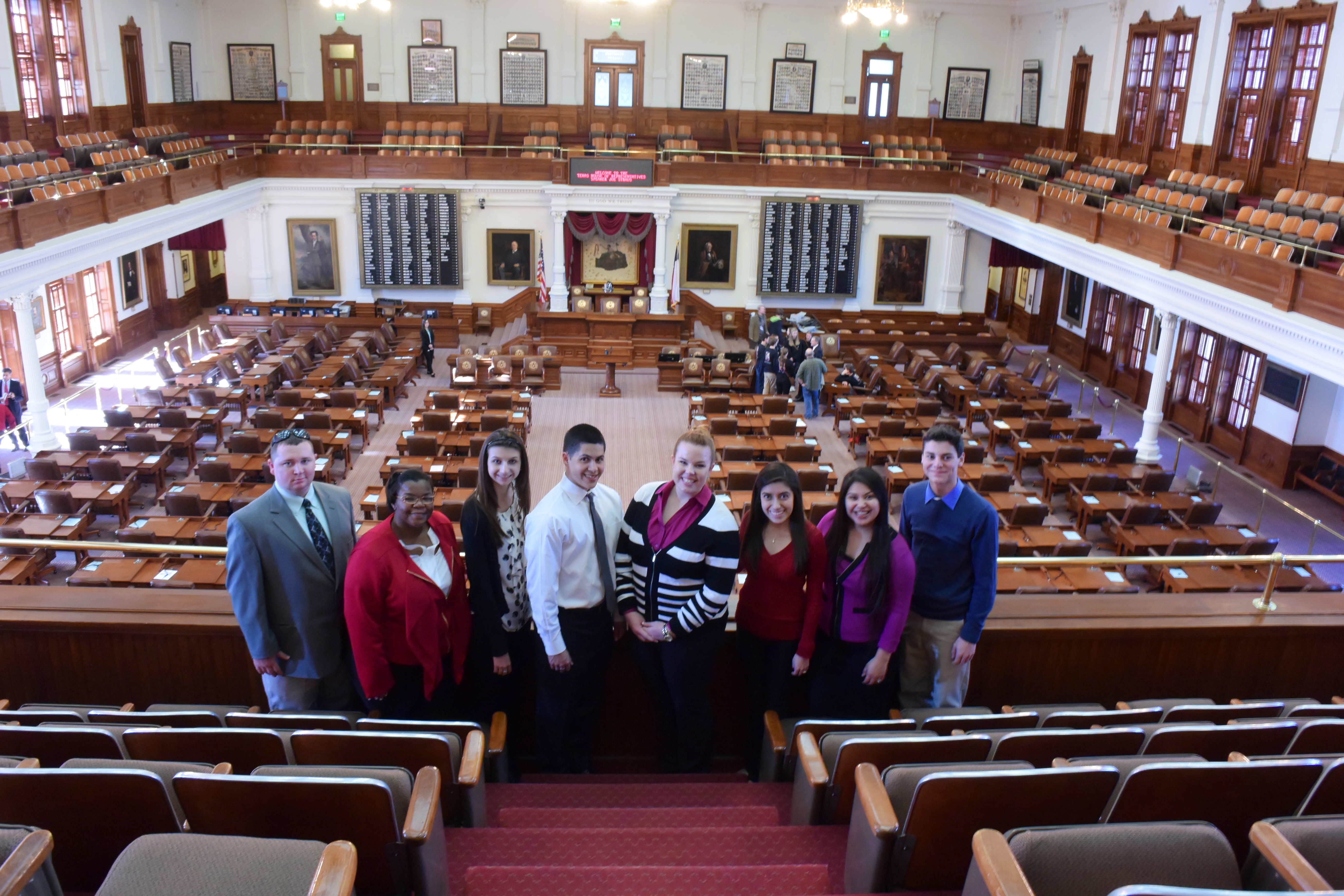
…in the House of Representatives’ chamber in front of the podium…
…and individual shots of us, with Sam Houston looking over our shoulder.
This slideshow requires JavaScript.
Indeed, these photographs with Sam Houston’s portrait on the wall serve as a kind of a metaphor for our time thus far. We have lots of family, friends, and University officials looking out for us, and ensuring we have a great time and learn a whole lot–even while dealing with dangerous flying missions and firearms!
On behalf of all the Austin Interns, we’d like to thank Paul Olle for the great photographs, President Hoyt for this wonderful opportunity, SHSU for supporting its students, and the following legislative offices:
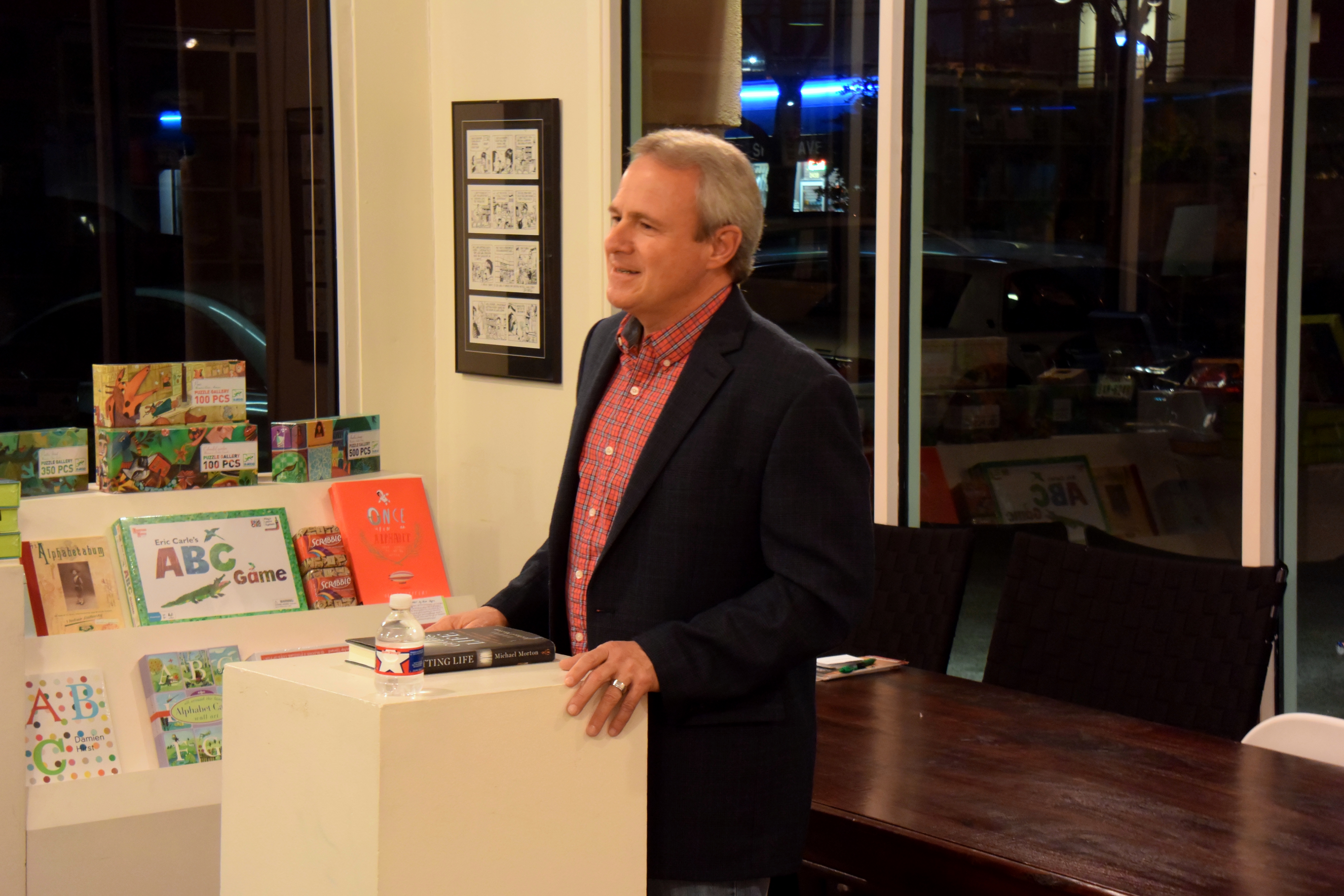
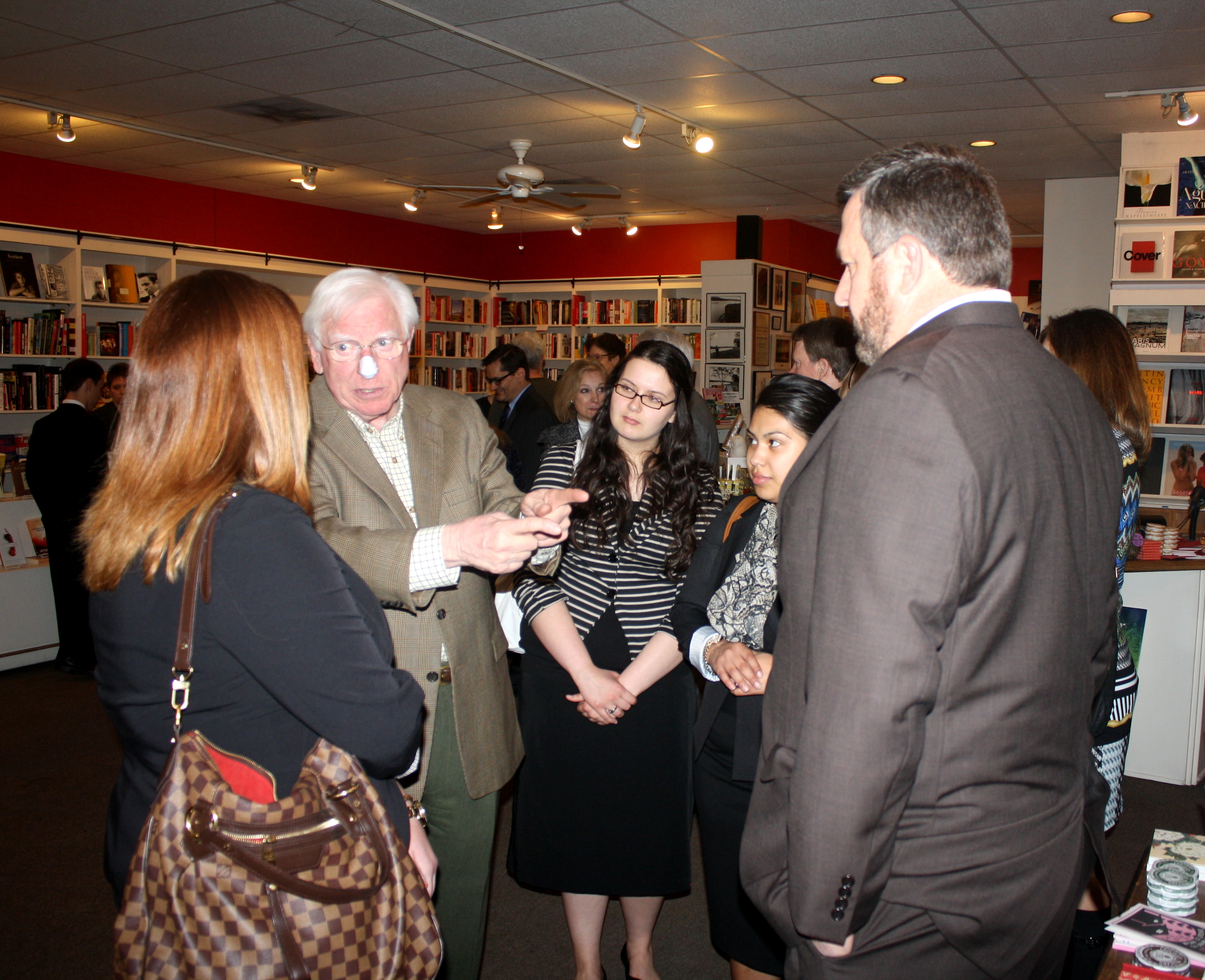
This week’s LEAP Center event offered students a rare opportunity: the chance to listen and ask questions of an average citizen thrust into incredible circumstances. Michael Morton, famous for his new-found freedom after being wrongfully convicted for his wife’s murder, spoke at the Brazos Bookstore in Houston before one of his book signings for his memoir, Getting Life.
During his remarks, Morton stressed two major themes: (1) his humility and gratitude to those who assisted him, such as the Innocence Project and attorney John Raley, (2) forgiveness as a means of re-gaining control of life. For a man who spent 25 years in prison after being wrongly convicted, Morton seemed remarkably well adjusted, friendly, and lacking in bitterness.
Michael Morton
For us as college students living in a world of constant stimulation, the monotony of prison life described by Morton seem unthinkable. To survive a quarter of a century under those conditions seems impossible. Morton endured this imprisonment, while also mourning the vicious murder of his wife, and the loss of a relationship with his son. Morton’s courage in the face of such daunting circumstances provided us with some real perspective, and we left the event reflecting on our lives, feeling grateful for our freedom and other privileges.
As students of the law, many of us felt a keen sense of shame and disbelief that the criminal justice system could fall so short of the ideals set for it, that justice could sometimes be corrupted, even if in isolated incidents. For those students considering criminal law as a possible career, Michael Morton’s words served as a reminder of the ethics necessary to call oneself a member of the Bar and the challenges facing practitioners in putting society before self.
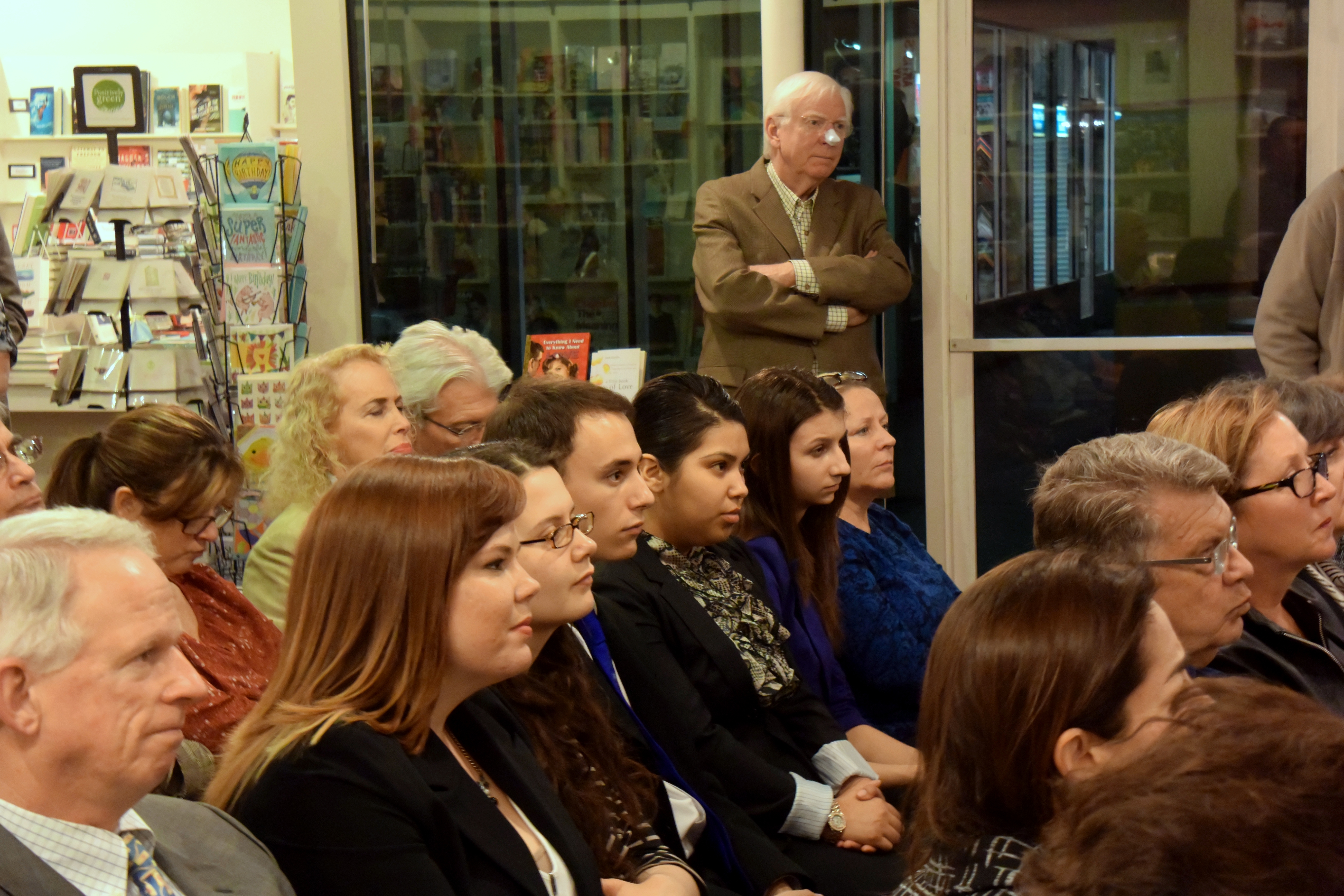
Indeed, the speech provided “CLE”—continuing legal education—units for the attorneys there, and there were many. Governor Mark White introduced Morton. Representative Sissy Farenthold was there, almost seventy years after she was one of three women admitted to UT Law School. There were 797 men admitted that year. And attorney John Raley, who helped free Morton, was also there. It was a good night for people watching.
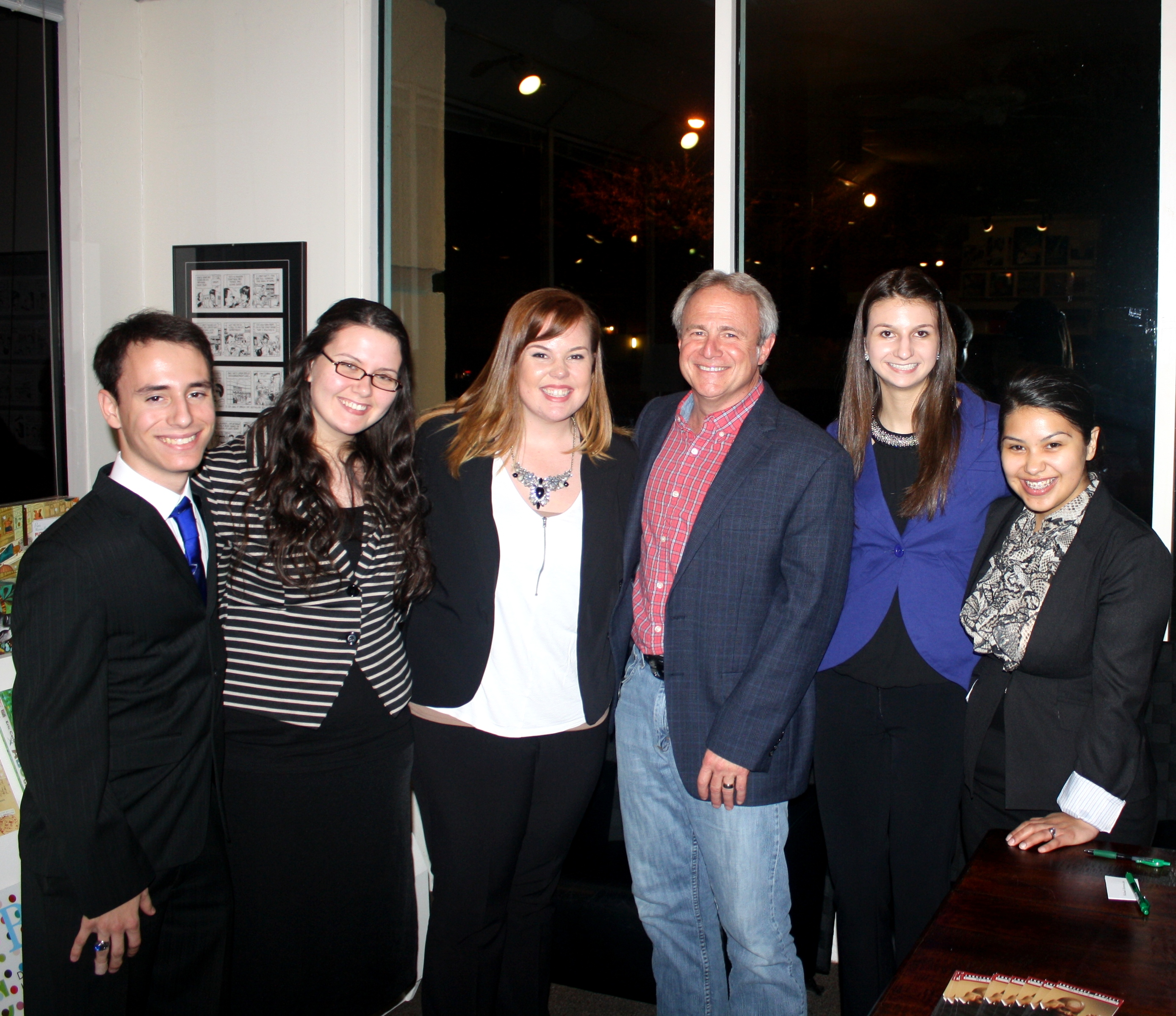
Governor Mark White & Students
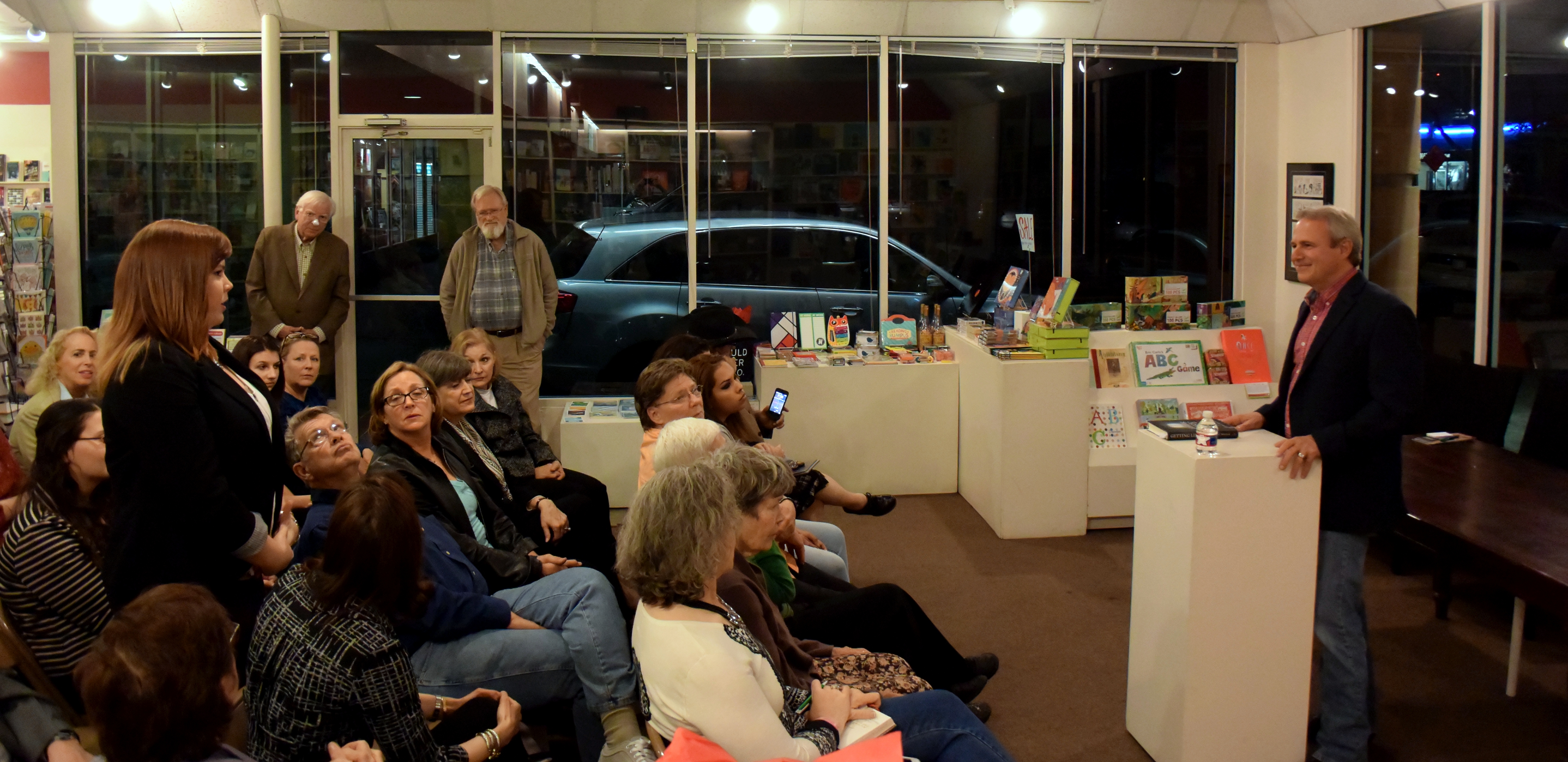
And for conversing. LEAP Center Vice-President Constance Gabel asked Morton what advice he might give to students who aspired to become lawyers. He responded, “Be one of the good guys.”
Governor White jumped in, arguing that once Gabel read Morton’s book, the difference between good lawyers and bad lawyers would be clear. After the event, Governor White, Attorney Raley, and other judges and attorneys engaged us with real-life examples of the good and bad. Interestingly, Carol Vance, the former Harris County DA who was a speaker at a previous LEAP Center event, featured prominently in the stories of good attorneys.
Governor Mark White, John Raley, And LEAP Center Students
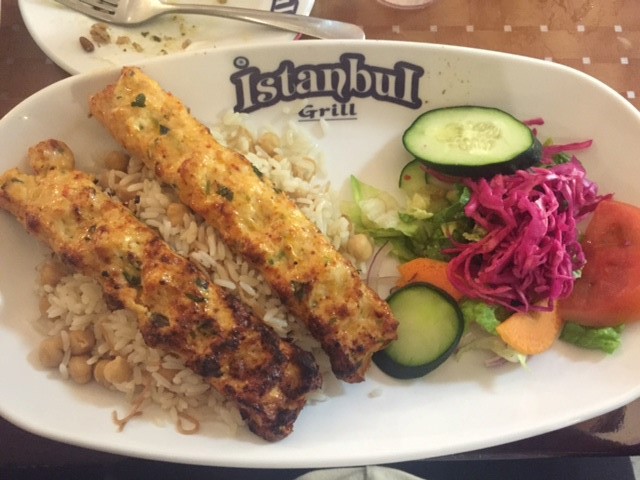
Following the book signing at Brazos Bookstore, we took a short drive down the street to the Istanbul Grill and Deli to enjoy some authentic Turkish food. Representative of Turkey, the restaurant décor was simplistic, yet incorporated traditional elements of the Turkish culture such as the eye of protection and the hamsa displayed throughout the restaurant. Before the main course, we sampled many different types of meze, similar to relishes or small appetizers. The tzatziki sauce was a crowd favorite when paired with the warm pita bread fresh from the brick oven. We also sampled the humus, tabuli, ezme, and various other types of meze. All had a distinct flavor and were delicious.
For our main course, the group ordered various meals. Some enjoyed the vegetarian options such as the mantar (stuffed mushrooms); another tried the donor (gyro) sandwich; and another tried the iskender, which involved both a yogurt base and a tomato-sauce topping. Most dishes were served with rice and a garden salad.
After everyone finished their meals, most indulged by enjoying baklava for dessert. The popular sweet and buttery pastry was the perfect way to end an eventful night in Houston. With full stomachs and a sense of gratitude, we departed for Huntsville.
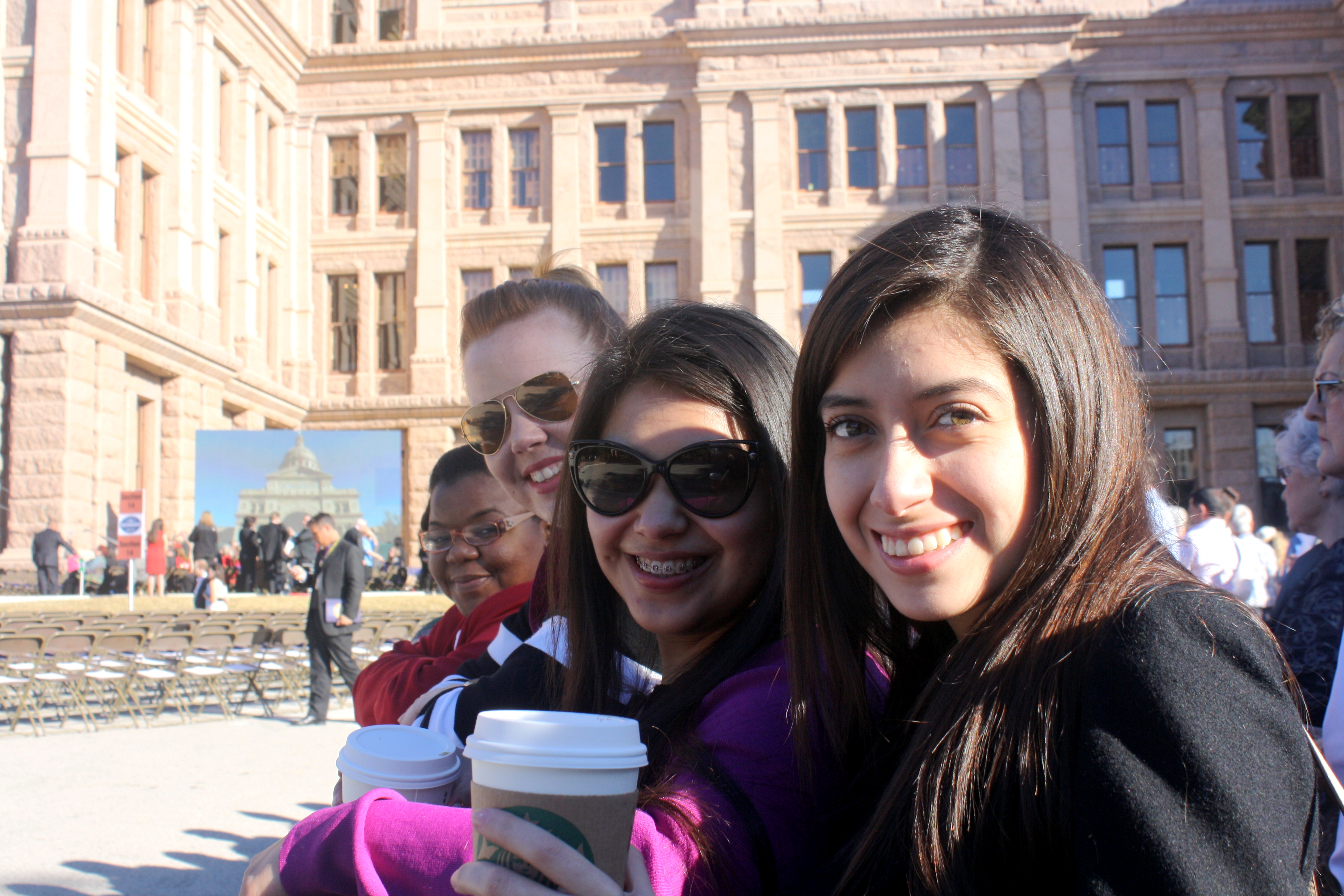
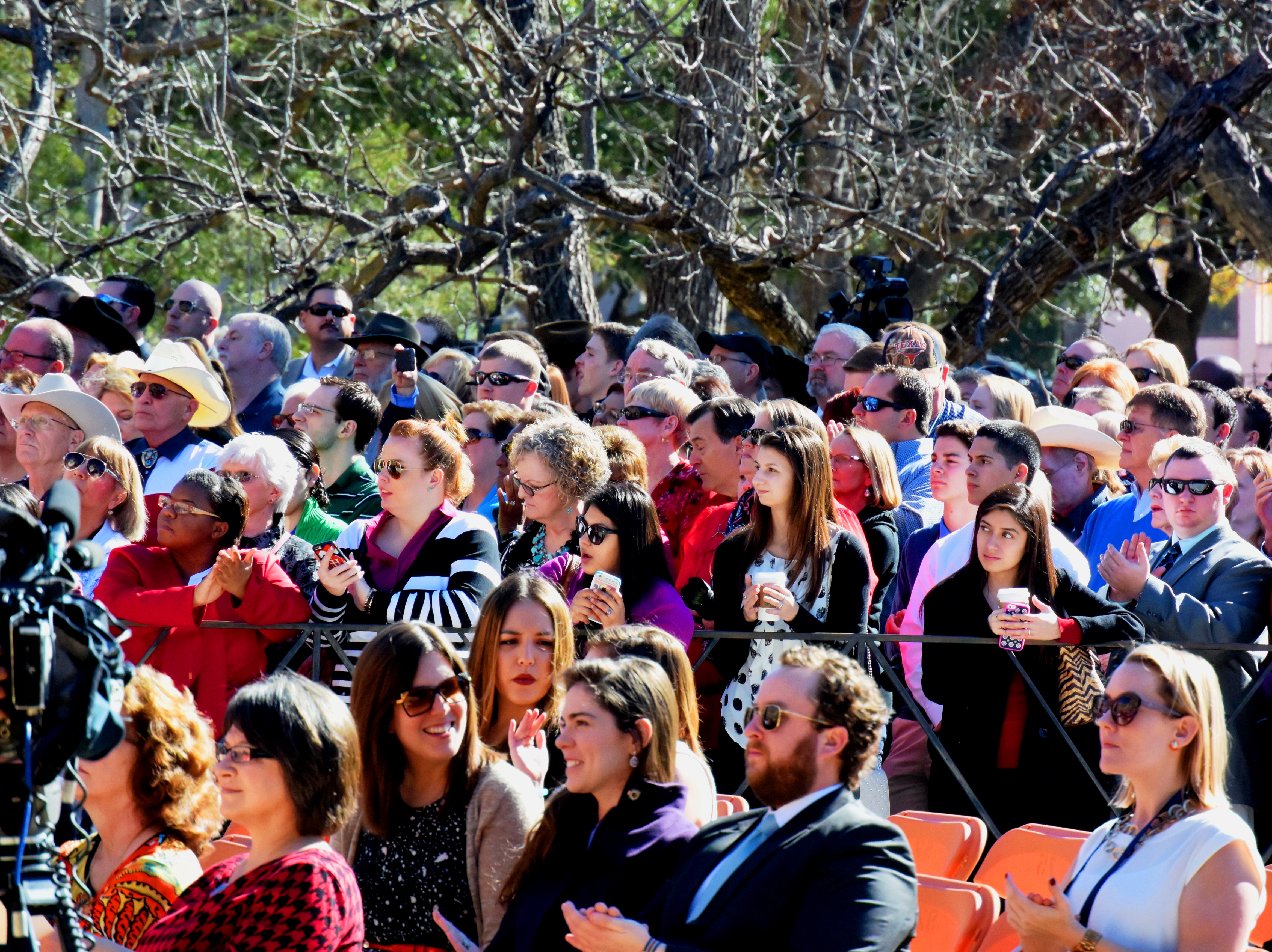
We left the hotel this morning excited to be attending the historic inauguration of Greg Abbot and Dan Patrick. For it being our first inauguration, we were fortunate to get some of the best seats, right behind the VIP section. Standing for hours before the event…
…we had the opportunity to watch the audience fill in, witness anxious news reporters parade around, and get views of snazzy Texan attire.
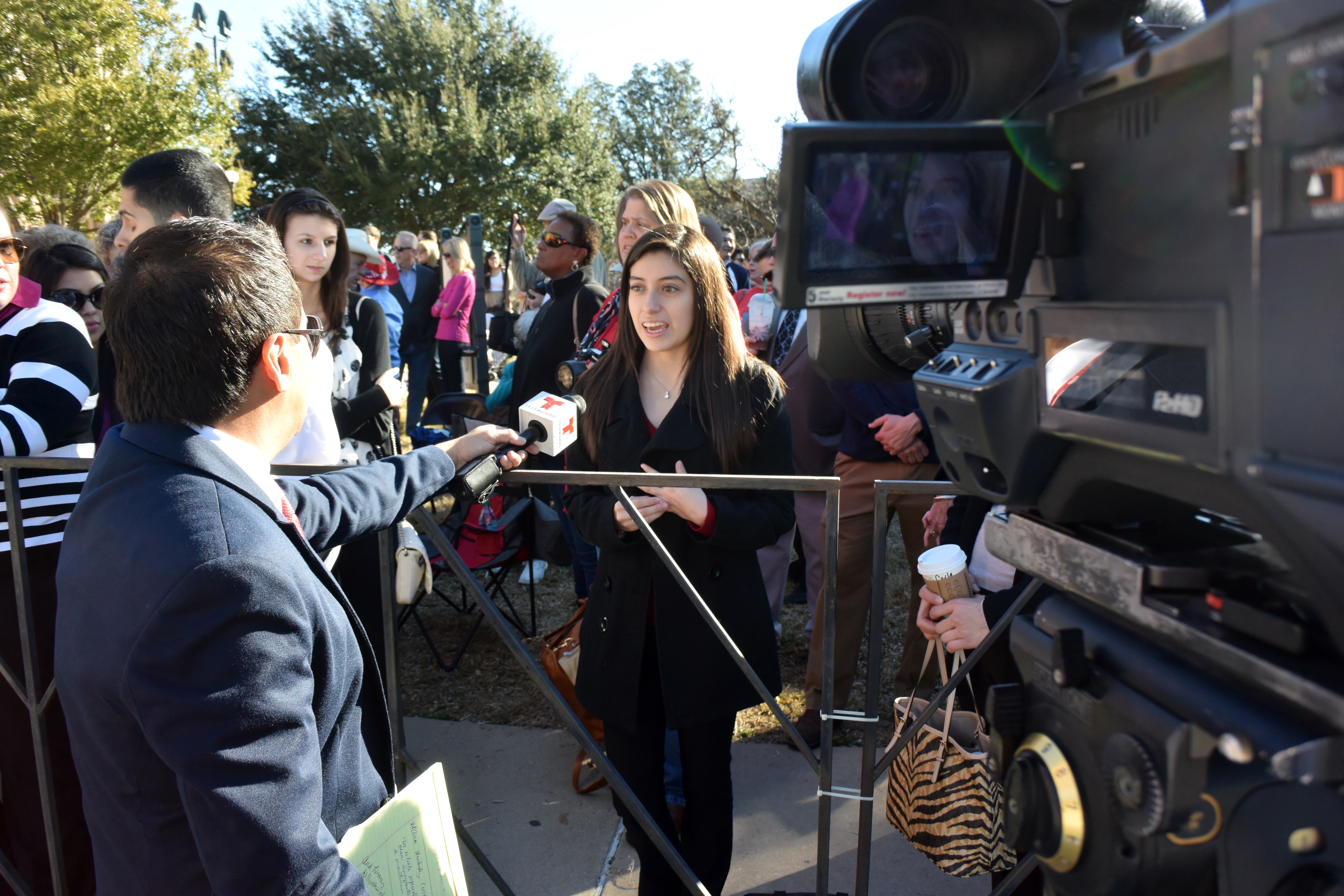
The festivities helped put us in the political spirit, with an F-16 flyover, the UT band playing patriotic songs, and a choir performing Texas-themed music. Karla Rosales, one of our freshmen members, was also interviewed for television!
We watched as Dan Patrick and his wife strutted under the swords and across the stage, to a solid round of applause. Governor-elect Greg Abbot and his family, however, received resounding applause, and the crowd—and the candidates—were ready.
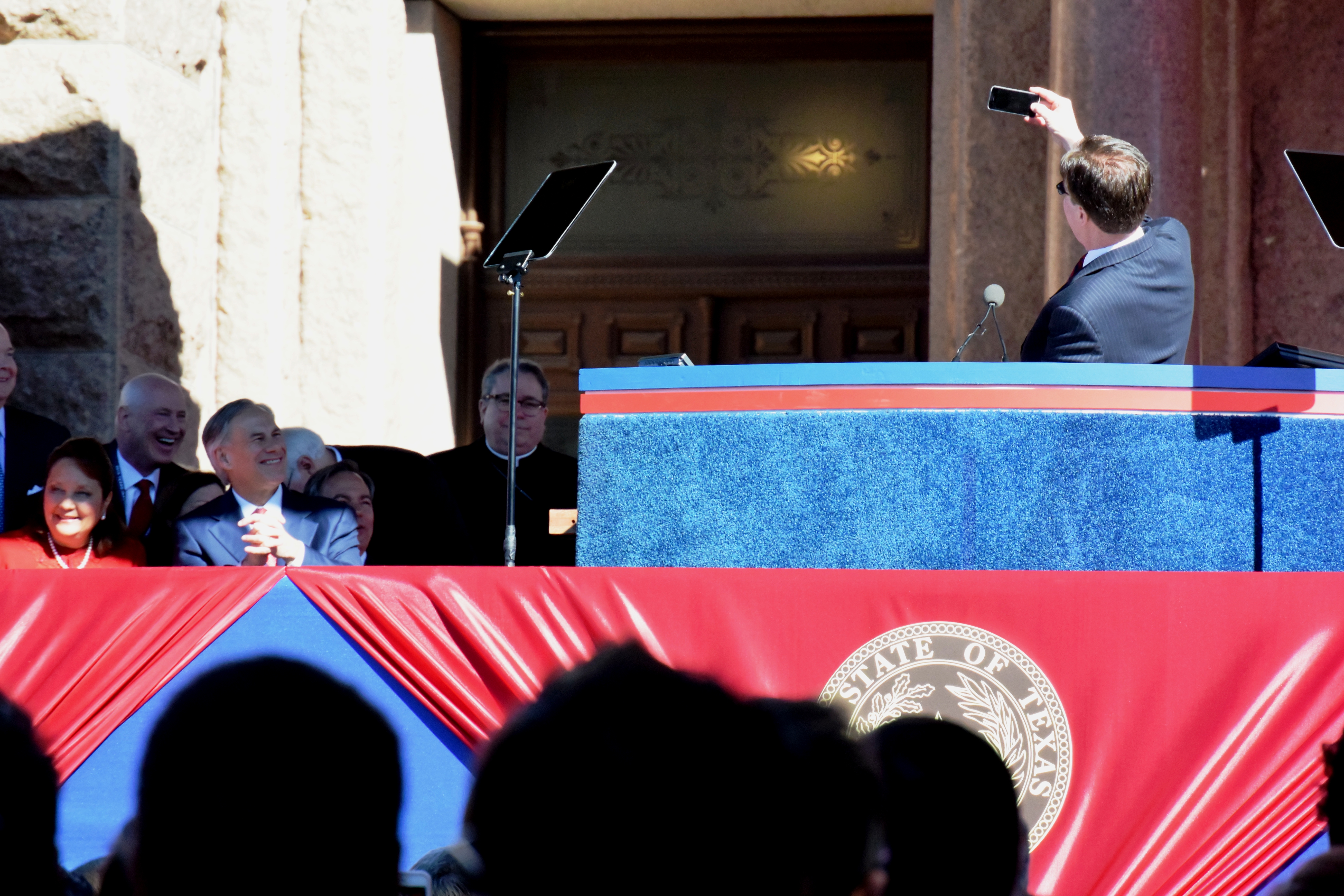
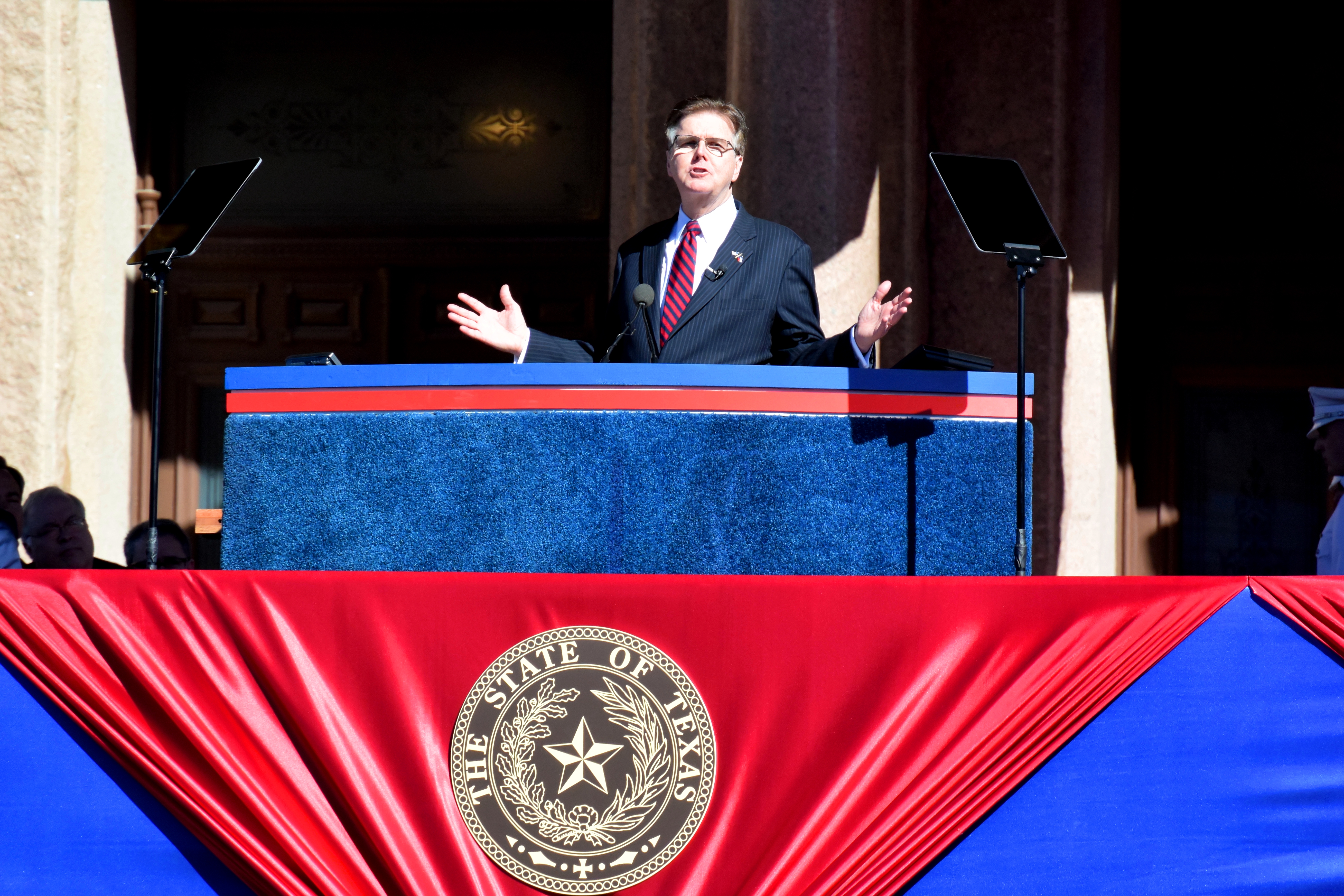
Lieutenant Governor Dan Patrick was sworn in by his son, Judge Ryan Patrick. Prior to his speech, he greeted the crowd with a selfie, and vowed that every day would be a “New Day in Texas”…
…while also suggesting he would be the “best Lieutenant Governor ever.”
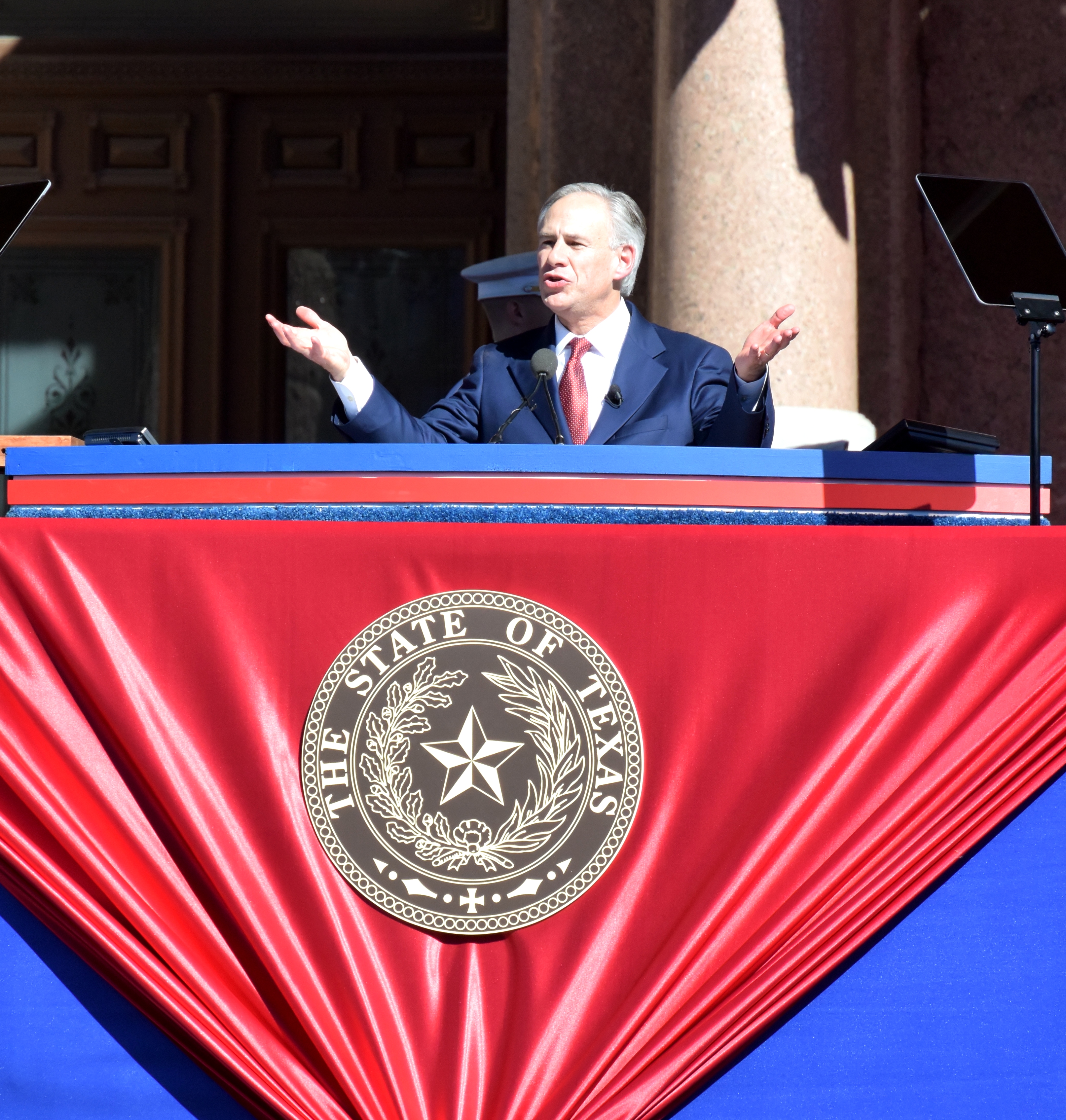
Governor Abbot’s inaugural speech was preceded by a 21-cannon salute, and the cannons had a loud, percussive effect. Our cameras shook. Abbott focused on his family and inclusion, stating that “Family everything,” and congratulating his wife on being the first Latina First Lady. Abbott discussed his injuries, which resulted from an accident some thirty years ago, and gave thanks go God and the upward-mobility culture of Texas for his ability to rise to Governor.
The inauguration was followed by a BBQ on the front lawn. Being a Texas BBQ, it was big—with helpings for 17,000. We ate picnic style in front of our state’s capitol building—what a tale for our kids one day.
After enjoying the Inaugural Barbecue lunch, we headed into the Capitol building for a quick tour. Awed by the architecture of the building, we noted how intricate many of the details were, such as the door hinges and the ornate wooden molding. We traveled up one of the historic staircases to the second floor to enter the House of Representatives and then the Senate. Since the legislature was not in session today due to the Governor’s Inauguration, visitors were able to admire the chambers.
We also searched among the Governor’s portraits in the rotunda, finding our favorites (Sam Houston, of course!). We also visited the courtroom where the Texas Supreme Court met until 1959 when the Supreme Court moved to a building of its own near the capitol.
We took the opportunity of conveniently being at the Capitol during legislative session to visit some of the legislative interns from Sam Houston. We visited the office of the second-longest serving member of the Texas legislature (Rep. Senfronia Thompson), where Jessica Rodriguez is interning. We also visited Lexi Gonzales in Representative Armando “Mando” Martinez’s office, and stopped by to Melva Gomez and Sadie McLaughlin in Representative John Otto’s office.
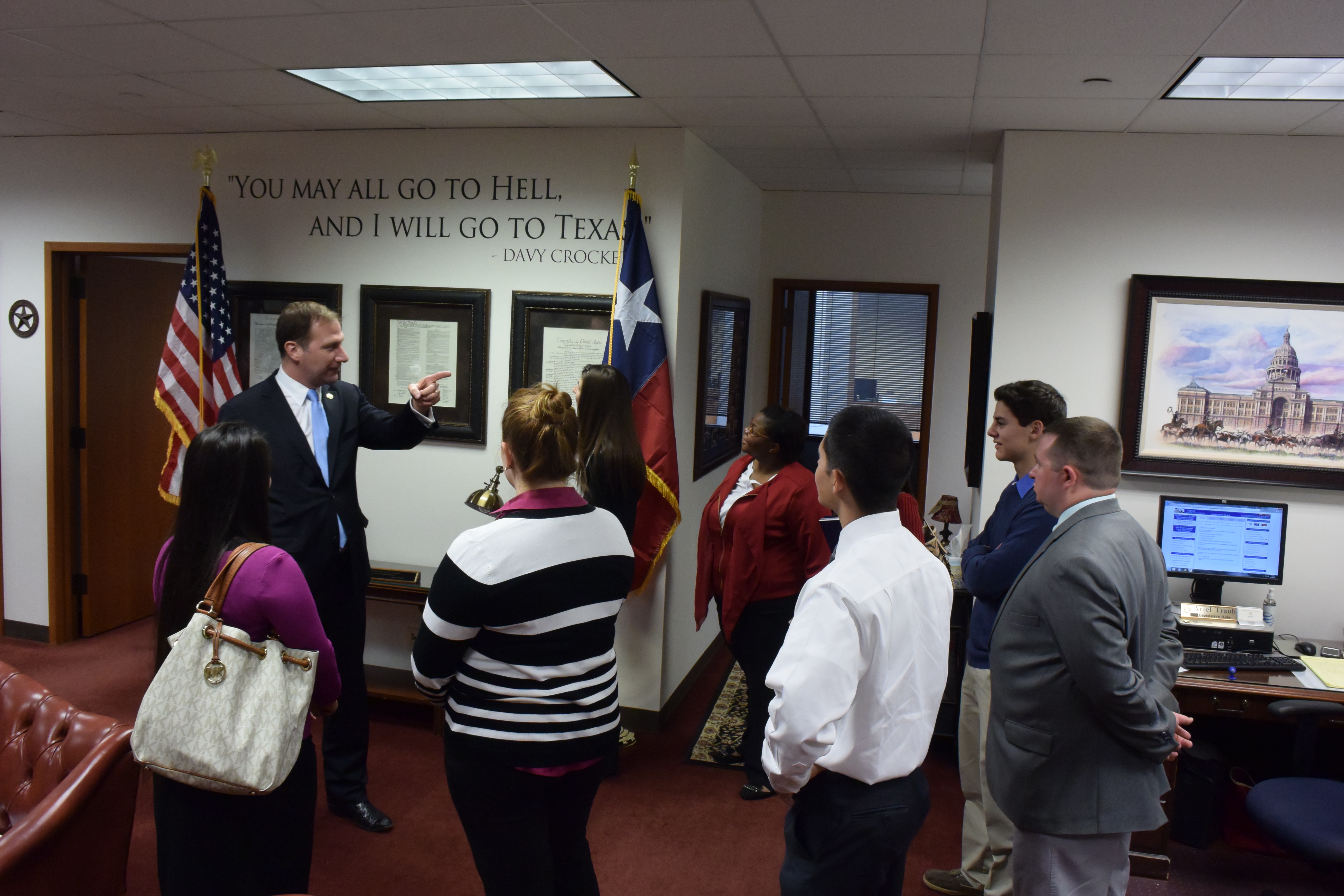
We also stopped by to see Ariel Traub, but she was hobnobbing at the Inaugural Parade, but we were fortunate to get a tour of the office by Senator Charles Schwertner himself! Very personable and friendly, Senator Schwertner was a great person to end our tour of the Texas Capitol and such an awe-inspiring day.
We left the Capitol, sadly, to head back to Sam Houston and Huntsville. On the way out of town we had the chance to stop at Quack’s 43rd Street Bakery. There we re-caffeinated for the drive home and enjoyed some delicious treats, such as their Raspberry Tart and Ginger Crinkle cookies. We then embarked on the three-hour drive home, reminiscing about our fast-paced trip to the Capitol and looking forward to our chances of maybe representing Sam Houston as interns on the hill one day soon.
We left Huntsville excited about the prospect of learning more about our great nation’s past and being present for history in the making-Governor Greg Abbot’s Inauguration. We split up the three-hour drive by stopping in Elgin, Texas for some lip-smacking Meyer’s barbeque. Here we enjoyed a large variety of different meats, including brisket, sausage, chicken, ribs, turkey, pulled pork, and chopped beef. To accompany the excellent protein options, we tried their tasty sides, of which potato salad was a group favorite. The wooden furniture and rustic décor made the food taste even better, as the atmosphere transported us back in time to the Wild, Wild West. The staff at the restaurant was very friendly and respectful; we could not have asked for a better pit stop during our journey.
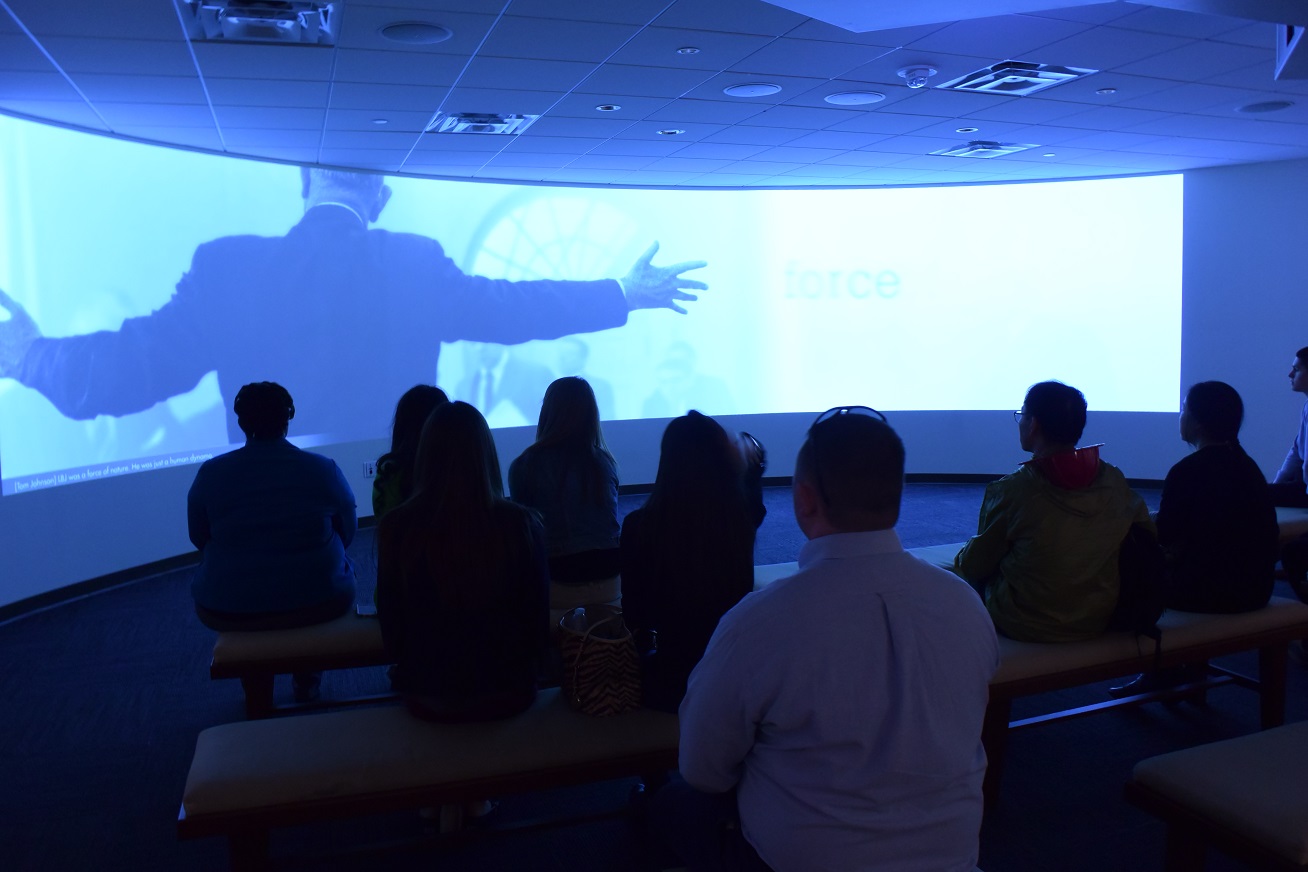
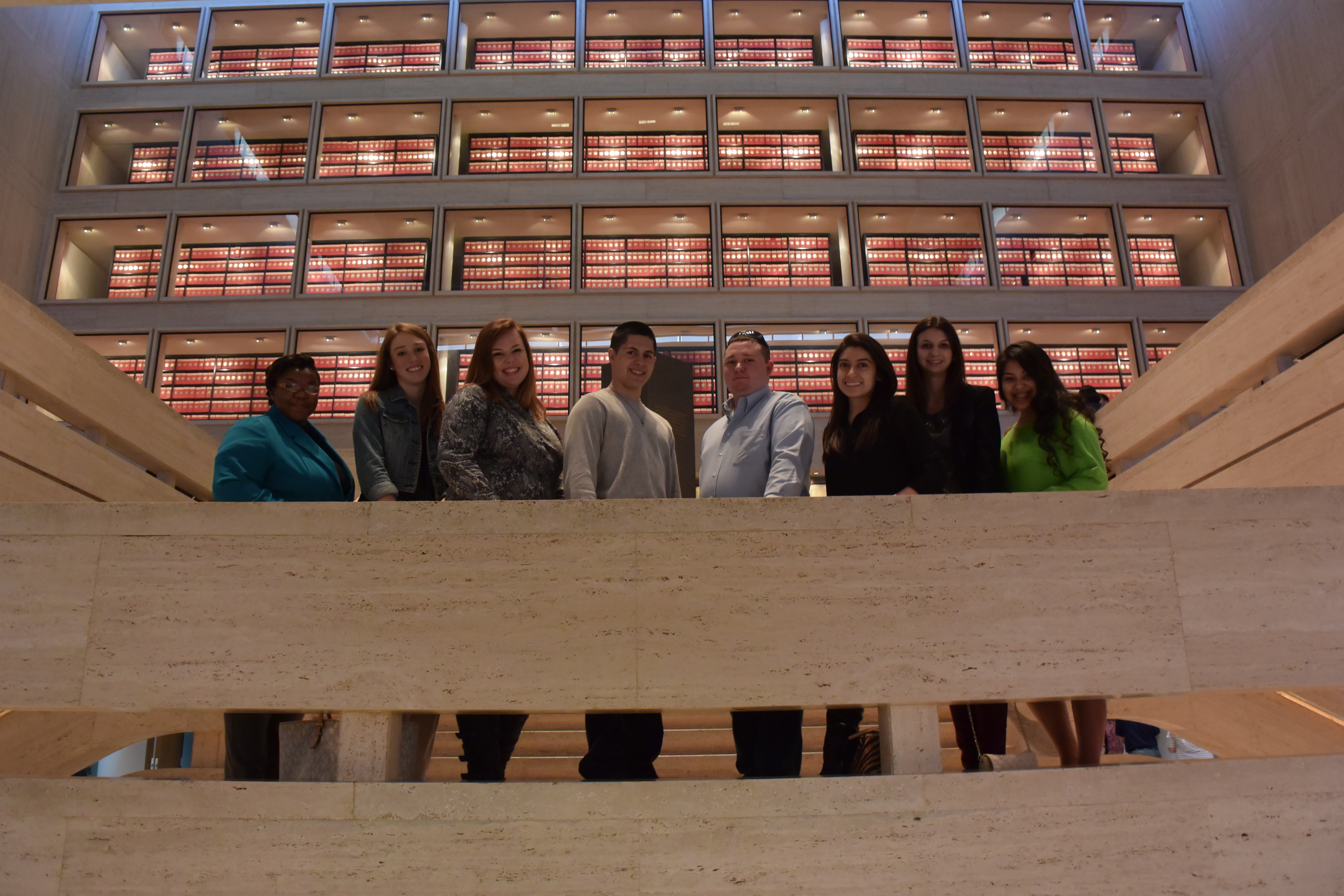
Finally we made it to our first stop in downtown Austin, where we visited the LBJ Presidential Library. Lyndon Baines Johnson was the 36th president of the United States. The museum was fascinating in that every aspect of his life was displayed. His greatest impact on the political system was the Great Society, as the legislation covered issues such as Medicare, Immigration Act, and voting rights. President Johnson impacted civil rights and worked directly with Martin Luther King Jr., while their movement continues to prevail today. Following an interesting eleven minute video…
The infrastructure of the library consisted of ten levels, some of which contained the presentation of the Whistle Stop Tour, The Oval Office, and The Tragedy and Transition of President Kennedy, as well as hundreds of thousands of documents related to his presidency.
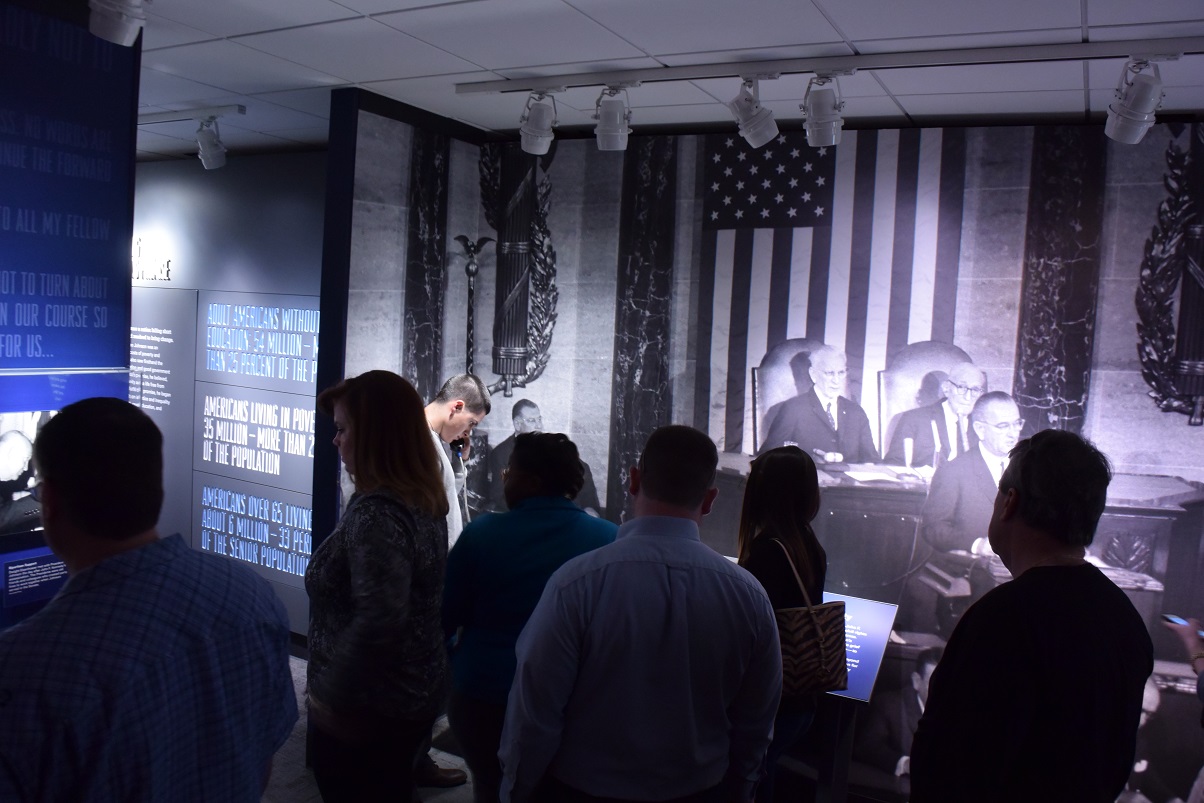
Throughout the museum we observed many unique historical artifacts tied to LBJ and his family.
Along with these artifacts were audio recordings of LBJ’s phone calls, serving as perfect examples of the “Johnson Treatment”. Before departure, we stopped by the gift shop to purchase a souvenir to commemorate this portion of our Austin trip.
We rushed from the Lyndon Baines Johnson Museum and Library to arrive at the Bob Bullock Texas State History Museum about two hours before closing. Located just down the street from the Capitol Building, the Texas history museum welcomed us with much commotion as the staff prepared for one of the many inaugural celebrations. We navigated through the hustle and bustle to reach the main event, three floors of dense Texas history.
The first floor covered much of early Texas history, from the Native Americans that originally settled the Lone Star State to early Mexican conquests. From movies to interactive recordings, we learned of early colonial life and of the hardships that living on the land created. Strolling through each room, we journeyed through time to study the different Indian tribes that originally settled the land we now call Texas. From the Alabama-Coushatta tribe to the Cherokee people, it was evident that the “white man” took unabashedly what was not his to take. Both white settlers and Mexicans alike wronged the Native American people.
Leaving the first floor behind, we made our way upward to discover the history behind the Republic of Texas and later the State of Texas. Finding much information on our great former President and later Governor, the honorable Sam Houston, we studied mission life in Texas during the early 19th century, when Texas was recognized as independent from Mexico, only after defeating Santa Anna at the 18 minute-long Battle of San Jacinto. This section of the museum particularly struck a chord in LEAP Center students, as Sam Houston stands as the namesake of our school.
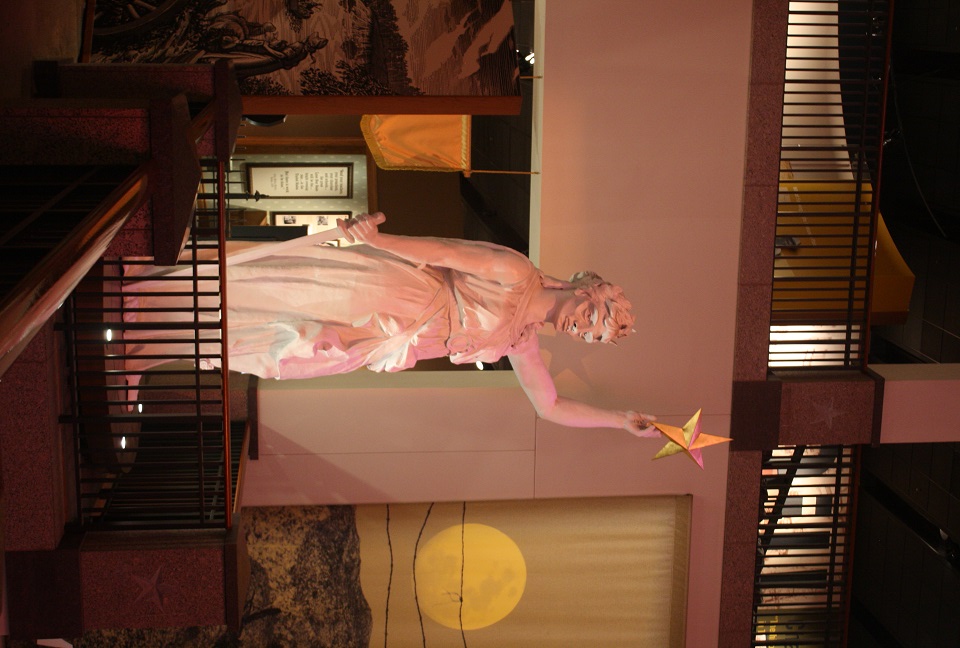
We also saw a model of the intriguing “Goddess of Liberty,” the statue that sits atop the Texas Capitol. Up close, her features are exaggerated, even grotesque, but this is necessary to give definition to her features from hundreds of feet away, which is how she is typically viewed when atop the Capitol Building.
With just a few minutes to spare, we made it to the third floor. Here, we explored the more modern aspects of Texas history, like ranching, oil, rice, NASA, and woman’s rights. Interestingly enough, most Texans know of the ranching and oil history, but most do not understand the role of rice in the Texan economy and the national impact Texas made on woman’s rights. Rice fields added value to marshy lands in the Beaumont area, where many thought hope was lost to cultivate and prosper. Also, Texas was the first state in the South to adopt the 19th amendment and give woman the right to vote. We finished exploring the third floor after quickly reading up on the Women Air force Service Pilots, who legally flew in the military during World War II, and perusing the exhibit about the place space exploration holds in Texas history.
We left the vast history museum after just barely quenching our thirst for knowledge and in search of the Driskill Hotel for a coffee pick-me-up. We were awed by the grace and majesty of the 5 star hotel. The selections on their menu were delectable to read, much less enjoy. After giving our multiple options much thought, we decided on things like caramel lattes and decadent chocolate cake. Some of us even indulged in The Driskill’s smooth and savory banana split. The architecture of the hotel complimented our afternoon snack perfectly, with ornate ceilings and plush floors.
While in Austin, we had the chance to network with fellow Sam students who are interning at the Capitol this legislative session. They met us on the corner of Lavaca Street to participate in a downtown Segway tour. What an exciting opportunity, to tour downtown Austin on a Segway, after such a history intensive day. Each LEAP Center adventurer was personally trained by an expert on how to maneuver a Segway. Although we all were coerced into wearing protective gear, that did not stop the fear of possible injury. Throughout the tour, we learned about the history of downtown Austin. We bore witness to the State Capitol…
…the Governor’s mansion, and many other historic buildings, such as the first ever “sky scraper” in downtown. After about 2 hours of dodging traffic, we finally mastered the skill of segwaying and headed to Fogo De Chao to soothe our aching stomachs.
For our group’s final savory food stop we dined at an all you can eat Brazilian steak house, Fogo de Chao, in downtown Austin. This restaurant was fine dining, quite a treat for everyone in attendance. Dinner began with a visit to the world class salad bar, consisting of many delectable salad ingredients. Once we finished our salads, we began the meat portion of the dinner. By showing a green or red card, we signaled to the wait staff whether we were ready for the next option. The green card caused all of the wait staff to ambush us with their signature cuts of beef, pork, lamb, and chicken. Once the cut was presented to us, we had the option of choosing the way the meat was cooked. Once we finished with the main course and had all of the meat that we wanted, it became time to choose which coffee and dessert met our fancy. The desert menu was just as overwhelming as the main course, but we handled ourselves appropriately and ordered cheesecake, crème brule, chocolate mousse cake, and papaya cream. Fogo De Chao defied all expectations and left us feeling stuffed beyond imagine.
And it was in that full and exhausted state that we retired to the hotel to prepare for tomorrow’s inauguration.
After an exciting afternoon meeting David Berg, attorney and author of Run, Brother, Run, we packed up two cars and headed for Nacogdoches! We could feel the excitement build the closer we got to Nacogdoches, anticipation of our observation of a Moot Court Scrimmage and, more immediately, an adventurous evening of zip lining.
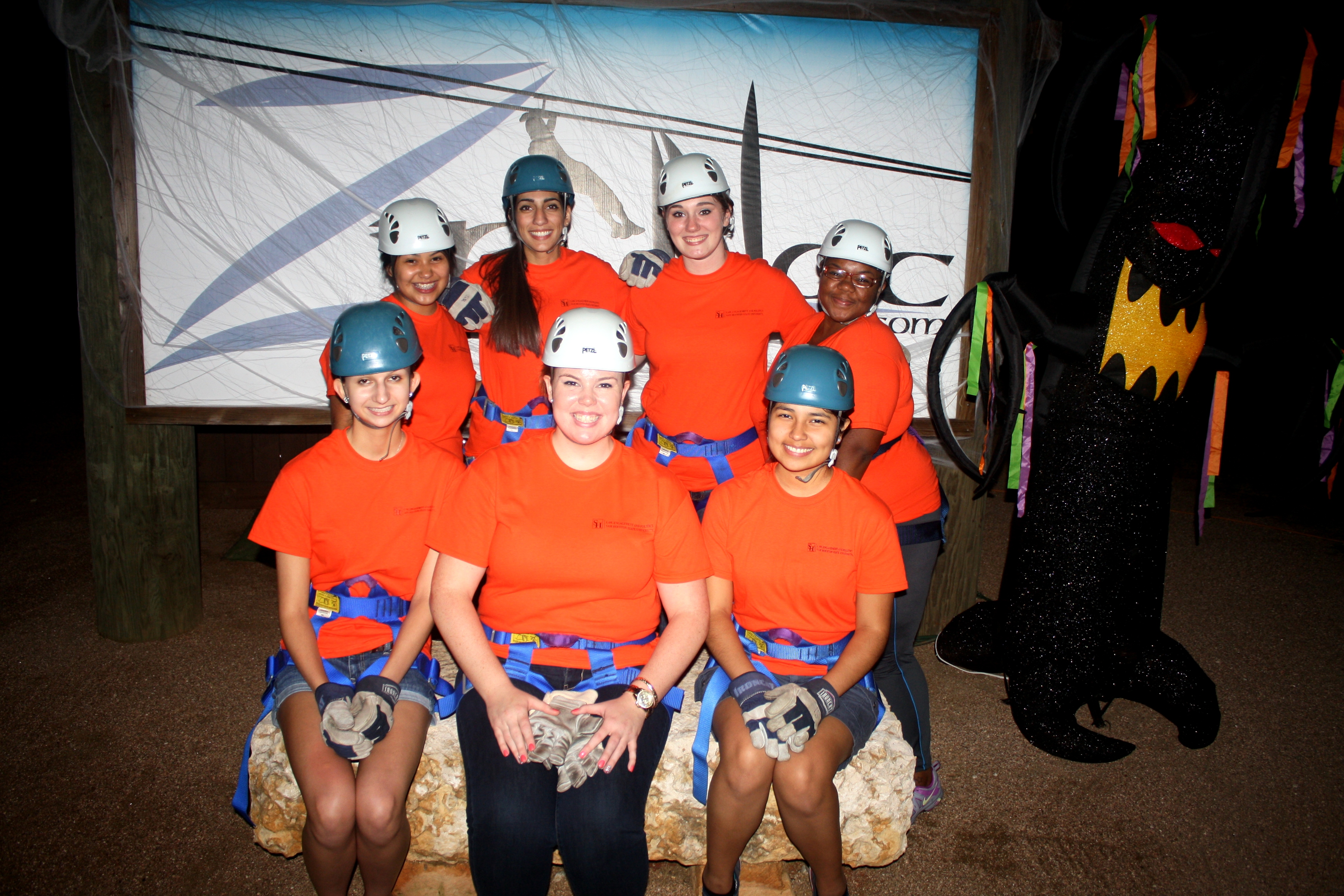
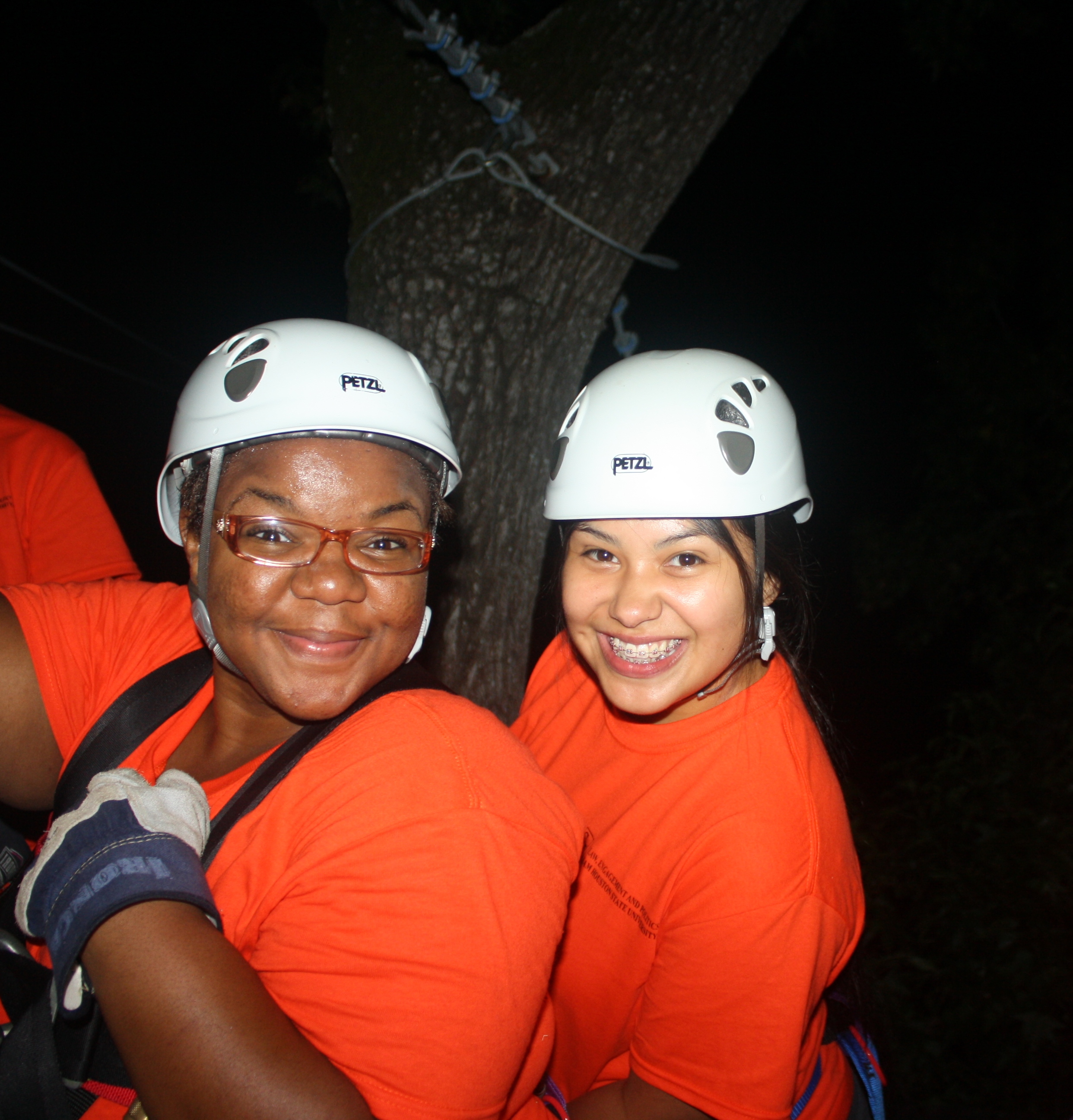
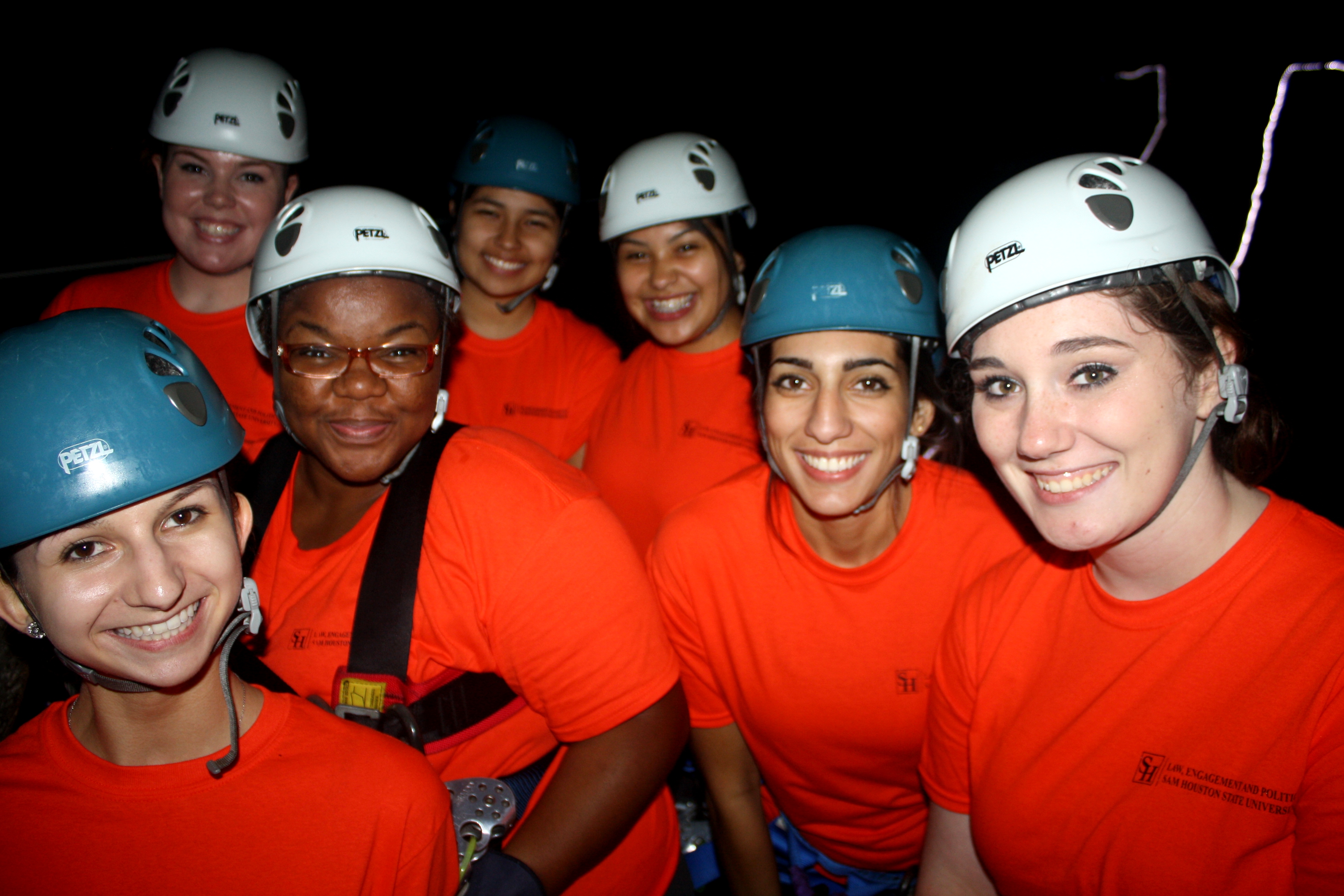
We arrived in Nacogdoches around 7:10pm and headed for the Zip Line course, ZipNac. The tour guides quickly suited us up and instructed on how to use the equipment safely and the proper procedures for a fun zip line. It was exciting to say the least.
LEAP Center Students Ready to Zip Line!
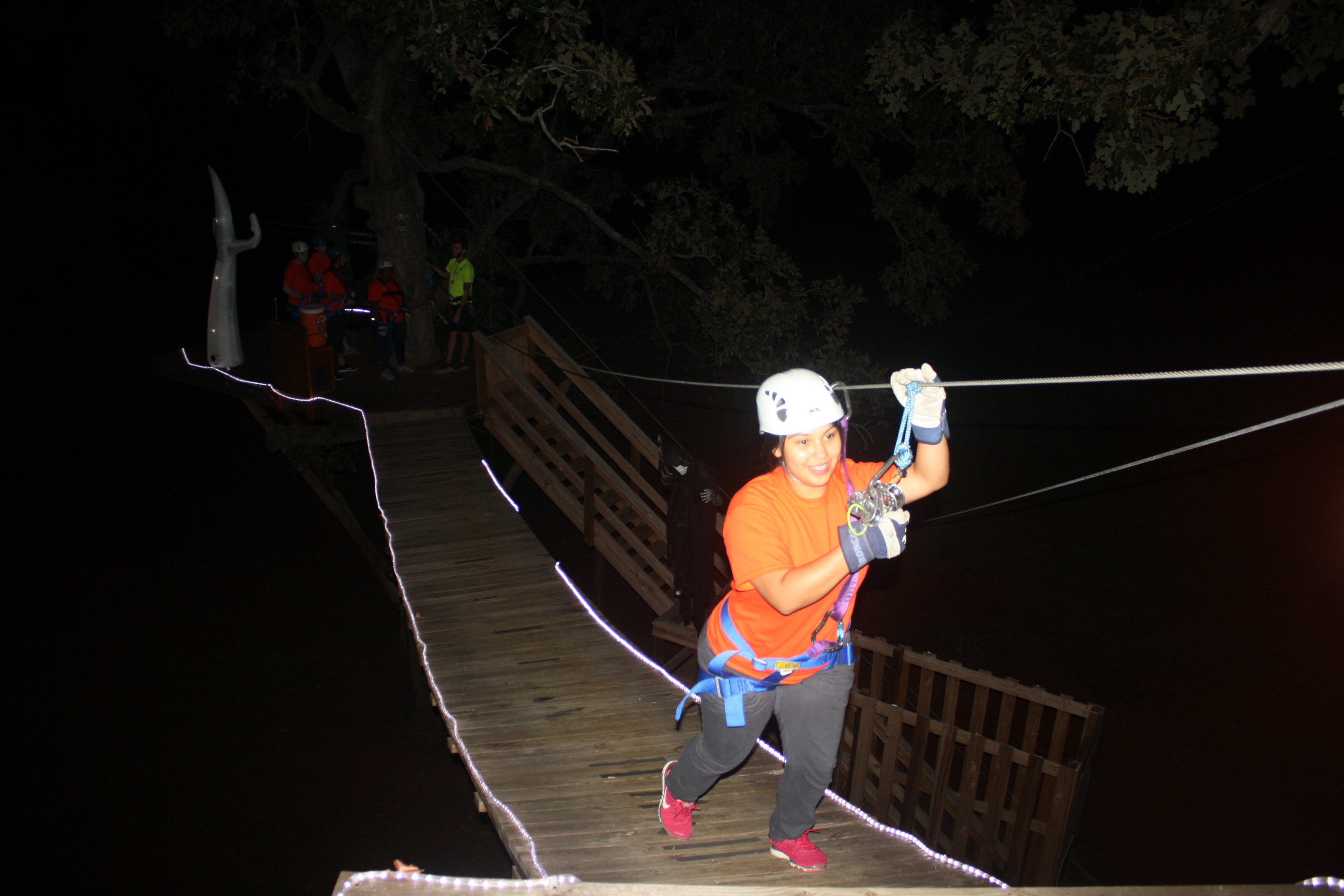
I won’t forget the adrenaline rush I felt on that first drop down or walking over a suspension bridge in the dark.
Megan Chapa on the Bridge
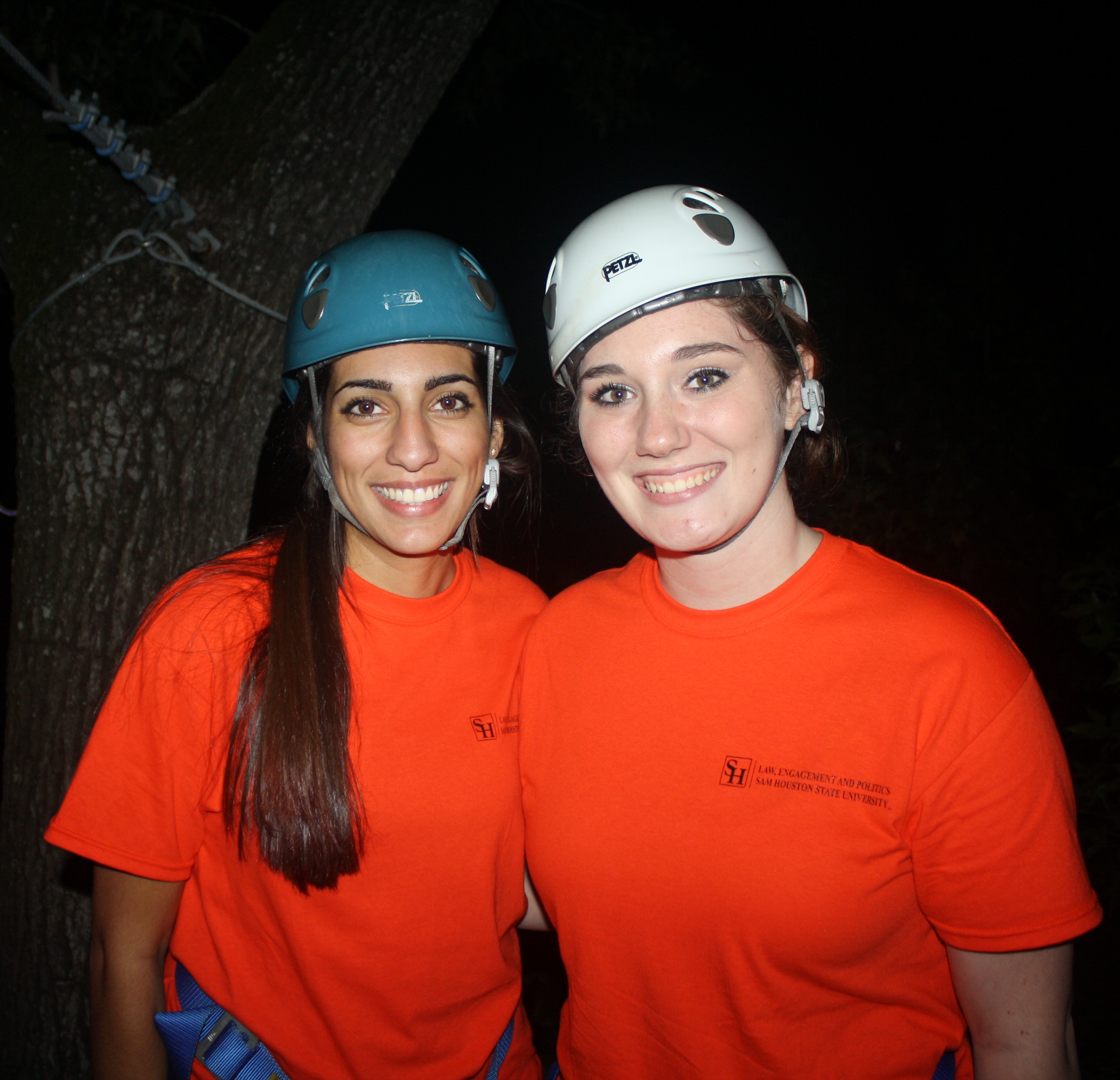
Or the fun time we were able to spend together, whether it was Sura Omar and Ariel Traub…
Sura Omar and Ariel Traub
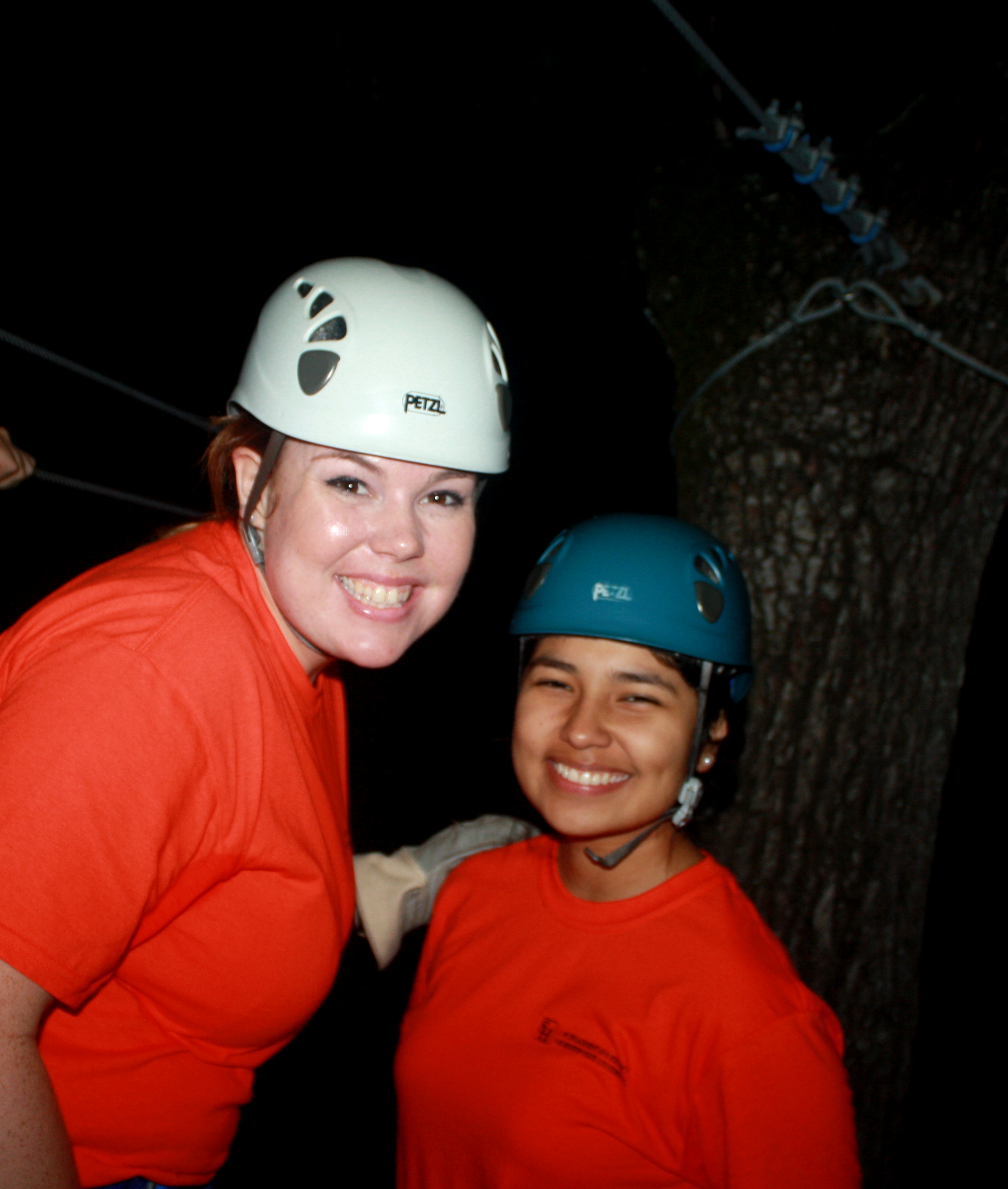
…or Constance Gabel and Jessica Martinez….
Constance Gabel & Jessica Martinez
…or Jasmine Moss and Megan Chapa…
Jasmine Moss & Megan Chapa
…or the whole group….
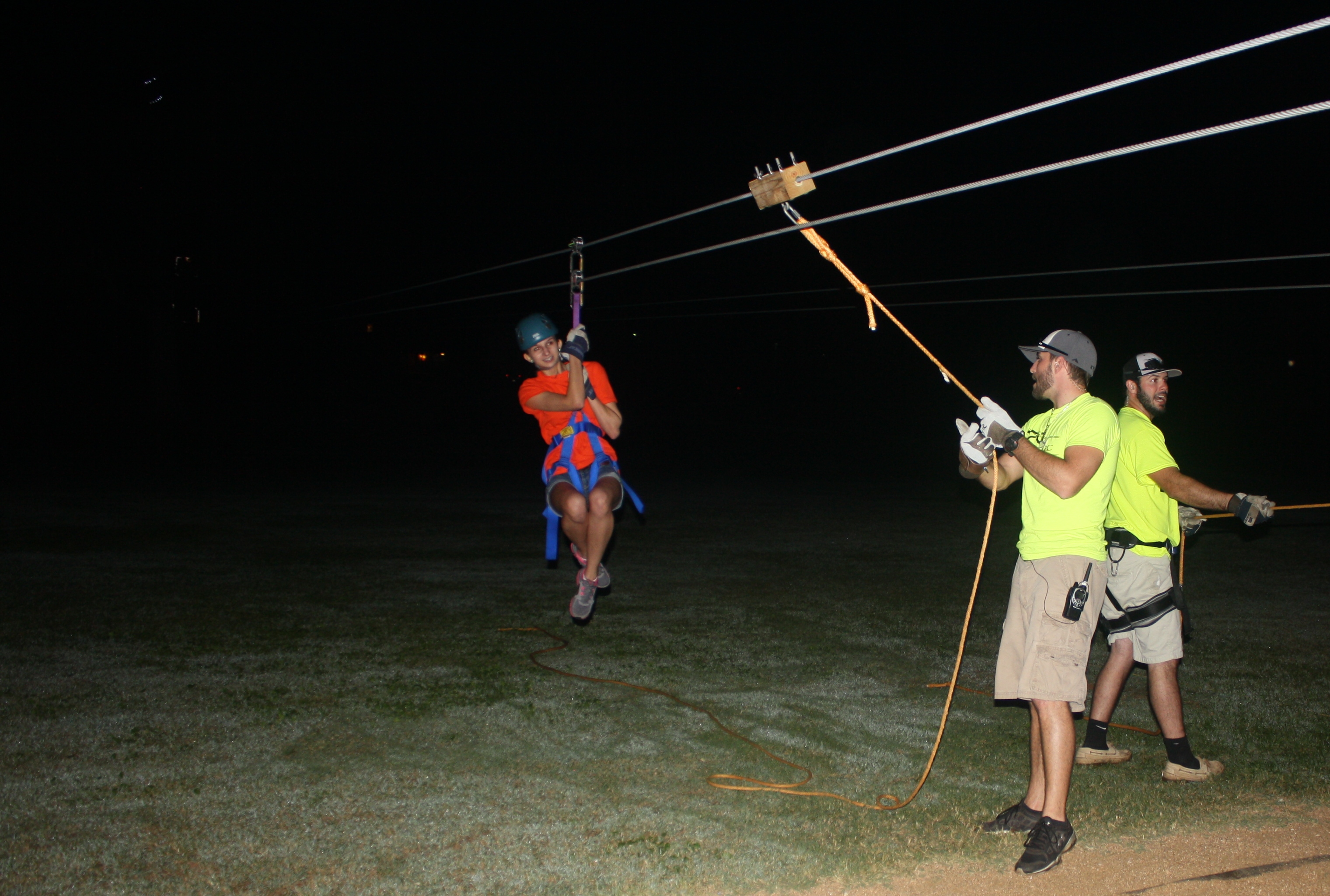
…or whether it was Kaitlyn Tyra flying home in record time…
Kaitlyn Tyra’s Finale
…we all had a great time.
After zip lining we made our way to a local restaurant called Jalapeno tree, to enjoy a nice Mexican dinner. The appetizers consisted of chips, salsa and queso. My main course was chicken enchiladas, homemade rice and charro beans. The food was authentic and very delicious. At the restaurant we met with Gene Roberts, an attorney who is the Director of Student Legal Services at SHSU. He is in Nacogdoches to judge the Moot Scrimmage, and he will be helping us understand what to expect at the scrimmage, how the performances are judged, and tips for law school.
I am looking forward to another exciting day tomorrow watching the Moot Scrimmage and looking back at the wonderful memories made. It is moments like these that make me appreciate all that the LEAP center and Sam Houston State University do for us…
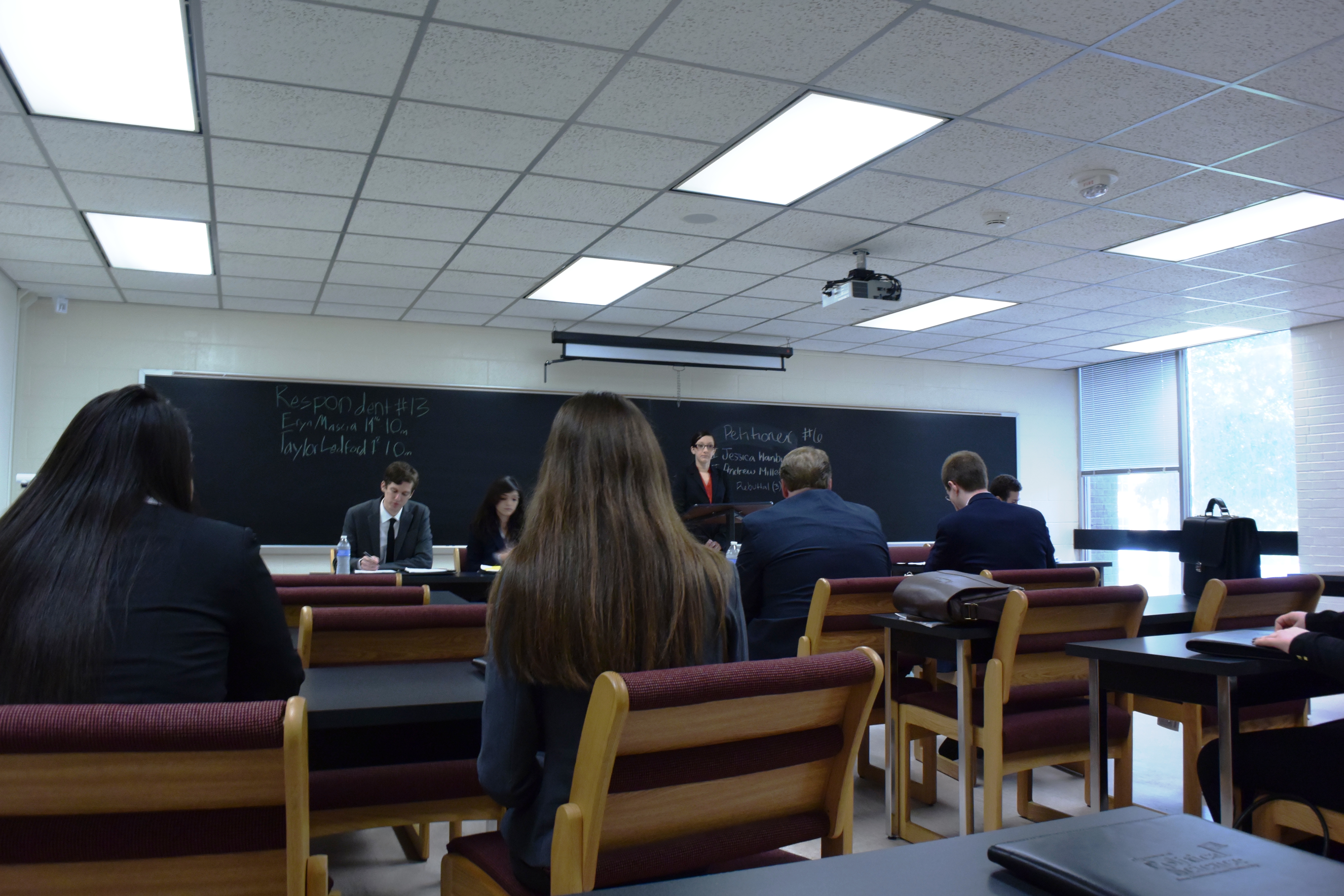
…After a short night of sleep, we were able to watch numerous Moot Court Scrimmages, which turned out to consist of a series of intriguing contests.
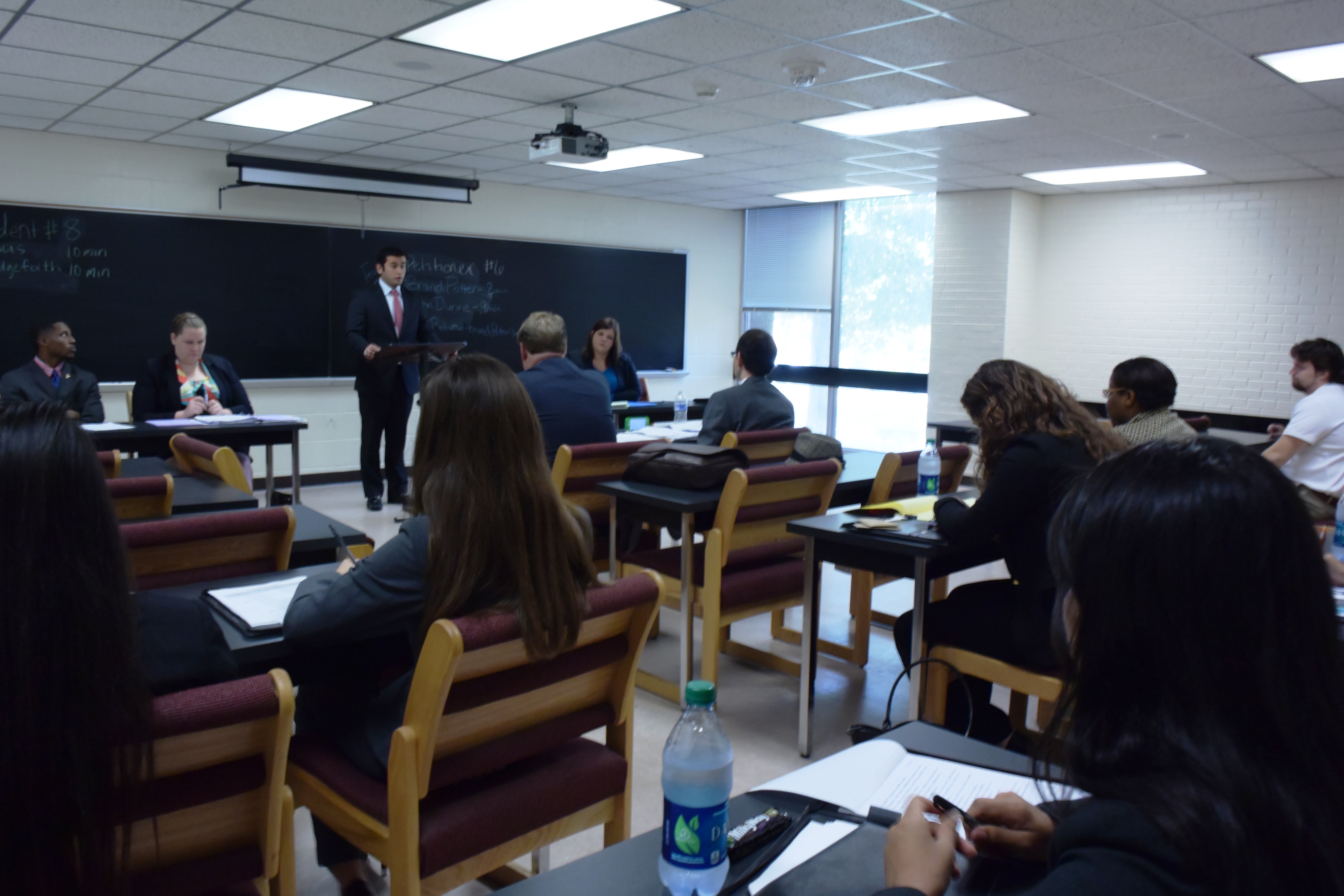
In all, we watched four contests. The morning contest was the most competitive. The students were highly skilled and very knowledgeable. The speakers displayed knowledge of the material, confidence, and spoke articulately about the legal matters they have been given to study. It could have been intimidating.
The second panel wasn’t as intimidating. The students struggled at times to articulate their ideas and occasionally seemed to struggle with the facts of the case. We learned later that we had seen the most and least prepared of the students, giving us a strong sense of the range of competition at these events.
A moot court competition is designed to mimic the appeals court process. Incidentally, the LEAP Center hosts four trials from the 10th Court of Appeals on campus every year, so many of us had seen that action. What we hadn’t seen was students try to replicate the work of appeals attorneys. Even the students who struggled helped us understand the process and, as always, we sympathized with those who have speak in public, a difficult task in almost any circumstance.
The afternoon groups fell within the range we had seen in the morning, and all of the teams taught us something about the law, the process of the moot court scrimmage, and ourselves. We are particularly grateful for Dr. Donald Gooch, the pre-law advisor at SFA, and Gene Roberts.
Following our observation, the general consensus was that we should form a Moot Court team at SHSU, and that many of us were game for the competition!
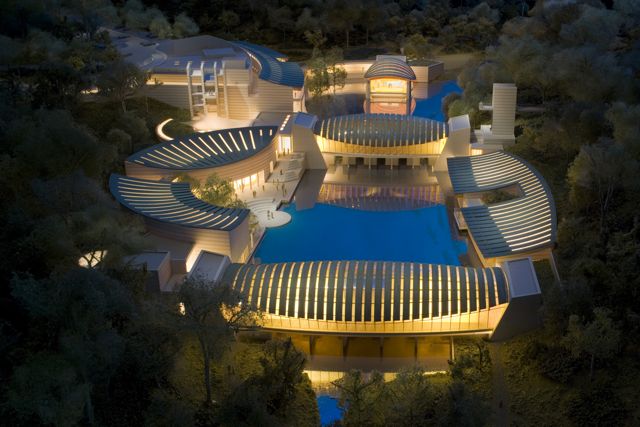
The last day of our Midwestern Tour arrived, and we were able to visit the beautiful Crystal Bridges Museum of American Art in Bentonville, Arkansas. The beautiful museum was designed by Israeli architect Moshe Safdie, and the funds for the museum were provided by Alice Walton, the Walmart heiress. Although open for fewer than ten years, the Museum is one of the most ten visited museum in the United States—despite being location off a major highway, and hours from a major airport.
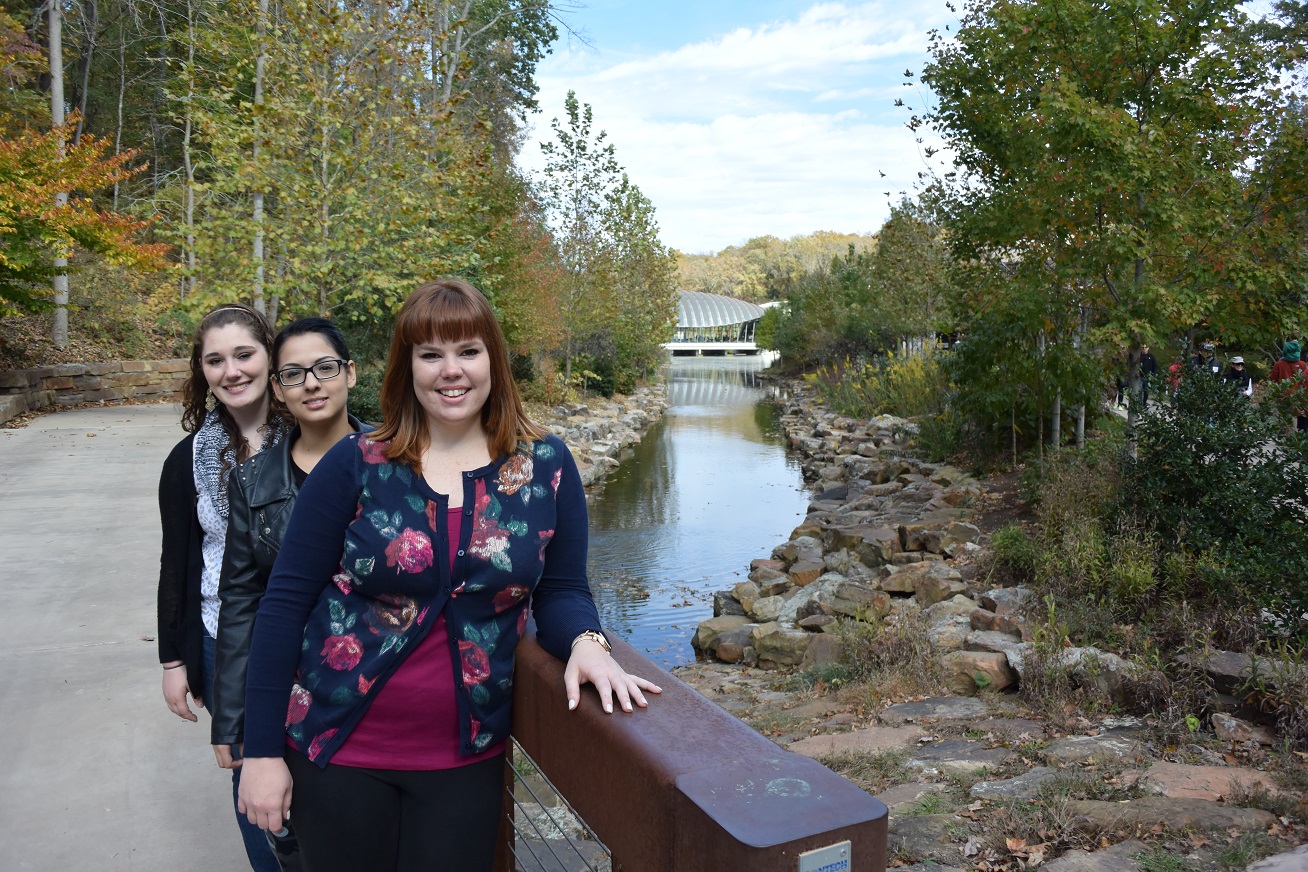
But it is worth the effort to get there. The Museum grounds are beautiful…
..and the art was amazing.
Among the favorites were political works, such as Charles Wilson Peale’s famous portrait of George Washington…
..and a piece by an artist who is becoming a favorite of ours, Georgia O’Keefe:
Radiator Building, O’Keefe
Not only is there no entrance fee to the Museum, but the Museum offers free audio guides, which highlight hundreds of works of art, providing background and instruction for those of us who are not already art connoisseurs. In the piece above, for example, we were able to see connections in the white crown of the Radiator Building with many of O’Keefe’s work focusing on the southwest, particularly animal skulls, which take on a similar color and shape.
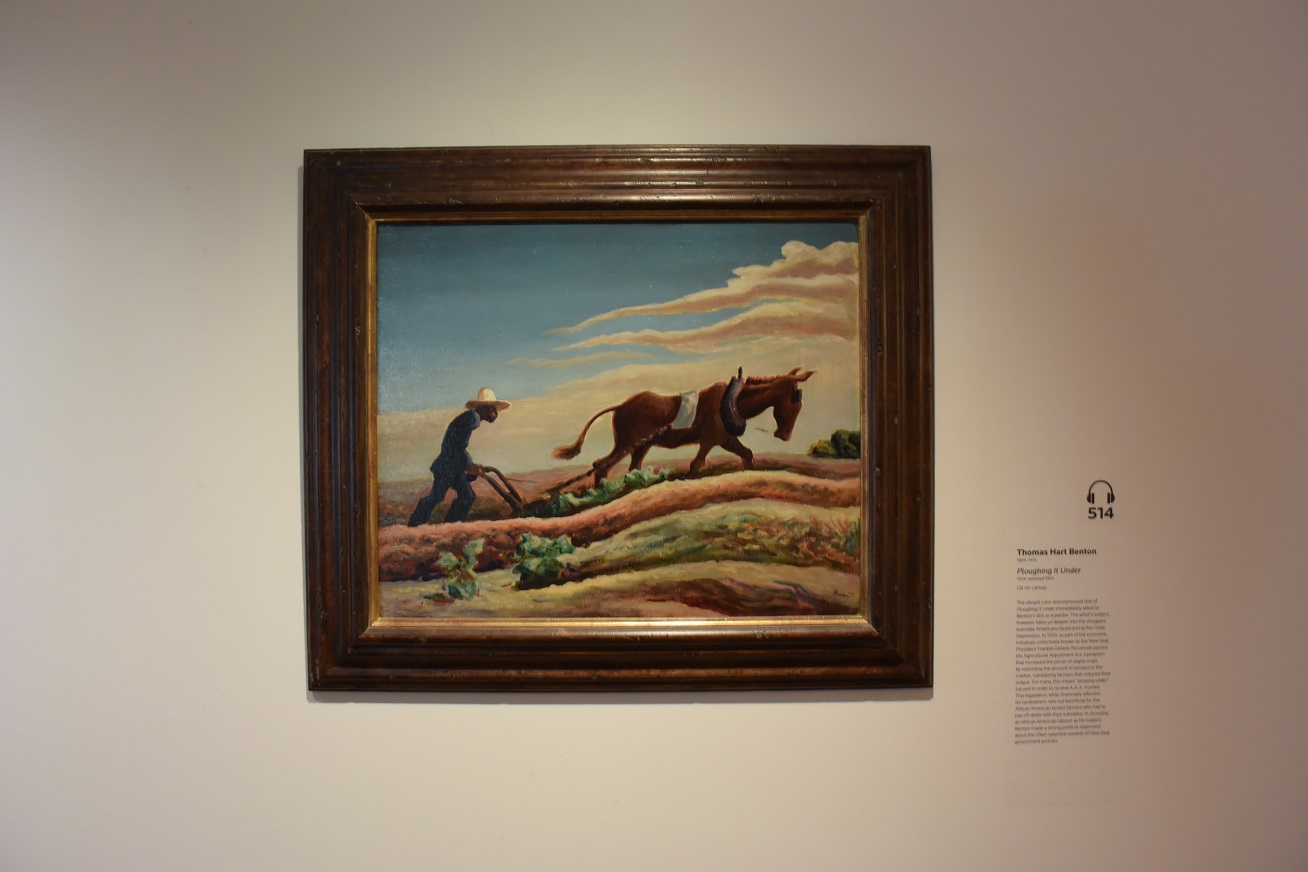
We learned how Benton used similar contour lines depict the sky, human/animal life, and the ground to make a connection between life and its environment, a connection hat would have been particularly salient in the 1930s in the midwest.
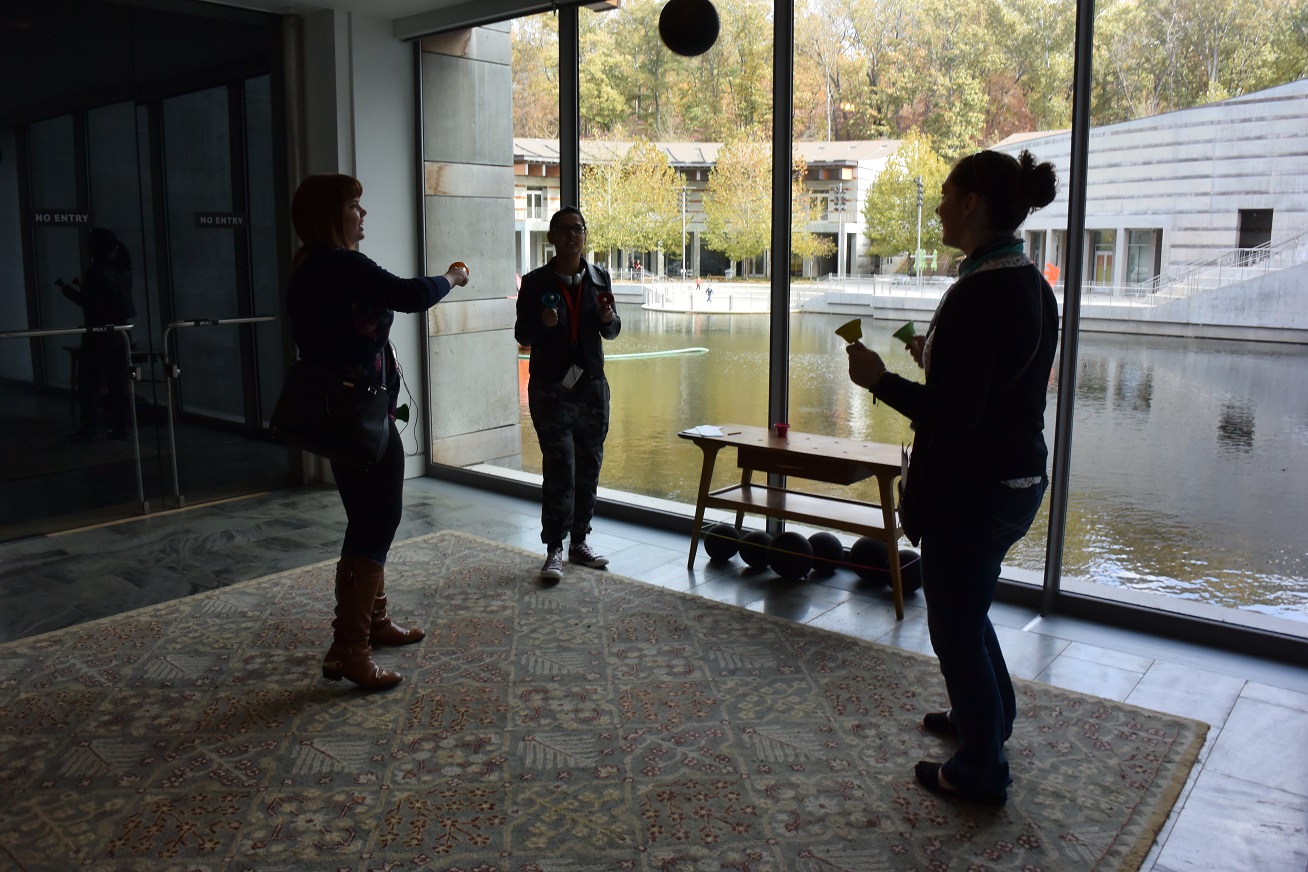
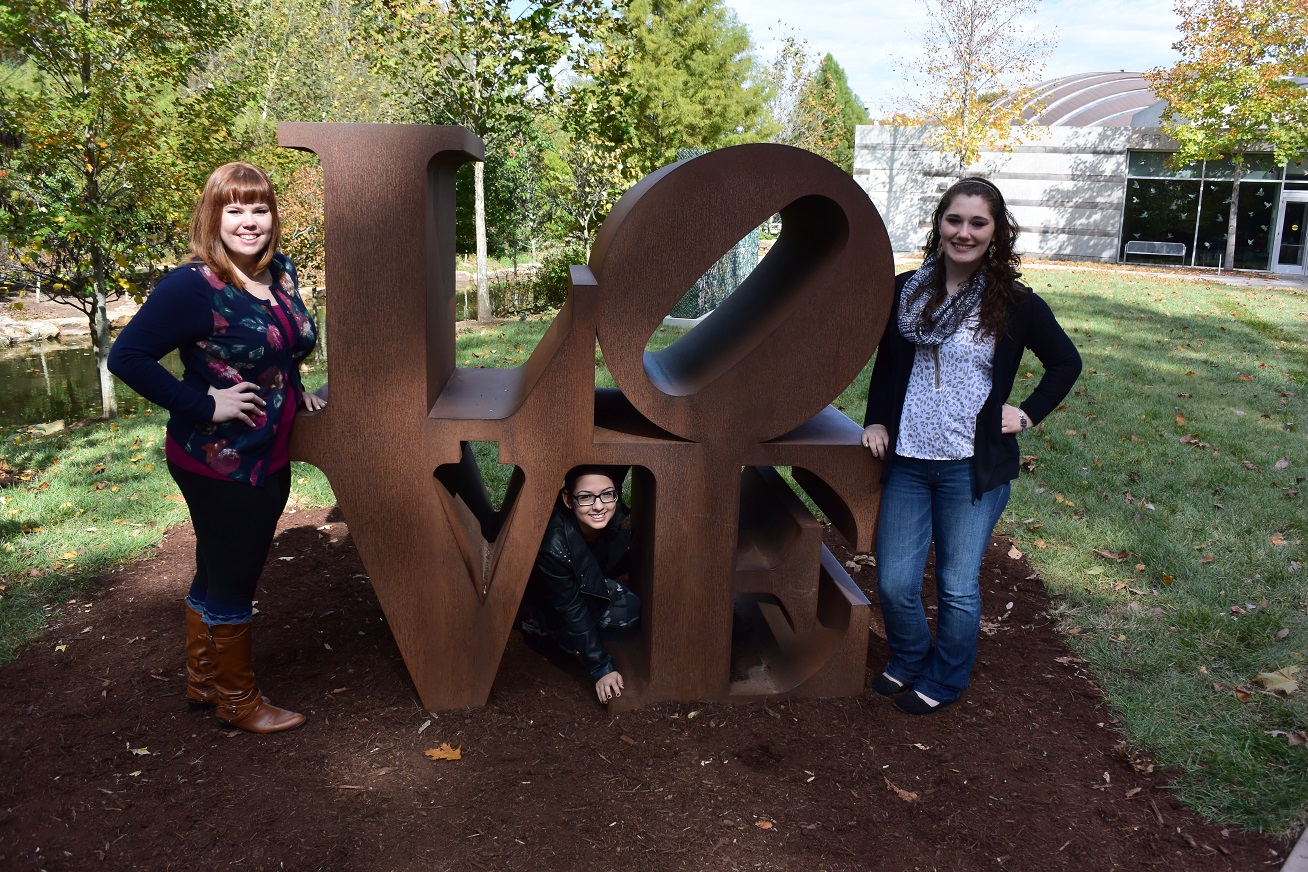
The Museum also allowed us the opportunity to engage in some “performance art”…
…and pose next to (and in) Robert Indiana’s famous “LOVE” sculpture.
It was sad as we ended the trip, with a final look at the Museum…
Crystal Bridge Art Museum
The end of the trip, however, also offered a time of reflection on what we learned and experienced. Accordingly, we voted on our favorites, with the following results:
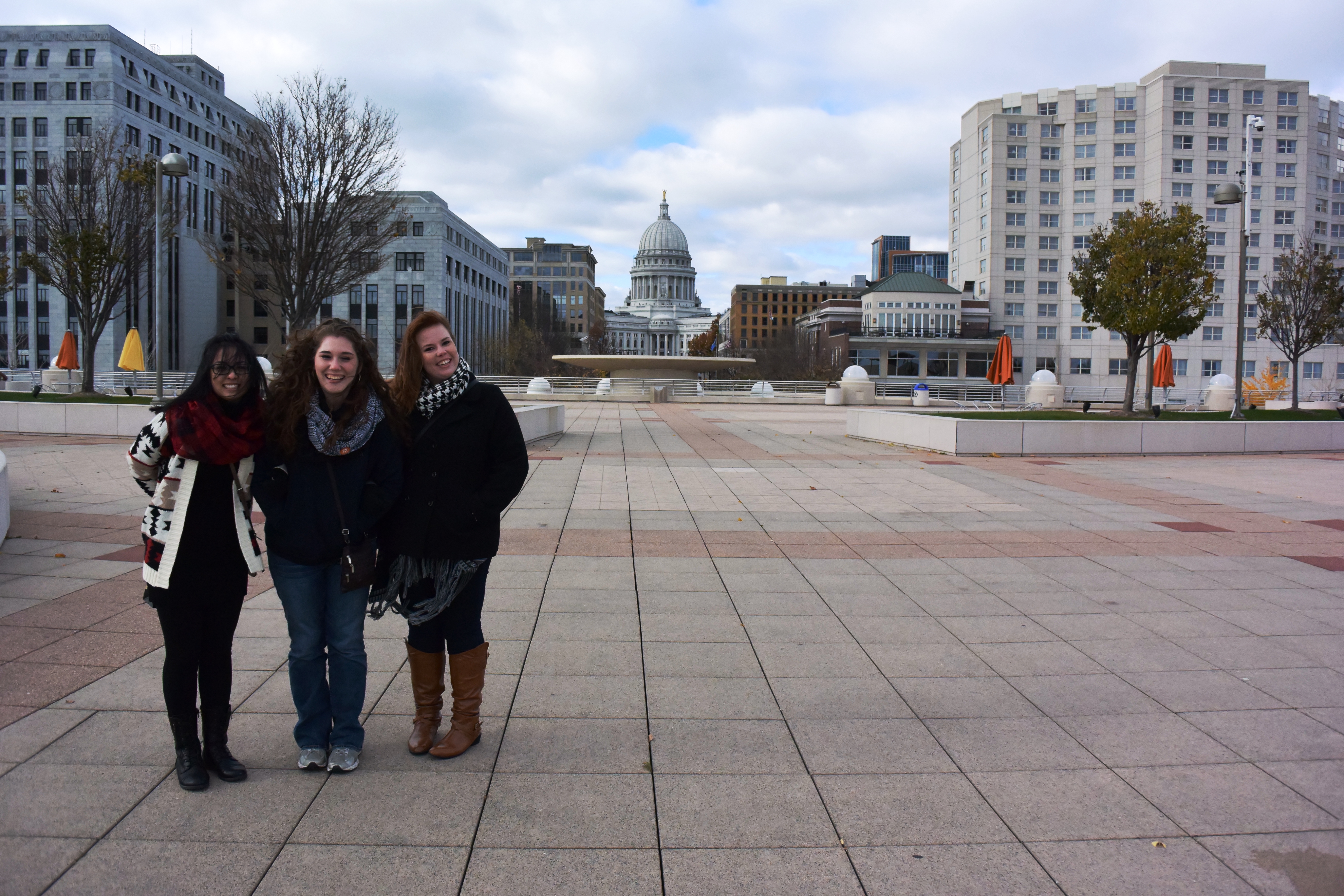
In general, our favorite cities were (1) Madison, WI, (2) Kansas City, and (3) a tie among Chicago, Bentonville, Little Rock, and Spring Green. Madison was the big surprise, impressing us all with its beauty and many shops and amenites.
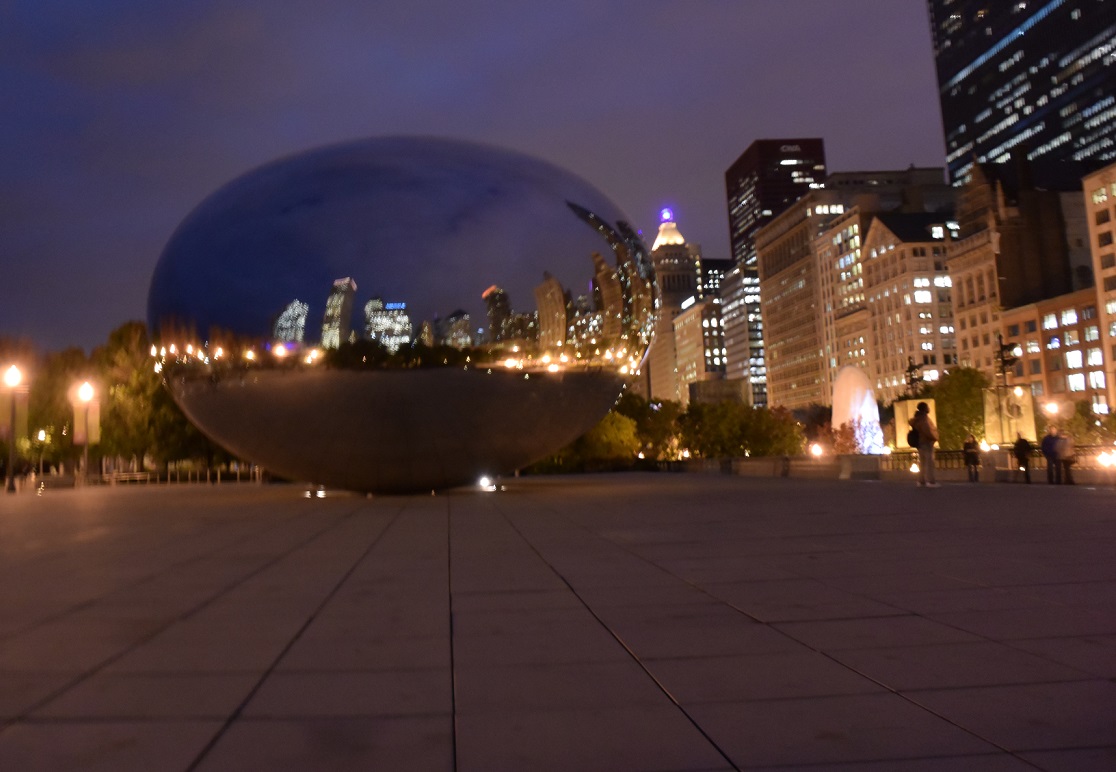
Identifying our favorite sites was more difficult. The Bean in Chicago’s Millennium Park was a favorite…
…with Talieisin, the World War I Museum, and Union Station receiving votes.
Union Station, KC
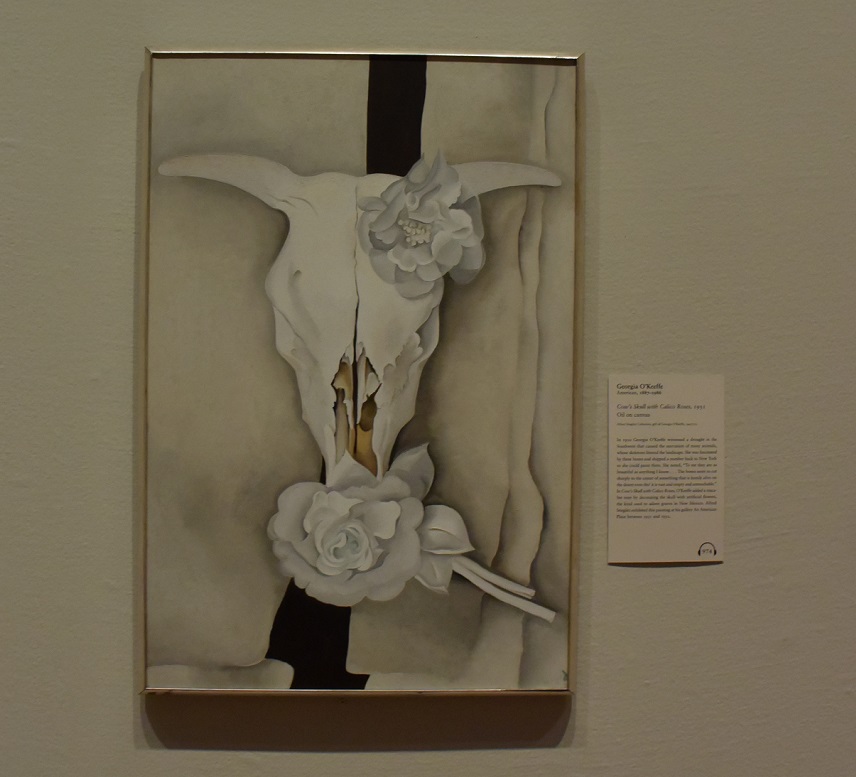
The many art museums allowed us to develop an appreciation for art in general and specific artists. Our group favorite was Georgia O’Keefe…
Cow Skull, O’Keefe
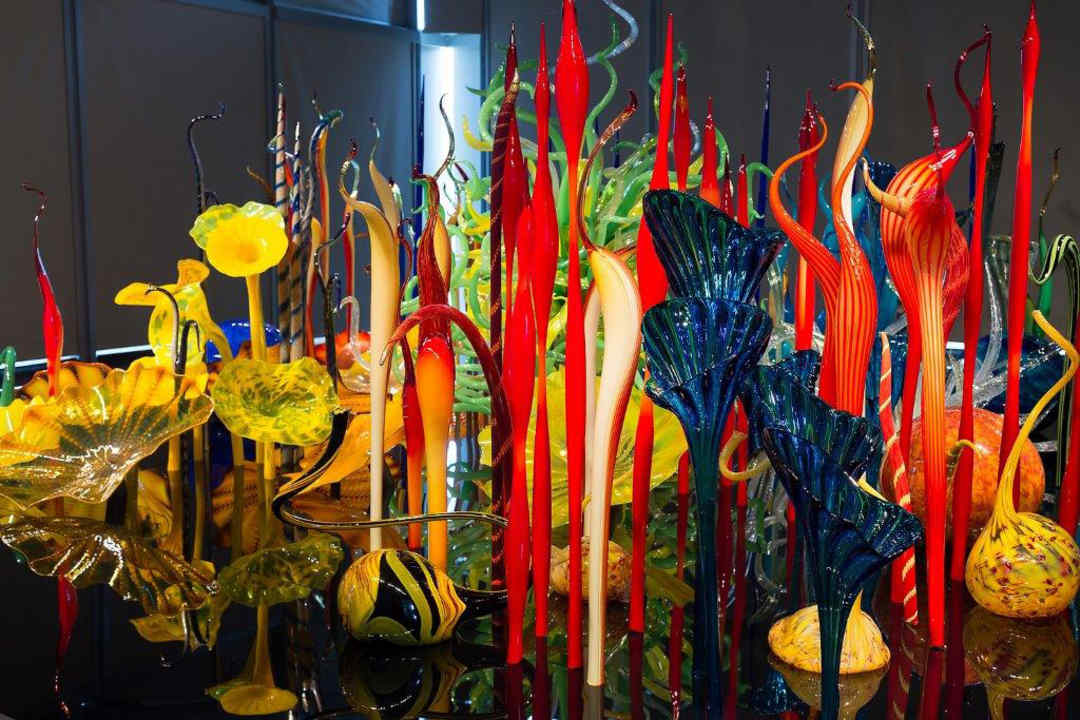
But we also enjoyed seeing original art works by Picasso, Van Gogh, Monet, Rockwell, Rembrandt, and Rodin. A favorite of ours was the work of Dale Chihuly, who kept popping up in all sorts of places.
Chihuly Exhibit, Clinton Library
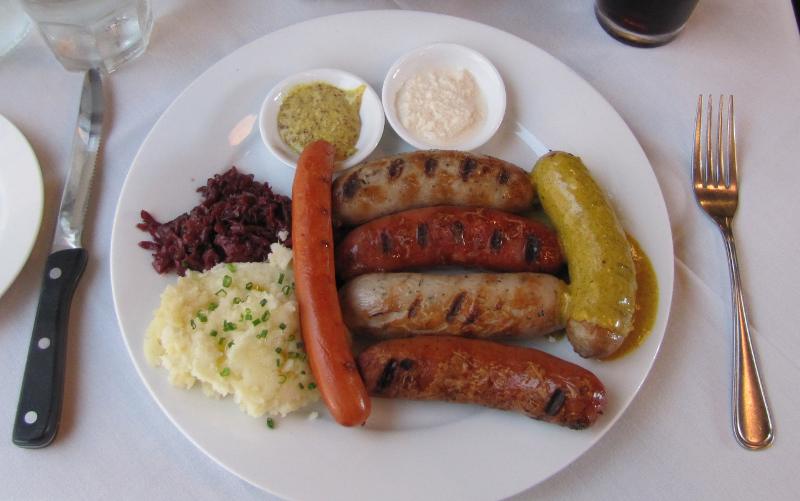
One of our favorite parts of the trip was the food. The one restaurant everyone included on their favorite list was Grunauer, an Austrian restaurant in Kansas City.
So it was with expanded tummies and horizons that we returned to Texas, ready to return to school work and looking forward to the next LEAP Center trip.
We started our day in Independence, Missouri, with hot chocolate, mocha, coffee, and various pastries at Home Sweet Home Bakery in town. The hostess was welcoming, had an interesting haircut, and was very helpful.
Following breakfast, we headed to the Harry S. Truman Presidential Library, starting with a short movie that introduced us to how Truman came to be, from his life in Independence as a young boy up until his career as 33rd President of the United States.
The Library features various exhibits, including parts of his personal diary, and pictures from his presidency.
Harry Truman Library, With Mural by Thomas Hart Benton
One favorite picture of the group was the famous “Dewey Defeats Truman” news headline in which Truman holds the Chicago Daily Tribune with an erroneous headline that indicated Dewey had defeated Truman in the 1948 election. Truman is laughing in the picture, clearly celebrating his victory and ready to begin his second term. The Library also features an original of the newspaper that was published in 1948.
The Library’s largest exhibit is “The Presidential Years,” featuring videos, Truman’s personal diary, newspaper covers, and other artifacts depicting his presidential years. One interesting feature of the Library was the replica of the Oval Office during Truman’s presidency. Also interesting was a documentary on the Cold War, which was very informative.
Another favorite exhibit, also of the newspaper variety, included a display of enlarged newspaper covers, presented in chronological order, and featuring headlines such as “ROOSEVELT IS DEAD: TRUMAN TAKES OATH,” and “FIRST ATOMIC BOMB DROPPED ON JAPAN.” Finally, we took pictures with Truman’s statue…
…and we visited the graves of him and his wife, Bess Wallace.
After visiting the Library, we headed to the Truman Home. Even though the Trumans were not wealthy, the house is far from modest. In fact, the house belonged to Bess’s family, which was wealthy. A wraparound porch surrounds most of the house, and stained glass windows front the house.
The guide led us into the kitchen, which is very modest, with furniture and wallpaper that reflect 1950s style. The chairs, counters, table, and cupboards are all painted apple green, a popular color at the time.
The rest of the house is filled with wooden furniture and golden interiors. The second floor is closed to the public, so we only visited the dining room, Truman’s studio, the two living rooms, and the main hallway. In the larger living room, used for special occasions and guests, is a portrait of Harry, while in the family living room hangs a portrait of Bess. The portrait liked most was in the main hallway, of Margaret Truman, their daughter and only child. At the end of the tour, more pictures in front of the house, and then on to our next destination, Kansas City.
It was lunchtime, and we had to eat Kansas City style barbecue! Our research led us to try Oklahoma Joe’s Kansas City Barbecue, rated the number one place for barbecue in KC. We arrived at a very long line outside the restaurant and decided to utilize our backup plan. We headed to Fiorella’s Jack Shack.
Fiorella’s Jack Shack was voted by The Zagat to be one of the best places to eat in Kansas City; but, we were not impressed. We faced a wait of 30 minutes, at least that was the story according to the waittress. An hour and fifteen minutes later, and after some slight vocalization of our displeasure, we were seated. Overall, the food was average. The sliced pork was above average and the beans were good, but the bulk of the meats were no better than you can find in Huntsville.
We had a negative experience at lunch, but we would not let lunch defeat us! We headed over to the World War I Museum with full stomachs, armed with curiosity. The Museum was beautiful and showcased the Monument in a spectacular way.
The inside of the Museum had a glass floor that led from the main entrance to the museum exhibits, showcasing poppies commemorating those fallen in World War I. Each of the 9,000 poppies in the display represented 1,000 fallen soldiers. Walking across the glass floor and seeing the poppies below really demonstrated the vastness and destruction of World War I.
There were several great exhibits. One of the most interesting and informative was on wartime weapons development. The war started with very basic weapons; however, many developments were made in terms of weaponry and battle strategy. One particularly effective strategy was camouflage. The British would paint their ships in various patterns that they pulled from Cubist paintings to confuse enemies and make it harder to track the ship’s speed and course.
In terms of weaponry, countries were still in the early development stages. The first machine guns were poorly designed and very slow – but the Germans developed the German Maxim machine gun that performed fast, concise and very well. Grenades were also introduced in World War I and made trench warfare brutal. Various gases were used as well, making World War I a chemical war. Other developments such as tanks and submarines changed transportation for troops during the war and helped improve reconnaissance efforts.
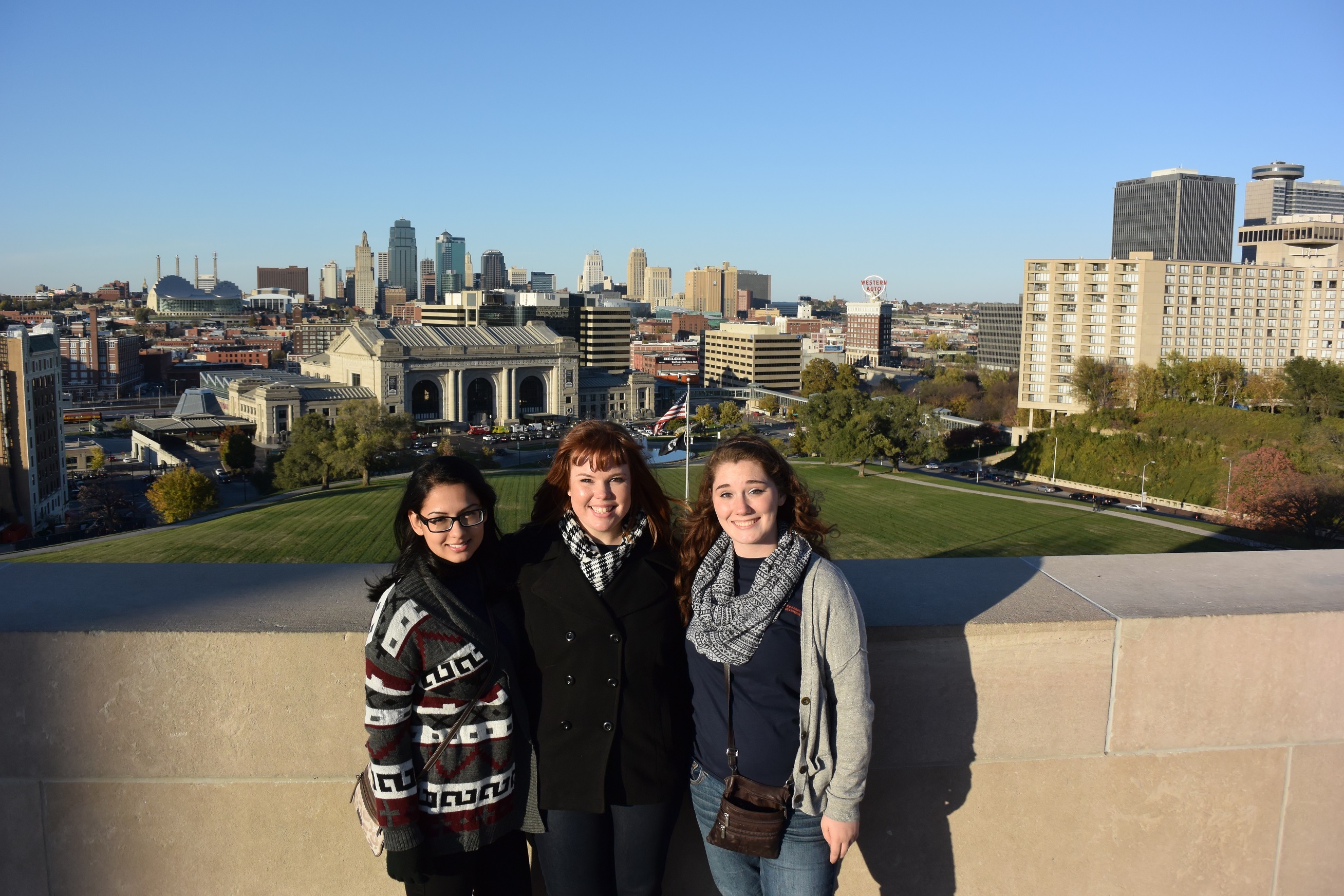
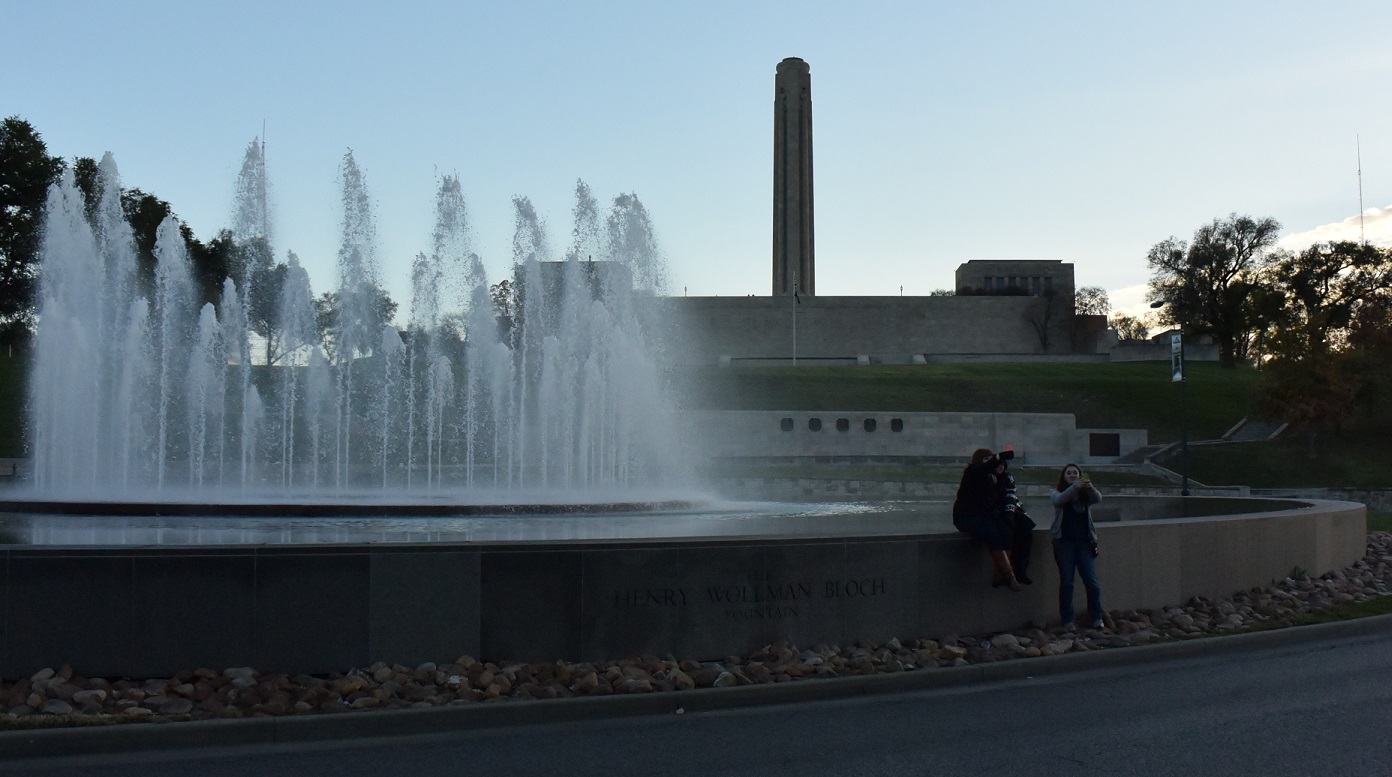
We closed down the World War I Museum and continued our exploration of KC starting from the top of the museum, which is the bottom of the 265-foot tall Liberty Memorial. We walked up the stairs to the Liberty Memorial and were astonished at the view: the entire skyline of Kansas City.
After taking several pictures of the skyline (selfies and groupies), we walked the several blocks to Union Station. On our walk, we encountered a large field of grass with an American Flag in the middle: the perfect place for a race. We had tried a race the night before, but because Professor Yawn left Silvia in the dust, he agreed to run backwards against her this time. It was much closer this time, and Silvia edged out Yawn in a photo finish.
The Race!
During the race, though, we stumbled upon a beautiful tree in full fall foliage, displaying red, orange and brown leaves like a proud peacock. The tree served as a perfect backdrop for more pictures of us as a group…
…and individually…
We finished our stroll in the brisk Kansas City air at Union Station, an historic train station. Built in 1914, the train hub is home to Amtrak, museum exhibits like Science City, and theaters. Awed by the extravagant architecture and design of the interior, it was interesting to learn that after being closed in 1985, $20M was spent on restoration of the building to recover it from its solitude and dilapidation. Intriguingly, it’s still an active train station.
Historically, the KC Union Station was the second to be built in the country and followed Second Empire Style and Gothic Revival. After consuming all available space in the 1878 location and eventually flooding, the decision was made to move the station to its current location. Designed by Jarvis Hunt, the great hall with three massive chandeliers and ornate ceiling adornments is what we see today.
We were fortunate enough to be spectators to all the 100th year celebrations the Saturday evening held for Union Station. Drinking our coffee, we watched patron after patron stroll past, determination in their eyes, dressed in authentic 1920’s regalia. Unsure of what was happening, we followed a few to find, to our surprise, swing dance lessons going on. We watched, thankful for such perfect timing for something so entertaining.
With the sun setting…
…we hightailed it out of the enormous train station and headed back to the car in search of the Kemper Museum of Contemporary Art. Sighting a Chihuly, we knew we had arrived at the home to many inspiring pieces of modern art.
We wandered through the museum, admiring exhibits such as Summoning Ghosts: The Art of Hung Liu, full of poignant, politically vocal pieces about communistic China, and Miss Your Mark, which sought to allow artists to make their mark using the manipulation of different materials.
We even explored the museum’s café, full of art by Frederick James Brown, which paid tribute to many artists throughout time. Our artistic appetite not quite satisfied, we left the Kemper and walked to the Donald J. Hall Sculpture Park, to appreciate the pieces by moonlight. Among those seen, our favorites included Shuttlecocks by Claes Oldenburg and Rodin’s Thinker. Although we had filled one appetite, our hunger made an appearance, so we left in search of sustenance.
An all-time favorite of our own Professor Yawn, we walked into Grunauer’s, not knowing what to expect. We quickly learned of the many Austrian delicacies available but had trouble narrowing it down to just a few. We began the meal with an assortment of sampler appetizers, including different kinds of cheeses, bratwursts, meats, and breads. Some of the unusual choices included currywurst, liverwurst, and brie. We downed the wonderful, new foods in preparation for the main course. Among some of the delectable entrees we enjoyed were Hungarian Beef Goulash, Cordon Bleu, Kasespatzle (noodles and cheese), and Fisch im Strudelteig-a fish baked in pastry adorned with spinach and mushrooms.
Stuffed to the gills, we surprisingly found room for apple strudel, chocolate cake, and nutella crepes for dessert, much to our full bellies’ dismay. Such an enjoyable end to an exciting day, we loaded up in the car to make our way to Bentonville, Arkansas for our final day of the Midwestern Tour.




















 Center for Law, Engagement, and Politics