Skip to content

Center for Law, Engagement, and Politics

Leap At SHSU!

  • About LEAP
  • LEAP Ambassadors
Center for Law, Engagement, and Politics

Tag: George Washington

A Day With the Founding Fathers

It’s difficult to see everything in Washington, DC. Knowing we would have limited time, we wanted to prioritize, and we made a “Founding Fathers” tour a priority. Fortunately, there are a lot of presidential homes in this area, and we were able to see Mount Vernon, Montpelier, and Monticello.

Mt. Vernon

Olivia Discon

Nestled along the banks of the Potomac River, Mount Vernon stands as a testament to the life and legacy of George Washington, the first President of the United States. Visiting this historic estate offers a glimpse into the luxurious lifestyle of the Father of the United States. After all, we had to see for ourselves what compelled President Washington to remark “I can truly say I had rather be at Mount Vernon with a friend or two about me, than to be attended at the Seat of Government by the Officers of State and Representatives of every Power in Europe”.

As you approach Mount Vernon, the sprawling estate emerges, surrounded by lush greenery and overlooking the tranquil waters of the Potomac. The estate’s centerpiece, the mansion itself, is a beautiful example of 18th-century architecture, with its iconic cupola and striking symmetry. Interestingly enough, the structure was entirely crafted with wood and painted with sand to make the exterior appear as stone.

Before our tour, we witnessed a performance on the field, where a group of volunteers played “Grand Old Flag” and “Star Spangled Banner.” The music filled the air, creating a sense of reverence and patriotism that was truly moving. The crowd, including us, thoroughly enjoyed this beautiful moment!

Stepping inside the Home, you are transported back in time to the days when Washington called Mount Vernon home.

The mansion’s interior reflects the elegance and charm of the period, with meticulously restored rooms that offer a glimpse into Washington’s life as a plantation owner, military leader, and statesman.

The 9 guest rooms, in particular, are stunningly beautiful, showcasing the luxury and comfort that guests of Mount Vernon would have experienced.

During the tour, we also had the opportunity to see George Washington’s place of death, adding a poignant note to the visit. Standing in the room where Washington spent his final moments was a powerful reminder of his humanity and longstanding impact on the United States of America.

We also had the honor of participating in a ceremony for George Washington at his tomb. It was here that we were able to pledge allegiance, listen to a piccolo rendition of “Taps” before our President.

The ceremony was a beautiful and respectful tribute to Washington’s memory, highlighting the reverence with which he is still held by many Americans today.

In our short time in D.C., we had the opportunity to witness both our first and current U.S. President’s firsthand. These experiences have very built on top of each other to reinforce and contextualize the future experiences we will make both in the rest of our time in D.C. and beyond.

Montpelier

Olivia Discon

In the midst of exploring the foundation of our country (and its various presidential residences), it seemed only fitting to add another to our list: James Madison’s “Montpelier.” The home of the founding father was a testament to his remarkable intellect, his refined attention to detail and his dedication to serving others.

The elegance of the mansion was immediately noted upon entry.

The grand foyer, with soaring ceilings and an immediate immersion into fanciful busts and portraiture, welcomed us into the home with a sense of grandeur. The parlors and sitting rooms, with their period furnishings and delicate decor, spoke of a time when entertaining was an art form.

My favorite room in President Madison’s lavish home was his study. His desk was littered with papers…

…and the room’s walls were lined with books.

It was here that he spent hours contemplating the future of the nation. The study opened into one of the most intriguing features of the home, which would be President Madison’s final resting place. Even as President Madison continued to grow sick, his sharp wit and intellectual curiosity never faltered. Though he laid in bed sick, there was a door that connected the bedroom to the dining room, allowing him to engage in conversations with guests and work late into the night without disturbing his wife, Dolley.

One of the most beautiful aspects of Montpelier was its gardens. Similarly to Madison’s Presidential counterparts, the gardens were a testament to his desire to create a retreat from the demands of such a highly publicized life. We spent a bit of time here enjoying the serene landscape and botanical design.

It was easy to imagine James Madison himself walking these halls, pondering the future of the young nation he helped create…

…and we were immensely grateful to be guests—albeit a couple of centuries late!

Monticello

Michelle Cardenas

After visiting Washington’s Mount Vernon and James Madison’s Montpelier, we were eager to explore Thomas Jefferson’s Monticello. His beautiful estate is located in the rolling hills of Virginia.

I was extremely excited to visit Monticello, especially after my recent viewing of “Thomas Jefferson” by Ken Burns, a documentary that gave me a little bit of insight into Jefferson’s life and his home. Jefferson inherited thousands of acres from his father after he passed away. He had high hopes of one day building a home and with that the idea of Monticello was born. 

Thomas Jefferson was incredibly intelligent; he was a man knowledgeable of many disciplines. He served as the third president of the United States and the principal author of the Declaration of Independence. However, he also had an incline toward architecture, engineering, innovation, and design. His love for Greek and Roman architecture influenced his design for Monticello as well as his admiration for the works of Andrea Palladio.

The home is incredible, the elements of the exterior are incredible, showcasing symmetry and one of the most famous Jeffersonian features, the dome. However, it does not compare to the interior of the home. Each room showcased amazing pieces that were collected by Jefferson and put on display for guests to observe and indulge in. Clocks, hunting trophies, animal skins, and fossils were on display.

The Parlor, which was my favorite room, was adorned with several paintings, portraits, chairs, Jefferson’s gadgets…

…beautiful drapery, chess boards, and maps.

One of the most fascinating aspects of Monticello is Jefferson’s inventive spirit. He wasn’t just a statesman; he was a visionary inventor. Jefferson created ingenious devices to make his daily life easier and more convenient. Amongst these inventions was the polygraph, a machine capable of making three copies of a document simultaneously. His home was adorned with various pulley systems, orchestrating tasks like serving wine with remarkable efficiency.

Construction of the home began in 1769 and concluded over 40 years later. The residence includes multiple guest bedrooms and cellars for food and wine storage to accommodate guests. Additionally, the home also included living quarters for servants, a blacksmith’s workshop,…

…a kitchen area, stables, and extensive farmland surrounding the main residence.

Walking through the halls of Monticello, there was something to admire in every corner. Jefferson held Monticello near and dear to his heart, it was his haven from his hectic career and political efforts. The home is a true testament to his brilliance and creativity. As we explored the grounds, we were reminded of the remarkable individuals who shaped our nation’s past and left an incredible mark on its future.

Unknown's avatarAuthor mikeyawnPosted on June 16, 2024Format AsideCategories Architecture, Art, Civic Engagement, Politics, TravelTags Center for Law Engagement And Politics, George Washington, James Madison, LEAP Ambassadors, Monticello, Montpelier, Mount Vernon, Sam Houston State University, Thomas JeffersonLeave a comment on A Day With the Founding Fathers

From Old to New: Finishing our Inaugural Trip

George Washington’s Mount Vernon

After attending the inauguration of our new President, we awoke with anticipation to learn more about a few of our past presidents on this last leg of our Inaugural Trip. We departed toward visit Mount Vernon, George Washington’s estate. Upon arrival, we were surprised by the intensity of Washington’s plantation at a massive 500 acres. Not only was the property large but also beautiful as it overlooked the Potomac River.

SHSU, LEAP Center, Mount Vernon, George Washington

Included in this grand estate is Washington’s mansion, Colonial-era slave quarters, gardens that are still worked by the museum’s staff, the gravesite of George and Martha Washington and extended family, a slave memorial, nature trails, a pioneer farm, multiple gift shops, a museum, and more. Visitors could easily spend a whole day or more exploring the property, and as a popular tourist destination, more than 80 million people have visited Mount Vernon to learn about one of our nation’s Founding Fathers.

mv_students_house_2_web

Our tour started with a short movie introduction of the grounds and spaces available to explore.  The staff are sticklers for tour times, in a sense, so we explored the Upper Garden, the slave quarters, a variety of workshops occupied by Washington’s slaves, and his grave…

mv_washington_grave_web

…before entering the line for the tour of the mansion. The docent pointed out how Washington completed multiple revisions and expansions to his home throughout his life. Unfortunately, we were not allowed to take pictures inside the home as photography may interfere with the home’s preservation.

Excited either way about visiting Washington’s beloved home, we entered into the “newest” addition of the mansion. This was a large room that would have been used for dancing, hosting dinners, and impressing guests. An extraordinary detail of the room was its uniquely green color. At the time, green paint was a sign of wealth because it required the crushing of precious gems to obtain that deep of a color. We moved into the oldest part of the home next where we saw four rooms including a more informal dining room, a study, and two guest rooms. We also learned about Washington’s parties and saw several of the nine guest rooms available for visitors.

Our favorite part of Washington’s home was the private wing, including George and Martha’s bedroom, where George Washington passed away from a throat infection. Their room was less extravagant than expected—no lavish furniture was present—but it helped to illustrate Washington’s personal taste. The room was large enough for a sitting area along with the bed.

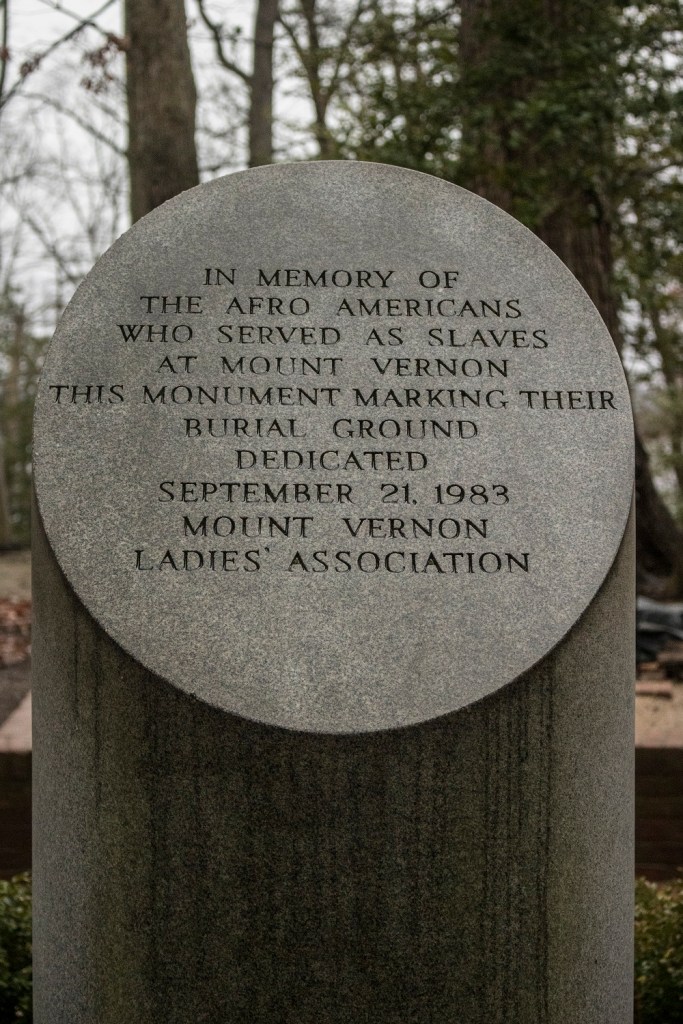
After touring the mansion, we walked down to pay reverence to our nation’s first president by visiting the Washington’s gravesite. Enclosed in a concrete monument, George and Martha Washington are buried only a short walk from where they lived for many years. Close by is also a slave memorial in honor of Washington’s slaves. Although Washington owned slaves, he included his slaves in his will and left them the majority of his fortune. This was an unusual practice for slave owners in Washington’s time.

SHSU, LEAP Center, Mount Vernon, George Washington, Slaves

James Monroe’s Highland

Finishing up our tour at Mount Vernon, we stopped for a quick picture before departing to our last stop of the Inaugural Trip.

SHSU, LEAP Center, Mount Vernon, George Washington

The end of the trip was near, but we decided to add in one last stop on our presidential tour by visiting the home of our fifth president. James Monroe’s Highland—also formerly known as Ashlawn-Highland—is located outside of Charlottesville, Virginia. James Monroe was a Revolutionary soldier who eventually became president in 1816 after negotiating the deal that provided for the Louisiana Purchase in 1803. Interestingly enough, some recent archeological research including ring-dating several interior parts of the home, archeologists have found pieces of chimney, stone wall foundation, and much more, that proved that the house where President Monroe had once lived burned down in the 1800s.  They have outlined the location of the original home in rock on the grounds, just in front of the current Ashlawn building.

So, our tour began at the door of a small white house.

SHSU, LEAP Ambassadors, LEAP Center, Charlottesville, James Monroe, Ashlawn-Highland

The ceiling was extremely low and required the taller LEAP Ambassadors to duck. Although it would have been a guest house at the time, it is now set up with various pieces of Monroe family furniture.  We entered a room set up as a study, filled with Monroe’s original furniture, including an impressive desk. Another interesting piece in the study was a French clock that was over two hundred years old, but still ticking away the correct time. The study was green, a seemingly common color among those with the means to afford it, much as we had seen at our last stop, Mount Vernon.

As we made our way through the home we could see many original family pieces such as the dining room table, a crib, and several beds. In one room, there was a small mannequin sporting a simple but elegant pink dress. Our tour guide explained to us that Elizabeth Monroe was a small woman, only measuring about 4’11’’.

We exited through the family museum, displaying original china, jewelry, and photographs that belong to the Monroe family. Perhaps the greatest highlight in this room was a very humble bust of Napoleon Bonaparte. Apparently, Monroe had attended a party in honor of the Emperor where upon busts of Napoleon were given as party favors, to all guests.

ashlawn_students_1_web

Visiting the home of the last Revolutionary-era president made for an appropriate conclusion to our Inaugural Trip. After visiting the site where our Declaration of Independence was drafted, our first government was debated over, and our nation’s constitution was signed; after visiting the home of our nation’s first president; and after attending the inauguration of our newest president, we felt a sense of civic pride. With this accomplishment forever in our memories, we boarded our airplane en route to Houston, reminiscing of our week’s adventure all the way.

SHSU, LEAP Ambassadors, LEAP Center, Charlottesville, James Monroe, Ashlawn-Highland


Unknown's avatarAuthor mikeyawnPosted on January 29, 2017January 29, 2017Format AsideCategories Civic Engagement, Politics, TravelTags Ashlawn-Highland, George Washington, James Monroe, LEAP Ambassadors, LEAP Center, Mount Vernon, SHSULeave a comment on From Old to New: Finishing our Inaugural Trip

Day 1: Dallas Historical Tour–Jennifer Flores

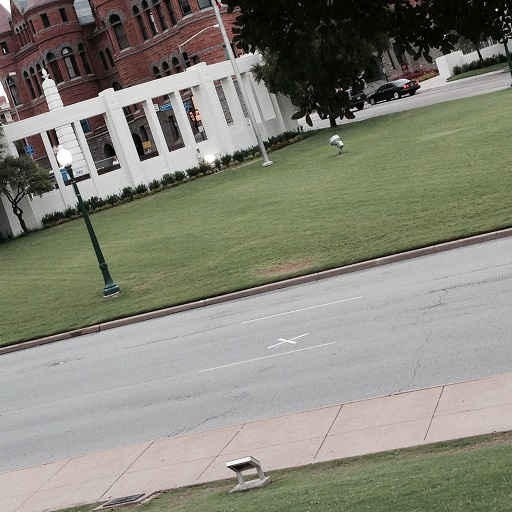
Today, six other SHSU students and I left Huntsville for a weekend in Dallas. Our first stop upon arriving was the JFK Sixth Floor Museum. Fifty years ago history was changed from this very building that has been preserved to honor the memory of President John F. Kennedy.  The Museum features insightful films and photographs that explore the legacy of Kennedy’s life, from his marriage to Jackie O to the many conspiracies surrounding his death.

Spot of JFK Assassination
              Spot of JFK Assassination

As part of the tour, we made our way to the seventh floor of the Museum to see featured photographs of presidents throughout the last 100 years. The saying “a picture is worth a thousand words” holds true for this exhibit as the photographs range from the iconic black and white head shot of Abraham Lincoln to silly photographs of “Socks at the Podium” in which President Clinton’s family pet stands on the Press Podium of the White House.

Socks_At_Podium

Before leaving the Sixth Floor Museum we walked along Elm Street — the same street down which JFK was driven, waving to supporters, as he was killed. Our trip to the Sixth Floor Museum was a success, as we all enjoyed the exhibits while learning about history.

A few blocks away we enjoyed dinner at The Spaghetti Warehouse, where most enjoyed traditional Italian cuisine while a couple of more spontaneous travelers went for the Kung Pao Chicken Pasta and calamari.  No matter the dish, it was a great dinner with great company.

To top off the night we ventured a few more blocks to the Dallas Museum of Art, which is home to amazing pieces of art reflecting many cultures and time periods of human existence. Our group was able to snap a shot next to Pablo Picasso’s “The Guitarist” painted in 1965.

SHSU Students and Picasso's "Guitarist"
SHSU Students and Picasso’s “Guitarist”

Perhaps a more deep-rooted and archaic painting, one of my favorite’s was Rembrandt Peale’s portrait of George Washington (dated 1824).

Peale's George Washington
      Peale’s George Washington

In sum, I had a great time getting to know the members of my group and experiencing this day with them.

Unknown's avatarAuthor mikeyawnPosted on September 22, 2013September 22, 2013Categories Art, Civic Engagement, Politics, TravelTags Dallas Museum of Art, George Washington, Picasso, Rembrandt Peale, Sixth Floor Museum, The GuitaristLeave a comment on Day 1: Dallas Historical Tour–Jennifer Flores

LEAP Ambassadors Are Involved!

This slideshow requires JavaScript.

Follow Us On Facebook!

Follow Us On Facebook!

Catch Up With Us

  • Crafting for a Cause December 18, 2025
  • Exploring The Shining: A Kubrickian Journey December 15, 2025
  • Interactive Experiences at Asia Society Texas: A Student’s Perspective December 14, 2025
  • A Culinary and Artistic Journey Through Houston December 13, 2025
  • Alumni Insights: Jessica Rodriguez-Wahlquist Returns to LEAP December 11, 2025

Join The Conversation!

The Civic Leadership… on Foundational Activities of the…
The Civic Leadership… on The Philosophical Foundations…
LEAPing Into Action… on The Philosophical Foundations…
Jada Cook's avatarJada Cook on SHSU Students LEAP Across Five…
Reflections from the… on Kicking off the Semester Right…

Find Previous Posts

Throwing it all the way back to the days when LEAP suited up for the Sammys — and even took home a few! Over 10 years later and these trophies still make our alumni smile. Who else has their Sammy?!

We also have Twitter!

My Tweets

LEAPing Into LEARNing

This slideshow requires JavaScript.

  • About LEAP
  • LEAP Ambassadors
Center for Law, Engagement, and Politics Blog at WordPress.com.
  • Subscribe Subscribed
    • Center for Law, Engagement, and Politics
    • Join 486 other subscribers
    • Already have a WordPress.com account? Log in now.
    • Center for Law, Engagement, and Politics
    • Subscribe Subscribed
    • Sign up
    • Log in
    • Report this content
    • View site in Reader
    • Manage subscriptions
    • Collapse this bar
 

Loading Comments...