In many respects, the last activities of our trip were a perfect bookend to our initial activities on the trip. We began by visiting an art museum and attending a law-school tour, and we ended it the same way. Our first stop on the art leg of this adventure was the Oklahoma City Museum of Art.
Oklahoma City Museum of Art
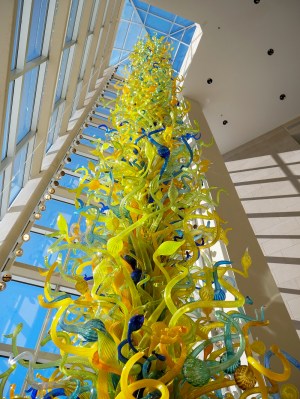
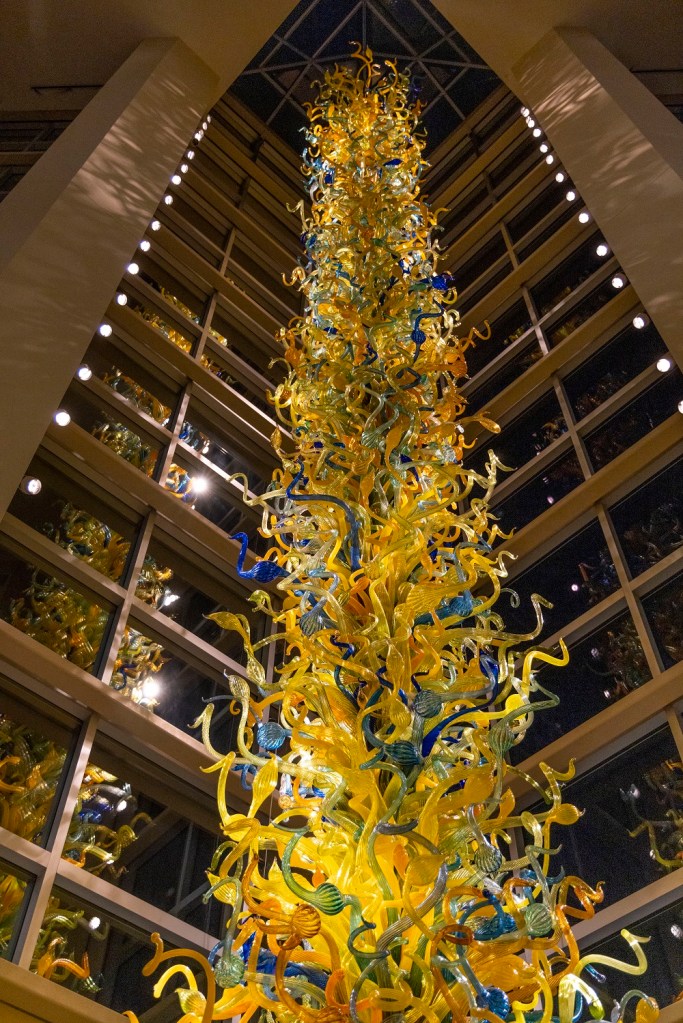
We were immediately met with a tremendous 55-foot Dale Chihuly piece in the entryway of the museum.
It was tempting to jump directly into the Chihuly exhibit, but we restrained ourselves and, instead, saved Chihuly for last.
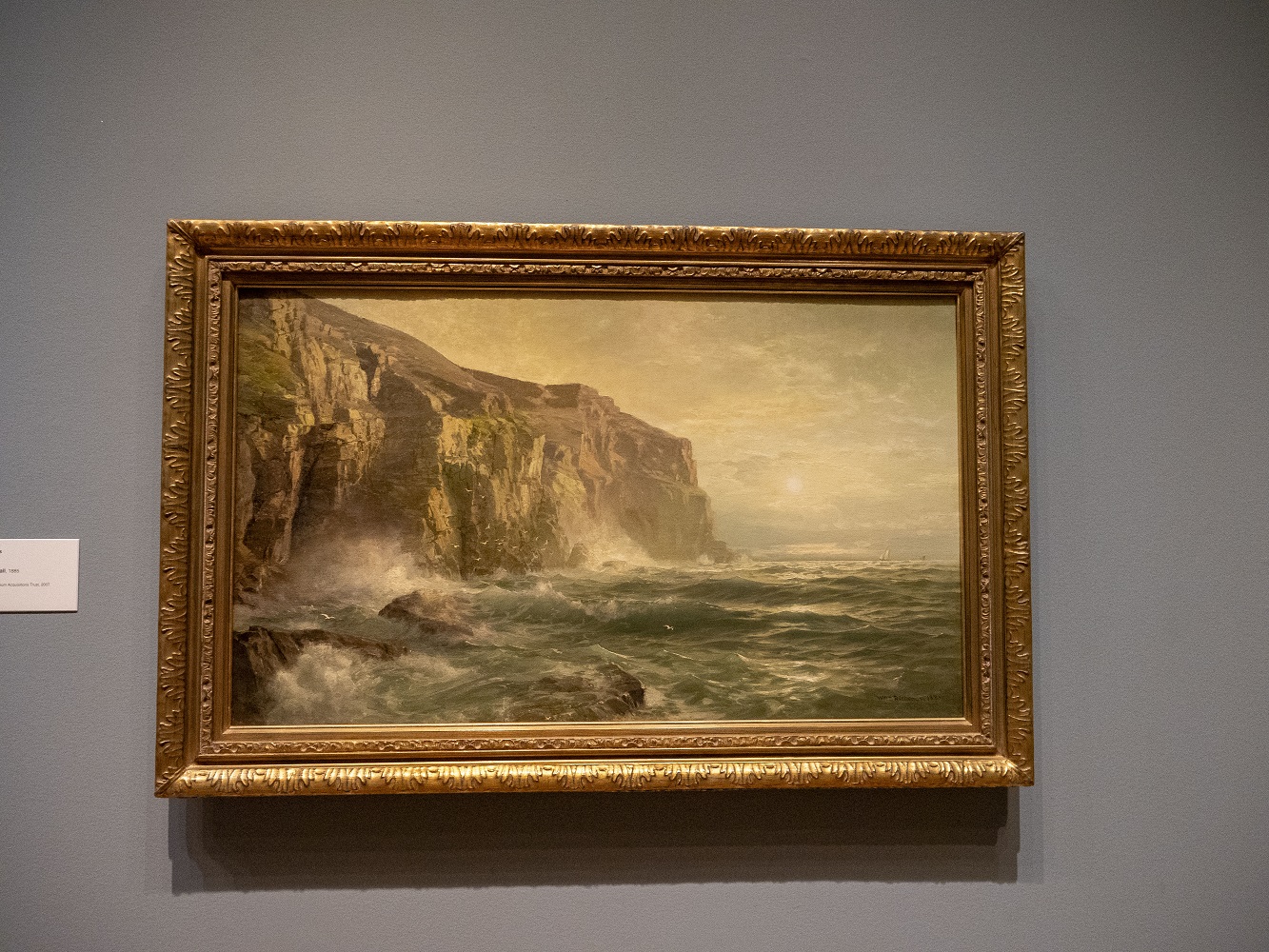
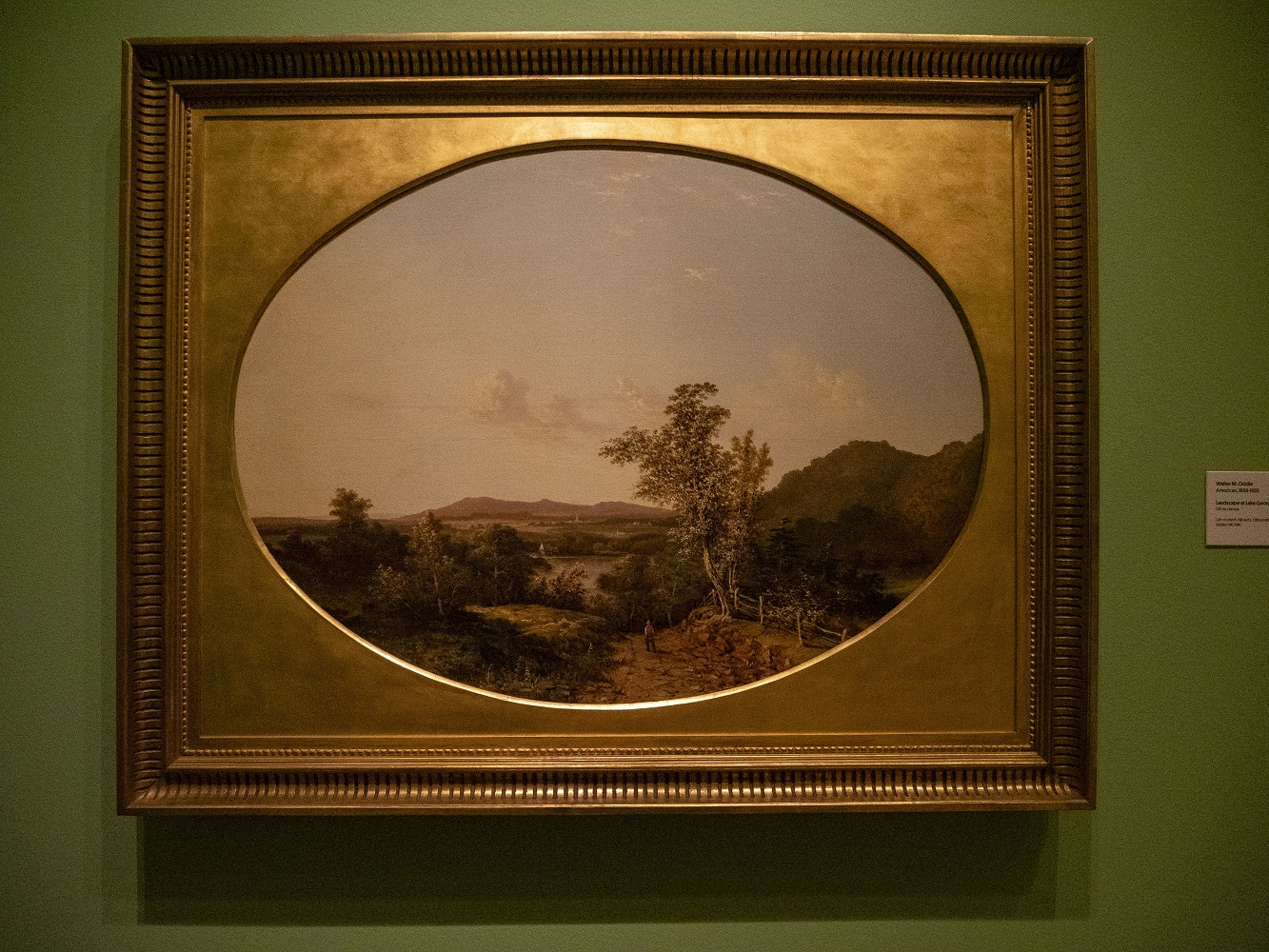
We enjoyed looking through their permanent collection, which had some of our favorite artists on display. Cinthia especially enjoyed the works by Moran, whom she learned about on this trip. By the end of the trip, it seemed to be second nature for her to recognize a Moran on sight!
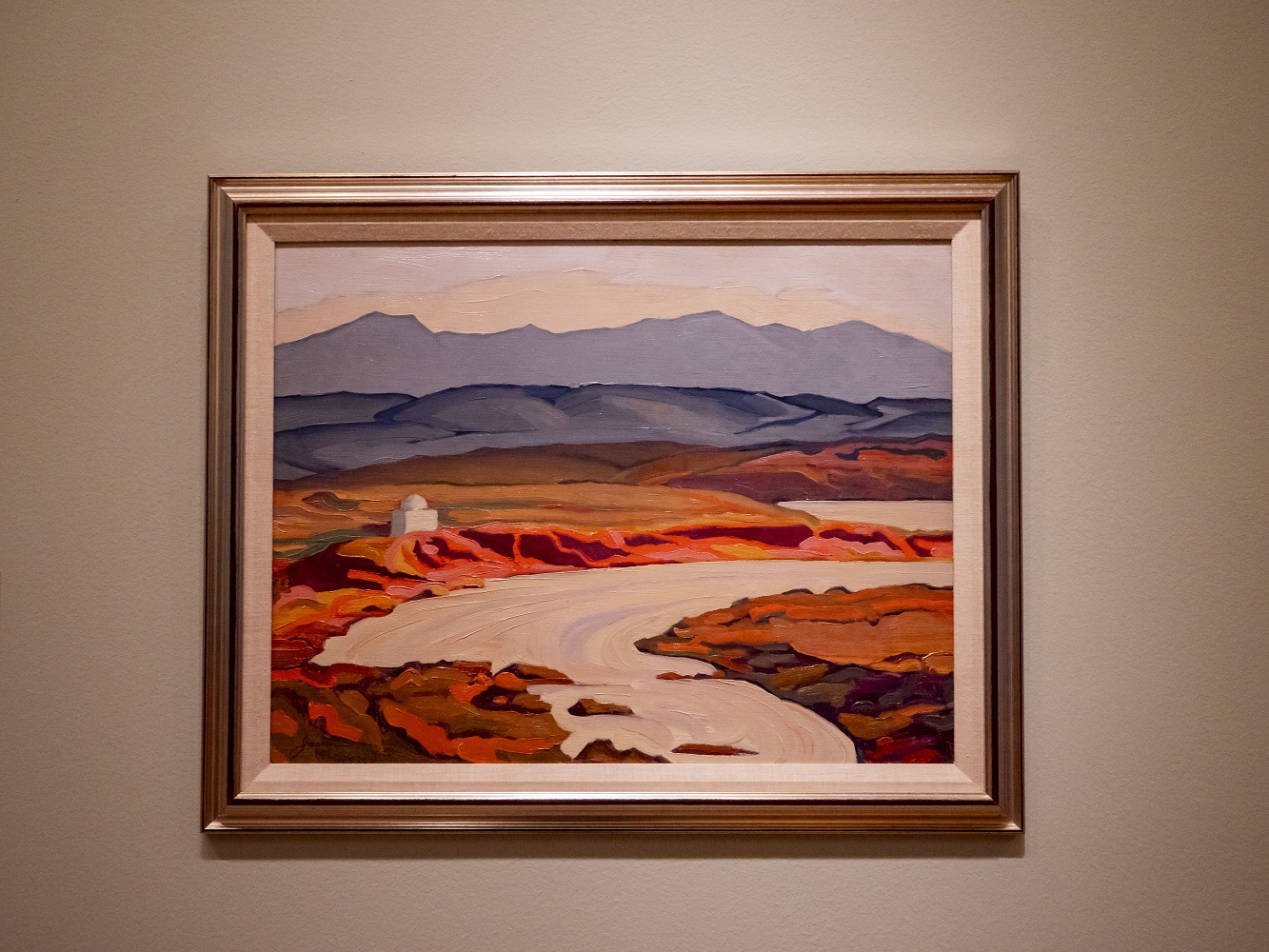
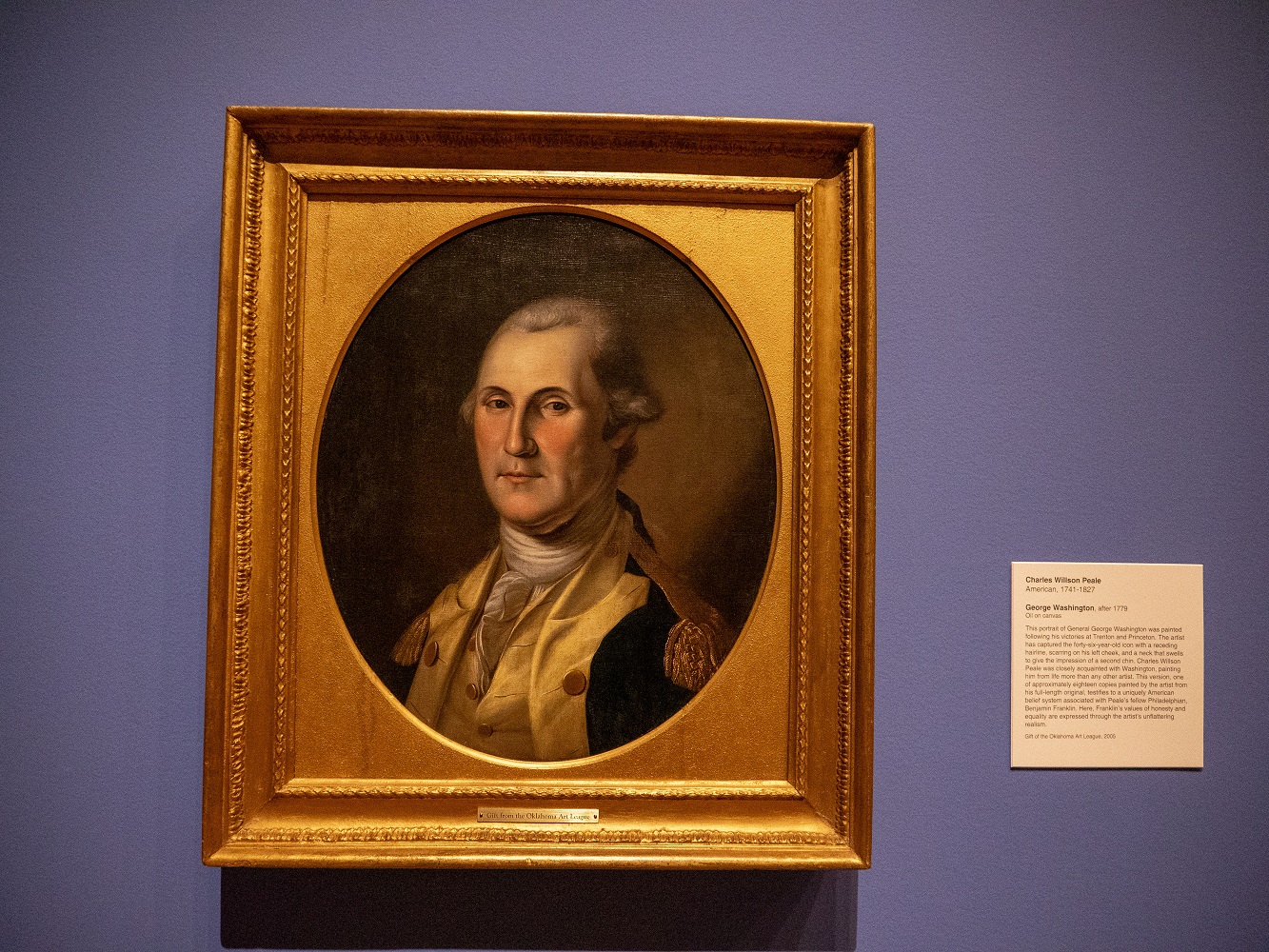
In fact, it was a great chance to see many of the artists we had seen on the trip or had reinforced on the trip.
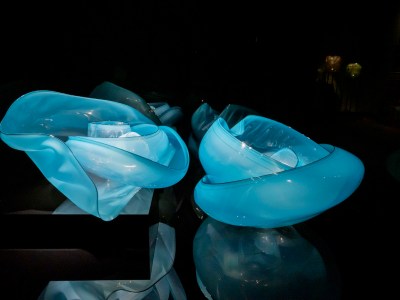
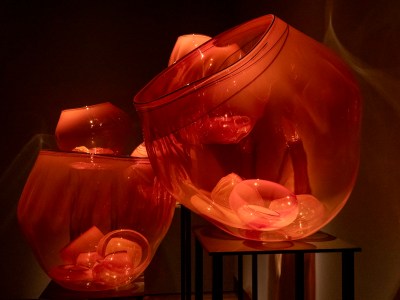
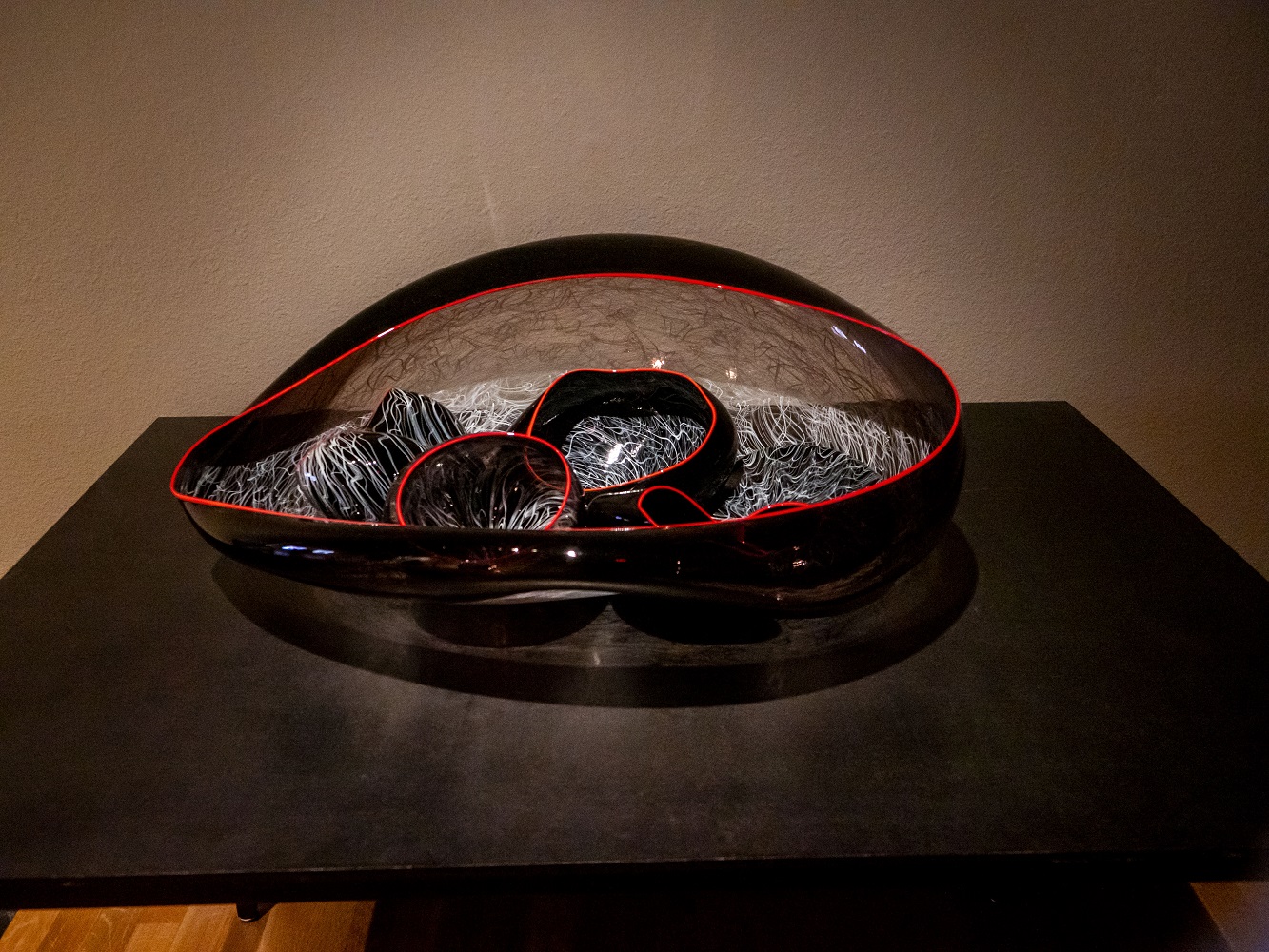
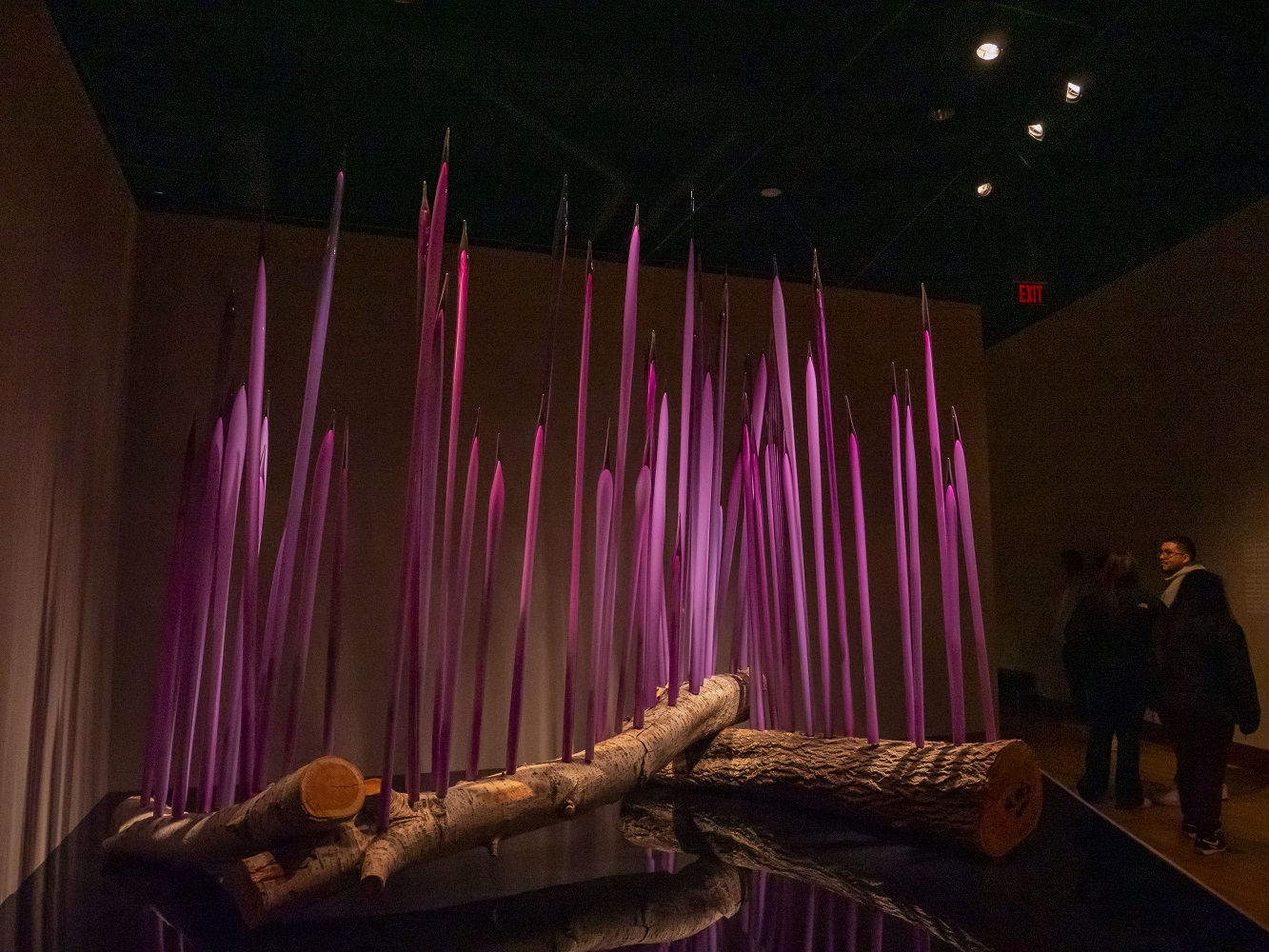
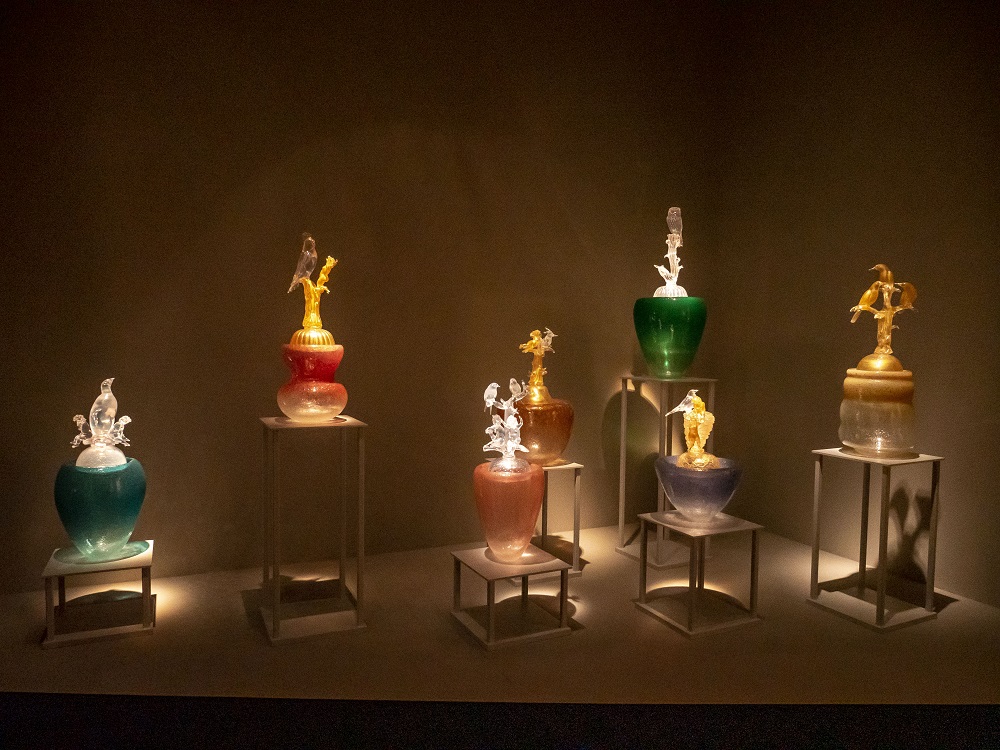
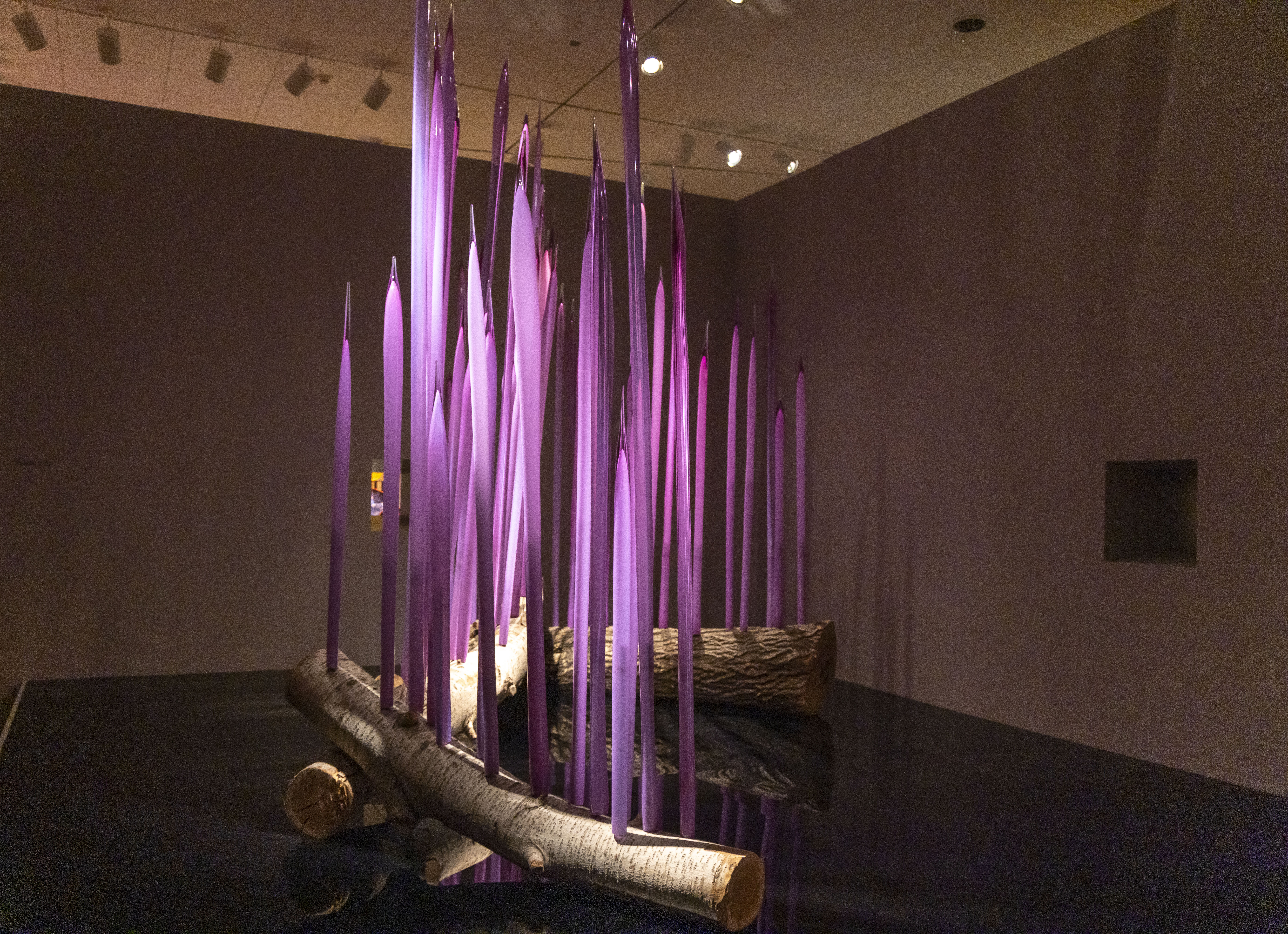
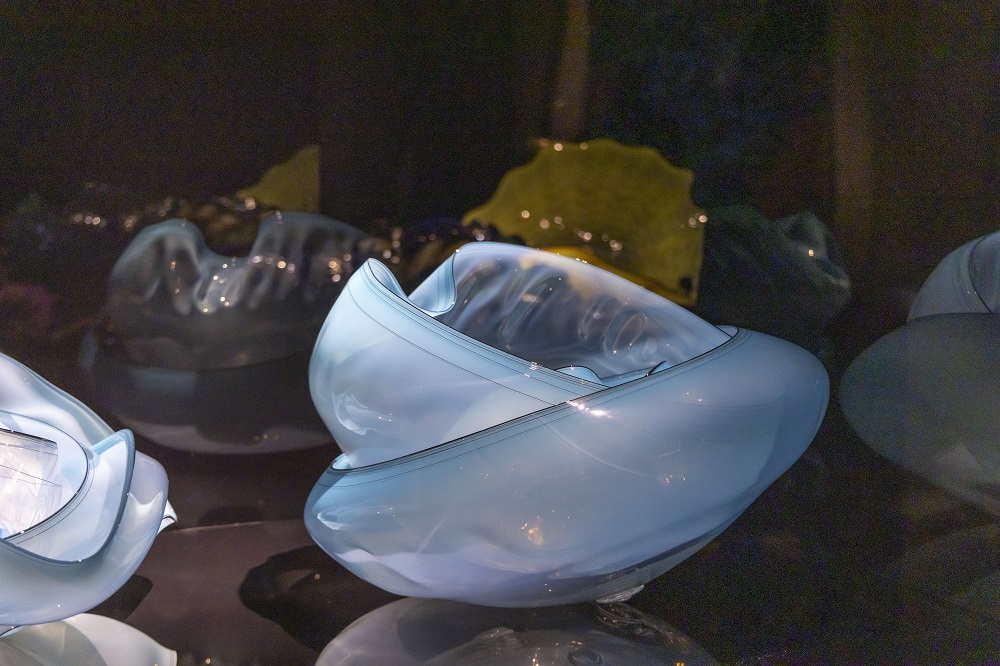
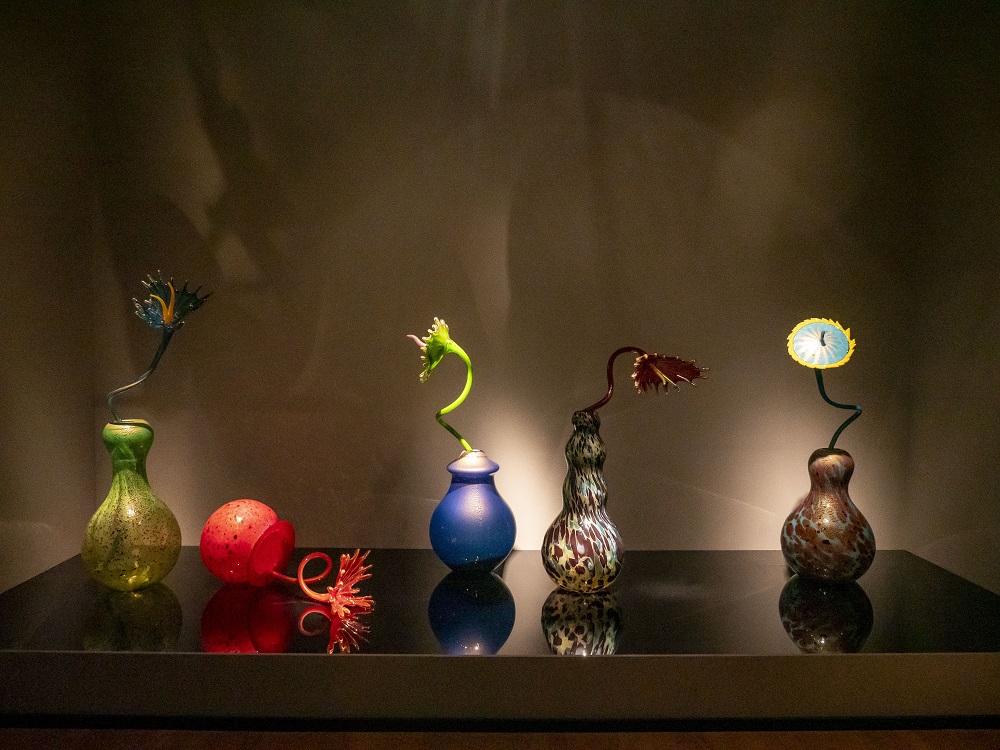
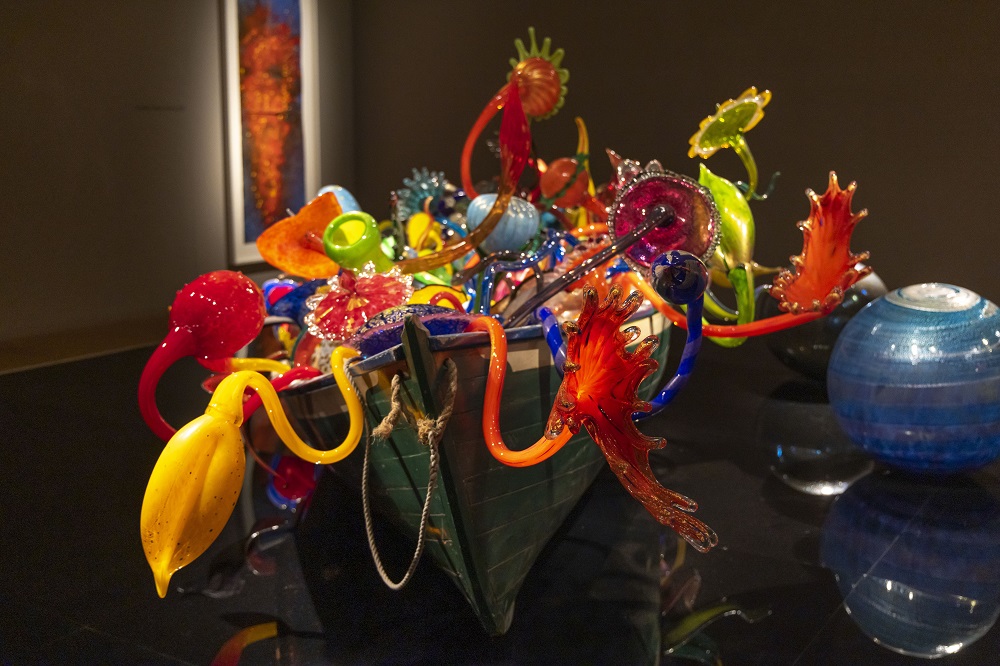
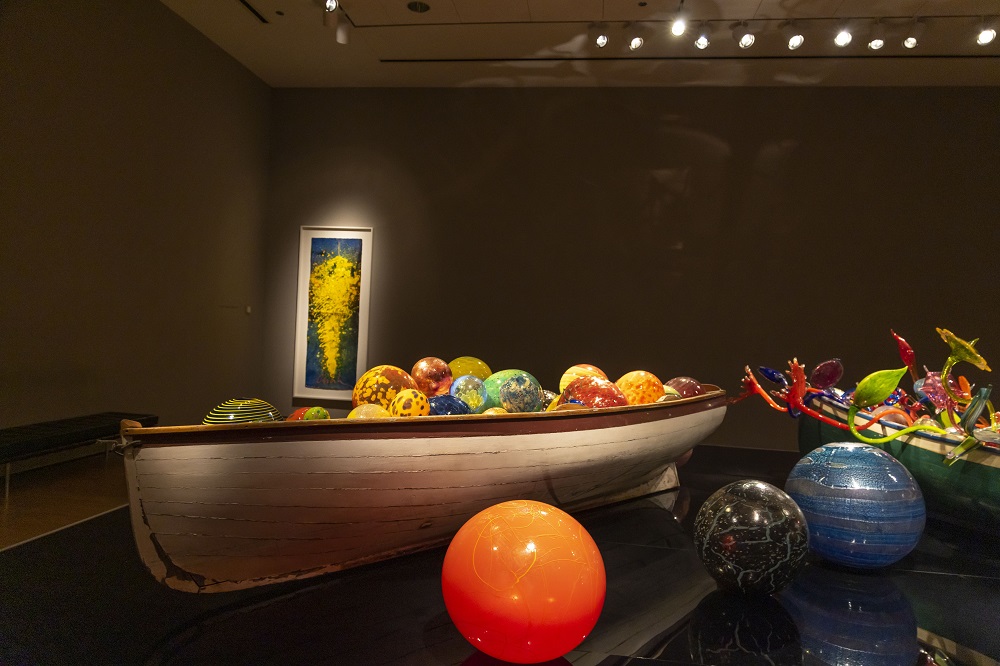
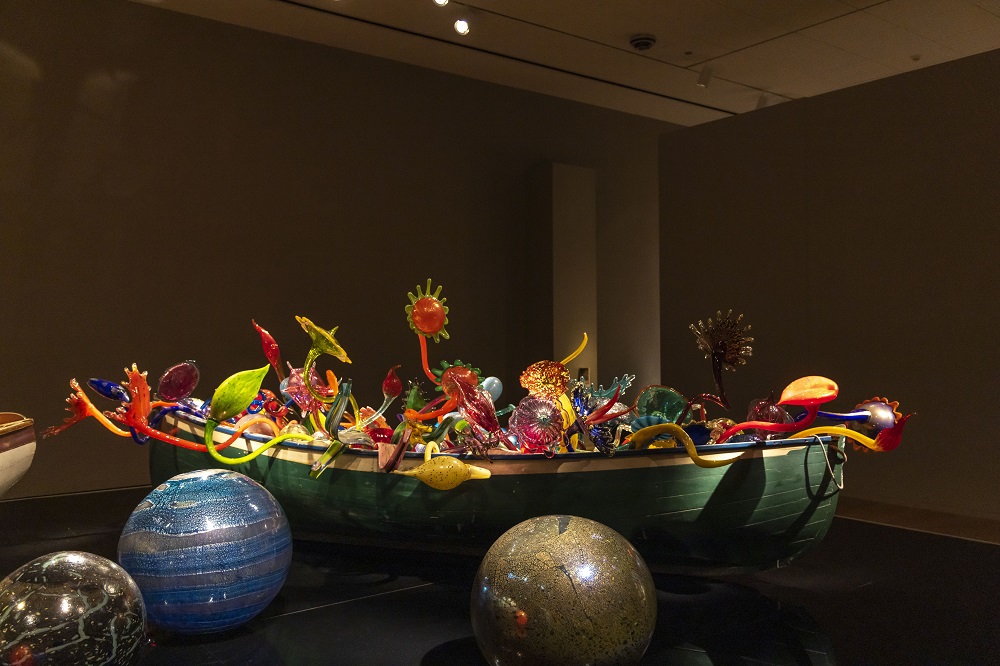
The much-awaited Chihuly exhibit did not disappoint. LEAP Ambassadors have had the privilege to see Chihuly in numerous capacities, each of which are uniquely beautiful. This was the first time, at least in our case, to have seen his pieces in a gallery with lighting designed to complement his works.
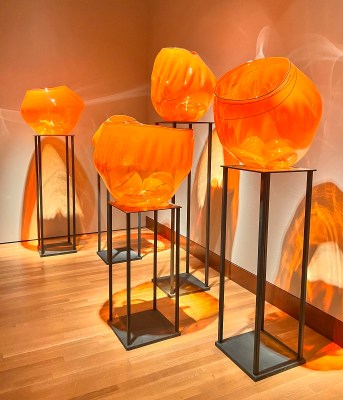
This allowed for the glass to shine in ways you couldn’t fathom. My favorite work, “Orange Baskets” won me over with the casted reflection of the light hitting the glass…
…which made a warm, wave-like image on the wall behind it.
Cinthia’s favorite, “Putti Installation”, had beautiful angelic figures made of glass atop a transparent, hollow vase. It was a first for us to see these detailed figures in his work, composed with his signature medium, and it was both eye-catching and exciting!
But in a larger sense, we had the opportunity to view and learn the scope of Chihuly’s work. This included some paintings…
…more chandeliers, and other styles, including his famous Persian ceiling.
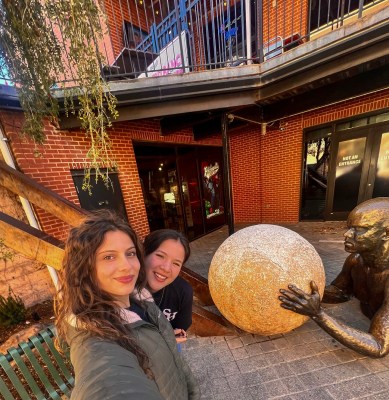
But even as we left the Museum, we had one more art-related stop in Oklahoma City. The City has done a wonderful job revitalizing its downtown, and this includes a river walk adorned with art. One stop we had to make was to see the City’s statue of Sisyphus, a must-do since one of Olivia’s favorite books is Camus’s “The Myth of Sisyphus.”
Fred Jones Jr. Museum of Art
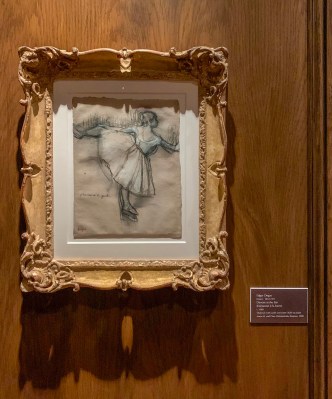
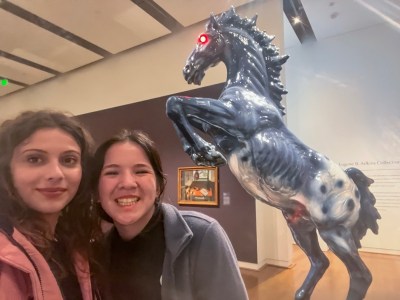
Unbeknownst to Cinthia or me, OU students don’t have to go off campus to see fantastic art–they have an art museum of their own! In fact, the Fred Jones Jr. Museum of Art was one Cinthia’s favorite museums of the entire trip. This University museum had works of art from renowned artists such as Pierre-Auguste Renoir, Degas…
…Van Gogh…
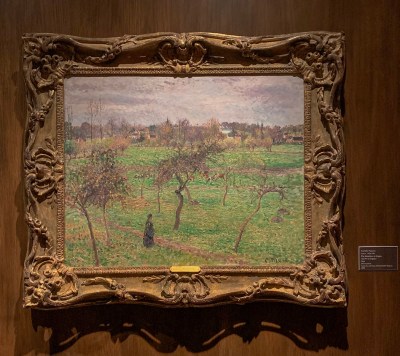
… Pisarro….
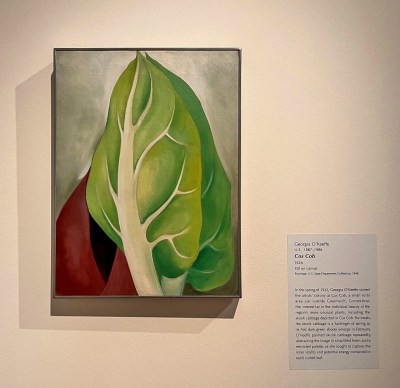
…O’Keeffe…
…John Steuart Curry…
….and Monet, the latter of which is a favorite of LEAP Ambassador Jessica Cuevas. They even had a copy from the 1800’s of Giorgio Vasari’s “Works of Vasari: The Lives III”, the first known art history book, in their ‘Treasures of Tuscany’ special exhibit!
We also saw more of key “LEAP” artists, such as Luis Jimenez…
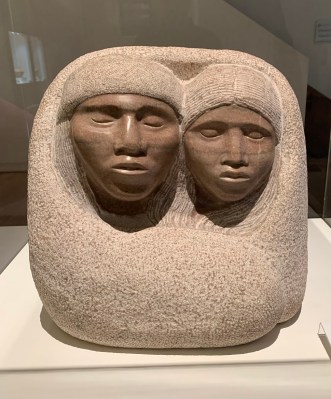
…and Allan Houser.
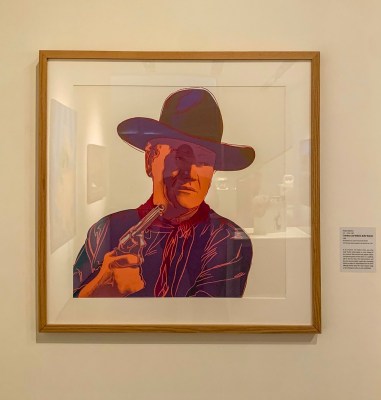
Amidst all of the southwestern and prairie themed art, the Andy Warhol almost looked out of place–except, of course, it was of John Wayne!
After a trip of learning of various artists and their signature pieces, recognizing their work in museums was beginning to feel like running into an old friend. However, I almost didn’t recognize one of my go-to artists, James Surls!”–whose “Big Standing Bird” was different than what I had seen previously.
We didn’t have any firm expectations coming into the museum, but it was a very favorable surprise!
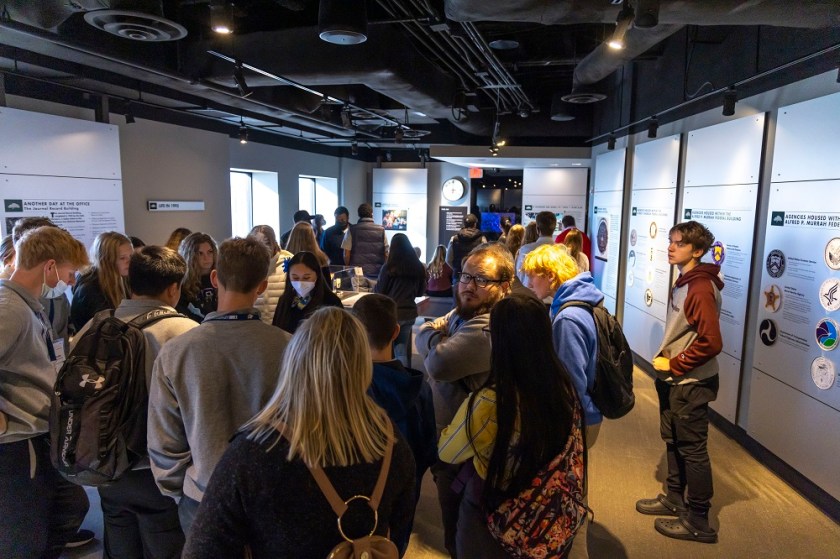
The OKC National Memorial Museum is laid out in such a fashion that reminds visitors of what happened on that day, April 19, 1995, but also stands as a tribute to both those who survived and that were lost.
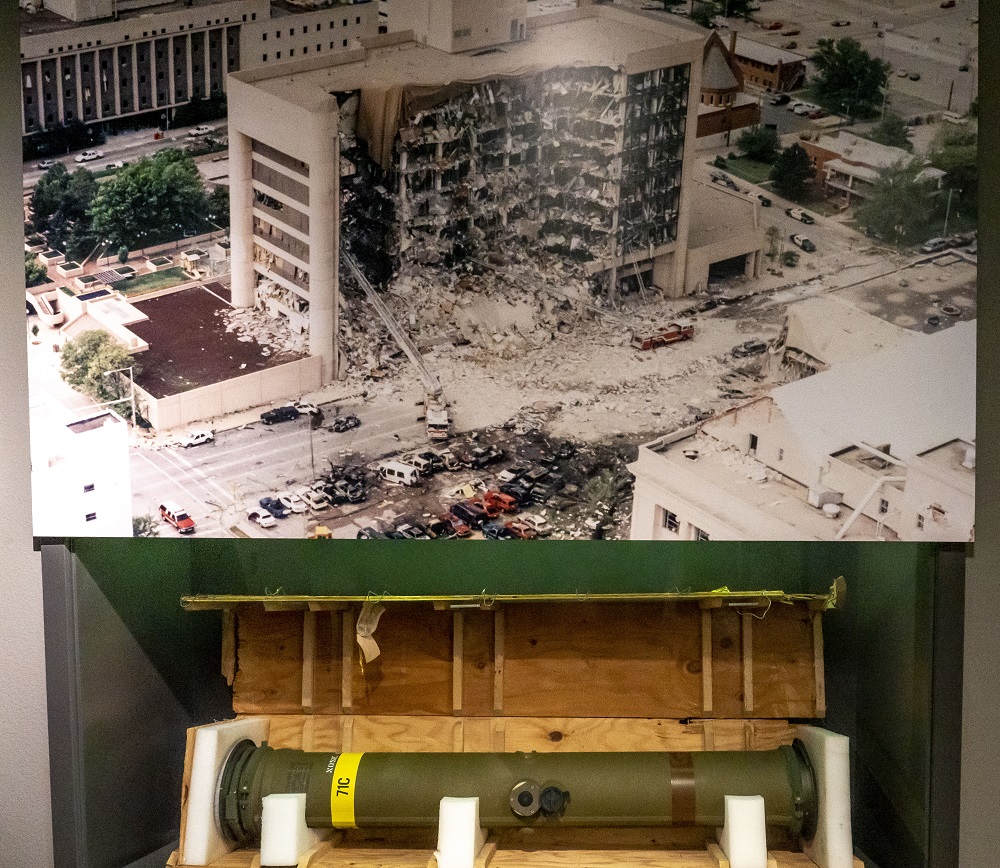
The Museum unfolds in chronological fashion, beginning with the background of the tragedy, and going through almost minute-by-minute on the day of the bombing.
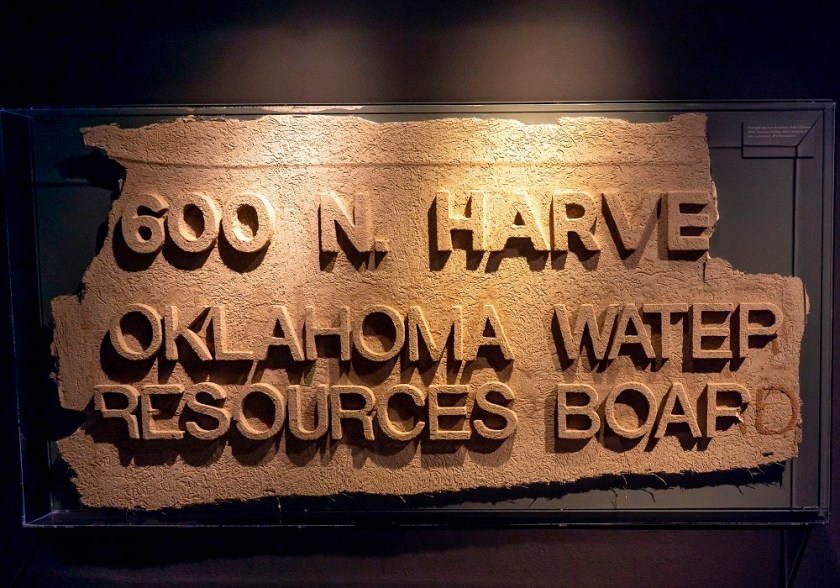
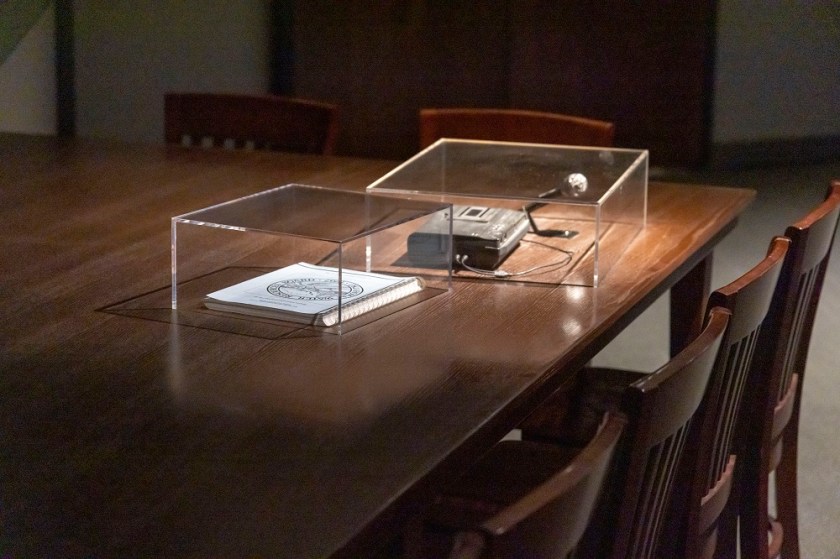
April 19, 1995 was just a nice spring day, a completely normal day in Oklahoma. One of the most difficult experiences on the tour was in the meeting room, where the Water Resource Management Committee began their meeting at 9:00am–a meeting which was recorded.
We listened to that recording, hearing the explosion, and also the screams, fear and confusion among those attending the meeting.
The lights dimmed as the explosions and screamed sounded, and then their was silence, leaving us to ponder the aftermath of that day.
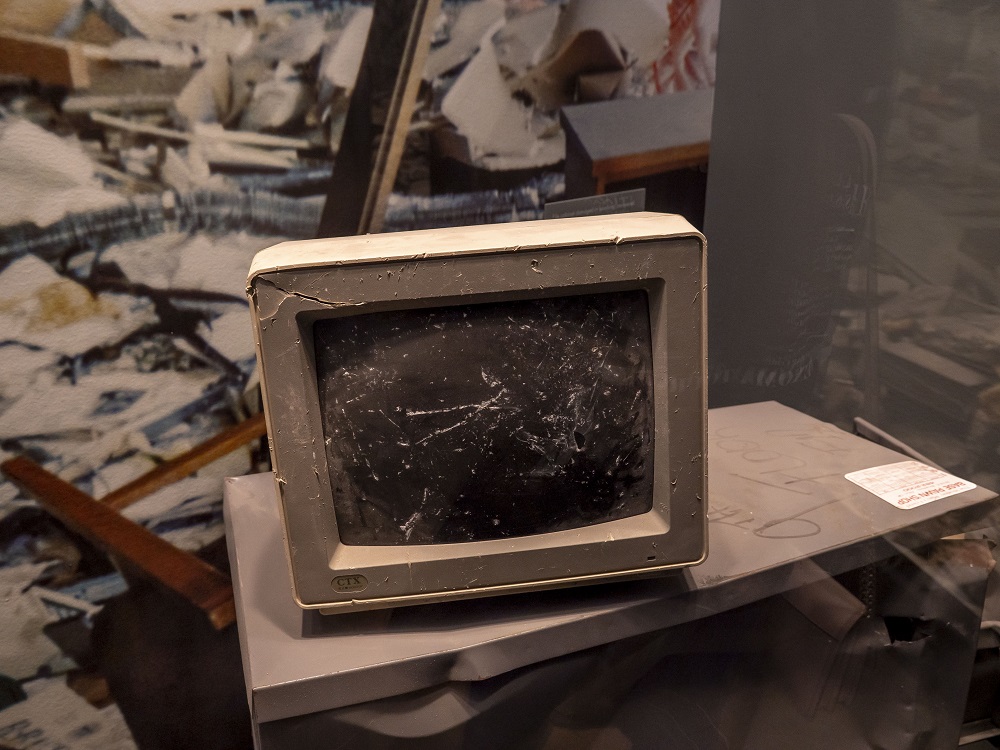
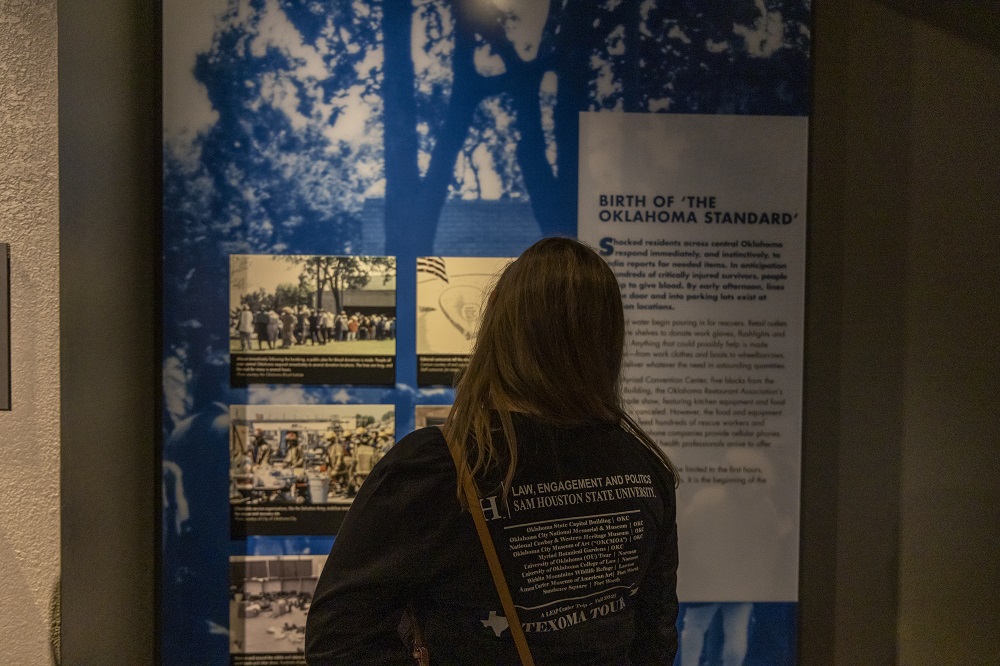
The aftermath was also vividly displayed at the Museum. Artifacts included a pile of keys, glasses, desk items, and shoes: the remains of a tragedy, forever encased in this Museum–preserved, much as people’s memories of the bombing will last forever.
The lives of the innocent are memorialized in so many ways throughout the museum, but the most impactful is the wall of pictures with personal belongings that they were able to identify as belonging to specific individuals.
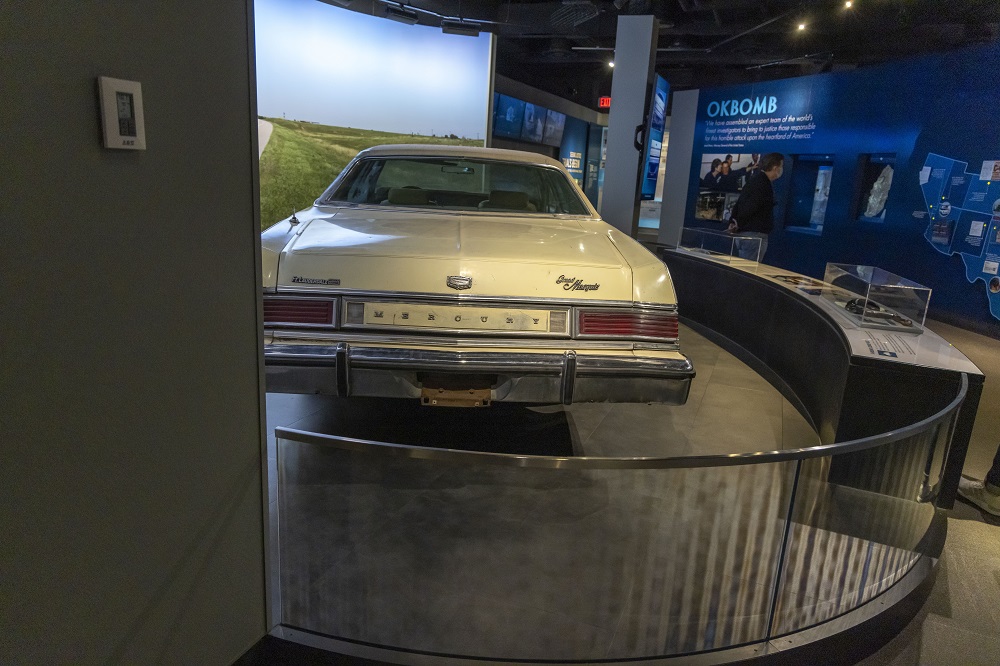
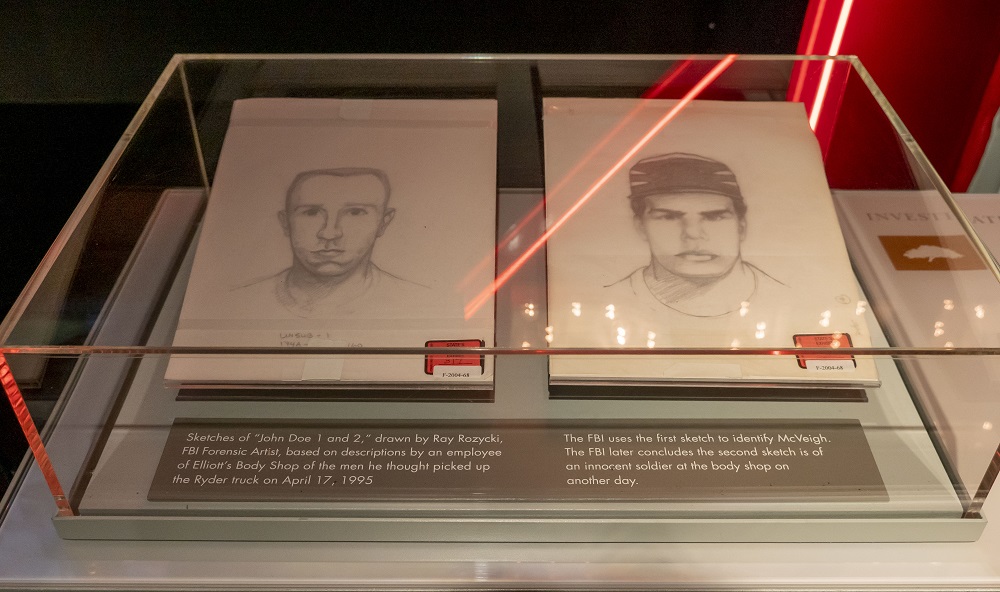
As we moved through the timeline, we were then shown the backstory of Timothy McVeigh and what he was doing leading up to the incident.
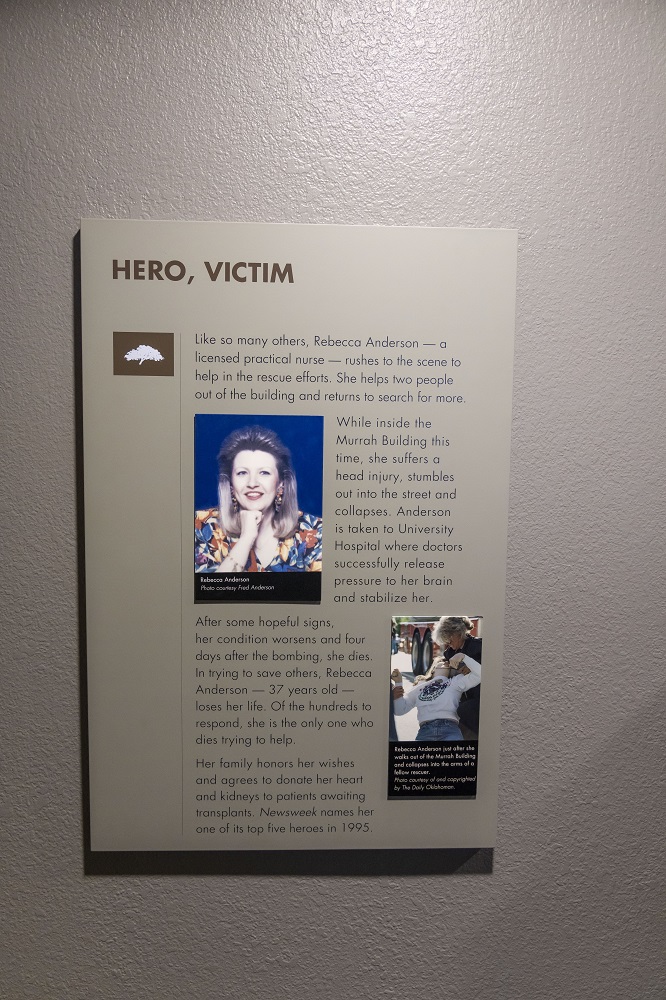
The stories of those who passed, those who died, and the heroism of the rescuers was emotional.
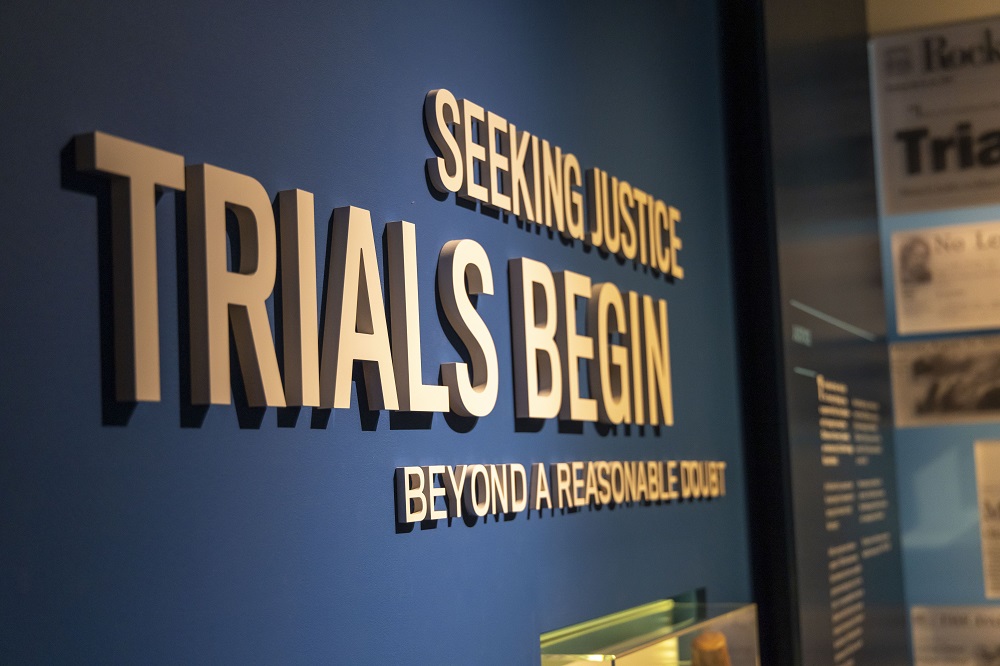
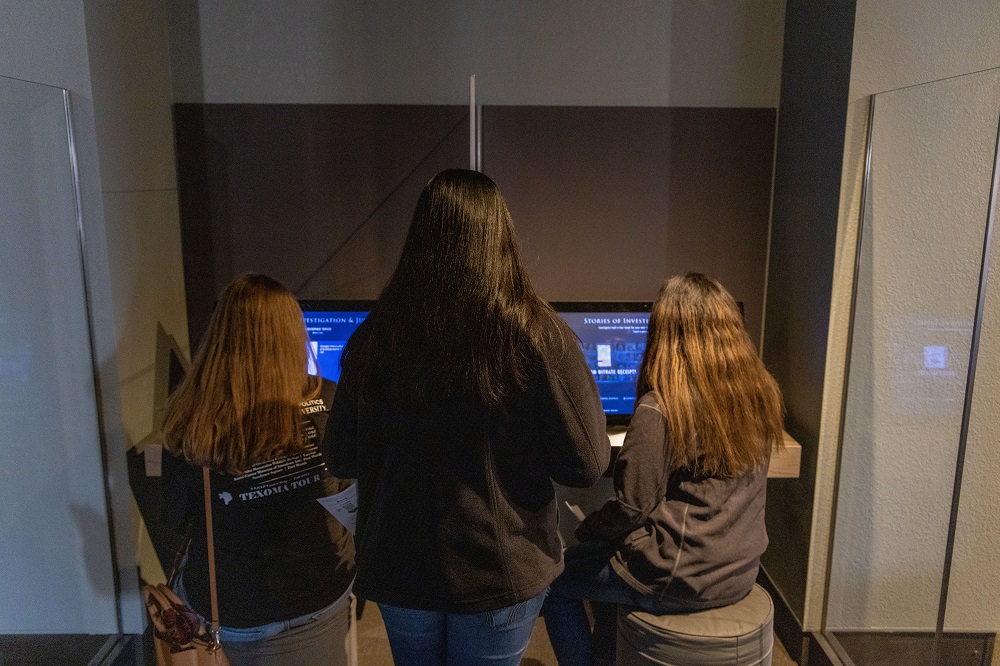
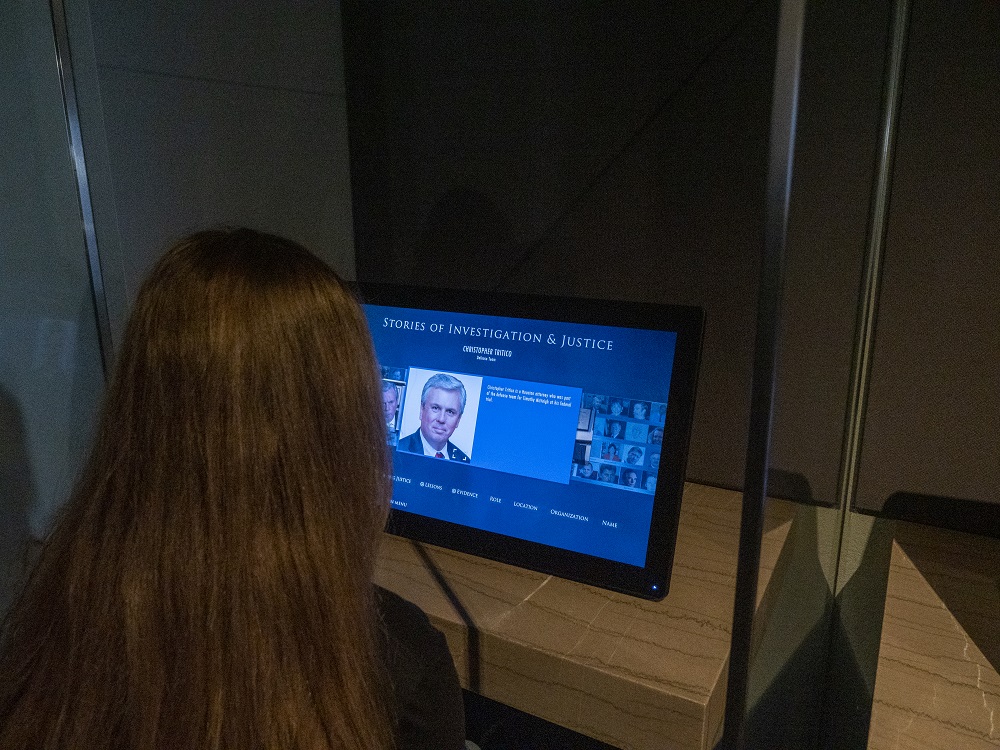
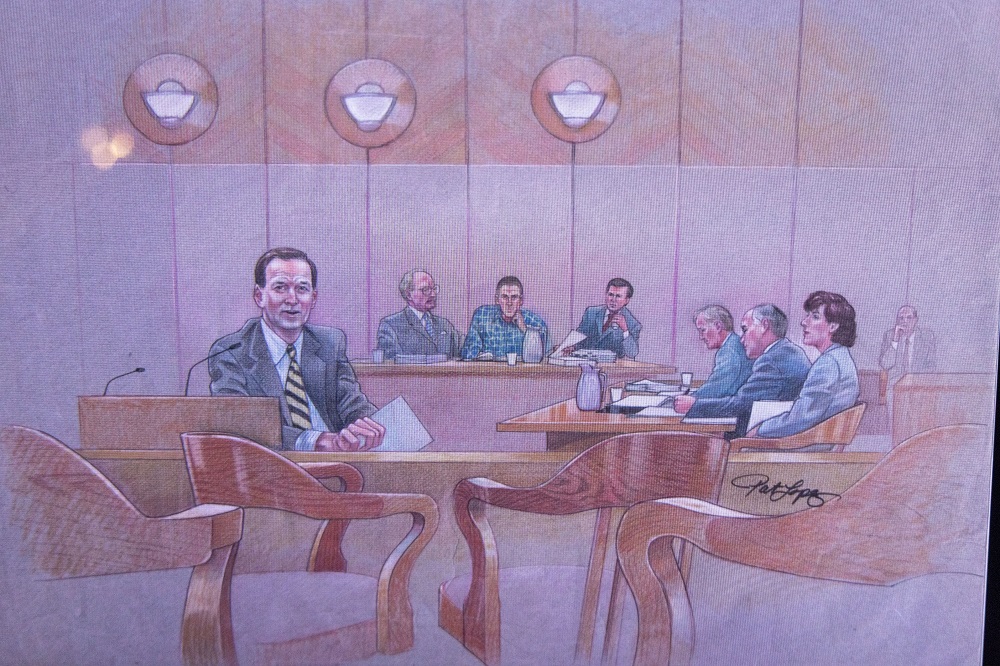
McVeigh was charged with 15 counts of murder, and he was represented by multiple attorneys, including with Chris Tritico, who is an SHSU Alumnus.
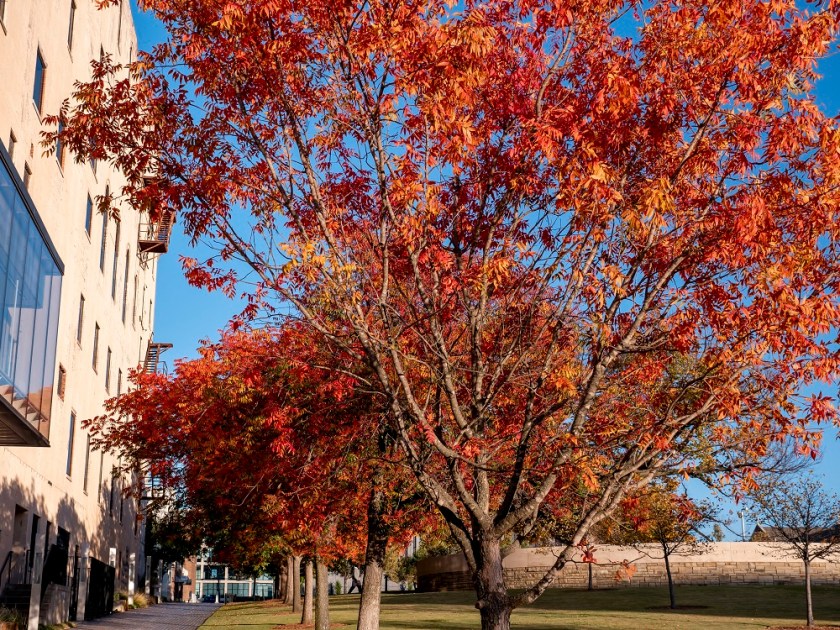
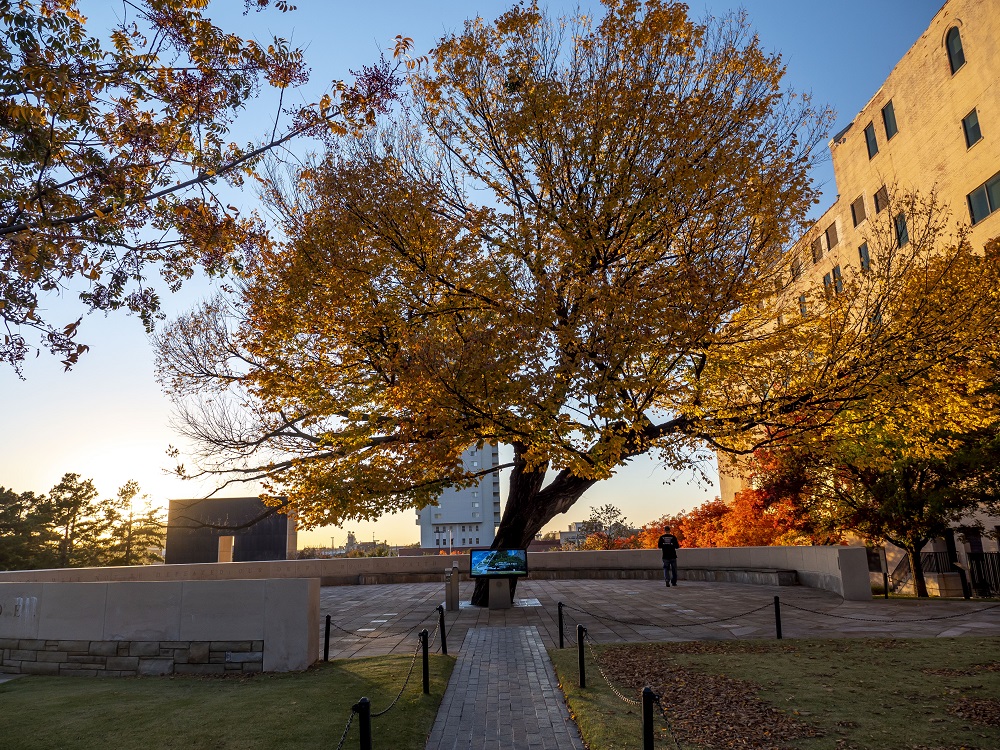
As we made our way to the outside part of the building, we experienced a great contrast to the tragedy we walked through. We breathed a sigh of relief at all the vivid fall colors of the trees and relished in the natural beauty that I believe we all needed.
The path leads up to a single American Elm tree that is known as the Survivor’s Tree. This Elm stood through the bomb and remains strong to this day. Each year the seedlings are harvested from the tree and given in remembrance to the families impacted by this event.
An offspring of this tree was even planted at the White House.
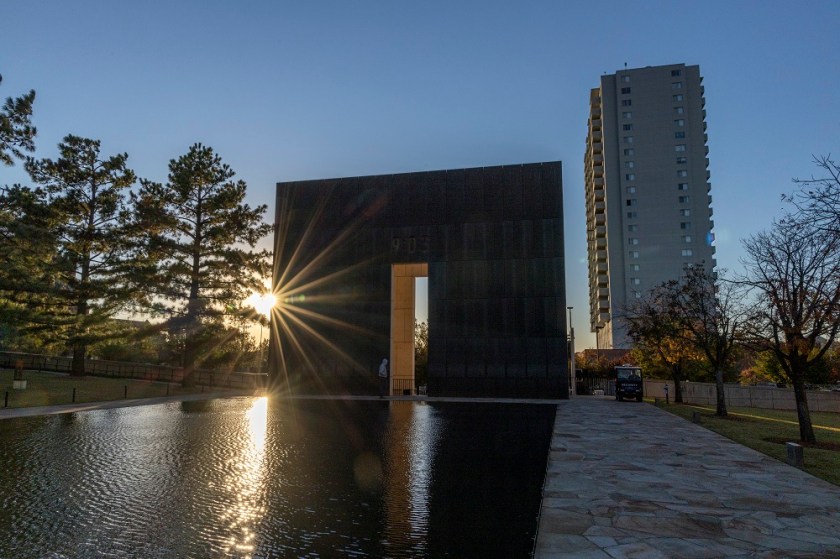
The grounds also are home to other memorial features. There is an East Gate displaying 9:01am, a reflecting pool, and a West Gate, displaying the time 9:03am.
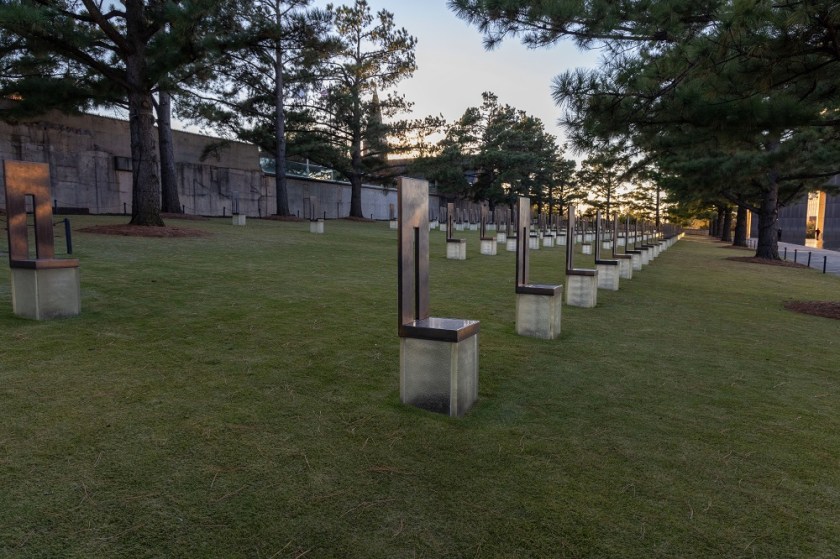
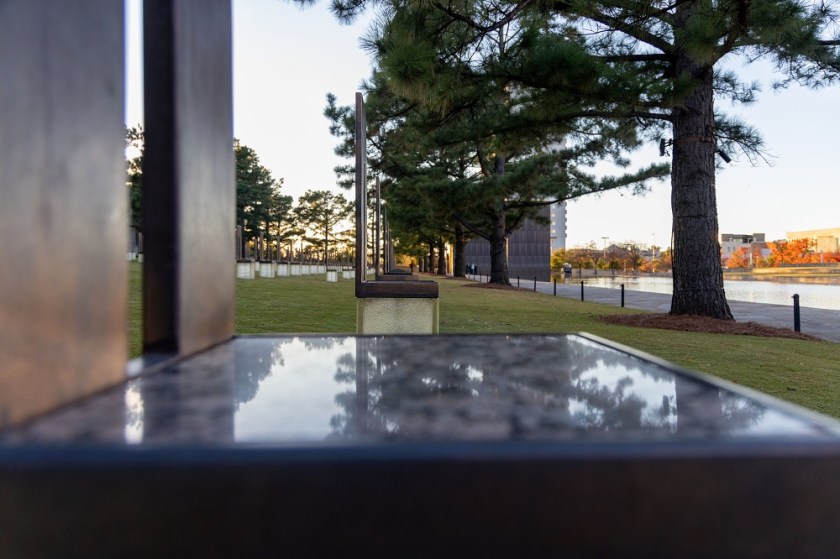
South of the walls, the lawn is lined with 9 rows of chairs representing the nine floors of the Murrah Building.
There are 168 empty chairs, representing the lives lost, including young children (which are represented by smaller chairs).
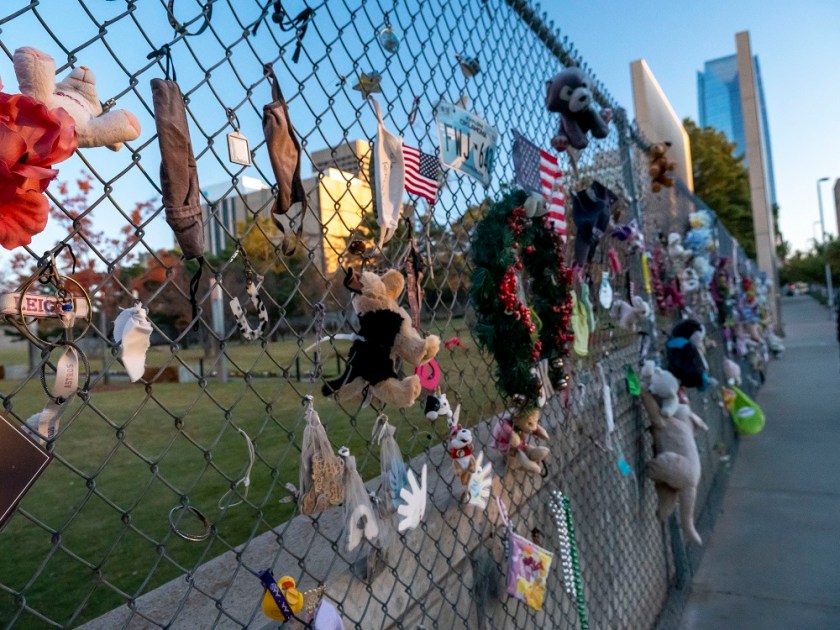
Surrounding the grounds, there was a fence with mementos that people have placed in memory of loved ones: teddy bears, bracelets, photos, and such.
We also went across the street, where a nearby church created a statue of Jesus, with an inscription of the shortest verse of the Bible: “And Jesus wept.”
This was a tour that almost brought me to tears at several places, and our hearts were heavy as we left.
Oklahoma Capitol
Saara Maknojia
Shortly after our somber but educational tour at the Oklahoma City National Memorial Museum, the LEAP Members coasted off to the Oklahoma State Capitol. The chilly weather and beautiful sunset allowed us to better view the magnificent and historical site.
The intricate architecture of the landmark included Greek Corinthian columns, and Greek Meanders which symbolizes and means movement. The Greco-Roman structure of the state capitol was complemented with the displayed Tribal flags from Native American Peoples who have such a rich history in the 45th state.
The Oklahoma State Capitol is further enhanced with the sculpture of a Native American woman, designed by Allen Houser, which stands in front of the Capitol.
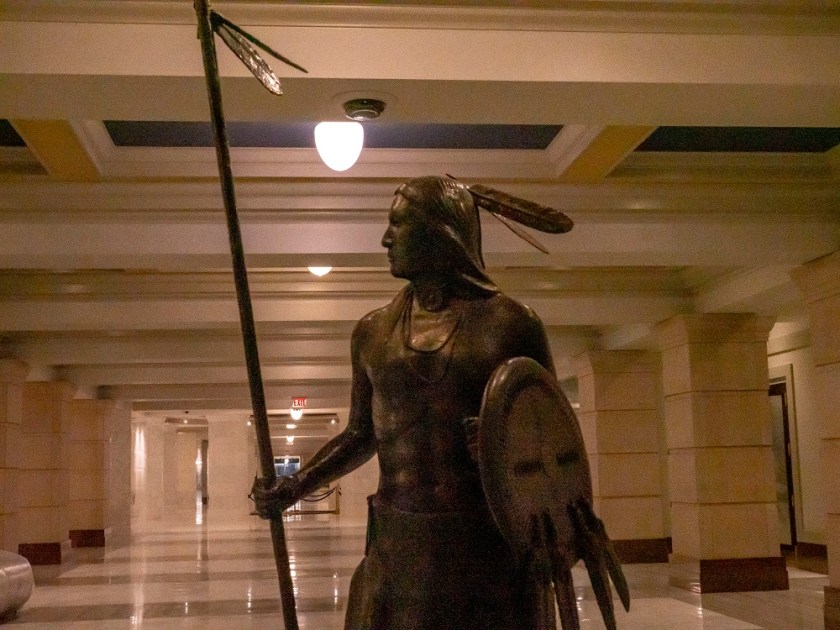
The peak of the capitol’s dome is adorned with a 17.5-foot sculpture of a Native American called “The Guardian,” by Enoch Kelly Haney, and a version of the statue is also located inside the building.
We learned the history behind some of the Oklahoma tribes as we observed the painted murals on the third floor of the capitol.
Oklahoma’s historic significance of the “Sooners” is also integrated into the state building through some of the murals. We all learned about how the name came to be and why it was such a vital point in OK history. Oklahoma State University later adapted “Sooners” as their team mascot to exemplify their patriotism towards the state.
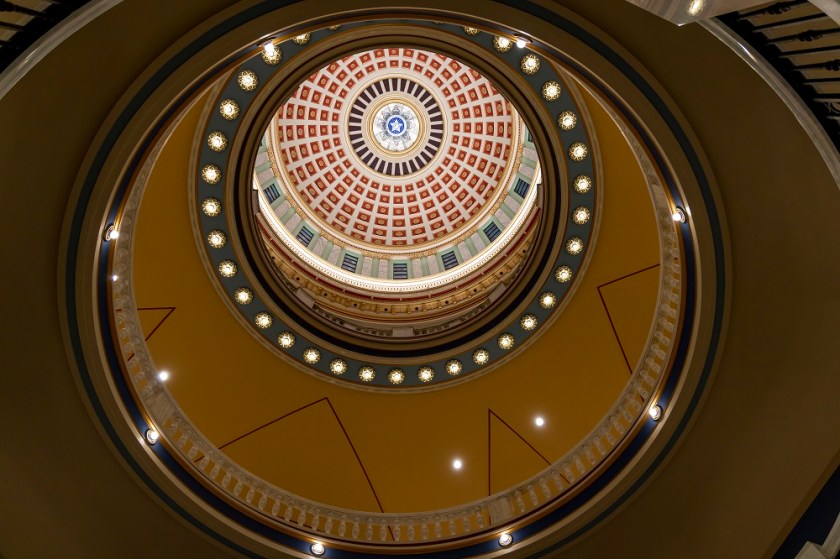
Probably the highlight of the Capitol Building is the interior dome, which is beautiful.
The LEAP Members grasped a better understanding of not only the political aspects of the Oklahoma State Capitol, but also the history and cultural diversity within the building itself and the state of Oklahoma throughout the tour!
Oklahoma City Museum of Art
Erin Juarez
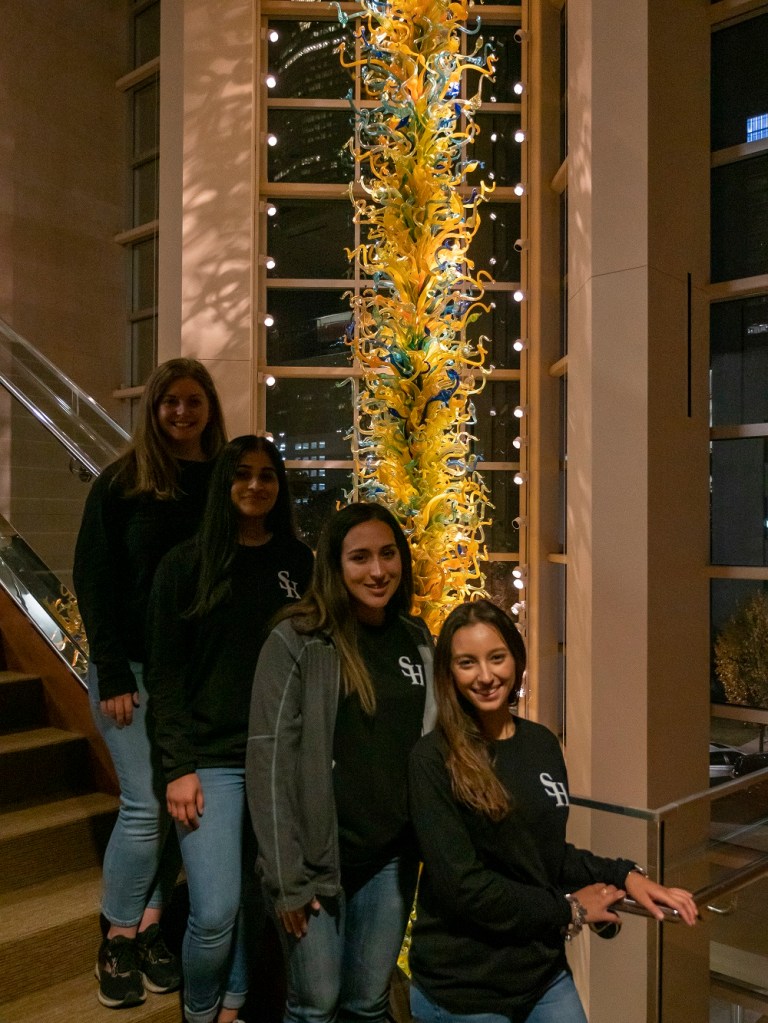
With the night still young-ish, we decided to go to the Oklahoma City Museum of Art. As we walked in, there was a fifty-five feet glass sculpture towering to the right of us, one created by renowned artist Dale Chihuly.
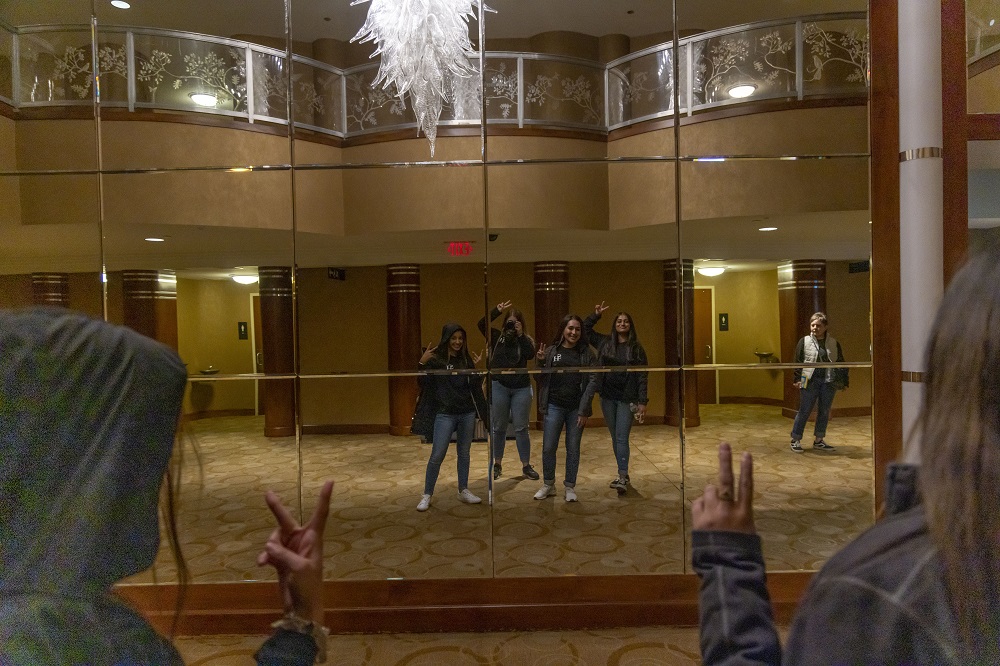
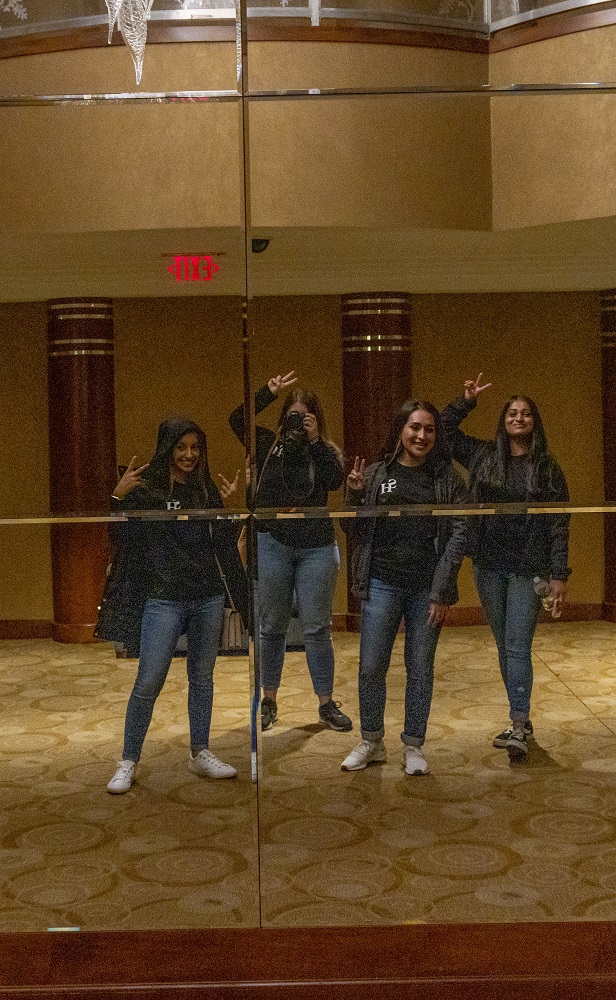
Yvette, a born trouble-maker, immediately got into trouble for standing on a wall so that she could better pose with the sculpture…
This Museum helped expose us to various types of art: impressionism, regionalism, modern, sculptures, and many other styles and artistic media. It helped me learn what type of art I most enjoy. In particular, I liked the sculptures, especially those of Chihuly. Saara also liked Chihuly, but was also drawn to the impressionists.
The museum is separated into four floors. On the fourth floor, our favorite artist, Dale Chihuly, work is featured in a way that flows cohesively leaving the viewer to almost forget they are in an art museum. The dark room, allowed for the lights that were strategically placed to catch the art at different angles to illuminate it differently.
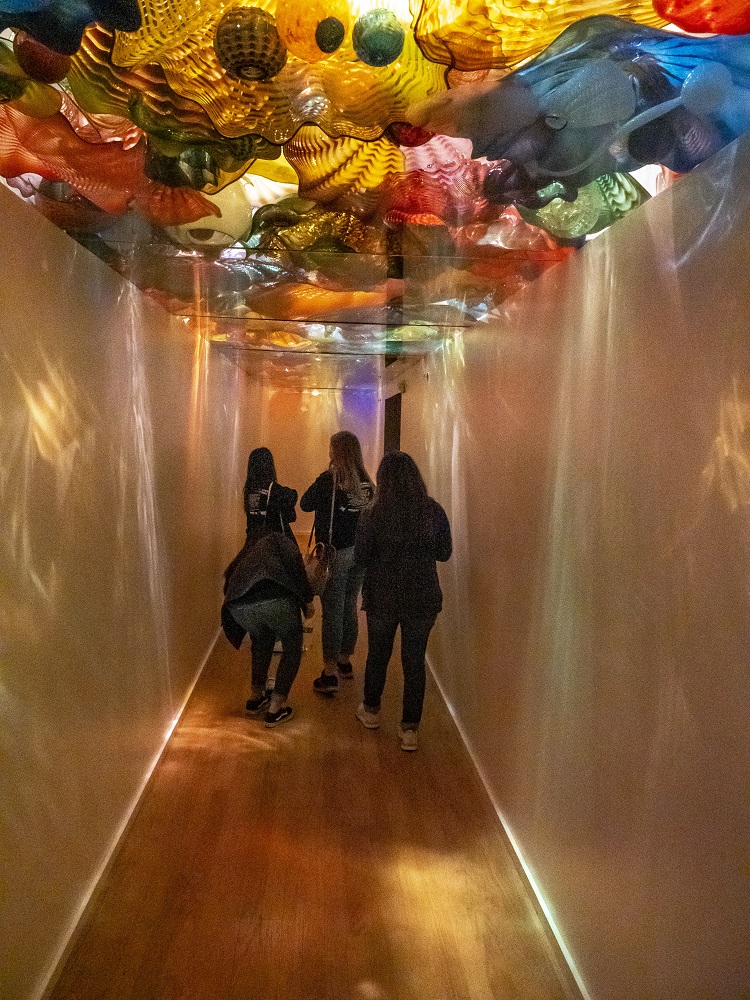
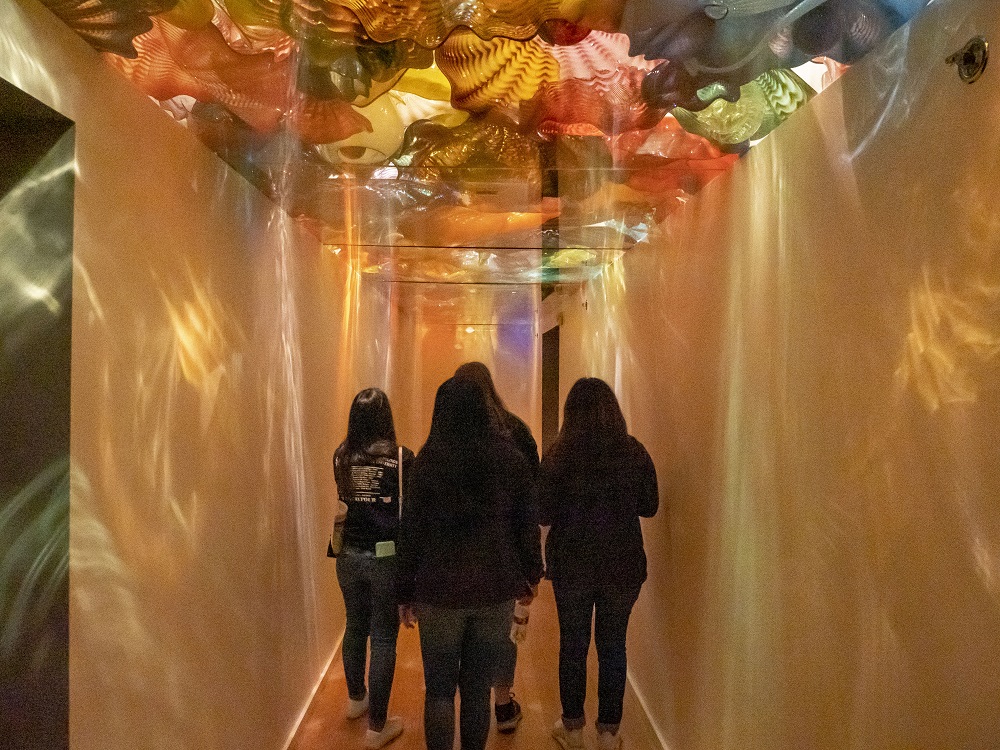
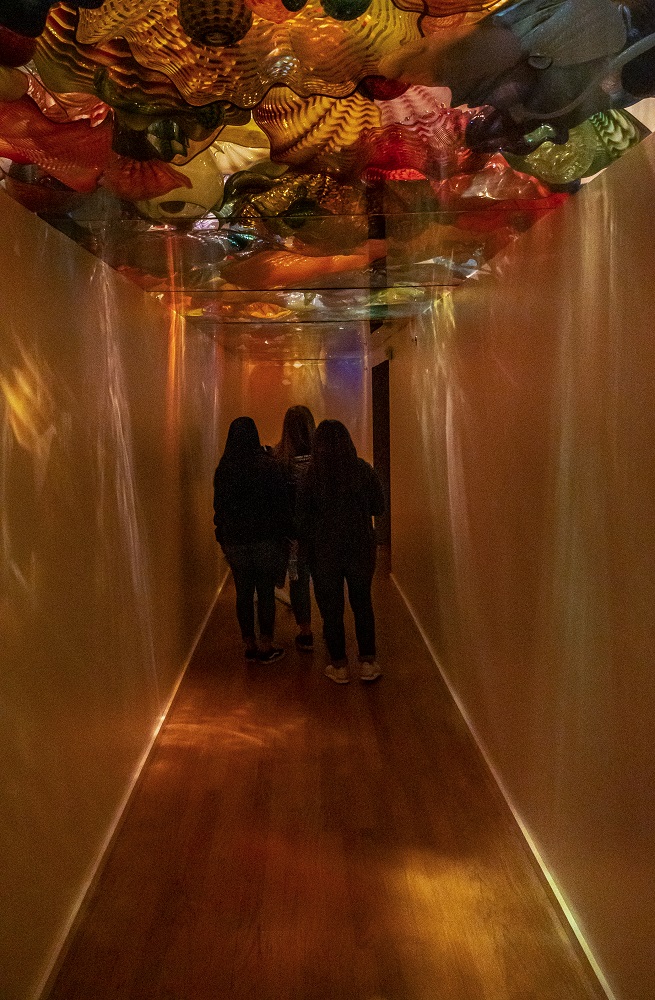
We found this exhibit to be exceptionally fun and dynamic to photograph. As a person new to cameras, it offered the opportunity to experiment with photography. The low light was a challenge, but the subjects were beautiful! We particularly enjoyed walking under Chihuly’s Persian Ceiling, which creates all sorts of interesting shadows and colors.
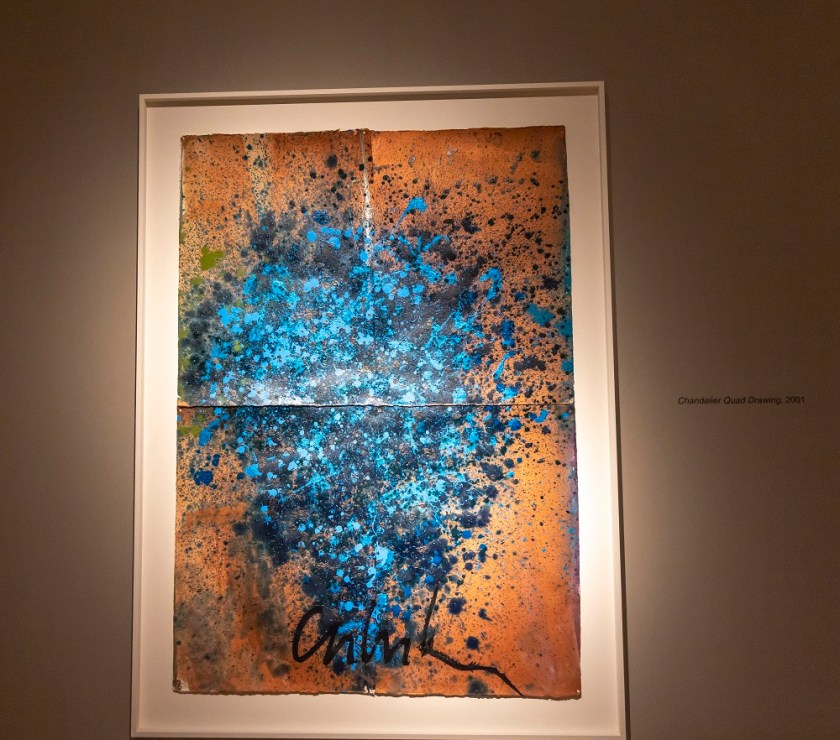
And we also had the opportunity to see some of Chihuly’s paintings–one of which, we learned, Stephanie actually owns!
Outside of the fourth floor, there’s a video of how Chihuly gets his glass done for his art. This was very interesting. We often found ourselves asking in amazement on how he accomplished such great works, so the video was insightful.
We even found another of his chandeliers in another part of the Museum, which was also beautiful.
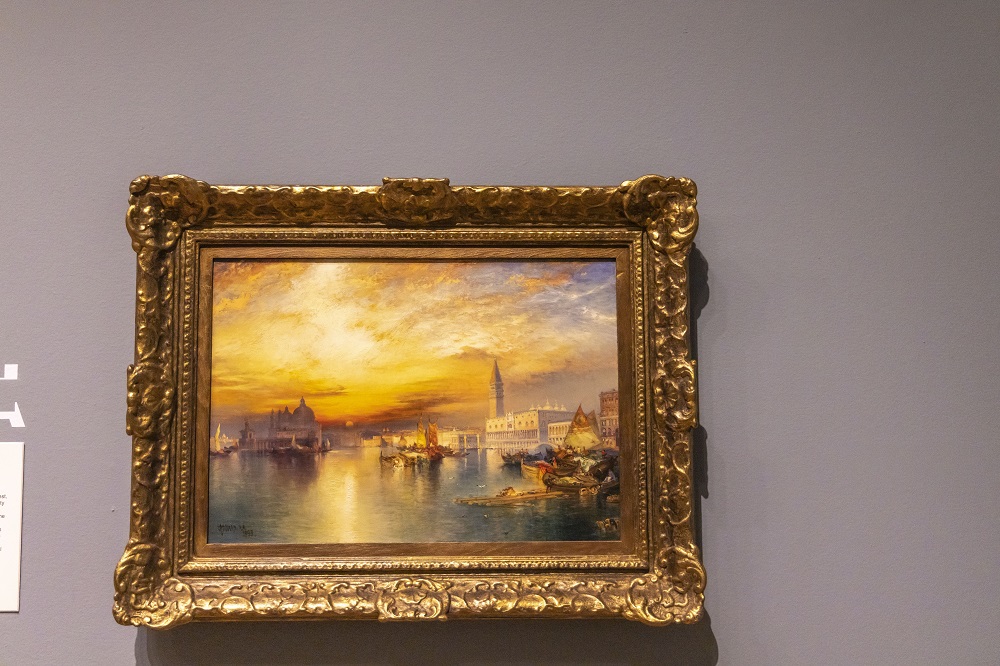
Of course, we didn’t just see Chihuly. For some of us, it was our first time to see a Thomas Moran painting…
…and Alex Katz…
…and although all of us had seen a Georgia Okeeffe…
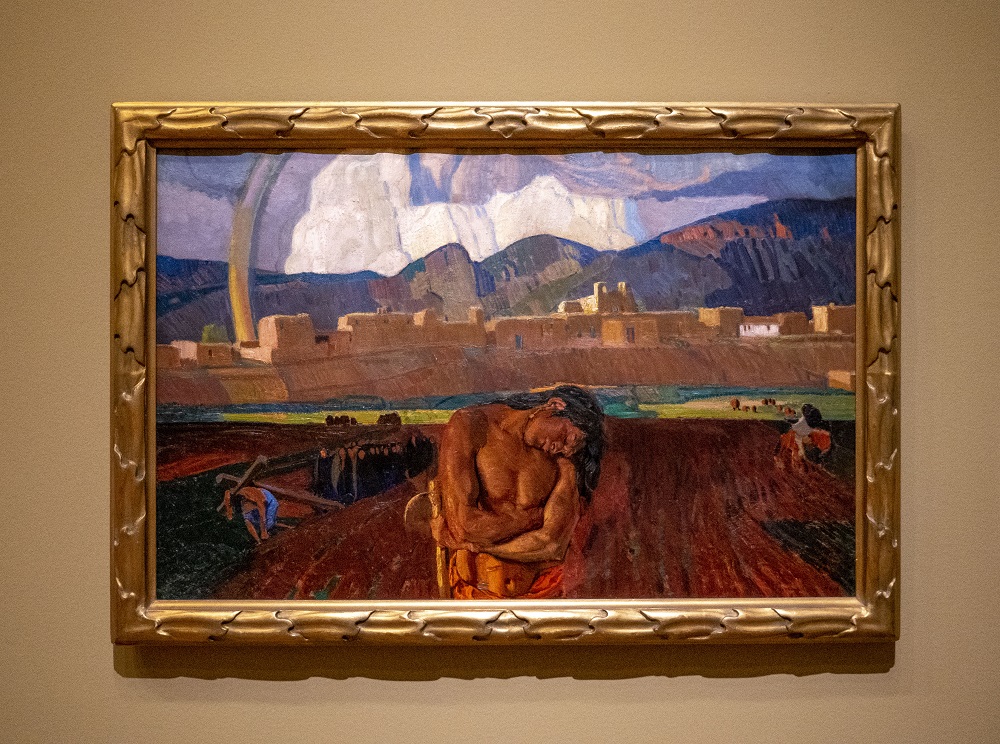
…it was our first time to see some other Southwestern artists, such as Ernest Blumenschein…
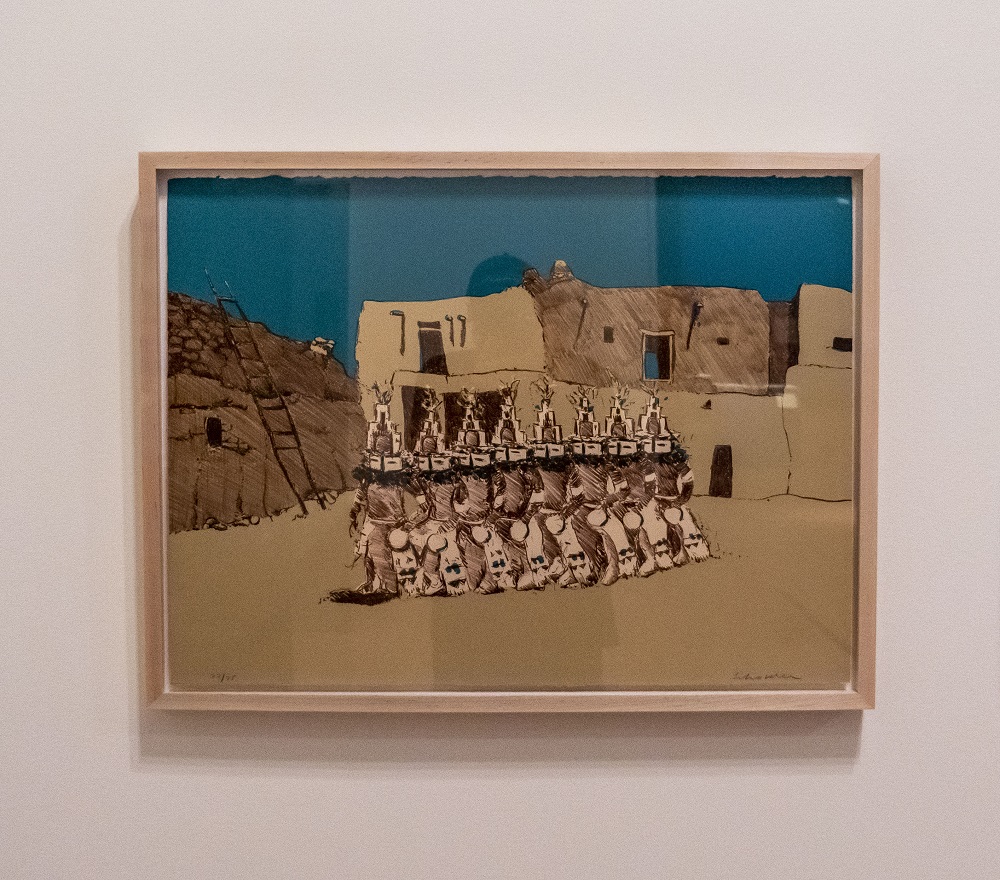
…and Fritz Scholder…
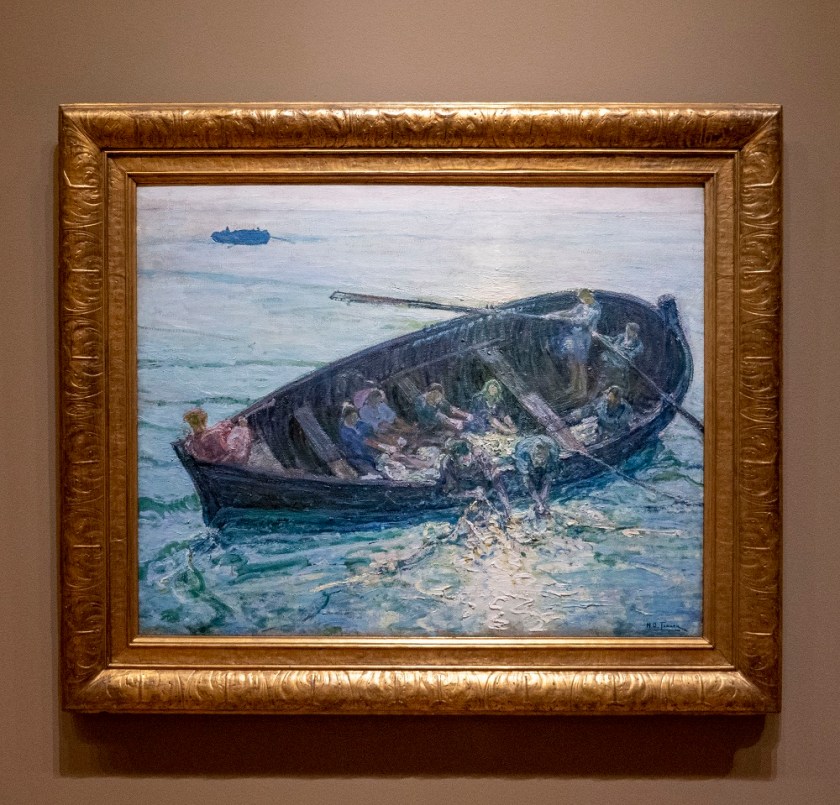
We also saw one of our favorites, which was a piece by the African-American artist Henry Osawa Tanner.
As we took one last gaze upwards at the towering Chihuly we left awed by the amazing art.
But, of course, our favorites were the various Chihuly pieces, including the largest of these, the 55-foot piece at the front of the building. This time, however, we took the photo according to the rules of the Museum, forcing Yvette to comply.
The Wedge Pizzeria
Morgan Robertson
To conclude our first eventful day, we opted for a quiet, carryout dinner. We selected The Wedge Pizzeria, which was Oklahoma City’s first artisanal brick oven pizza. Among the pizzas we selected were: The Perfect Margarita, Brisket, and we built our own Hawaiian Pizza. As we sampled each pizza, we all found we had different favorites, but we liked them all. Saara’s favorite was the brisket pizza; she described it as having the right amount of spice from the Jalapeños, and a great flavor from the brisket.
My favorite, and Erin’s favorite, was the Hawaiian Pizza. Although Hawaiian Pizza might be controversial among the general population, it has a place amongst this group of LEAP Members.
Overall, it was a great dinner and we enjoyed each other’s company as we ate.







































 Center for Law, Engagement, and Politics