Inventors and Presidents: On the Road with the LEAP Ambassadors

The LEAP Ambassadors are on the road again as we return from Dearborn, Michigan. Even though we left yesterday, our trip back to Huntsville is, in LEAP style, exploiting the learning opportunities along the way. Driving through the Midwest, we have been enjoying fields of green, skies of blue and white ornamented with sunny streaks, while visiting locations of historic prominence. From the birthplace of one of the fathers of the modern age to the resting place of our nation’s 29th president, we knew that our Friday itinerary would be as fun as any of the previous adventures in our Vagabond trip.


Edison Home, by Brian Aldaco

Speaking of the Vagabonds, our first historic site of the day was the birthplace of Thomas Alva Edison in Milan, Ohio.
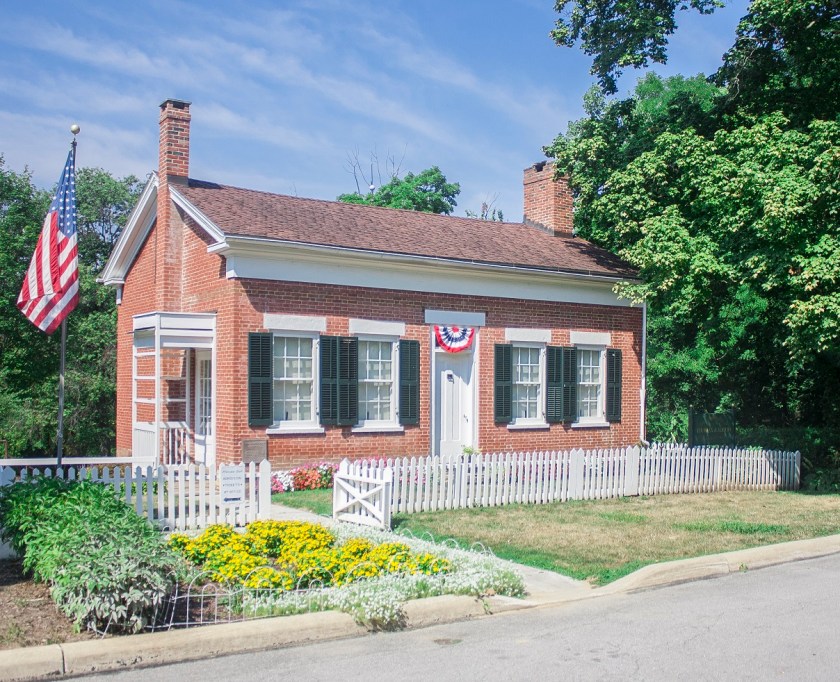
Thomas Edison's Birthplace, Milan Ohio
Thomas Edison’s Birthplace

Constructed along the banks of the Milan Canal in 1839, this modest home was where young Edison spent his childhood until he was  seven-years old. Even though the family left in 1854 due to the town’s low job opportunities, the home would be owned again by the original family when Marion (older sister of Thomas) bought the home. Eventually the home was bought by Tomas Edison and efforts from his wife and sister were later made to turn the home into a historic site. These finally came to fruition in 1947 when the home was inaugurated as a museum on 100th anniversary of Edison’s birth.
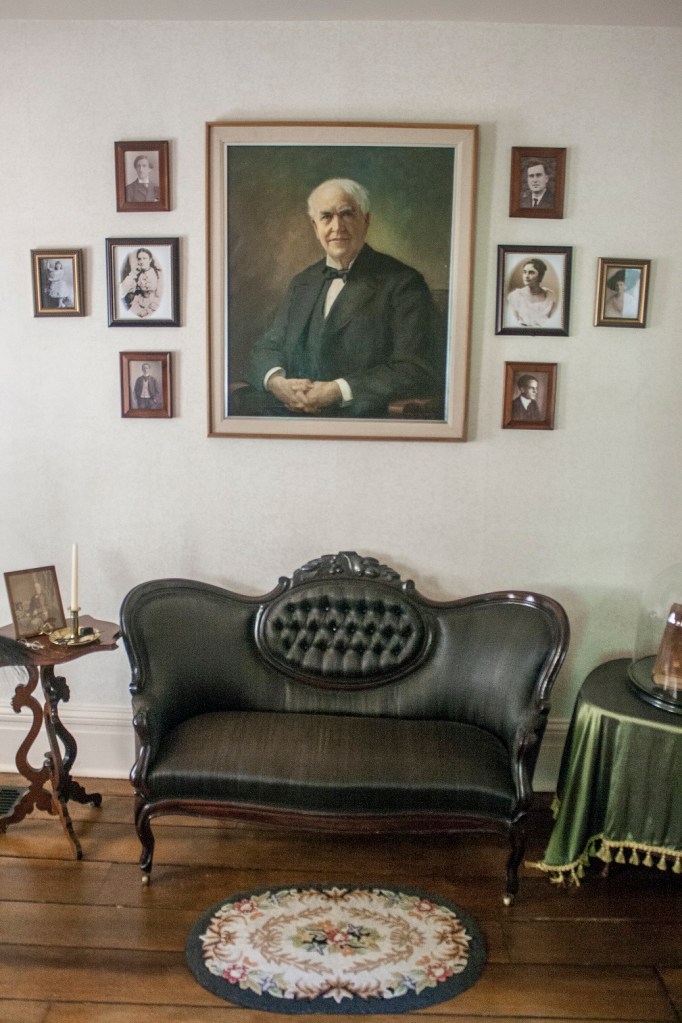
Edison_Living_Room_Photo_Web

Upon arrival to the restored home along Edison Avenue, seemingly as common as the neighboring homes, we stepped into the birthplace of one of the most important inventors of all time. On the living room stood a cradling bench, one that would have been used to cradle young Edison. What was of greater interest was the adjacent room. In a small, four-walled enclosure, intended for the younger children’s living quarters, stood a complimentary rope bed. Mother Nancy Edison moved to the warmer, oven-heated space on which she gave birth to her youngest child. We stood on the threshold of where Thomas Edison had been born on a February evening in 1847. As we stepped upstairs we were able to sense young Edison’s childhood.

The first bedroom we went into would have been young Marion’s room, now decorated with her christening gown and a knitted tapestry on the wall which she chose not to finish. We then crossed to the opposite room which Thomas and wife Mina Millar used as a bedroom after purchasing the home. Various pieces of apparel owned by the Wizard of Menlo Park were exhibited in the closets. One garment which we found amusing was a pair of slippers, the preferred footwear for the insomniac inventor who would often nap on the strategically placed cots located around his laboratory in Orange, New Jersey.

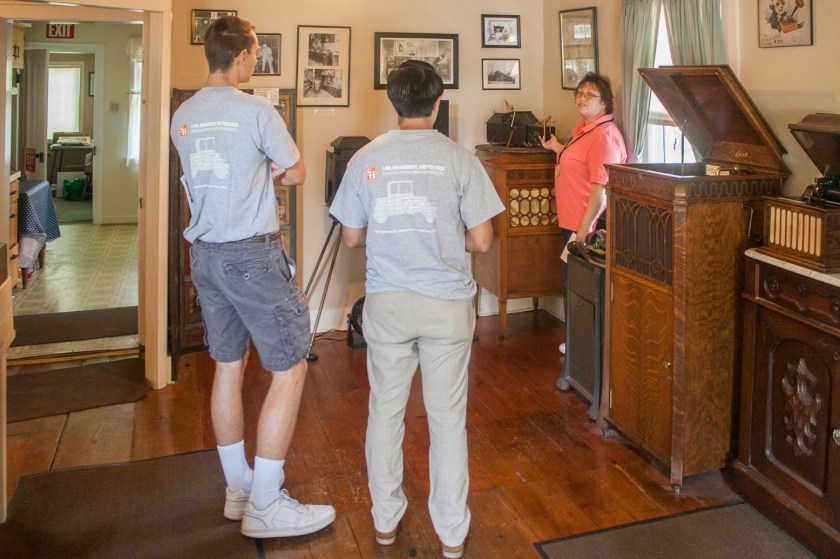
As we walked downstairs into the parlor room we spotted a portrait which depicted Edison on a fireside’s edge telling a story to a group of children and friends, on of which we recognized as a very attentive man with the name of Henry Ford. As we had spent a week researching the pairs’ 1915-1926 trips across the nation, it was exciting to view signs of their great friendship. We were further amazed, however, by the small space behind the parlor room. On this small storage room stood dozens of artifacts that the inventor had patented during his lifetime. As T. Edison held a list of over 1000 patents, it was rewarding to view artifacts such as the electric pen and the talking doll (the first toy of its kind in the US.) Other items included one of his first successful lightbulbs of bamboo filament (the lightbulb still works), a Western Union telegraph machine which he sold for $40,000 after its creation, and Edison spark plugs, which further helped solidify his connection with Ford.

With our tour ending at the home’s basement, in which artifacts from the period such as a pole latter and a waffle maker were shown to us, we took our last glimpse of the home and started on our way towards Marion, Ohio.
Edison_Phonograph_Web

Before reaching the home town of William G. Harding, however, our homesickness was too strong. Along the road, we came across Tackett’s Southern Bar-B-Que. After overlooking the menu, Paul ordered a brisket sandwich, Professor Yawn chose a plate of pork, and Brian ordered a meal of St. Louis ribs, a bit incongruous considering the venue’s advertised title. Regardless of the cut’s name, the ribs of mouthwatering delight, along with the other meats, were savory to our southern palates. Accompanied with a side of coleslaw and beans (which were bathed in barbecue with a trace of meat) our lunch was more than enough to satisfy our appetite for Texas cuisine.


Warren G. Harding Historic Sites, by Paul Oliver

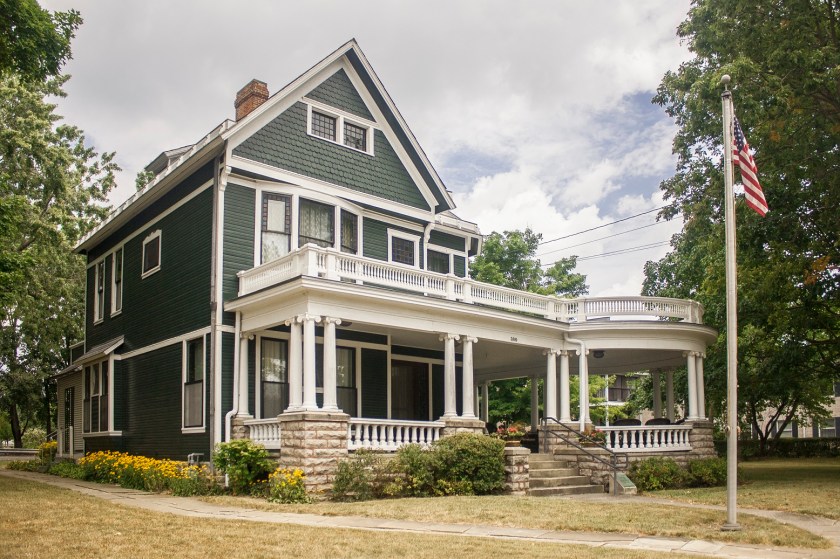
After lunch we headed to the Warren G. Harding home. Harding was President of the United States after Woodrow Wilson. This meant the he had to oversee the period immediately following the First World War. Importantly, for the purposes of our trip, Harding was also a Vagabond camper, having joined Henry Ford, Thomas Edison, and Harvey Firestone on their 1921 trip.

Henry Ford, Thomas Edison, Warren Harding, Harvey Firestone, Vagabonds
Ford, Edison, Harding, Firestone “Camping”

Unfortunately for us, we were running short on time, therefore, could no take the tour of the home, only visit some of its exhibits, tour the grounds, and look over the gift shop.
Warren G. Harding Home

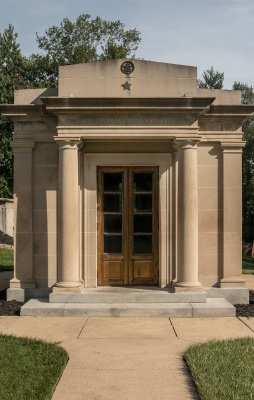
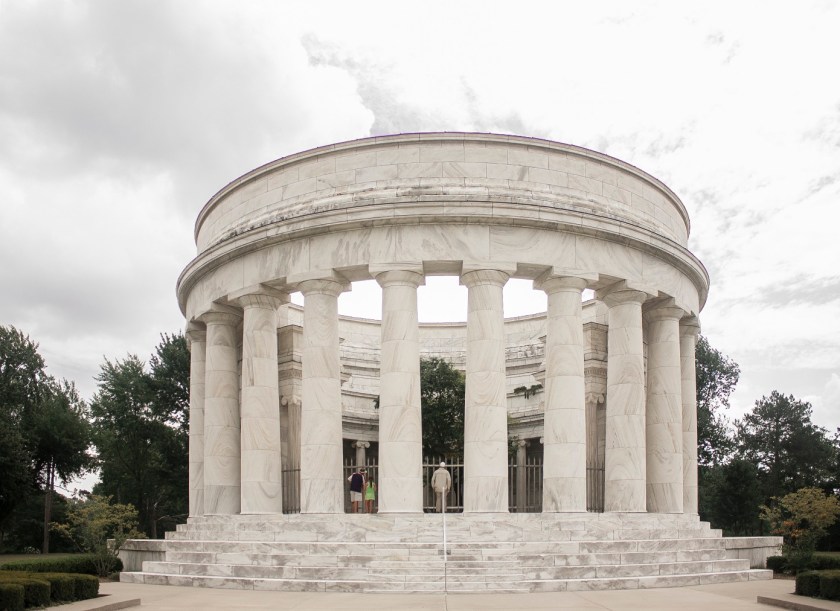
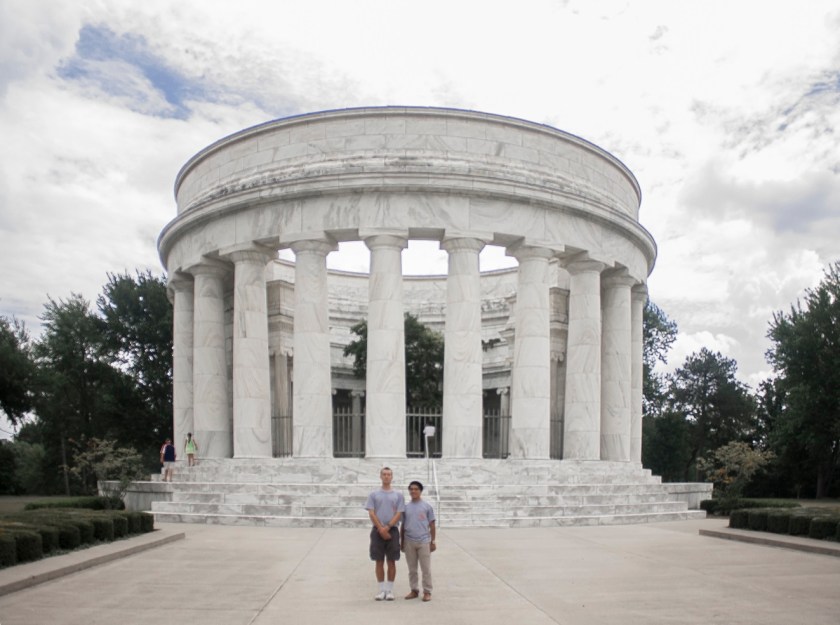
However, we did manage to head down the street to the Tomb of the both President Harding and the First Lady.
Warren G. Harding Tomb

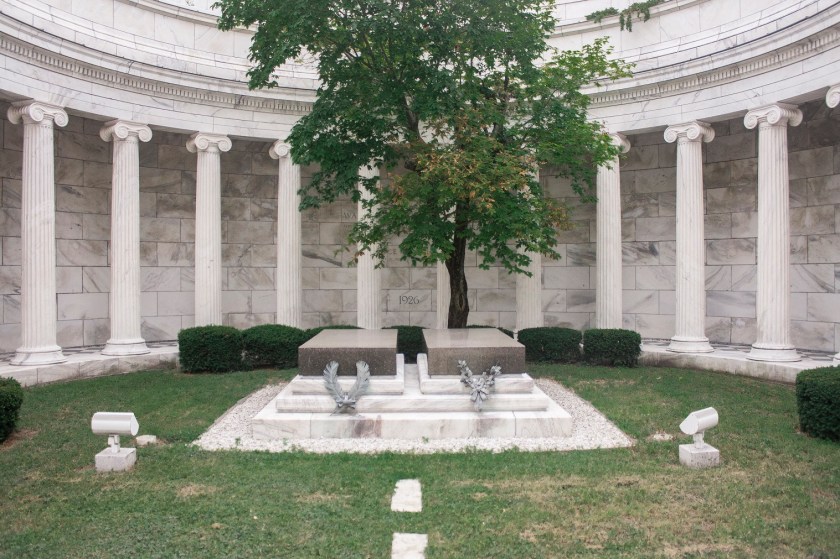
The tomb is a beautiful structure. Circular columns form the exterior. These columns themselves stand upon a massive base of what appeared to be white marble or polished granite. Inside the pillar arrangement was a walkway, shaded by an overhang above. This overhang was in turn supported by an interior range of columns, of the slight ornate iconic order. In the center of the tomb was a circle of green grass, bushes, and a tall tree whose branches seemed to reach upwards towards the sun, with roots streaming down on to two large grey sarcophagi.
Harding_Tomb_Graves_Web

Behind the twin stone coffins of Mr. and Mrs. Harding was an inscription carved into the back wall which contained their names and dates of death. It was an impressive monument to a President from a bygone era.
Harding_Tomb_2_Paul_Brian_Web


Ohio Capitol, by Paul Oliver

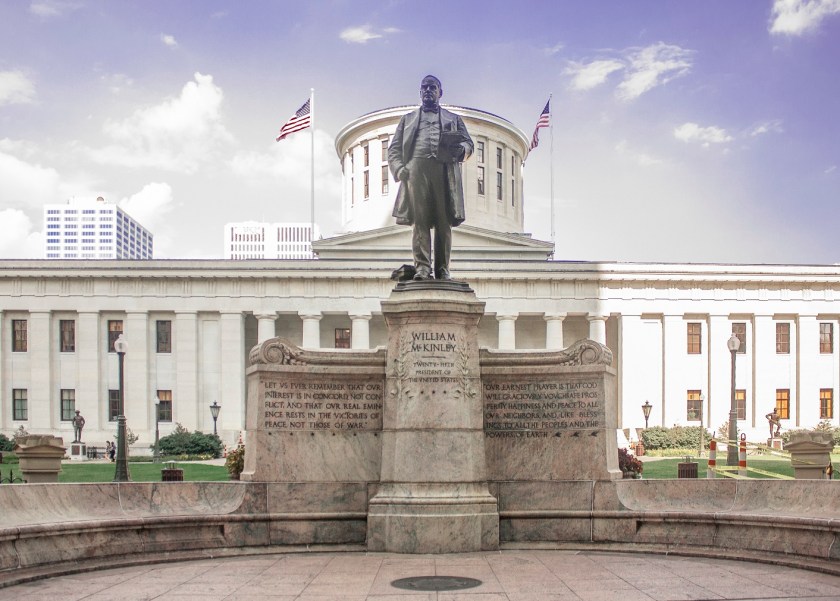
After touring the monument, the three of us jumped back into the van, and set off towards Columbus to tour the capitol of Ohio. We arrived just in time to join the tour, and were treated to an hour-long walk through of the grand statehouse.  Interestingly, unlike most capitals, the Ohio capitols is not domed, at least not from the exterior.
Ohio_Capitol_McKinley_Statue_Web

Rather, it was built with a towering cupola perched atop its roof. The interior of the capitol, however, offered a view from the rotunda of what appeared, from the interior, to be a dome.

Ohio_Capitol_Dome_1_Web

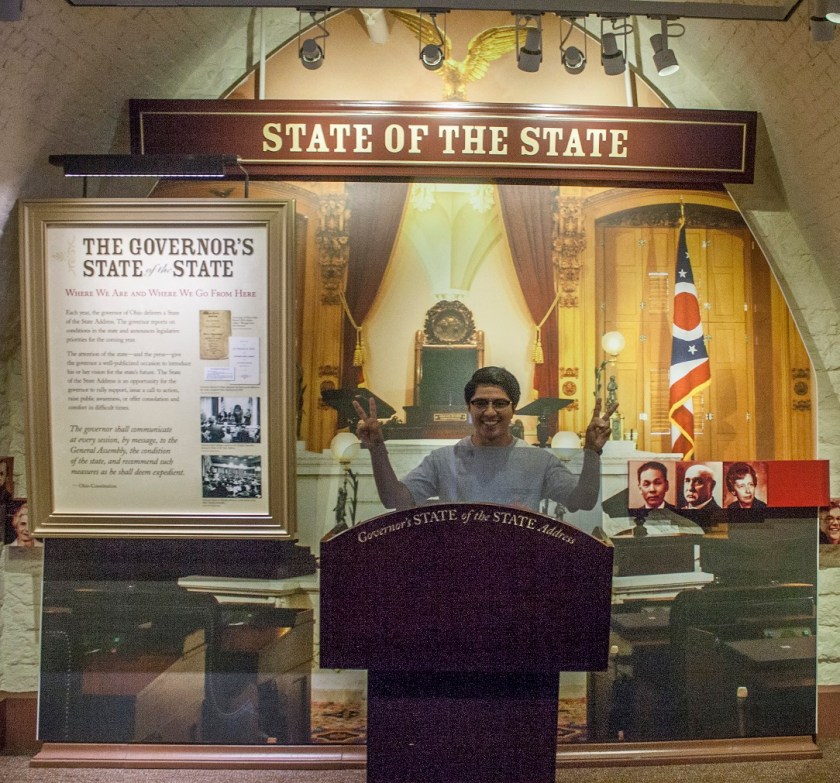
The capitol was built earlier than most capitols (construction began in 1838), so it was somewhat less grand than many others (say, the Texas Capitol).  But it offered interesting exhibits and interactive features…
Ohio_Capitol_Brian_Candidate_Web

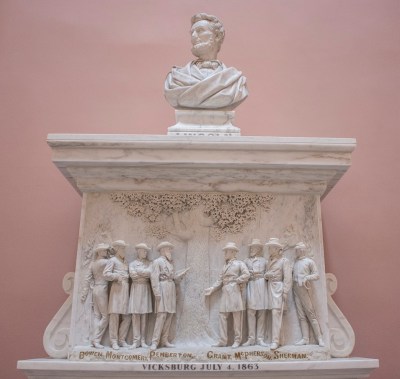
…as well as some interesting interior art.
Ohio_Capitol_Tour_Lincoln_Vicksburg_Web

Interestingly, for a state that produced eight presidents, the large portraits on their walls were dedicated not to these presidents but to Thomas Edison on one side…
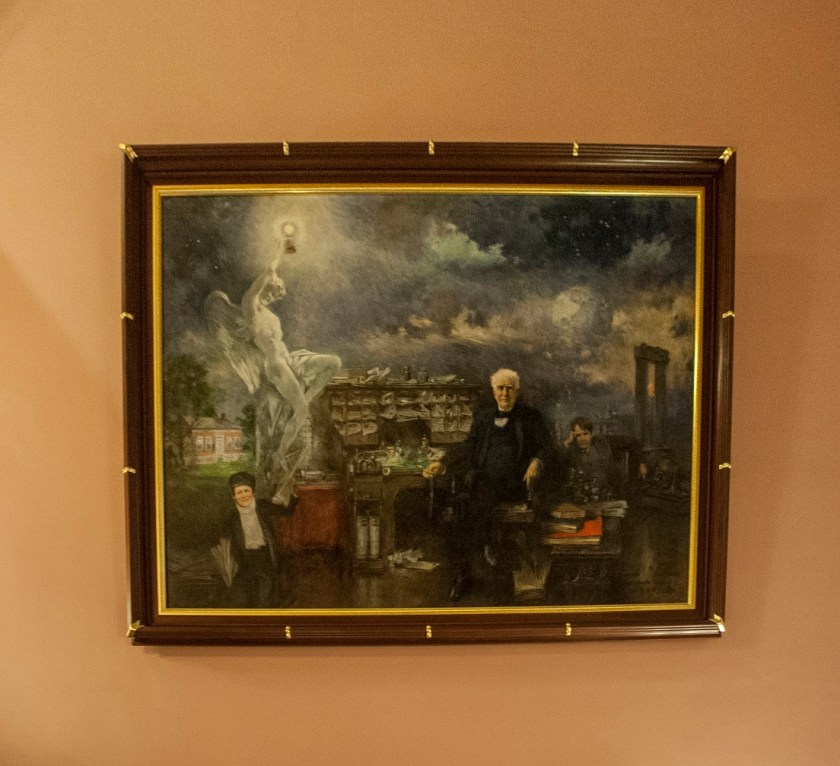
Ohio_Capitol_Edison_Web

…and the Wright Brothers on the other side.
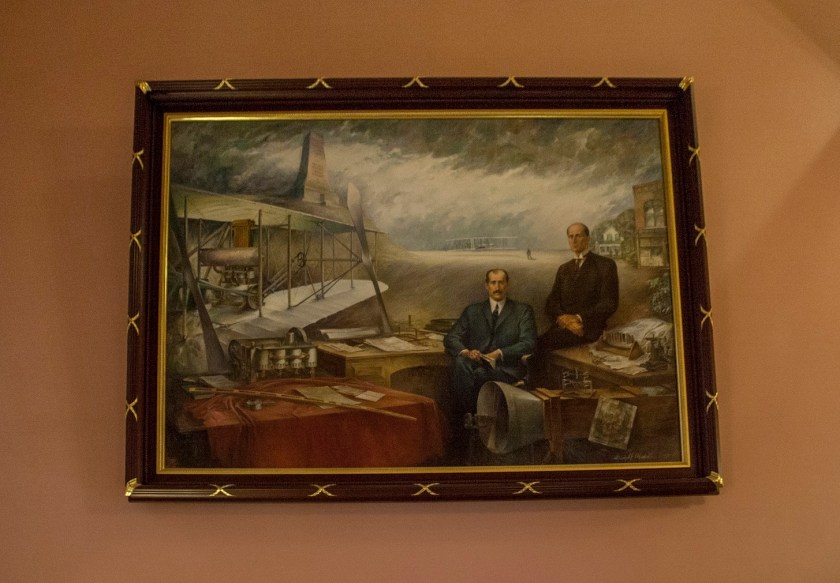
Ohio_Capitol_Wright_Brothers_Web

Aside from the art, we were able to visit both the House…
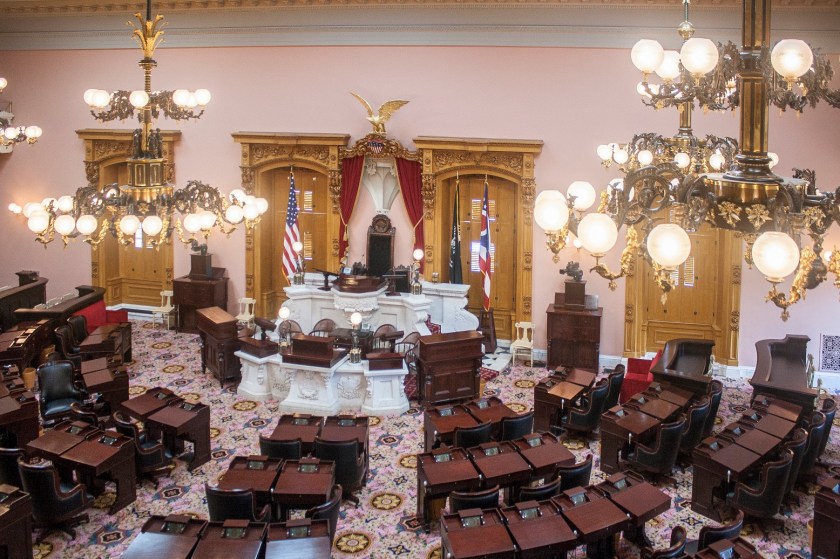
Ohio_Capitol_House_1_Web

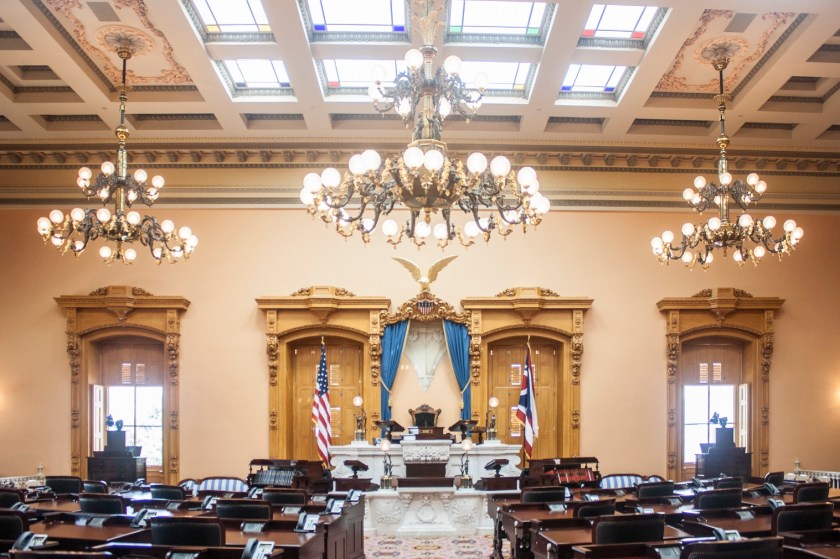
…and the senate.

Ohio_Capitol_Senate_Web

Although not a spectacular capitol, it was a stop well worth our time, and we enjoyed the tour very much.
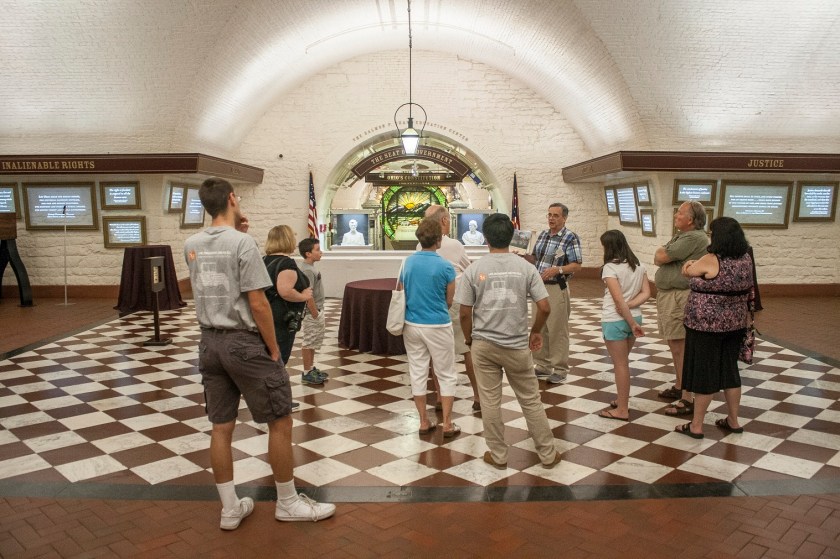
Ohio_Capitol_Tour_1_WEb


As we finished our capitol tour to step outside and view a little of Columbus architecture, we  continued on our 160-mile journey towards Indianapolis, Indiana. We arrived at the city accordingly for we were already getting hungry. Therefore, we stopped for dinner at a deli which served exceptionally good subs. Paul enjoyed a 12” Italian sandwich, while Brian and Professor Yawn shared an Italian and a Reuben sandwich between them. After a cookie desert, tired from a long trip and days’ adventure, we retired to our hotel.  We contemplated how tomorrow we would have a long day of sight-seeing and total of 7-hours of driving. But with the proper LEAP attitude, we greet tomorrow and days to come, anticipating the best of adventures.
 

Our New Kentucky (Temporary) Home

July 9, 2017

Saturday was our first day to awake in “The Bluegrass State,” and we had a full day ahead of us.   As part of the Southern Legislative Conference, which is hosted each year in a different city, and brings together legislative members from all across the south for a week of idea sharing and networking.


Leaving Louisville

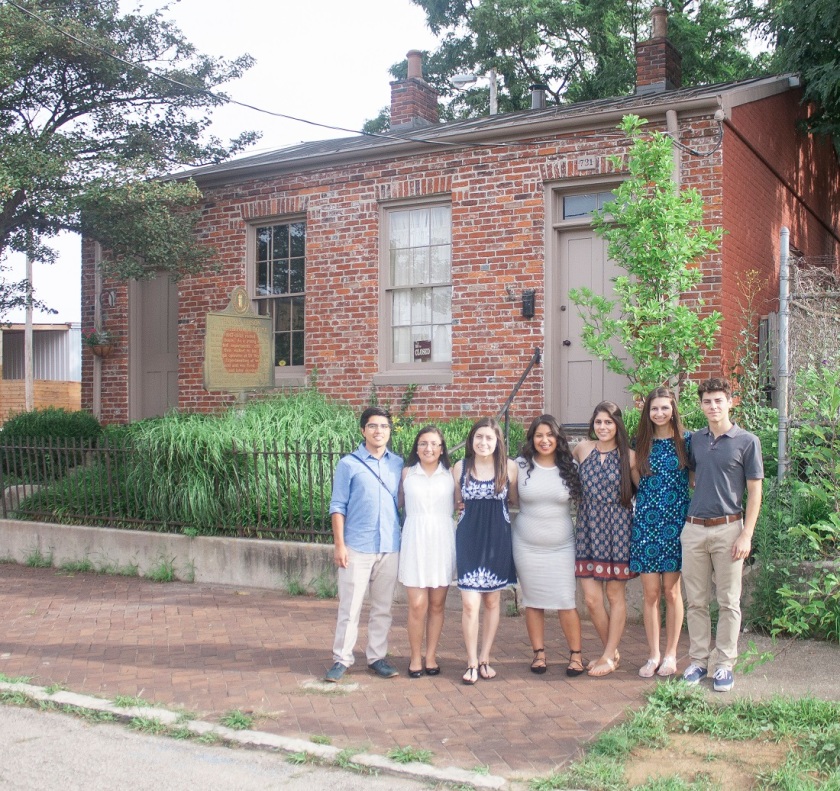
Our first objective was to hit a couple of sites in Louisville, and then head to Lexington, the host city for the conference.  Although there is much to do in Louisville, we first wanted to see Thomas Edison’s home, where he lived briefly while evolving into the inventor he would later become.

Edison Butchertown Home
LEAP Ambassadors Outside Edison’s Butchertown Home

Although Edison lived in this home only from 1866-1867, his work there pre-figured his role as an inventor (he was fired for experimenting on the job).  Similarly, it prefigures our work in a couple of weeks, when some LEAP Ambassadors will be heading to Detroit to work with Jeff Guinn, who is writing a book on Thomas Edison (and Henry Ford, Harvey Firestone, and others).

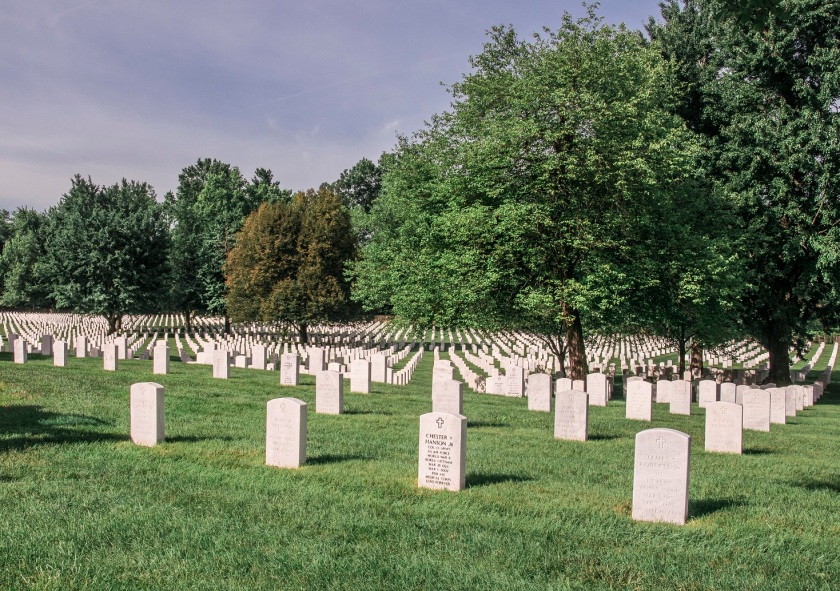
A second must-see stop for us was the Zachary Taylor cemetery, one of seven National Cemeteries in Kentucky.

Zachary Taylor National Cemetery
Some of the 14,000 Soldiers Interred at the Zachary Taylor National Cemetery

Although more than 14,000 people–including two medal of honor winners–are interred in this cemetery from six wars, the most notable grave is that of Taylor, who served as the nation’s 12th president.

Zachary Taylor Grave
Zachary Taylor’s Grave

..and a monument to his service to the country.

Zachary Taylor Monument
Alex Galvan at Zachary Taylor Monument

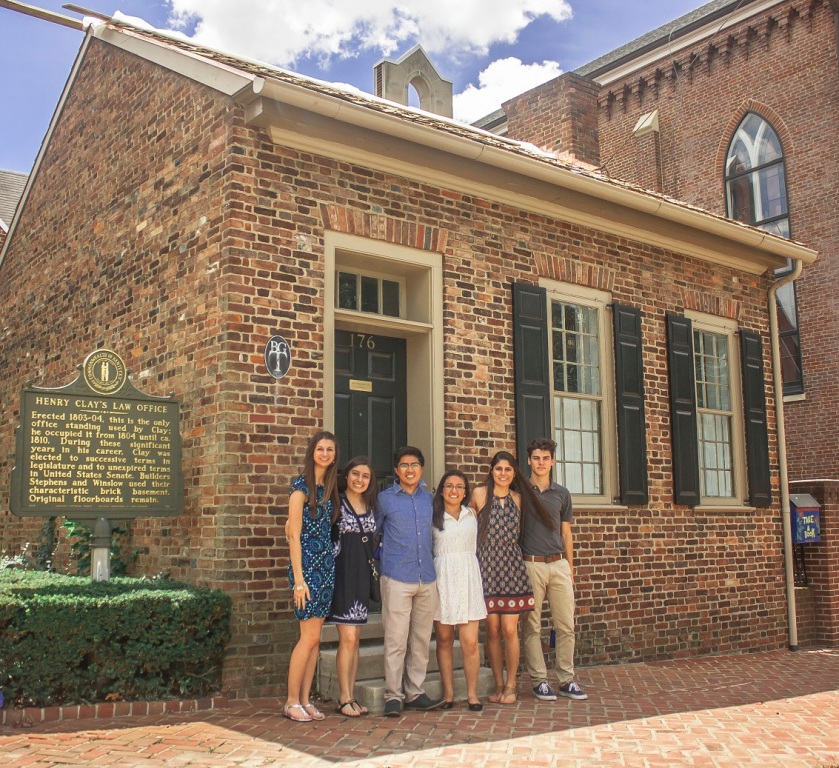
We started out with a walking (“plus”) tour of historic downtown Lexington. A few blocks from our start, we arrived in Gratz Park, one of Lexington’s oldest and most beautiful areas. With the help from our knowledgeable tour guide (who was the Curator of the Henry Clay Home), we passed the city park, a beautiful centerpiece for the neighborhood, and several historic homes, such as: Bodley-Bullock House, which served as both the Union and Confederate Headquarters at times when each side controlled the city; Transylvania University, which was the first university in Kentucky.  Also on our walk, we saw the Christ Church Episcopal Cathedral where Henry Clay and his wife attended, and the office where Henry Clay practiced law, which was quite a treat for aspiring lawyers.

Henry Clay Law Office, Lexington, KY
LEAP Ambassadors Outside of Henry Clay’s Law Office

The visit was a nice precursors to our impending visit to Ashland, the home of Henry Clay, “The Great Compromiser.”


Ashland: The Henry Clay Estate

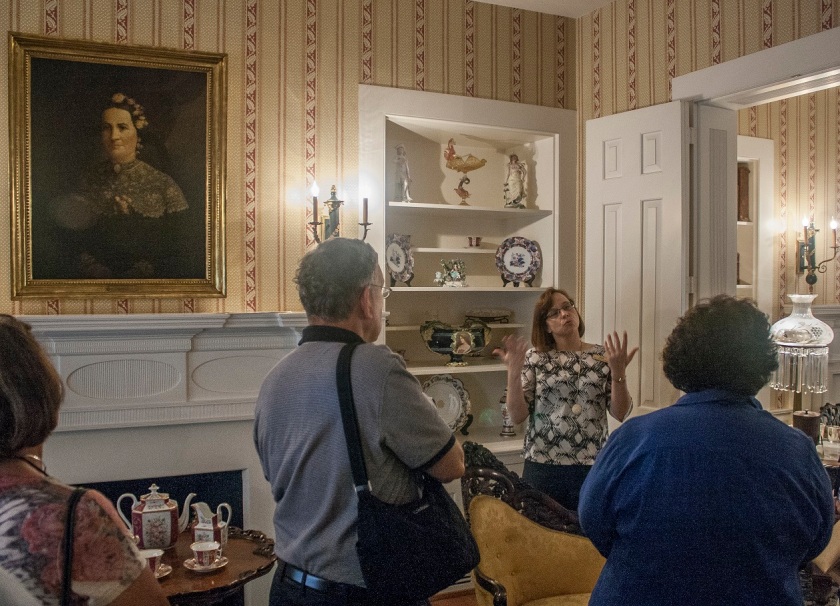
Entering the ash tree-covered estate, from which the home bears its name, we saw a grand portrait of Clay painted by Matthew Jouett when the Senator was 45. Walking through the estate (which does not allow interior photography), it was impressive to learn that the home had stayed in the family from its construction in 1804 until it was sold to the Henry Clay Memorial Foundation in 1959. In fact, family preservation of the home was only interrupted after the Civil War when the house was appropriated by Transylvania University to house its president, from 1865-1882.

One of the parlor rooms, which accommodated the first piano to be brought to Lexington, also held a large portrait of Henry Clay, Jr., and his wife, Lucretia Hart Clay. These paintings were hung in honor of the Clays’ favorite son, who was killed in the battle of Buena Vista in the Mexican-American War, by the woman who is credited with the preservation of the home.

Leaving the front parlors, we turned into the east wing of the home, into one of Clays’ most cherished rooms in the home. Here Clay would have spent most of his time working at his desk, reading his law books, and perhaps preparing his winning defense of Aaron Burr’s trial for treason. The small study now exhibits many of Clay’s personal items, such as a clock from 1832 during his presidential campaign against Andrew Jackson, a bookcase from his law office, a book written by Clay on the subject of agriculture and horse breeding, and some of his correspondence while serving as a senator.

On the subject of horses, he was known as an expert, as he bred his own Thoroughbreds and Standardbreds on the estate. Kentucky, therefore, attributes much of it horse history to the Senator’s fondness for equines. His affection for his livestock was represented in “The Eventful Day of Henry Clay,” a painting by Alvan Fisher depicting Clay and his favorite, prize bull Orizimbo. Legend also has it that in Clay’s study his ghost manifests itself to guests appearing near the mantle.

Even though we did not see his spirit, we did learn much about it. A great orator, Henry Clay was considered a “rock star” of his time. He was depicted thus in a painting in his library, right off his study, in which the vivacious Clay is delivering a speech to an attentive crowd, which includes a very eager Lincoln, cupping his left ear to catch every word of Clay’s speech. Such a sight would be common when Clay delivered a speech – drawing upwards of 100-200 thousand spectators at times.

We learned that not only were his public appearances notable, his deliberations in the Senate were also remarkable. At times, “The Great Compromiser” would stand on the senate floor to for upwards of four hours to deliver his valued opinion on any given piece of legislation. Such may have been true as he developed the Missouri Compromise of 1820, the Tariff Compromise of 1833, and the Great Comprise of 1860. A man of great social networking skills, Clay was also friends with Benjamin Henry Latrobe, the first American architect, who designed the wings of the Ashland estate and is best known for designing the Capitol in Washington, D.C.

As we stepped upstairs, the oak wood staircase (which replaced the previous staircase, making it the “newest” renovation to the home, in 1892) gave way to a landing upon which the John Neagle portrait of Clay is presented. A rendition of his unsuccessful 1844 presidential campaign, Clay stands with disappointed hands pointed towards a fallen American flag over white stone pillars while his gaze is fixed upon a field of grazing bulls. Although depicted as such, even at an advanced age (67) and having suffered a heart attack, many thought this would have been Clay’s last chance to run for the presidency. However, as Clay was a true, relentless Kentuckian, he ran again in 1848, his sixth failed attempt at the presidency.

One of the most notable facts about Clay was his lifelong feud with President Andrew Jackson. After the alleged “corrupt bargain” between John Q. Adams and Henry Clay, which ensured Adams’ victory in the presidency, both Clay and Jackson harbored similar grudges against each other. The hatred was such that Clay once swore that if he ever saw Jackson again, “he would shoot John C. Calhoun,” (Jackson’s Vice President), “and hang Andrew Jackson.”

In the master bedroom a Freemasons’ apron which was laid on Clay’s casket during his funeral was displayed. It was at this point that our guide informed us that on the day of our tour, exactly 164 years previously, Clay’s body had returned to his estate to reach his final resting place.

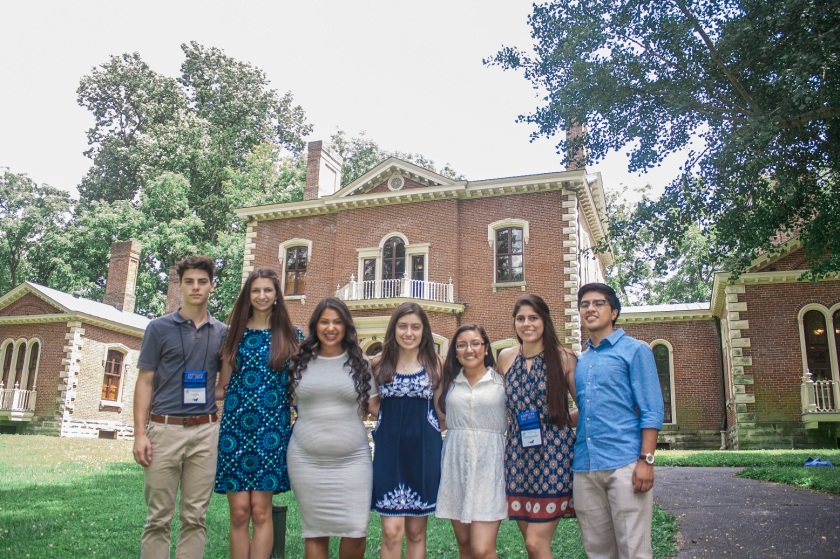
As we descended the stairs, with the smell of oak and sound of creaking steps, we ended our tour inside the room where Clay’s casket was likely displayed for his funeral. After a quick gift shop stop and photo op…

Ashland: Henry Clay Home
LEAP Ambassadors Outside of Henry Clay Home

we headed back to the conference bus for our next, and last destination on this tour, the Mary Todd Lincoln home.


Todds and Lincolns in Kentucky

Originally built as an inn and not a residence, the Mary Todd Lincoln residence  was purchased when Mary was 13.  In all, some 16 children would have spent time in the house–Mary and her 15 siblings–not counting cousins and other more distant relatives.

Mary Todd Lincoln Home, Lexington, KY
LEAP Ambassadors Tour Mary Todd Lincoln Home

At an early age, Mary began attending a finishing school where she studied literature and became fluent in French. When her father died of cholera, he had no will, so all of the items he owned were liquidated, including their collection of over 350 books. As a result, the museum has very few pieces of furniture original to the house, although they do have pieces that date from that time.

When Mary was about 20, she went to live with her sister, Elizabeth, for an extended period of time.  Elizabeth and her husband lived in Springfield, Illinois, which is where Mary met and later married Abraham Lincoln. There was talk about Mary’s visions of becoming a First Lady long before she married Lincoln, and much credit is given to her for his rise up the political ranks.

All was not smooth, though.  While in the White House, Mary spent the a large sum of money on redecorating the White House in the first six months of their stay, which led to some talk about how extravagant she was. Some of the President’s opponents tried to use the fact that many of Mary’s brothers and sisters were either fighting for the Confederacy or married to Confederate soldiers against him. In fact, while she was living in her family home, the Todds had anywhere between three and five slaves.

After Lincoln’s death, Mary went into perpetual mourning, and only wore black from then until her own death. She lived in Europe twice with Tad, one of two sons who were still alive at the time, although Tad, too, died young, like both Willy, in 1862, and Eddie, in 1850.  In 1875, Mary had a premonition that Robert, her last remaining son was in peril, so she went to him.  Given her behavior, he had her declared insane and committed her to a private sanitarium, although she was released after only a few months.

Recently, the Washington Post speculated that her illness might have been caused by a vitamin deficiency, our tour guide explained, although there are many theories as to her mental state, especially after losing two sons and her husband. Altogether, the tour was interesting and informative (and Ryan’s favorite stop on the tour).

Our awesome downtown tour was long (about four hours), so the LEAP Ambassadors had a late lunch at Stella’s Kentucky Deli, a locavore restaurant in downtown Lexington. The options weren’t too exotic, but Brian tried a lamb-burger (“pretty good”) and Kaitlyn loved her fried green tomato BLT.  The rest of us were not too impressed with our dishes. As with any new experiences, sometimes it’s a hit and other times it’s a miss. We are always happy to try new things though – that’s part of what keeps our trips interesting!


Keeneland: Betting on Fun!

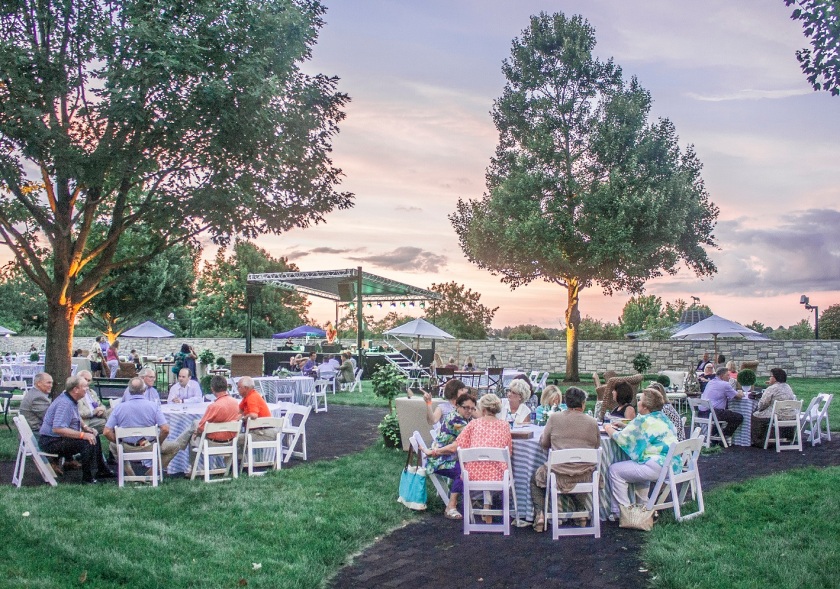
Later in the afternoon, we were all eager for the bus ride to Keeneland, a Thoroughbred racing facility and sales complex for SLC “family night.” We passed through various luscious green pastures, and were greeted with music, and excited to sample varieties of the well-known, authentic Kentucky bourbon and barbecue. Not to be disappointed, we arrived at the main patio area where different tables and serving areas had been set up.

Keeneland
Opening Night of Southern Legislative Conference–Keeneland

We piled our plates high with savory brisket and ribs. Next we hit the barbecue sauce table where sweet tea, pineapple ginger and smoked tomato flavored barbecue sauces were available for sampling as well.

After we finished the delicious offerings, we met retired jockey Jean Cruguet, who kindly gave us his autograph and posed with us for a group shot.

Jean Cruguet
LEAP Ambassadors with Triple Crown Winner Jean Cruguet

Cruguet is a legendary jockey, one who rode Seattle Slew to a triple-crown victory in 1977, the only undefeated horse ever to do so.  In the final leg of that crown, Slew was leading by four lengths heading into the stretch, and Cruguet, in an act of bravado, stood on the stirrups, raised his riding whip in the air, and declared victory 20 yards prior to the finish line.

Cruguet's famous 'victory pump' on his way to wining the Belmont Stakes.
Jean Cruguet on Seattle Slew

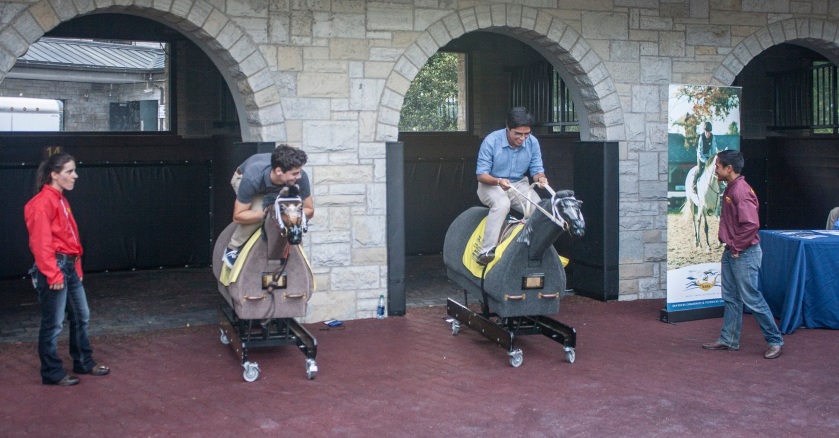
Perhaps inspired by this meeting, both Ryan and Brian (named B-Ryan for the purposes of our trip), got on horse simulators to experience the horse-racing experience.

Keeneland Horse Racing
Ryan Brim and Brian Aldaco on Mechanical Horses

Brian and Ryan experienced what it would have been like to be a professional jockey, giving the practice horse a tryout ride. Both had great “natural talent” and, perhaps a bit presumptuously, felt ready to take on an actual horse race after their practice.

To see some real horses, we headed to the stables. Everyone took turns approaching the majestic horses for some tender, loving pats on the nose.

This slideshow requires JavaScript.

Having checked in with the breadwinners of the stables, we moved on to a more educational event Keeneland sponsored, the mock auction. Unfortunately, we arrived late, only in time for the tail end of a Q&A session with Mr. Cruguet.

Beatriz, though, didn’t let the end of the session slow her down.  She met briefly with the auctioneers for her own private Q&A, to find out more about the process of horse auctions, as well as the amount one could spend on a horse: Did you know that the highest bid they have ever had for a horse is 3.6 million dollars? Did you know that Keeneland had 500 million dollars in horse sales last year? I found that pretty impressive.

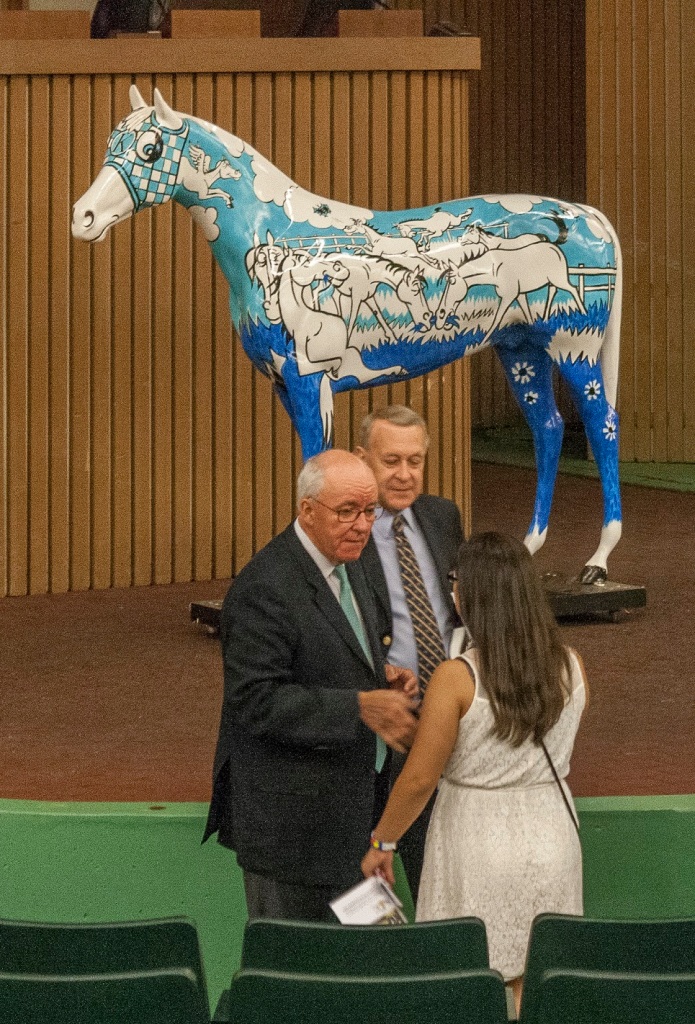
Keeneland Auction Space
Beatriz Martinez with Keeneland Auctioneers

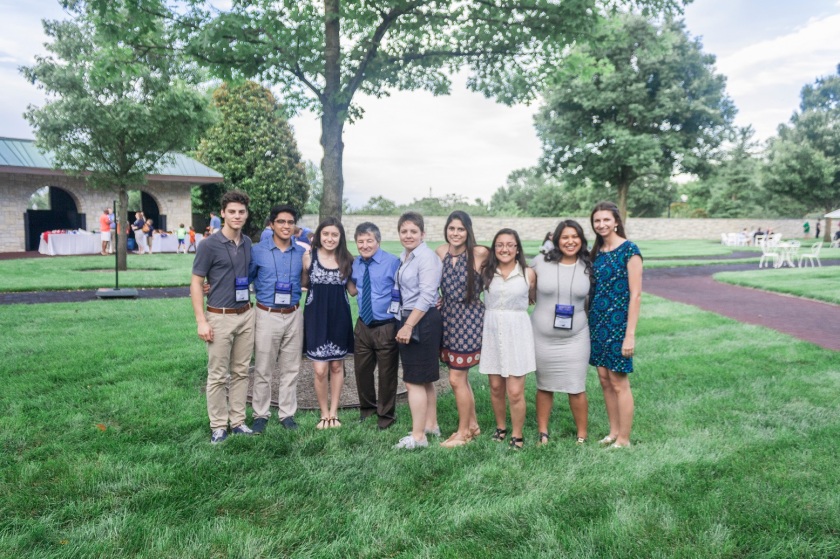
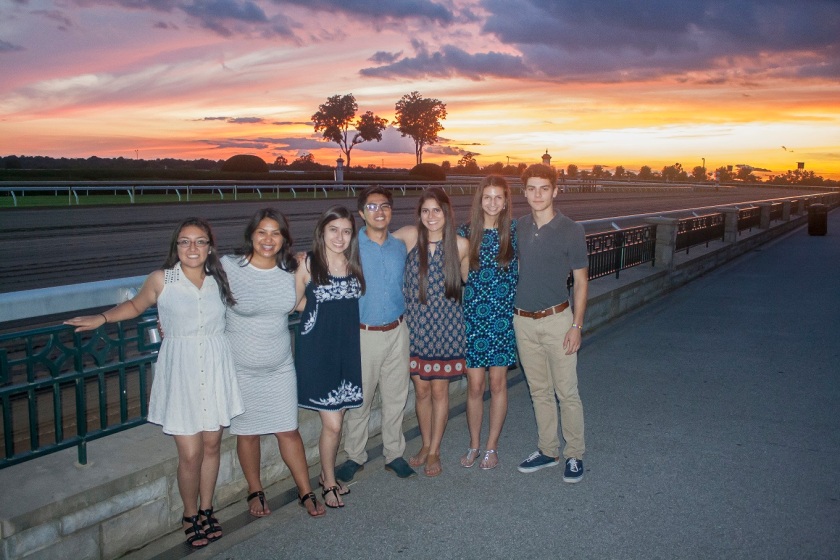
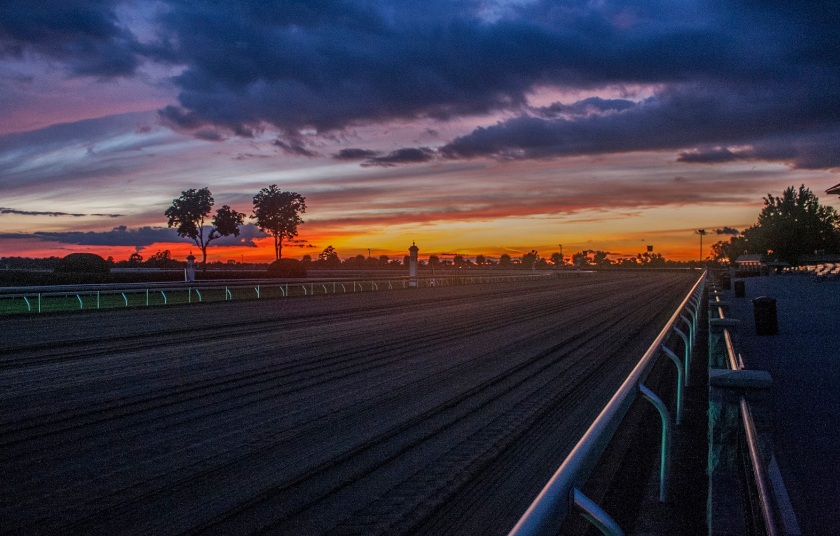
We made some last rounds at Keeneland, enjoying the last round of music by local band Sundy Best, “Home,” as we took pictures in the sunset at the track.

Keeneland Race Track at Sunset
LEAP Ambassadors at Keeneland Race Track

None of us has ever been to a horse race, but being so close to the track does hint at the kind of excitement that might be possible during a two-minute race.

Keeneland Race Track

Having a beautiful sunset also helps.

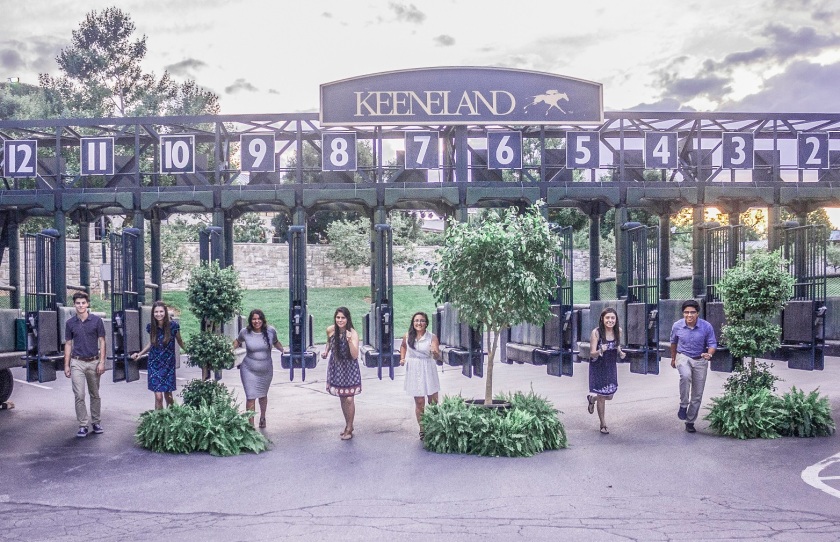
We also posed in Keeneland’s Starting Gates.  Incidentally, Brian was stationed in the same gate as American Pharaoh, the last triple crown winner (2015) and, with a victory at the Breeder’s Cup, stands as the only horse to win the “Grand Slam” of horse racing.  Fittingly, American Pharaoh was bred in Kentucky.

Keeneland Race Track Starting Gates
LEAP Ambassadors in Position at Keeneland

With one last look around Keeneland, we agreed with the band, Sundy Best, that, “Yeah it’s time to go home.” So we headed back to the hotel!


Triangle Park

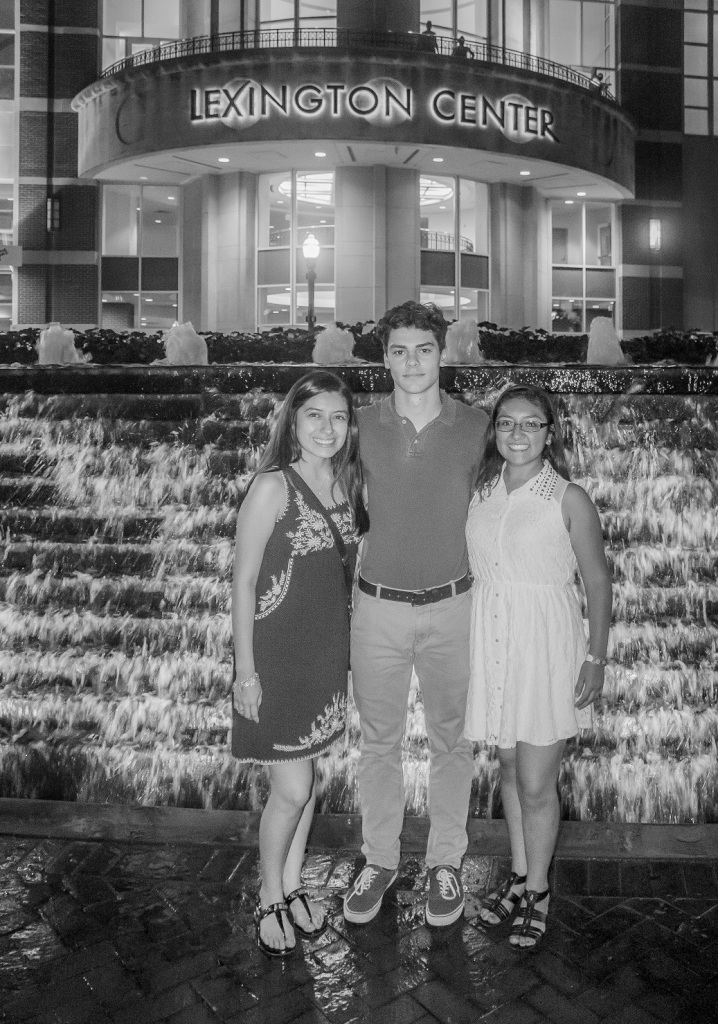
Before we were fully able to call it a night, we explored the city park by our hotel, Triangle Park.   It is a beautiful gathering space, with splash pads, a “democracy wall,” and a beautiful fountain that covers more than an entire city block.

Triangle Park, Lexington, KY

With the calming splash of the water and the peaceful, happy ambiance of the park, and the satisfaction of a full-day of activities, we called it a day.