An Evening with Malcolm Gladwell: Insights on Change and Inequality

Saara Maknojia

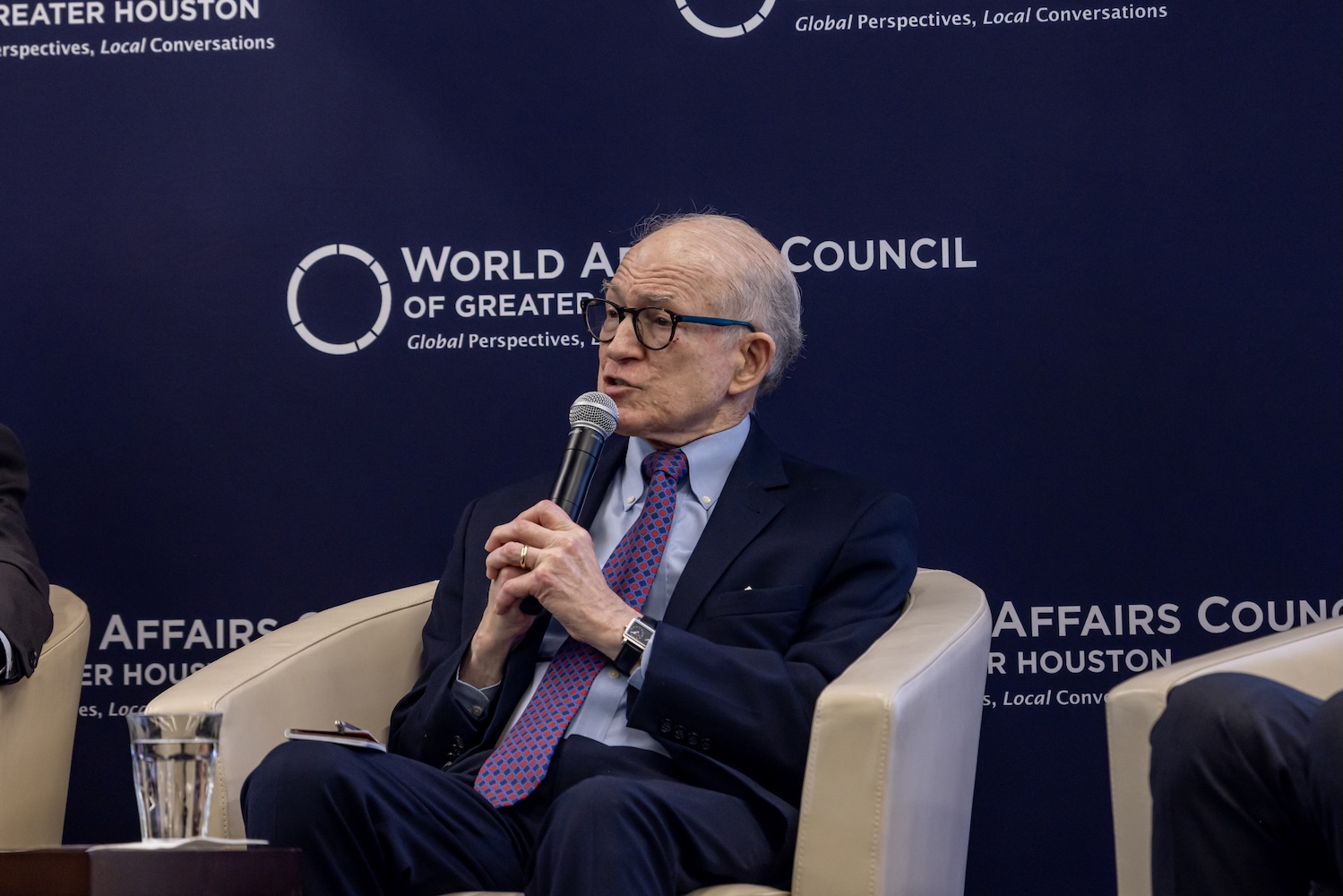
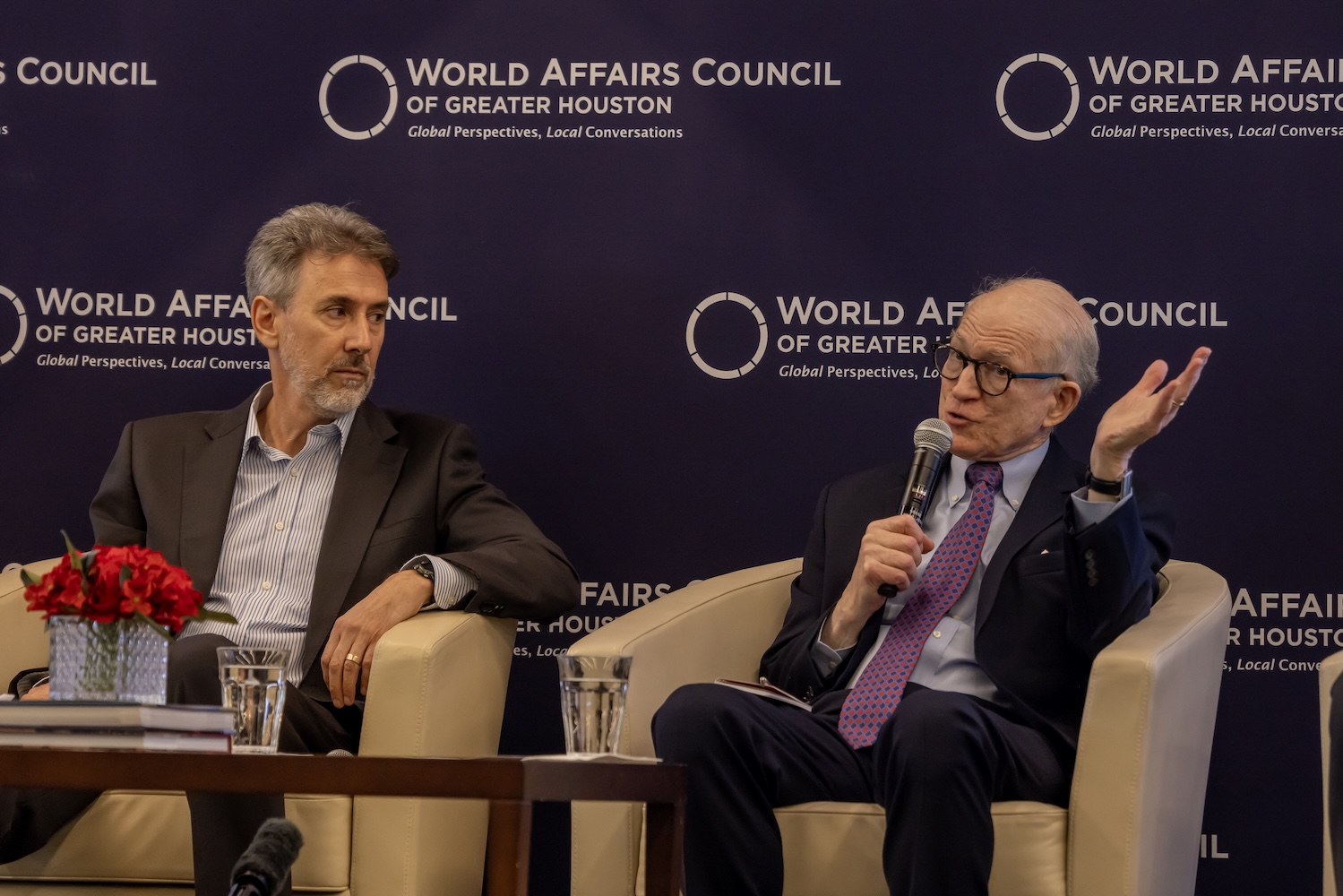
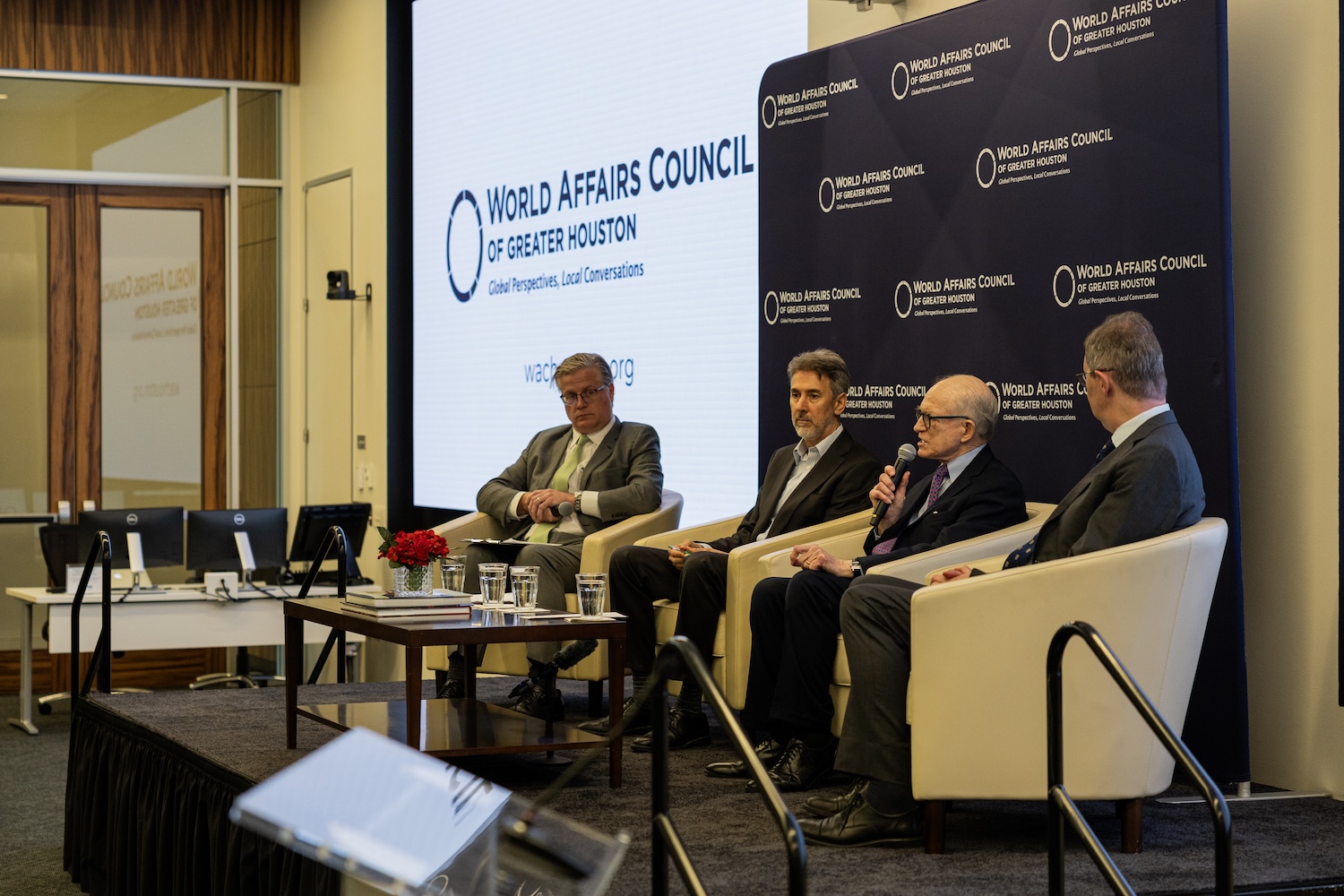
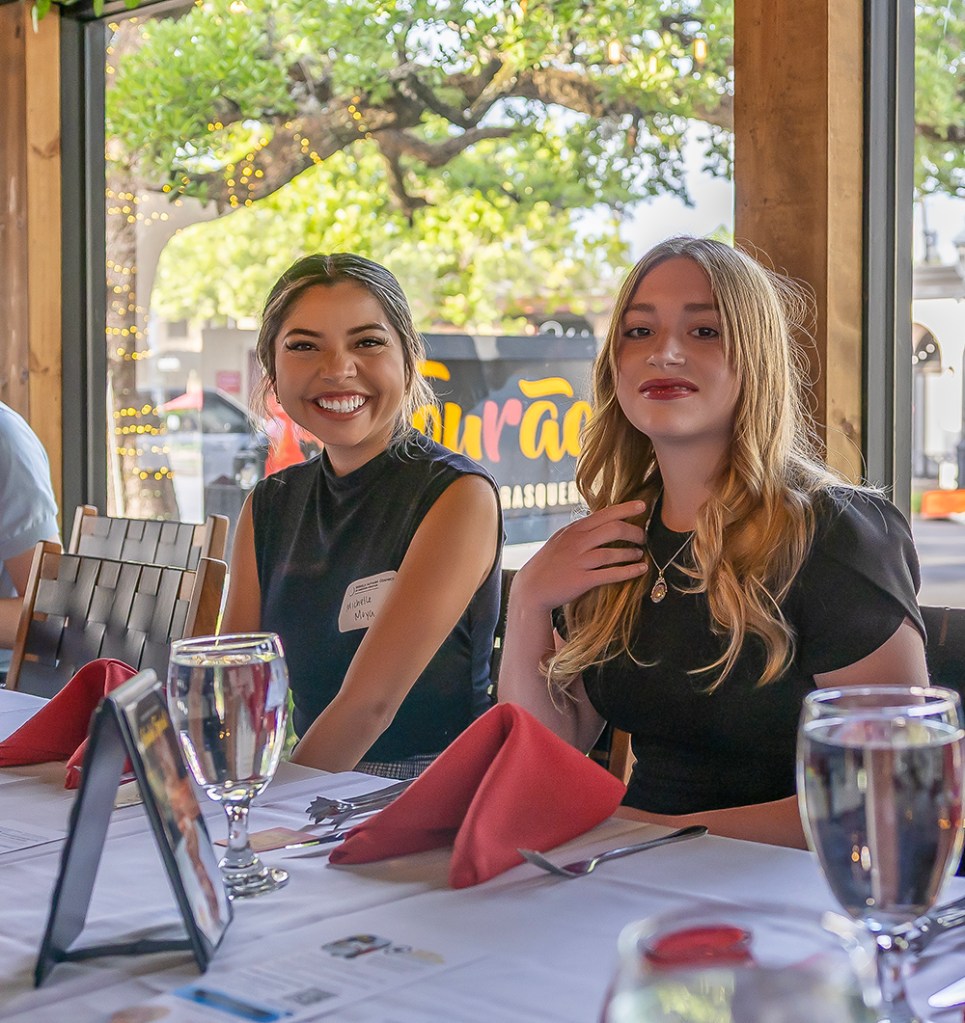
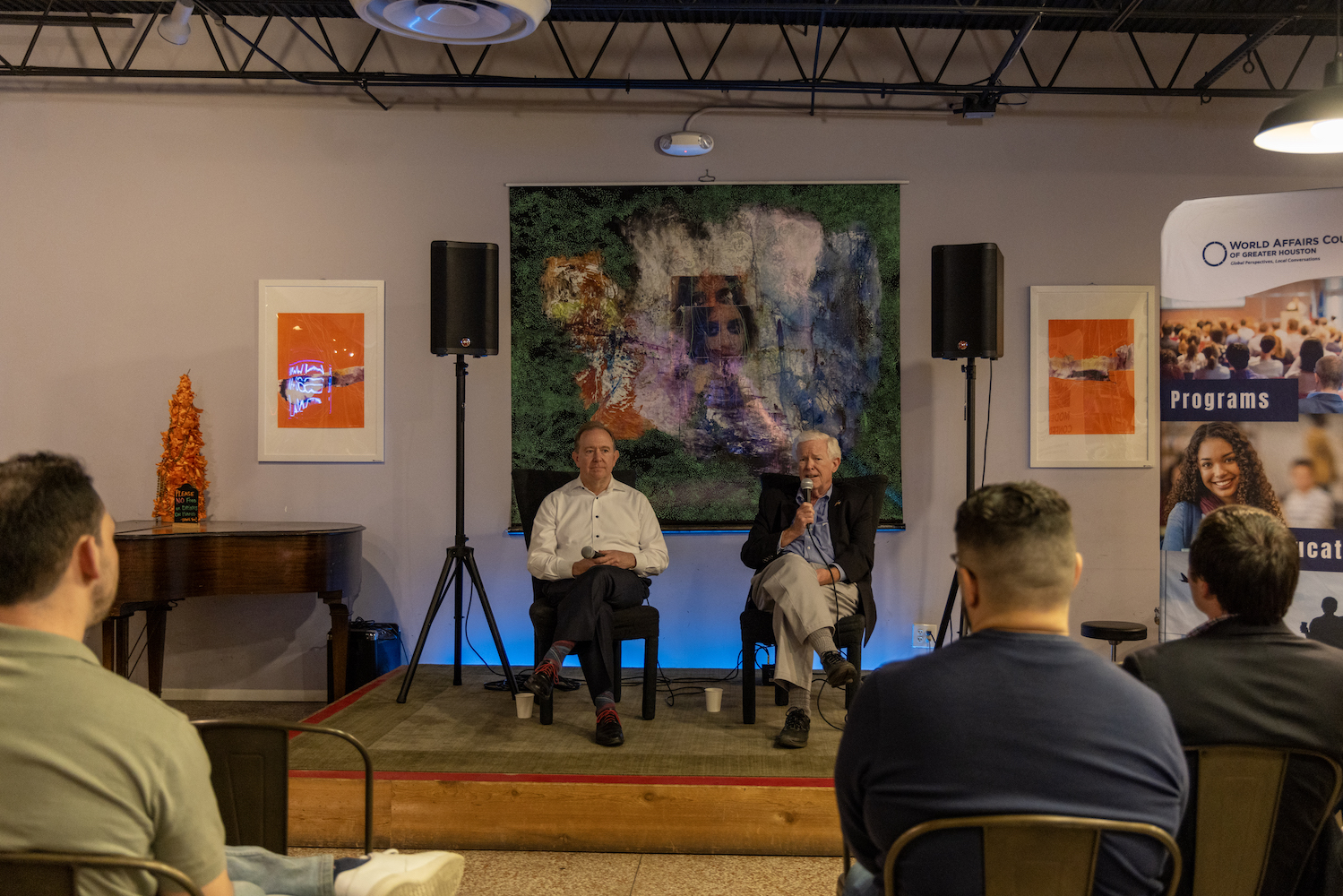
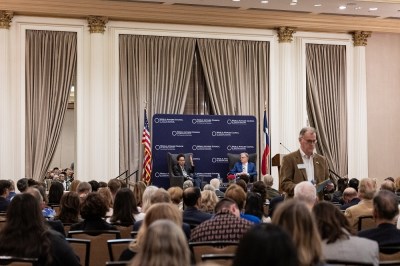
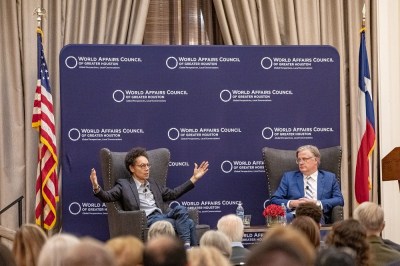
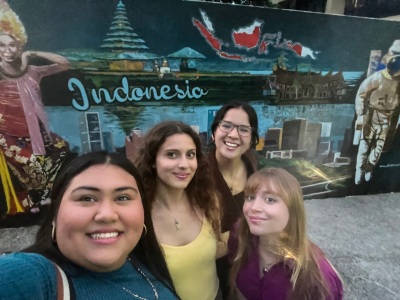
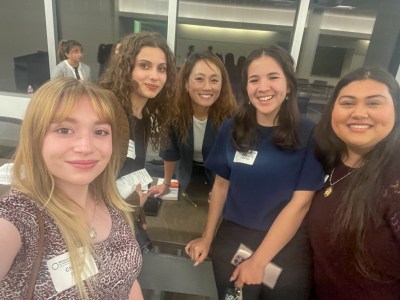
To end another busy day, Chrissy Biello, Michelle Cardenas, Emely Garcia, Michelle Moya, and I ventured to Houston for yet another fabulous event hosted by the World Affairs Council (WAC) of Greater Houston. This event featured the renowned author Malcolm Gladwell, who captivated the audience with a discussion of his new book, Revenge of the Tipping Point.  

Seated alongside Ronan O’Malley, Chief Programs Officer for WAC, Gladwell began by revisiting his groundbreaking book The Tipping Point, which delves into the social dynamics that drive large-scale cultural shifts. The sequel, he explained, explores the unintended consequences of these shifts in modern society… 

During the discussion, Ronan O’Malley prompted Gladwell to share his views on higher education and its challenges. Gladwell critiqued the admissions systems of prestigious institutions like Harvard University, highlighting the inequities faced by merit-based students compared to legacy applicants. He also touched on the 2019 admissions scandal, where families falsified their children’s applications, often robbing low-income students of their rightful opportunities. Gladwell’s observations shed light on how these systemic issues contribute to larger societal inequalities. 

The wide-ranging conversation also emphasized the idea of “tipping points,” moments when seemingly small events trigger substantial societal change. Gladwell noted how media coverage of scandals often accelerates these tipping points, creating ripple effects that transform public awareness and behaviors. His ability to weave research with engaging narratives left the audience with much to reflect on. 

Our group especially appreciated Gladwell’s humorous anecdotes and witty remarks, which drew loud laughter and applause from the audience. Events like these are not only educational but also incredibly enjoyable for students like us. The World Affairs Council of Greater Houston consistently provides opportunities to learn from brilliant minds, expand our perspectives, and engage with global issues. We’re already looking forward to the next WAC event! 

‘Midnight in Moscow’ with Ambassador John Sullivan

by Olivia Discon

Classes may have started last week, but for LEAP students, the learning never stops! After a full day packed with classes and work, Isaac Mokrane, Caitlin Lovella Nortonen, Professor Yawn, Stephanie, and I were still eager to expand our knowledge. So, we headed to the Bush School of Public Service to hear from the distinguished John J. Sullivan.

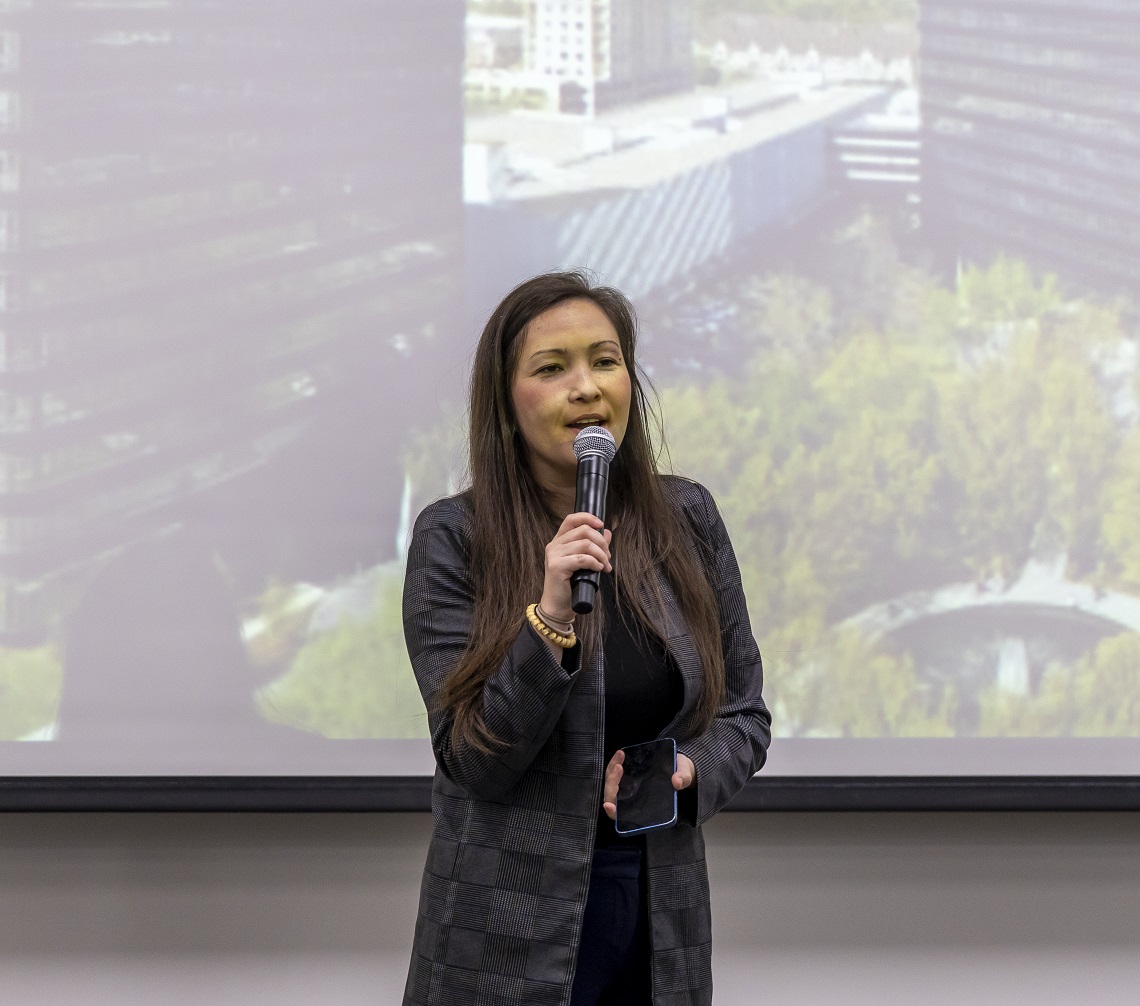
The event was introduced by Andrew S. Natsios, Director of the Scowcroft Institute of International Affairs, and Alexandra Chinchilla, Assistant Professor. With such esteemed hosts, we knew we were in for a compelling discussion.

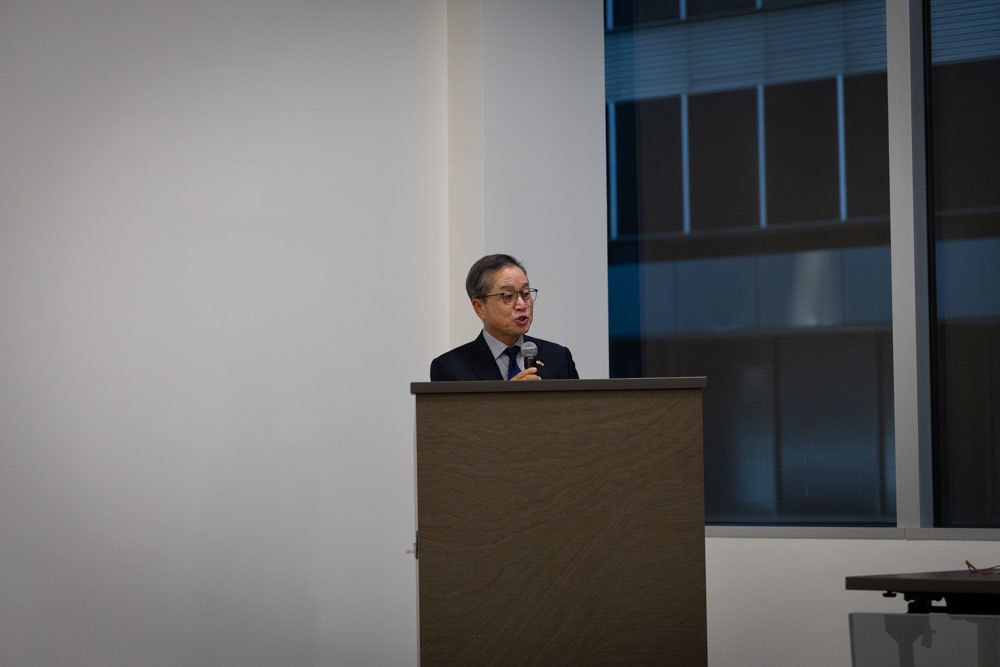
Sullivan, who described himself as a “Russo-phile,” began his talk by acknowledging the unfortunate state of U.S.-Russia relations in 2024, which he aptly described as being at a “low ebb.” Despite his deep admiration for Russian culture and history, Sullivan didn’t shy away from addressing the harsh realities of the current geopolitical climate.

One of the most intriguing points Sullivan made was about the constitutional limitations that Russia faces in the Ukraine war. He explained that it is unconstitutional for Russia to separate its territory, thereby prohibiting them from surrendering.

This legal nuance added a layer of complexity to the ongoing conflict that I found particularly fascinating.

When asked about the possibility of Russia surrendering or the potential outcome of the war, Sullivan provided an answer that any good attorney would: “it depends.” It was weirdly reassuring that the uncertain and fluid nature of international law and diplomacy is known across the board.

Sullivan also addressed the pressing question of whether we are on the brink of World War III. He urged the audience to draw parallels between the current geopolitical climate and the interwar years, a comparison that was both incredibly interesting and sobering.

Caitlin, Isaac, and I, who share a strong interest in pursuing law, found his insights particularly valuable. Sullivan covered the complexities of the Ukraine war, He discussed the potential for World War III, drawing comparisons between Hitler, Stalin and Putin, and offering his thoughts on what it would take to bring the conflict to an end. His statement that “nothing is easy with the Russians” resonated with us, emphasizing the intricate and often frustrating nature of diplomacy.

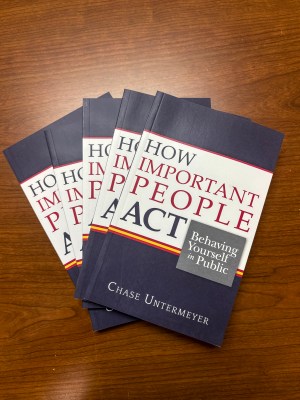
The experience was both educational and thought-provoking. Hearing from someone who has been at the forefront of U.S. foreign policy gave us a deeper appreciation for the challenges faced by diplomats and policymakers. We were especially grateful to have been the first to shake hands with and get our books signed by Ambassador Sullivan on his first leg of his book circuit!

His memoir, Midnight in Moscow, will be a great way to expand on the invigorating stories from the evening.