
Having already learned a lot at the conference and on our own, we were ready for another day of educational excursions and events. Today’s itinerary included a plenary luncheon focused on challenges associated with the availability of primary care physicians, a site visit concerning education and workforce development, and a state dinner.
Primary Care Shortages and Challenges
by Olivia Discon
Over a lunch of fish, rice, and broccoli—quite healthy (well, mostly), might I add!—we enjoyed some good company, a brief award ceremony, and a rich educational opportunity to learn about medical care in the 21st century.


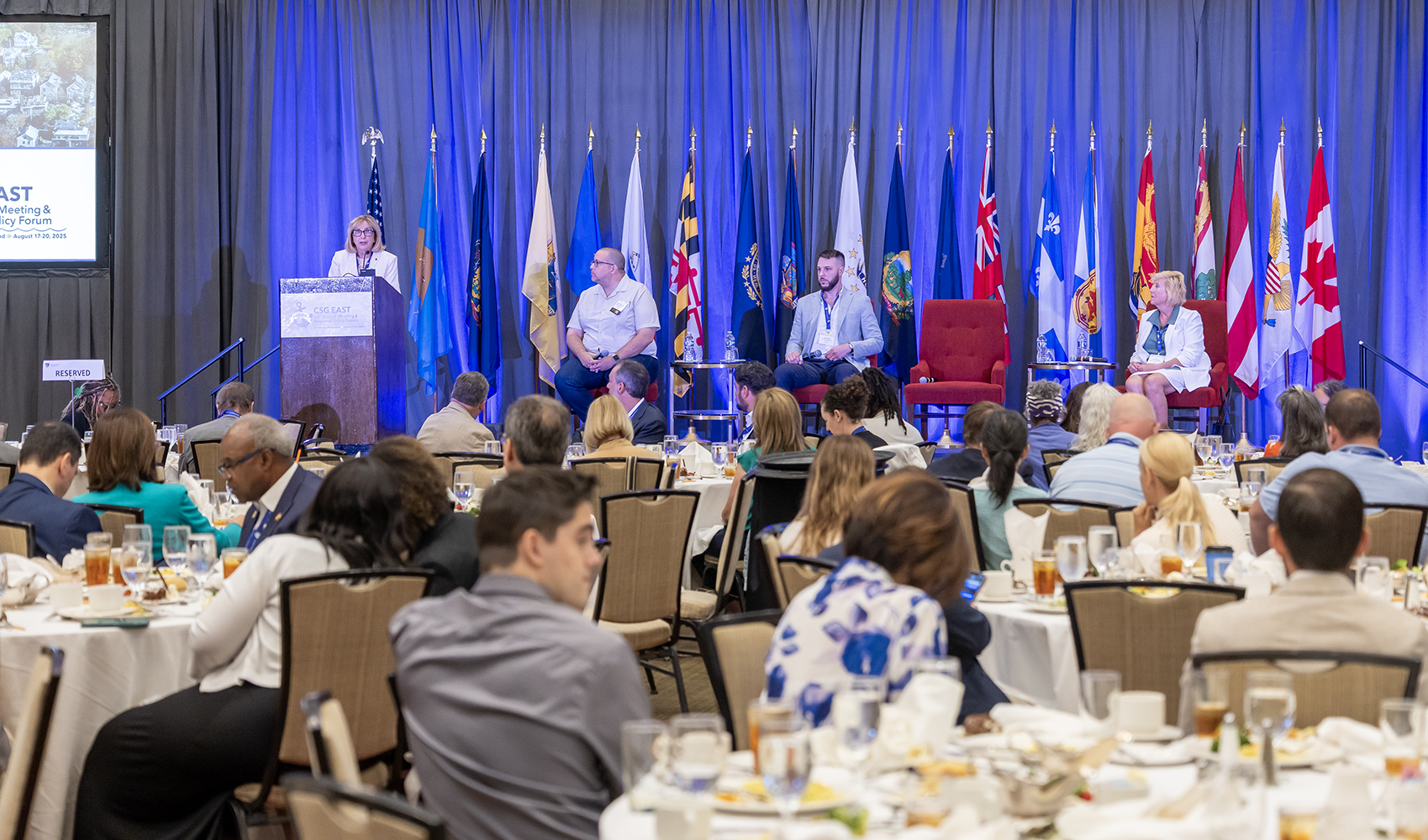
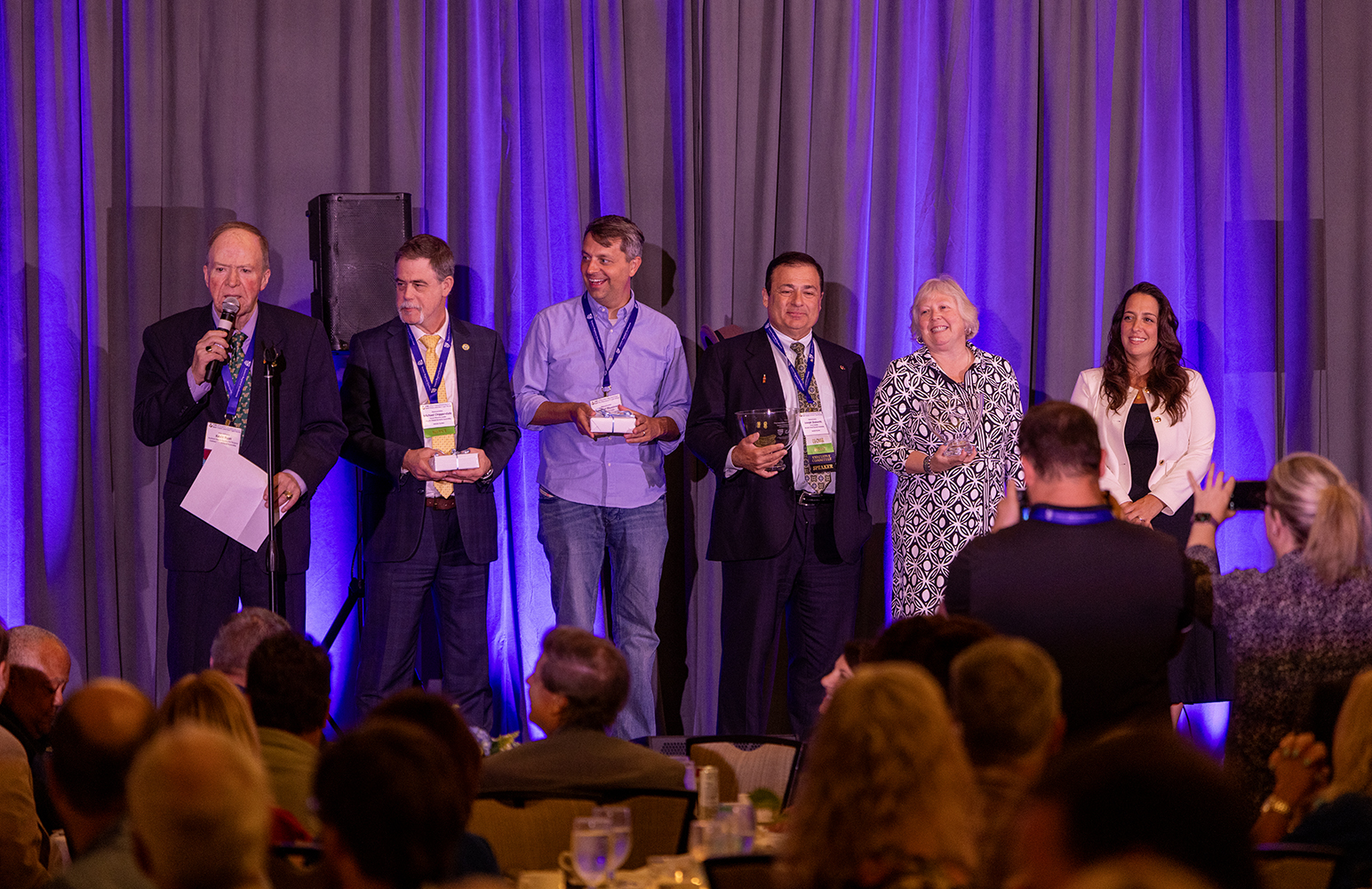
To begin, we were happy for Rep. Kevin Ryan of Montville, NJ, who received the W. Paul White State and Regional Leadership Award.

we enjoyed hearing from Senator Gustavo Rivera of New York, chair of the CSG East Health Policy Committee, who discussed the suboptimal supply of primary care physicians.

Just a generation ago, a primary care physician was a trusted source of care and advice. Today, however, many cities struggle with finding doctors who will accept sufficient numbers of insurance patients to make a real difference in their communities.
The keynote speaker, Joe Telano, senior policy manager at the Primary Care Development Corporation, laid out the problem.
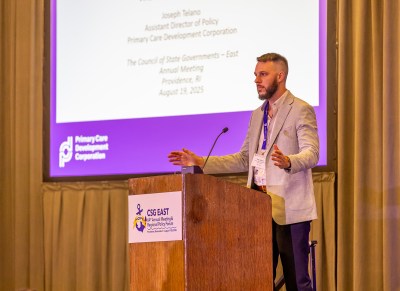
The existence of quality primary care physicians in communities has been demonstrated to lengthen lives, but not enough communities have access to those physicians. In turn, this creates greater stress on specialized medicine, as patients are delayed in having serious issues diagnosed and referred. Moreover, the lack of primary care physicians adds to community health problems: increased likelihood of pandemics, more suffering from chronic diseases (e.g., diabetes), and even more gun violence.
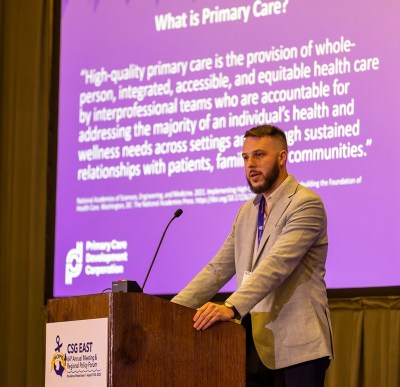
Currently, only about 5-7 percent of health care expenditures go toward primary care, and a greater investment, according to Telano, is needed. Of course, this is only one part of a comprehensive plan. Other needed changes include: insurance regulations, grants for low-income communities, and a broader perspective of what constitutes “public health.”


Interestingly, part of this expanded view of public health could include education and workforce development…
Building Futures: Apprenticeship and Workforce Development
By Michelle Moya
One of the conference highlights was the site visit for our Education and Workforce Development session, which a tour of Building Futures, Rhode Island’s premier pre-apprenticeship program. Olivia and I were joined by a diverse group of senators and representatives from across the country for what would become one of my favorite sessions.

Our visit began in the hands-on training space, where we witnessed day two of a five-week intensive course. The tour was led by Andrew Cortez, president of Building Futures and a former apprentice himself, who shared insight into what the program is and what makes it effective.

Building Futures connects community residents to registered apprenticeship opportunities in the building trades. The program has a dual mission: preparing individuals for apprenticeships through training and readiness while also partnering with project owners to require apprentice participation in construction. This two-pronged approach ensures both workforce preparation and job placement.
Cortez emphasized that success in the trades depends on three essentials: showing up every day on time, working hard, and applying yourself to learn. Technical skills matter, but they rest on these fundamental values of reliability, perseverance, and a willingness to grow. As a student, I found this surprisingly inspiring. It reminded me that success in any field—whether in school or in a career—often comes down to those same habits. Technical skills can be taught, but without consistency and the right attitude, it’s hard to succeed anywhere.

From the active training floor, we transitioned to a classroom setting where our group of legislators and workforce development professionals gathered around tables for a deeper conversation about the program. A highlight of our roundtable was learning about recent legislation that allows apprenticeship pathways to count toward college credit in Rhode Island. Senator Hanna Gallo, who helped lead this effort, joined us for the discussion, along with Matt Weldon, Director of the Department of Labor and Training.

The program’s impact became tangible through the graduates who shared their stories with us. Vennicia Kingston, who transitioned from banking to carpentry, now owns Eagle Eye Construction Services and employs multiple Building Futures alumni—a great example of how networking creates a cycle of opportunity. Another graduate shared how, just months after incarceration, he not only completed his apprenticeship but also bought his first home and eventually built his own million-dollar construction company.
These transformations illustrate what Cortez stressed throughout our visit: the most valuable skills are consistency, work ethic, and a learning mindset. This philosophy mirrors the character development emphasized in LEAP, where academic and career success are built on the foundation of personal responsibility and values.

As we concluded our tour and roundtable discussion, one lesson stood out clearly: good students and successful professionals are people who show up, work hard, and embrace continuous learning. This blend of character and skill creates pathways to both personal transformation and economic opportunity—lessons we will carry forward as we pursue our future goals.
State Dinner
by Olivia Discon
The conference concluded with the State Dinner, the most formal event of the conference, where we dined with some of the event organizers, an event photographer, as well as some fellow southerners. Senator Walter Michel–whom we had lunch with–and his wife, Laura, joined us for a nice meal and delightful conversation.
We also had a chance to see the host committee, who spent years planning for this event, be recognized.



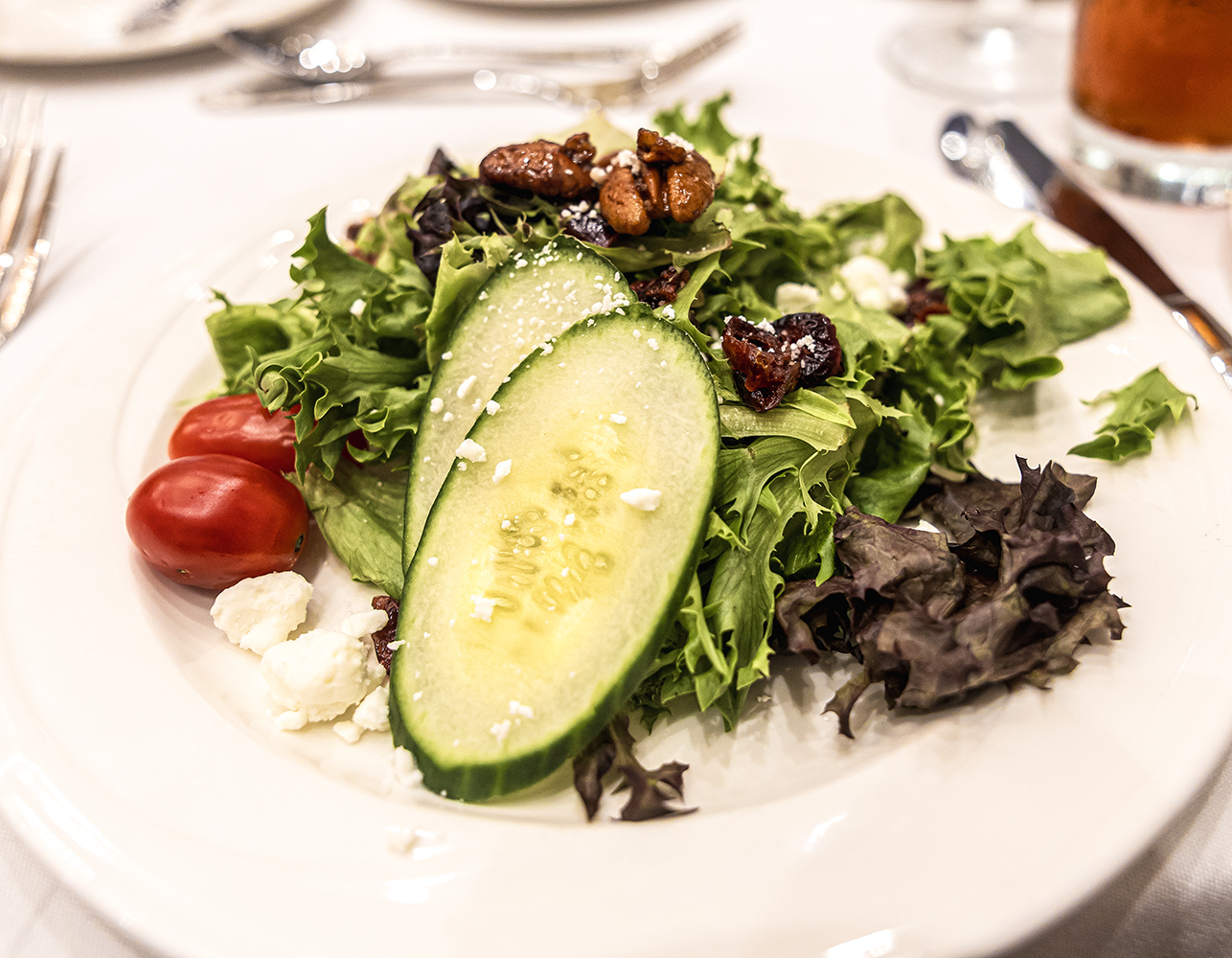
The main event, however, was the meal, which featured a three-course meal including a beef entrée, asparagus, and potatoes as its main course, along with a salad and a scrumptious dessert (Chocolate Mousse).




In the background wafted the swing beat of Sinatra tunes, performed by Michael Dutra: “Simply Sinatra.”


We shared stories about our visits to waterfalls in North Carolina, where one of the event organizers is from, to challenges faced by the Mississippi Legislature, to the decreasing importance of ISO in modern cameras. It was a wonderful way to cap our evening programs at the Council of State Governments–East.


 Center for Law, Engagement, and Politics