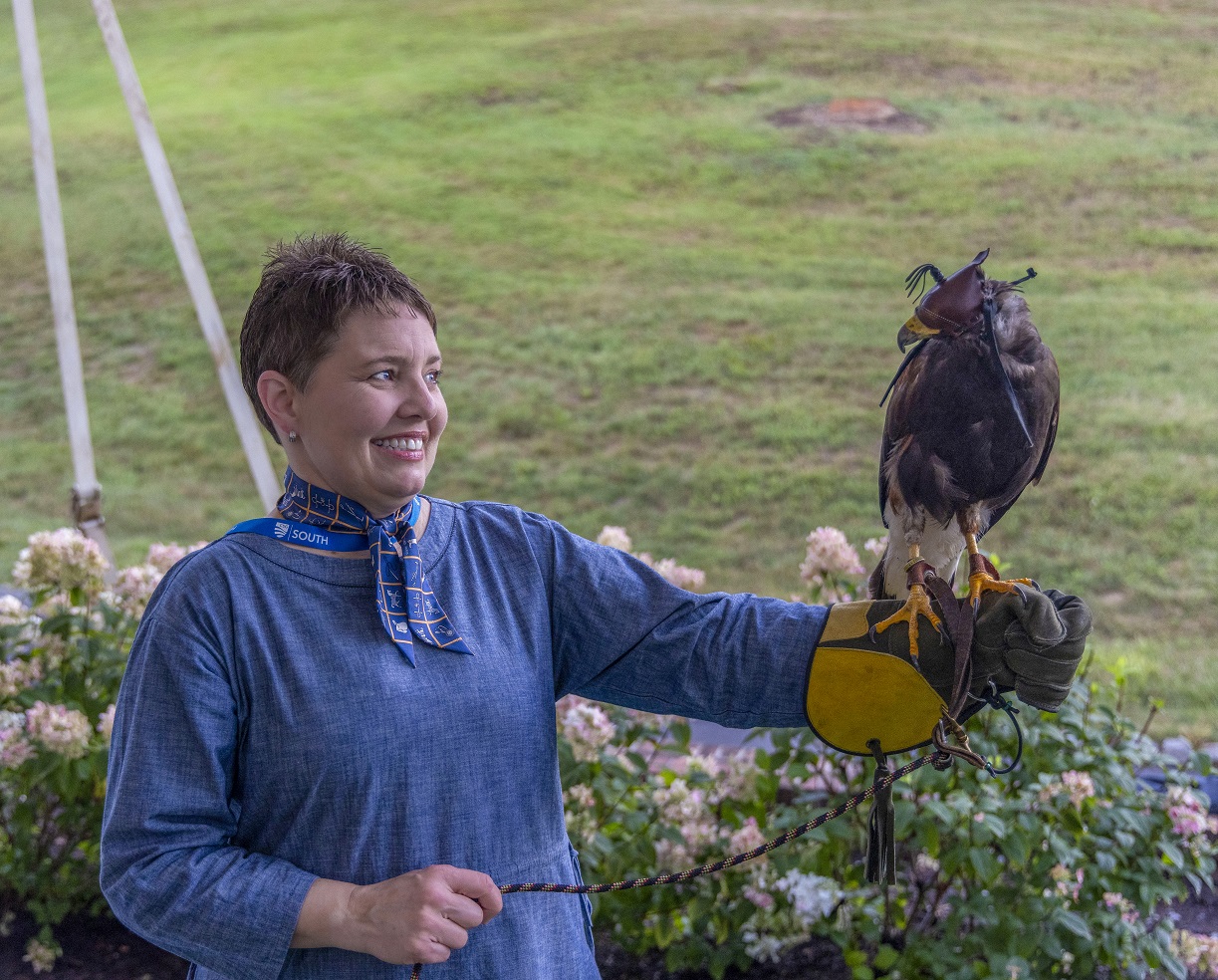
Mike Yawn teaches at Sam Houston State University. In the past few years, he has taught courses on Politics & Film, Public Policy, the Presidency, Media & Politics, Congress, Statistics, Research & Writing, Field Research, and Public Opinion.
He has published academic papers in the Journal of Politics, Political Behavior, Social Security Quarterly, Film & History, American Politics Review, and contributed a chapter to the textbook Politics and Film.
He also contributes columns, news analysis, and news stories to newspapers such as the Houston Chronicle, San Antonio Express News, Seattle Post-Intelligencer, Stamford Advocate, Greenwich Time, Huron Daily Tribune, Laredo Morning Times, Beaumont Enterprise, Connecticut Post, and Midland Reporter Telegram.
Yawn is also active in his local community, serving on the board of directors of the local YMCA and Friends of the Wynne. Previously, he served on the Huntsville's Promise and Stan Musial World Series Boards of Directors.
In 2007-2008, Yawn was one of eight scholars across the nation named as a Carnegie Civic Engagement Scholar by the Carnegie Foundation.
Cinthia and I recently had the pleasure of attending the opening reception for the Cafe Raven Exhibit at the Sam Houston Memorial Museum. This special exhibit, titled “The Cafe Raven: Honoring Sam Houston,” celebrates the Cafe Raven and its nearly 40 years in business, its deep-rooted community support, and its unique relationship with the history of Sam Houston.
In the spirit of the occasion, Cinthia and I volunteered as 50’s-era servers. For the evening, we took on the personas of Betty and Erma, adding a touch of nostalgia and fun to the event.
Olivia and Cinthia, as “Betty” and “Erma”
It was wonderful to see so many familiar faces from the community come out to support this exhibit. From the University, General Glaser, Matt Bethea, Dr. McCartney Johnson, Hollie Garza, and Charlie Vienne; and, of course, those from the Museum: Derrick Birdsall, Jude Routh, Megan Buro, and Nancy Gahan; and from the Huntsville Community, Mac and Leanne Woodward, Jeff Murski, and Lee Jamison. Interestingly, Jamison, an accomplished artist, painted a replica of Cafe Raven’s signage for the occasion!
The Cafe Raven, which was located in downtown Huntsville, was named after Sam Houston’s Cherokee name, Colonneh, or The Raven. Opened in 1930, the cafe quickly became a beloved local institution. The current exhibit features rare photos of one of the restaurant’s founders, Abe Dabaghi, who later became its sole owner. His legacy of warm hospitality, civic involvement, and authentic French cuisine lives on through this exhibit. To our great surprise, some of Dabaghi’s family members, including his son Bill, were in attendance!
One of the most fascinating aspects of the Cafe Raven was its role in Huntsville’s history. The restaurant served as the mess hall for Company F, the local army reserve unit, as it was being activated for World War II.
Company F, to the North of Cafe Raven
Additionally, the Cafe Raven was the first in Huntsville to offer air conditioning, a grand ballroom, and a neon sign, making it a trailblazer in many ways. It was a favorite among U.S. Senators, Congressmen, judges, civic luminaries, and other leaders.
The exhibit beautifully captures the essence of Cafe Raven’s impact on Huntsville. It’s not just about the delicious food and elegant ambiance; it’s about the stories and memories that were created within its walls. The Sam Houston Memorial Museum’s wonderful staff has done a fantastic job curating this exhibit, and it was an honor to be a part of it for the evening.
If you haven’t had the chance to visit the Cafe Raven Exhibit, I highly recommend it. It’s a journey through time, celebrating a cherished part of Huntsville’s history and honoring the legacy of Sam Houston.
The exhibition runs from May 21 to September 1, 2024, and it’s a must-see for anyone interested in Huntsville’s rich history.
During his tenure as President of the French Republic from 2012 to 2017, François Hollande confronted a cascade of formidable challenges both within France and on the global stage. These trials ranged from combating extremist groups in Africa to grappling with the escalating threats posed by climate change and the spate of terrorist attacks that shook the nation.
Following an introduction by Professor Escobar-Lemmon…
…President Hollande first discussed his perspectives on the critical global issues confronting Western democracies today. This was followed by a panel discussion moderated by Professor Bearce.
Chief among Hollande’s concerns was the resurgence of authoritarianism, exemplified by the actions of states like China and Russia.
He cautioned against a deepening divide between democracies and authoritarian regimes, drawing parallels to the Cold War era and stressing the need for continued cooperation between the United States, Europe, and outreach to other nations.
Hollande’s discourse encompassed a broad spectrum of challenges, including the evolving face of global terrorism and the urgent implications of climate change. He emphasized the imperative for sustained international collaboration to address these pressing issues, which he described as existential threats to democratic societies.
Moreover, he highlighted emerging challenges such as global pandemics and the disruptive impact of technologies like artificial intelligence, which he argued have profound implications for global stability and democratic governance.
Following President Hollande’s formal presentation, he engaged in a moderated discussion with Dr. David Bearce of the Bush School. While President Hollande had delivered his prepared remarks in English, he engaged in this discussion in French, which we listed to through a translation app provided by the Bush School.
This portion of the discussion was lively, with President Holland interjecting humor and intrigue into the discussion.
The evening concluded with Hollande honoring Dr. Richard Golsan, Director of the French Institute, with France’s prestigious Ordre des Palmes académiques in recognition of his scholarly contributions to French culture and education.
In his remarks, Hollande praised Golsan’s outstanding achievements and expressed his appreciation for the enriching exchange of ideas during his visit to Texas A&M University.
Golsan made gracious and brief remarks, striking just the right tone for the evening.
Overall, Hollande’s visit underscored his commitment to fostering dialogue on pressing global issues and his belief in the power of international cooperation to navigate an increasingly complex and interconnected world. His insights resonated deeply with the audience, leaving a lasting impression on the importance of solidarity and collaboration in safeguarding democratic principles and addressing shared global challenges.
Attending a World Affairs Council meeting is always an enriching experience, but the recent event featuring Jen Psaki was particularly enlightening. As a key figure in modern American politics, Psaki’s perspective was a refreshing and exciting one to hear , and her book, Say More: Lessons from Work, the White House, and the World, provides a deeper understanding of the intricate world of political communication.
Jen Psaki’s tenure as the White House Press Secretary under two administrations has cemented her reputation as a master communicator. During her talk–which also featured our favorite moderator, Ronan O’Malley– she delved into the essential skills required for the role.
Psaki discussed the importance of knowing your audience, which she made sure to clarify was not “everyone”, as well as connecting emotionally with the audience.
Whether it’s addressing the nation during a crisis or discussing policy changes, evoking empathy and understanding is crucial. This emotional connection can often be the difference between a message being heard or ignored, exacerbated or undermined. To emphasize her point, she quoted Maya Angelou’s famous line “people will forget what you said, people will forget what you did, but people will never forget how you made them feel.” The ability to convey complex information clearly and succinctly is vital. Psaki shared anecdotes about how meticulous preparation and anticipating questions helped her deliver concise and effective responses.
Jen Psaki’s unique experience of working under both President Obama and President Biden offered intriguing insights into the differences between their administrations. She described President Obama as an introverted yet incredible communicator, whose well-spoken nature and thoughtful deliberation were key assets. In contrast, President Biden is extroverted, bringing a different dynamic to the administration. Psaki emphasized that working with these presidents required recognizing their “superpowers” and leveraging those strengths in various situations. For Obama, this meant utilizing his eloquence and calm demeanor to inspire and reassure. For Biden, it involved harnessing his relational skills and accessibility to connect with the public and foreign leaders.
Psaki also noted that listening skills are often undervalued, but crucial for effective communication and leadership. Another significant difference she highlighted was in handling times of conflict. Obama tended to communicate passively to the public regarding diplomatic matters, whereas Biden has been more proactive in declassifying information, especially to counter misinformation and call out Russian falsehoods.
Psaki’s discussion on the current polarizing political climate was particularly relevant. She reflected on how the rise of misinformation and the fragmentation of media have contributed to increasing division. Within this discussion, she stressed the importance of transparency and consistent reporting in rebuilding public trust. In an era where clear and empathetic communication is more crucial than ever, Psaki’s lessons resonate.
The ability to connect, listen, and convey messages with integrity and clarity remains a cornerstone of effective leadership and public service.
With our competition out of the way, we were determined to make the most of our remaining time at the TCMA conference. To do this, we heard from a rewarding speaker, got an Association update from the new President of TCMA, engaged in a networking lunch, and stole a few moments on the beach.
AI and City Government
Our last true session of the conference featured, Ann Marie Sastry, a distinguished mechanical engineer and entrepreneur known for her groundbreaking work in energy systems engineering and artificial intelligence. She earned her bachelor’s degree in mechanical engineering from the University of Delaware and a PhD from Cornell University.
Following a career in academia, Dr. Sastry co-founded Sakti3, and she currently serves as President and CEO of Amesite, an AI software company. She brought this work home to us by noting that the days of City Managers being able to ignore AI in their communications and analyses are over. She went so far to say that any company who doesn’t begin use of AI in the immediate future won’t be in business in 2030, comparing such a decision to a business in 1995 choosing not to use computers.
Her talk was well received, and for us, two things stood out, both of which are relevant to what we do. One, she mentioned that AI could write a blog in 8 seconds, which is significantly shorter than the time we take! Second, she noted that AI can easily do a PowerPoint for free; but free AI cannot do an excellent PowerPoint. And while this was a suggestion from her that City Managers should look closely at which AI companies they use, it was a reminder to us to put some old-fashioned thought and sweat equity into our blogs and our PowerPoints.
Passing of the Torch: A New President of the TCMA
The last day of the conference, Sunday, June 23, began by foreshadowing the 2025 conference in San Antonio…
…with a nice promotional video that stirred some excitement among the audience.
It also marked the passing of the torch from President Opal Mauldin-Jones to Jay Abercrombie, City Manager of Henderson.
Mr. Abercrombie became emotional as he thanked his family, Association members, and noted the passing of his father.
But he composed himself quickly, making a joke about his inability (the day before) to pronounce the word “academician.” With much fanfare, he demonstrated a successful pronunciation of the term.
In an animated speech, he highlighted some features of the Association…
…ensured everyone was aware of next year’s meeting in San Antonio, and encouraged members not to become cliquish which, he noted, they have a “tendency to do.”
And with that admonishment, the Conference ended…
…with members mingling (uncliquishly), and reflecting on a positive and productive conference.
Among those members were a group of six SHSU students, all newly minted TCMA members!
In an effort to expand our educational experiences, we decided to embrace the culture of The Valley by trying one of the things they do best: food. We visited Ana Liz Taqueria, located in Mission, Texas, known for its innovative Mexican cuisine. The taqueria is owned by Ana Liz Pulido, who won the James Beard Award for Best Chef in Texas in 2024, which you can read about here, here, and here. Despite the award-winning status, however, the prices are very reasonable.
One of the standout features of Ana Liz Taqueria is their commitment to making everything from scratch, including their tortillas. All of their tortillas are made by rehydrating and grinding the corn—a traditional practice in Mexico.
The taqueria staff starts their day at 7:00 AM to begin prepping the food, although the restaurant doesn’t open to the public until 4 PM. This dedication to preparation ensures that every dish is fresh and flavorful.
We approach things differently in LEAP and Ana Liz Taqueria is different. For one thing, the wait was about 1.25 hours, with an additional 45 minutes wait for the food. They also only have tables that seat up to four people, and they only have room for about 18 people total in the restaurant (winning the James Beard award has really strained their capacity and resources).
We wanted to turn this into an advantage, so we divided our groups such that two Hispanic students would be with two non-Hispanic individuals at each table. In this manner, those less familiar with Mexican dishes could learn from those who were more familiar with such food.
The menu included many traditional items, but it also featured a good selection of newly interpreted dishes. We were first greeted by an assortment of salsas, including salsa de habanero, salsa verde con tomatillos, sour cream, and chili oil.
Victoria and I were in charge of ordering an assortment of dishes for our table, which consisted of Professor Yawn and Stephanie. We ordered the traditional tacos de fajita, a staple in Mexican cuisine and a must-try item on the menu. For a vegetarian option, we indulged in tacos de nopal topped with a slice of queso Oaxaca. We also had tacos de discada, which contain a mixture of different meats such as fajita, sausage, chorizo, and chicharrón. The name of this dish originates from the large disk-shaped pan in which all the meats are cooked and combined. In order to balance everything out, we ordered one item from the “Botanas” (Snack) section of the menu. One of the most popular Botanas in Mexico is corn, so we ordered a side of corn ribs seasoned with white salt, lime, and chili oil.
Cinthia and Yajaira were in charge of placing the order for their table, which included Chrissy and Olivia. They also had tacos de fajita and discada. Some of the more interesting items they ordered included the “Copy,” which consisted of a tortilla made with both regular and blue corn with fajita. The tacos de chile relleno also proved to be delicious, with fajita, bell peppers, and melted Oaxacan cheese.
We also had Vampiros (Vampires) de fajita, an intricate and delicious dish. The name of this dish is inspired by the fried dark blue corn tortilla, which resembles the night sky—the time when vampires come out to eat. The Vampiro had a smooth layer of avocado on the bottom, followed by fajita, and queso Oaxaca melted to a crisp. This item was by far one of the table’s favorites and it was something I had never tried before.
Our visit to Ana Liz Taqueria was an incredible culinary experience that not only satisfied our taste buds but also gave us a deeper appreciation for the rich culture and traditions of The Valley.
Ana Liz Pulido’s dedication to quality and authenticity shines through in every dish, making her taqueria a must-visit destination for anyone seeking a true taste of Mexican culinary traditions and ongoing innovation.
Following a grueling morning of competition and a light afternoon of sessions…
…we headed out to tour the Rio Grande Valley. Accordingly, we traveled through Brownsville, to Harlingen, into McAllen, and to Edinburg, TX. Of course, with some hikes and adventures before us, we felt it necessary to arm up with coffee and ice cream…
After a challenging competition, we sought solace in the natural beauty of the Rio Grande Valley’s parks. Our first destination, Hugh Ramsey Nature Park, introduced me to this vibrant region and marked my second hike with LEAP since last spring’s memorable time with the City Fellows at Eastham Thomason Park. It was a journey filled with delightful encounters with unfamiliar bird species, lizards, and butterflies, each adding to the day’s sense of discovery.
As we ventured along the trails, Yajaira’s keen eye caught sight of a Texas Spiny Lizard—a master of disguise amidst the flora. Its small size and effective camouflage made it difficult for us to spot even with her guidance.
Throughout our walk, the vibrant Green Jays stole the show with their emerald-green body and striking blue facial features. I found myself captivated by their beauty and unique behaviors.
Among the most memorable moments was our encounter with a Chachalaca, a large, completely brown bird that confidently strutted along the pathway, affording us a rare close-up view.
Later, another of its kind revealed itself nestled discreetly among the trees!
Our wildlife observations extended beyond bird species, including bunnies hopping along the path.
Additionally, the trails were filled with numerous butterflies…
…fluttering alongside impressively large dragonflies….
…and we saw the occasional water bird, including Black Bellied Whistling Ducks.
We also took shots of the Valley’s interesting flora, including a triangle cactus…
…an aloe plant of some sort (suggestions welcome!)…
…and a sulphur butterfly on a white flower…
Perhaps the best shot of the day came from Cinthia, who captured a Buff Bellied Hummingbird “eating” at a Turk’s Cap flower.
Estero Llano Grande State Park
Excited to explore another park, we made our way to Estero Llano Grande State Park. We spotted two park rangers gathered around a table with a container on it as we approached the entrance. Upon closer inspection, we realized it contained a tarantula! The rangers explained that they found it in the parking lot and placed it in the container to ensure its safety. Personally, not being a fan of spiders, I opted to keep my distance…
As we began walking into the trails, one of the first sights that caught our attention was a multi-family bird dwelling! I discovered that the species, the Purple Martin, often inhabits these man-made houses to build their nests. The structure was vibrant and quite charming. Stephanie elaborated on how these birds prefer such homes, which are frequently provided for them.
A House Sparrow “Squatting” in a Purple Martin Home
The prospect of encountering alligators along the Alligator Trail, mentioned by Professor Yawn, filled Olivia, Cinthia, and me with a mix of excitement and apprehension.
Walking cautiously by the river, we kept a respectful distance from the water’s edge. Despite our concerns, we were delighted to spot a baby alligator lurking in the water!
Naturally, our next question was about the whereabouts of its mother…
As we reached the expansive deck overlooking Ibis Pond, we settled in for a moment to take it all in. It was a serene conclusion to our time in South Padre, blending relaxation with learning. I cherished the opportunity to reflect quietly with the group, surrounded by the soothing sounds of nature.
The TCMA annual conference is designed for current and aspiring city managers to gain professional development and to network. But as a way of cultivating the next generation of city managers, they sponsor a “InterCollegiate Bowl” (ICB).
The ICB involves numerous components, which are described here and here, but our focus today was to highlight our (1) community service project and (2) capstone project. Our team was led by Team Captain, Olivia Discon, and members Cinthia Villarreal, Yajaira Gutierrez Marin, Chrissy Biello, Victoria Medrano, and Michelle Cardenas.
Our competition included teams of Master of Public Administration students from around the state, many of them seasoned professionals in the public admin world.
In short, we expected stiff competition, and that’s what we got!
For our Community Service project, we decided to highlight our Citizenship Preparatory Course, which was conducted in April. The five-week course, helping local immigrants learn how to pass the naturalization exam, proved to be a resounding success! With a 121% improvement in the local immigrants test scores, our project reflected the resilience of our community and a job well done. But there was an implicit success that can’t be measured, which are the relationships made through this course. Many of the people we’ve met have become friends and have come to have a true stake in the Huntsville community. Following the course, 9 of the 22 students attended a Huntsville City Council Meeting, where they were recognized by City Council for their efforts.
We approached our Capstone as we do with everything in LEAP: as a cross-disciplinary learning opportunity with the goal of serving others. Addressing issues such as infrastructure, marketing, quality of life, strategic planning, and workforce development, the project reflected individual internship experiences at the City of Huntsville to showcase substantive projects that ultimately benefitted the community.
What we hadn’t realized is that through our capstone, we caught a glimpse into what it is like to be a City Manager. Overseeing multiple projects that overlap with one another was an extraordinary learning experience that cannot be taught in the classroom.
Our opportunity to showcase these projects occurred on Saturday morning, from 7:30-10am. The presentations, which took place in the front hall, involved numerous people stopping by to learn more about our projects, and some of these were “mystery graders.” These mysterious types were actually city managers who were part of a team assessing our projects.
Following these components of our grading, we were in first place, having completed these aspects of the Bowl with about 99 percent of the possible points. Only the Jeopardy contest was left.
Jeopardy
In the final portion of the ICB, worth 750 points, was a Jeopardy-style game all about local government. To prepare for this component of the contest, we studied some 250 terms and concepts associated with city management. This was a bit of overkill, because we were not told of the categories until the first day of the conference. Once we learned these, we refined our studying to these areas: Budget & Taxes; Planning & Zoning; Economic Development; City Council and; Human Resources.
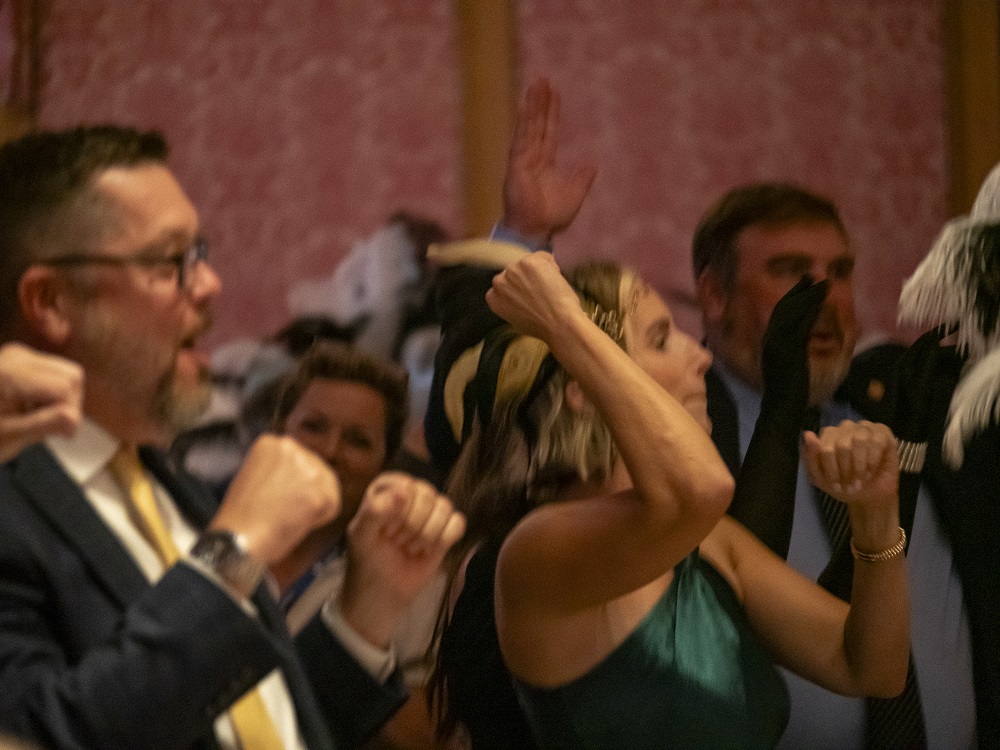
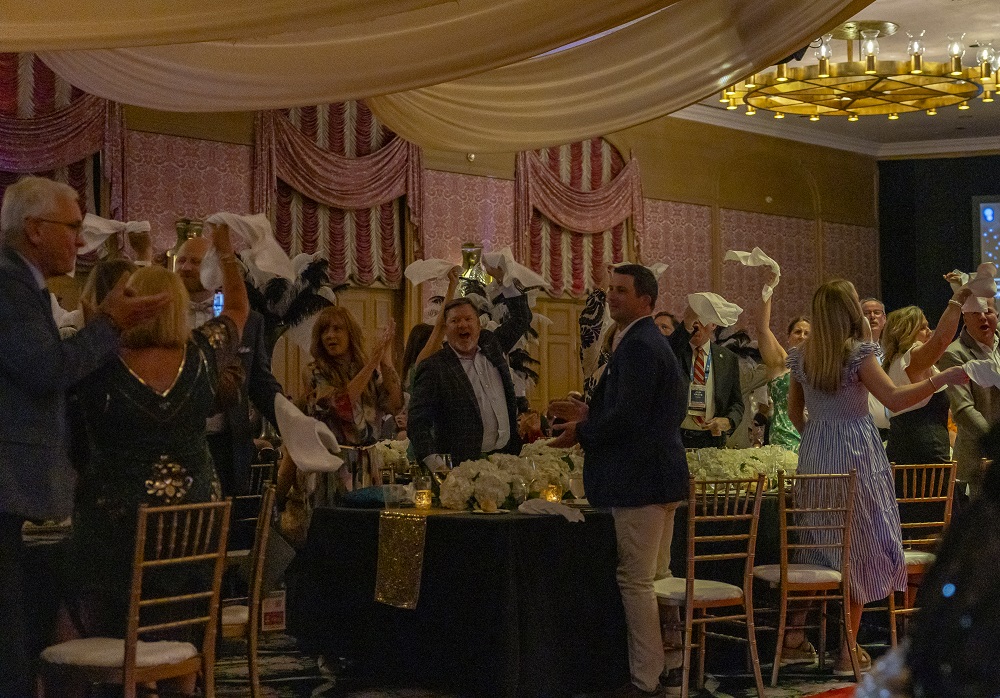
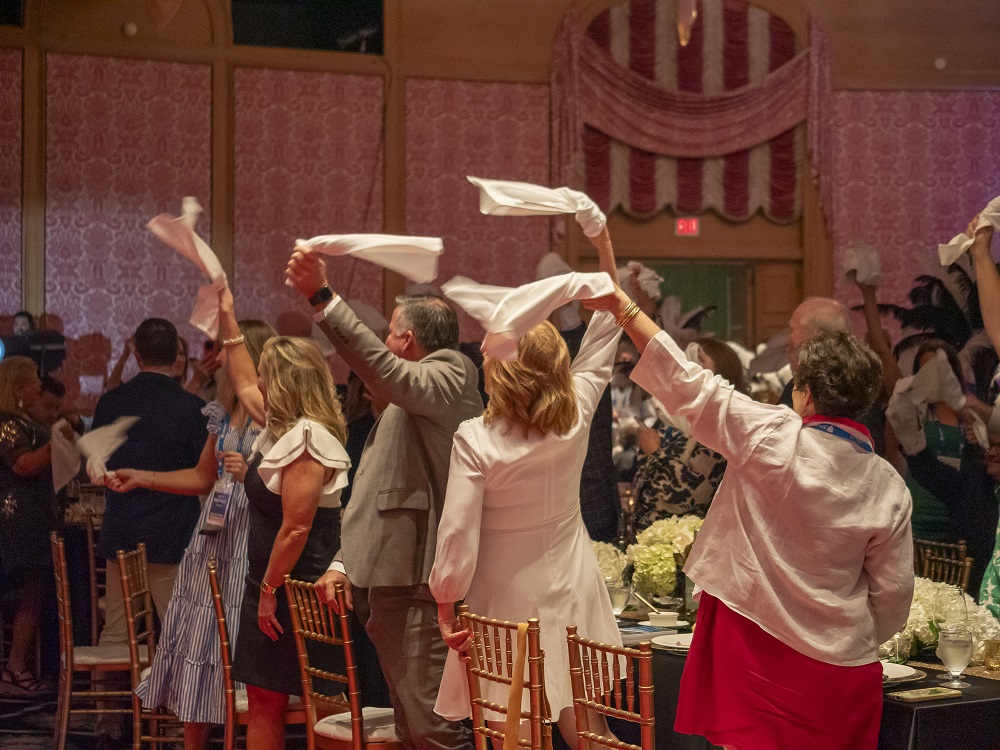
But even with the preparation, we learned some new information at the last minute. For example, our entrance was done “spirit style,” with strutting and intro music, a prospect that made us nervous.
The lead-in to the competition was done up right by TCMA, with teams showing their spirit as they came in.
SHSU entered last, a grand entrance, befitting our first-place (at the time…) status.
Whooping it up is not our style, but we did our best, with Olivia as our official team captain and Michelle as our “team spirit leader.”
It was our first time in this competition, and our inexperience was telling.
Many of the opposing teams had returning members, who not only knew the format, but also knew key tactics and, surprisingly in some cases, the questions.
This learning curve got us, and while we did not excel in this contest, we were satisfied knowing that while we might not have been the first to hit the buzzer…
…we did know the answers to about eighty-five percent of the questions (we did learn, on the spot, what a “claw-back provision” is….). And we had fun.
In the end, we finished third. The top three were close, with UNT Masters of Public Administration leading the way (1020 points), TAMU’s Masters of Public Service team in second (976 points), and the LEAP Center’s undergraduate team in third, with 930 points.
UTSA’s Masters program finished fourth with 530 points, and SFA’s Masters program served as the caboose.
Takeaways
Our goals for this contest were not related to points or placement. Rather, our goal was to do the best we could do on the individual components. We wanted to network with city officials, learning from them, and developing relationships. We wanted a broad-based curriculum in our coaching, which we accomplished, setting up meetings with a City Manager, two City Secretaries, a City Attorney, an HR Director, and a Police Chief. And we served our community by completing our volunteer project, while also learning a lot about city government, even if the Jeopardy contest didn’t fully reflect our learning. What was most important to us is that we achieved these goals while doing, we hope, good things for the community and others.
In preparing for the ICB, we had many coaches and mentors along the way, all of whom are experts in their discipline. Brian Beasley, Director of HR for the City of Huntsville provided us with a great Mock Interview; Thomas Leeper, City Attorney of Bryan generously spent time answering questions about legal aspects of municipal government; Stephanie Fors, Former City Secretary of Huntsville discussed the politics of a changing council for a charter officer (and served as a great “Team Mom”); Miranda Estrada, Economic Development Specialist of Huntsville served as a mentor and supporter; Fabrice Kabona, City Manager of Madisonville taught us much about Madisonville and City Management; Chief Kevin Lunsford, Former Police Chief of Huntsville educated us on policing and politics; Kristy Doll, City Secretary of Huntsville instructed us on agendas, organization, and parliamentary procedure; Sam Masiel, Assistant City Manager of Huntsville was a key supporter and; Aron Kulhavy, City Manager of Huntsville asked some excellent questions in a preview session. Each provided invaluable guidance for our team of young professionals. We truly appreciated the time each of these individuals put into shaping our paths for the better, and while we may not have won the TCMA ICB, we came home feeling like winners!
Our third day at the TCMA was to be our longest, at least with scheduled events. We had a full day of conference sessions, a networking dinner, and, of course, some final practice on our presentations and study for our knowledge contest. Accordingly, we were up early and, more or less, ready to take the day on.
Opening General Session: Transforming Workplace Dynamics
The conference kicked off with a compelling keynote by Michael Bush, CEO of Great Place to Work, who shared findings from a global workplace survey.
He highlighted key elements essential for a healthy work environment: high trust, pride in meaningful work, and strong camaraderie.
Drawing parallels with conquering Mount Everest, Bush emphasized the importance of believing in one’s capabilities to achieve seemingly impossible goals.
Bush classified leaders into various types, ranging from unintentional leaders who lack clarity in their roles to Level 5 leaders inspired by Jim Collins’ concept of comprehensive leadership. He underscored the transformative impact of AI on workplaces, urging attendees to embrace and leverage AI capabilities proactively.
Building a Workplace Culture for Innovation, Productivity, and Sustainability: Leading with Love
In the first of the concurrent sessions, attended by Yajaira, Michelle, Victoria, and Cinthia, the students heard from Dr. Church, whom they had met with the night before over dinner.
Dr. Church emphasized the importance of cultivating a workplace culture that fosters innovation, enhances productivity, and promotes sustainability. Executives are increasingly challenged with retaining top talent, developing future leaders, and maintaining a positive employment brand that resonates with their employees and the public.
For this to be successful, companies must leverage employee values for enhanced productivity and loyalty, implementing effective motivation techniques, and fostering a culture conducive to innovation and knowledge creation. It’s important for leader to ensure that employees’ personal goals and organizational values are in alignment, a situation that increase productivity, with people working together toward team goals.
The New City Manager: Navigating Challenges and Opportunities
Another of the concurrent sessions, “The New City Manager,” was one of our favorites, providing invaluable insights from experienced leaders stepping into new roles:
James Attaway of Quitman advised new managers to trust their teams while verifying details, stressing the importance of building a supportive organizational culture.
Terrell Smith from Marshall regretted not immediately focusing on understanding building codes and city charters, highlighting the importance of foundational knowledge. He encouraged realistic expectations about city resources and confident negotiation of their value.
Ashley Wayman from Rollingwood emphasized recognizing personal value and impact as a new manager. She highlighted the significance of understanding key stakeholders in the community for effective navigation of city dynamics.
Moderator Mayra Cantu shared a community engagement success story from Bartlett, illustrating the power of transparency and collaboration in gaining community support for city projects.
Losing the Chair: Lessons in City Management
In the session “Losing the Chair,” experienced city managers Hector Forestier and Jared Miller shared candid insights about the prospects of losing your job in the volatile city-management business:
Hector Forestier emphasized the importance of networking and understanding contracts, reflecting on his early career without a contract and the subsequent lessons learned from peers.
Jared Miller echoed similar sentiments, stressing the necessity of contract negotiation awareness and shared personal experiences, including the negotiation of favorable terms and benefits.
Paul Parker, who mentored both Forestier and Miller, provided additional guidance on navigating city management challenges and contract negotiations.
Interestingly, Forestier was the City Manager of Willis, TX, and he started an internship program there.
His first intern was Zach Goodlander, a LEAP Ambassador. Goodlander is now the acting City Manager of Fulshear, TX.
Awards
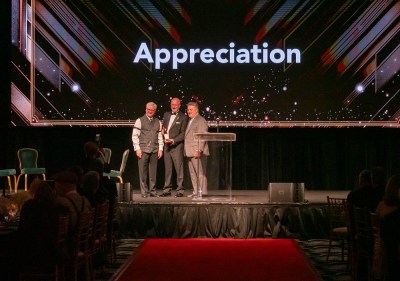
As part of our networking efforts, we attended the awards luncheon, and we were happy to see UNT Professor Robert Bland…
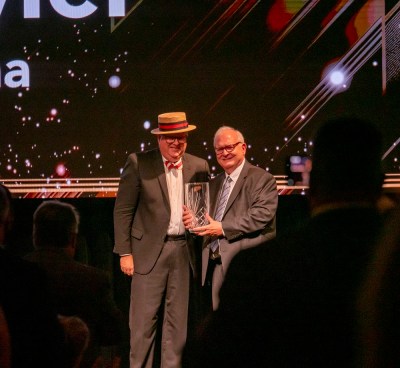
…receive a service award. The University of North Texas not only has an excellent reputation for their MPA program (especially City Management), they have also (spoiler alert) won every ICB ever held at TCMA. Many thanks to Professor Bland for his service.
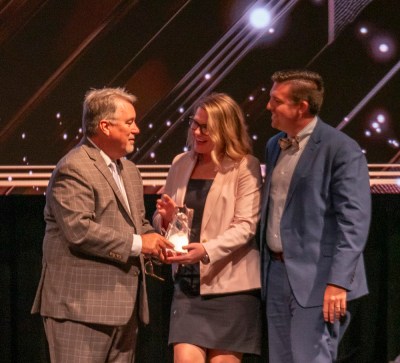
Also, SHSU Alum and Manager in Residence, Laurie Brewer–Assistant City Manager for Georgetown–won the Mentor Award for her great service. She has been a friendly face and wonderful supporter of our team, and we congratulate Ms. Brewer.
Key Takeaways and Reflections
The conference was a great way to learn about the challenges that face city managers and other city staff, while also learning some leadership styles to overcome those challenges. We are very appreciative of the support we’ve seen here, and for the tips provided that may make us more productive and effective leaders in the community.