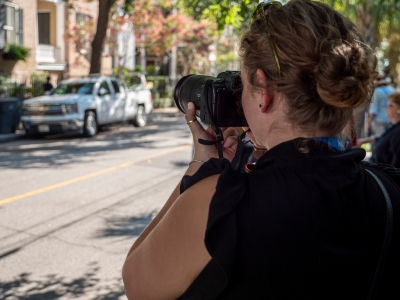
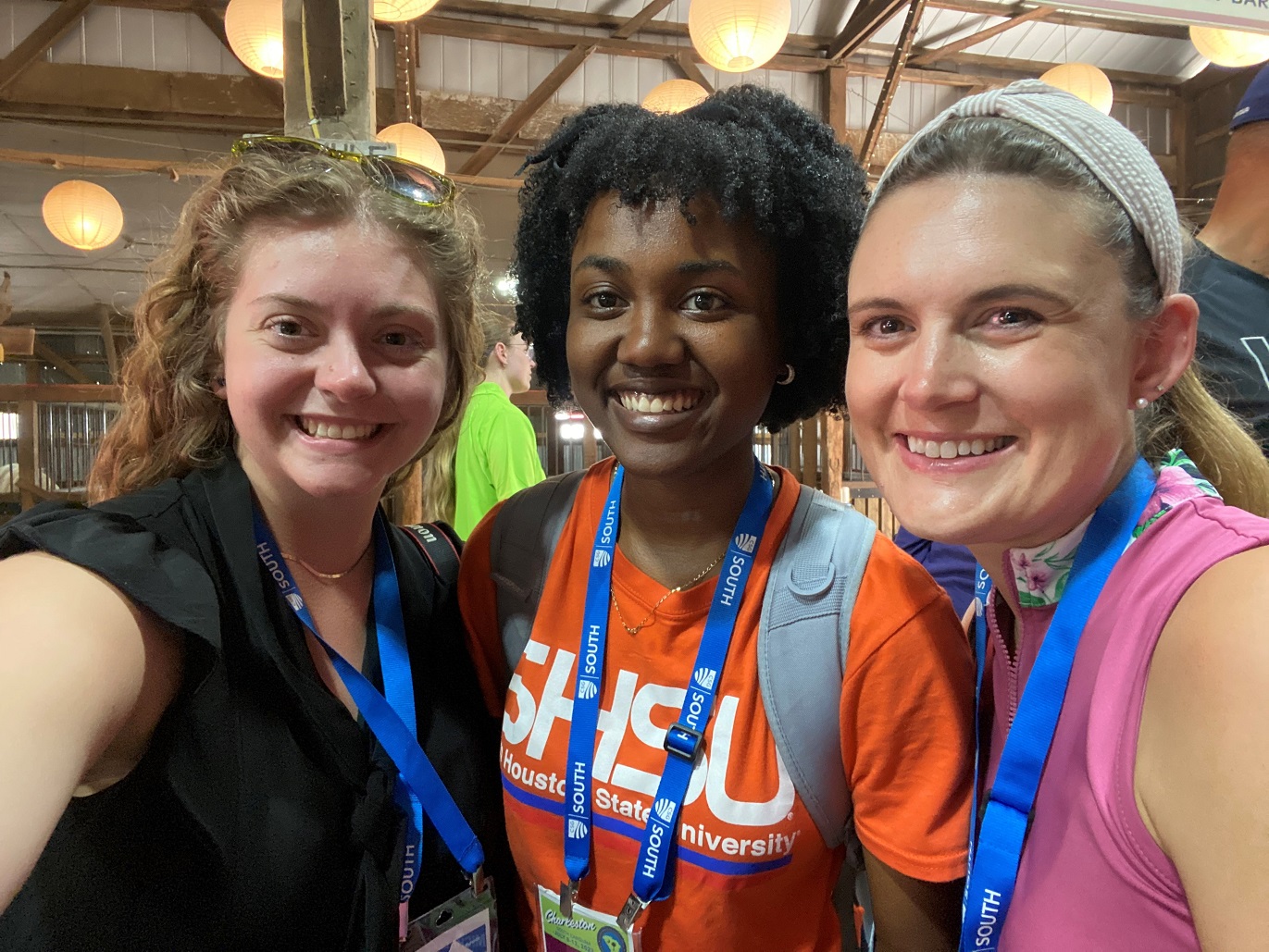
Although Pete Sessions has been in Congress for 20-plus years, he has only represented the Huntsville area for less than a year. In that time, he’s held several events here, and this week, he held a “town hall.” With him were district staff, including Ingrid Cuero, an SHSU student interning in his office. I was also there to take photos, and to catch up on the goings-on in Washington.
Congressman Sessions began by providing updates on legislation everyone should be aware of during session, including healthcare, Medicare, border security and inflation. With all these issues on the table, it’s no surprise there were many folks from the community on hand, many of them with a lot to say.
In addition, it was nice to see many of our local officials on hand, including County Judge, Colt Christian; County Clerk, Leslie Woolley; District Attorney, Will Durham; Mayor Andy Brauninger; City Manager, Aron Kulhavy; Assistant City Manager Sam Masiel.
As a LEAP Ambassador, it was also nice to see many from the University present. We were able to say hi to SHSU’s Chief Strategy Officer, General Glaser; Vice President of University Advancement, Matthew Bethea; Deputy to the President, McCartney Johnson; Executive Assistant, Jennifer Alexander. The University has been very supportive of our internship programs and us individually, giving us a lot to be grateful for.
It’s great to see our University officials, local officials, and congressional representatives working together!
The Center for Law, Engagement, And Politics is non-partisan.The Center does provide internships to elected officials of both parties, and LEAP Ambassadors often attend town-halls, council meetings, or commissioner court meetings to become more informed about their community.
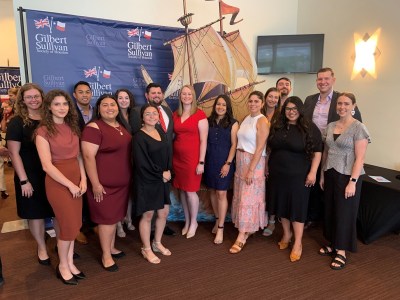
The LEAP Center promotes education–across all disciplines–while emphasizing the impact education and service has on communities. Nothing makes a community more special than the people who are in it, and over the years, LEAP Ambassadors have developed a community of their own. In that spirit, Ambassadors past and present came together on a Sunday in July to get to know one another, to build community, and to enjoy the Houston Gilbert & Sullivan’s performance of “Pirates of Penzance.”
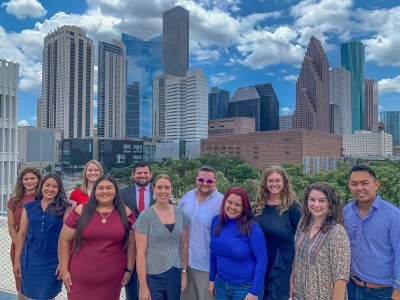
We all gathered at the POST Market for a quick bite before the performance at the Hobby Center. We had a great chance to get to know one another, converse, and share some of our experiences with LEAP. The alumni had a very welcoming approach and made us feel comfortable, urging us to ask questions. I personally asked questions about everyone’s higher education and career paths. Christian even gave me a striking piece of advice telling me to “take whatever Yawn has to offer, no matter how intimidating it is”. To conclude our time at the POST we headed to the terrace to take a photo with the magnificent Houston skyline.
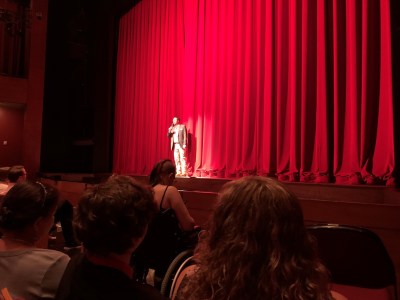
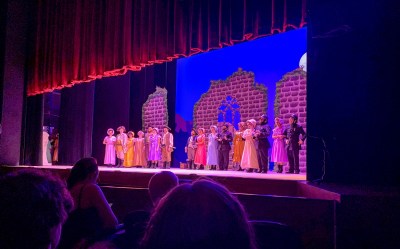
Continuing our afternoon we made our way to The Hobby Center to enjoy The Pirates of Penzance.
I had never seen an operetta before, and I wasn’t sure what it would be or how to take it. It was far more comedic than I anticipated. This was made clear early on, when it’s clear that the main character, Frederic, was sold indentured into piracy because his hard-of-hearing nursemaid, Ruth, misheard “pilot” for “pirate.”
This led to a farcical plot with numerous appealing songs, the most famous of which is “Modern Major General,” which, in this rendition, incorporated some contemporary elements from King Charles’s recent coronation. As a former LEAP Ambassador said, “a lot of shade was thrown.” The shade, however, was funny, punctuated by the chaos and disorder on stage, which made us all chuckle. Well, it made most of us chuckle, and it made Jessica giggle.
Through the art of theater we all bonded, created many connections and created an amazing memory. The LEAP Center would like to thank Victoria McClendon-Legget, Bianca Saldierna, Christian Bionat, Alejandra Galvan, Bryan Phillips, Justin Beiser, Megan Martin and Quinn Kobrin (and their plus ones!) for joining us us for an enjoyable afternoon!
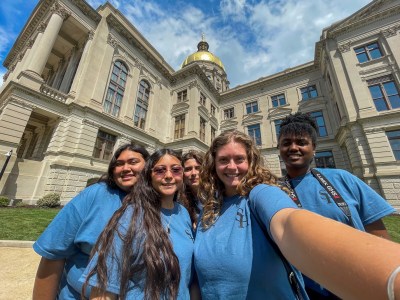
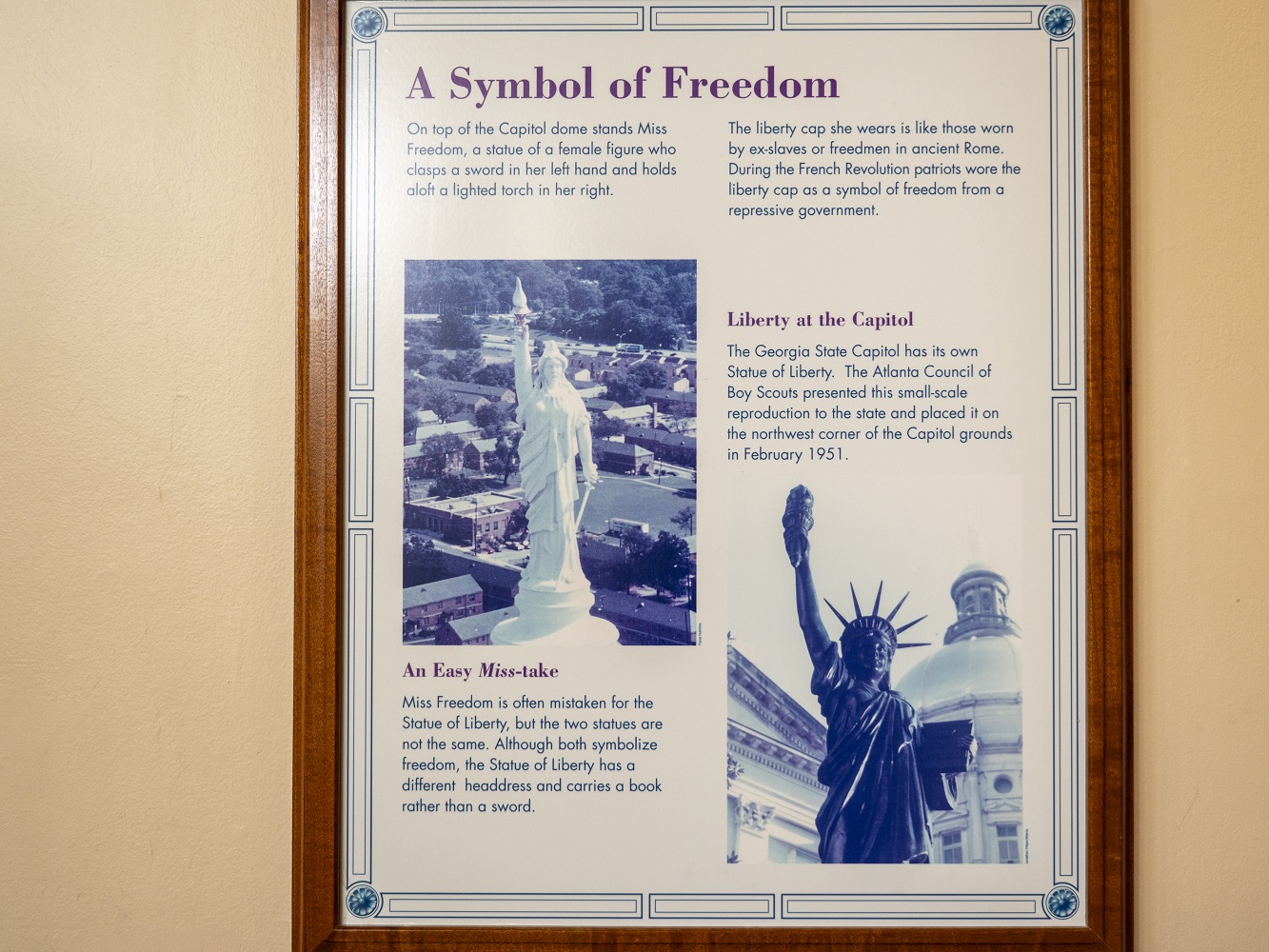
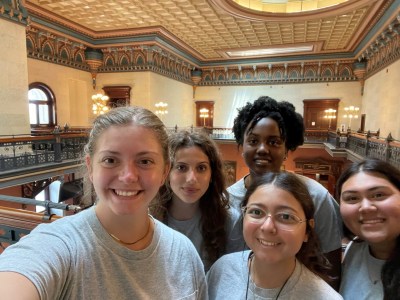
Visiting State Capitols is a bit of a LEAP tradition, combining politics, architecture, history, and–often–art into a single structure! So Jessica Cuevas, Olivia Discon, Morgan Robertson, Michelle Cardenas, and I decided to delve deeper into Georgia’s past by adding our second state capitol building on this trip to our docket. Our journey, led by Morgan, took us through significant historical events, remarkable personalities, and captivating architecture.
One of the striking statues that greeted us during our visit was that of Ellis Gibbs Arnall, a visionary and influential figure in Georgia’s political landscape. His journey began in 1932 when he was elected as a House Member, and he subsequently held roles as Speaker of the House and Attorney General before being elected Governor. Arnall’s time in office was marked by progressive policies and far-reaching reforms. He was instrumental in improving the prison system, abolishing poll taxes, and establishing an employment merit system.
Ellis Arnal on the Capitol grounds
As we wandered through the Capitol, we were captivated by the statue of Juliette Gordon Low, the founder of the Girl Scouts . Juliette’s dream was to empower young girls and women through education, community service, and outdoor activities. Some may say LEAP resembles similar desires out of our organization, but we unfortunately do not have any cookies.
Juliette Gordon Low
As we explored the corridors adorned with portraits of influential figures, we were fortunate to come across a portrait of former President Jimmy Carter, who also served as Governor of Georgia. It was a flattering portrait.
This encounter held special significance, as we had visited the Jimmy Carter Presidential Library and Museum only a week prior. Born in Plains, Georgia, President Carter’s legacy as a champion of human rights, diplomacy, and humanitarian efforts has earned him immense respect both nationally and internationally. Seeing his portrait in the Capitol added a personal touch to our journey, connecting us to the larger tapestry of Georgia’s history and its global impact.
Our visit to the Georgia State Capitol Building was a journey through time, unraveling the historical significance and architectural splendor of this beautiful structure.
From the design , every aspect of the Capitol bore witness to Georgia’s vibrant past. The educational experience will stay with us, as we thoroughly enjoyed the opportunity to learn more about the state’s remarkable heritage and the individuals who have shaped it.
The Southern Legislative Conference indeed came to an end, but our adventures pressed on! On our way to Atlanta, LEAP Ambassadors took some key stops through South Carolina and Georgia to learn about this region and its historic relevance.
Tour of South Carolina’s Capitol Building
Ingrid Cuero
Before leaving South Carolina altogether, we made sure we stopped in Columbia, the Capital of the state. We approached the capitol grounds to find a full-blown protest occurring–with labor unions objecting the flight of jobs.
This did not stop us from getting some photos of the exterior….
…or from seeing several statues, including Strom Thurmond, who is famously known for conducting the longest filibuster in history: 24 hours and 18 minutes! (He was filibustering to prevent passage of a civil rights bill.)
Passing by South Carolina’s state tree; a lone palmetto on the South end of the structure, we entered the building, which opened to a marvelously decorated interior.
I was immediately taken by the two flags, the U.S. and the South Carolina flag on either side of the entrance.
One of my favorite details of the interior design was the consistent use of the palmetto tree and the state flower, the Yellow Jessamine. It’s all in the details; for example, the lamps and chandeliers emulated the palmetto in their structural composition, and the staircase was engraved with the flower.
John C. Calhoun, another of the State’s notable figures, was commemorated with a statue. Calhoun is the only man to have served as Vice President of the United States for two different presidents. He, like Thurmond, is not much of a figure for modern times, but is a key part of the Palmetto’s State’s history.
We then came across The Battle of Cowpens; one of the first portraits to portray an African American in battle. Painted by William Ranney, the scene depicts a “servant” intervening in battle to save Col. William Washington.
After interning in the Texas Capitol building this past semester, it was very interesting to see the many differences between the TX Capitol and the SC Capitol.
The first, and most obvious difference, is the size. While Texas’ Capitol building is much larger, the interior of South Carolina’s is far more intricate and elegant.
Another key difference is that in South Carolina, both chambers are in session every year, whereas in Texas the legislature convenes every biennium.
Although judges in Texas are elected, in South Carolina judges are selected by the General Assembly.
This was the second state capitol building I had ever been in, so to be able to compare my experiences–especially right after an internship in the TX Capitol–was an insightful opportunity! Meanwhile, we were all able to check off one more capitol out of 50, South Carolina was Michelle’s and Olivia’s favorite Capitol Building of the trip.
More than 450 people turned out to advocate for CASA–a worthy organization that advocates on behalf of children in Walker, San Jacinto, and Trinity counties. Once a year, they bring supporters together for their annual “Christmas in July” fundraiser, and this year the result was a sell-out.
The evening began at 5pm, with an hour of mingling, “shopping,” dining, and other festivities. It gave us a chance to catch up with each other and our table mates.
Our tables consisted of: Ken and Nicole Holland, Michelle Spencer and Jessica Twardesky, Judge David Moorman and Christie Moorman, Mac and Leanne Woodward, Mike Yawn and Stephanie Fors, Victoria McClendon-Leggett, Roxana Woychesin, and various LEAP Ambassadors.
In addition, we had a chance to run into community friends. One of the nice aspects of volunteering for different organizations, for example, is that we get to see people we volunteer with elsewhere! We had the opportunity to chat with Dottie, a committed member of the Lion’s Club, who joins us at 6 am to put out flags on major holidays.
We also ran into Nancy Ormsby, who was volunteering, which is no surprise. She and her sister, Lois Stehlik, volunteer everywhere–they are great community assets.
At 6pm, the Bingo commenced. Rob Hipp was on hand to emcee;
CASA board members and advocates volunteered;
…team members from SHSU football served as auction spotters;
…SHSU Volleyball members helped put up tables and chairs at the end; and LEAP Ambassadors were on hand, not only as paying guests, but also to assist with the auction and take photographs.
There were 15 games of Bingo in all, with variations on the game in full force.
Hipp did a good job of moving things along, and about halfway through, we took a “game-break” for a live auction (thank you Kevin McMillian!) of children’s paintings.
Some sold for more than a thousand dollars!
Additional funds were raised through “adoptions,” a silent auction, and a call for donations. Last year, the event raised more than $100,000, a testament to the generosity of the community and to the staff at CASA.
In addition to the funds raised for a good cause, there was a whole lot of fun going on. There were, of course, 15 bingo winners, and there were winners for “Best Dressed,” “Best Christmas-Spirit Costumes,” and “most generous table.”
The winners were typically thrilled, and they were gracious, although the “bingo-offs,” which occur when two or more individuals “bingo” on the same call, could get heated…
But, of course, everyone ended up friends.
People returned to the many stations to meander to, seeing what could be bid on, tables of friendly people to converse with, and a photogenic selfie station.
This led to much fun, as did winning. One of our table members, Michelle Spencer, Director of the Boys and Girls Club of Walker County, won the blackout contest!
As noted, with 15 games of Bingo, there were many winners, and that doesn’t include those who won the raffles, the drawings, or the silent and live auctions. Of course, the biggest winners are those who most need some wins in their lives: the children whose families are caught up in court actions. The funds raised from this event go to support those children, ensuring they have outcomes that provide them with the best chances in life.
And, in a larger sense, everyone who attended the event was a winner in that they were all contributing to a cause that helps our community become stronger–and that’s a big win!
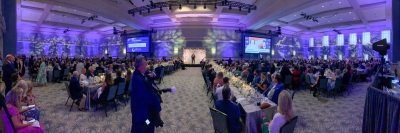
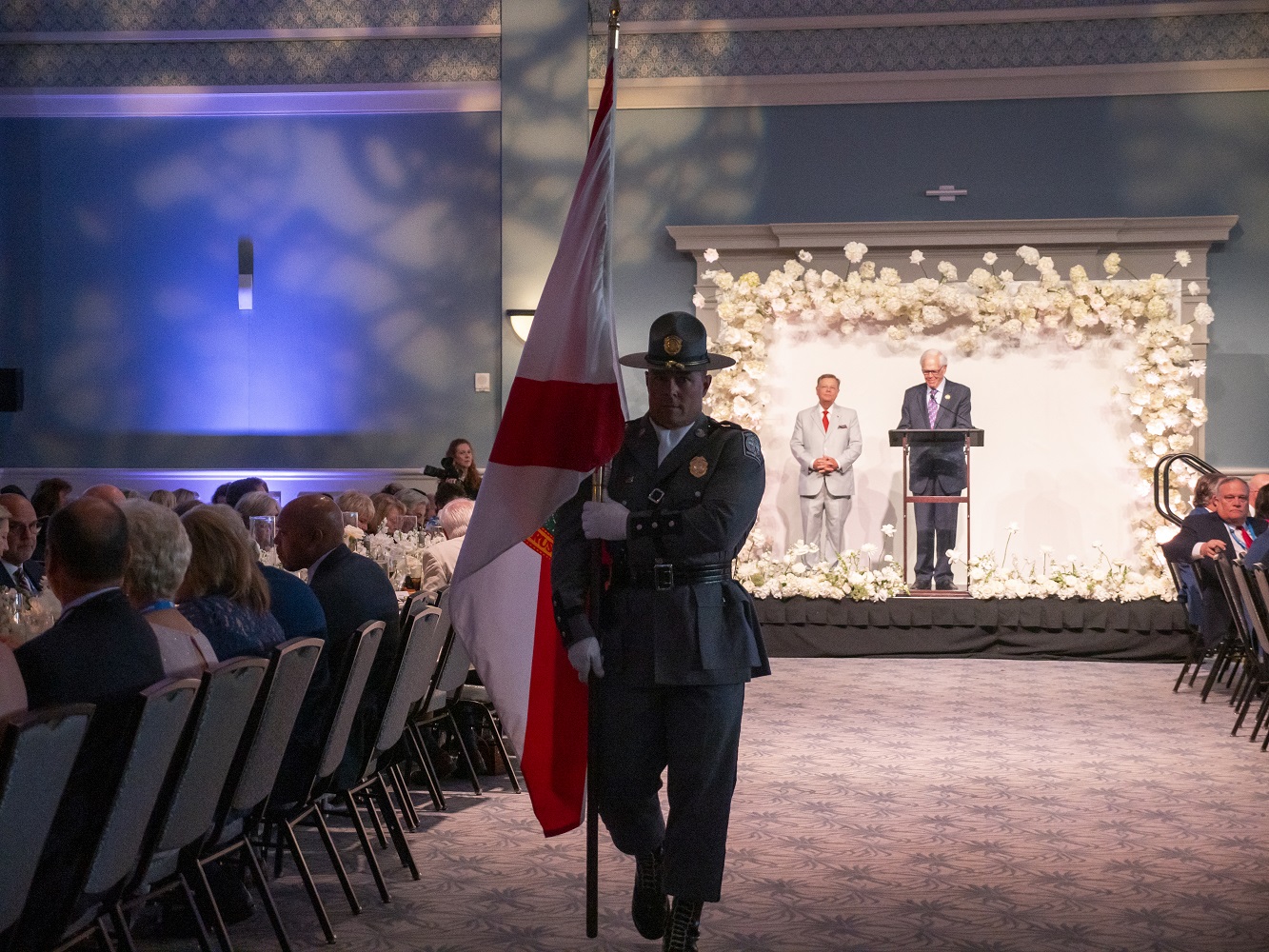
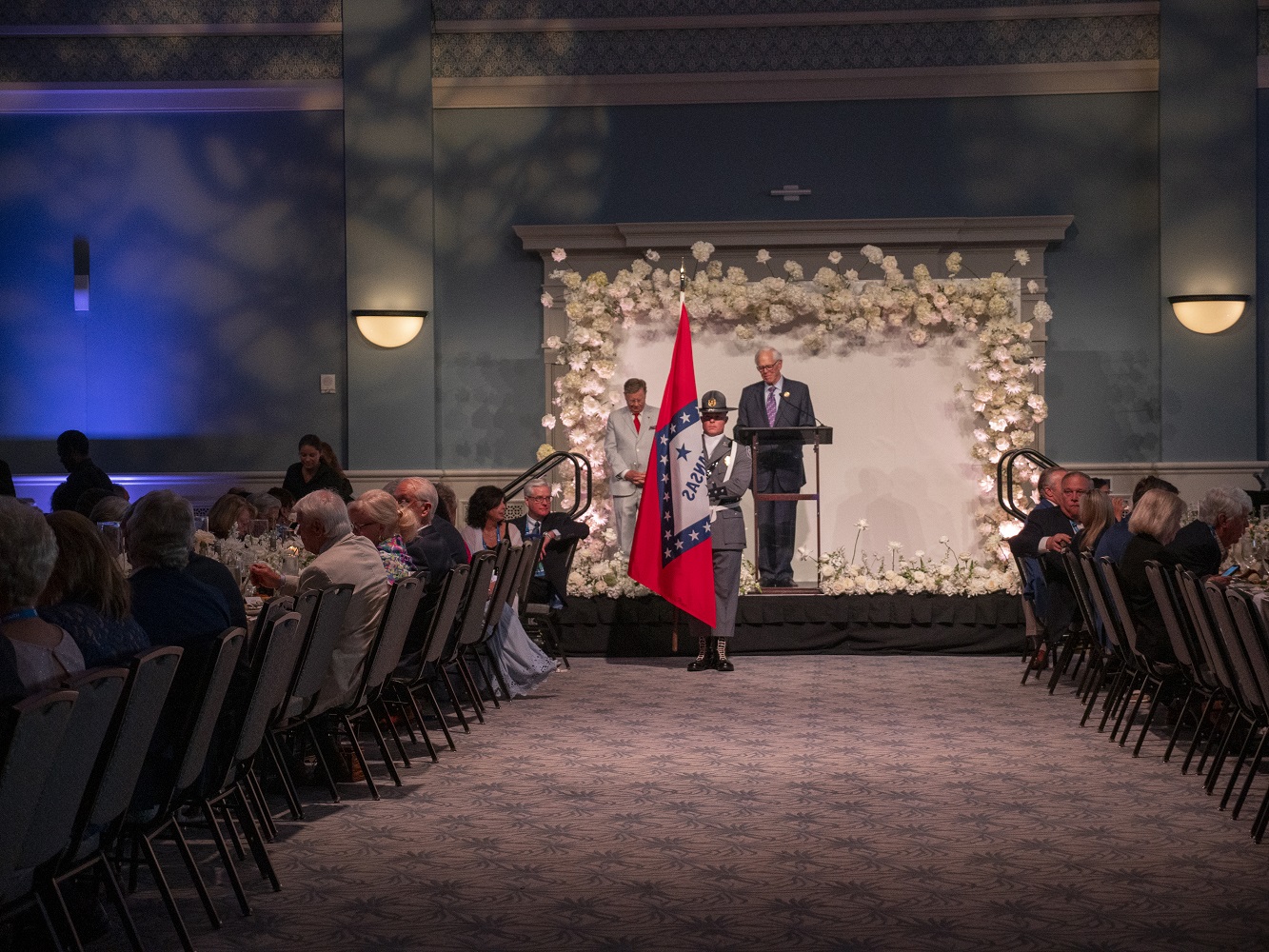
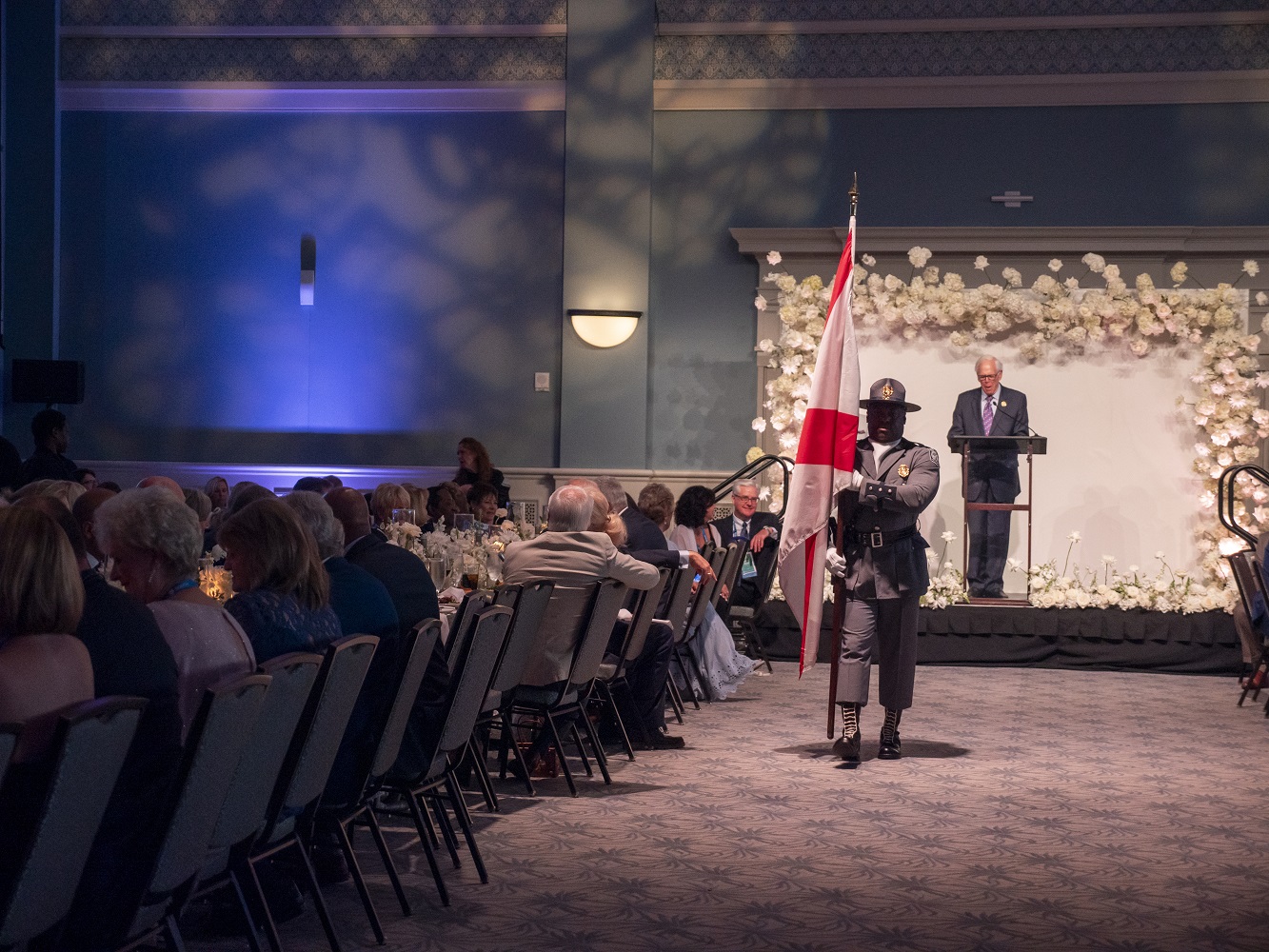
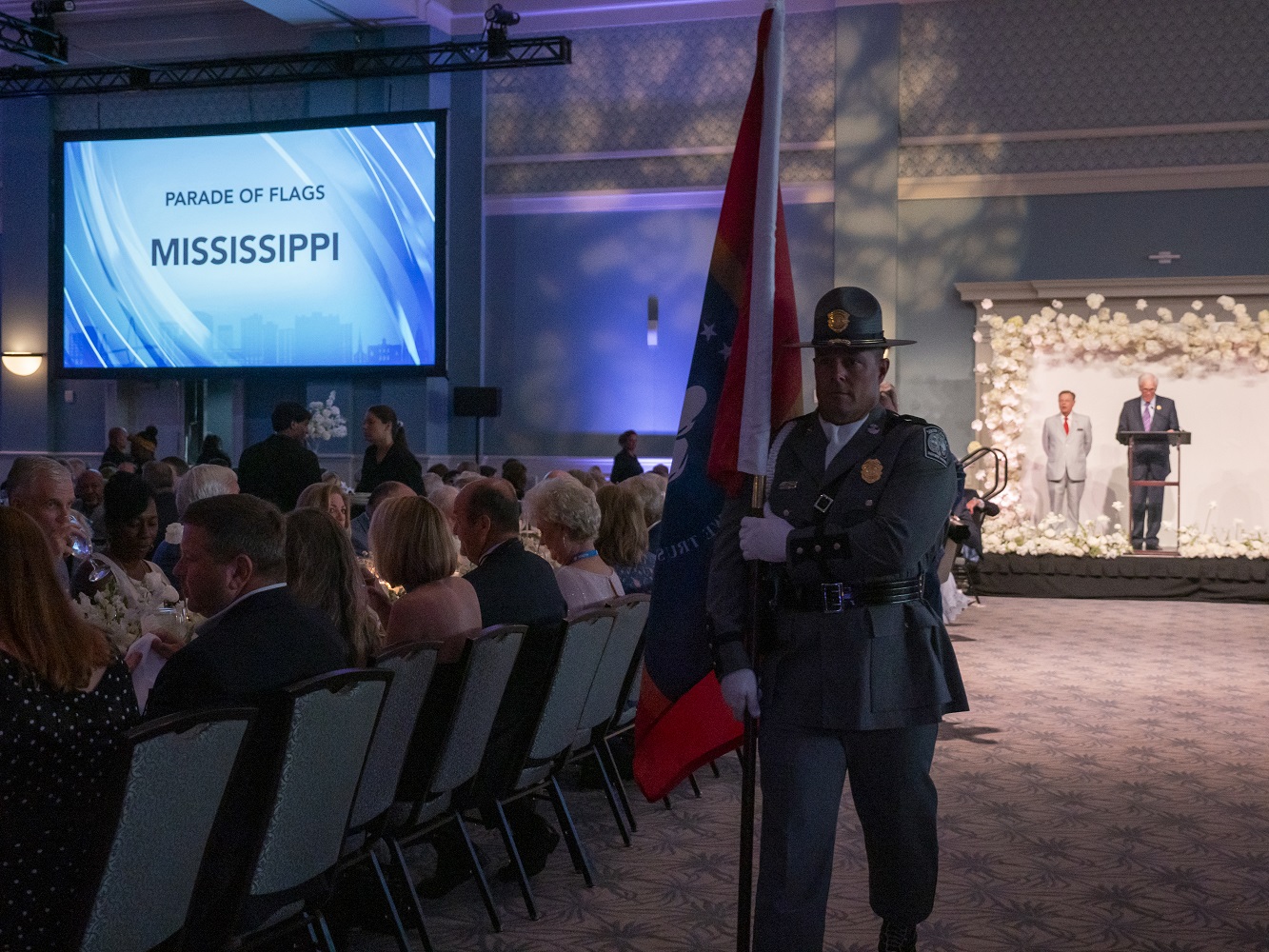
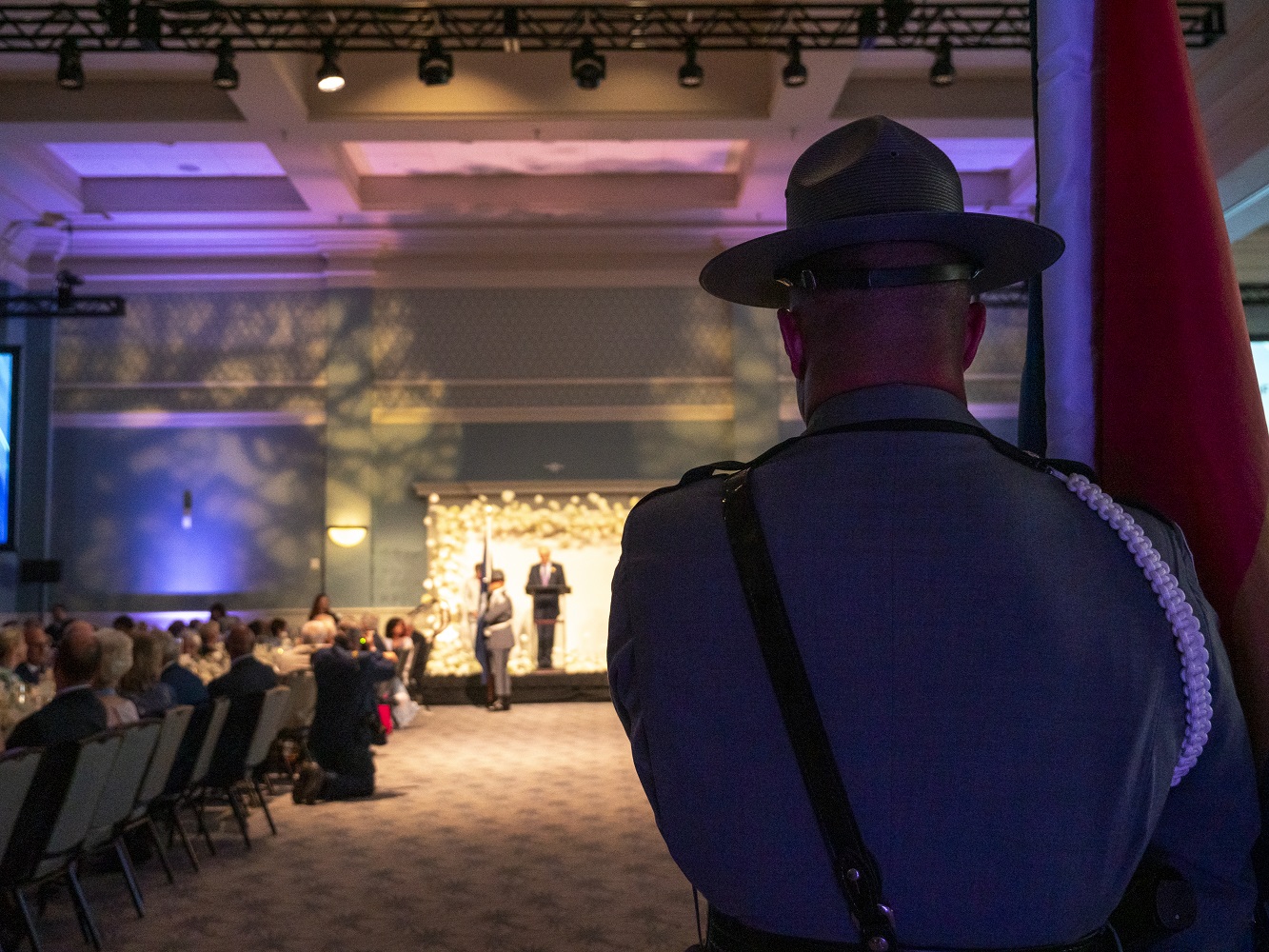
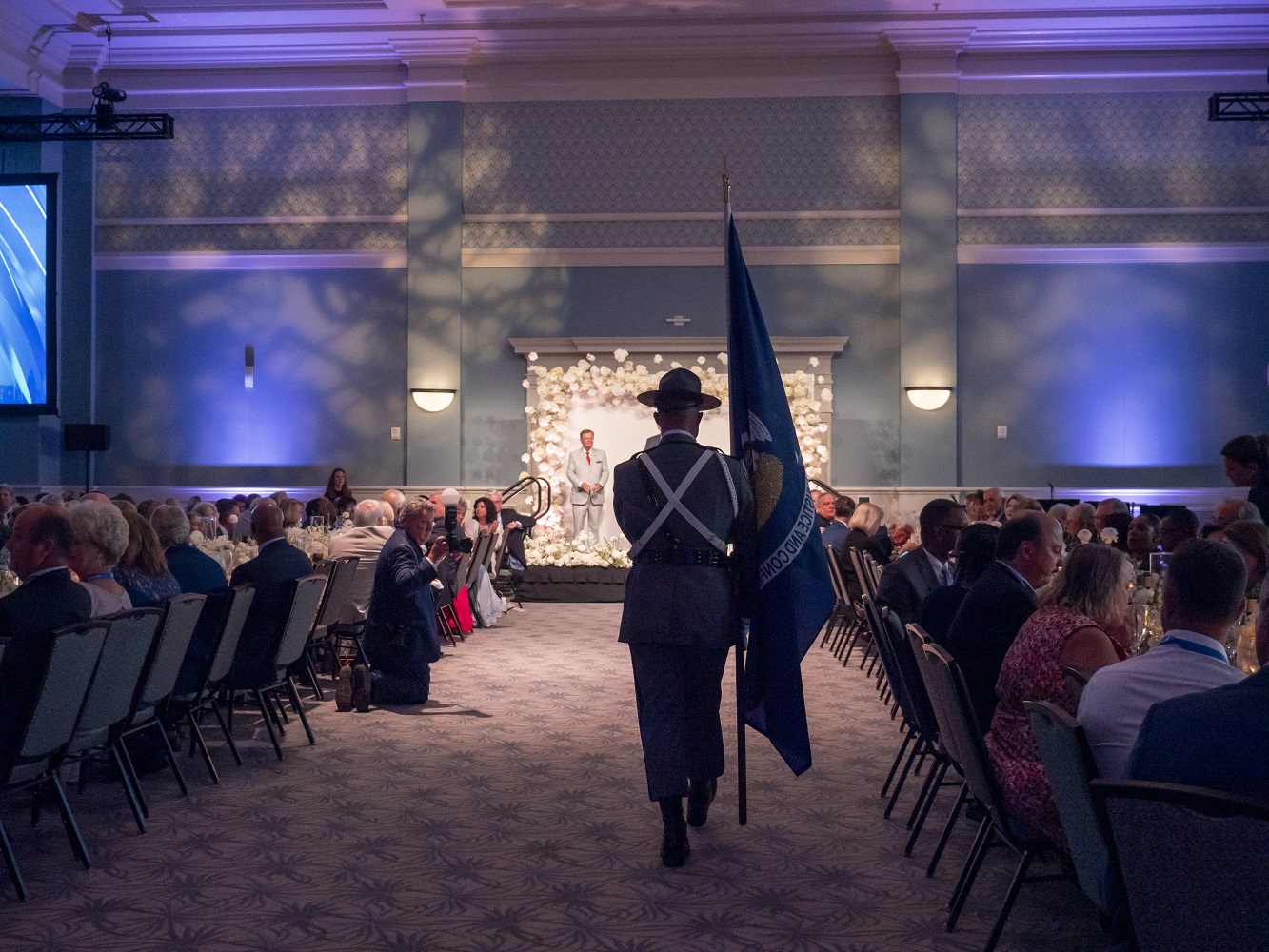
The South Carolina legislature sure knows how to wrap up a successful conference. On the final day of the SLC, the Council of State Governments–South and the Palmetto State’s Legislature put on a wonderful “State Dinner”–a first for most of the LEAP Ambassadors in attendance.
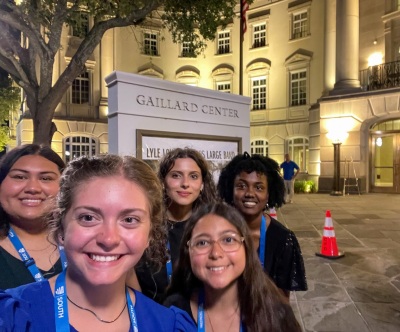
It was a night of class, elegance, and most importantly, celebration. We gathered at The Gaillard Center, which is home to a beautiful ballroom and a tremendous theater. In our minds, we pretended the theatre was named for our Vice-Provost, Dr. Anne Gaillard, making us feel more at home.
Entering in style, we made our way through the crowds to be seated for dinner.
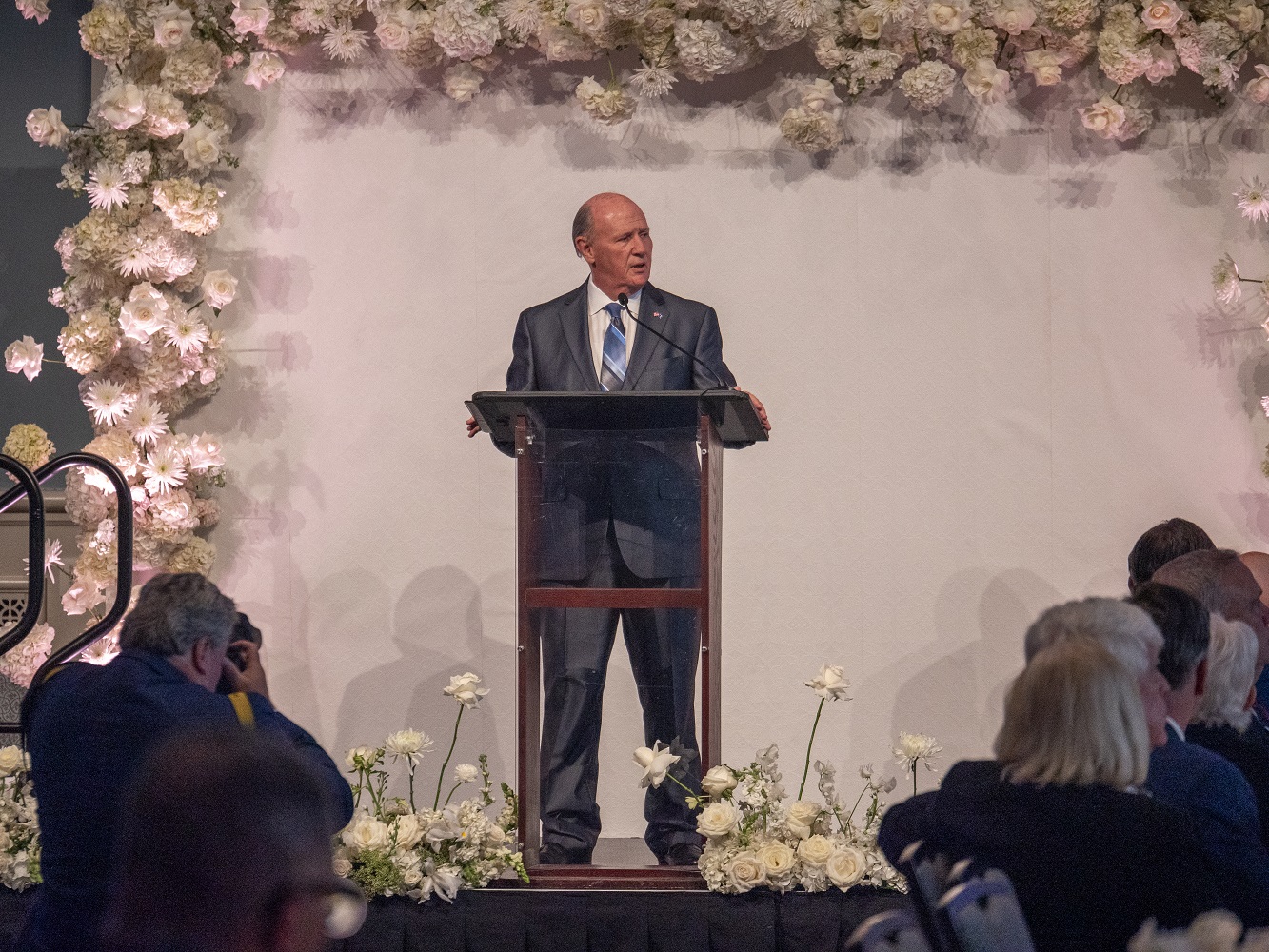
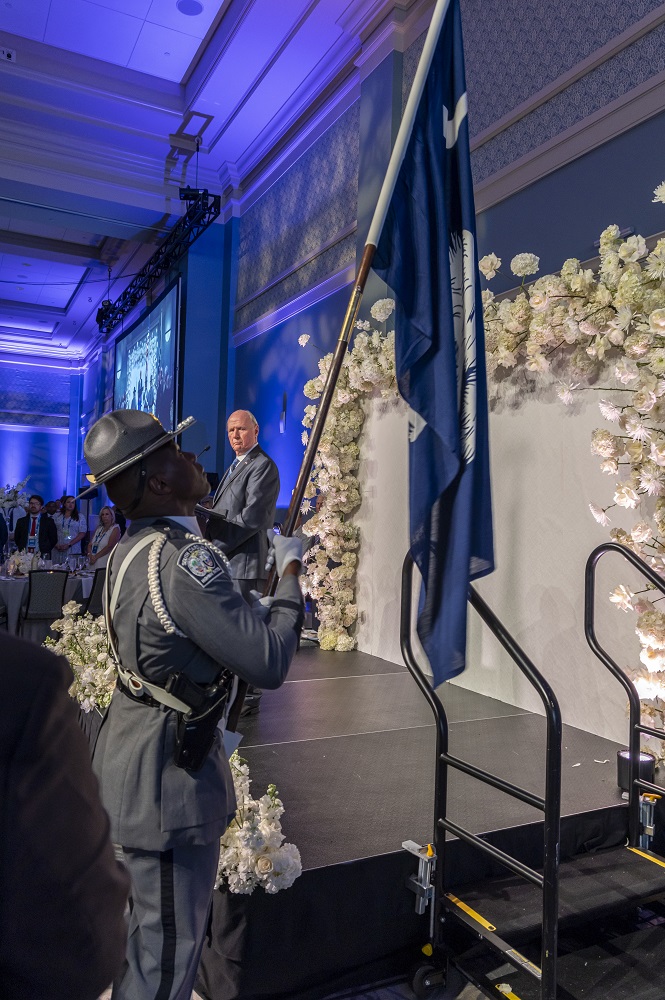
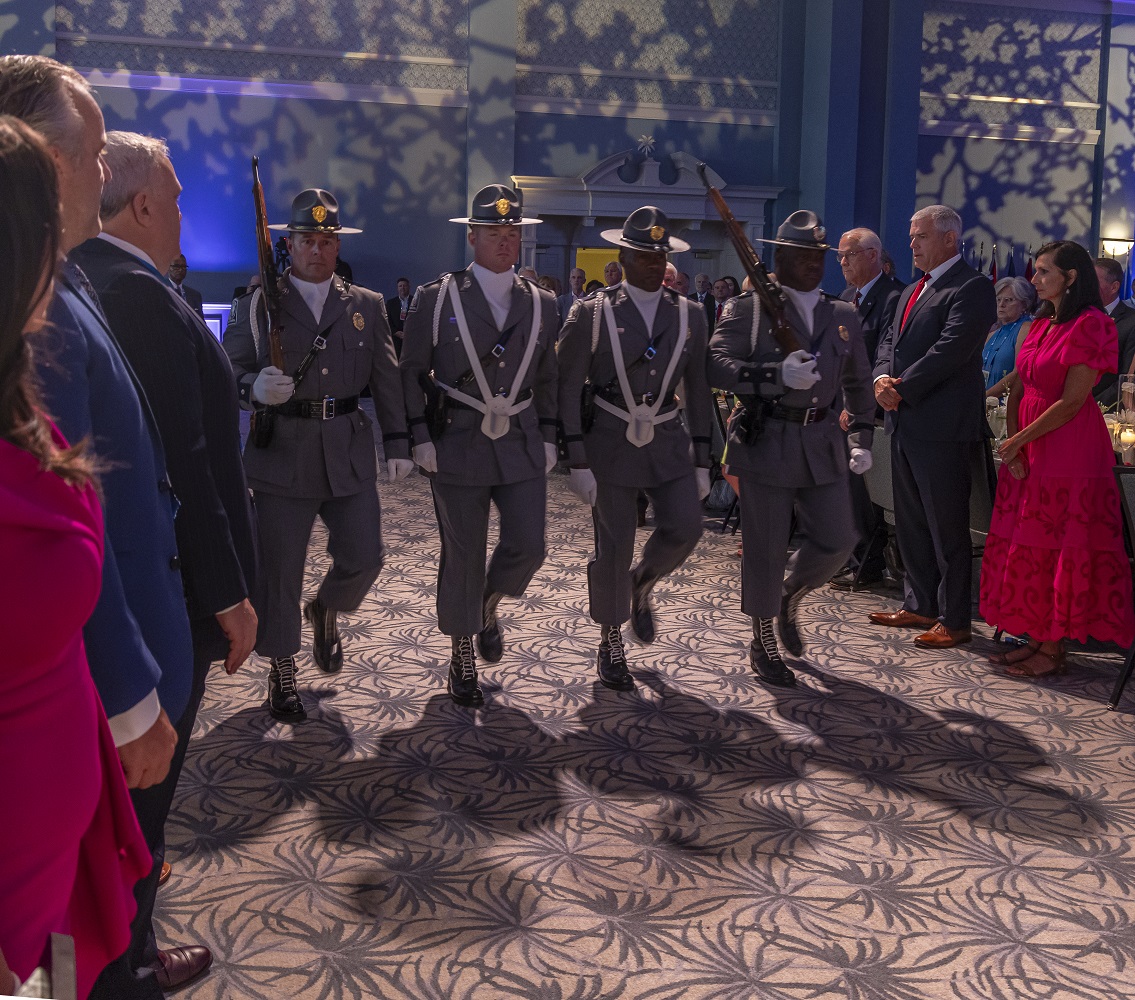
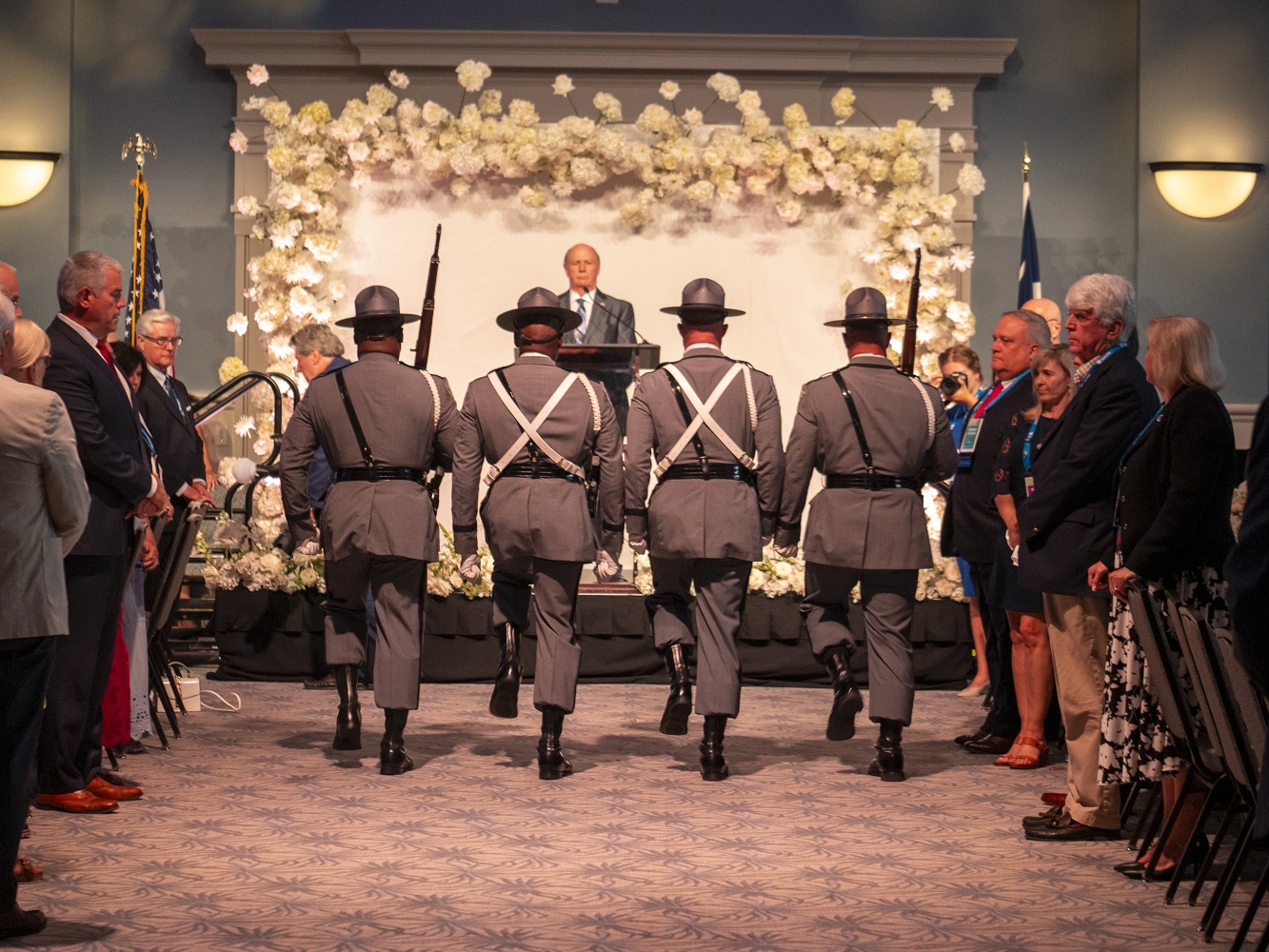
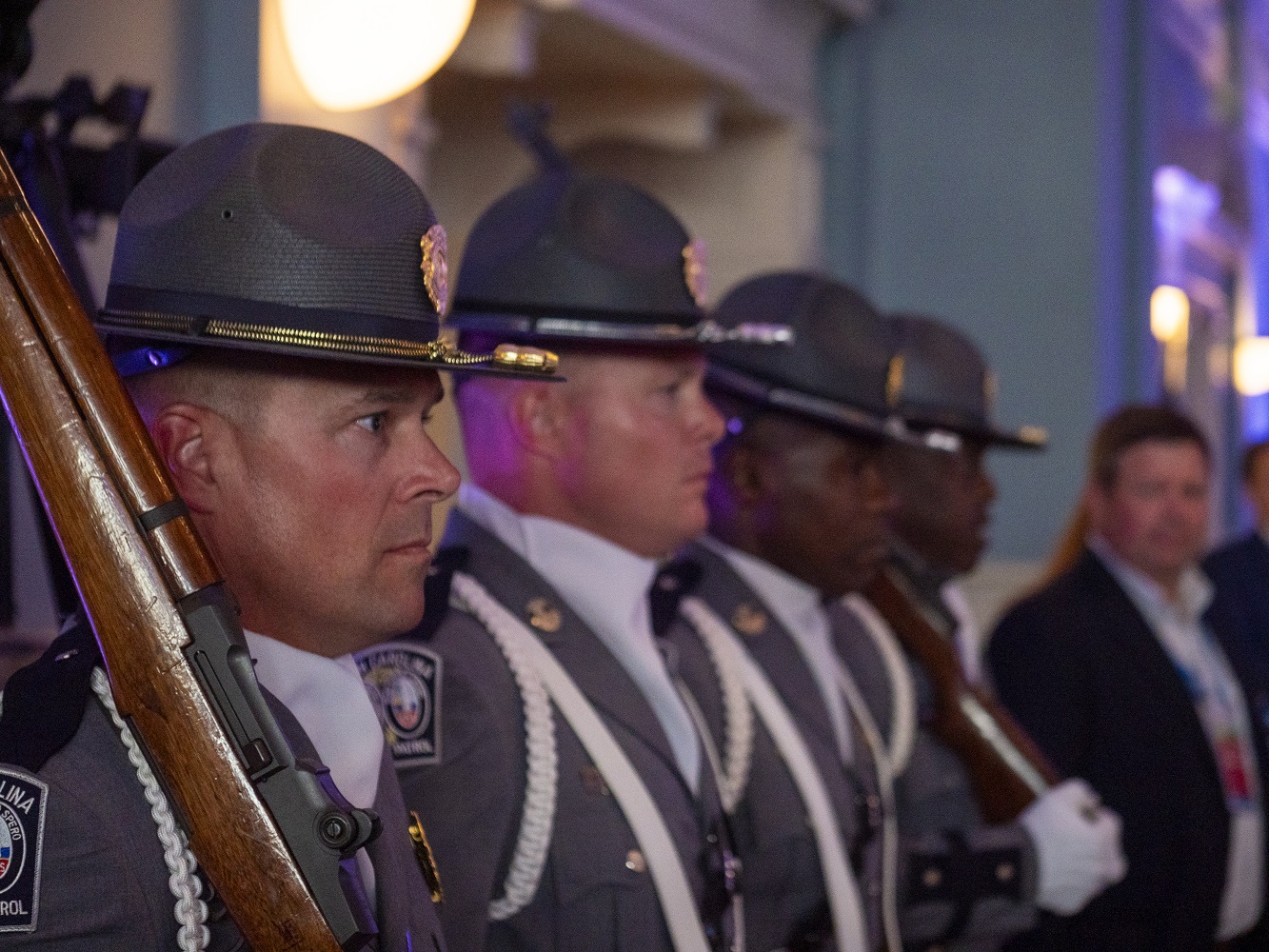
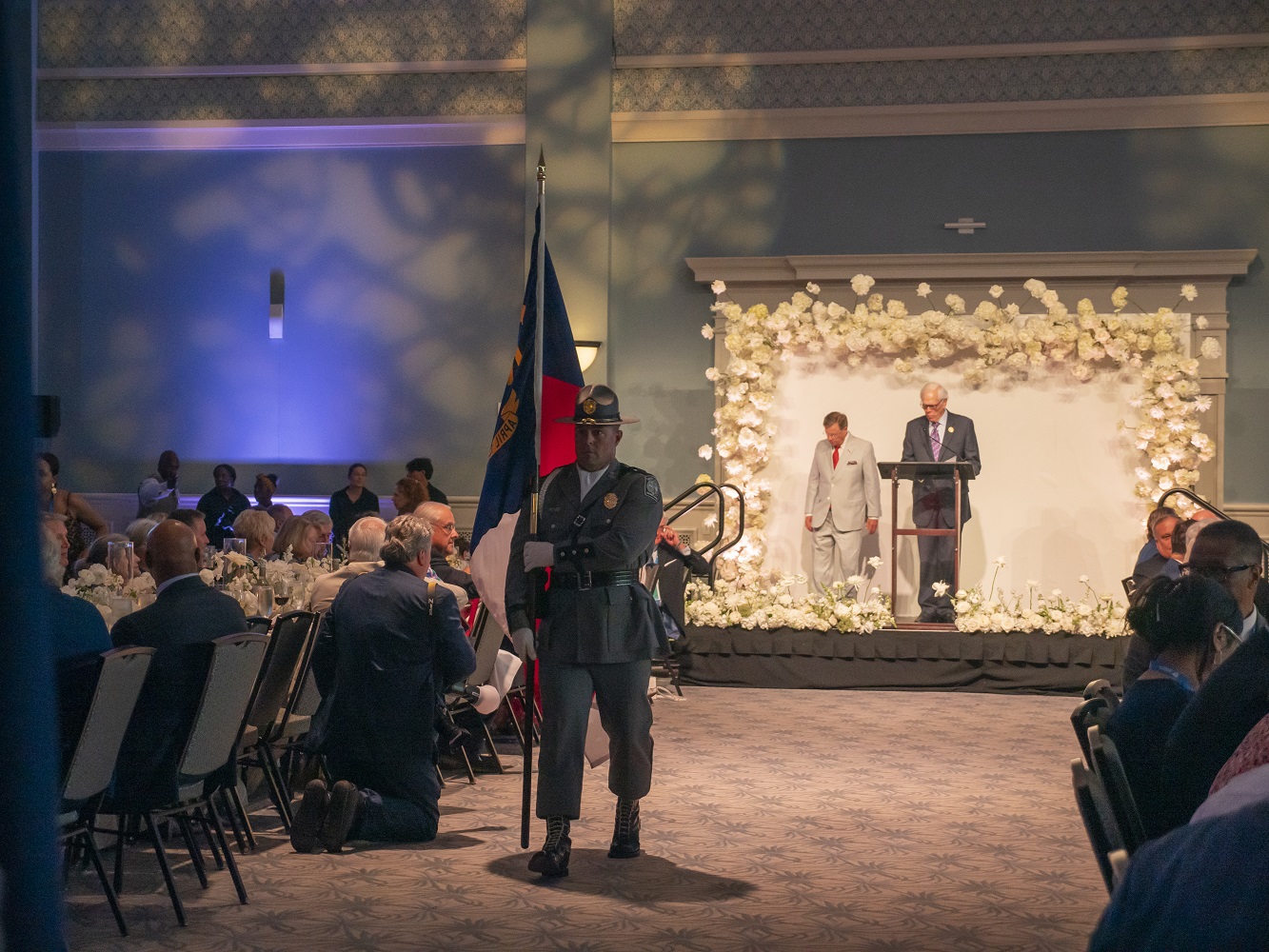
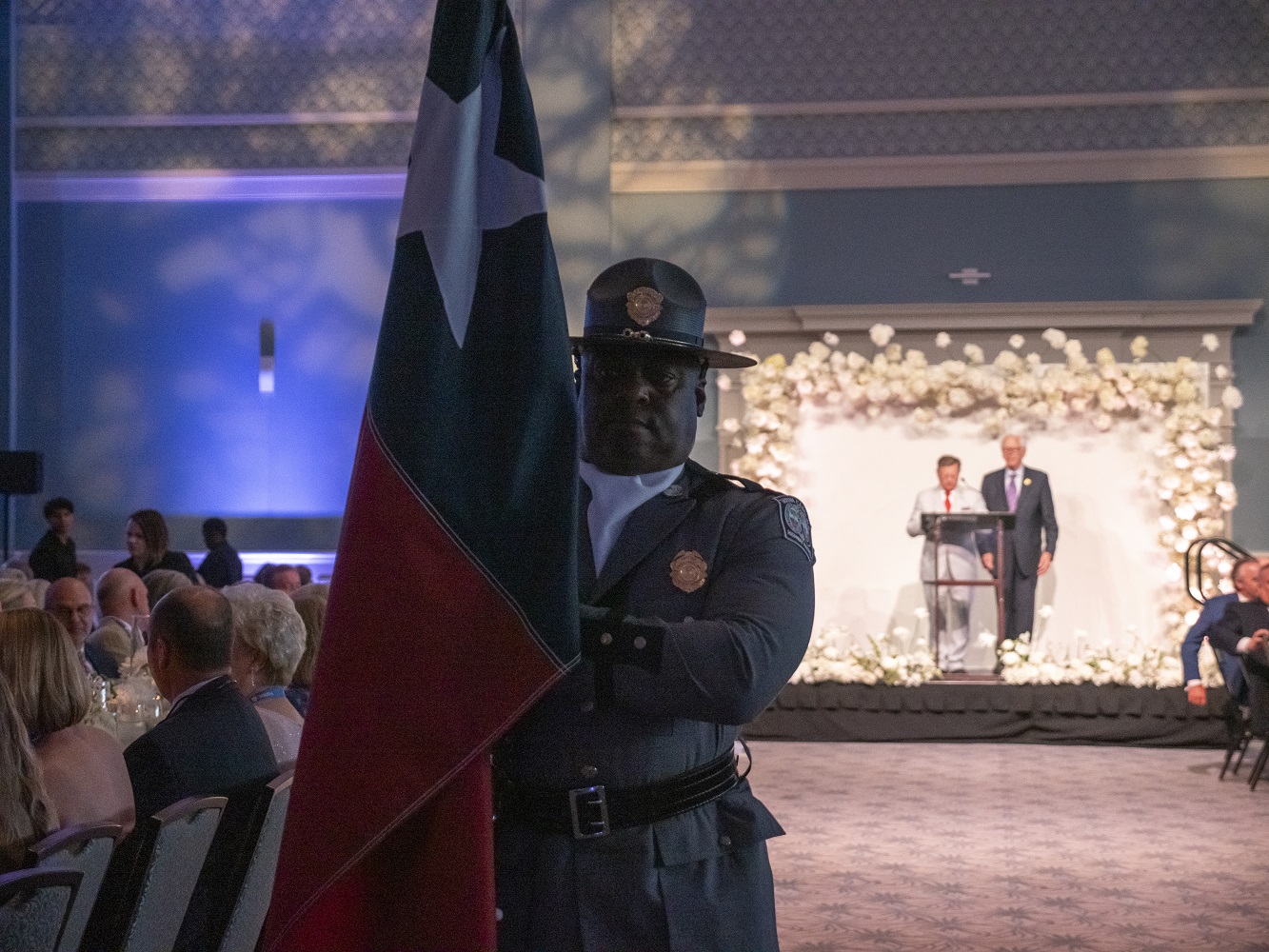
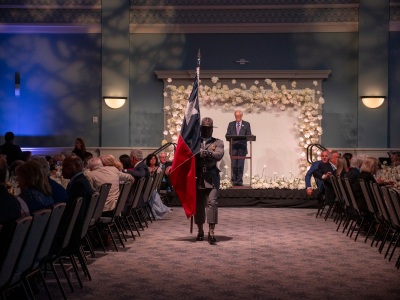
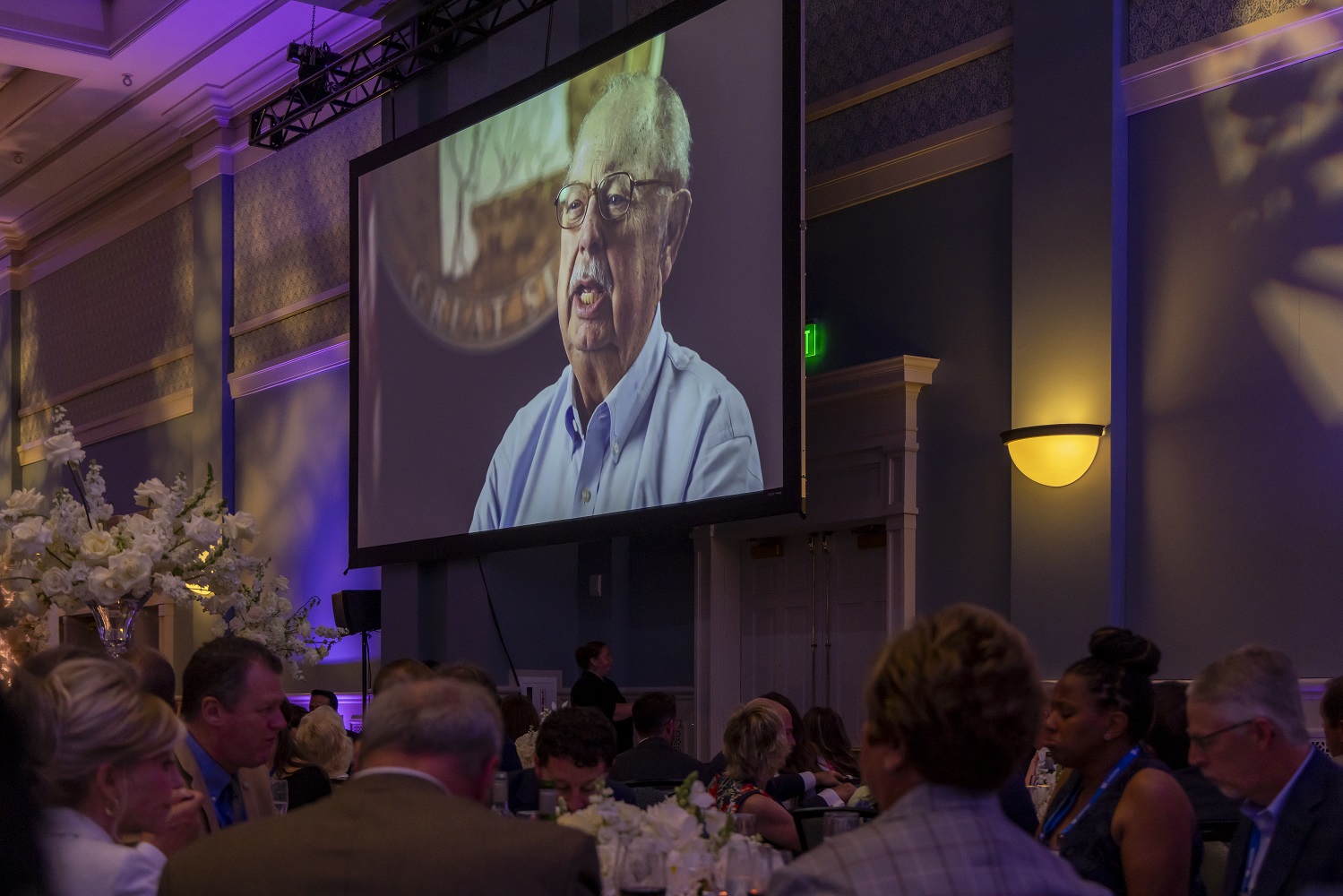
The dinner began with an opening speech from Senator Thomas Alexander, President of the South Carolina Senate. He thanked everyone in attendance, welcomed us to the beautiful venue, and discussed the plans for the evening, which included an invocation by Senator Jackson and the presentation of colors by the South Carolina Highway Patrol.
One of the louder traditions of the event is the annual Flag Parade, which involves recognition of each state in the southern delegation (15 states), a fun fact or two about each state, and members of that state’s delegation walking (or parading) around the dinner event, often to cheers.
In Texas’s case, there were also some boos, initiated by some unruly Oklahomans (I know, that’s redundant).
The states were introduced in order of their entrance to the Union, which put Oklahoma last. In fact, Oklahoma isn’t really a southern state, but the Midwestern Legislative Council didn’t want them, and the Southern delegation, being hospitable, begrudgingly accepted them as long as they promised to pay their dues on time.
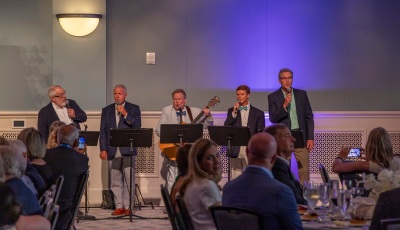
About the time we received our dinner–a wonderful mix of steak, hashed potatoes, broccolini, and a crab salad–we were also introduced to “Kingdom Come,” an A Capella musical group who performed a delightful and interesting mix of music: “Seven Bridges Road,” “The Longest Time,” “Danny Boy,” “Down to the River to Pray,” and “Grand Old Flag.”
We also had a chance to converse with those at our tables, which incoluded lobbyists, lawyers, and elected officials. Since we all wish to do some combination of politics and law, this was fortuitous seating.
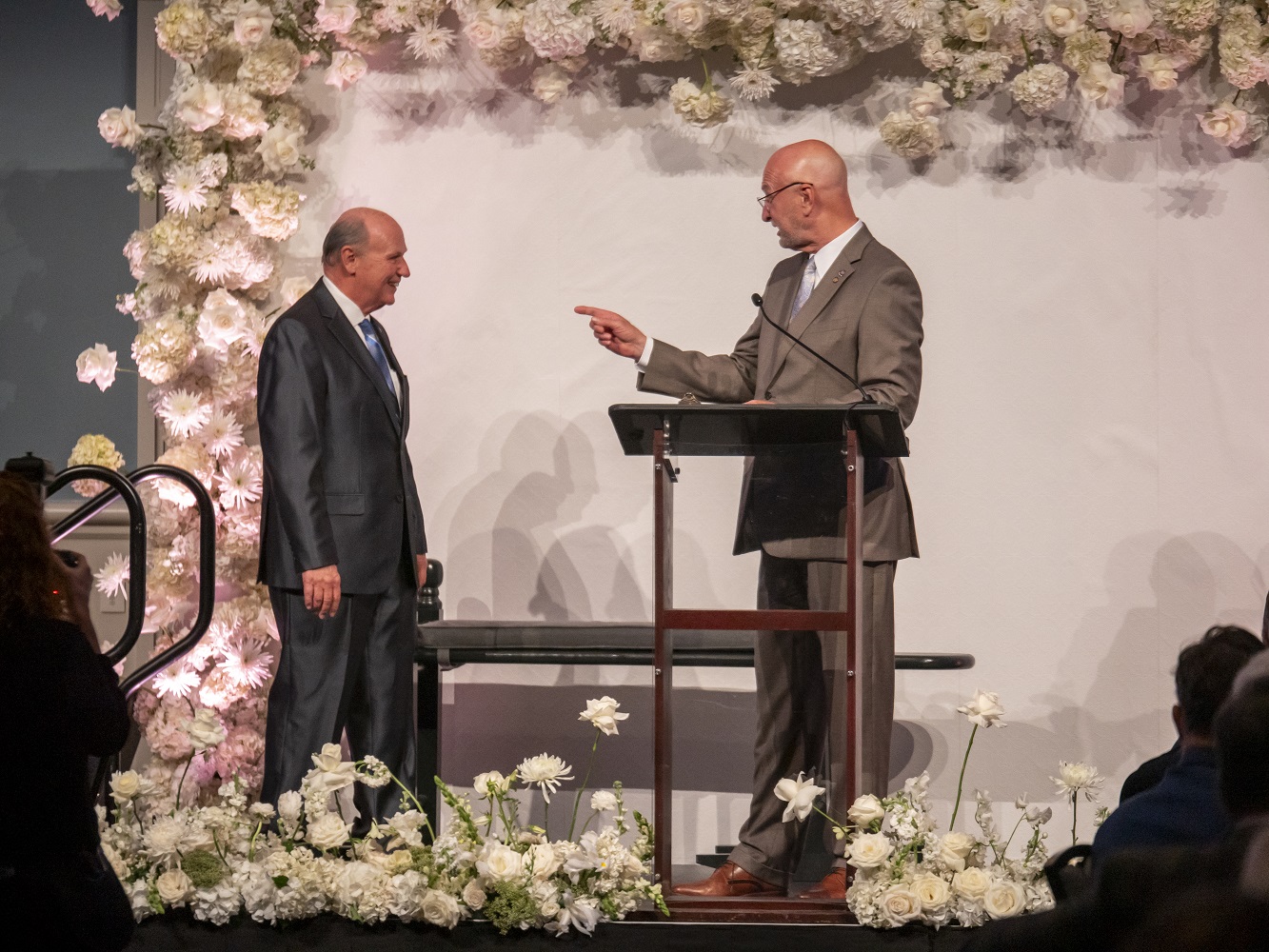
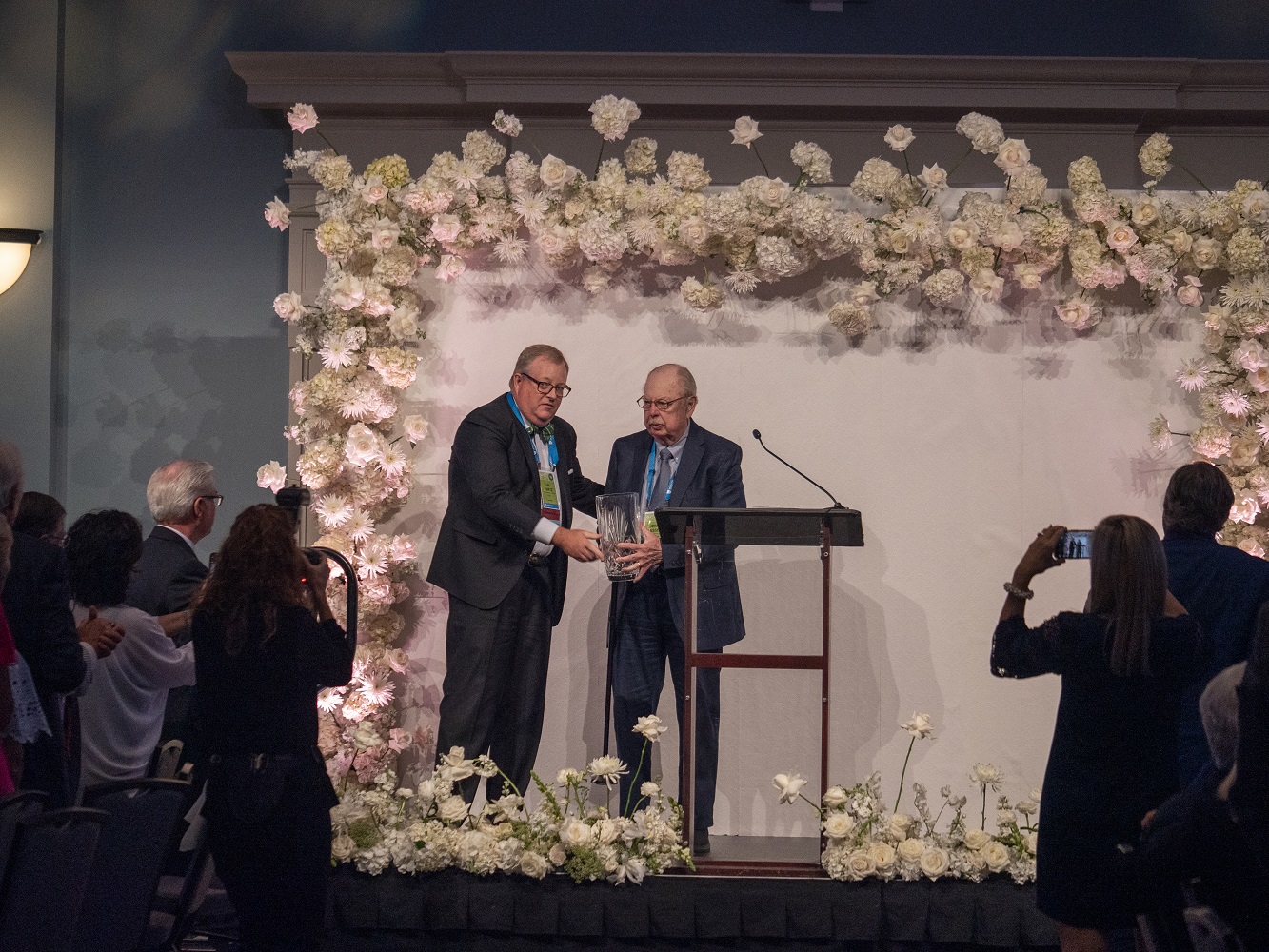
The SLC also uses this occasion to award those who have excelled in some way, and it was inspiring to see who was awarded during the 77th conference gathering.
Our dinner came to an end after the last award was presented, but the entertainment was just getting started.
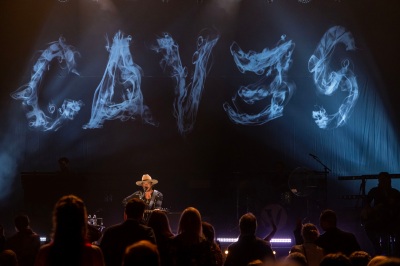
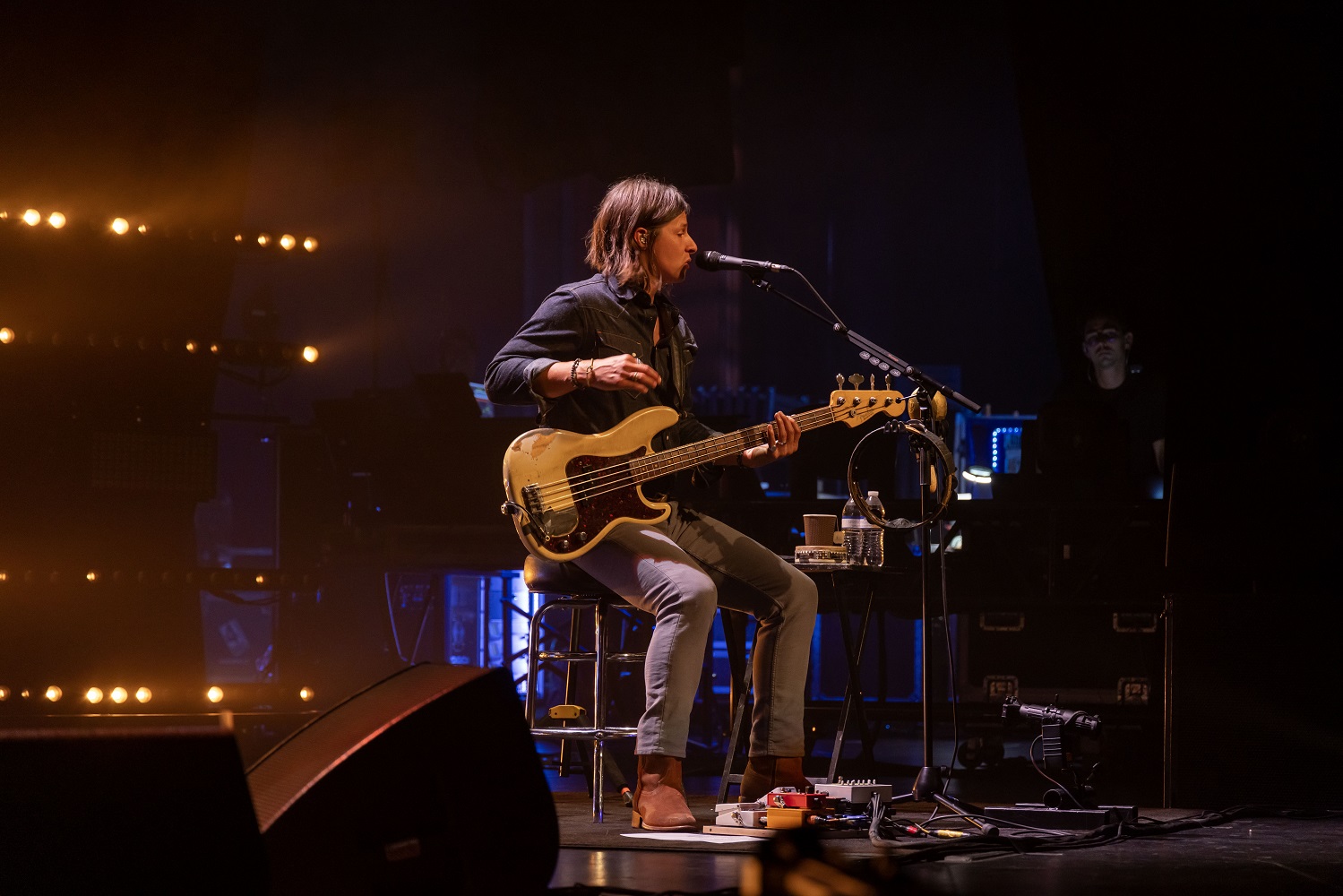
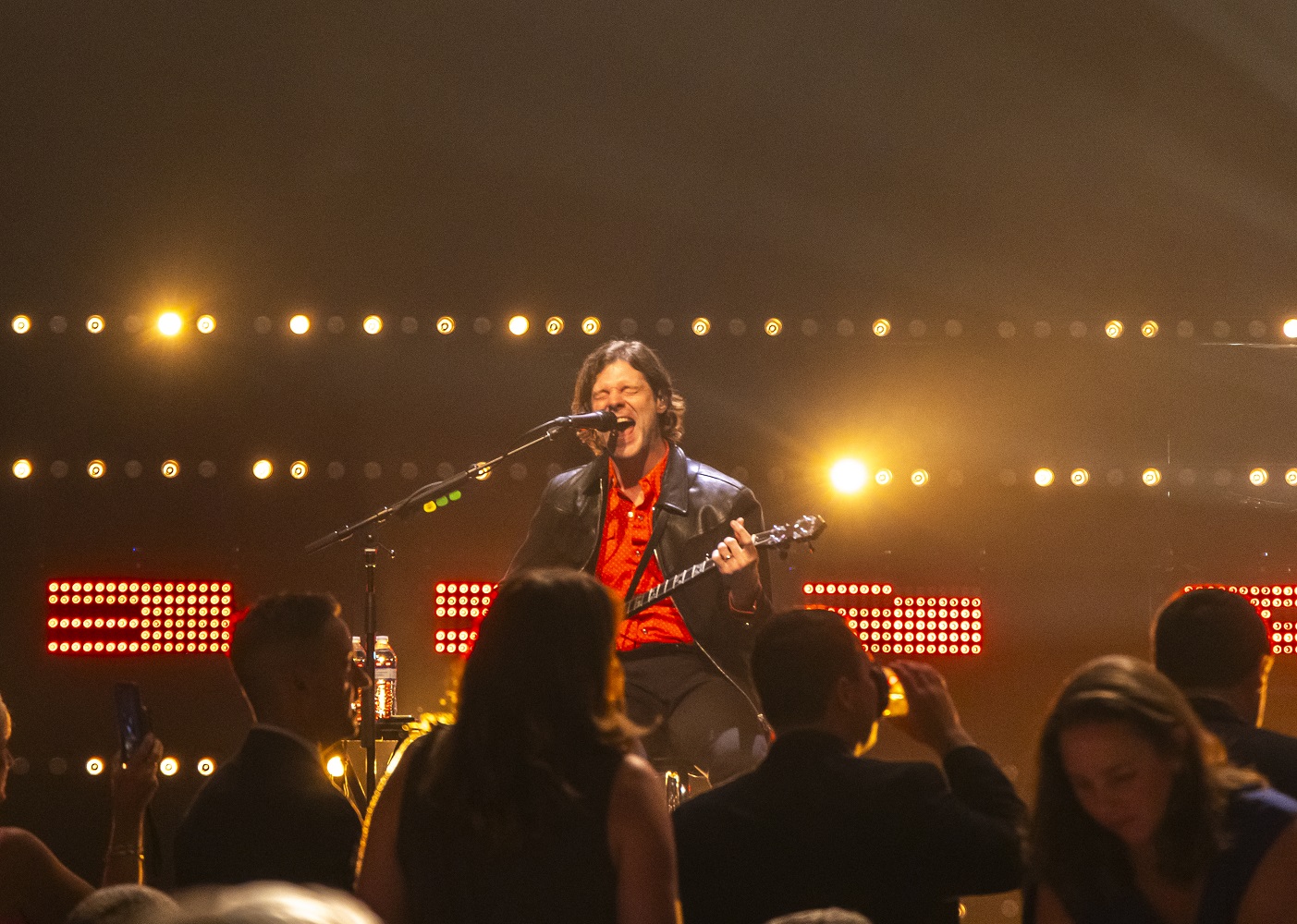
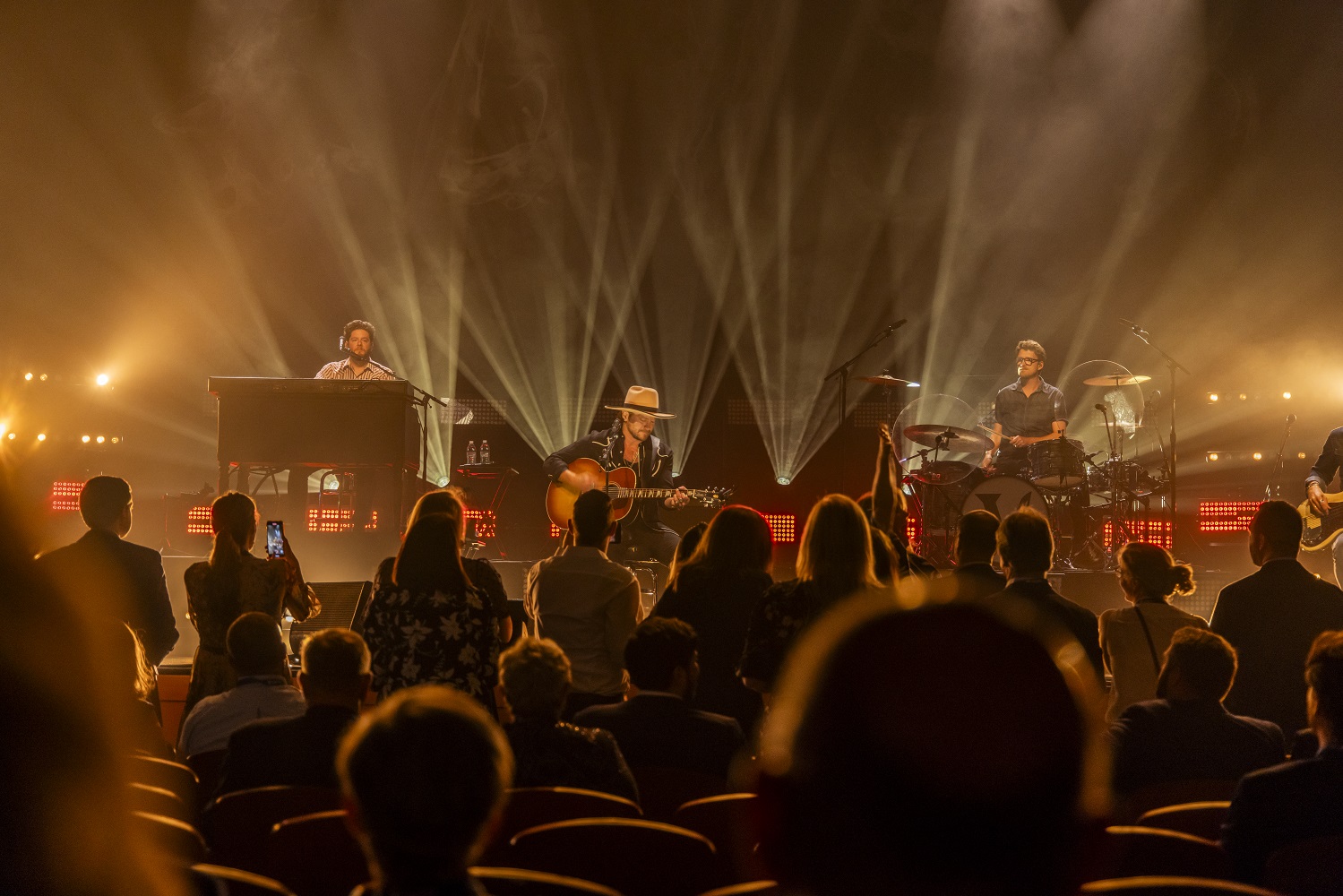
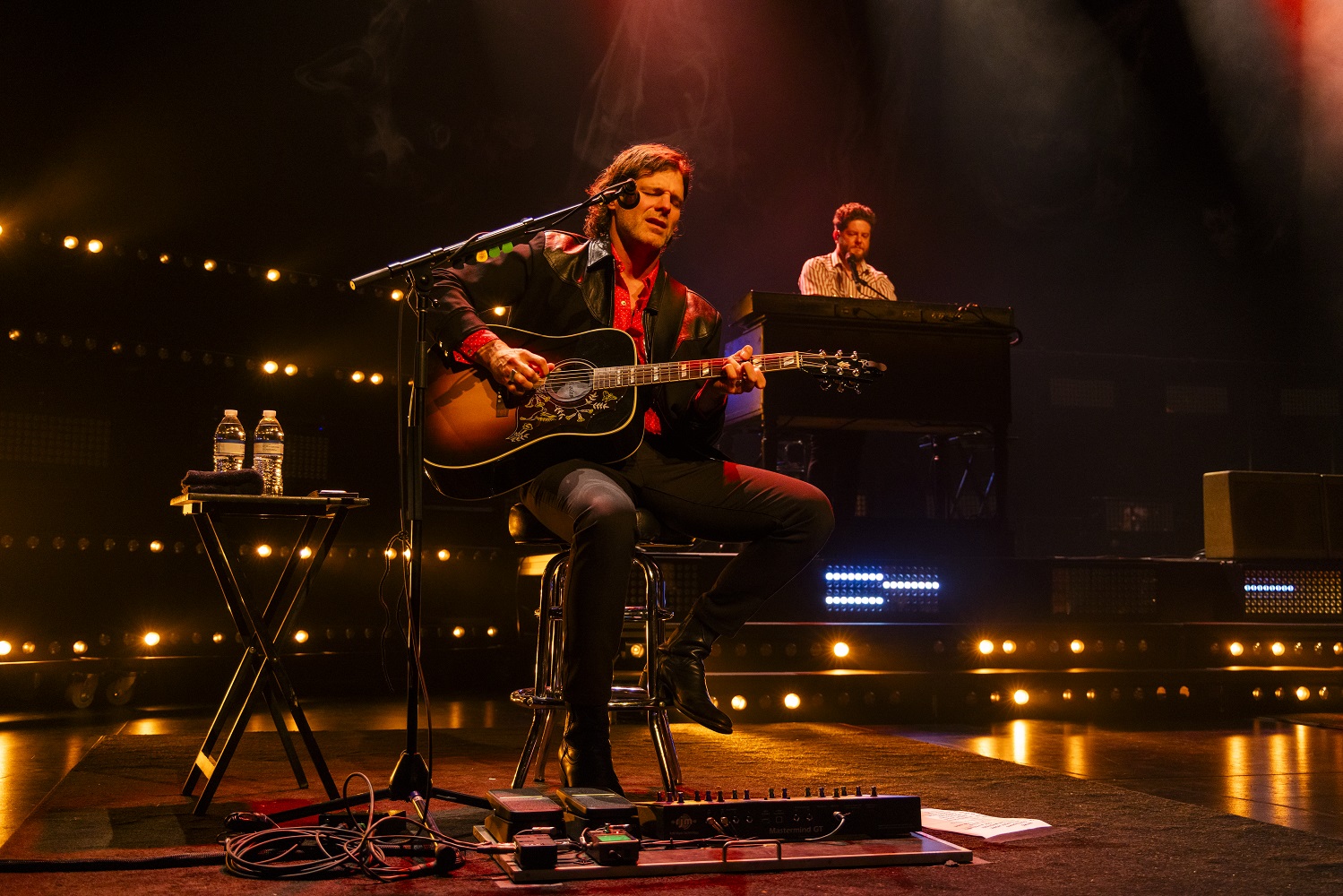
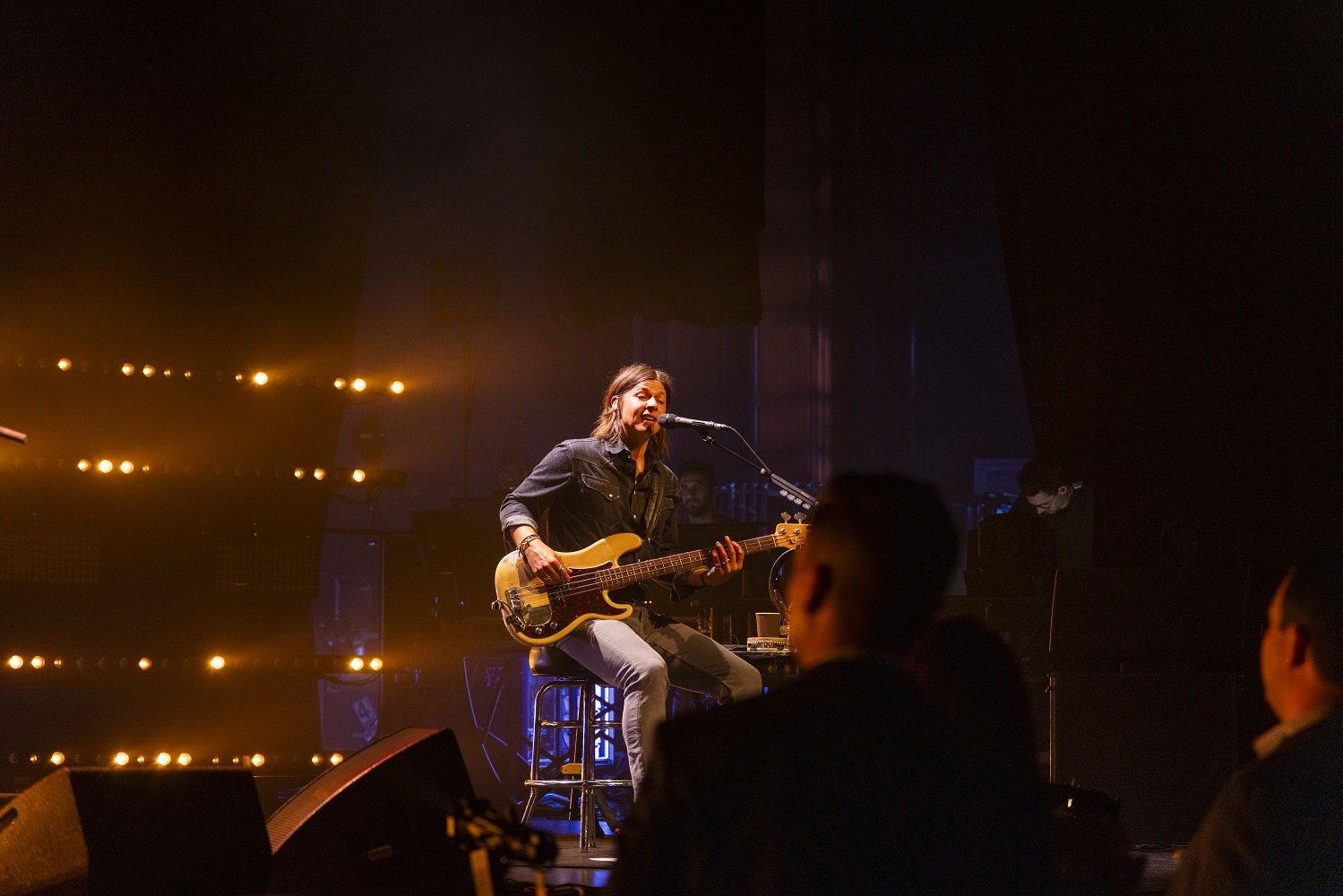
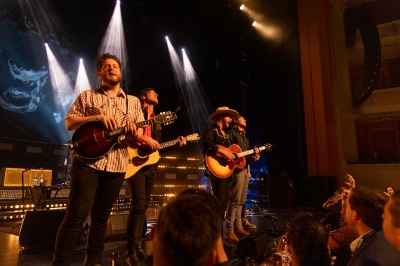
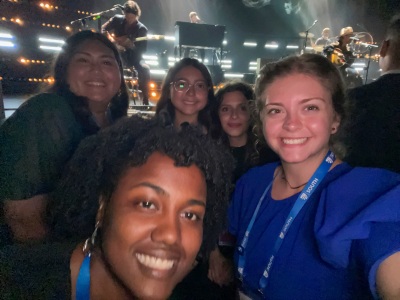
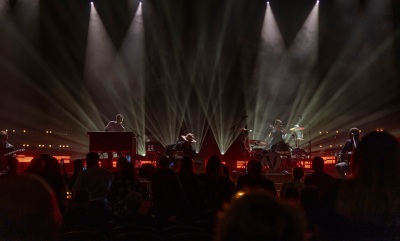
The last surprise prepared for the evening was a concert performed by the band NEEDTOBREATHE. The band opened their performance with the song “The Outsiders,” a country rock tune that got everyone on their feet.
The band performed some of their most famous hits, including one of my personal favorites, “West Texas Wind.”
To bring the evening full circle, they performed their last two songs A Capella, which added a very personal touch to the evening.
The state dinner was a beautiful way to spend our last night in the City of Charleston, an unforgettable city full of southern hospitality, great food, and entertainment.
After dancing and singing our hearts out, we successfully completed the 77th Southern Legislative Conference!
As we learned two days ago through our conference programs, tourism plays a huge role in Charleston’s economy, and SLC does a great job of incorporating tours into the sessions offered through the conference. With my love for architecture, and Ingrid’s considerable interest in flora, there seemed no better activity for us than the Houses and Gardens Tour!
Our guide, Mimi, was an expert on the homes on the tour as well as local history.
Interesting tidbits of Charleston:
Charleston has a history of destructive fires. Following the first fire of 1730, a city ordinance was passed stating that all kitchens must be separate from the main house. Luckily for 21st century Charlestonians, this is no longer the case. Of these fires, arguably the worst was in the Ansonborough fire of 1838, which laid waste to many houses and buildings. Consequently, many of the existing homes in Charleston were built in 1840 or after.
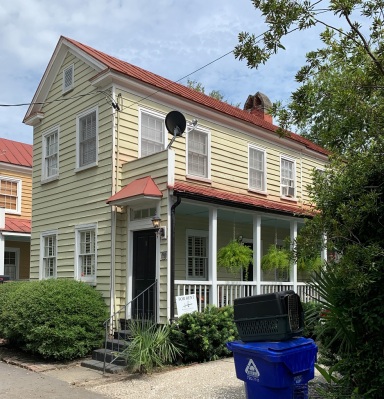
These homes largely come in two styles: single house or double house. A single house design is a structure that is only as wide as one room and extends towards the back of the property.
A double house design is the same idea, but it is two-rooms wide.
Despite the fires, the structures built following the last major fire have largely been preserved. The major reason for this is that Charleston was the first city in America to pass a historic zoning ordinance to preserve the historic downtown that we saw today.
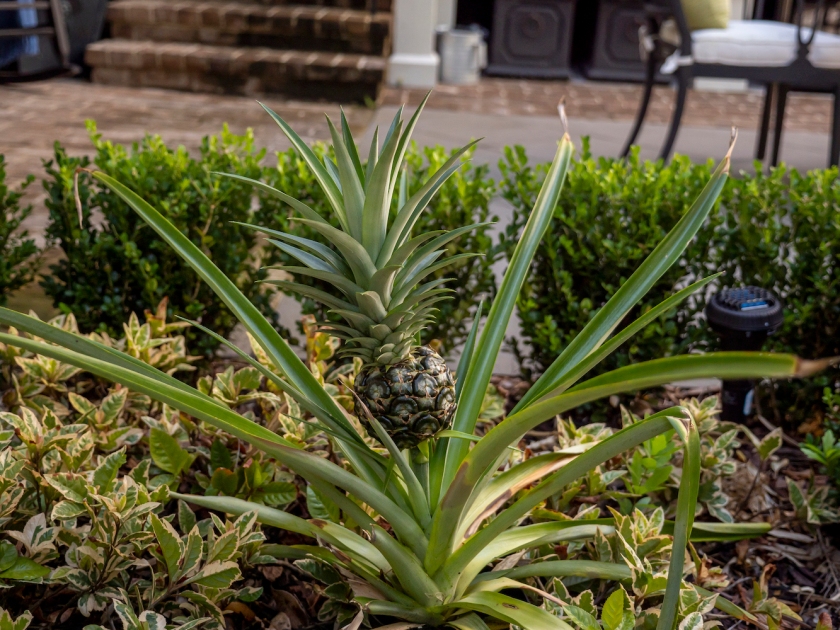
One thing we soon noticed in the homes–and on a notable fountain in the city–is the prevalence of pineapples. These items were considered exotic, coming from the Caribbean and even more distant lands, so when captains would return from their journeys, they would often place pineapples outside of their home, to symbolize a safe return. These also could represent a message of “I’m back,” a sort-of invitation to visit. And grocers, of course, would put out pineapples as a message of having received a new shipment of items–again, suggesting that people “come on in.” Thus, they stand for hospitality and are often associated with wealth.
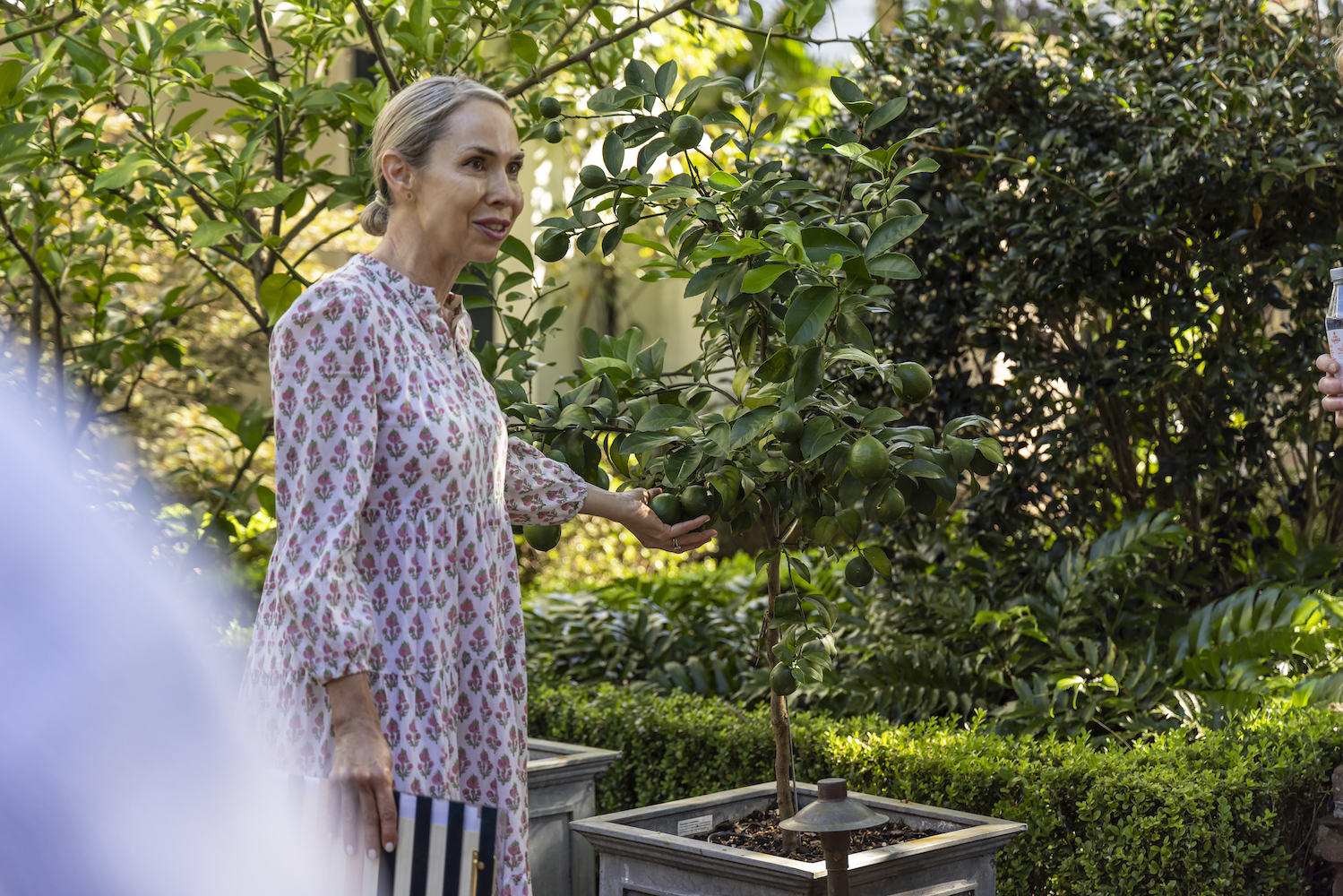
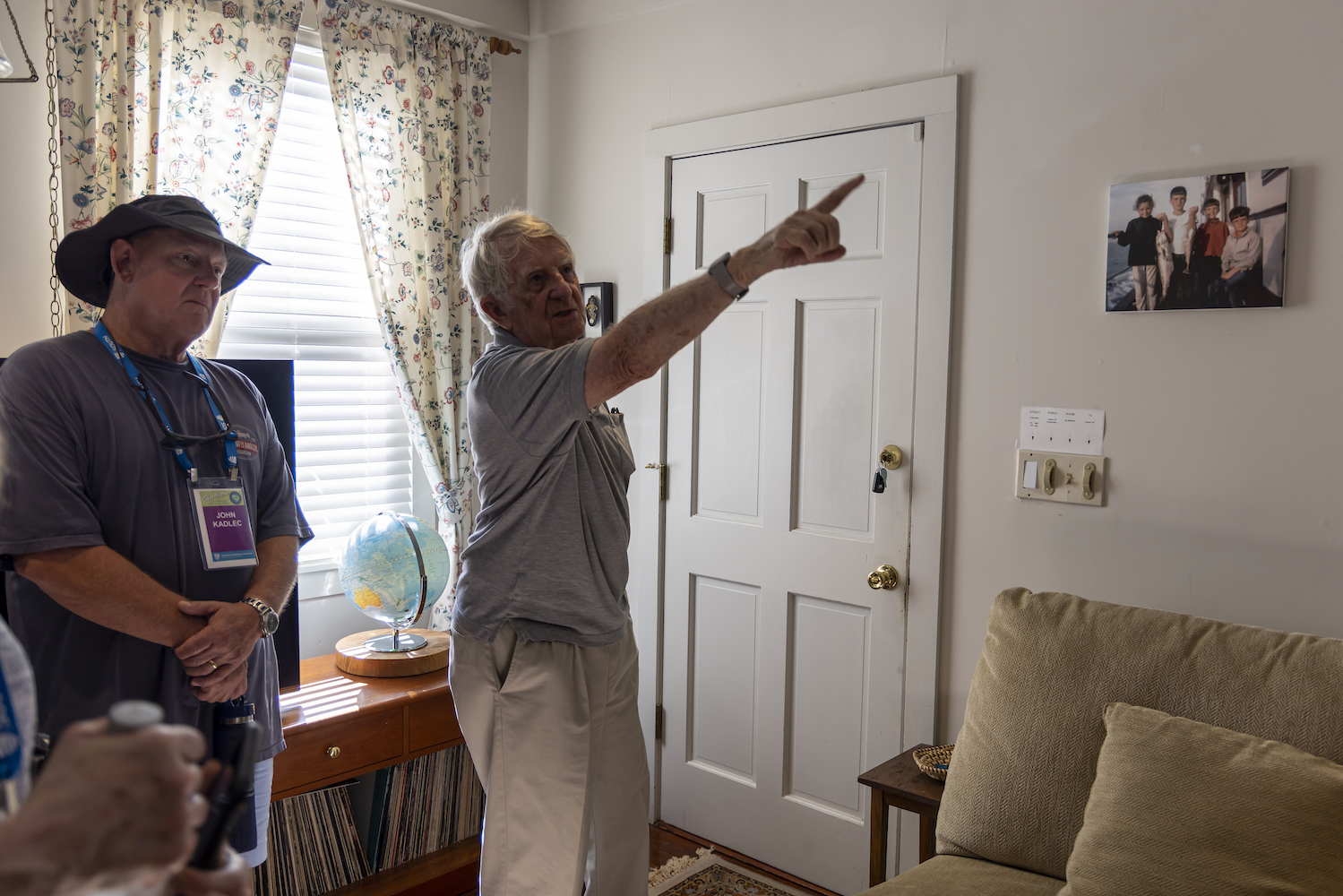
We visited many houses, in some cases having the opportunity to meet the owners. In all cases, we learned more about the houses, the architecture, and the history. One of our favorite was on Anson Street, where we saw a beautiful home and landscaping (by Sheila Wertimer), along with a personal tour by the owners, Barrie and Noah.
A good example of the Charleston Single was in “Goldsmith Row,” where we had a chance to see a home that was only twelve-feet wide and still beautiful!
In all our stops, the owners were extraordinarily generous. It takes a lot of civic spirit to welcome strangers into your home!
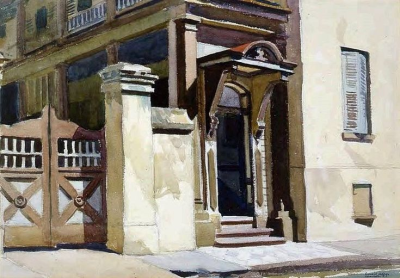
One highlight was to see a house that was featured in an Edward Hopper painting! In 1929, Hopper painted the entrance to a home on Society Street, titling the painting, “Charleston Doorway.”
This excursion was fantastic, and we were able to immerse ourselves in the lavish gardens and history of some of Charleston’s aesthetically pleasing historic homes.
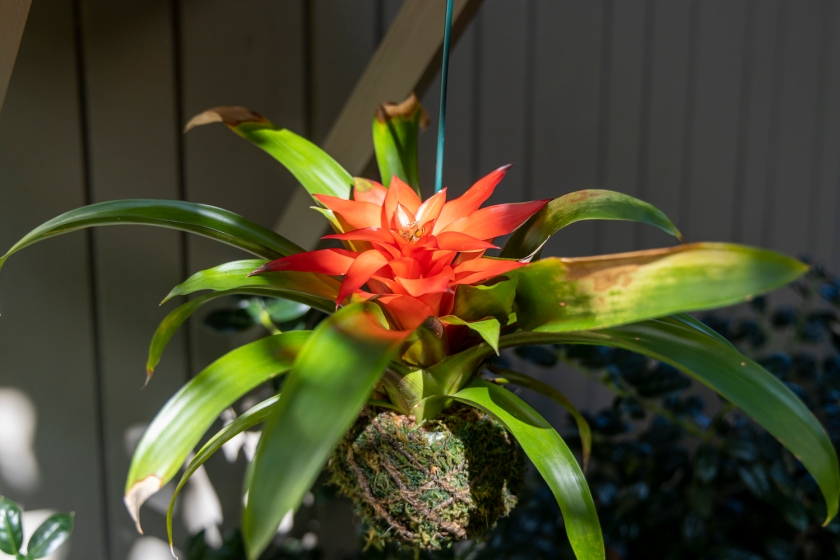
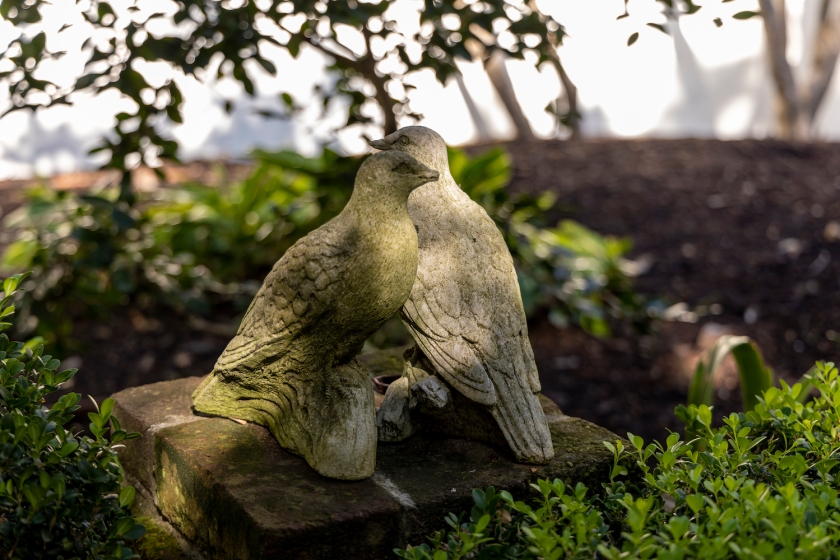
Here are a few more shots of the lush gardens!
Giddy Up! A Historic Carriage Tour Through Charleston
By Ingrid Cuero
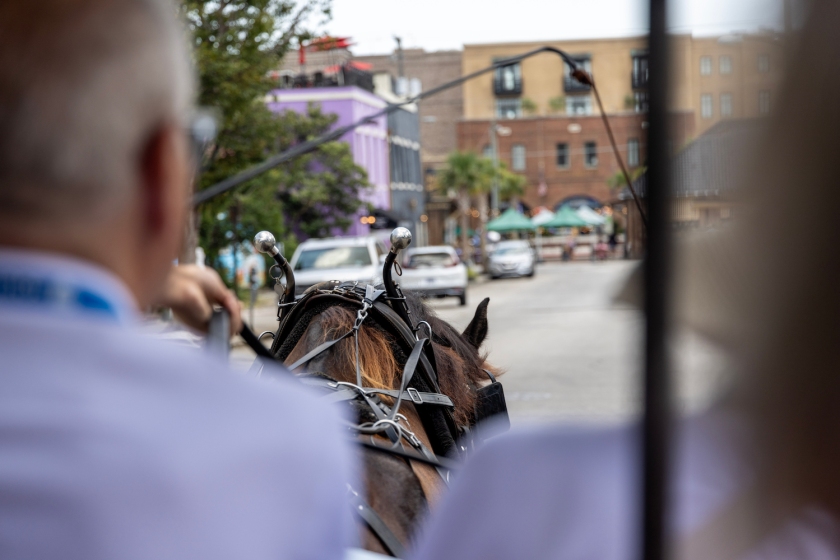
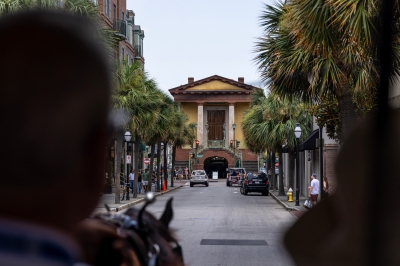
Later on in the day, Morgan and I took a step into the century’s past to ride in a horse-drawn carriage. Old South Carriage Company conducts a pleasant tour through historic Charleston, priding themselves on providing a tour with “southern hospitality”. While waiting for our horse, we spotted a fellow bearkat: Professor Weikle, who teaches in SHSU’s Communications department. It was so nice to see her by way of this wonderful coincidence!
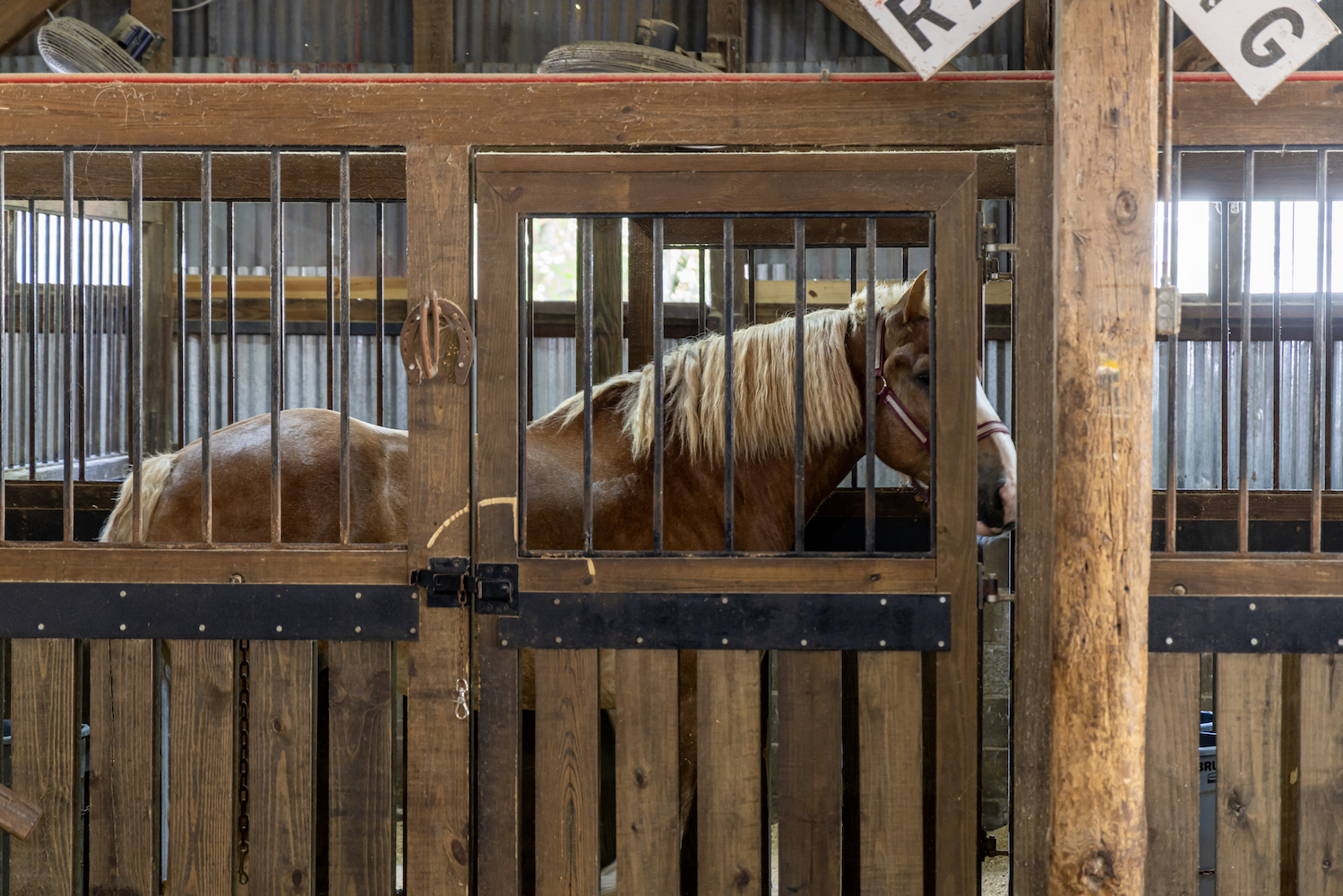
Ashley, our tour guide, introduced us to our steed, Elwood. Supposedly, he has a character of his own; traveling his own route as he sees fit.
Giddying up, we were off to begin our day!
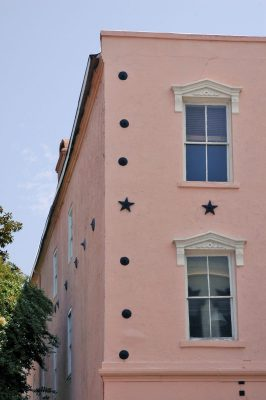
The tour guide shared many fun facts about Charleston; (1) Charleston is the second largest historical district in the world, second only to Rome. (2) because of a big earthquake that took place in 1886, earthquake bolts are built into almost all of the buildings in Charleston;
…and (3) A shopping street called King St. is considered one of the top ten shopping streets in the country. However, it wasn’t always this way. The Civil War devastated the Charleston economy, and it wasn’t until the 1950’s that the area was revitalized and put Charleston back on the map. Our tour guide humorously noted that this is the only street she had seen in which a Louis Vuitton, Gucci, and a Target are all on the same street!
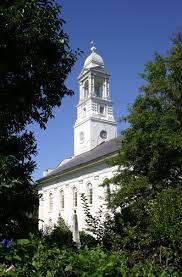
We also drove past St. John’s Lutheran Church, adding to our continued understanding of why Charleston is known as “The Holy City”. St. John’s is over 250 years old, making it one of the oldest congregations of the Evangelical Lutheran Church in America.
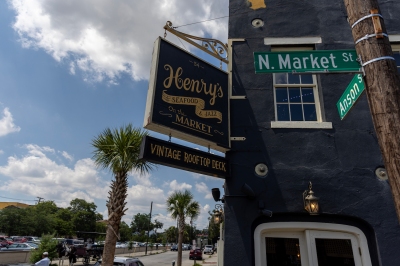
One of my favorite sights, along with its fascinating background, was Henry’s on the Market.
Both a seafood restaurant and a music hall, this eatery is known to be the oldest restaurant in Charleston, opening in 1932. Though Elwood may have been a little tired, attempting to take us back home early on his own accord, Morgan and I thoroughly enjoyed our time strolling through Charleston!
With a lighter day on the Southern Legislative Conference’s Docket, we did a bit of exploring and learning on our own. With us passing the official half-way mark of our trip, we felt a bit of pressure to ensure we are getting the most out of this opportunity, while still having fun.
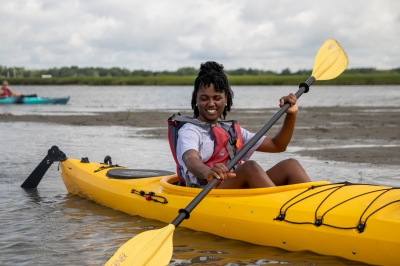
Kayaking the Low Country
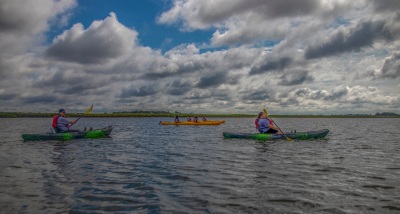
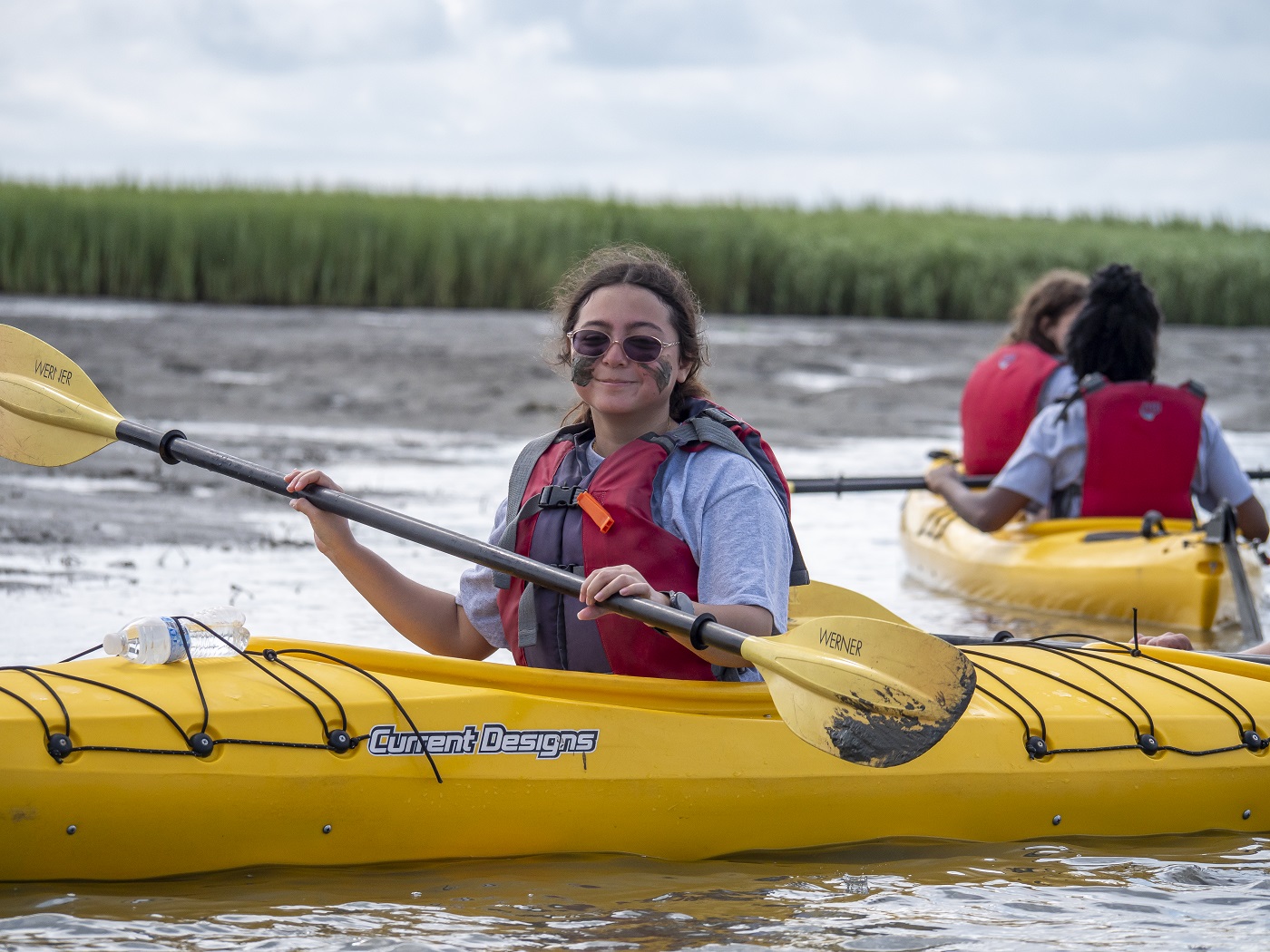
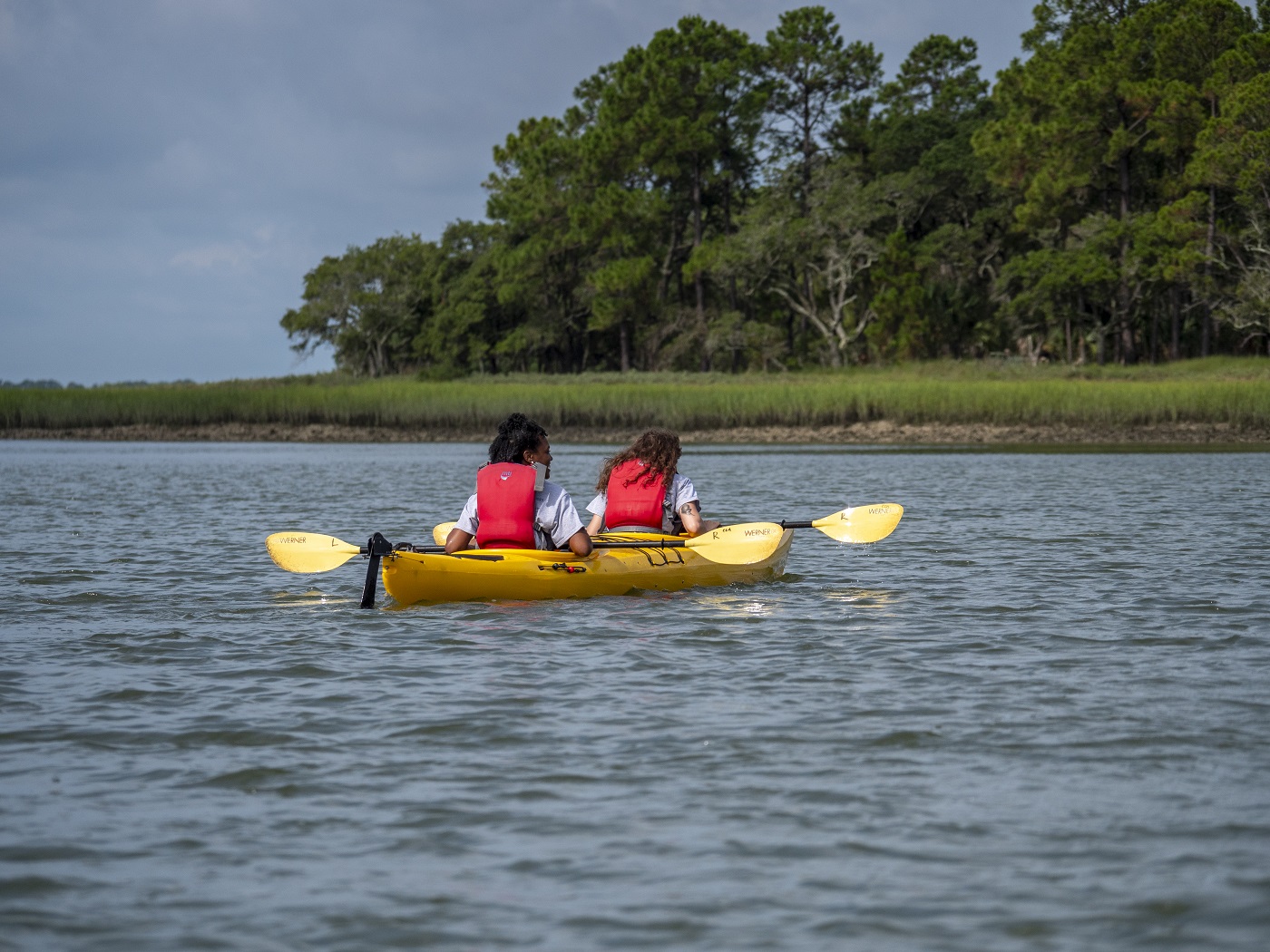
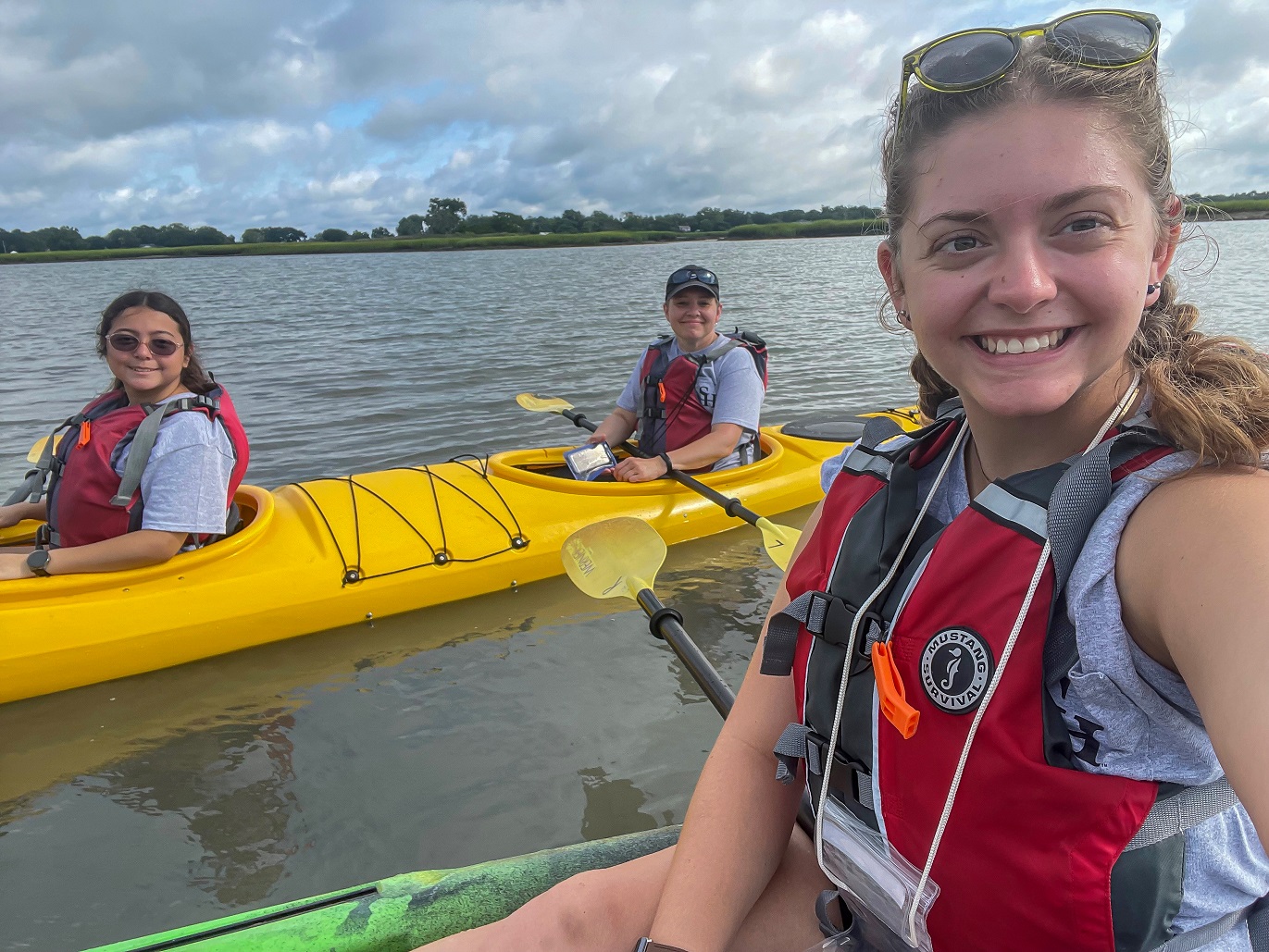
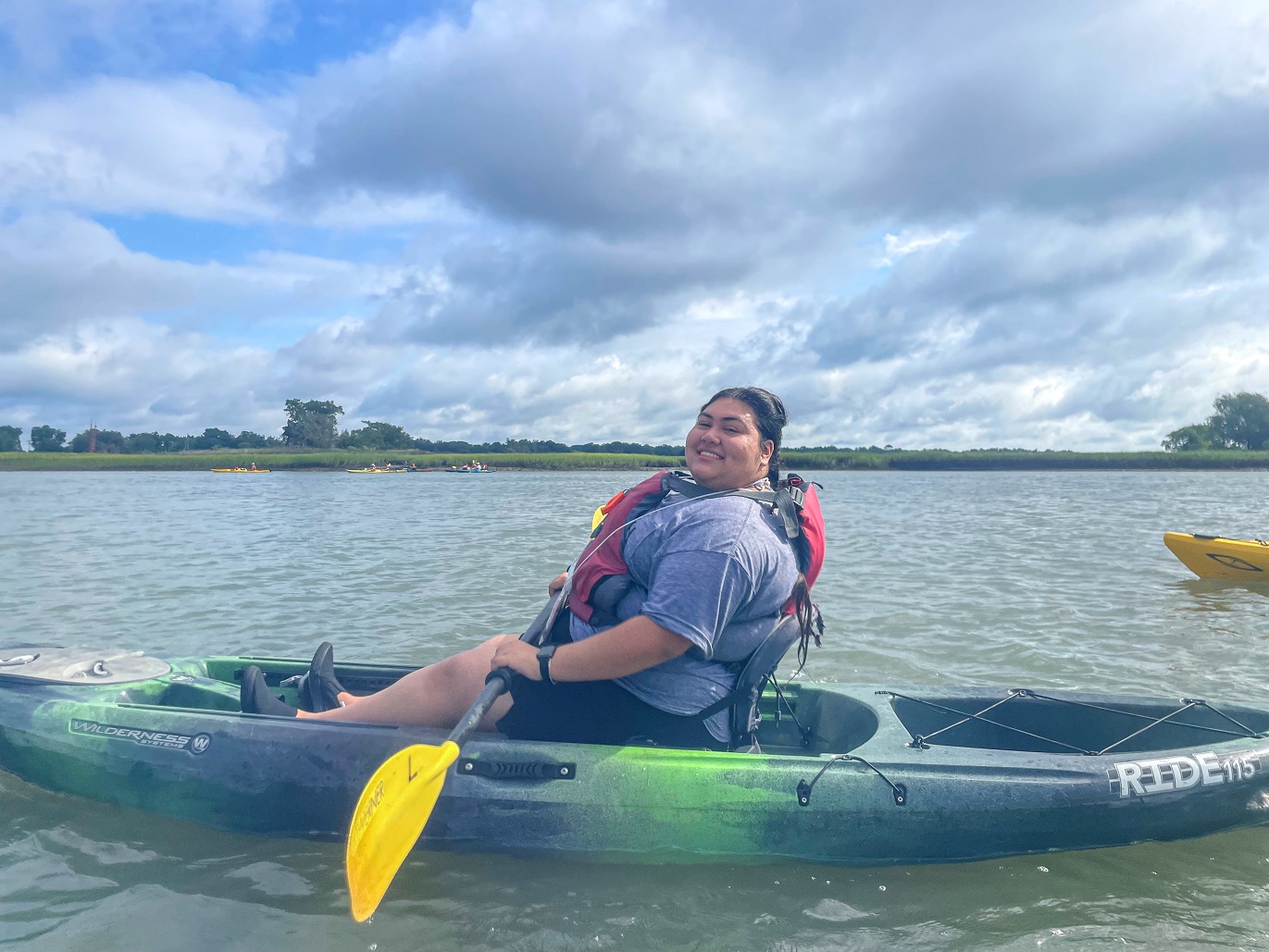
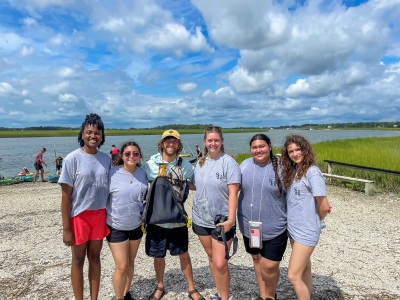
With a day more or less free to explore and spending time on our own dime, we decided to kayak. Feeling empowered, we asserted our independence, noting, “We are women, hear us oar!”
At first, however, the only roar we heard was thunder. Indeed, this was the scene ten minutes prior to our arrival:
Fortunately, it soon cleared up–almost miraculously. Within twenty minutes, the weather cleared, producing a pleasant looking morning.
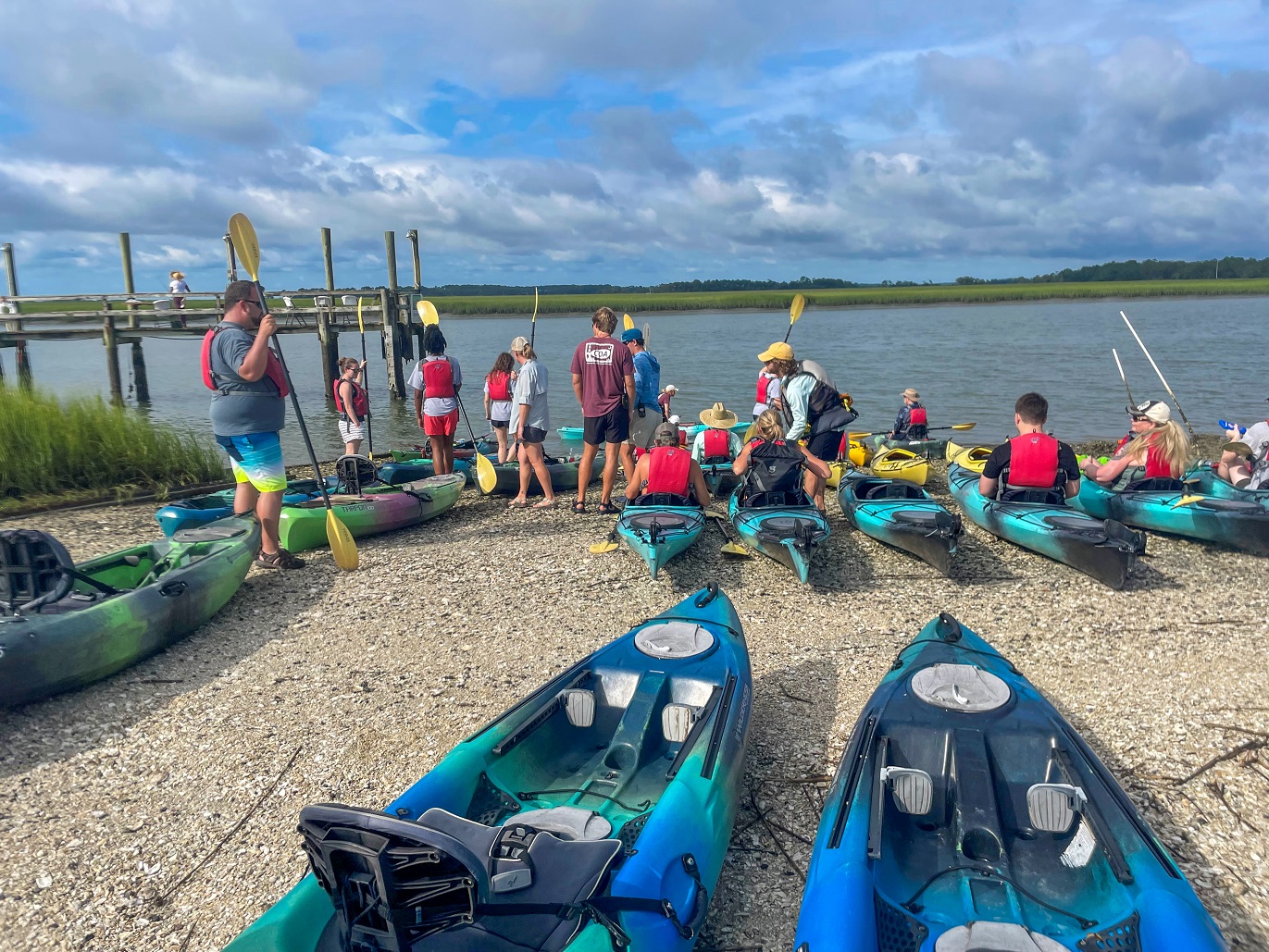
Although this “eco-tour,” as it is described, is educational, it is mostly a fun excursion, designed to get us exercise, learn about the outdoors, and relieve some advisor-induced stress.
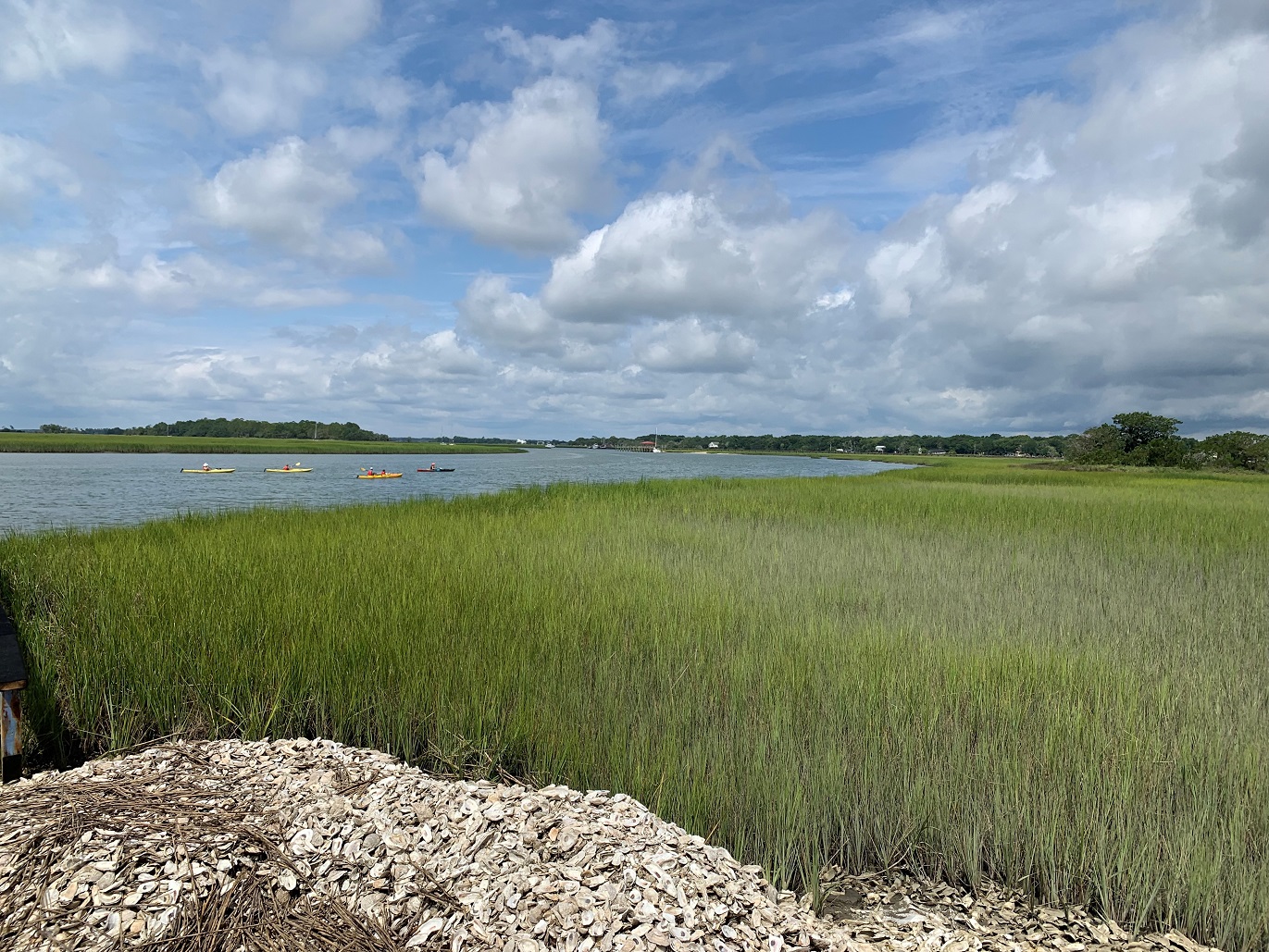
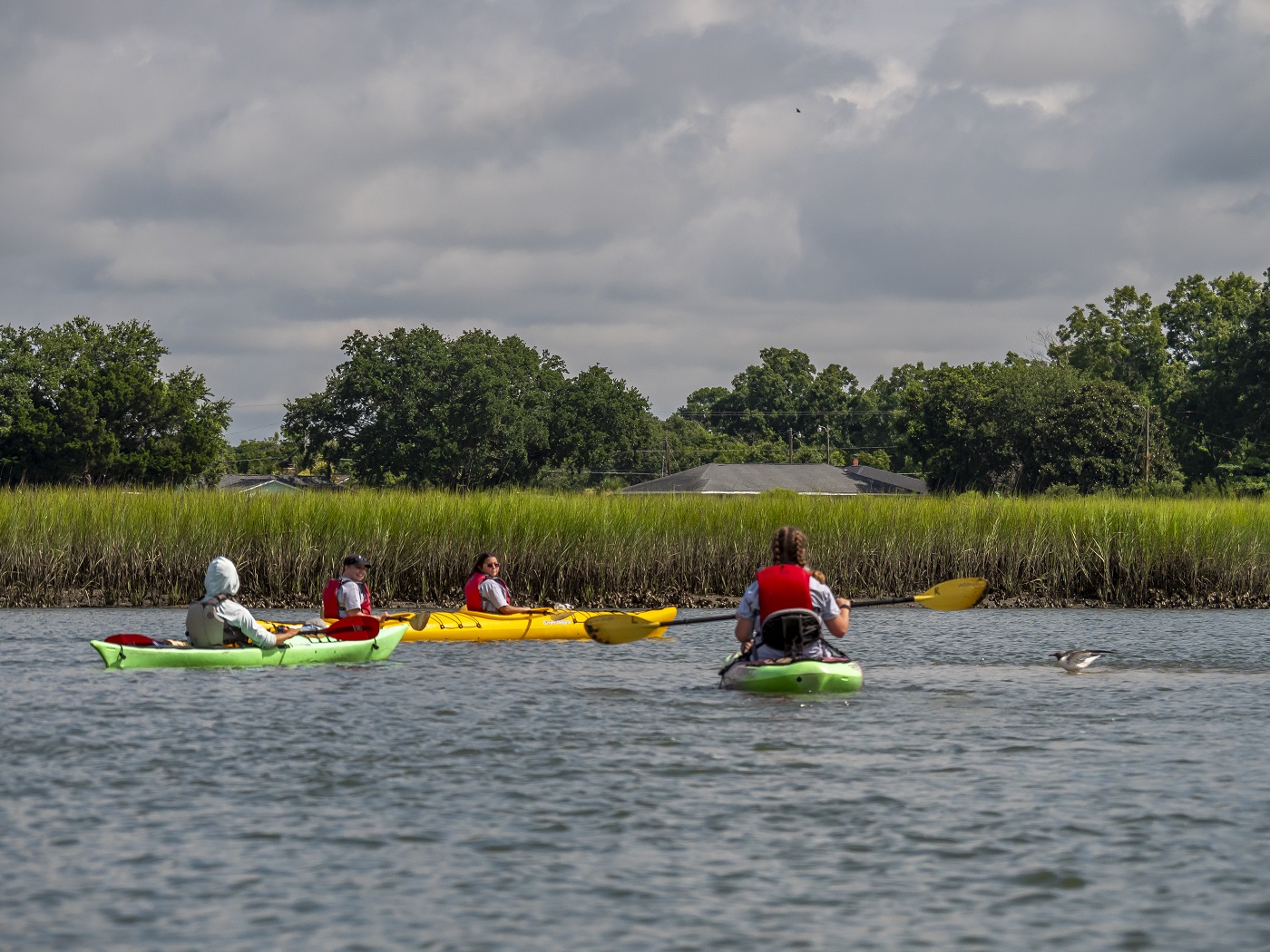
But it was educational. Charleston is one of the South’s key cities in terms of culture and economics. Its barrier islands gave it a protective harbor of sorts, and that, in turn, made it an attractive base for sea-travelers early on in US history. And, today, we felt as though we were continuing in that tradition, navigating these barrier (or, as our guide Daniel referred to them, “hammock”) islands.
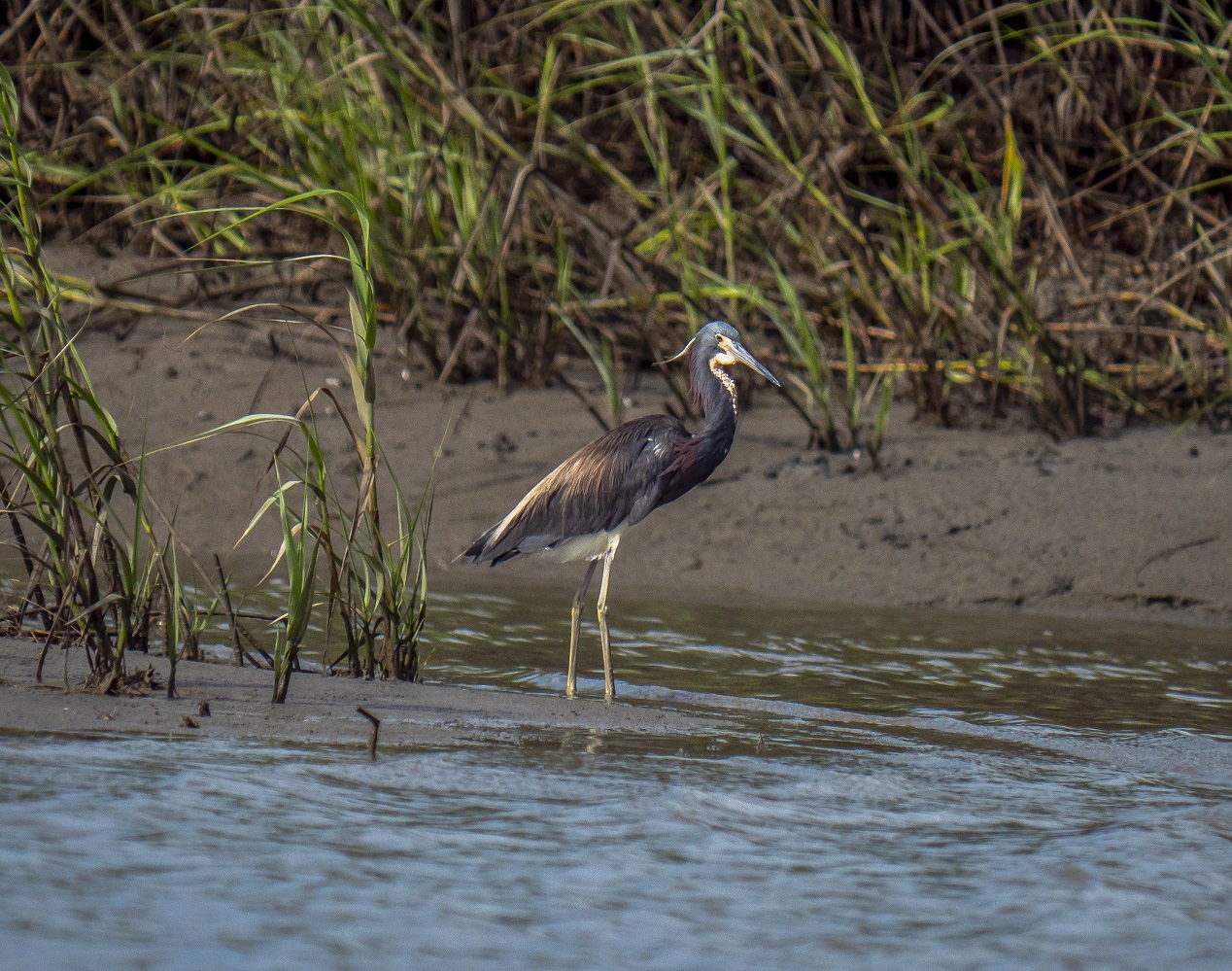
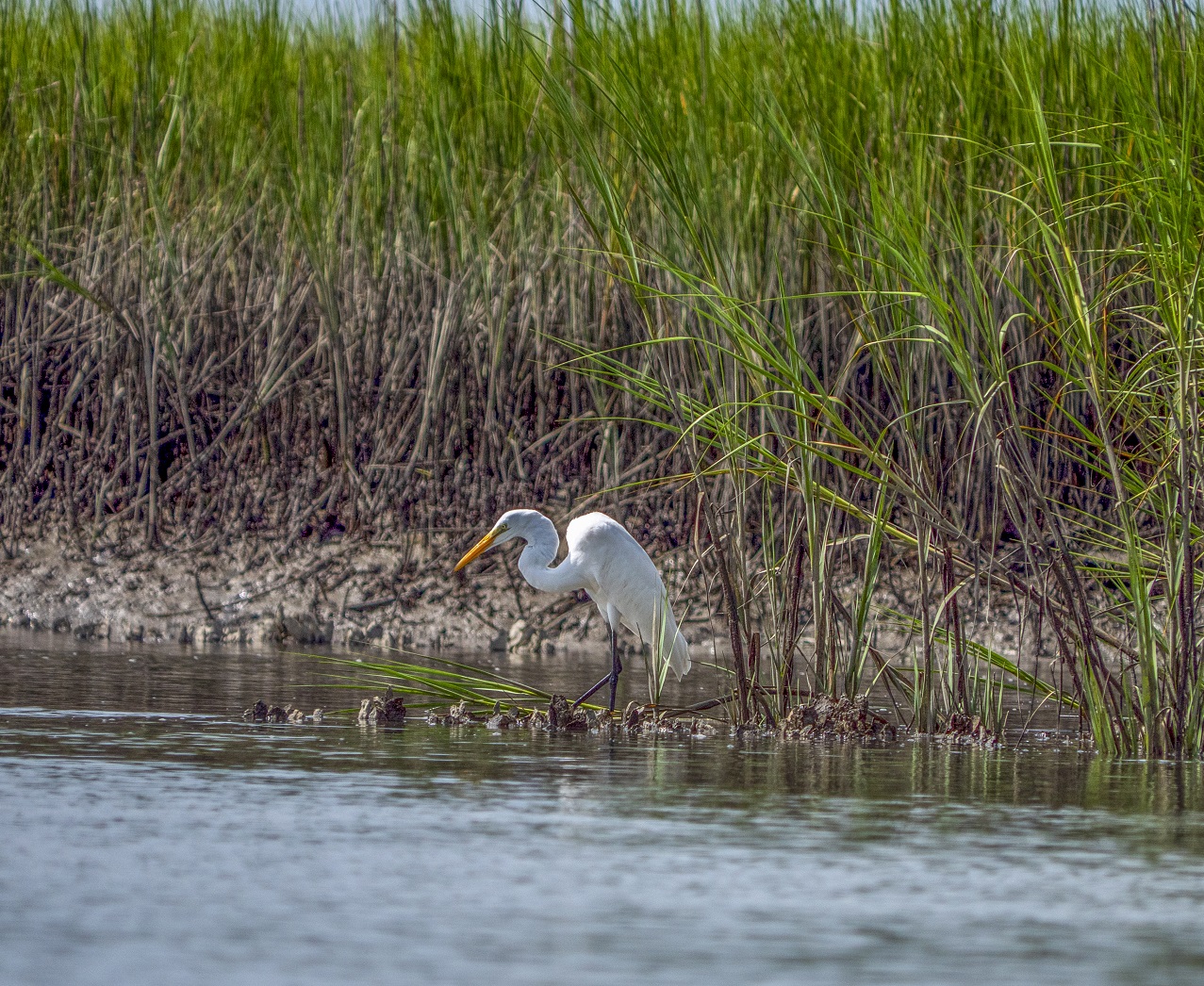
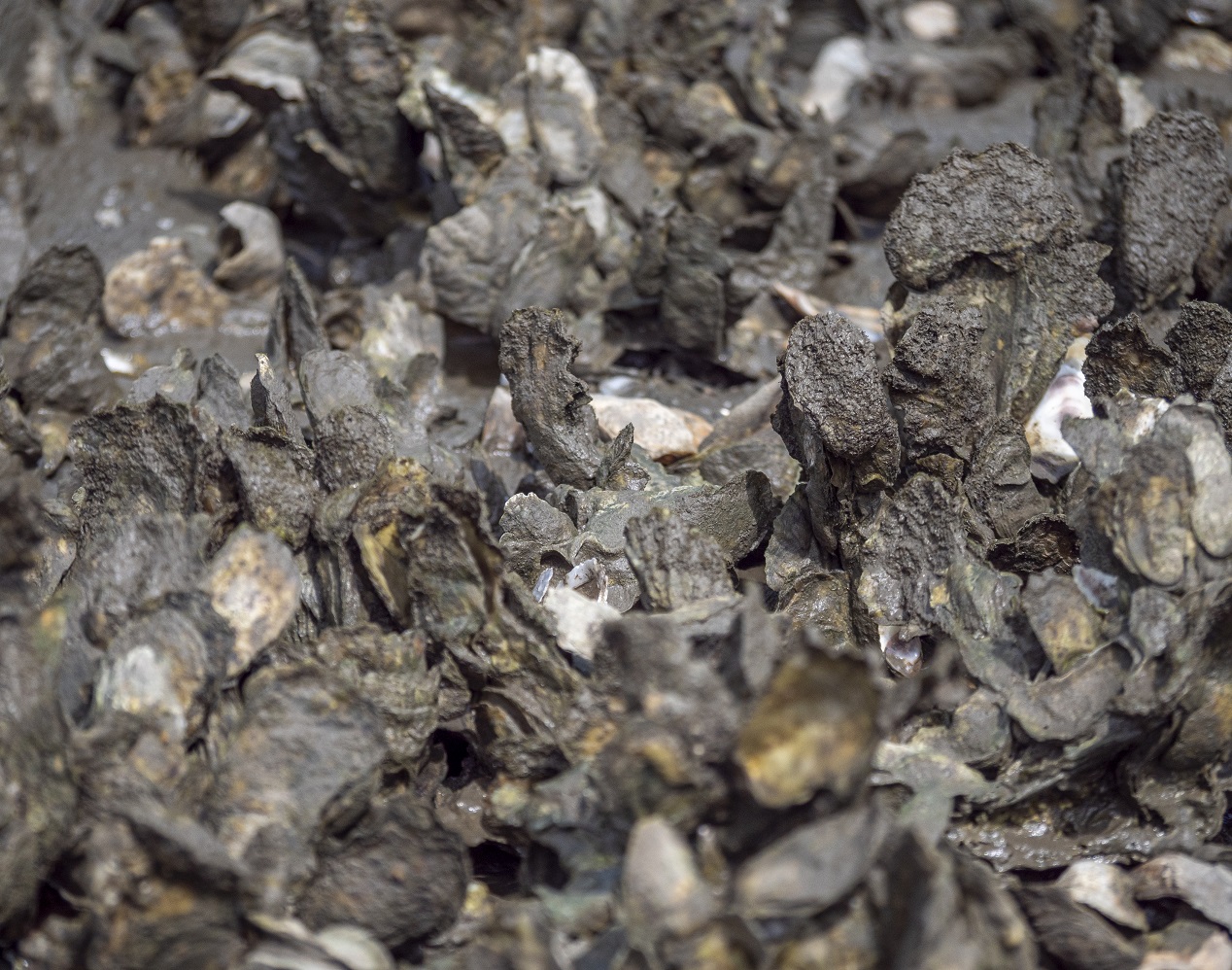
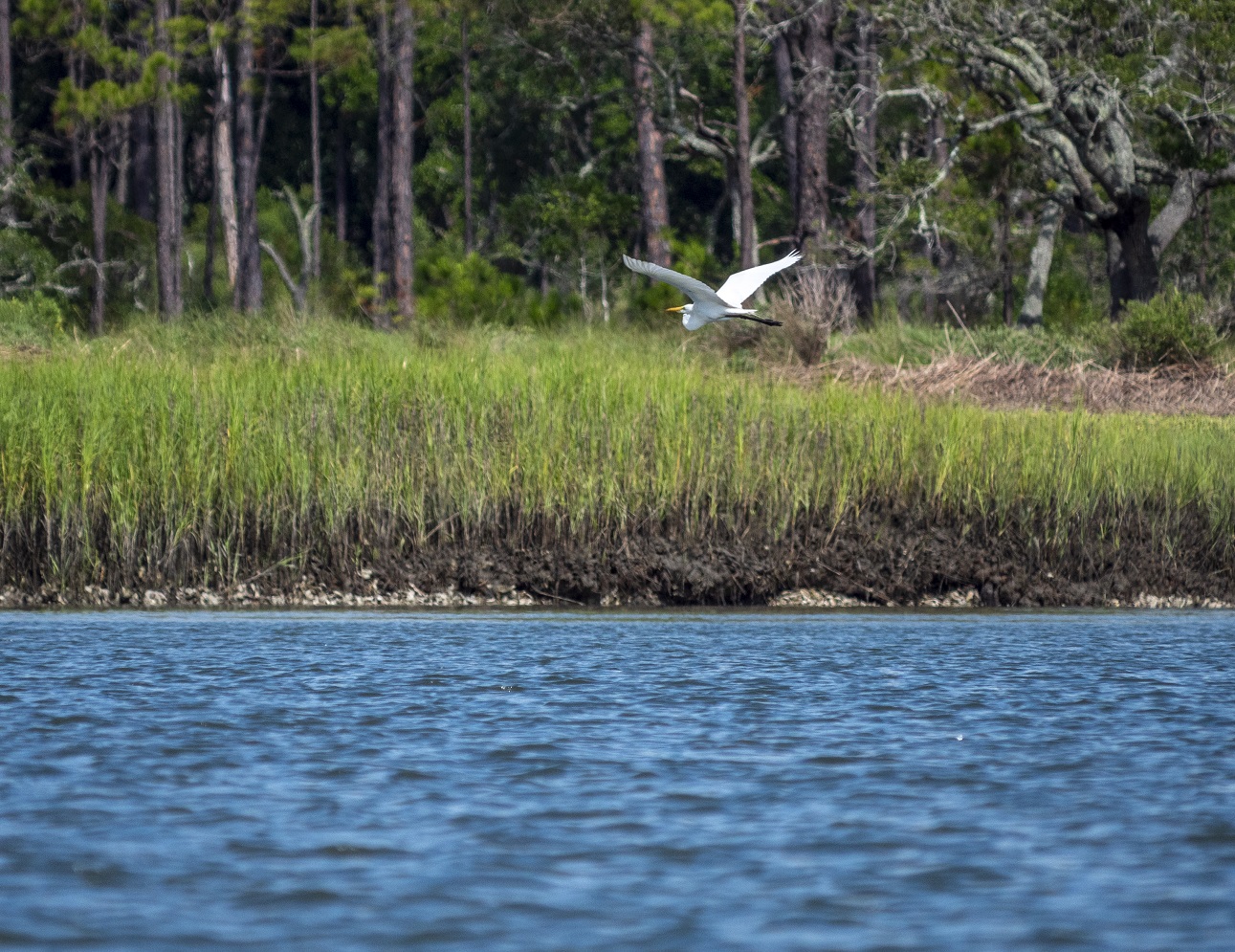
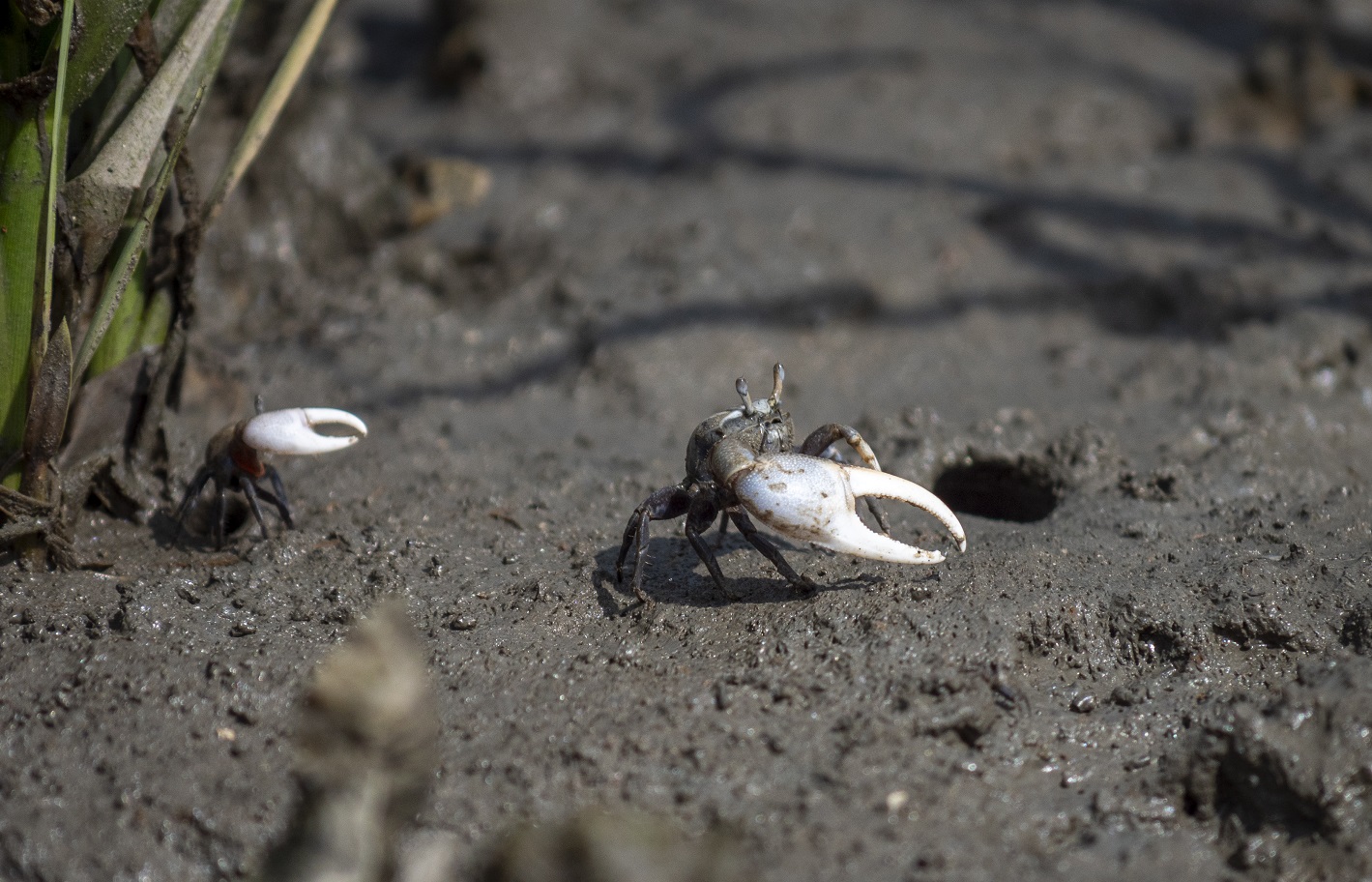
Our paths took us through estuaries, which are waterways mixed with salt and freshwater. The mix, however, is heavy on the salty-side, which on the plus side, means there are no (or at least very few) alligators. (This story had us a bit worried, but we reminded ourselves that it occurred in a freshwater environment). There are, however, many other animals, and we saw herons, egrets, pelicans, blue crabs, many types of gulls, a marsh wren, a woodstork, oyster beds, and the curious fiddler crabs (everywhere).
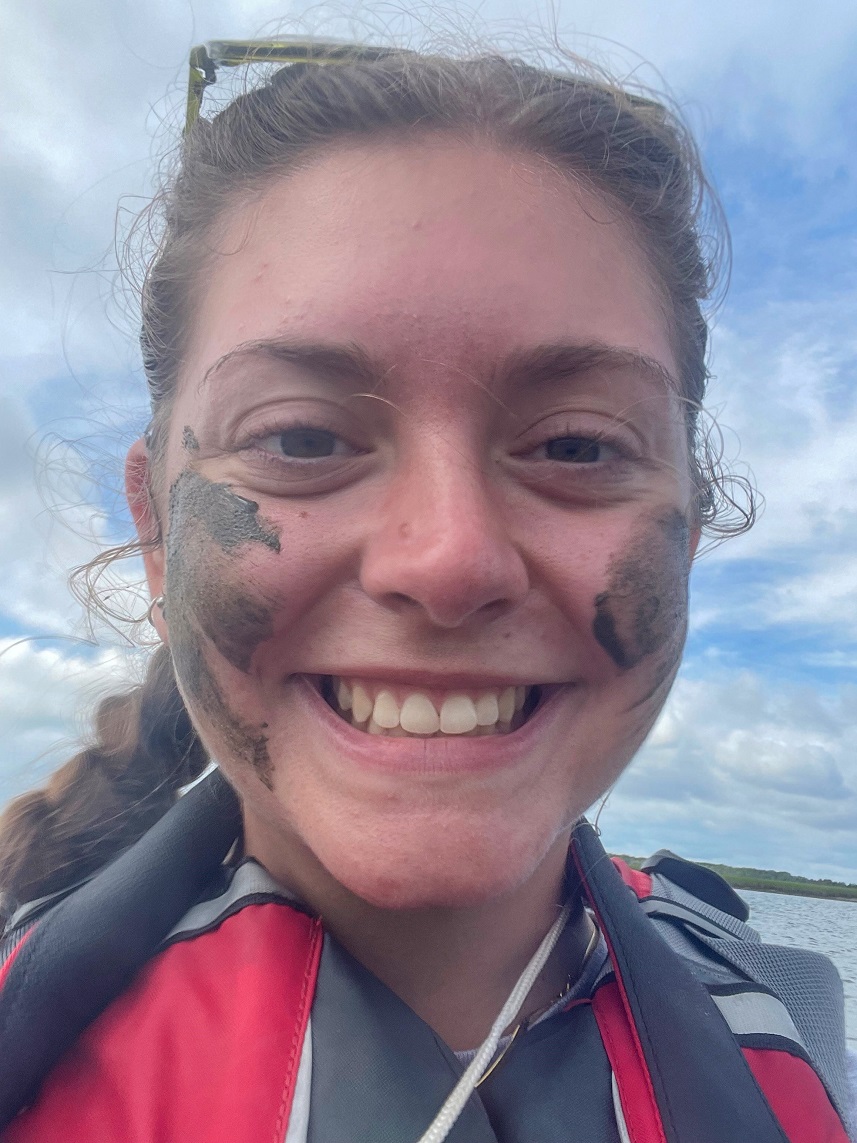
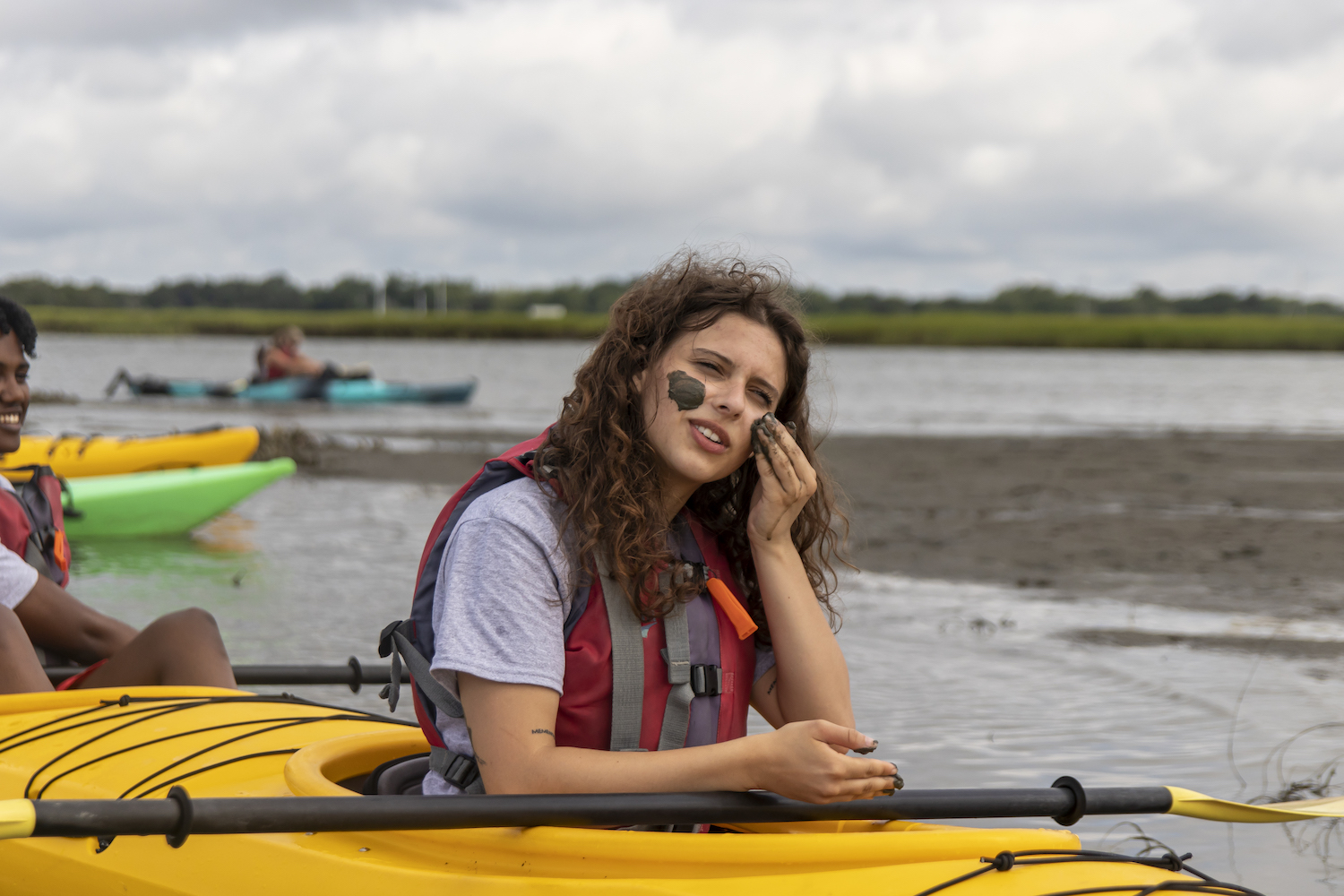
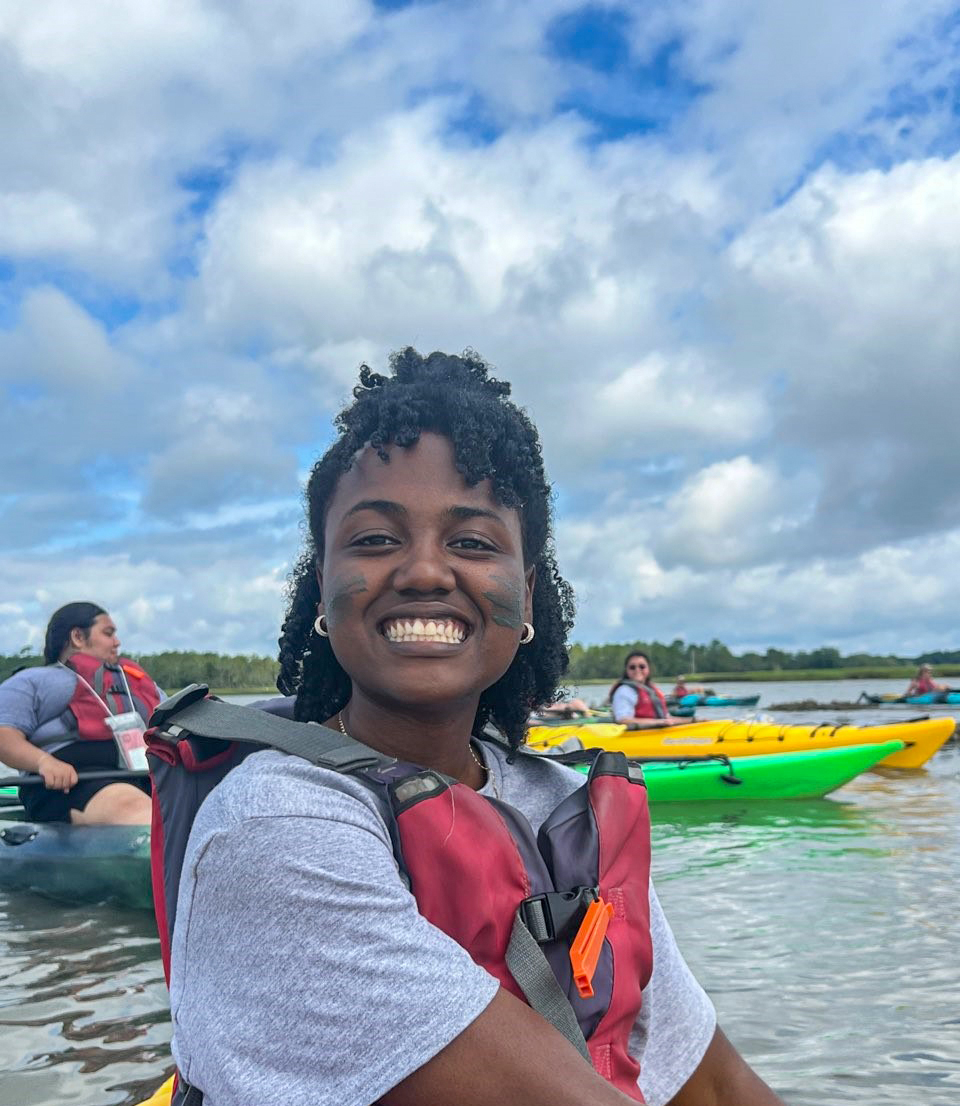
We also learned about the Charleston “pluff mud,” which is a nutrient rich mud that lacks oxygen. It has been plundered in the past by farmers, so it is now federally protected, and according to our tour guide, if you take any with you, you are subject to a $500 fine. He did not mention the charge, but it would be something along the lines of “mud smuggling.”
Somehow, Daniel convinced the college students to put this mud on their faces. They did this, even after they learned that much of its nutritional richness comes from “decaying matter” and “crab waste.”
Most of the morning, however, was devoted to paddling and having fun, although Michelle did have a minor mishap, when, instead of saying, “I am woman, he me oar,” she said, “I am woman, hear me go overboard.” But she bounced back nicely, and ultimately made her second-ever kayaking trip a success.
So we were a little sad when we had to turn back.
And as we prepared to depart, we looked upon blue skies, satisfied with a morning well spent.
We soon learned, however, that more rain was coming, but that is a story for the next blog.






























 Center for Law, Engagement, and Politics
