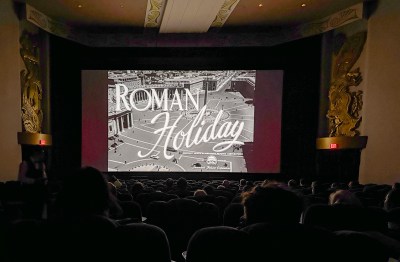
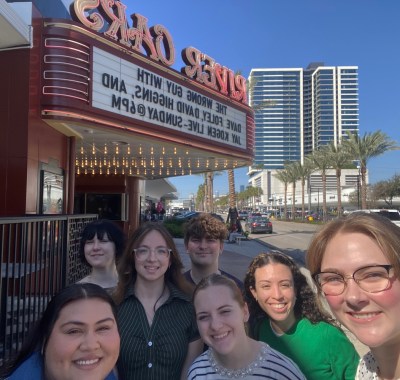
One part of LEAP’s mission is to expand cultural horizons, and this includes exposing students to classic films. Thus it was on the Sunday of our retreat in Houston, we attended a showing of “Roman Holiday” at the historic River Oaks Theatre.
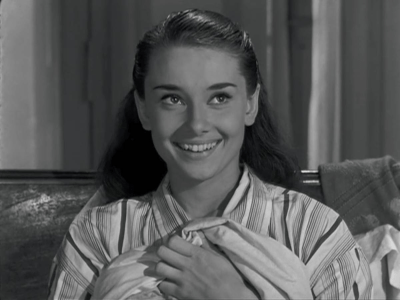
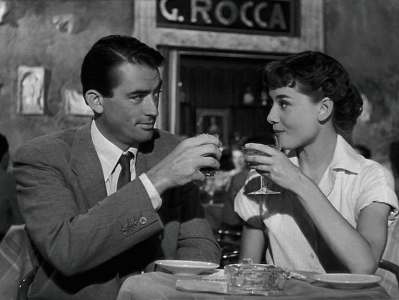
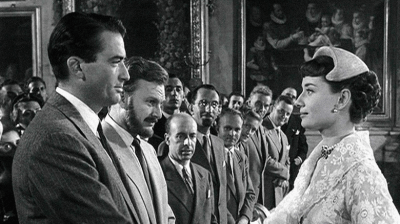
Directed by William Wyler, “Roman Holiday” tells the story of Princess Anne (Audrey Hepburn), who, overwhelmed by the tedium and responsibilities of her title, escapes the embassy for a night in Rome. She stumbles across reporter Joe Bradley (Gregory Peck), who, upon learning her identity, realizes he has a chance at a scoop of a lifetime.
Of the seven students attending, five of us had never seen the film, and it was a treat to find it witty, charming, and romantic, with Audrey Hepburn stealing the show.
Her on-screen chemistry with Gregory Peck was palpable, and it was a surprise to learn this was her first starring role!
Roman Holiday both subverted and helped shape the modern romcom genre. It includes the classic “meet-cute,” montages of Anne and Bradley falling for each other, and many comical and romantic touches throughout.
It does not (spoiler alert), however, include the happy ending that some viewers expect (talking to you Michelle Cardenas) from their films. Princess Anne chooses to resume her duties as a princess; Joe foregoes the story he could have sold. Both do their duty and both willingly take on the personal cost of doing so, making the ending even more romantic.
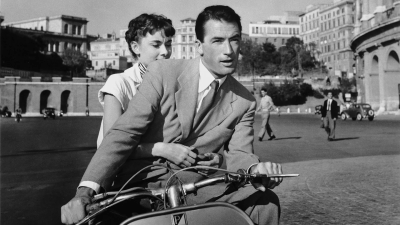
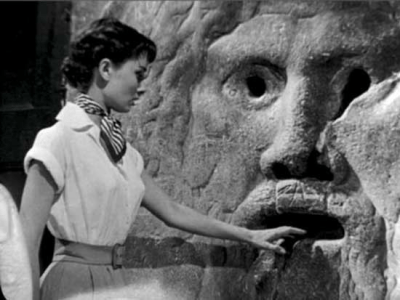
As a side-note, this was one of the first American films to shoot on location overseas. The entire film was shot in Rome, displaying iconic landmarks (including the “mouth of truth,” one of our favorite scenes) and the charm of post-war Italy.
After the film’s release, Rome transformed into a top tourist destination, in part due to the unique filmmaking choice made by William Wyler.
The ending was, in many ways, the perfect end to our retreat–a flavorful and light scoop of gelato, following a weekend of substantive progress and hearty fare. It was the treat of the retreat.
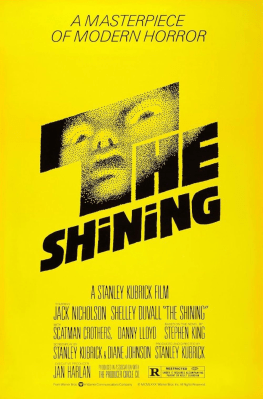
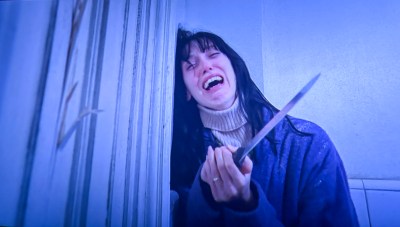
As part of the LEAP Center’s ongoing work to expose students to the broader culture, a group of alumni and current students gathered in Houston to see Stanley Kubrick’s “The Shining.” Originally released in 1980, the film is being re-released on IMAX theatres across the country as part of its 45th anniversary.
For about half those attending, it was a first exposure to a Stanley Kubrick film. Accordingly, we began with a brief background of Kubrick and his films. Of all the great directors, Kubrick produced the fewest films (13 over a 45-year career), a fact that has not deterred scholars from giving as much thought and ink to Kubrick’s work as that of Hitchcock, Welles, Spielberg, or Martin Scorsese.
Of Kubrick’s films, “The Shining” has received perhaps the most attention. The film is based on Stephen King’s novel of the same title, and it was met with a mixed critical reception on its release, although its stature has grown, and it is now considered a horror classic.
It embodies several cinematic traits of the Kubrick oeuvre: a longish running time, attention-grabbing visuals, riffs on various literary themes, and an enigmatic approach to storytelling that occasionally leaves viewers unsure what they just watched. All of these were on display in “The Shining.”
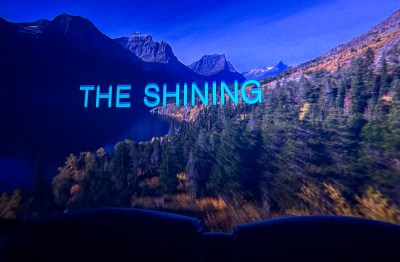
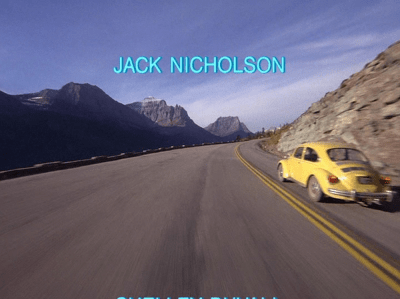
In this viewing, the visuals were most prominent, perhaps because we were watching this on an IMAX screen. The opening scenes, shot from a helicopter, including a scene where we (perceiving things through the camera) seem to pass the Torrance family on the “sidewinder” road…
…on the way to the Overlook Hotel.
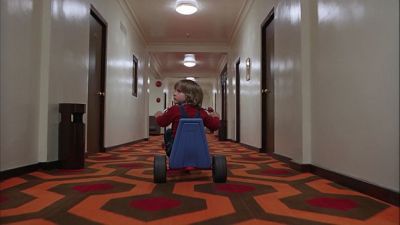
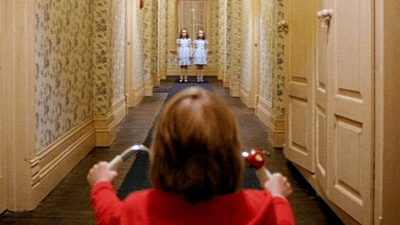
Kubrick also made full use of the Steadi-Cam, which had been introduced on film in 1976. Kubrick used it throughout “The Shining,” and he innovated with it, devising an apparatus that could shoot from about 18 inches above the ground–most notably used in the film to follow Danny on his tricycle, as he traversed the maze-like corridors of The Overlook.
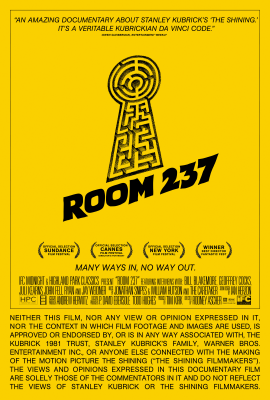
Kubrick’s films are often sprawling affairs and they are deeply studied by scholars and enthusiasts, so it’s no surprise that all manner of symbols and themes have been “discovered” in the director’s body of work. This is probably most true in “The Shining,” as reflected in the interesting and bizarre theories expressed in the documentary Room 237.
Professor Robert Kolker, an author of several Kubrick books and an expert on cinema, suggests that the film can be seen through an Oedipal lens (spoiler alert). Danny’s “shining” is a type of oracular vision not unlike that of the prophecies offered at Delphi, including the one offered to Oedipus. And while Danny wasn’t as close to his mother as was Oedipus, she serves as his caretaker and protector; in the end, she carries him to safety, saving his life.
Danny doesn’t proactively kill his father at a crossroads as does Oedipus, he does leave his lame father to die of exposure in a labyrinth. Of note: Jack Torrance suffers from a foot/ankle injury following a fall down stairs; he literally embodies the term “Oedipus,” which means “swollen foot.”
Whether such messages were intentional or not (it’s worth noting that Kubrick mentioned he read a lot of Freud prior to filming “The Shining”), the film is replete with sufficient ambiguities to provide fodder for the active imagination.
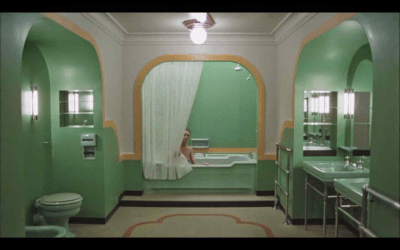
There are some imponderables in the film; it does, after all, involve the supernatural. But even in the logic of the supernatural, what is the purpose of the bathroom scene…
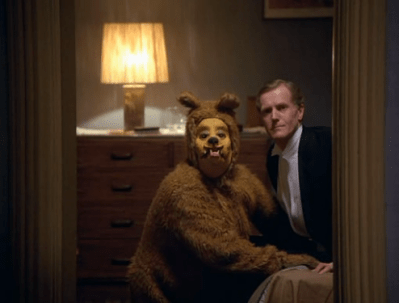
…in which Nicholson embraces a young, naked and beautiful woman, only to find her decay into a rotting but living corpse? Why is there a parlor full of fully-dressed corpses in the hotel? And what about the scene involving a man in a bare-backed bear costume and a man in a tuxedo?
This latter question was posed by many in our group (answered by none), and such questions may reflect Kubrick’s very approach to filmmaking: “if you can get people to the point where they have to think a moment what it is you’re getting at, and then discover it, the thrill of discovery goes right through the heart.”
While we probably didn’t reach “discovery” on many of the scenes, we did “think a moment” or more on the film and its many scenes. The experience offered an accessible and exciting introduction to Stanley Kubrick and his work, gave us all an excuse to get together during the holiday break, and provided us endless material for reflection (and, for some of us, concern…)!
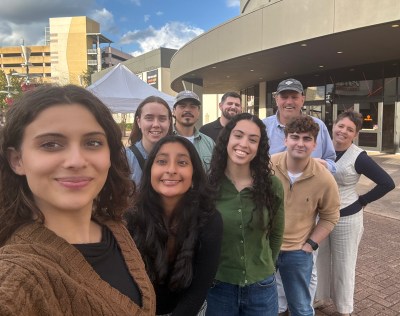
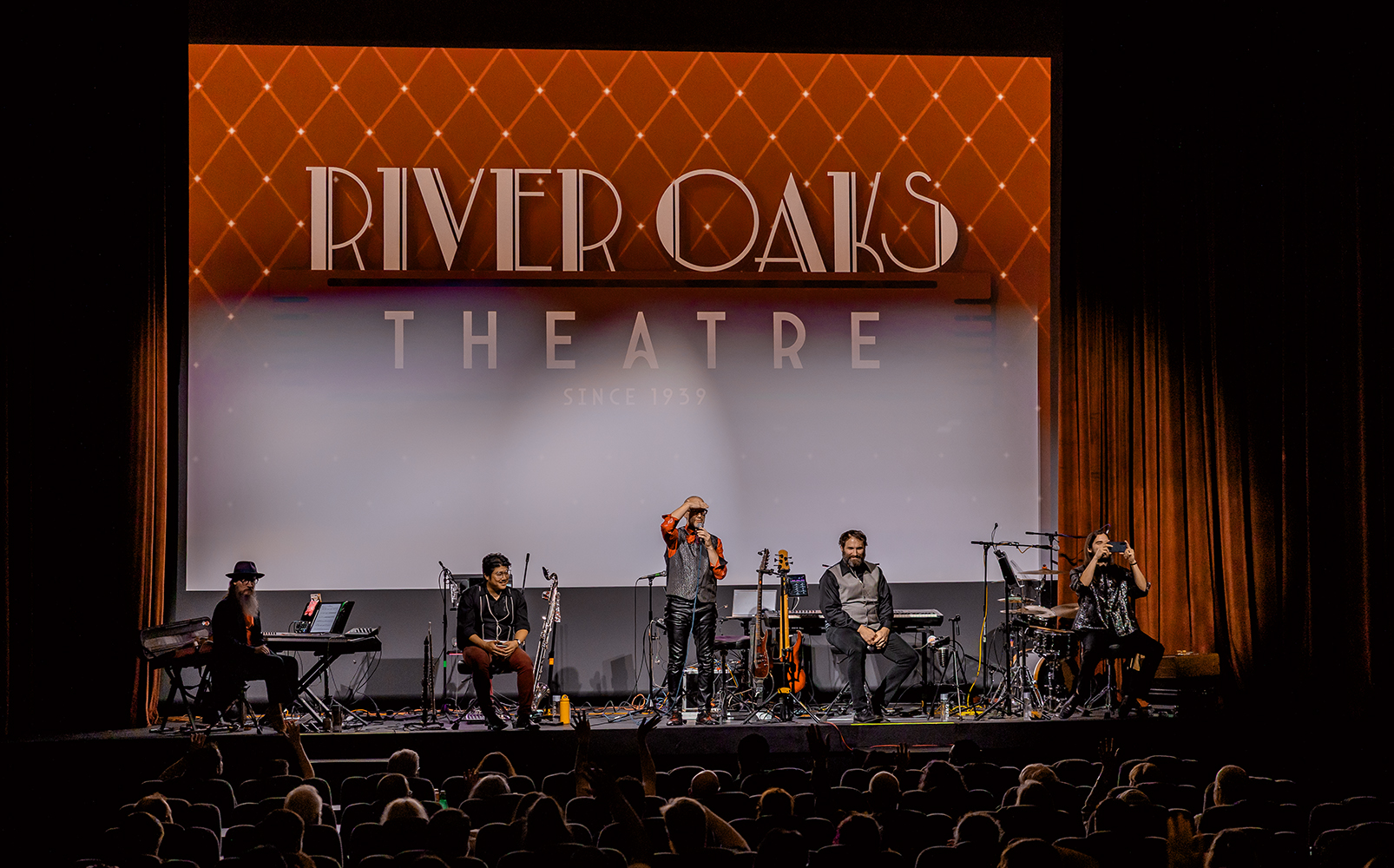
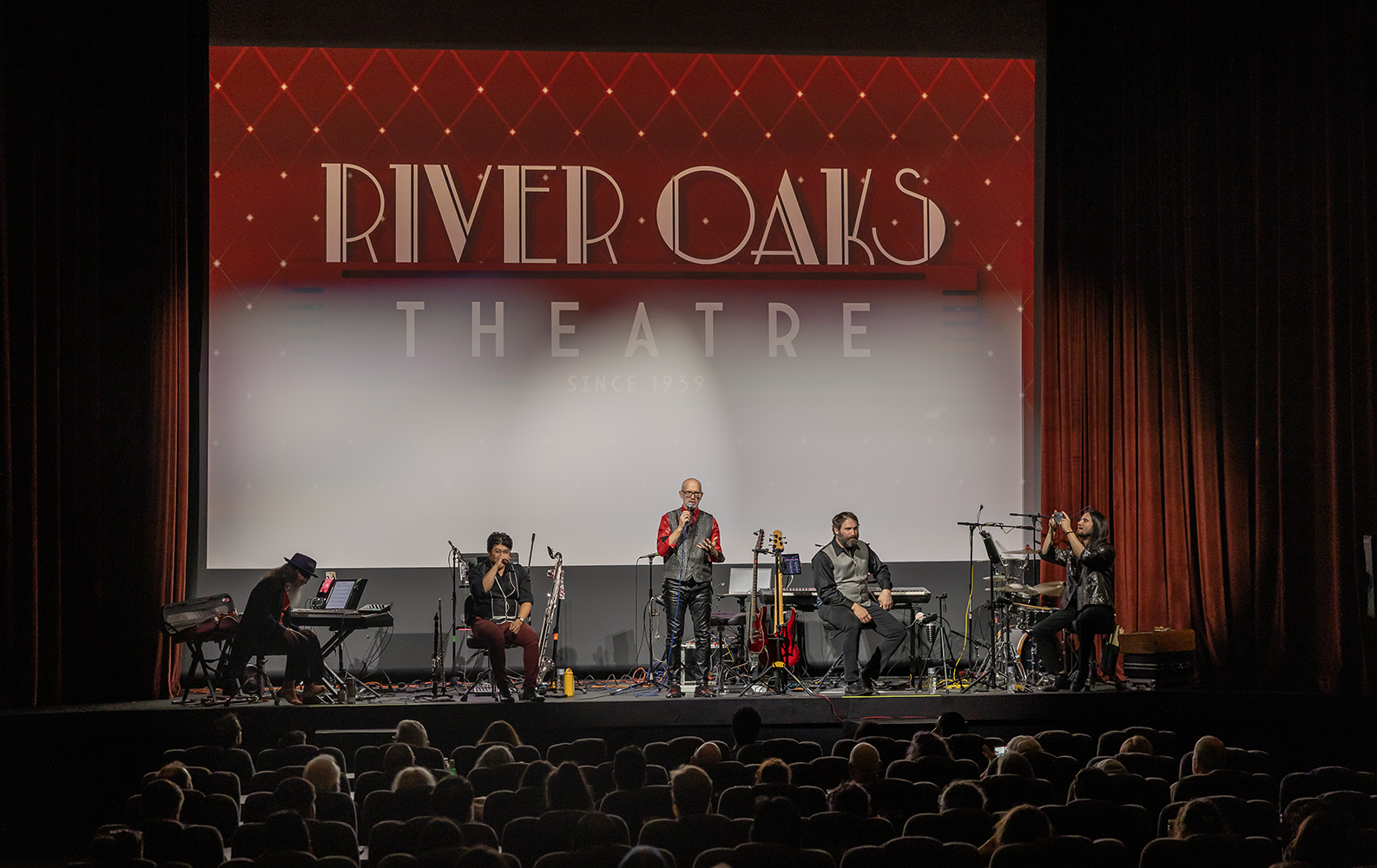
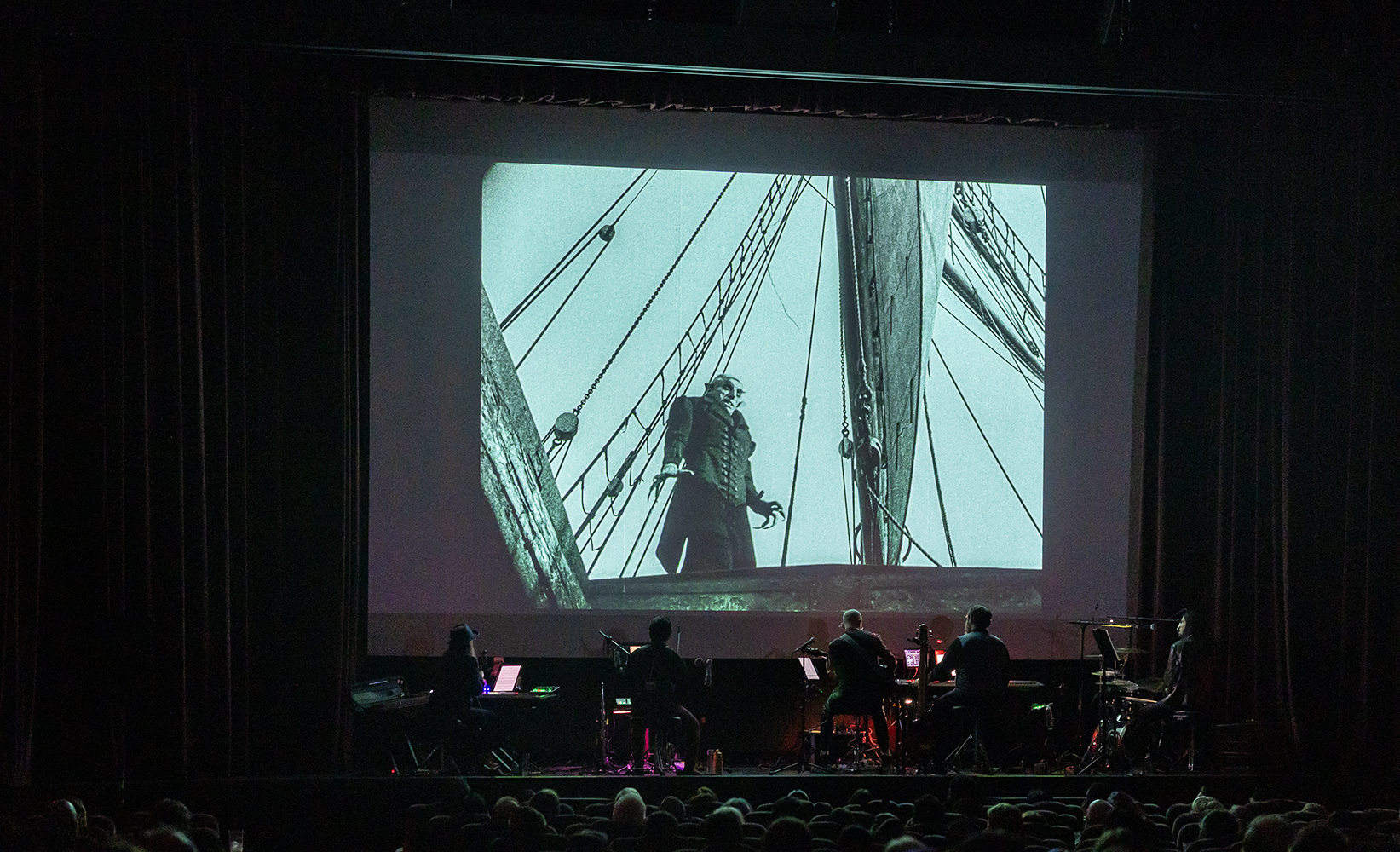
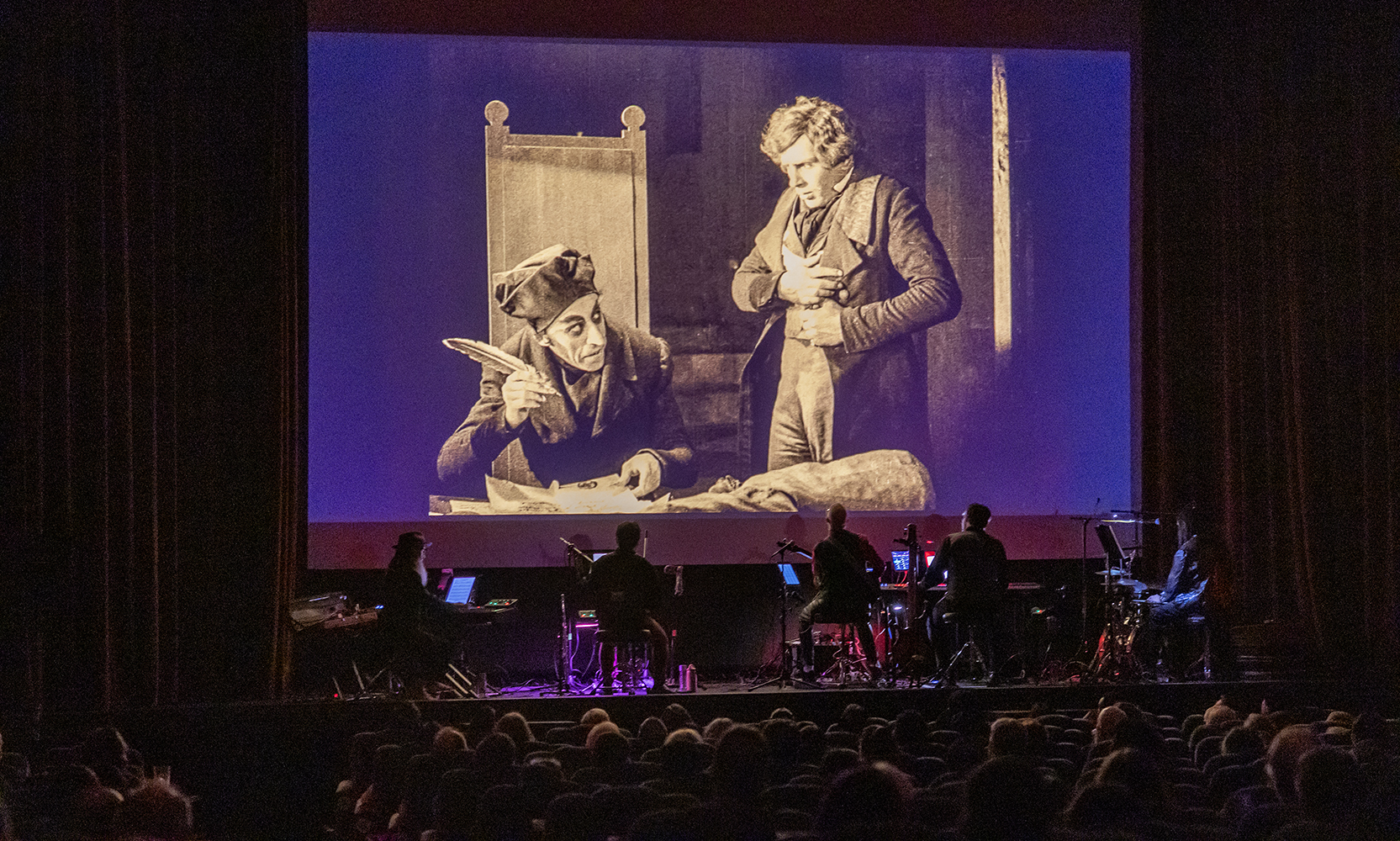
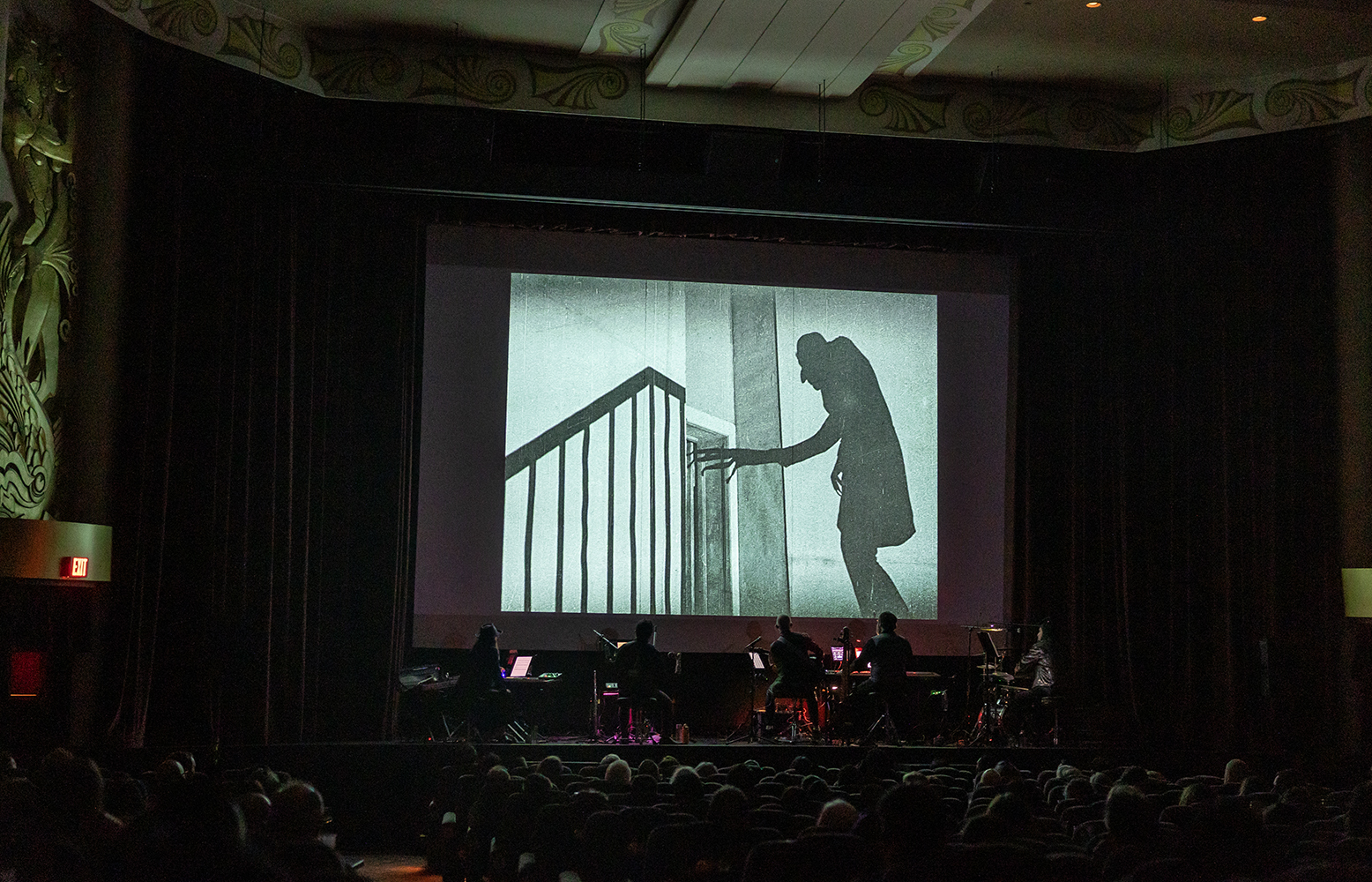
Nine students and former students with The Center for Law, Engagement, and Politics (LEAP) attended a screening of the 1922 silent horror film Nosferatu at the historic River Oaks Theatre in Houston, Texas. While this outing certainly carried the spirit of the post-Halloween season and the eerie charm associated with early cinematic horror, it also reflected the Center’s continued effort to expand students’ engagement with the humanities, exposure to diverse forms of storytelling, and expanded cultural horizons.
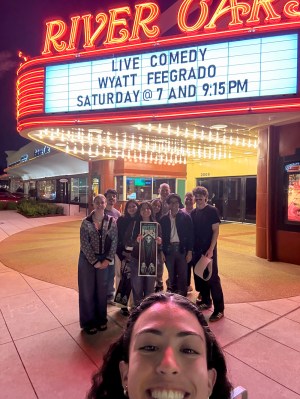
The River Oaks Theatre itself provided a fitting environment. Its historic charm and architecture evoke a theatrical experience that captures some of the magic of silent and golden-age cinema.
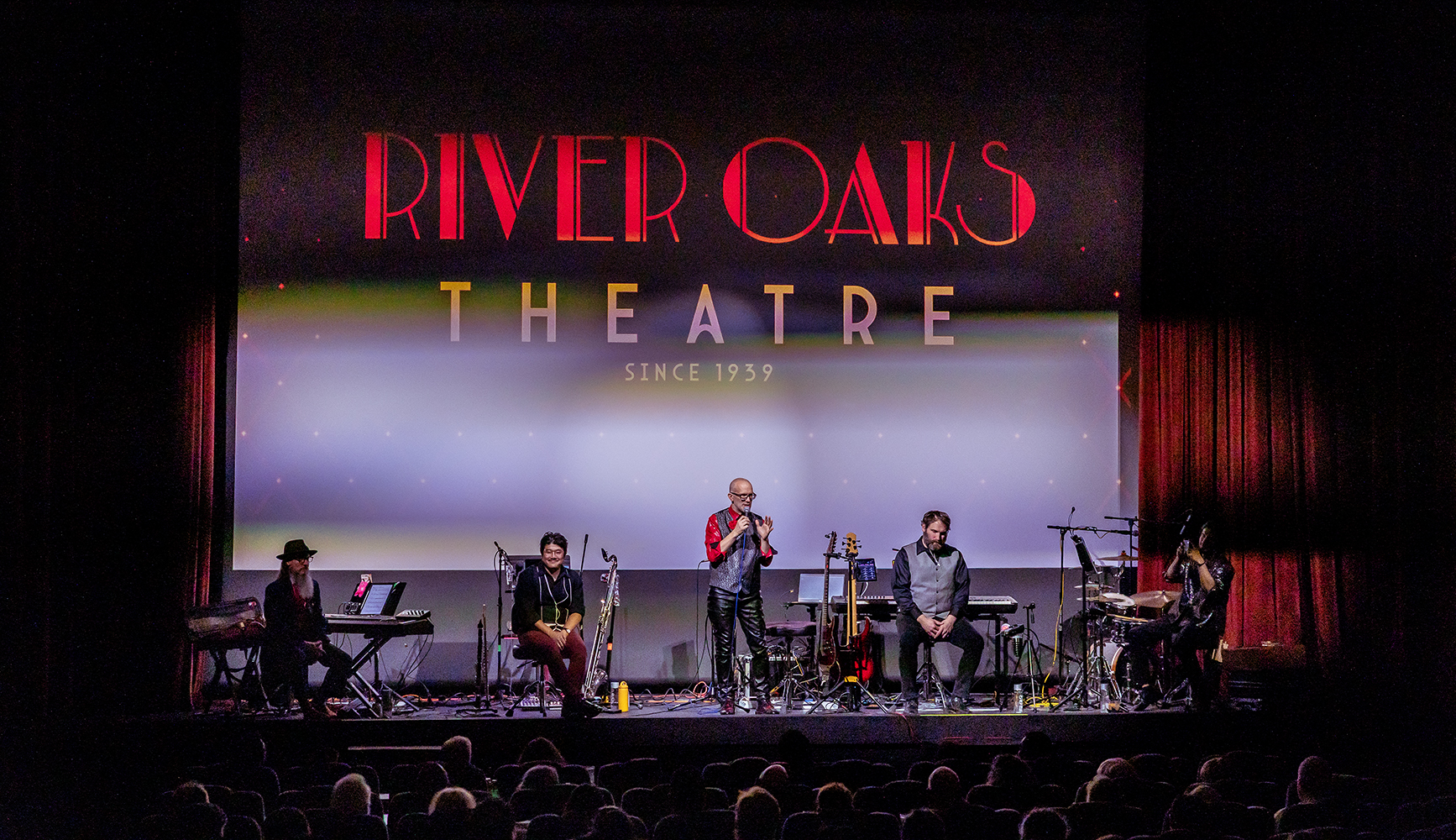
Enhancing the screening was a live musical performance by The Invincible Czars, who created the film’s soundtrack live on stage with instrumentation ranging from classical to experimental. Their approach complemented the film with sounds that provided humor, subtle tension, and dramatic intensity.
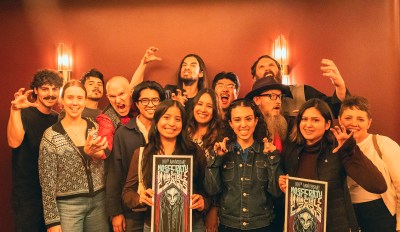
After the screening, the LEAP students were able to meet the band members and take photographs with the band, while also purchasing movie posters.
While the subject matter — a vampire narrative involving shadows, dread, and ancient evil — is unquestionably spooky, the evening itself reinforced a central purpose of LEAP: experiential learning that blends the artistic, the cultural, and the civic.
Movies like Nosferatu do not just entertain; they help illuminate how societies imagine danger, power, and the supernatural.
This outing offered students a unique opportunity to experience history, art, and performance simultaneously — in a way that was appropriately seasonal, academically rich, and wonderfully haunting.
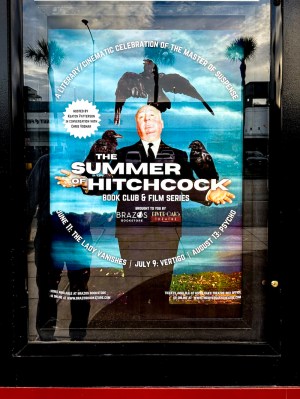
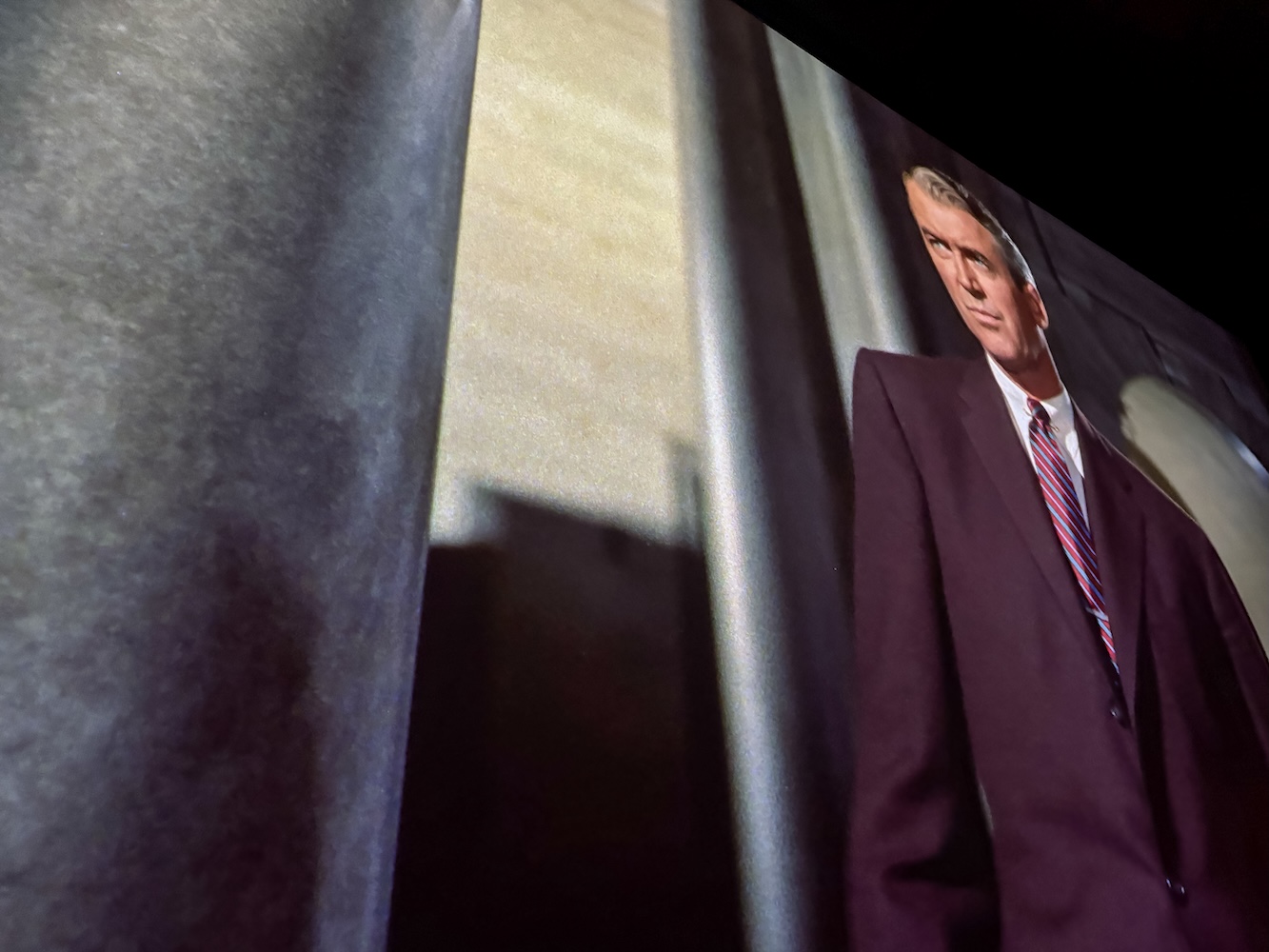
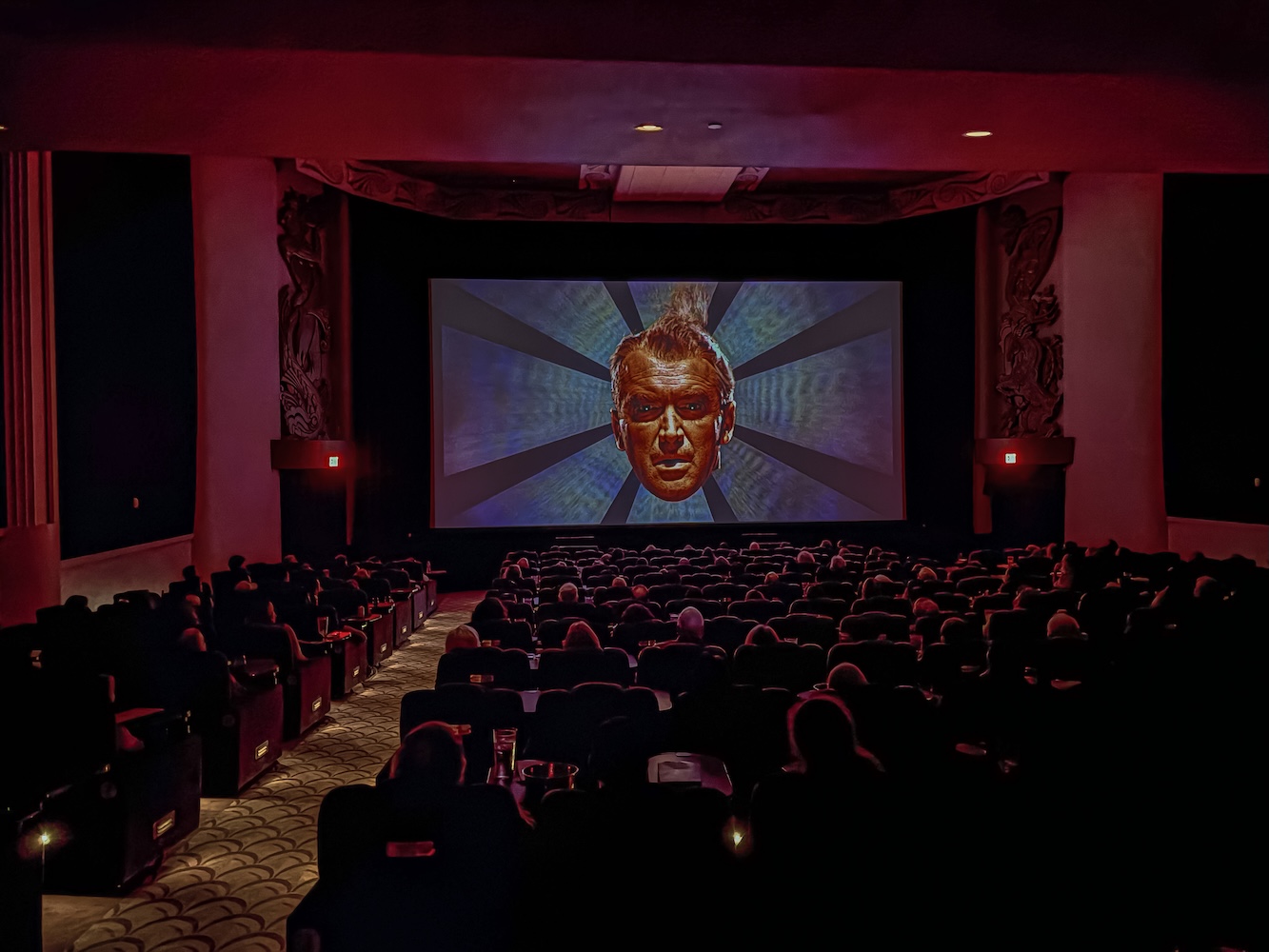
In classic LEAP fashion current students and LEAP alumni joined forces in Houston for a viewing of one of Hollywood’s most celebrated films, Alfred Hitchcock’s Vertigo. The screening is part of The Summer of Hitchcock, a joint literary venture between Brazos Bookstore and River Oaks Theatre.
As part of this summer project, Houston-area Hitchcock fans are invited to read “The Lady Vanishes,” “Vertigo,” and “Psycho,” and watch the film adaptations directed by the Master of Suspense at the newly re-opened River Oaks Theatre.
With its glistening art deco marquee, this 1939 theatre is nestled on West Grey St. in one of the most emblematic Houston neighborhoods, for which the theatre is named. Following a post-pandemic closure of the theatre, which many Houston area cinephiles feared would be permanent (this writer included), the theater finally re-opened last October. While it retained its screening of classic, contemporary, and independent movies, the interior has been renovated to adapt to the new movie-goer expectations, while also offering seat-side meal service.
For most of the group members that joined us at the showing, it was our first time watching this adaptation of Pierre Boileau and Thomas Narcejac’s French novel “D’entre les morts” (“Among the Dead”). Released in 1958, Vertigo follows a mysterious investigation led by a recently retired San Francisco detective. Tasked by an old college friend to follow his wife who is feared to be obsessively replicating the actions of a mysterious ancestor, the former detective, played by Jimmy Stewart, along with the equally intrigued audience, tour the city of San Francisco while trailing the college friend’s wife, played by Kim Novak.
The film has been widely praised, and in fact, was ranked as the greatest film of all time in a 2012 poll of international film critics (it “slipped” to #2 in 2022). Nonetheless, the craftsmanship managed to impress and surprise. In Hitchcockian fashion, the narrative is told through expertly orchestrated POV and over-the-shoulder shots, evoking a sense of voyeurism of which the movie’s protagonist extensively takes part in throughout his investigation.
The film showcases the costume design of Hollywood legend Edith Head, which complements the equally impressive cinematography of Robert Burkes, whose striking use of color film stock (and color theory), impressive panoramas of San Francisco and San Francisco Bay, and a subjective camera contribute to the film’s beauty and psychological themes.
Such cinematic feats are perhaps most famously illustrated by the “Vertigo Zoom,” engineered by second-unit cameraman Irmin Roberts. Ask by Hitchcock to create a visual metaphor for the protagonist’s vertigo, Roberts used a subjective camera (from Stewart’s perspective) and dollied the camera toward the ground level of a staircase while simultaneously zooming the lens out (or away) from the ground level.
This effect has since been used in countless films, most famously in “Jaws,” “Goodfellas,” and “The Lord of the Rings.”
Vertigo, as with many of Hitchcock’s works, is a testament to the range of emotions that can be transmitted to an audience through stellar acting, a vivid imagination, and plethoric cinematic techniques implemented by an auteur director with a clear vision.
The whole experience reminds the viewer that this piece of cinematic literature deserves contemplation in a proper movie theatre. In the Houston of 2025, Star-Cinema-Grill owned or not, it’s difficult to think of a better site than River Oaks Theatre, and even more difficult to think of a better group of people with whom to see it.









 Center for Law, Engagement, and Politics