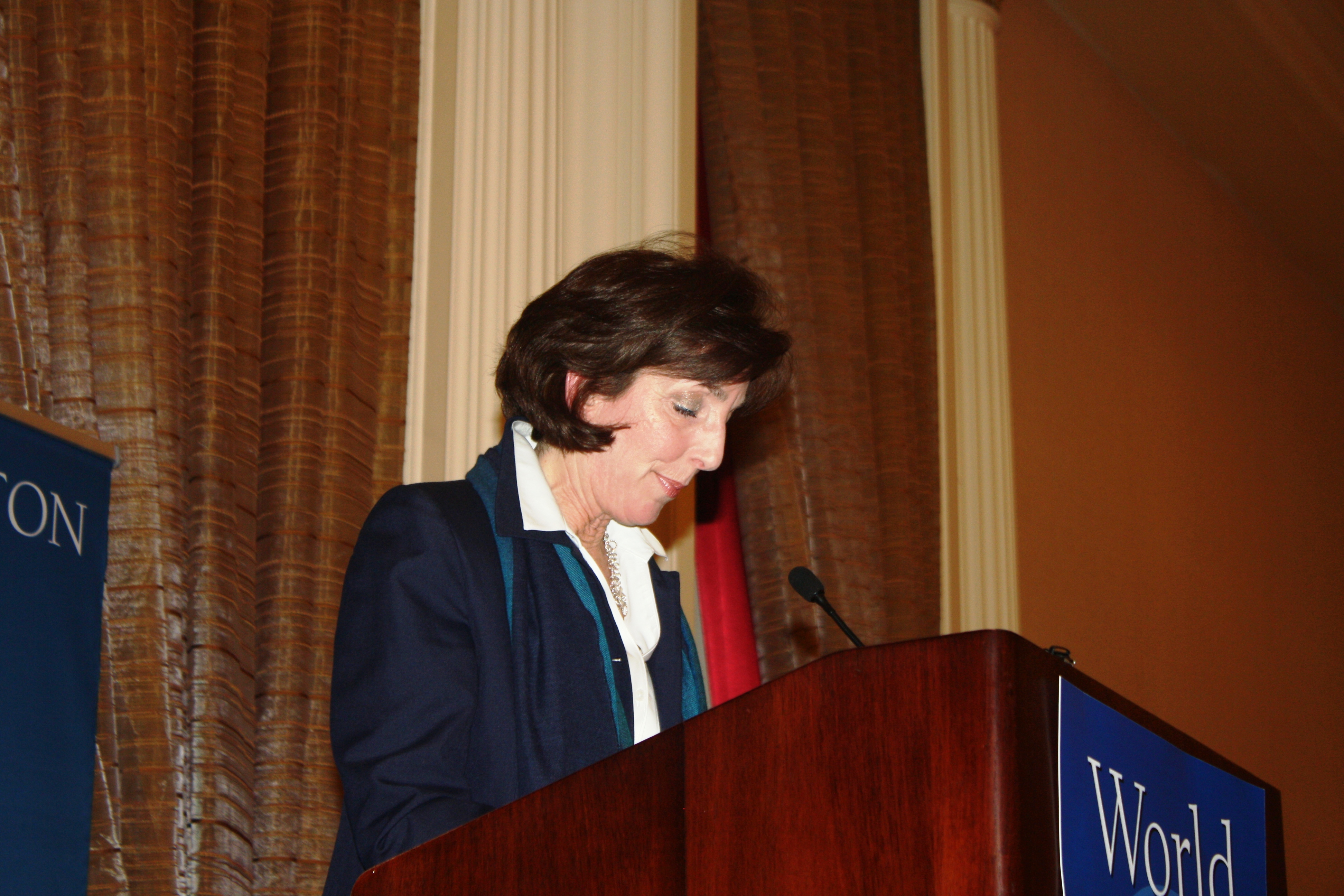
David Berg has been an attorney for more than four decades, becoming an internationally renowned specialist in white-collar crimes. But as he became more successful legally, he found himself reflecting more on the death of his brother, which occurred when he was a fledgeling Houston attorney in 1968. Alan Berg was killed, according to David, by Charles Harrelson (the father of Woody Harrelson) but never convicted.
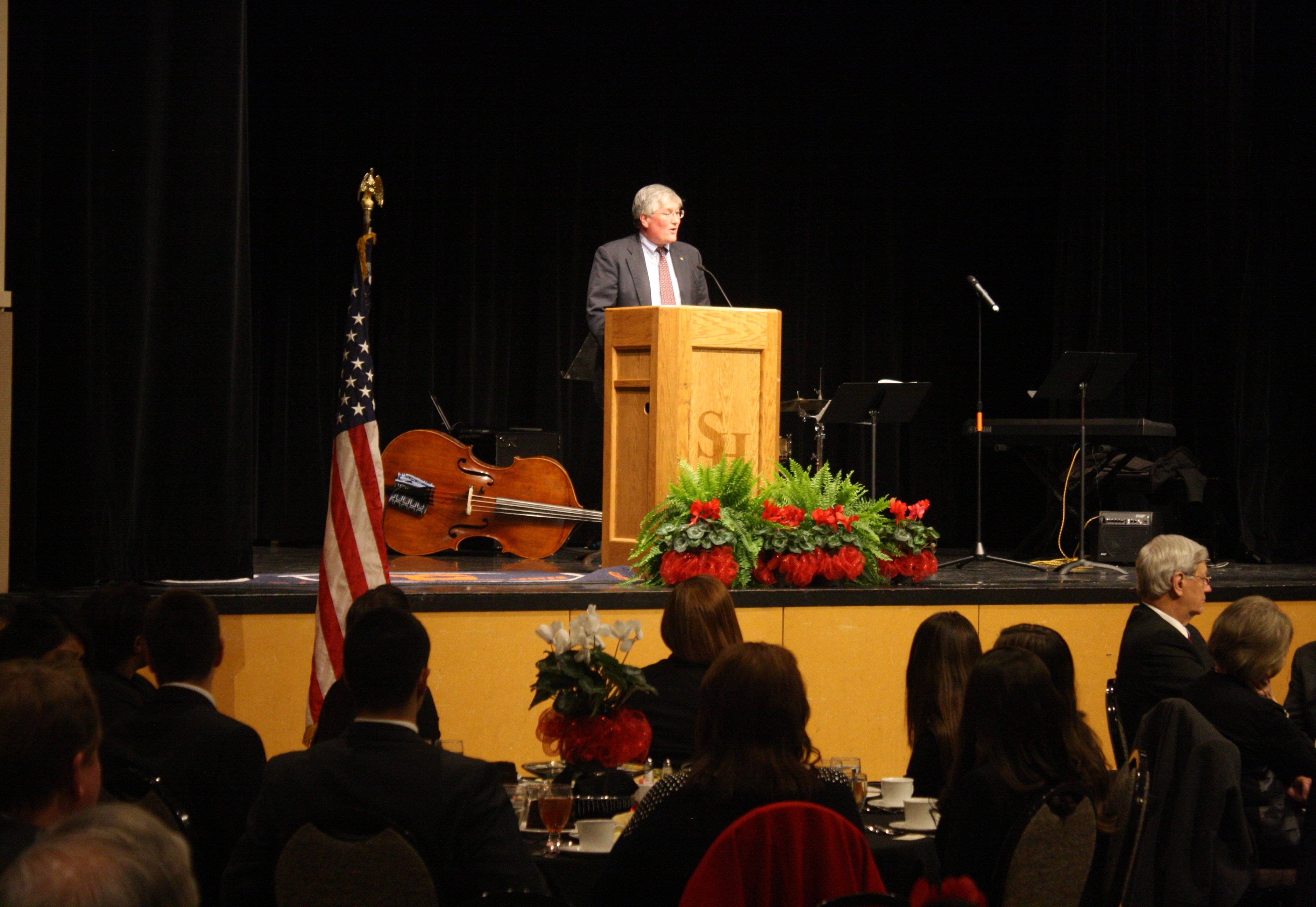
David revisited the events leading up to the murder in his non-fiction book, “Run, Brother, Run,” which received very favorable reviews by the New York Times, the Christian Science Monitor, NPR, and others. He also dropped by SHSU to discuss the book and the murder with SHSU faculty, staff, students, and local citizens.
David Berg Speaking at SHSU
Berg mixed his presentation with a discussion of crime, law, family relationships, and boom days of Houston, Texas, providing substance for everyone in the audience. Many in the crowd had their own recollections of Harrelson, who spent time in Trinity and Huntsville (in and out of prison). Eventually, Harrelson was convicted of murdering Judge John Wood in San Antonio in 1979. It was the first assassination of a federal judge in the 20th century.
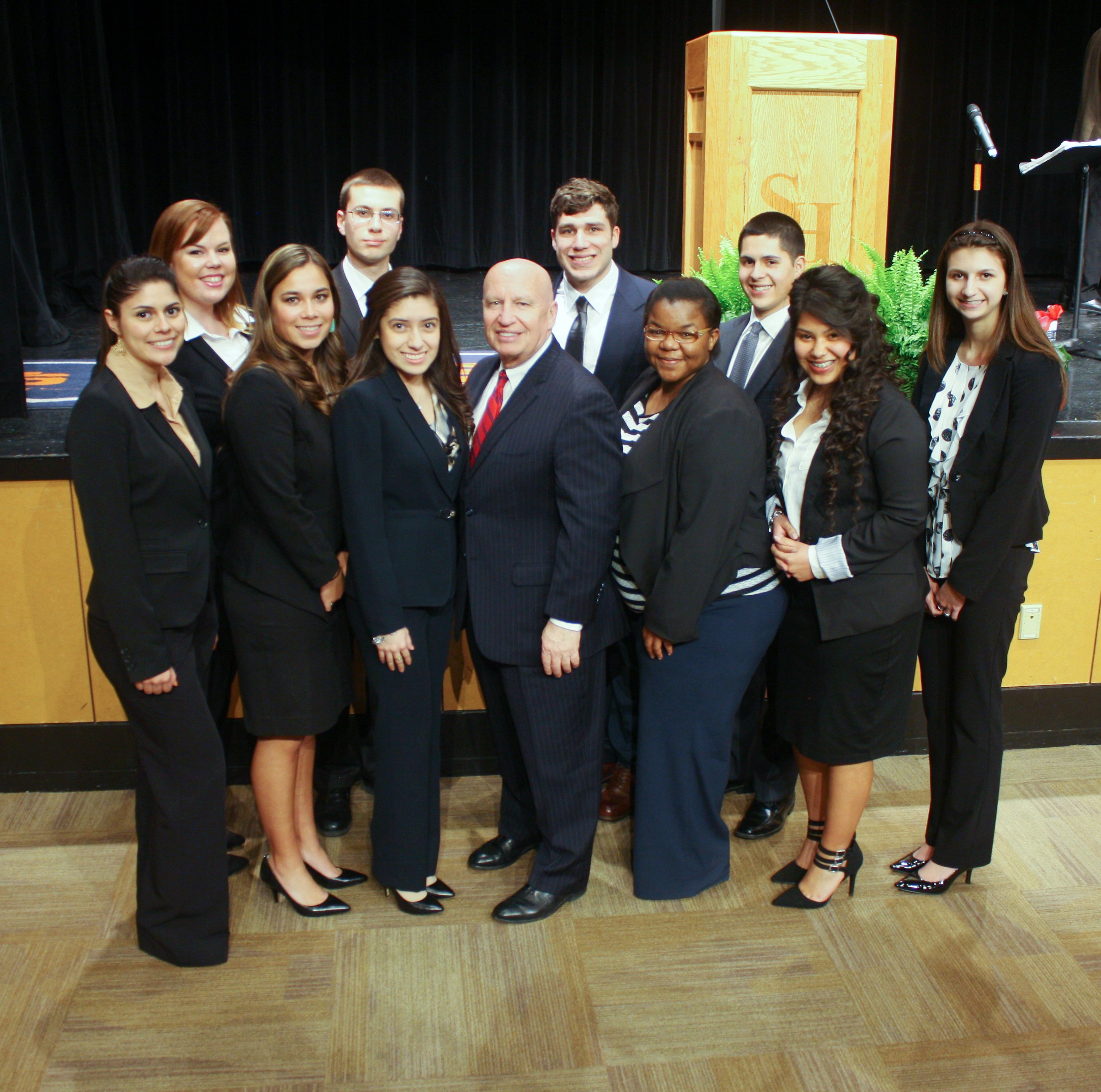
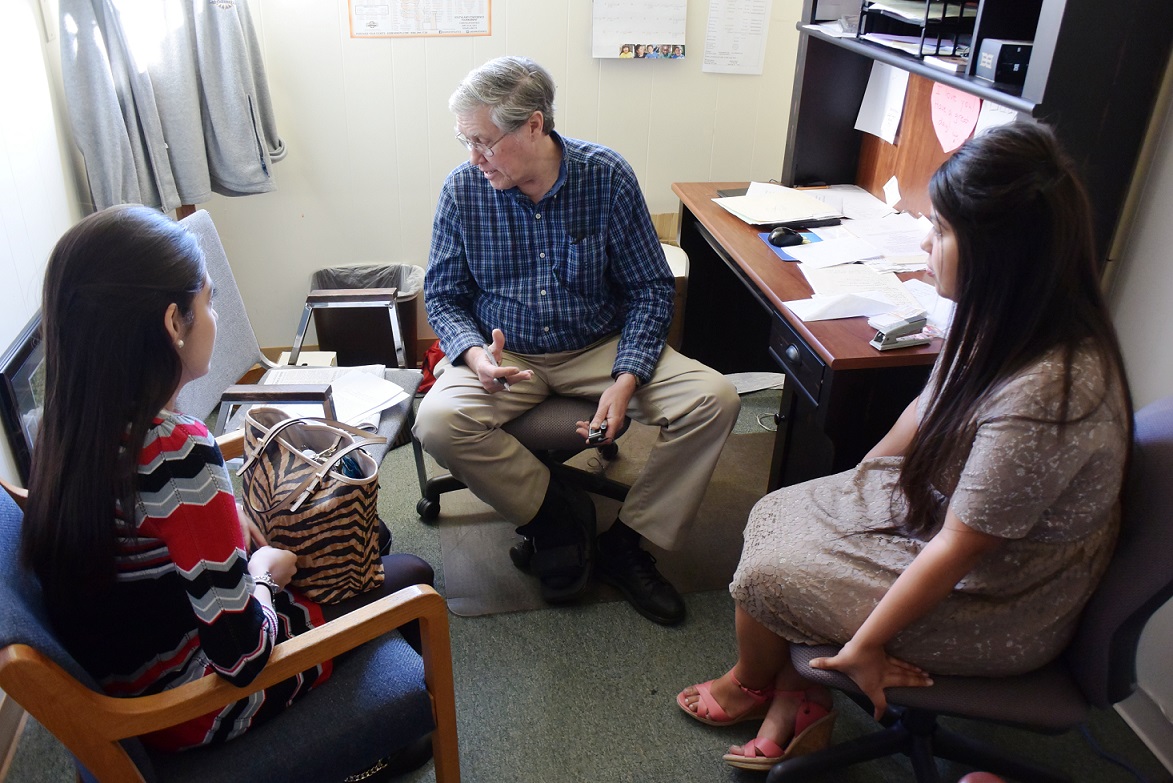
Afterward, Berg spent time speaking with the crowd, giving encouragement to pre-law students…
The last day of our Midwestern Tour arrived, and we were able to visit the beautiful Crystal Bridges Museum of American Art in Bentonville, Arkansas. The beautiful museum was designed by Israeli architect Moshe Safdie, and the funds for the museum were provided by Alice Walton, the Walmart heiress. Although open for fewer than ten years, the Museum is one of the most ten visited museum in the United States—despite being location off a major highway, and hours from a major airport.
But it is worth the effort to get there. The Museum grounds are beautiful…
..and the art was amazing.
Among the favorites were political works, such as Charles Wilson Peale’s famous portrait of George Washington…
..and a piece by an artist who is becoming a favorite of ours, Georgia O’Keefe:
Radiator Building, O’Keefe
Not only is there no entrance fee to the Museum, but the Museum offers free audio guides, which highlight hundreds of works of art, providing background and instruction for those of us who are not already art connoisseurs. In the piece above, for example, we were able to see connections in the white crown of the Radiator Building with many of O’Keefe’s work focusing on the southwest, particularly animal skulls, which take on a similar color and shape.
We learned how Benton used similar contour lines depict the sky, human/animal life, and the ground to make a connection between life and its environment, a connection hat would have been particularly salient in the 1930s in the midwest.
The Museum also allowed us the opportunity to engage in some “performance art”…
…and pose next to (and in) Robert Indiana’s famous “LOVE” sculpture.
It was sad as we ended the trip, with a final look at the Museum…
Crystal Bridge Art Museum
The end of the trip, however, also offered a time of reflection on what we learned and experienced. Accordingly, we voted on our favorites, with the following results:
In general, our favorite cities were (1) Madison, WI, (2) Kansas City, and (3) a tie among Chicago, Bentonville, Little Rock, and Spring Green. Madison was the big surprise, impressing us all with its beauty and many shops and amenites.
Identifying our favorite sites was more difficult. The Bean in Chicago’s Millennium Park was a favorite…
…with Talieisin, the World War I Museum, and Union Station receiving votes.
Union Station, KC
The many art museums allowed us to develop an appreciation for art in general and specific artists. Our group favorite was Georgia O’Keefe…
Cow Skull, O’Keefe
But we also enjoyed seeing original art works by Picasso, Van Gogh, Monet, Rockwell, Rembrandt, and Rodin. A favorite of ours was the work of Dale Chihuly, who kept popping up in all sorts of places.
Chihuly Exhibit, Clinton Library
One of our favorite parts of the trip was the food. The one restaurant everyone included on their favorite list was Grunauer, an Austrian restaurant in Kansas City.
So it was with expanded tummies and horizons that we returned to Texas, ready to return to school work and looking forward to the next LEAP Center trip.
We started our day in Independence, Missouri, with hot chocolate, mocha, coffee, and various pastries at Home Sweet Home Bakery in town. The hostess was welcoming, had an interesting haircut, and was very helpful.
Following breakfast, we headed to the Harry S. Truman Presidential Library, starting with a short movie that introduced us to how Truman came to be, from his life in Independence as a young boy up until his career as 33rd President of the United States.
The Library features various exhibits, including parts of his personal diary, and pictures from his presidency.
Harry Truman Library, With Mural by Thomas Hart Benton
One favorite picture of the group was the famous “Dewey Defeats Truman” news headline in which Truman holds the Chicago Daily Tribune with an erroneous headline that indicated Dewey had defeated Truman in the 1948 election. Truman is laughing in the picture, clearly celebrating his victory and ready to begin his second term. The Library also features an original of the newspaper that was published in 1948.
The Library’s largest exhibit is “The Presidential Years,” featuring videos, Truman’s personal diary, newspaper covers, and other artifacts depicting his presidential years. One interesting feature of the Library was the replica of the Oval Office during Truman’s presidency. Also interesting was a documentary on the Cold War, which was very informative.
Another favorite exhibit, also of the newspaper variety, included a display of enlarged newspaper covers, presented in chronological order, and featuring headlines such as “ROOSEVELT IS DEAD: TRUMAN TAKES OATH,” and “FIRST ATOMIC BOMB DROPPED ON JAPAN.” Finally, we took pictures with Truman’s statue…
…and we visited the graves of him and his wife, Bess Wallace.
After visiting the Library, we headed to the Truman Home. Even though the Trumans were not wealthy, the house is far from modest. In fact, the house belonged to Bess’s family, which was wealthy. A wraparound porch surrounds most of the house, and stained glass windows front the house.
The guide led us into the kitchen, which is very modest, with furniture and wallpaper that reflect 1950s style. The chairs, counters, table, and cupboards are all painted apple green, a popular color at the time.
The rest of the house is filled with wooden furniture and golden interiors. The second floor is closed to the public, so we only visited the dining room, Truman’s studio, the two living rooms, and the main hallway. In the larger living room, used for special occasions and guests, is a portrait of Harry, while in the family living room hangs a portrait of Bess. The portrait liked most was in the main hallway, of Margaret Truman, their daughter and only child. At the end of the tour, more pictures in front of the house, and then on to our next destination, Kansas City.
It was lunchtime, and we had to eat Kansas City style barbecue! Our research led us to try Oklahoma Joe’s Kansas City Barbecue, rated the number one place for barbecue in KC. We arrived at a very long line outside the restaurant and decided to utilize our backup plan. We headed to Fiorella’s Jack Shack.
Fiorella’s Jack Shack was voted by The Zagat to be one of the best places to eat in Kansas City; but, we were not impressed. We faced a wait of 30 minutes, at least that was the story according to the waittress. An hour and fifteen minutes later, and after some slight vocalization of our displeasure, we were seated. Overall, the food was average. The sliced pork was above average and the beans were good, but the bulk of the meats were no better than you can find in Huntsville.
We had a negative experience at lunch, but we would not let lunch defeat us! We headed over to the World War I Museum with full stomachs, armed with curiosity. The Museum was beautiful and showcased the Monument in a spectacular way.
The inside of the Museum had a glass floor that led from the main entrance to the museum exhibits, showcasing poppies commemorating those fallen in World War I. Each of the 9,000 poppies in the display represented 1,000 fallen soldiers. Walking across the glass floor and seeing the poppies below really demonstrated the vastness and destruction of World War I.
There were several great exhibits. One of the most interesting and informative was on wartime weapons development. The war started with very basic weapons; however, many developments were made in terms of weaponry and battle strategy. One particularly effective strategy was camouflage. The British would paint their ships in various patterns that they pulled from Cubist paintings to confuse enemies and make it harder to track the ship’s speed and course.
In terms of weaponry, countries were still in the early development stages. The first machine guns were poorly designed and very slow – but the Germans developed the German Maxim machine gun that performed fast, concise and very well. Grenades were also introduced in World War I and made trench warfare brutal. Various gases were used as well, making World War I a chemical war. Other developments such as tanks and submarines changed transportation for troops during the war and helped improve reconnaissance efforts.
We closed down the World War I Museum and continued our exploration of KC starting from the top of the museum, which is the bottom of the 265-foot tall Liberty Memorial. We walked up the stairs to the Liberty Memorial and were astonished at the view: the entire skyline of Kansas City.
After taking several pictures of the skyline (selfies and groupies), we walked the several blocks to Union Station. On our walk, we encountered a large field of grass with an American Flag in the middle: the perfect place for a race. We had tried a race the night before, but because Professor Yawn left Silvia in the dust, he agreed to run backwards against her this time. It was much closer this time, and Silvia edged out Yawn in a photo finish.
The Race!
During the race, though, we stumbled upon a beautiful tree in full fall foliage, displaying red, orange and brown leaves like a proud peacock. The tree served as a perfect backdrop for more pictures of us as a group…
…and individually…
We finished our stroll in the brisk Kansas City air at Union Station, an historic train station. Built in 1914, the train hub is home to Amtrak, museum exhibits like Science City, and theaters. Awed by the extravagant architecture and design of the interior, it was interesting to learn that after being closed in 1985, $20M was spent on restoration of the building to recover it from its solitude and dilapidation. Intriguingly, it’s still an active train station.
Historically, the KC Union Station was the second to be built in the country and followed Second Empire Style and Gothic Revival. After consuming all available space in the 1878 location and eventually flooding, the decision was made to move the station to its current location. Designed by Jarvis Hunt, the great hall with three massive chandeliers and ornate ceiling adornments is what we see today.
We were fortunate enough to be spectators to all the 100th year celebrations the Saturday evening held for Union Station. Drinking our coffee, we watched patron after patron stroll past, determination in their eyes, dressed in authentic 1920’s regalia. Unsure of what was happening, we followed a few to find, to our surprise, swing dance lessons going on. We watched, thankful for such perfect timing for something so entertaining.
With the sun setting…
…we hightailed it out of the enormous train station and headed back to the car in search of the Kemper Museum of Contemporary Art. Sighting a Chihuly, we knew we had arrived at the home to many inspiring pieces of modern art.
We wandered through the museum, admiring exhibits such as Summoning Ghosts: The Art of Hung Liu, full of poignant, politically vocal pieces about communistic China, and Miss Your Mark, which sought to allow artists to make their mark using the manipulation of different materials.
We even explored the museum’s café, full of art by Frederick James Brown, which paid tribute to many artists throughout time. Our artistic appetite not quite satisfied, we left the Kemper and walked to the Donald J. Hall Sculpture Park, to appreciate the pieces by moonlight. Among those seen, our favorites included Shuttlecocks by Claes Oldenburg and Rodin’s Thinker. Although we had filled one appetite, our hunger made an appearance, so we left in search of sustenance.
An all-time favorite of our own Professor Yawn, we walked into Grunauer’s, not knowing what to expect. We quickly learned of the many Austrian delicacies available but had trouble narrowing it down to just a few. We began the meal with an assortment of sampler appetizers, including different kinds of cheeses, bratwursts, meats, and breads. Some of the unusual choices included currywurst, liverwurst, and brie. We downed the wonderful, new foods in preparation for the main course. Among some of the delectable entrees we enjoyed were Hungarian Beef Goulash, Cordon Bleu, Kasespatzle (noodles and cheese), and Fisch im Strudelteig-a fish baked in pastry adorned with spinach and mushrooms.
Stuffed to the gills, we surprisingly found room for apple strudel, chocolate cake, and nutella crepes for dessert, much to our full bellies’ dismay. Such an enjoyable end to an exciting day, we loaded up in the car to make our way to Bentonville, Arkansas for our final day of the Midwestern Tour.
Today was the second day of the 2014 Film & History Conference. As yesterday, the featured panels were many, and the titles all appeared to be interesting topics. What appealed to me the most was a panel titled “Jimmy Stewart for president and Ronald Reagan for best friend: Star Image and Political Campaigning,” by Amit Patel. Amit began his presentation by introducing Ronald Reagan’s initial career as a B movie star. In fact, he starred in low-budget films such as Love is on the Air and Santa Fe Trail. In 1942, the film Kings Row finally gave him some recognition as a movie “star.” Interestingly, Reagan was initially a Democrat, but later switched to the Republican party. In 1976, he embarked in a campaign for the Republican presidential nomination against incumbent Gerald Ford. Amit focused on Ronald Reagan’s use of Jimmy Stewart in his campaign. In fact, Stewart strongly supported Reagan, and even participated in a political ad were he stated that Ronald Reagan was his friend, therefore, the American public should vote for him. Reagan lost the nomination, but campaigned again in 1980, and became president. I thought it was an interesting panel because a candidate’s image is probably the most important thing during a campaign, and if the candidate was a known public figure beforehand then that plays in his favor. In addition, the use of famous actors or public figures to support a political candidate is common nowadays, and it is interesting that it was used in Reagan’s campaign, too.
After attending the Film & History Conference, in the morning, we headed to the Wisconsin State Capitol, in Madison.
Wisconsin Capitol Building
A tour guide showed us the most important features of the Capitol, and shared the details of its construction. What interested me most was that Madison had previously had other two state capitols, but they both burned down. The second time around, the Capitol had recently discontinued its fire insurance, so the state did not have enough money to rebuild it. Ingeniously, the state had the idea to tax railroads that were passing through Wisconsin at the time, and with that revenue, they rebuilt the Capitol between 1906 and 1917. The architecture of the capitol is mesmerizing, featuring marble from many different countries, such as Greece, Italy, France, and Germany, as well as some beautiful mosaics.
Wisconsin Capitol, Interior
Perhaps most interesting, the capitol staff apparently have a very liberal speech code in the building. Numerous exhibits were posted around the capitol rotunda protesting the performance of Governor Scott Walker, and one impressively vocal protester’s shouts could be heard throughout the building.
After the tour, we decided to go to the observation deck at the top of the building, and experienced true cold for the first time on our trip.
The winds were so strong that it was hard even to close the door behind us. Nonetheless, it was worth it because the view was beautiful.
Leaving the Capitol, we took a stroll in the brisk Wisconsin air to find ourselves some nourishing lunch. We finally settled on Marigold’s, a local deli, where we reveled in the many options available. Among the delights we delved into were lavender white mocha and grilled ham and cheese with a hint of strawberry jelly. Packed with locals, Marigold’s was definitely a winner.
Out into the invigorating weather we went again to make our way to another of Frank Lloyd Wright’s masterpieces, the Monona Terrace. Opened in 1997, the Terrace was built posthumously and served as the cause of much strife and contention during his career. Using Wright’s design of the exterior, Wisconsin contractor J. J. Findorff and Son Inc. carried out the great architect’s dream, while his previous apprentice, Anthony Puttnam, designed the interior.
Once inside Madison’s event center, we explored the gift shop full of Wright memorabilia before embarking on a tour with guide, John.
Frank Lloyd Wright Bust
Pointing out certain Wrightian things, such as the dome on the west side of the building and the arches in the grand ballroom, John proved to be a formidable docent as he never ran out of interesting facts and stories to regale. Braving the gusty winds, we had the chance to view Lake Monona, which Monona Terrace balances precariously over, thanks to the intricacies of Wright’s design.
Awed by the view and many selfies taken, we headed inside to embrace the warmth it offered and finish our tour.
Seeing it was getting late, we rushed back to the car in order to make it to a few last minute shops, original to Madison. Among those, we re-caffeinated and browsed a wonderful cheese boutique, Fomagination. Overwhelmed by the many options and tastes, we took in Wisconsin’s finest and tried to contain our enthusiasm at all that was available. It was incredibly exciting to see so many things unavailable in the great state of Texas. We loaded up on cheeses and cheese accessories before tumbling back into the car to begin the final leg of our trip.
We admired the beautiful fall landscape of Wisconsin; the rolling hills and deep yellows, greens, and reds created the perfect ambiance for our drive to Dubuque, Iowa. There, we enjoyed the Fenelon Place Elevator, or Dubuque Incline, claimed to be the shortest and steepest railroad in the world.
Gripping the seats…
…up we went on the side of the hill to eventually reach one of the most inspiring views of the trip so far. Known as “the magic hour” in film circles, we caught the sun setting on the horizon, creating beautiful red and orange tones in the sky and on the trees off in the distance.
Proud to say we had viewed three states at once (Iowa, Illinois, and Wisconsin) from the top of the incline, we got back in the cable car built in 1882 to return to our vehicle and carry on to the next leg of the journey.
After a short drive, we arrived at our final destinations: The John and Mary Pappajohn Sculpture Park and the Des Moines capitol building. The 4.4-acre sculpture garden is unique and home to 28 sculptures from 22 different artists. Various paved paths provided a route for us to take through the garden, however, curiosity and the lure of new art, propelled us forward.
Man of Letters, Jaume Plensa
Many of the sculptures were created by artists that were foreign to us, however, one sculpture in particular provided us with the comfort of familiarity: Painted Steel by Mark Di Suvero. Di Suvero also has an art piece called “Proverb” in Dallas, Texas, which we were able to relate to. “Painted Steel” was made out of steel and painted in the same red that “Proverb” is painted. Both statues have similar characteristics, but varying dimensions and structure.
Another interesting sculpture that we saw was, “Back of Snowman (Black)” and “Back of Snowman (White).” These sculptures were created by artist Gary Hume and were located side-by-side in the middle of the park and held a spectacular gleam given off from the surrounding lights. Each of the statues consisted of two round pieces of bronze covered in enamel, one in white enamel and one in black. These statues were especially appealing because each round piece of bronze was perfectly symmetrical and smooth, giving the piece a unique trait of looking seamlessly perfect.
The last sculpture that really caught our eye and our interest was “The Thinker on a Rocky” created by Barry Flanagan. This piece was a large rabbit sitting upon a boulder in the same pose as Rodin’s “The Thinker.” The piece was clearly a satire on Rodin’s famous statue, which only added to its appeal!
While the statue garden was a fantastic experience, we had to continue our night and head to the Des Moines capitol building. The Renaissance style capitol, designed by John Cochrane and Fred Piquenard, was absolutely stunning! The capitol building featured a 23 carat gold dome in the middle of the building and was accompanied by two smaller domes on either side of the building. The capitol took expansive resources and large amounts of time to build and open to the public. The building took fifteen years and a staggering amount of $2,873,294.59 to complete. On June 29,1886, the capitol was ready to be open for use!
Iowa Capitol
Both the capitol and the sculpture garden trips were the perfect ending to day five of the trip!
Our Midwestern Trip second day was especially busy. After a short night and a hearty breakfast, we headed to the Ulysses S. Grant National Historic Site, located in Webster, Missouri.
First, we watched a short video that covered Grant’s life and career, emphasizing the loving relationship between him and his wife Julia, as well as covering his military and presidential careers.
US Grant
Grant was originally from Ohio, and later graduated from the United States Military Academy at West Point, where he met his roommate and future brother-in-law, Fred Dent. He actually resigned from the military to be closer to his family but re-entered when the Civil War began. He rose to prominence with excellent military skills and led the Union to victory. A few years later, he was elected President of the United States.
The National Historic Site features White Haven—his residence—which, incidentally, is green.
White Haven
It was Julia’s childhood home, and home to Ulysses and Julia for many years of their marriage. Julia’s father, Fredrick Dent, named it White Haven in honor of another property he had; subsequent caretakers of the house during Grant’s ownership painted it green. Inside, as we walked through the halls and rooms filled with pictures and quotes from the Grant family, we imagined how life was over a century ago.
After lunch we ventured deep into St. Louis to tour the Gateway Arch. The closer we got to the Arch, the more intimidating the monument became – it was stunning, elegant. The panes reflected the light so as to make it look iridescent.
We made our way underground to the visitor’s center where we bought our tickets to ride to the top. The Gateway Arch was designed by the Finnish architect Eero Saarinen; it took $13M and a little over three years to complete. Comprised of stainless steel, it reaches a staggering 630 feet high, making it the world’s tallest arch. To get to the top of the Arch – and the spectacular views – we traveled in a small pod (emphasis on small) that offered a rocky trip up the arch.
After checking out the beautiful views…
St. Louis from the Arch
…it was, back down to the visitor’s center to begin our next adventure to the Old Courthouse.
The Courthouse looked much like a capitol in that it had a large dome and several levels that were separated by beautiful spiraling staircases.
On a more substantive level, this is the building in which Dred Scott sued for his freedom, winning in state court, but losing when his case made it to the Taney-led Supreme Court.
This much we knew going into the building, but what we didn’t know is that Mr. Scott was granted his freedom by his “owner” and, although he died a short year later, he died a free man.
Ariel Traub, the Old Courthouse, and Dred Scott
Feeling rather free and adventurous ourselves, we walked through several local parks, took a picture with the “running man…”
The Running Man and the Standing Girls
…and, of course, took selfies…
…and then ventured through several historical buildings. We saw the Wainwright Building, which was constructed in 1981 by Ellis Wainwright and designed by Louis H. Sullivan, who would go on to mentor Frank Lloyd Wright. The Wainwright Building became the father of the contemporary skyscraper and was a turning point in architectural history.
The Wainright Building
We learned about the difference between modernism, which has an accompanying slogan that “less is more,” and post-modernism, with the slogan that “less is a bore.” Modern buildings consist largely of glass windows and steel, whereas post-modern buildings have unique designs and shapes—often incorporating many styles from the past—that make the buildings one-of-a-kind.
Regaining energy with a Starbucks break, we left to further our learning in the state of Illinois. We arrived in Springfield just in time to eat and take a nighttime tour. We mollified our hunger at Lake Pointe Grill where, according to Silvia, there is such a thing as too much arugula on a pizza. Lake Pointe Grill boasts the only wood-burning grill in Springfield, clearly showcased by the delicious fare we enjoyed. We did not dally at dinner, as the Capitol was drawing us in, in all its glory.
Our first night stop was in front of the Capitol building, where our architecture lessons continued. Showcasing a French Renaissance style, the building lit at night seemed spectacularly imposing. The current capitol building happens to be the sixth Capitol building since Illinois became a state. Designed by Cochrane and Garnsey out of Chicago, the immensity of the building begged exploration. Even though we were not able to enter, we were successful in taking a photograph with Abe Lincoln before making a regrettable leave to our next stop.
Lincoln’s influence in his hometown does not end at the Capitol. Mr. and Mrs. Lincoln’s home sits smack in the middle of town. After searching the park full of many historical homes, we finally found the former President’s home on the corner of Eighth Street. The home clearly fit the spacial needs of the Lincoln family, compared to its original (smaller) size when they bought it from Rev. Charles Dresser.
To finish our nighttime explorations of Springfield, Illinois, we juxtaposed the very proportionate and grand architecture of the state house with a Frank Lloyd Wright home. Mr. Wright built the early 1900s home for Dana Thomas, with imposing walls and sunken bricks representing the change from the open, trusting social life to the more guarded, private lives of the early 1900s. Even though it was dark, we could clearly make out his trademark hidden front door, taunting us with what is inside. So different from the vertically enhanced capitol building, Wright’s horizontal home seemed to sink into the ground and succeeded in representing the plains of America.
Back in the van, we headed to Chicago to continue our journey in the “Windy City.” As we ended another long day, we anticipated a chilly, activity-packed day –to hopefully fulfill our goal to learn more about the art and architecture the White City has to offer.
Over a two-day period, students with the Center for Law, Engagement, And Politics (LEAP) heard from some of the brightest minds around. Mayors Annise Parker (Houston) and Harry LaRosiliere (Plano) talked local government with Councilmembers Bill Spelman (Austin) and Jungus Jordan (Fort Worth); Representative Larry Gonzalez talked the state legislature with Senator John Whitmire; and a host of policy experts explored corrections, privacy, human resources, public administration, and health care. The conference was presented by Governing Magazine, and the discussions served to trumpet many of the “best practices” used by government leaders across the country. Below, the students who attended discuss the panel each found most interesting.
Jake Rivera: “Deploying Data & Performance Metrics to Achieve Results”
This panel featured Brian Anderson (Information Security Officer at Texas A&M-San Antonio), Bill Bott (Consulting Partner, Change & Innovation Agency), and Jerry Madden, for the Representative in the Texas Legislature; and the moderator, Dustin Haisler (Governing Magazine). These men discussed the difficulties that public officials have of evaluating their own programs, a fact compounded by concerns about privacy and even foreign espionage. They also discussed some interesting new technologies (e.g., an app that points drivers to empty parking spots) that could make governance more efficient and customer oriented.
Jessica Rodriguez: “The Local Perspective”
How do you spark connections between elected officials and their constituents? You couldn’t do better than to ask Harry LaRosiliere (Mayor of Plano), Annise Parker (Mayor of Houston), Bill Spelman (City Council, Austin), and Jungus Jordan (City Council, Fort Worth). Although unrehearsed, they each emphasized infrastructure—from basics such as the roads to cutting-edge innovations designed to bring citizens closer to each other and to those that represent them. Perhaps the most intriguing example of these types of connections is the “Food 4 Kids” program in Plano, Texas, in which the City partners with the North Texas Food Bank and local businesses to provide lunches on the weekends for children. The panelists also seemed to be in agreement that local government, while not the most glamorous of the elected positions in the country, was the closest to the people: “If you want to be a [local] official,” noted Mayor Parker, “you have to care about the potholes in the streets, whose trash didn’t get picked up, and toilets being able to flush properly.”
Local Government Leaders
All: “The Legislative Perspective:Empowering Reform in Service Delivery.”
In this panel, Senator John Whitmire and Representative Larry Gonzales had a free-wheeling and far-ranging discussion of issues facing Texas: crime, transportation, mental health, and education.
Senator Whitmire
This was probably the most invigorating of the discussions, with the experts on the stage being given time to explore fully various alternatives. Nothing was off the table. How about an income tax? How about legalizing marijuana? The panel didn’t necessarily try to answer some of those questions, but they raised a number of intriguing possibilities, offering discussions that lingered with us beyond the conference.
Representative Gonzales
Ariel Traub: “Workforce and Management Strategies:”
Featuring star panelists Joyce Wilson (CEO of Workforce Solutions, Upper Rio Grande Valley; former City Manager of El Paso), Bob Lavigna (Vice-Chancellor of the University of Wisconsin), and John Keel (Texas State Auditor), this session brought to light numerous intriguing ideas for attracting, training, and retaining professional employees in government. Citing the difficulties government has competing with private businesses on salary, the panelists suggested combining the following strategies to sweeten the deal for potential and current employees:
Offering school loan forgiveness
Providing tuition flex time or work-at-home days
Ensuring fair evaluation methods
Promoting workforce morale through reward and recognition programs
Working with working mothers and fathers to provide flexible leave programs for workers with children
Although many of these programs have been published elsewhere, the panelists offered interesting twists. Joyce Wilson, for example, noted that it was difficult for many employees to pay for tuition up front and wait to be reimbursed. She suggested that companies bear the up-front costs rather than reimbursing employees. Moreover, all of the panelists noted that, in addition to offering specific benefits to individuals, the proposals also had community-wide salutary effects. Flex-time and work-at-home opportunities, for example, not only provide flexibility to employees, but these policies also cut down on traffic and pollution. Leave programs for mothers and fathers promote strong and stable families. Tuition programs promote greater productivity and employee self-actualization. And so on.
Although the panel was specific to HR strategies, it offered an example of strong approaches to build a stronger organization across all departments.
Tara Cobler: “Investing in Talent: Developing the Workforce to Sustain and Grow Texas’s Economy.”
This panel took a more macro look at the workforce, discussing the outlook on Texas employment. The panelists were well qualified, featuring Betty Harvey (Manager, Texas Workforce Development, Fort Worth Chamber), Alan Miller (Executive Director, Workforce Solutions Capital Area Workforce Board), Bill Purcell (former Mayor of Nashville and lawyer at Jones, Hawkins, and Farmer), and Dr. Mark Funkhouser moderating (Publisher of Governing Magazine and former Mayor of Kansas City).
Any discussion of future employment opportunities has to involve in training and education, and these panelists covered these topics thoroughly. One interesting problem that was broached by an audience member was the issue of Texas’s large prison population. Texas prisons hold more than 150,000 people, the largest prison population in the United States. Accordingly, there is also a large population of ex-inmates, and even more relevant, many people convicted of lesser crimes who were not actually sent to prison. These previous convictions are huge impediments to gaining employment. Some former offenders go through extensive training programs (many of them state funded), only to find that they cannot be licensed in their field with a conviction. The result is a triple loss: (1) the prospective employee remains unemployed, (2) taxpayers have spent thousands of dollars on training to no avail, and (3) the prospective employee is often left dependent on other forms of public assistance.
The panel suggested that criminal histories should be contextualized more fully, giving more ex-offenders the opportunity to gain employment, when appropriate. The program was not only enlightening, but it was also important because it illuminates how public officials can gain knowledge and sympathy to the plights encountered by those who are most affected by public policy.
Alan Garcia: “Closing Remarks: Adrian Garcia”
As a citizen who grew up in Harris County, I expected a great speech from Sheriff Adrian Garcia–and he delivered. He did an excellent job with his closing remarks, tying together the themes of previous speakers and providing an inspirational coda to the day’s panels.
Sheriff Adrian Garcia
Echoing the sentiments of previous speakers, Sheriff Garcia noted the importance of electing officials who truly care about citizens. Slick candidates may be able to appeal more effectively to voters, but the day-to-day governing activities require dedicated and devoted public servants. Similarly, Garcia reiterated the importance of community institutions such as family, non-profits, and public-private partnerships (“P3s”). Garcia drew on his personal experiences and background to illuminate the different factors that led to his success, and it provided a microcosm for community success. Like Sheriff Garcia, I am a first-generation American, the youngest child in my family, and–like Sheriff Garcia–I hope to be a successful public figure in the United States while also honoring my Mexican-American heritage.
The conference was a wonderful learning opportunities for us, and we are grateful to Governing Magazine for this opportunity. In addition to hearing from the panelists, we had numerous opportunities to speak with professionals from across the state. This is a wonderful program for current professionals and a great opportunity for aspiring professionals, and we are grateful to both Governing and SHSU for providing this opportunity for us.
Saturday, we began our day with a drive from the state capital to Johnson City, Texas to visit the boyhood home of former President Lyndon B. Johnson. The home sits in a National Park in Johnson’s name and encompasses a good portion of the area. The home was modest looking but was a nice home for the early twentieth century. Created in the style of a “dog-trot” home, the house was well furnished and equipped with the newest technology and modern conveniences of the time: telephone, running water, and expensive furniture uncommon in households of the 1920s-30s.
Johnson Family Law Library
Our group was fascinated with one of Mrs. Johnson’s key teaching tools, a Charles Allen Gilbert work titled, “All is Vanity.” This piece is an illusion she used to teach her pupils to look beyond the surface and see what’s really there, a lesson not lost on LBJ the politician.
“All is Vanity,” by Charles Allan Gilbert
Once our tour of the home was over, we loaded up and went to find the “Texas White House,” the Johnson family-owned ranch used by President Johnson during his tenure in the White House. Johnson spent 25% percent of his presidency at the ranch working with staff and officials on policy issues. Of note, the parking lot had been converted from a runway President Johnson used for his Lockheed VC-140 jet, jokingly called “Air Force One Half” due to its smaller size.
Air Force One Half
The house itself progressed over time. The original one-room home was made of native limestone, but was steadily expanded throughout the Johnsons’ ownership. They had an array of art and artifacts including a letter from Texas President Sam Houston to one of the Johnson’s ancestors. Intriguingly, it was written from Huntsville, Texas. Unfortunately, photos were not allowed in the home, so we could not document the letter.
Other interesting features of the home included evidence of President Johnson’s obsession with information. In both the living room and the bedroom, Johnson had three televisions set up, one for each network. He even ensured that his seat in the dining room had a direct line to the televisions in the living room. Lady Bird Johnson was said to only have control of one TV, in her sitting room, to watch her favorite western show, “Gunsmoke.” On the other hand, she got the best bedroom, so perhaps it was a draw. It was neat to see how the Johnsons lived while in Texas and to see the surroundings in which much domestic and foreign policy was discussed.
LBJ Pool
Once we finished our tour of the home, we ate lunch at East Main Grill in Johnson City, choosing from a selection of sandwiches. We used this time to discuss what he had learned that morning and what we were going to do for the rest of the day, as well as a short rest before hitting the road again!
At the entrance to the Benini Studio and Sculpture Ranch we were greeted at the gate by the awe-inspiring “Marathon,” a massive Texas longhorn designed with three types of steel.
Marathon, by B.H. Turner (Photo, K. Voight)
This sculpture was a true indication of what to expect. The six-mile trek to Benini’s actual studio was in itself an adventure, winding through Texas hill country, passing various sculptures. One included parts of a Walgreens’ sign entitled “He Kept Telling His God ‘Give Me A Sign’.” At the studio we were greeted by Lorraine Benini, the artist’s wife and business partner, who was a gracious hostess.
After a quick overview of the workings of the 140-acre property, she let us explore the art gallery at our leisure.
Benini Gallery
A recurring theme in Benini’s work, predominantly his sculptures, was exploiting available materials and transforming it to art, an object to prompt conversation and unveil the object’s true meaning.
The Painter
Benini was kind enough to give us insight in to his work process and also offer a few wise words. He explained that his art was “controlled chaos,” but he truly prided himself with his “masterful and unique” ability to mix colors unlike any other artist.
One of the lessons that really hit home was his suggestion that life, like artistic inspiration, will force you to adapt, and accepting that fact will serve you well—whether as an artist in the Hill Country or as a legislator in the Texas Capitol.
A quick fifty-five mile drive later we found ourselves zipping up and down the streets of Austin on a “Haunted” Segway tour.
Students on Segways
When we weren’t racing up and down the sidewalks, we were being terrified, or at least mildly agitated, by the different ghost stories spawned by tragic events in Austin’s history. One story told by our tour guide highlighted the tale of a suicide in the Driskill Hotel, a tragedy that has prompted tales of hauntings and ghostly sightings.
We brought the day to an end with an amazing dinner at Kerbey Lane Cafe, where we met with SHSU alum Blake Roach, who is employed in the office of Attorney General Greg Abbott. Blake gave us a more informal perspective of the career path many of us are pursuing. He explained how both the Junior Fellows, predecessor to the LEAP Center, and his attitude allowed him to make necessary connections to get ahead in his career. Blake’s words brought home the theme of the trip: to get ahead, you have to work hard, make connections, and develop professional skills.
On our final day, our travel day, we still got some sight-seeing in. Although we had spent considerable time in Norman, we had focused our energies on the University of Oklahoma campus. Today, we visited the downtown area, where we checked out some of the public art…
…which included more aviation themed work.
Most interesting, though, was the statue of James Garner, the star of Rockford Files and Maverick, who grew up in Norman, Oklahoma.
James Garner
Another highlight was, strange as it sounds, was getting to see a train go by…
The real highlight of the day, however, was in Denison, Texas, where we visited the birth-home of Dwight Eisenhower.
Ike’s Birthplace
Eisenhower was born here in 1890, and he would be the last President to be born in the 19th century. His father worked for the railroad, which passed by about thirty yards in front of the house.
The site is run by the Department of Texas Parks and Wildlife, and we had a knowledgeable tour guide to take us through the home.
Interior of Ike’s Home
Our visit was made all the more appropriate with the arrival of Veterans Day.
Eisenhower Statue
The last day was also a day for reflecting on the trip and the different things we did. Heading home, we canvassed the group for our favorite activities, which are presented below.
Favorite Artifacts:
1) Abraham Lincoln (Cowboy Hall of Fame and OU Law School)
2) Land Run Monument (OKC)
3) Capitol Artwork (OKC)
Artwork in State Capitol
Favorite Destinations:
1) OU Campus, for OPSA and OU Law School
2) Oklahoma National Memorial and Museum
3) Segway Tour
OU Law Courtroom
Favorite Presentations:
1) Southern Politics, by Scott Buchanan
2) Public Opinion, Drug Use, and Depedence, Lauren Reinke
3) Affordable Health Care, Isaac Lutz
Professor Scott Buchanan
We were very impressed with Oklahoma City, Norman, and the people we met on the trip. We’d especially like to thank the organizers of the Oklahoma Political Science Association, who were very helpful to us.