Beards, Bibles, and Barristers: A Day in Austin

We had a full day ahead of us, with a stop for a hearty brunch, a visit to the Harry Ransom Center, and a tour of the Texas Supreme Court, led by Justice Evan Young. With that in mind, we loaded up in the car, ready to tackle the day.

Joe’s Bakery

by Chrissy Biello

Experiencing LEAP means discovering amazing places worth remembering, and many even start making a checklist. A must-have on that list is James Beard Award winners and nominees. Joe’s Bakery, which won the James Beard America’s Classic Restaurant Award in 2022, was packed when we tried to step inside, suggesting we had picked the perfect lunch spot.

The restaurant has a rich history dating back to 1935, when it was established as La Oriental Grocery & Bakery by the current owner’s mother and stepfather. Their introduction of traditional pan mexicano to the community made it a gathering space that many would come together to. Although the original bakery closed in 1957 after 22 years of operation, Joe later reopened the establishment with his brother in law in 1962, expanding it into both a bakery and restaurant.

The sense of community was immediately apparent as we waited. Customers greeted each other warmly, which is unusual in a city as large as Austin; however, Joe’s has clearly maintained a loyal customer base that treats the establishment as a second home. While waiting, our group discussed our typical food preferences. Michelle, having grown up eating seafood, generally gravitates toward healthier options. Jacob, though not having tried much Tex-Mex food, expressed enthusiasm about trying something different.

When our turn came to order, Michelle and Jacob both selected the Caldo, a beef and vegetable soup…

Jacob was surprised when his meal arrived, indicating he didn’t know it was a soup–despite “soup” being clearly stated in the menu description. I opted for the beef tacos. Both Michelle and Jacob thoroughly enjoyed their selections, and my tacos were excellent.

In all, Joe’s Bakery proved to be a top choice for experiencing some of what Austin culture has to offer. From the strong sense of community to the classic appeal of the entire restaurant, it was a great spot to cross off of our LEAP checklist!

Harry Ransom Center

by Jacob Wessels

After having brunch at Joe’s Bakery, we headed over to the Ransom Center on the University of Texas at Austin campus. As we walked inside, we were immersed in a world of history, art, and innovation, surrounded by incredible artifacts that showcased human creativity and achievement. 

We started our tour by looking at a Frida Kahlo self-portrait, a piece that showed her unique style and deep emotions. Unfortunately, we couldn’t take any pictures. 

Next, we explored one of the most significant artifacts in the history of photography—the Niepce Heliograph. Created by Joseph Nicéphore Niépce in the 1820s, this is widely considered the world’s first surviving photograph. At first, we had a hard time seeing the picture until we were told that the best way to view it was from the middle of the doorway.

One of the most impressive things at the museum was the Gutenberg Bible, one of only 49 copies left in the world. Printed in the 1400s by Johannes Gutenberg, this book changed how people shared information and led to the start of mass printing. The pages had beautiful writing and detailed designs, showing why this book is still considered so important today. 

Next, we admired the stunning landscapes captured by Ansel Adams.

One that Professor Yawn, Chrissy, and Michelle became particularly intrigued in was Moonrise, Hernandez, New Mexico. Scanning a barcode to learn more about the photograph, Chrissy read the description out loud.

In 1941, Adams was driving in New Mexico when he quickly jumped out of his vehicle after noticing something that caught his eye: snow-covered mountains, a church, and the moon rising over a graveyard. It was a beautiful photograph to observe, one that showed Adams truly had a “photographer’s eye.”

Moving through the exhibit, we came across a stereoscope—the first 3D viewing device. Looking through the device through the glass enclosure, we could see the image inside in 3D. While we did this, a lady walking by informed us she had one of her very own, passed down from her grandmother!

Besides these highlights, the Harry Ransom Center has a huge collection of old books, important documents, and historical items. This was largely centered around PEN America, an organization that was founded in 1922 to promote the freedom of speech and human rights through literature in America.

The Harry Ransom Center is a great place for anyone who loves art, history, or literature. After gaining new insights—whether about ourselves, our personal interests, or a piece of history—we made our way to the Texas Supreme Court for a discussion with Justice Evan A. Young…

Tour of the Texas Supreme Court by Justice Young

by Michelle Moya

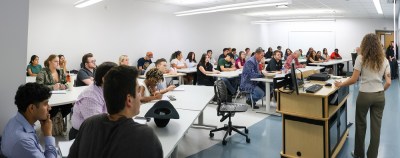
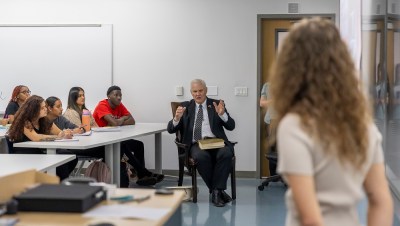
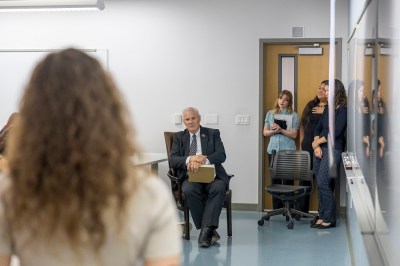
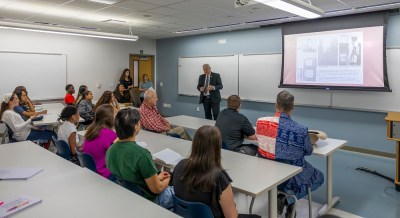
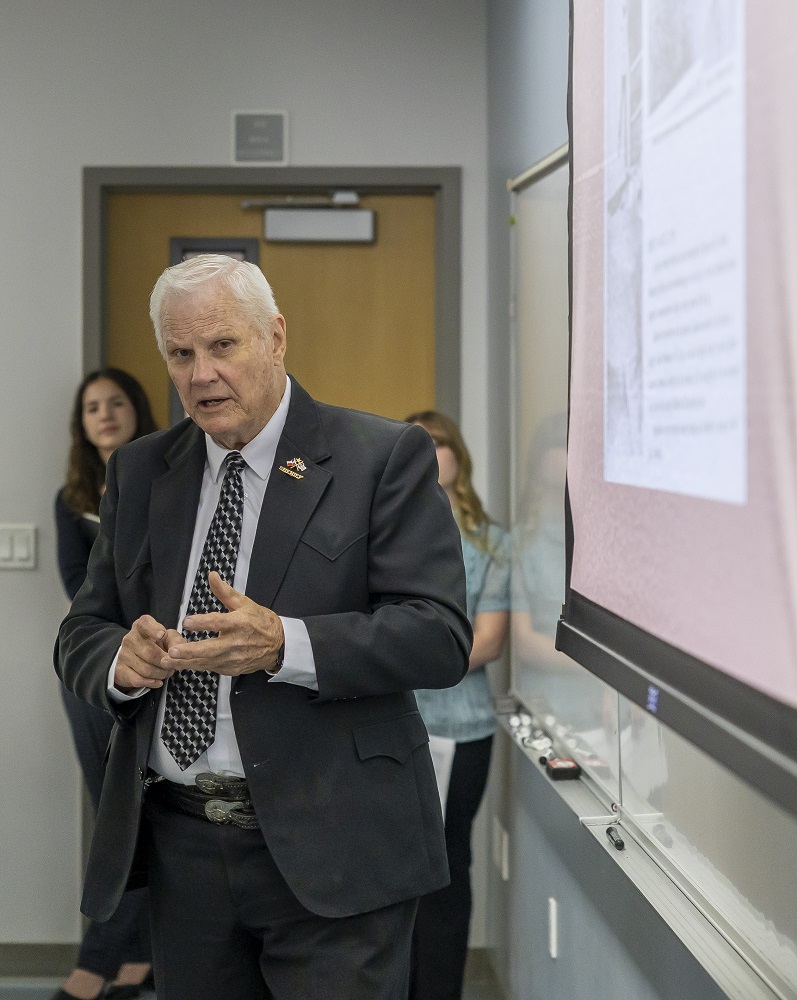
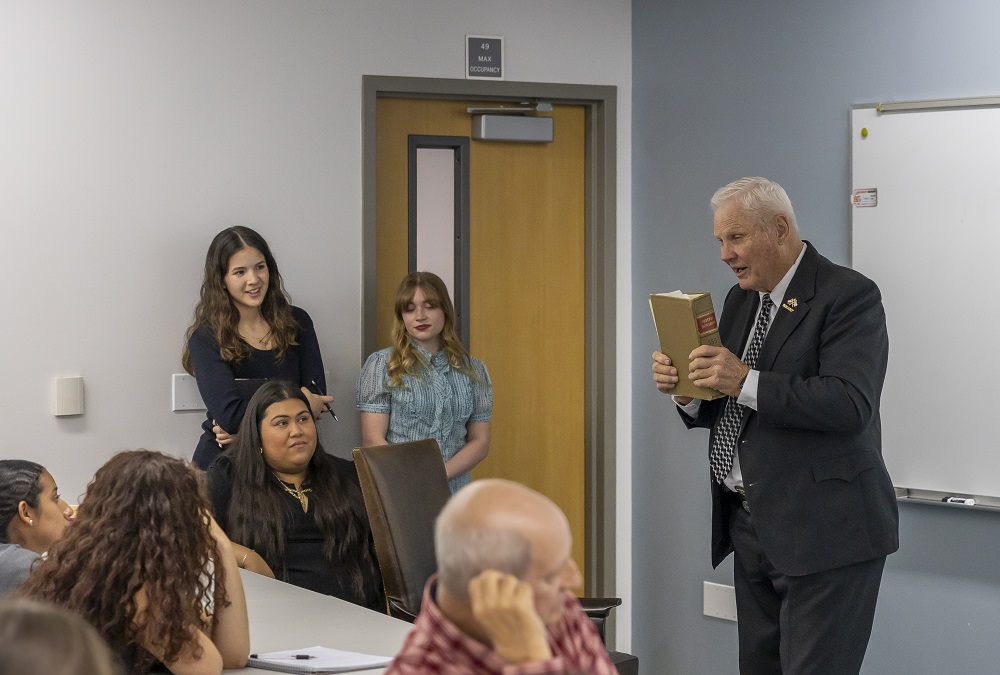
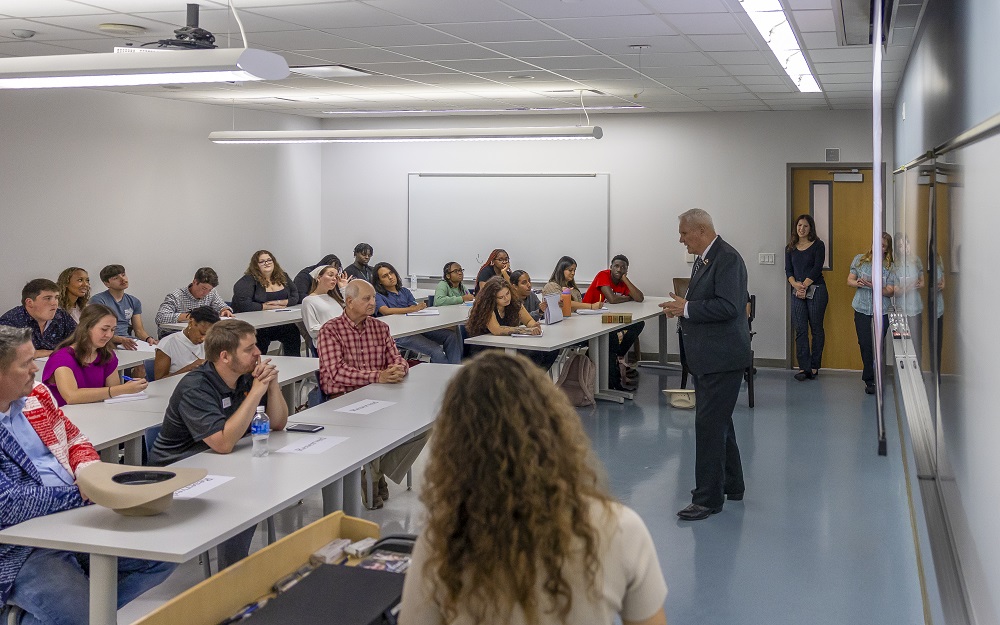
Throughout the years, LEAP has had several traditions of engaging in judicial court experiences. To carry on with this tradition, we, alongside SHIAP interns, went on a tour visit to the Texas Supreme Court, guided by Justice Evan A. Young himself! 

Interestingly enough, few people realize that Texas has one of the nation’s most unique judicial systems. Along with Oklahoma, it’s one of just two states with a bicameral supreme court—one for criminal cases and the Texas Supreme Court for civil and juvenile matters. 

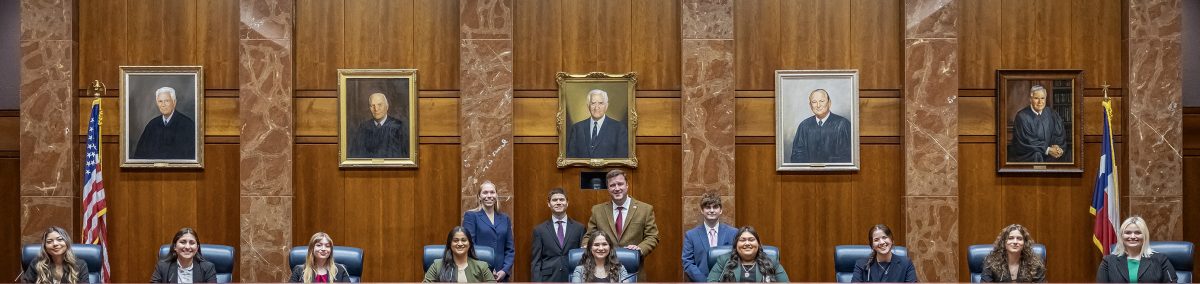
To start off, Amy Starnes, the Court’s Director of Public Affairs, warmly welcomed us to begin our tour. Our first stop was the courtroom where justices hear oral arguments and deliver their rulings.

The room’s walls display portraits of former Justices, Justice Young touching on the idea that these Justices past decisions will forever be remembered, even if the justices deciding upon them might not be. Notably, one of the displayed Justices being Robert Gammage, a Sam Houston alum! 

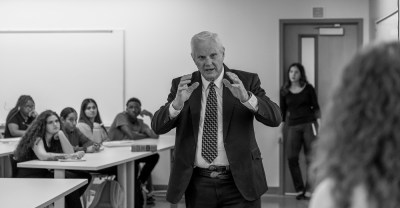
Justice Young offered particularly compelling insights into our judicial system and informed voting. He emphasized Texas’s distinctive history of putting judicial selection in citizens’ hands while stressing the importance of researching candidates before casting our ballots. This helps us preserve the quality of our state, and these nominees are just a reflection of the citizens that vote them in. 

He then shared candid reflections about the challenges judges face, especially the crucial task of interpreting law without letting emotions guide decisions—a valuable lesson for our group of, hopefully, legal professionals. 

The tour continued to the judges’ robing room, which is a private space where justices can retreat for breaks, discussions, and moments of respite. (A fun detail: there’s a TV showing the courtroom, hence the need to whisper!) 

One highlight was returning to the courtroom for a photo opportunity at the justice’s bench—a moment none of us will soon forget. Although I have attended many Austin trips, this will surely be in the books for my favorite! 

Justice Young concluded by showing us the conference room where Justices deliberate cases, emphasizing its confidential nature. As we departed, Mrs. Starnes pointed out a fascinating historical artifact: a portrait commemorating three women judges from 1925, highlighting the advocacy for women’s rights in Texas and empowering women in the legal profession!  


New York Stories

Art in the Heart of New York

by Chrissy Biello

On day two in New York, we woke full of hope and to clear blue skies…

…albeit with a pronounced chill in the air.

Despite the cold, we were ready to explore the city on foot–not, perhaps, expecting to get in more than 30,000 steps while visiting four museums and two libraries!

With a busy schedule for the day, we hoped to experience all that was possible, including the Whitney Museum of American Art, The Metropolitan Museum of Art (The Met), Solomon R. Guggenheim Museum, and the Museum of Modern Art (MoMA). 

Although these museums host art from myriad genres and movements, we focused on three primary areas: American, European, and Modern/Contemporary, finding that this was more than enough to keep us busy over a long day while also expanding our knowledge of the arts.

American

With us bringing different levels of knowledge about art to the trip, there was something for everyone to enjoy–and learn about–among the Museums’ many collections. Speaking for myself, I had many opportunities for learning, and my first such experience of the day involved coming across Early Sunday Morning, by Edward Hopper, at The Whitney.

The American collections had many great pieces, showcasing the depth and diversity of American art. Edward Hopper’s Early Sunday Morning (Whitney) drew me in…
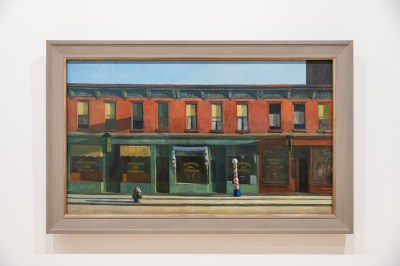
“Early Sunday Morning,” by Edward Hopper

…which was perhaps appropriate, inasmuch as Hopper was born near New York, and he died in Manhattan, not far from where we were seeing his work. This particular piece, I learned, reflected his most commonly emphasized colors (red, yellow, blue, green), as well as the sense of loneliness and isolation that so often characterizes his art.

The museums also showcased Thomas Hart Benton, one of Professor Yawn’s favorite artists. His piece The Lord is my Shepherd (Whitney), Cotton Pickers (The Met), and America Today (The Met), highlighted the regionalist style, while also showcasing Benton’s sense of artistic rhythm.

The representation of African American artists was particularly moving, including Jacob Lawrence’s emotionally charged War Series, which captured collective anxiety…

…and Horace Pippin’s compelling Cabin in the Cotton (Whitney).

We should also mention a work of art in its own (W)right: The Guggenheim Museum. Although all of us appreciate Frank Lloyd Wright’s work none of us had been inside one of the last major architectural works of Wright’s story career, In addition to scoping out the art around the walls and alcoves, we also spent much time simply looking at the interior from various angles and perspectives. Beyond the many genres of art we had a chance to experience, we added to this list American architecture.

European

The European collections presented numerous memorable works. One of the day’s highlights was getting a selfie with Vincent van Gogh’s Self Portrait with a Straw Hat (The Met) and seeing a study of Georges Seurat’s magnificent A Sunday on La Grande Jatte (The Met). Other notable works included John Singer Sargent’s Wyndham Sisters (The Met) and Renoir’s Woman with Parakeet (Guggenheim). 

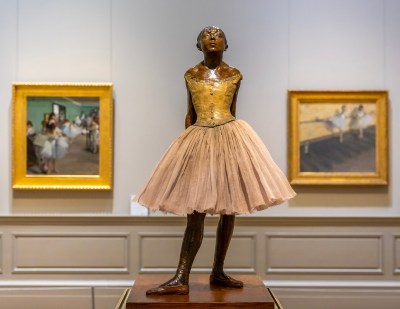
Moreover, I was particularly excited to see more pieces by Edgar Degas, especially after seeing a copy of his famous sculpture Little Dancer of Fourteen Years outside the Degas House in New Orleans. One that I was fond of is his Dancer Moving Forward (Guggenheim) sculpture. 
Modern

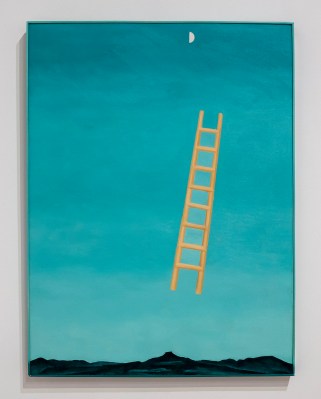
The modern collections sparked much reminiscence and contemplation. Georgia O’Keeffe’s Ladder to the Moon (Whitney) initially made our group think of Leandro Erlich’s Too Late for Help piece in the New Orleans Museum of Art Besthoff Sculpture Garden, and it was a different look than what we were used to seeing from Ms. O’Keeffe.
And, Keith Haring’s Untitled 1981 piece (Whitney) was enjoyed by everyone and left us thinking of his other known works. 

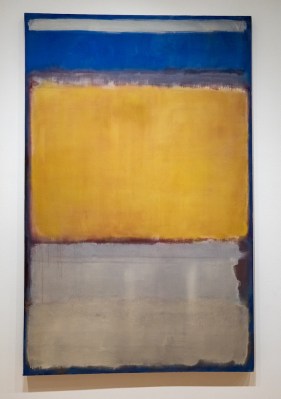
Further, we discovered interesting connections, like learning that Mark Rothko’s Number 10 (MoMA) was donated by Phillip Johnson, whose architectural work we had admired at University of Saint Thomas Cathedral in Houston, the PPG building in Pittsburgh, and the Water Gardens in Fort Worth!
Rene Magritte’s The Lovers (MoMA) particularly excited Olivia, while Salvador Dali’s The Persistence of Memory (MoMA) proved even more captivating in person than in reproductions. 

Jackson Pollock’s One: Number 31 (MoMA) captivated us with its scale and abstract expressionist techniques. And, seeing Vincent van Gogh’s Starry Night (MoMA) in person was a treat, a piece Olivia and I had long hoped to experience!

Seeing art from these diverse categories has helped structure my understanding. As I learn more about art, it becomes enjoyable to identify artists before reading the placards. I hope to develop this skill further, aspiring to reach the expertise level of Stephanie, Professor Yawn, and Olivia!

NY Stroll

Walking to four art museums allows for quite a lot of site-seeing, and we tried too make most of our journeys on foot. We began by hoping to photograph the Statue of Liberty, but we were foiled by New York’s never-ending construction. The Statue of Liberty was visible only by boat or through a window, and we only had time for the latter–definitely not the photo we hoped for.

As if to compensate, we had an unexpected photo opportunity, when we all witnessed what Olivia described as “the most New York thing I’ve ever seen”–a squirrel eating a bagel.

We also made our way past the “Charging Bull”, which judging by the sides of the crowds, was probably one of the most popular sites in NYC.
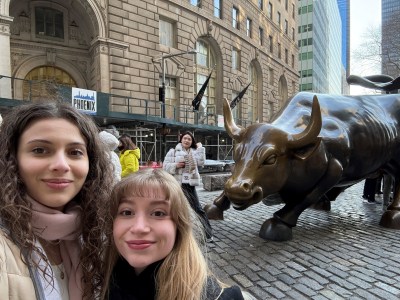
Nearby, we saw the statue of the defiant and vigilant girl, who keeps watch on the New York Stock Exchange.

Because this trip was designed for us to see the presidential inauguration, we also stopped by “Again”, the Federal Hall, to get another and better photo of the George Washington Statue. This significant site was witness to the first ever presidential inauguration and, later, to the writing of the Bill of Rights.

Probably the biggest treat for us was visiting the grand New York Public Library. We stopped for a selfie here, named after the two famous lions who stand guard to the front of the building.

One of these lions is named Patience; one is named Fortitude. No one, it seems, knows which is which, and because they are identical, we’re not sure it matters. Inside the NY Public Library, we visited the periodical reading room, which features 13 murals by Richard Haas. After some negotiation with the paid staff, we were allowed to take a few pictures. Haas, of course, has done 15 murals in our adopted hometown of Huntsville, Texas. Interestingly, New York has the most interior murals of Richard Haas, while Huntsville has the most exterior murals of his in any city in the world. Not to brag, or anything. (Thank you Linda Pease.)

Of course, we had to stop into the nearby Grand Central Station, which we found to be beautiful.

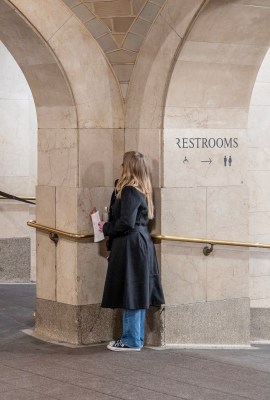
Chrissy also found the “whispering wall,” where a vocalization on one corner will transmit to the other corner, with those in between none the wiser.
All of the above occurred fairly early in our 15 hour day. Our trip back to the hotel, however, was at the end of the day through Times Square, which Chrissy regarded as a special hell on Earth. Having walked more that 30,000 steps, Chrissy’s ankles were literally bleeding, and her misery quickly became ours.

In fairness, Times Square is a bit much, even by American standards. After spending the day reviewing the classics of art, it was a bit jarring to be amidst the gawkers, wannabe influencers, and loiterers. This, combined with the loud sounds and bright, multicolored lights, provided more than enough stimulation for everyone.

Amidst this chaos, we found Hope, literally. In 2008, Robert Indian transformed his classic LOVE sculpture into a HOPE sculpture, reflecting one of President Obama’s campaign messages. As Robert Indiana fans, we paused for a selfie, and in our head tallied up how many said large scale sculptures we have seen. Chrissy, 2; Olivia 4. And on this optimistic note, we wrapped up day two of our five-day democracy tour.

Reading Rooms of the Rich and Famous: The Morgan Library

by Olivia Discon

Among our many stops in New York, our visit to the Morgan Library was a highlight, far exceeding my expectations. I knew it would be beautiful, but the experience left me in awe.

We began with an exhibit on Belle da Costa Greene, the library’s first director, whose story was as inspiring as the treasures she curated. Born in 1879, Greene was an African American woman who passed as white to navigate the racial barriers of her time.

Despite these challenges, she rose to prominence as a librarian and curator, eventually studying at Pratt Institute, where she trained for her remarkable career. Her contributions shaped the Morgan Library into what it is today, and the exhibit offered a glimpse into her extraordinary life and work.

The structure itself was stunning. In one room, for example, the ceiling crafted by Samuel Yellin, featuring 648 intricately detailed birds—each unique, down to the shape of their beaks.

Among the exhibit’s standout items were pieces from Belle Greene’s personal collection, including Albrecht Dürer’s Melencolia I

…a masterpiece I’d studied in class, as well as a William Blake drawing and a signed poem by John Keats.

I was especially captivated by her desk and personal collection, which continued to show her exceptional taste! 

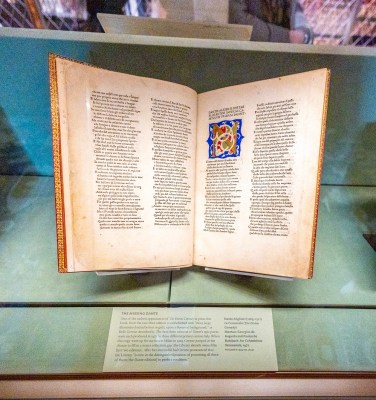
From there, we moved into the library’s main attraction—the breathtaking library room itself. Shelves were lined with treasures, including titles such as Dante’s Inferno

…Rousseau’s The Social Contract, and works by Voltaire.

We even saw ancient artifacts from Mesopotamia and a Gutenberg Bible!

I felt like a kid in a candy store! 

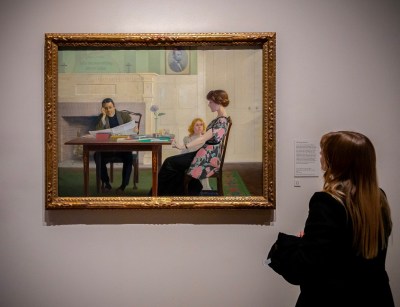
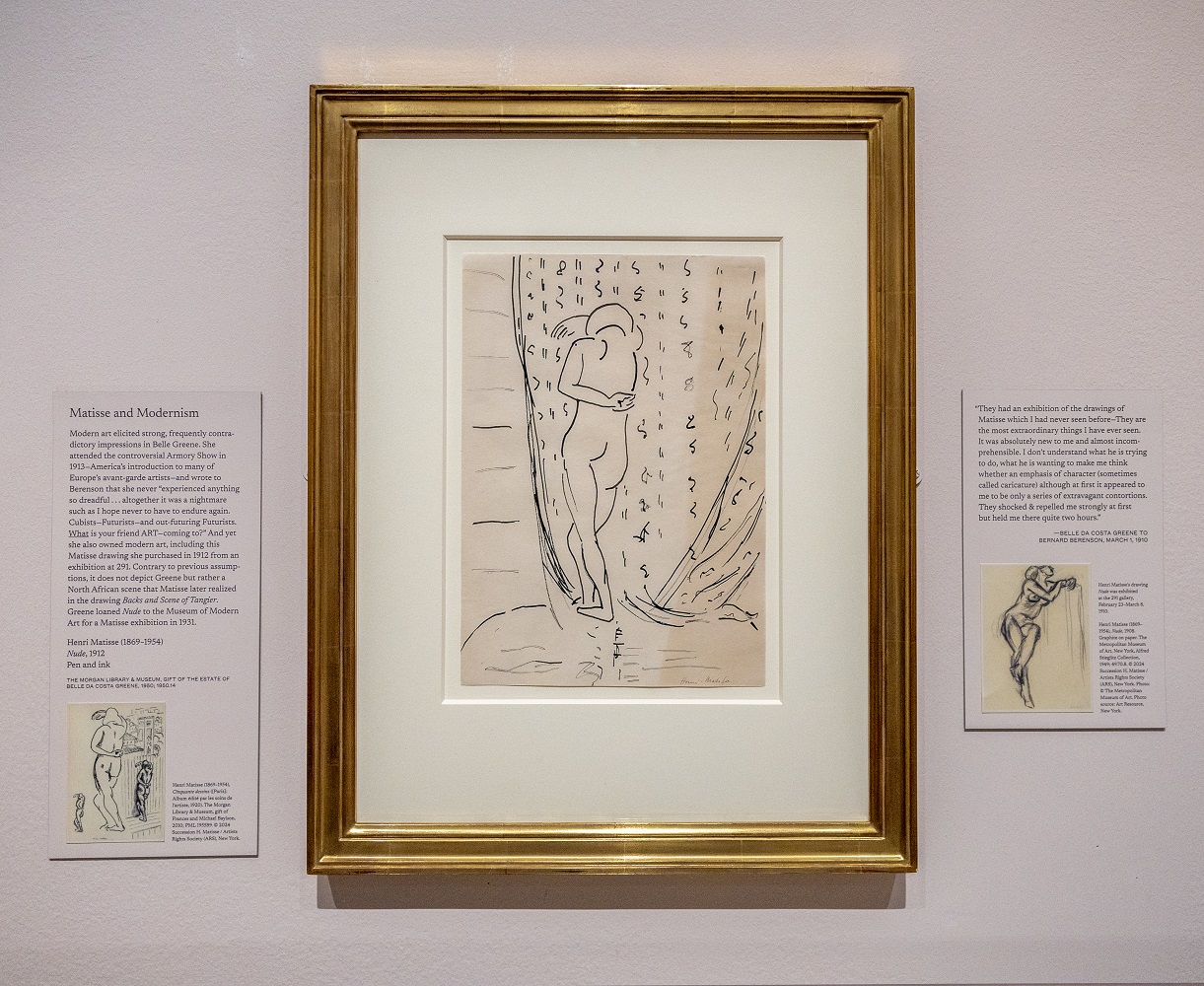
As befits a wealthy collector, Morgan also owned a healthy collection of art, some of which was also on display. Thus, we were able to not only glimpse into the lives of the very wealthy, we were also able to expand our knowledge of art, by seeing works from Henri Matisse, John Singer Sargent, and William Wetmore Story, among others.

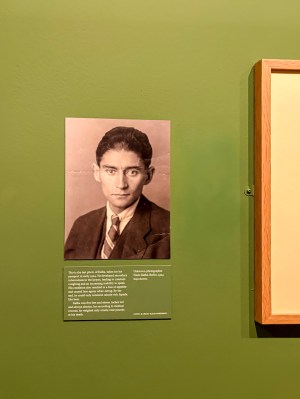
Before leaving, we quickly explored a Franz Kafka exhibit. Though our time there was brief, it was fascinating to see pieces that shed light on his complex and often enigmatic life.

As someone who has read some of his work, I wished we’d had more time to immerse ourselves in his story, especially after seeing an Andy Warhol portrait of him.

In the words of Kafka himself, “It is irresponsible to travel, even to live, without taking notes.” It was a privilege to add this visit to our travels—and to write about it!

A Thrilling Afternoon with Harlan Coben

by Christina Biello

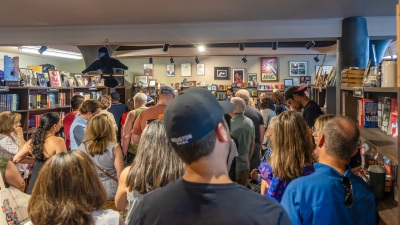
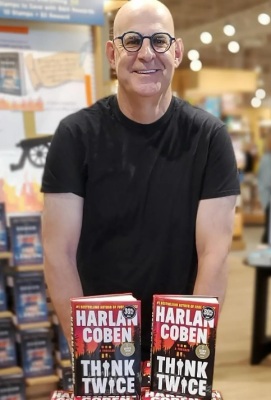
As a student at Sam Houston, I find it almost impossible not to encounter numerous criminal justice majors daily. Many have a passion for mysteries and true crime, and I have always enjoyed them as well. So, on a Saturday evening, Olivia, Cinthia, and I decided to indulge this shared interest by attending an author talk by Harlan Coben, a renowned writer of mystery novels and thrillers, who was on hand at Murder by the Book to discuss his latest book, “Think Twice.” 

This was my first visit to the bookstore, and it did not disappoint. The atmosphere was lively; the substantial turnout indicated Harlan Coben’s widespread appeal.

His popularity is further shown by the numerous adaptations of his books into television series, such as the acclaimed Netflix show The Stranger, which was released in 2020. 

When I began perusing the novels lining the shelves, my gaze fell upon some familiar names. Among them was Jeff Guinn, who recently came to SHSU in September of 2023 to share his knowledge; he spoke on topics such as Waco, Jim Jones, and Bonnie and Clyde. His books, including Manson: The Life and Times of Charles Manson and his latest release from 2023, Waco: David Koresh, the Branch Davidians, and A Legacy of Rage, were prominently displayed. 

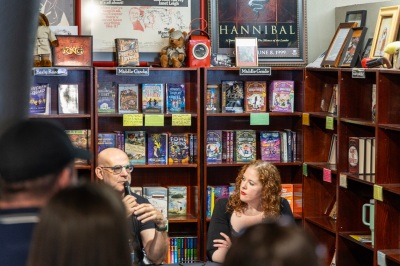
I continued to scan the titles; however, the eruption of laughter from the audience interrupted my thoughts, drawing my attention to Harlan Coben. His quick wit and humorous anecdotes thoroughly entertained the crowd, and I found myself awaiting each twist of phrase and clever remark. 

As he addressed the audience, he shared insight into his writing process, emphasizing that he does not approach his novels with the sole intention of creating a successful Netflix Show. “If it’s good, then it’s good, but if not, then it’s fine,” he remarked. This highlighted his dedication to crafting meaningful stories rather than solely aiming for commercial success on streaming platforms.

But that success has clearly helped his sale and crowds. For most of the event we weren’t even able to see Coben!–although we did sneak to a spot that allowed us to get a partially obstructed photograph.

He elaborated on his process further when an audience member inquired whether he begins with the story or the characters. Coben noted that while many writers claim to start with characters to sound more artistic, that is often not the case. He clarified that he typically begins with an idea and then delves into determining who will narrate the story. That is, who the main character will be. He stressed the importance of not separating the character from the plot. Some attendees appeared puzzled by this explanation, a sentiment Coben seemed to discern from their expressions. 

To elucidate, he cited the example of Batman’s origin story. He recounted how Bruce Wayne witnessed his parents’ murder, leading to his transformation into an orphan and, eventually, Batman. Coben then posed a question to the audience: “Was this aspect of the story character-driven or plot-driven?” This prompted the realization that it encompassed both character development and plot progression. The clarity provided by this example effectively reinforced Coben’s earlier point about the inseparability of character and plot. 

Harlan Coben’s captivating talk not only entertained us but also provided invaluable insights into the art of storytelling. From the comforting ambiance of Murder By The Book to the contagious laughter echoing through the crowd, every moment was a testament to the profound impact of literature in fostering connections. This memorable evening reaffirmed my passion for the enchanting realm of mysteries and true crime. With eager anticipation, I look forward to returning to the bookstore to immerse myself in its treasure trove of stories and experience more fulfilling author talks.

Shear Madness is Sheer Fun!

by Cinthia Villarreal

As LEAP Ambassadors, we do our best to maximize our experiences. This means taking as many opportunities as possible in a given location. So, following a day of conference sessions, we took advantage of a free evening to see “Shear Madness” at the beautiful Kennedy Center.

As we entered the building, a majestic, jaw-dropping hall with worldwide flags hung from the tall ceiling greeted us…

…and at the end, windows from top to bottom with a red dragon on it allowed us to see into the Potomac River.

To add to it, the sun setting on the other side of the building gave us an amazing reflection inside the hall and an awesome view of the D.C. skyline. 

While wandering around the building, we were able to recognize the artists of the various art pieces at the patio. Throughout the trip, we have seen numerous works of Lichtenstein so, even though not a fan favorite, we still felt proud to recognize his art. 

This trip we have learned and gotten to know the work of Joel Shapiro. Using rectangular abstracts of human figures, Shapiro captures movement of the human body.

Olivia and I saw Debra Butterfield’s work on our Southwest trip at the Texas Tech campus and were ecstatic to see her work again, and in the other side of the country, too. 

As we entered the Kennedy Center’s lobby, beautiful chandeliers showed the way into the theatre… 

…and we were ready for the play to begin.

The play takes place in a present-day Georgetown in retro styled beauty salon where Tony Whitcomb and Barbara DeMarco, the hair stylists; Mrs. Shubert; Eddie Lawrence, an antique dealer; and Nick O’Brien, an undercover police officer, are introduced to the public.

As Tony and Barbara are at work, they get sidetracked and wrapped in current gossip, frequently unbothered about their costumer’s time or even safety. Suddenly a piano starts playing and Tony begins to complain about Isabel, the upstairs elderly neighbor who is also a worldwide recognized pianist. 

Suddenly, the group is told that Isabel has been mysteriously murdered and everyone becomes a suspect to an open crime.  As the interrogations begin, the crew starts acting suspiciously and begin to throw each other under the bus with the police in order to not be the main suspect. 

What truly made this experience one-of-a-kind, is when Officer O’Brien turned to the public for their insight on the case. With this, the play became interactive, and the crowd begins calling the actors out for lying, covering each other, or acting suspicious. He then invited the public to ask questions, which forced the actors to come up with the answer impromptu, and consequently, start improvising with jokes about current affairs and even about the audience. 

Being new to the theater world, I never thought I would find the theater so captivating and humorous.  It was amazing to witness the true skills needed for improvisation and I seriously admire the actor’s professionalism and readiness for staying in character without knowing what was to come.

In a small way, it’s like being a LEAP Ambassador, grabbing opportunities as they come, even when we don’t know what might be around the corner!