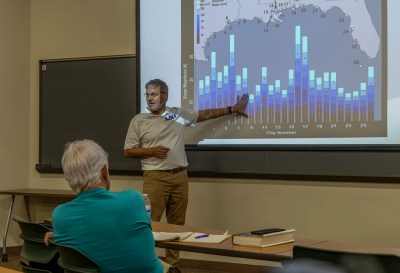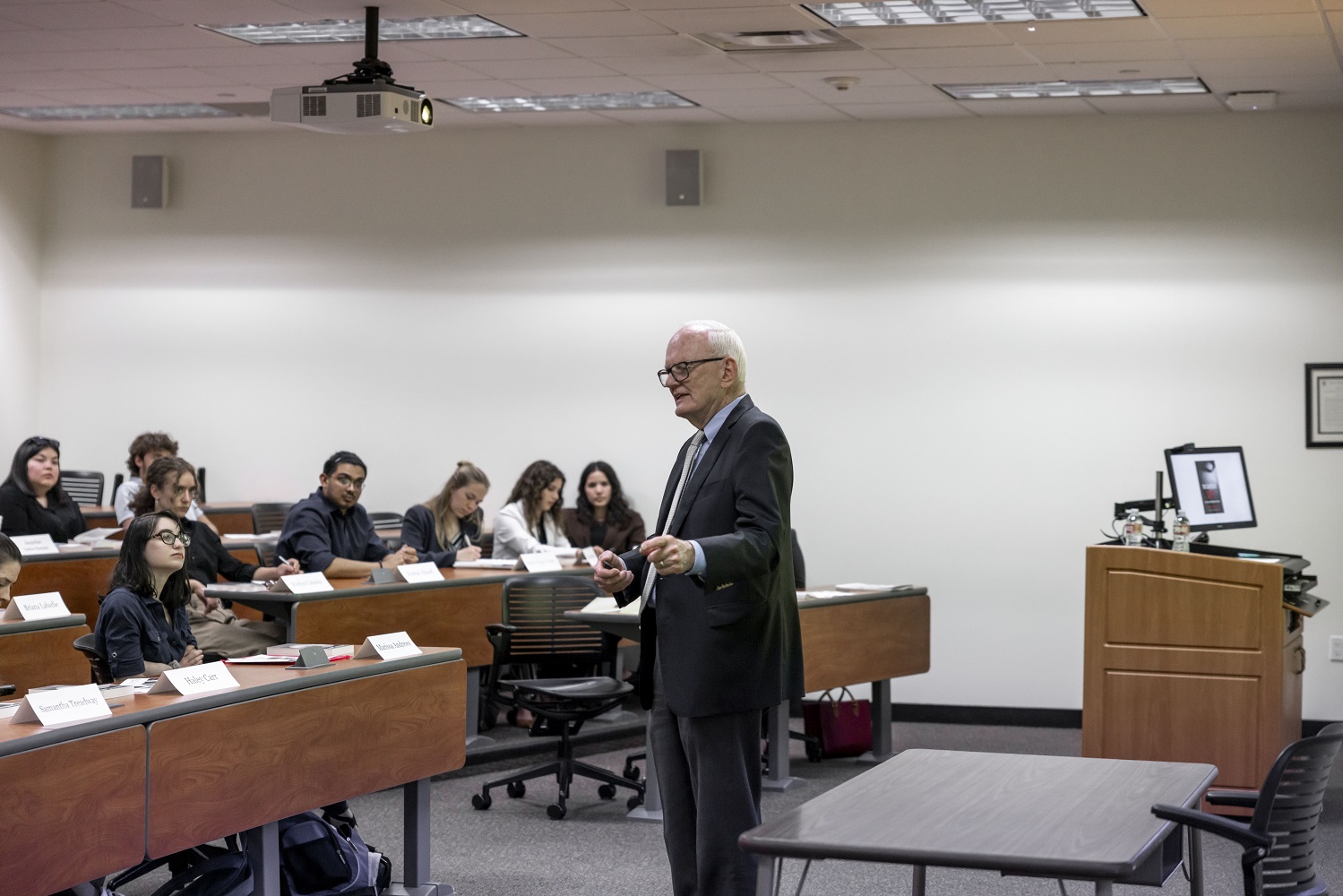
Anyone who watches the news occasionally knows about climate change, but few people truly understand it. The Department of Environmental Sciences, however, worked to changed that by inviting Dr. Barry Keim, Professor of Climatology at LSU, to discuss this important topic to a group of faculty, staff, and students at SHSU. The turnout was impressive, with more than 100 people on hand to hear Dr. Keim, who was introduced by Drs. John Strait and Ava Fujimoto-Strait.
Anyone who experienced last summer was unlikely to be surprised by Keim’s first observation: 2023 was the hottest summer on record. But Dr. Kiem’s interests also extended to the related concepts of the Atlantic Ocean temperatures, storm surges, and, in general, extreme weather events. Interestingly, five of the ten largest Gulf of Mexico storm surges have occurred in the past 20 years, and another four occurred from the period of 1961-1975.
Another lens through which to look at climate change’s impact on storms is the sheer length of storm season. The “season” is defined as the period spanning the first “named” storm of the year to the last “named” storm of the year. In the late 19th century, the mean storm season was approximately sixty days, but in the last ten years, the storm season has lasted, on average, about twice that long.
And, it turns out, while the total amount of rainfall may be more or less constant, this doesn’t mean that the rain is having the same effect from year to year. Instead, what we are seeing is longer periods without rain punctuated by more intense storms, resulting in more flooding and more hail damage.
Other measures show similar trends. Selected cities have experienced fewer freeze days over the past 100 years; and, by extension, an more than 70 percent of the counties in the US have seen an increase in annual “minimum temperatures” and about 40 percent of the counties have had an increase in the annual “maximum temperatures.”
A key takeaway, according to Kiem, is to focus more on the variability in temperatures and rain, and less on mean changes. And the potential results of these changes, Kiem noted, are “downright frightening.”
Kiem’s talk seemed to be prophetic. Following his talk, rains began, intensified, and caused much damage …
…in the Walker, Brazos, Grimes, and Montgomery Counties.
So much so that SHSU cancelled classes on the main campus.In an interesting coincidence, SHSU, perhaps for the first time, cancelled class on the first and last day of the semester because of weather-related events.
Many thanks to the Department of Environmental Science for bringing an interesting speaker to campus for the exchange of ideas–exactly what a University is designed to do!
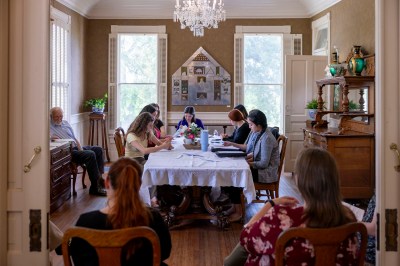
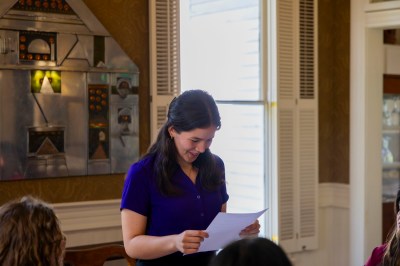
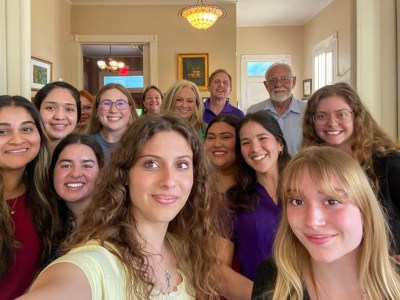
As the semester draws to an end, the City Fellows–interns placed by the LEAP program–are wrapping up their internships. As part of that process, and following numerous professional development activities this semester, they took on the roles of City Council and City Directors and participated in a Mock City Council at the beautiful Wynne Home.
On hand to guide and observe were supervisors Andrea Howard (Wynne Home), Amanda Schillaci (Huntsville Main Street), Tammy Gann (Economic Development), Aron Kulhavy (City Manager), and Mac Woodward (former Councilmember and Mayor).
The process involved knowing parliamentary procedures, researching topics such as dockless scooters, park acquisitions, and municipal contracts. Participating were Cinthia Villarreal (Mayor)…
The “process could be intimidating,” noted “Mayor” Villarreal, “but what we get from it is outweighs in importance any embarrassment or hesitation we might feel at the moment.”
Although the topics were relatively straightforward, they elicited questions such as: (1) who owns that GPS data from scooter usage and what can such data be used for?; (2) on what streets would scooters be legal?; (3) what are the downsides of designating land a “park”?; and (4) who is allowed to speak at council meetings, on what topics are they allowed to speak, and for how long?
It was, noted Biello, “quite the learning experience, offering me valuable insights into the legal nuances and special considerations essential for effective governance.”
With expert guidance from City staff, as well as a comparative perspective from those who have worked at other cities (including Madisonville, TX and Salado, TX), we were able to pass some good things for our Sim-City, learn a whole lot, see some great art, and spend time with some great people!
After registering for the Congressional City Conference, we had a detailed schedule that we hoped to follow. That changed at about 5am on Monday morning, when Professor Yawn called us letting us know that, well, plans had changed.
Instead of arriving at 9:15am for the 9:45am opening, we would be arriving at 7:30am, in time to register and get in line. And why would we need to arrive so early? Because overnight, President Joe Biden had been announced as the key speaker, and this, understandably, creates a large crowd.
Opening Session
With Biden scheduled to speak, the introductory speakers had the difficult task of capturing a distracted audience, although some nice opening ceremonies helped set the stage.
It also helped that Doris Kearns Goodwin, Pulitzer Prize winning author and well-respected historian, was Biden’s lead-in.
Like Biden, Goodwin is in her 80s, and also like Biden, she came out feisty and lively, quickly drawing the audience to her. She regaled the more than 1,000 attendees with stories of her days in college, when she was an anti-LBJ, anti-Vietnam War activist, and nonetheless, the President selected her for a fellowship. She didn’t always agree with his policies, she noted, but she did see things from his perspective, and this made for a good relationship. In fact, he asked her to help him with his memoirs in his post-presidency.
Goodwin also discussed how local leaders play a role in making Presidents successful, highlighting civil rights as an example. She also discussed the key elements of leadership, one of which she emphasized: the experience of personal struggles, which allows presidents to grow personally and to empathize with others.
This, of course, has applied to many presidents and leaders–and she highlights Abe Lincoln, FDR, LBJ, and Teddy Roosevelt. It could also apply to President Biden, whose life has been marked by the death of two children and a spouse.
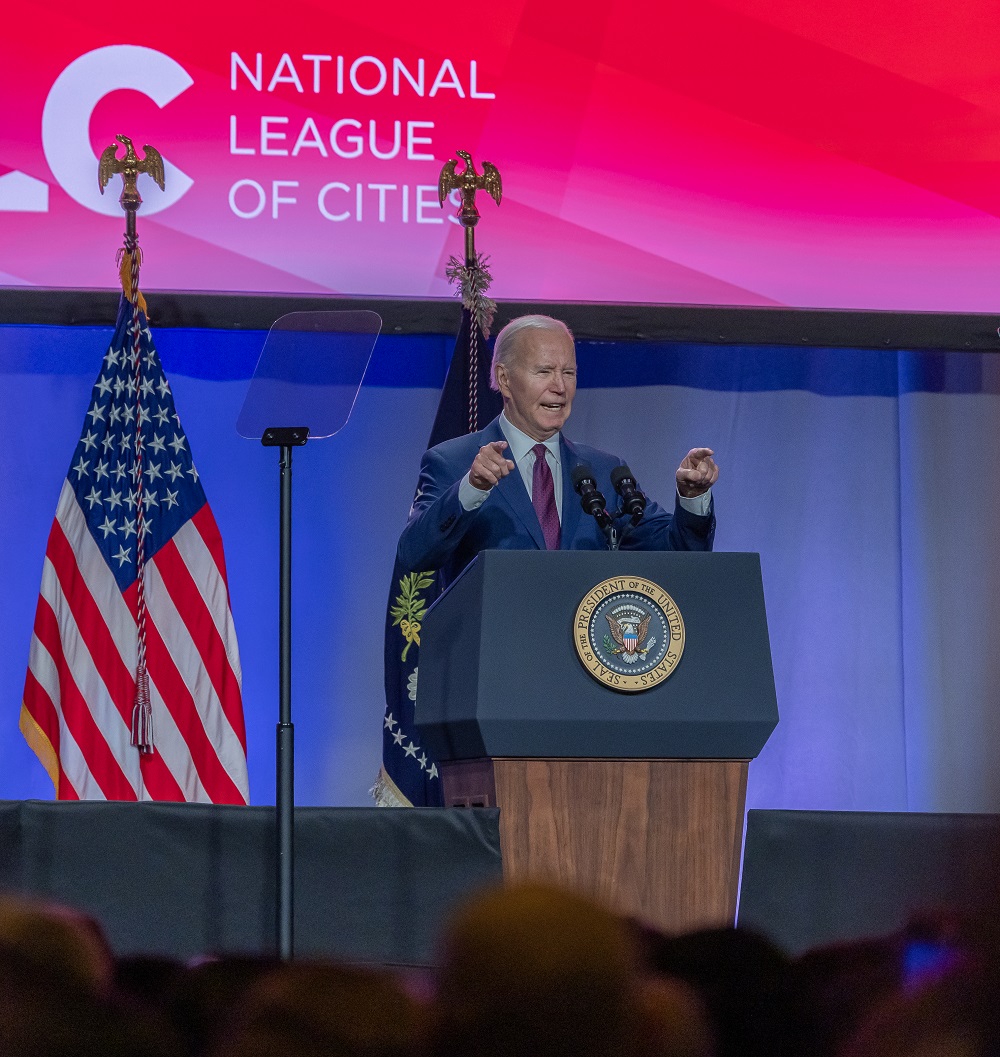
And it was a feisty President Biden who showed up to speak to the large crowd of municipal leaders.
Echoing many of the themes from his State of the Union speech–albeit with a greater emphasis on more local matters–Biden stressed his support for efforts to rein in gun violence, his call to pass the “toughest border bill ever drafted,” and his economic track record.
He also hearkened back to the formation of the National League of Cities, which occurred in 1924–and he insisted that he was NOT in the room for that initial get together.
Biden’s speech was greeted enthusiastically by the large crowd, and he received an extended ovation.
After the opening session, we returned to the National League of Cities conference for a very interesting general session. This session featured multiple remarkable speakers who presented projects and shared their expertise. NLC’s 2nd Vice President, Steve Patterson, expertly emceed the general session.
Among the speakers was Julie Su, the United States Deputy Secretary of Labor, who shared some important points on the pivotal role of local leaders in shaping labor policies and fostering economic growth within their communities. She emphasized the necessity for collaboration between federal and local forms of government to effectively address challenges in labor. Amongst the issues she presented, child care and transportation seemed to be the most pressing issue for the Biden Administration. Secretary Su made sure to emphasize the crucial intersection between local government and national labor initiatives.
One of the sections of the general session included a panel discussion moderated by NLC’s First Vice President, Sharon Weston Broome. The participants included Mark Hayes, Executive Director of the Arkansas Municipal League; Steve Marshall, Attorney General of the State of Alabama; and Donald Mason, Mayor of Janesville, Ohio. The topic of discussion was the alarming rise in opioid-related deaths over the past few years. The panelists shared the devastating impacts the crisis has had on their communities. Attorney General Marshall highlighted the financial costs that opioid-related incidents bring to Americans, citing a cost of $98 billion. Director Mark Hayes shared a very personal story about losing his son to a fentanyl overdose, emphasizing the urgent need to address the crisis to prevent others from experiencing such pain.
The panelists mentioned the importance of flexibility and learning from mistakes, acknowledging the varied approaches taken by all 50 states in tackling the crisis based on their unique community needs. They encouraged city officials to take initiative and not be afraid of failing in the process.
Pete Buttigieg, the Secretary of the U.S. Department of Transportation, concluded the National League of Cities general session. He emphasized the difficulty of local government and gave props to all the officials for their hard work in serving their community. Buttigieg also highlighted the $1.3 trillion infrastructure deal that is allowing communities and cities to improve. He introduced new grant programs with the ultimate goal of enhancing communities.
During his discussion, he spotlighted Baltimore’s 150-year-old railroads and stations that will be fixed and replaced so they can be used by citizens. Buttigieg mentioned how important transportation is, closing his session with a very insightful quote worthy of reflection: “Transportation is not just a connection to the other side of town but a connection to opportunity.” left This observation left a lasting impression on me, making him my favorite speaker of the general session.
Aligning Workforce Dev with Plans for Economic Growth
Olivia Discon
Later that afternoon, our group decided to attend one of the “Deep Dive” panels, which offers a more specialized conversation regarding some of the most pressing city matters. We decided to take a ‘deep dive’ with the “Aligning Workforce Dev with Plans for Economic Growth” panel. Having some experience with the City of Huntsville’s Economic Development department, we thought this panel would be a great way to expand our understanding of what comprises a healthy economy for a city.
This panel had no shortage of experience. We had the pleasure to hear a bit from Brittany Stich, Senior Advisor of the U.S. Department of Labor, Tess Mason-Elder, Director of Office Relations of Americorps; Colleen Rathgeb Associate Deputy Assistant Director of ACF; Catherine McConnell, Policy Advisor for U.S. Department of Education; Paige Shelvin, Strategic Advisor for IWD and USDOT; and moderated by Adriana Rocha Garcia, Council Member of San Antonio.
To attract, retain, and expand businesses to a city, there are a multitude of factors that incentivize businesses to choose that city, and for workers to choose to work there. A good standard of living is at the forefront of that choice. This, of course, comes in many forms, including the quality of the city’s cost of living, safety, education, community events, and existing businesses. Interestingly, this panel placed an emphasis on childcare facilities, career and technical education, and good infrastructure to incentivize a strong workforce. While these factors may not appear to be a crucial aspect to this issue, they are implicit and are potentially one of the deciding factors between one city or another. It was incredibly stimulating to consider how some of the talking points tied into a common outcome for cities, and ponder how Huntsville may fit into the equation.
The LEAP Center (Law, Engagement And Politics) recently hosted an event that left attendees intrigued by tales of espionage, moral dilemmas, and the weight of keeping national secrets. The guest speaker for the afternoon was James M. Olson, a distinguished former chief of CIA counterintelligence, whose career has been a fascinating journey through the shadows of international threats.
Mr. Olson shared his story with two groups: Rotary Club of Huntsville and a large group of SHSU students.
James M. Olson is an expert on the clandestine world; Olson’s career spans more than three decades in the Central Intelligence Agency. Rising through the ranks, he eventually became the chief of CIA counterintelligence, tasked with safeguarding the nation’s secrets from foreign adversaries. His level of expertise in espionage, national security and counterintelligence is unmatched.
However, what sets James M. Olson apart is not just his professional achievements but the personal sacrifices he made to serve his country. As he shared during the events, Olson had to keep his work secret from his own family and children to ensure their safety. The burden of secrecy weighed heavily on him, presenting numerous moral dilemmas. Yet, with the support of his wife, Meredith Olson (also a CIA Agent), he navigated these challenges with resilience and dedication.
During the program, Mr. Olson recounted how he eventually revealed his secret life to his children. Contrary to his fears, they reacted with pride upon learning about their father’s role in protecting the nation. He took the time to highlight the complexities of balancing duty with family obligations.
Throughout the day, one theme resonated deeply with Mr. Olson: his unwavering passion for the United States. He spoke extensively about the honor he felt in being entrusted with some of the nation’s most important secrets. His commitment to upholding the ideals and values of the country underscored his dedication to service.
However, alongside his admiration for his country, Mr. Olson touched a more sensitive subject; those who betray their nation. He had harsh words to express his resentment toward individuals who commit treason, labeling them as the worst kind of individuals in the world.
The day with James M. Olson was truly captivating and eye opening. The topics of espionage, patriotism, and moral integrity truly make you reflect on the future of America and all the individuals who put their lives on the line for our safety. I was definitely left with a newfound appreciation for the sacrifices made by individuals like Mr. Olson in safeguarding the nation’s security.
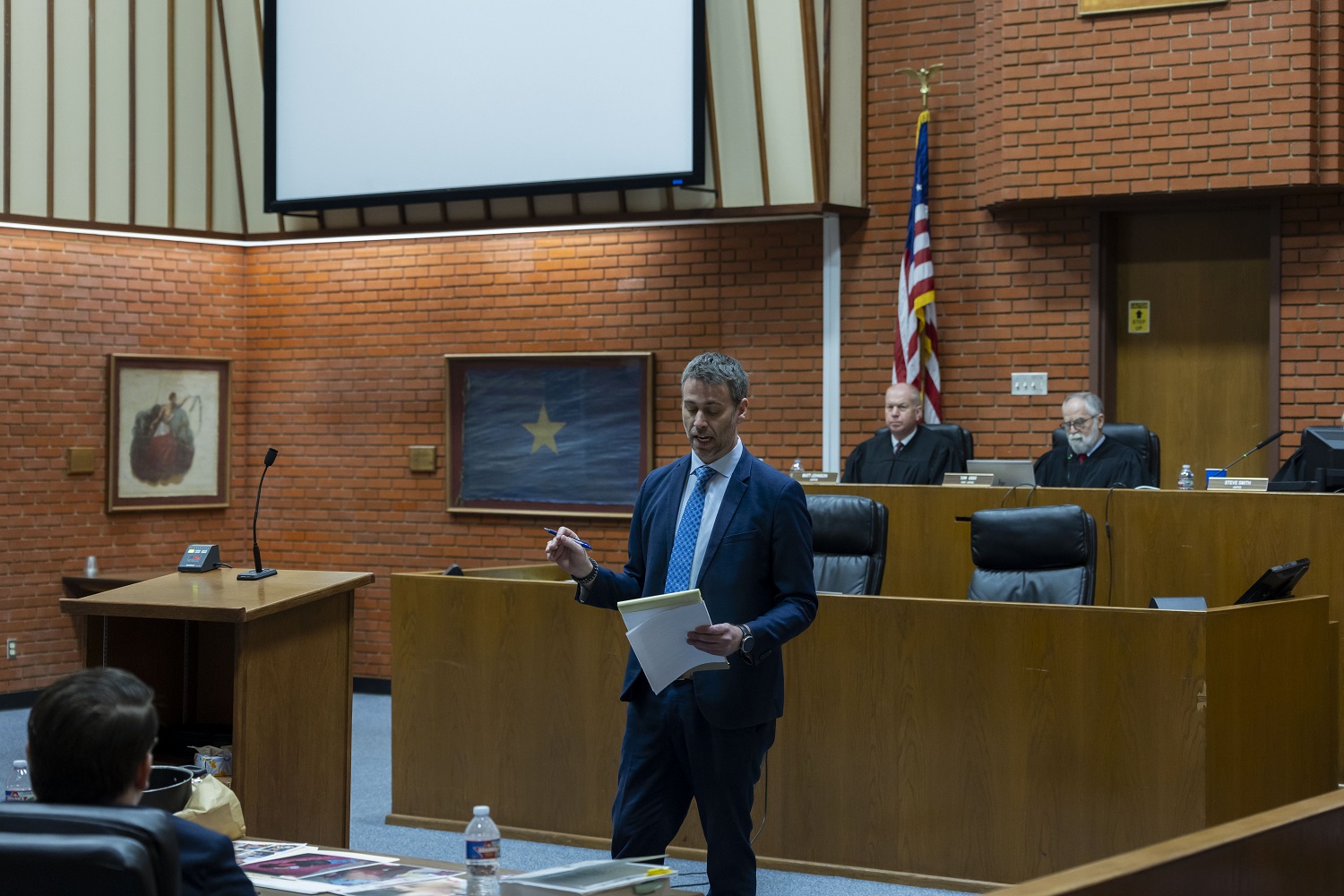
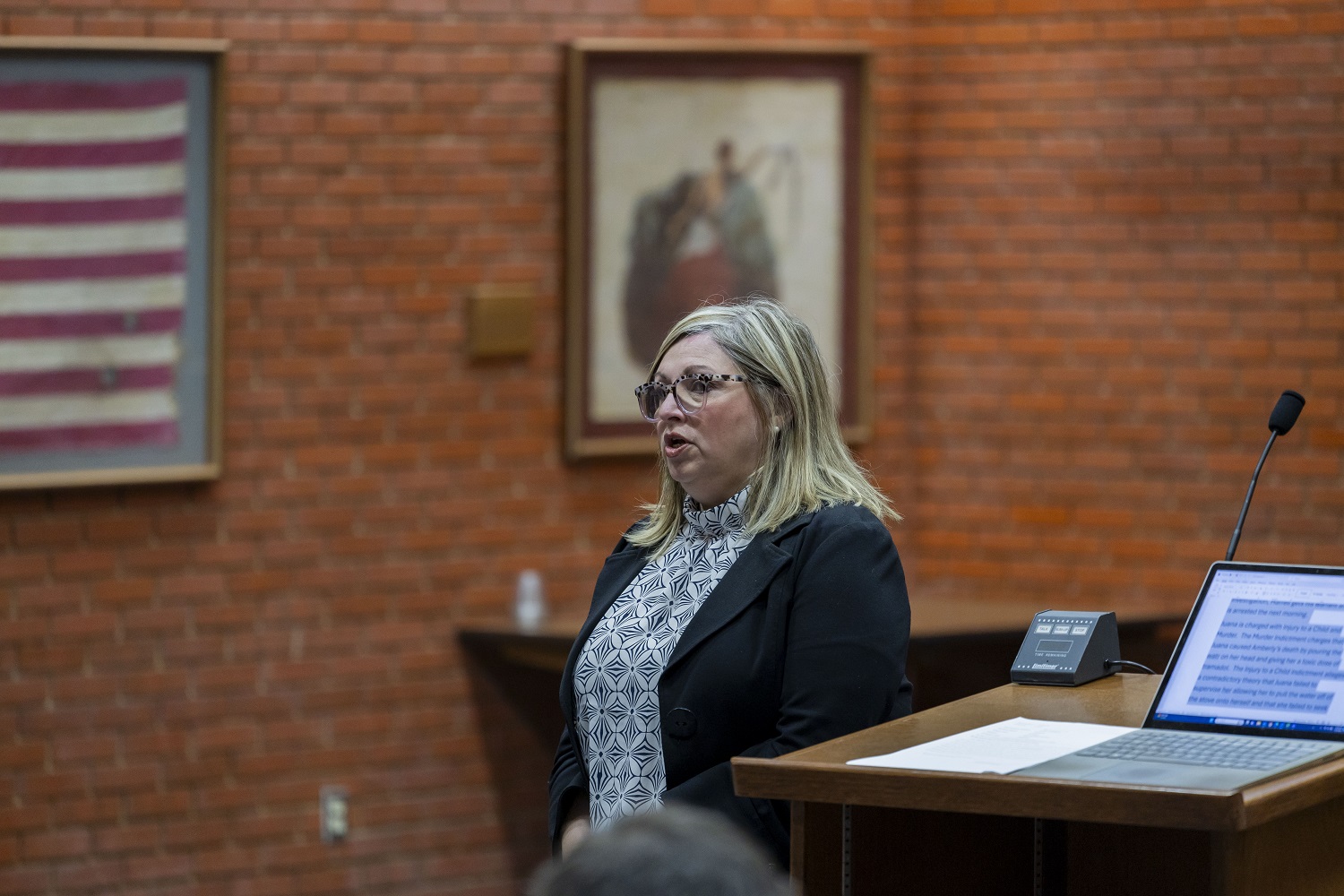
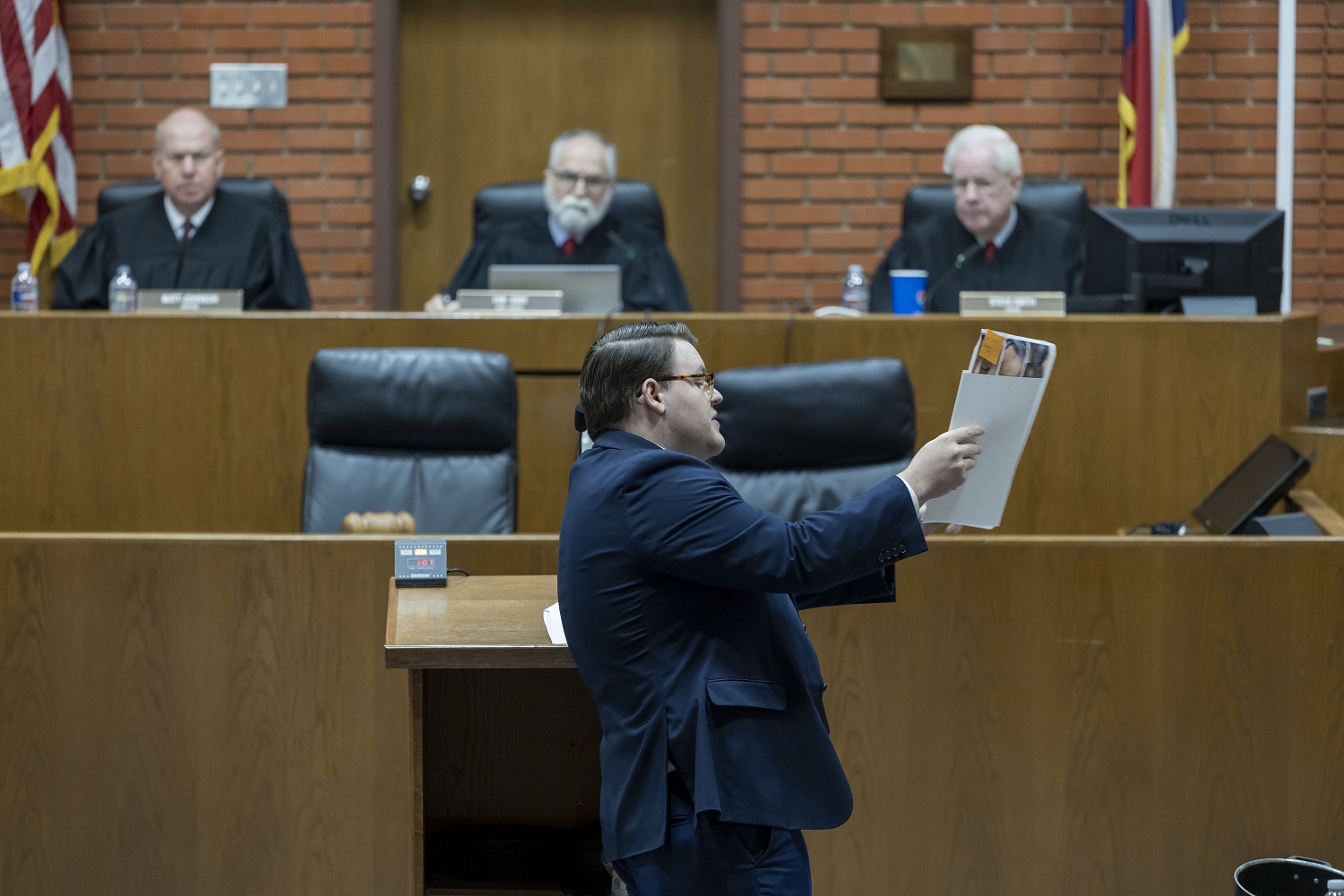
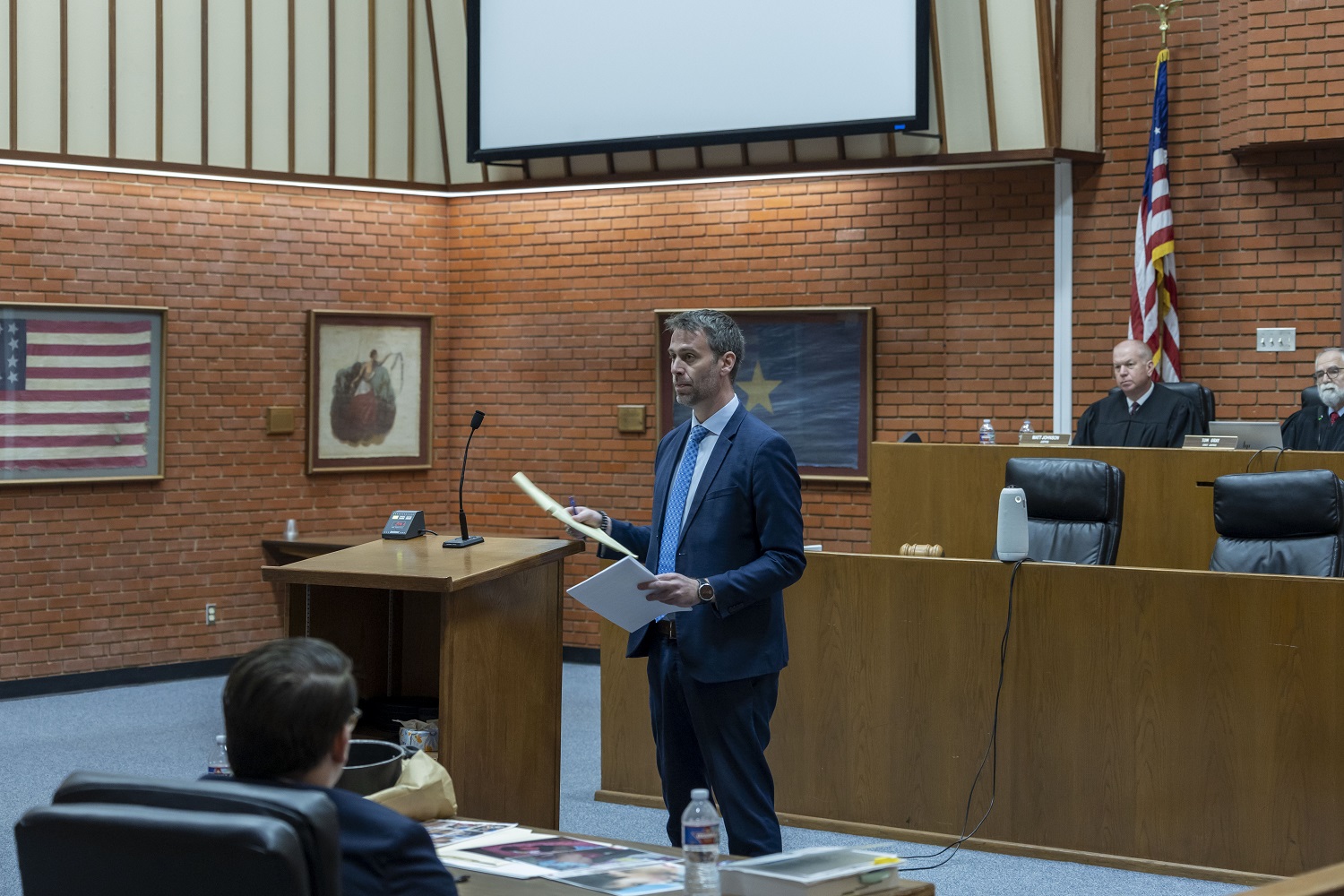
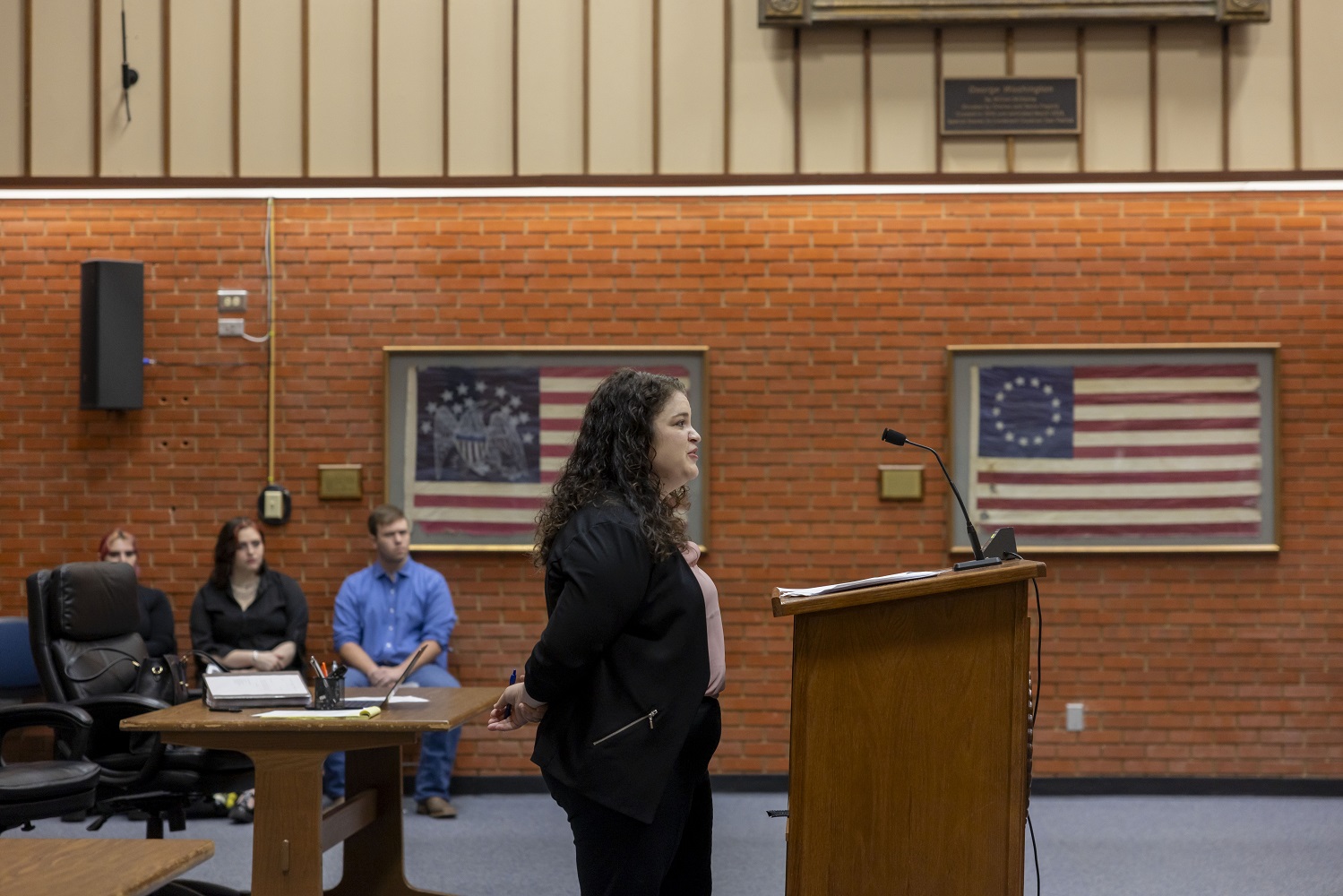
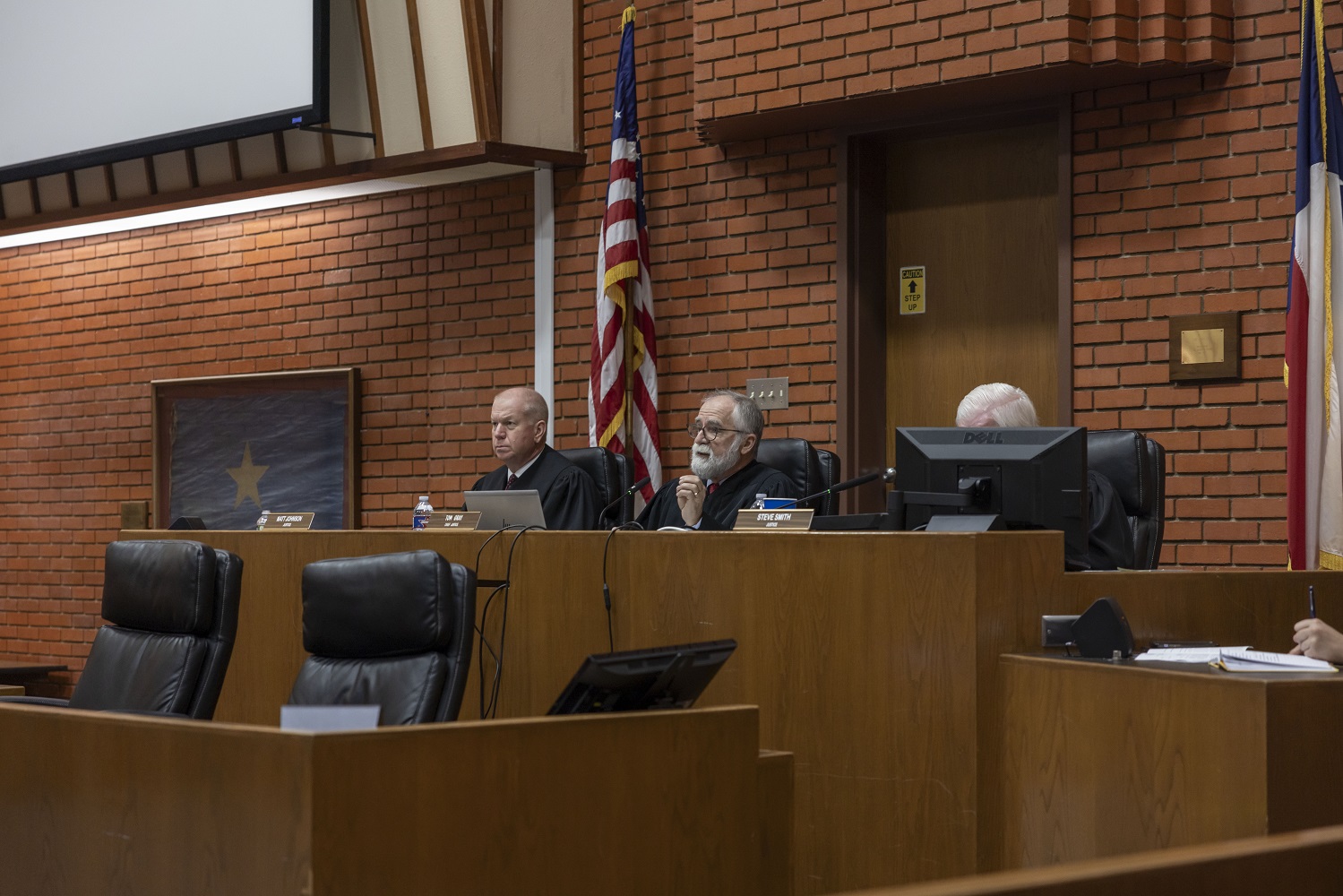
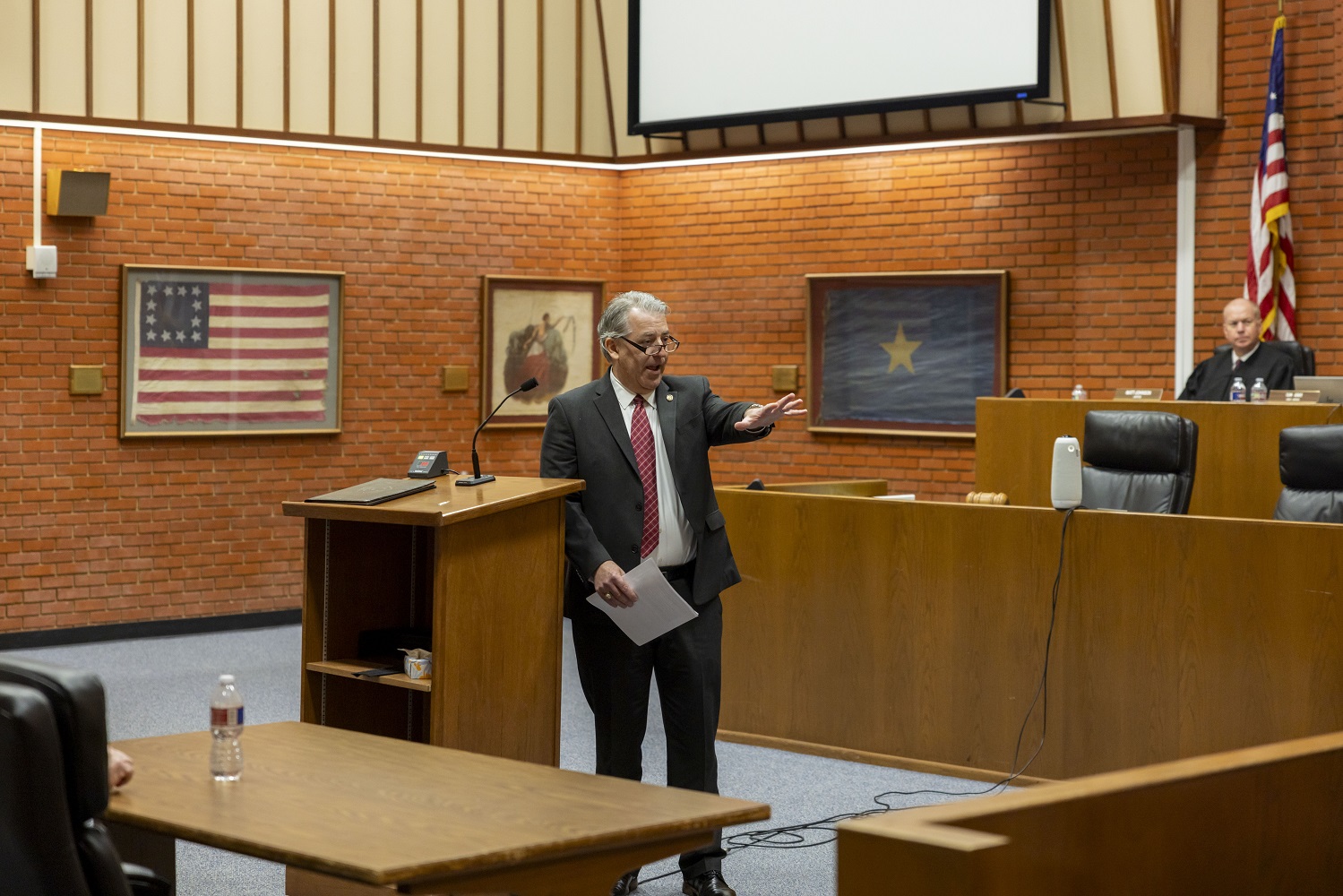
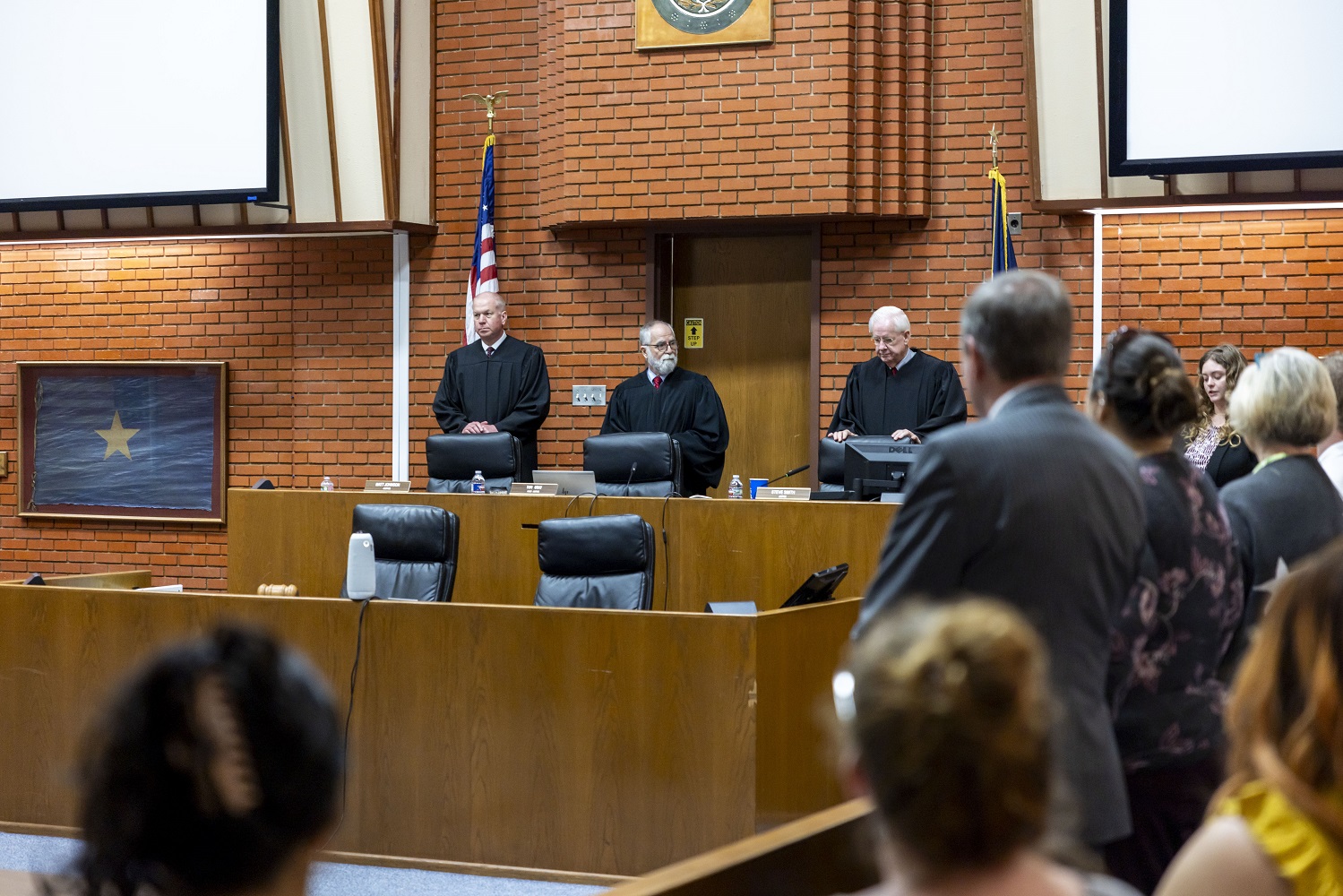
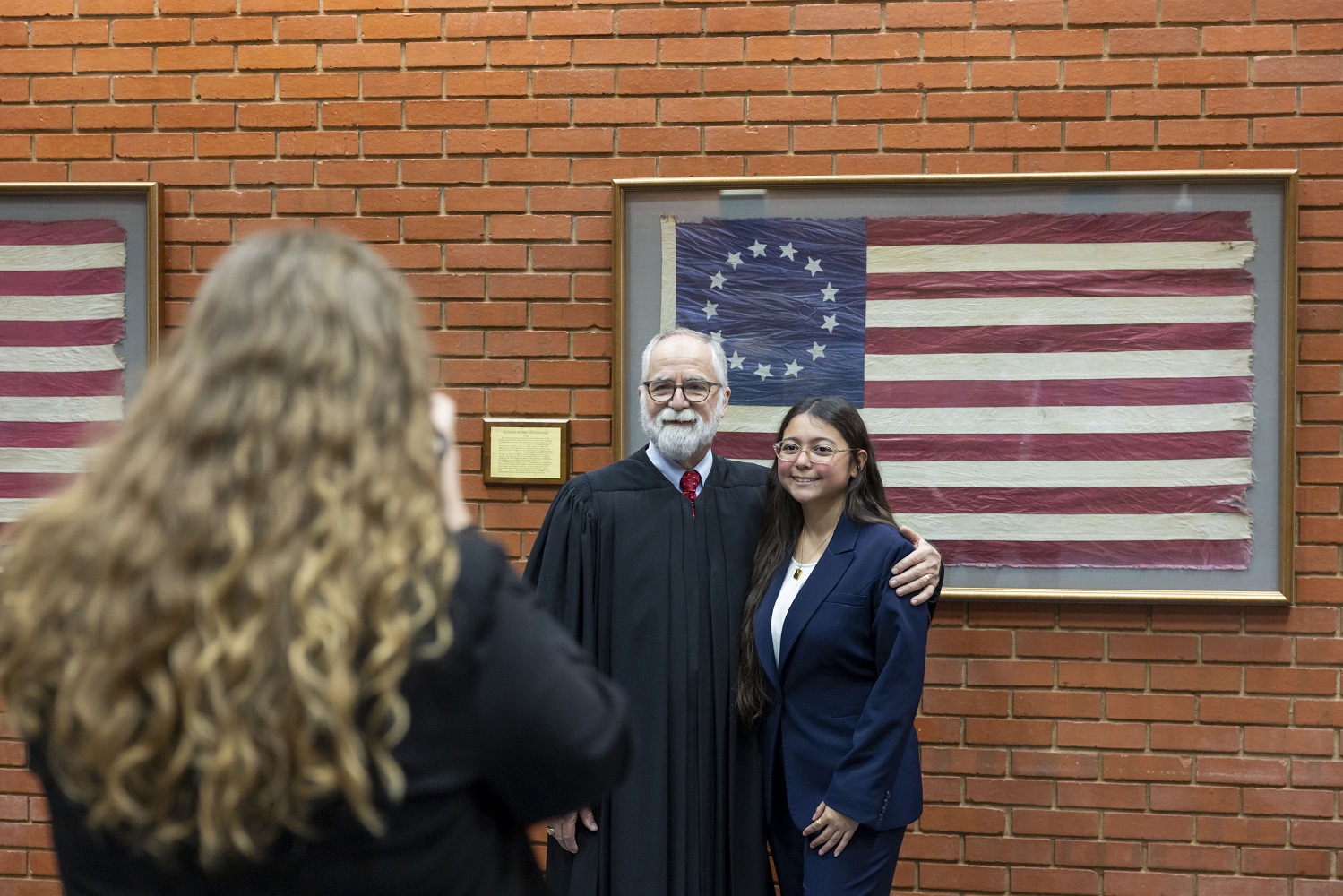
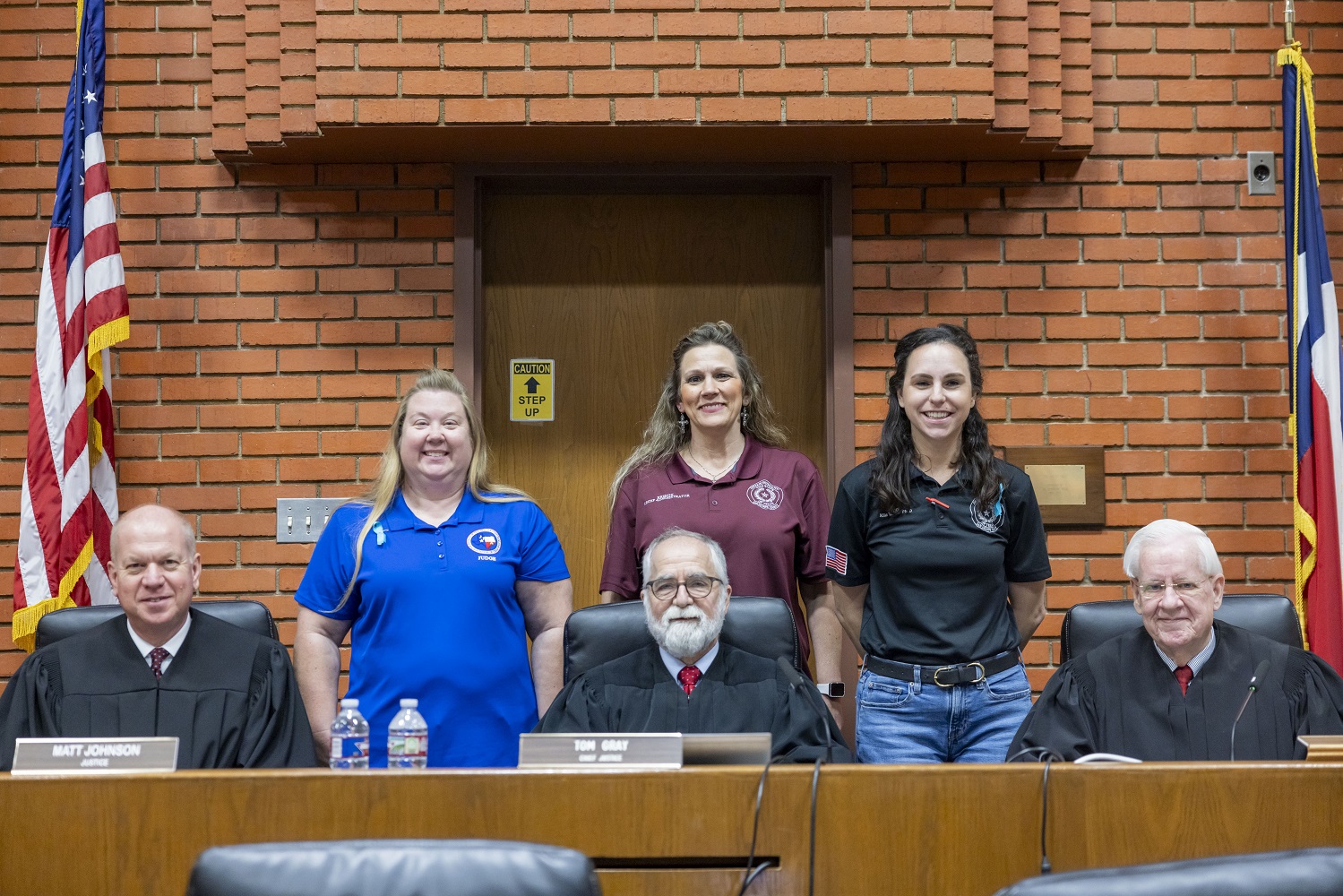
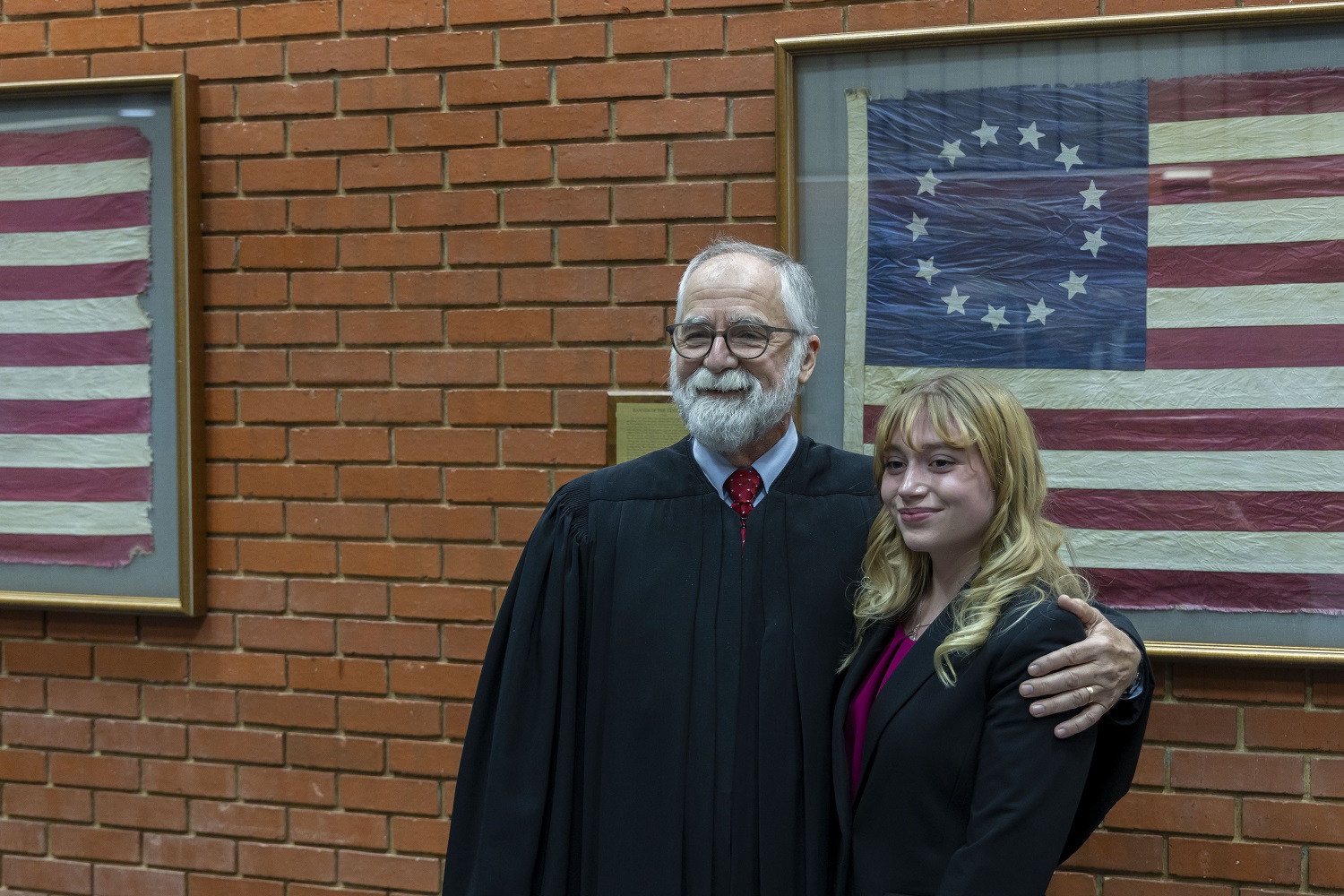
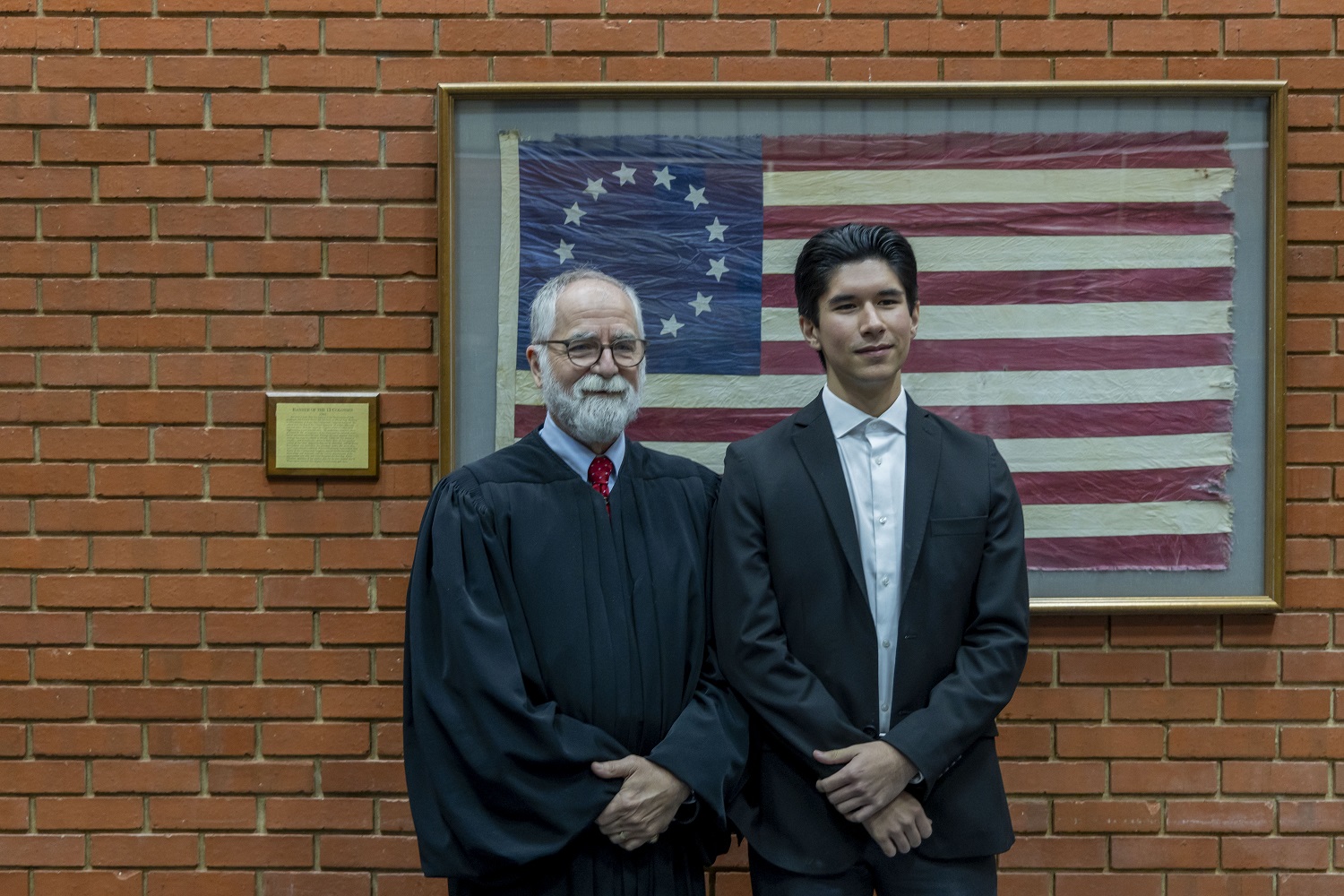
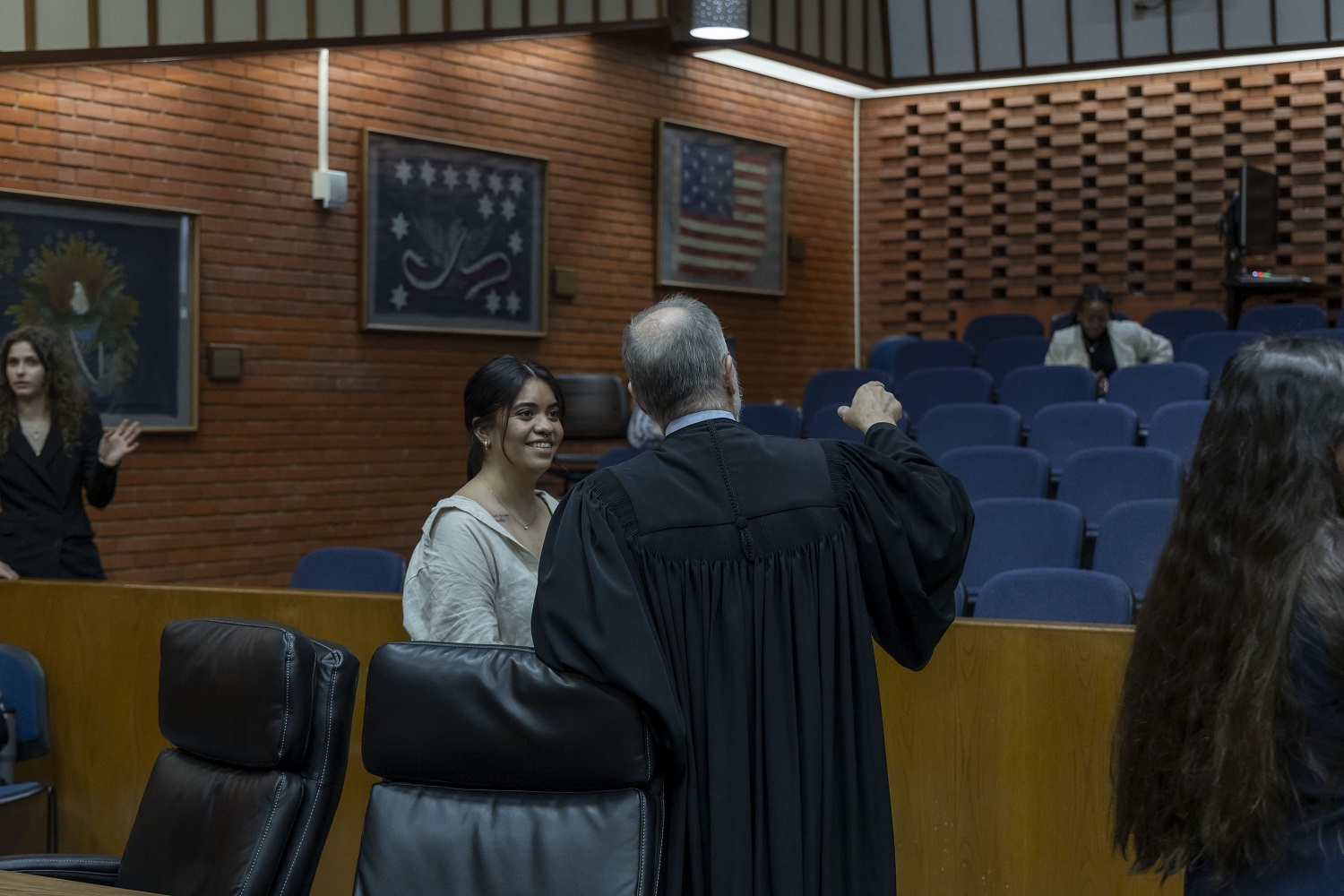
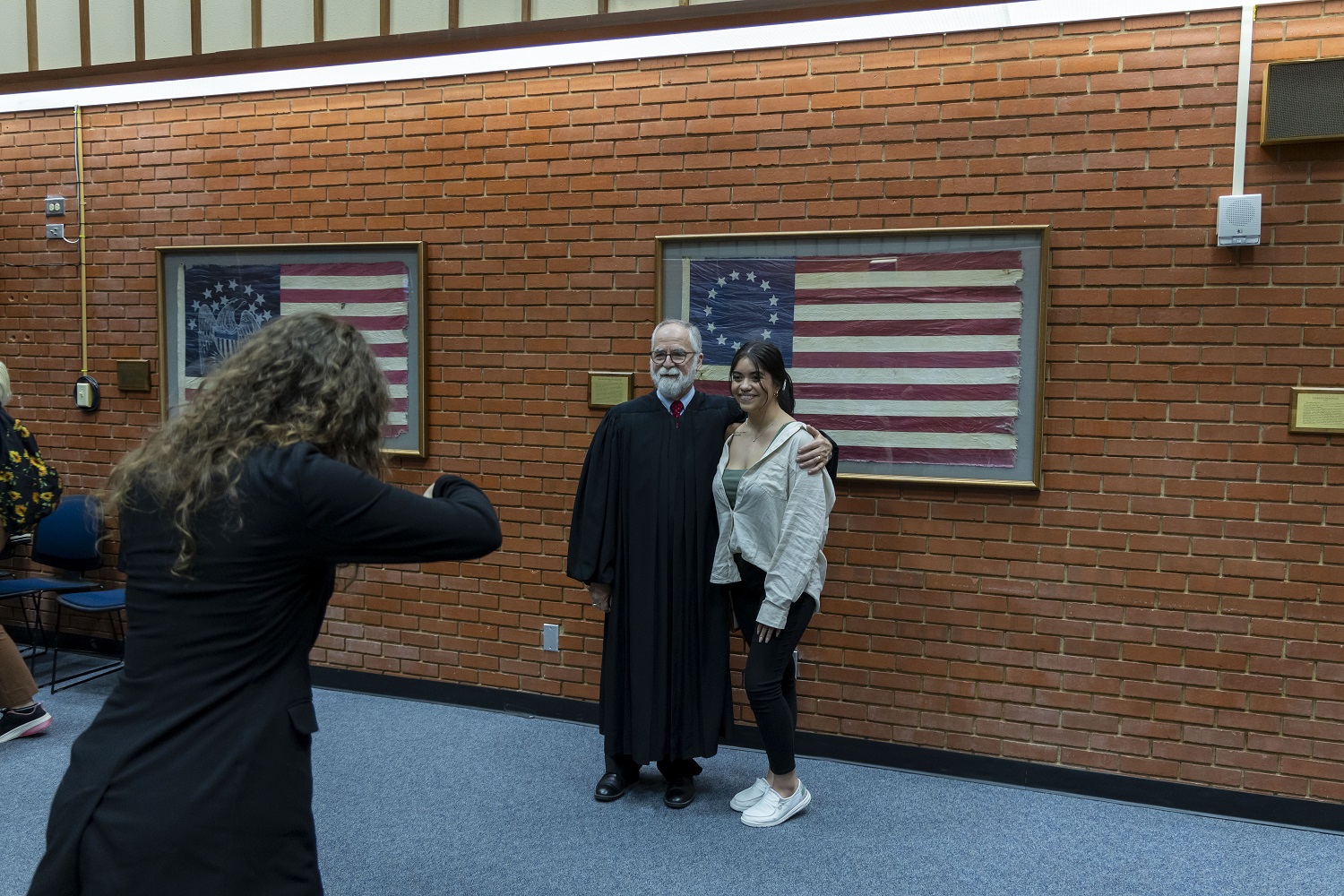
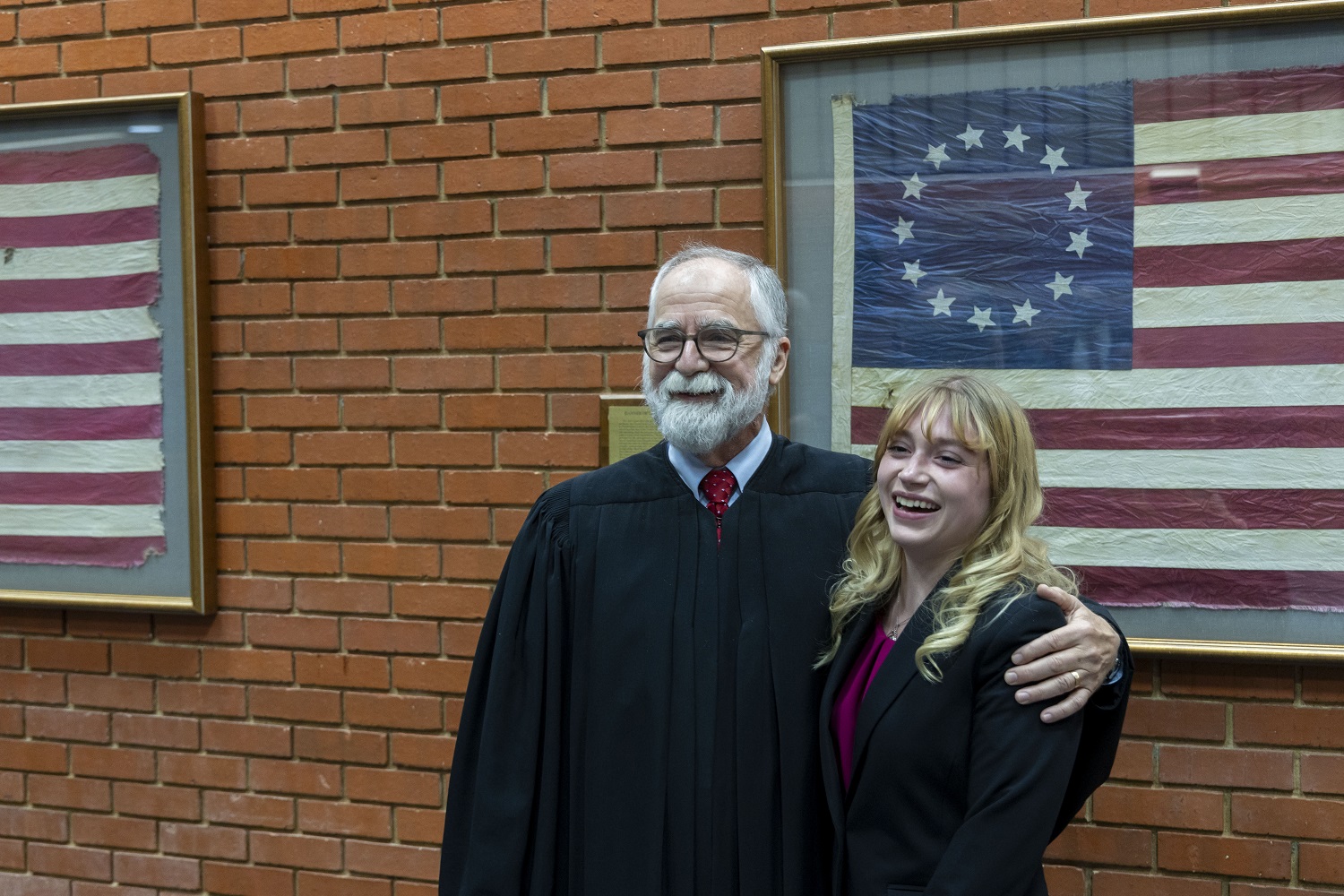
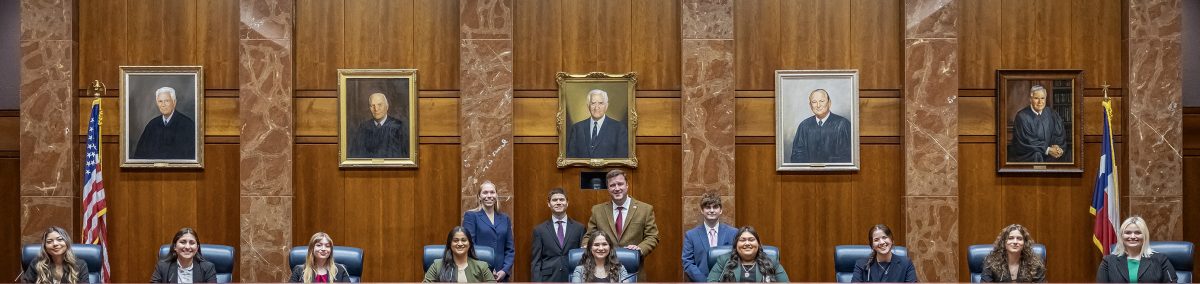
For 13 years, the LEAP Center has hosted the 10th Court of Appeals, allowing Sam Houston State University students and Huntsville residents to hear three appellate court cases in the courtroom of the George Beto Criminal Justice Building. The 10th Court of Appeals, out of Waco, TX, serves 18 counties in Texas including Walker County. The court, which currently consists of Chief Justice Gray, Justice Johnson, and Justice Smith, is able to travel and try cases in any county seat in their jurisdiction.
We had a full house for every case today and a line out the door, waiting to see if a seat would be available. In the first case this morning we were happy to have District Attorney Will Durham watch the case, checking things out in advance of his turn in the courtroom at 1:30pm.
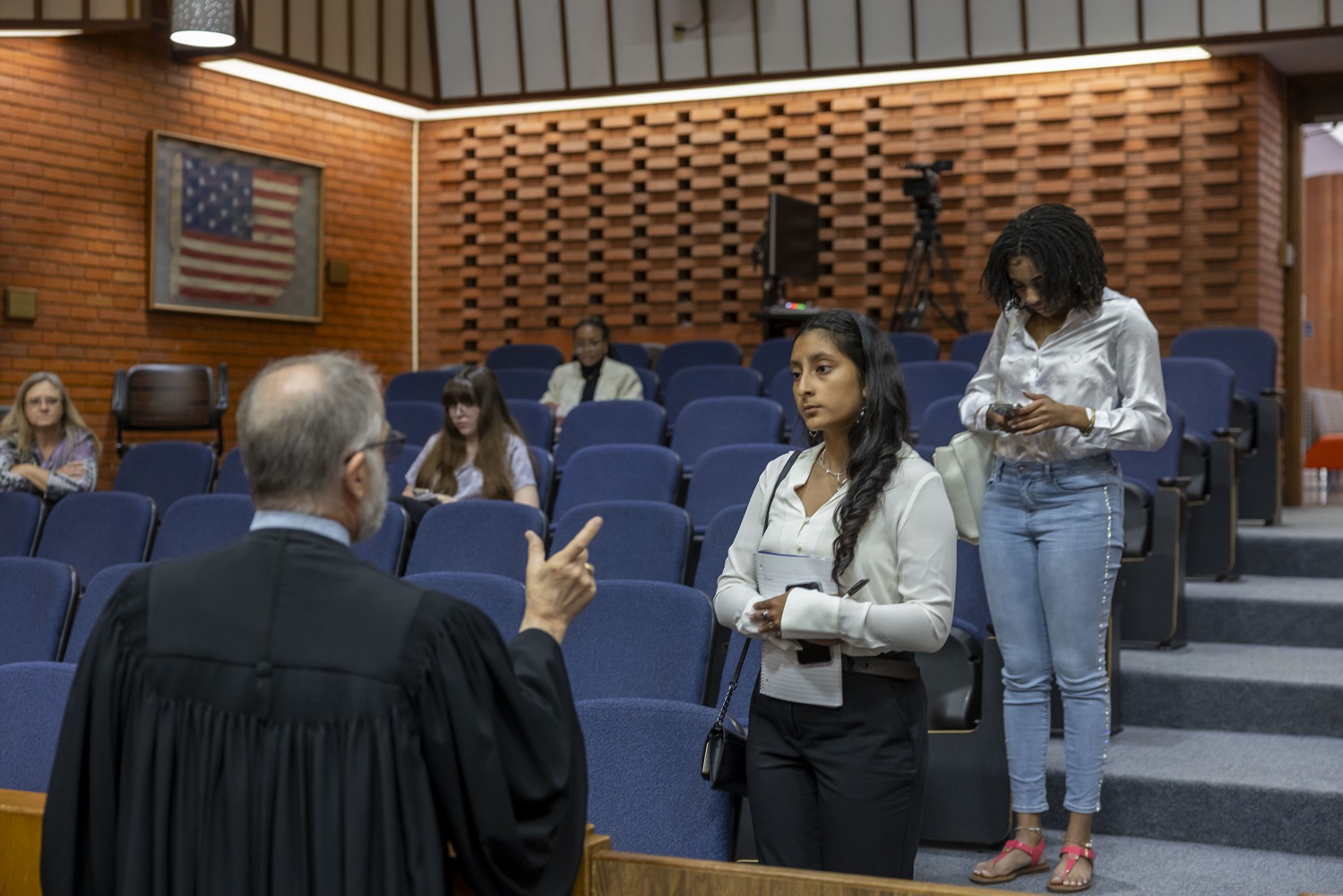
The unique thing about the hearings held at SHSU is that the lawyer for each party is allotted three minutes to relay the facts of the case to the audience.
After those three minutes the attorneys turn to the Justices and begin their 20-minute formal arguments. The Justices can interrupt for questions at any point during the arguments and after each attorney has spoken, the appellant attorney then gets a 5-minute rebuttal to the defense.
Another special treat, at least for us, is that during these hearings, LEAP Ambassadors were asked to fill in for the Clerk, who is responsible for, among other things, asking the visitors to “All Rise” and then asking for a blessing on the court.
During the first case today, the appellant attorney’s main issue with the previous court ruling was that there was insufficient evidence to charge the appellant with manslaughter. The attorney argued that a manslaughter charge includes knowledge about the substantial risk of death, of which the appellant did not have. The attorney for The State of Texas actually brought props and photos that were used during the original trial to argue against the appellant party.
The second hearing was a real treat because President White was able to sit in on the arguments. It was the first time in 10th Court history that a University President attended at SHSU!
The second hearing broke down the importance of understanding Miranda Warnings and how language barriers can affect criminal proceedings.
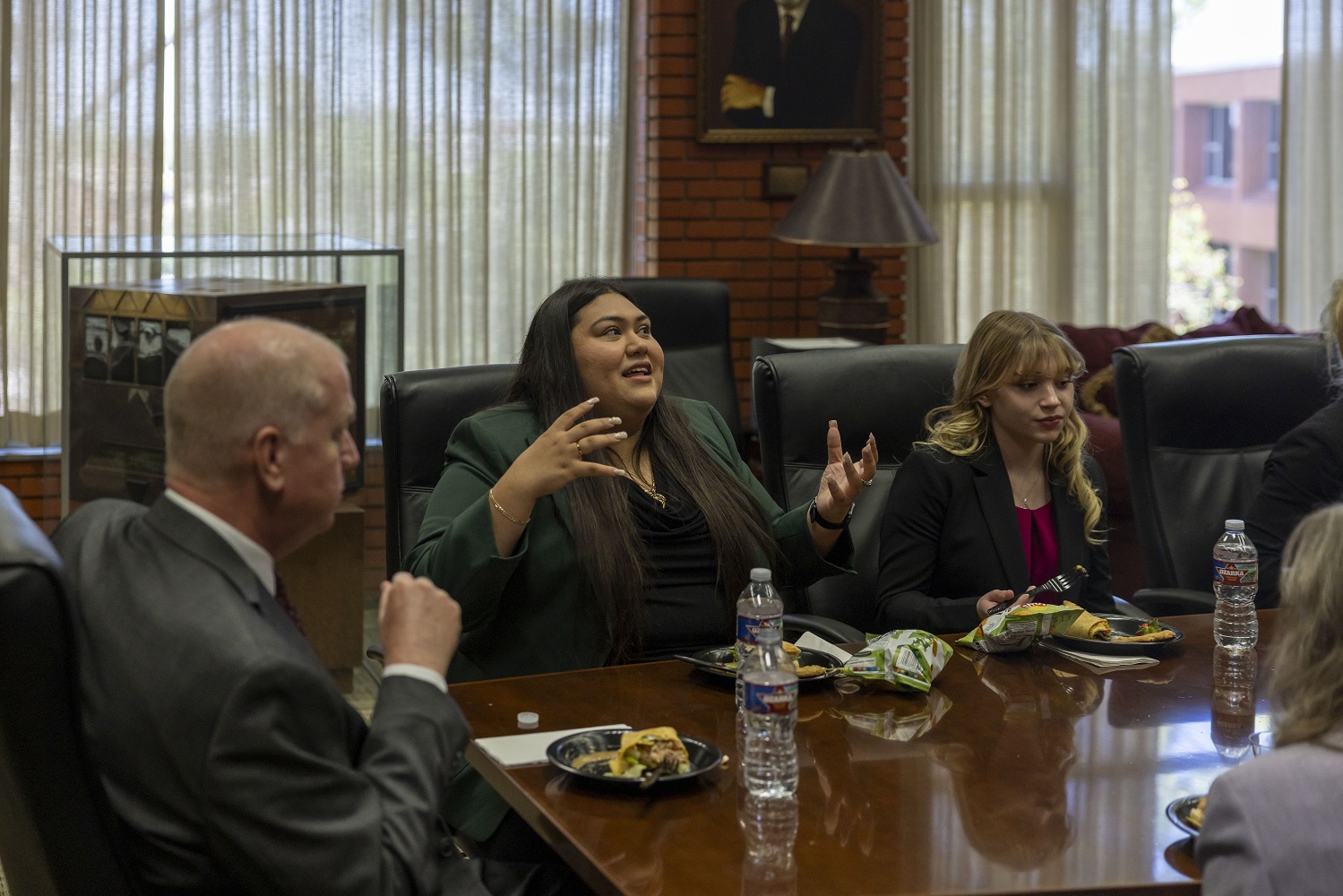
After the 11 am hearing, the court was adjourned for lunch where LEAP students were able to talk with the justices, President White, and court staff. I was lucky enough to be sitting with Justice Smith and Justice Johnson, who discussed their careers as attorneys and how they fell into the position of judge, and eventually to justice.
LEAP Ambassadors also provided Justice Gray with a gift basket and a heartfelt thank you as this is his last year doing the 10th Court of Appeals at Sam Houston State University, his alma mater.
Court readjourned at 1:30 pm with the final hearing of the day. The court room was attended by County Clerk Leslie Woolley and Judge Tracy Sorensen. This case was really interesting as the main arguments pertained to the use of cell-phone data. In 2008 police obtained records from a man’s cellphone that linked him to a murder, but 10 years later the U.S. Supreme Court ruled that police must get a search warrant for that information; essentially, the question was should the data then be used in trial.
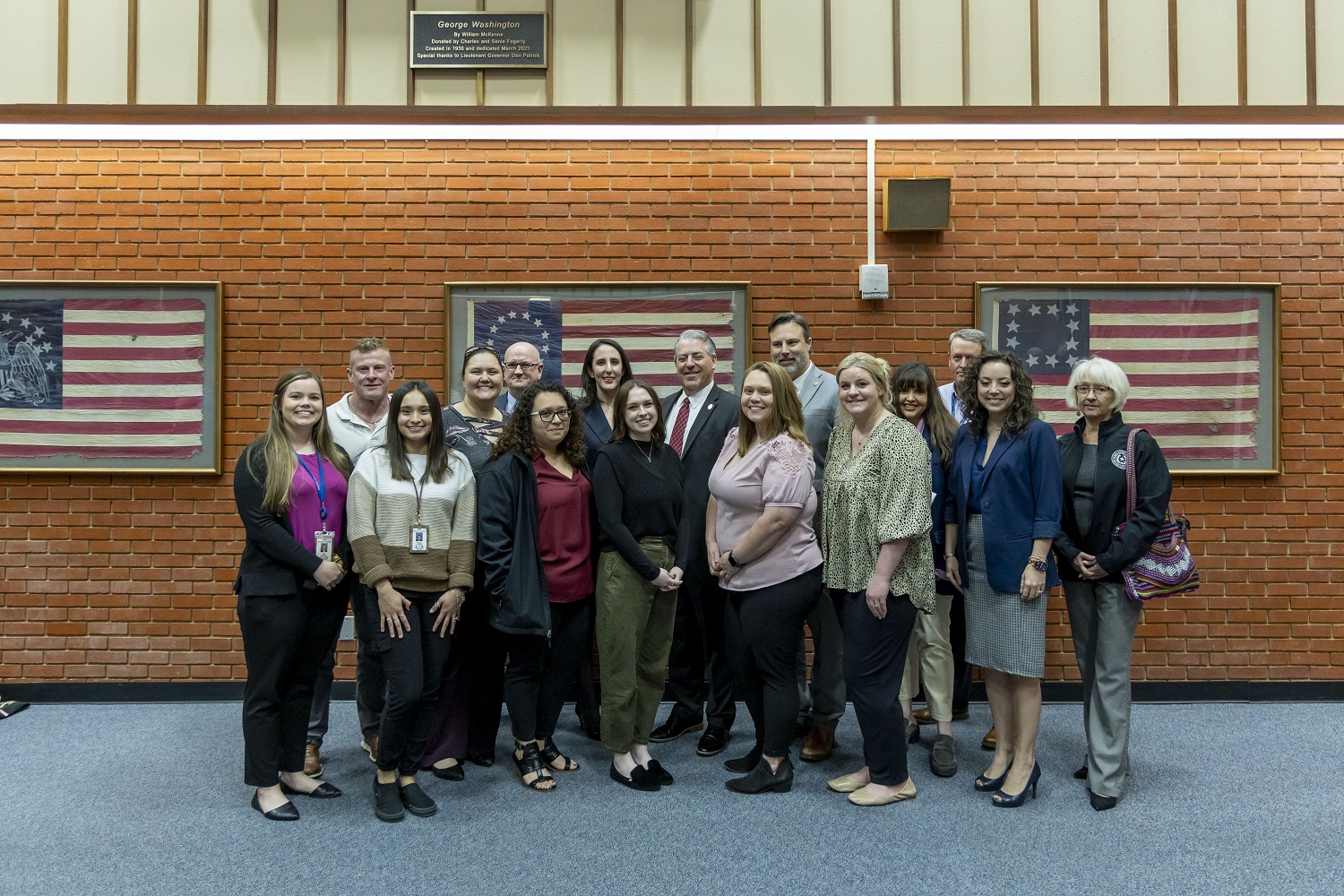
Thank you to everyone who came out to watch the cases today, especially President White. Thank you to Chief Justice Gray, Justice Johnson, and Justice Smith for allowing students to have this opportunity and for being so welcoming and helpful to future law students. Chief Justice Gray, we wish you well in your retirement and we want to thank you for continuously showing support for the LEAP Center and the Pre-Law Program at SHSU.
Three of us, Michelle, Cinthia, and I, were in our own hotel room, sleeping as everyone should be at 5am, when our phone rang. It was Professor Yawn. “Can you wake everyone up and put me on speaker phone,” he asked, in a way that suggested it really wasn’t a question. “There’s been a change of plans,” he noted. “President Biden will be speaking at our morning session, so we’ll need to get up and get to the conference early.
And that is how, four hours later, we were seated about 15 rows from where the President would be speaking. We hadn’t brought our telephoto lens, and the Secret Service made sure everyone stayed in their seats. So, we had to wiggle and reach a bit to get the shots we wanted.
We were pretty excited by this opportunity, and we found it someone difficult to toggle the camera work while we also tried to get photos and video on our phones.
We also found it difficult to get a clear shot of Biden as security and the press changed positions, sometimes obscuring our vantage points. We accommodated this by passing the camera to different LEAP Ambassadors, an advantage of all us being trained.
And, fortuitously, my sight lines cleared when I had the camera, when Biden moved from beyond the podium, and when he made photogenic salute to the audience, and I got my shot–and the experience of a lifetime.
This shot was taken after a long day, full of experiences. The students and I had walked more than 30,000 steps that day, and we couldn’t make it to the Jefferson Memorial. We didn’t have it in our legs. But I wanted the shot.
To make matters more difficult, however, I didn’t have a tripod. To compensate, I placed the camera on a bridge railing to stabilize and hoped for the best.
This is the only photo from this trip to make it in the exhibit, and it is a bit minimalist. But it’s a photo that reflects (pun not intended) a whole slew of activities that capture, I hope, the learning experiences that LEAP offers. On this single day, the students heard from Nancy Pelosi and other public figures at the conference they were attending…
…and also spent the day exploring the National Mall.
In short, behind each of the photos included in the gallery are–literally–20,000 more photos reflecting an incredible diversity and richness of educational offerings.
Gubernatorial Inaugurations are much more relaxed than Presidential Inaugurations. You can get closer to the action, there’s a smaller crowd, and the inauguration committee serves everyone lunch!
The Governor’s Inauguration is a prime opportunity for LEAP, because the Center also administers the Sam Houston Austin Internship Program. So, when the Governor is being inaugurated, we have interns in Austin, working at the Capitol Building–where the inauguration takes place.
The inauguration, then, is a good opportunity for me to check in on the interns, help other students experience the peaceful transfer of power that occurs in democracies, and to expose these new students to the possibility of doing an Austin Internship themselves at the next legislative session.
Even Peaceful Transfers of Power Need Security
During the ceremony, the students had a chance to see some Texas notables and their elected officials…
…while also capturing some great photographs…
…and enjoying the experience with other SHSU students and some alumni–one of whom was helping put the program on!
In this manner, the students were able to network, enjoy a new experience, capture some great photos, and elevate the profile of Sam Houston State University in Austin.