Due to prior obligations (aka work), Karla and I (Kaitlyn) packed up our car early in the afternoon to head to Austin to meet up with our fellow Ambassadors who are attending NPF Campaign Bootcamp.
Although the weather was not ideal, we left determined to get to Austin! Quickly, we realized the drive was not going to be as easy as we anticipated. We avoided multiple road closures by driving south towards Houston. Flooding on the roads and continuous rain created traffic issues on top of the rain…
…but we did our best to stay positive and keep going. At times it was difficult to adapt to the road changes, but we did learn how to use our resources like Texas Department of Transportation, instead of relying only on our phone’s GPS. Around three hours into our drive, we came to an impasse. Not knowing which direction to turn, we called Professor Yawn in Austin for guidance. With his help, we tried multiple roads with no luck, mired in a sea of troubles.
Eventually, we ended up back on the highway headed for Huntsville. After our long day of driving, we sadly returned home. With the torrential rain and storms that struck our area, we decided it was best to stay home with the goal to attend Campaign Bootcamp next year. We know that our fellow Ambassadors will represent Sam Houston well!
Our last day at Bootcamp, and it is our biggest day. We do some final preparations, hear a couple of more presentations from experts, and–the big item on the agenda–give our presentations.
We started immediately upon arrival by working with our groups. Teams were fighting leftover fatigue from the late session the day before. Groups were on the edge, because the deadline to turn in presentations seemed to draw nearer a lot sooner than the students would have liked. Our job was to present before the “Texas Campaign Commission,” a judging panel composed of experts from all aspects of campaigning. Knowing that you are going to put your product before the eyes of experts is a sobering prospect, but it also pushed us to go over things as many times as it took to make it right.
This did not mean, however, that we could just zone out and wait for presentation time. We still had presentations by experts to attend! One such presentation was by Barbara Johnson, the Career Advisor for Moody College, who captured our attention with her lesson on “tailoring your resume.” While much of the material consisted of things we knew, she did provide us with helpful information. Several things stood out:
Once you arrive at college, she recommends omitting your high-school work; Our advisor, Professor Mike Yawn, suggested that that was a good goal, but that many students, depending on the quality of their high-school work, could allow it to carry over for a year into college;
Tailor each resume to the job for which you are applying. Identify the 3-4 skills most needed in the job description and emphasize those in your resume;
In some cases, organizational work can be used under “experience.” That is, experience does not have to be relegated to just employment opportunities.
Our session on campaign law and civics was just as rewarding. Campaigning doesn’t fit into a lot of types of business practices, but there are still rules and regulations. Compliance is not only the right thing to do, but it helps prevent the loss of votes because suspicion of fraud will hamper your campaign. Susan Nold and Ross Peavey lectured us about certain laws and having good ethical leadership in the political world. Mr. Peavey advised candidates to know the law or hire someone who did. He gave us examples of laws that could slip through the cracks, and end up damaging your name as a candidate. While we ate our lunch Ms. Susan Nold, Director of The Annette Strauss Institute, gave us ethical scenarios that were created by the speakers.
She added that these scenarios were real experiences the speakers had encountered in certain political jobs. Her biggest message was that if it feels wrong, and someone is asking you not to tell anyone, the best decision is to resign. It was interesting to hear what everyone had to say. The best part was listening to people’s opinions and their ideas about how to go about solving the ethical dilemmas.
As my adrenaline started flowing, Taylor Foody prompted us to begin. The time had come to actually present in front of professionals in the campaign field. The nerves kicked in, but all the preparation and hard work led us to this point!
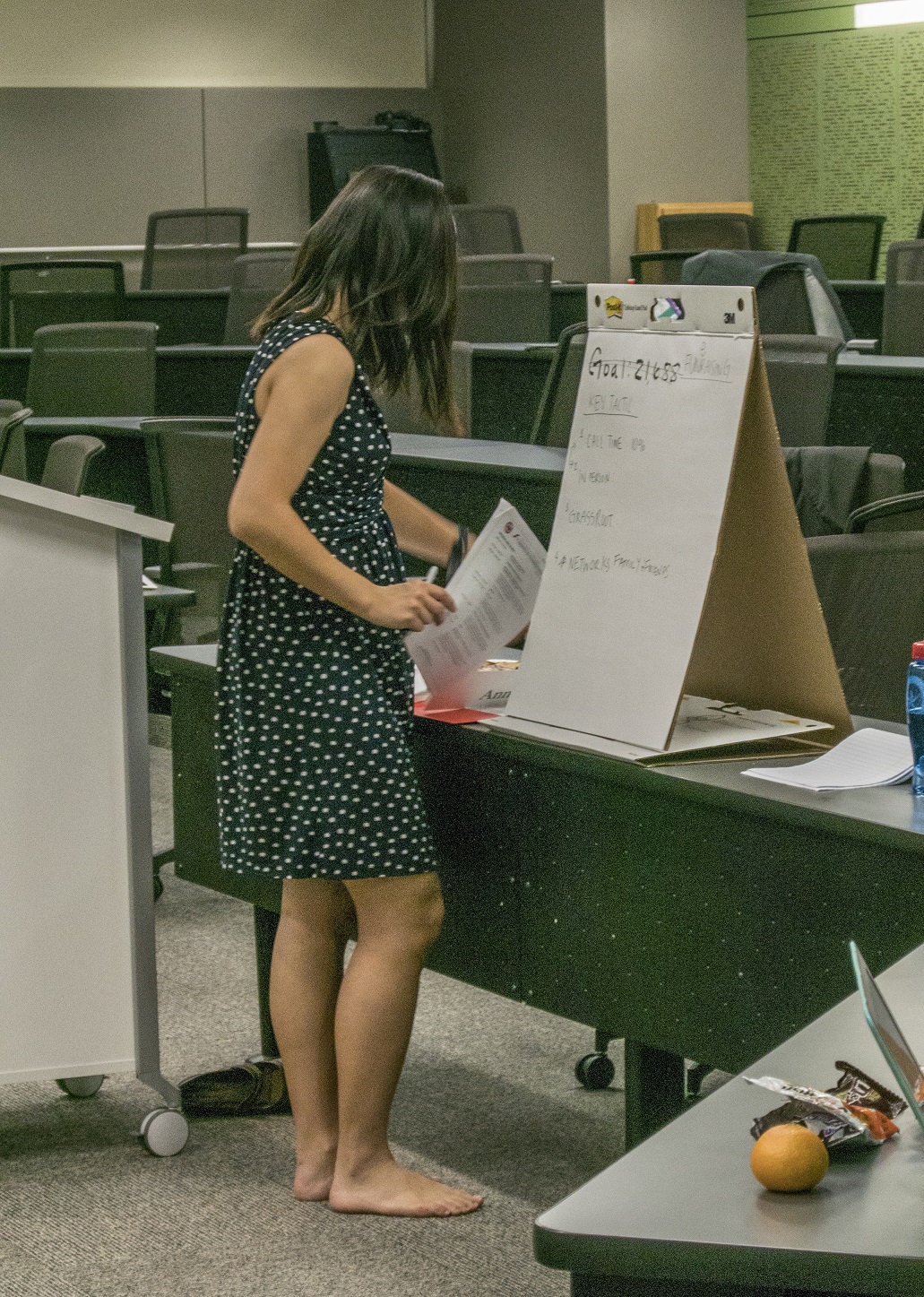
We presented information about our campaign, with each student discussing a different topic: budgeting for a campaign, recruiting and keeping volunteers, a fundraising plan, and a communication plan.
There were a couple bumps in the road. For example, we had saved all of our demographic numbers pertaining to votes on google docs, but they were apparently not saved correctly.
Thus when it was Brian’s turn to speak, no numbers came up!
Fortunately, he knew the numbers, and was able to relay the information orally. Afterward, he told us that he “crying in the back of my head.”
This slideshow requires JavaScript.
Following the presentation, the judges gave us feedback and complimented the groups on our hard work. They helped us improve our skills and keep a realistic approach on campaigning. Thank you to Matt Glazer, Luke Marchant, Cliff Walker, Taylor Holden, and Taylor Foody for helping us build our campaign skill set and encouraging us to keep advancing in our careers.
The toughest, restless work of this weekend had been finished. We all gathered for one last time to listen to closing remarks provided by Taylor Holden and Cliff Walker on how to improve on our skills to ultimately pursue a career based on what we had learned throughout the bootcamp. Furthermore, they shared their experience of how they began their careers and, as Mr. Walker noted, we should not consider “a job too small or too big.”
Our final activity of the day was the award presentations. Taylor Foody, the Coordinator for the New Politics Forum Boot Camp, was the presenter. And, this being her first time to oversee the Boot Camp, she was as excited as all of us.
As it turned out, Isabela’s team was recognized for their “Communication Strategy,” and Brian’s team was recognized for their “Get out the Vote” strategy.
With two of the three SHSU students taking home hardware (or, paper certificates), we were pretty happy. But apart from being recognized, we were more happy just to learn from the process and meet new people.
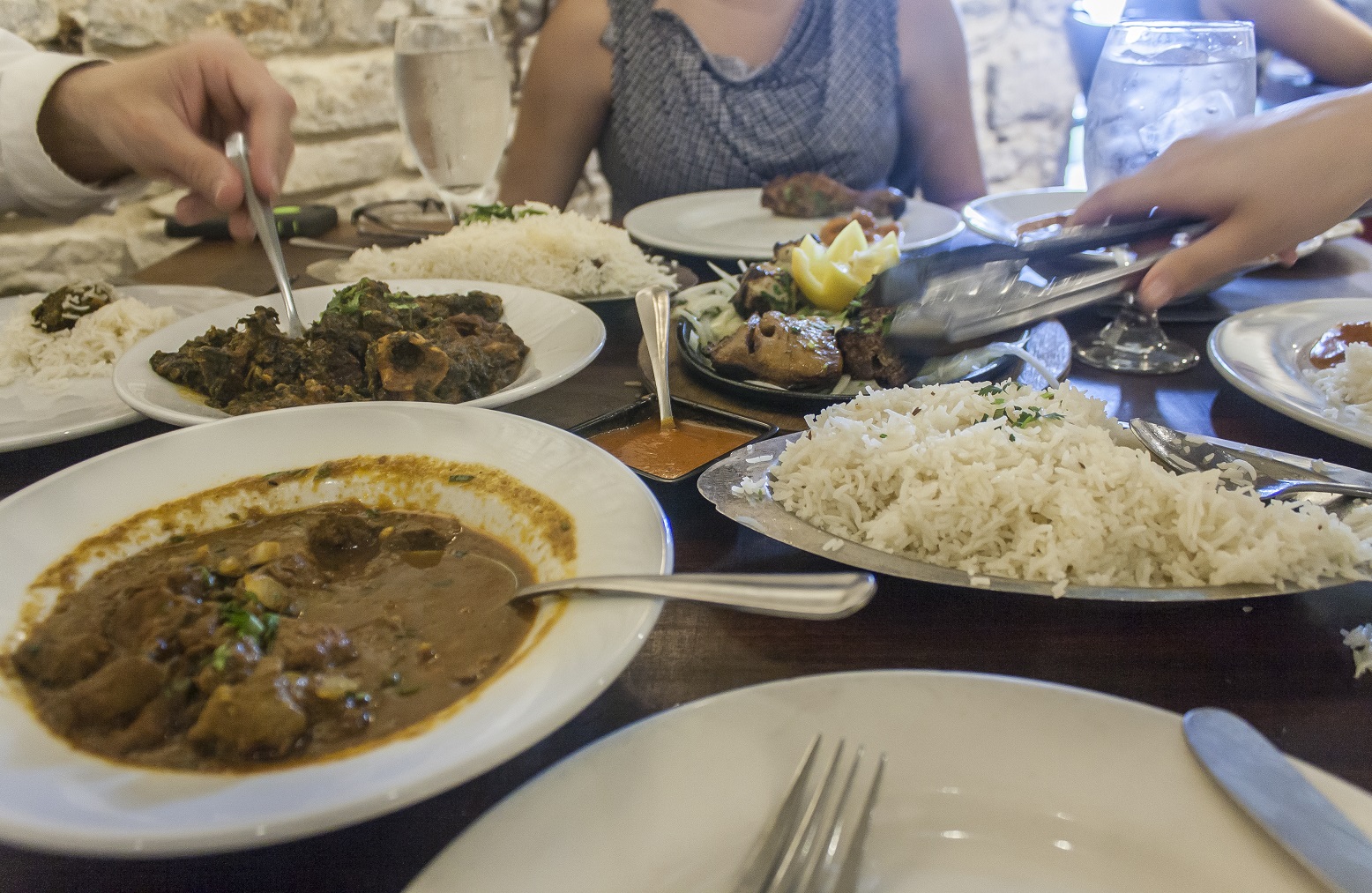
After thanking Taylor Foody for her dedicated efforts , we headed over to The Clay Pit. The Indian cuisine restaurant provided a comfortable venue to relax and dine on new, eccentric dishes. These included a flavorful goat saag and lamb roganjosh complemented by comforting piquant jalapeño naan and ending with a sweet Gulab Jamun (deep fried pastries soaked in syrup) and Gajjar Halwa (a spiced carrot puree with vanilla ice cream).
With a very satisfying dinner we boasted with an air of accomplishment for finishing the NPF campaign bootcamp.
The 2nd day of the Bootcamp is the one that matters. It’s when the bulk of the seminars take place; it’s where we have the most time to work with our groups, and it’s a fourteen-hour day.
With those facts in minds little rested by sleep, we arrived at the Belo Center at 8am. We prepared for the day by chowing down on some of the satisfying breakfast tacos…
…some revitalizing fruit, and a cup of coffee. With catchy background music (which successfully roused our spirit) we found our campaign groups so as to begin the thrilling second day of our bootcamp experience.
Messaging 101:
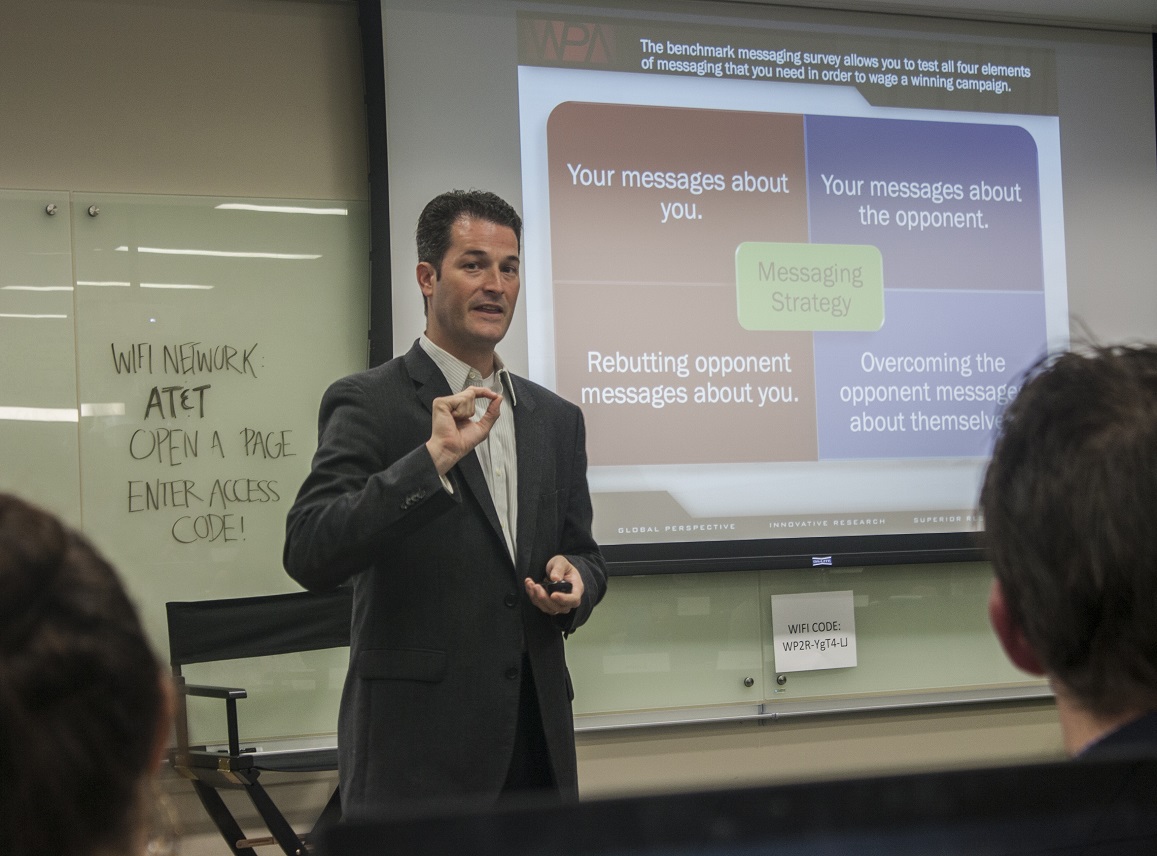
Embodying this spirit of campaign thrill, direct mail consultant Liz Chadderdon instructed us on how to create an effective campaign message. She advised that the best rule is to follow a “one message, one piece” strategy.
In other words, regardless of a candidate’s utilization of varying communication mediums such as television, radio, or direct mail, they should still have the same message across these platforms. Students were happy to speak with her after the presentation. After all, her advice helped establish some of the ideas for our projects.
Polling 101:
As evidence that the New Politics Forum picks out the best campaign officials to bring in, the next speaker was pollster Christopher Perkins, who has done extensive polling for Senator Ted Cruz and many other Republican heavyweights. His presentation was successful in educating the students on how polling can help a candidate win an election.
The students learned that polling helps makes advertisements such as television, radio, and direct mail more effective. The results of a poll can help a candidate have a better understanding of their target audience. In effect, this helps the campaign better appeal to potential voters by aligning their message strategy with issues that voters support.
Armed with information on messaging and polling, our campaign groups retreated for lunch, strategized, and emerged in fighting shape for the afternoon sessions.
Organization 201
Tyler Norris, who recently worked with Senator Ted Cruz on his campaign, was the next speaker. He began by emphasizing the importance of volunteers. His advice was to gather people who believed in the candidate’s policies and give them meaningful work to do. This is not only a budget-saving maneuver, but also a good way to garner votes.
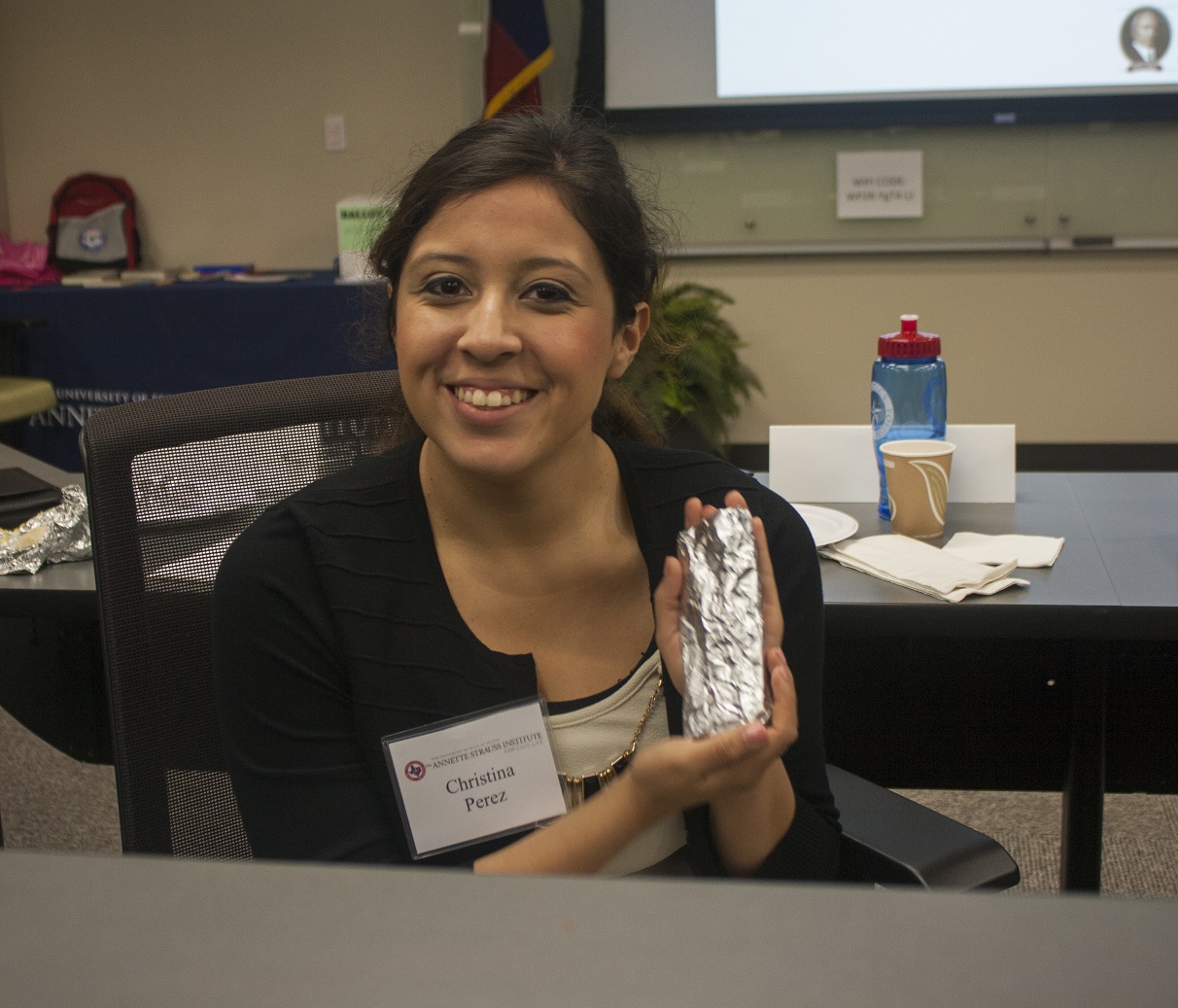
Additionally, he answered questions that were helpful to our teams. As Christina Perez noted, “I thought it was interesting to hear someone who was freshly off the campaign trail speak since he had just finished working on Senator Cruz’s presidential race.”
Polling 201:
After a few technical difficulties, we were able to virtually chat with Vincent Harris. He was streaming in from Canada, where he currently is working on the country’s conservative convention. Mr. Harris is the current CEO of Harris Media, and works for Senator Rand Paul. Known as the “father of Republican internet,” his expertise was a crucial factor to Senator Cruz’s web strategy during the 2012 senatorial campaign. During his presentation he encouraged us to create an account in every existing social media type. Nonetheless, he spoke about the importance of using these modern tools of communication to reach as many voters as possible. He presented them to us with humor, showing examples from previous campaigns.
Wrapping Up
After an intense series of sessions, it was time for the last lecture of the bootcamp, one presented by Luke Marchant and Matt Glazer. They provided us additional information on our presentations, which will take place tomorrow.
Each group is allotted 15 minutes;
We will present our polling data, fundraising tactics, budget, voter targeting, and campaign organization;
Each person is expected to participate and be knowledgeable about each aspect of the campaign, although different members may take the lead in different areas.
It was great to have an experienced team of NPF staff and our mentors Luke and Matt on hand to help us succeed. But at this point, it was up to us to break into groups and work on our projects.
Brian’s Group Work:
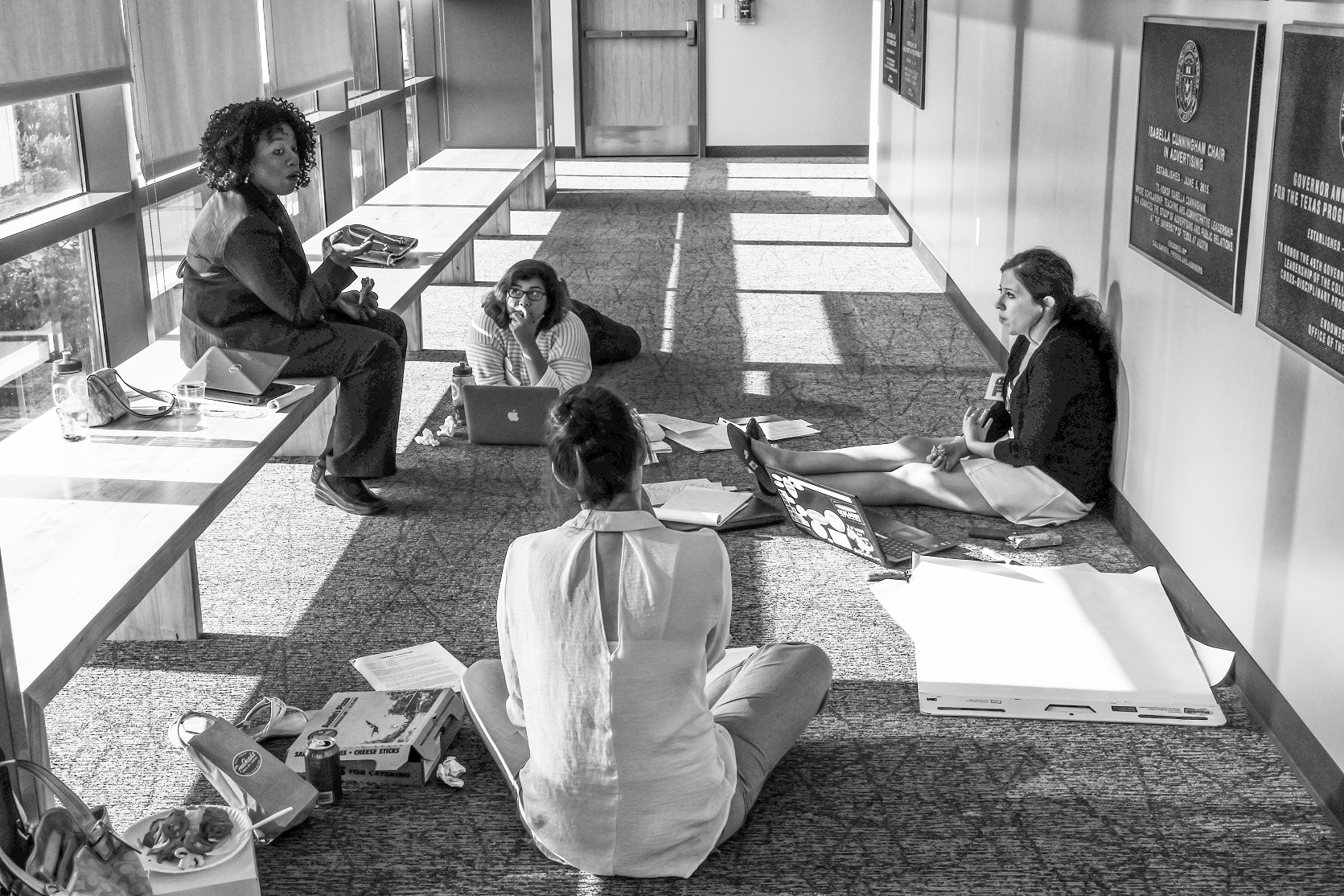
Once we gathered in our groups we began to employ every feature of our lessons. First, we outlined our campaign necessities, then we delegated our individual duties, and started crunching data, crafting messages, and laying out the framework for the victorious campaign of House District 117’s future Representative Raul Martinez.
Even though our assignments were hypothetical, the toil and exhaustion was real! After five hours of non-stop work with my motivated team members (Juan Belman of UT Austin; Mason Rasco of TAMU; and Shauntey Walker of UT Austin), we were all ready to go home, meditate on our winning strategy, and recharge for our big campaign “pitch” day.
Isebala’s Group:
I was set on one thing: victory!
The competition was on and each group would show no mercy to the other, since we were all competing for bragging rights. Throughout the process many students battled with a variety of emotions–excitement, fatigue, and nervousness–because they were on a deadline and had to finish. The winner would be determined tomorrow after all the presentations were completed. Who will will win? Stay tuned for tomorrow’s blog!
Christina’s Group:
I was eager to work with my group, and after the first break out session I became excited about the project.
I enjoyed my team, and the ideas we all brought to the table. My favorite part of the breakout session was that we finally were able to get to know one another. I enjoyed hearing about campaigns they had been on , and the experience they had. Overall, it was a great learning experience and in my opinion was the best part of NPF.
The Environment:
One of the many nice things about the project is the support provided by the many speakers that NPF brought in for the weekend. Luke had a stream of visitors to his “office”…
…who stopped by either to bounce ideas off of people or to data grub…
Matt and the other speakers went from room to room, helping out where they could (which was everywhere!):
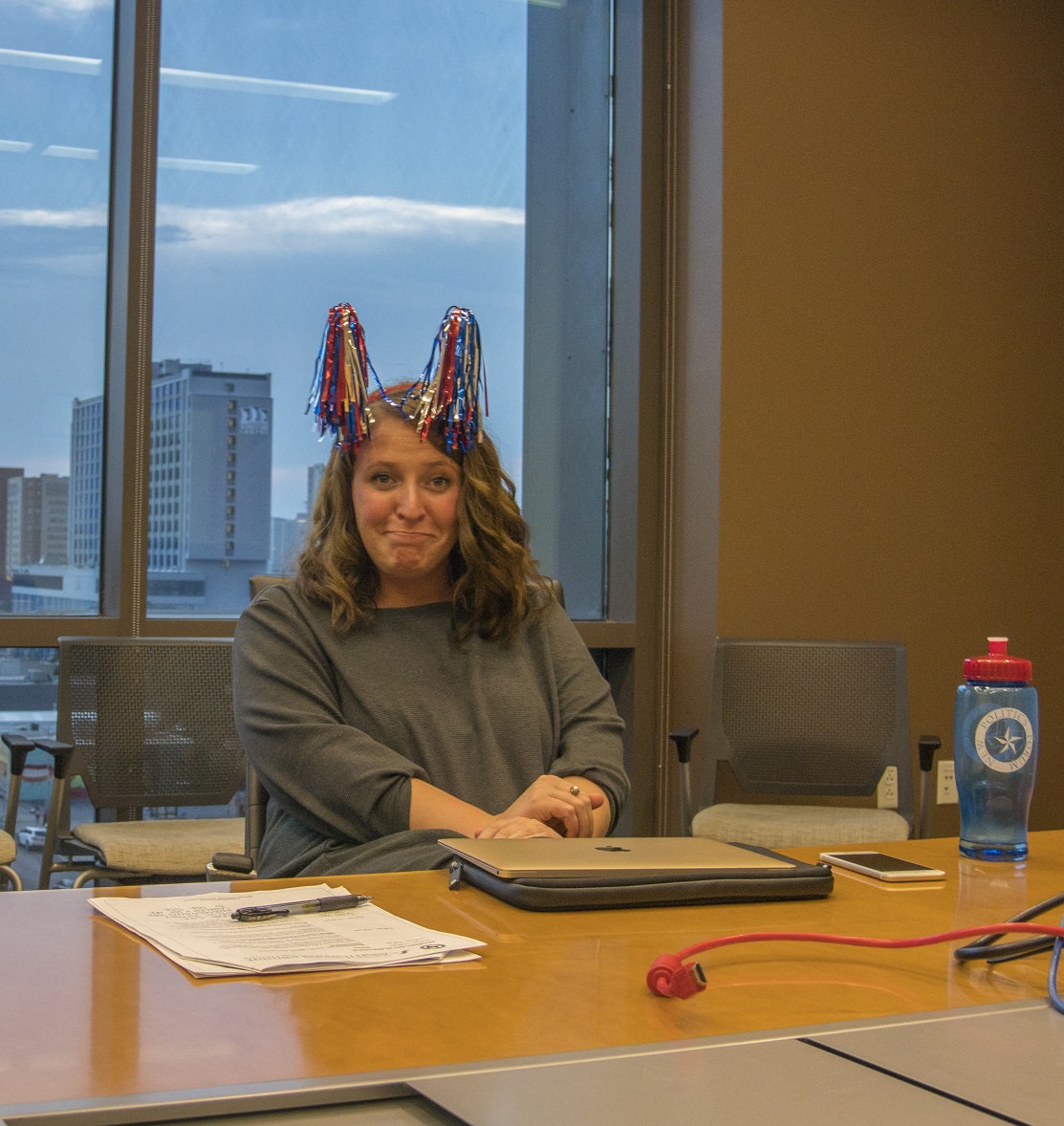
And while we all had our own way of dealing with the stress…
…we also all showed a willingness to cooperate with each other.
During our bootcamp experience there was never any contention related to political rivalry, and whether working in groups or alone, we were able to achieve some intense concentration and get the work done.
The NPF also had an “inspiration wall,” where students could write what inspired them and how they would become more engaged with the political process.
With the knowledge we have gained through this rigorous, rewarding weekend we will surely perform well for tomorrow’s big day!
Separating the “governing” part of our day and the “campaigning” part of our day was the local pizza joint, “Frank & Angie’s.” While everyone grubbed on the delicious food—pepperoni with Canadian bacon pizza, pepperoni garlic bread, cannolis, and tiramisu—Professor Yawn elucidated the various cultural allusions in the restaurant. It is named for Frank Sinatra, and the menu includes references to Italian superstars, Sergio Leone, Mario Puzo, Bela Lugosi, and Mira Sorvino.
With well-fed stomachs and minds, we moved on to the second part of our day: the Campaign Bootcamp, sponsored by the Annette Strauss Institute’s New Politics Forum. Our introduction to the process was by Taylor Foody, the coordinator for the NPF…
…who introduced our two mentors: Matt Glazer and Luke Marchant. They introduced themselves, explained why the affiliated with the parties they did (Glazer is a “D”, and Marchant is an “R”), and issued our campaign marching orders: to run a successful “mock” campaign for US House.
Our training then began in earnest, with Rob Johnson and Cliff Walker—veterans of local, state, and national campaigns—who covered the recruitment of political candidates. After noting that running for offices has nothing in common with “West Wing” or “House of Cards,” they discussed the importance of running for offices for the right reasons (e.g., making your community a better place) and the importance of hiring competent campaign managers and financial advisors who, beyond being competent, should also have integrity.
Session Two was led by Taylor Holden, who is the Development Director for New Era Colorado, but who has Texas campaign experience. She was very energetic—she drank coffee during her presentation, we noted—even as she discussed fundraising and budgeting.
Campaigns cannot run unless there is sufficient money. Her points were simple:
Get to the point;
Don’t be afraid to ask for a specific dollar value;
Don’t avoid “awkward” silences; and
Stress urgency.
The importance of urgency was not lost on us, not with only fifty-two hours to meet our campaign team, learn about our campaigns, learn how to campaign, and develop a campaign plan. With that in mind, Ms. Foody allowed us to meet with our campaign groups. Christina and Isabela were placed in separate teams for separate Republican candidates, and Brian was on a team working for a Democratic candidate.
Our closing session—the keynote—was presented by Austin City Councilman Gregorio Casar, who discussed city politics and his campaign experience. Casar, who was elected at the age of 25 and is a New Politics Forum alumnus, offered an interesting presentation not only because of his advice (e.g. “rely on friends”) and personal story (e.g., the youngest person to ever serve on Austin’s City Council)…
…but also because of the interesting things going on in Austin’s politics. For example, most people know that Austin recently required Uber and Lyft to abide by the same regulations as taxis, but did you know that Austin also prohibited local employers from asking about criminal records on their applications? Even large corporations are now required to change their Austin applications to avoid any mention of a police record. This led to much debate among the students, a debate stopped by Mr. Marchant’s admonition that we are here to learn about campaigns, not to debate policy.
It was an interesting close to a day in which we learned about both policy and campaigning and much else, much to our delight and edification.
We had a dual-view day ahead of us, when we awoke. Our morning hours would be spent examining the governing side of Texas politics. Our afternoon and evening hours would be devoted to the campaigning side of Texas politics. Both were rewarding, and both informed and enriched our understanding of the other.
We began with a tour of the Texas Capitol. Our tour guide was informative, providing us with a nice overview of the capitol while also highlighting interesting side features.
In the Capitol’s rotunda, for example, visitors can stand in the center, speak, and hear an echo that those around them cannot hear. Or, did you know that the door hinges weight 7.5 pounds? These are just some of the interesting facts that a tour will provide.
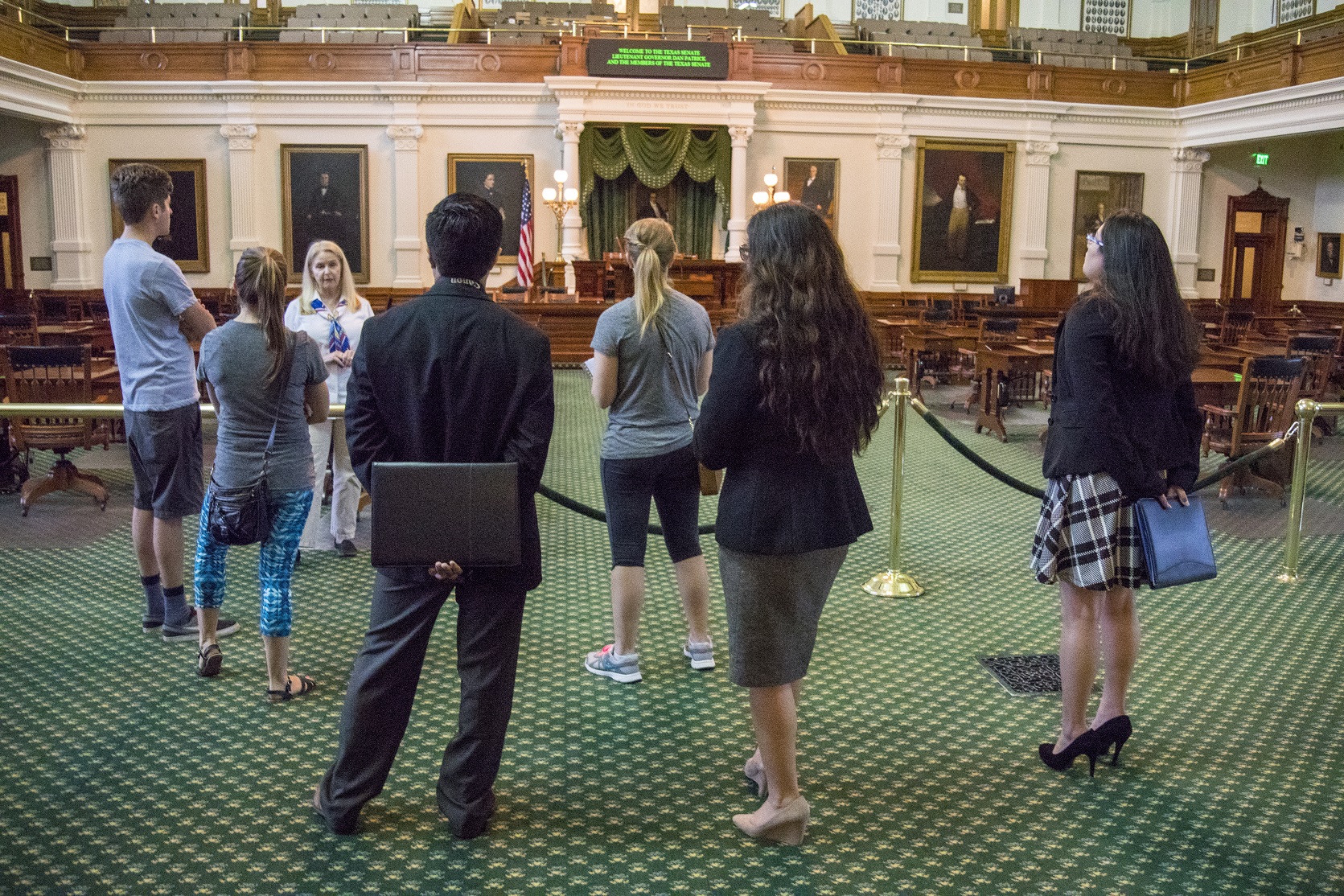
On a more macro-level, we visited the Texas Senate…
…where we saw the vivid paintings “Dawn at the Alamo” and “The Battle of San Jacinto,” both by Henry Arthur McArdle, who offered a heroic interpretation of the quest for Texas independence. Speaking of which, we showed our state pride by taking a photograph with the portrait of Sam Houston, who not only led troops to victory at San Jacinto, but went on to serve Texas as President, Senator, and Governor.
We completed our capitol tour with a visit to the underground annex, where we admired the window view of Goddess of Liberty, which towers atop the capitol dome.
Following a brief visit to the Capitol Grill—we would later be told, “don’t ever eat at the Capitol Grill, not ever—we journeyed the extension to find the office of SHSU Alumnus Representative Will Metcalf. There we met Chief of Staff Zachary Stephenson, who provided us with a rewarding presentation on working in the legislature.
Given the long work days, he said he looks for employees and interns who maintain a positive, professional attitude; avoid excessive participation in Austin’s thriving party scene; can remain productive over the course of the session; and will represent the office well. It was good advice to students who are interested in the possibility of interning during the upcoming session, and we are thankful for his time and wisdom.
…or from learning more than we could have ever known to ask about how legislatures work. Griesel and Sluyter demonstrated their exemplary knowledge of both the history of Parliamentary Procedure and how the legislative process unfolds.
Parliamentarian Chris Griesel Explaining Parliamentary Procedure
For example, did you know, that because the British upper-class spoke in French during the time of the Magna Carta, the concept of an assembly body fell under the French word for speaking, evolving from parley to Parliament. Moreover, rather than address all the representatives from the assembly, the King would designate one person to speak—the speaker—a designation that evolved into the U.S. “Speaker of the House.”
It was interesting speaking to these attorneys, both of whom shared their admirable intellects while discussing drone policy, the legislative process, our careers, and Mae West legislation—a proposed bills designed to get a specific audience to “come up and see me sometime.”
We should also add that Mr. Griesel very generously gave us two copies of Profiles in Courage, John F. Kennedy’s Pulitzer-Prize winning biographies of US Senators. When we got back to the car with gifts and opened the book, we noticed that he had marked the chapter featuring Sam Houston.
Although our morning only covered the governing portion of our dual-view day, our learning went well beyond statesmanship. From the history of the English language to the art of H.A. McArdle to the literary efforts of a former President, we left the Capitol more well-rounded than we entered. With such a productive morning, we could only speculate on what the evening would hold at our first-ever New Politics Forum Campaign Bootcamp.
Riding through through the rain and flooded roads, LEAP Students (Brian Aldaco, Isabela Gonzales and Christina Perez) and Professor Yawn eagerly headed to a Boot Camp–a boot camp for politics, that is. Before arriving at this campus for campaigning, however, we decided it was time to treat our palates with dinner at Southside Market and BBQ in the city of Elgin. We enjoyed a plate of ribs, brisket, and the signature beef sausage (considered “the best around” ), complemented by the restaurant’s homemade honey mesquite bbq. After an amusing table chat and a quick sighting of the Victorian house style which served as City Hall, we resumed our route to Austin, Texas.
Our second pit stop landed us at Mount Bonnell, where we got to enjoy the gorgeous view of Lake Austin. We weren’t the only ones: romantic couples sat alongside the cliffs, watching the last vestiges of the sun as its rays faded over the Colorado River. Indeed, the spot is a great place for a picnic or to simply take selfies with friends.
To the east, visitors see the outline of Austin’s downtown. On both sides, at least at this time of year, the surroundings are lit by the flashes of fireflies–and, on this night, actual lightning! We recommend that everyone visit Mount Bonnell at least once.
Following our “hike” up Mount Bonnell, we detoured the Capitol building which was, surprisingly, open for visitors. We headed in, learning briefly about some of the governors of Texas, enjoying the dome…
…and taking an obligatory photo alongside Elizabet Ney’s Sam Houston.
With our history fixed complete, we took another detour to get a late-night dessert at Quacks 43rd Street Bakery. Brian ordered a lemon cupcake–opting for the vegan option to fully assimilate in the Austin–Isabela ordered a Snicker Doodle cookie, and I (Christina) had a short-bread cookie shaped like a palm tree. Professor Yawn bought us Salted Caramel Brownies and Ginger Krinkles…
Over all we enjoyed the coffee shop styled bakery with its colorful walls and trendy appearance. With our bellies stuffed we headed to the hotel in order to rest and prepare for tomorrow’s busy itinerary.
Robert Loughran left SHSU in 2011, graduating with a degree in Political Science and plans to go into education. But he returned to his Bearkat home this Saturday, bringing 45 middle-schoolers and a few parents, all of whom wanted to learn more about Sam Houston State University. On hand to help were the LEAP Ambassadors, who served as young chaperones, tour guides, and mentors for a six-hour workday on Saturday.
To begin the day LEAP Ambassadors welcomed the AVID Students, who travelled 3 hours to visit Huntsville and Sam Houston State University, at Carbonero‘s for lunch. Carboneros is a local restaurant that serves authentic Salvadoran food. At the restaurant, the students were seated in groups of 7-8 with their classmates and also with one of the six LEAP Ambassadors who were present to mentor them throughout the day. This made lunch interactive and interesting because we all got to learn a little about each other. The students and volunteers got to enjoy a buffet-style lunch which included pupusas, rotisserie chicken, chicken/beef enchiladas, tacos al carbon, their famous chaufa rice, and hamburgers for the not-so-adventurous students. For an hour we ate, talked about what the day had in store, prepared for the next portion of the day and enjoyed the enthusiasm of 45 students who travelled from a Dallas school district—on a Saturday—to get a taste of El Salvadoran food and of college.
Following a full meal, AVID students headed to campus to attend a mock college class taught by Professor Yawn.
The goal of the class was to give the students a realistic idea of what to expect in a real college level course. To that end, the students were given three days to read the Bill of Rights and summaries of four court cases.
It was a lot to chew on for middle schoolers, and the grades reflected that.
But the students perked up for Professor Yawn’s lecture, which ranged from the criminal justice amendments of the US Constitution to the role that technology plays in changing interpretations of “search and seizure.”
The students eagerly asked questions and were willing to participate in Professor Yawn’s role-playing examples—including an arrest and detention which, incidentally, tied in to the days’ later activities.
Many students commented that the class was their favorite part of the day! Even LEAP Ambassadors enjoyed and learned from the lecture.
Alejandra Galvan and Karla Rosales
Breaking into groups, the Ambassadors teamed up to lead students on a tour across campus. Visiting the Newton Gresham Library, the Lowman Student Center, Rec Sports, the Performing Arts Center, and the College of Criminal Justice, we hoped each group got a sampling of what SHSU offers academically and recreationally. The tour time allowed students to ask questions and learn more about the University. Even LEAP Ambassadors brushed up on the University’s history. For example, we learned that SHSU became the first fully air-conditioned campus in the world during SHSU President Harmon L. Lowman’s presidency! Once the tours were finished, we regrouped and AVID students eagerly boarded the bus to visit the Texas Prison Museum.
It is impossible to come to Huntsville without knowing at least three things about the area: (1) it’s the home of Sam Houston, the man; (2) it’s the home of Sam Houston, the University; and (3) Huntsville has prisons. The AVID students got a briefing on the first two during class and the SHSU tour and their final destination allowed them to experience the history of the Texas Prison System at the Texas Prison Museum.
Visitors to the Museum are encouraged to watch a short history of the Texas Prison system when they arrive, and AVID students eagerly sat for the eight-minute program.
They were also treated to a brief overview by Jim Willett, who worked for the prison for 30 years, many of those years as Warden of the Walls Unit. He provided a few interesting details, and then showed the young students a large model of the Unit he once supervised.
The students’ attention was also caught by the masterful pieces of art located throughout the museum. One piece that caught everyone’s attention was a large piece of wood, much like a tree stump, that had animal faces carved into it. It is an impressive piece of art work, and it’s difficult and sad to think about it being created in a prison.
Of course, the most famous piece of wood in the Museum is the prison’s notorious electric chair. Located toward the rear of the Museum, surrounded by the institutional green walls of the prison system and illuminated by a single fluorescent light, Ol’ Sparky sits forlornly. It’s chilling to experience this instrument from a few feet away.
Another popular exhibit was the illegal contraband that has been confiscated from inmates over the years. These items would impress any engineer, architect, or inventor. Pipe shotguns made of lined paper towel rolls, lead and string; a tattoo machines made from a pencil and stored in a sock; hollowed out wood-soled shoes that hid a knife blade, much like a James Bond gadget. Seeing these things close up not only made us all thankful for the glass separating the contraband from us, but also for our freedom.
Of course, no trip to the Texas Prison Museum is complete without a photograph of the visitors in the model jail cell. Students displayed way too much pleasure while posing in the jail cells.
The exhibits of the Texas Prison Museum have valuable lessons to teach both young and old. And these exact lessons are why the LEAP Ambassadors and AVID Students sacrificed a Saturday to educate and empower ourselves with knowledge and service.
It was a long day, but so worth it! It gave AVID students an idea of what to expect in college and what the Huntsville community can offer and it prompted the LEAP Ambassadors to play a mentorship role, which for most, was a new experience. I believe that we all benefited from what LEAP calls AVID Day and we hope that we can do it again in the future.
Our last day at the Convention was, in many ways, the longest. But for the Walker County Delegation, which overwhelmingly supported Ted Cruz for President, it was also a fun day.
The first thing on our agenda was kolaches with Congressman Kevin Brady. It was there that we saw Francine Stanfield, Brady’s Campaign Manager, who recognized us from previous events for which we had volunteered. Both Congressman Brady and his staff were very welcoming to the Walker County Delegation and to us as SHSU students, as always.
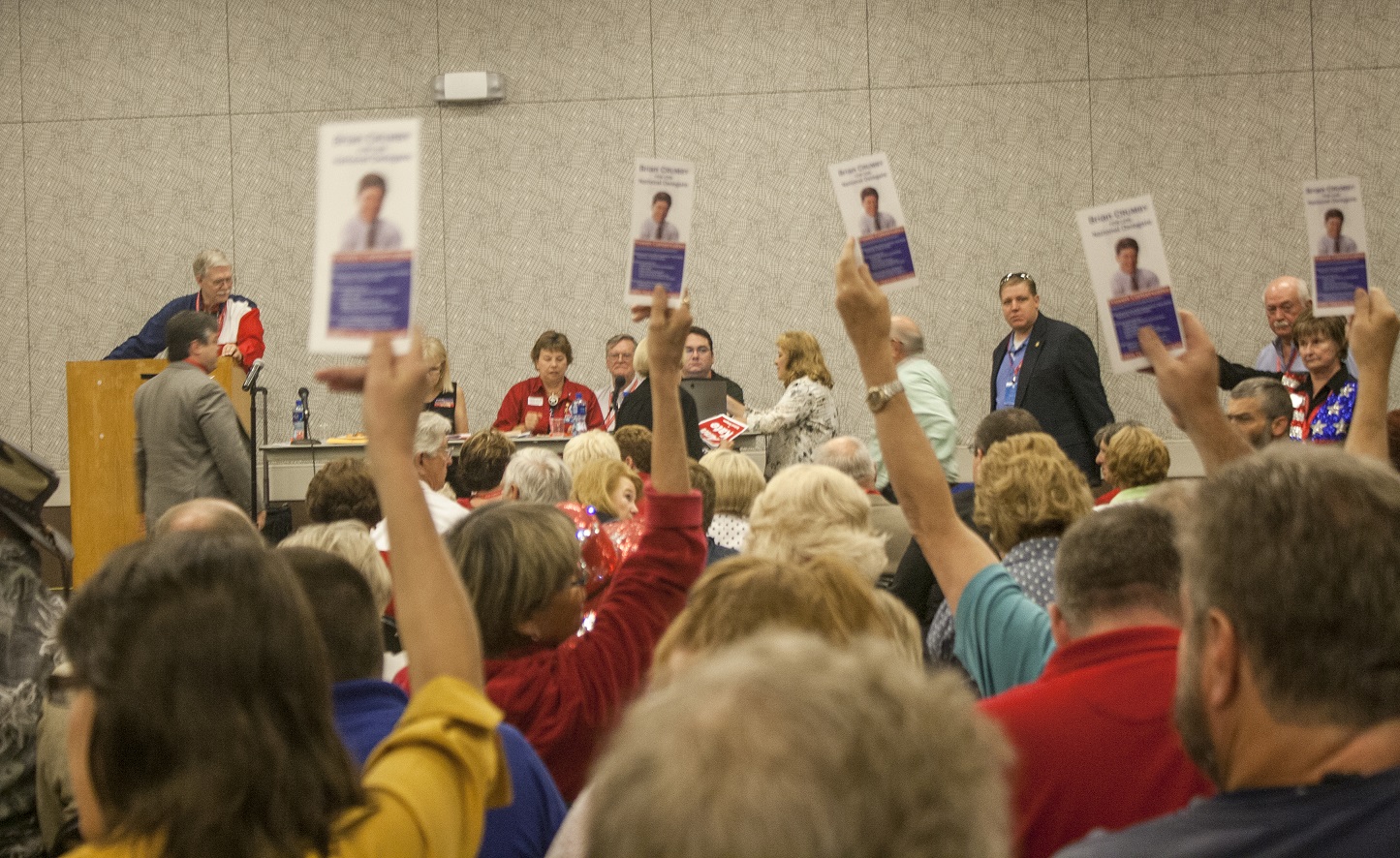
We congratulated Congressman Brady on his recent win and after meeting with him for a few minutes we proceeded to the breakfast table for kolaches and fruit to give us energy for the long congressional district caucus meeting ahead of us. Although we only had to vote on delegates and alternates to send to the national convention, it took roughly 6 hours. The meeting began shortly after 8am and ended around 2pm.
At this meeting we had to elect the delegates that would attend the National Convention in Cleveland, Ohio and also the party representatives who will represent us to the national delegation in Washington, DC. This process was interspersed with various speeches by elected officials or candidates. The first of these was the best, with Congressman Brady opening the proceedings.
The usual order of business, however, was a bit more tedious. The process for nominations proceeded in the following manner:
A nomination;
Speeches for each nominee, including those by the nominee him or herself (nominees got three minutes total);
Voting for each delegate (and alternate) position;
A run-off of two or three candidates, depending on the proportion of the original candidates receiving a threshold of votes;
Start over for the next position.
Because there were between 5-9 candidates running for each position, the process took a while.
It was an interesting process, but it’s unclear exactly how meaningful it was. Each delegate elected to attend the national convention would have to pledge to vote for the candidate according to the state’s primary’s result. In the end Montgomery County Delegate Ann Kate fulfilled the position for first delegate, which was bound to vote for Cruz.
Steve Toth of Montgomery County fulfilled the second delegate position, which also was bound to vote for Cruz. Finally Ann Mazone of Grimes County fulfilled the third delegate position, which was bound to vote for Donald Trump in the national convention.
This last one was a special victory for our county’s Cynthia Prehoda, who had nominated her.
Walker County Delegate, Cynthia Prehoda, Nominates Ann Mazone
Even though this process seemed lengthy to some…
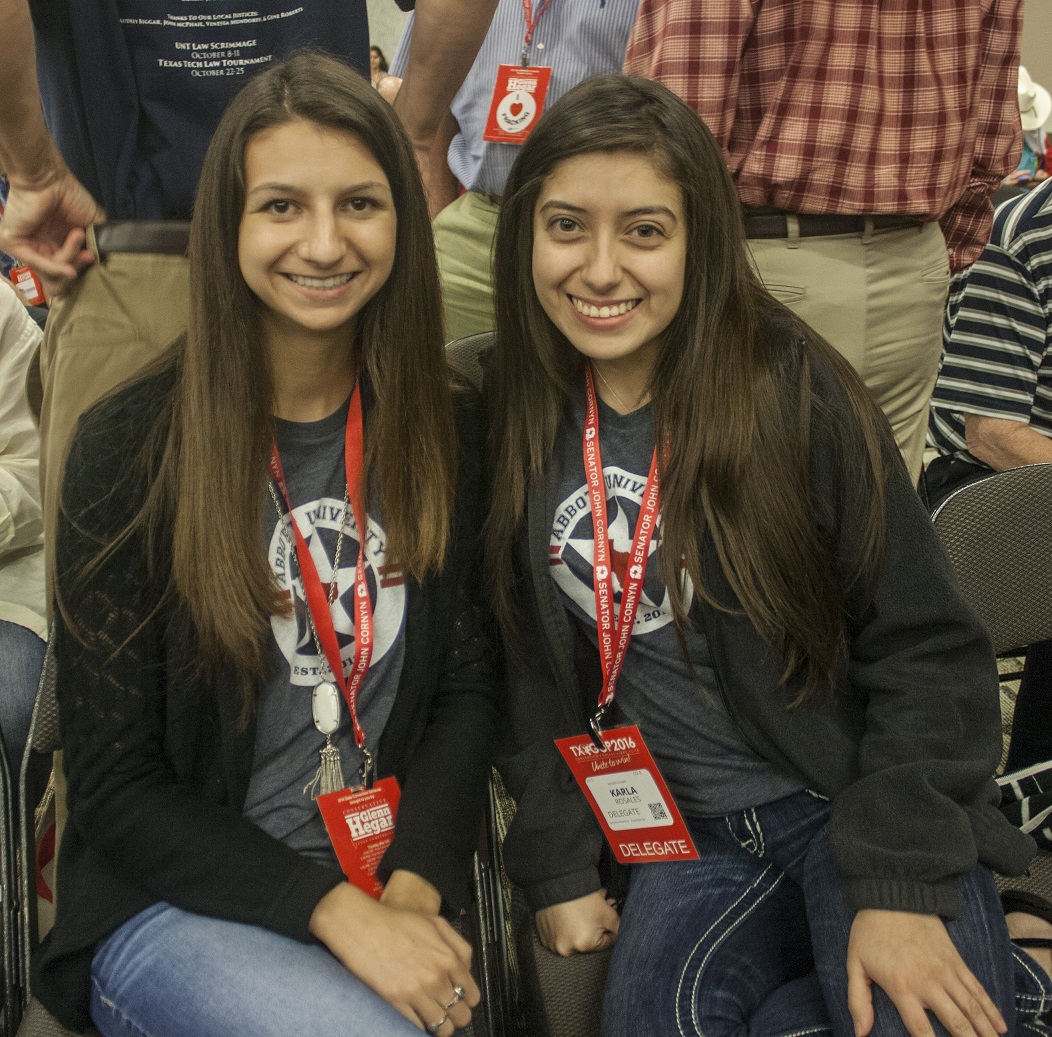
Kaitlyn and Karla
it was full of energized nominees that proved to be great entertainment to the public. Some delegates were so passionate that they fought back tears while giving there speeches and others were persistent and ran for all three positions in hopes of getting elected to one–all of this interspersed with lottery drawings for speaking order…
…and dashes to the podium to get voting ballots for each position…
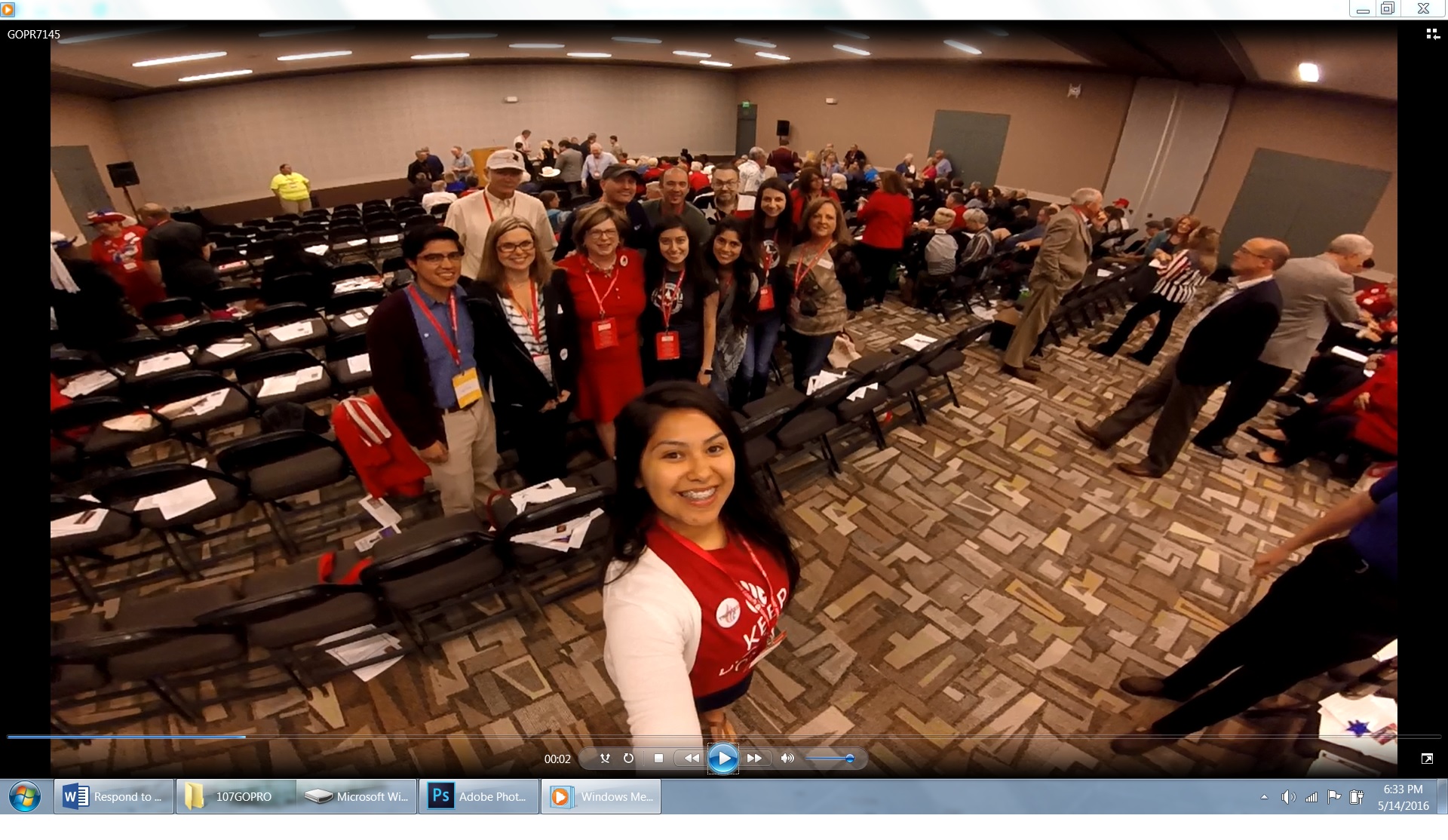
By about noon, we decided we better get a group photo, while there was still a group left to photograph!
Megan Chapa Photographs the Walker County Delegation
After a busy morning of delegate voting, we decided that it was time to indulge in a satisfying lunch break. Thus, Megan Chapa, Kaitlyn Tyra, Kay Deahl, and I (Brian Aldaco) went down to Cafe Herrera. The Mexican cuisine style restaurant is conveniently situated a street across the convention center. This allotted the sufficient time for the eager delegates to return in time for the remainder of the convention’s general session.
Upon entering through the rustic Spanish-style doorway of the restaurant, the savory aroma of the sizzling beef pleasantly overtook our senses. This was a proper indicator that we had chosen the right lunching venue. With our menu items ordered we distracted our appetite with the classic Mexican chips accompanied by a spicy green salsa and an even hotter red salsa. The wait for our piece d’resistance was minimal, however, thanks to the quick cooking skills of the chef (surely he must have known of Ted Cruz’s imminent arrival). With our Enchiladas Verdes, Enchiladas Rojas, and tacos al pastor served, we continued to enjoy the entertaining anecdotes of Mrs. Deahl. Sharing her history of Republican participation and college experiences made us consider our privilege to attend the State Convention with greater appreciation. After our plates were cleared we rushed across the road, entered through the convention doors, and climbed up the stairs. We were ready to continue fulfilling the duties of a State Convention delegate.
Texas Senator Ted Cruz was the speaker at the last main session. He won the Texas Republican Primary for the presidential candidacy so all the delegates were really excited to hear Senator Cruz speak! All the seats had “thank you, Ted” signs so that the delegates were able to show their appreciation for all of his efforts during his campaign race.
Megan Chapa
His wife, Heidi Cruz, introduced him on stage. She gave us insight of their campaign tour and expressed how good it felt to be back home in Texas! All were happy that the two and their two children, Catherine and Caroline, sacrificed so much to represent Republicans all across the United States.
Senator Cruz’s speech was very positive. He reaffirmed the beliefs that he will fight for in the Senate and how his unsuccessful presidential campaign will not hinder any future efforts during his office term. Although he did not endorse any candidate during his speech, he left many of us more hopeful about the future of our party and our nation.
The excitement of hearing Senator Cruz speak gave many delegates energy as we prepared for the rest of the fourth and final general session.
The Honorable Attorney General Ken Paxton–who, incidentally, is facing criminal charges as for Securities Fraud–gave remarks following Senator Cruz’s speech. He discussed his successes as Attorney General and some of the current issues Texas is facing. His speech informed delegates about his opinions on current events and how he plans to handle these situations. The Honorable Texas Commissioner of Agriculture Sid Miller (also under investigation) and the Honorable Texas Railroad Commissioner Ryan Sitton also spoke to delegates. Thanking the delegates for their continued support, their speeches were generally positive about the future of the Republican Party and the State of Texas.
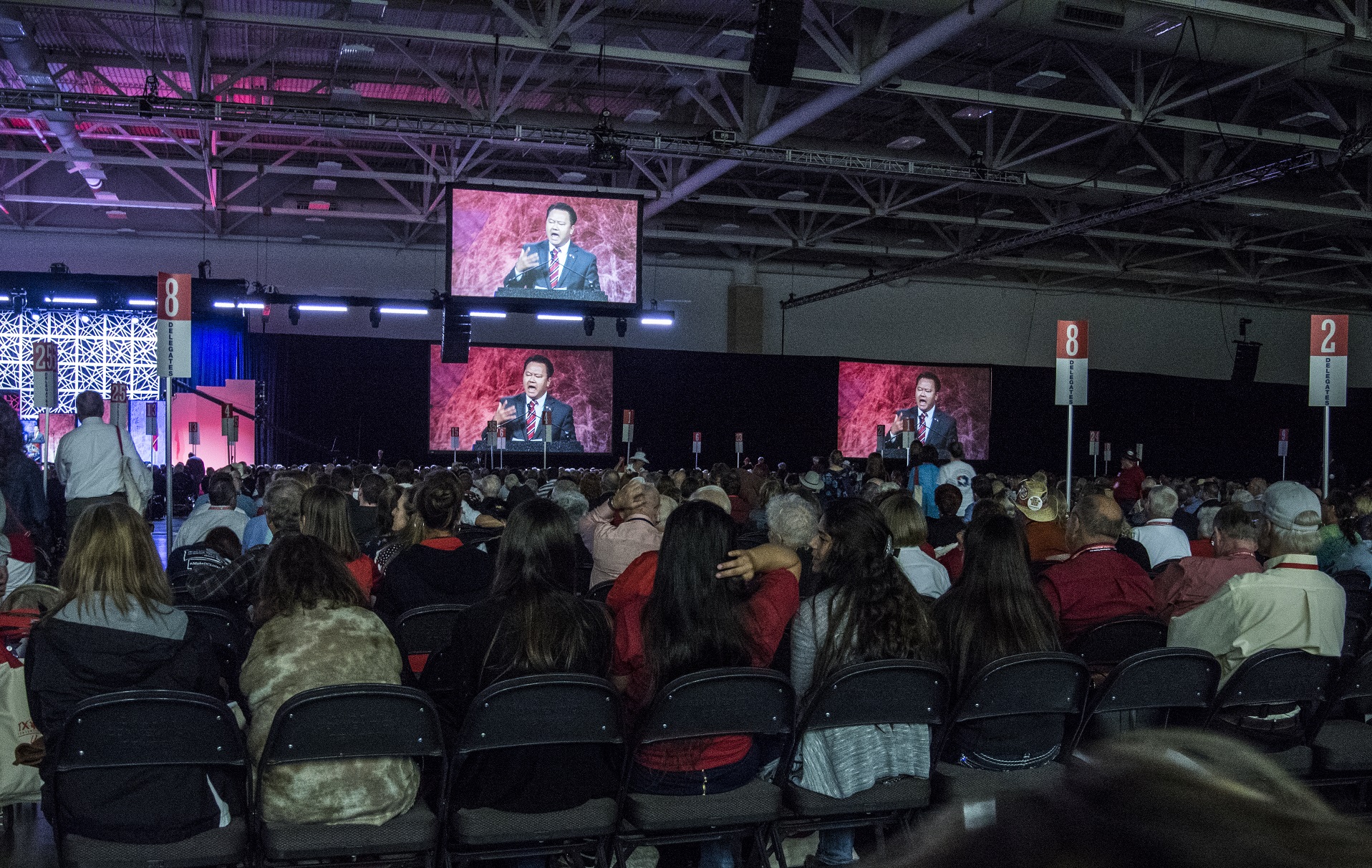
Andy Ngyuen, President of Texas Asian Republican Assembly provided his perspective on being a Republican. His life story as a refugee escaping Vietnam for a better life in America helped exemplify the pursuit of the American Dream, one of freedom and liberty. Ngyuen believes that by upholding these principles, the party would become the moral example of the nation.
The final speaker was Senator Jeff Sessions, who served as a kind-of surrogate for Donald Trump. Sessions, who represents Alabama, has endorsed Trump, and is stumping for him on the trail.
Once the guest speakers were finished presenting, it was time to call the final General Session to order. Our main point of business was to elect a National Committeeman and Committeewoman. After hearing the candidates speak, each Congressional District voted by paper ballot to determine which nominee would be elected. Each Congressional District then reported the numbers to the Convention Secretary during a roll call. Voting by paper ballots was a tedious process, yet it provided more accuracy than a voice vote would have. For Committeeman, Robin Armstrong was reelected. For Committeewoman, Toni Ann Dashiell was also reelected in a surprisingly close election. Although the delegation cast only two votes, it took about an hour and a half to complete! Fortunately, electing the at-large delegates and alternate delegates to the National Convention were easier because they were submitted by a committee and we could approve them as a slate and by voice vote.
After we approved the two lists of delegates to attend the National Convention on Texas’ behalf, the Convention was adjourned. It was an accomplished feeling to know we completed our first State Convention as delegates!
The process was exciting, entertaining, and rewarding. We learned about Parliamentary Procedure, current events, and helped participate in an important democratic process. It was tempting to bask in the glow of the final exit from the convention…
…but we chose instead to think of how lucky we were to be in Walker County, where voters nominated students to attend the State Convention.
Our initial foray into this type of politics could only have been made more rewarding by the presence of Linda McKenzie and Terry Stivers, both of whom had much to do with our attendance at the convention.
Thanks to all the members of the Republican Party who helped make this possible, and we look forward to participating further in the years to come!





















 Center for Law, Engagement, and Politics