ChatGPT: PACE gets the conversation going

The higher-education community is reacting to ChatGPT with a mixture of consternation, trepidation, excitement, and a lot of anxiety. Inasmuch as it is the wave of the future, however, higher education needs to react, which is why the Professional and Academic Center for Excellence (PACE), led by the capable hands of Dr. Kevin Randall and Tiffany Terry, hosted a panel on the topic.

The panel kicked off (through Zoom) with a discussion by Dr. Xing Liu, who discussed the nuts and bolts of ChatGPT–focusing on how the software works. Dr. Mitchell-Yellin discussed the recent change in the University’s policy on plagiarism, highlighting the fact that while the policy used to prohibit using “another’s work;” it now prohibits using “work other than your own.”

(Ed. note: Mitchell-Yellin wasn’t sure if the policy change had officially occurred yet, but it is in process of occurring).

Dr. Nardone and Dr. Primm, from English and Biological Sciences, respectively, discussed the dos and don’ts of writing assignments “in the age of AI.” One factor the professors stressed is that ChatGPT has limitations, specifically: the inability to speak in a distinct “voice” and limited abilities to distinguish facts from anti-factual claims.

Apart from these limitations, of course, there is also the concern that students may become overly dependent on these technologies and become even weaker writers.

Accordingly, Nardone encouraged professors to consider: (1) using required sources; (2) pushing students to develop “point of view;” (3) asking students to explain other process; (4) having students reflect on their unique course experiences; and (5) developing a “reverse research process” approach, where students begin with a conclusion and have to reverse engineer the support and references for the conclusion.

Dr. Randall then highlighted some services and support (courtesy of Erin Owens) offered by the Library…

…before turning it over to Dr. Strubberg and Dr. Bennett, who discussed preliminary research they have completed regarding student use of ChatGPT and their (the students’) views of the ethics of ChatGPT use.

Dr. Ryan Zapalac anchored the panel, with a strong final presentation on the University structures and processes in place to consider the software and other matters of academic integrity.

The University, Zapalac noted, has recognized that academic integrity is an issue, and a committee has been in place since 2019 exploring these issues. Moreover, this committee is now a “standing committee,” and it is aware of ChatGPT and some of the challenges it will pose.

Because ChatGPT software is fluid and advancing rapidly, some proposed solutions to detecting or incorporating the software may be temporary. Accordingly, Zapalac encourages faculty to focus on the “motivation and writing process itself” and to refer to “Writing in the Disciplines.”

As noted by Zapalac, ChatGPT is less than a year old, and our speculations and current understandings may not hold up for long. Accordingly, Conversations with Administrators is currently planning a fall session that will continue this very conversation.

Many thanks to the PACE Center for bringing together talented people to start this conversation.

NASSR, 2023–Romanticism and Justice at SHSU

The LEAP Center is always on the hunt for quality events, and when we heard the North American Society for the Study of Romanticism was being hosted at SHSU–and that the lead organizer was Dr. Michael Demson–we knew we’d found one.

The Conference is taking place over three days, March 30-April 1, with dozens of panels, workshops, entertainment, tours, and other interesting and entertaining programs. LEAP assisted with one of these, a tour of the Huntsville Unit for a group of students, conference attendees, and SHSU staff. Mostly, though, we just enjoyed the conference, benefitting from the great work of Demson and an entire conference committee from individuals across campus and, in fact, from campuses across North America.

The meat of the conference was from the plenary speakers and the panels, both virtual and in-person, with approximately 200 people attending.

LEAP students attended a few of these, including the first-day plenary speaker, Professor Doran Larson, who, among his many titles, is the Director of the American Prison Writing Archive, and he was introduced ably by Professor Michael Demson.

Professor Larsen discussed the distinct themes in prison writing, noting how little they had changed over time, a reflection of the horrible state, as he sees it, of our prison system.


His presentation generated much interest and discussion.

The conference picked up the next day, with a full day of panels, which we were able to attend. We saw great panels featuring professors not only from the United States, but from around the world. All of the panels helped us learn about justice, literature, and many different cultures.

We even learned about Finnish literature from SHSU’s own Dr. Helen Halamari, with her husband Dr. Rob Adams in attendance.

This was our favorite panel. Interesting fact: not only is Dr. Halamari a TSUS Regents Professor, she also has a Ph.D., and four different Master’s Degrees.

Many kudos to Dr. Demson and the great staff (Deanna Briones, Sarie Fuller, Yahneed John, Brittany Johnson, Jerin Milan, and Rhonda Owens) who helped bring this conference to SHSU.

Pre-Law Society Meeting: Voir Dire

Last month’s Pre-Law Society meeting was a natural segue to the topic for this month’s Pre-Law Society meeting. Last month’s discussion featured three attorneys in a question-and-answer format focused on what to expect in law school and what life is like as an attorney.

This month’s meeting had multiple foci. First, the officers provided updates:

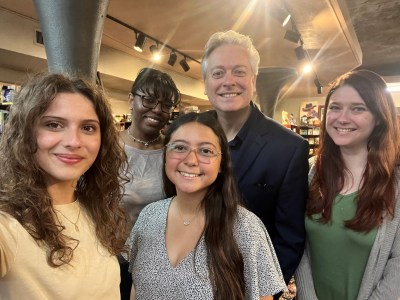
In the second part of the meeting, Jade Miller, Pre-Law Society President, Professor Mike Yawn, and Jean Loveall discussed a timeline to go to law school from freshman year to senior year of college.

Since Jade just completed her LSAT Prep, took the LSAT, and applied to her chosen law schools, she shared a wealth of information gleaned from her path to law school. With her personal story of LSAT Prep, Jade inspired the Pre-Law students with three strategies that worked for her: (1) take the Critical Thinking philosophy class (PHIL 2303); (2) budget your LSAT Prep time wisely; and (3) focus on developing and writing a strong argument when completing the Writing Sample part of the LSAT.

After hearing such encouraging words and valuable advice from the three presenters, the Pre-Law Society members were energized to engage in a voir dire activity. Voir dire is the process in which trial attorneys examine potential jurors before the jurors are selected to serve on the trial.

Amari Gallien presided over the voir dire as the Judge, Sephora Pham and Matthew May were the defense attorneys, and Professor Yawn was the prosecutor. As the potential jurors, each of the remaining Pre-Law Society members received a vignette of the character they would portray as a potential juror. These vignette characters ranged from a male country music singer/songwriter with a high school degree to a female accountant pregnant with her second child to a 72-year-old retired art history teacher. This activity introduced future attorneys to the nuanced questioning and strategies involved in selecting jurors for a criminal trial.

Thank you to all the Pre-Law Society members who participated in this interactive meeting. As president, Jade Miller has some exciting topics planned for next month’s meeting. One activity to look forward to is the cording of all Pre-Law Society members who are graduating in spring 2023. We hope to see all Pre-Law Society members on April 19th!

Empty Bowls No More!

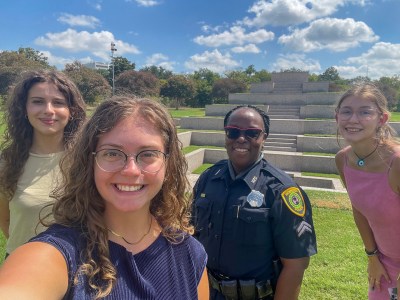
Continuing an annual LEAP tradition originating in 2008, Cynthia Boyd, Elisabeth Espinoza, Alexandra Spears, Victoria McClendon, and I participated in the Wynne Home’s Empty Bowls, the 2023 version! The event is a brilliant way to promote art, engage the community, and fight hunger in one lively, fun-filled day. 

Elisabeth Espinoza and Olivia Discon

Sponsored by HEB with soups donated by local restaurants such as Sam’s Table, City Hall Cafe, Five Loaves Deli, and culinary students from Huntsville High School, the event benefitted the Senior Center’s Meals On Wheels, an organization to help fight food insecurity for the elderly.

How does the event work? It’s pretty simple–for the public, that is. In the months leading up to the event, the Wynne Home hosted pottery classes to make the bowls, allowing volunteers to learn a craft while supporting their community and the arts. These participants could either reserve their bowls or offer them to the Wynne Home for the Empty Bowls event.

Then, on Tuesday, March 7, the public was invited to the Wynne Home for lunch–and a work of art! With a suggested donation of $15, visitors could select any of the bowls created by the volunteers and help themselves to the large variety of soups and sandwich items. The array of vibrant, unique bowls reflects the innate beauty of volunteerism and service…

…but more importantly, the bowls represent food insecurity and the ongoing issue that can be ameliorated with compassion.

The student volunteers were happy to help, by greeting diners, serving soup or food, taking photographs, and helping clean up.

We also purchased soup ourselves and donated to the cause! Moreover, we had the incredible opportunity to speak with the many members of the Huntsville community passing through the doors.

Two of the three volunteers (myself included) are freshmen, so this was not only our first trip to the Wynne Home, but our first chance to meet community figures. We met Mayor Brauninger, Councilmember Humphrey, Councilmember McKenzie, Councilmember Graham, Chamber President Ray Hernandez, Shannon Higbie, Laura Green…

…Professor Jennifer Didier, Linda McKenzie, Jeff Murski, and many City of Huntsville staff. Among the latter included Sarah Faulkner, Angela Robinson, Tammy Gann, Aron Kulhavy, and Tracy Rikard. As a special bonus, we had the opportunity to meet Dr. and Mrs. Pease as well as Nancy Gaertner!

By the end of the event, most of the bowls had been selected and taken home.

…but that doesn’t mean there wasn’t artworks to be appreciated. We took the opportunity to view the Wynne Home’s current exhibit: “Speaking In Color and Light” by Jane Manthei. Although beset by autism and growing up largely non-verbal, Manthei uses her artwork to communicate and express how she perceives the world.

Manthei’s work is almost photographic in its realism, using intricate and tiny details to configure landscapes, portraits, animals, and nature. 

It was a rewarding day in so many ways, and we wish to thank the community, the sponsors, and the donors for coming together. And, of course, many thanks to the Wynne Home for hosting an event integrating art, community, and public service in Huntsville!

Learning, and Dining, with SHSU Deans

Morgan Robertson

As another measure of celebration for Sam Houston’s Birthday, SHSU Staff and Alumni ventured to the Capitol to deliver a very meaningful gift to all legislative members. The David Adickes statue on Southbound I-45 depicts our great namesake with his signature cane. So, to add a piece of SHSU in the Texas Capitol, legislators were gifted with General Houston canes!

Dean Li, Alumni, Jessica Cuevas, Morgan Robertson, and Sam Houston’s “Cane”

After all of the canes had been distributed, the Deans and interns made their way down Congress Avenue and up to the 10th floor to meet former LEAP Ambassador, Christina Gonzalez, now VP of Governmental Affairs for AECT . Thanks to Professor Yawn’s coordinating, and Christina’s generosity, SHAIP interns had the pleasure of having lunch with Dean Roper, Dean Li, and Dean Lyons!

Dean Roper, Dean Lyons, and Dean Li

We were greeted with great hospitality, and delicious food! We filled our plates with lunch from Alonti. However, the best part of our afternoon was, of course, the conversation!

Dean Li with CHSS Majors:
I. Cuero, A. Sheffield, J. Cuevas, Y. Mendoza, B. Demyers, & M. Robertson

We all were given the challenge to tell the Deans more about ourselves and share what the past two months of our semester looked like. Then, the lunch turned even more into a roundtable. Christina shared some of her wisdom about working at the state level. She reminisced on her time as an intern and described how it was getting her very first bill passed.

Dean Roper and Public Health Major Ashlyn Parker

The Deans asked us how SHSU better prepared us to work in Austin and what new skills we would be taking back to SHSU from our experience in Austin.

Regarding how SHSU prepared us, we unanimously agreed that the Career Success Center and its staff are great resources. Yvette and Jessica noted that the Reba Bock Career Closest has helped as well.

As our youngest Intern, Breanna said she is excited to see how her experiences in the working world translate to her next few years at Sam: “There is only so much knowledge that you can gain in a classroom setting. My time at TAC, Texas Association of Counties, has taught me how the state interacts with urban and rural counties alike.”

Dean Lyons with CJ Majors: Jessica Cuevas, Jayelynn Bordeaux, and Alum Christina Gonzalez

Christina’s generosity extended to allowing us to use AECT’s beautiful view down Congress from their balcony to snap some photos! After some strategic coordination. We were able to get some great photos with our Deans.

On behalf of the LEAP Center and the SHAIP Interns, thank you to Christina for hosting a great lunch with even better company and to the Deans for sharing your knowledge and supporting us in Austin!