Skip to content

Center for Law, Engagement, and Politics

Leap At SHSU!

  • About LEAP
  • LEAP Ambassadors
Center for Law, Engagement, and Politics

Tag: CIA Director

Navigating International Relations With Secretary Mike Pompeo

By Michelle Moya

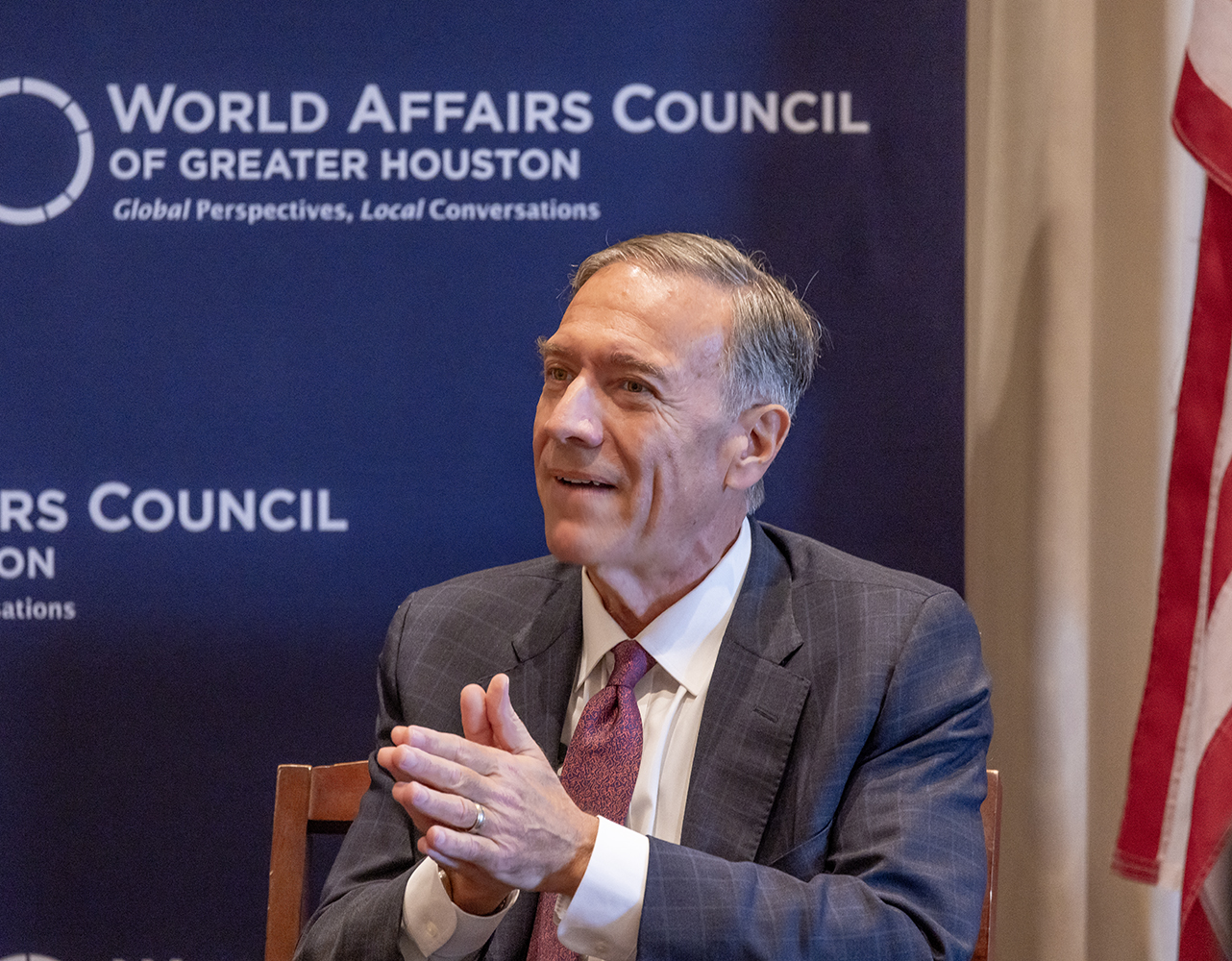
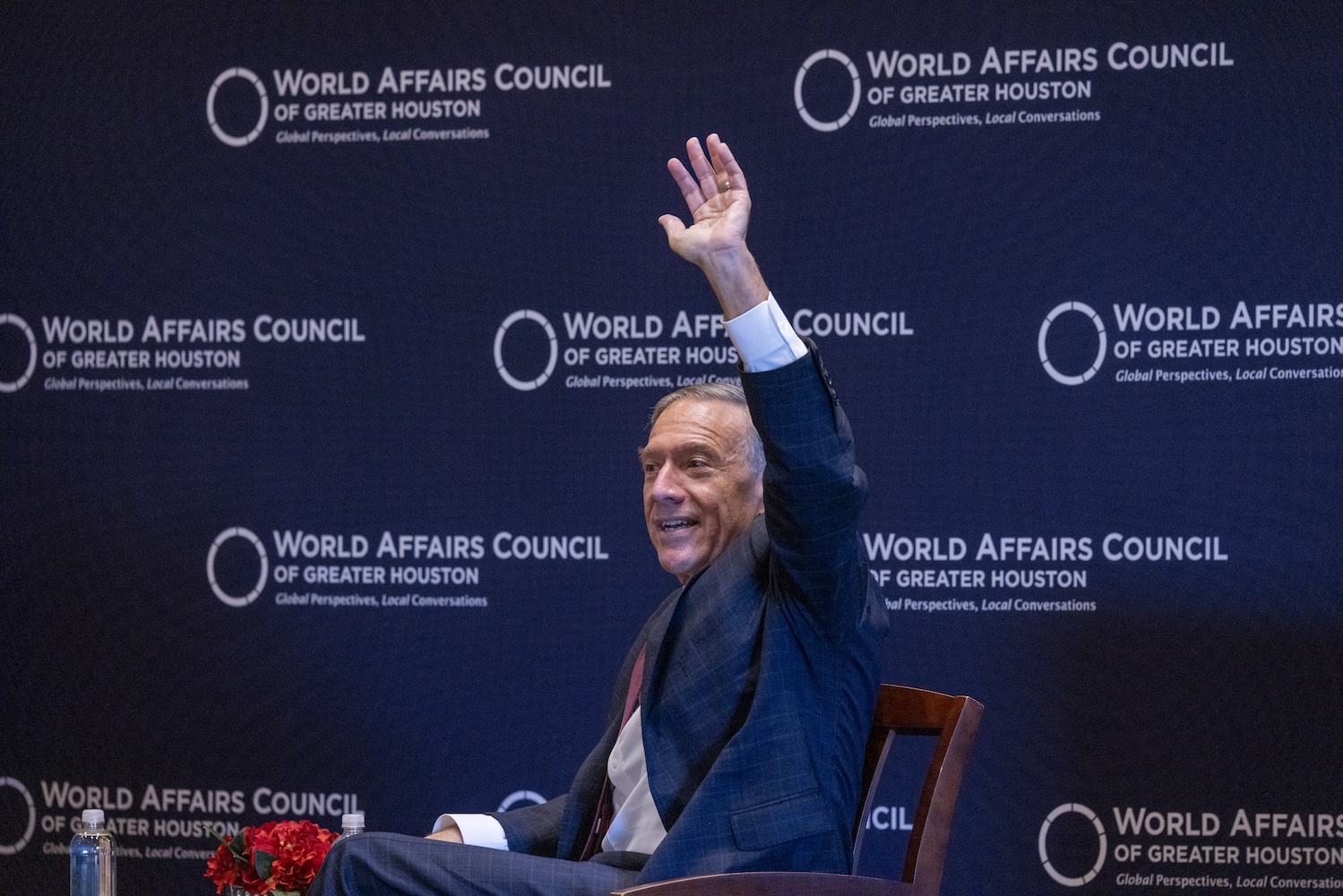
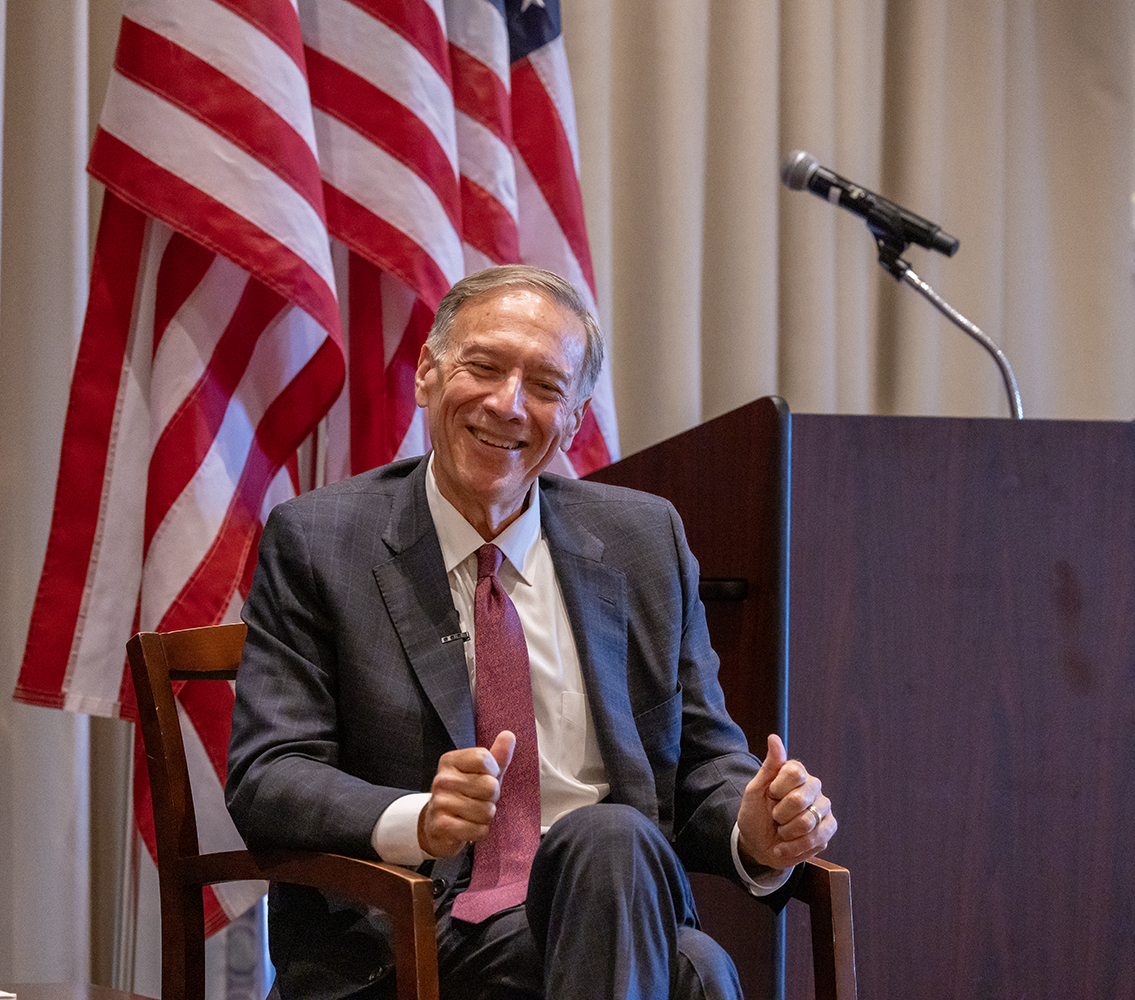
It was a rare lunch event for us with the World Affairs Council. With the LEAP Ambassadors all working part-time jobs and enrolled full-time in classes, getting away for a day-time event isn’t easy. But when students have the chance to meet Mike Pompeo–the 70th U.S. Secretary of State, former CIA Director, and four-term Congressman from Kansas–and Ambassador David Satterfield, we make accommodations.
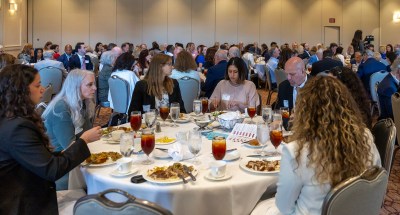
The event format included a full hour dedicated to networking before the program began–a structure that exemplifies why World Affairs Council events are so valuable for professional development. During this time, we had the opportunity to meet several professionals, including Attorney Wendall Corrigan Braniff, whose advice and civic encouragement added a great deal to our afternoon.  

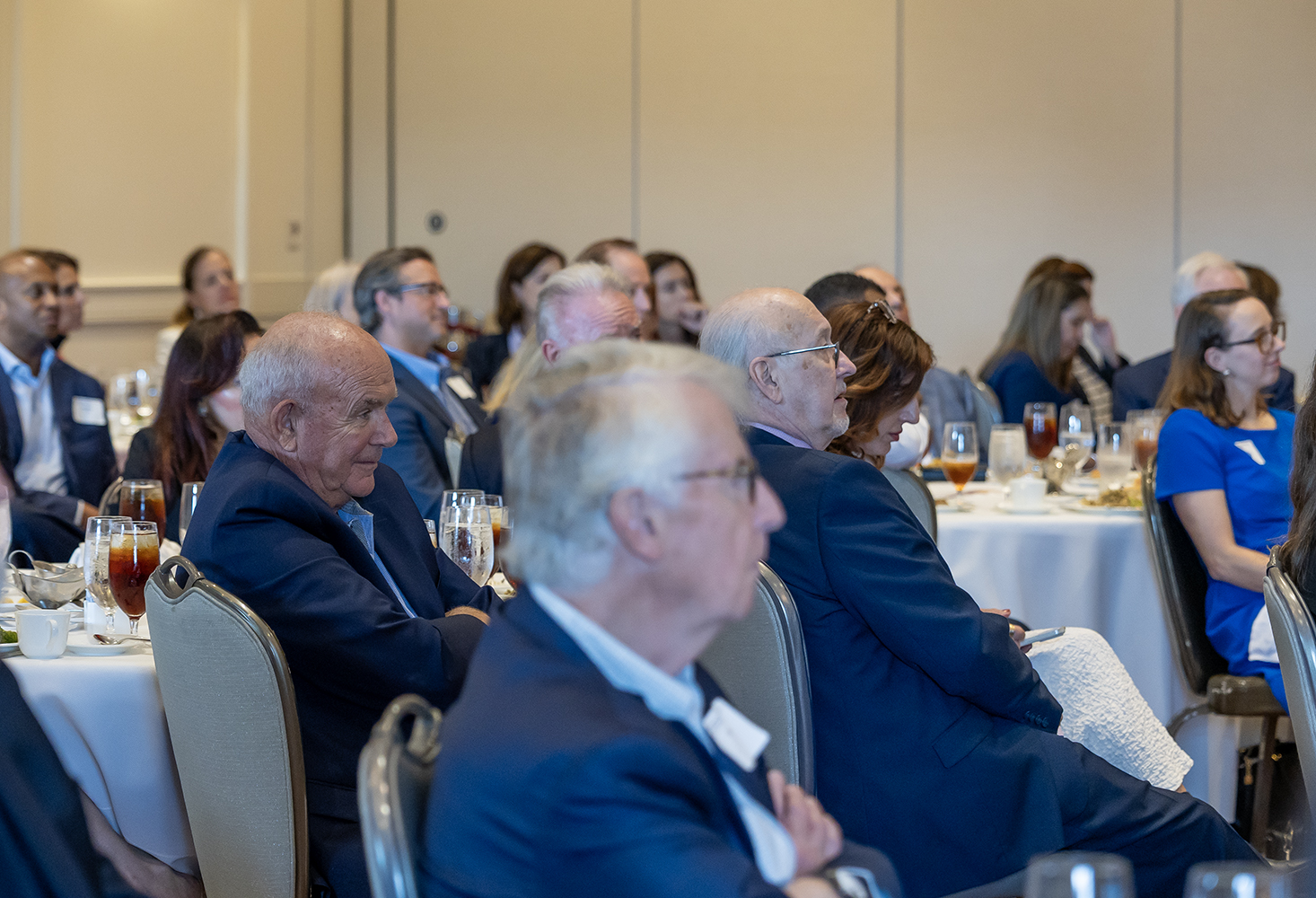
Alongside a delicious meal…

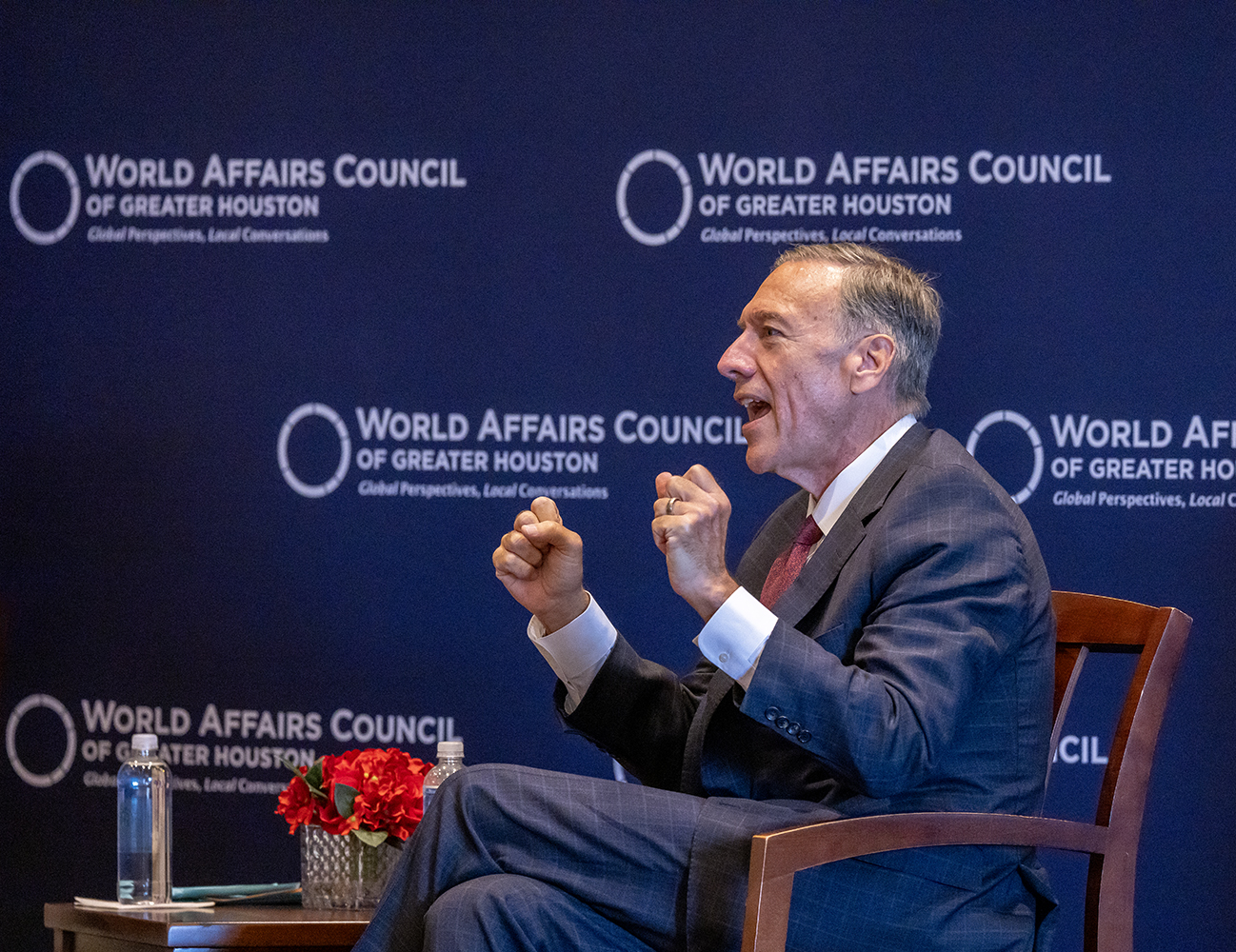
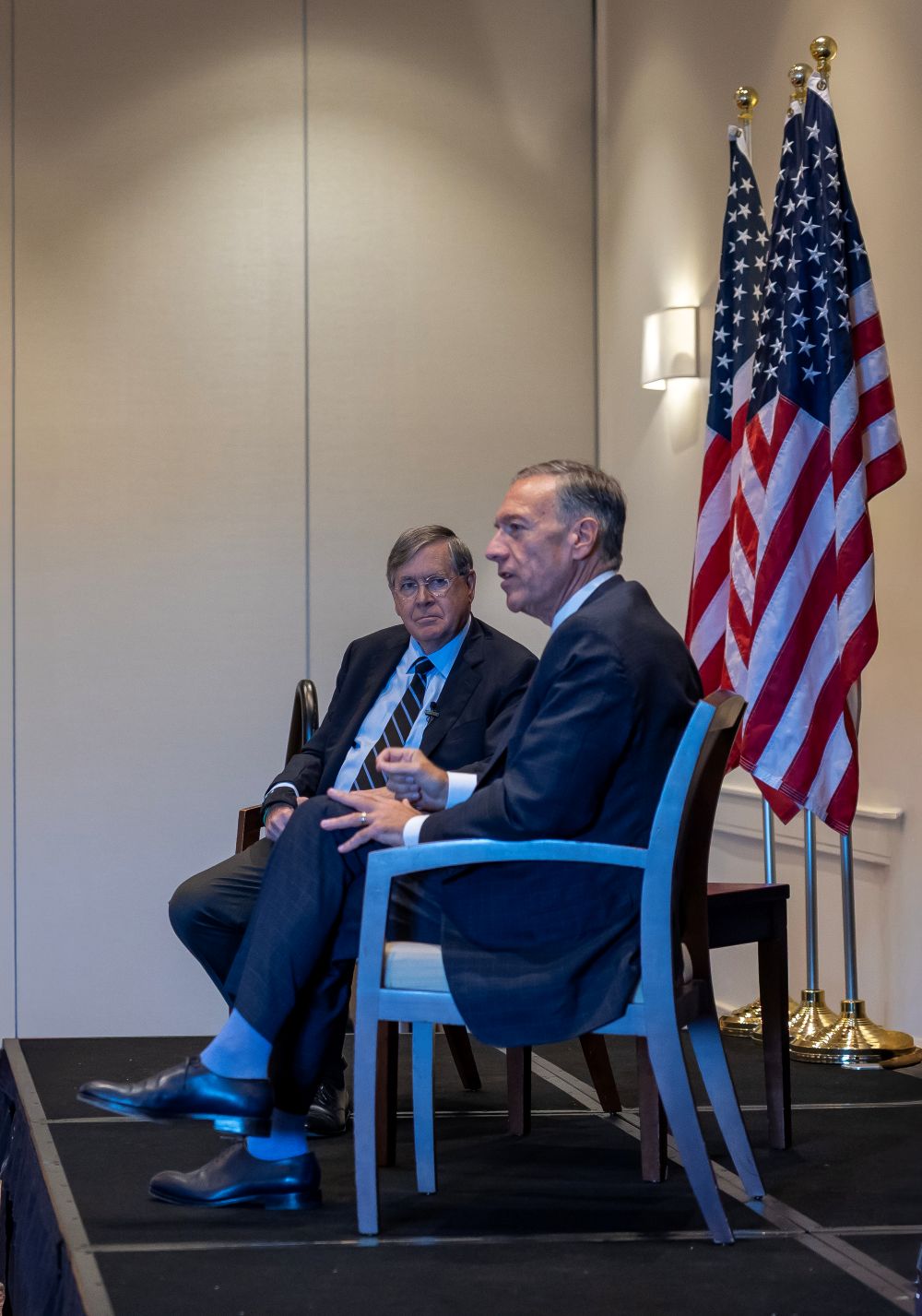
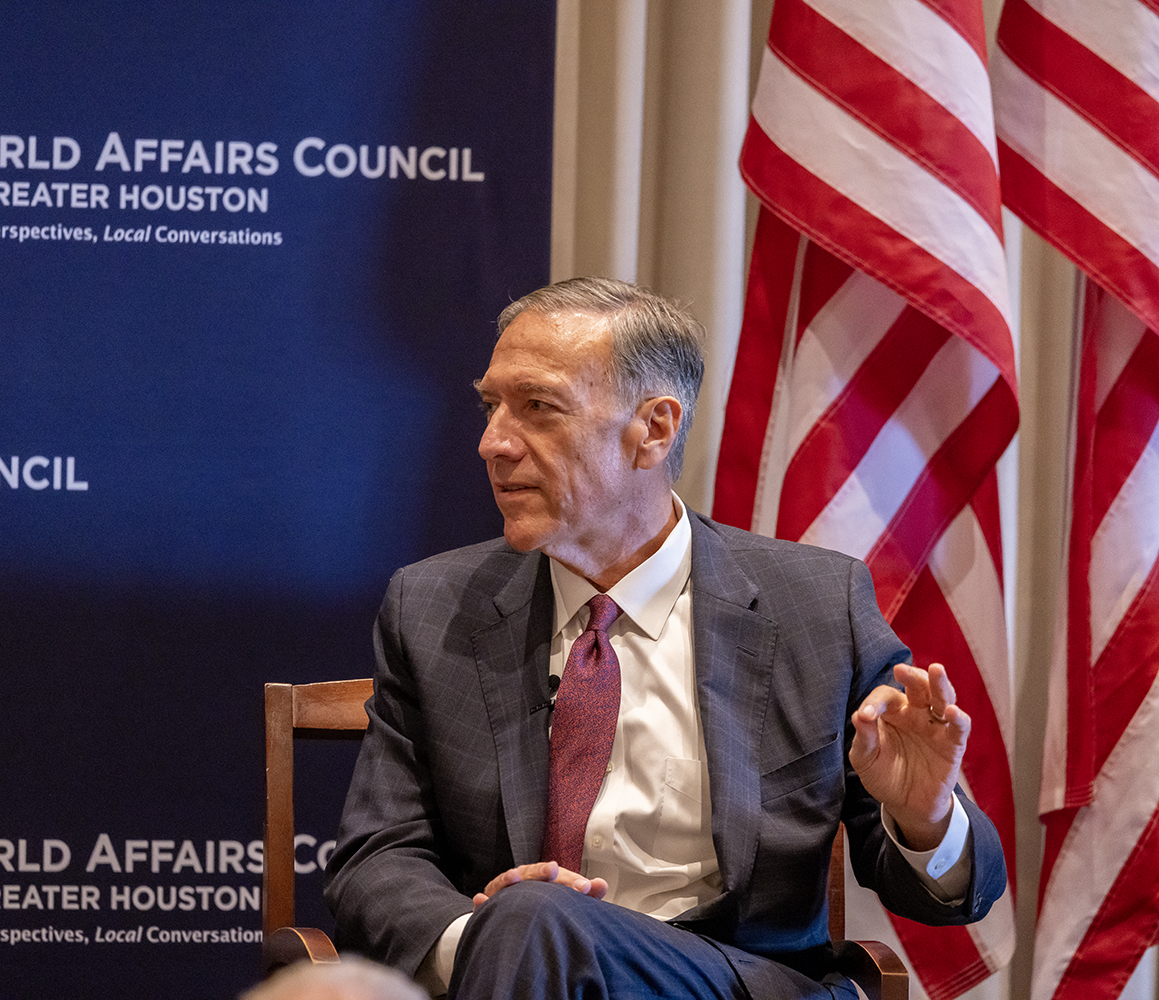
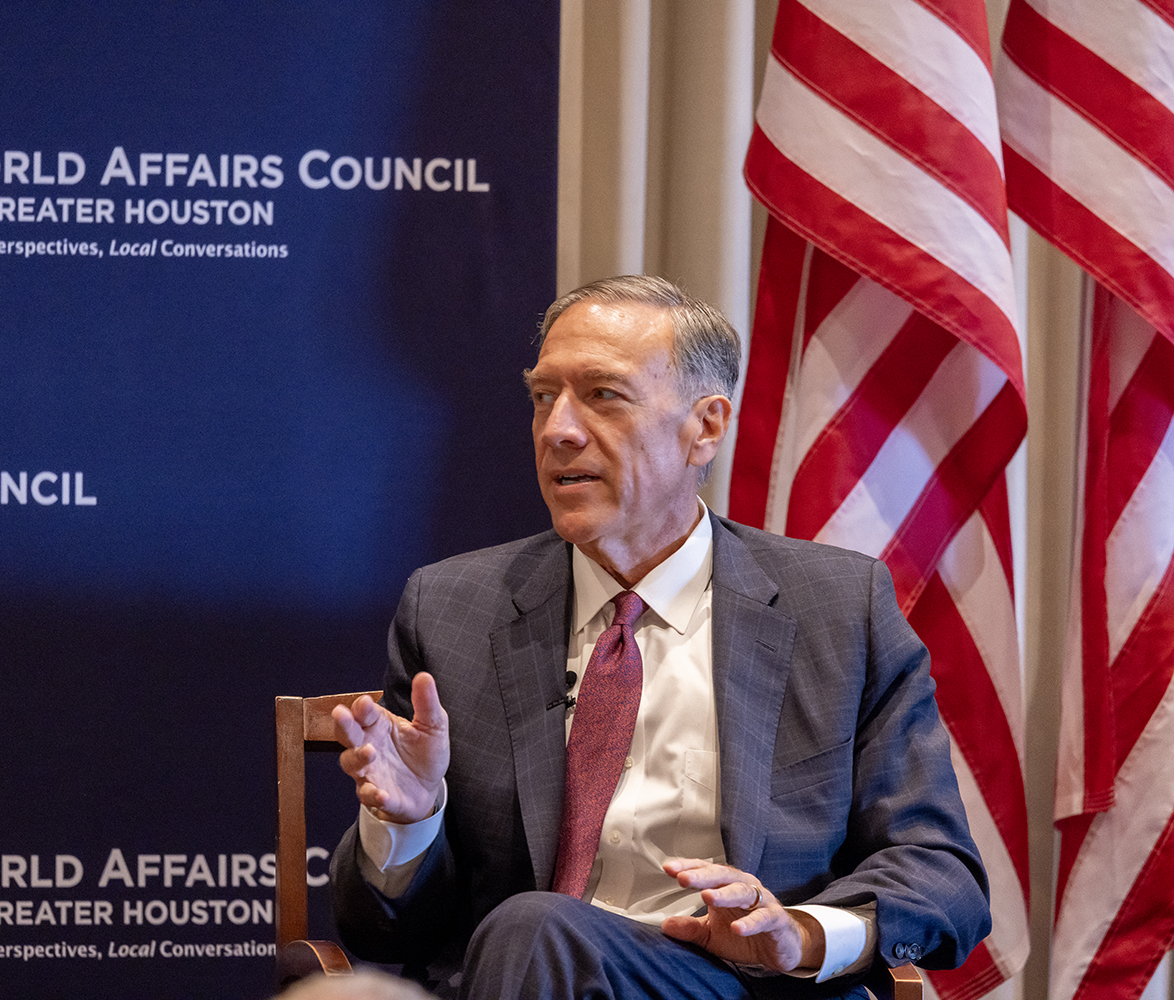
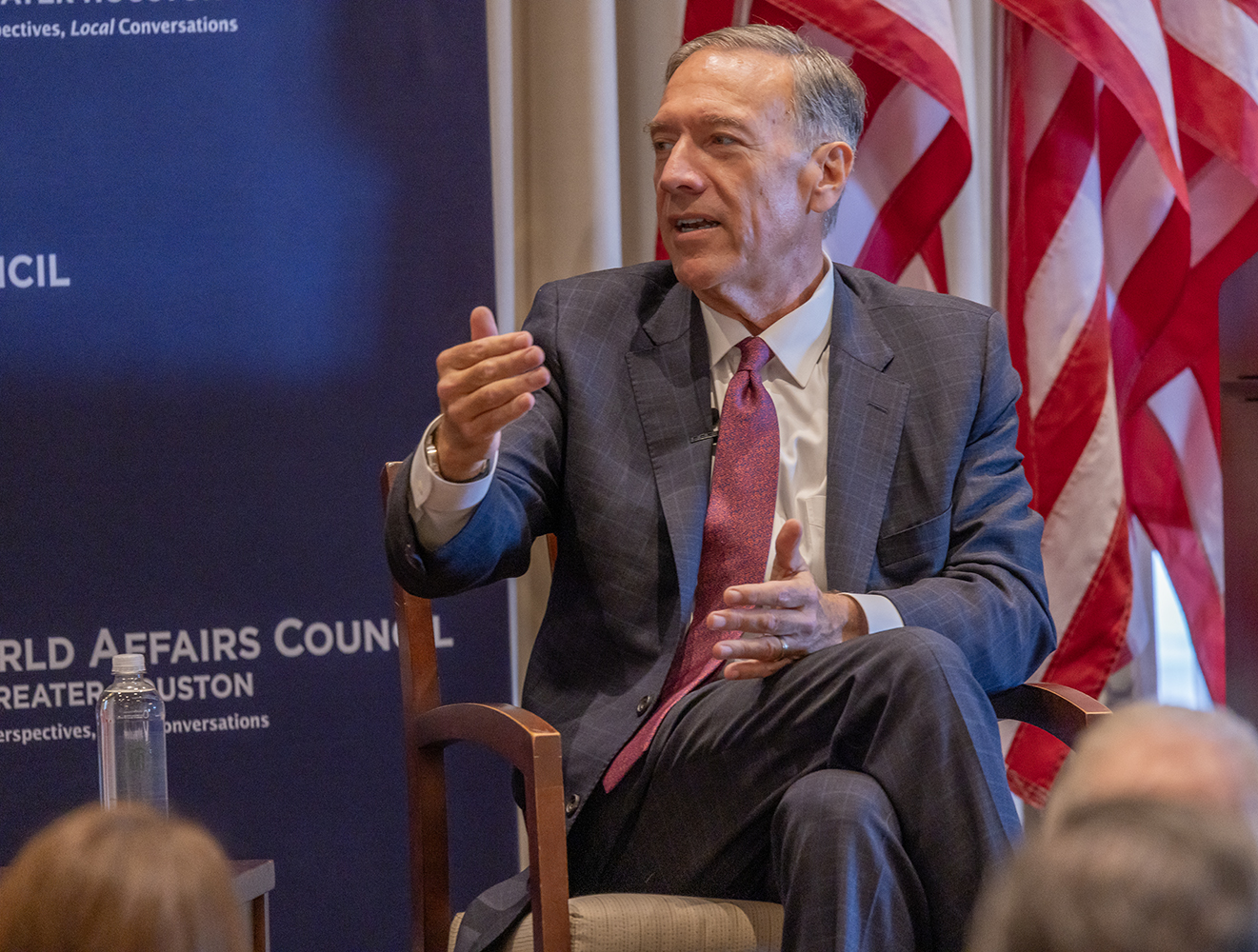
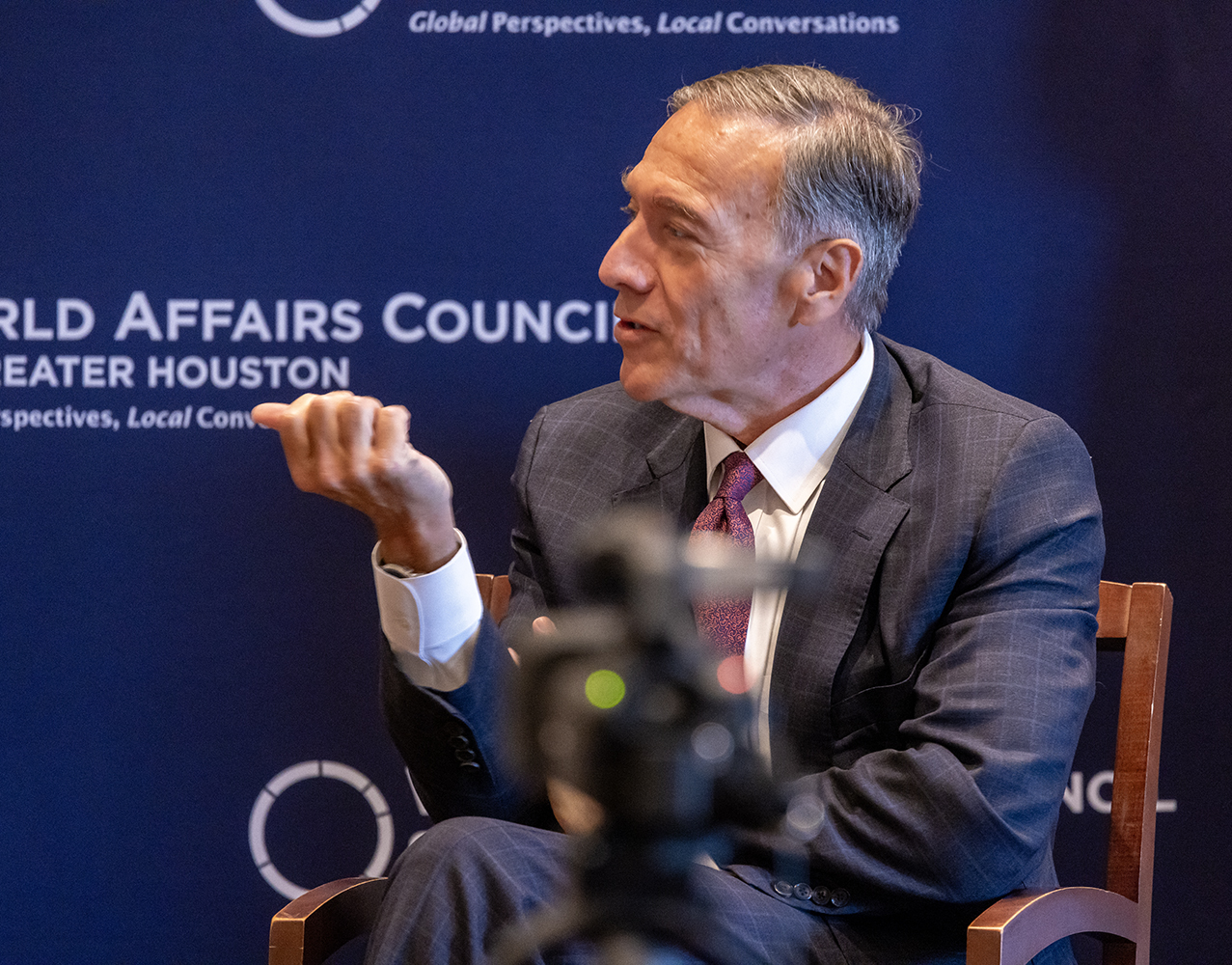
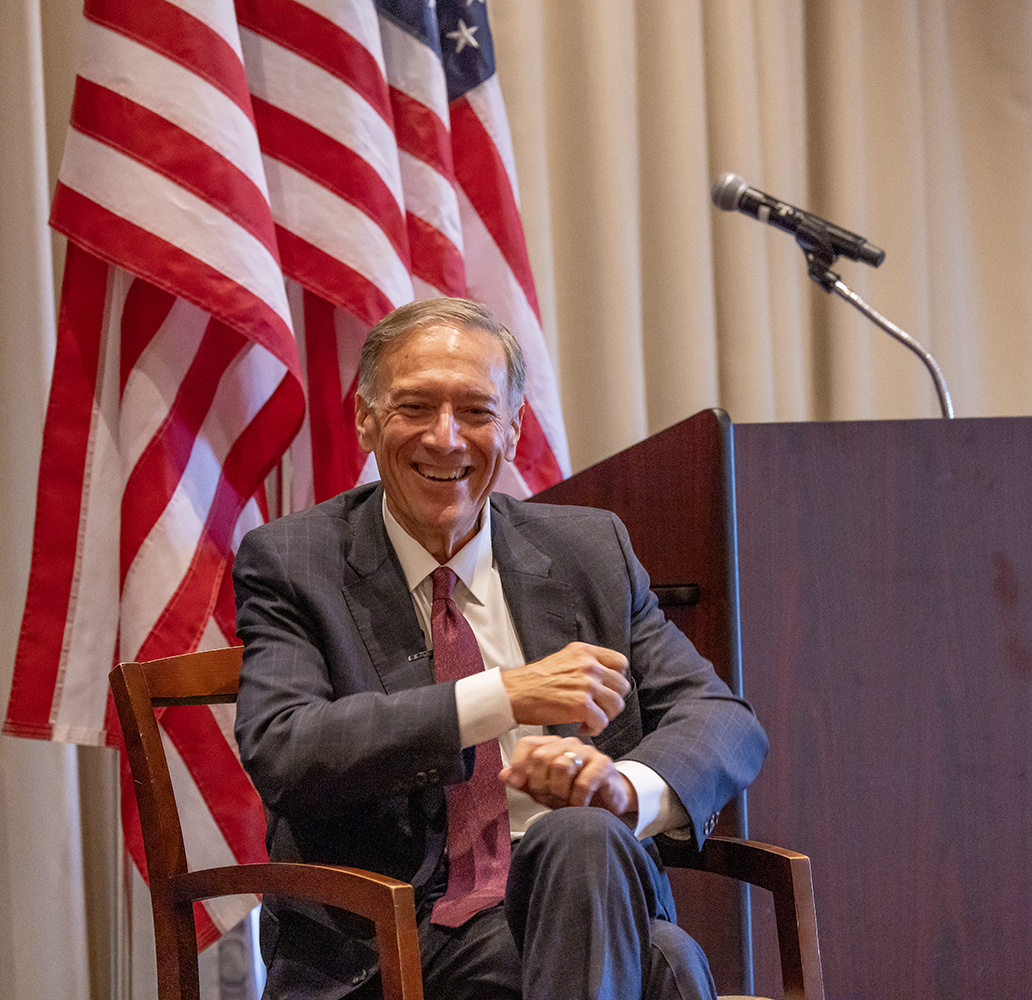
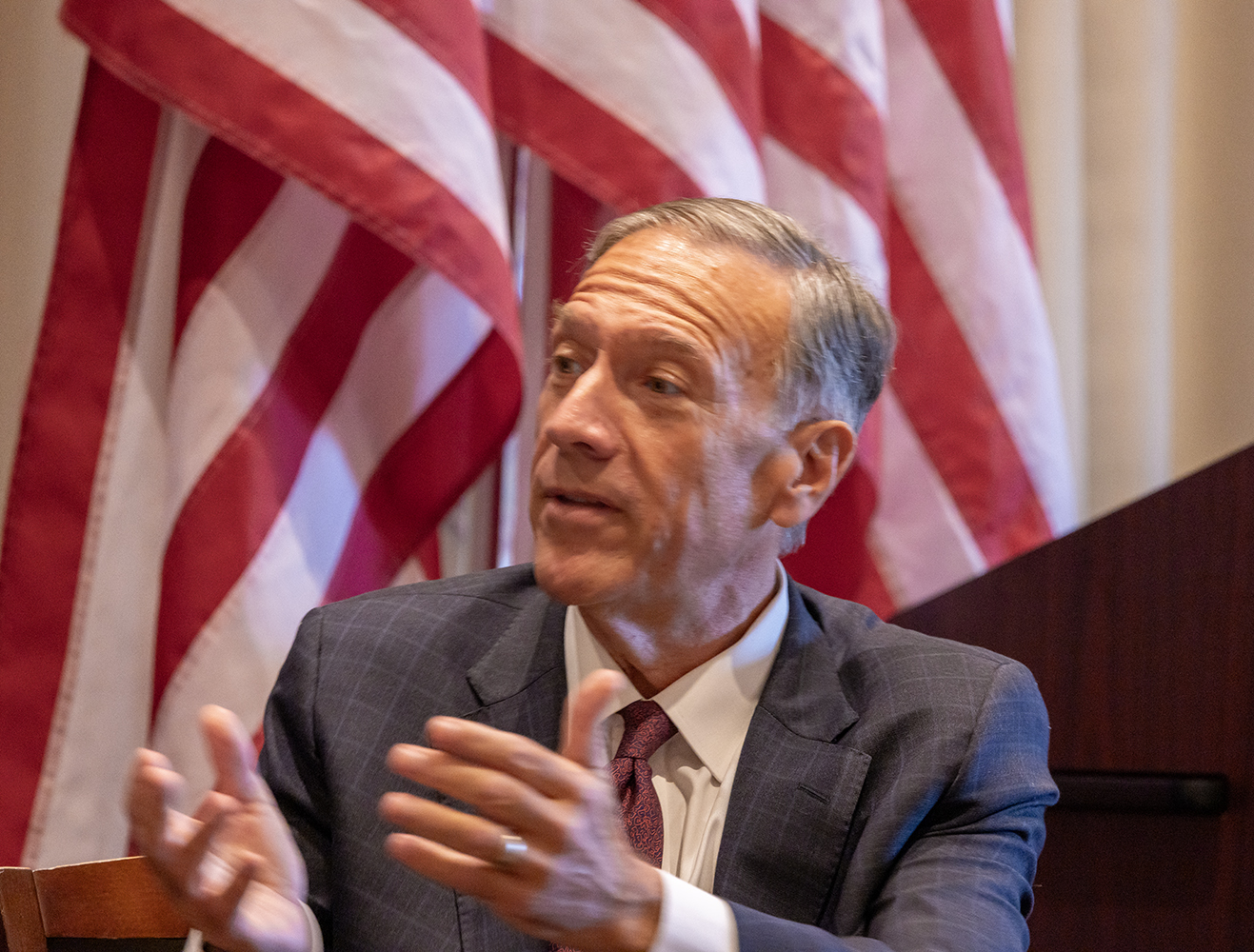
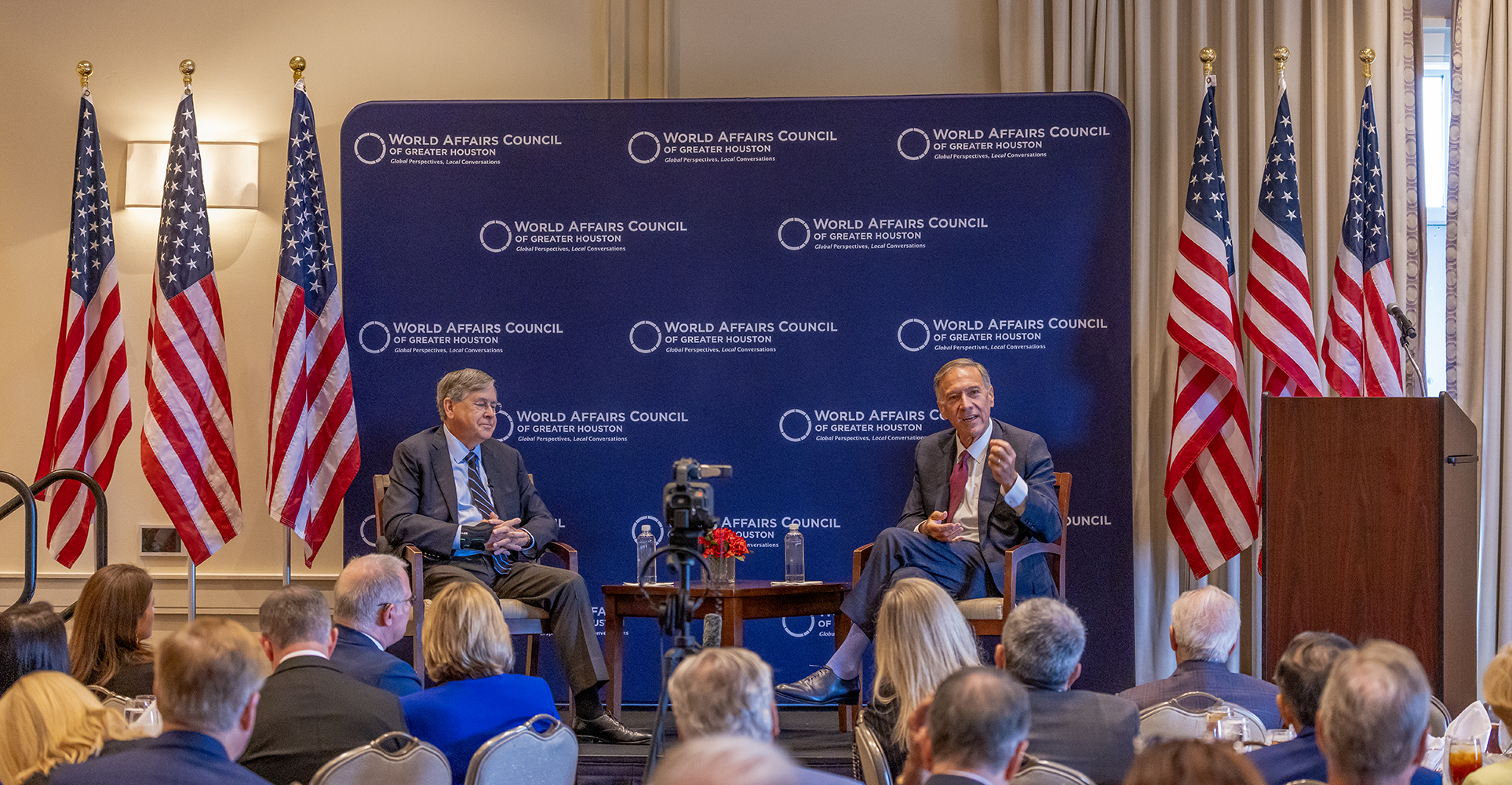
…the luncheon featured a discussion that moved seamlessly between grand strategy and practical governance. Secretary Pompeo, drawing on his experience as CIA Director and top diplomat, offered insights into the challenges facing American leadership in an increasingly complex world.

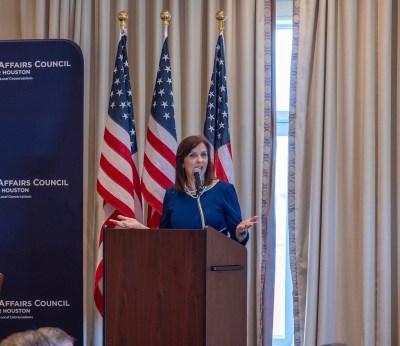
Following an introduction by World Affairs Council CEO Maryanne Maldonado…
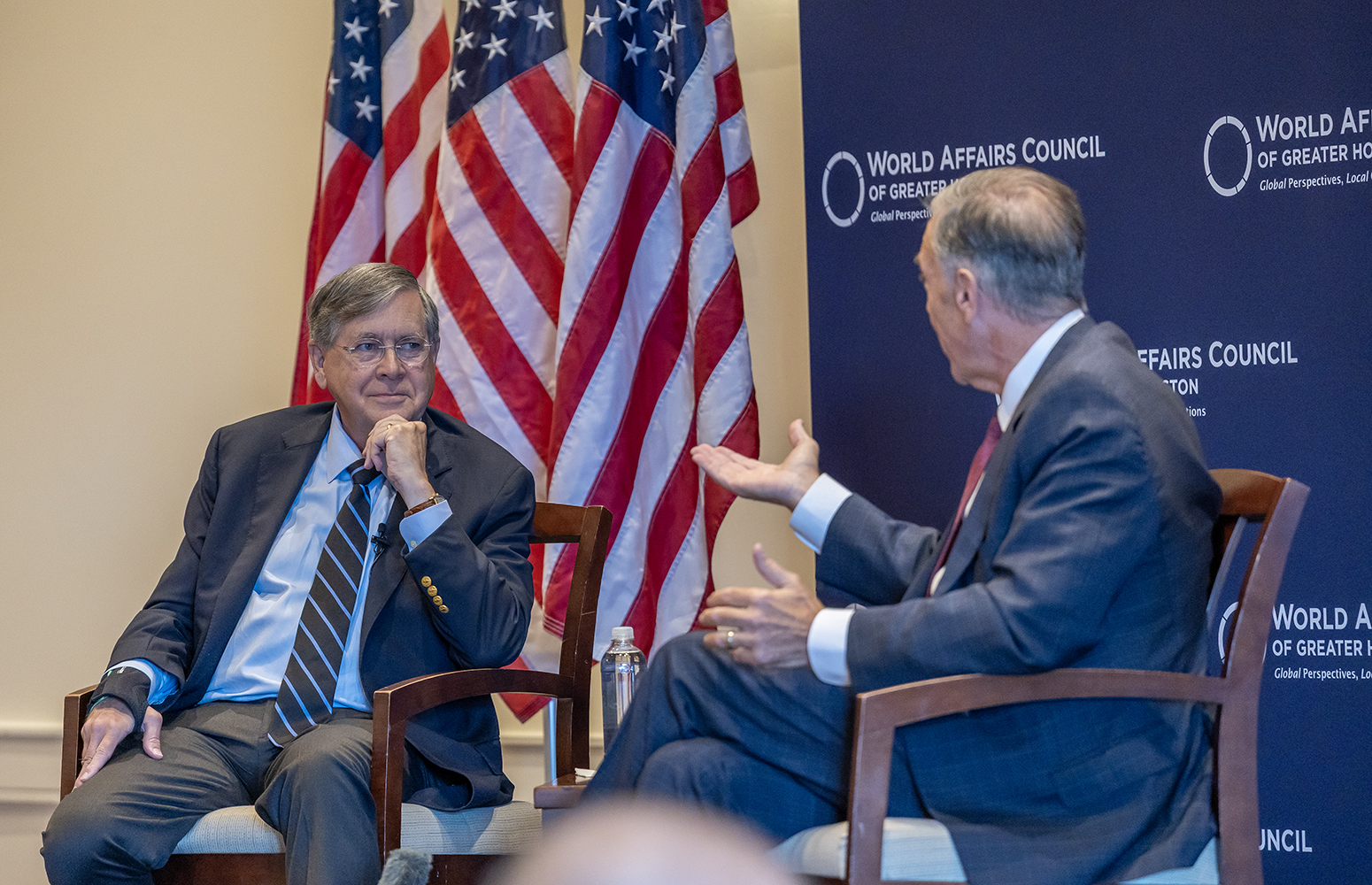
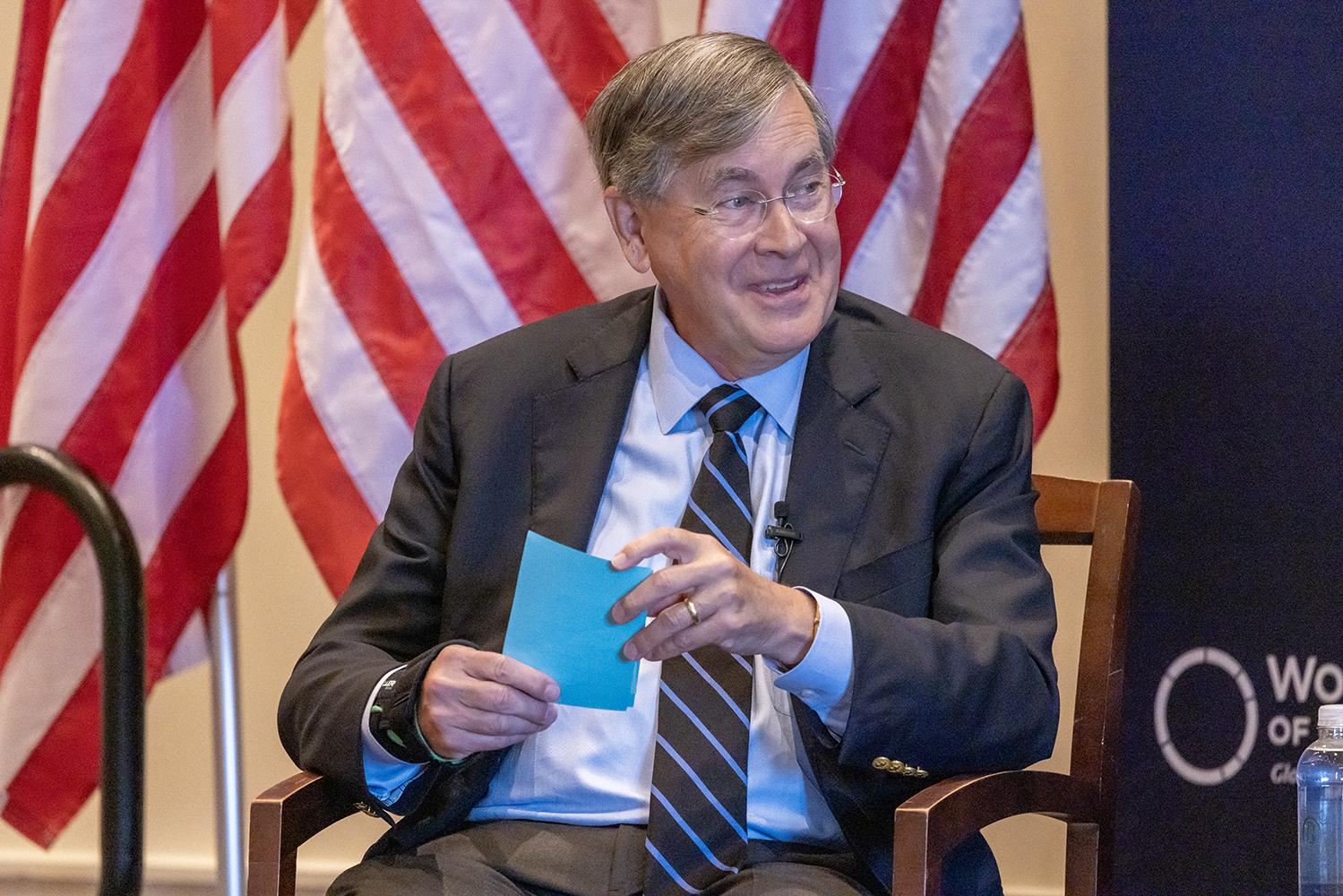
…Ambassador David Satterfield…
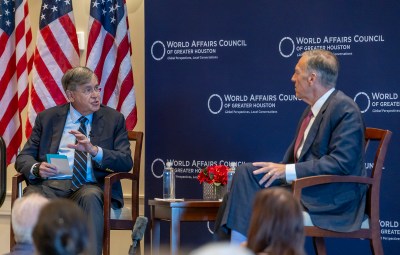
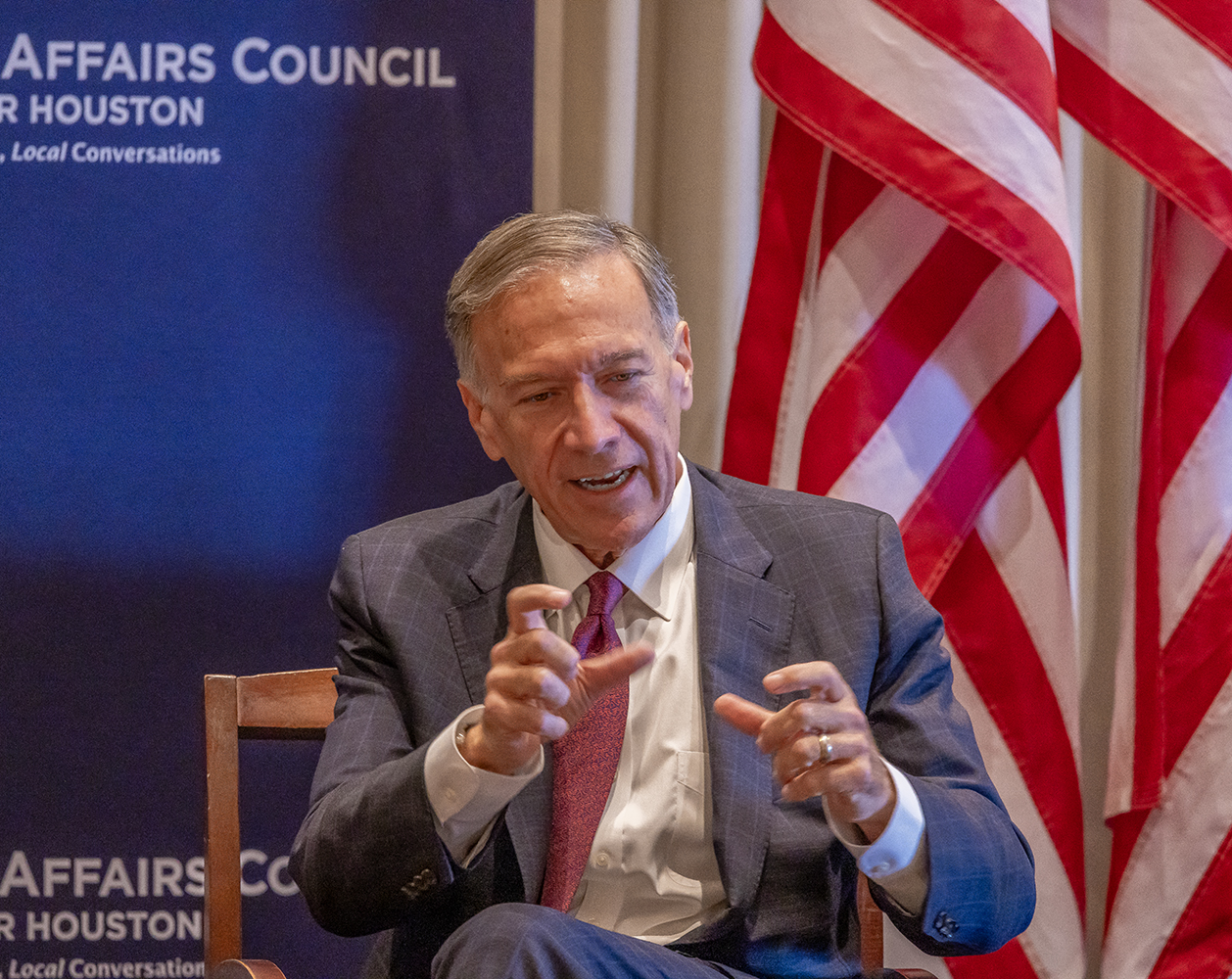
…moderated the discussion with Secretary Pompeo, who emphasized that global conflicts stem from (1) a failure of American leadership, (2) the influence of powerful and negative international actors (chief among the Chinese Communist Party), and the ineffectiveness of international institutions. He is, however, a firm believer in the United States’ role internationally.
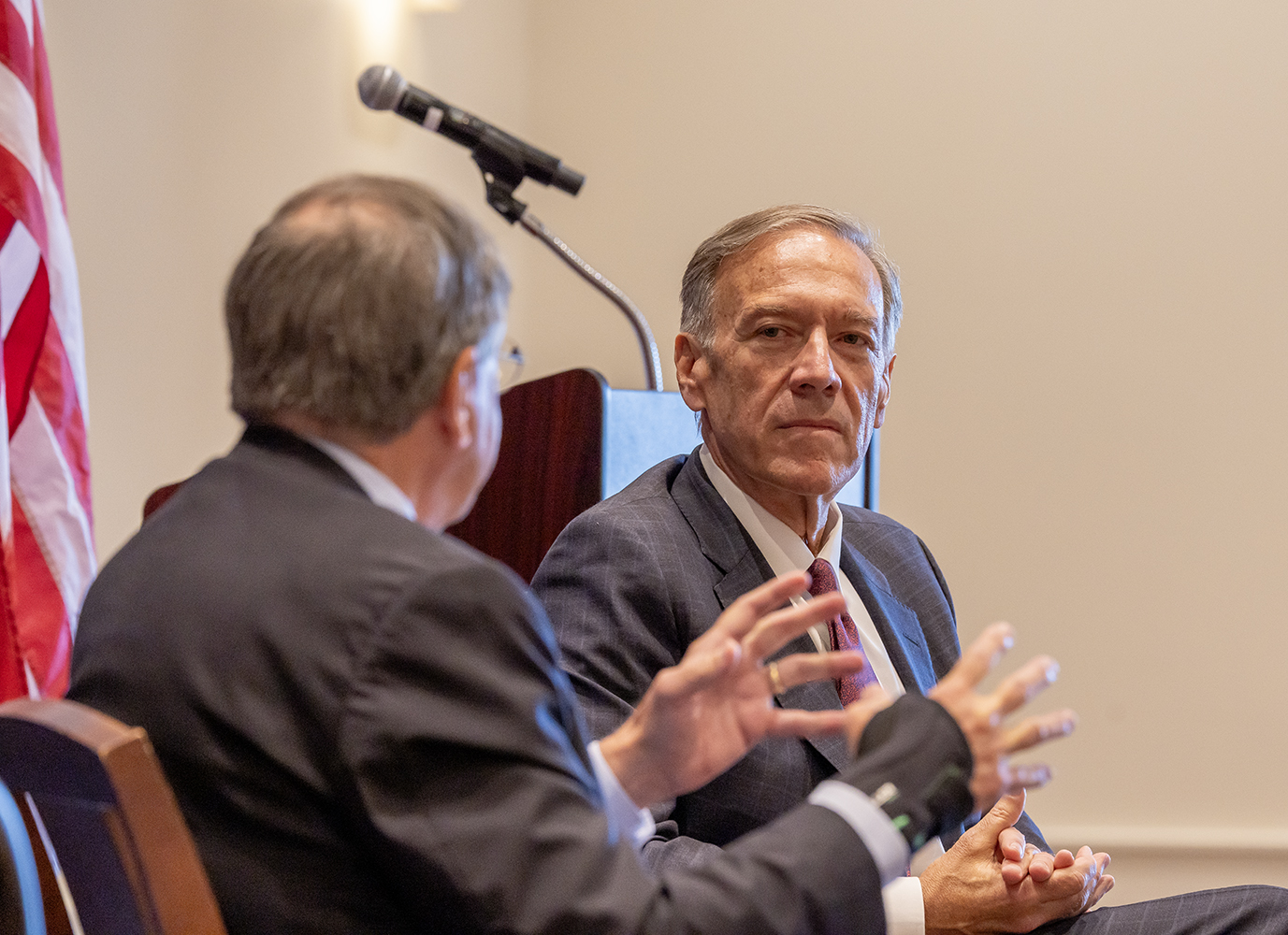
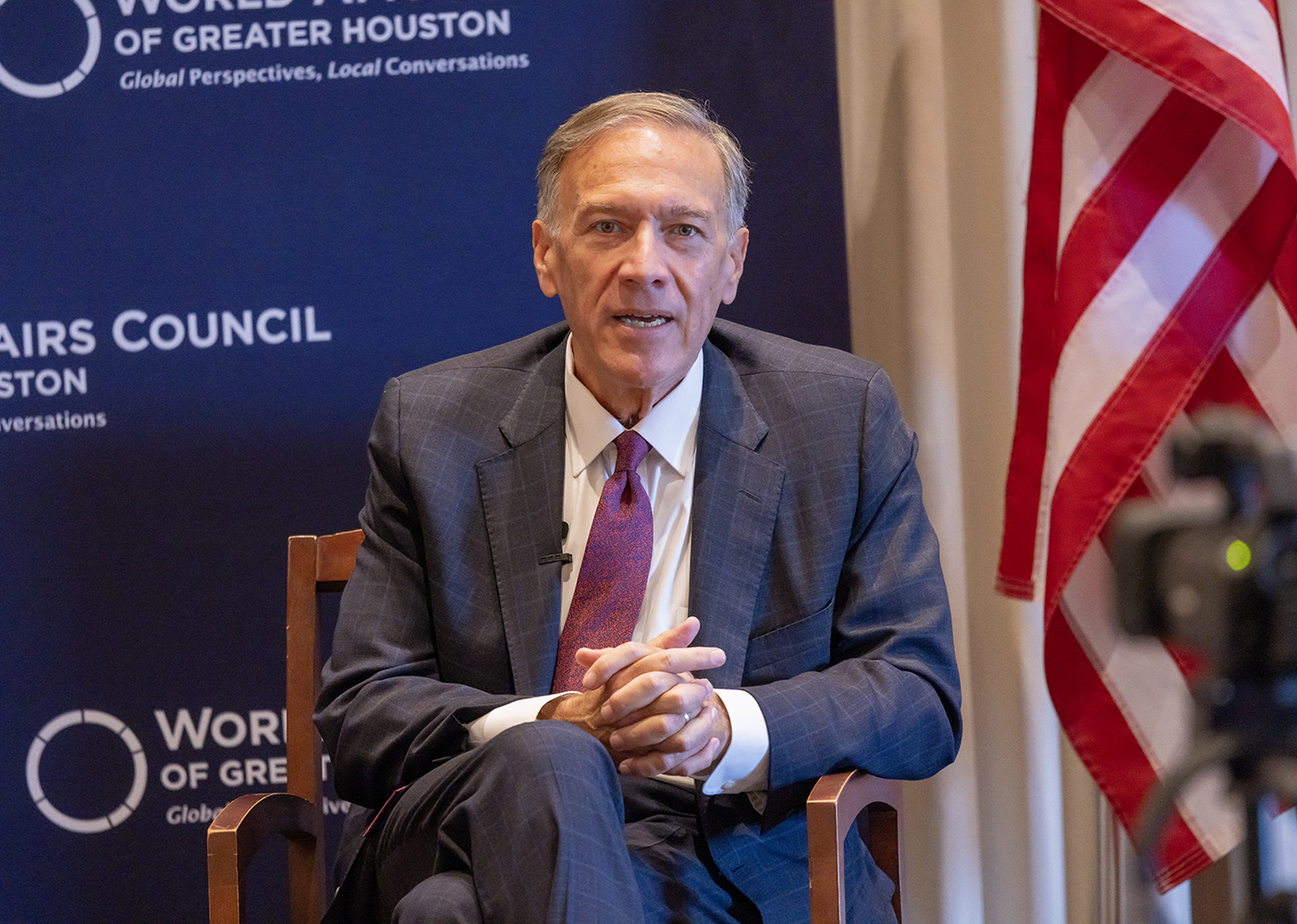
The conversation touched on several key international relationships. Secretary Pompeo stressed that achieving national objectives requires partnerships worldwide, acknowledging that not all allies share the same governance systems and how some relationships are built on shared interests rather than shared values. He noted that recent events have done more to energize NATO and European defense spending than decades of diplomatic pressure.
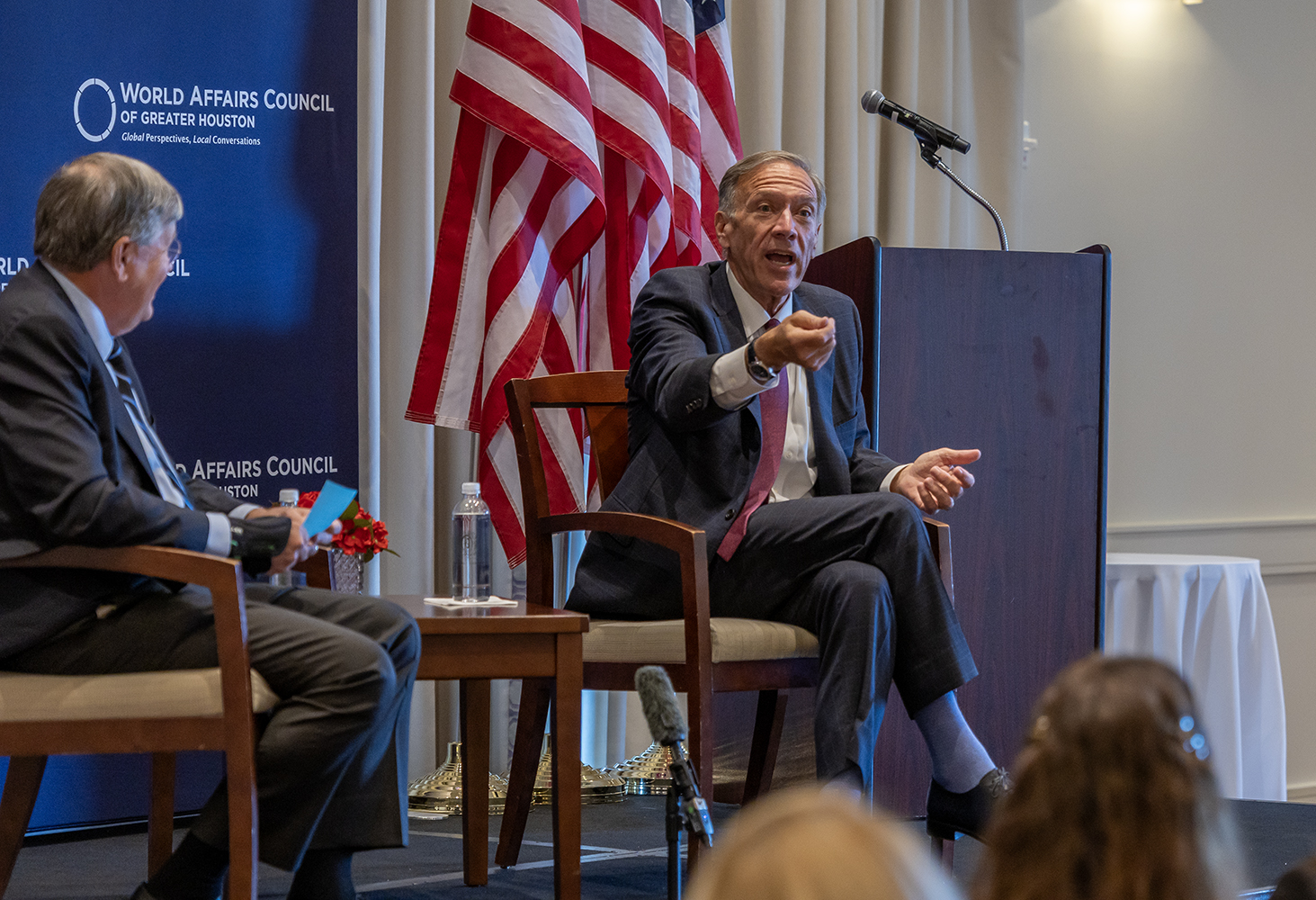
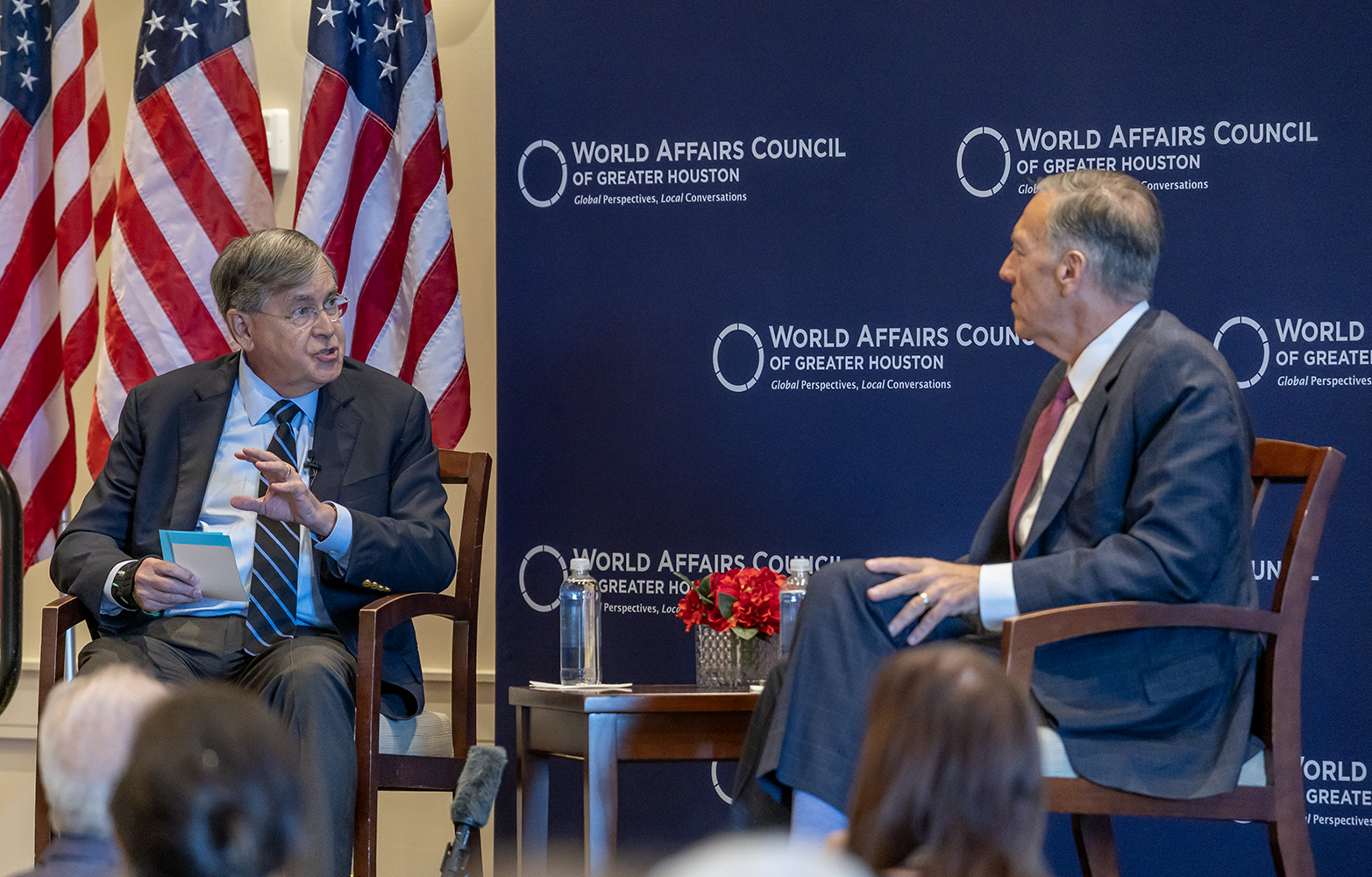
One particularly interesting topic concerned Houston directly: Secretary Pompeo discussed closing the Chinese consulate in Houston, revealing it had been conducting what he described as the largest spy operation ever directed against the United States. He characterized the U.S.-China relationship as a decades-long economic competition rather than an immediate military threat, noting that this competition extends far beyond government–affecting businesses, universities, and local institutions across America.
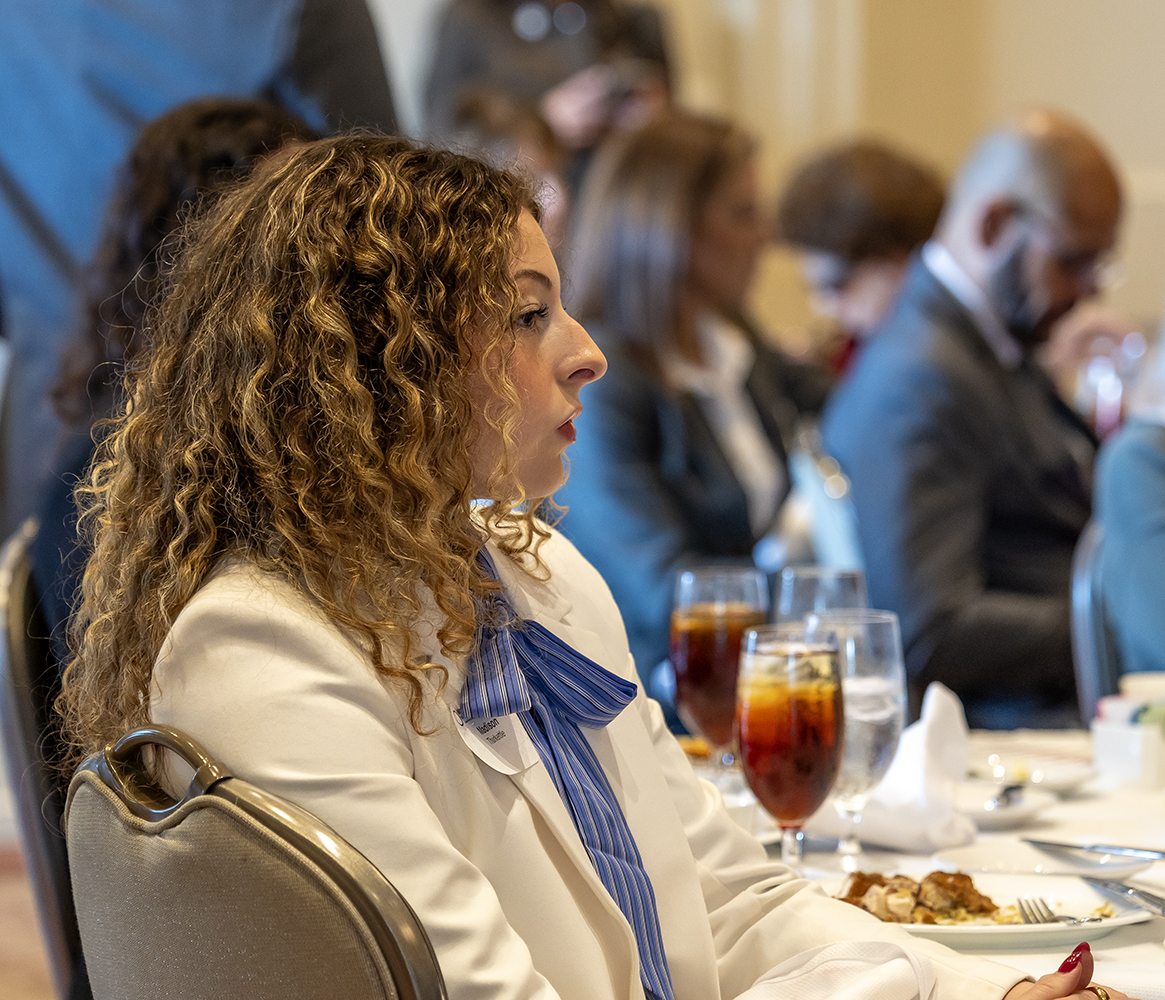

The afternoon took a more local turn when Secretary Pompeo shifted from international affairs to civic engagement. His most passionate remarks focused on participation in community institutions–school boards, city councils, HOAs, and PTAs.

He posed some direct questions to the room: How many people had attended a PTA meeting in the last decade? When was the last time anyone went to a city council meeting just to observe?
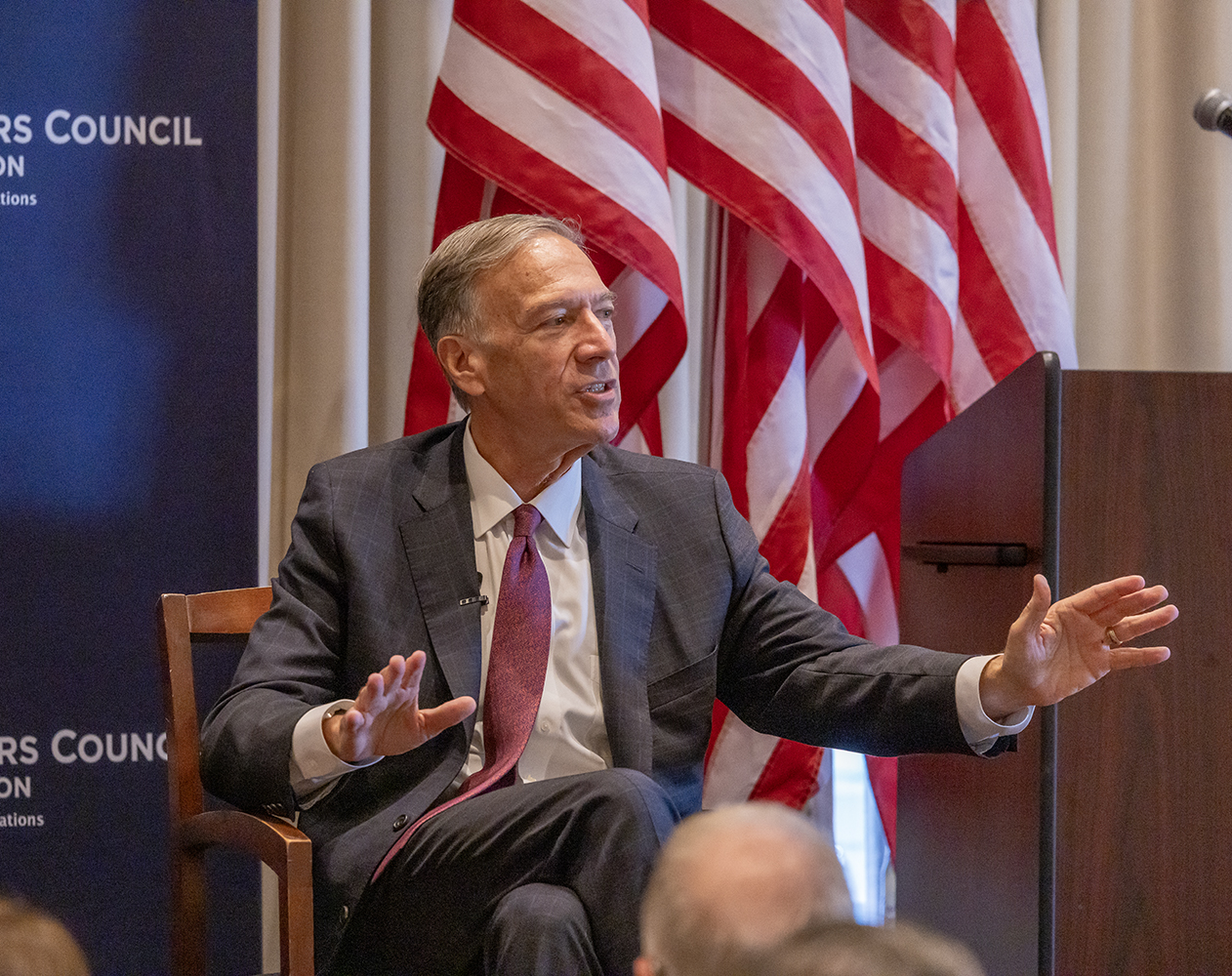
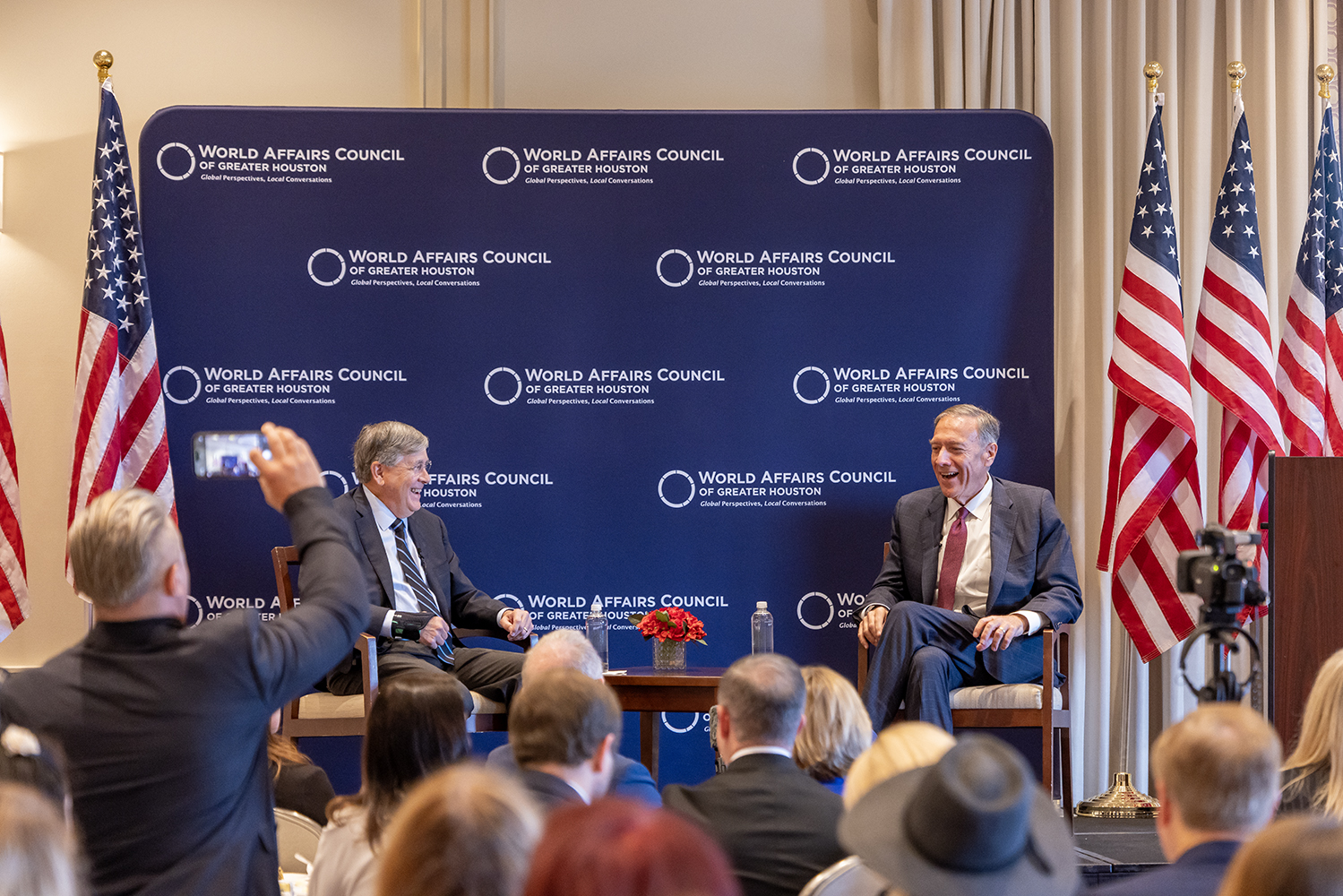
To illustrate his point, he shared a humorous story about serving on his HOA board–becoming deeply invested in a dispute over shake shingles, only to admit he’d forgotten which side he supported decades later. His point resonated: while thousands rally for various causes, local meetings where decisions directly affect communities often struggle to draw audiences. He argued that America’s real strength comes from people willing to do the unglamorous work of local governance.
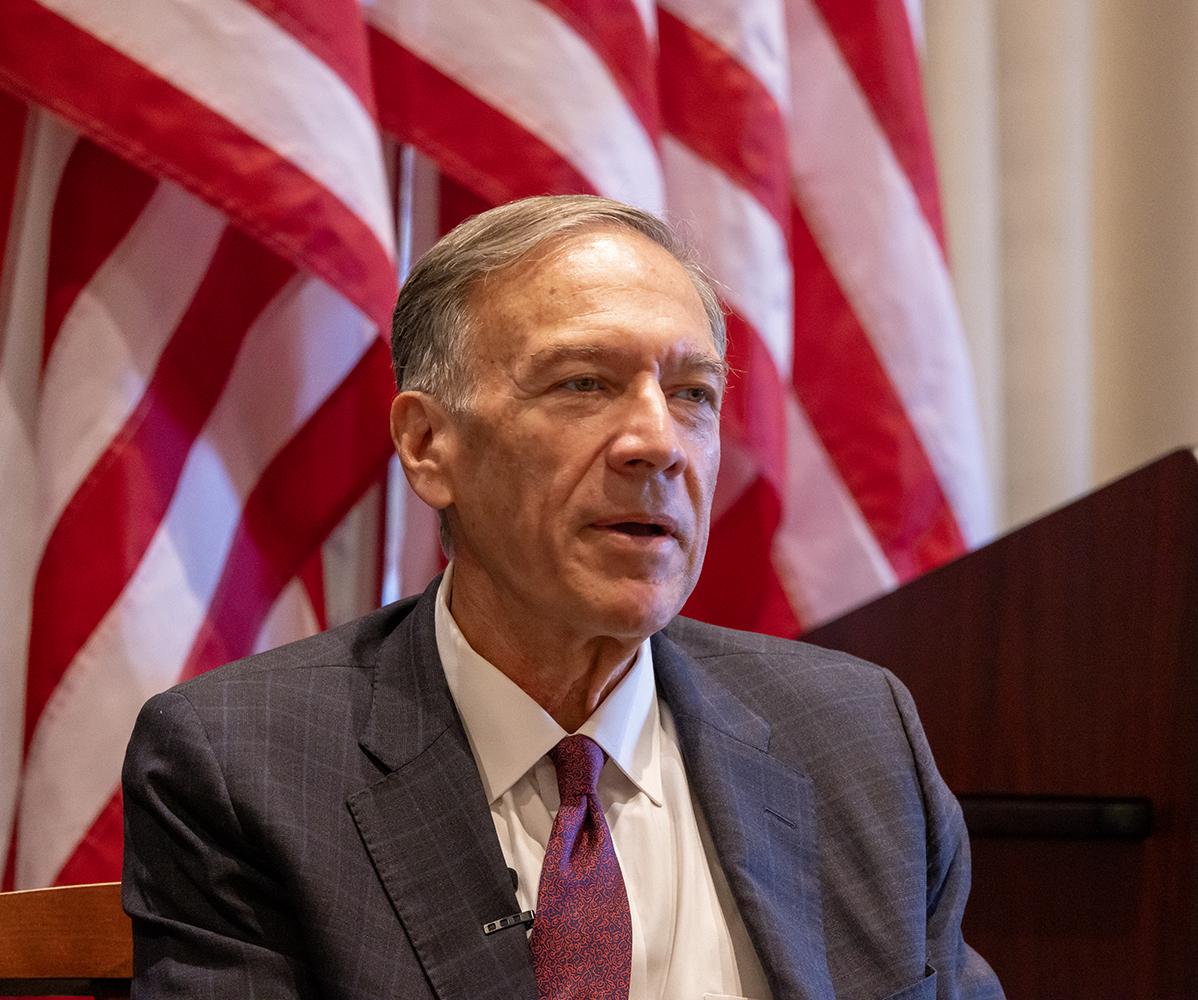
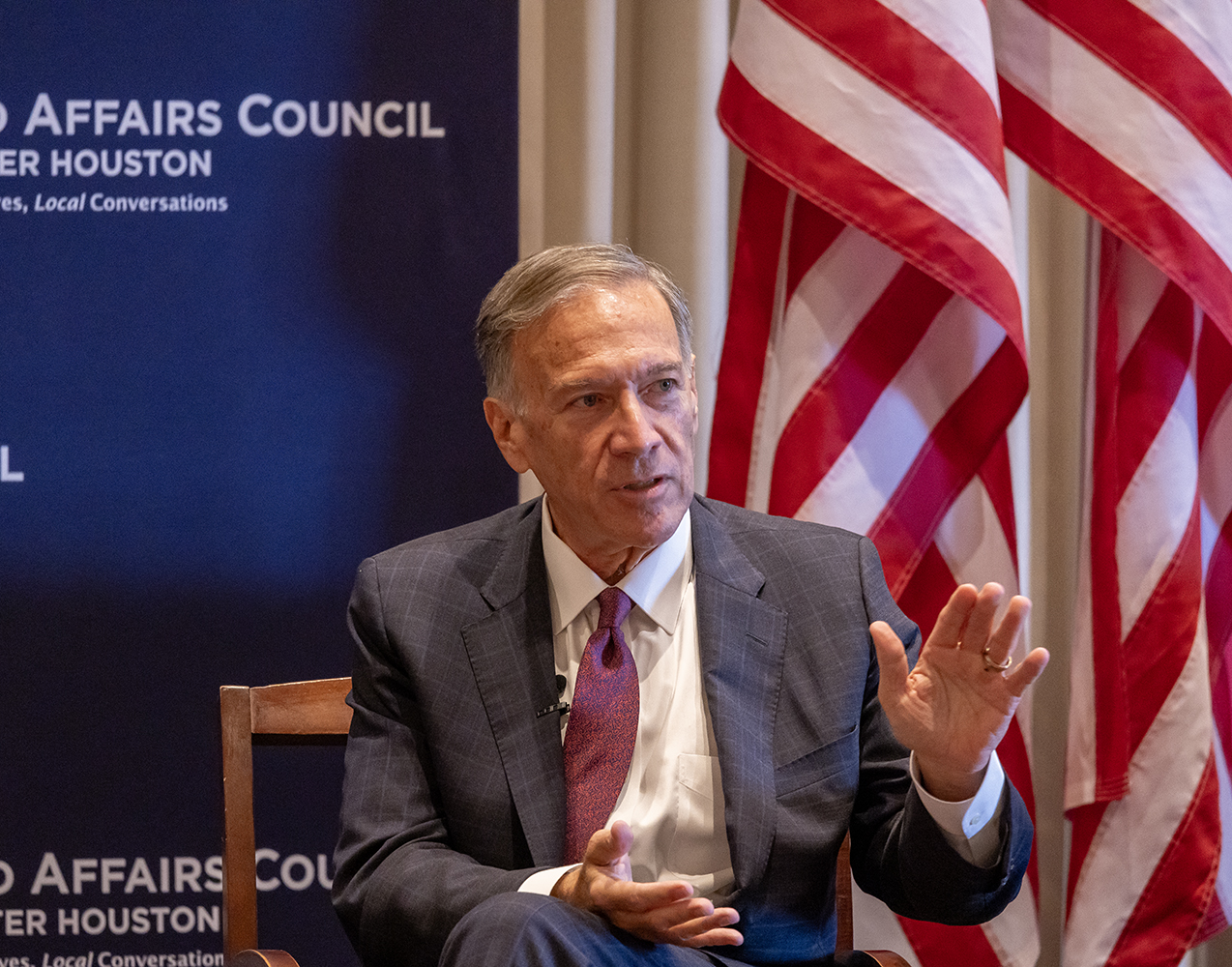
Pompeo also spoke candidly about education, particularly the state of K–12 public schools. He expressed concern over declining test scores and connected educational strength directly to America’s long-term national success. Without a strong foundation in civics, history, and critical thinking, he argued, other national achievements lose their significance. His recommendation was straightforward: get involved with local school boards, support strong candidates, or run yourself.
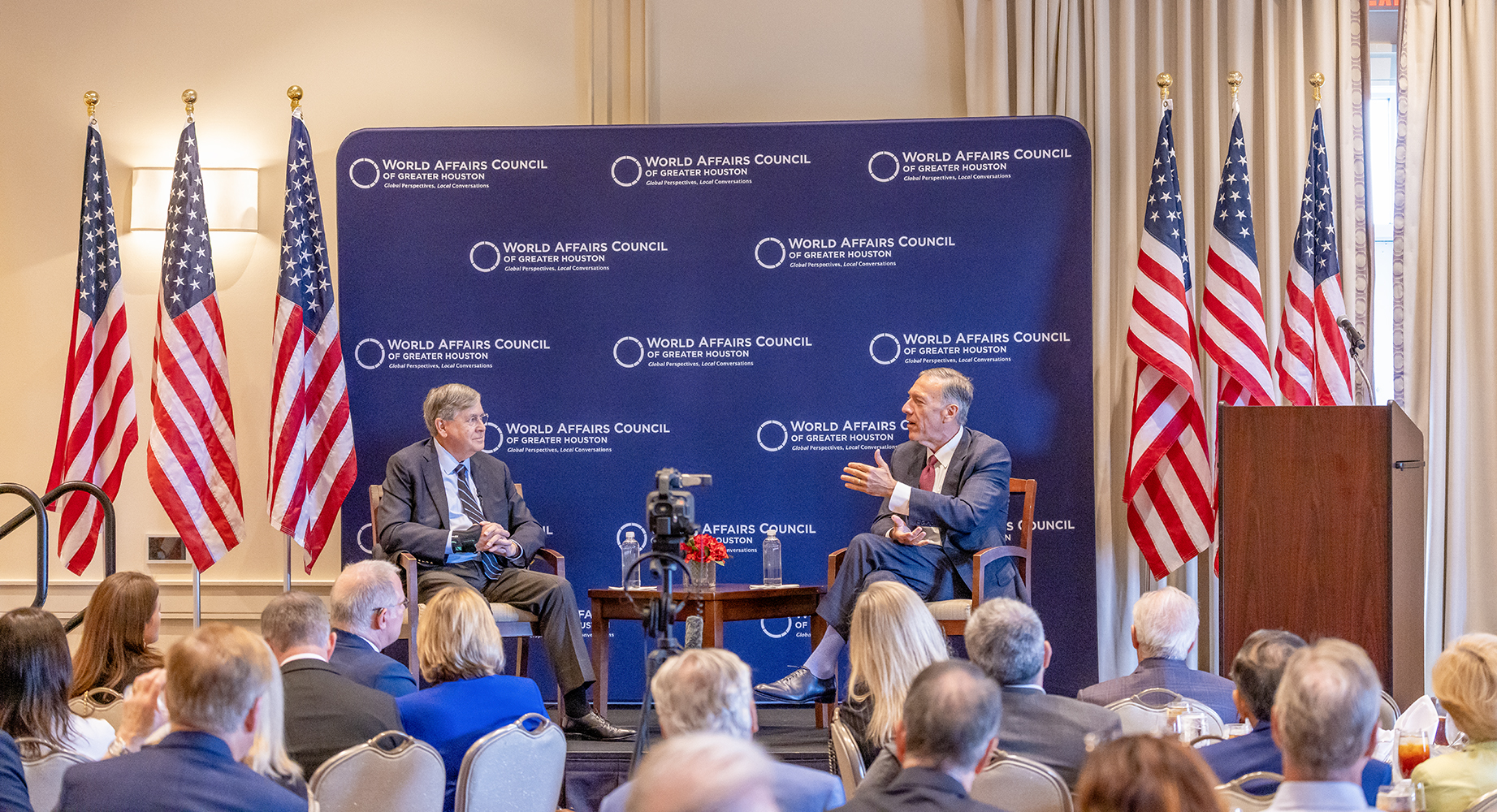
Most interestingly, he emphasized the importance of maintaining trust in America’s institutions–the FBI, federal courts, and the judicial system. He noted that these institutions are what set America apart globally, and they must remain above political manipulation to maintain their effectiveness and public trust.
Secretary Pompeo’s message was one of practical optimism. Despite challenges, he expressed confidence in America’s direction–but emphasized that success depends on active citizenship rather than who occupies any particular office. Foreign policy matters, he argued, but so does showing up to your local school board meeting. Both require the same fundamental commitment to civic duty.
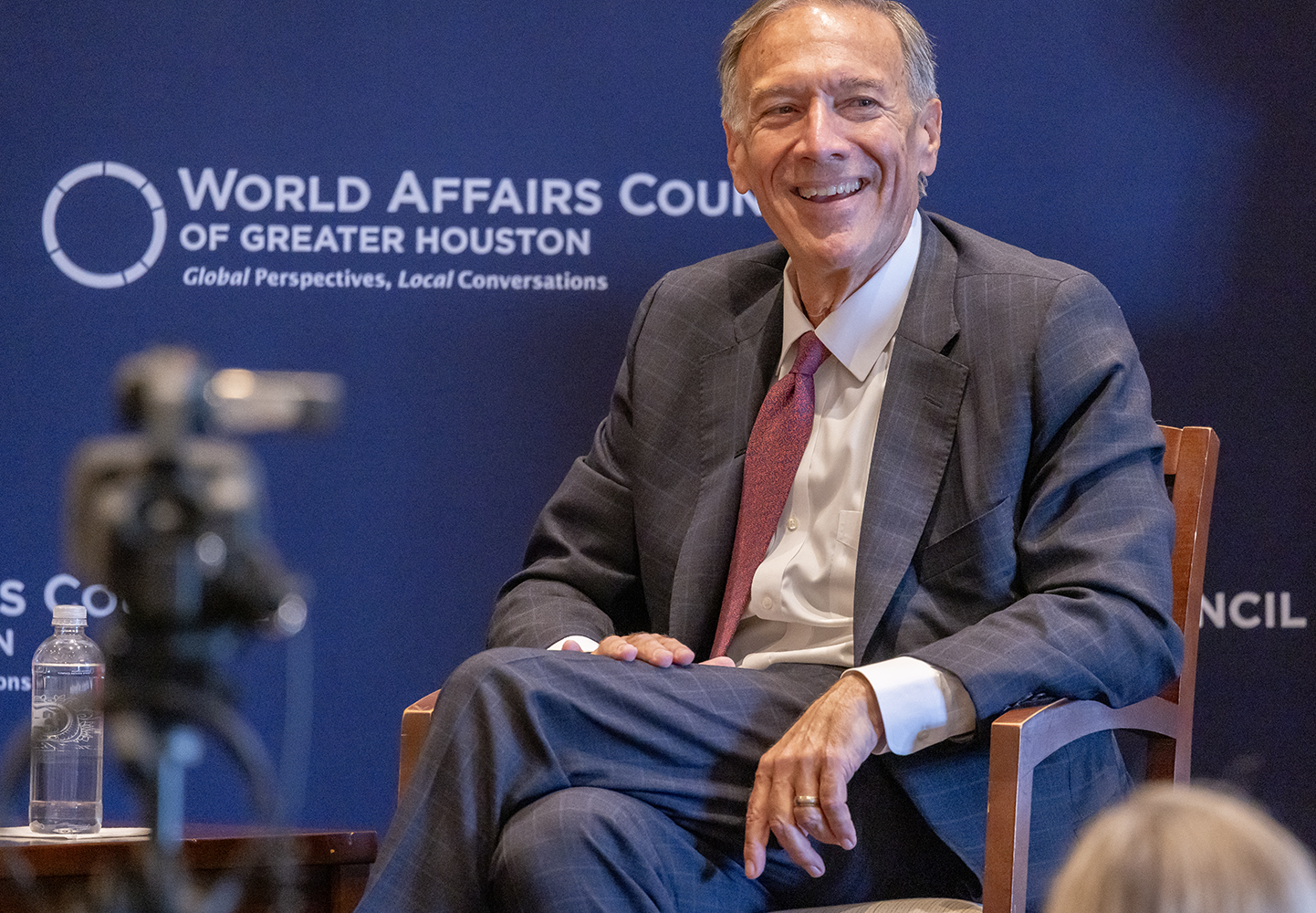
The luncheon was a meaningful reminder of how interconnected global leadership and local involvement truly are. From honoring public service at the Houston Police Memorial to hearing Secretary Pompeo reflect on America’s role in the world, the afternoon offered both perspective and valuable networking opportunities.
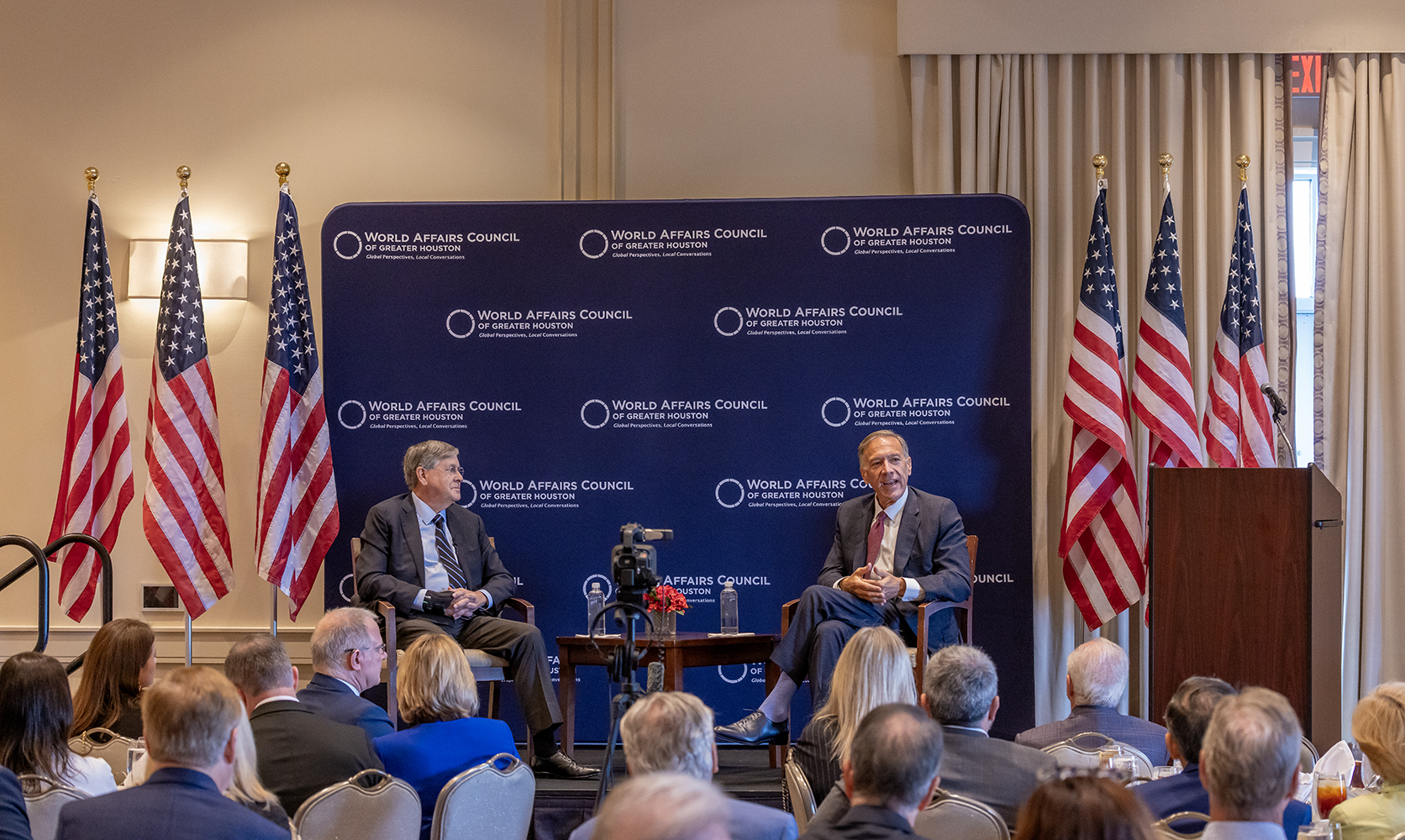
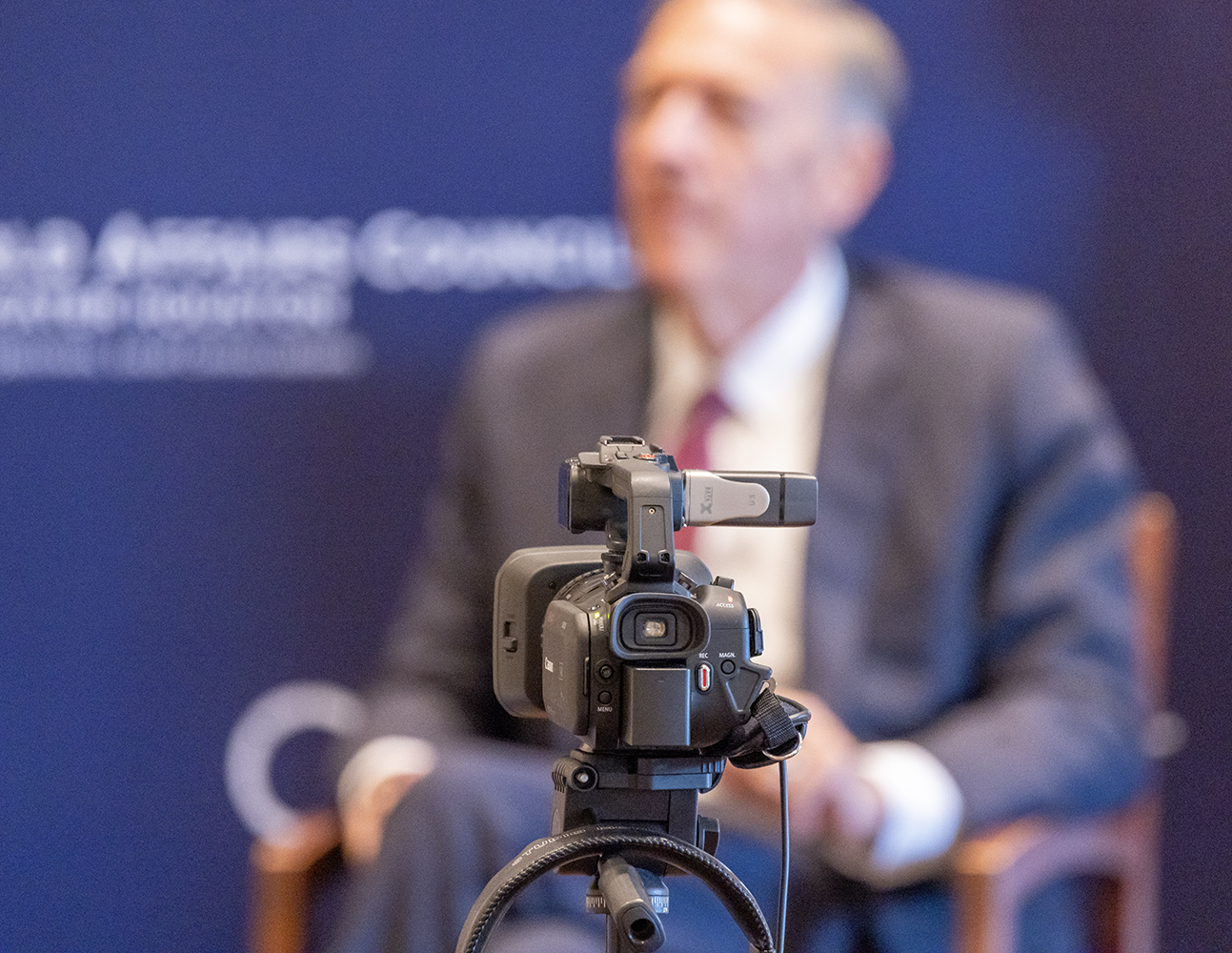
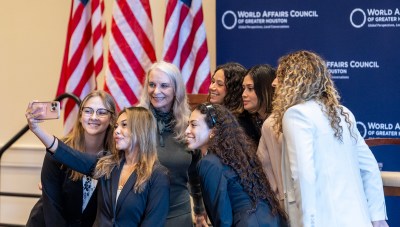
As always, we’re grateful to the World Affairs Council of Houston for providing opportunities that expand our understanding of international affairs, and we are grateful for Ms. Braniff for her hospitality, her tips, and for sharing her knowledge with us!
Unknown's avatarAuthor mikeyawnPosted on October 13, 2025October 12, 2025Format AsideCategories Civic Engagement, International Affairs, Local GovernmentTags Ambassador David Satterfield, Center for Law Engagement And Politics, CIA Director, LEAP Ambassadors, Sam Houston State University, Secretary of State Mike Pompeo, World Affairs Council HoustonLeave a comment on Navigating International Relations With Secretary Mike Pompeo

SHSU Students Talk Espionage with Former CIA Director

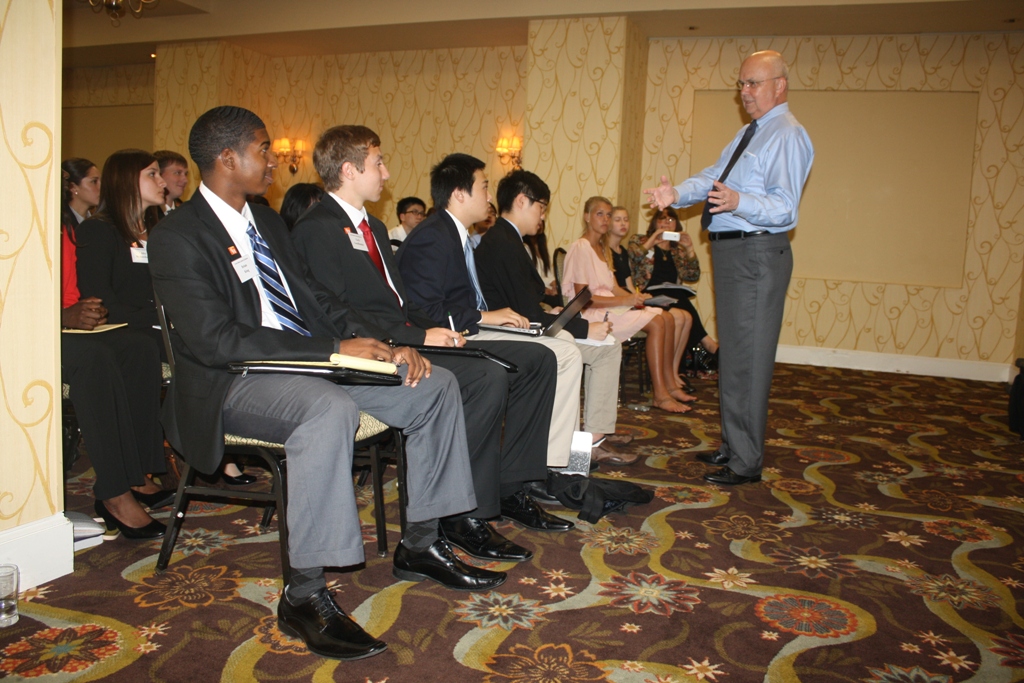
“The goal of the CIA is to learn other nations’ secrets,” noted General Michael Hayden, and he should know.  Hayden was the Director of both the CIA (2006-2009) and the National Security Agency (1999-2005) and, most recently, a “guest lecturer” to a group SHSU students who traveled to Houston, Texas to learn more about intelligence operations.  The lecture, hosted by the World Affairs Council, covered wiretapping, prioritizing threats, presidential performance, and balancing work and family.The most pressing question from students focused on wiretapping, a topic that General Hayden seemed to anticipate.  Hayden ensured students that the government did not record their calls, but acknowledged that the government did document the calls, taking note of who called whom and how long each call lasted—logging, as General Hayden referred to it, some 3 billion “phone events” per day.

Brian King, Zach Goodlander, and Other SHSU Students Listen to General Hayden

This massive data collection comes in handy when other information falls into place.  Hayden provided the example of the government capturing “Ali Bin Badguy” and confiscating “Mr. Badguy’s” phone which, in turn, allows them to locate his calls off the “phone-event” database and identify other potential terrorist connections.  Hayden emphasized, however, that the government did not record calls made by citizens, at least not without a warrant.

SHSU Senior Coby Steele veered away from the popular wire-tapping issue and asked about operational management.  “How,” he wanted to know, “do the multiple acronym agencies work together to prioritize threats?”  General Hayden acknowledged that it was a problem, but not for the reasons people think.  “The problem,” he noted, “is that we have so much data.  It’s difficult to ‘connect the dots’ when there are so many dots that the page is black.  But that’s because we are good at collecting data and working together.”

Coby Steele Asks General Hayden About Priorities
 Steele Asks Gen. Hayden About Priorities

Hayden, who worked directly for Presidents Clinton, Bush, and Obama, noted that it wasn’t just the intelligence agencies working together.  He praised President Bush and Obama for putting aside their differences and maintaining a consistent policy on intelligence: “There were fewer changes in 2009 when the Obama administration took over from Bush than there were in 2005, when Bush transitioned from his first term to his second.”

Brian King, a senior at SHSU, moved away from policy issues altogether and asked about the personal life of a CIA employee. “How,” asked King, “do you balance a family while running the CIA?”  Hayden acknowledged the difficulties but said that he and his wife took “vacations together and traveled together for work,” unless he was heading into a war zone, in which case he traveled alone.

Zach Goodlander, General Hayden, and Brian King Discuss American Security

Although the SHSU students had almost an hour with General Hayden, not all of the SHSU students asked questions.  Ashley Richardson, an Accounting major and first-semester freshman from Magnolia, Texas, learned through listening. “This is an amazing real-world educational experience with the former CIA Director,” noted Richardson. “You just don’t get these types of experiences in high school.”

King agreed, noting, “I’m not sure you get these opportunities at any other college.  The CIA Director can listen to our conversations whenever he wants,” King added, tongue-in-cheek, “but how often can students listen to his conversations—let alone participate in them?”

SHSU Students with General Hayden
     SHSU Students with General Hayden

The opportunity to interact directly with General Hayden was coordinated between the World Affairs Council and SHSU’s Center for Law, Engagement, And Politics (LEAP), which promotes learning across diverse disciplines.  In the past month, students have met the former President of Mexico, Felipe Calderon; discussed career paths with a half dozen Texas legislators; and attended a presentation by former Senior Advisor to President Obama, David Axelrod; met former White House Chief of Staff Andy Card—while also attending law-school related activities and engaging in volunteer service across the community.

“Our goal,” noted Mike Yawn, Director of the LEAP Center, “is to provide opportunities that open new worlds for the students.  SHSU faculty work hard to do that in the classroom, the University provides institutional support for similar outcomes outside of the classroom, and that combination will help us produce the next generation of public leaders in the state of Texas.”

Unknown's avatarAuthor mikeyawnPosted on October 20, 2013Categories Civic Engagement, Civil Rights, Law, PoliticsTags CIA Director, General Michael Hayden, LEAP, National Security, NSA Director, SHSULeave a comment on SHSU Students Talk Espionage with Former CIA Director

LEAP Ambassadors Are Involved!

This slideshow requires JavaScript.

Follow Us On Facebook!

Follow Us On Facebook!

Catch Up With Us

  • Crafting for a Cause December 18, 2025
  • Exploring The Shining: A Kubrickian Journey December 15, 2025
  • Interactive Experiences at Asia Society Texas: A Student’s Perspective December 14, 2025
  • A Culinary and Artistic Journey Through Houston December 13, 2025
  • Alumni Insights: Jessica Rodriguez-Wahlquist Returns to LEAP December 11, 2025

Join The Conversation!

The Civic Leadership… on Foundational Activities of the…
The Civic Leadership… on The Philosophical Foundations…
LEAPing Into Action… on The Philosophical Foundations…
Jada Cook's avatarJada Cook on SHSU Students LEAP Across Five…
Reflections from the… on Kicking off the Semester Right…

Find Previous Posts

Many thanks to Professor Lauren Clay, who led a ceramics class for LEAP students. This effort promotes the arts while fighting food insecurity through the Empty Bowls program, benefitting Meals on Wheels.

We also have Twitter!

My Tweets

LEAPing Into LEARNing

This slideshow requires JavaScript.

  • About LEAP
  • LEAP Ambassadors
Center for Law, Engagement, and Politics Blog at WordPress.com.
  • Subscribe Subscribed
    • Center for Law, Engagement, and Politics
    • Join 486 other subscribers
    • Already have a WordPress.com account? Log in now.
    • Center for Law, Engagement, and Politics
    • Subscribe Subscribed
    • Sign up
    • Log in
    • Report this content
    • View site in Reader
    • Manage subscriptions
    • Collapse this bar
 

Loading Comments...