
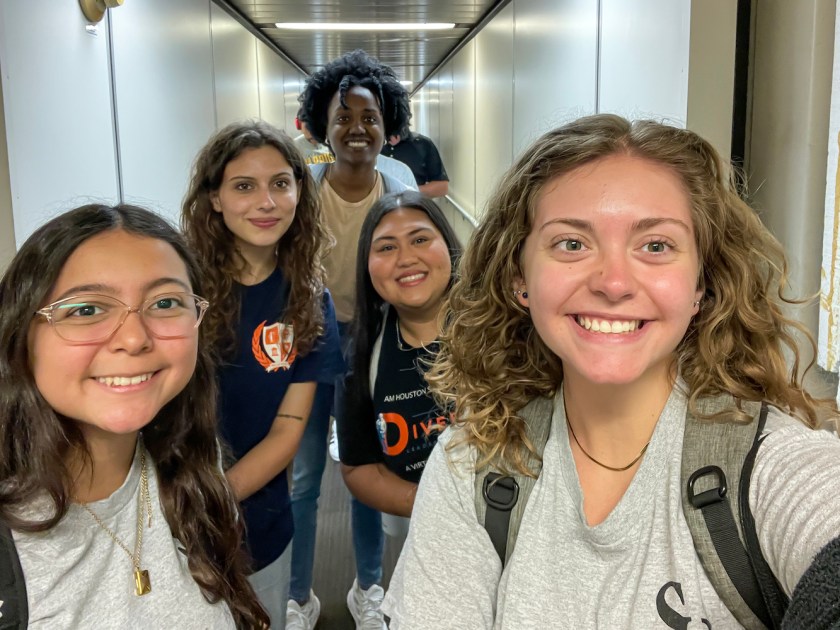
For LEAP Ambassadors, July means not only higher temperatures, but also the opportunity to attend the Southern Legislative Conference! And although this year’s program is in Charleston, South Carolina, we flew into Atlanta, with the idea of seeing a bit more of the deep south along the way. And while a few of us may be considered ‘seasoned’ travelers, traveling is a new experience for others. In fact, this was Michelle’s first time on an airplane!
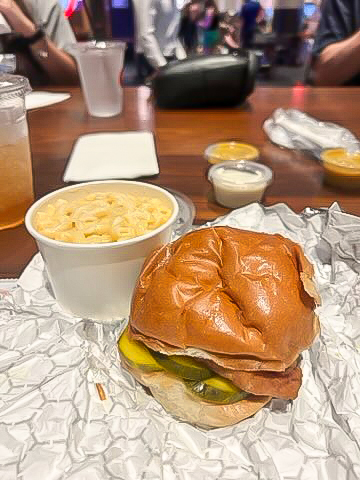
We were all very hungry after our two hour flight, so we made our first stop at the Ponce City Market, which is in a 20th century mixed-use building with a intriguing industrial interior. It consists of two floors, with the restaurants on the first and some retail shops on the first and second floors. There are a variety of cuisines from all over the world that we could have had for lunch, but instead most Ambassadors opted to pursue the deep south theme and order from Hop’s Chicken, with orders of fried chicken sandwiches, mac & cheese sides, and, of course, sweet tea.
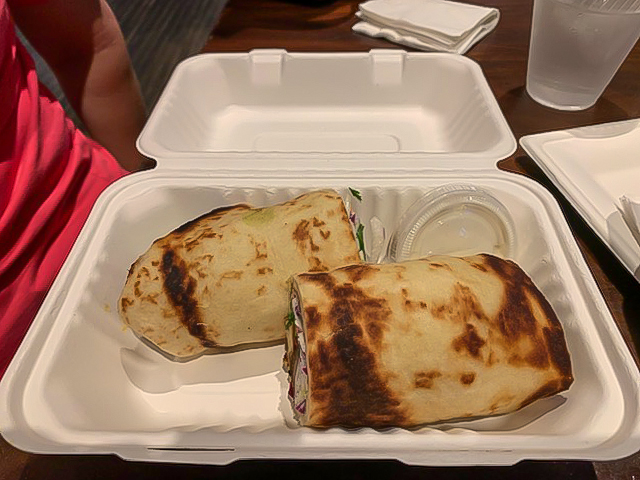
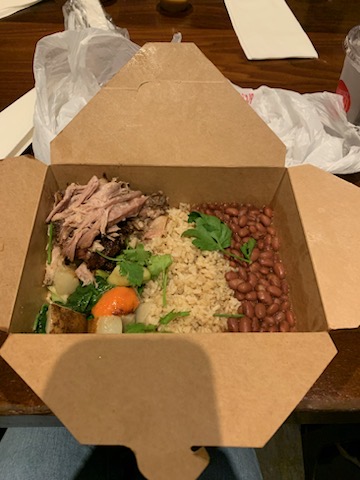
Feeling a bit more “experimental,” Professor Yawn and Stephanie ate a wrap from Botiwalla along with SPDP, which are flour crisps with yogurt and two kinds of chutneys. Ingrid chose to get a plate of pork, rice, and beans from El Super Pan.
With full stomachs, we were ready to take on the rest of our day, starting with The Martin Luther King Jr. National Historic Park.
Martin Luther King Jr. National Historic Park
By Michelle Cardenas
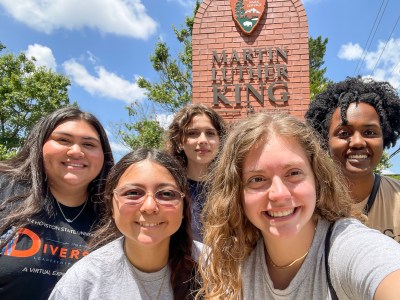
Upon arriving at Dr. Martin Luther King’s gravesite and museum, we were met with a recording of Dr. King’s powerful words echoing across the surrounding area. We were instantly drawn to the Civil Rights Walk of Fame, where many highly influential figures in the civil rights movement, such as Rosa Parks, Gandhi, and Judge Thurgood Marshall, were featured.
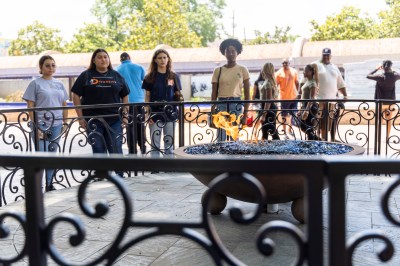
The park was decorated with inspiring quotes which encapsulates the hopes MLK had for future America. We were enthralled by the powerful messaging and representative structures. The eternal flame had to have been one of my favorite pieces in the park. The flame’s symbolism was incredibly profound; its persistence emulating Dr. King’s fight against racism and segregation.
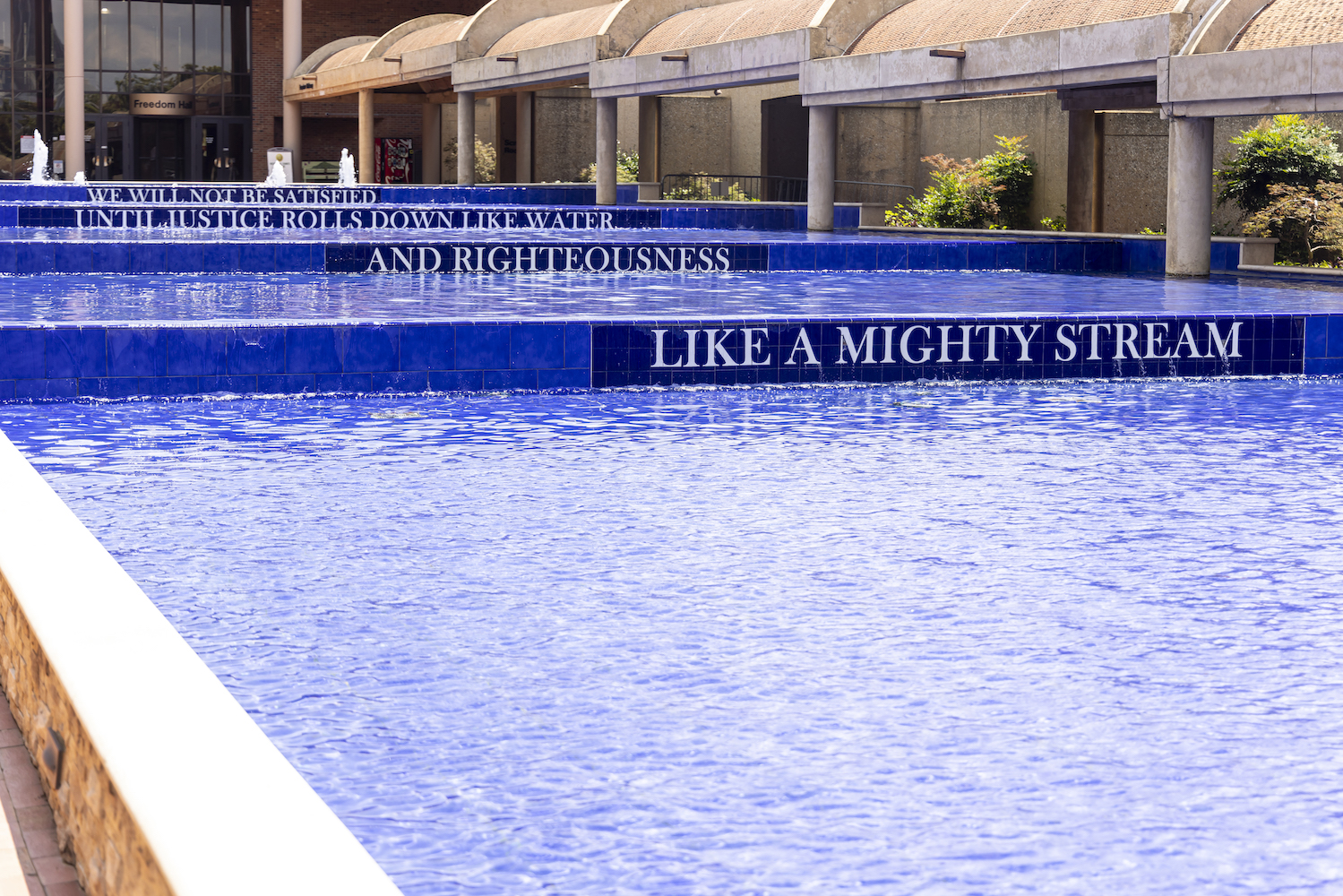
The real showstopper was definitely Dr. Martin Luther King, Jr. and wife Coretta Scott King’s grave and memorial. The memorial has a vibrant pool and fountain surrounding the graves, which displayed a quote from Dr.King: “We will not be satisfied until justice rolls down like water and righteousness like a mighty stream.” The words, placed on what looks like a shallow staircase, have a serene stream of water pouring down, which resonated heavily with the group.



We eventually made our way to the Martin Luther King Jr. Museum located on the grounds of the National Historic Park. There were many of Dr. King’s personal items on display, such as his suits, shoes, robes, wallet and my personal favorite; his cufflinks and tie clips.
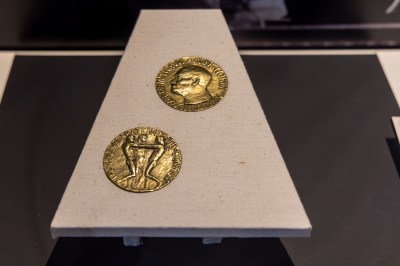
Some of Martin Luther King’s biggest accomplishments were also on display including his Presidential Medal of Freedom Award, presented to him by President Jimmy Carter and his Grammy, which he won for his speech “I Have a Dream”.

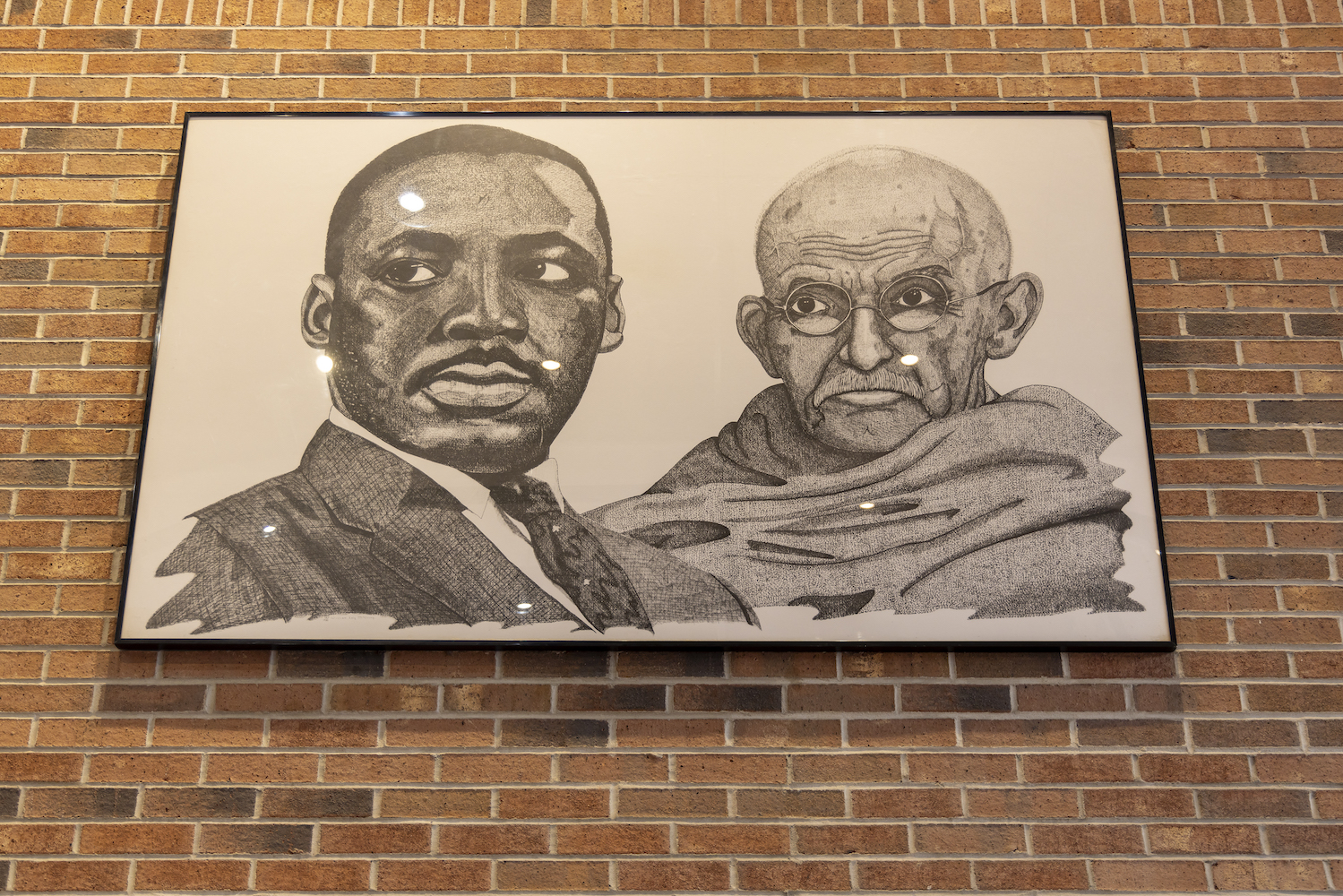
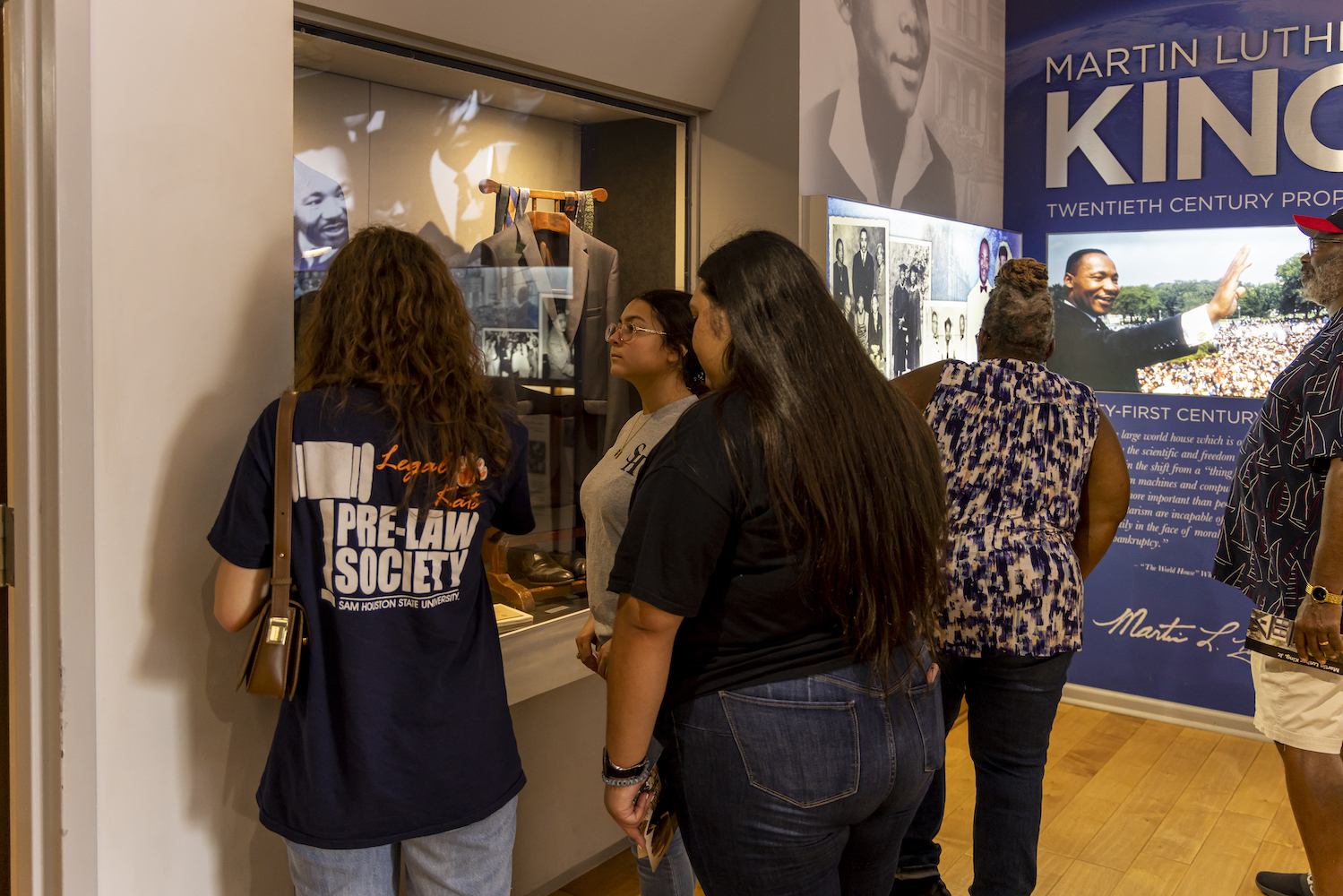
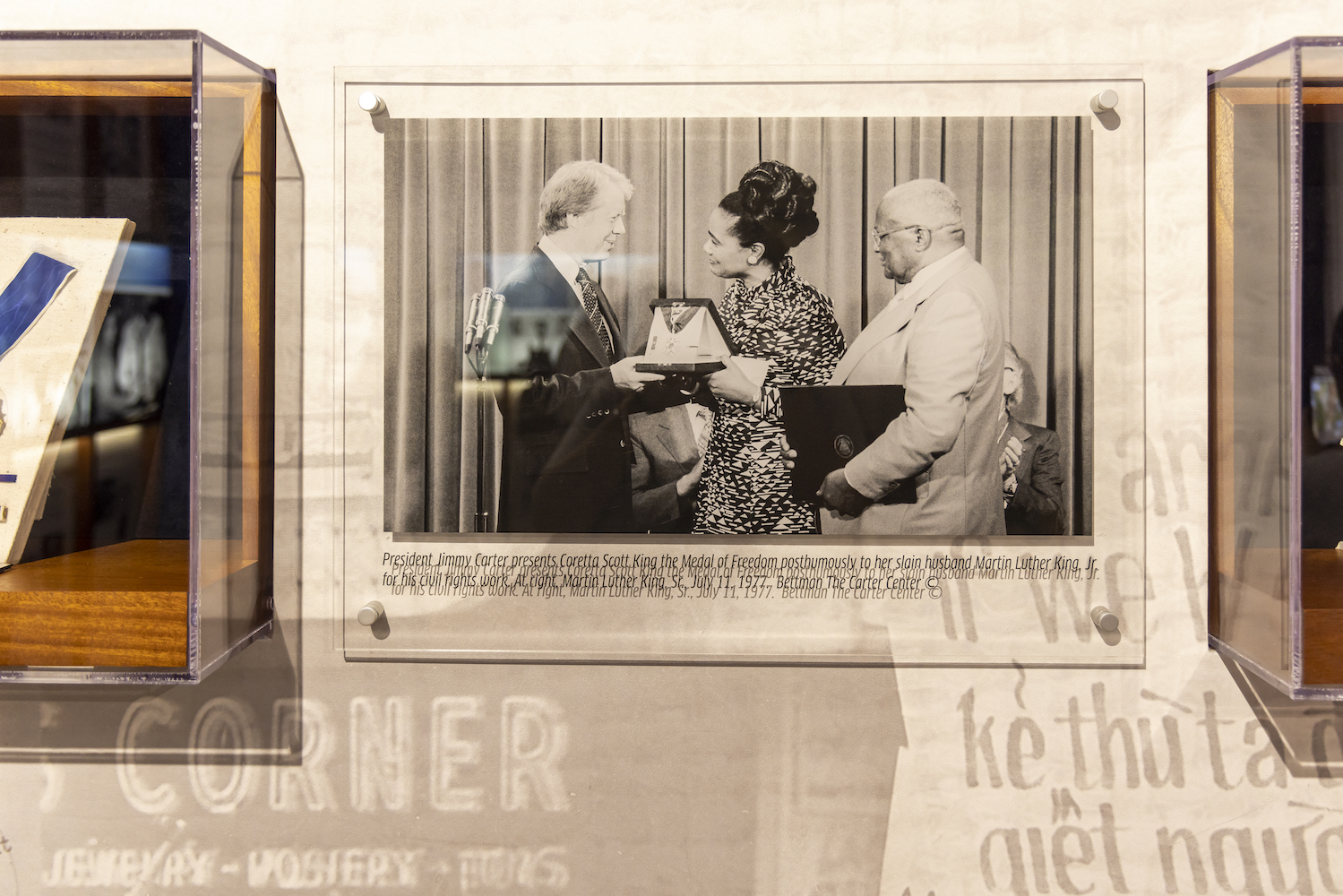
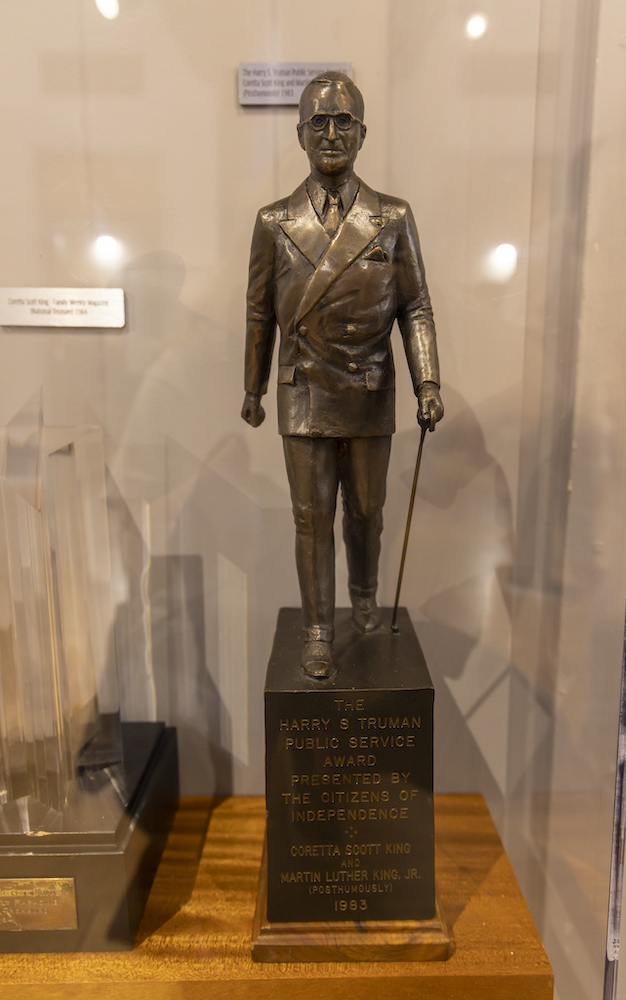

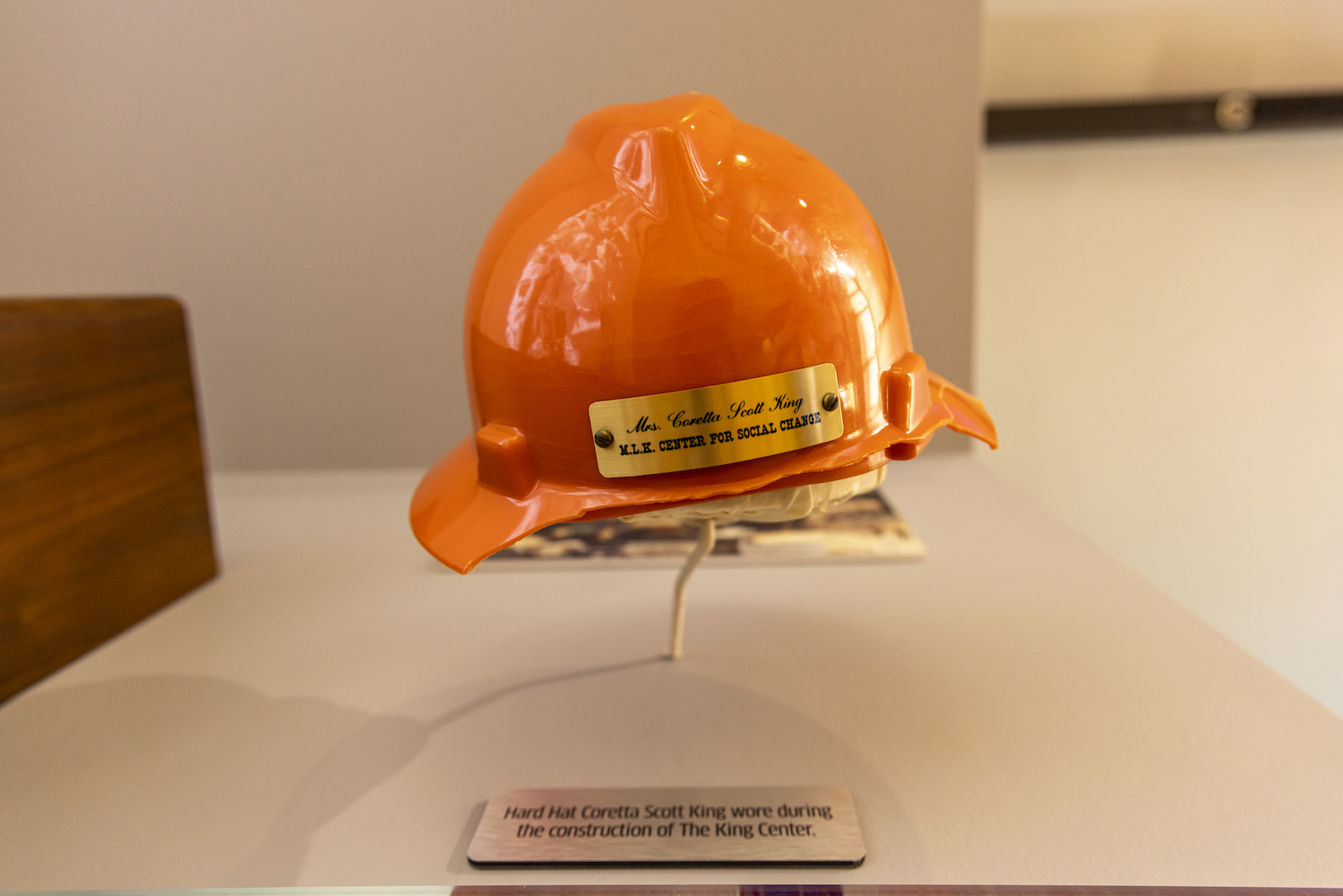
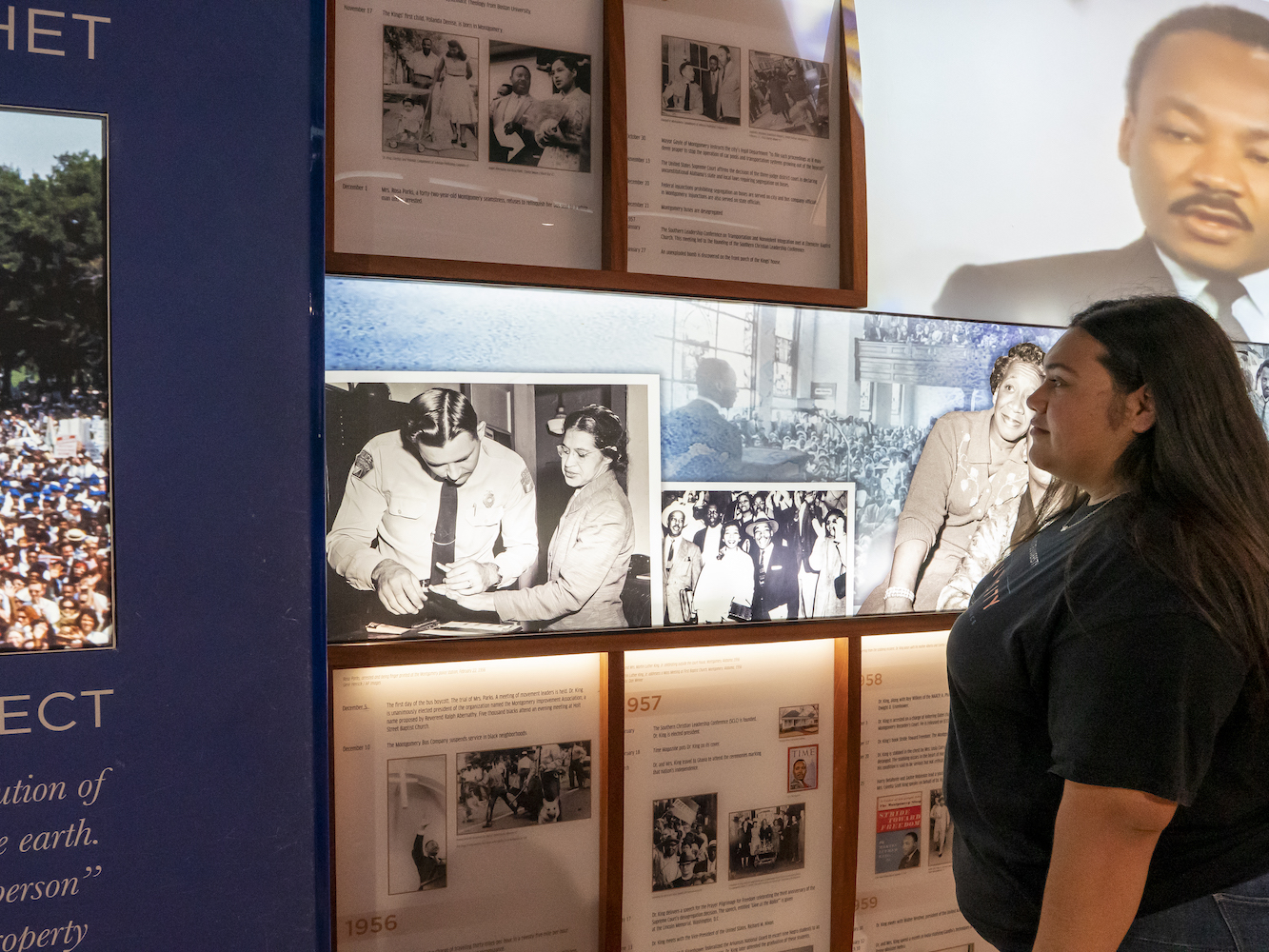
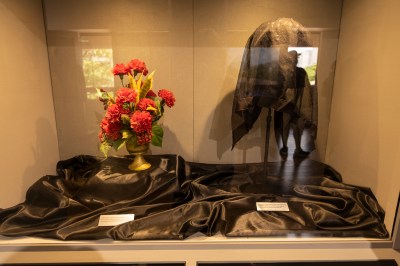
Dr. Martin Luther King’s wife, Coretta Scott King, had many pieces featured in the museum. A piece that stood out from her collection included the veil she wore for her husband’s funeral; some lipstick and tear stains still remained on the garment.
After seeing so many remarkable pieces and mementos of history, we headed to the gift shop! We made sure to pick up some mementos of our own to commemorate the visit.
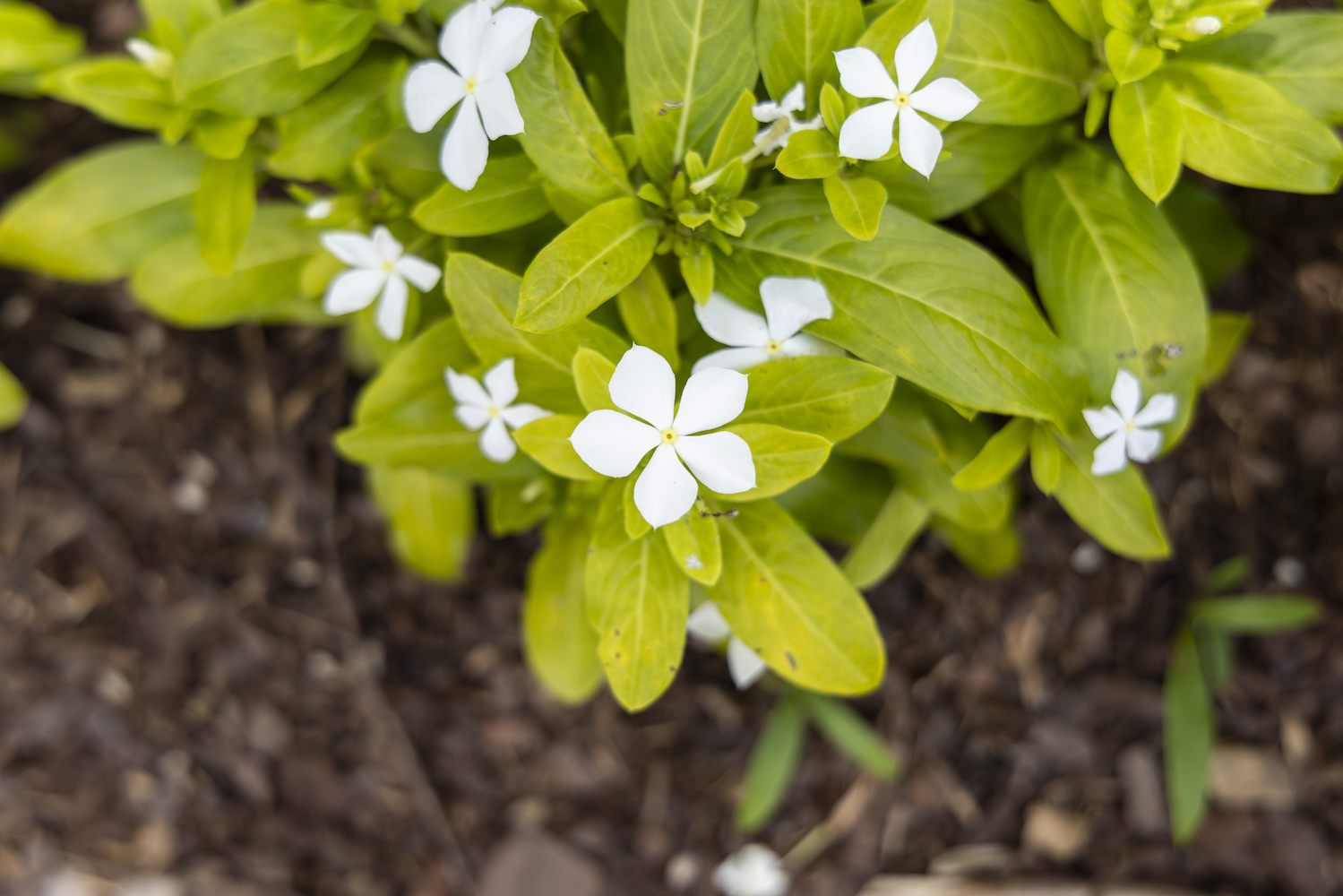
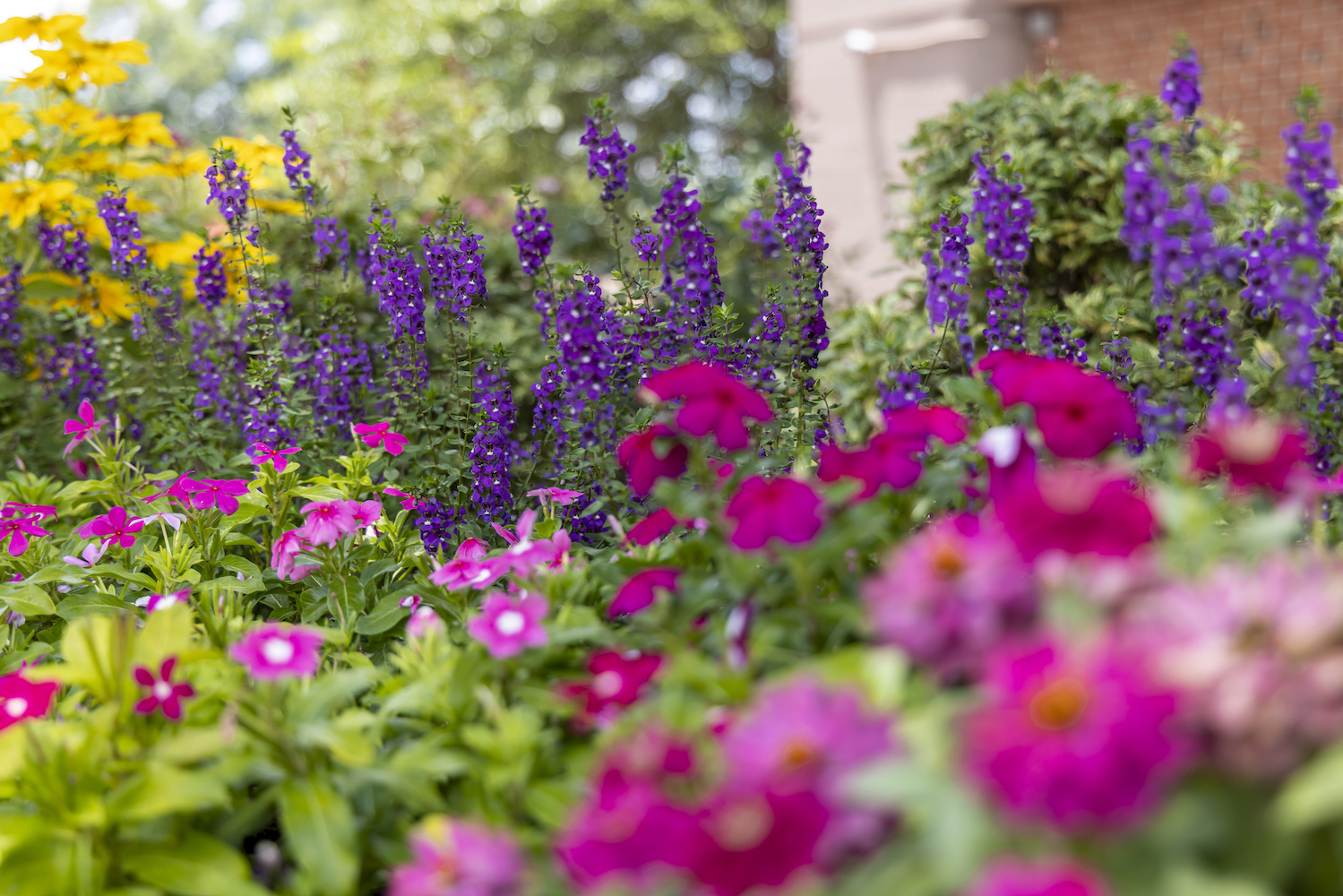
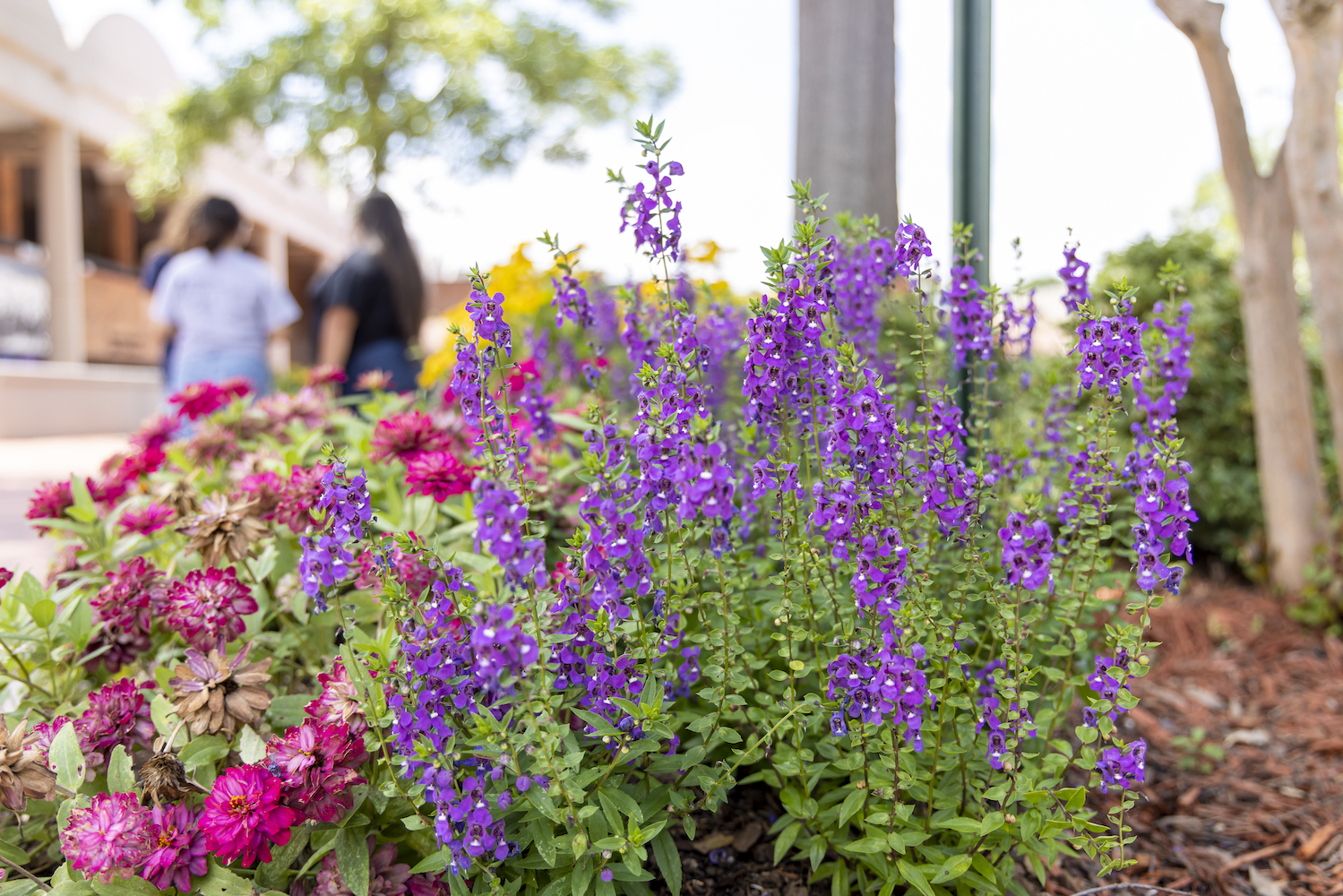
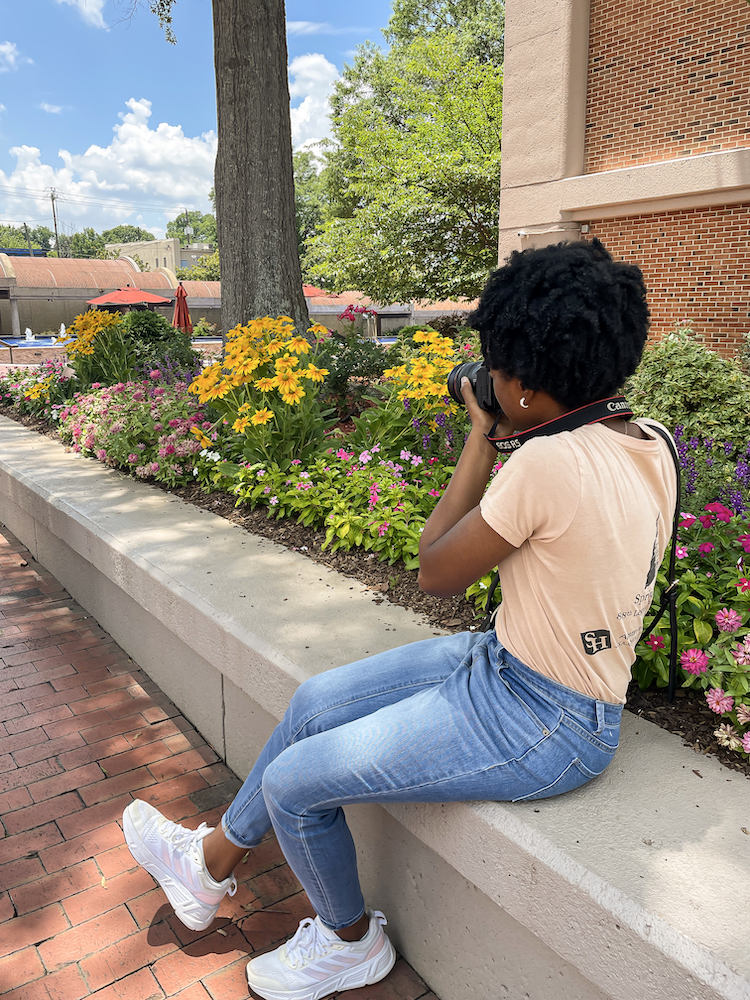
Before leaving, we took the time to let the beautiful exterior truly sink in. In this time, Ingrid was able to capture the vivacity of the area with some excellent photos of the flowers.

It was a beautiful and moving experience, and it was both an inspirational and educational way to start the trip.
Jimmy Carter Presidential Museum
By Ingrid Cuero
We then headed to the Jimmy Carter Presidential Library, which was fitting following the MLK museum. Dr. Martin Luther King, Jr. actually endorsed President Carter during one of his early campaigns! Upon entry, we encountered a beautiful display with international flags surrounding a patch of vibrant flowers, signifying the 39th President’s commitment to a connection with other countries.

We began with a film providing an overview of the Carter Presidency, which was a great way to set the tone for our visit. Carter grew up on a farm in Plains, Georgia, and had a rich background. He was the first in his family to leave Georgia to pursue higher education, served in the military, and had a career as a nuclear engineer. President Carter was portrayed as a President who led with his conscience before his politics, passing key civil rights legislation in his time in office. Something that stood out to me was that he decided to leave the Navy to take over his father’s farmland. He was not necessarily invested in politics at first, but when a previous Senator vocalized a few issues that went against his beliefs of an equal society, President Carter decided to run for state senator. This marked the beginning of a career surrounding Carter’s passion for equality, civic engagement, and ethics.


President Carter’s election into office can be described as a fluke of fate. After experiencing the presidencies of two career politicians, Johnson and Nixon and the misfortunes of The Vietnam War and Watergate, voters were looking for something other than a “traditional” politician. Carter came across as an everyday American, earning trust with voters.
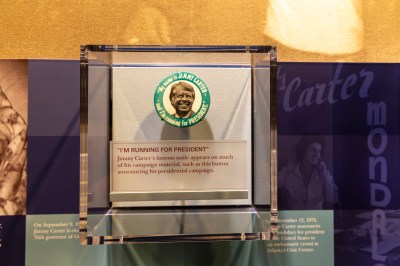
One of the highlights of the Carter Presidency was the peace negotiations with Egyptian President Anwar Sadat and Israeli Prime Minister Menachem. We were able to view some pictures and videos of the monumental achievement of restoring peace among the two countries.
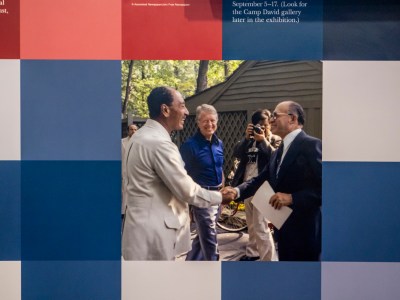
One of my favorite pieces in the museum was a portrait of President Carter by Octavio Ocampo, a mosaic. If you look closely, President Carter is made up of painted buildings, boats, flags, and 18-wheelers.

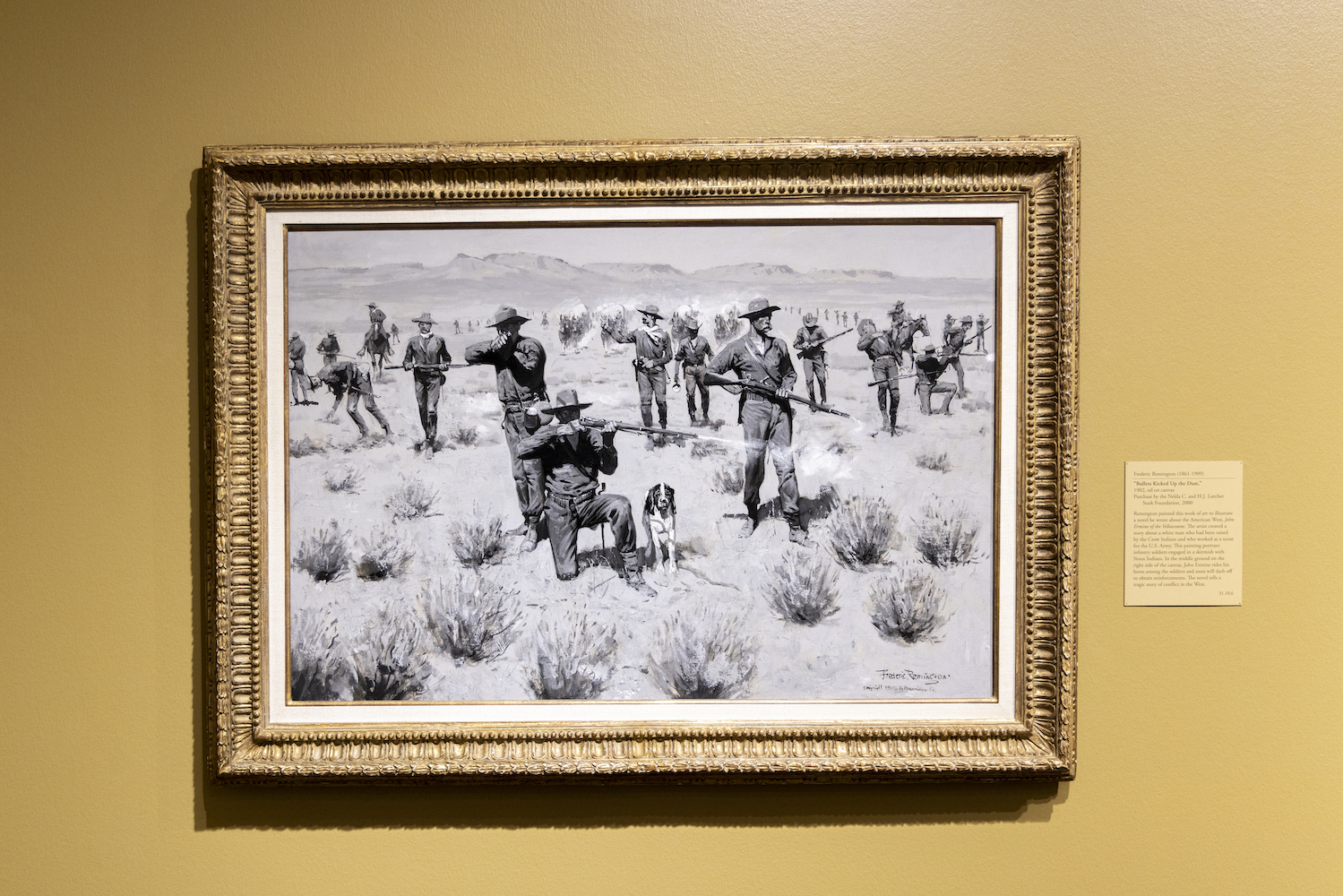
We viewed a model of Carter’s Oval Office, which had a collection of art curated by the President himself. To note a few, there was a sculpture from an early American sculptor we were familiar with, Frederic Remington; a portrait of a young George Washington; and a bust of Benjamin Franklin.

We thoroughly enjoyed our experience in President Carter’s Museum!
Erica Davis Lowcountry
By Jessica Cuevas
Following a long day–one in which we woke up in Houston–we made our way from Atlanta to Savannah, a 3.5 hour drive. In Savannah, we headed to Erica Davis Lowcountry for dinner. For our appetizers, we had fried green tomatoes and oysters rockefeller, all-time classic dishes of the South.

The fried green tomatoes were highly popular amongst all of us, but Ingrid’s favorite was, by far, the oysters rockefeller.

With great starters, we were eager to indulge in our main entrees.
Morgan ordered the best thing on the menu, which, according to the person who took our order, was the Wassaw Redfish; Ingrid had the Crab Stuffed Flounder; Michelle had a Flounder Po’Boy; Professor Yawn and Stephanie shared the low country boil and a pulled pork plate; meanwhile, Olivia and I shared a BBQ combo of smoked brisket, pulled pork with mac n cheese and savannah red rice.


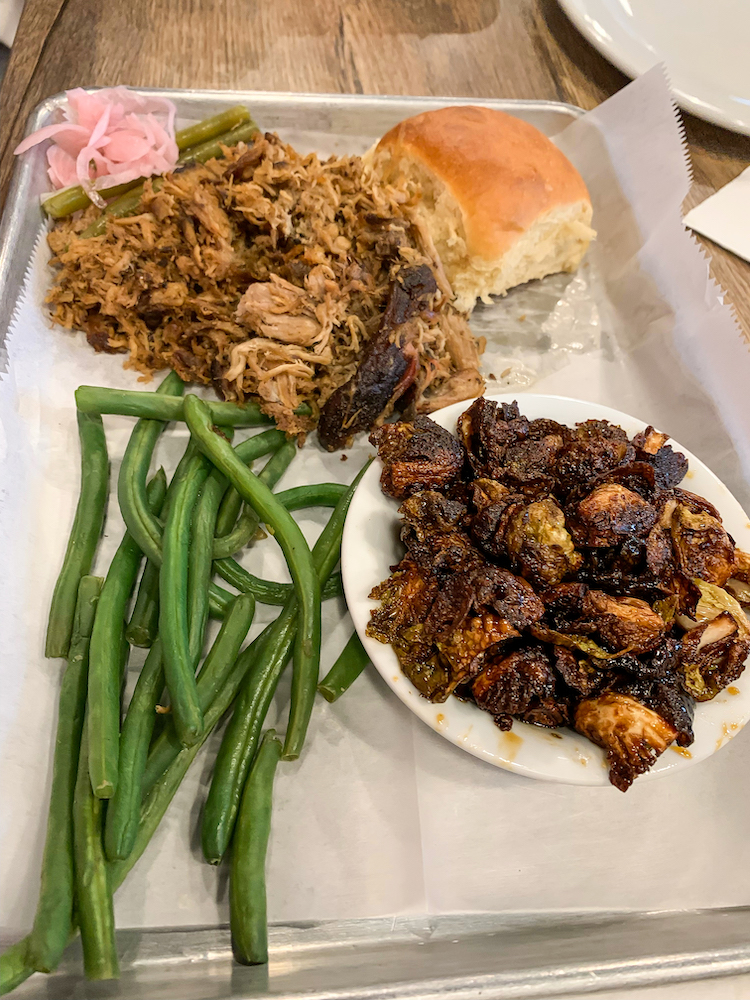
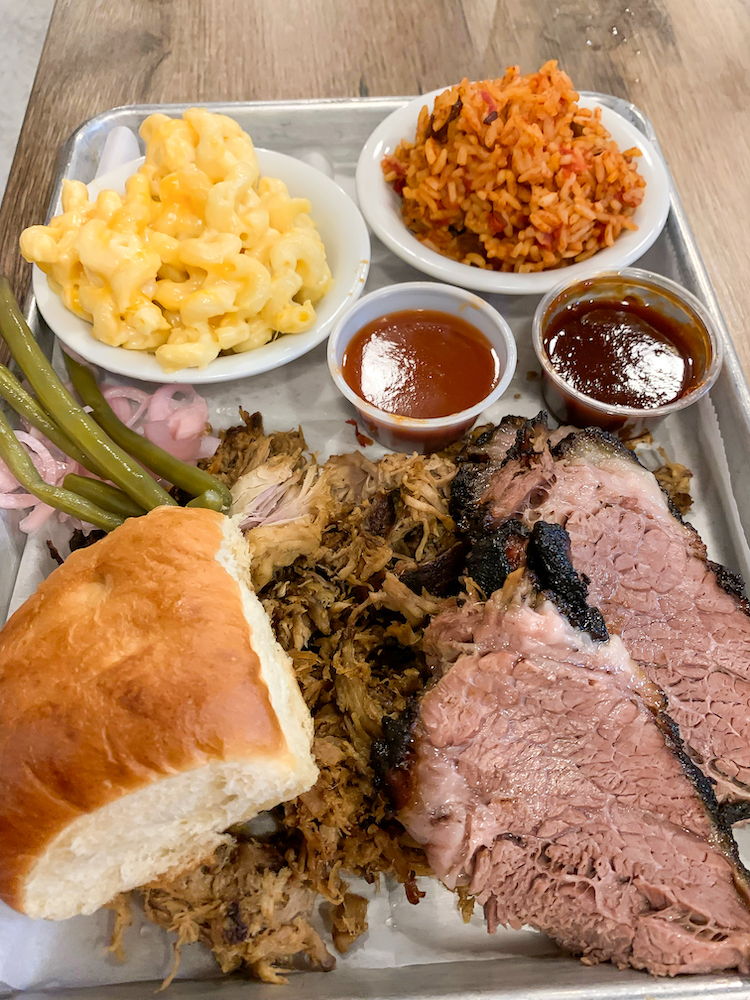
We were intrigued to know that all the barbeque sauces at this restaurant are made there and that they had experimented with and created a sweet and delicious *peach* barbeque sauce–and it was our favorite!
Although some of us were full, others could not leave without having dessert. Following our entrees we treated ourselves to a banana pudding, key lime cup, and a slice of carrot cake. They were all delightful!


With full stomachs, we headed back to the hotel, ready to write about our experiences, edit photos, and prepare for an even more action-packed day tomorrow.


































































 Center for Law, Engagement, and Politics