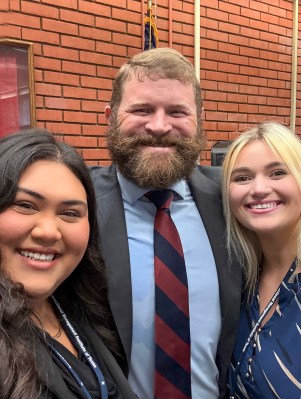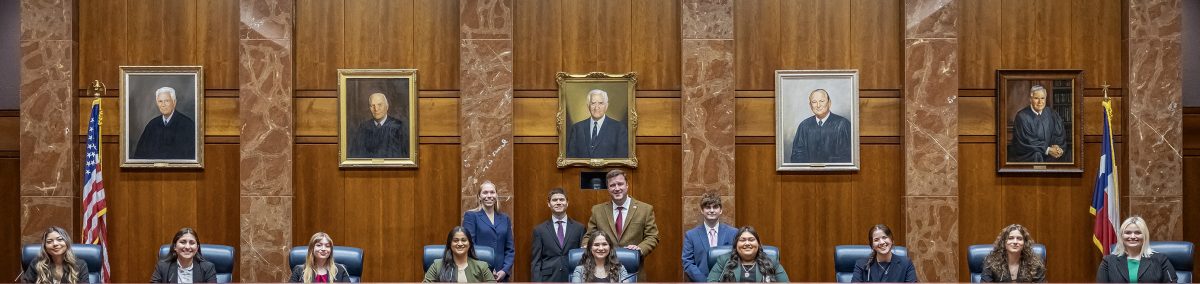
One of the advantages of attending SHSU is the opportunities afforded by the College of Criminal Justice, whose activities continue deep into the semester and even the summer. And so it was we found ourselves at lunch with 74 professionals from the legal and corrections community across the state of Texas–while listening to Texas Supreme Court Justice James Sullivan.

After an introduction by TDCJ General Counsel Stephanie Greger…

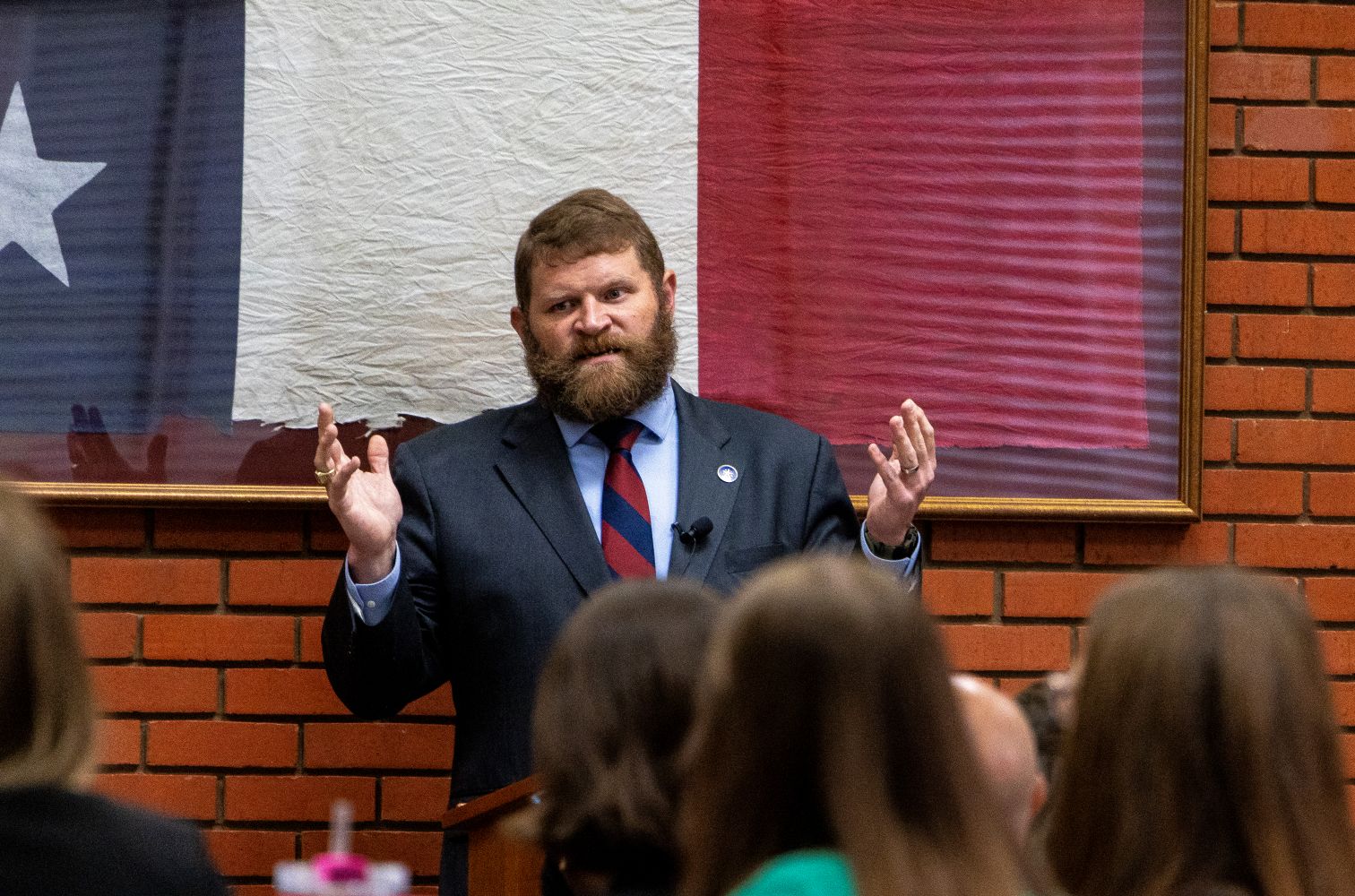
…Justice Sullivan highlighted five keys to leading teams of public servants.
- Hire people smarter than you;
- Grow a coaching tree;
- Lead from the front;
- Show people you care;
- Build resilience.

He offered examples from his career, which he often shared tinged with traces of humor and a lot of common sense. He described his career as a government attorney and noted that while he didn’t earn as much as his private-practice counterparts (his wife, he says, “funds my government attorney hobby”), he was part of a team that produced successful leaders. This involves, he noted, disruption: good attorneys come in and work for the state; after a couple of years, they get better offers; and they move on to higher-paying jobs with greater influence. This creates turnover, but it is a product of a good strategy: hiring good people. And while those people leave eventually, they become coaches in their own spheres of influence, producing leaders that go on to serve.



Sullivan’s audience was on hand at SHSU to attend the Texas Criminal Justice Legal Conference, where leading practitioners were present to collaborate, think, and act to make Texas a better place. There were numerous attorneys present, including our friend Jack Choate and his excellent staff, and some new people we met, such as Rachelle White, Chief of Staff for TDCJ; Sean Groves, Deputy Executive Director of Texas Juvenile Justice; Eric Nichols, attorney at Butler Snow and Chairman of the Texas Board of Criminal Justice; and Wyvonne Long, Director of TDCJ Independent Office of Inmate Counsel. In short, there were a lot of people present from whom we could learn.

And learn we did! Between the conversations at the table and in the room, and the presentation by Justice Sullivan, we were exposed not only to tips for managing public servants, but also to the many careers in the law that also allow for public service.