Searching Seminole Canyon

There aren’t any quick trips to Big Bend, because it is so distant from virtually anywhere else in Texas.  But in the LEAP spirit of making the most of wherever we are, we wanted to make our return trip from Big Bend as fruitful as possible.

For the way home, that included making a quick stop in Marathon to see “Target Marathon,” a bookend to our “Prada Marfa” experience.

SHSU, LEAP Center, Marathon Texas, Target Marathon

The Target Marathon had its own charm, but we partial to the Prada Marfa.

SHSU, LEAP Center, Prada Marfa, Big Bend, Marfa Texas

Our more substantial destination on the way home, however, Seminole Canyon State Park, which is located near Del Rio, Texas.

Our first stop was near the Visitor’s Center, which includes trails to the Canyon bottom.   These trails are off-limits to casual hikers such as us; they are reserved for scheduled tours led by Rangers, who guide hikers down to ancient ruins, where petroglyphs and other items of archaeological and historical interest can be found.

Our goal was to see the canyon from the rim (which is permitted)…

SHSU, LEAP Center, Seminole Canyon State Park

…and to see the Shaman sculpture created by Bill Worrell.

SHSU, LEAP Center, Seminole Canyon State Park

Following our adventures near the Shaman…

SHSU, LEAP Center, Seminole Canyon State Park, Bill Worrell

…we headed out for our formal hike.

The rim trail goes on for miles, but our goal was to hike about an 1 and 1/2 miles one way, and to turn around and come back.  We had specific canyon views in mind, but we also wanted to see wildlife.  We achieved both our goals!

SHSU, LEAP Center, Seminole Canyon State Park

As with most hikes, sunset (or sunrise) is a great time to see animals, and we saw everything from jackrabbits to a seven-legged tarantula…

SHSU, LEAP Center, Seminole Canyon State Park

We stopped along the way to take a few “LEAPster” photo’s and enjoyed the scenery.

SHSU, LEAP Center, Seminole Canyon State Park

The canyon is very interesting because it had been inhabited by Native Americas for over 12,000 years, when the terrain was scattered with lush vegetation in the canyons and grasslands in the upper regions that was rich with ice aged species of elephants, mammoths and bison. Researchers have concluded that about 5,000 years ago the Seminole Canyon region underwent extreme climate change, causing the arid and rocky landscape that we see today.

SHSU, LEAP Center, Seminole Canyon State Park

Thankfully, we had a chance to see up close!  We even went into an alcove that may have been used for shelter hundreds of years ago.

SHSU, LEAP Center, Seminole Canyon State Park

The trail also offers several canyon views of note…

SHSU, LEAP Center, Seminole Canyon State Park

…a photogenic bridge…

SHSU, LEAP Center, Seminole Canyon State Park

…and, at least at our time of day, a nice sunset.

SHSU, LEAP Center, Seminole Canyon State Park

It was a fitting coda to a four-day trip filled with hikes, exploration, and small-town charms.

Having a Ball in Marfa

Although Chinati makes up a large part of the entertain and educational life of Marfa, there is much more to explore.

One of the sites for exploration is Marfa Ballroom, and it contained several exhibits that left a lasting impression on us.

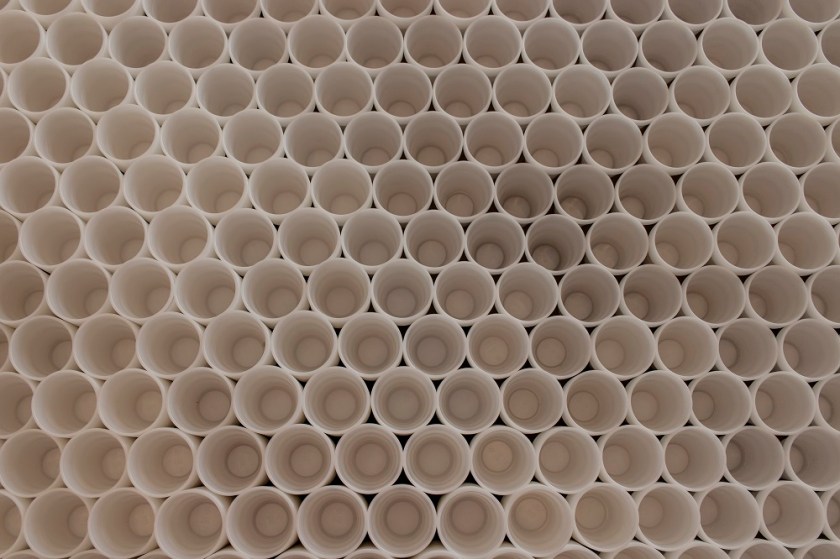
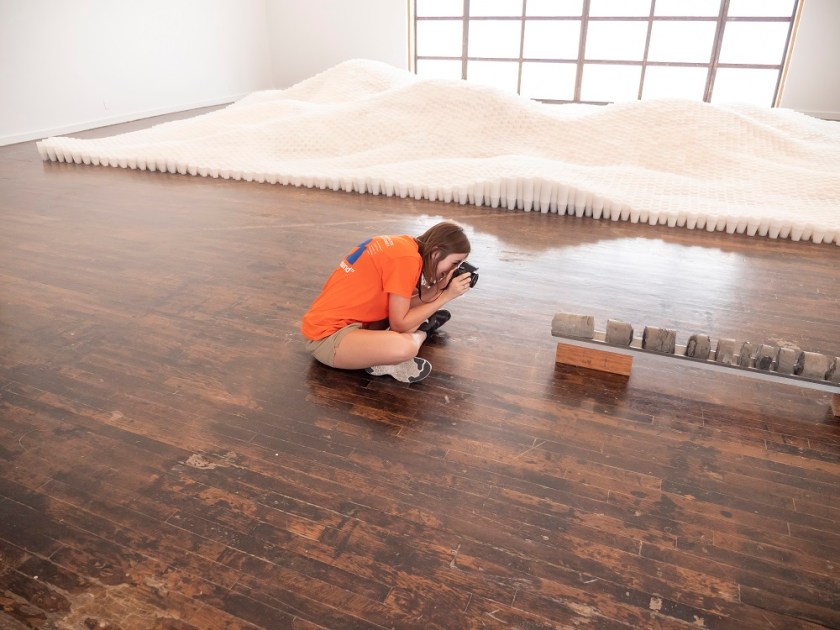
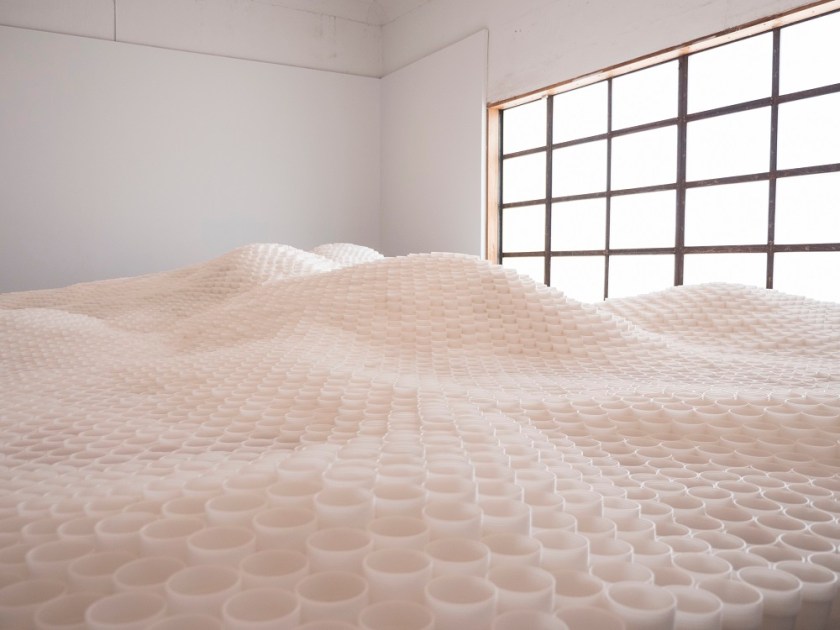
The first one was an untitled piece by Tara Donovan, and resembled hills made of plastic cups of various sizes. The cups were not connected by anything, so it appears they were all hand placed.

SHSU, LEAP Center, Marfa Texas, Marfa Ballroom, Tara Donovan

Upon first glance, it actually looked like styrofoam.  But the true nature of the exhibit was more clear from different angles.

SHSU, LEAP Center, Marfa Texas, Marfa Ballroom, Tara Donovan

Intriguingly, much of what we saw looked different depending on the perspective.  This piece, for example….

SHSU, LEAP Center, Marfa Texas, Marfa Ballroom

…looks different based on the perspective…

SHSU, LEAP Center, Marfa Texas, Marfa Ballroom, Tara Donovan

…and we worked hard to photograph the art from different perspectives.

The second major exhibit was outside in the courtyard, and they were holes of various sizes.

SHSU, LEAP Center, Marfa Texas, Marfa Ballroom

The exhibit was a bit vague and we all felt that the artist was doing quite a bit of projecting, but the holes were complemented with sound effects and collectively they represented the “deceitful means” (curator’s words) the US Border Patrol uses to “trap” immigrants traveling across the desert.

On a more practical level, we learned the holes were interactive, so Maggie immediately went to work!

SHSU, LEAP Center, Marfa Texas, Marfa Ballroom

Back inside the museum, we encountered an intriguing two-piece set.  The first thing we saw was a rather indistinct photograph, which left us wondering if the photographer had full control of her camera’s focusing capacity.

SHSU, LEAP Center, Marfa Texas, Marfa Ballroom

But then we saw a piece of glass nearby (seen above on the right side and below close up).

SHSU, LEAP Center, Marfa Texas, Marfa Ballroom

The “glass” was made from sand melted in the Atacama Desert in Chile, and then it was used to take the photograph above–thus explaining the apparent lack of clarity in the image.

Another interesting piece was VIRUS, or the Visible Integral-Field Replicable Unit Spectrographs, which was from the Hobby-Eberly Telescope Dark Energy Experiment.  It is designed for people to look through at opposite ends and the Spectrograph allows the viewer to see an intriguing composite of their own face and the person’s face that is opposite them in the lens.

SHSU, LEAP Center, Marfa Texas, Marfa Ballroom

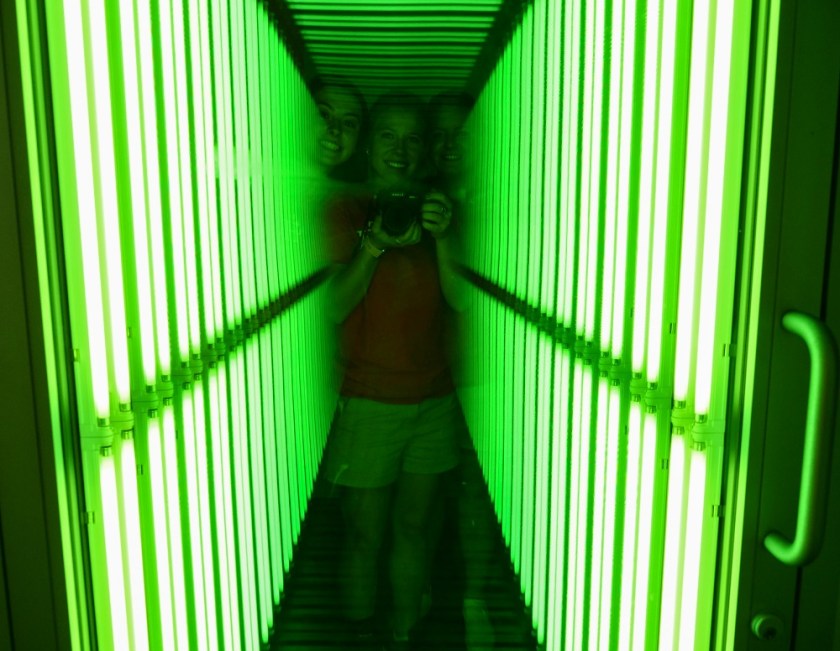
The final piece we got to see was a green, fluorescent light that shined around a one-way mirror in front of a mirror, projecting what seemed like a hallway of green florescent lights. This reminded us all of the light pieces by Flavin we had seen earlier so we all enjoyed it a lot.

SHSU, LEAP Center, Marfa Texas, Marfa Ballroom

For lunch in Marfa, after touring the Chianti Foundation, we stopped at Squeeze Marfa Swiss Café for sandwiches. It was a neat little shop where the nice lady who took your order seemed to process each order one item at a time….so you might plan on being at the counter for a while.

But the food was worth it, and we all ordered an interesting drink along with our meals. I ordered a Basil Lemonade, Anne tried the Peach Pear Divine smoothie, Peyton had a Belgian Chocolate Frappe, and Professor Yawn ordered a Napoli Italian Soda.

After lunch we continued exploring the little town. We visited the Prisittio Hotel where James Dean, (ect) stayed while they shot one of the greatest western films, The Giant. The hotel has a section filled with pictures of the famous actors on set as well as a very big gift shop area with everything from nice clothes to kitchen accessories. We began back down the block and came across an Andy Warhol exhibit in a closed art exhibit hall… we may or may not have crawled to the ground to peak under the blinds and catch a glimpse of the exhibit (it was worth it).

SHSU, LEAP Center, Marfa Texas, Andy Warhol

Marfa is an interesting little town full of quirks…

SHSU, LEAP Center, Marfa Texas

….more quirks….

SHSU, LEAP Center, Marfa Texas

…..more quirks….

SHSU, LEAP Center, Marfa Texas, Andy Warhol

…and lots of small-town charm.

SHSU, LEAP Center, Marfa Texas


Marvelous, Minimalist Marfa!

After a twenty-hour day at Big Bend, we were ready for more education, but this time in Marfa, Texas, home of mysterious lights and much minimalist art and hipster vibes.

These adventures began with the Chinati Foundation–a non-profit focused on the minimalist art of Donald Judd and his contemporaries.  He purchased a former military base–Fort Russell–and turned it into a major art installation.

Our tour–led by a somewhat bored tour guide–began with Judd’s works.  These works were housed in two old artillery sheds and consisted of 100 untitled pieces made of aluminum.  Each cube had the same outer dimensions, but each had a different interior configuration.

SHSU, LEAP Center, Donald Judd, Minimalist Art, Chinati Foundation, Marfa Texas

From some angles with the right light, some of the pieces looked as though they were made from glass.

SHSU, LEAP Center, Donald Judd, Minimalist Art, Chinati Foundation, Marfa Texas

You don’t have to a fan of minimalist art to be be intrigued by Judd’s art, but you do need an open mind.  It’s almost impossible to examine the 100 pieces without asking, “But is it art?”

Actually, it is art, and the installation goes a long way to reinforcing Judd’s purpose in founding Chinati.  He believed that having Museum curators slice his art into smaller pieces (or subdividing it) and then placing it in a corner of a museum gallery next to pieces by artists of their choosing didn’t appropriately convey the artist’s intent.  So…he bought 340 acres, on which he could install his pieces in the format and configuration of his choosing.  They definitely had an impact different than what have been experienced by seeing a single aluminum piece next to, say, a work by George Segal in a large museum.

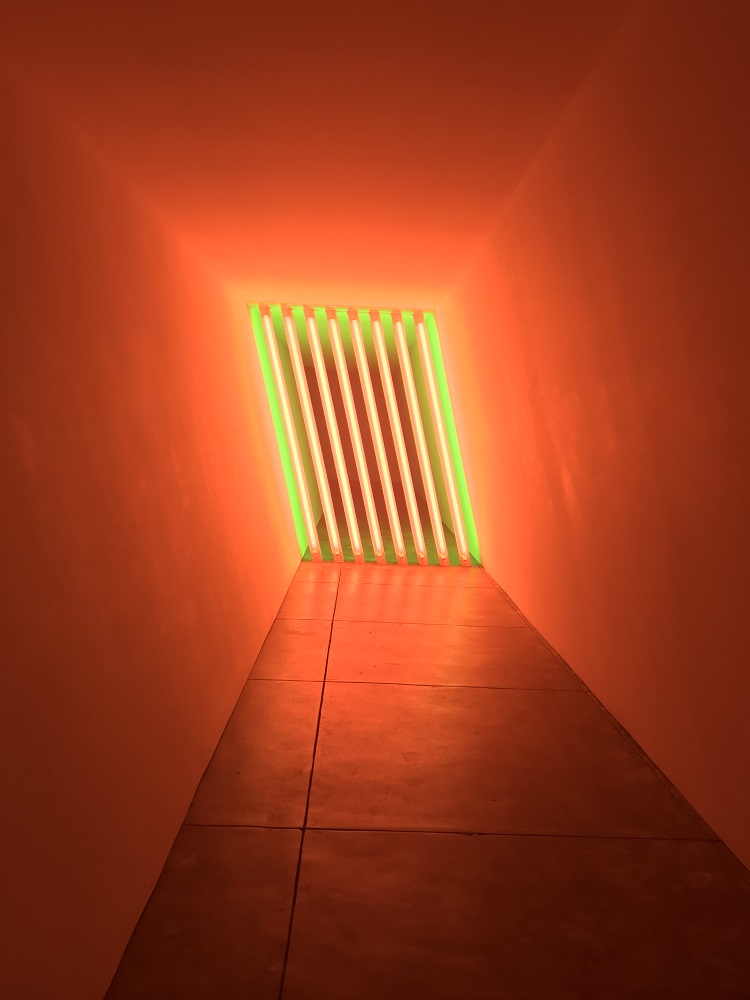
The site was also ideal for the works of Dan Flavin, commissioned specifically for Chinati.  Using six old barracks buildings, Flavin created art from flourescent bulbs of varying colors which, when seen from various perspectives, blend into unique color combinations.  When entering the north barrack wing, for example, we saw this:

SHSU, LEAP Center, Donald Judd, Chinati Foundation, Marfa Texas, Dan Flavin

From the south barrack’s wing, however, we saw this:
SHSU, LEAP Center, Donald Judd, Chinati Foundation, Marfa Texas, Dan Flavin

What we also saw a lot of was this…

SHSU, LEAP Center, Donald Judd, Chinati Foundation, Marfa Texas, Dan Flavin

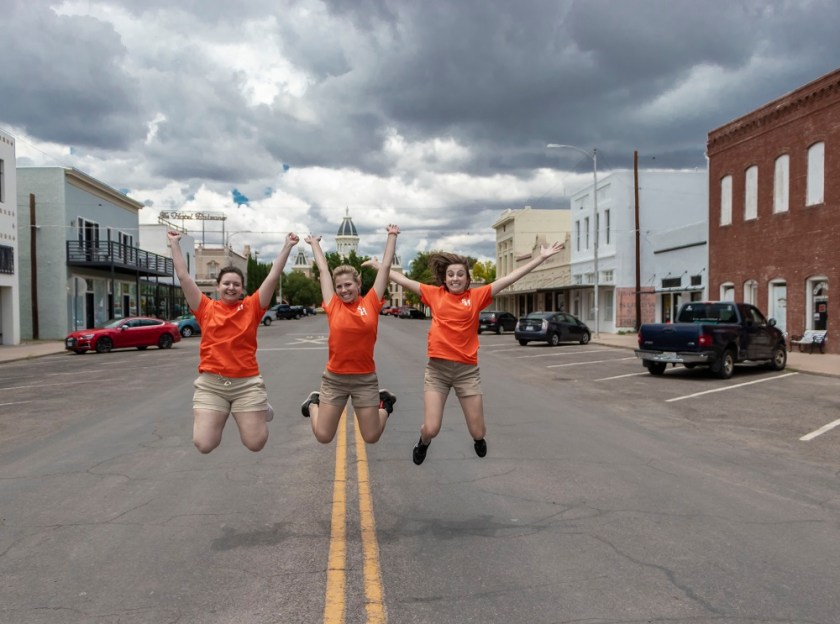
…us posing in the sometimes beautiful, sometimes eerie, always intriguing art works by Flavin.

This slideshow requires JavaScript.

As a group, the Flavin pieces were the most popular, although individuals in our group have a soft spot for the pop art of Claes Oldenburg (not a minimalist!)…

SHSU, LEAP Center, Donald Judd, Chinati Foundation, Marfa Texas, Claes Oldenburg

…which was created to honor Louie, the last surviving horse of the fort’s cavalry unit.  This art work also served as a memorial, in that replaced the deteriorated memorial previously on site for Louie.

We also had warm feelings for Chinati’s most recent installation, a large work by Robert Irwin.  His installation was actually an entire building, horseshoe shaped, with a courtyard.

SHSU, LEAP Center, Donald Judd, Chinati Foundation, Marfa Texas, Robert Irwin

The building’s interior consists of two sides: the left side is dark, with black walls, windows that open at eye level–designed to provide the look of Dutch landscapes–and a black screen that provides compartmentalized interiors.

The building transitions on the horizontal leg of the horseshoe, moving from the “dark side” to the “light side.”

SHSU, LEAP Center, Marfa, Chinati, Robert Irwin

This is a supremely interesting effect, providing both visual stimuli and a provocative metaphorical sense of moving from dark to light.

SHSU, LEAP Center, Donald Judd, Chinati Foundation, Marfa Texas, Robert Irwin

Indeed, halfway through the building this effect is captured by dark and light doors.

SHSU, LEAP Center, Donald Judd, Chinati Foundation, Marfa Texas, Robert Irwin

And from there, visitors enjoy the ‘optimist’s side,” filled with light and interiors of white, making for some happy tourists.

SHSU, LEAP Center, Donald Judd, Chinati Foundation, Marfa Texas, Robert Irwin

Our happiness transformed to curiosity as we moved to downtown Marfa, where the “Chamberlain” wing of Chinati is housed.

There are 22 of Chamberlain’s curiosities in this building.

SHSU, LEAP Center, Donald Judd, Chinati Foundation, Marfa Texas, John Chamberlain

His works are primarily cars that have been compressed and placed…

At the front of the building, there is a large “couch” of sorts, and it was an installation we were allowed to touch and, in fact, sit on!  ALthough comfortable, we didn’t sit on it long, because one of Chamberlain’s movies, “The Secret Life of Hernando Cortez” was playing, and it was supremely strange.

On a more quotidian note, we did find a sand patch that was part of the building’s original structure, and we were able to add our own art.

SHSU, LEAP Center, Donald Judd, Chinati, Marfa Texas, LEAP at SHSU

The half-day tour was enthralling.  It was our first experience with minimalist art and provided an eye-opening and even uplifting experience!

SHSU, LEAP Center, Marfa Texas


Deep in the Art of West Texas

By: Peyton Reed

We began our day with a trip to Cedar Coffee and Supply. The coffee shop was incredibly popular and trendy, something unexpected from a small town in the middle of west Texas. We each ordered an assortment of coffees off of the menu and had a delicious breakfast. Half of us ordered the Red Hatter, a delicious Belgian waffle covered in Rose Crème and fresh, organic strawberries.

SHSU, LEAP Center, Alpine, Cedar Coffee and Supply

The other half ordered the Ol’ Faithful, a hearty bagel with bacon, a fried egg and spinach. The morning was full of good conversation and stories told by Mark Burns.

SHSU, LEAP Center, Alpine, Cedar Coffee and Supply, Mark Burns

After, Mark left to head back home and we explored the shop next door that had art from local woodworkers.

 We went back to the hotel for a few hours of editing, then we revisited our new favorite coffee shop for Coffee milkshakes, Nitro Floats, Rose Lemonade, and a Basil Snap. After fueling up on coffee, we headed to the Museum of The Big Bend on the Sul Ross Campus. We enjoyed seeing the historical exhibits…

…history of photography installation, and an original mural painted by Xavier Gonzalez that is believed to have been painted while he was a student.

SHSU, LEAP Center, Alpine, Sul Ross, Museum of The Big Bend

 While downtown, we wandered into a co-op ran by a coalition of local artist who take turns running the shop. We purchased a couple of pieces, and I stepped in to help the artist running the shop change the receipt paper when it ran out.

SHSU, LEAP Center, Alpine, Gallery On The Square, Peyton Reed

While browsing, we met an artist named Tim McKenna, the photographer who composed the images used in the 2018 Big Bend Calendar. He took us to the art co-op next door and told us the stories behind some of our favorite images of his. We all purchased some of his prints, and even got a photograph with him and his wife, Julie.

SHSU, LEAP Center, Alpine, Gallery On The Square, Tim McKenna

 Once we finished purchasing our pieces of art from the second Co-op, we were all ready for dinner, so we walked across the street to “Guzzi up,” a local restaurant. For starters, we had the garlic bread and spinach artichoke dip.


The appetizers were amazing and devoured within minutes. For dinner we ordered an assortment of items off the menu, a Margherita pizza, The Libby sandwich, a buffalo chicken sandwich, and grilled cheese with spinach and artichoke soup.

 After dinner, we drove to the Prada Marfa art installation, which was about an hour from Alpine, Texas. Surrounded by a fence with locks left by people in love, the Prada building contains genuine Prada items, six bags and thirteen right shoes. As the sun set, we photographed the building and fence…

…and even got our signature LEAP shot.

SHSU, LEAP Center, Alpine, Prada Marfa, Maggie Denena, Peyton Reed, Anne Jamarik

The day was jam packed with lots of coffee, art, sightseeing, and invaluable experiences.

Big Bend or Bust!
Our first day in West Texas started early as we departed our hotel at 5 am. The drive to Big Bend National Park from Alpine, TX is around an hour and half which gave us plenty of time to load up on coffee and good conversation. As we were driving along the Ross Maxwell Scenic Drive, a 30.9 mile road located in the center of the park that is primarily used for biking and scenic driving, we saw an opportunity to get some great shots of the sunrise, and we took it. We all looked on (and even helped when he would let us) as Mark Burns unloaded his meticulously packed car on the side of the road and began to set up his equipment to capture the perfect shot of the sun just over the horizon. Mark showed us the process of how he plans his shots: setting up his camera…

SHSU, LEAP Center, Big Bend, Mark Burns

…checking the light with a light meter…

SHSU, LEAP Center, Big Bend, Mark Burns

and snapping a quick shot with an old Polaroid camera.

SHSU, LEAP Center, Big Bend, Mark Burns

After getting a few great shots, we loaded back up and began scouting a new spot to get some footage. We found a new location at the Sotol Vista Overlook, that was also right off of the Ross Maxwell Scenic Drive, to get some great shots of Mark Burns driving on the winding road below. The Sotol Vista Overlook provides a spectacular view of the western side of Big Bend National Park and offered a beautiful but hazy view of Burro Mesa due to a fire located in the Upper Burro Mesa.


Next, we headed to the Boquillas Canyon Overlook where we found a rock covered in handcrafted, wire and bead knick-knacks shaped as road runners, peacocks and cacti.

We all picked out our favorite piece to take home as souvenirs. We even got to meet the two men who made them. Each day, they wade across the Rio Grande River from Mexico to replenish their supply and collect any money people have left for them in a weighted-down water bottle. Just as we were loading up the car for our next location, Mark stopped us because he saw a perfect opportunity to take a photo of the Canyon. We were able to see Mark use what is called a cable shutter release. A cable shutter release is a cable plugged into the camera and is able to release the shutter with a limited amount of movement to the camera. This is especially helpful when the camera is set to a long shutter speed. Watching Mark work with different tools is always interesting to watch.


We hit the road again until Maggie and Anne then got a spark of bravery (re: ignorance) and scaled an old stone tunnel to get the perfect aerial shot of Mark entering and exiting the tunnel.

After risking it all on the crumbling stones, we decided to take a break from our Evil Kinevil like stunts and stop for a quick picnic. At the Rio Grande Village, we stopped at the visitor’s center and ate a quick lunch while Mark told more stories.


After lunch, Mark suggested we visit the Hot Springs. We came across a hike down to the Hot Springs trail which, if I am being honest, was not as impressive as I had hoped. The trail is a 1.1 mile loop that is classified as easy, is moderately trafficked and is primarily used for hiking, biking and bird watching. We decided to do a little off road exploring to get a better view of the Rio Grande river.

SHSU, LEAP Center, Big Bend, Anne Jamarik, Maggie Denena, Peyton Reed

The Springs were murky and muddy, so we decide not to get in, but there were a few brave tourists who were swimming when we approached. The coolest aspect of the Hot Springs Trail was the old  General Store that had been run down to ruins.

SHSU, LEAP Center, Big Bend, Hot Springs, General Store

Mark snapped a quick photo of the old structure with his old Polaroid camera.

After hiking to the springs, we loaded into the car and drove to Sana Elena Canyon. While on our way, a torrential downpour left us feeling less than confident about the views and the photos we would be able to get of the Canyon. Never the less, we found a way to have fun and admire the views that Sana Elena Canyon had to offer.


After the muddy mess of an adventure, we were back to work at Balanced Rock. As we hiked up to the incredible view, we saw many multi colored lizards that we were sure to capture close photos of.

SHSU, LEAP Center, Big Bend, Balanced Rock

We took a few stops on our way up the mountain and got to ask Mark about some of his favorite national parks and most unique experiences. Mark told us amazing stories about the wild life in Alaska and the underwater photographs he got to take while in Florida at Biscayne National Park. While Mark was telling stories, Anne ran back to the car to grab a microphone and ran into two javelinas. Once we reached Balanced Rock, we listened as Mark described his last visit to the area four years ago when he captured the photo used in the National Parks Photography Project. The lighting and cloud coverage was perfect, something Mark did not have when he originally took his photo of Balanced Rock. Mark placed his camera tripod in the same exact spot it had been four years prior and snapped a beautiful picture of Balanced Rock.

SHSU, LEAP Center, Big Bend, Balanced Rock, Mark Burns

Maggie got brave and scaled a large rock to get an aerial shot of Mark as he talked about his previous trips to Big Bend. After many great shots from Balanced Rock, we headed back down the trail as the sunset, which offered the perfect view as we ended our day. We loaded up the car one last time and made our way back to the hotel, in preparation of another busy day–exploring Alpine and Marfa, Texas–ahead of us.


Big Bend Bound: Via San Antonio

By Maggie Denena,

The LEAP Center arrived in San Antonio around noon today and stopped for lunch at a local treasure, Mi Tierra. After navigating through the city to a public parking lot, we made our way around the block to the Historic Downtown Market, where Hispanic heritage runs thick. We checked into Mi Tierra with a 30 minute wait list, so we made the most of it by visiting the local shops and stands.

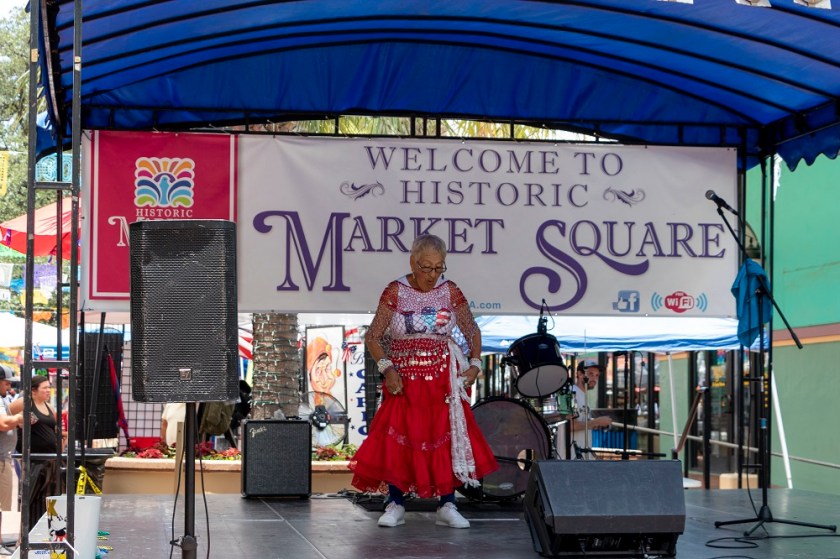
There were quite a few interesting characters, including but not limited to a dancing lady…

SHSU, LEAP Center, Mi Tierra, Market Square

…and a Hispanic Elvis, plus the local food stands smelled amazing. Finally, we made our way back to Professor Yawn in the restaurant lobby just in time: our wait buzzer went off and we were ready to be seated. The restaurant was very colorful, with lights and banners running along the ceiling and walls.


Once we sat down, we all spent a quiet few minutes looking though the menu—everything sounded so good it was hard to make a decision. Professor Yawn ordered queso flameado and guacamole for the table. The queso flameadio was so thick we had cheese-pull competitions, and the guacamole was some of the best I’ve ever had. I ordered the lunch special, enchiladas, but I was so full from our appetizers that I was only able to finish one of the two on my plate. I now understand why the restaurant was so packed!

After we had all that we could possibly eat, we headed out for another stroll through the market, where we found a mechanical bull.  Of course, I couldn’t resist! 

SHSU, LEAP Center, Mi Tierra, Market Square, Maggie Denena

After my impromptu rodeo, we headed to our next stop, which was the McNay Art Museum.
__________________________________________
By Peyton Reed

The first interesting thing I noticed about the McNay Museum is the location. The museum was designed as a large house, with each room holding various paintings that flowed together seamlessly, arranged by various characteristics such as color, technique, period and artist. The winding path to get to the entrance of the museum passed by several sculptures by Robert Indiana, George Rickey, and Alexander Liberman, to name a few.

 The featured exhibition is titled “Immersed,” an interactive and compelling exhibit featuring pieces from Andy Warhol, Chris Sauter, and Yayoi Kusama.

The first piece we saw was the piece by Chris Sauter. Walking in to the enclosed space, circle cutouts allow some light to pour into a small living room set up. In the chairs are circle cluster figures, entitled “dopamine molecules” by Sauter, which he made from the wood he cut out of the walls.

SHSU, LEAP Center, McNay Art Museum, Chris Sauter


The Shadow Monster by Phillip Worthington was a playful exhibit. Pool noodles, hula hoops and spinning flower props allowed for interesting additions to our figures as a projector casted outlines of the observer on to the wall with fun twists. Our shadows morphed as we moved, forming eyes, tails and ears and transforming us into magical creatures.

One of the interactive pieces in the museum was a light board with different colored pegs. We did our best to spell out SHSU with the letters.

SHSU, LEAP Center, McNay Art Museum

We took a similar marketing strategy to the sequin boards, also at the patrons disposal, making for a truly immersive experience.

My favorite piece was the Yayoi Kusama piece. We were allowed into an enclosed room lighted by hundreds of hanging candle fixtures.  The walls of the room were covered in mirrors, giving the viewer the perception that the space was infinite.

 Exploring the museum’s permanent collection was also an extremely satisfying experience.

Claude Monet’s “Waterlilies” was my favorite painting among the collection. I was struck by the size of it alone. Since this was my first experience at an art museum, it was amazing to see paintings by Van Gogh, Picasso, and Monet, some of the most well-known and talented artists of all time, all in one place. Another favorite sculpture piece was by Alexander Calder, an artist who specializes in Kinetic art sculptures.

SHSU, LEAP Center, McNay Art Museum, Alexander Calder

 Overall, exploring the McNay museum was an enriching experience that helped me gain a little more familiarity with art.